
Régis Manset was a French illustrator and lithographer whose career spanned at least three decades of Parisian commercial and fine-press art. Nothing is known of his origins, training, or personal life. The surname is most commonly found in the Aude region of southern France, around Carcassonne, and a connection to that region is plausible but undocumented. What is clear is that by around the mid-1920s he was in Paris, and his earliest work dates to 1928, when he produced original ink-and-pencil drawings for the Soir de Paris advertising campaign of the Bourjois cosmetics company. By the mid-1930s he was a regular cover artist for Le Figaro Illustré, and by 1939 he was providing fashion illustration for some of the most prestigious couture houses of the period, including Hermès, Schiaparelli, Piguet, Alix and Lelong.
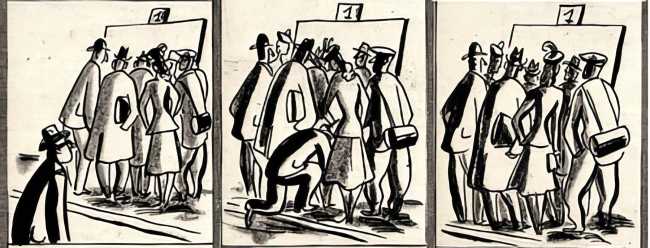
The early 1940s saw him turn to fine-press book illustration, producing substantial lithographic editions for Prosper Mérimée's Colomba in 1944, and Musset's La confession d'un enfant du siècle (The Confession of a Child of the Century) a year later. During the mid-1940s he was also drawing a regular M. Myope (Mr Myopia) comic strip for Point de Vue. His most overtly erotic work from this period is the 1947 portfolio La femme et le cygne (The Woman and the Swan), a lithographic suite on the theme of Leda and the swan.
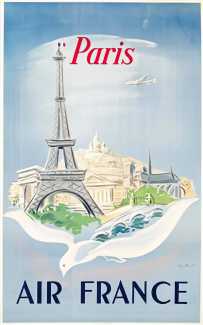
From the late 1940s onwards Manset moved back toward commercial work. A portfolio of colour lithograph plates depicting fashionable Parisian leisure – the casino, the racetrack, the hotel bar – was published around 1950 with an introduction by Pierre Macaigne, but by far his best-known works are his travel posters for Air France, the earliest of which dates to 1947 and depicts a dove in flight above the Paris skyline; revised versions followed in 1949 and 1952, and a further variant was issued in 1954. Fashion and fabric advertising also continued into the early 1950s, with documented work for Dognin and A Leleu & Cie among others.
Example illustration


