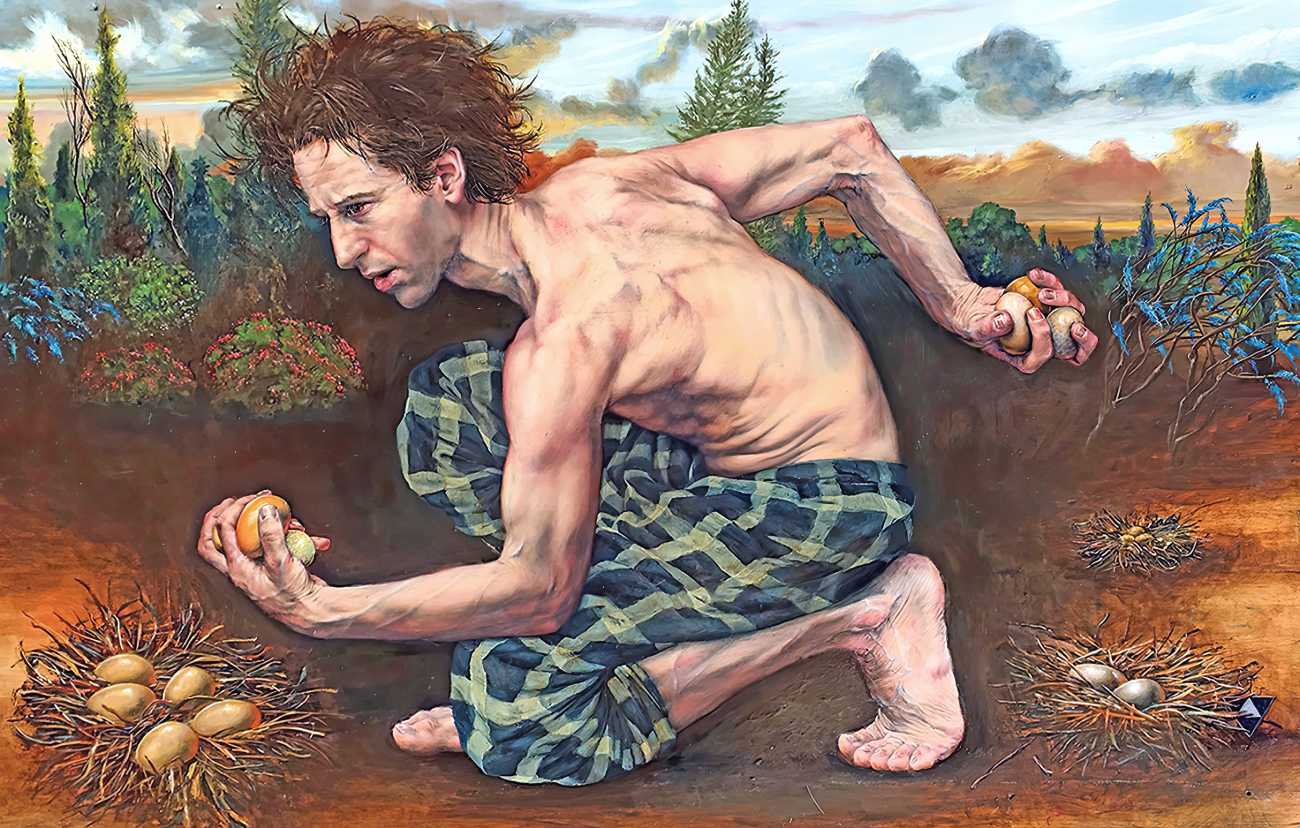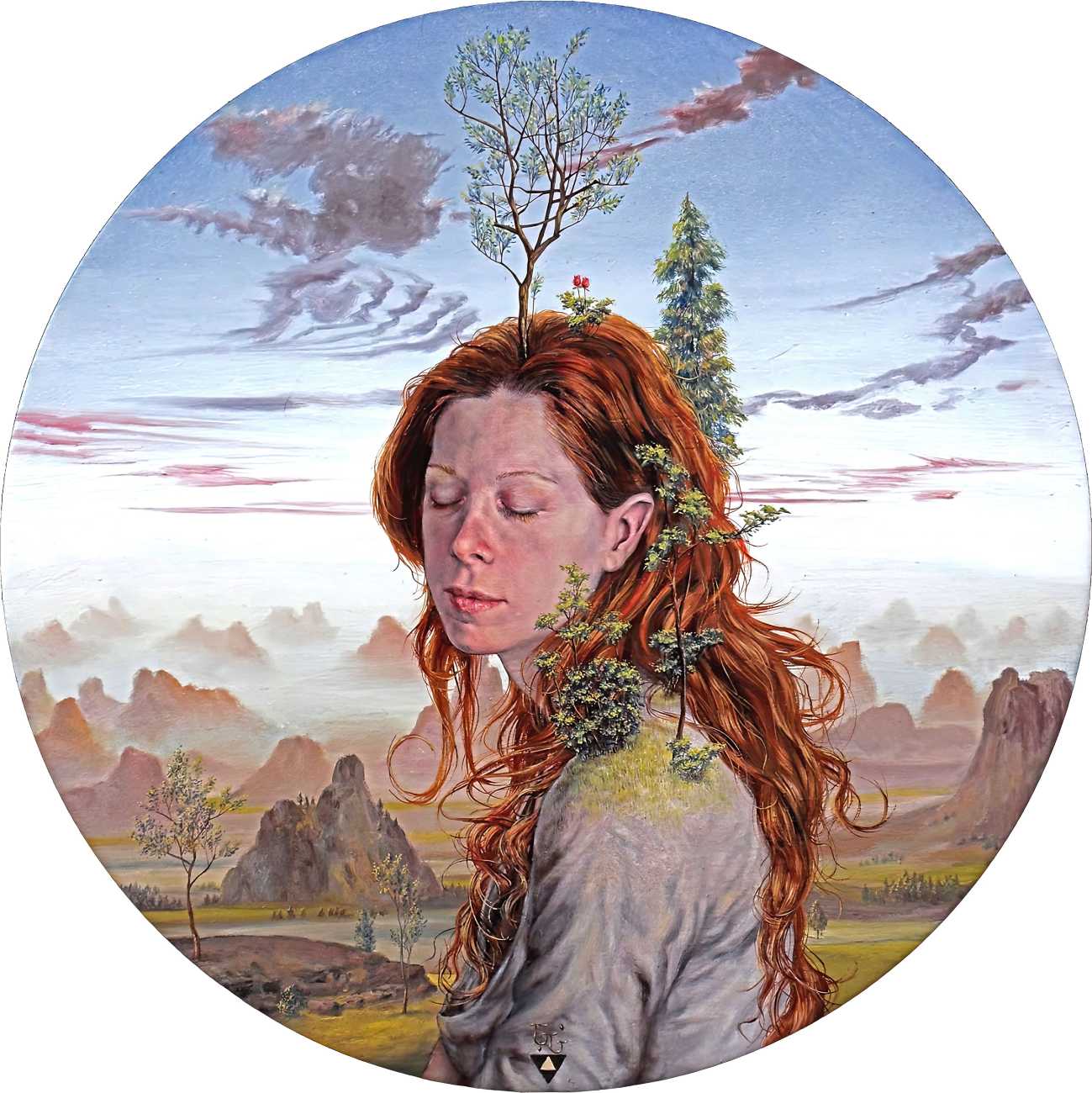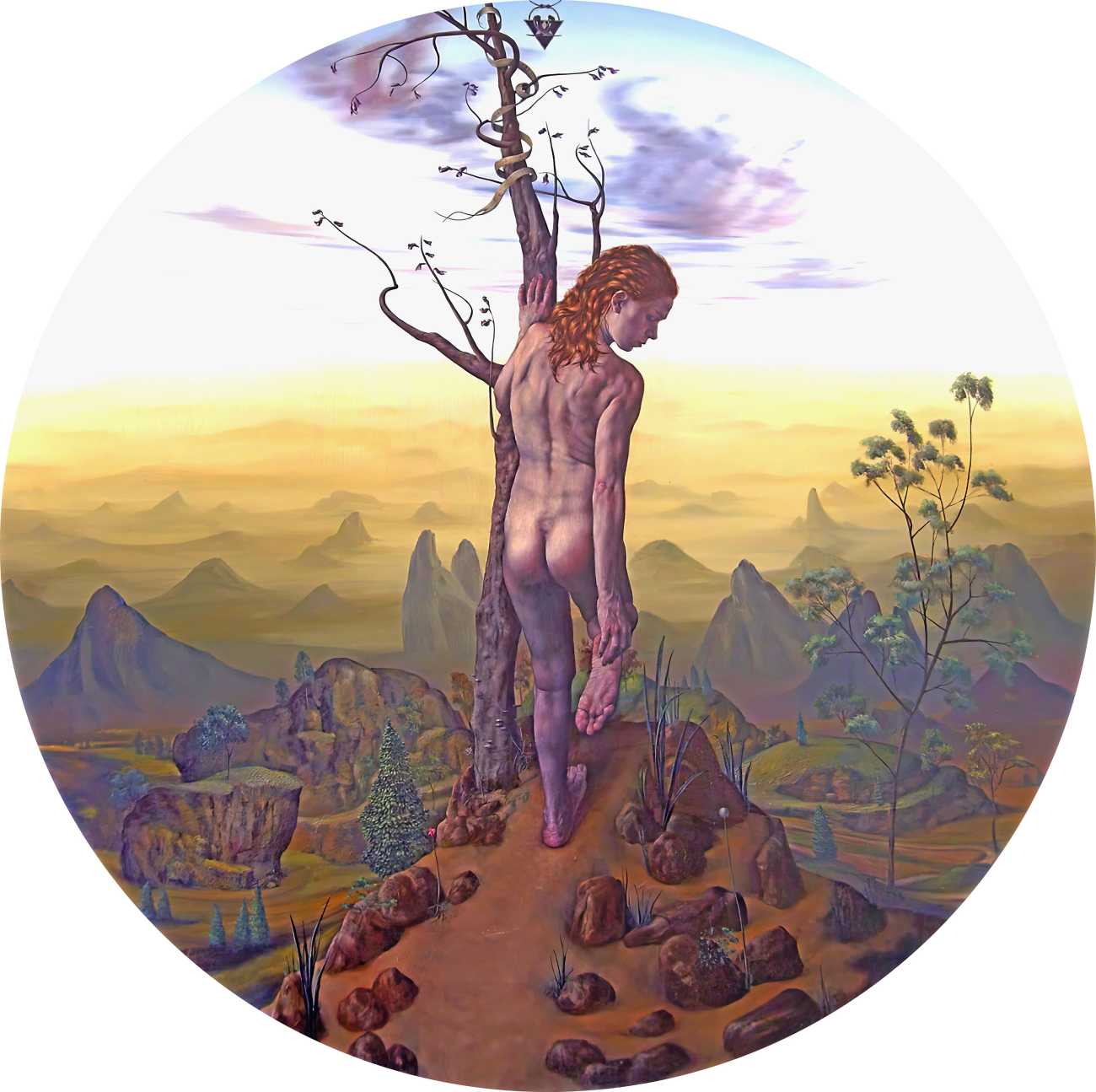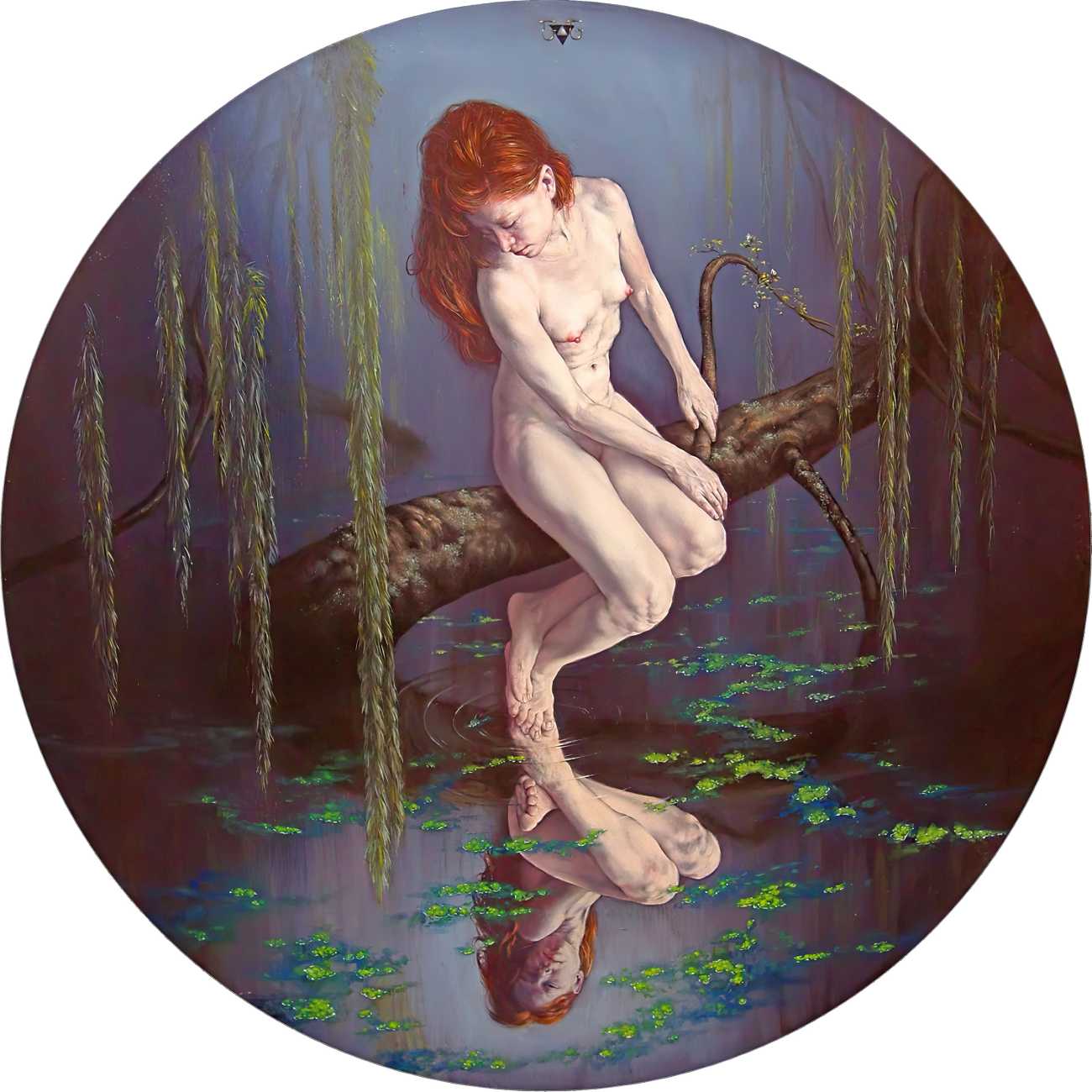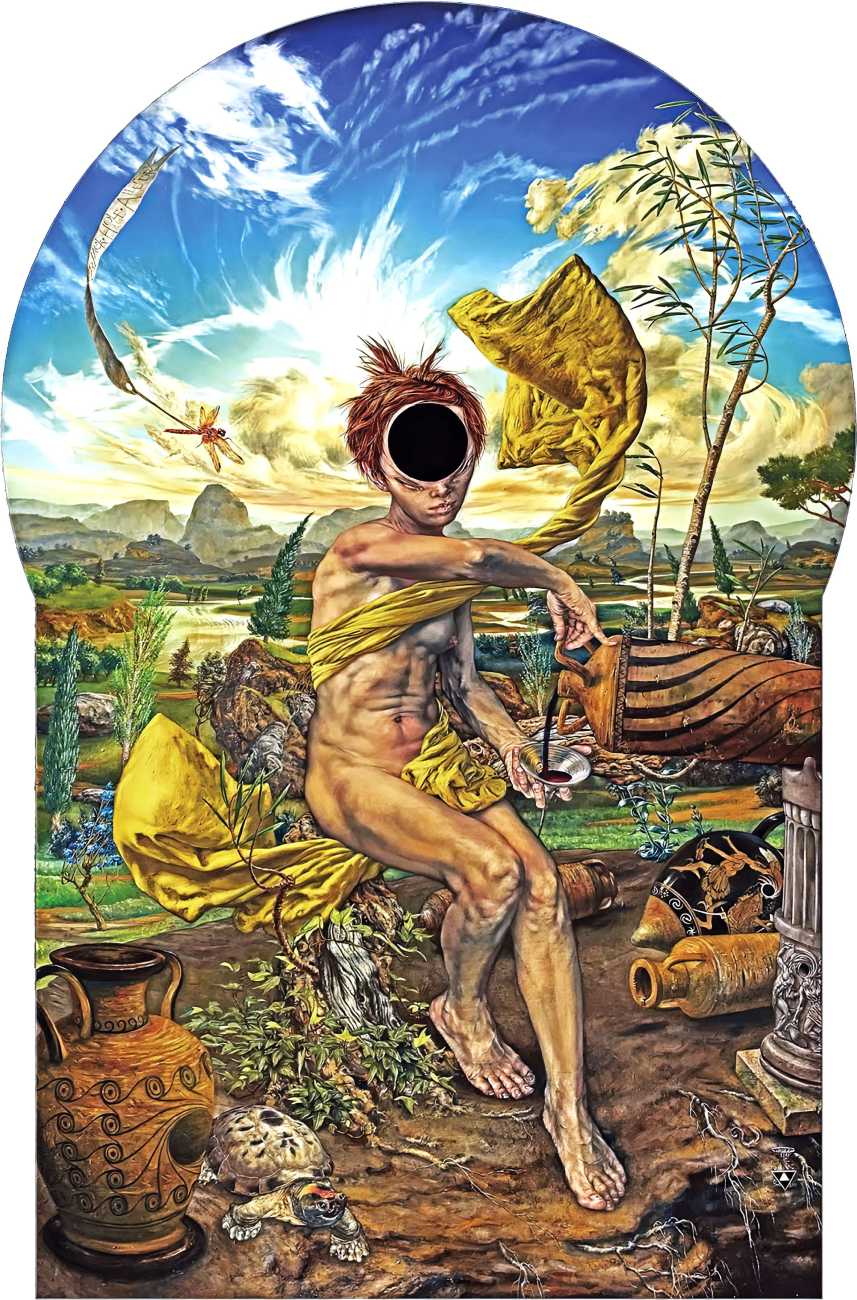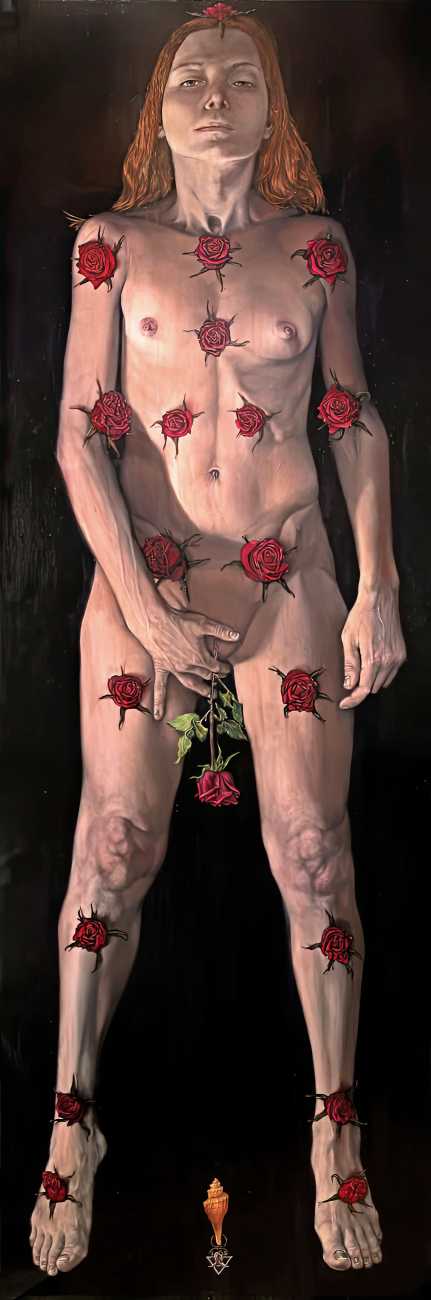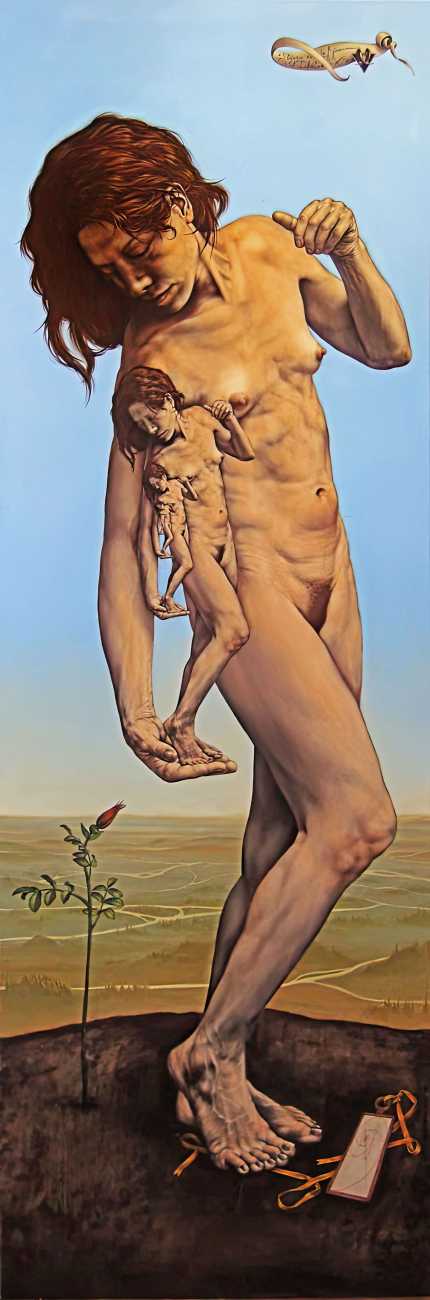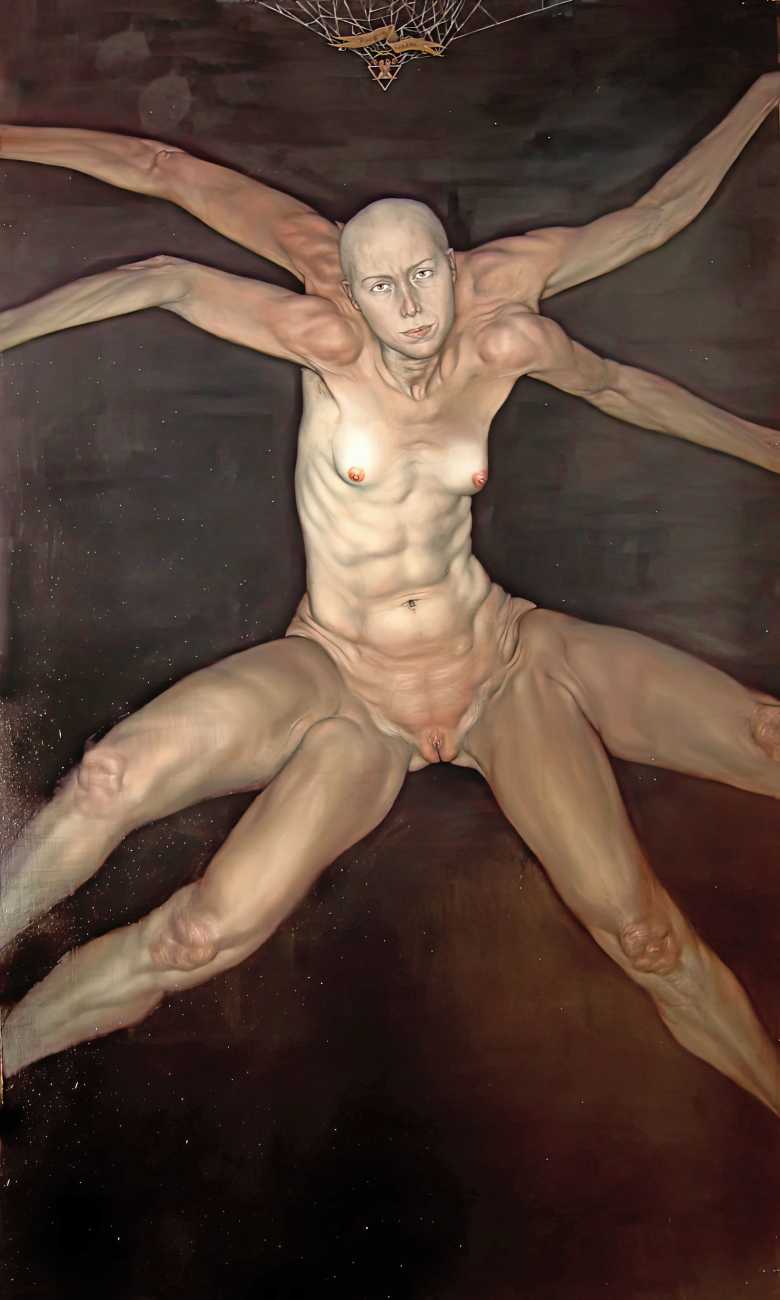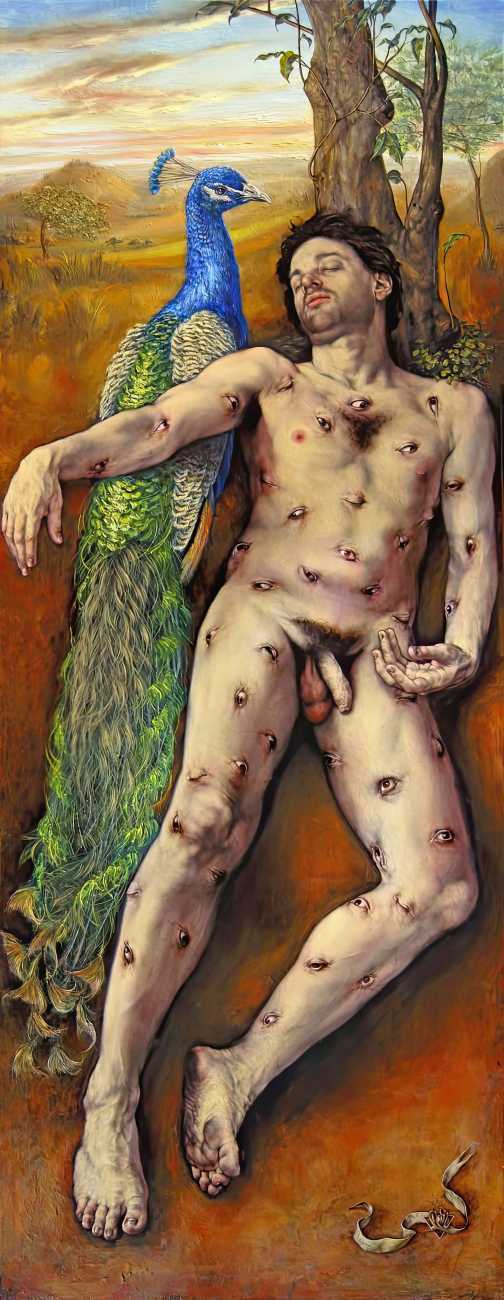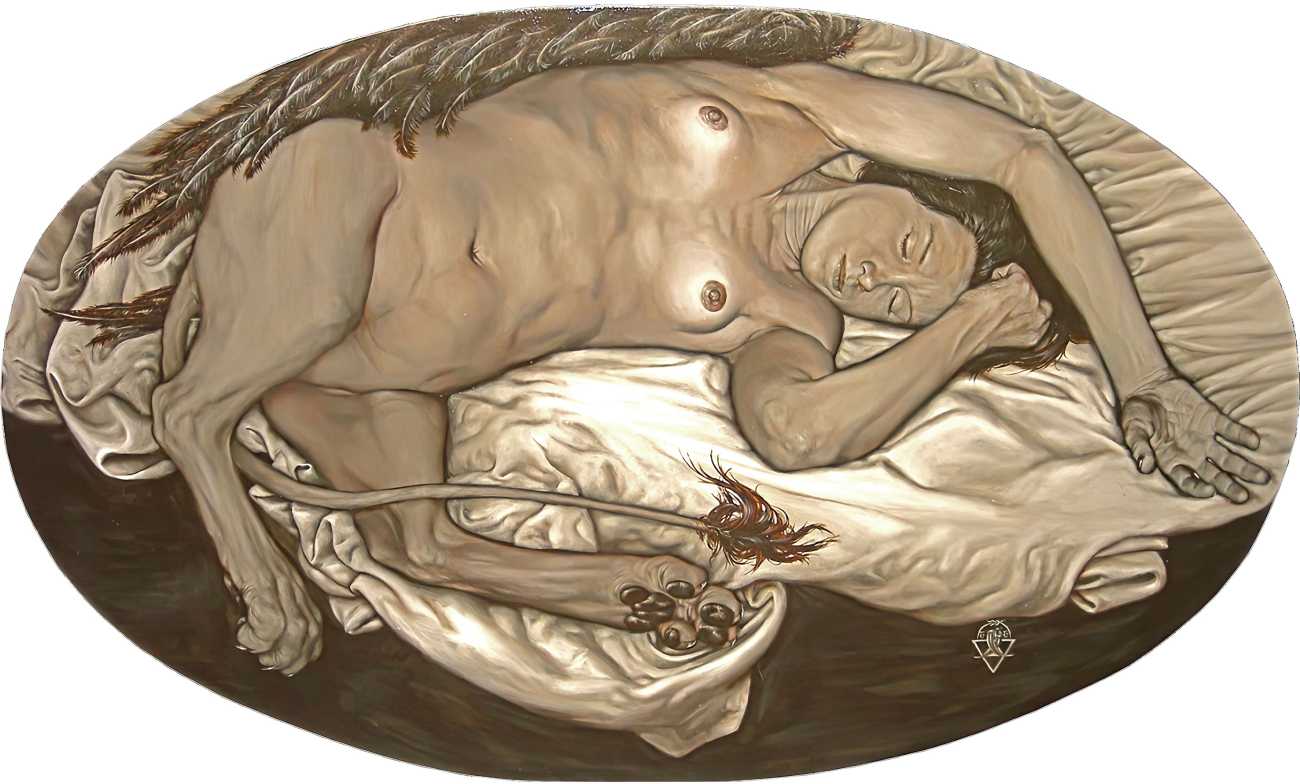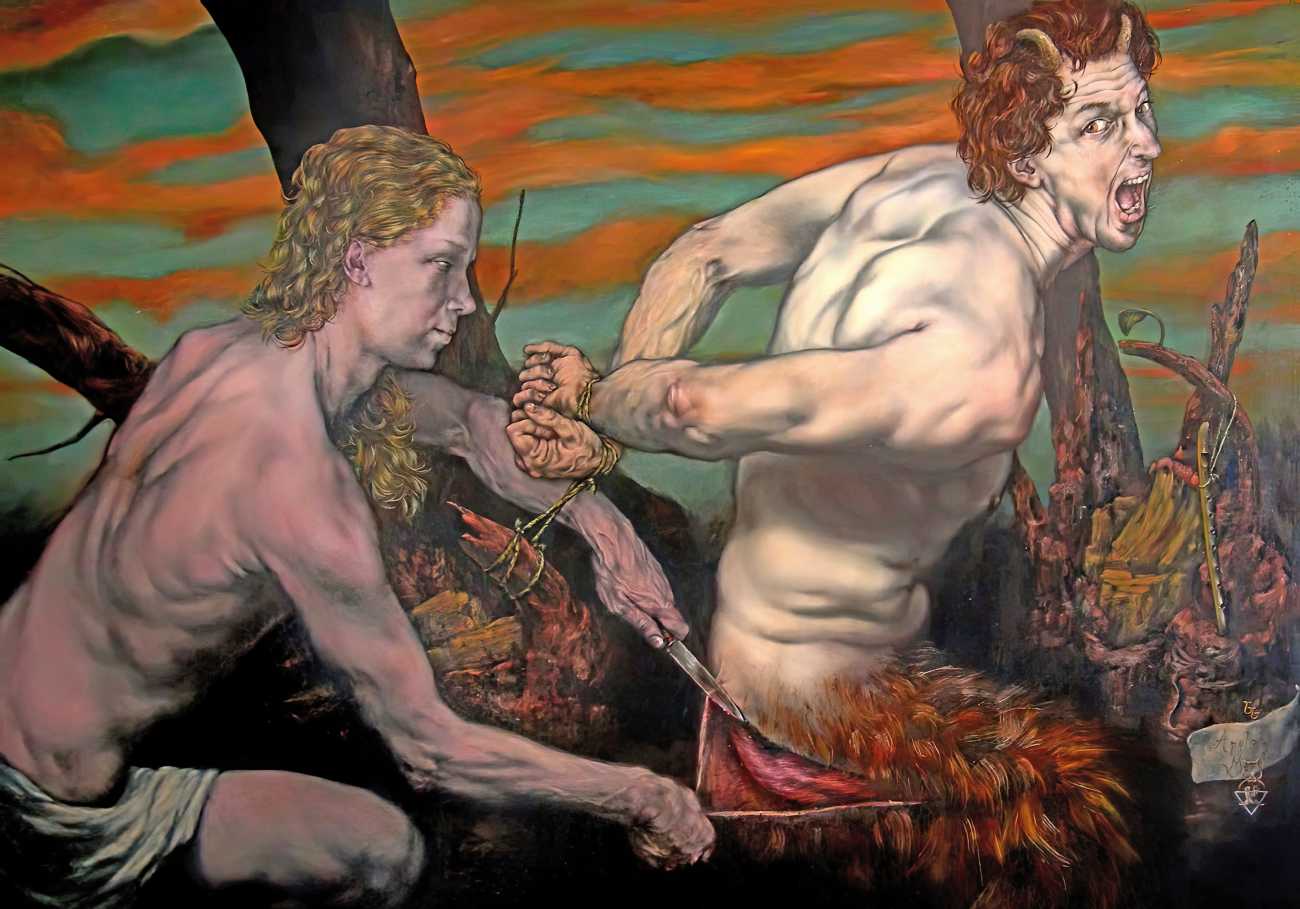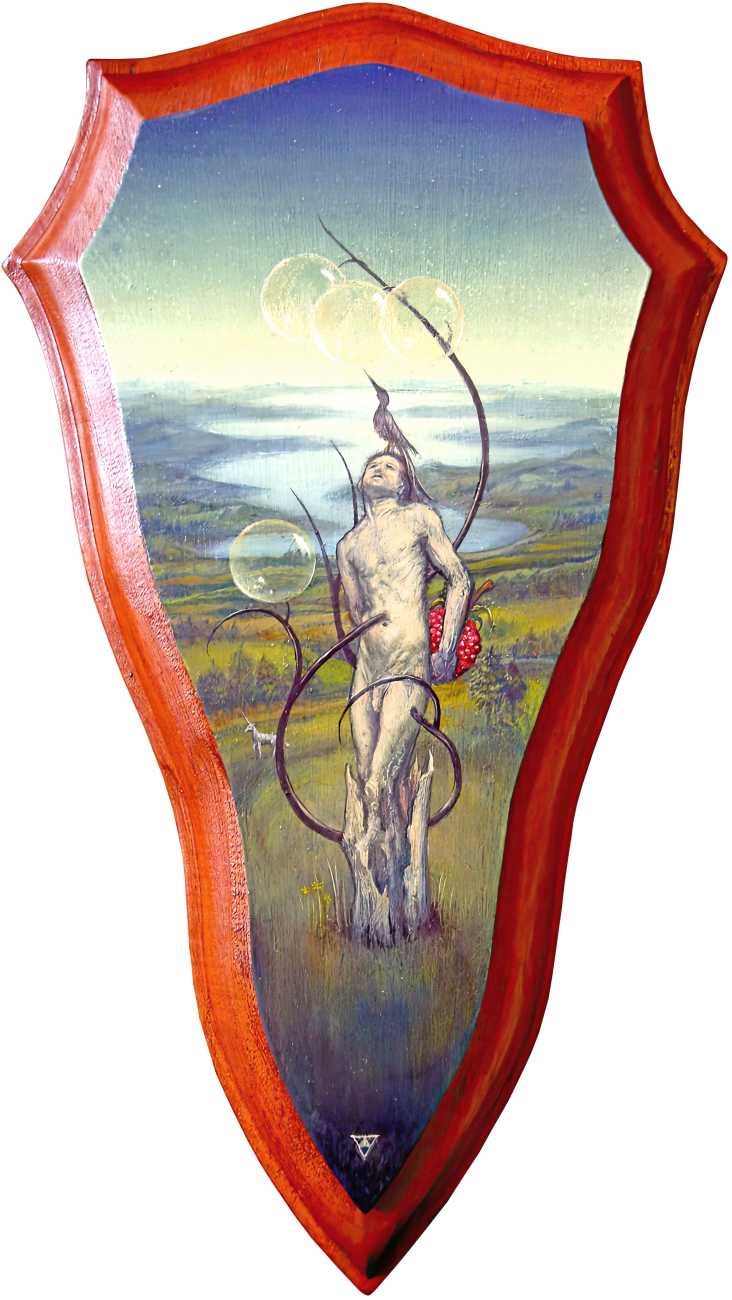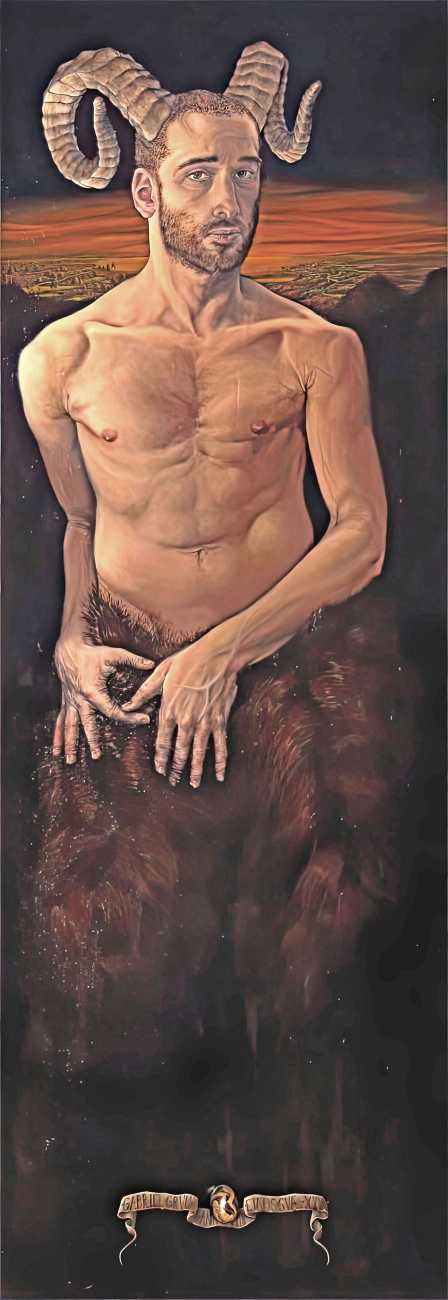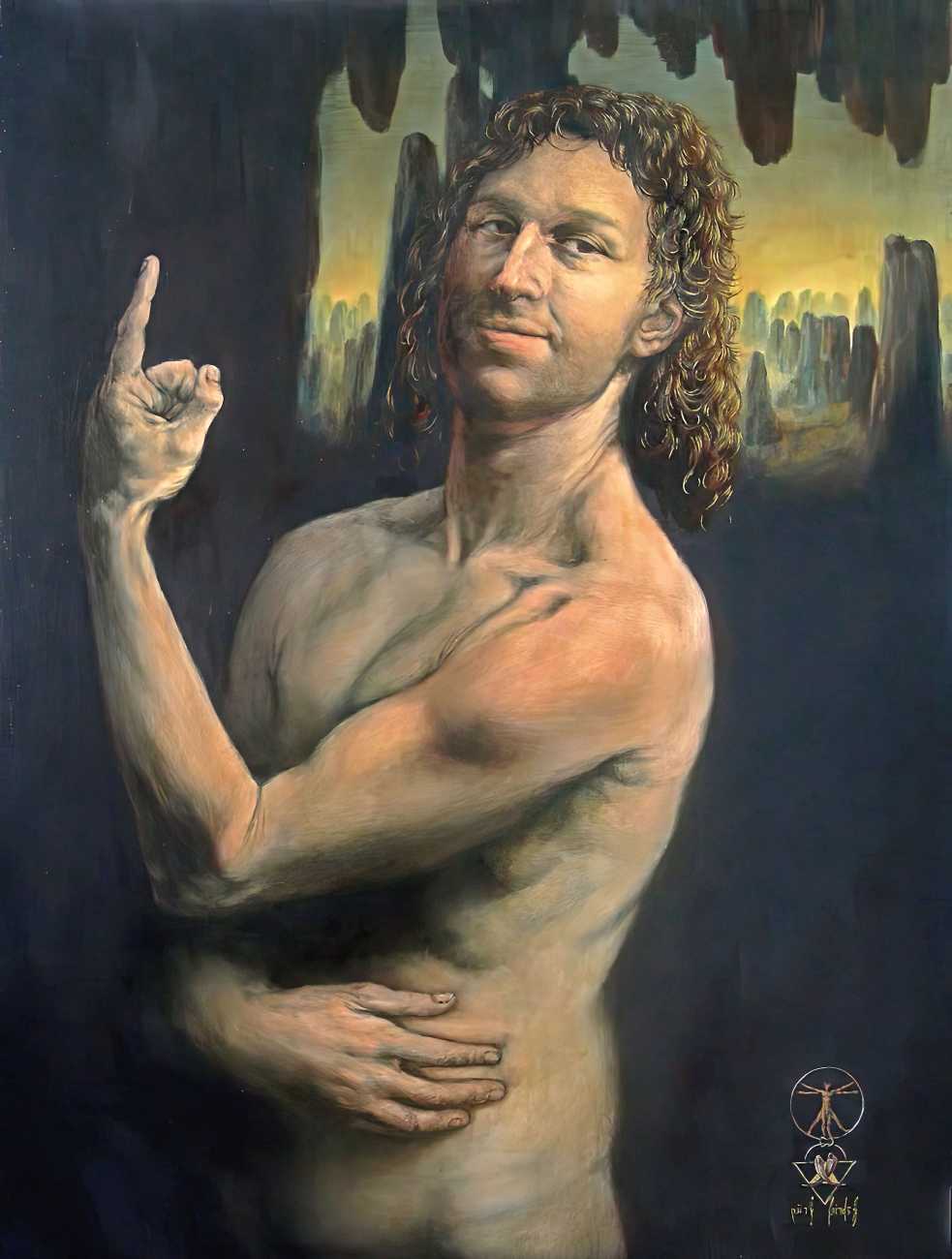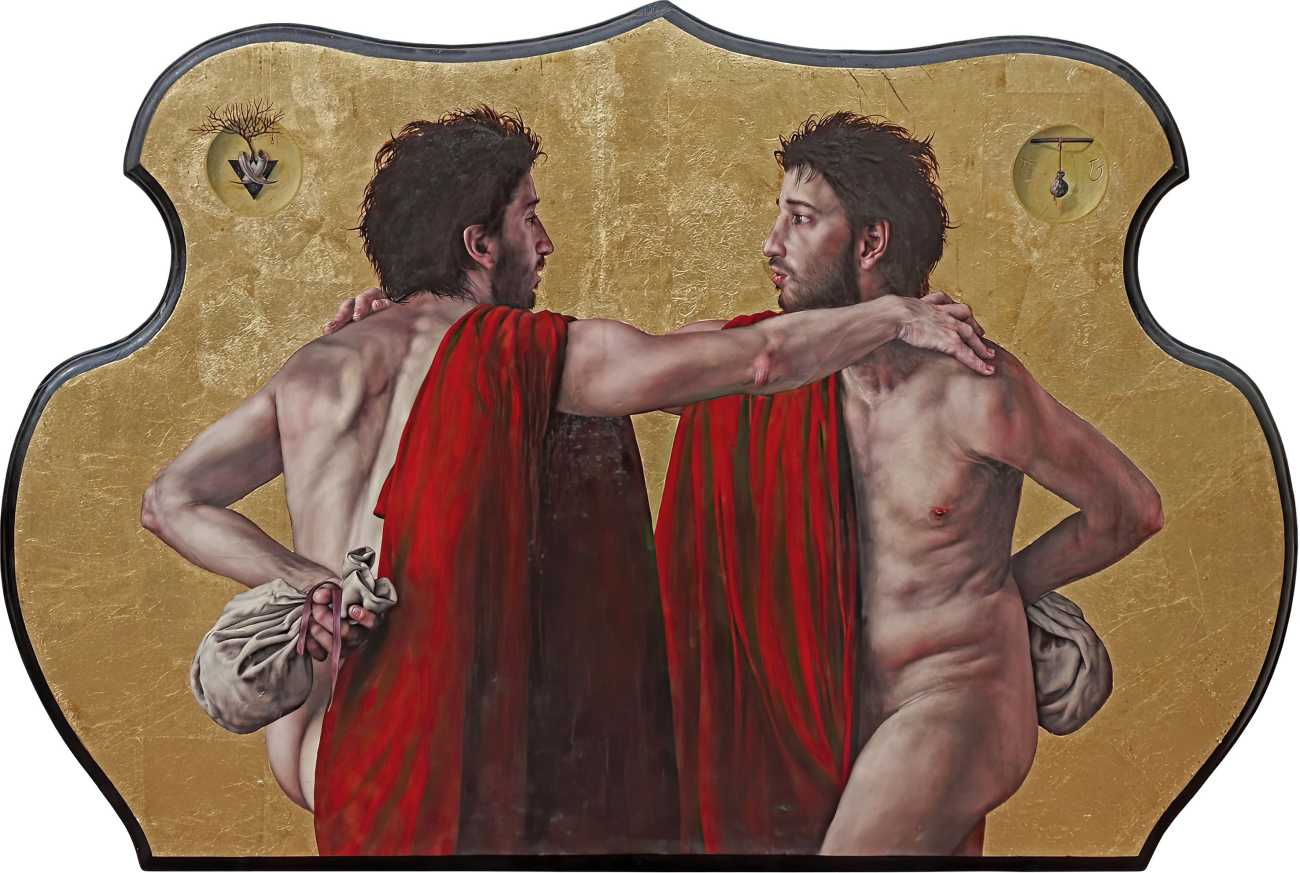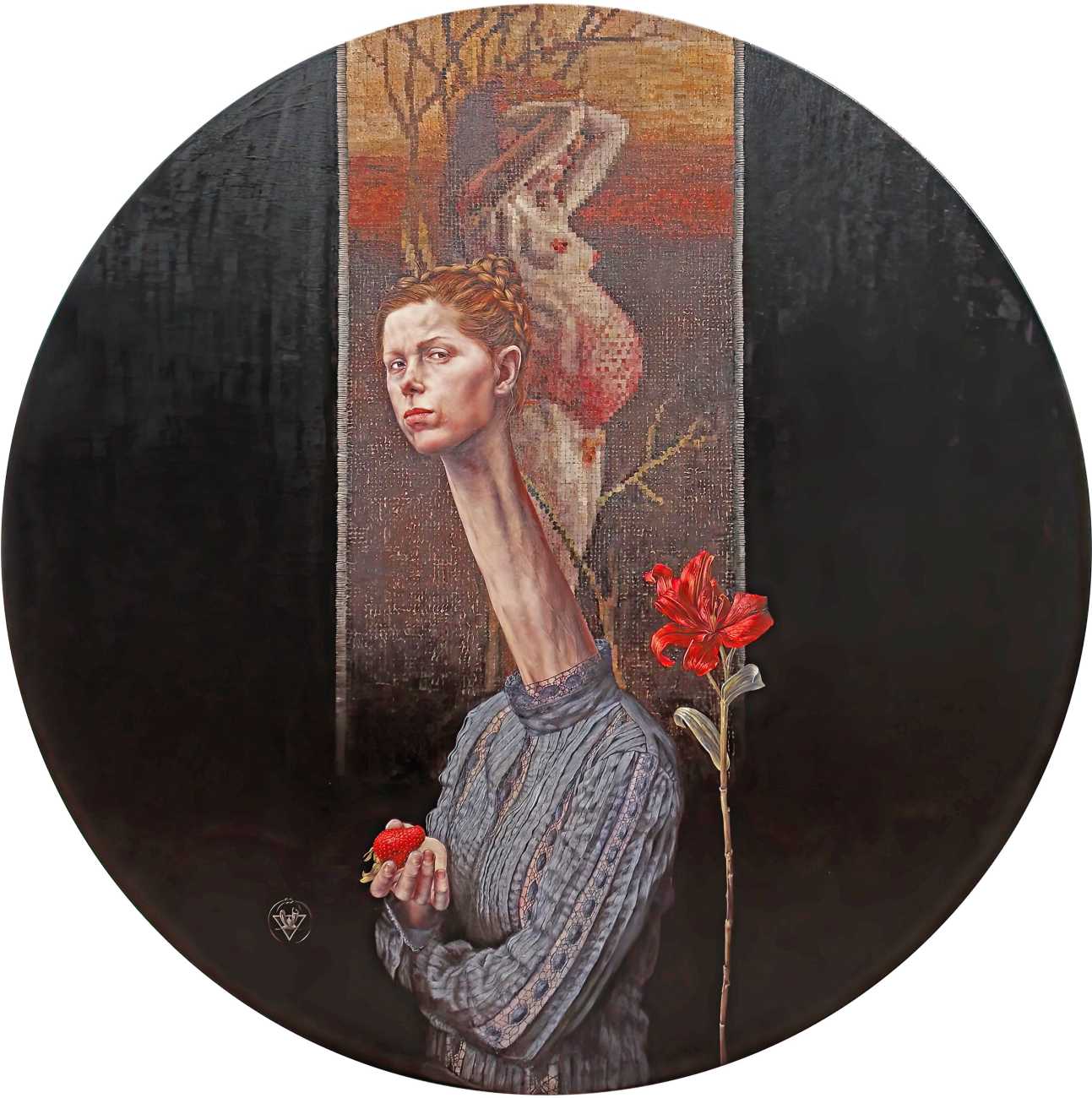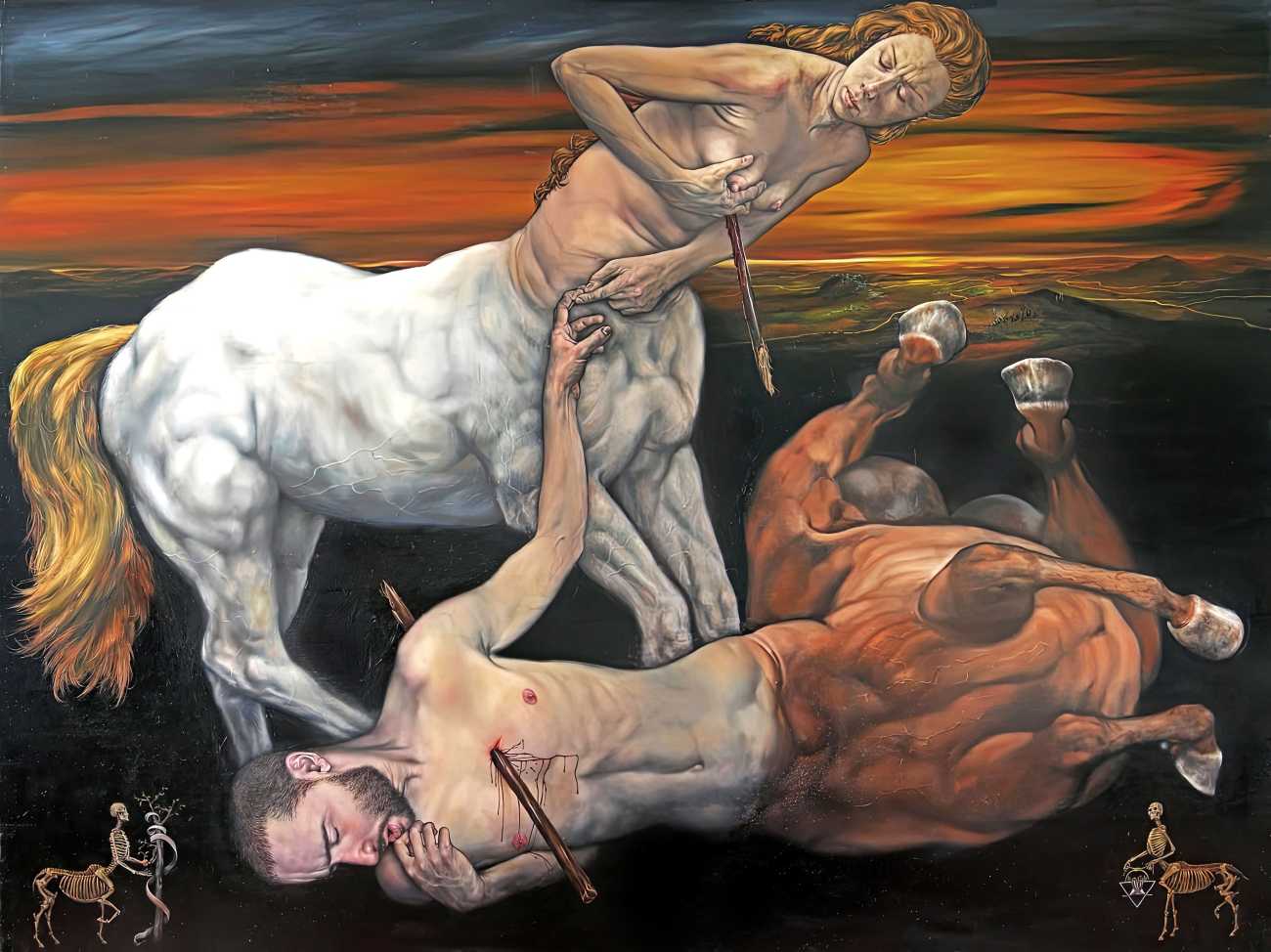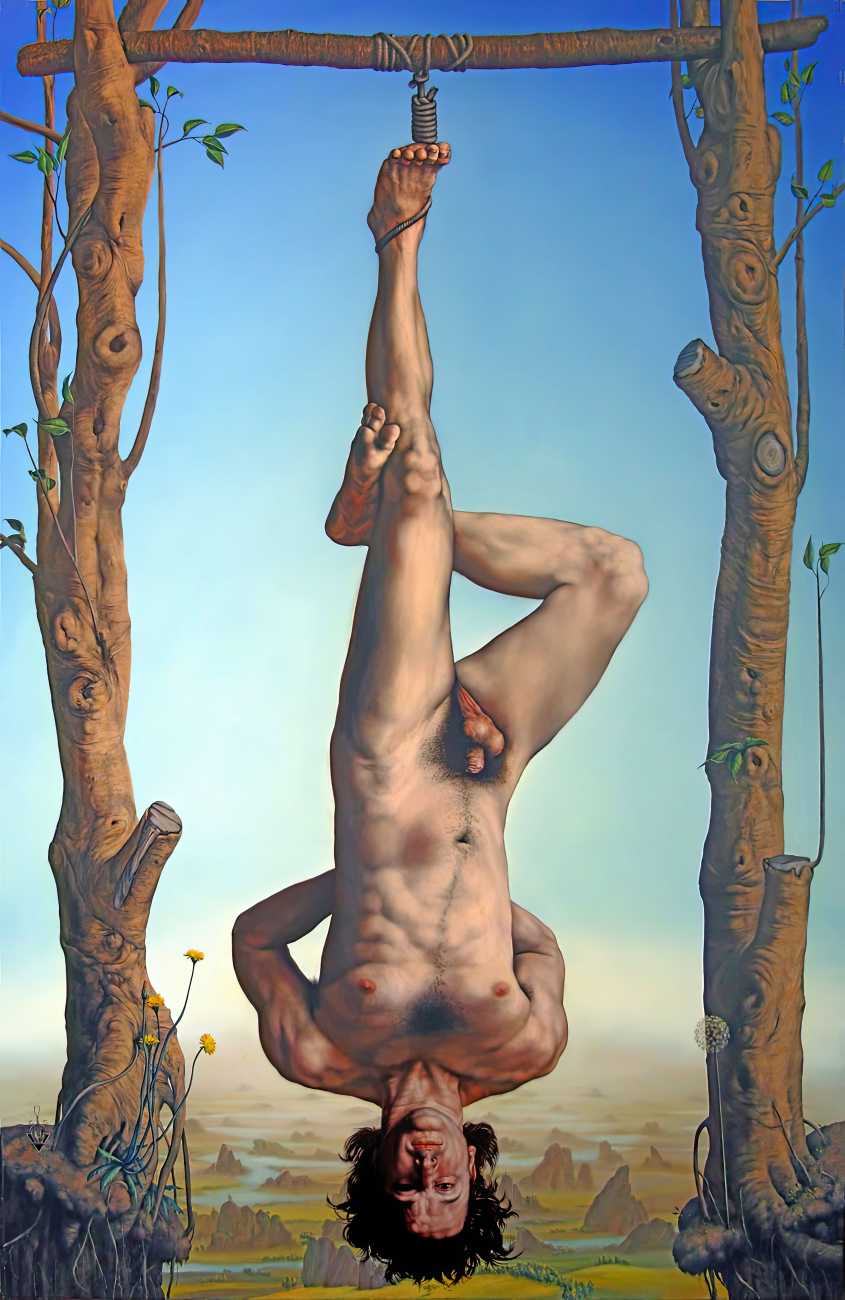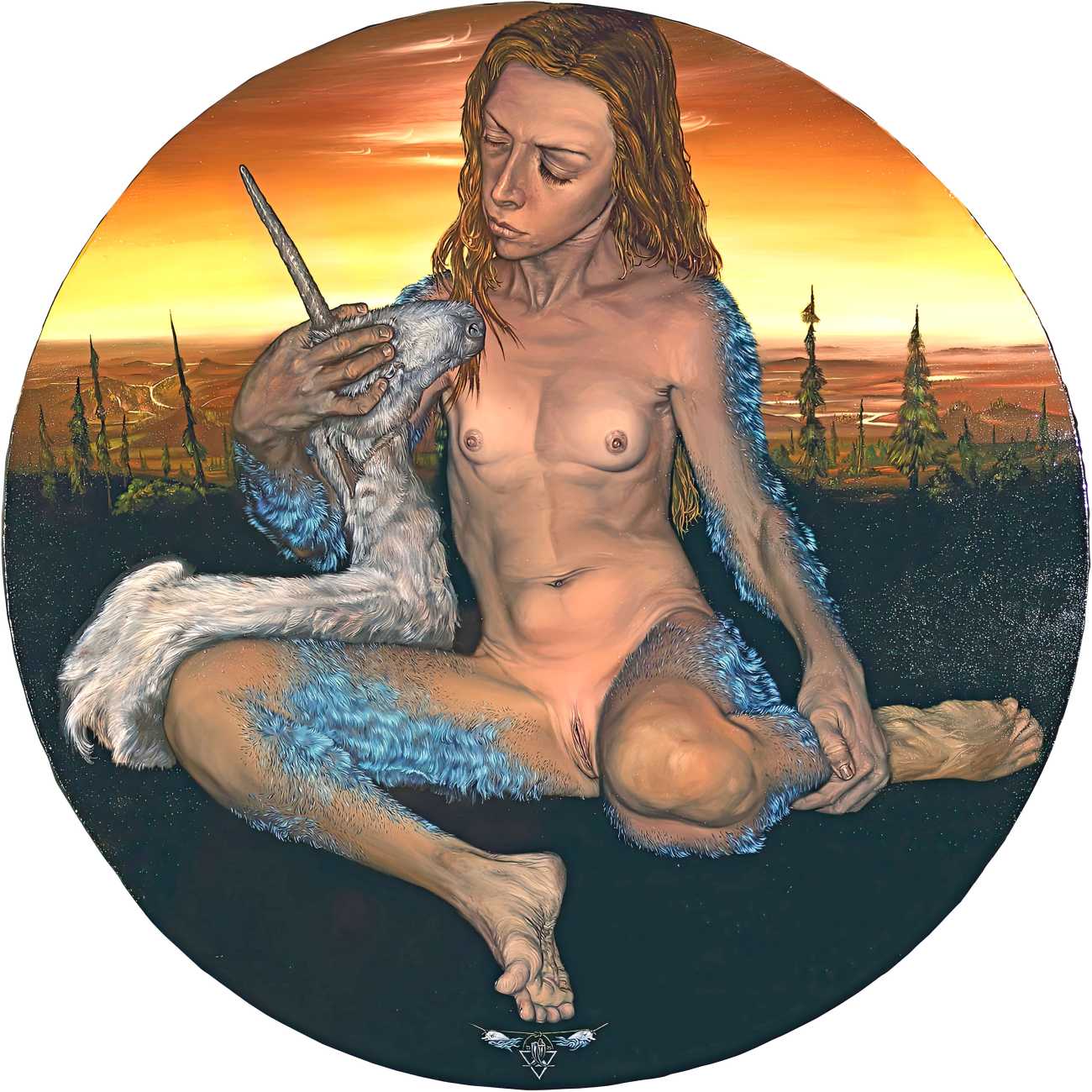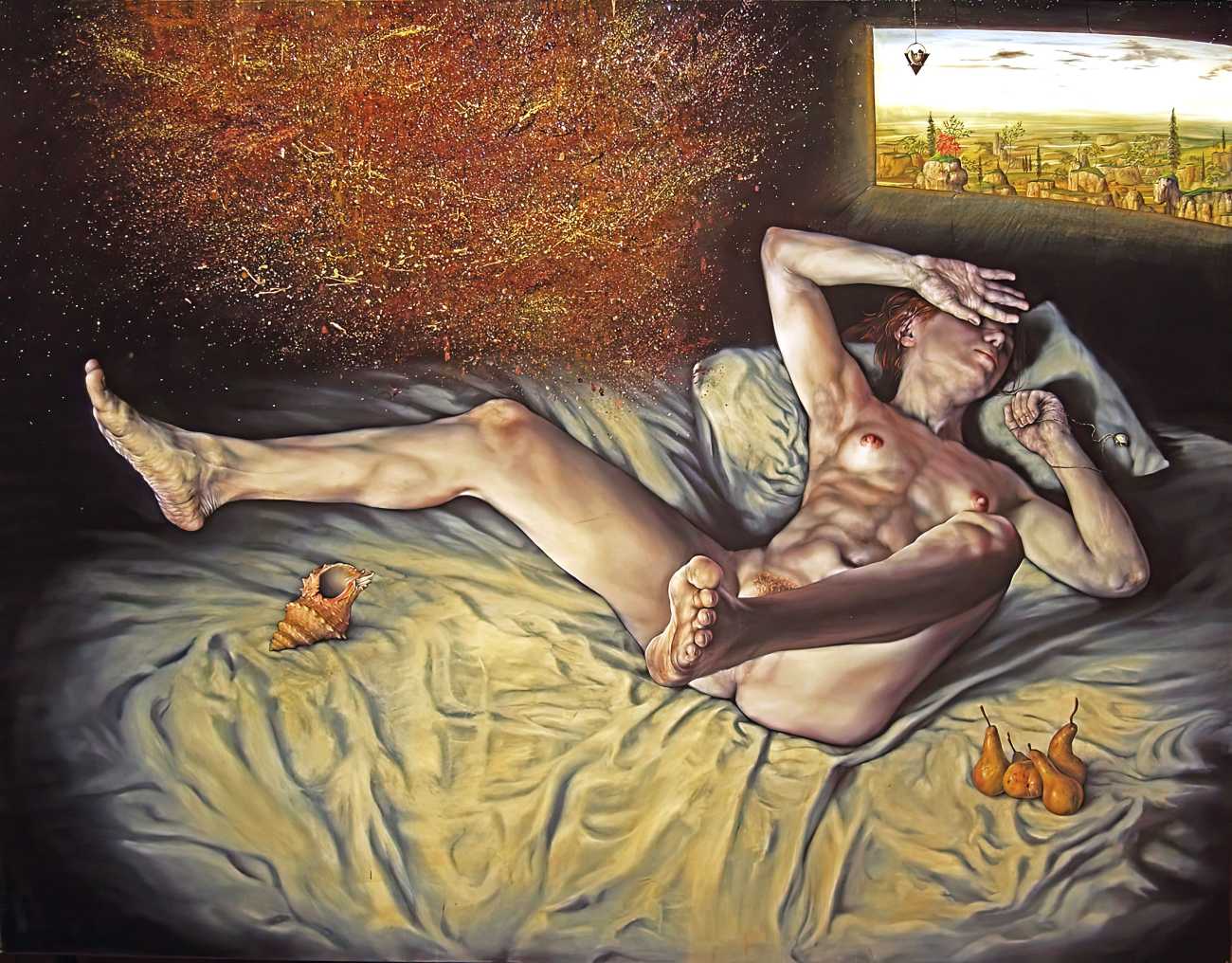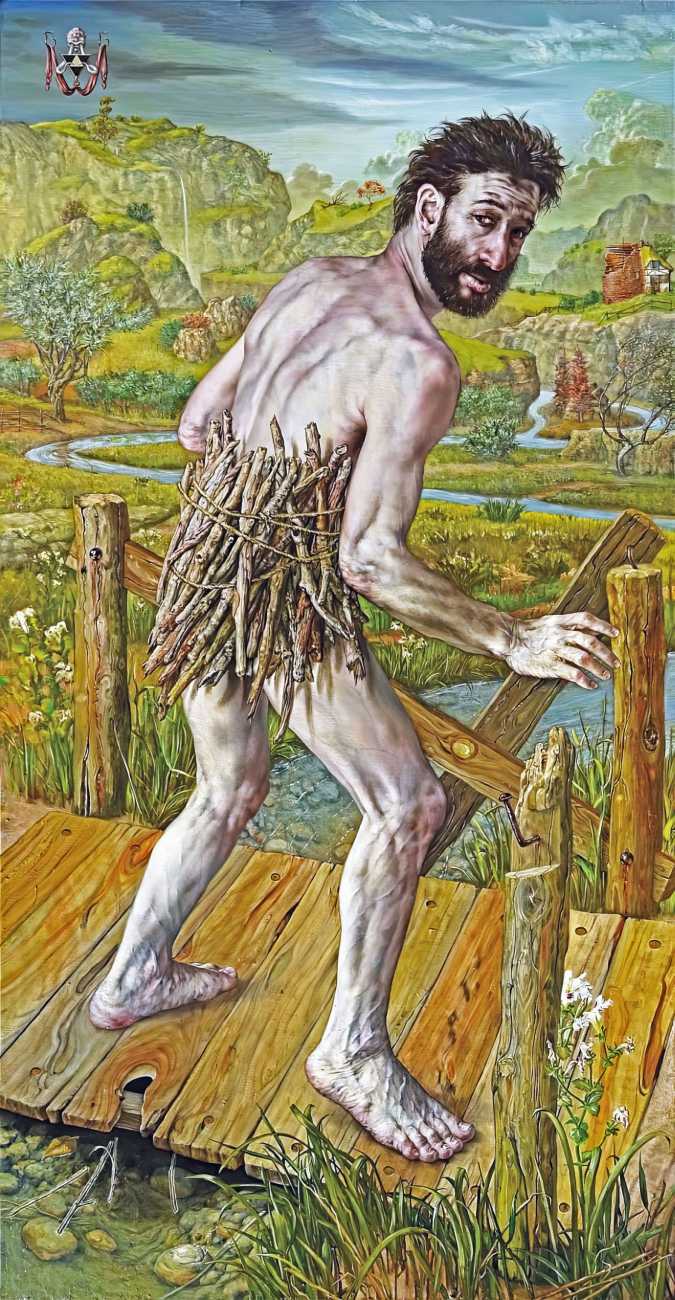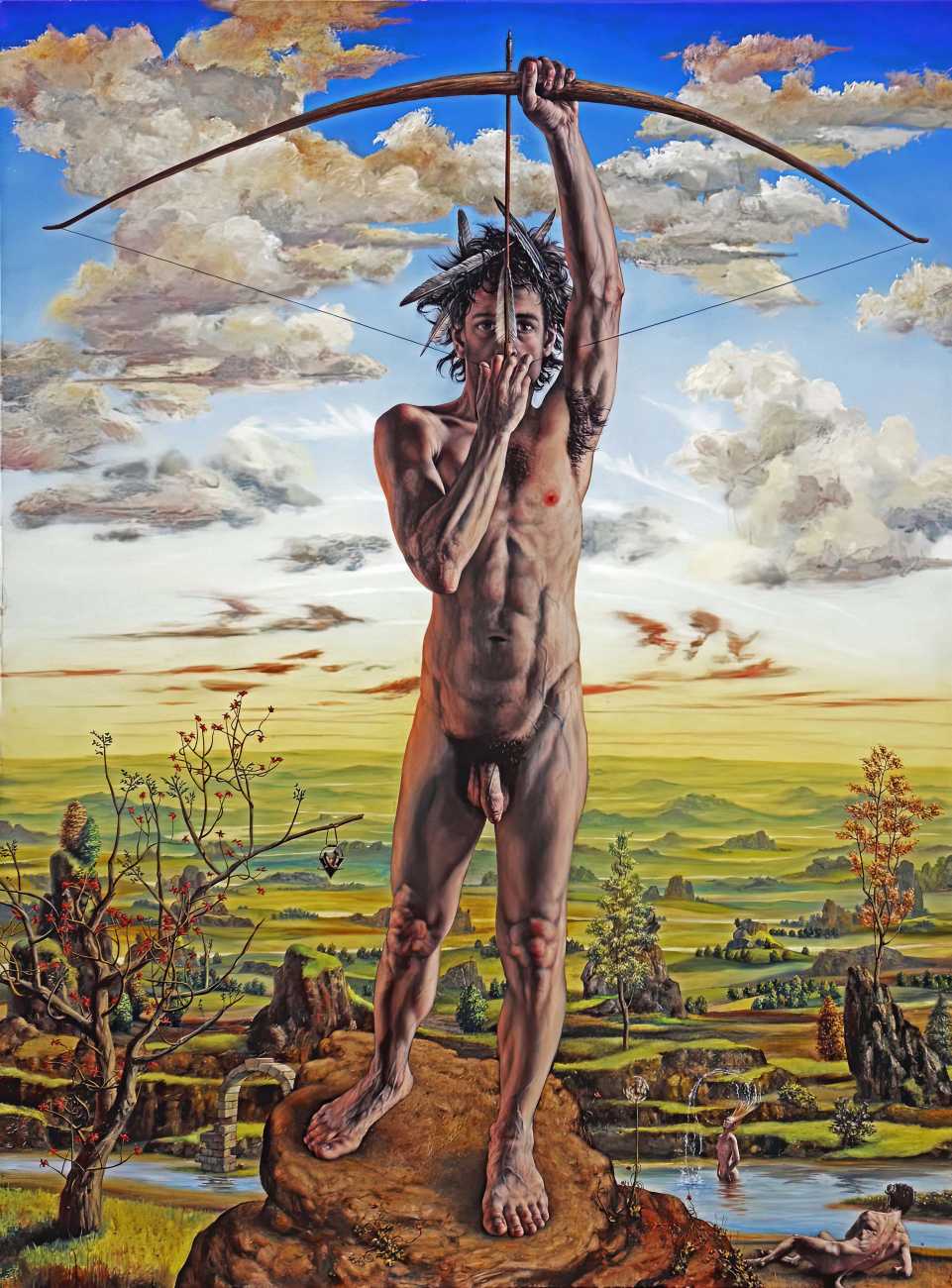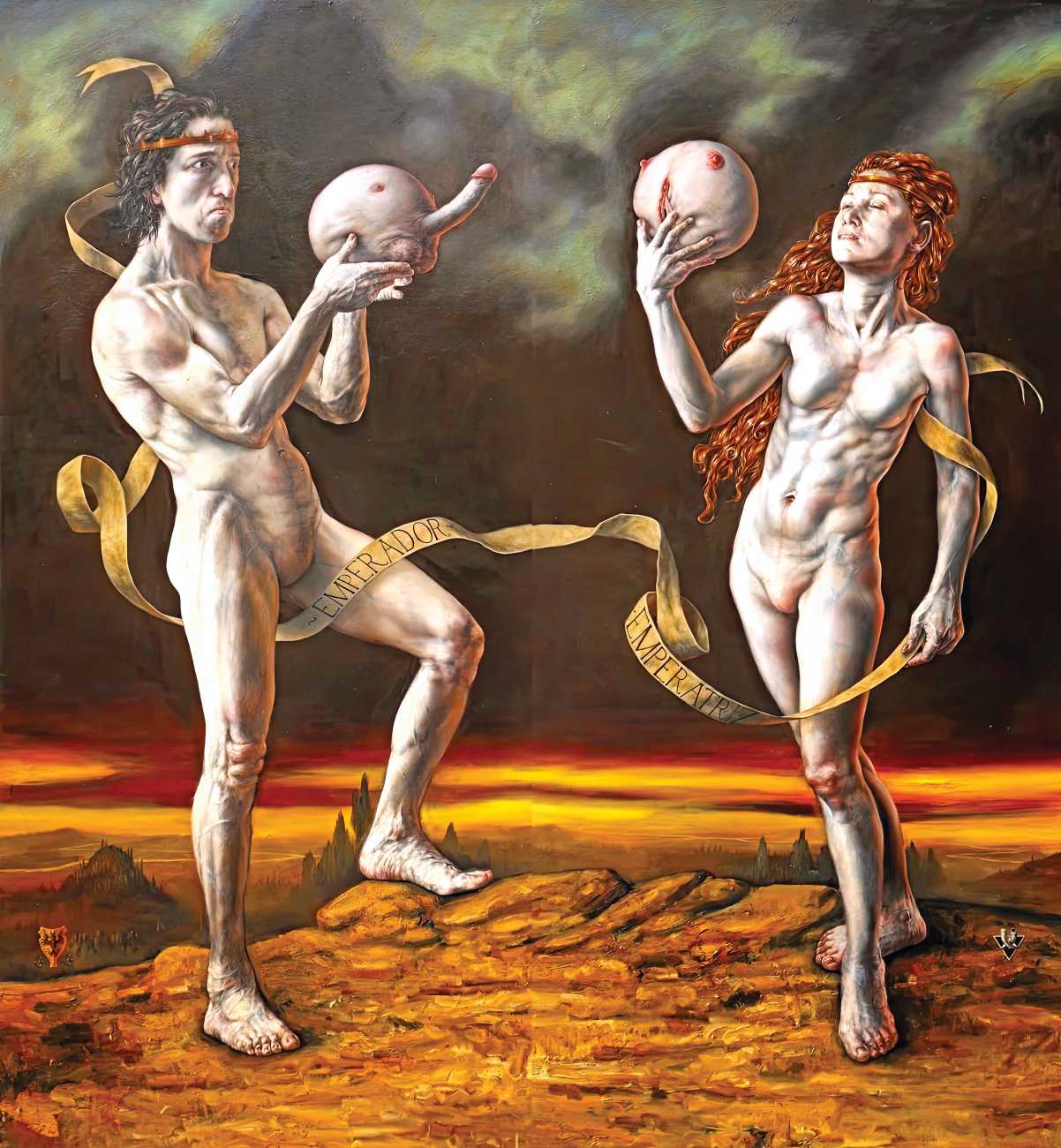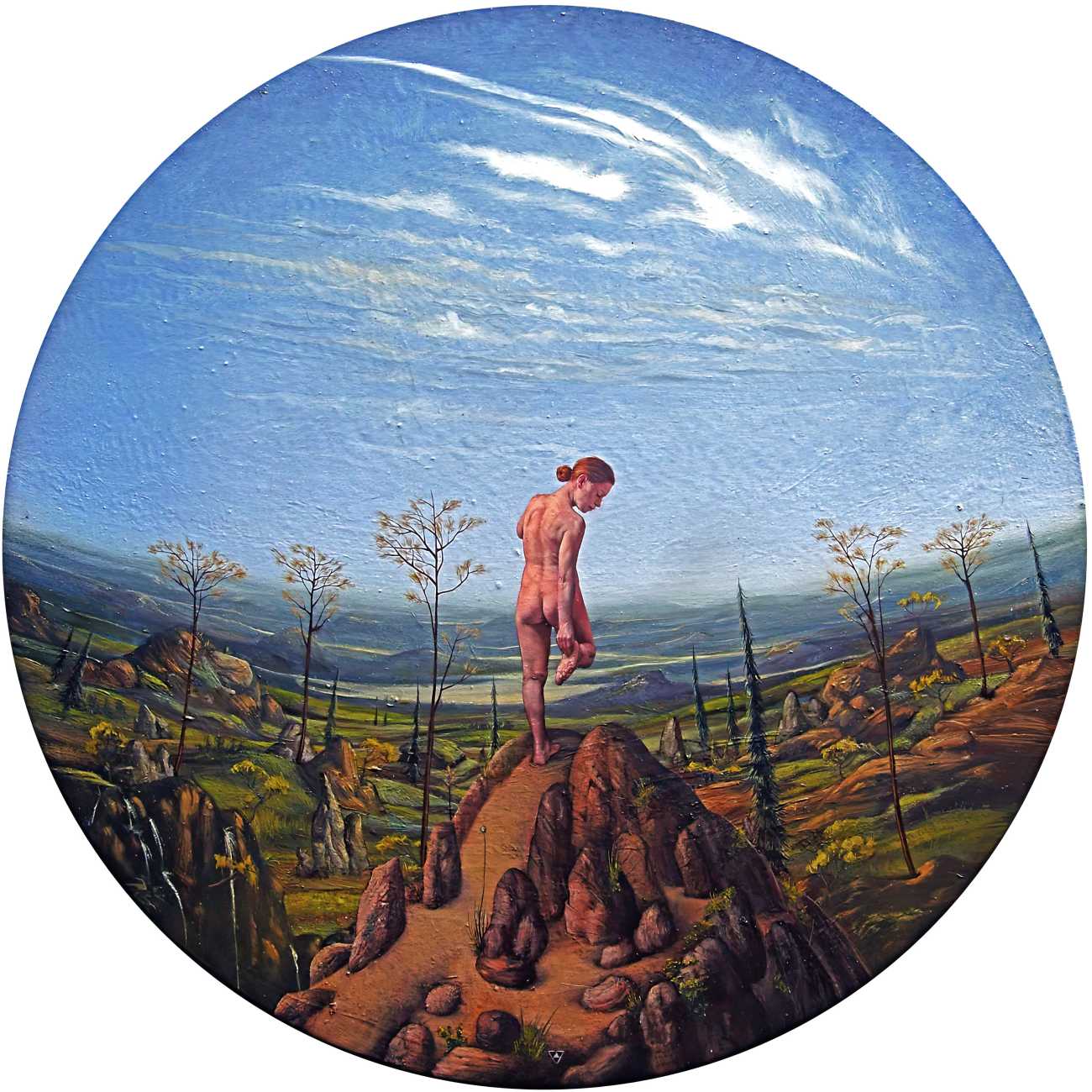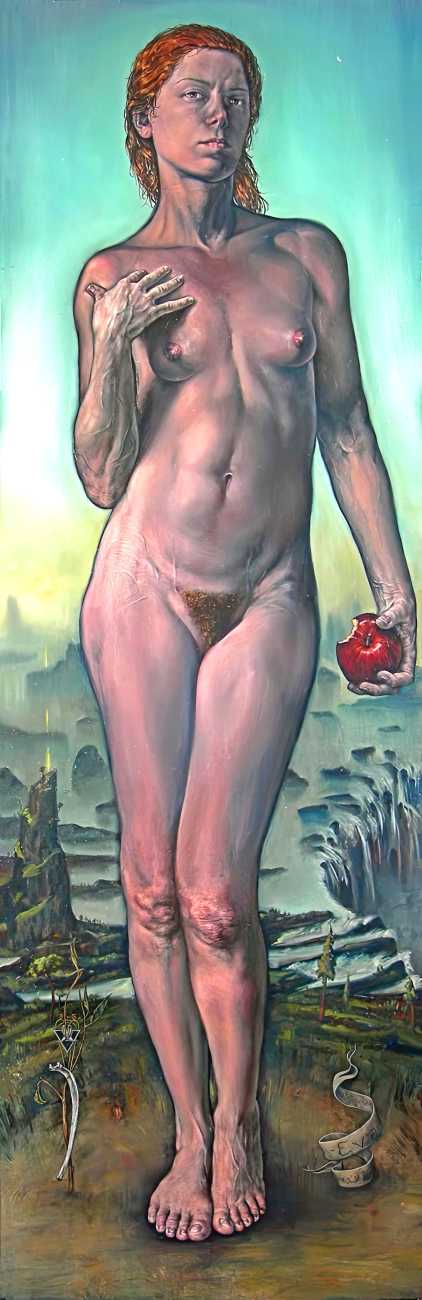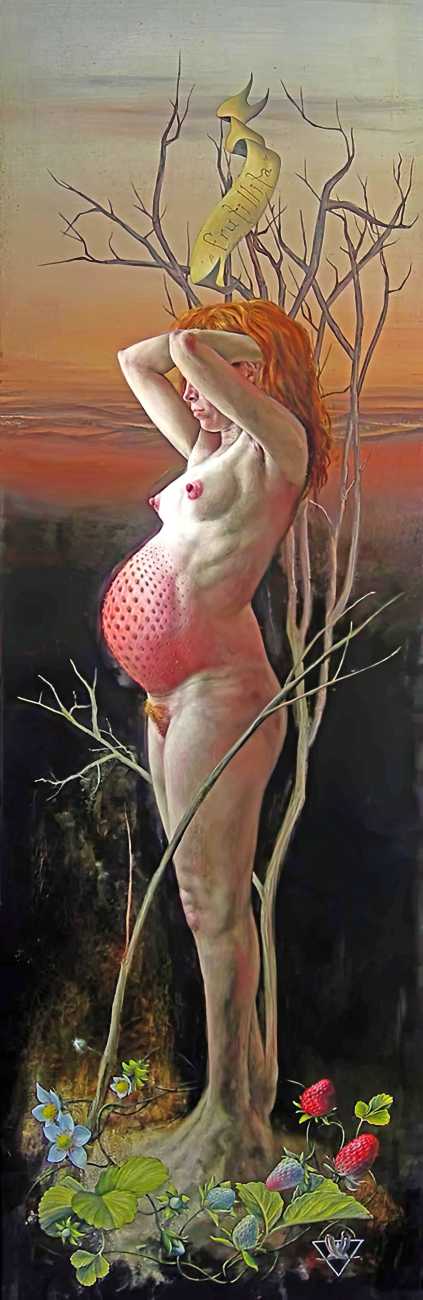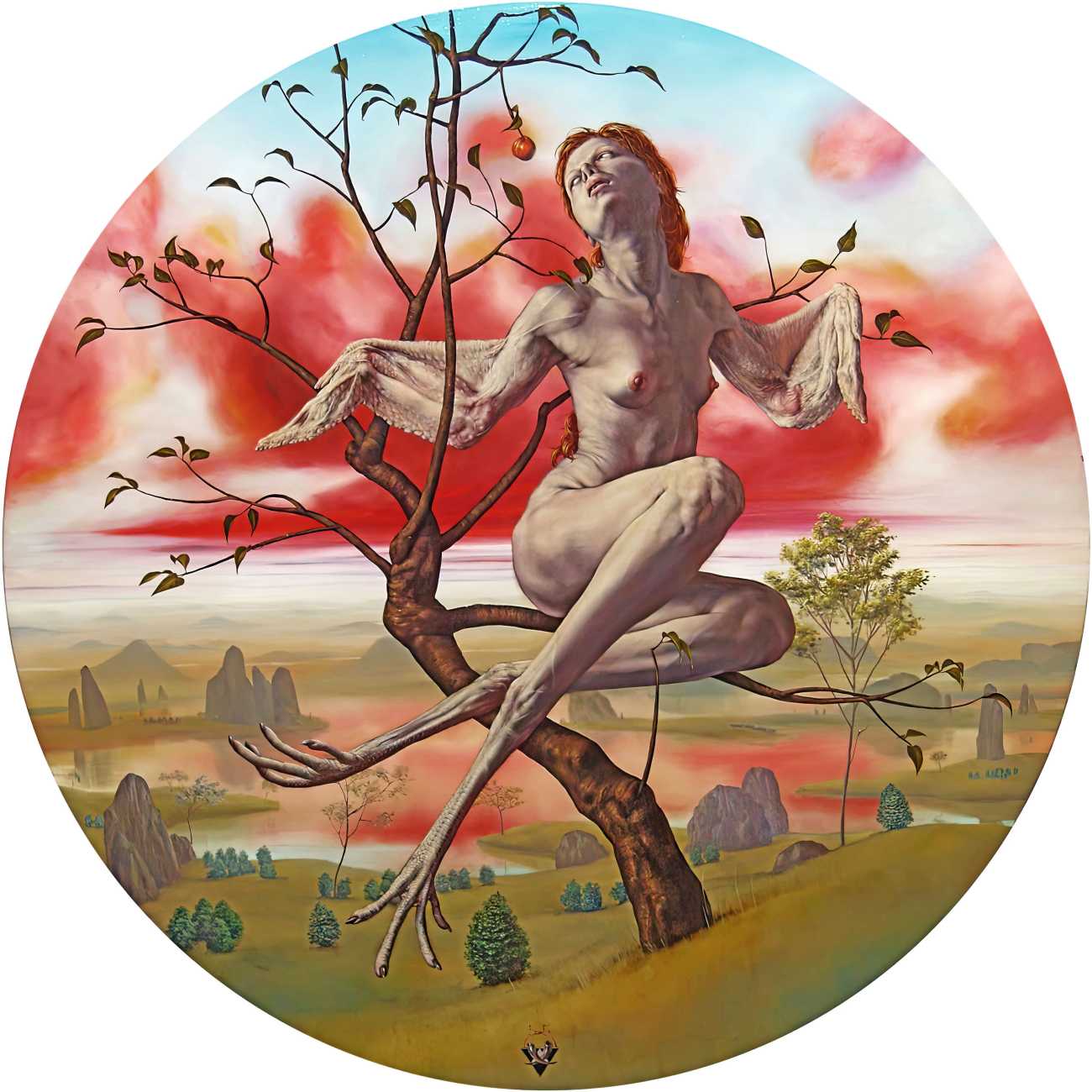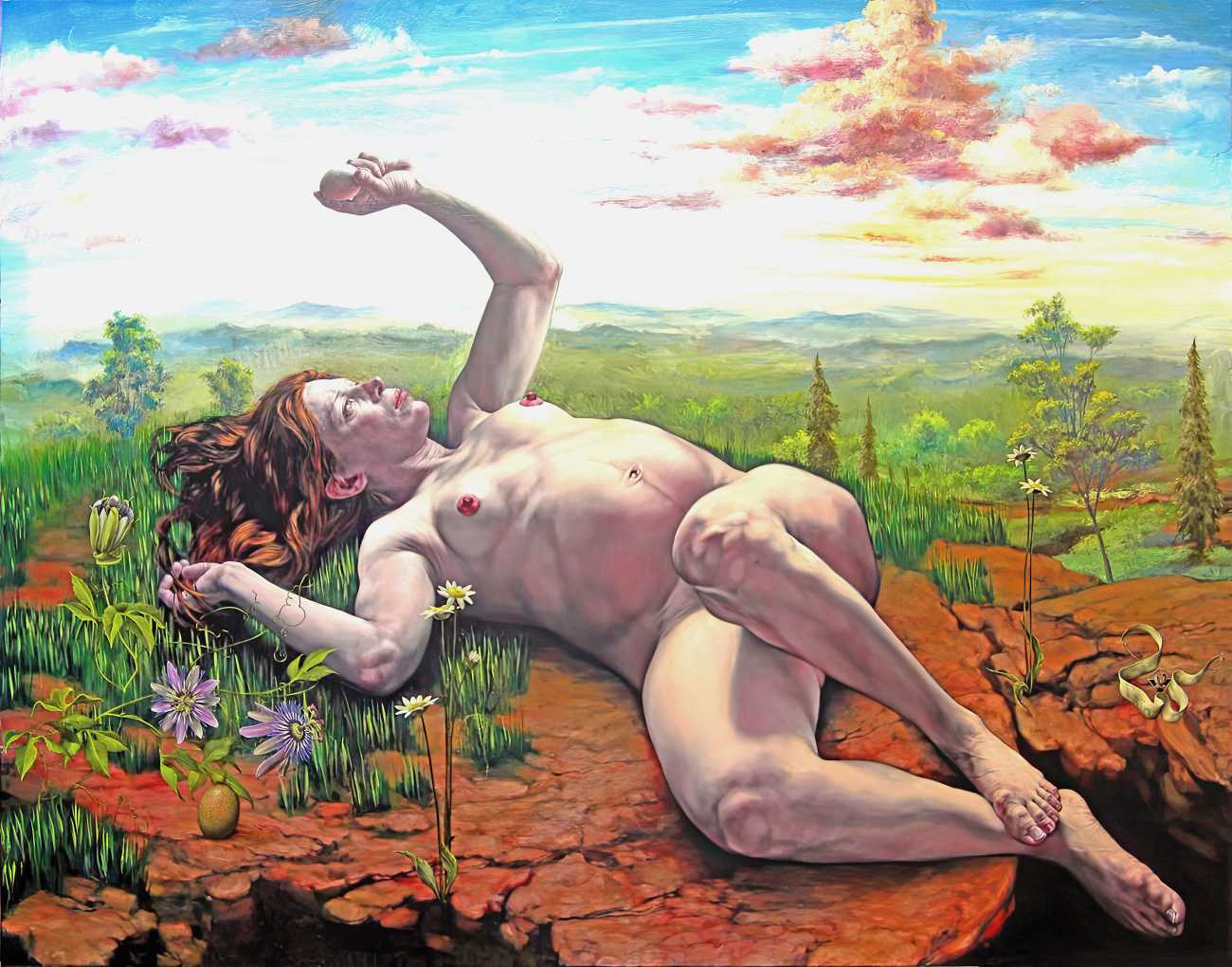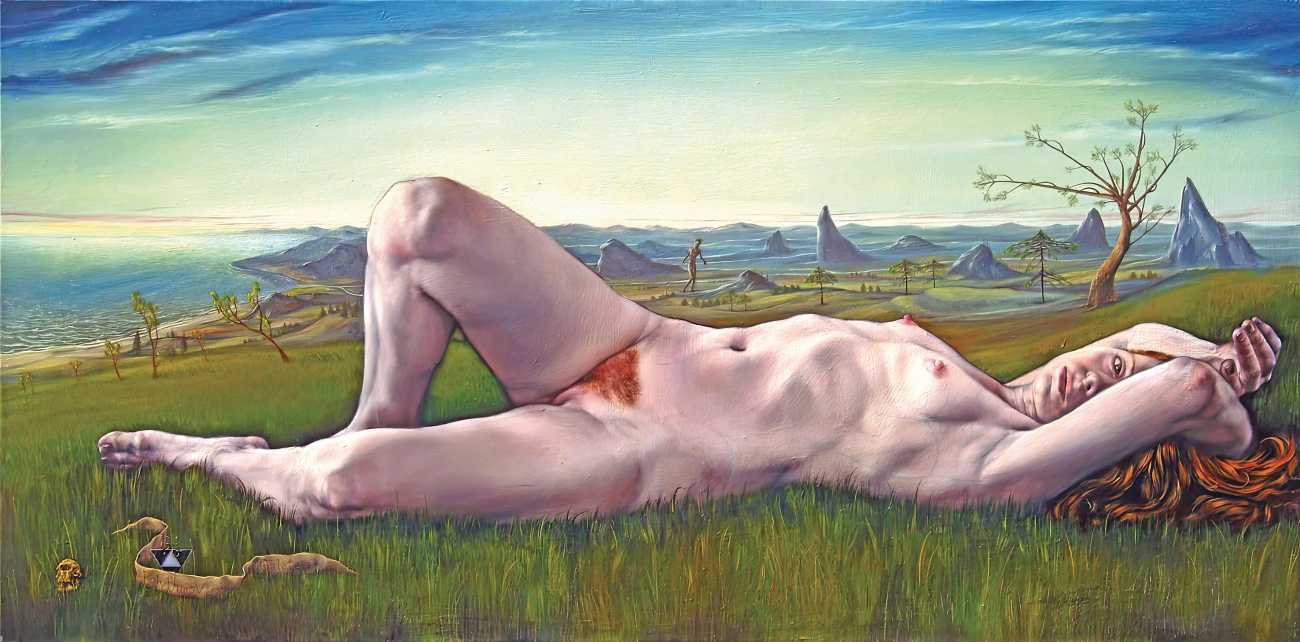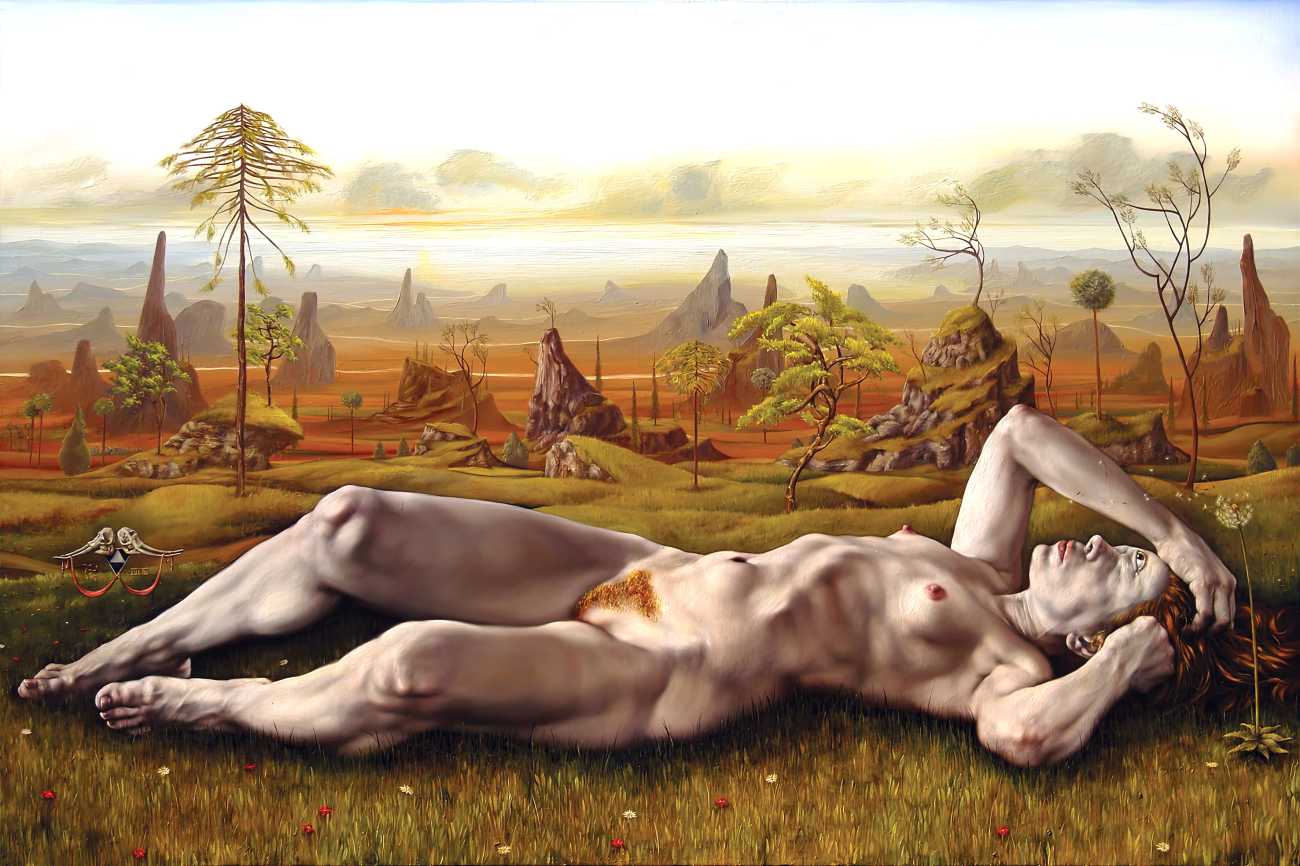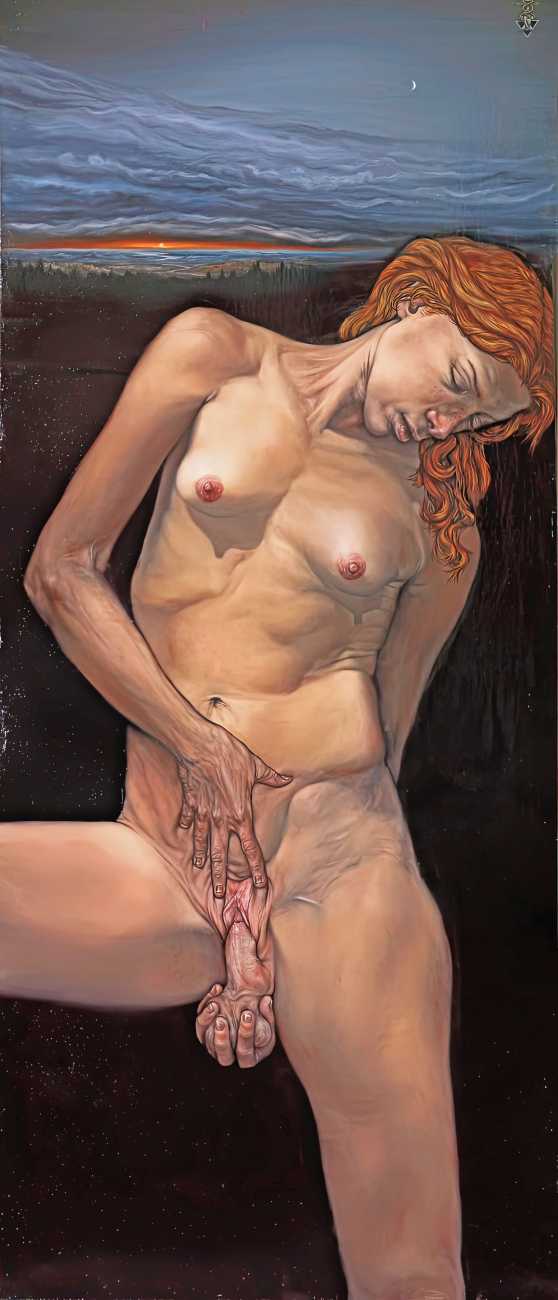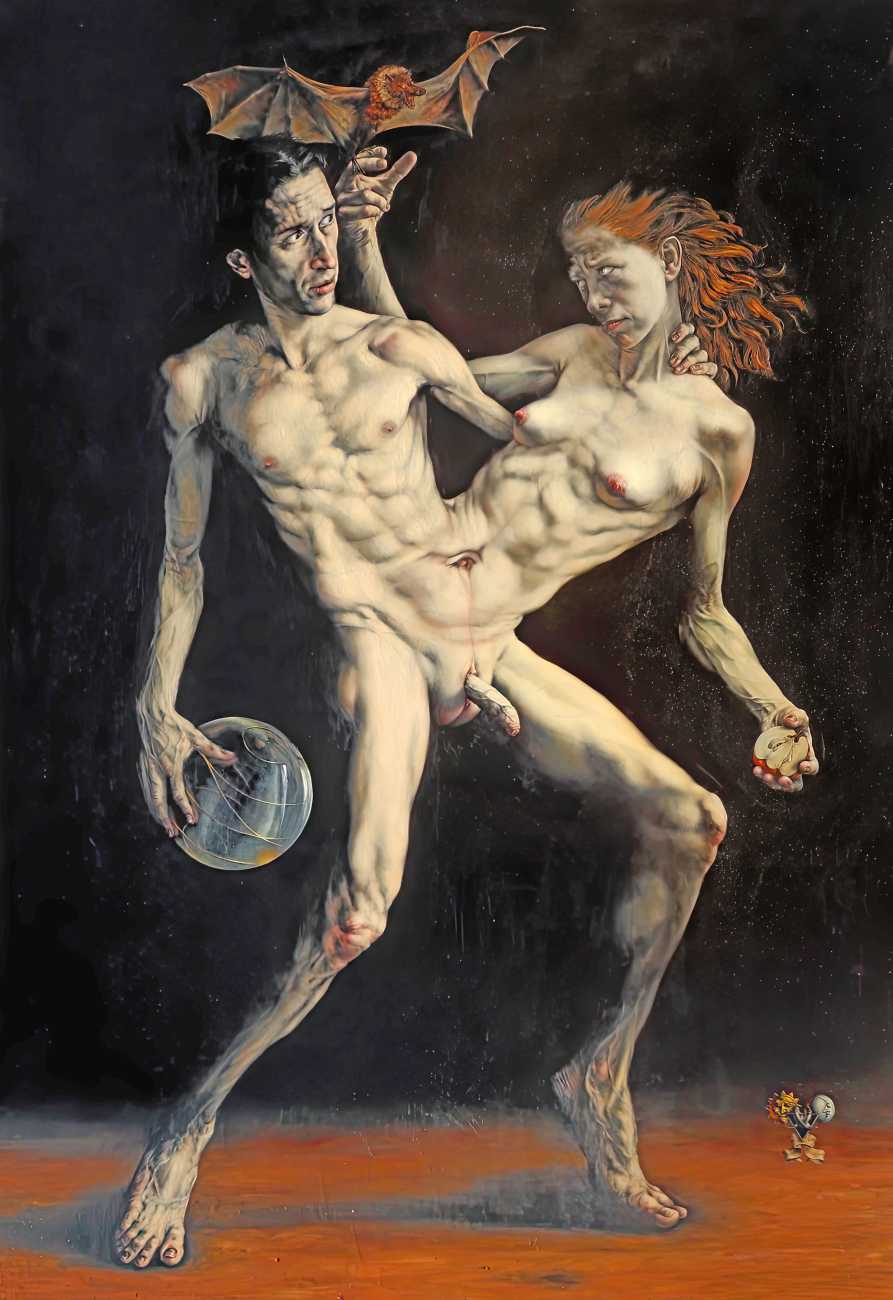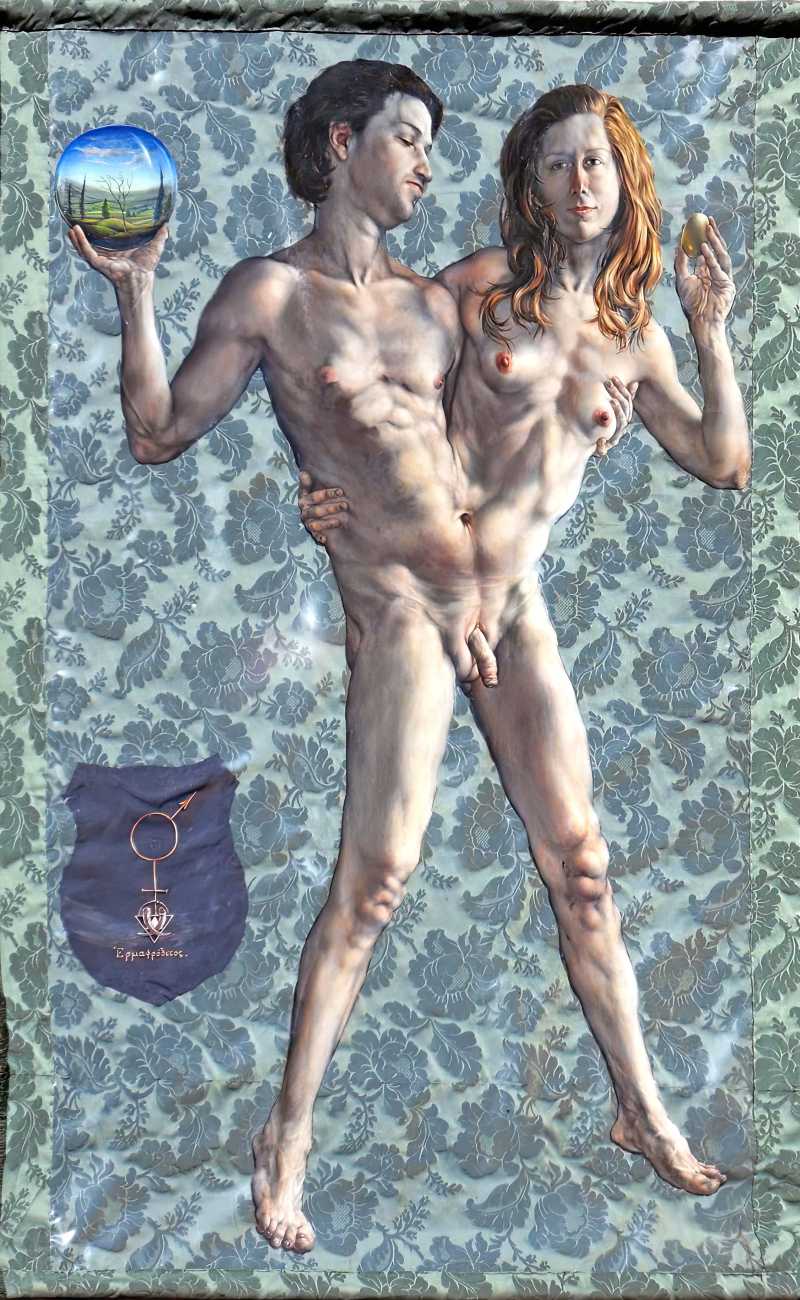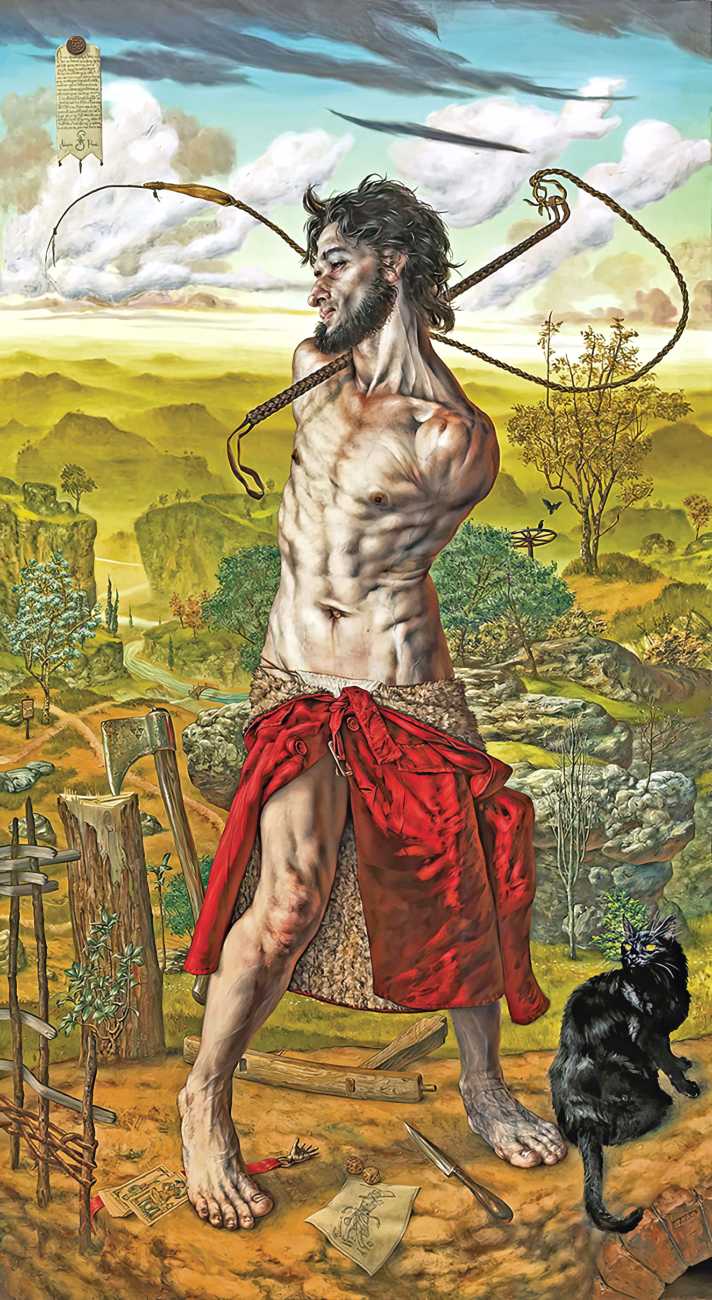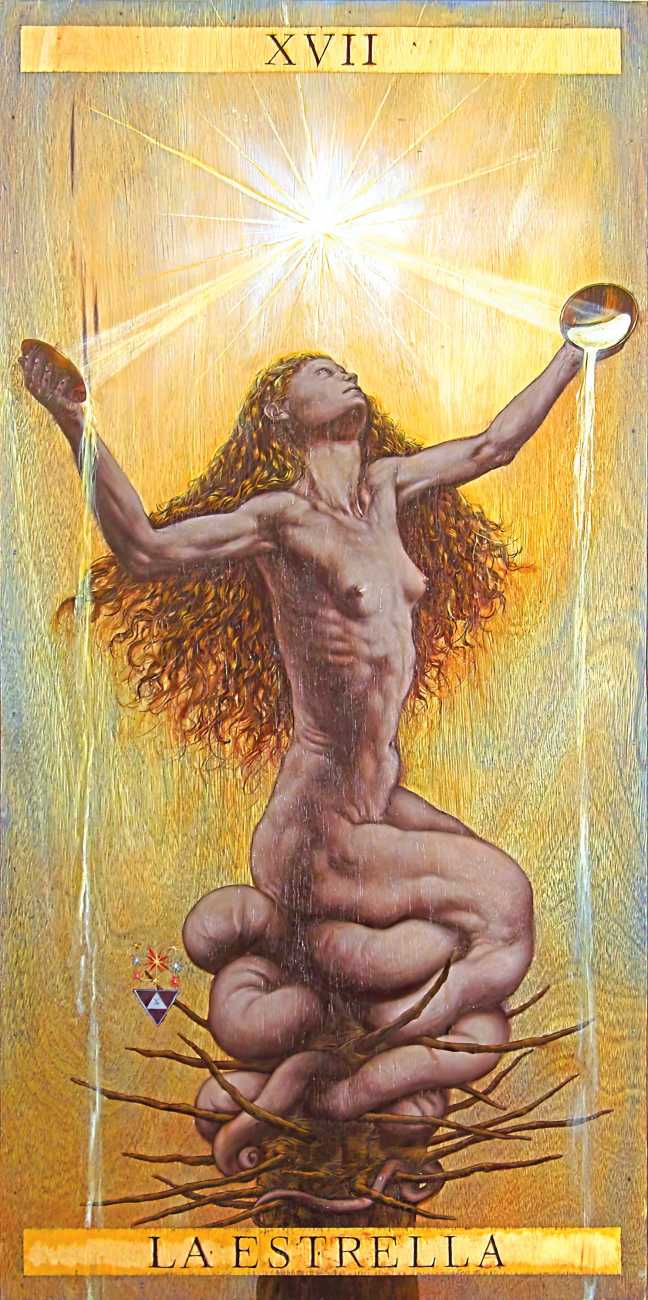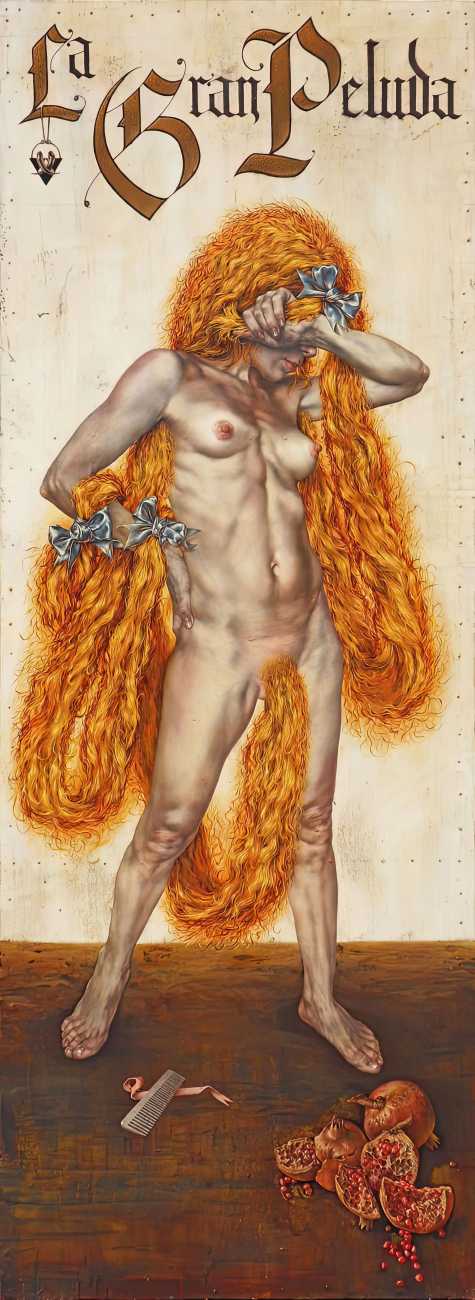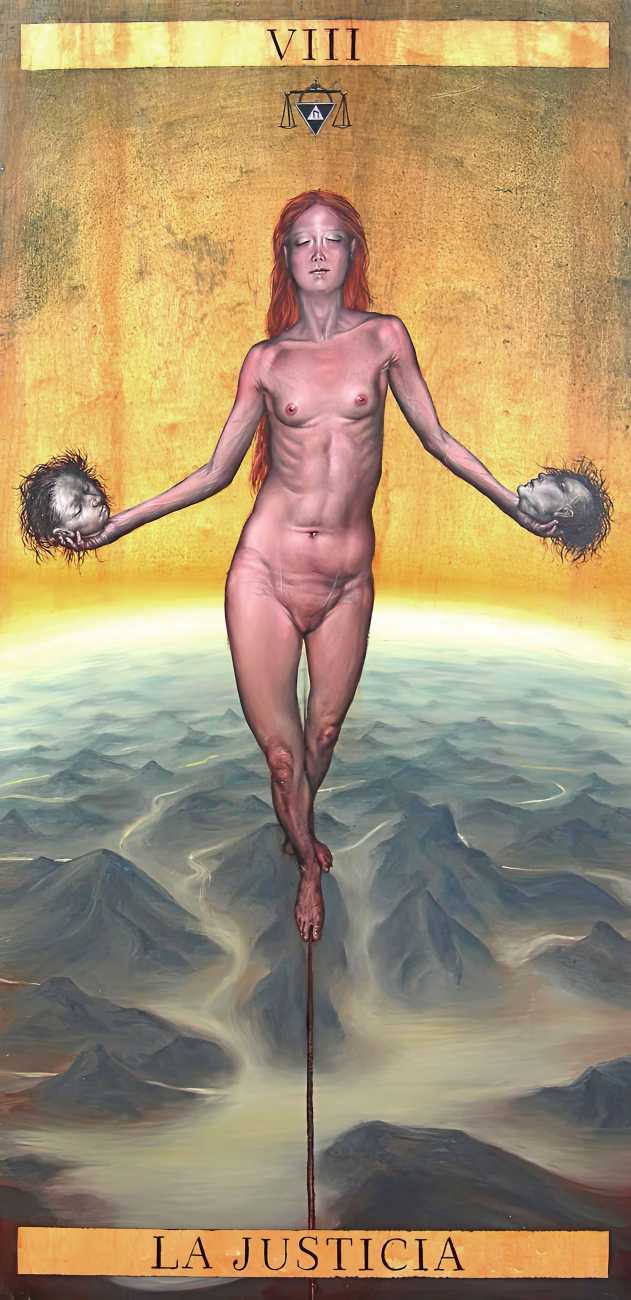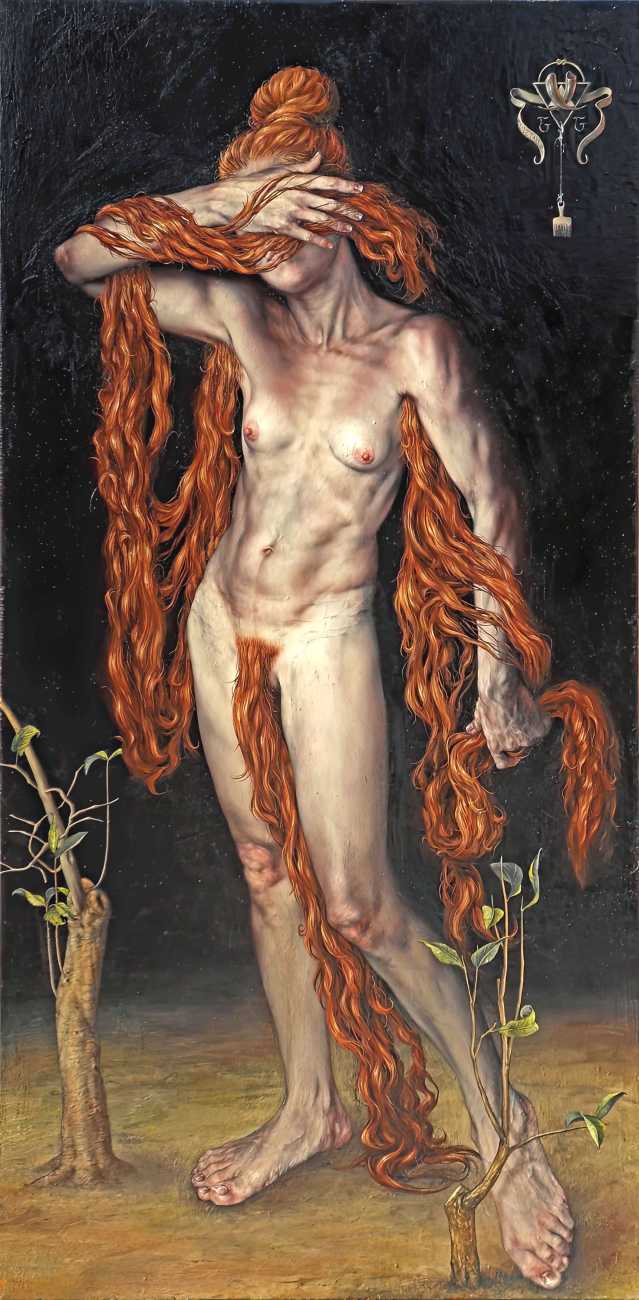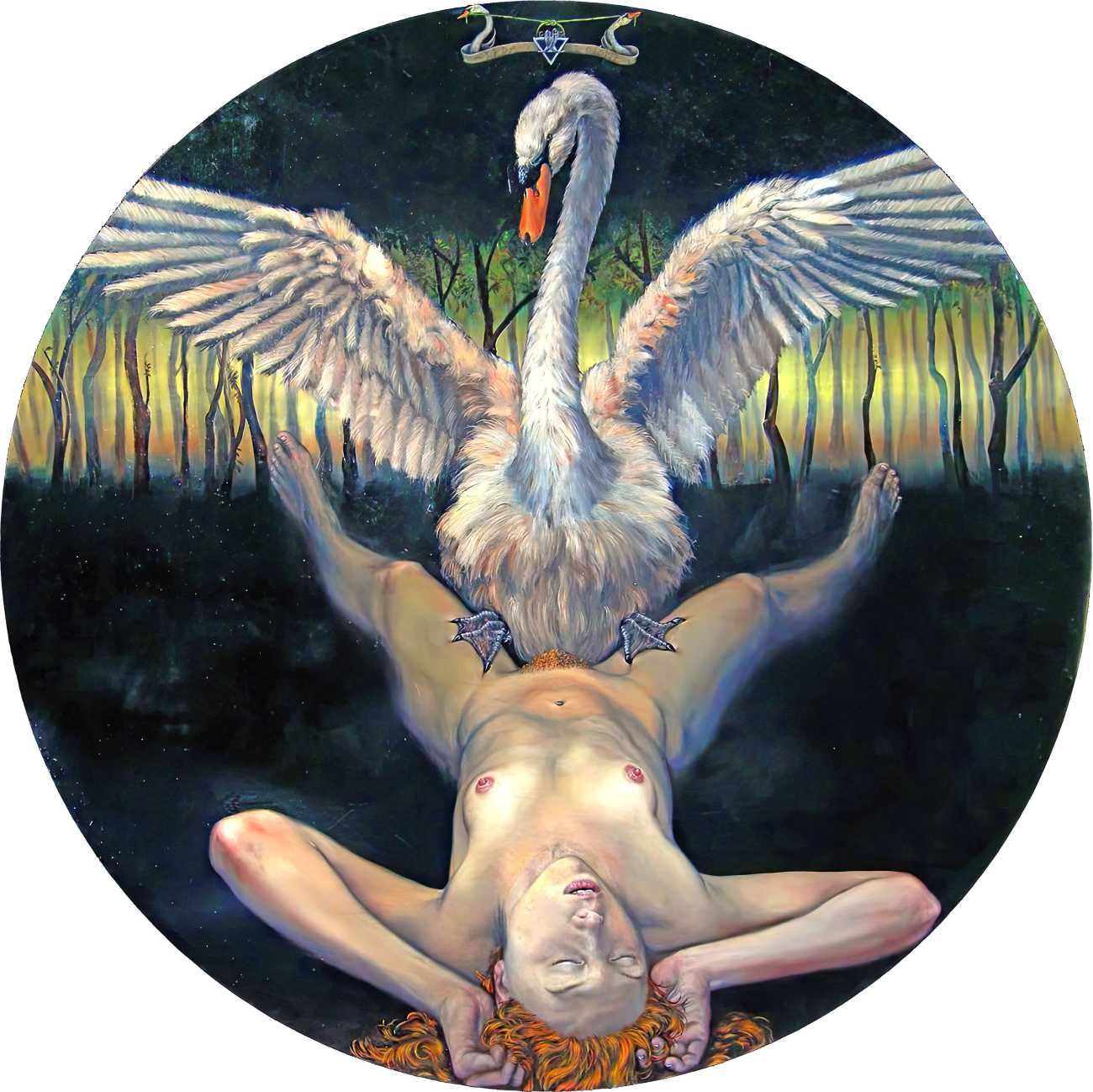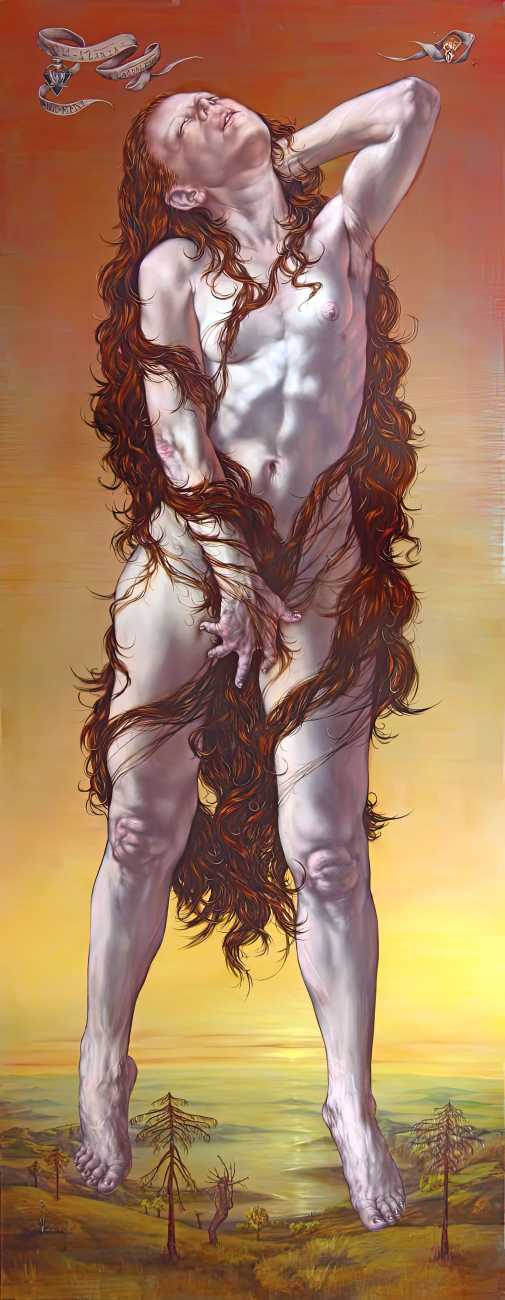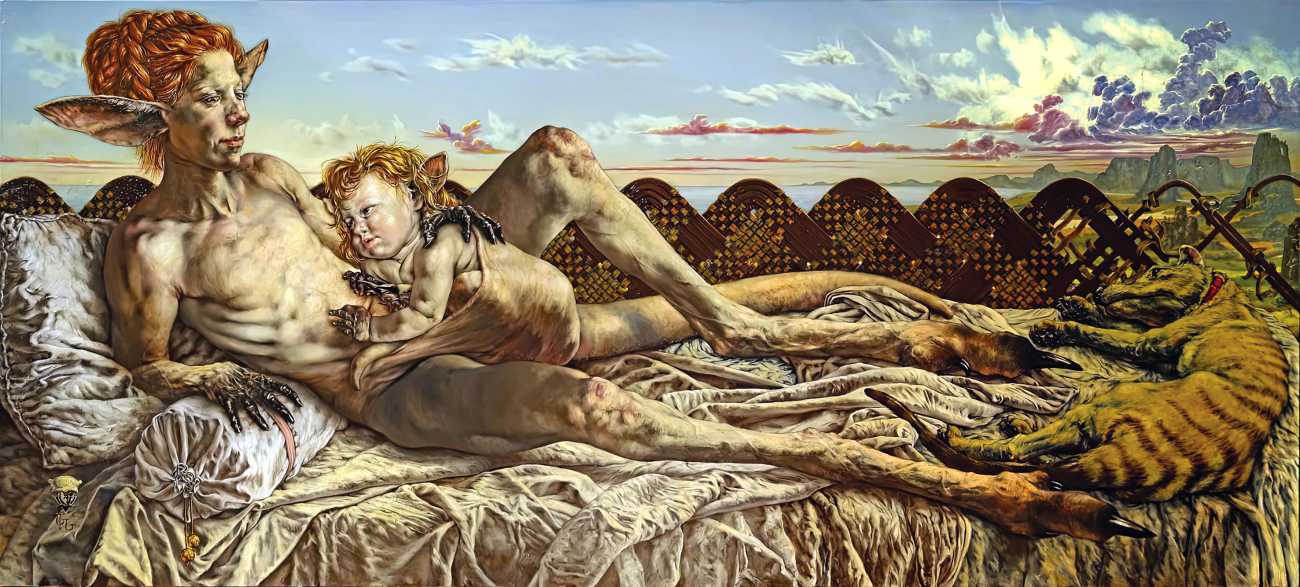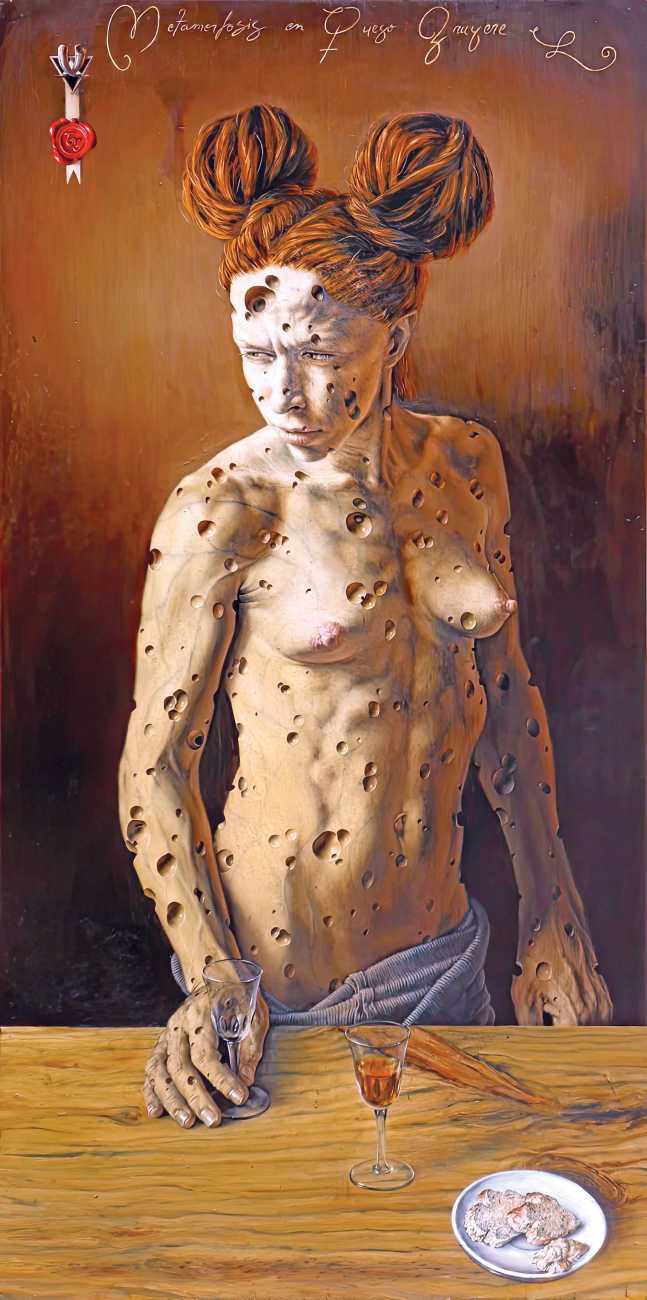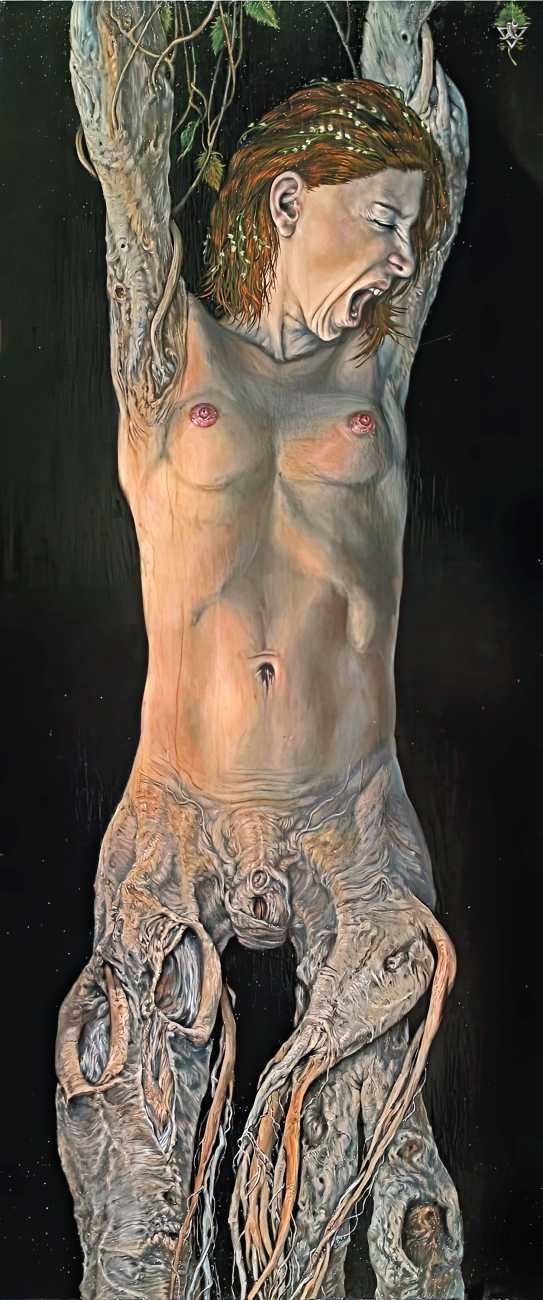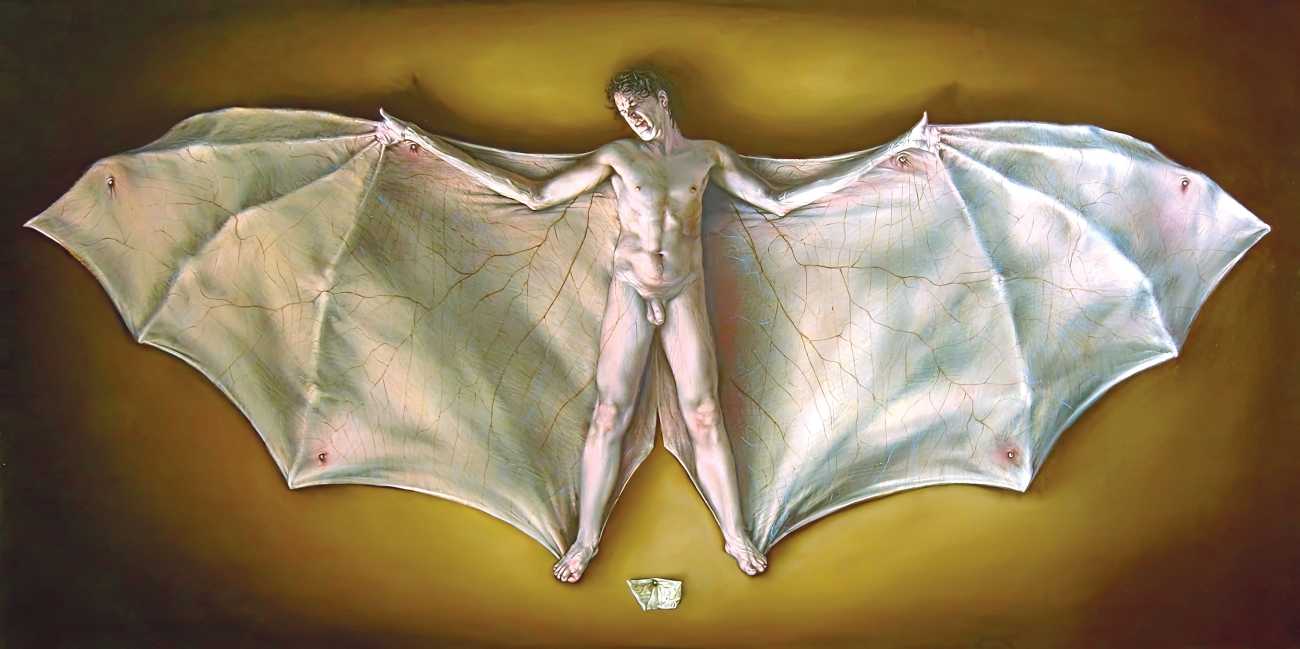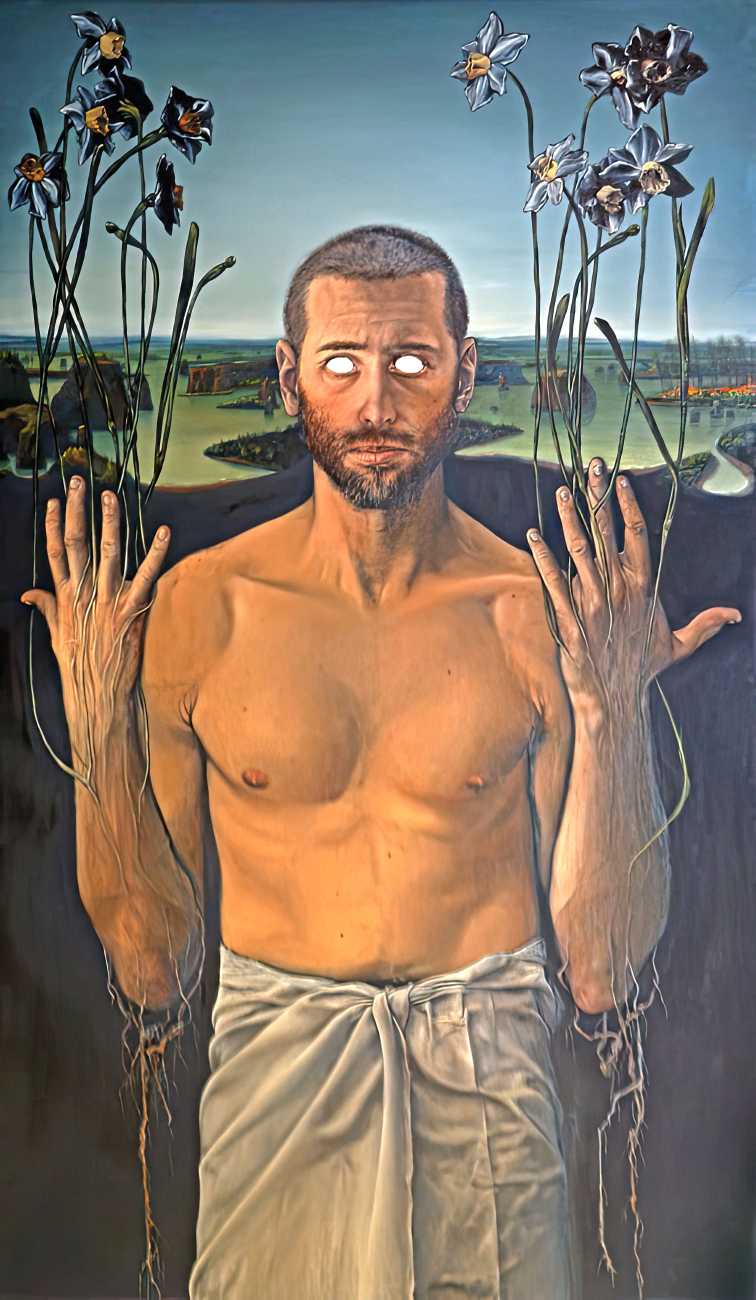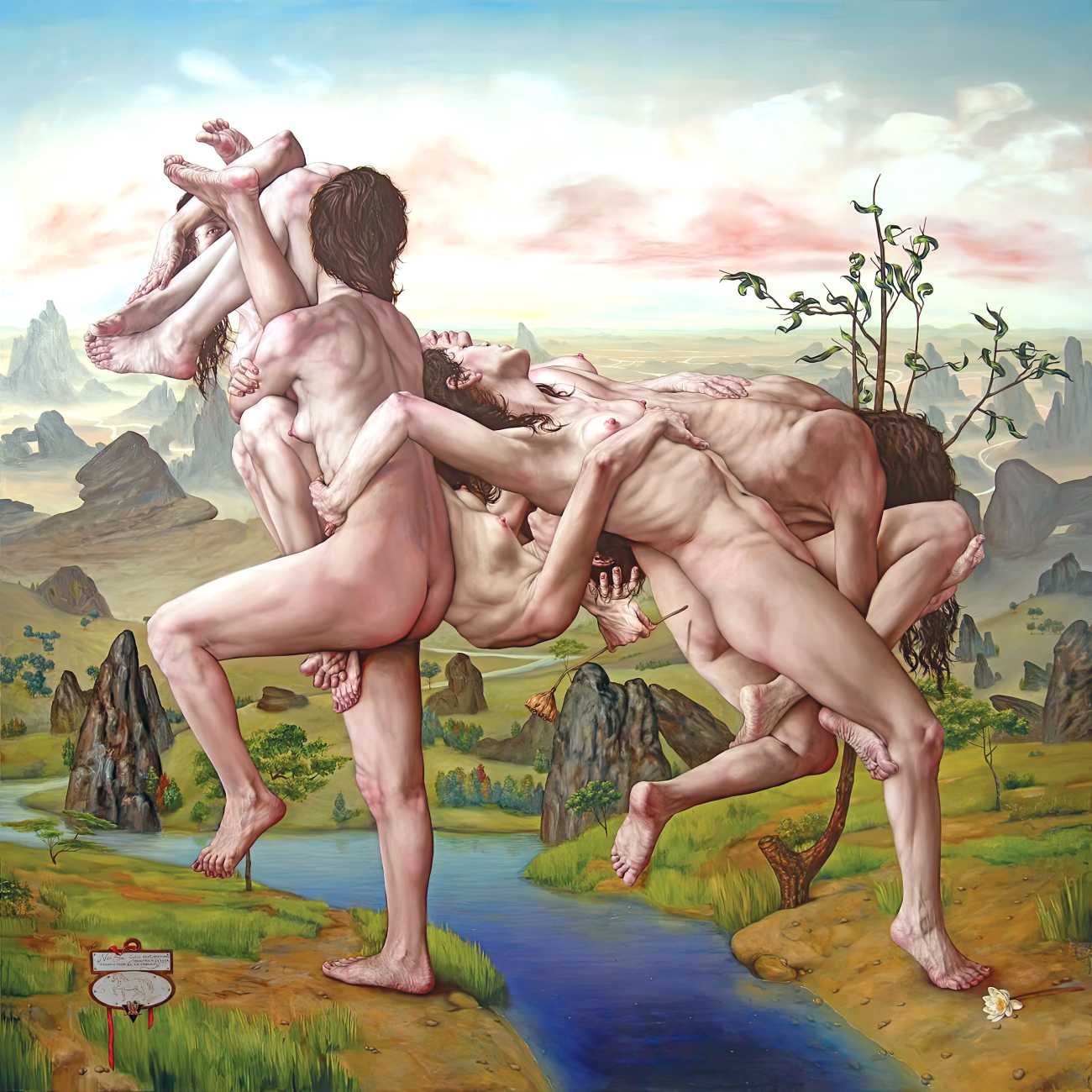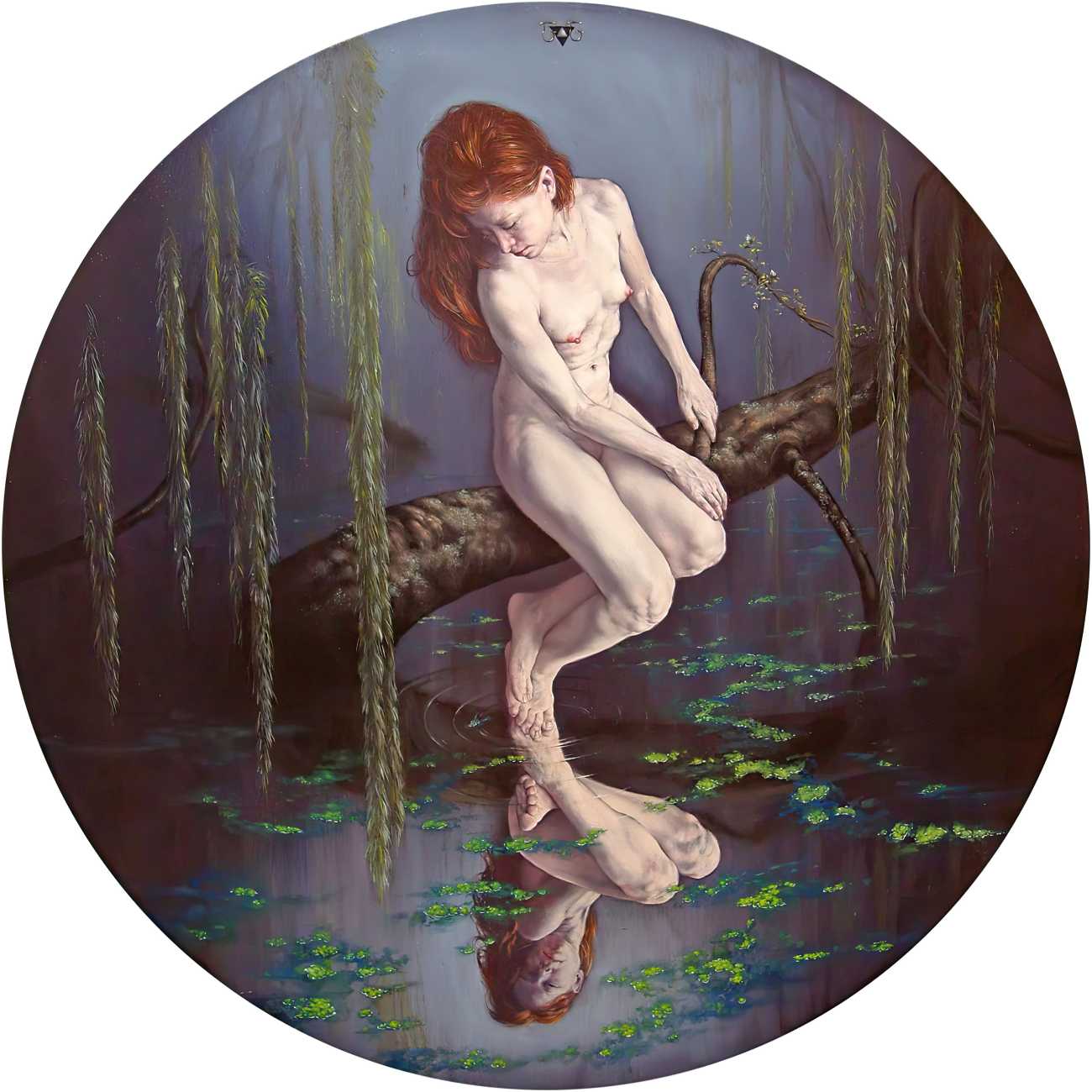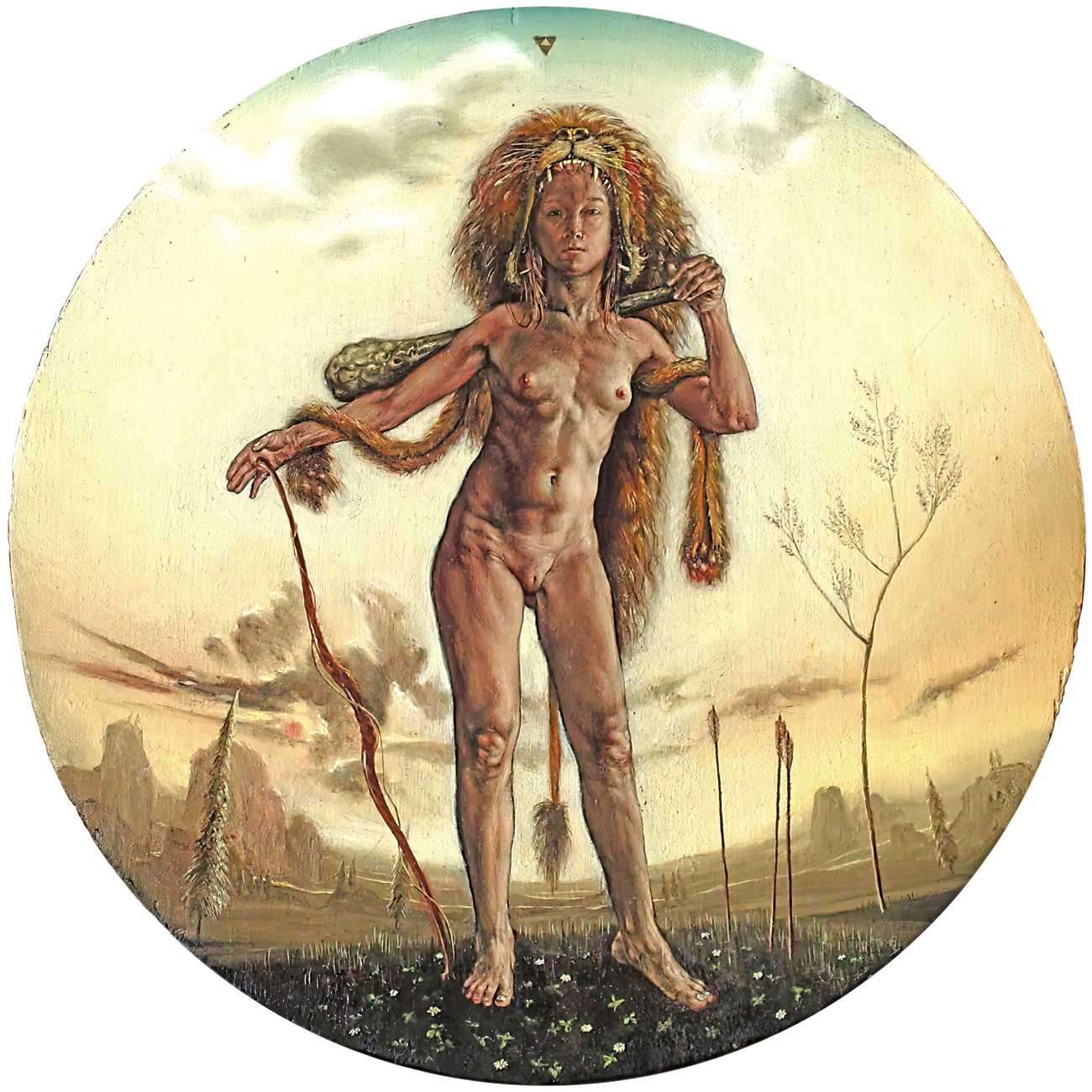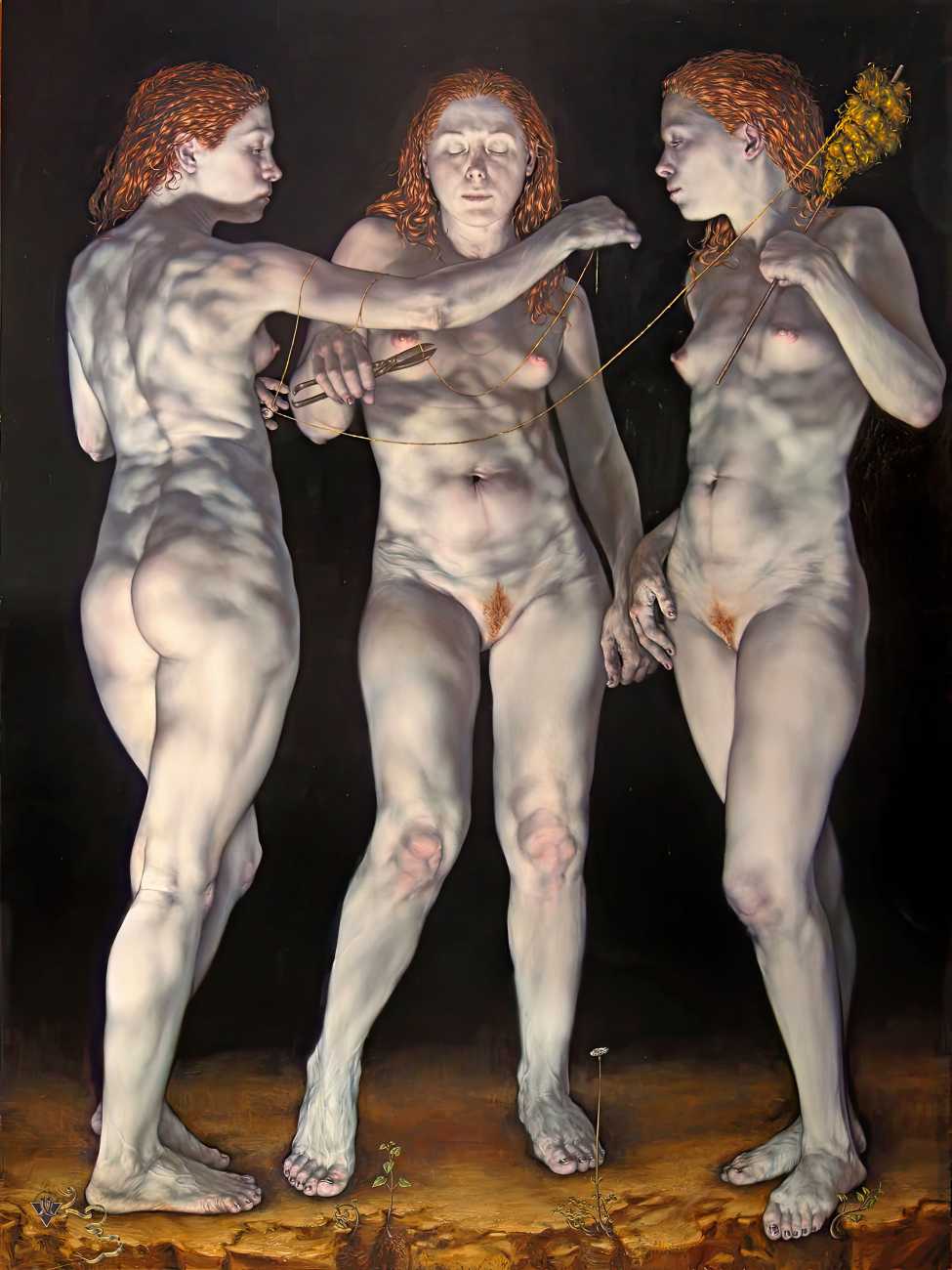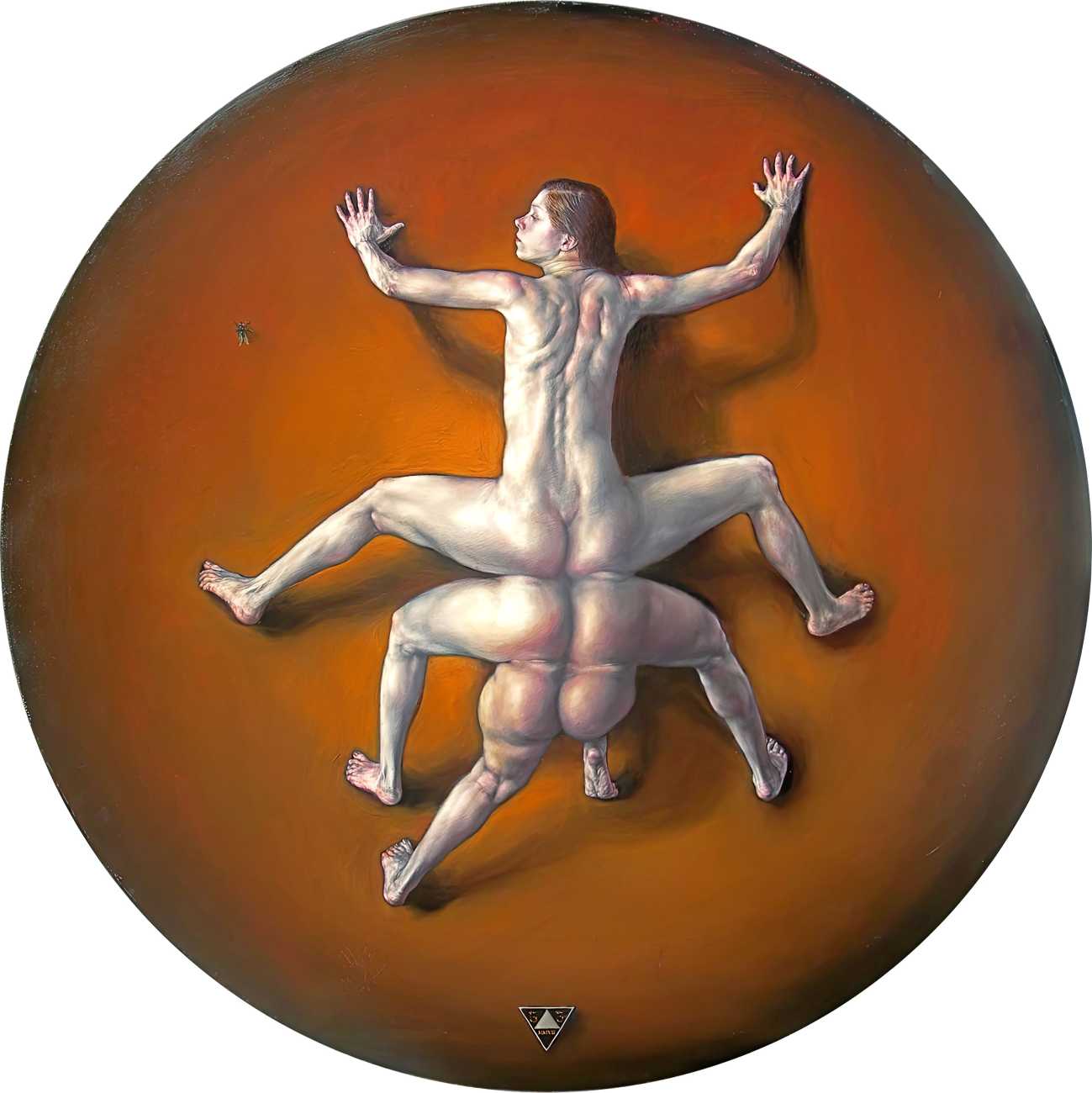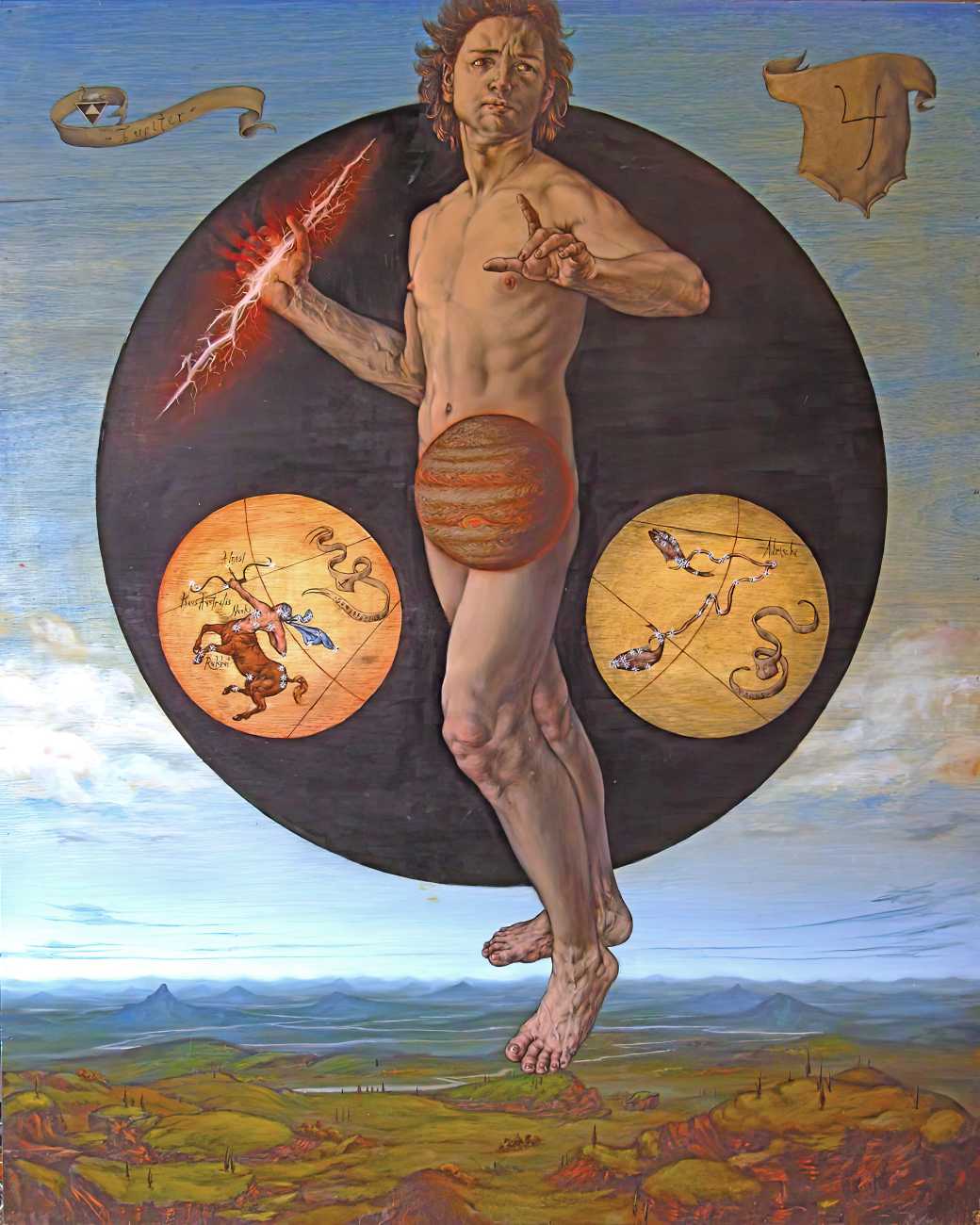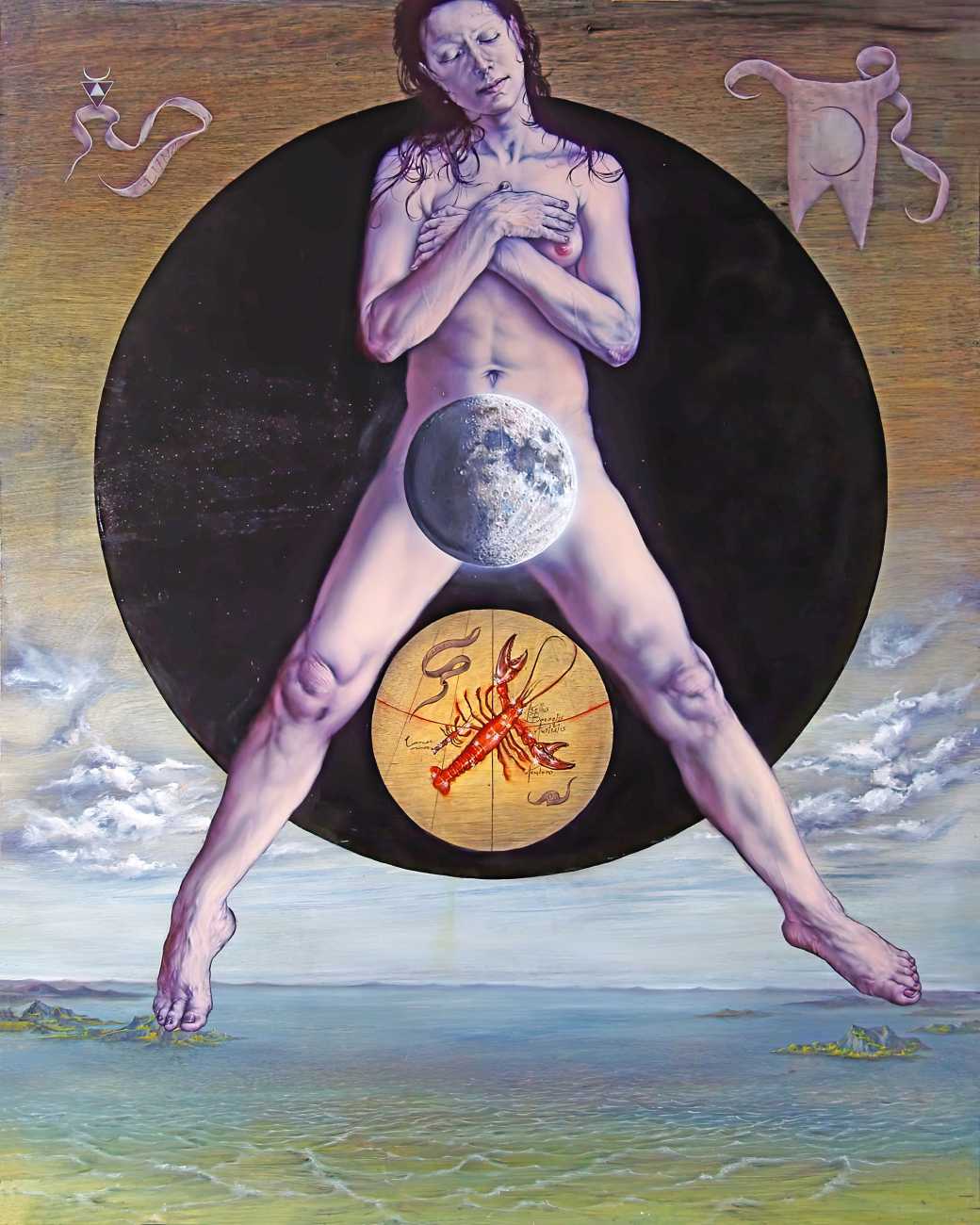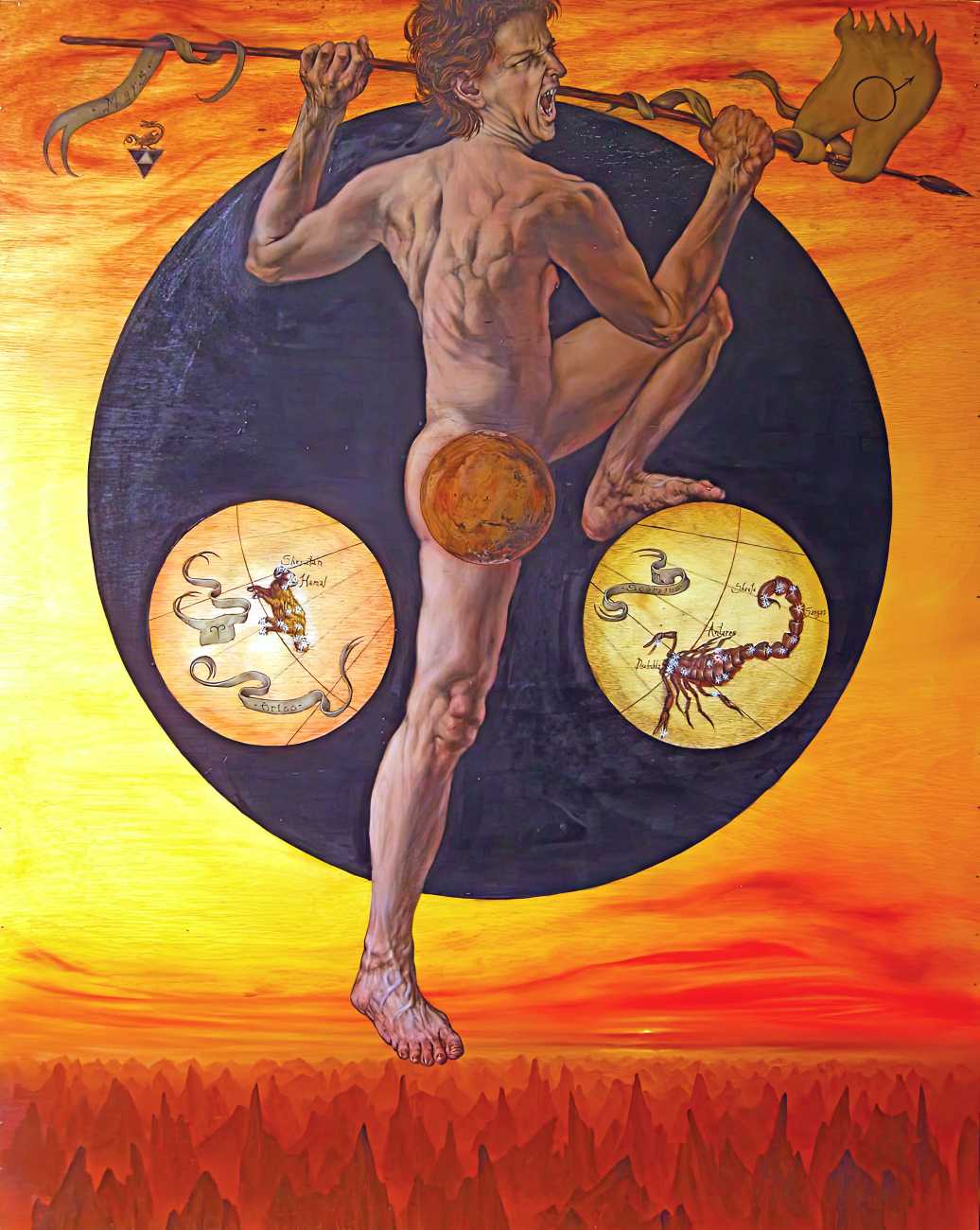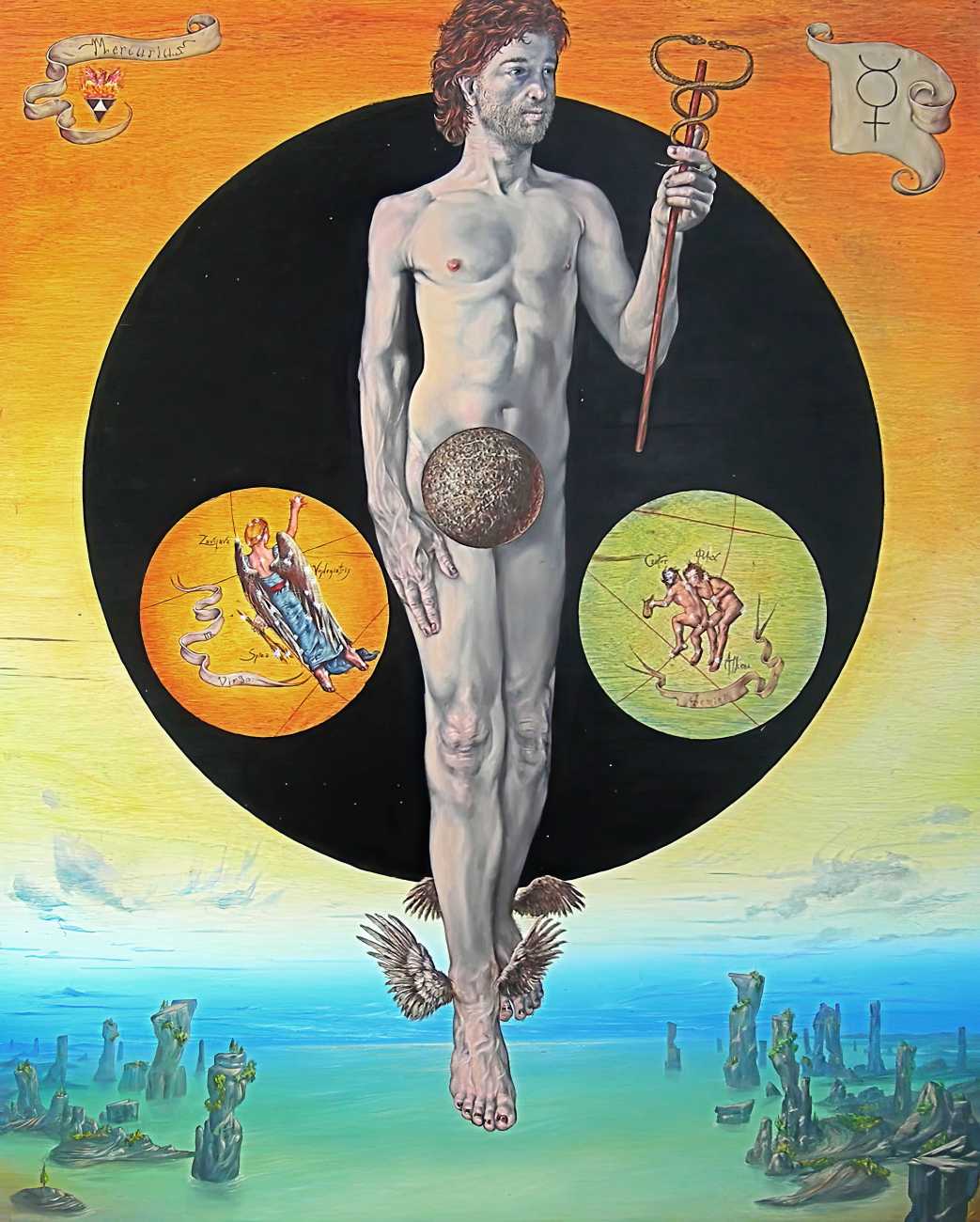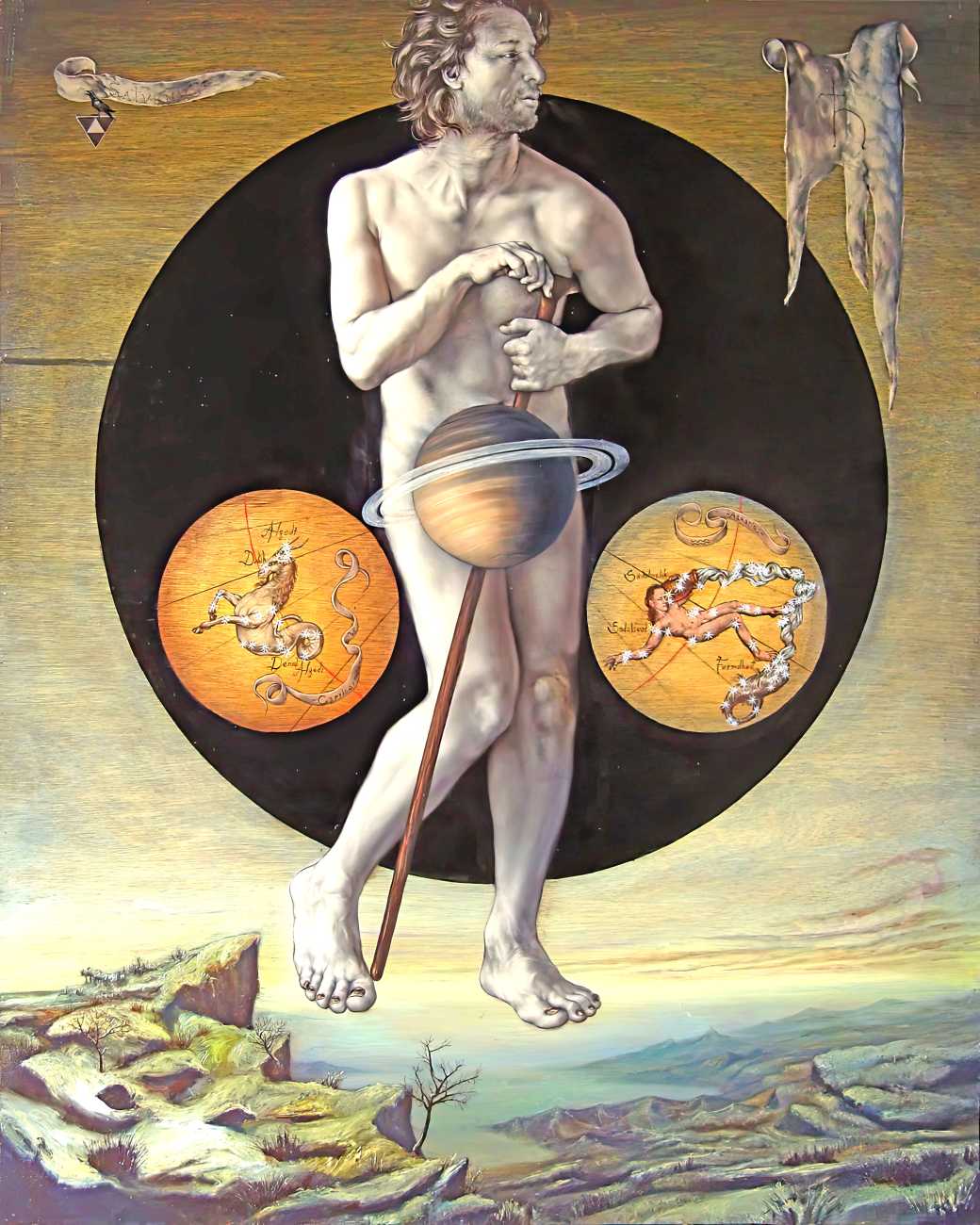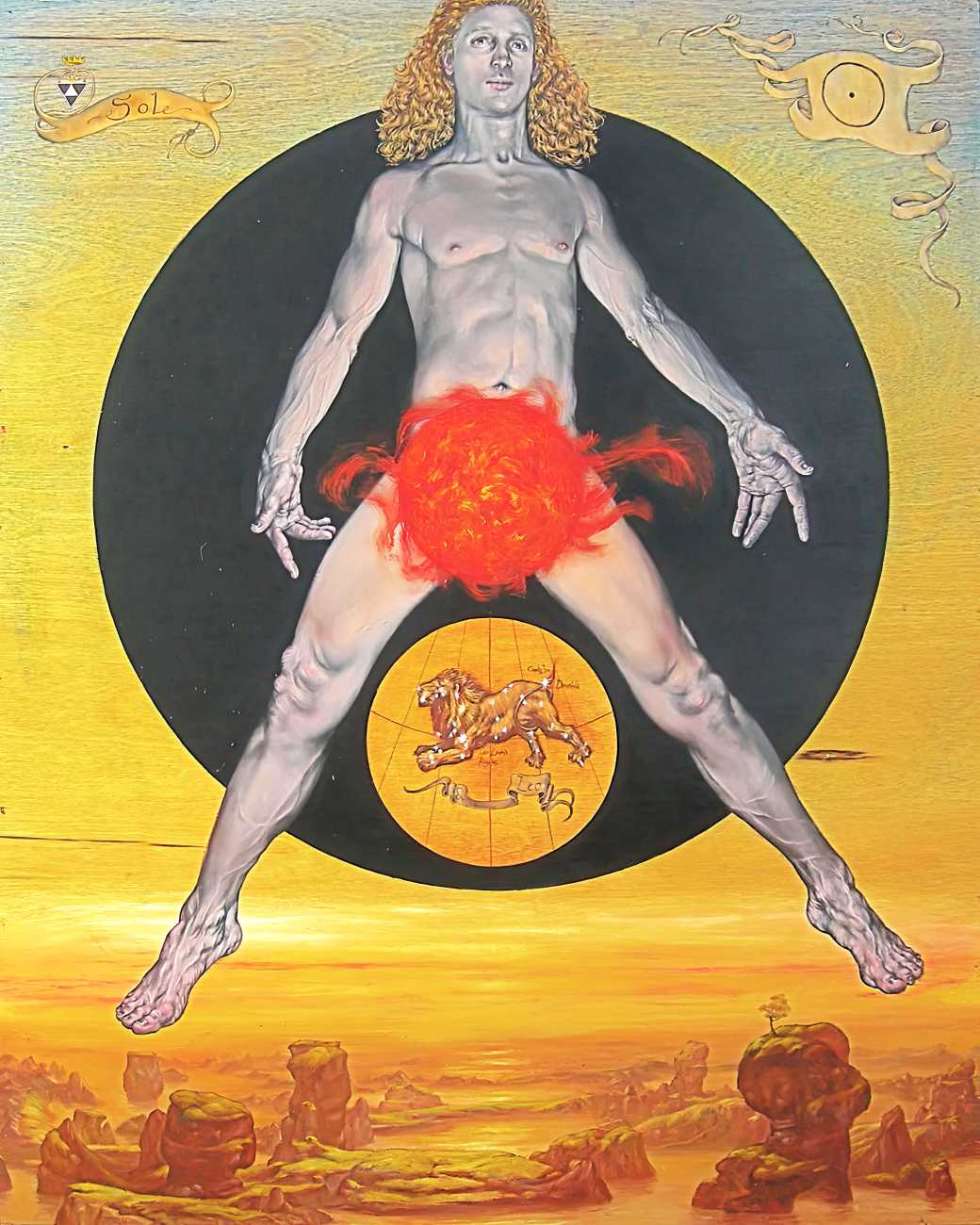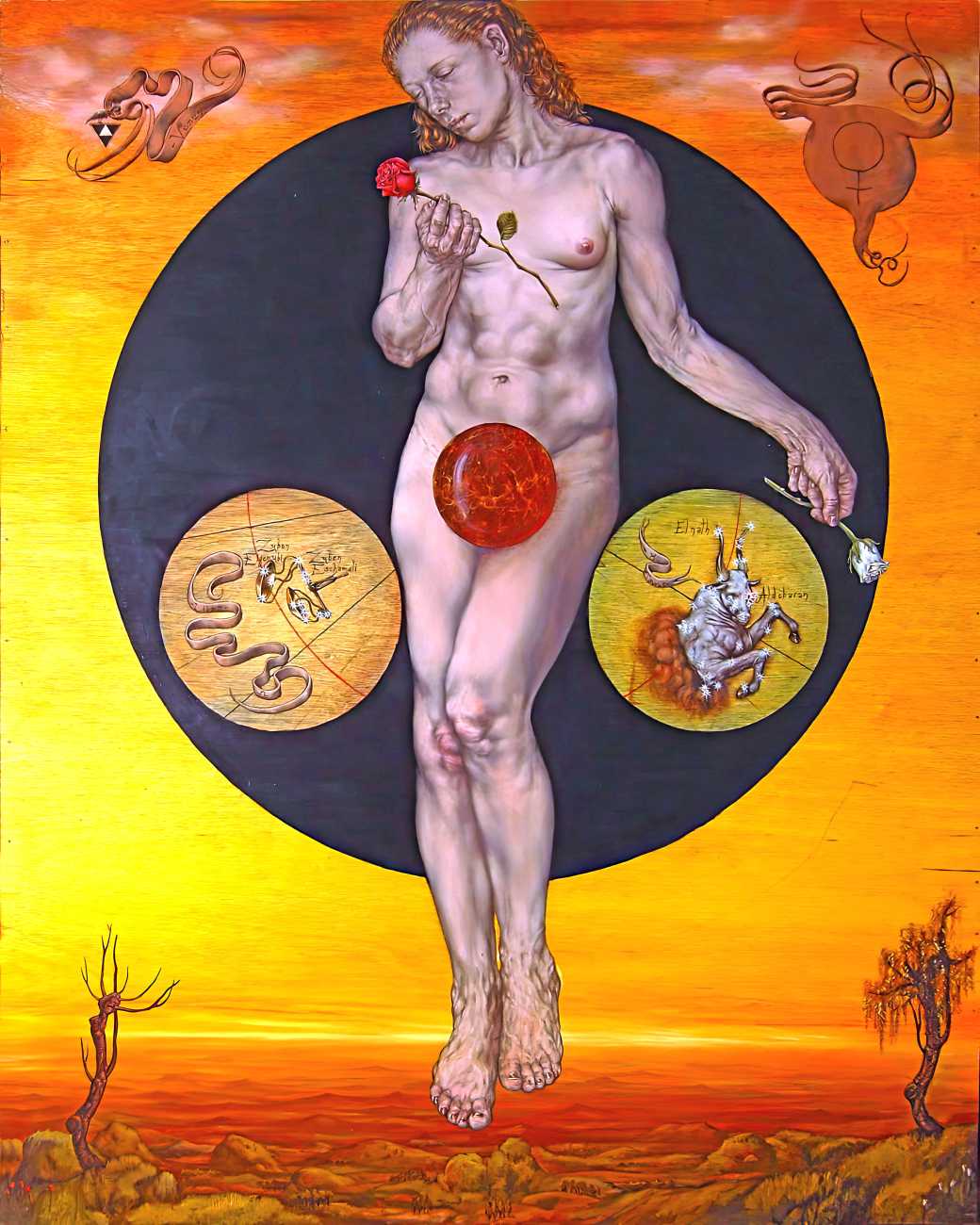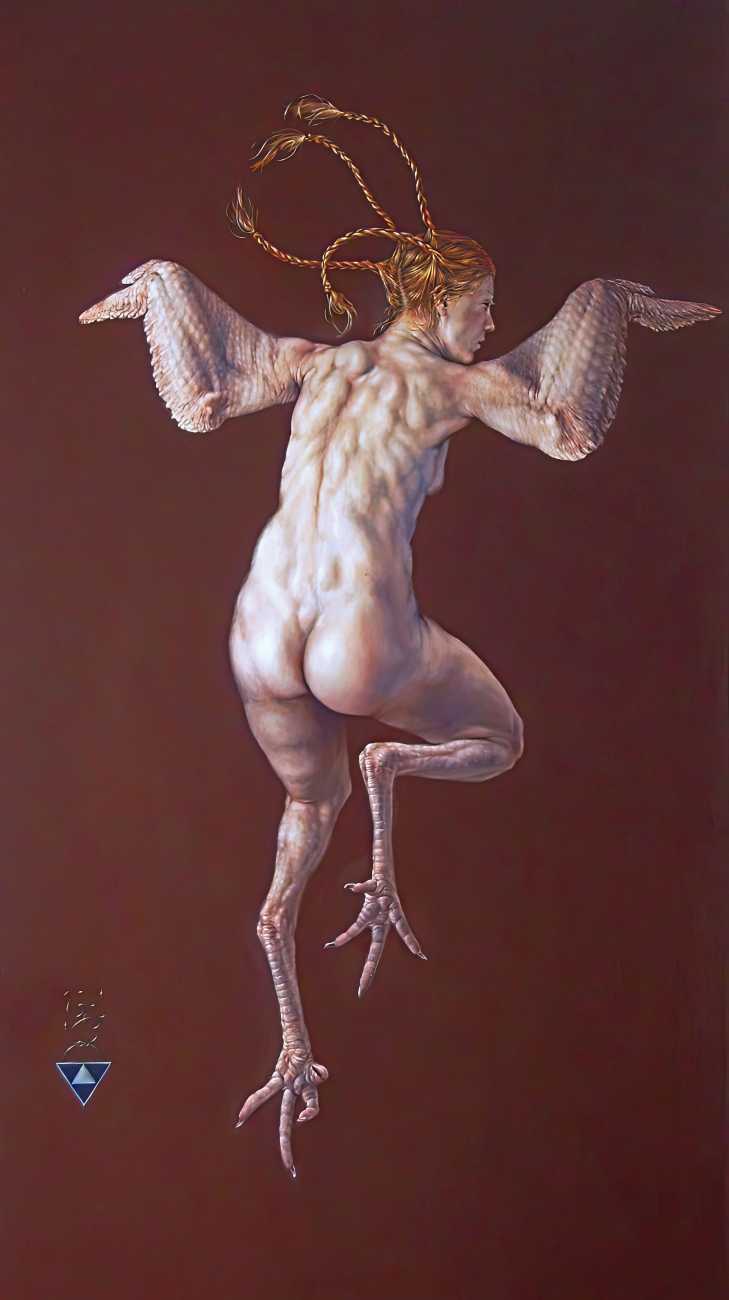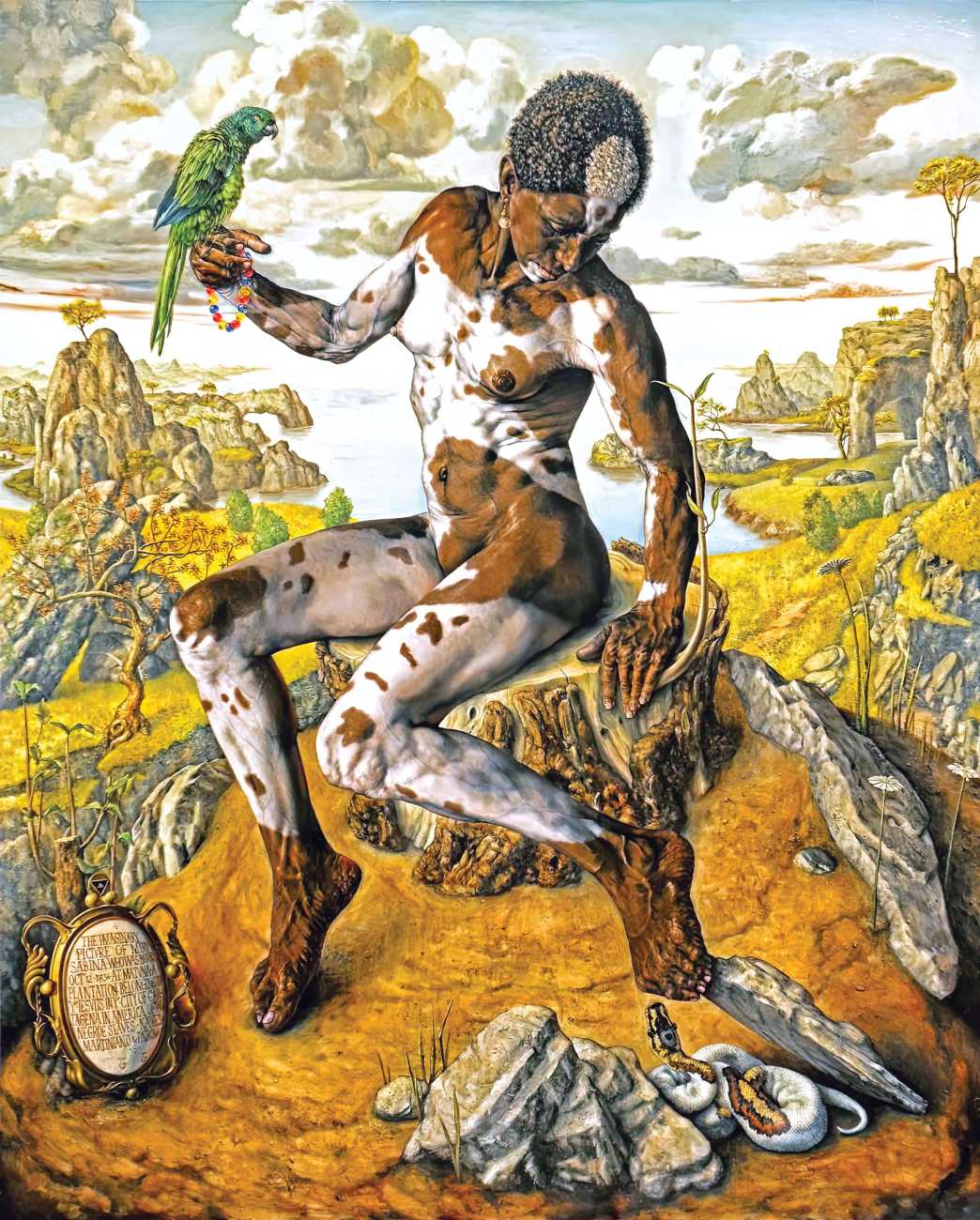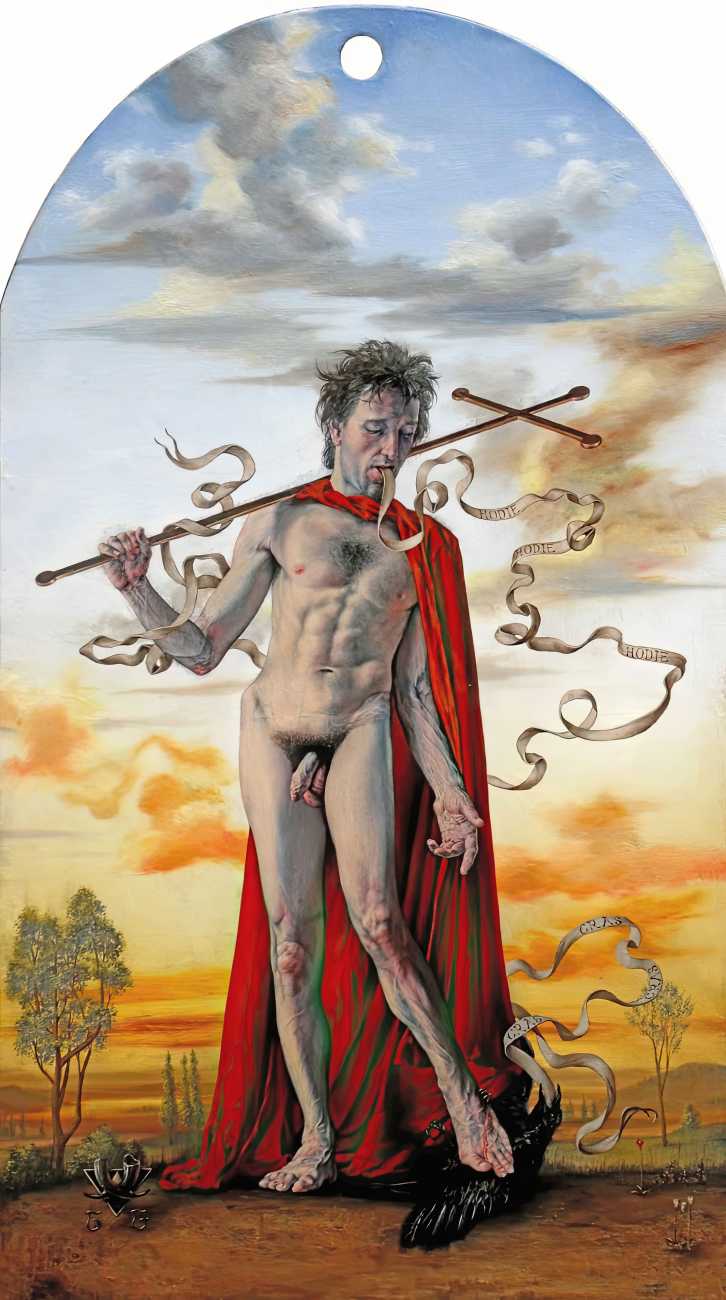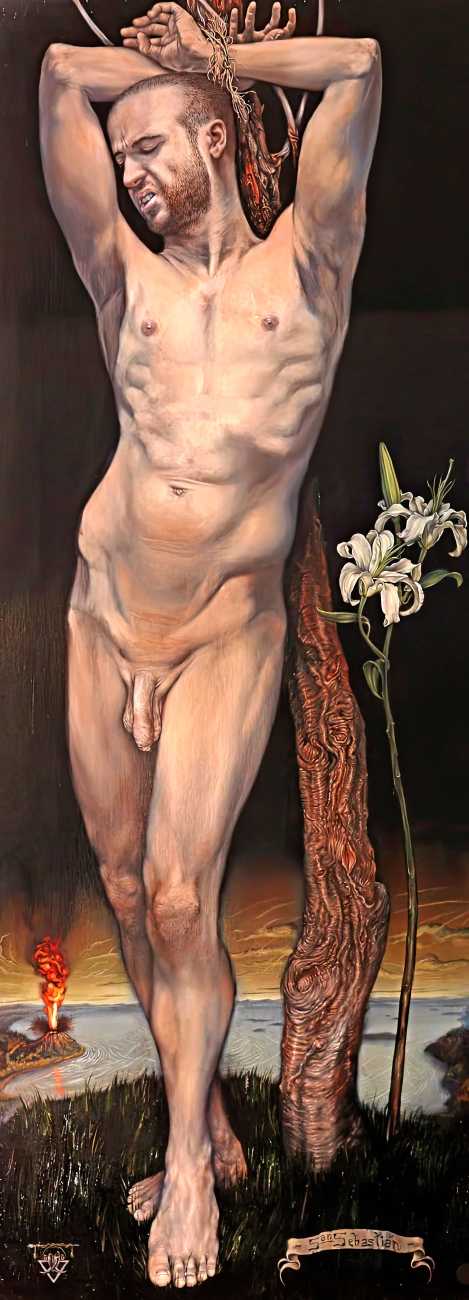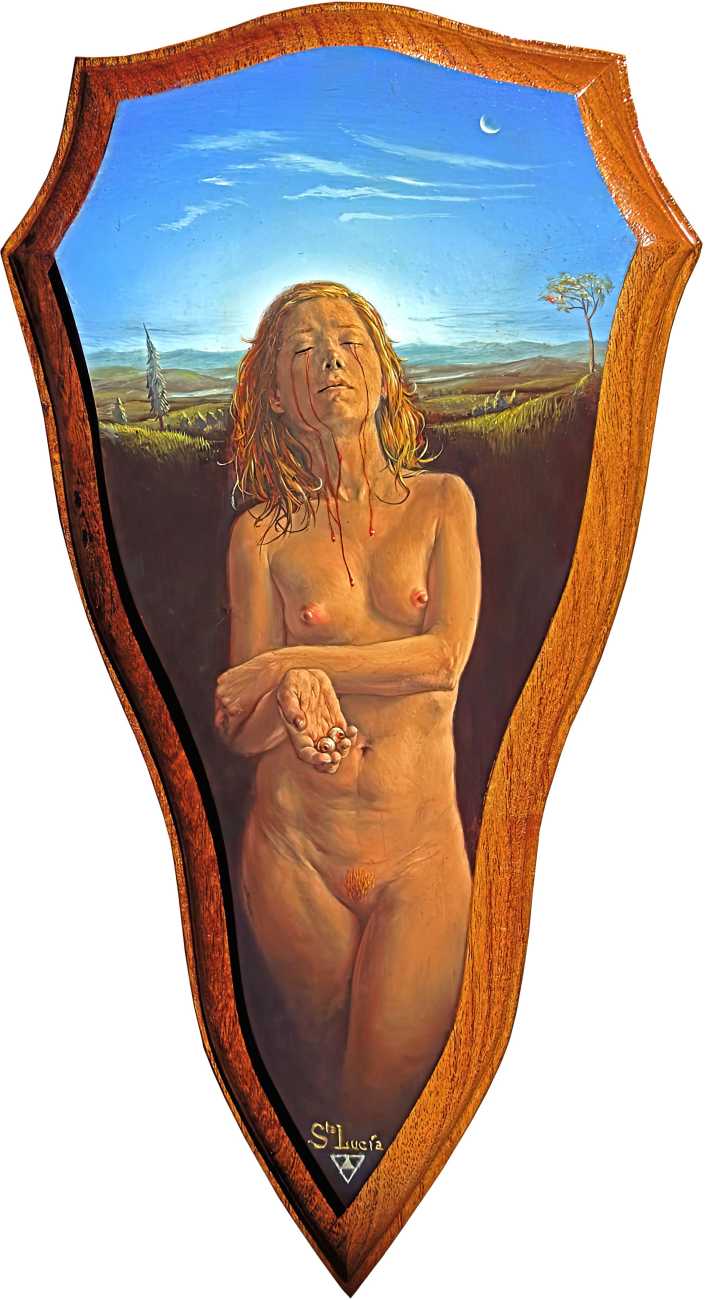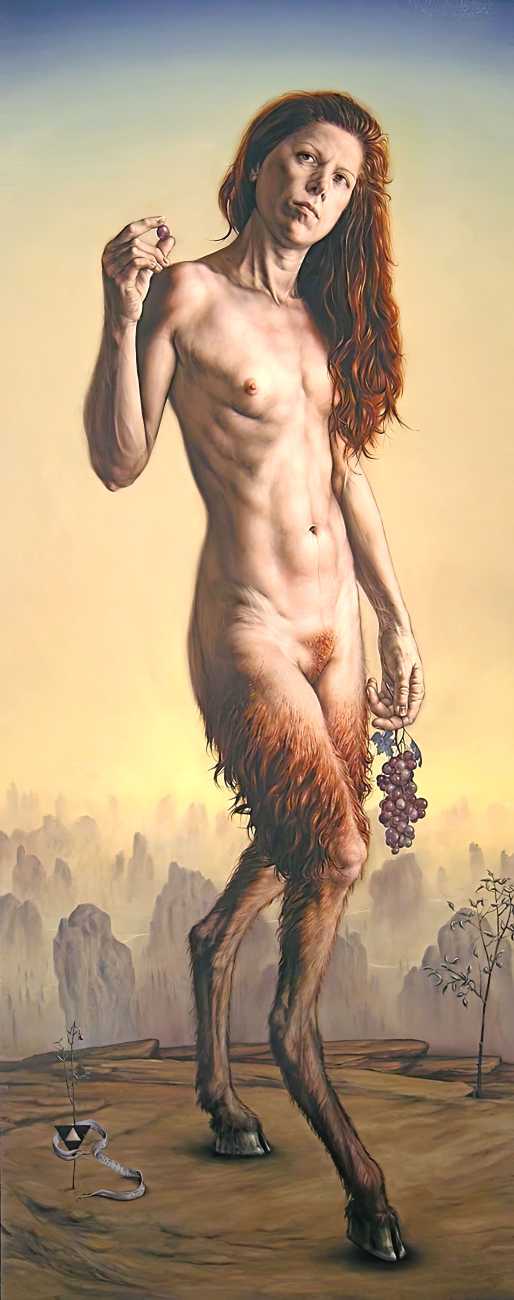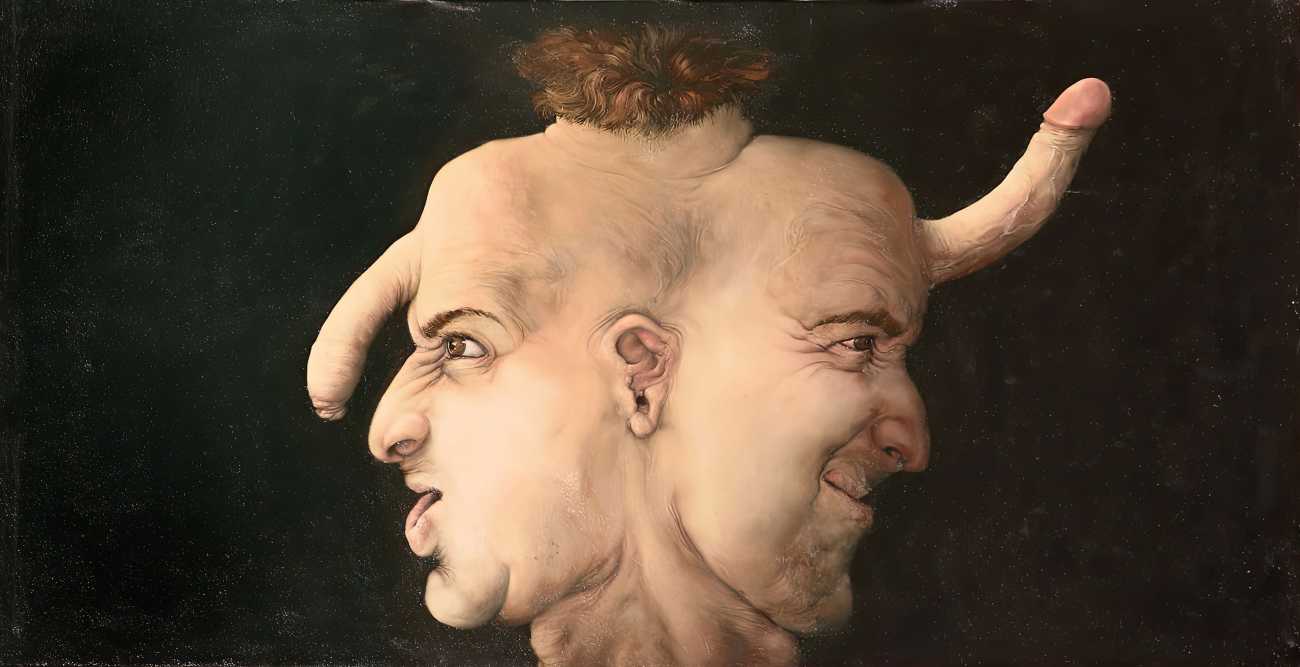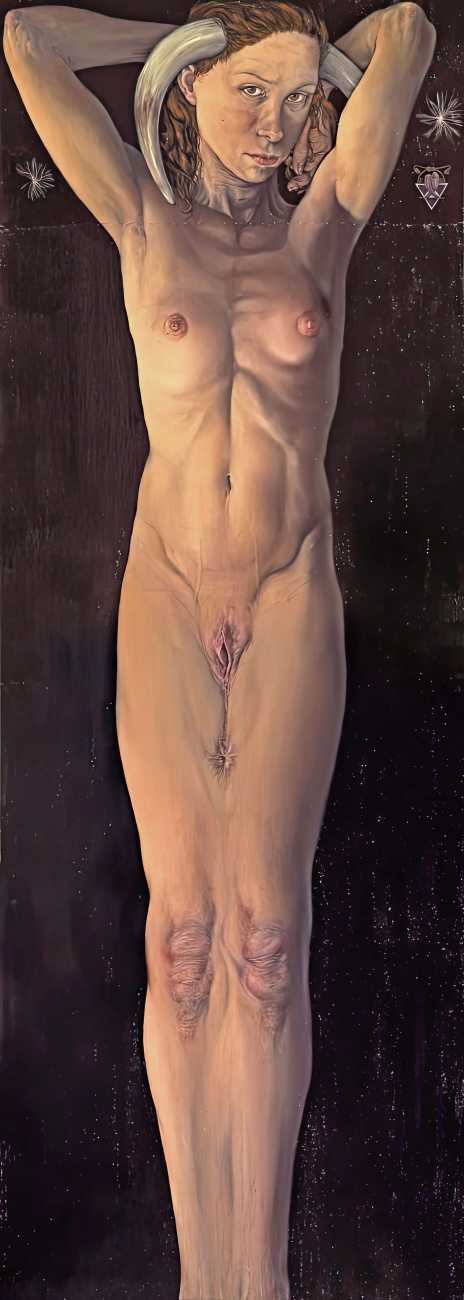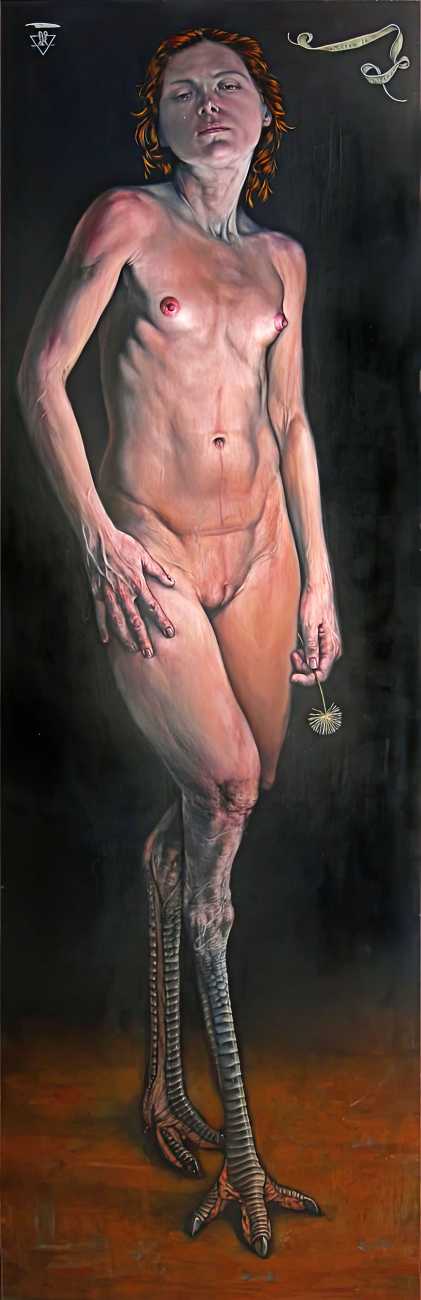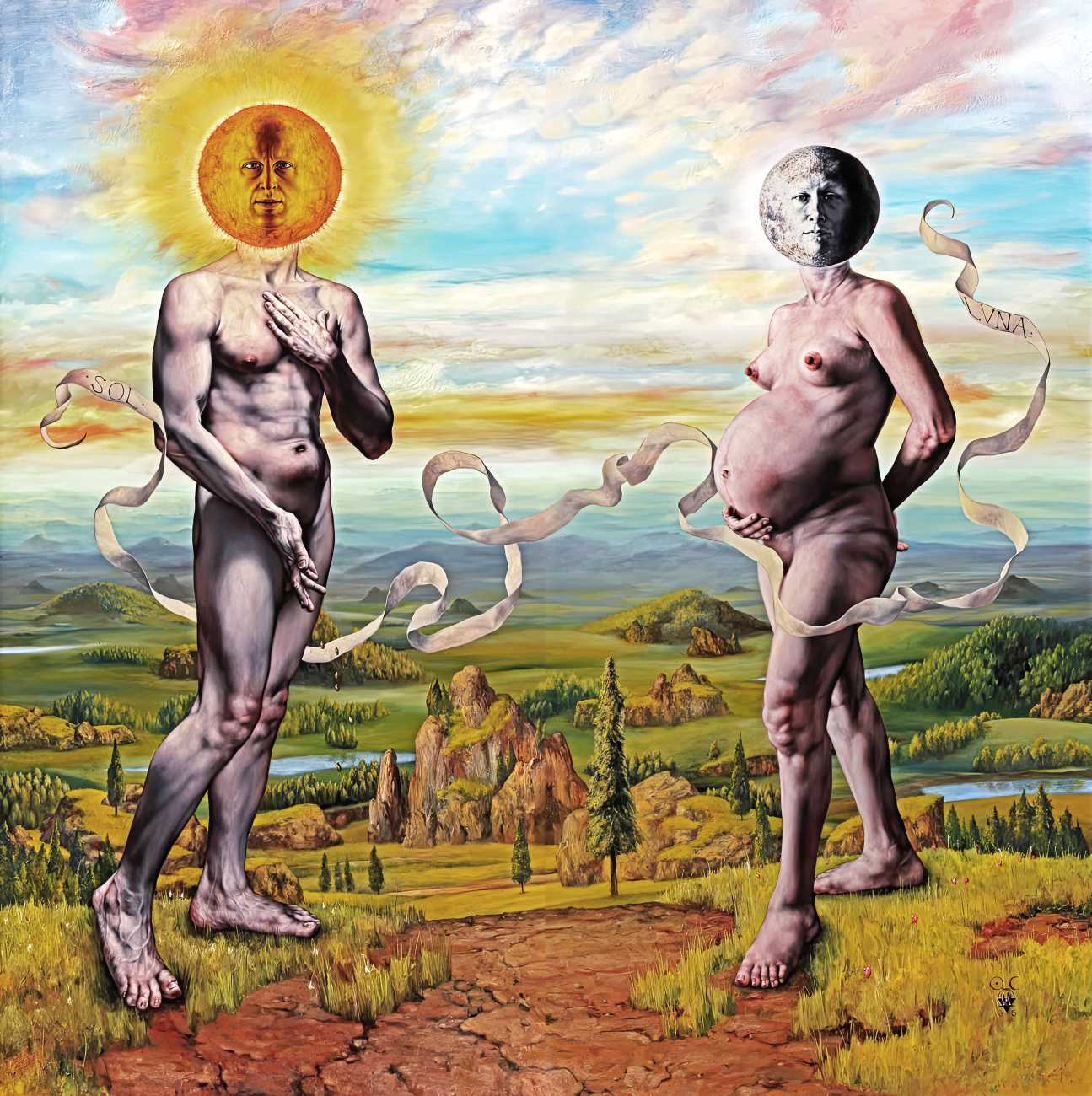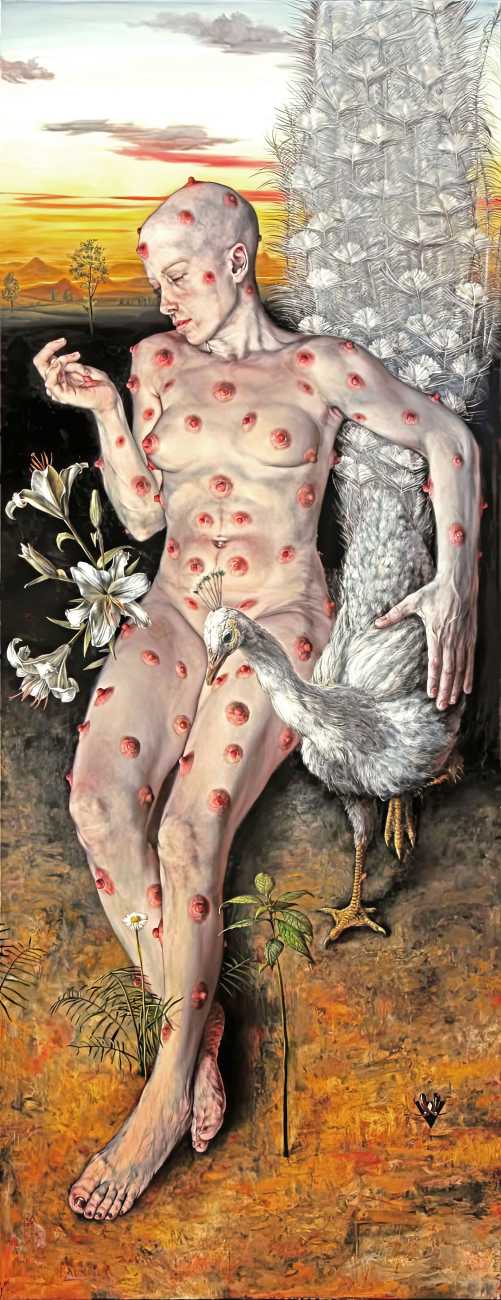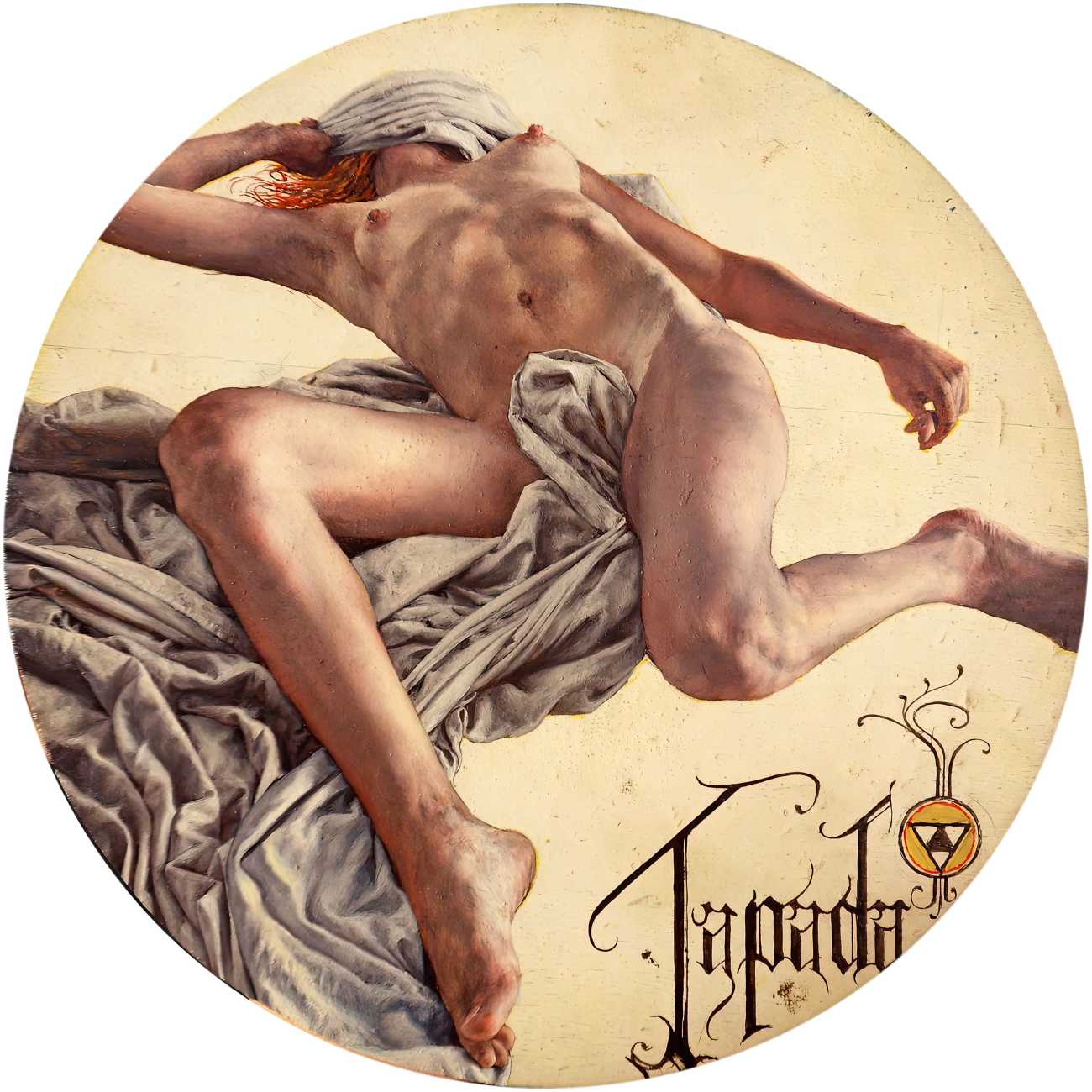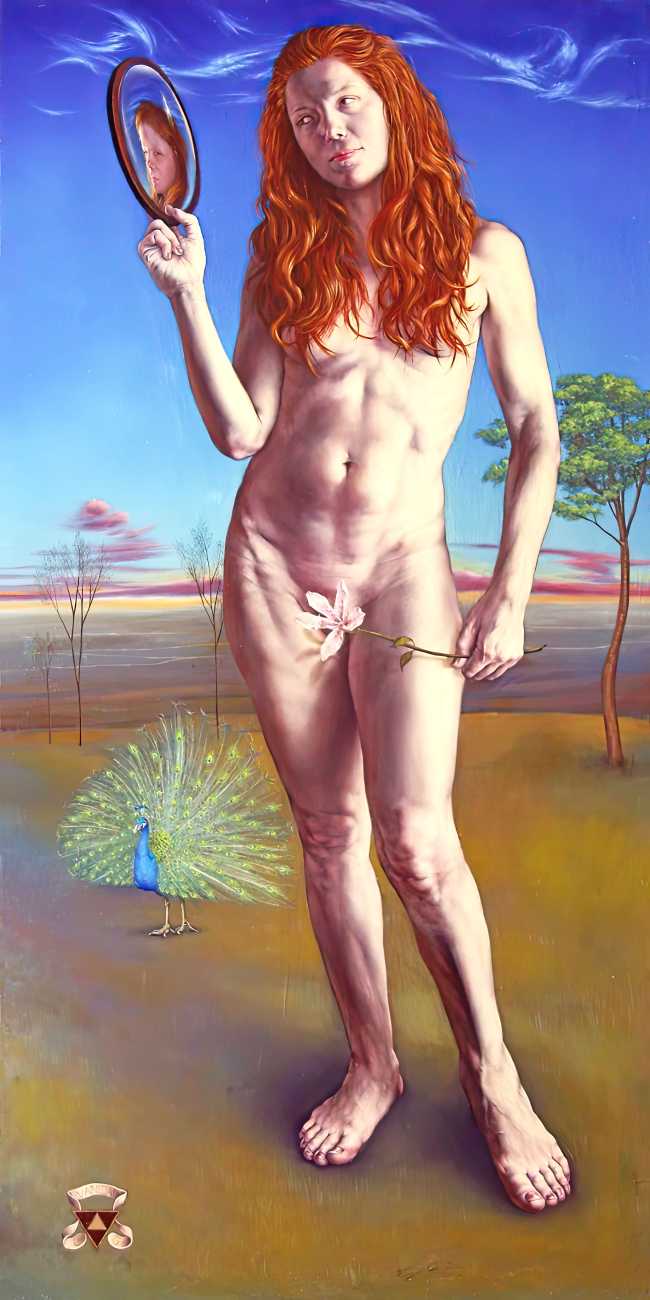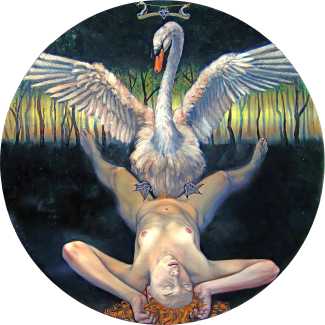
Gabriel Grün’s paintings inhabit a fascinating hybrid territory somewhere between the old masters, fantasy, mythology, and the artist’s own unruly imagination. His technically accomplished naked figures are rarely conventional portraits of the human body. His men and women appear transformed, pierced with holes, covered in lesions, given animal characteristics or fantastical heads, attached to wings, plants and strange anatomical appendages. Sometimes they are solitary figures, while elsewhere they inhabit elaborate landscapes populated by birds, snakes, flowers and symbolic objects.
The paintings are full of references to the visual language of the past. Drapery, ribbons, cartouches, halos, heraldic devices and elaborate borders recall renaissance and baroque religious and allegorical painting, while Grün’s painstaking modelling of flesh, hair and landscape demonstrates his deep engagement with the techniques of earlier painters. Yet the imagery is unmistakably his own – a naked man becomes a bat-like creature, a woman sprouts bird’s legs, a pair of naked figures wander through an Arcadian landscape with the sun and moon replacing their heads. The result can be beautiful, unsettling, absurd or erotic –often several of these at once.
Sexuality is an important part of this imaginative world, but Grün’s naked bodies are not simply erotic objects. His figures look, pose and interact with their surroundings with a psychological presence that gives the paintings a narrative quality. Even the most overtly sexual images often contain an element of vulnerability, transformation or dark humour. A solitary male figure tied to a tree, for example, evokes both the suffering saint and the erotic captive, while other works deliberately blur the boundaries between human, animal and botanical forms.
As well as individual canvases, Grün has also created ambitious series in which individual paintings form part of a larger symbolic system. His Planets series, for example, transforms the human figure into an elaborate cosmological allegory, while his Tarot paintings reinterpret the major arcana through the same combination of human forms, symbolism, fantasy, and painstaking technique.