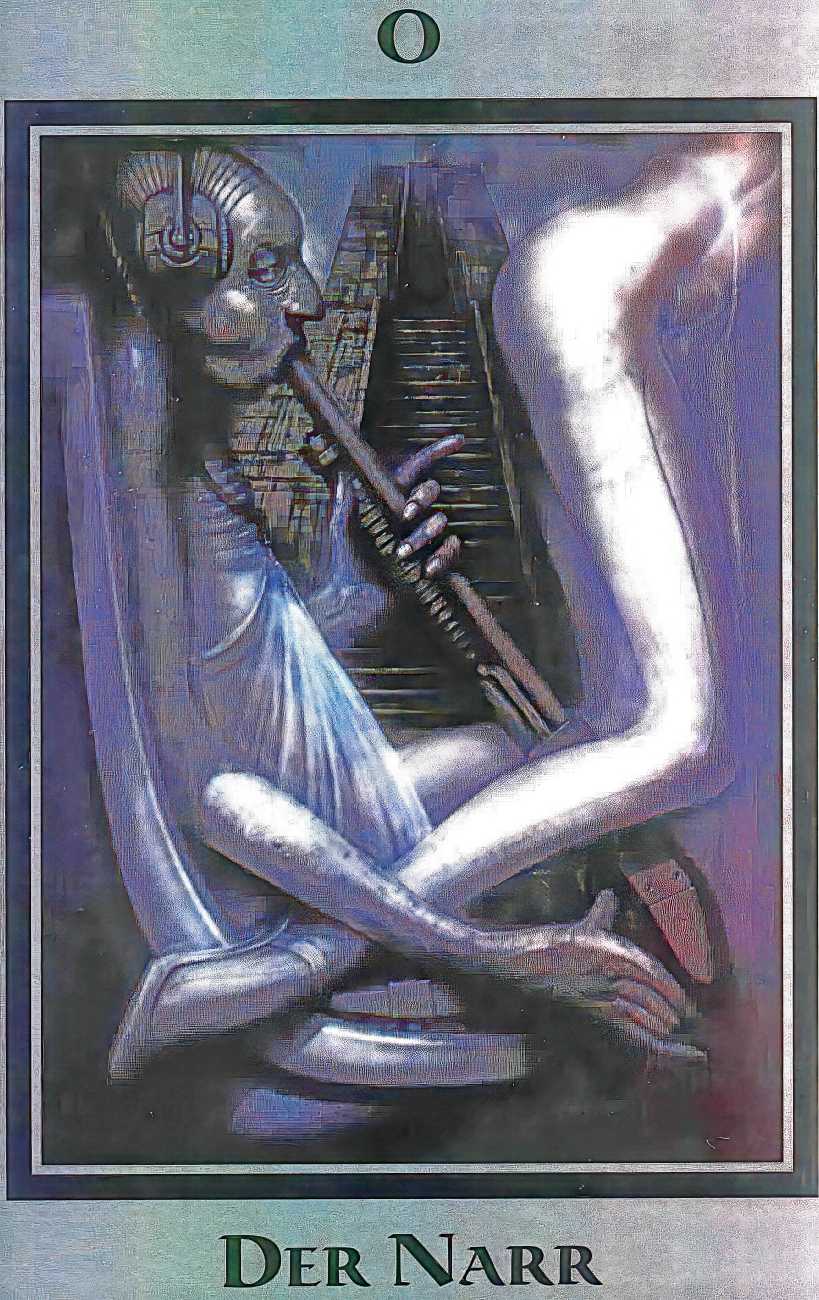
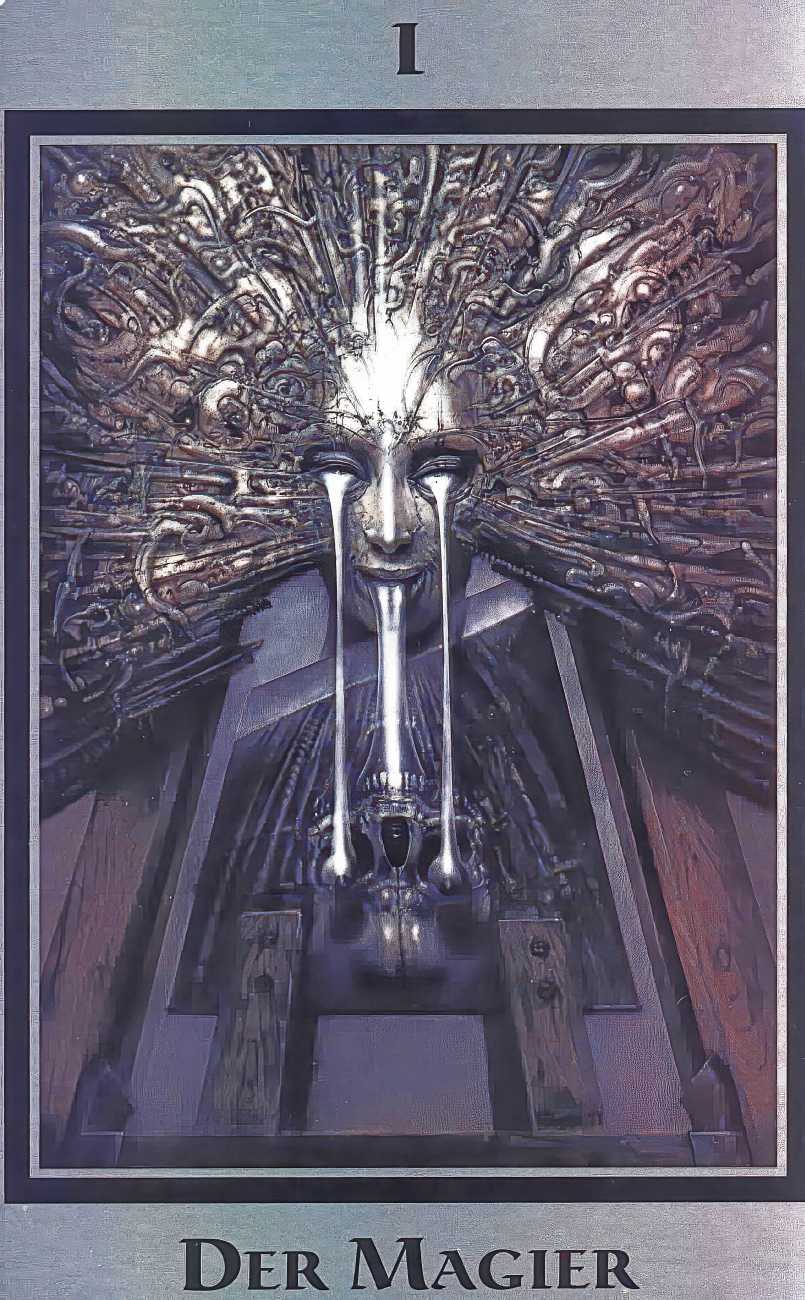
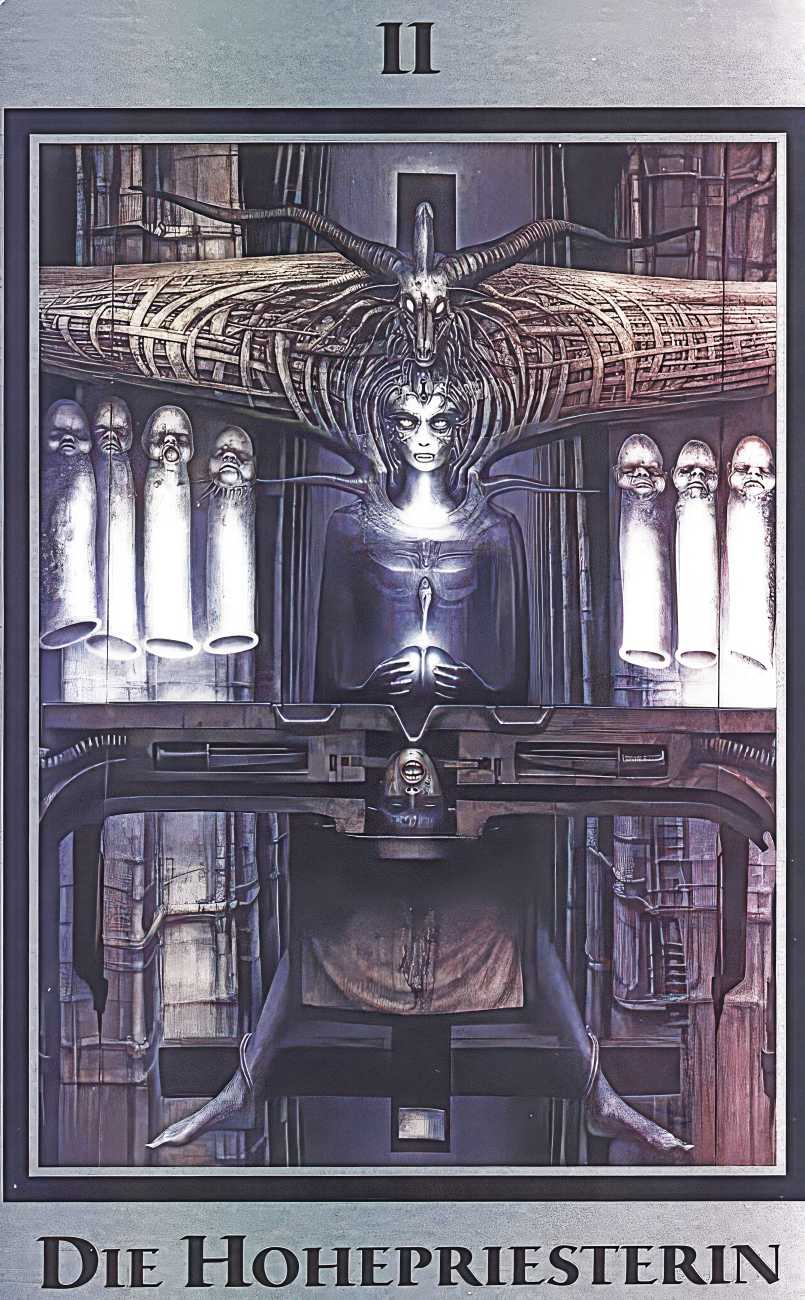
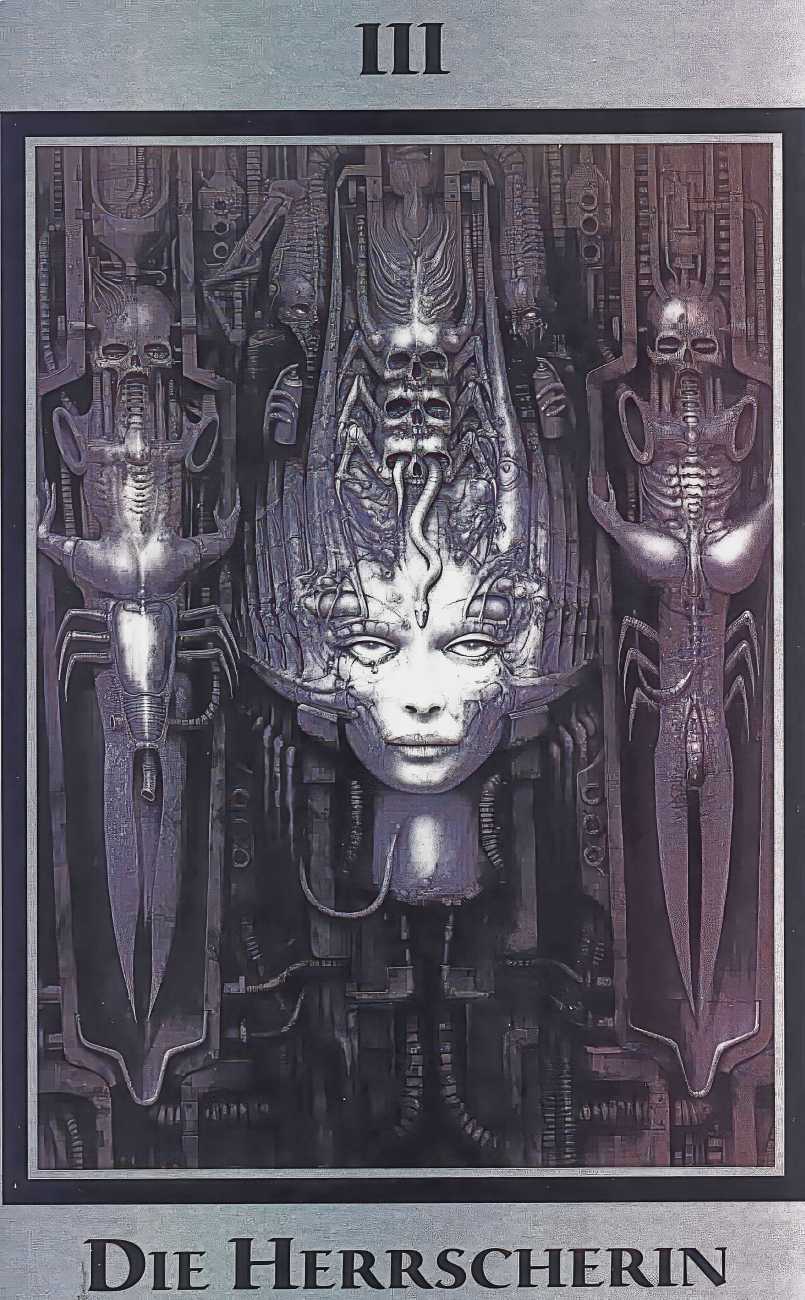
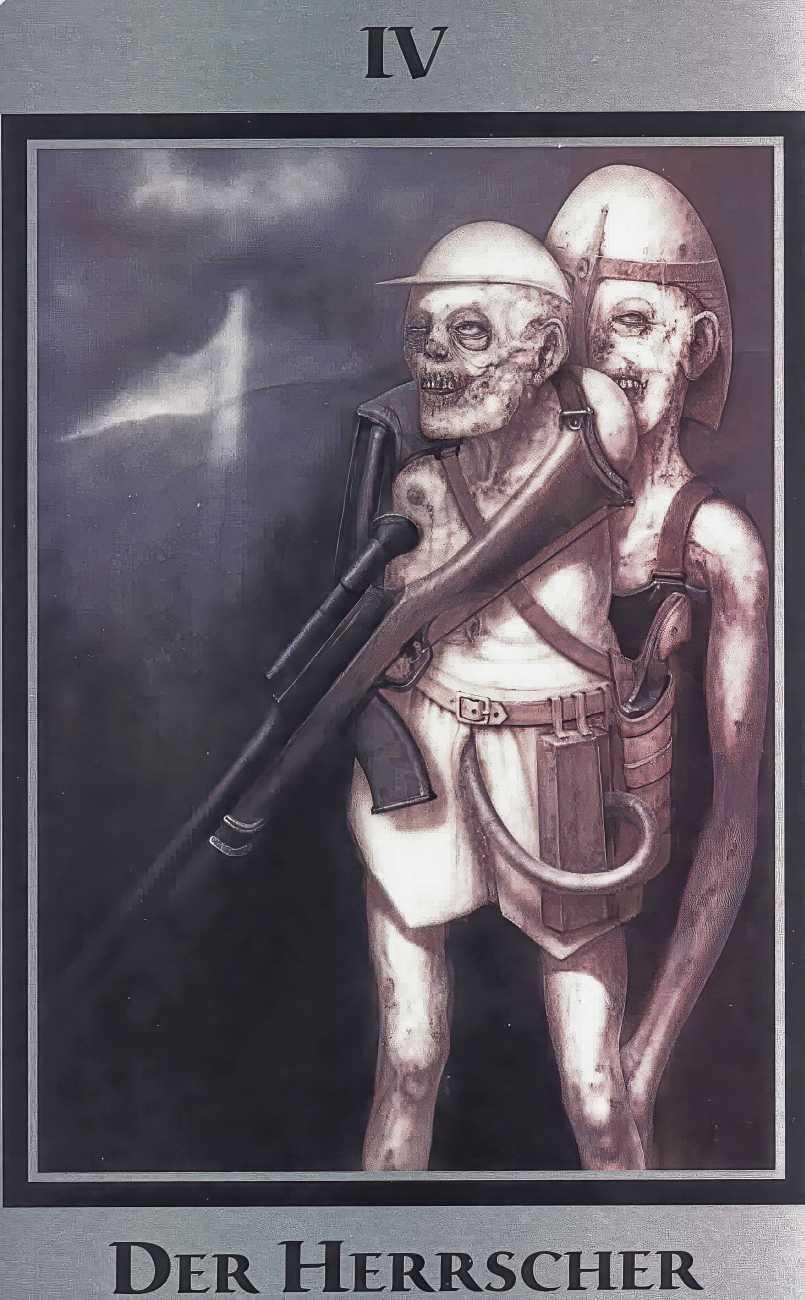
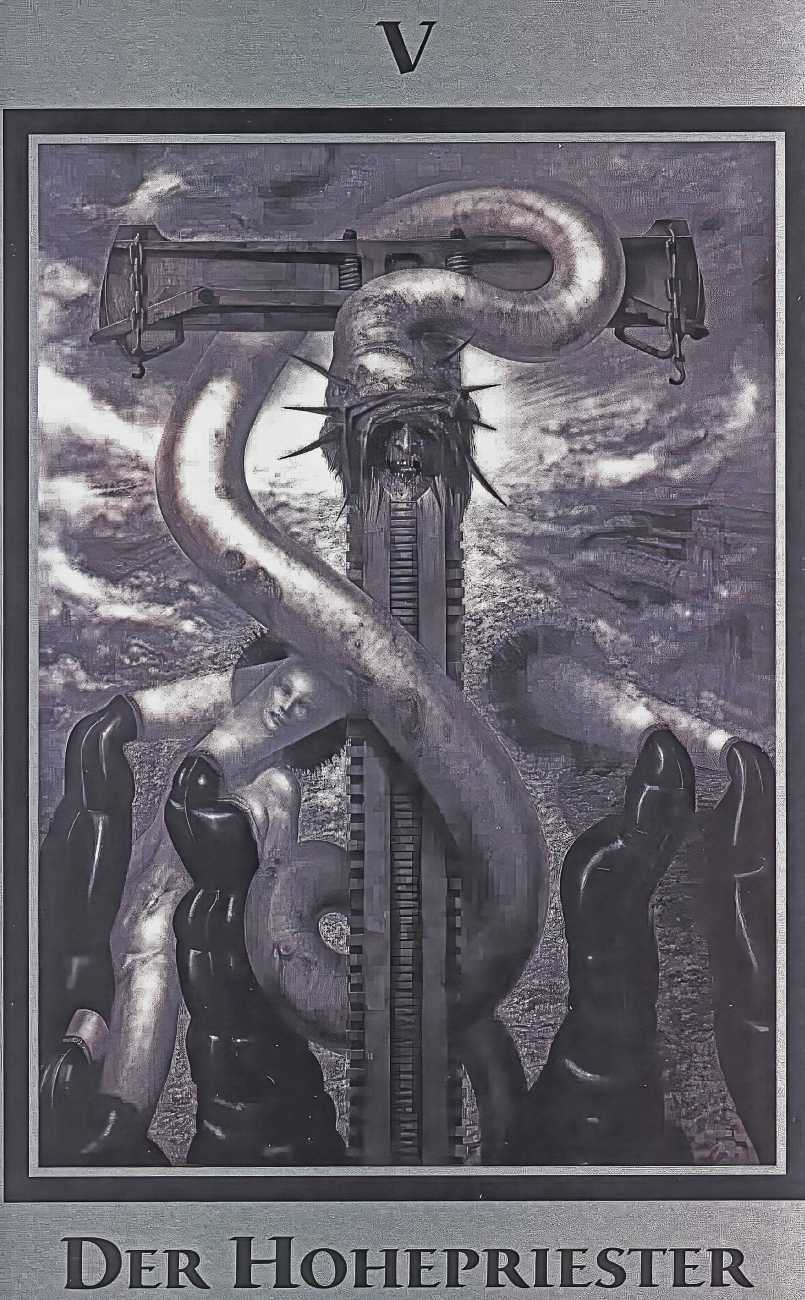
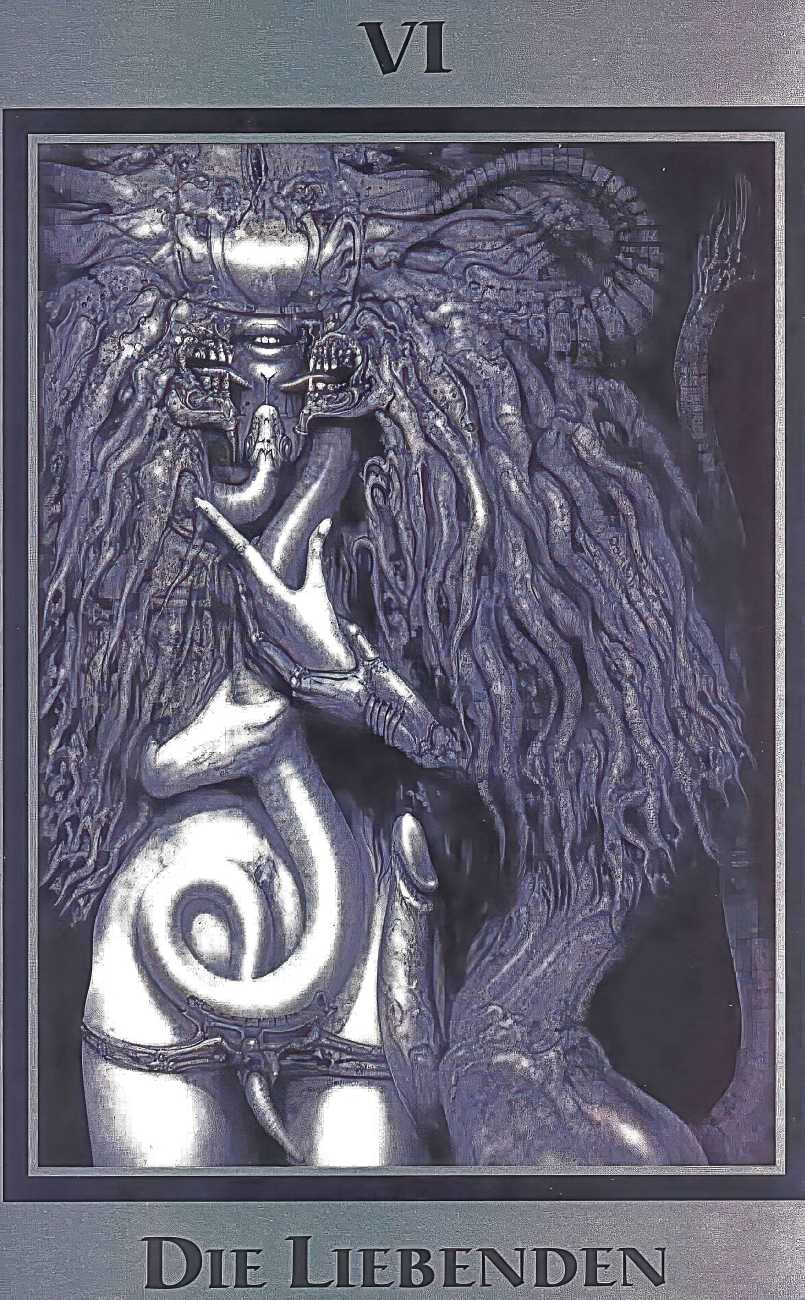
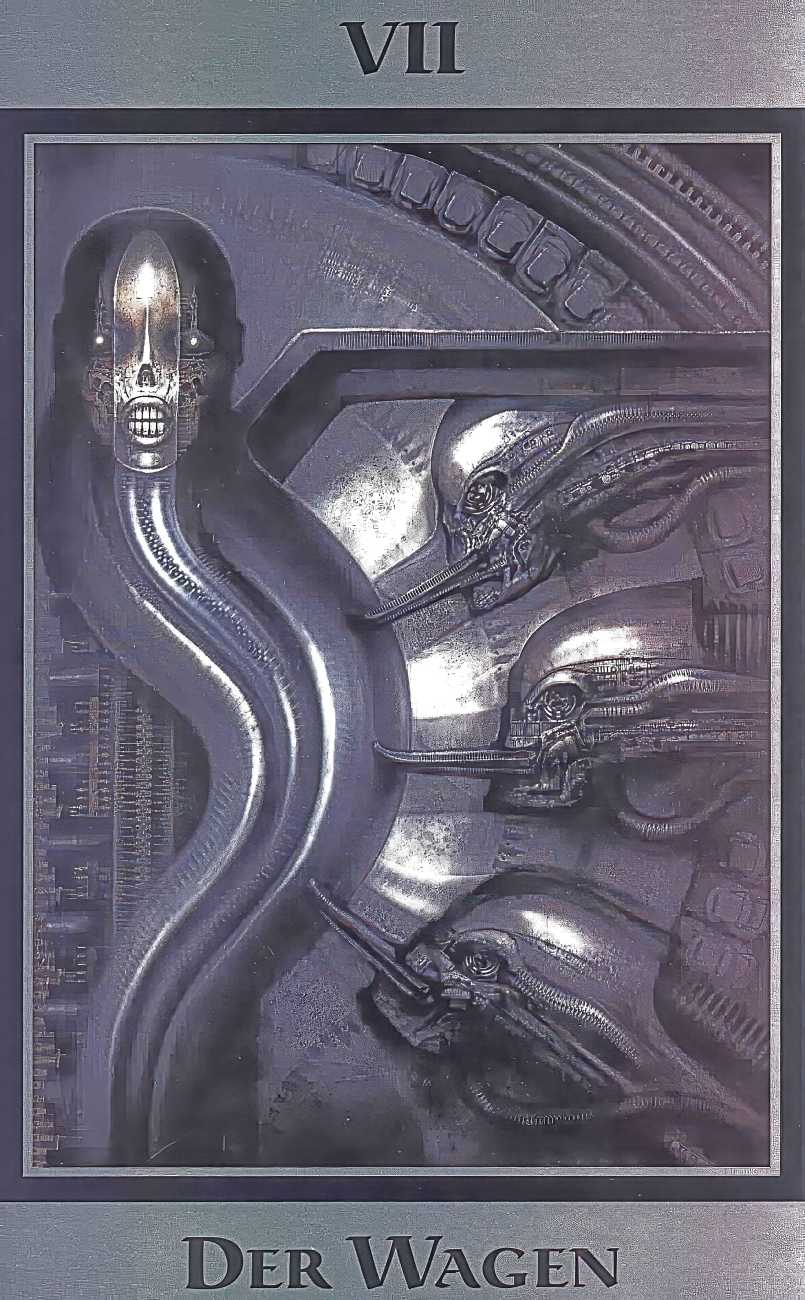
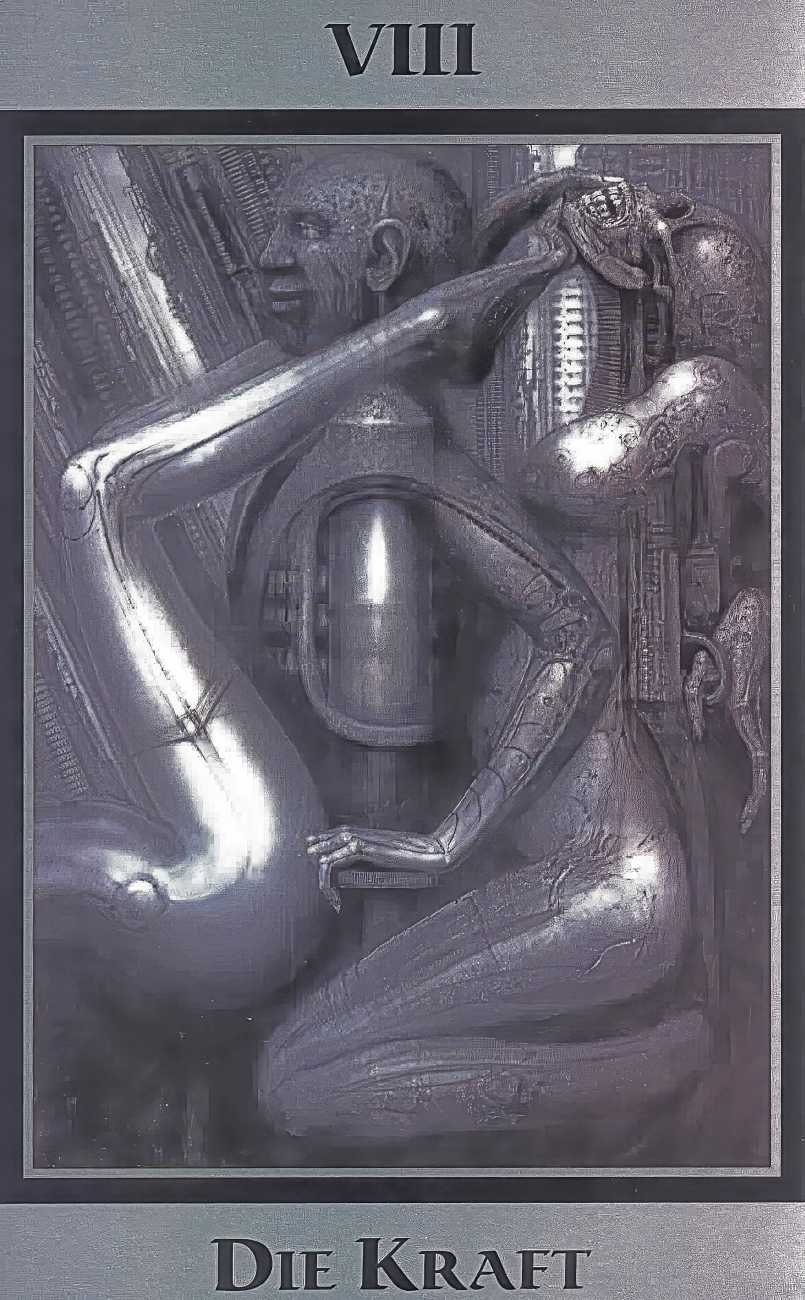
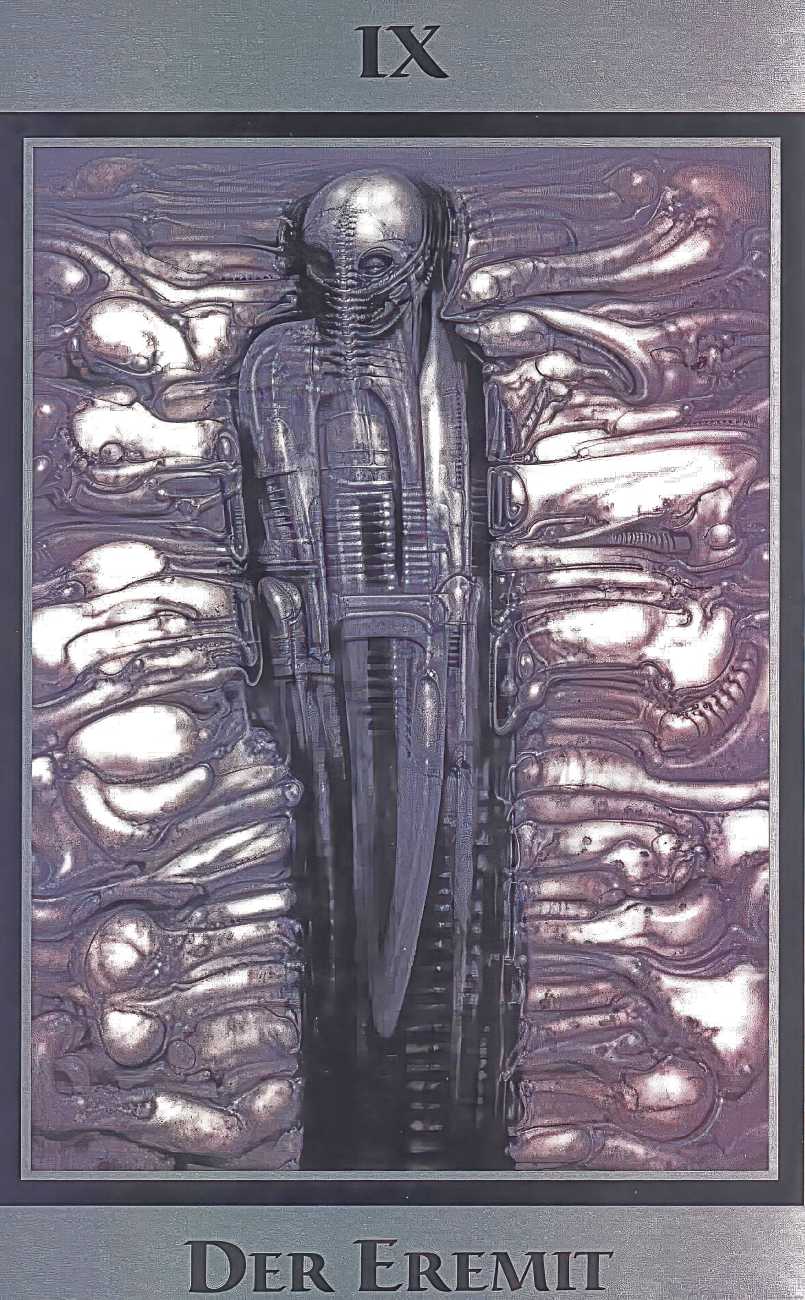
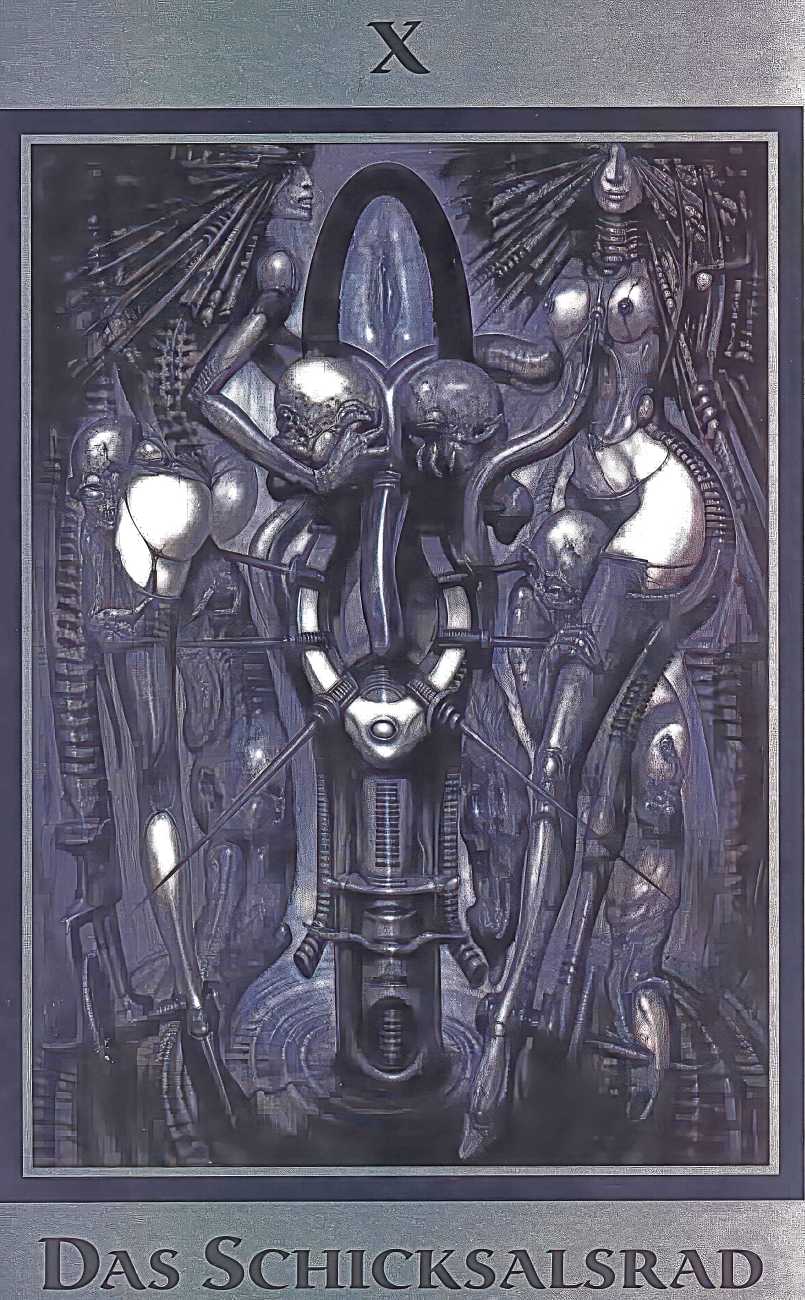
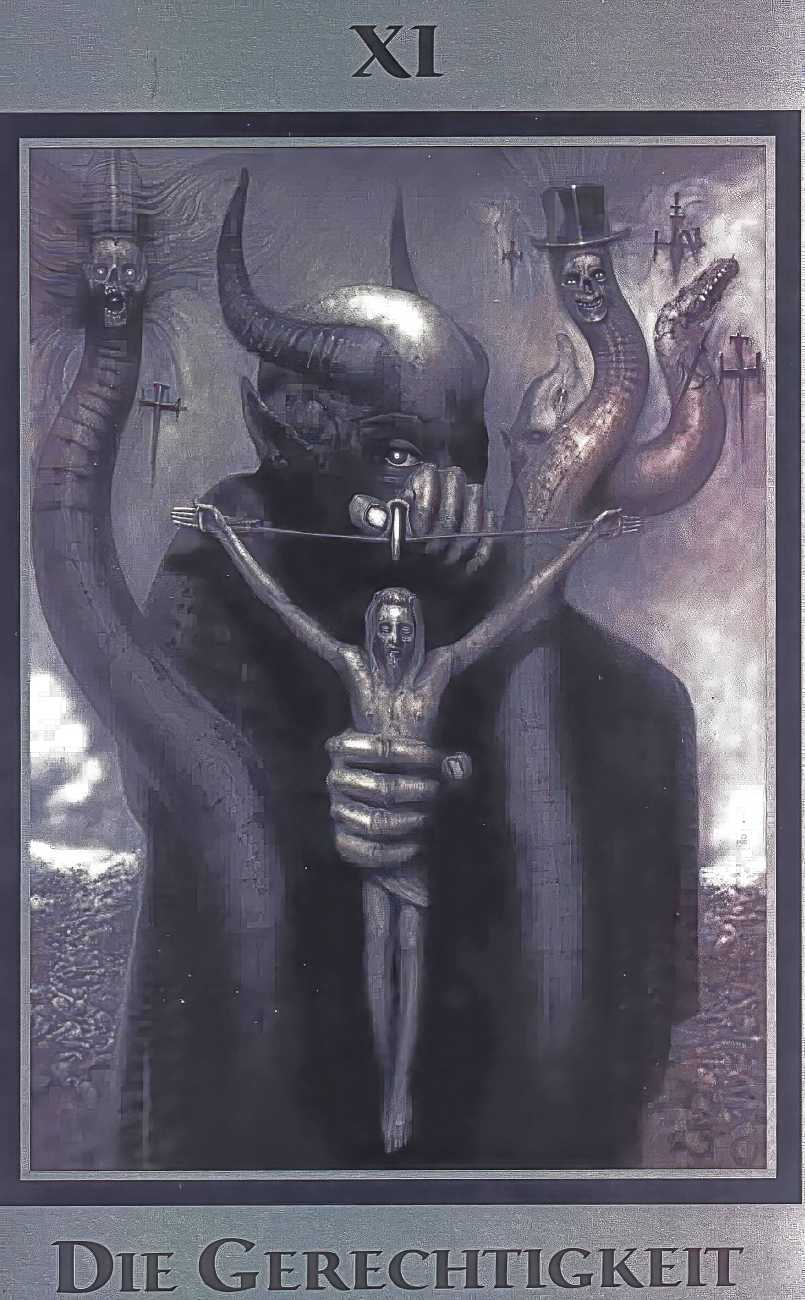
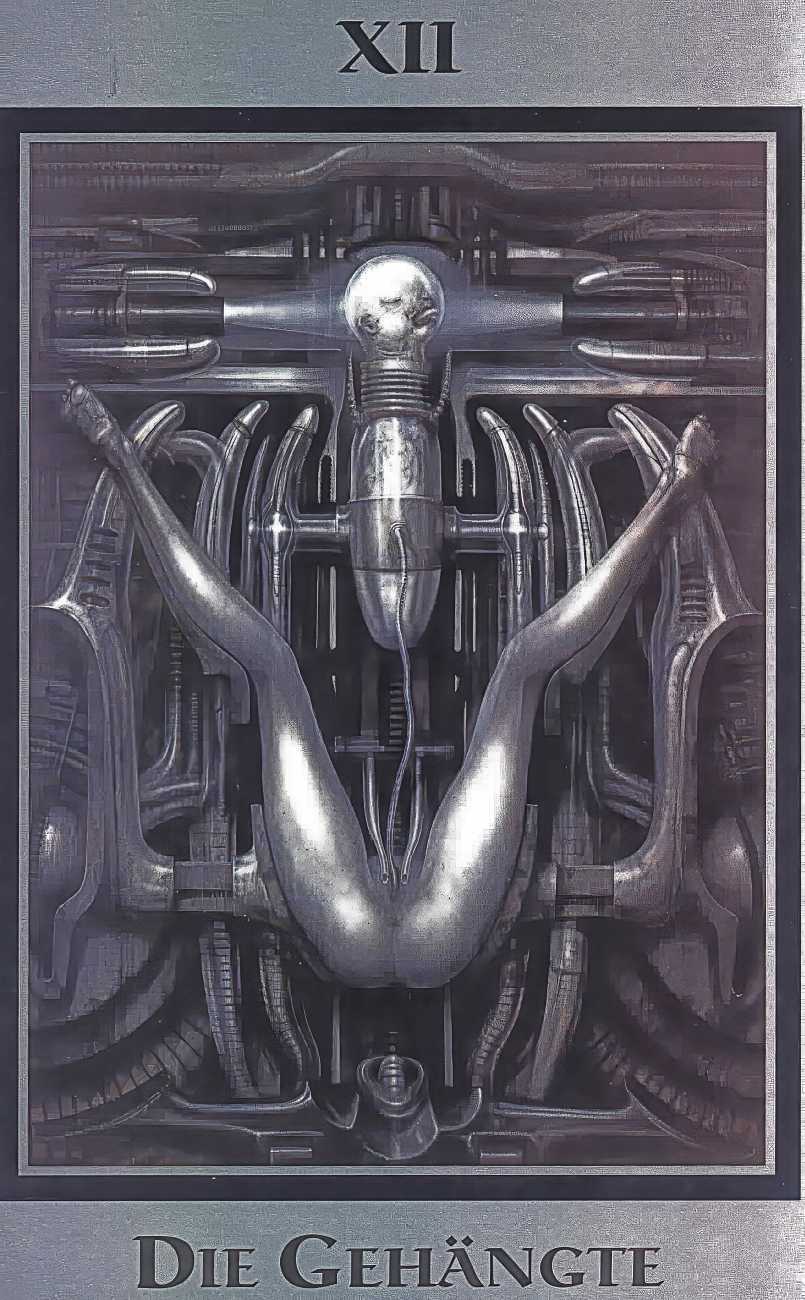
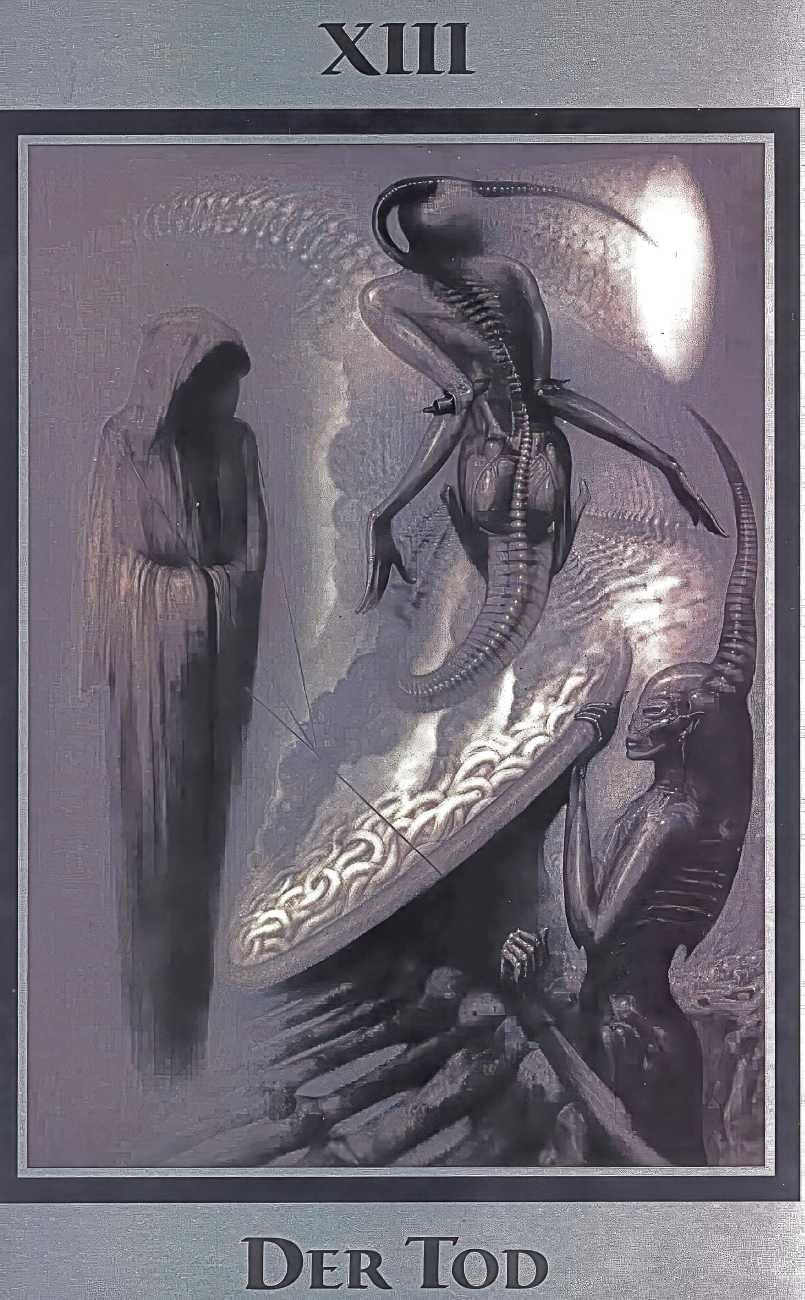
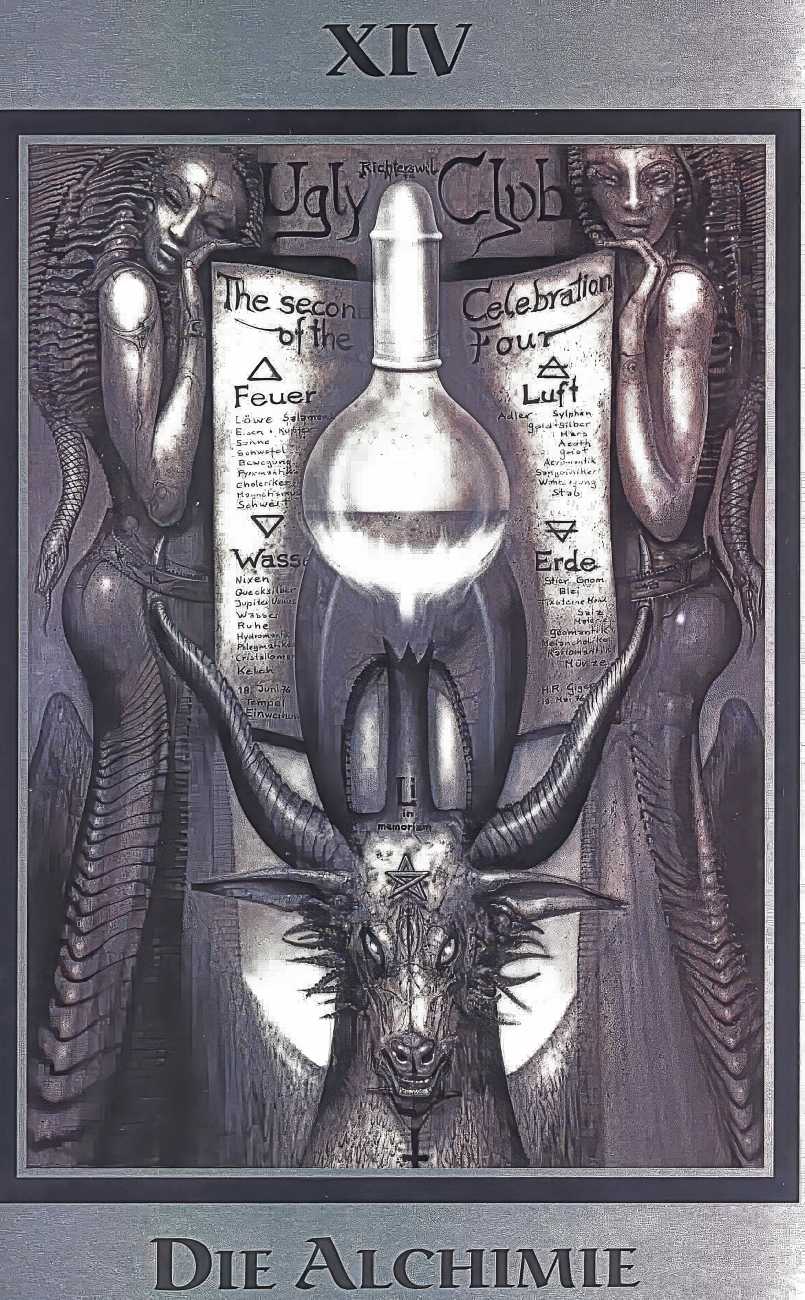
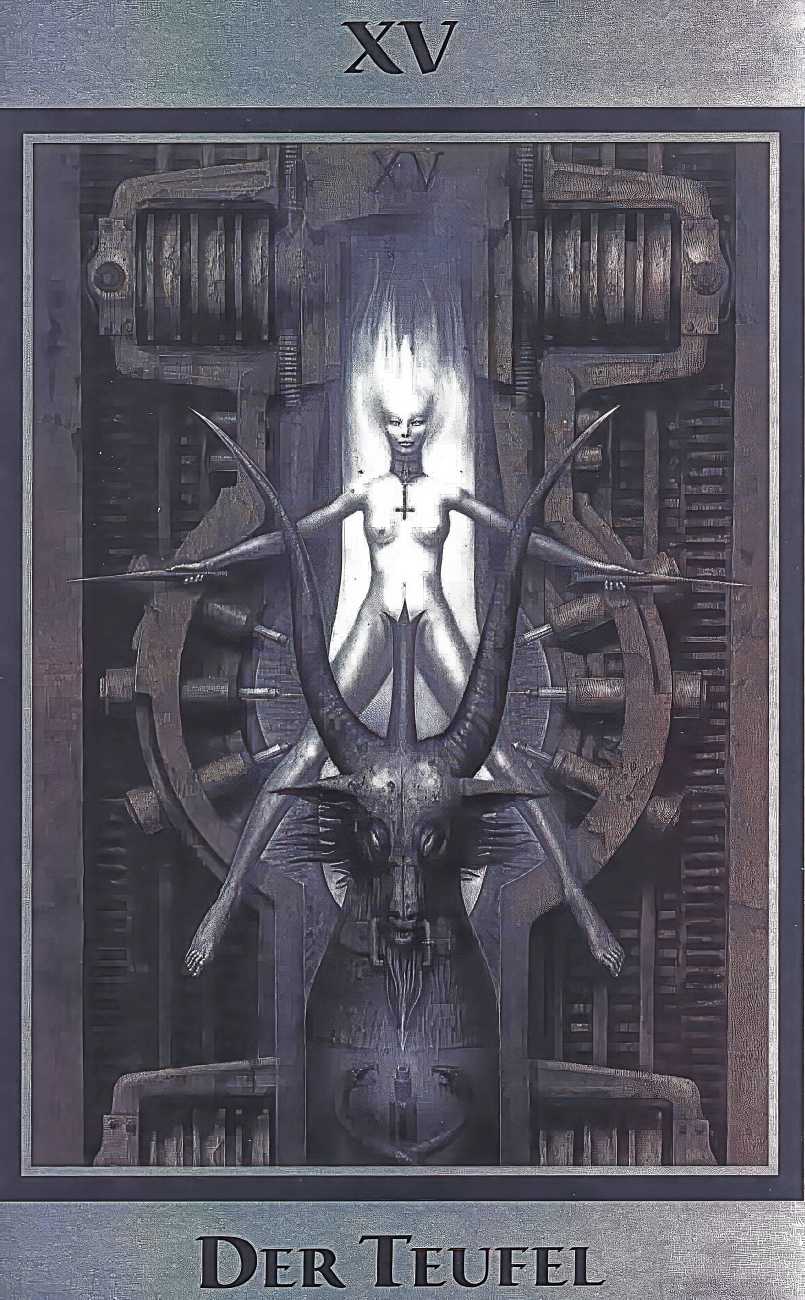
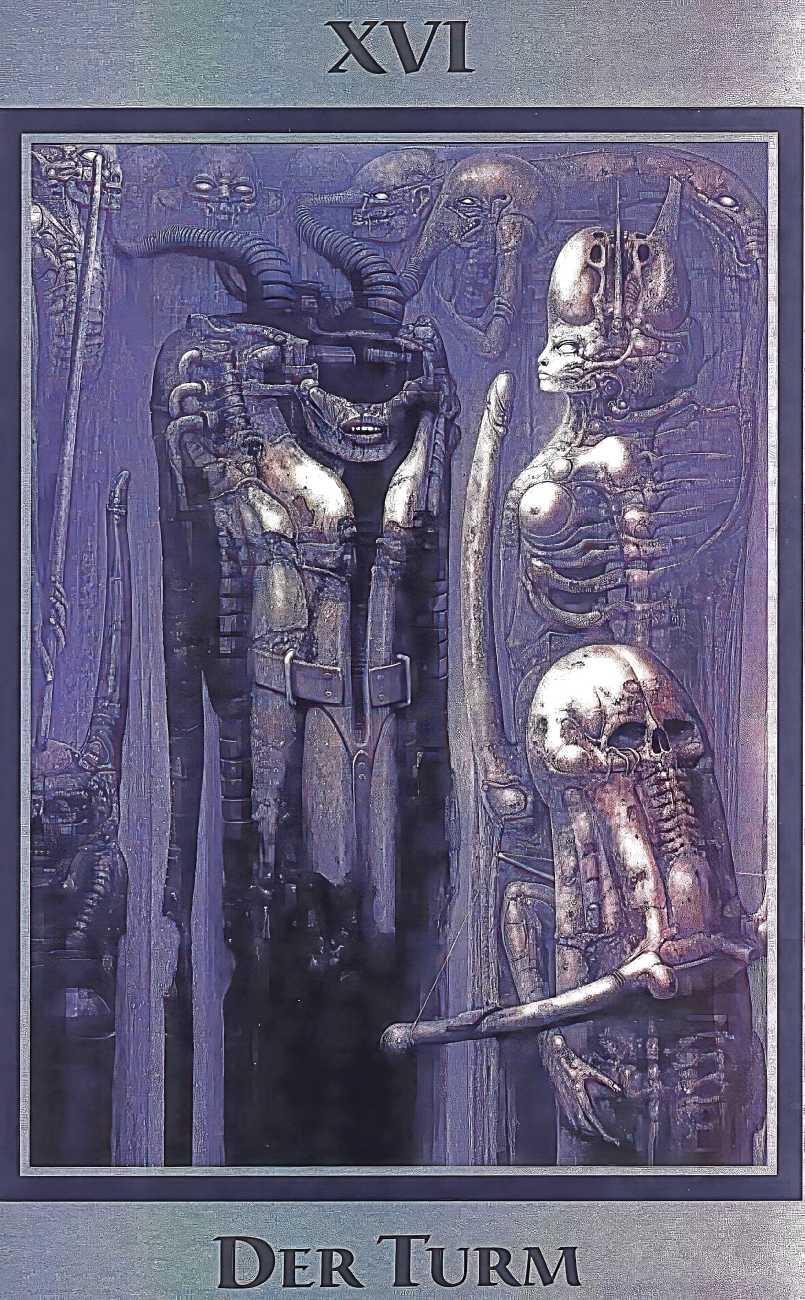
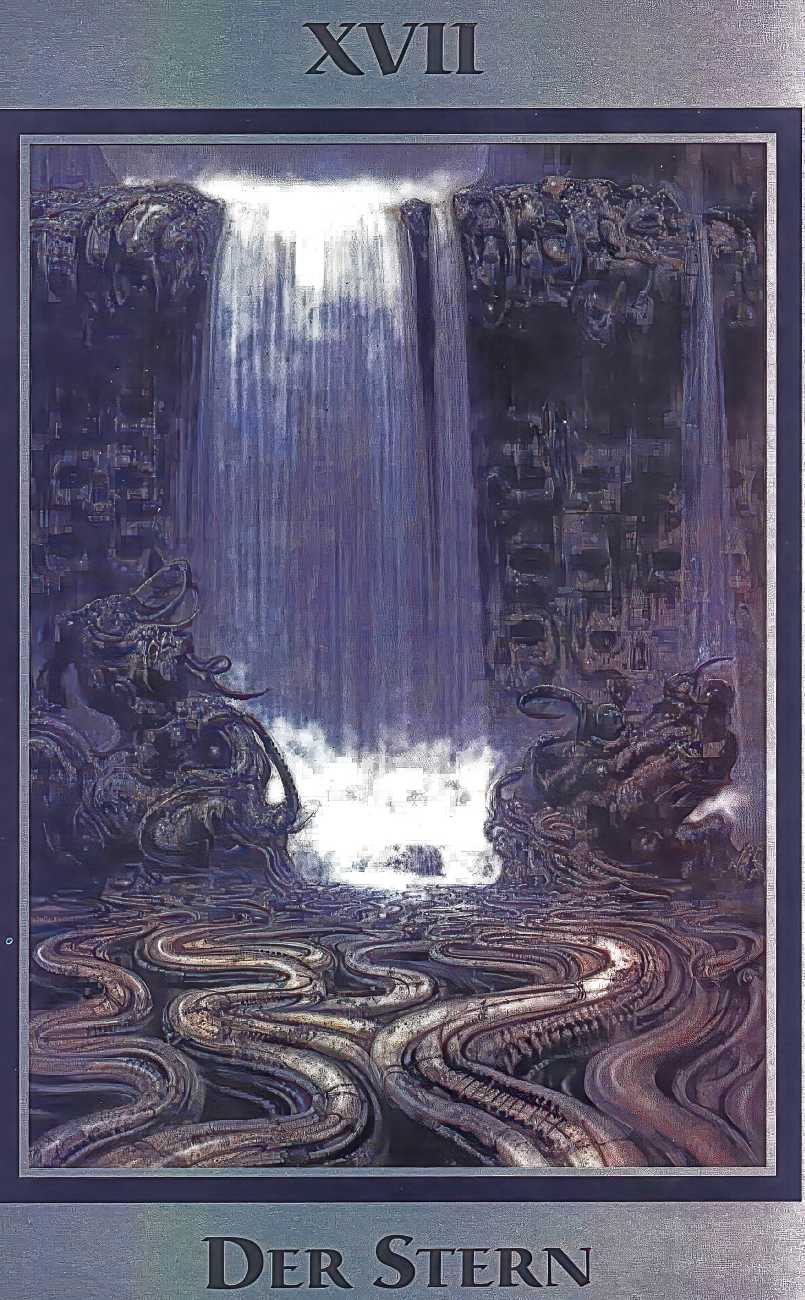
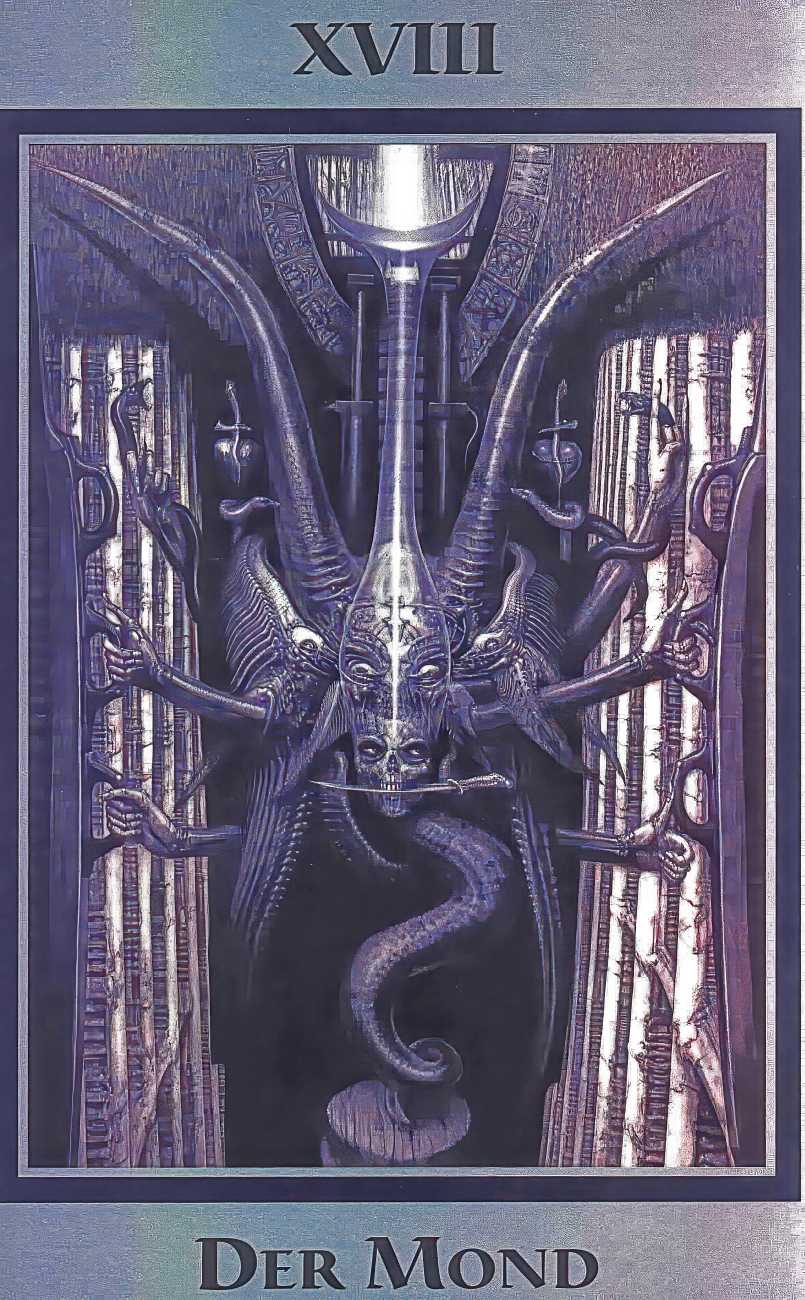
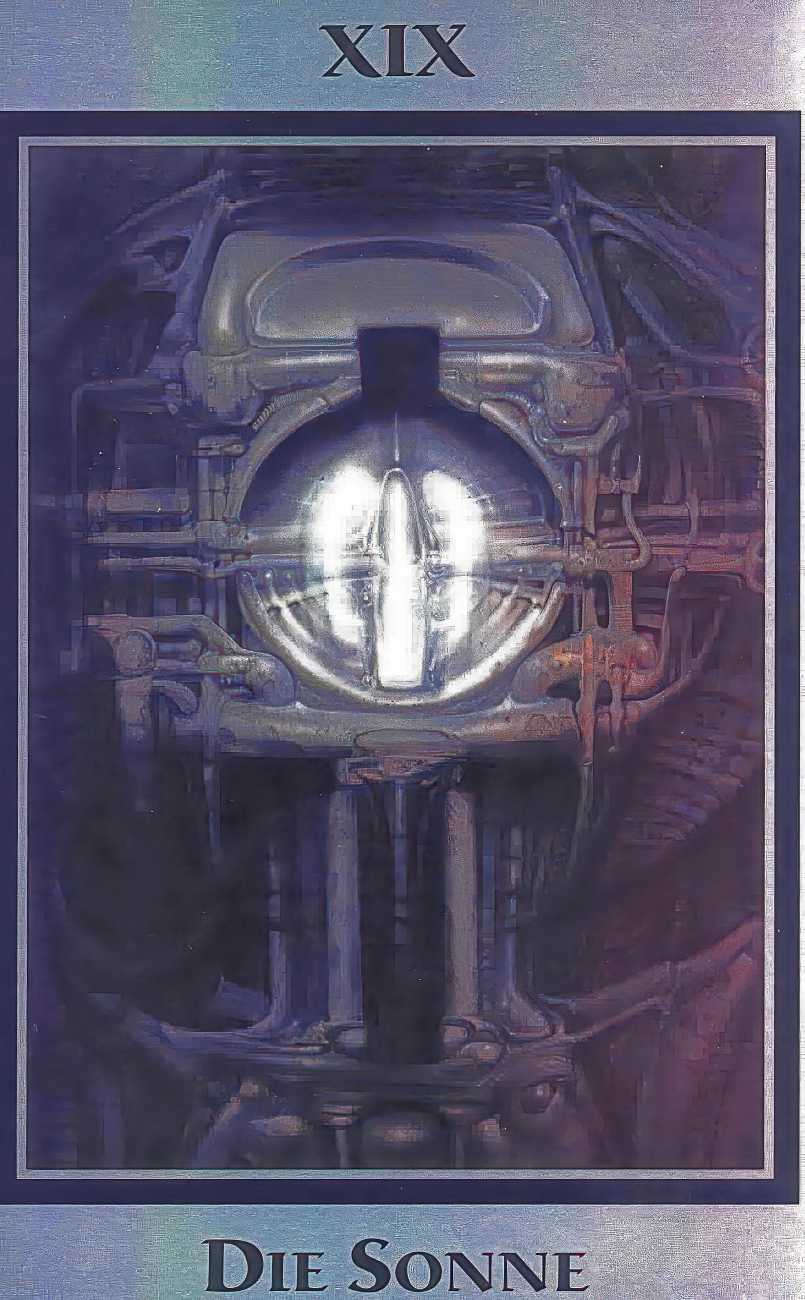
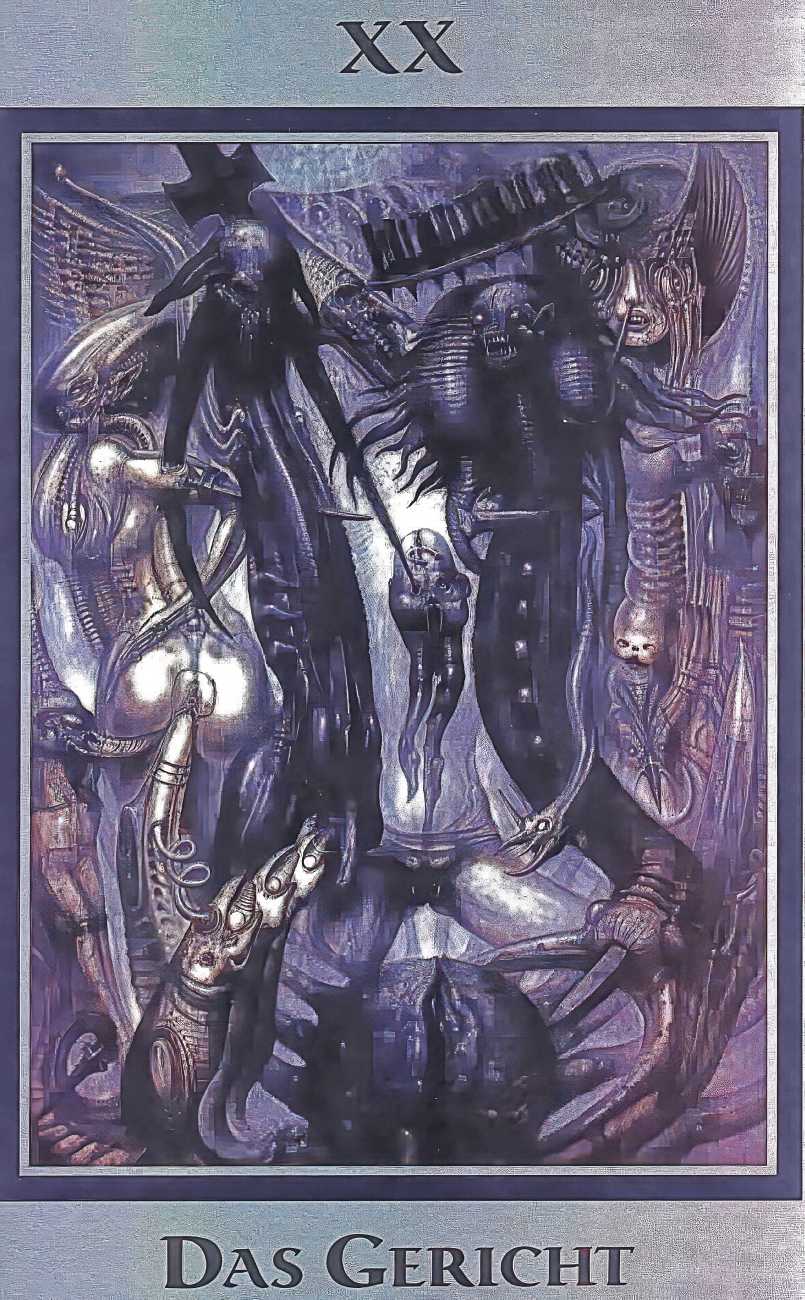
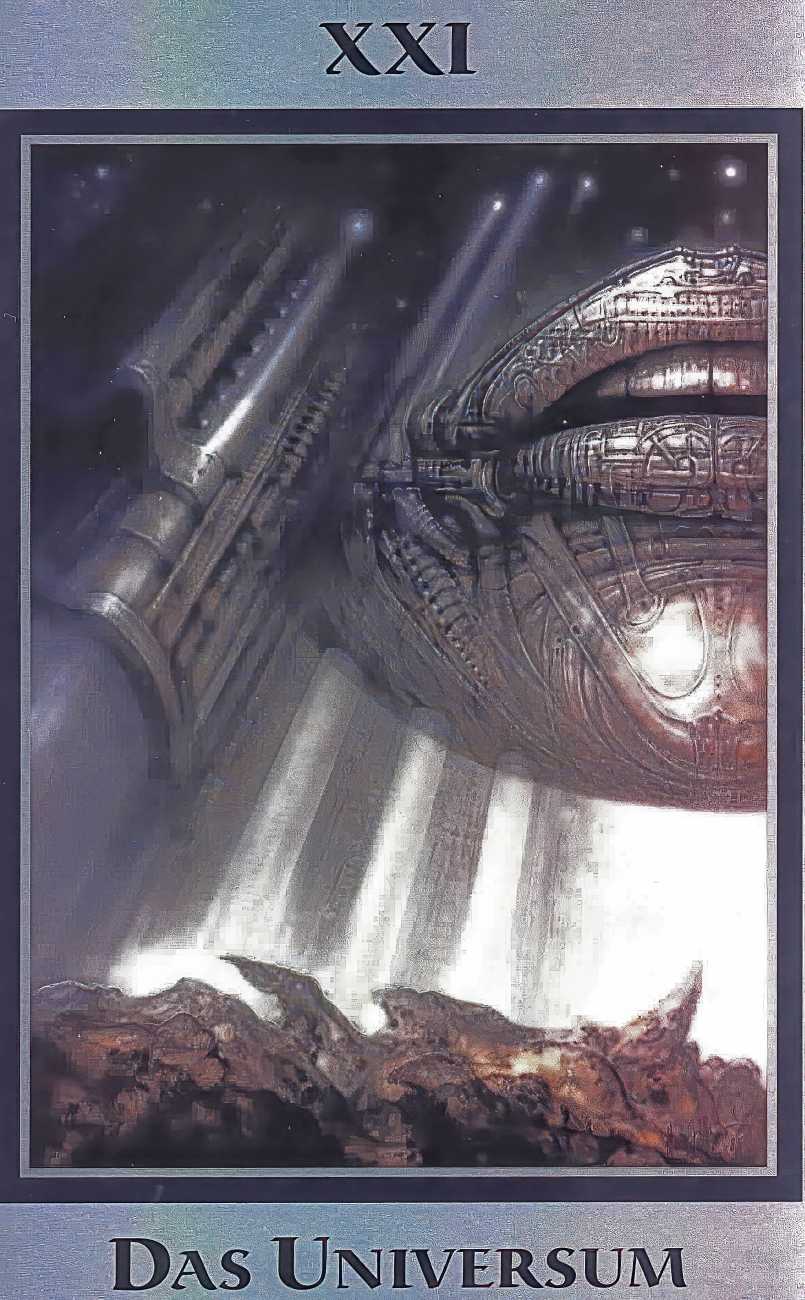
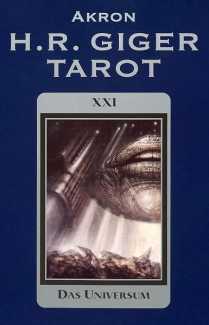
 H.R. Giger’s Tarot brings together 22 images from his existing body of work, selected to represent the major arcana of the tarot. The project was developed with Akron, the Swiss occultist and writer, and first published under the title Baphomet: Tarot der Unterwelt (Baphomet: Tarot of the Underworld). Giger’s paintings were not originally created as tarot cards – Akron chose images that he believed could be brought into a coherent sequence, then supplied the philosophical and esoteric interpretations that connect them.
The familiar figures of the tarot take on distinctly Gigeresque forms. The Fool, the Magician, the High Priestess, the Empress and the Emperor emerge from a world of biomechanical structures, distorted bodies, machinery and unsettling transformations. Human faces and anatomical forms merge with pipes, cables, skeletal frameworks and other artificial constructions.
The deck’s dark atmosphere reflects the concerns that run throughout Giger’s work, but its meaning extends beyond the imagery. Akron’s accompanying text places the pictures within a psychological and occult framework, exploring opposing forces such as creation and destruction, desire and fear, and life and death.
Published with a substantial book and a poster showing the card layout, Baphomet was an ambitious collaboration between an artist whose images draw on the unconscious and a writer intent on finding a philosophical structure within them.