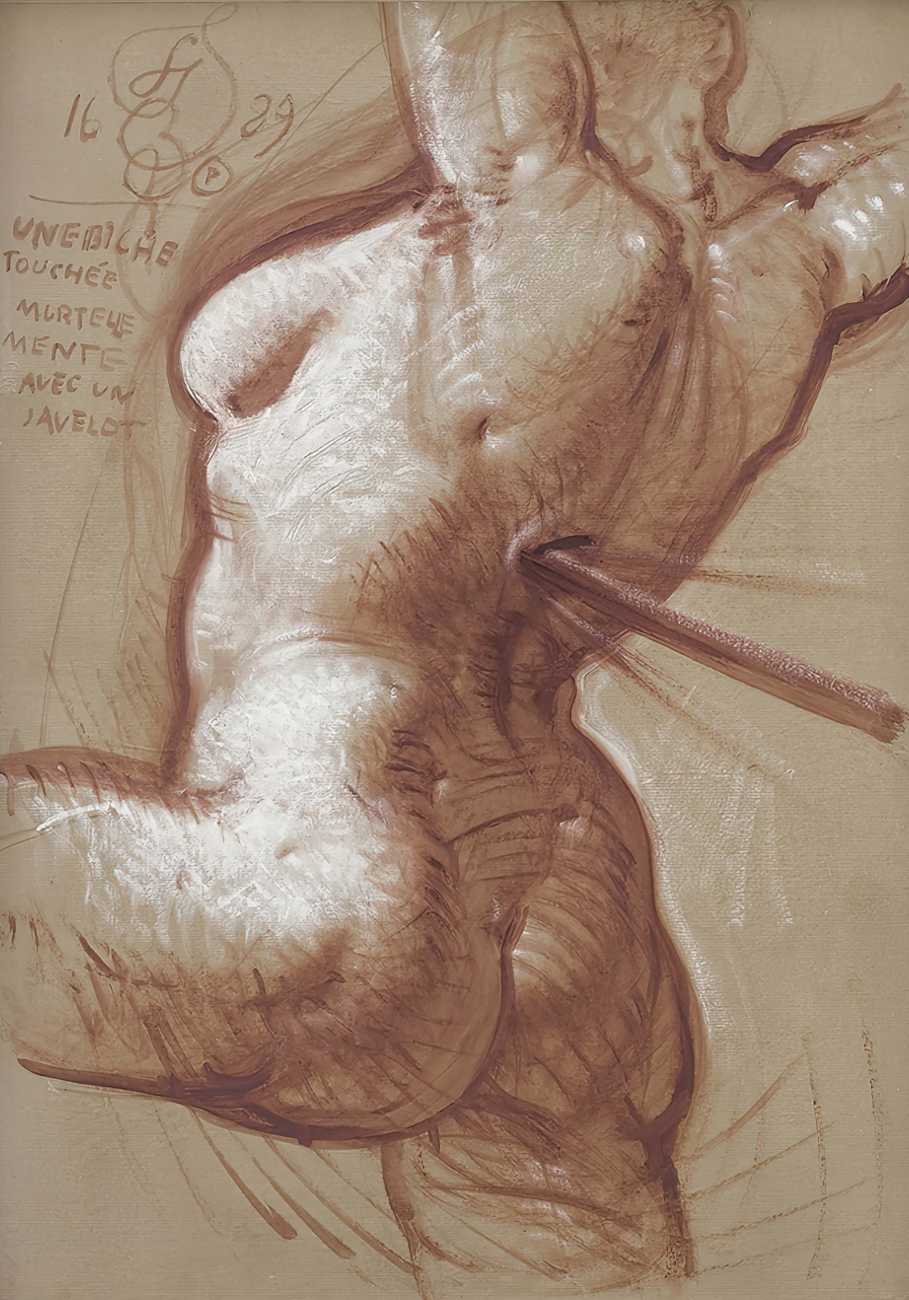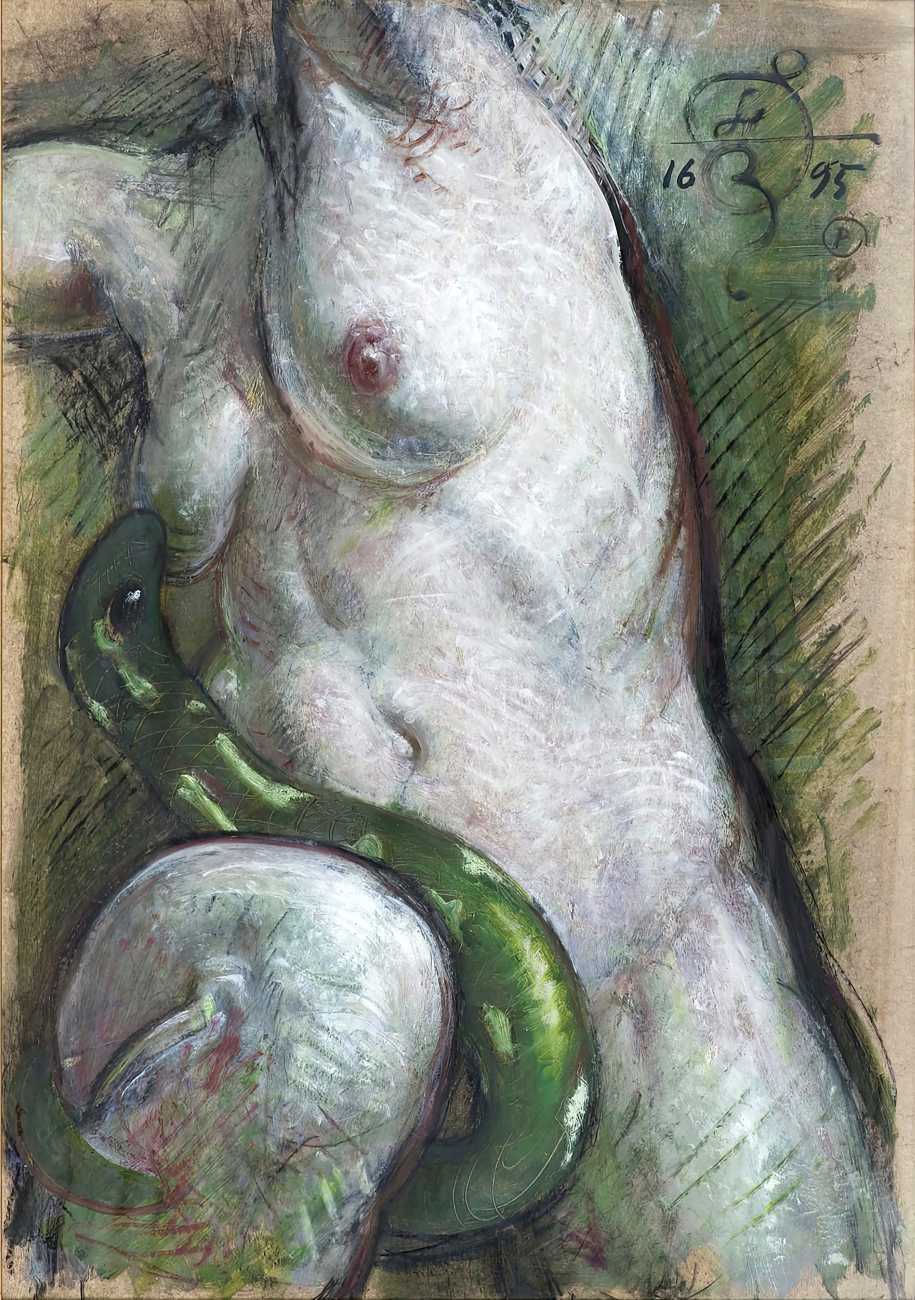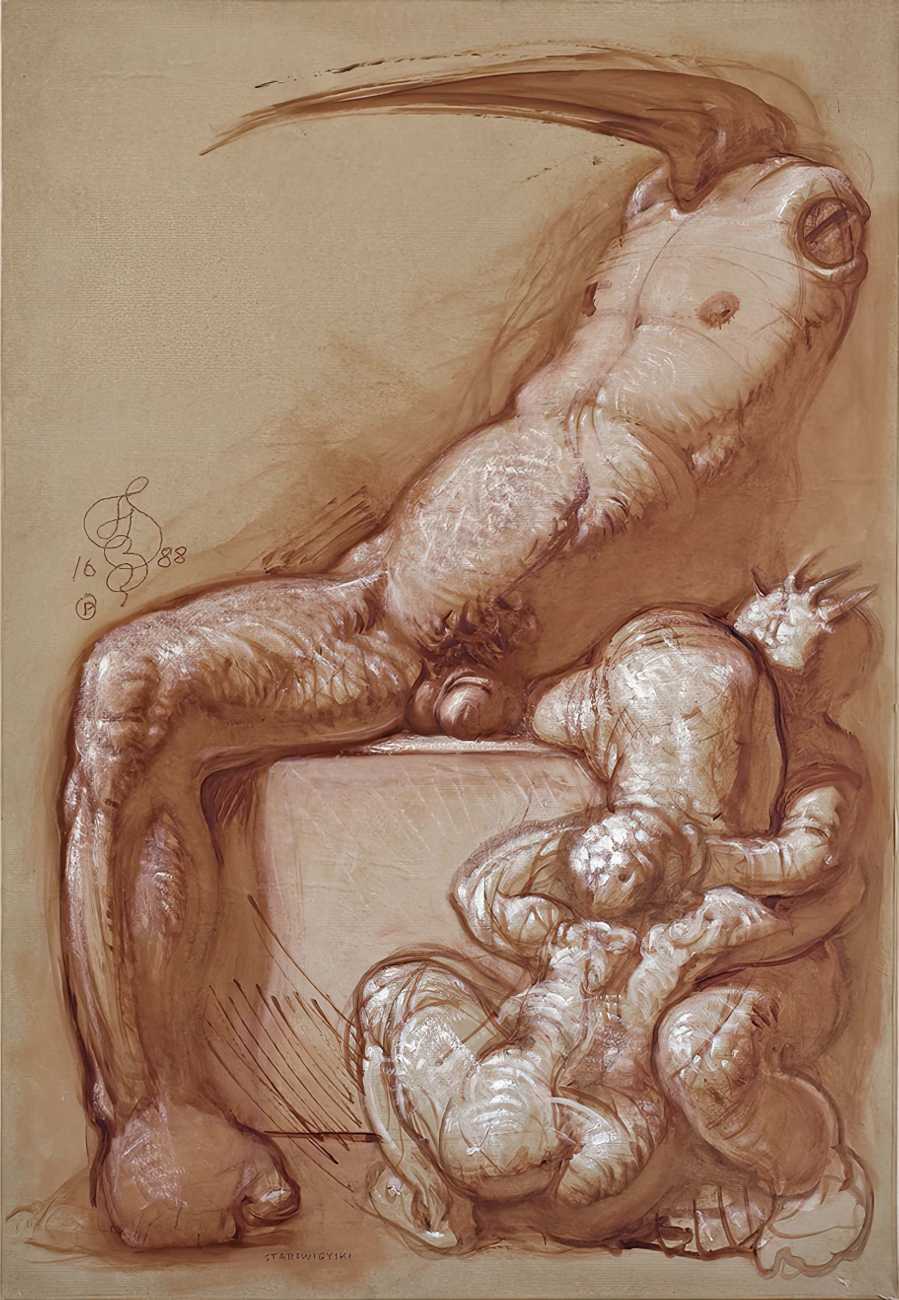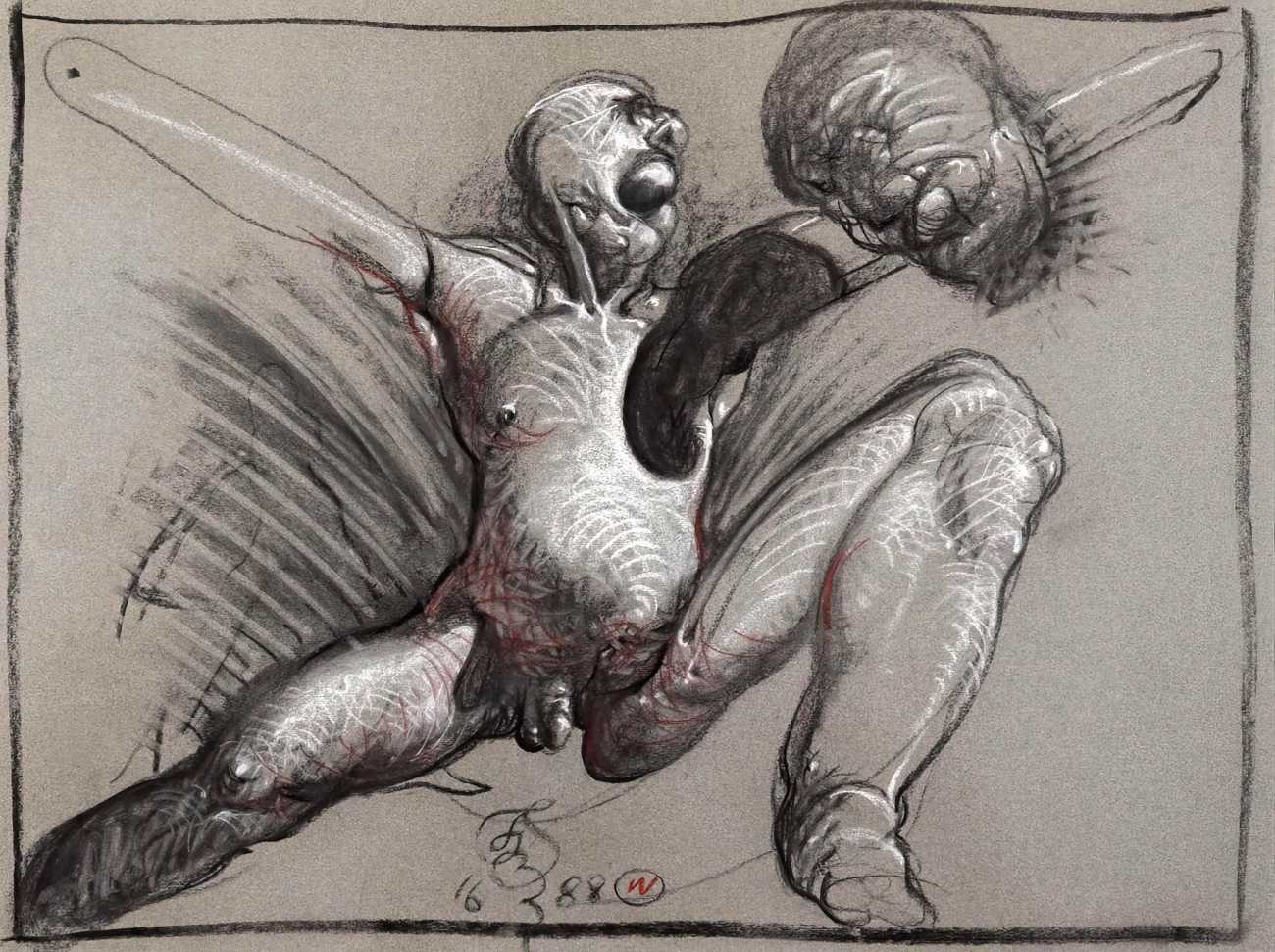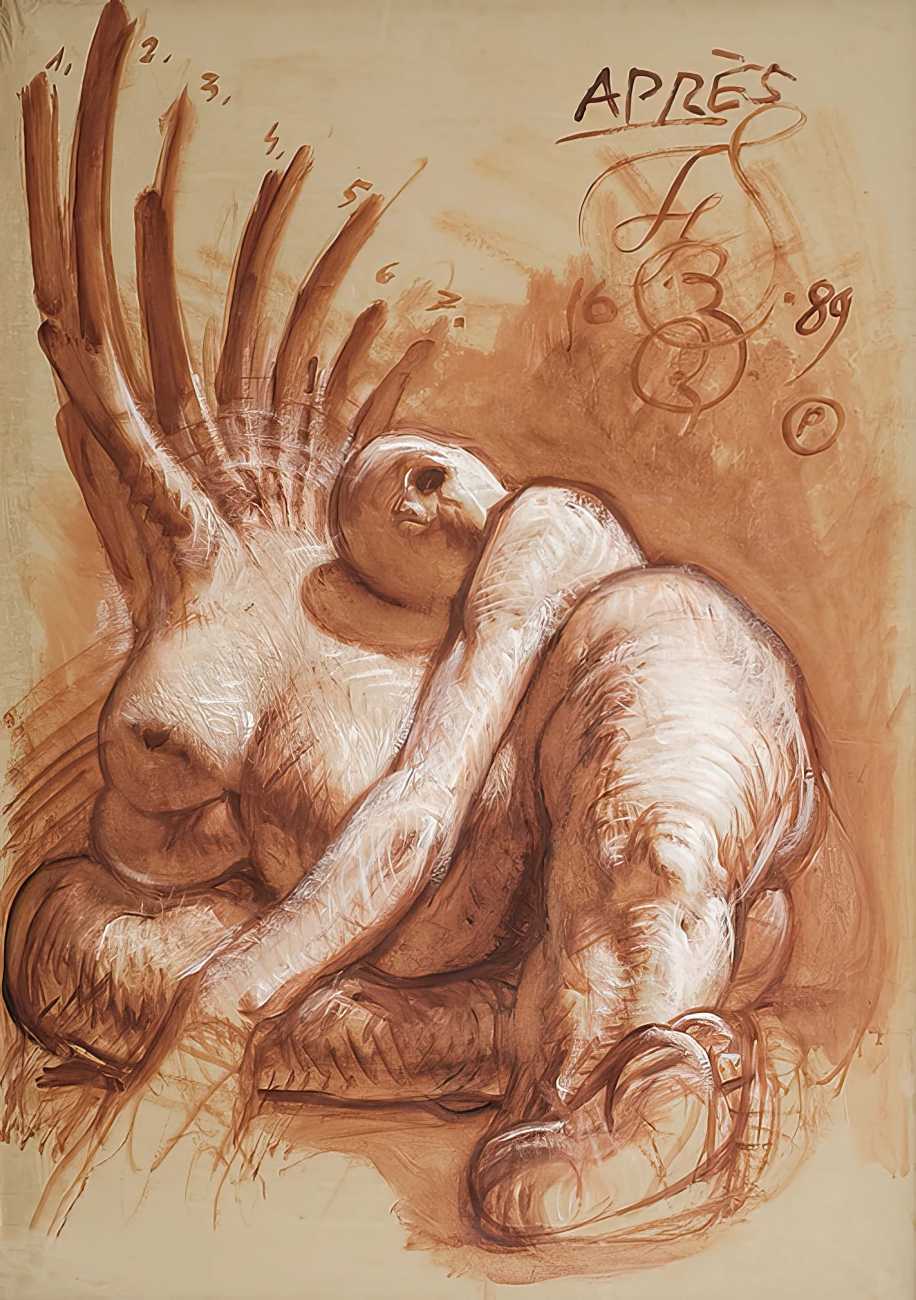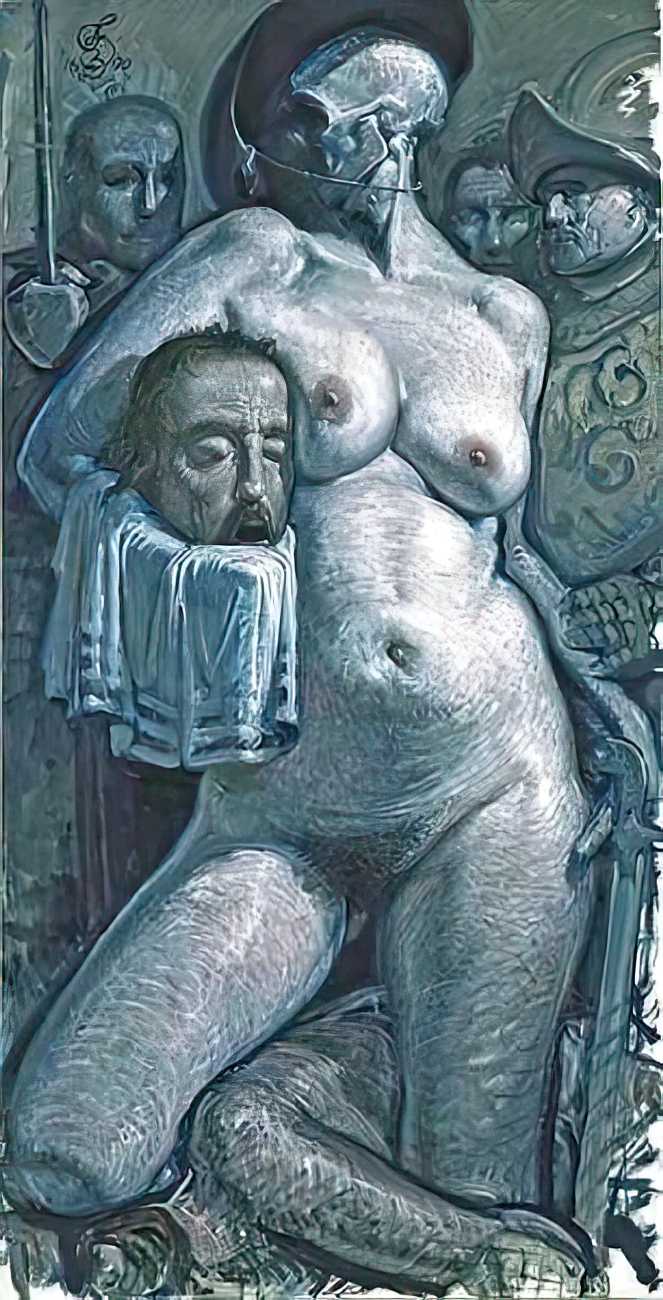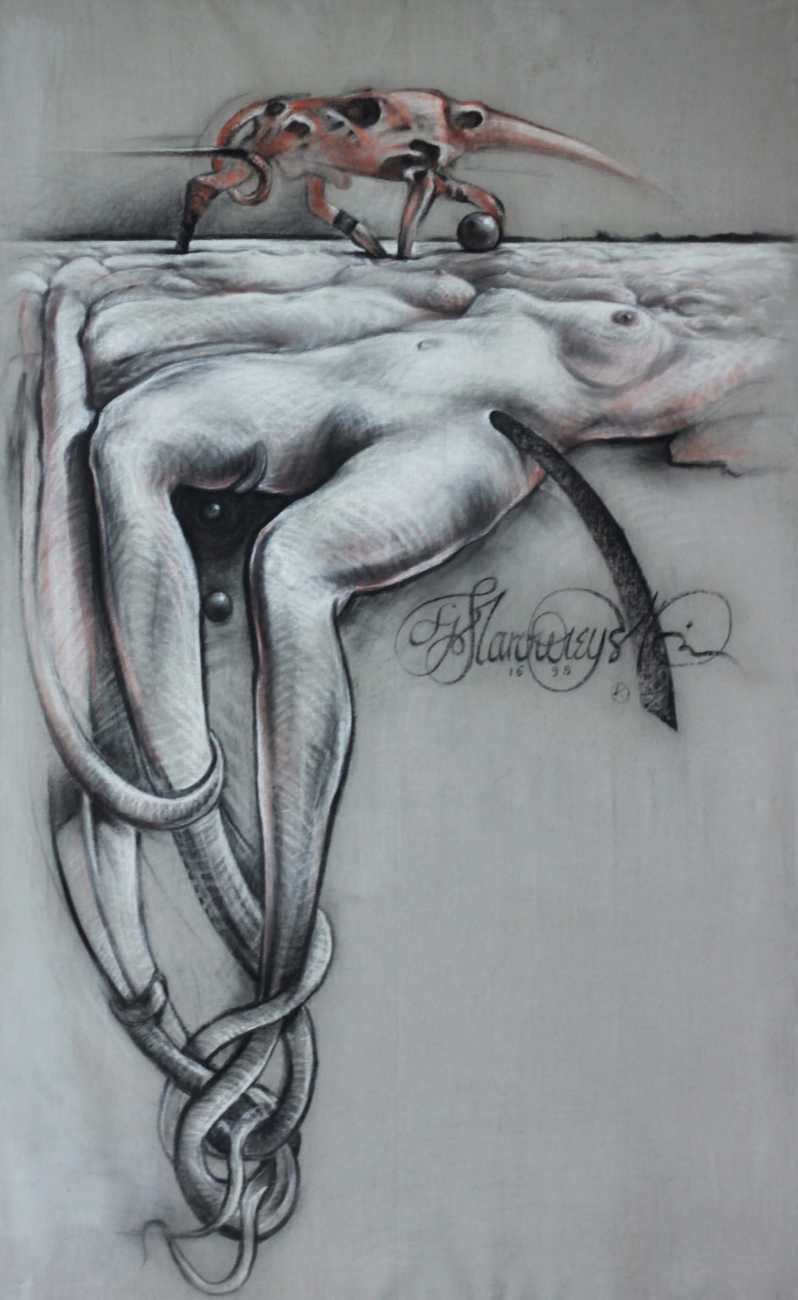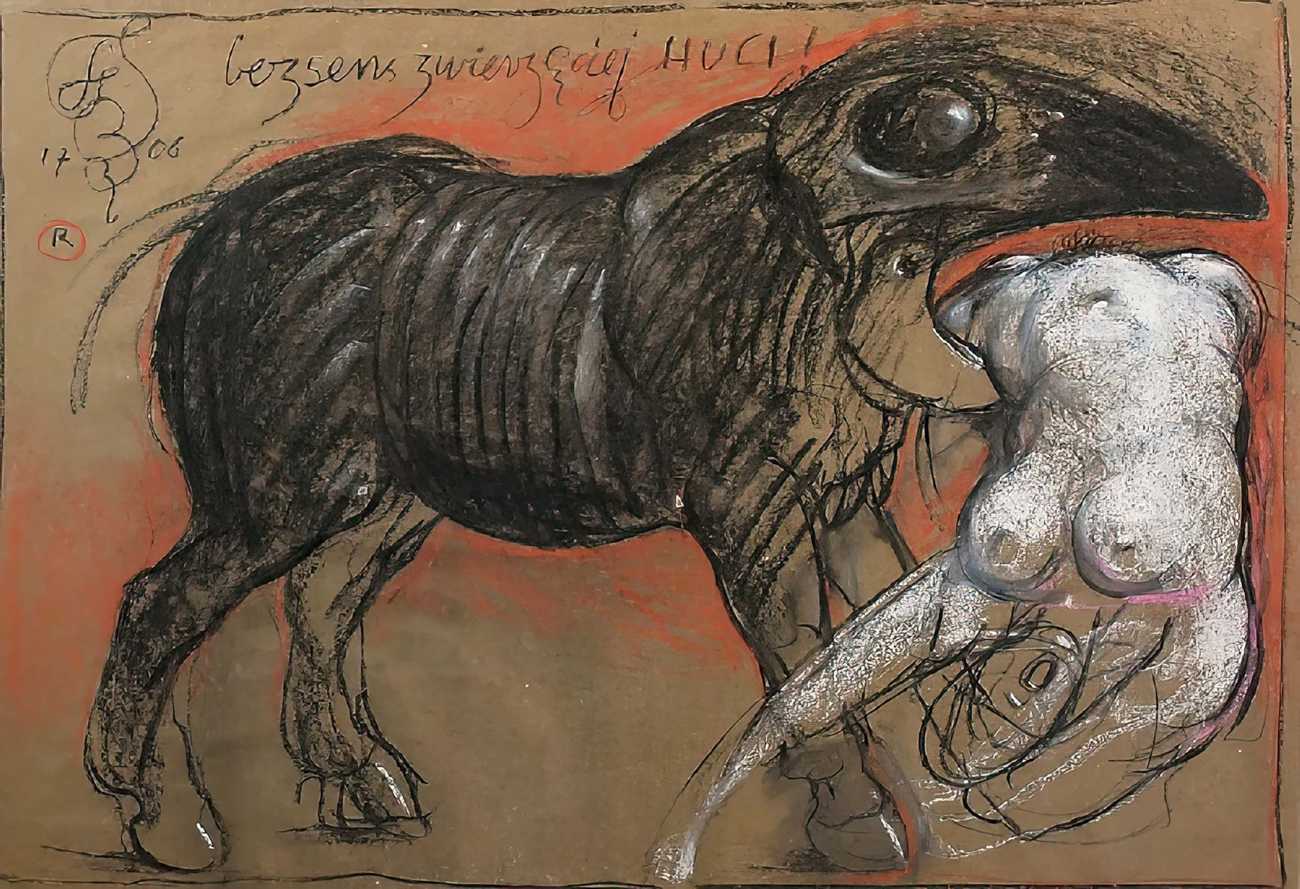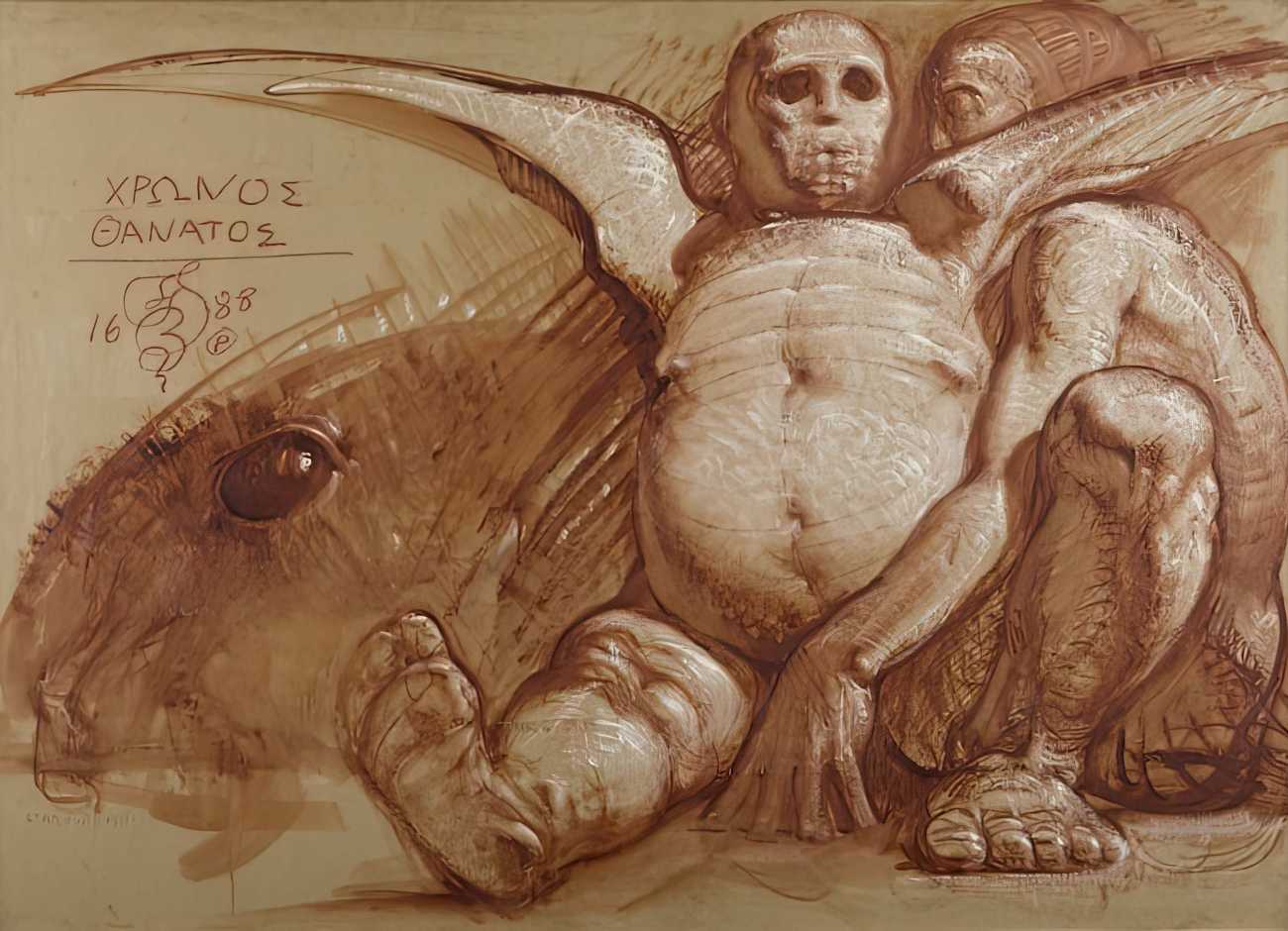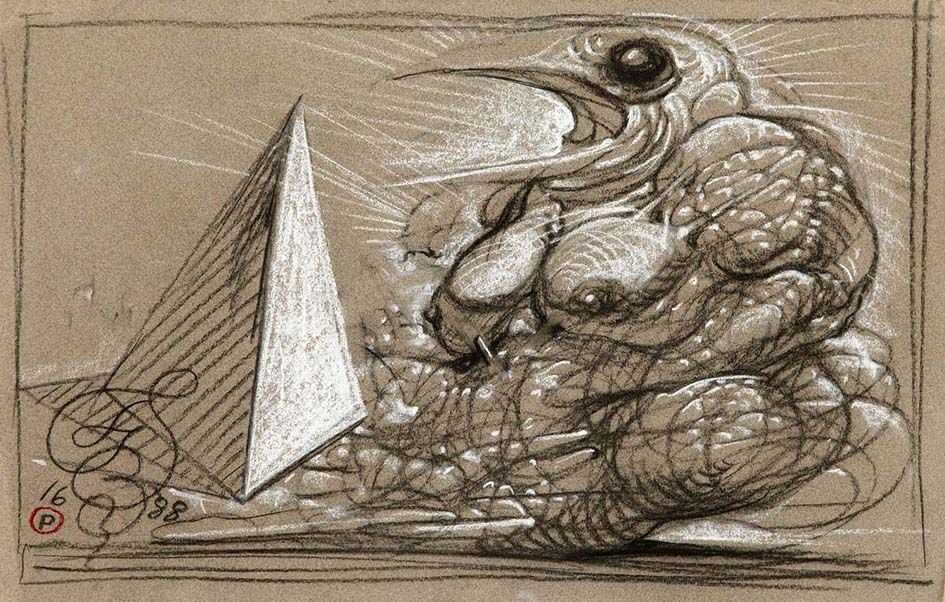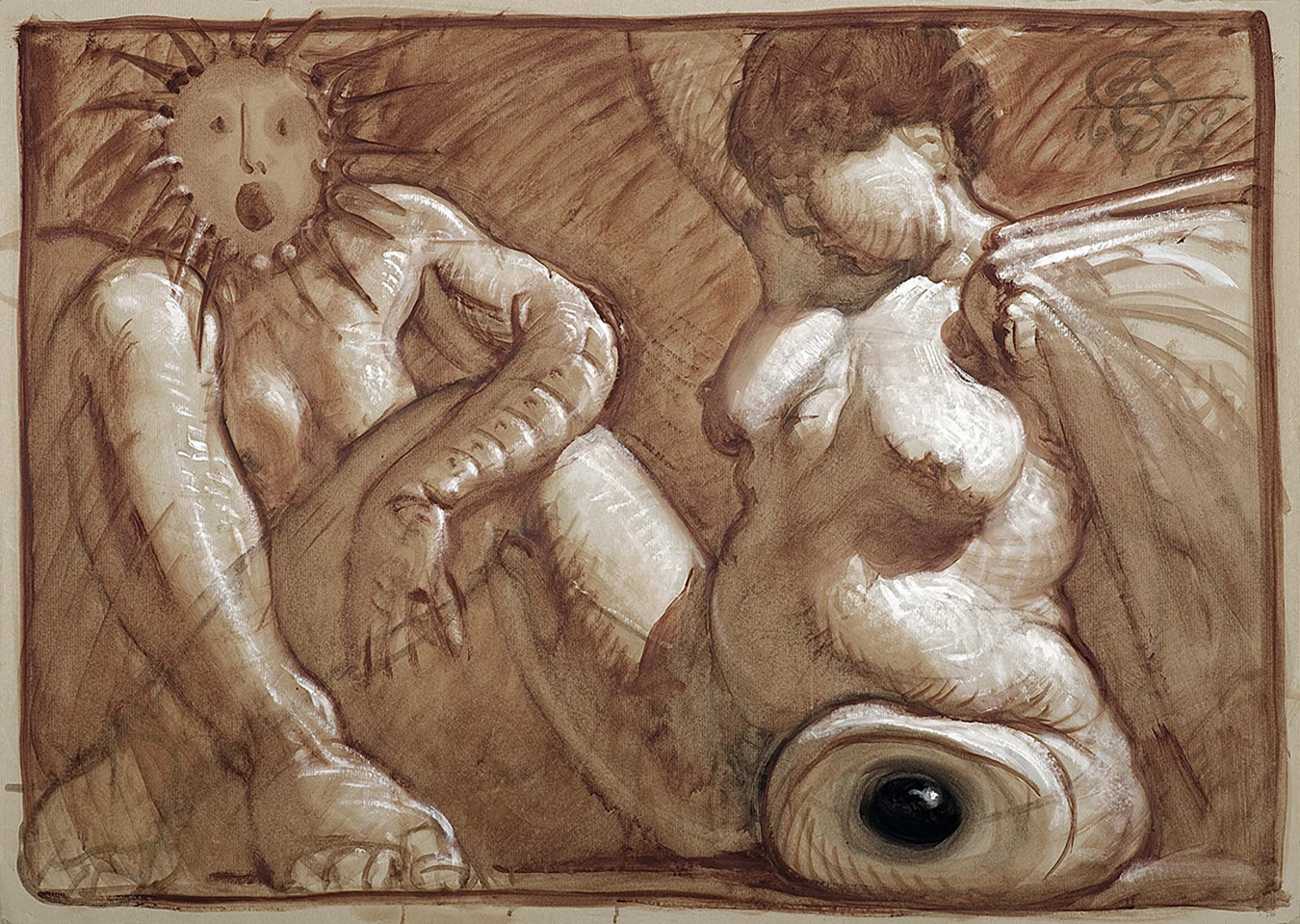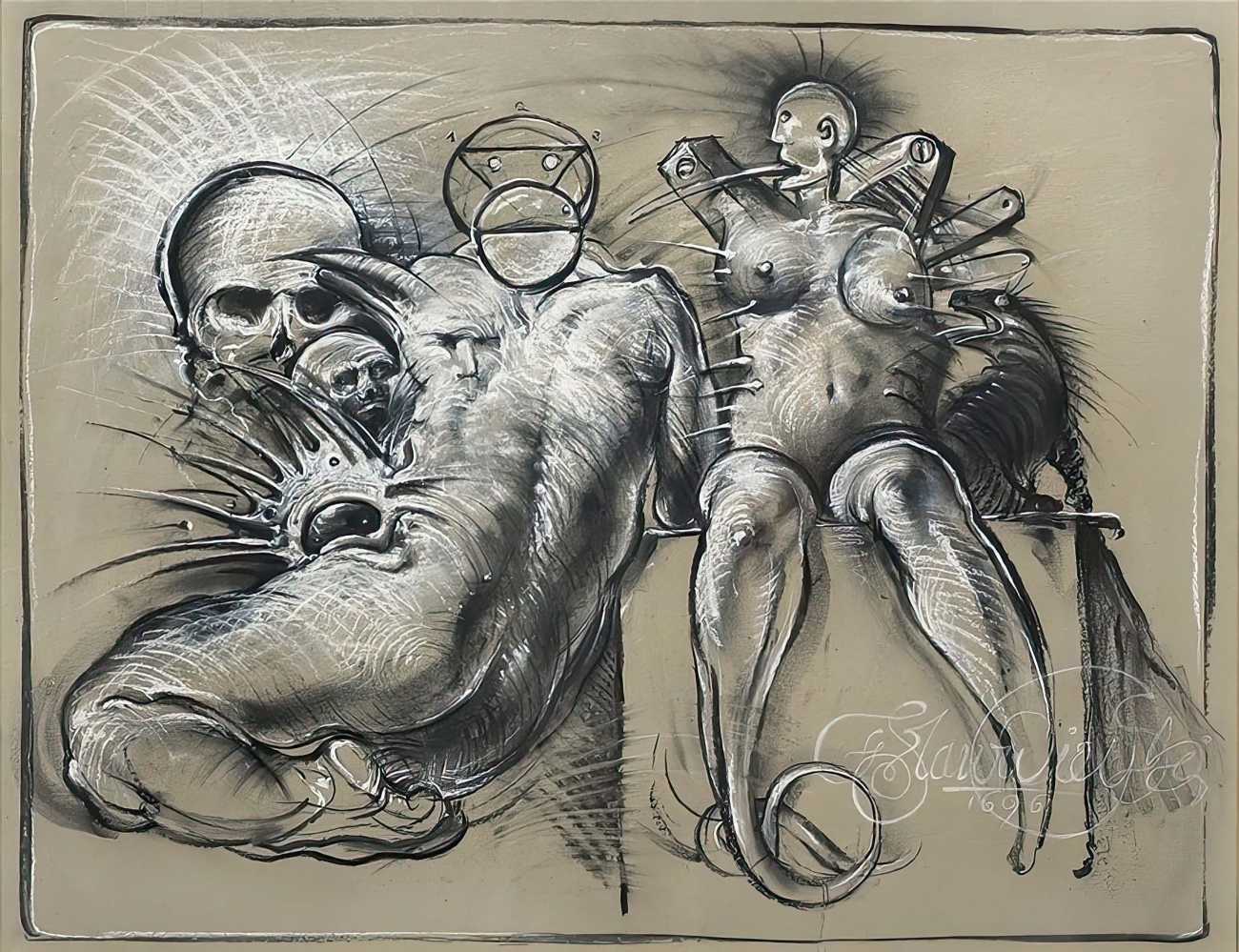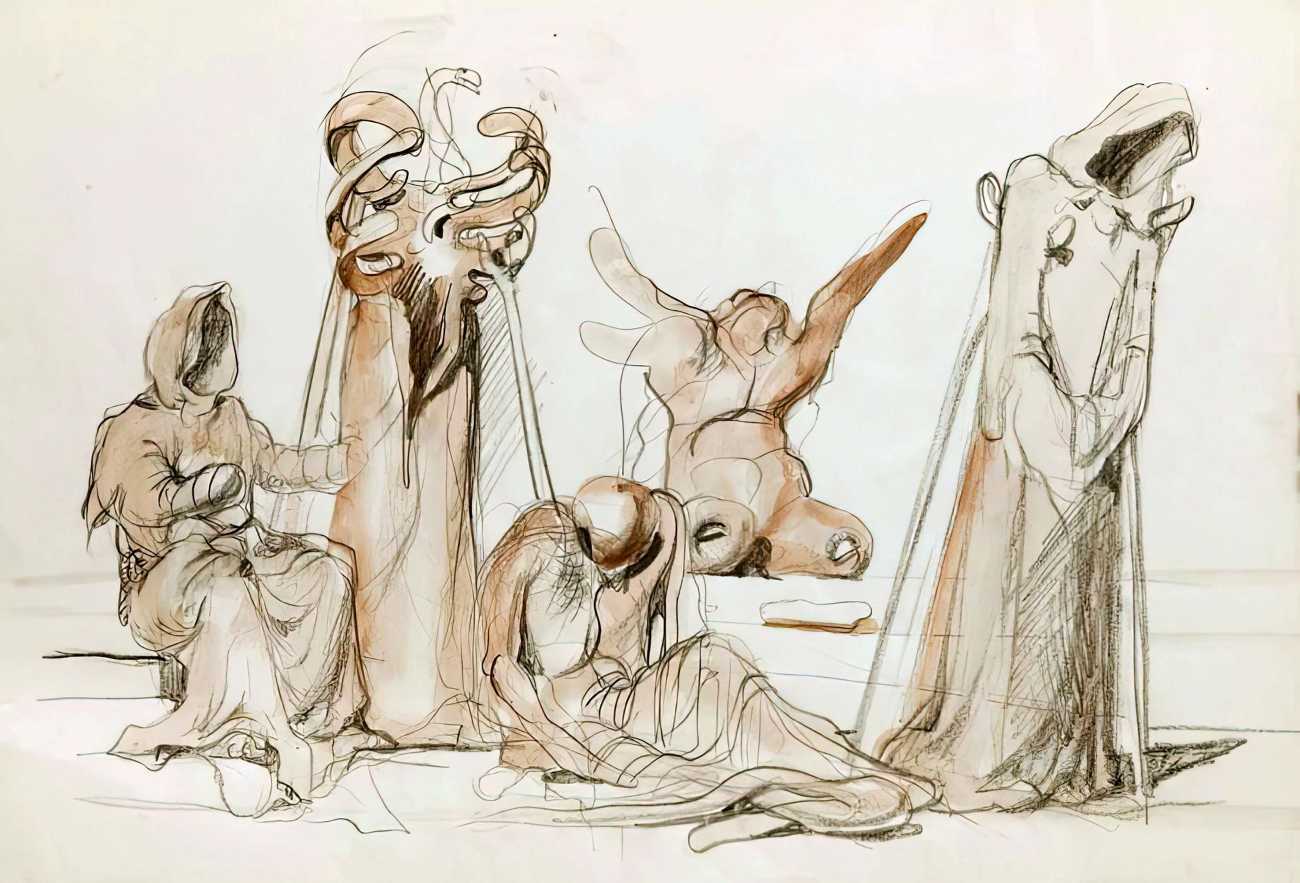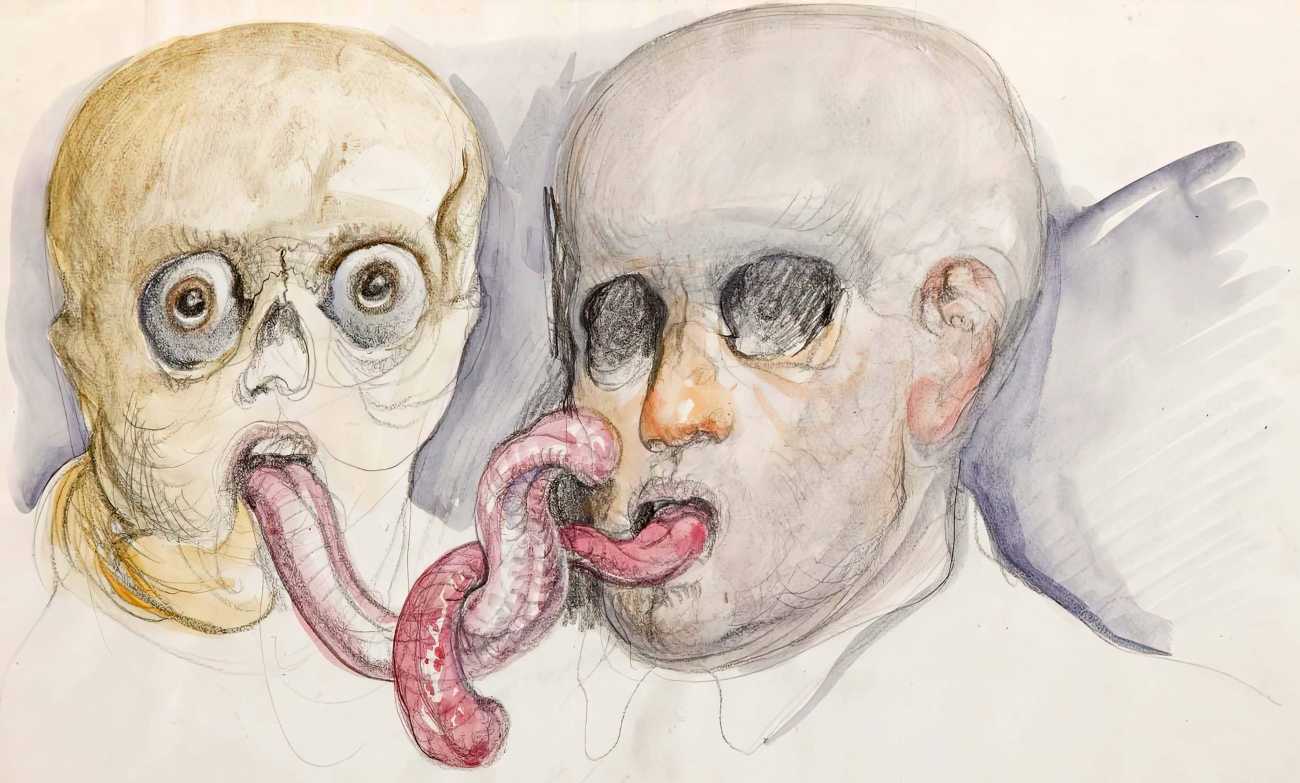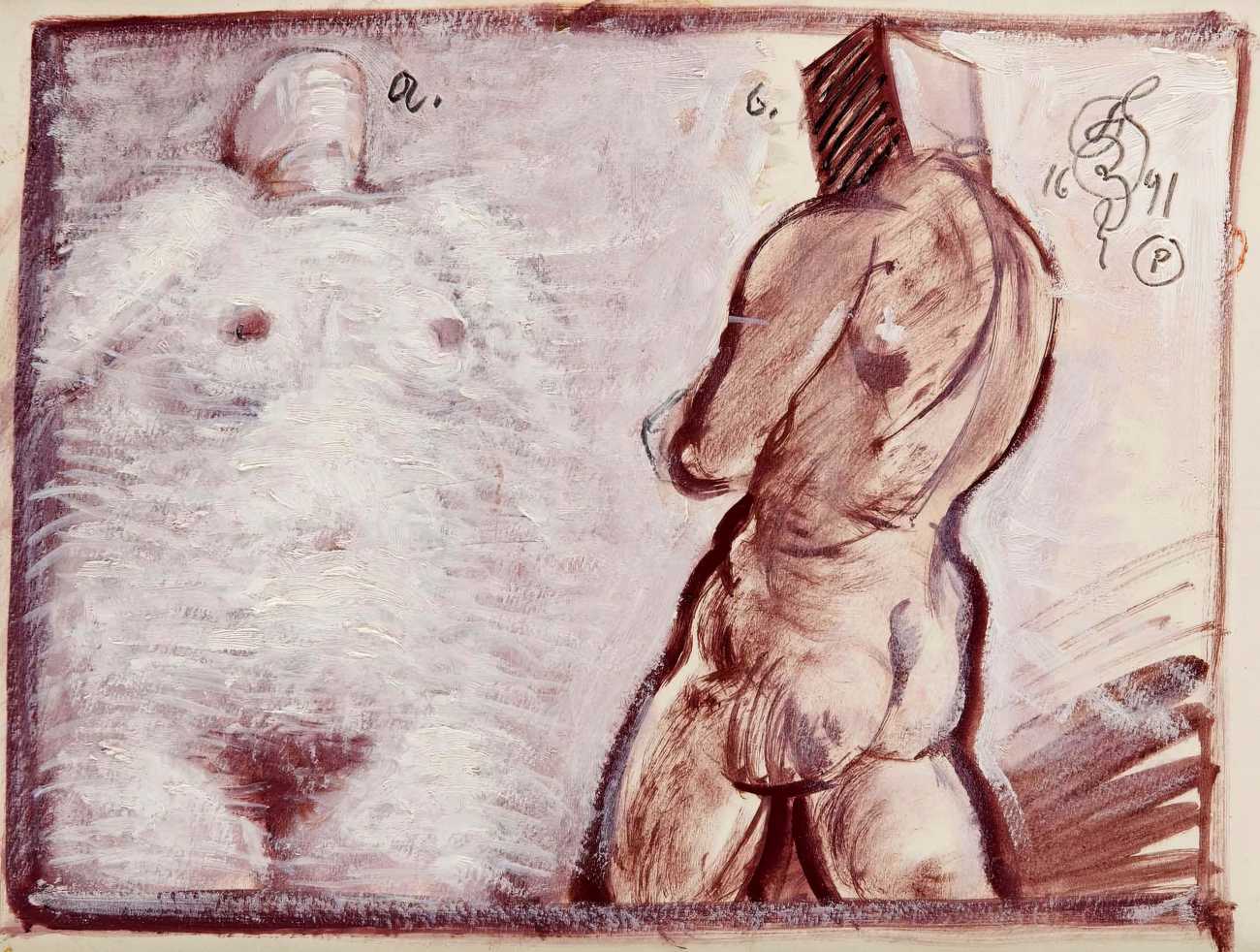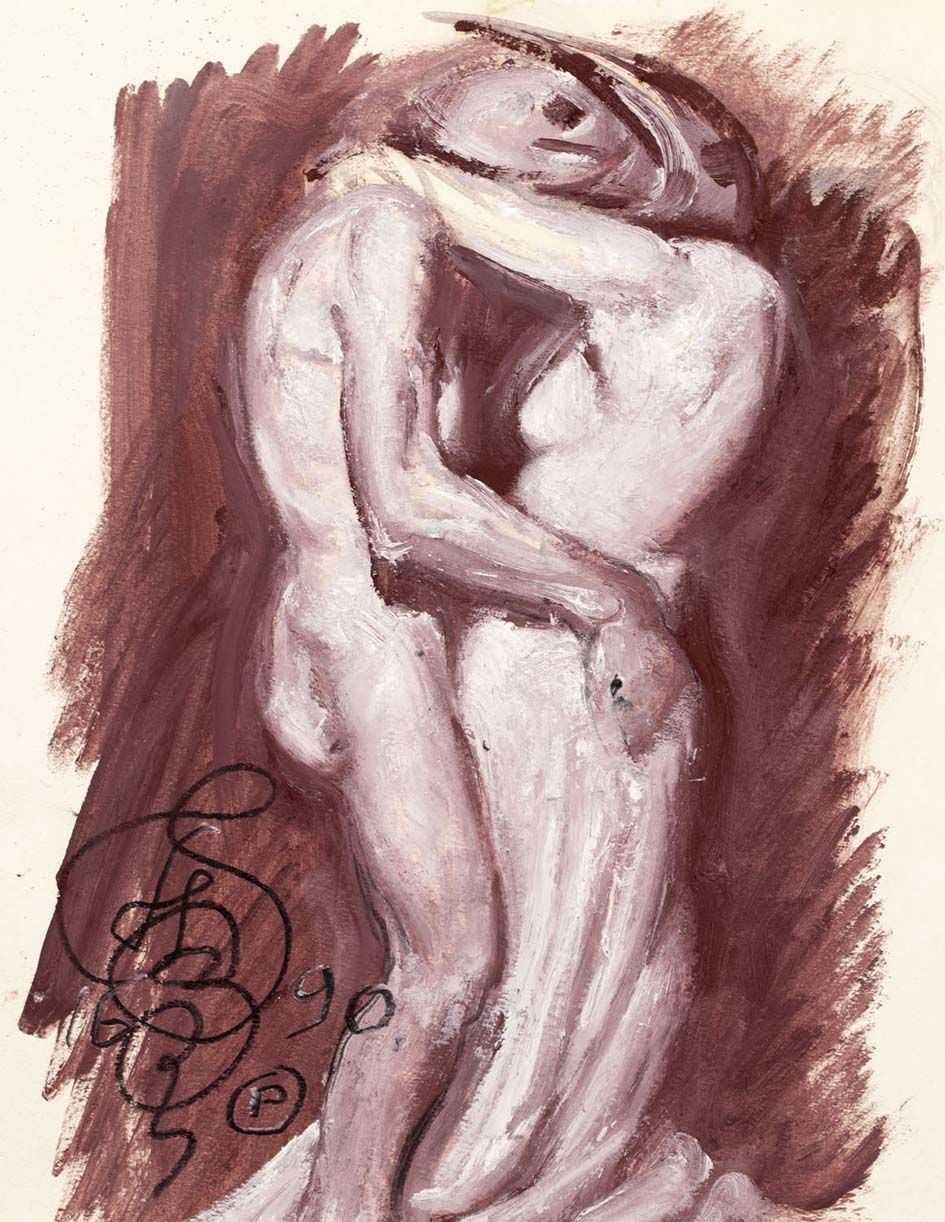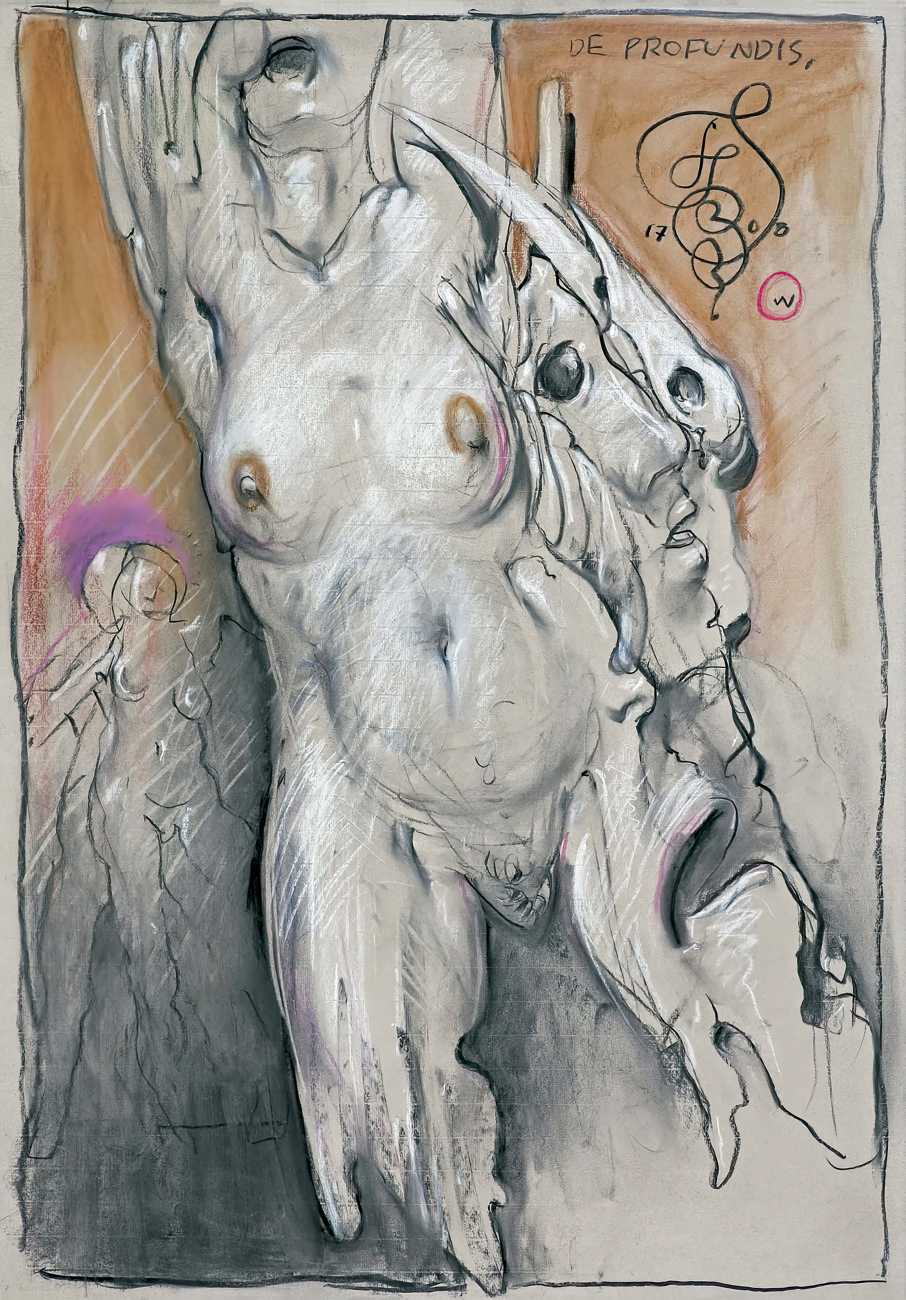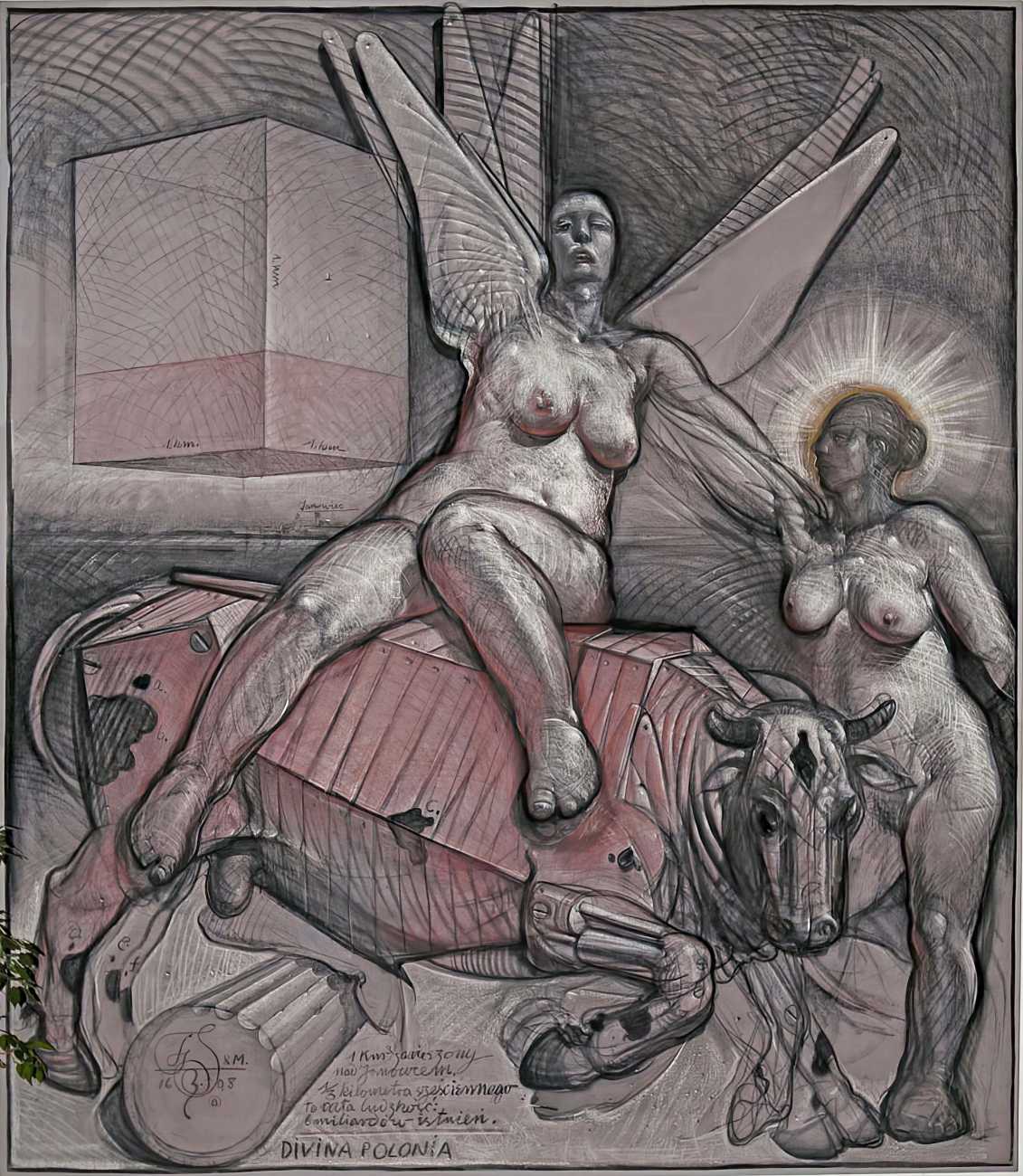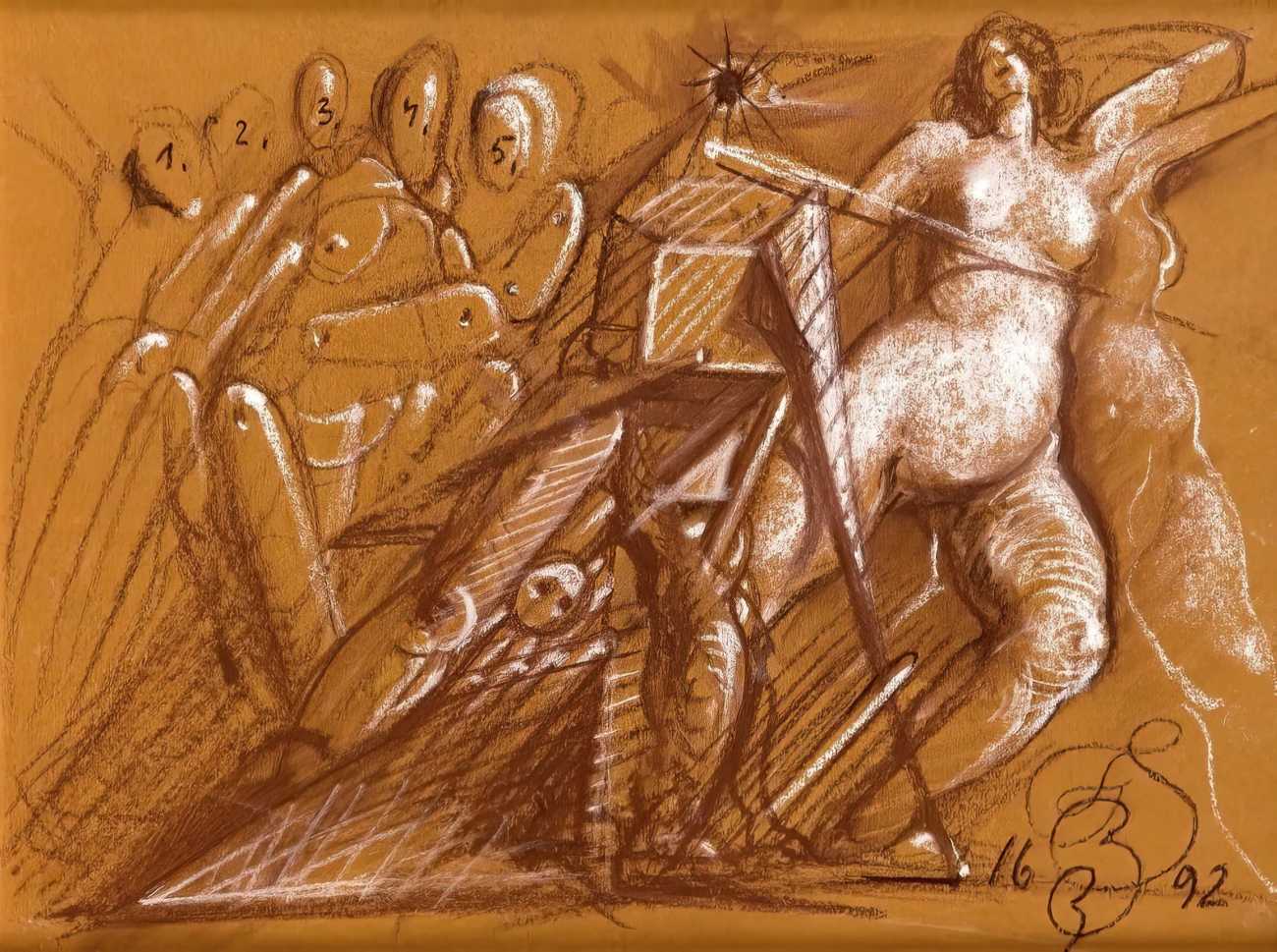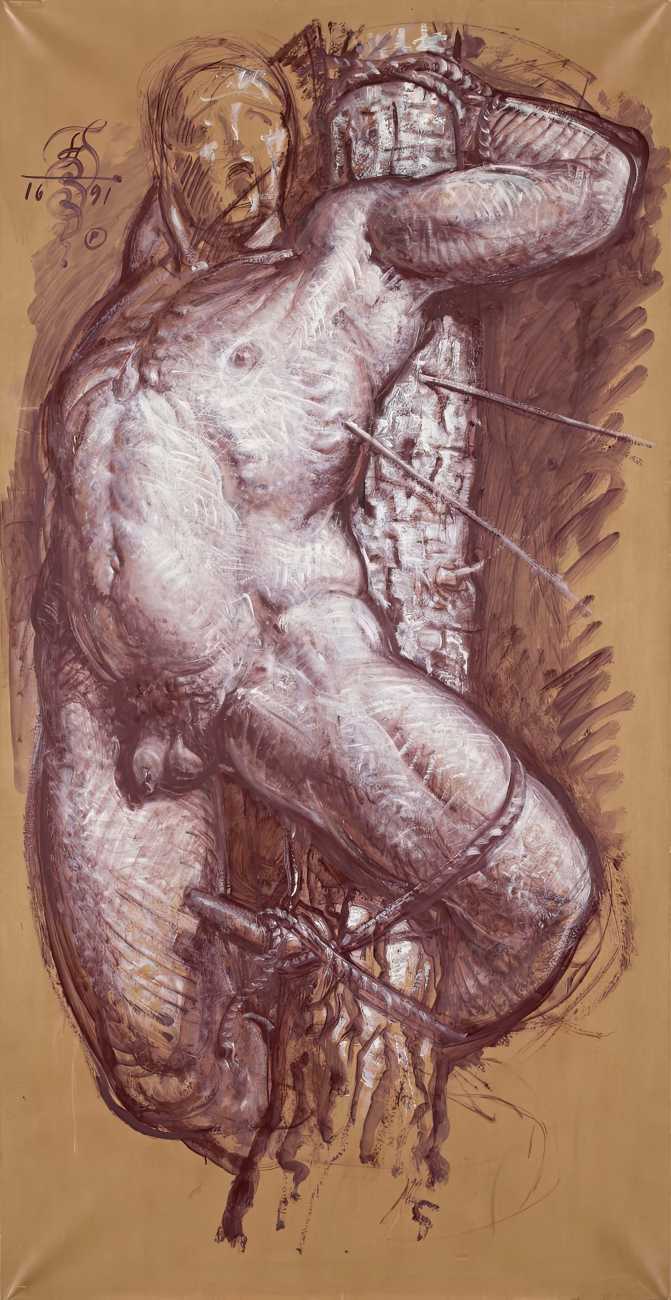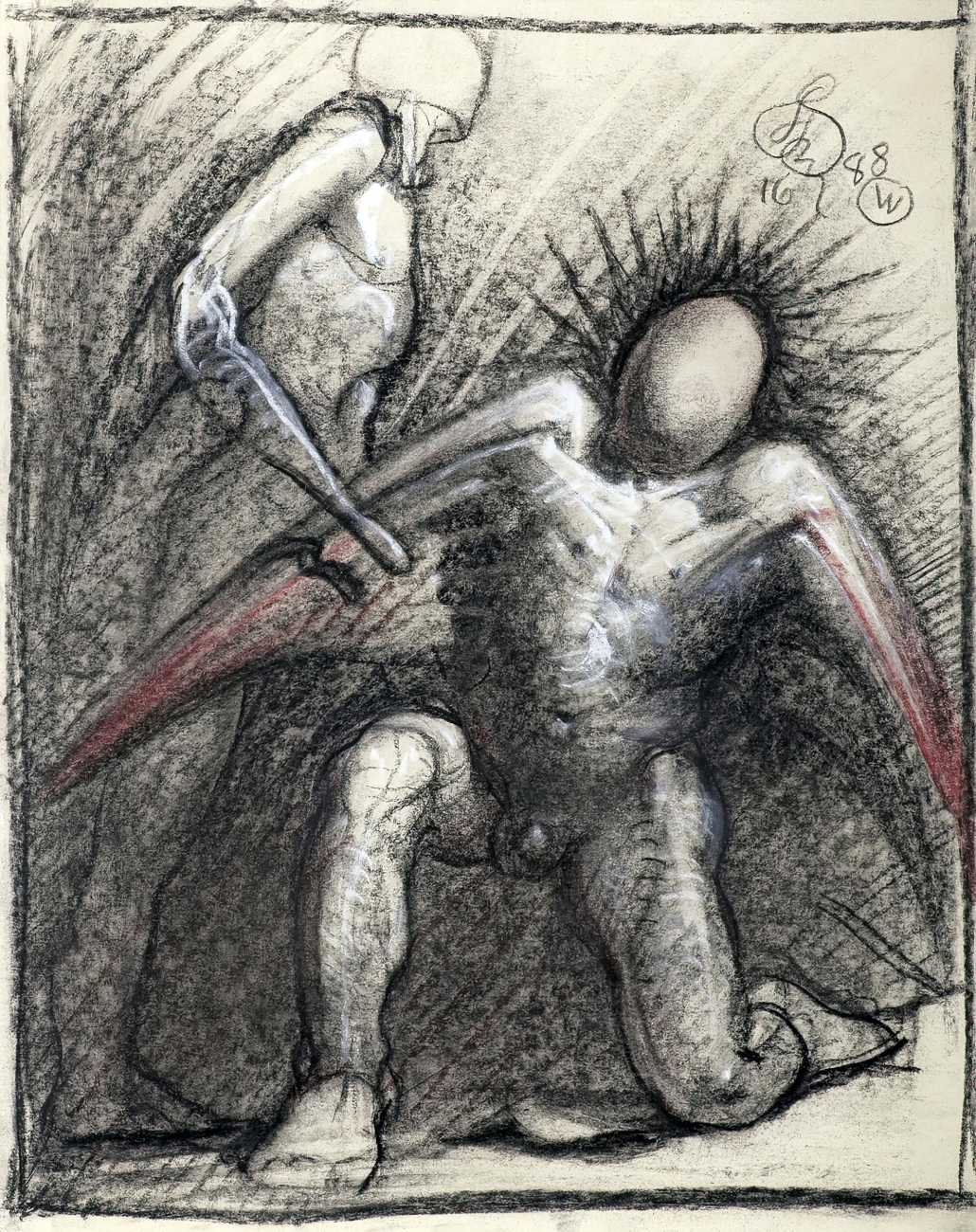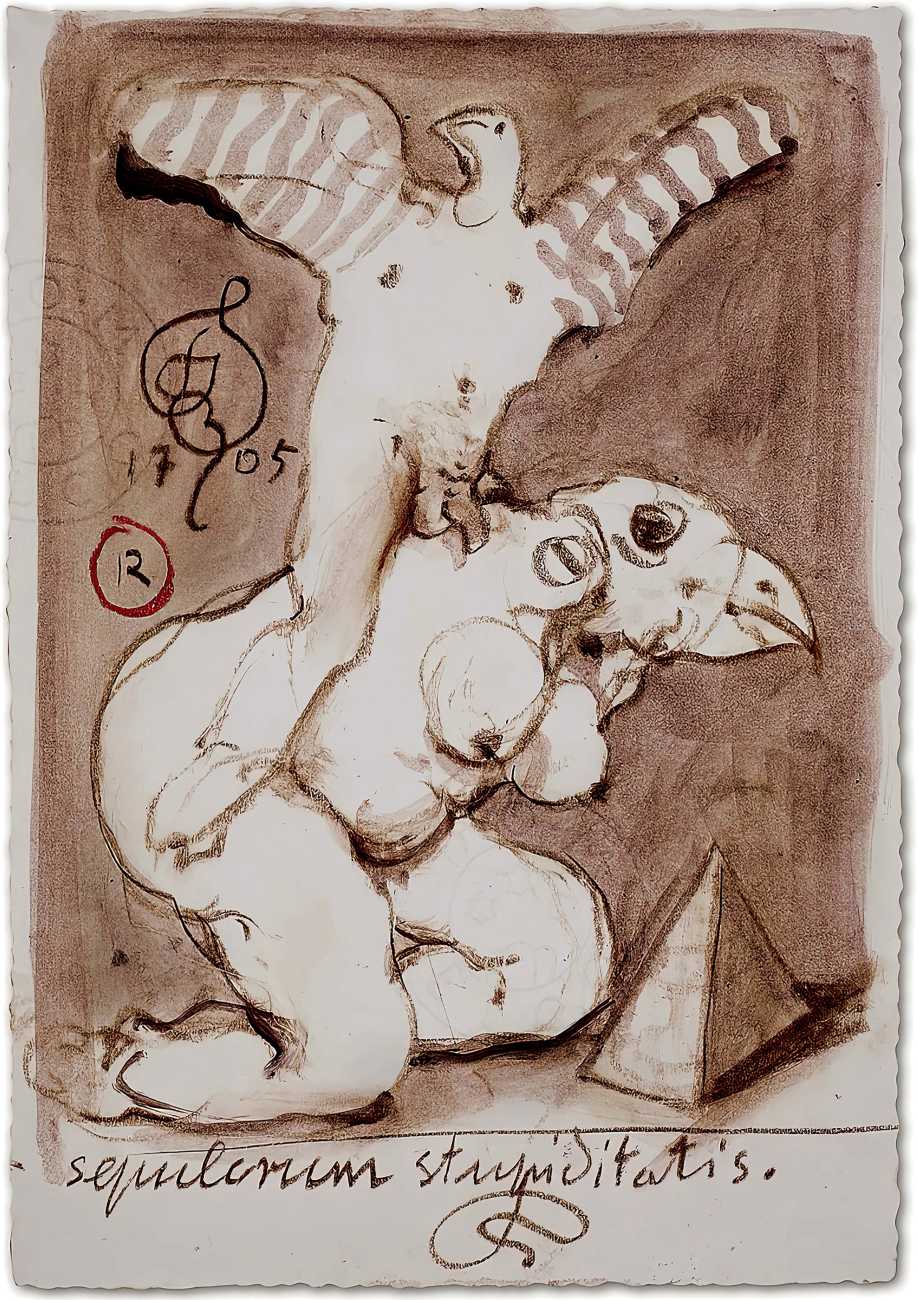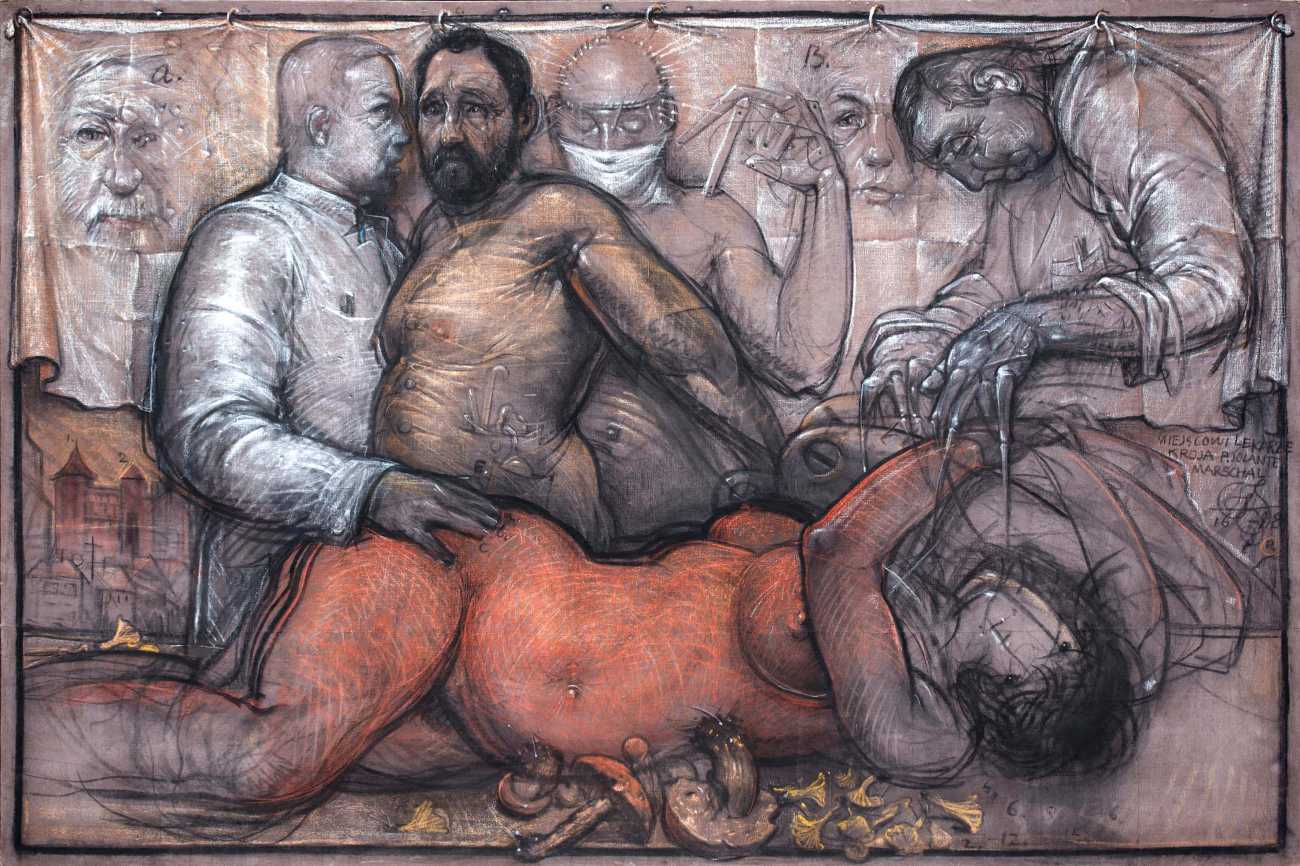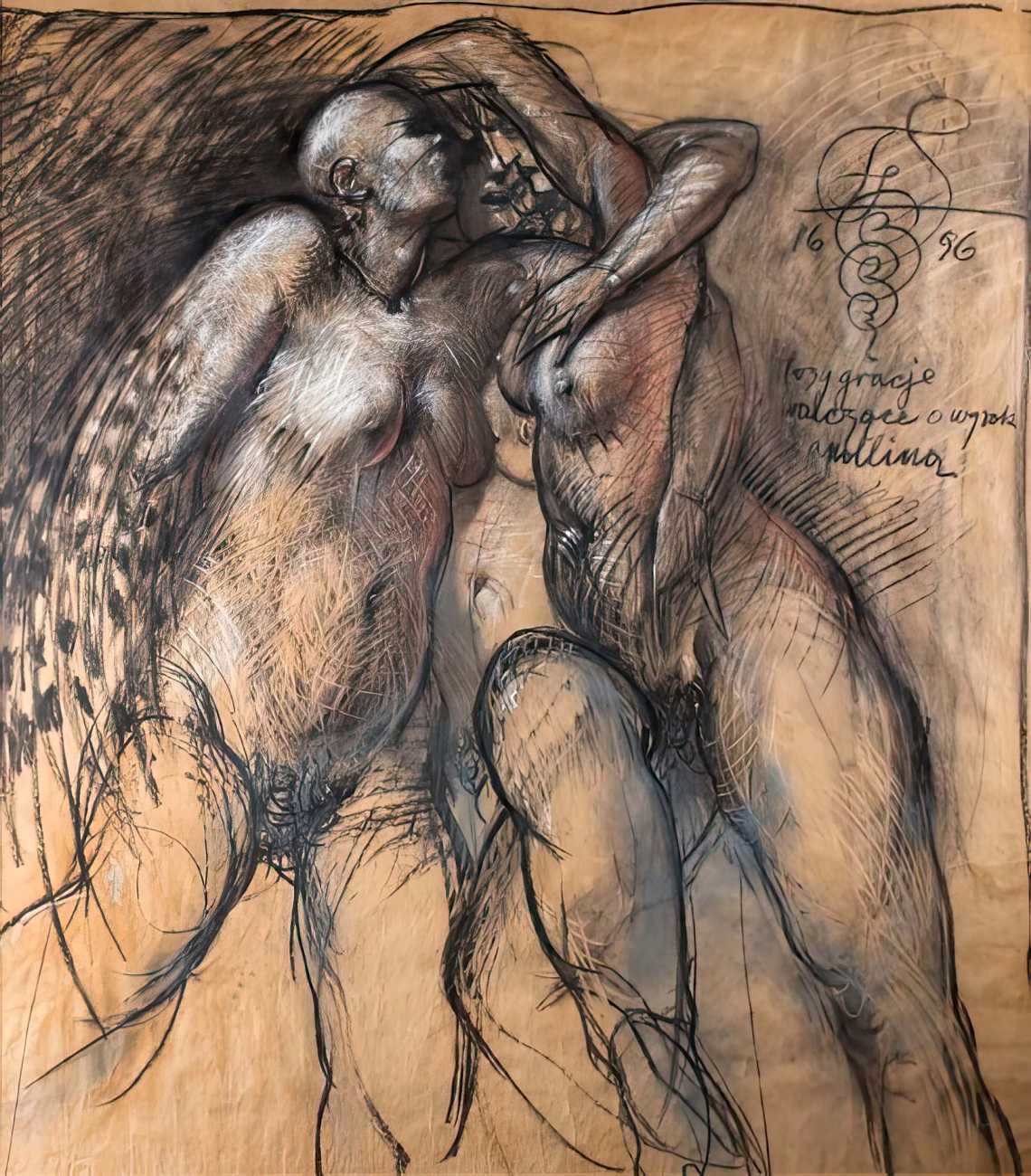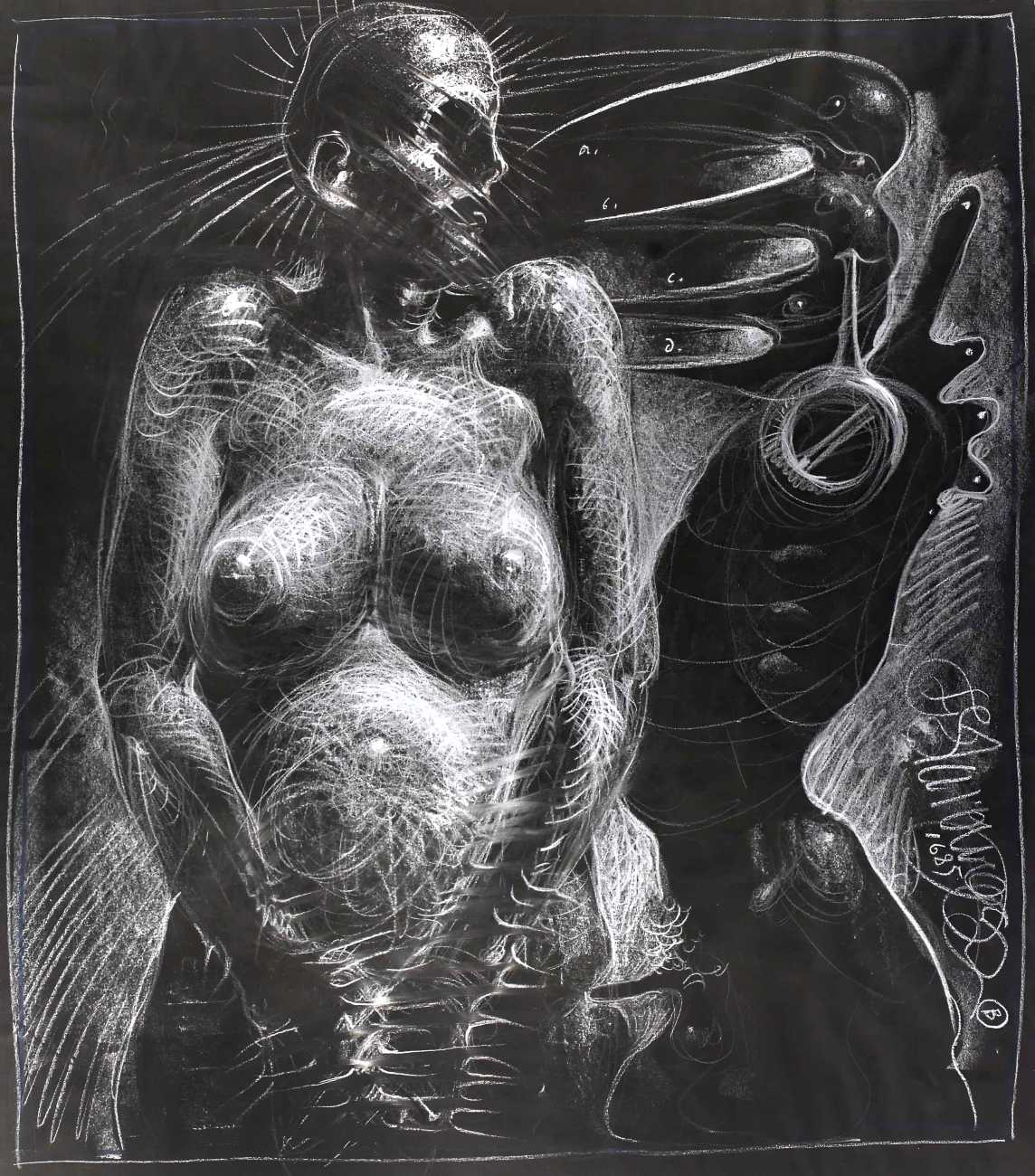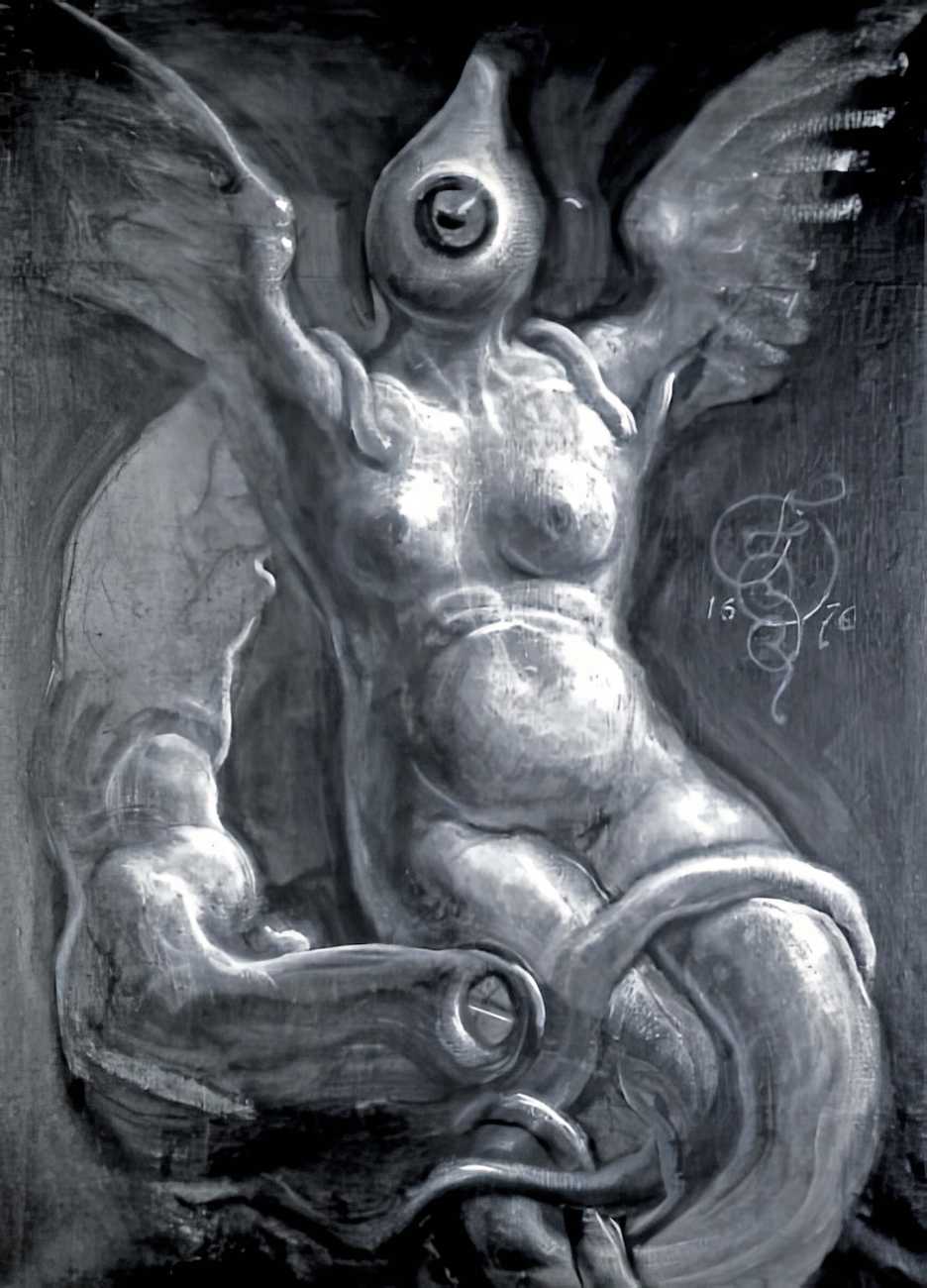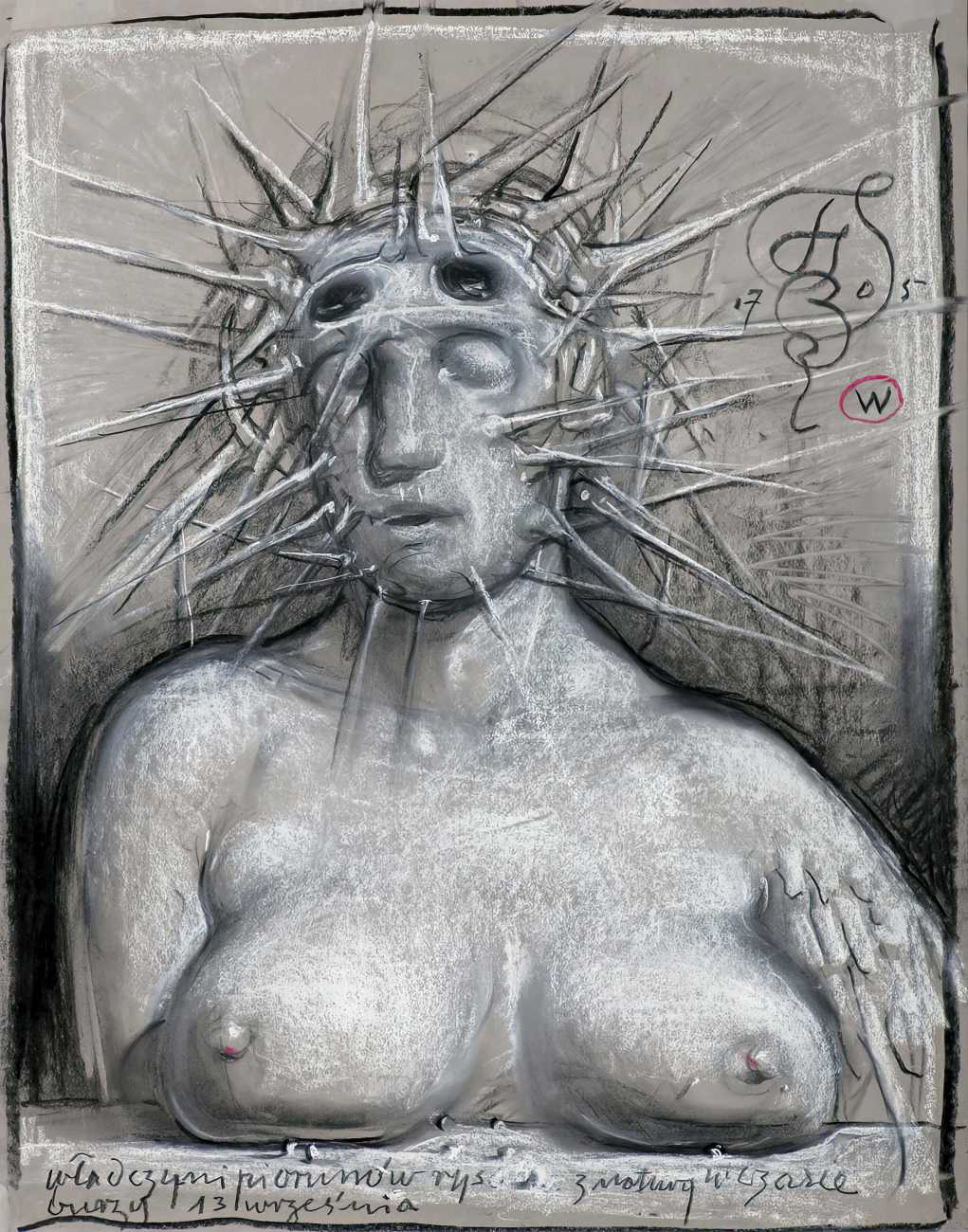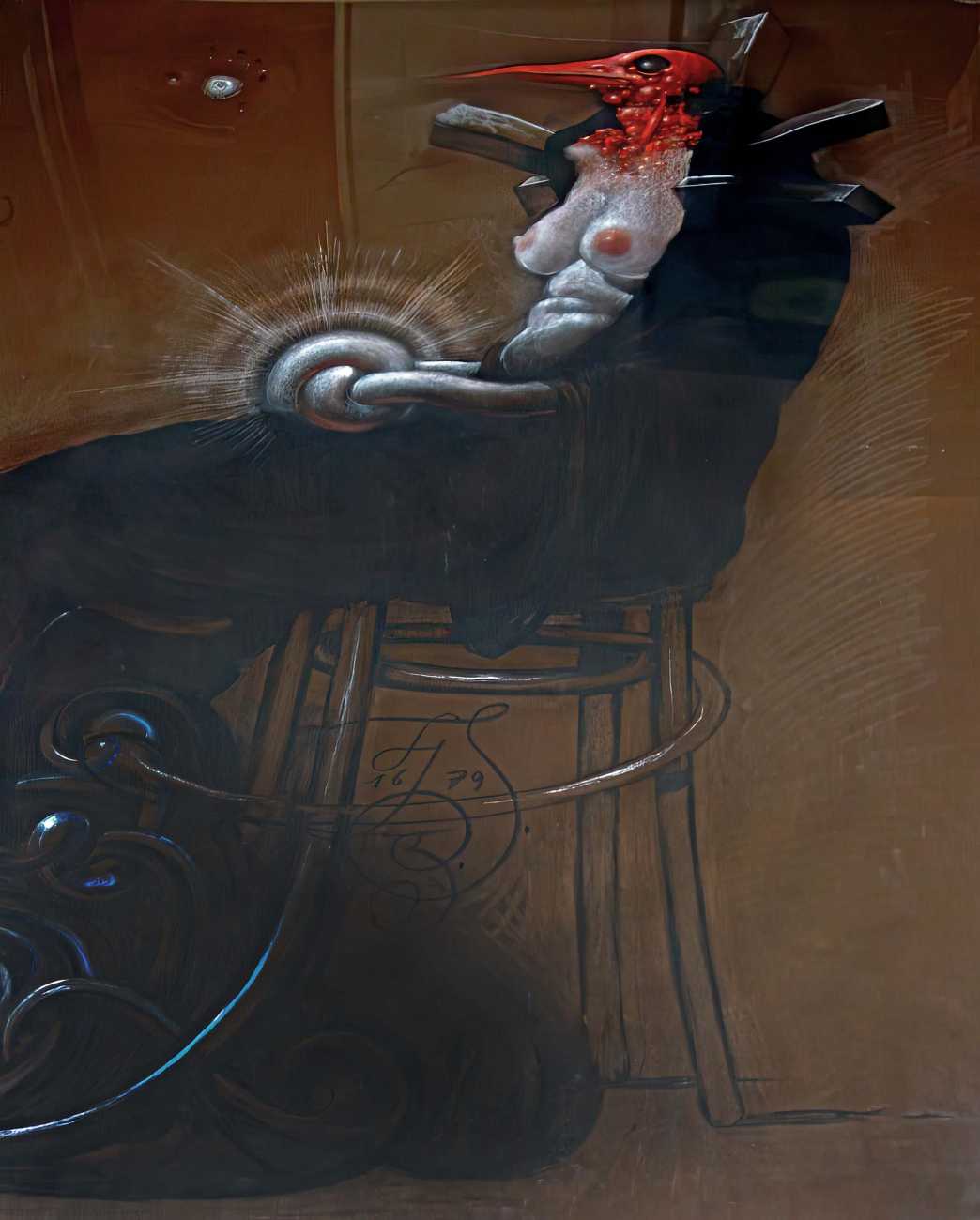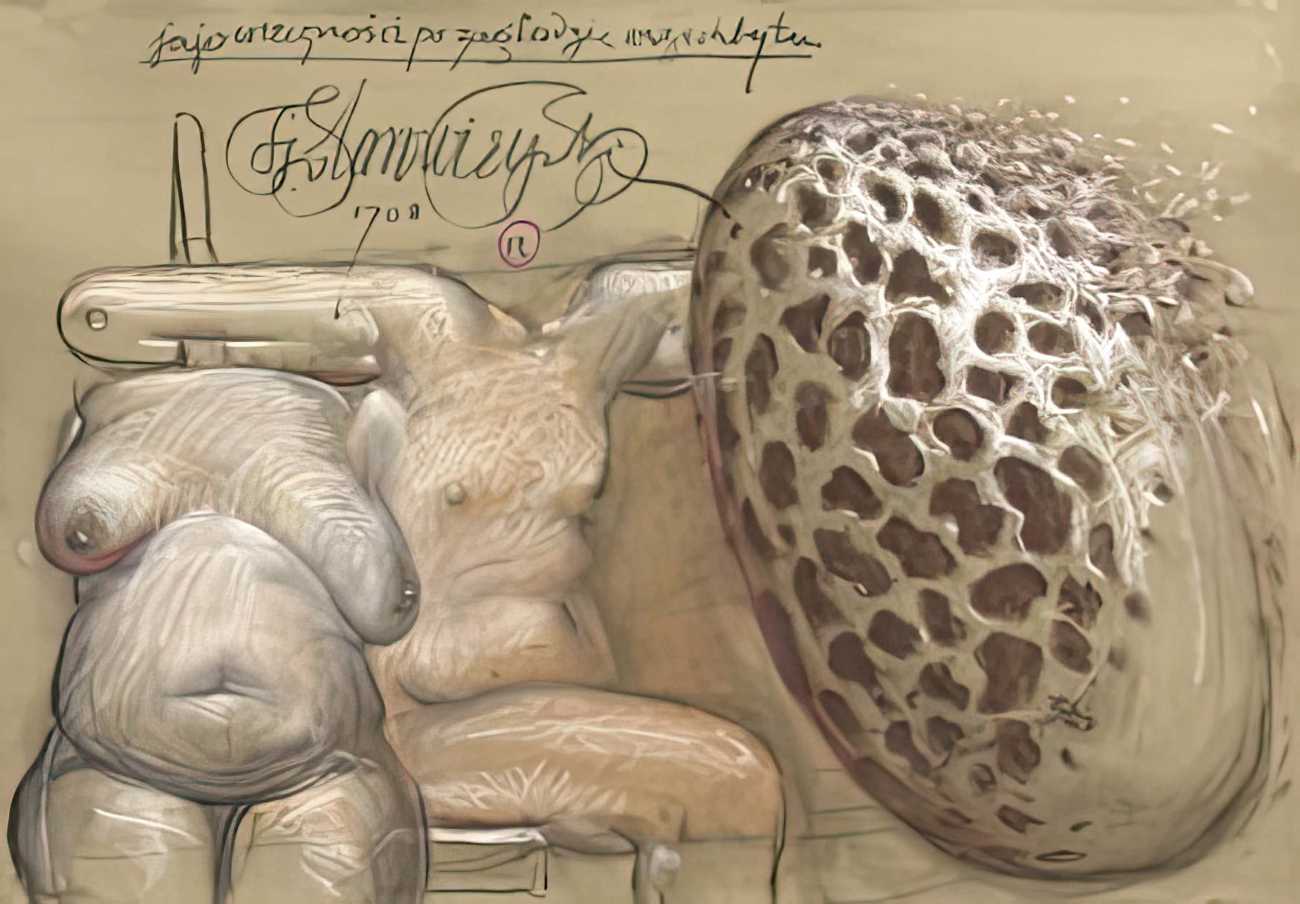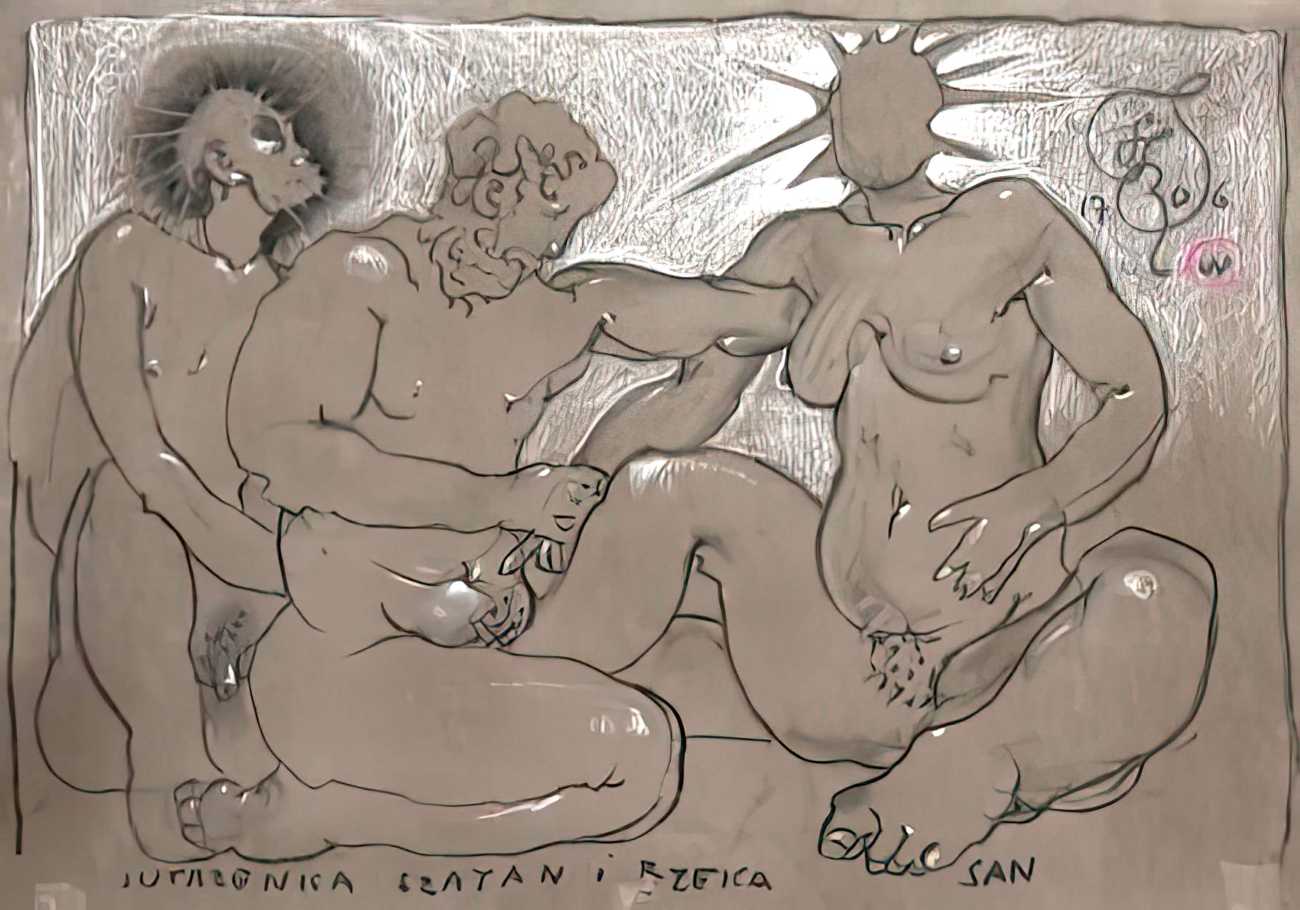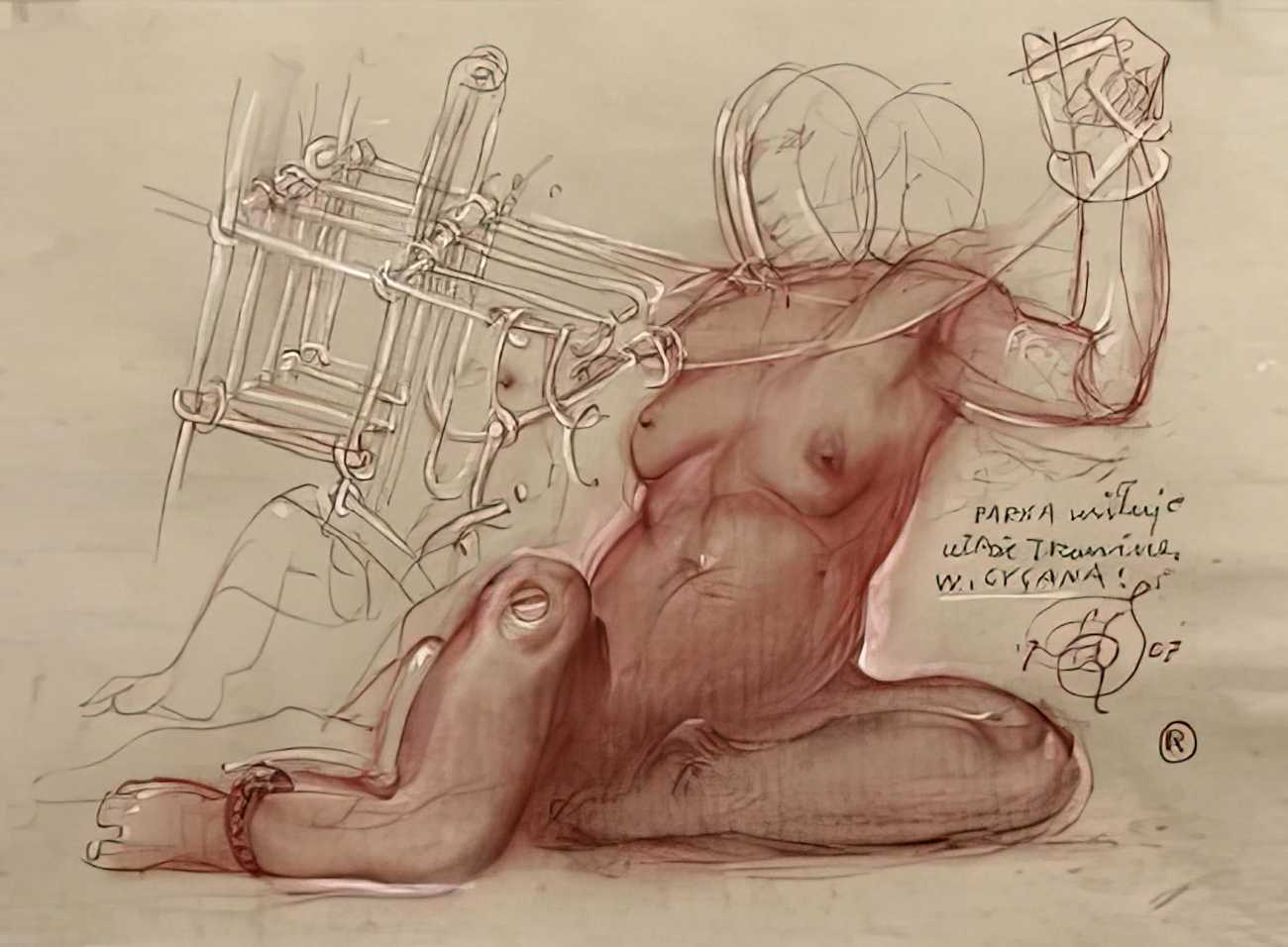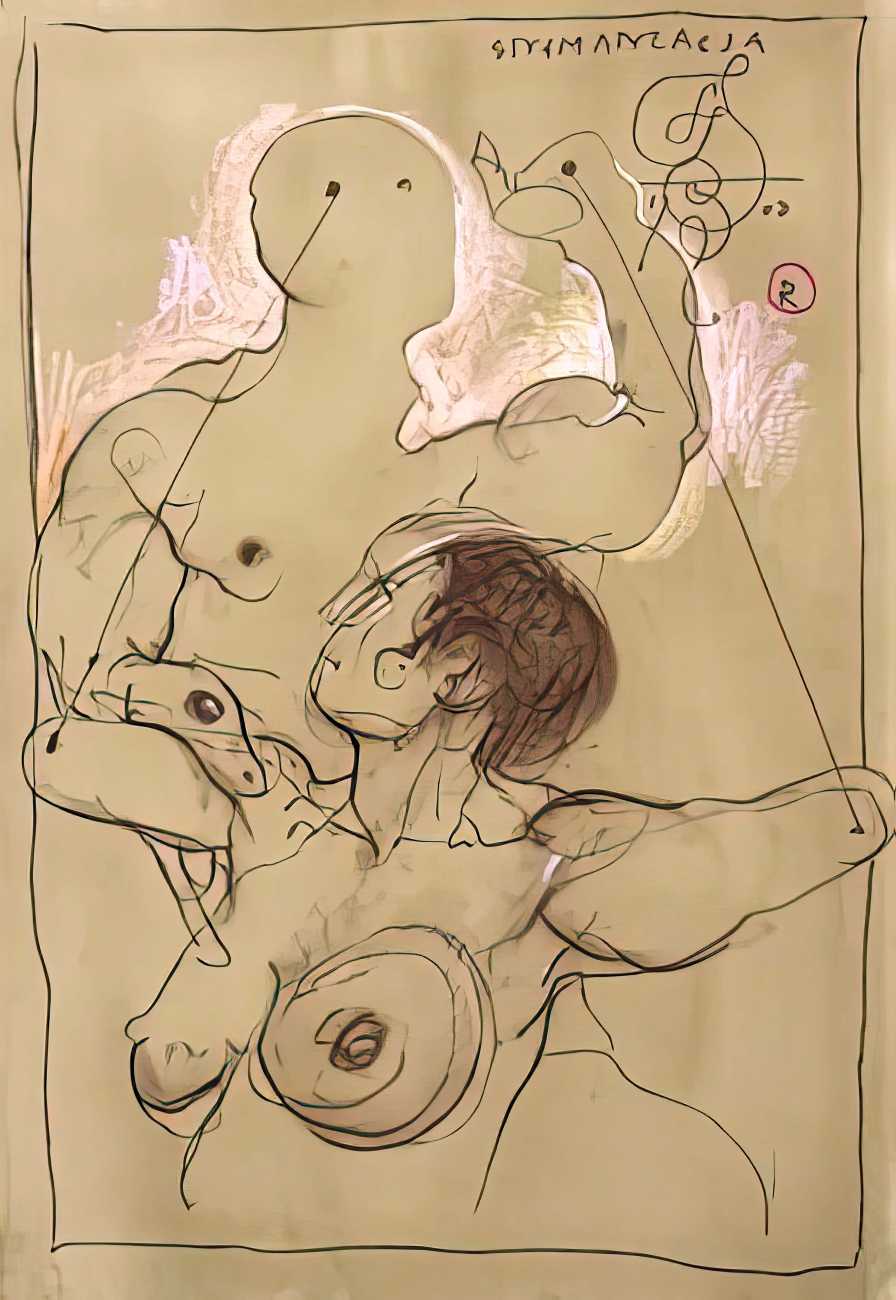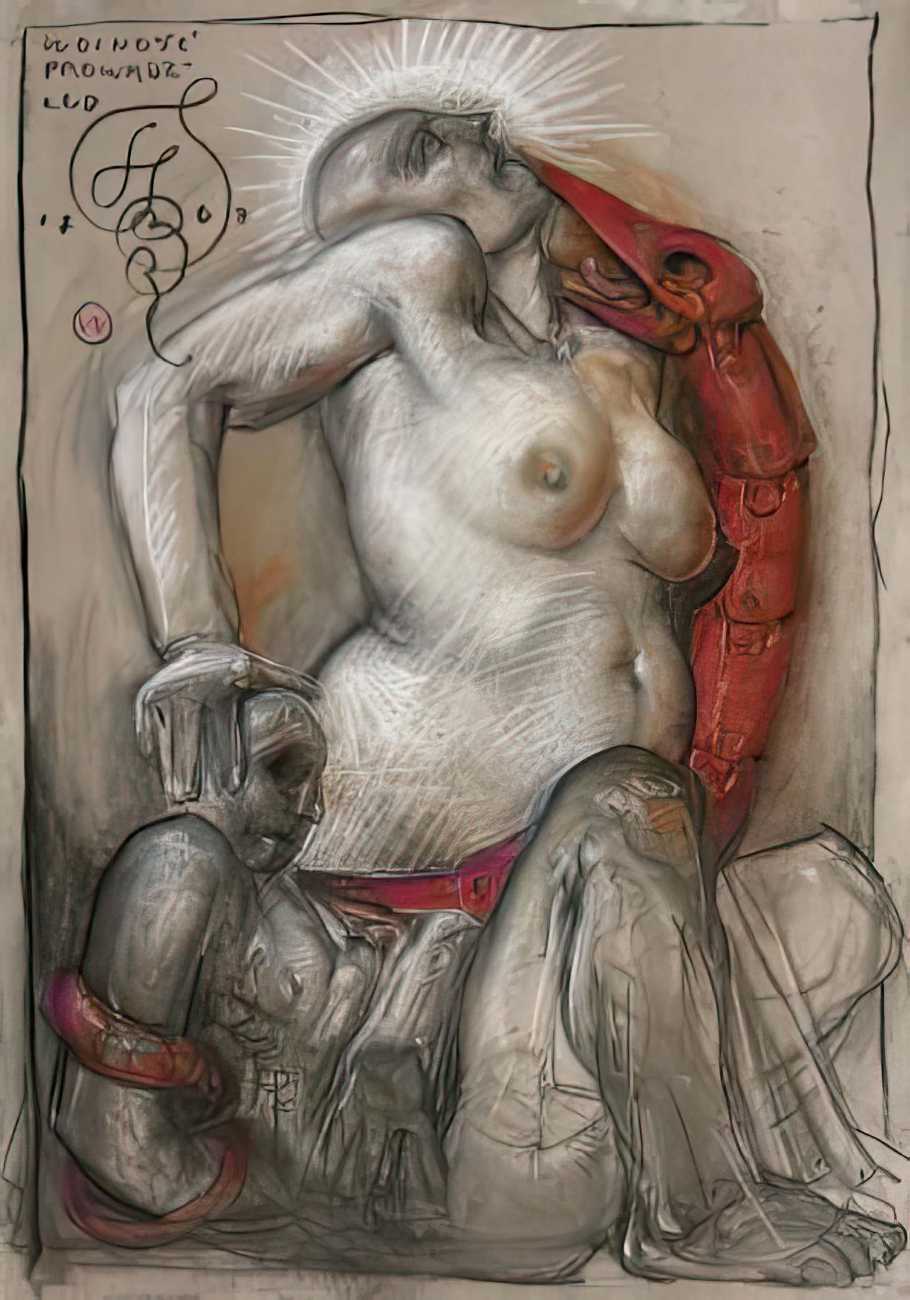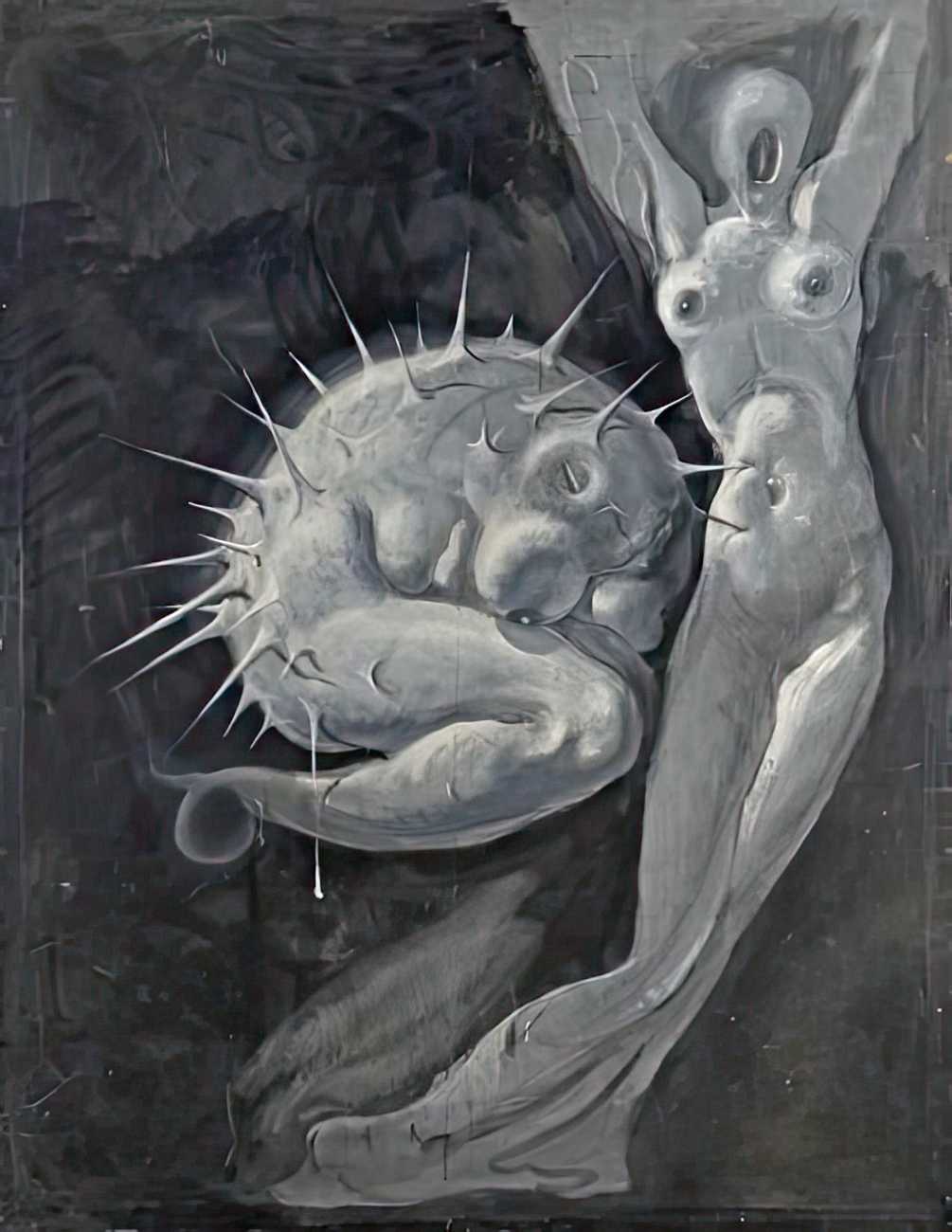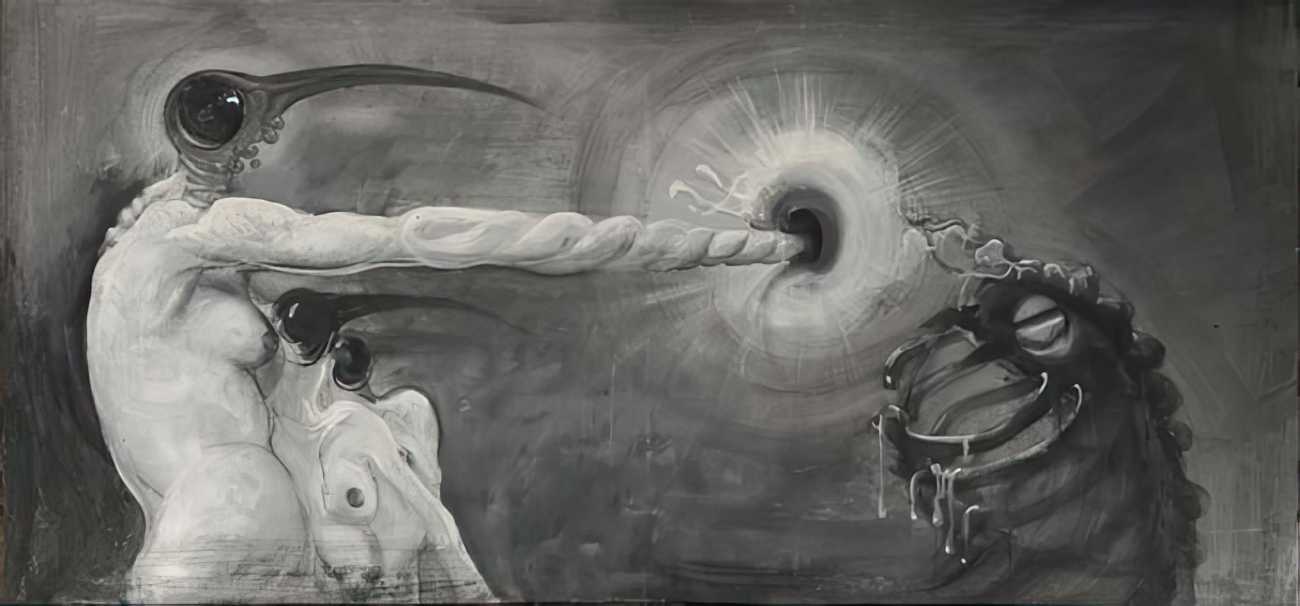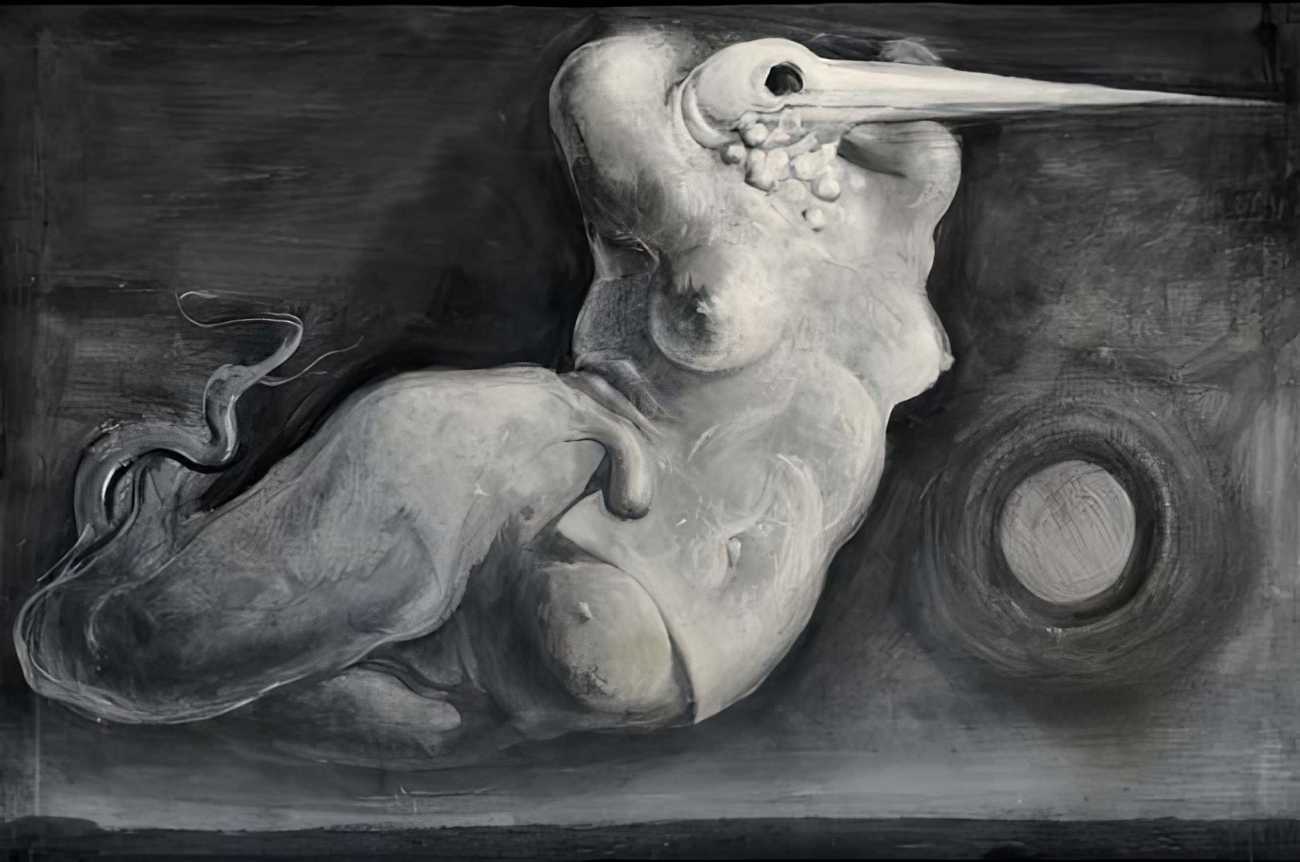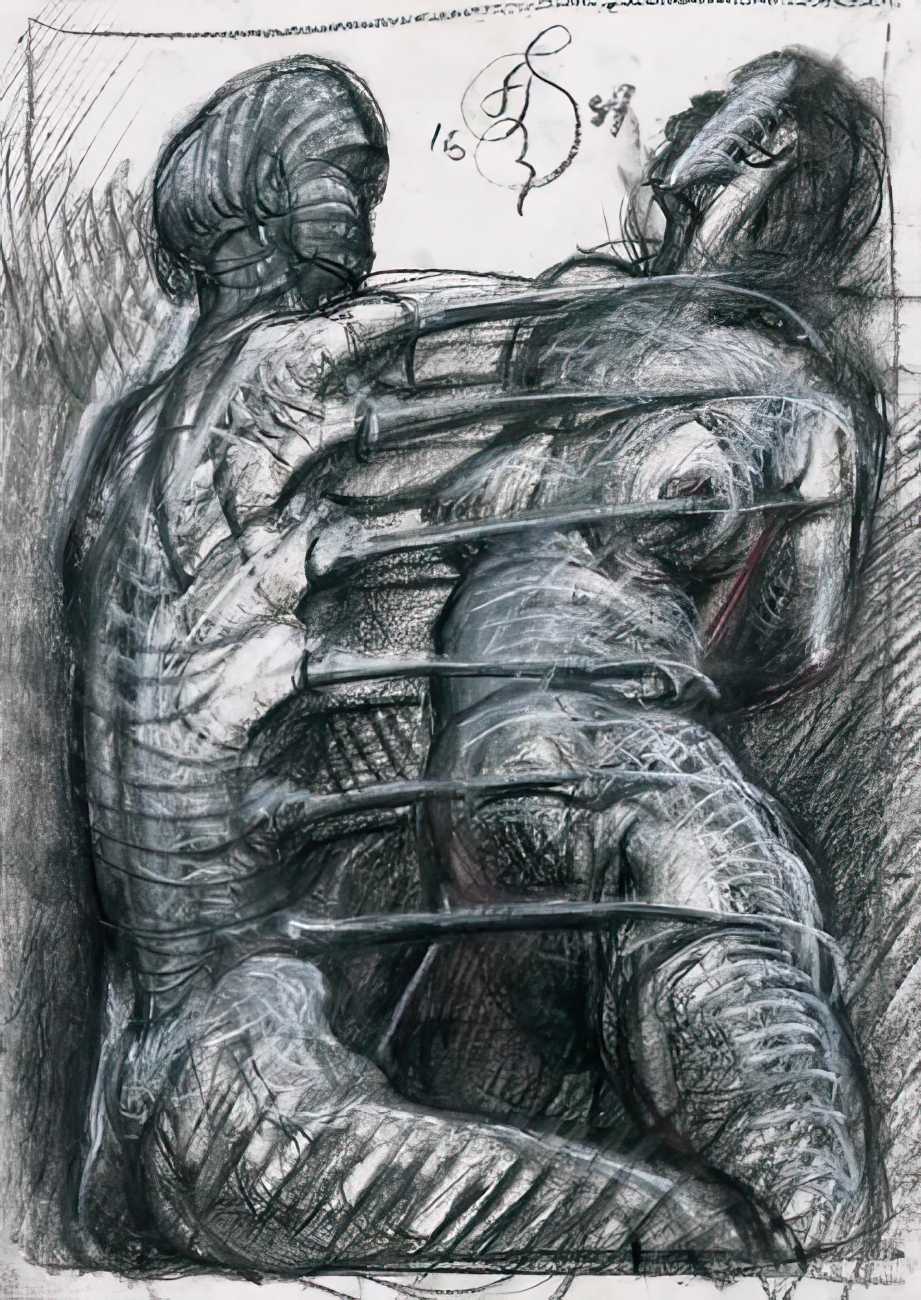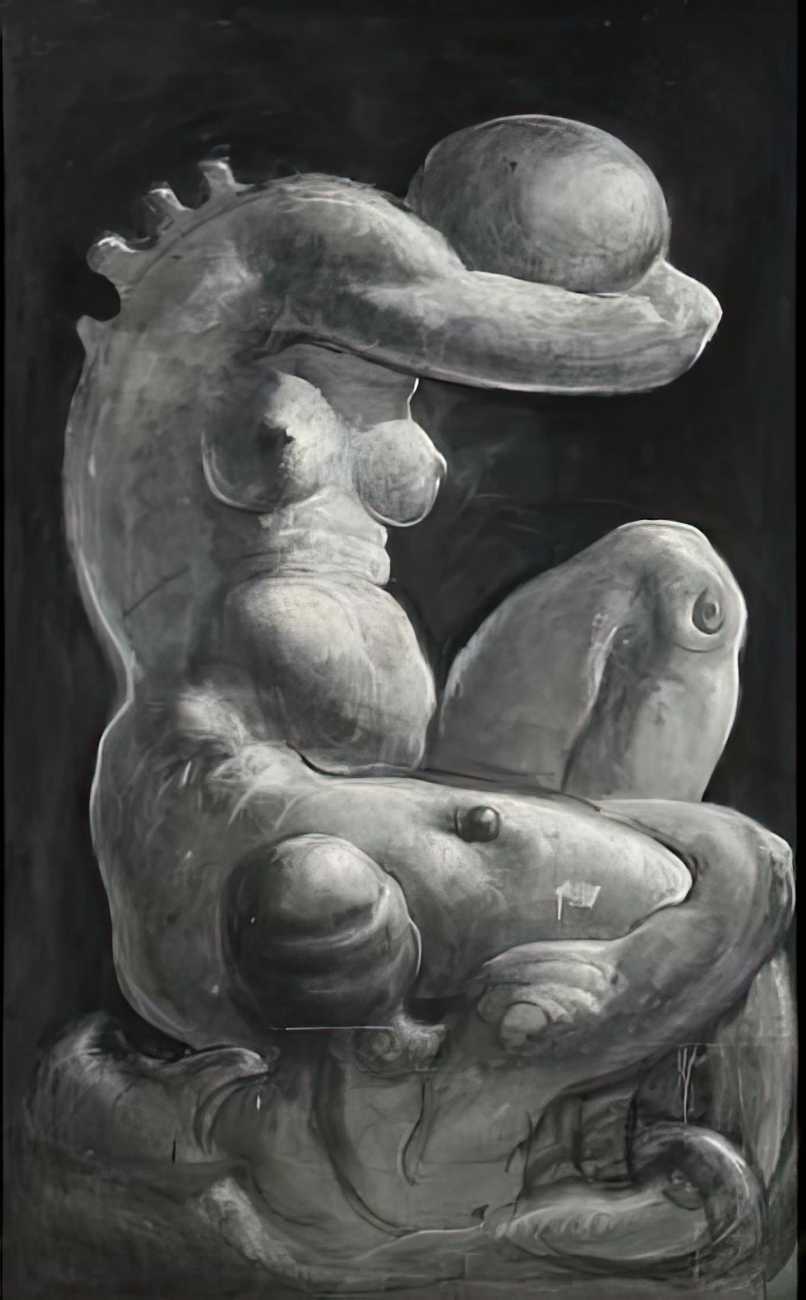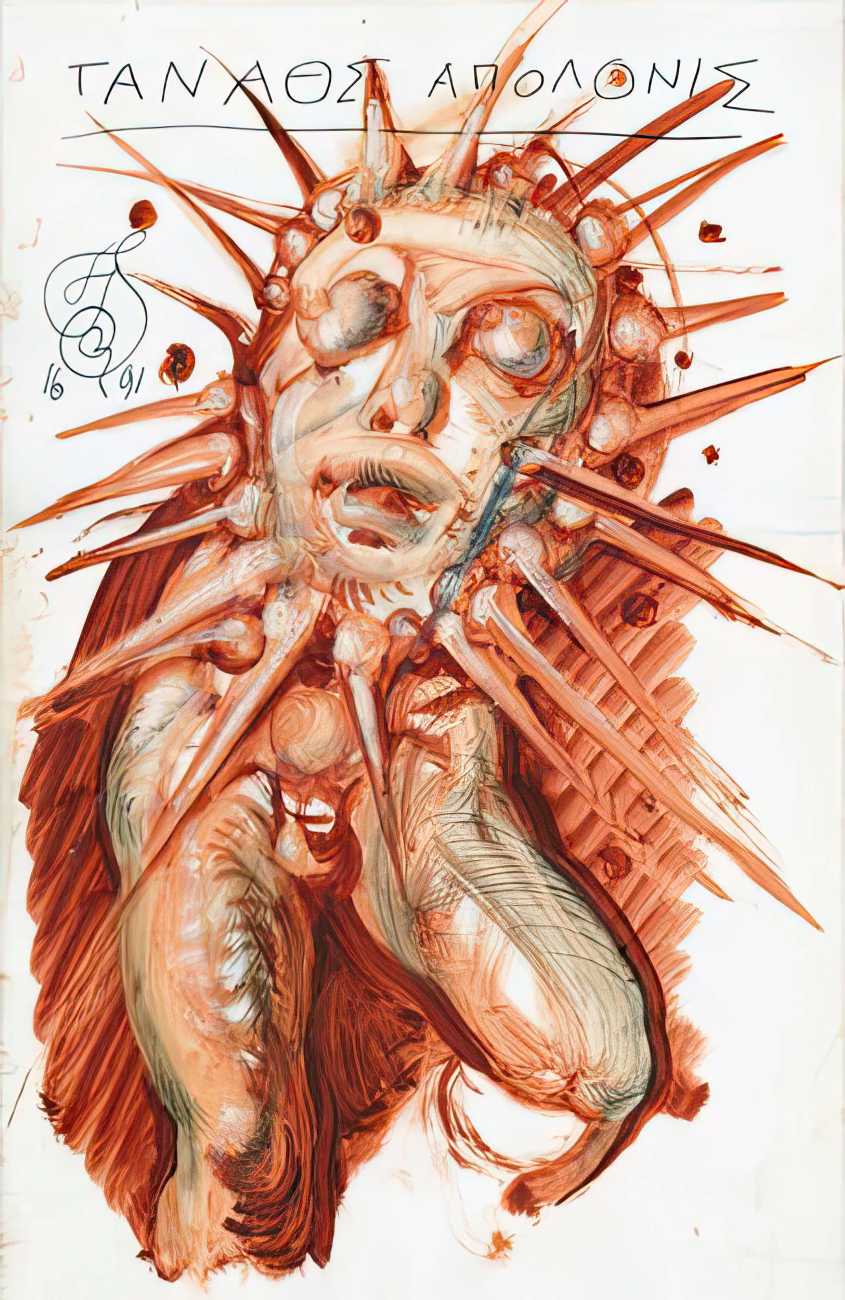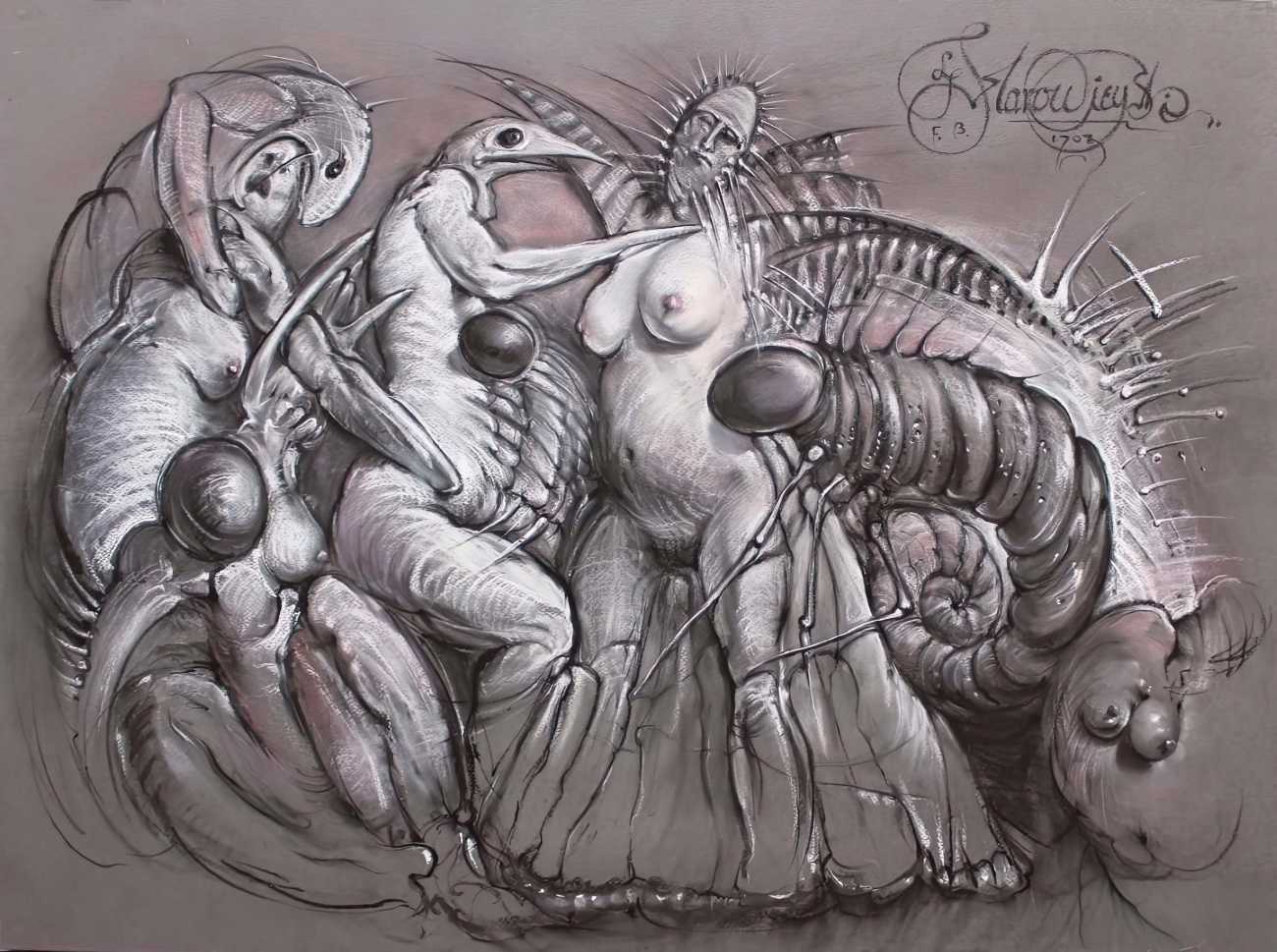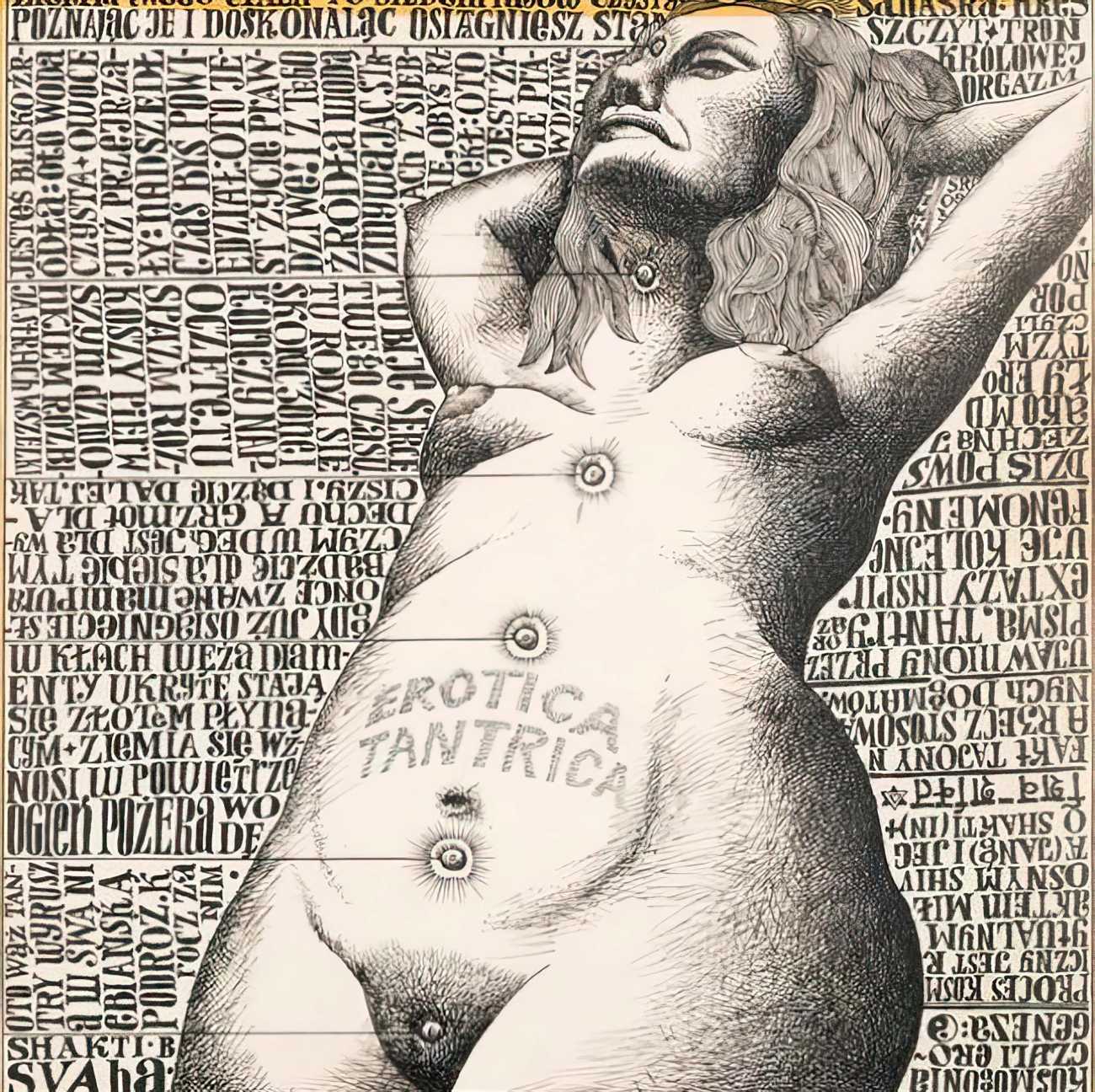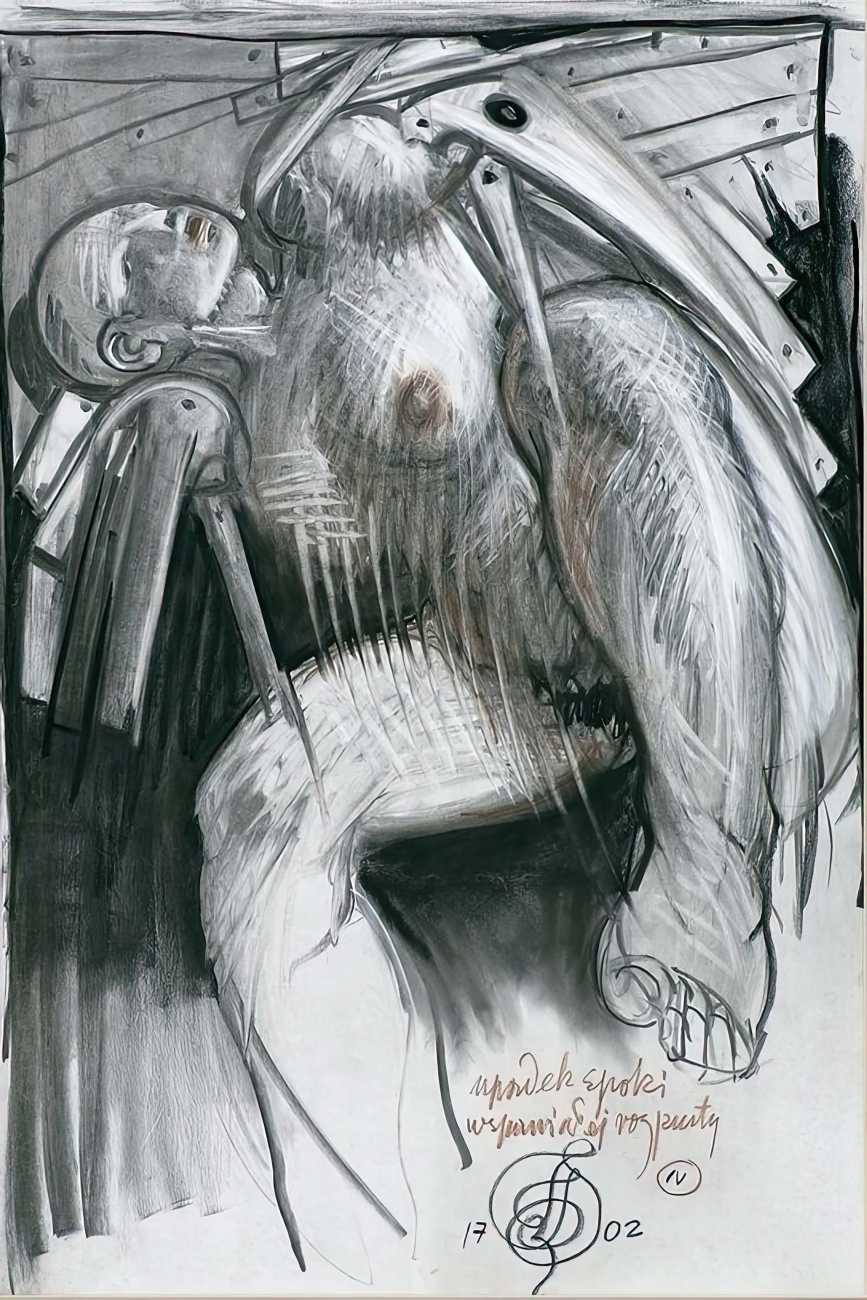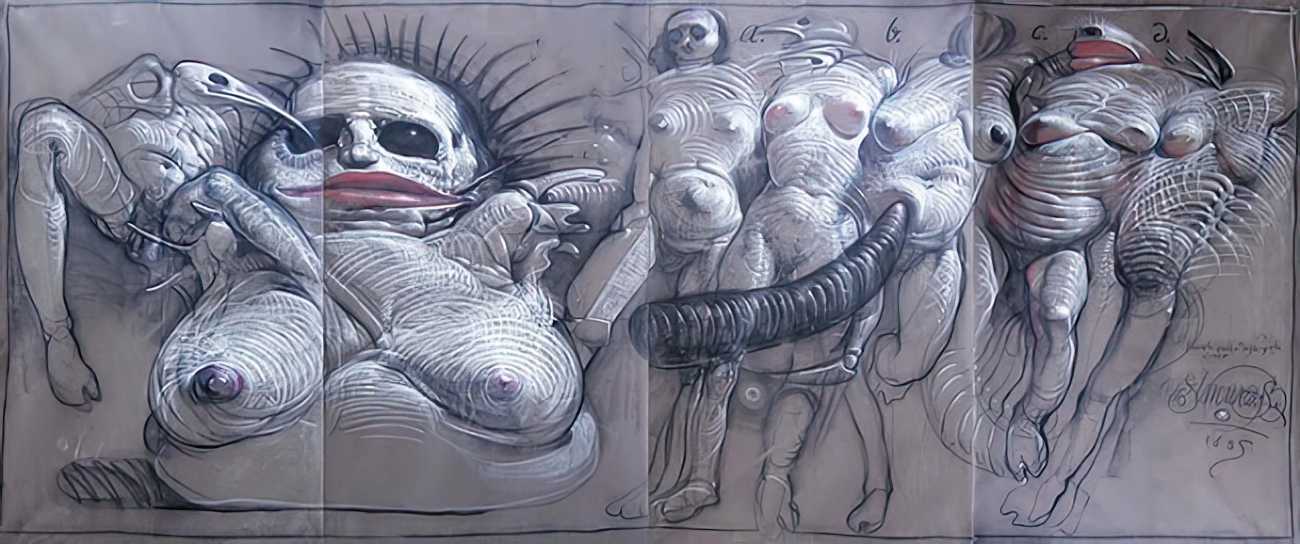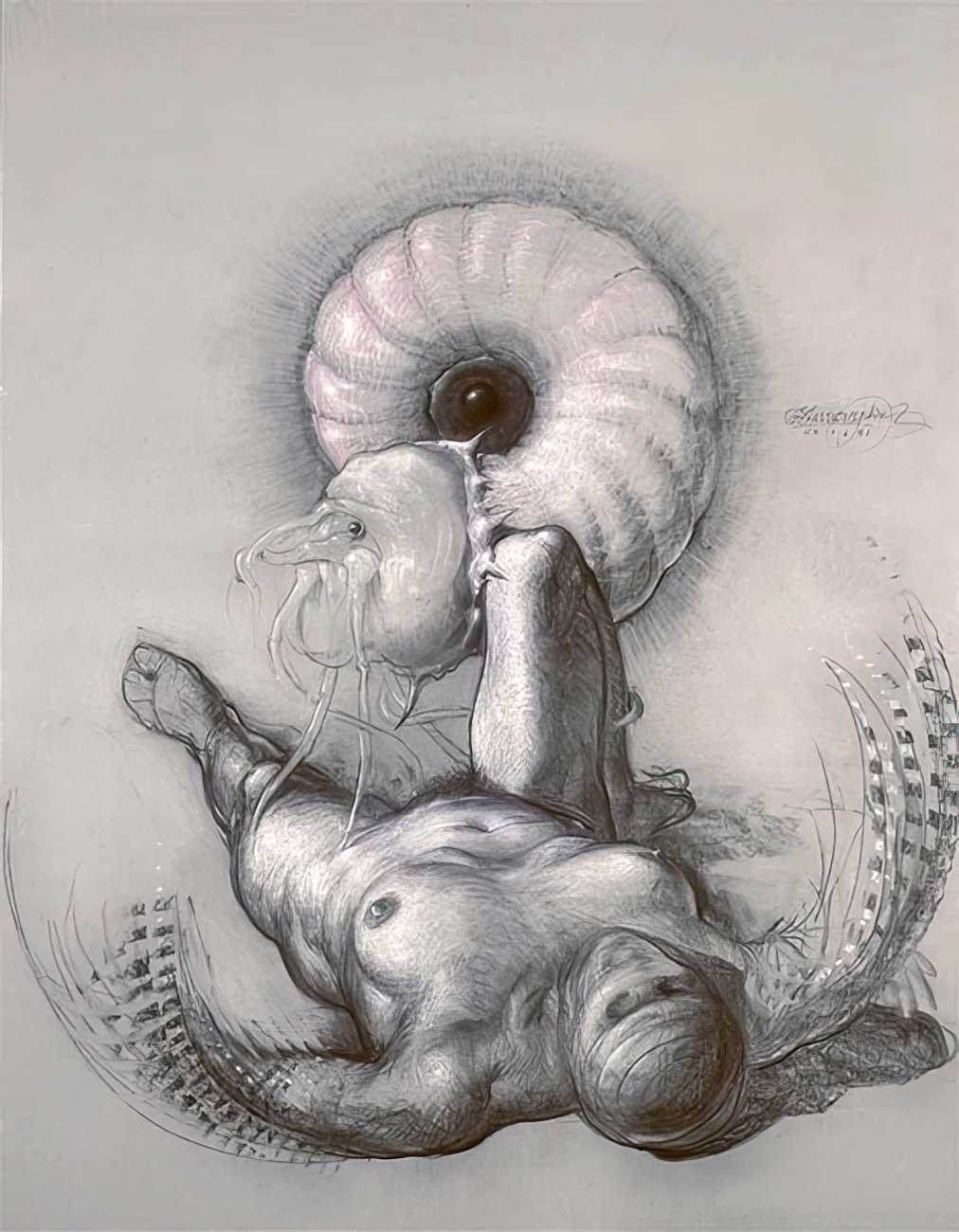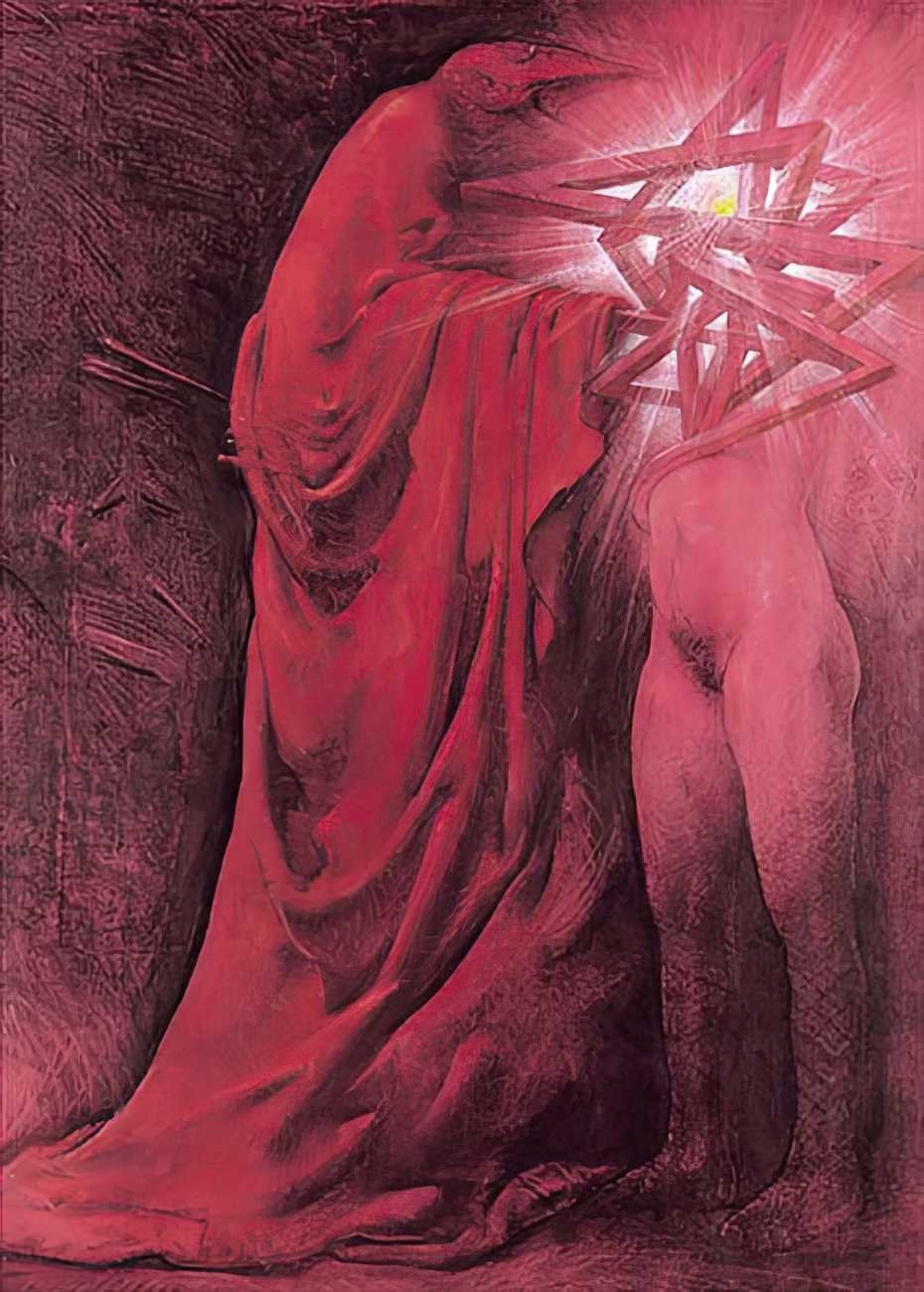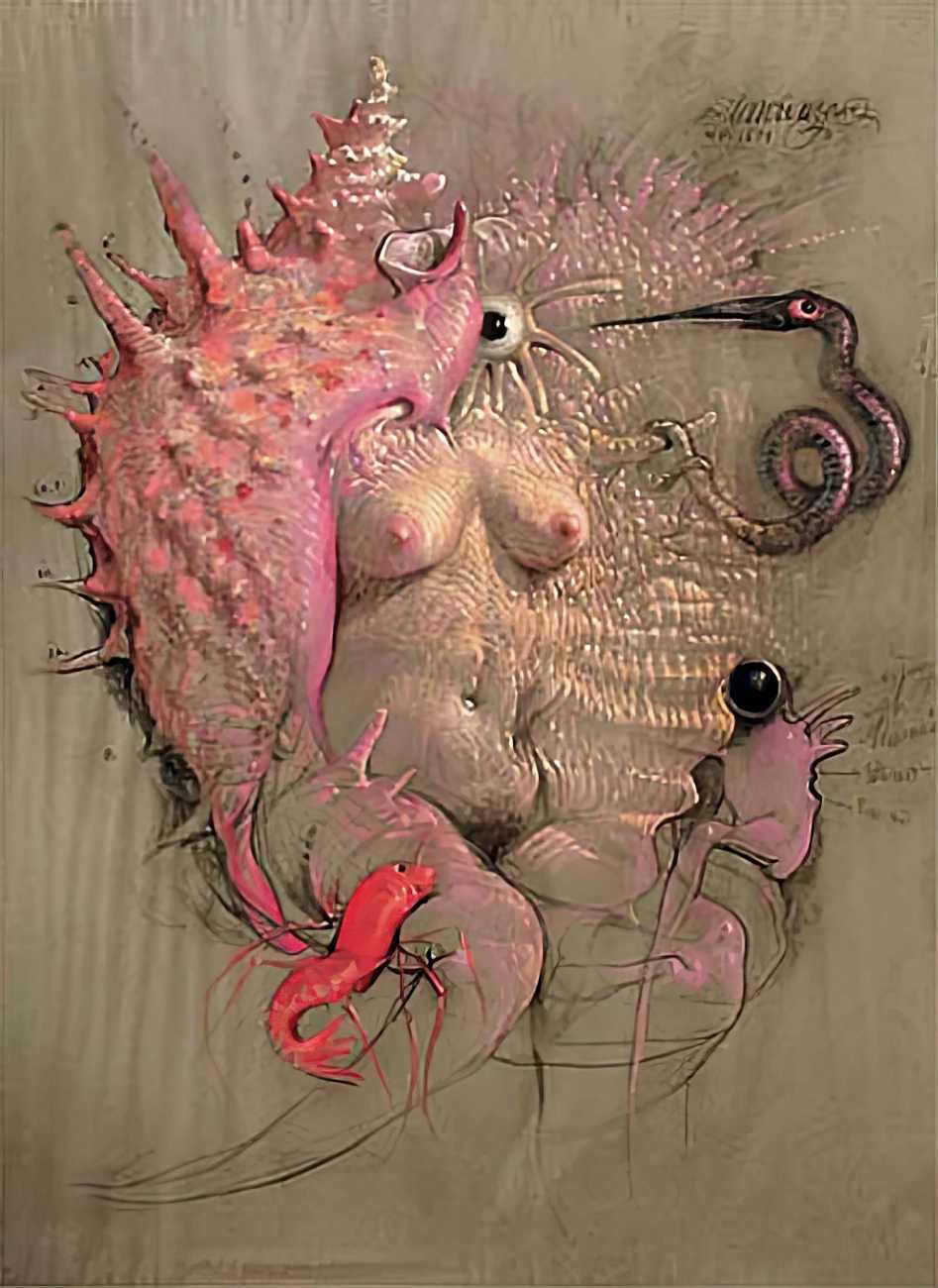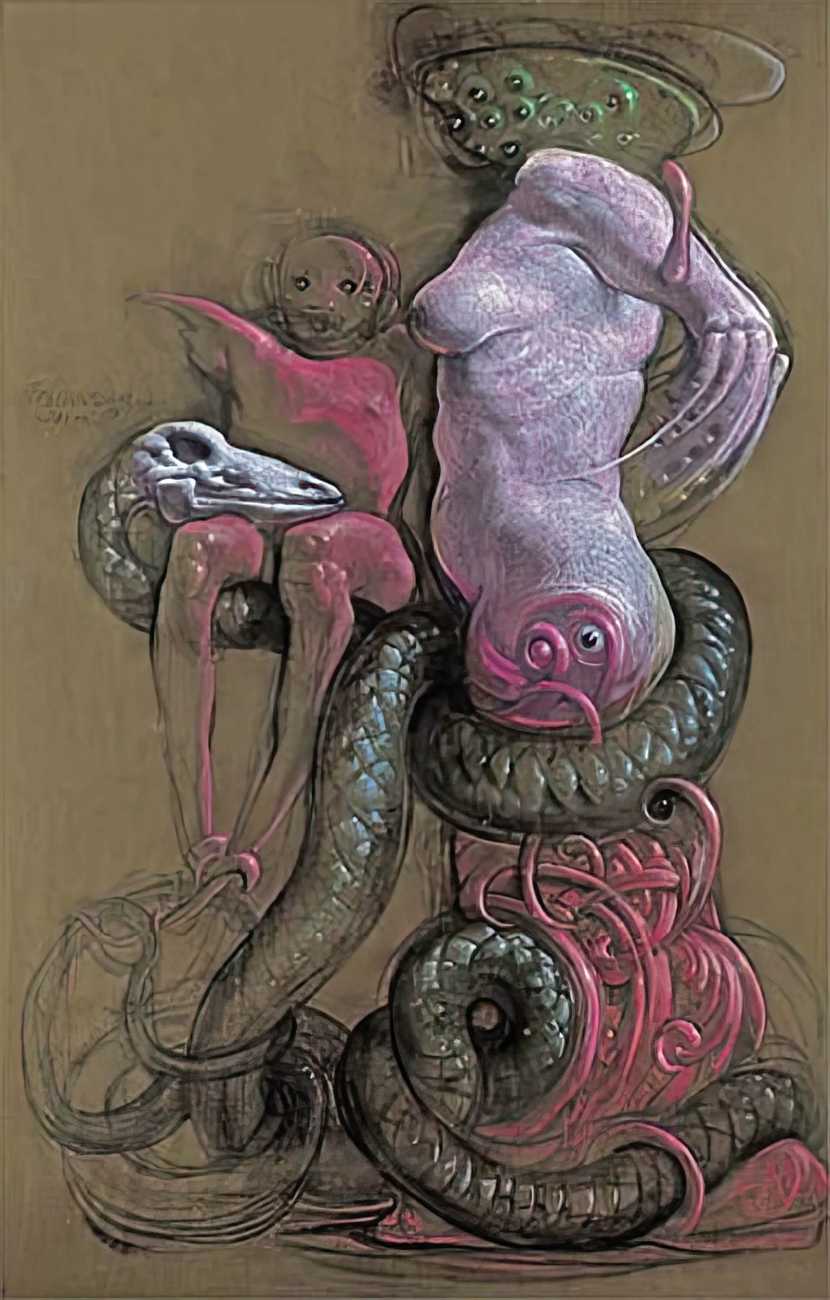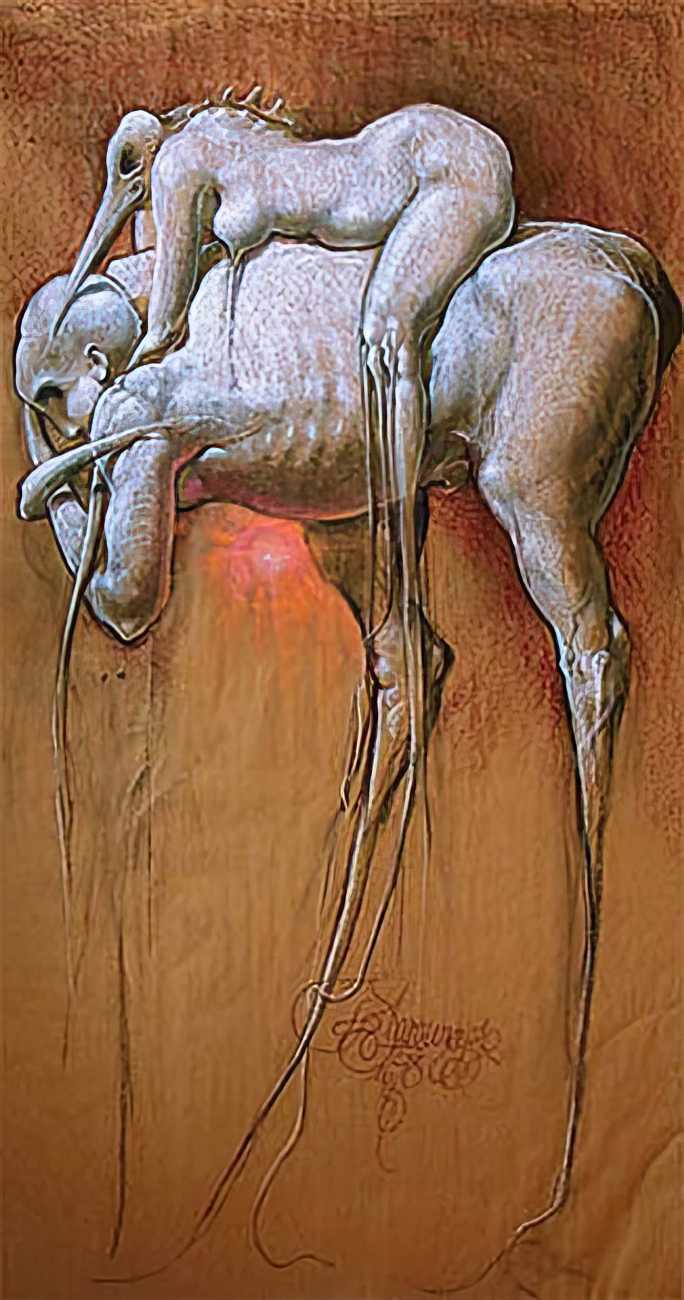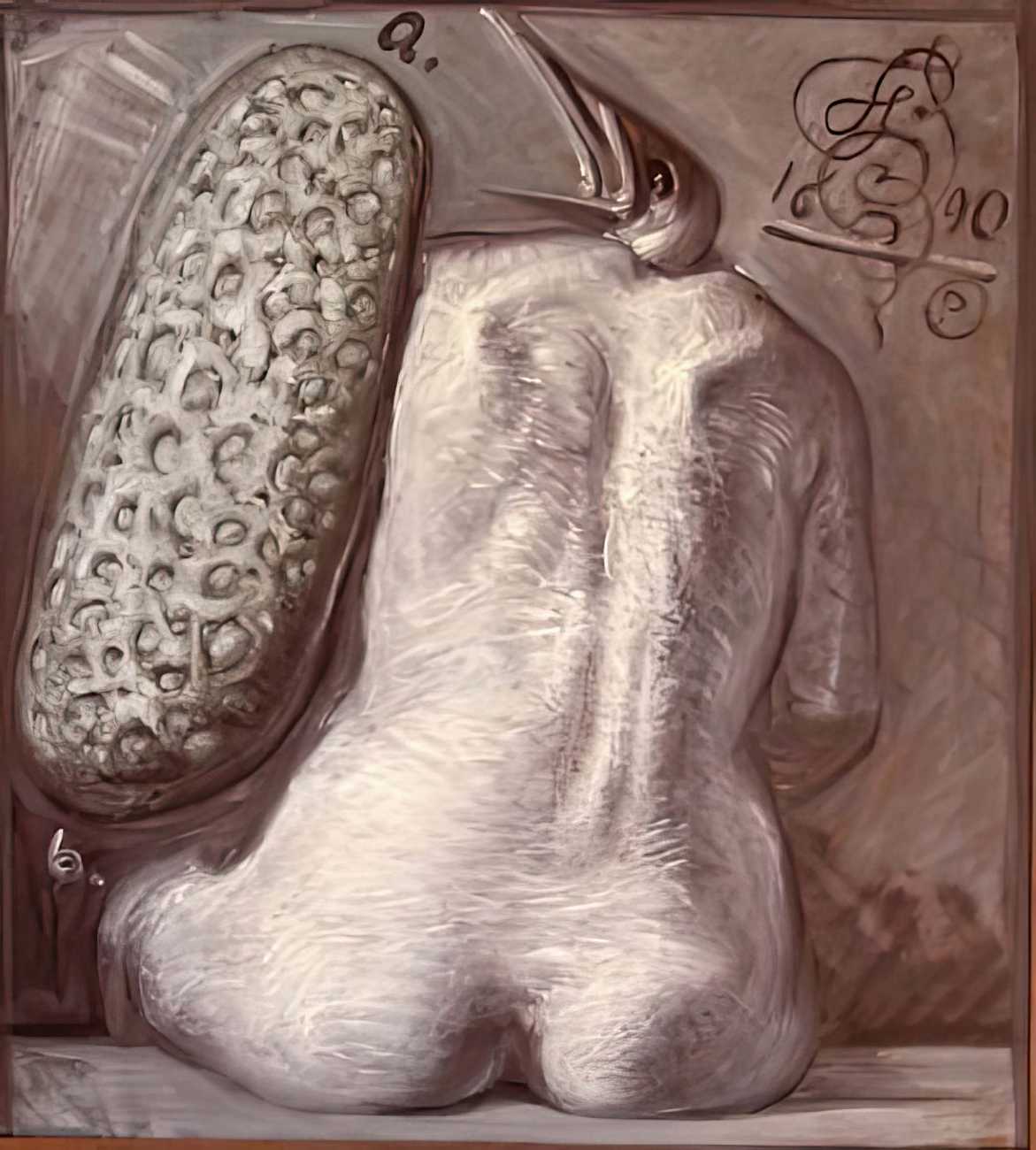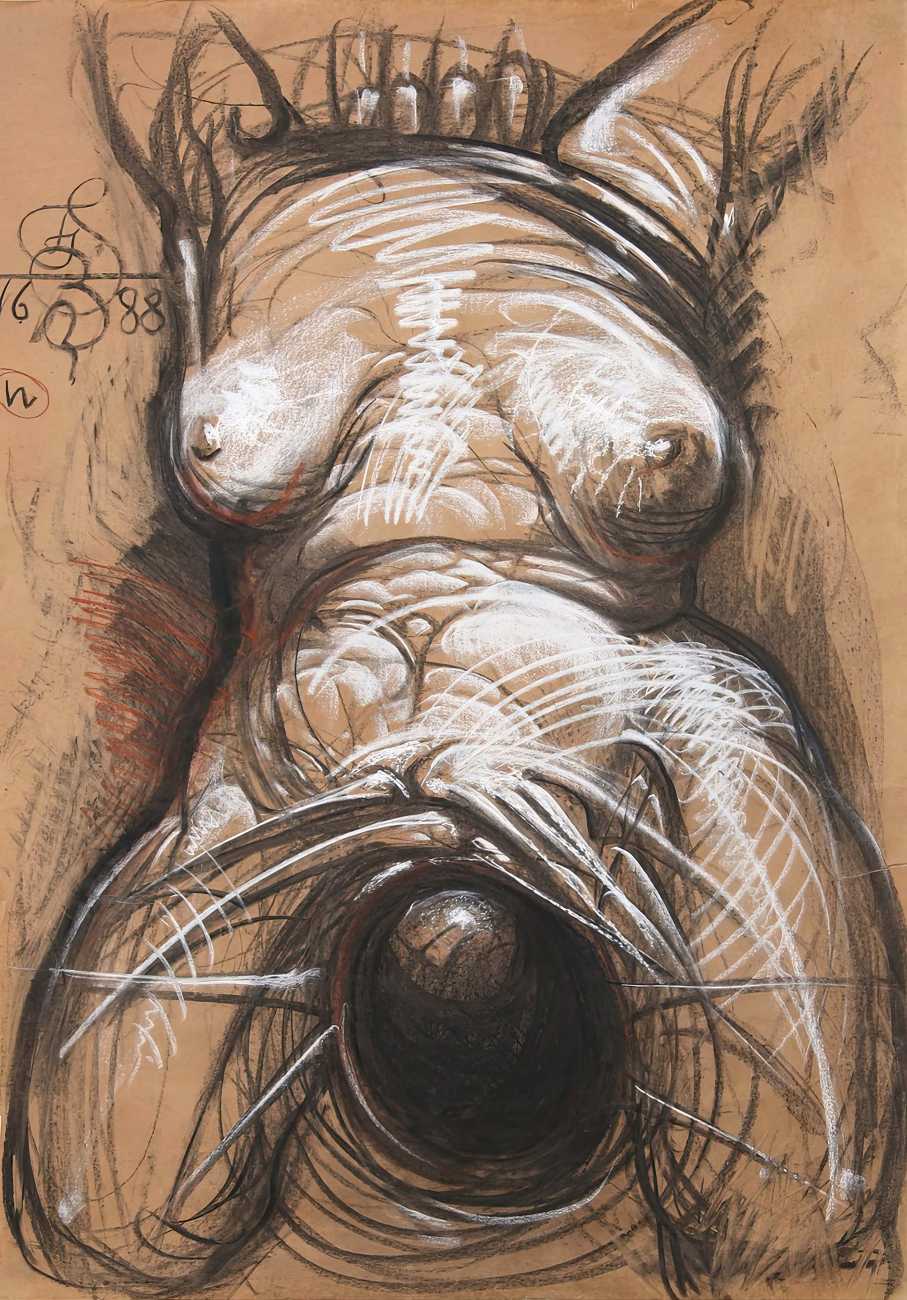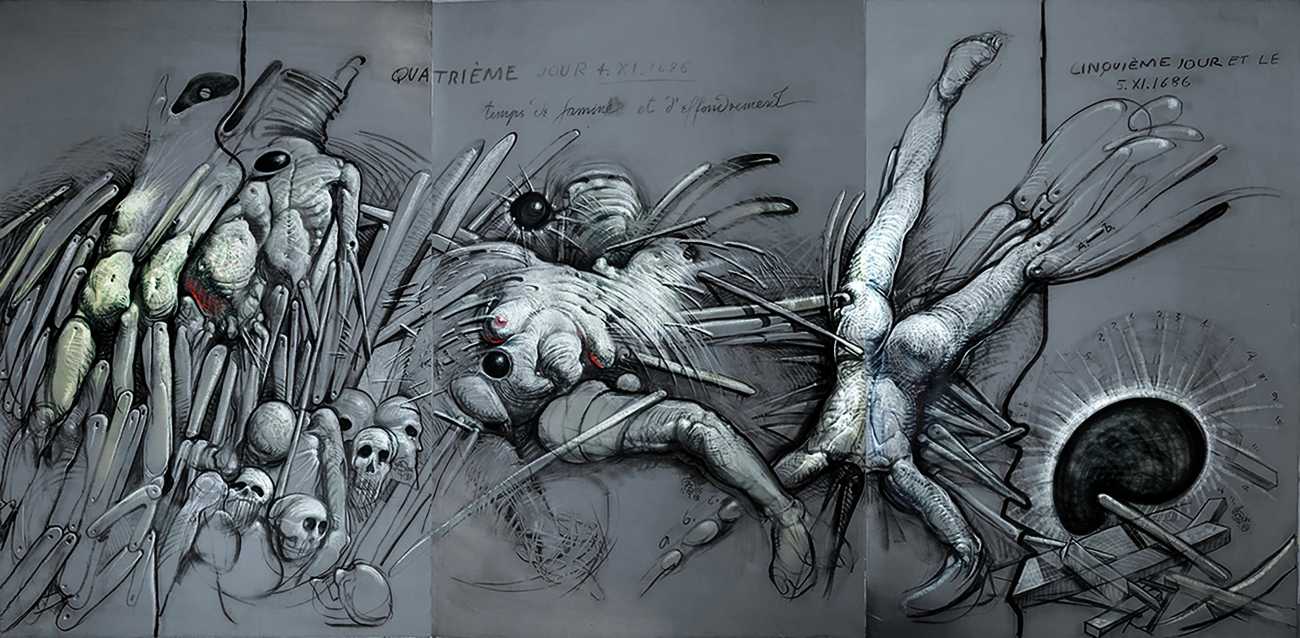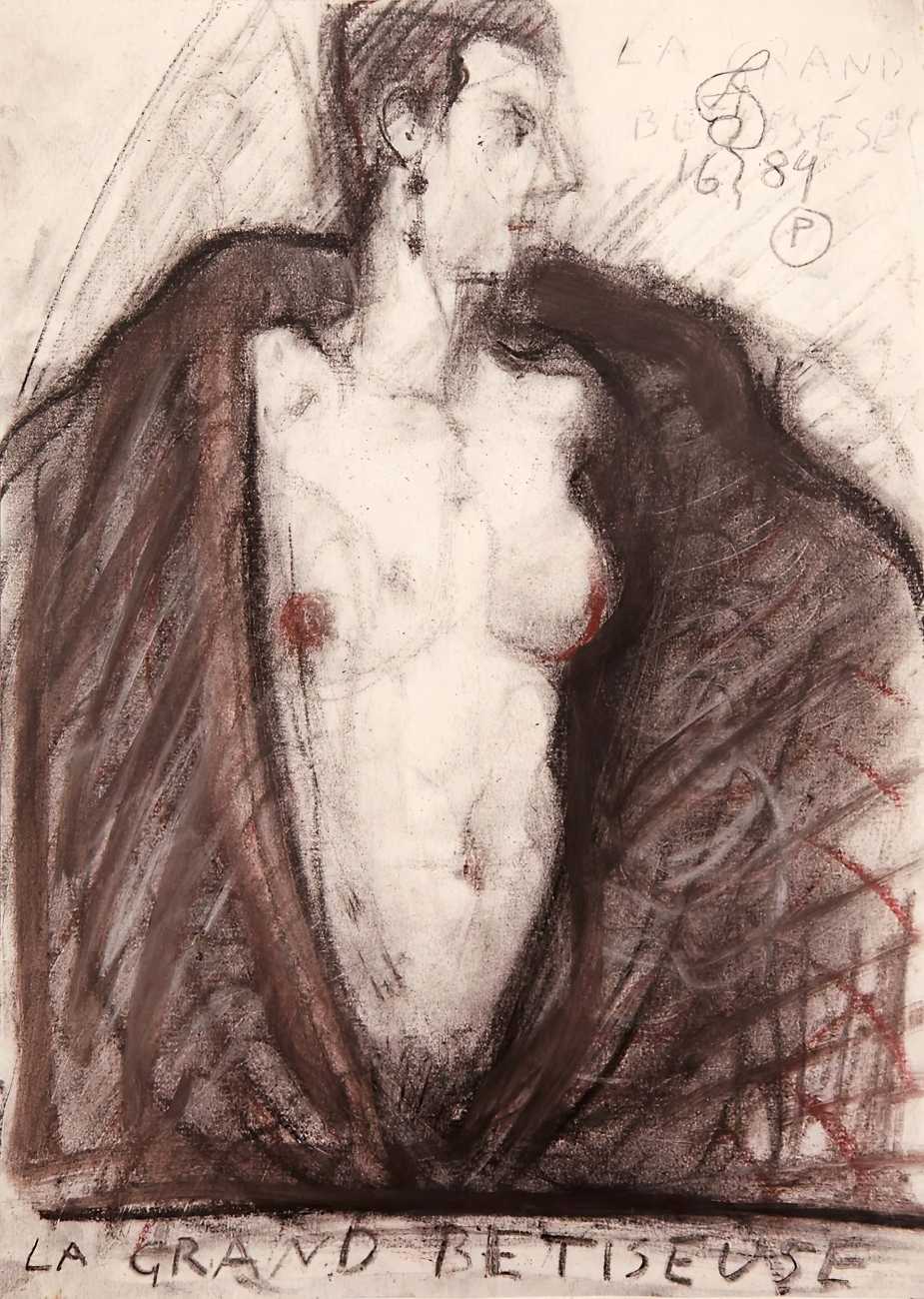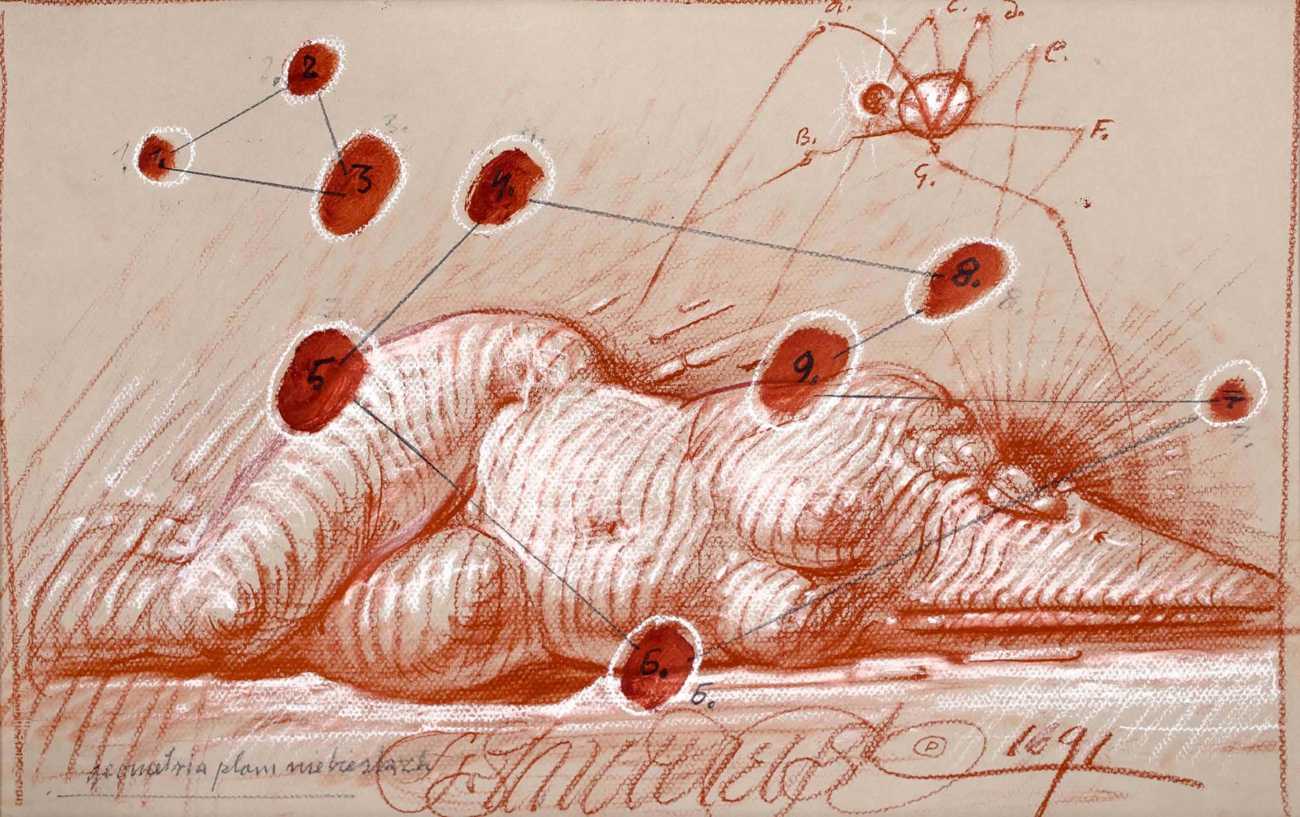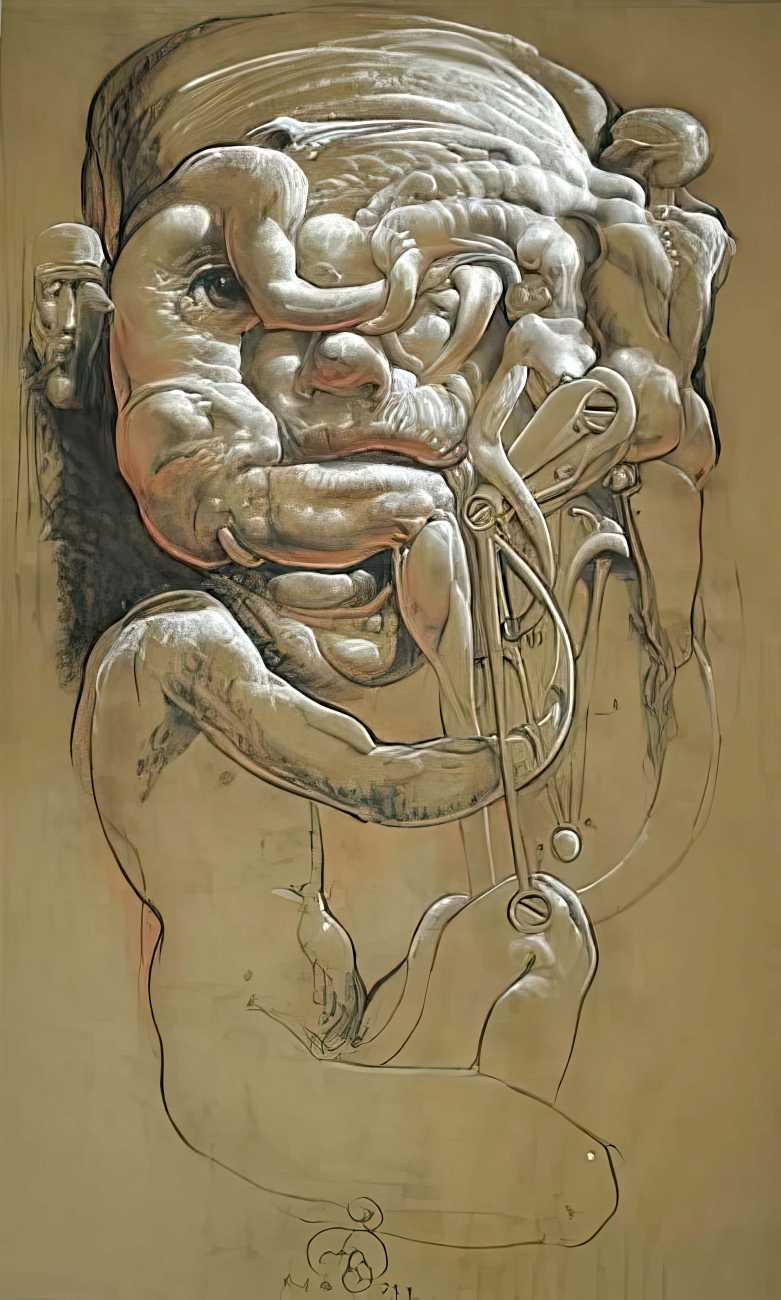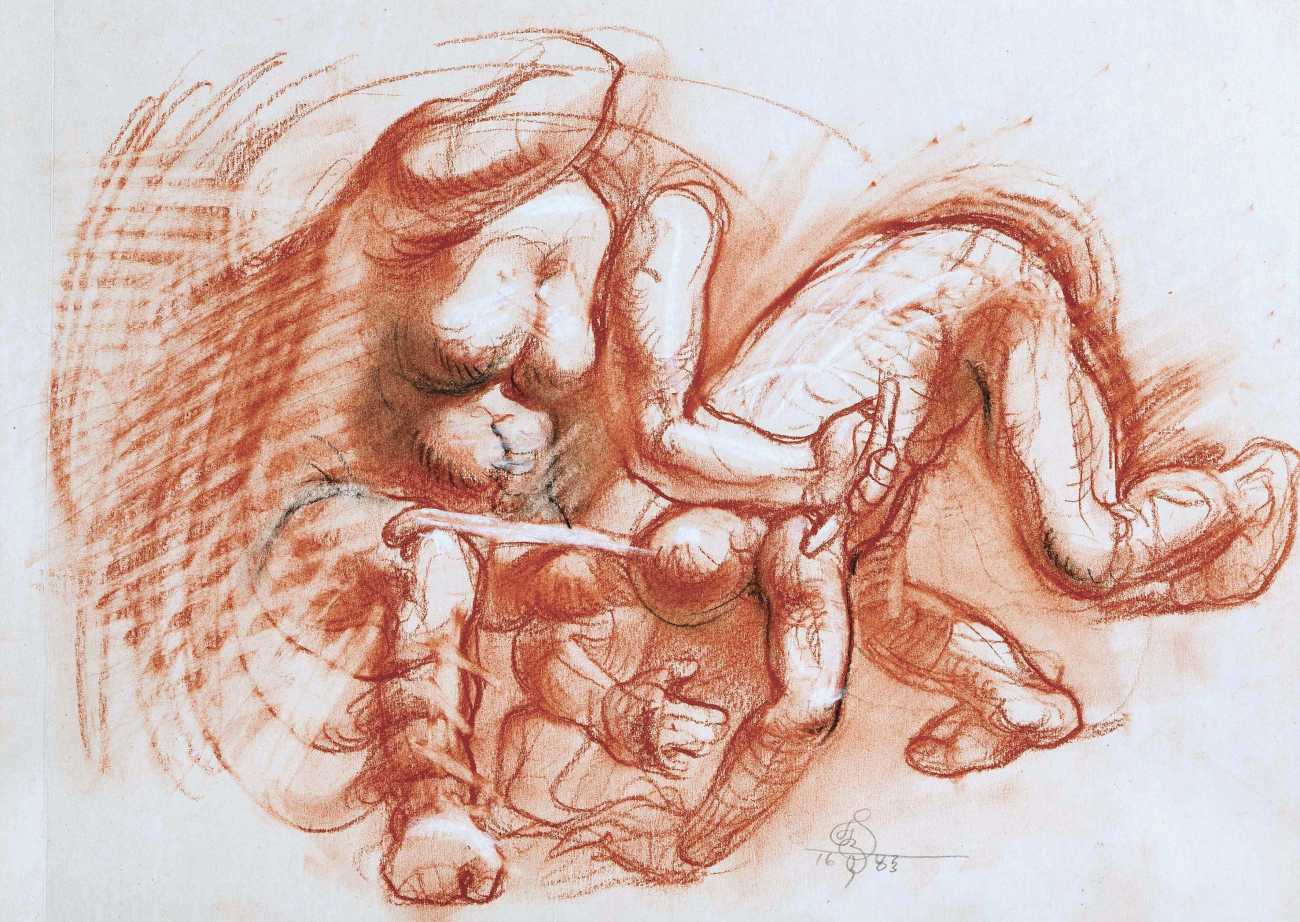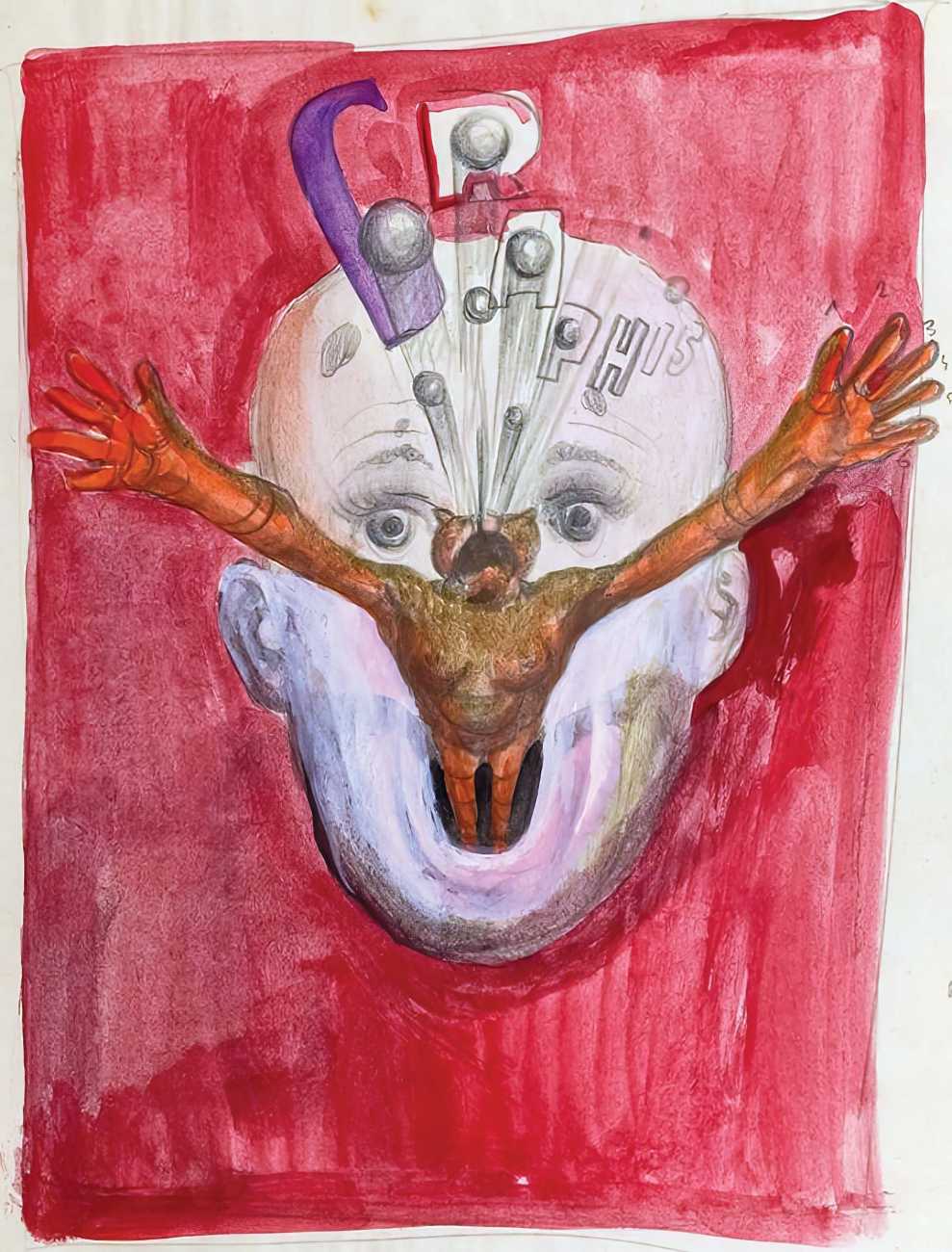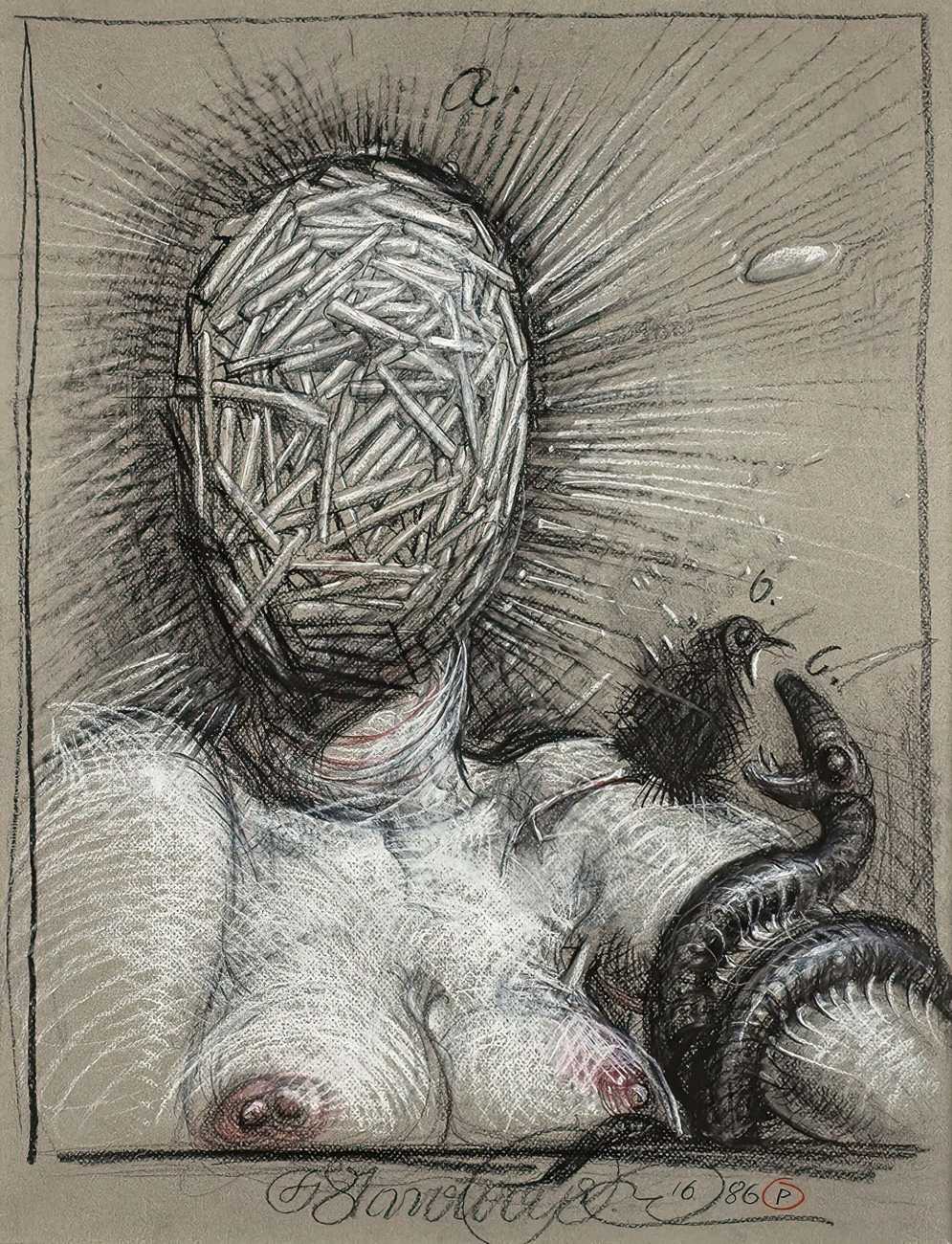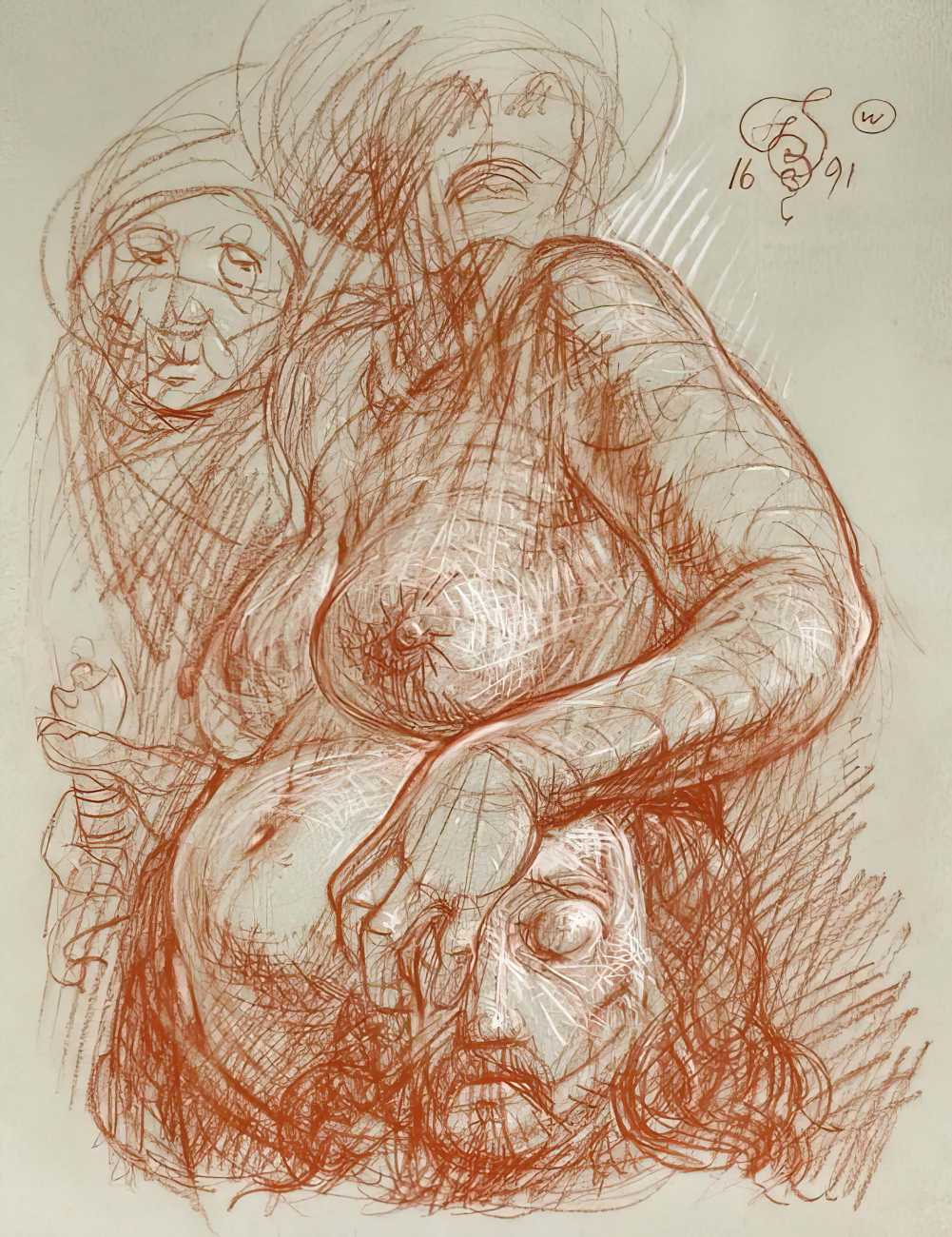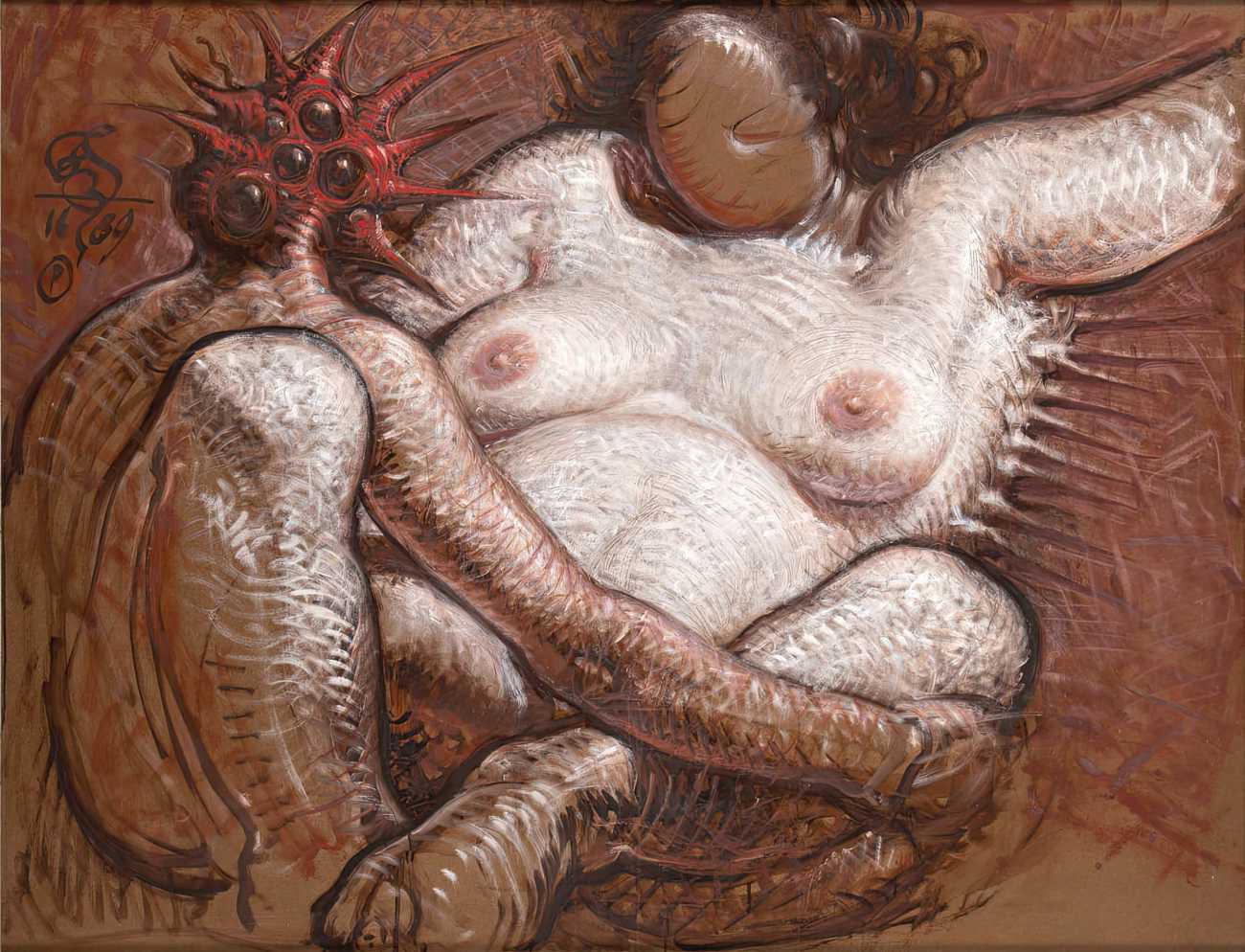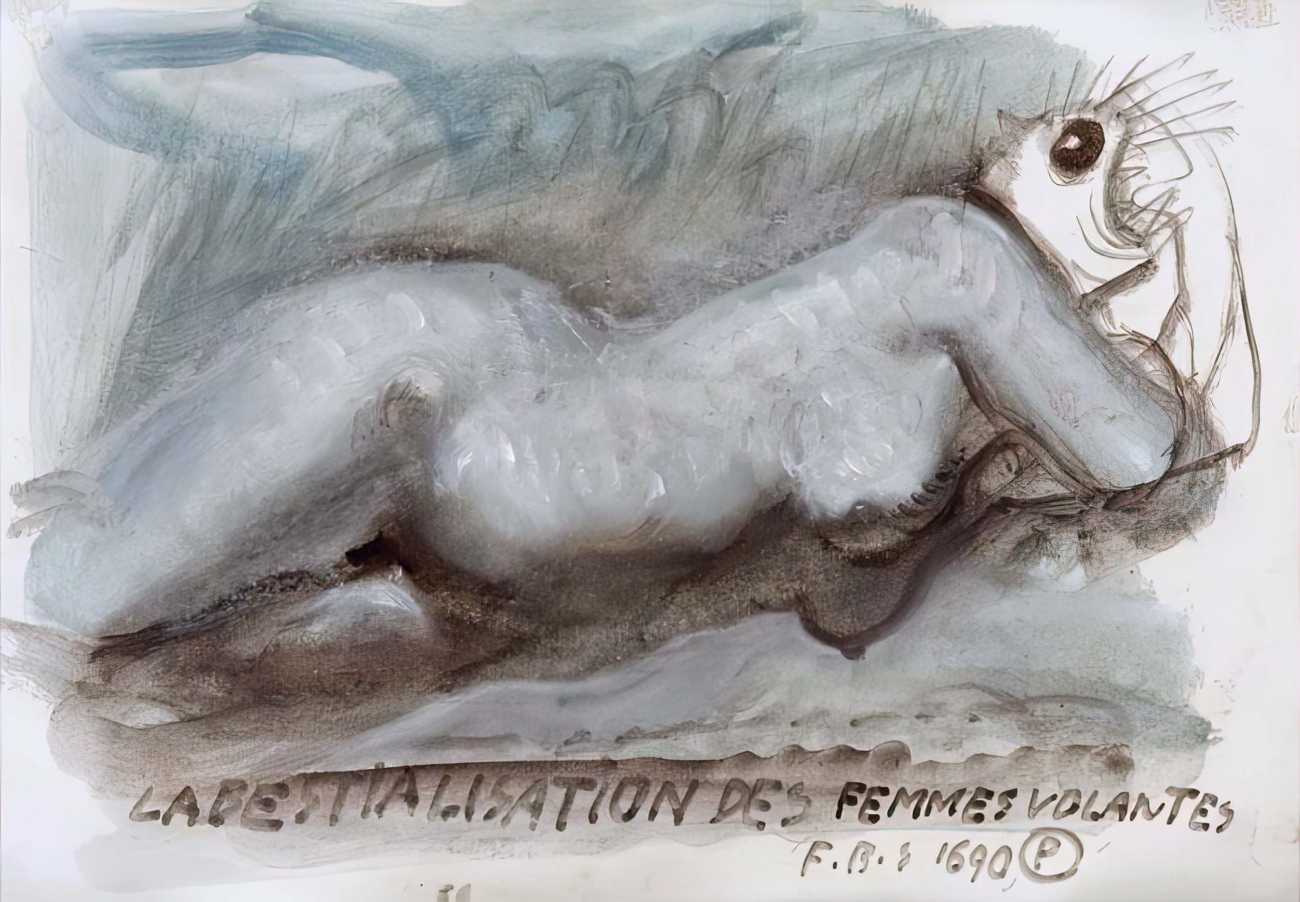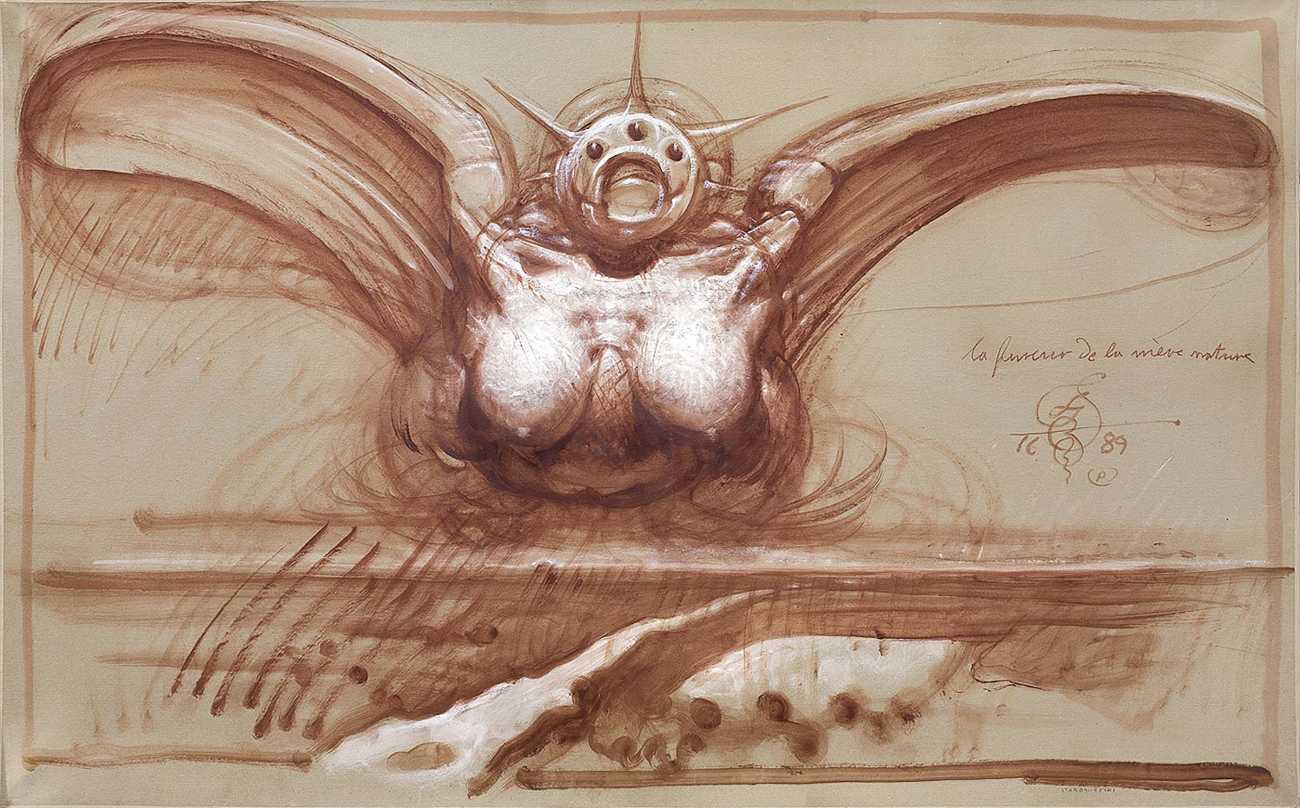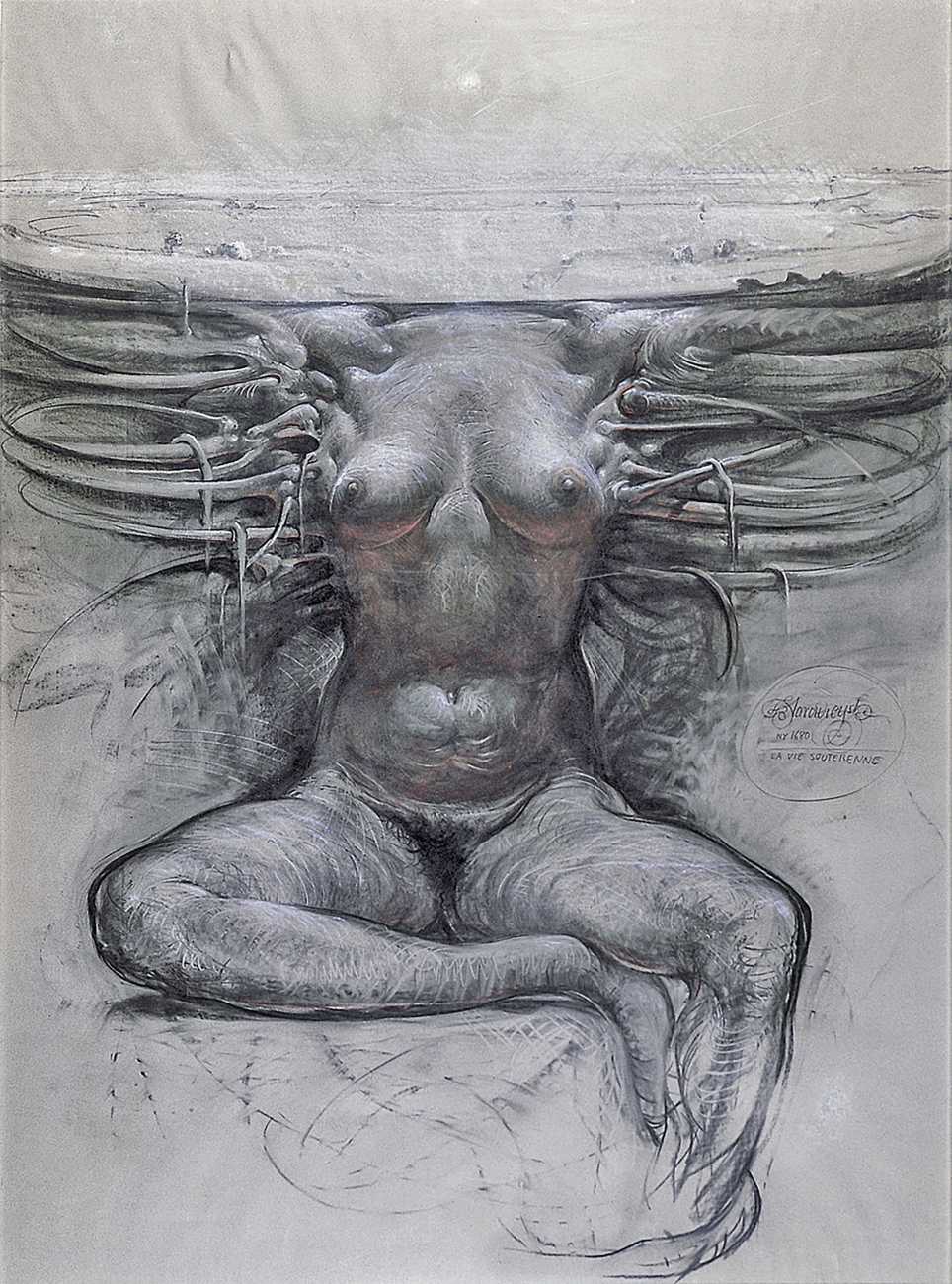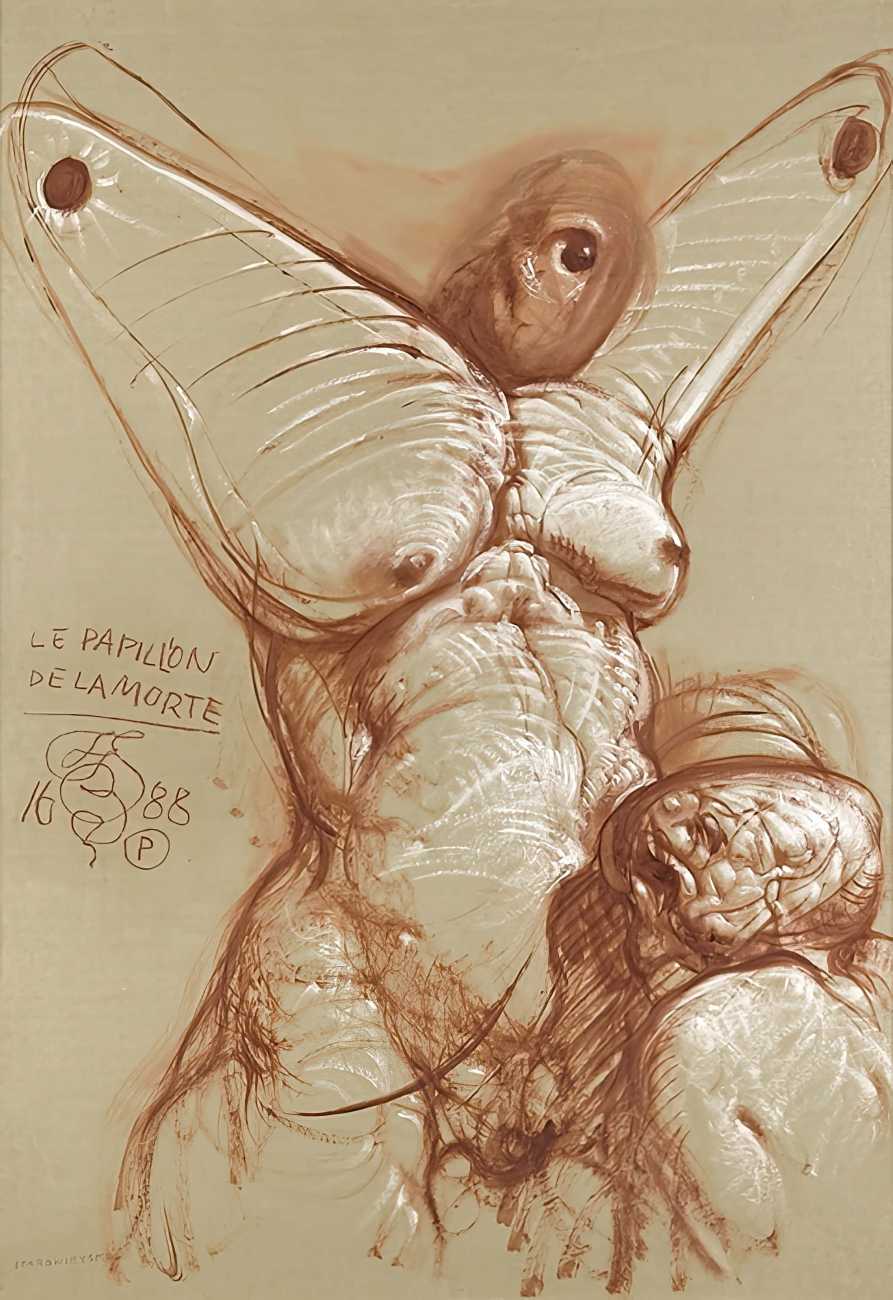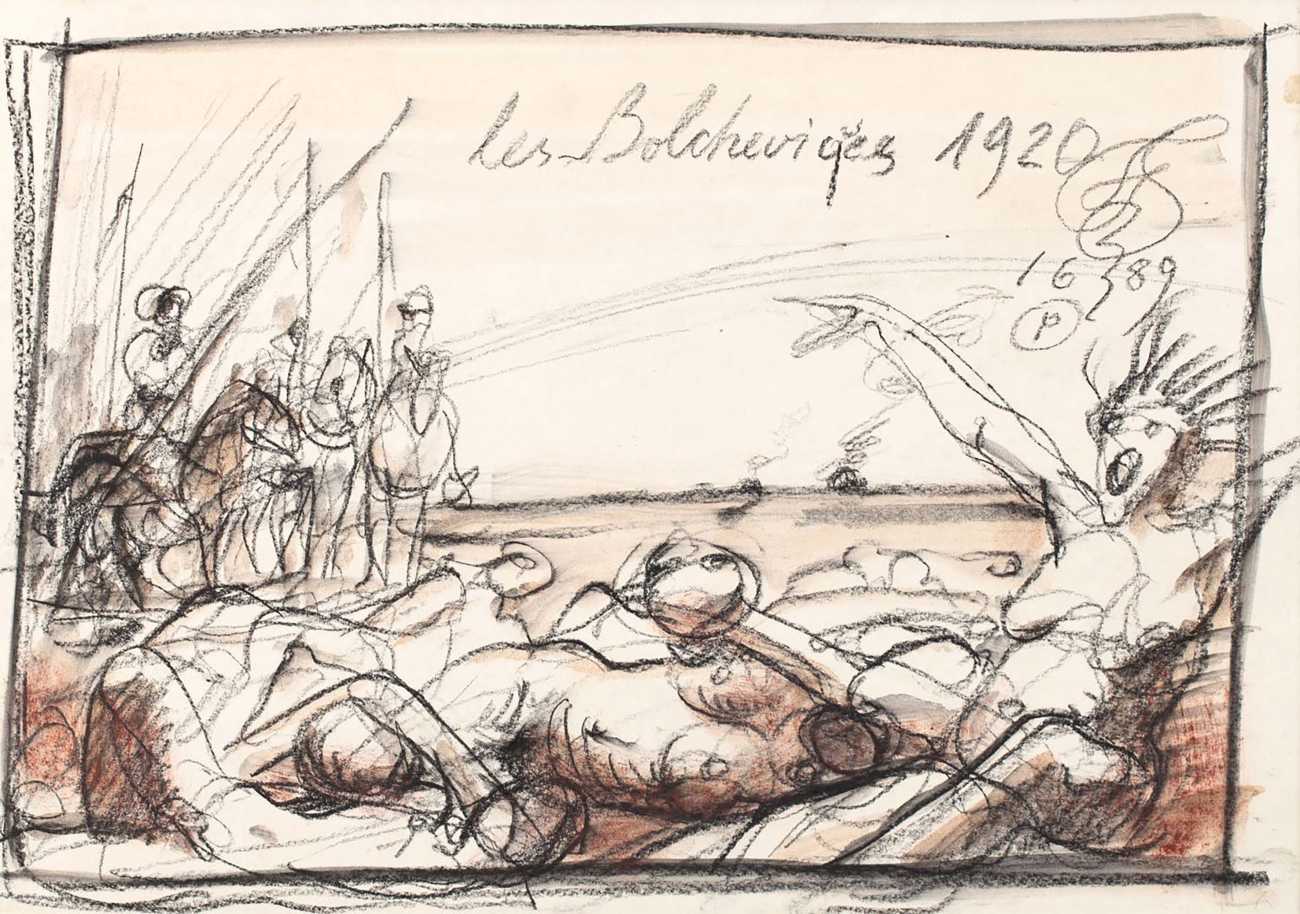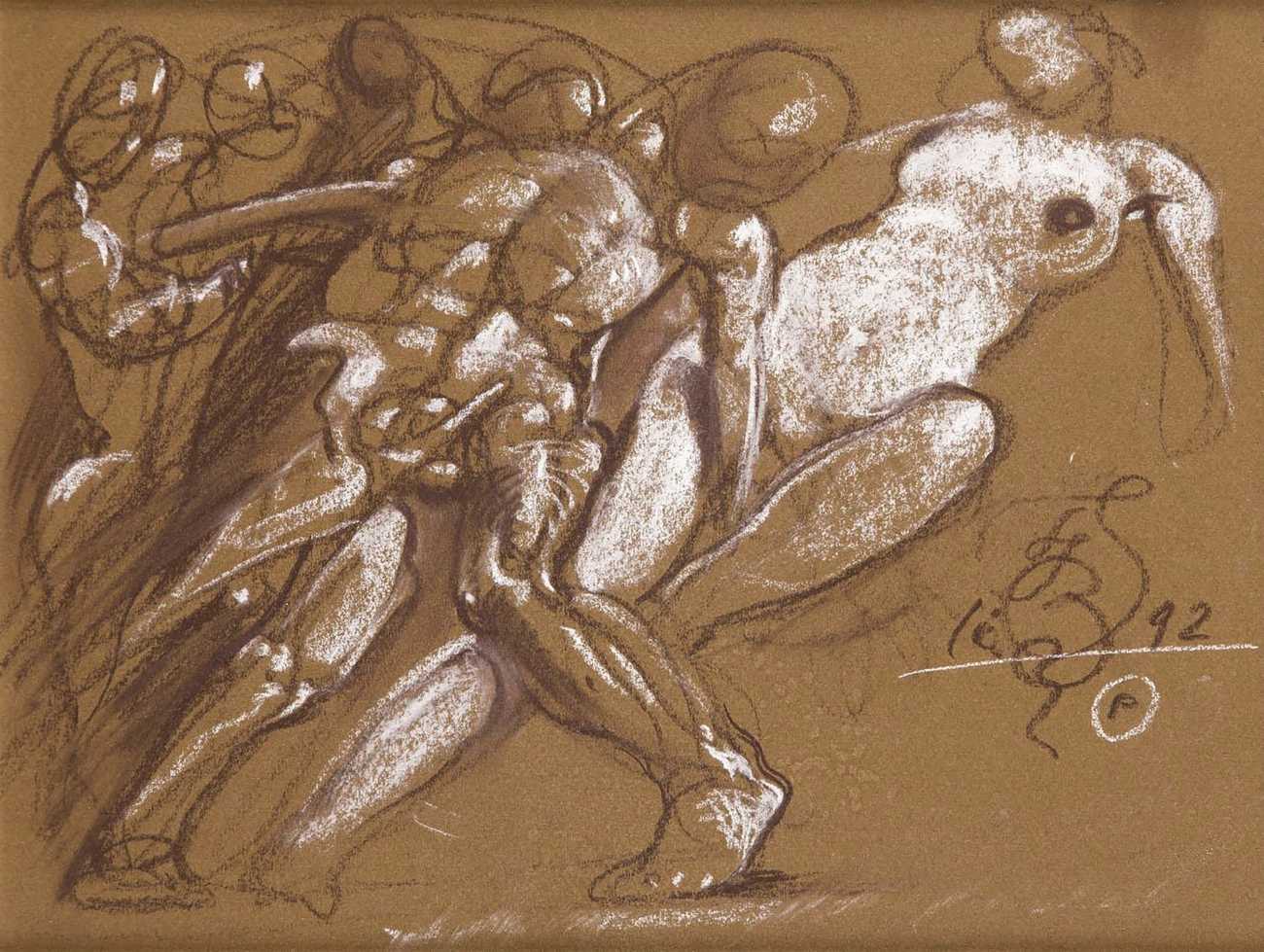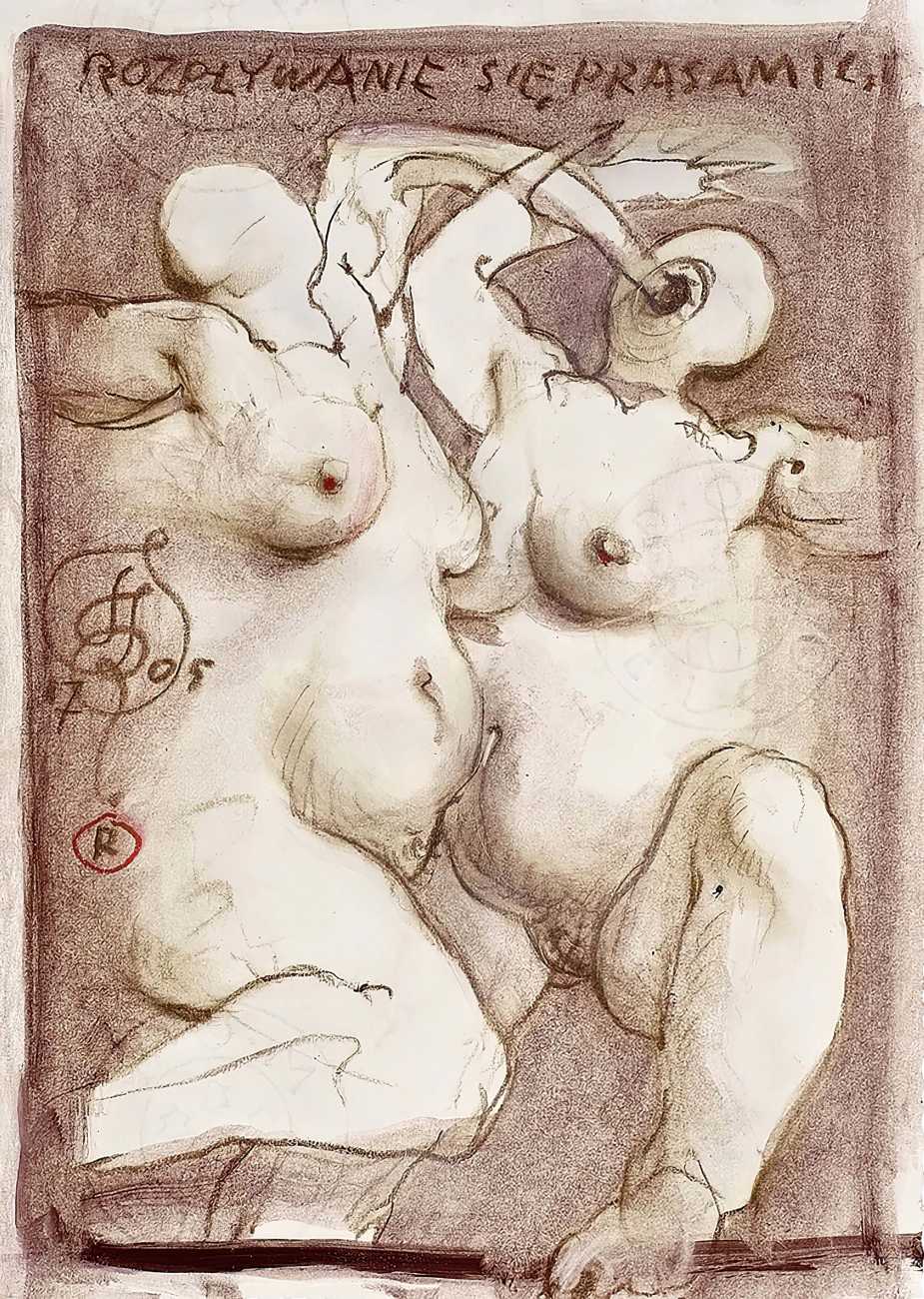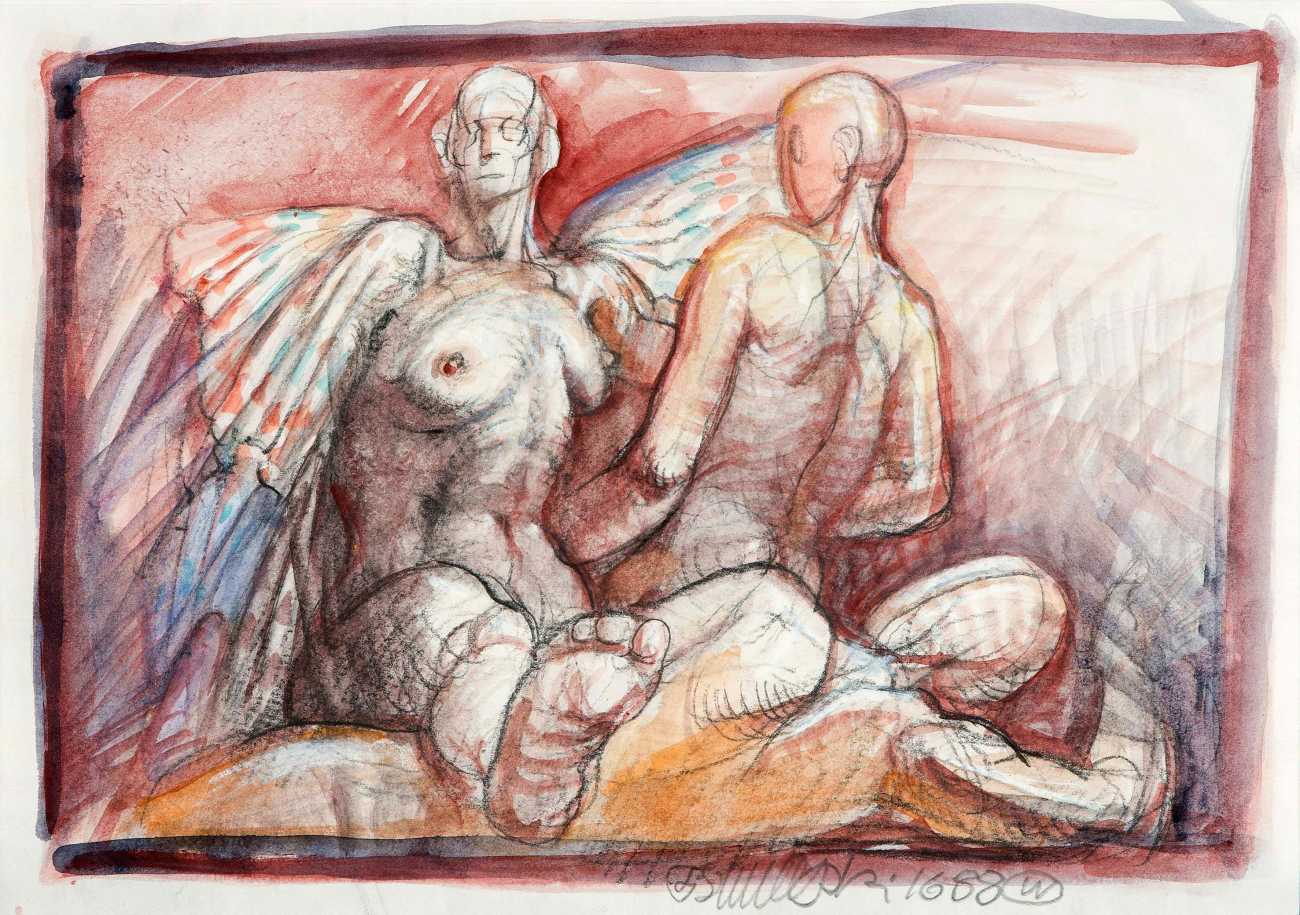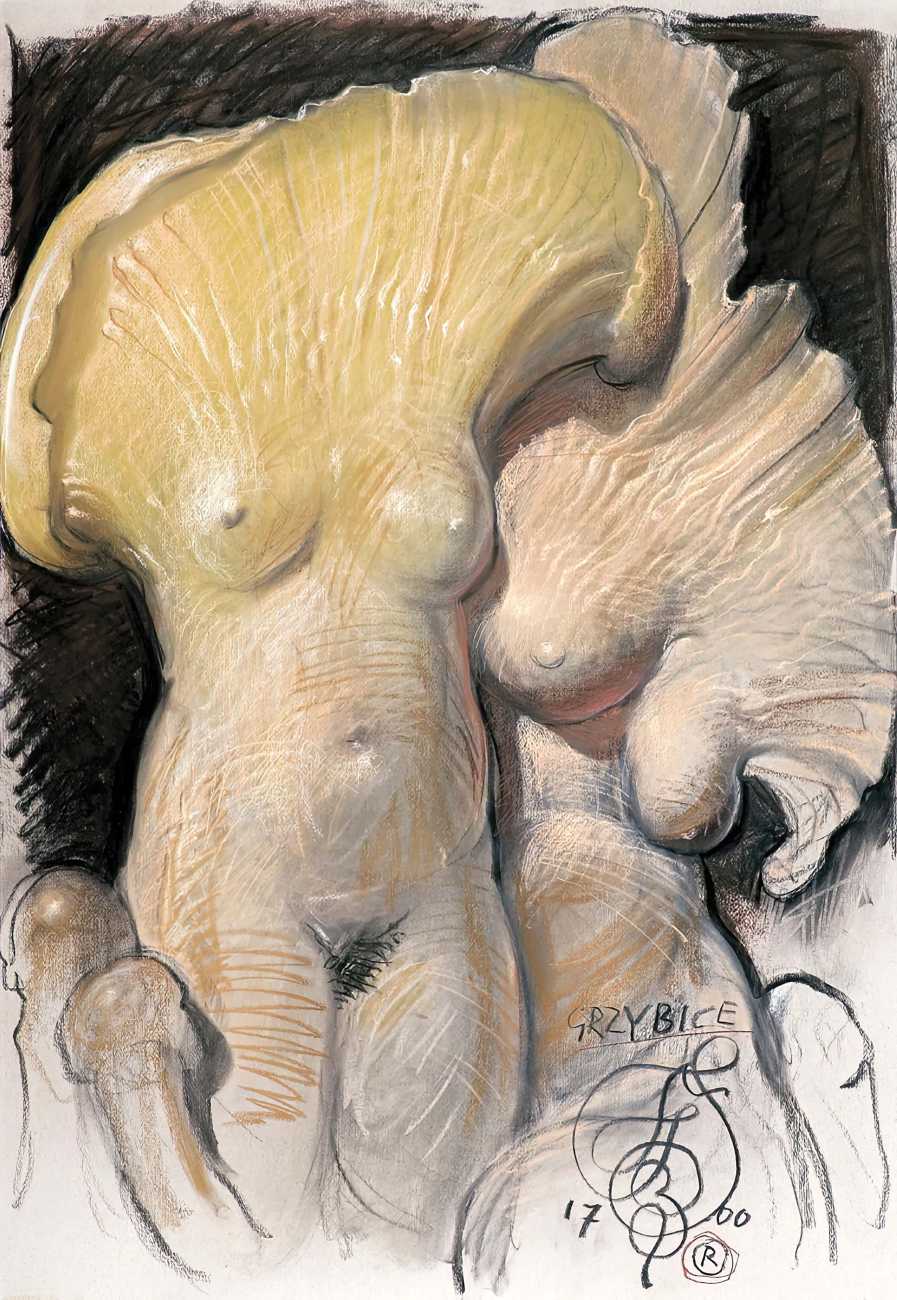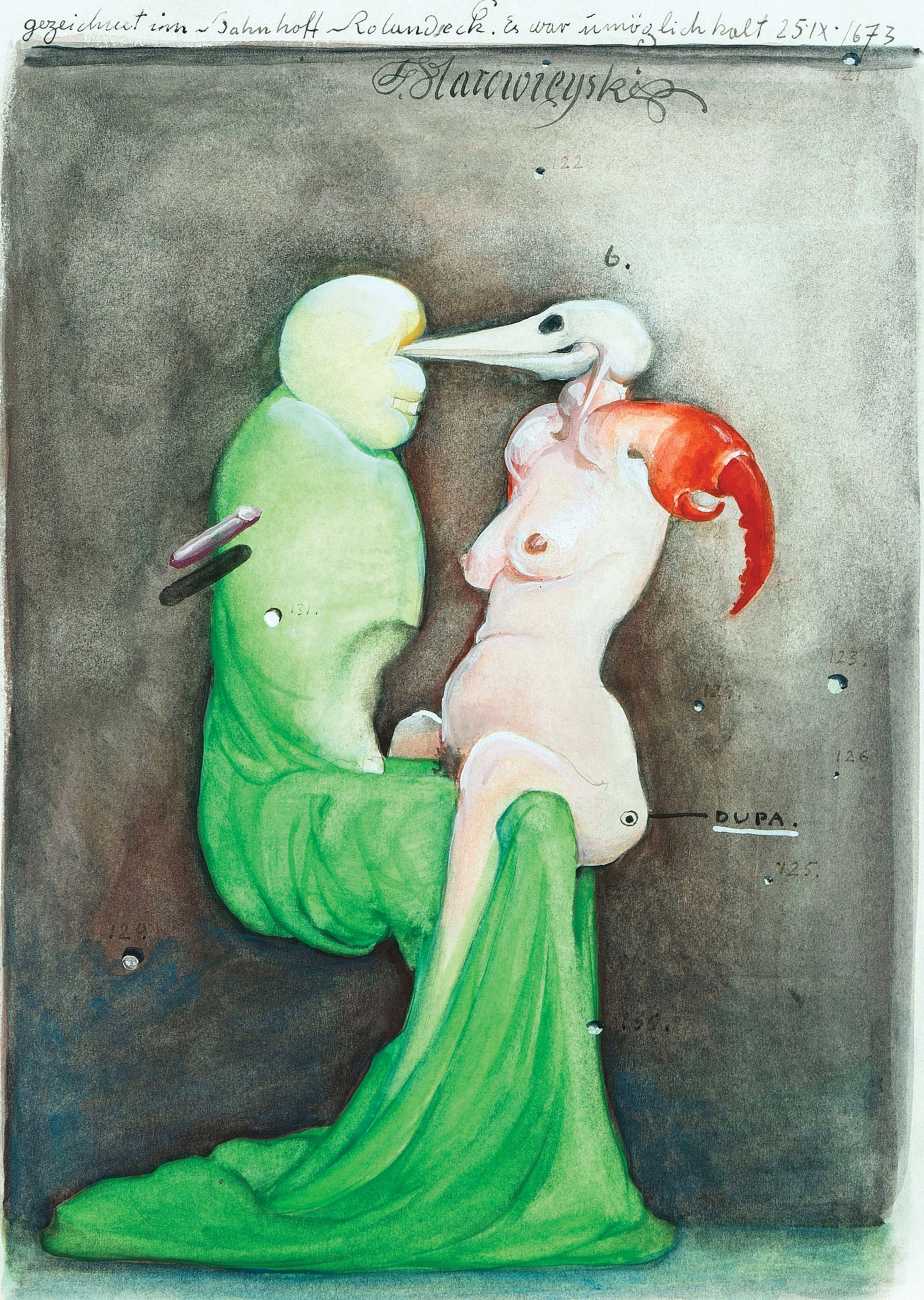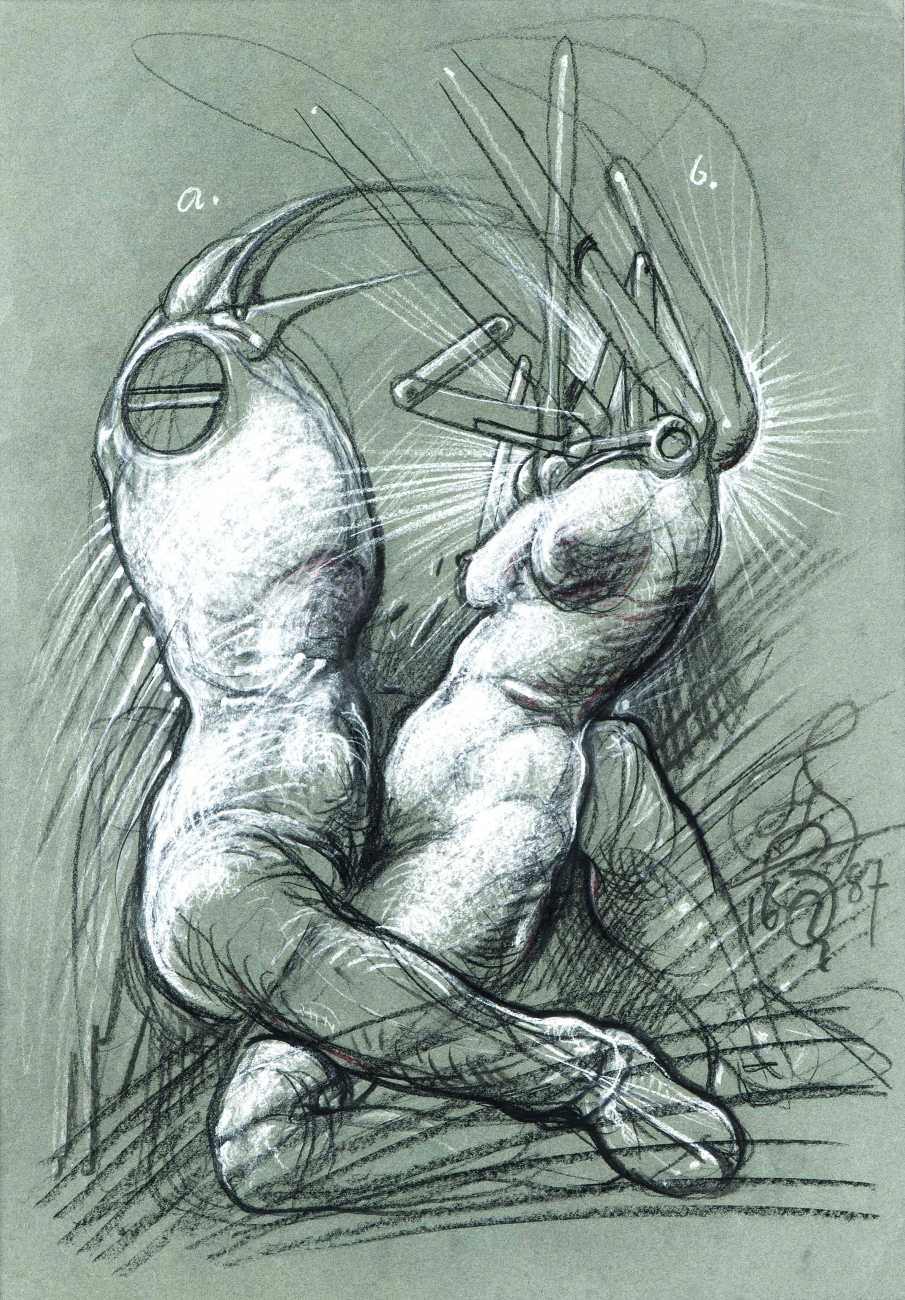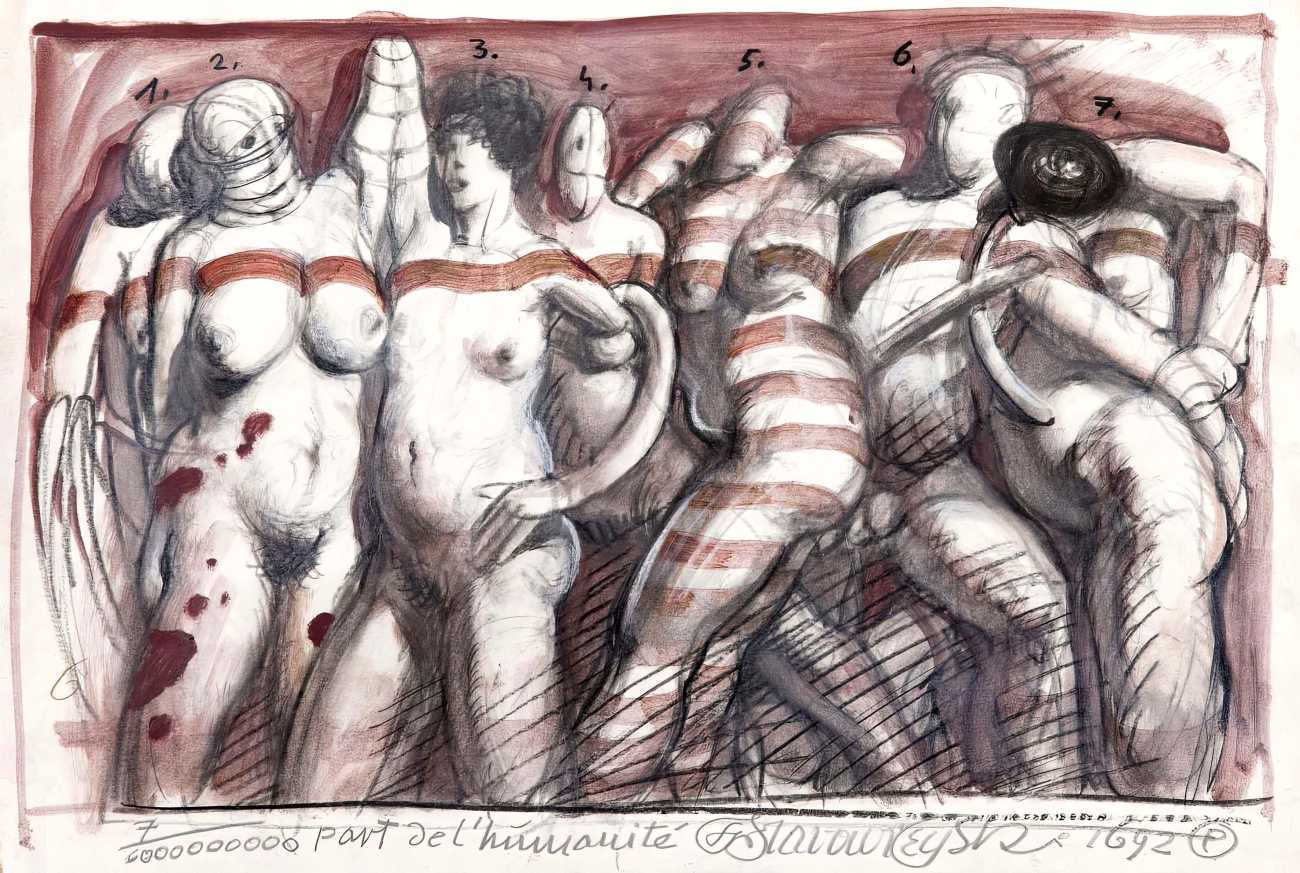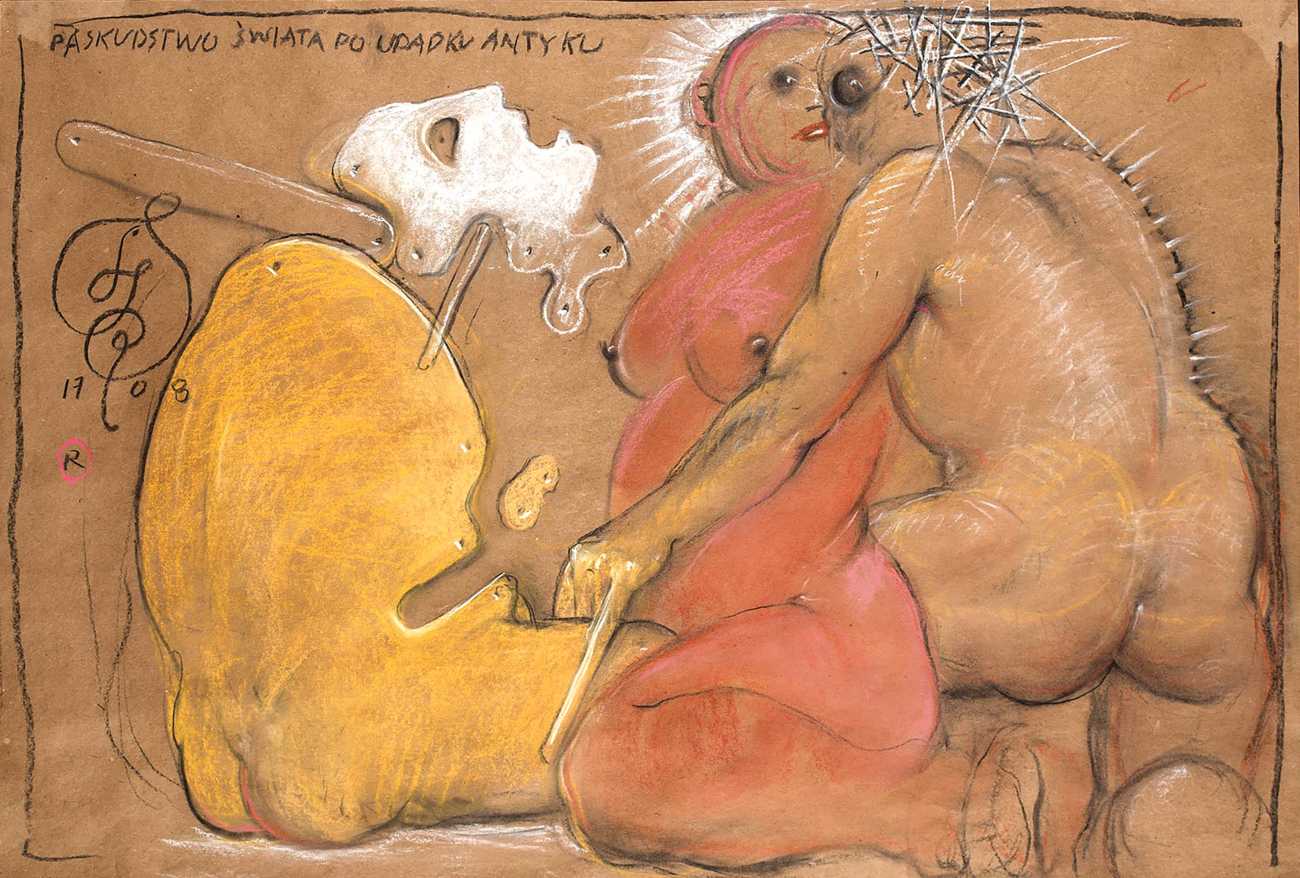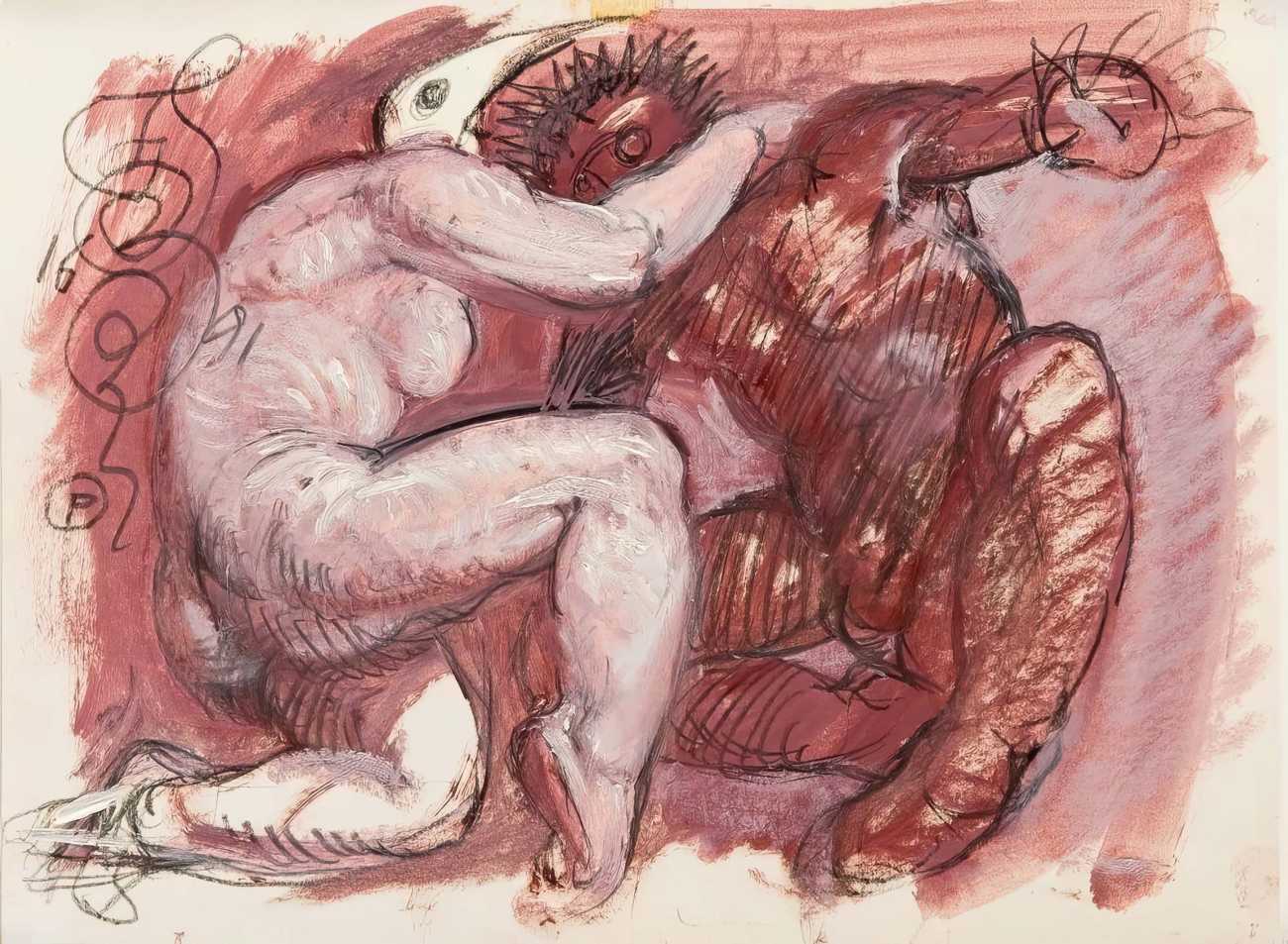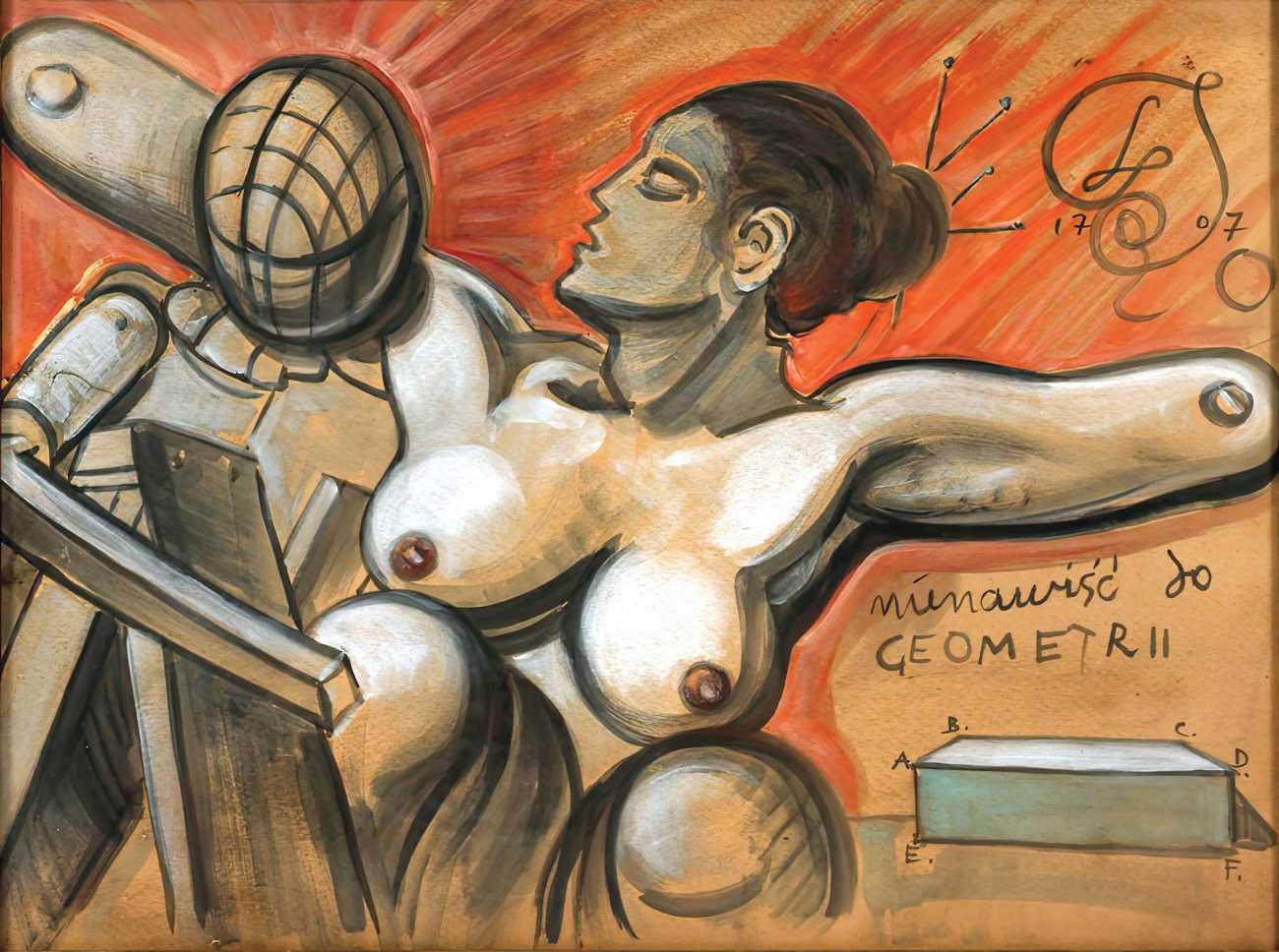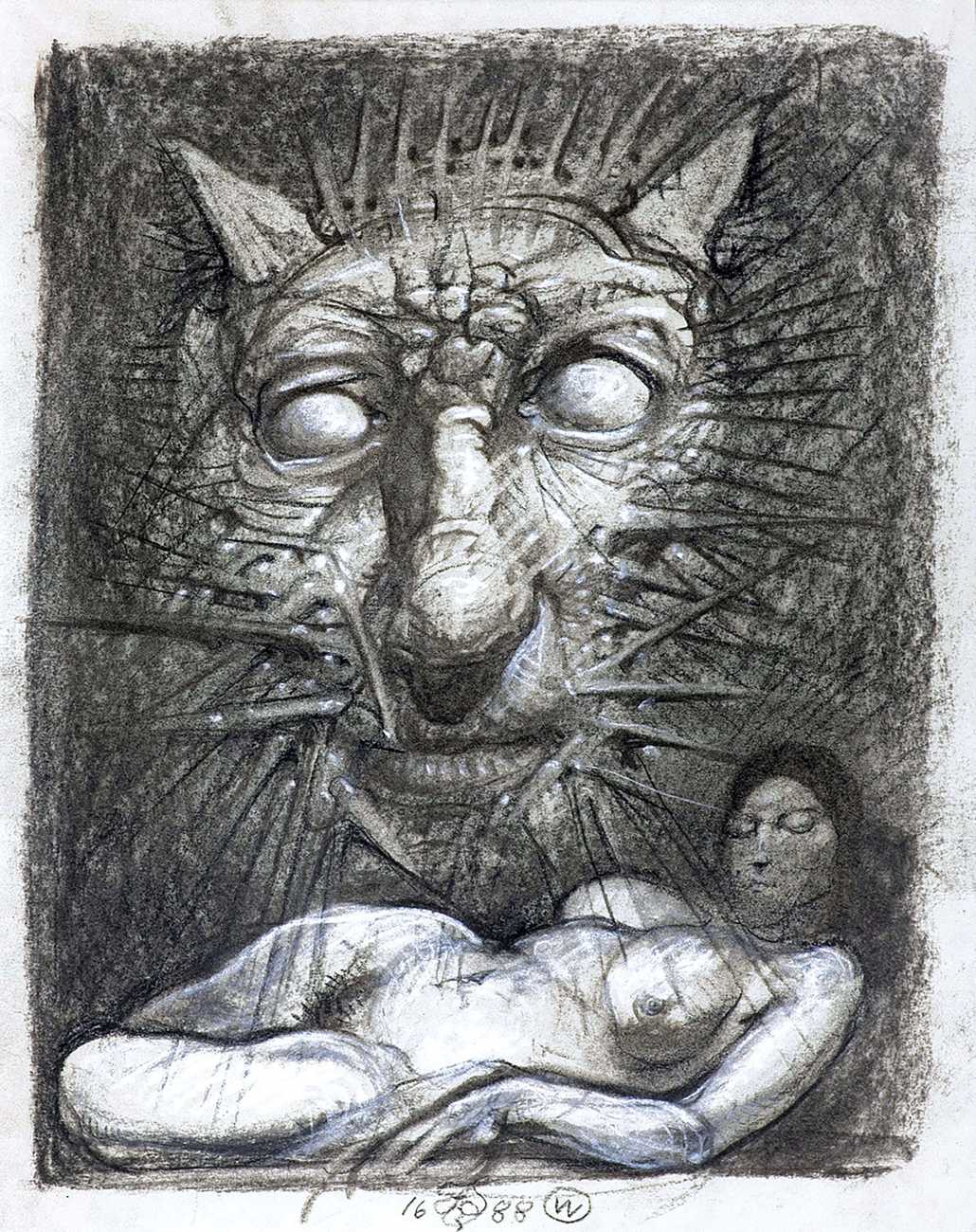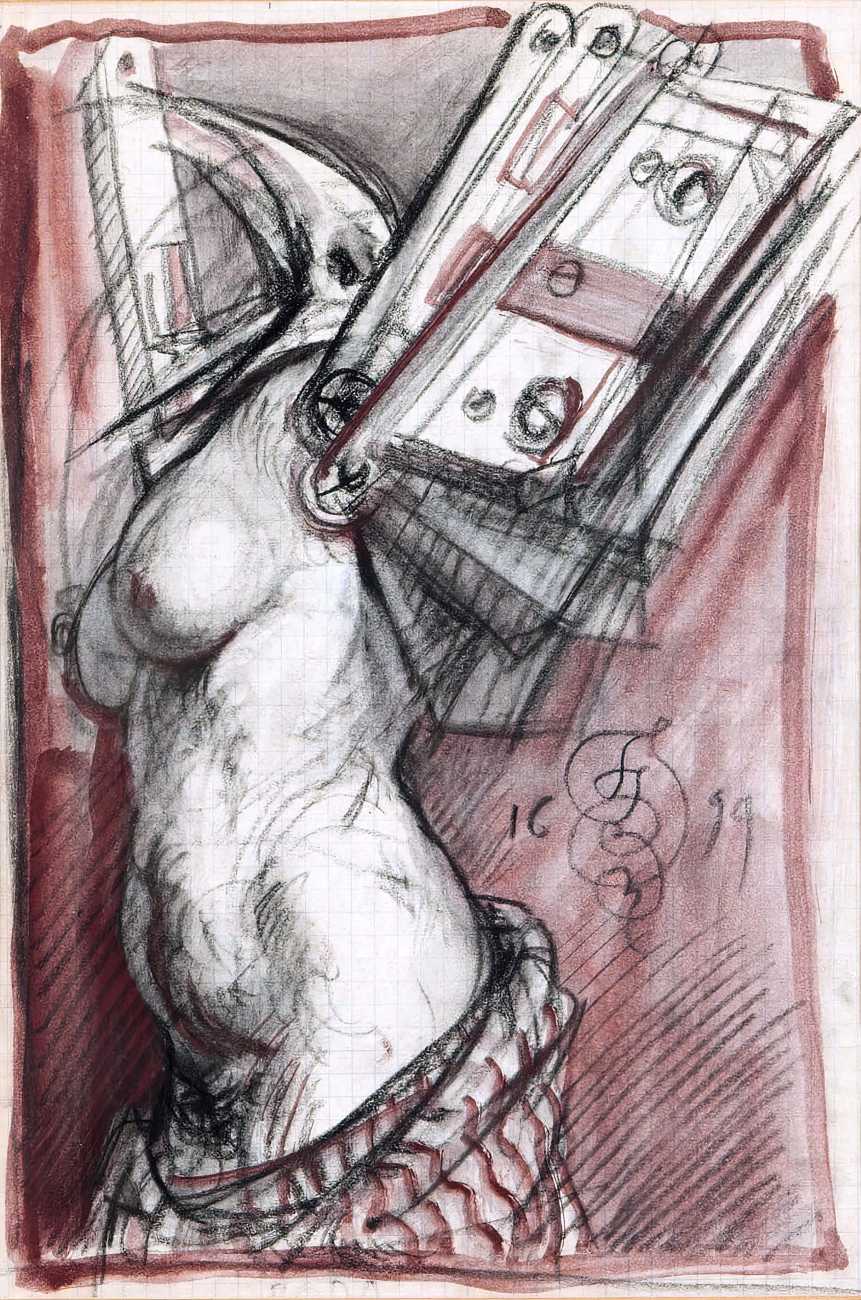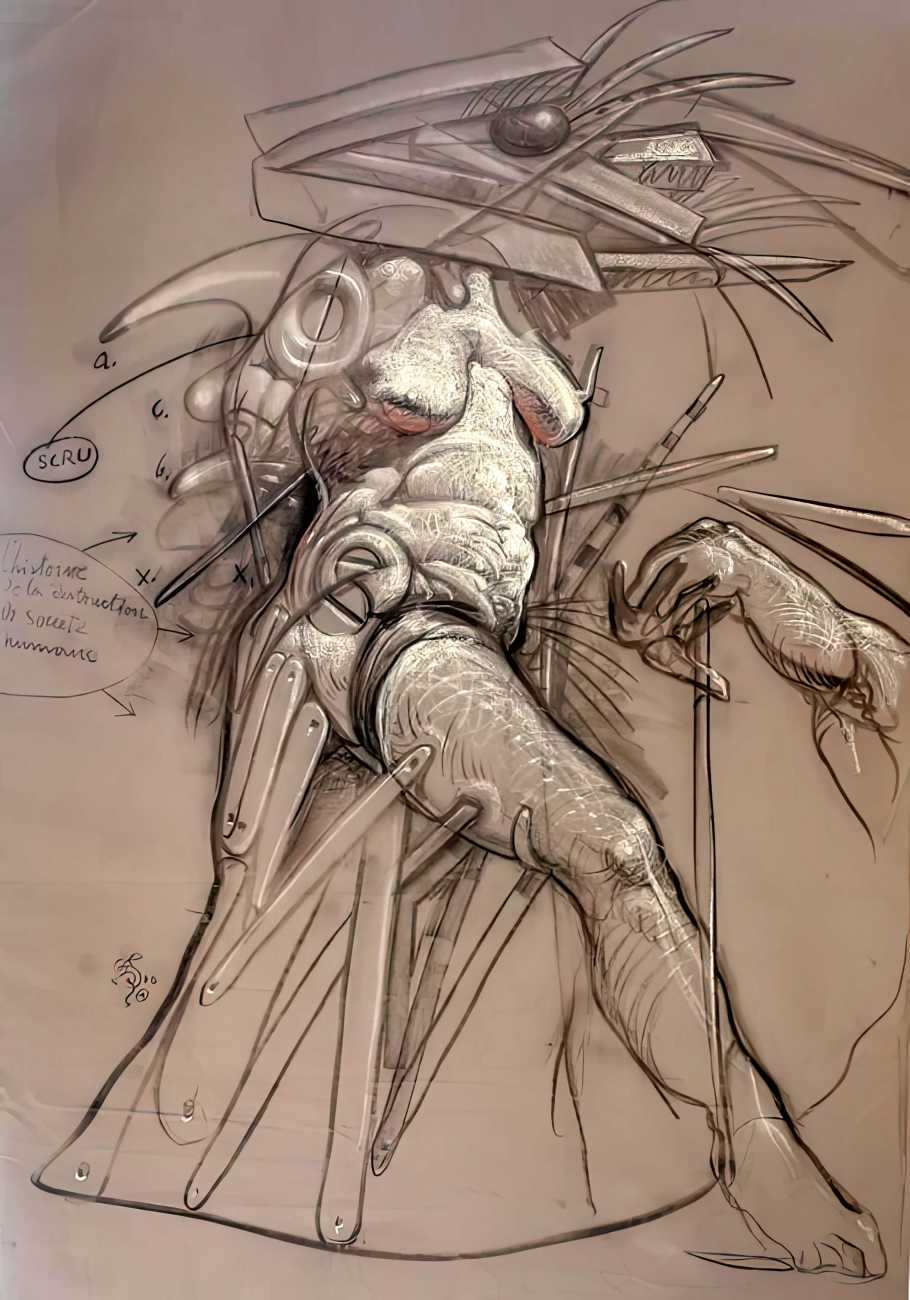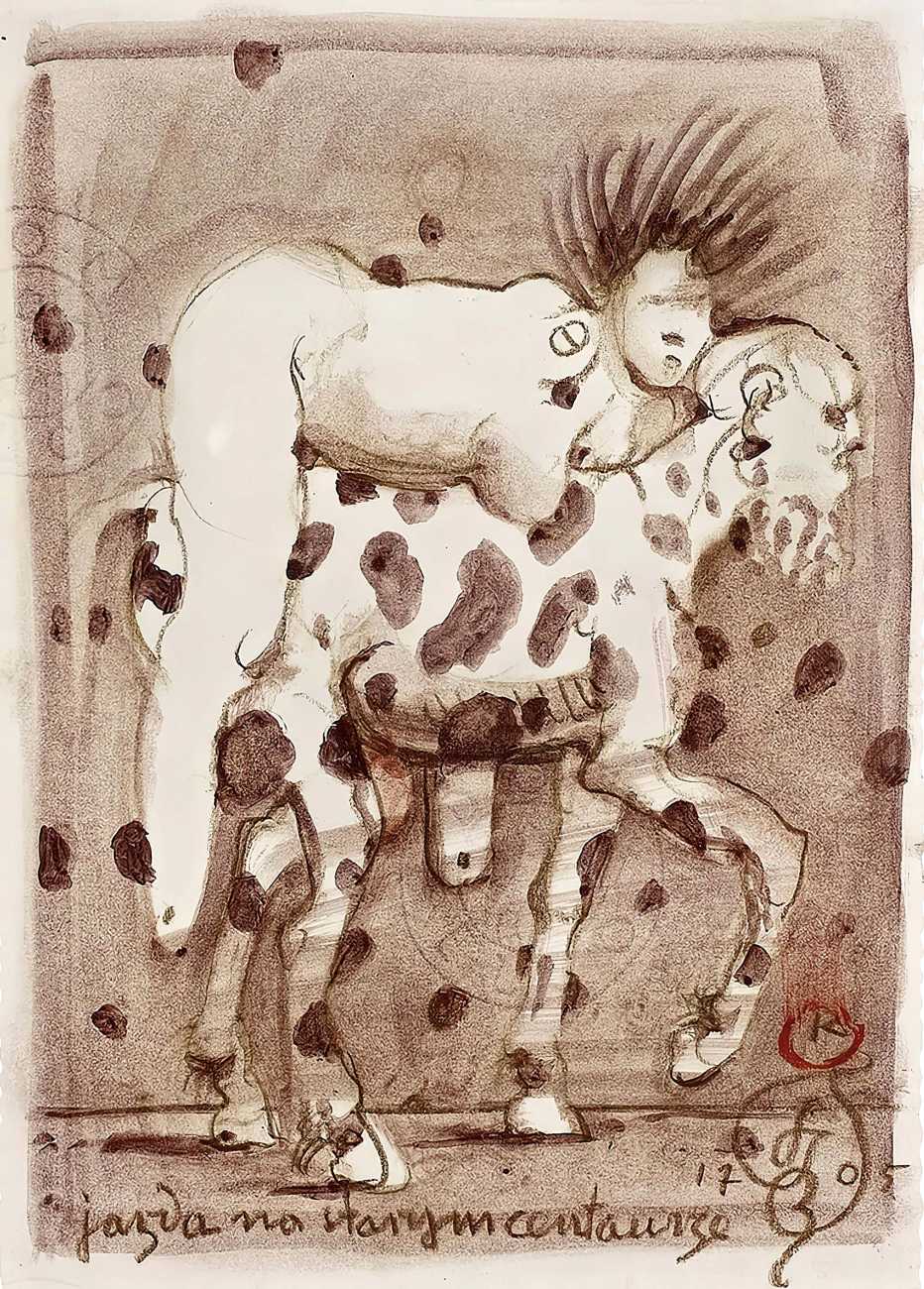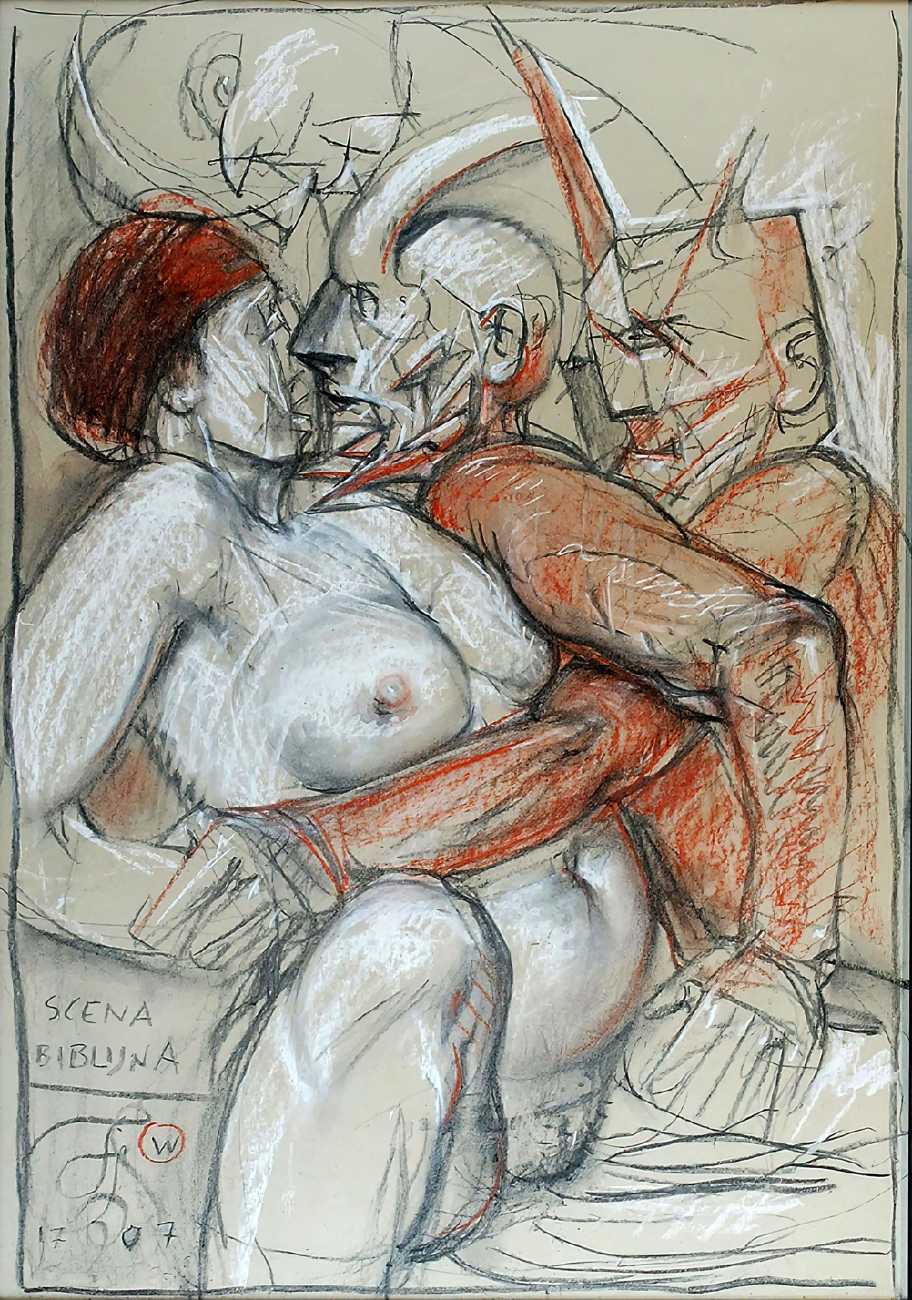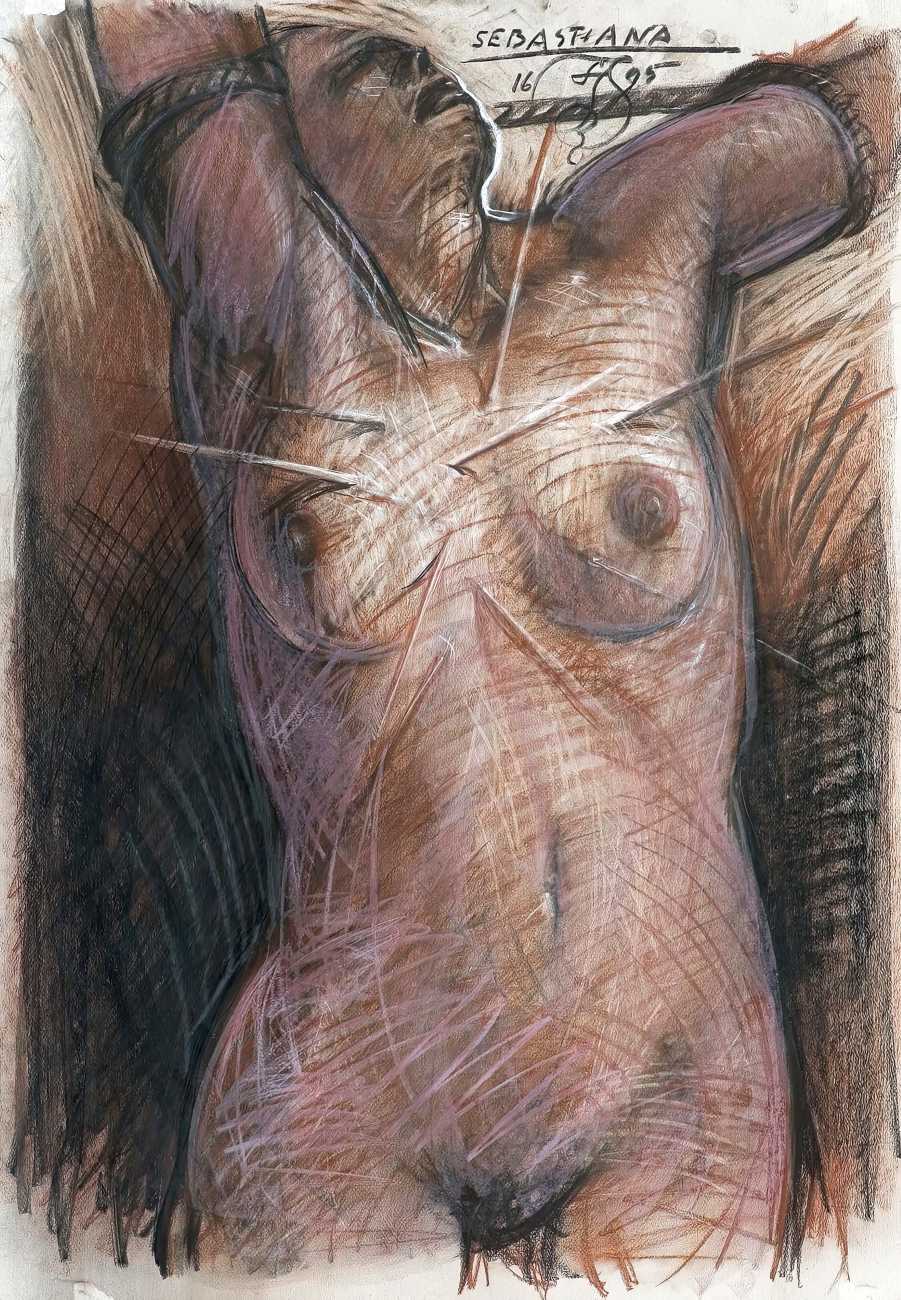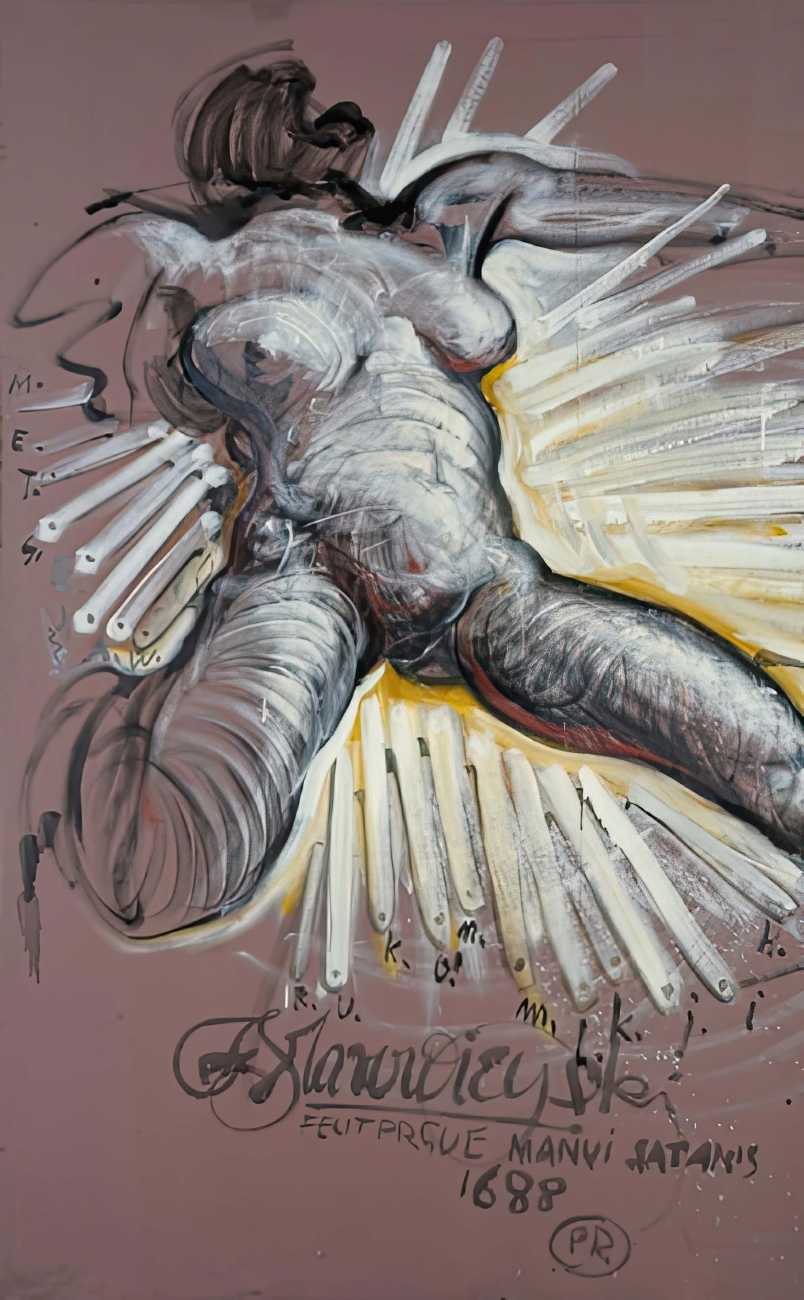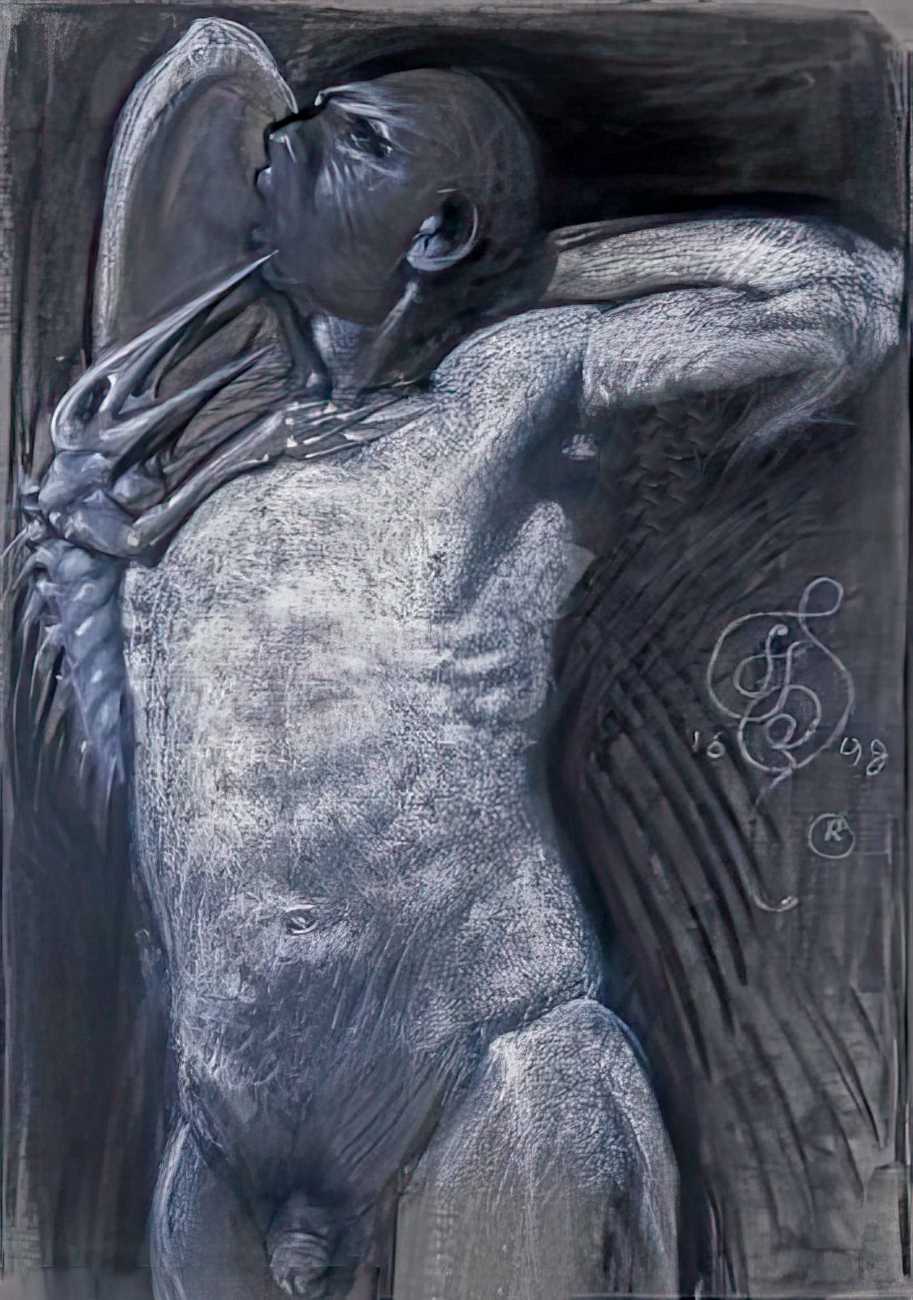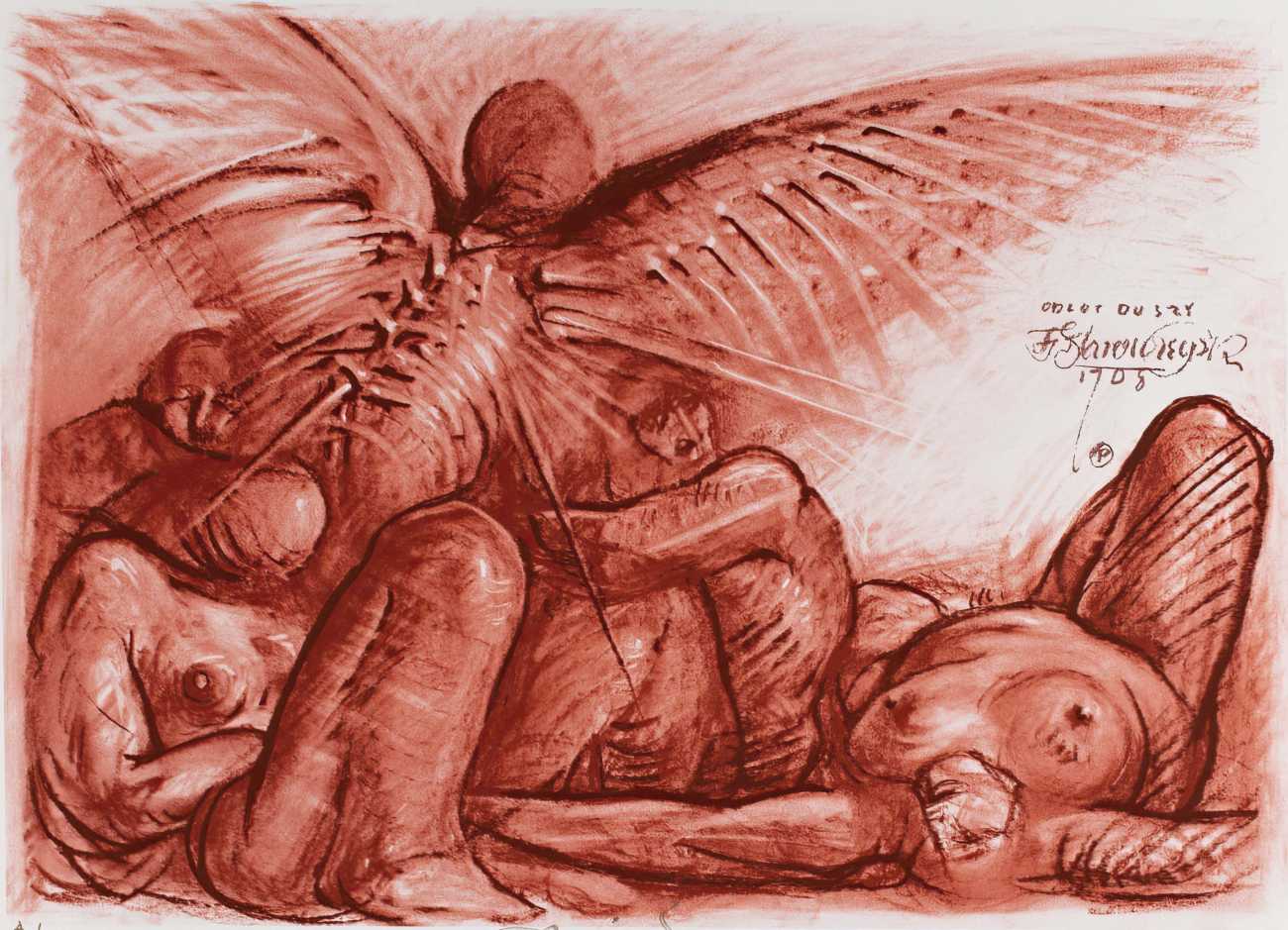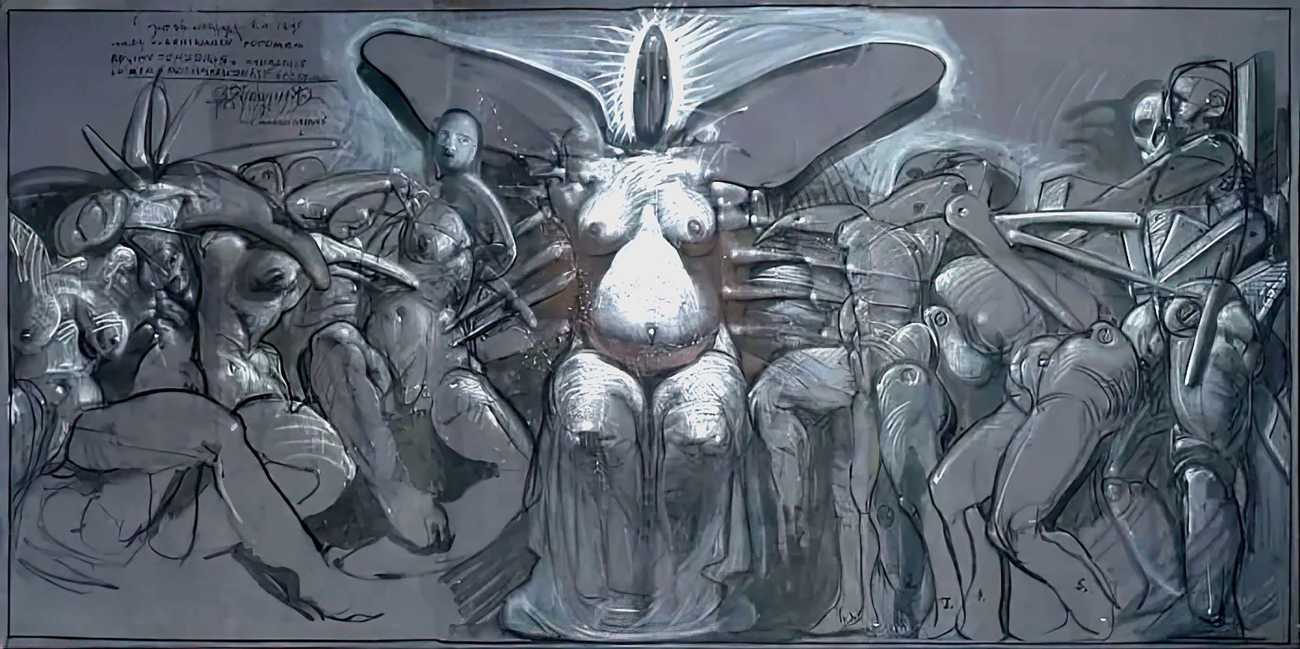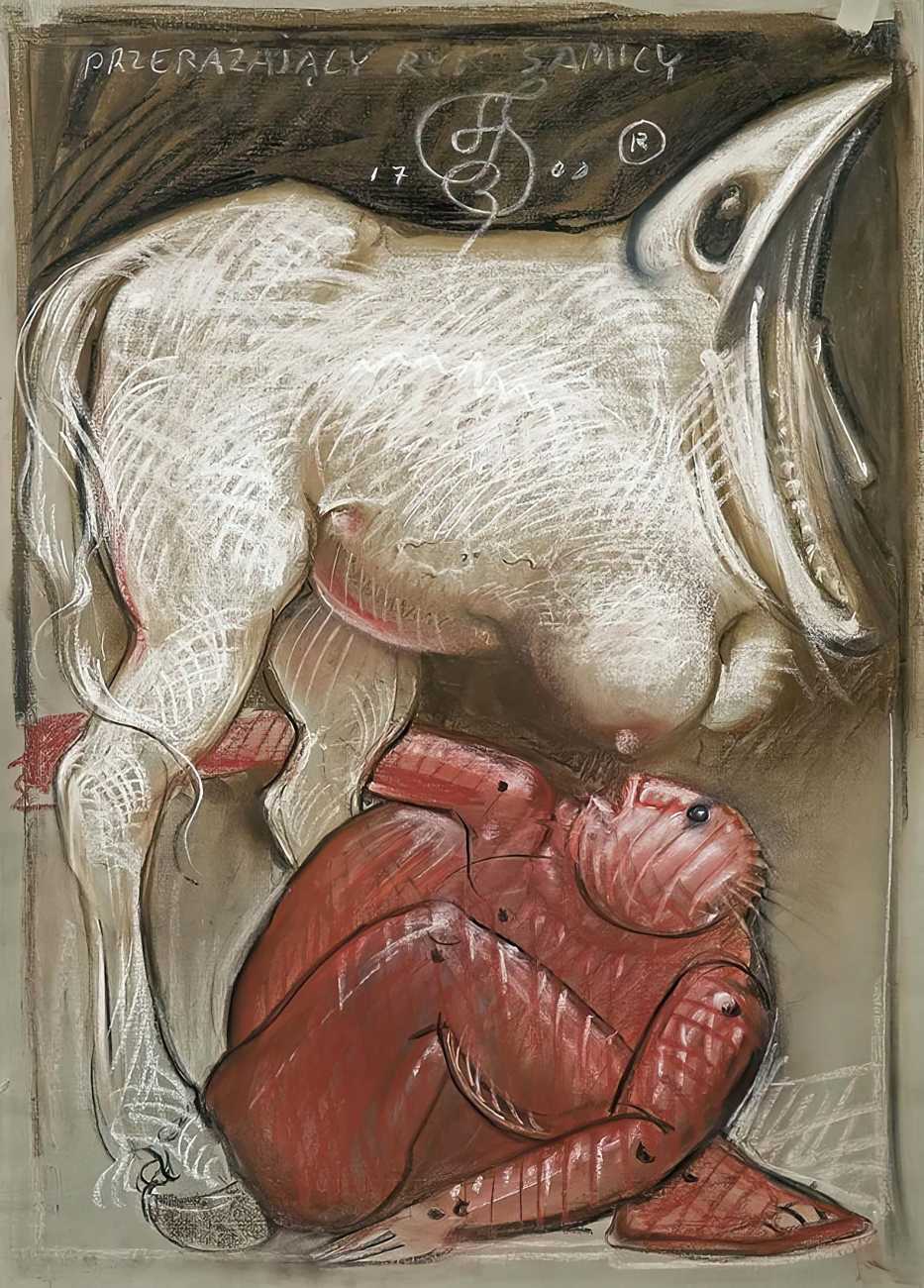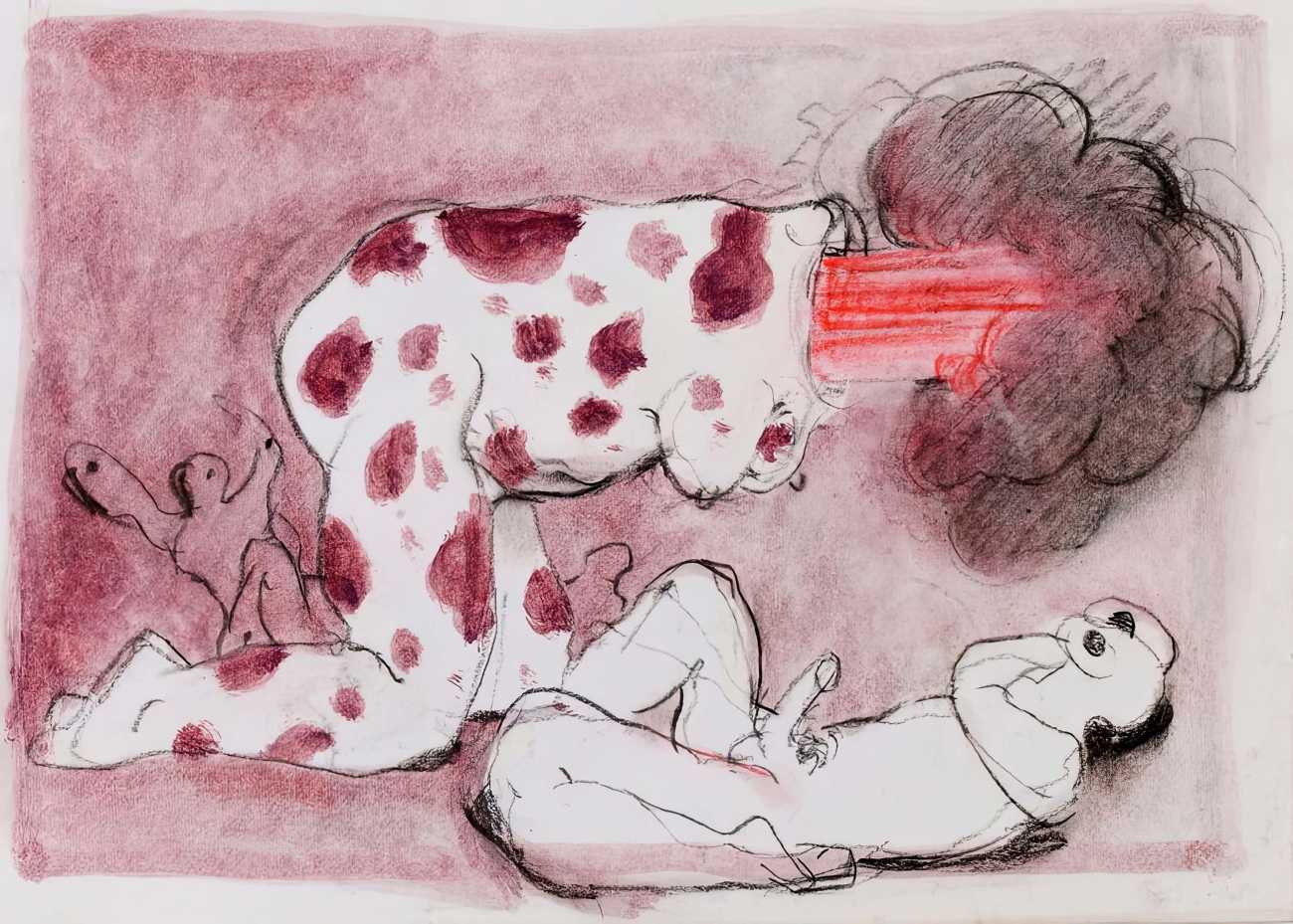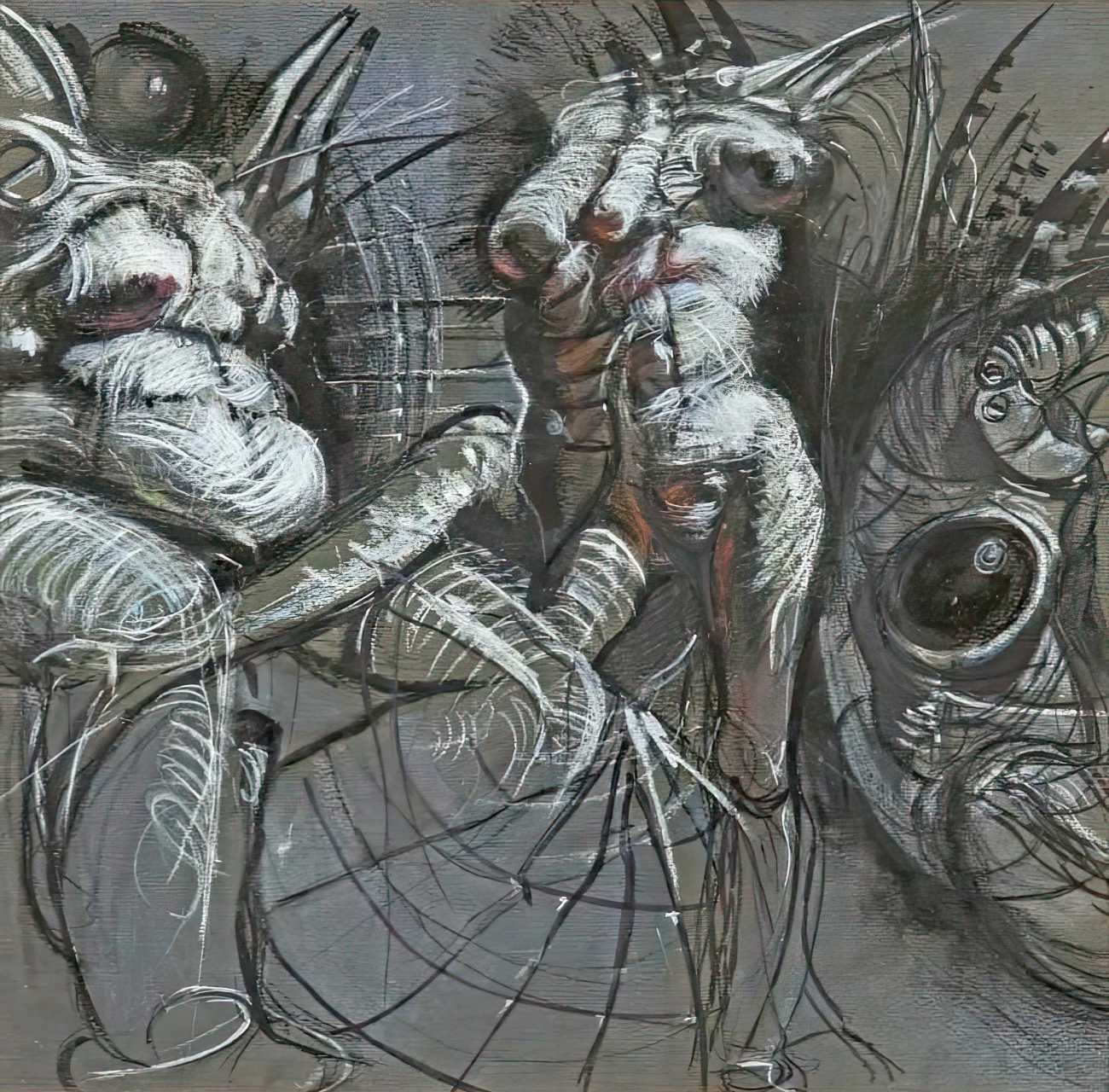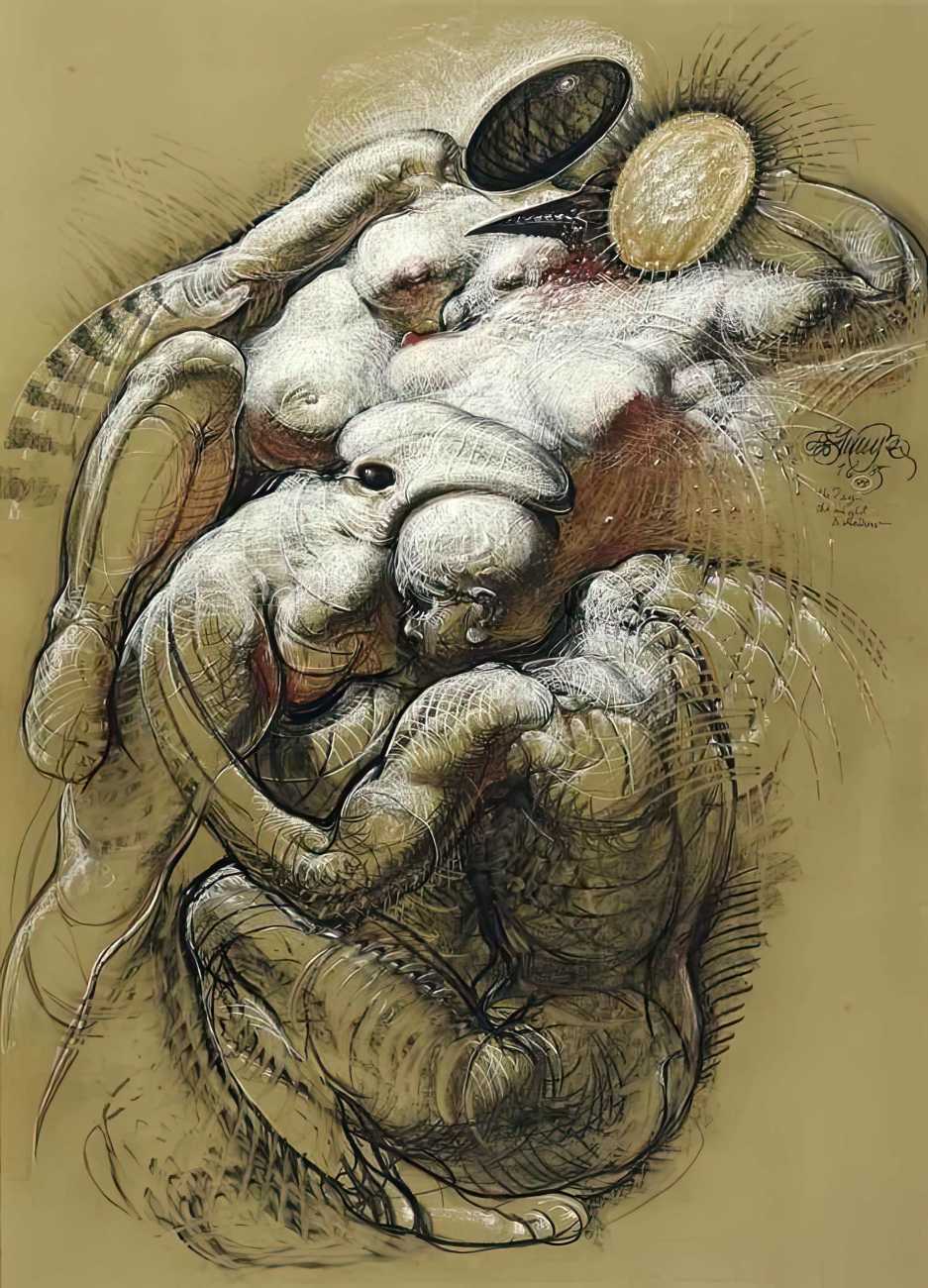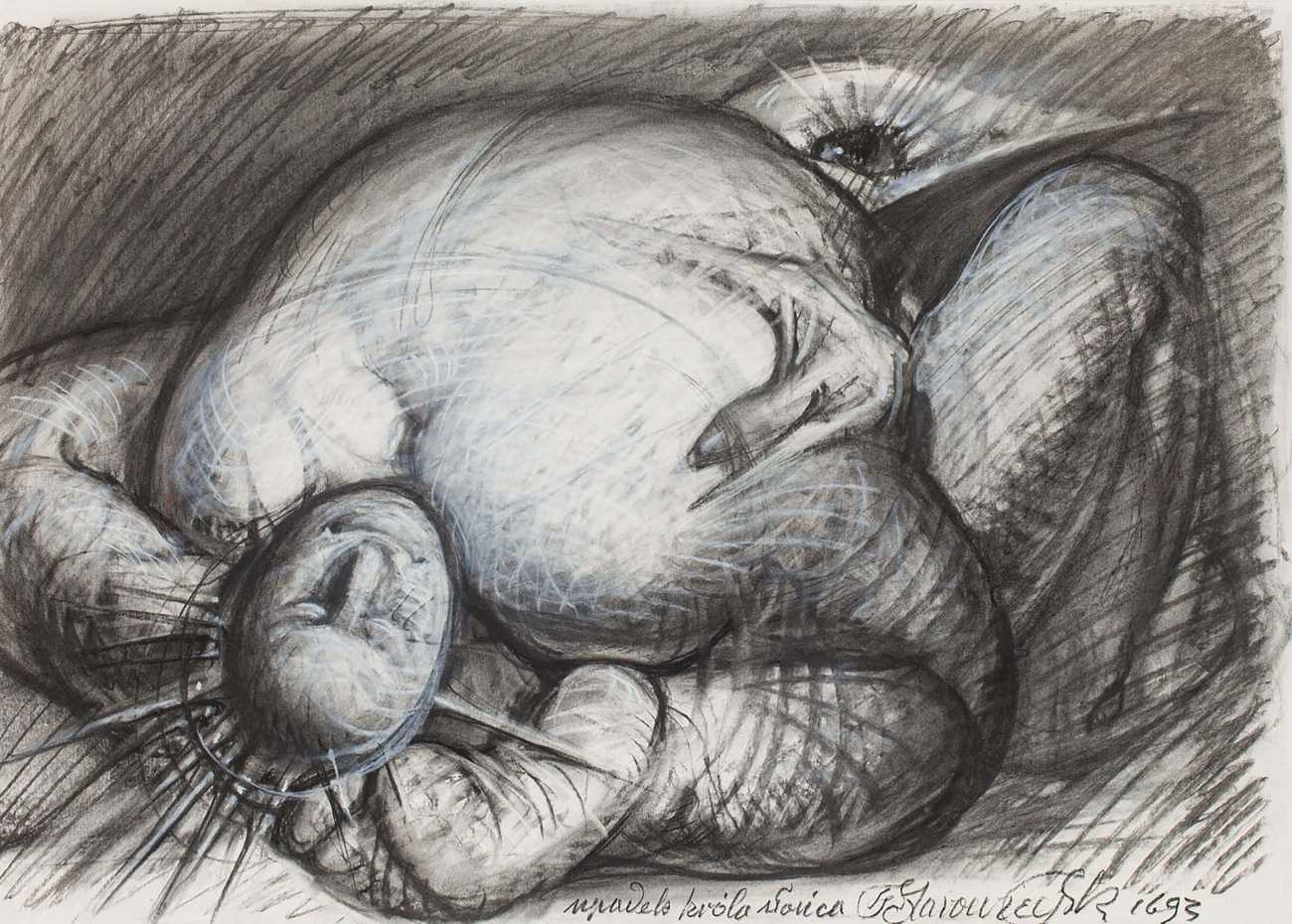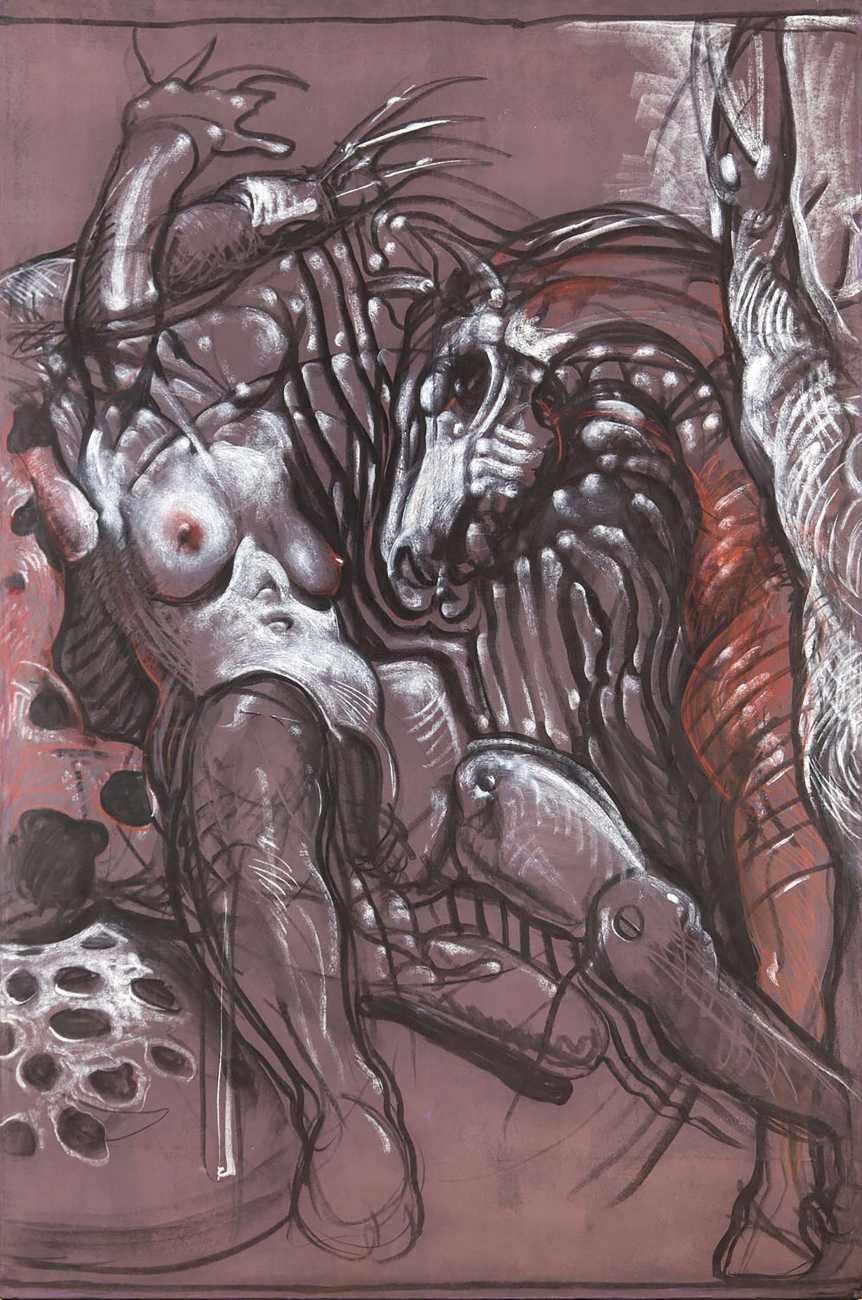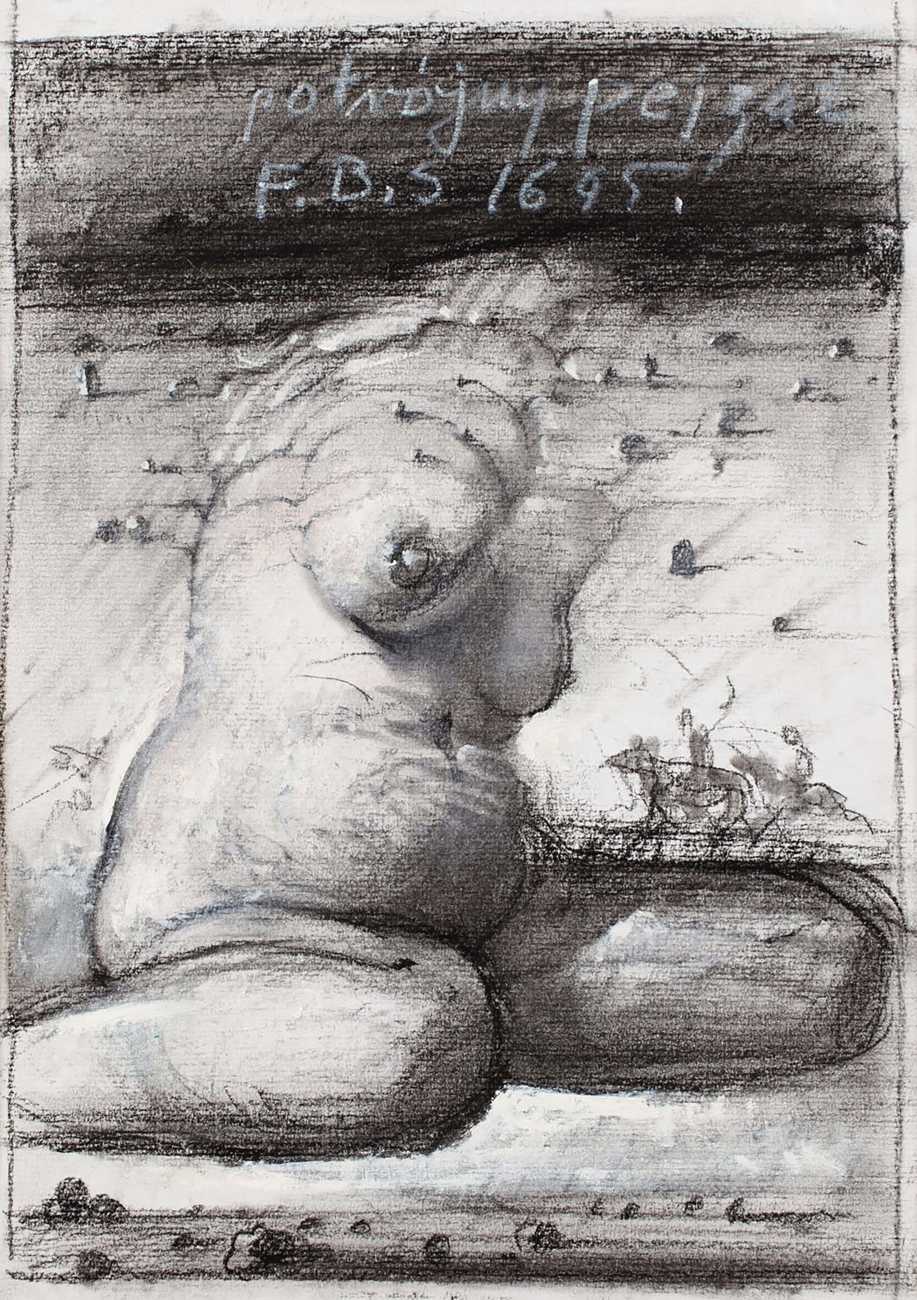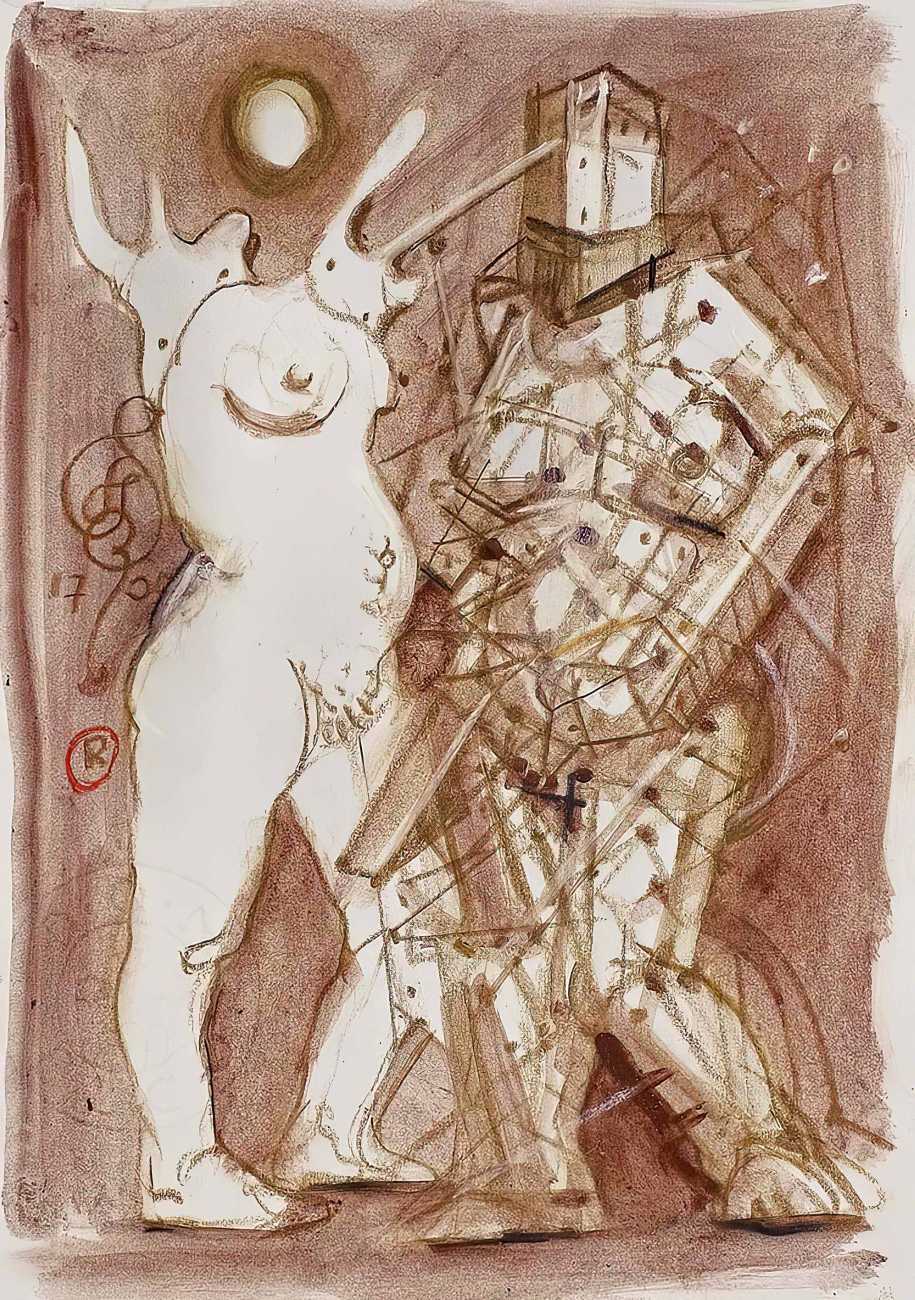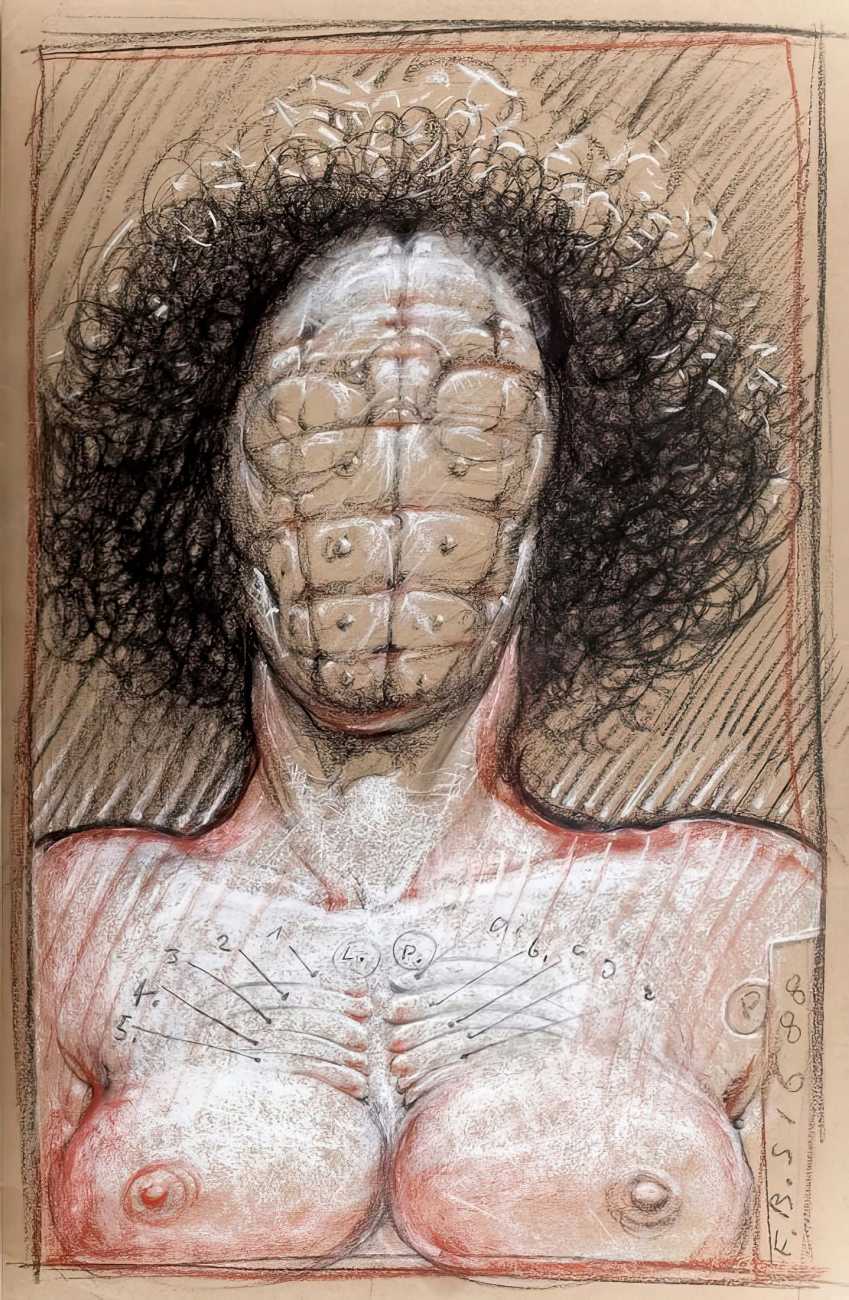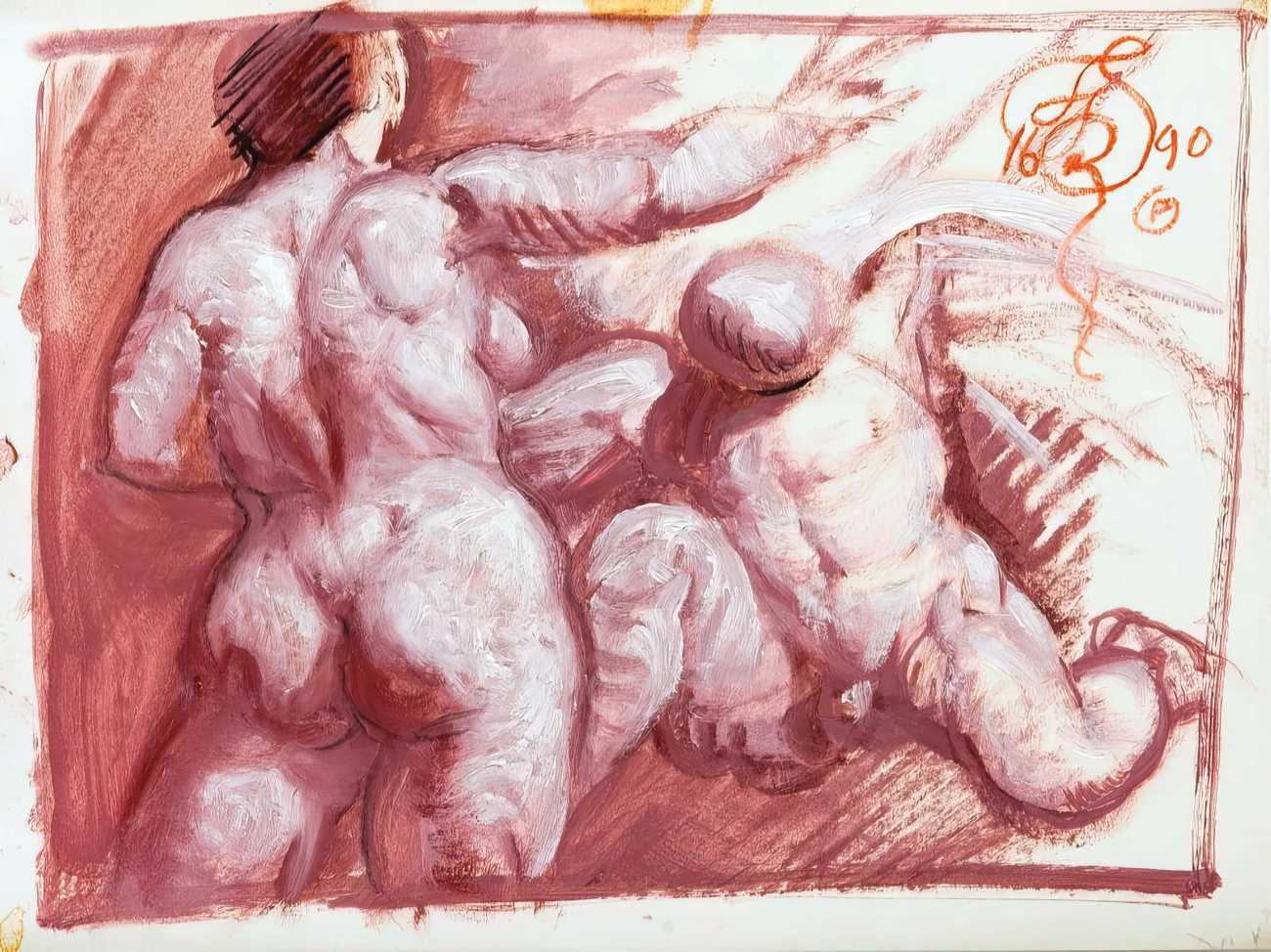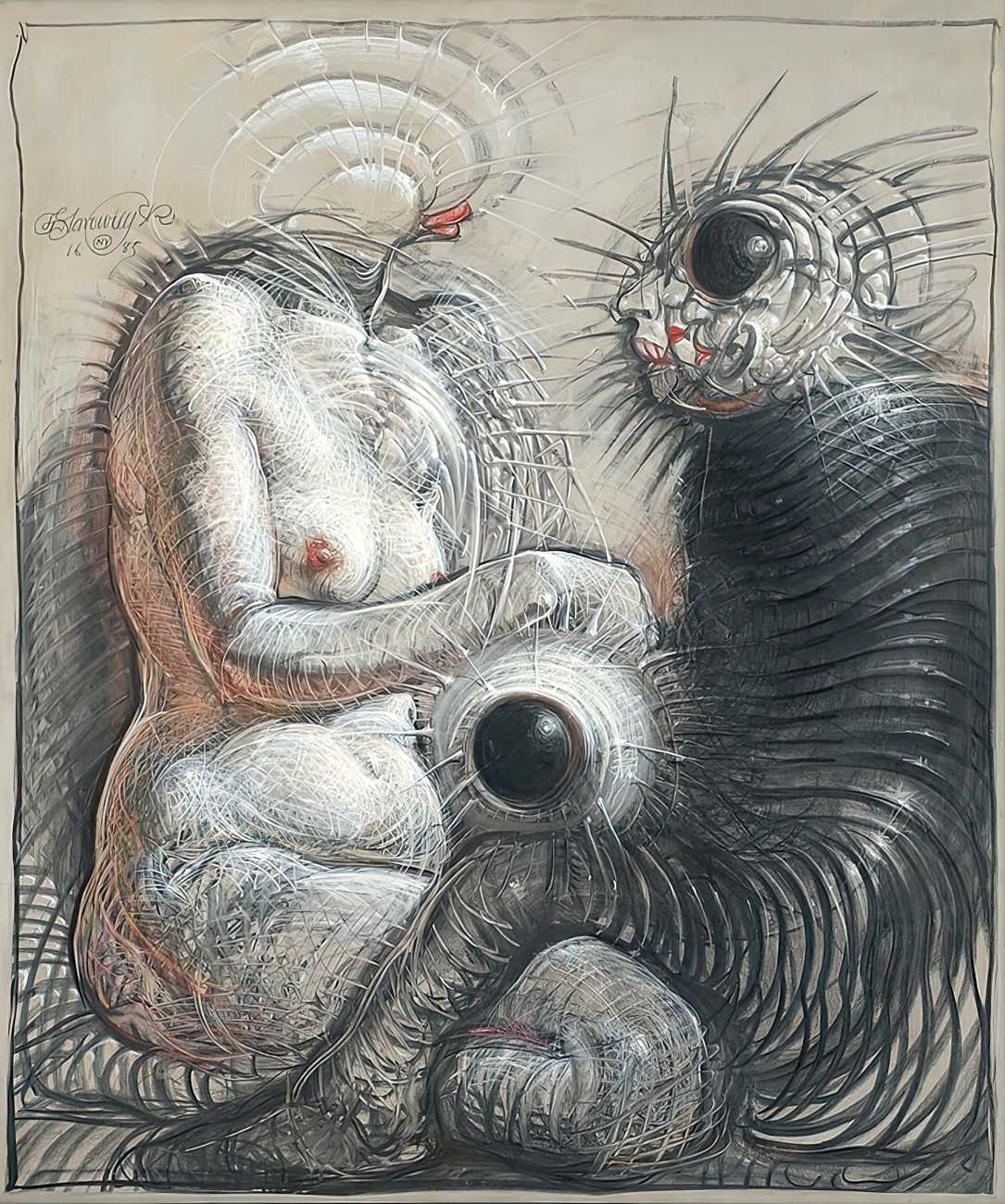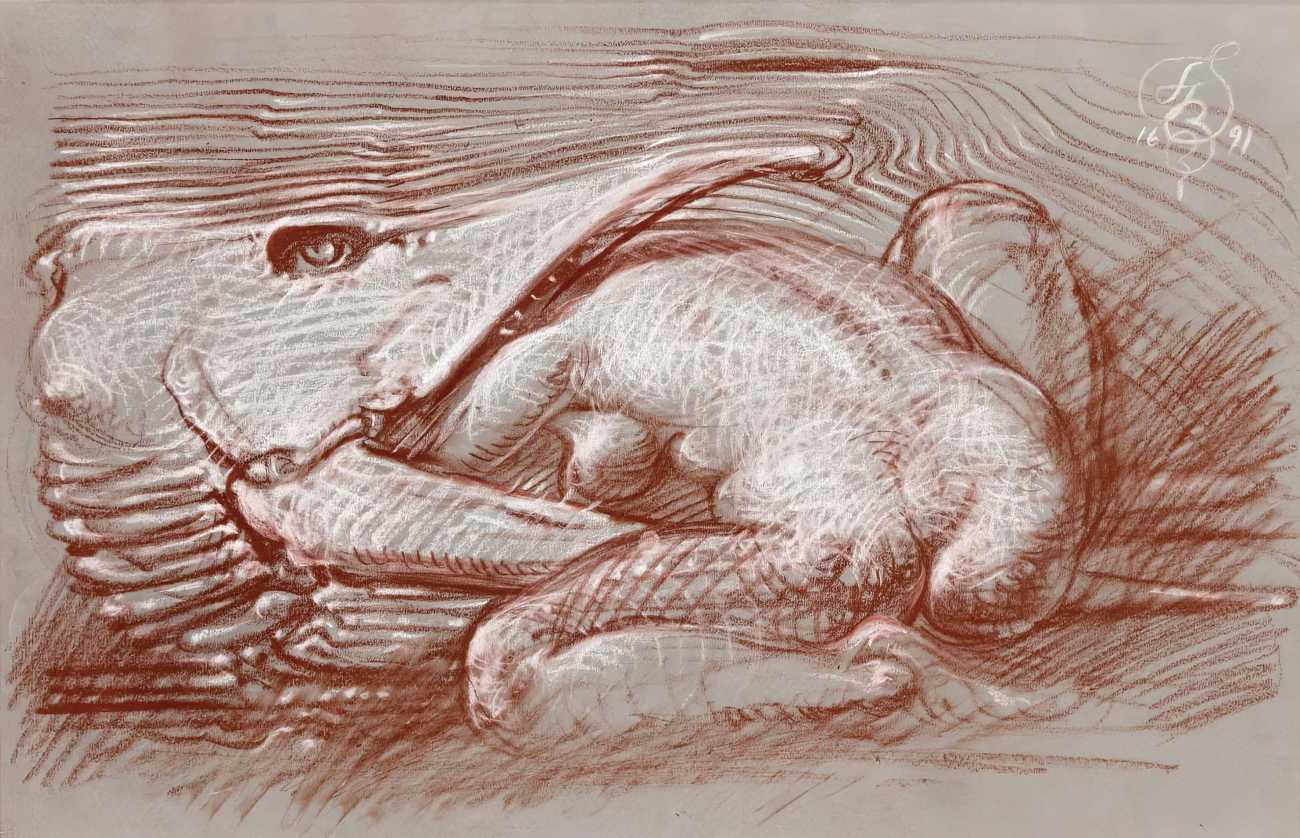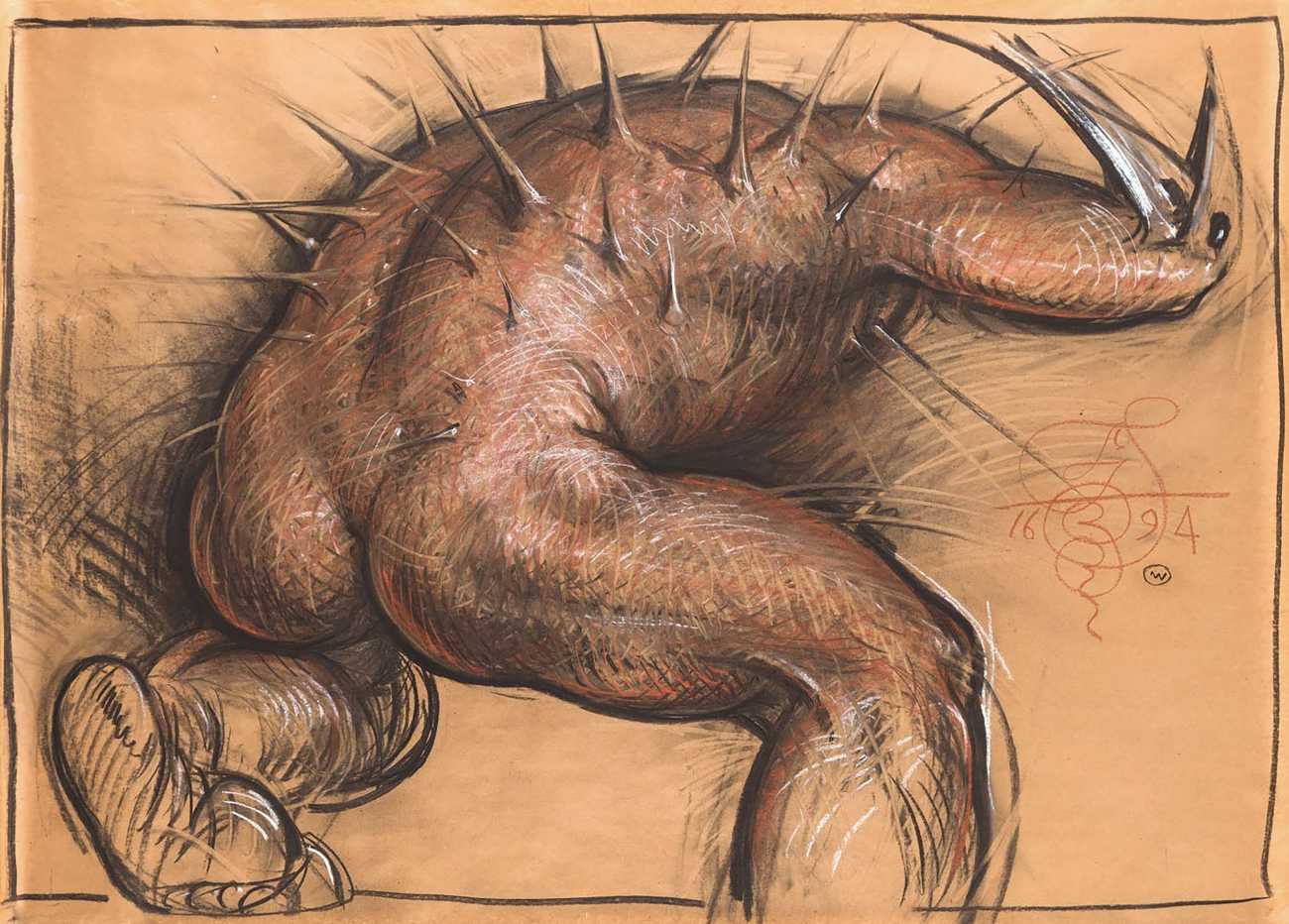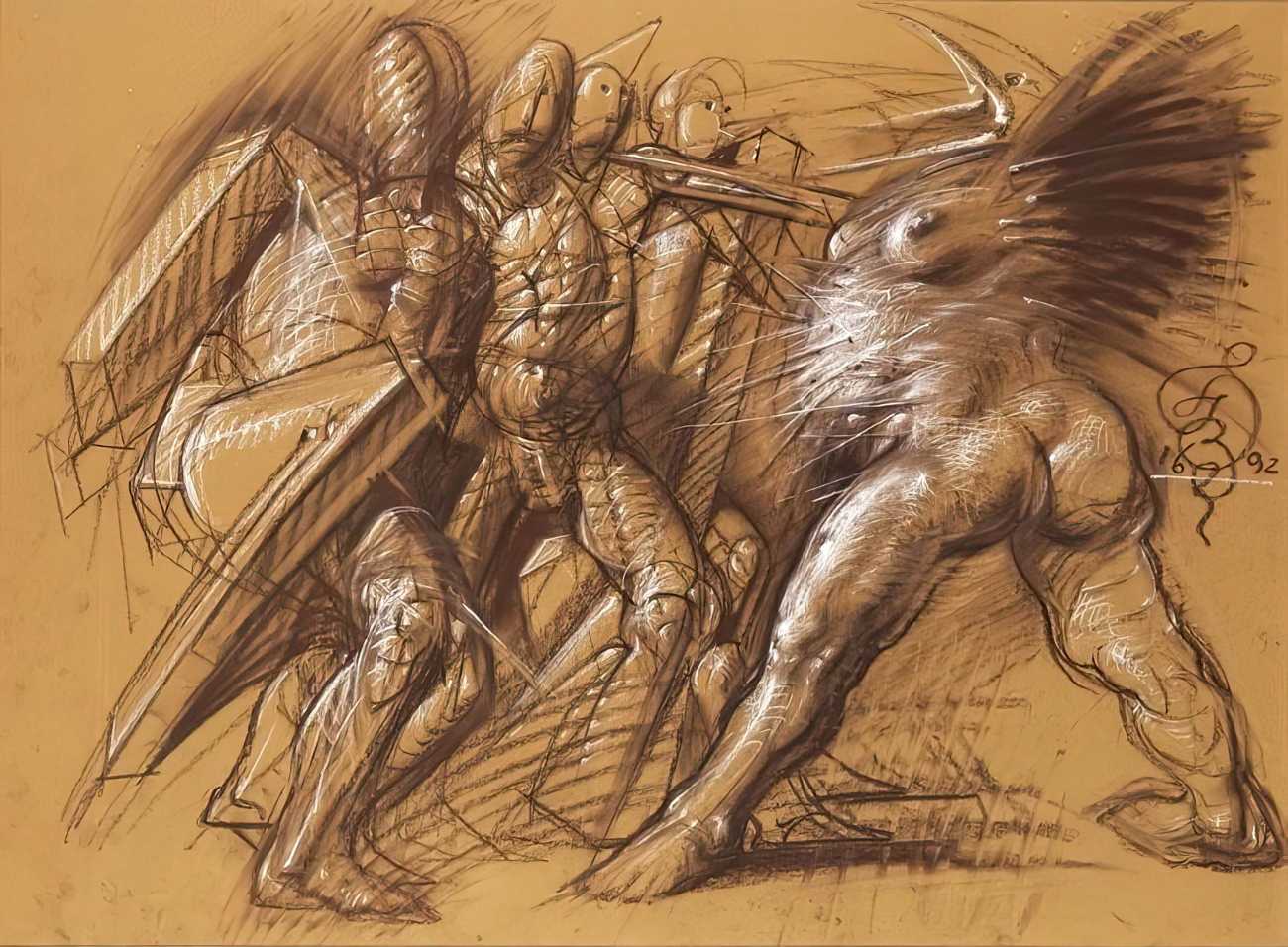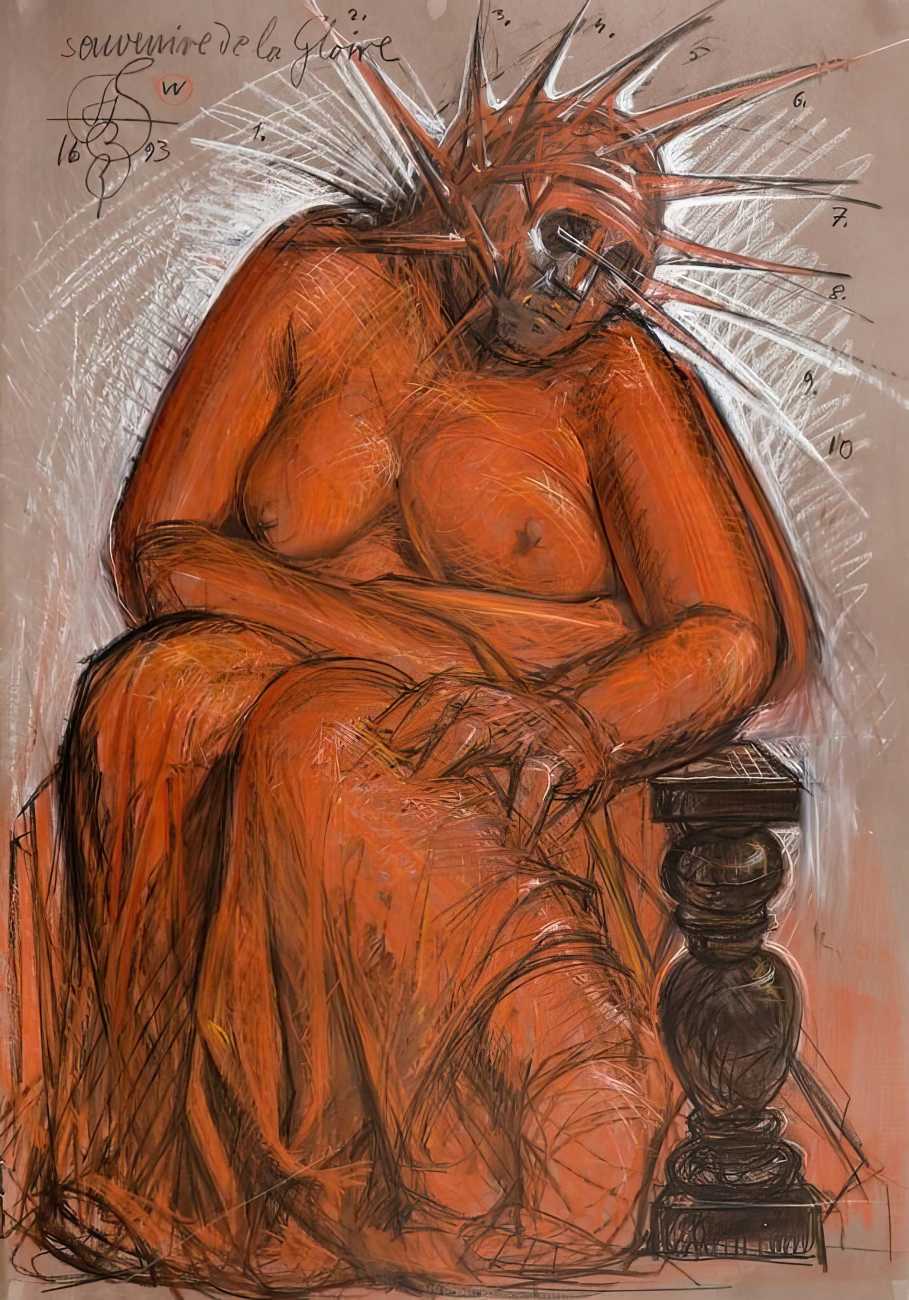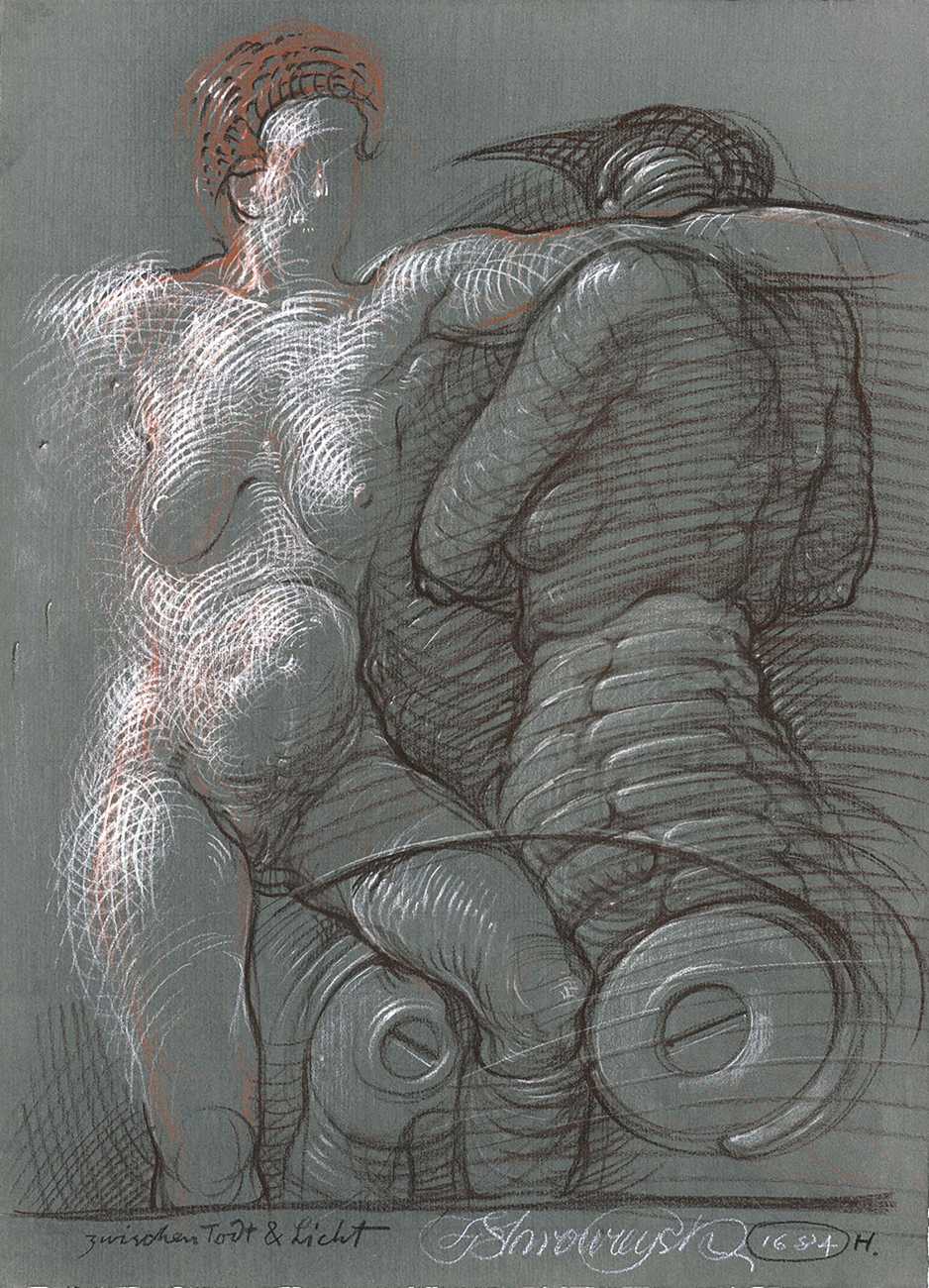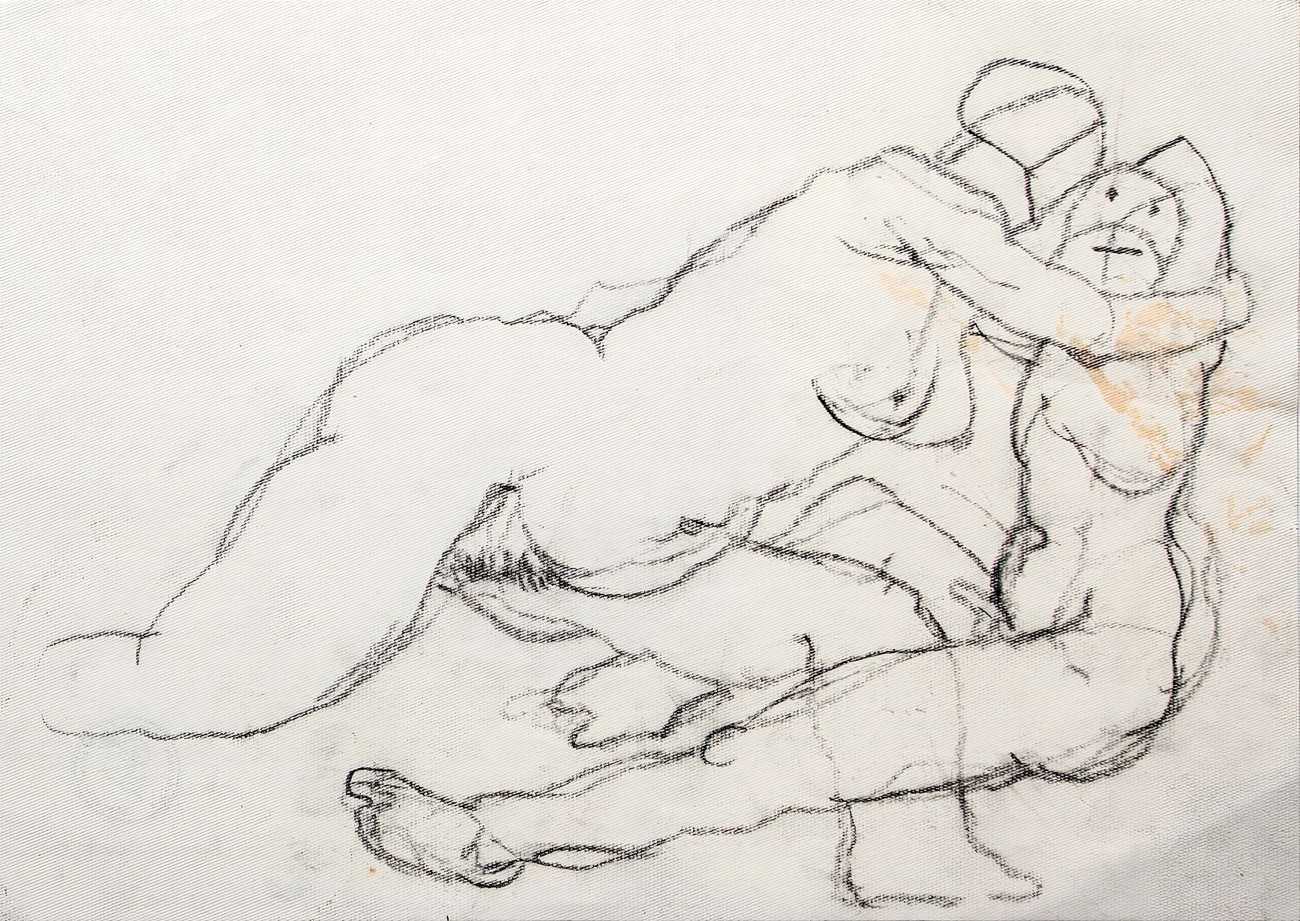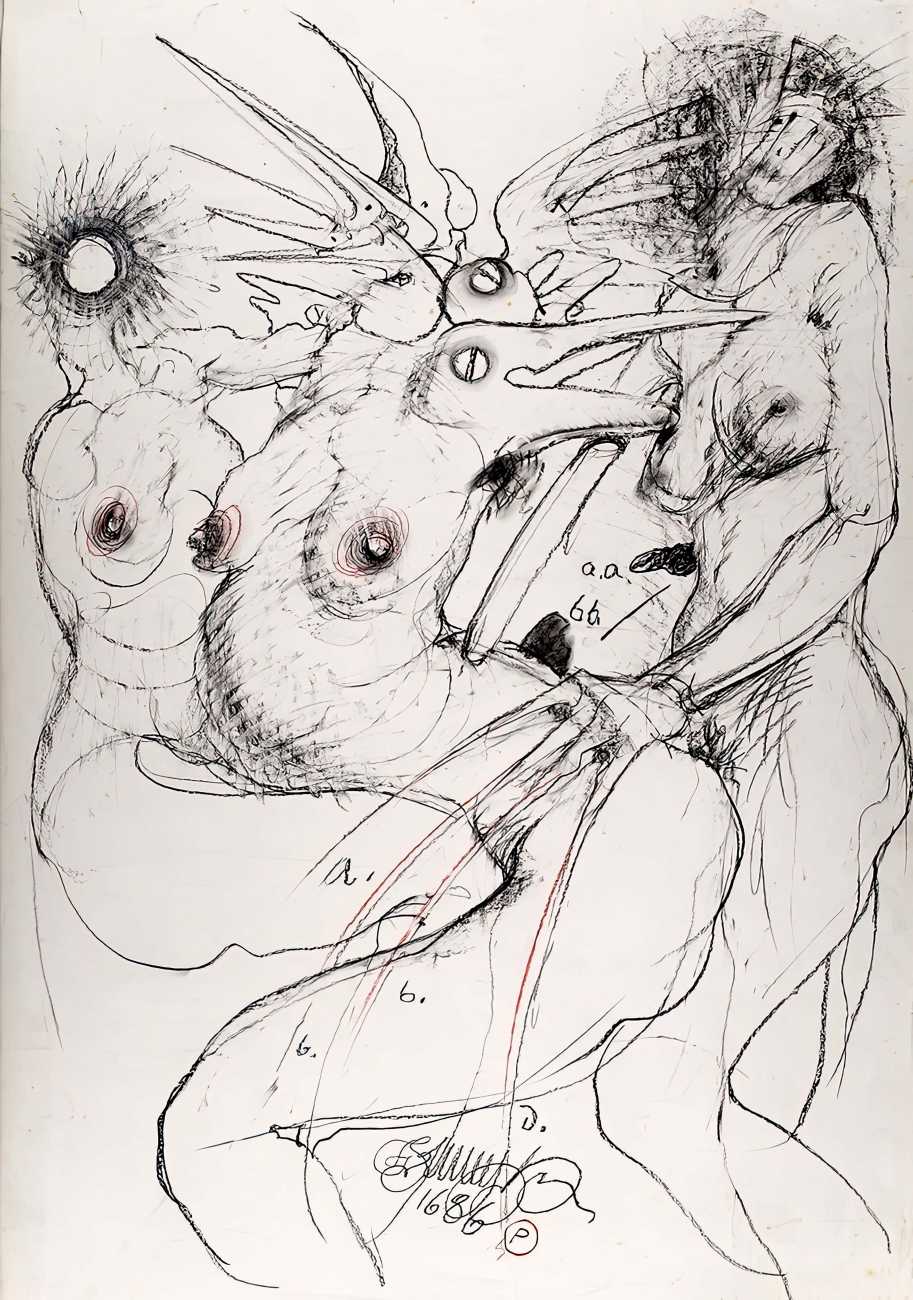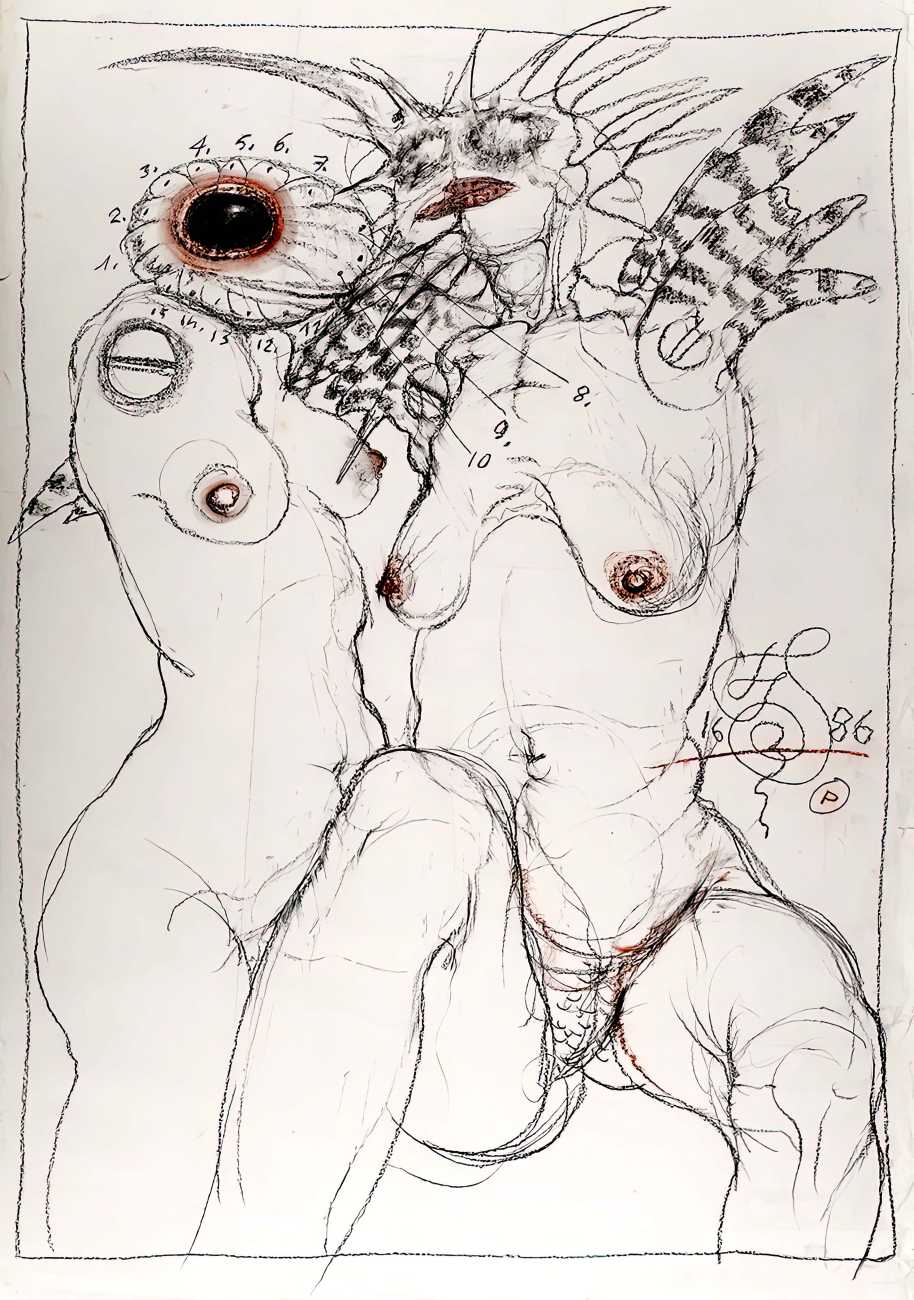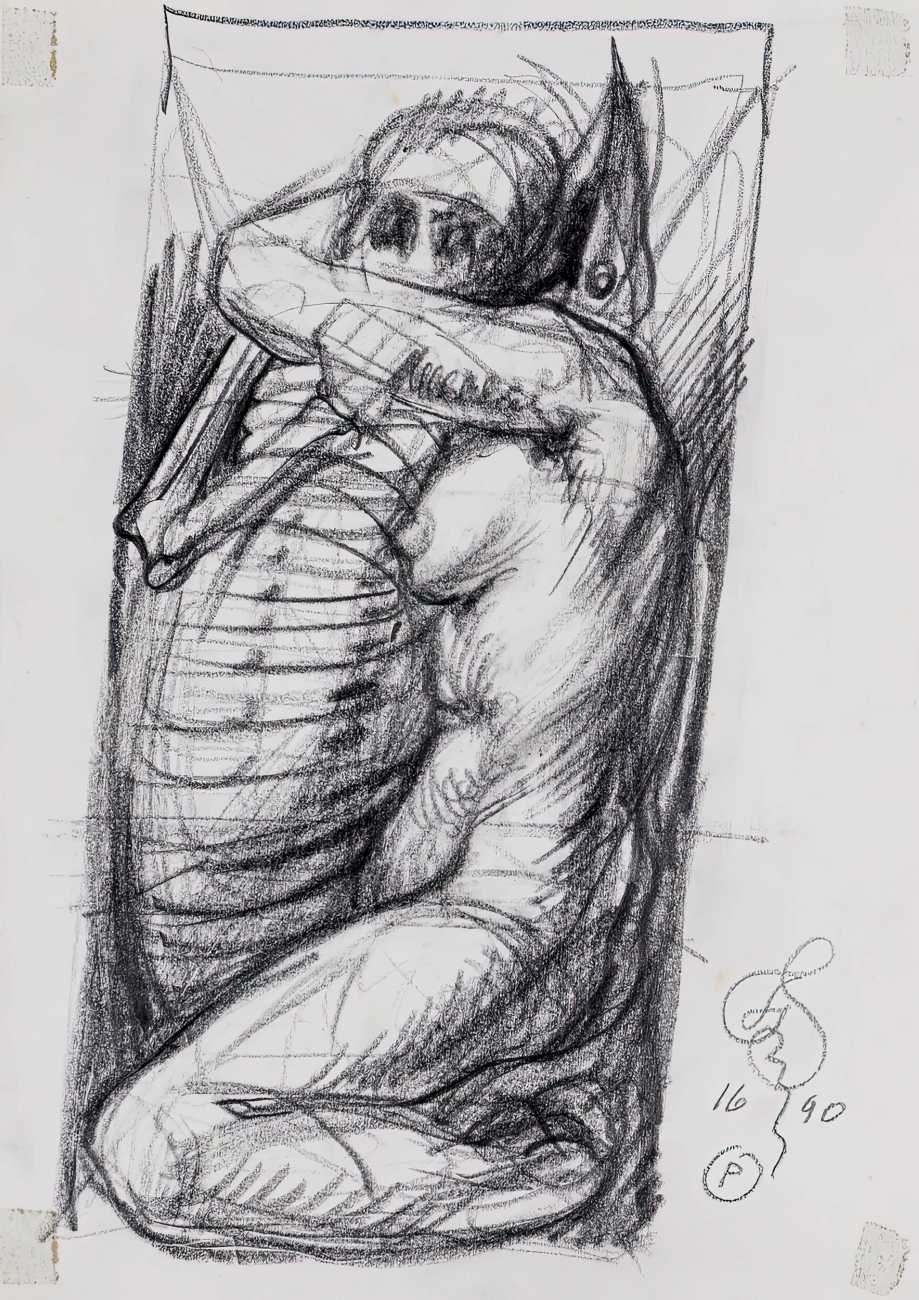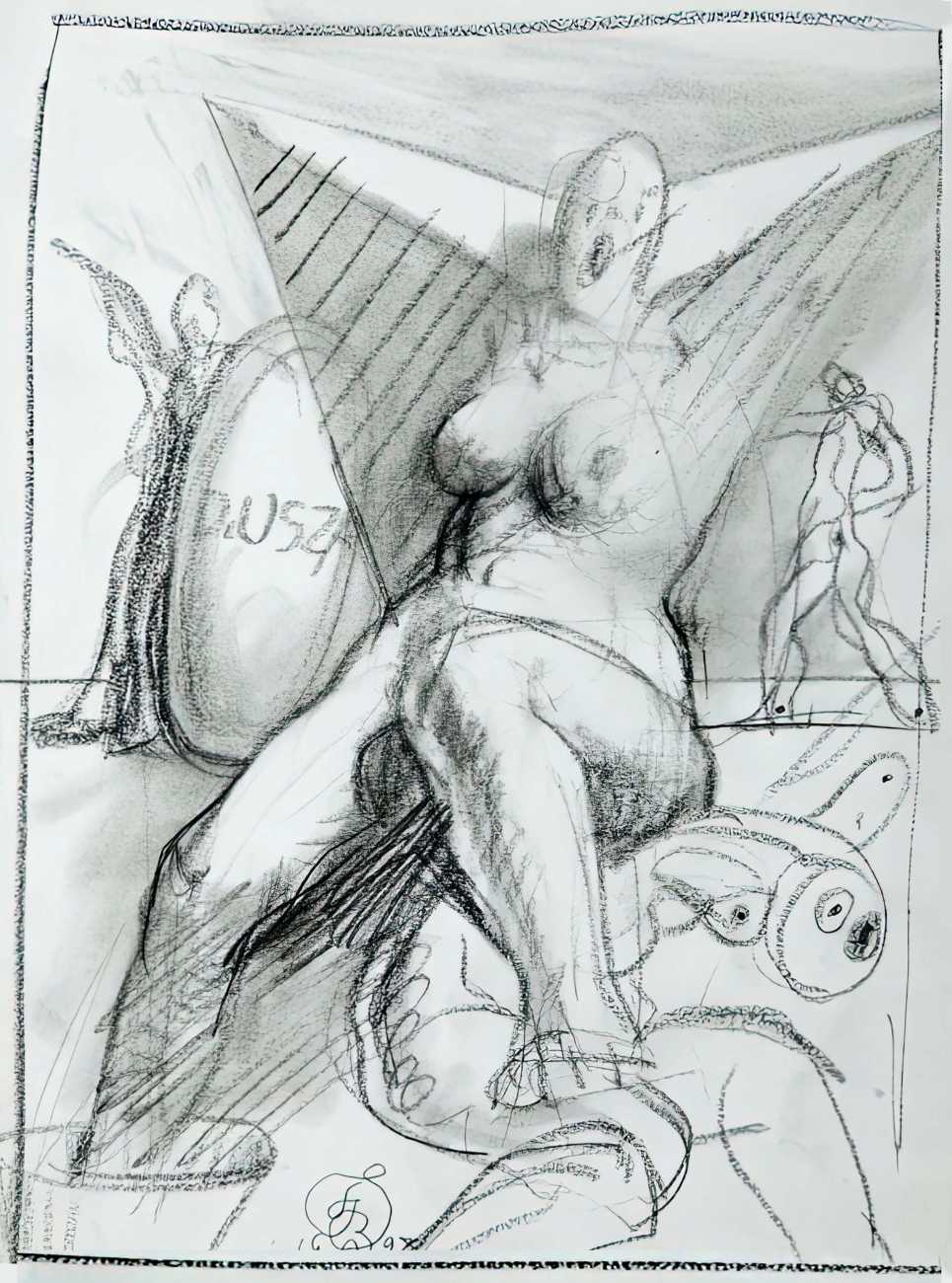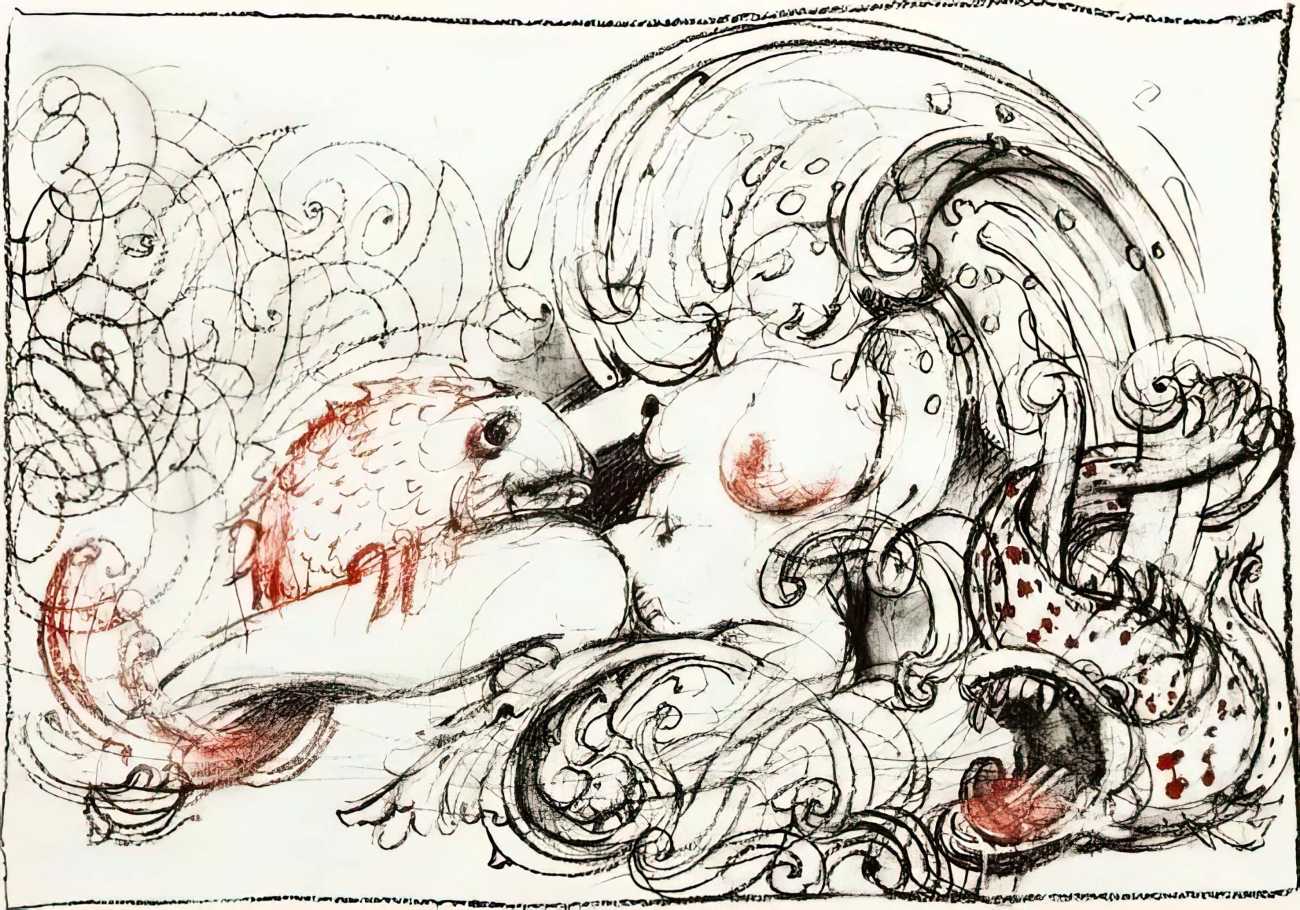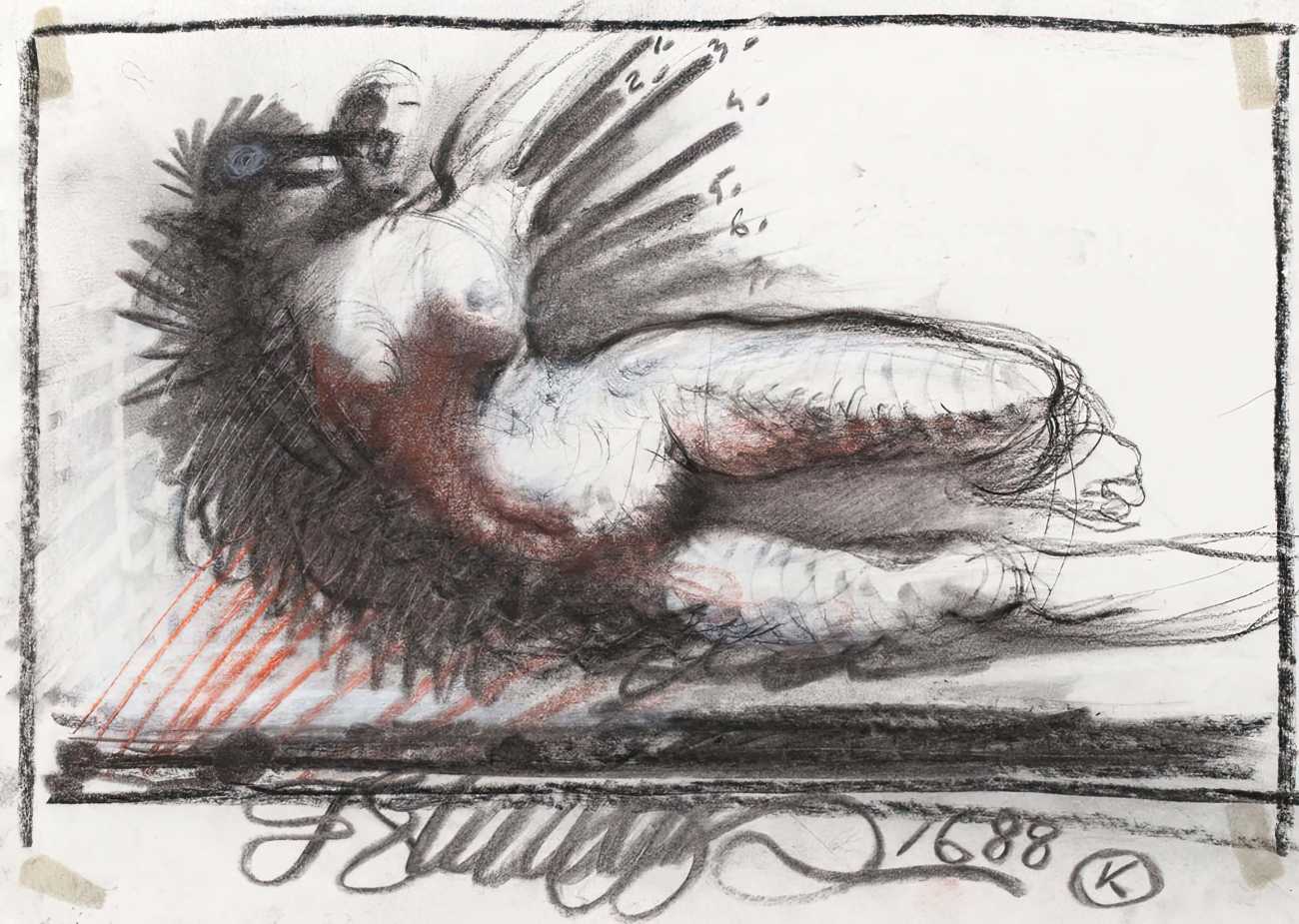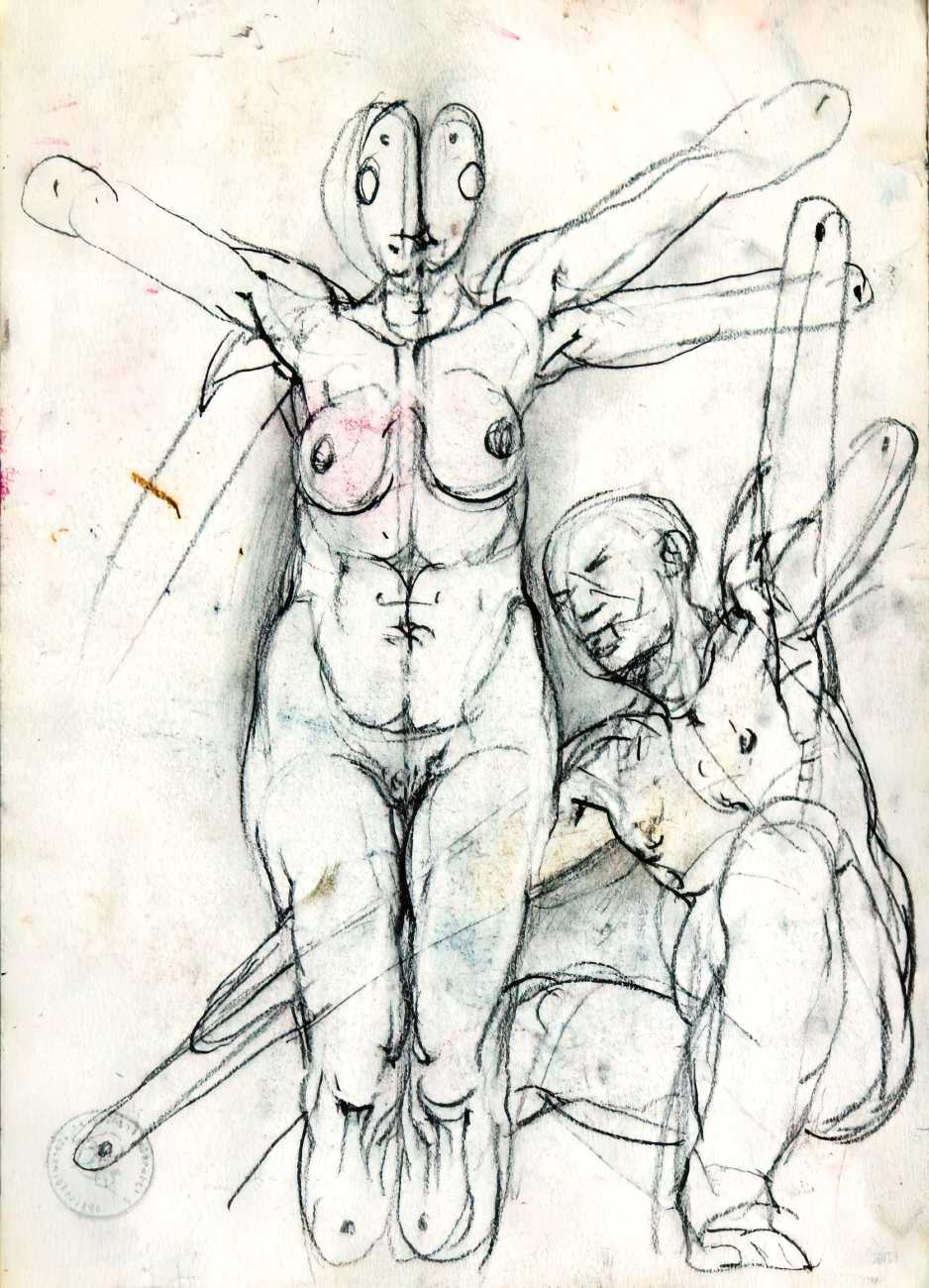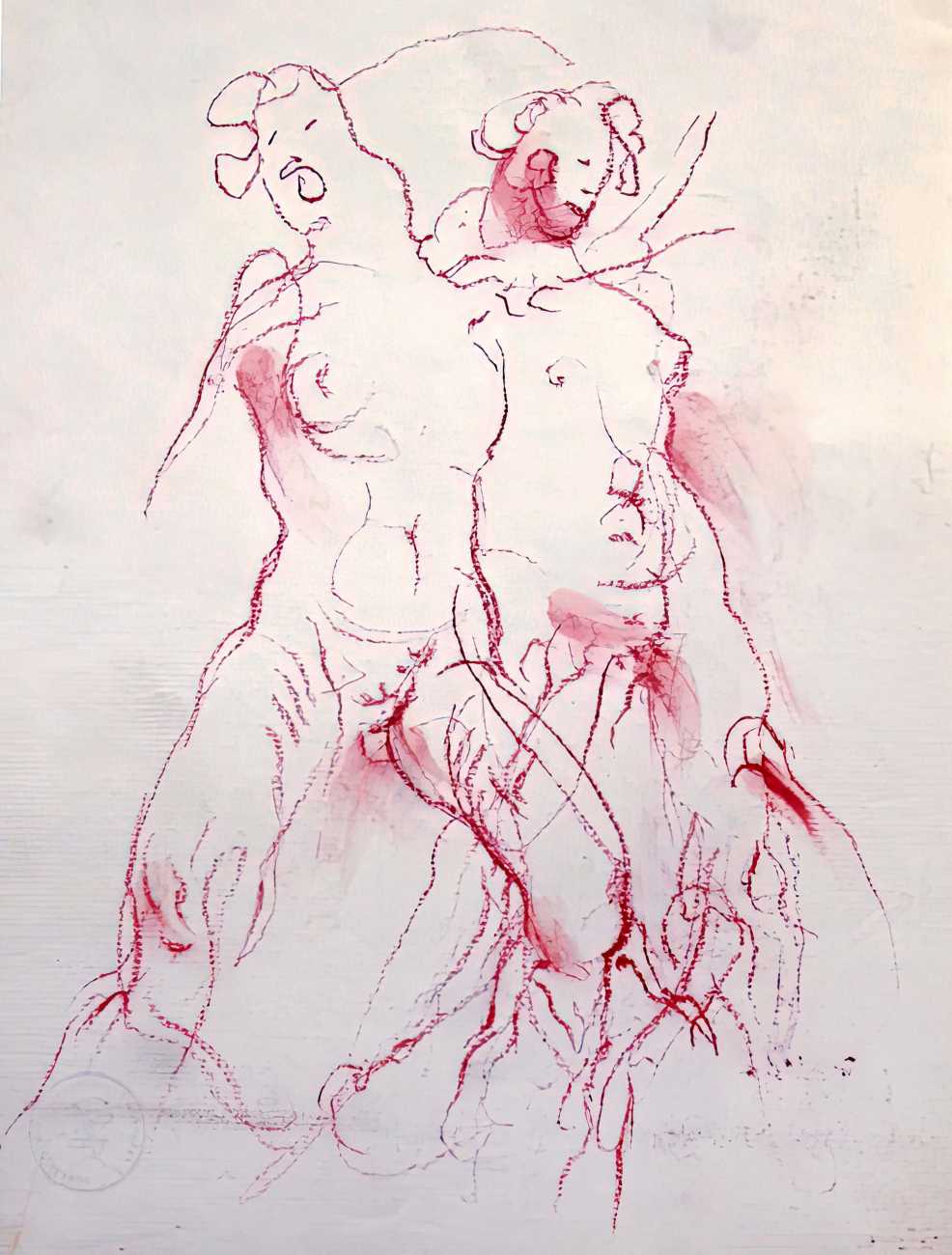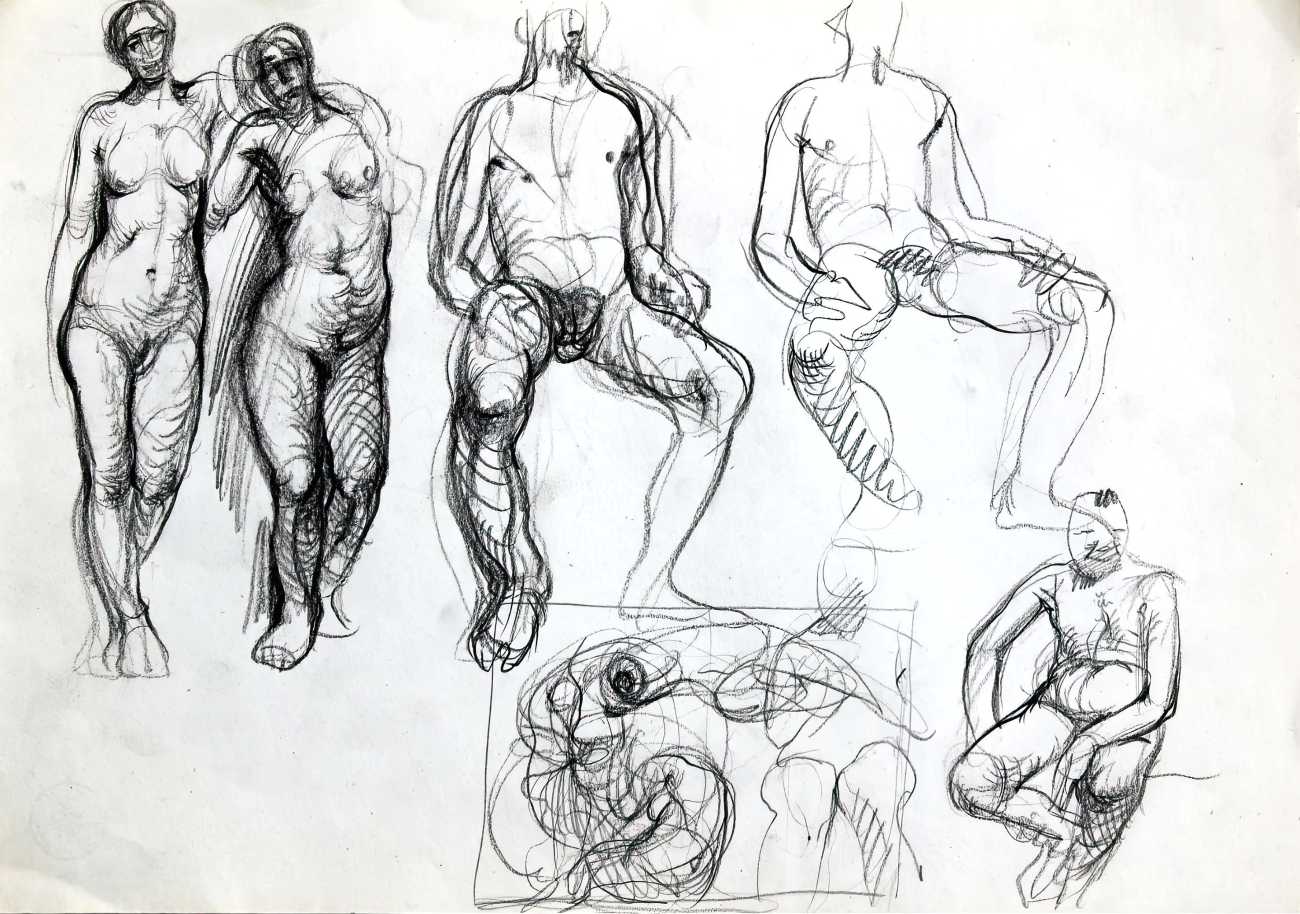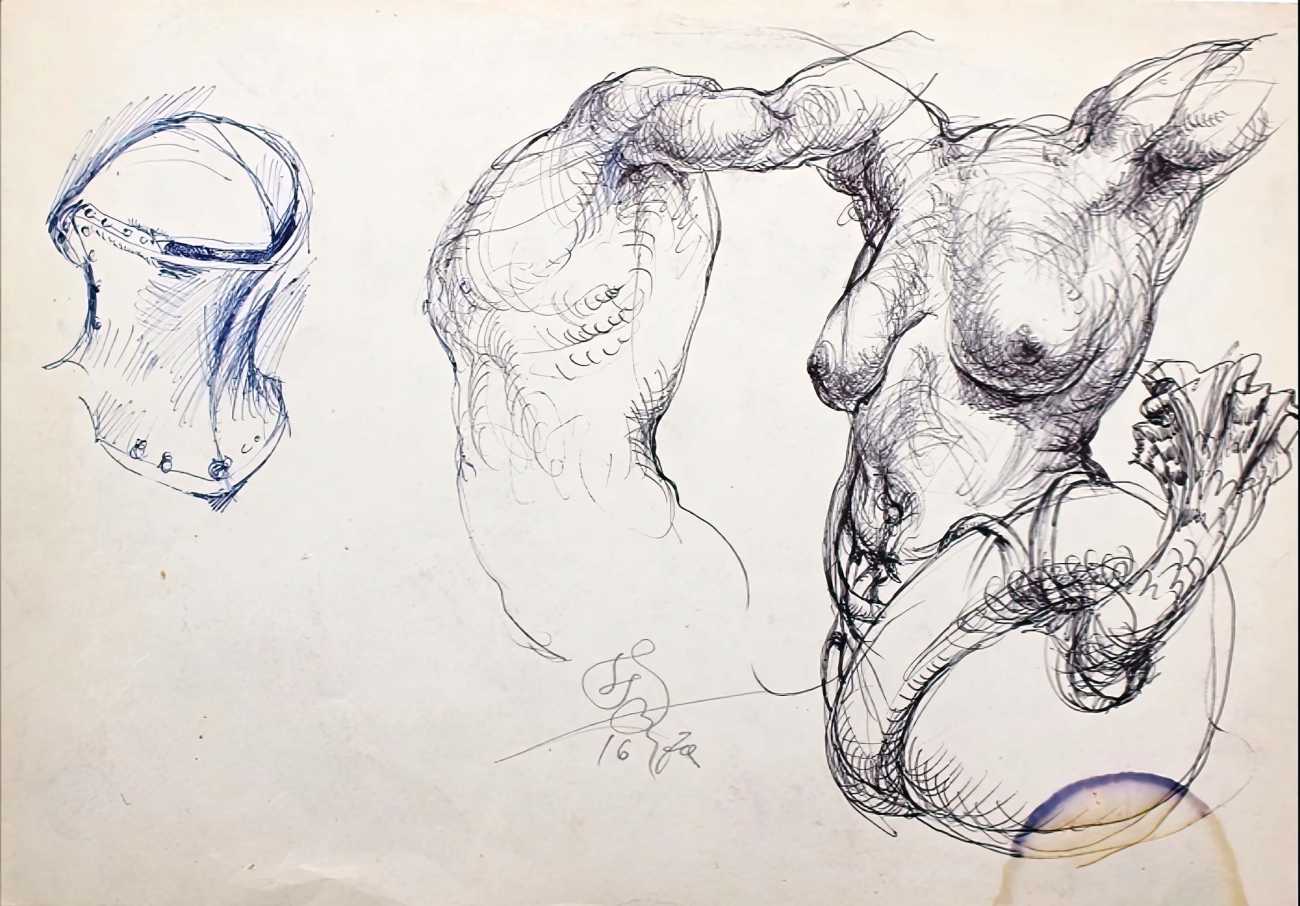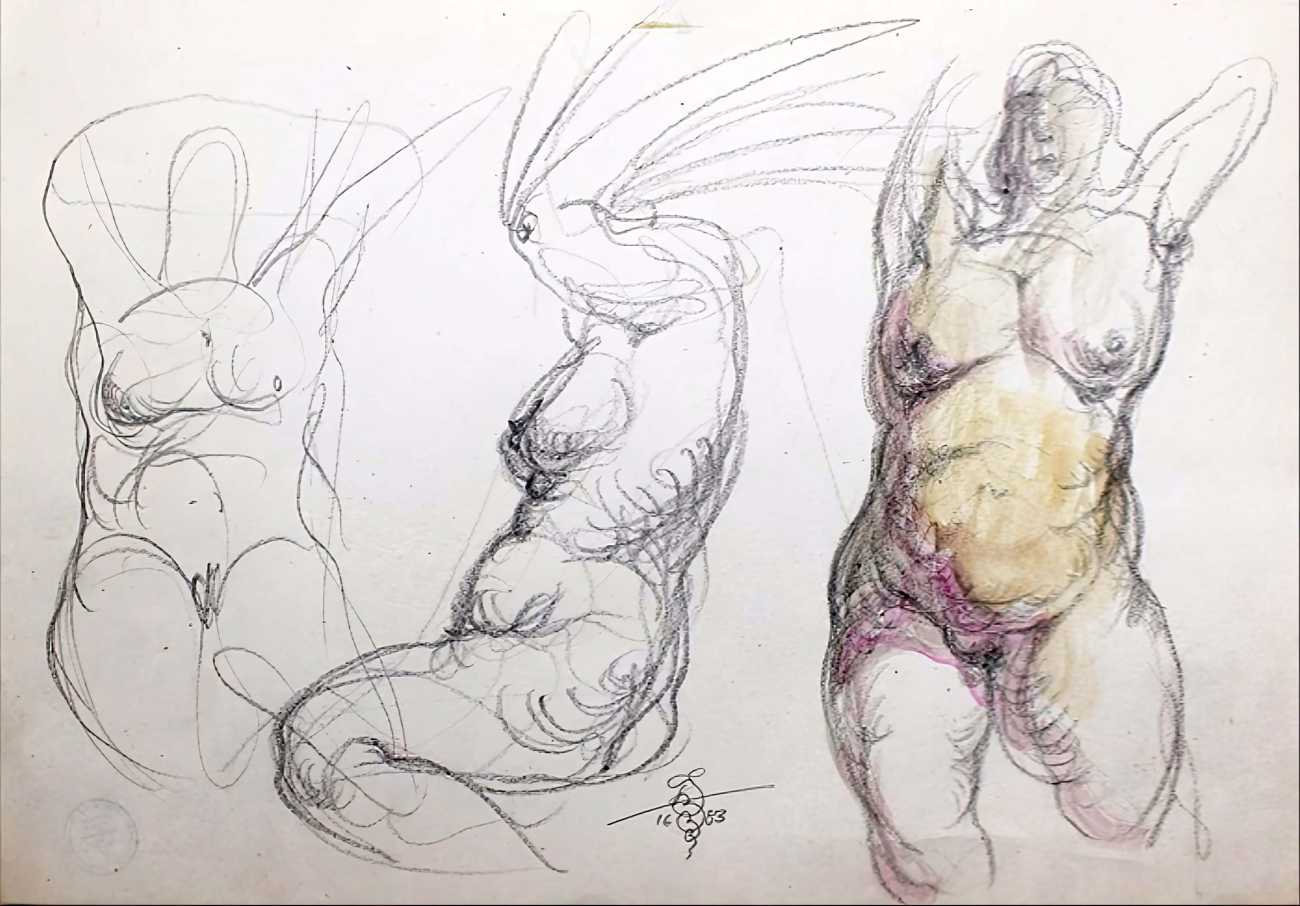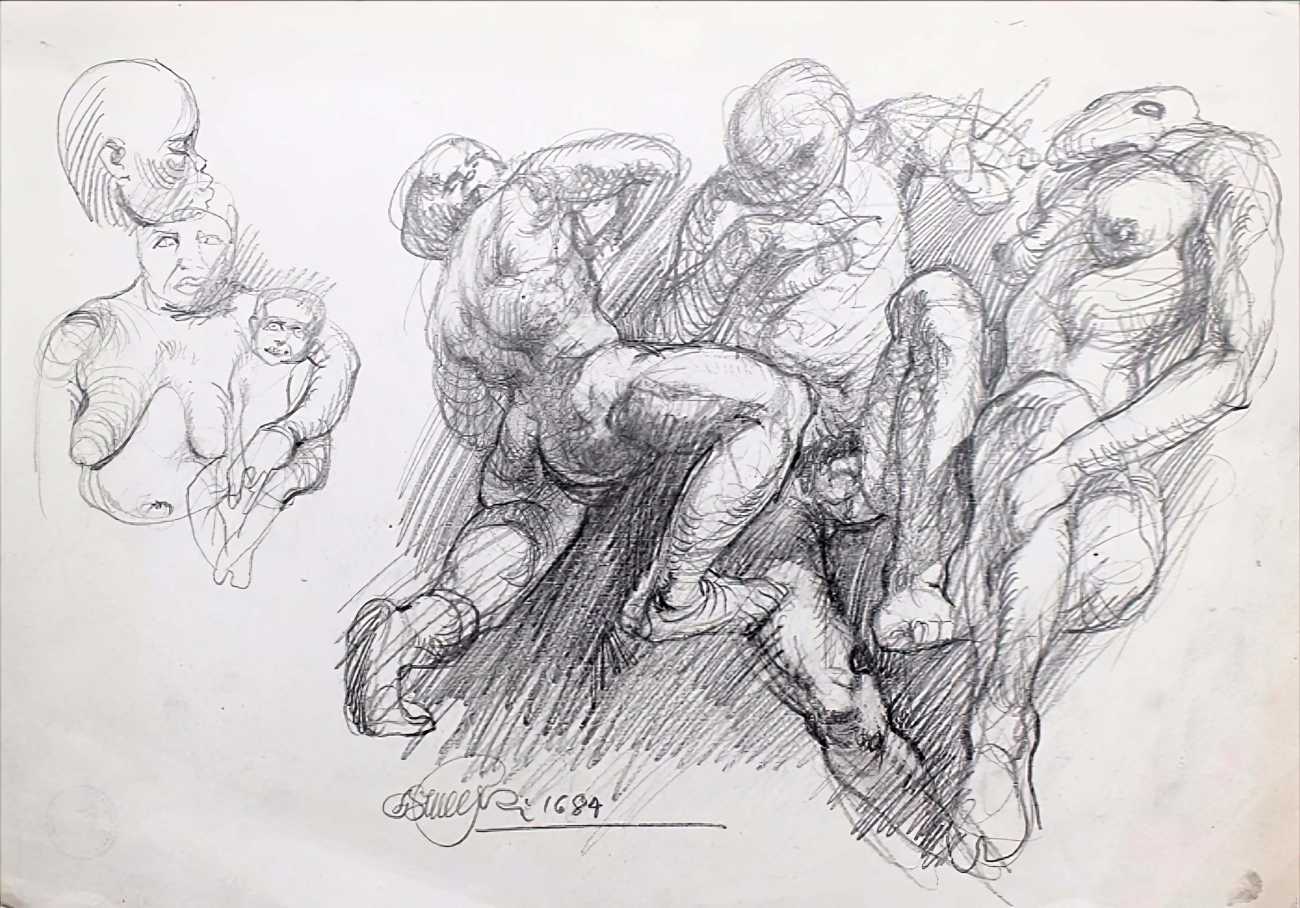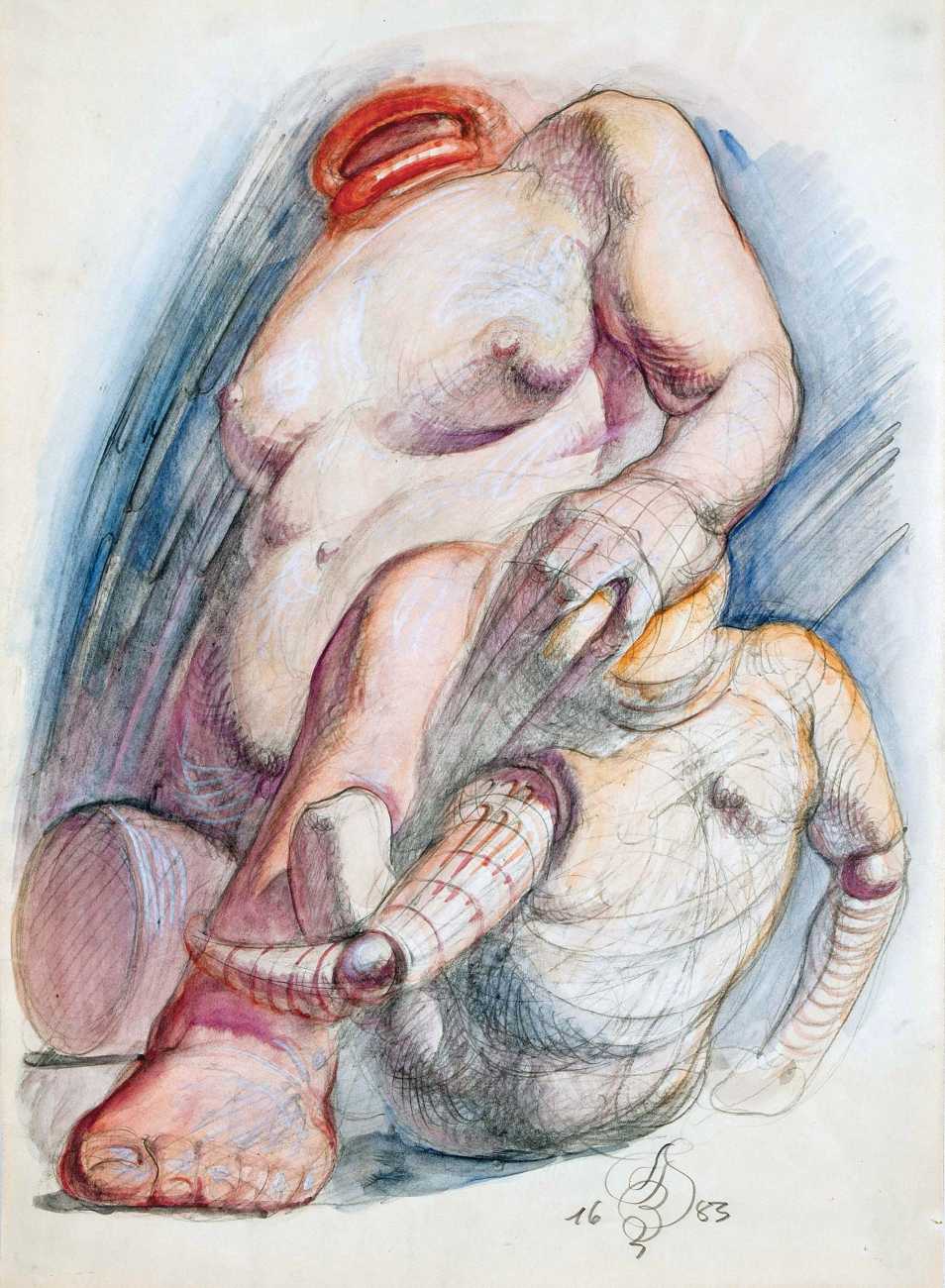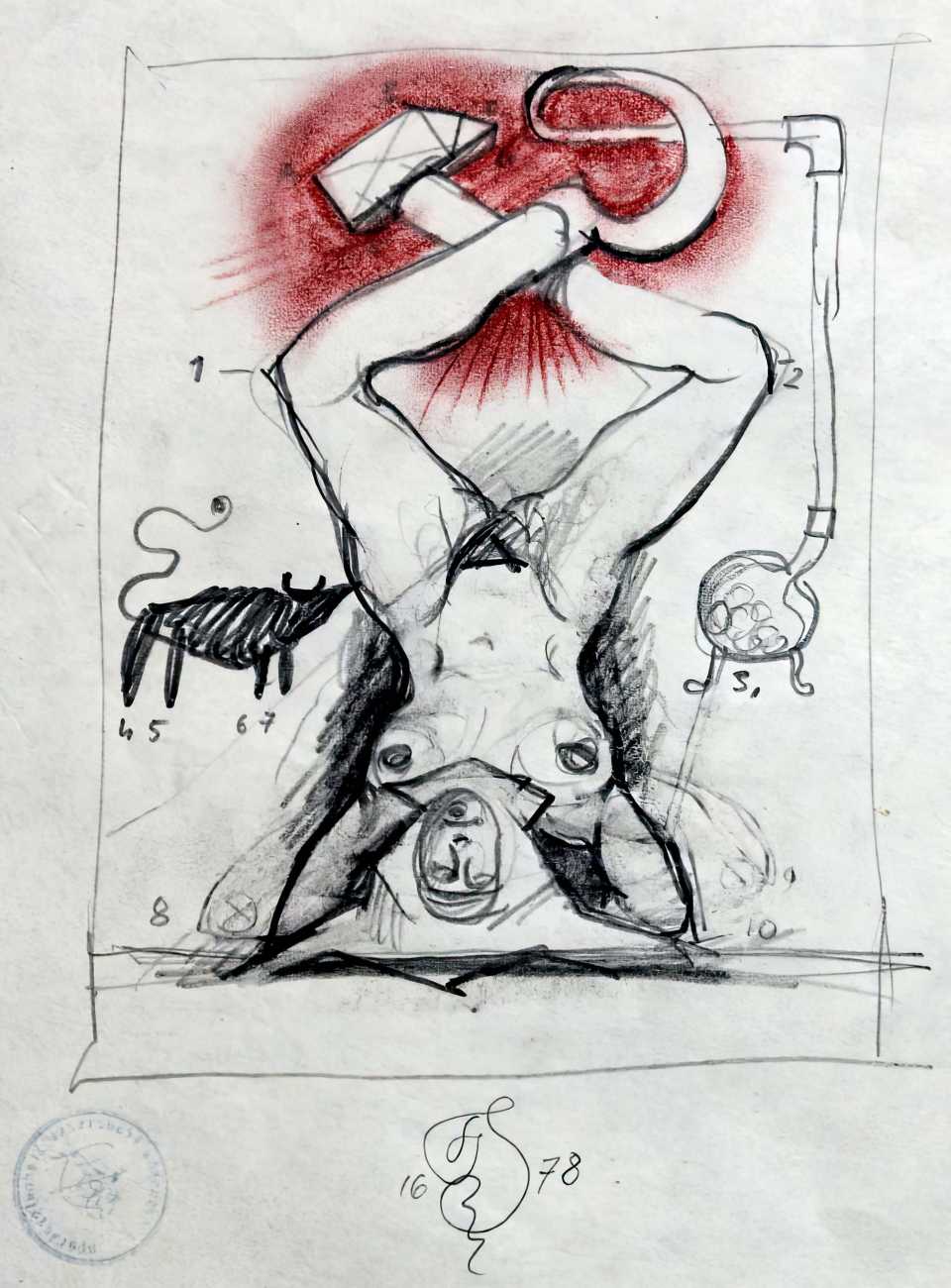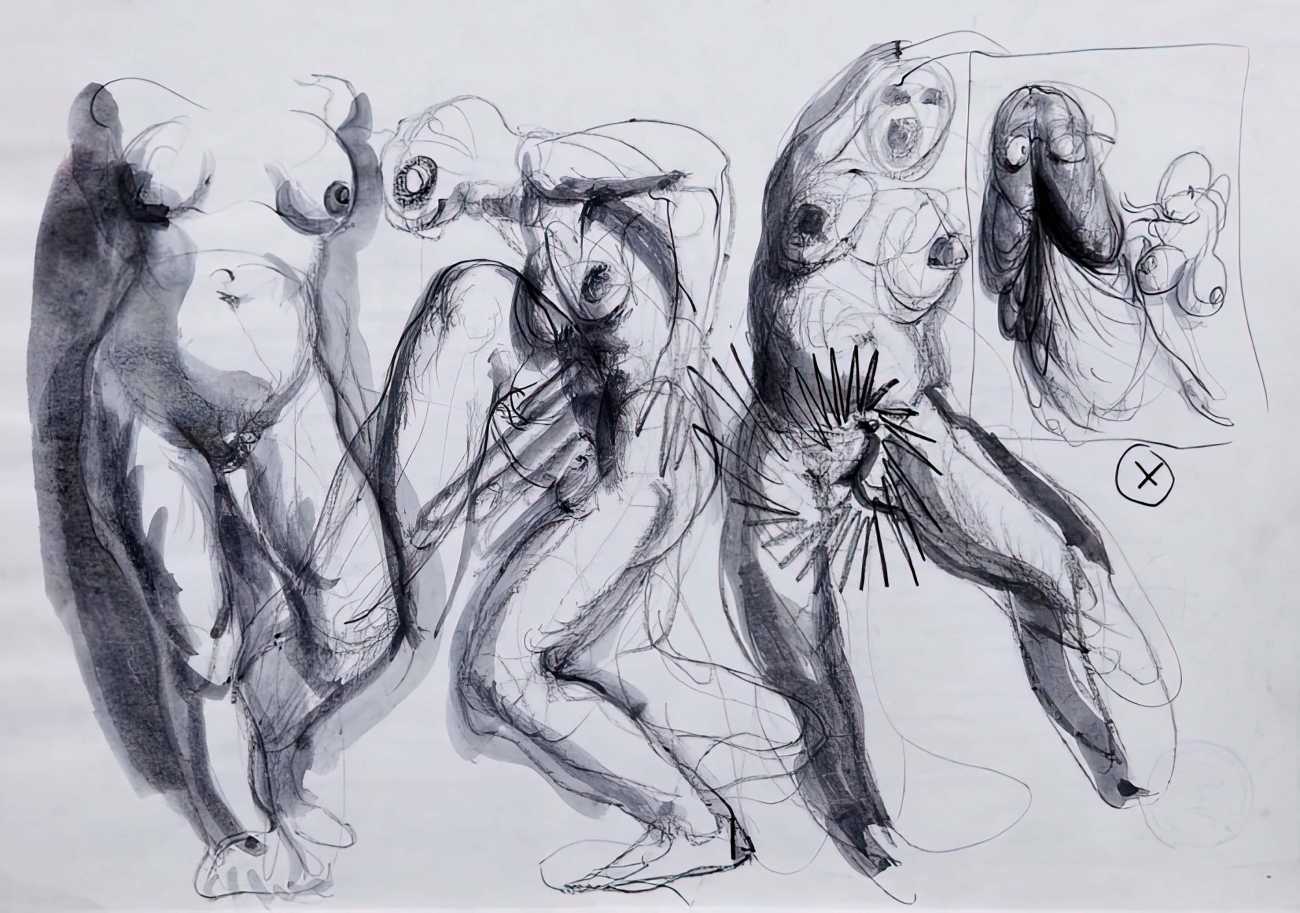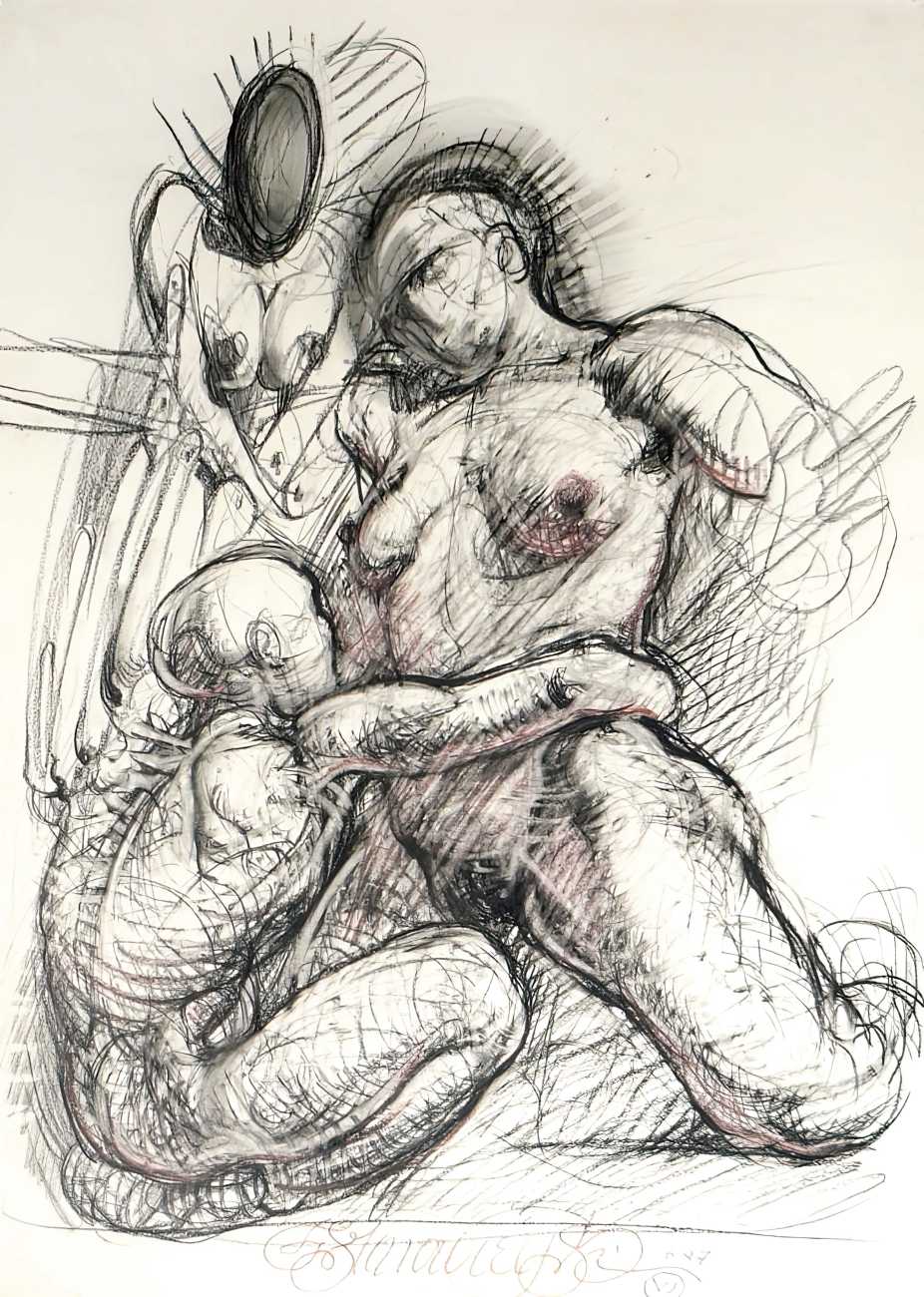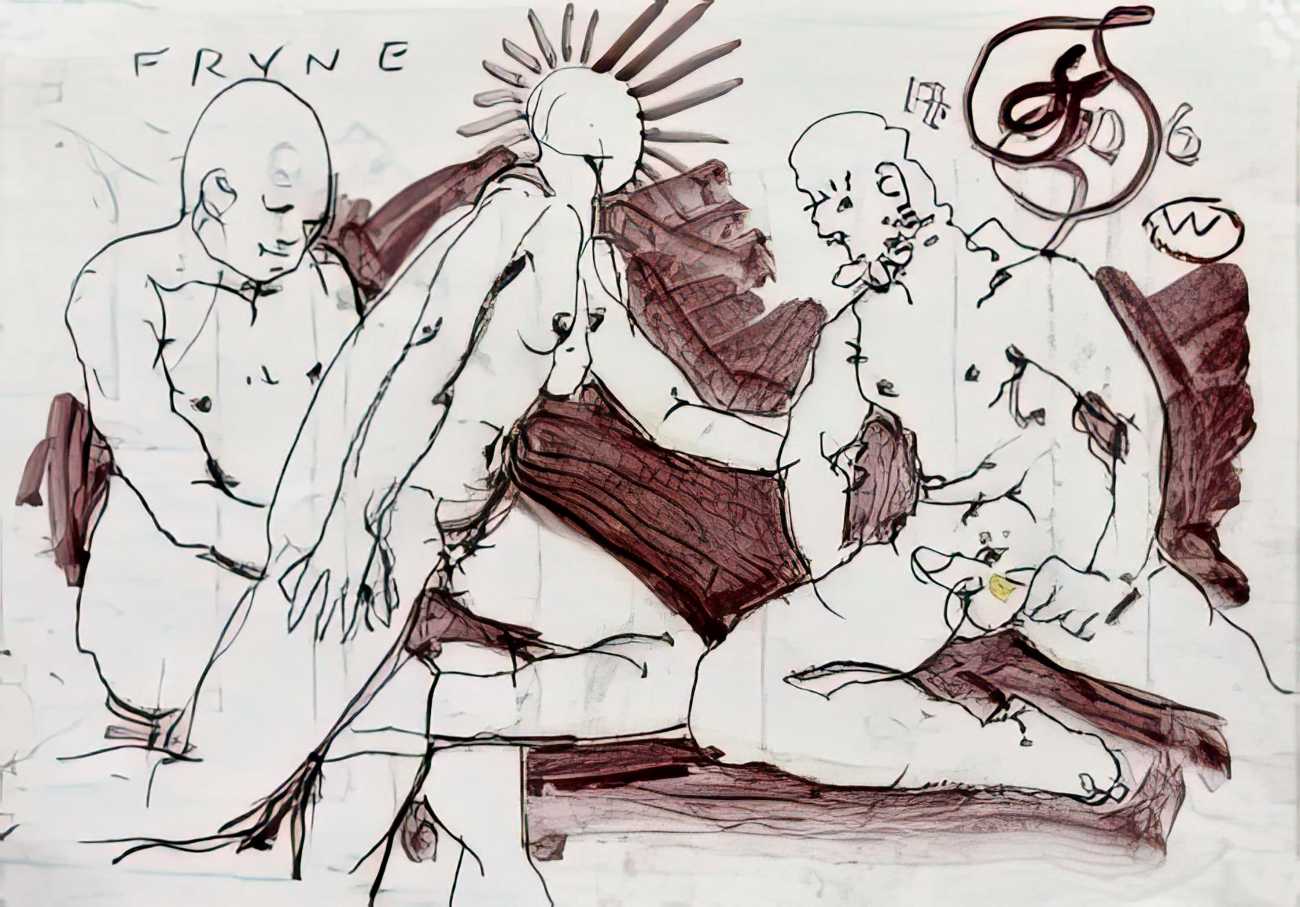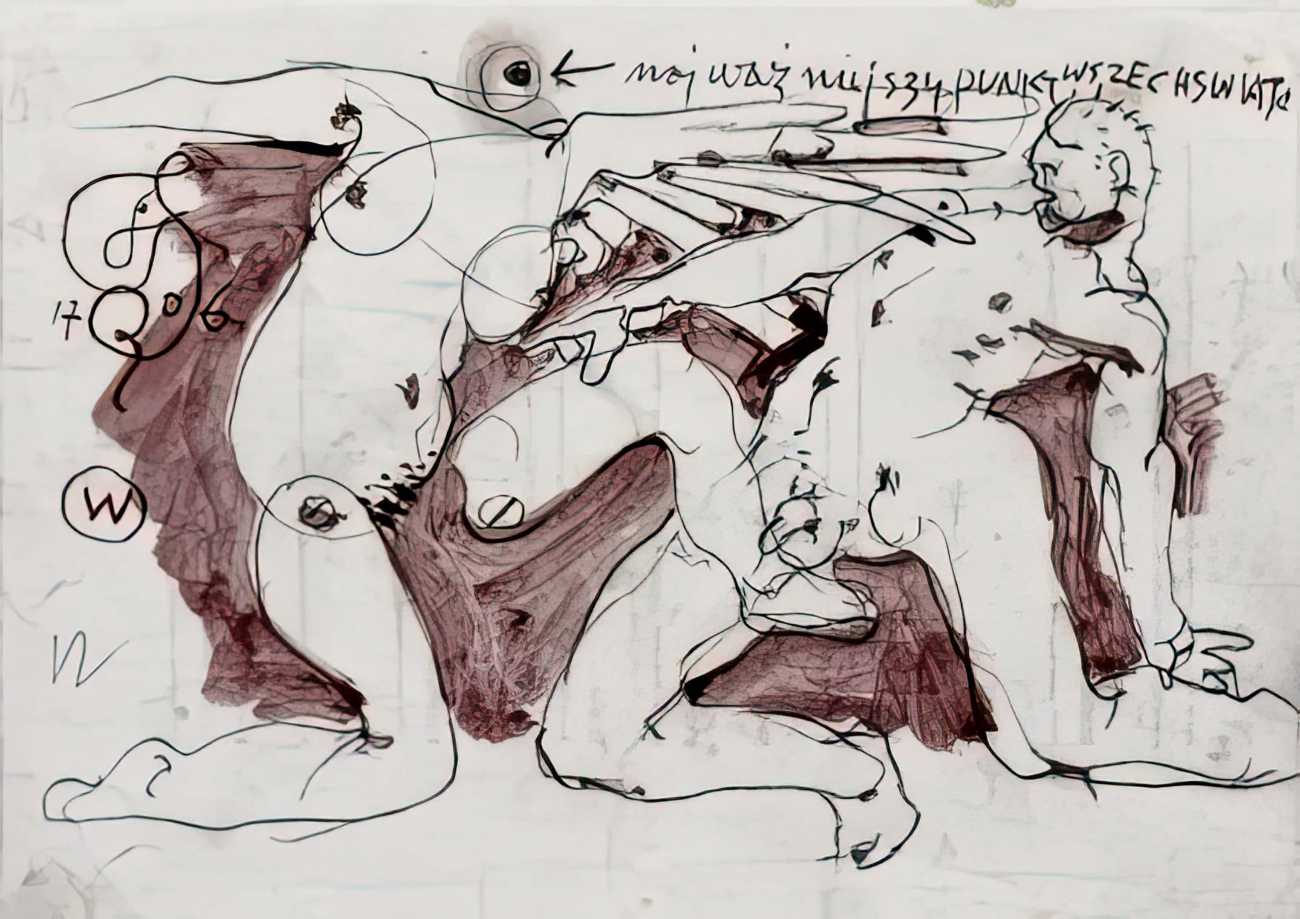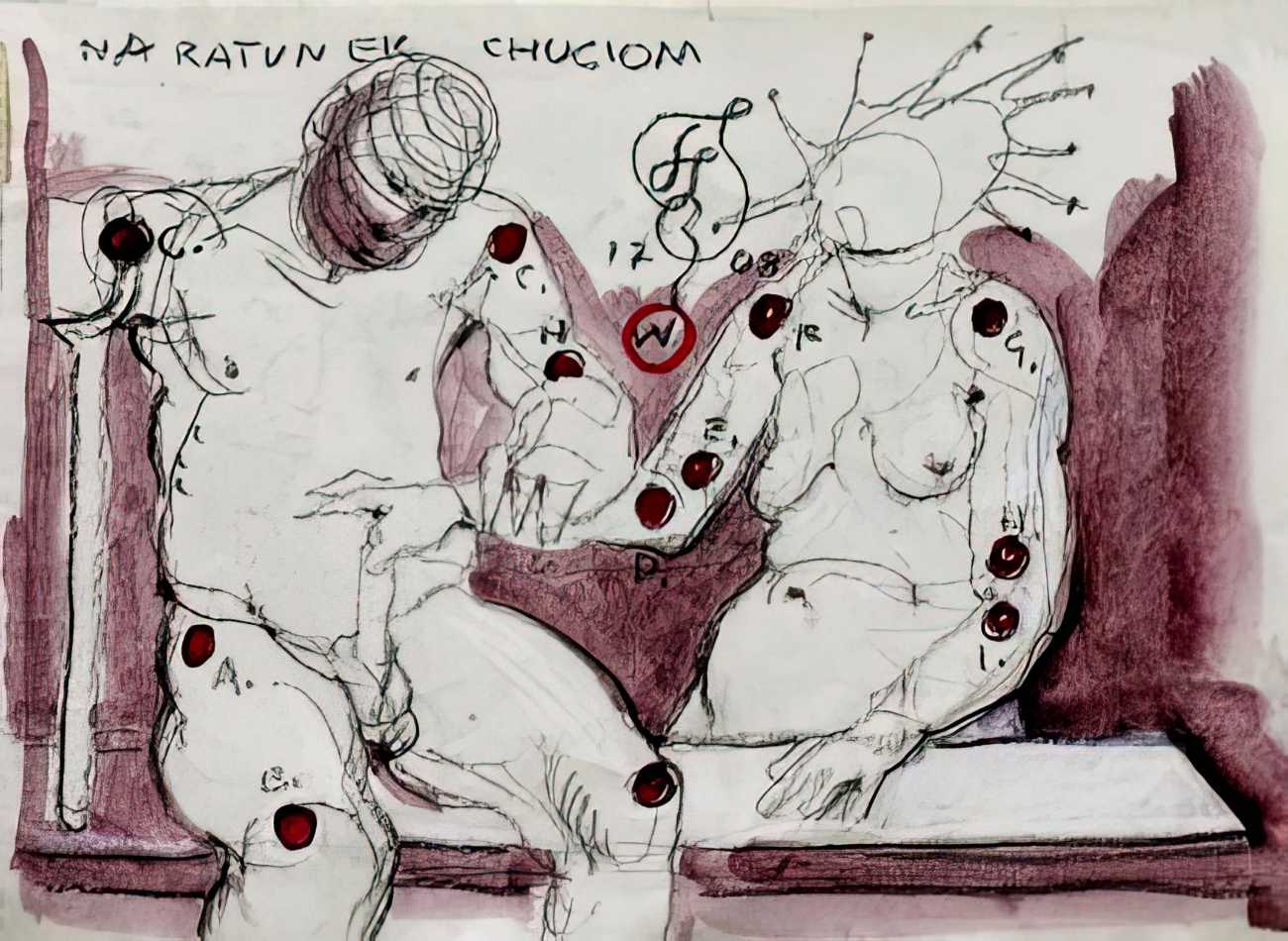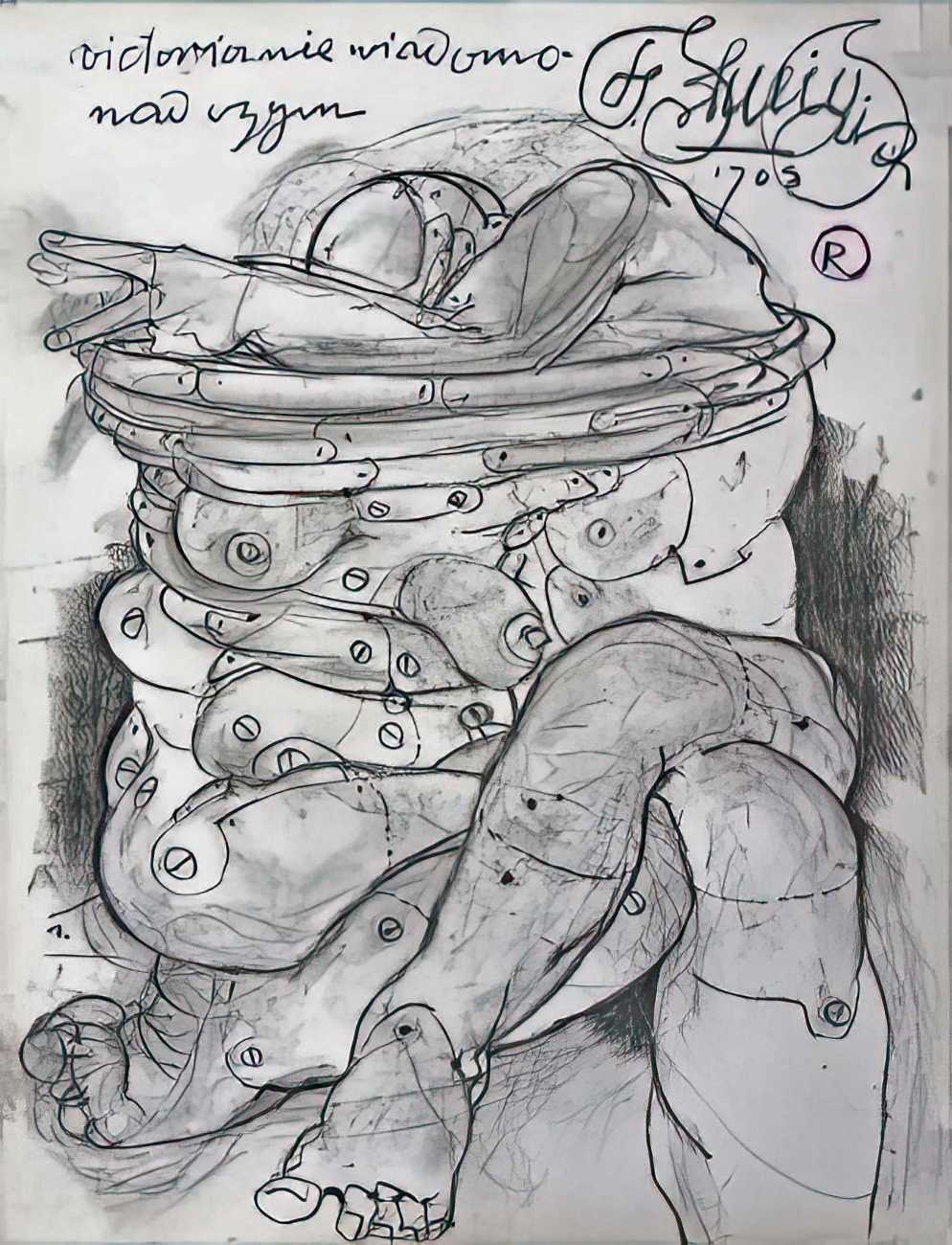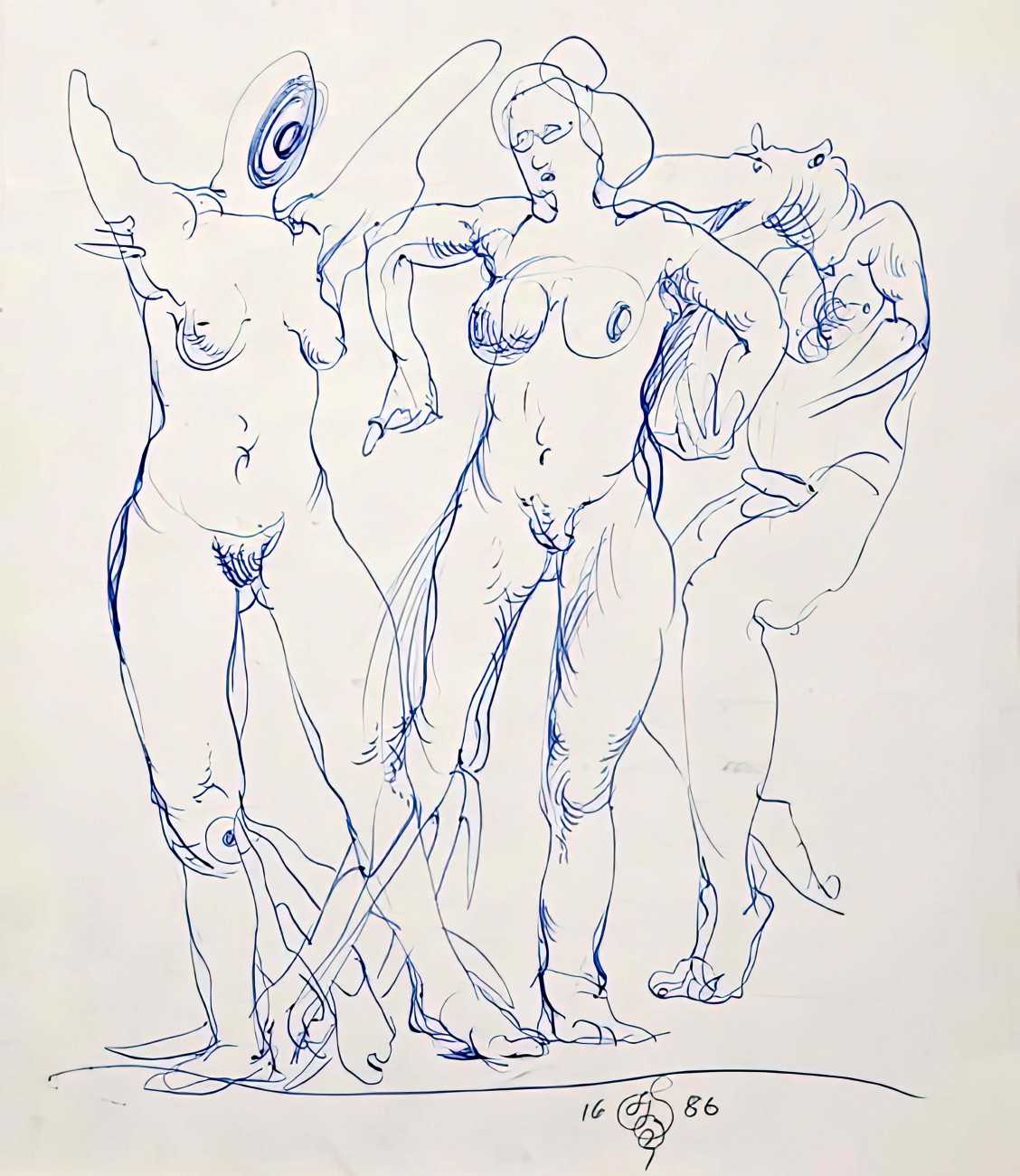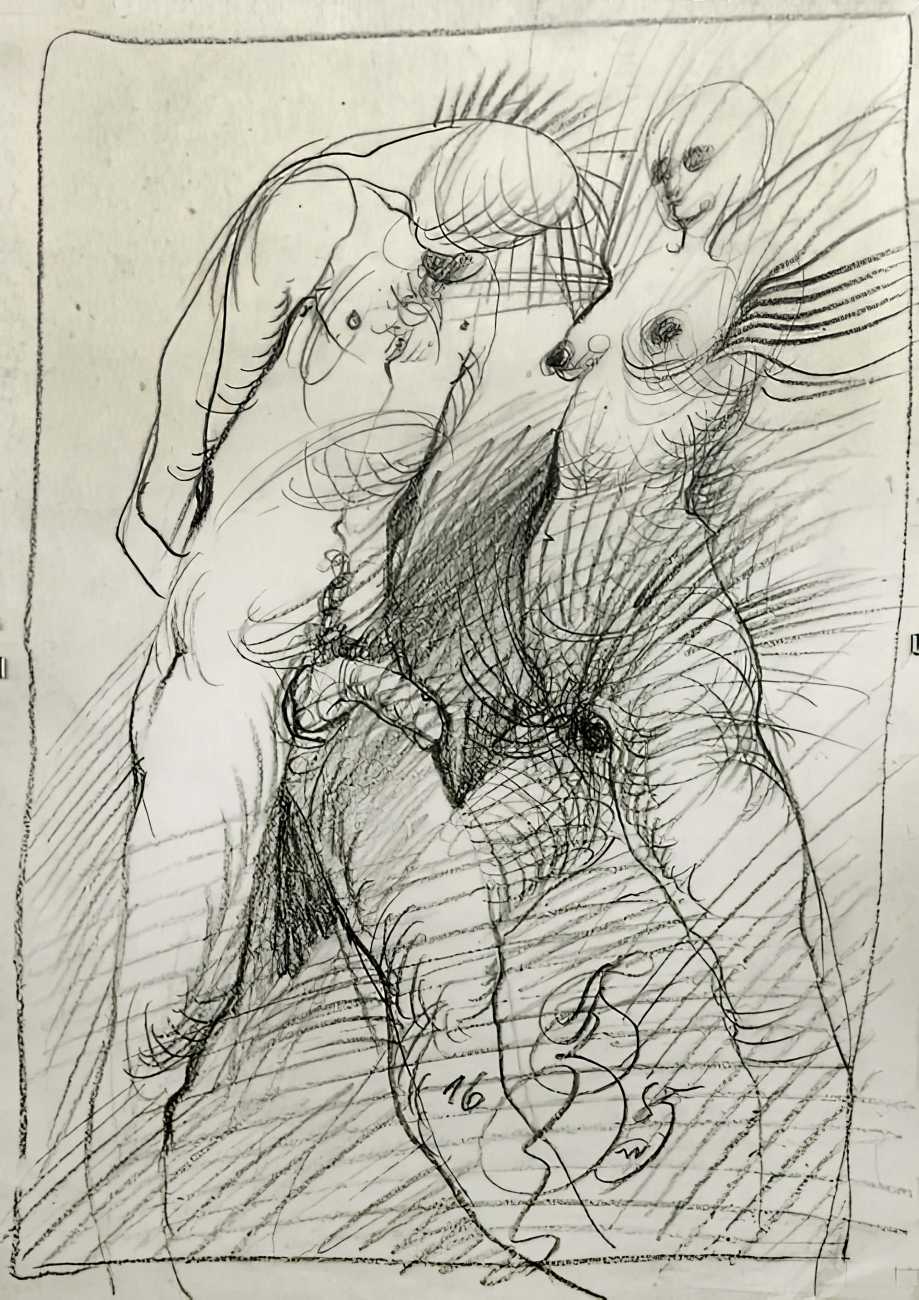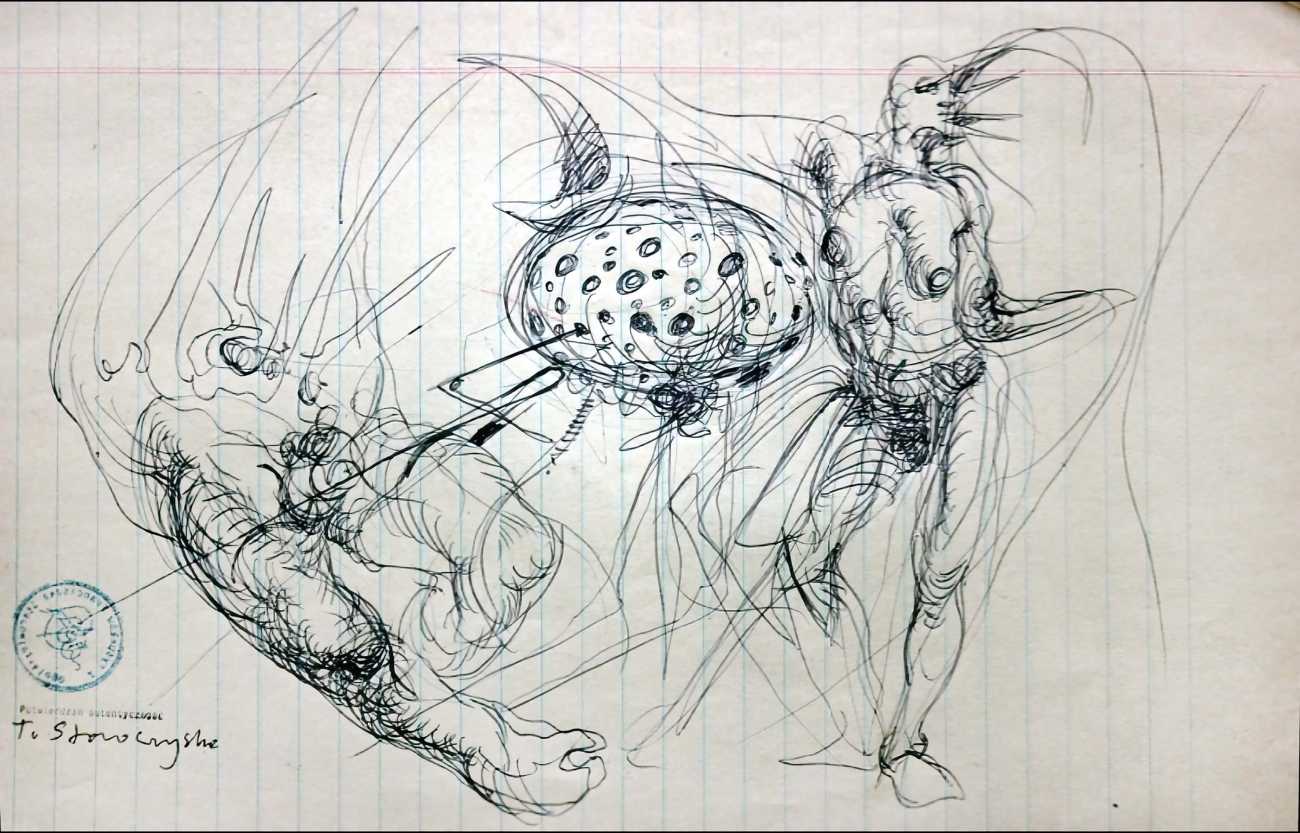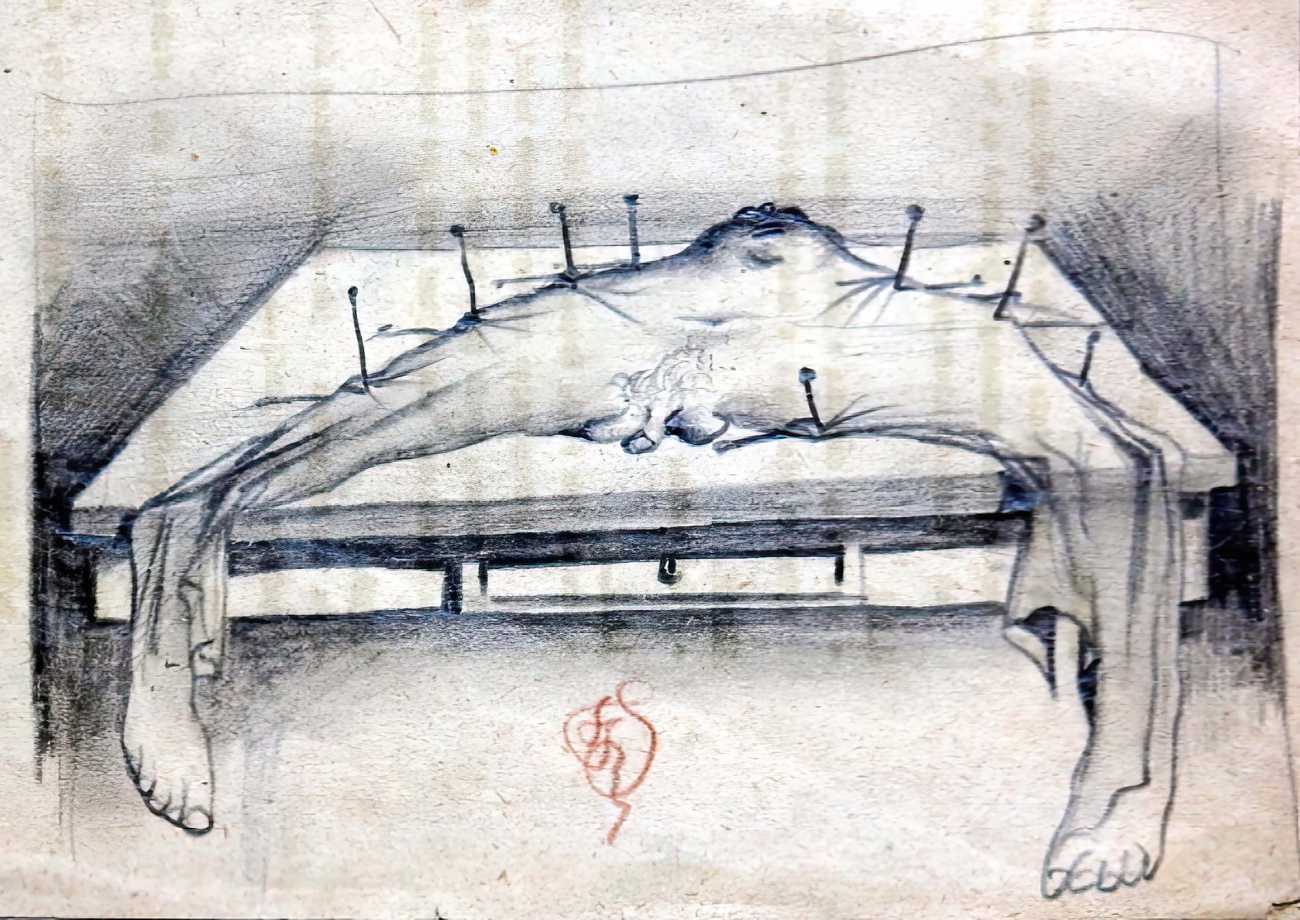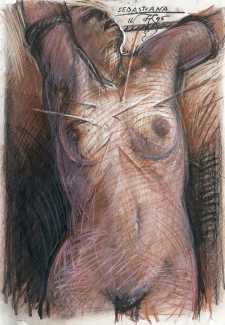
In addition to his celebrated posters, Starowieyski produced a vast body of sketches, drawings and paintings in which his fascination with the erotic, the grotesque and the fantastic could develop with considerably fewer constraints. Working in pencil, ink, pastel and paint, he populated his compositions with exaggerated human figures, voluptuous bodies, animals, monsters, skeletal forms, mechanical structures and elaborate imaginary constructions. Some works have the immediacy of spontaneous studies, covered with annotations and working marks; others are highly finished compositions in which the human body becomes part of an unsettling theatrical world.
The human figure is at the centre of much of his work, particularly the voluptuous female form. Starowieyski’s women are frequently monumental and exaggerated, recalling the Rubenesque figures of the old masters rather than contemporary ideals of beauty. This sensuality is rarely straightforward – flesh dissolves into sweeping ribbons, serpentine forms and feathers, while bodies merge with animals, architecture and strange mechanical structures. Eroticism and grotesque transformation often exist within the same image.
Death is another persistent presence. Skulls, skeletons, bones and exposed anatomical structures recur throughout the drawings and paintings, extending the traditional vanitas theme of mortality into a much stranger territory. Ribcages become armour, bones intertwine with machinery, and skulls are incorporated into fantastic creatures or set against exuberant displays of flesh. The avian skull and bird-like hybrid are particularly characteristic – elongated beaks introduce an element of feral menace.
The eye is another recurring motif. Detached from the face or enlarged to almost monumental proportions, it can stare directly from a body, skull or architectural structure. Sometimes tearful, bloodshot or anatomically precise, these eyes turn the act of looking itself into something unsettling. The viewer is no longer simply observing the image, but appears to be observed in return.
Starowieyski’s extraordinary calligraphic line binds these disparate elements together. His flowing, theatrical lettering and elaborate contours are often part of the composition, recalling the decorative handwriting of earlier centuries. Words, bodies, bones and fantastic creatures seem to grow from the same continuous line.
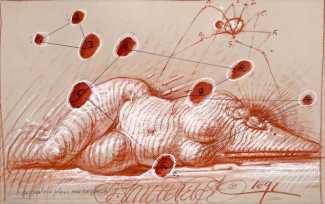
Numbers, letters and diagrammatic markings are equally characteristic. Sometimes resembling the annotations of an anatomical or engineering drawing, they impose an apparent system upon his fantastical forms, while geometrical shapes and numerical scales become part of the composition itself. Starowieyski suggested that even apparently simple sequences such as 1, 2, 3 or A, B, C carried a hidden meaning, and contemporary accounts of his work describe the numbers as a means of connecting the present with the past, and evoking infinity.
The resulting works range from intimate figure studies and erotic drawings to elaborate fantasies of metamorphosis, grotesque humour and mortality. Together they reveal the extraordinary variety of Starowieyski’s imagination, the work of an artist fascinated both by the beauty of the human body and by the strange and terrifying things into which it might be transformed.