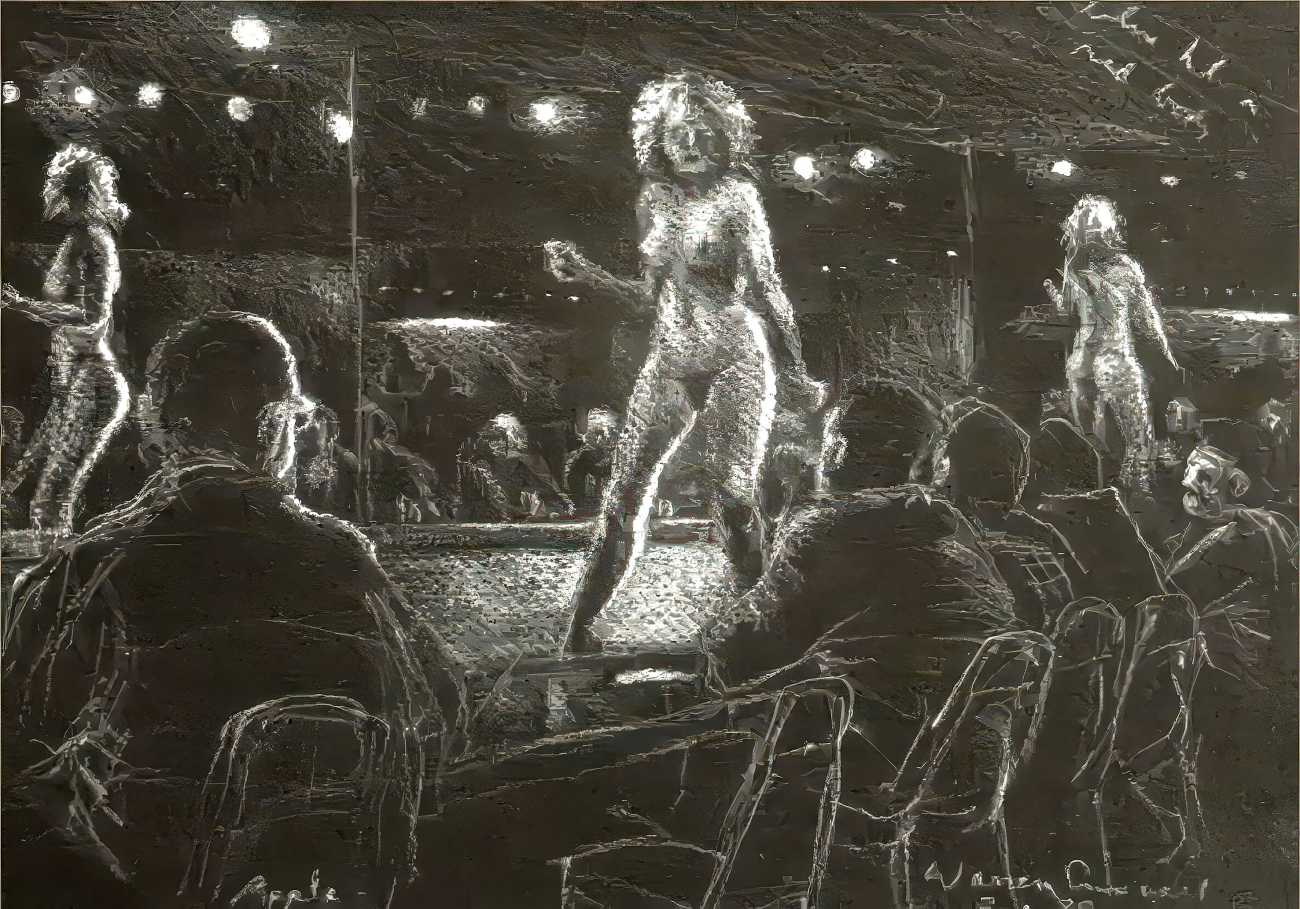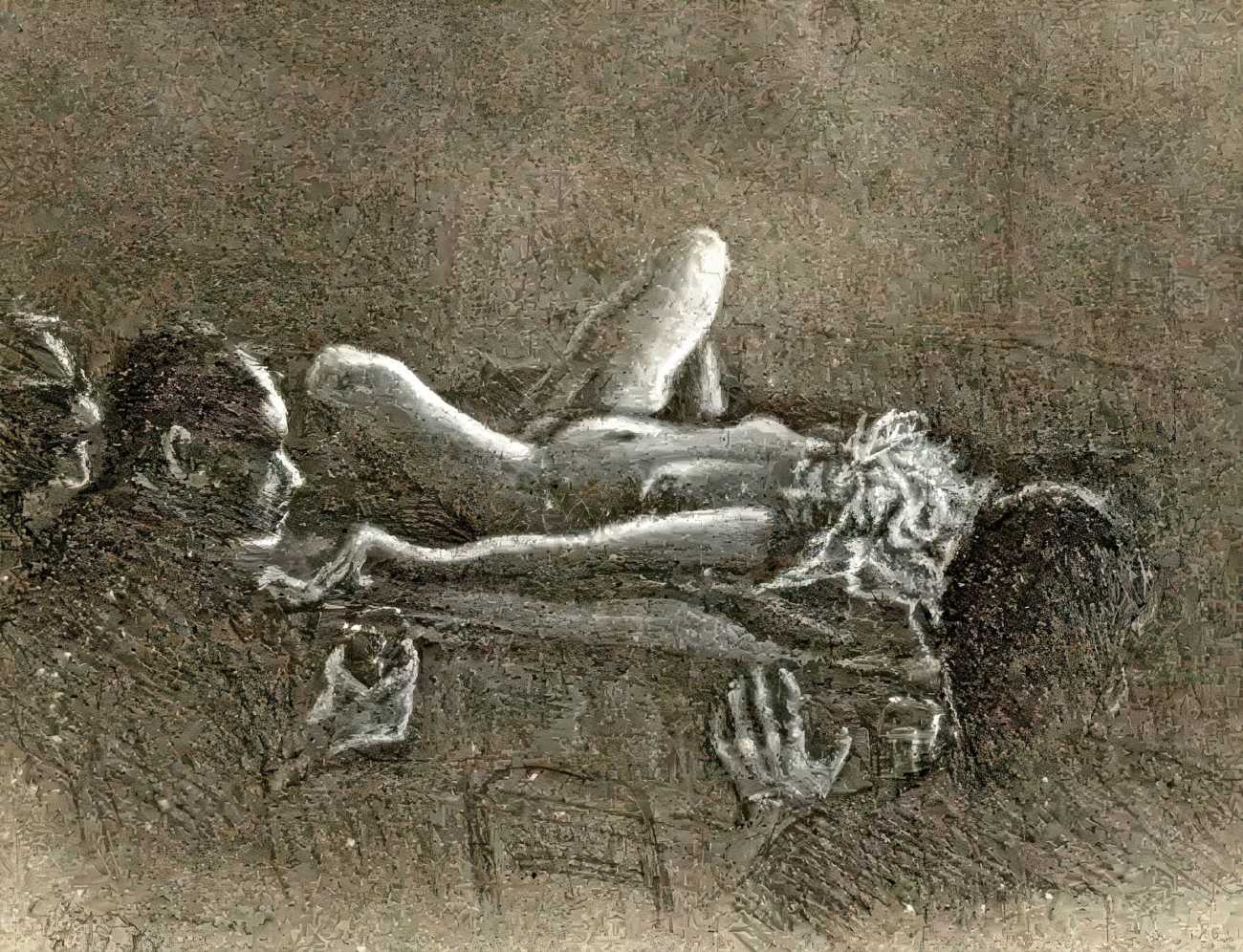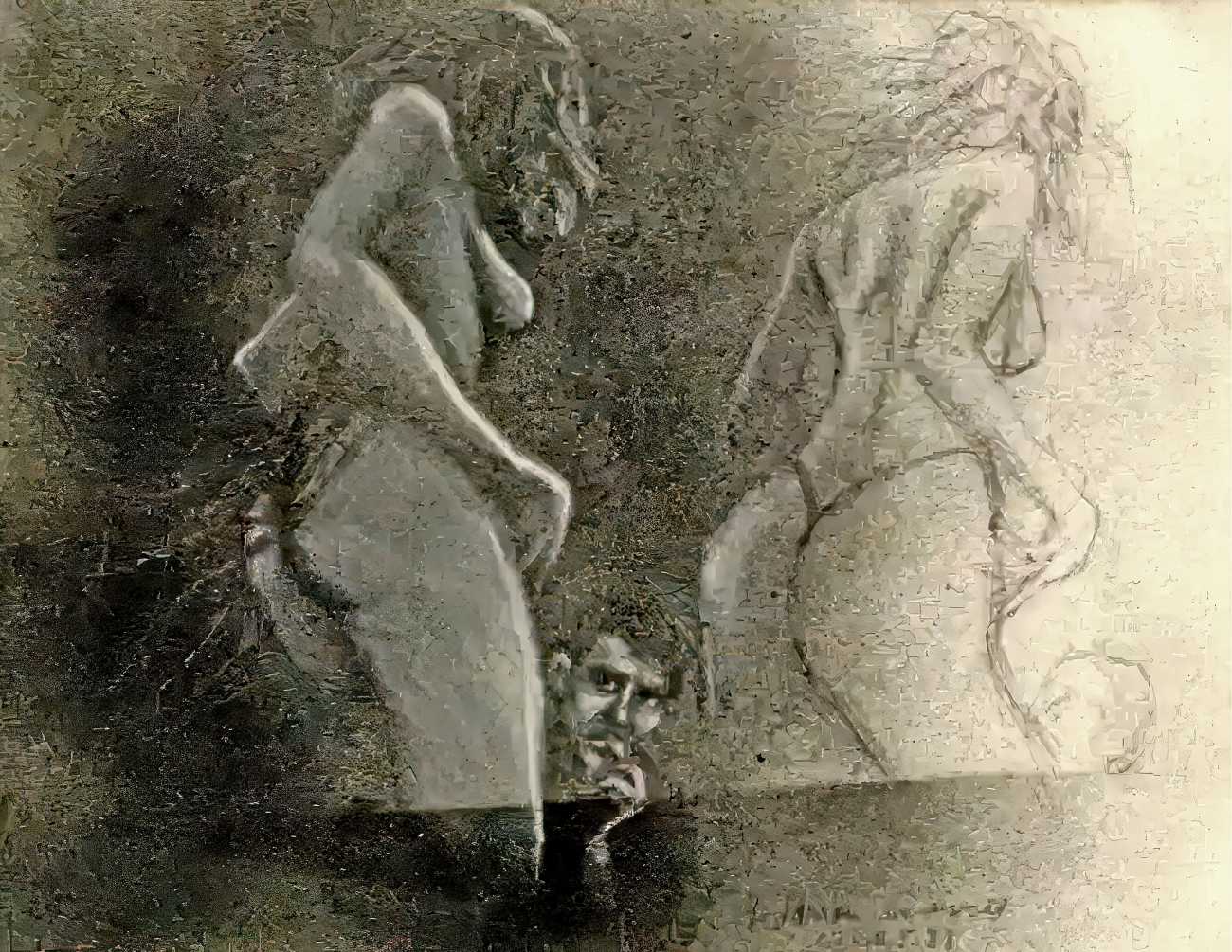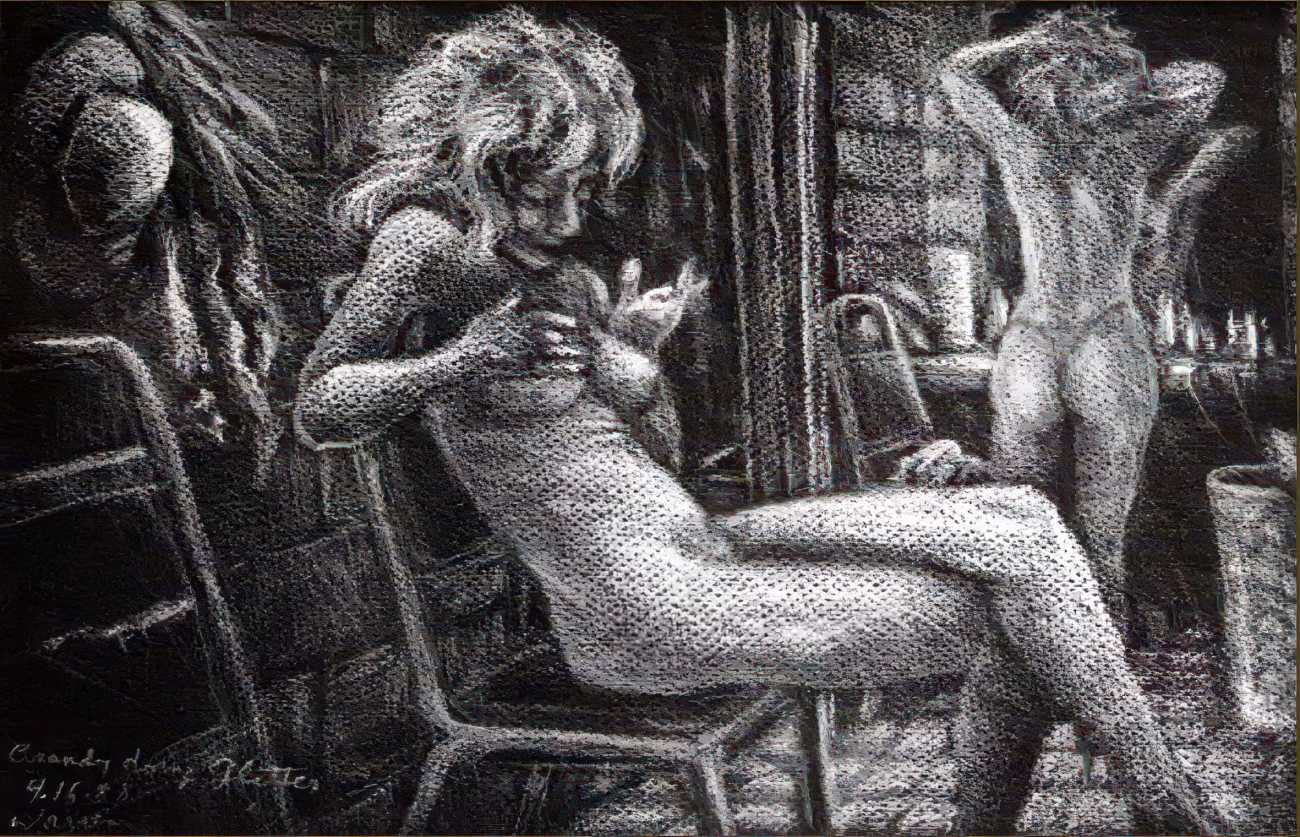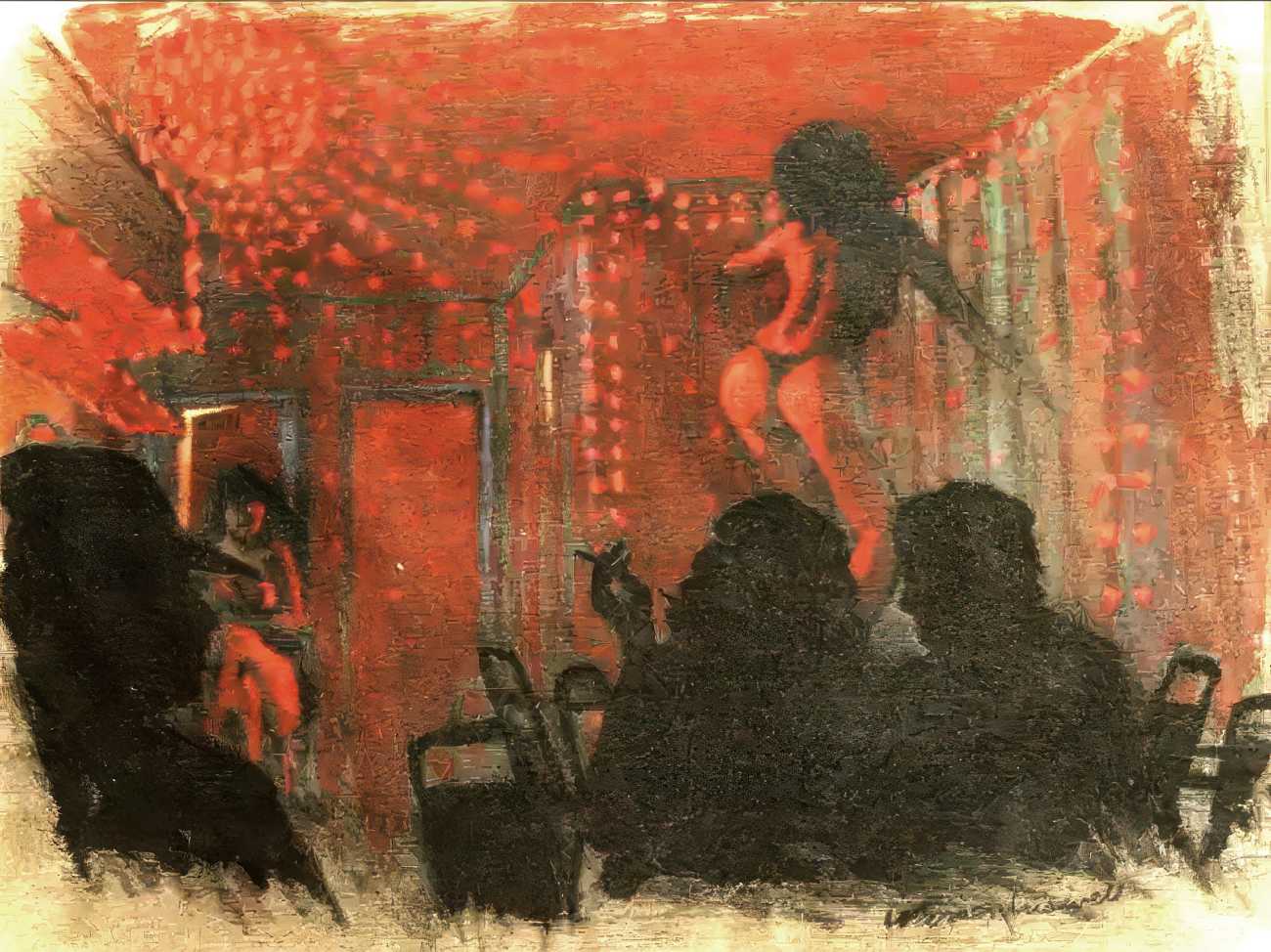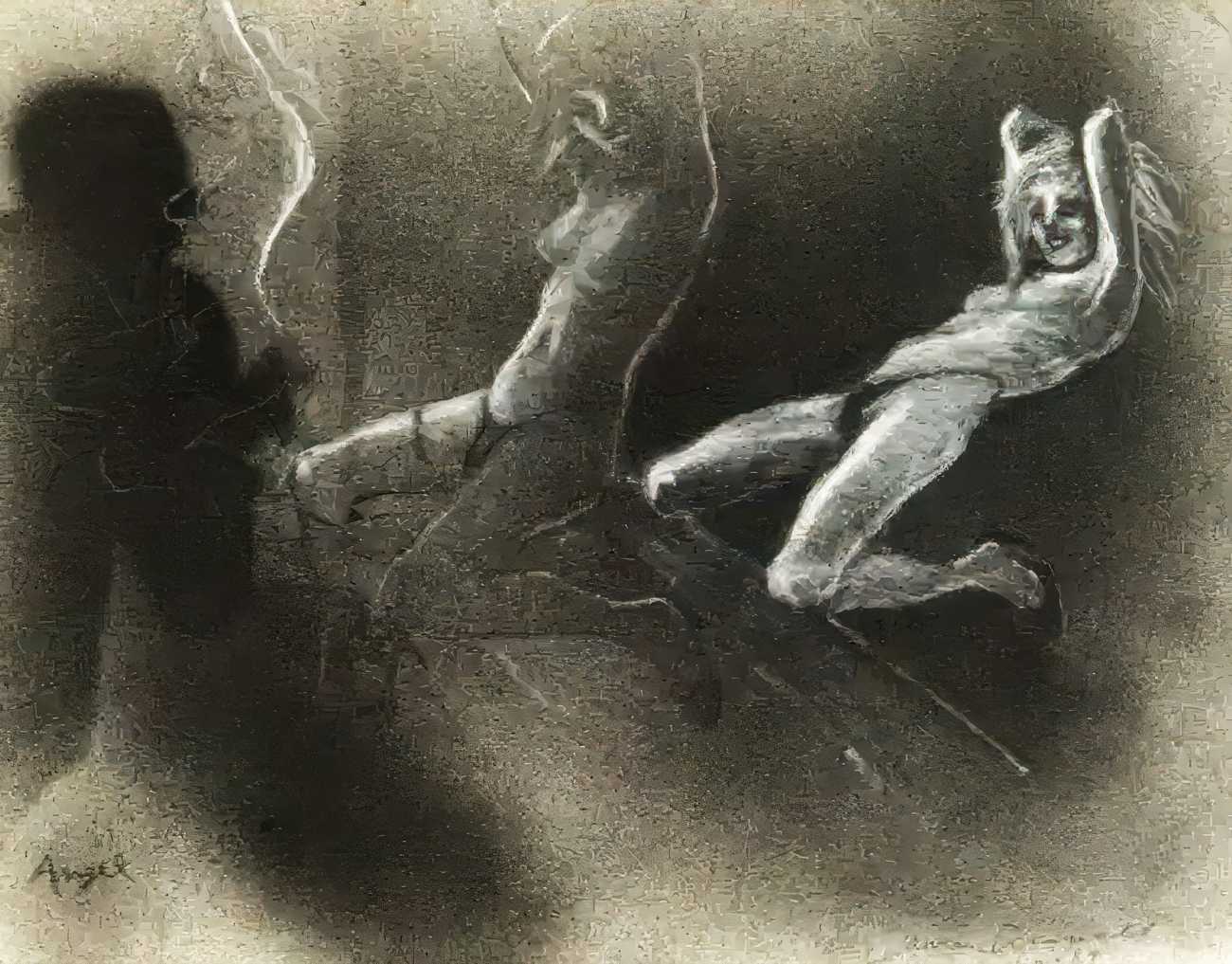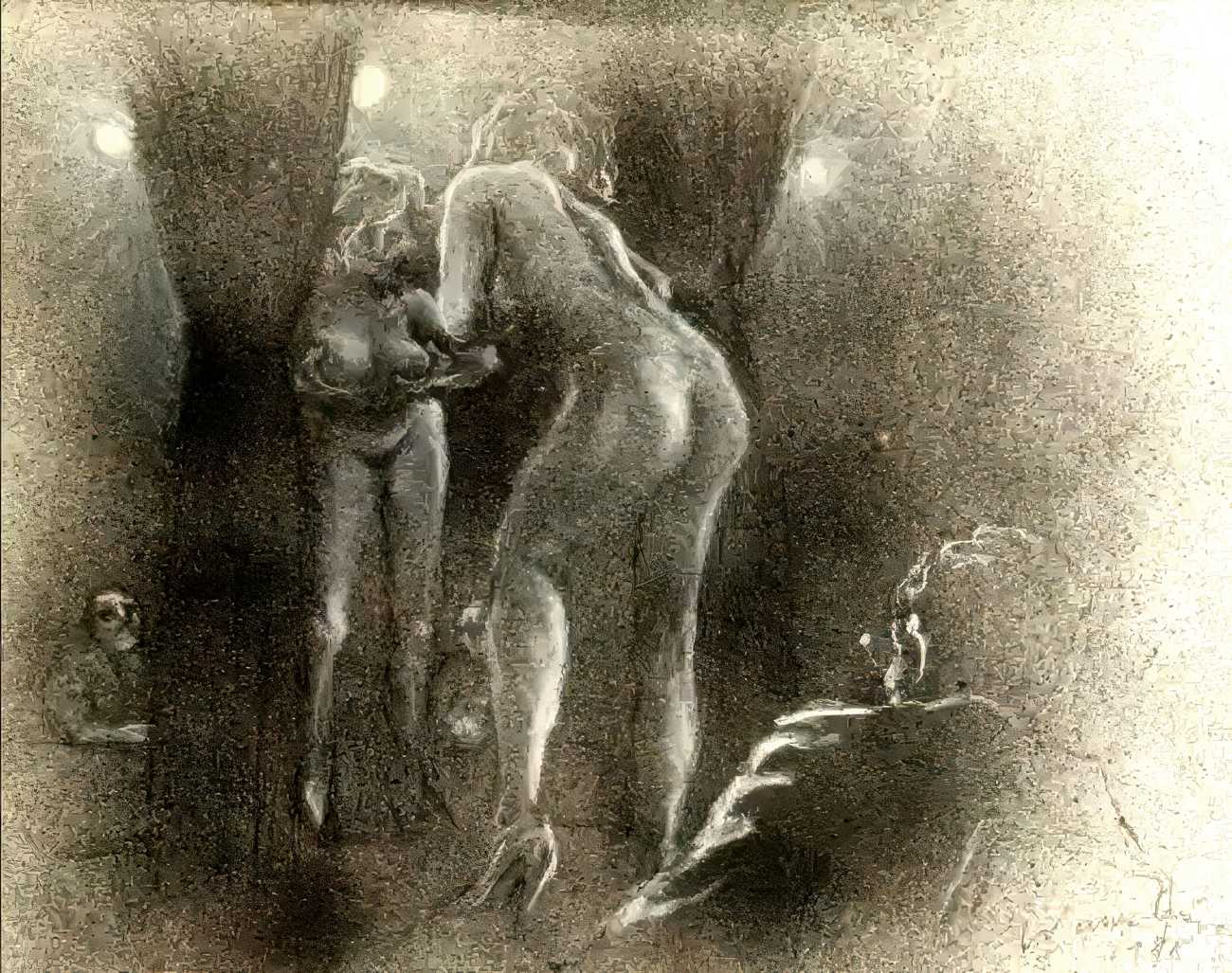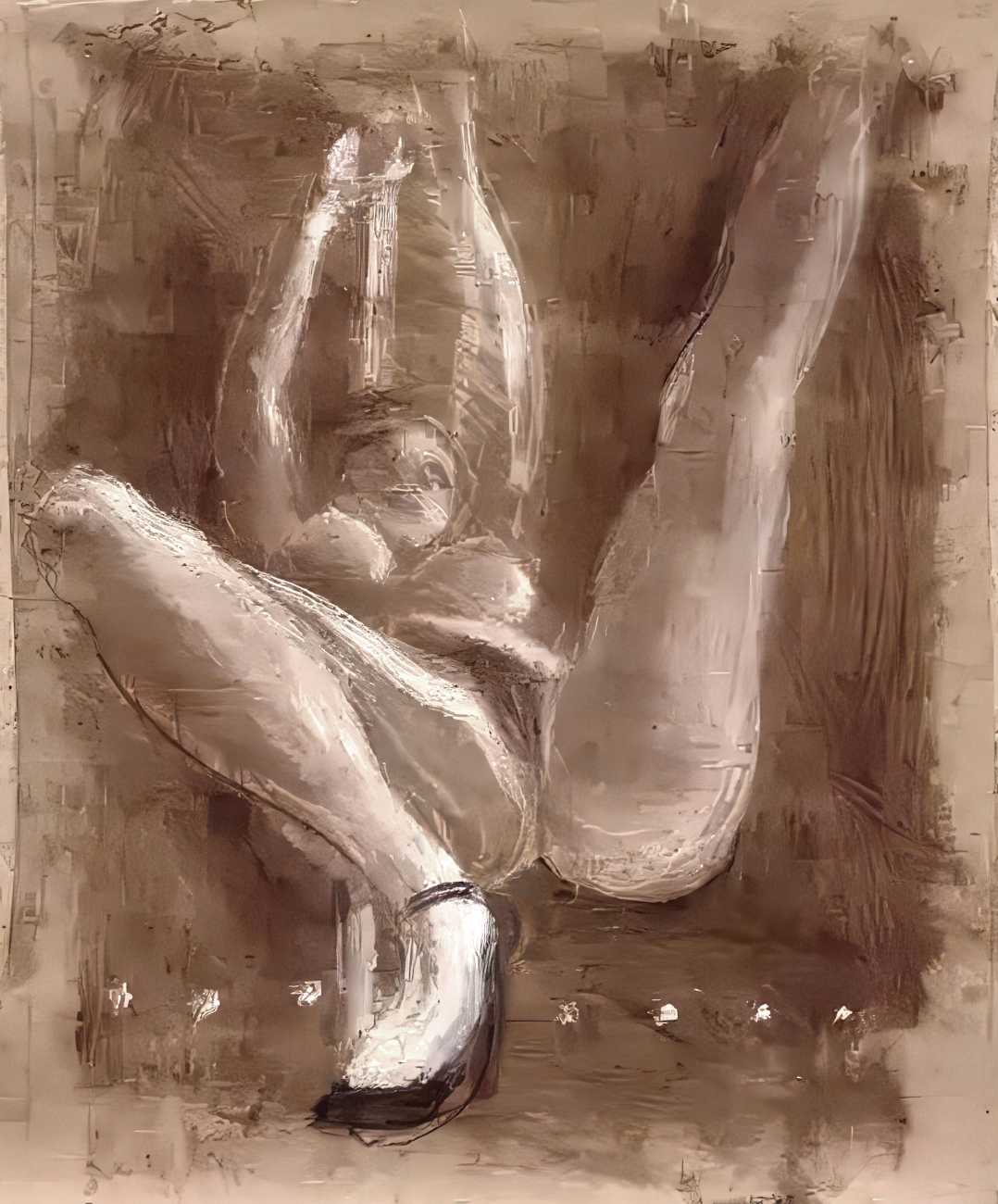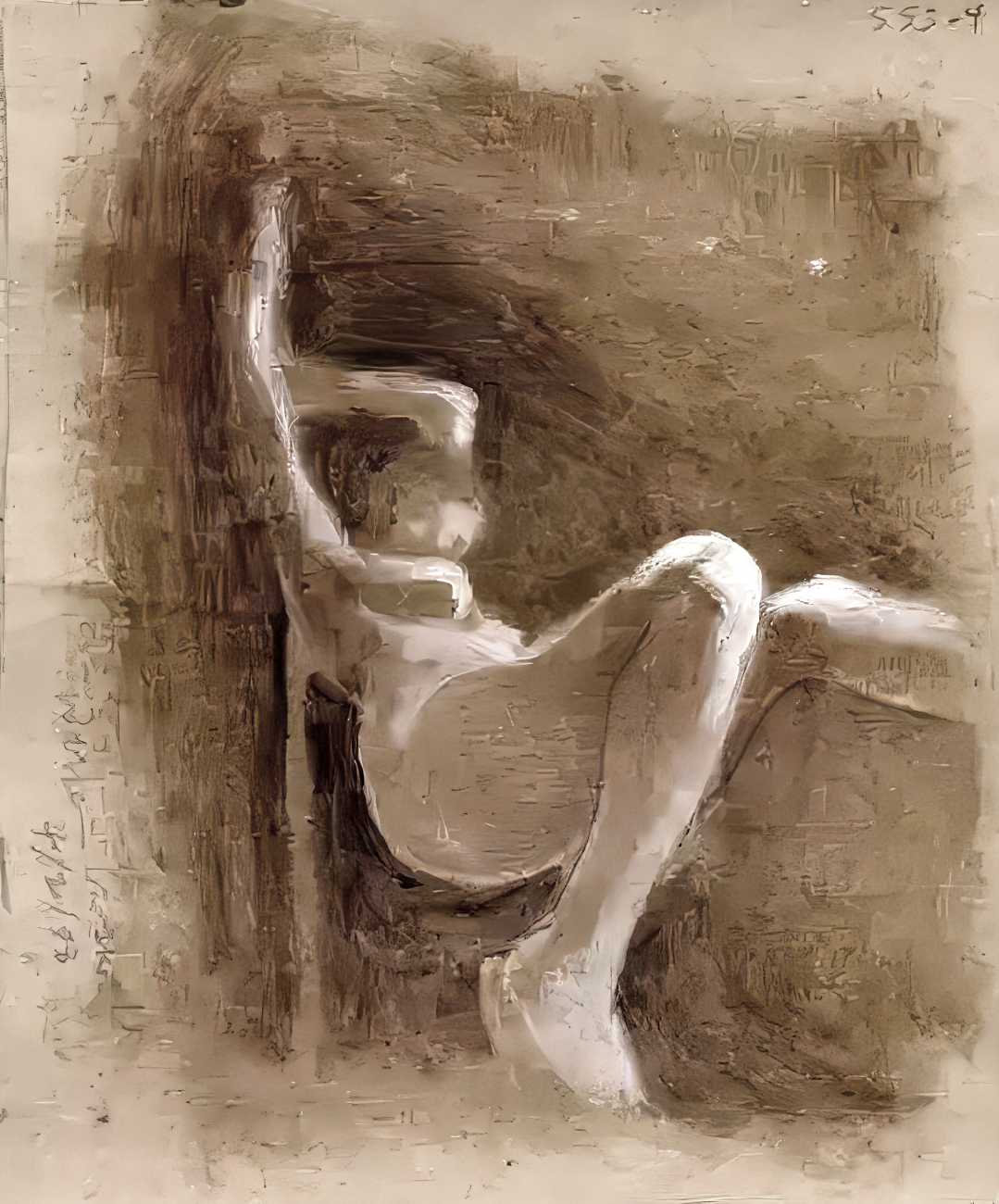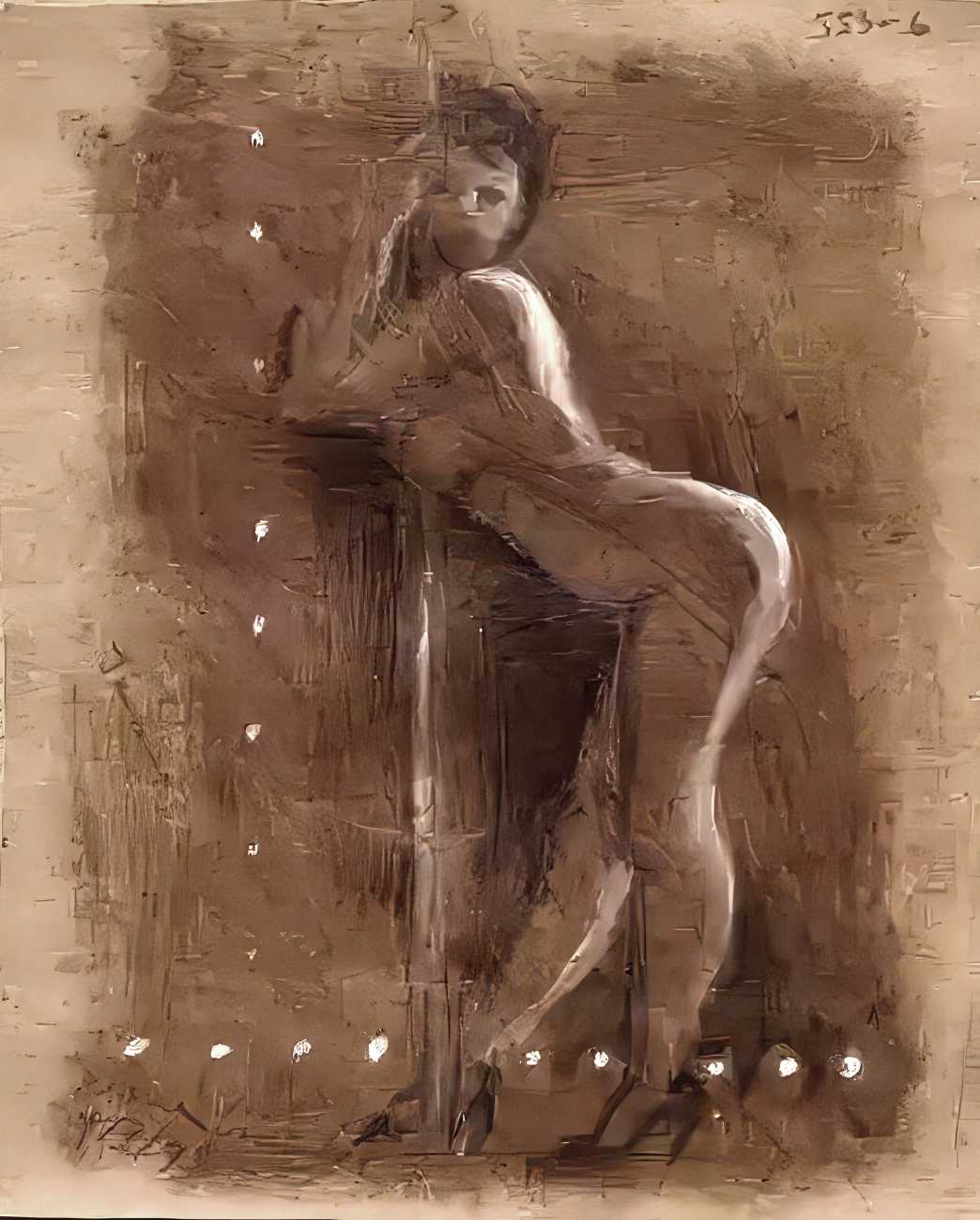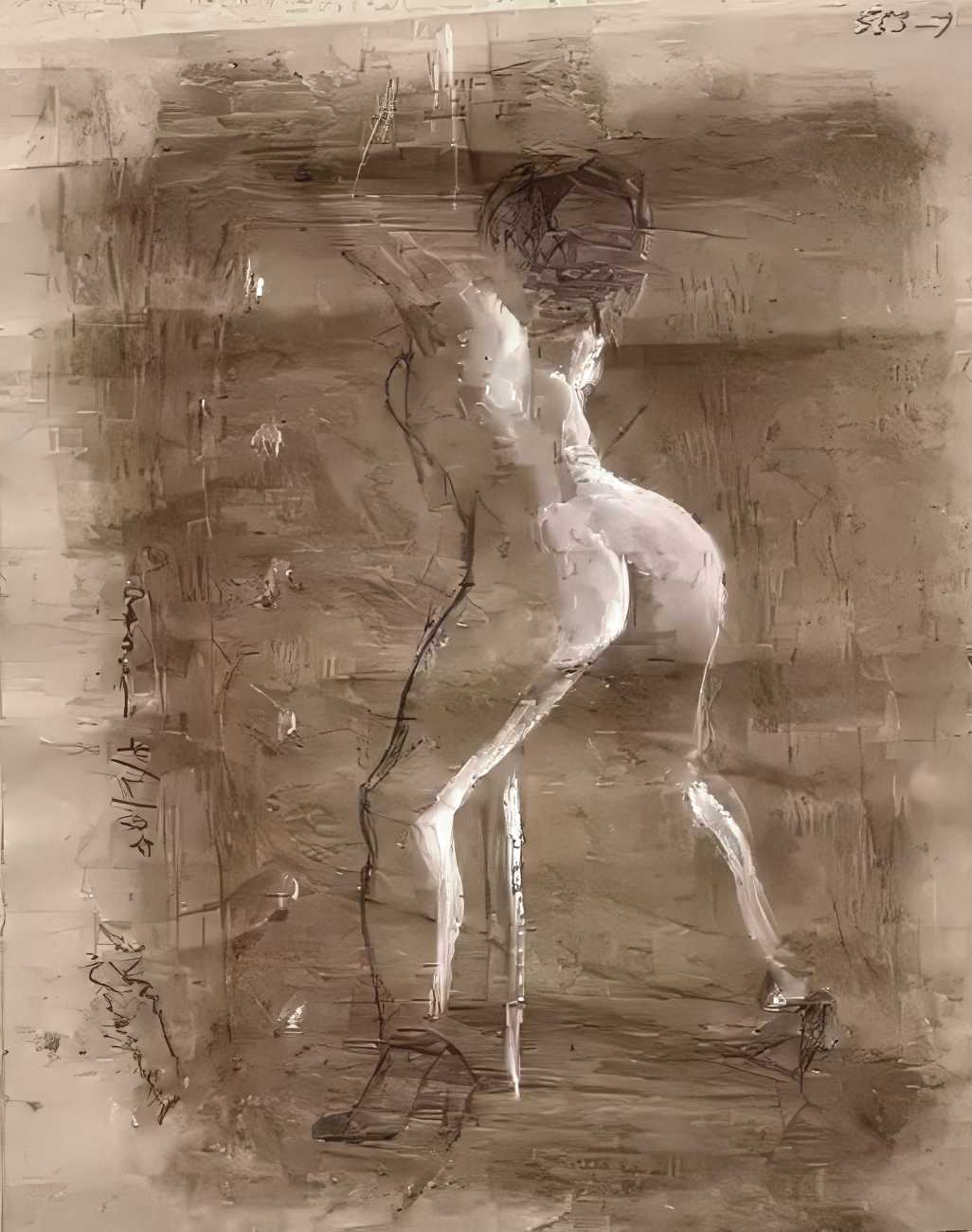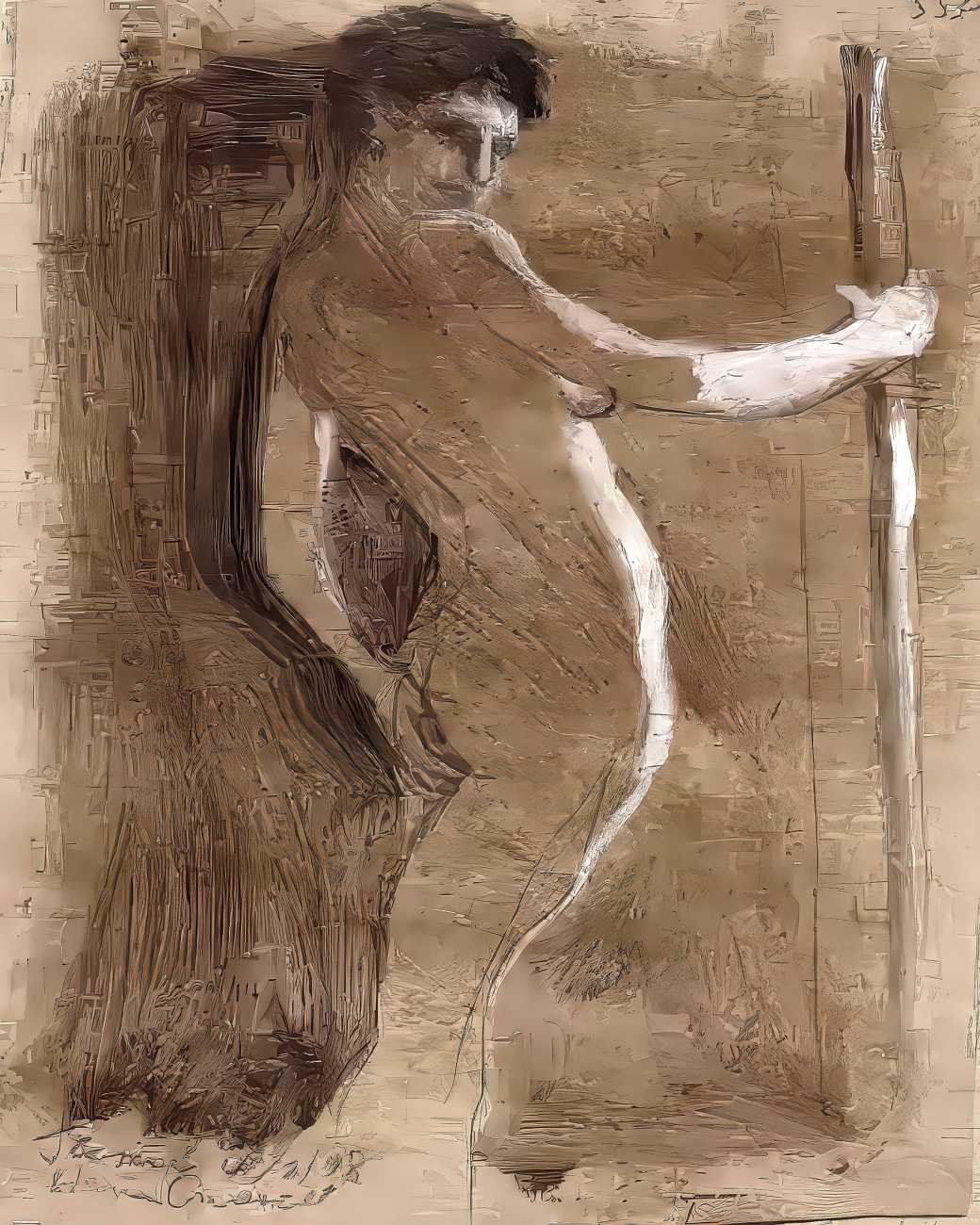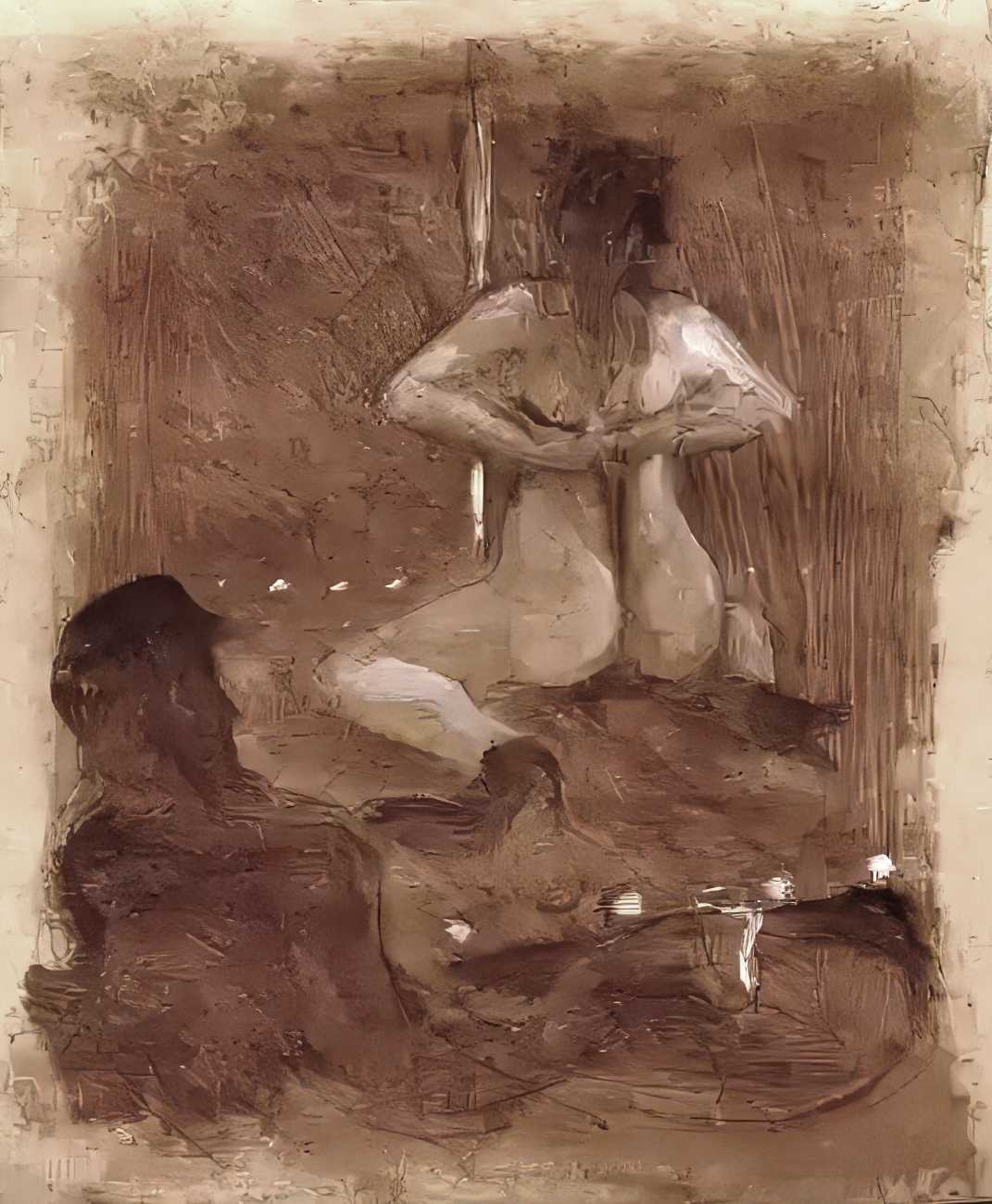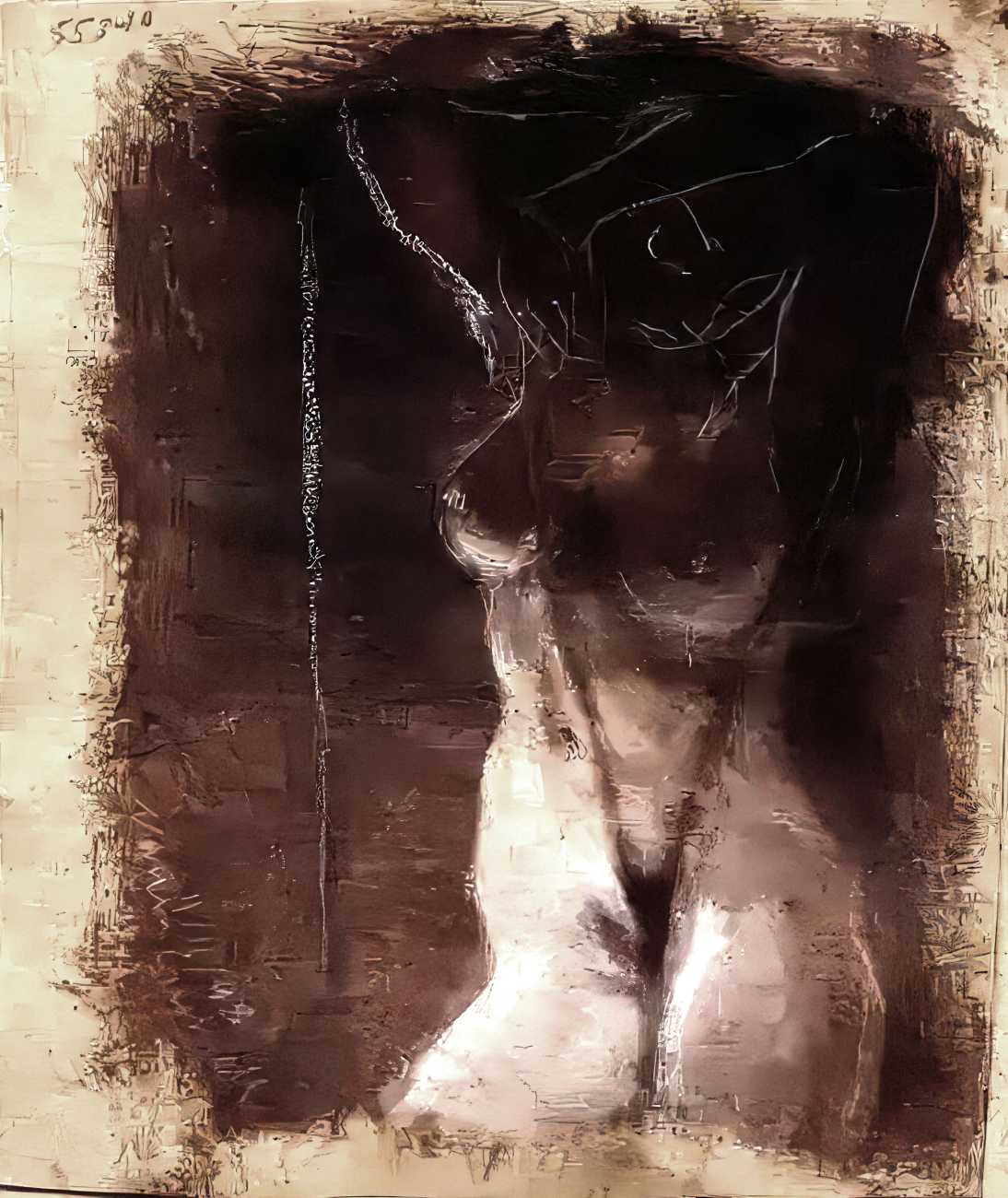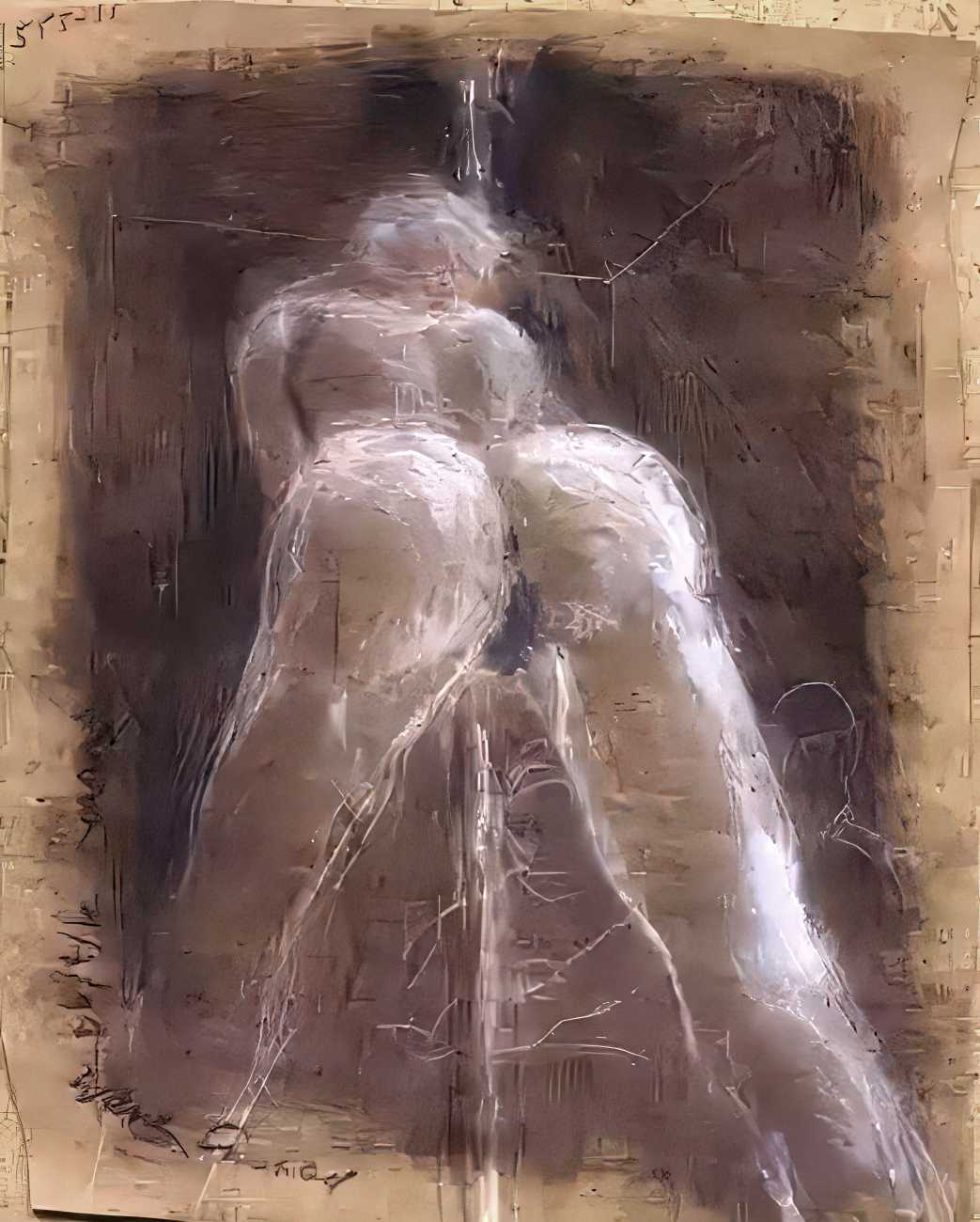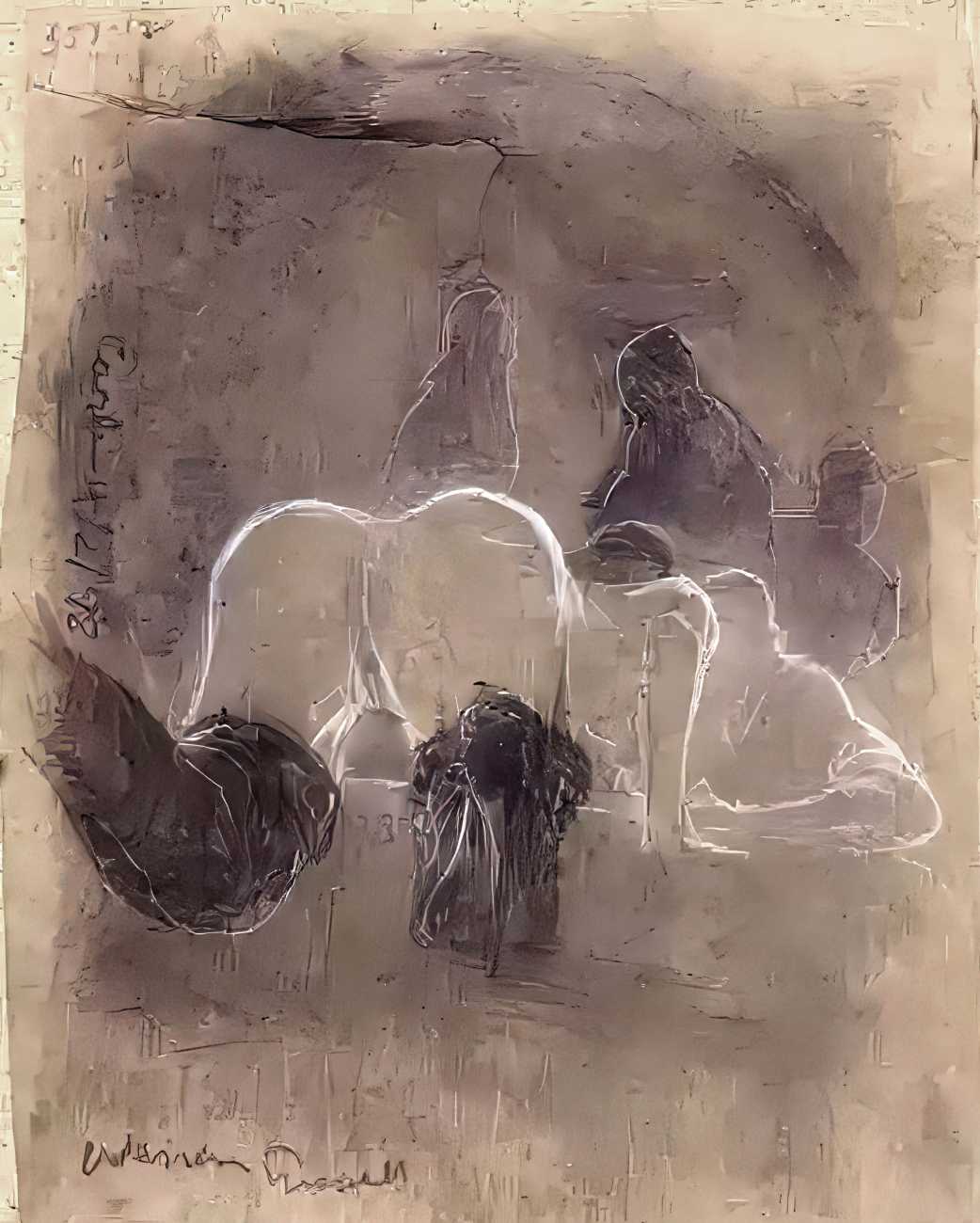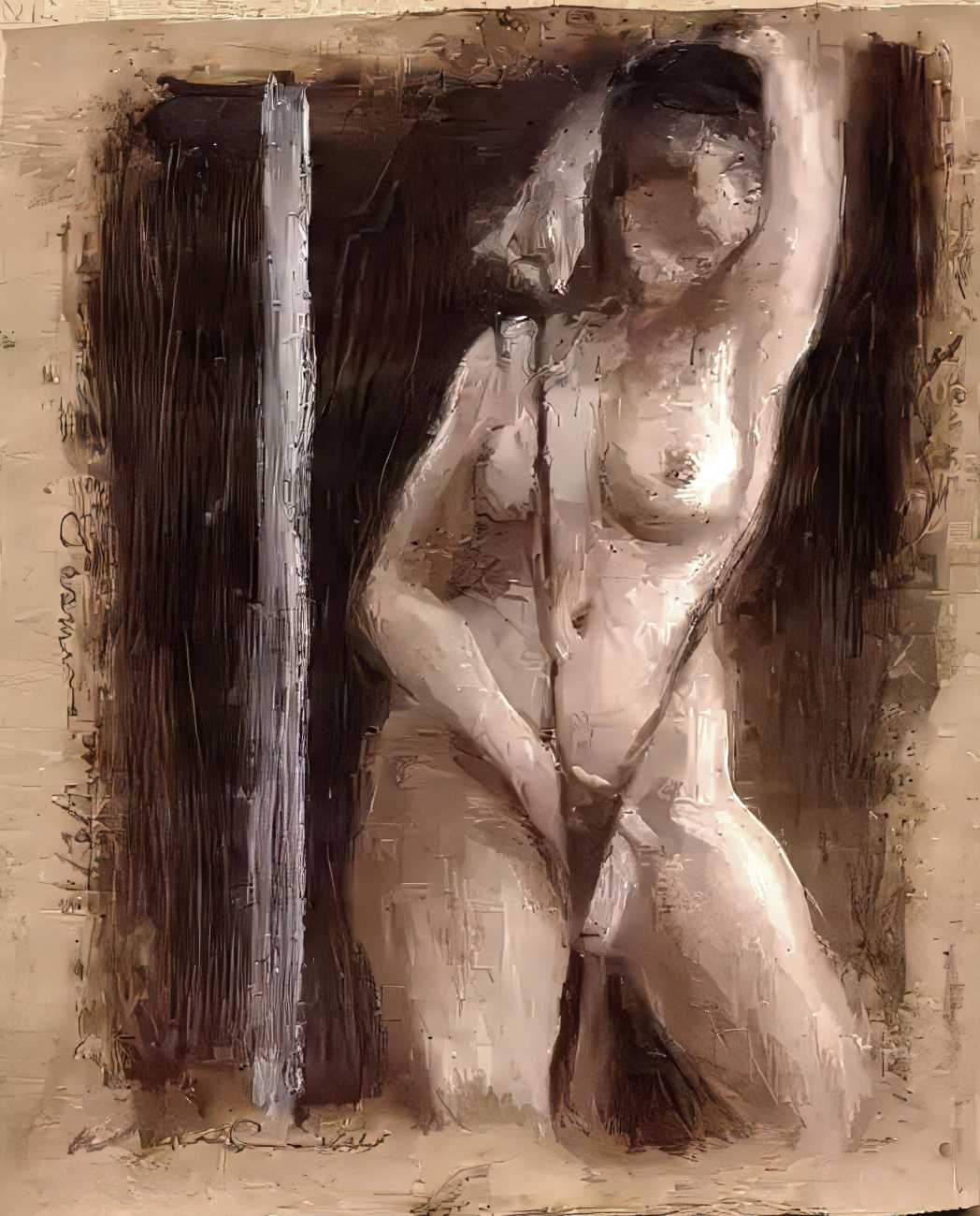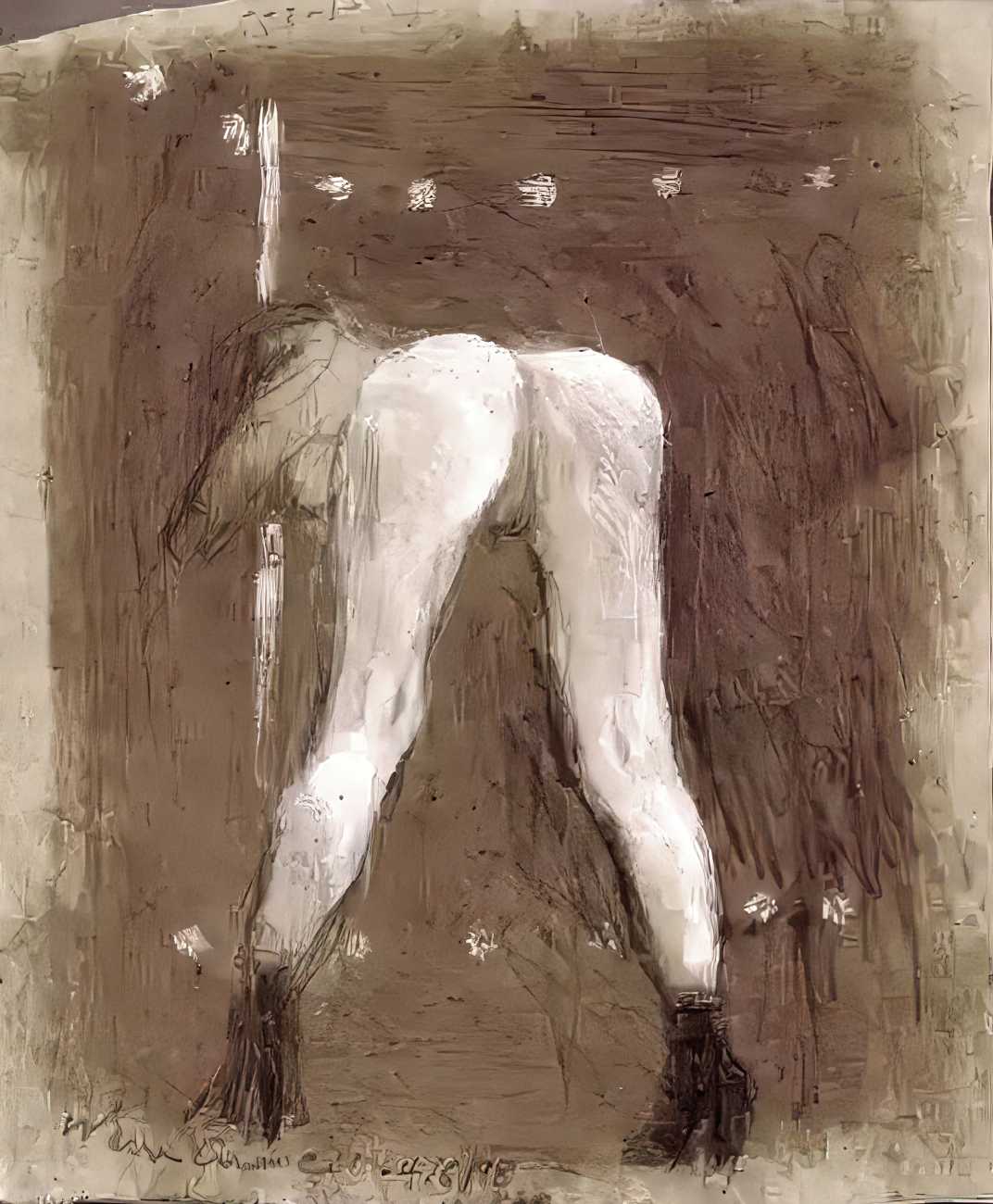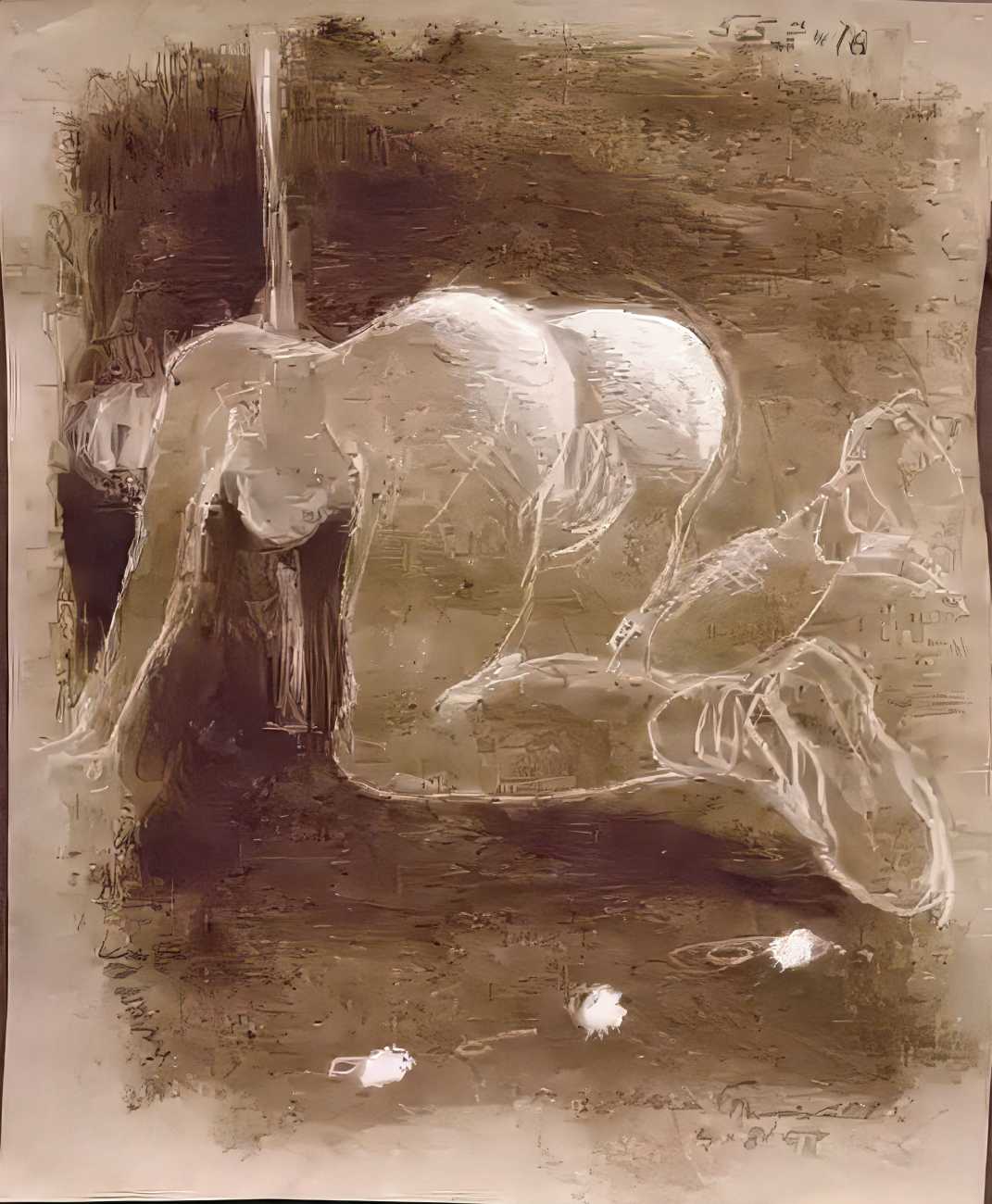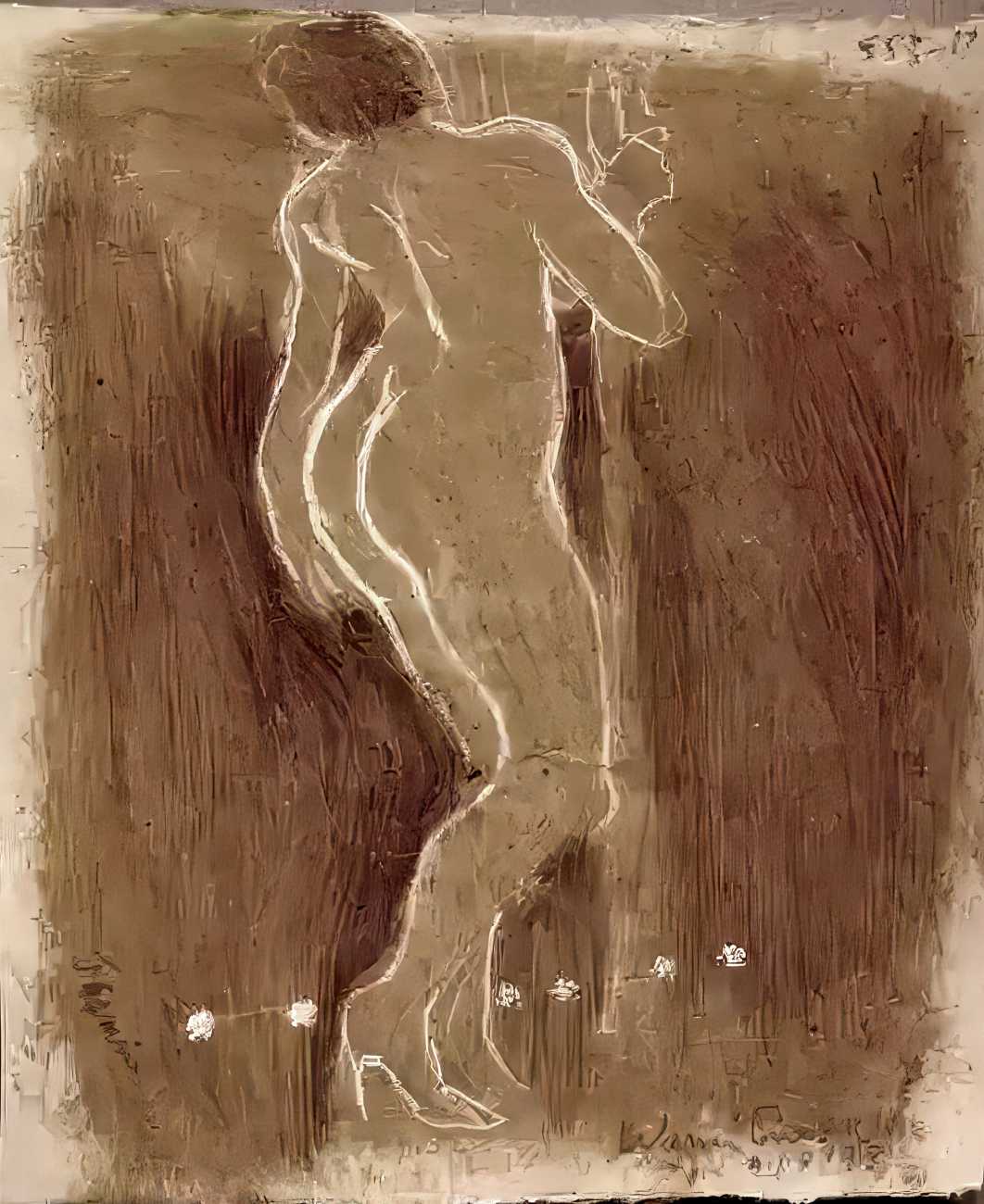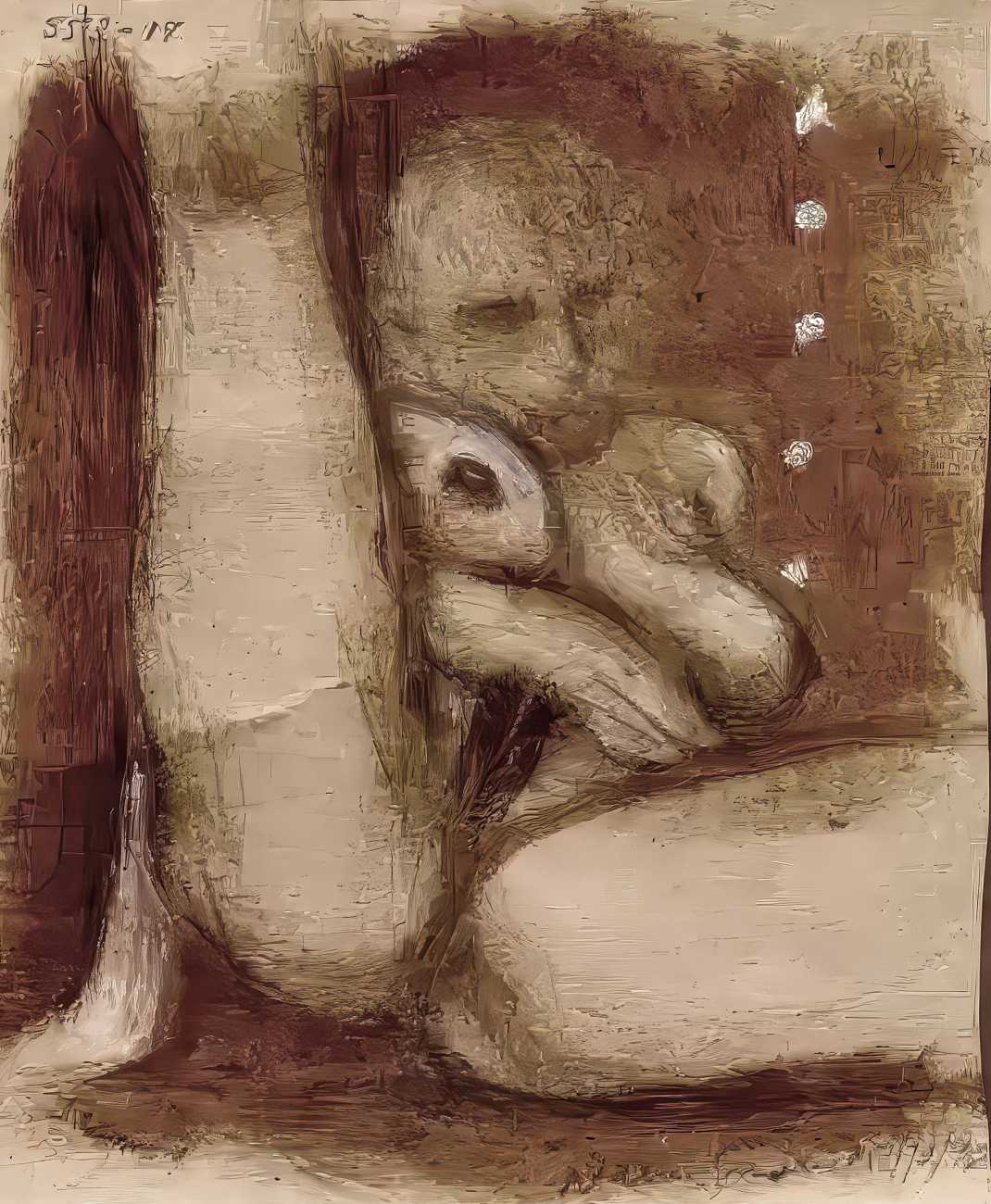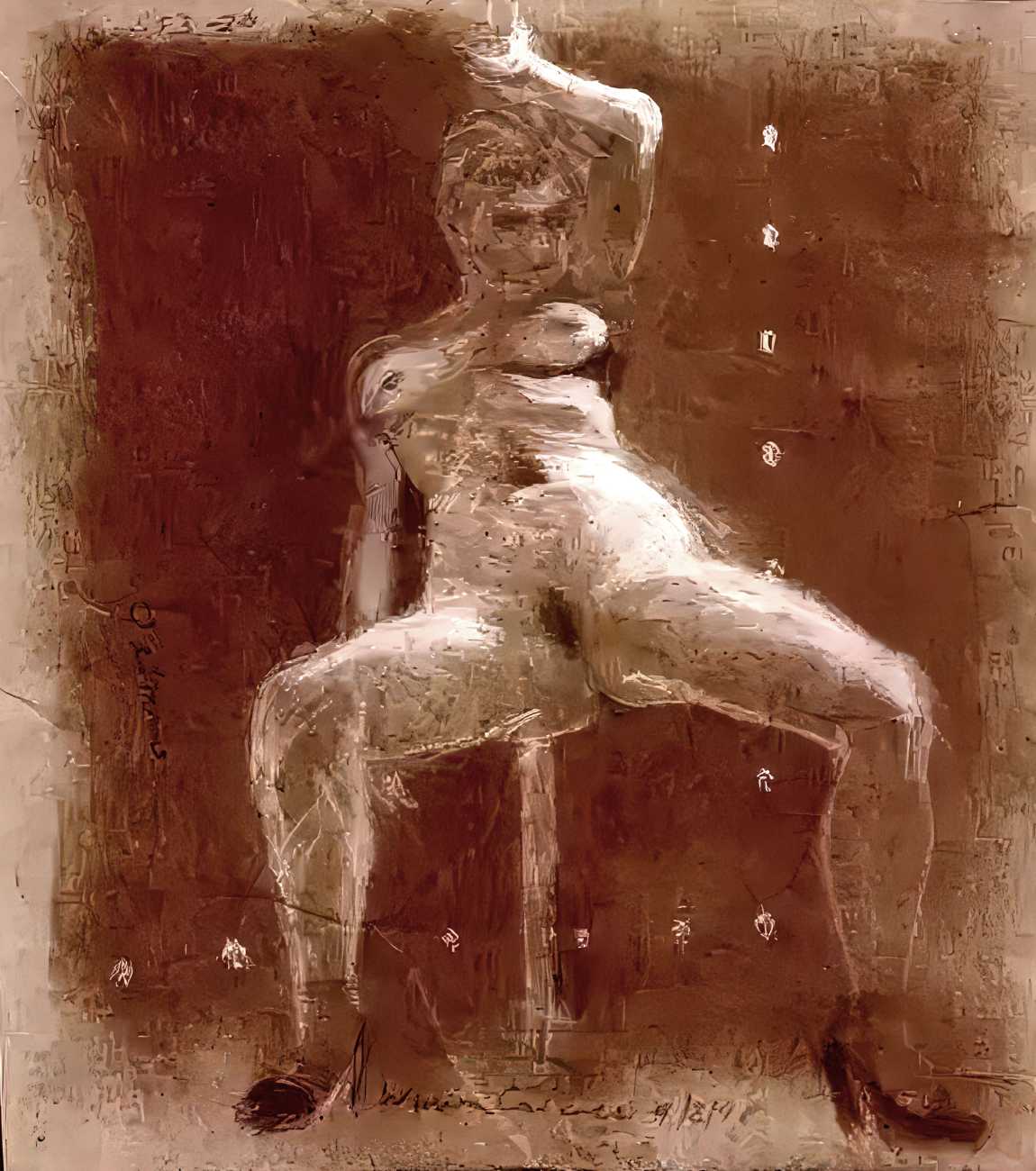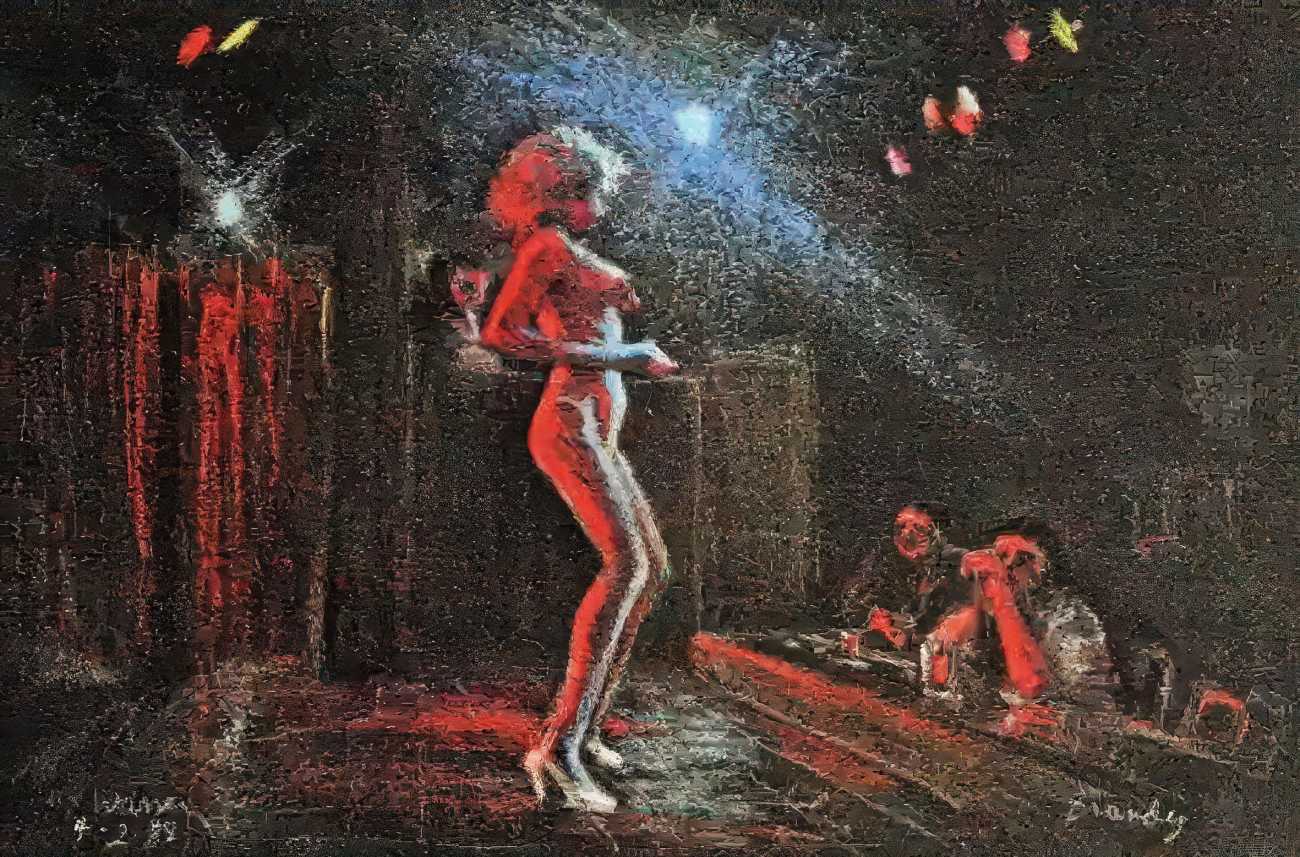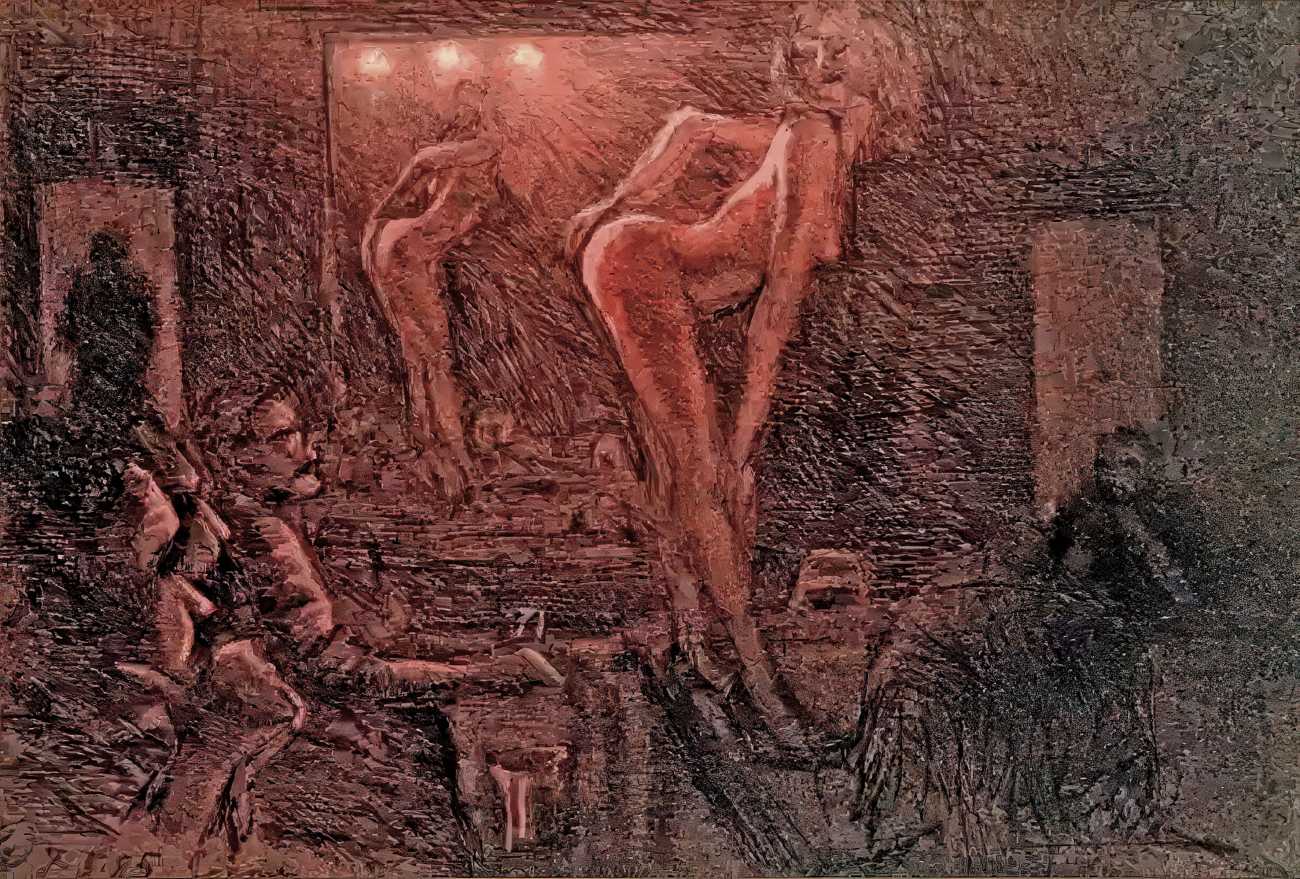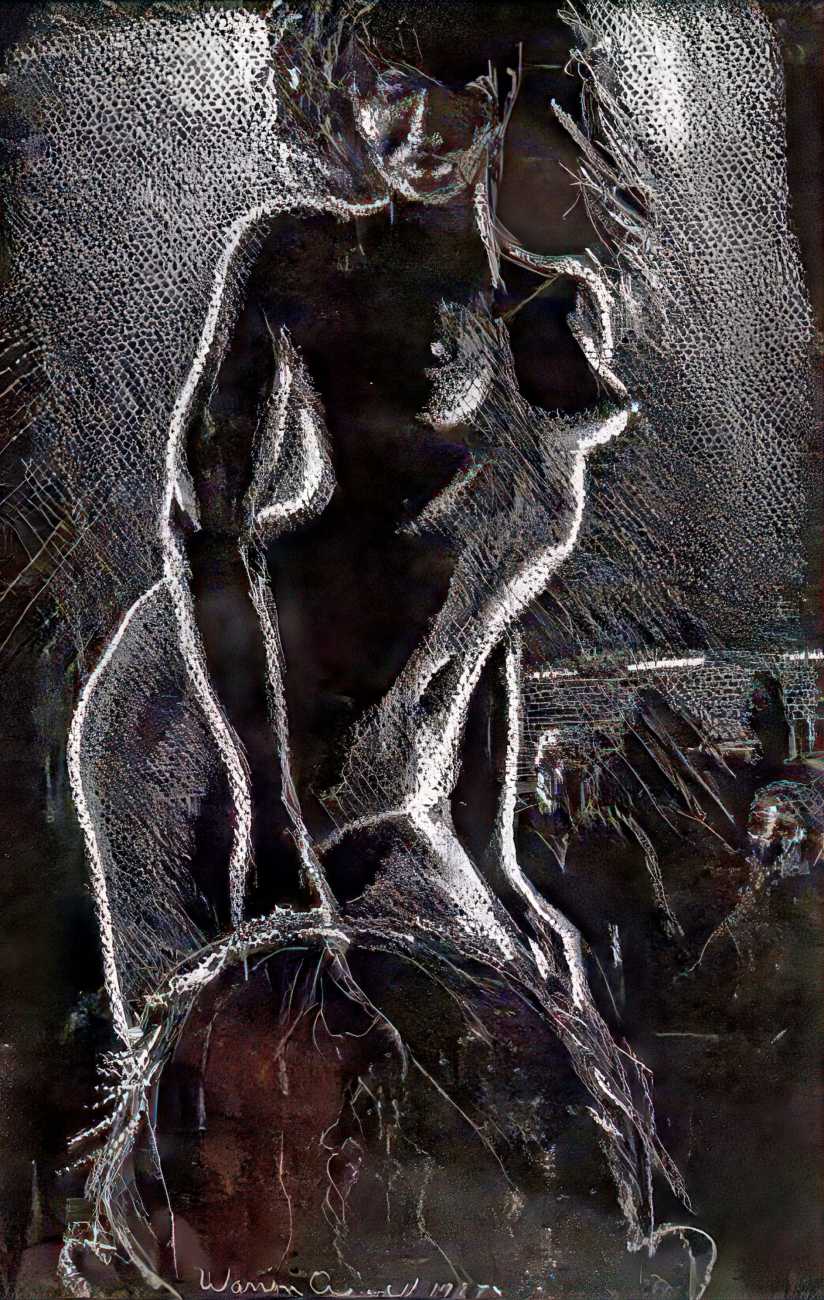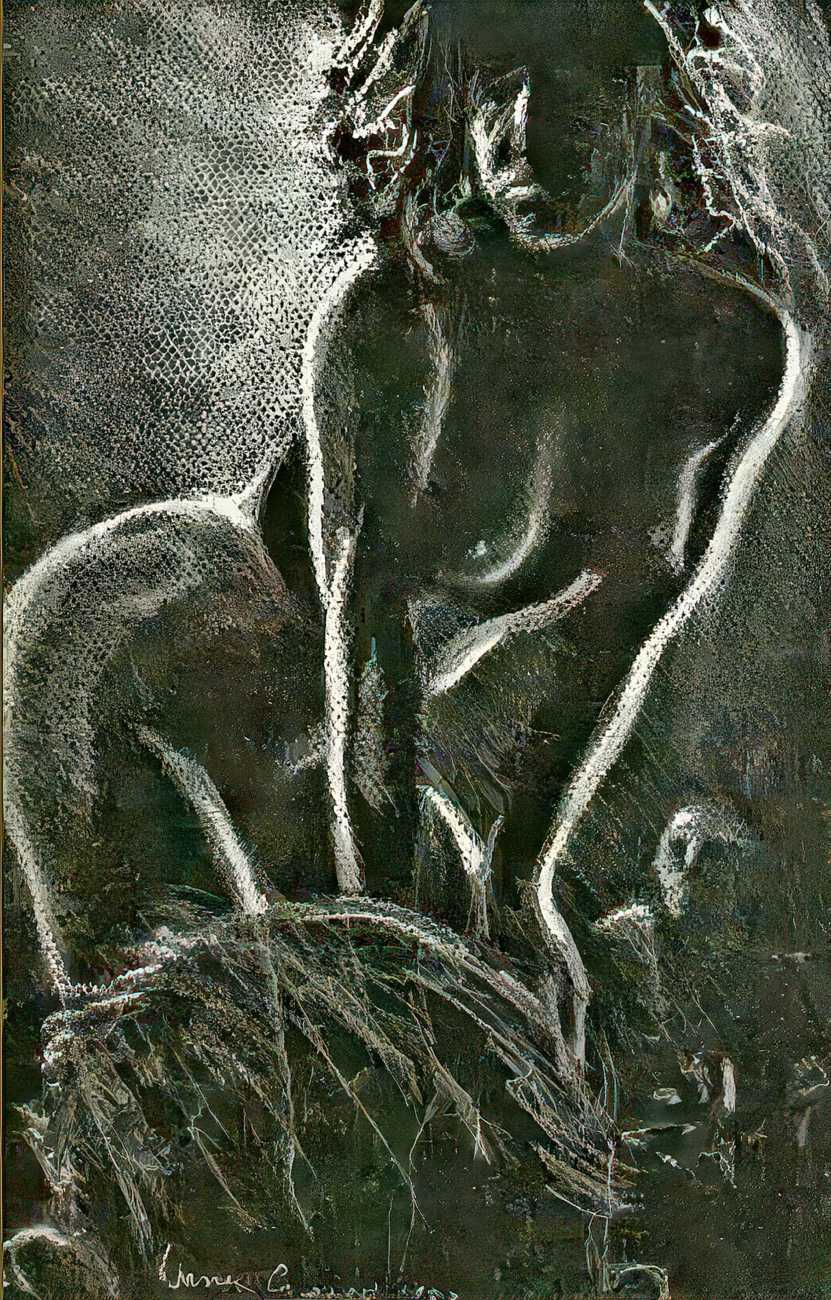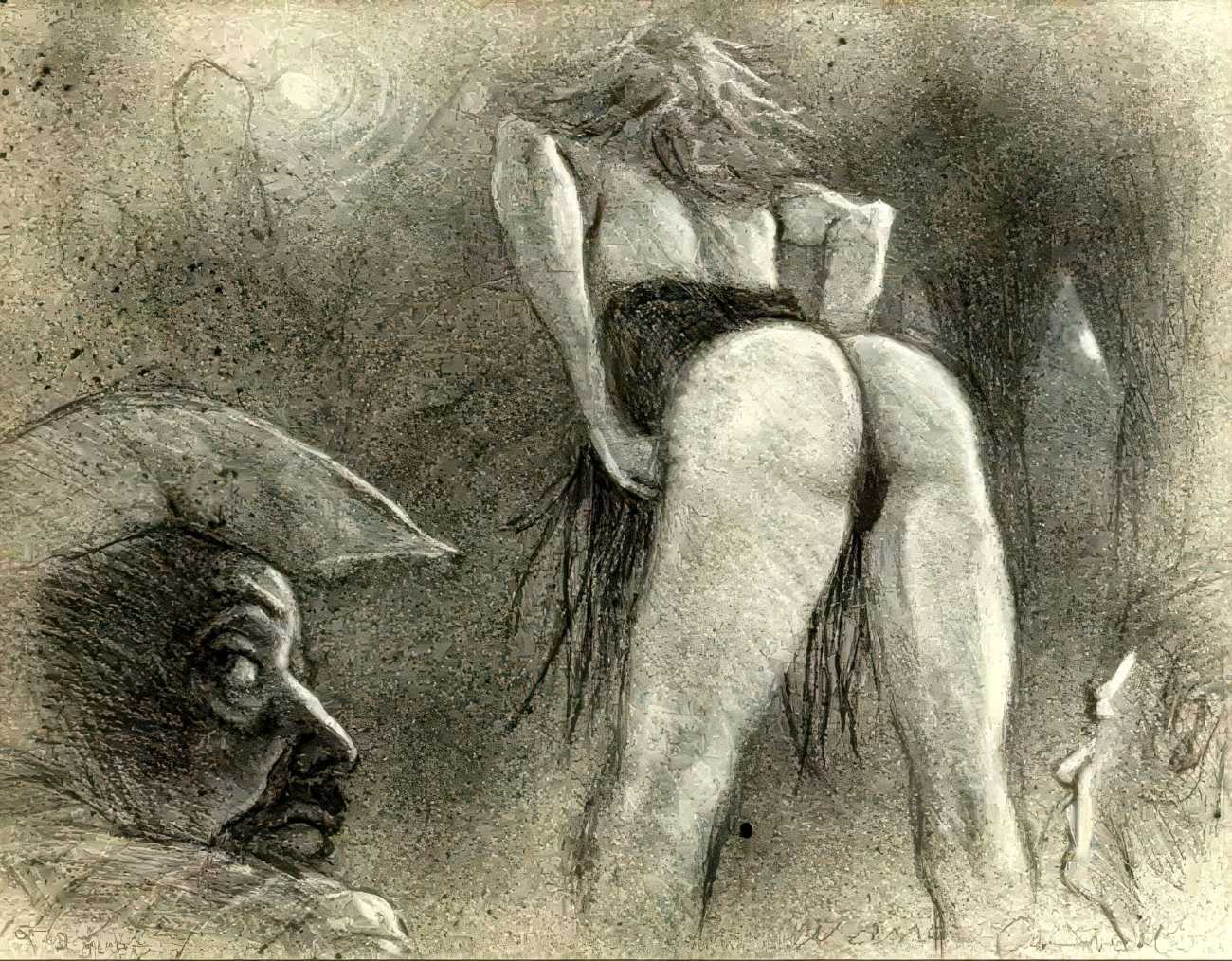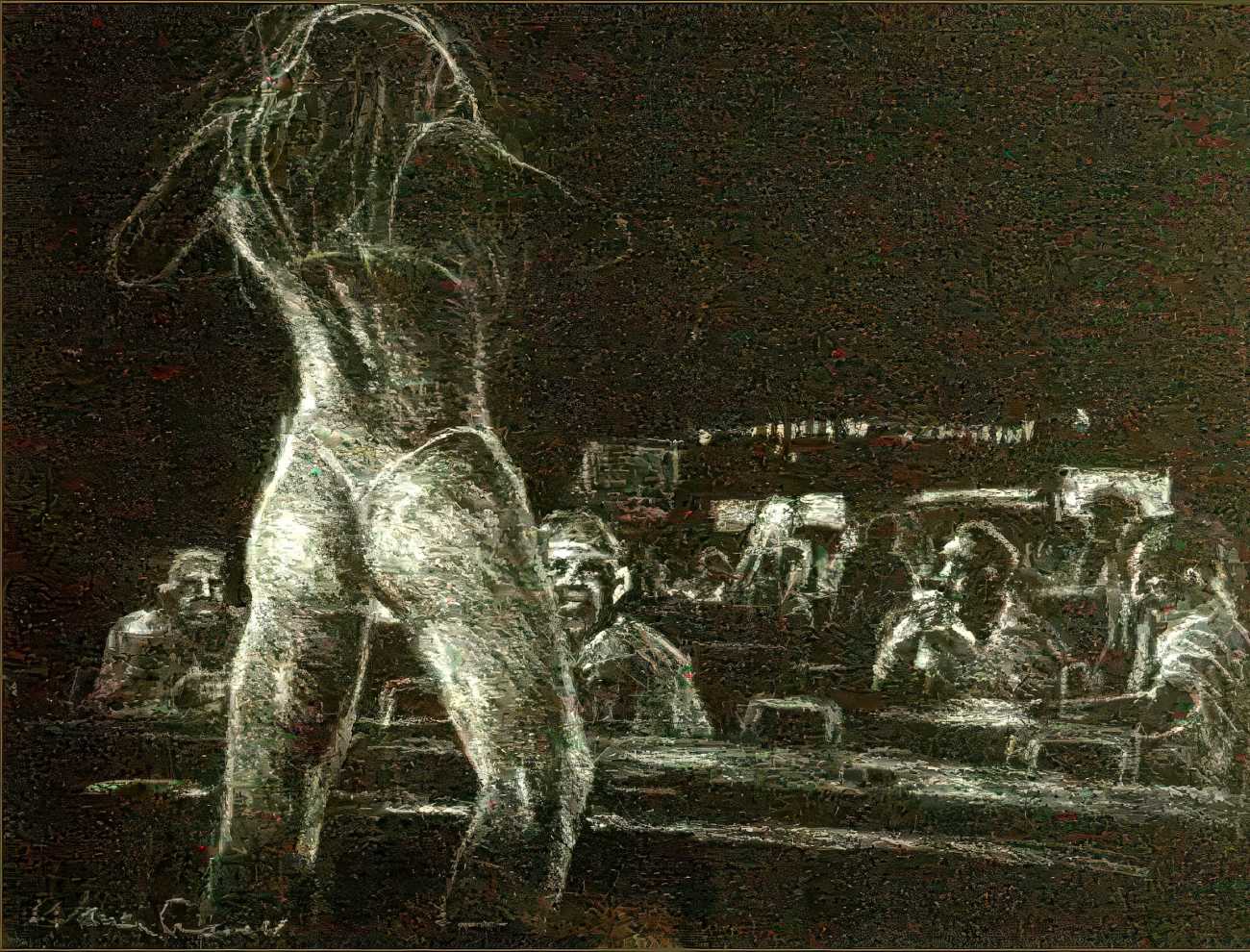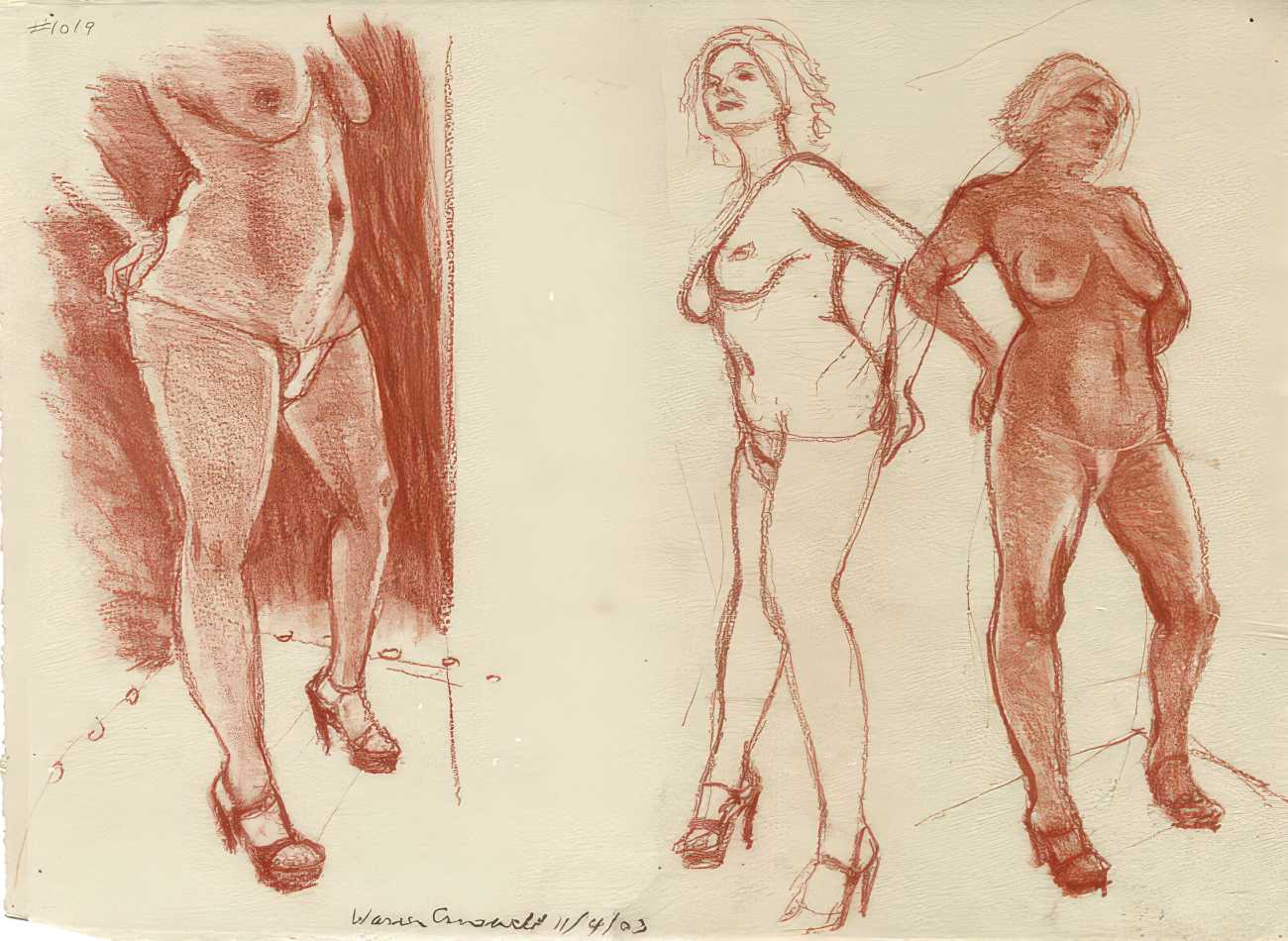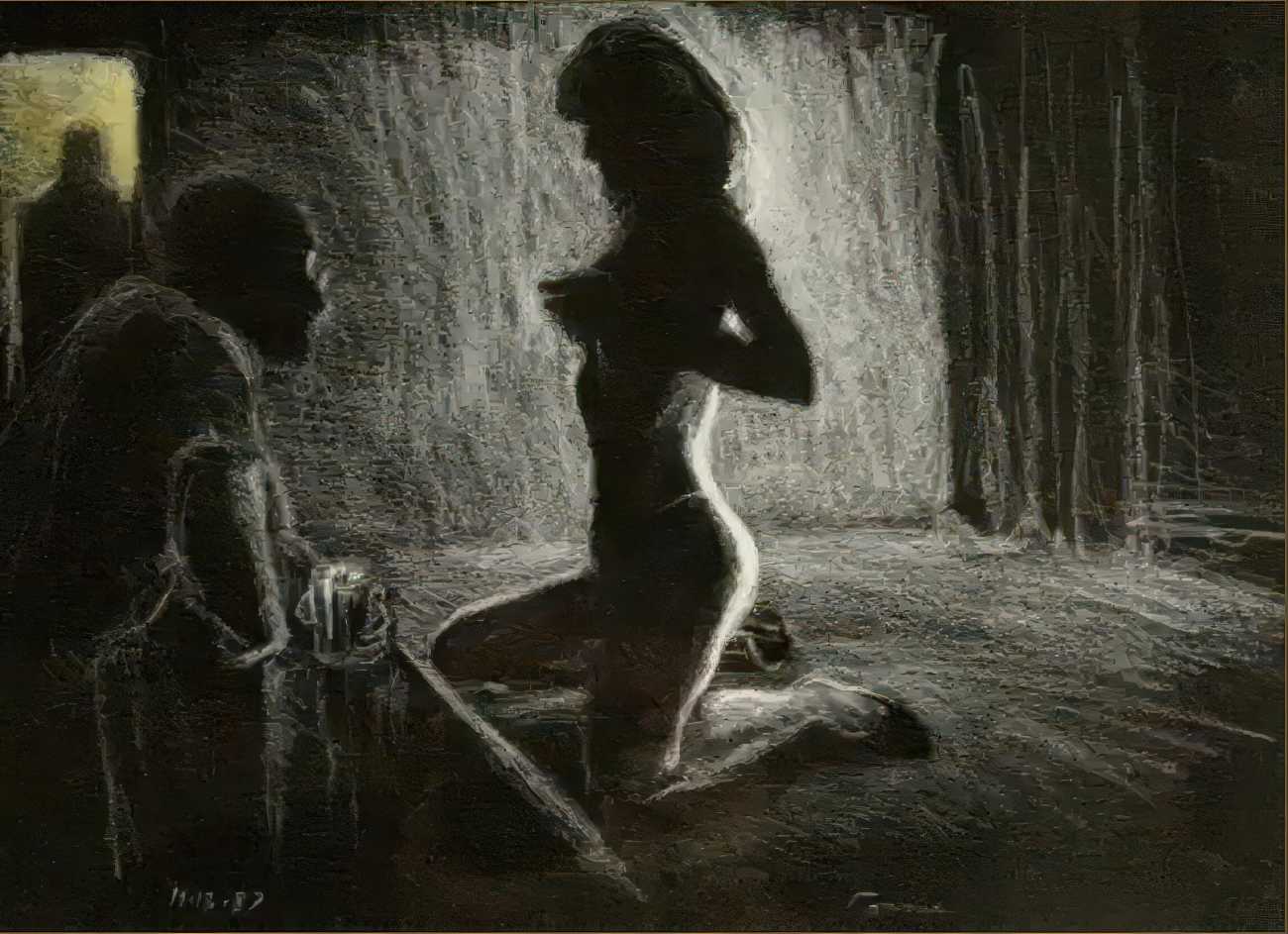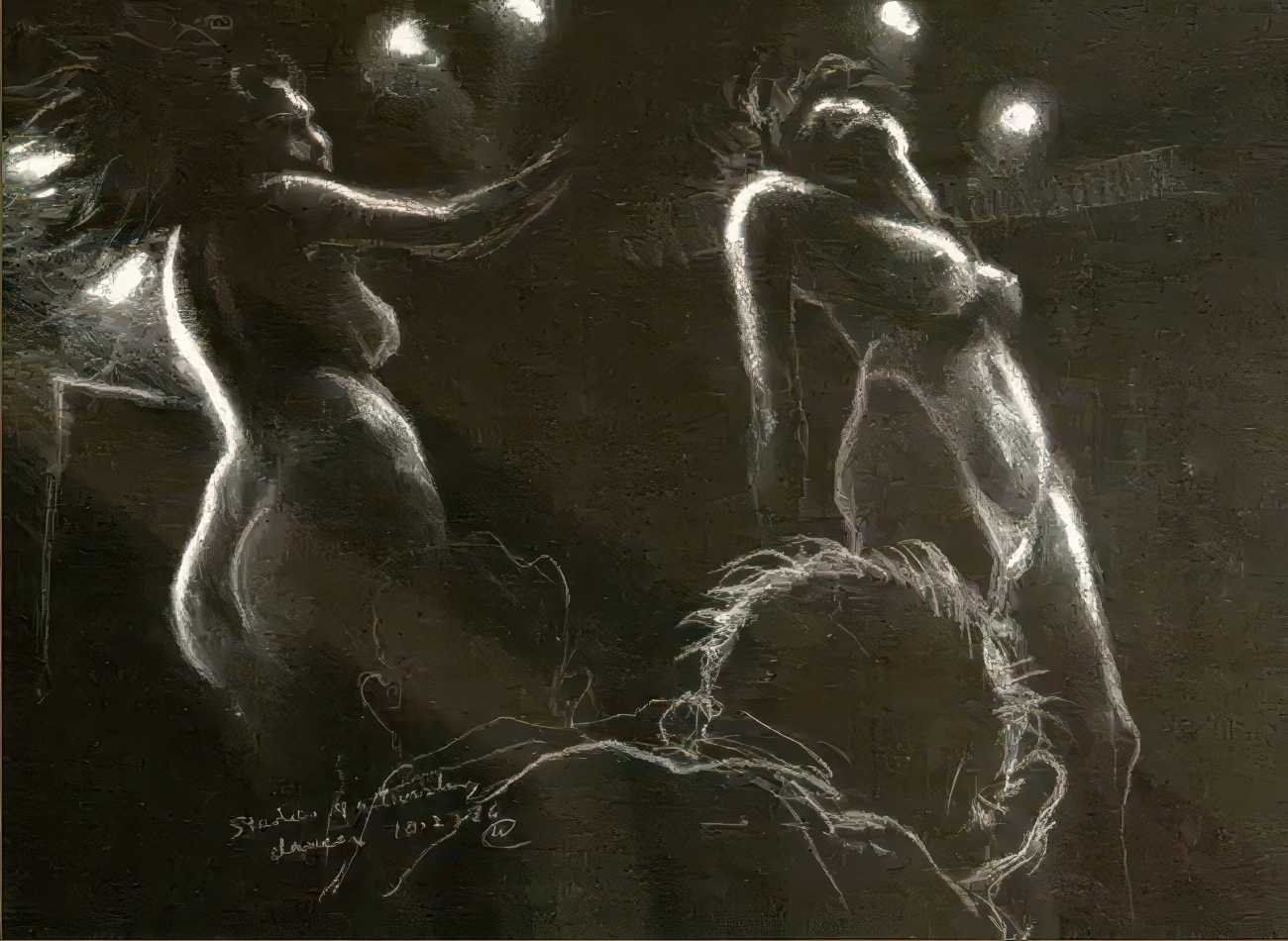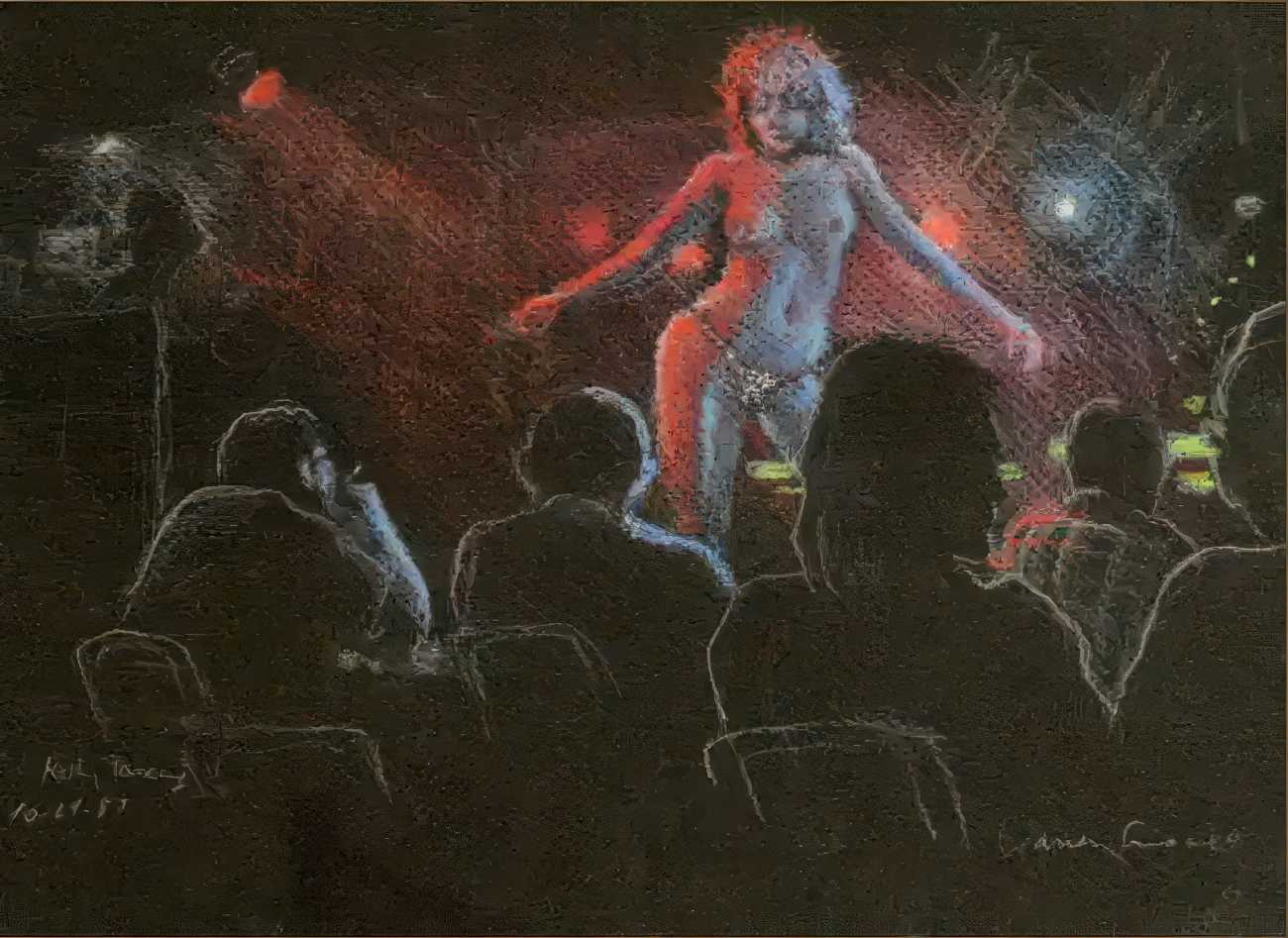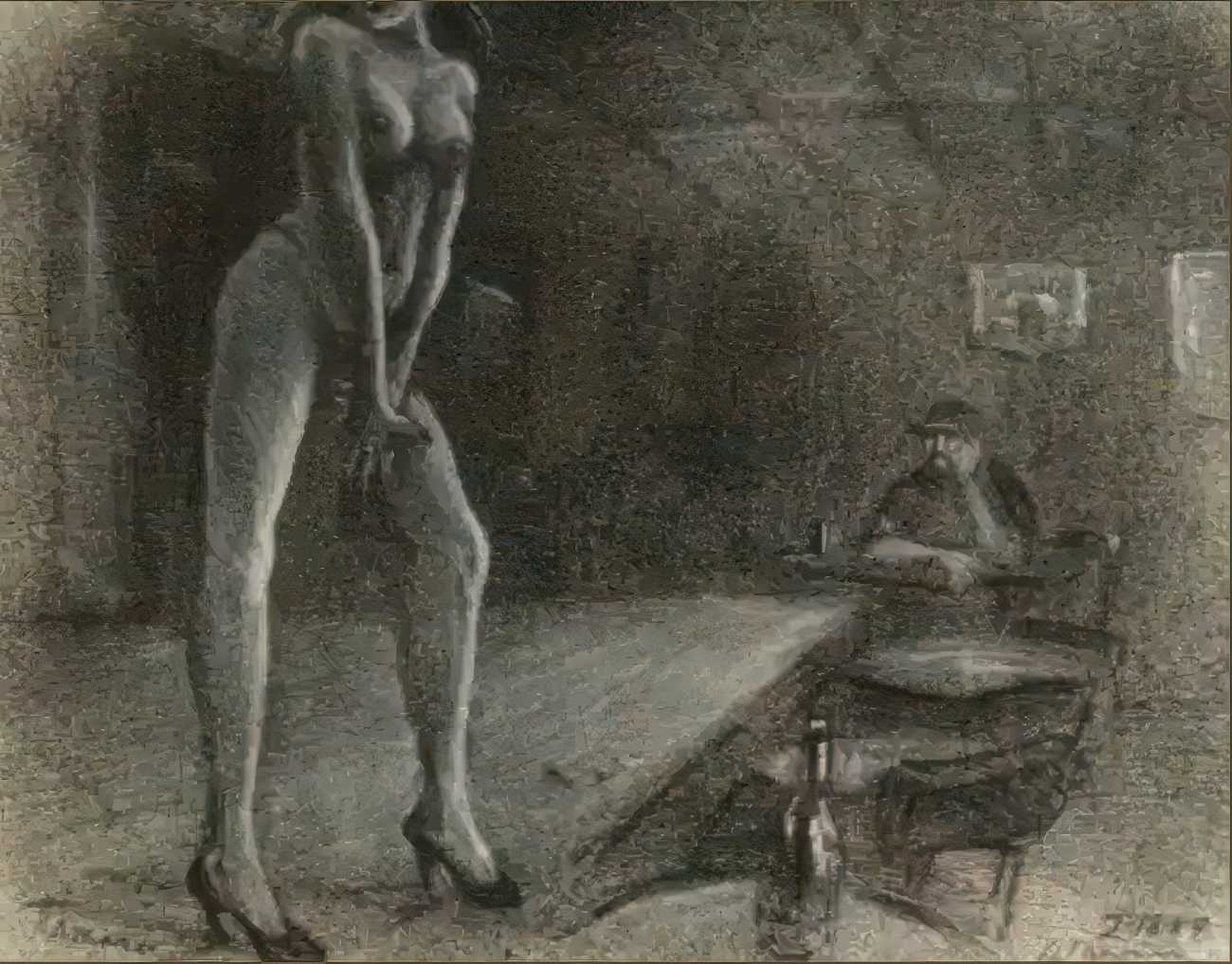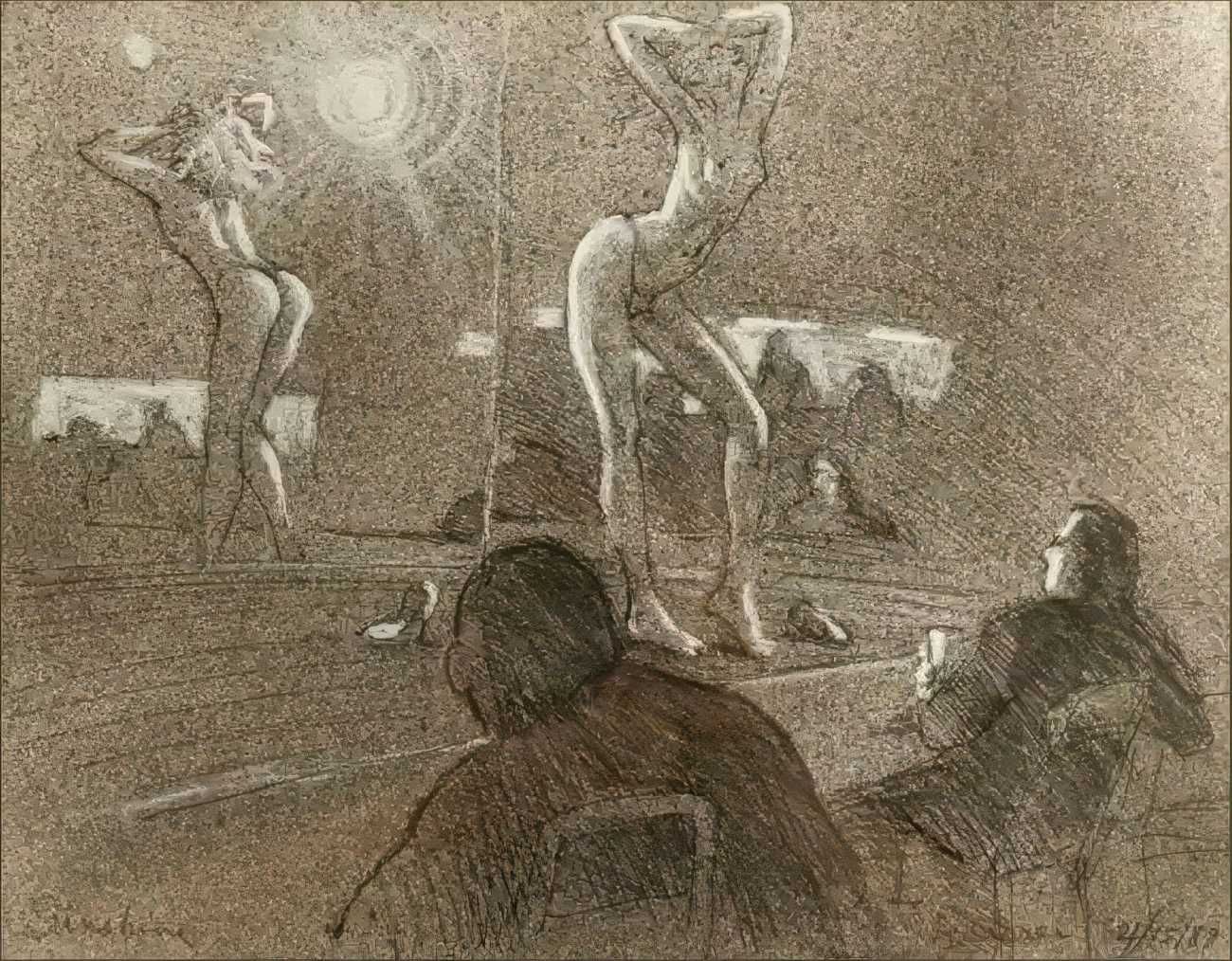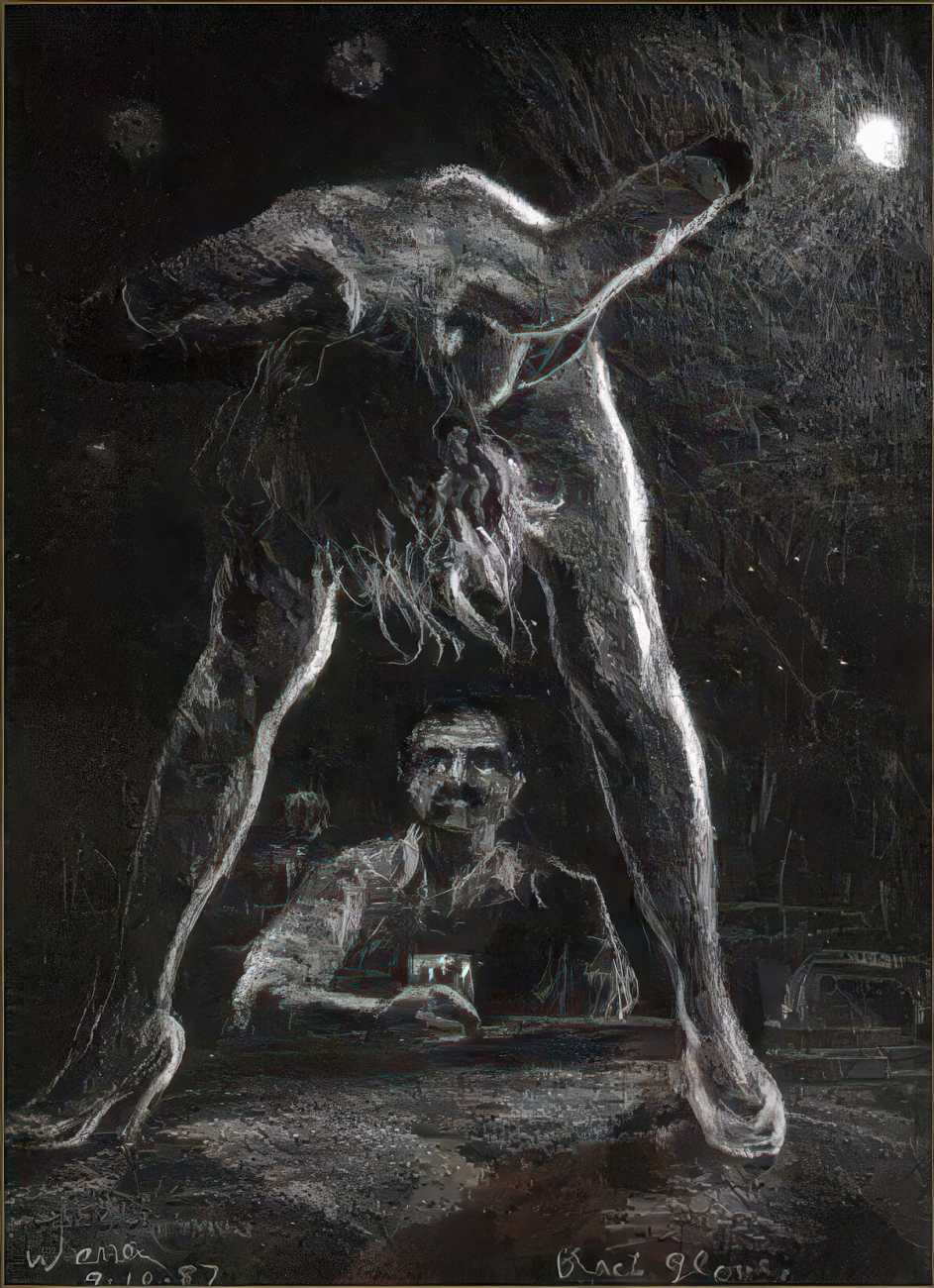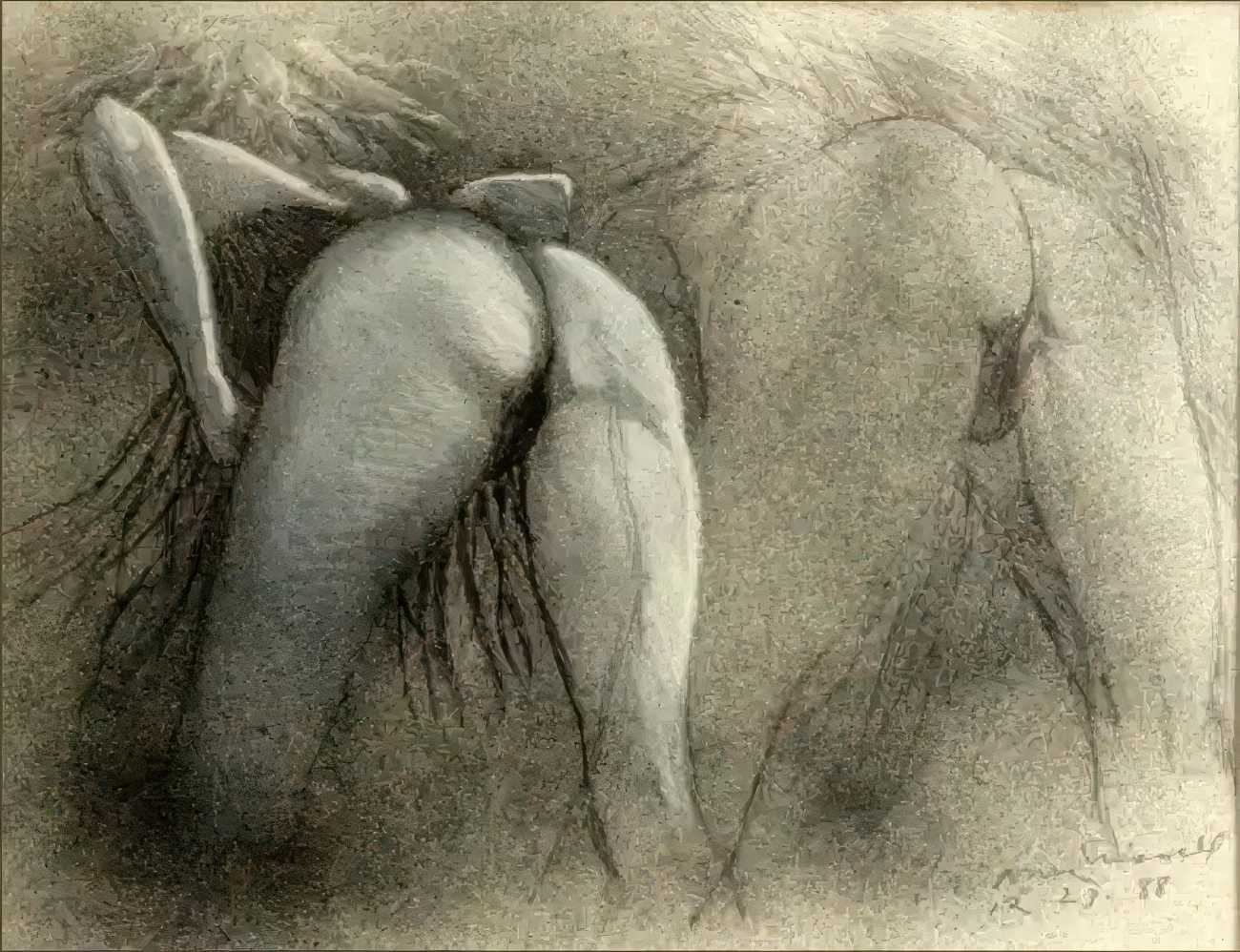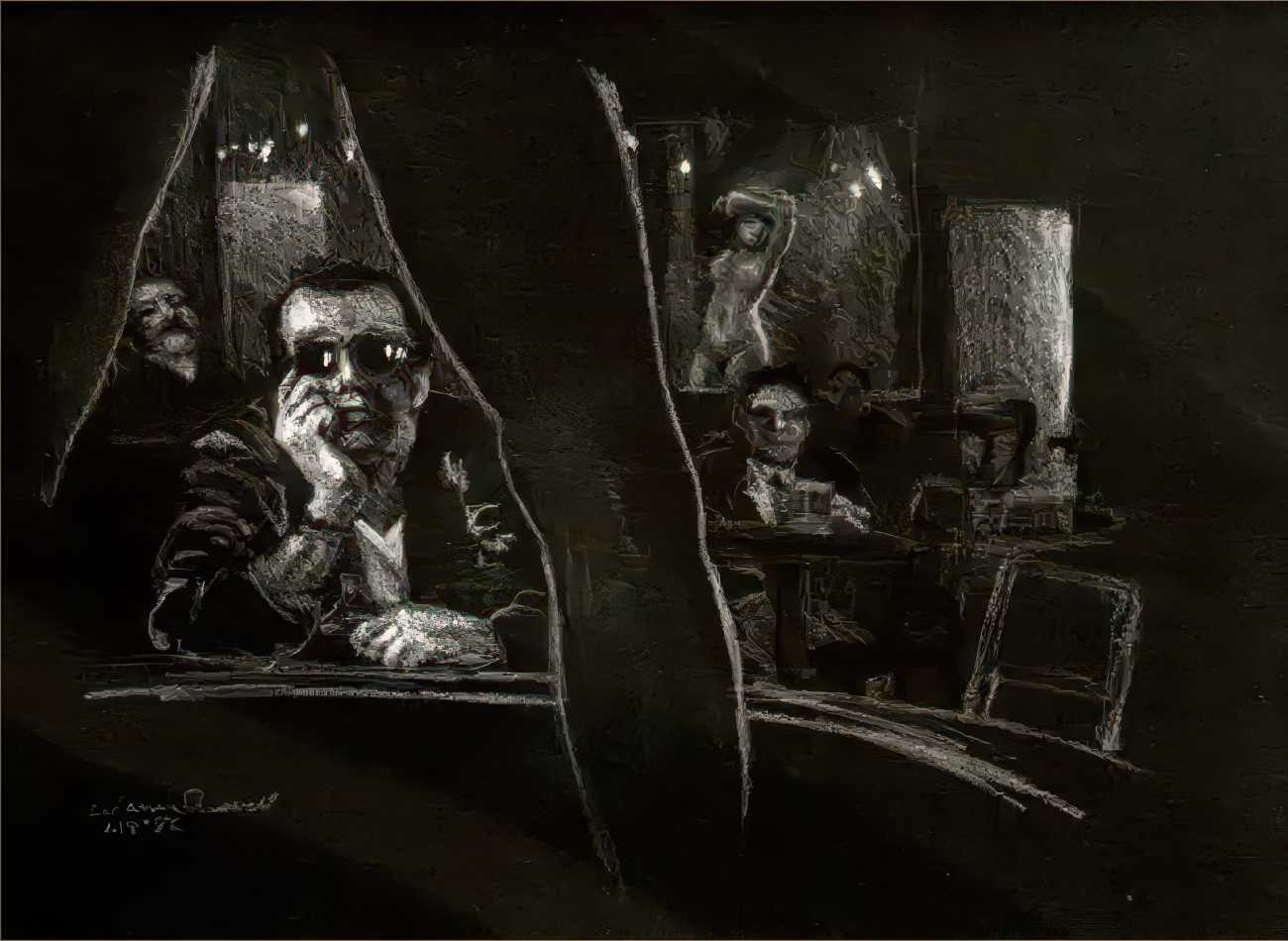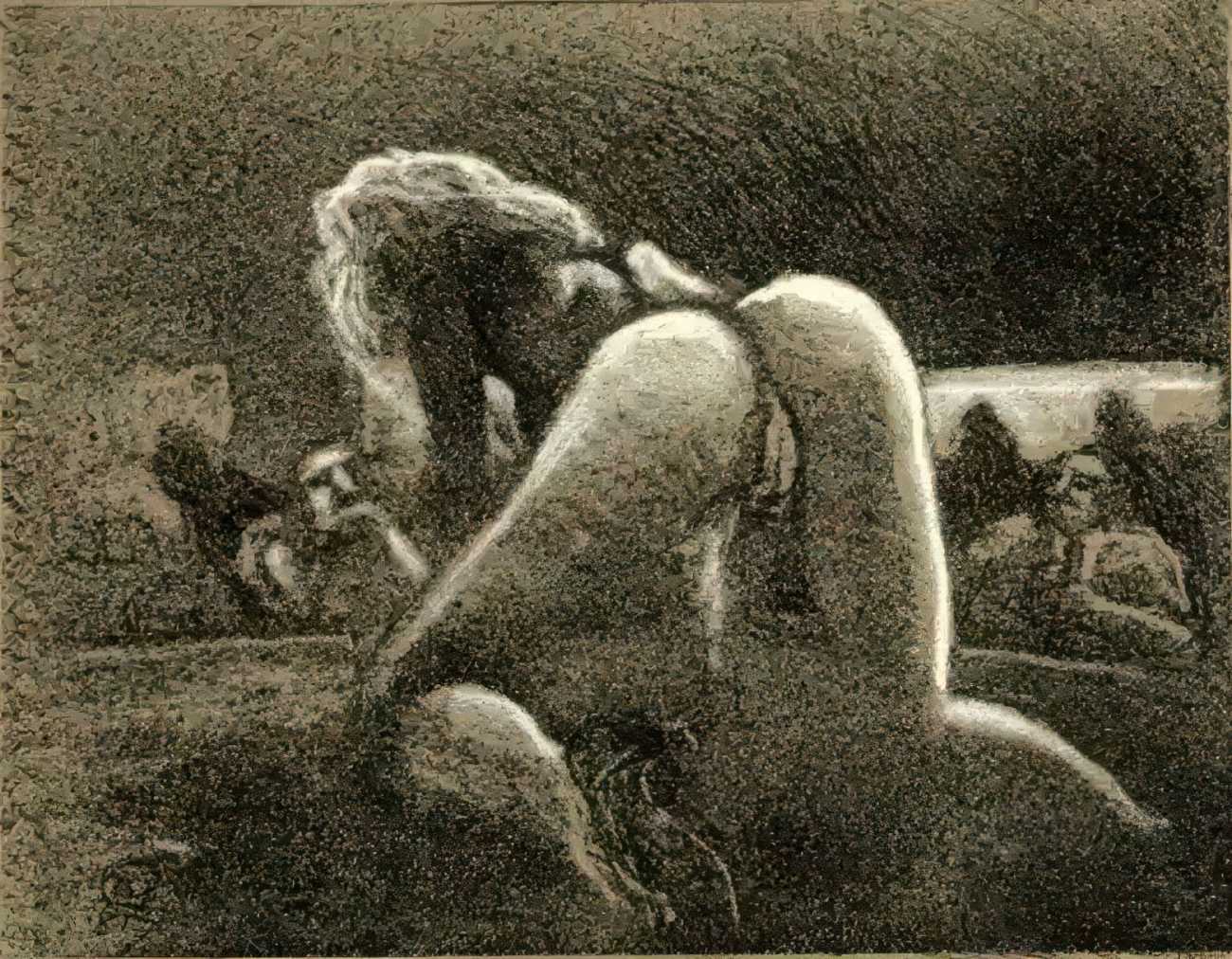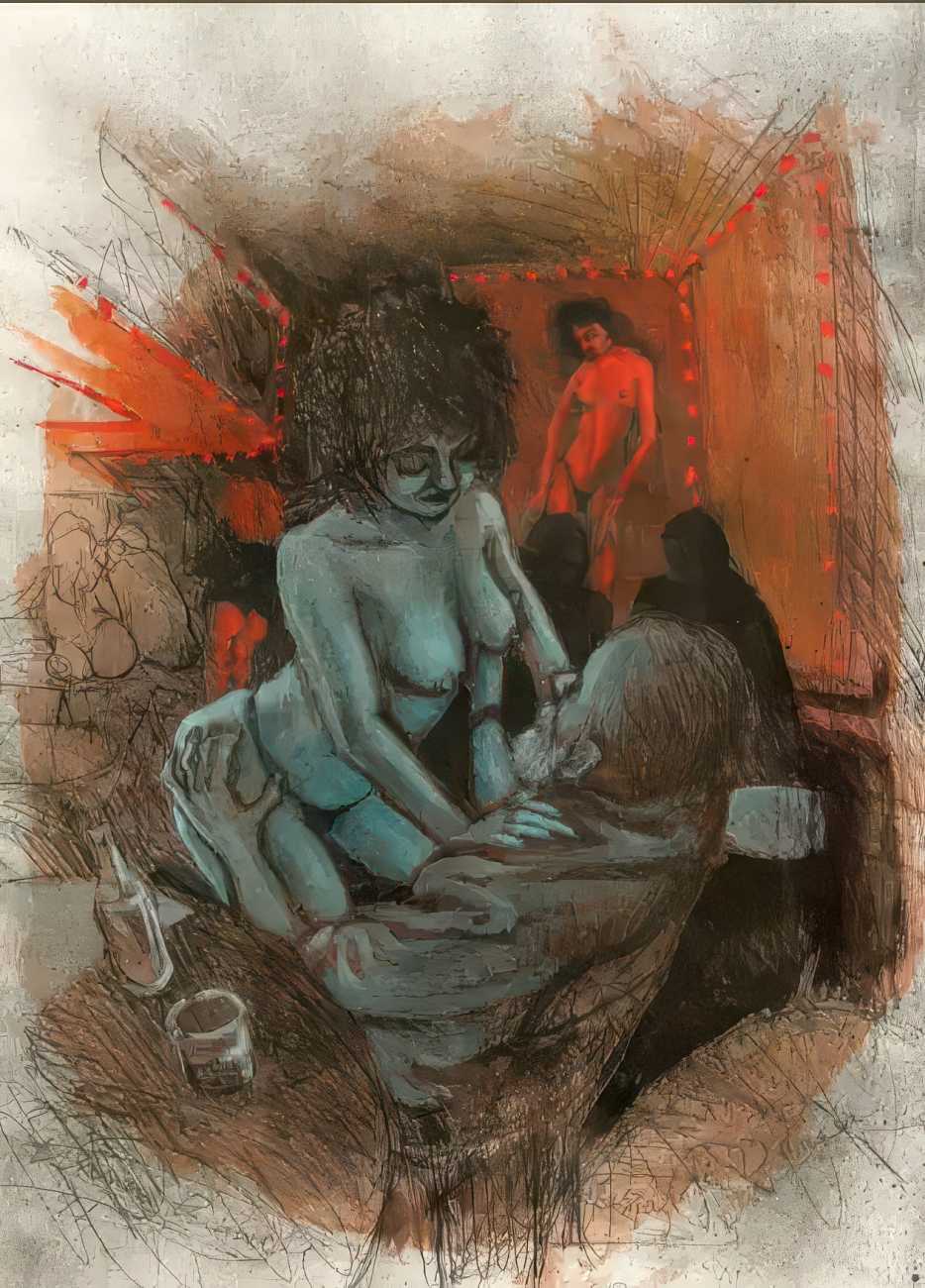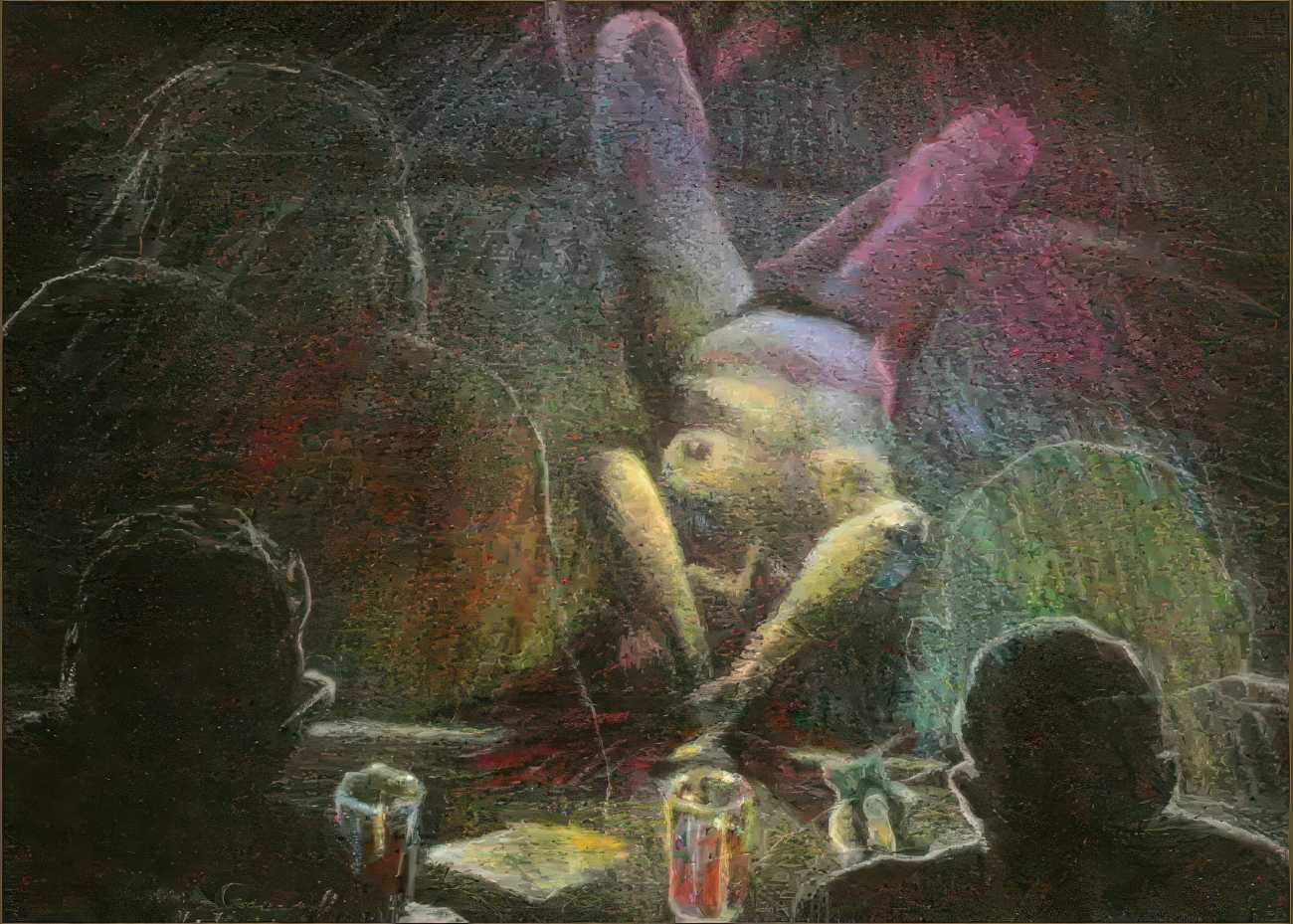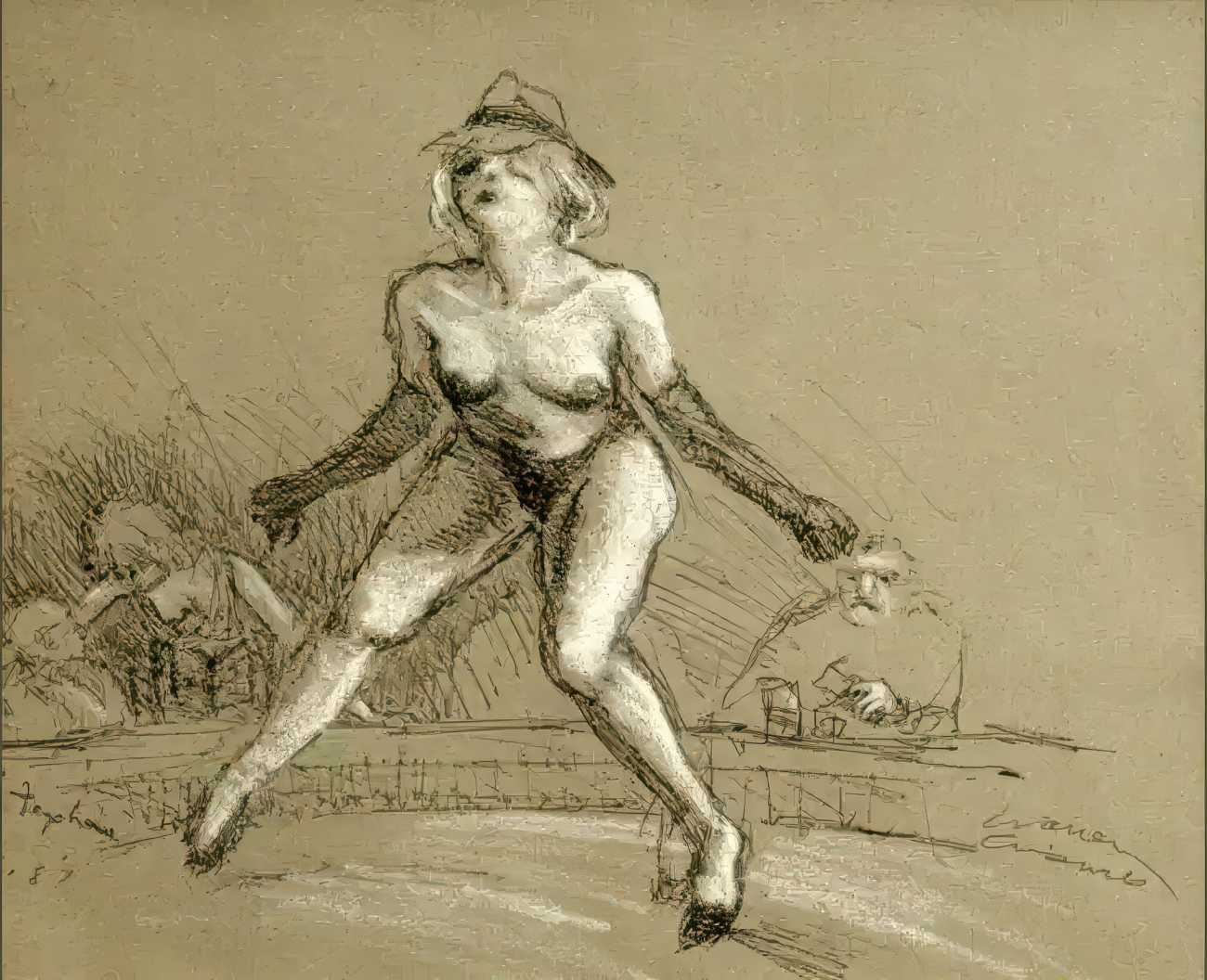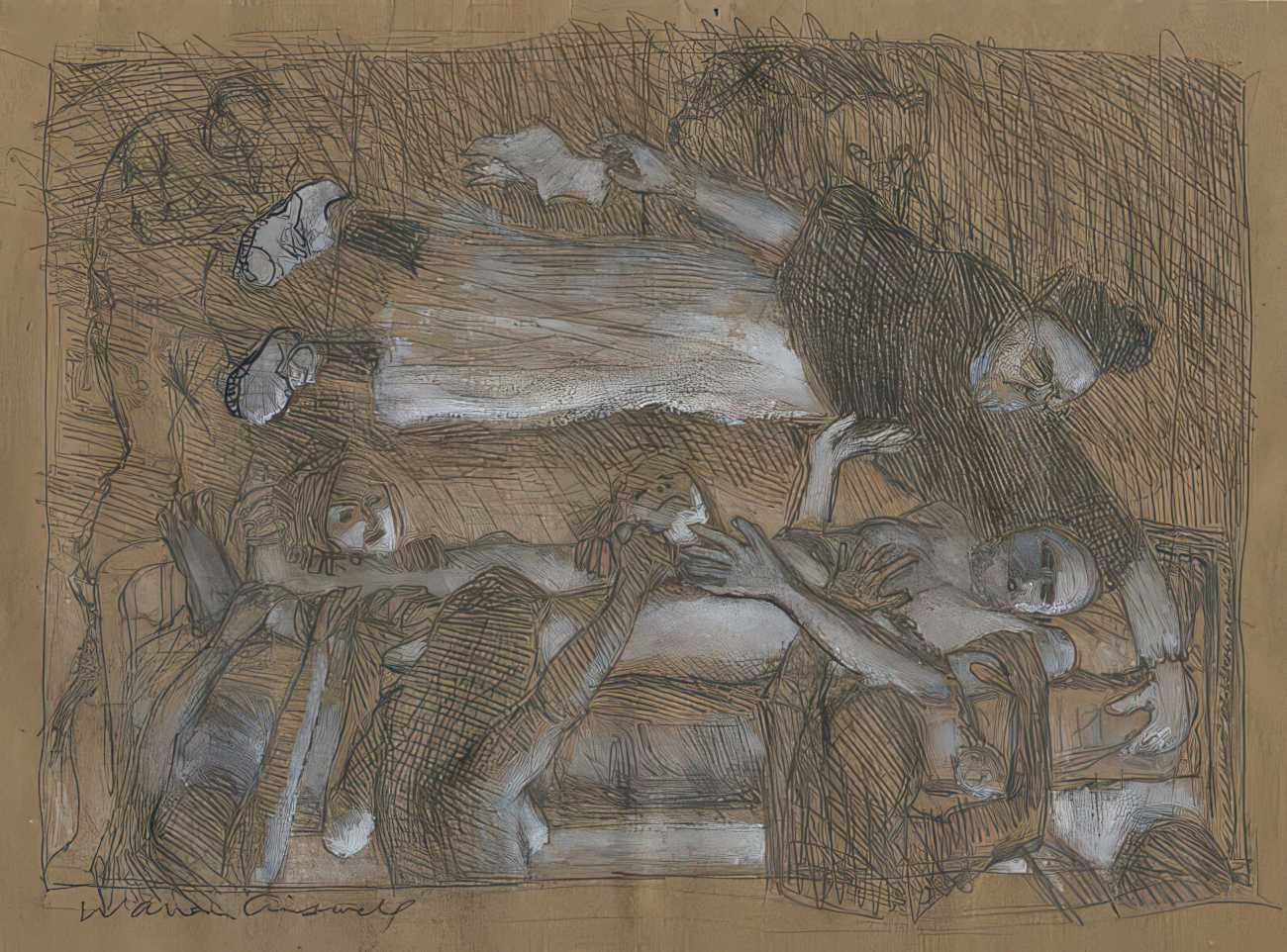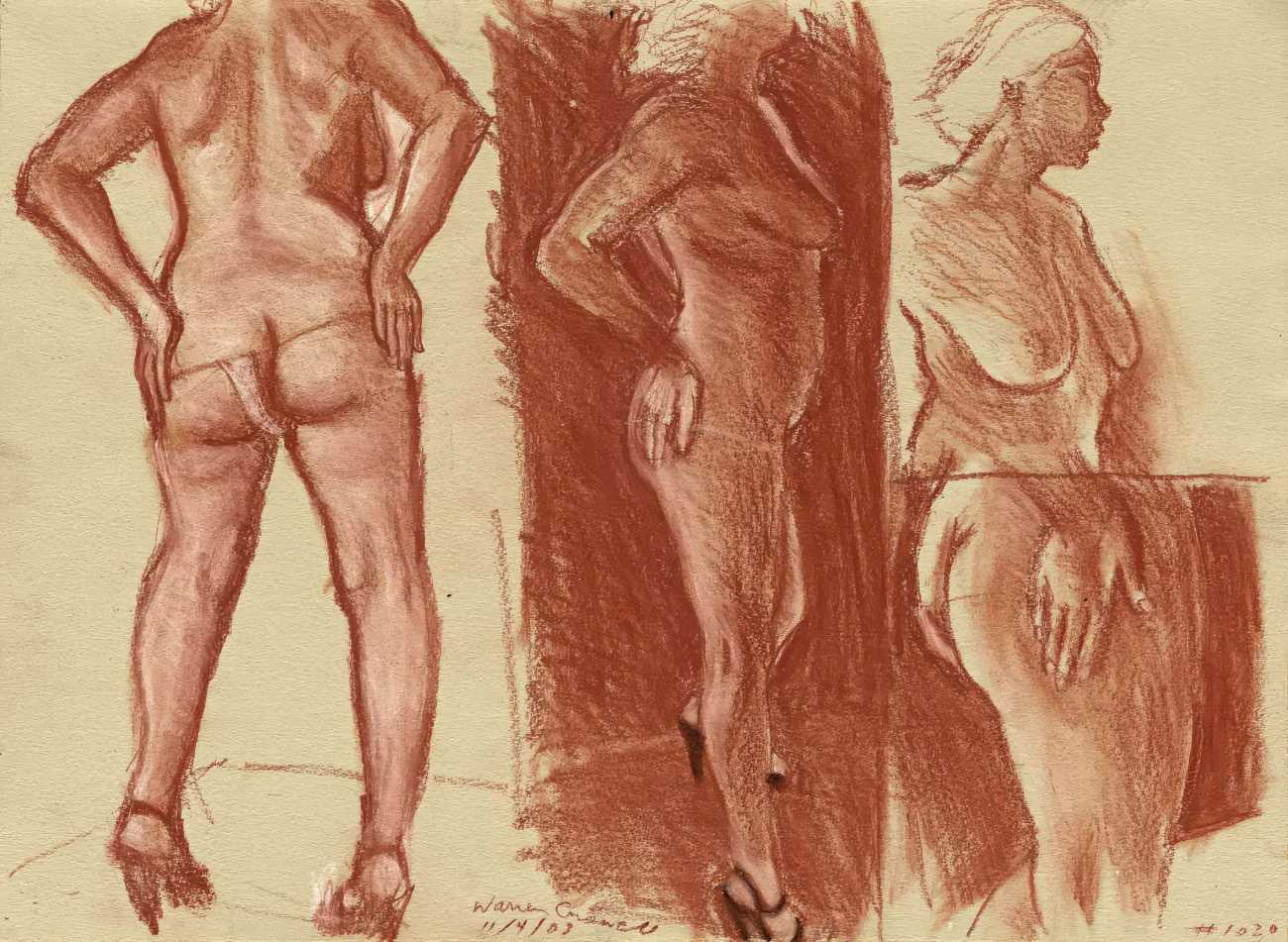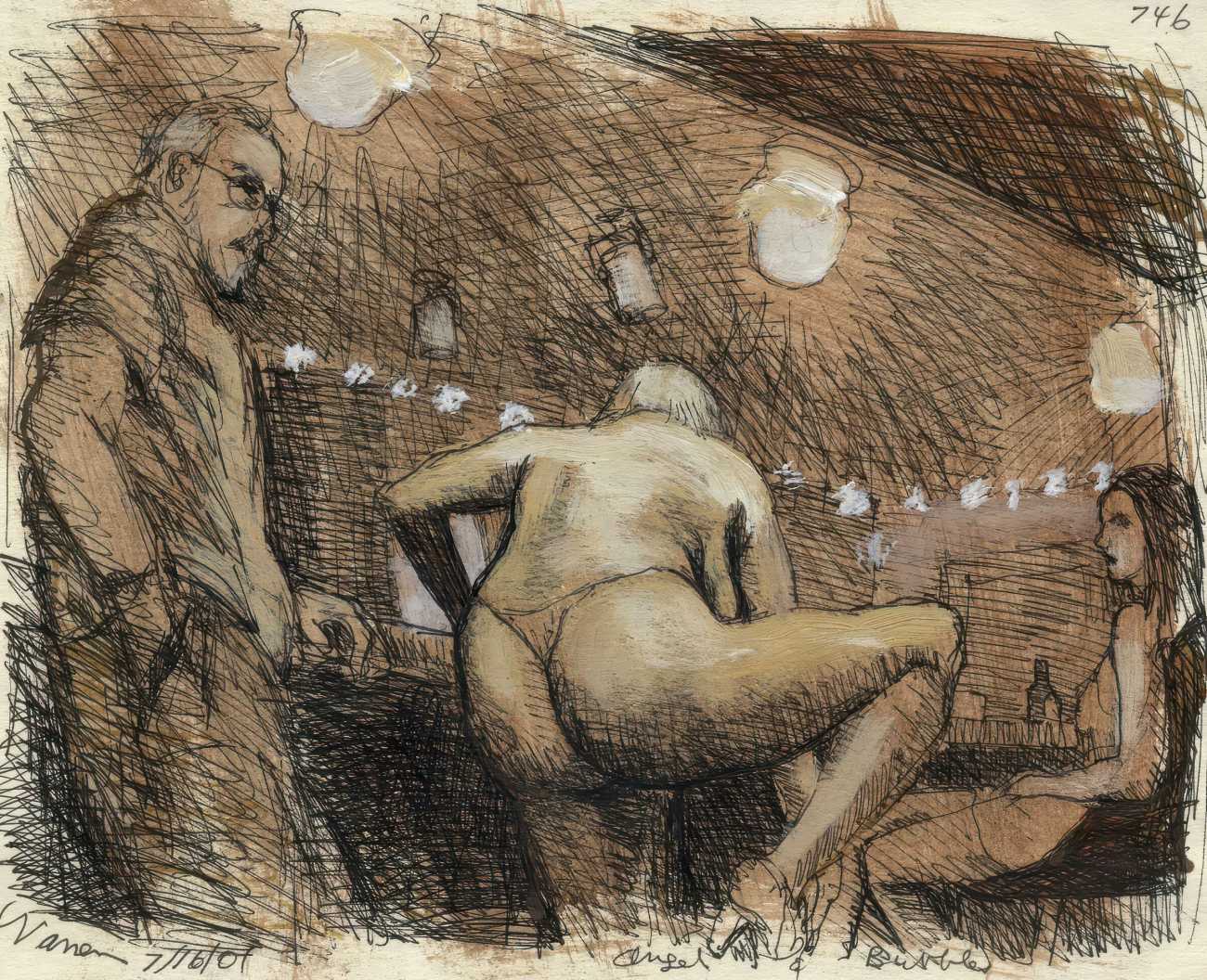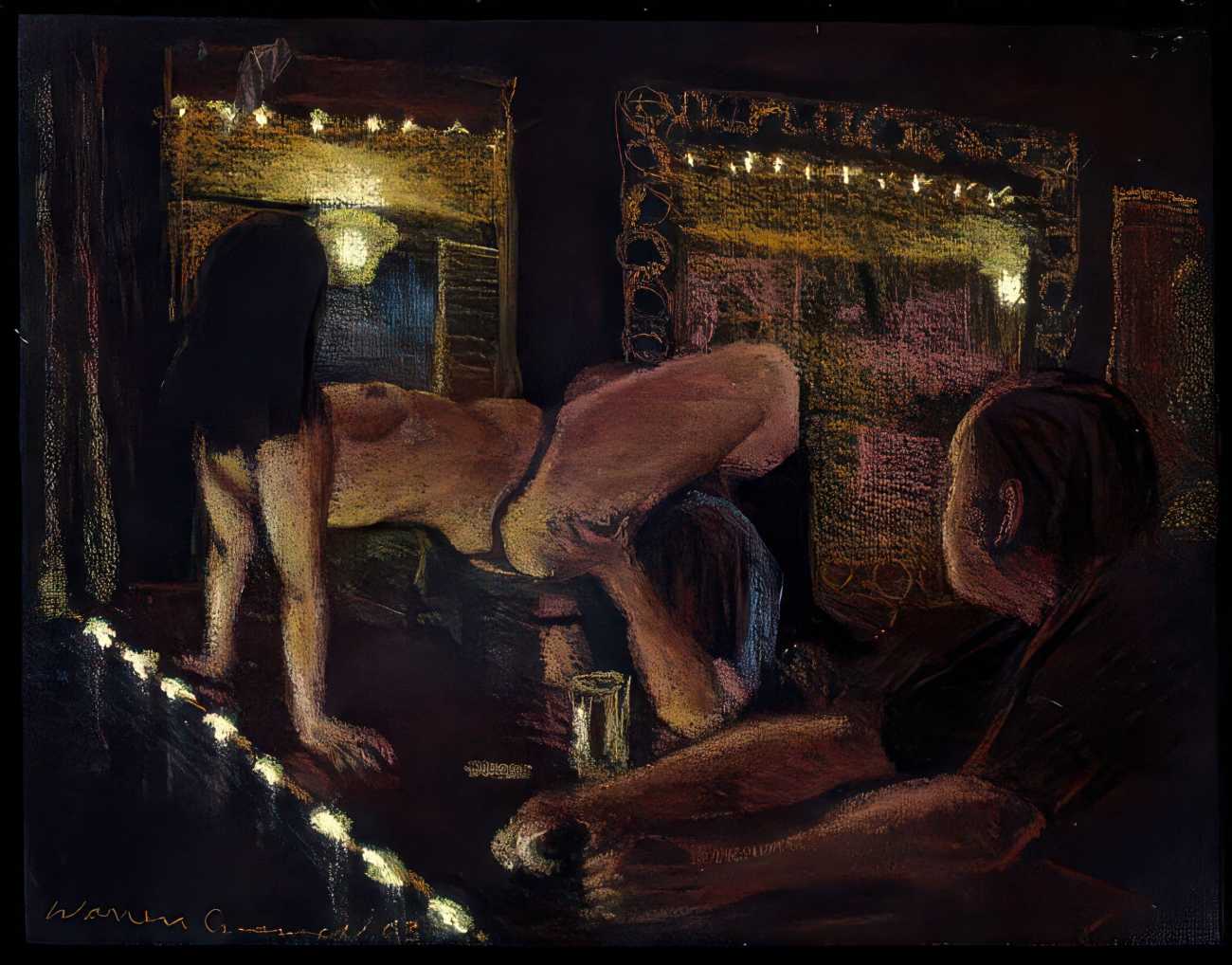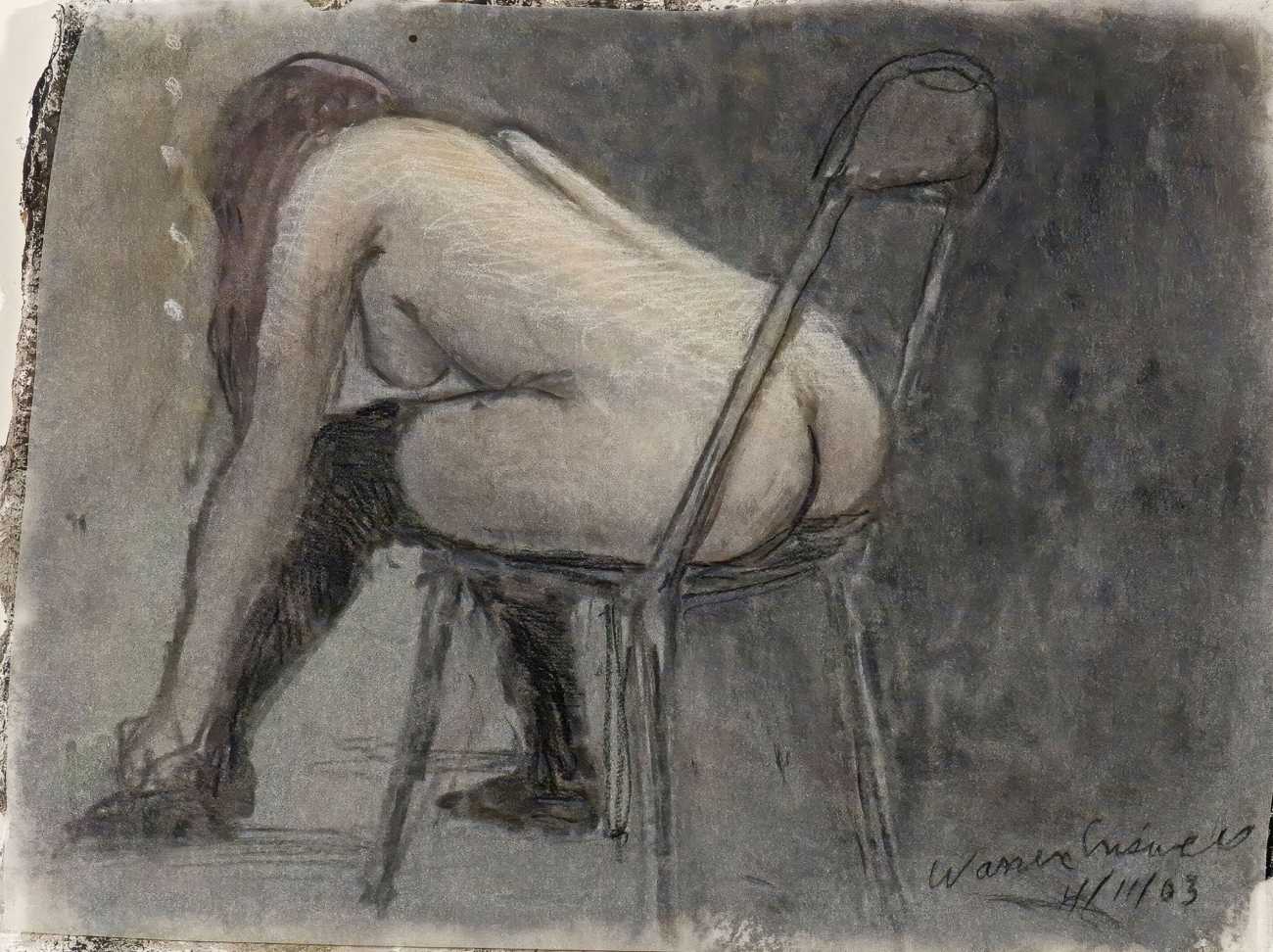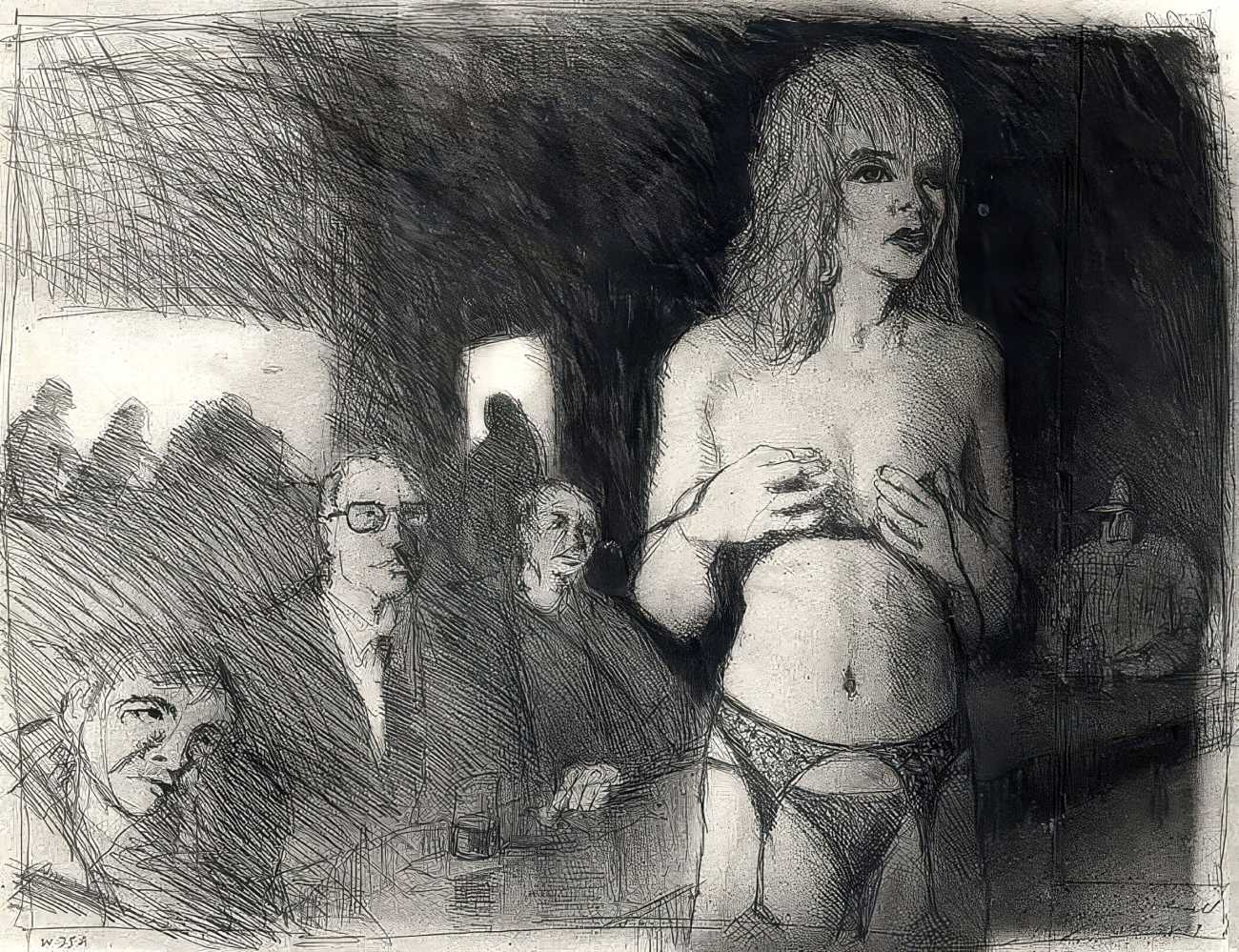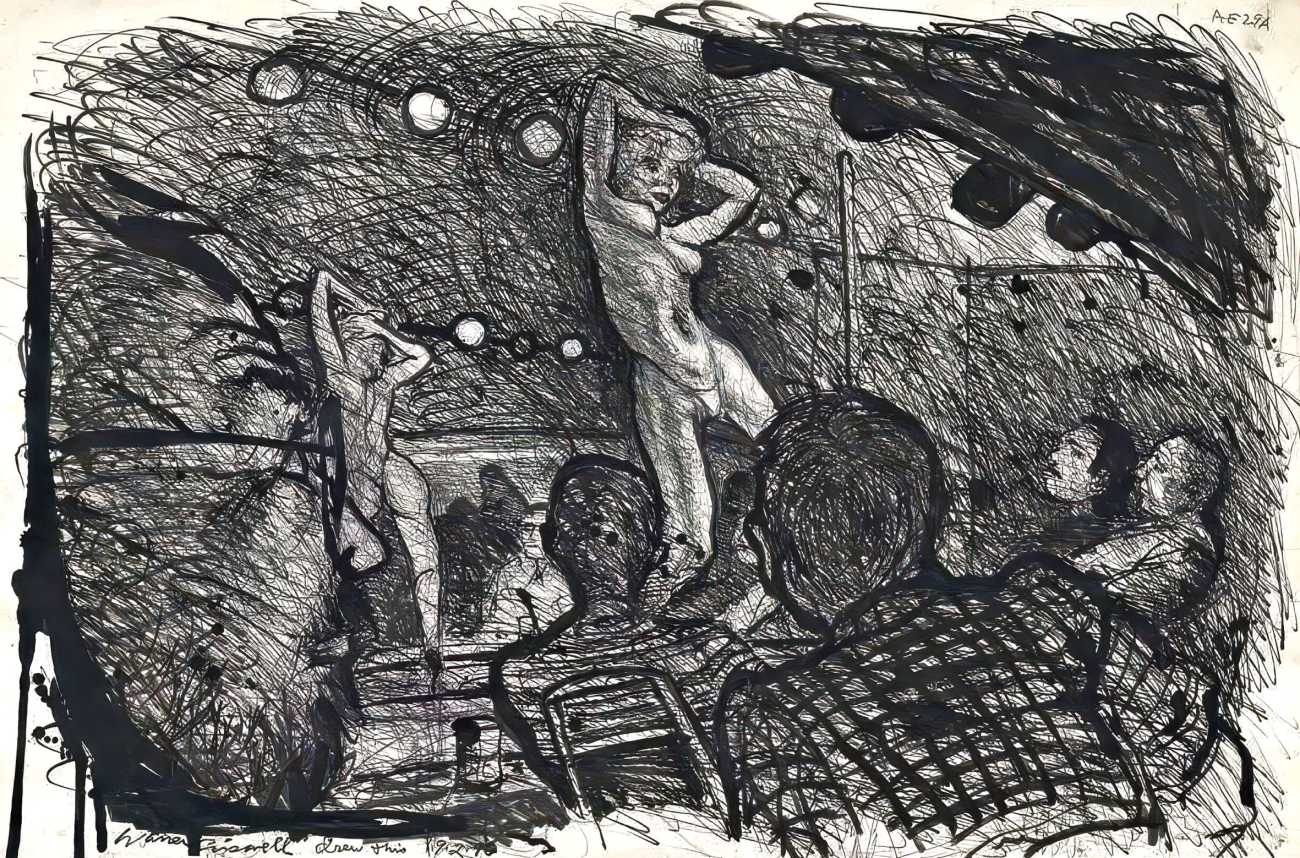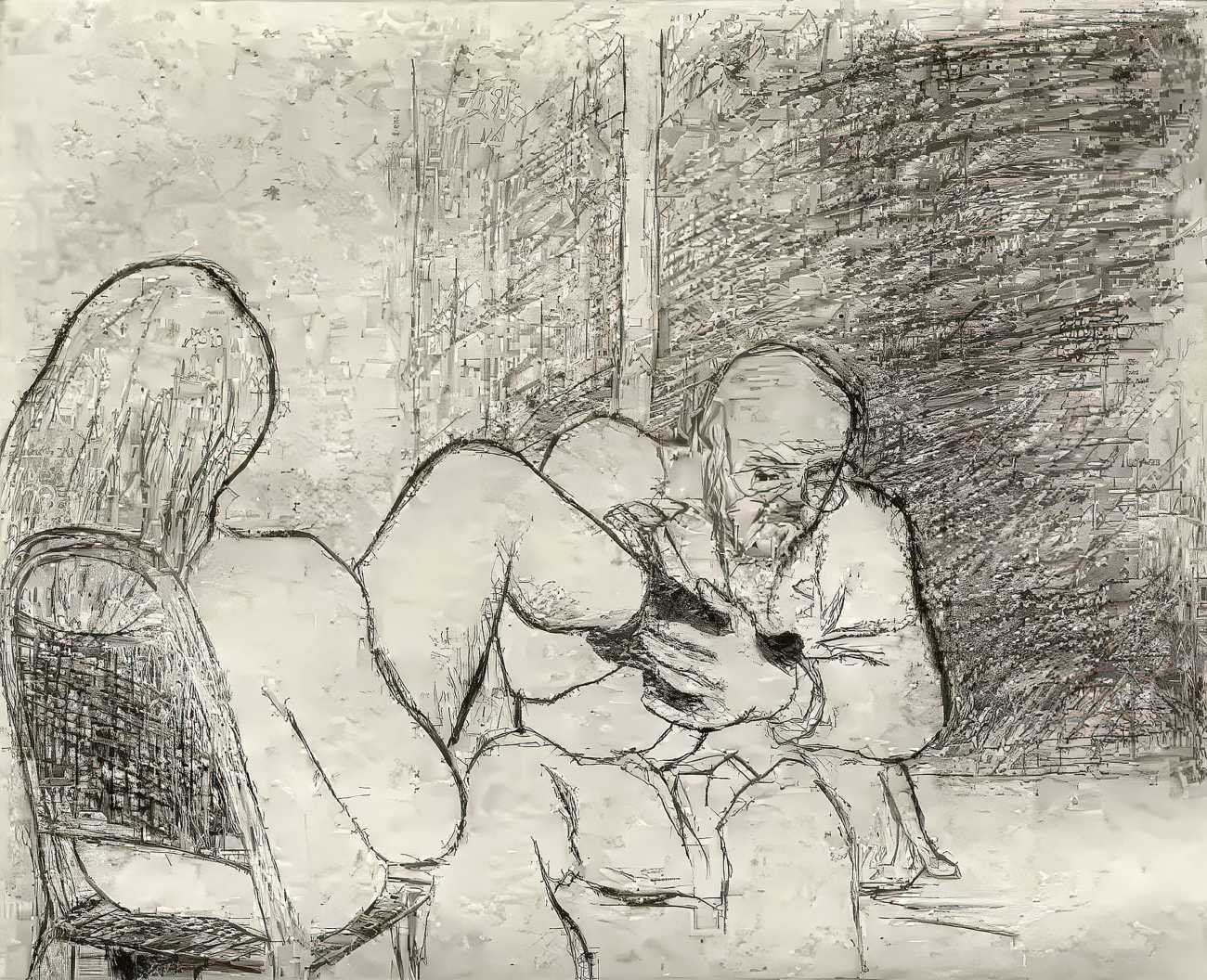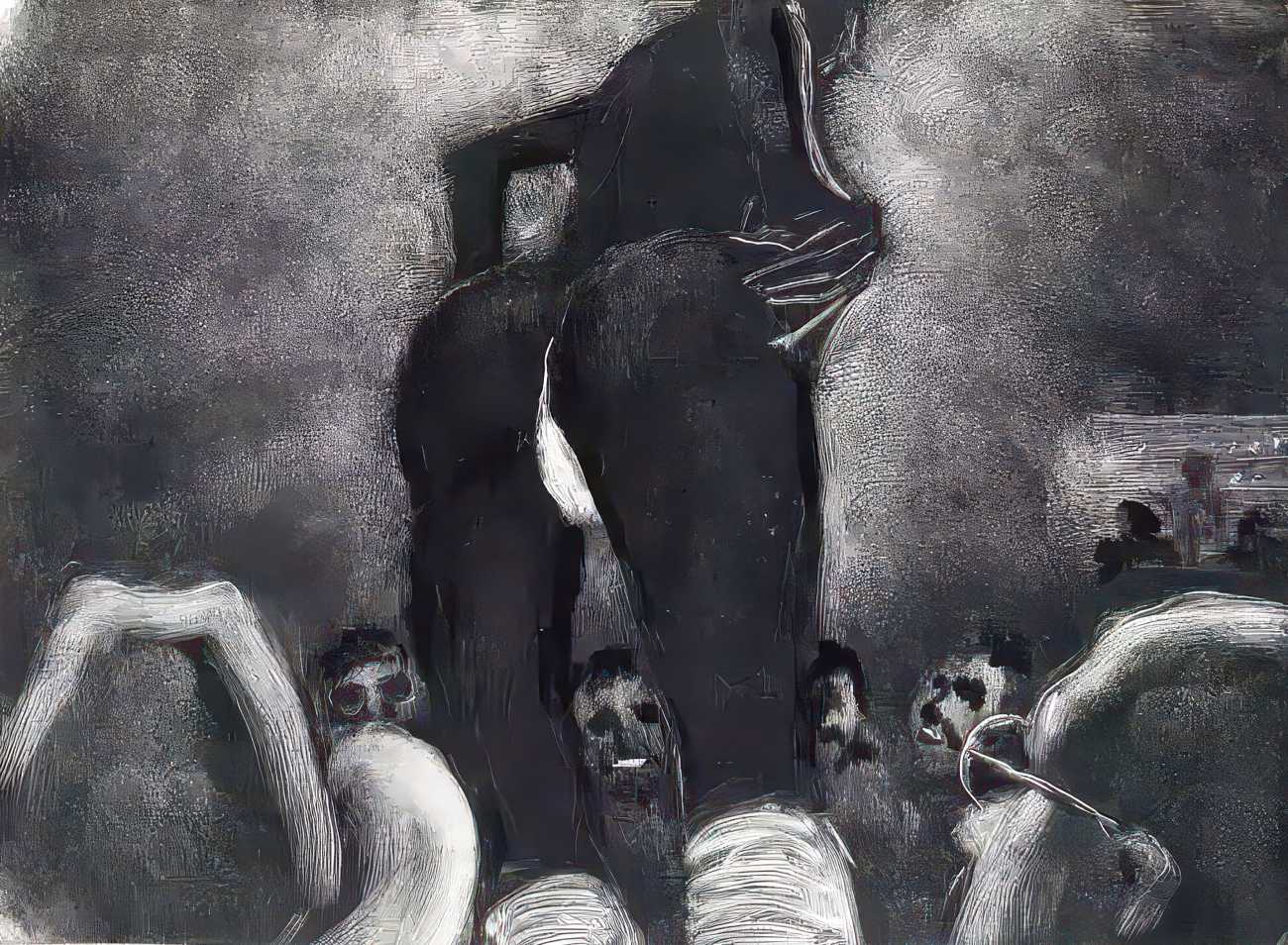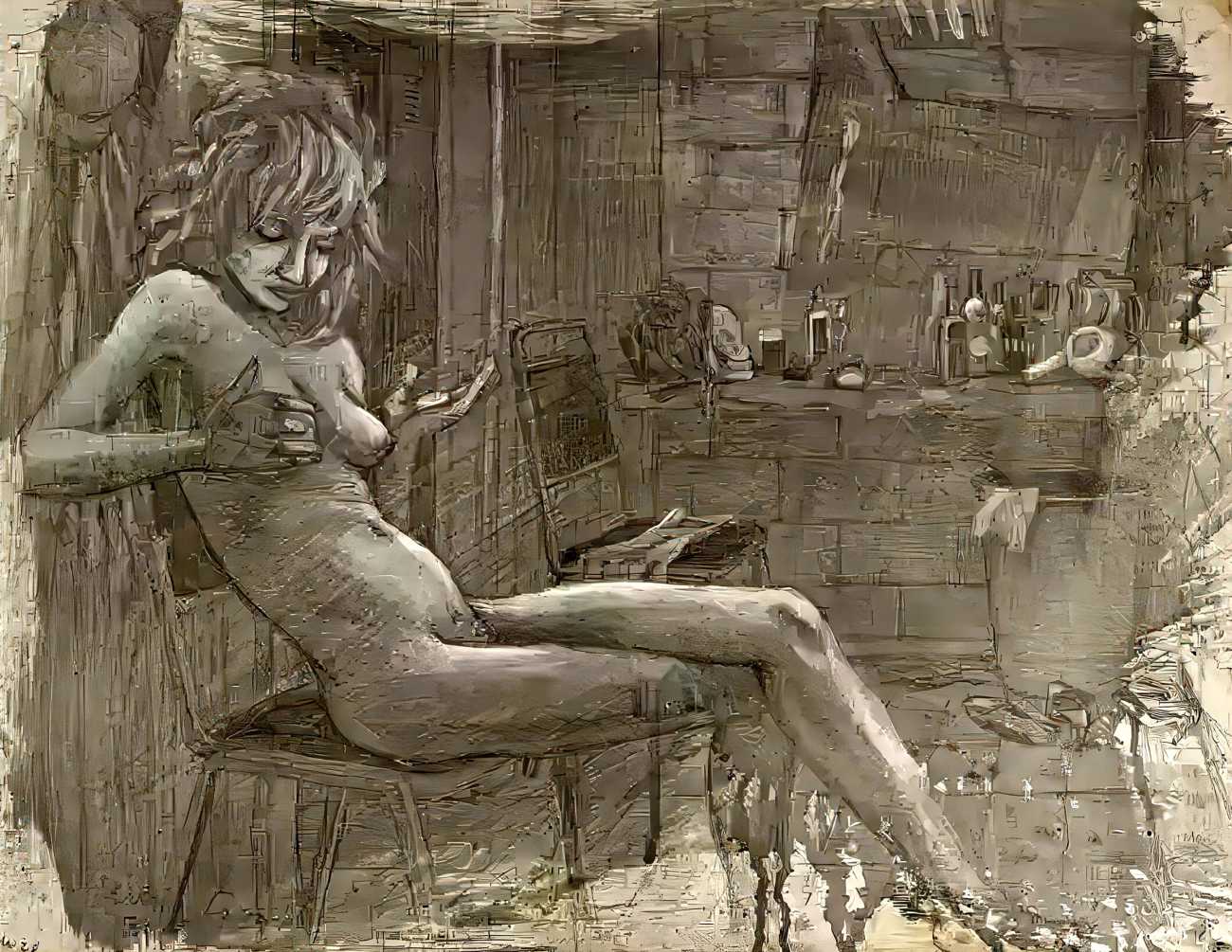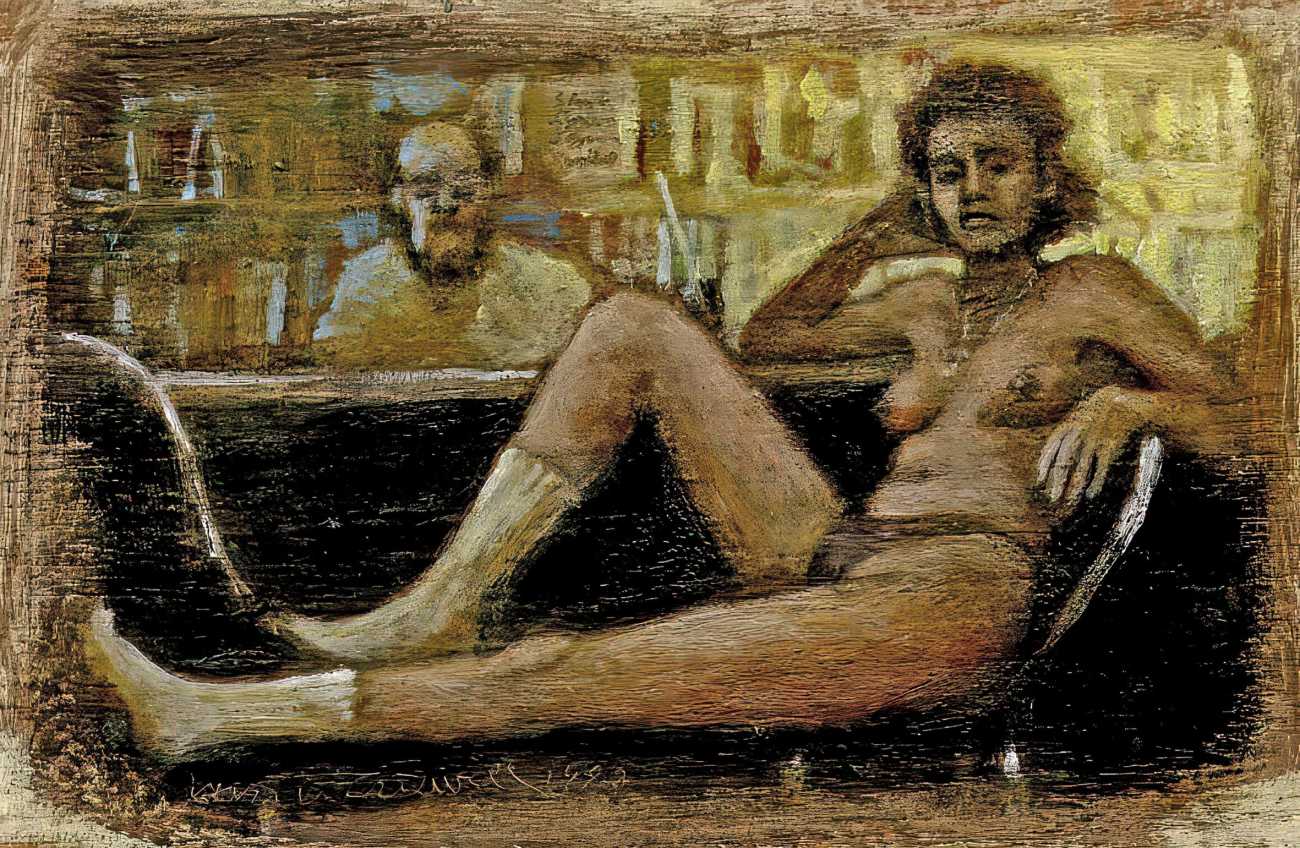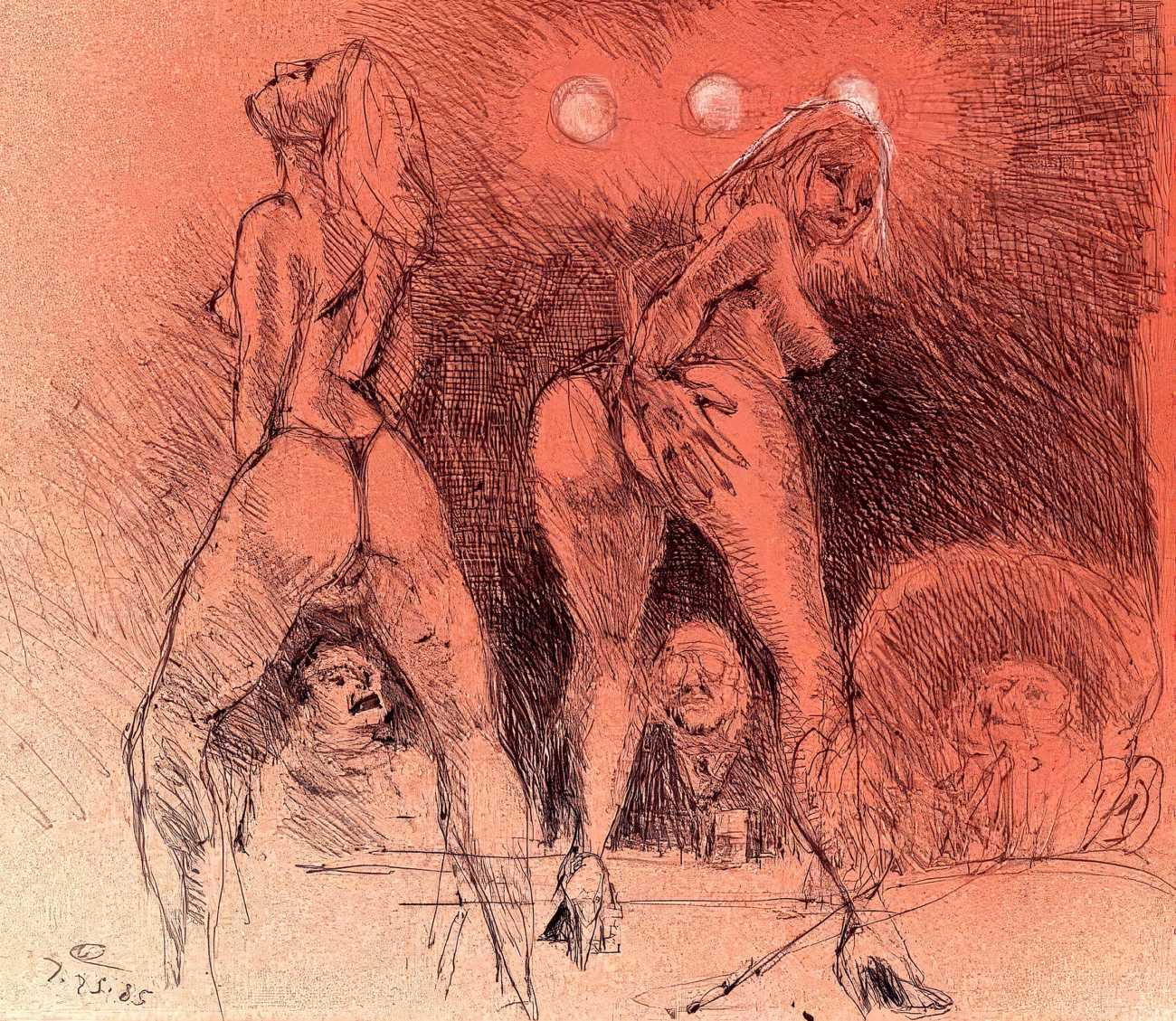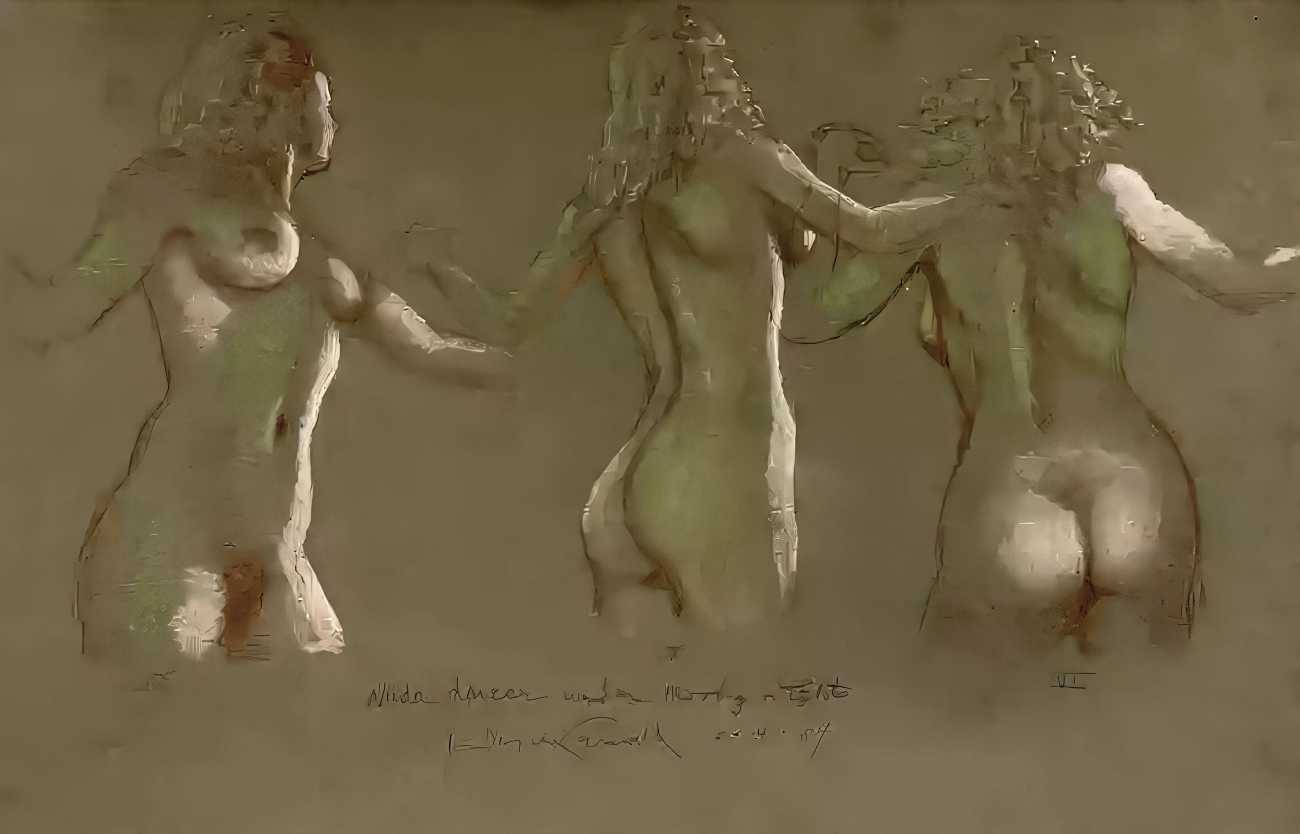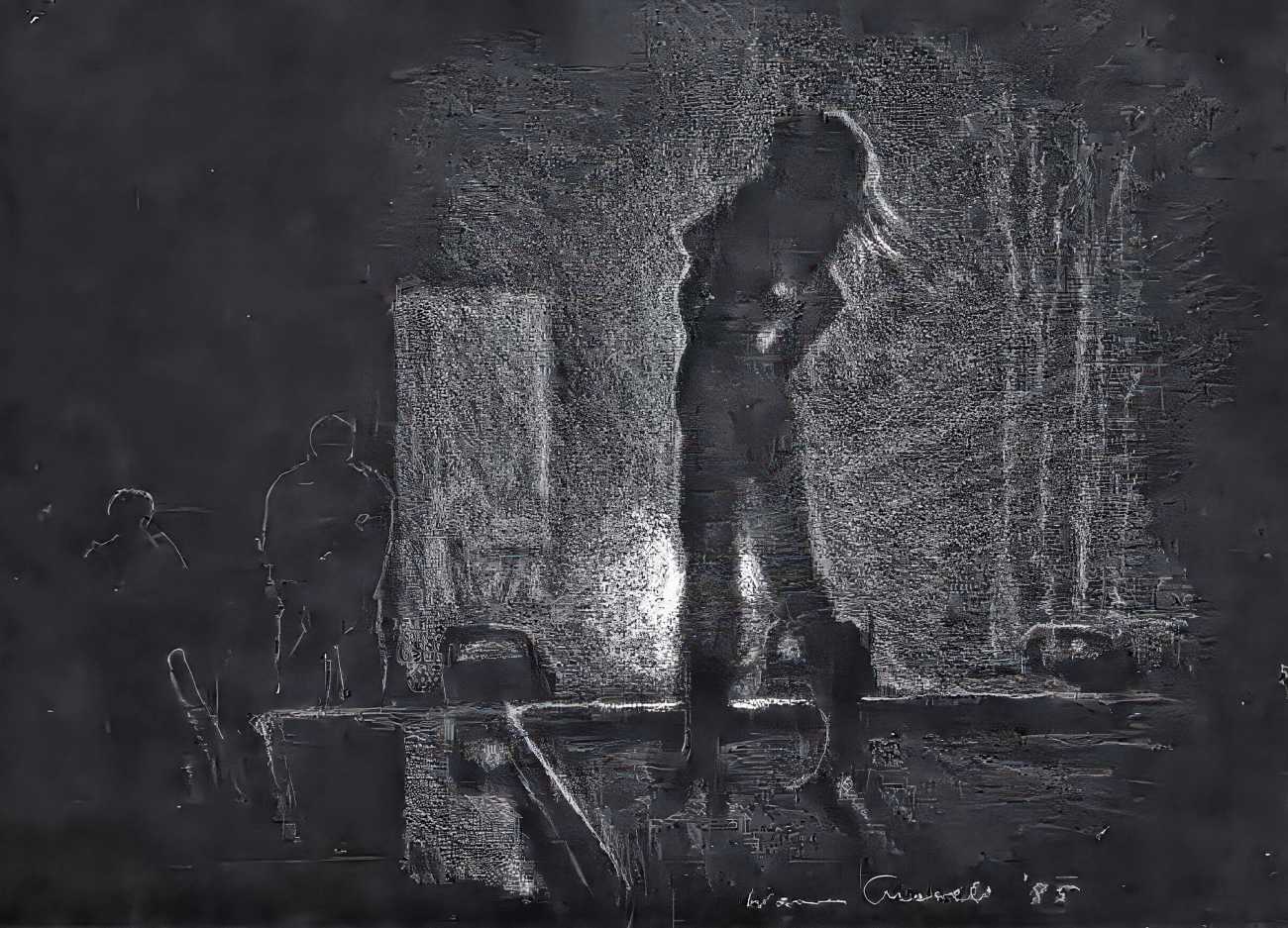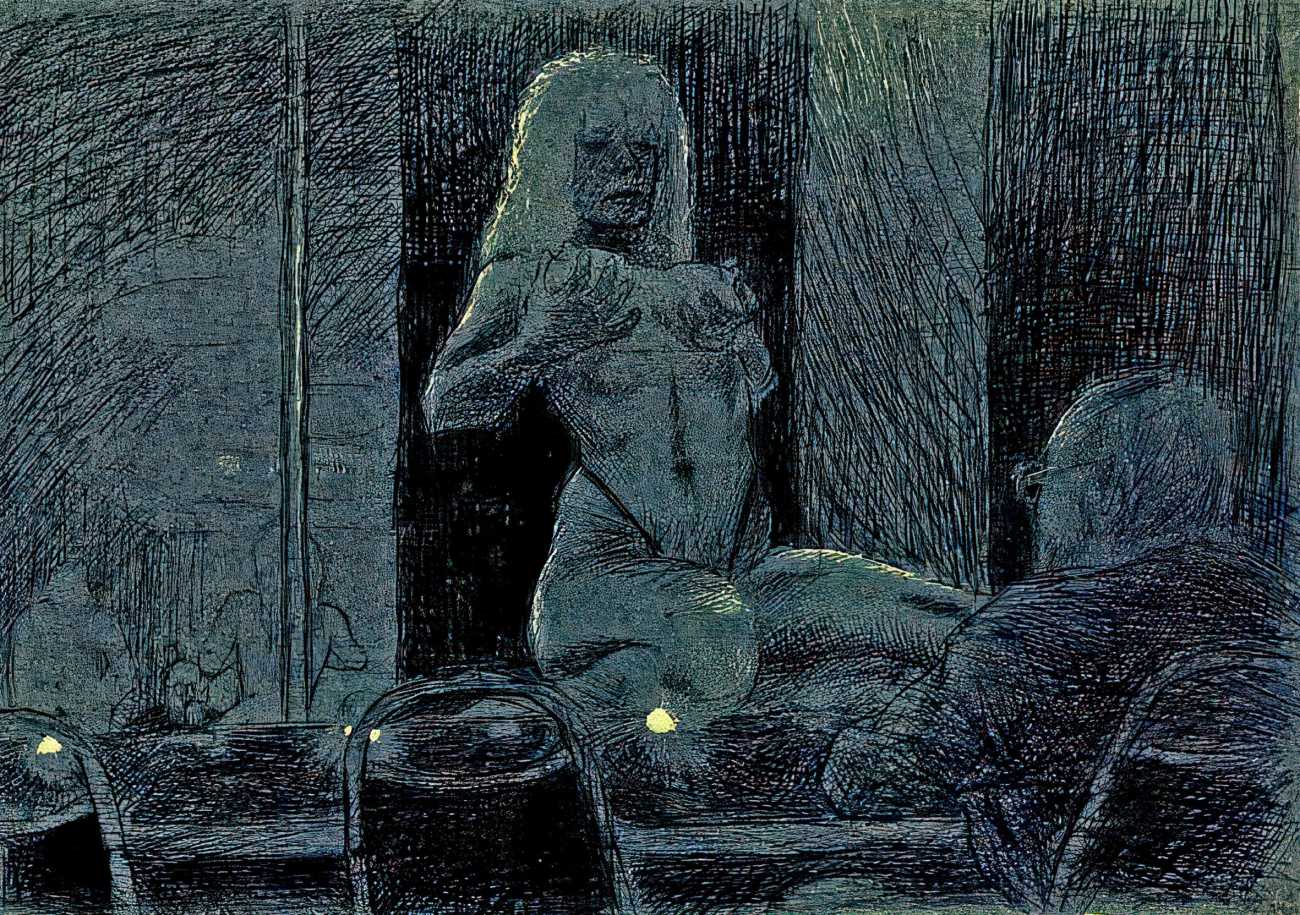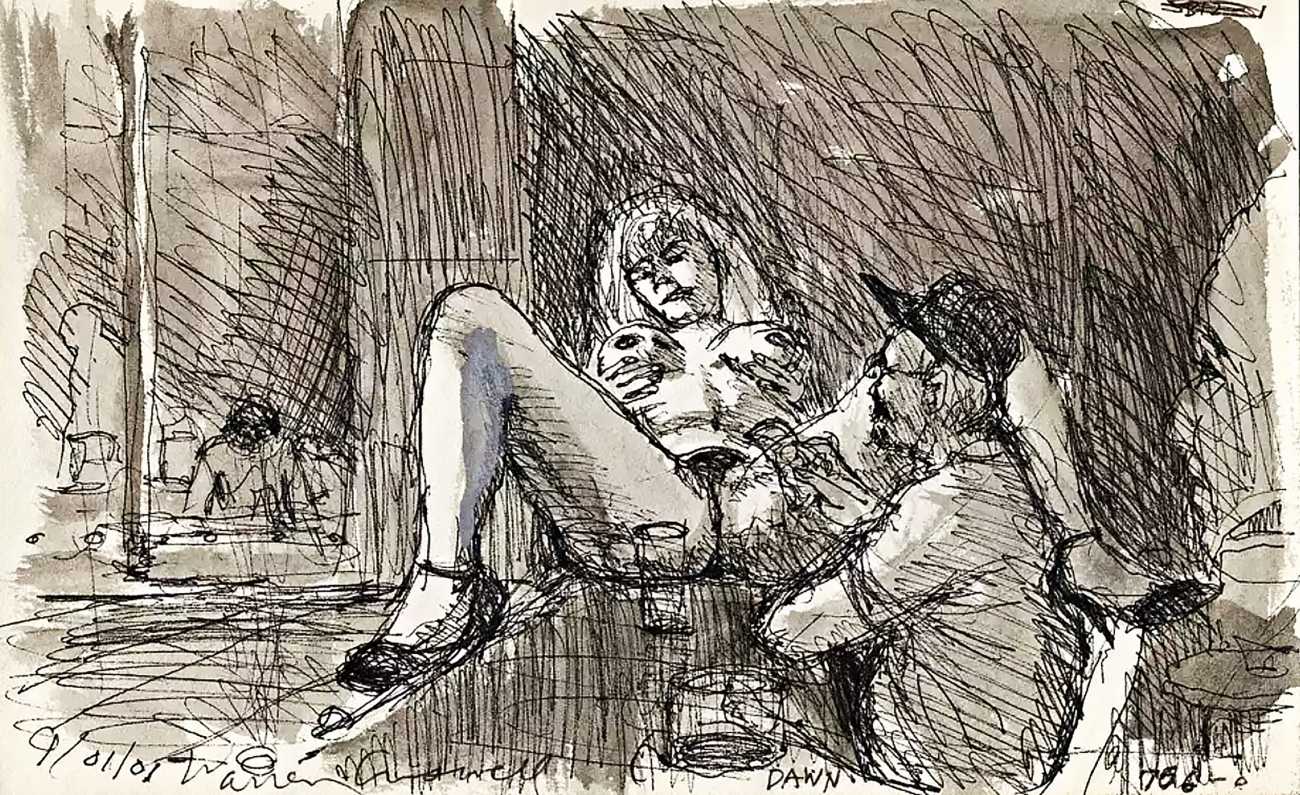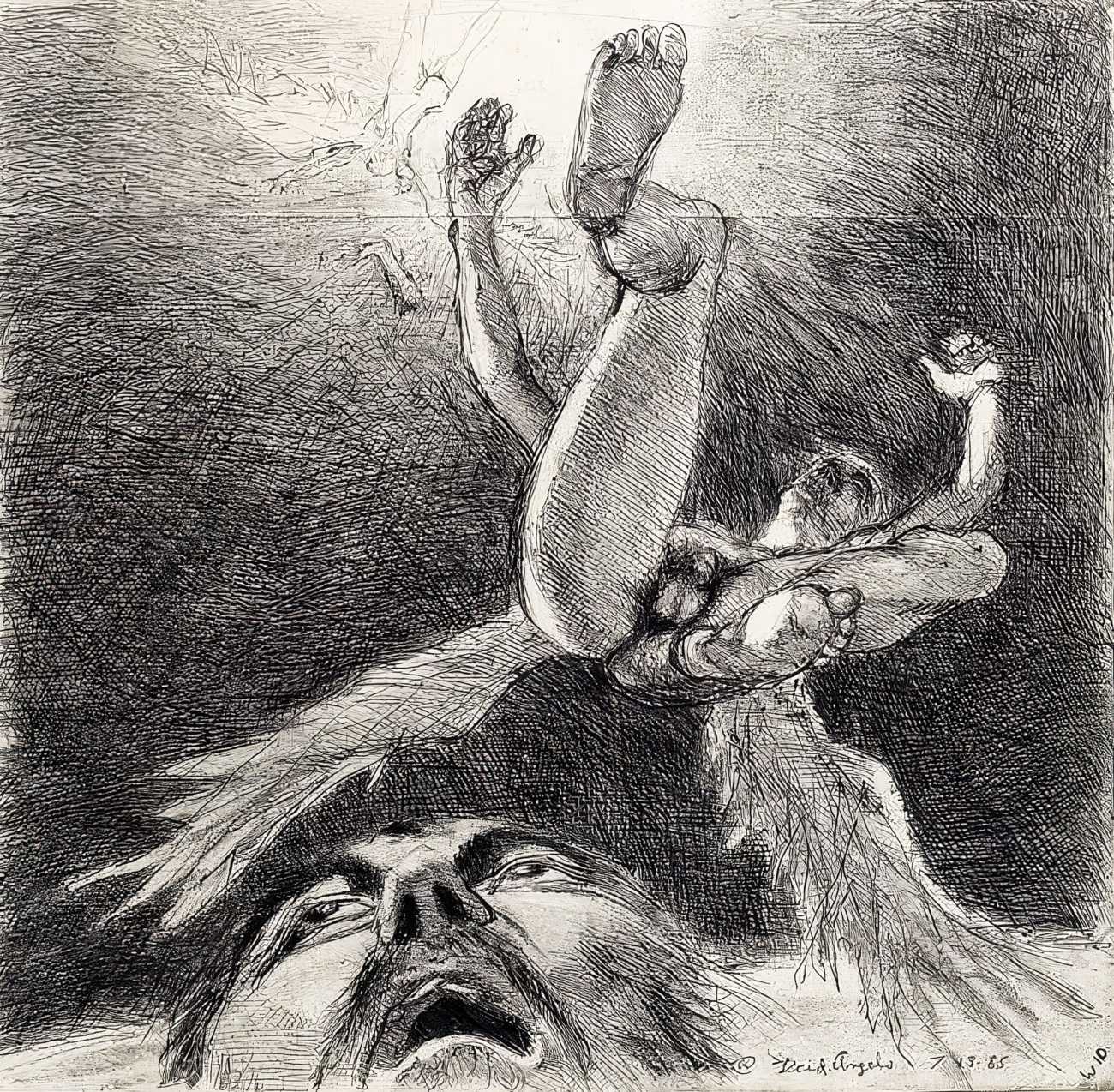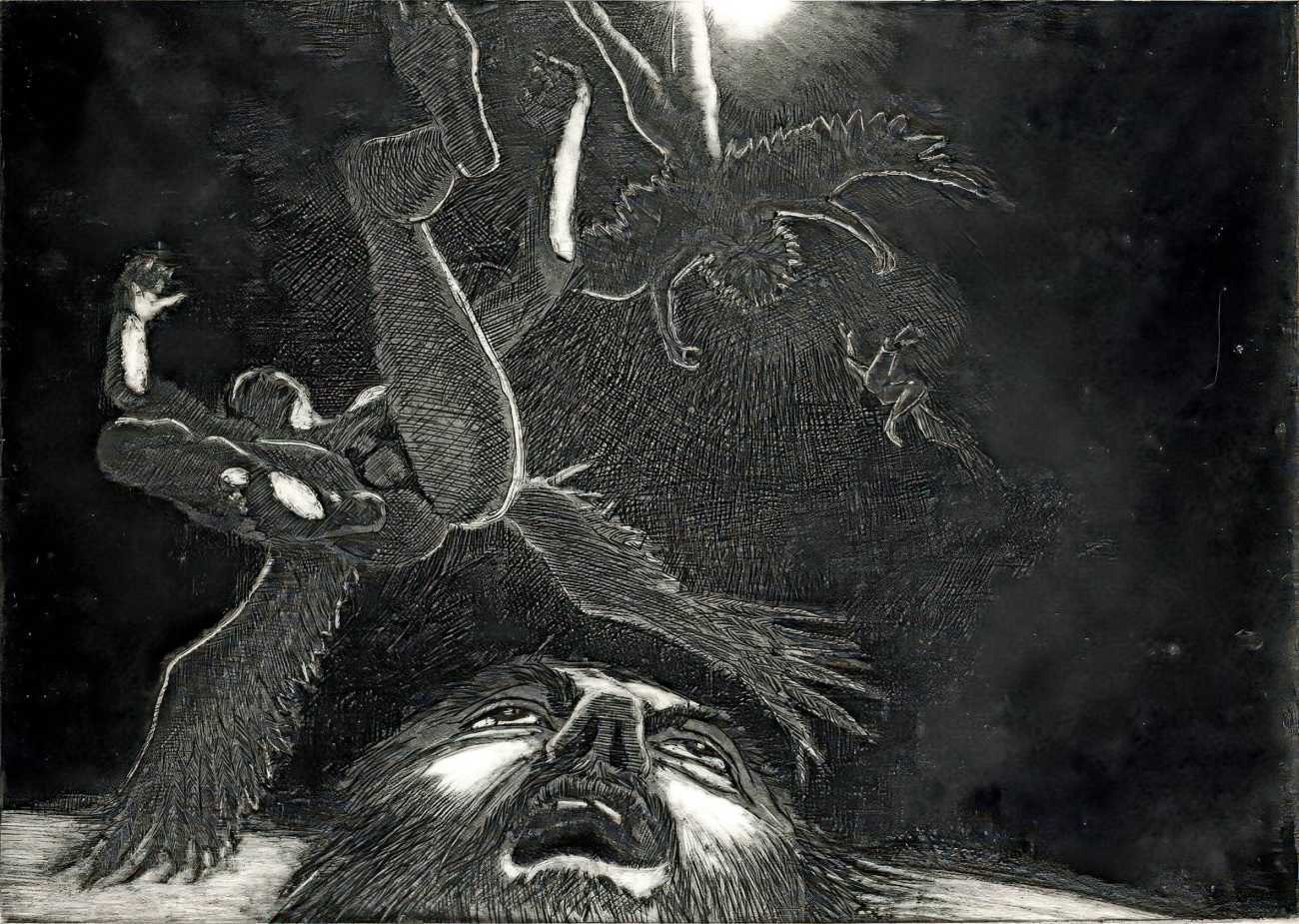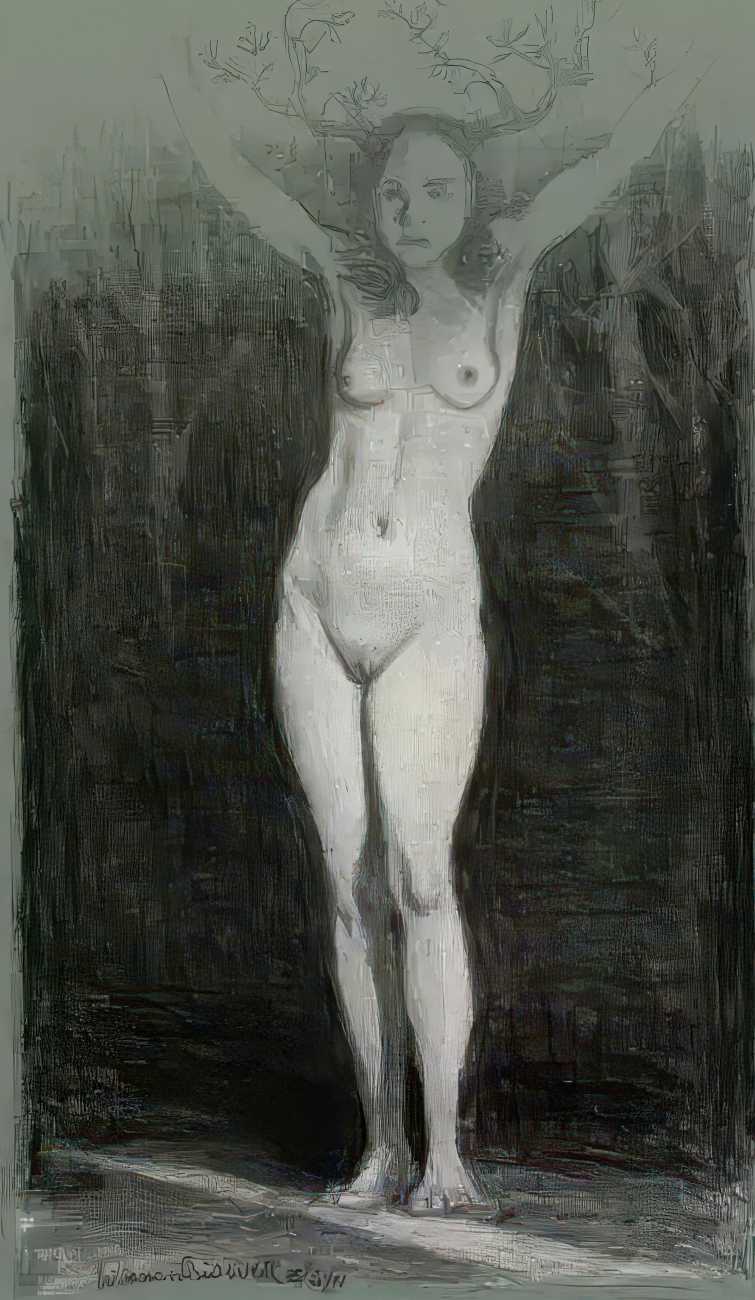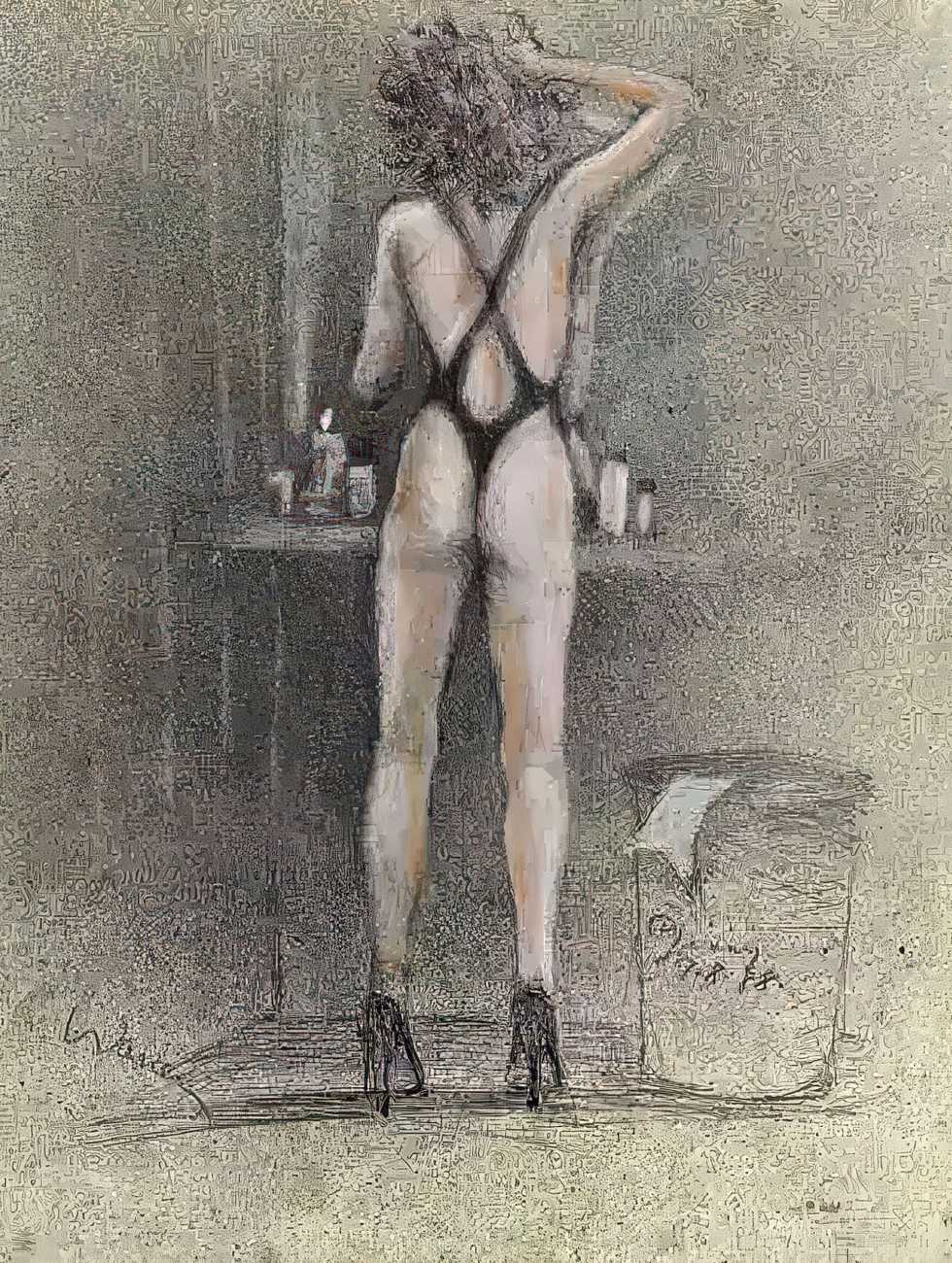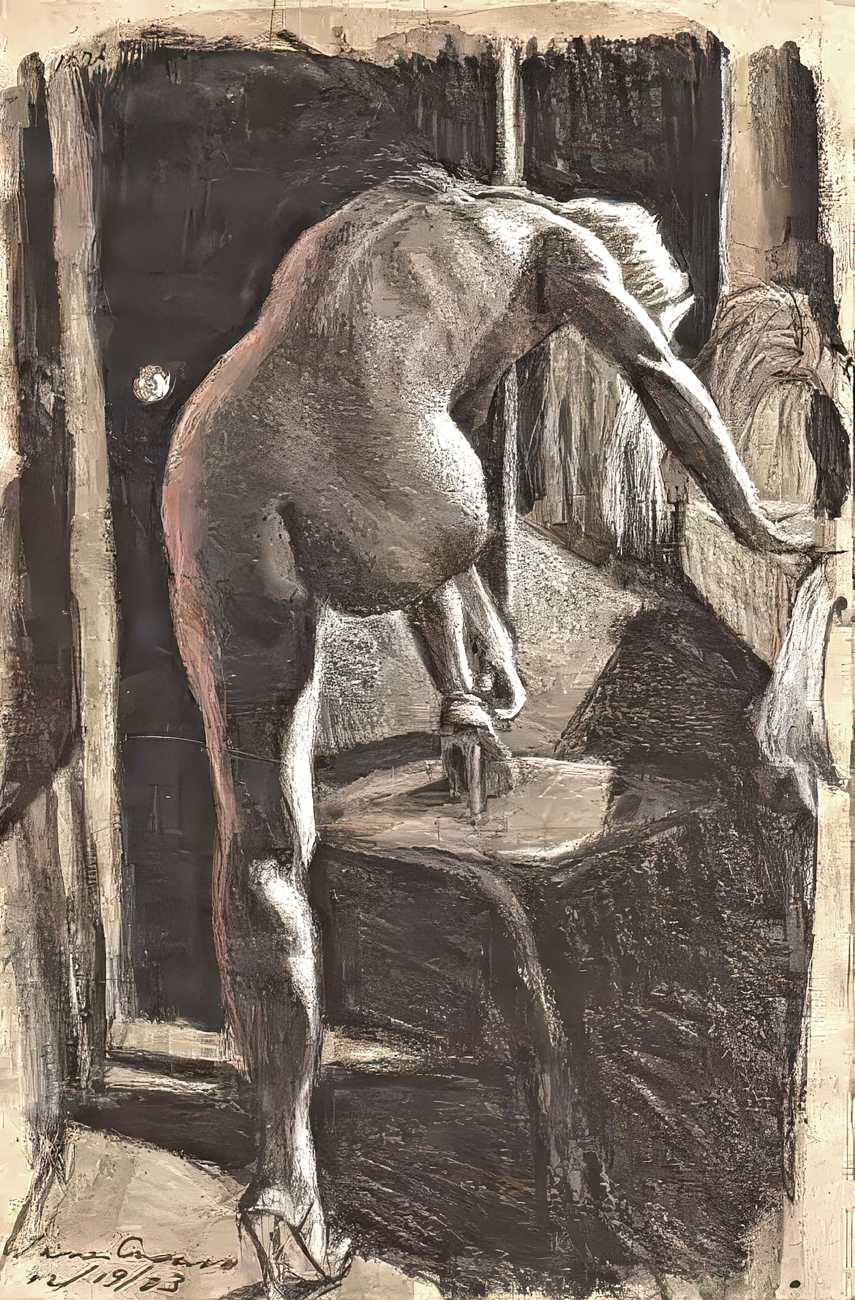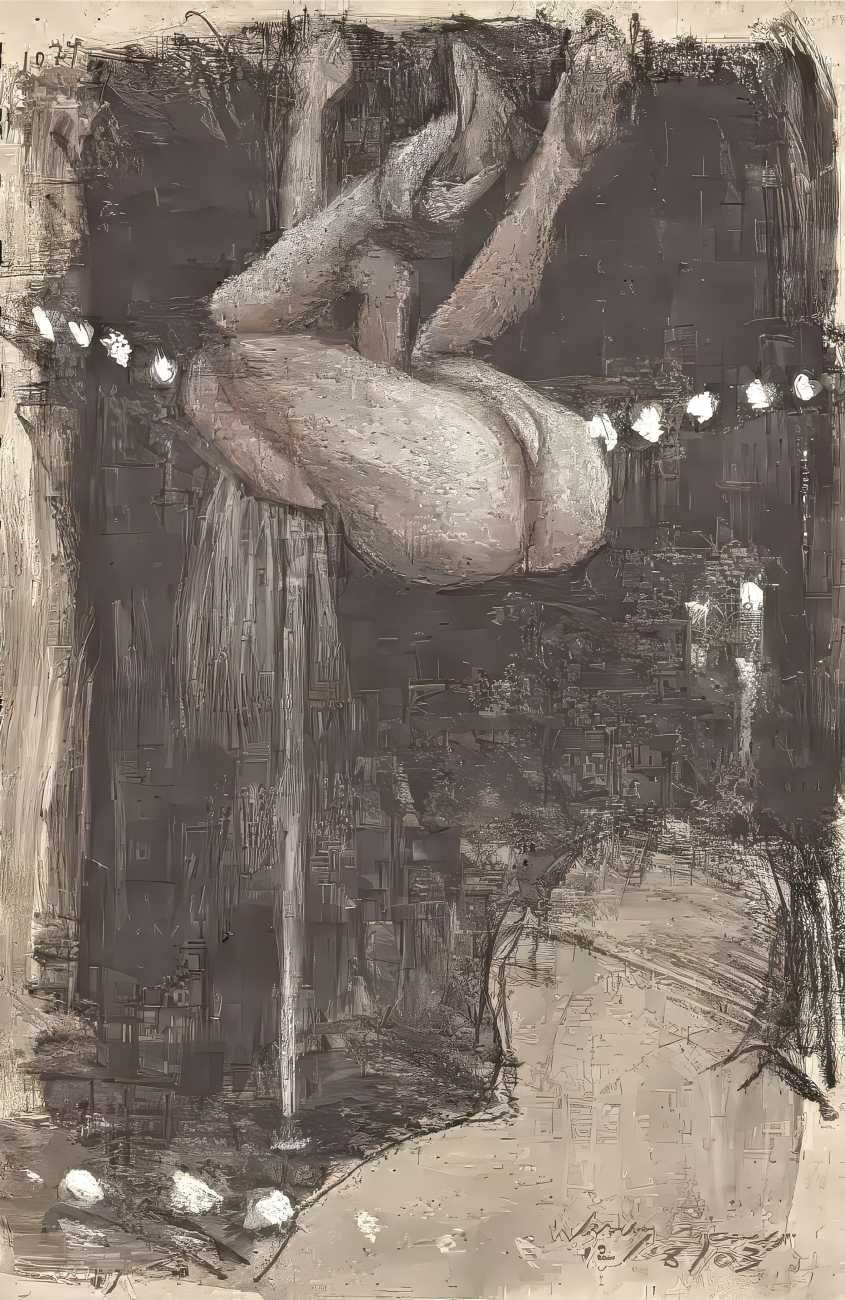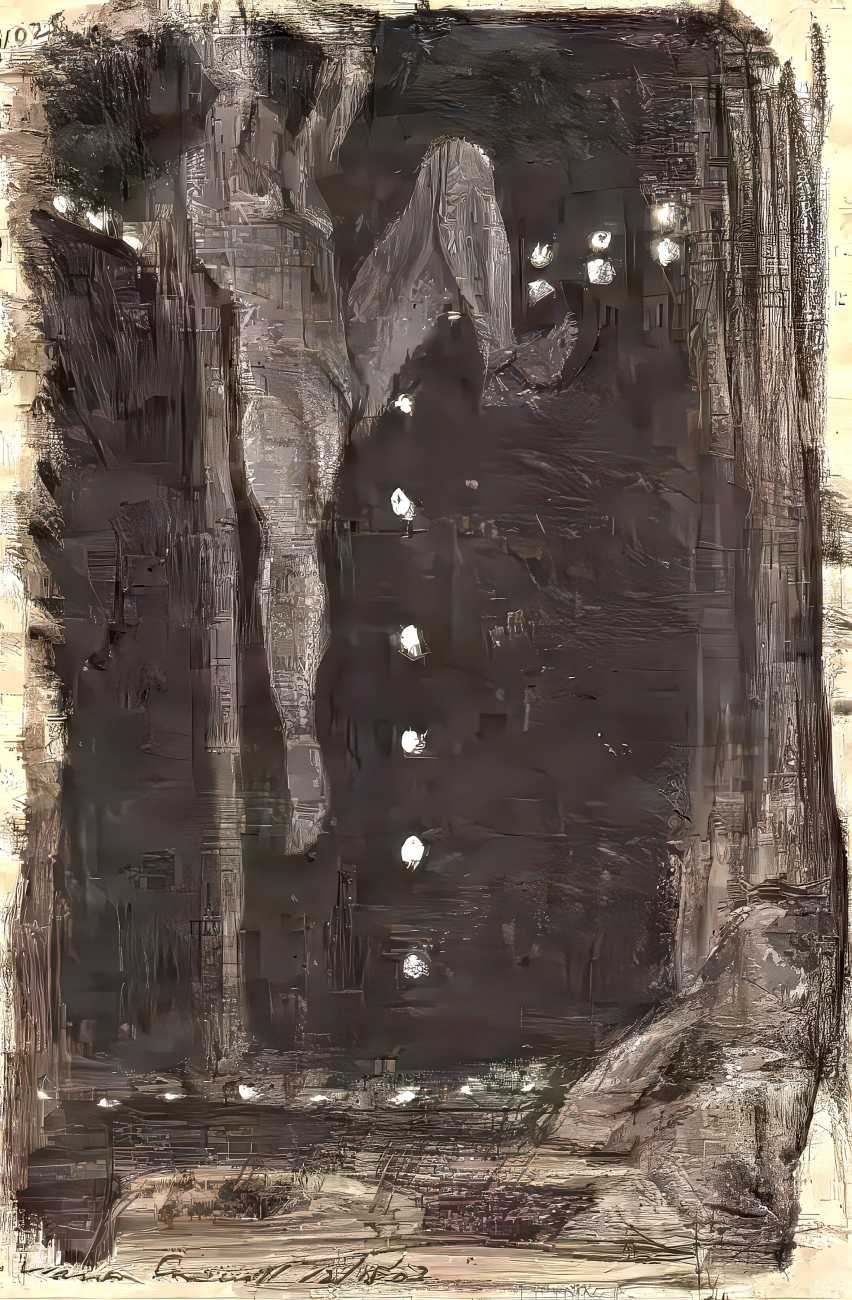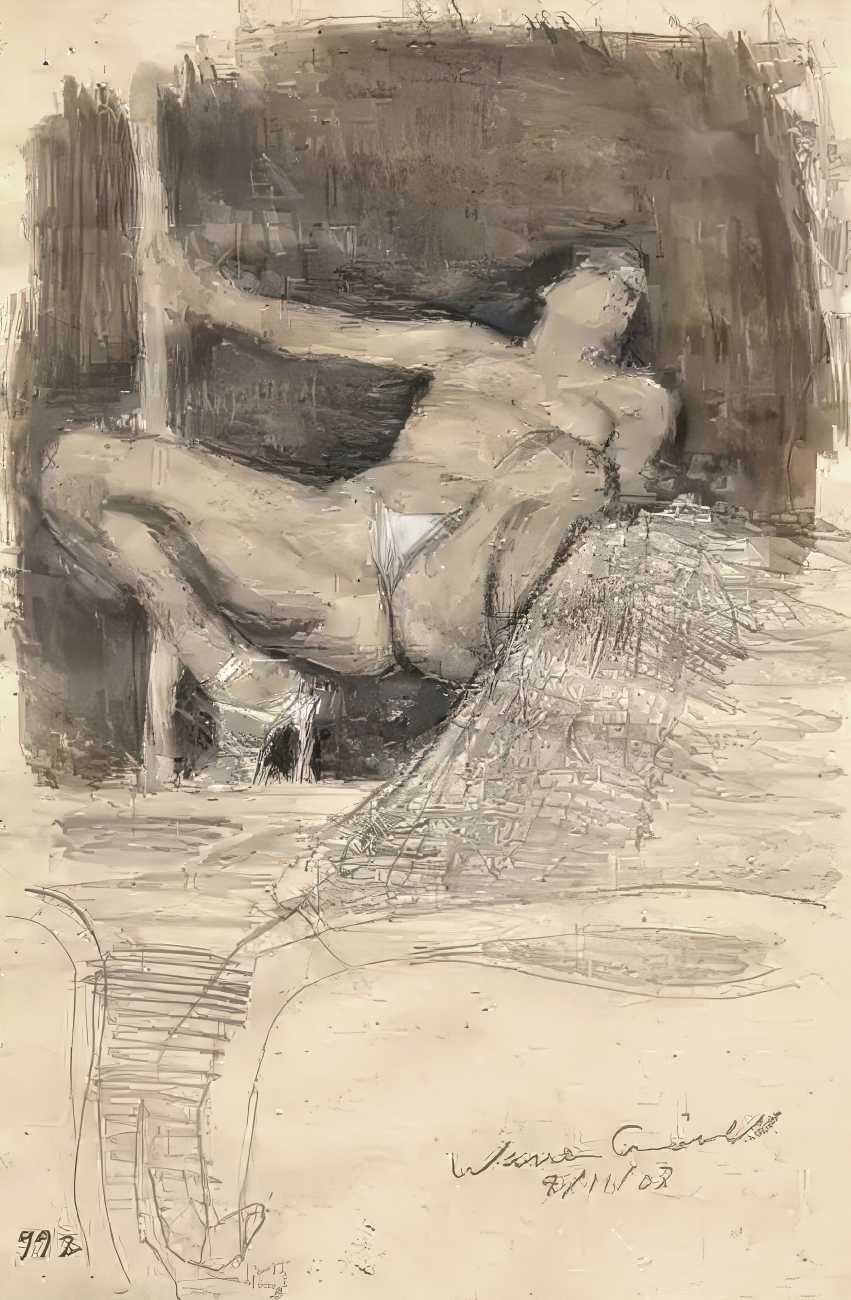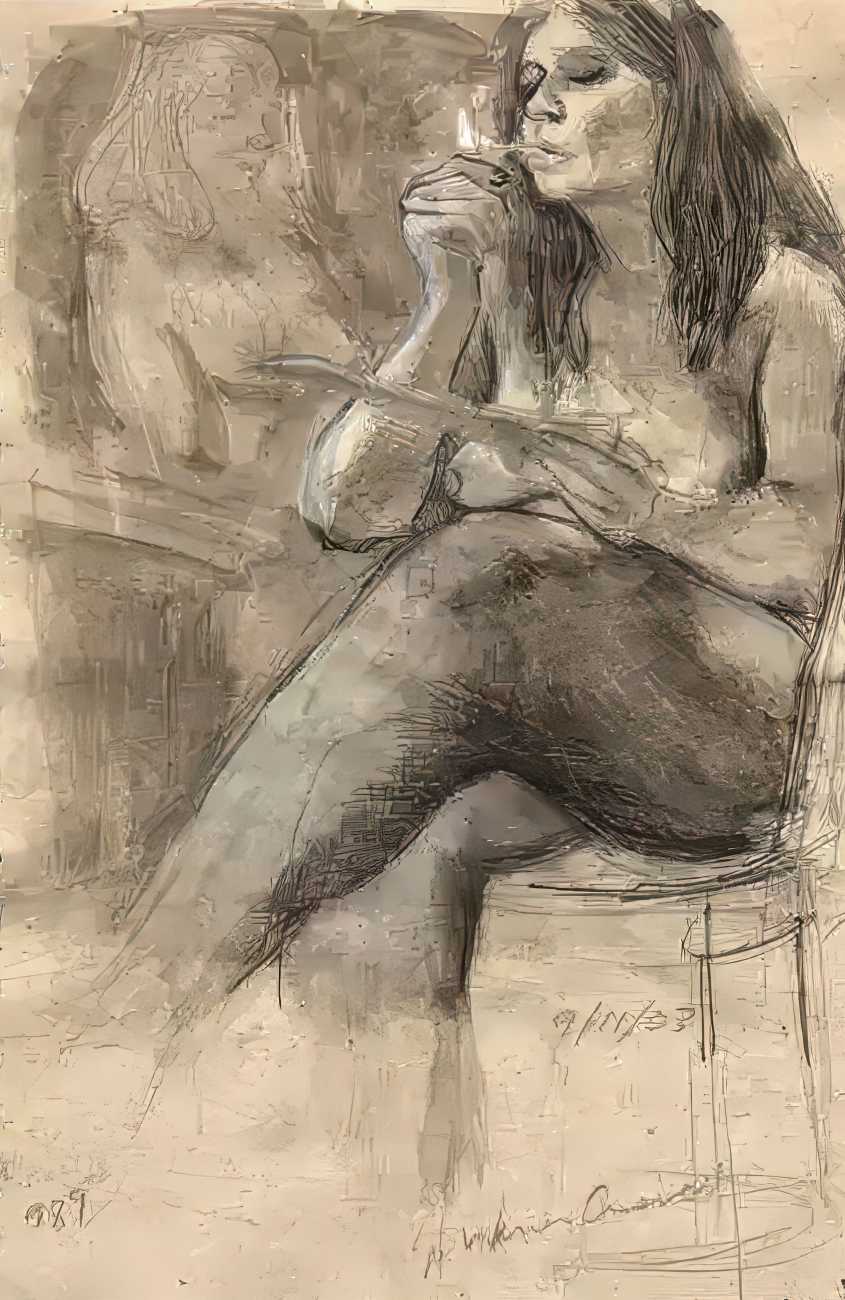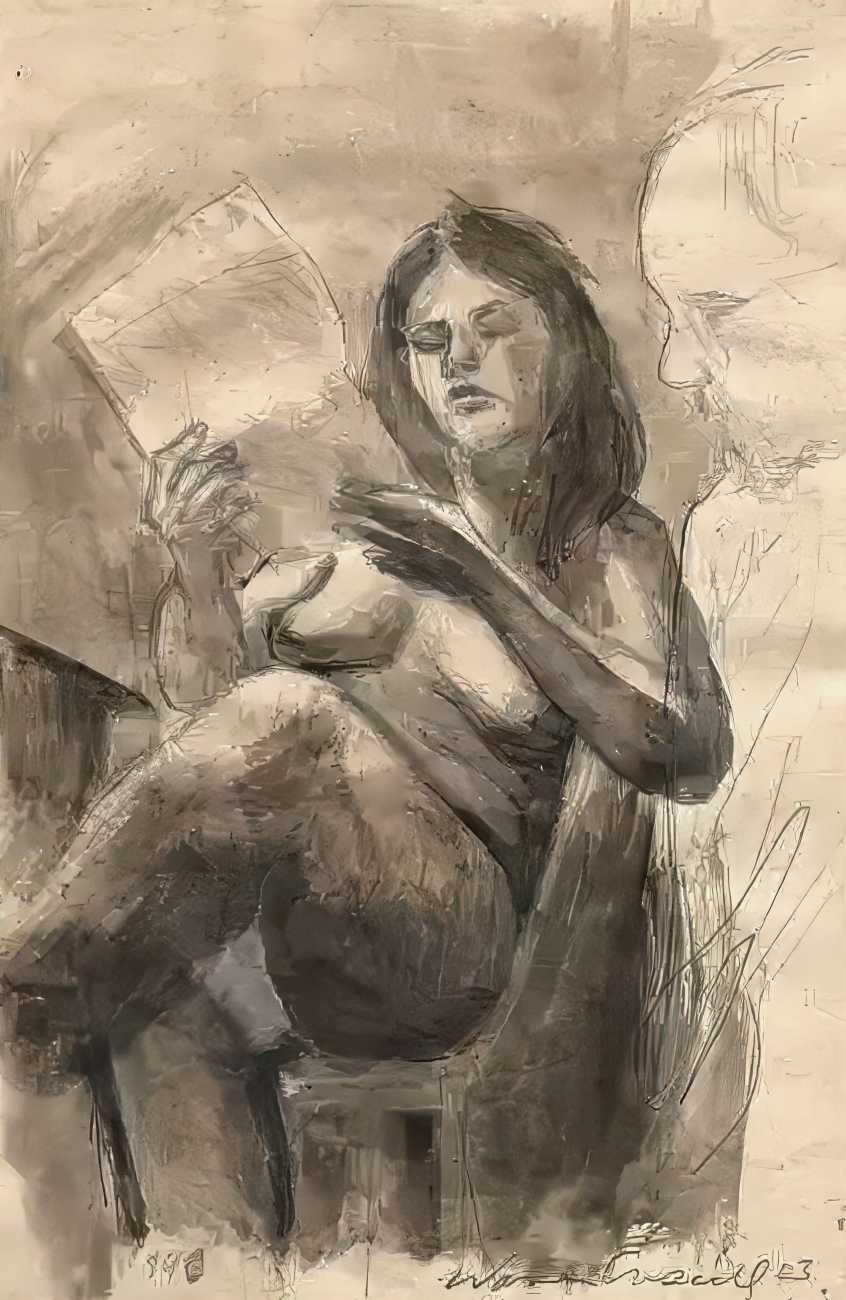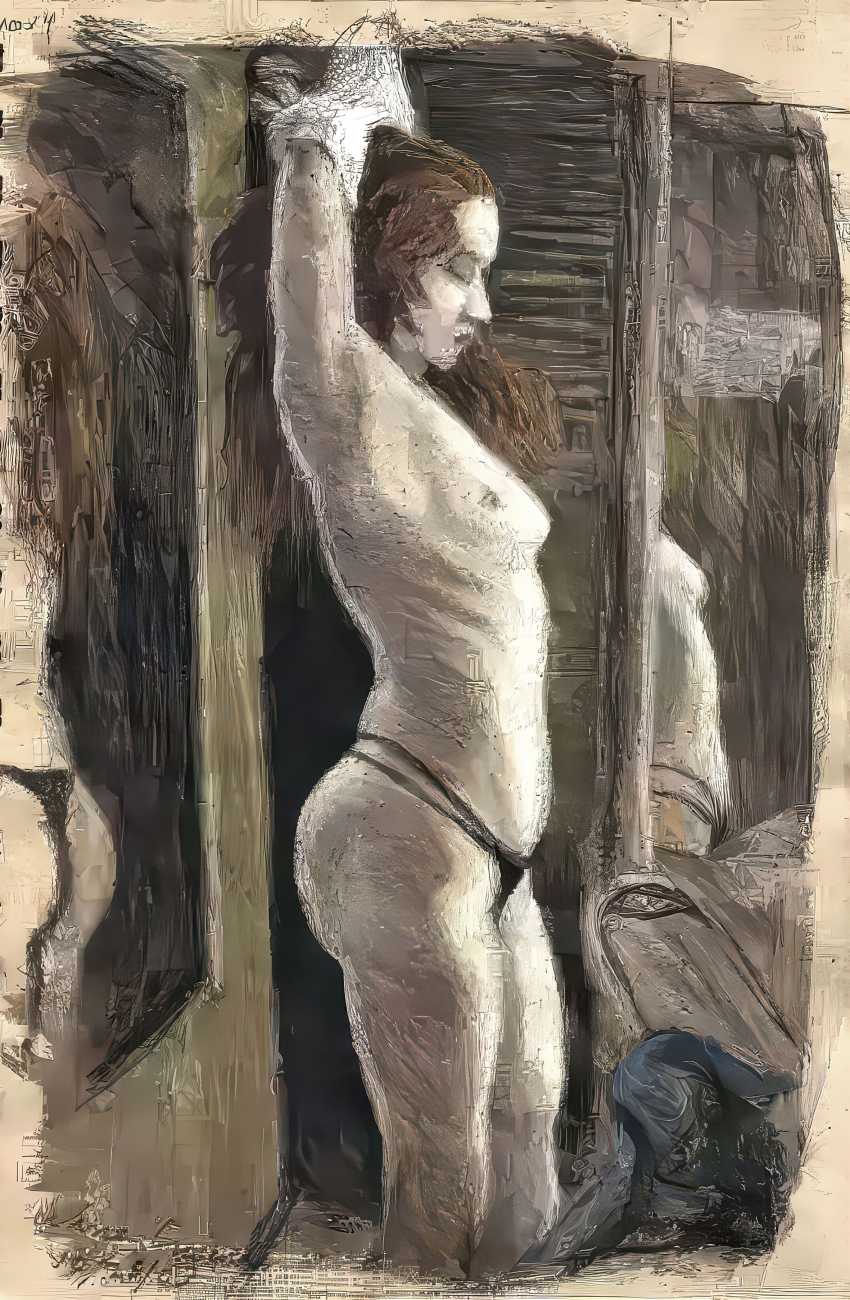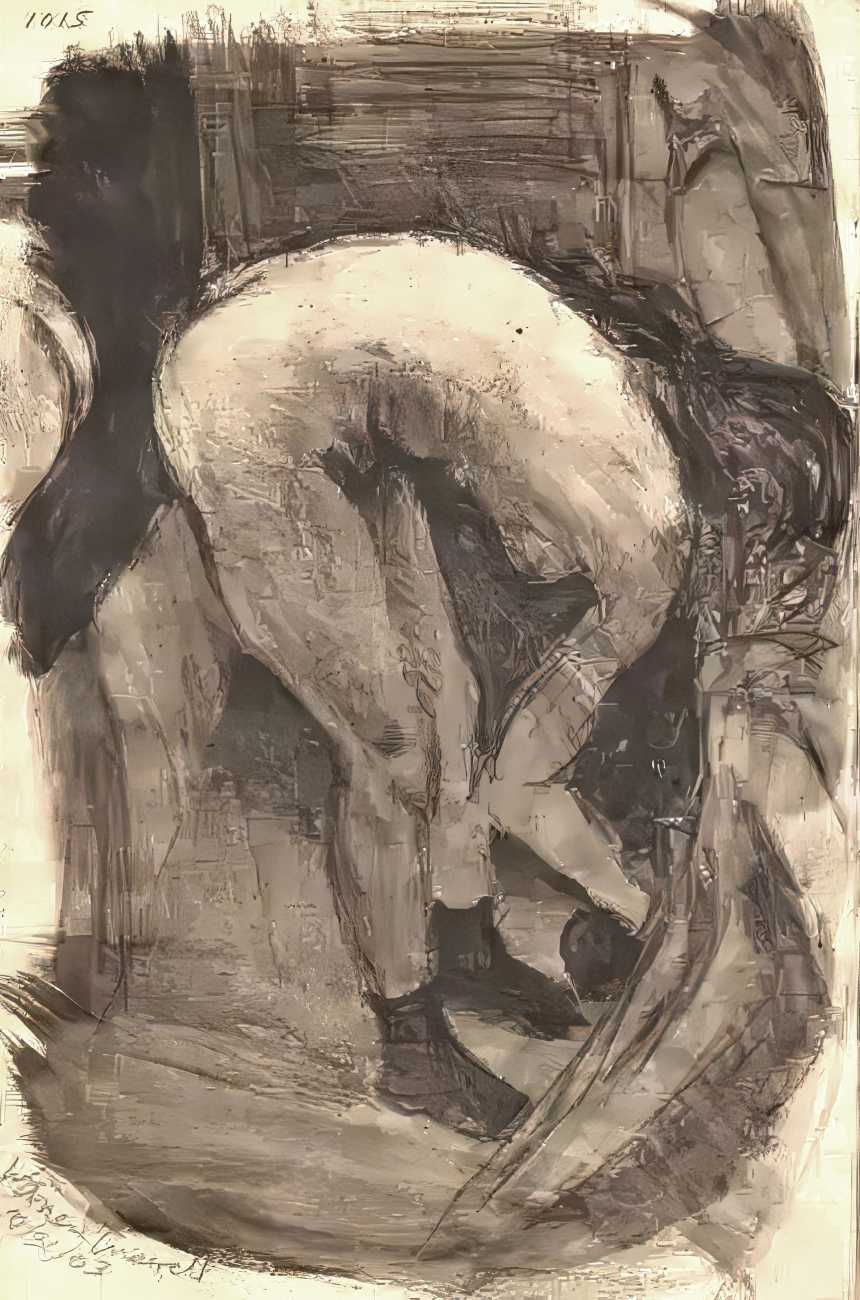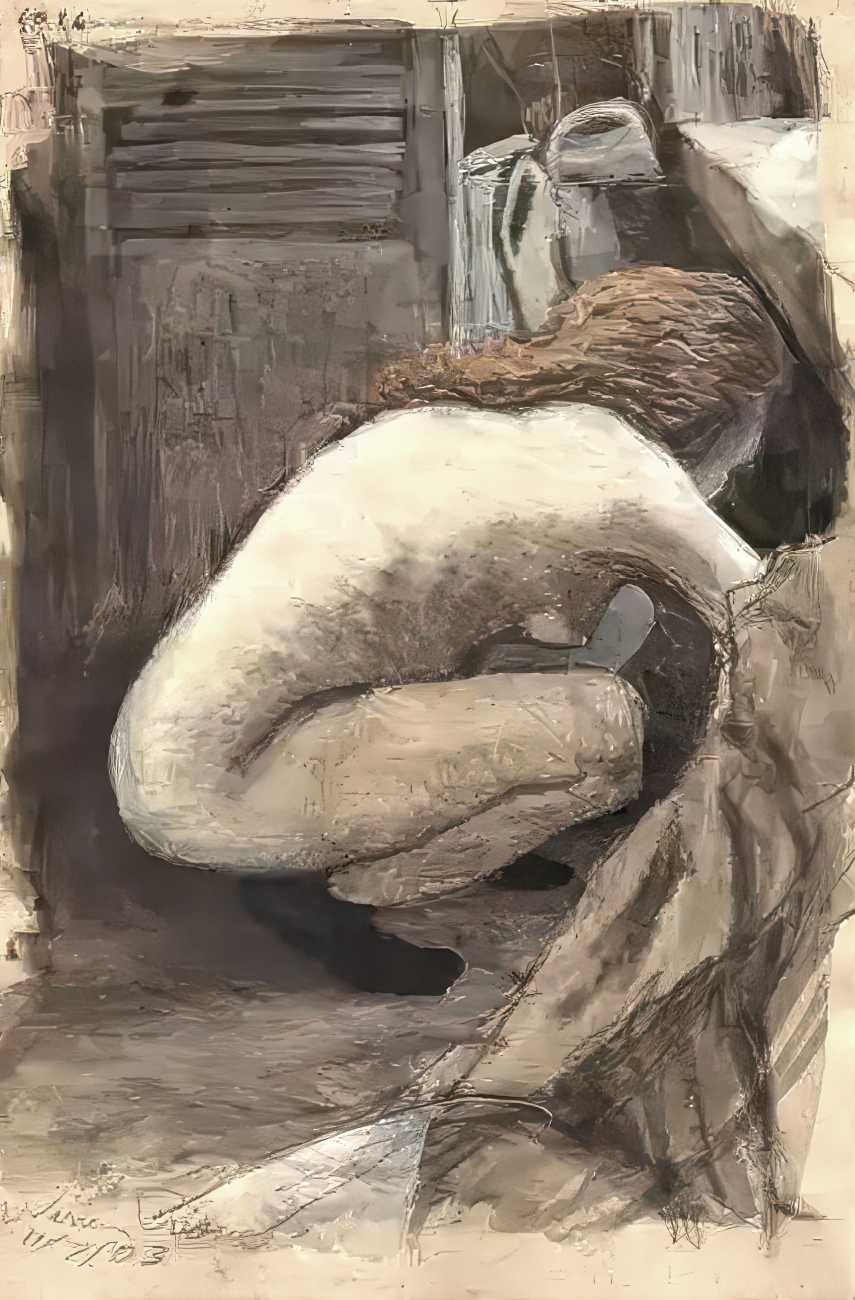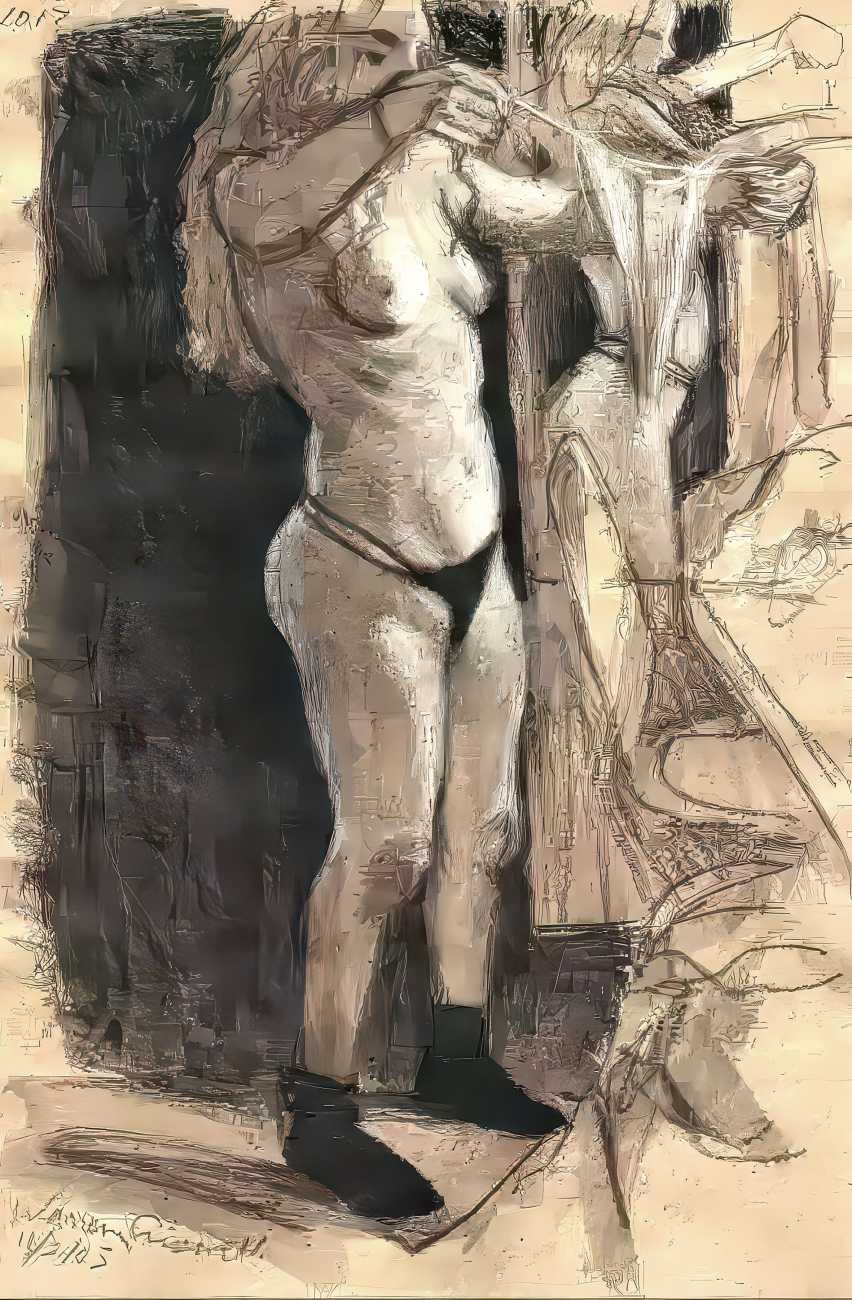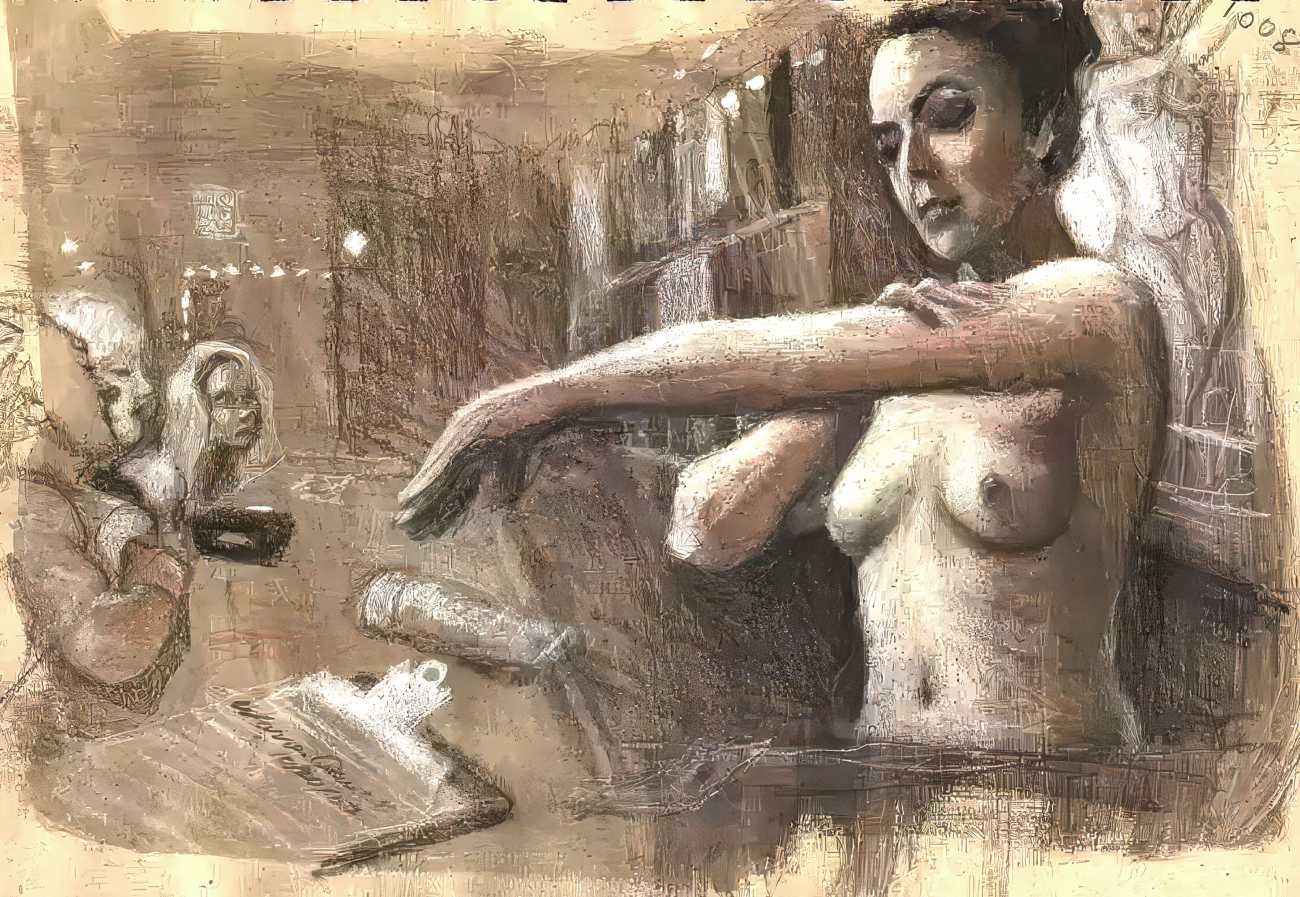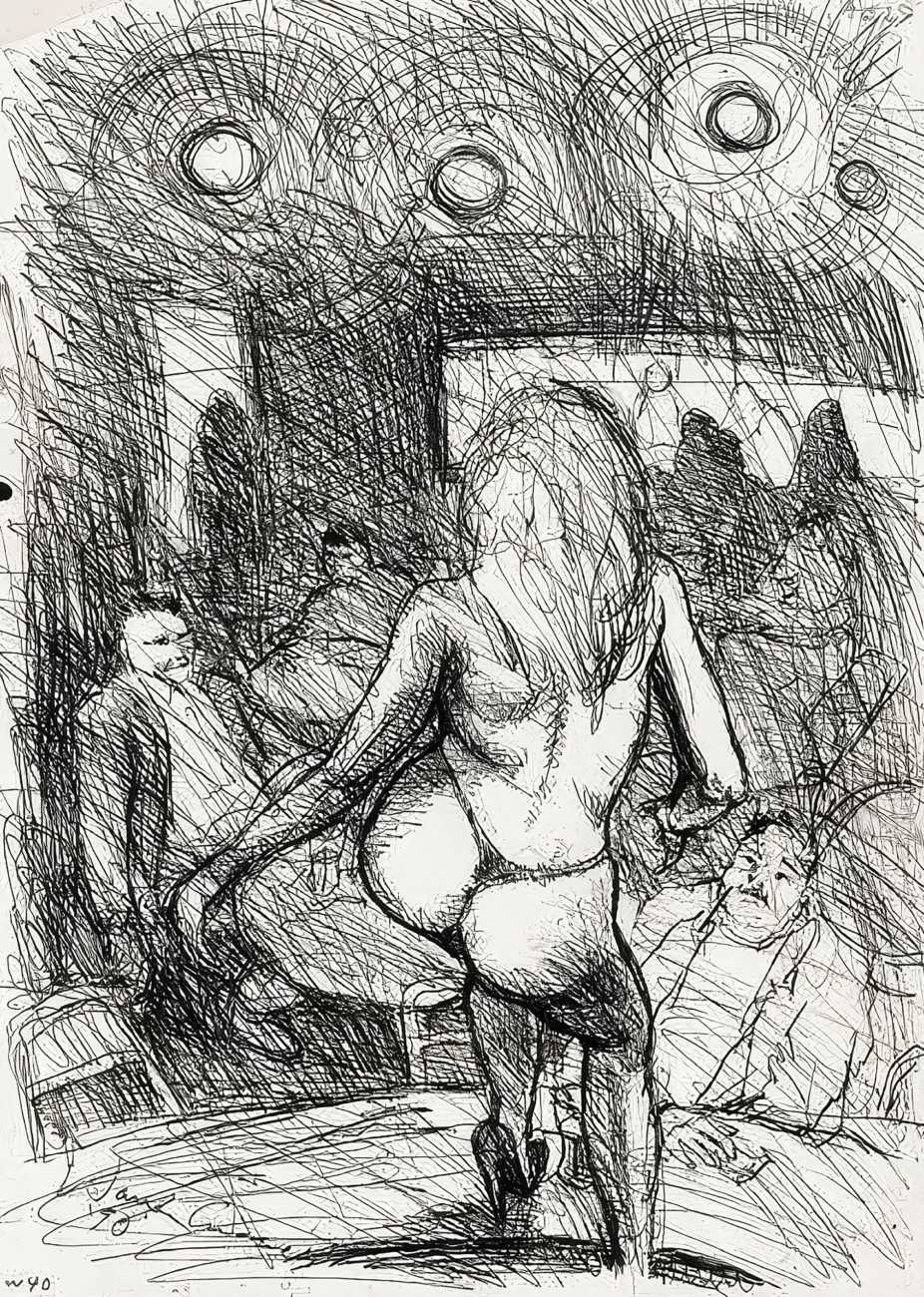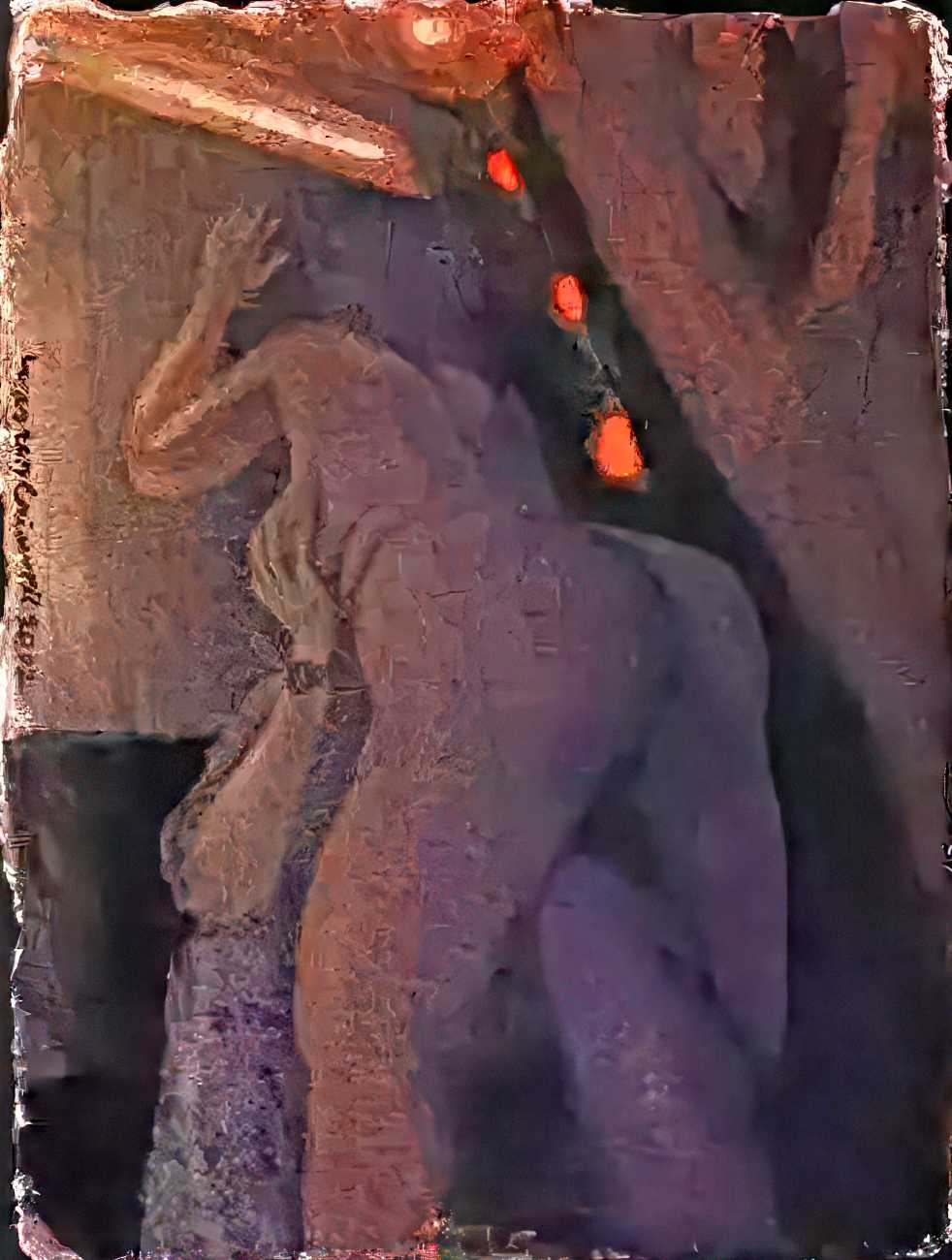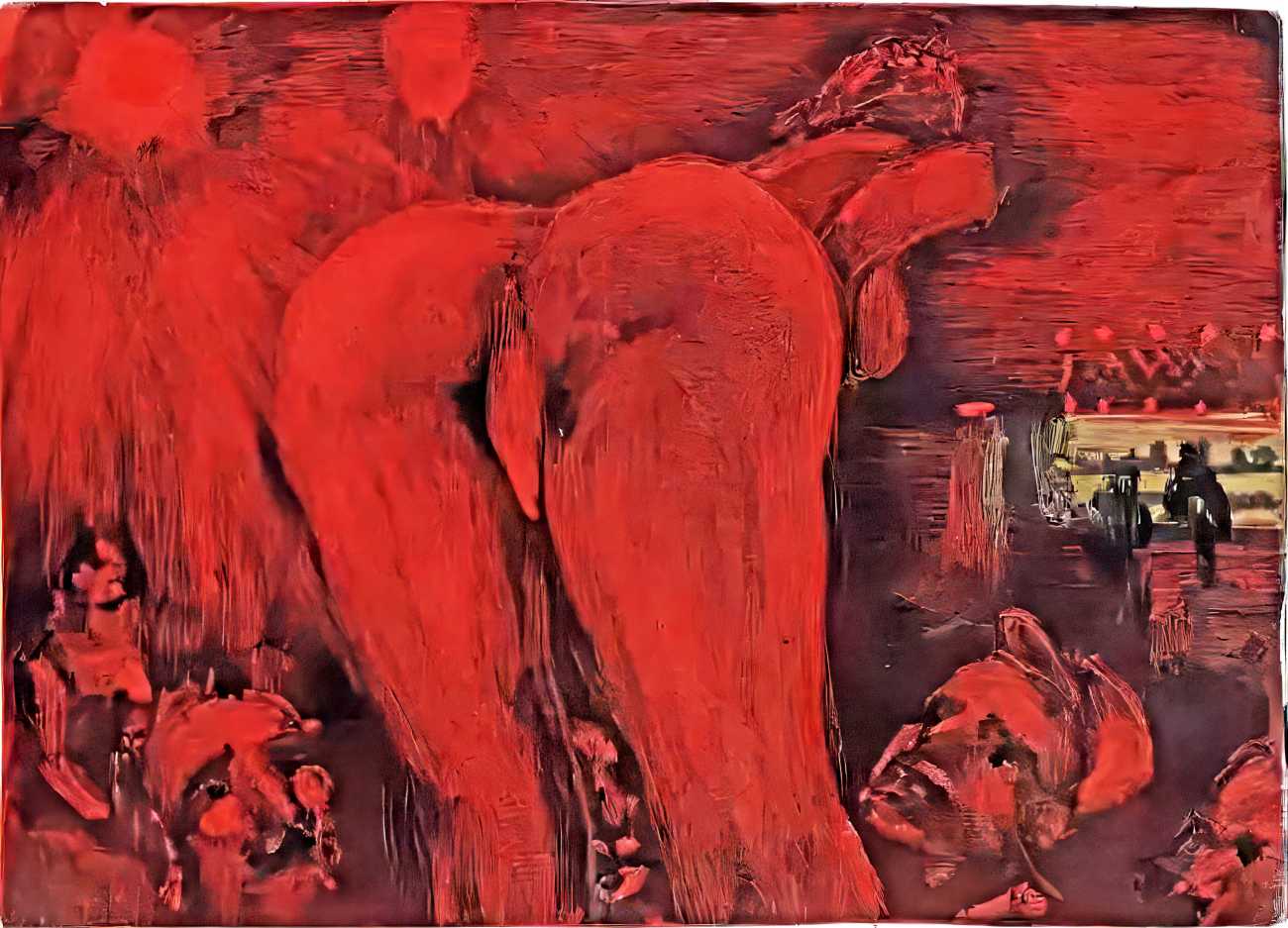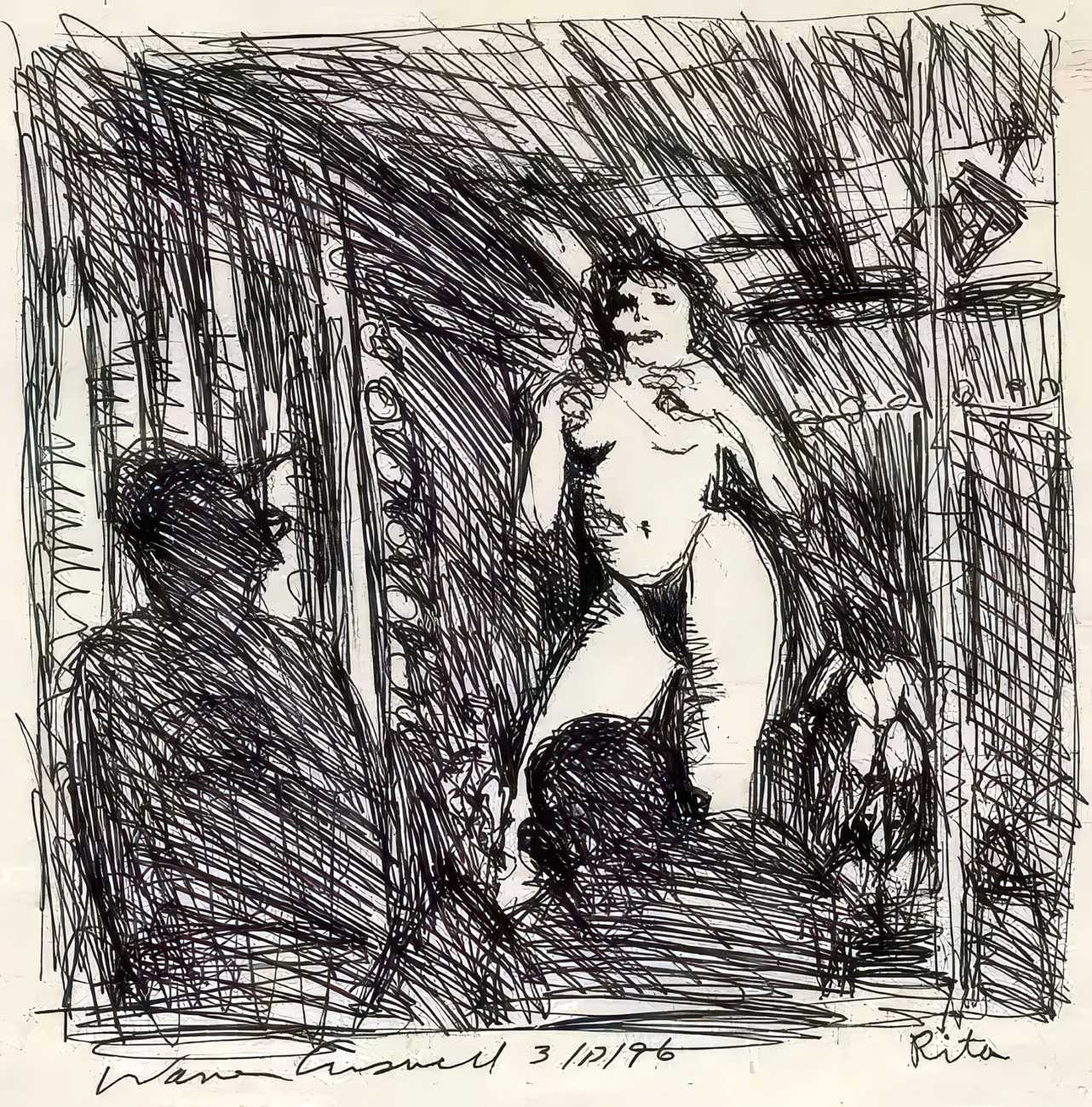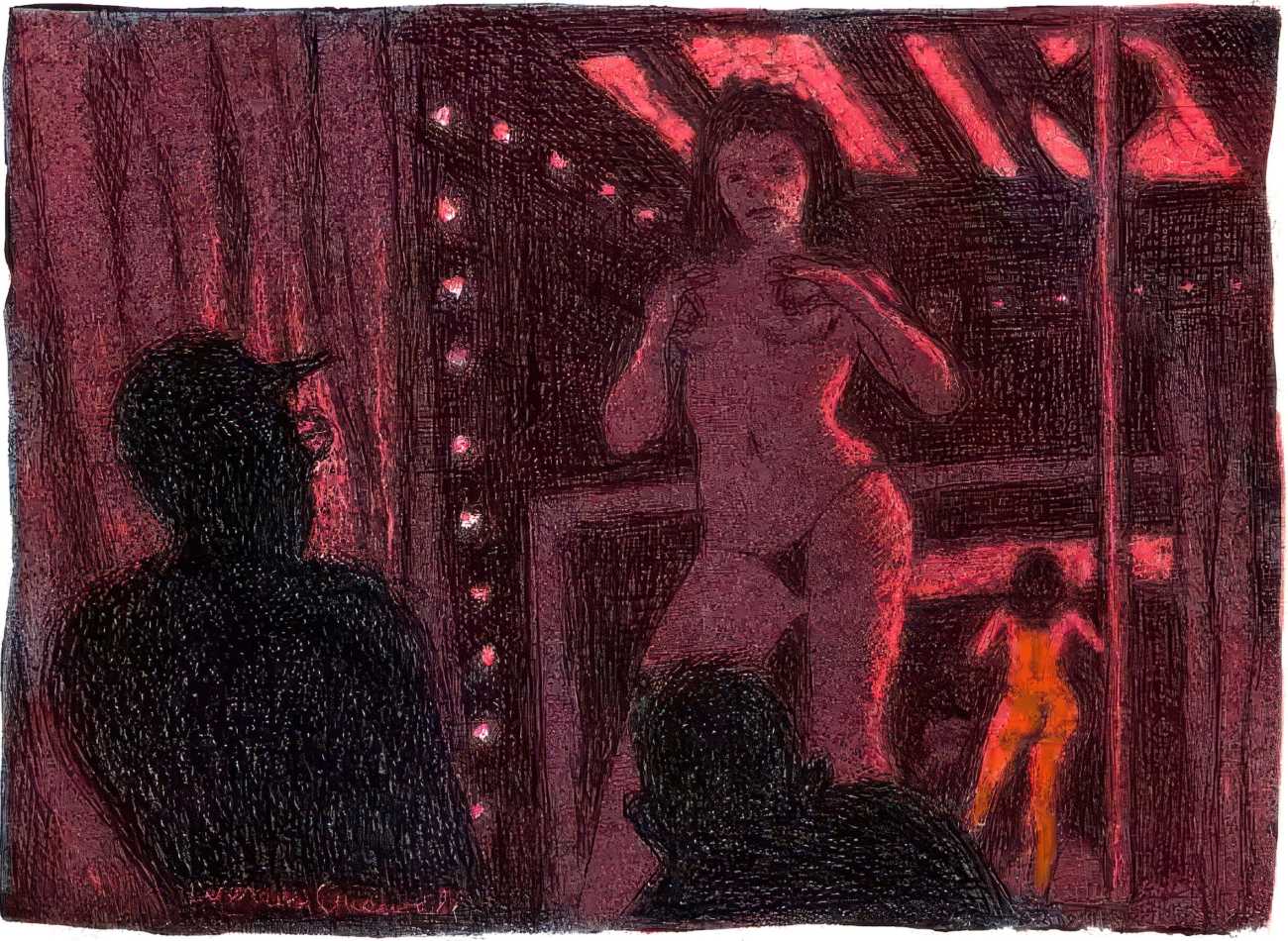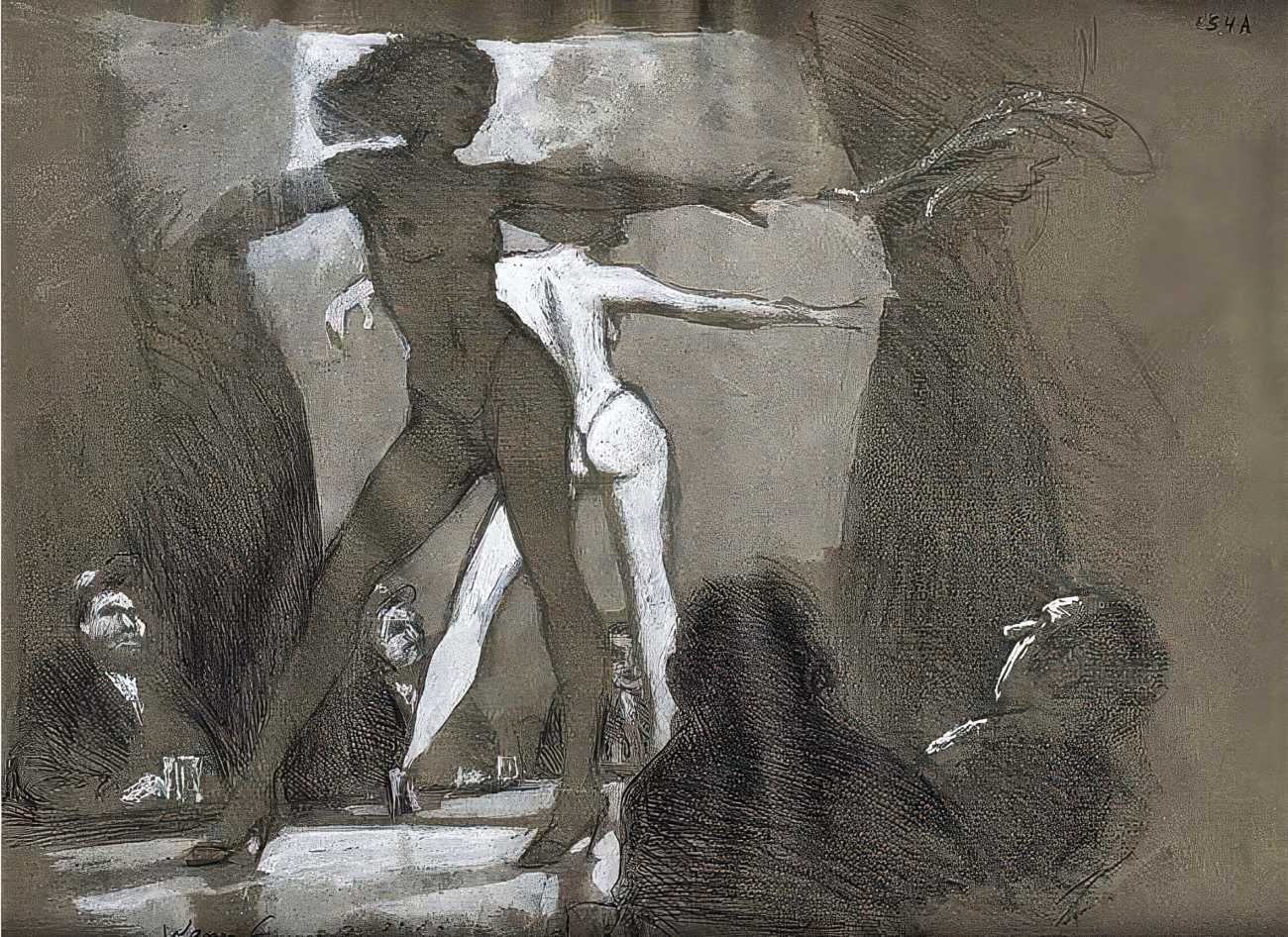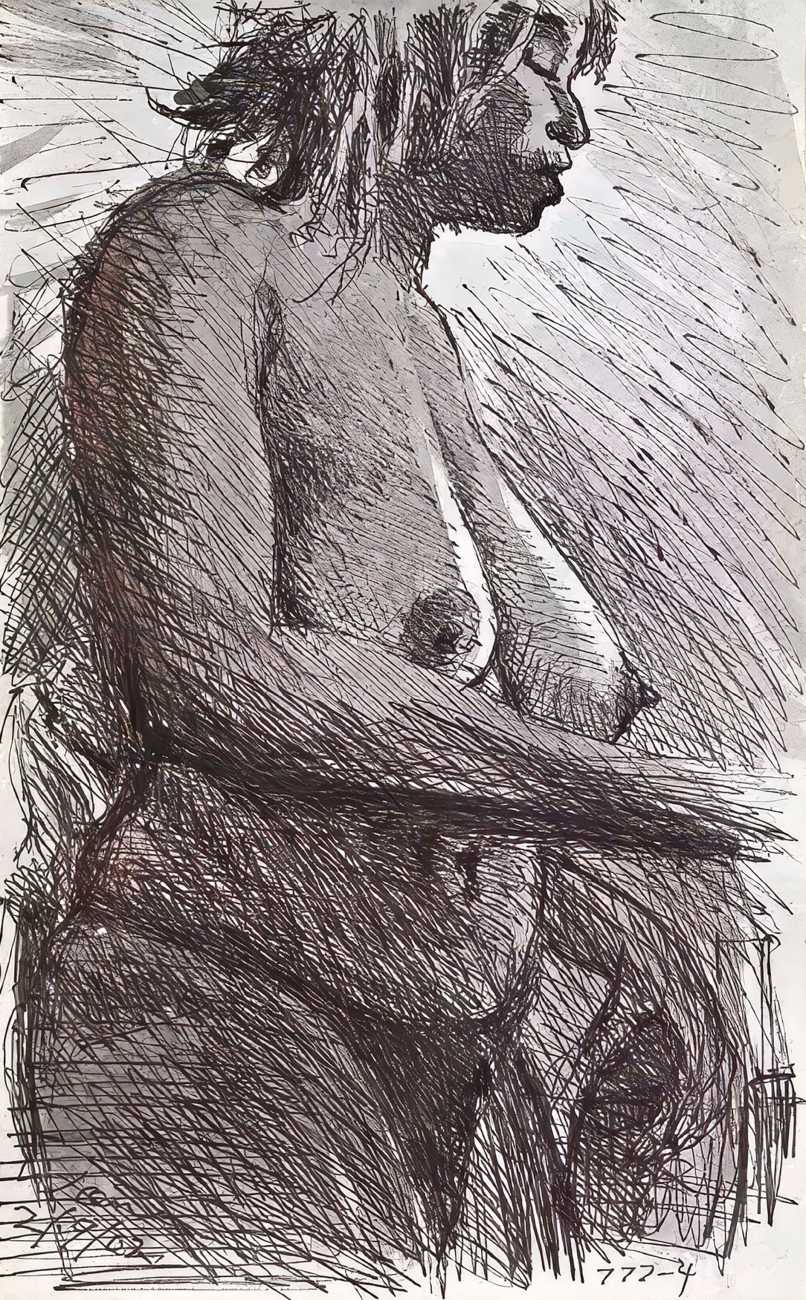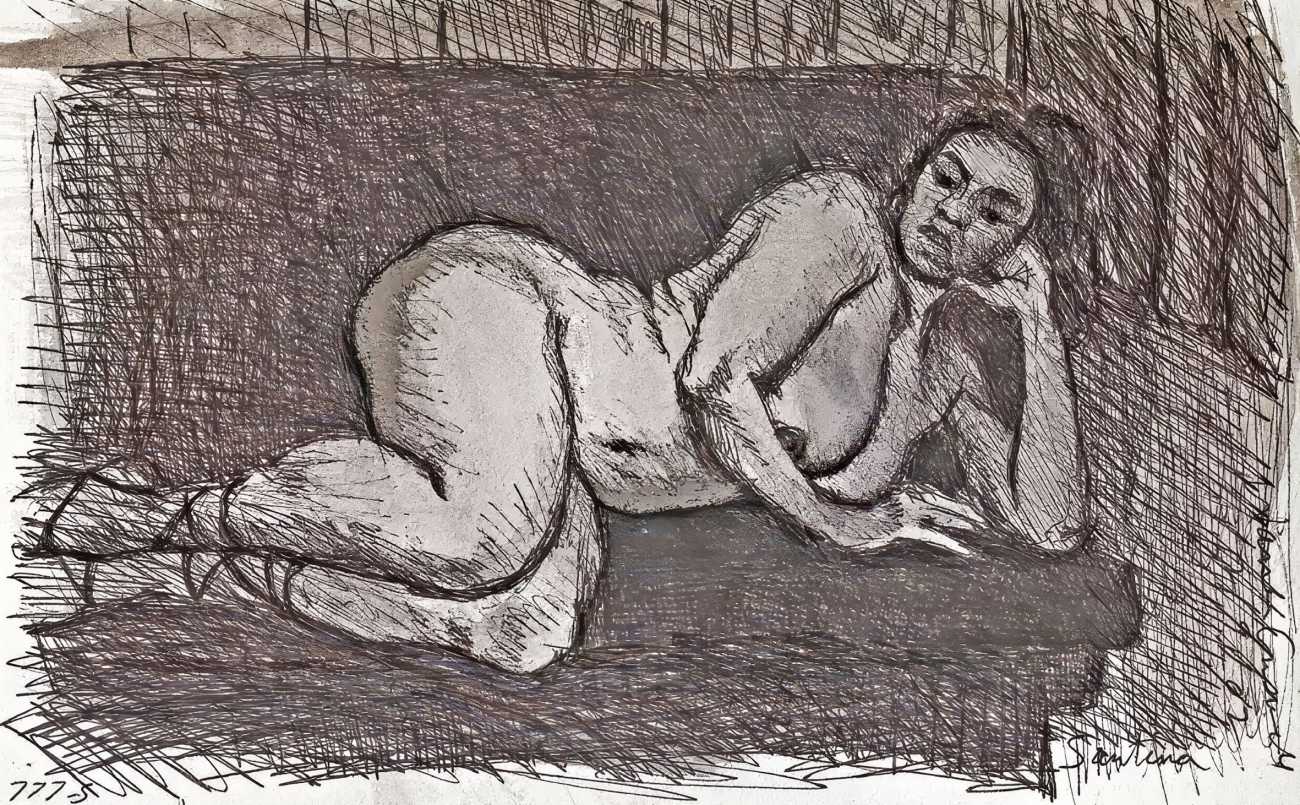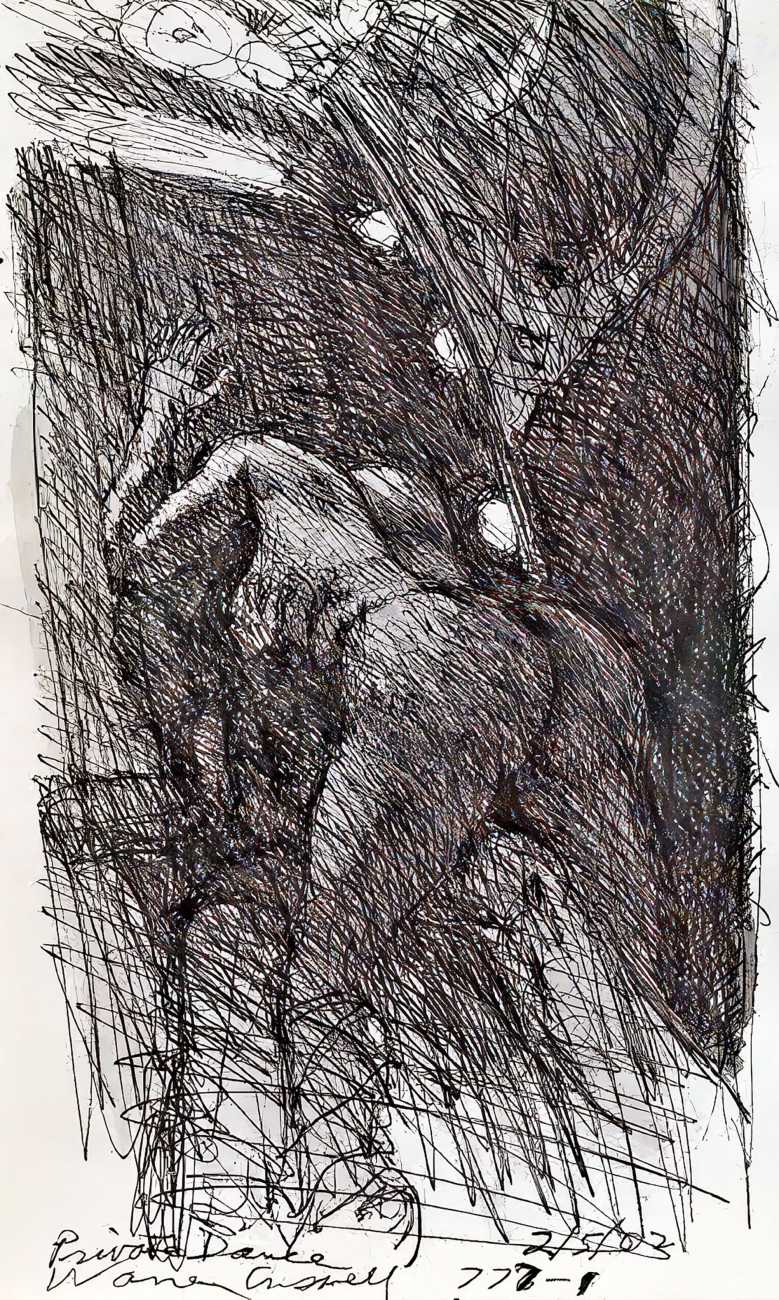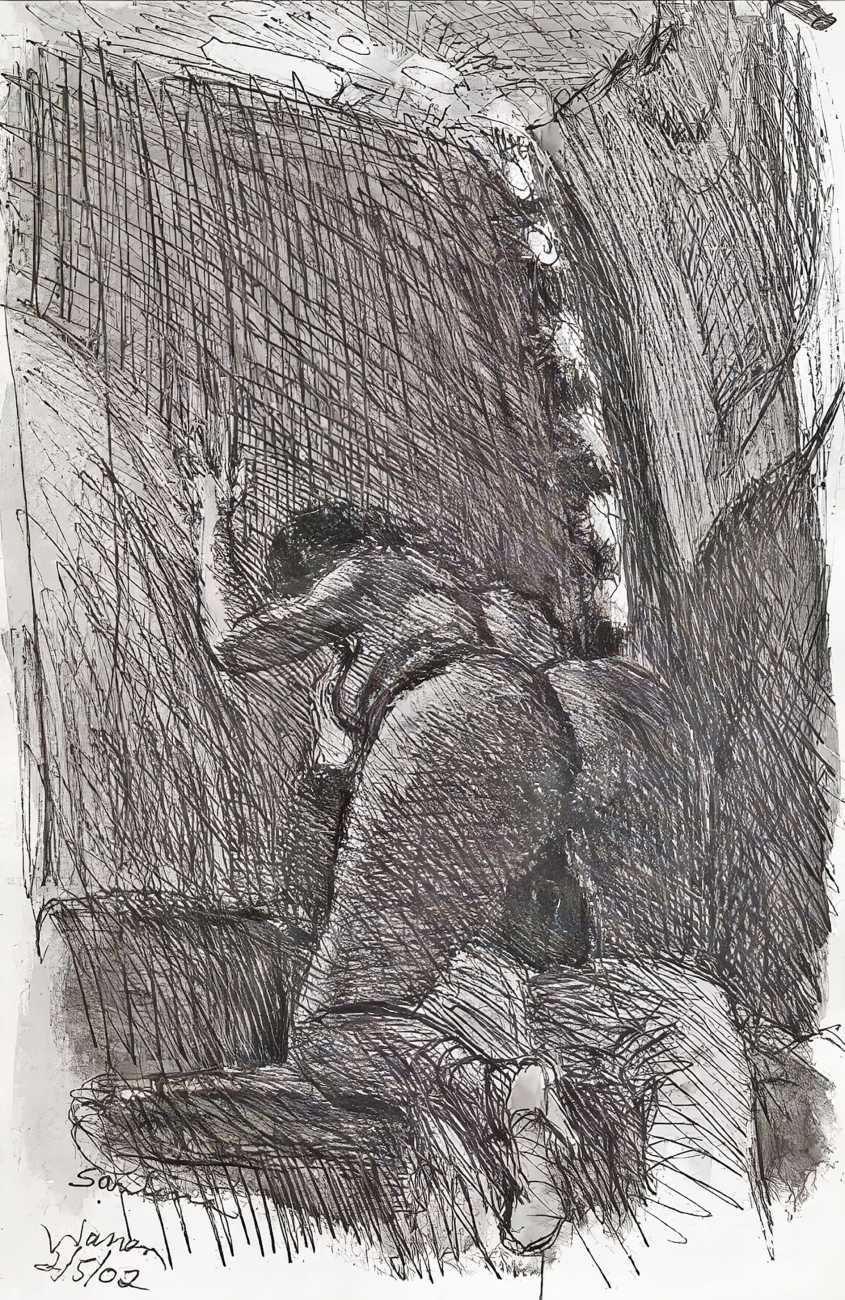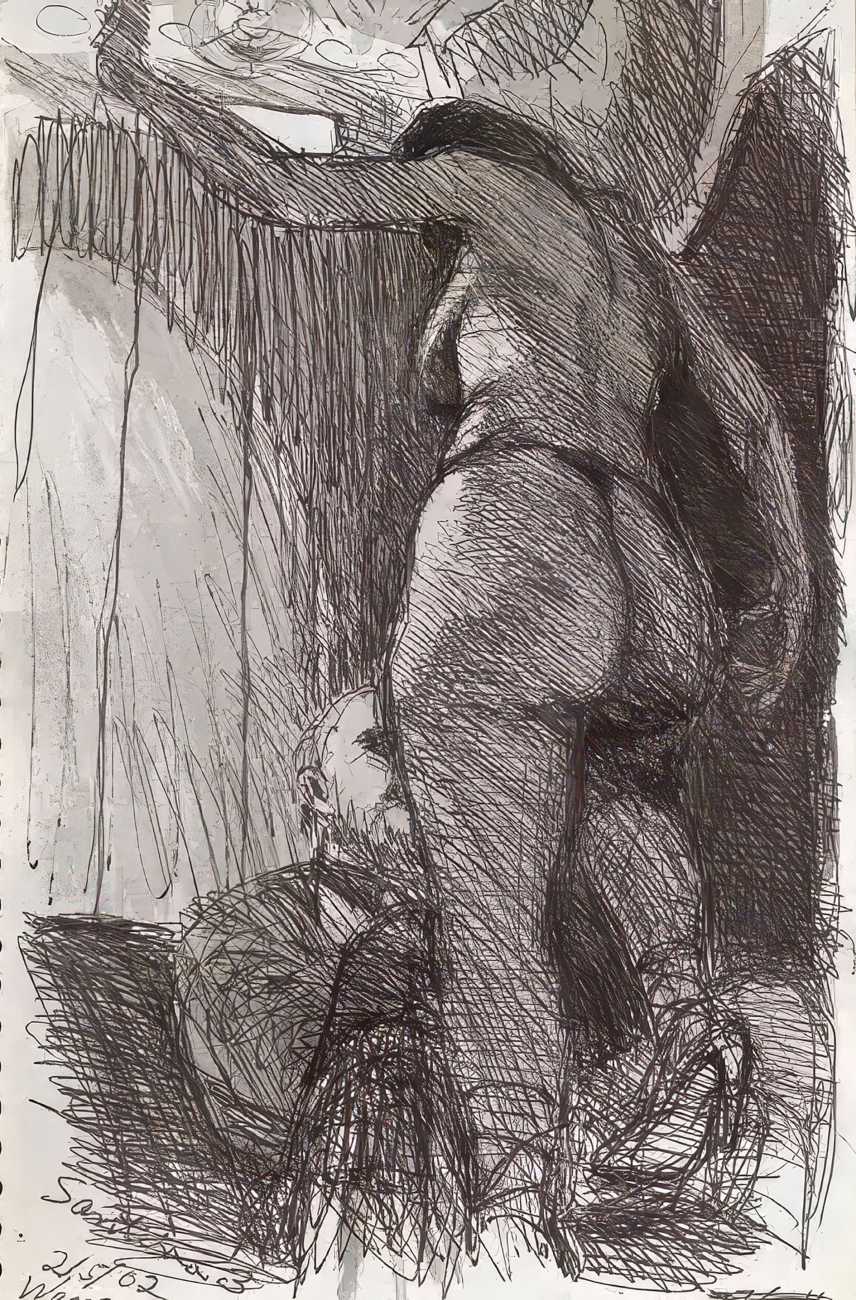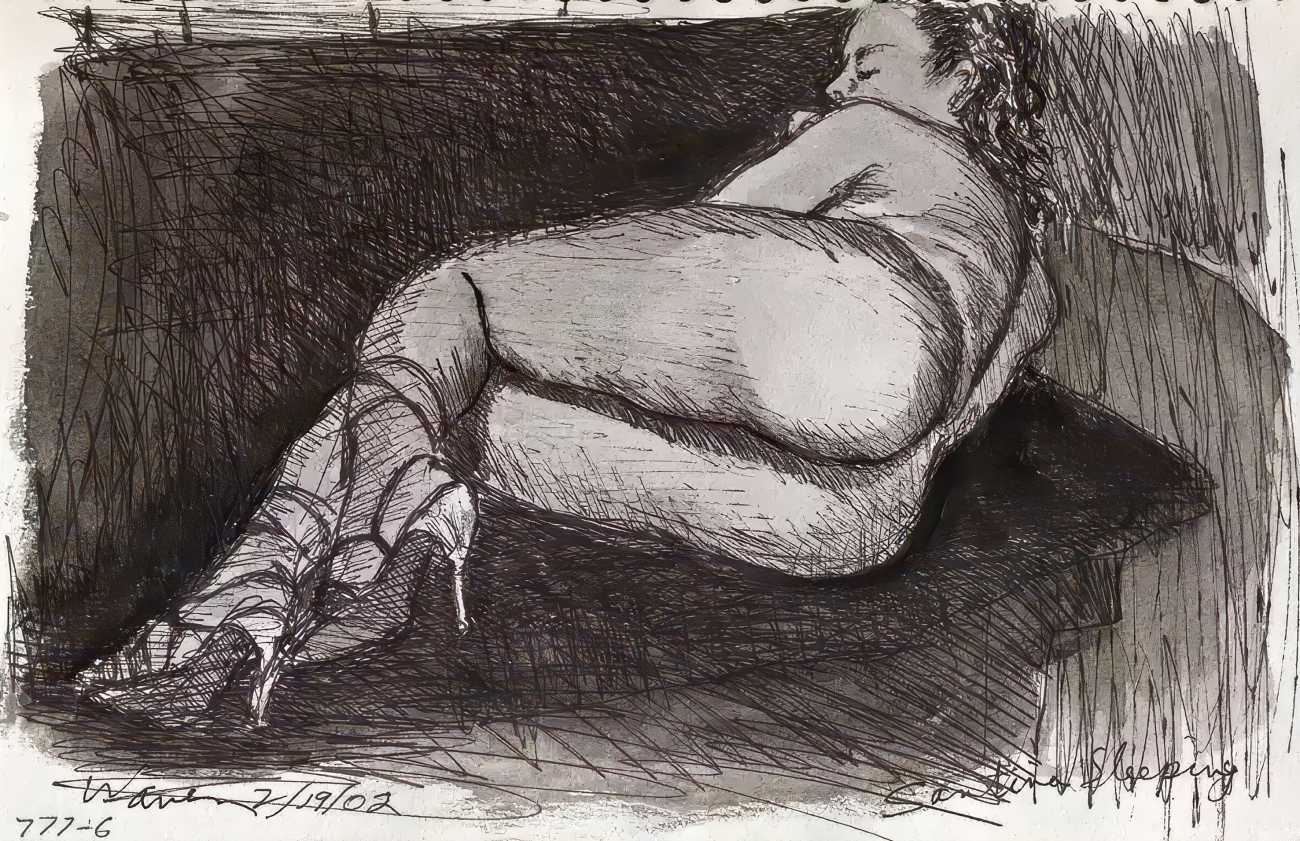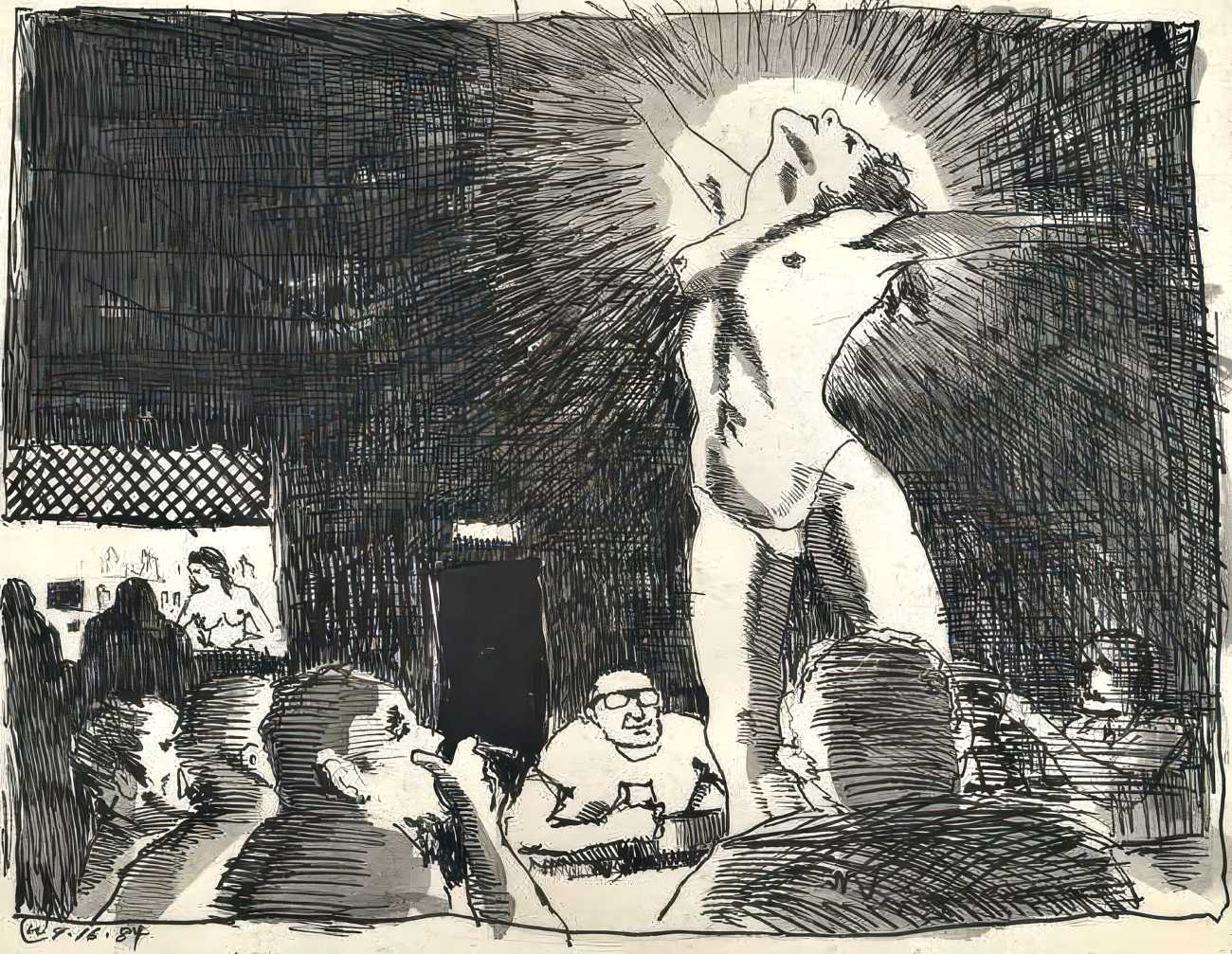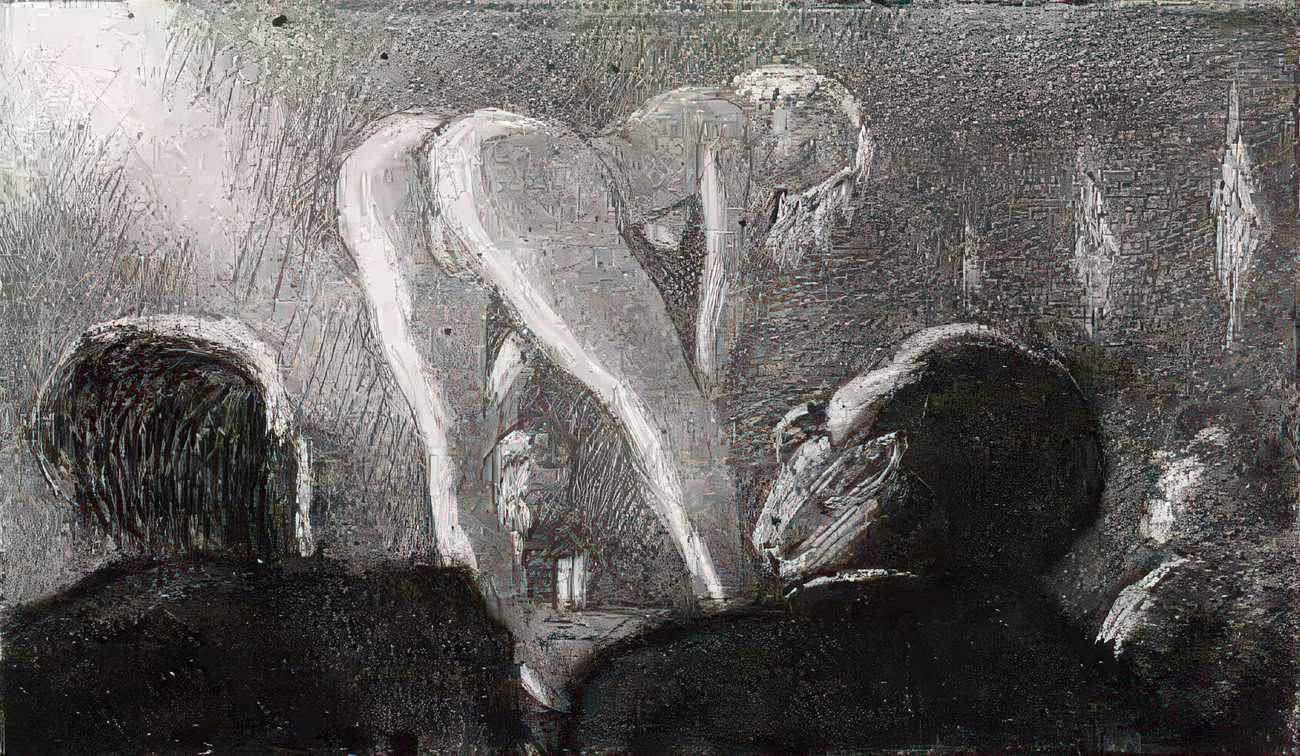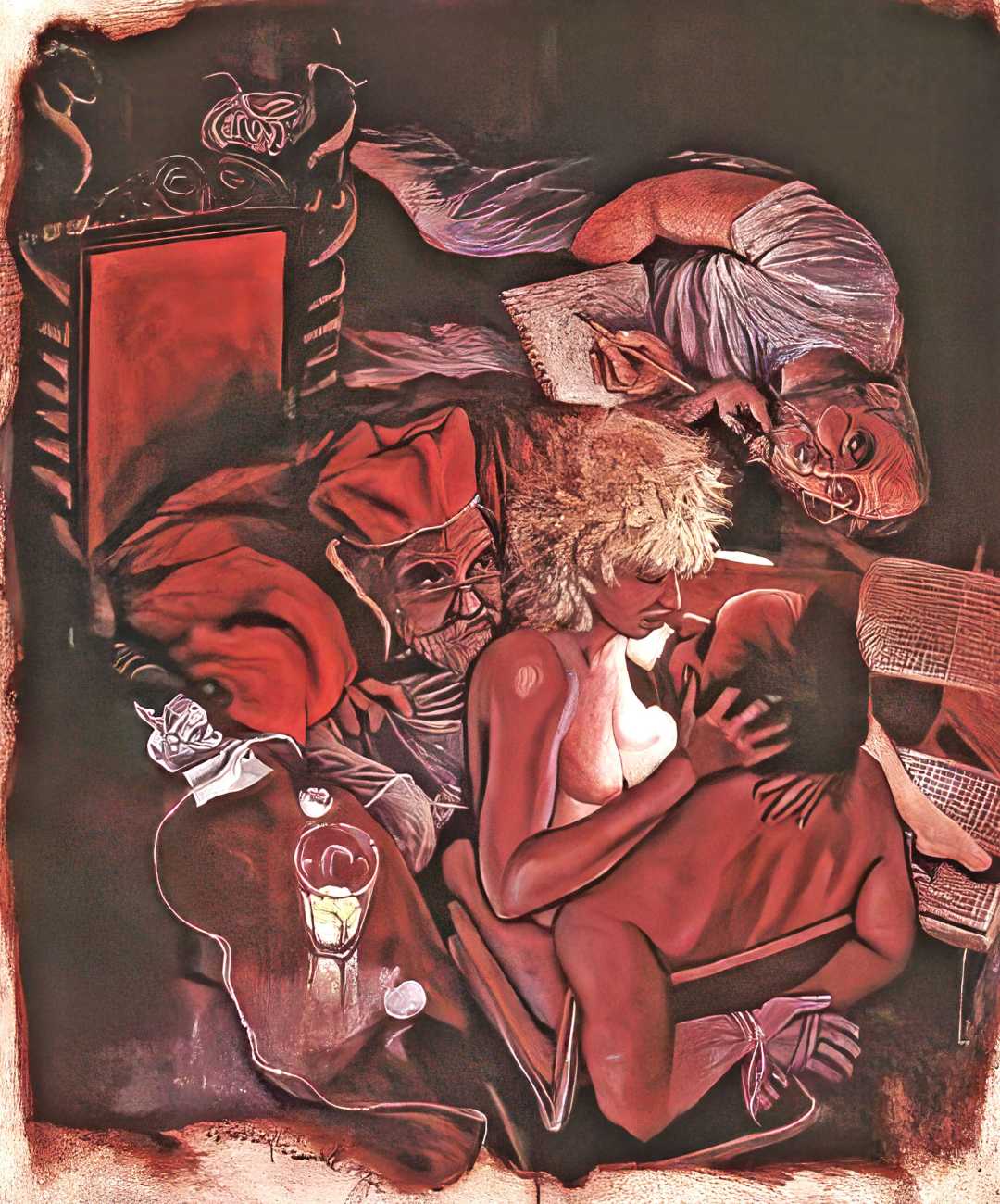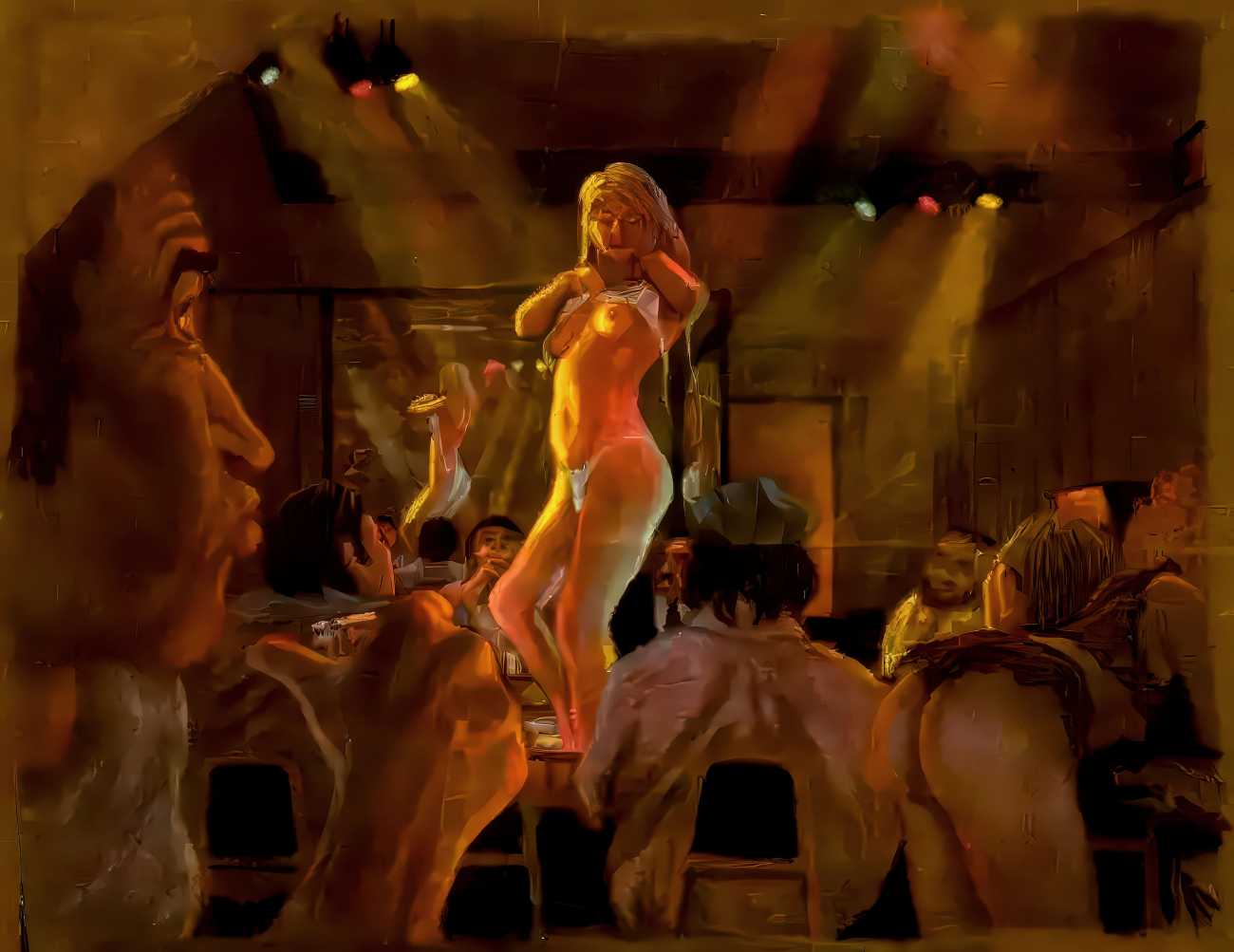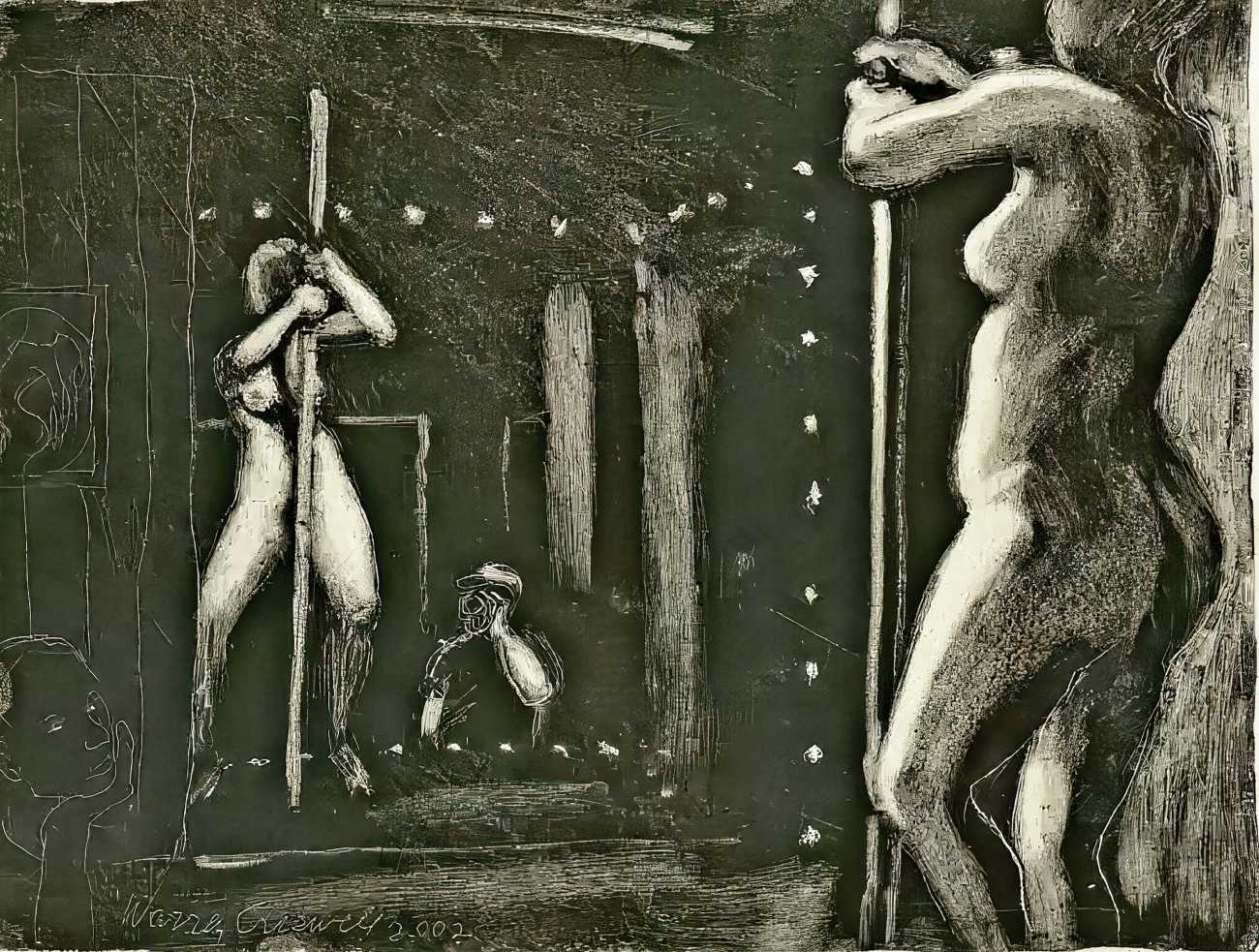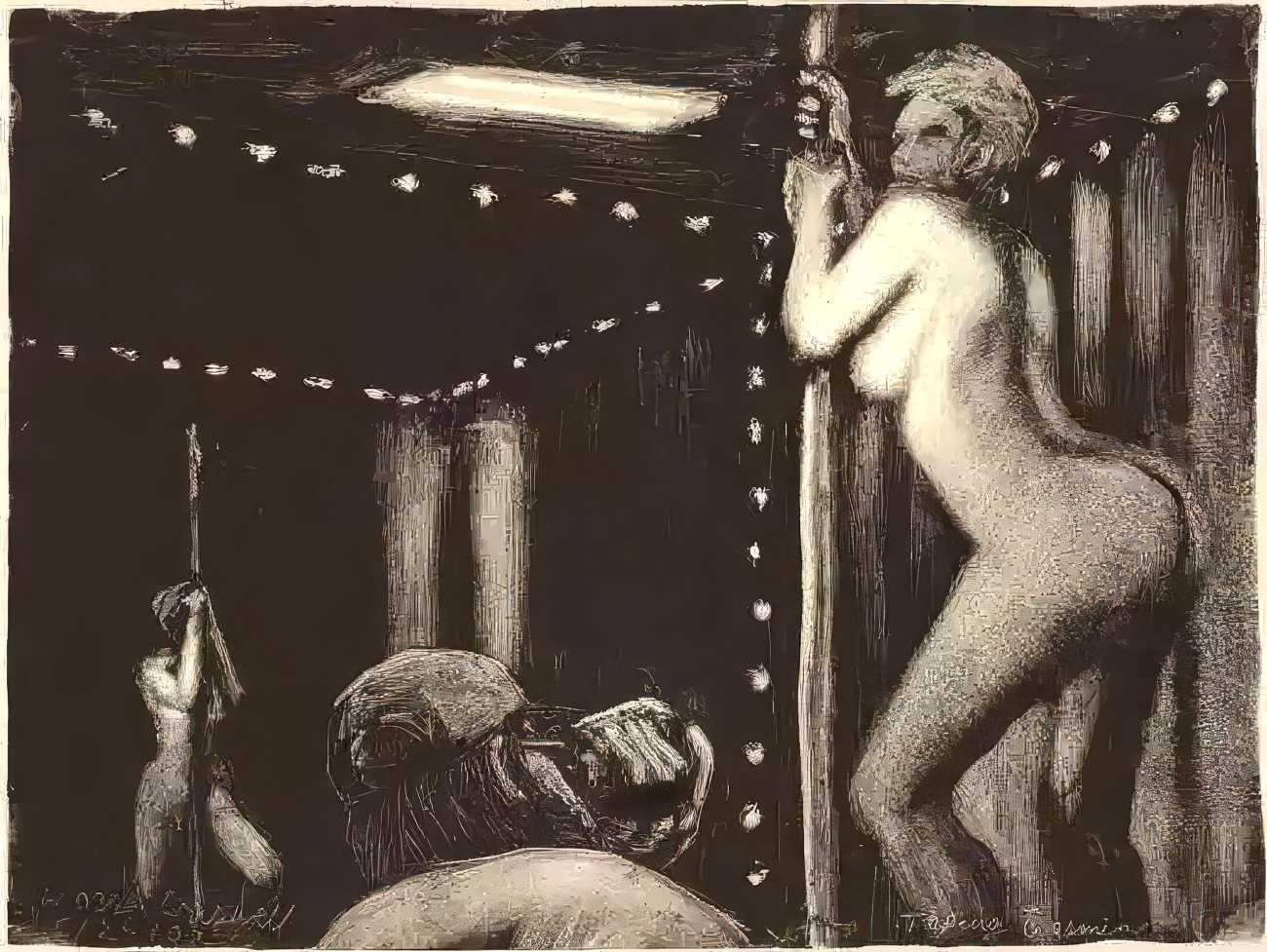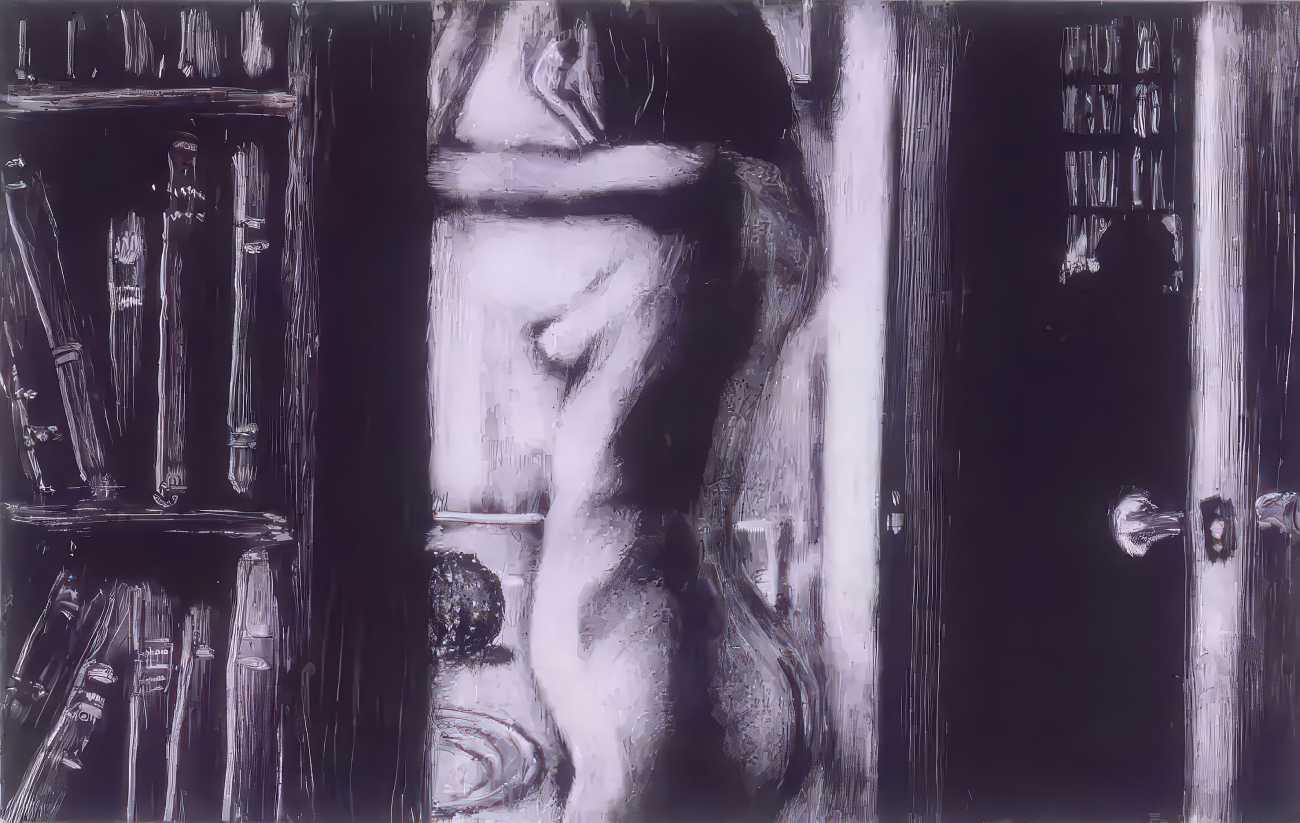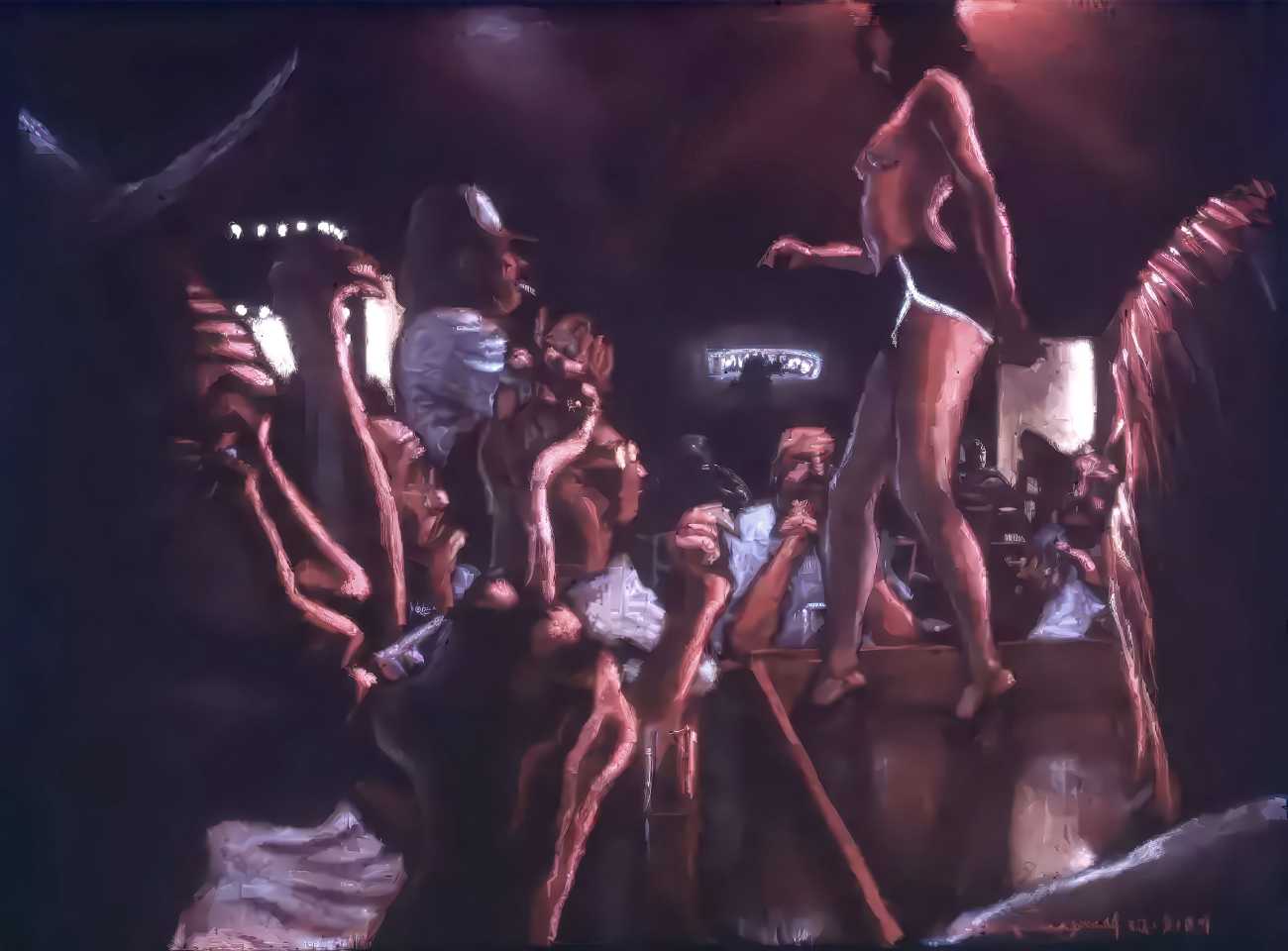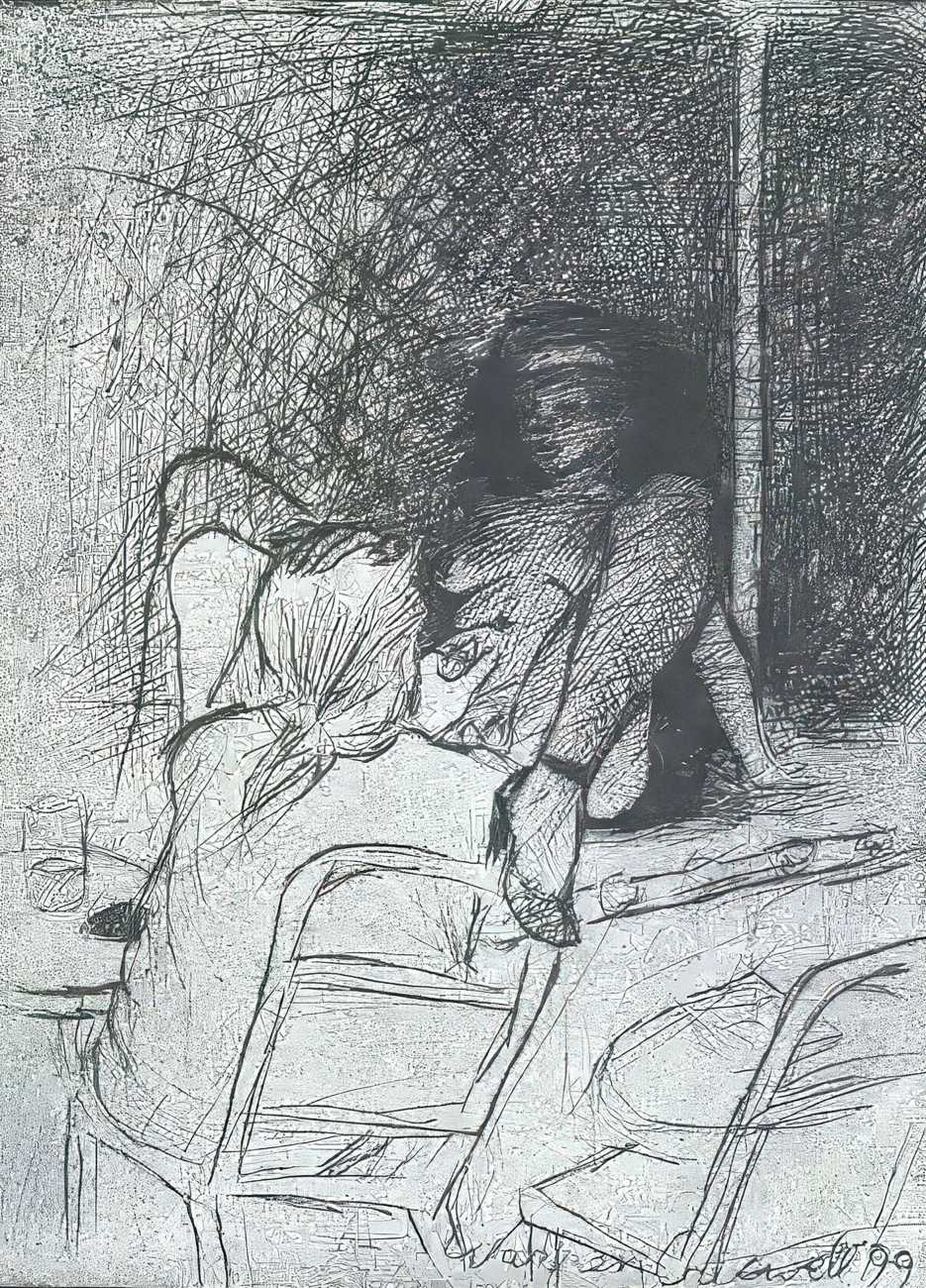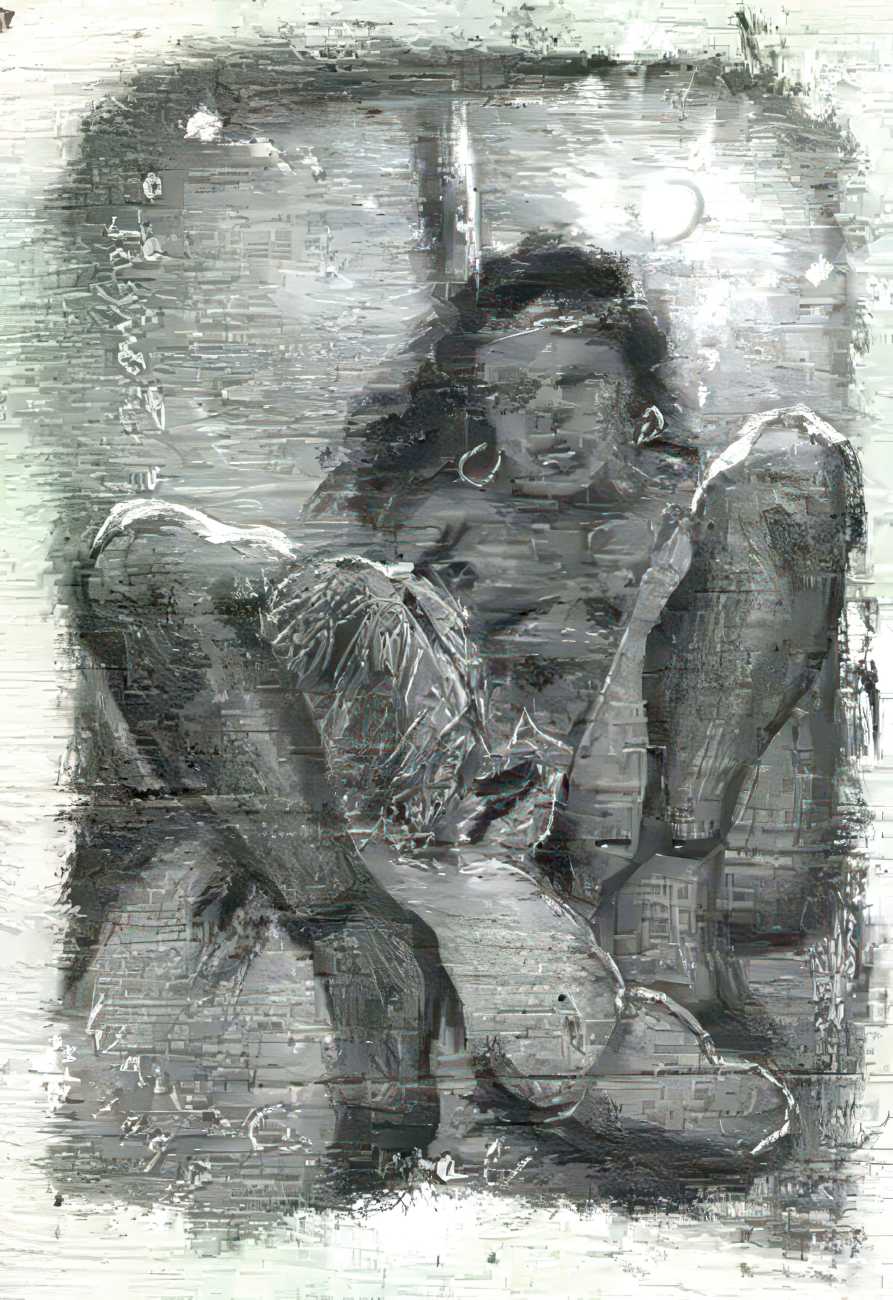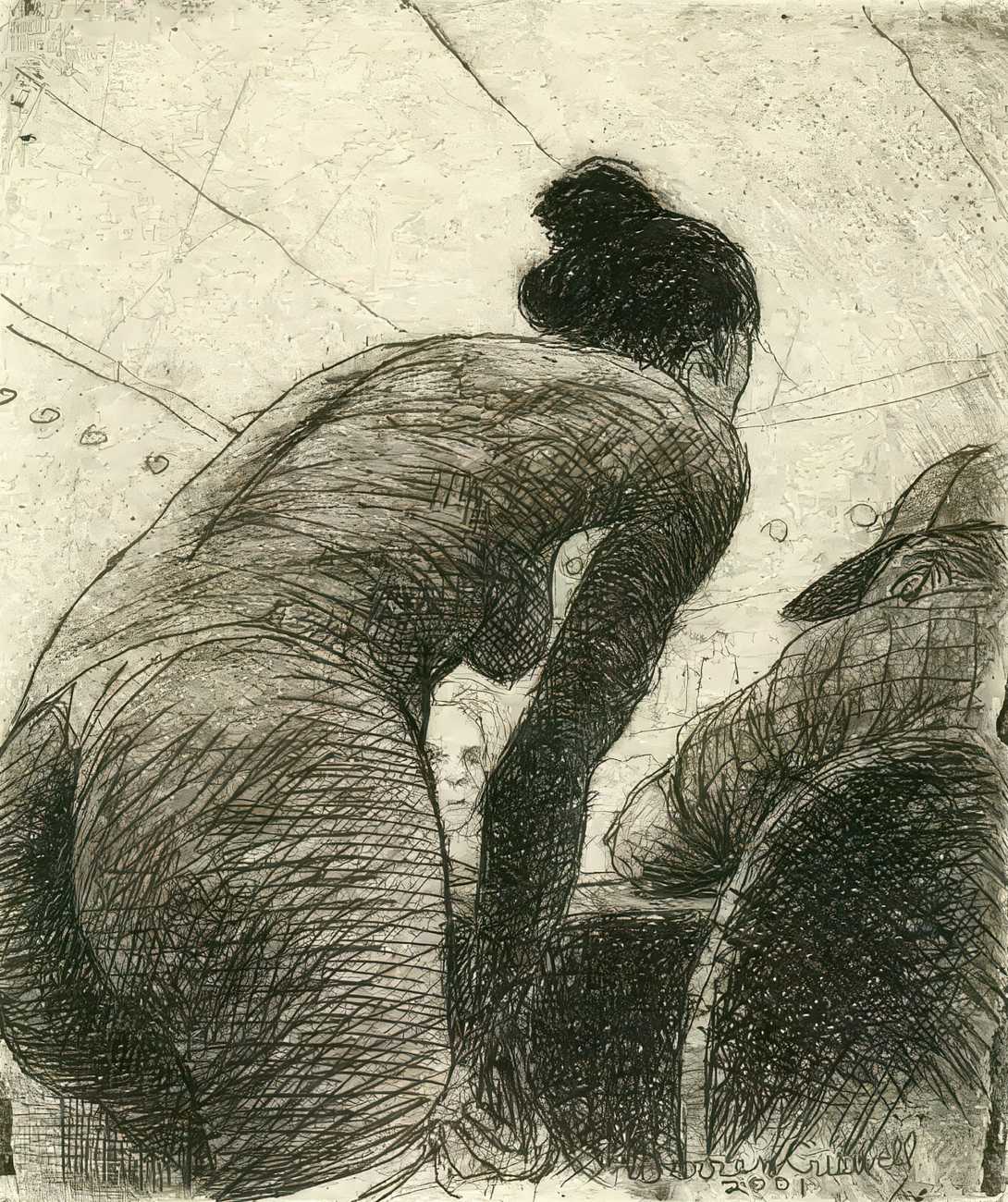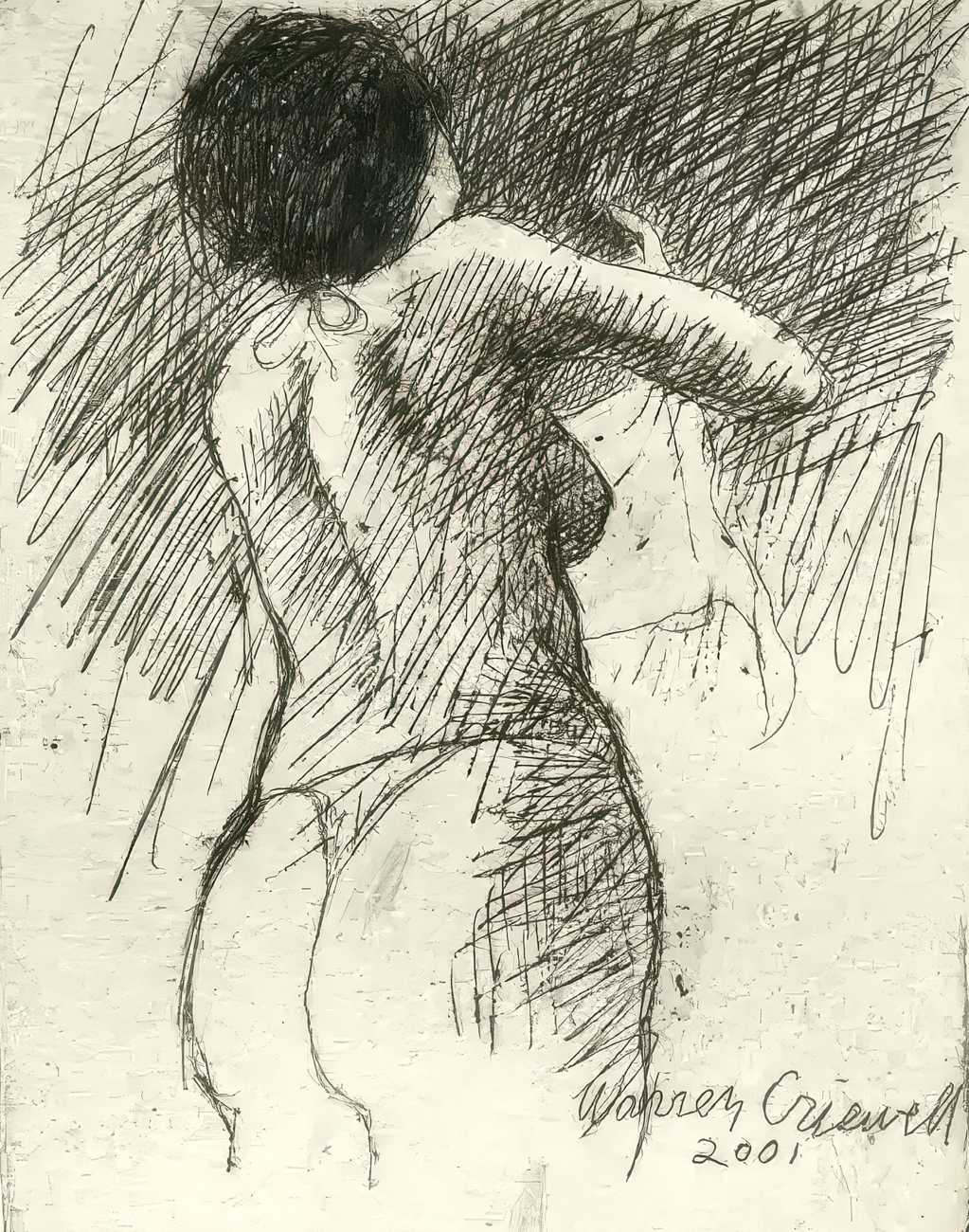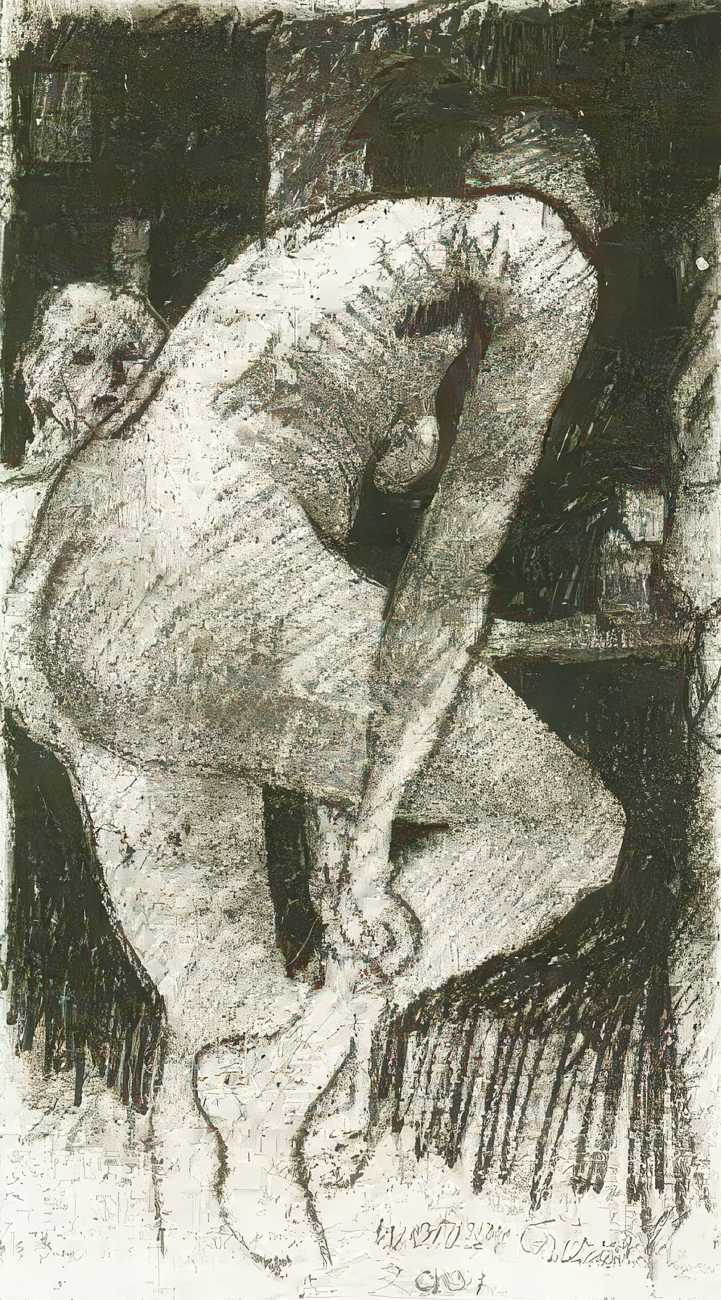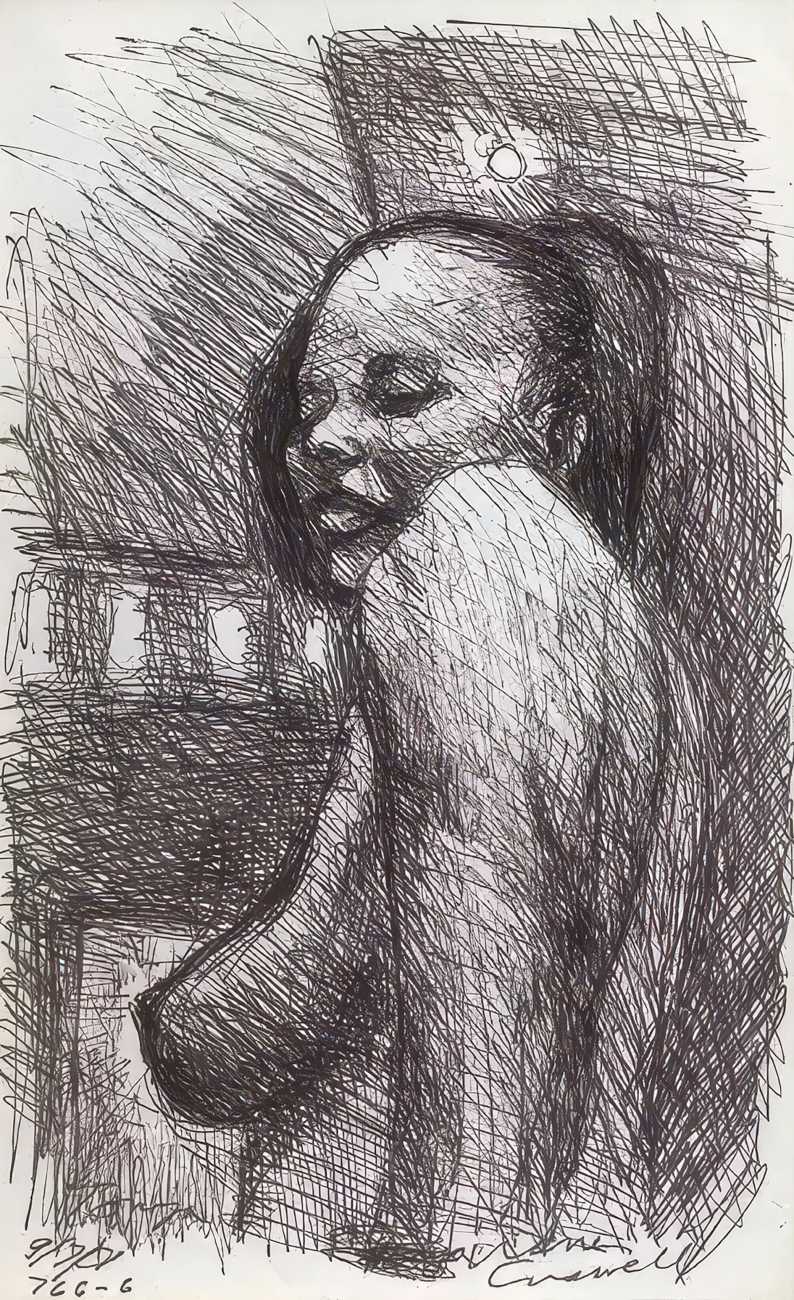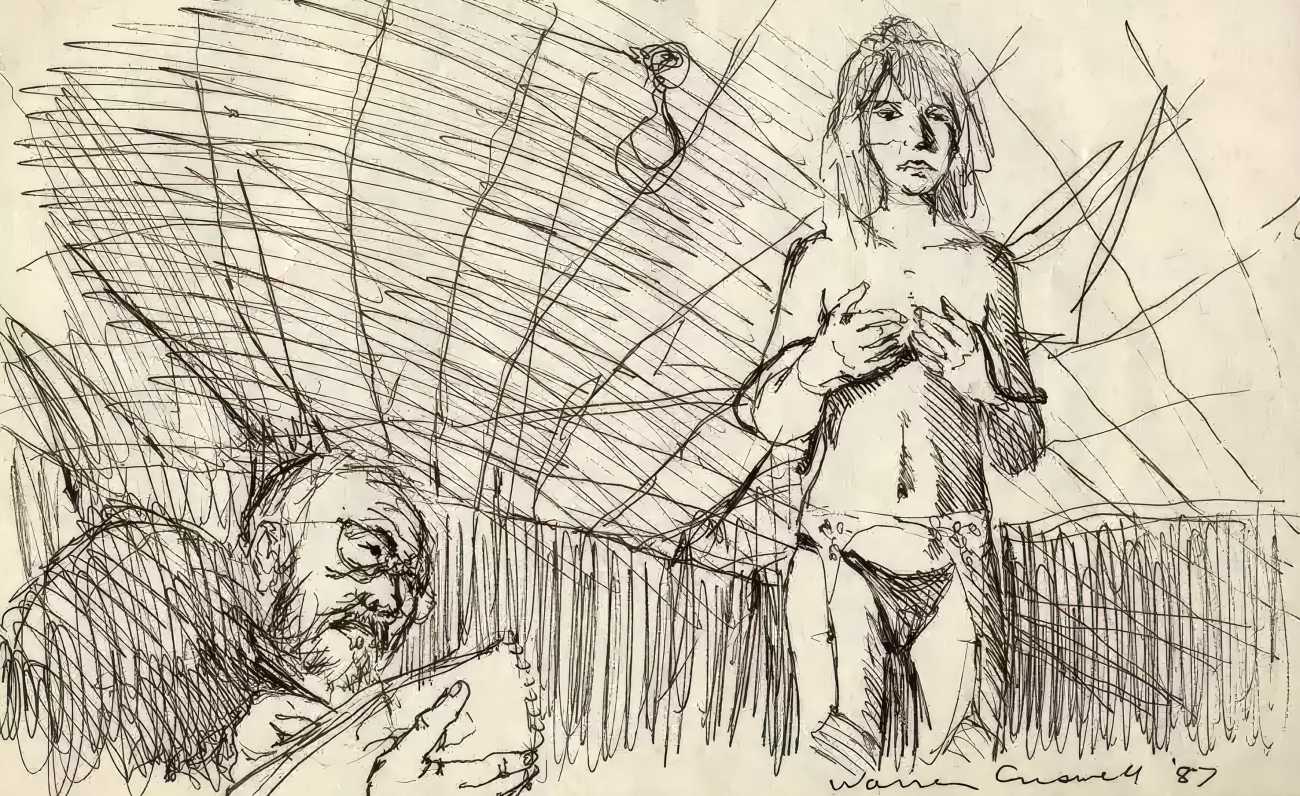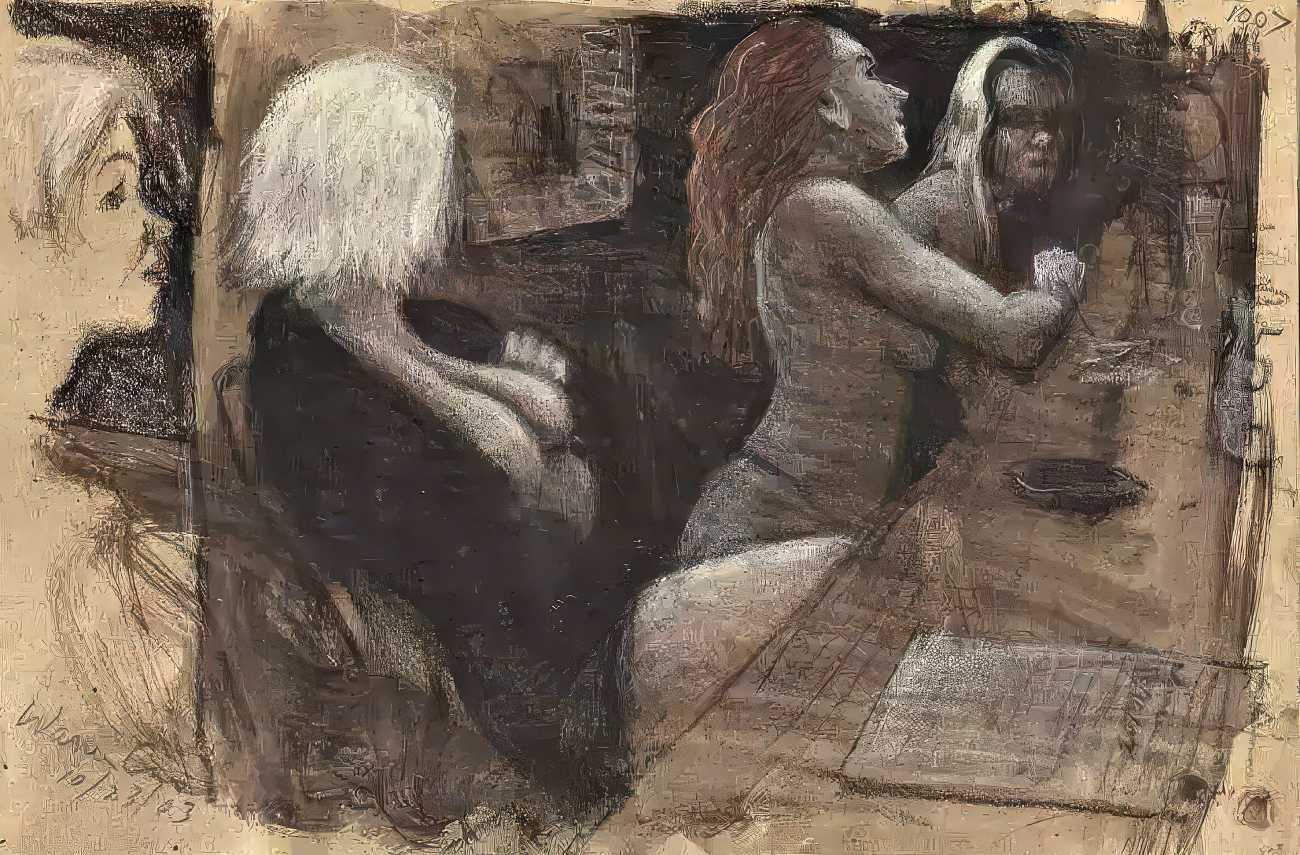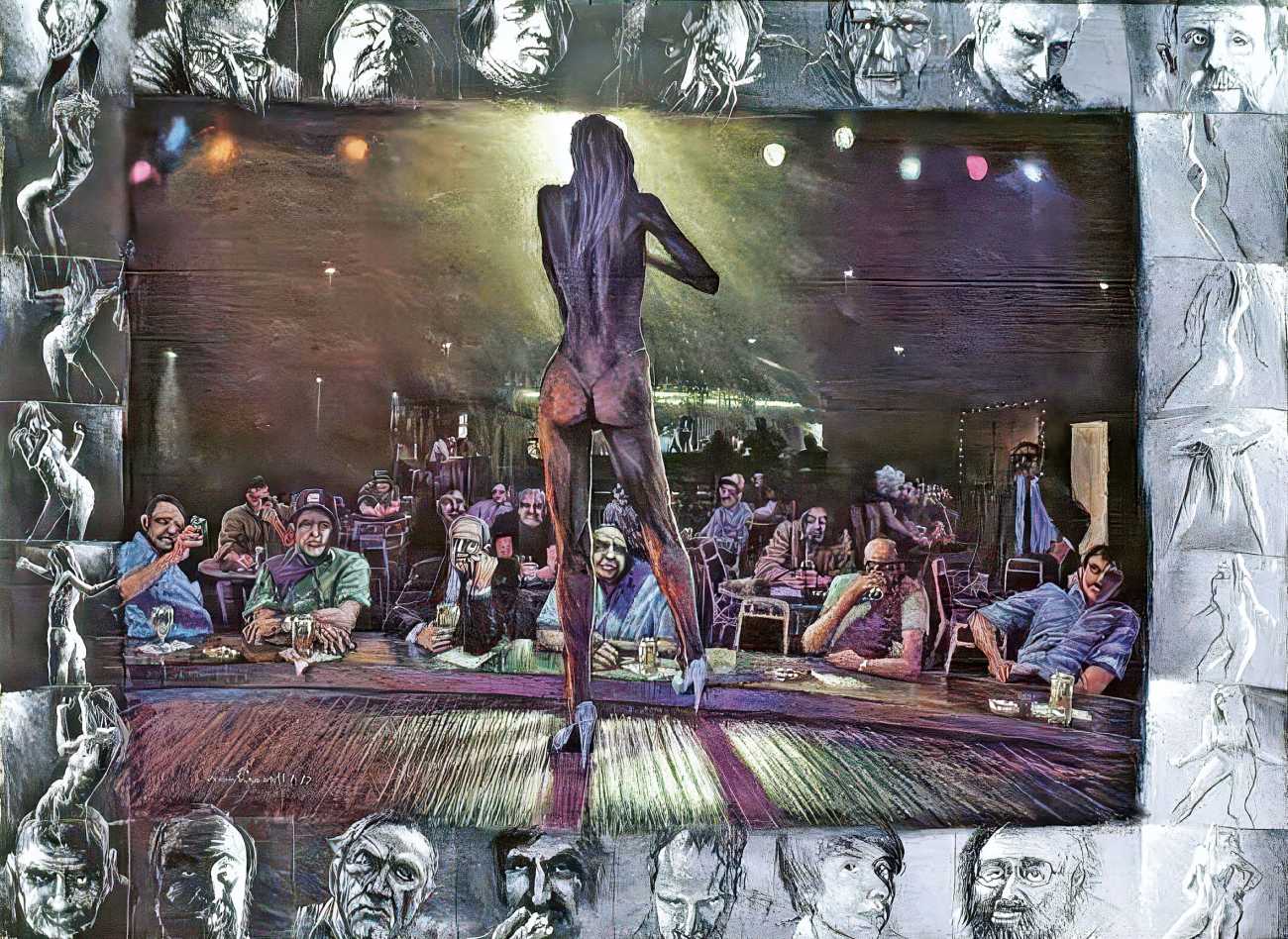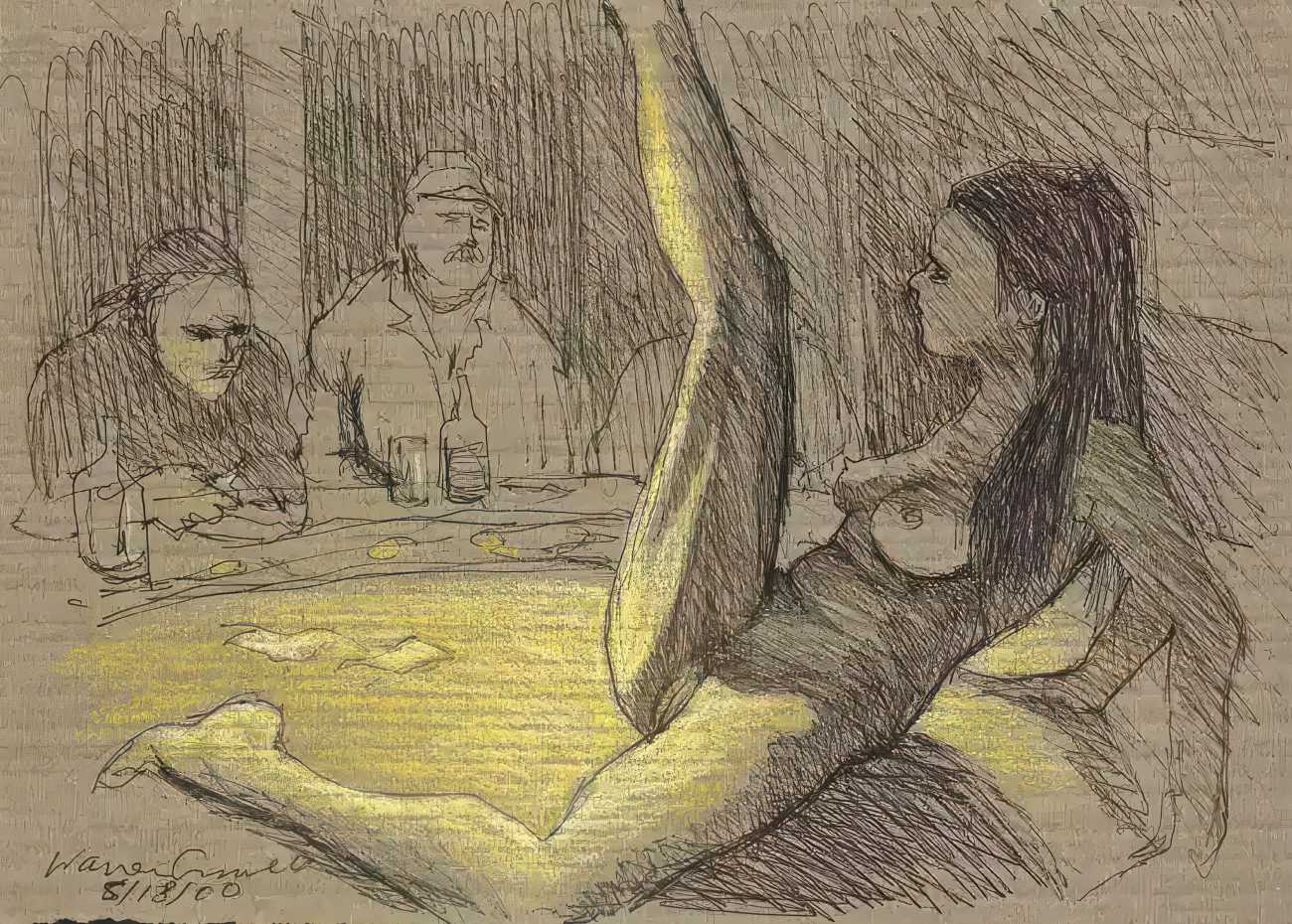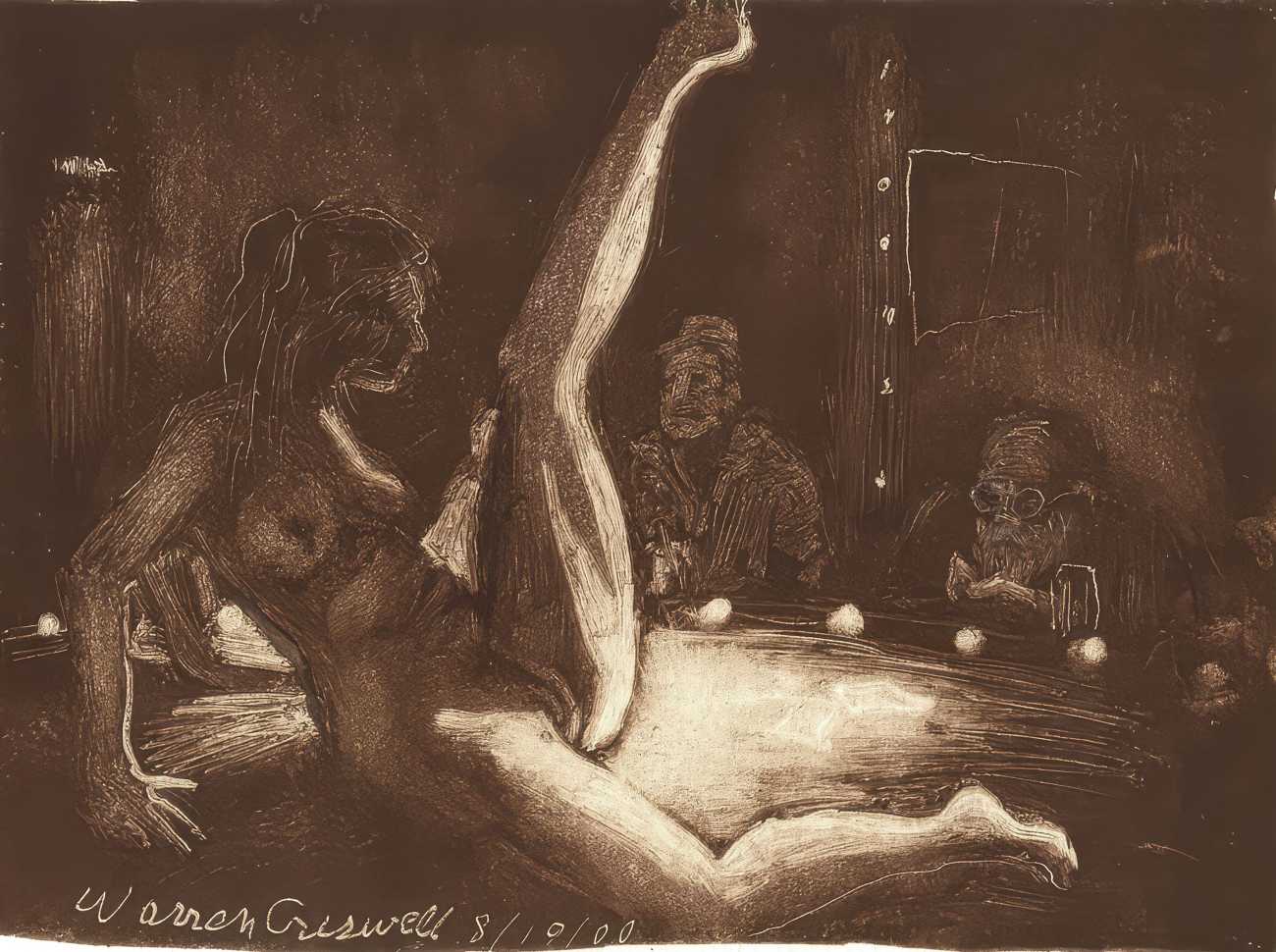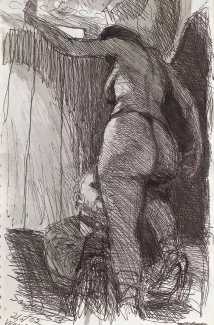
Warren Criswell’s extensive series of paintings and drawings set in strip clubs is one of the most sustained bodies of work in his career. He has jokingly described himself as the ‘Degas of the strip joint’, but there is little of Degas’s detached observation in Criswell’s treatment of the subject. His strip clubs are dark, enclosed, disorienting spaces in which performers and spectators become participants in an uneasy theatre of desire, expectation and observation. Rather than presenting the strip club simply as a place of erotic entertainment, Criswell treats it as a peculiar social theatre, a space where performance, fantasy, loneliness, desire and self-consciousness coexist.
Criswell is less interested in the mechanics of the performance than in the atmosphere surrounding it. Dramatic pools of light isolate performers against almost impenetrable darkness, while the audience is reduced to rows of shadowy figures, partially concealed faces and fragmentary bodies. Mirrors, tables, chairs and architectural details further complicate the space, creating compositions in which it is sometimes difficult to determine exactly who is watching whom. The women may be absorbed in their performance, distracted, contemplative or simply waiting; the men are anonymous silhouettes.
The series draws on Criswell’s fascination with light and shadow, with brightly illuminated figures materialising from the darkness. His technique can be extraordinarily detailed, yet the images are never simply photographic transcriptions. Figures and interiors emerge and disappear, often giving the scene a nocturnal, dreamlike quality.
Criswell has been unusually candid about his own position as an observer. He acknowledges the voyeuristic impulse underlying the work, while frequently inserting himself into the scenes as one of the spectators. His presence complicates the relationship between artist, viewer and subject. He is simultaneously watching, being watched, and imagining himself among the other men.