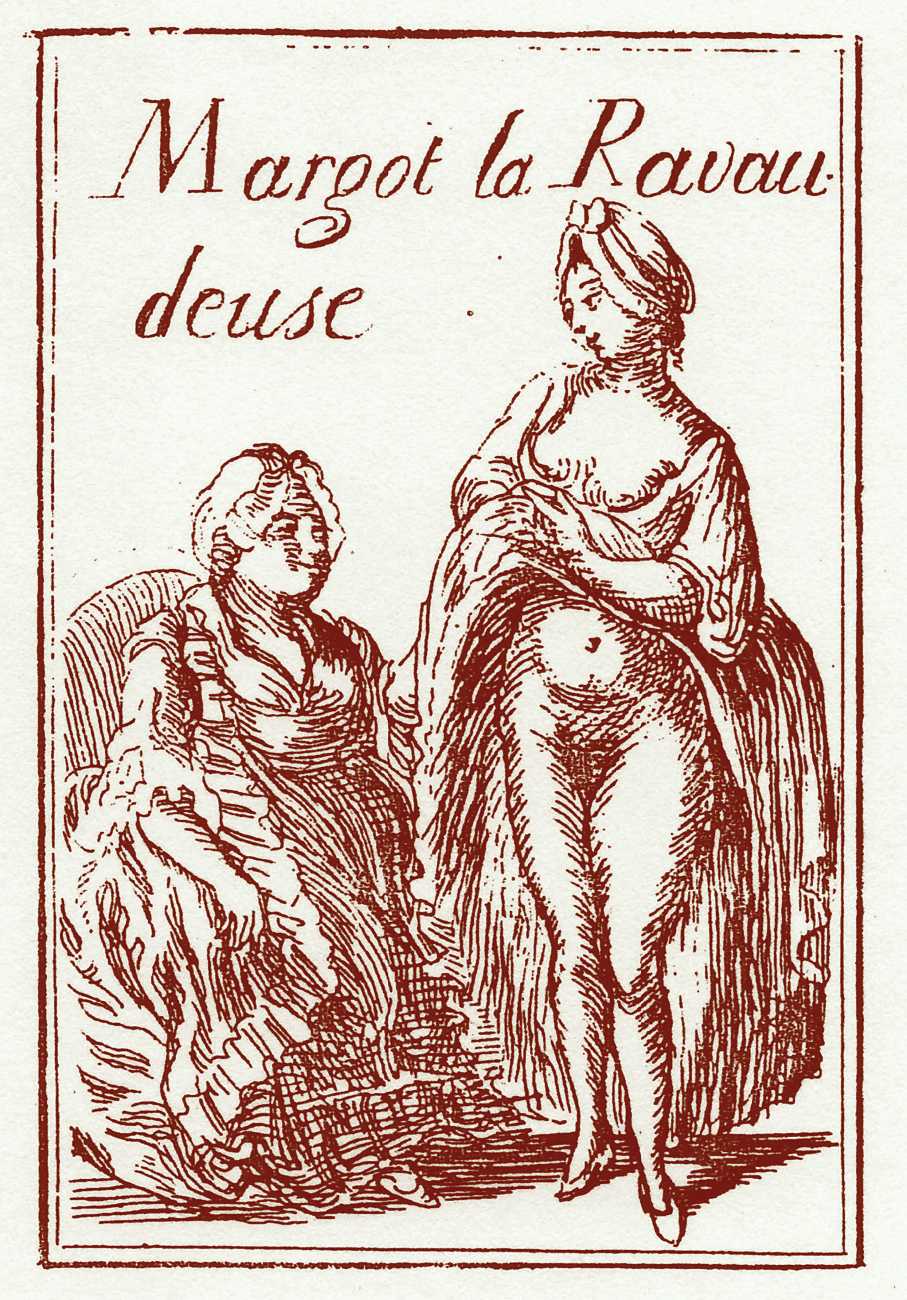
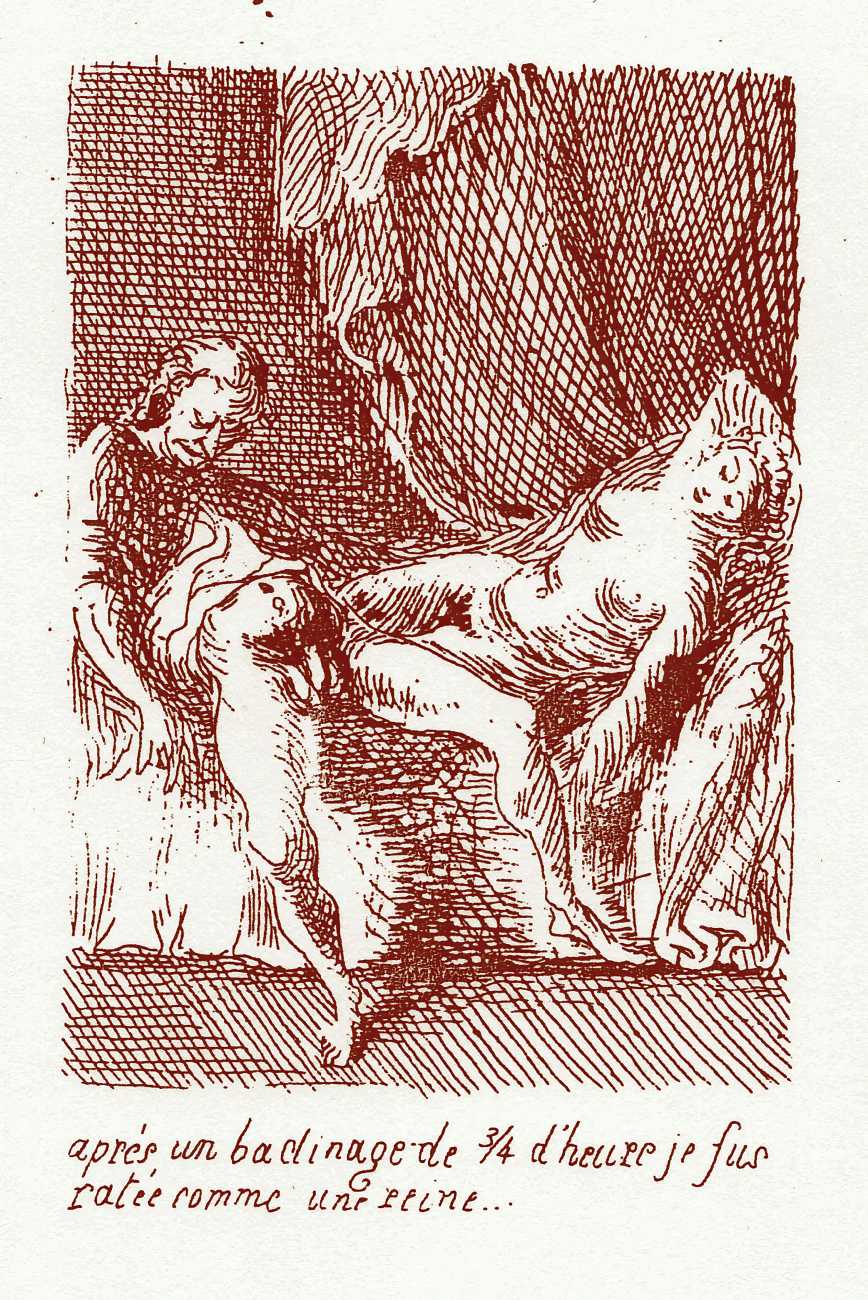
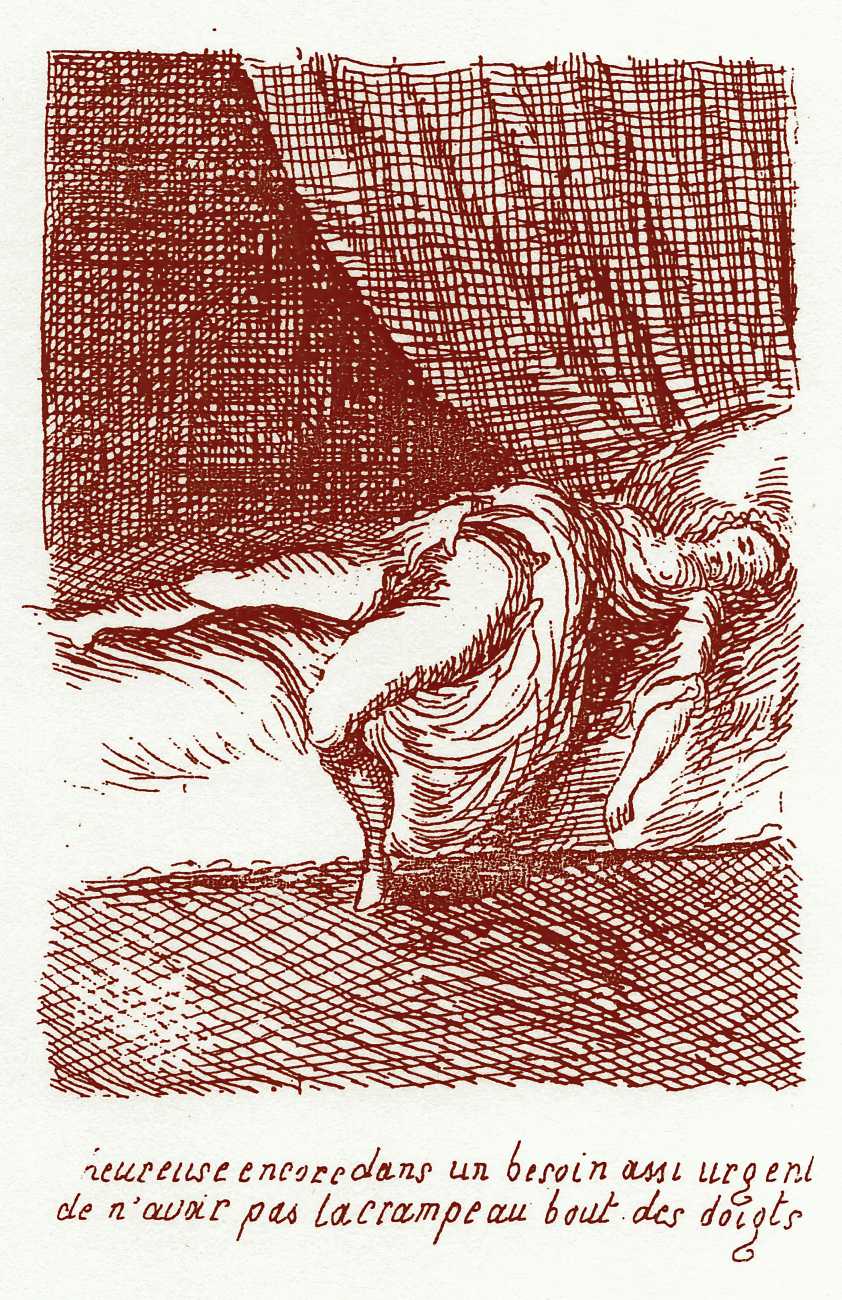
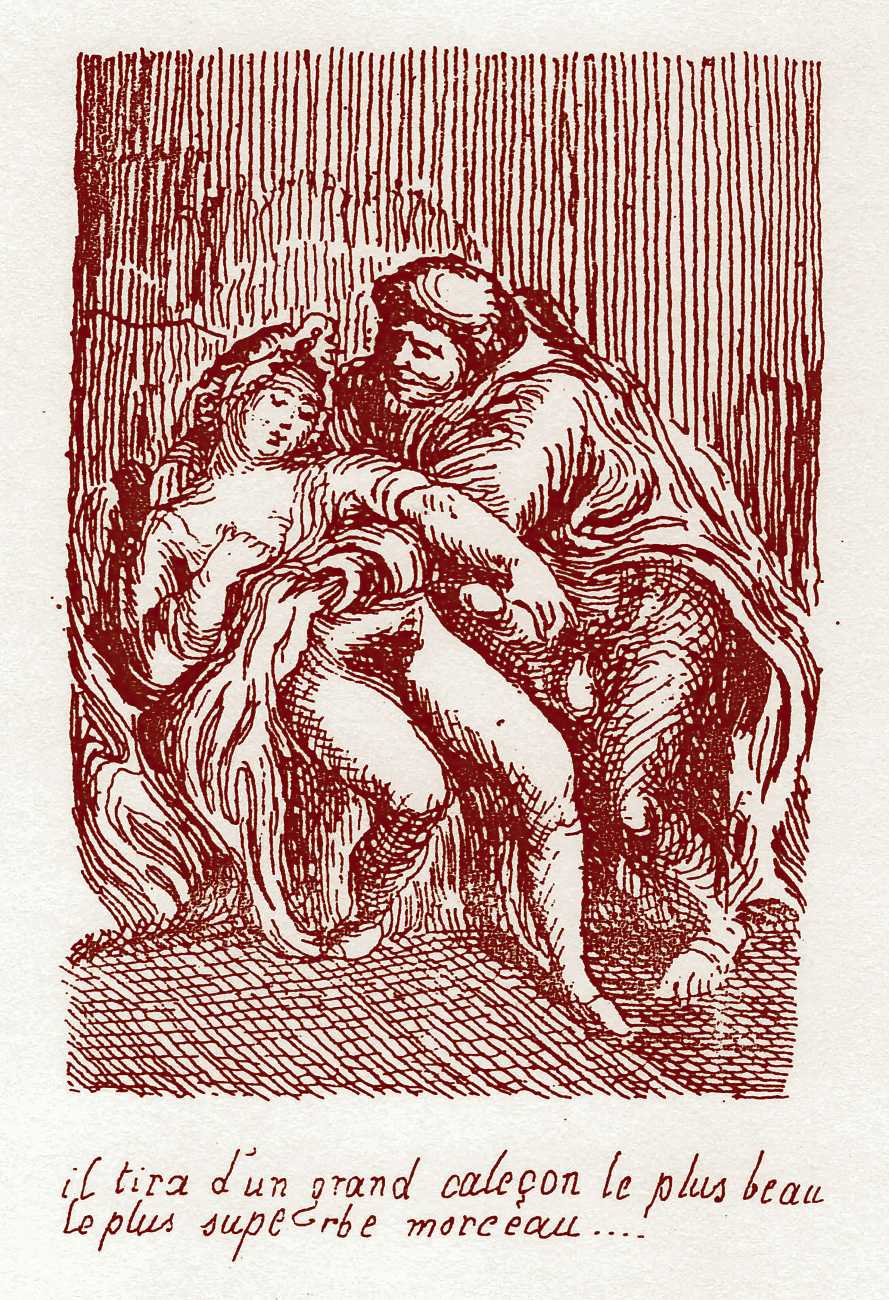
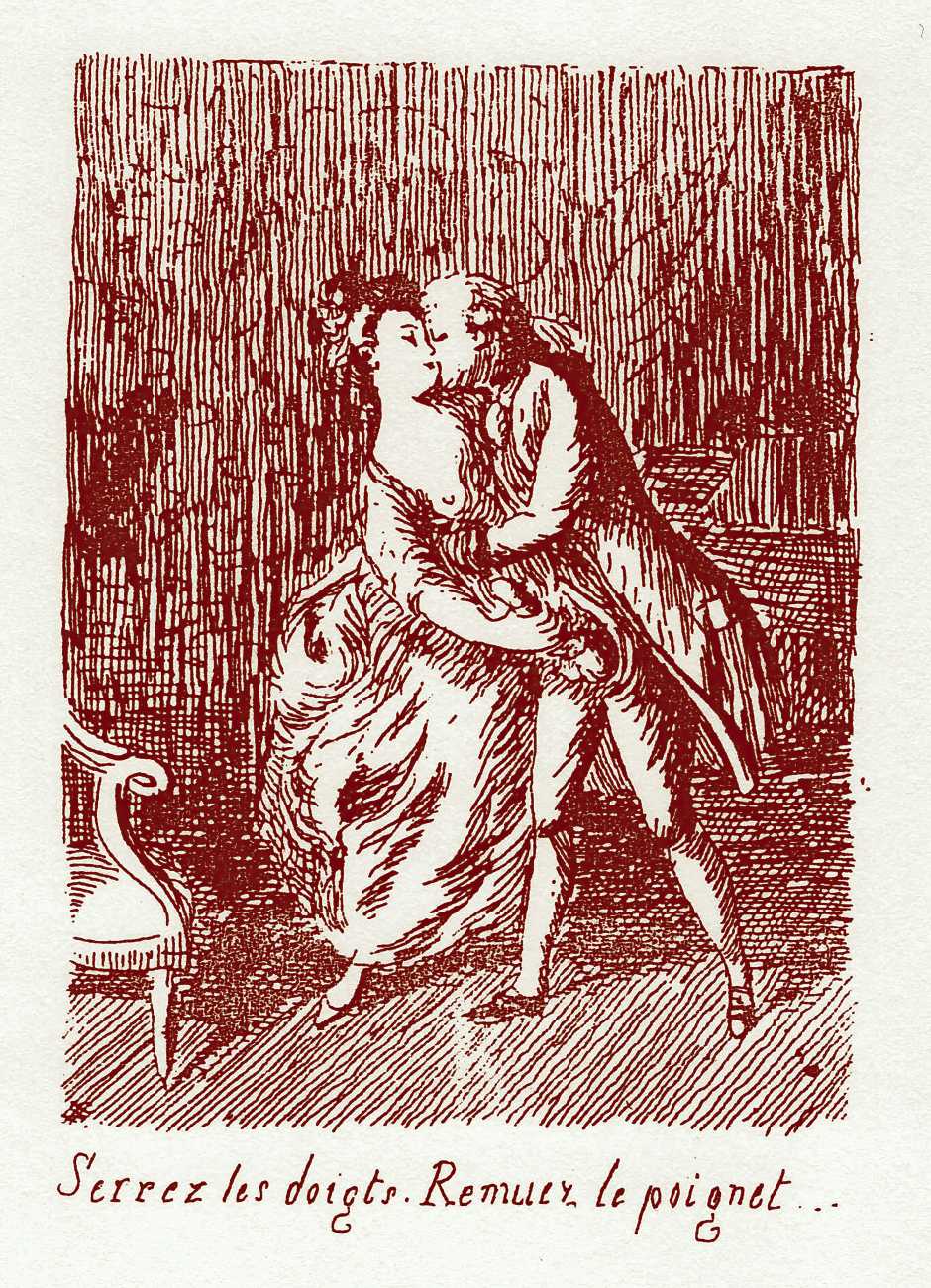
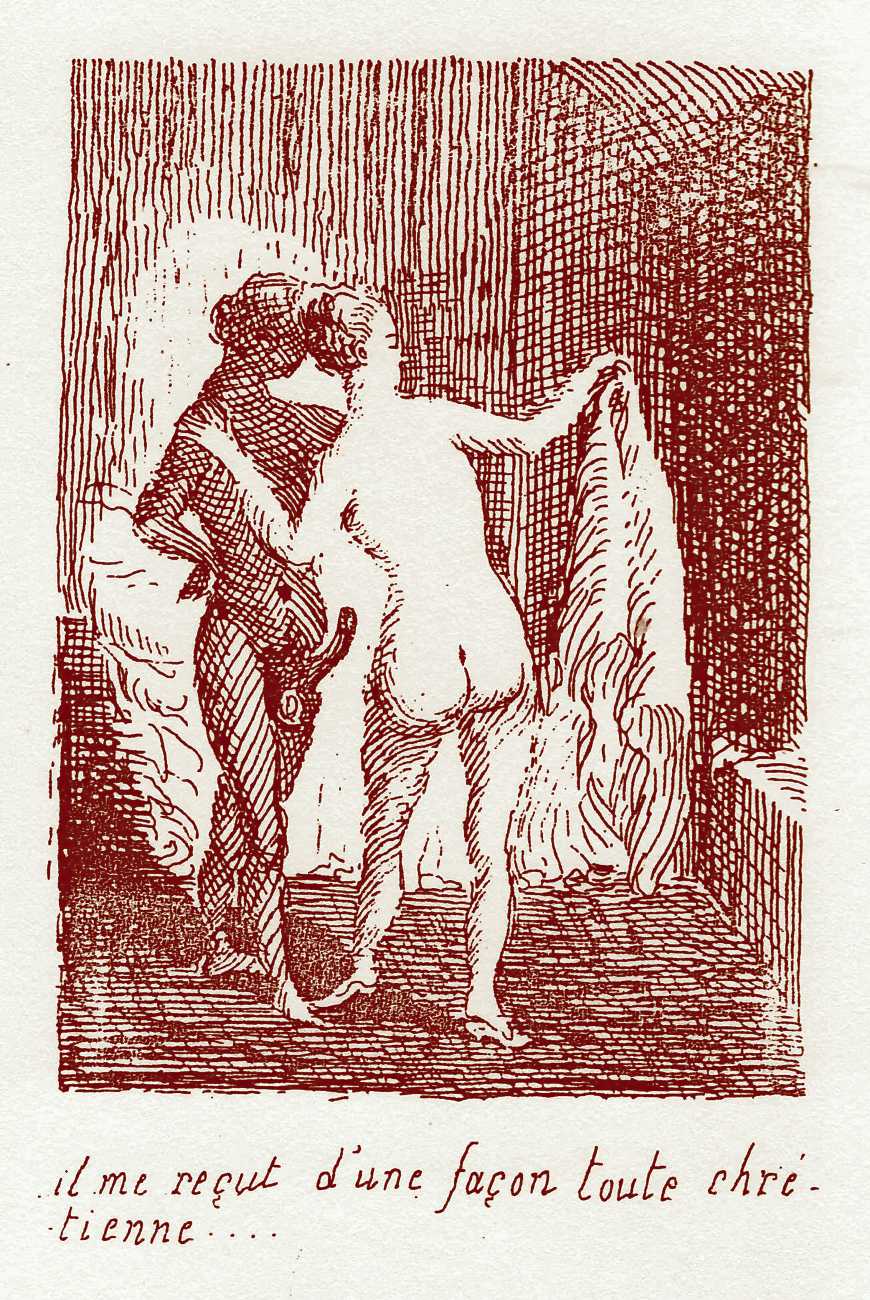
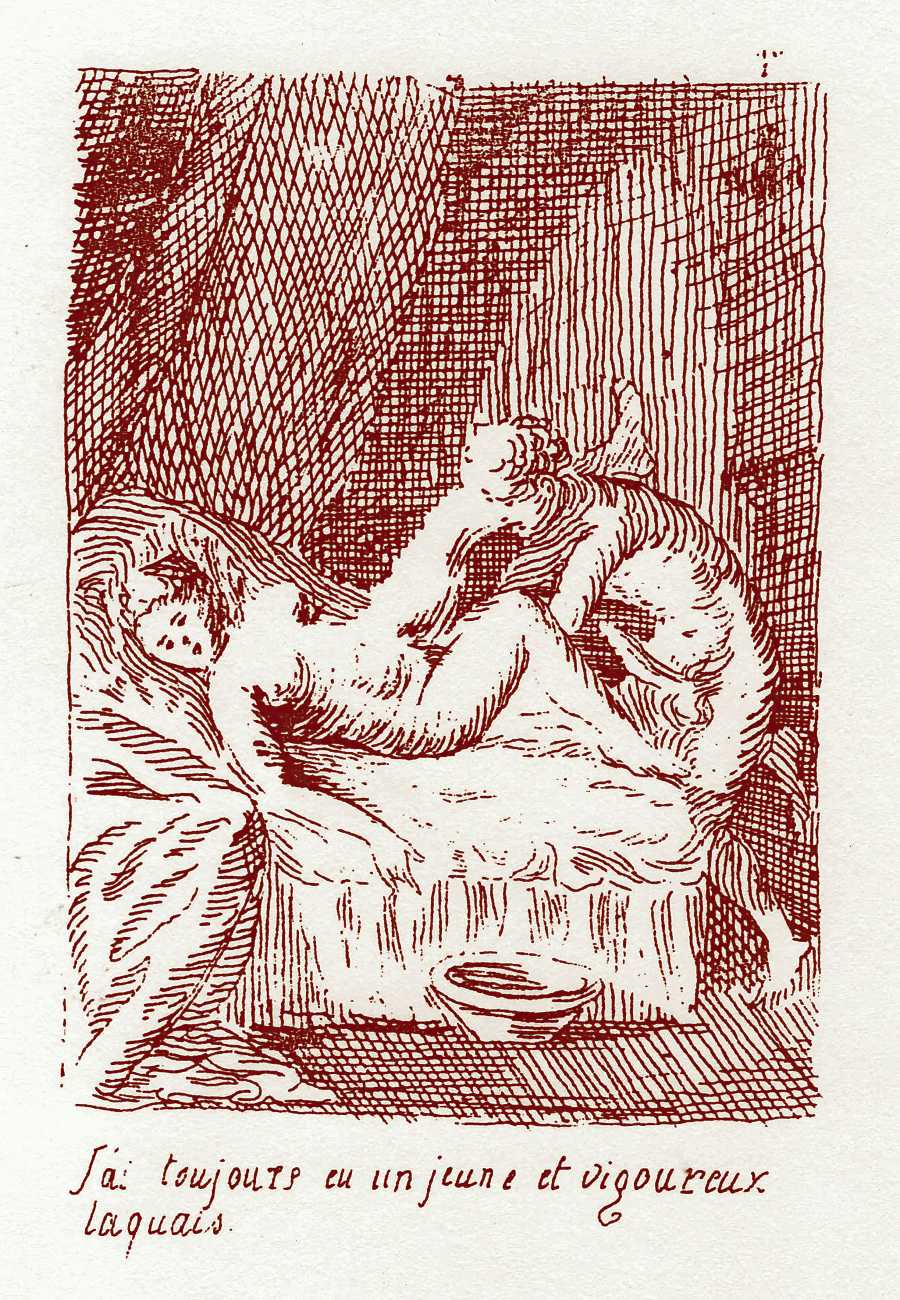
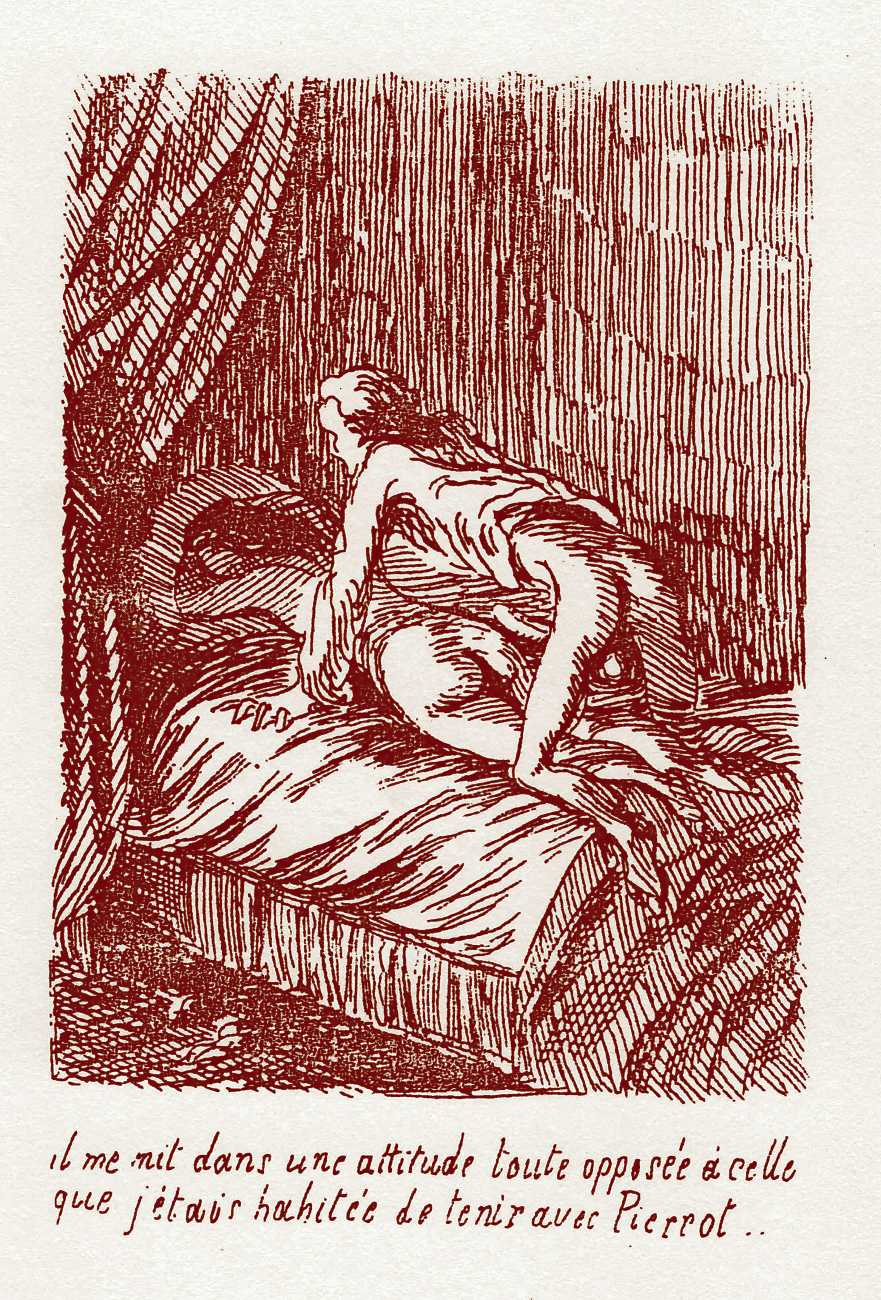
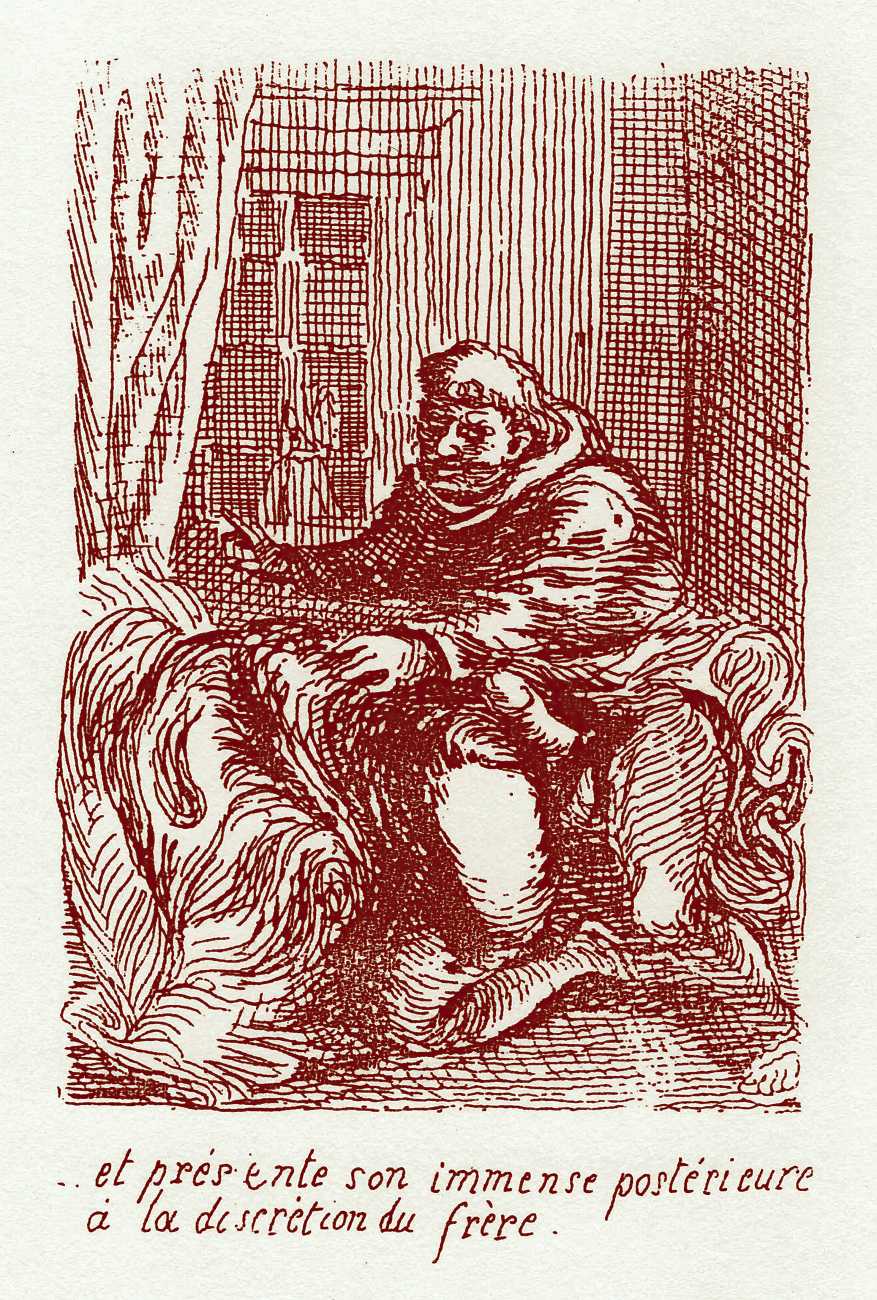
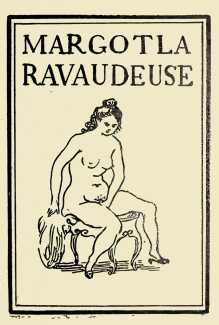
 Fougeret de Montbron’s Margot la ravaudeuse (Margot the Darning-Woman), first published around 1750 under a fictitious Hamburg imprint, is one of the best-known works of eighteenth-century French libertine literature. Presented as the memoirs of Margot, a young woman who makes her way through Paris by her intelligence, sexual independence and ability to exploit the society around her, the novel combines erotic adventure with a sharp and often satirical view of its world.
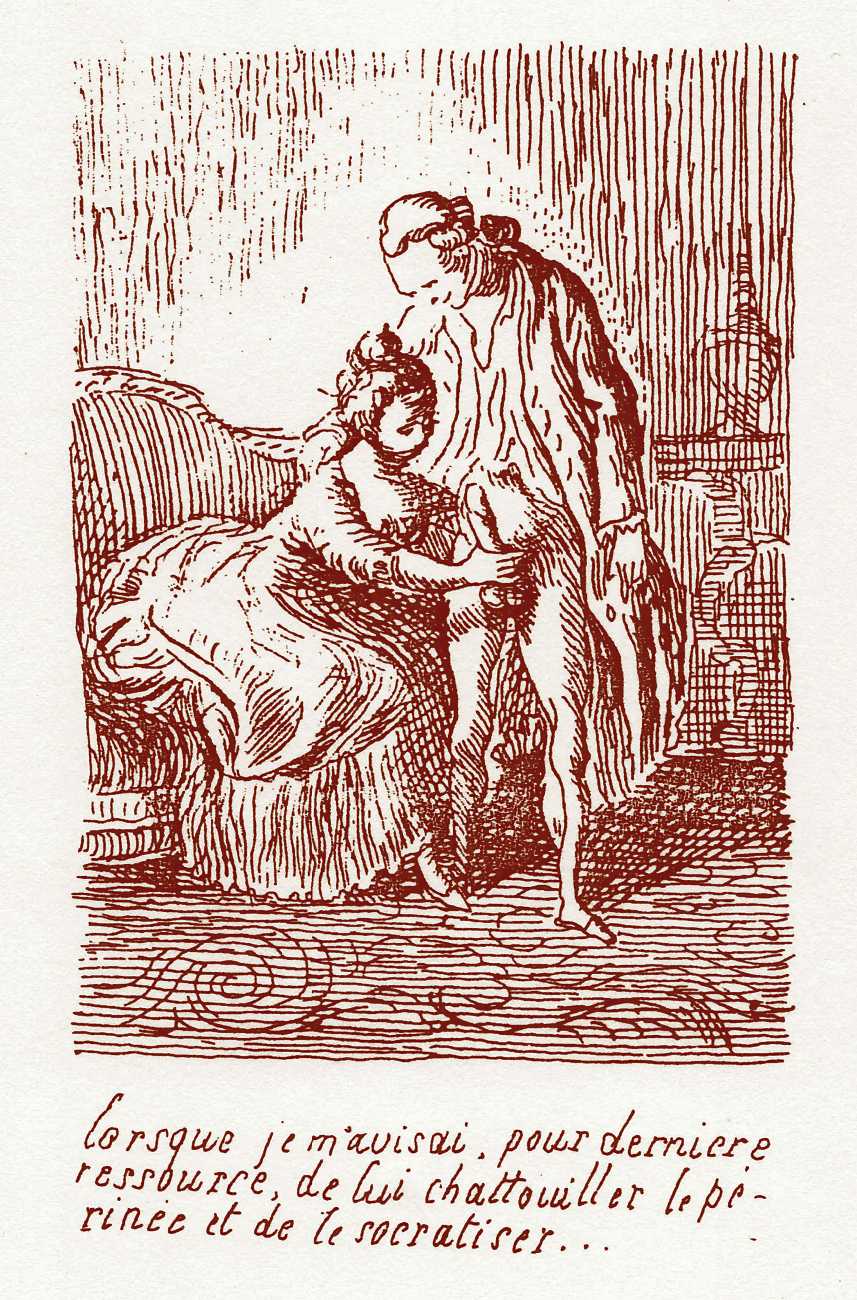
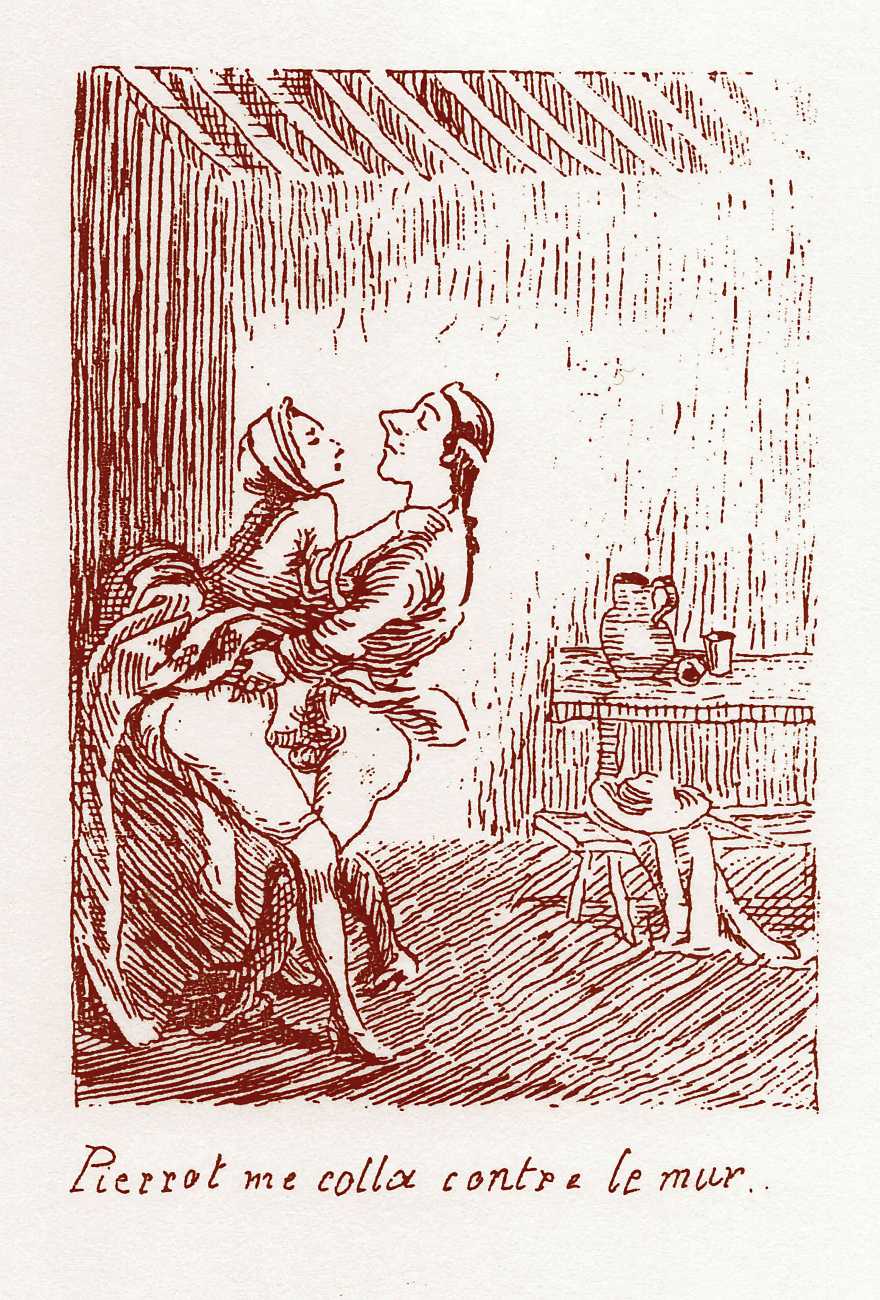
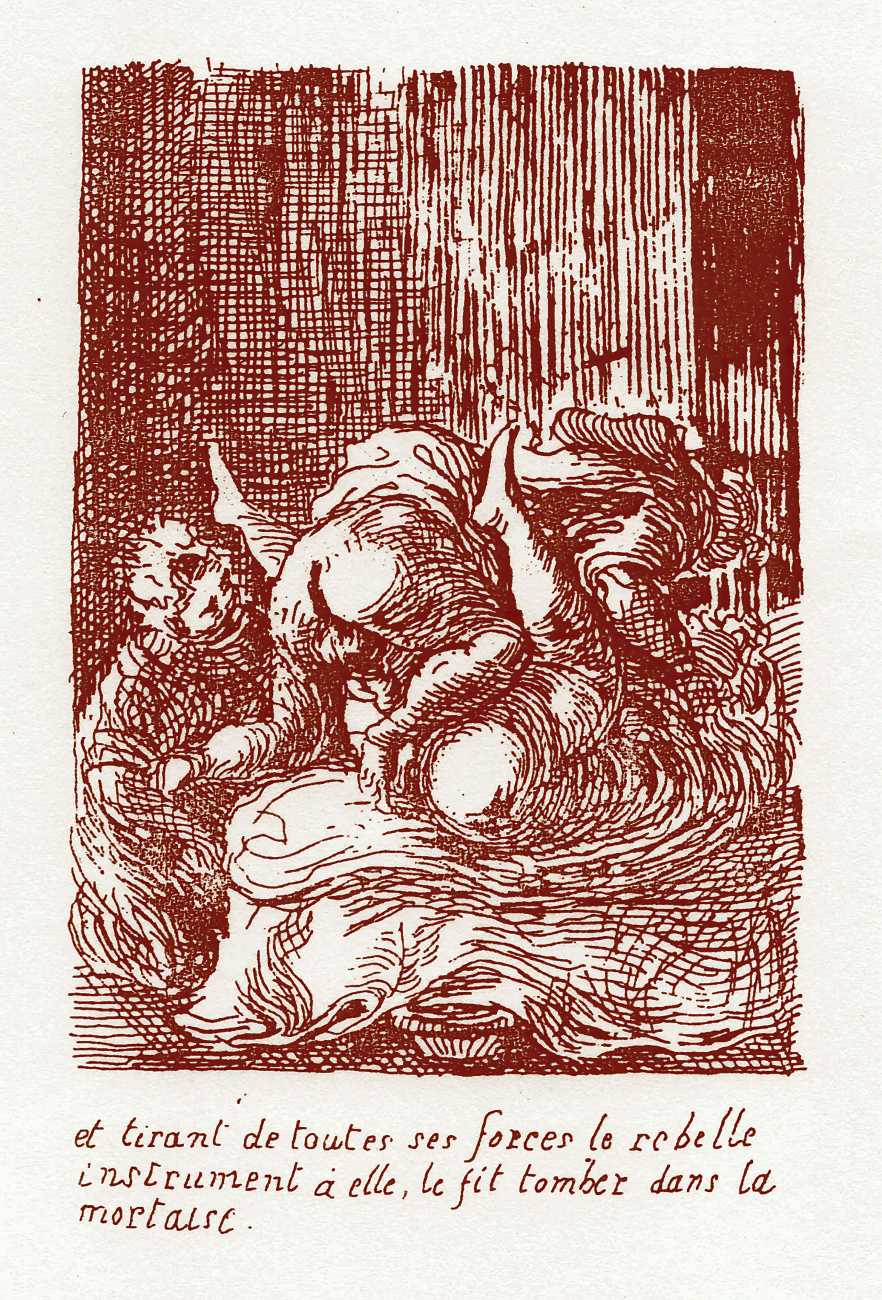
Galanis illustrated this edition with twelve copper engravings in sanguine, including a frontispiece and eleven full-page plates, all but the frontispiece including a handwritten quotation from the book. The figures are confidently drawn, and even in the more explicit scenes Galanis retains his trademark compositional discipline and economy of line. His figures often seem caught in the middle of an episode, with gesture and posture carrying as much expressive weight as facial expression.
Margot la ravaudeuse is one of the most concentrated examples of Galanis’s erotic book illustration, frank in subject matter, but still marked by the elegance, precision and strong sense of composition that distinguish his work as a printmaker.
Margot la ravaudeuse was printed ‘Sur la copie de Hambourg pour quelques bibliophiles’ (After the Hamburg copy, for a few bibliophiles) – it was actually published in Paris by René Bonnel and printed by Durand in Chartres. The limited and numbered edition was 250 copies