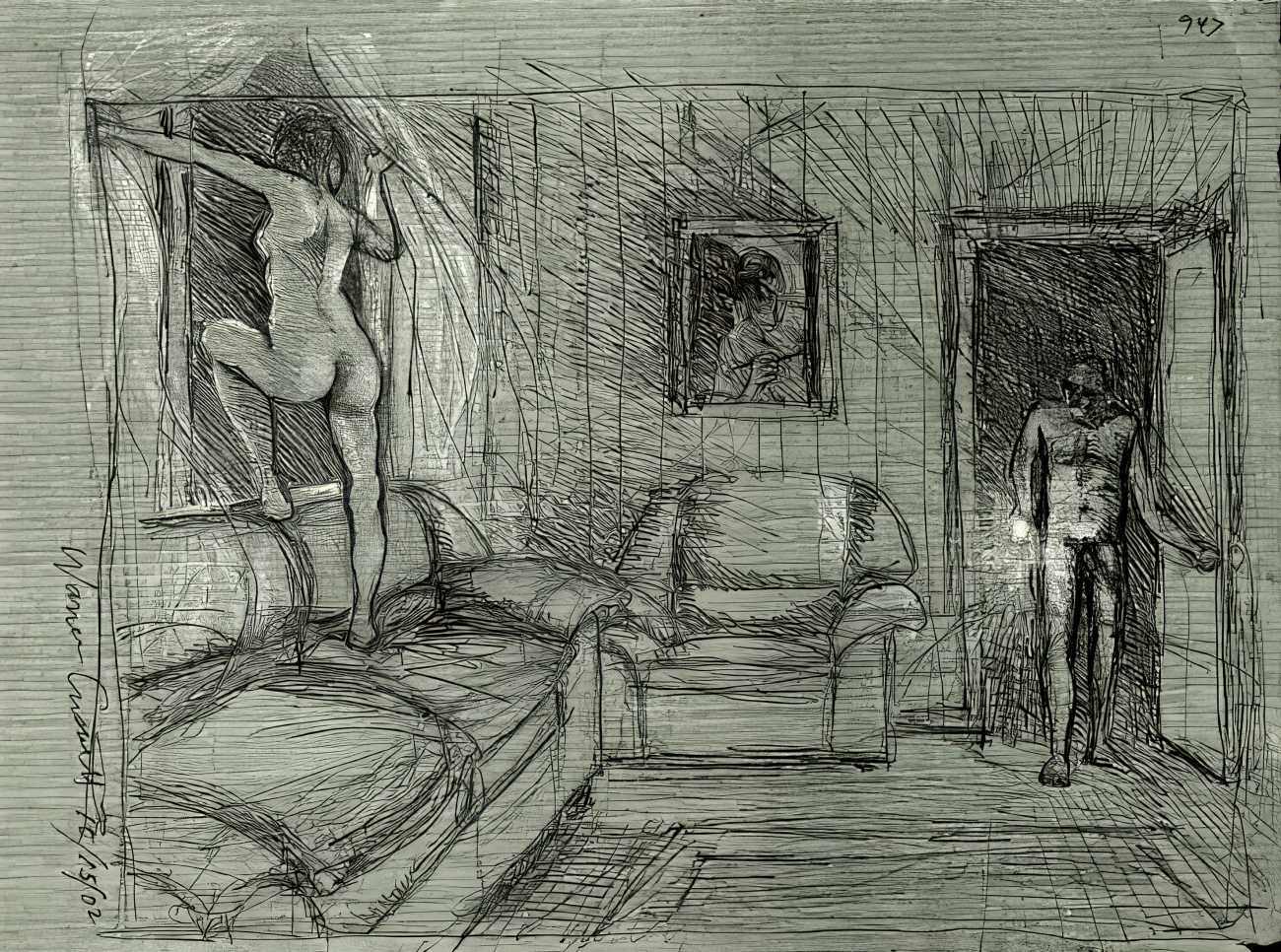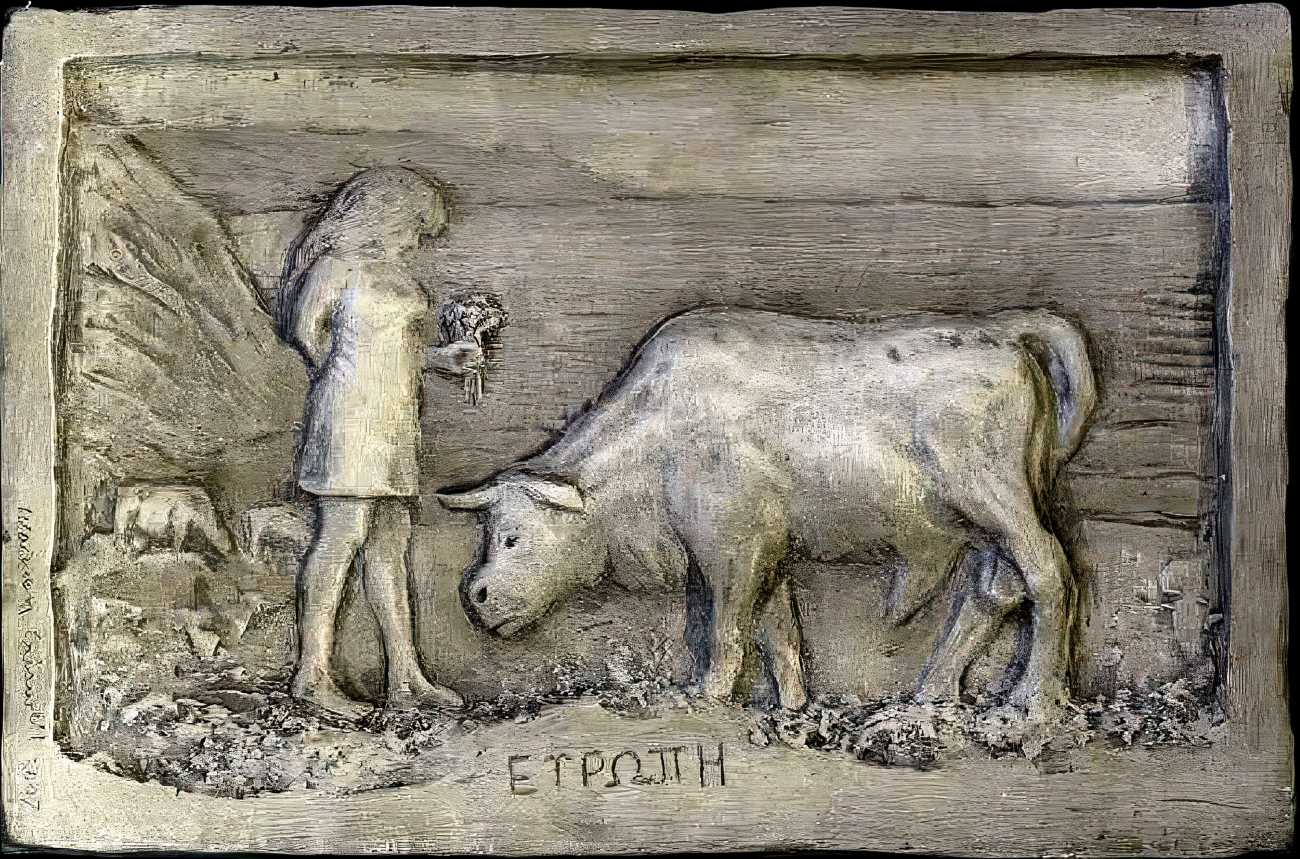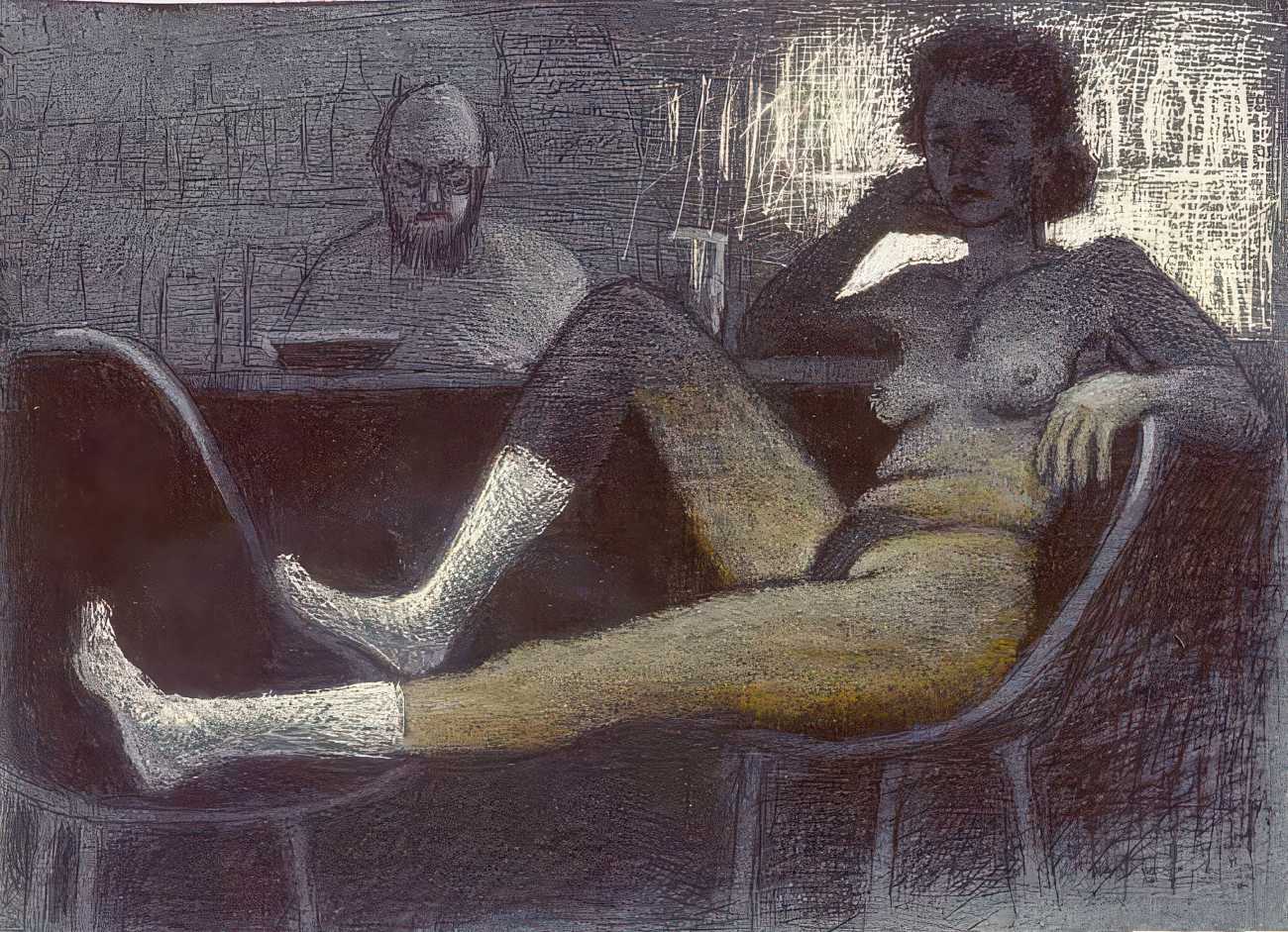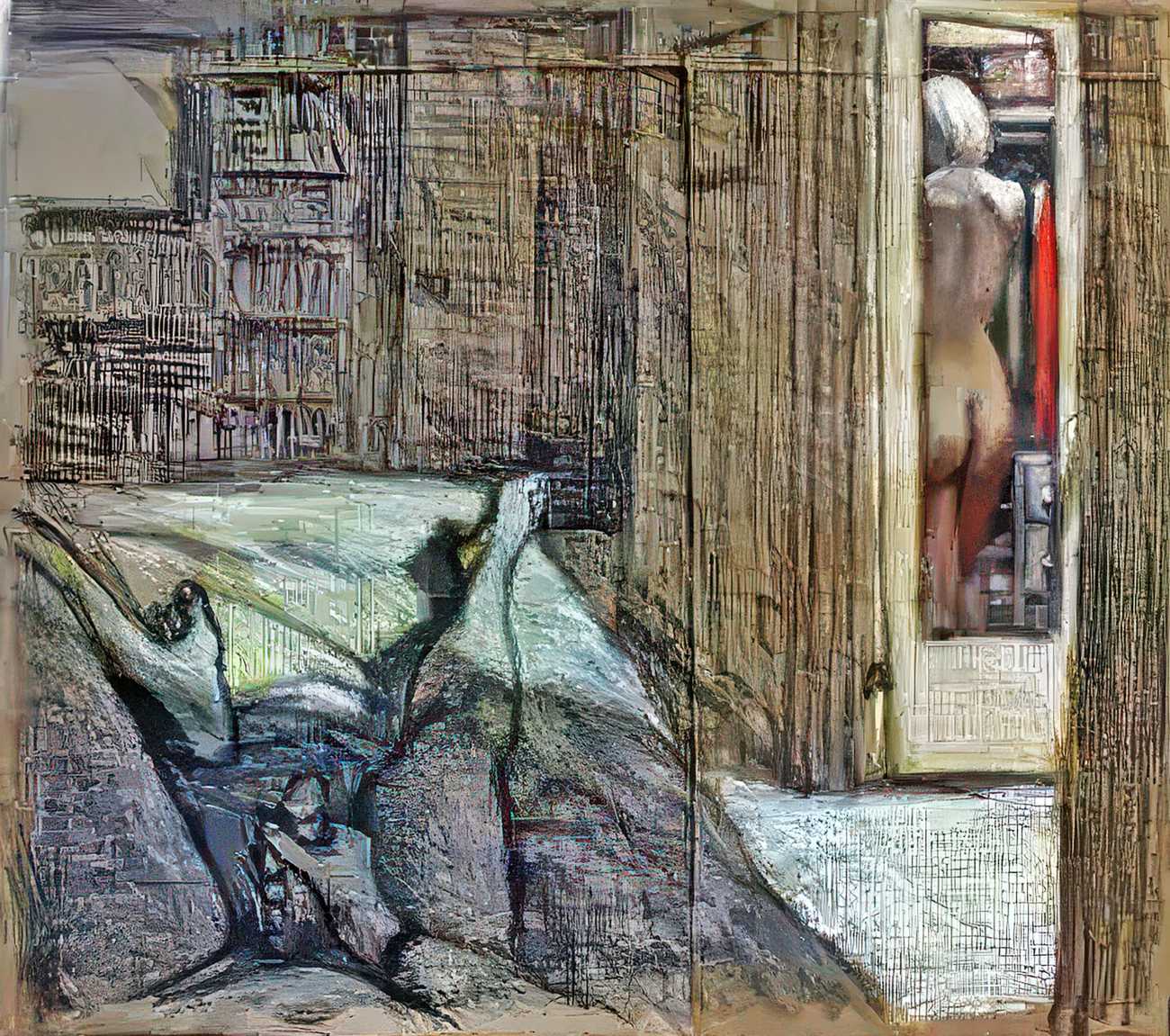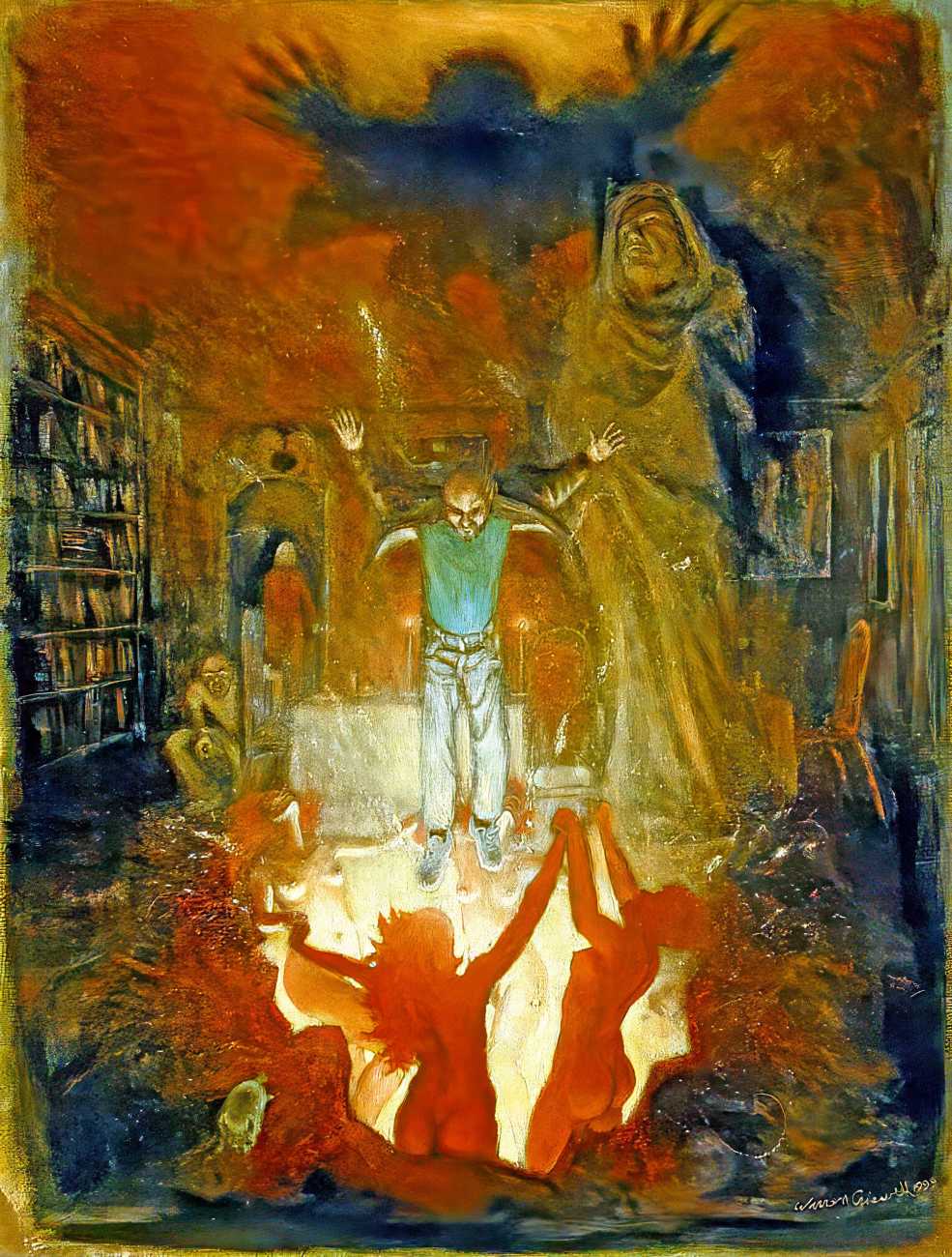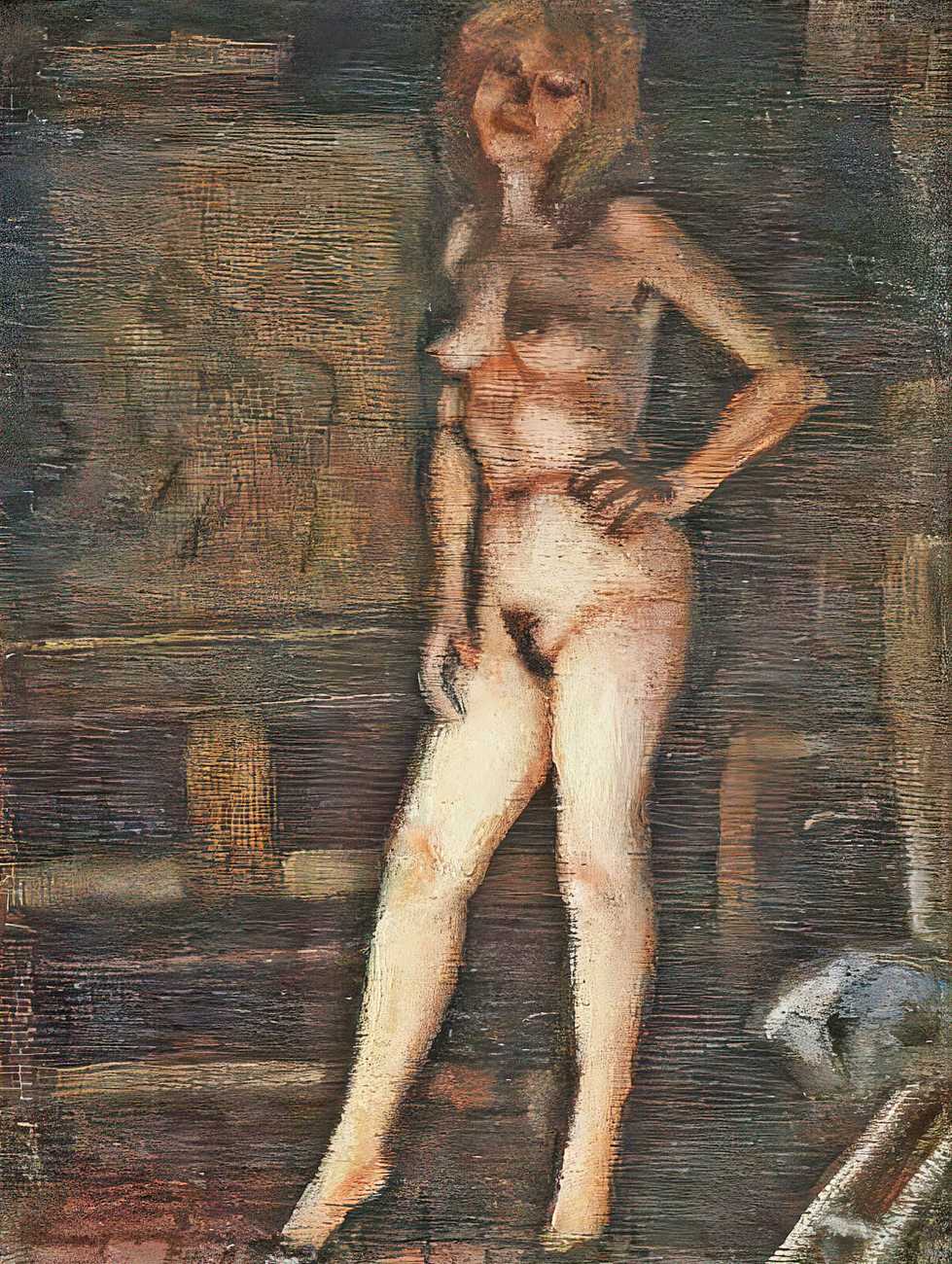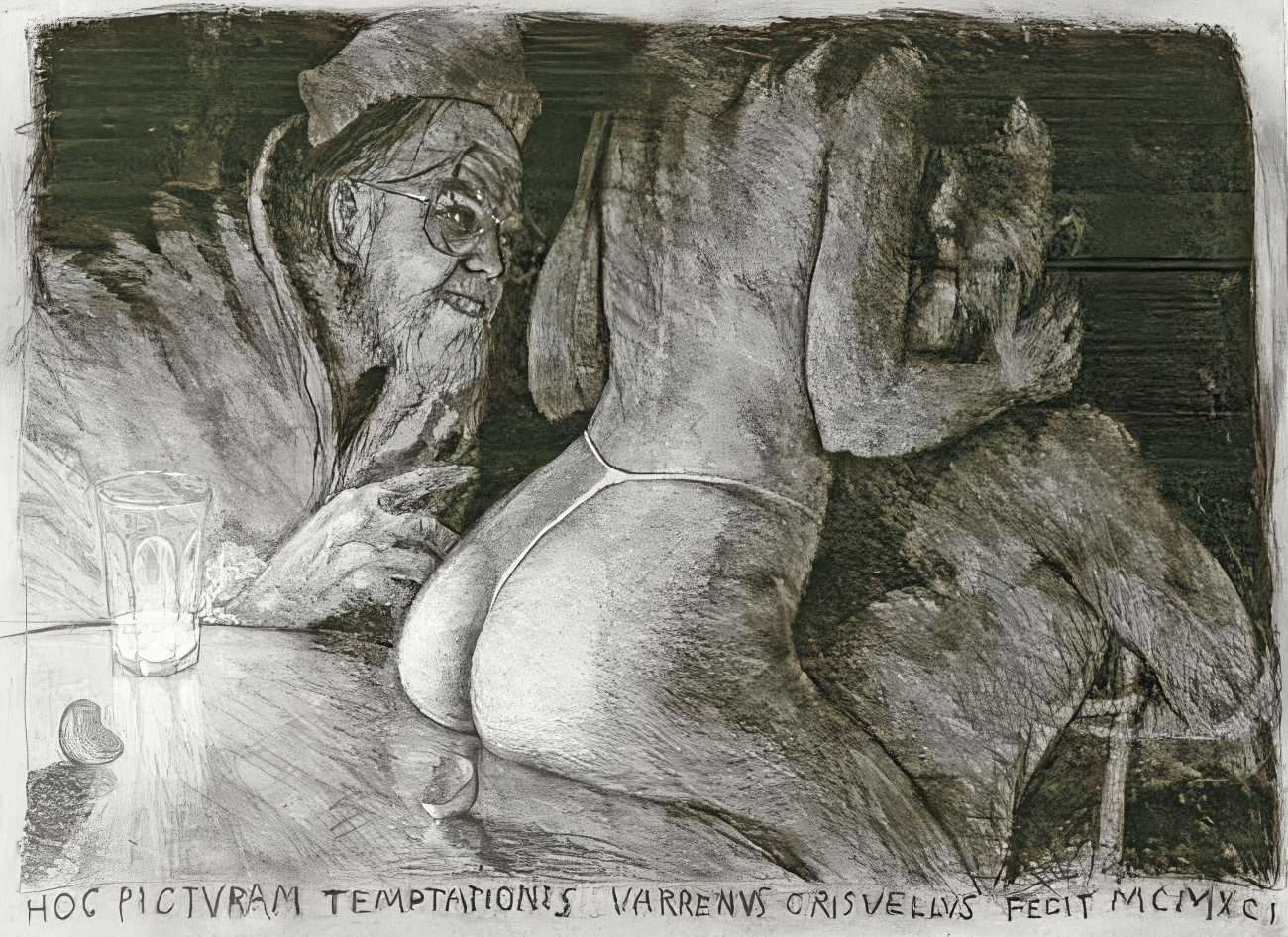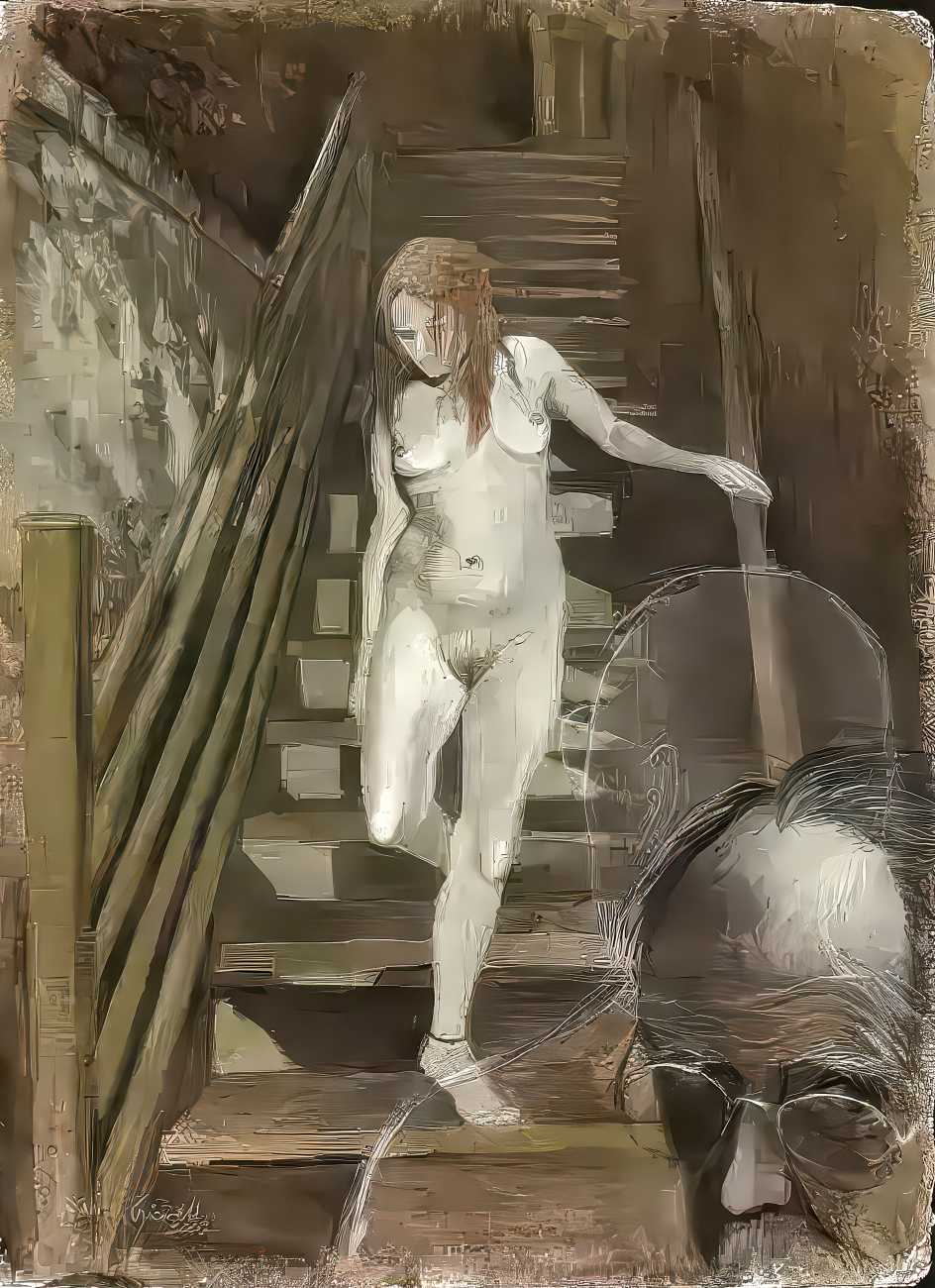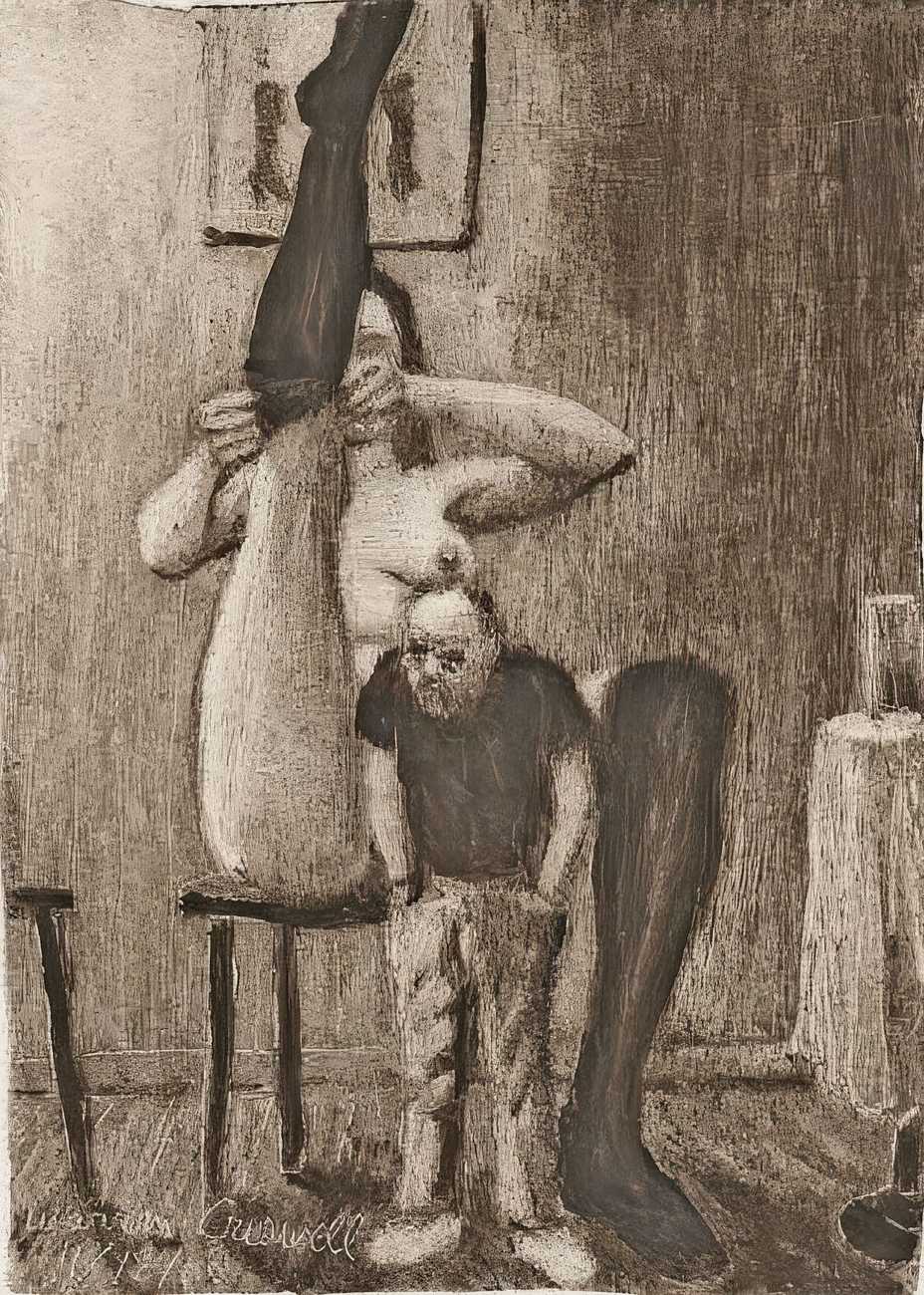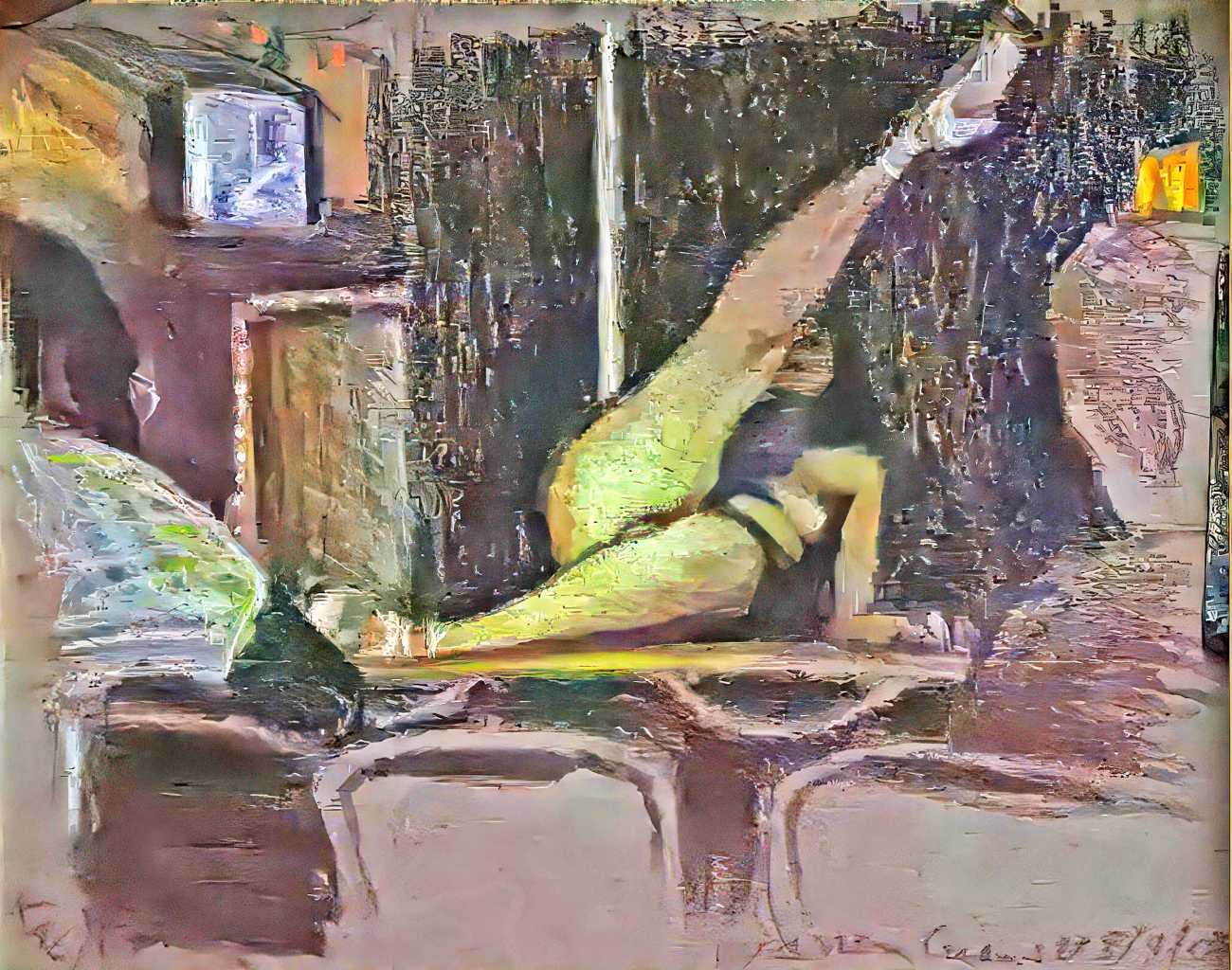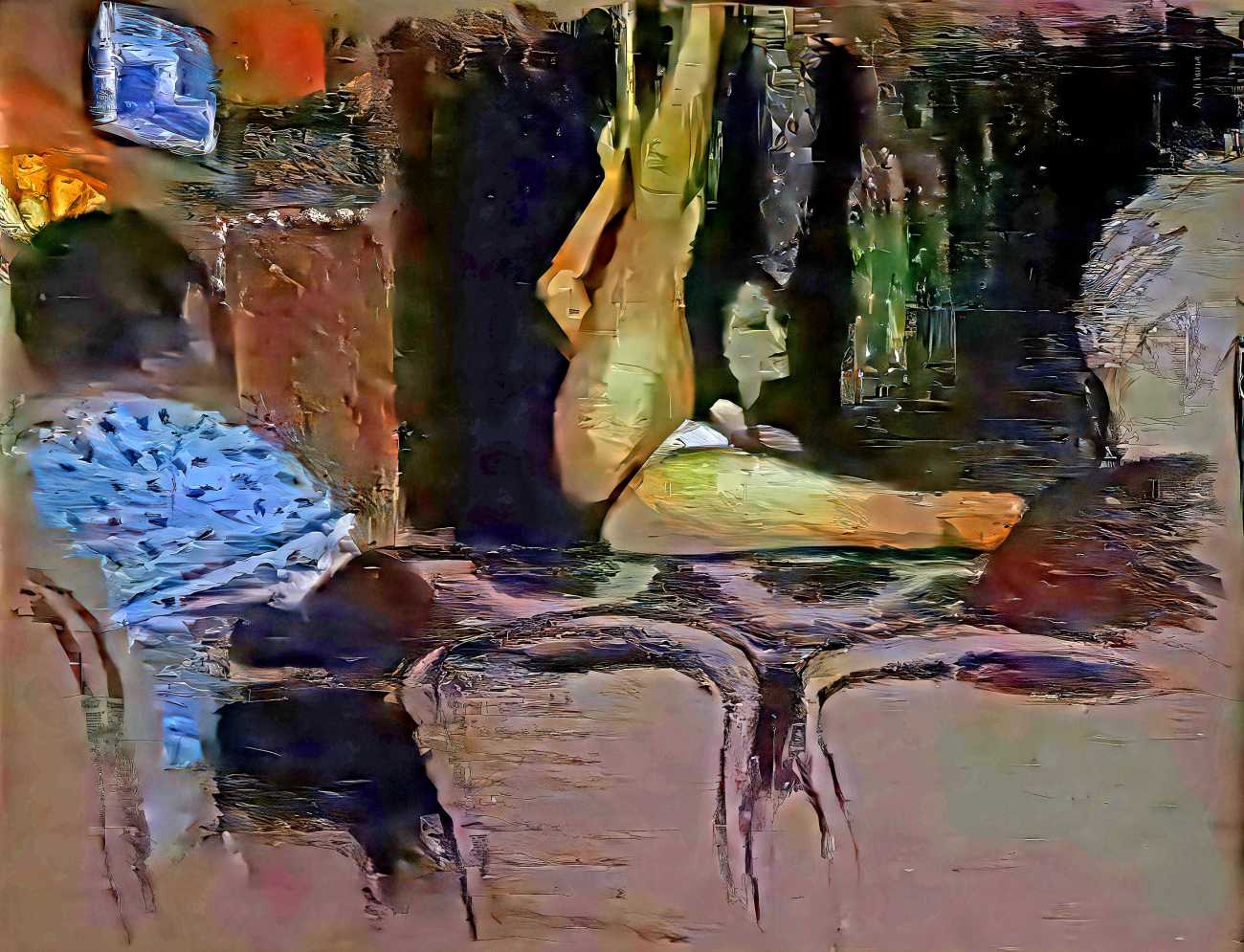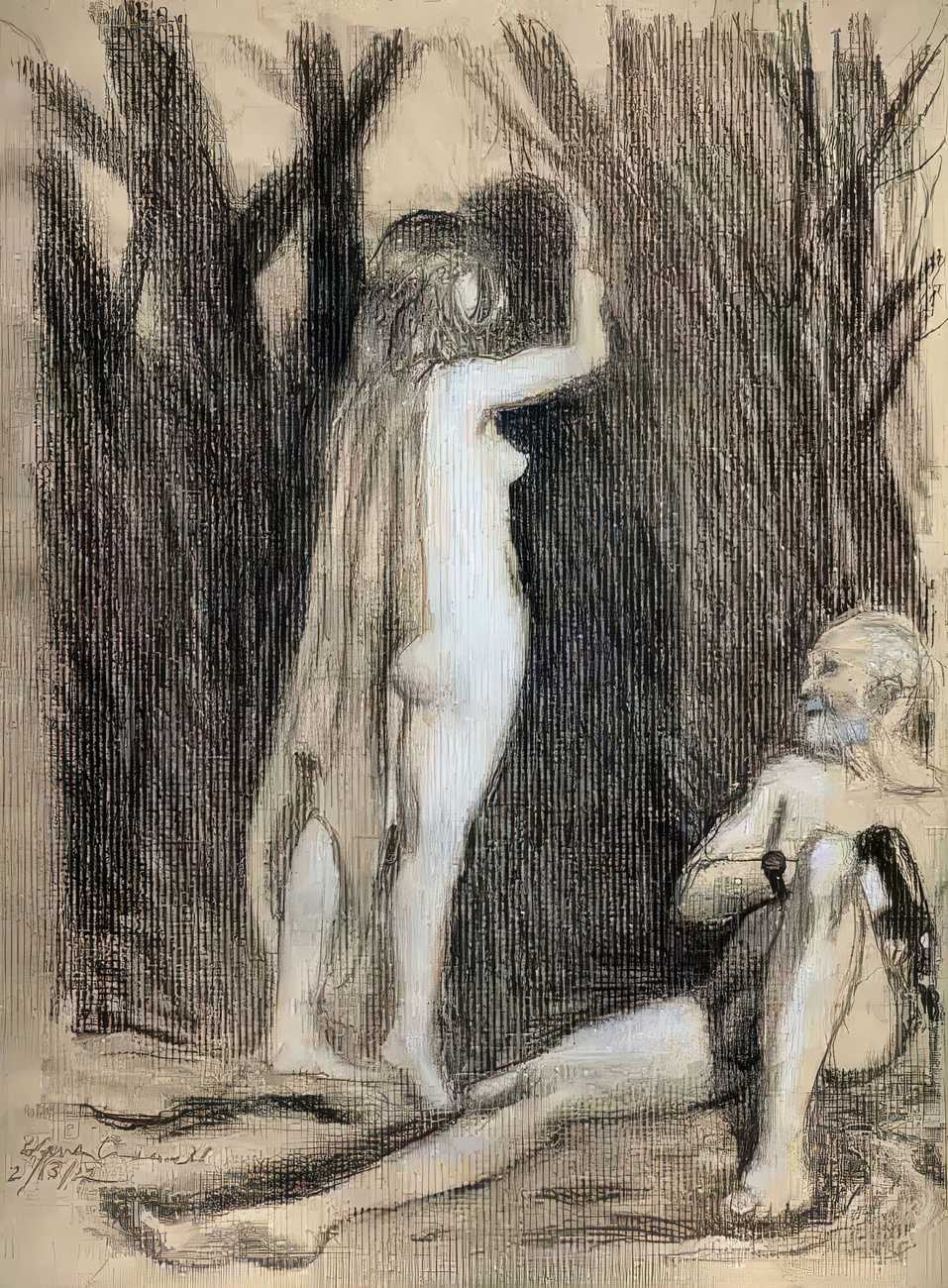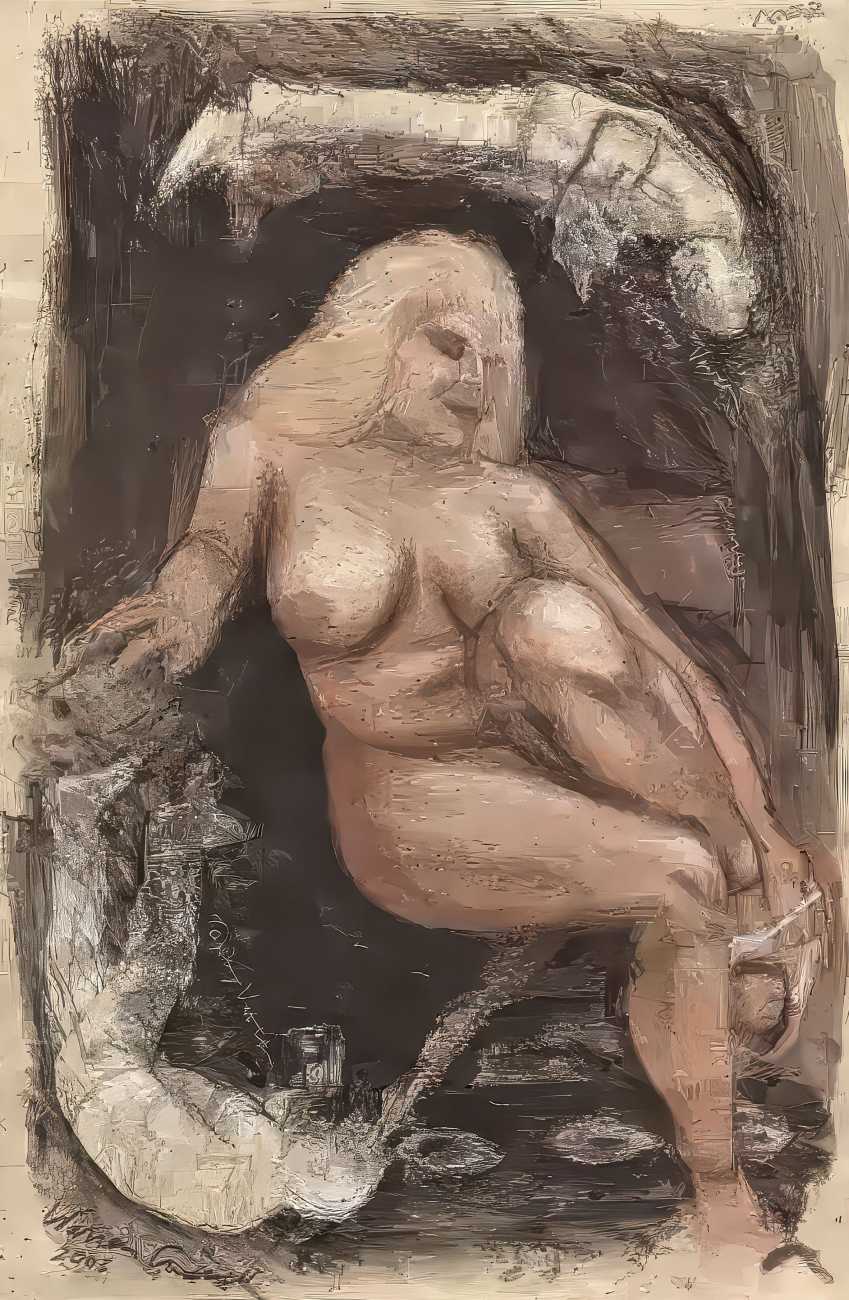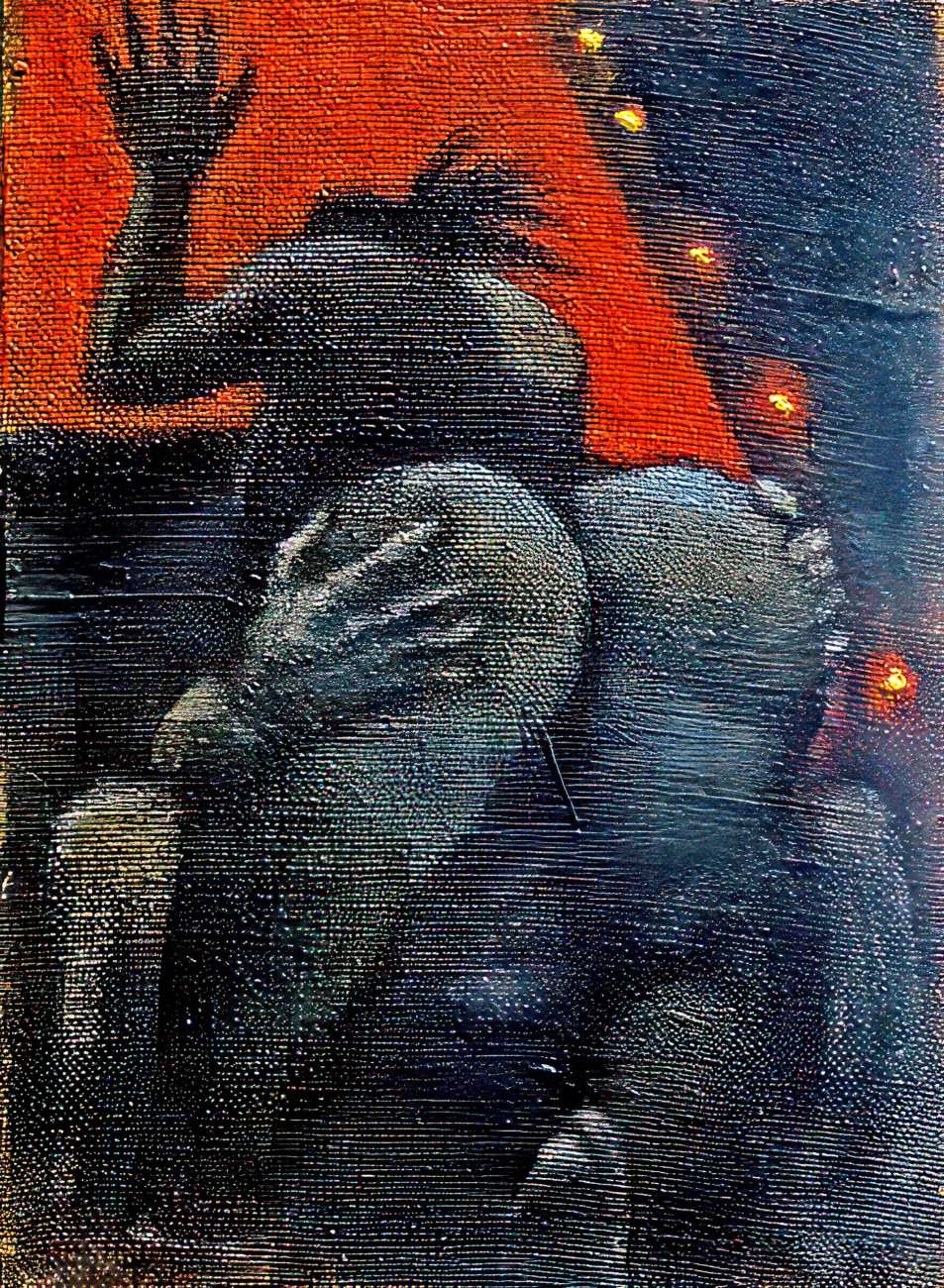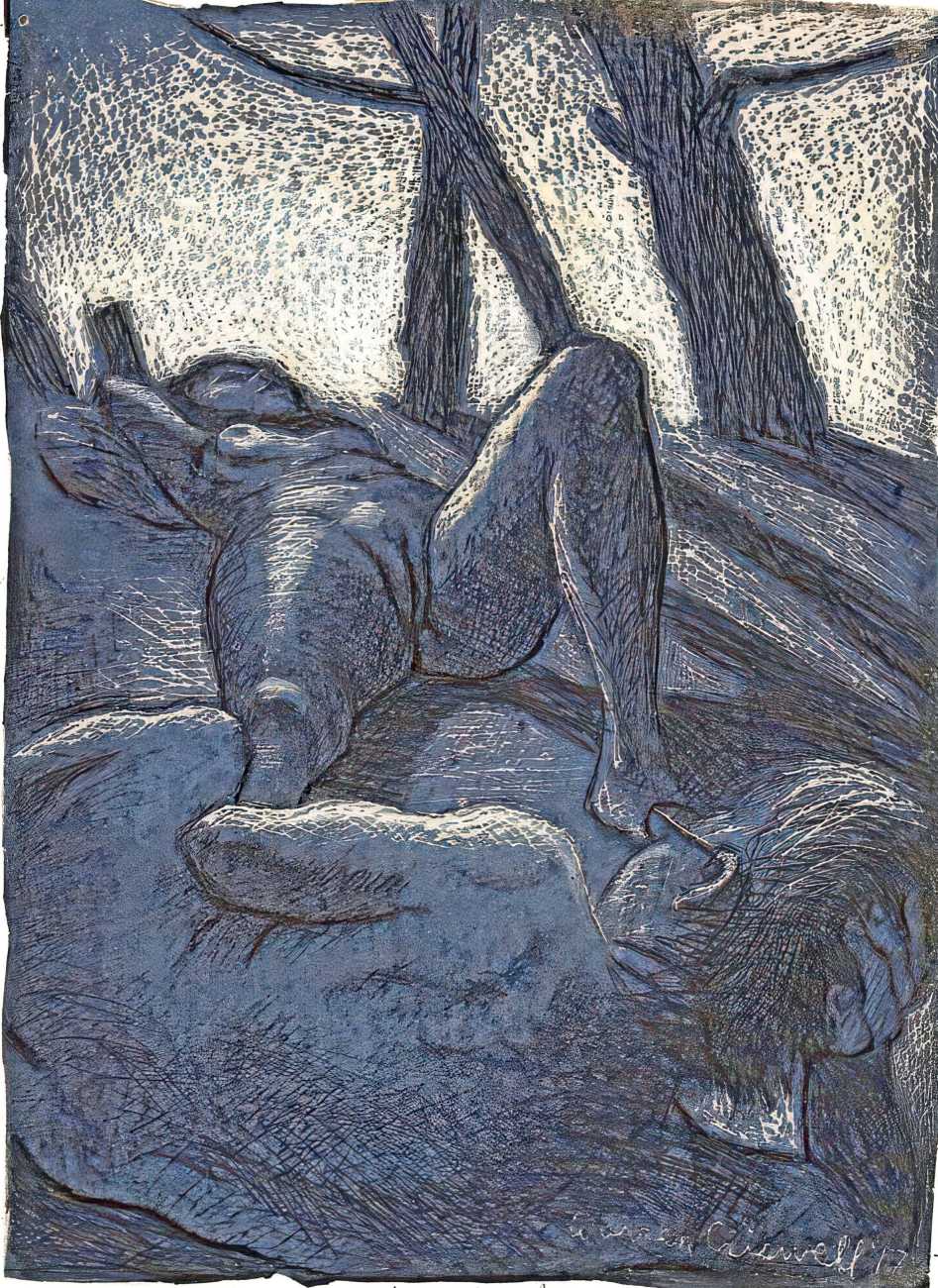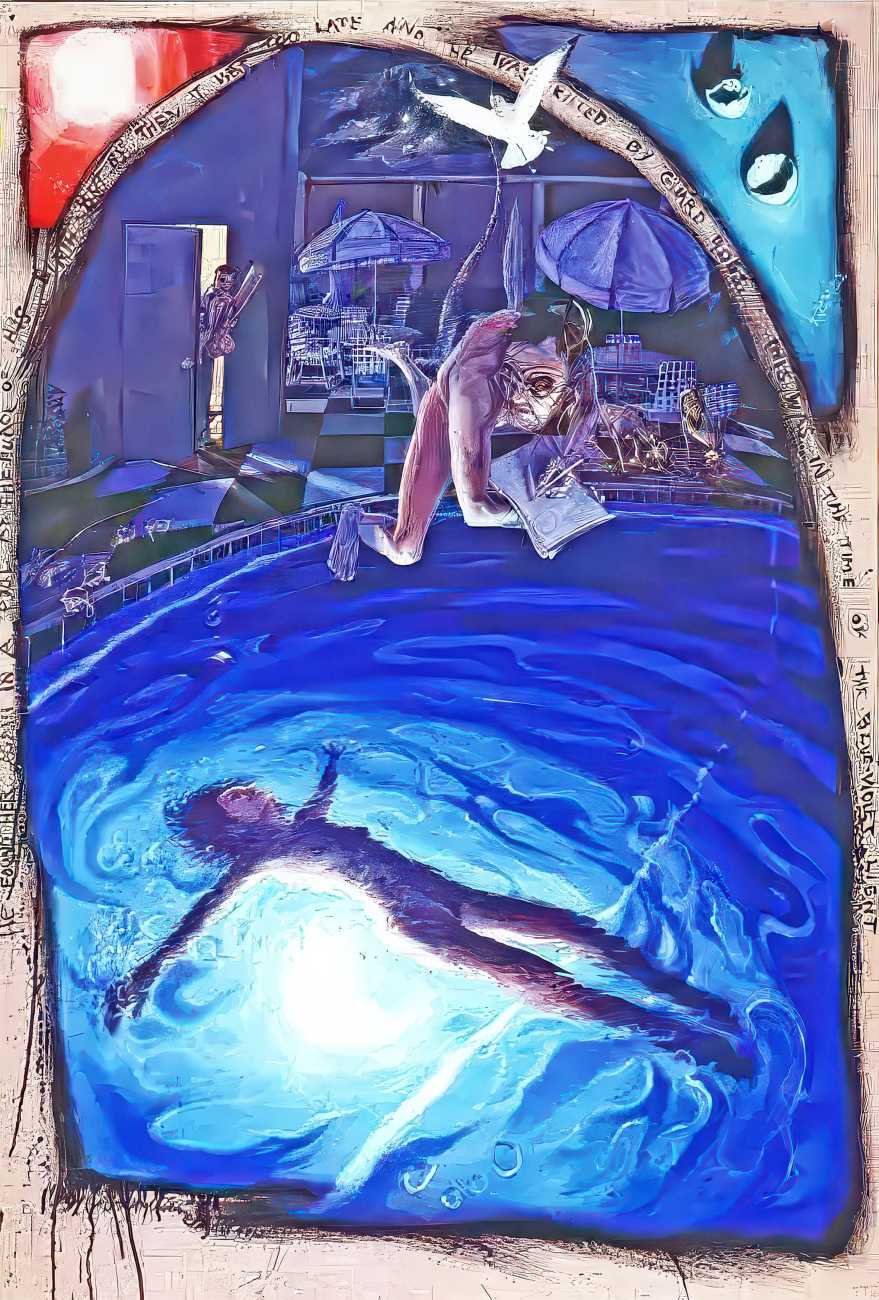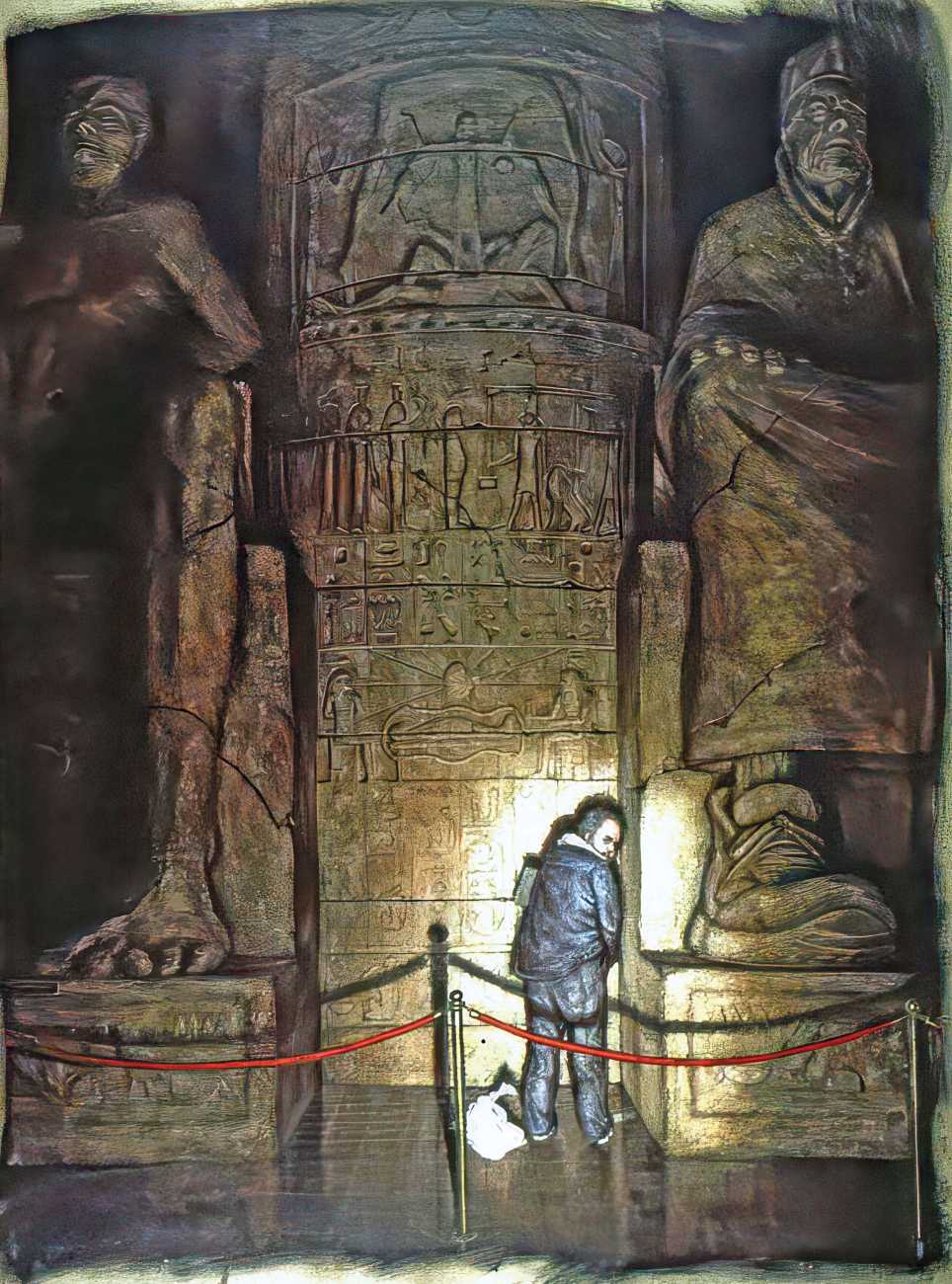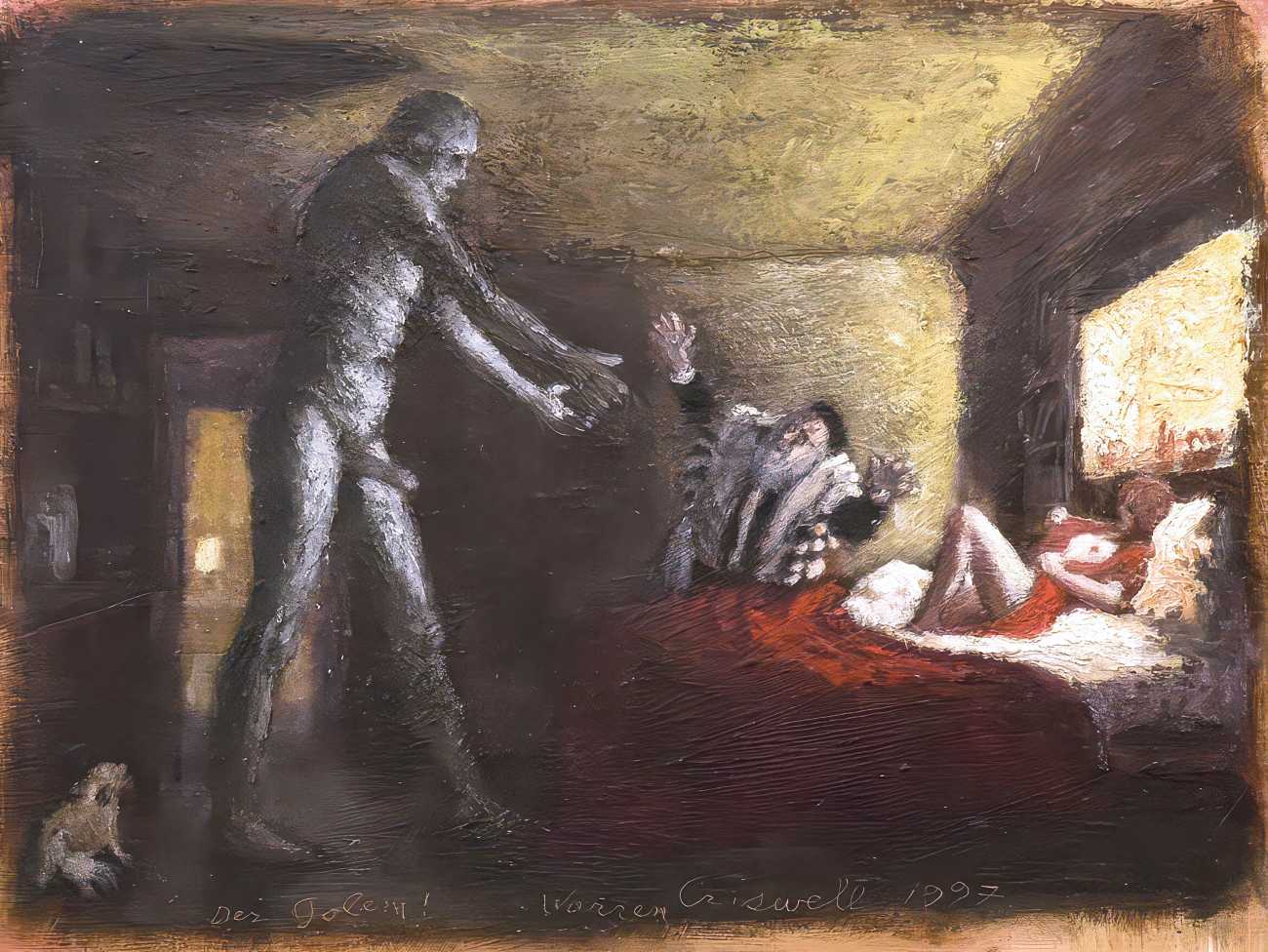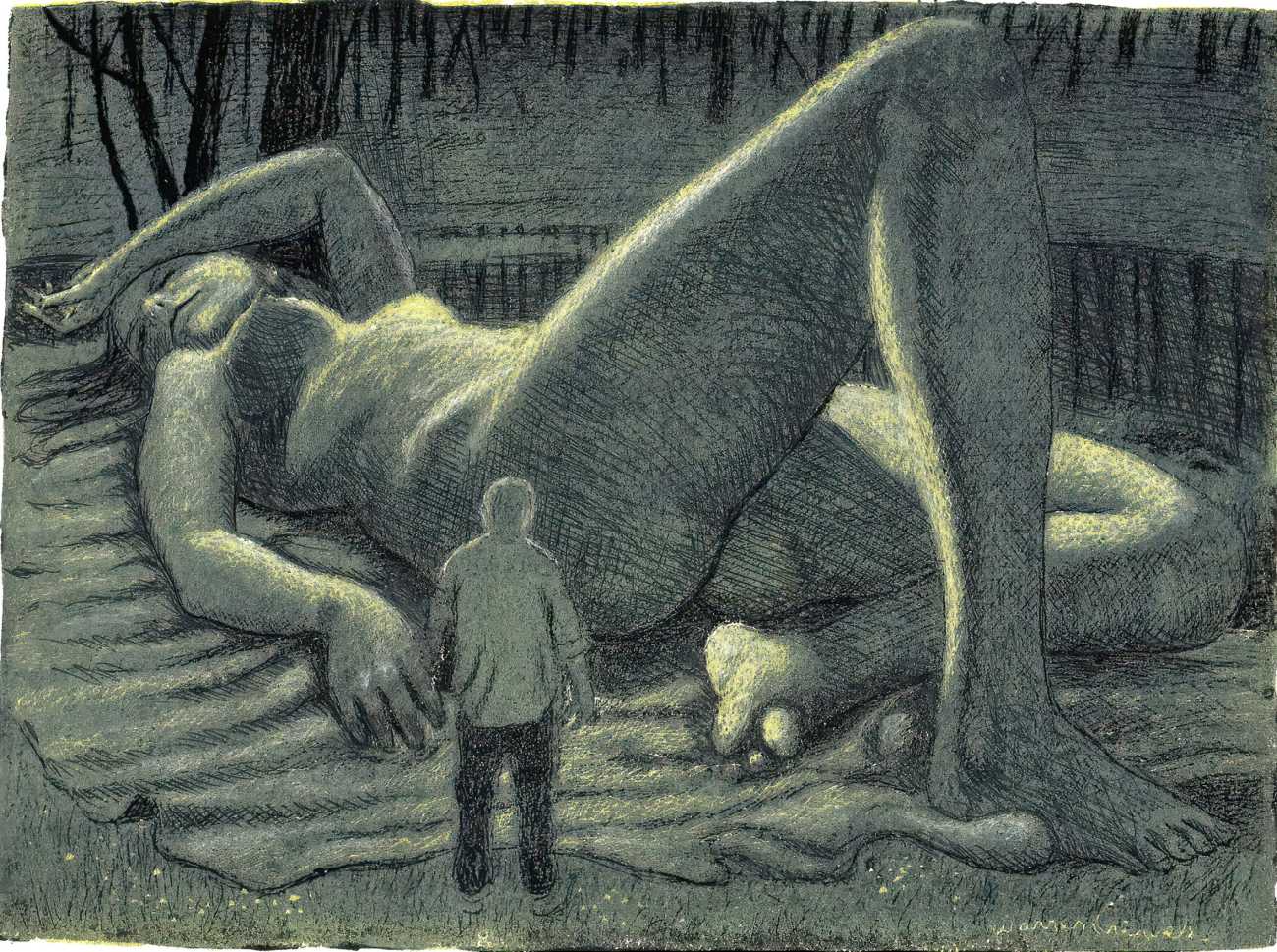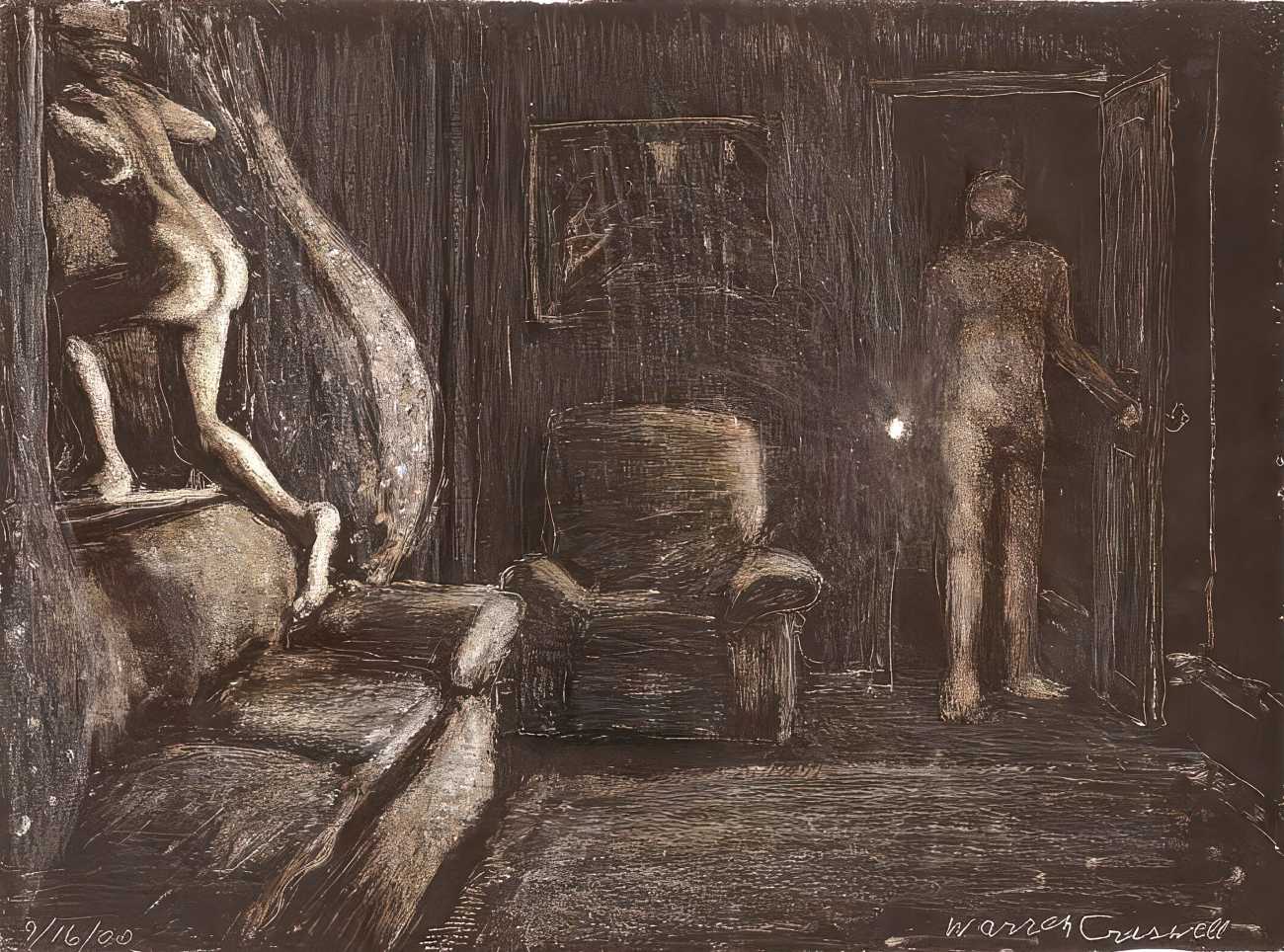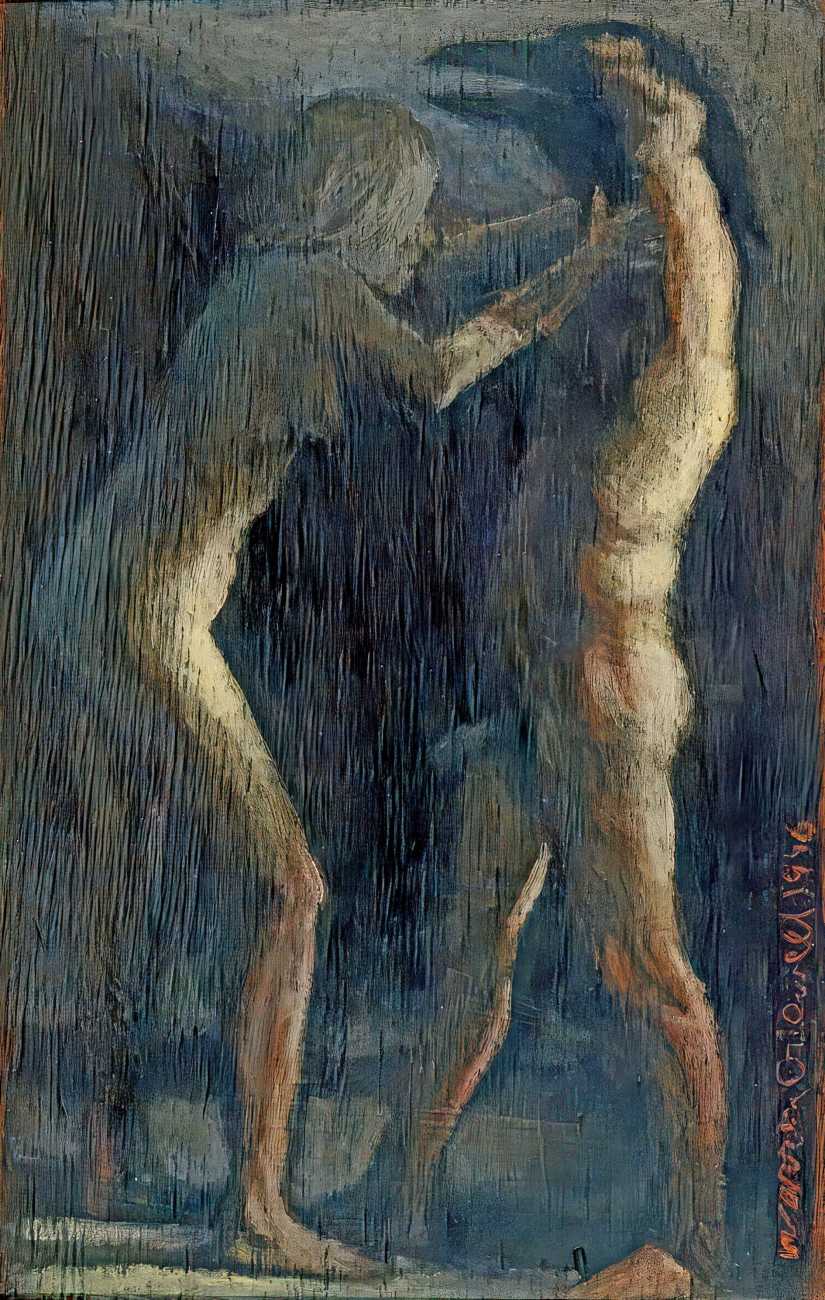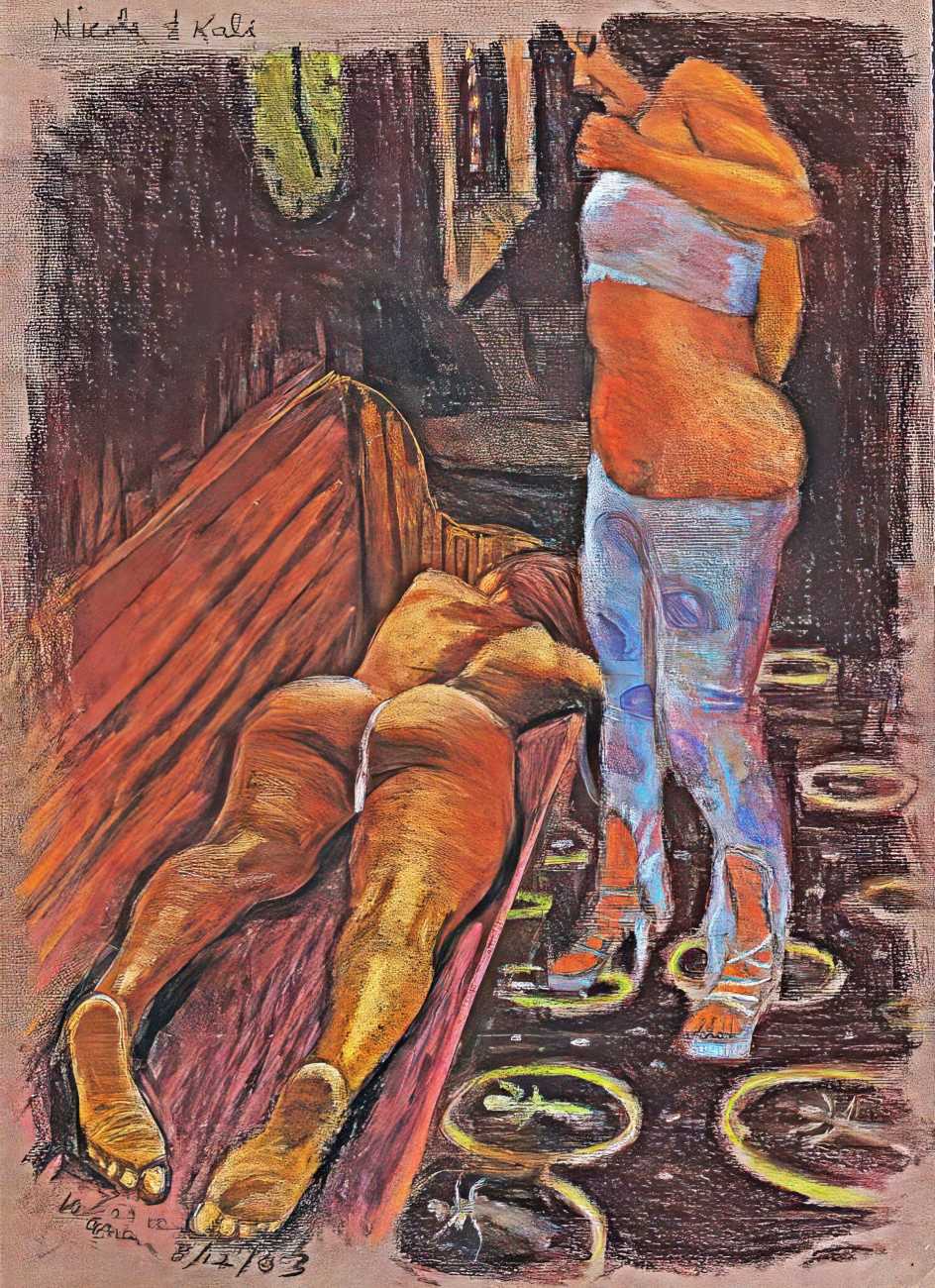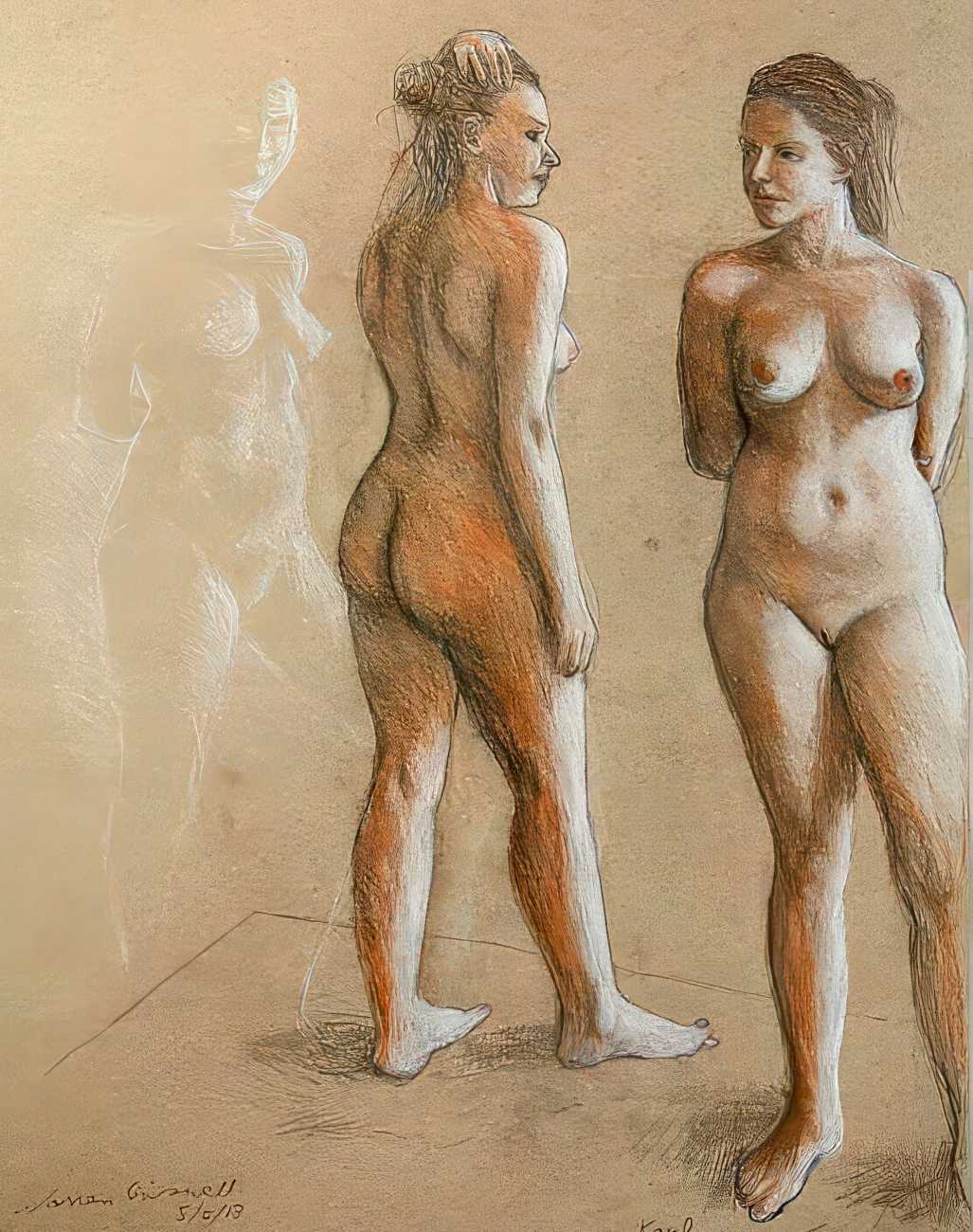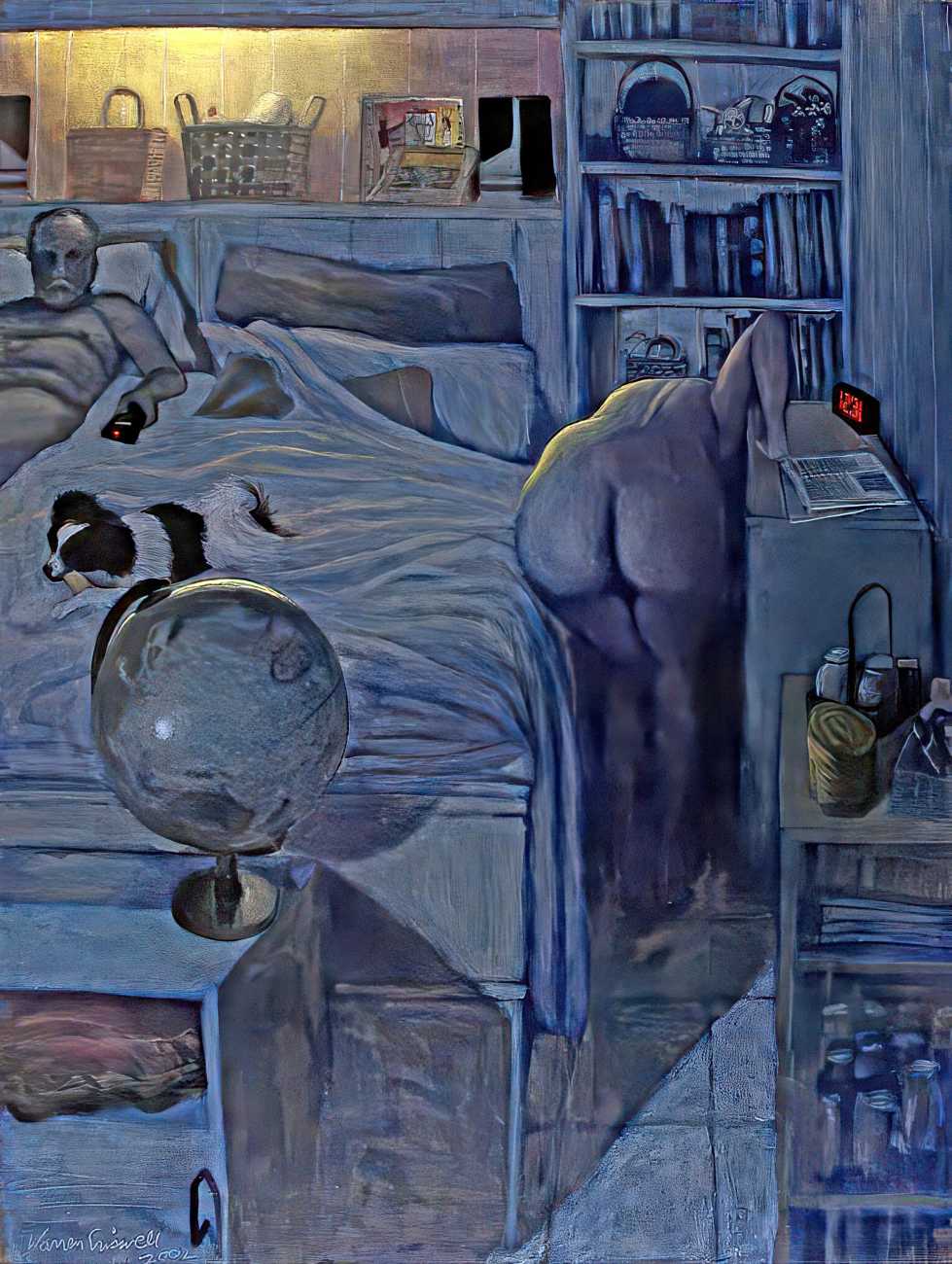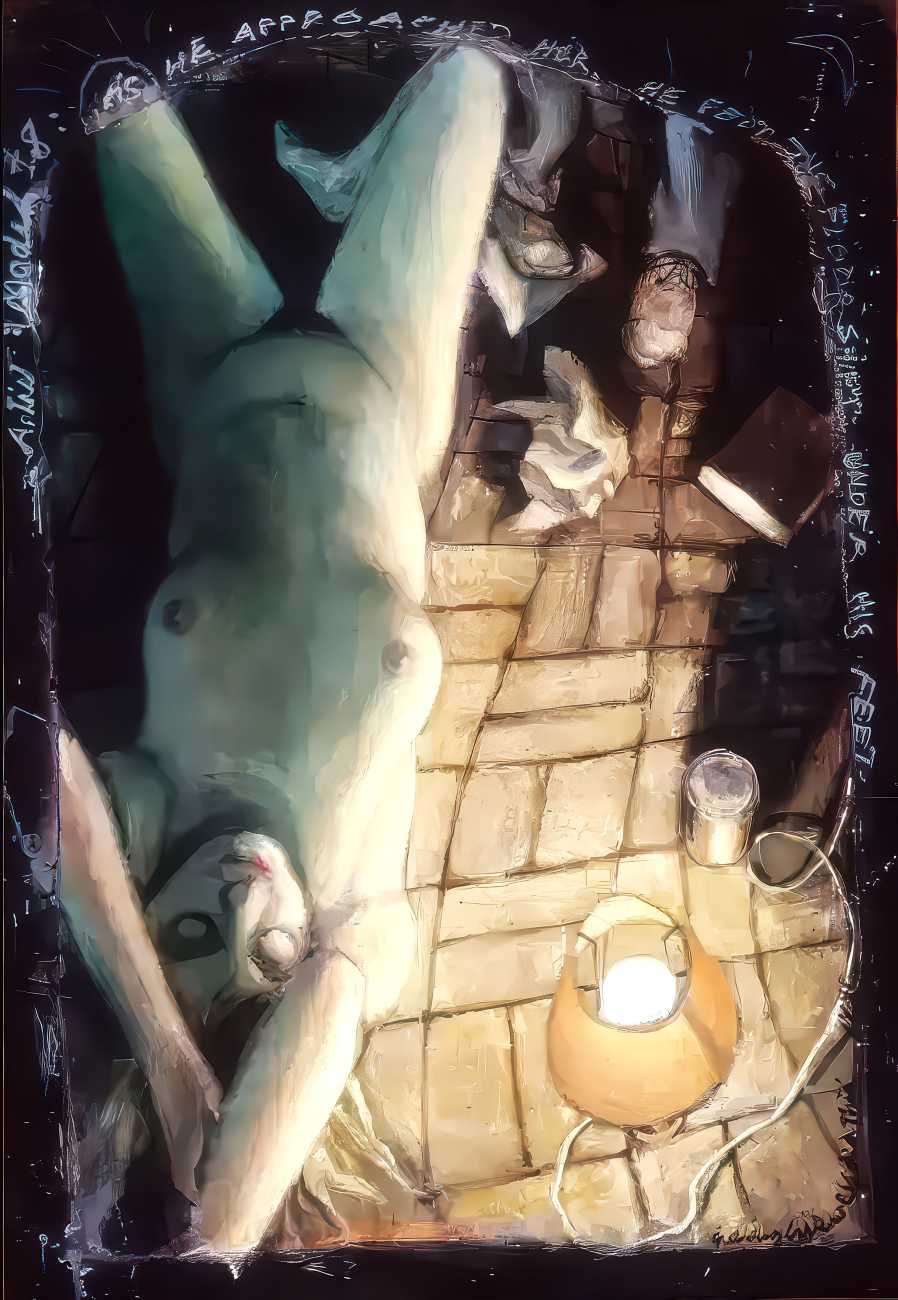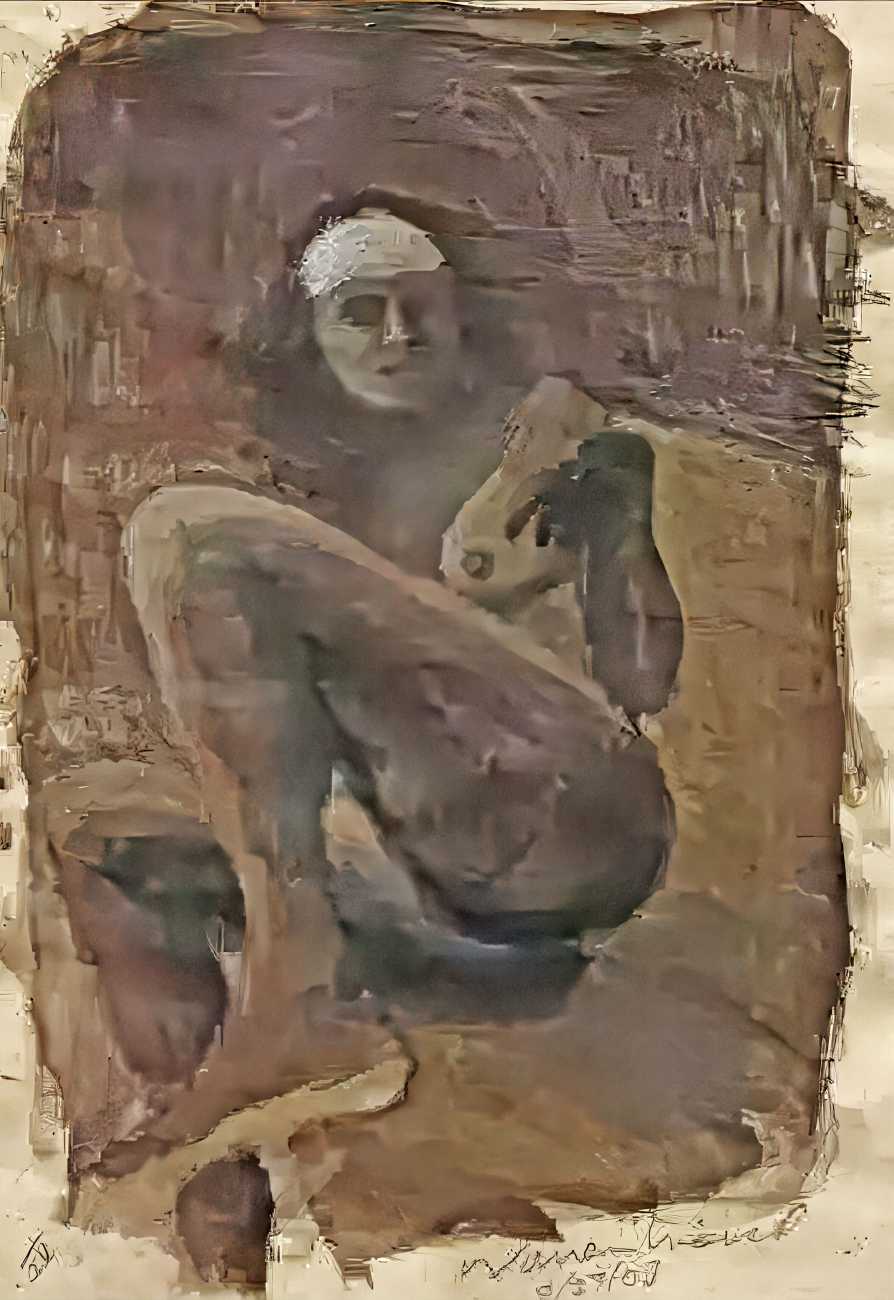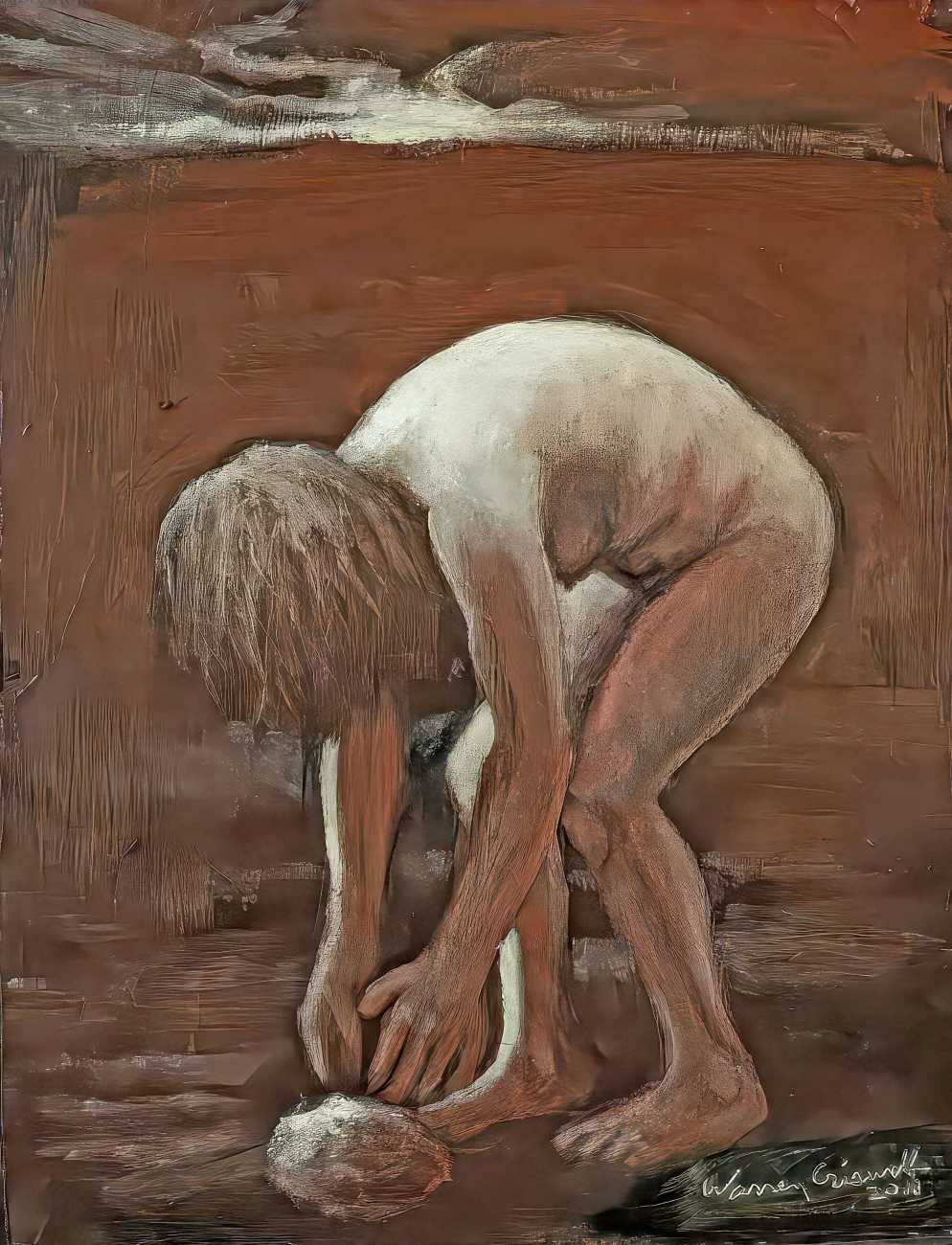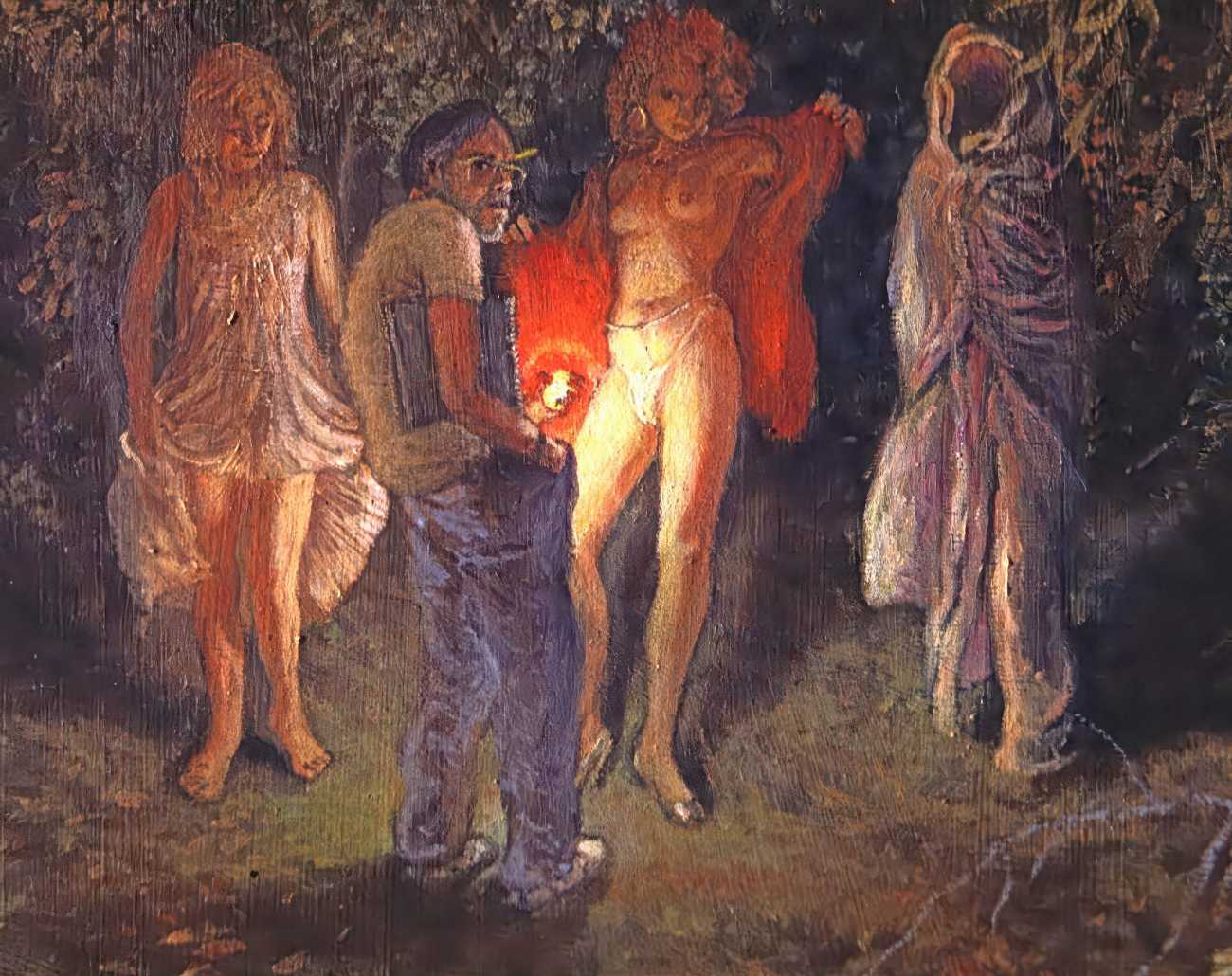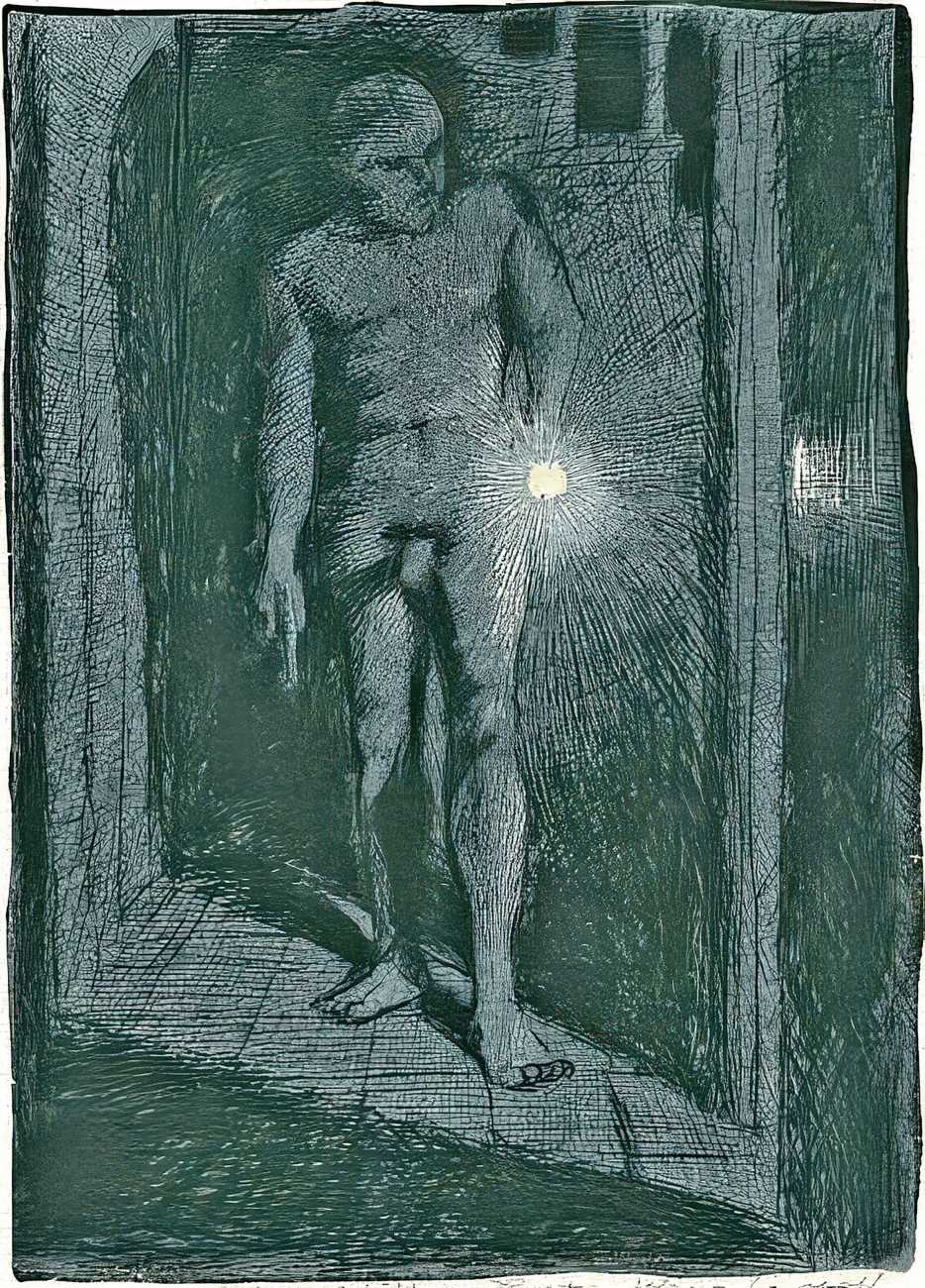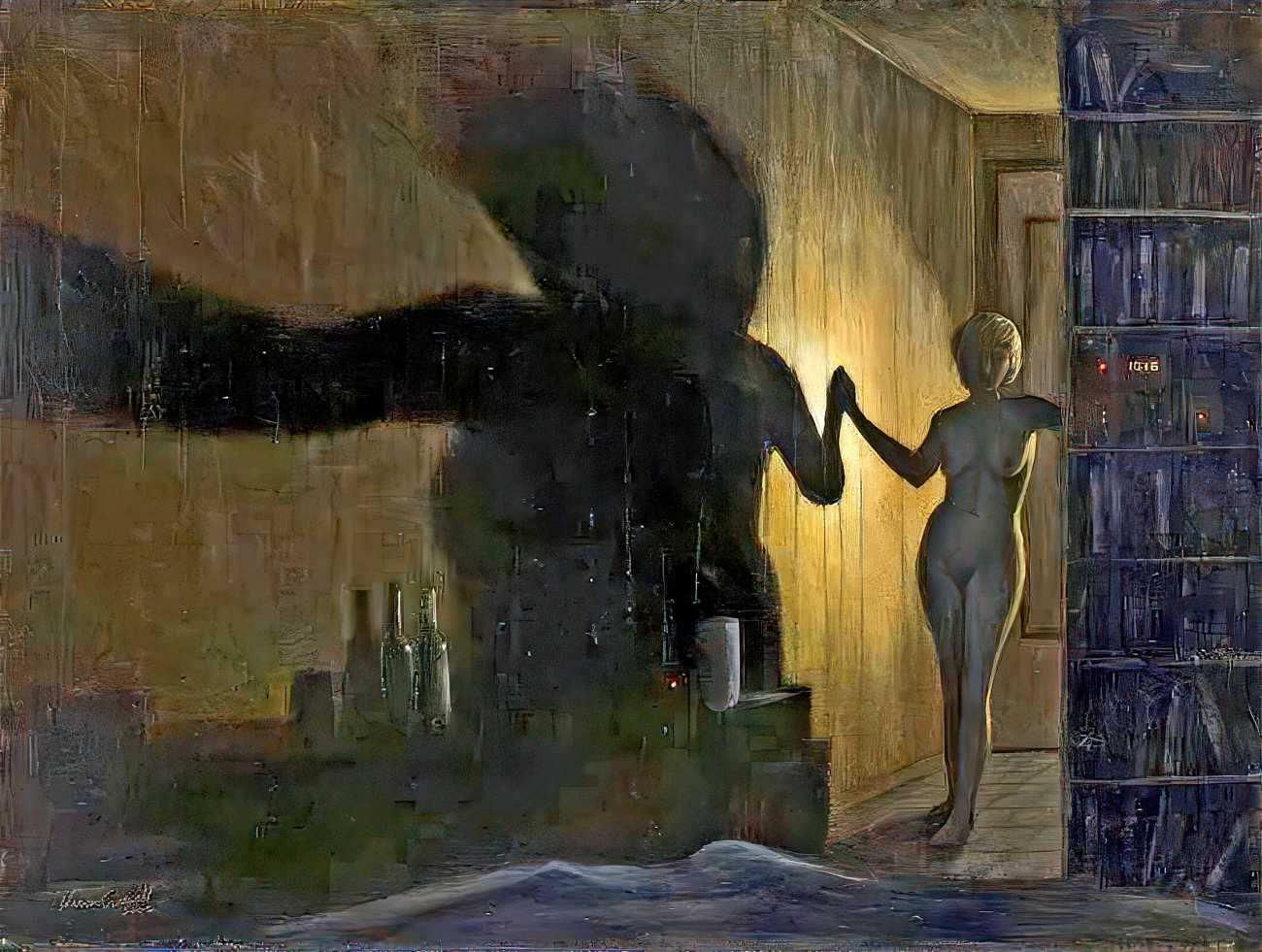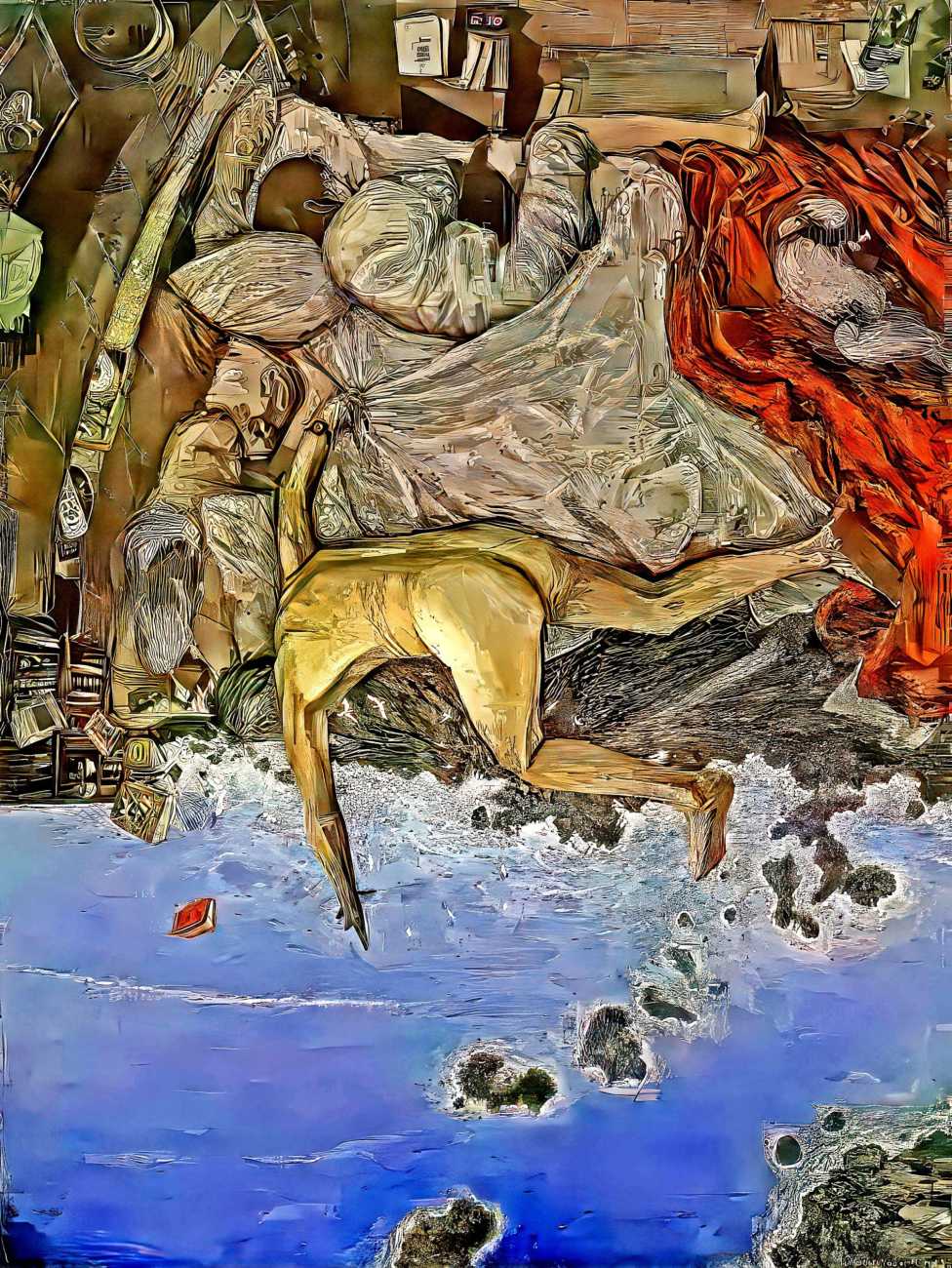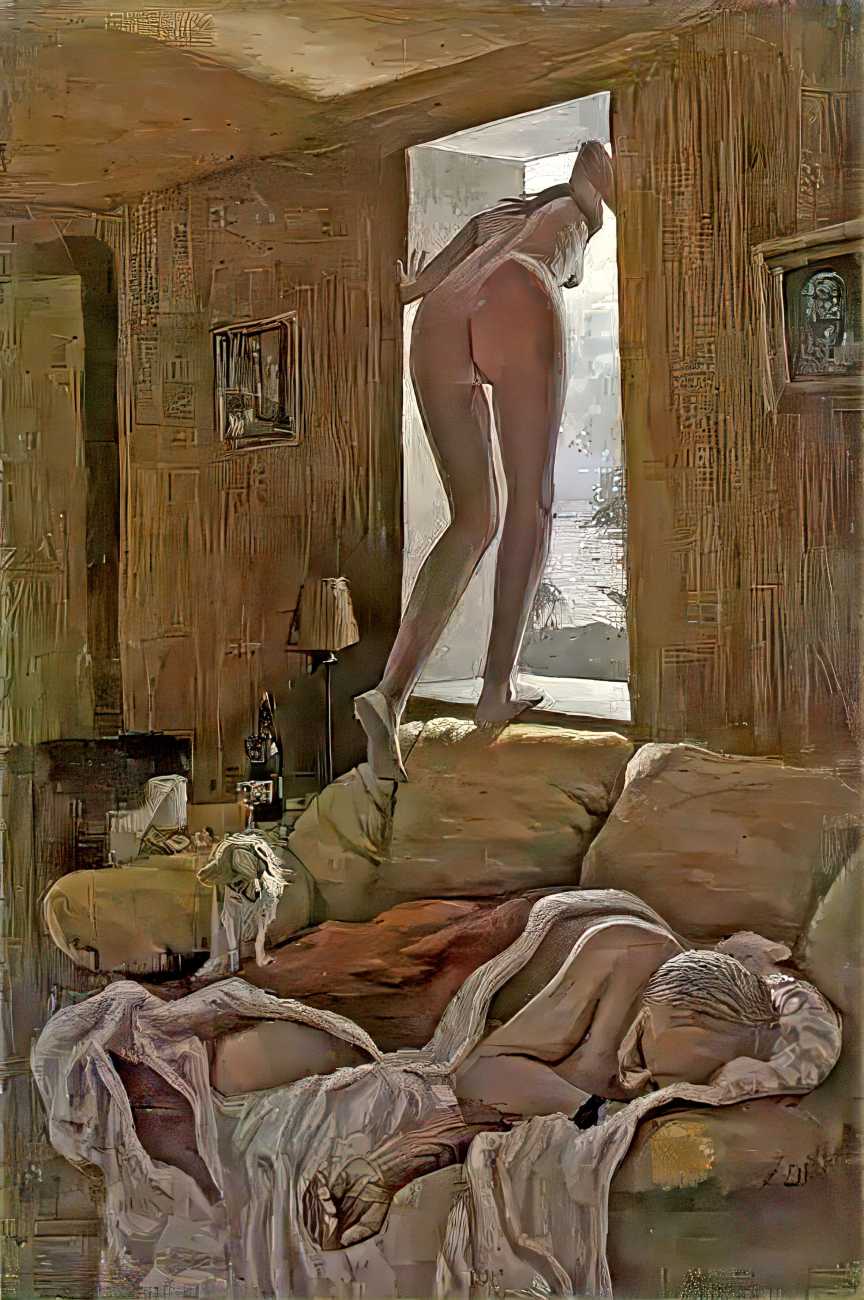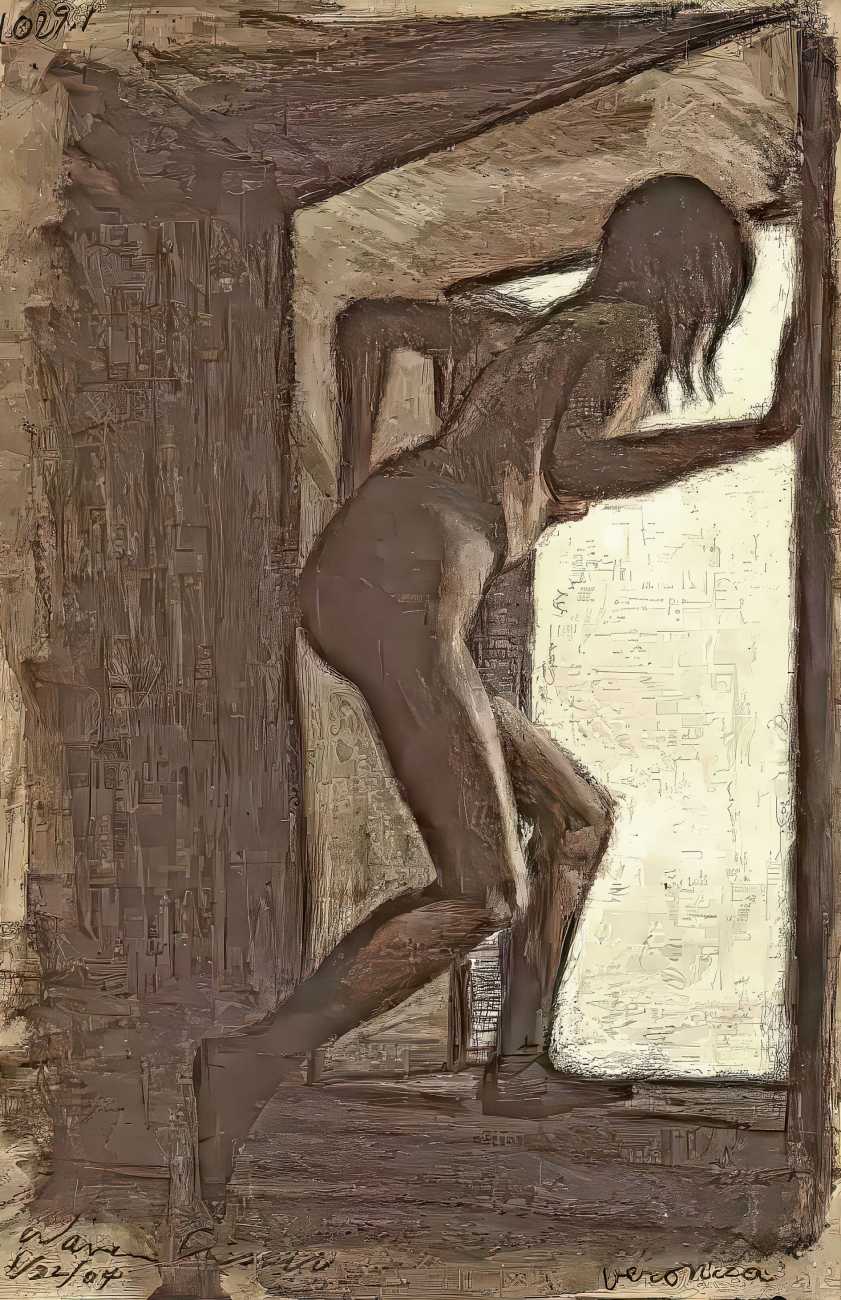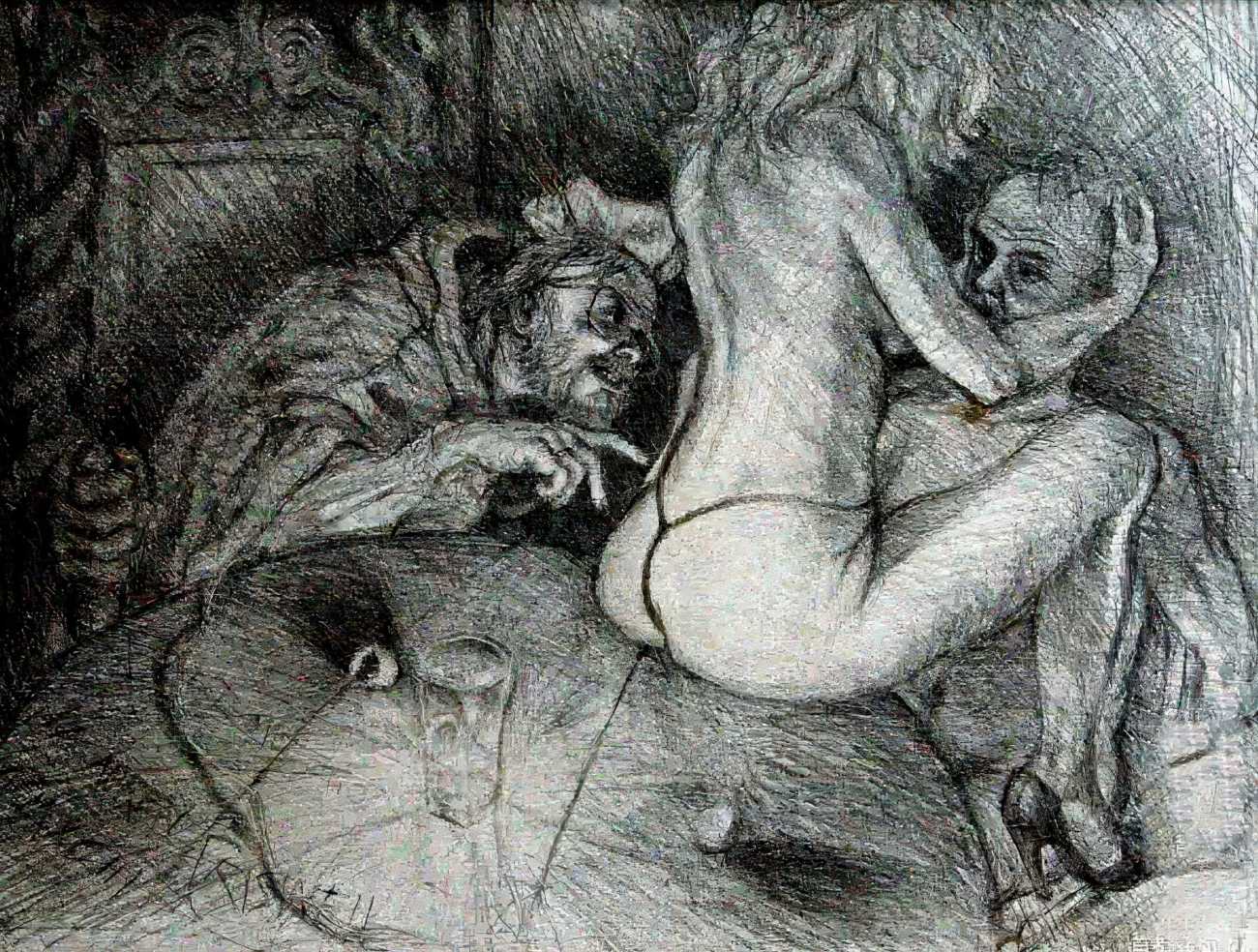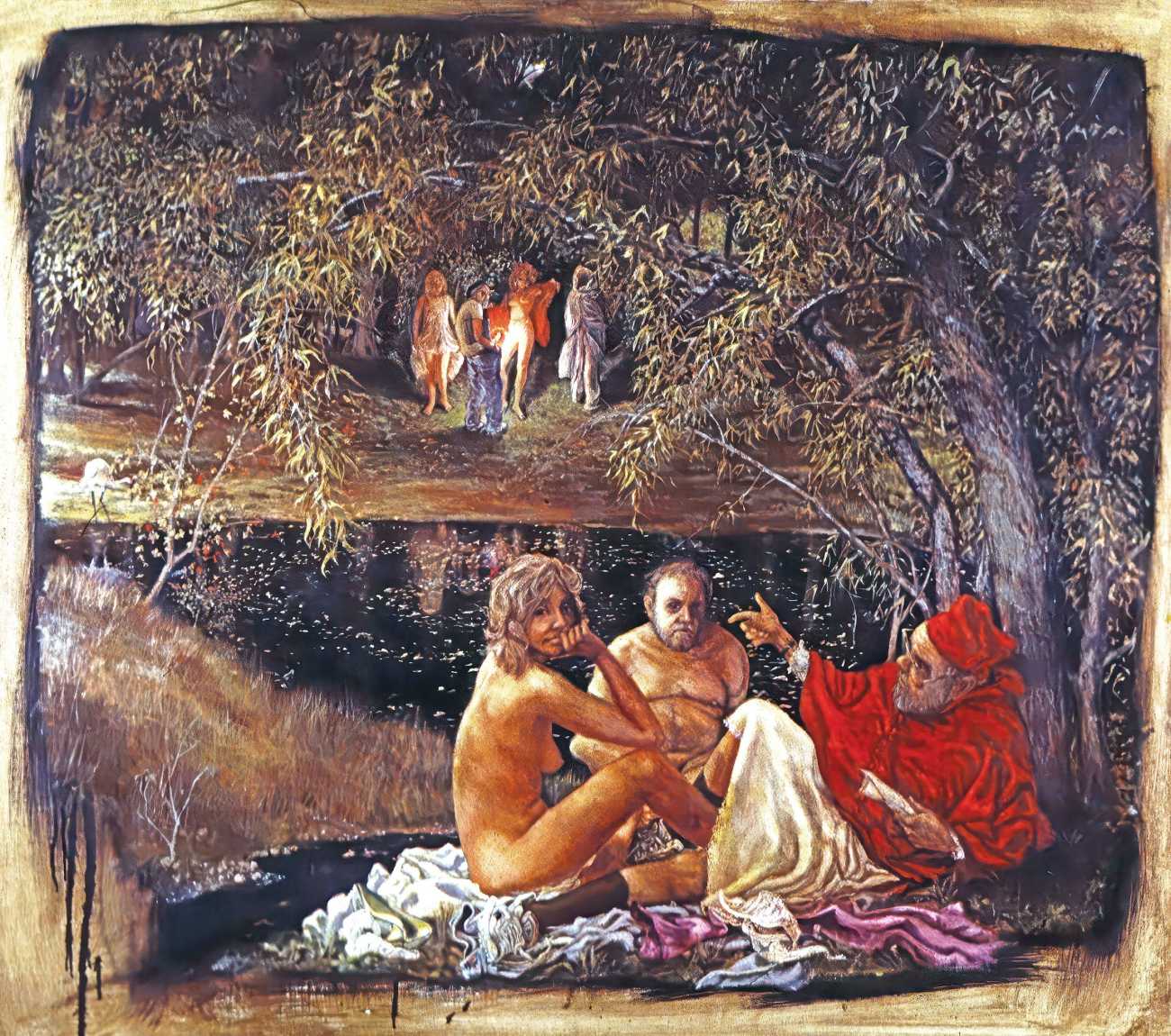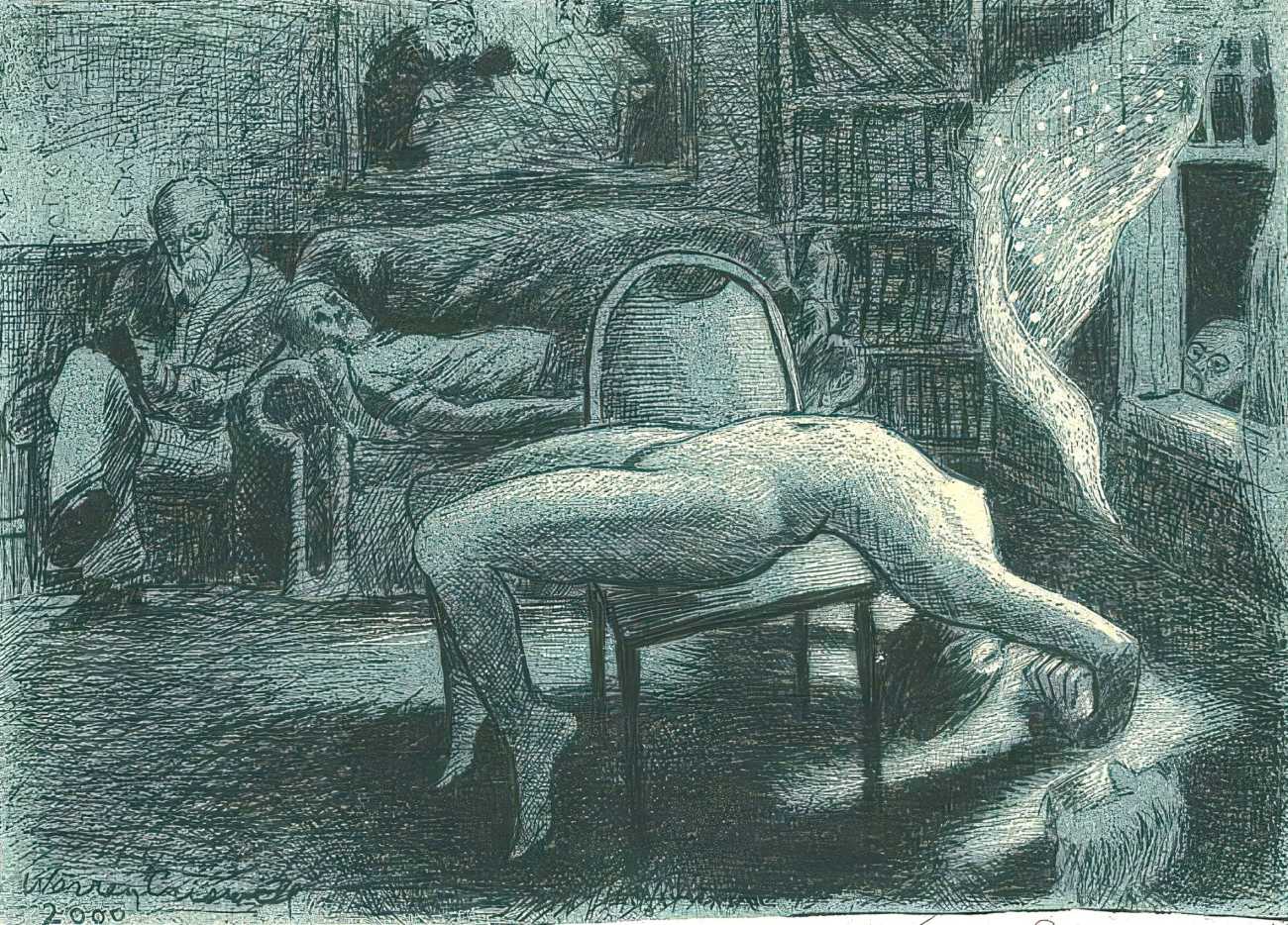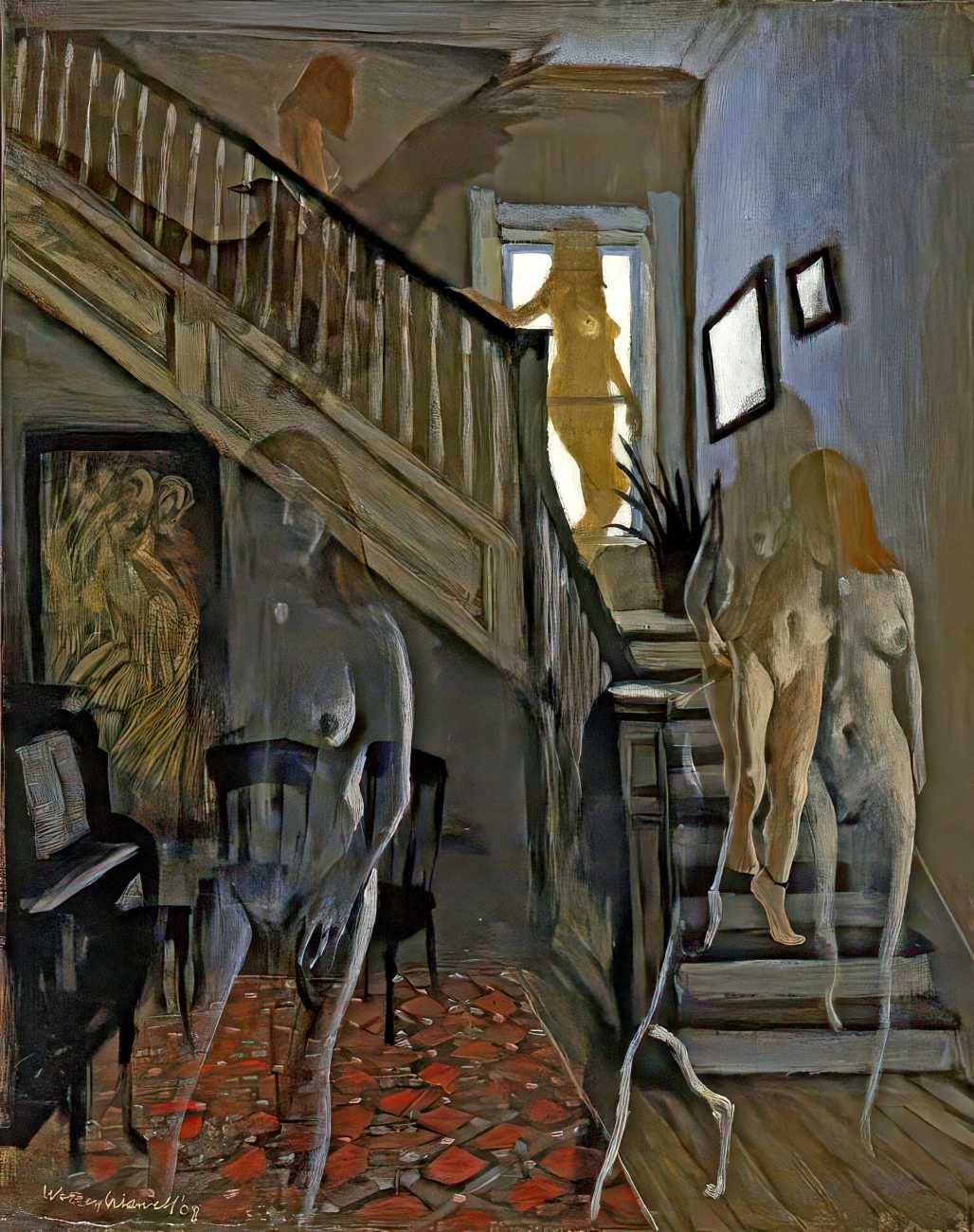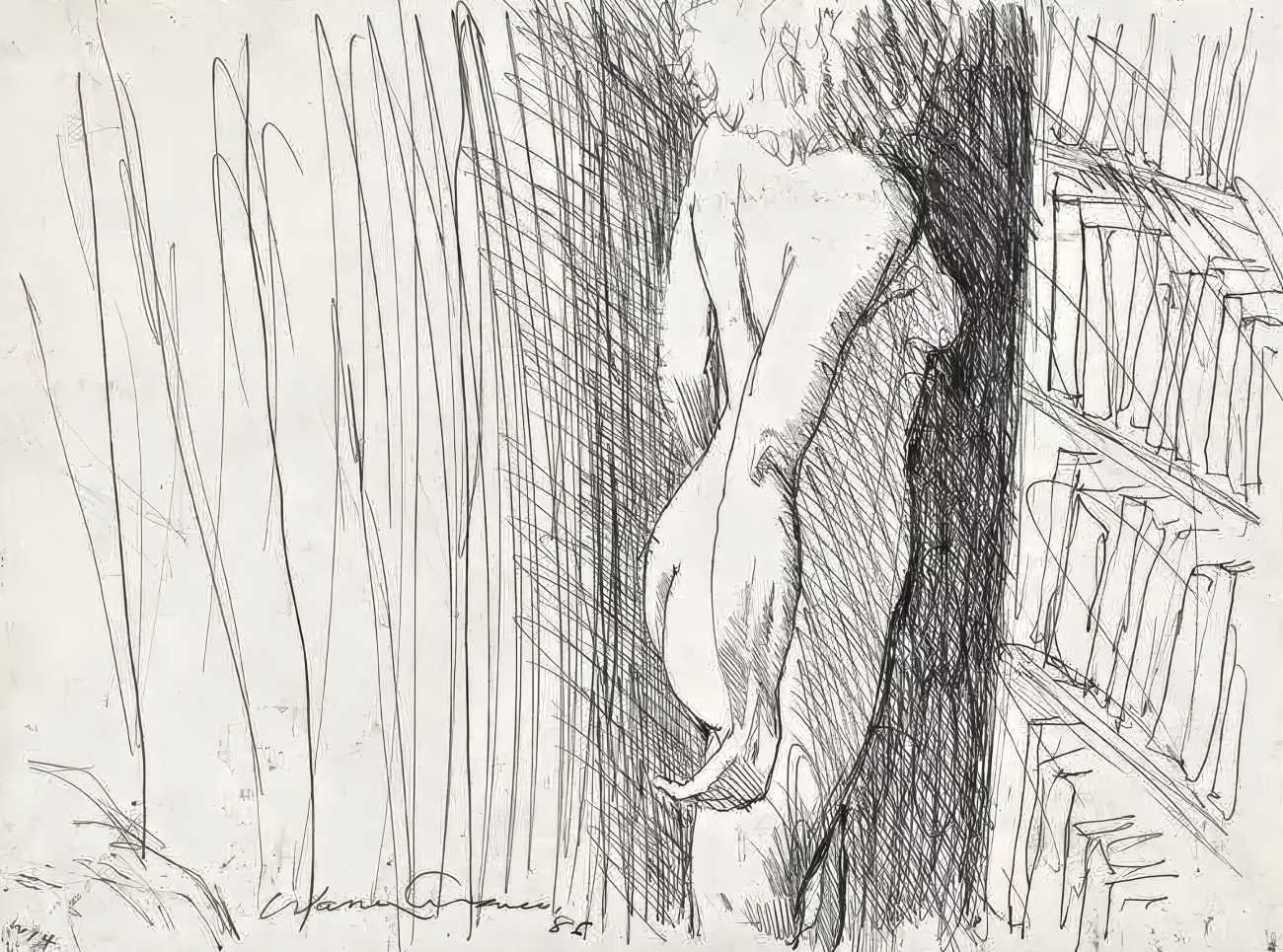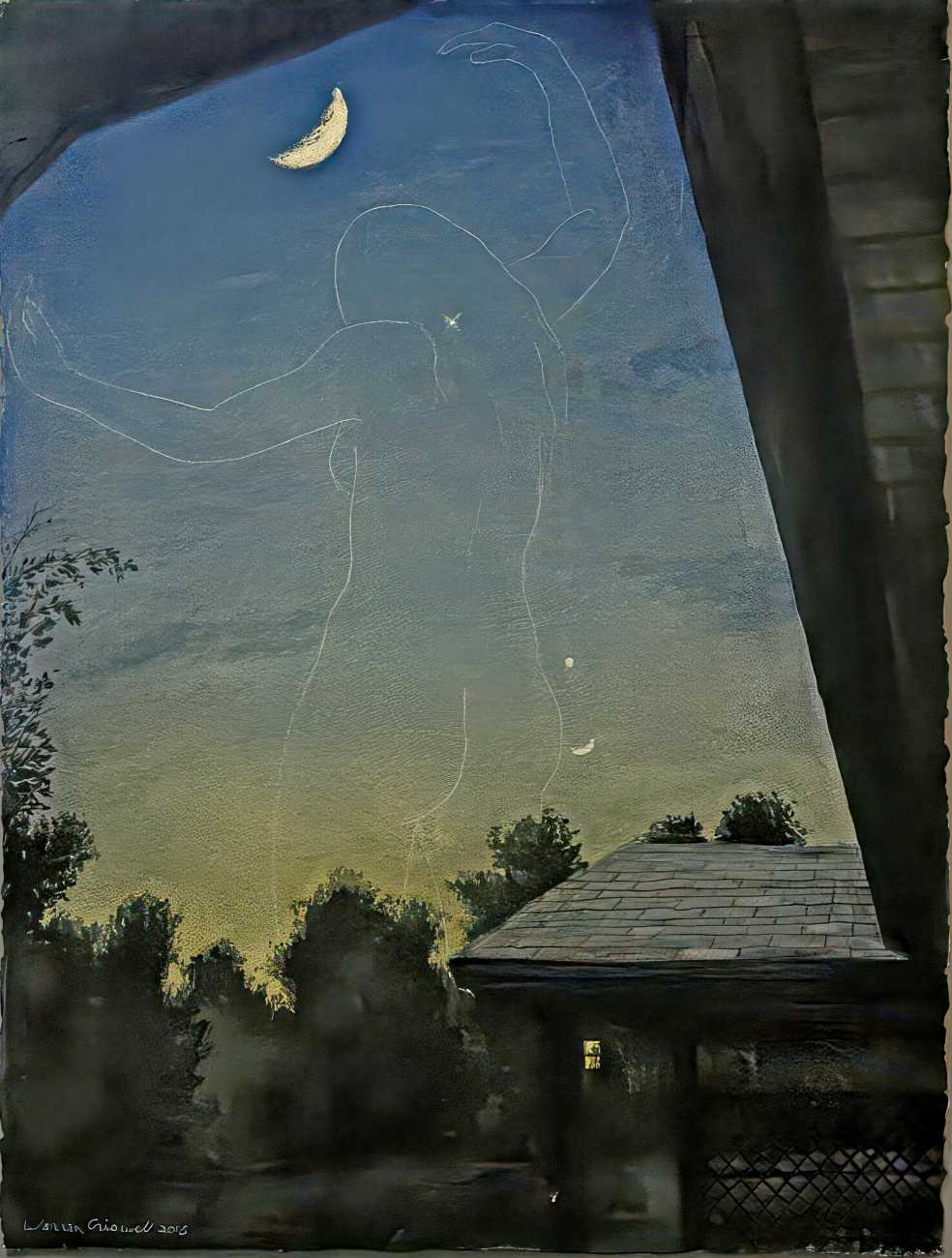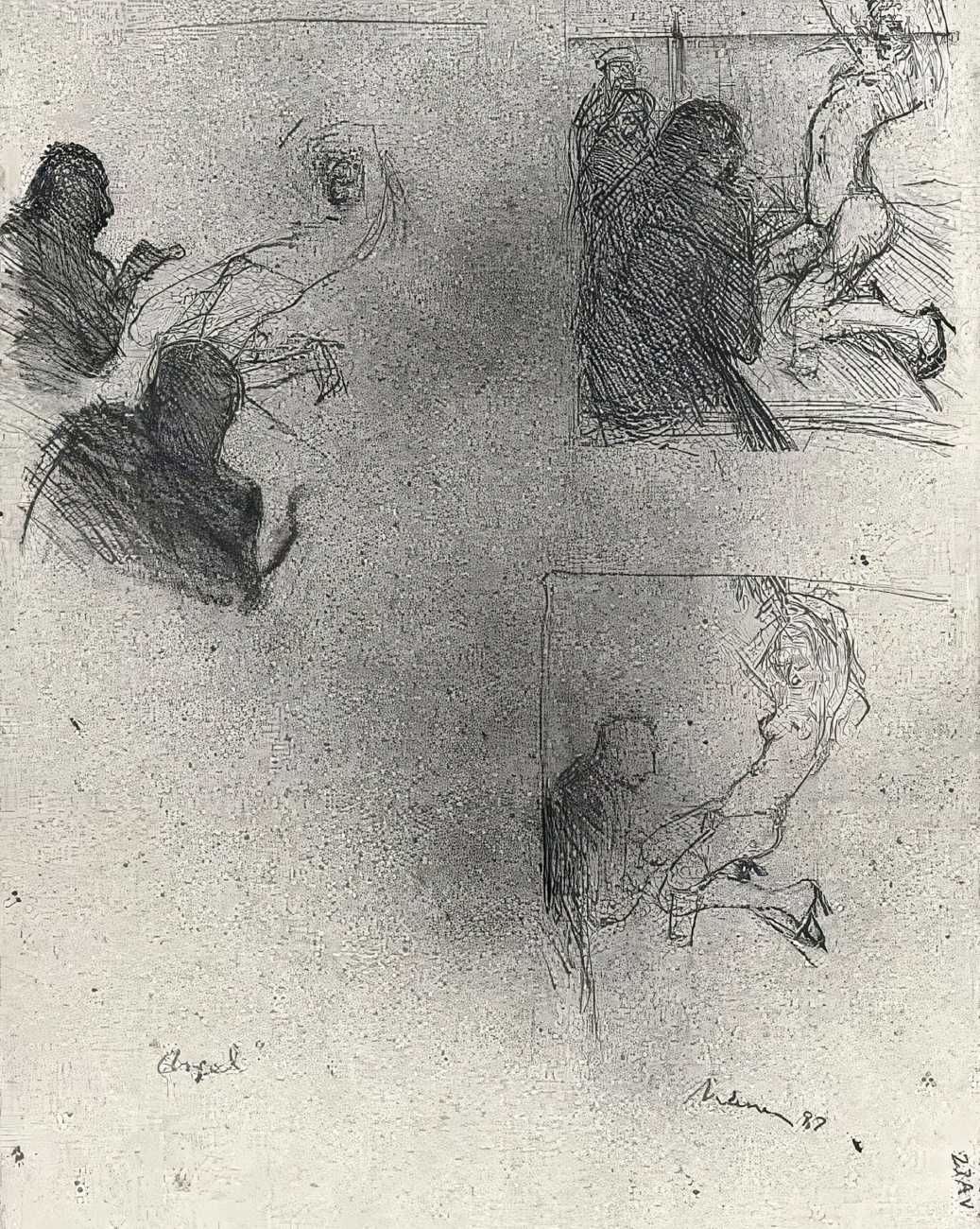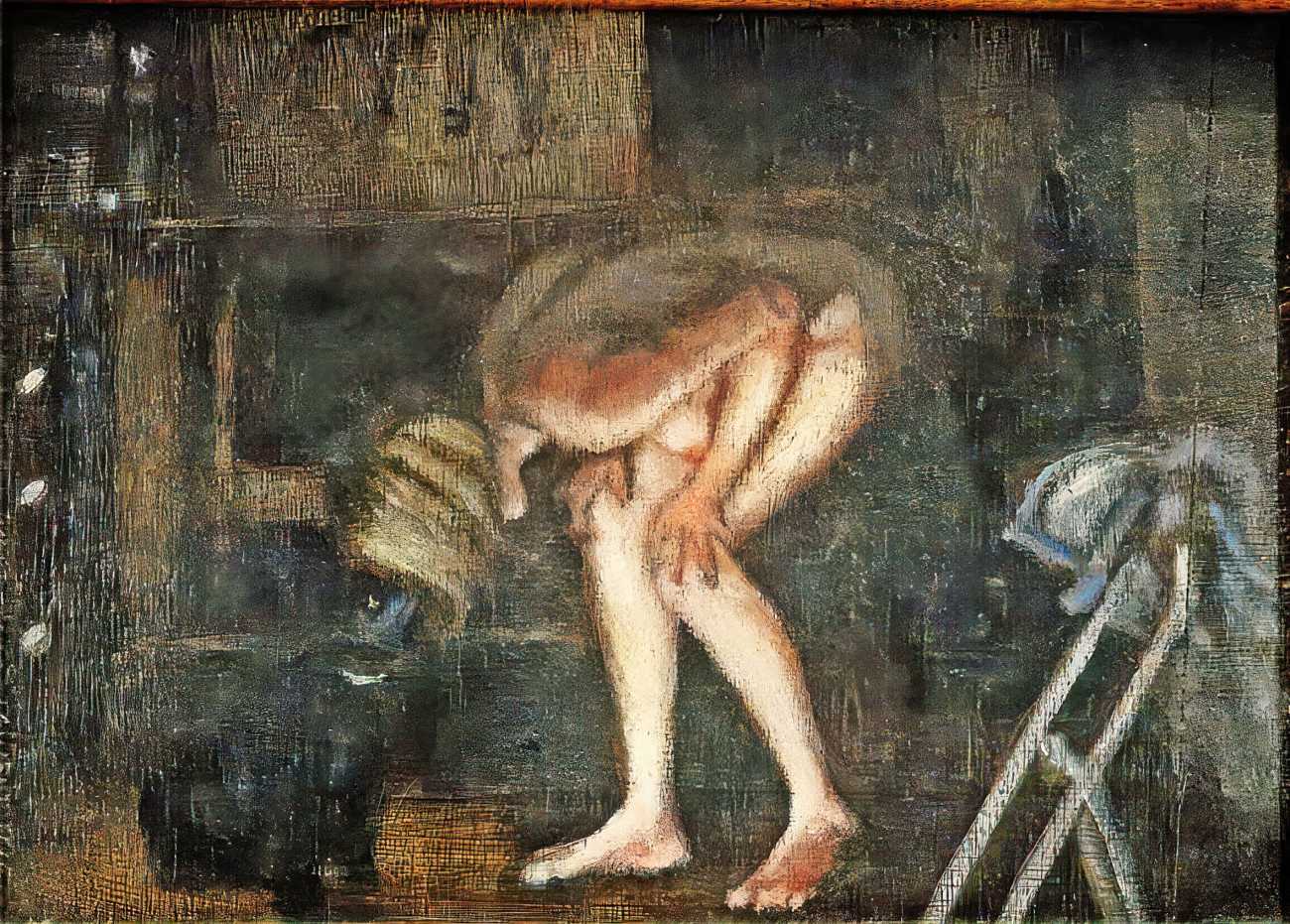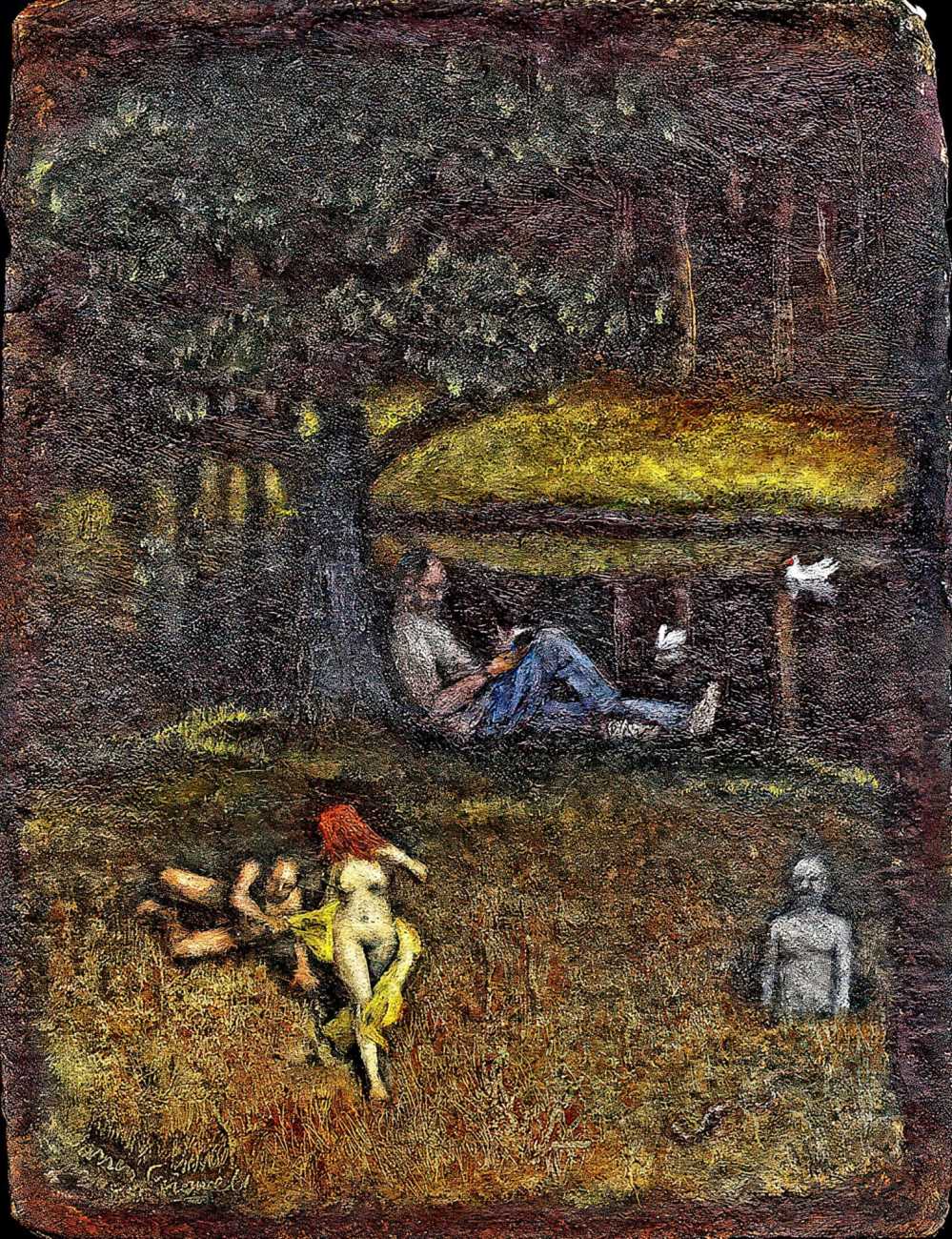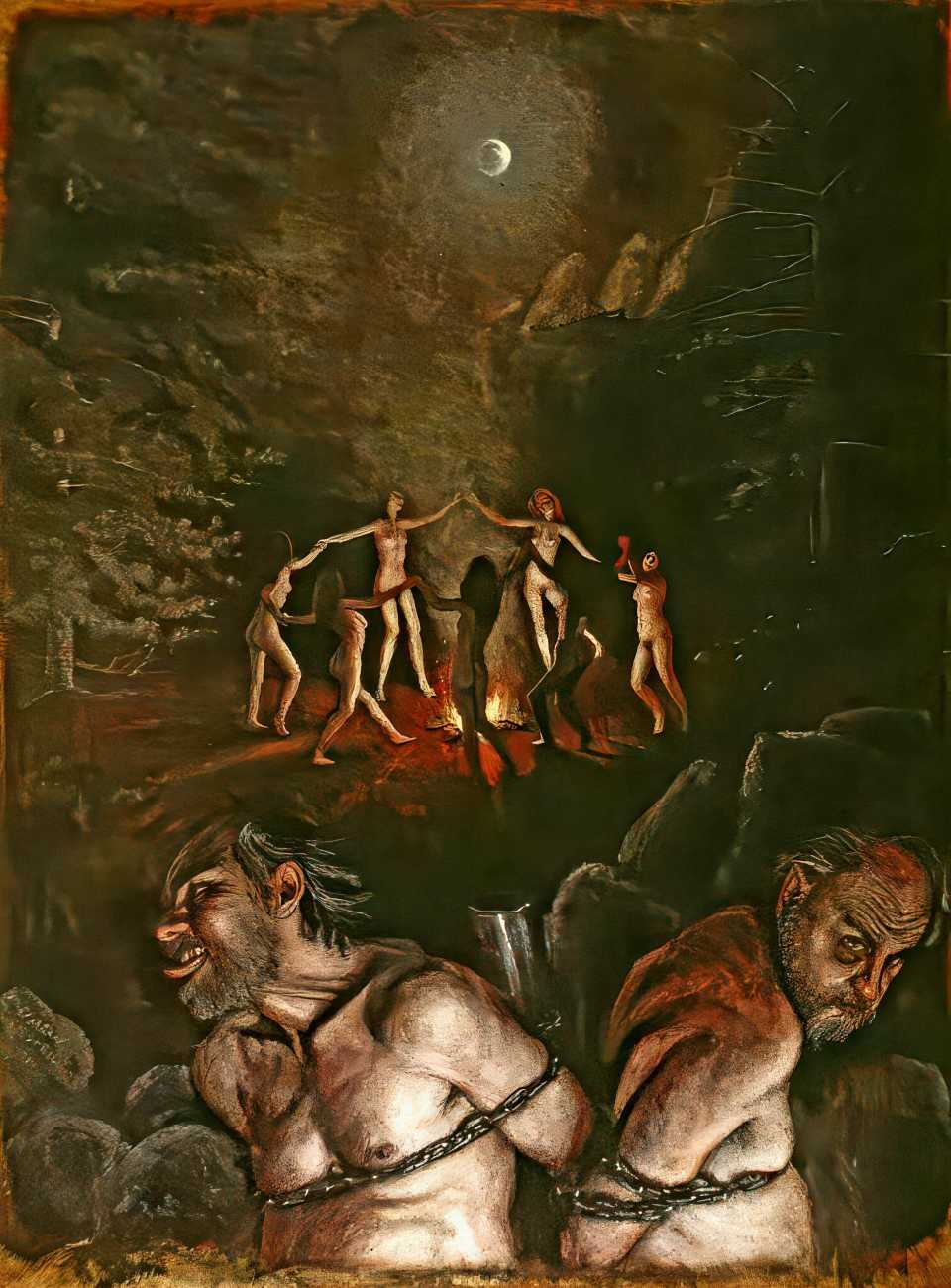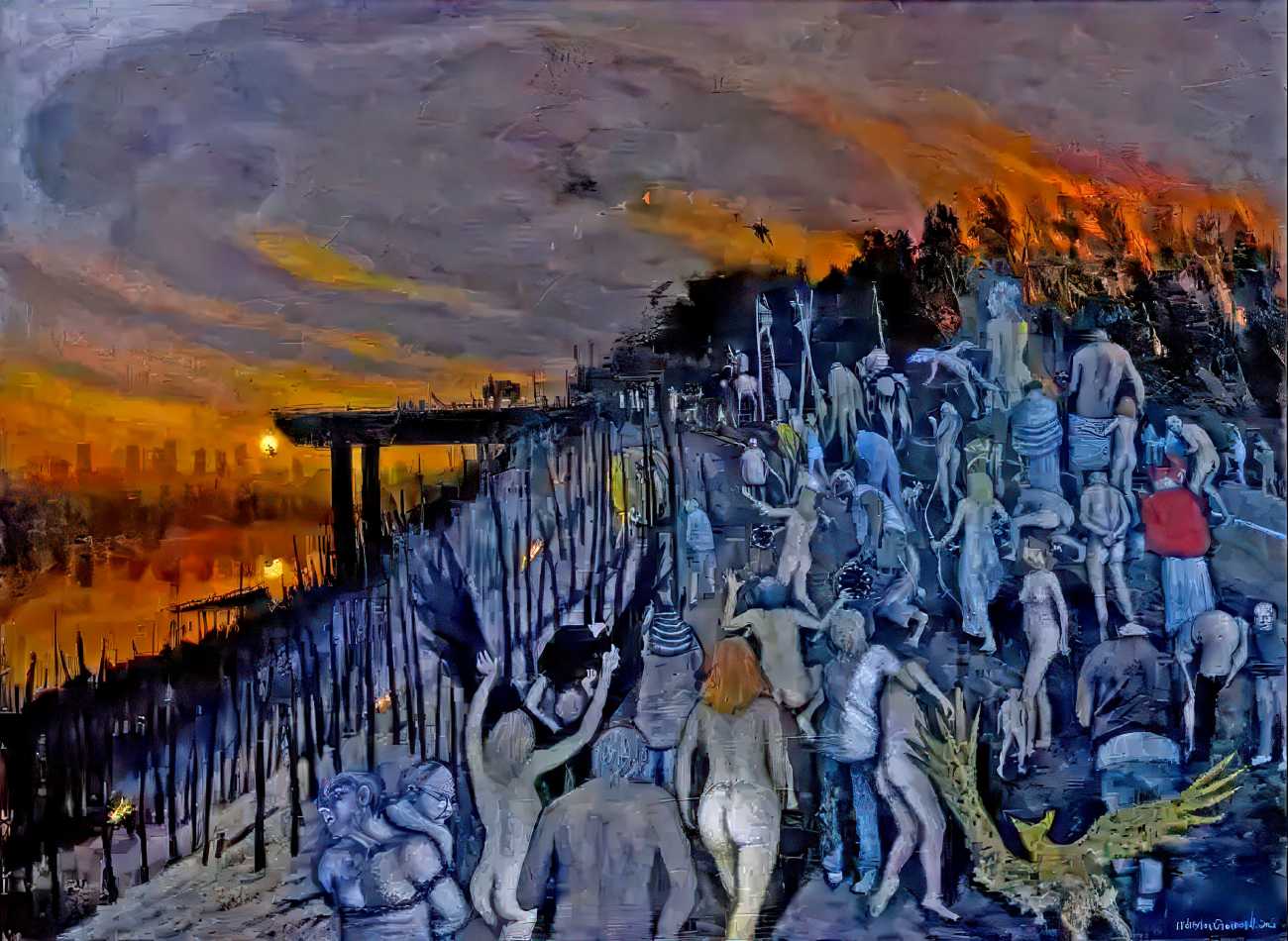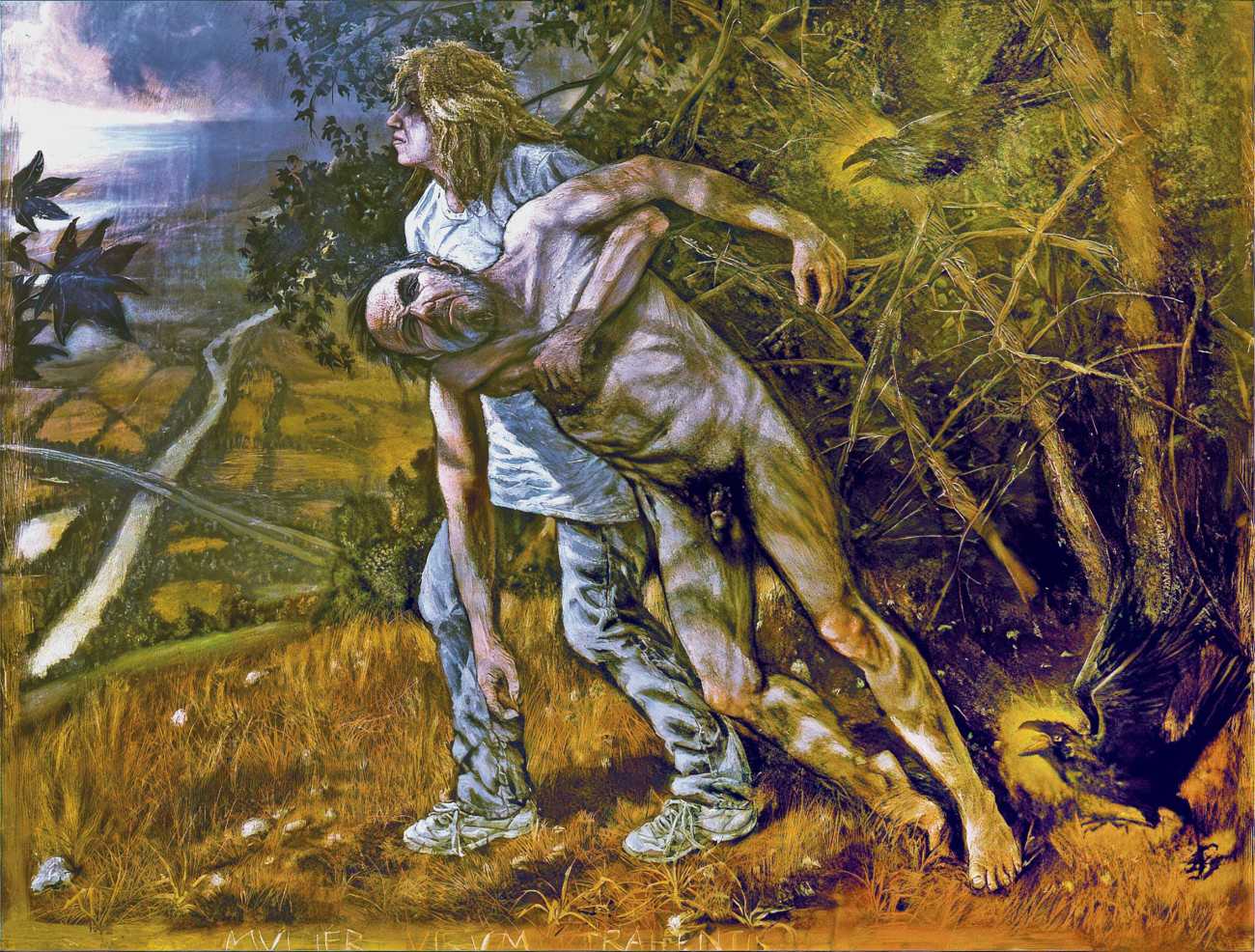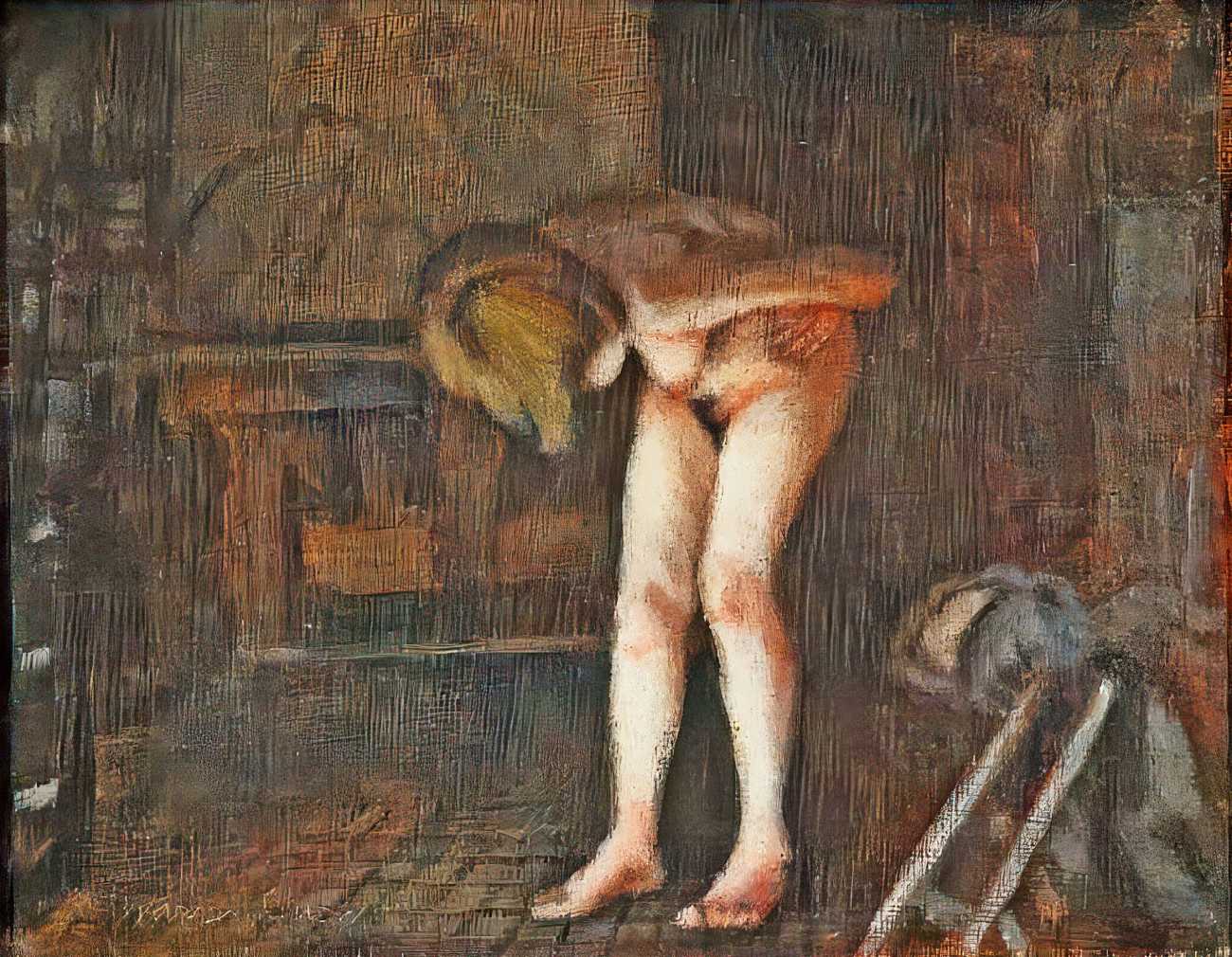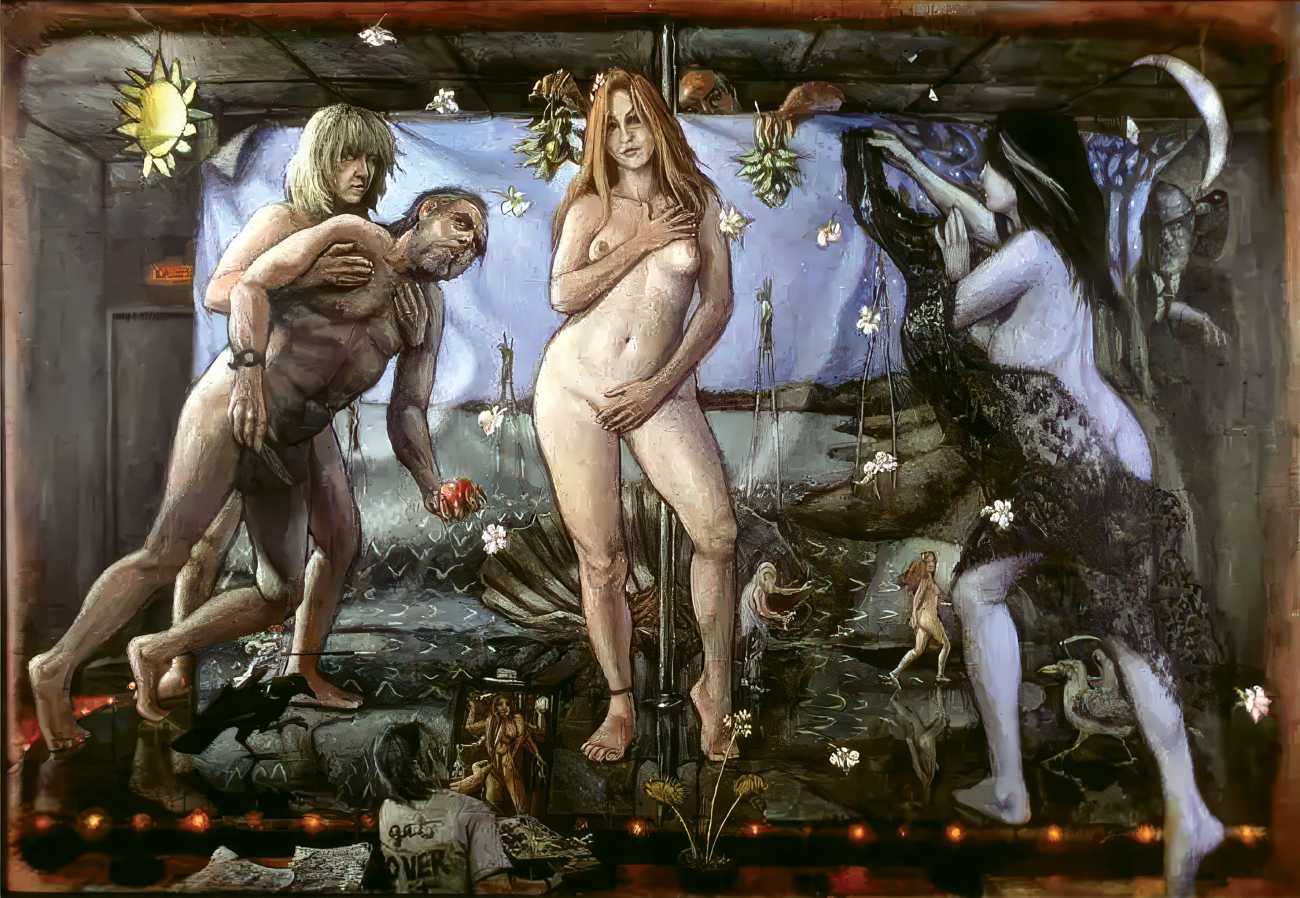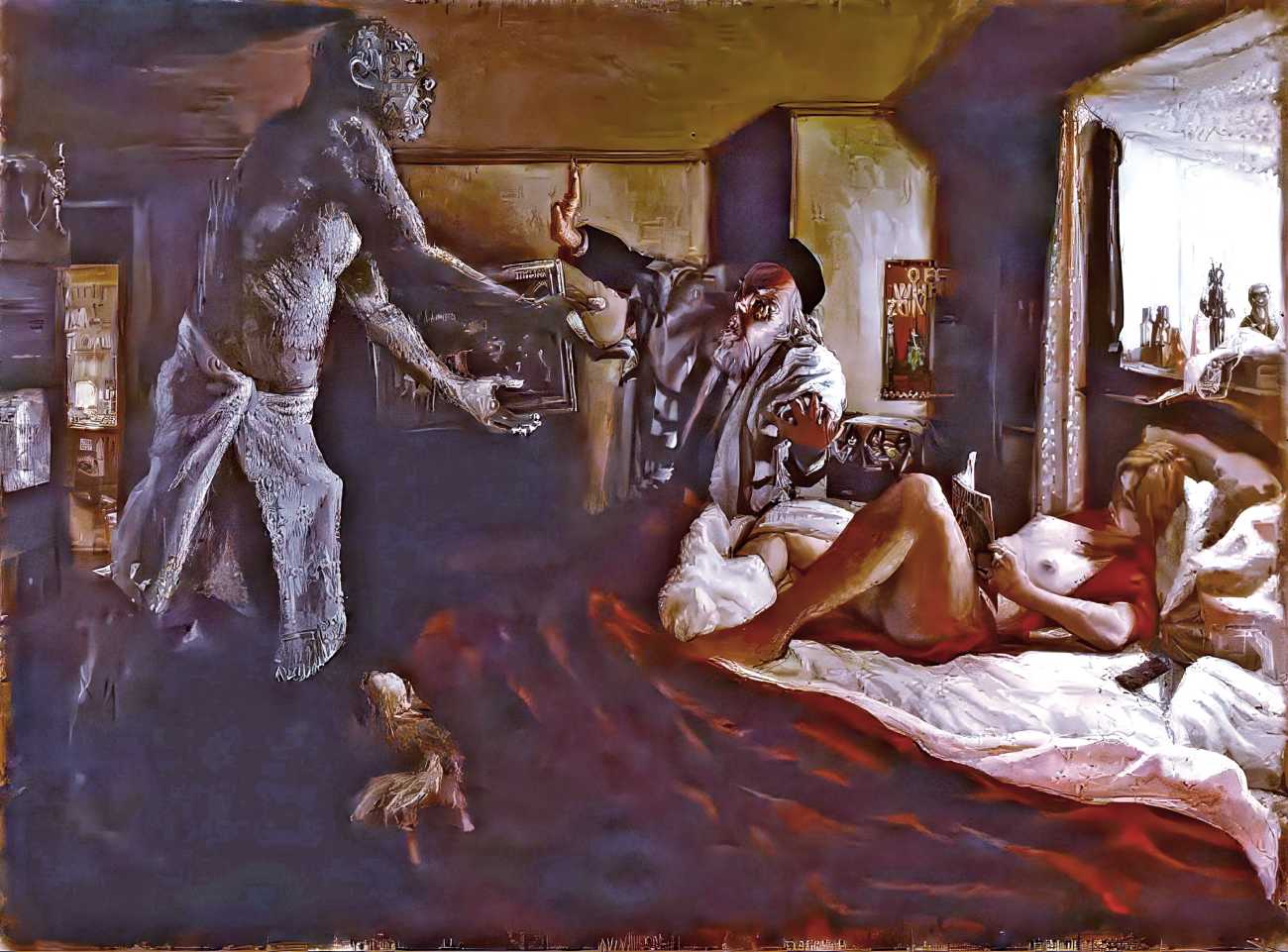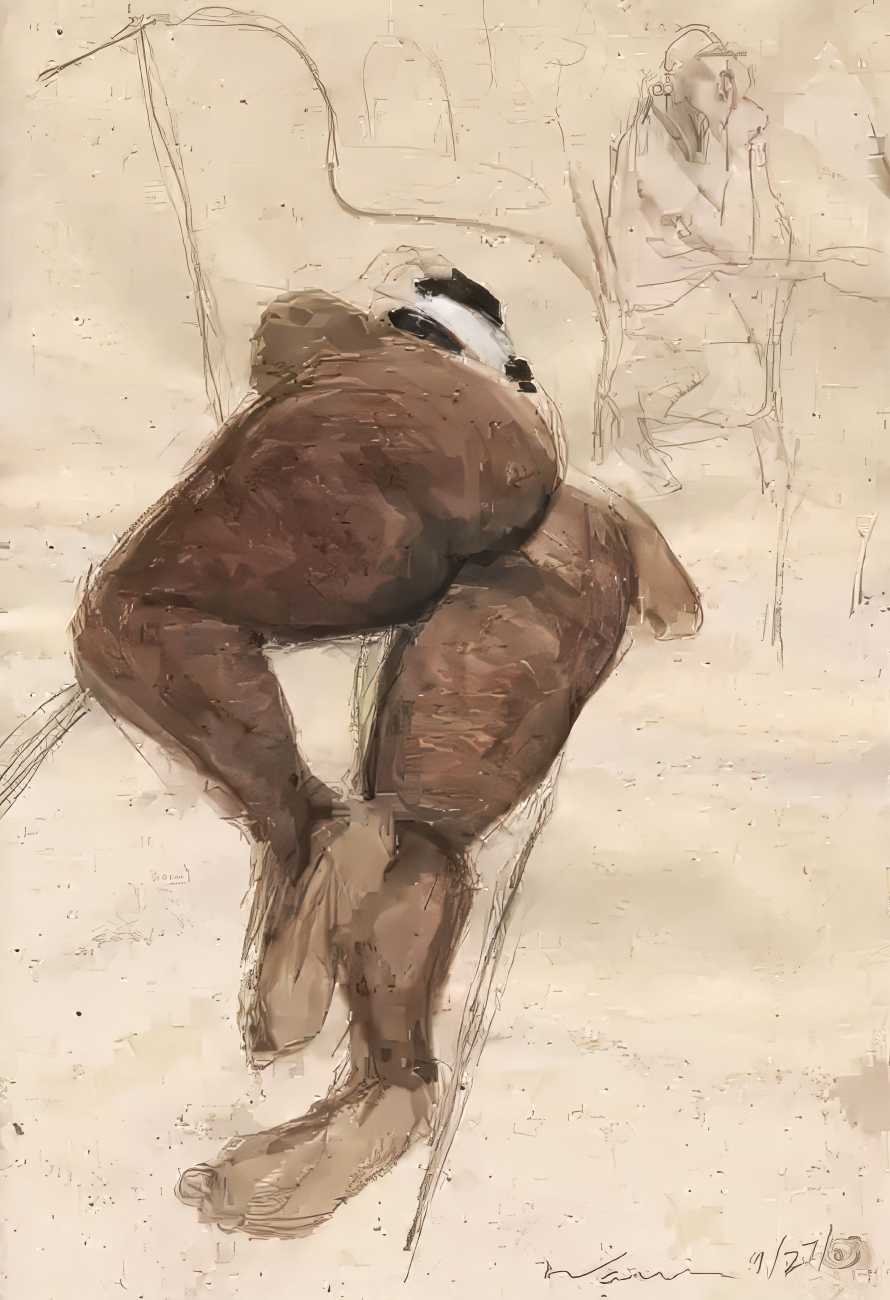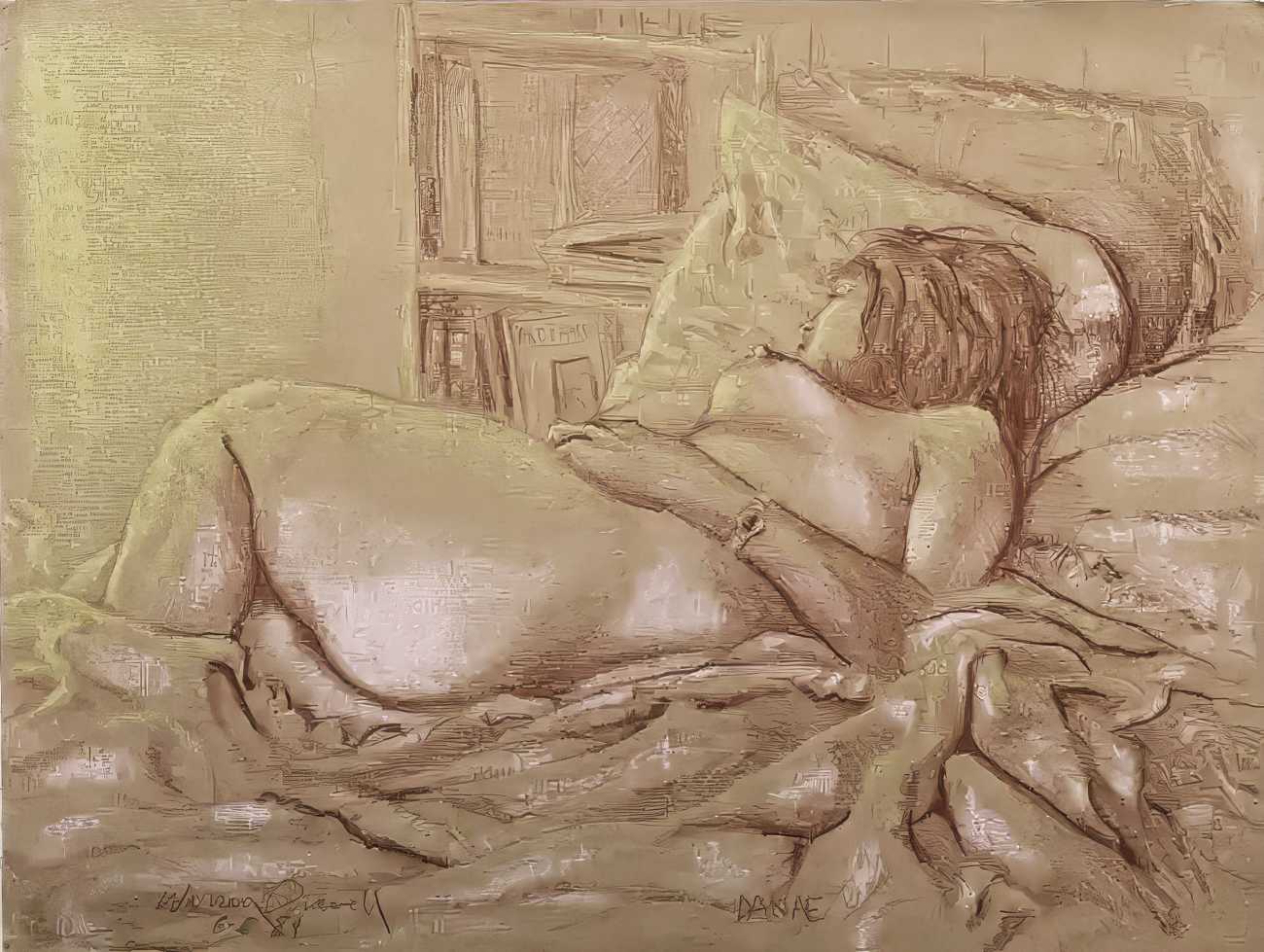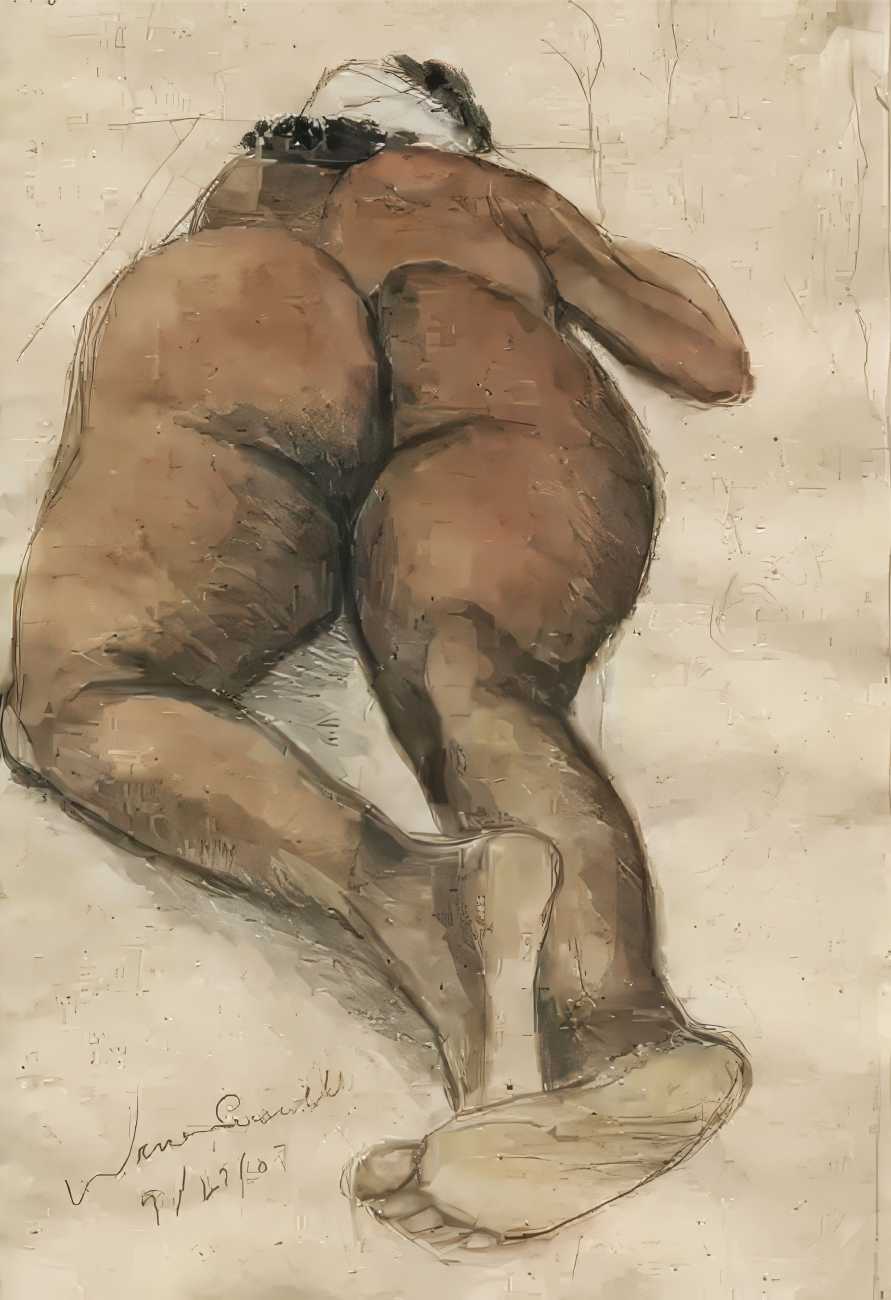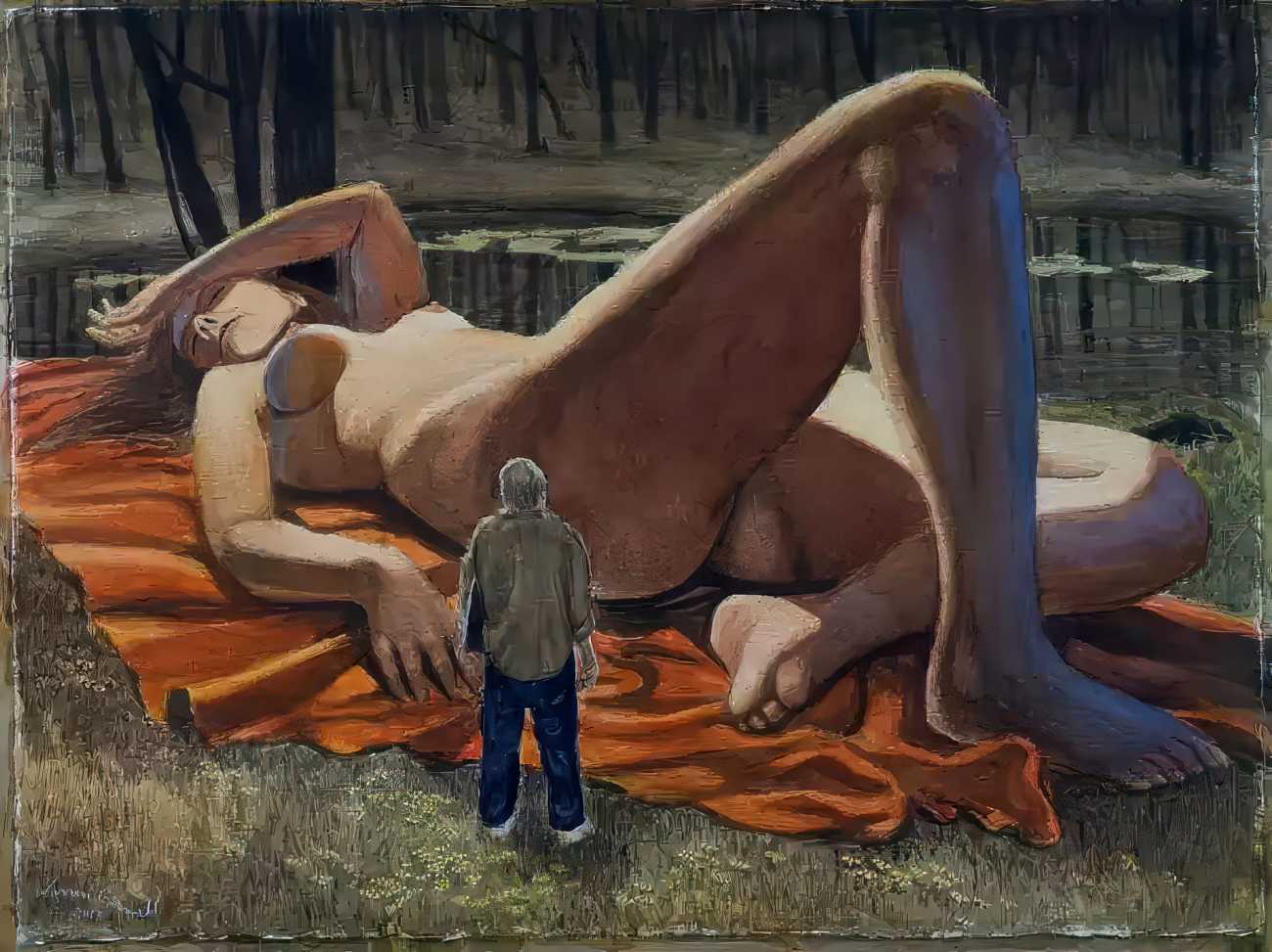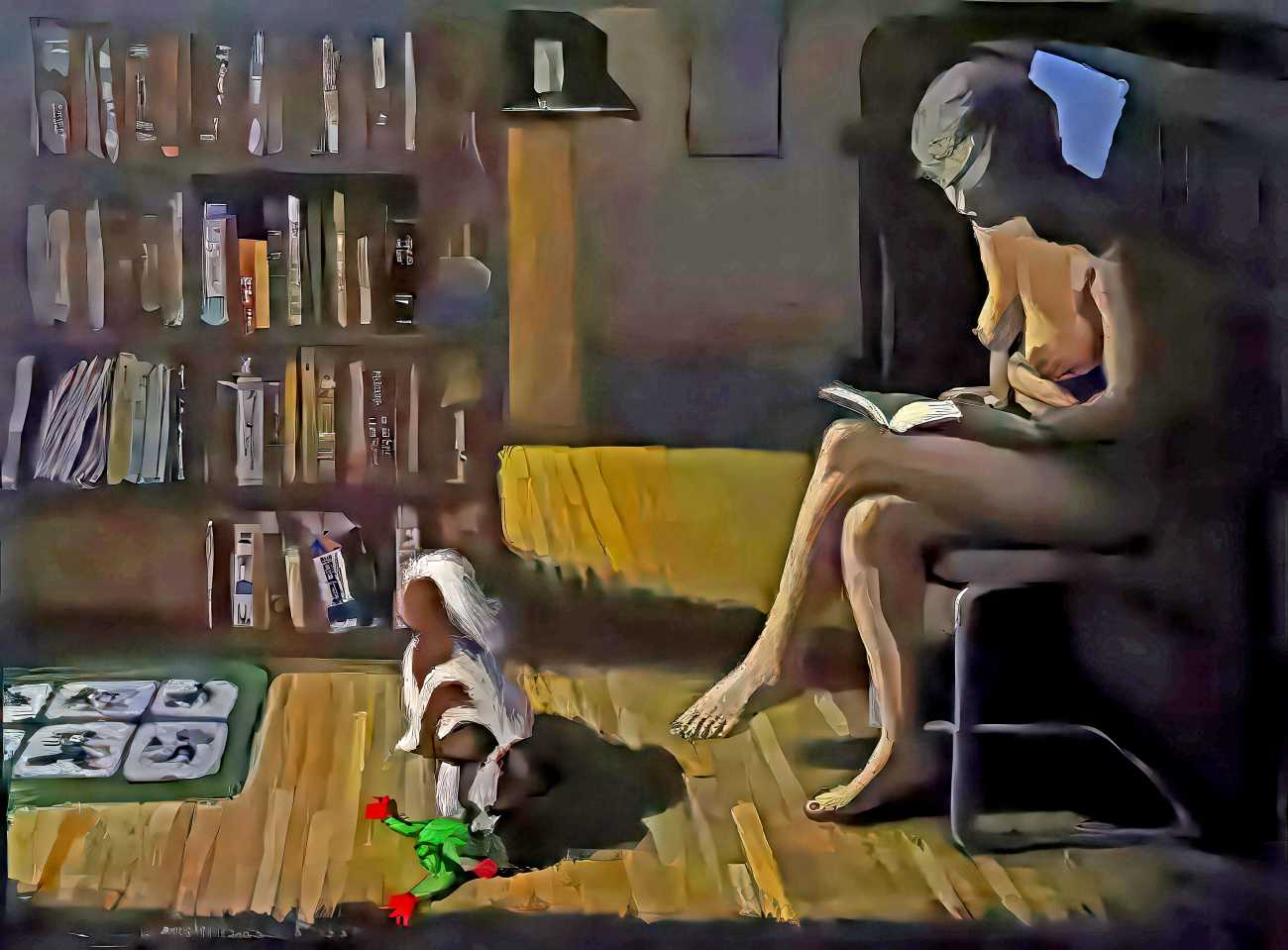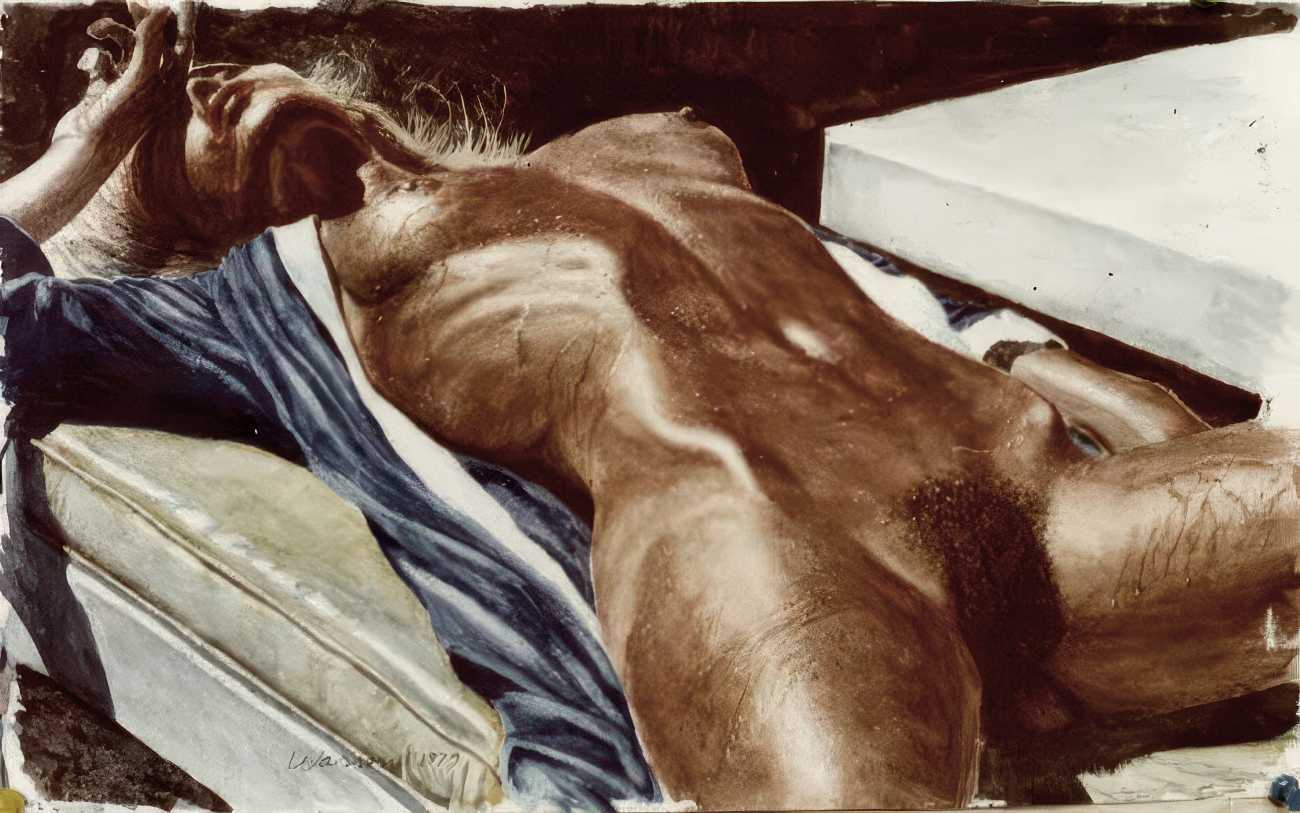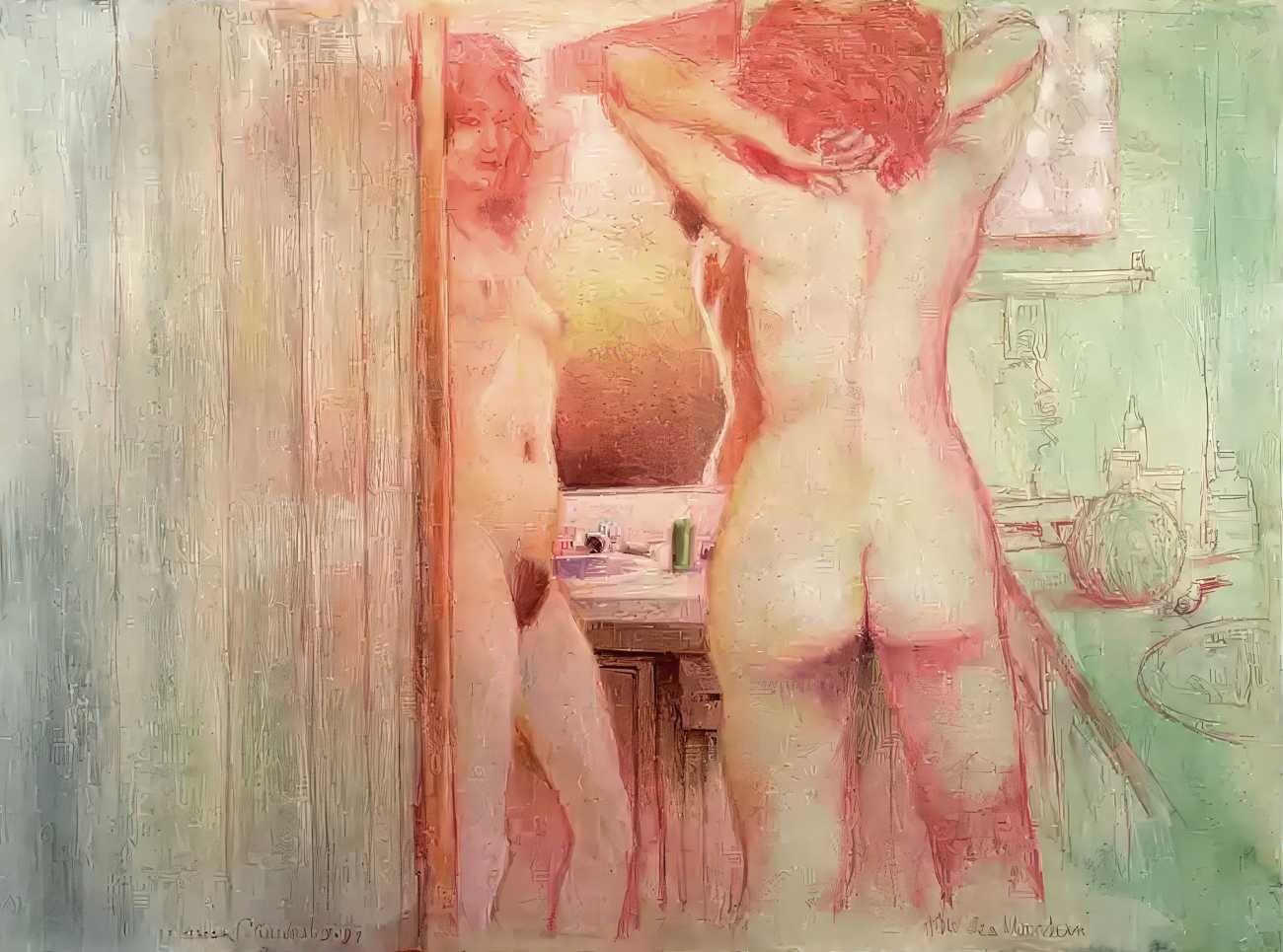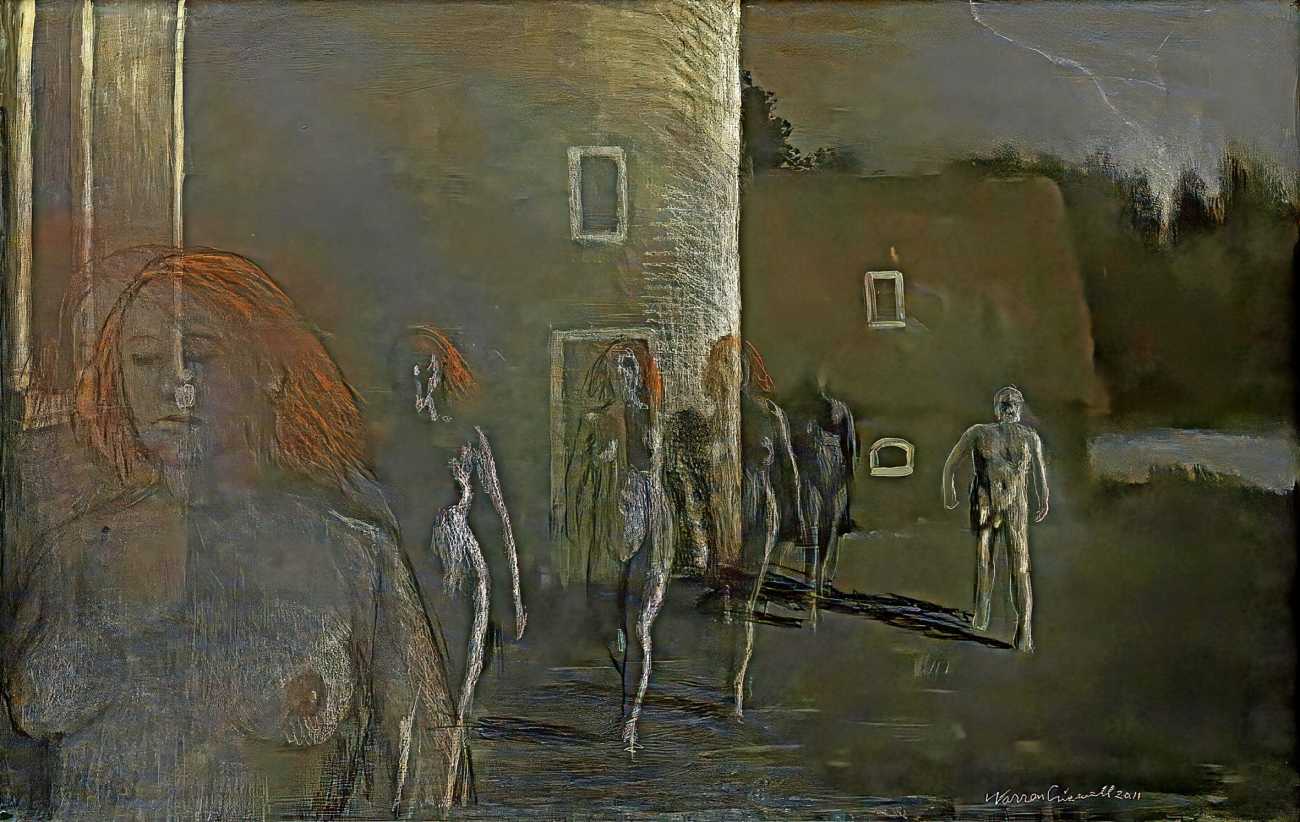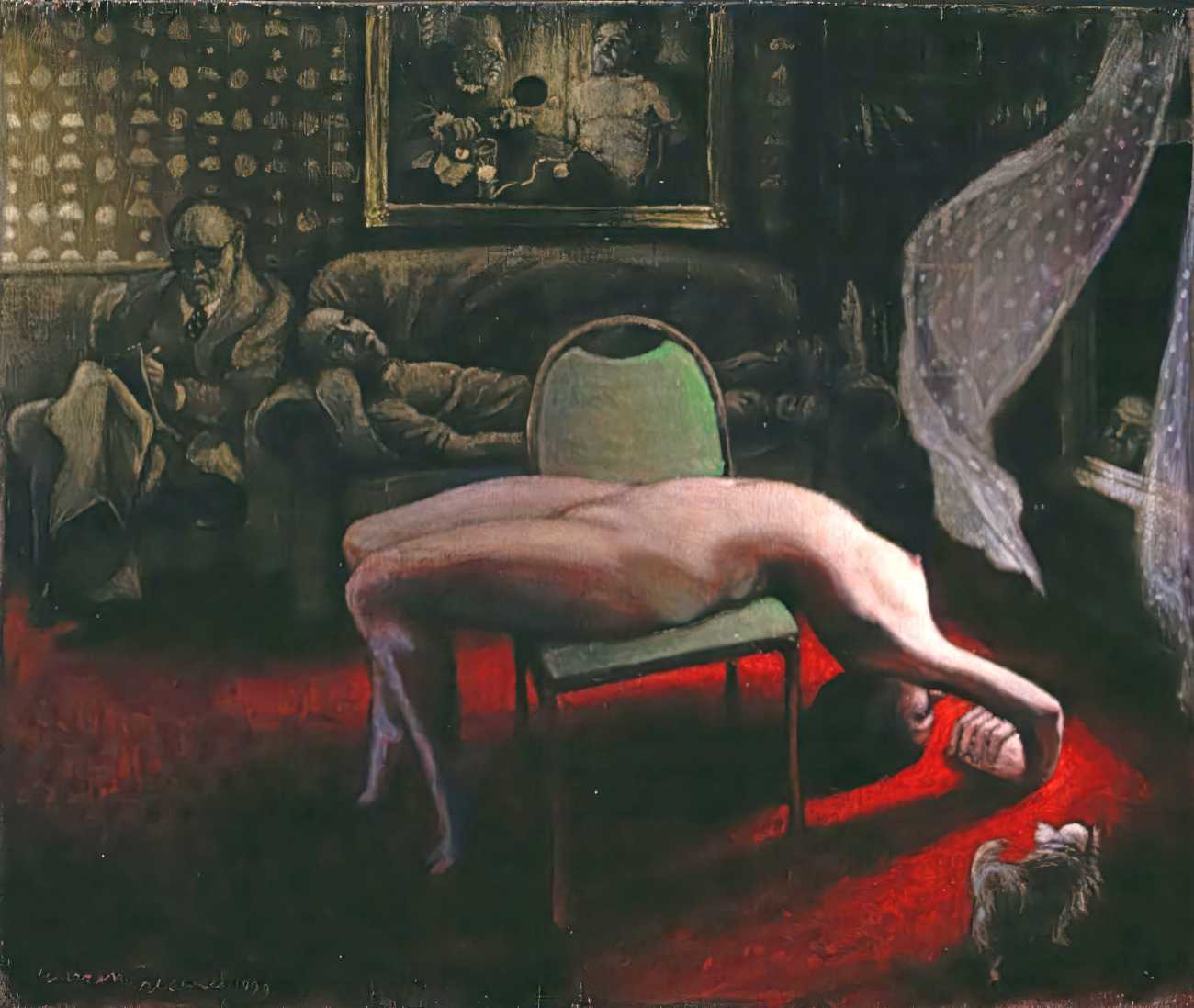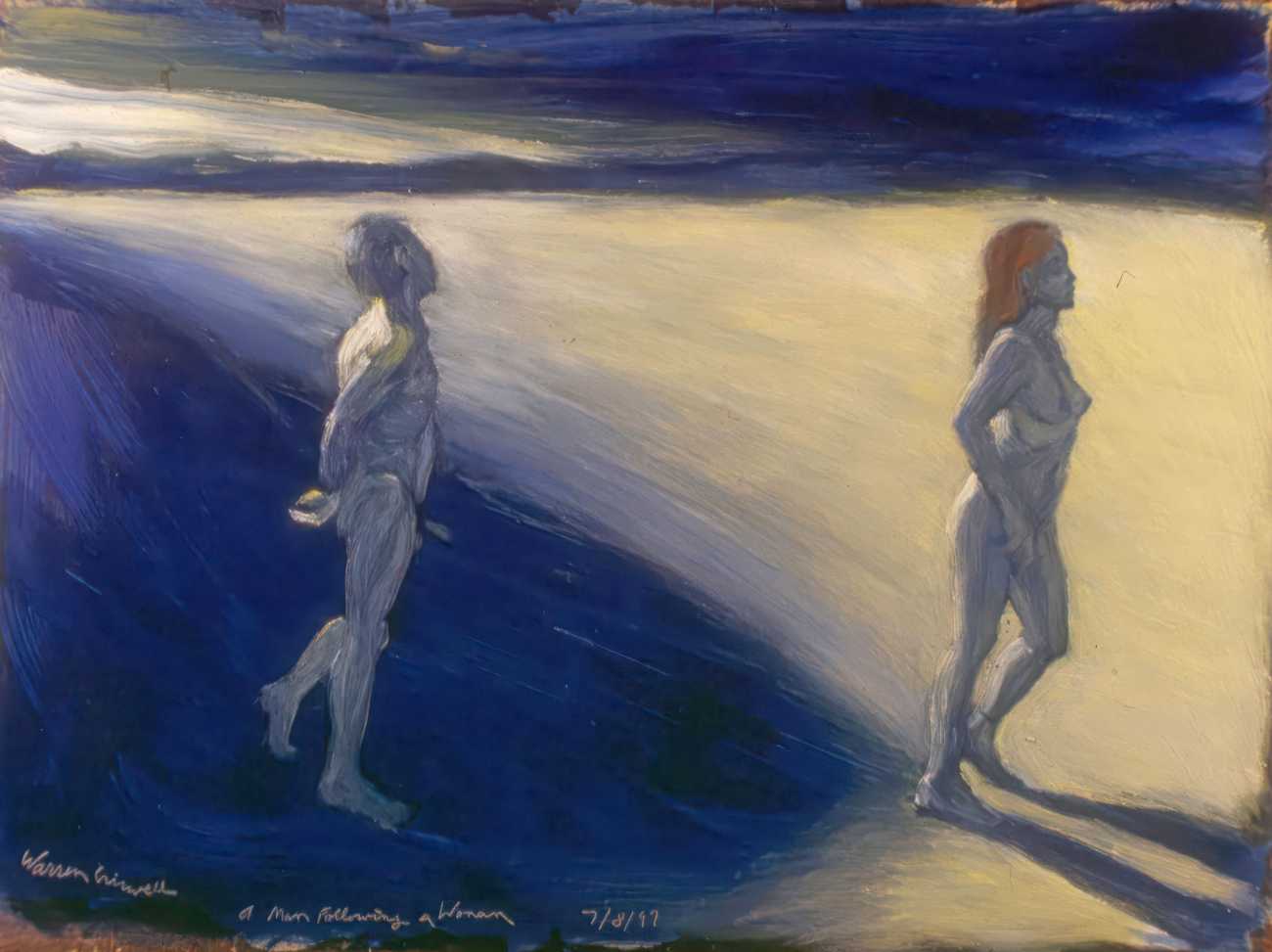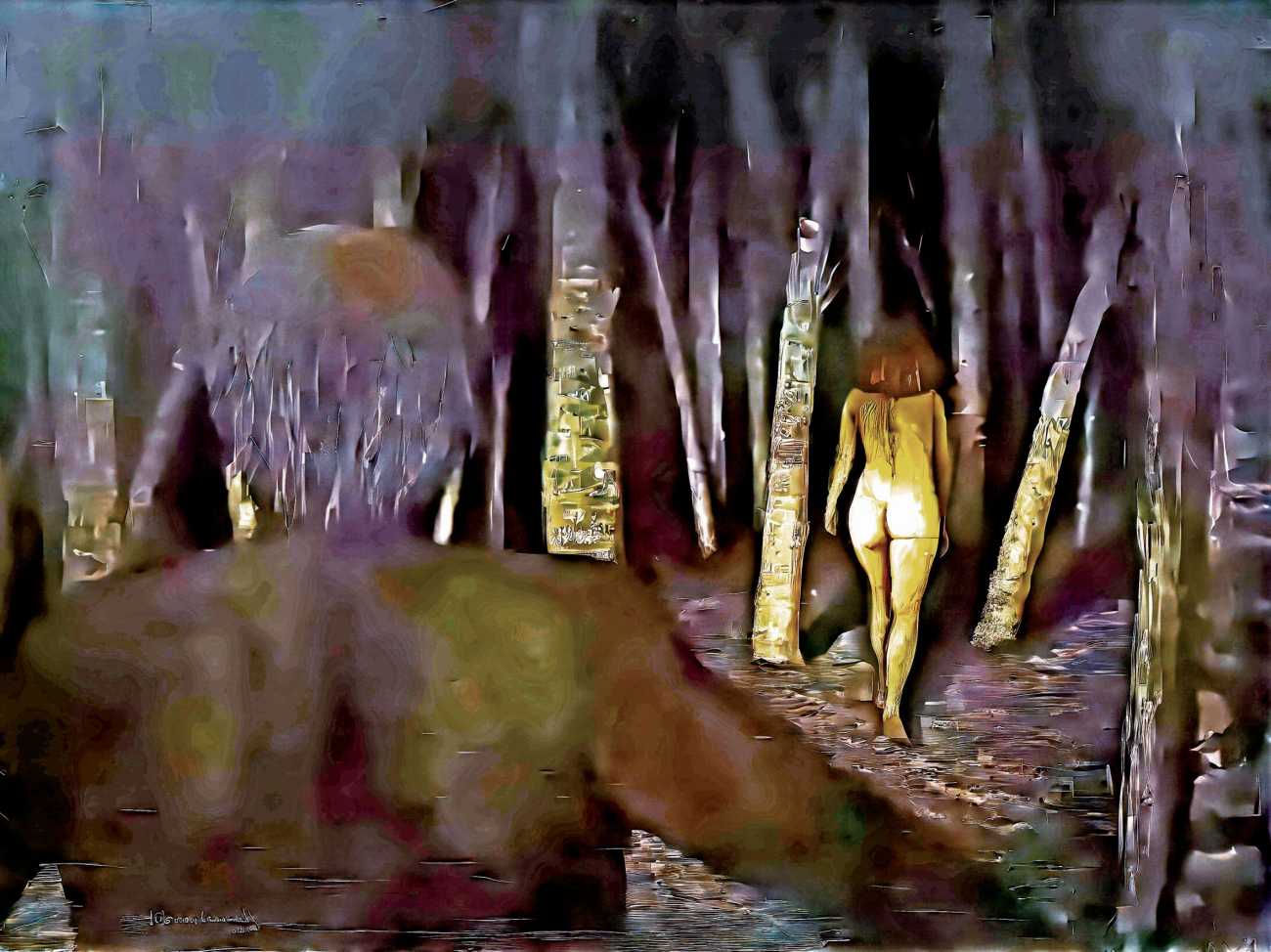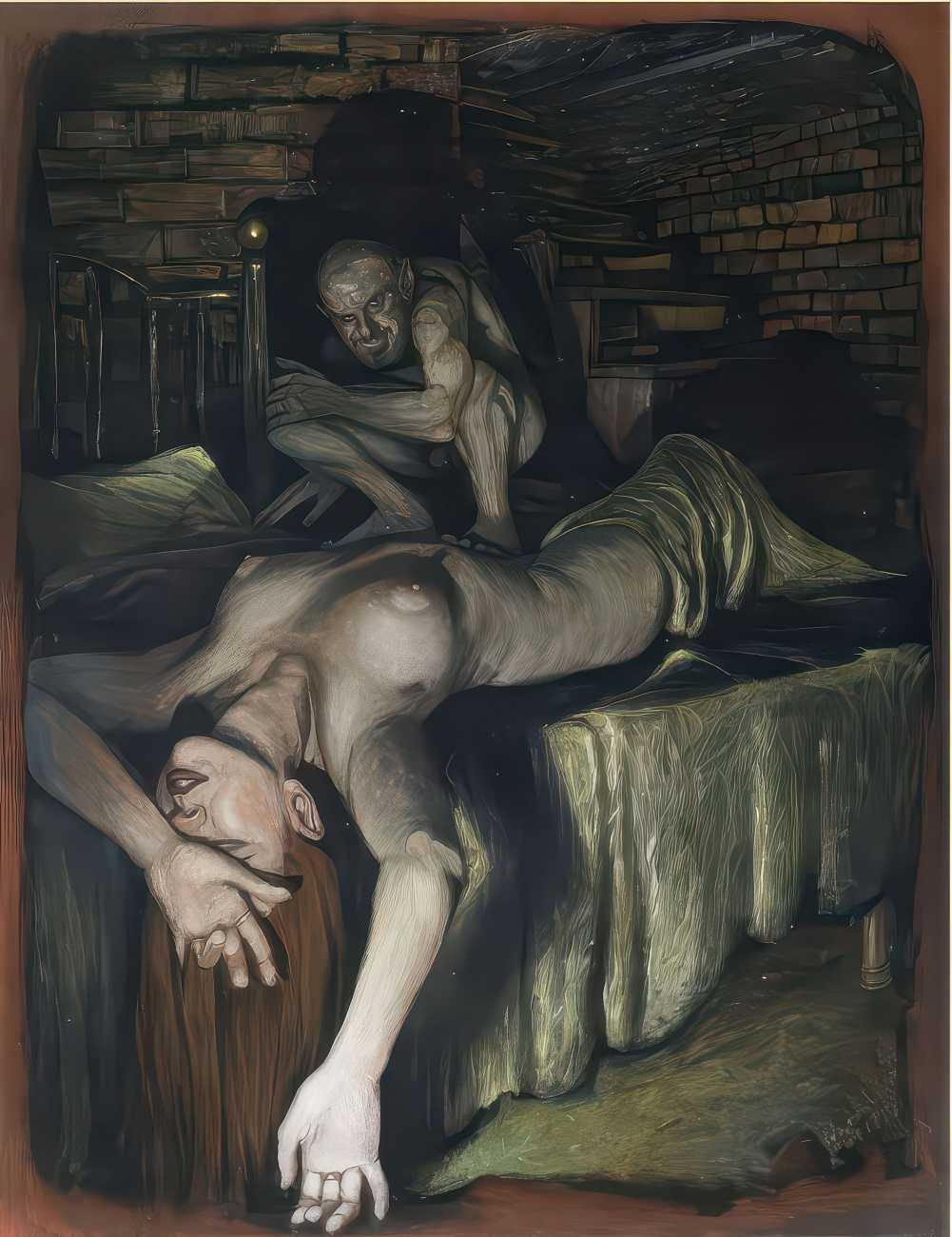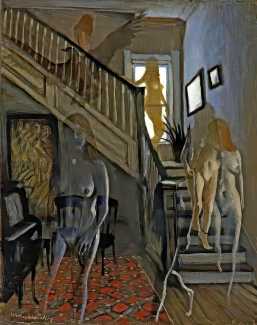
Over a long career, Warren Criswell has developed a broad body of paintings and drawings in which eroticism, fantasy, mythology, literature and the imagination continually overlap. His subjects range from solitary human figures and intimate interiors to elaborate, theatrical scenes populated by performers, mythical characters and strange apparitions. What connects these disparate works is less a particular subject than Criswell’s way of transforming the visible world into something psychologically charged and often rather uncanny.
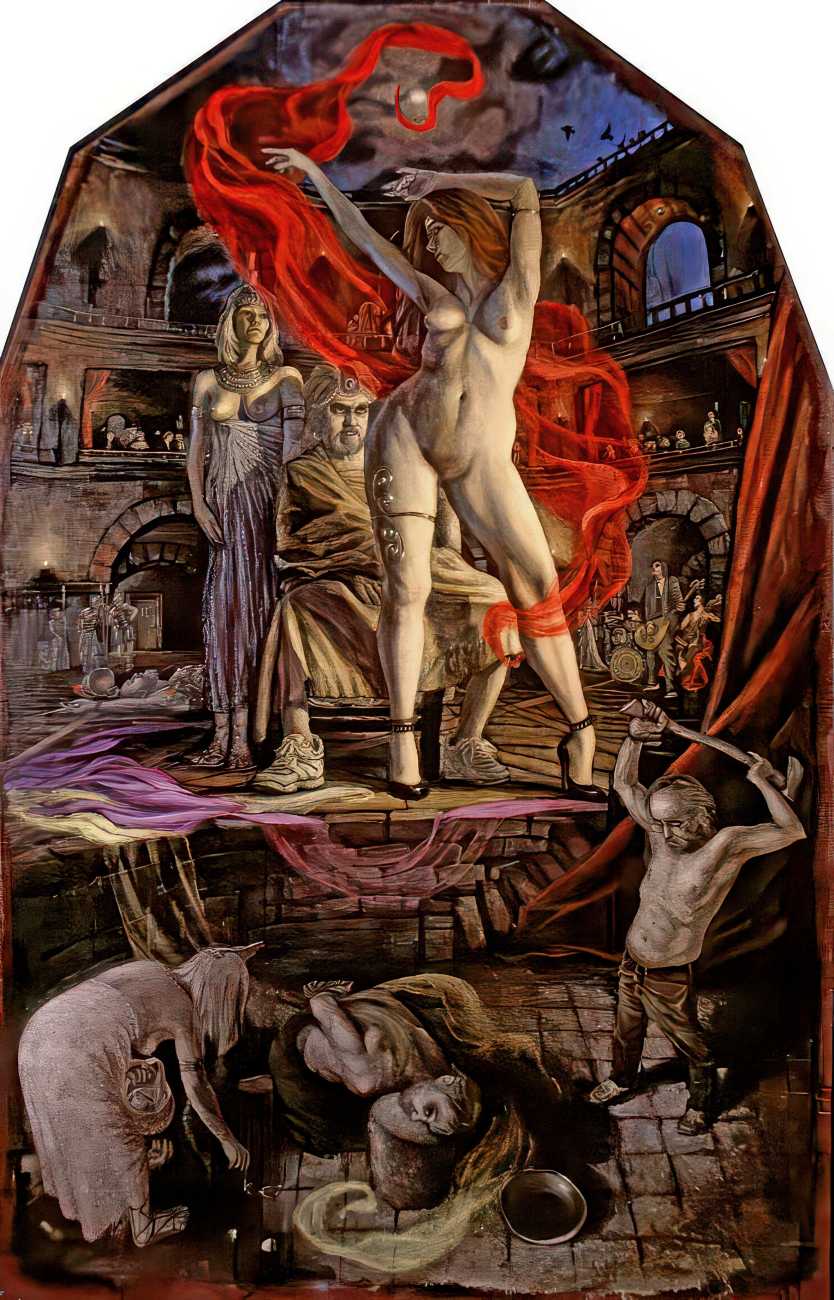
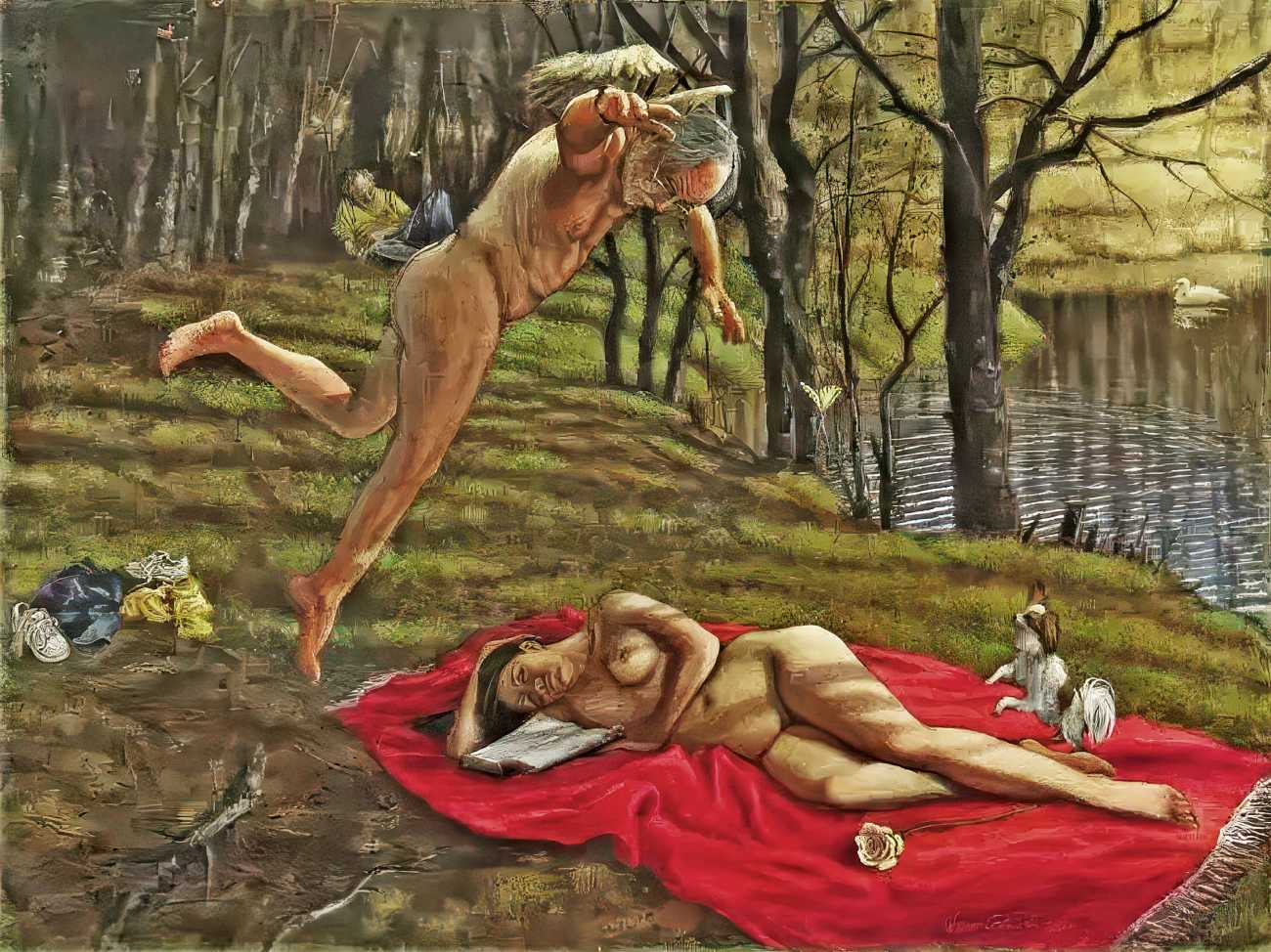
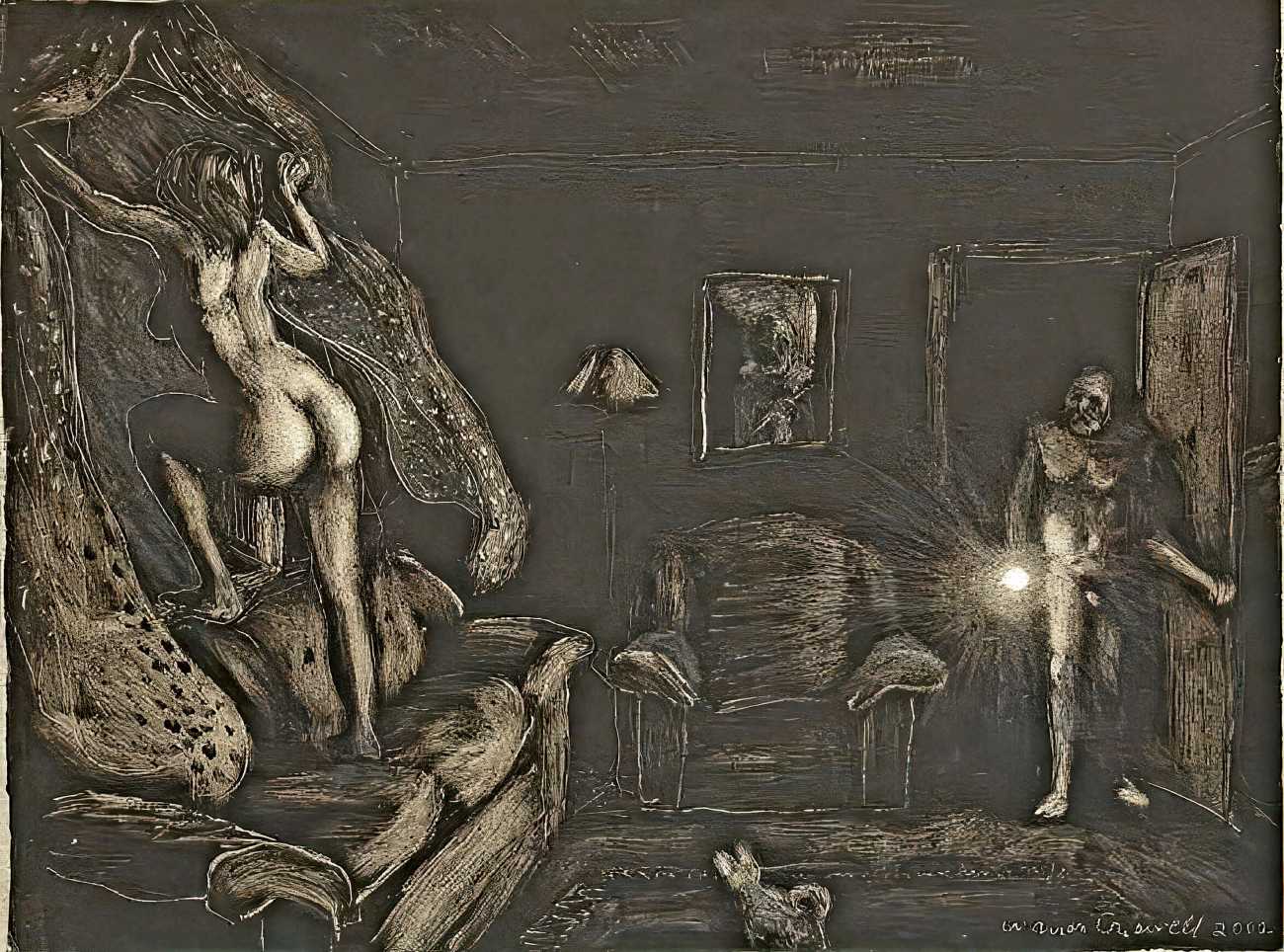
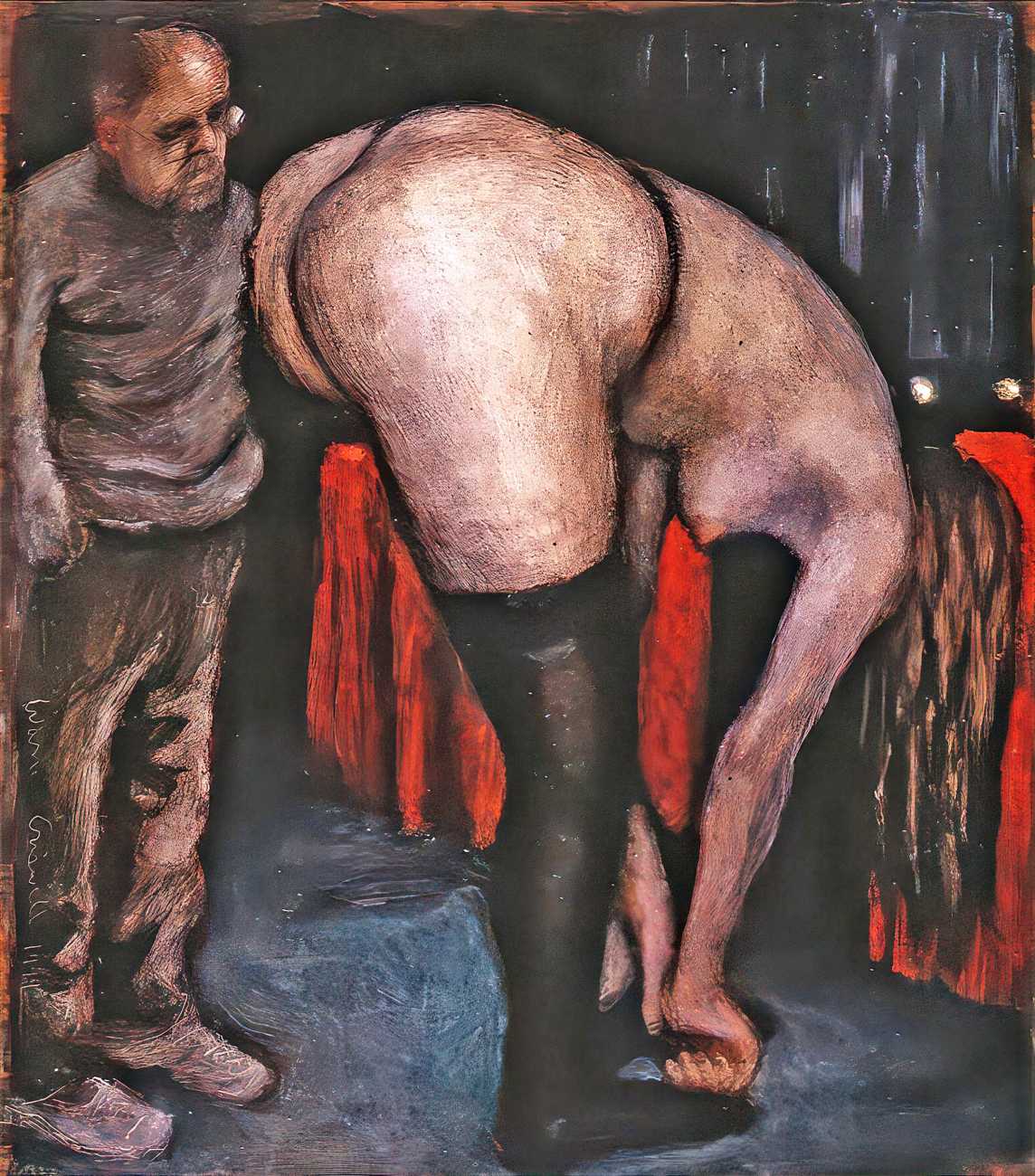
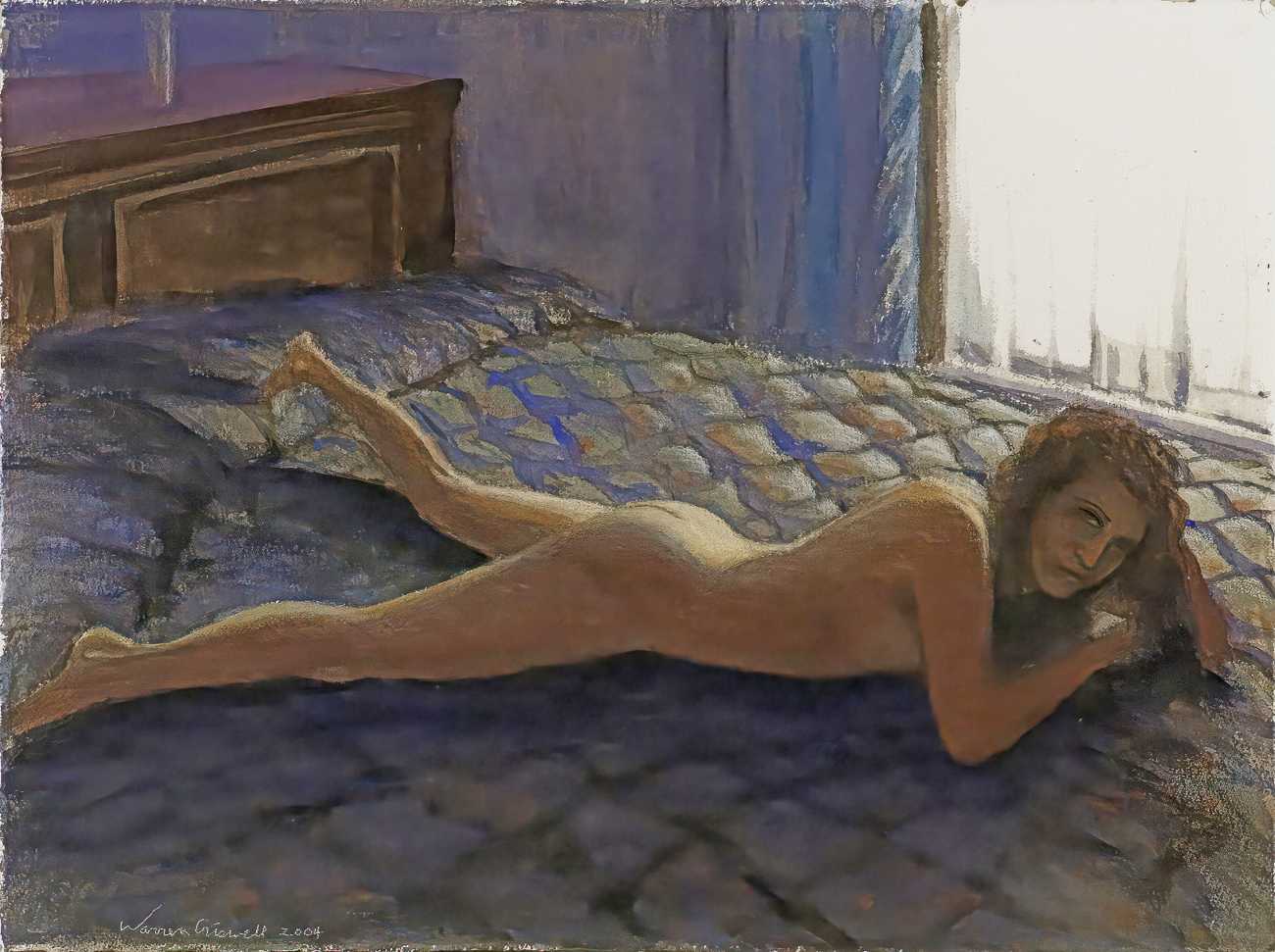
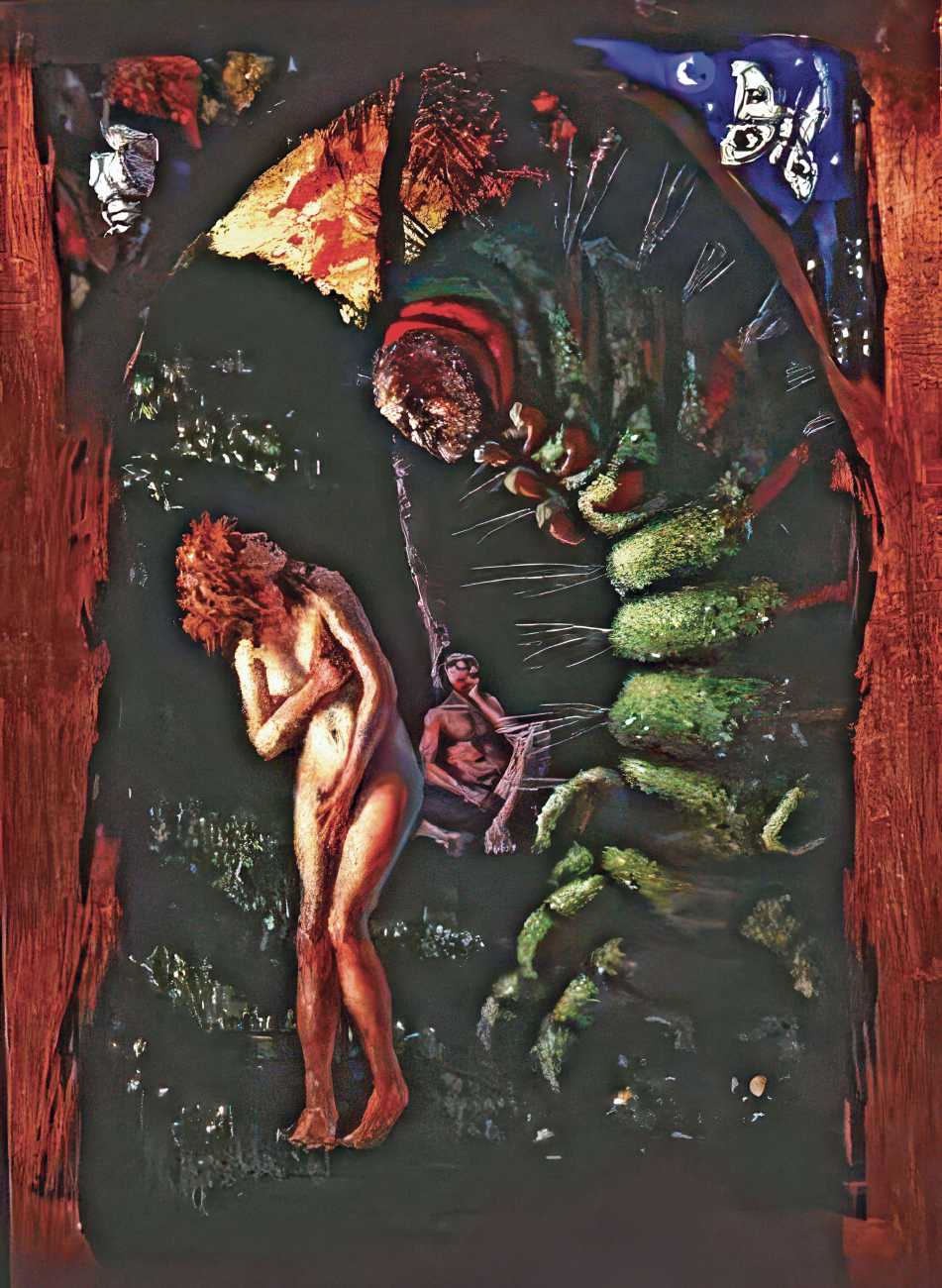
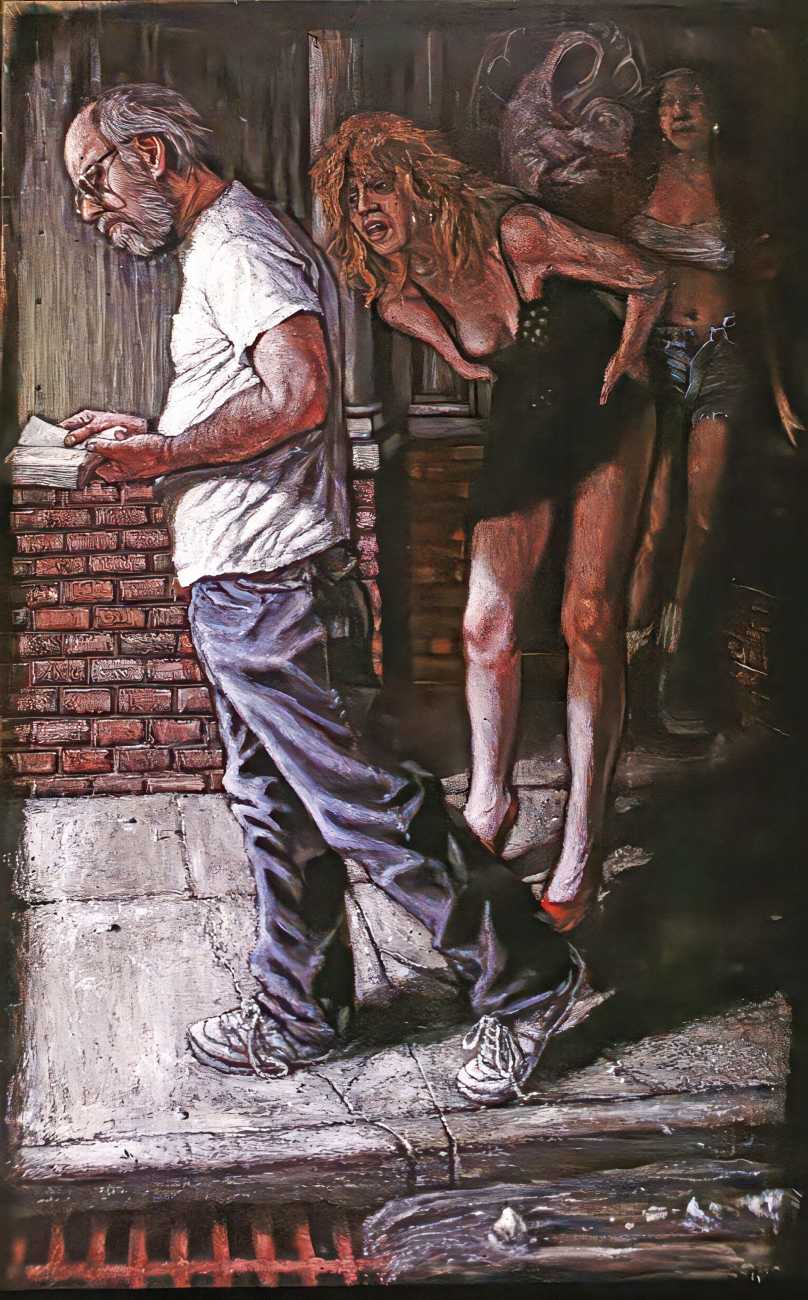
Light is central to many of his paintings. Figures emerge dramatically from deep shadow, while pools of illumination pick out a body, a face or an isolated area of an interior. Elsewhere, the light becomes almost hallucinatory – rich reds, oranges and blues flood the picture surface, turning apparently physical settings into dreamlike or fantastical spaces. His paintings can contain an extraordinary amount of visual information, with architecture, furniture, fabric and human forms all rendered with meticulous attention.
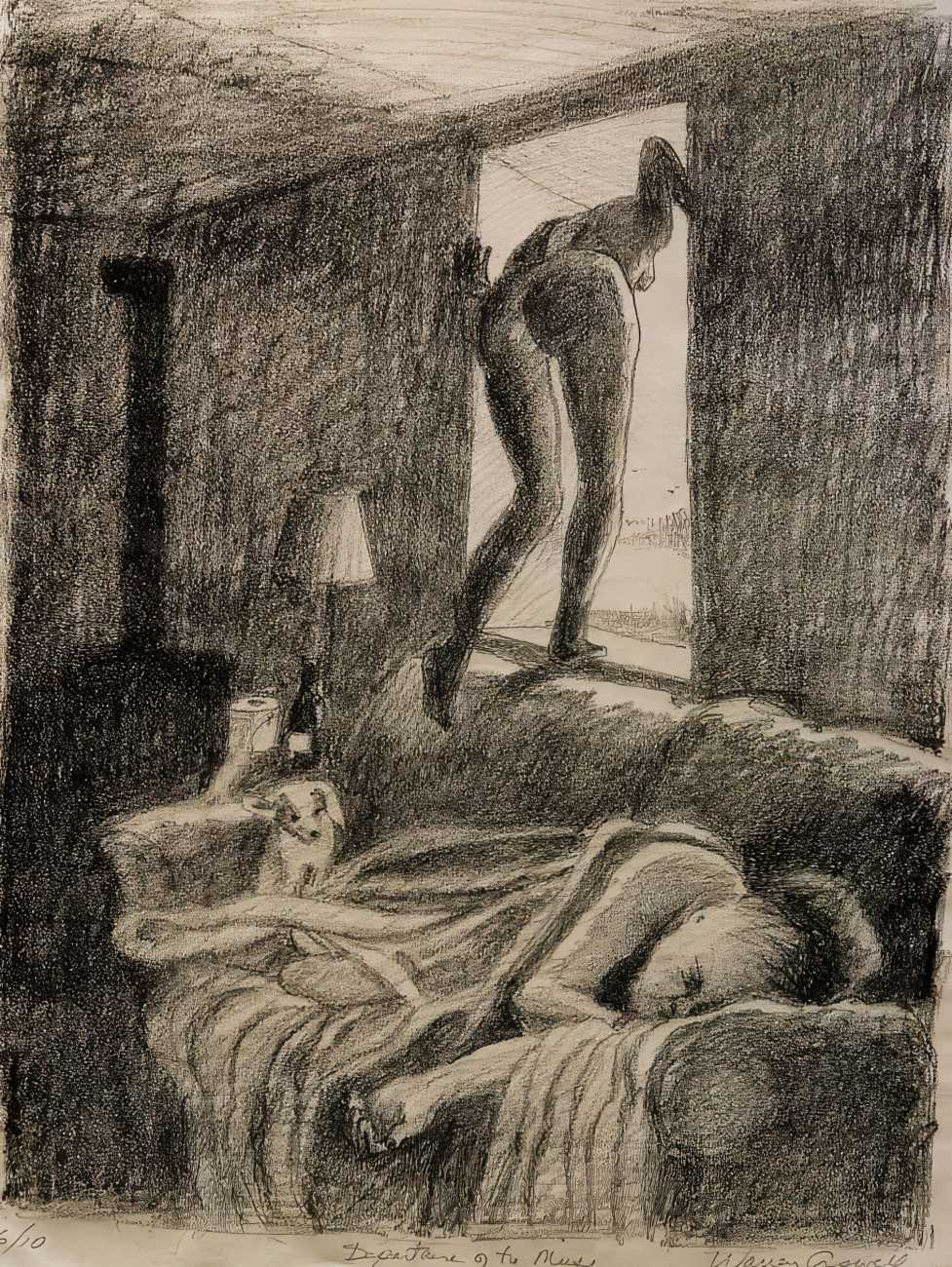
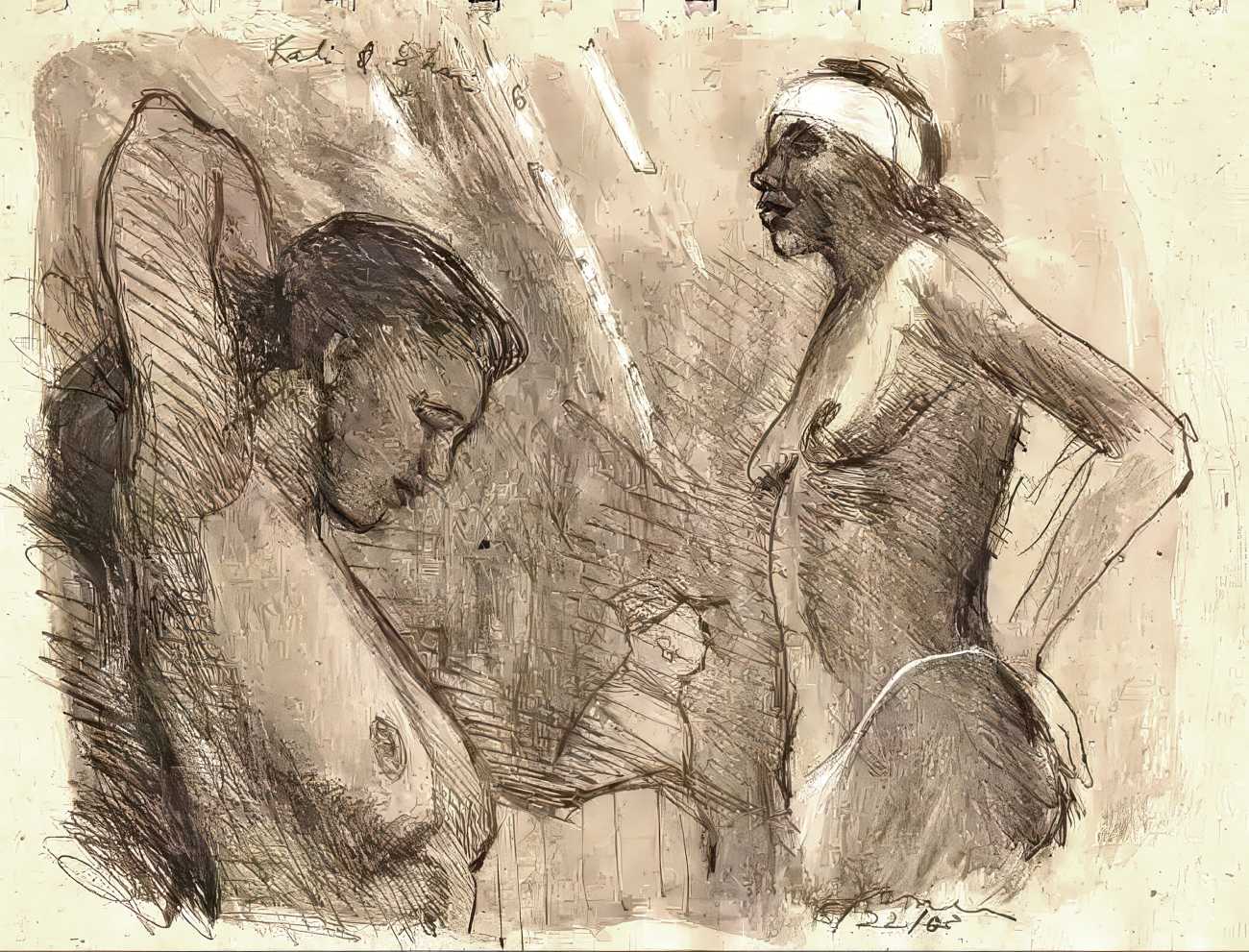
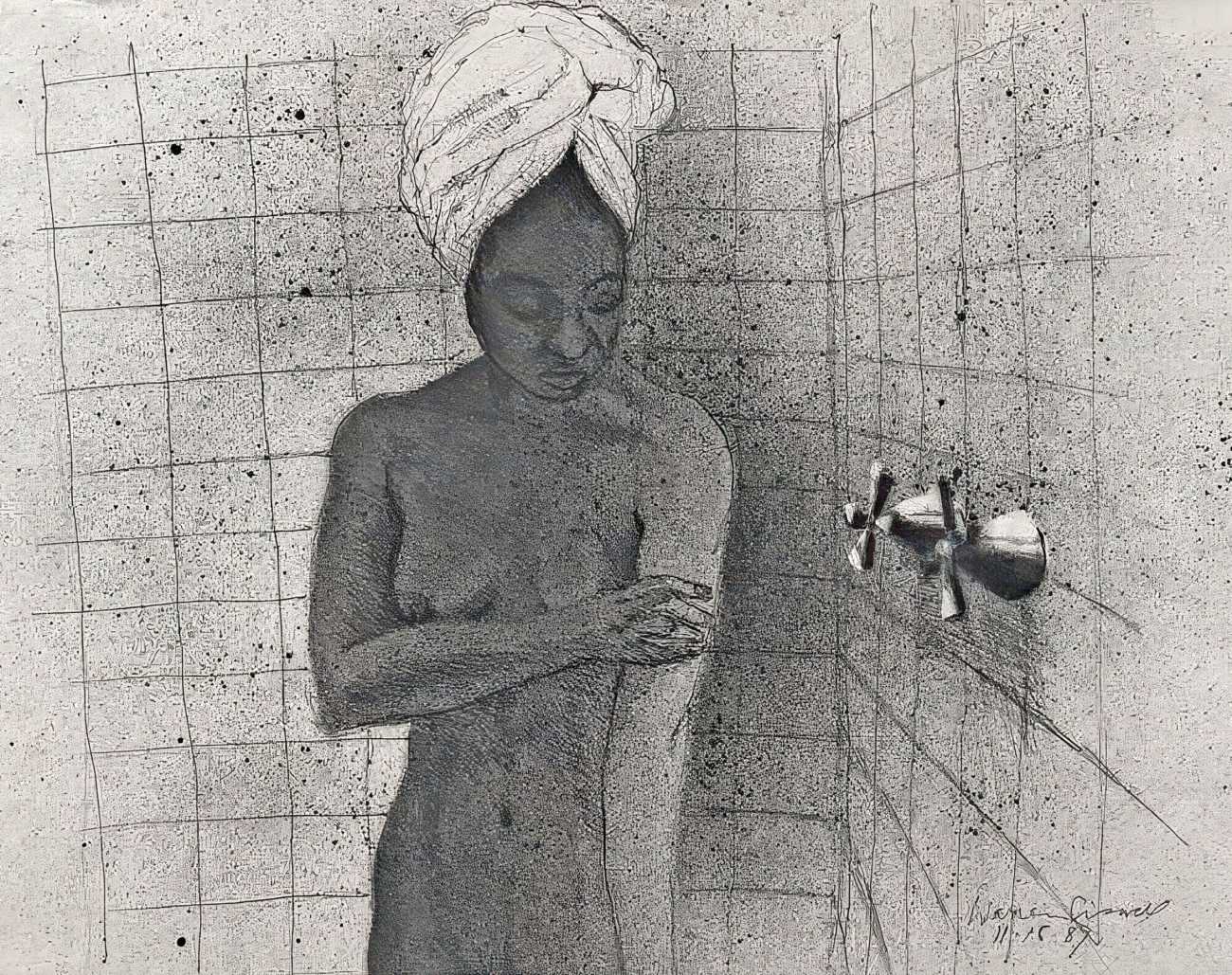
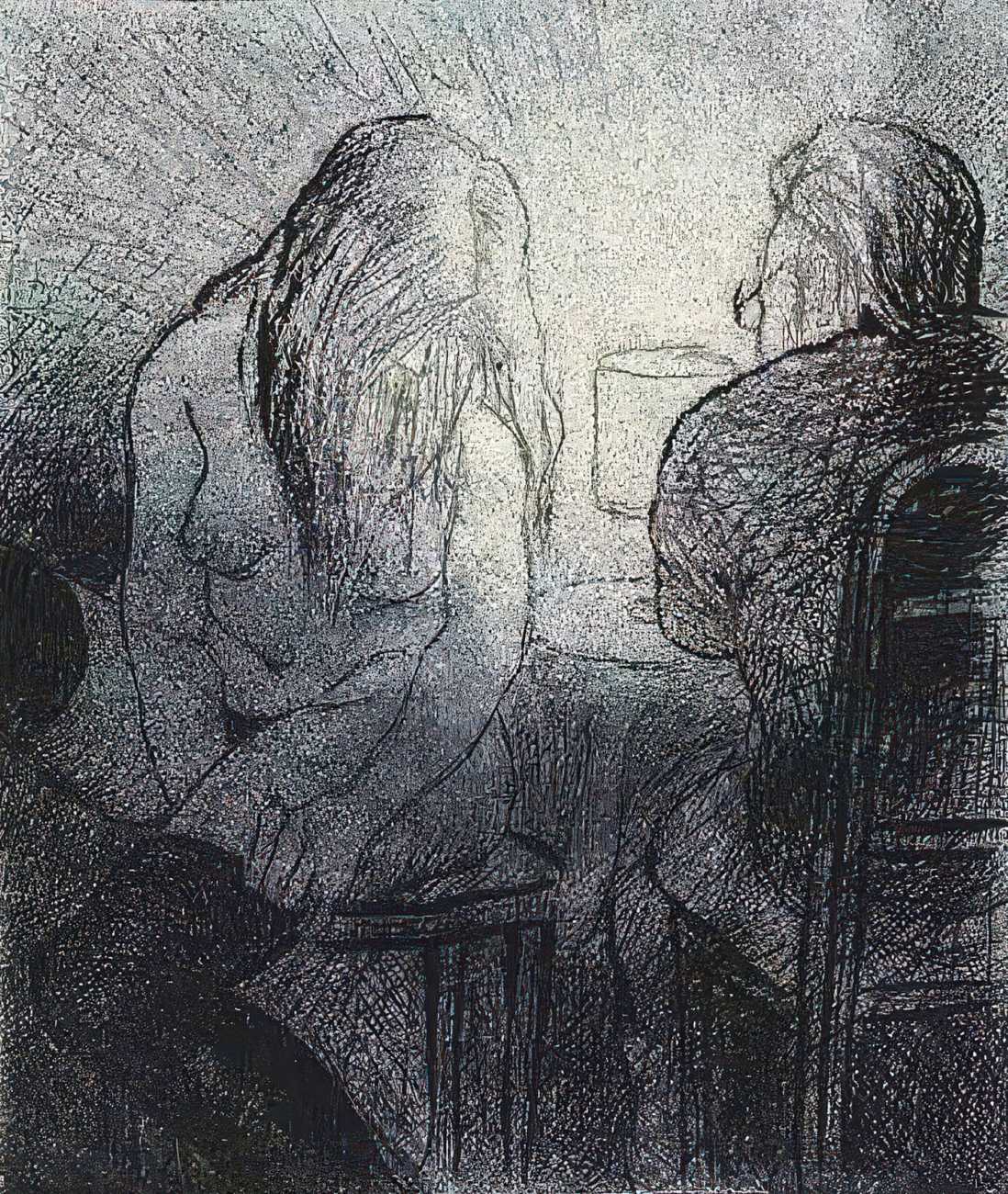
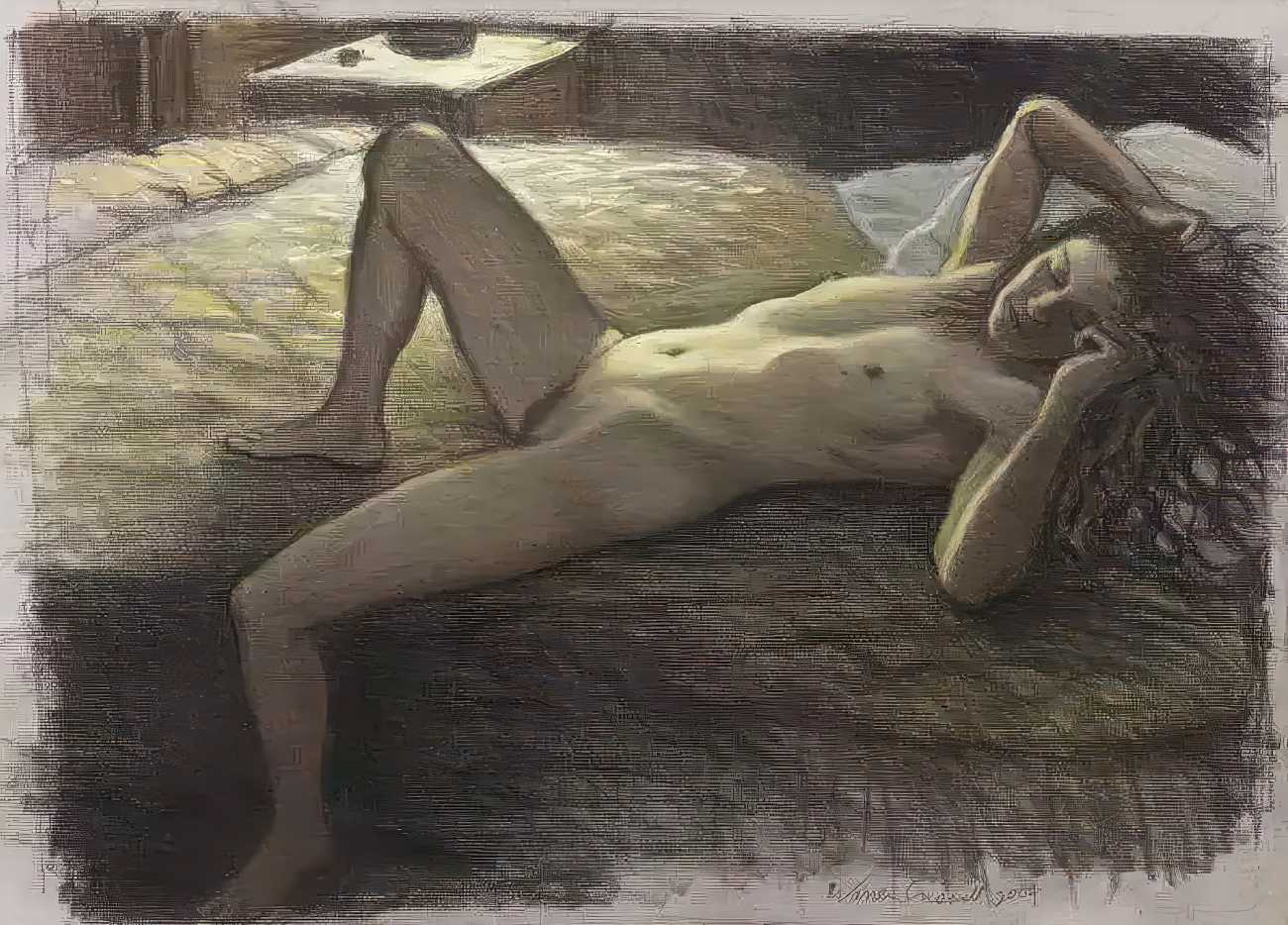
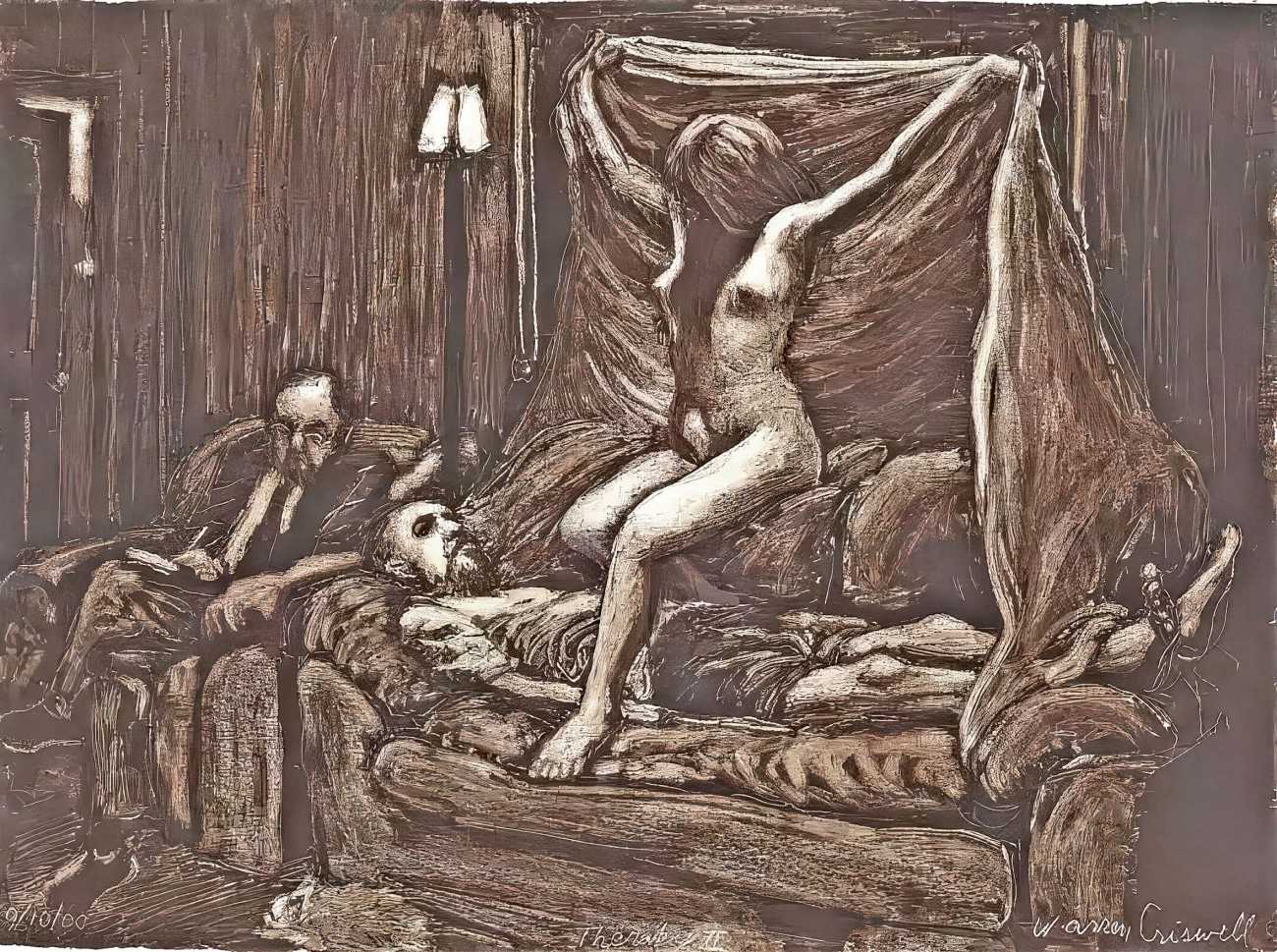
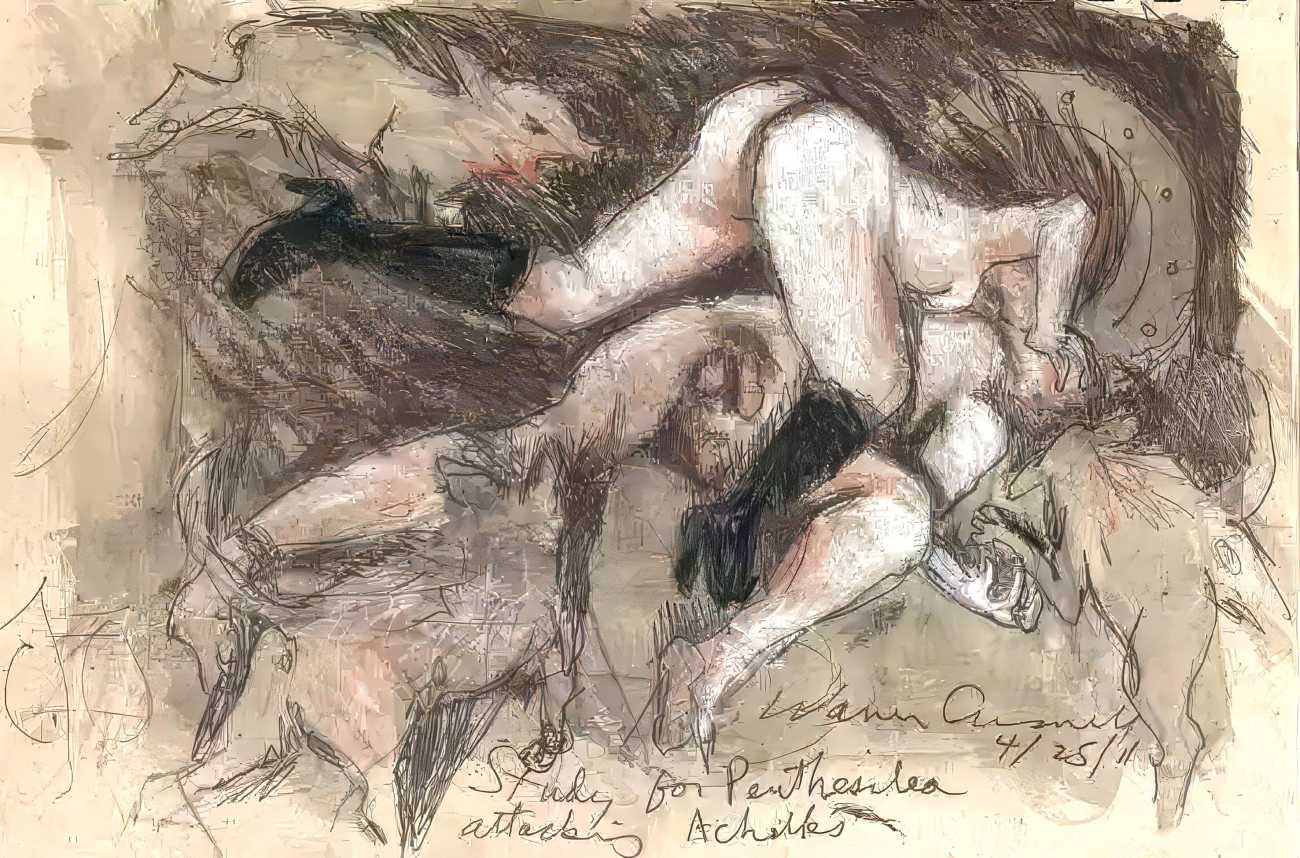
The drawings reveal another side of Criswell’s practice. Working with dense networks of lines and cross-hatching, he creates interiors and figures that seem to materialise out of darkness. Beds, chairs, staircases, curtains and architectural structures become almost as important as the people inhabiting them, giving the images a restless, tactile quality. Even in relatively simple compositions there is a sense that something has just happened or is about to happen.
Criswell’s fascination with the theatrical is particularly evident in works drawing on myth, legend and literature. Performers, fantastical creatures and figures from imagined worlds appear within elaborate settings, often surrounded by an atmosphere of ritual or spectacle. Erotic imagery is just one element within a larger imaginative universe in which desire, danger, fantasy and transformation are closely intertwined.
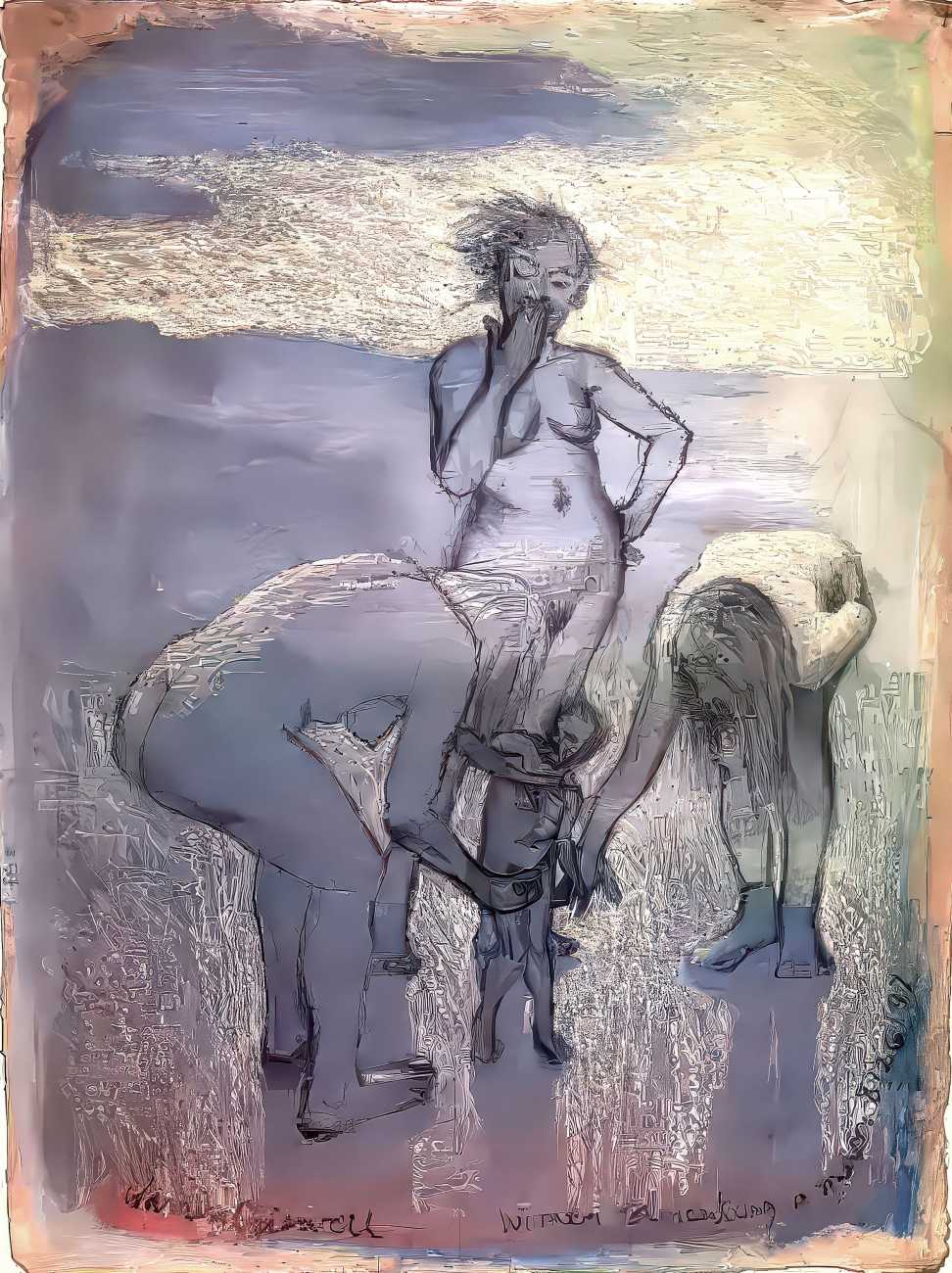
Across both paintings and drawings, Criswell repeatedly places his human figures in a liminal space between the familiar and the mysterious. His worlds may begin with recognisable people and places, but they rarely remain entirely grounded in everyday reality.