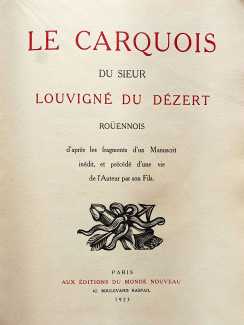
 Le carquois du sieur Louvigné du Dézert (The Quiver of Sieur Louvigné du Dézert) is an elaborate literary deception. The seventeenth-century poet Louvigné du Dézert never existed – the poems were actually written by Fernand Fleuret, who invented his author and presented his deliberately archaic, licentious verses as the rediscovered work of an obscure earlier writer. The book had first appeared without illustrations in 1912, but this new edition gave Galanis the opportunity to respond to Fleuret’s mixture of mock antiquarianism, satire and sexual frankness.
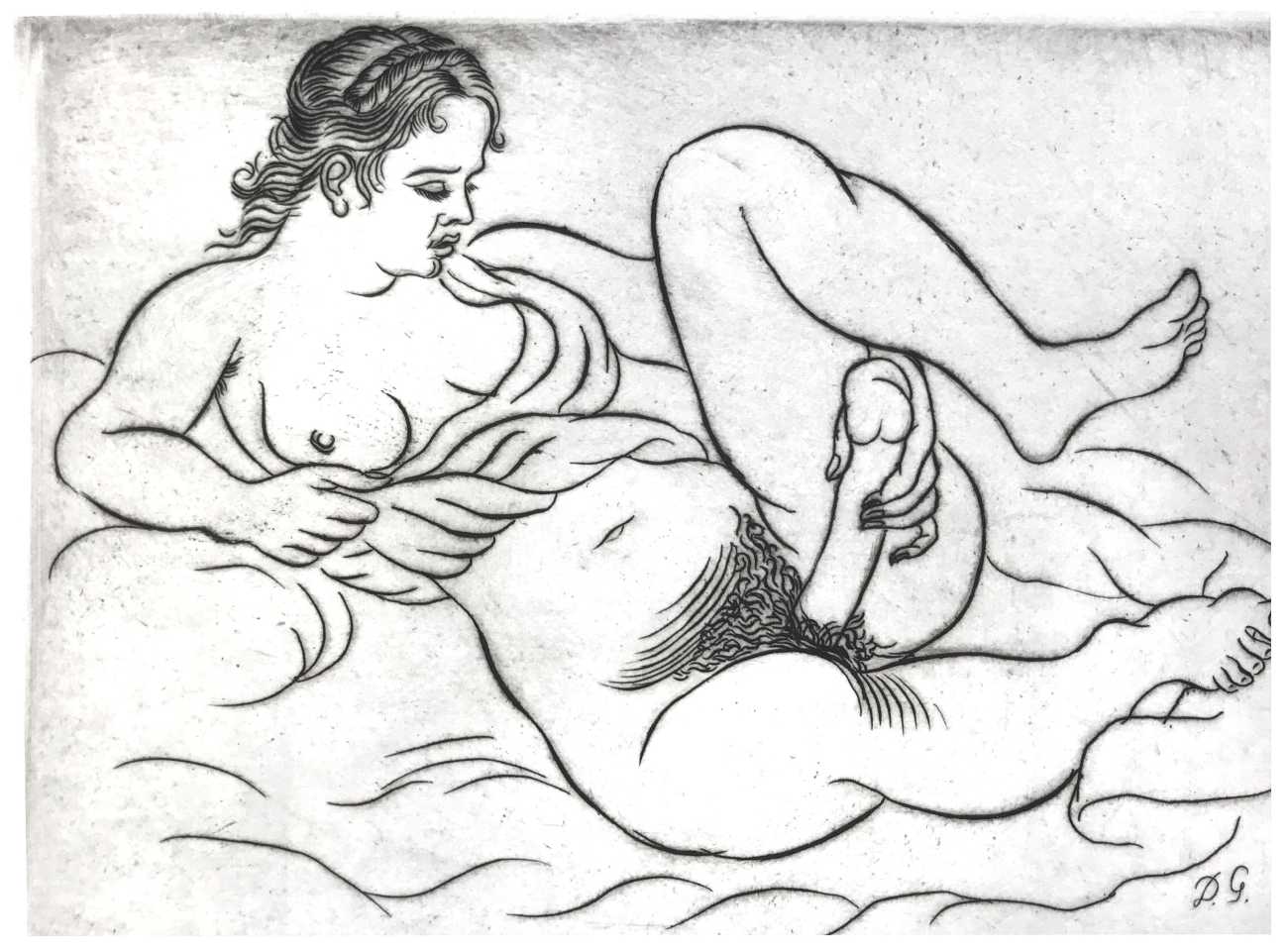
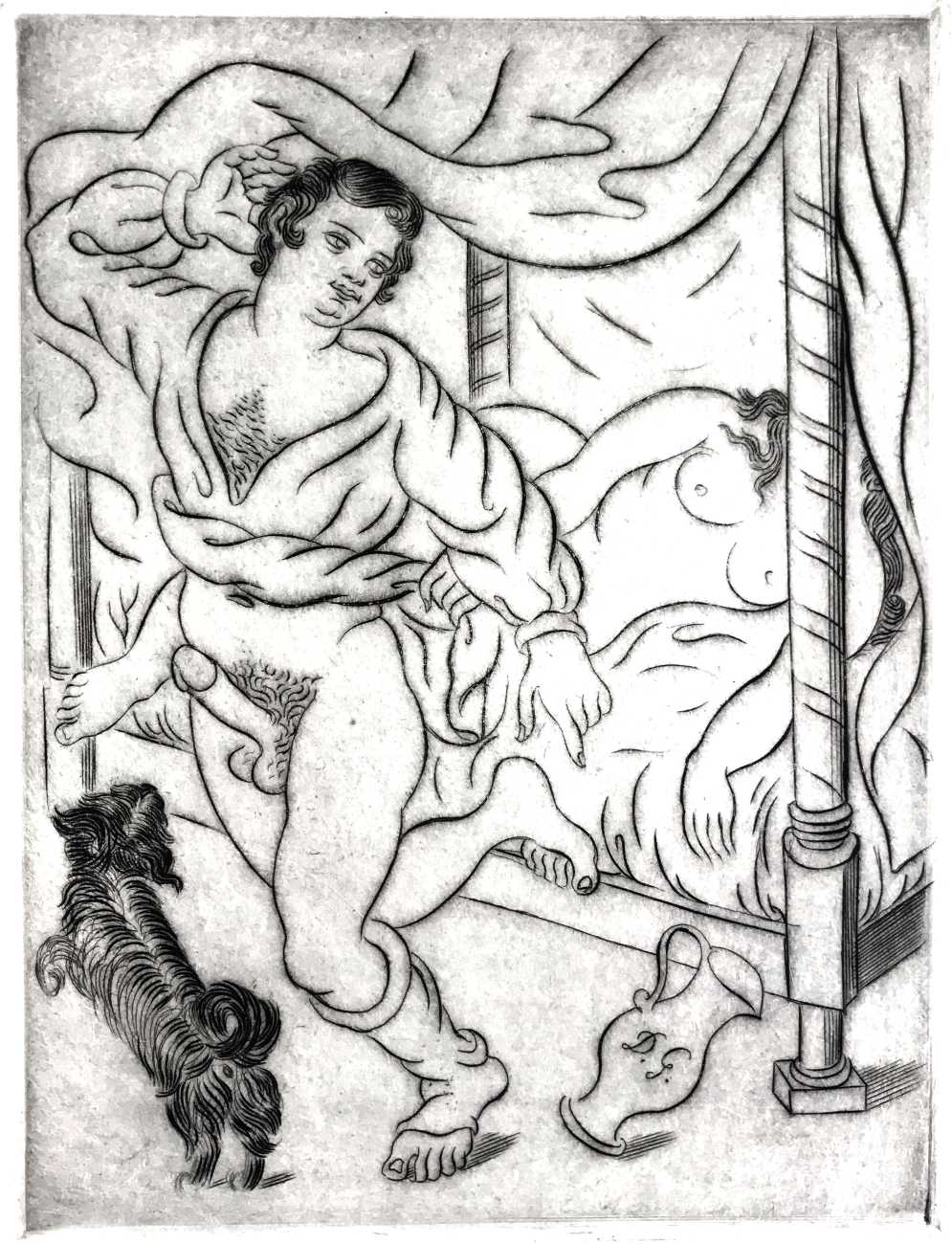
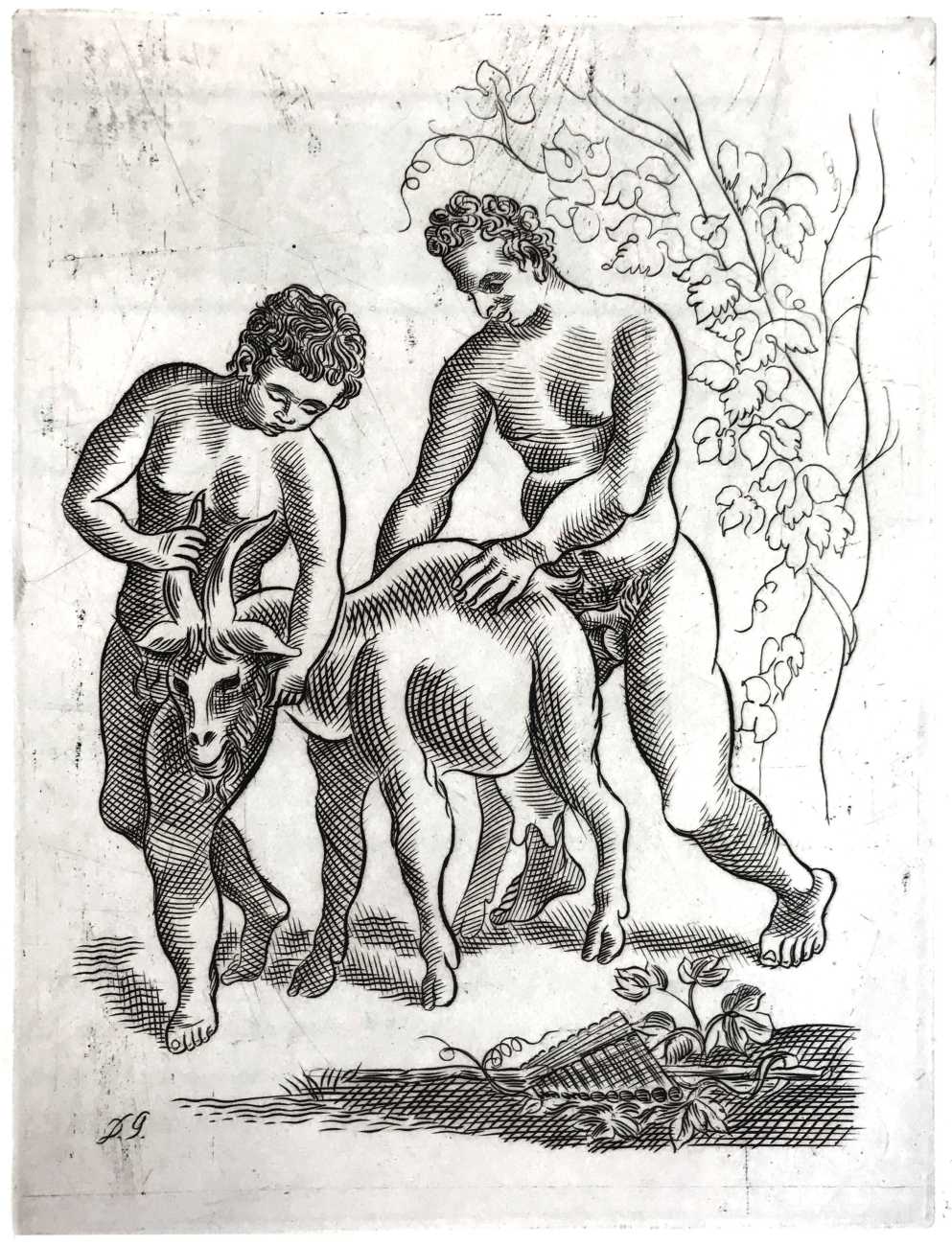
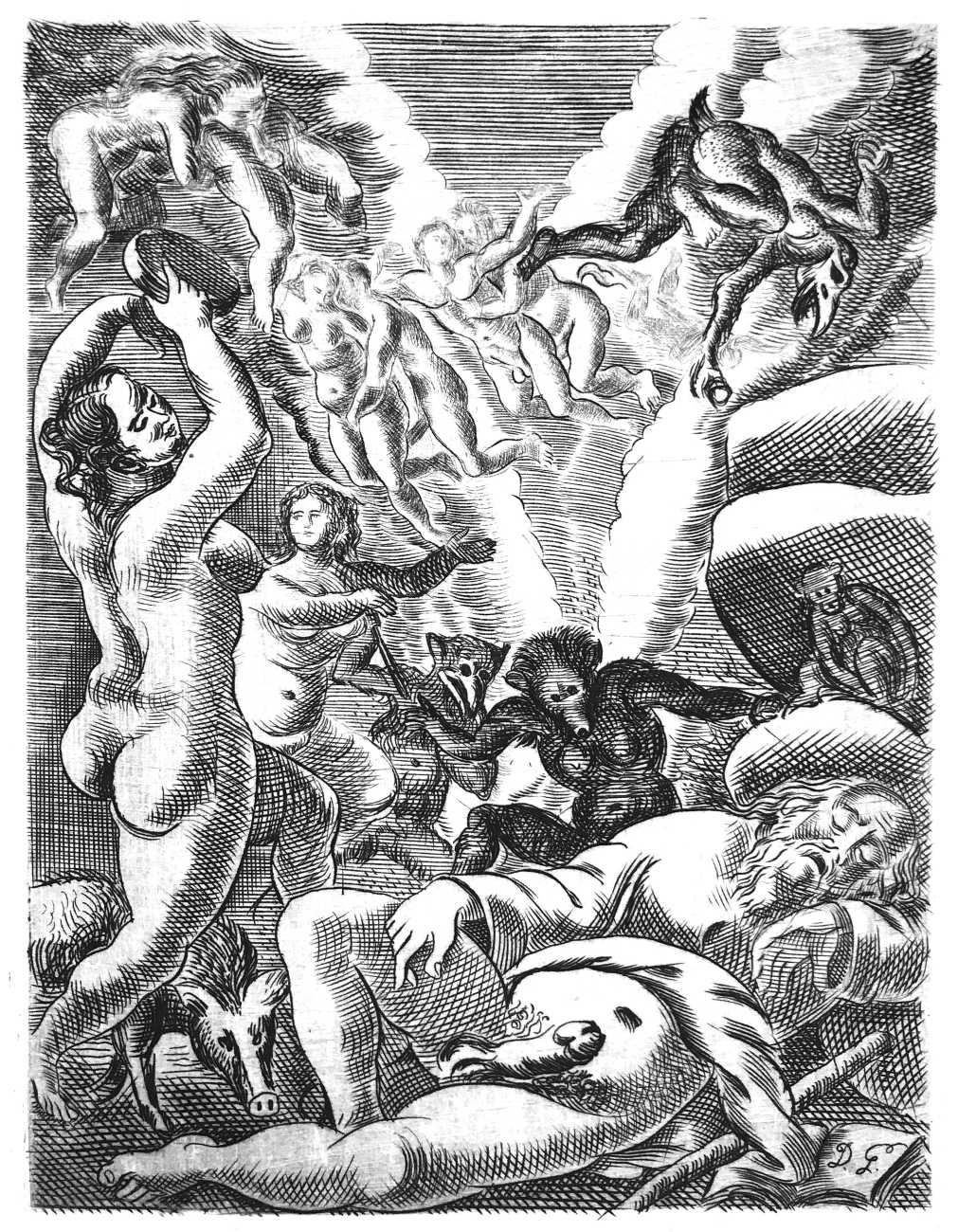
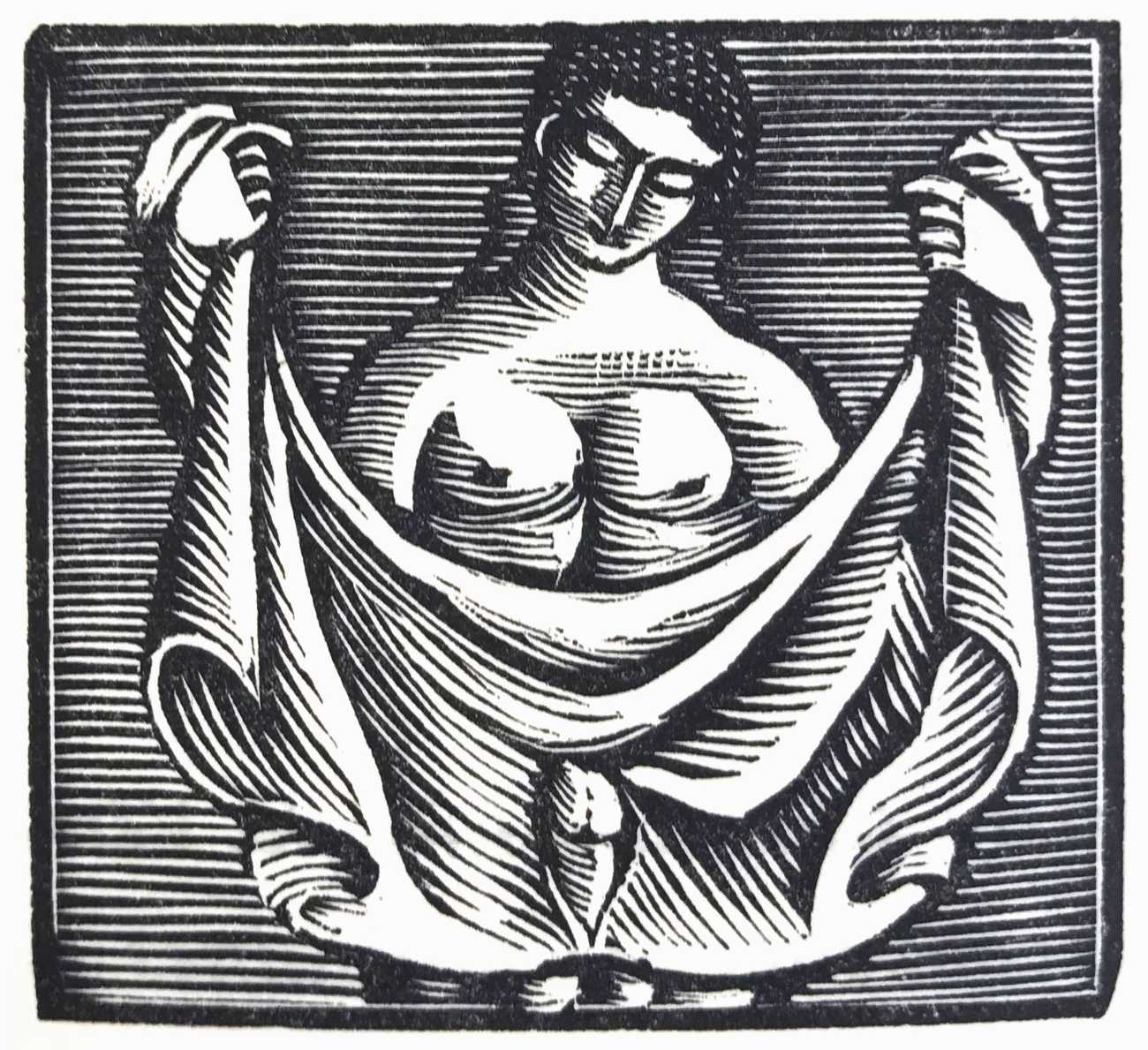
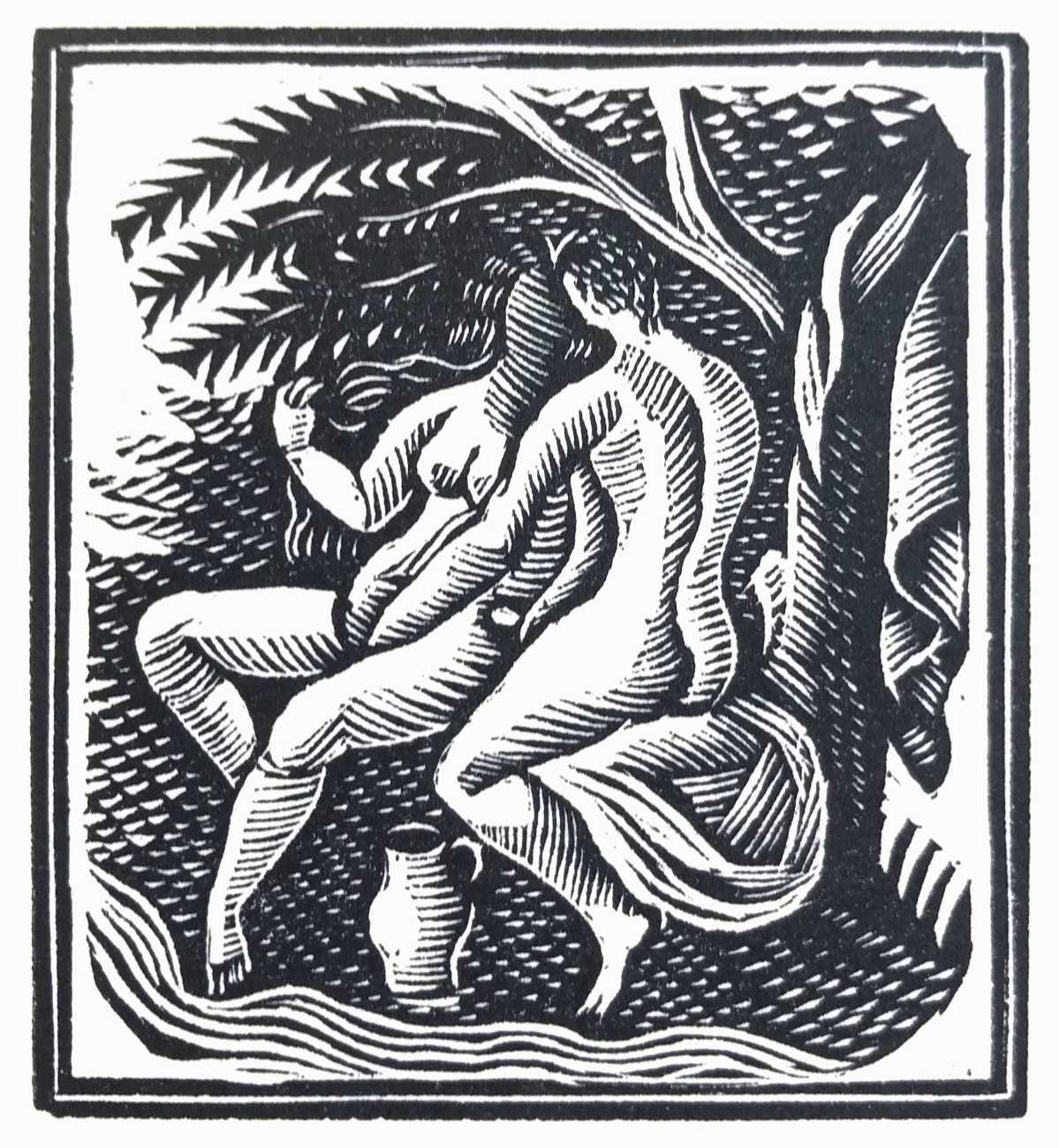
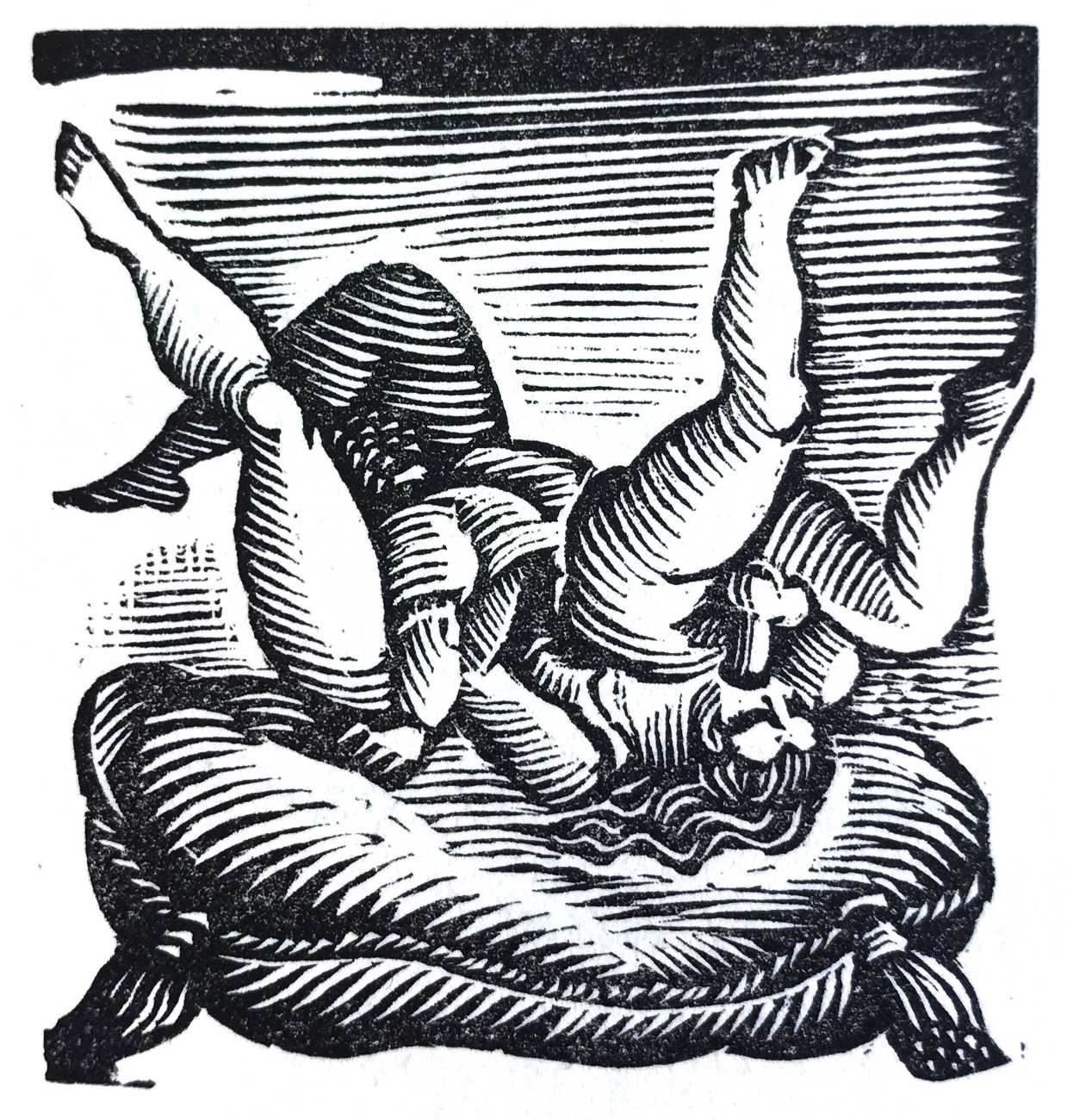
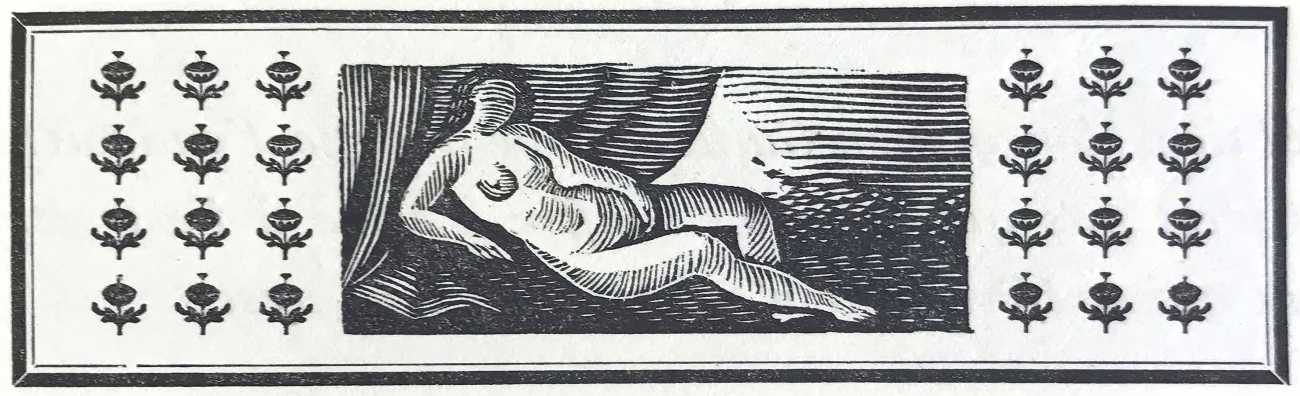
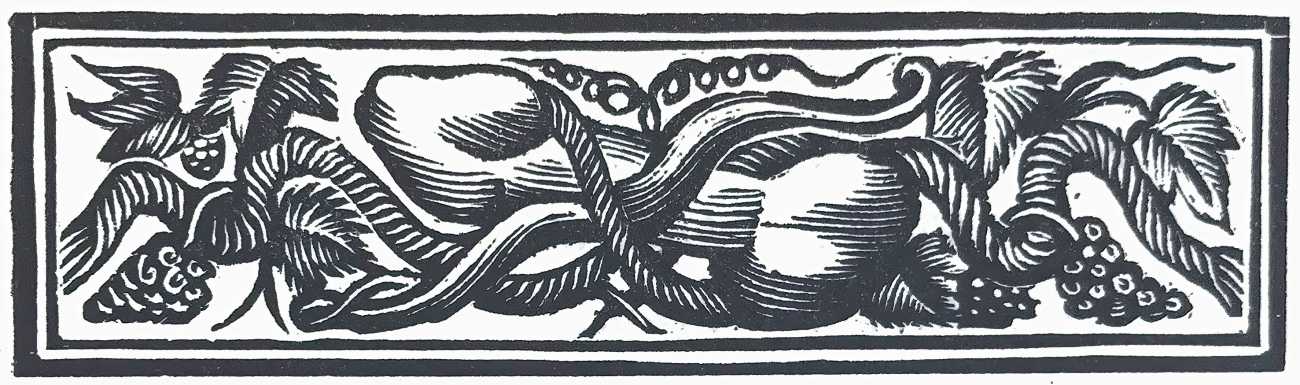
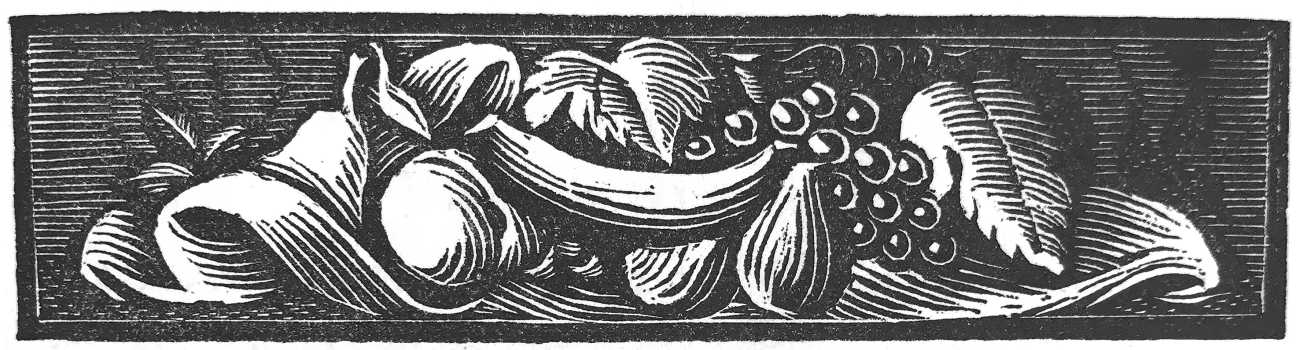
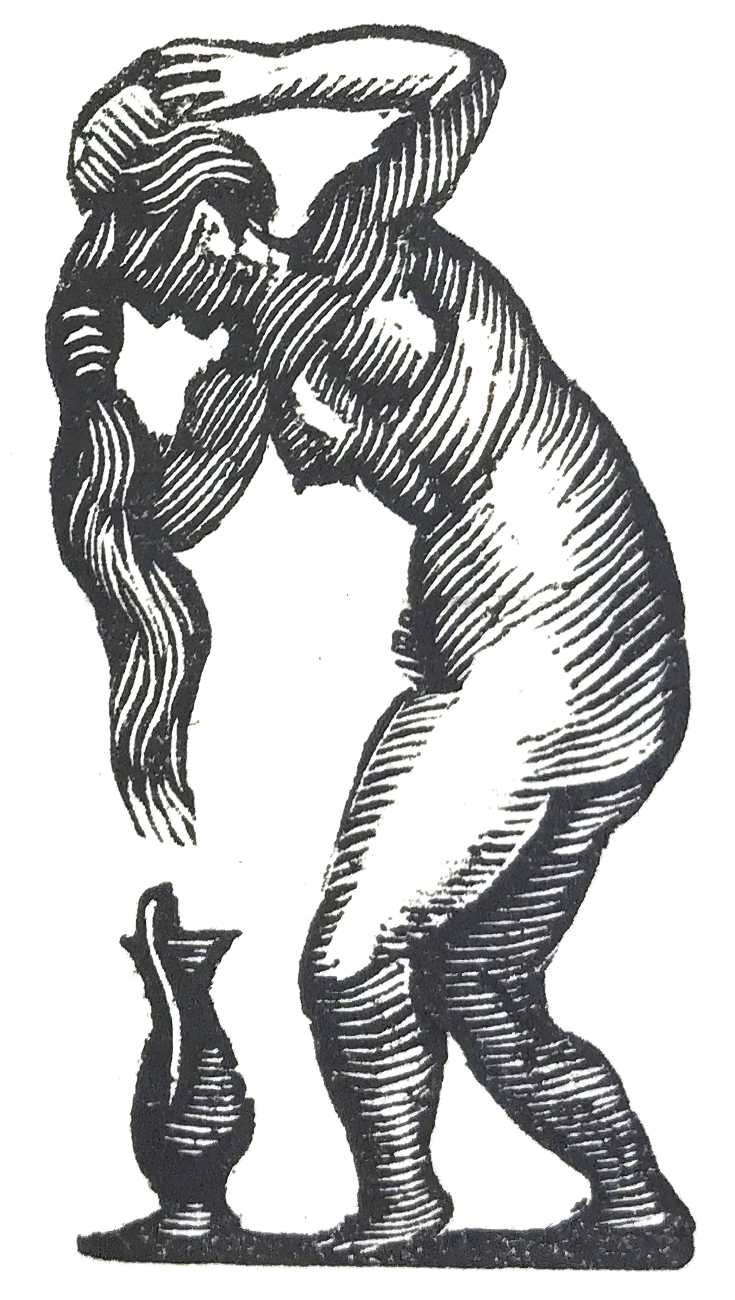
Galanis contributed five large copper engravings, including the frontispiece, together with an extensive series of smaller woodcut vignettes and ornaments. The small images are woven into the typography, helping to create the appearance of an old book of poetry, while the larger engravings allow Galanis to develop more substantial compositions in which the erotic encounters are given greater physical presence.
His figures are constructed with economical, assured lines, and there is considerable attention to gesture and the relationship between bodies. The result is particularly well suited to Fleuret’s literary game. Galanis’s sophisticated draughtsmanship gives visual substance to a book that is itself pretending to be something it is not, producing an intriguing meeting between the traditions of the bibliophile book and the bawdy world of the imaginary Louvigné du Dézert.
Le carquois was published by Éditions du Monde Nouveau, Paris, in a limited numbered edition of 251 copies.