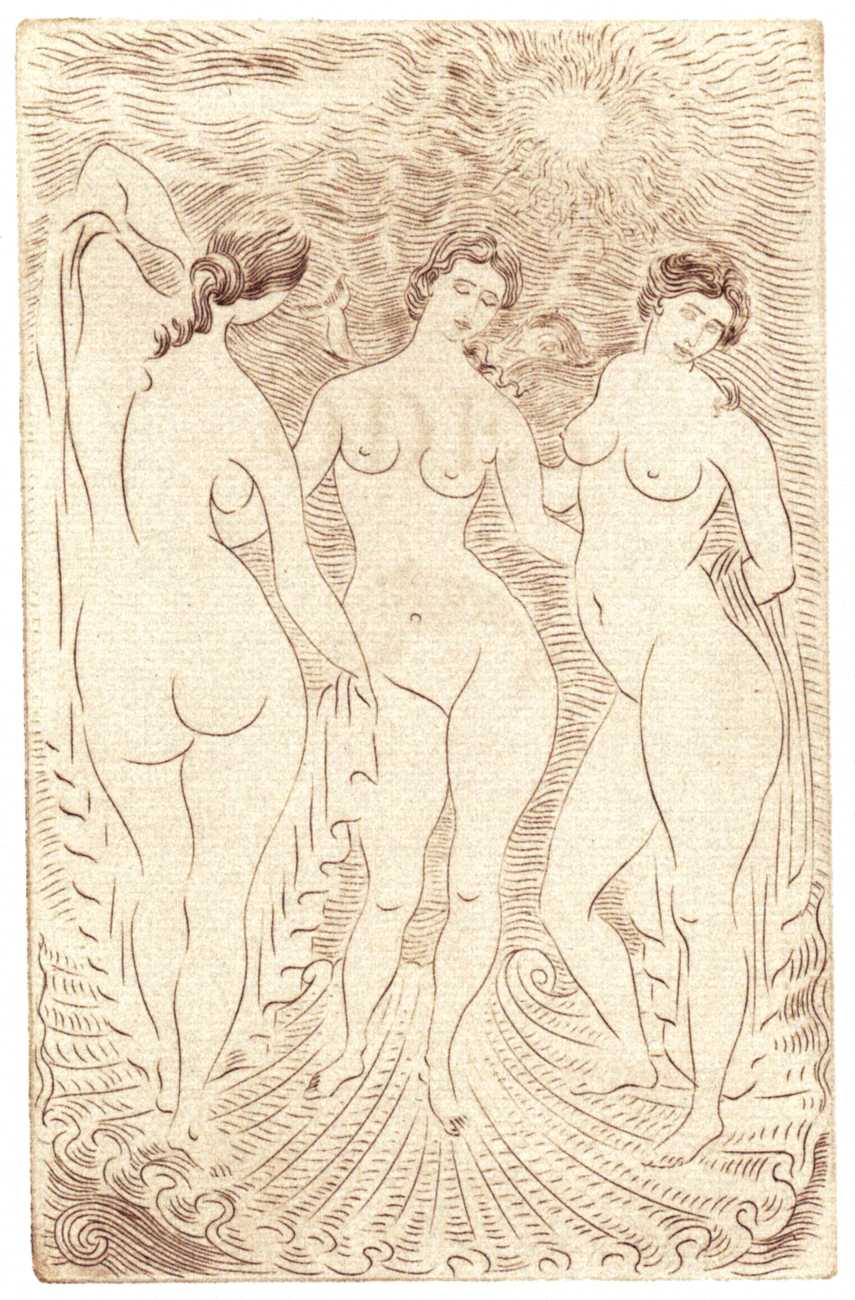
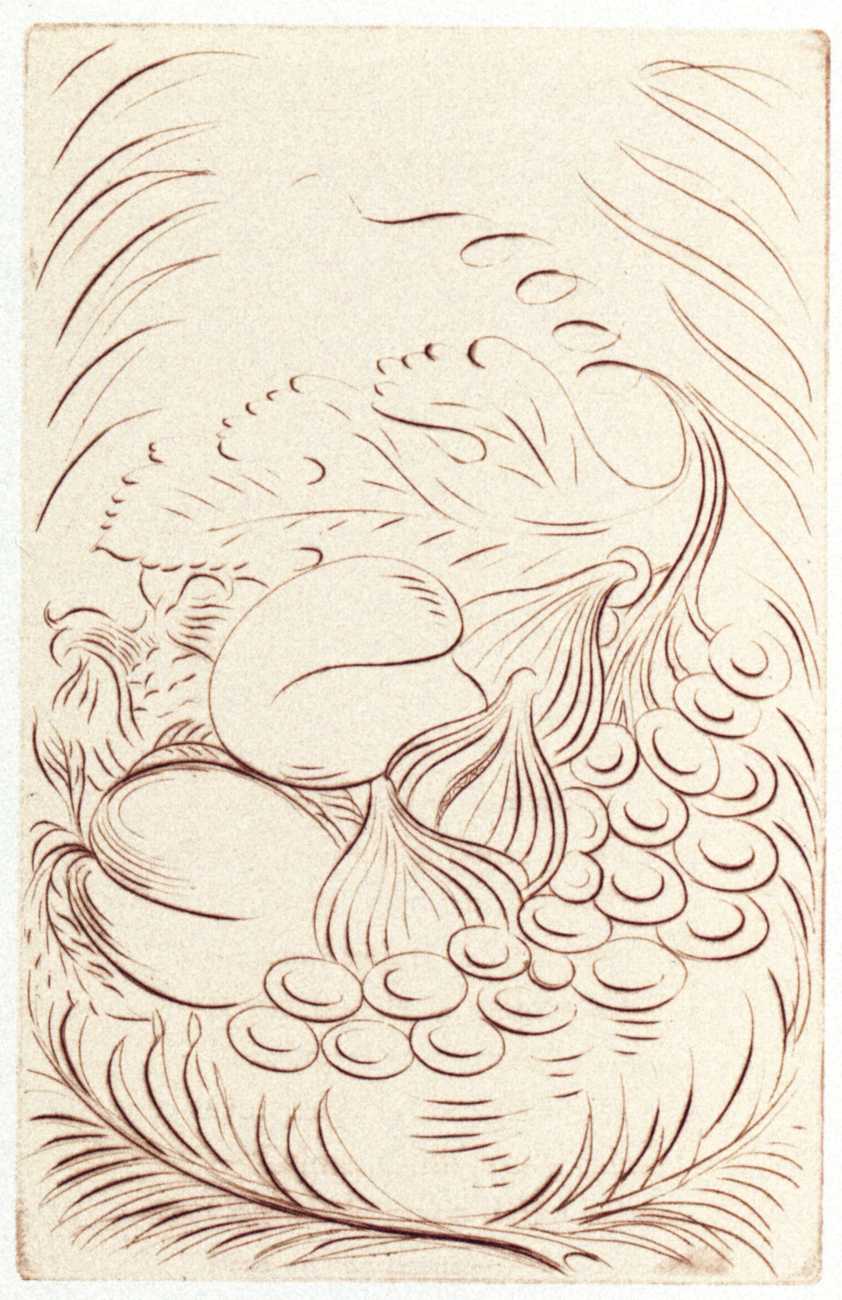
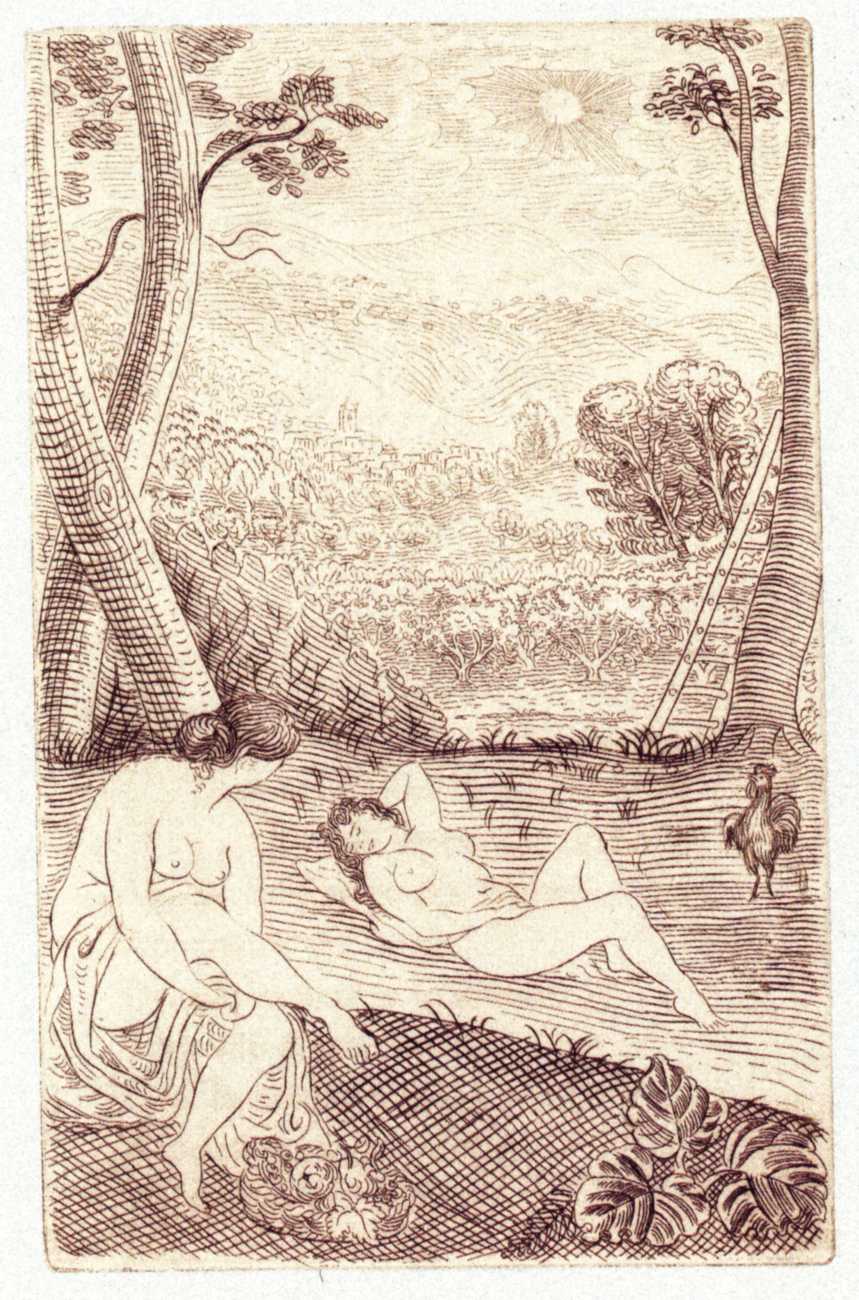
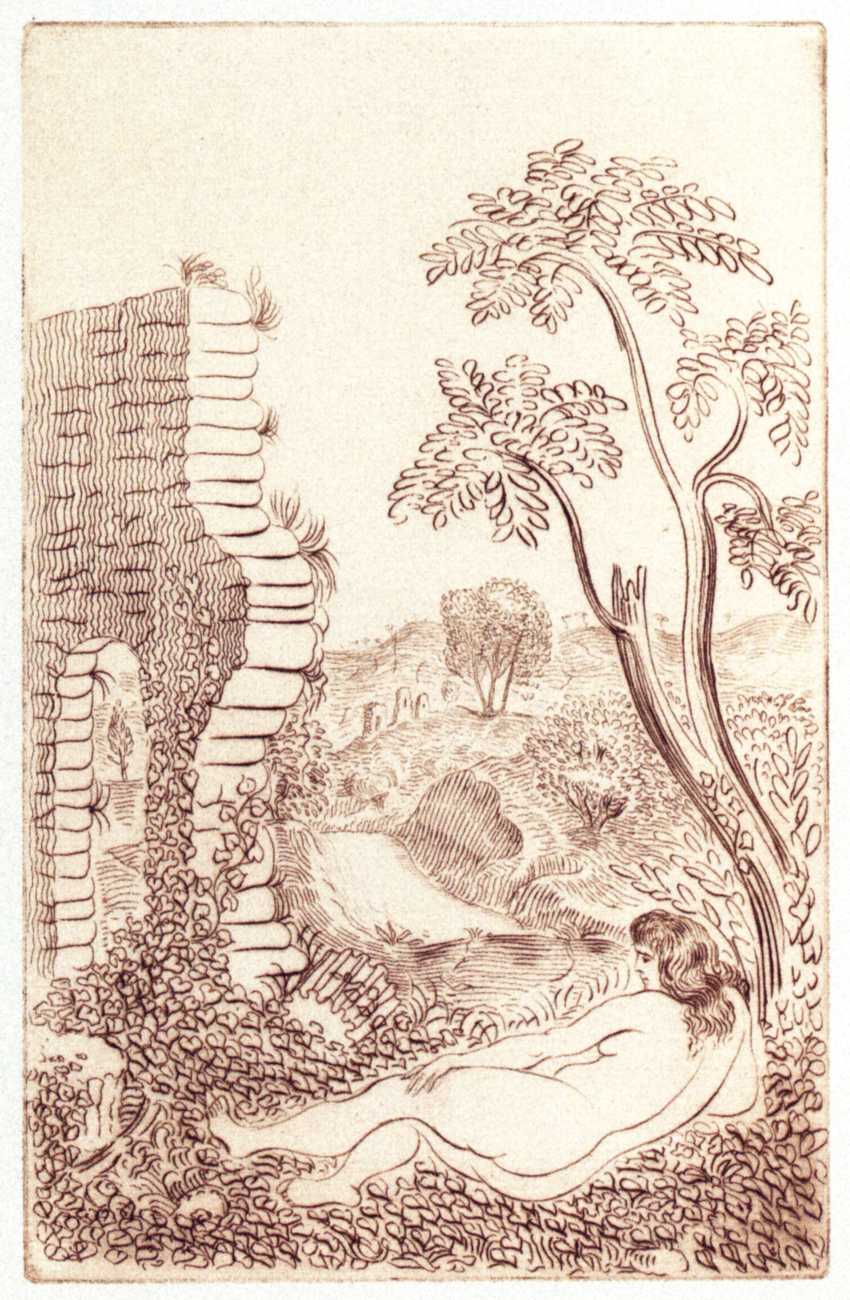
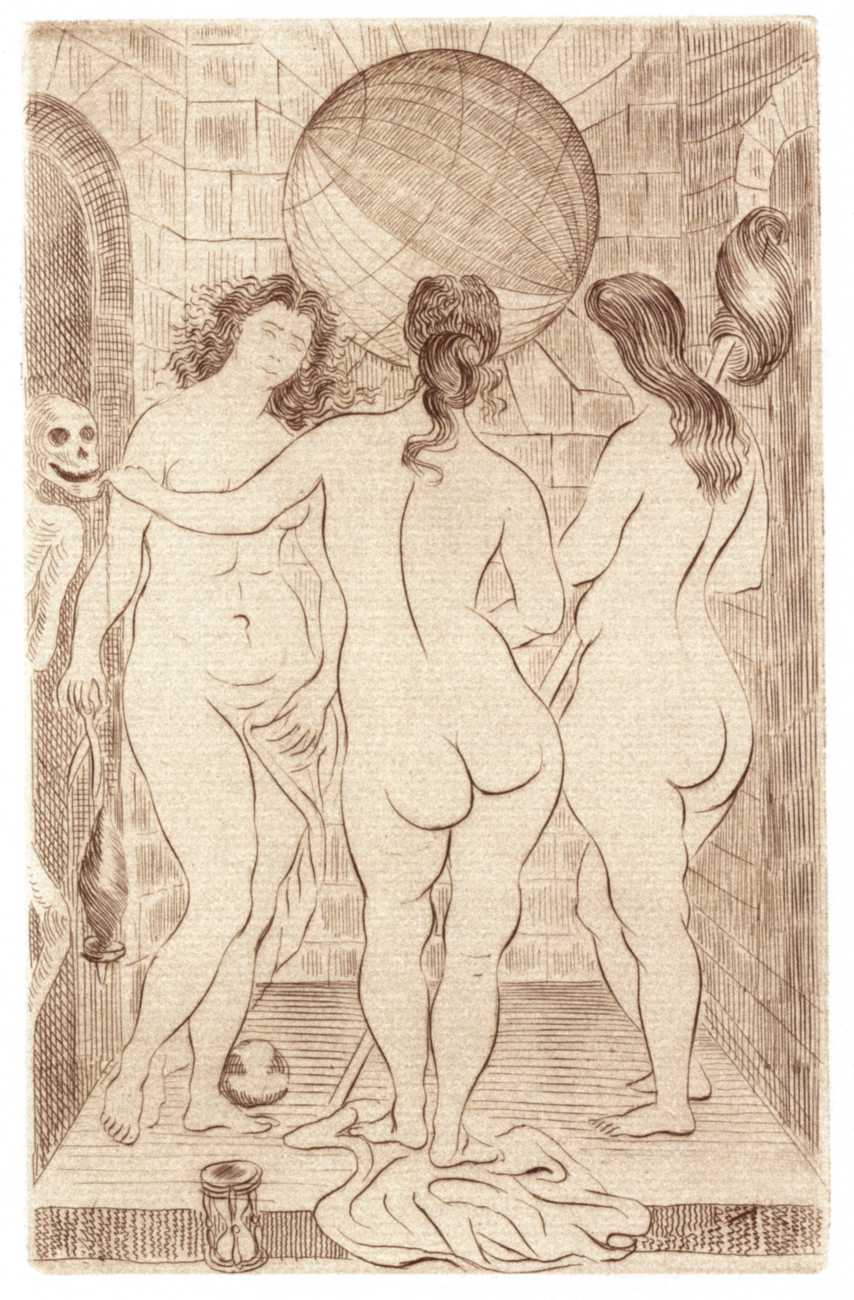
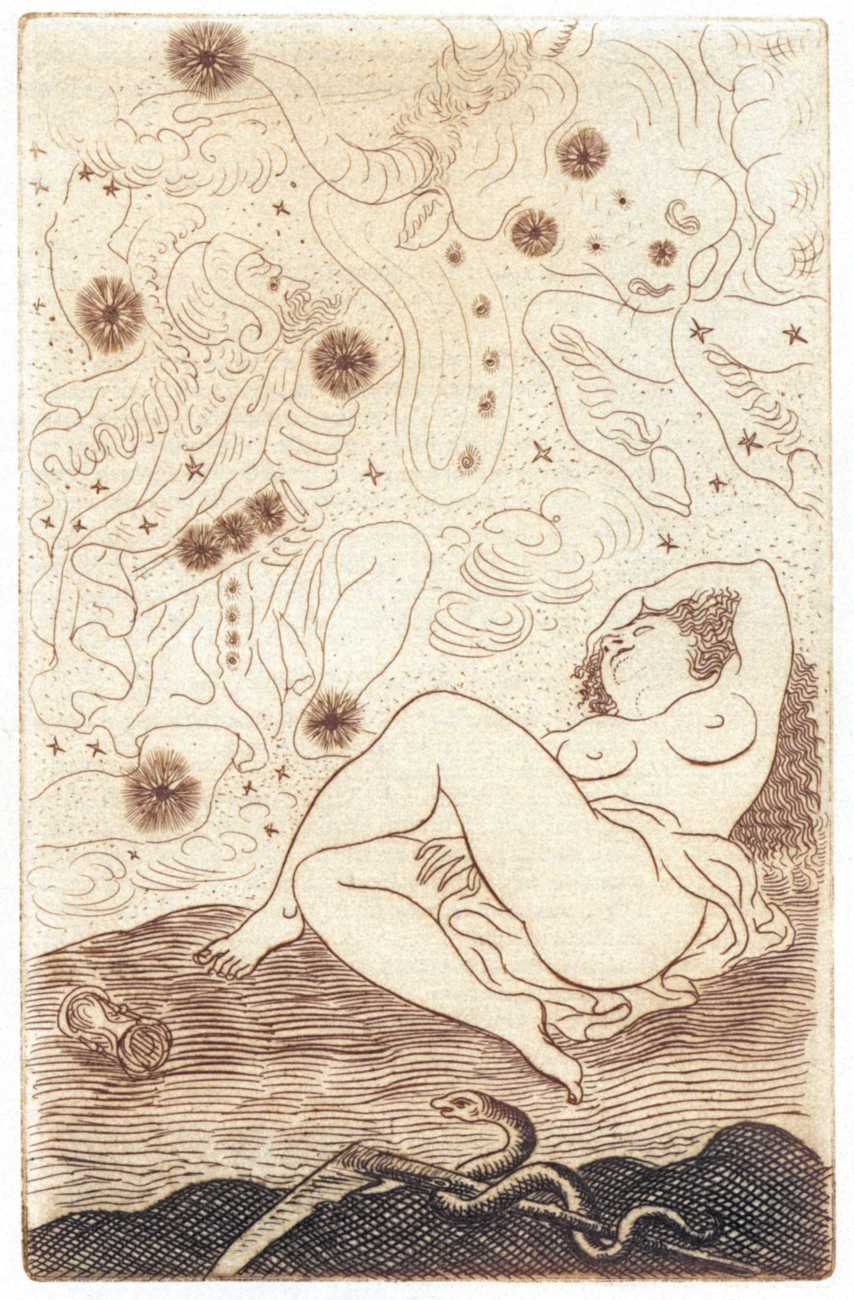
 Paul Valéry’s poetry is sensual and highly allusive, and Galanis responded to it without attempting to provide literal illustrations of individual poems. He created a visual world in which human figures, landscape and decorative forms move between physical reality and something more elusive.
Galanis’s treatment of the human figure in this volume is particularly striking. His forms are simplified but retain considerable physical weight, and his figures seem to inhabit spaces that are neither entirely naturalistic nor wholly imaginary. The classical associations of the Odes also allow him to draw upon the visual language of sculpture and mythology, while his handling of line remains distinctly his own.
There is a quiet sensuality throughout the illustrations. Rather than explaining Valéry’s poetry, Galanis gives it a visual parallel, allowing bodies, gestures and spaces to suggest meanings that remain deliberately unresolved. Odes consequently reveals a more lyrical side of his book illustration, in which the erotic is present less through explicit subject matter than through the graceful physicality of the human form.
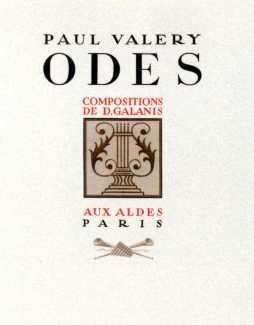
Odes was published by André Malraux’s imprint Aux Aldes, Paris, in a limited numbered edition of 300 copies.