
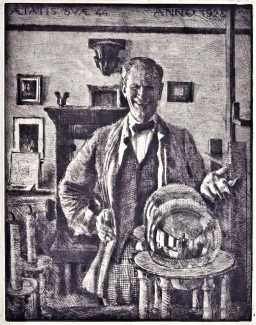
 The French painter, engraver and illustrator Henri Auguste Élysée Farge was born into a cultured Parisian family – his father was the architect Laurent Farge – Henri excelled academically as a young student and was admitted to the École Polytechnique in 1902. Despite promising prospects in mathematics and science, he abandoned that path to pursue art independently, studying at the Sorbonne and working as a self-taught painter.
In the 1910s he entered the Parisian literary and artistic circles. During World War I he served as a lieutenant in the artillery and produced a suite of prints and washes titled La Roumanie douloureuse, reflecting his experiences in Romania.
After the war Farge devoted himself to painting, etching, monotypes and illustration. His subjects ranged from Parisian urban life, especially the Quais de la Seine, to literary and genre subjects. From 1923 he worked with a circle of artists around Édouard Chimot for Éditions d’Art Devambez, illustrating several bibliophile editions. As well as Verlaine’s Les amies, his book illustrations include Johan Ludvig Runeberg’s Nadeschda, Claude Farrère’s L’homme qui assassina, and Pierre Loti’s Aziyadé.
Farge was socially active within Parisian art circles and appreciated for his observational skill, but as the art world evolved in the 1930s he increasingly withdrew from the mainstream, though he continued exhibiting and won a silver medal at the Salon des Artistes Français in 1966.
Similar artists
Paul-Émile Bécat – French illustrator of refined erotic fine editions.
Jean Berque – French interwar bibliophile illustrator of a similar sensual tone.
André Collot – French illustrator of refined erotic editions in the period.
Jean-Gabriel Daragnès – French engraver, printer and illustrator of fine editions.
André Dignimont – French interwar illustrator of Parisian low-life and erotic subjects.
Chas Laborde – French illustrator and caricaturist of lively Parisian street scenes.
Sylvain Sauvage – French art deco illustrator of refined livre d’artiste editions.
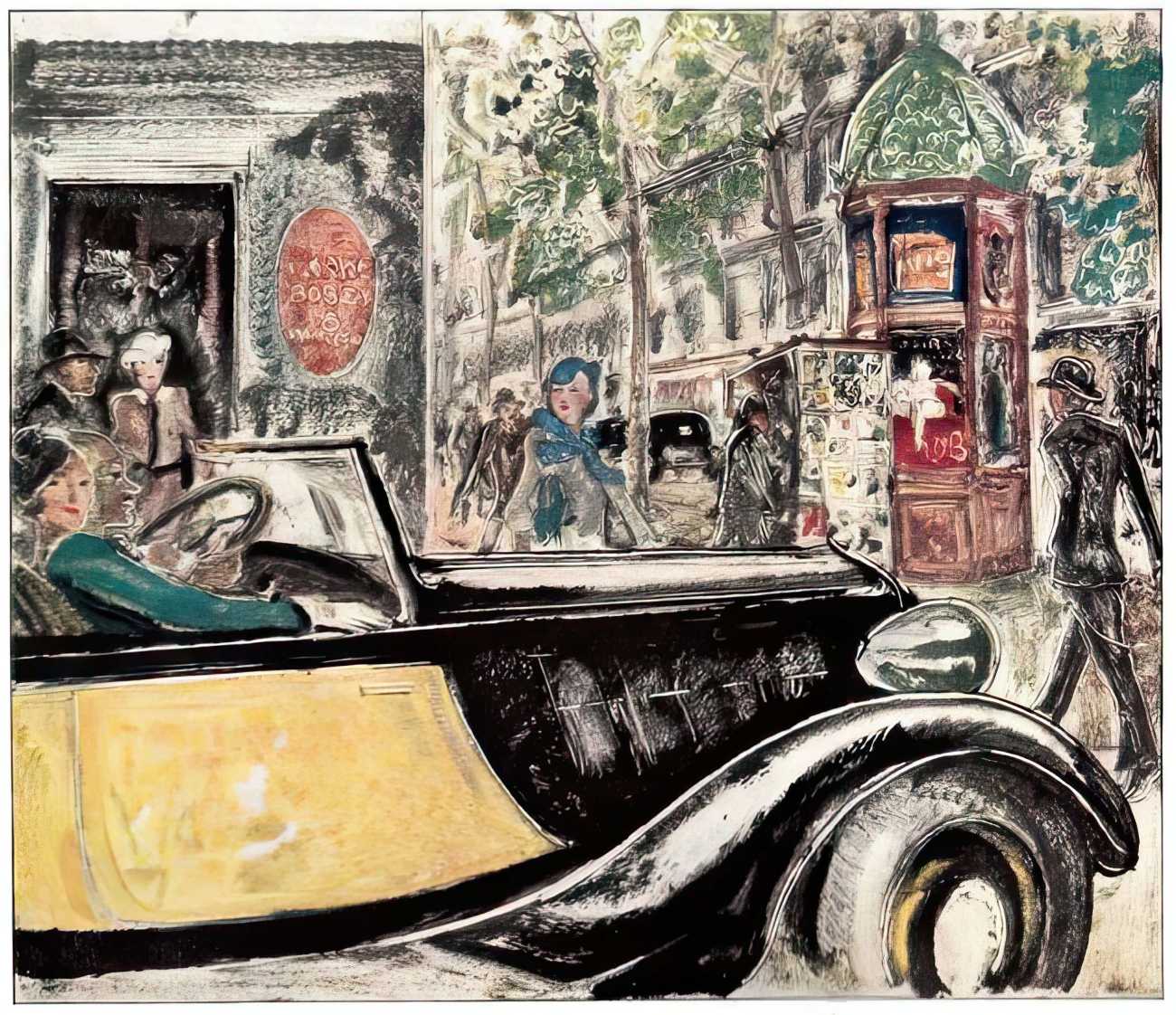
Example illustration
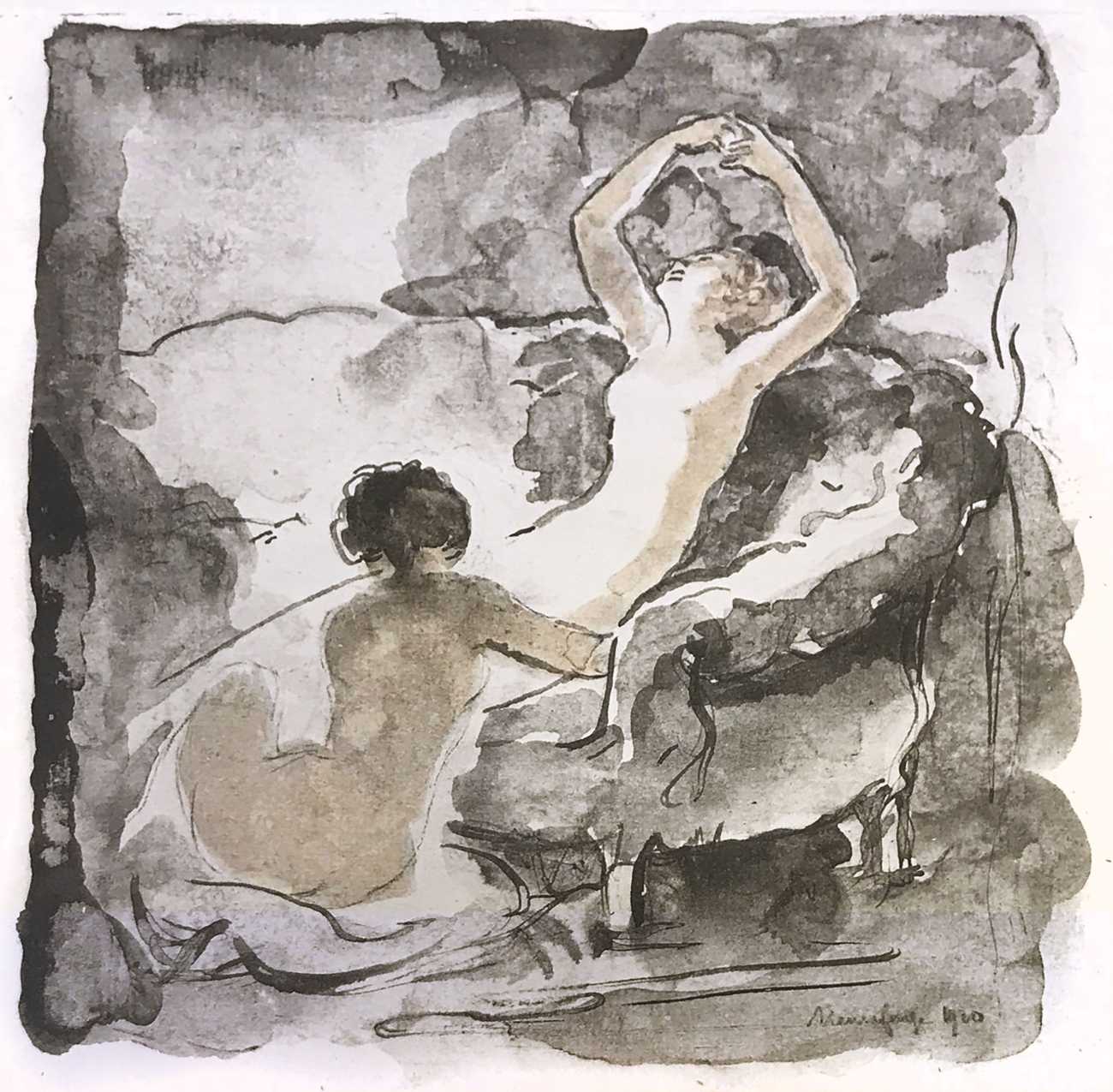
Les amies (1921)


