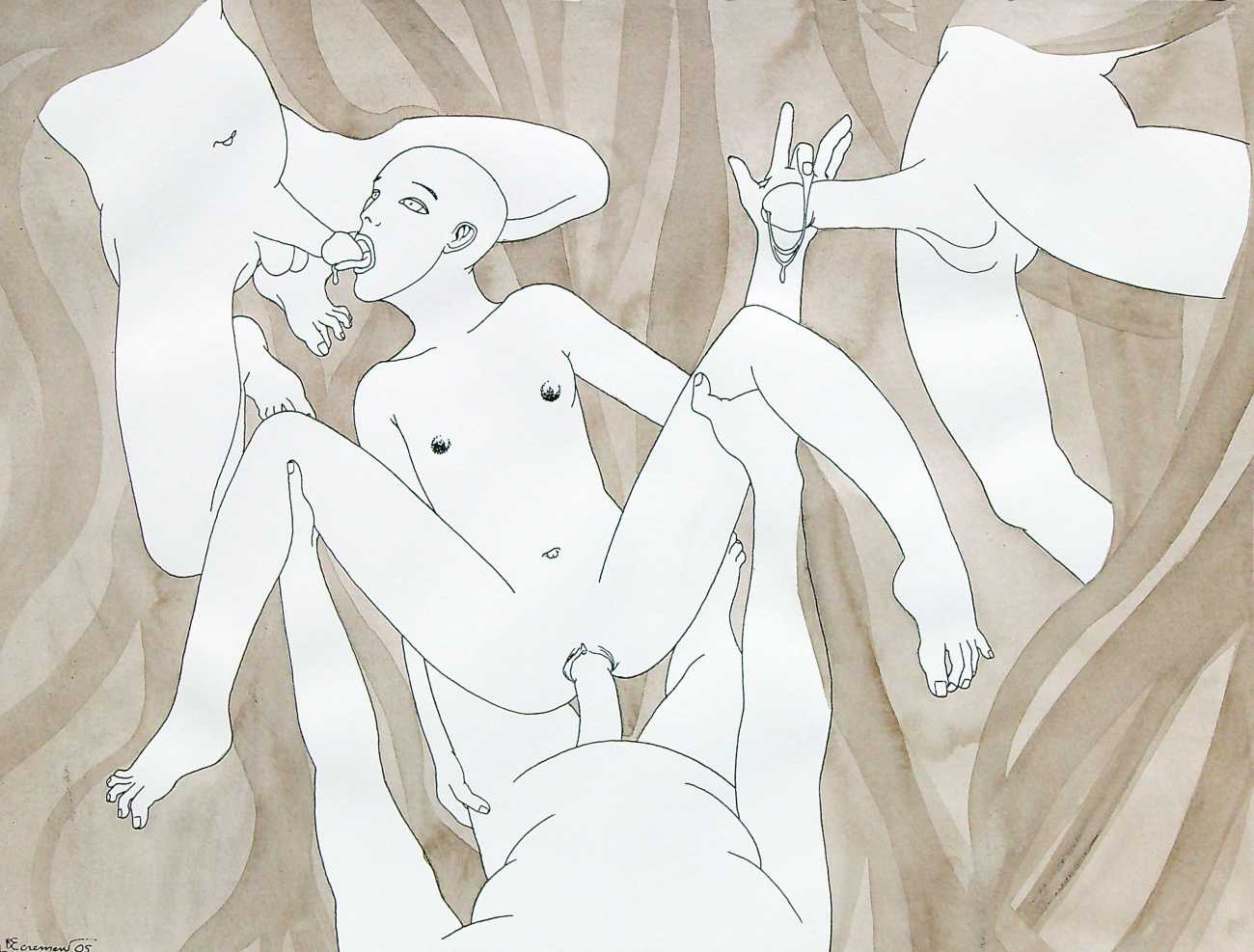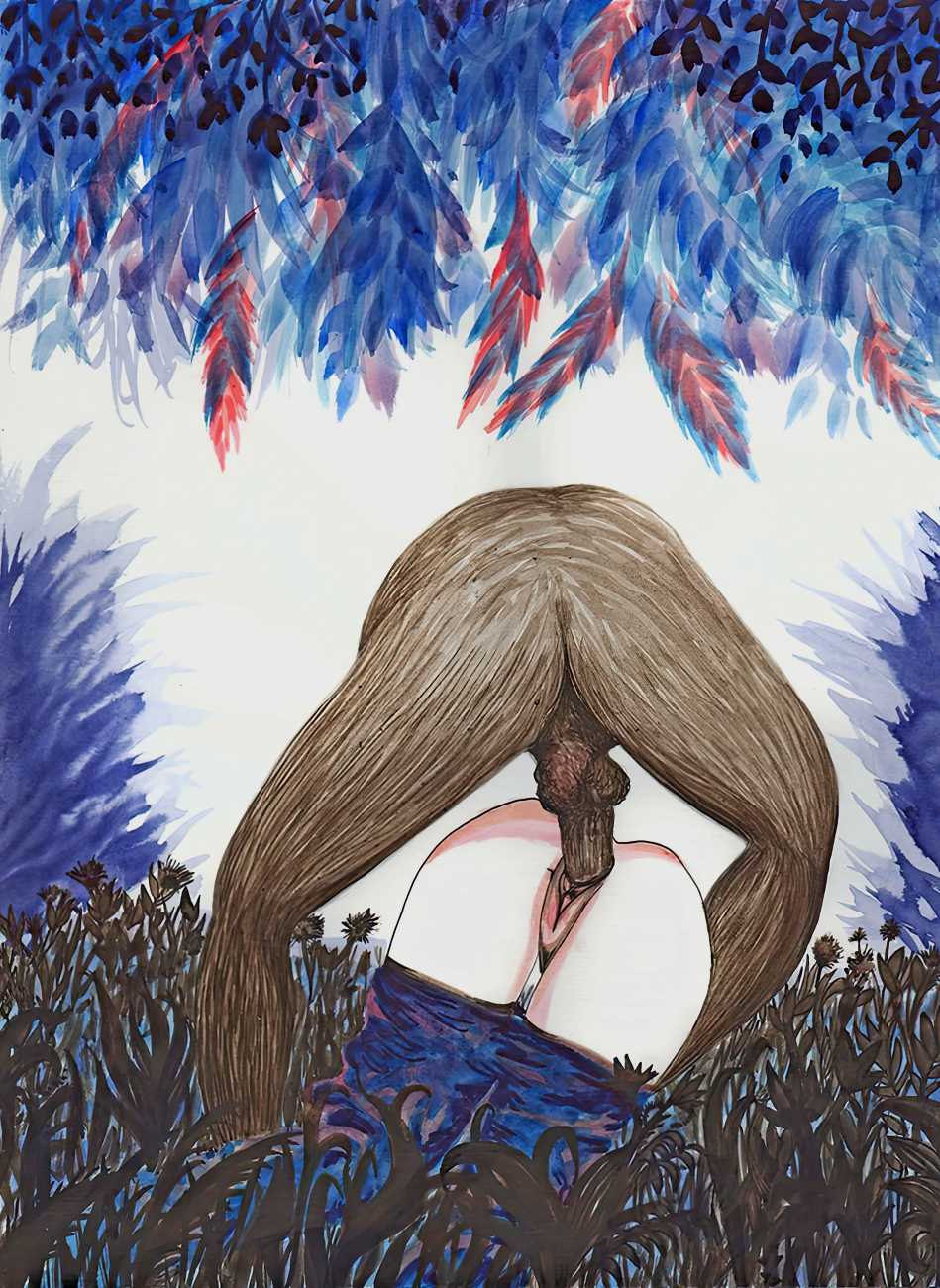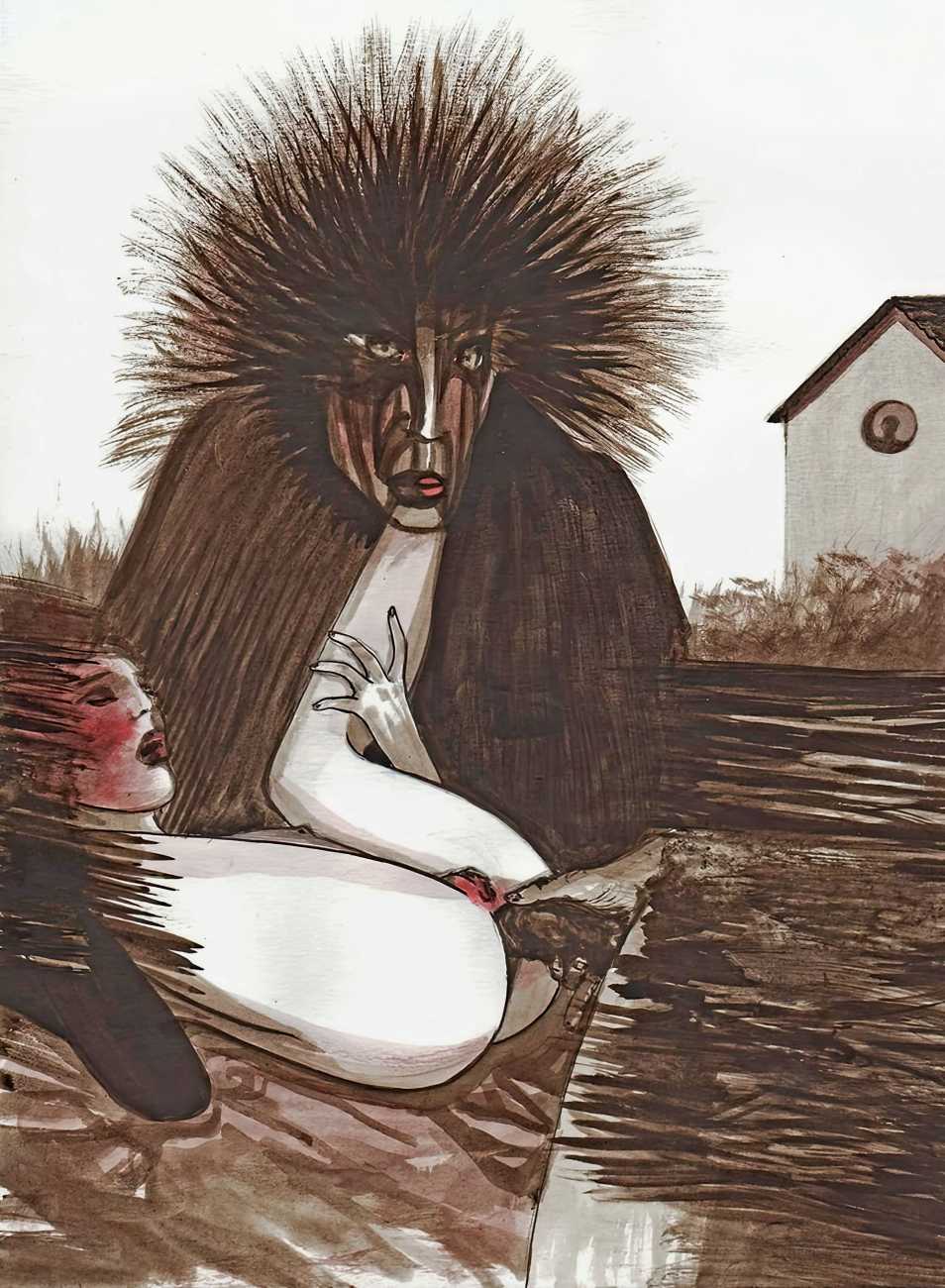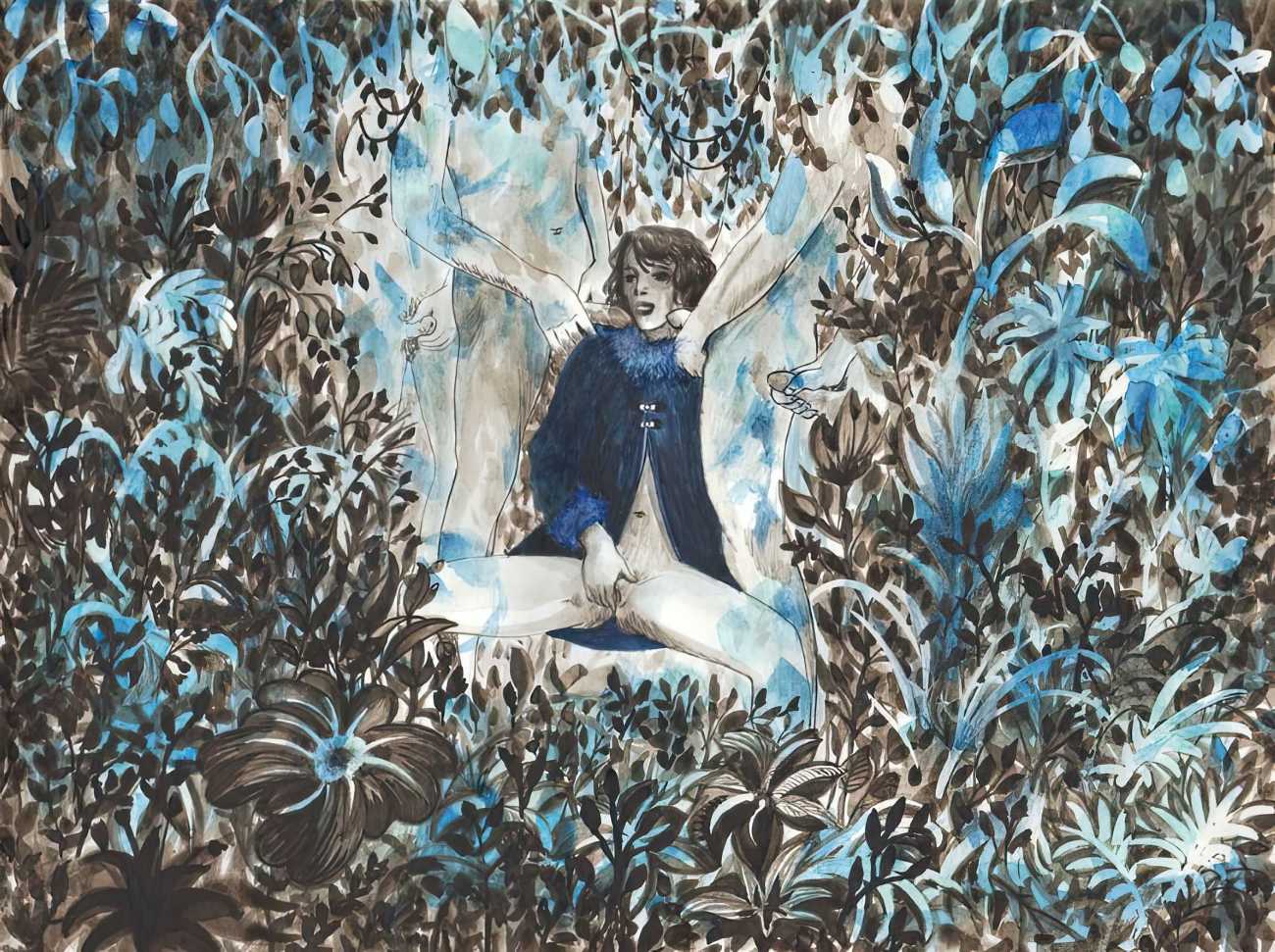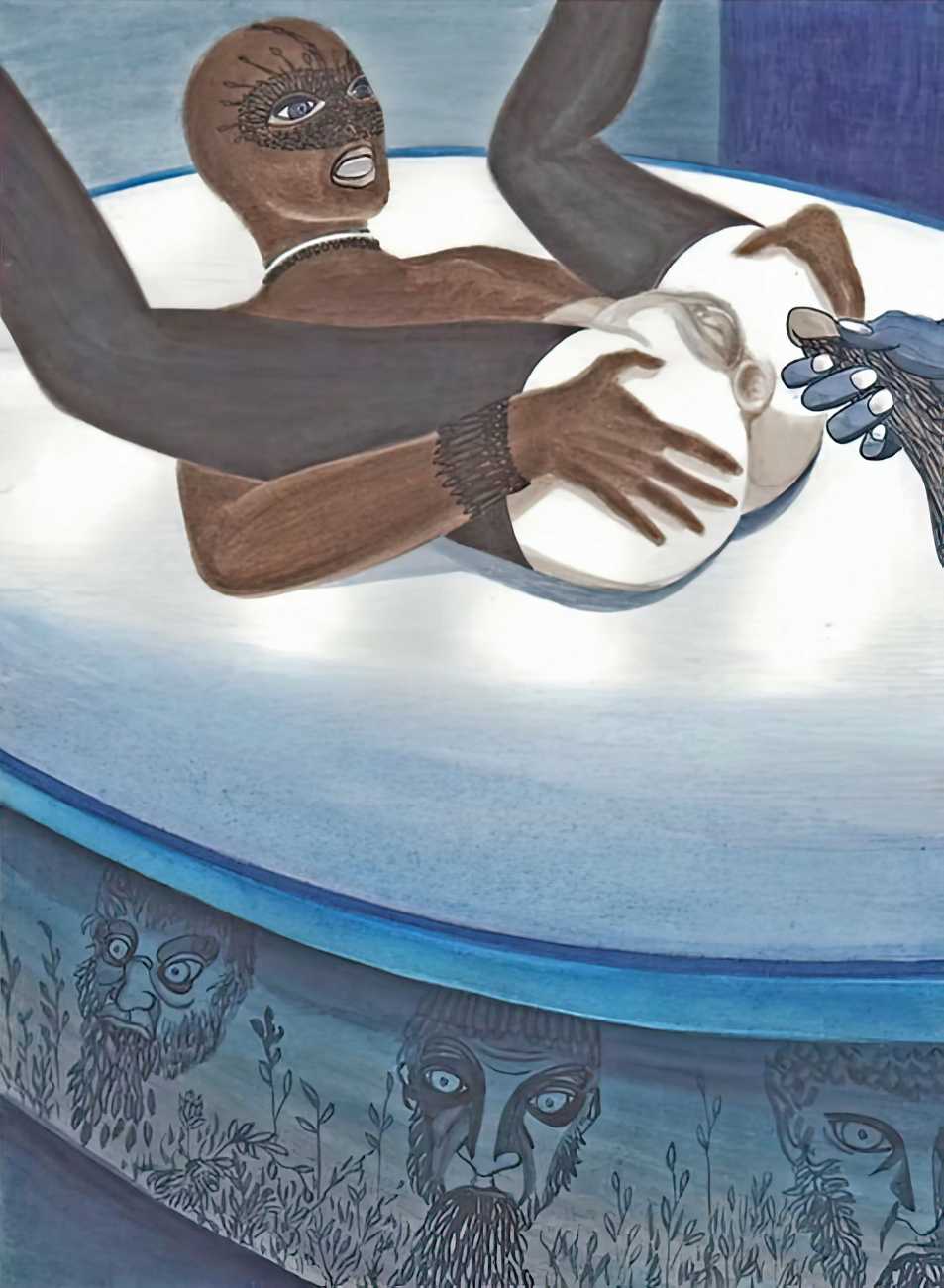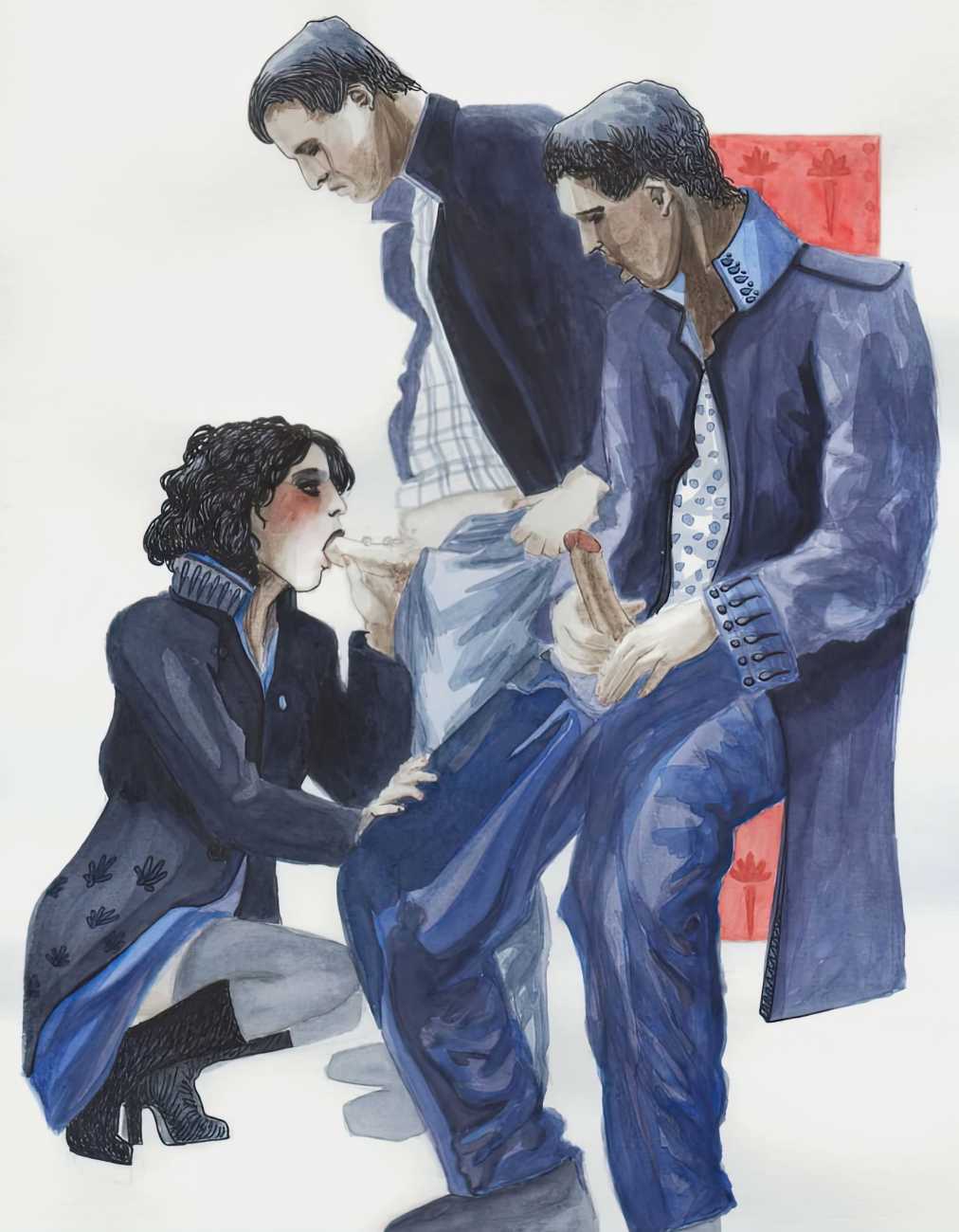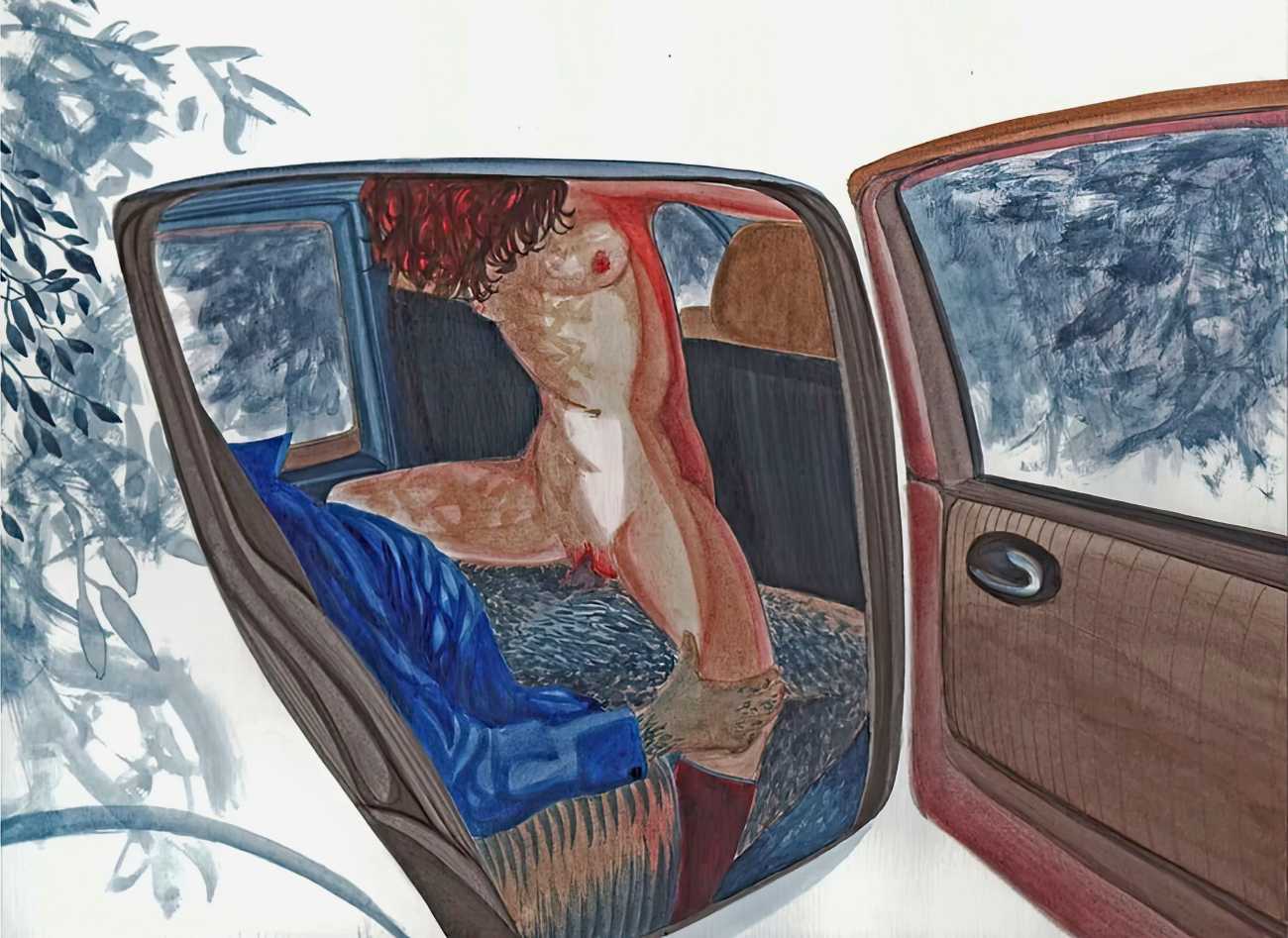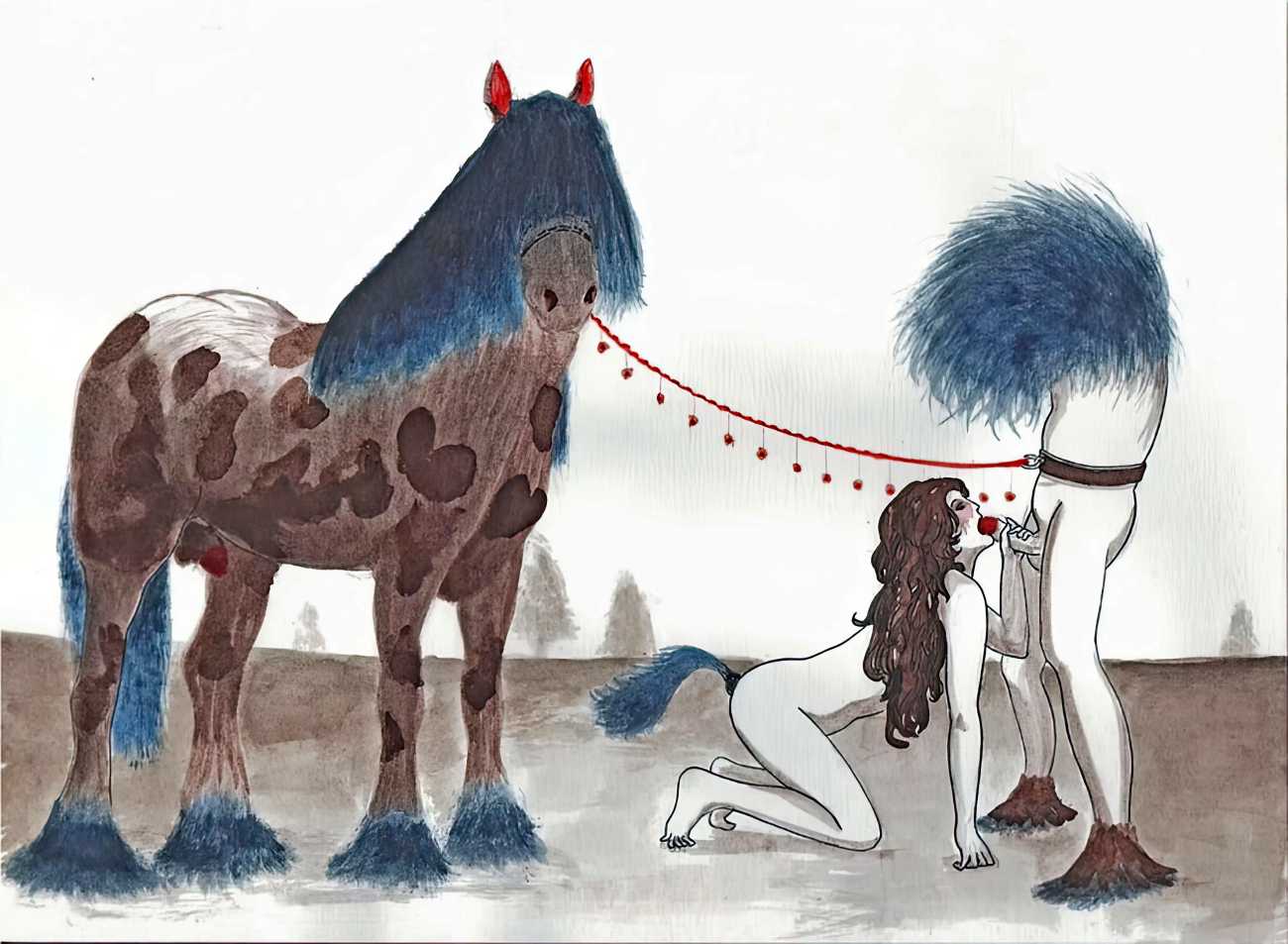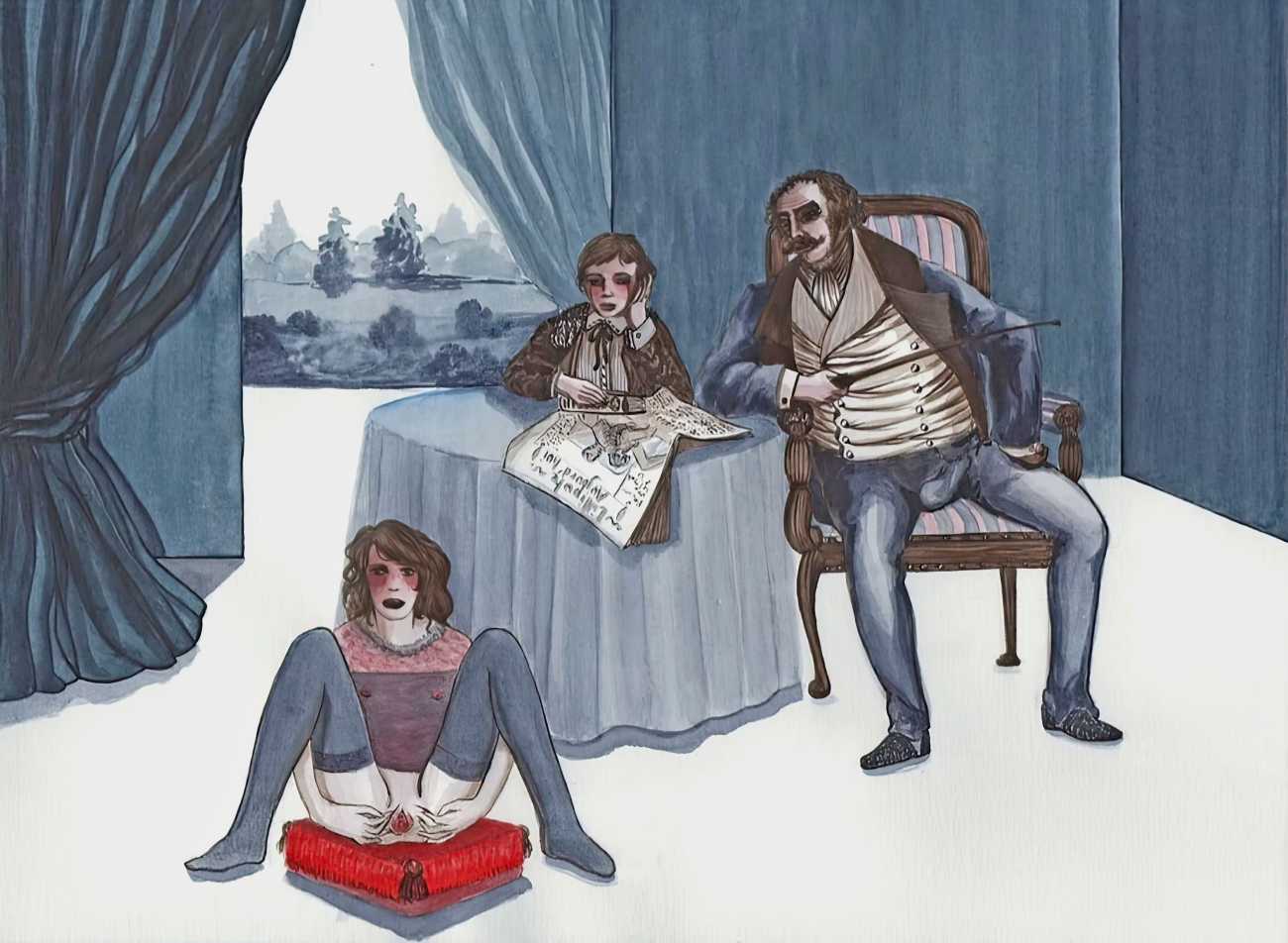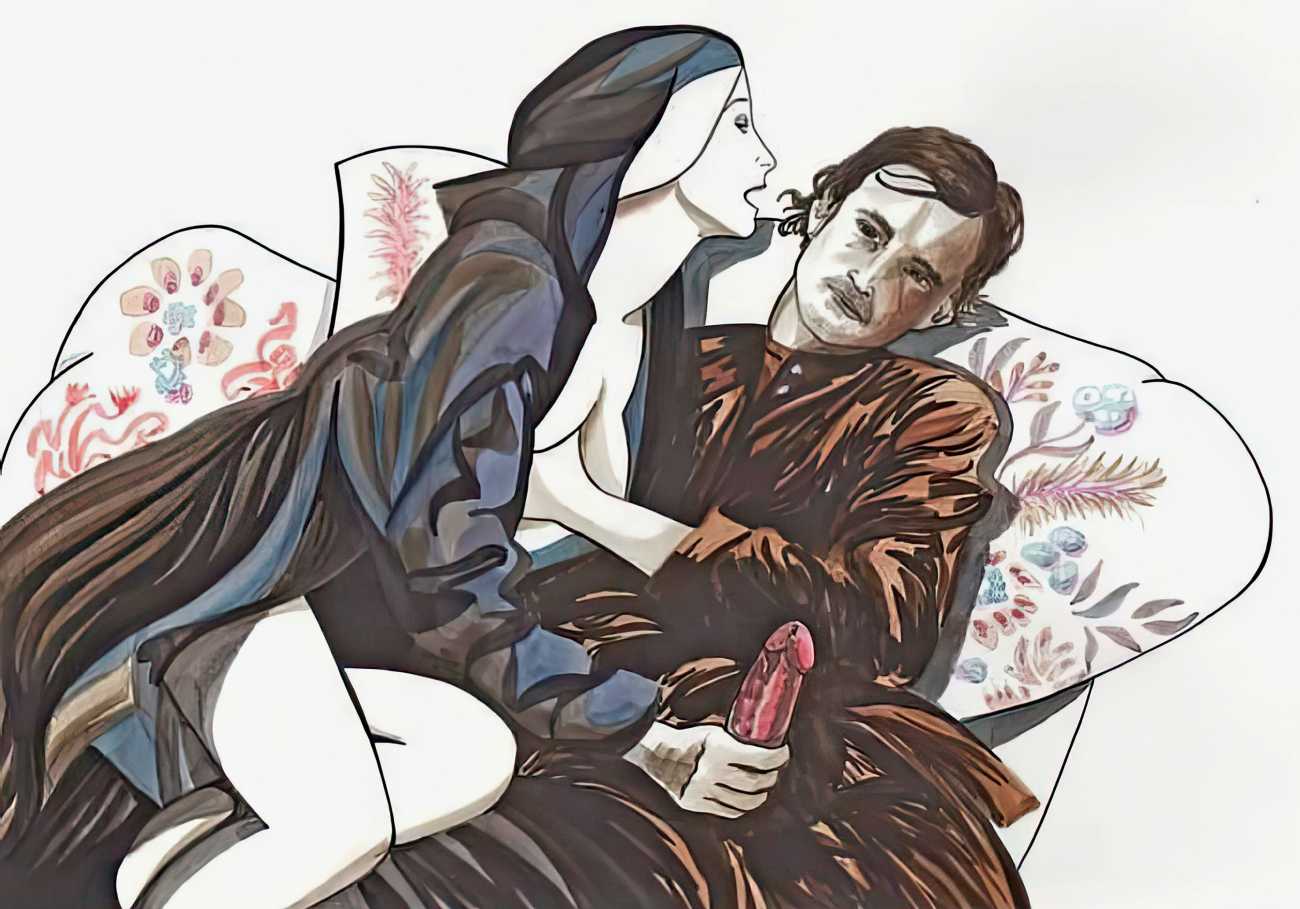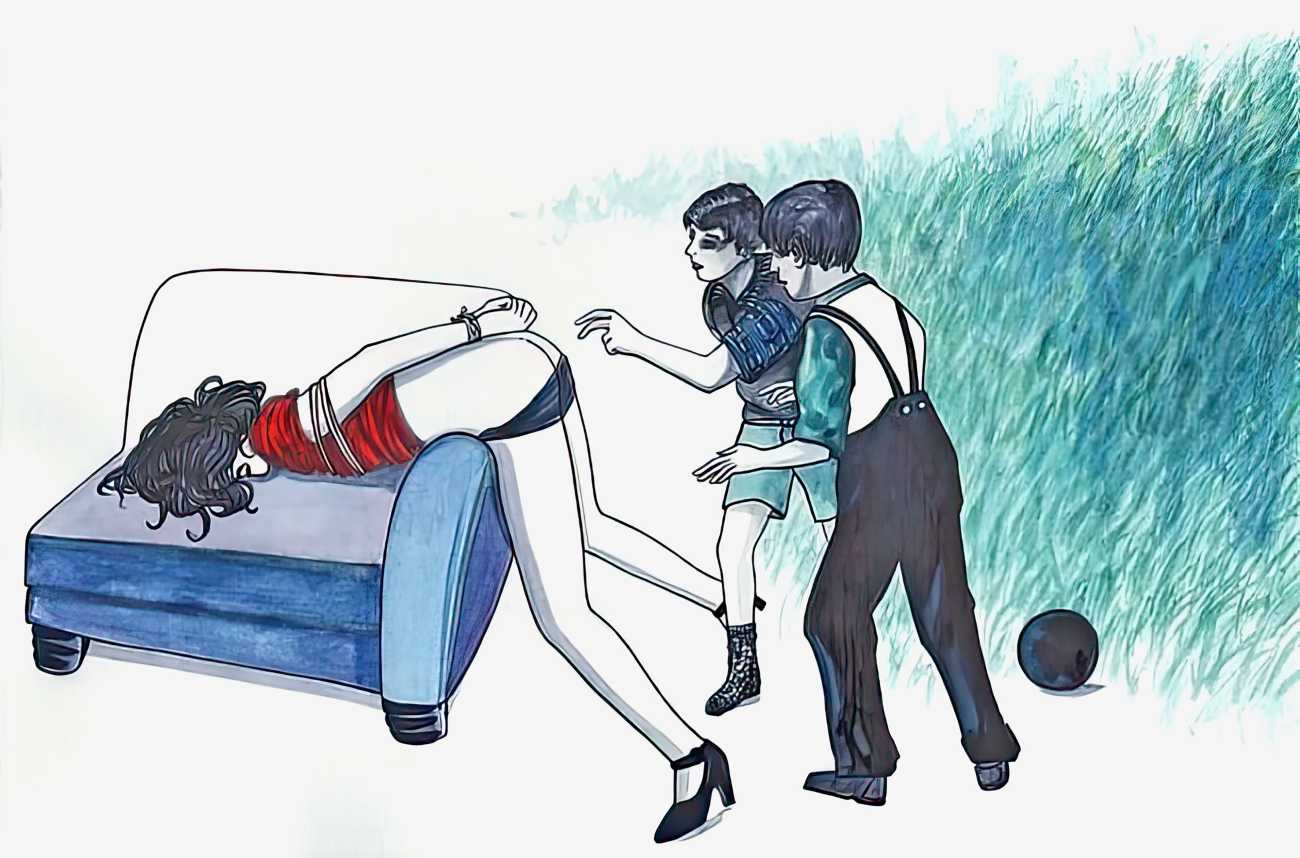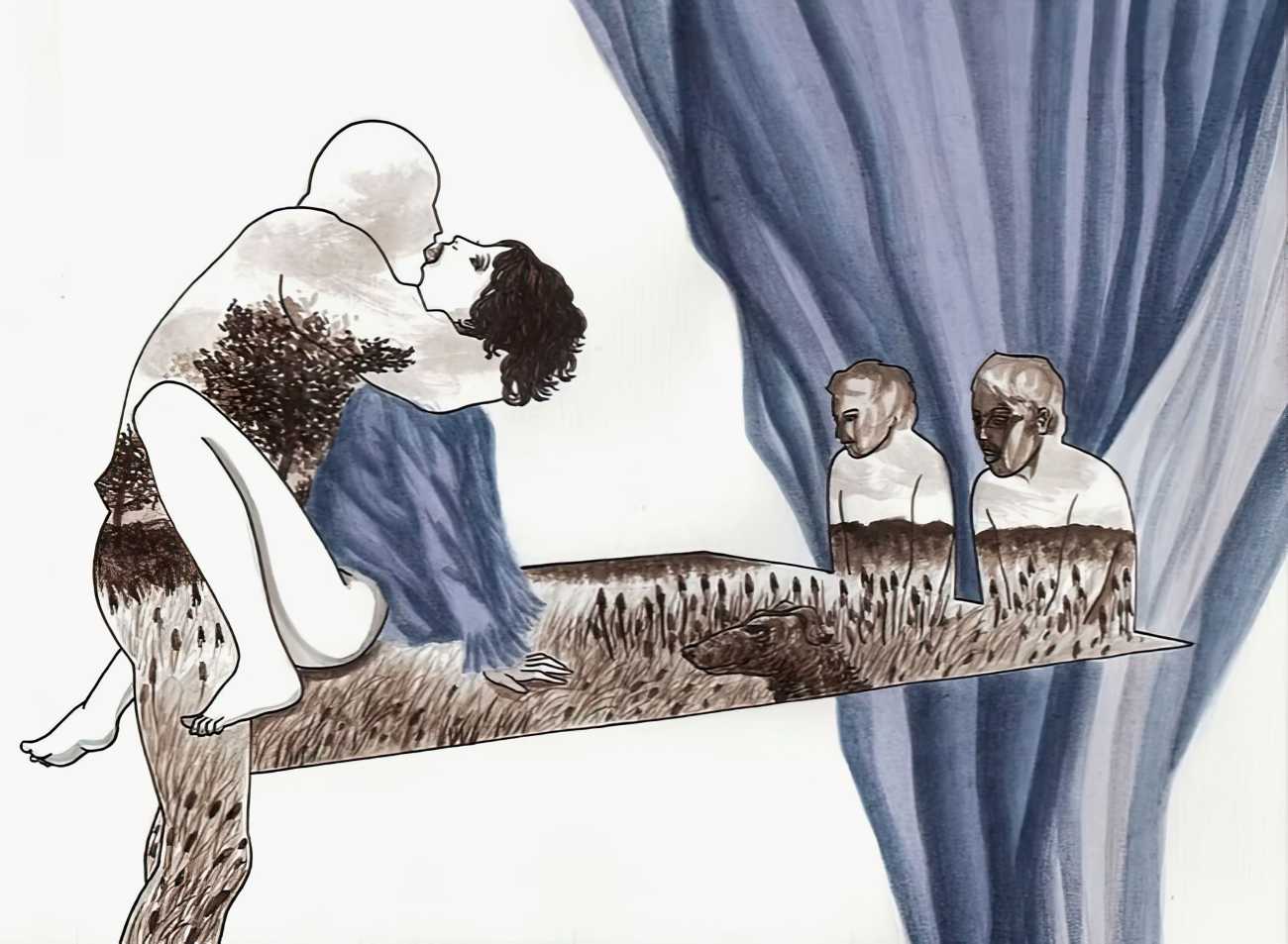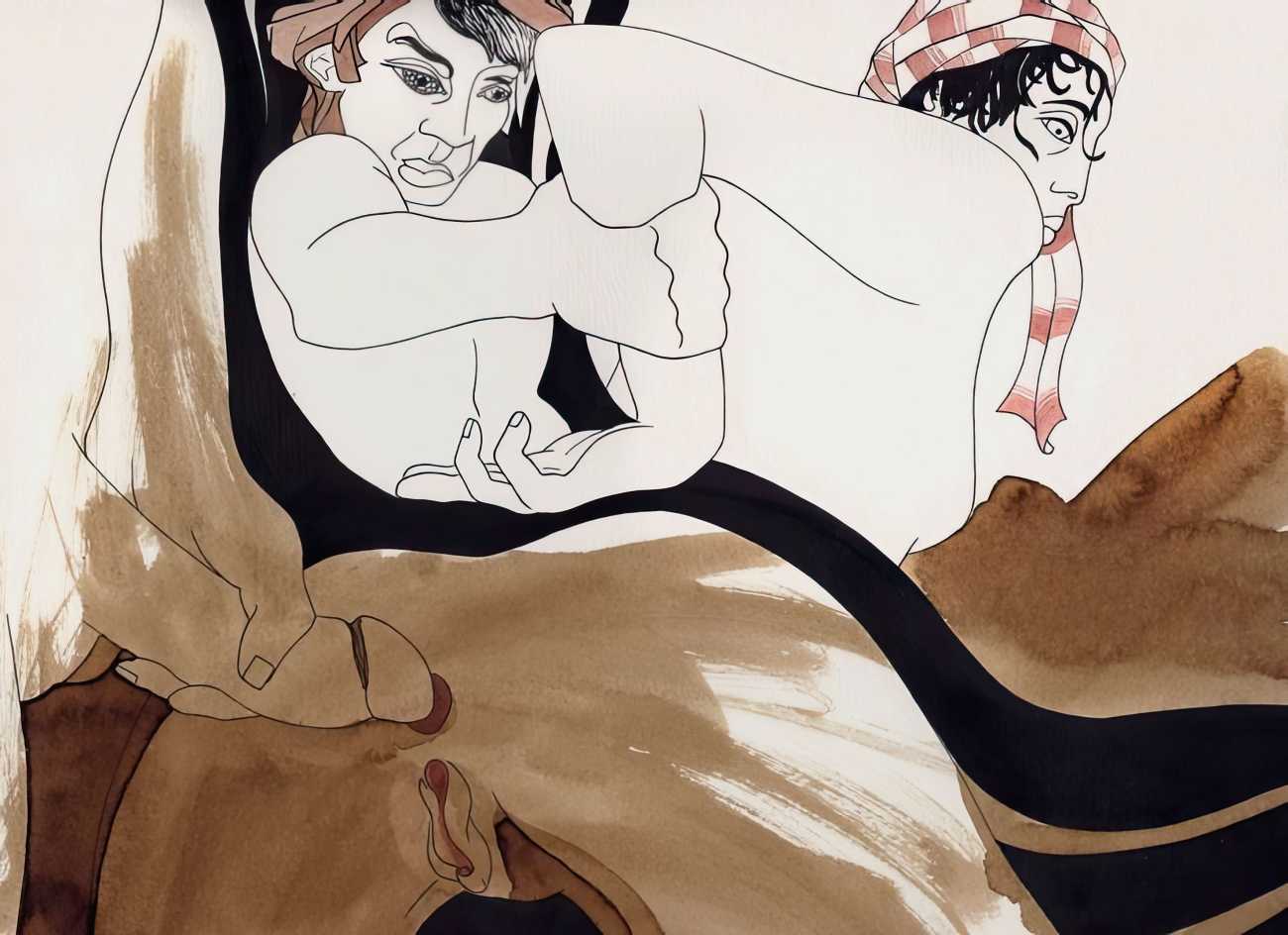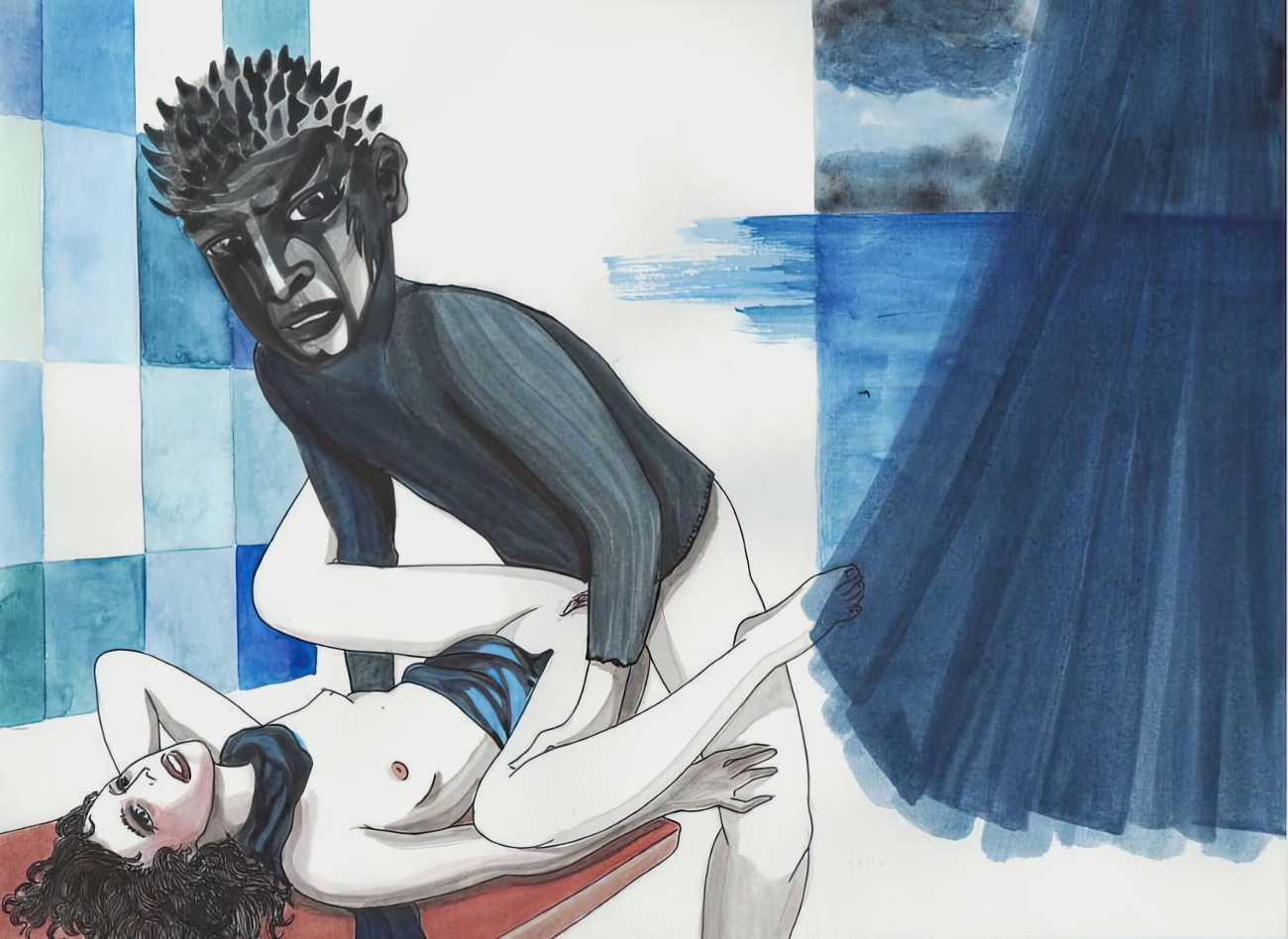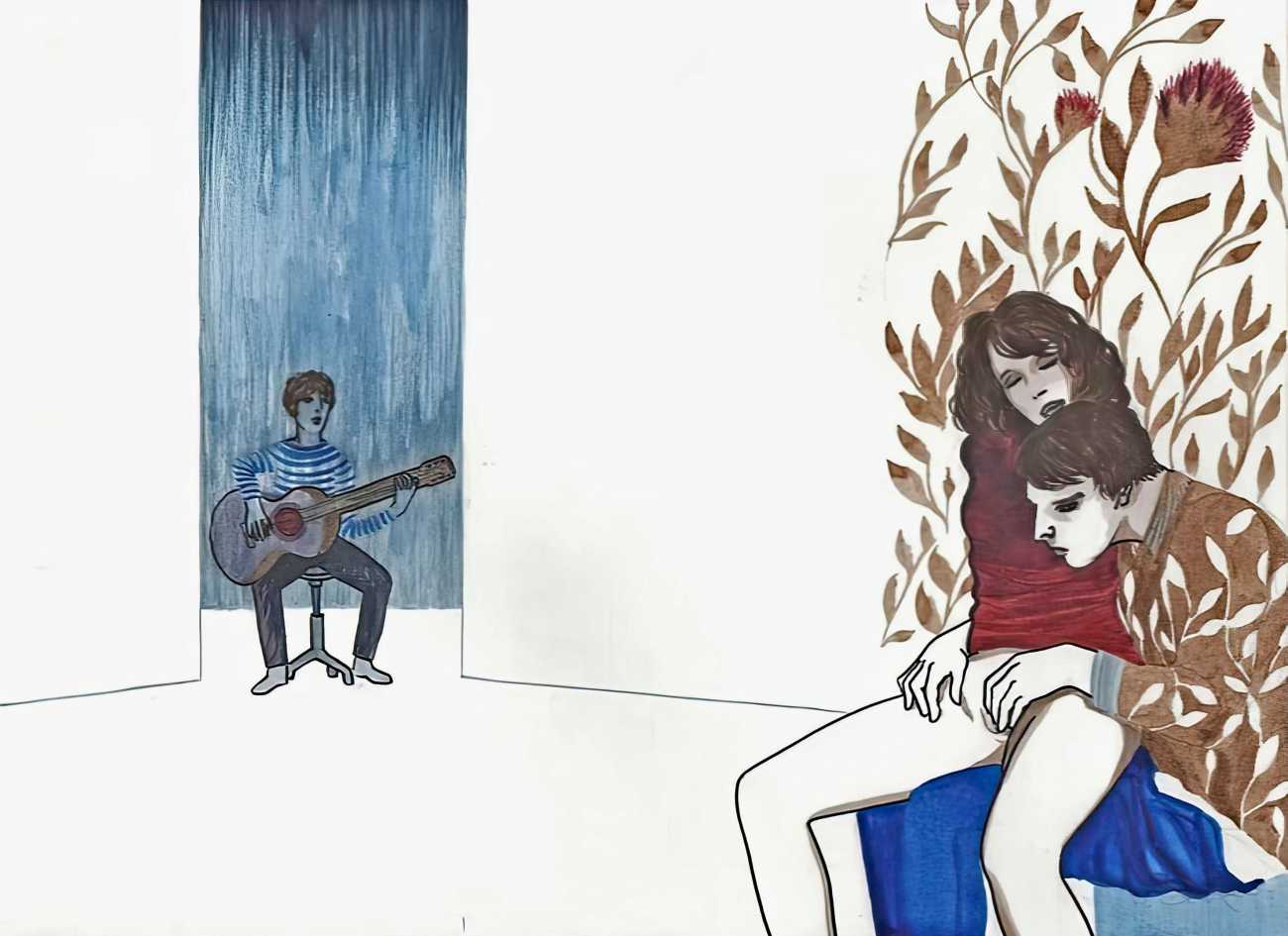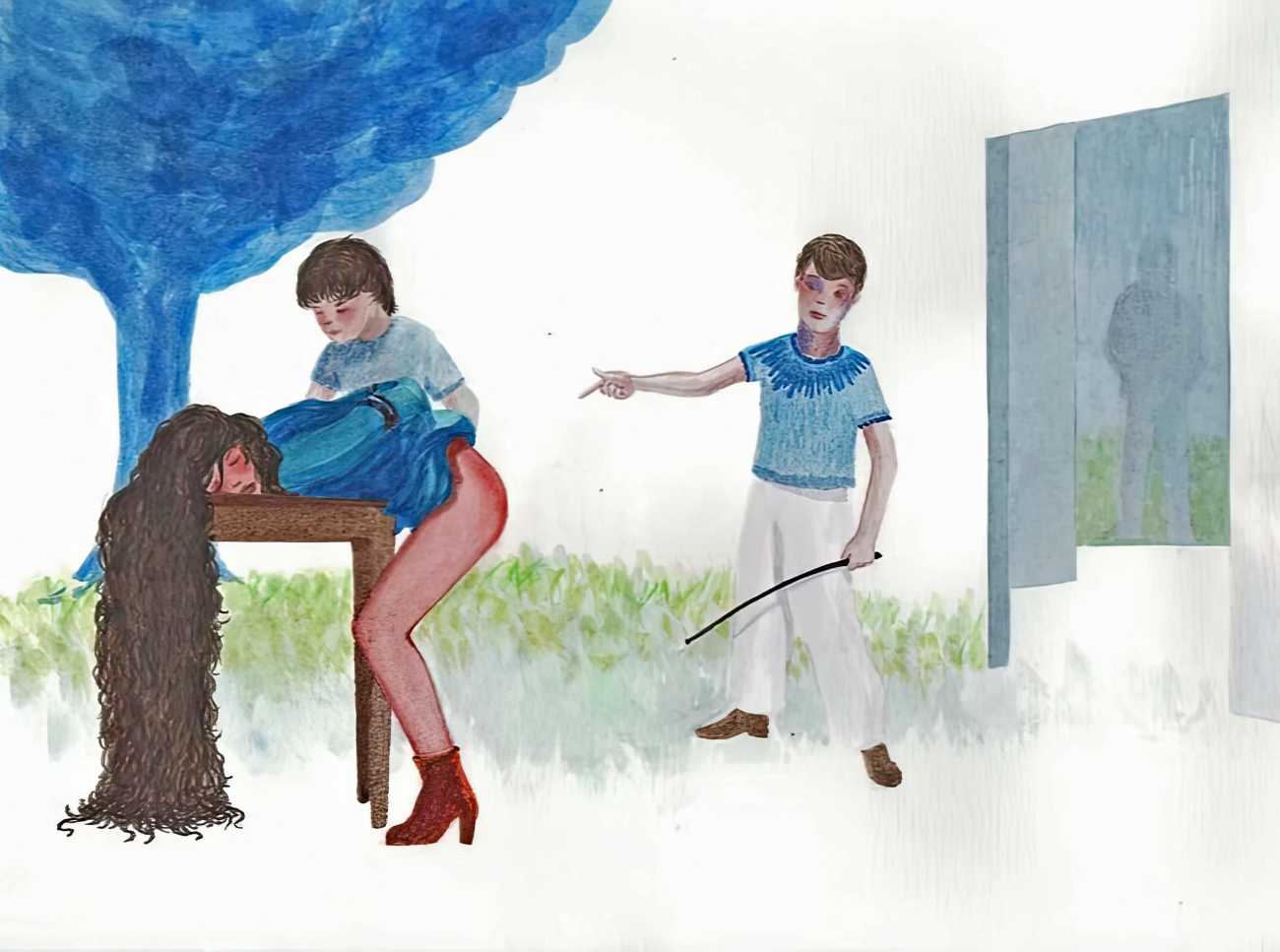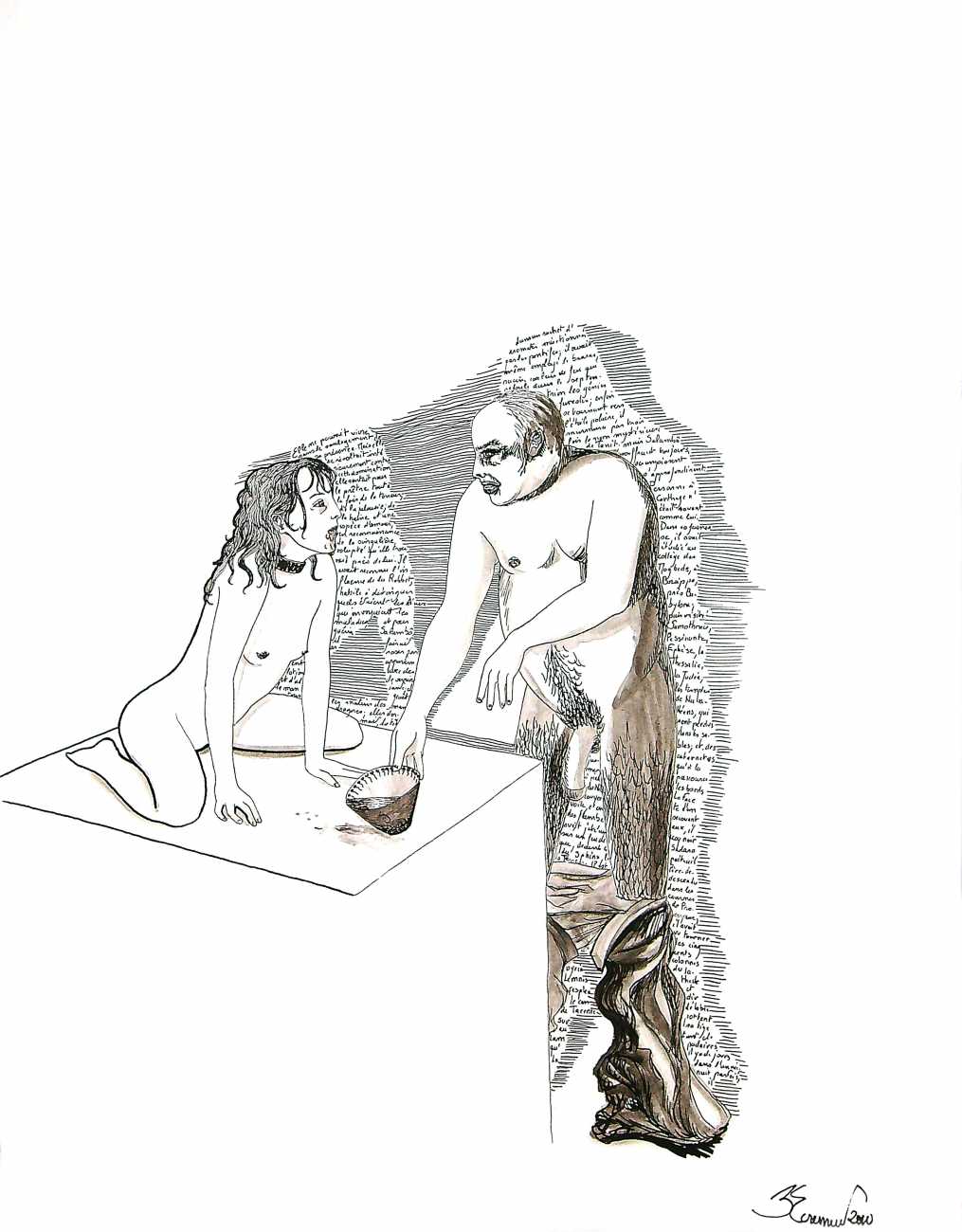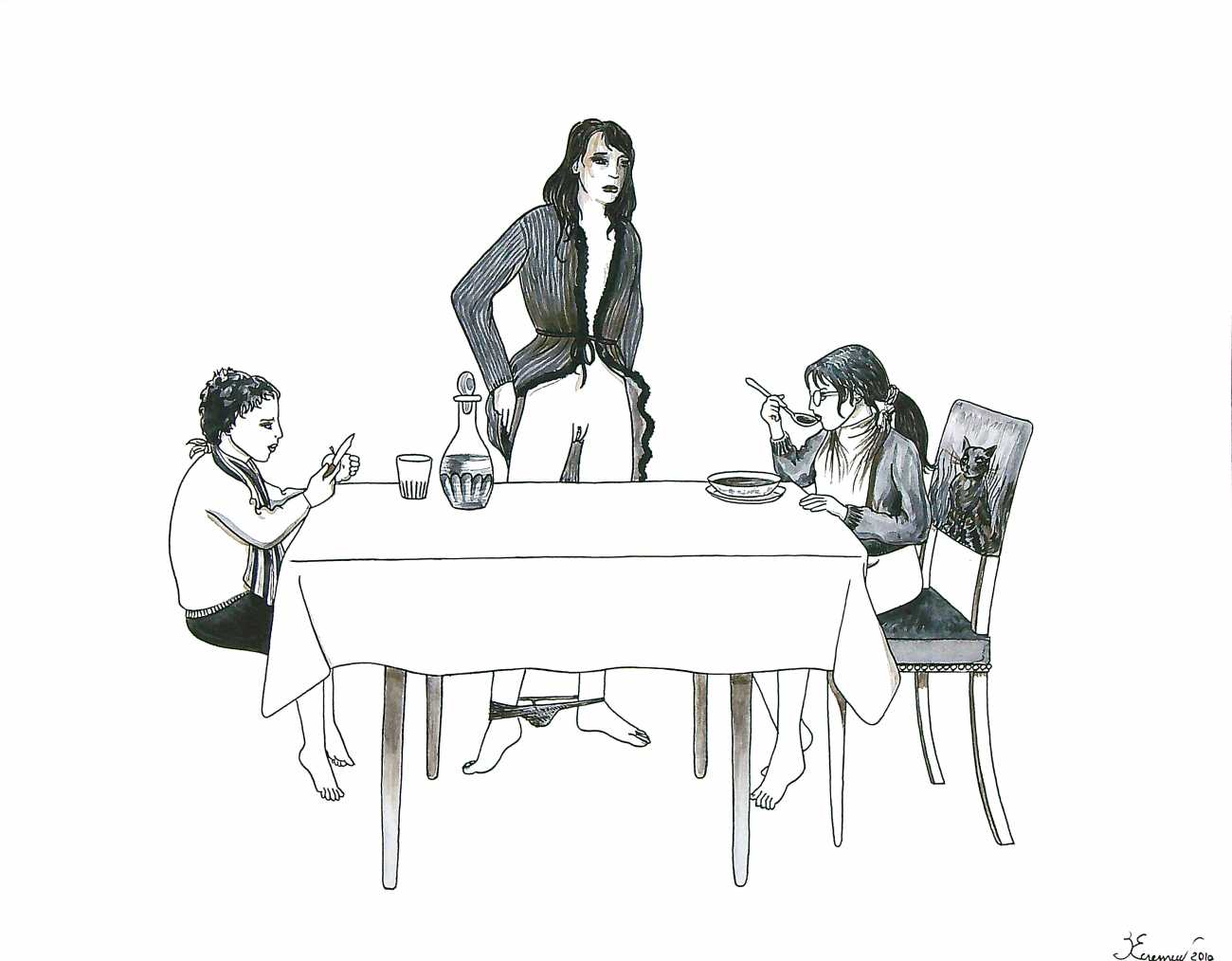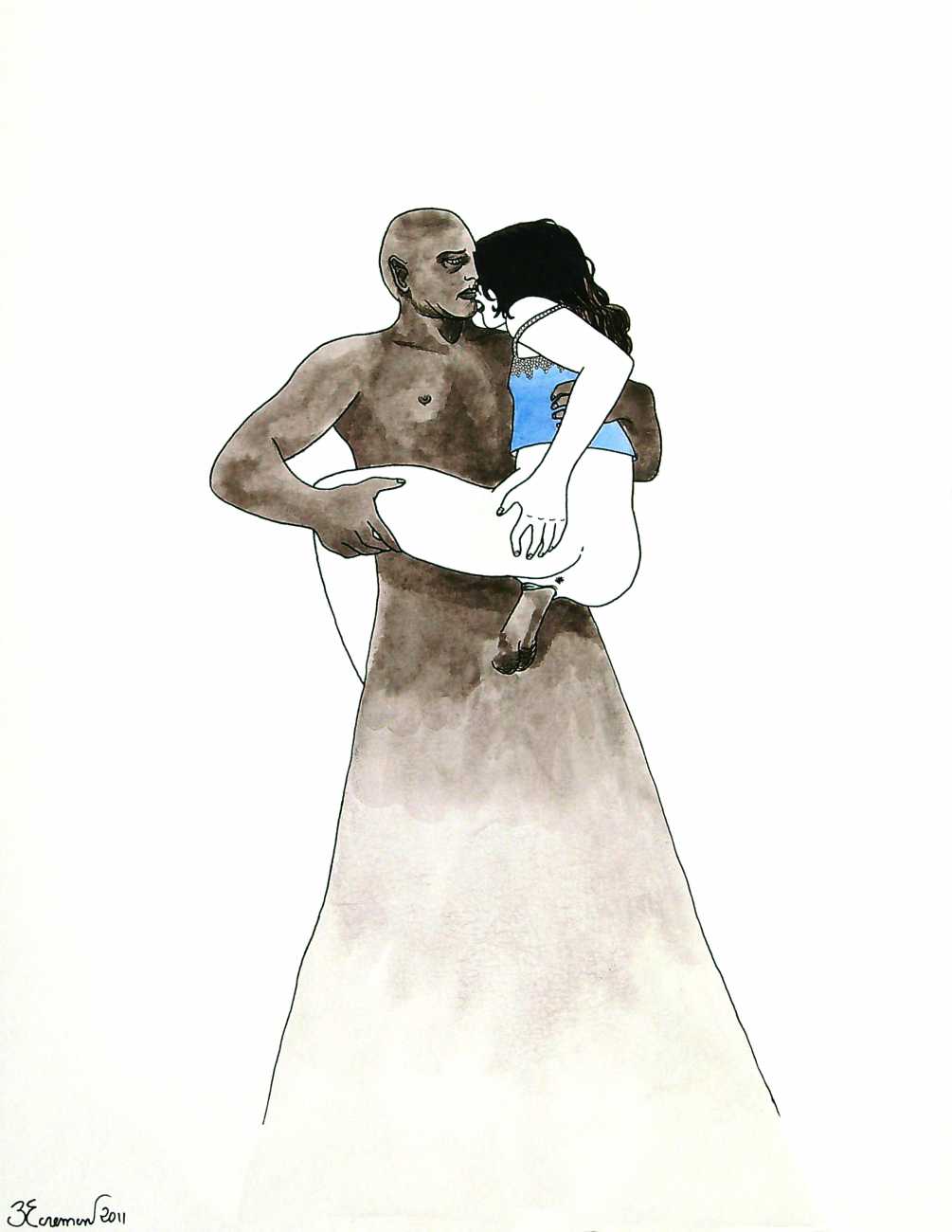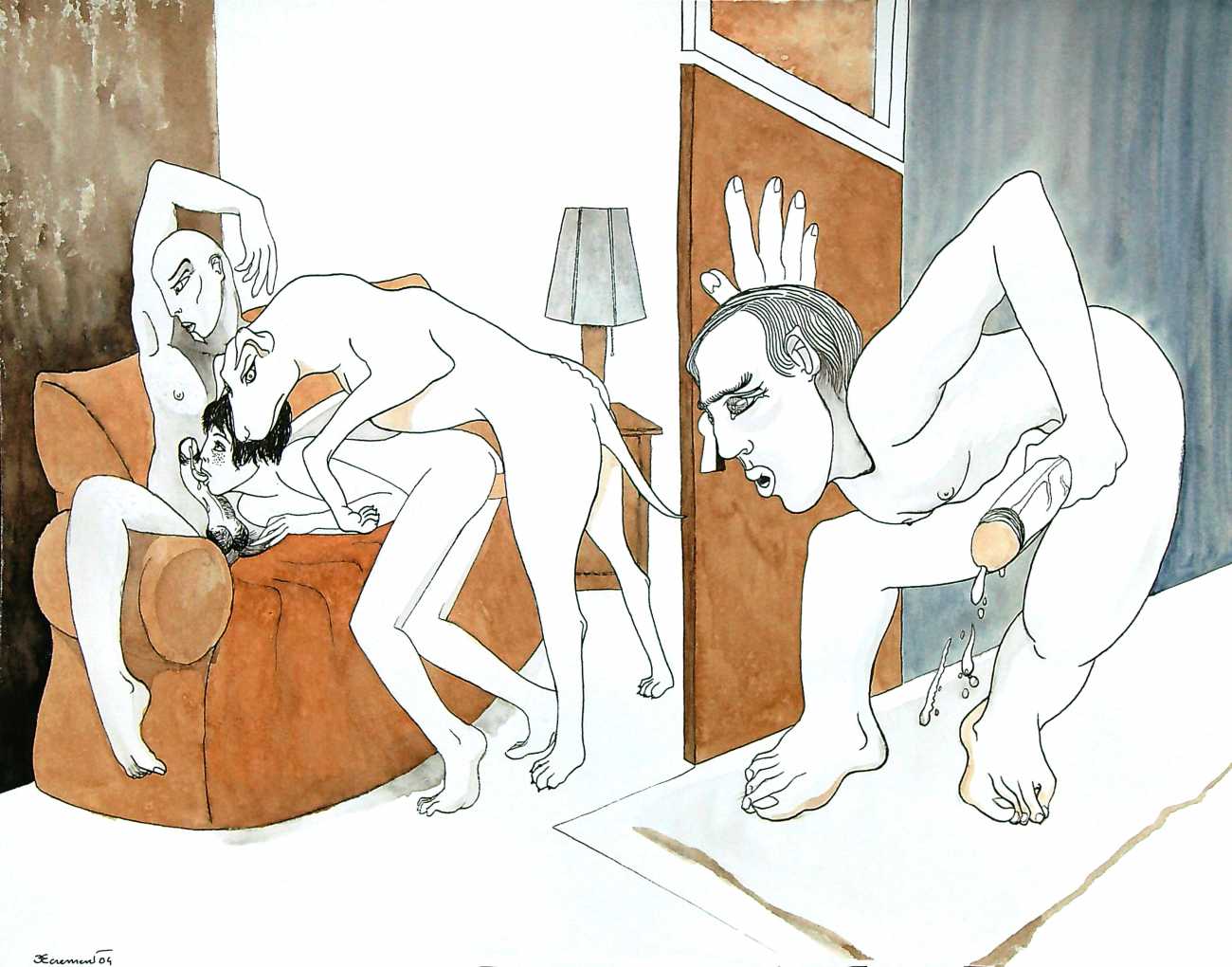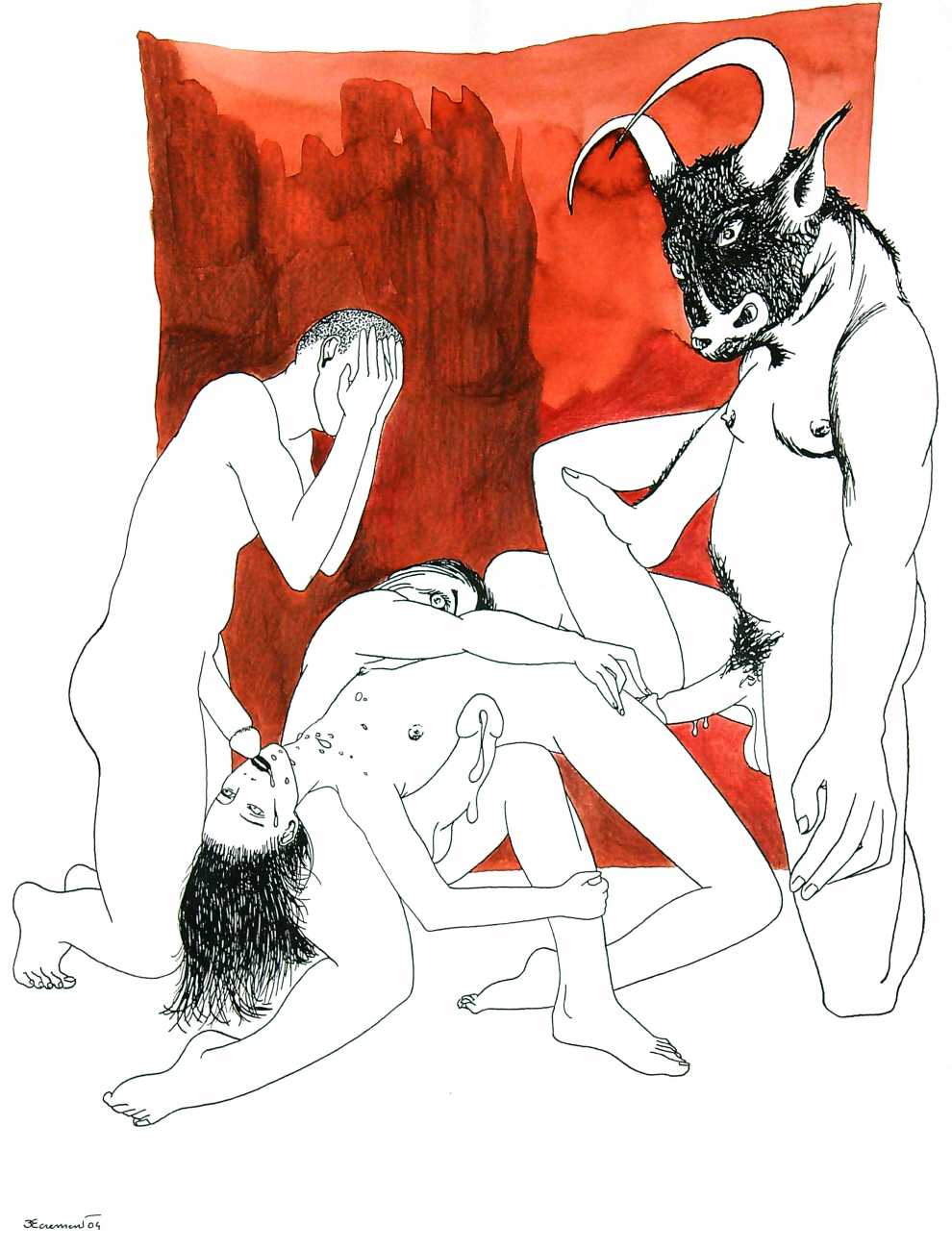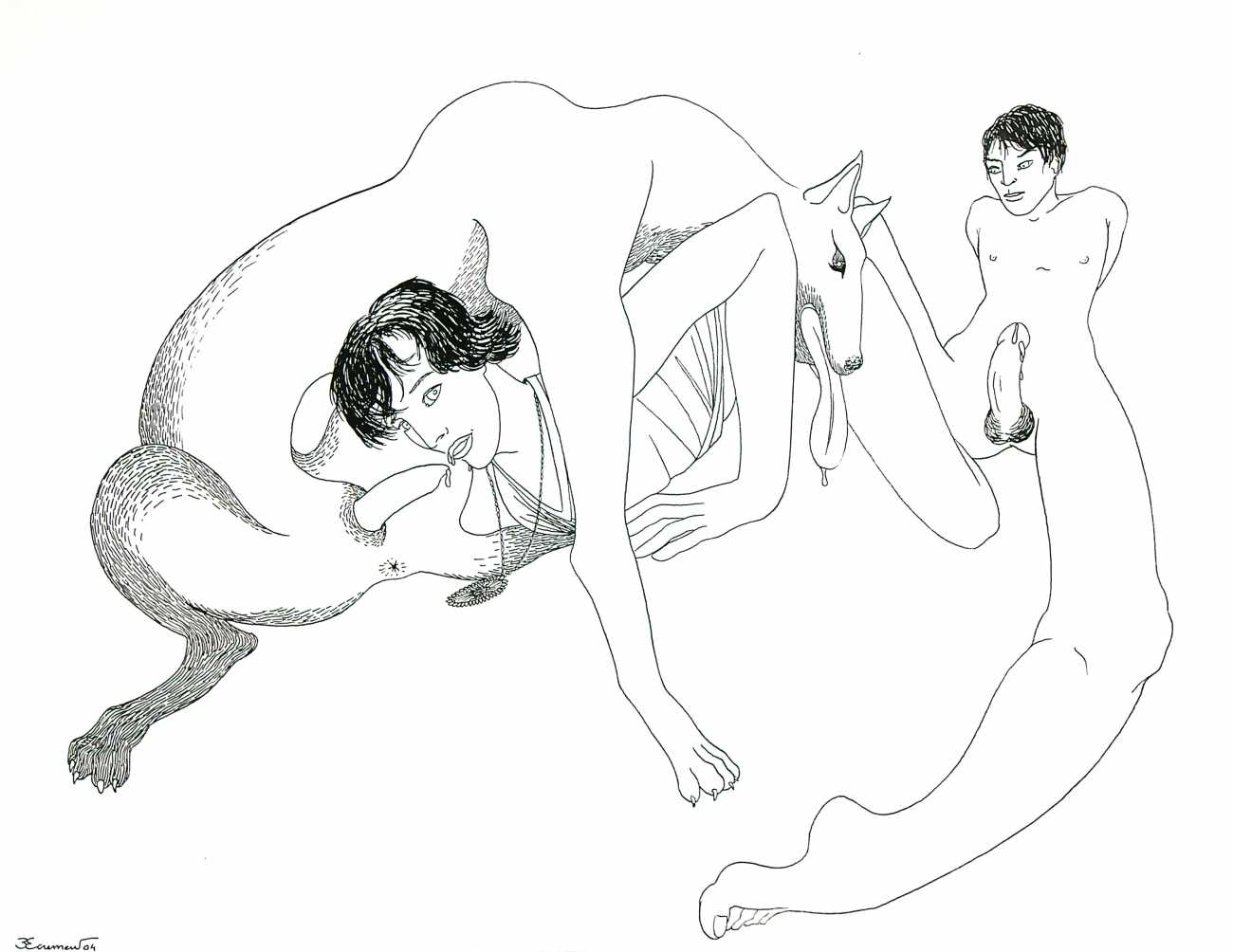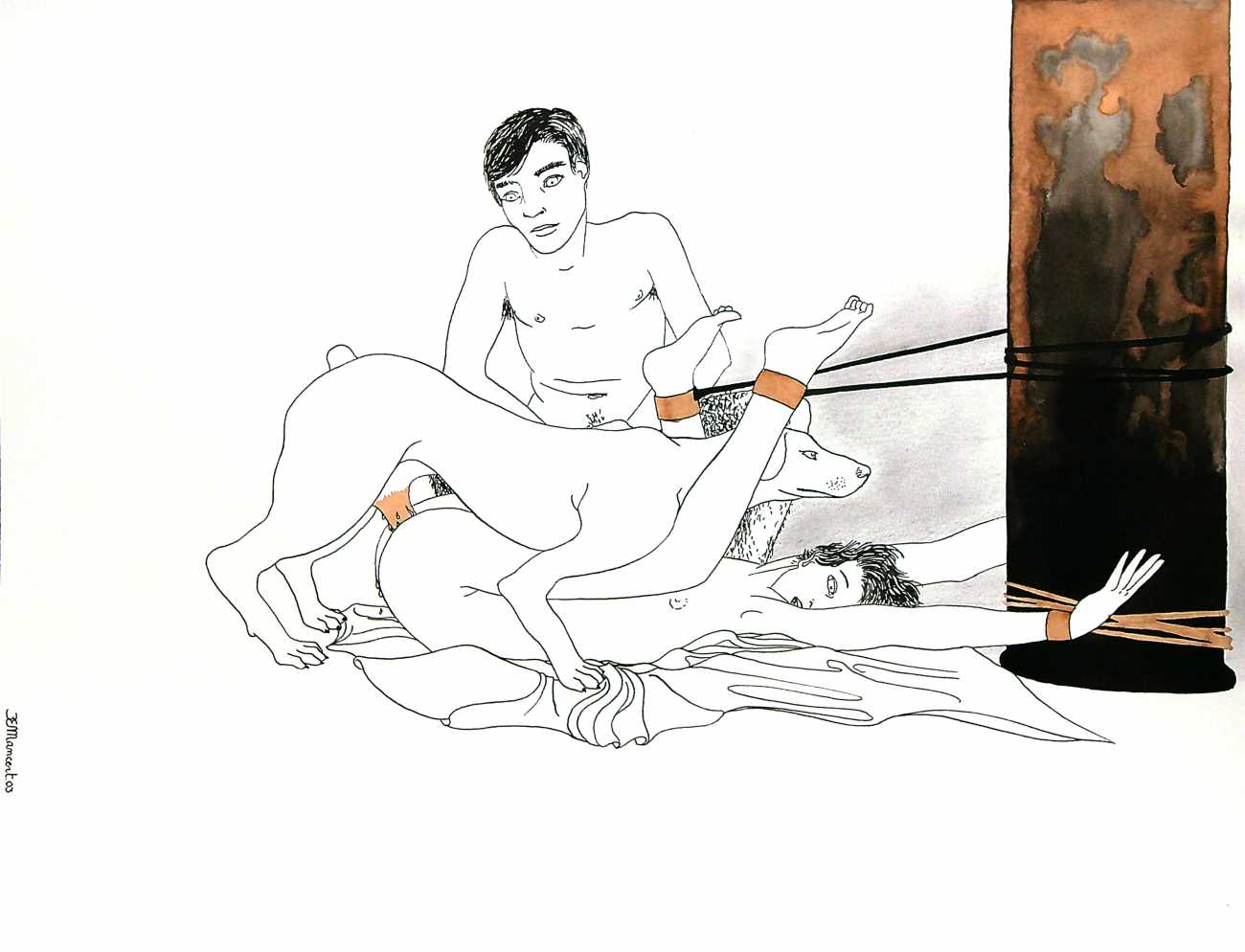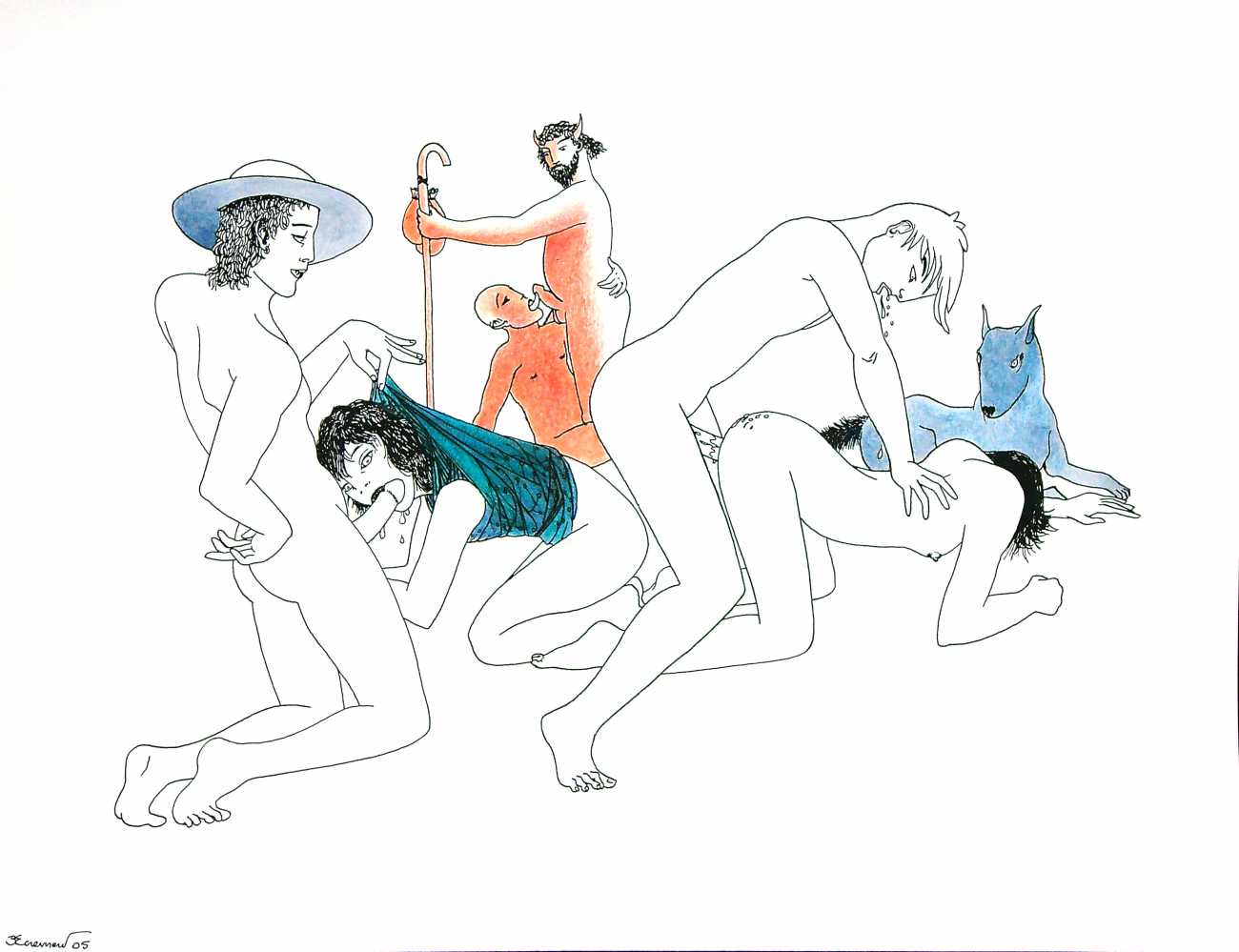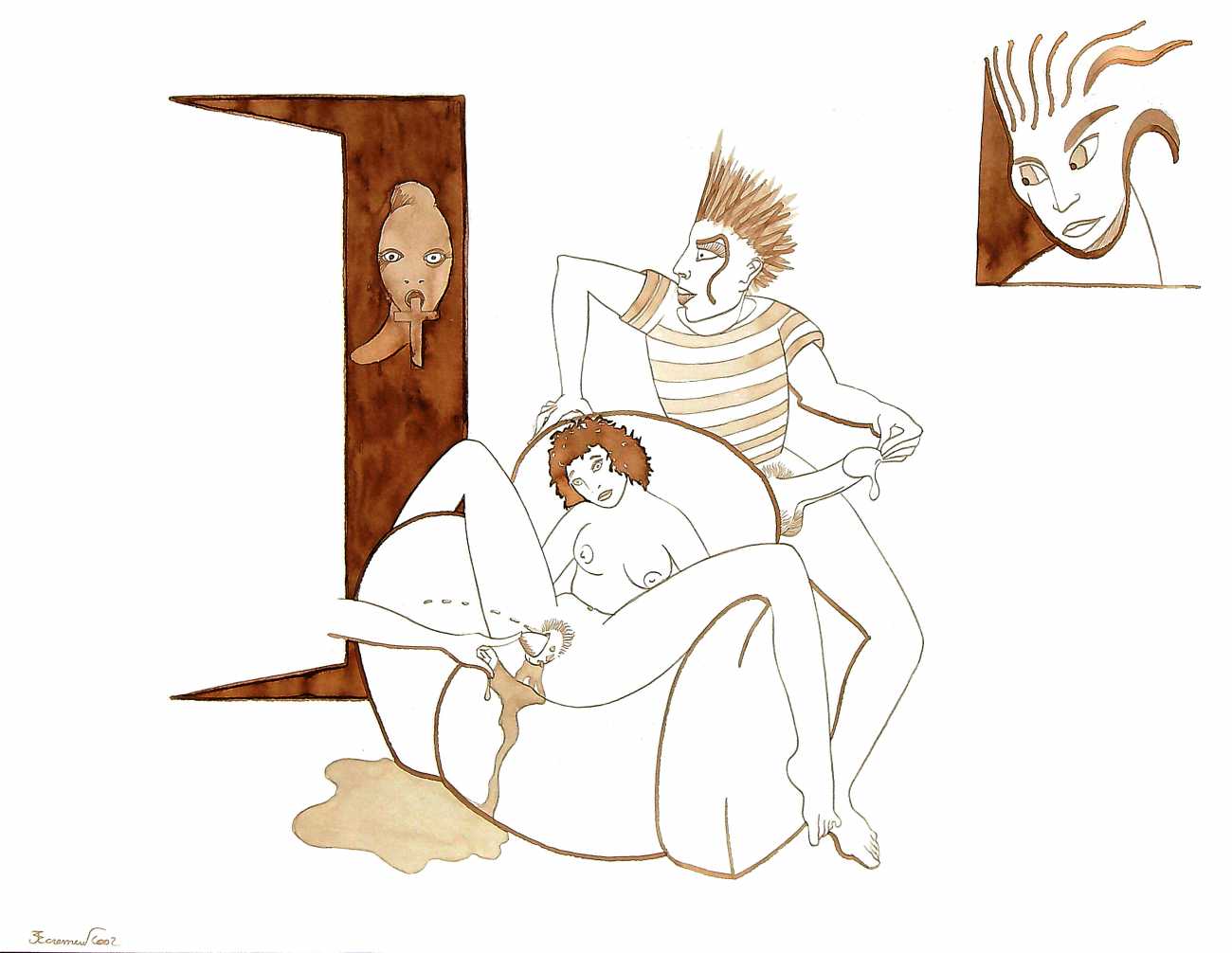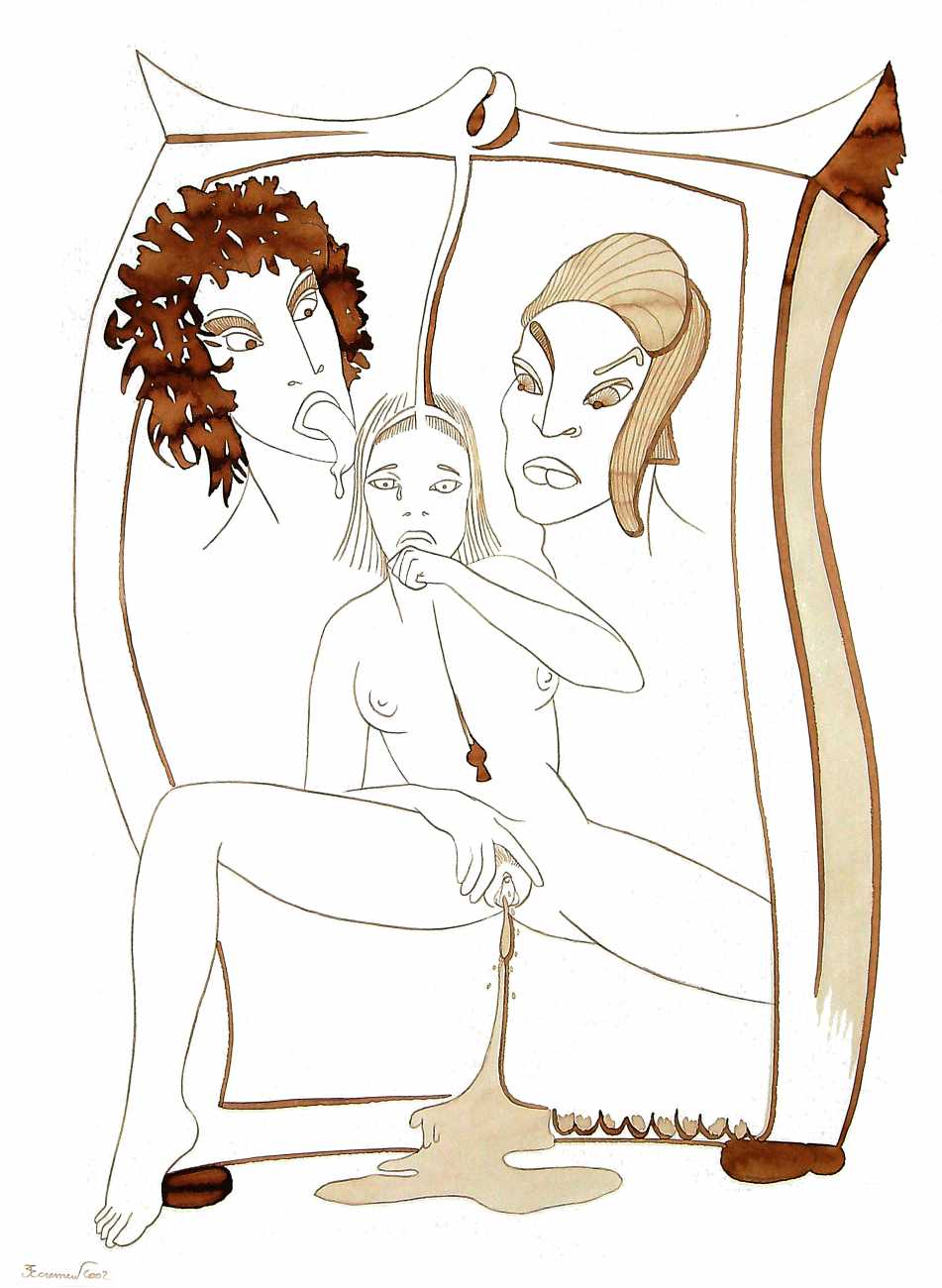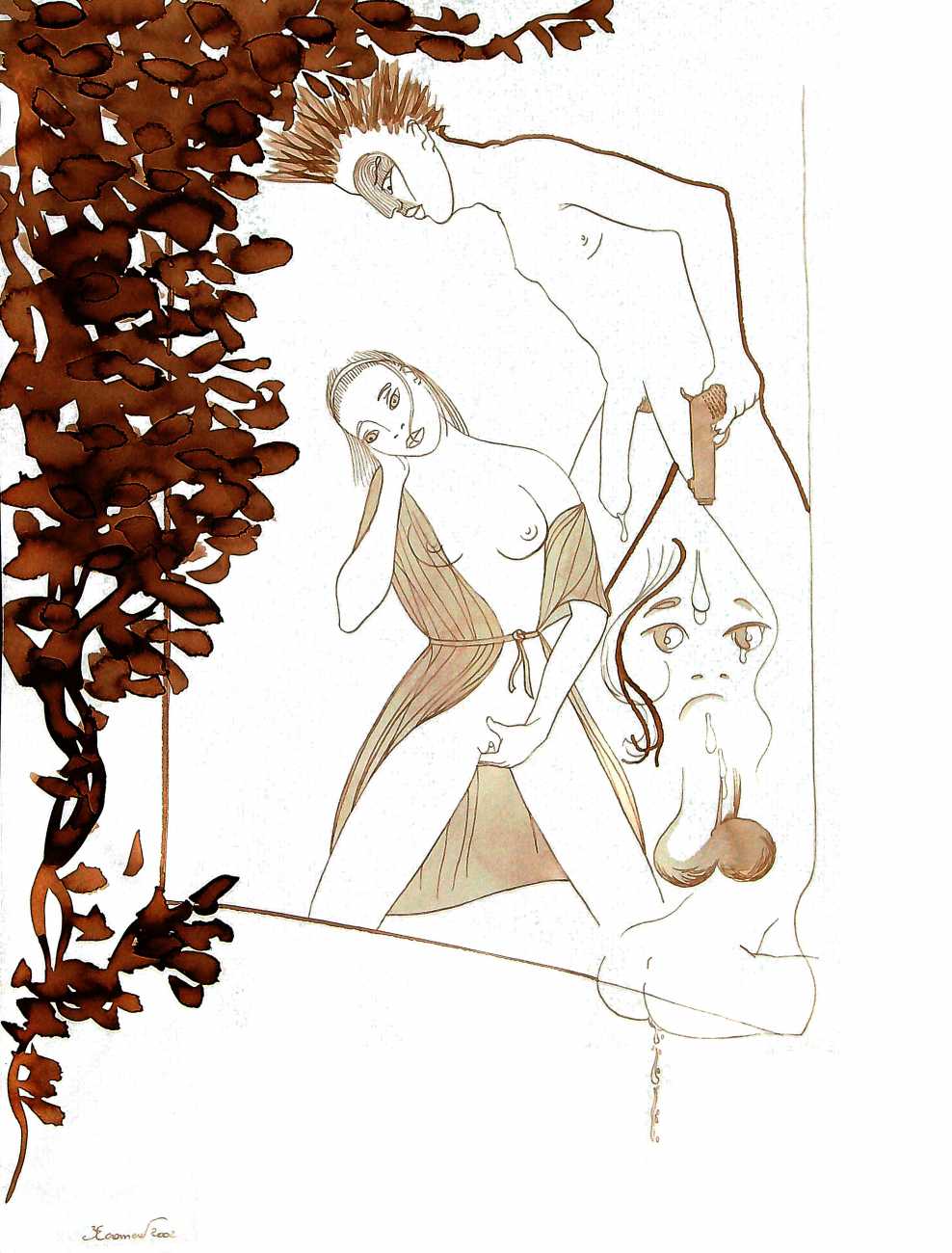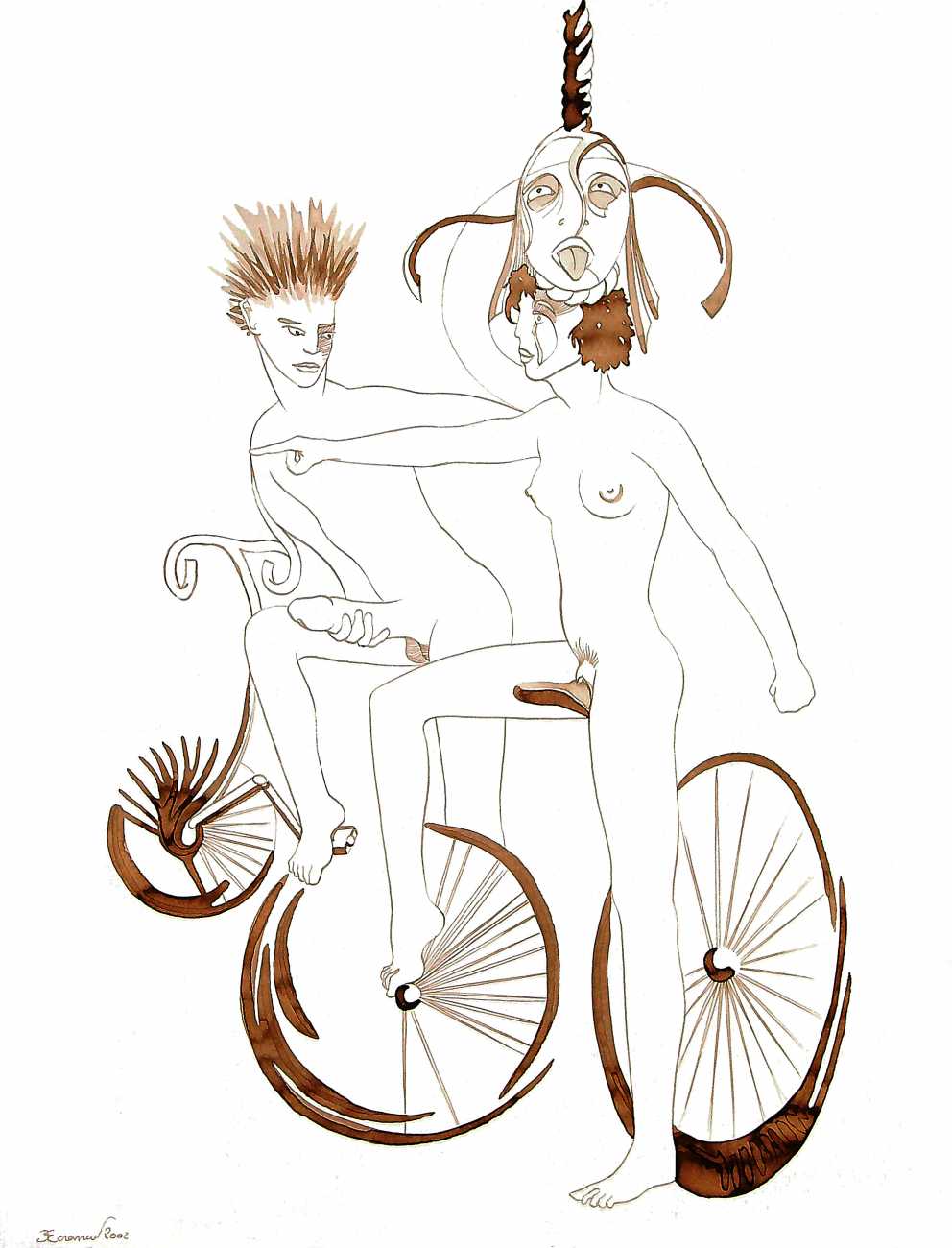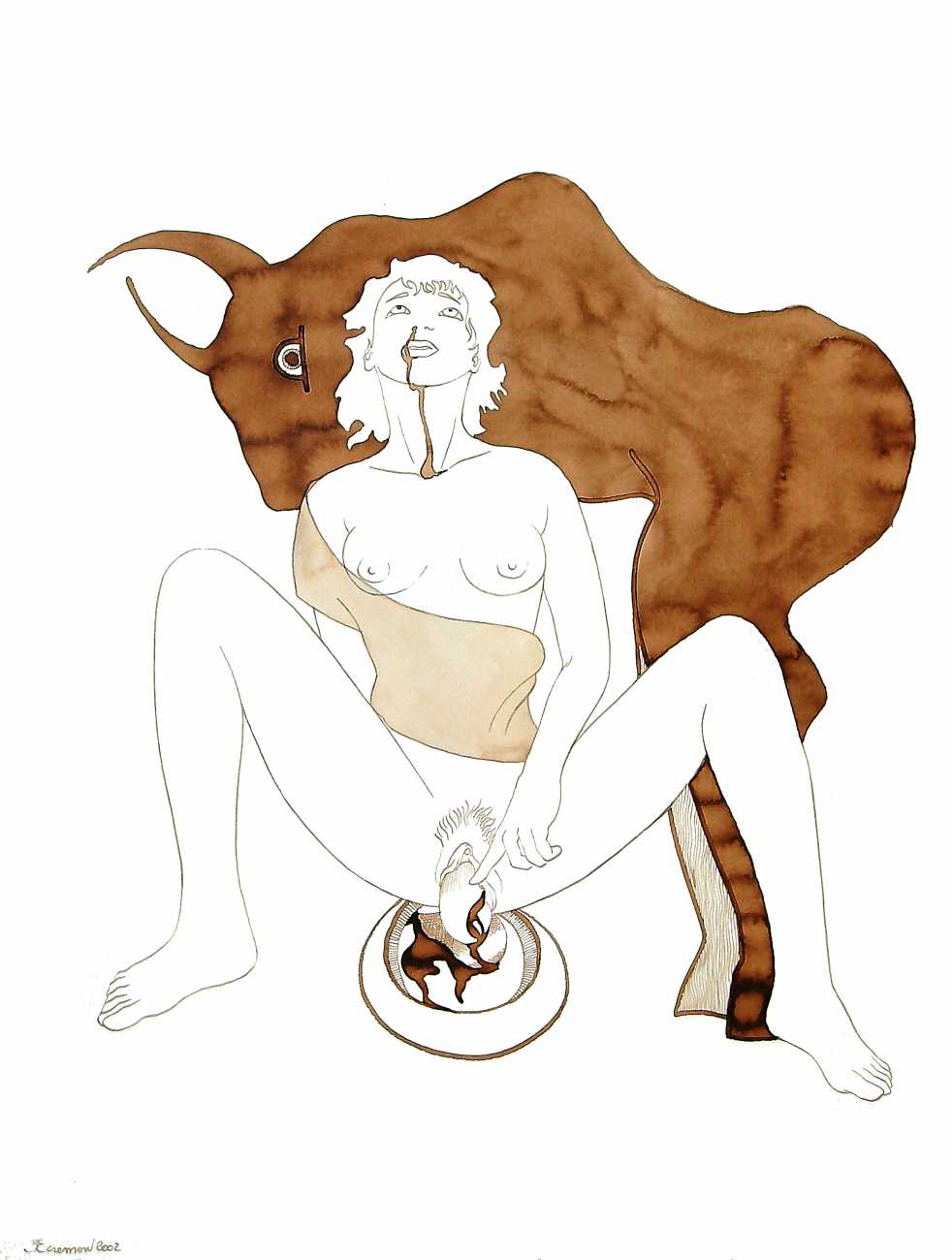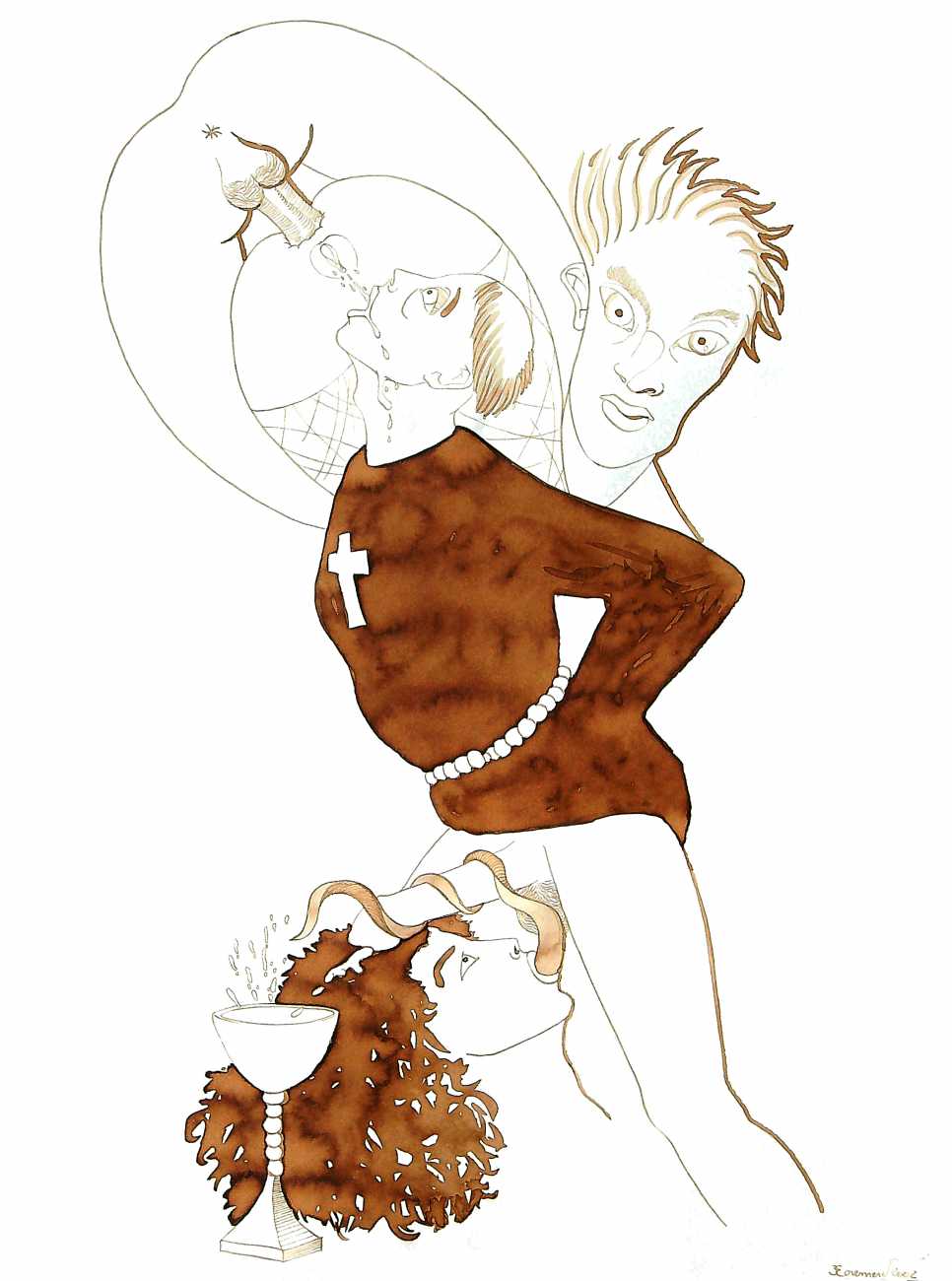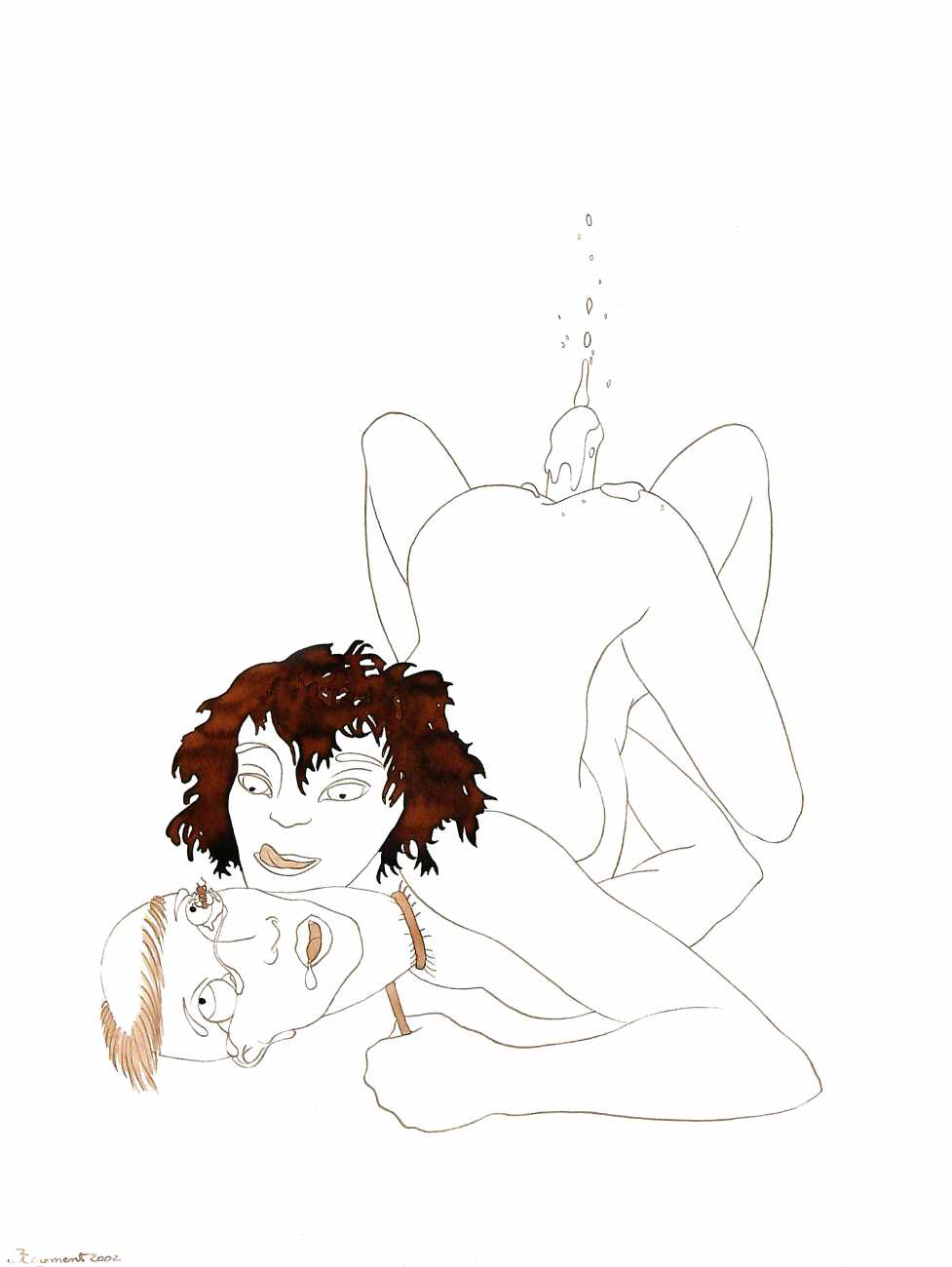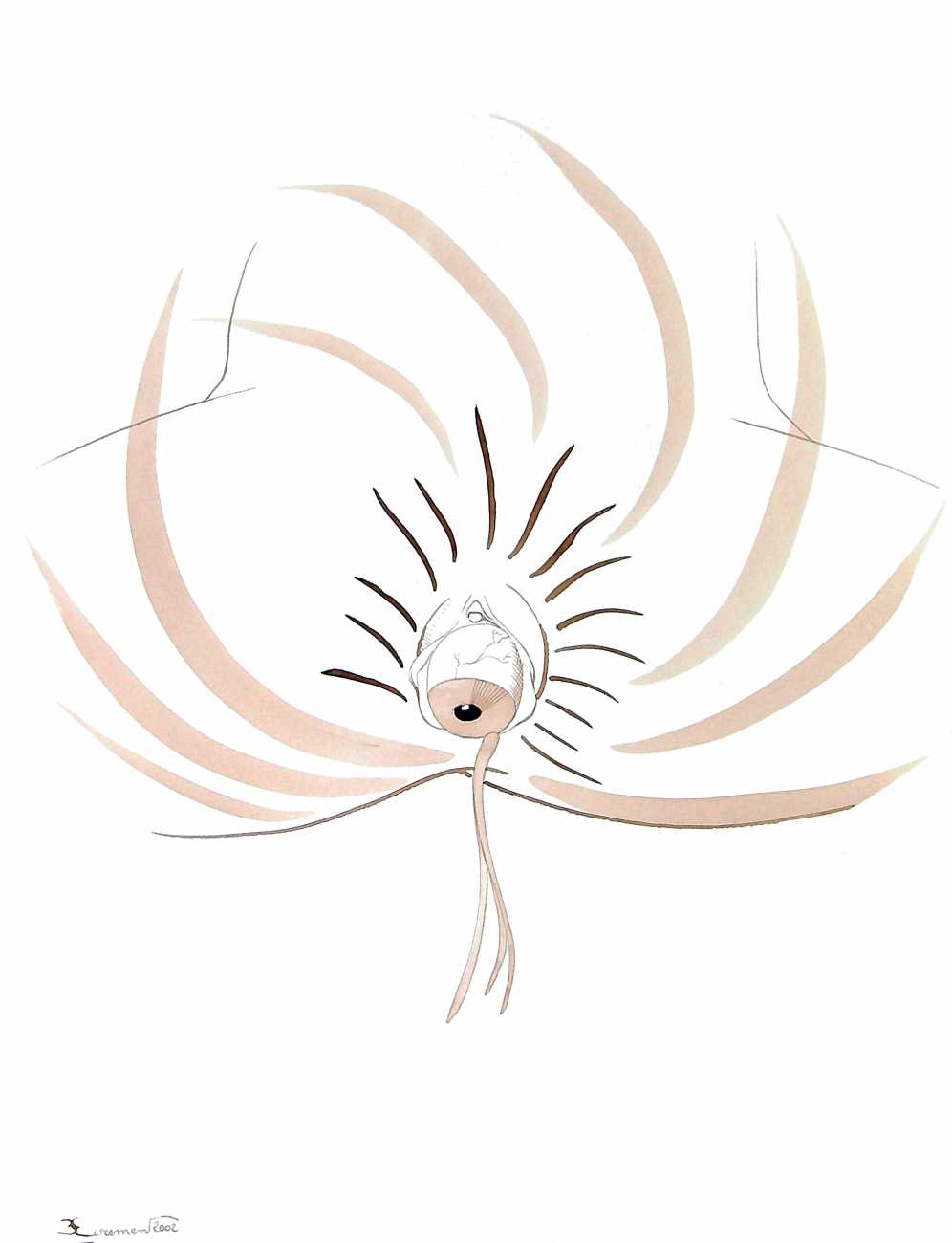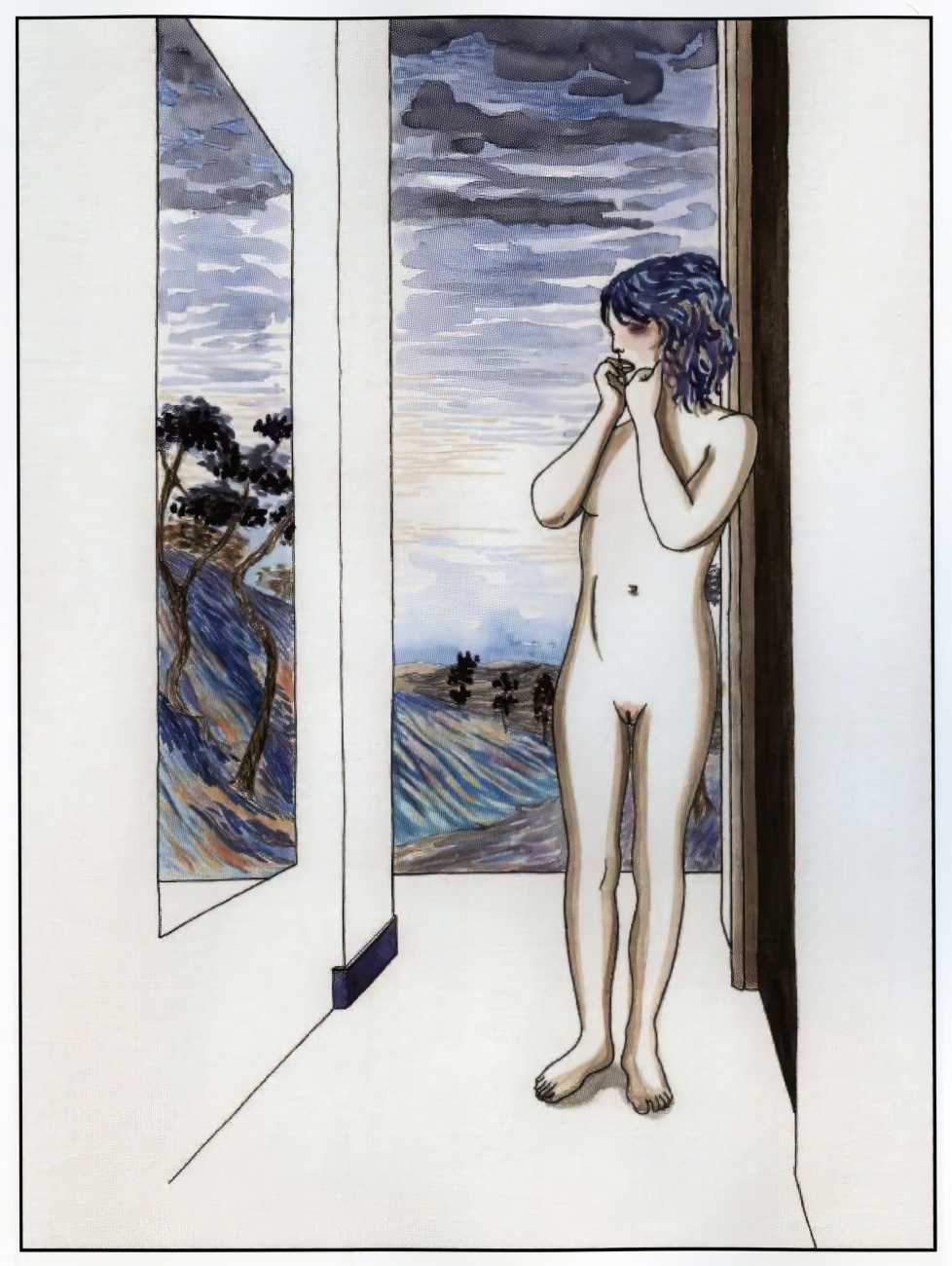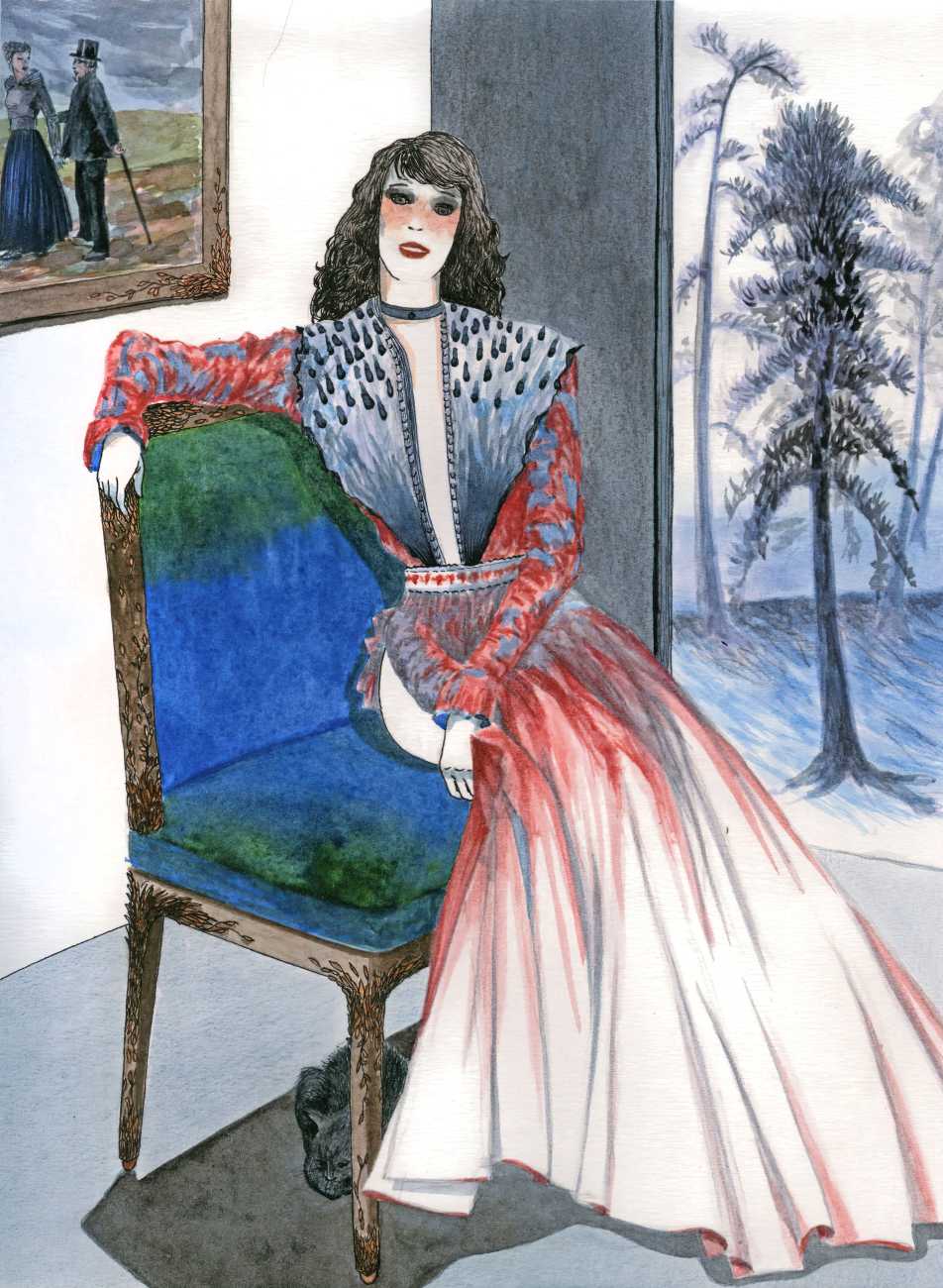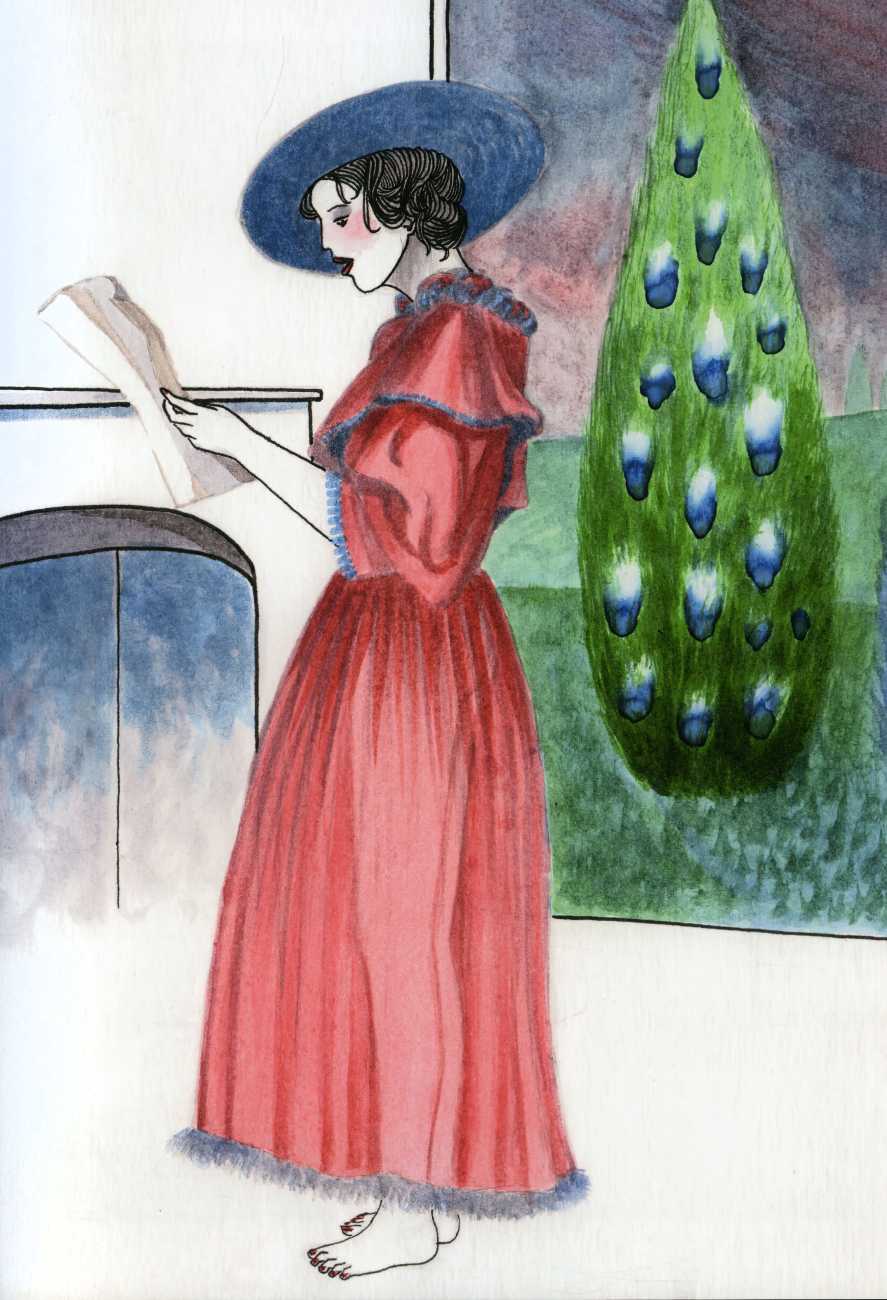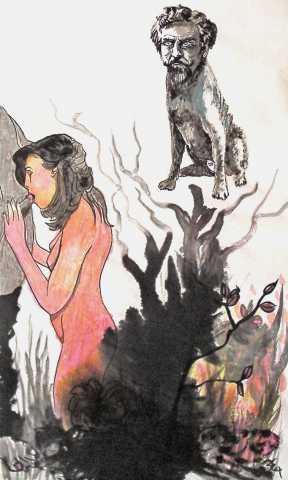
Rajah Foo, the nom d’artiste of the French artist Eric Ecremont, was born in Constantine in eastern Algeria and grew up in the east of France, studying at the École Nationale des Beaux-Arts et Arts Appliqués in Nancy, where his experiments in painting and sculpture, principally on the theme of sexual energy, set him somewhat apart from his fellow students. His work was a world away from the conceptual introspection of his peers, and he recalls that his teachers were embarrassed by his work.
The landscape that Foo now cultivates in his work was influenced by the discovery, at a young age, of a copy of Histoire d’O among his mother’s books. ‘It was a revelation,’ he says, ‘and later I read Sade, whose biography impressed me more than his work.’ Other influences germinating his path include the artworks of Hans Bellmer, the surreal collages of Max Ernst, and the dark imagery of Pierre Molinier. To the list must be added Bataille, Balthus, Klossowski, Freud, Greek mythology and David Lynch, yet the imagery of Rajah Foo remains unsullied by any direct imitation.
Of his work he writes, ‘I paint in my apartment, on the floor of the living room, on big sheets. I exhibit very rarely, probably because I’m not very comfortable in public, probably also because I’m a bit lazy. Those who follow my work can see it on social networks, though I did participate in a collective exhibition in Paris in 2019 at Art Factory, following a collaboration with Le Bateau magazine and Jessica Rispal’s artistic project “Les crocs électriques” (Electric Fangs). I am intrigued by the emptiness of Japanese art, by the irony of Toshio Saeki, by Max Ernst’s collages and Balthus’s guitar lesson, by the sweet drawings of Stu Mead and the young women of Tom of Beijing, and by a landscape in which I hear the whispers of my wife. I see my artistic work as a diary, the diary of my love life with V. Most of my drawings are small format, like the pages of my diary. Selling drawings to other artists and people who appreciate my work gives it an infinite dimension, rather like a seminal dispersion.’
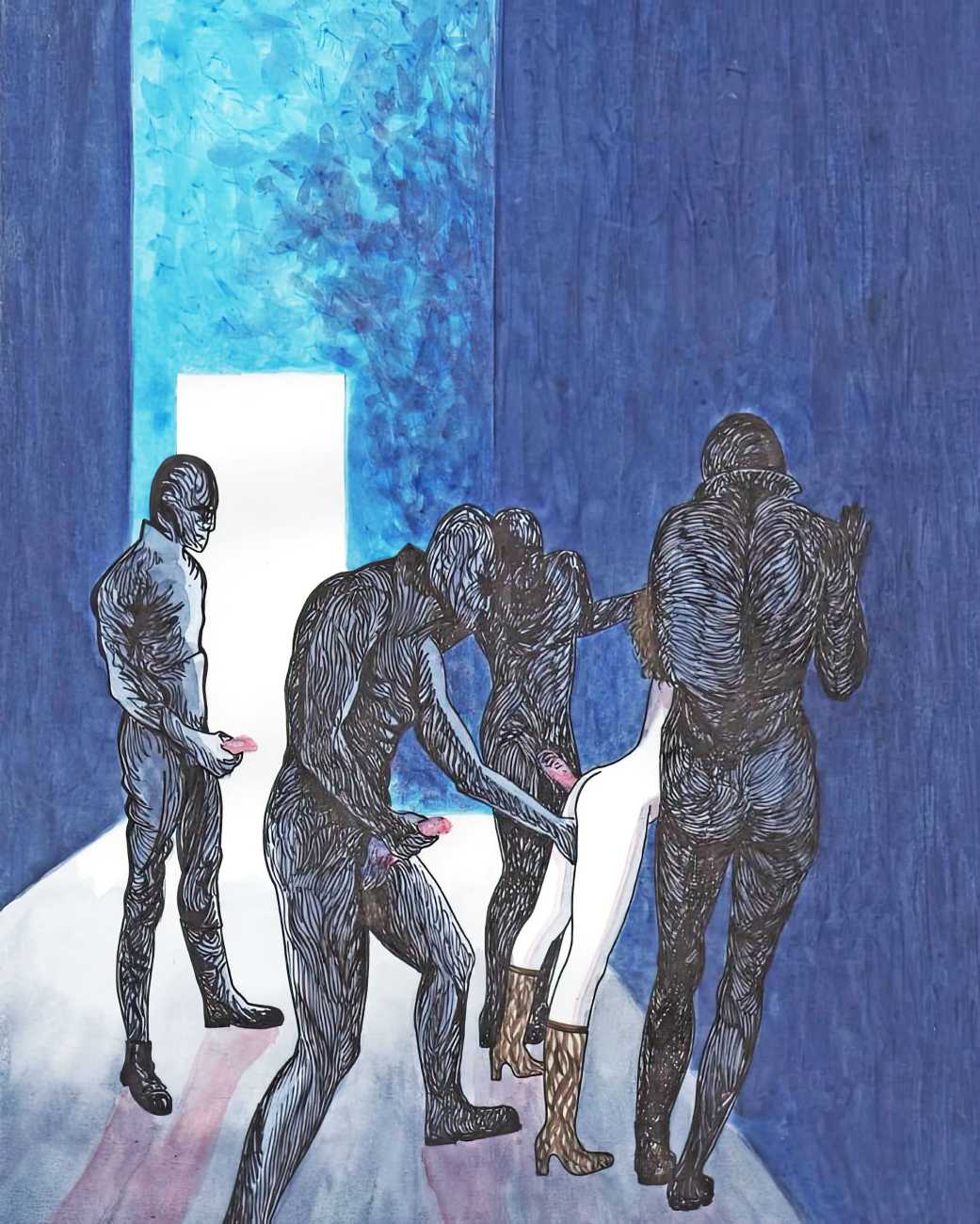
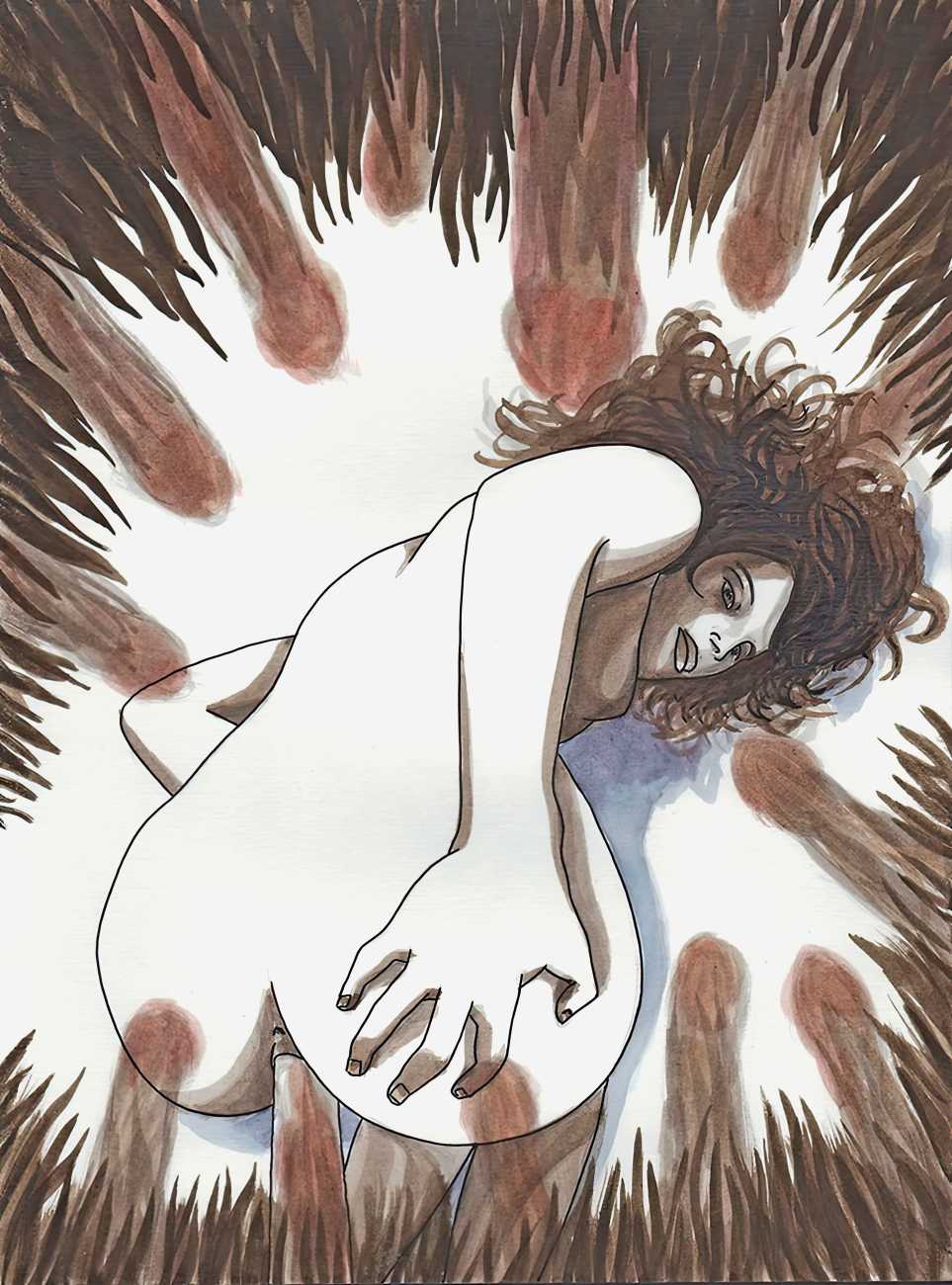
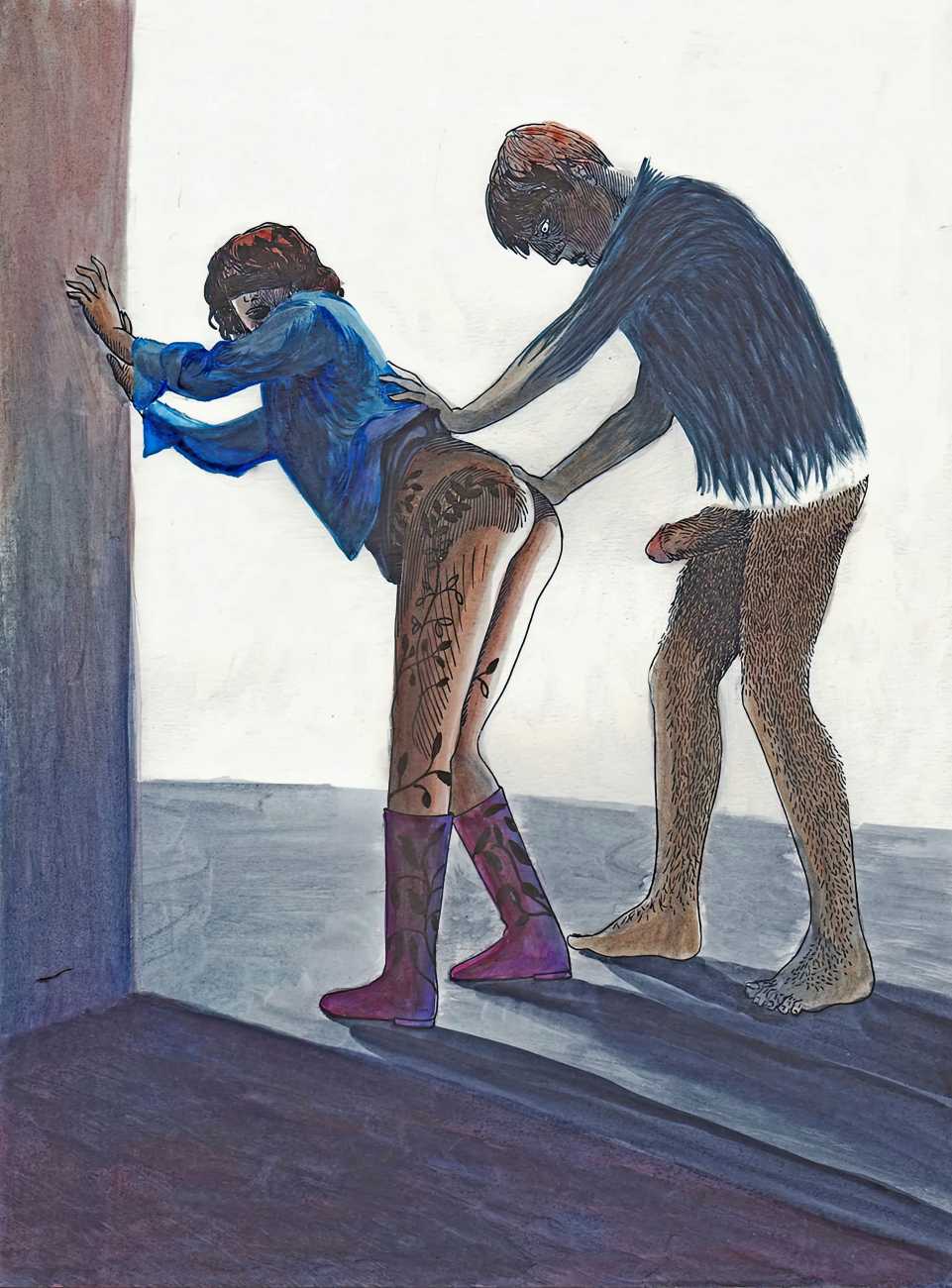
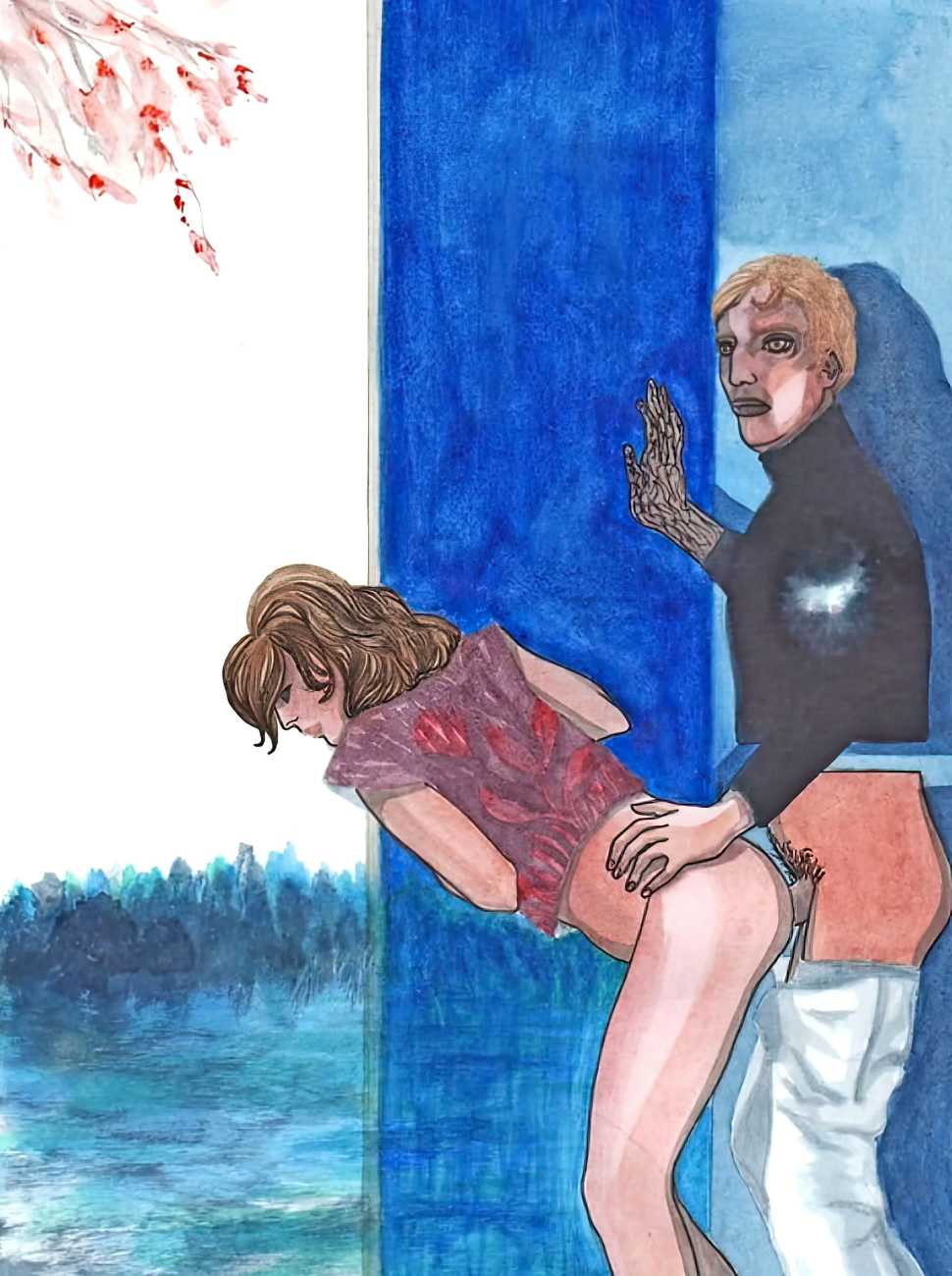
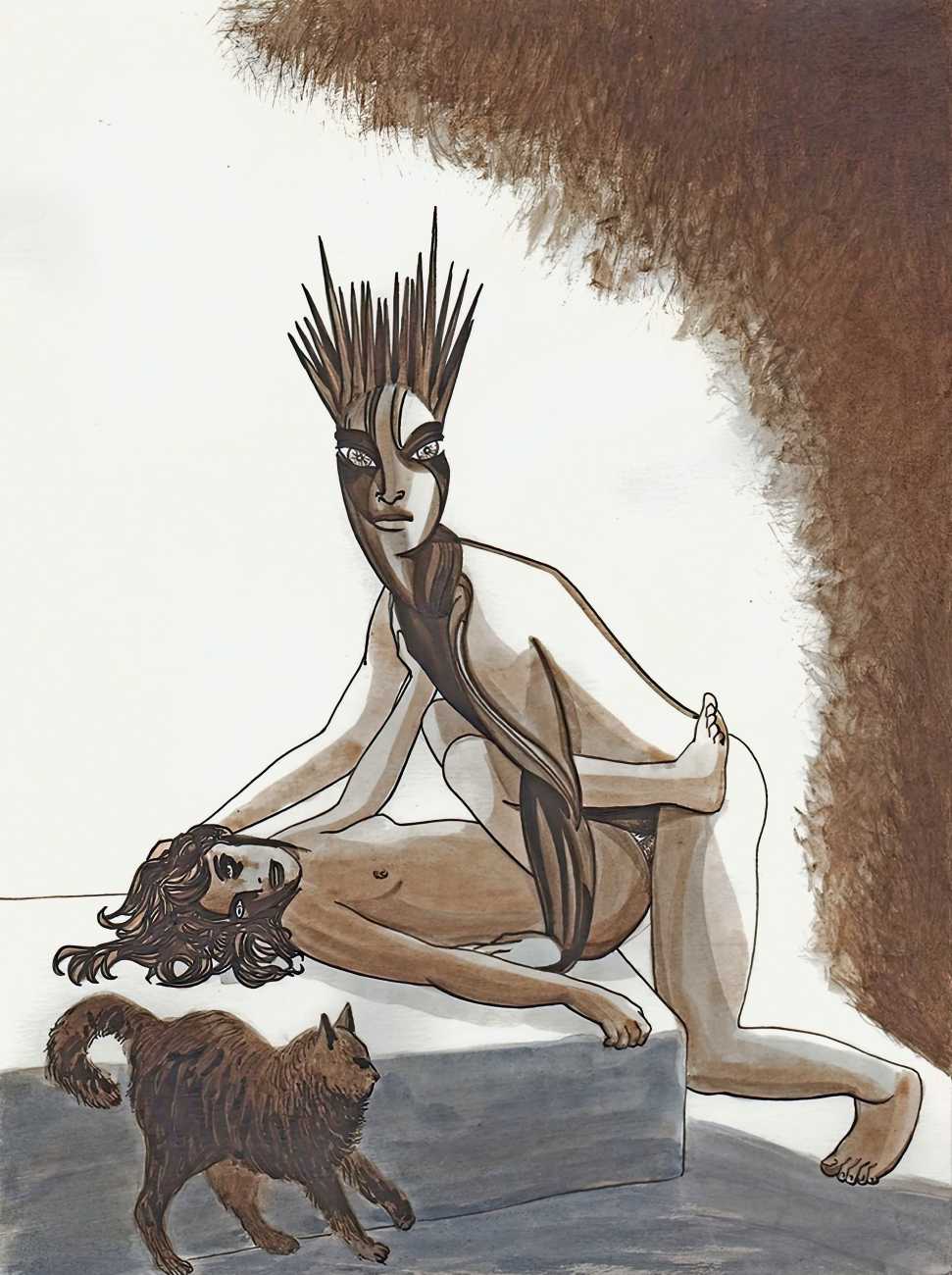
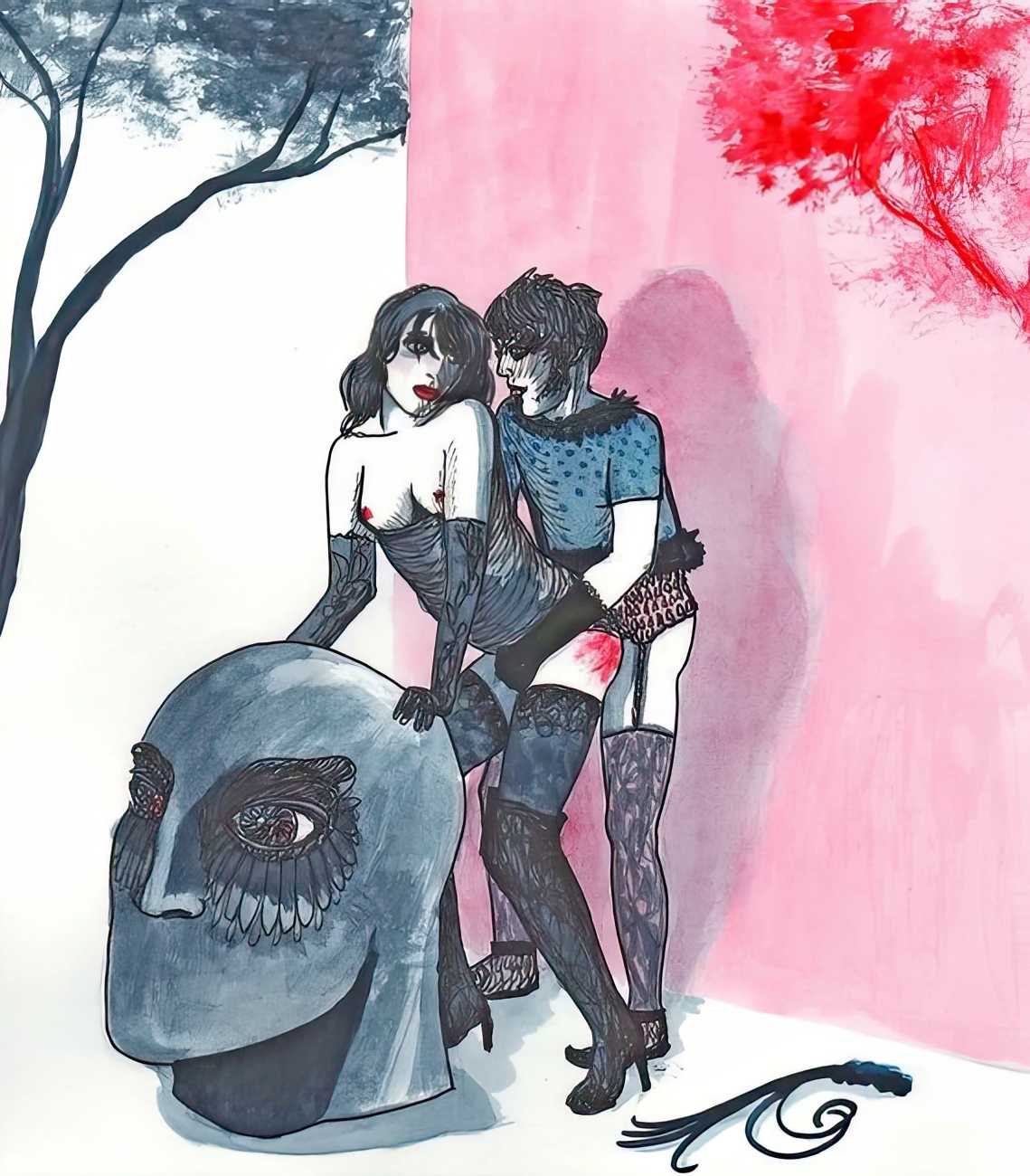
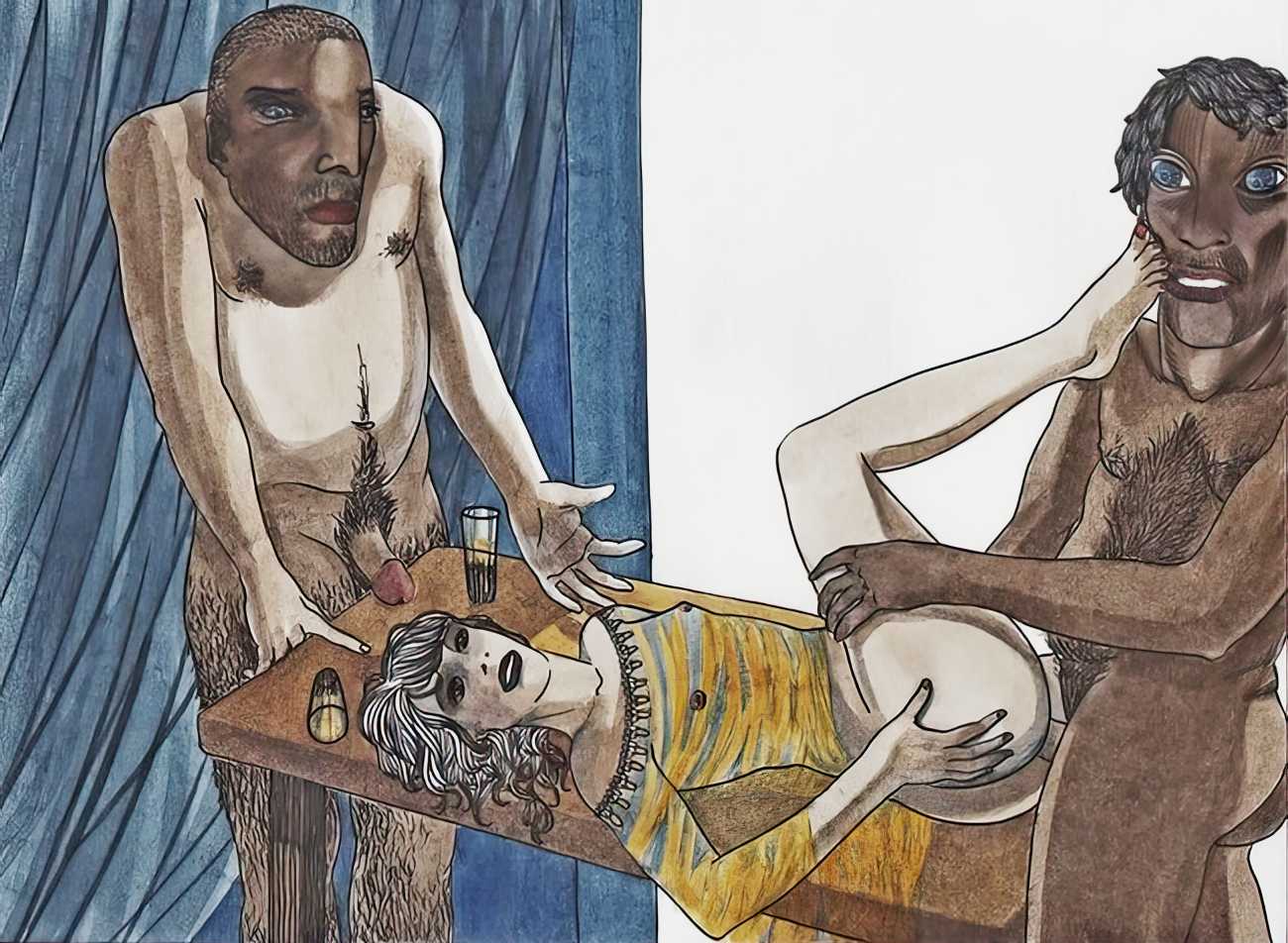
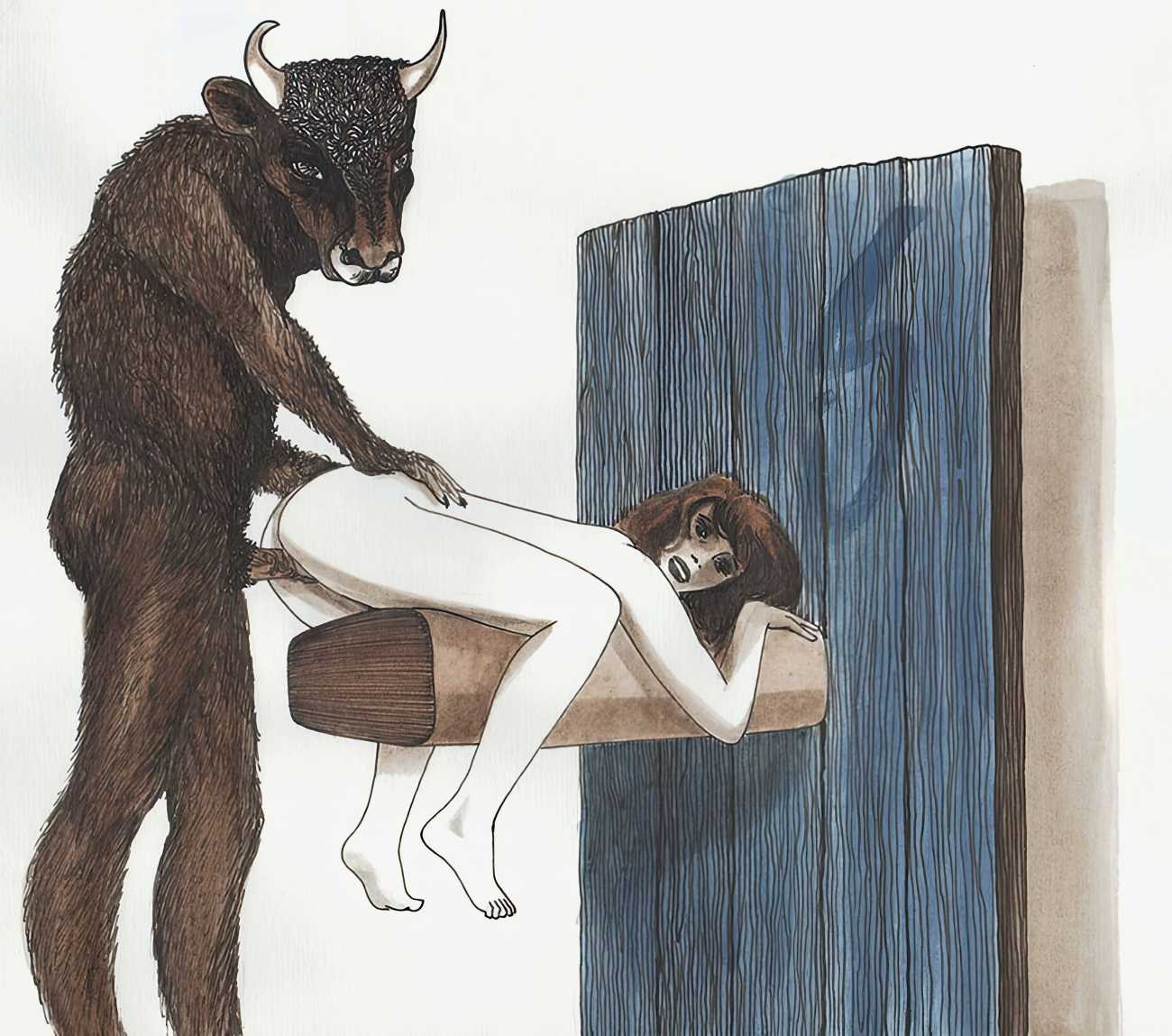
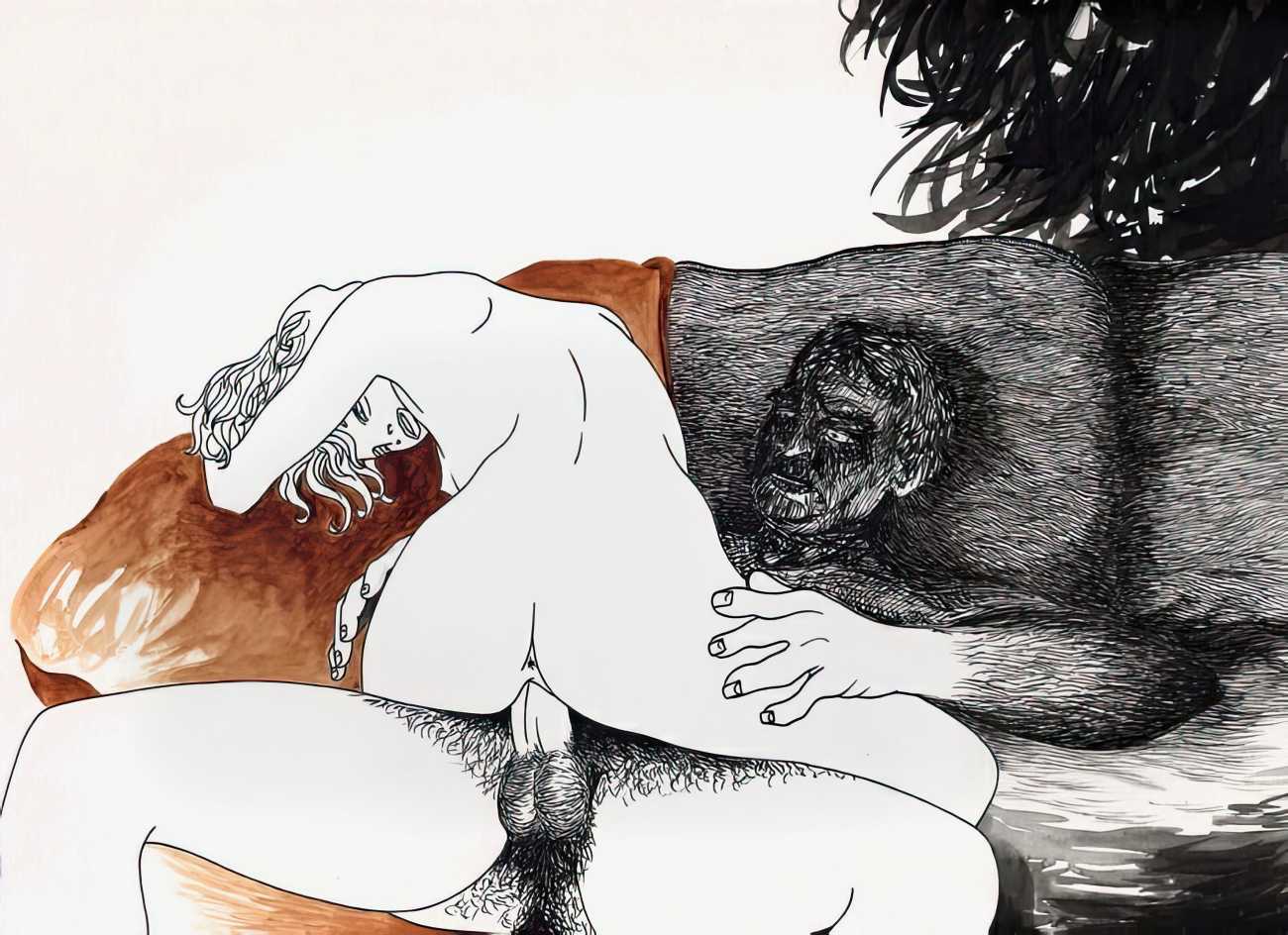
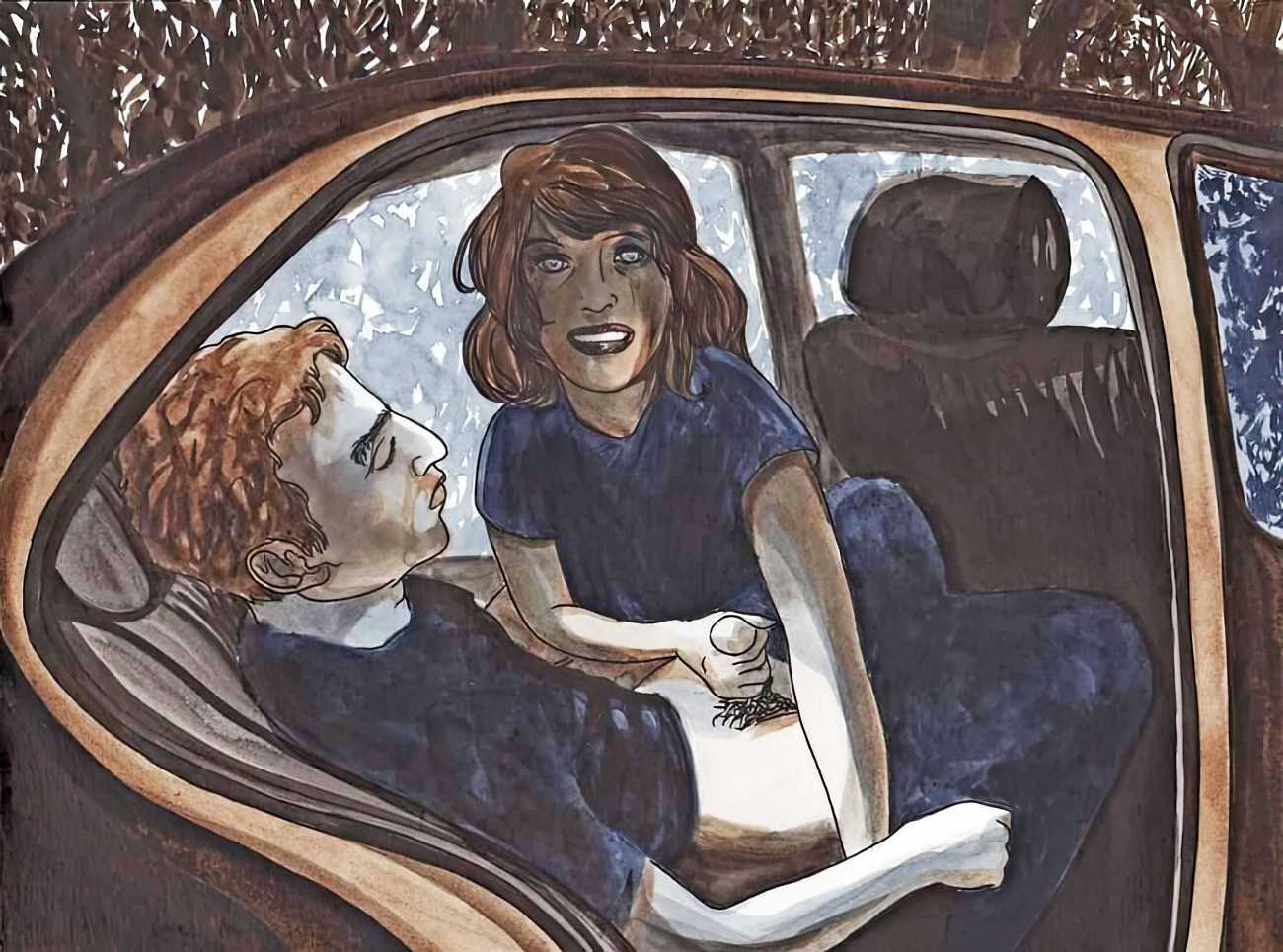
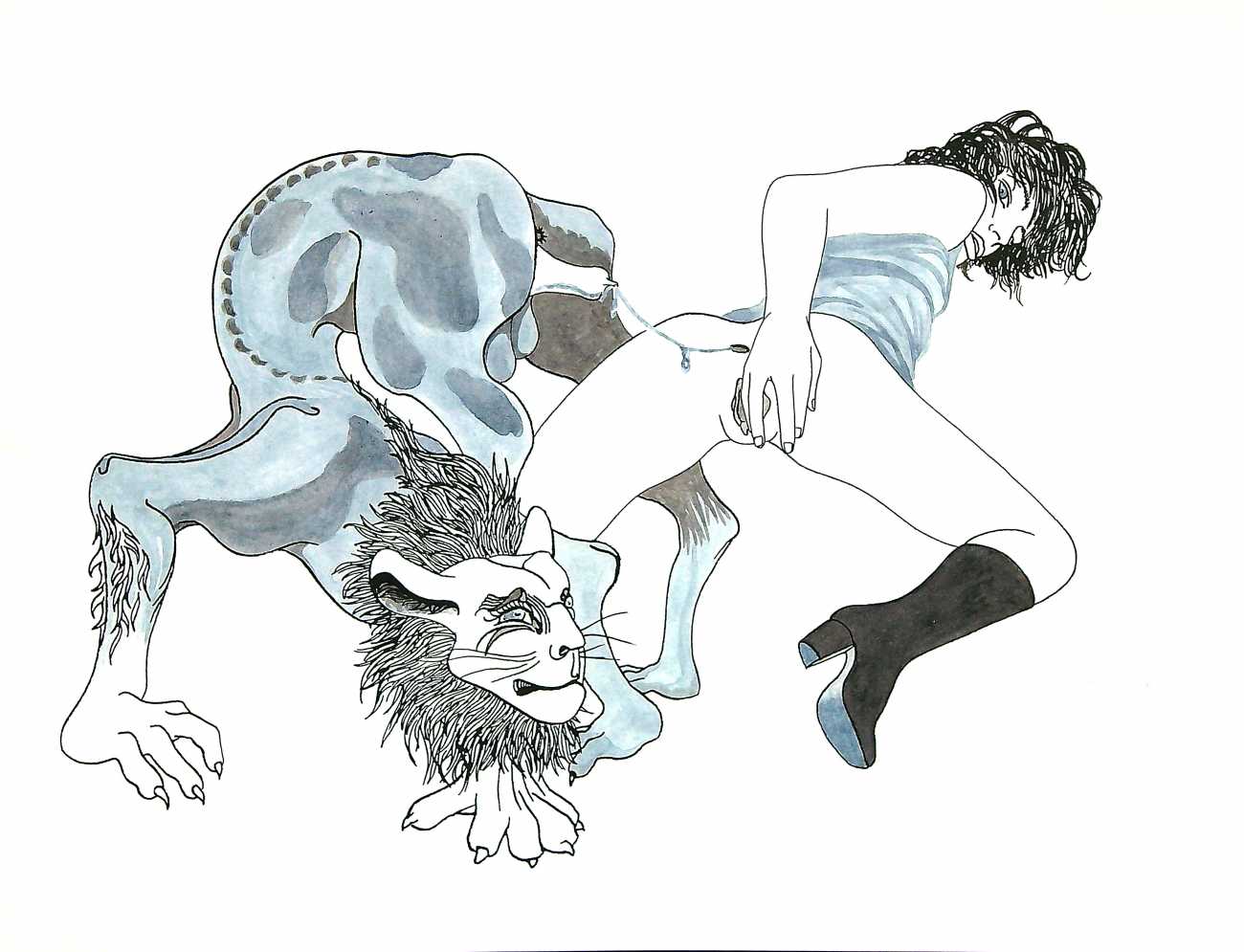
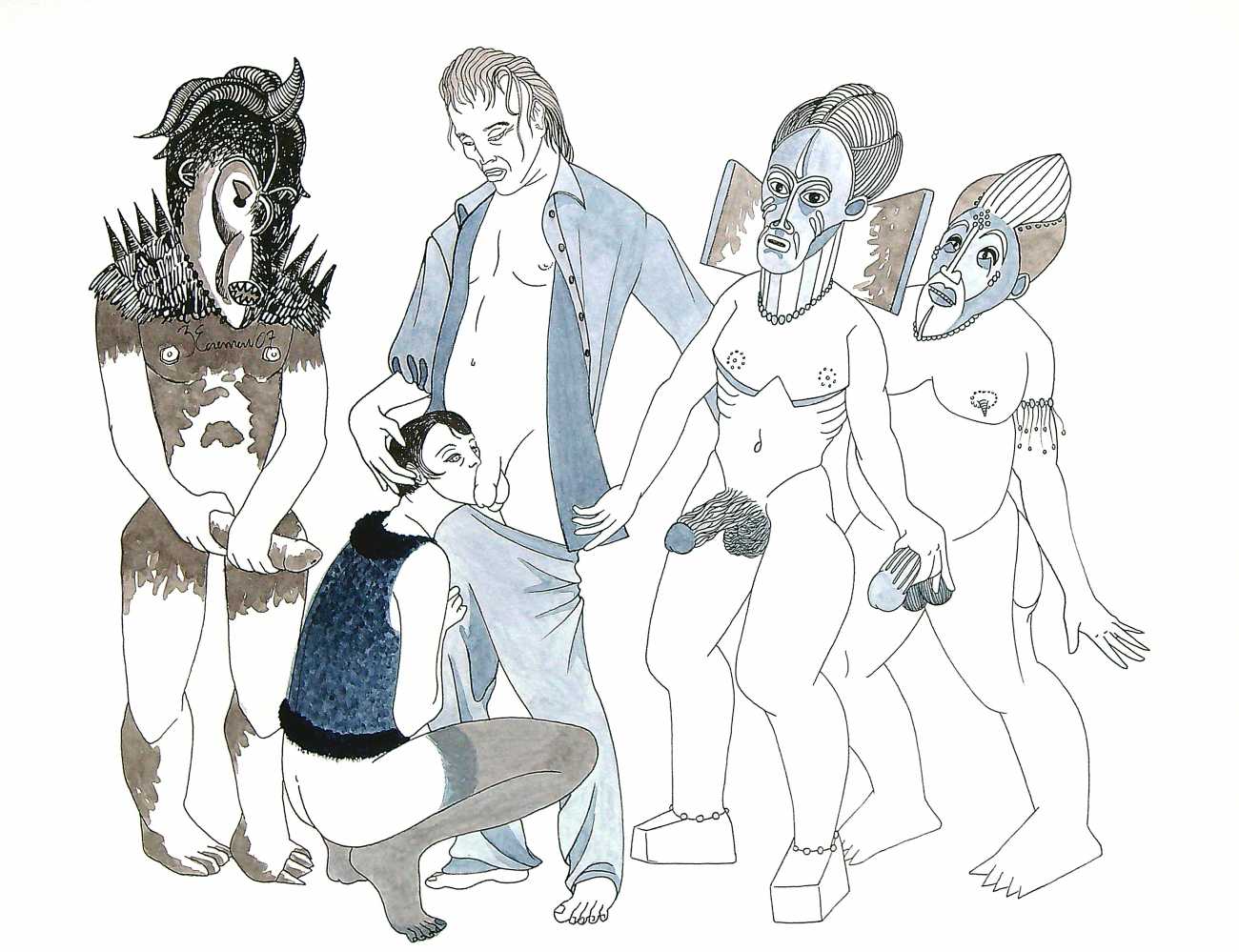
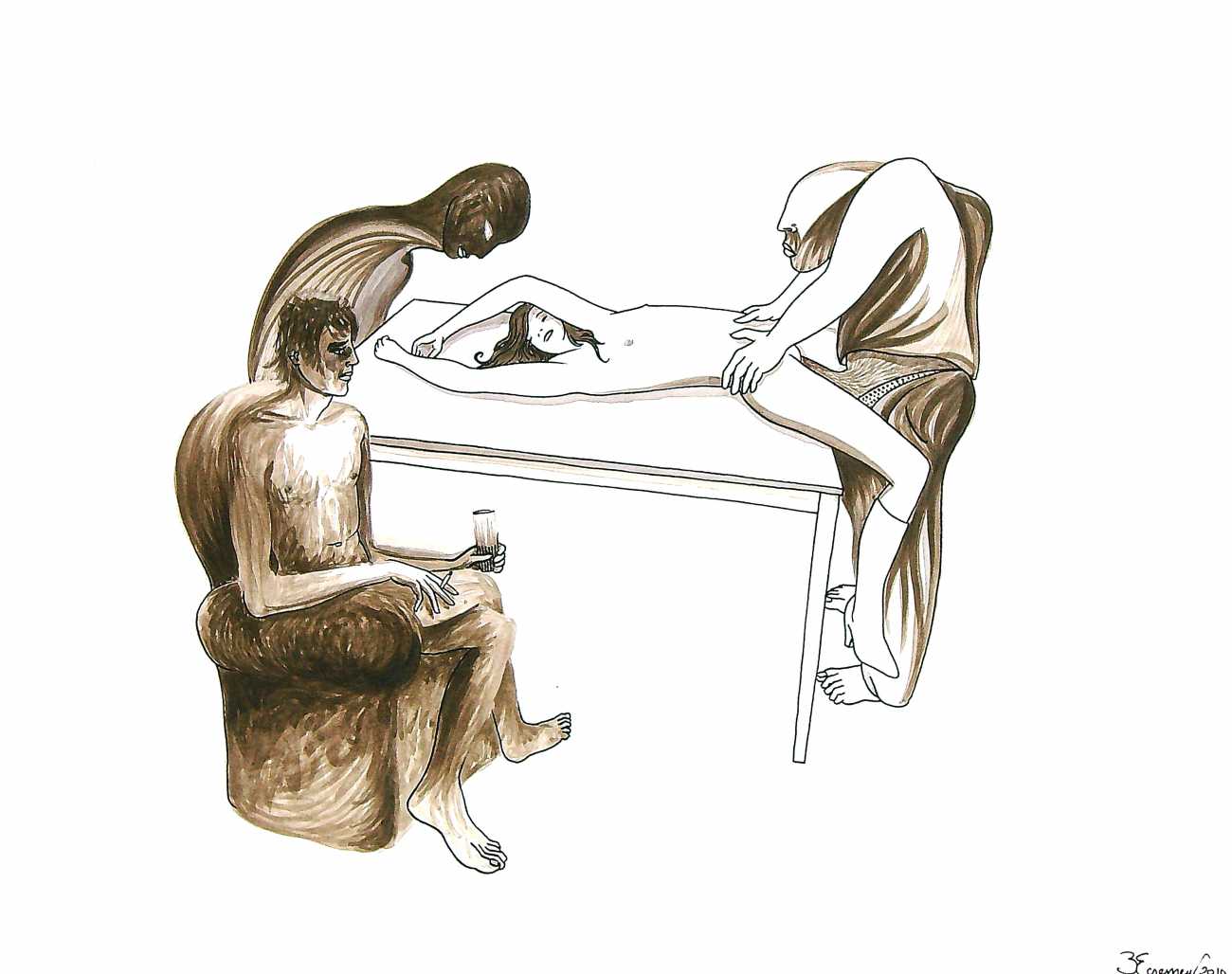
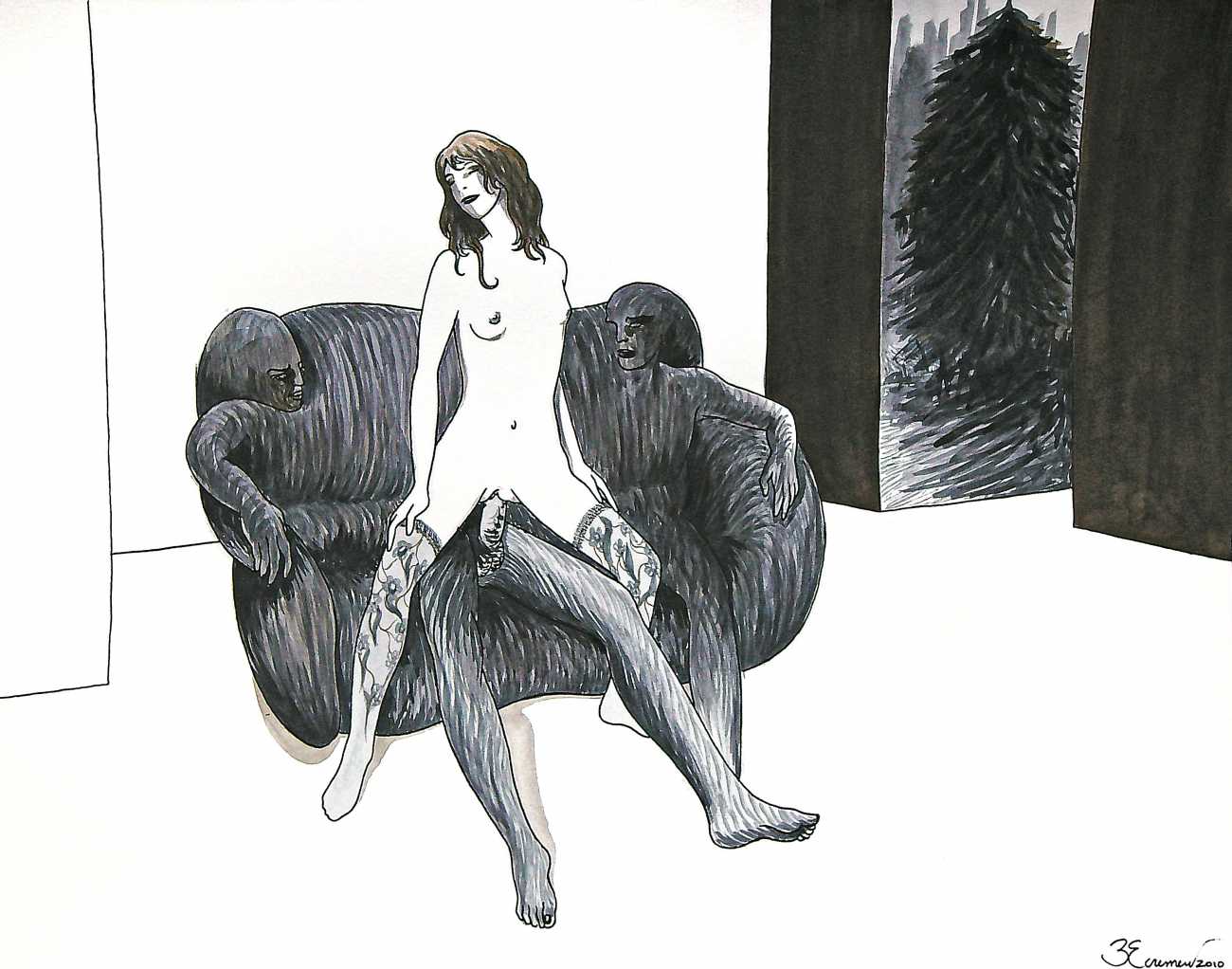
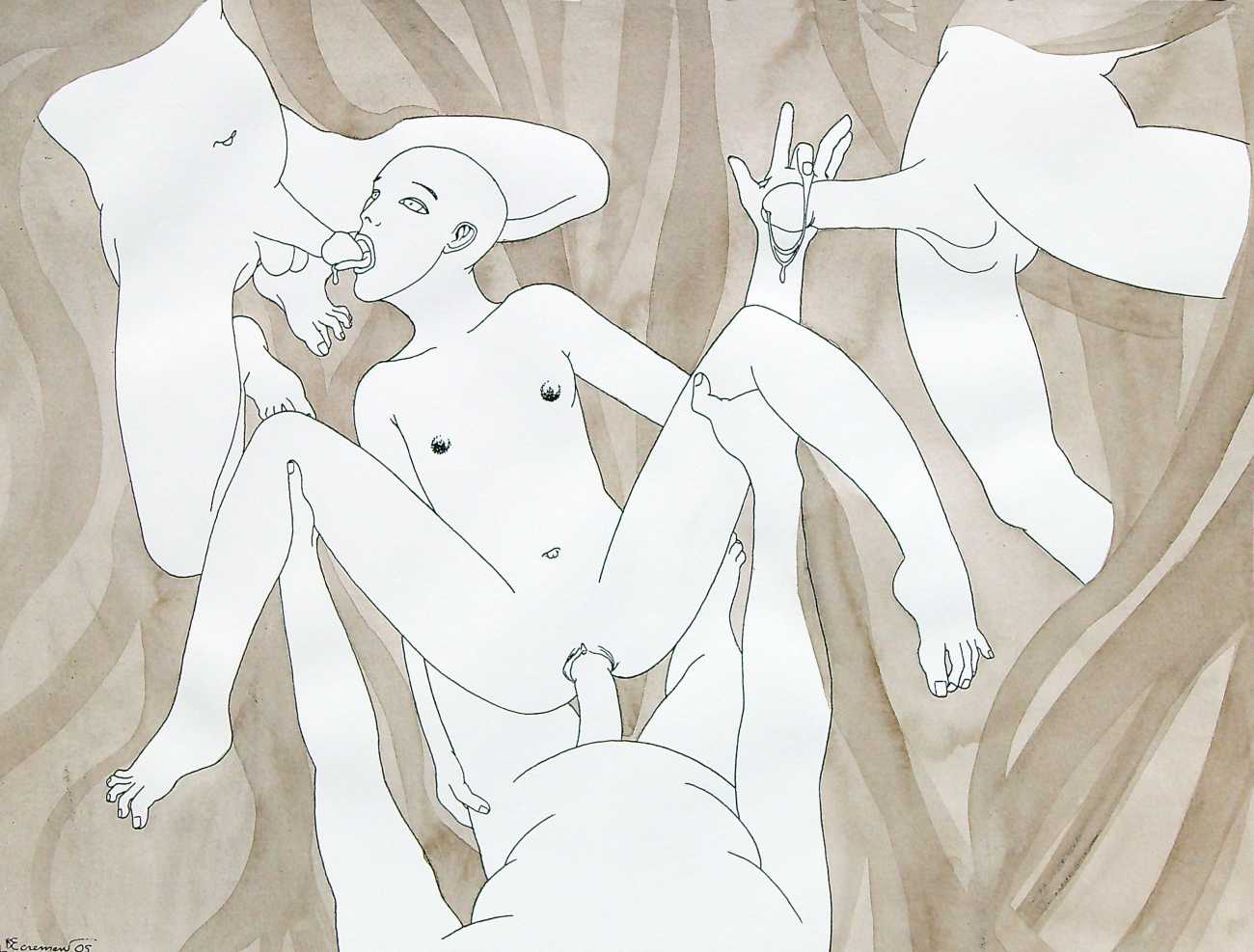
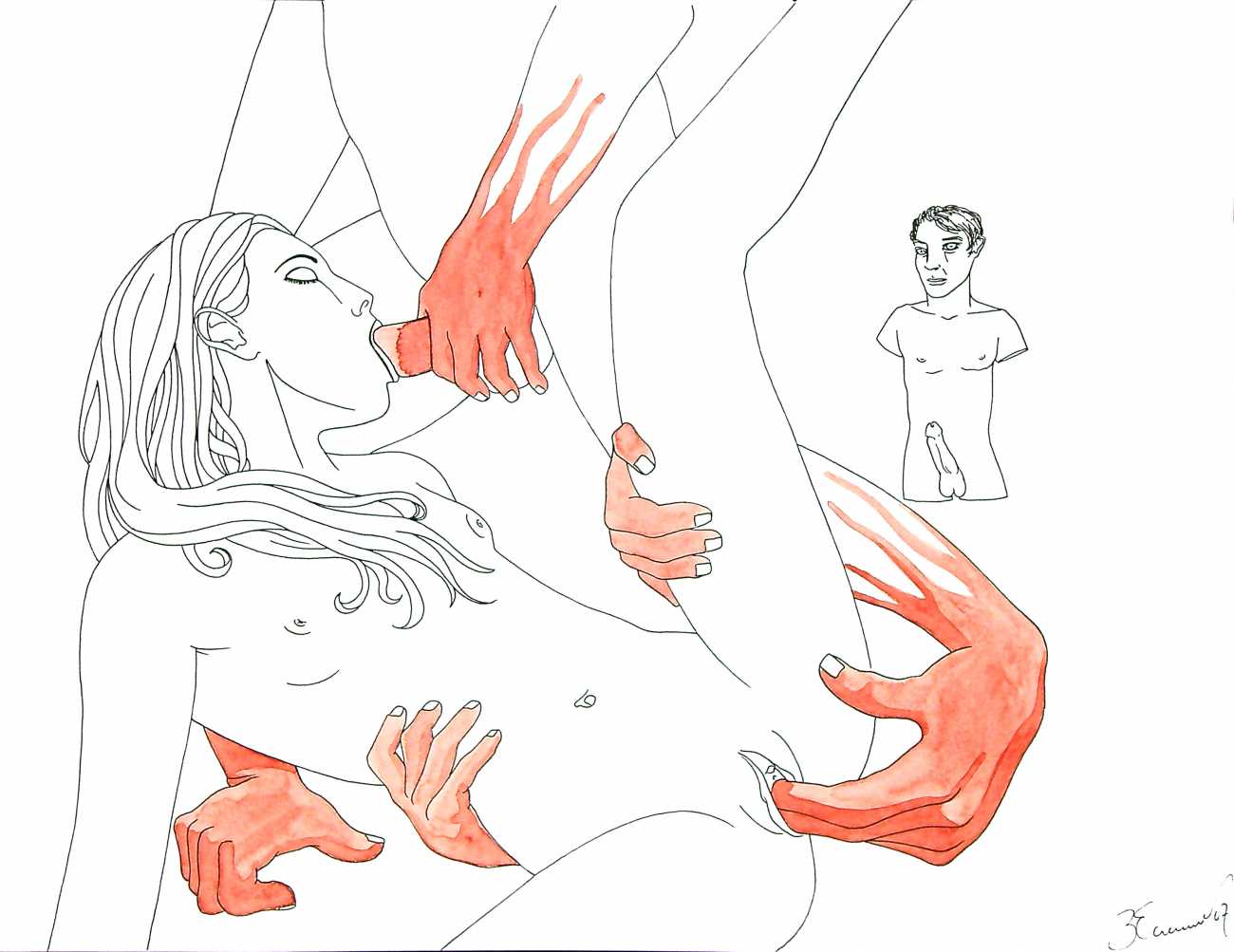
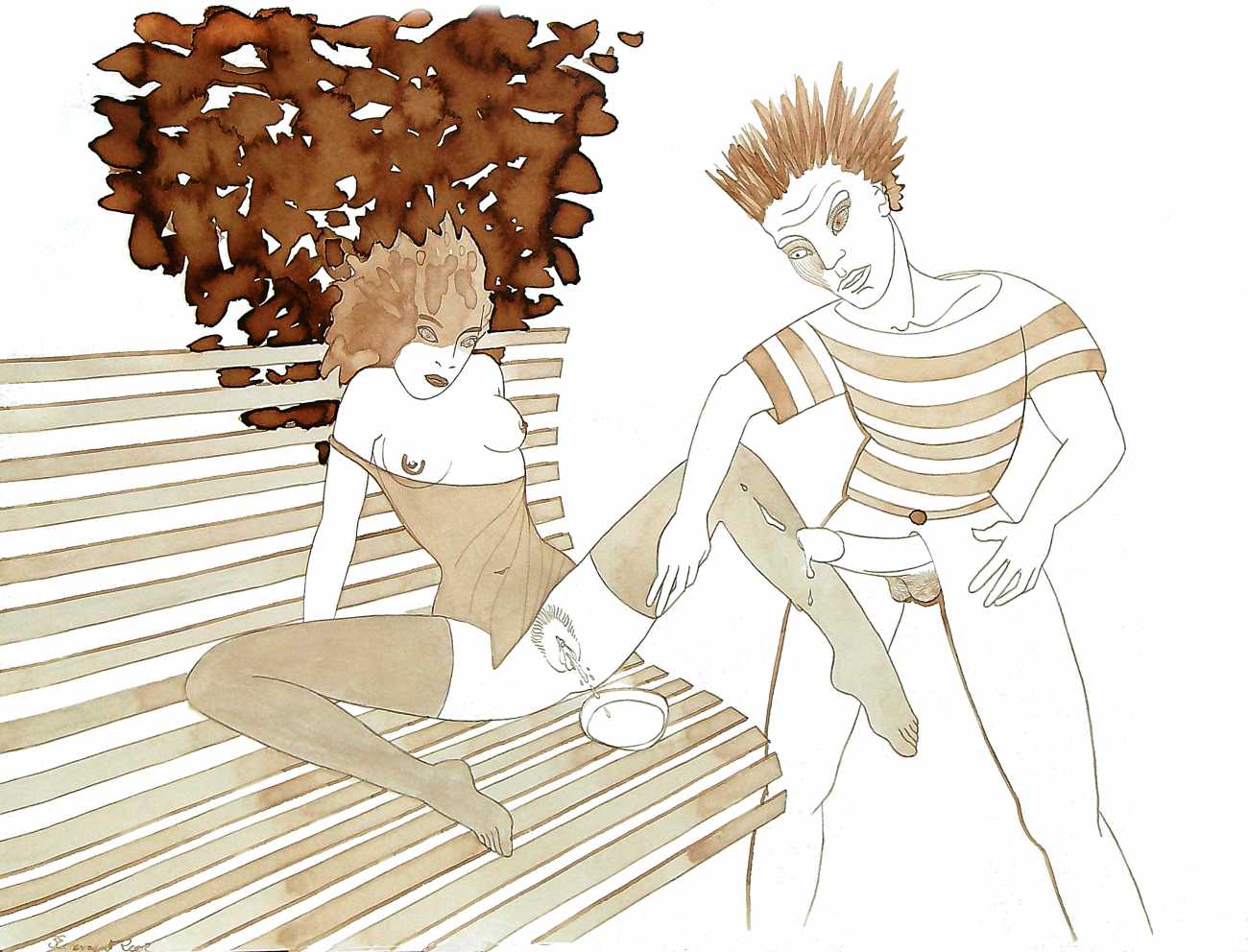
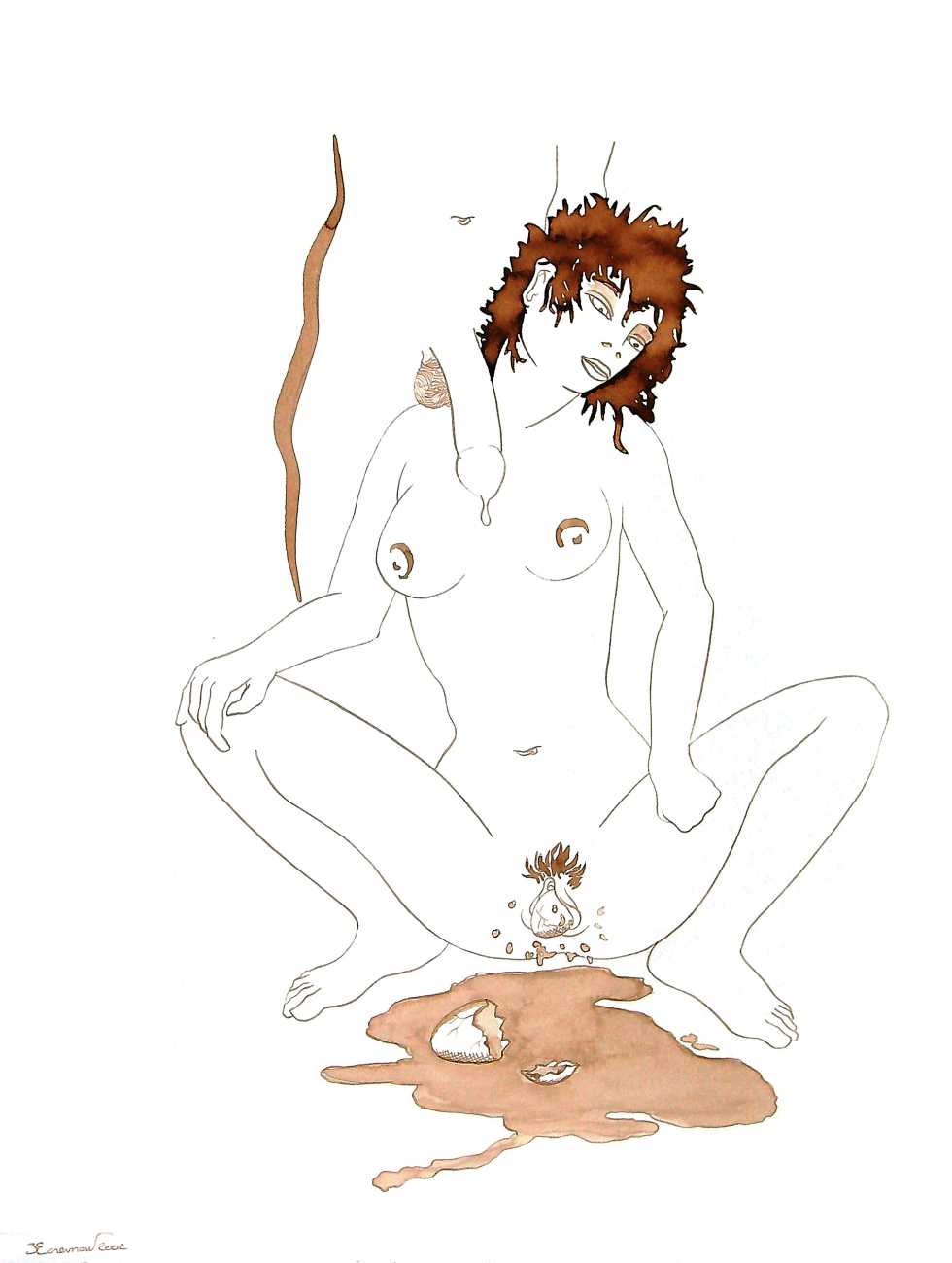
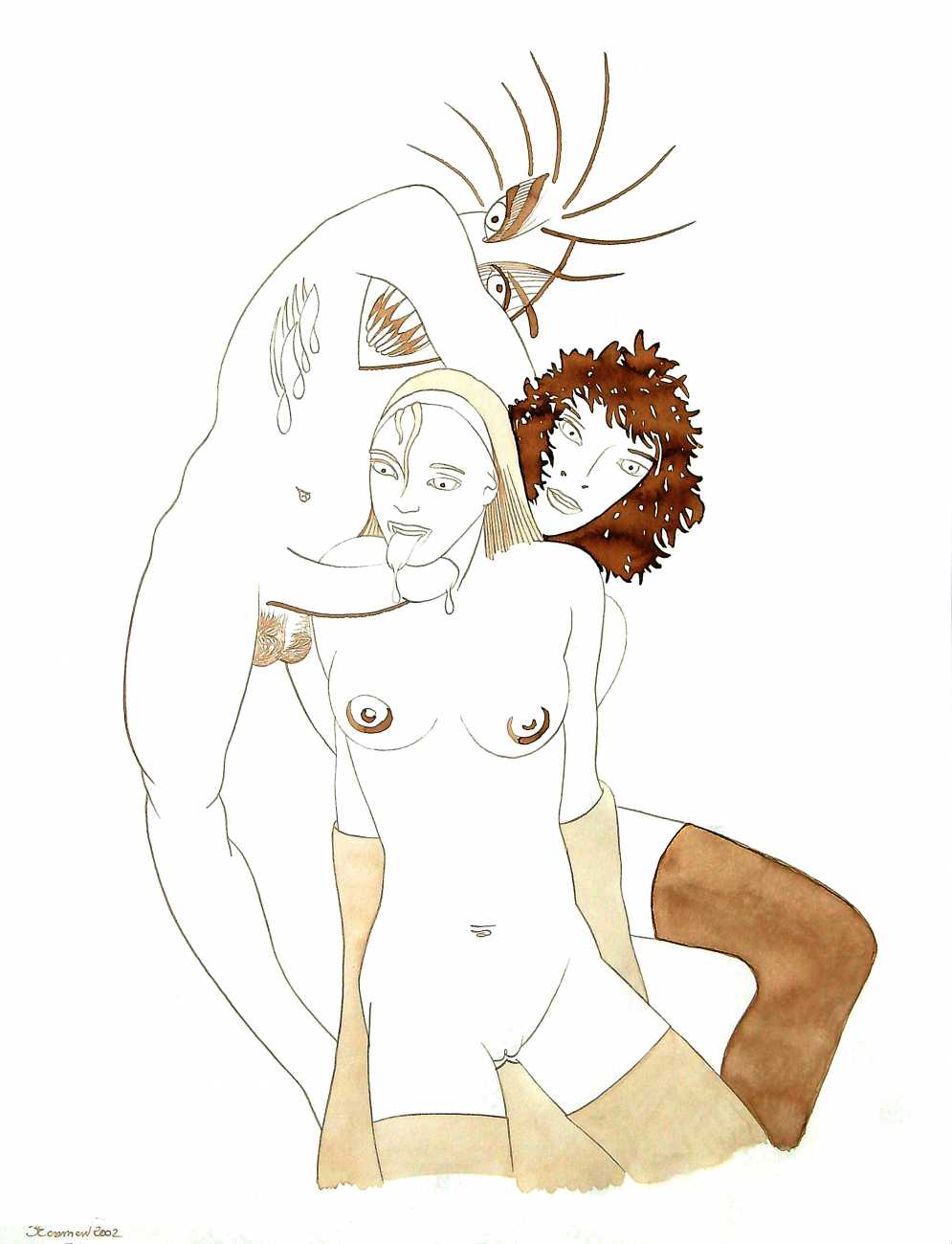
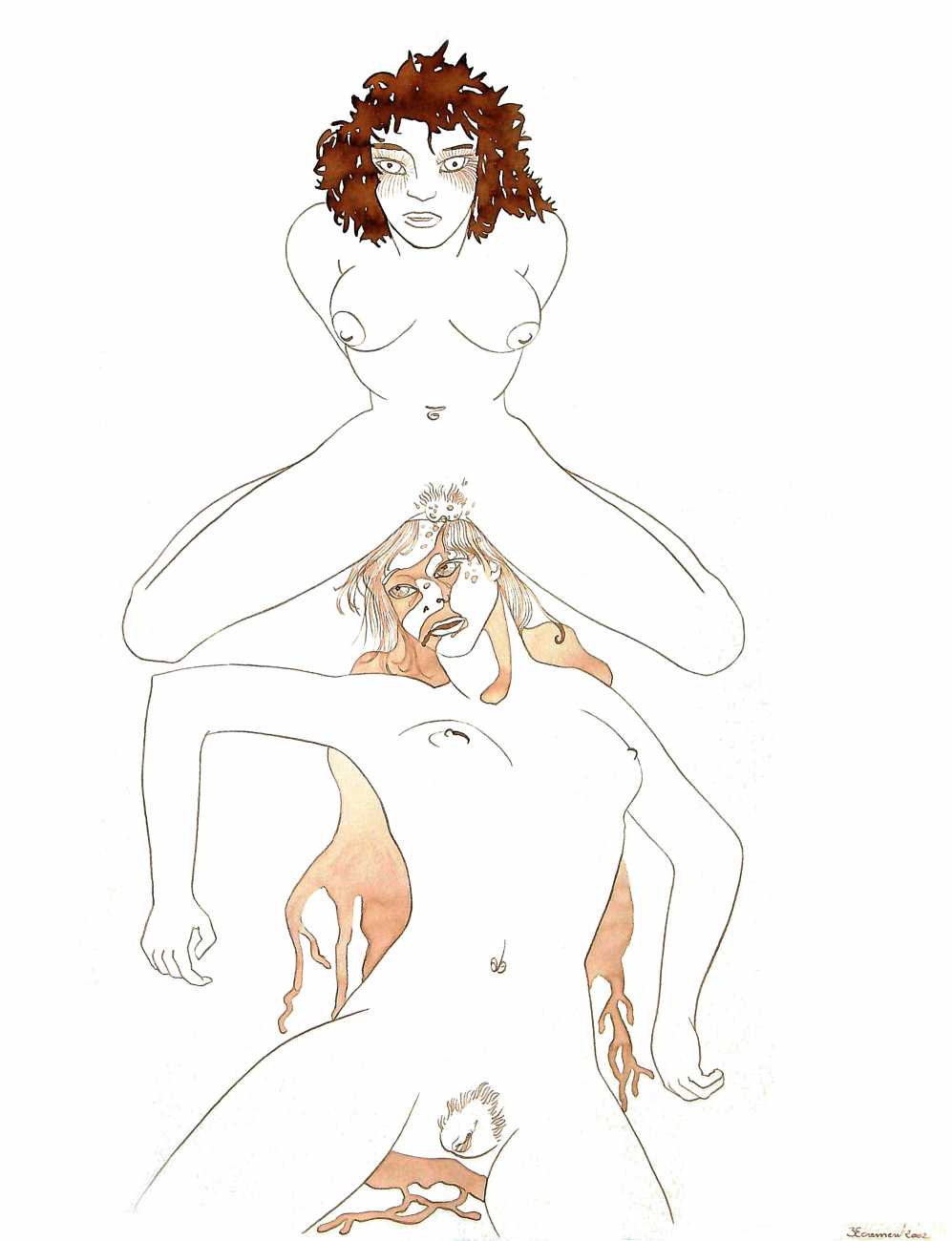
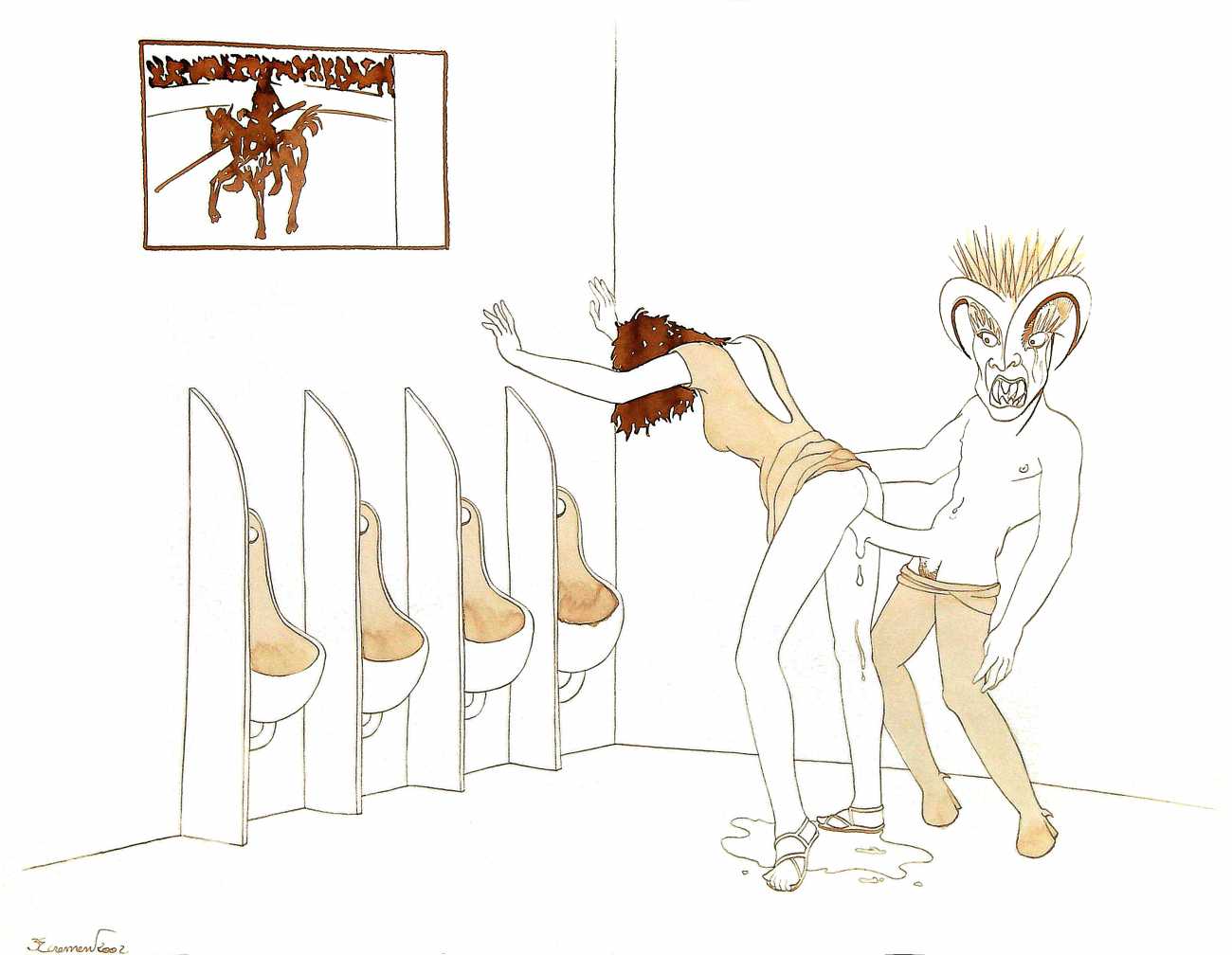
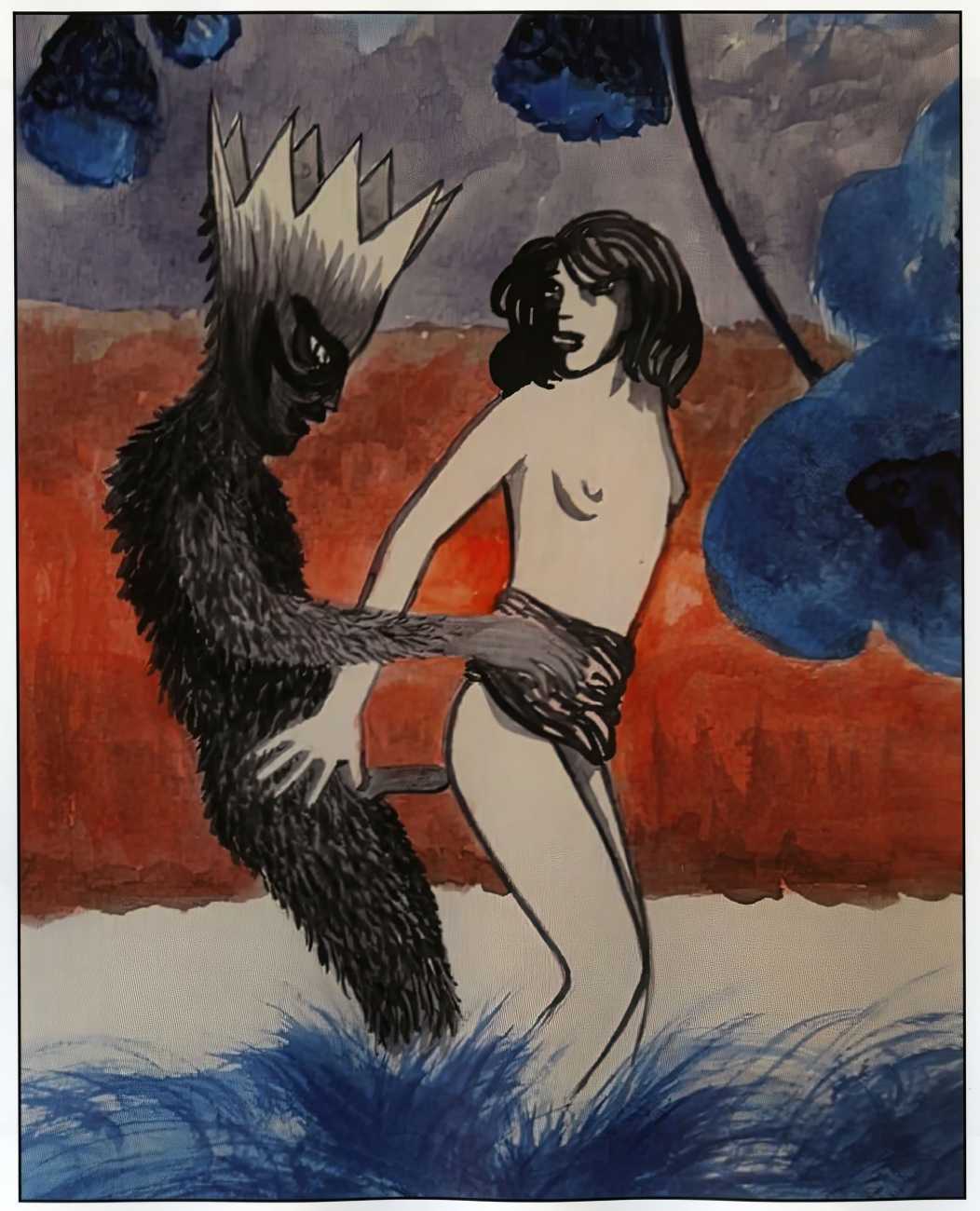
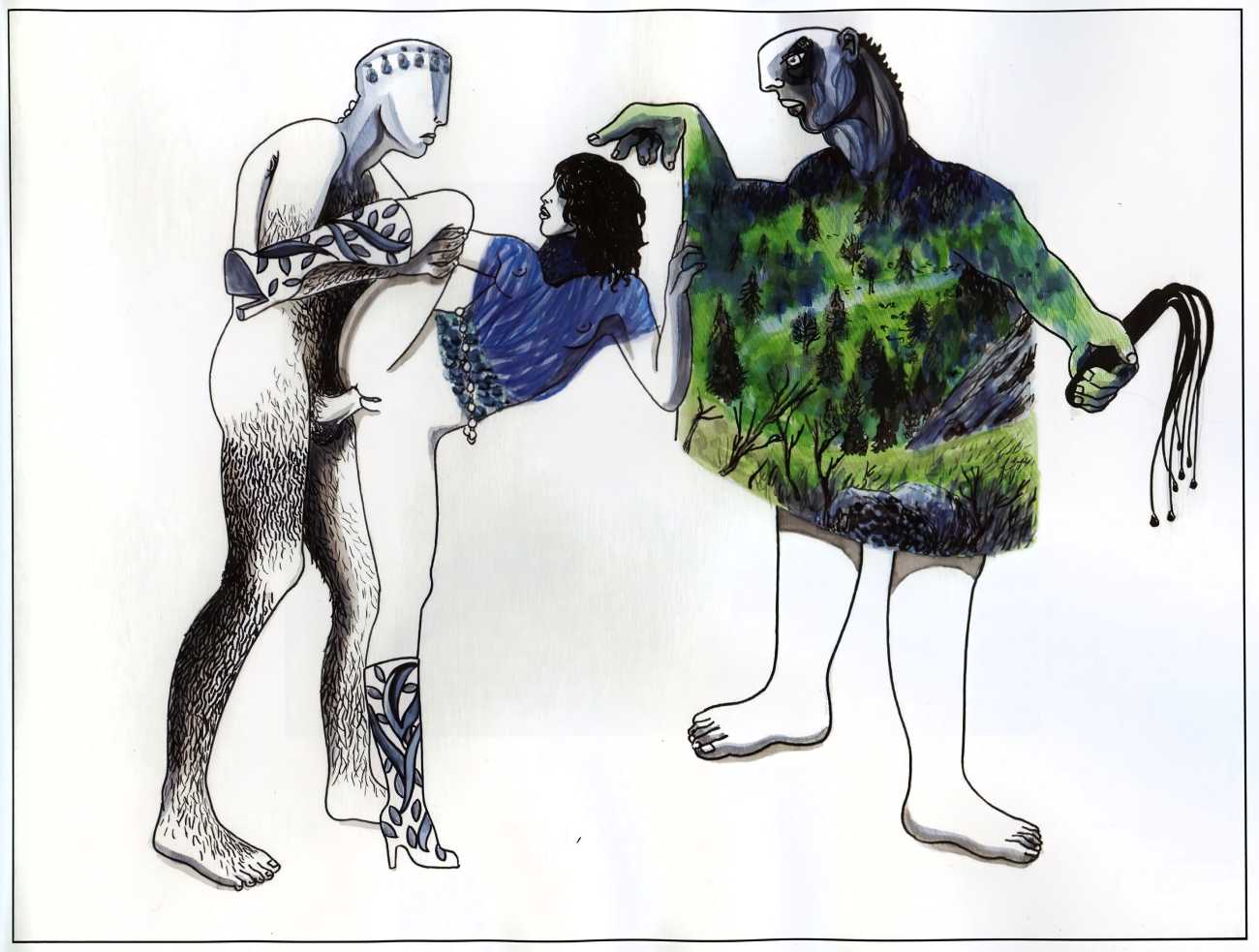
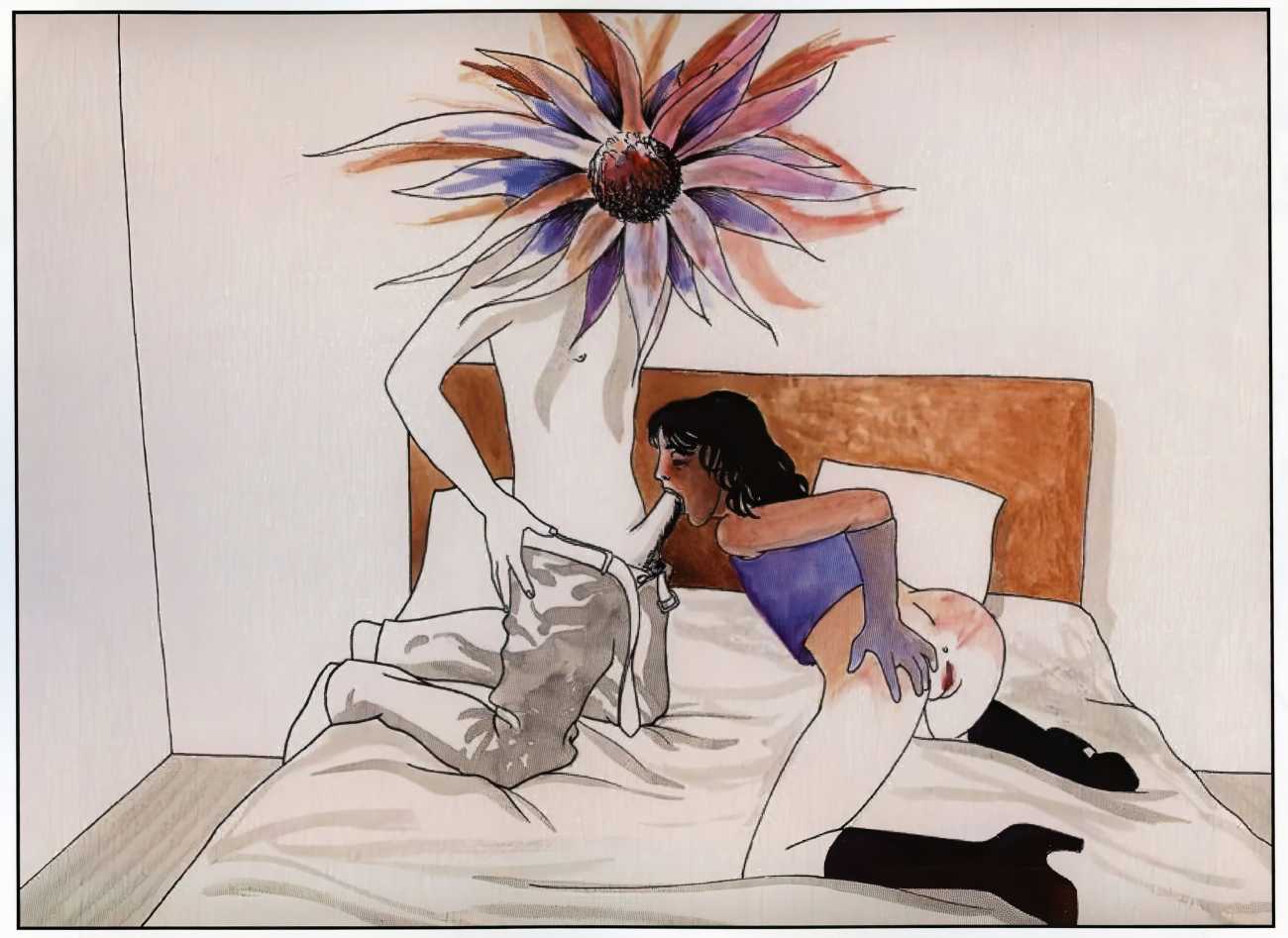
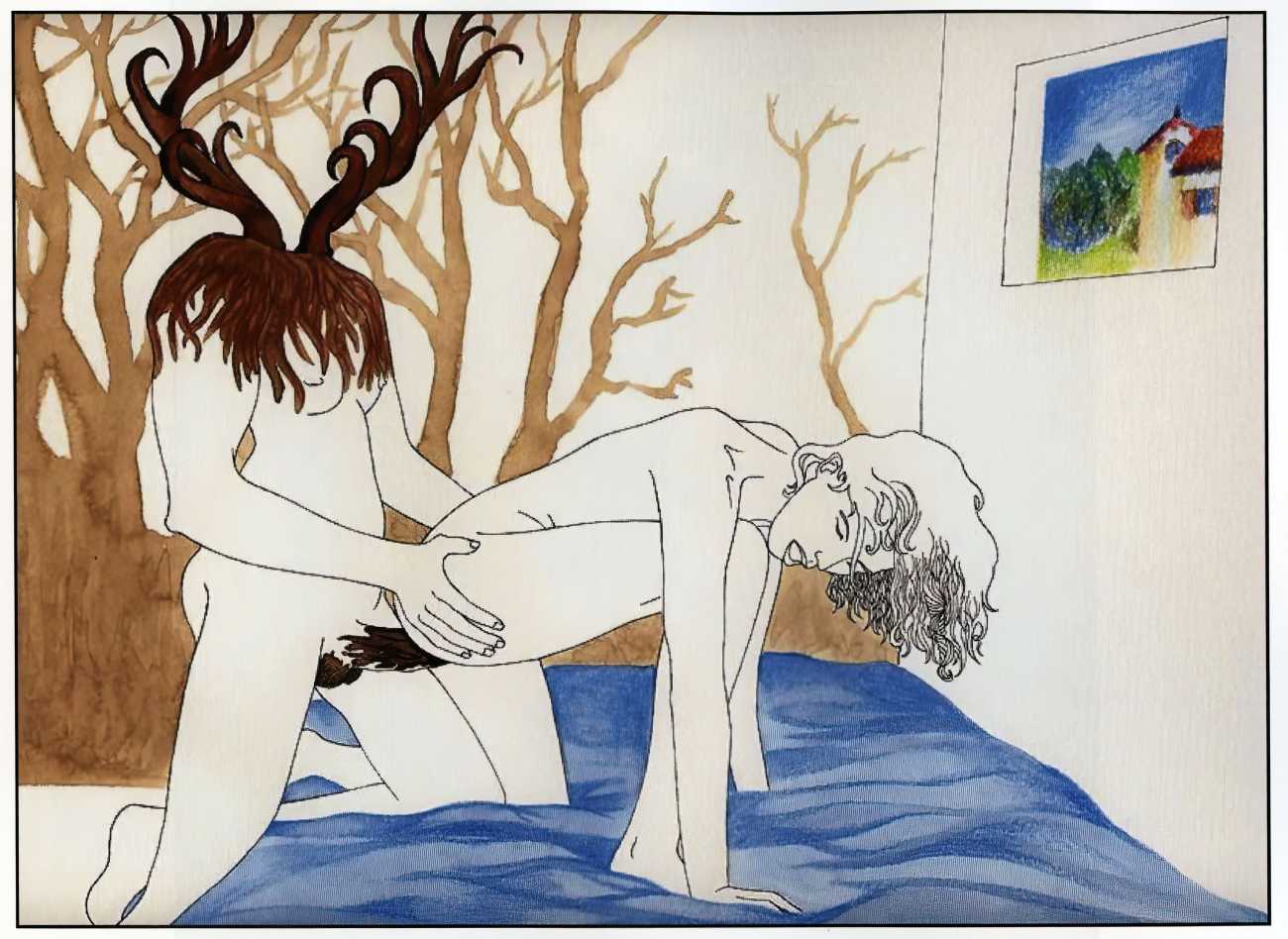
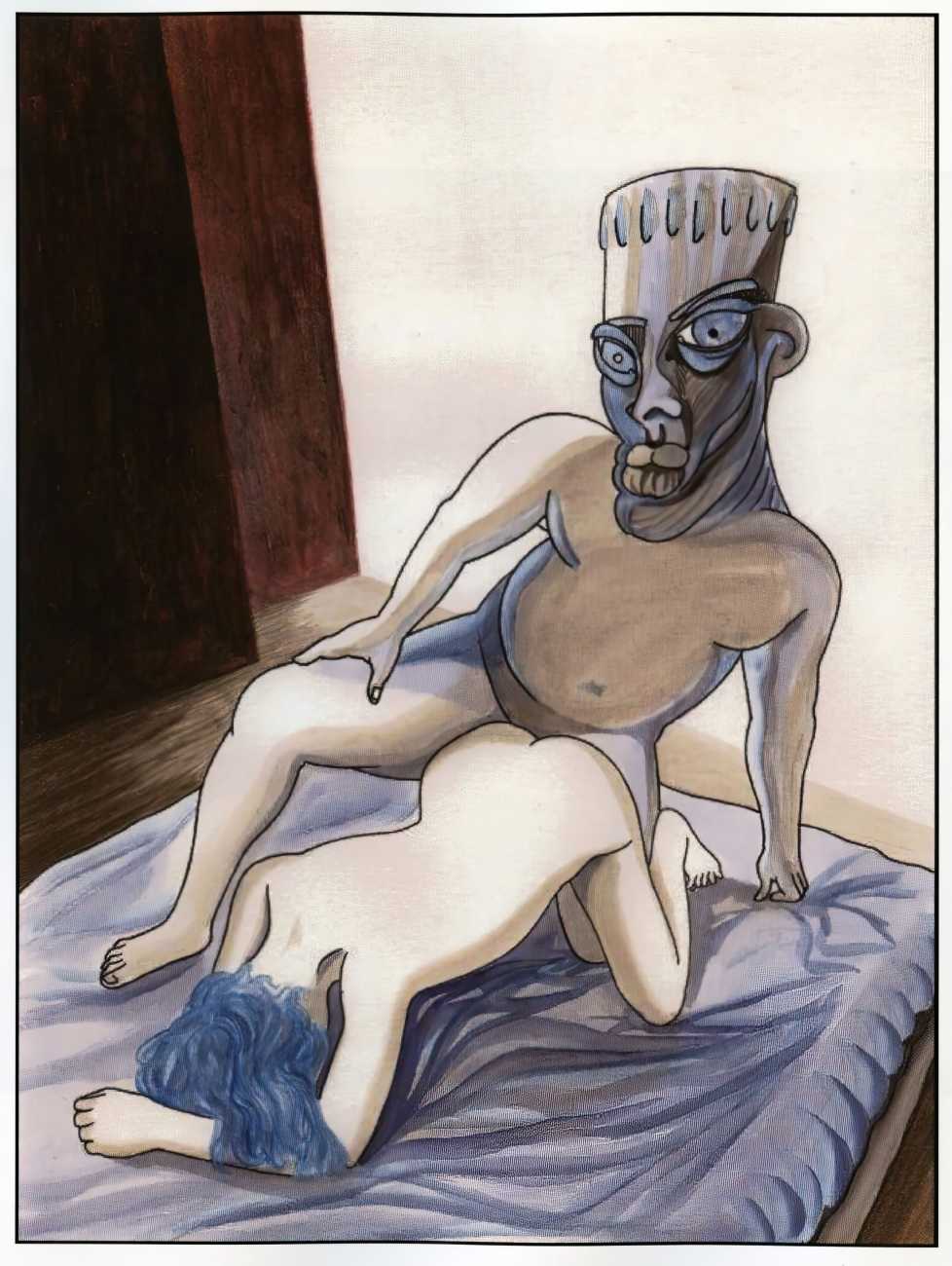
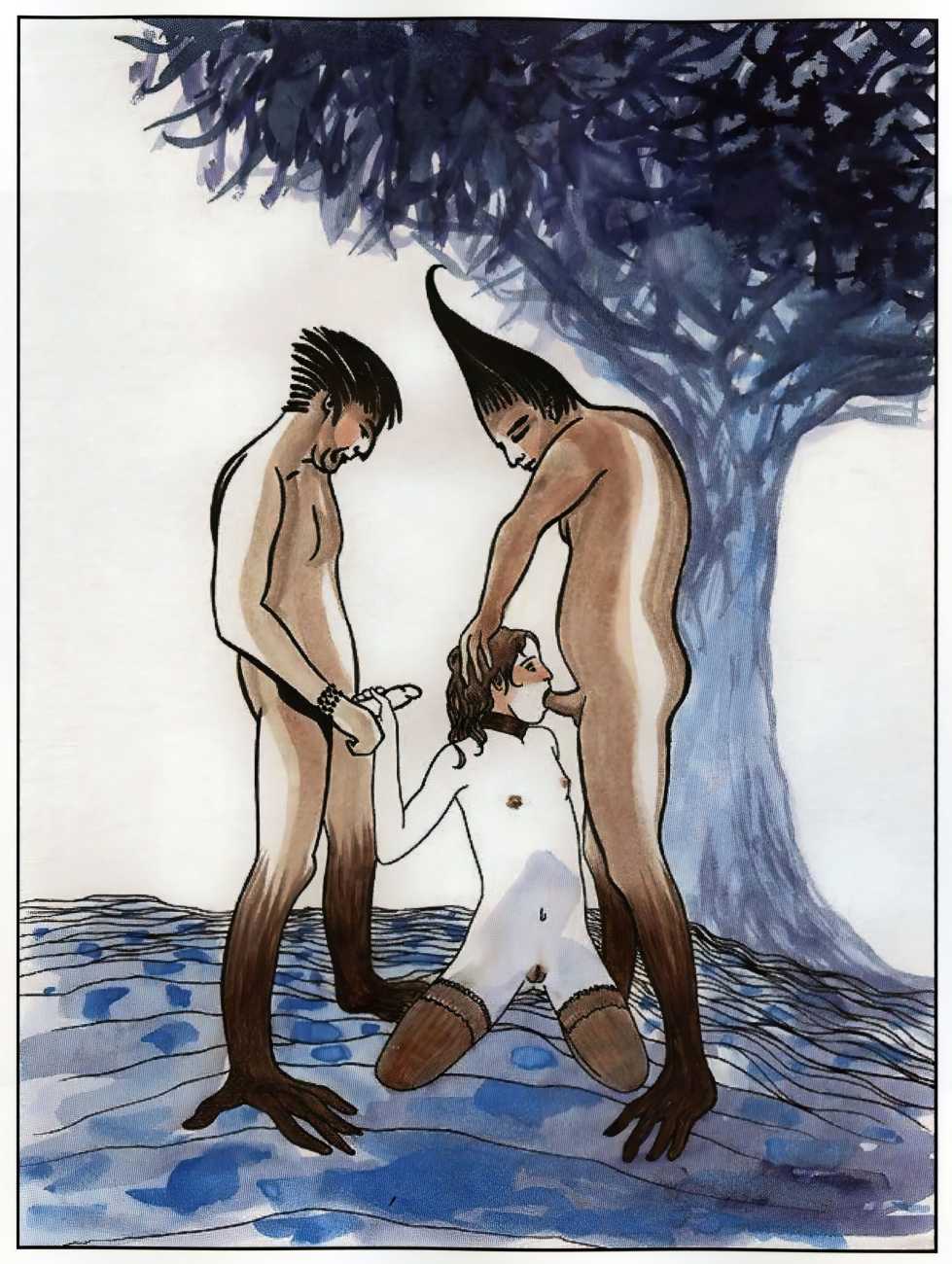
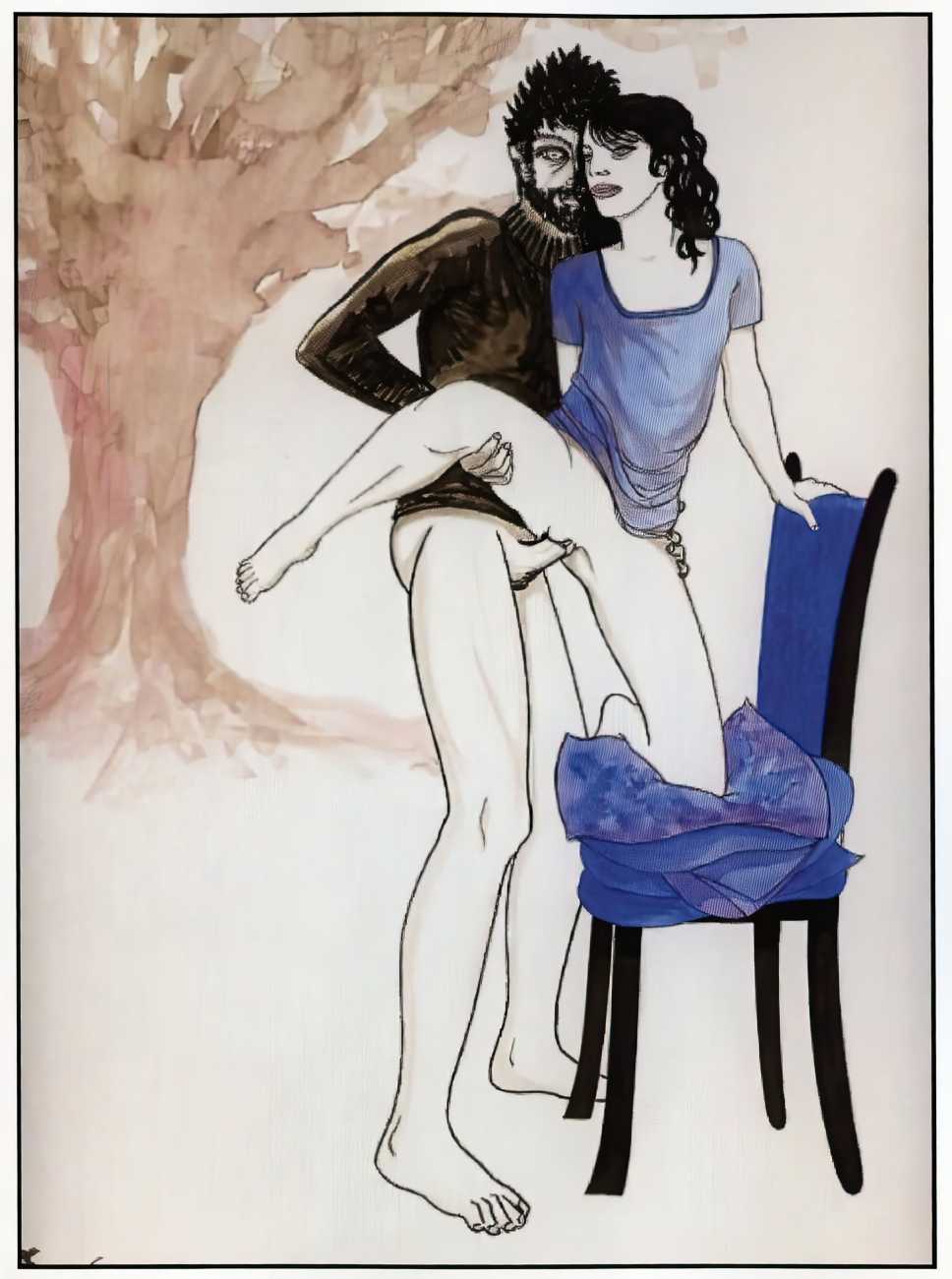
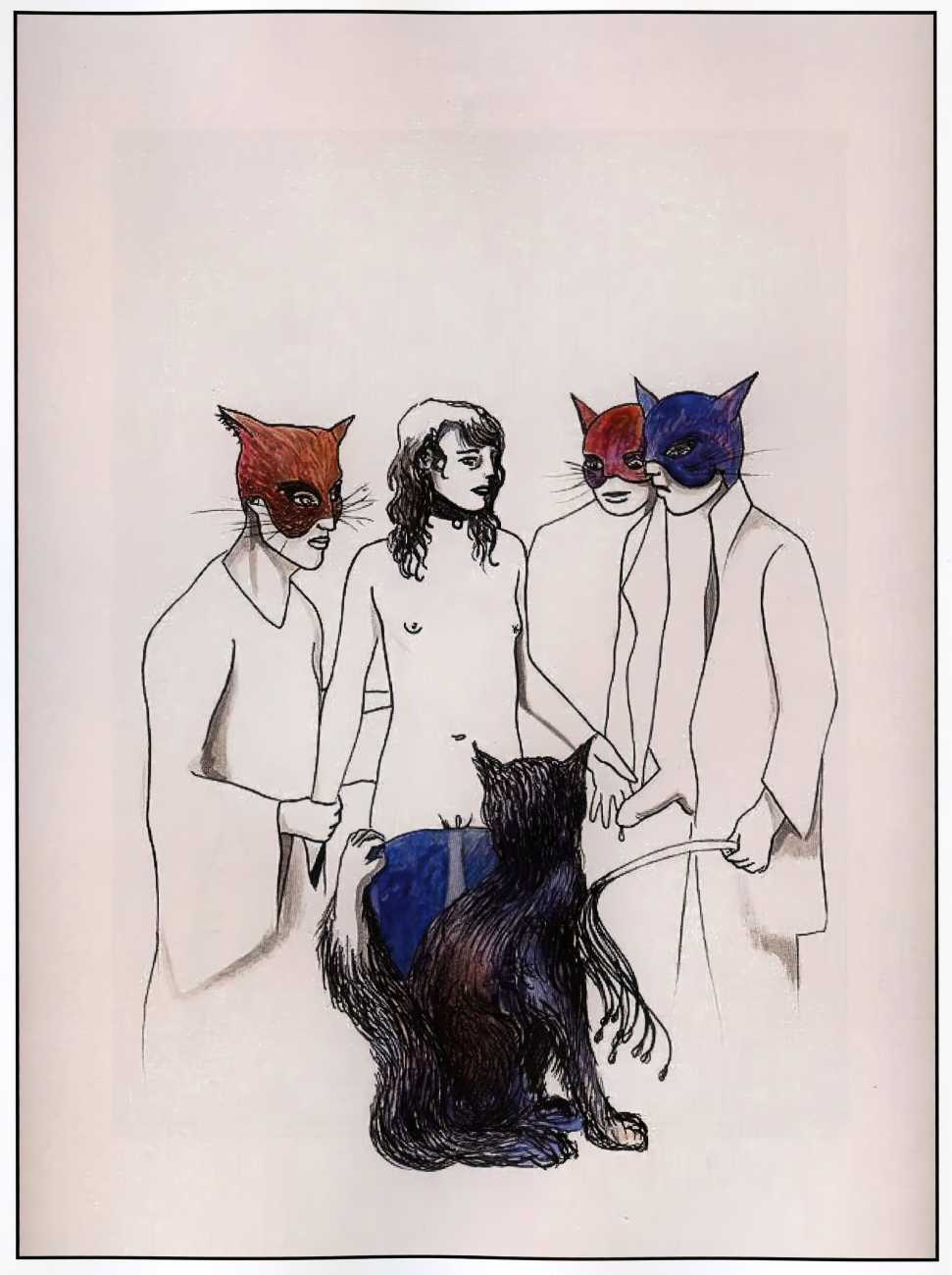
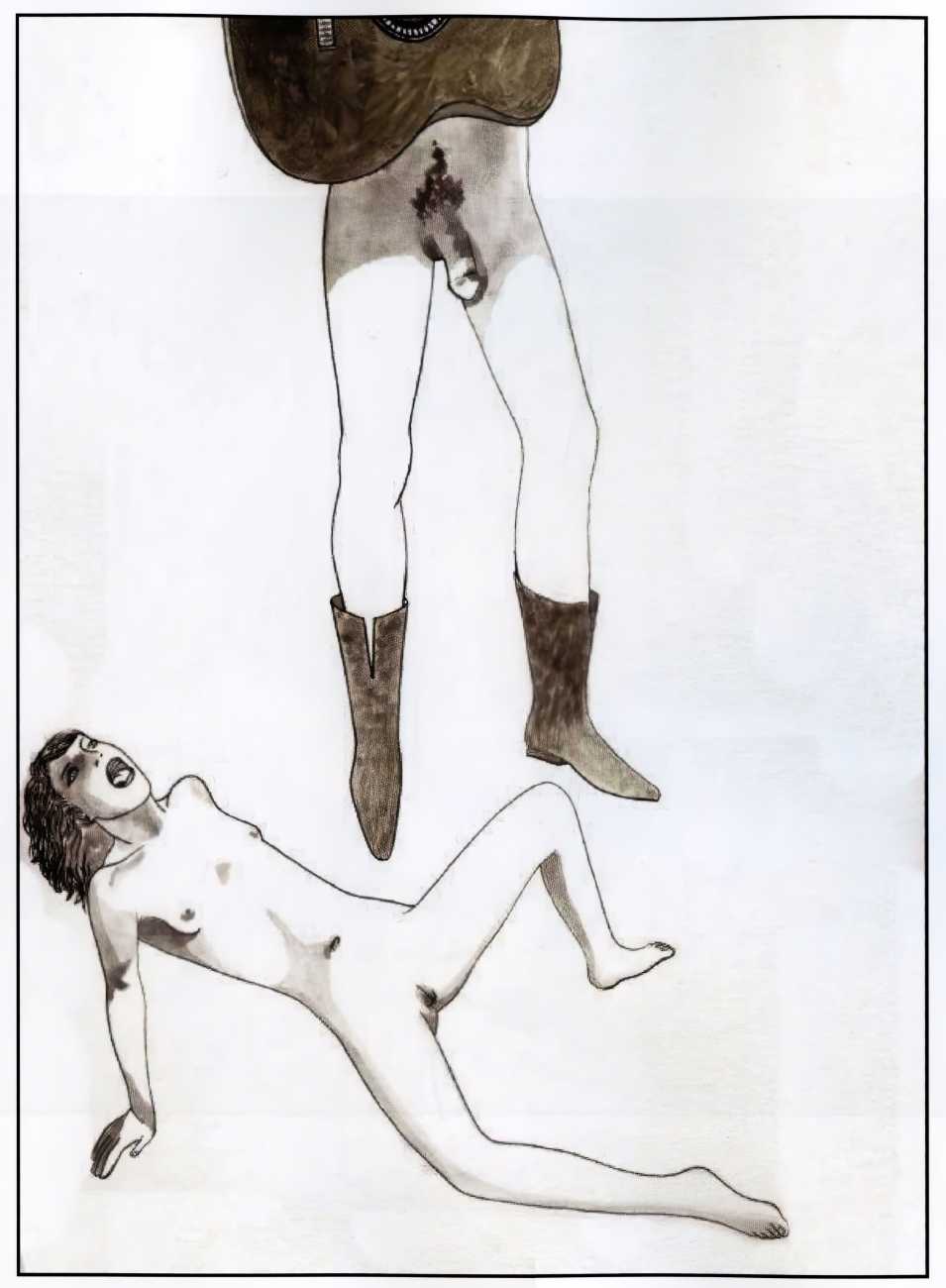
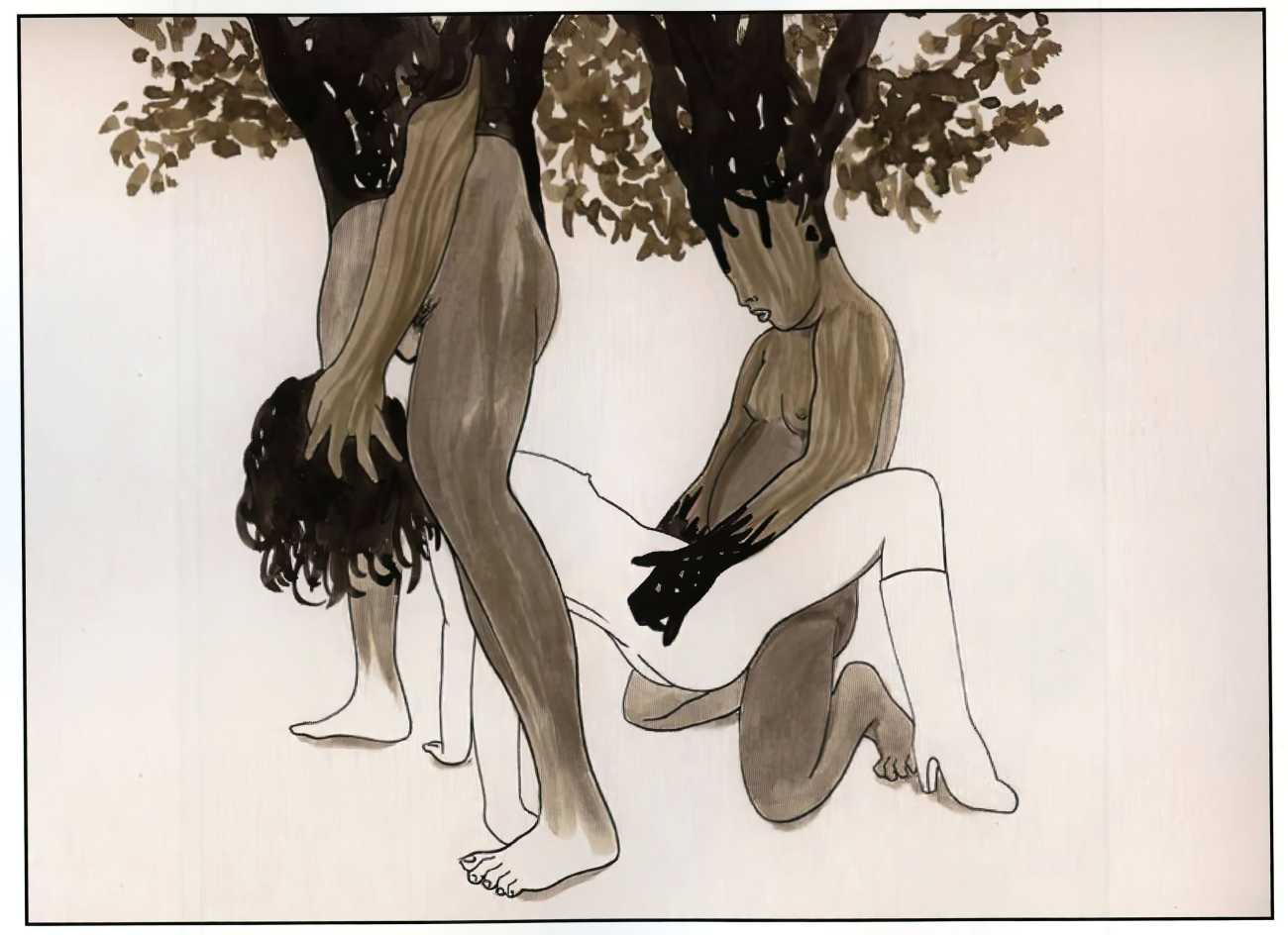
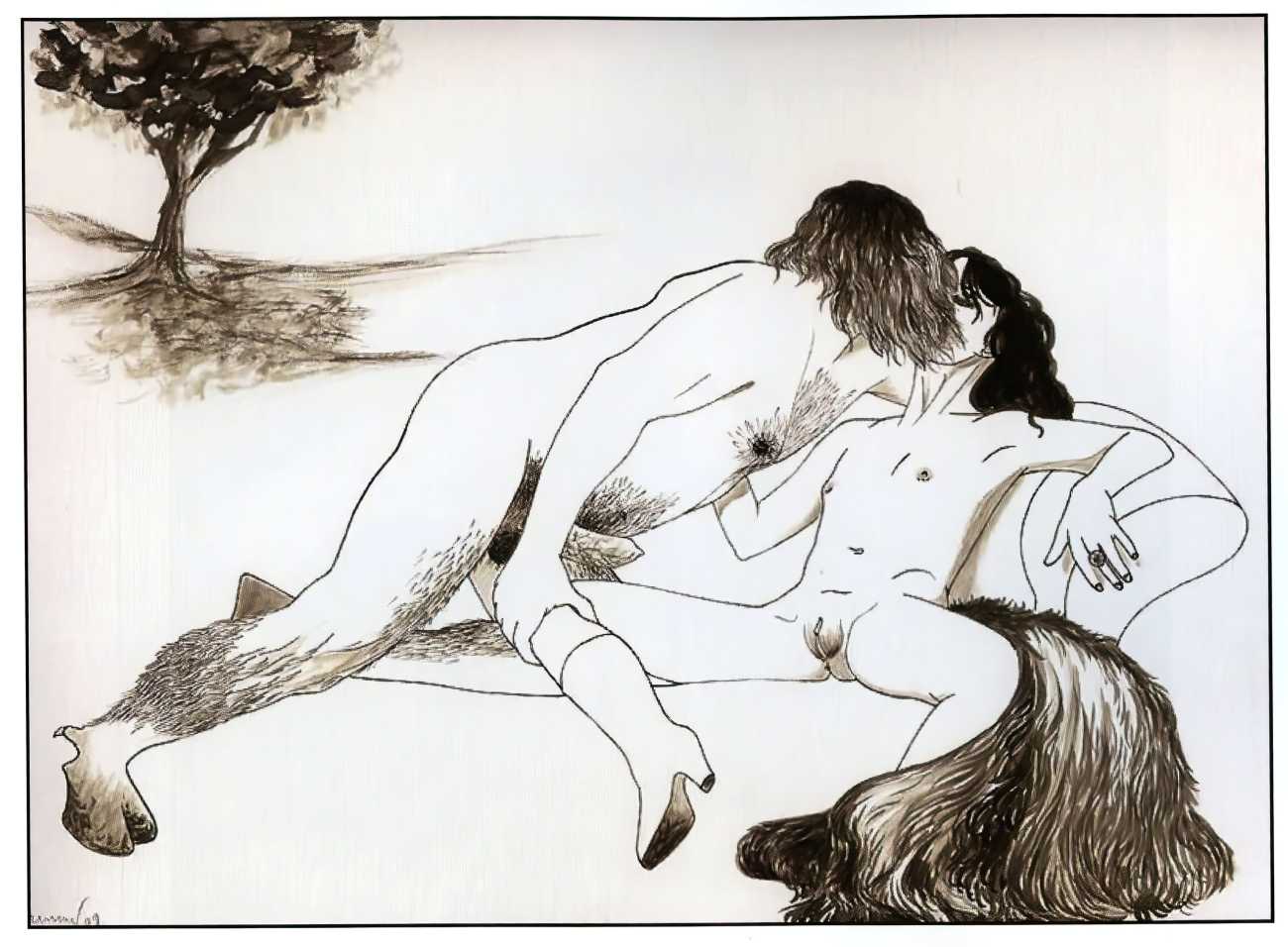
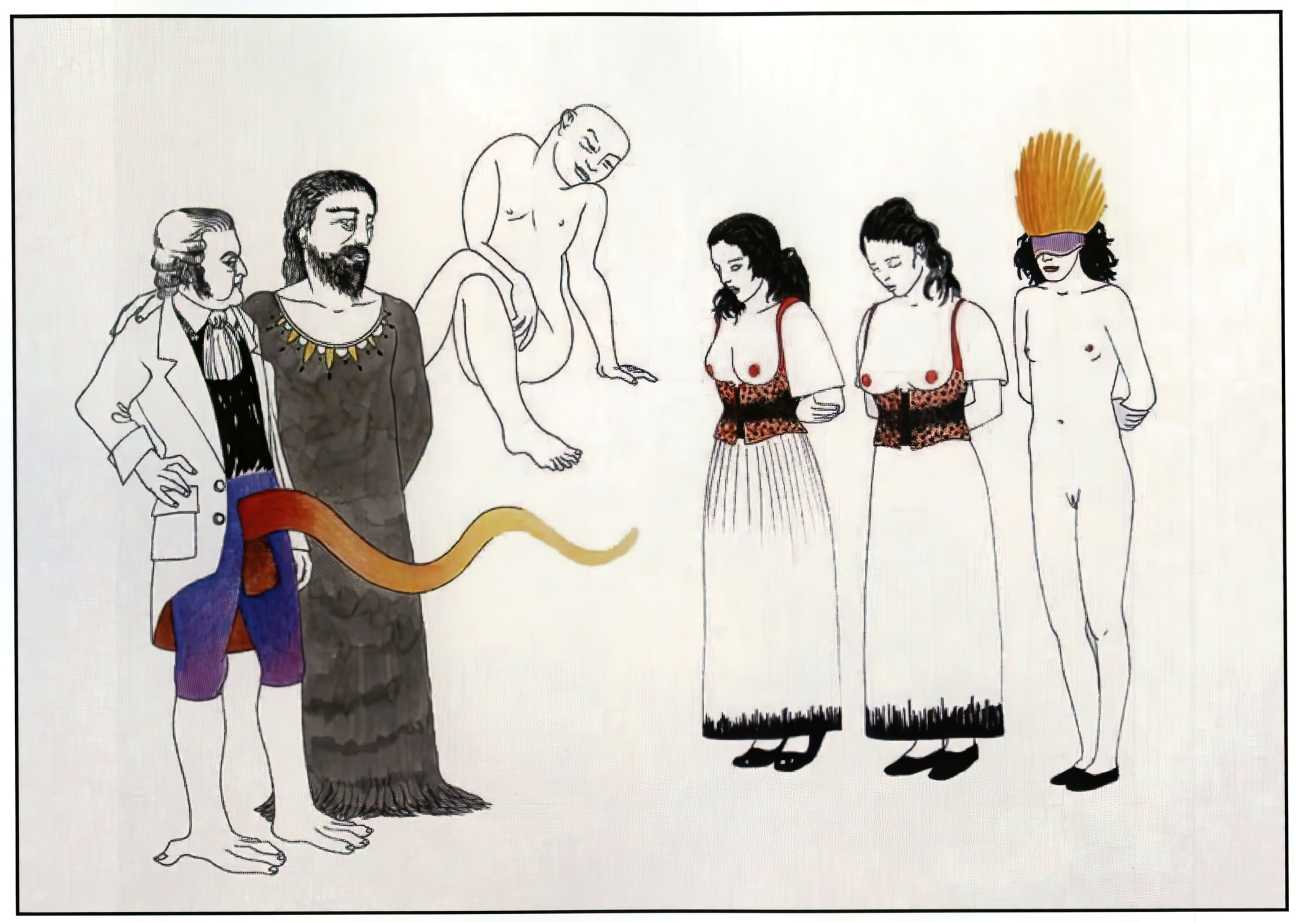
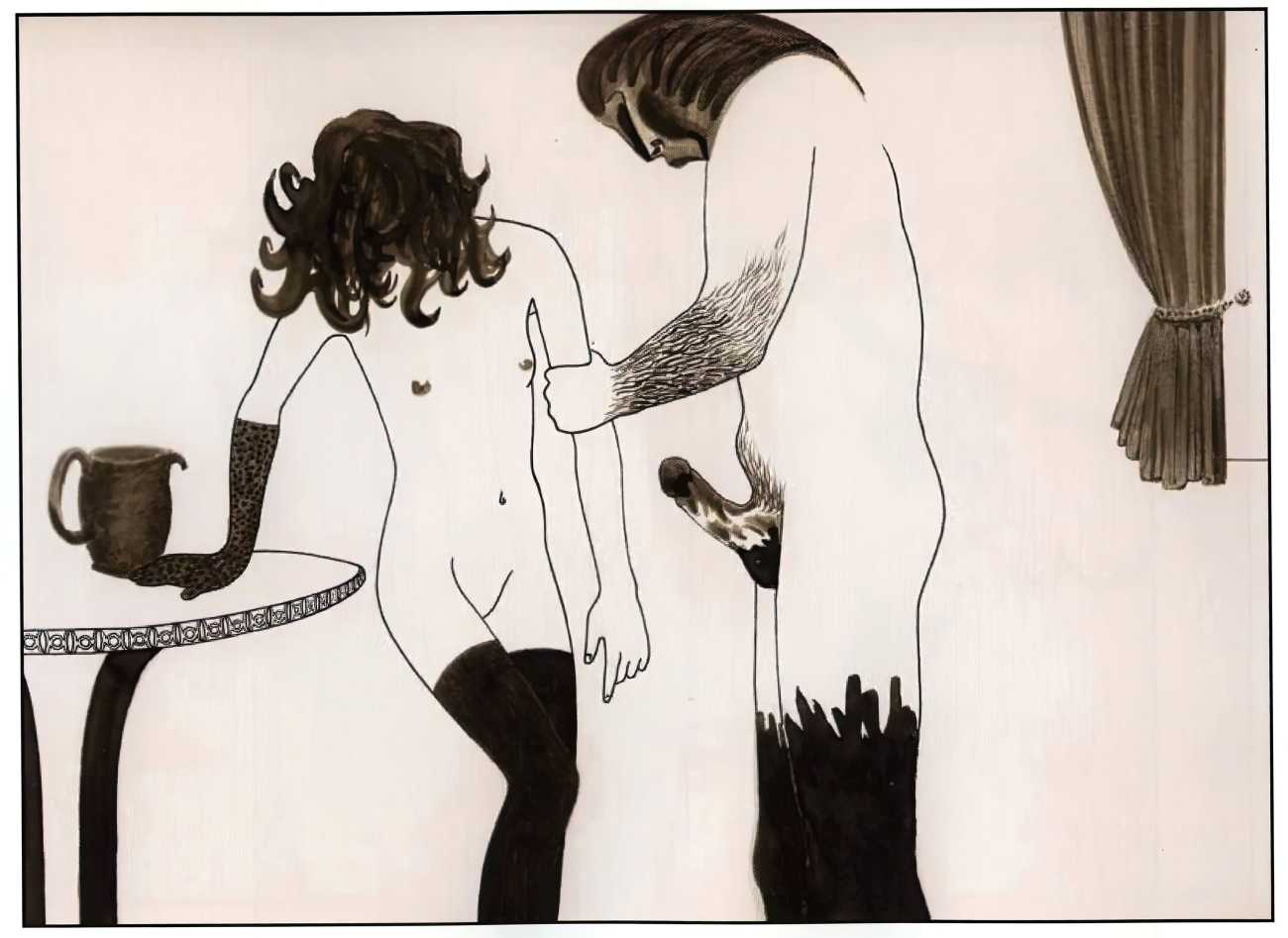
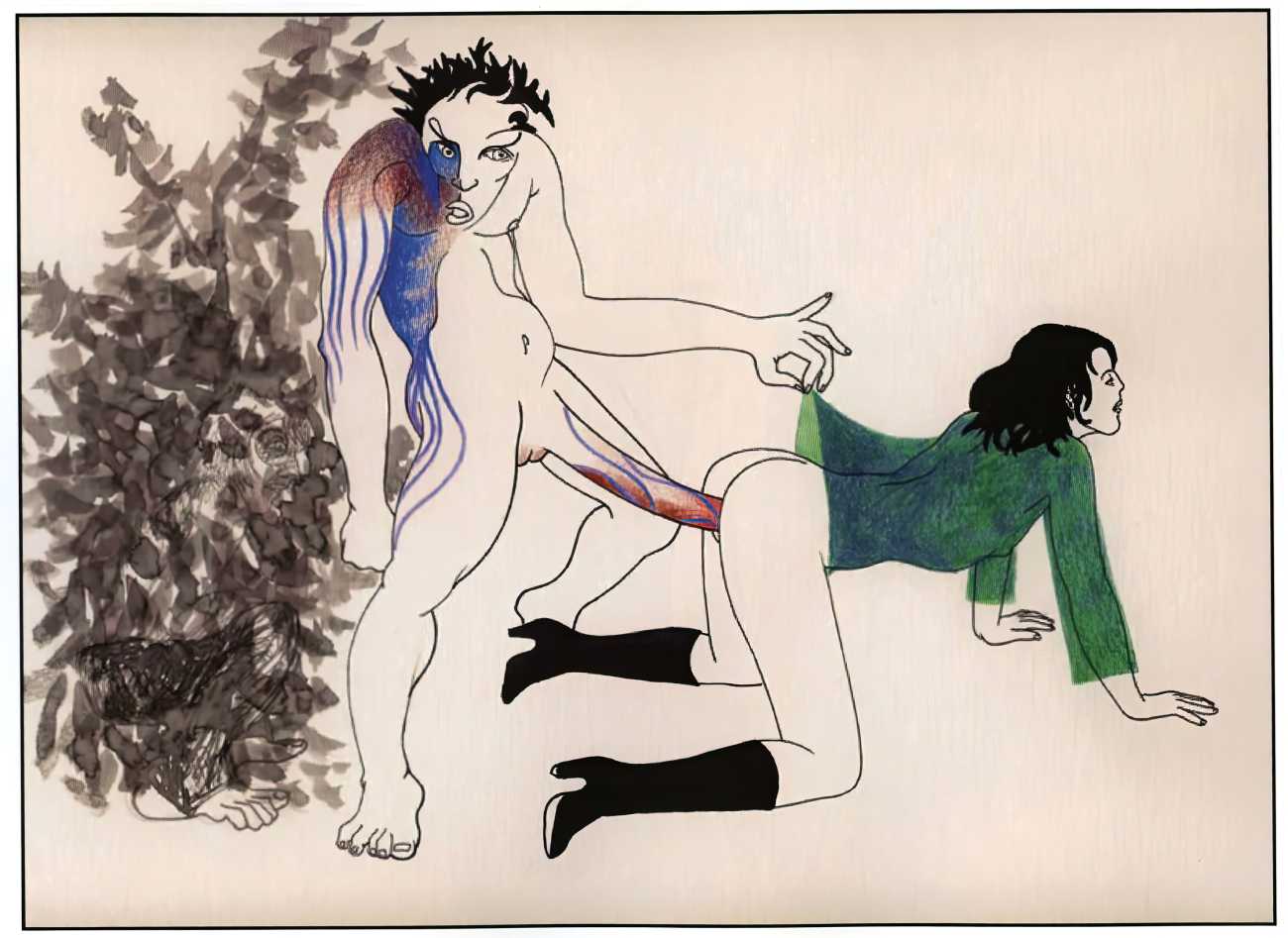
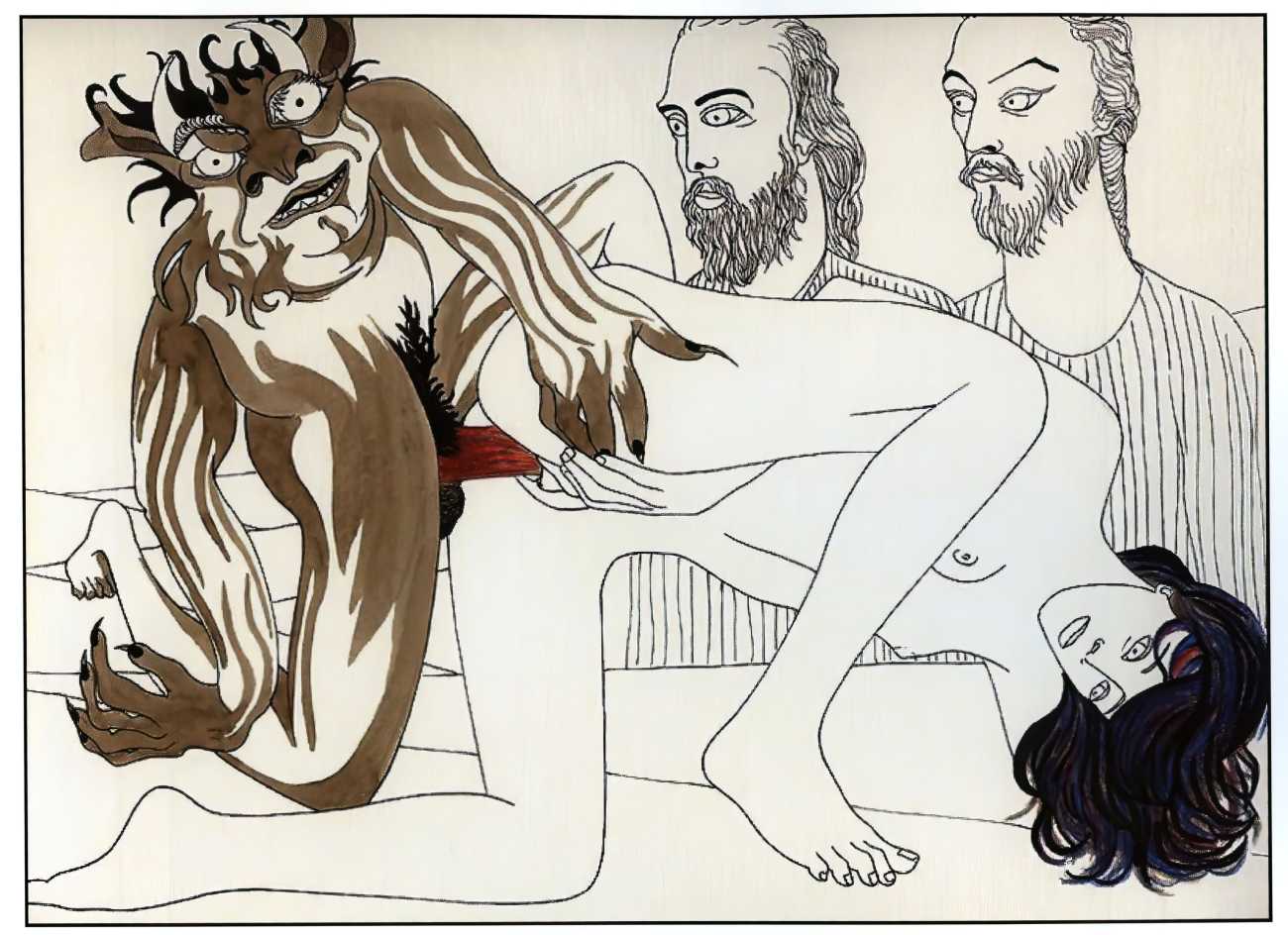
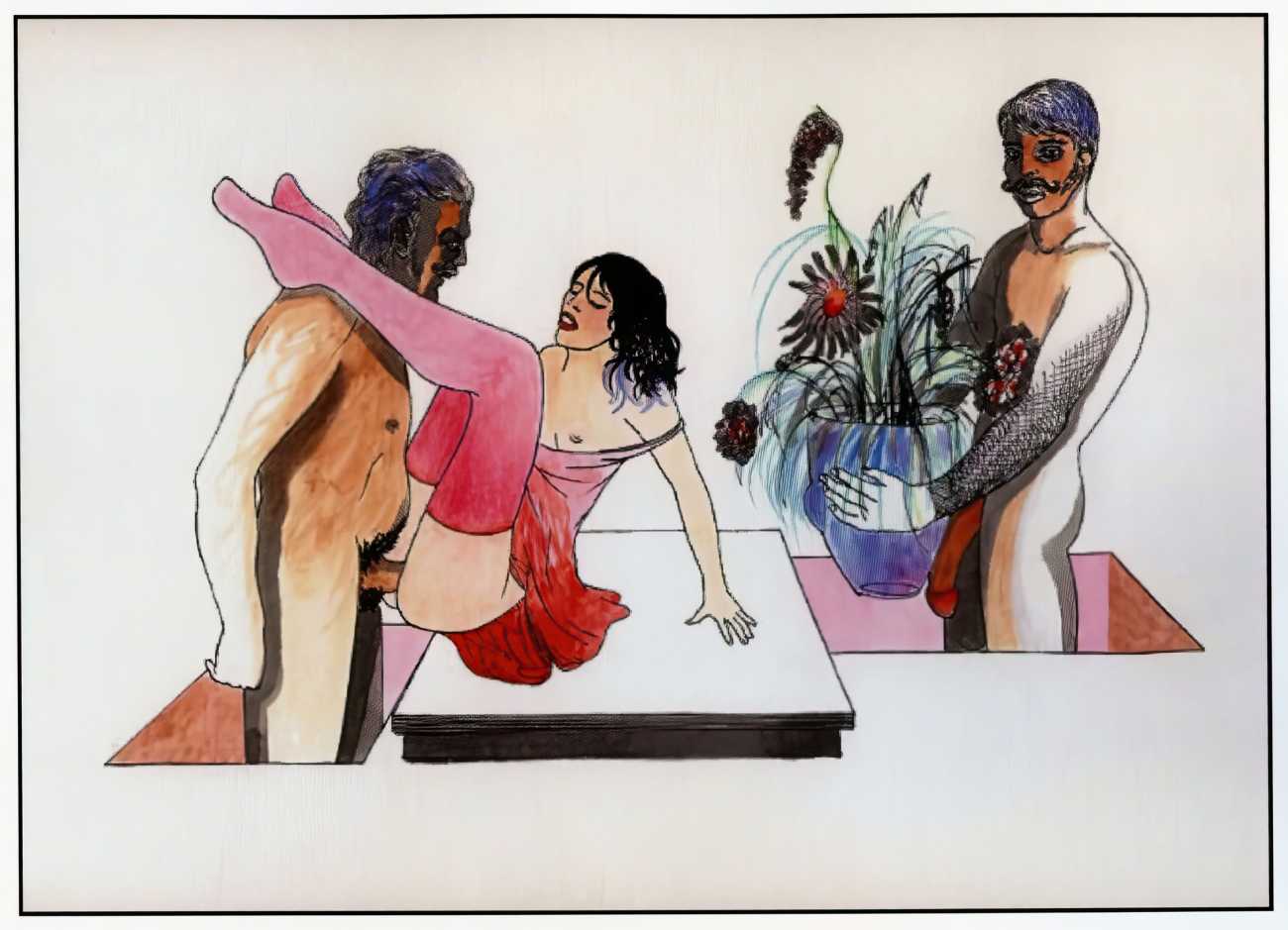
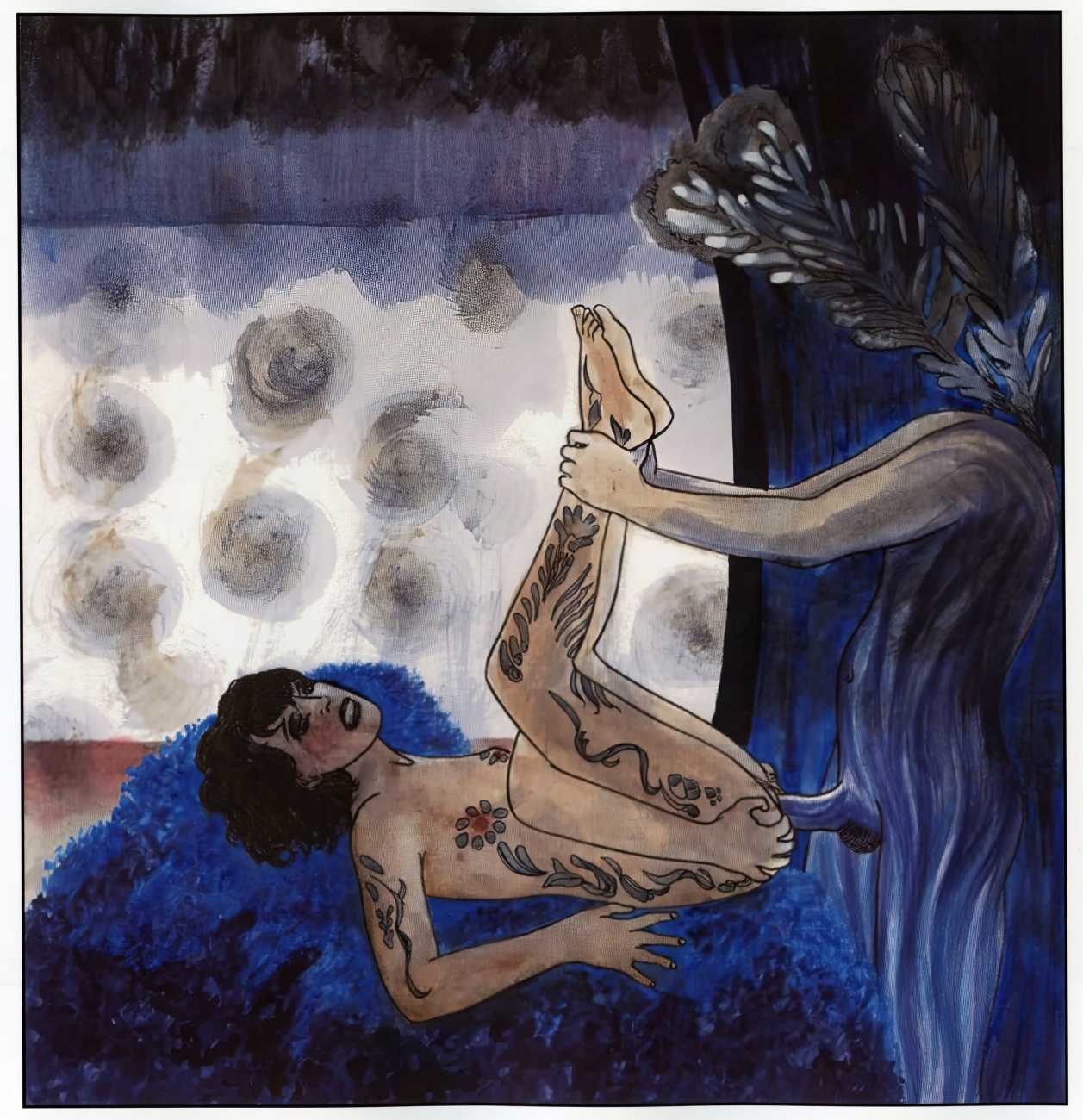
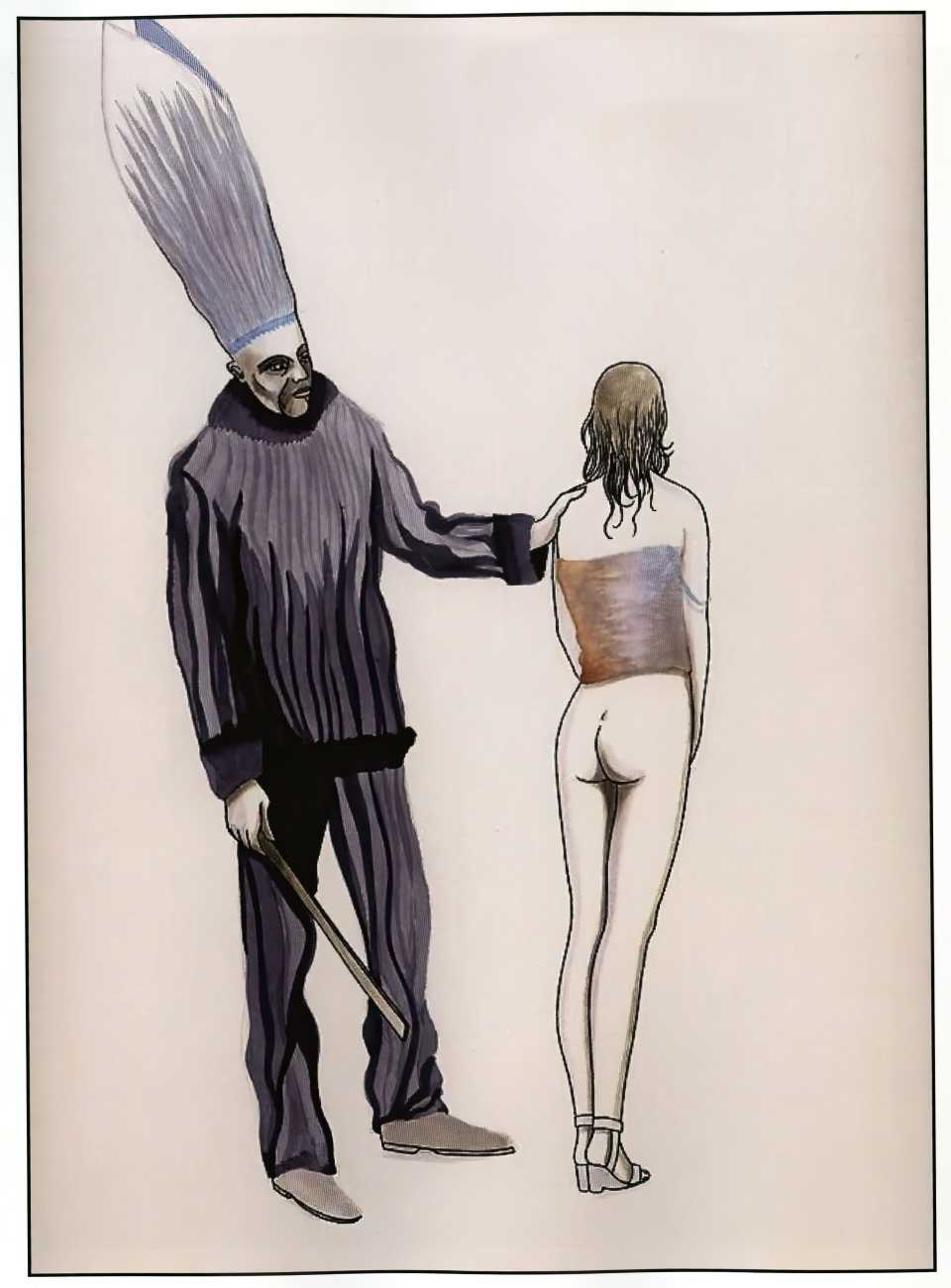
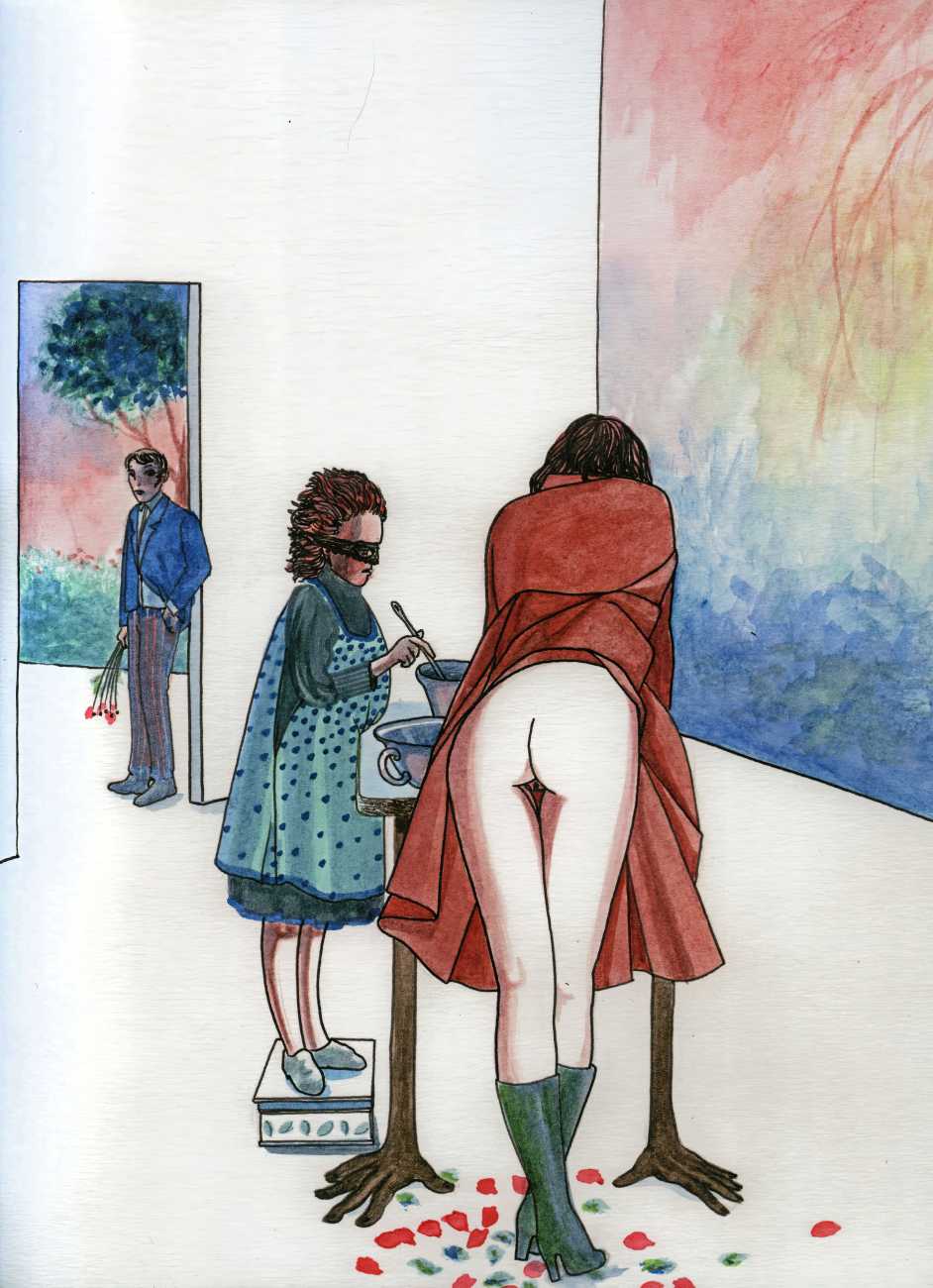
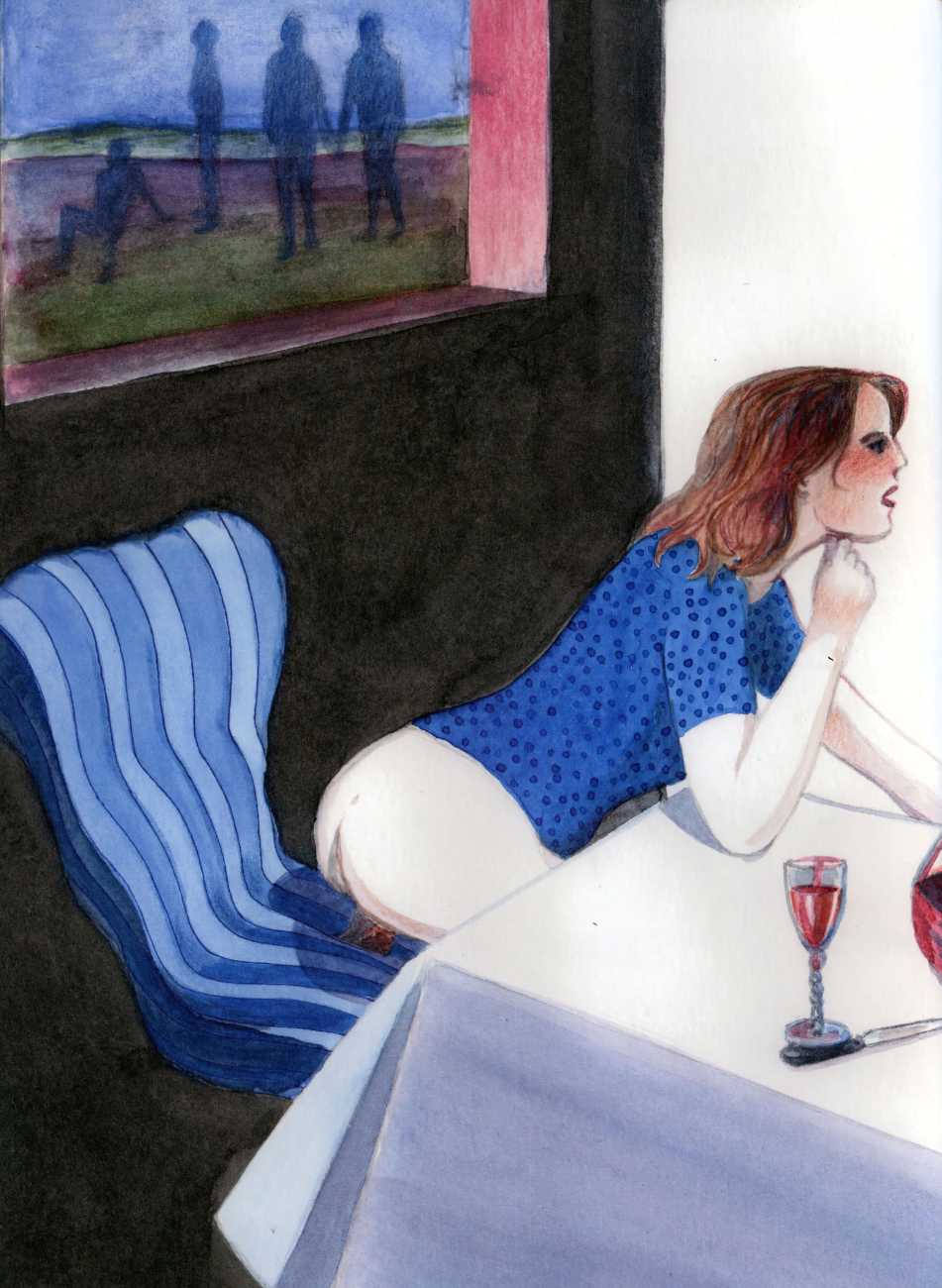
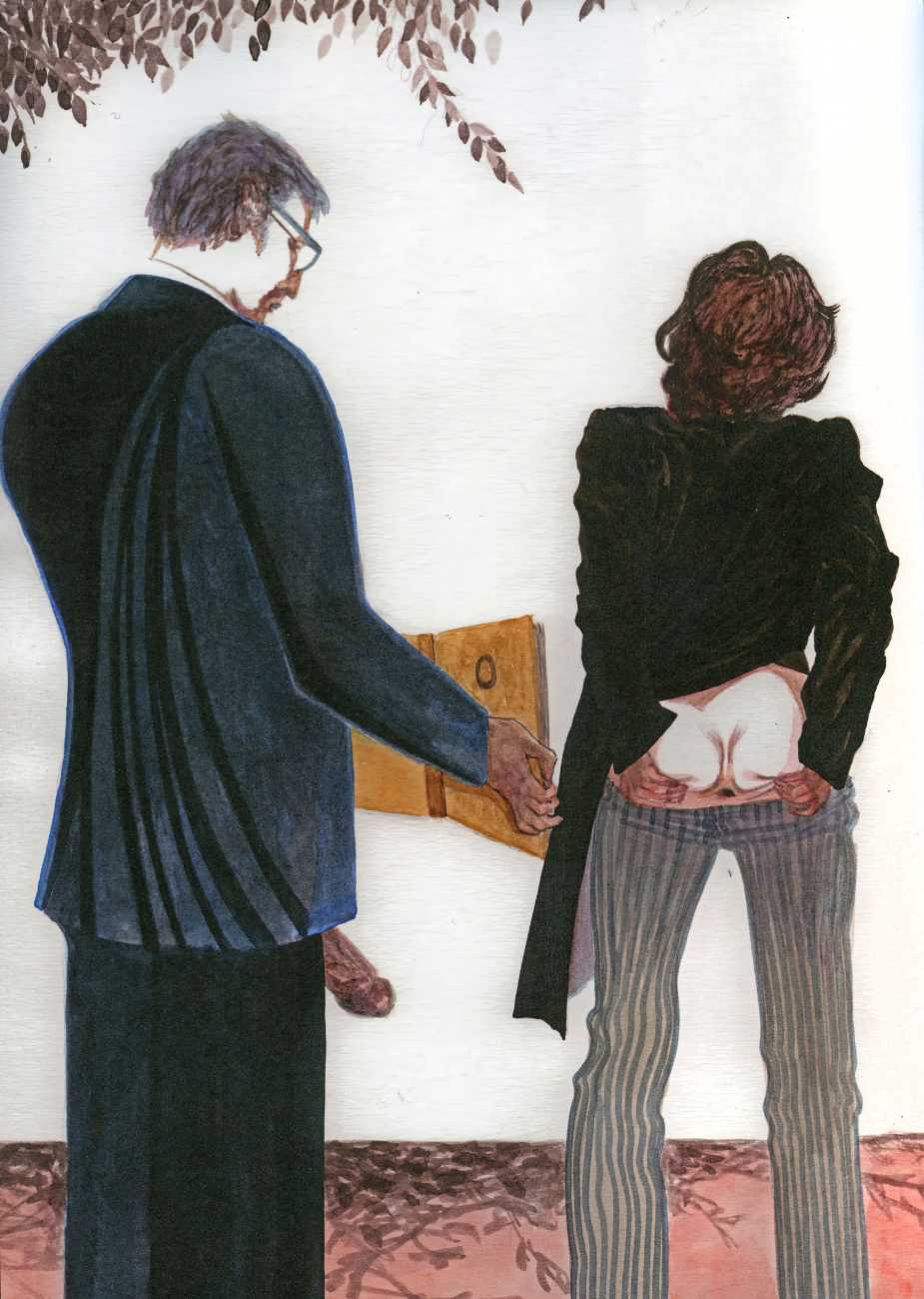
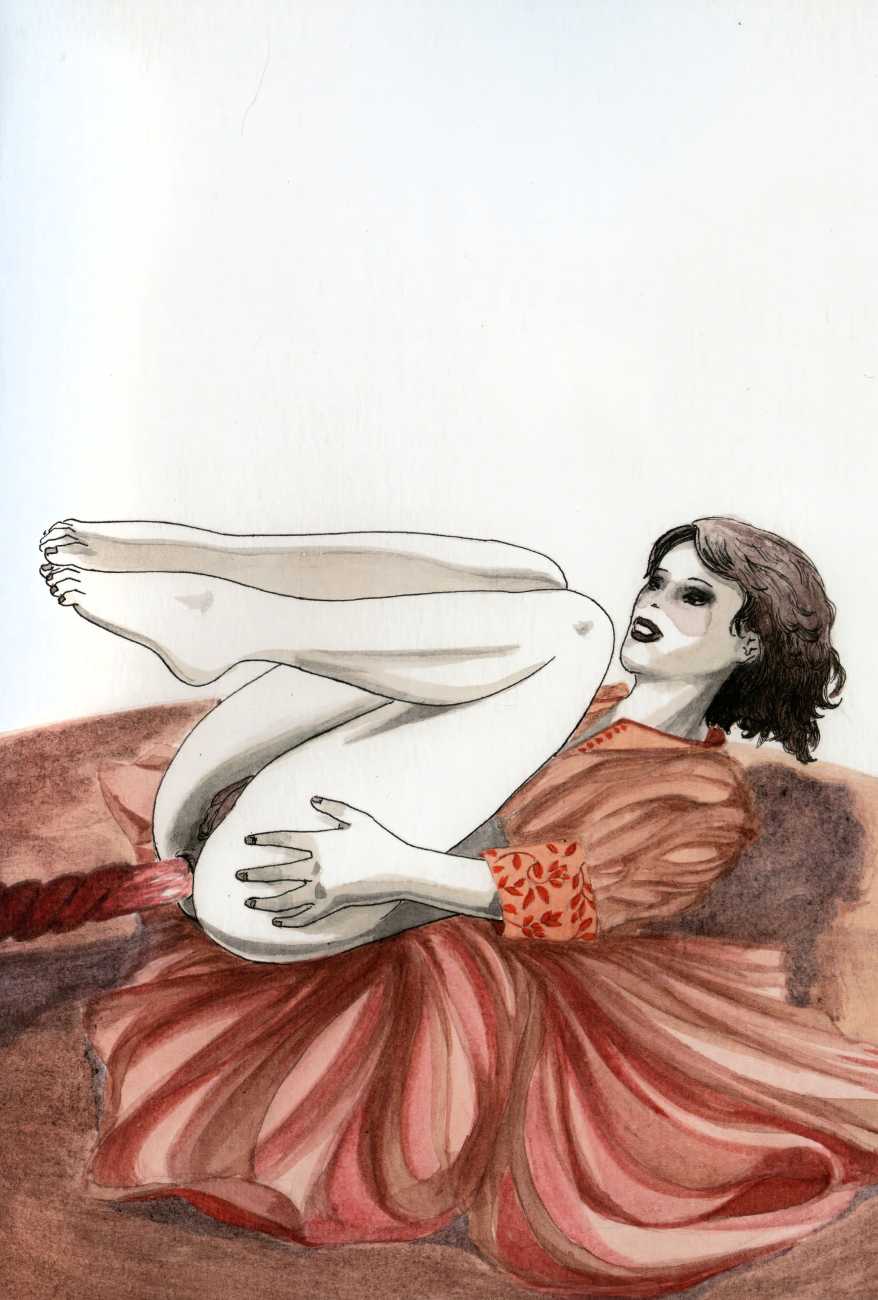
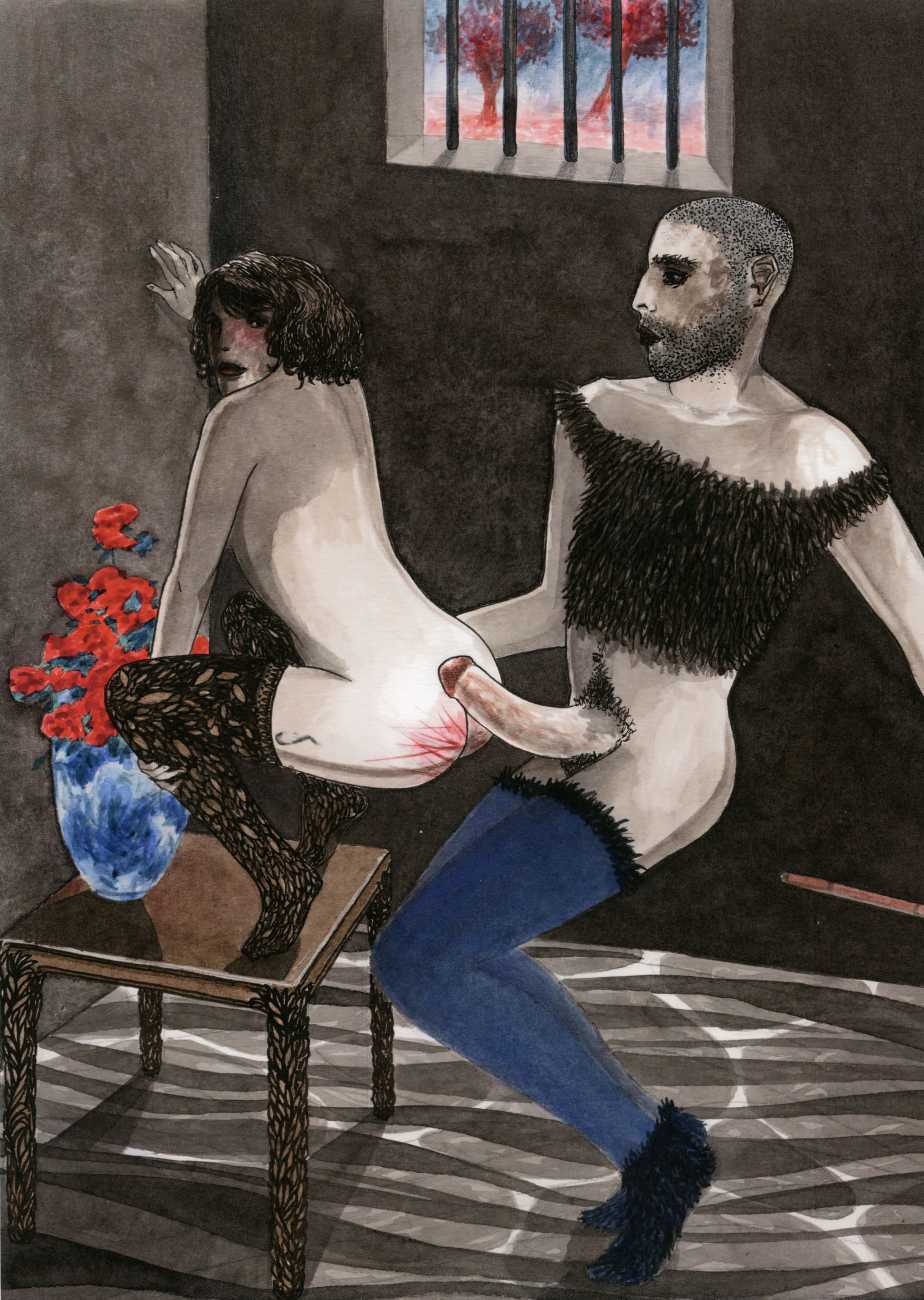
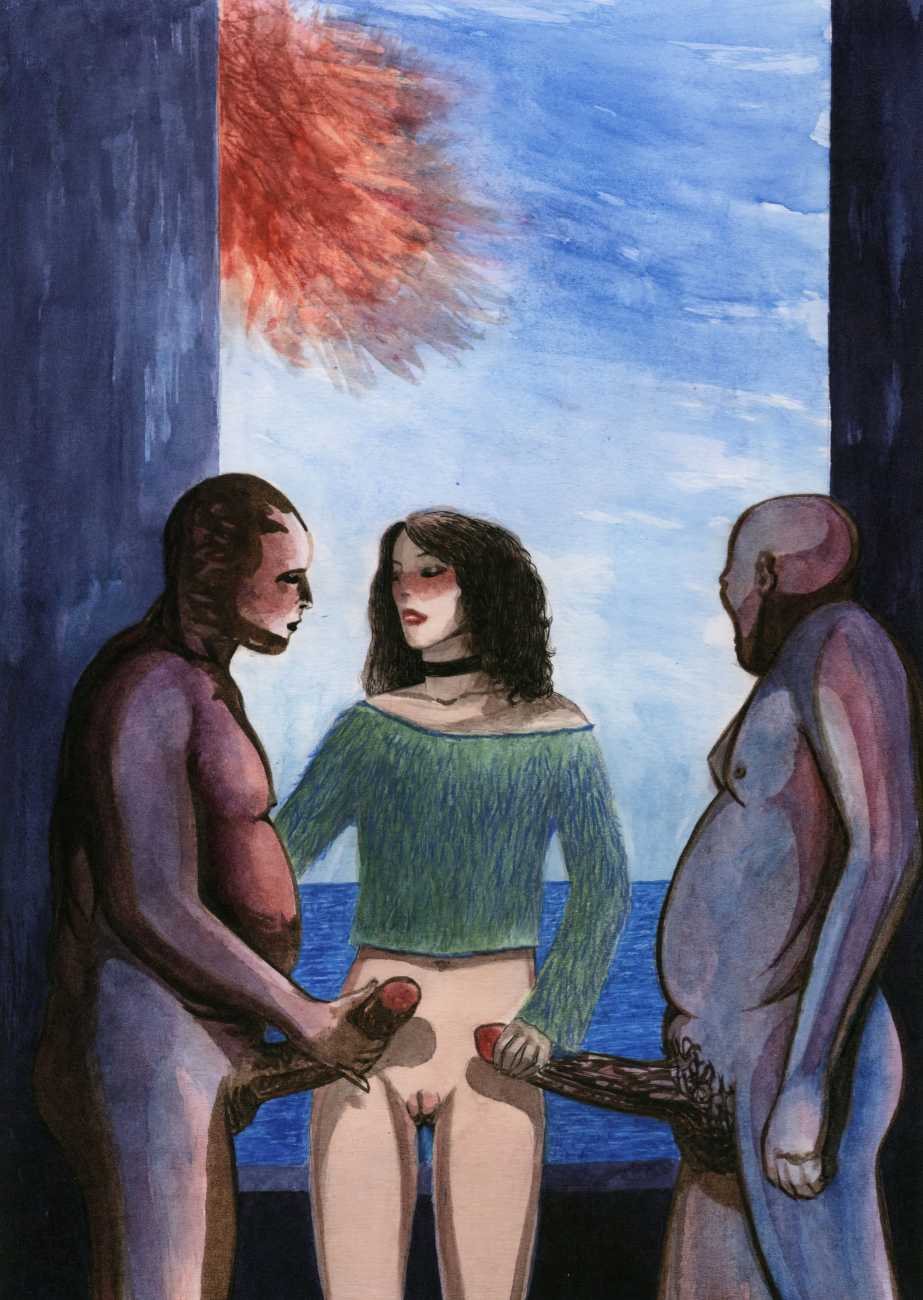
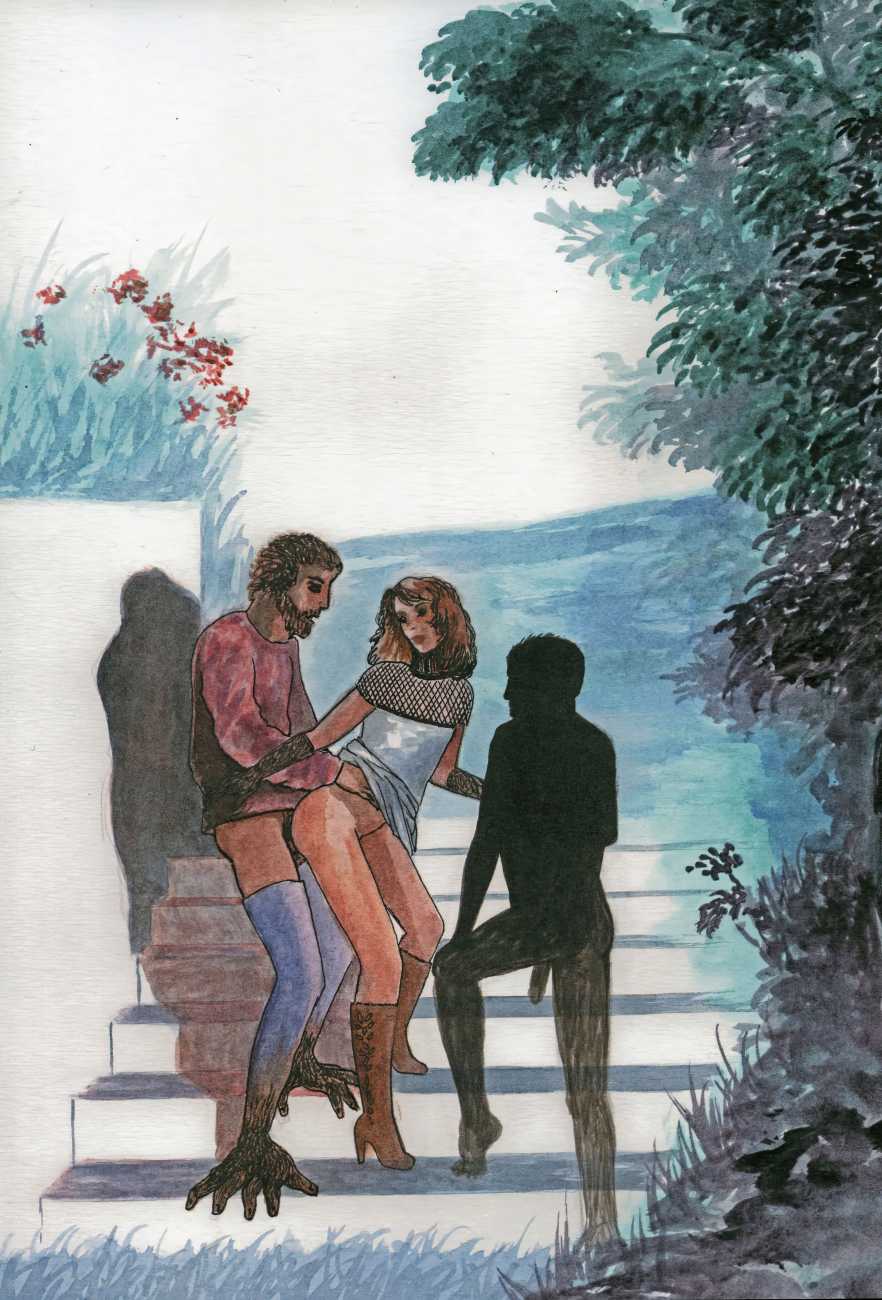
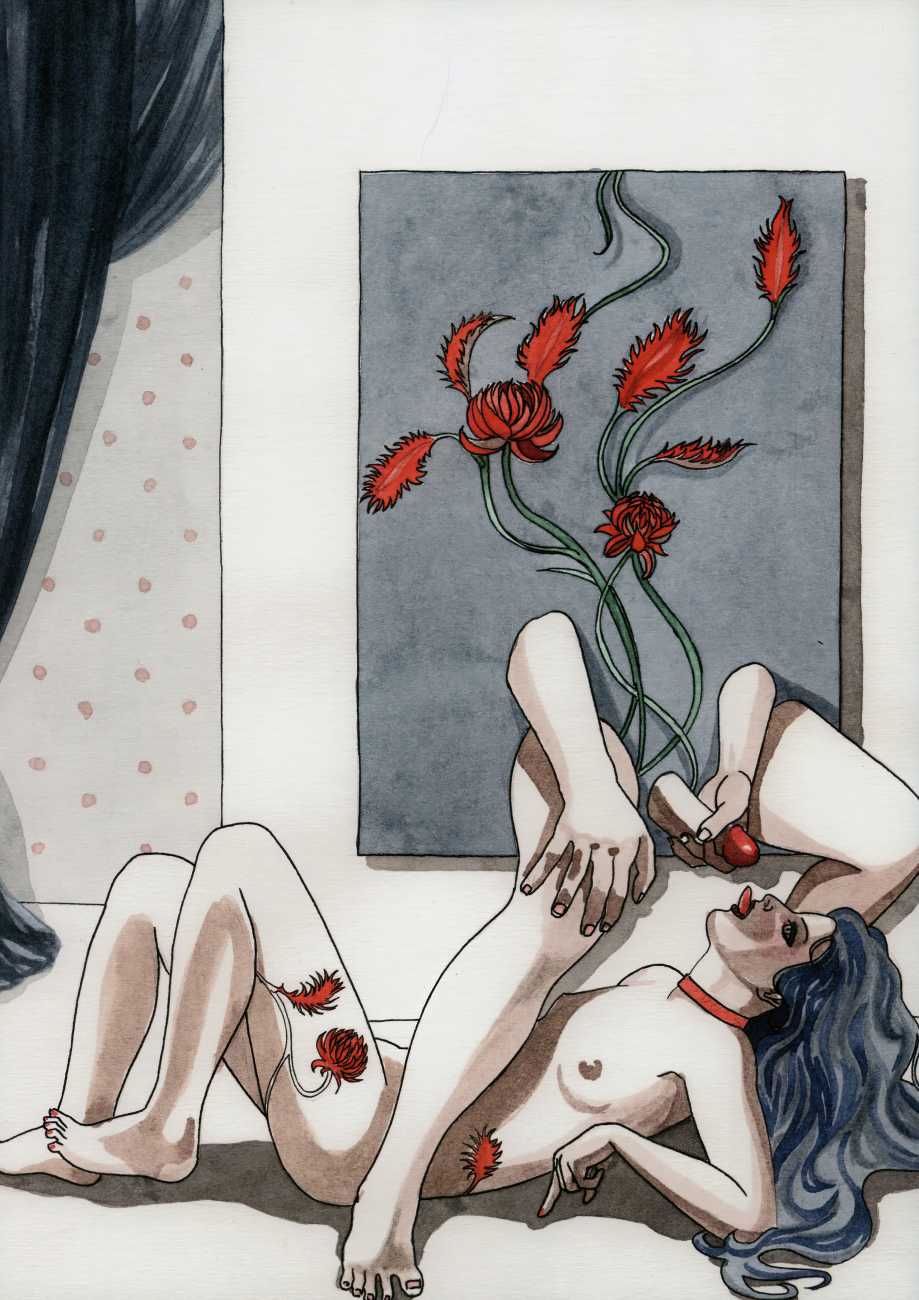
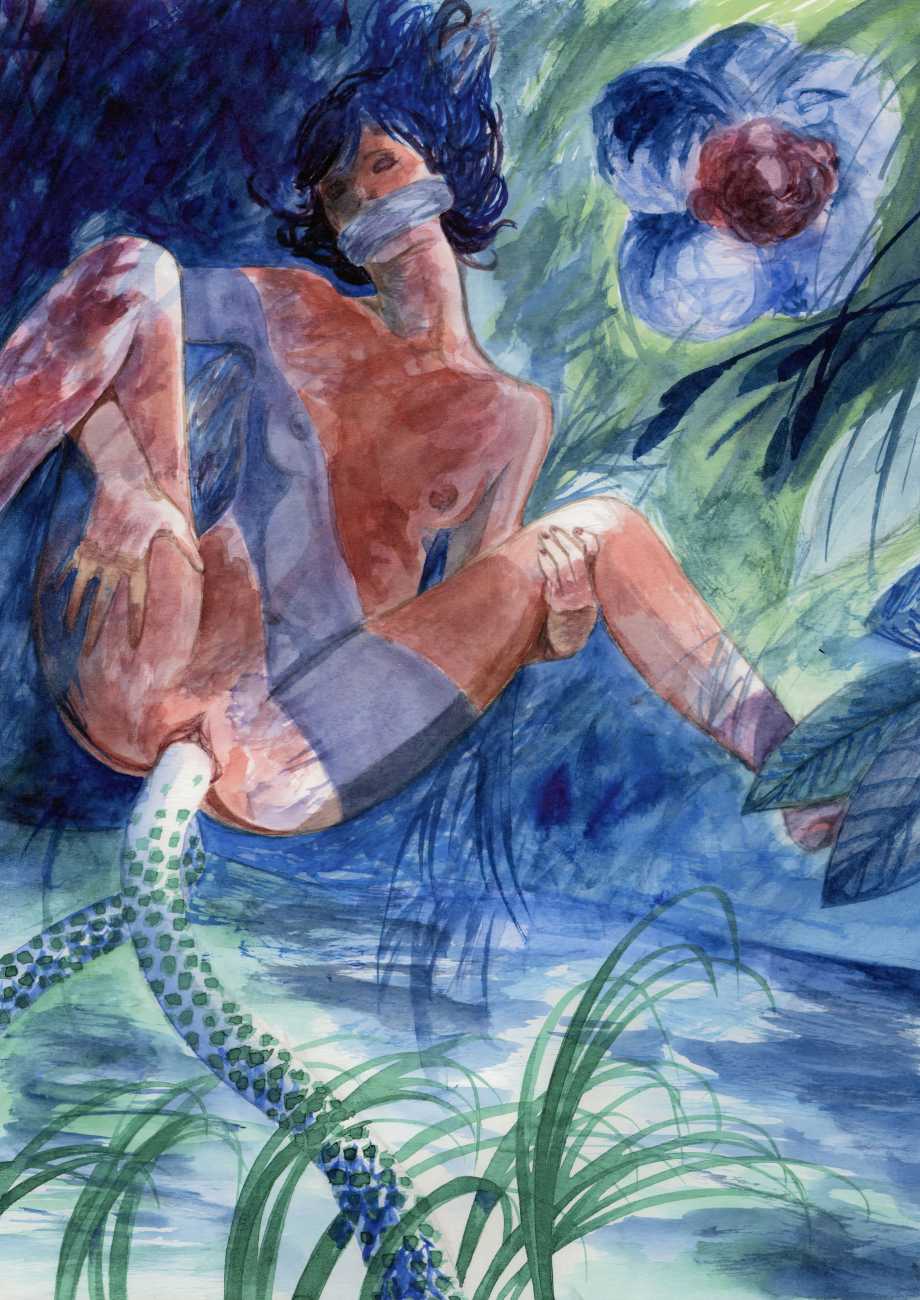
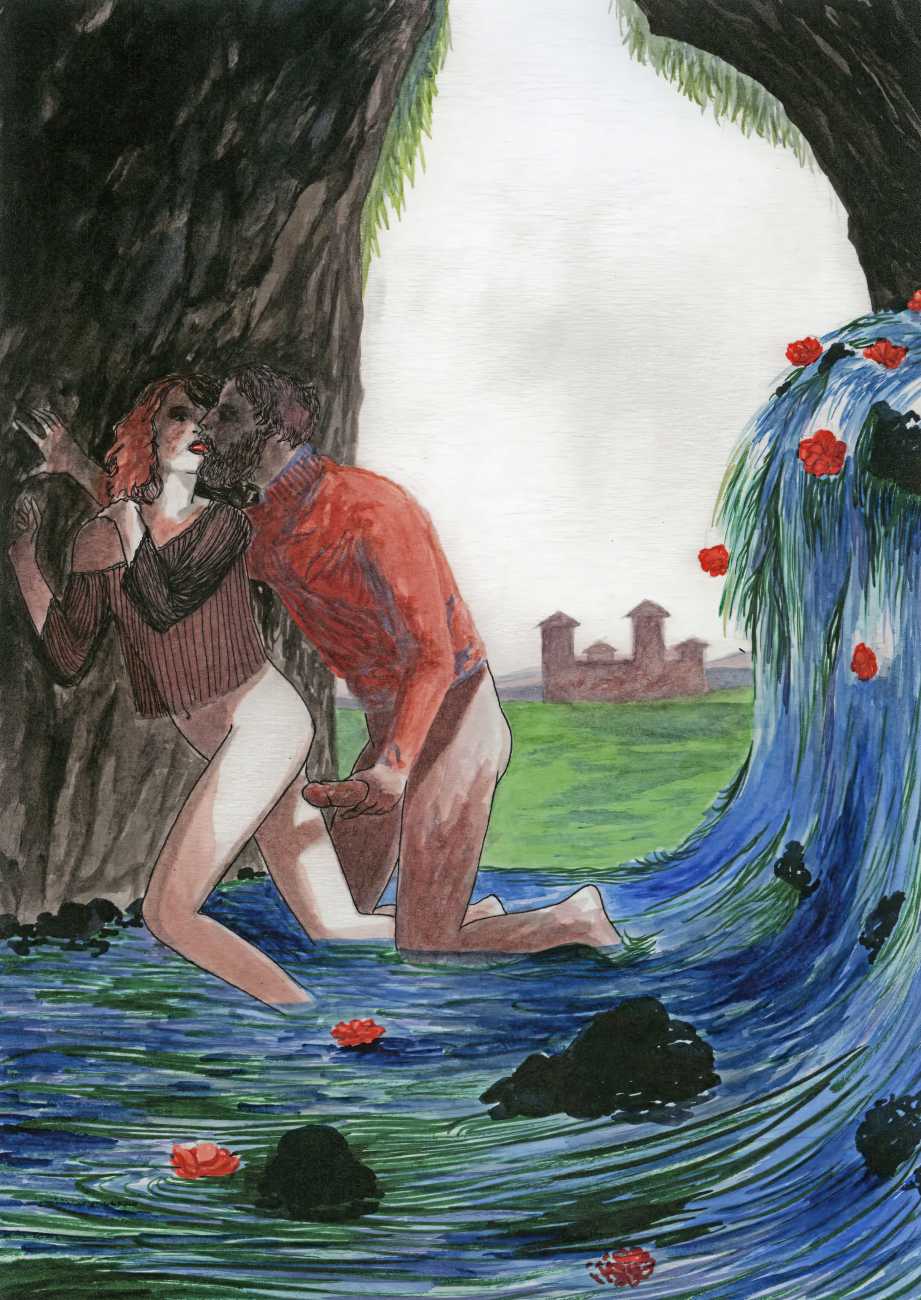
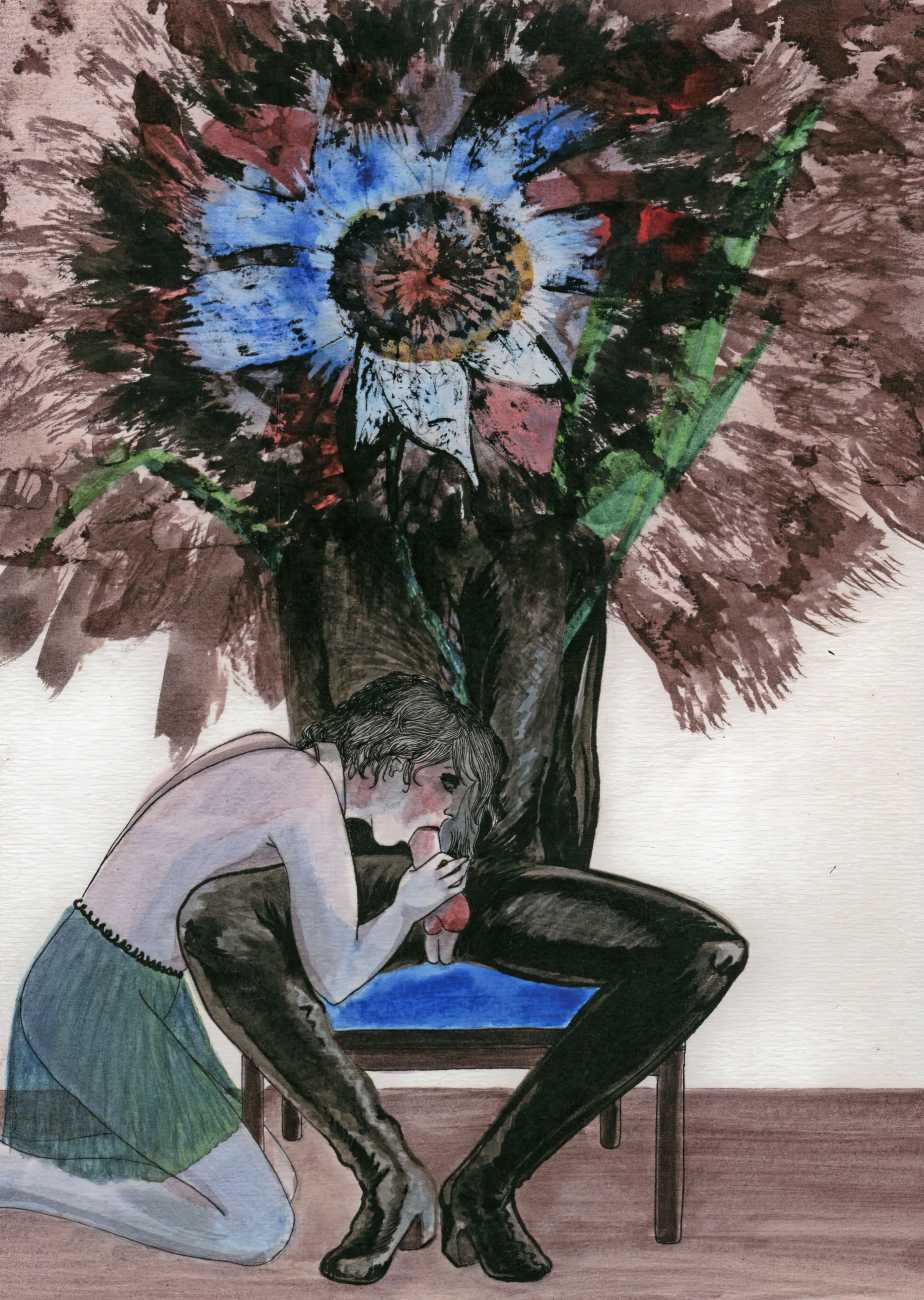
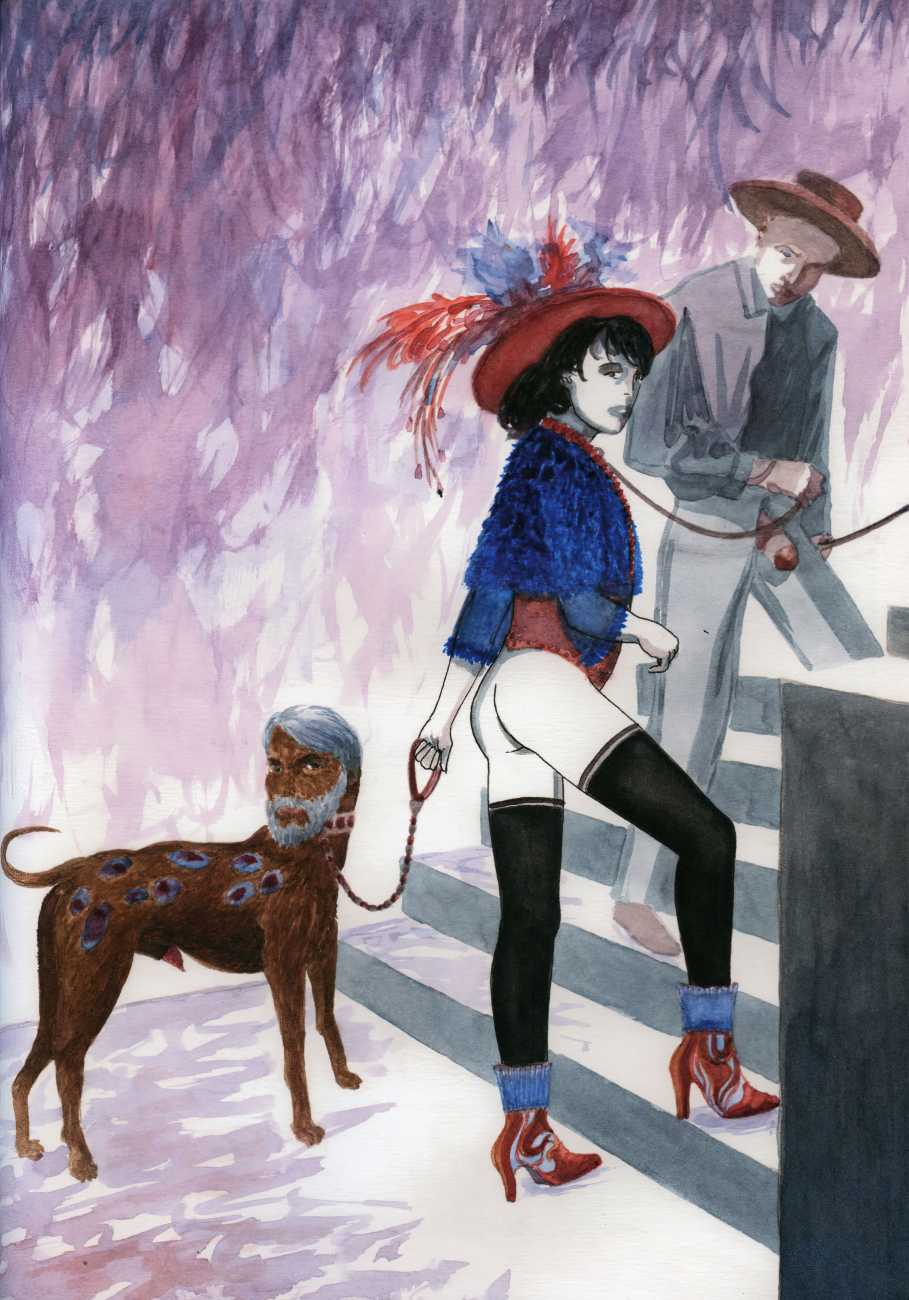
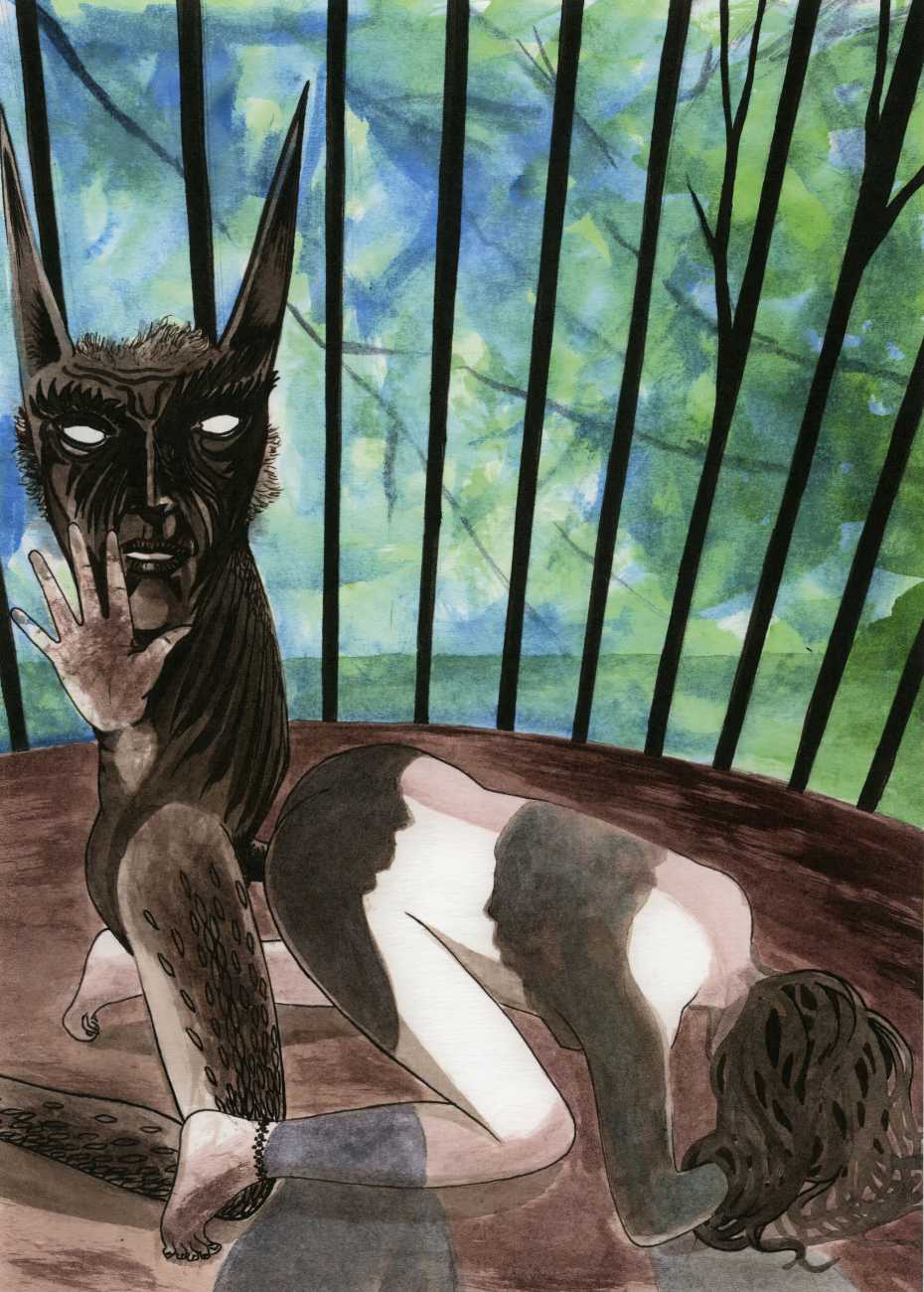
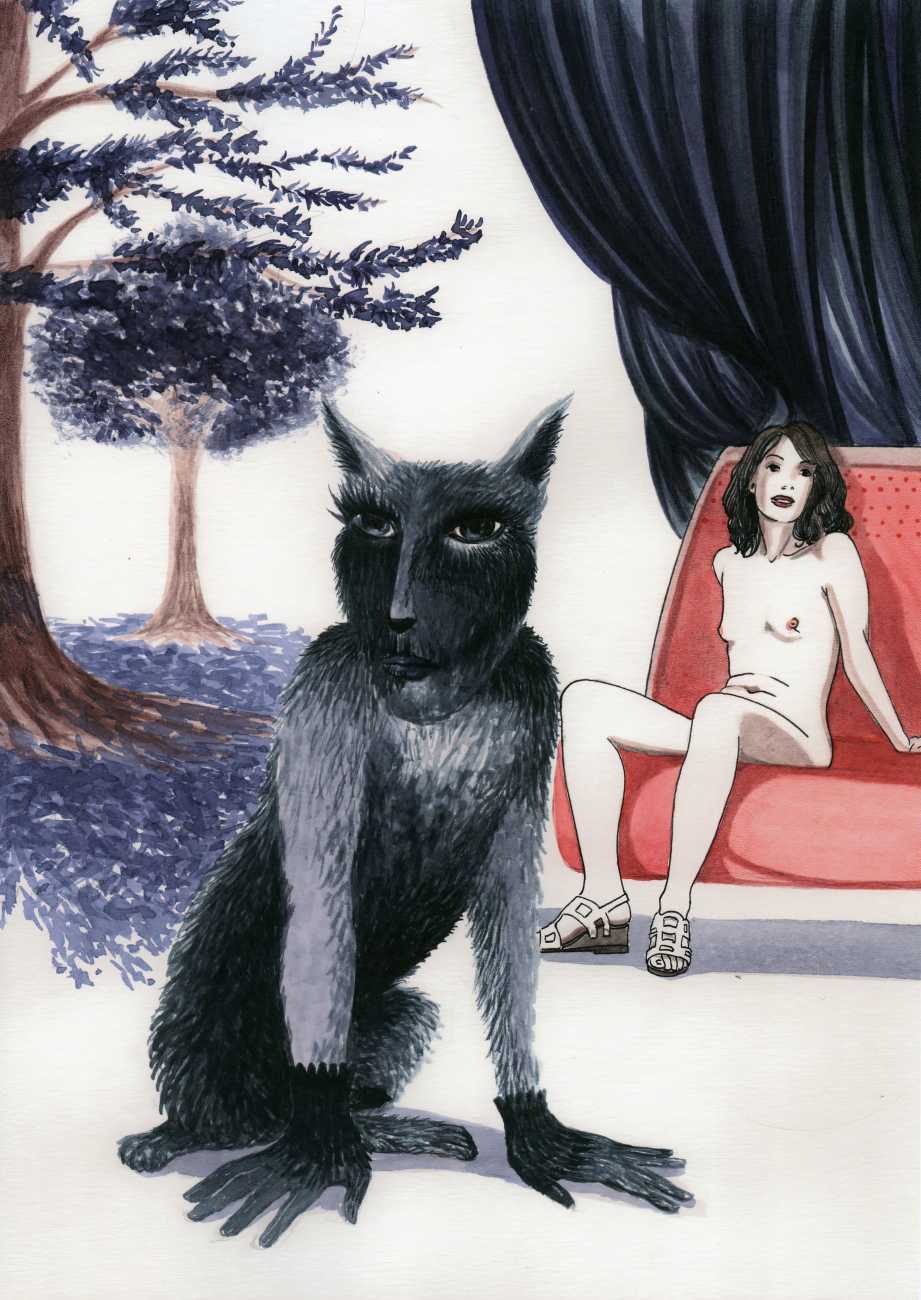
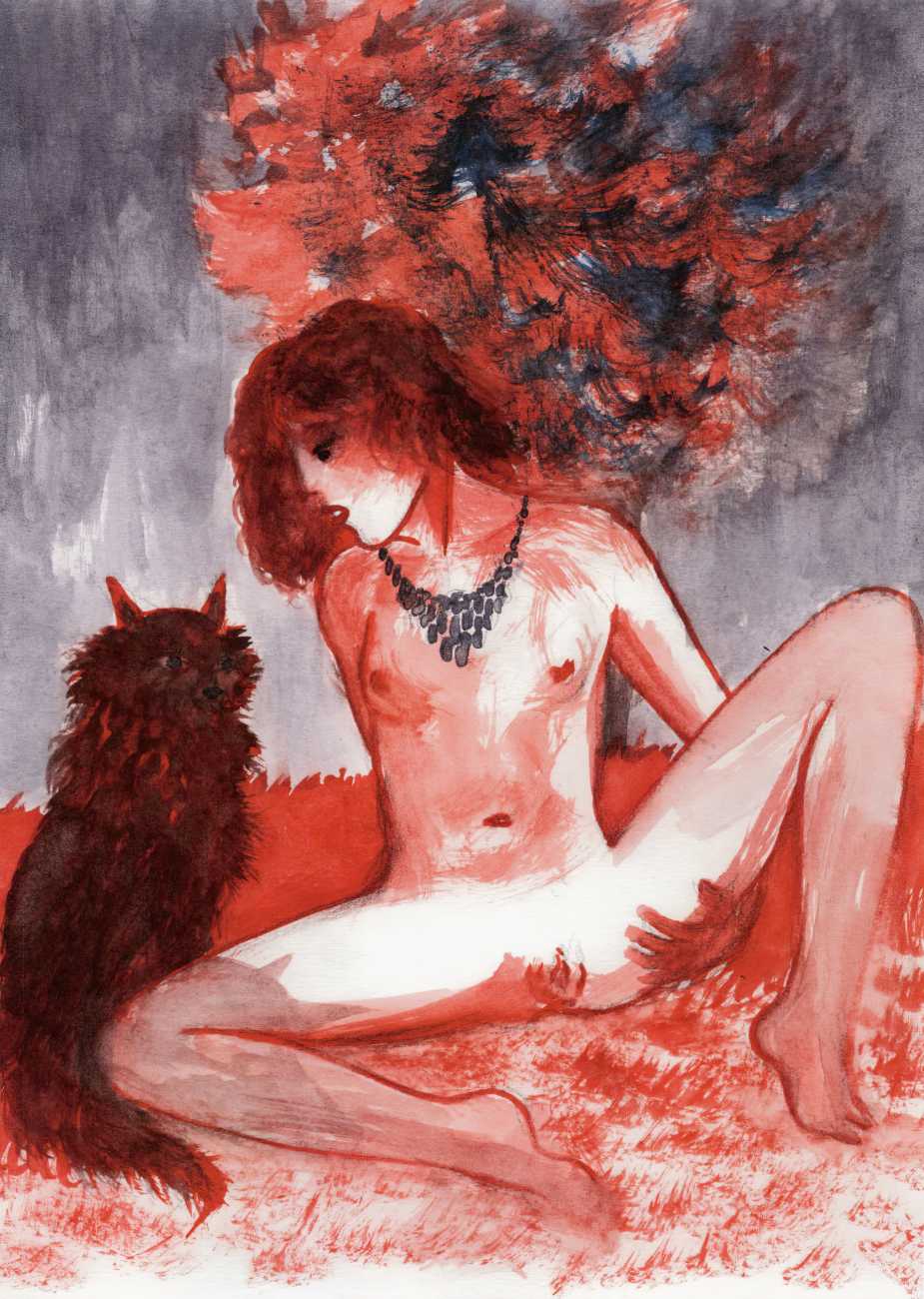
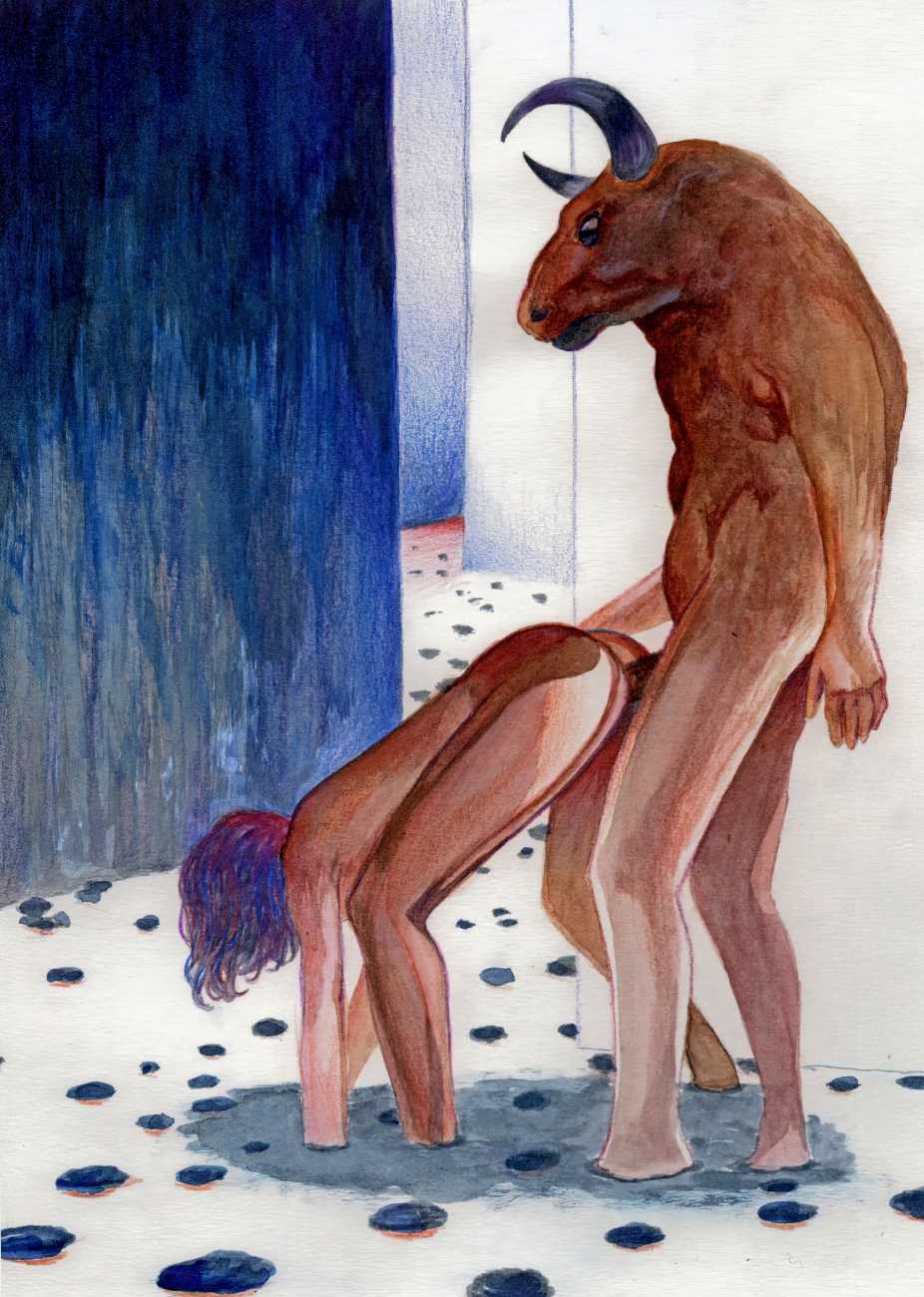
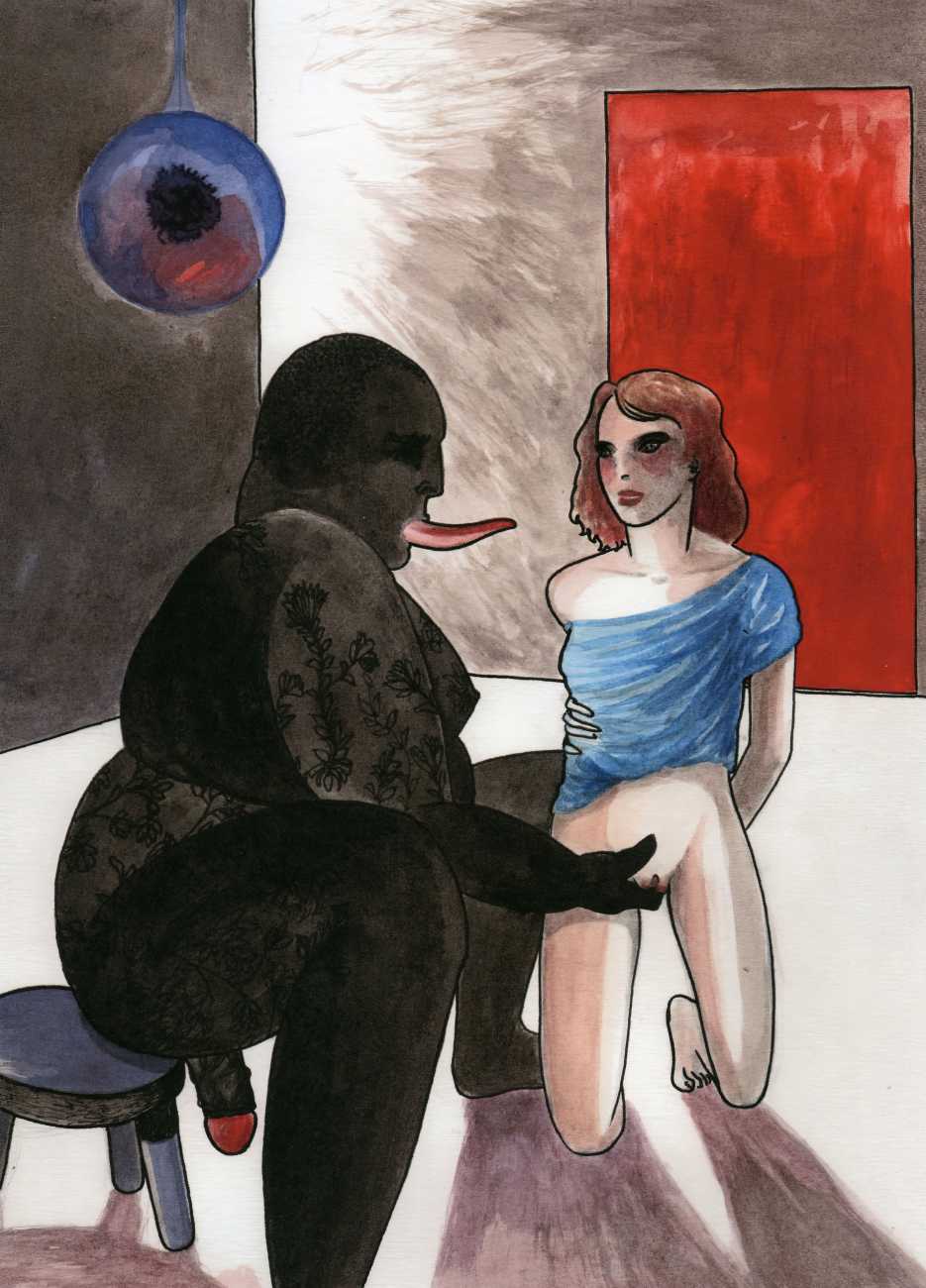
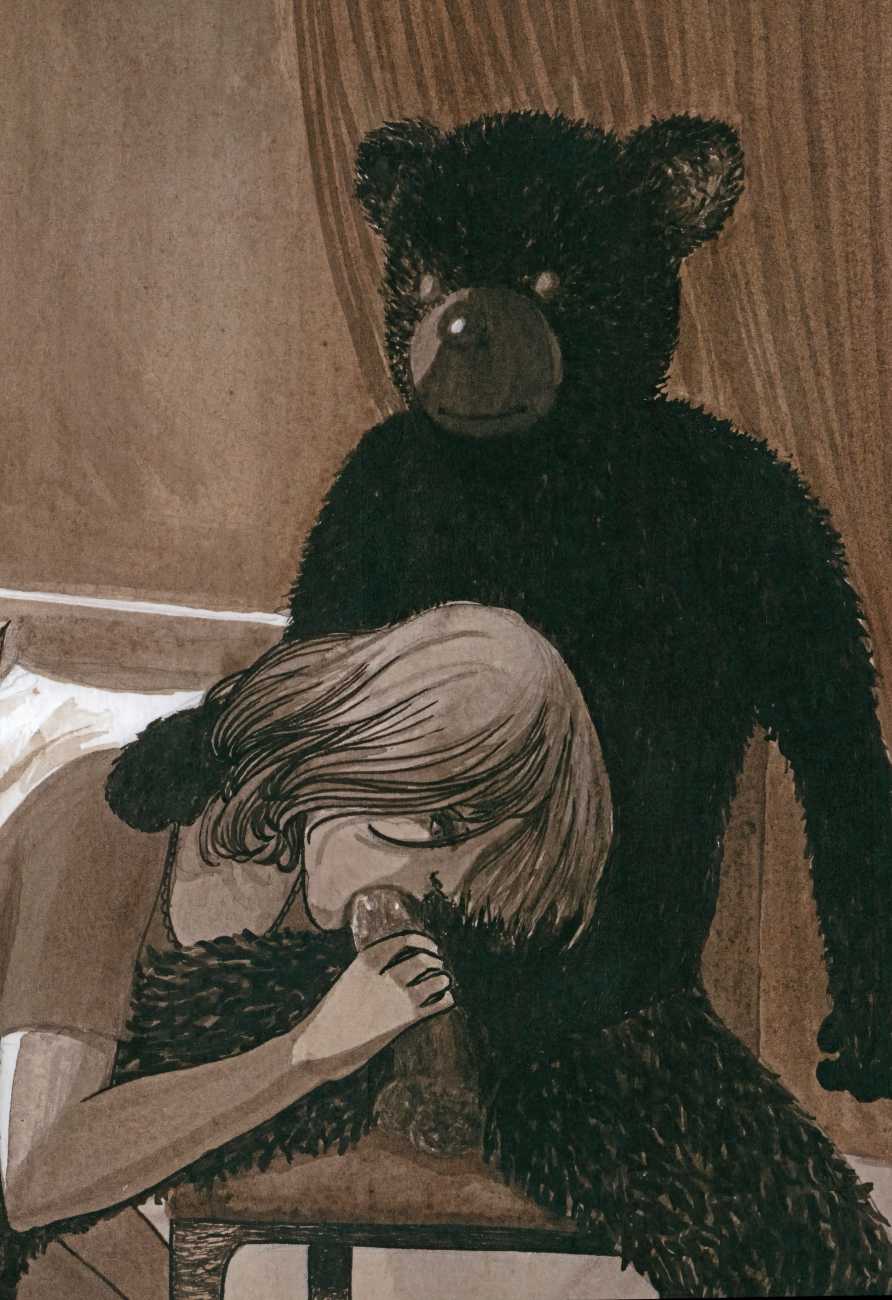
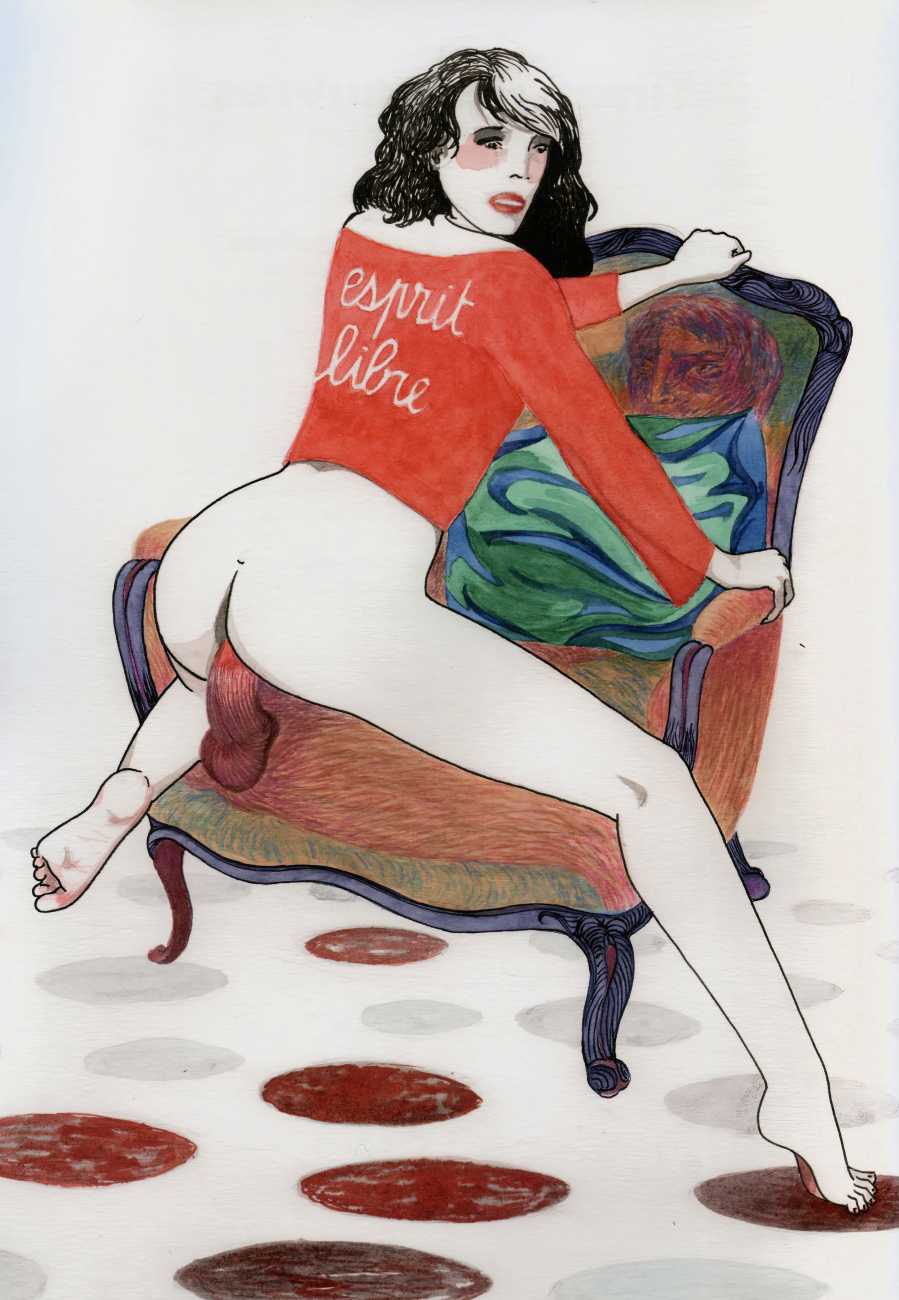
In 2018 blogger Elisabeth Brennan wrote of Rajah Foo’s drawings, ‘His work is almost obsessive, its common thread is a woman, probably his woman, the origin of his fantasies. His muse is represented in dreamlike, surreal scenes populated sometimes by men, but also by gnomes, satyrs, grotesque characters from the depths of the collective imagination. Though the muse may at first sight look as though she is being abused, it is most often she who leads the way.’
How fortunate we are to have access to such a torrent of work flowing from the confines of the marital bedroom. The bedroom is his preferred studio, and it fosters the visual diary of his seductive muse, a fabulous archetype actively unconstrained by moral boundaries. Sade would have approved, and it is his muse who is always the first to see these drawings, navigating the occasional drawing to its conclusion should her husband find himself at a loss.
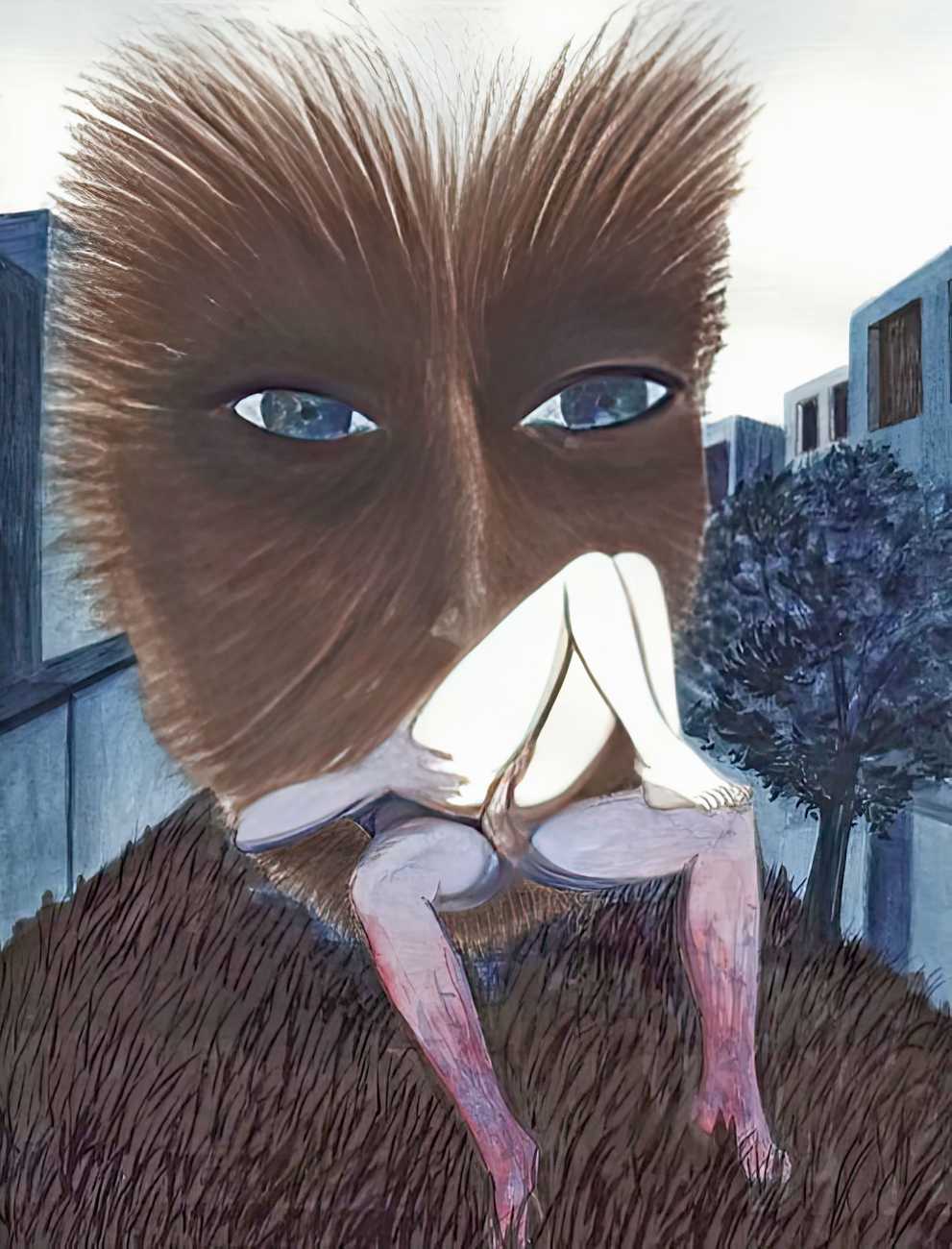
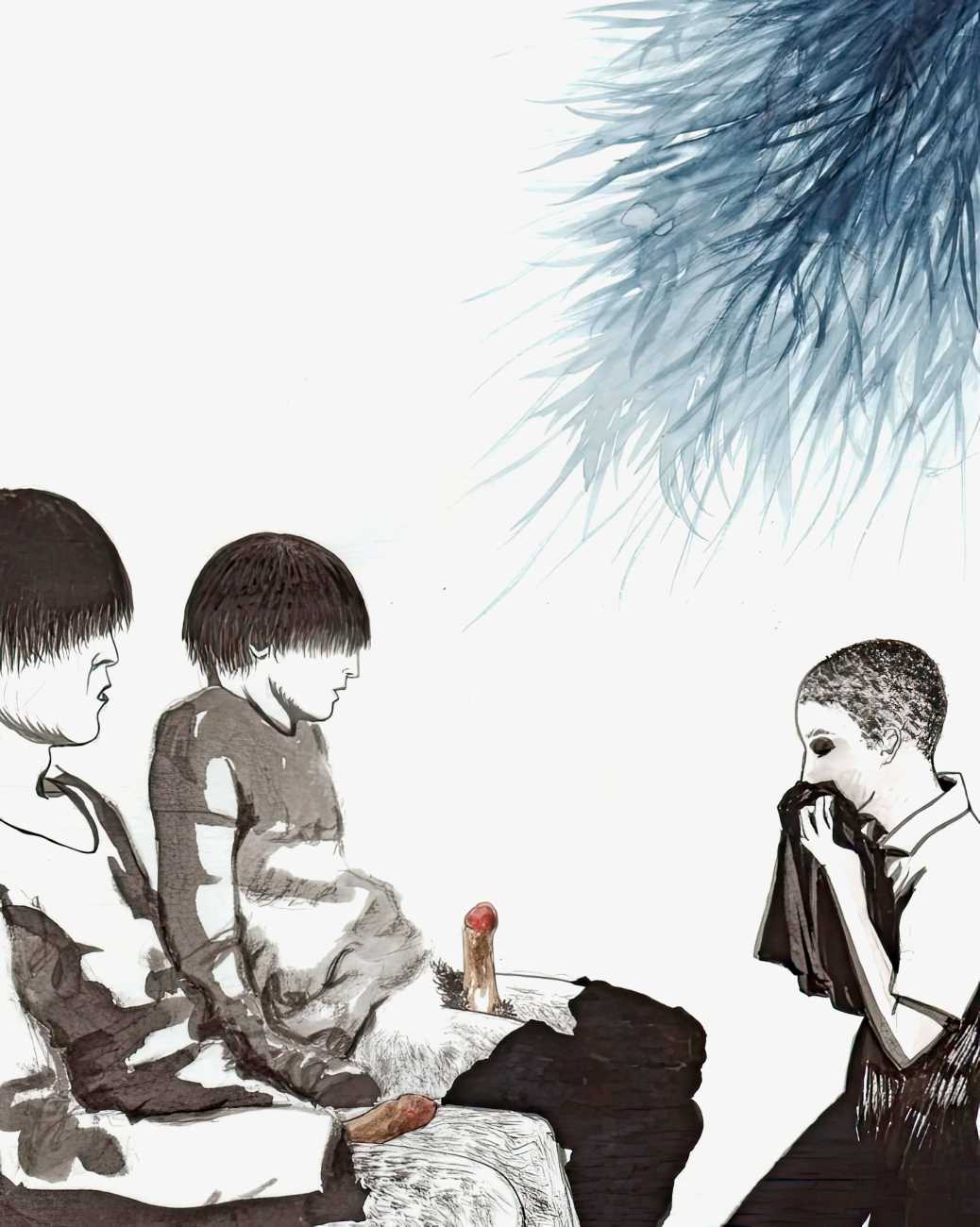
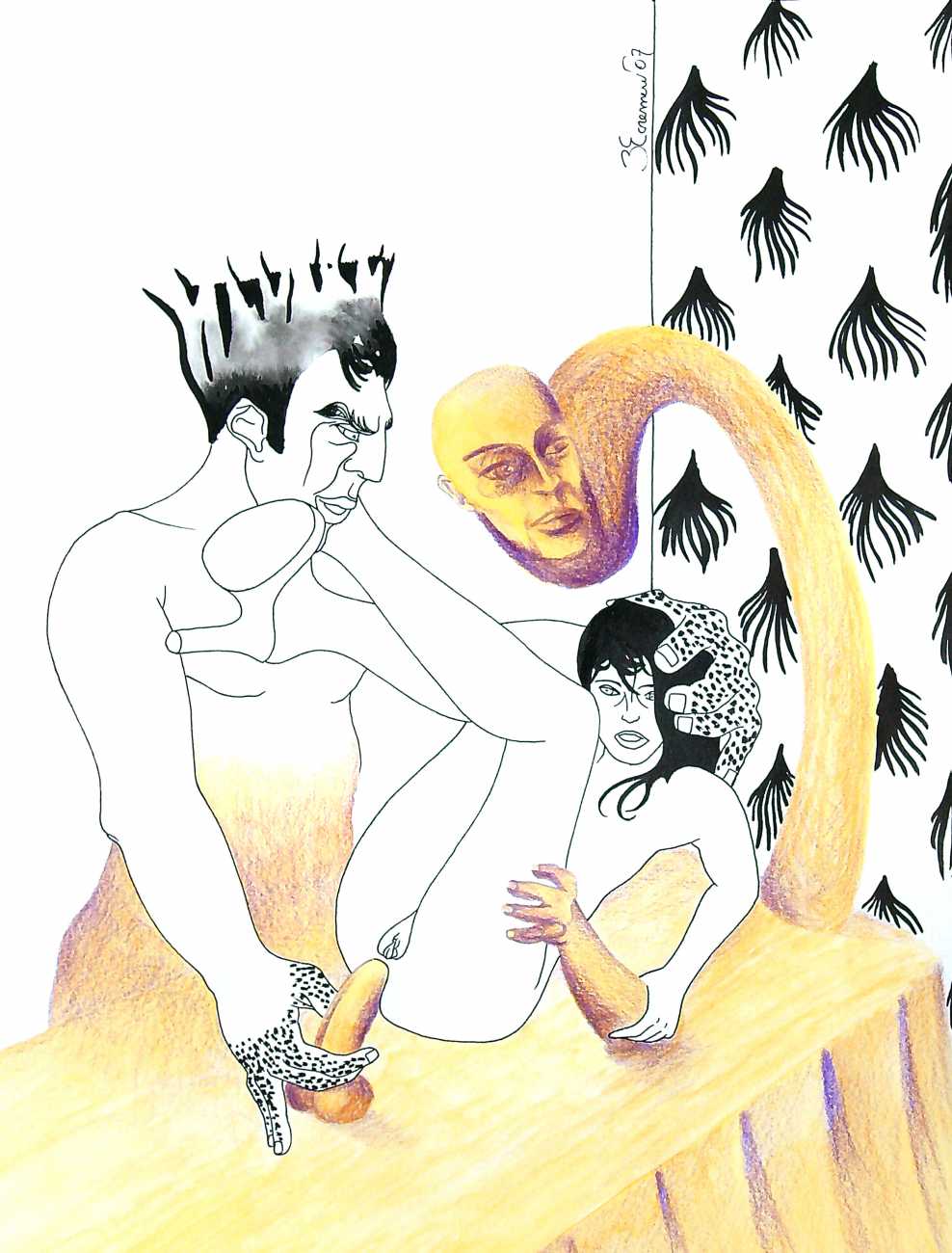
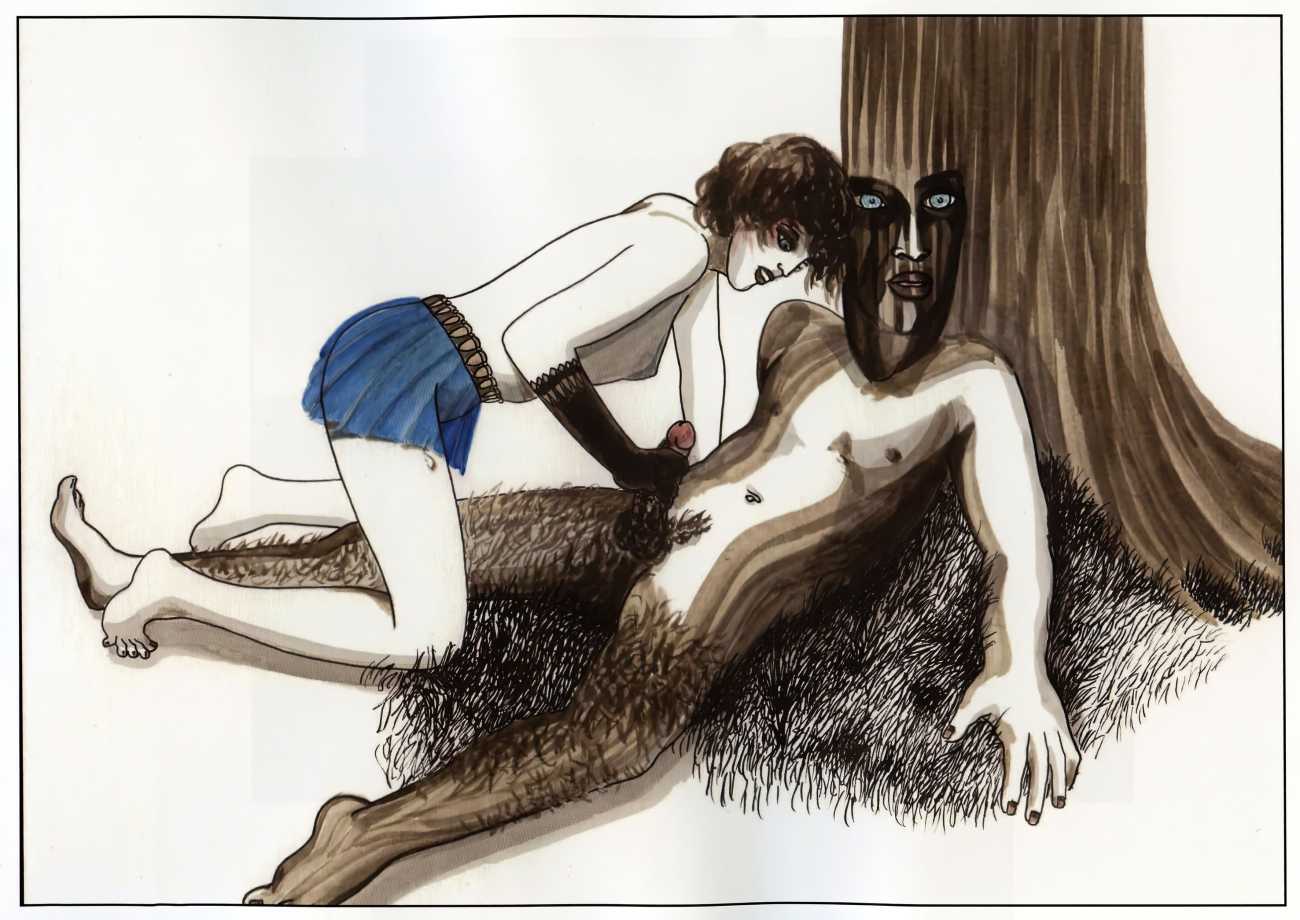
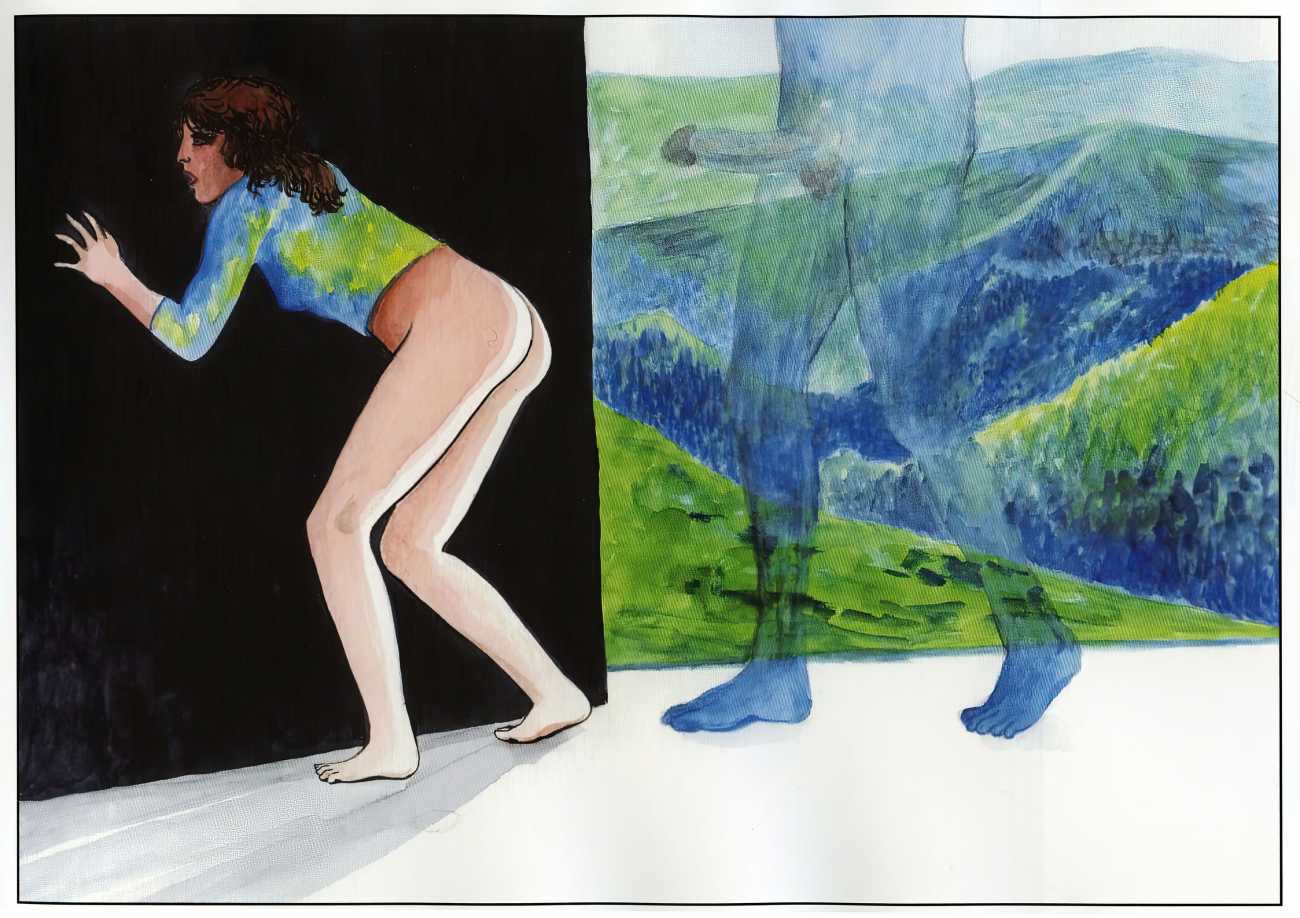
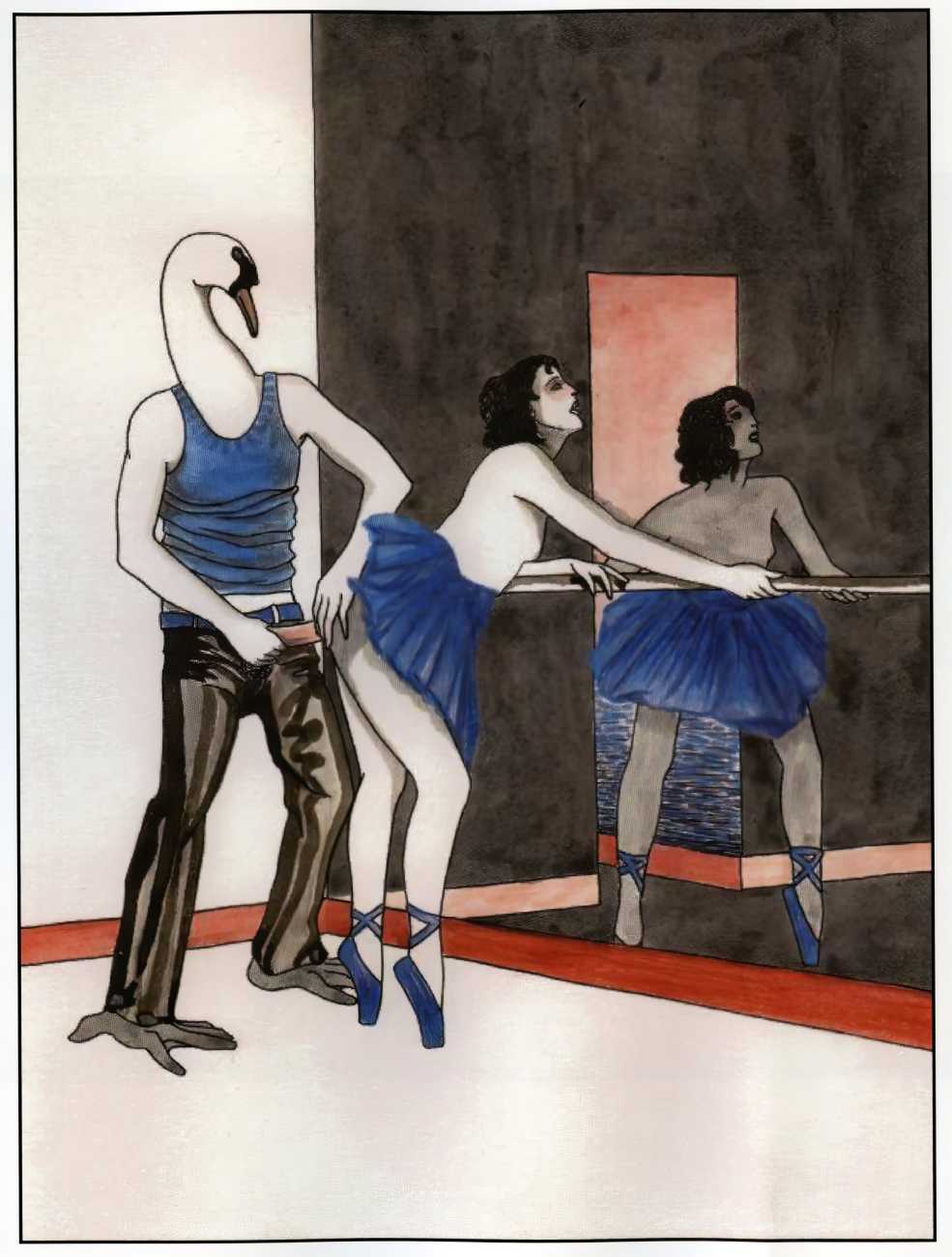
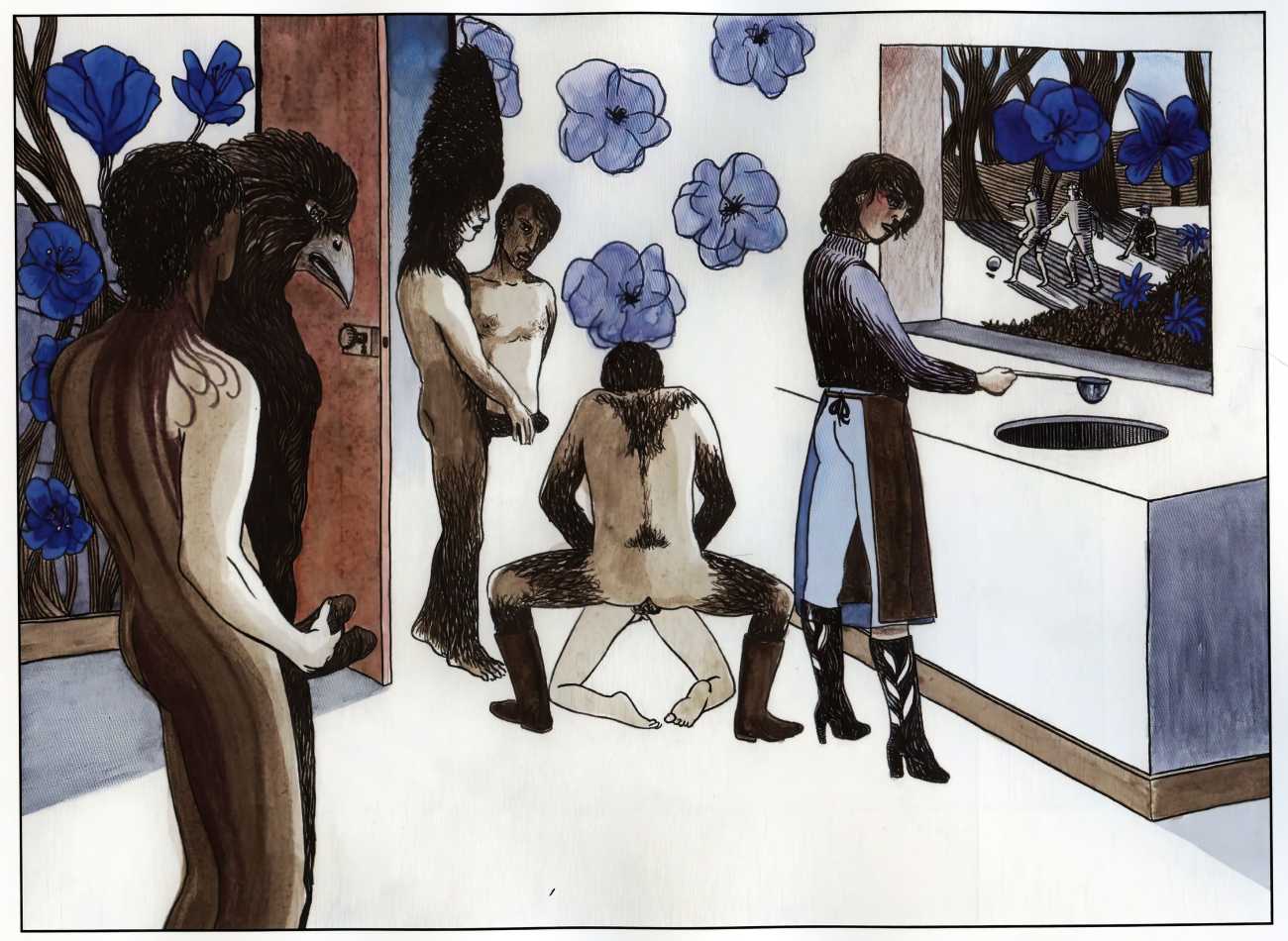
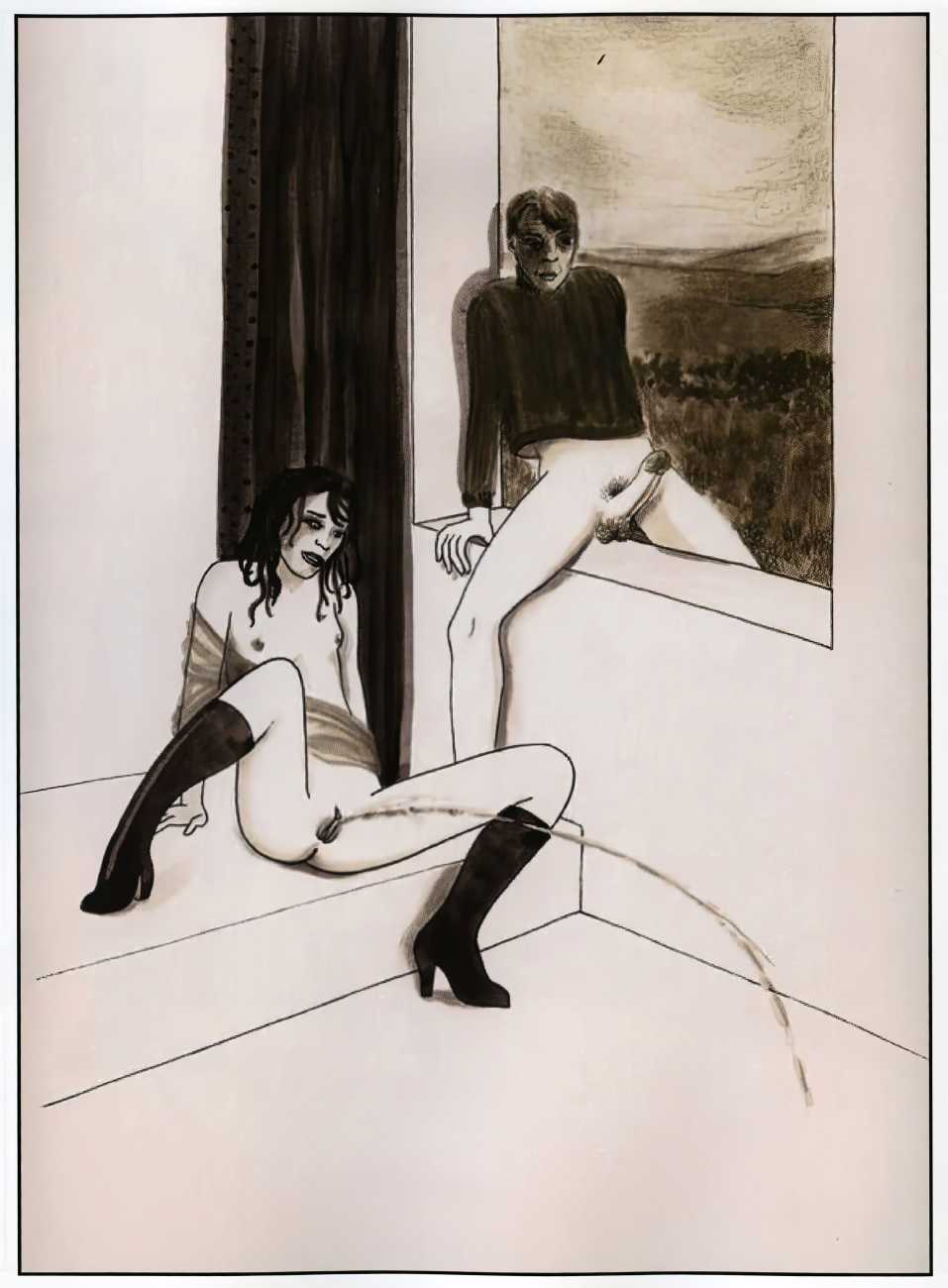
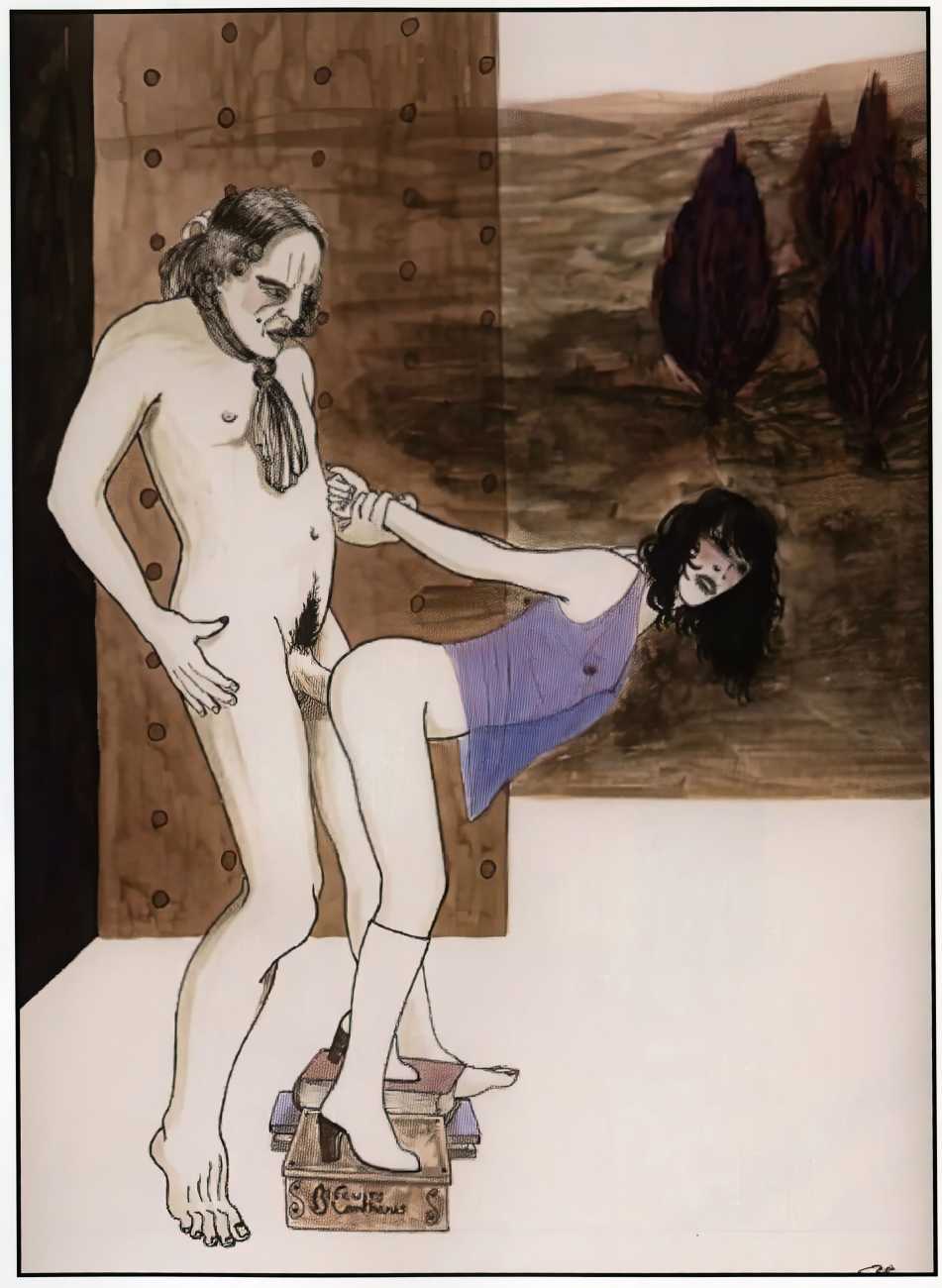
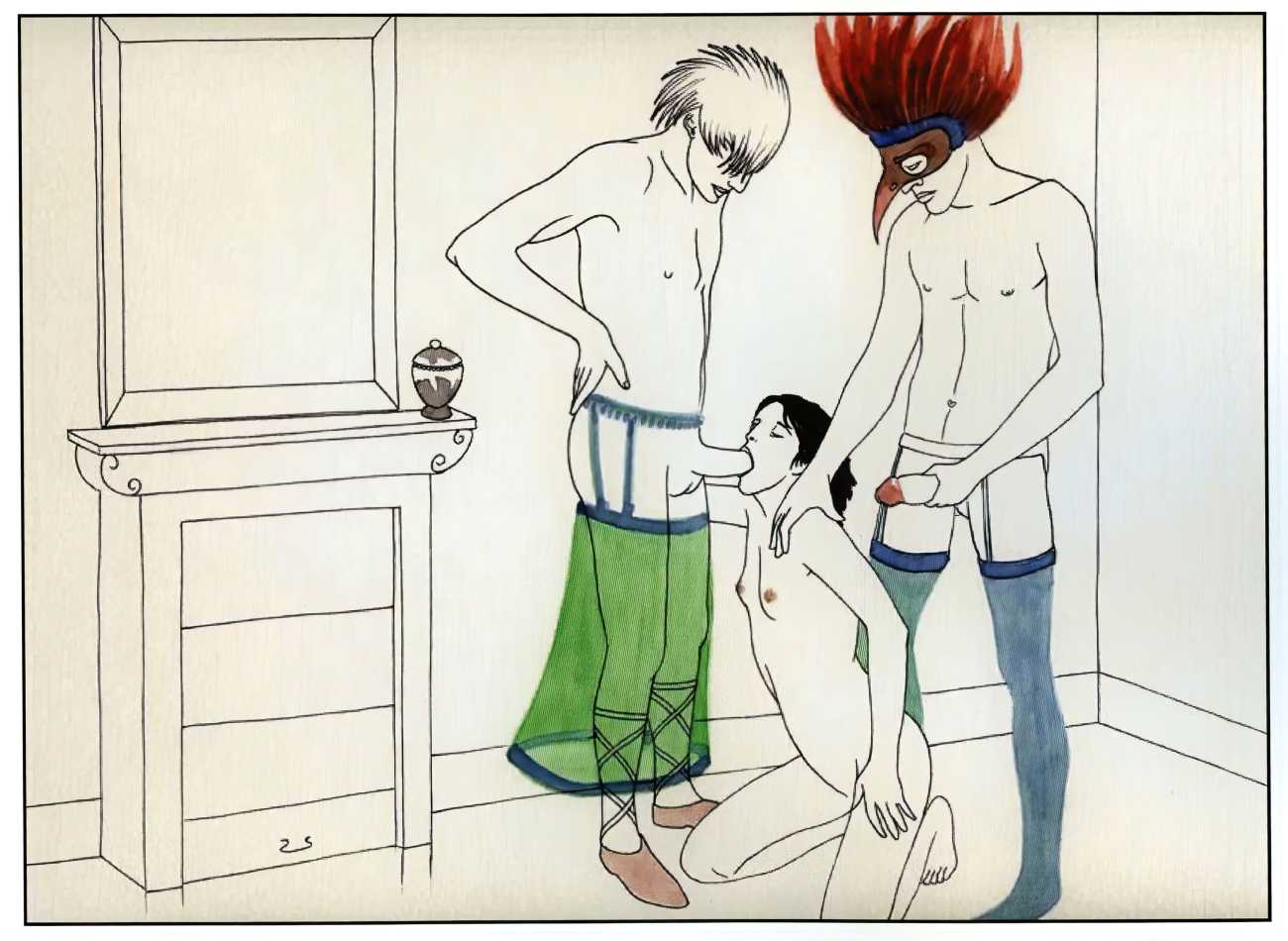
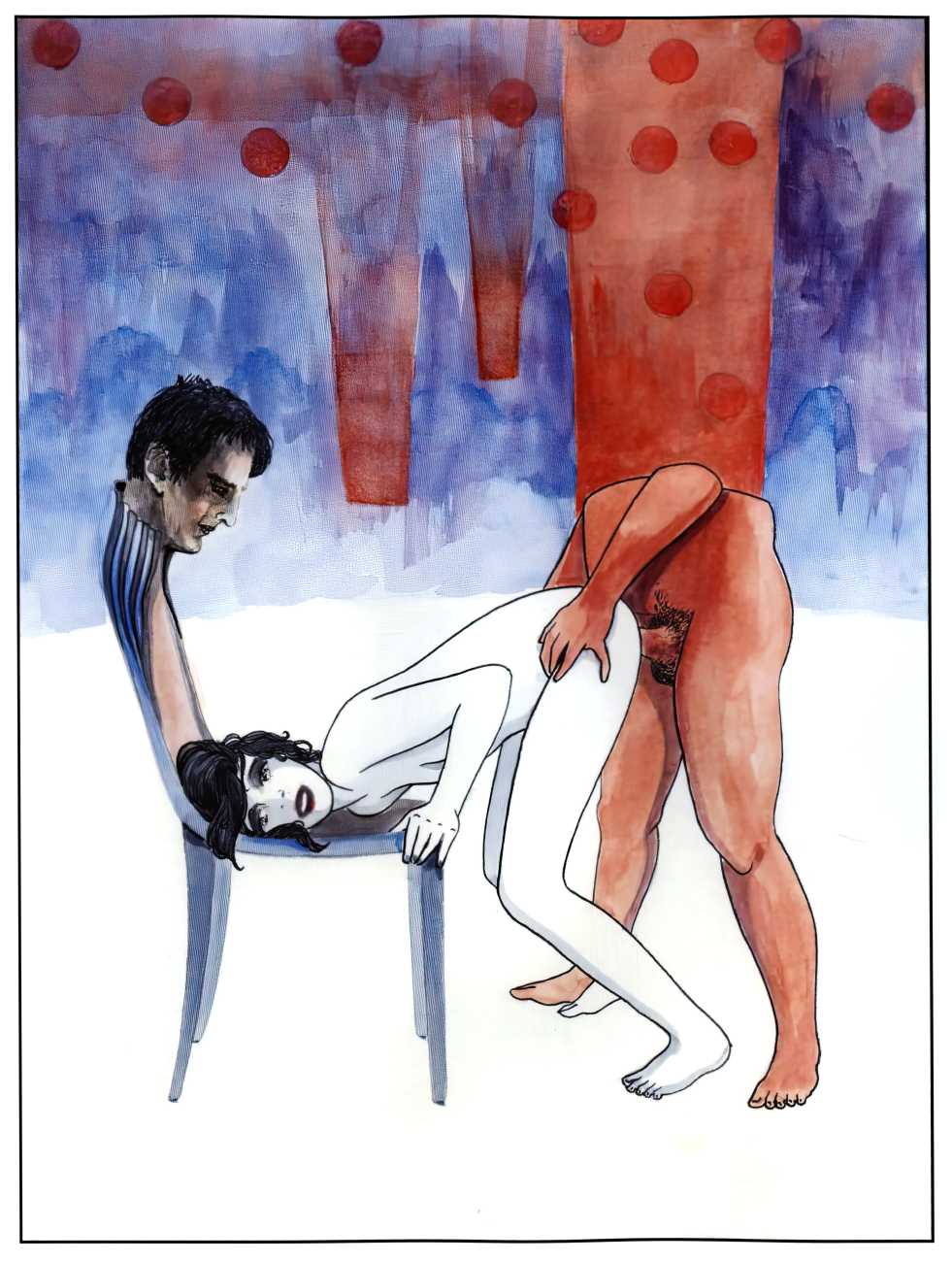
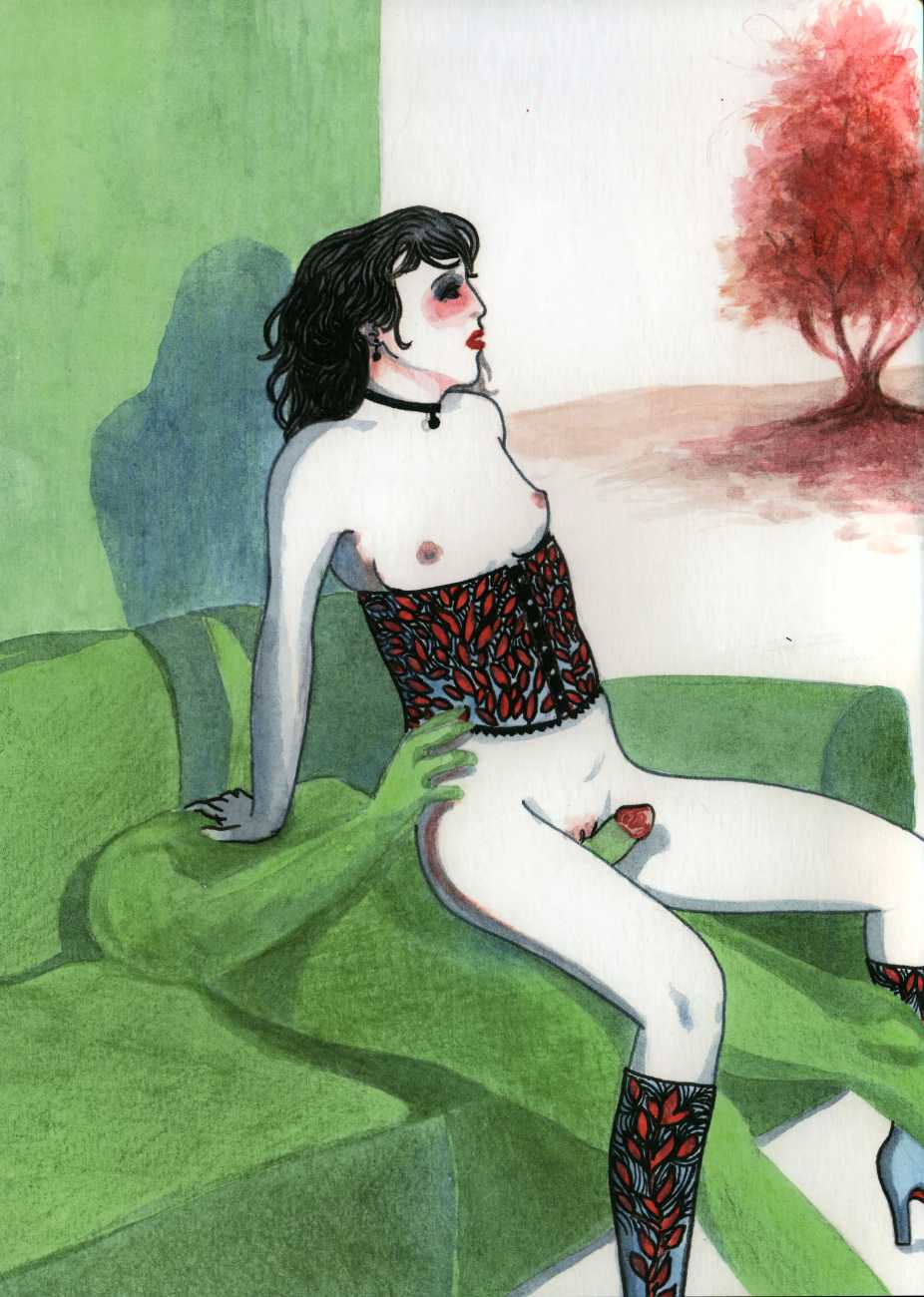
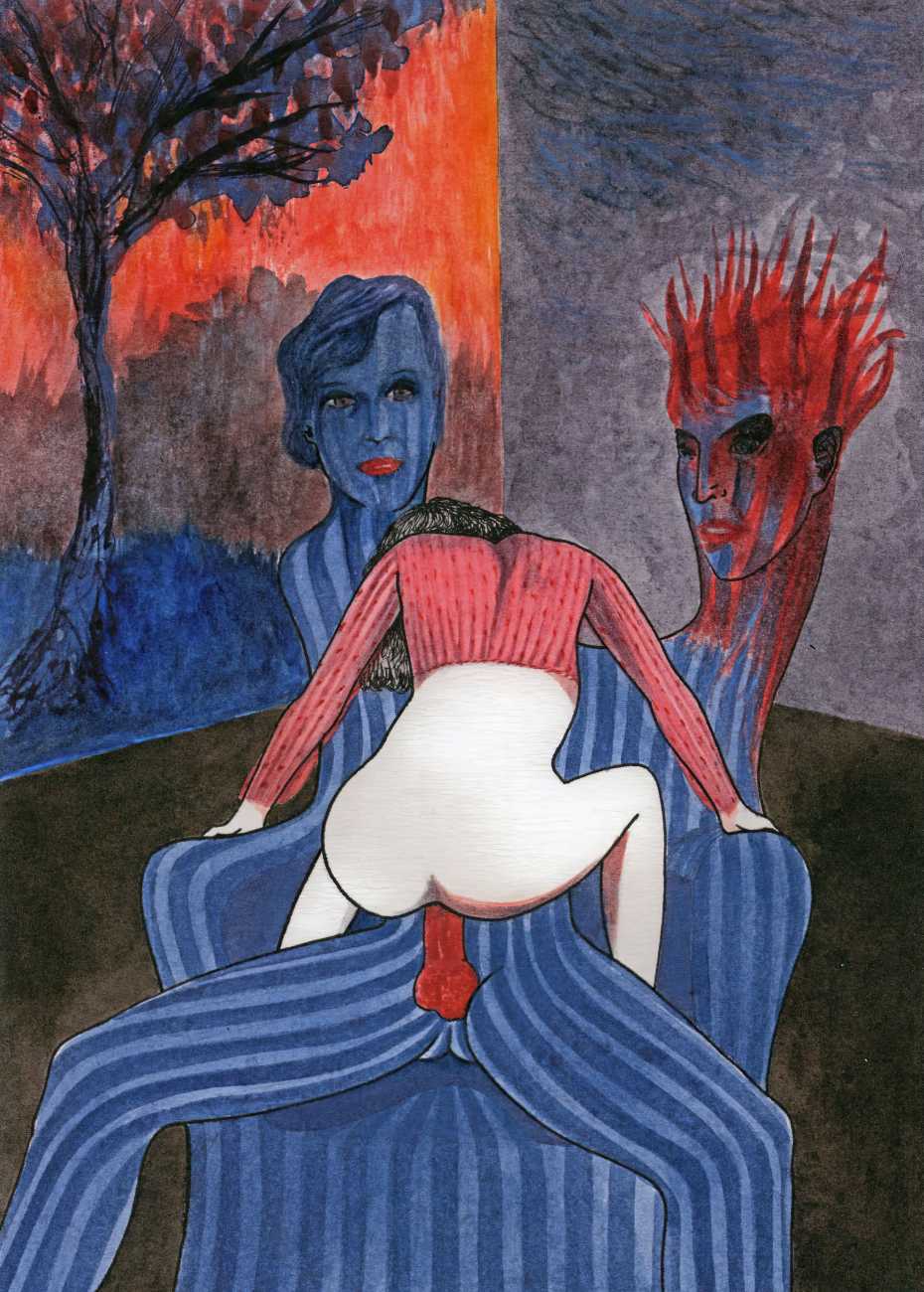
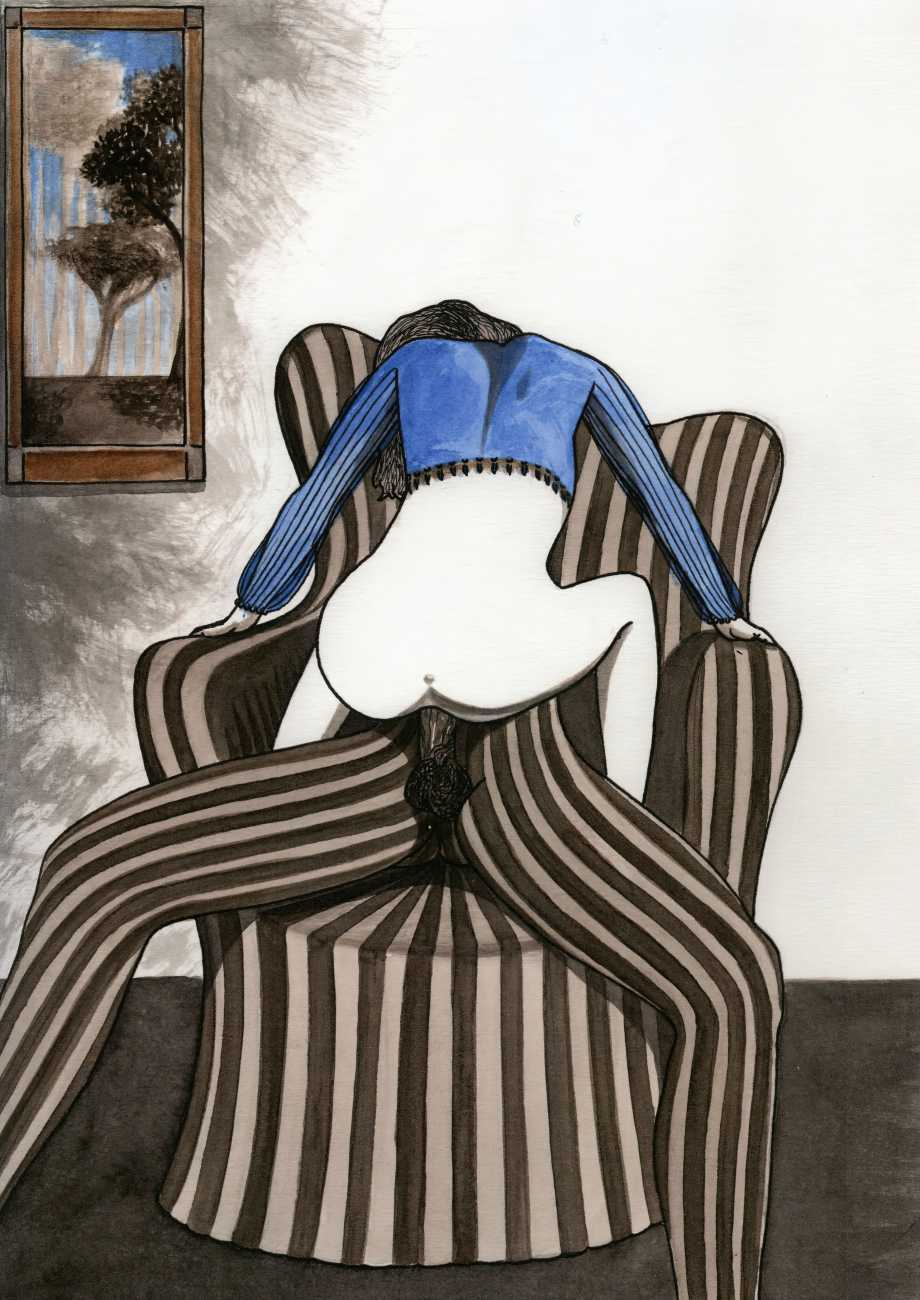
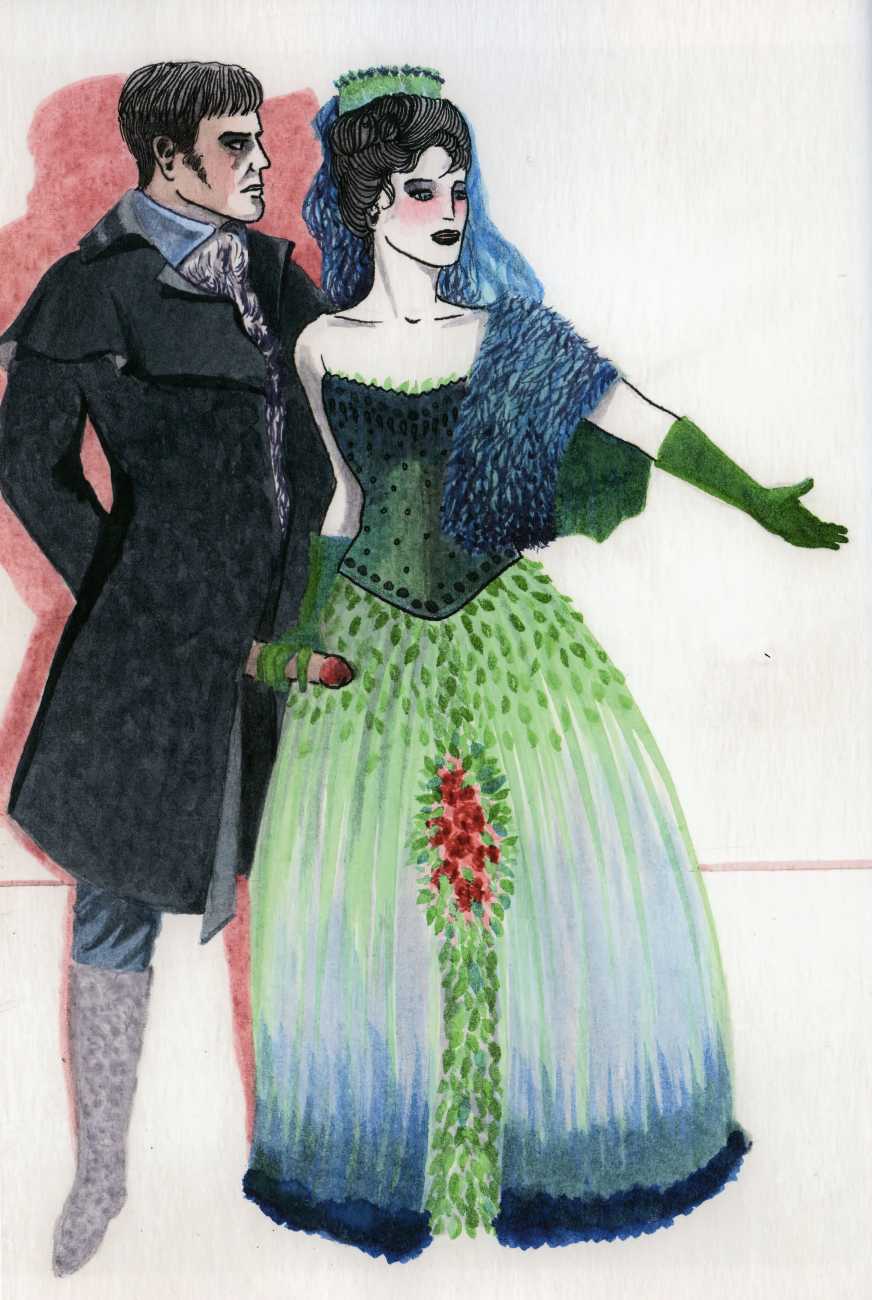
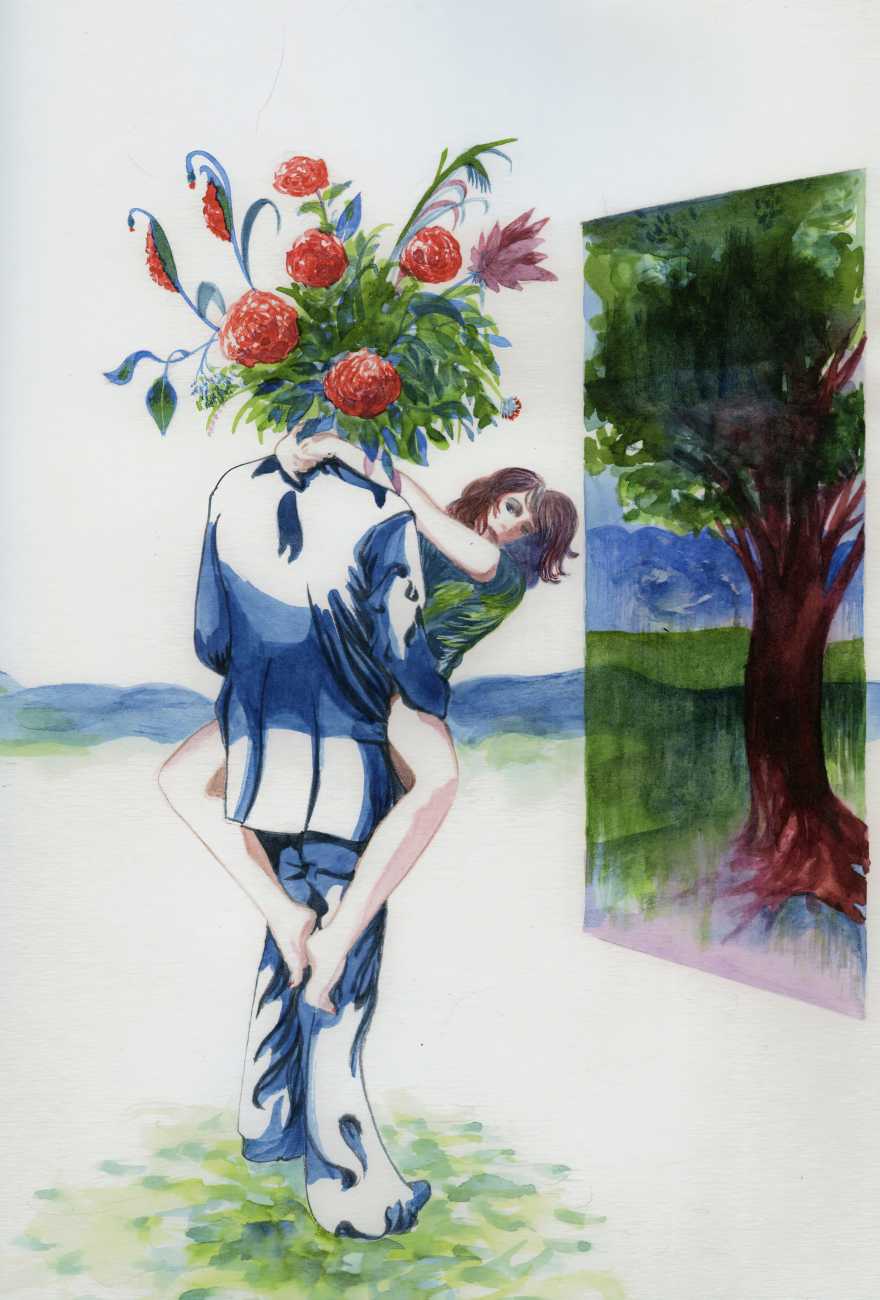
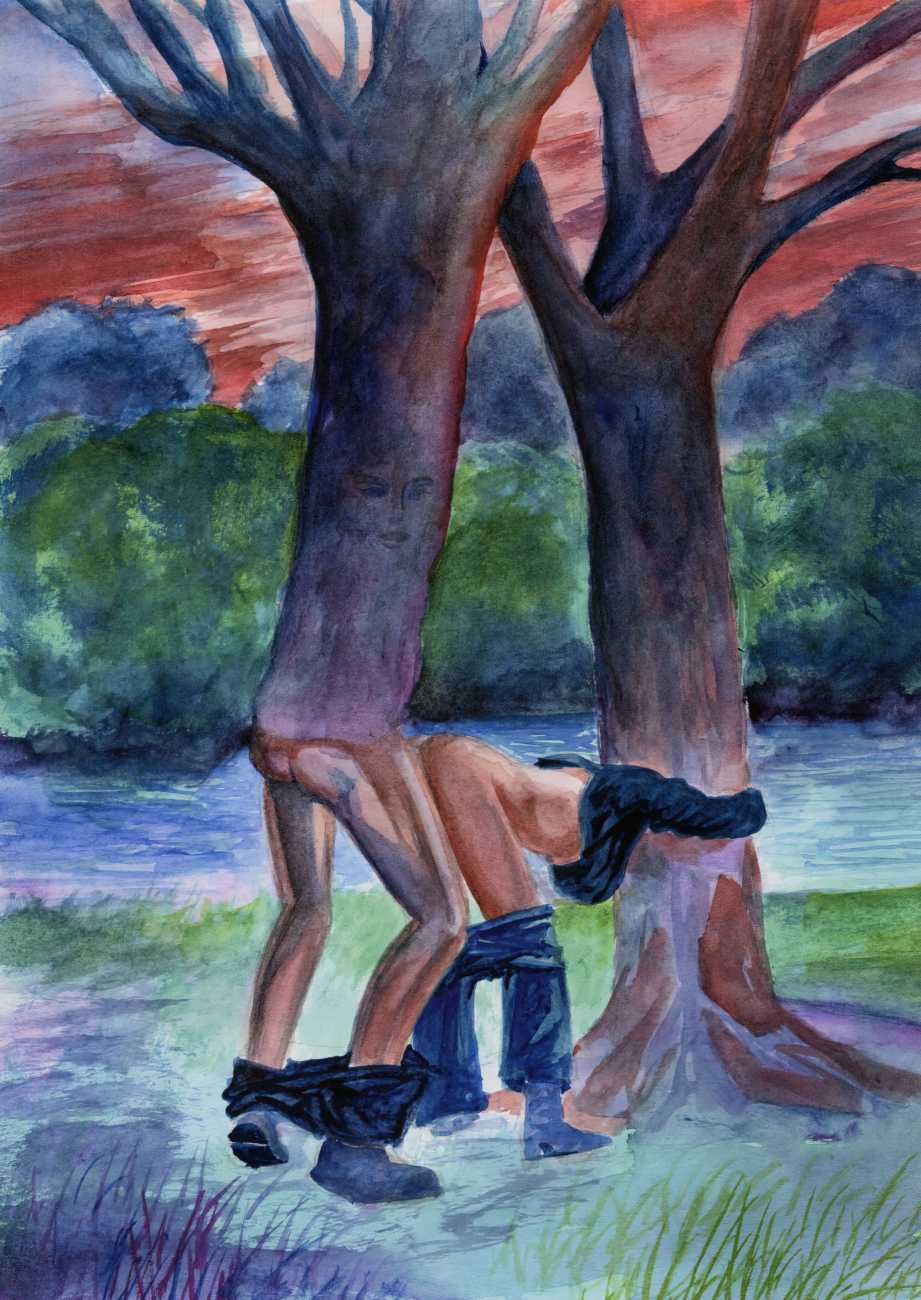
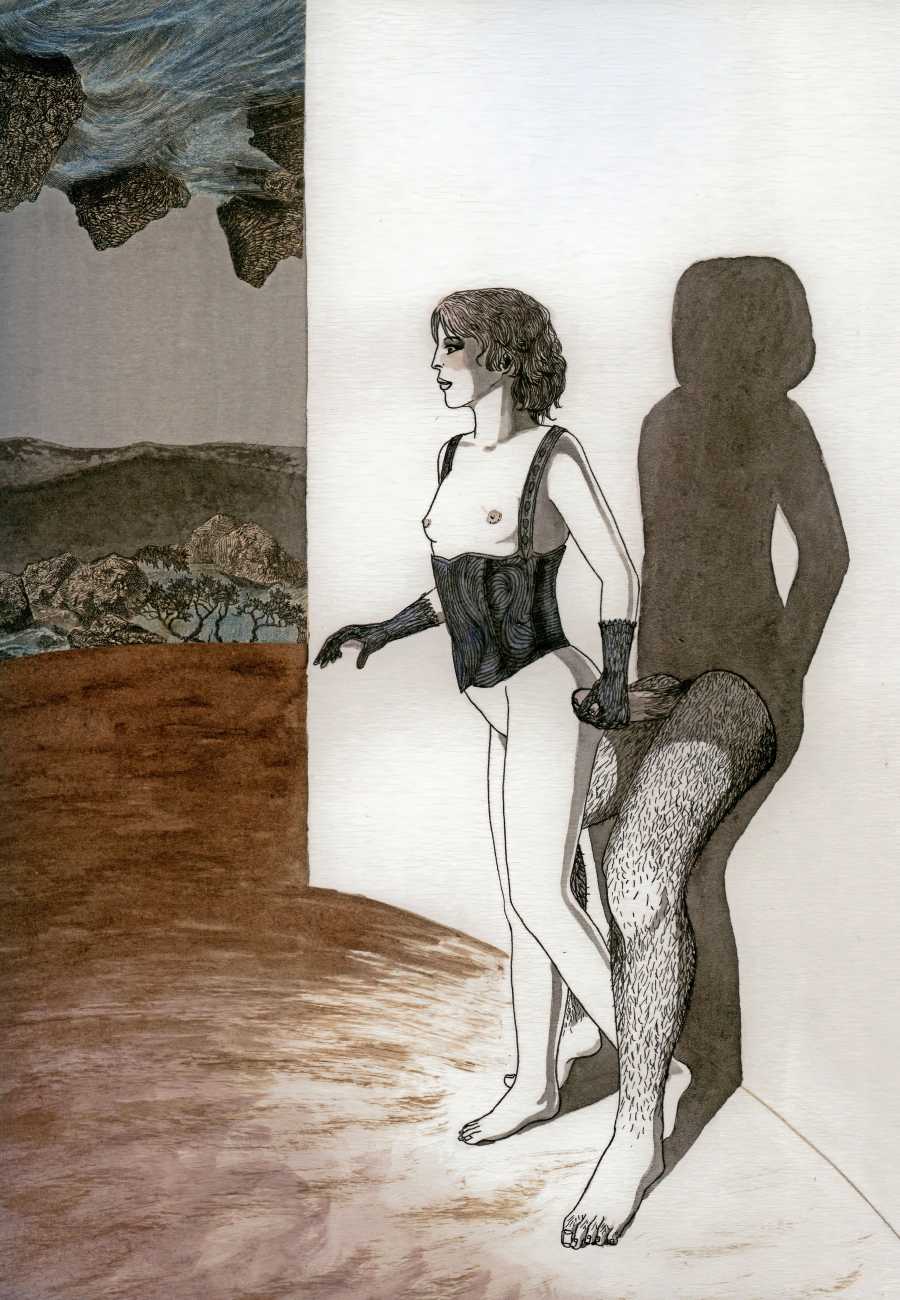
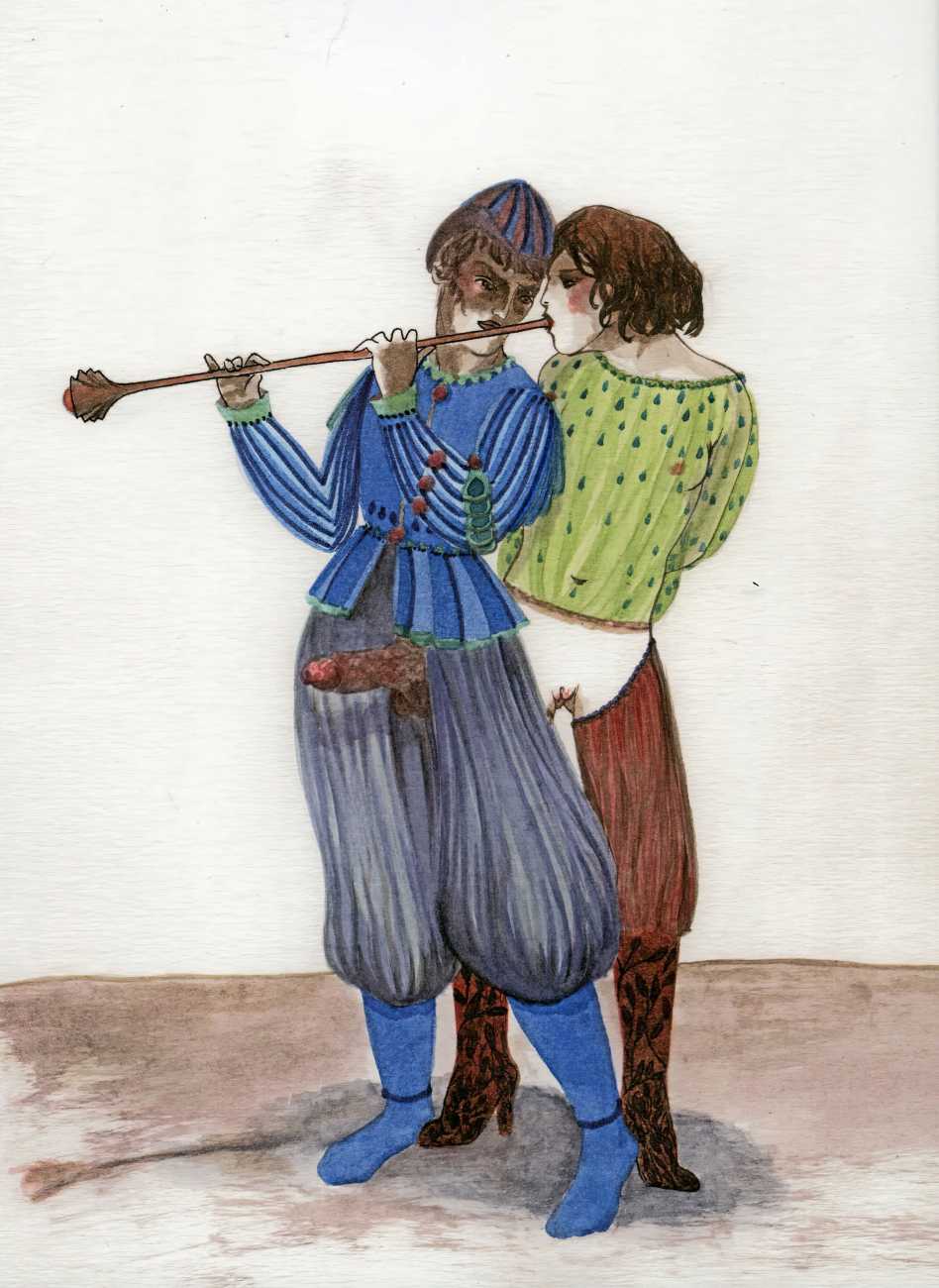
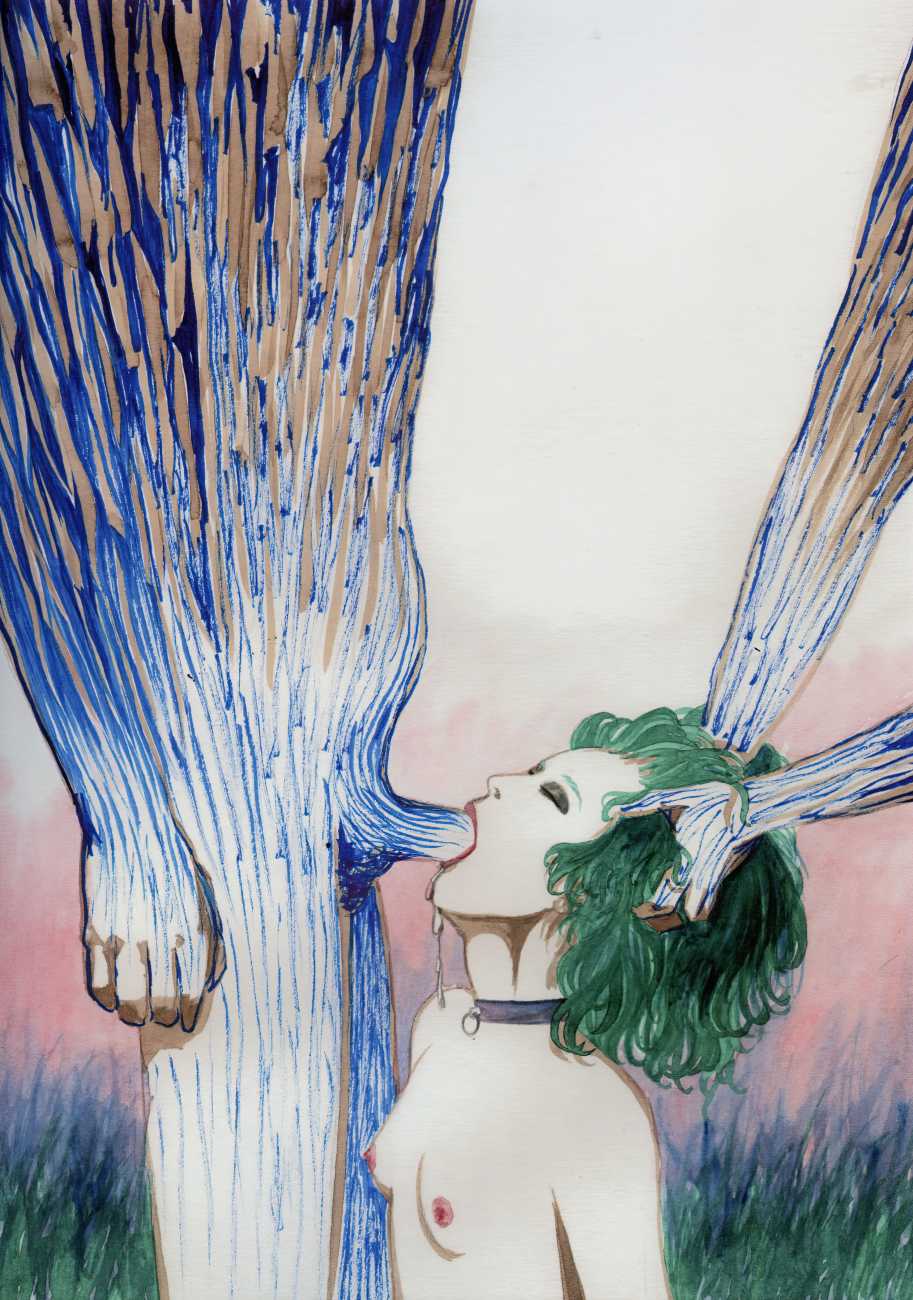
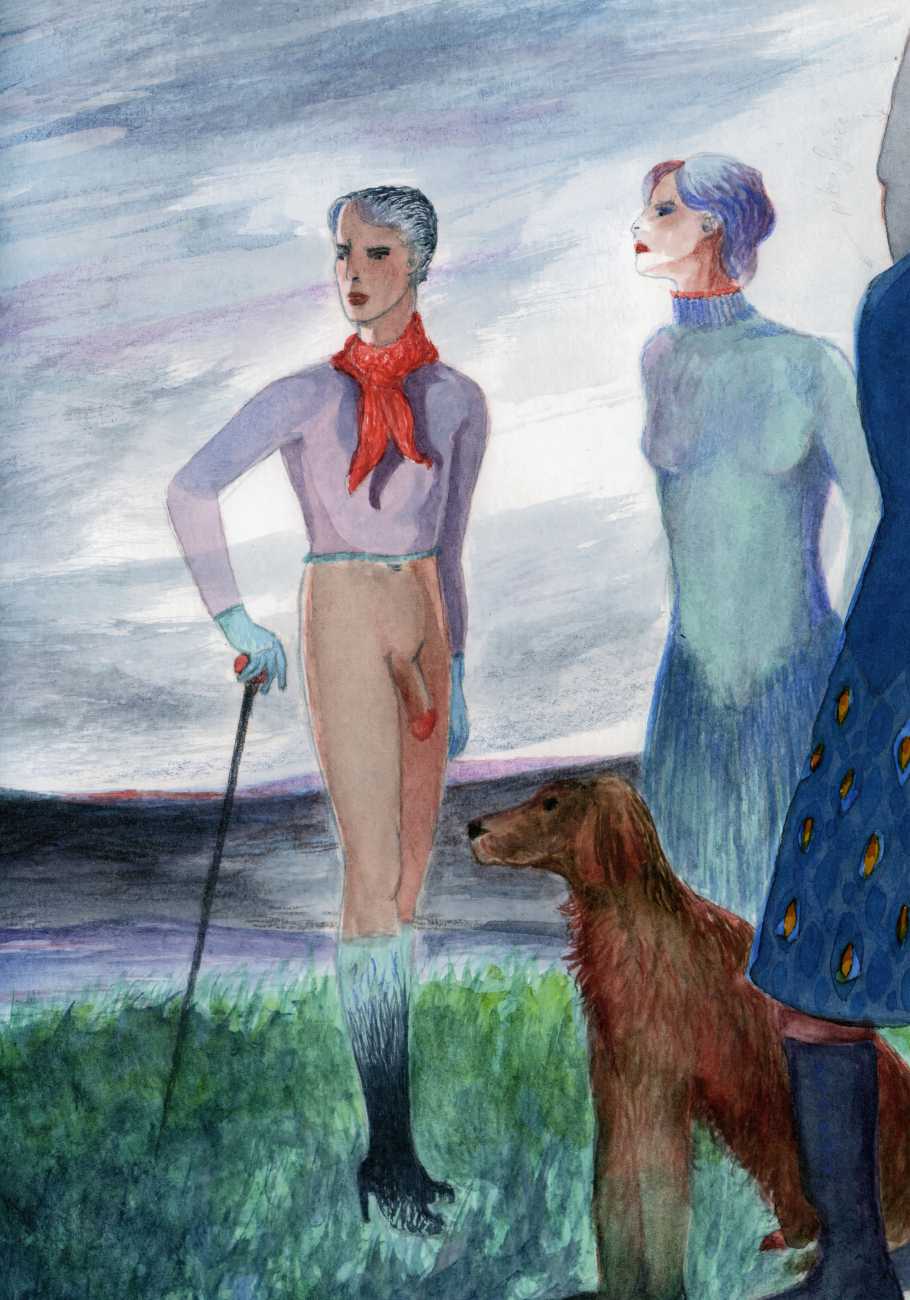
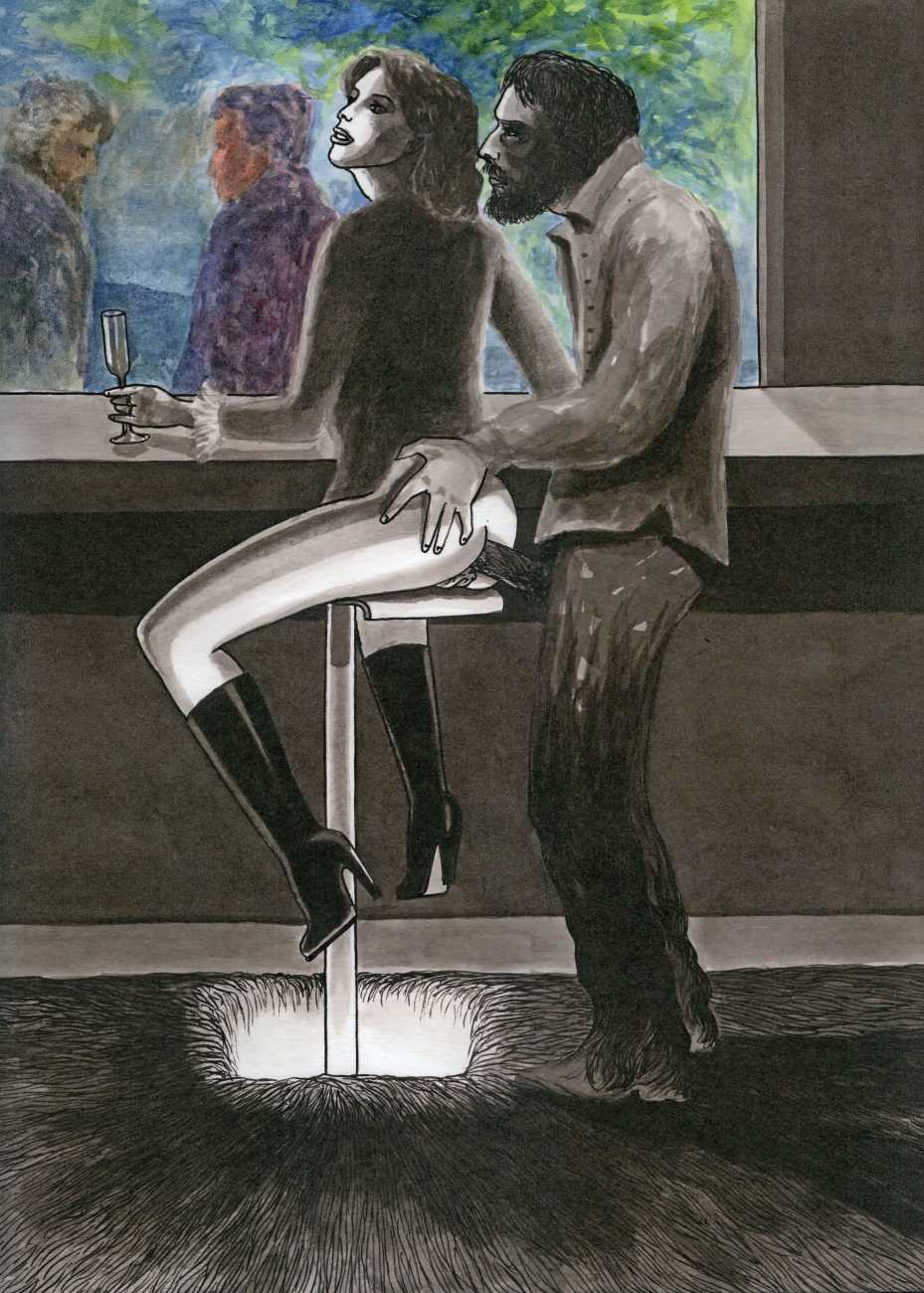
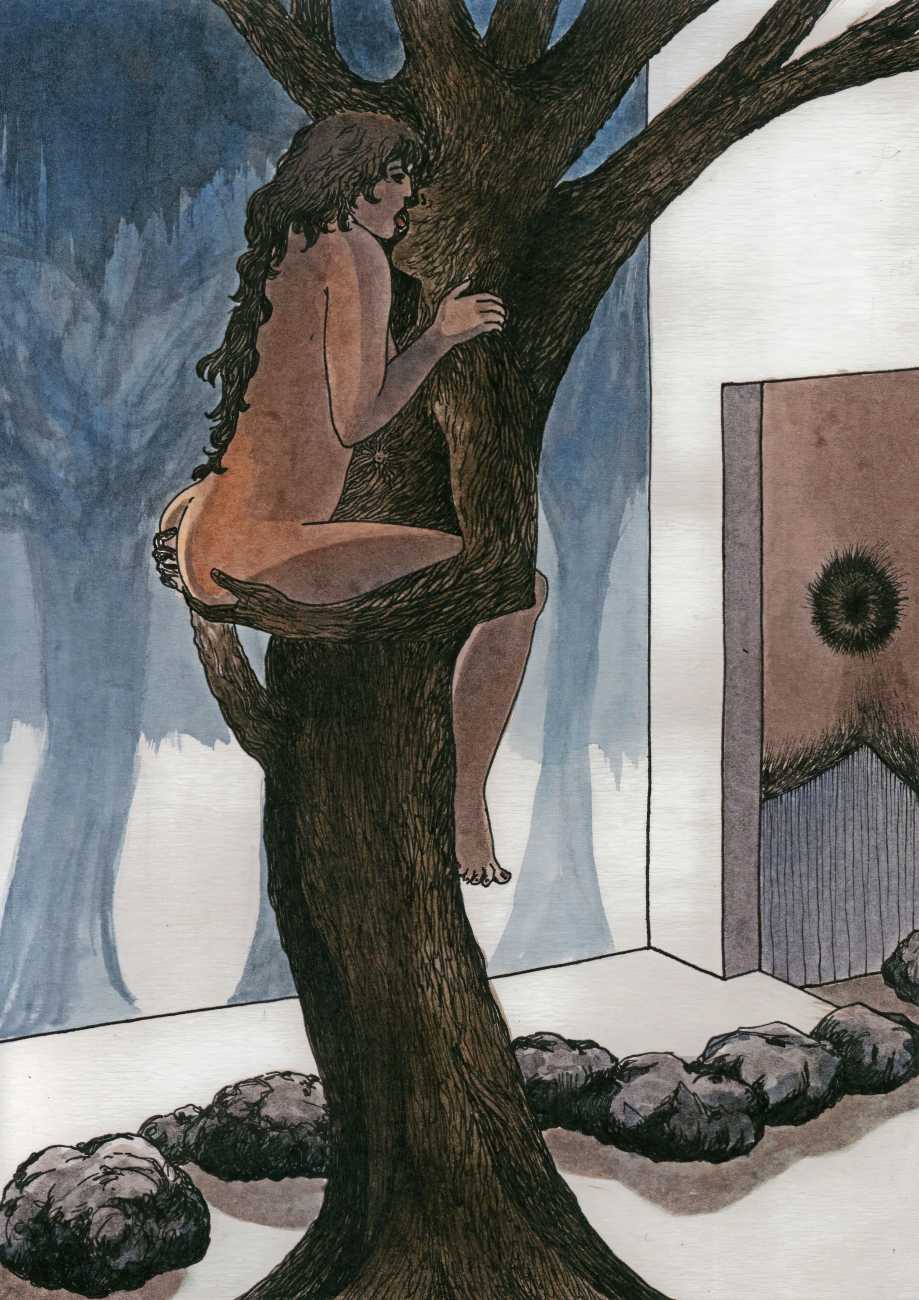
Foo’s work has a signature strangeness which speaks of adult fairy tale and lingering daydream. His protagonists step sure-footedly from magical forest clearings into spartan rooms, intent upon sexual experimentation and release, hungry to exploit our fantasies. As in the best of erotic literature their sexual organs are erect and firm, pushing towards the focus of their cravings. And the young woman at the centre of their desires is, as always, seductive and compliant. Surprises are in store – heads dissolve into tree trunks, a man’s feet become claw-like hands, a chair takes on life, legs are hairy and take root, eyes are catlike, and everywhere there is an air of otherworldliness and secrecy.
Rajah Foo’s website can be found here.
We are very grateful to Hans-Jürgen Döpp for many of these images. We are also grateful to Rajah Foo’s artist friend Stefan Prince for his assistance with this entry.
Similar artists
Guido Crepax – Italian adult-comics artist whose Story of O adaptation shares Foo's own fascination.
Leonor Fini – French surrealist of masked, metamorphic figures in a dreamlike erotic world.
Georges Pichard – French adult-comics artist who also adapted Histoire d'O.
Eric Provoost – French digital artist of polished fetish and BDSM subjects.
Toyen – Czech surrealist of dreamlike, metamorphic erotic imagery.
Example illustration