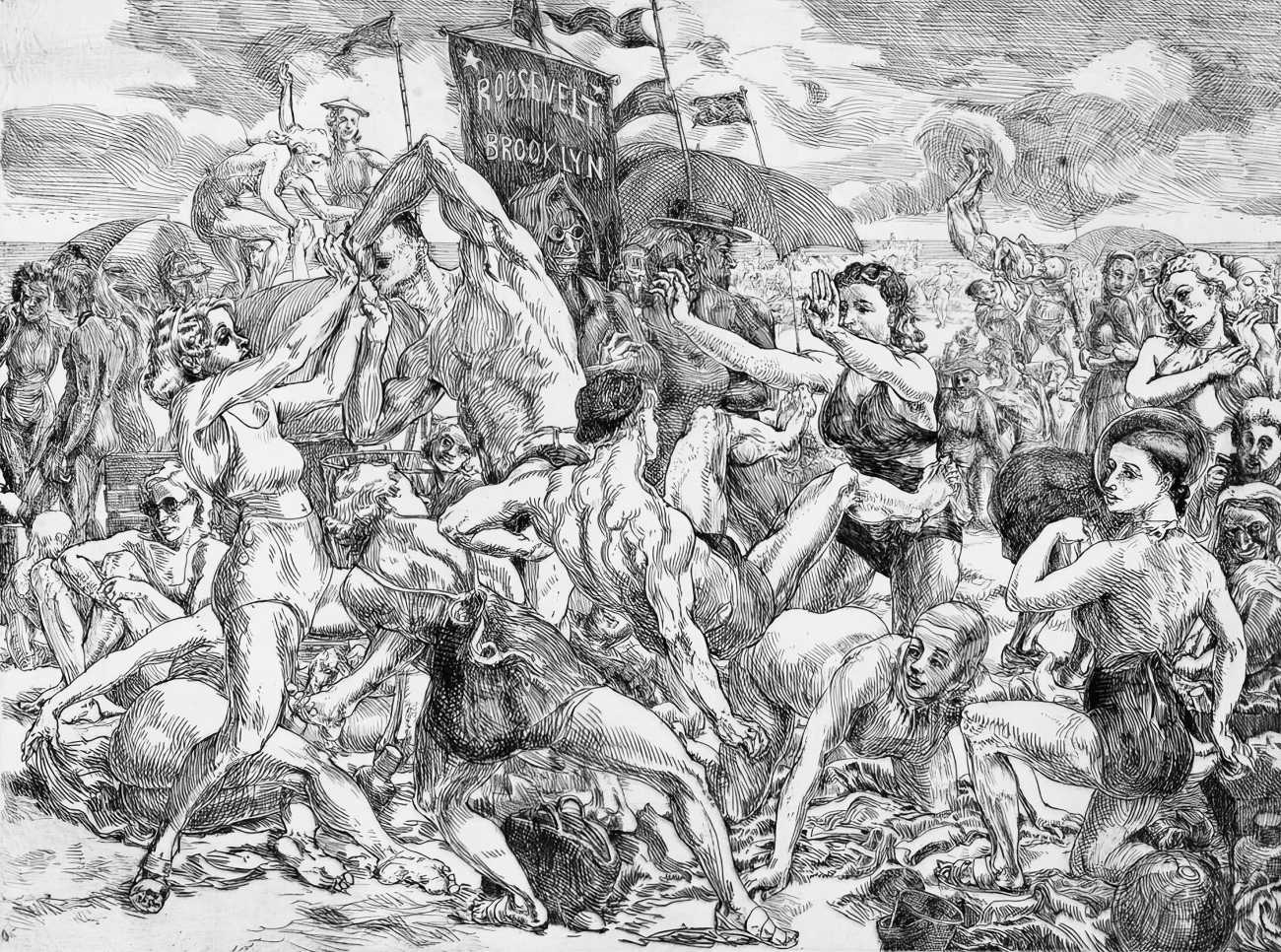
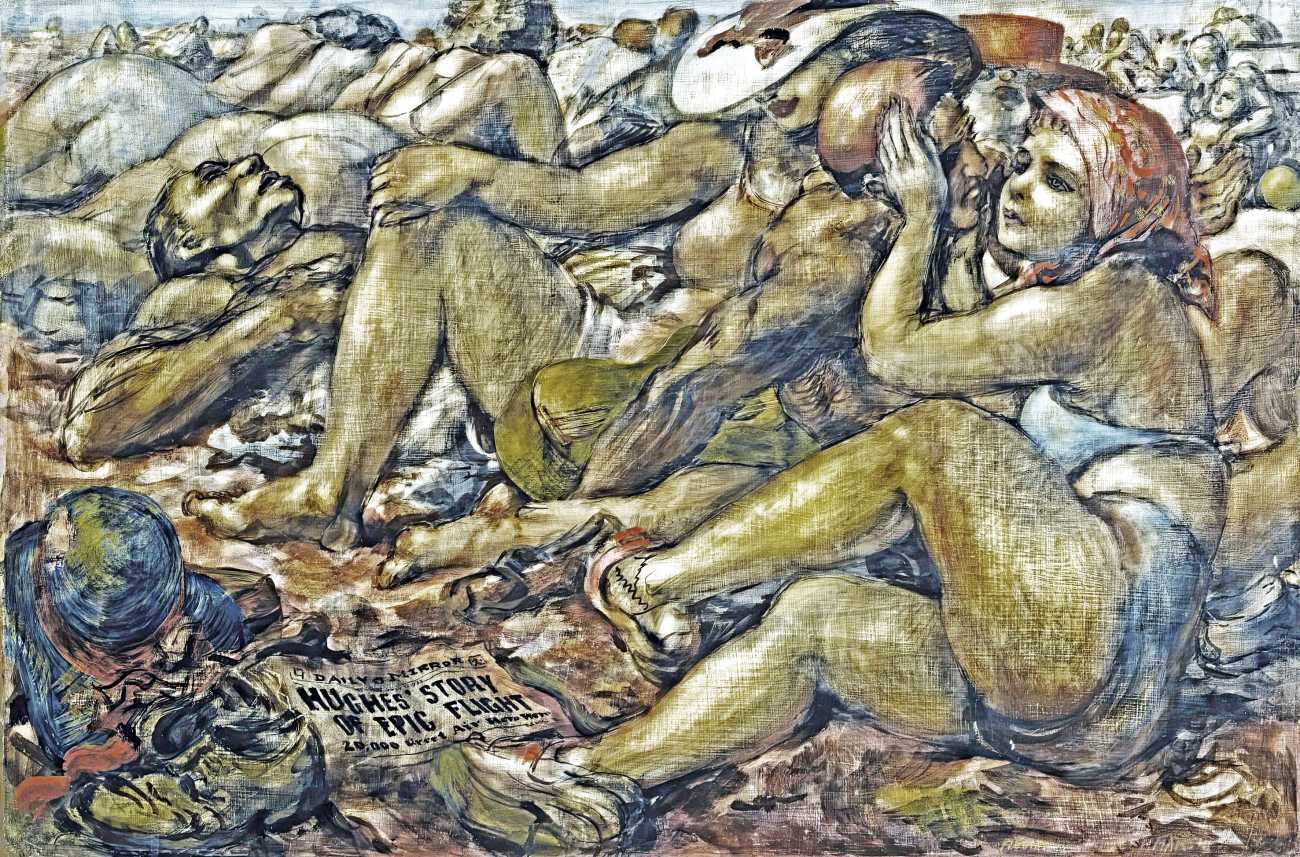
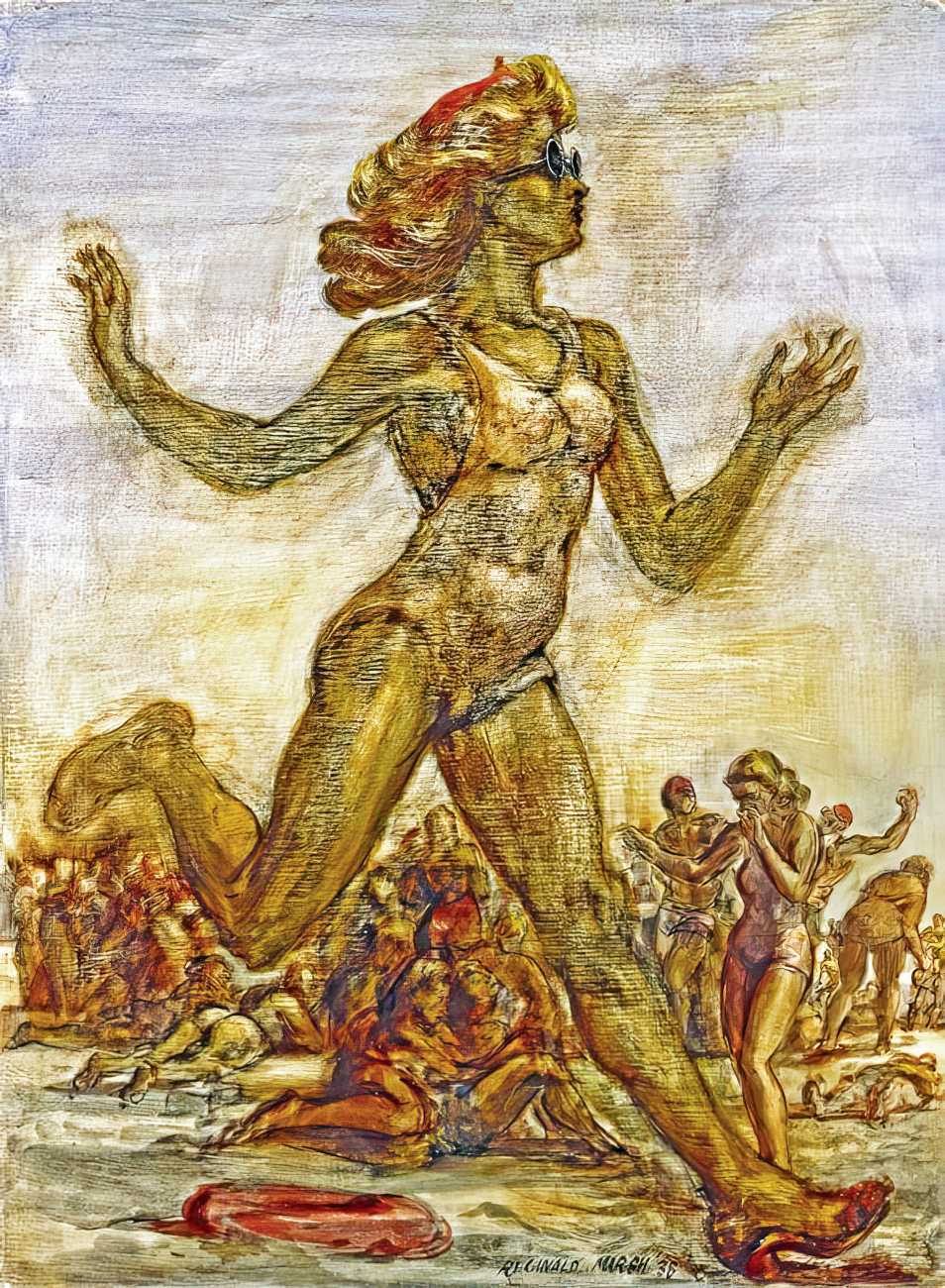
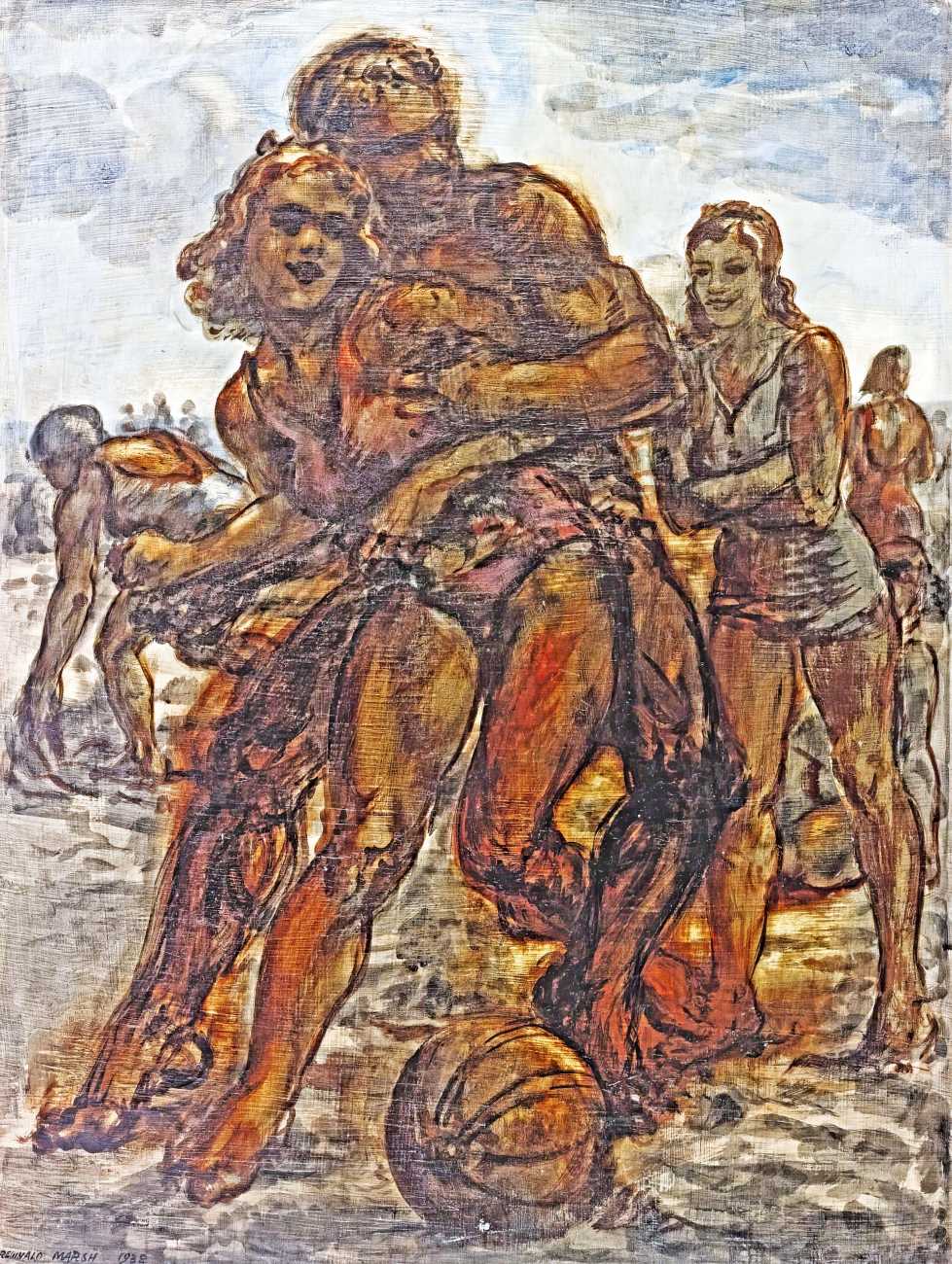
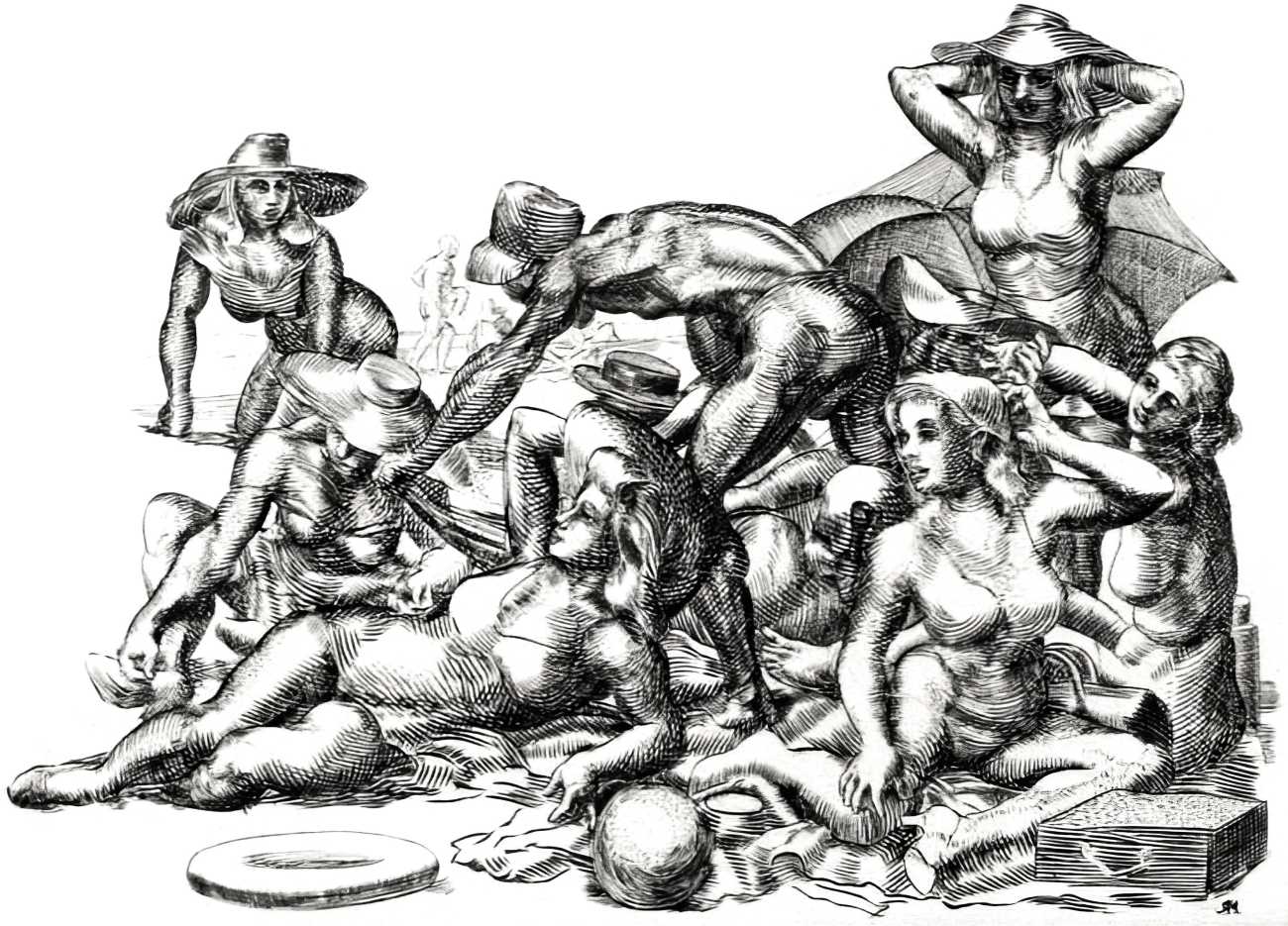
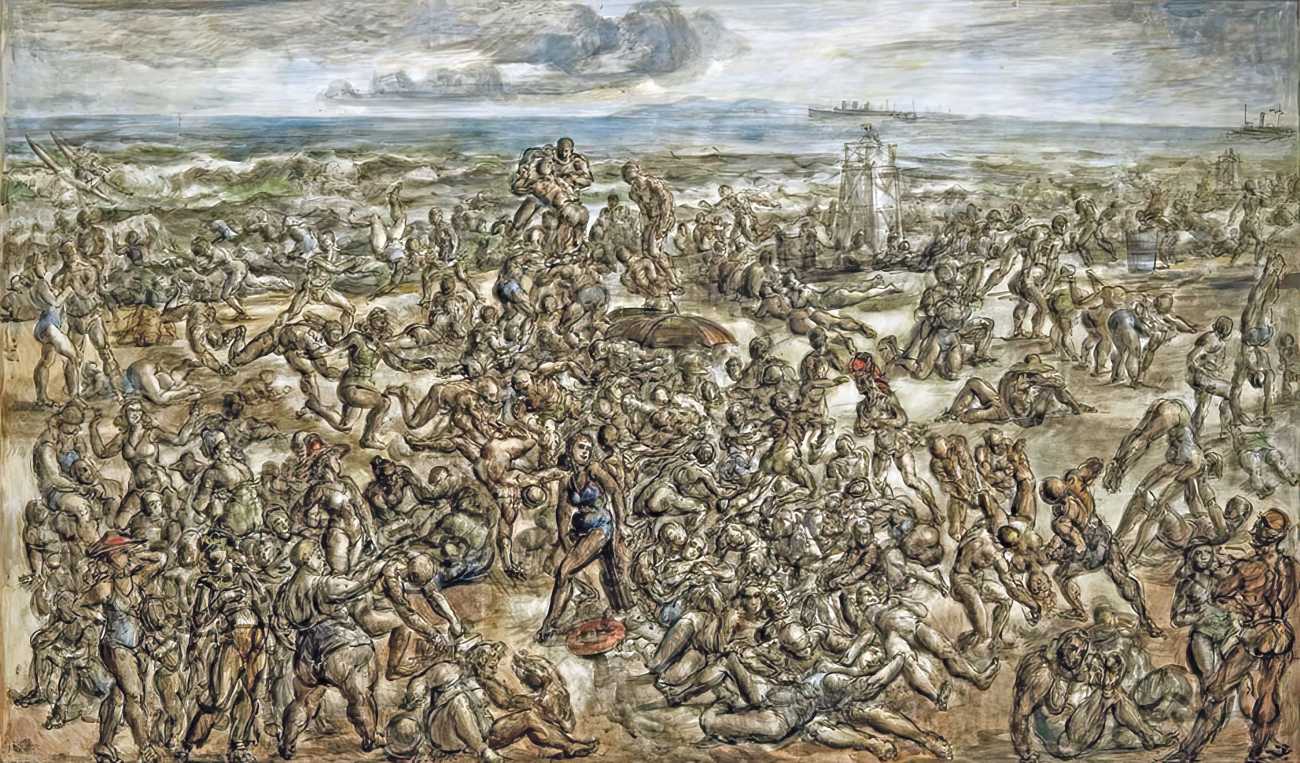
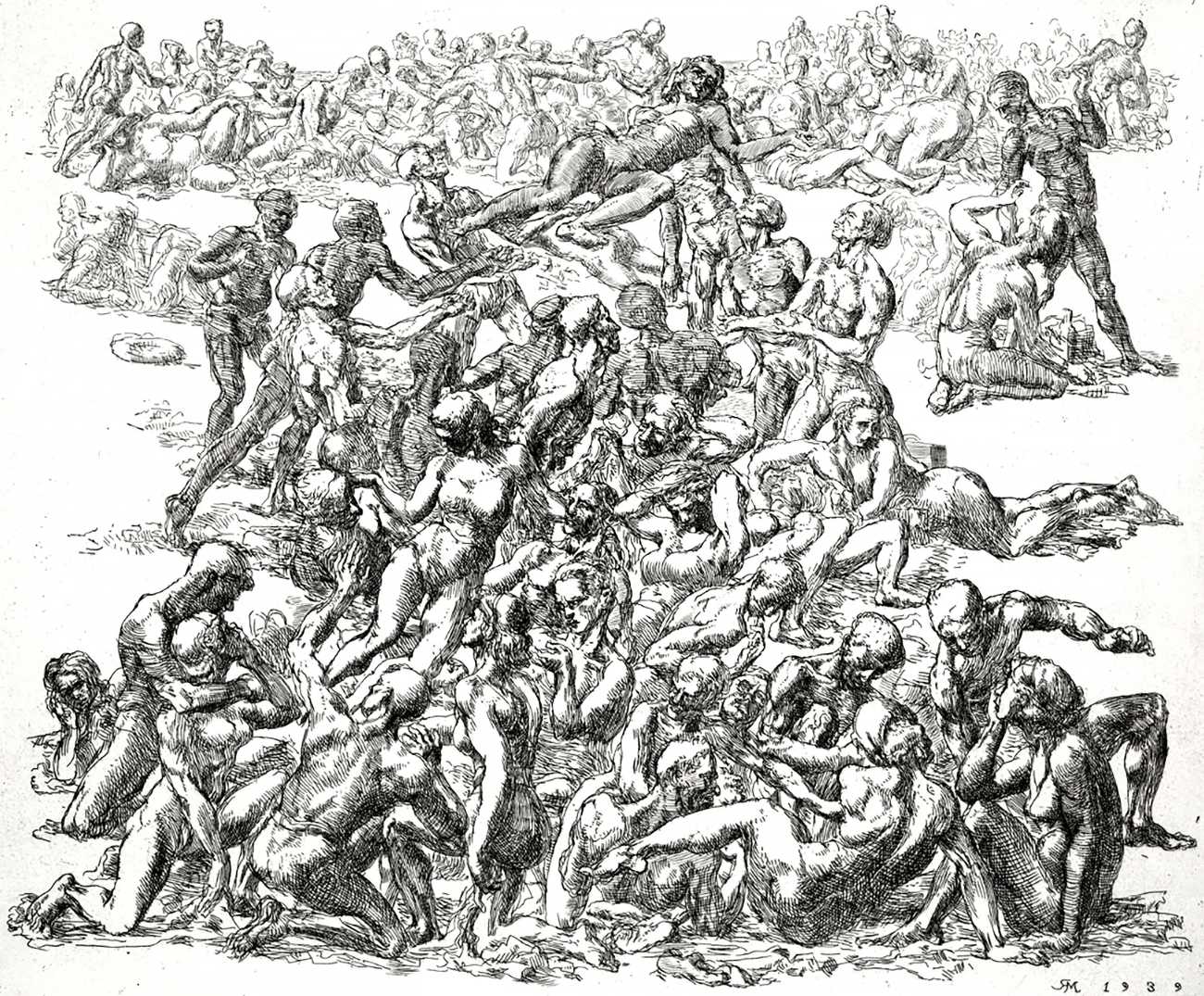
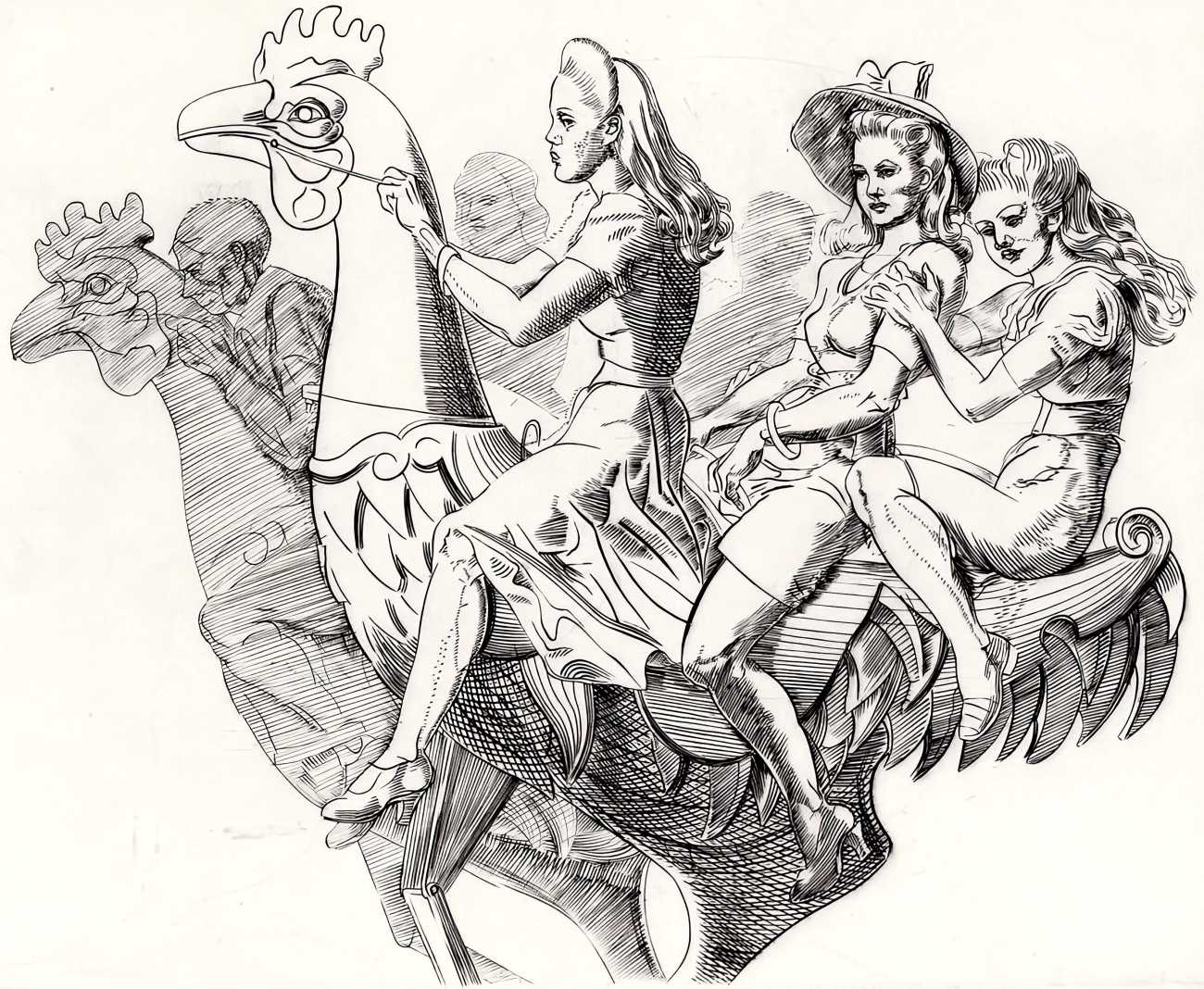
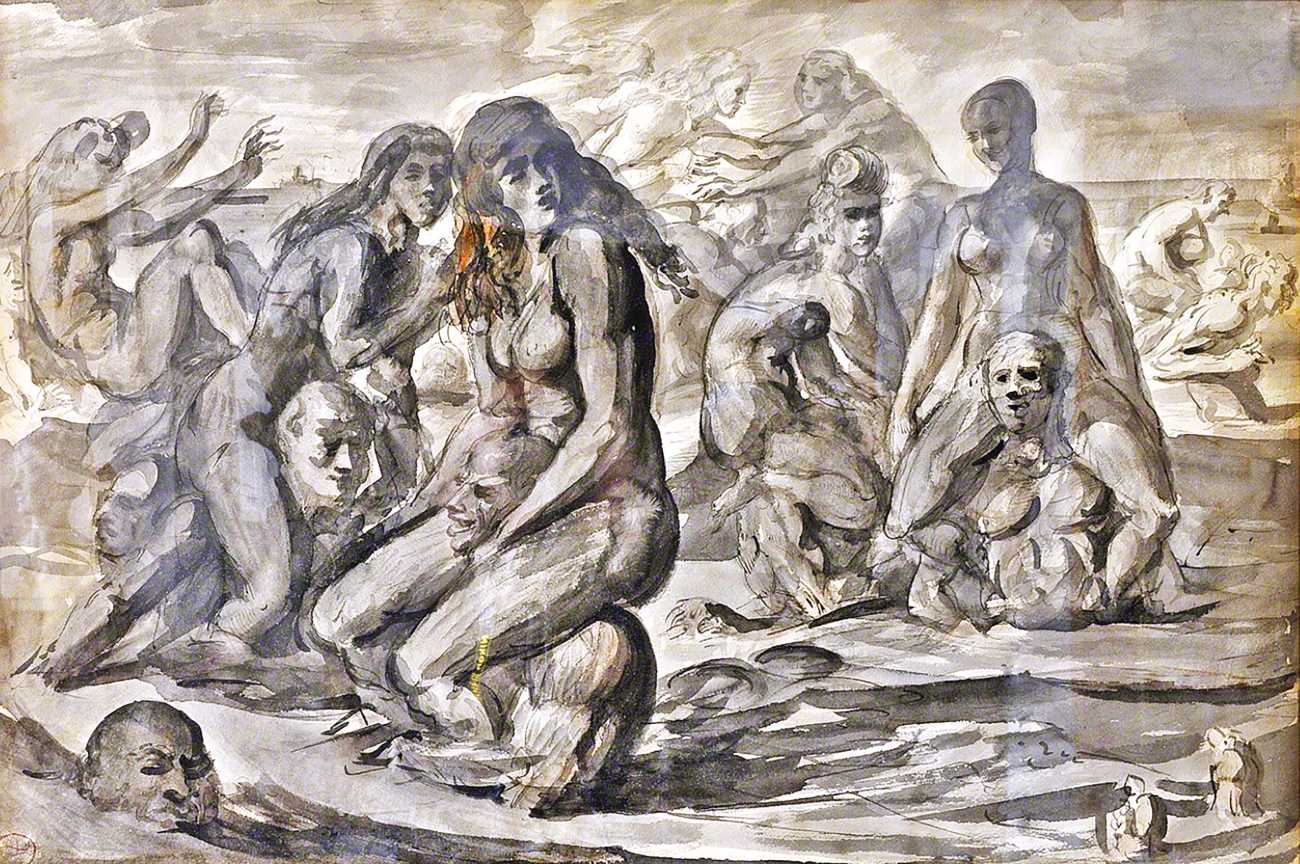
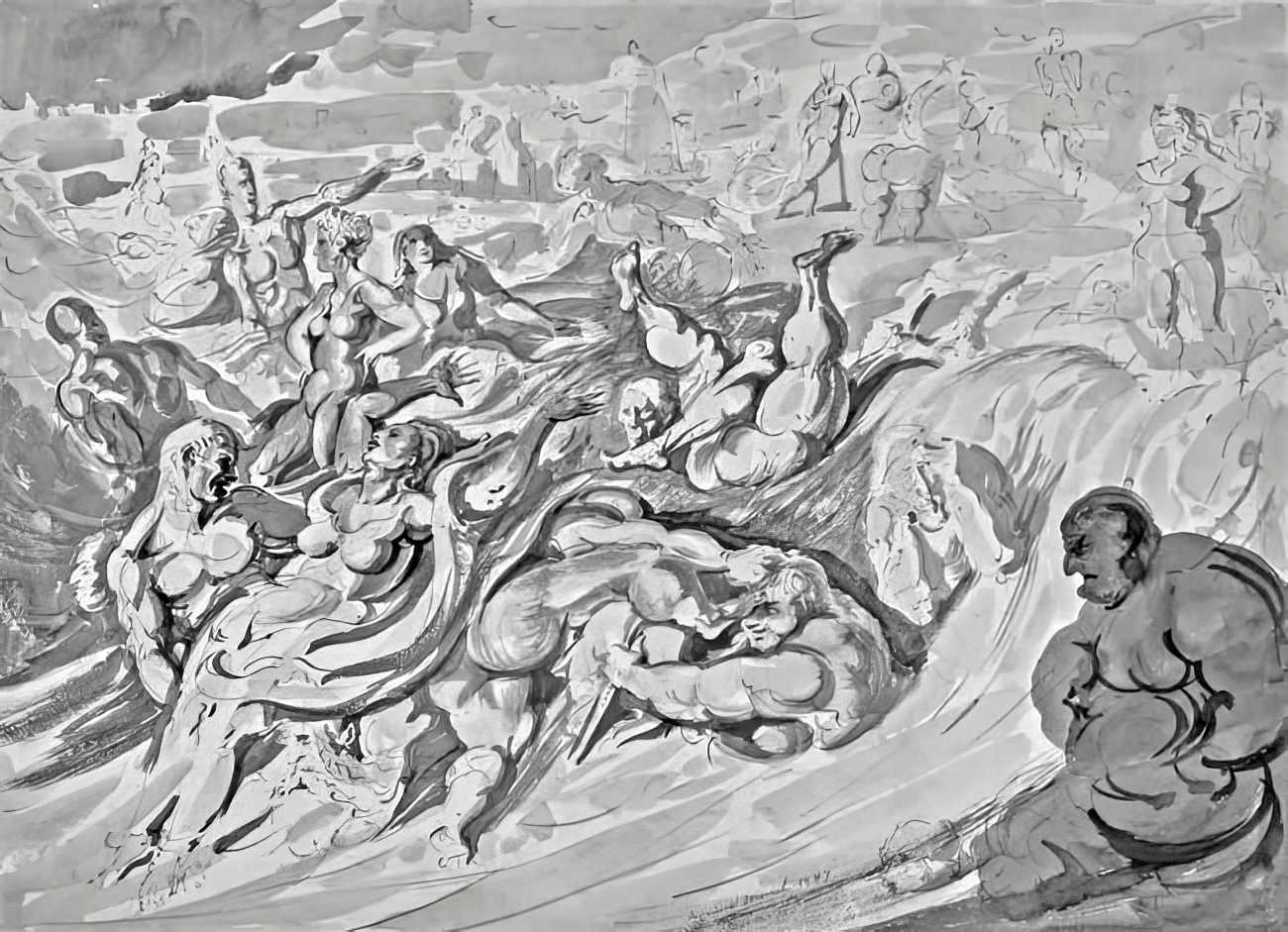
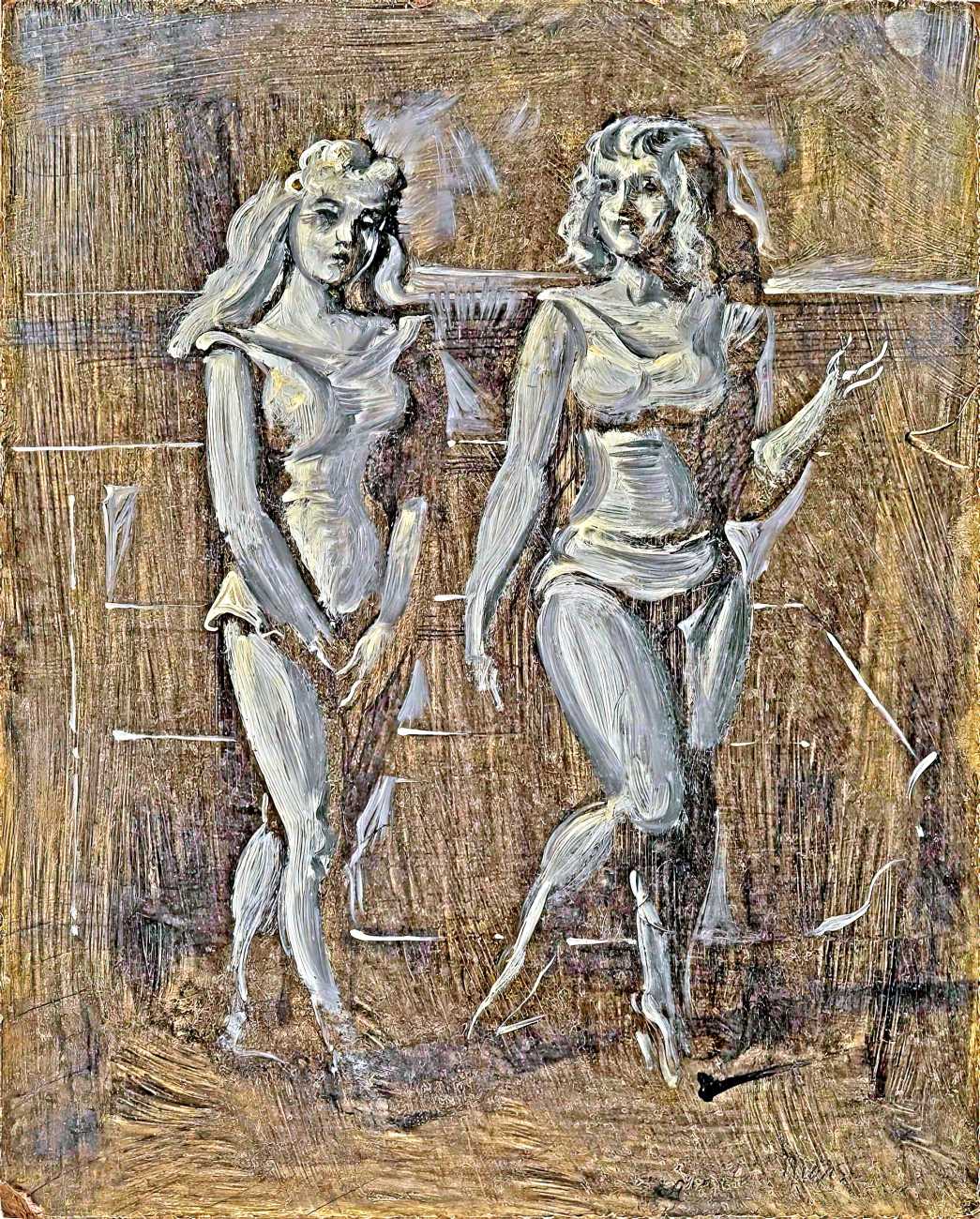
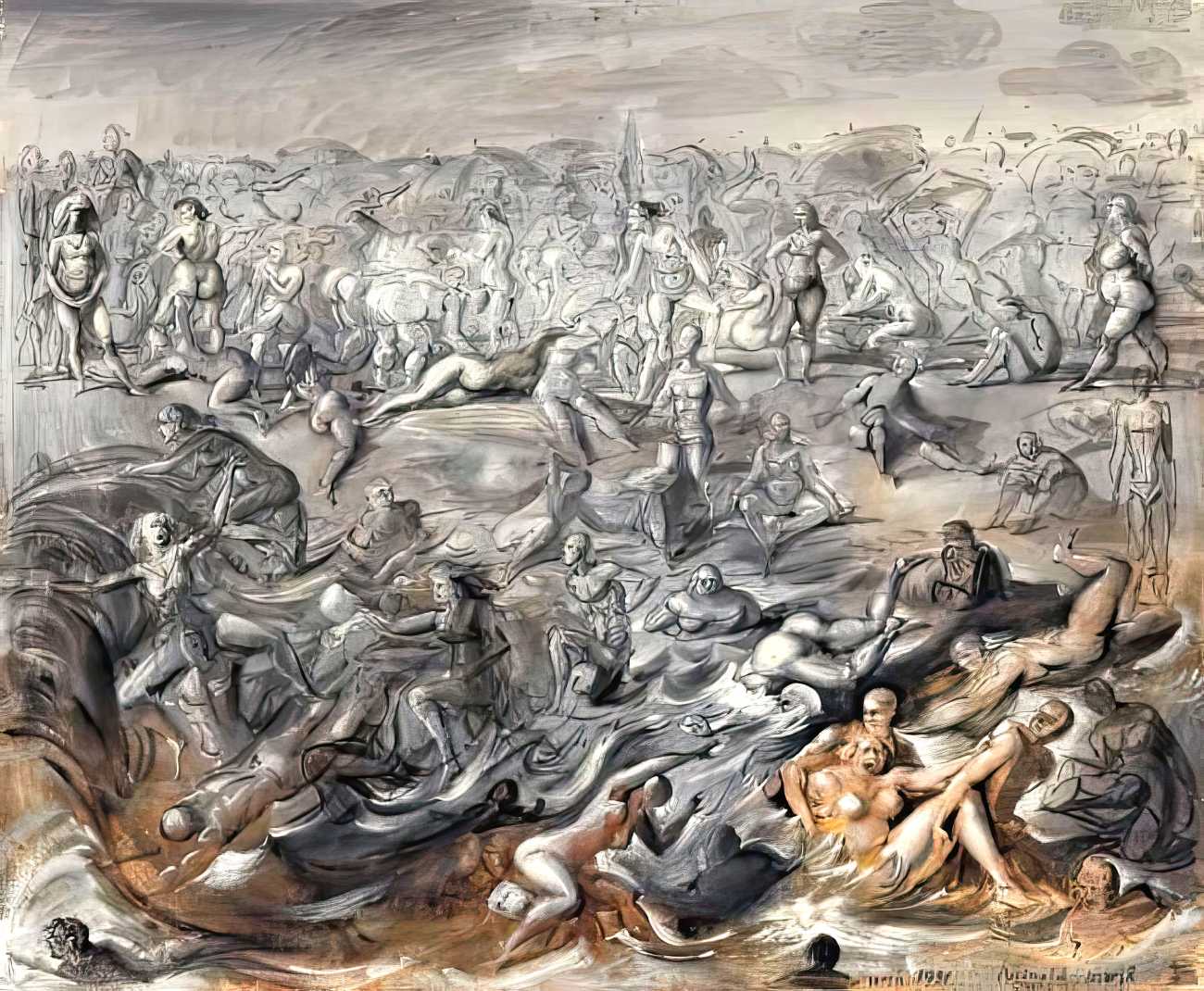
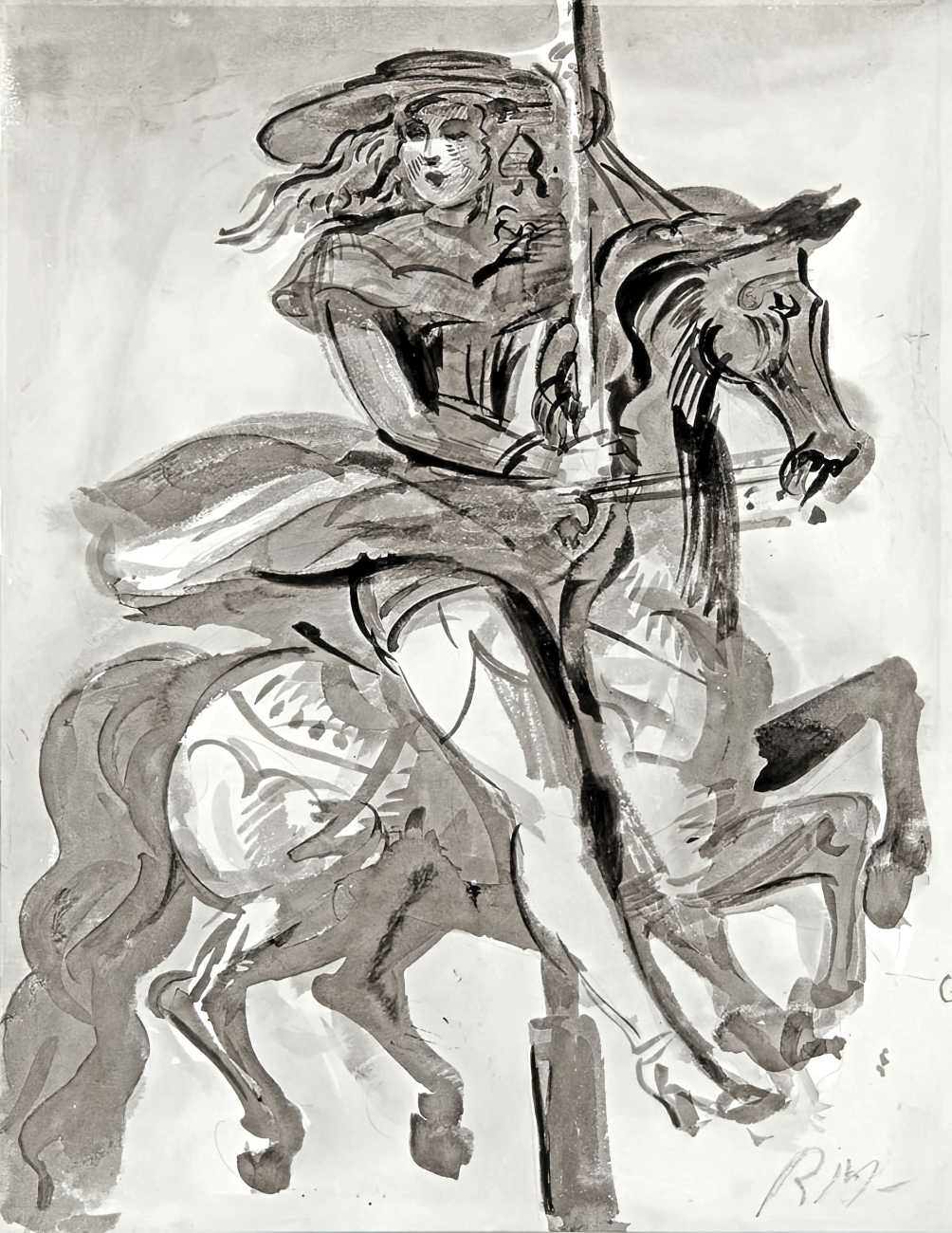
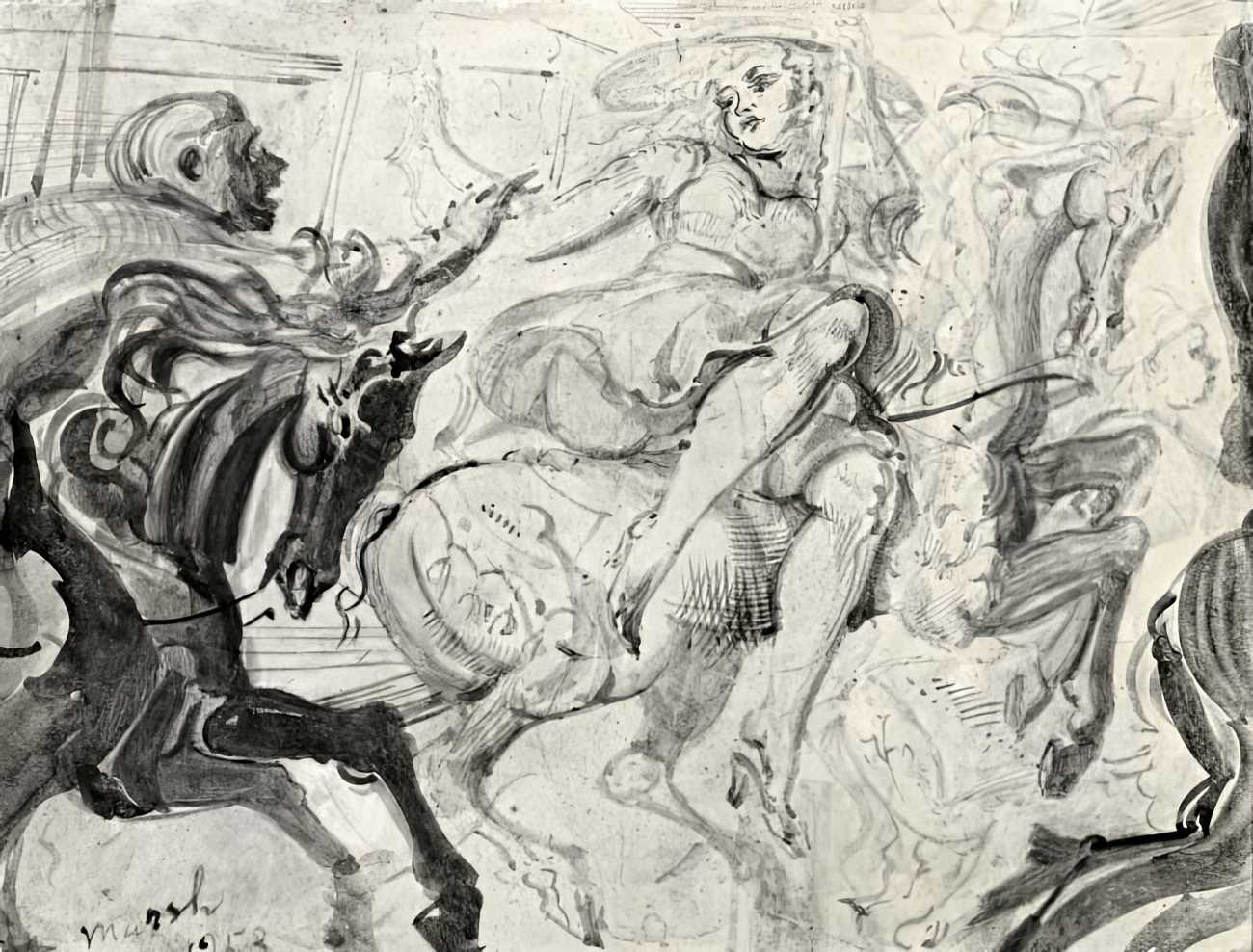
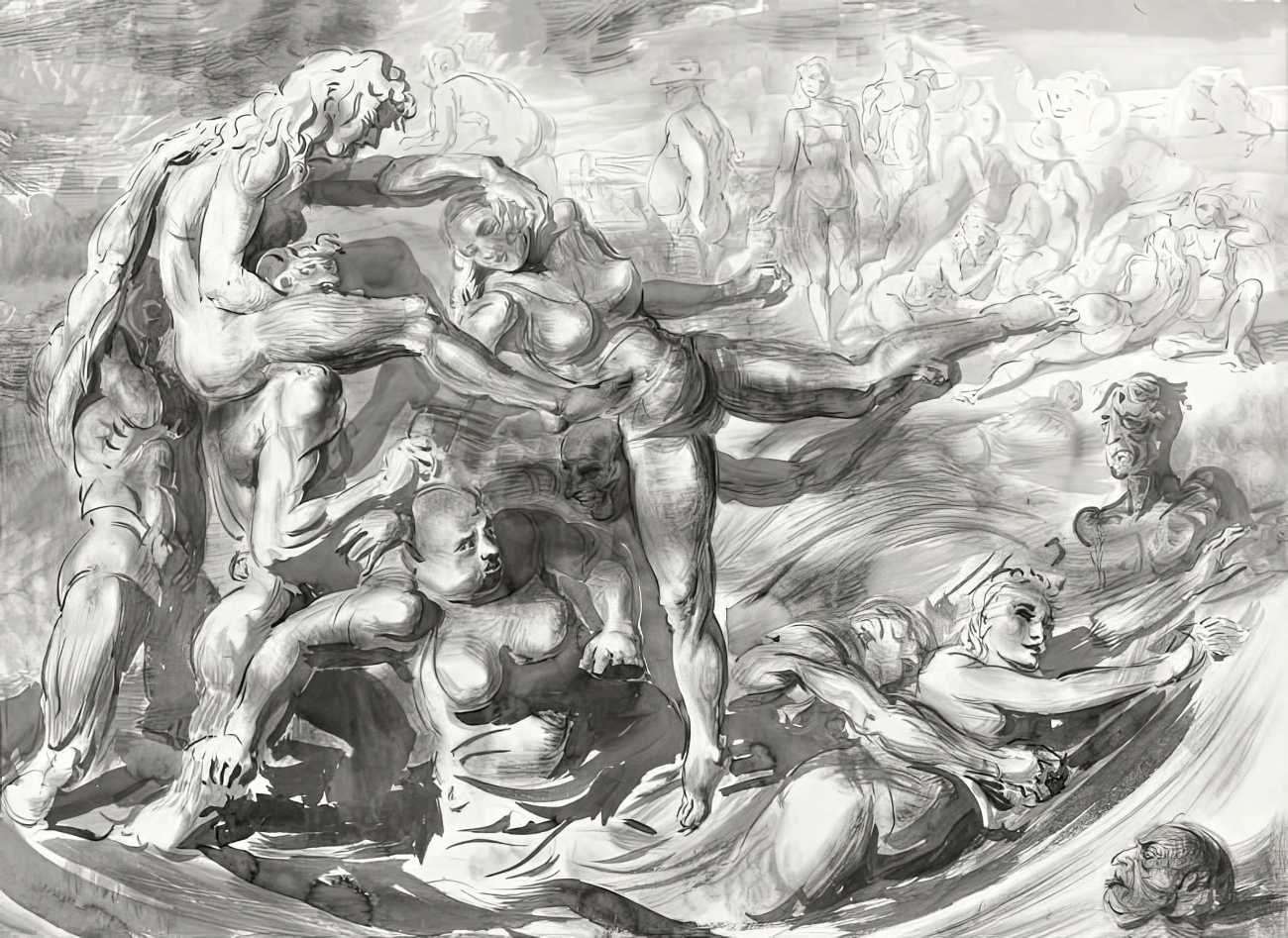
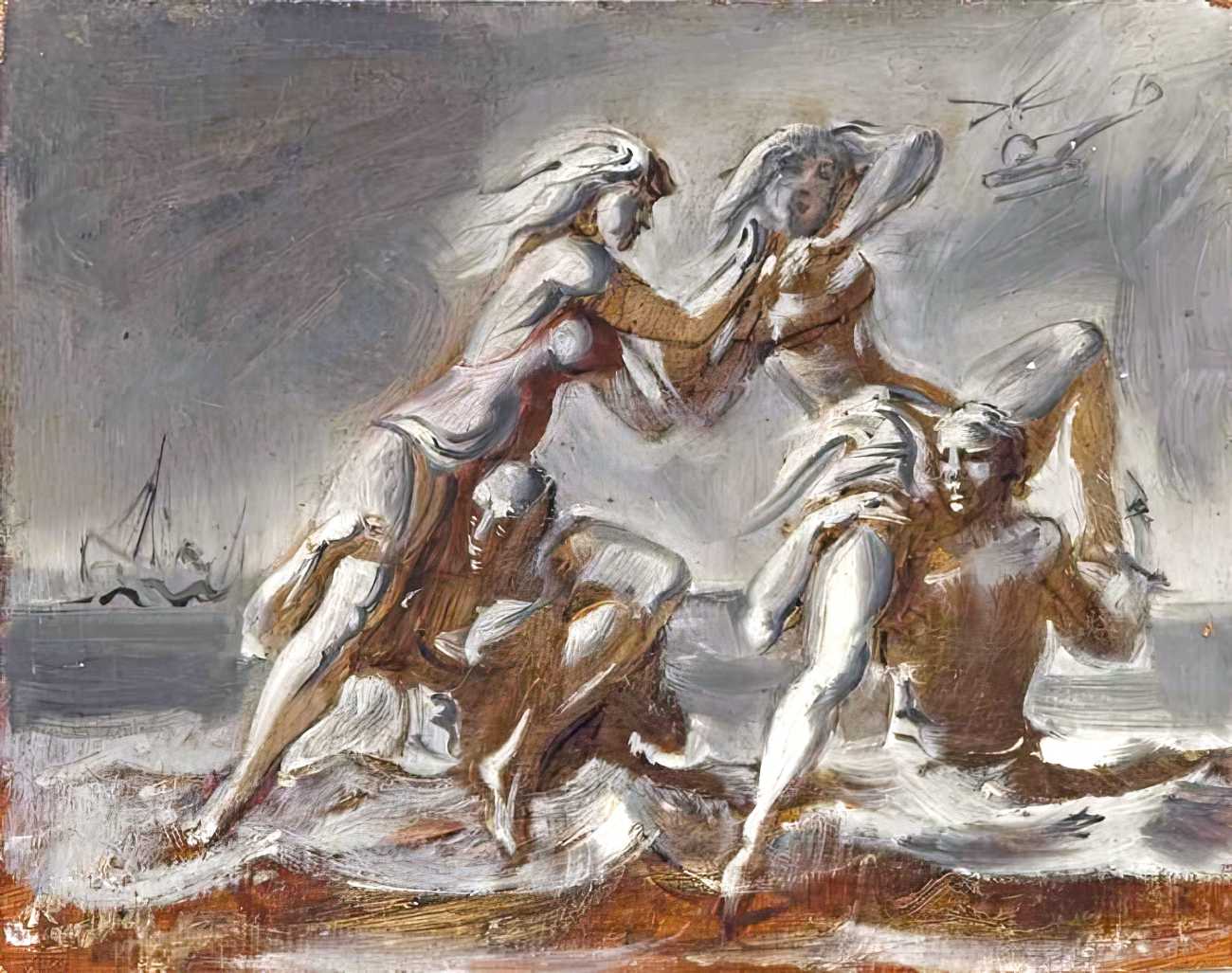
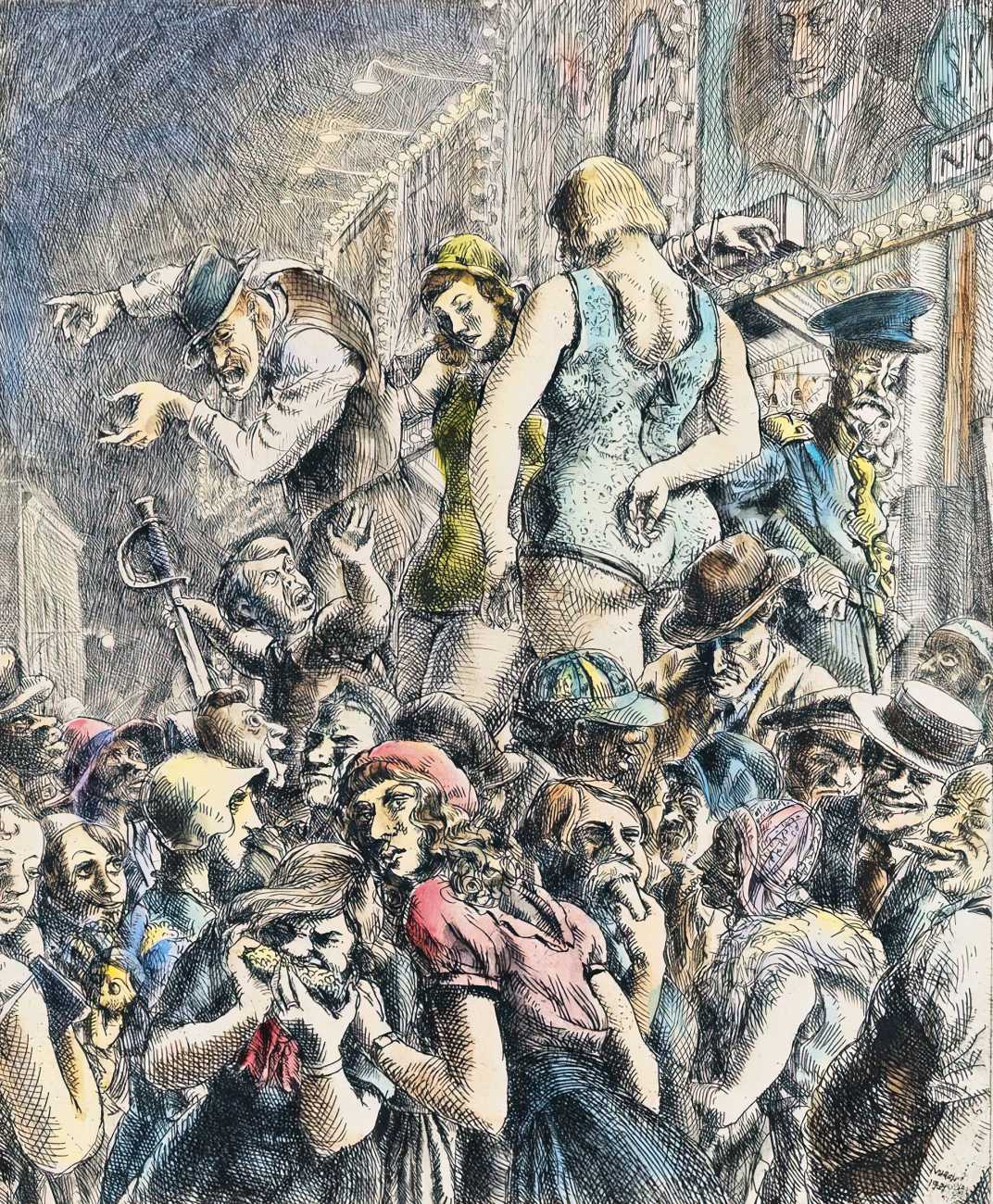
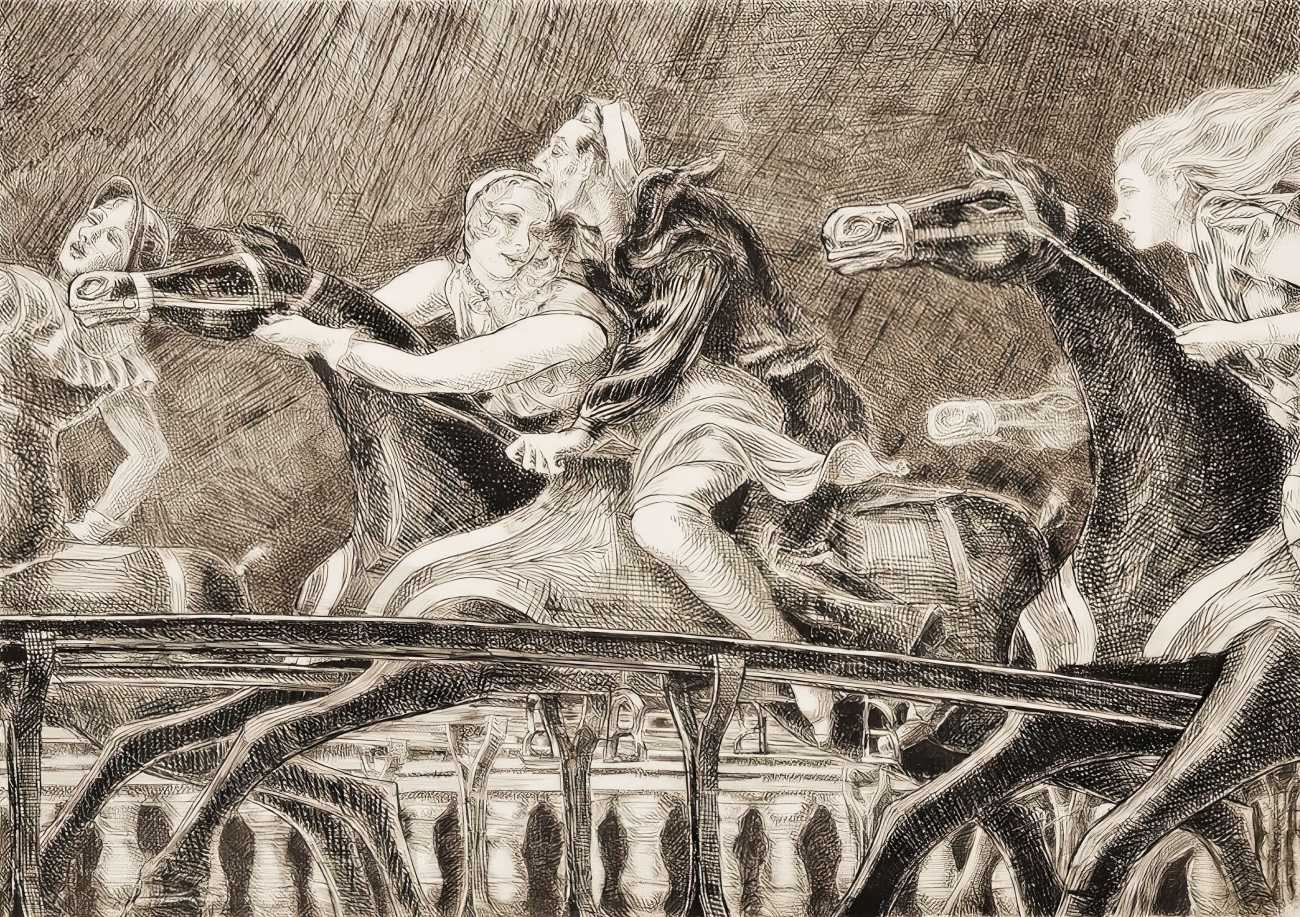
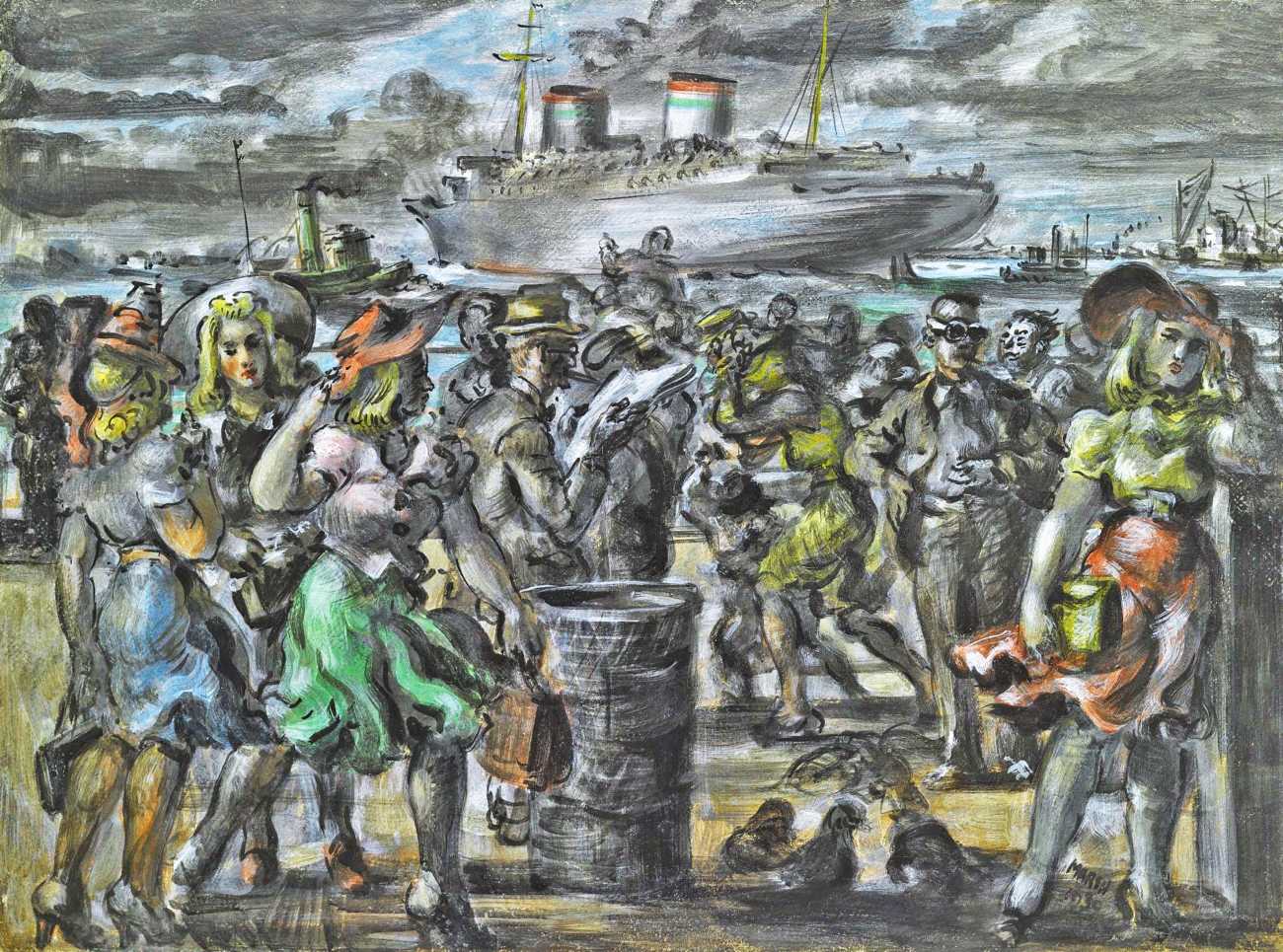
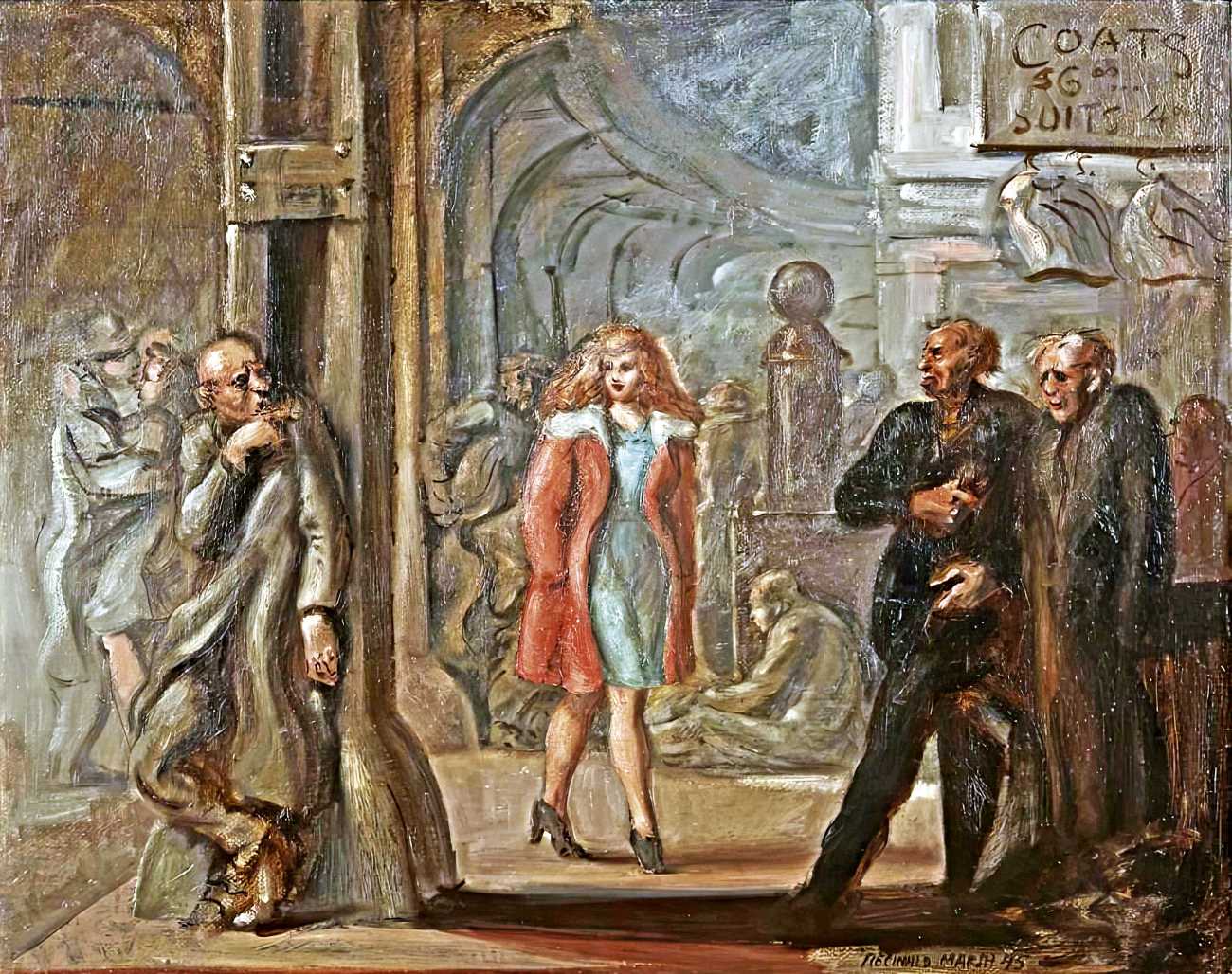
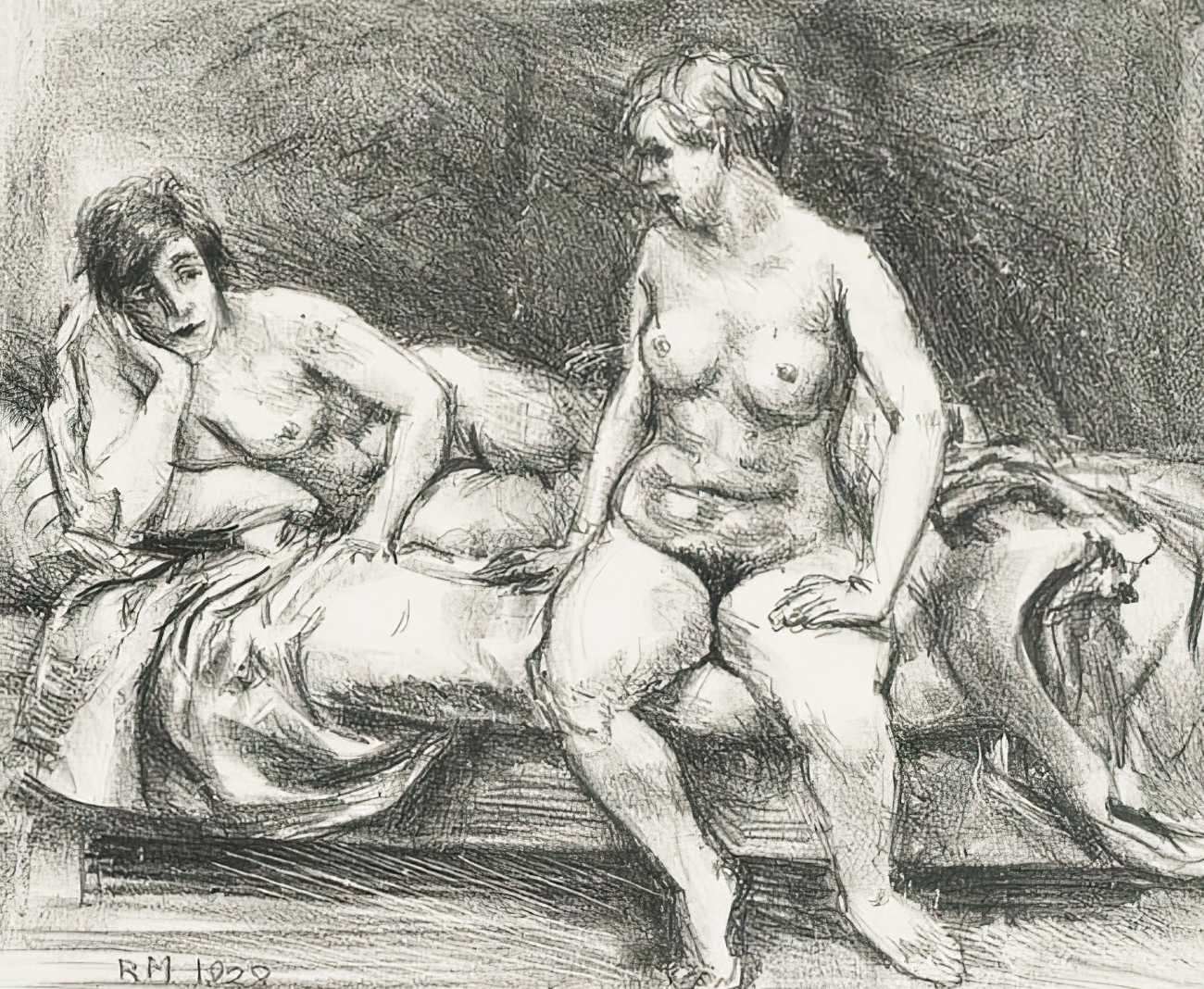
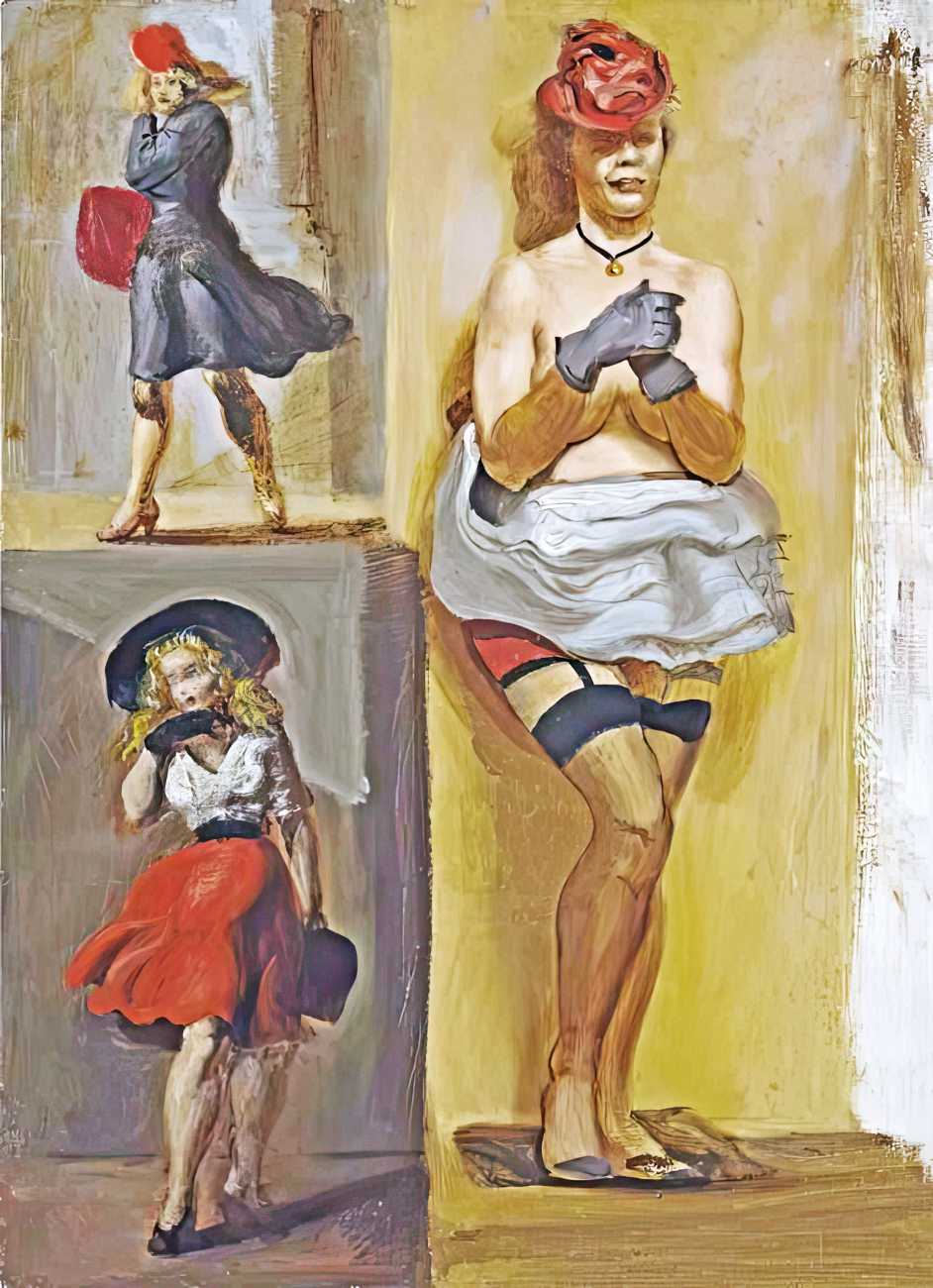
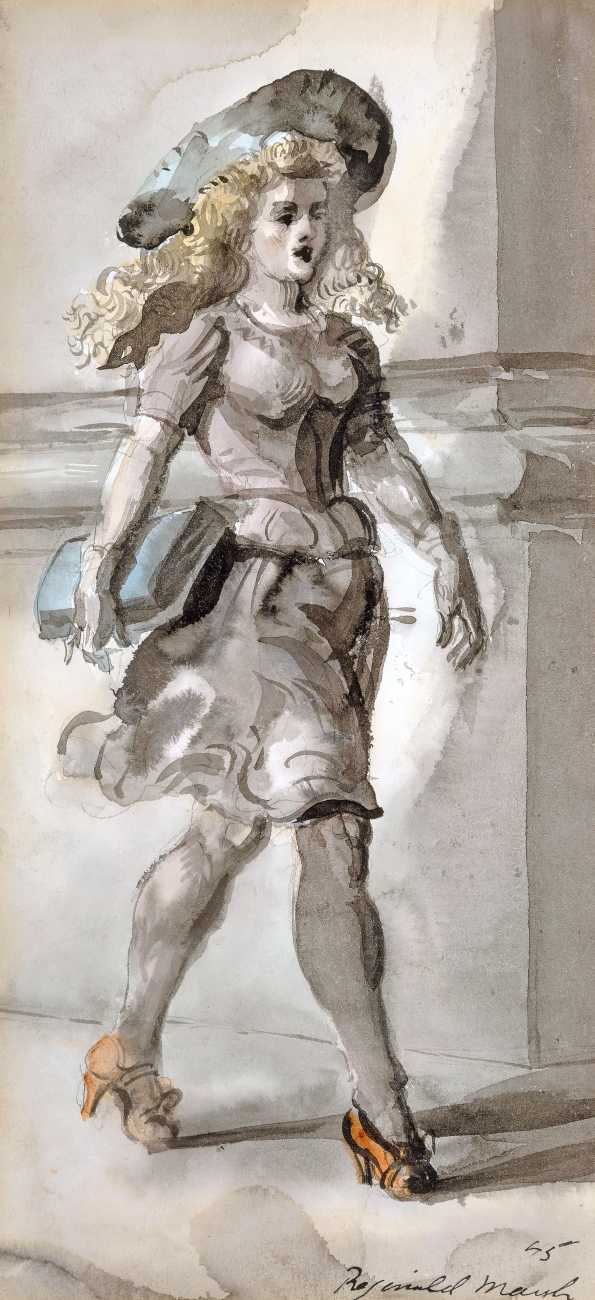
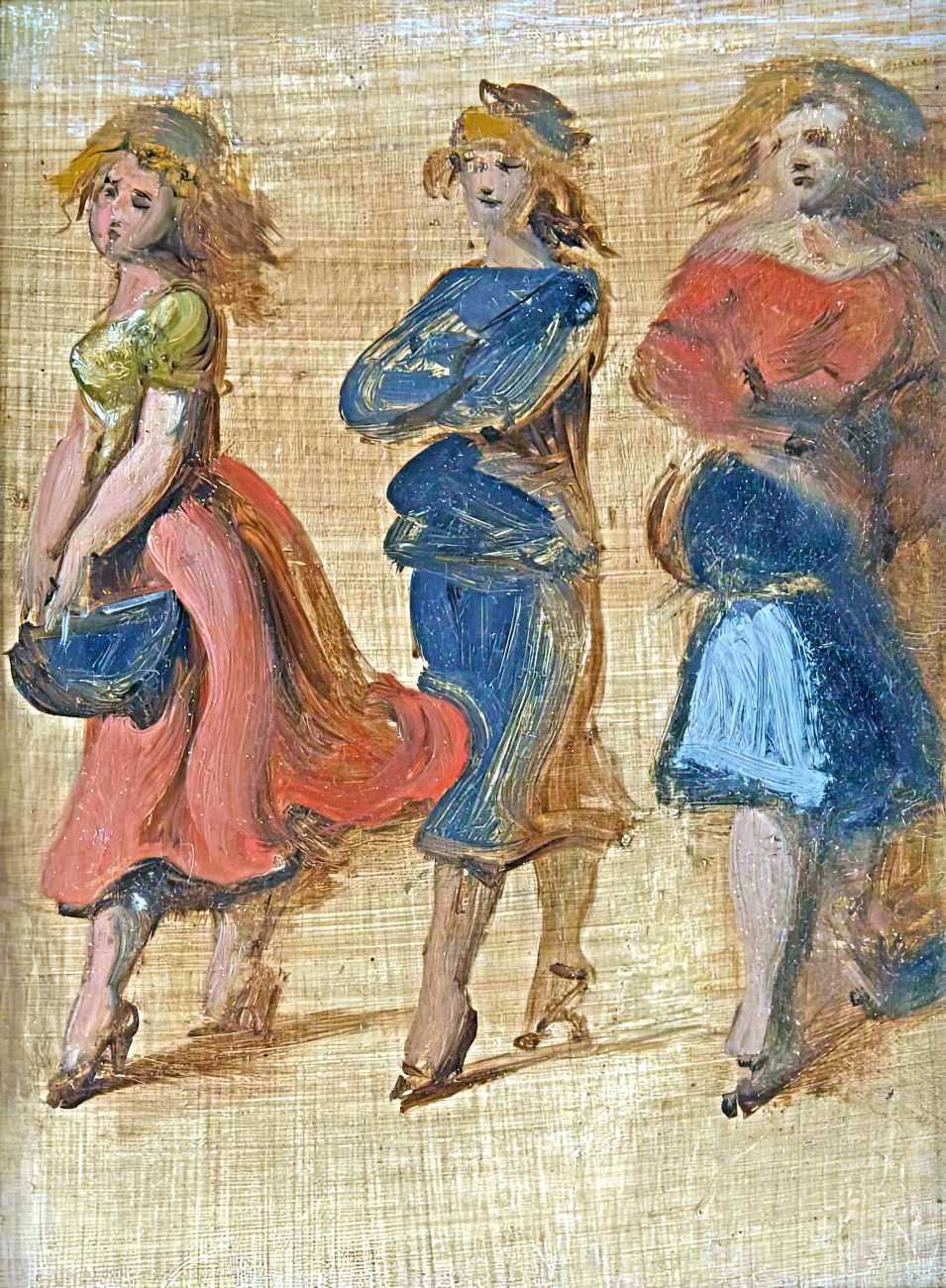
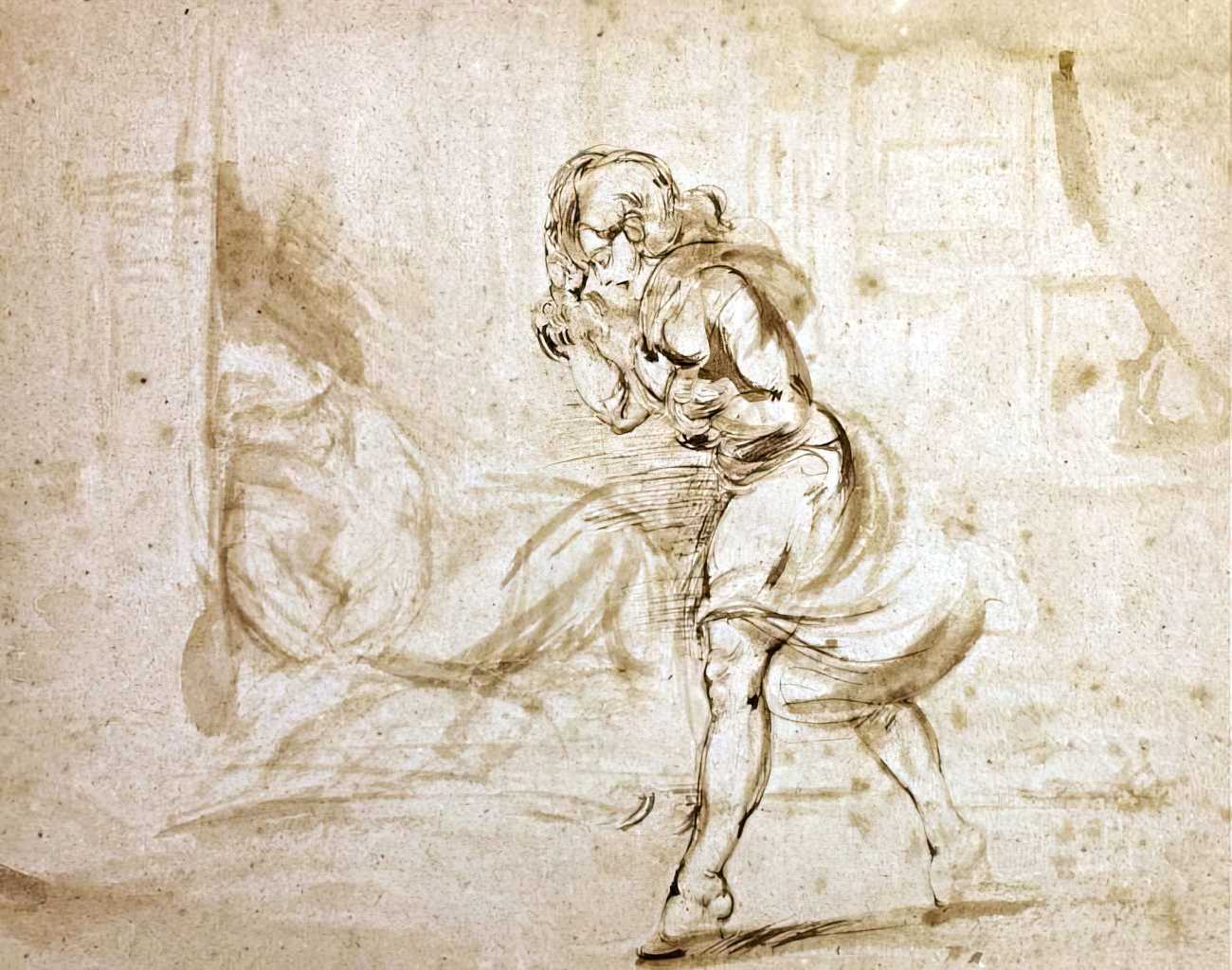
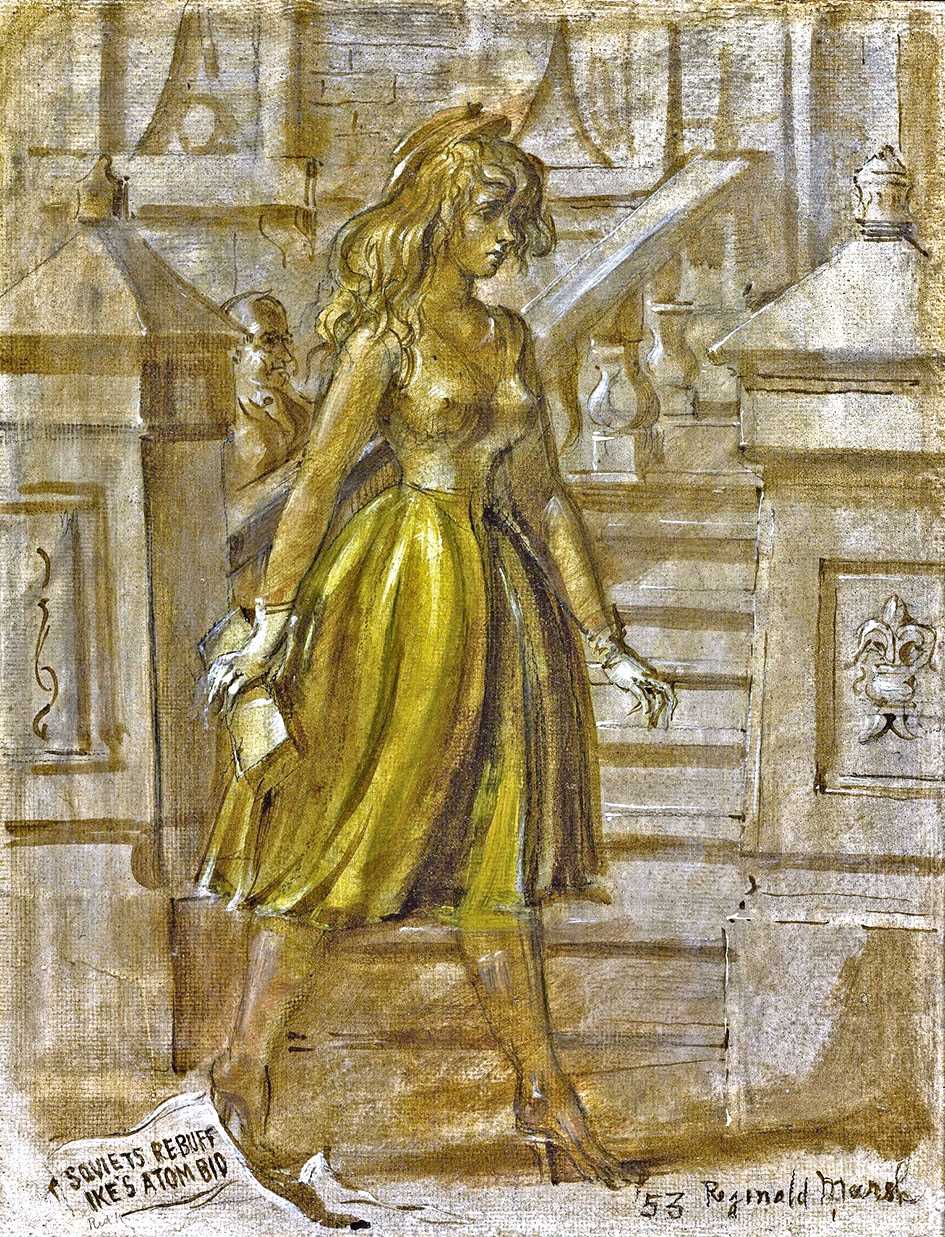
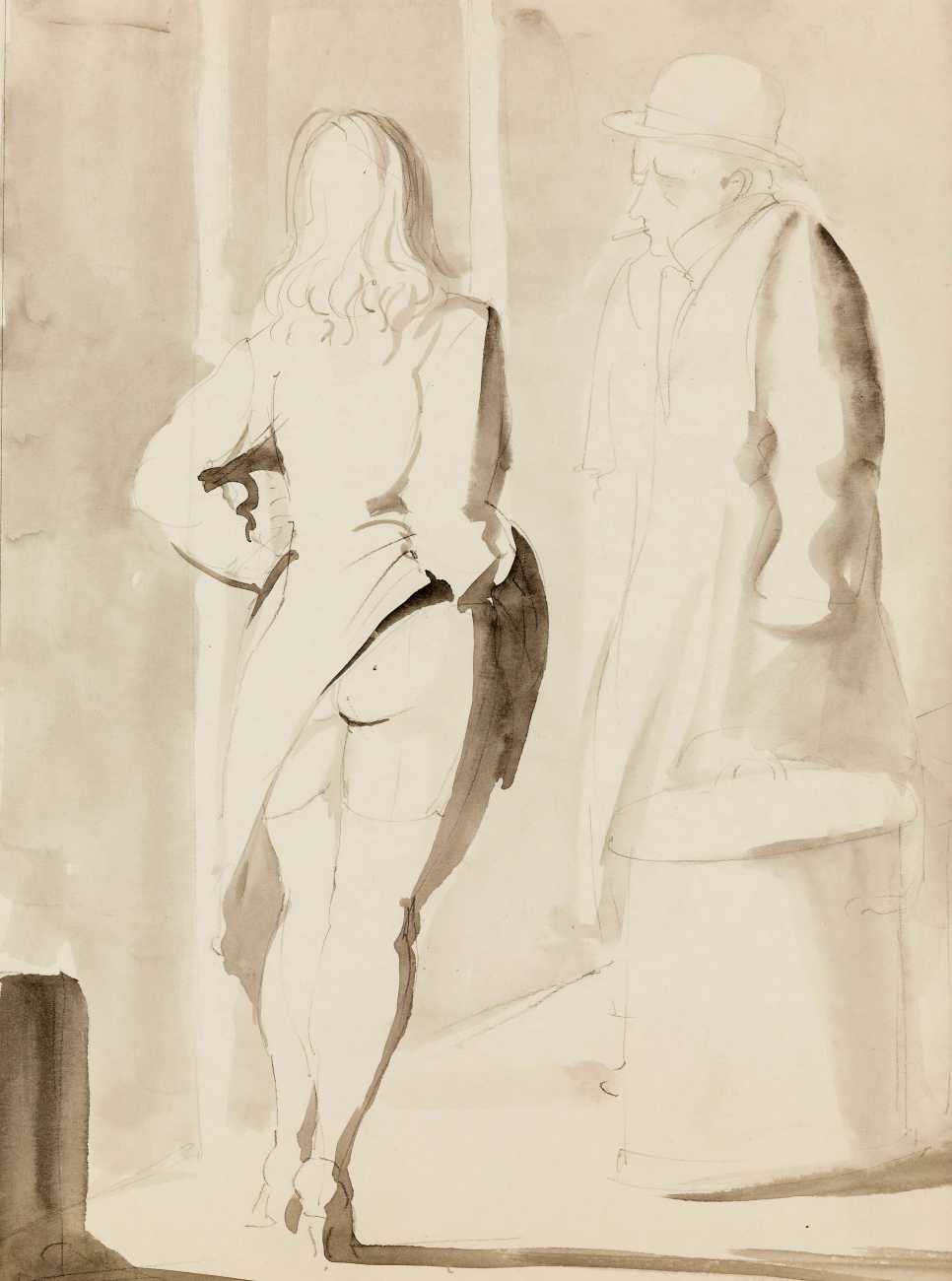
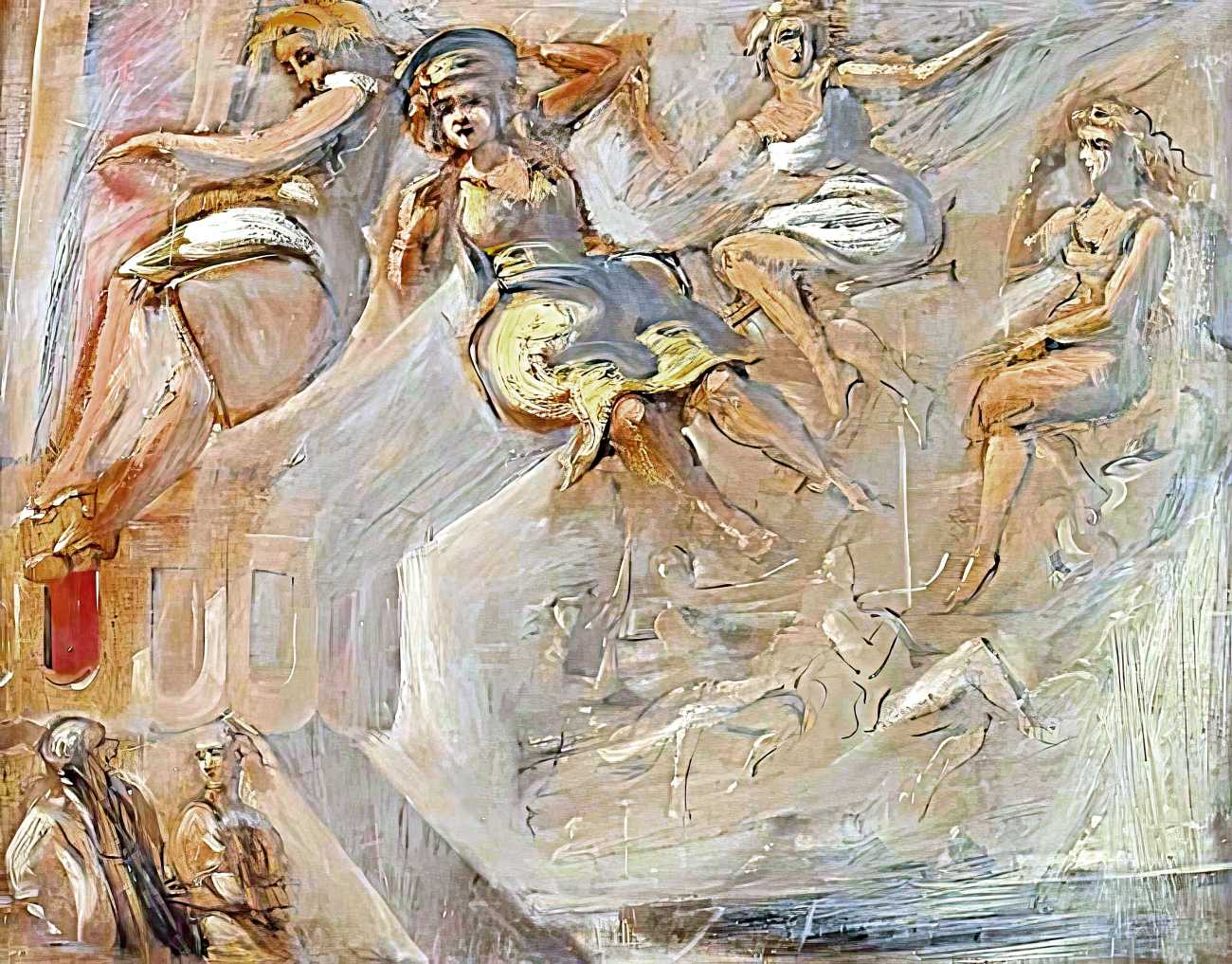
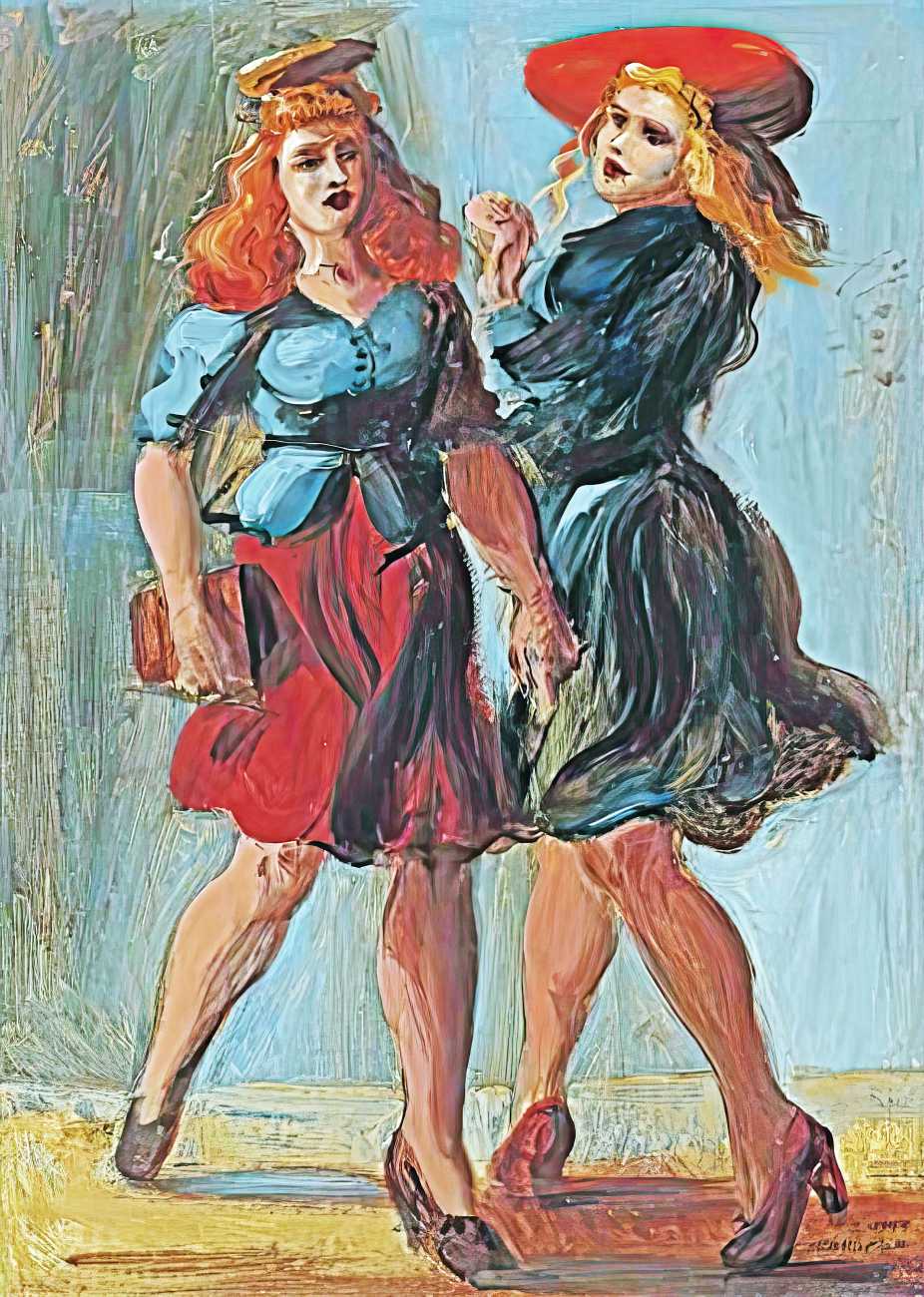
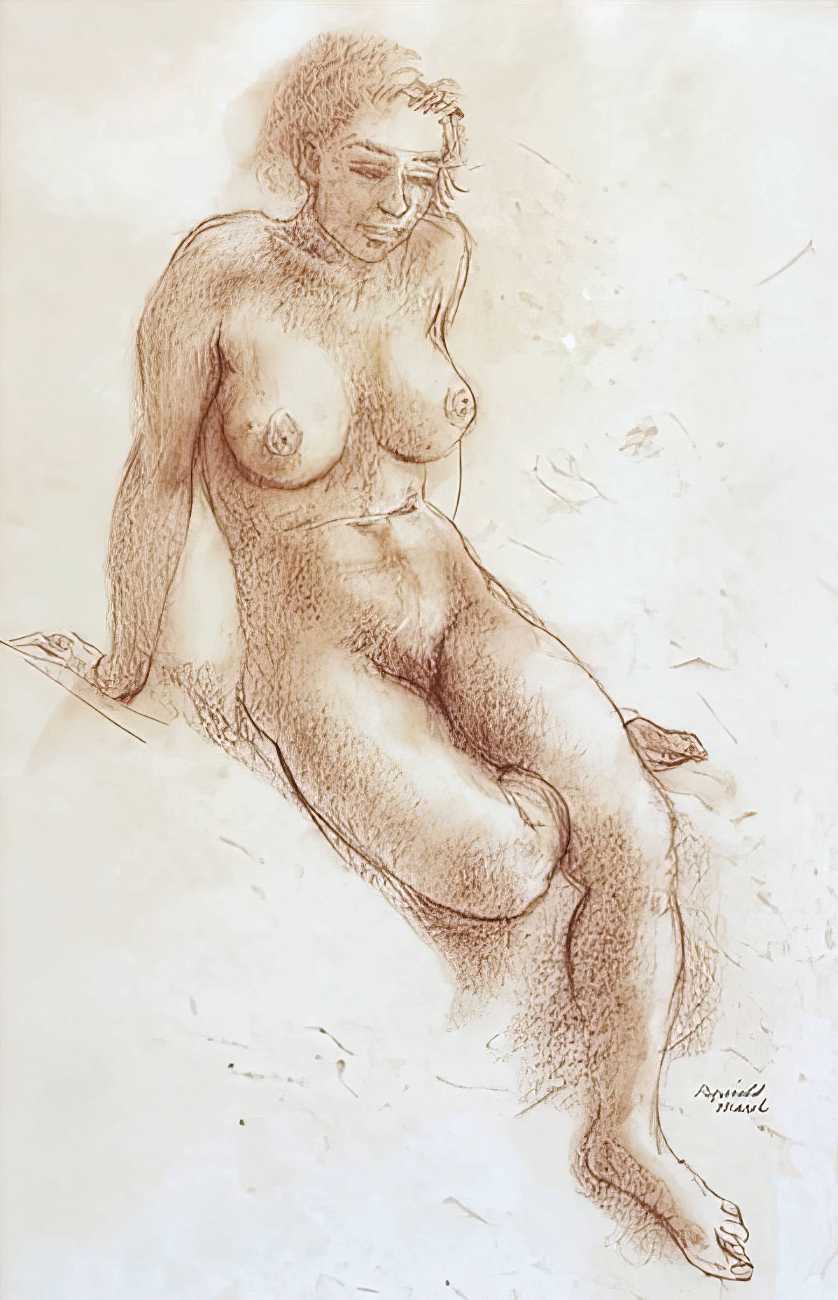
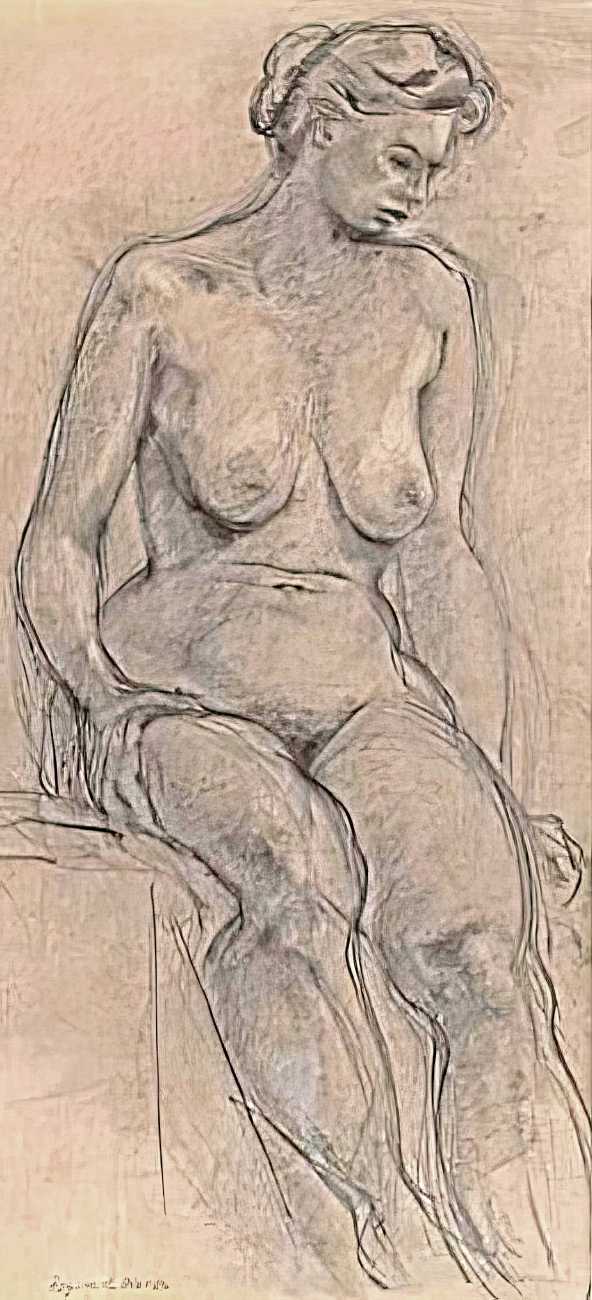
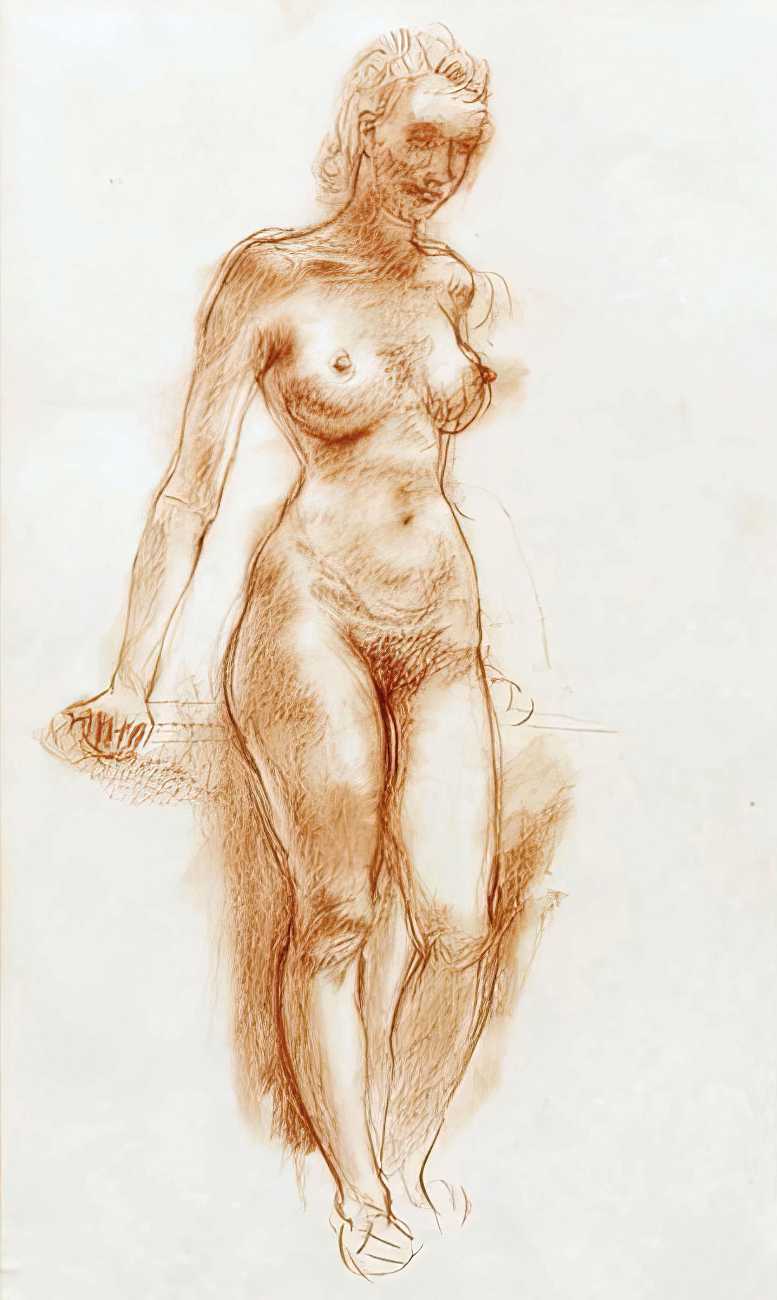
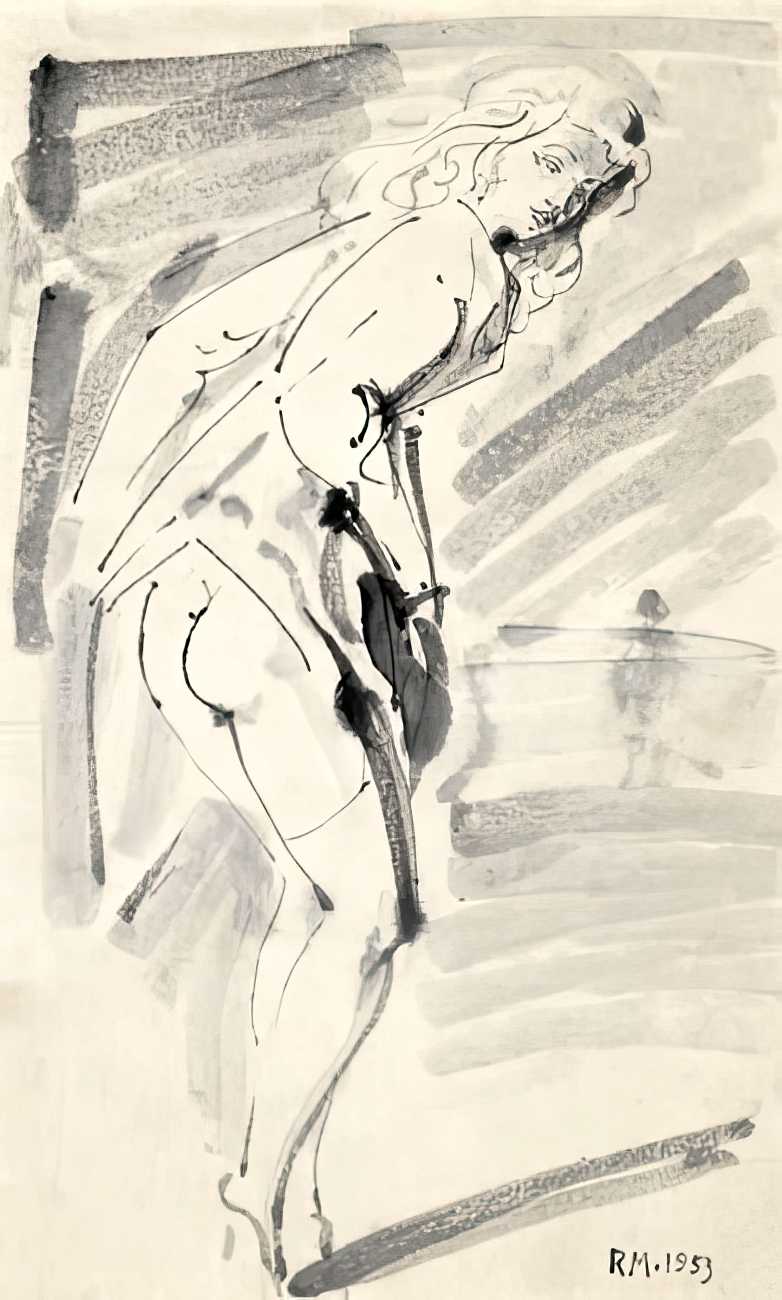
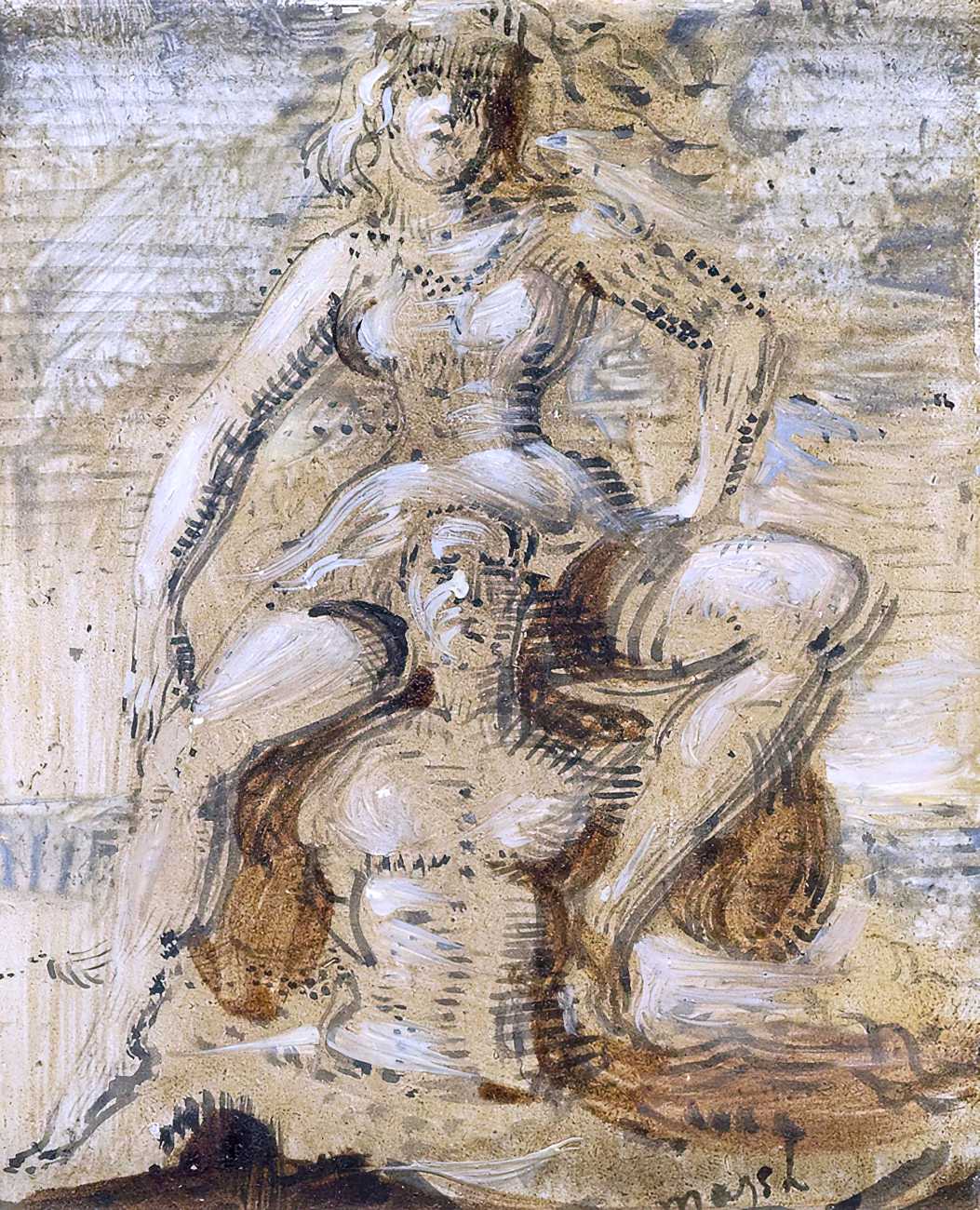
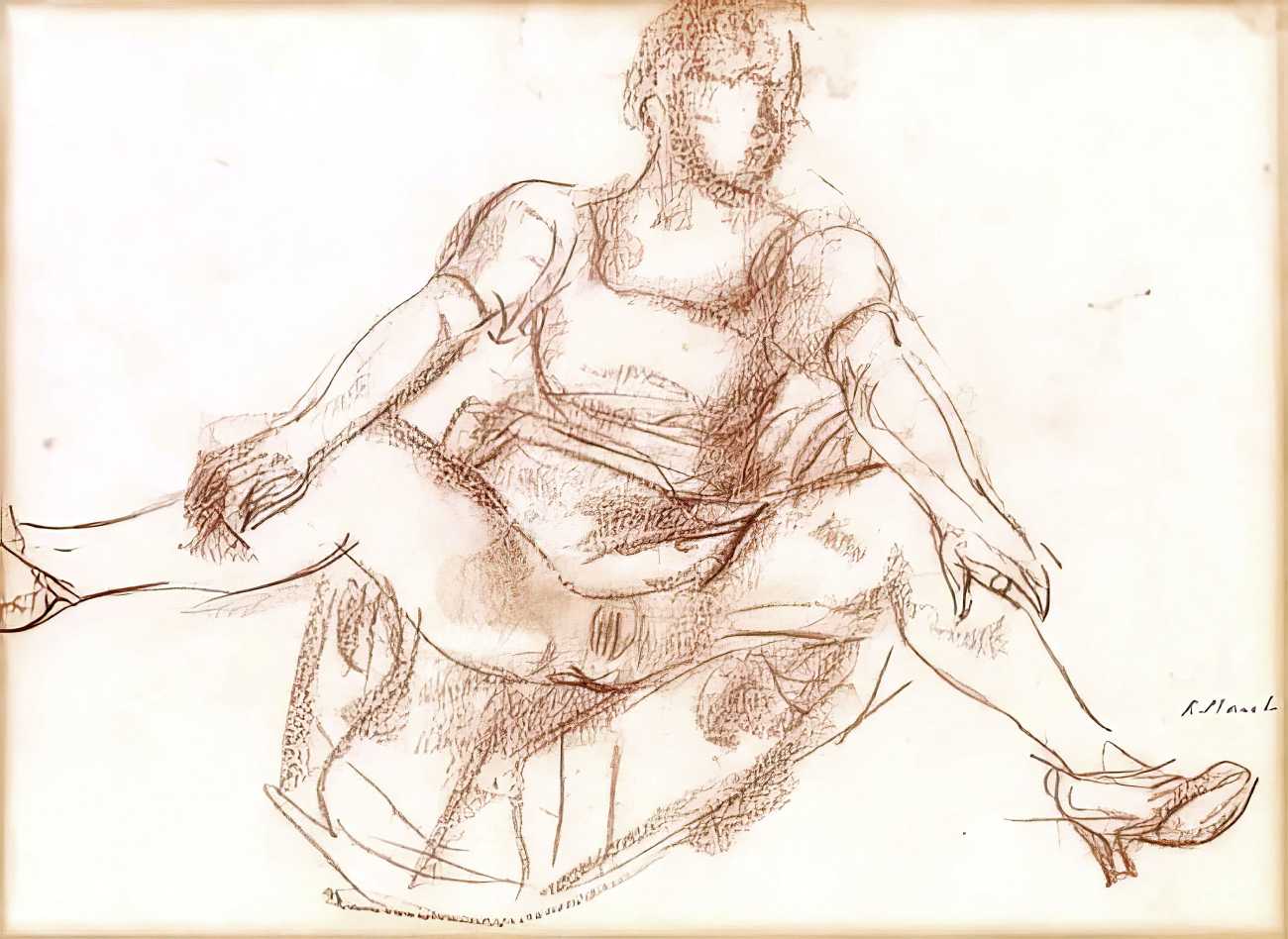
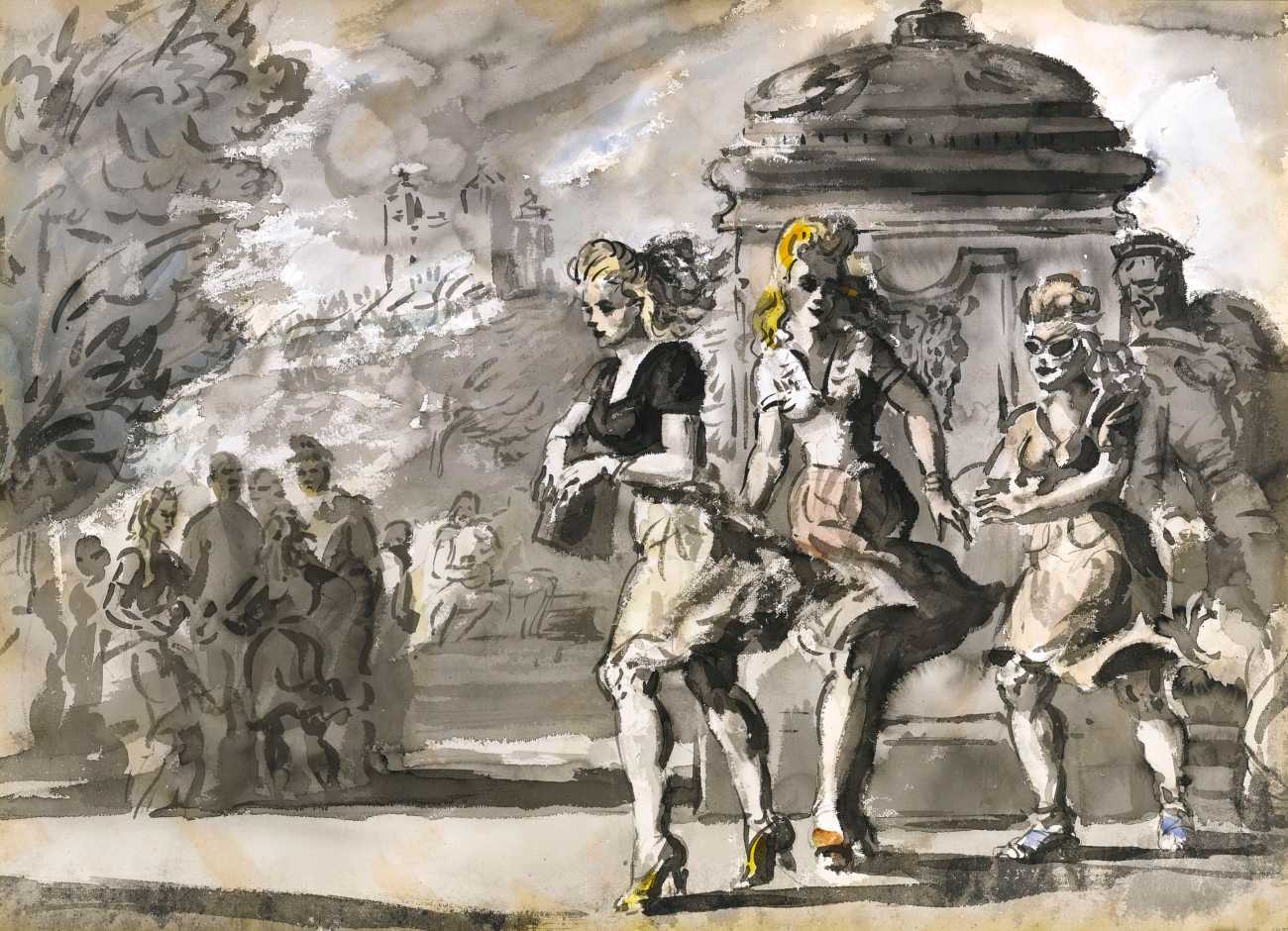
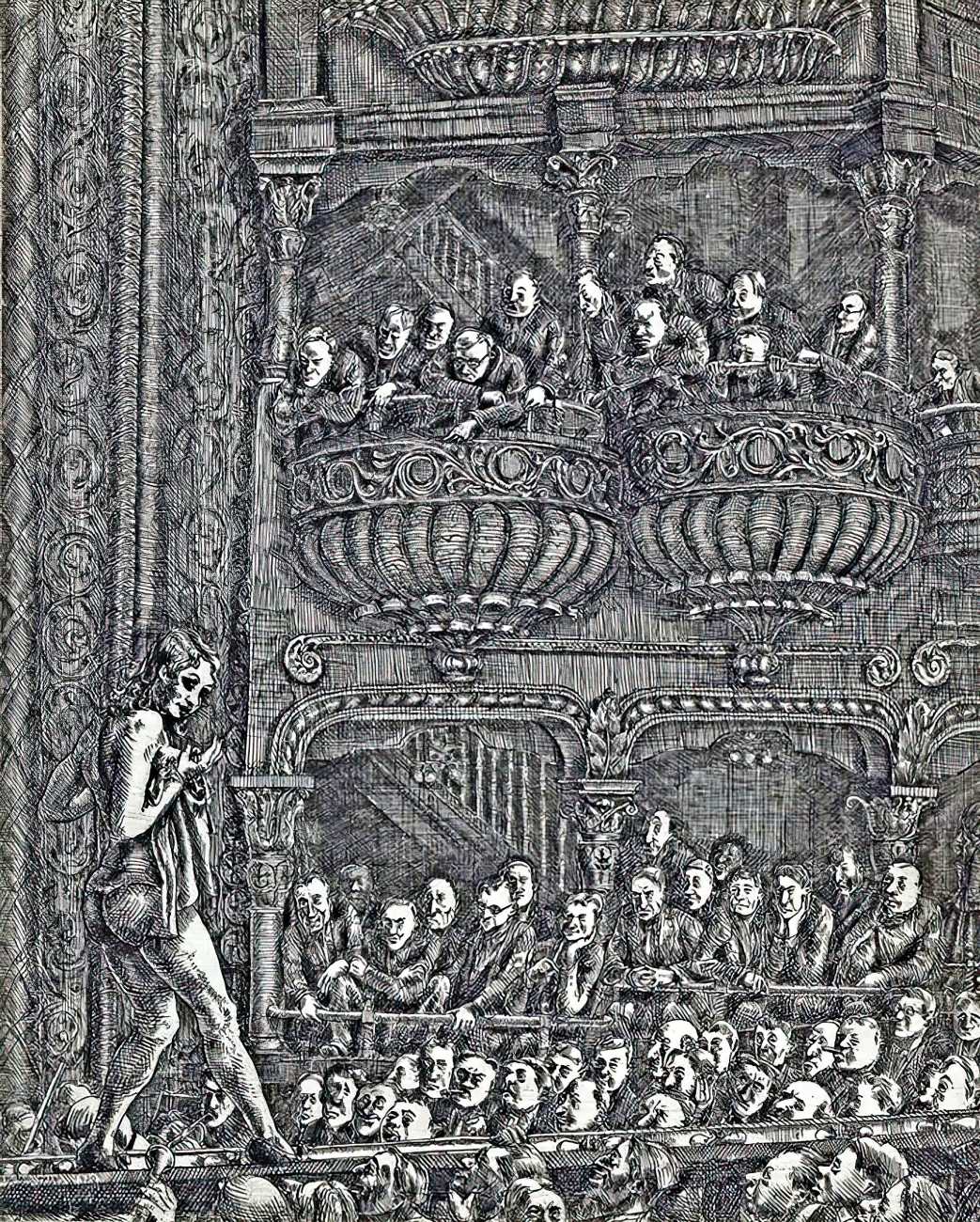
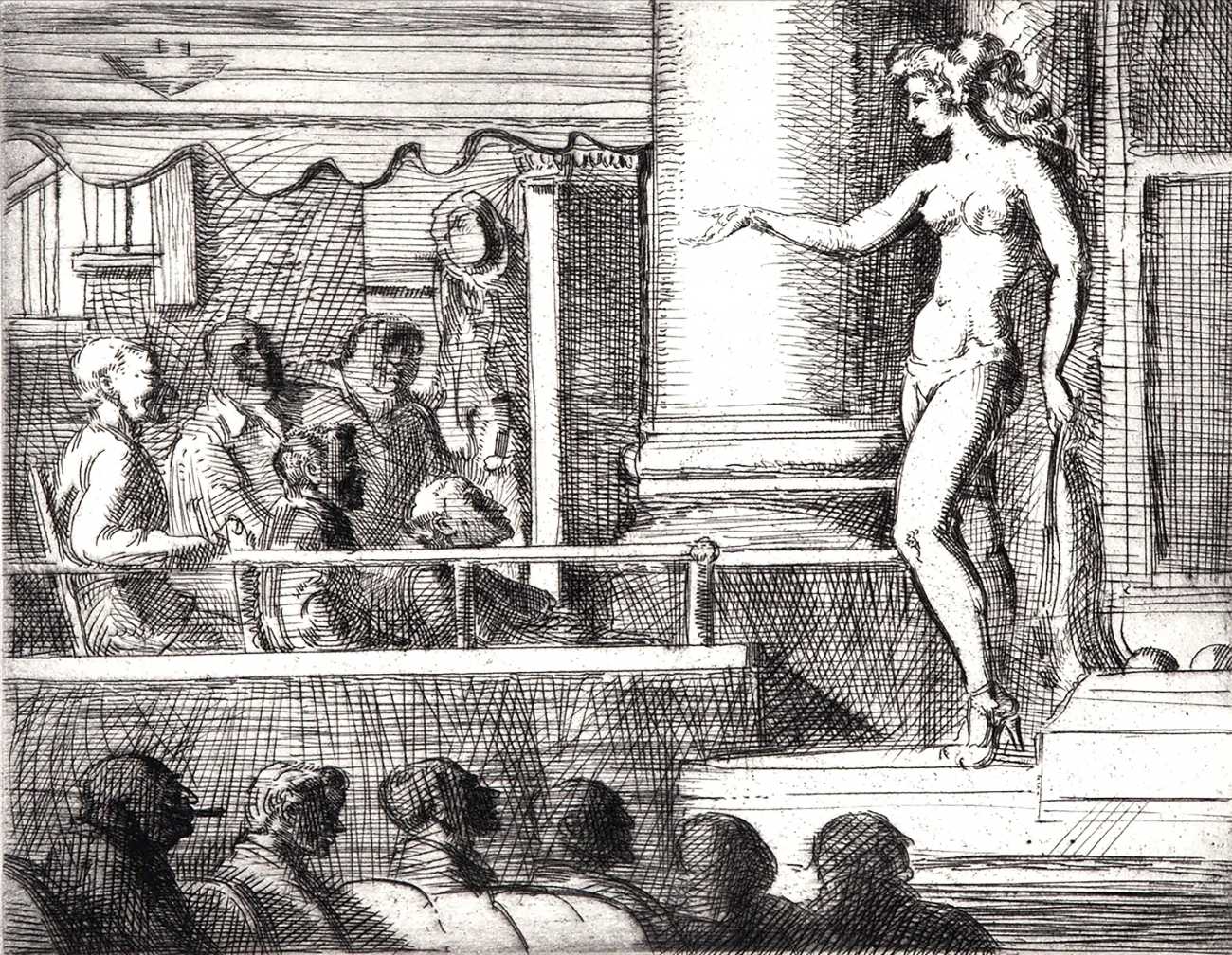
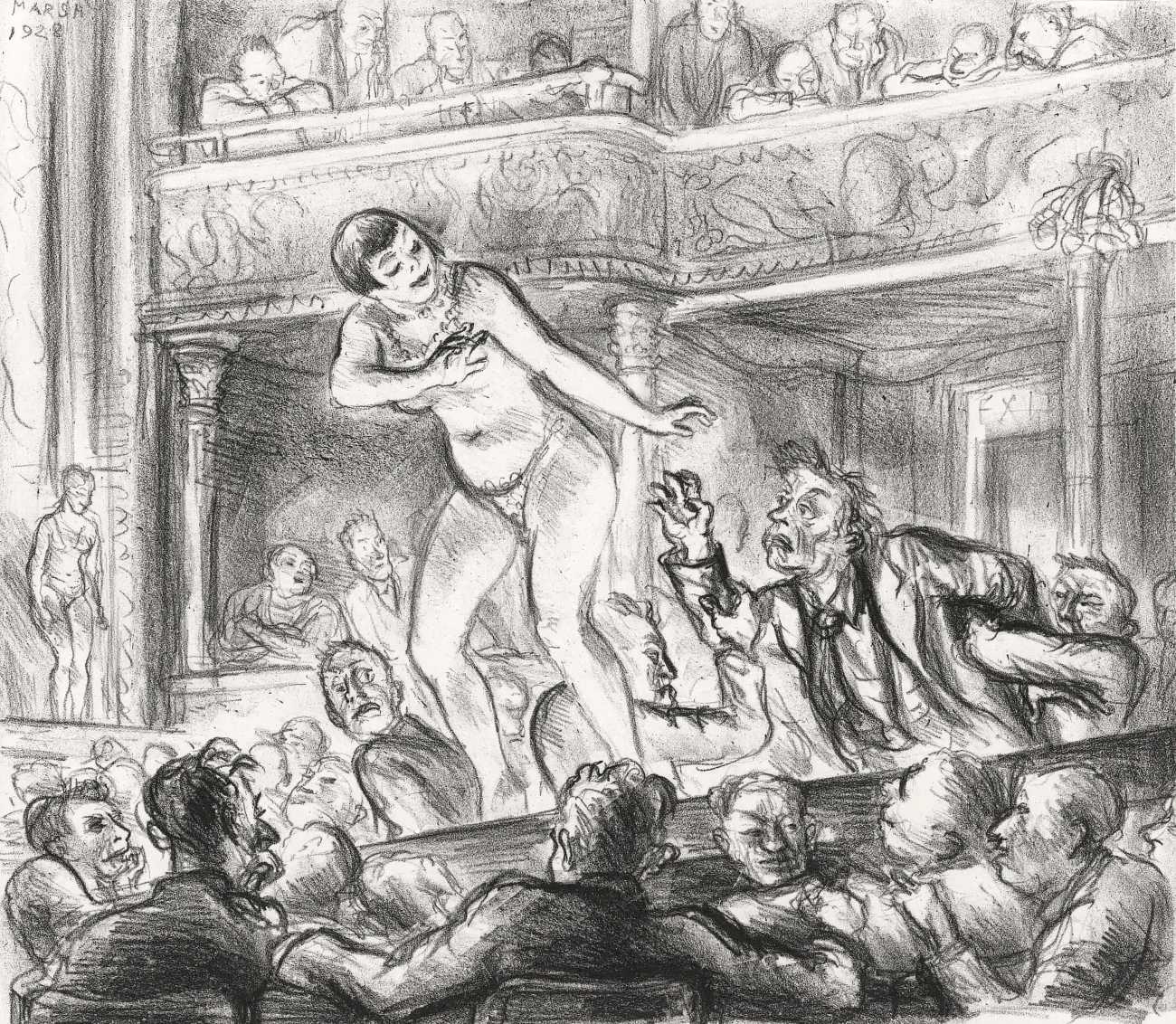
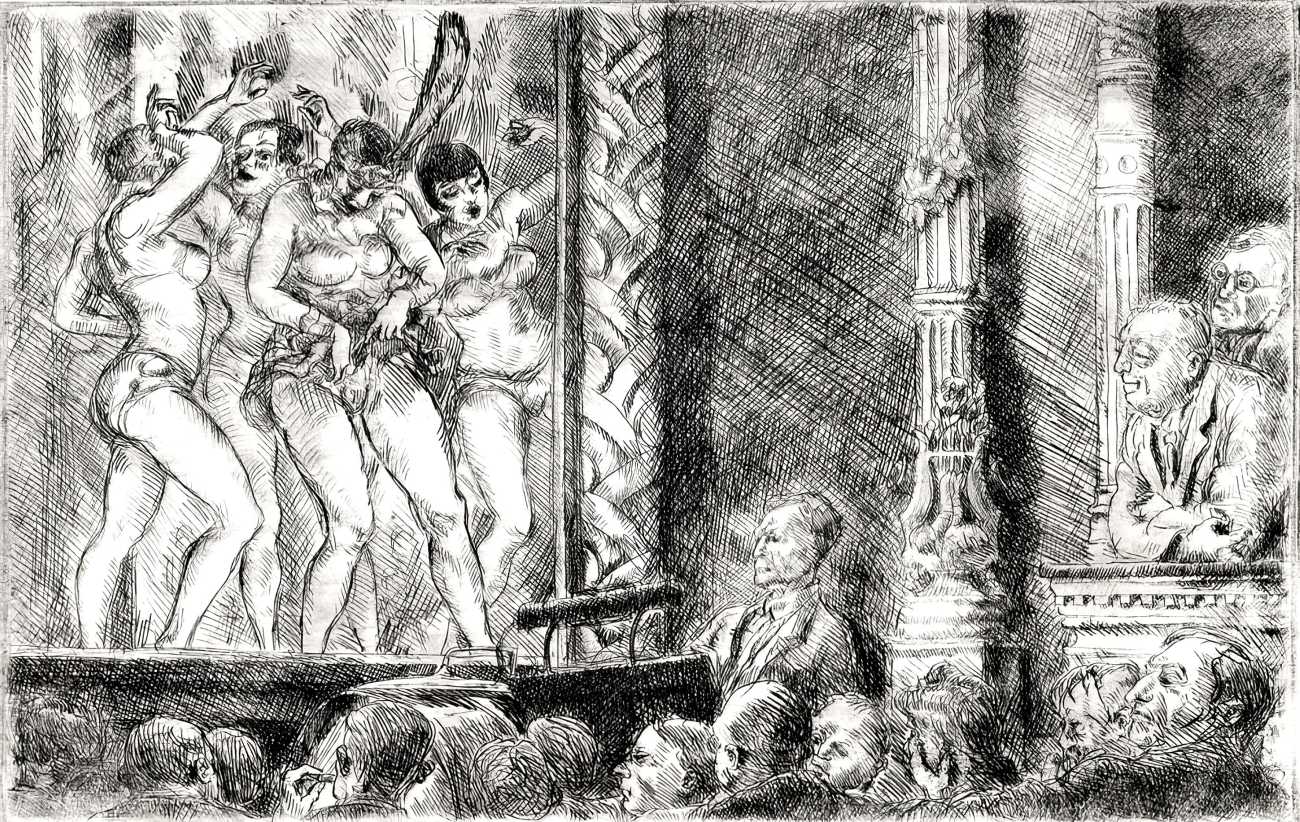
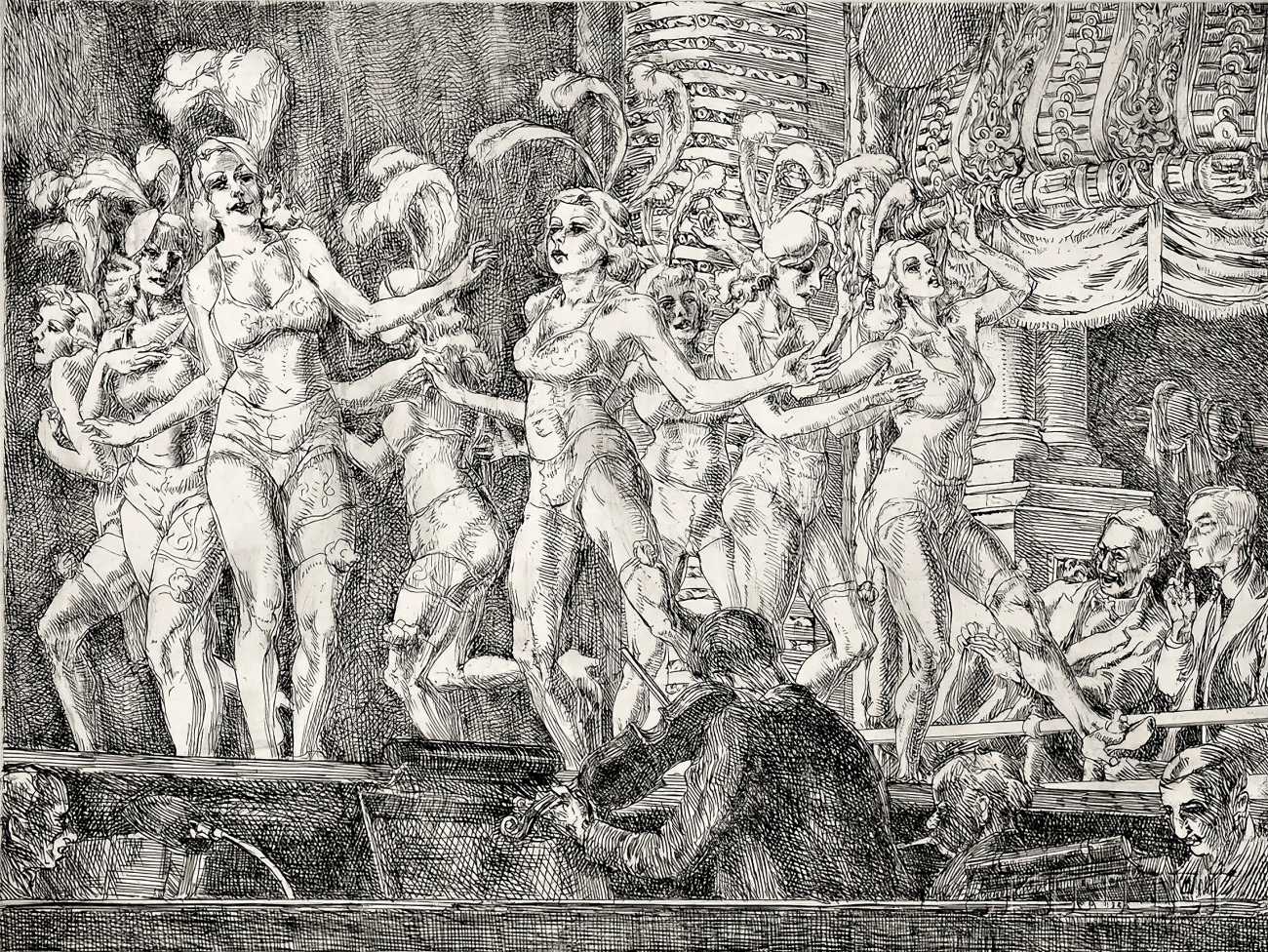
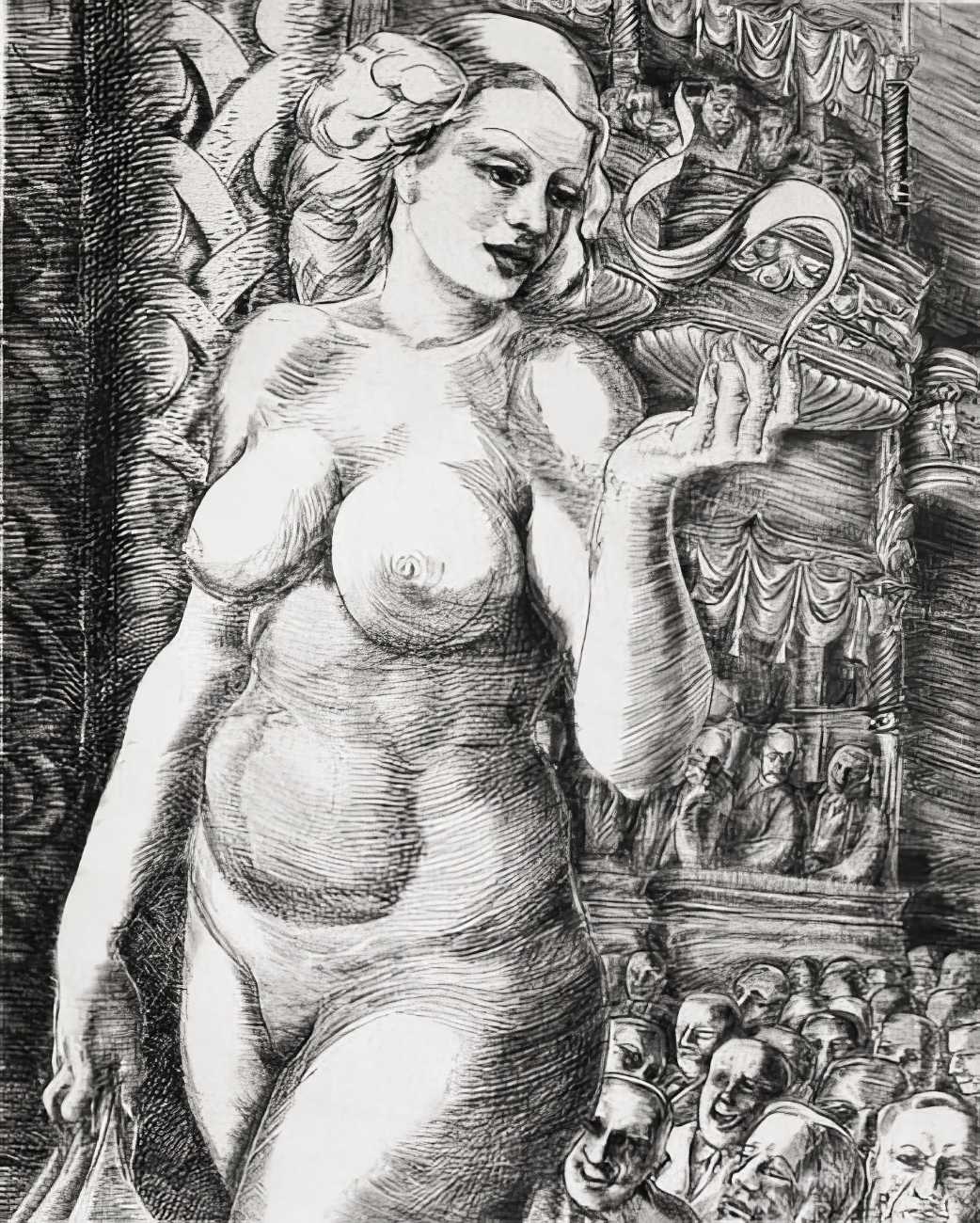
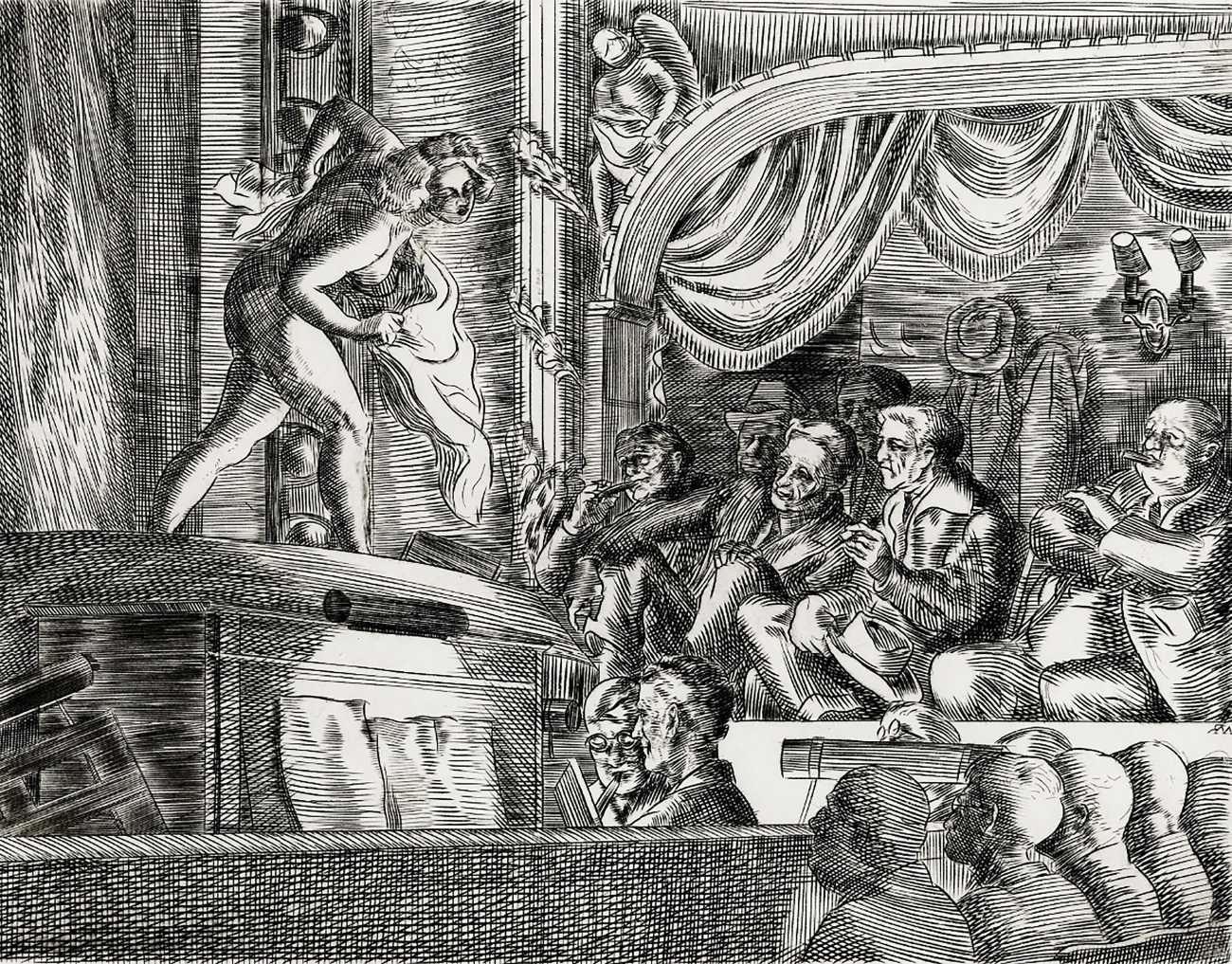
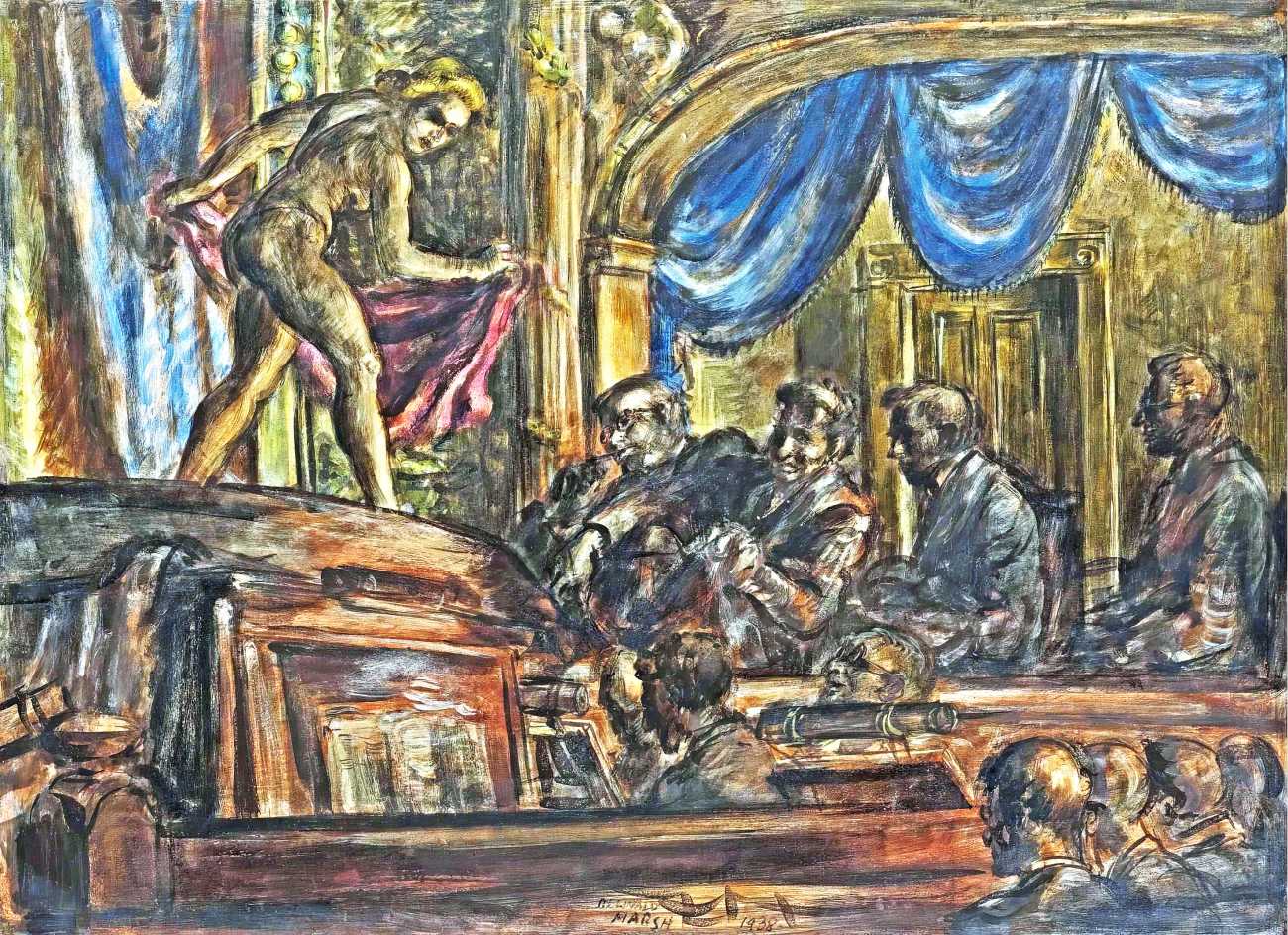
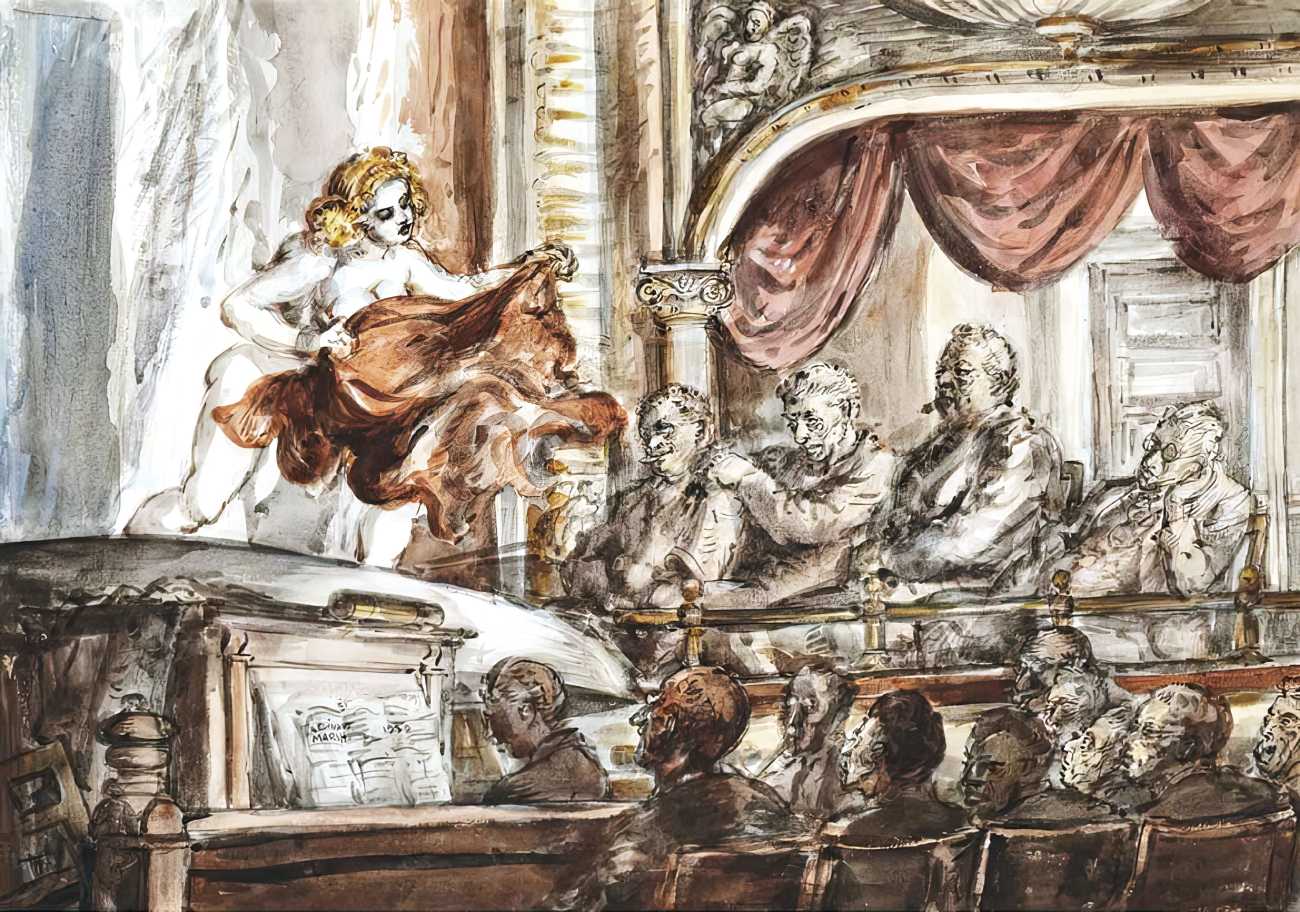
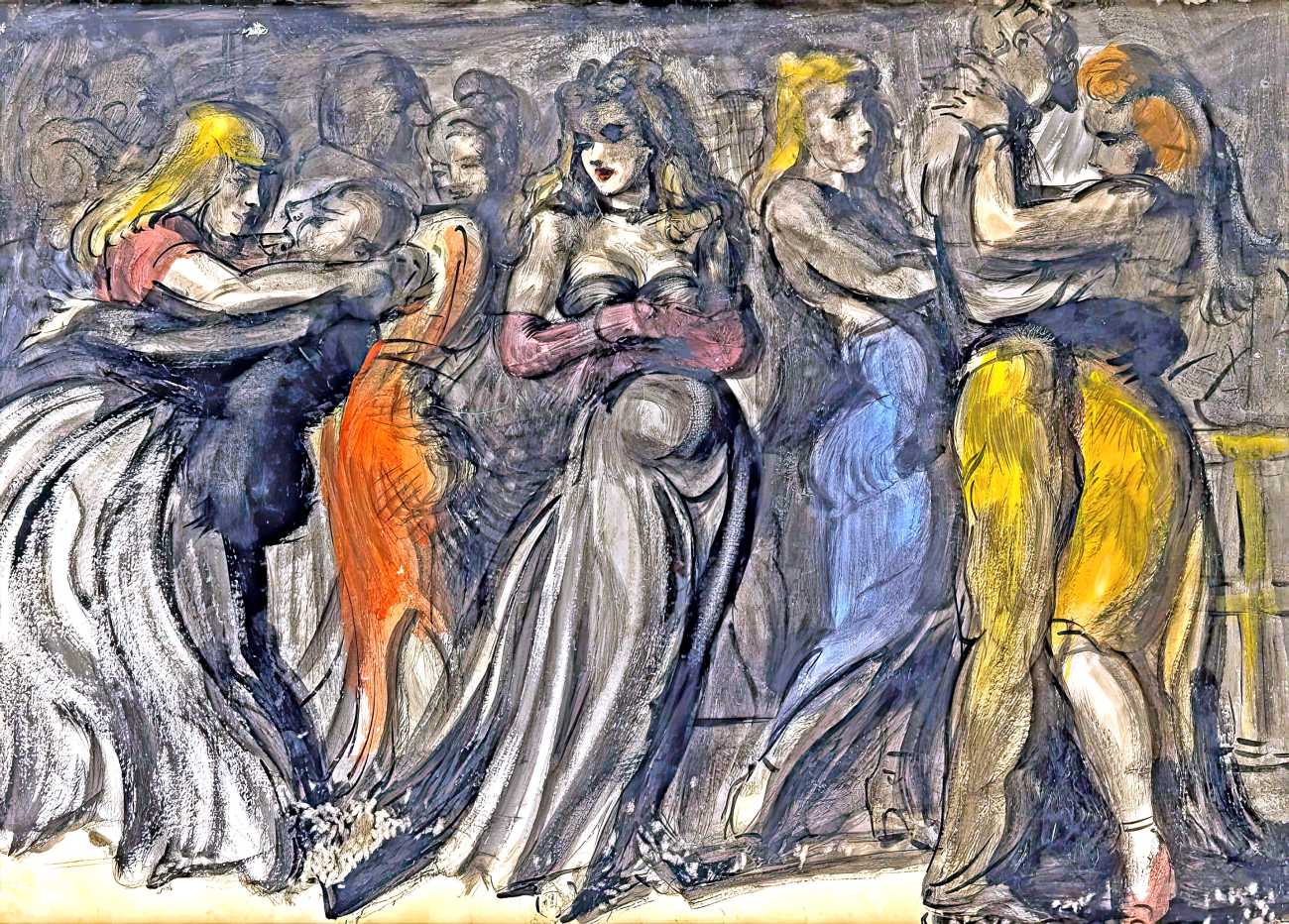
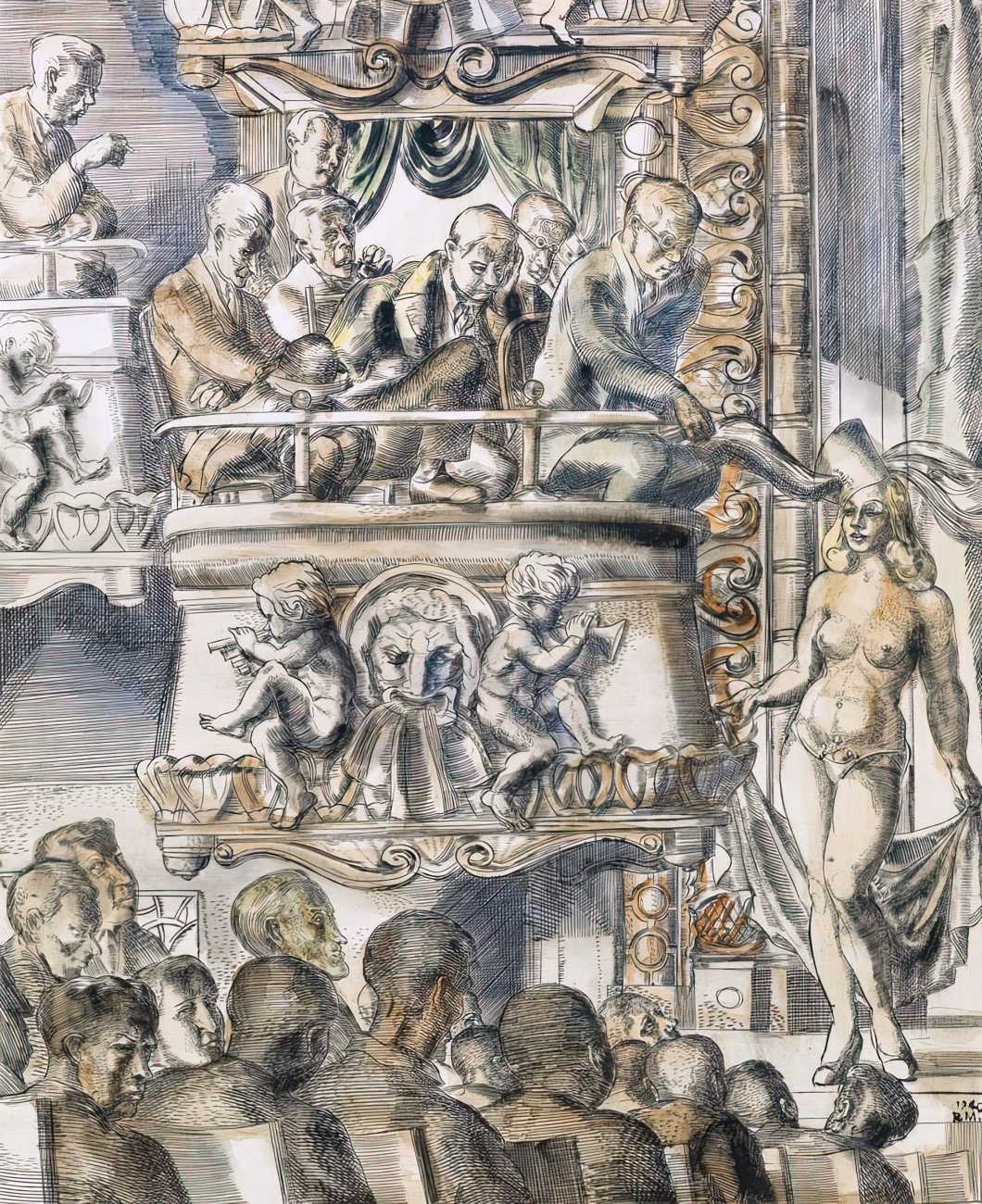
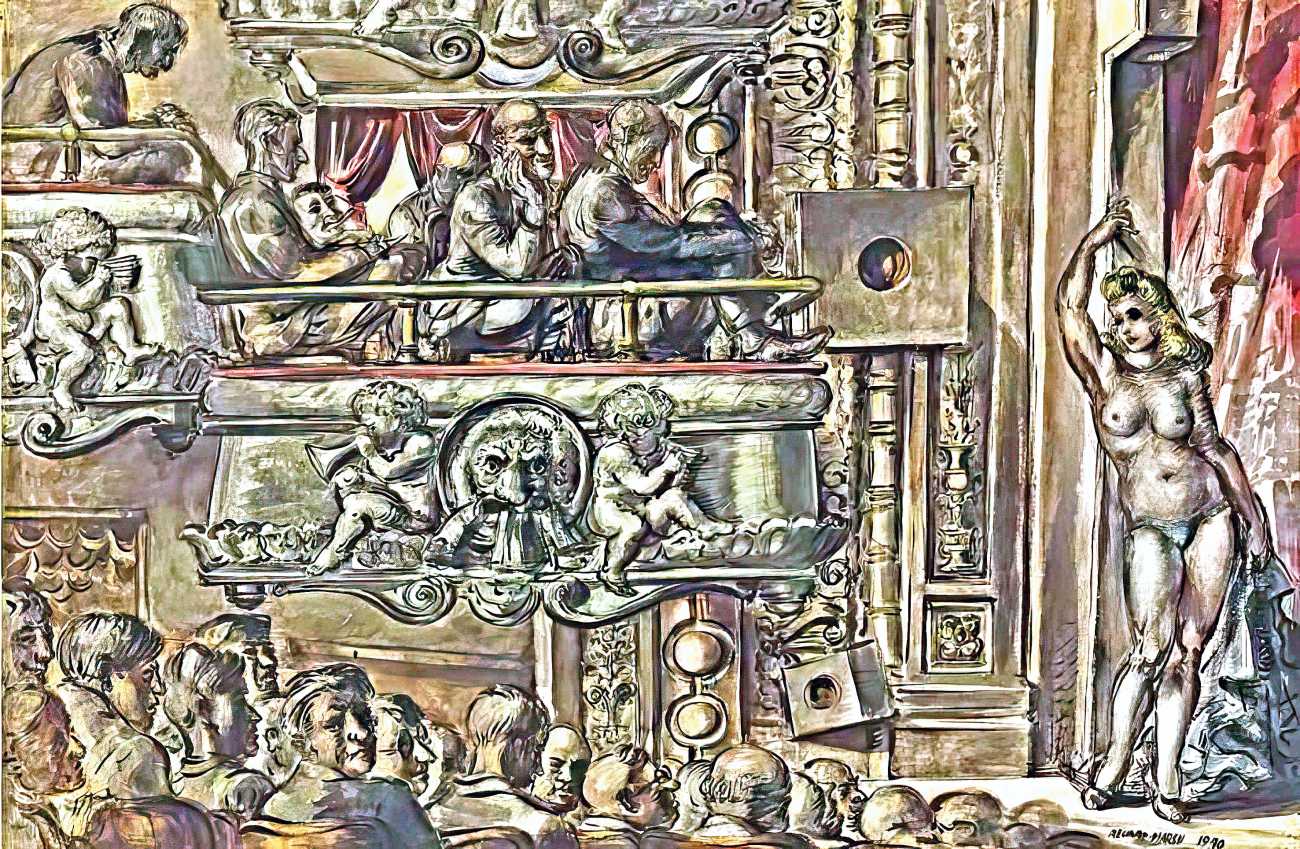
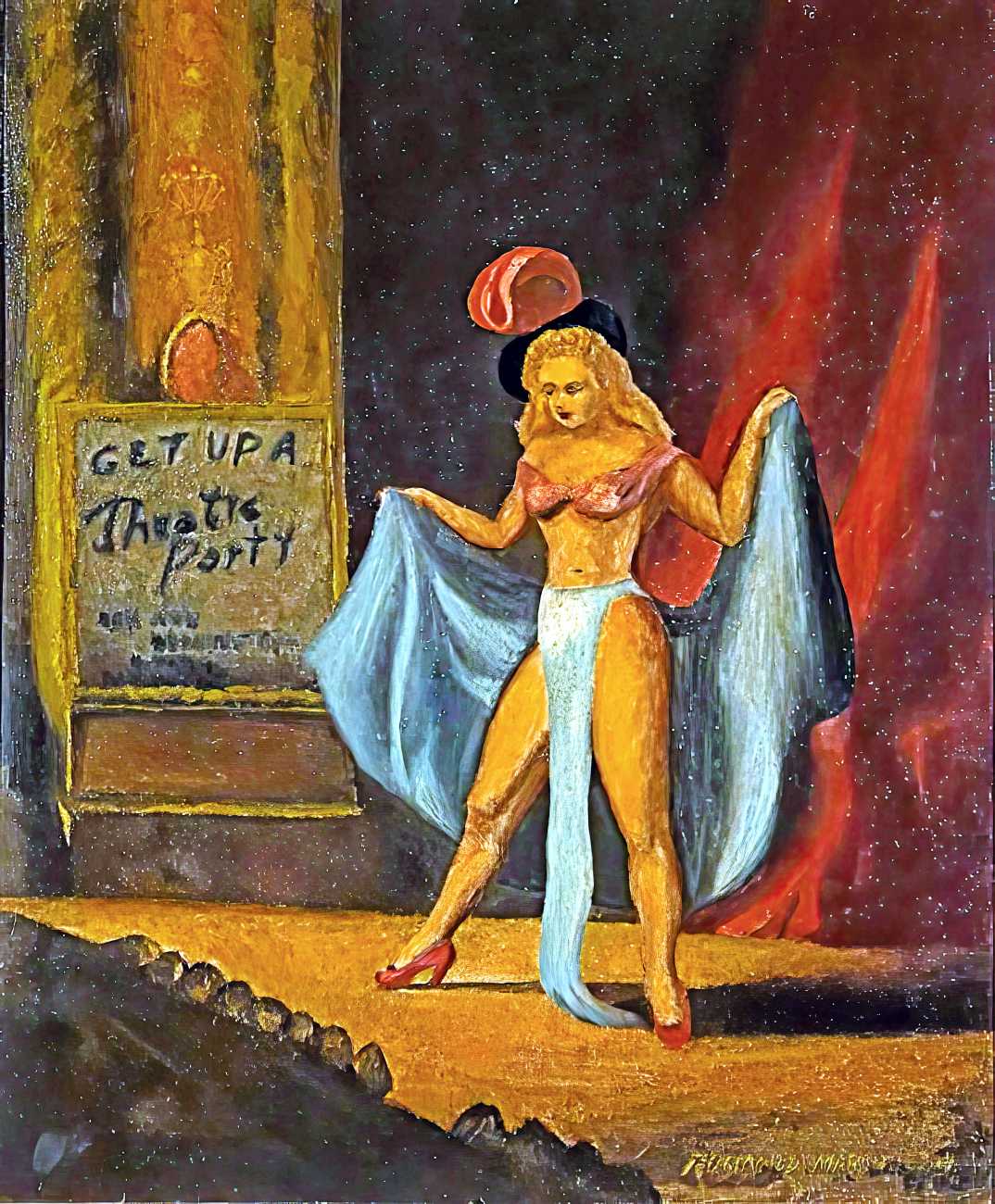
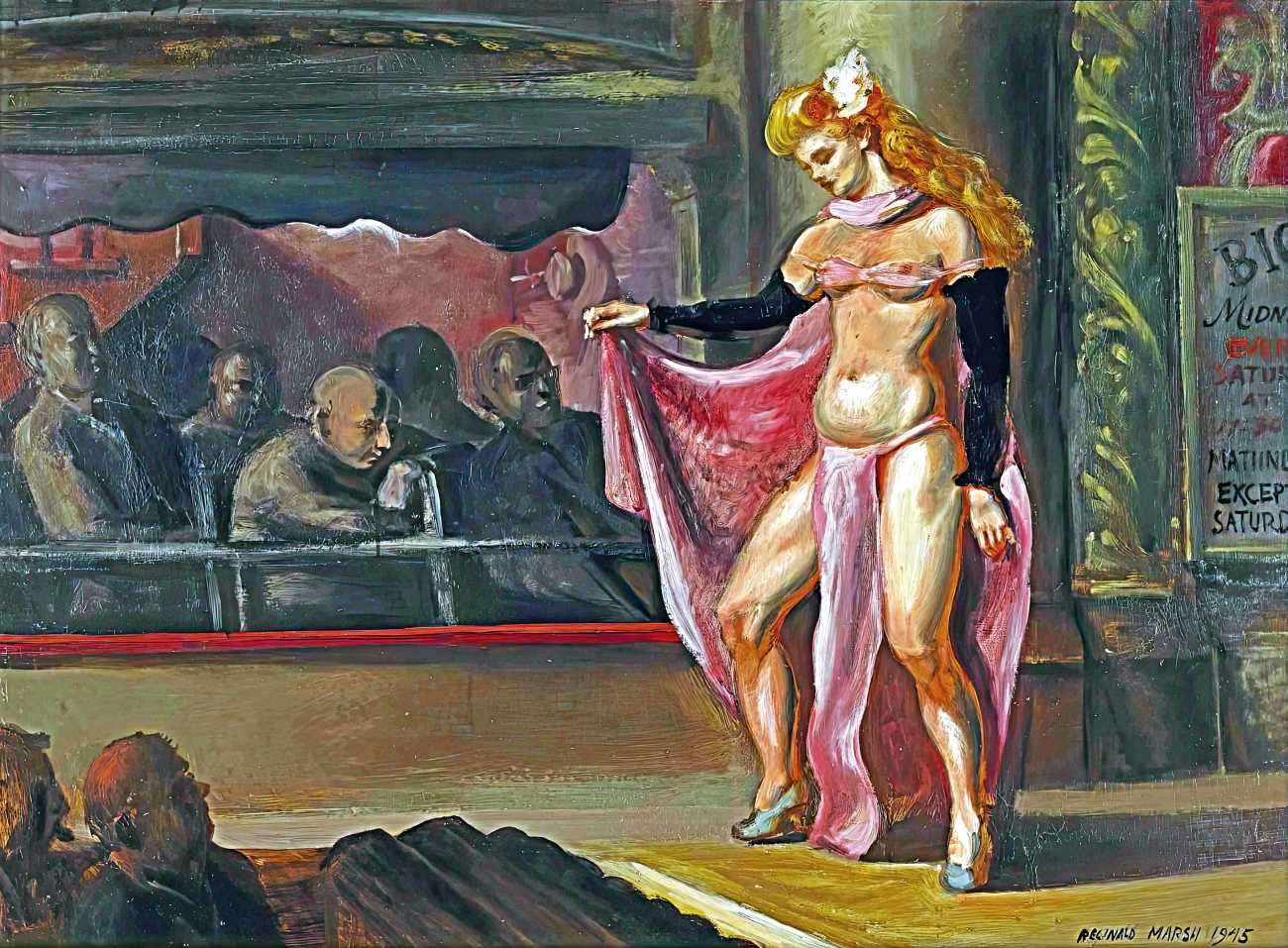
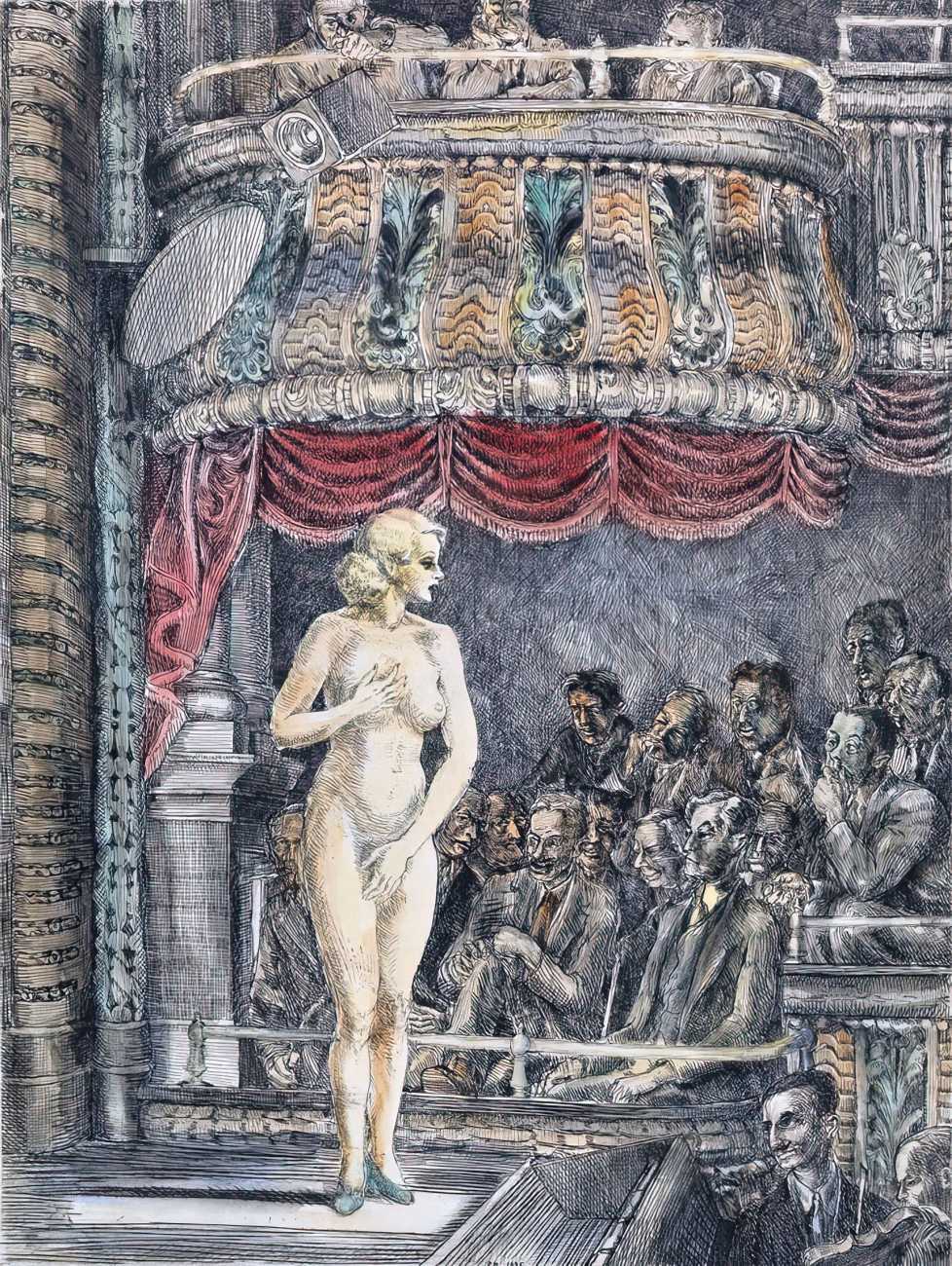
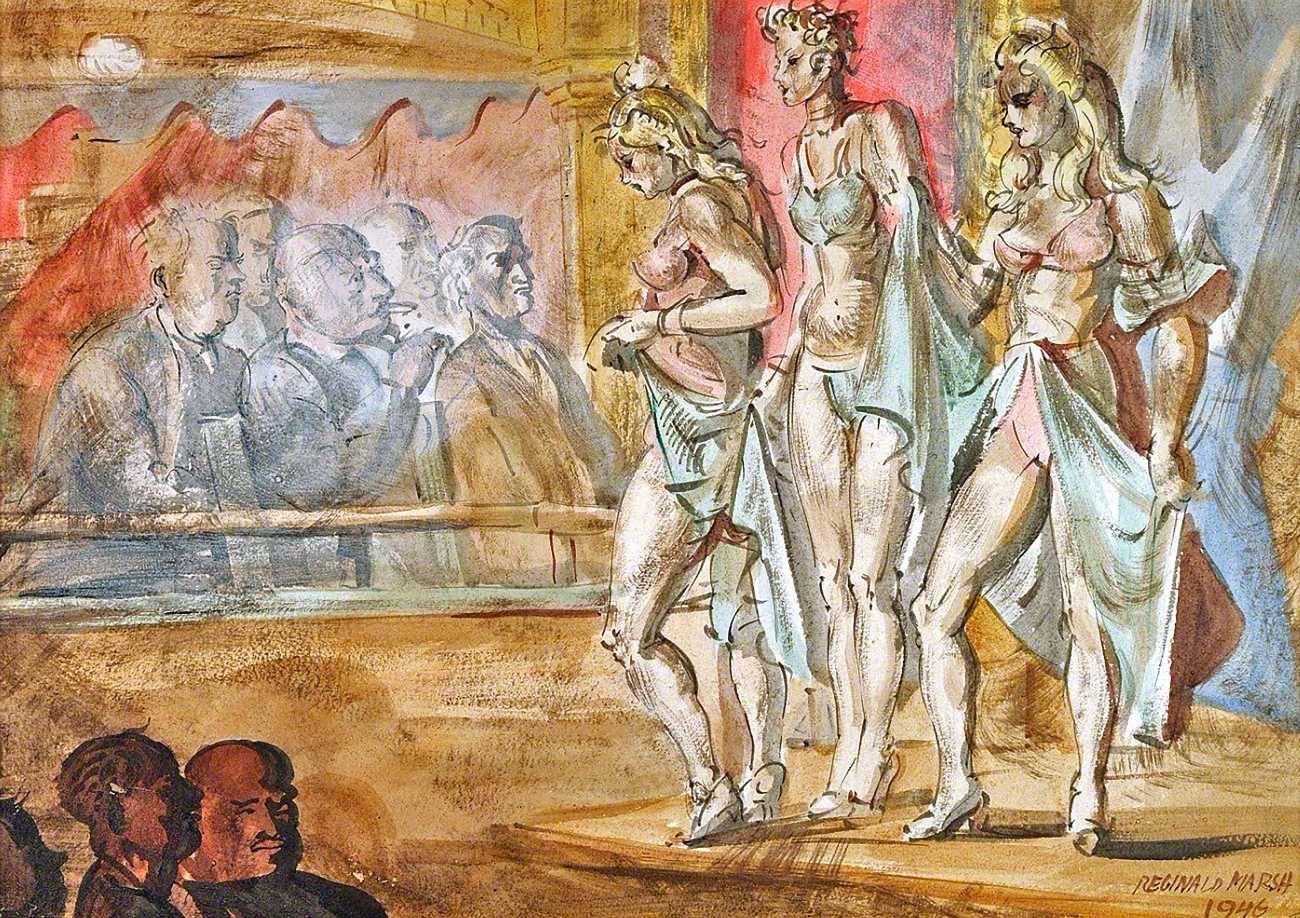
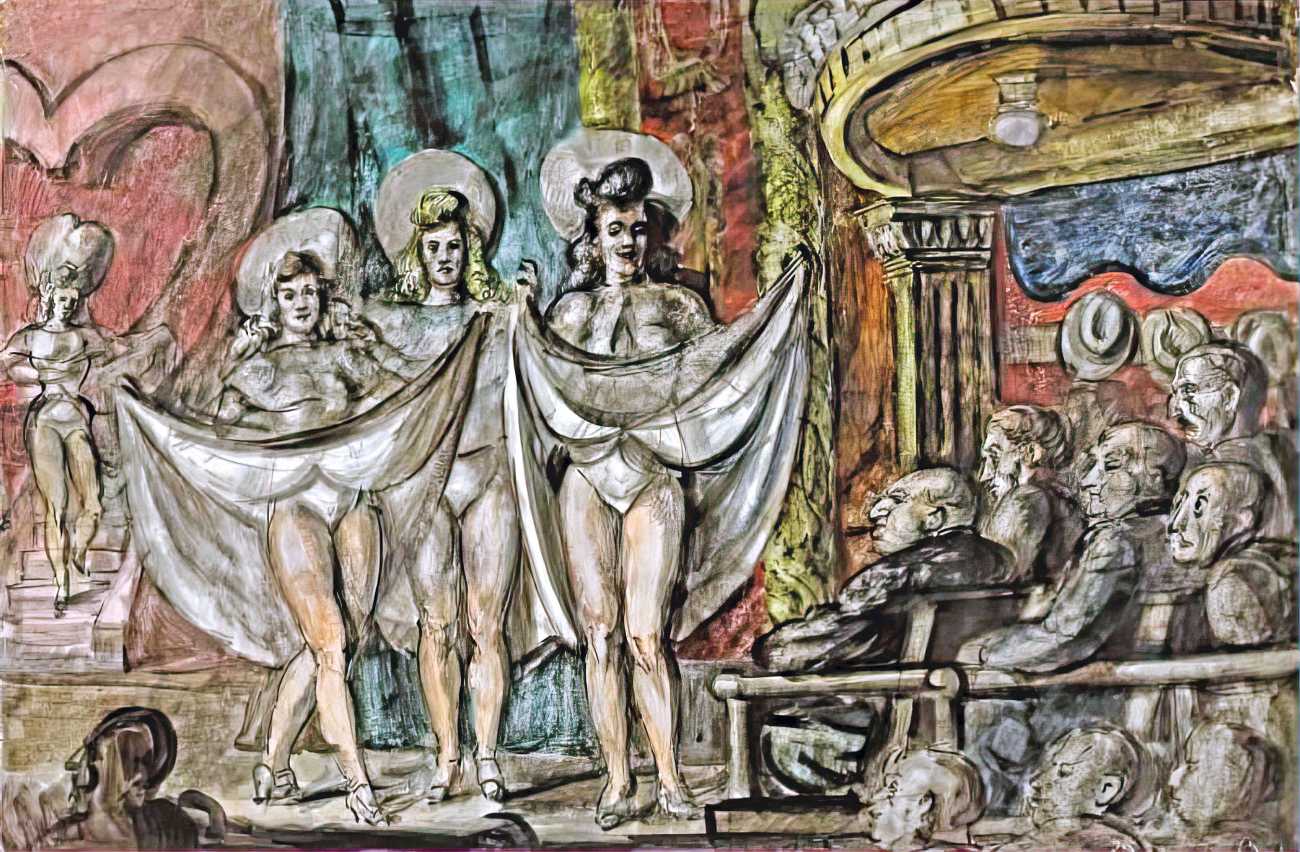
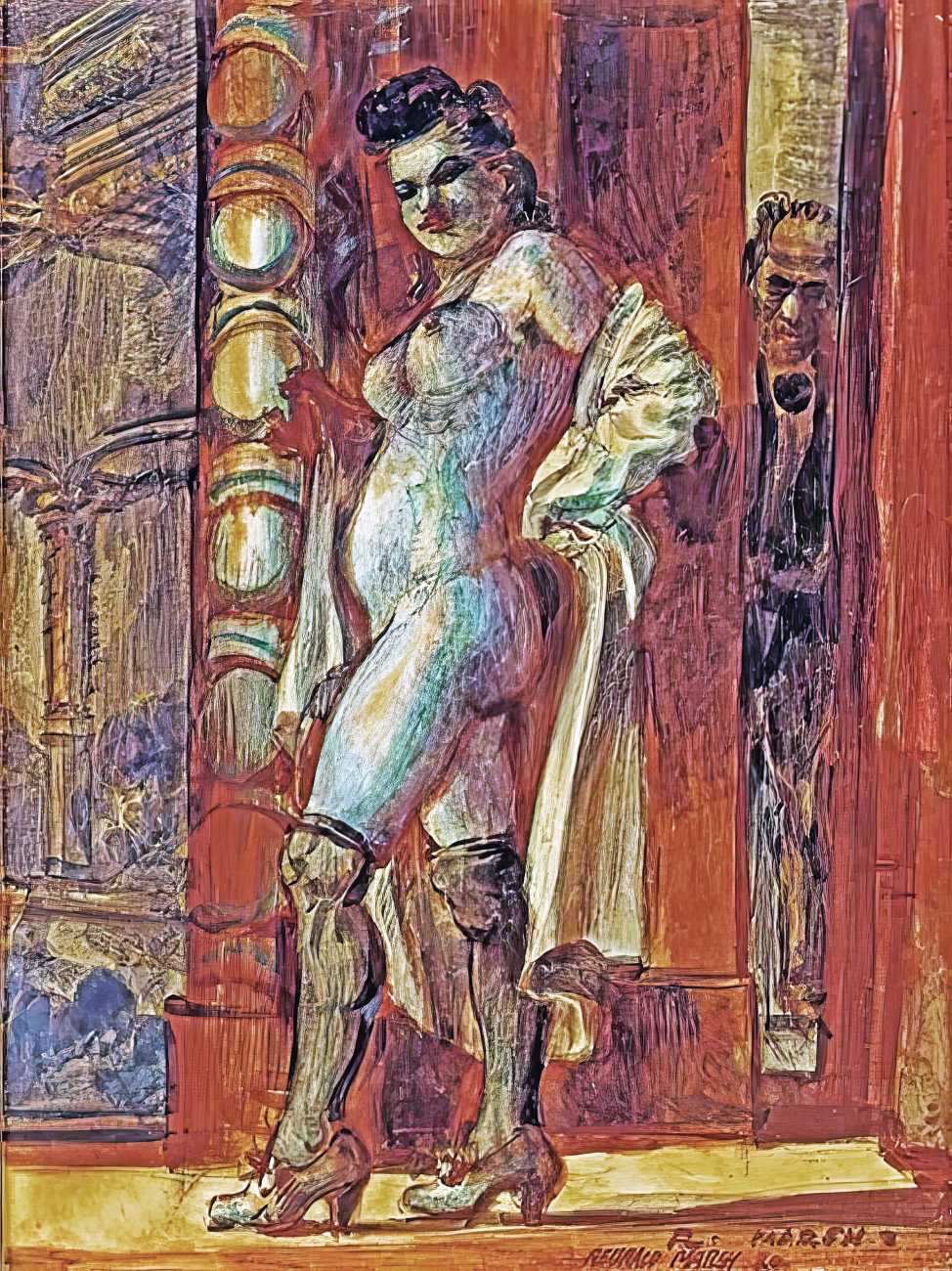
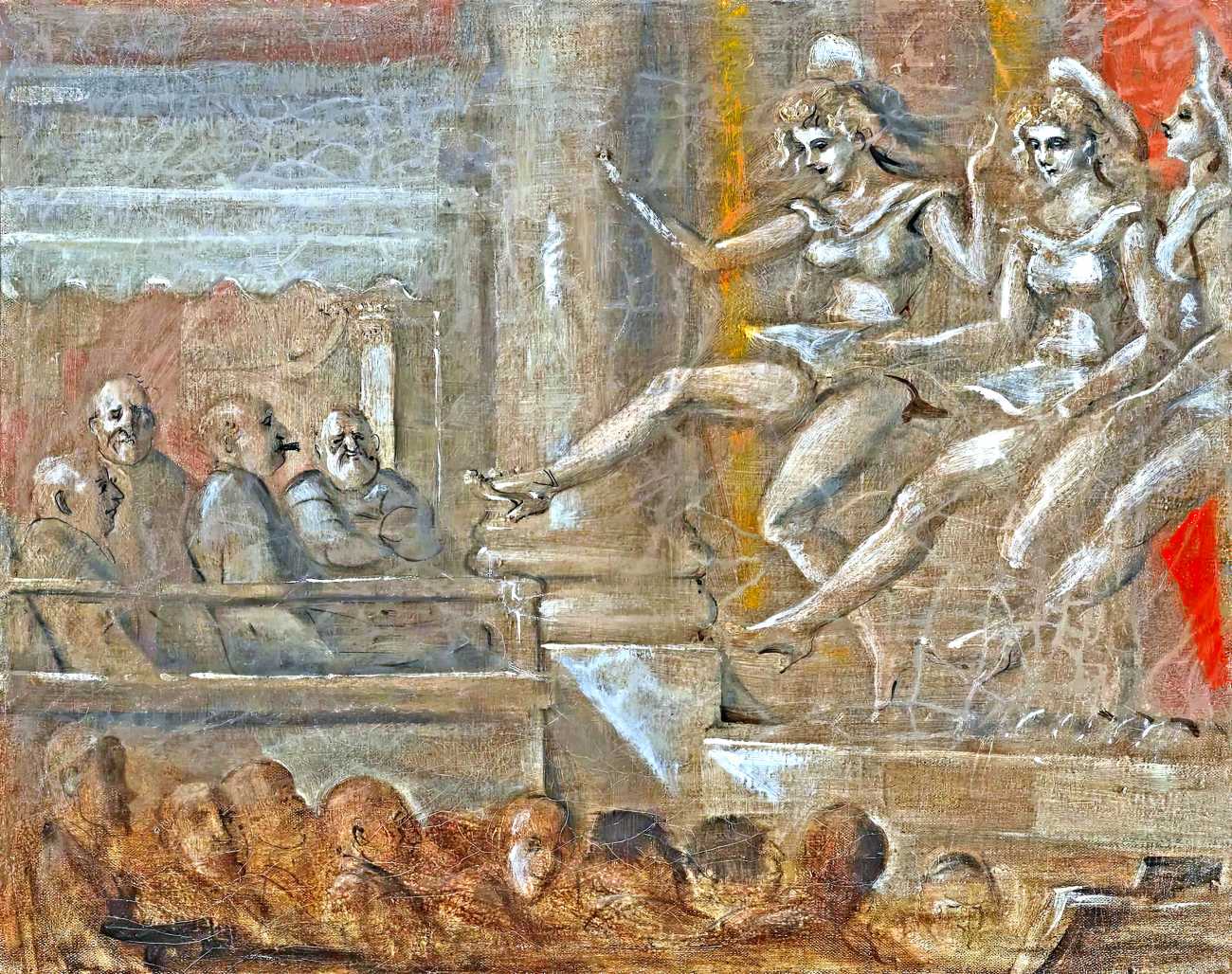
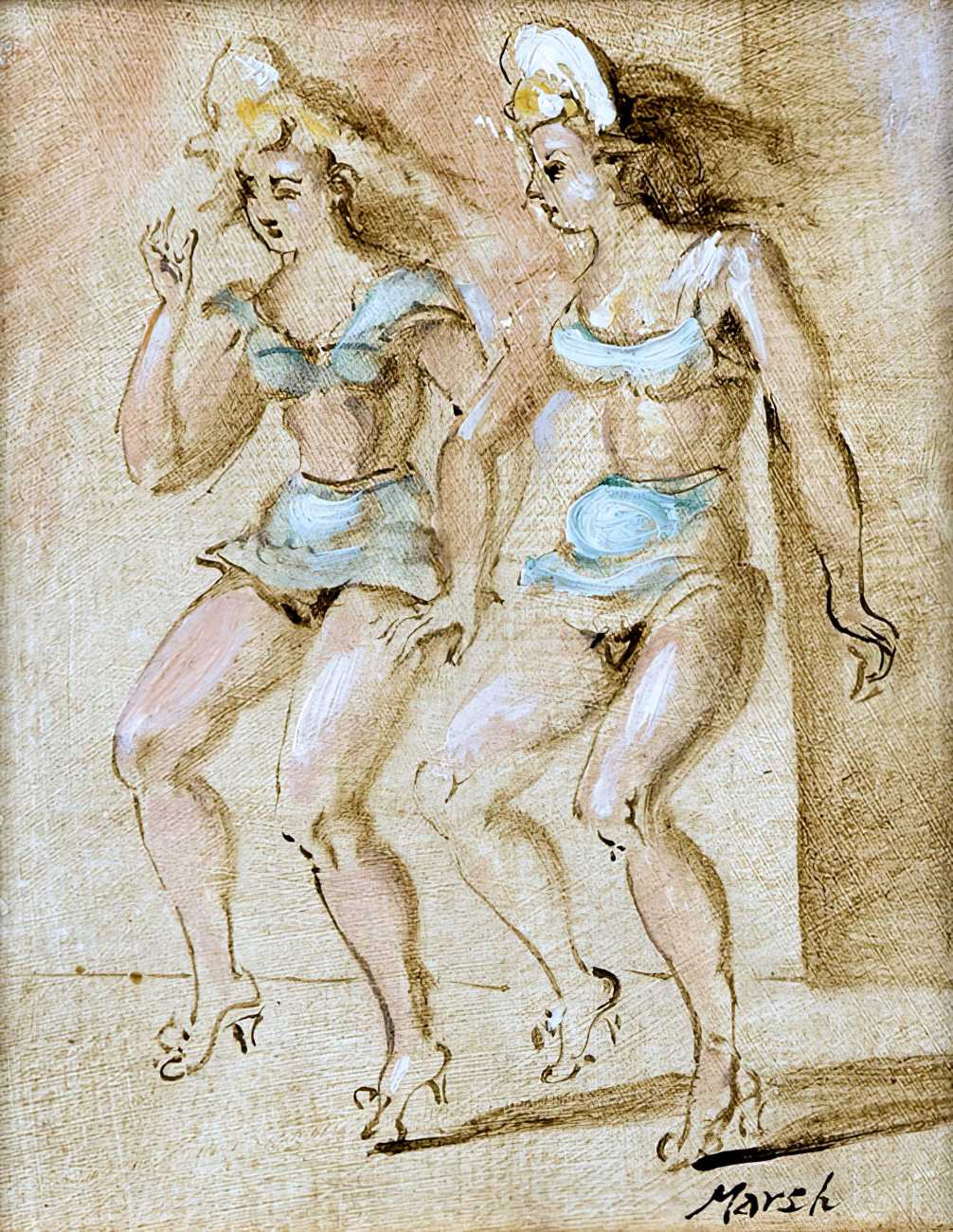
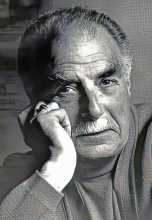
 Reginald Marsh was born in an apartment in Paris above Le Dôme Café in Montparnasse, the second son of American parents who were both artists. His mother, Alice Randall, was a miniaturist painter and his father, Frederick Dana Marsh, was a muralist and one of the earliest American painters to depict modern industry. When Reginald was two years old his family moved to Nutley, New Jersey, where his father acquired a studio home located on The Enclosure, a street established as an artists’ colony some decades earlier by the painter Frank Fowler.
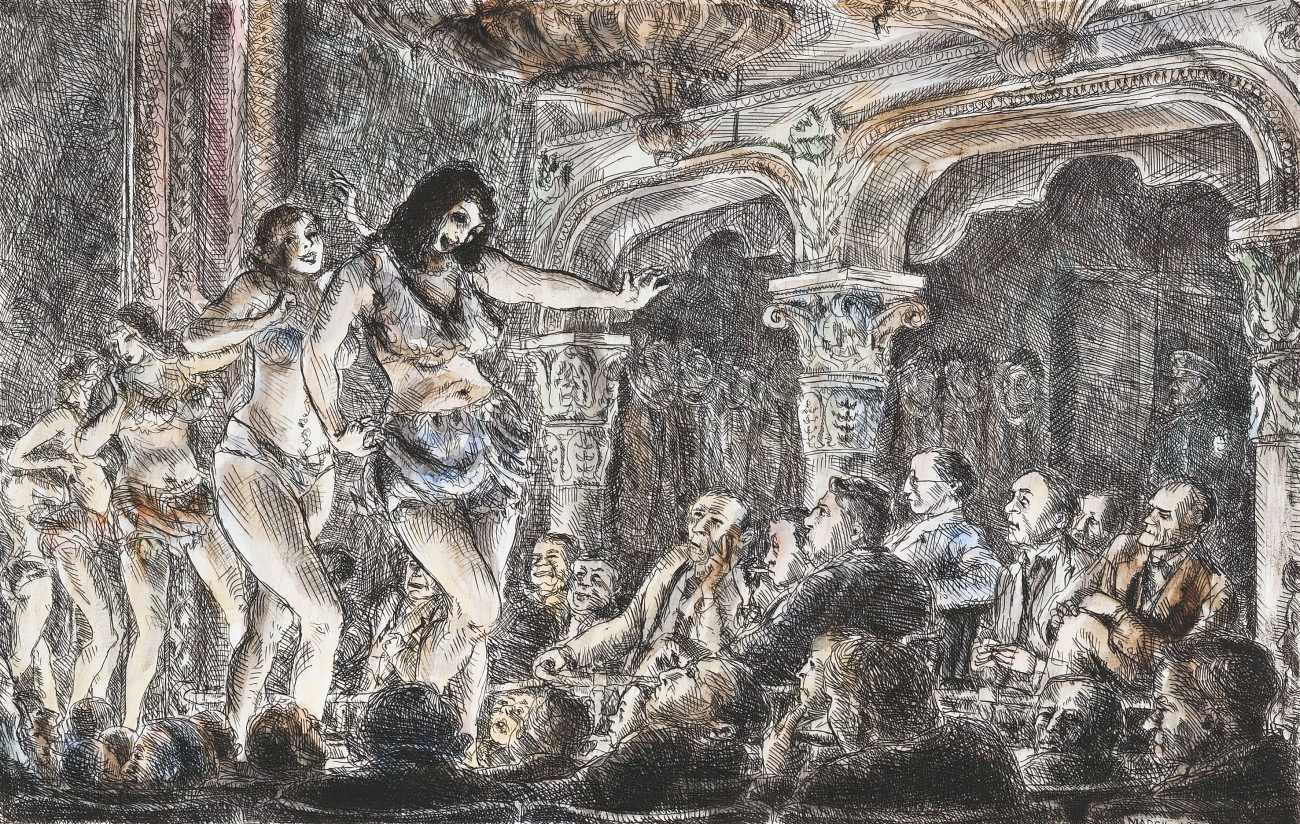
Reginald Marsh attended the Lawrenceville School, went to Yale University where he graduated in 1920, and then studied at Yale Art School, where he became the star illustrator and cartoonist for the campus humour magazine The Yale Record. After leaving Yale he moved to New York, where he was hired to sketch vaudeville and burlesque performers for a regular New York Daily News feature, and when The New Yorker began publication in 1925 Marsh and fellow Yale graduate Peter Arno were among the magazine’s first cartoonists.
A casual interest in learning to paint led Marsh to begin taking classes at the Art Students League of New York, where his first teacher was John Sloan. By 1923 Marsh began to paint seriously. In this year he also married Betty Burroughs, another student at the college and daughter of the artist Bryson Burroughs; the marriage ended in 1933. In 1925 Marsh visited Paris for the first time since he had lived there as a child and he fell in love with what the city had to offer him, including the works of painters such as Titian, Tintoretto and Rubens. Following his European trip Marsh returned to New York with a desire to adopt the principles of the Renaissance painters, particularly the way in which large groups of figures, together with architecture or landscape elements, were organised into tight compositions.
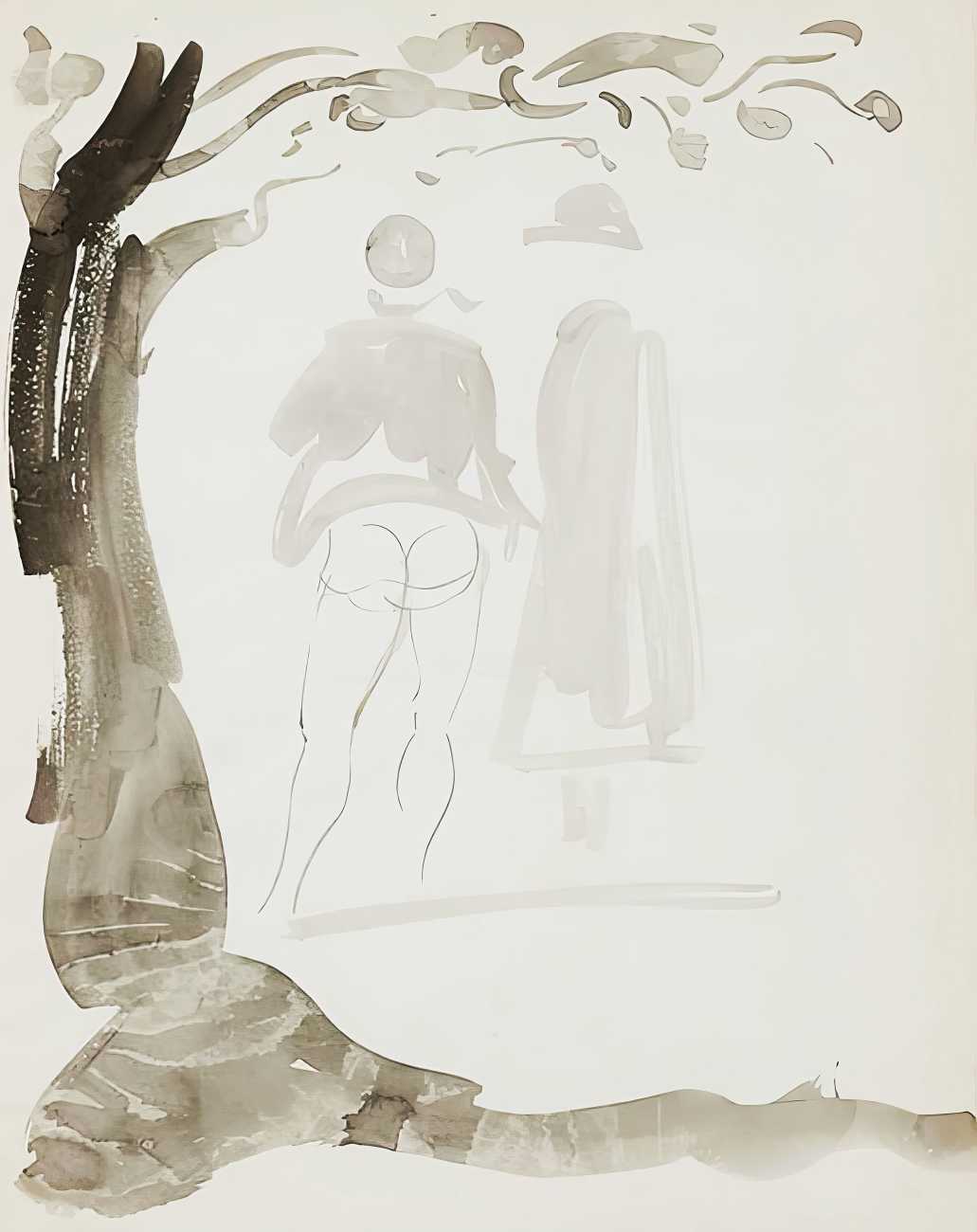
Marsh then studied under Kenneth Hayes Miller at the Art Students League of New York, who looked at Marsh’s early, awkward burlesque sketches and at his more conventional landscape watercolours, and told him ‘These awkward things are your work. These are real. Stick to them and don’t let anyone dissuade you!’
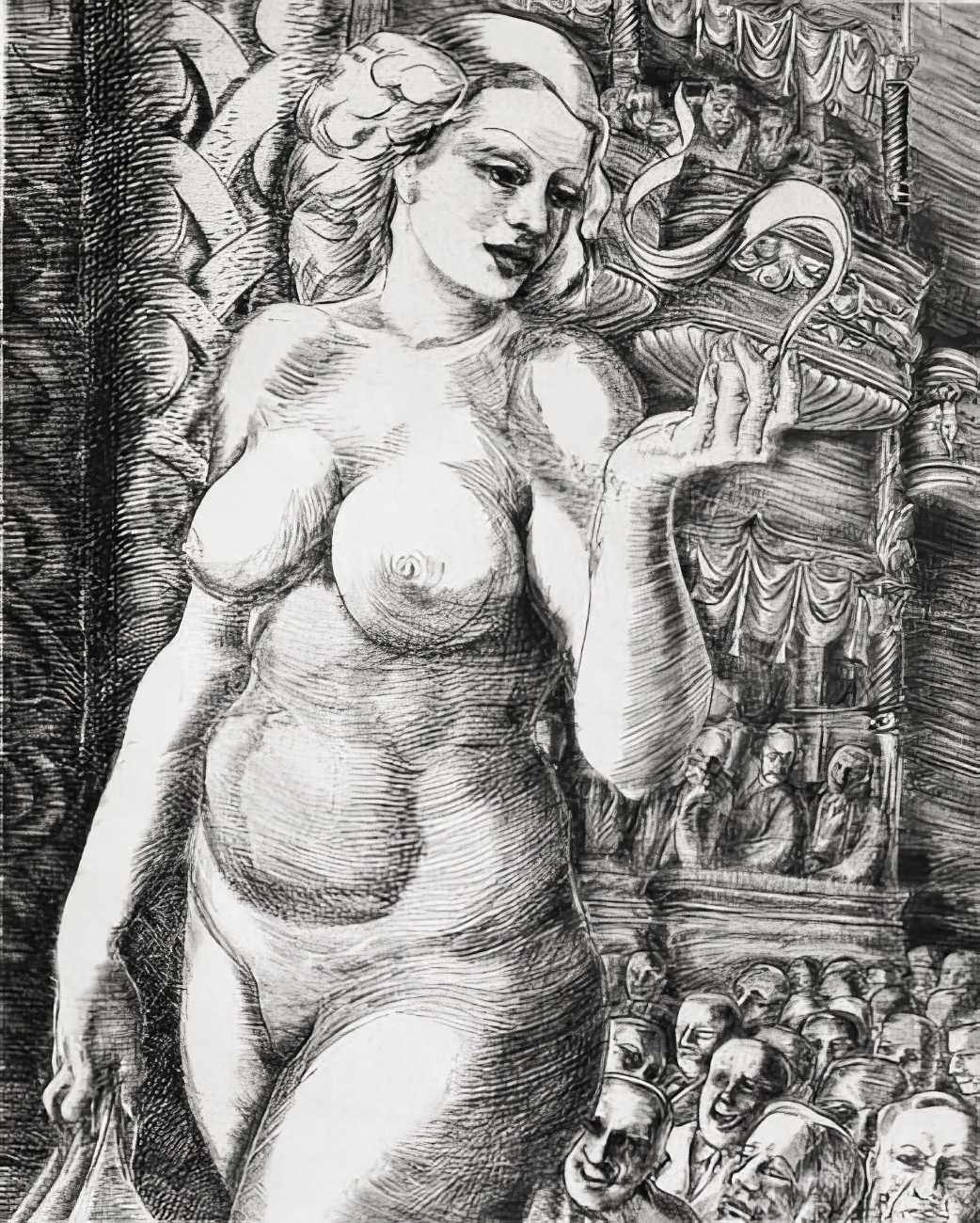
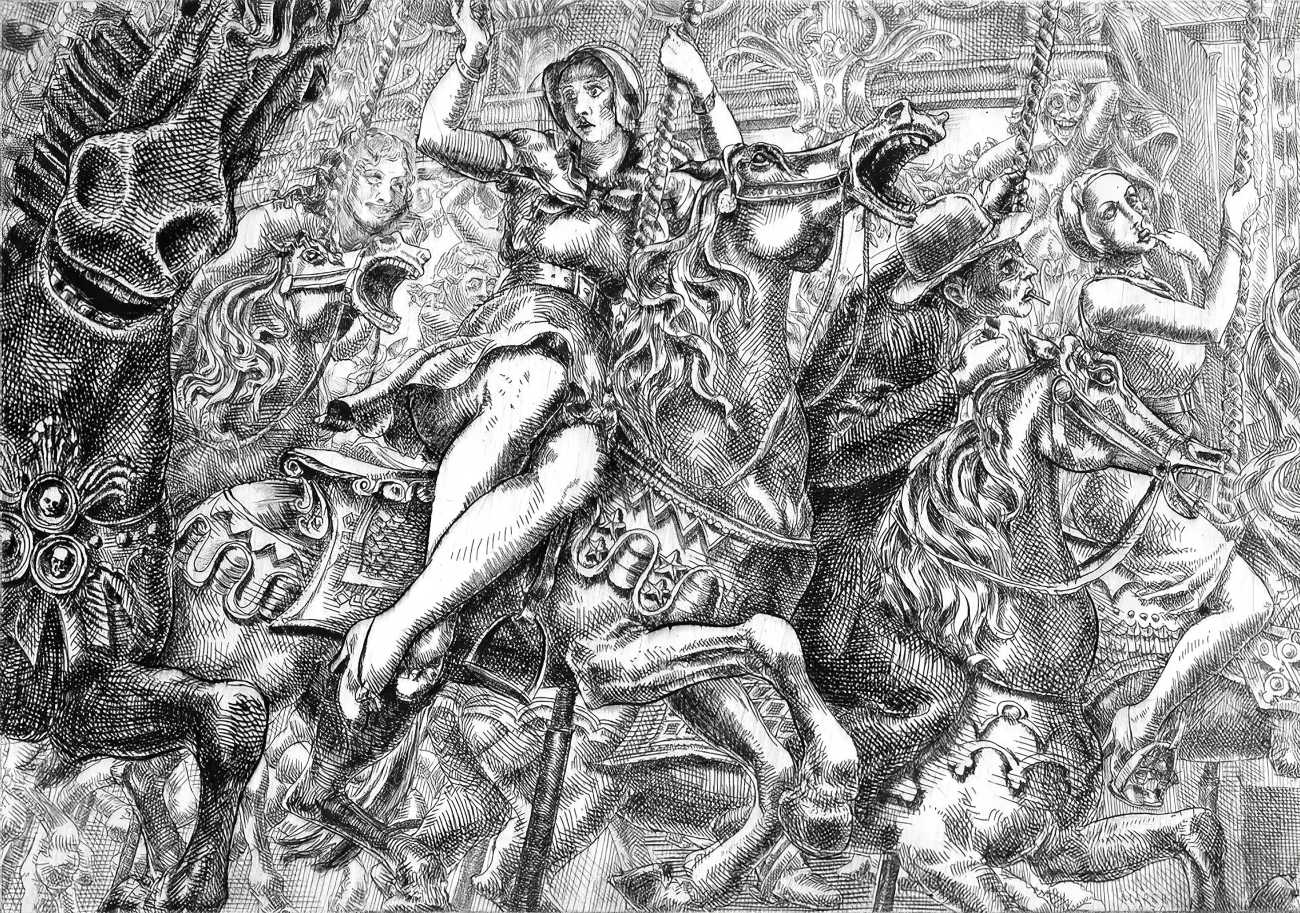
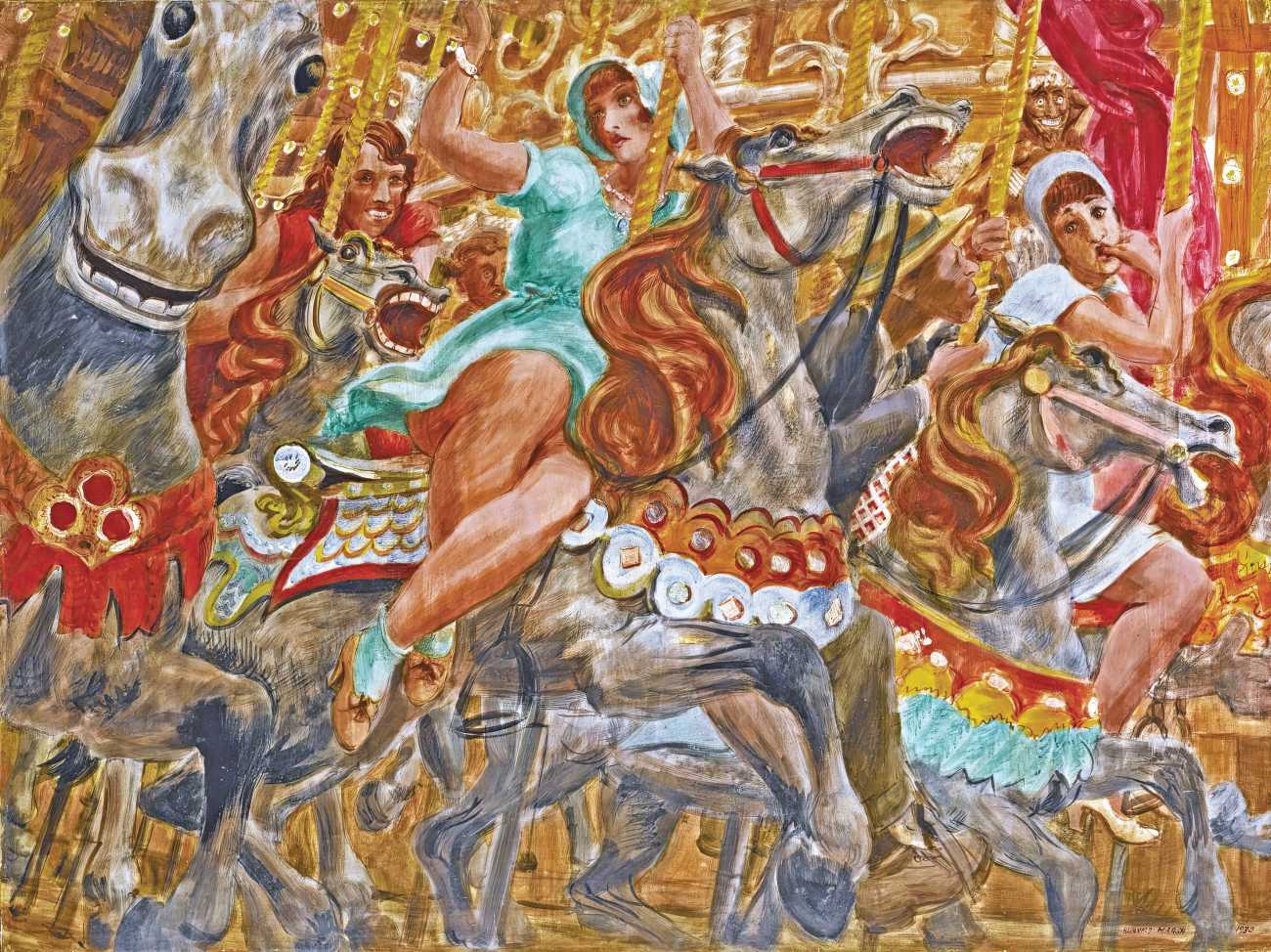
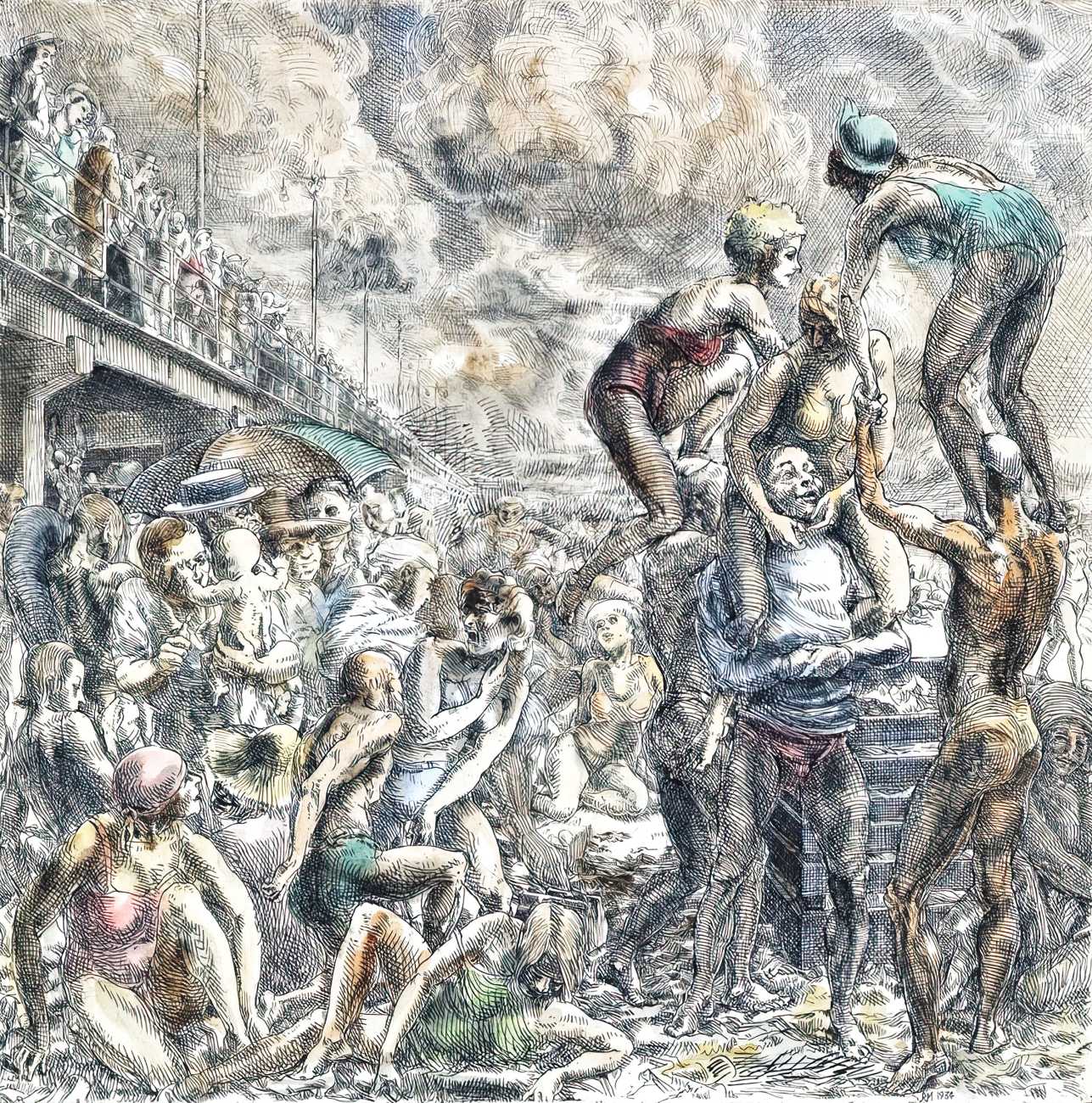
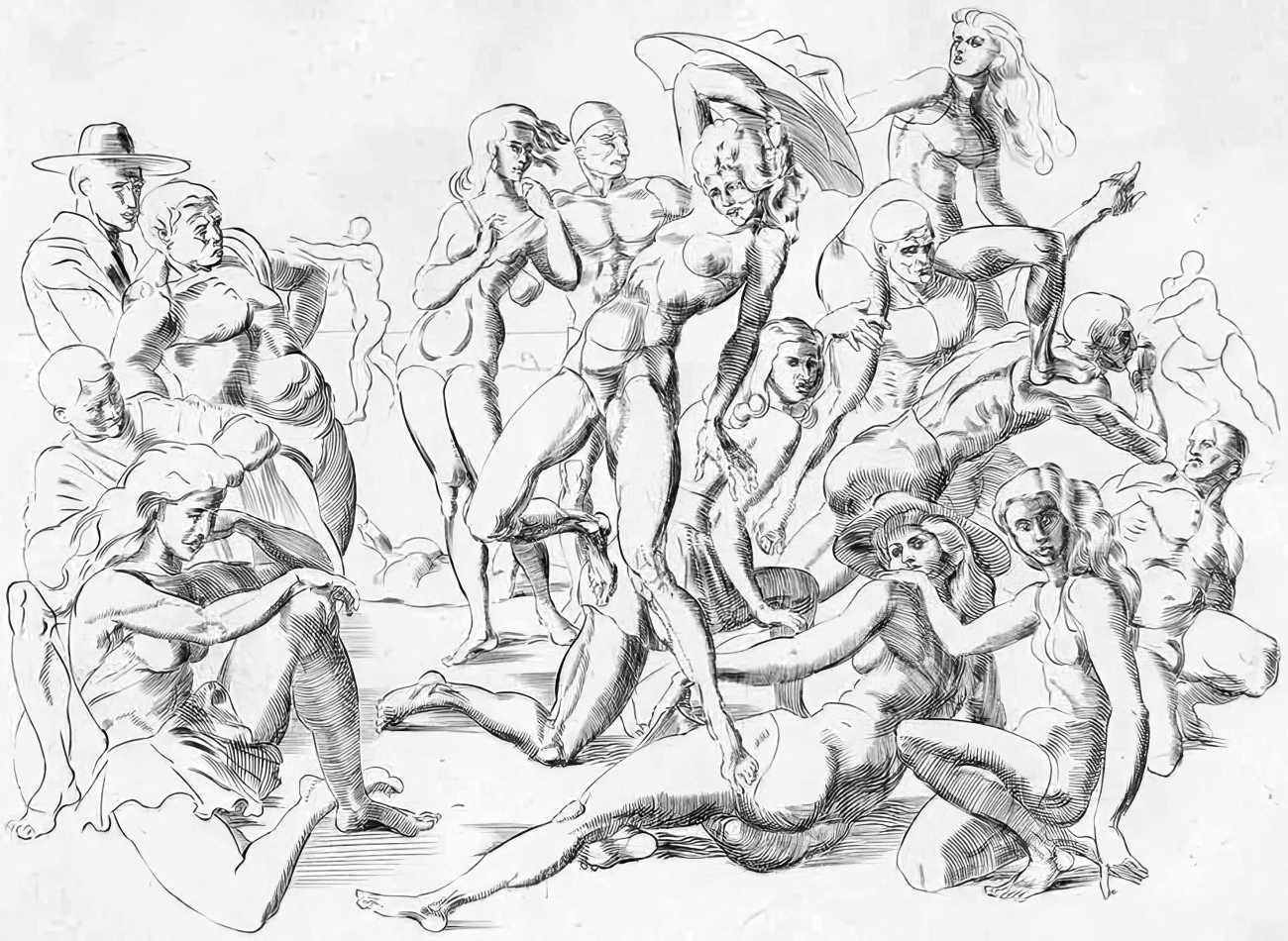
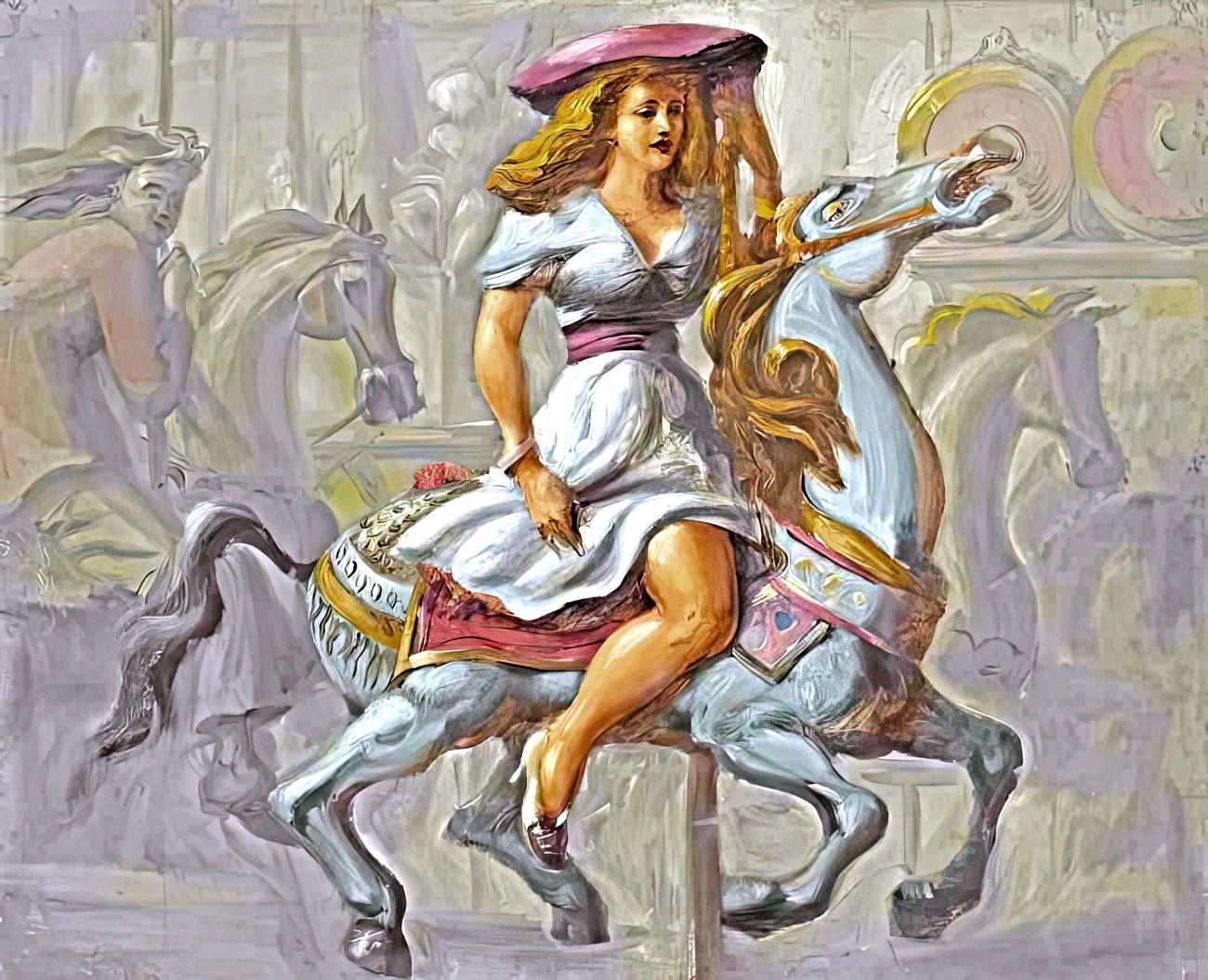
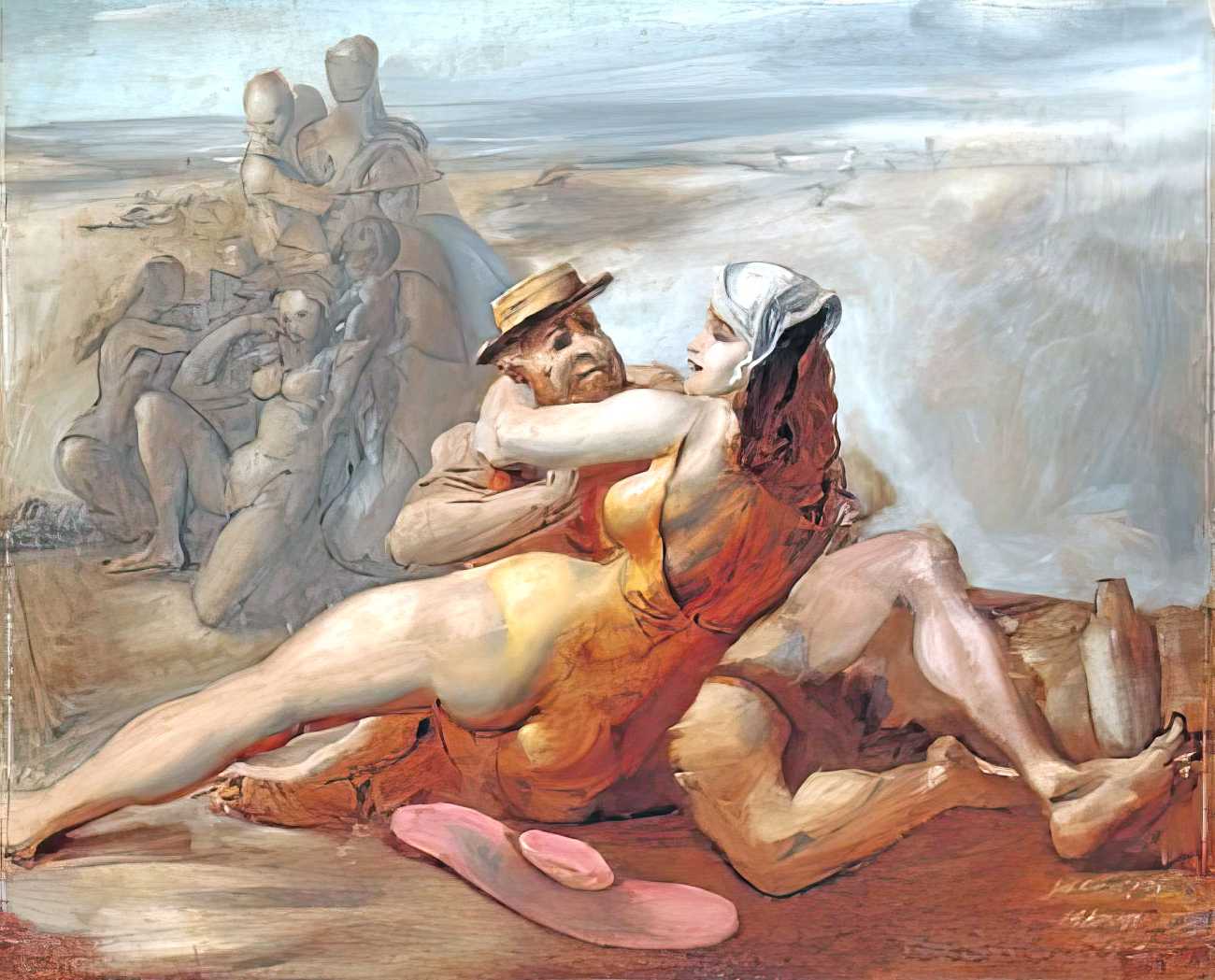
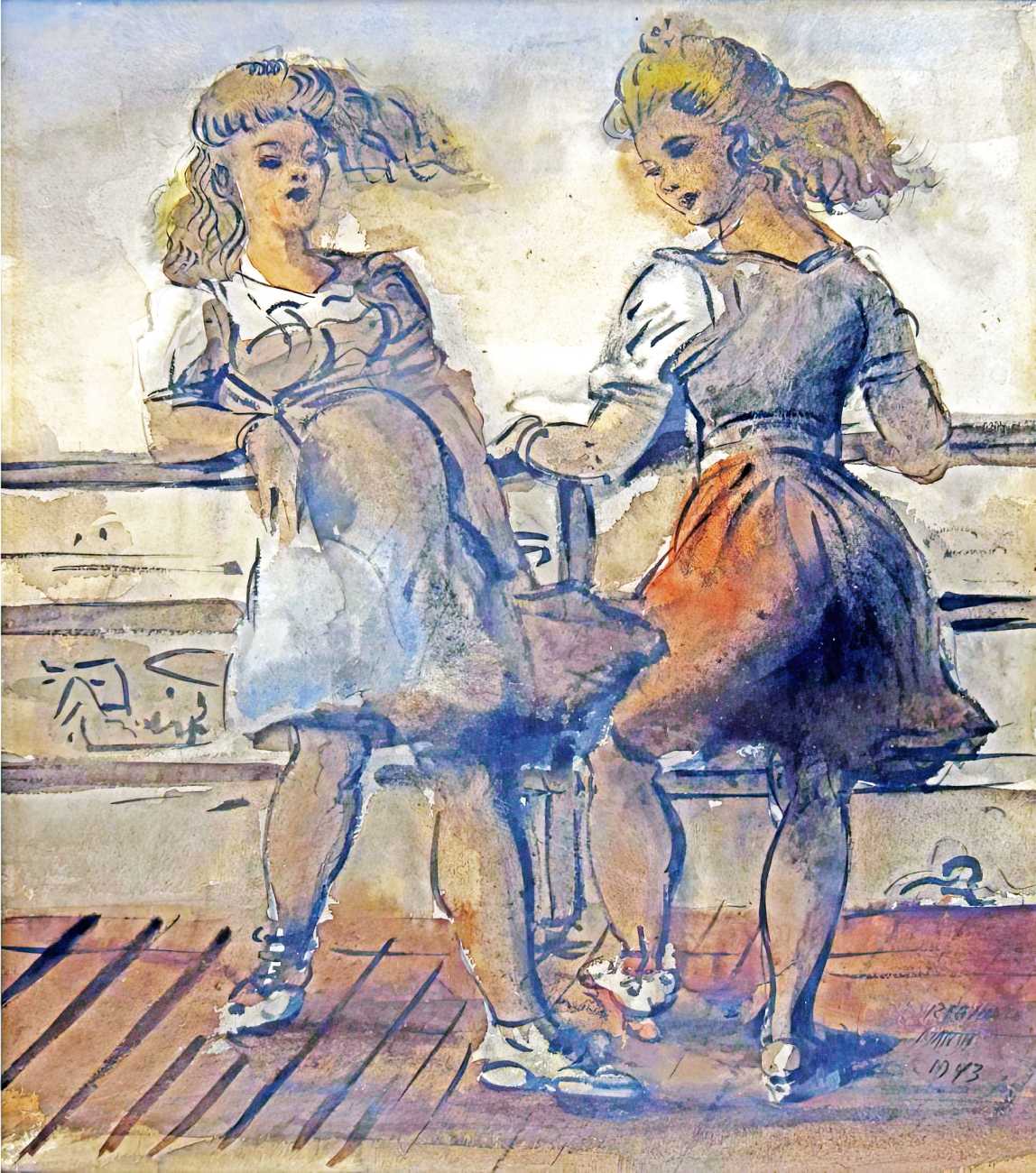
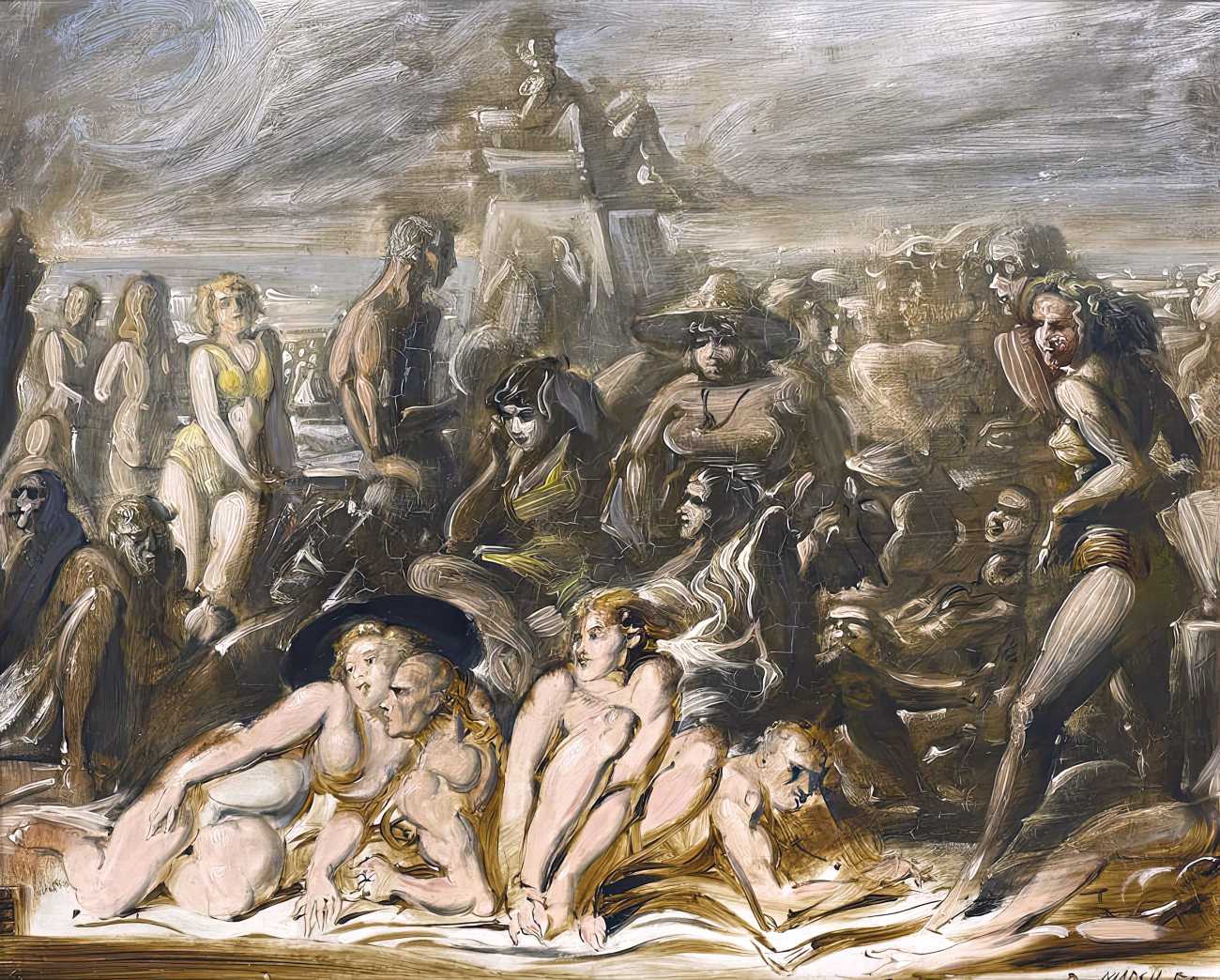
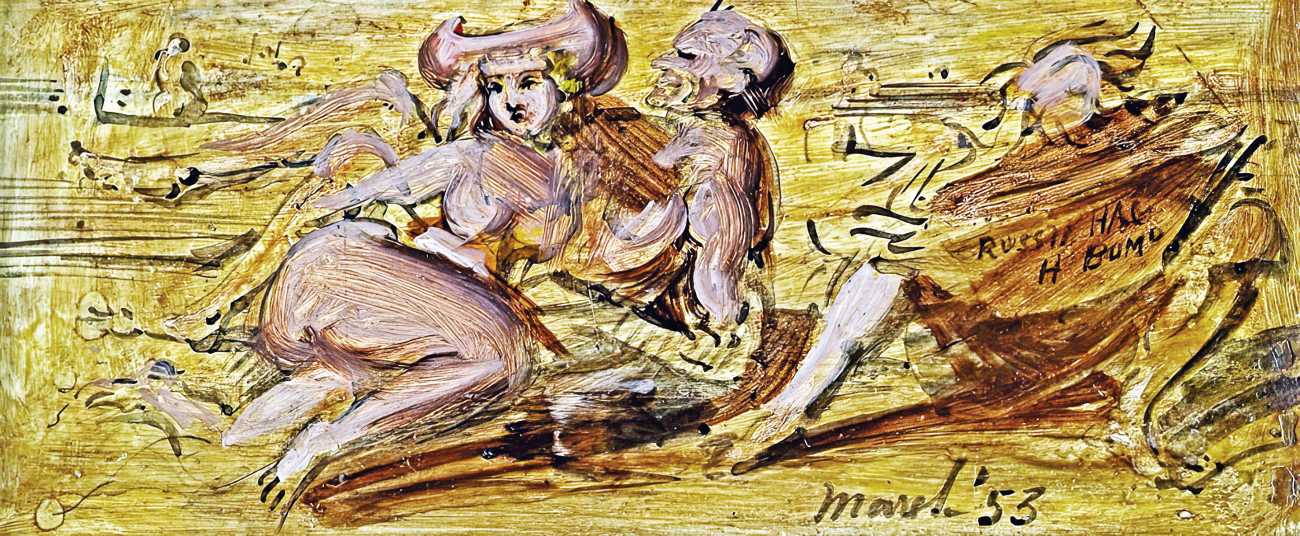
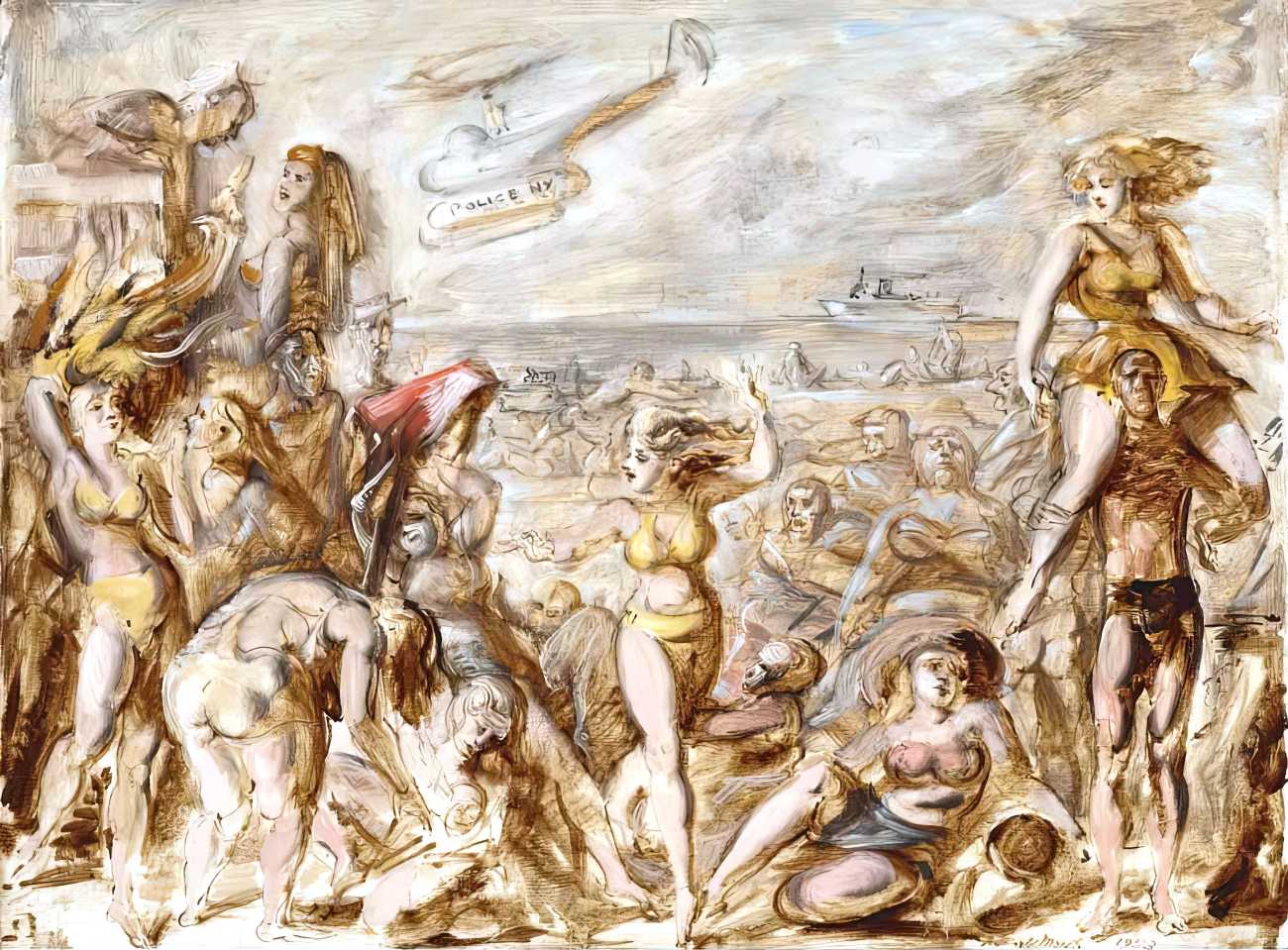
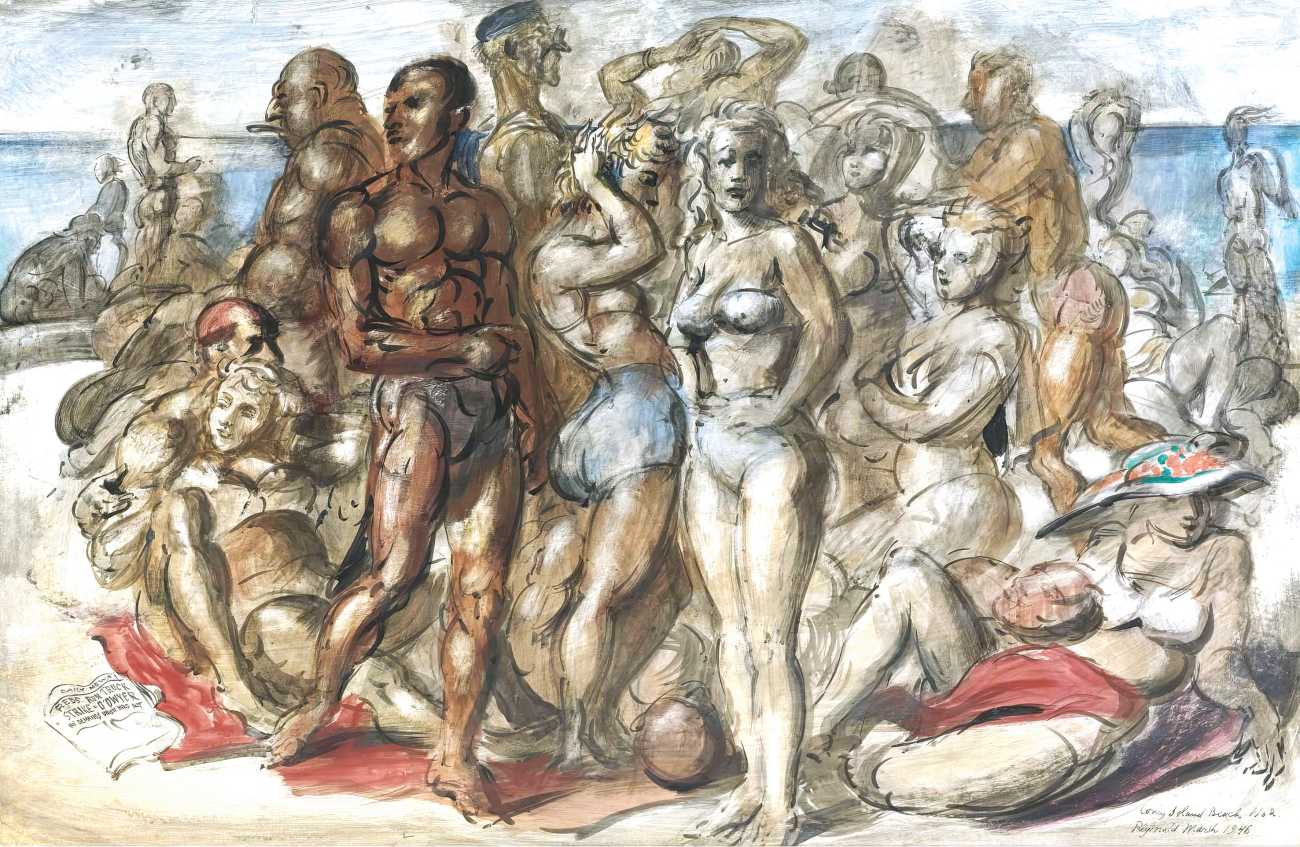
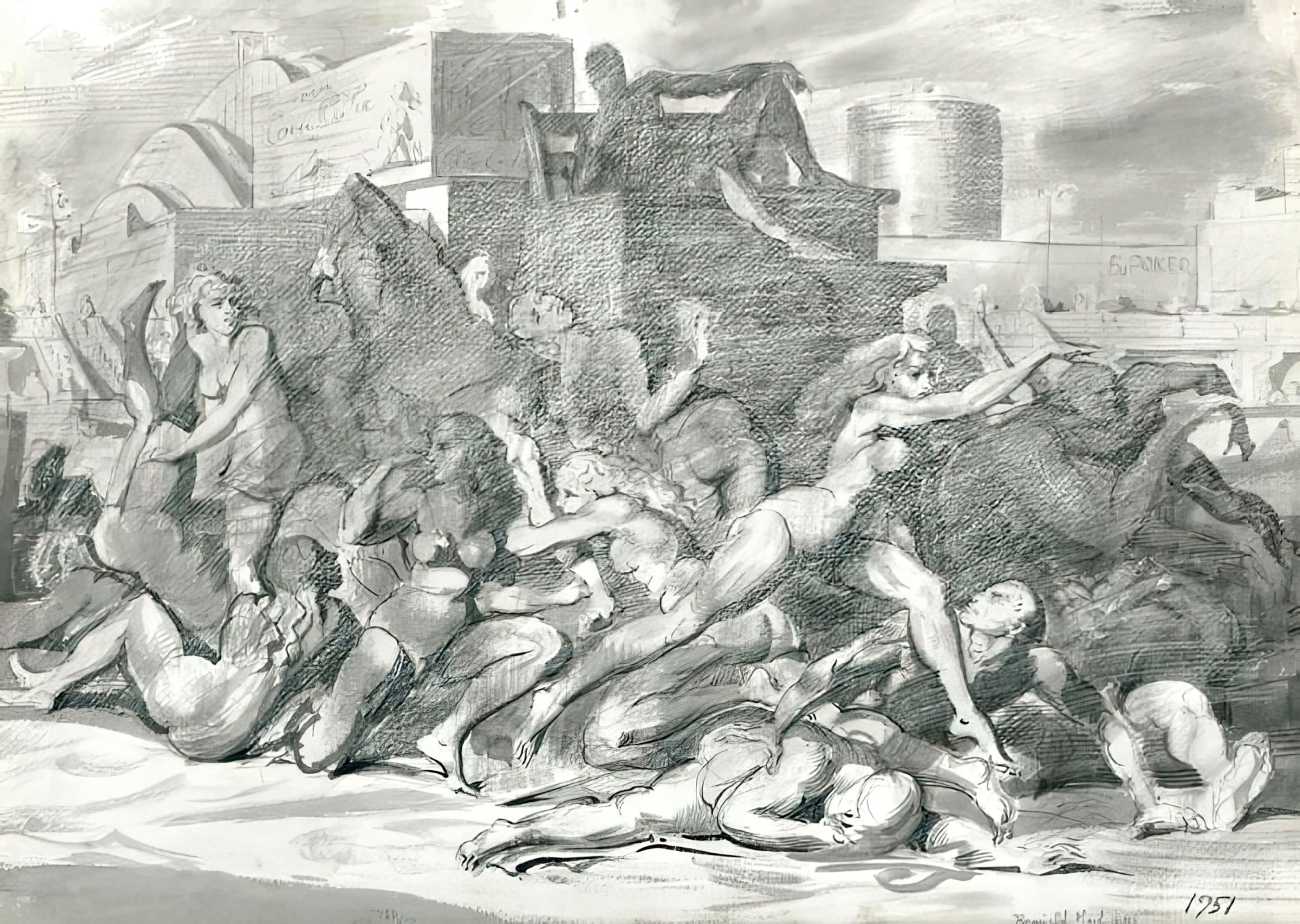
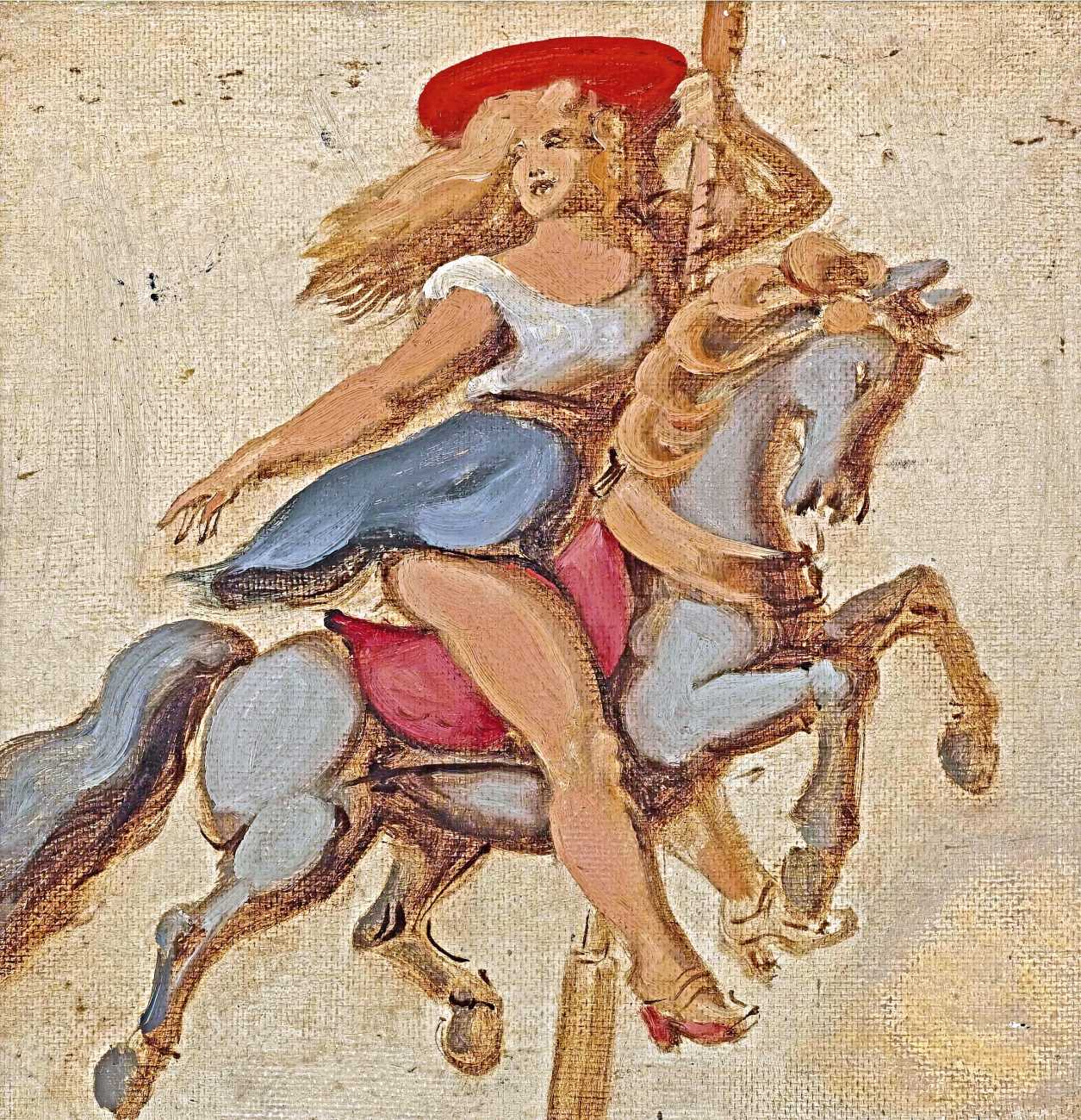
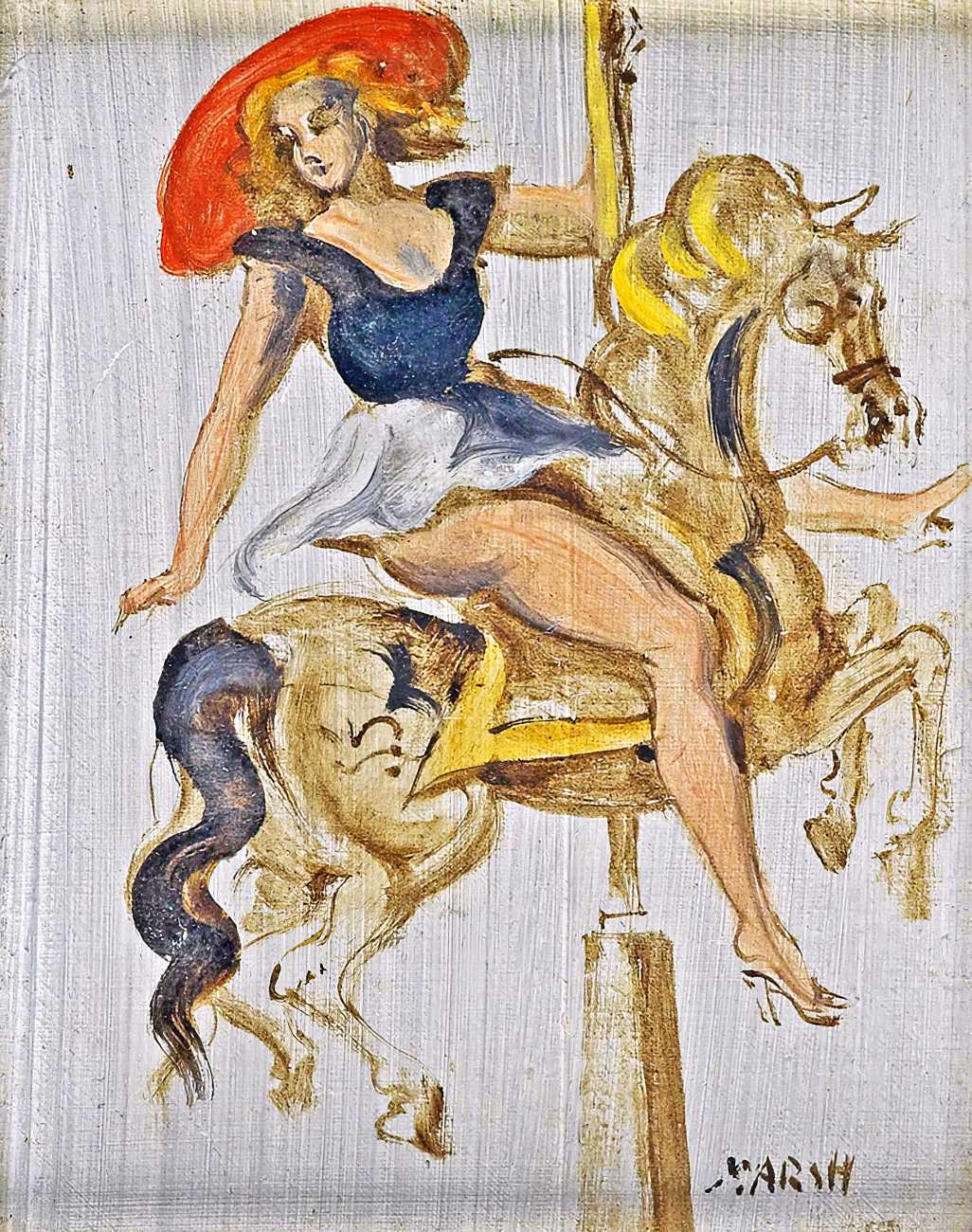
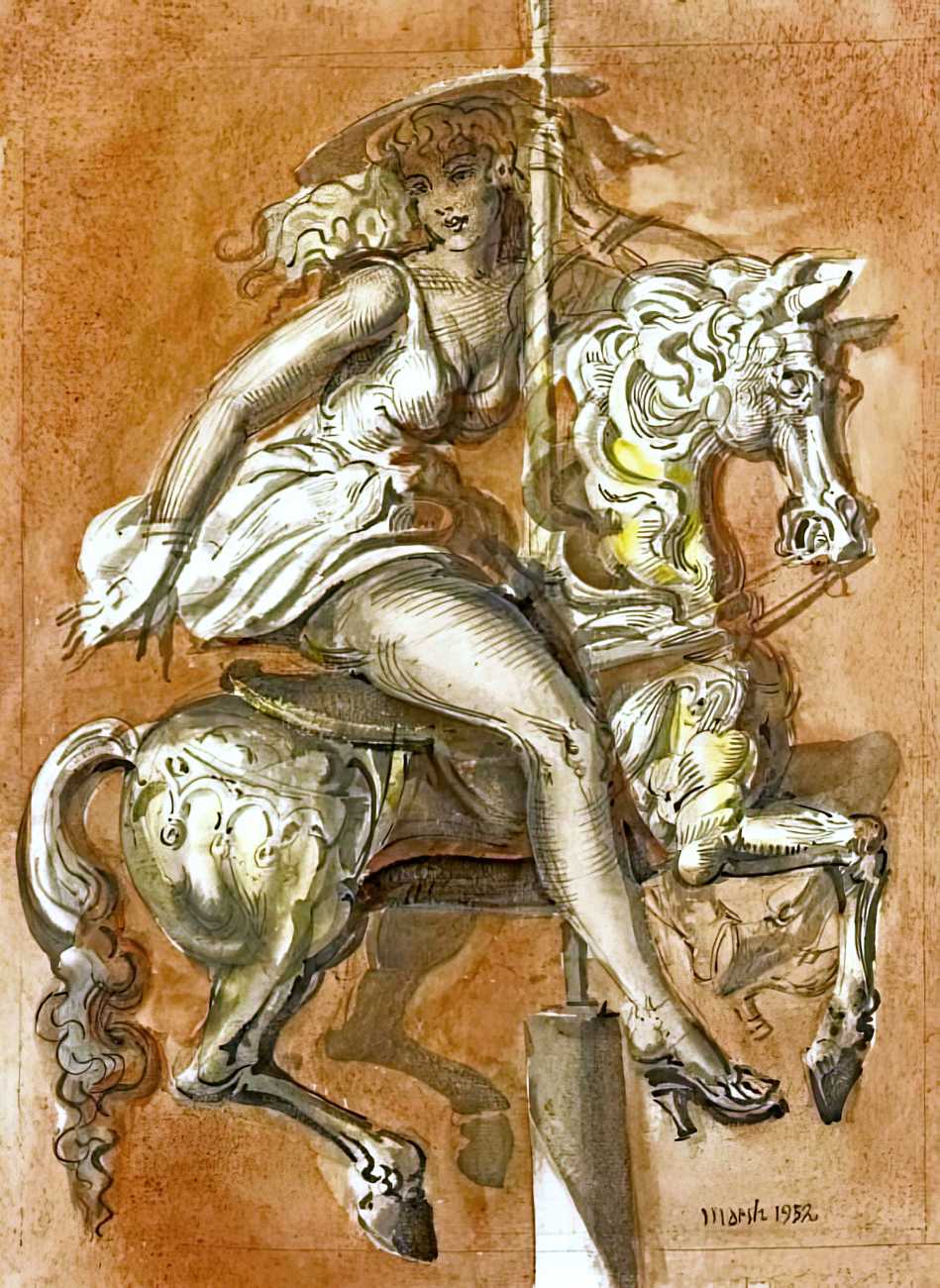
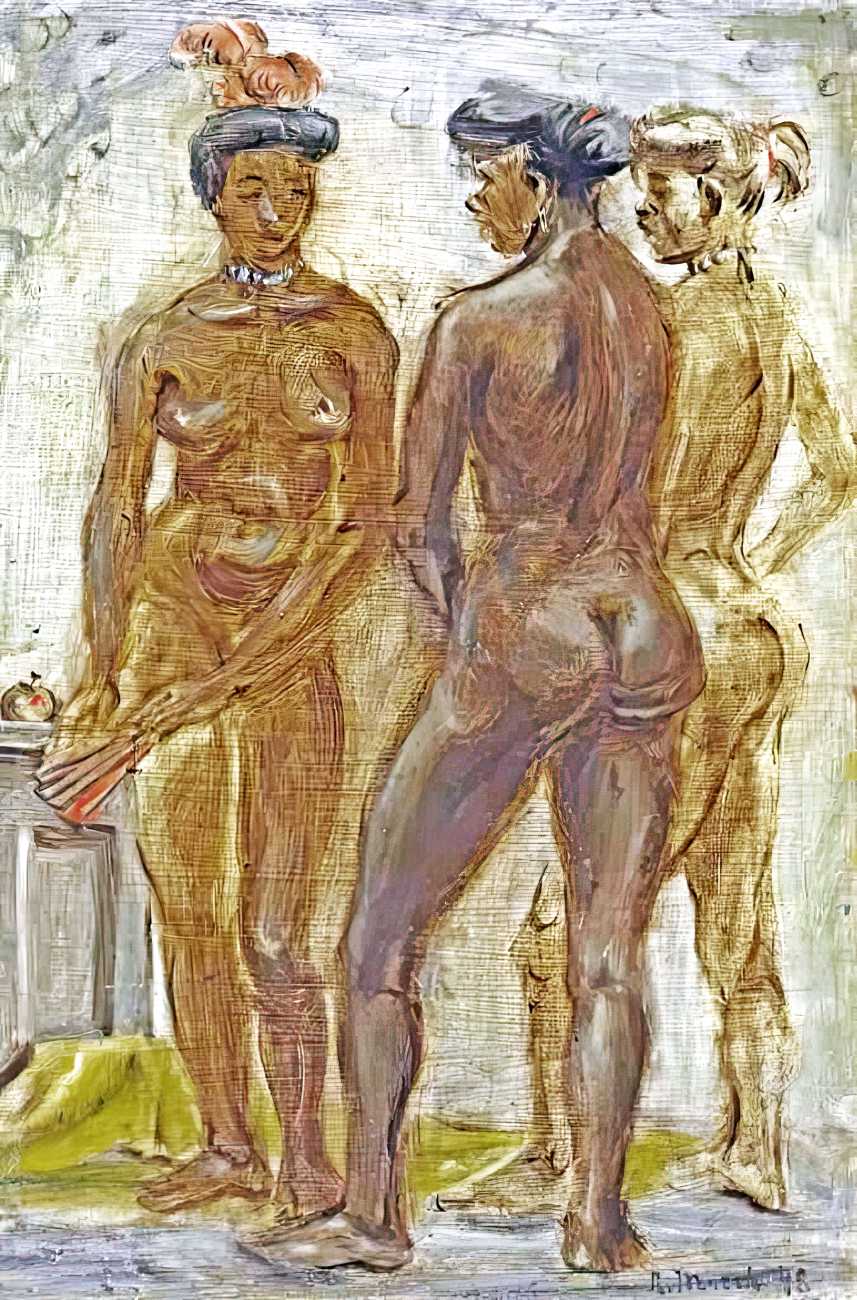
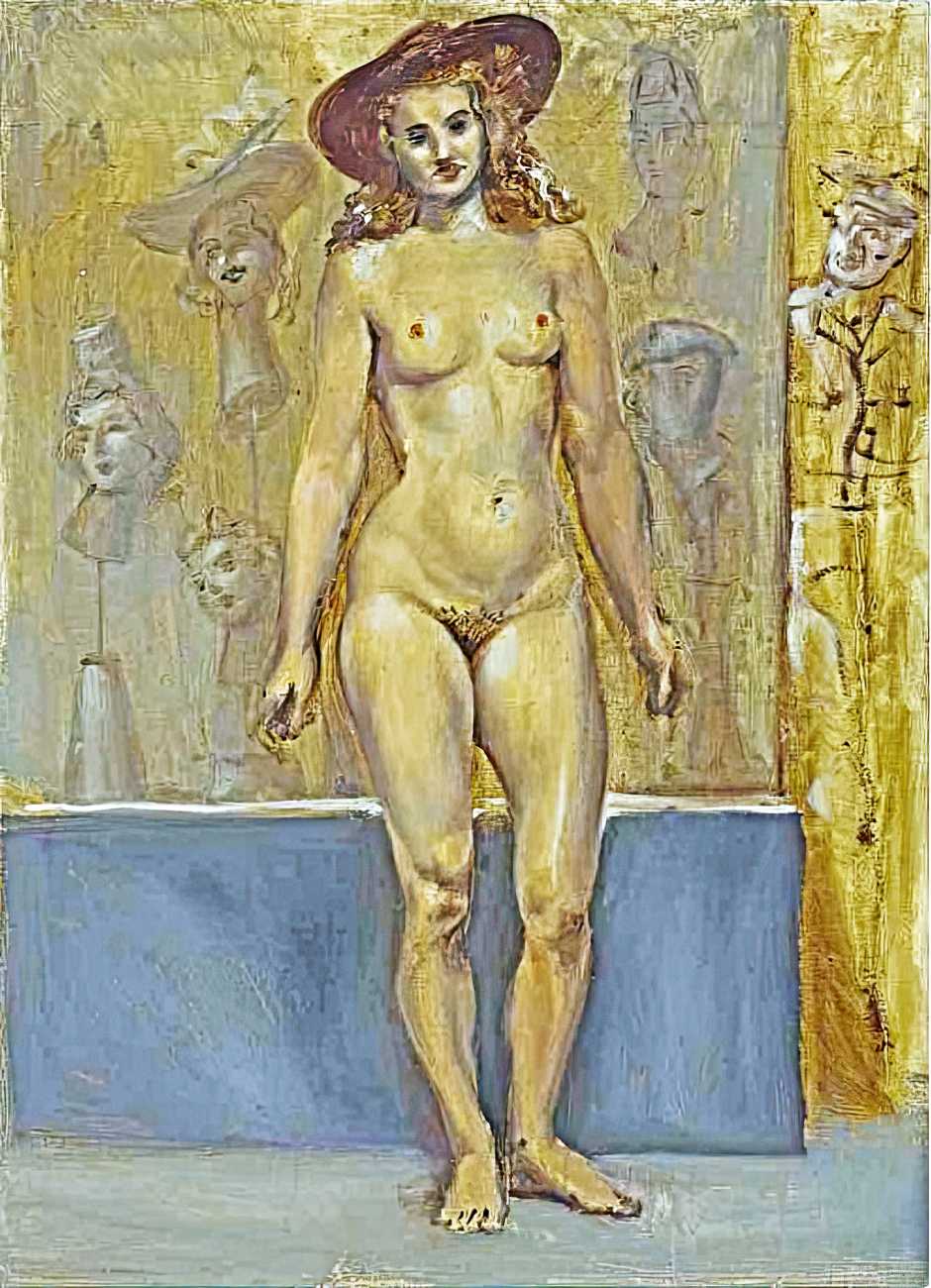
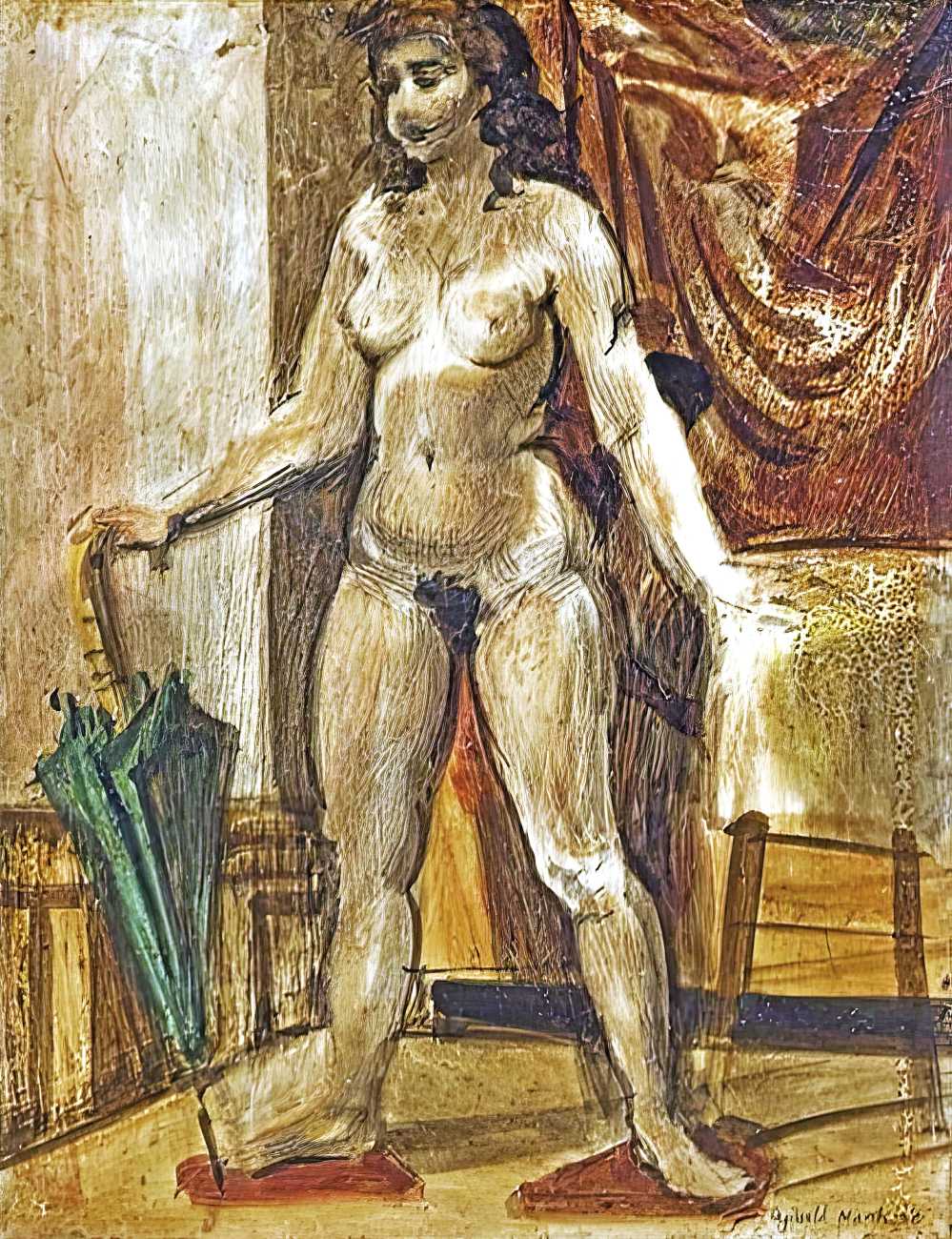
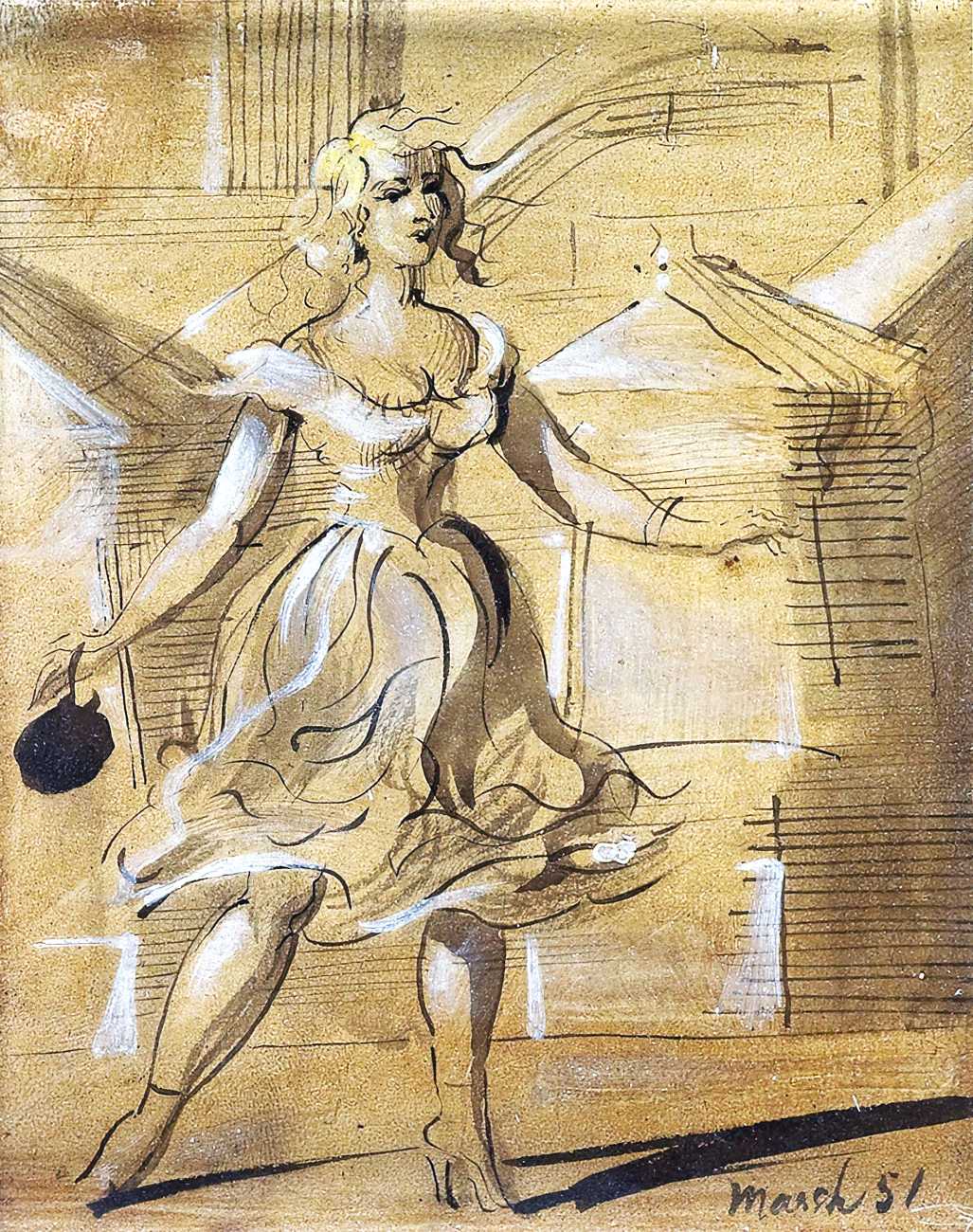
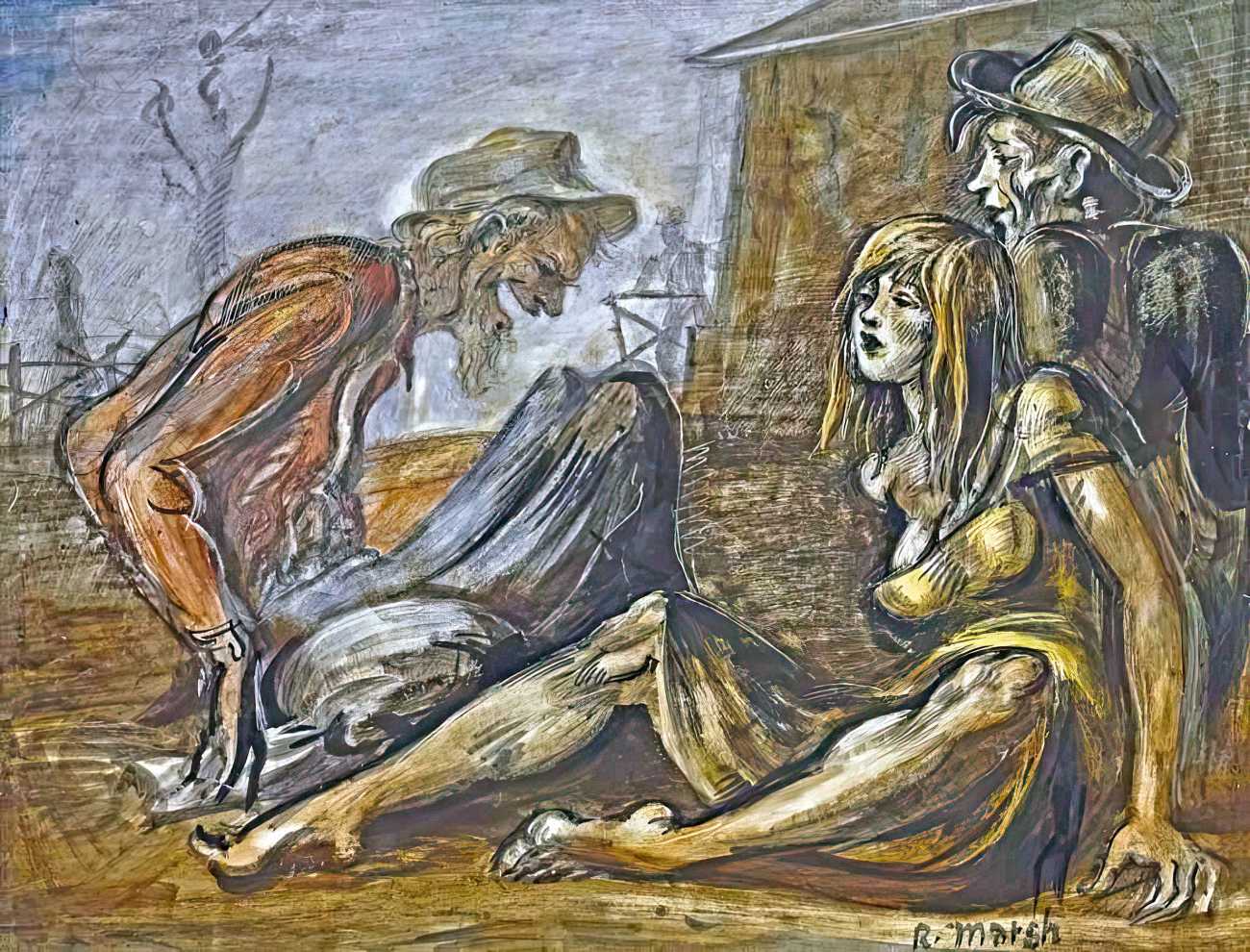
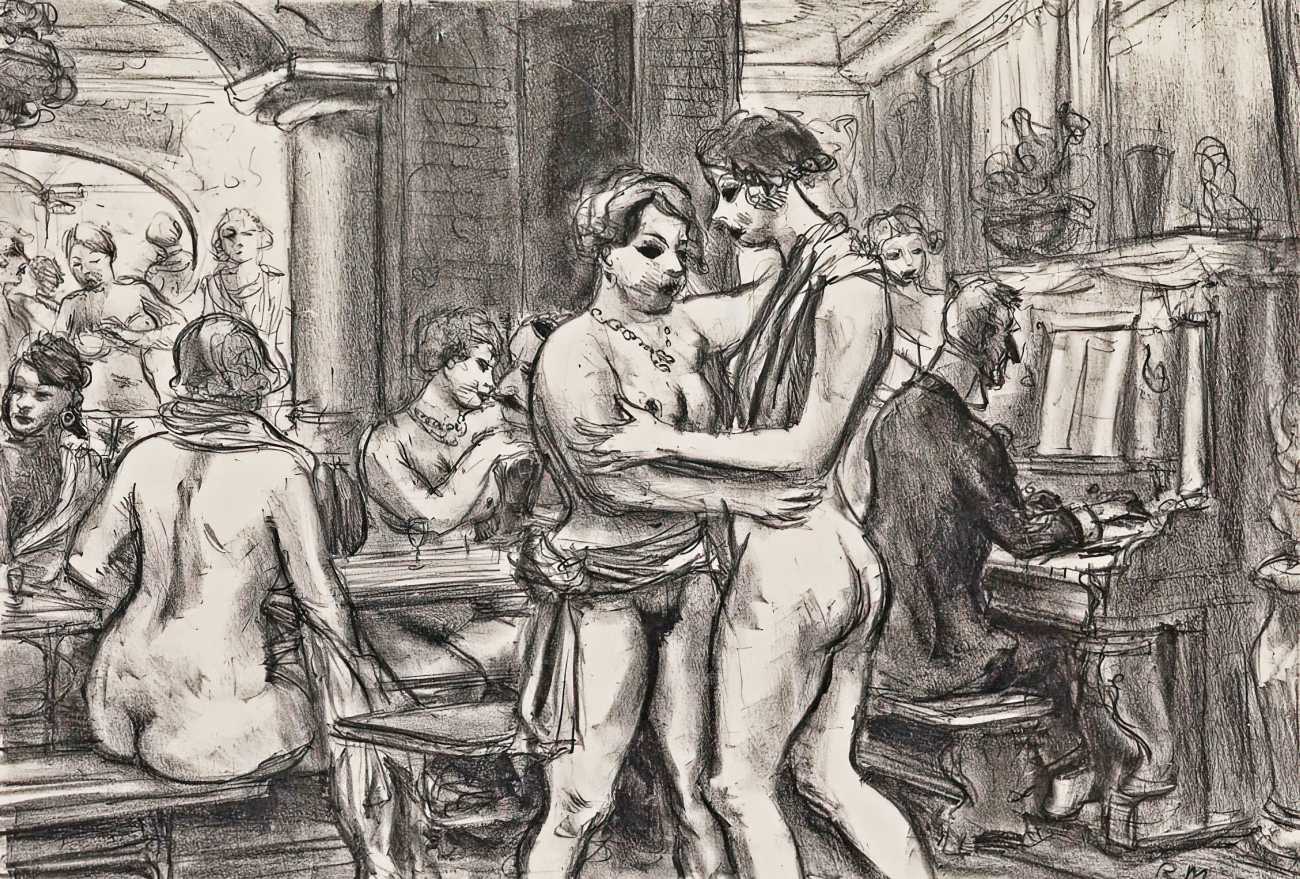
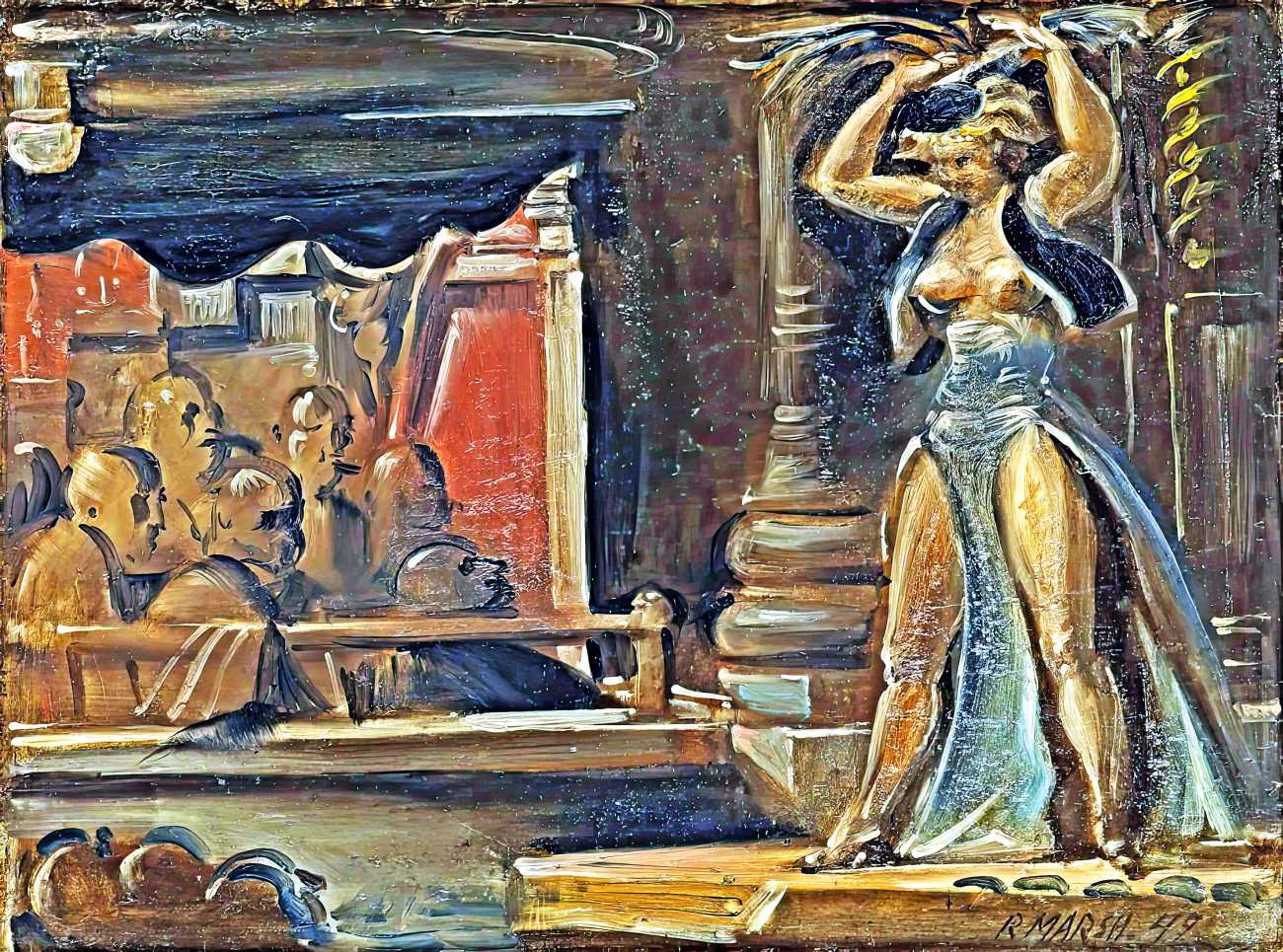
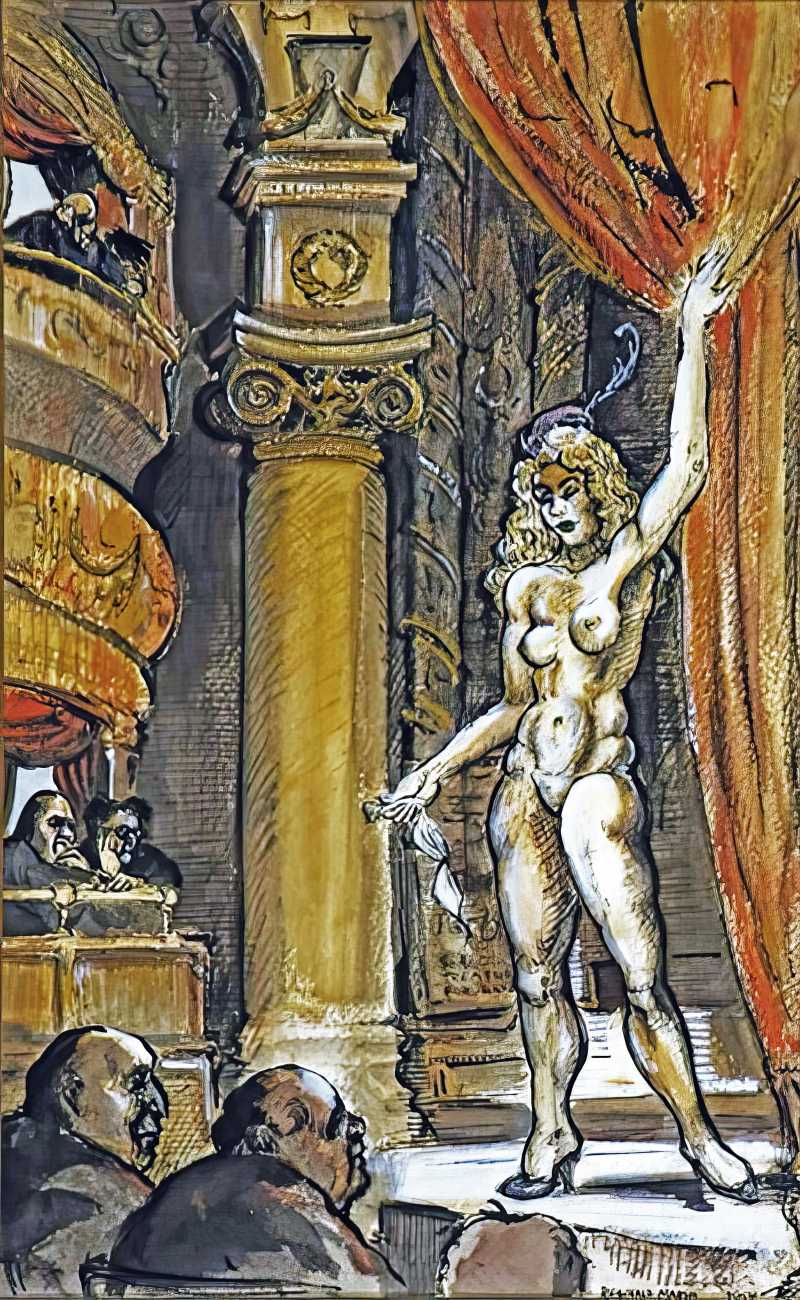
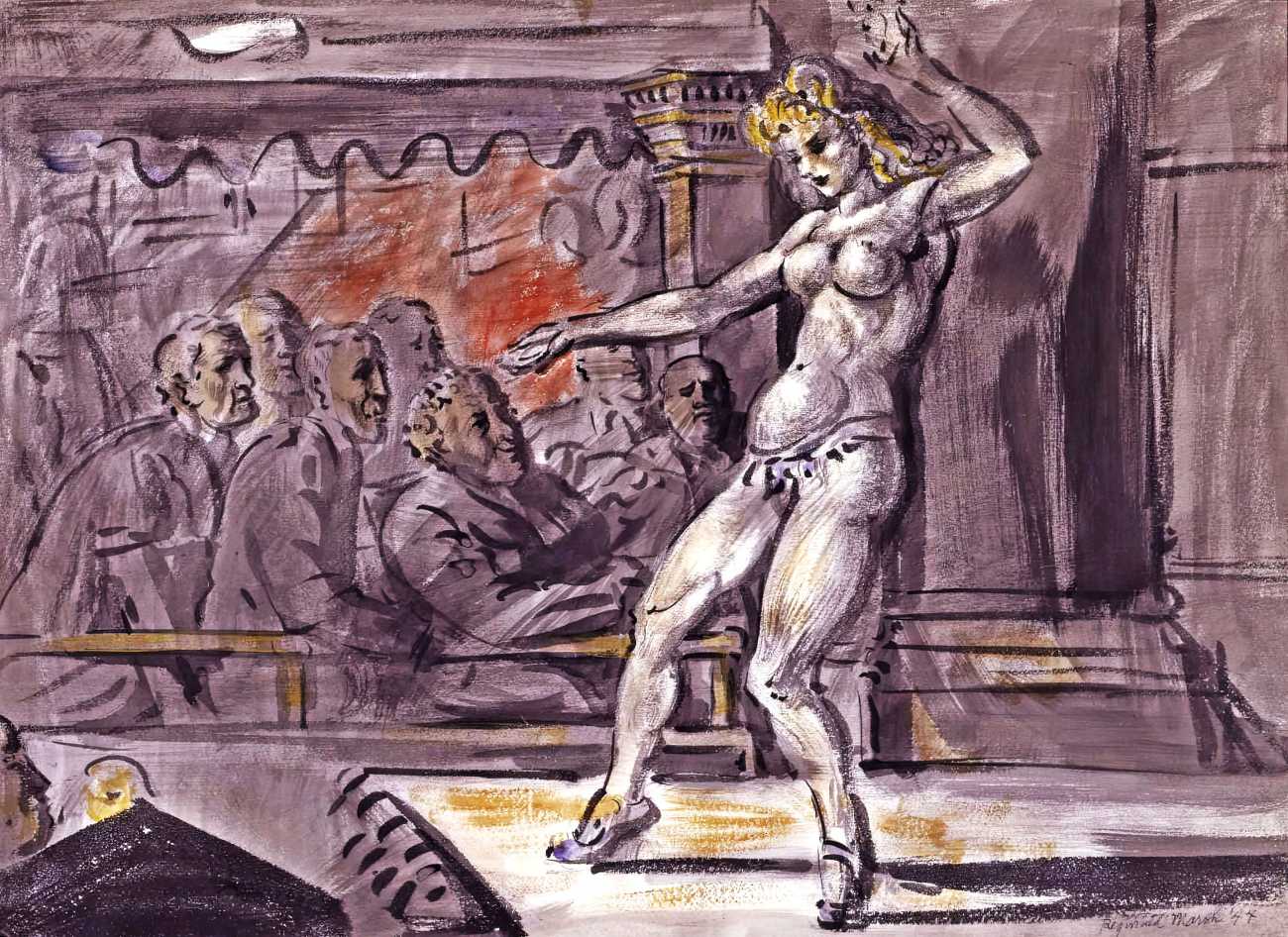
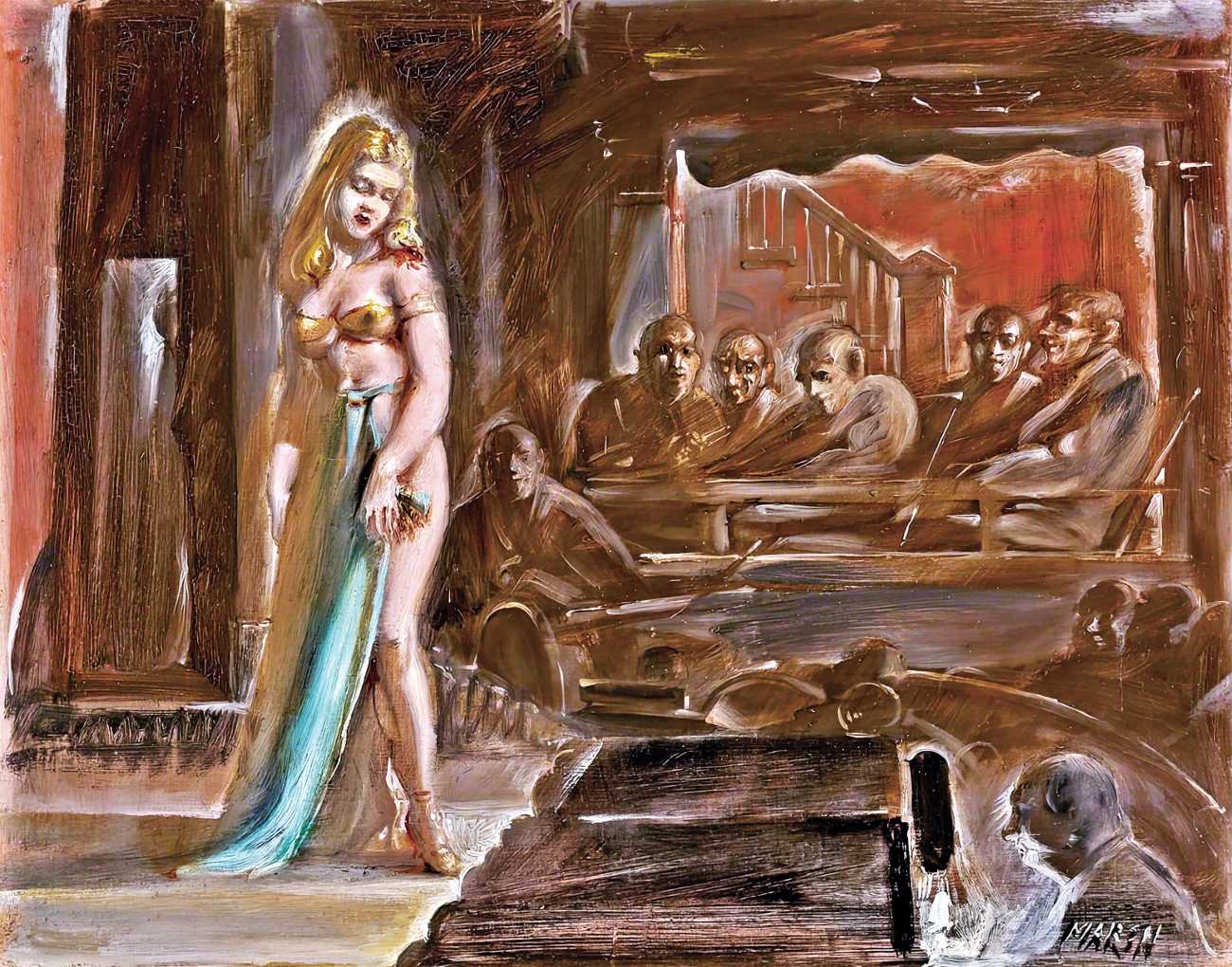
Reginald Marsh rejected modern art, which he found sterile. His work depicted the Great Depression and a range of social classes whose division was accentuated by the economic crash. His main attractions were the burlesque stage, the hobos on the Bowery, crowds on city streets and at Coney Island, and women.
During the 1940s Marsh became a teacher at the Art Students League of New York, which ran a summer camp where his students included Roy Lichtenstein. Shortly before his death he received the Gold Medal for Graphic Arts awarded by the American Academy and the National Institute for Arts and Letters.
We are very grateful to our Russian friend Yuri for suggesting the inclusion of this artist, and for supplying most of the images.
Similar artists
Robert Crumb – American underground cartoonist chronicling vernacular sexual obsession and street life.
Albert Dubout – French cartoonist of densely packed, bawdy crowd scenes.
Eric Fischl – American painter of beach and suburban sexuality.
George Grosz – German satirist who settled in New York during the 1930s.
Jules Pascin – Bulgarian-American painter of Greenwich Village and southern street life.
Terry Rodgers – American painter of crowded, decadent contemporary group tableaux.
Clara Tice – American jazz-age illustrator, fellow Greenwich Village bohemian.
Example illustration