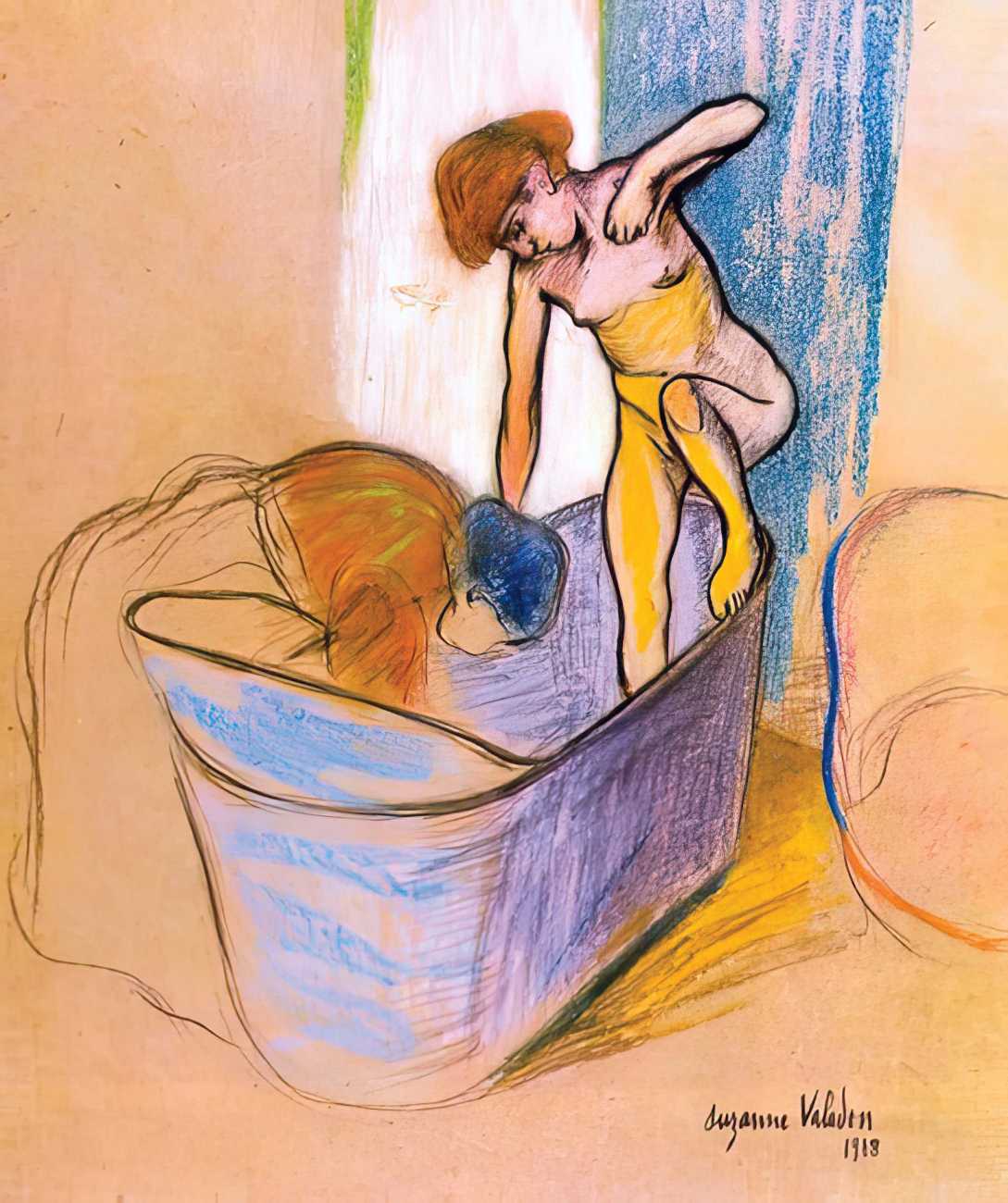
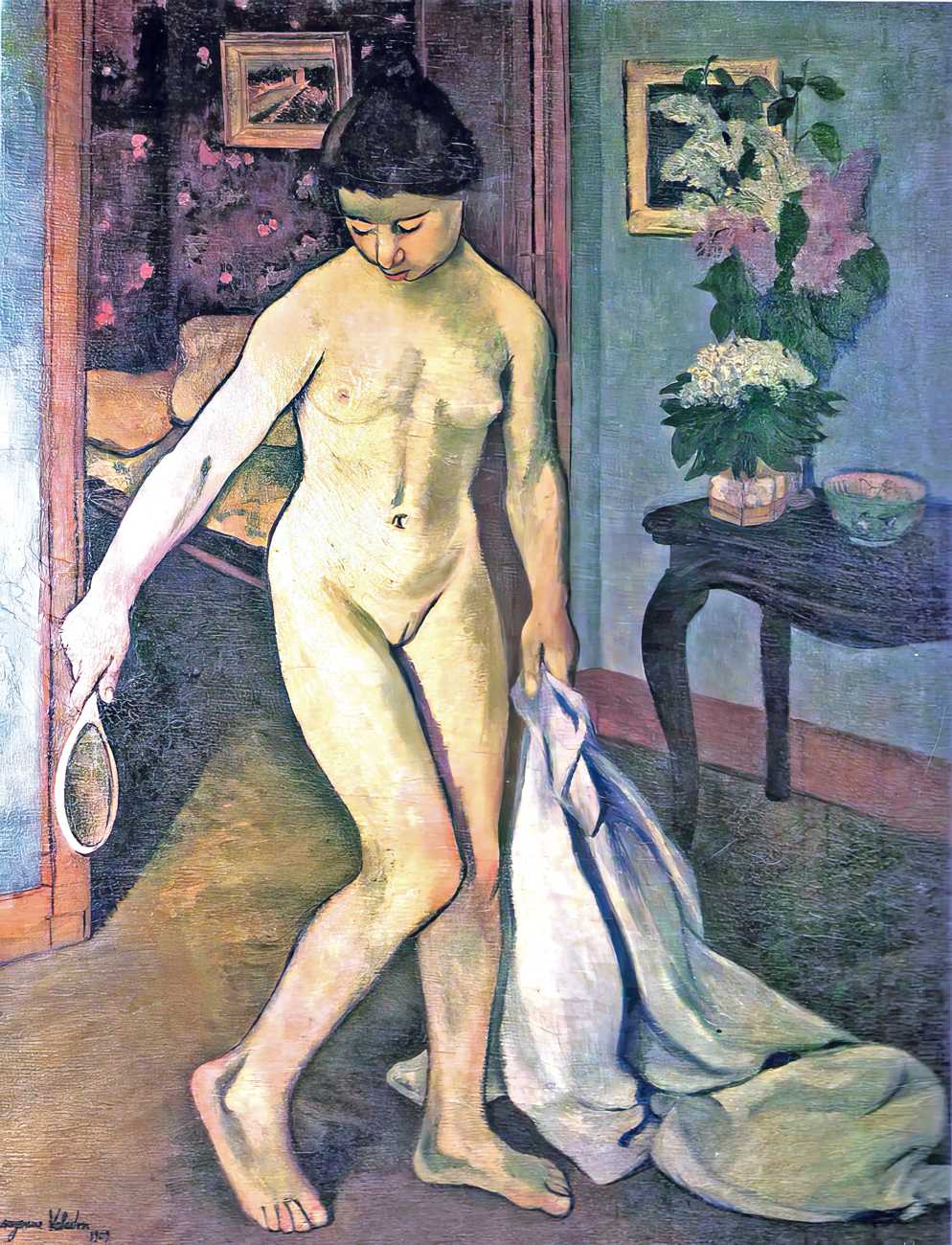
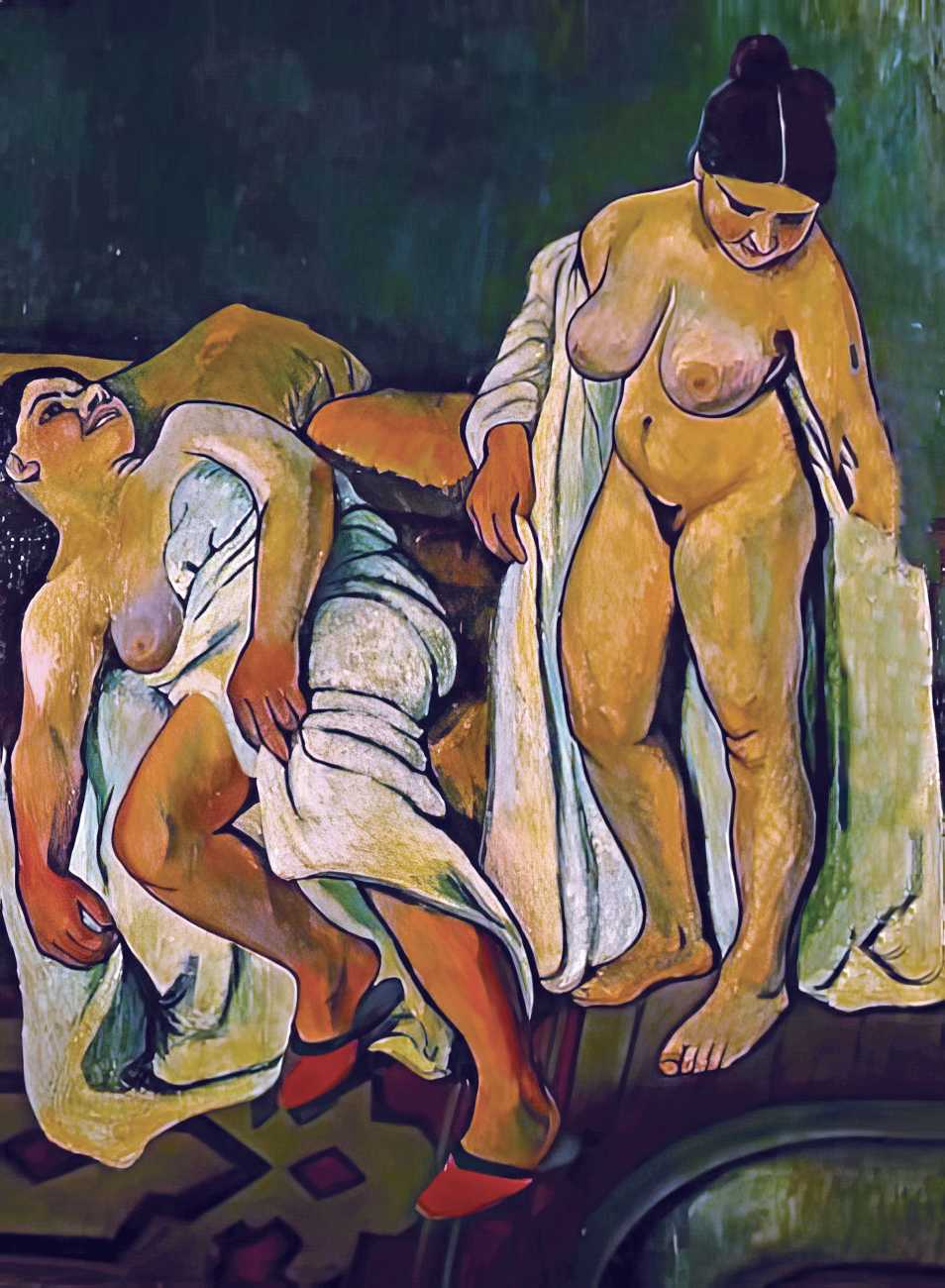
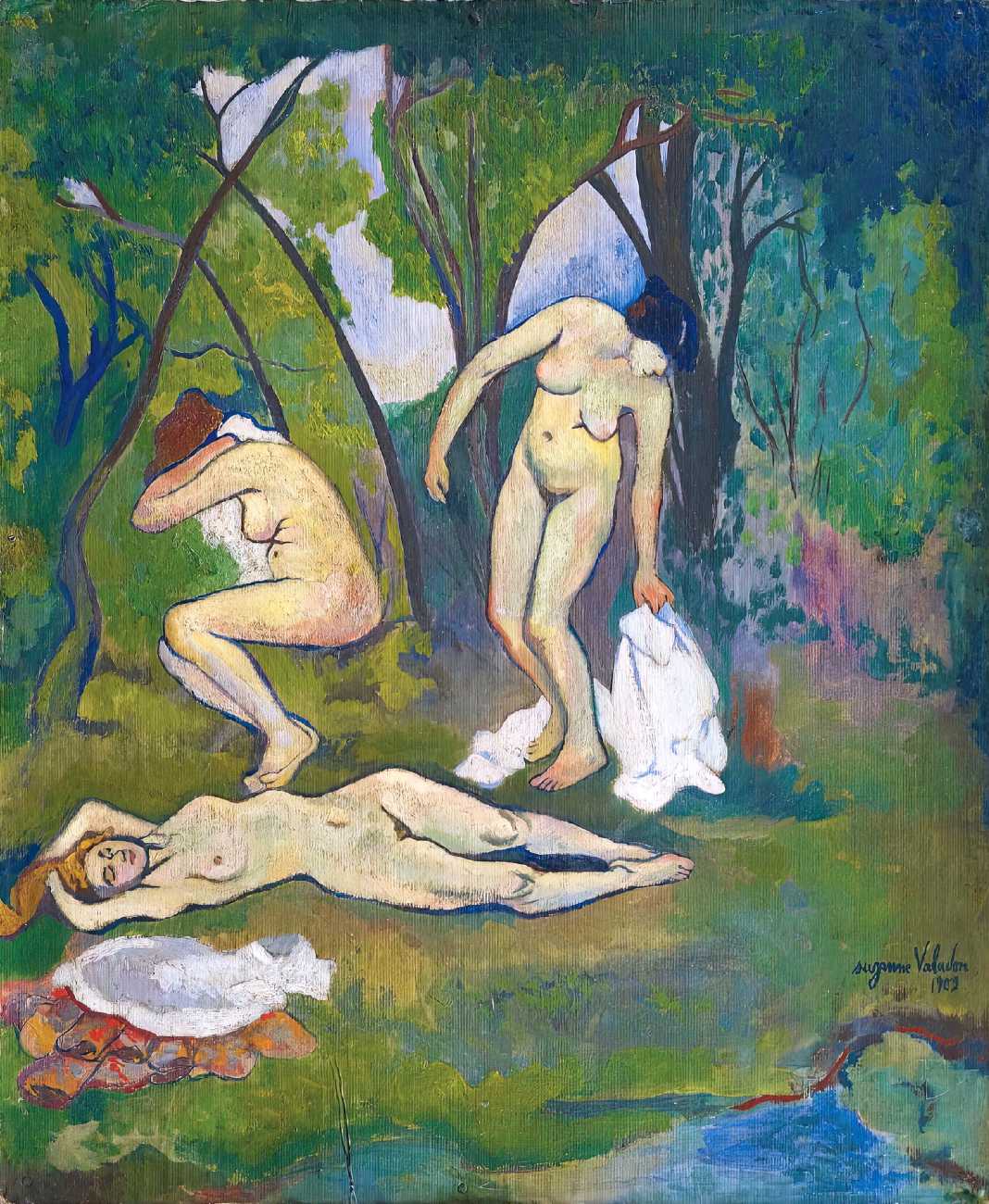
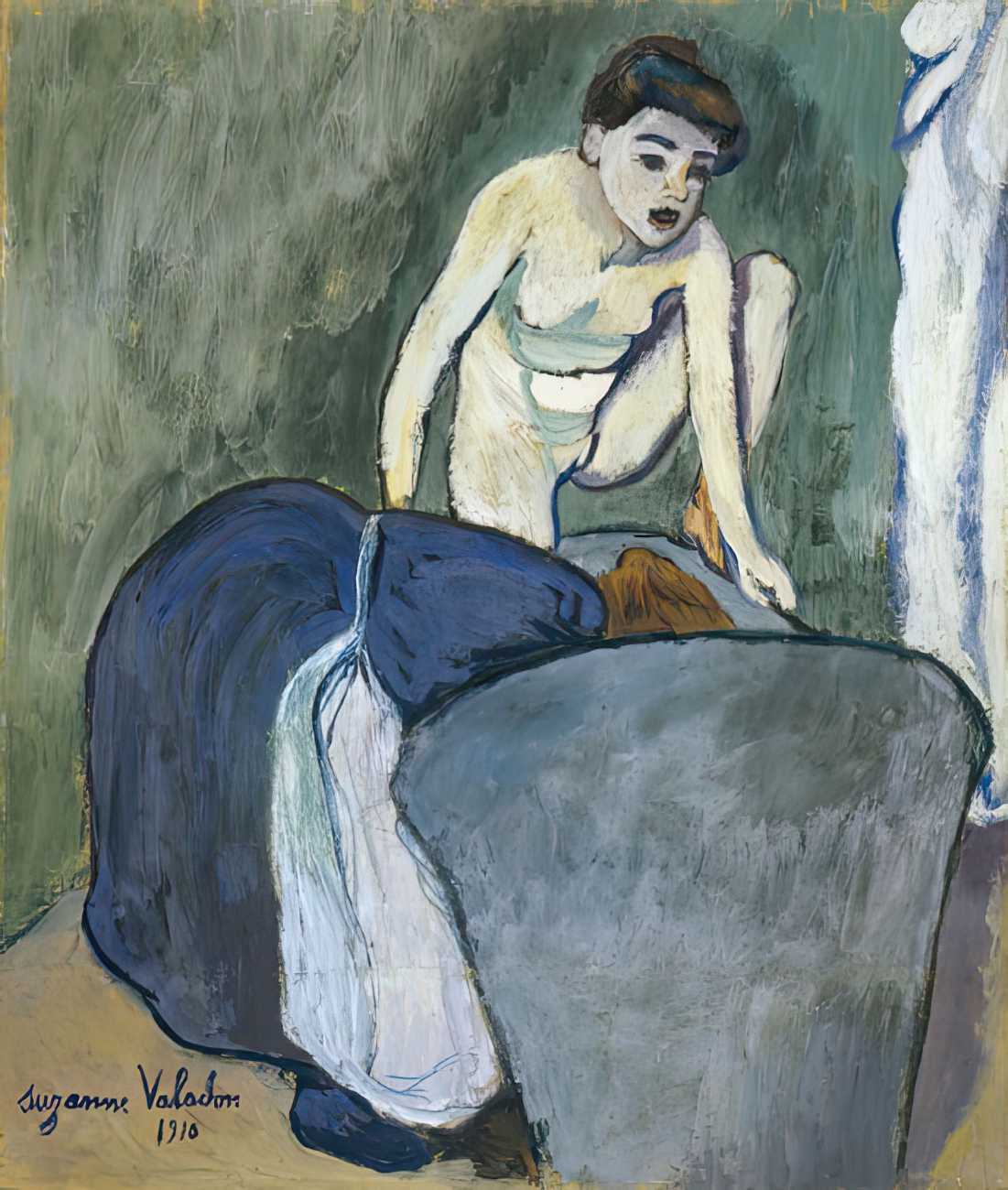
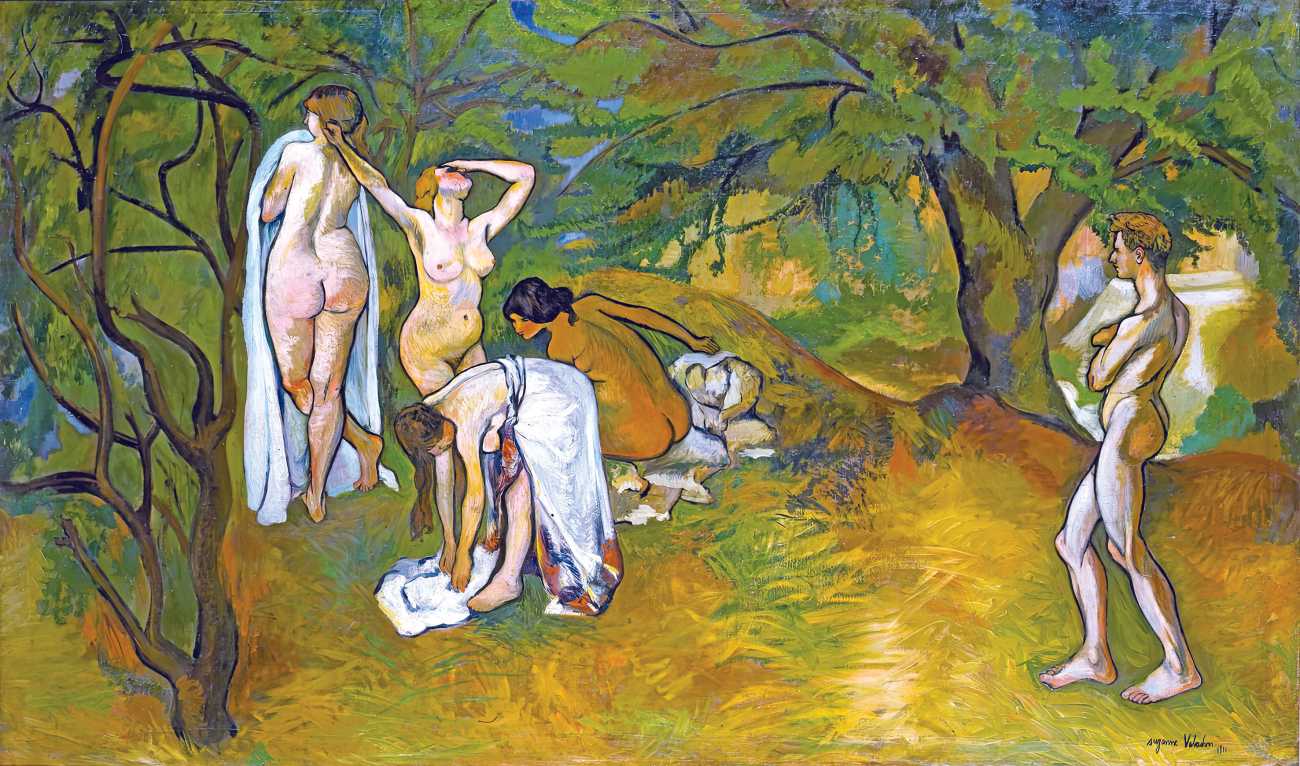
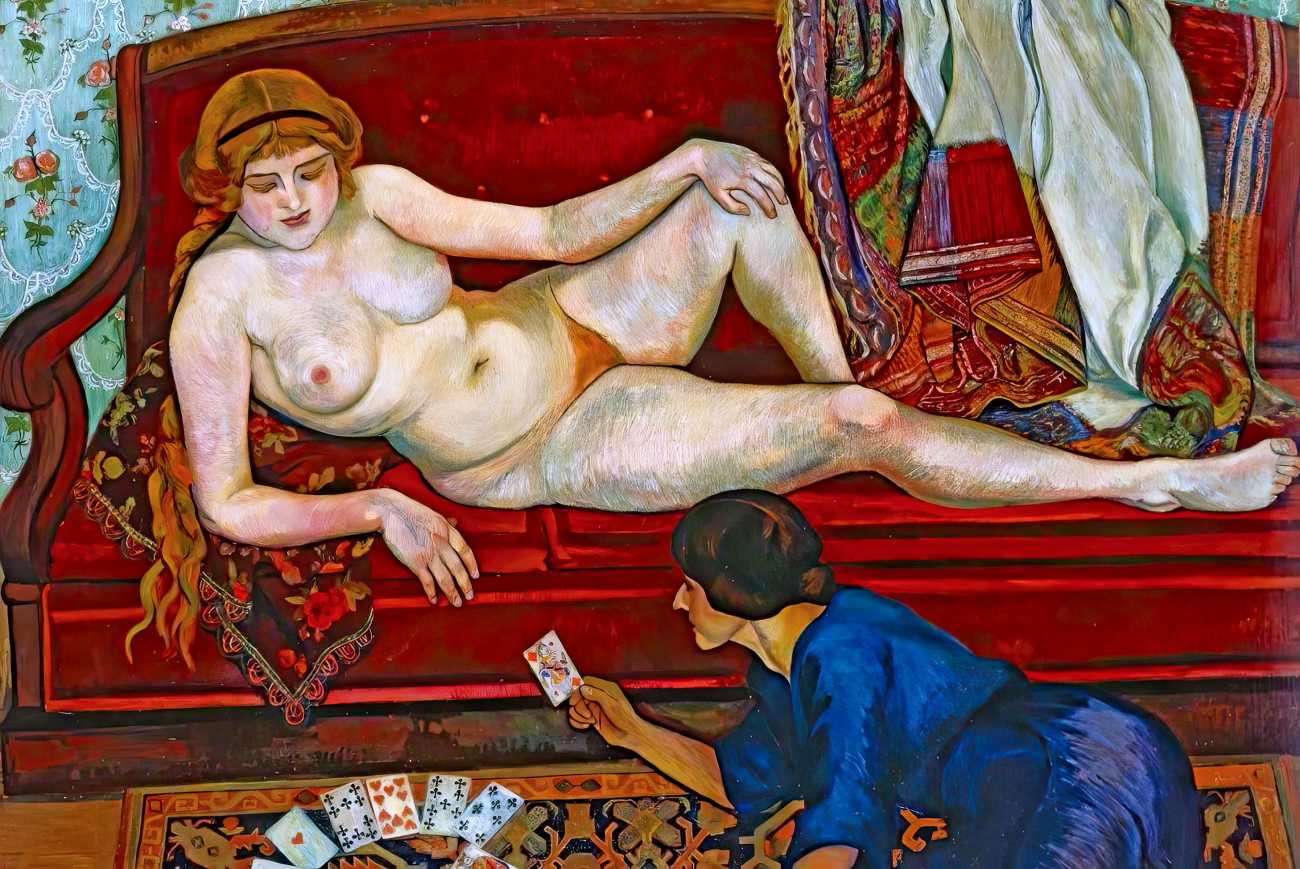
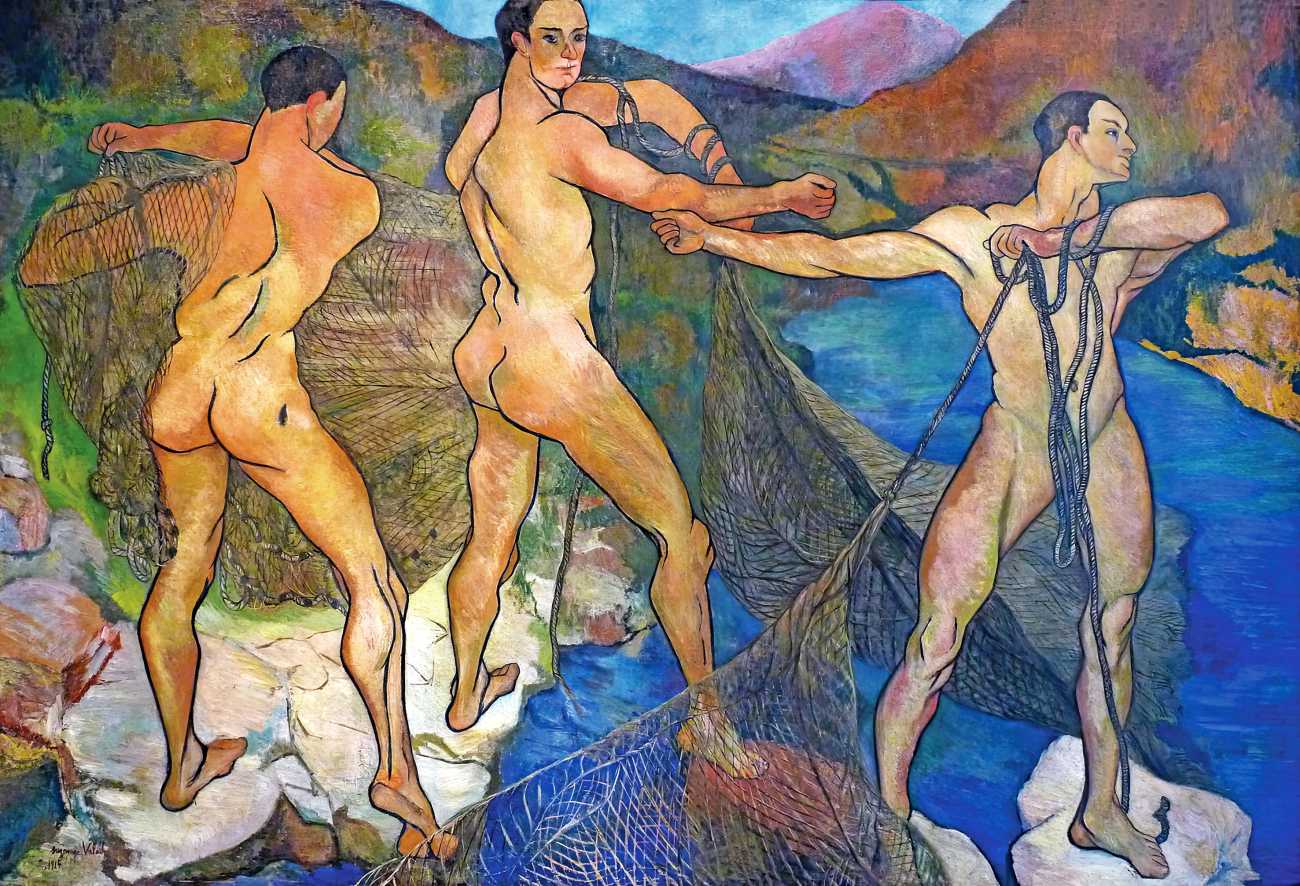
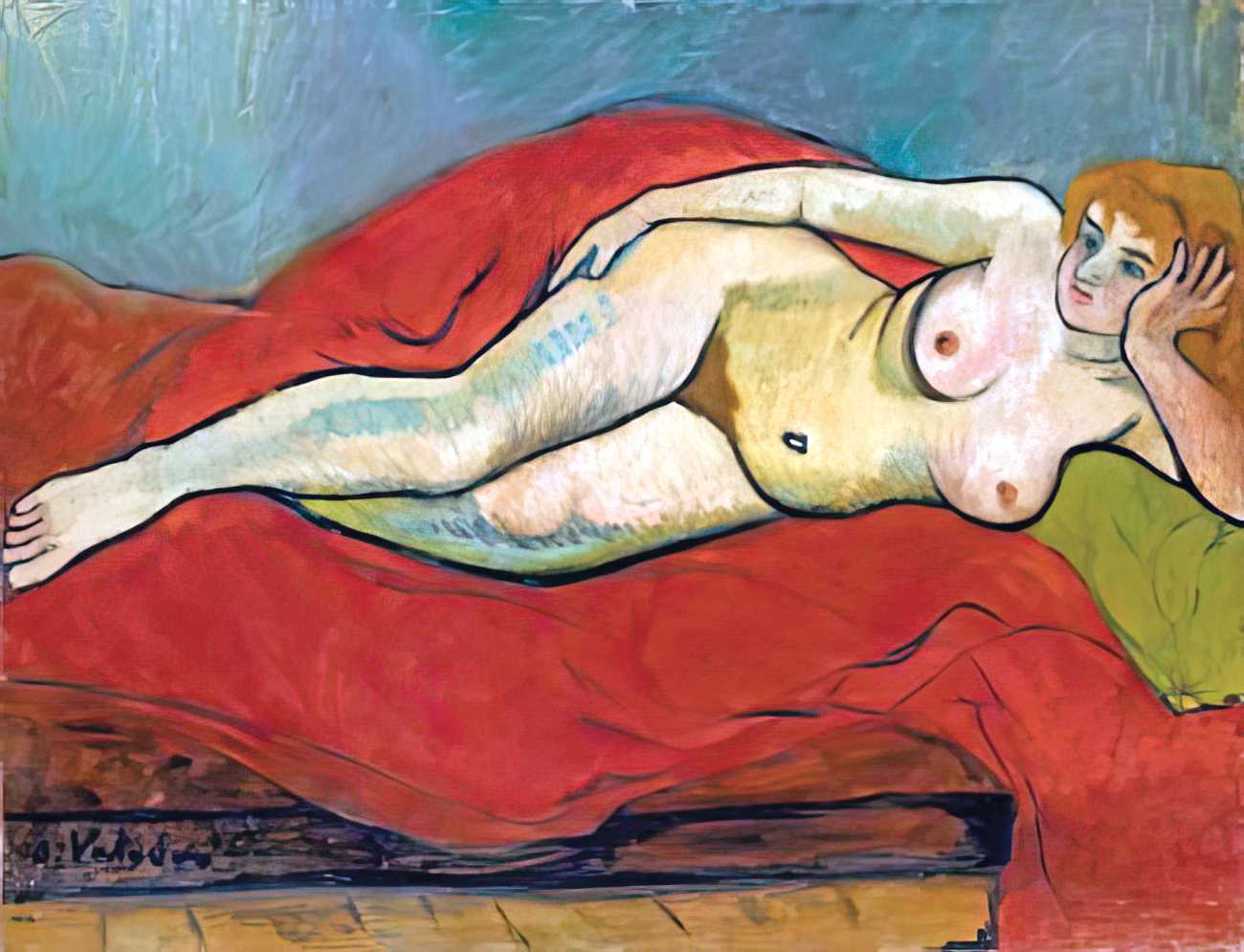
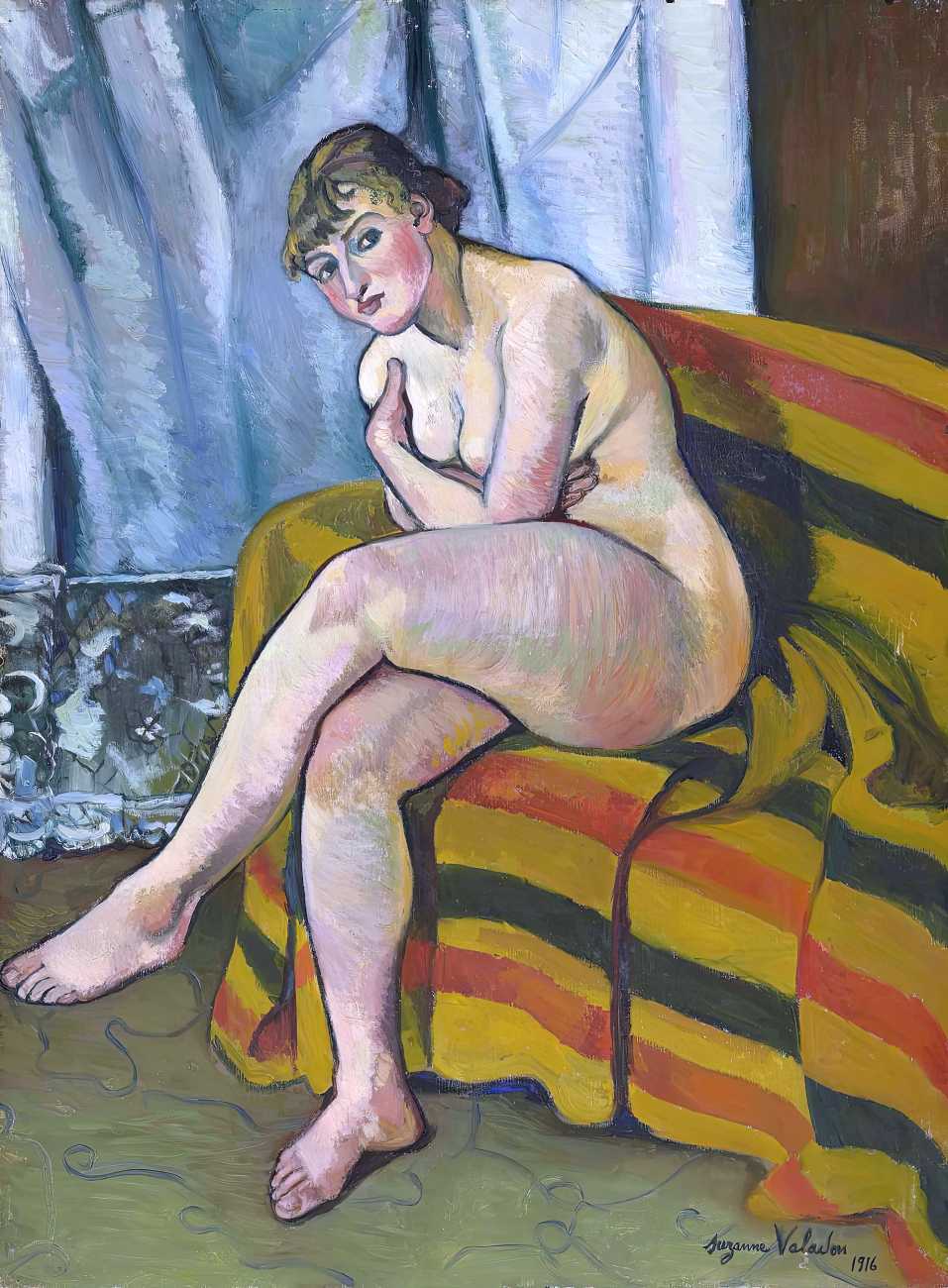
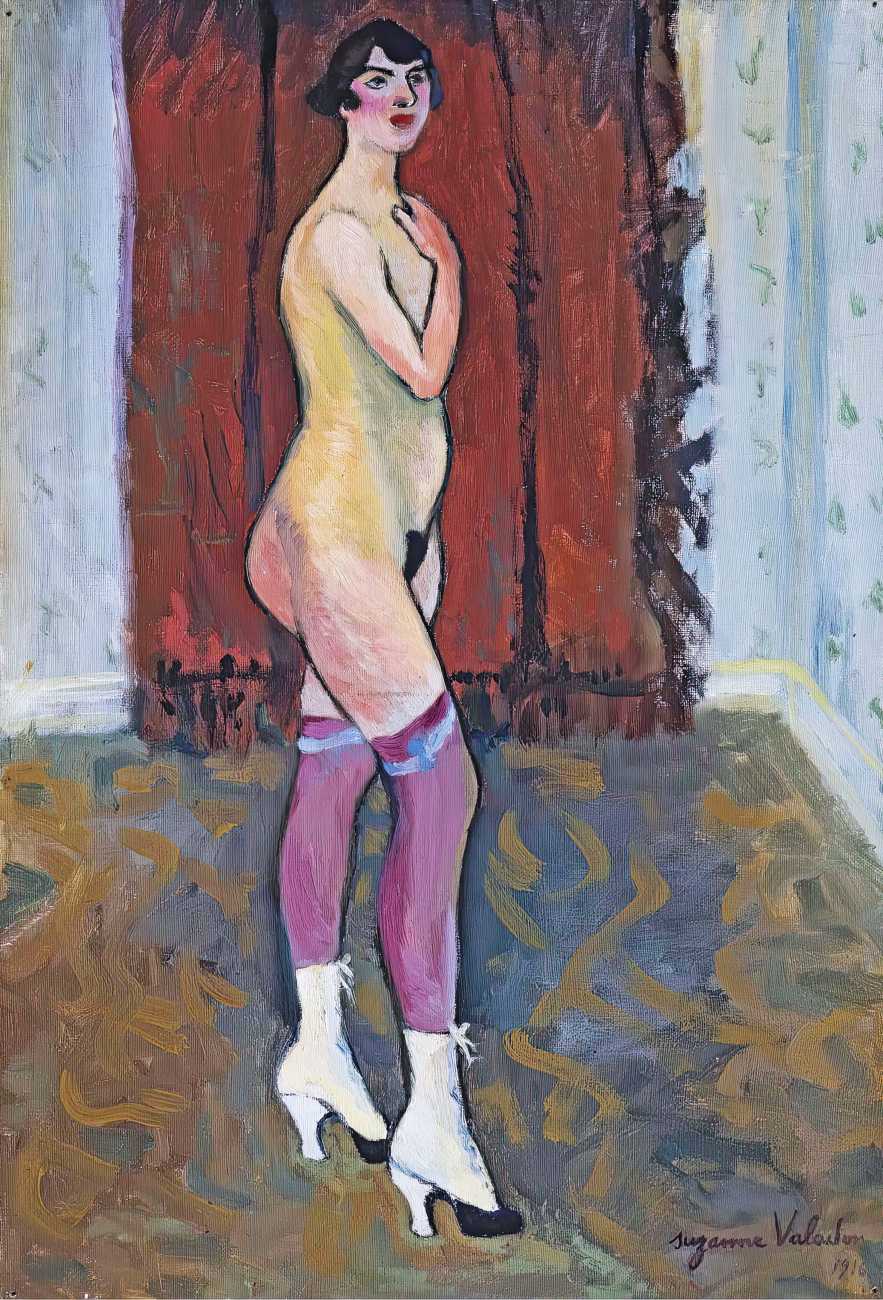
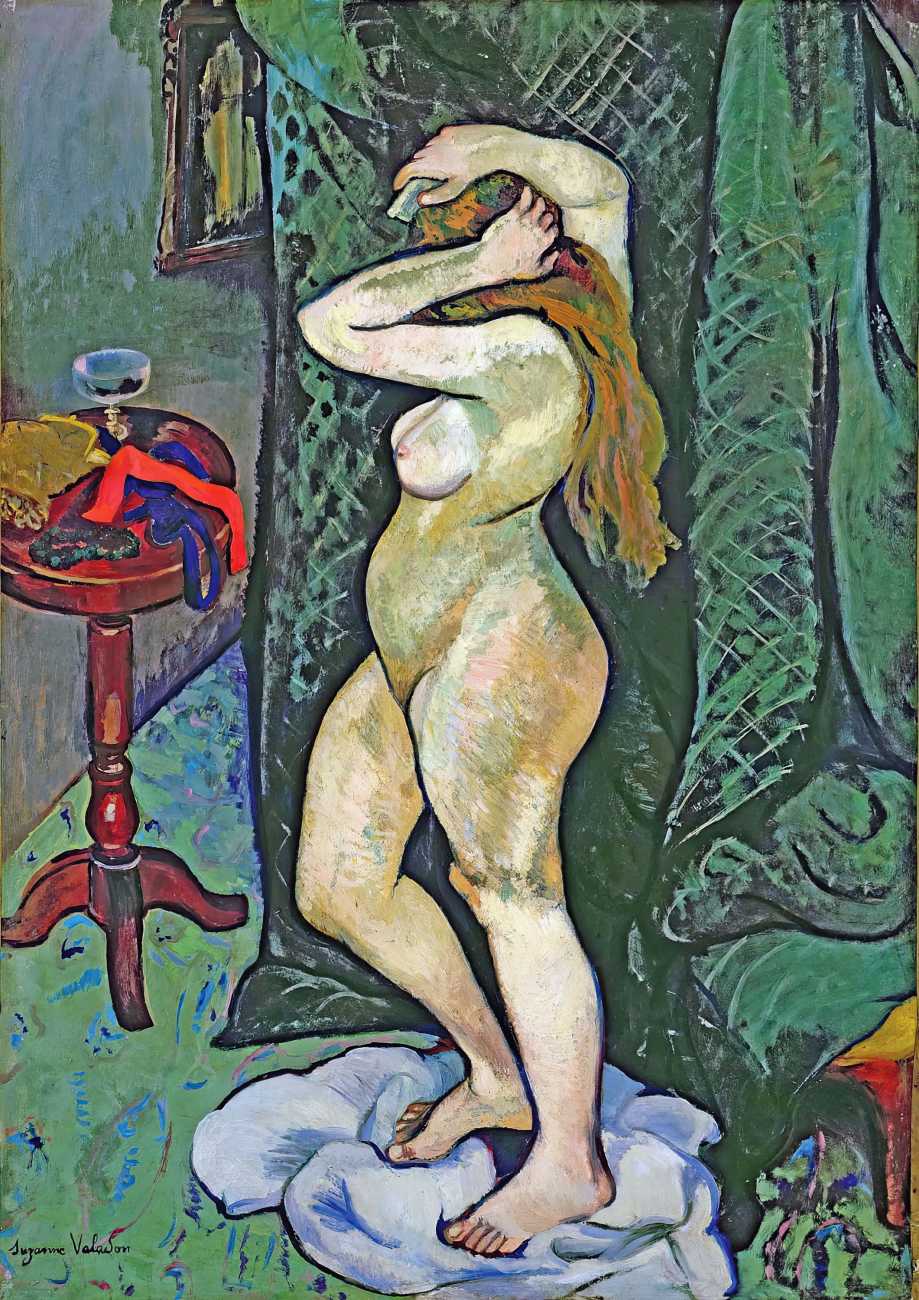
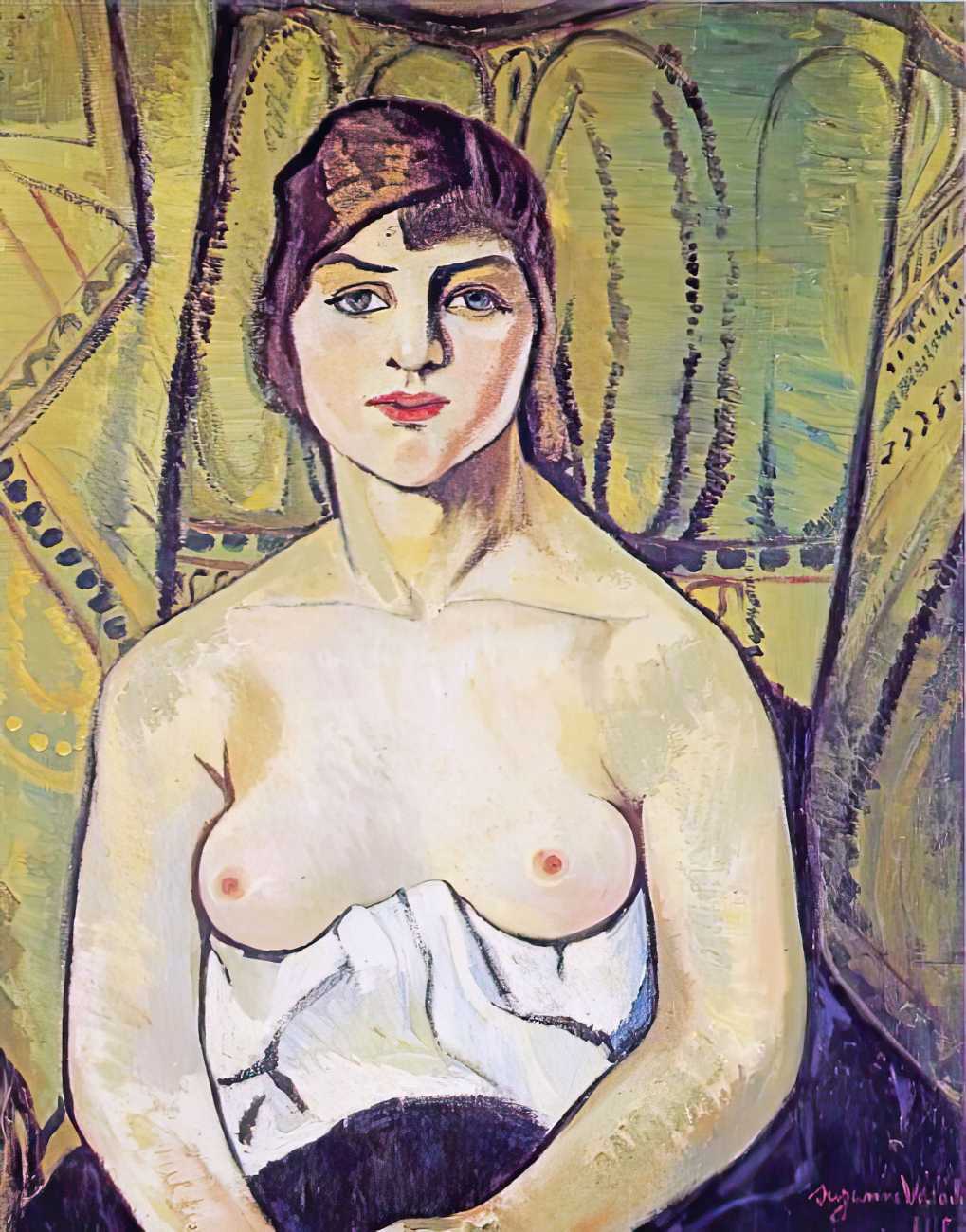
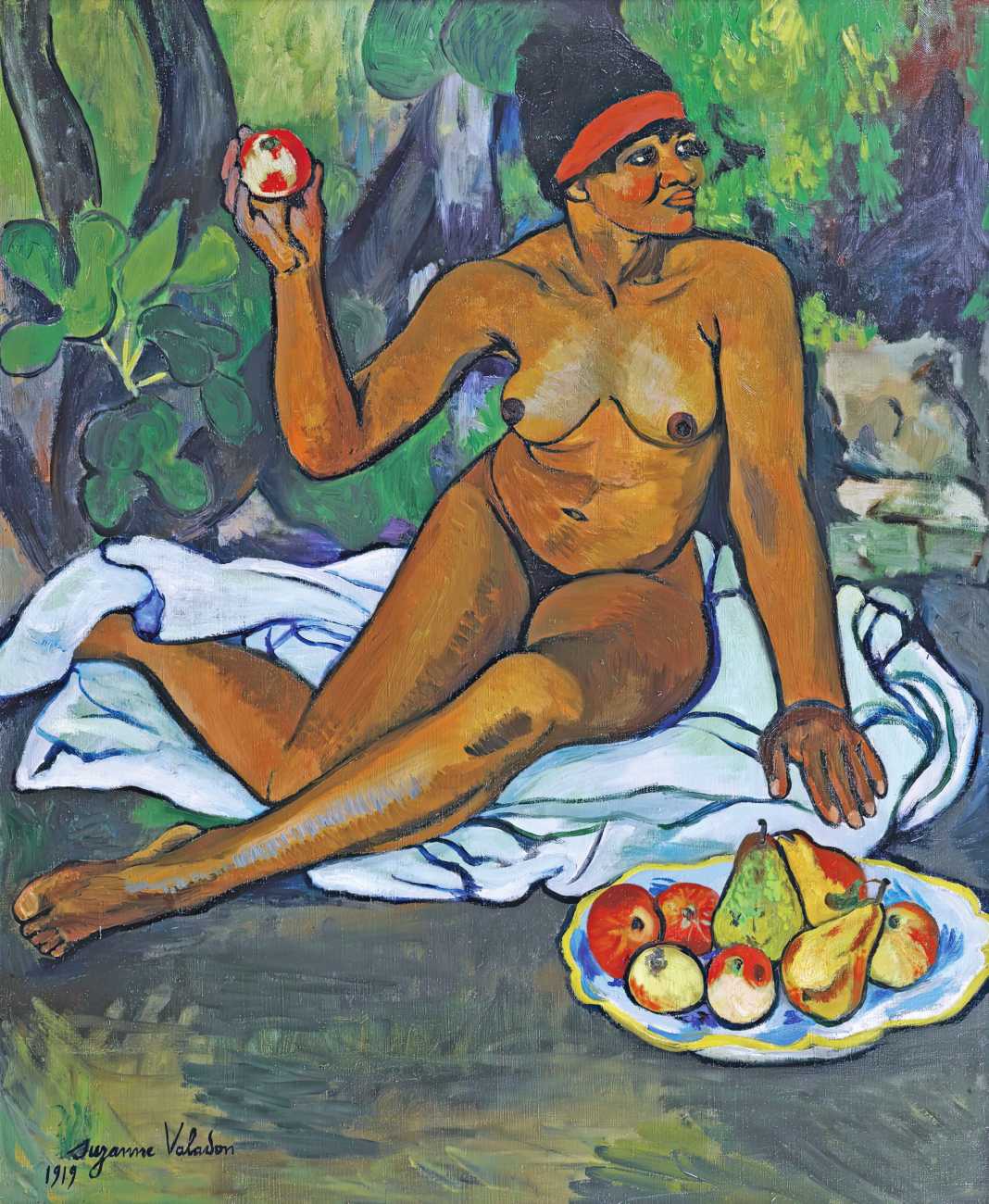
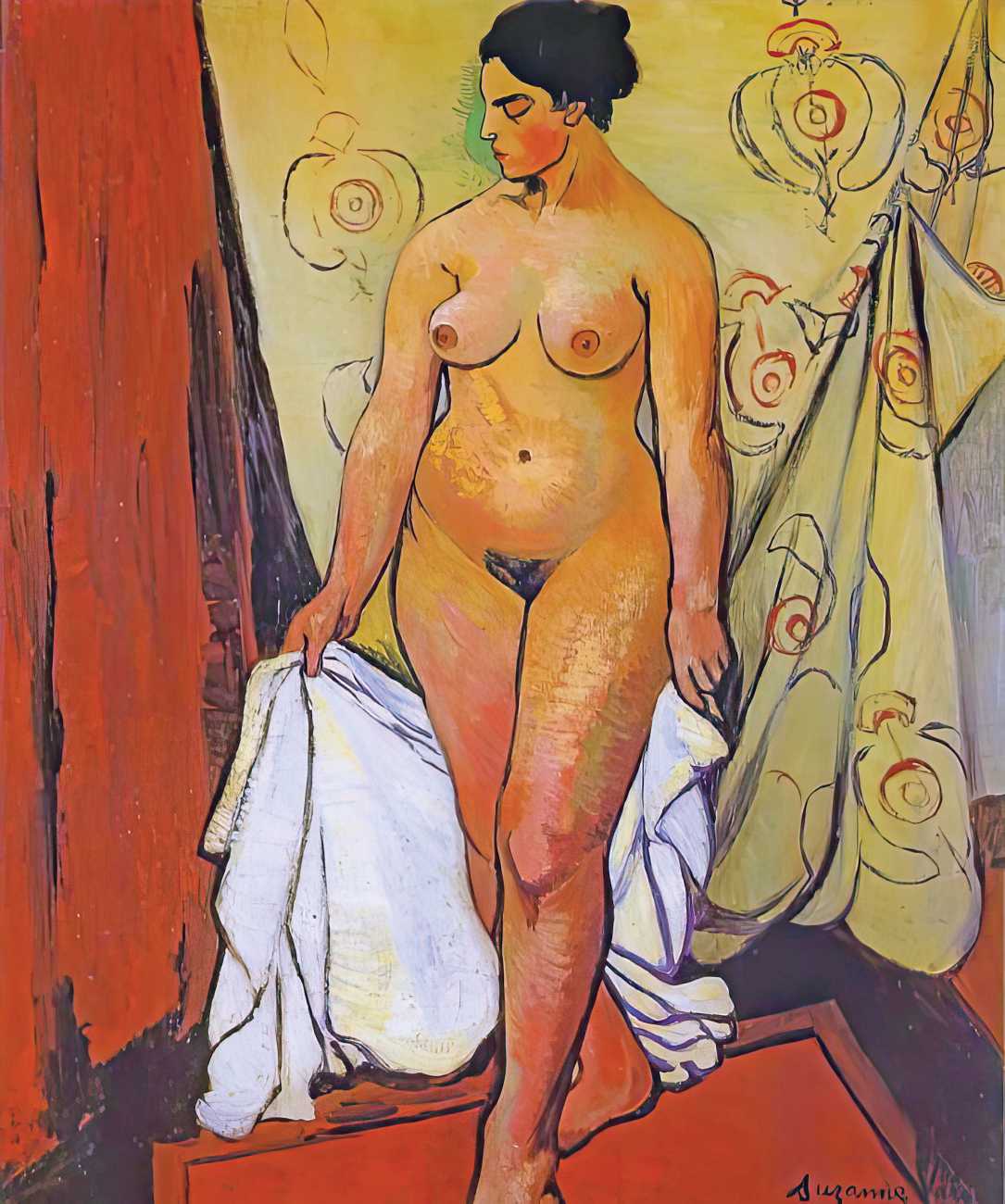
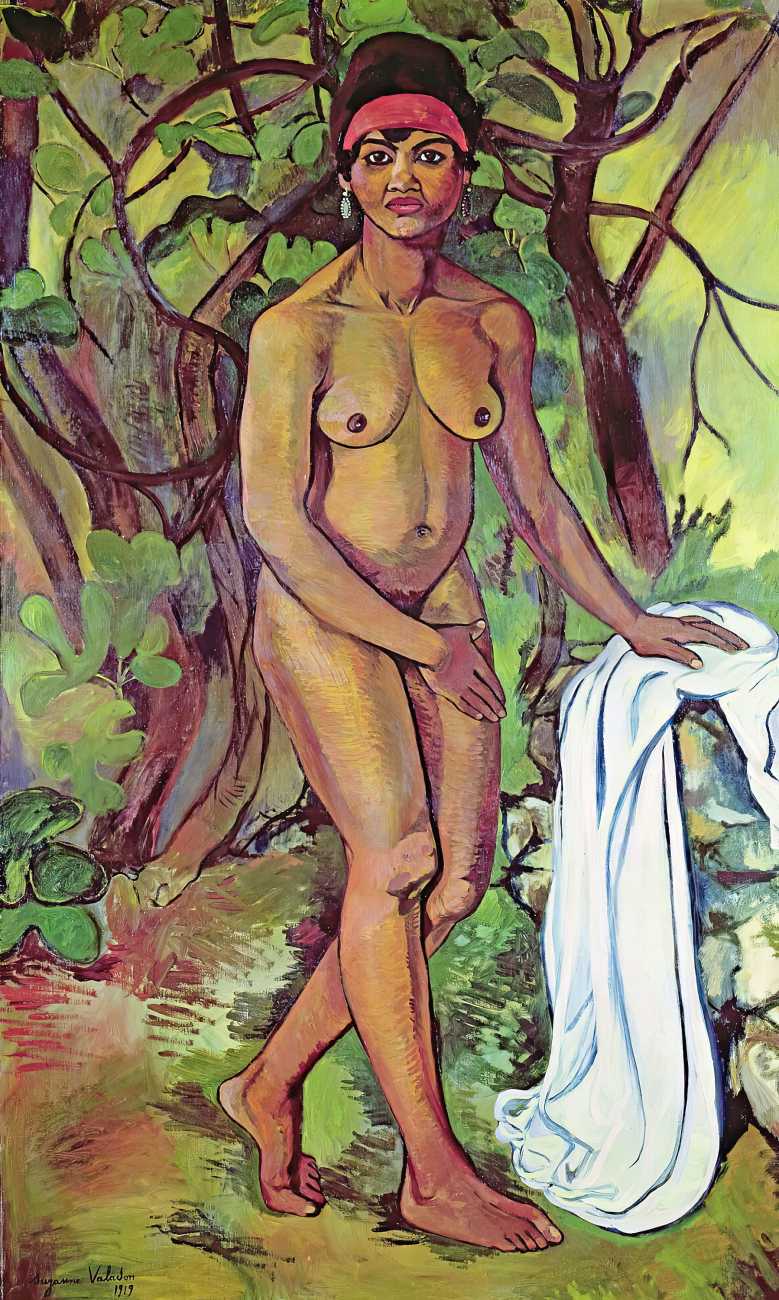
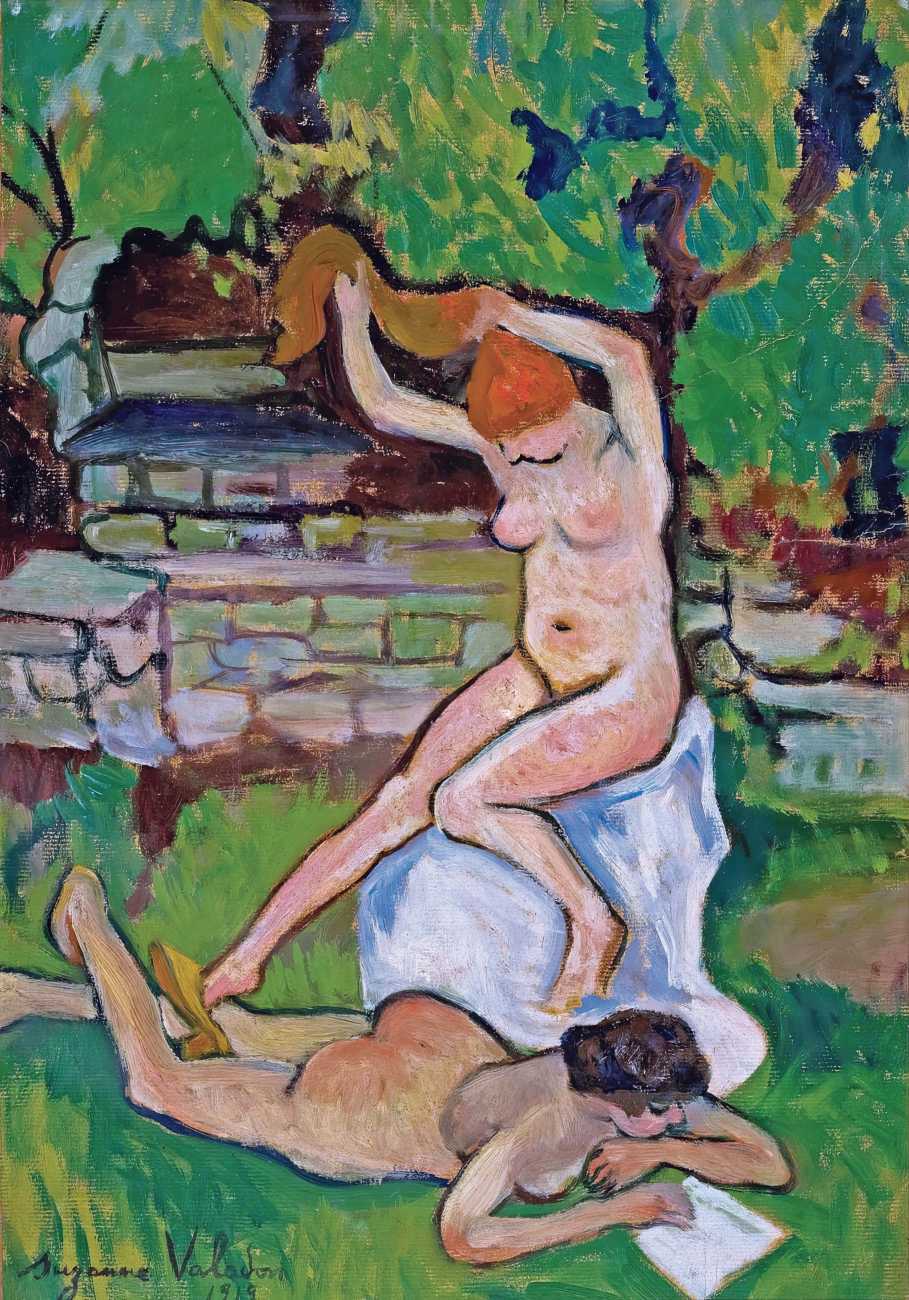
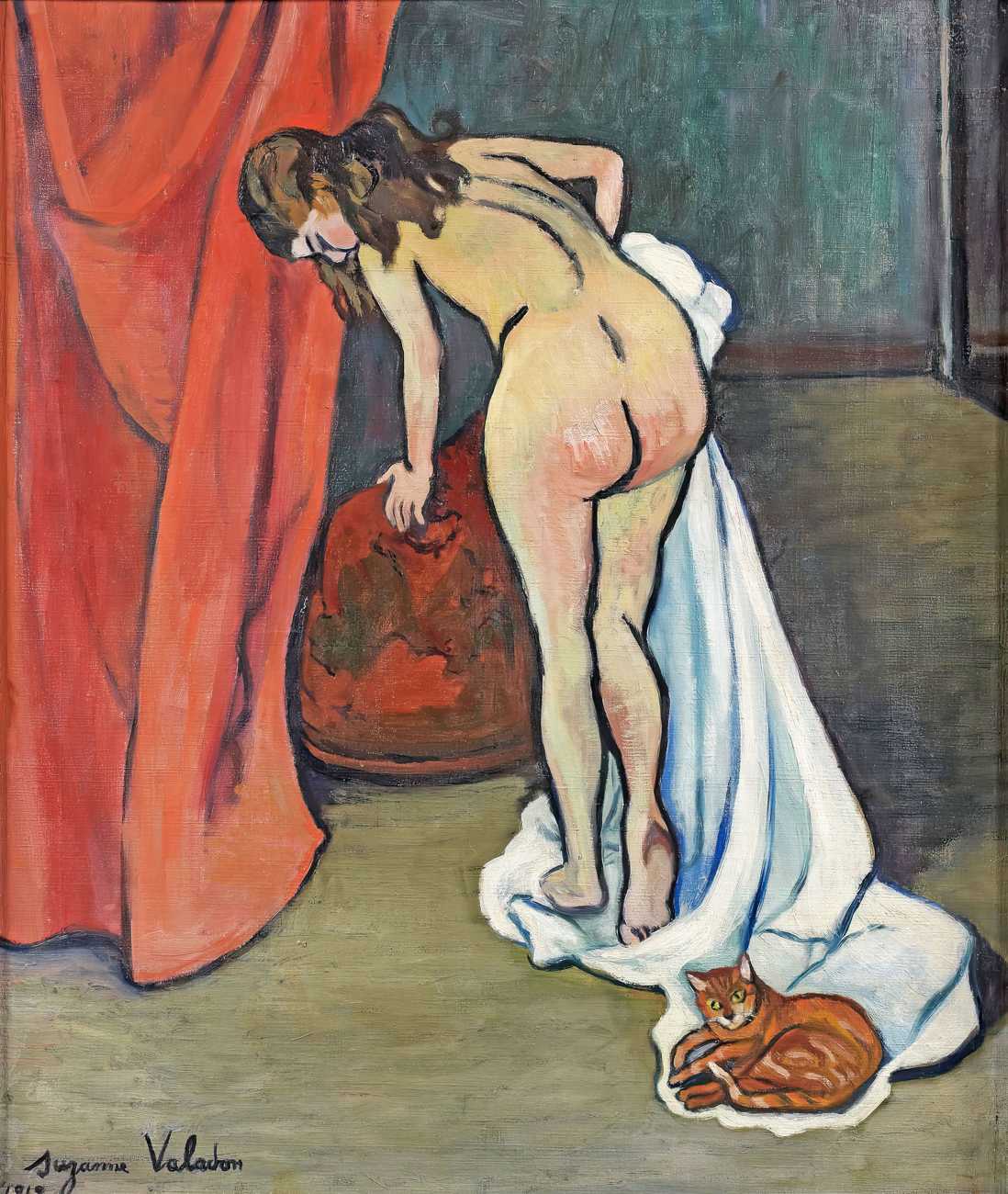
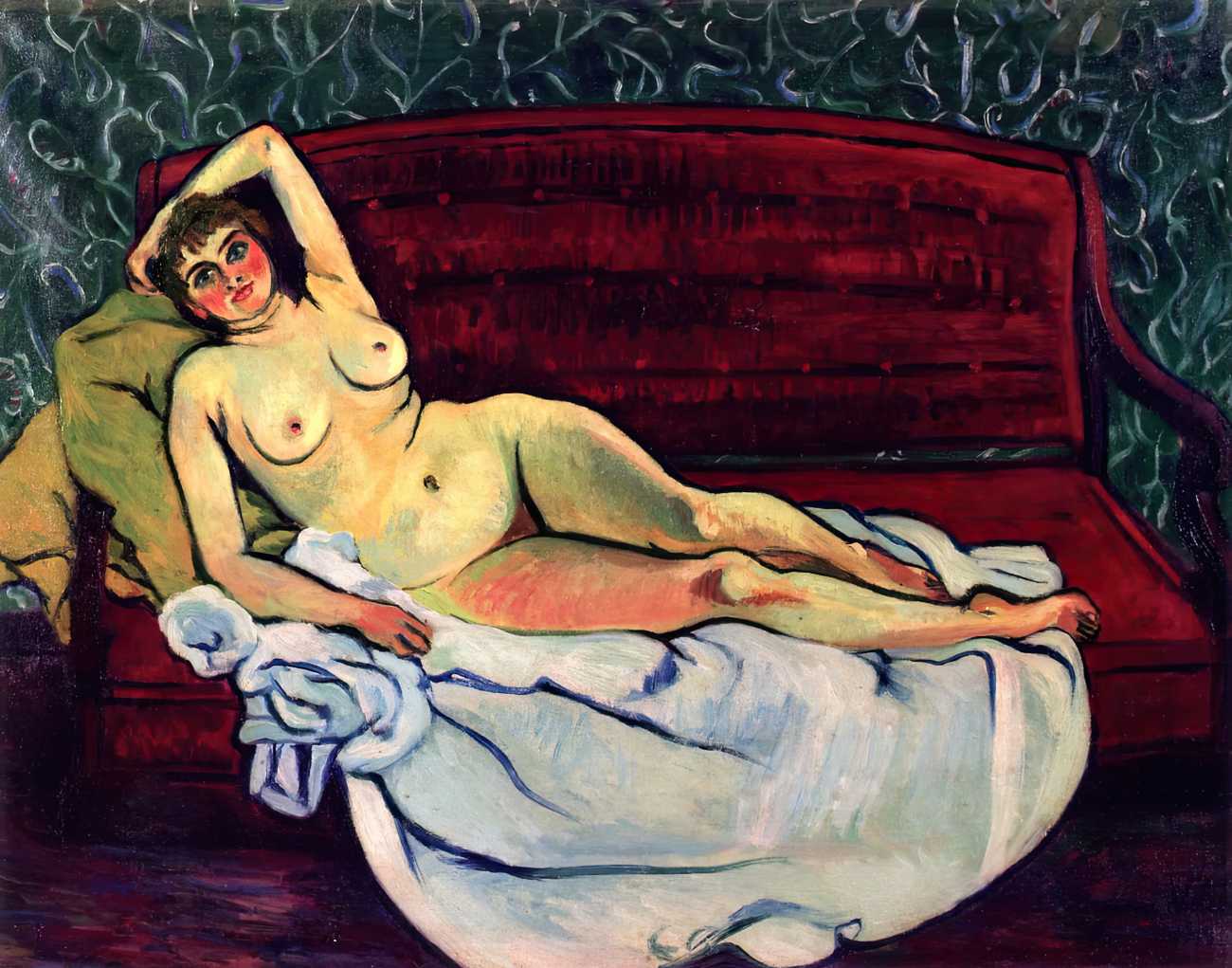
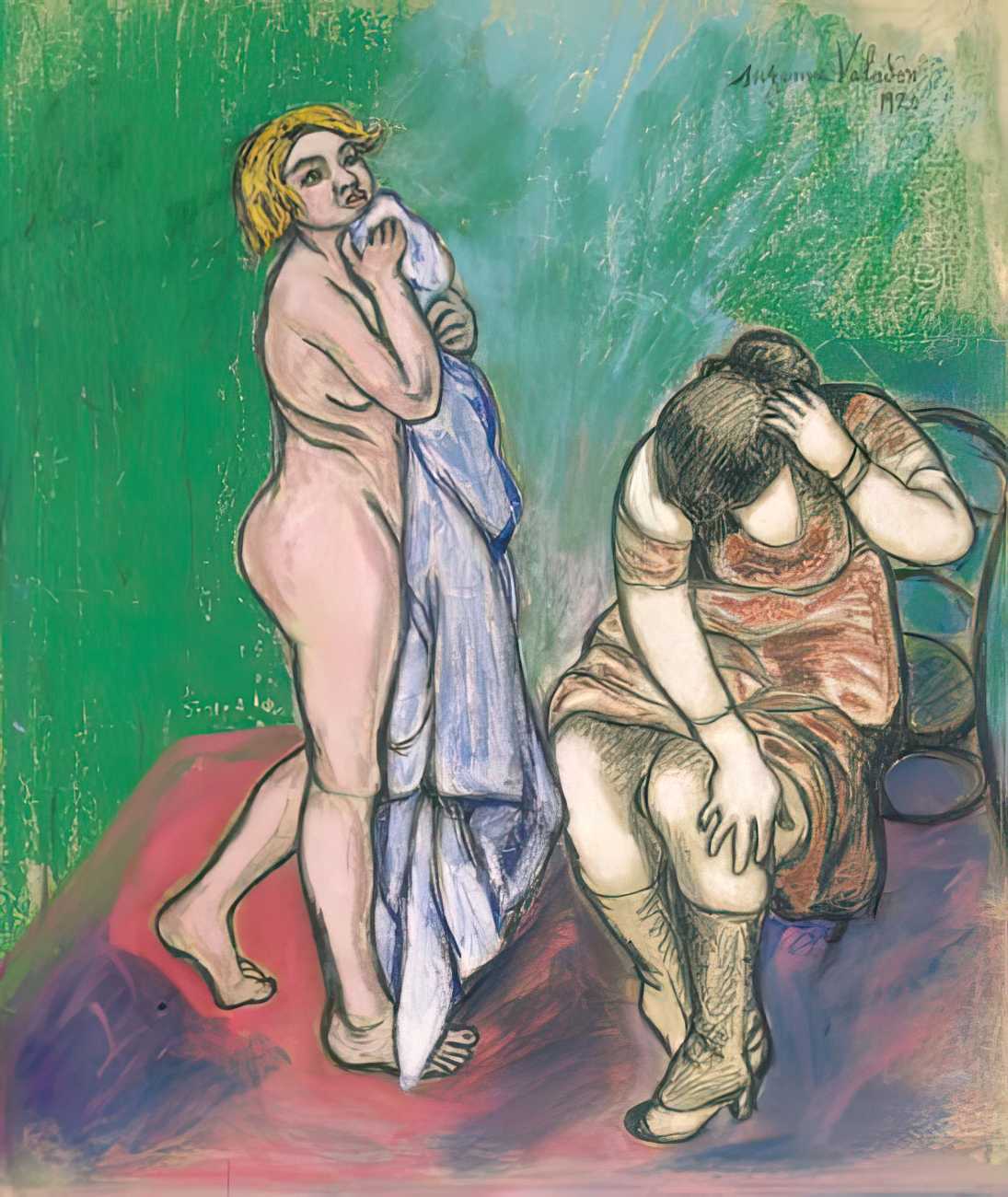
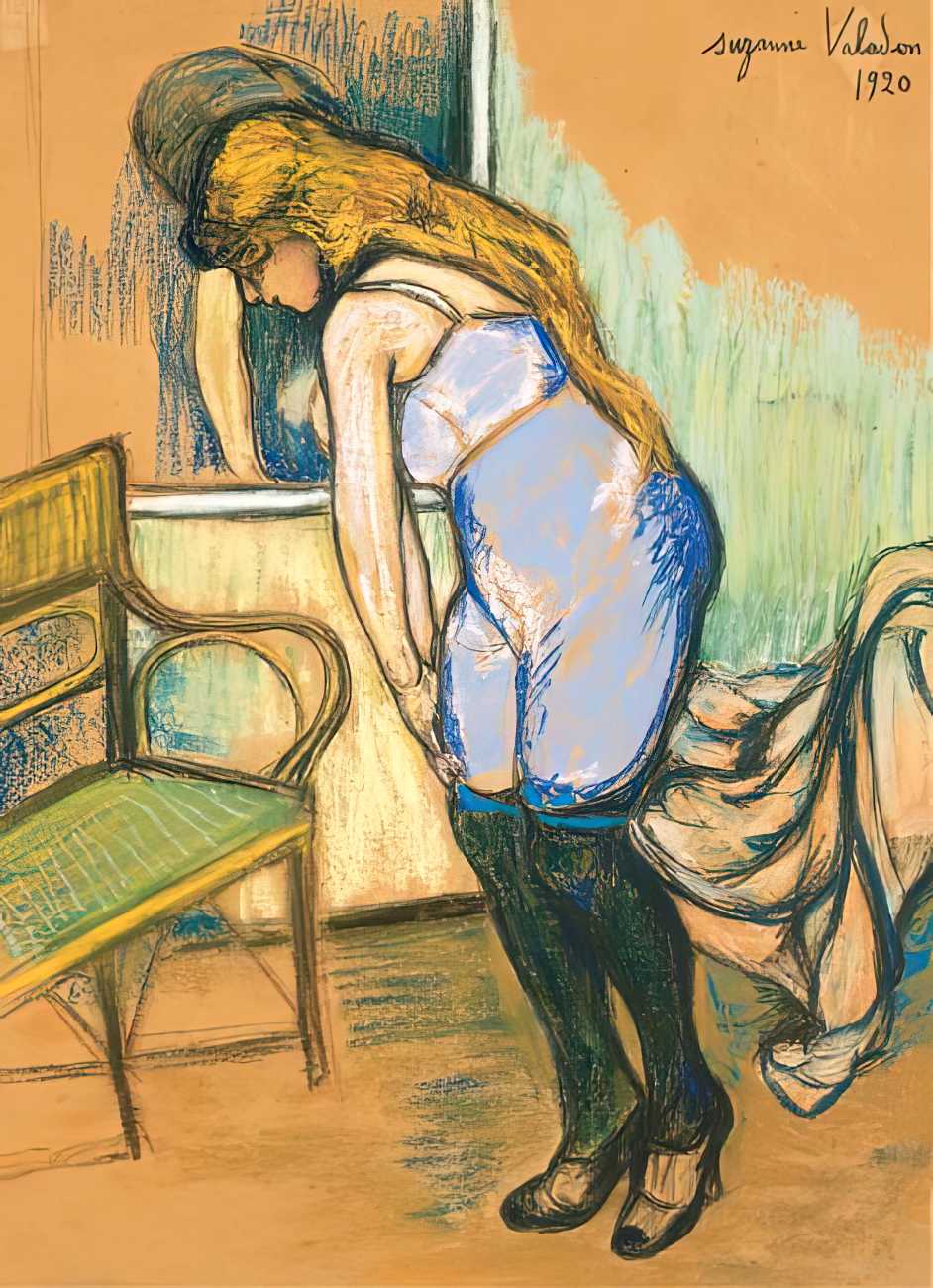
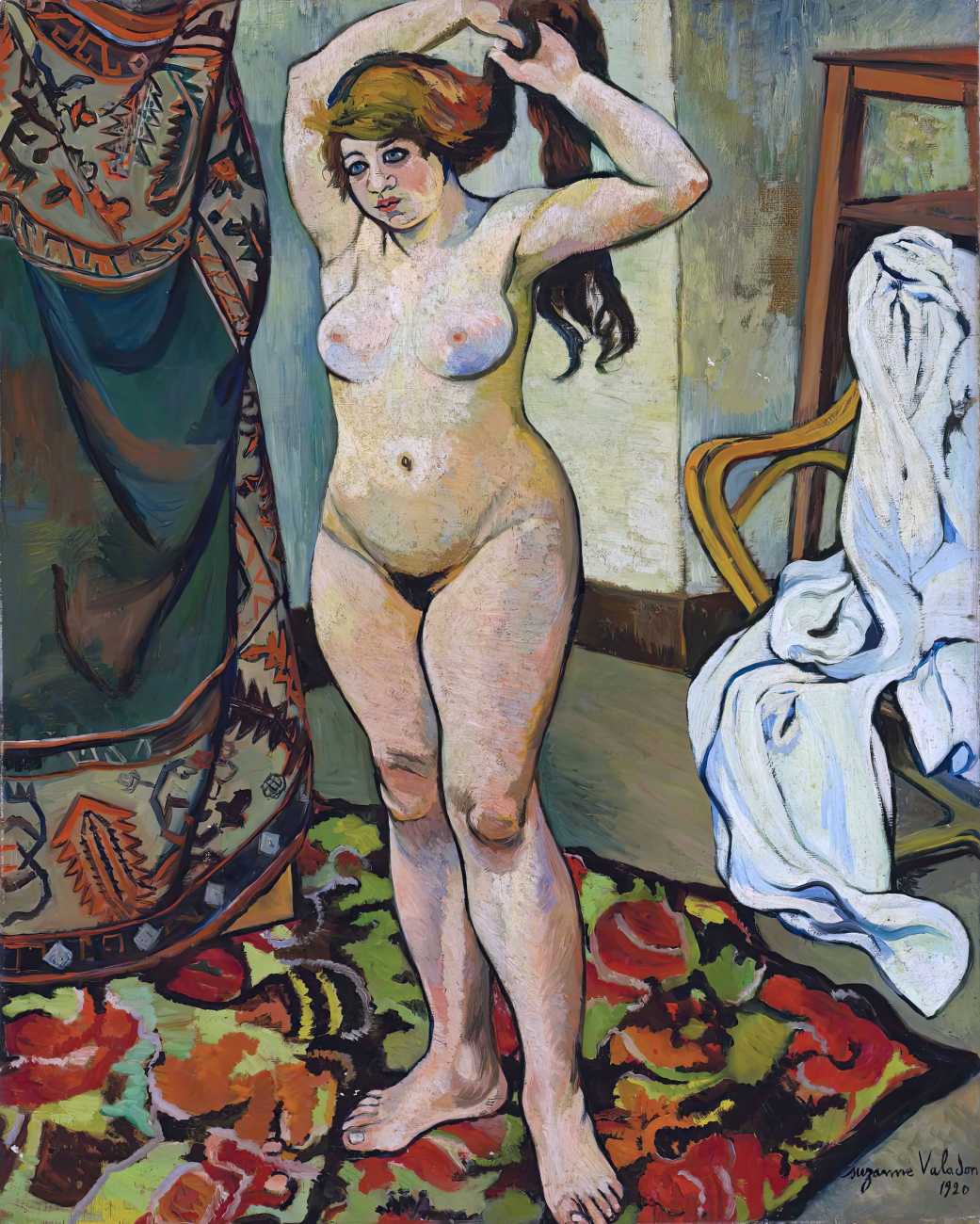
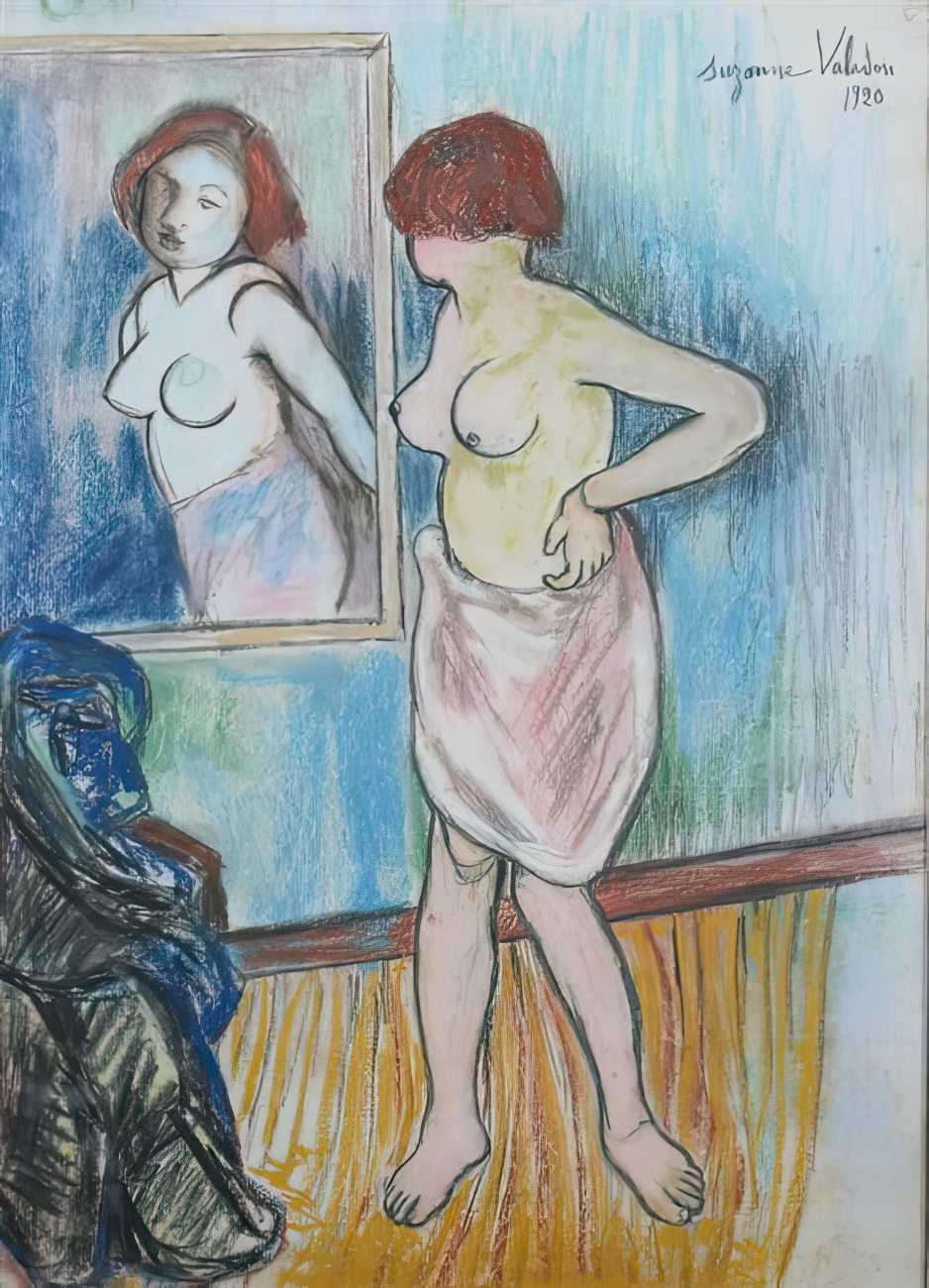
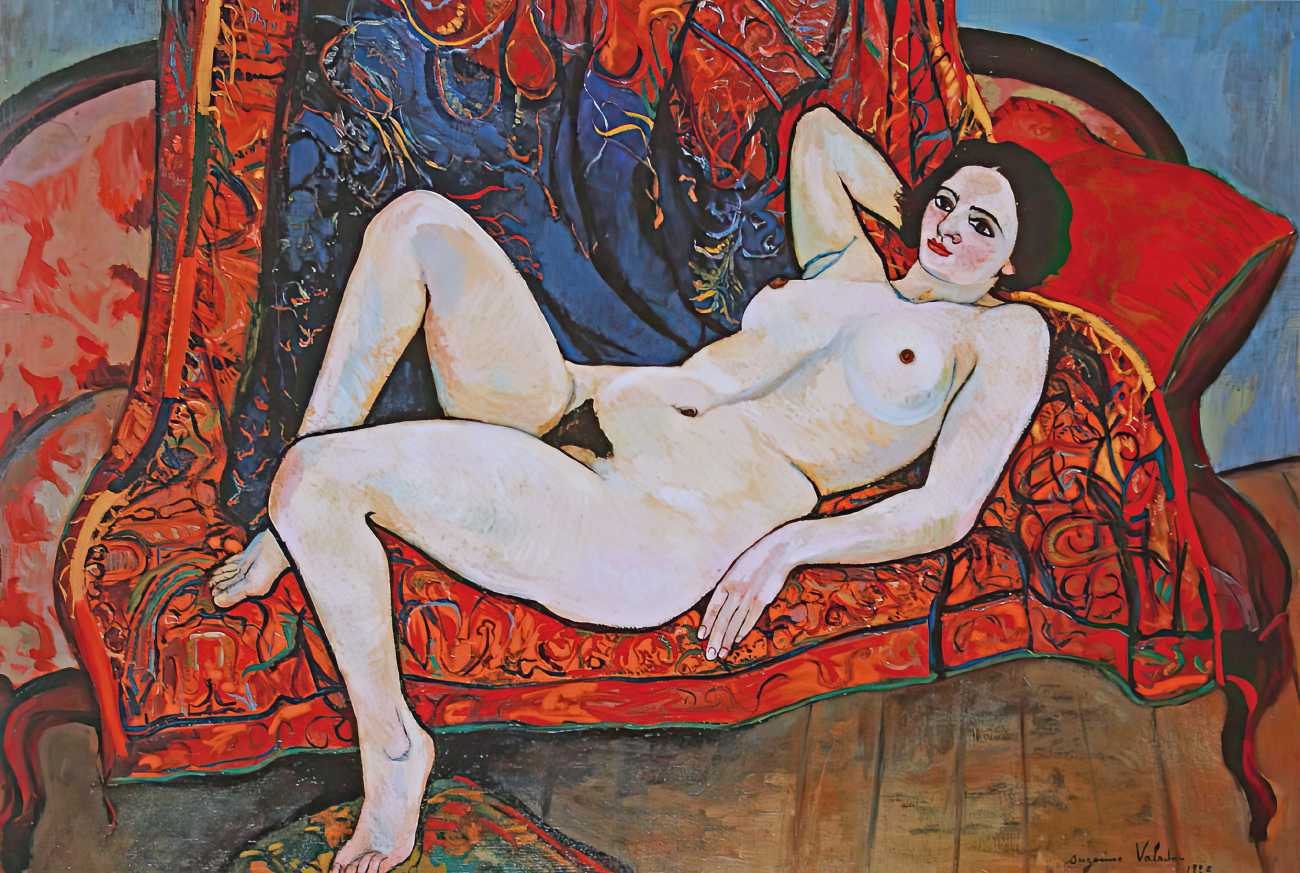
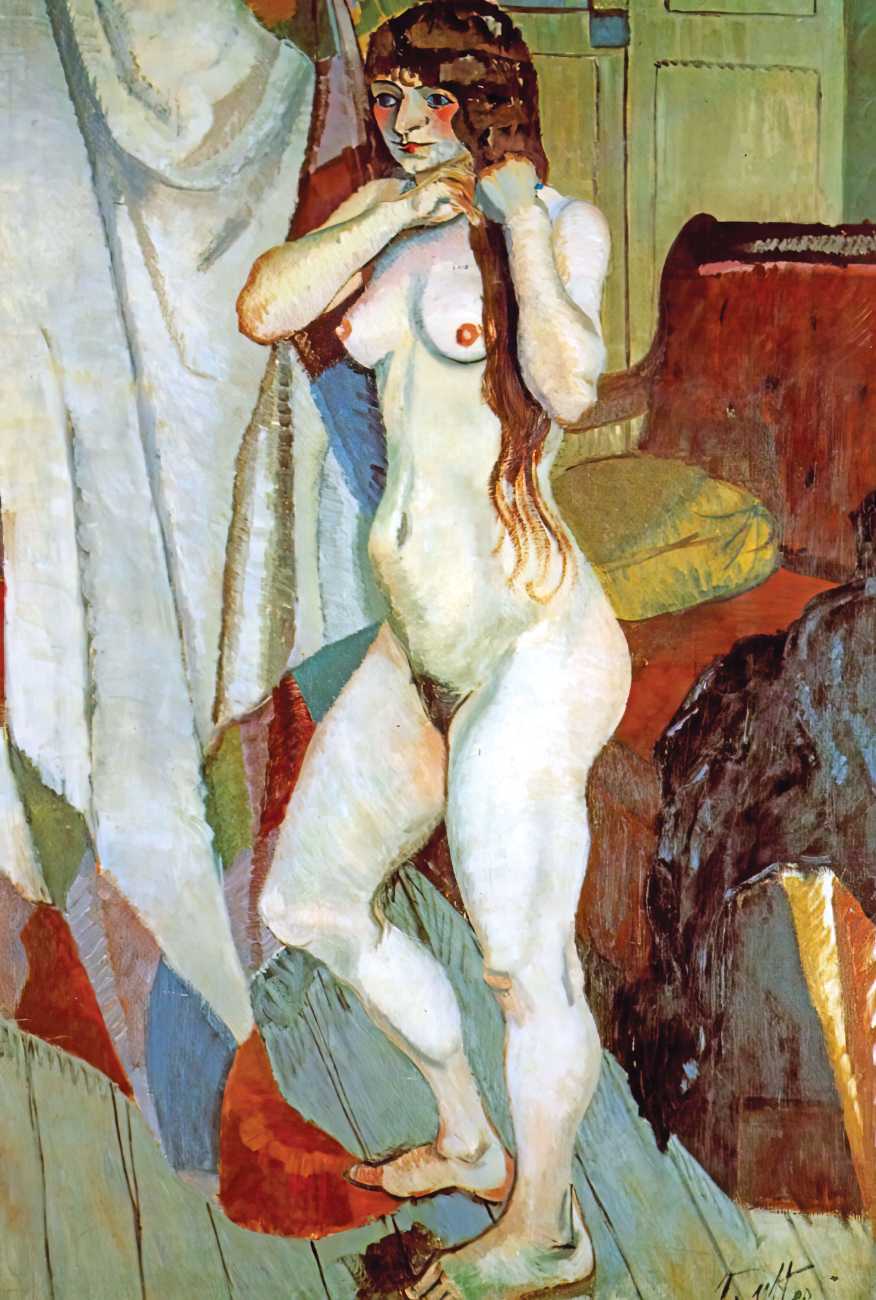
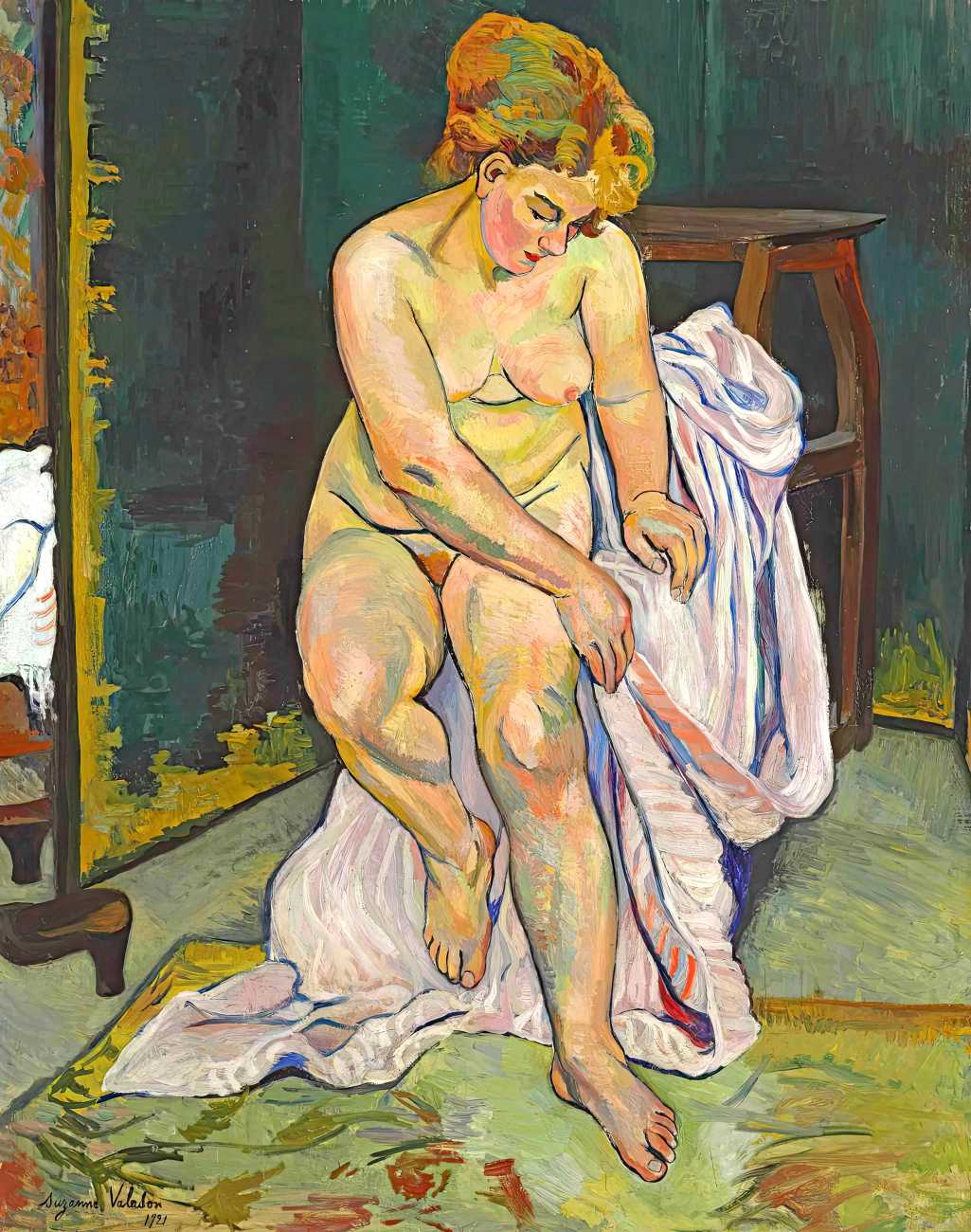
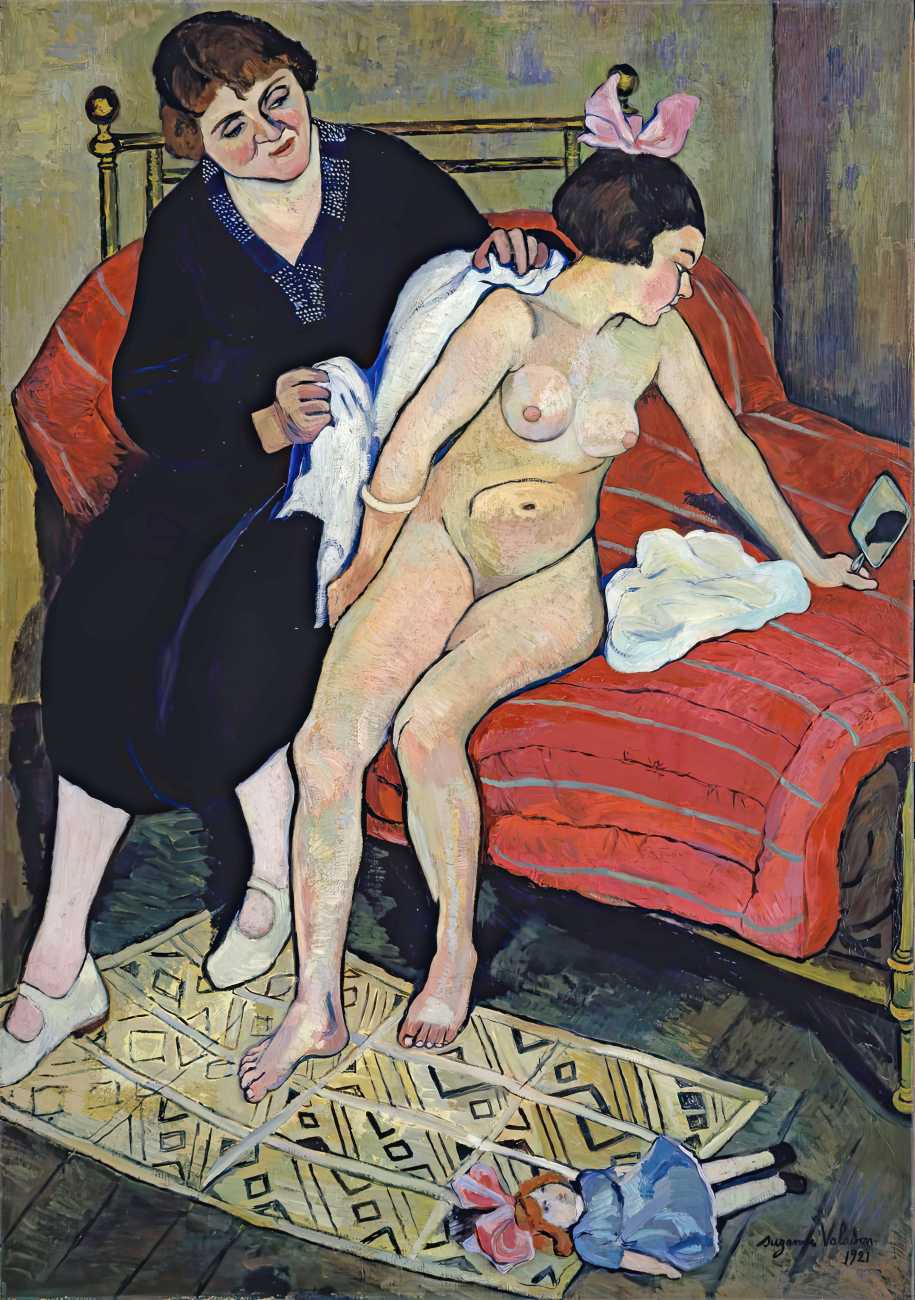
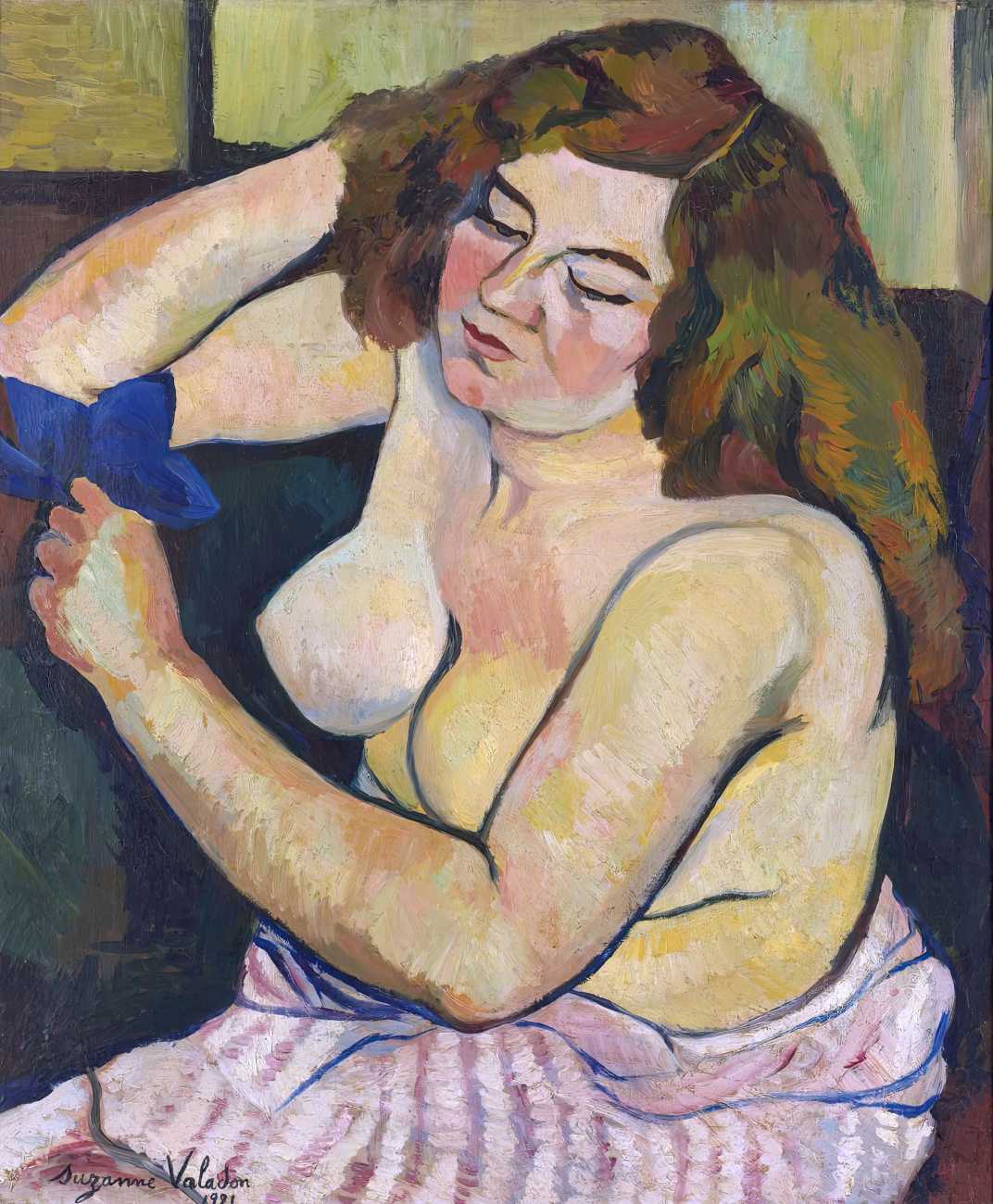
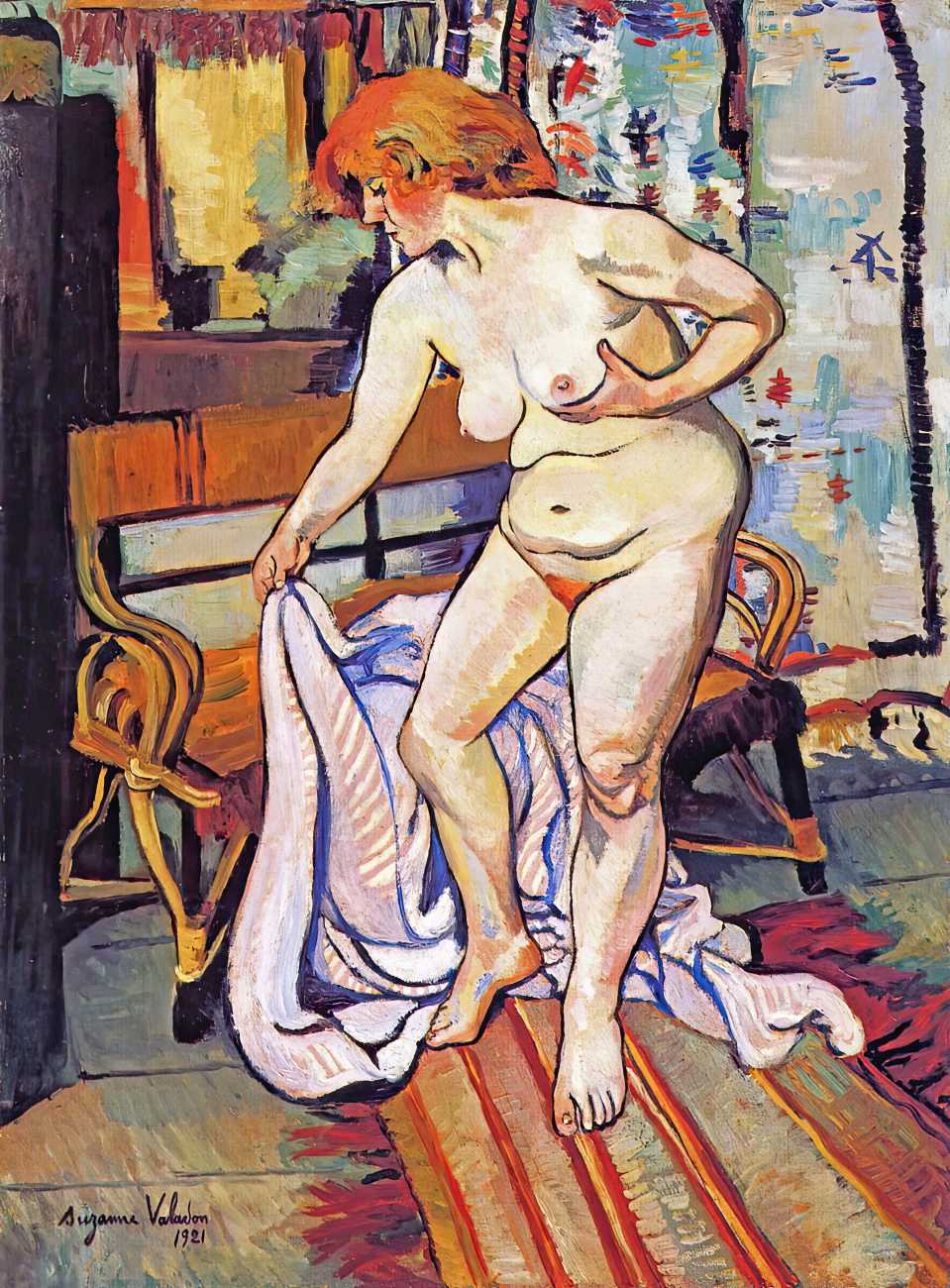
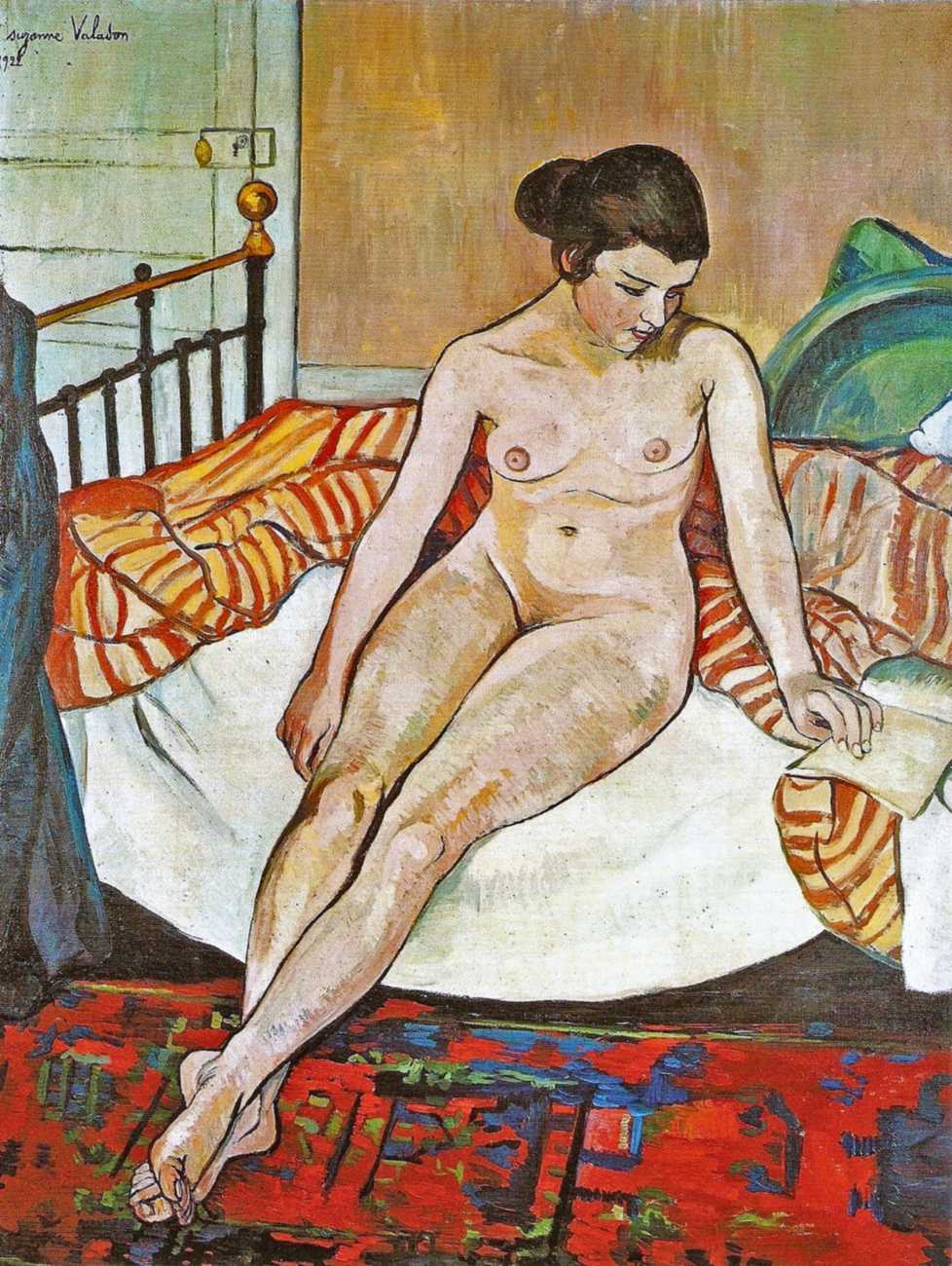
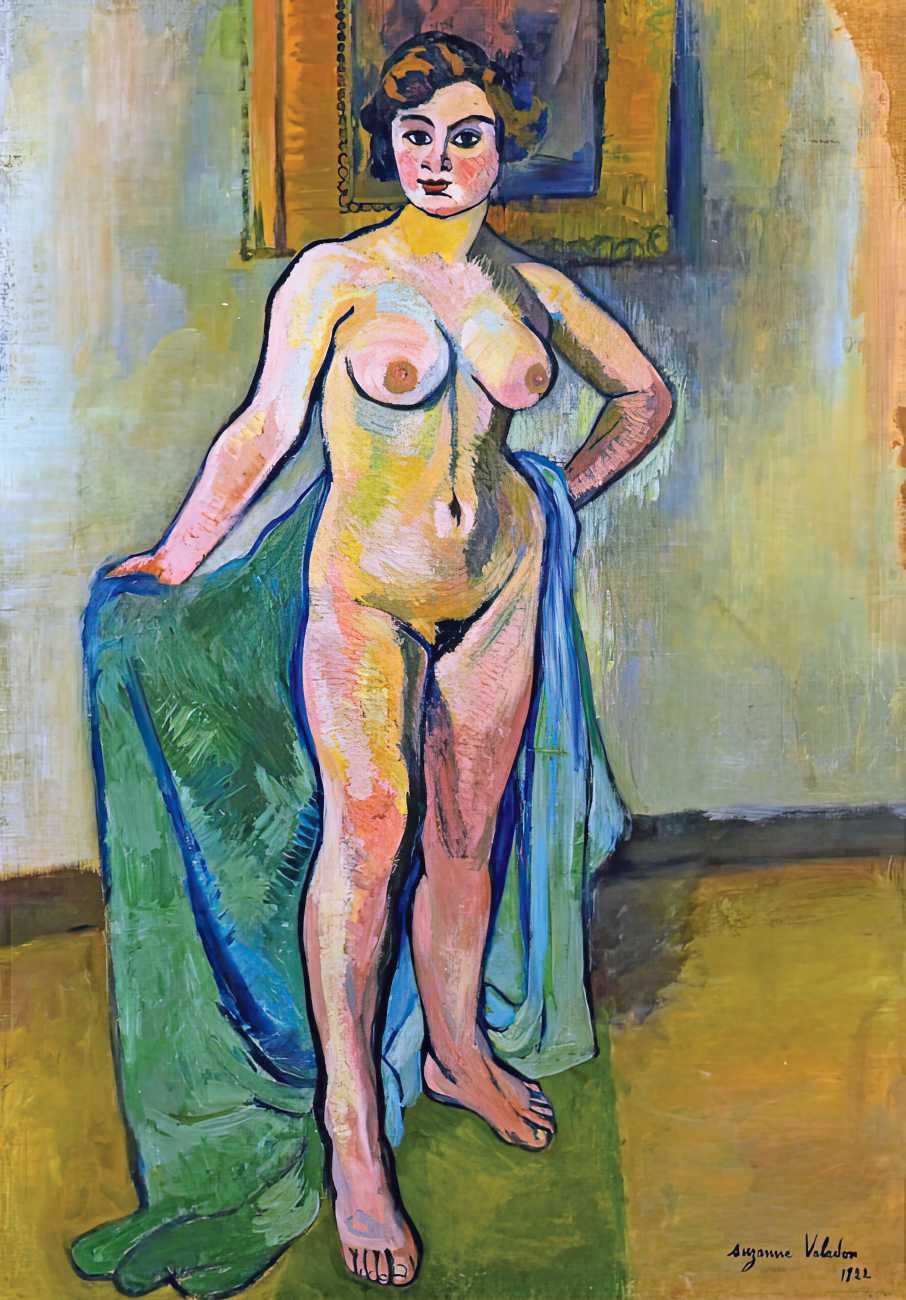
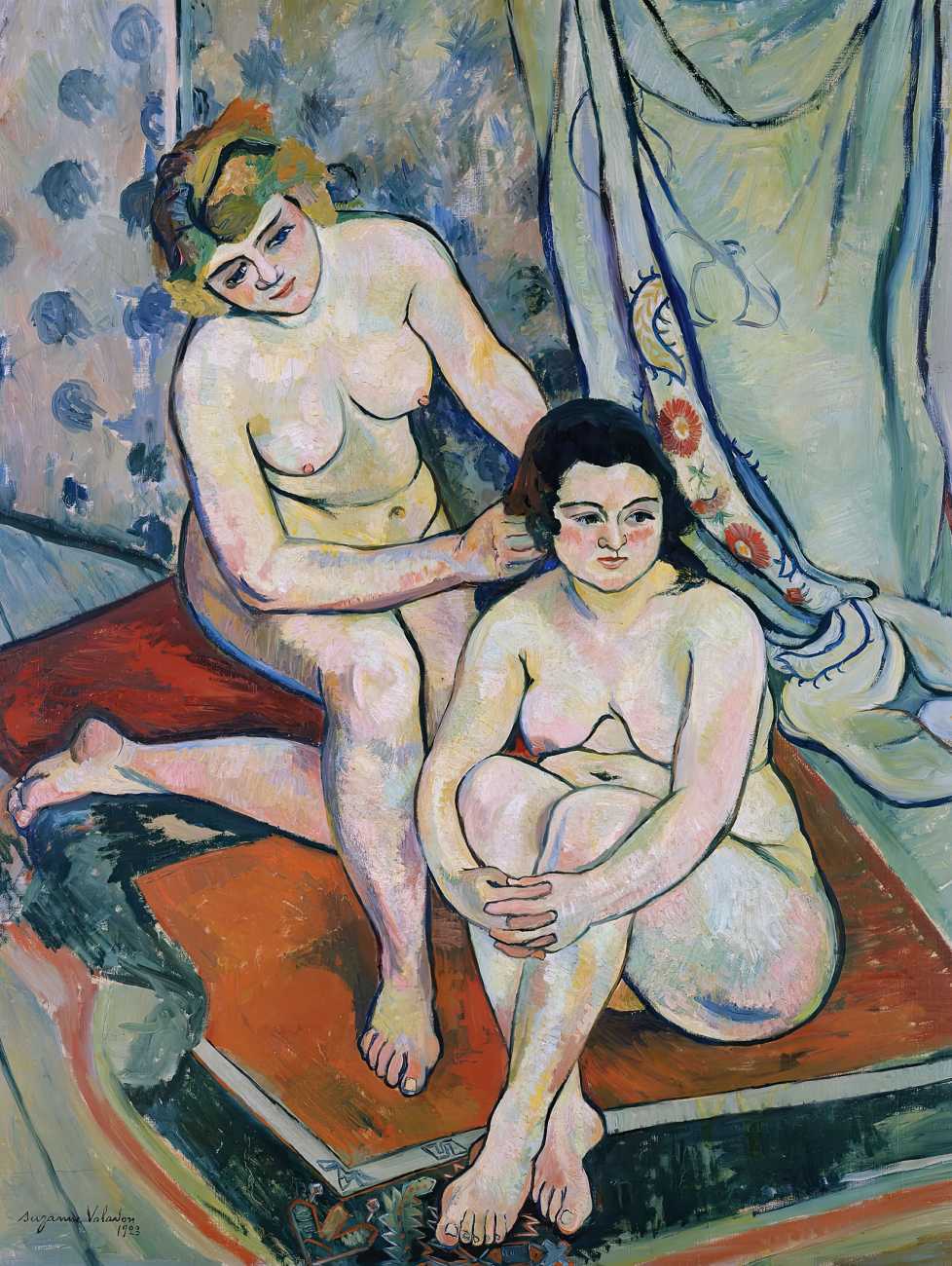
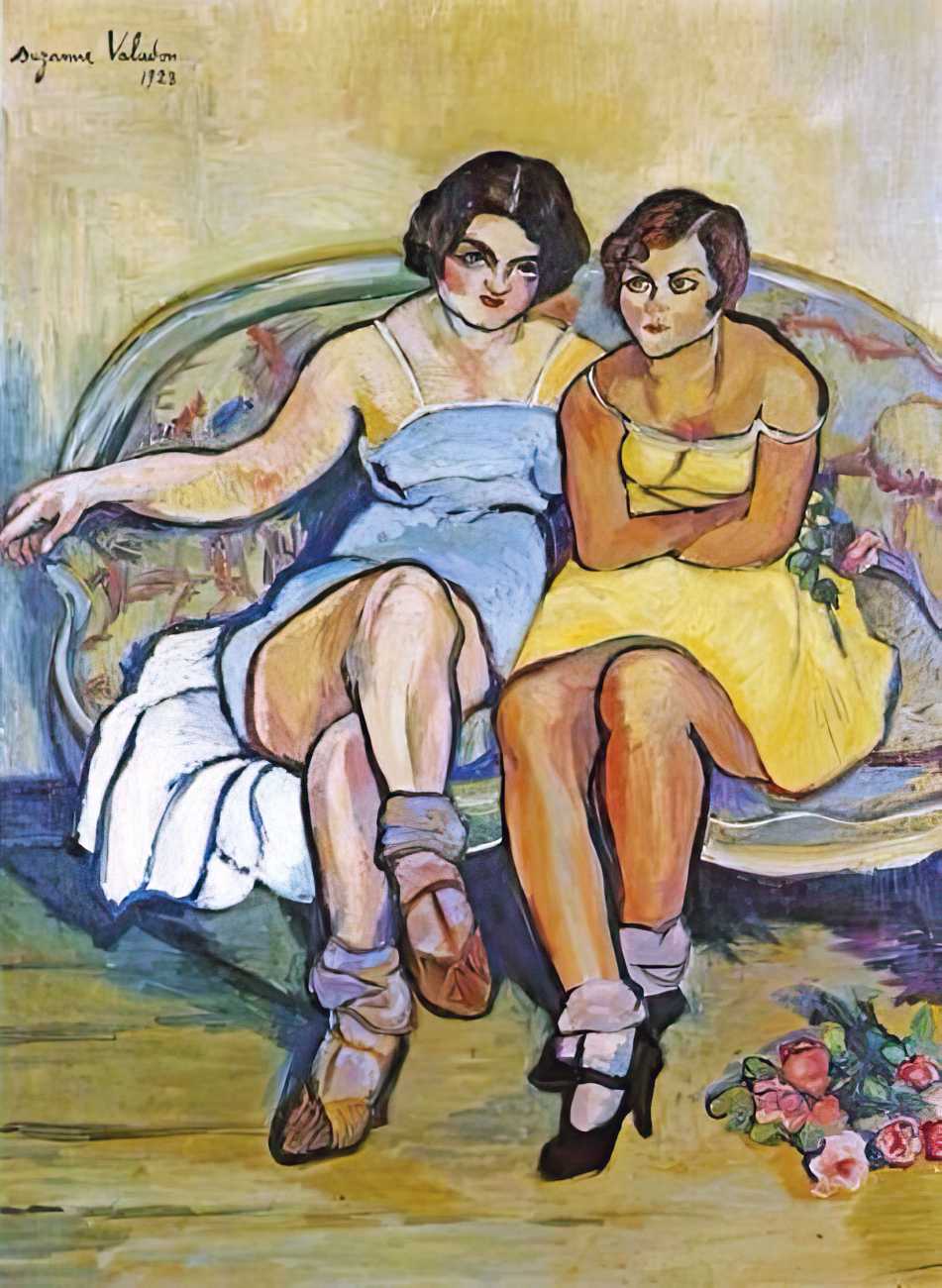
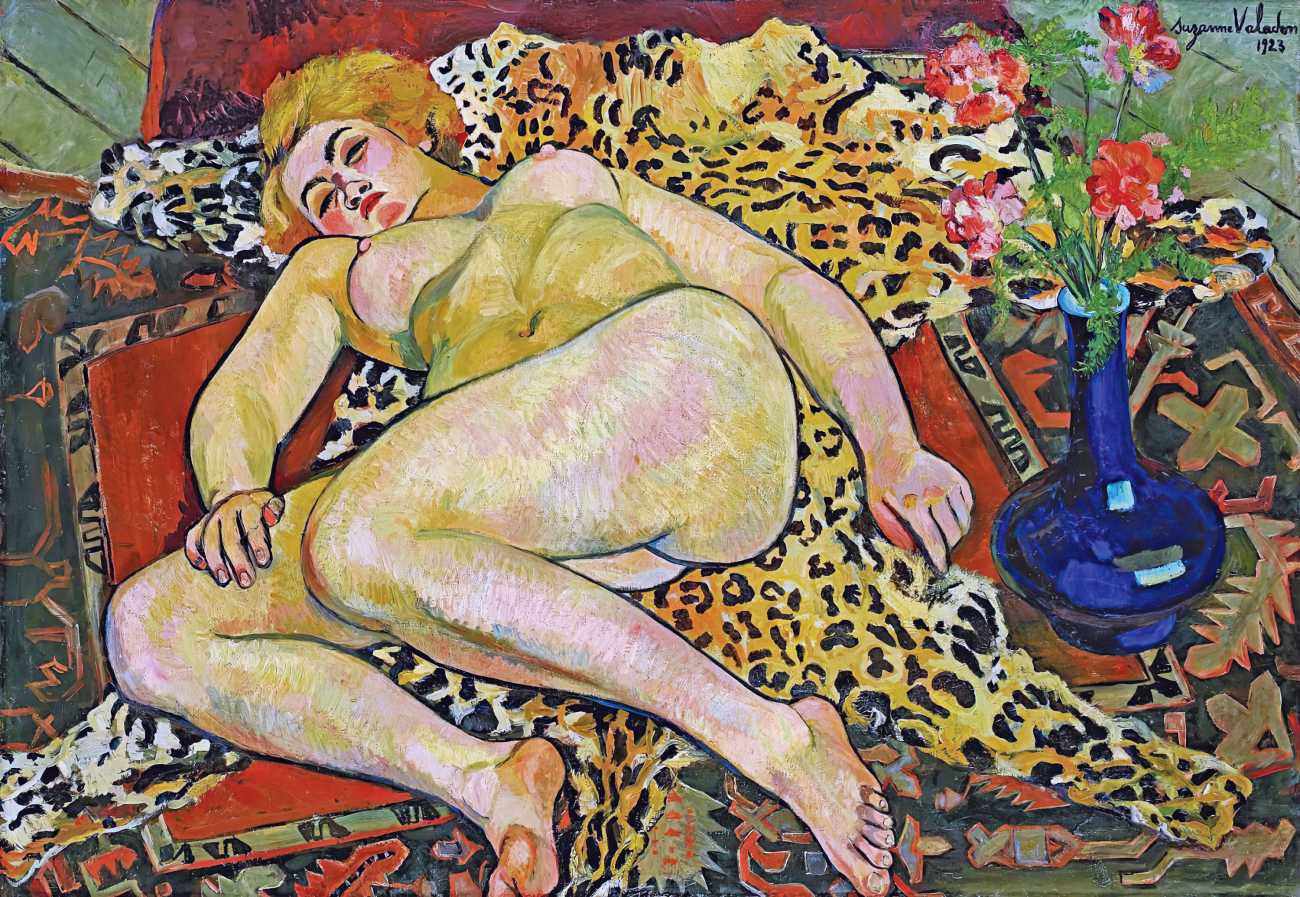
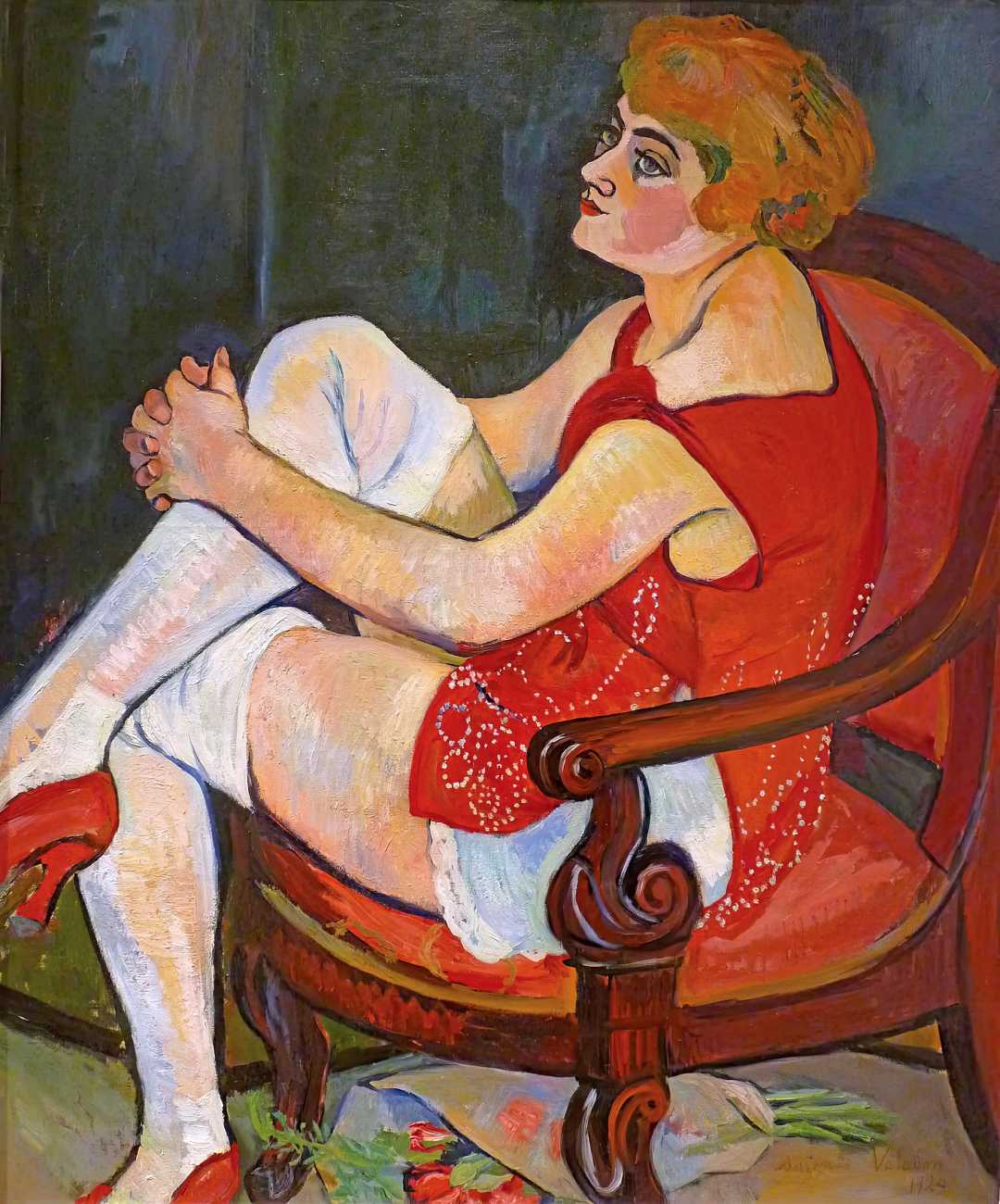
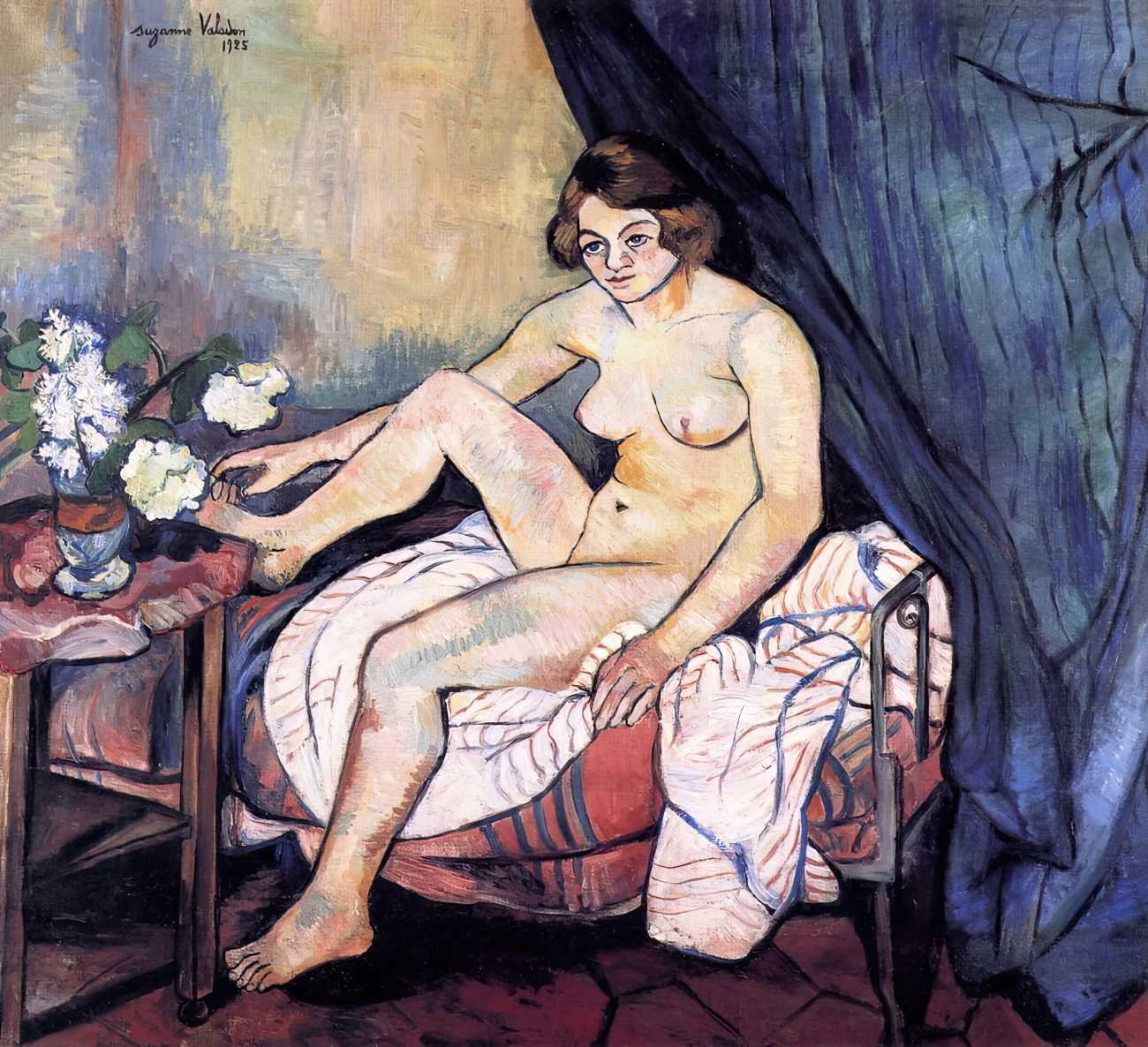
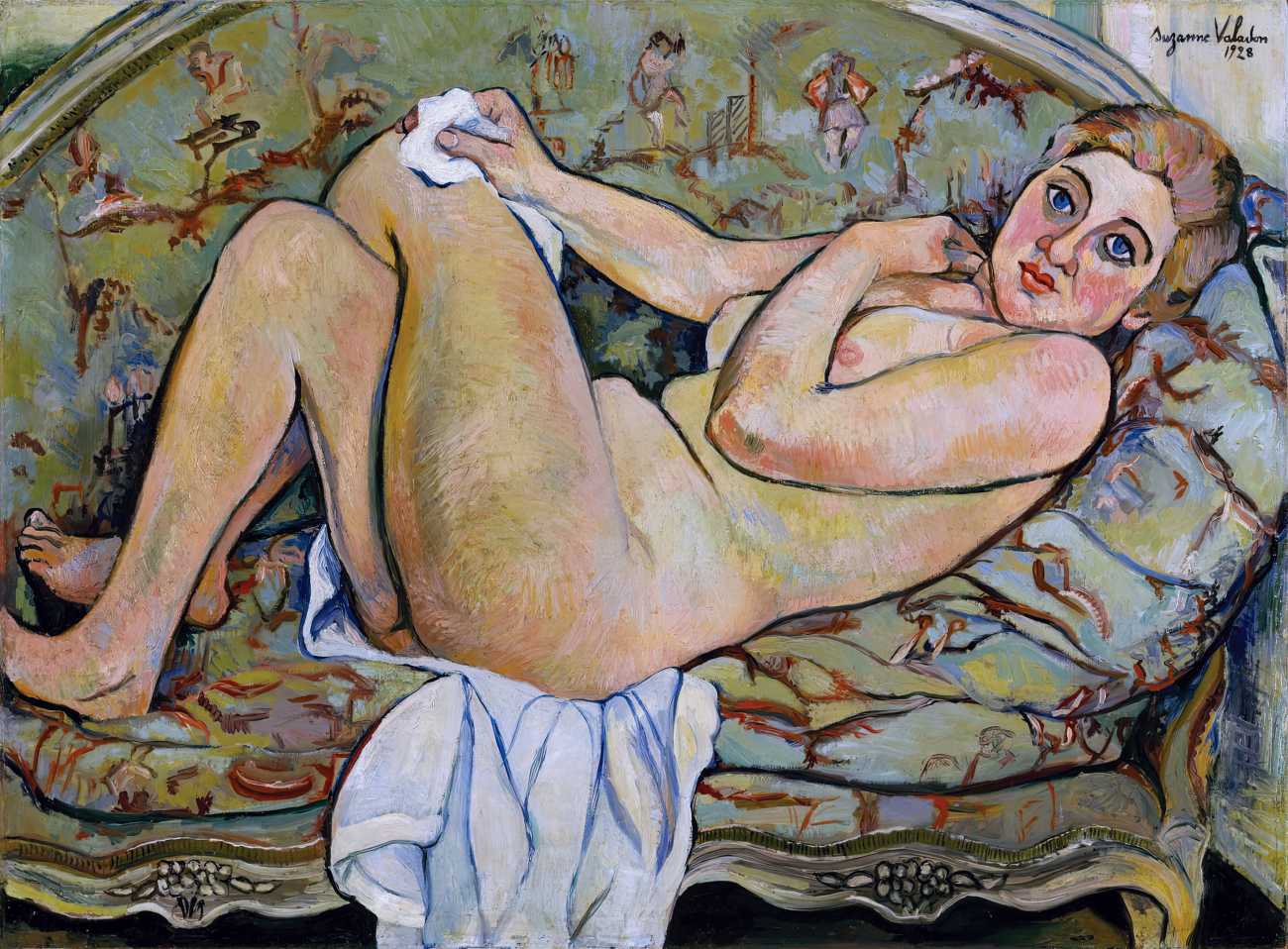
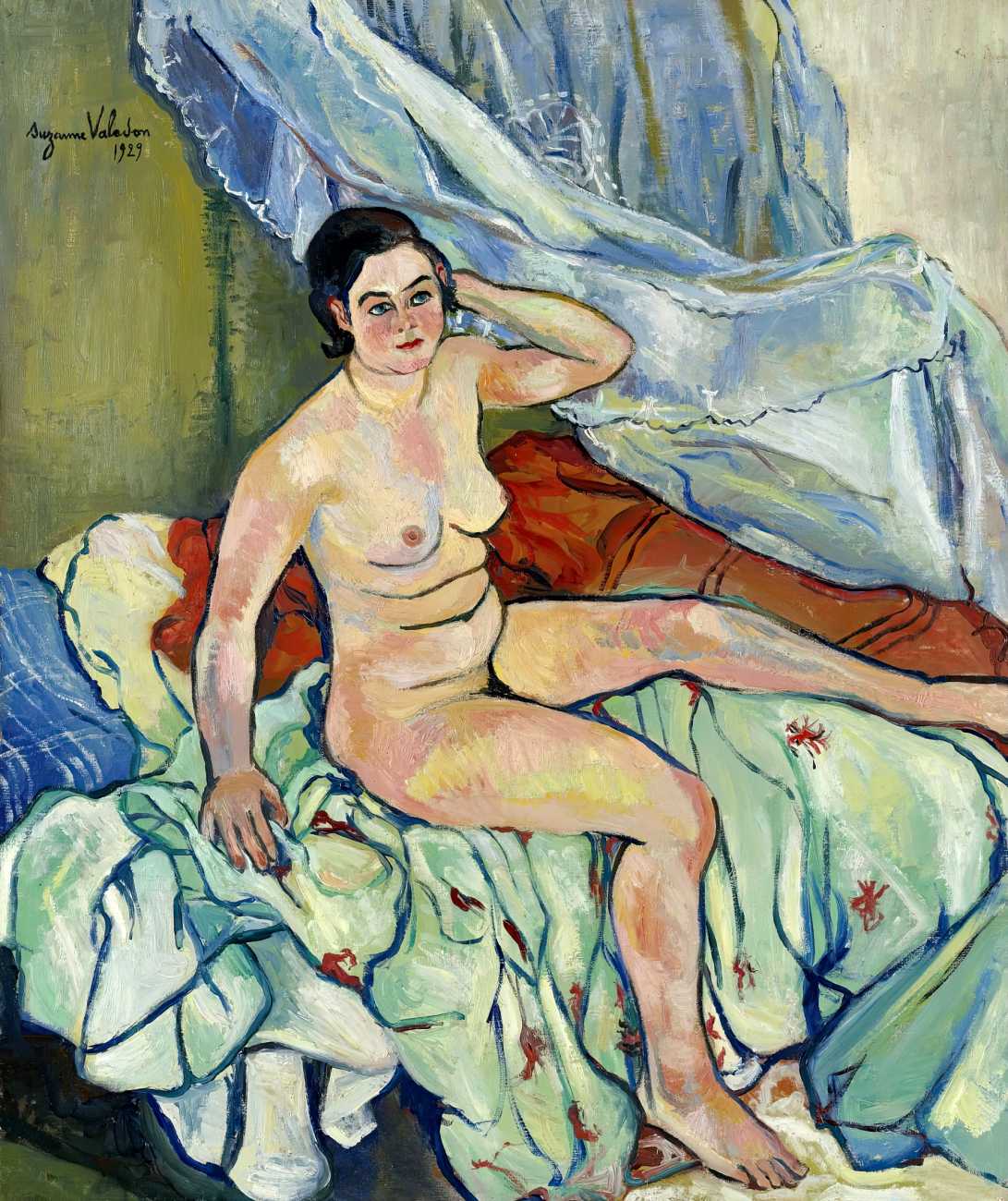
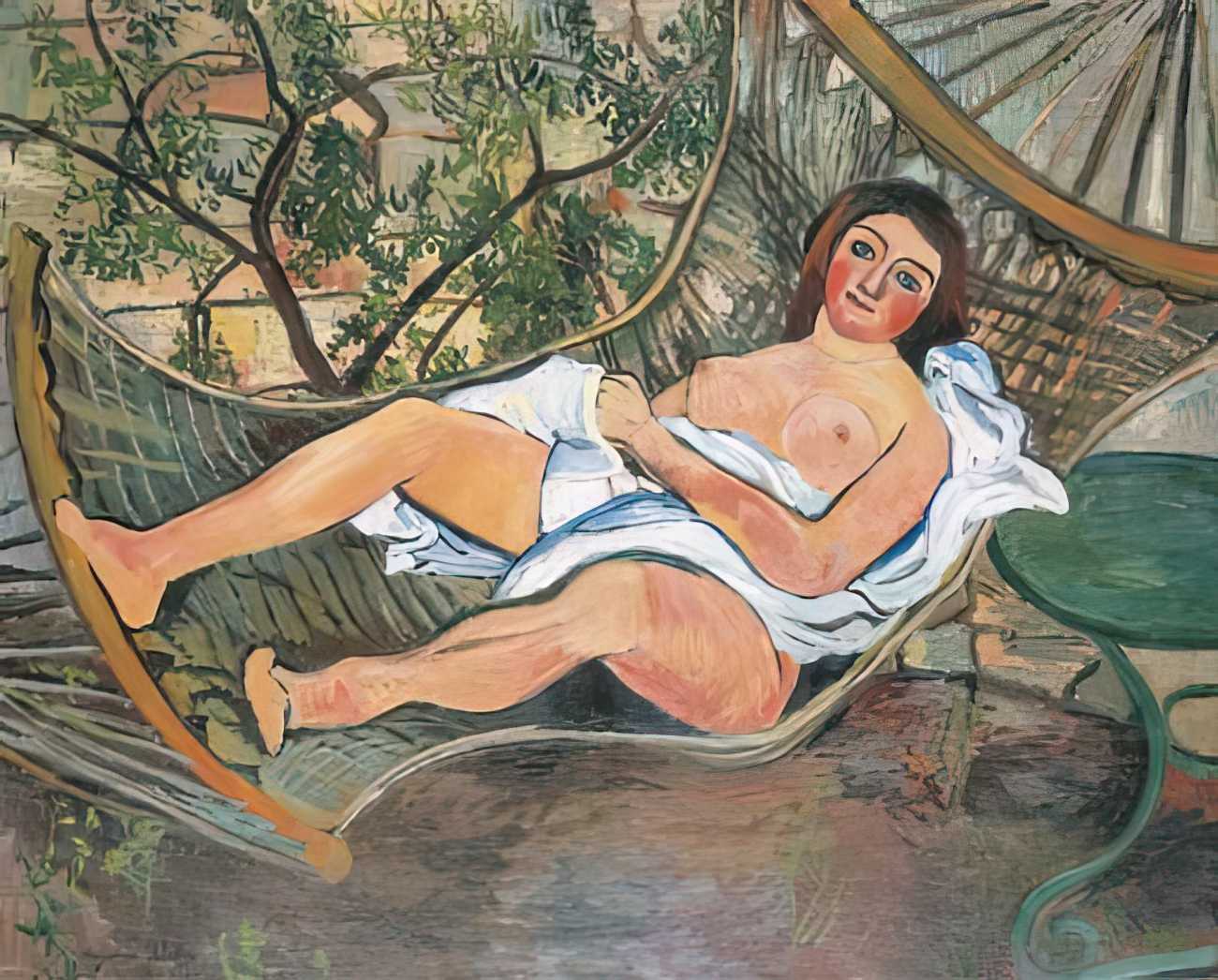
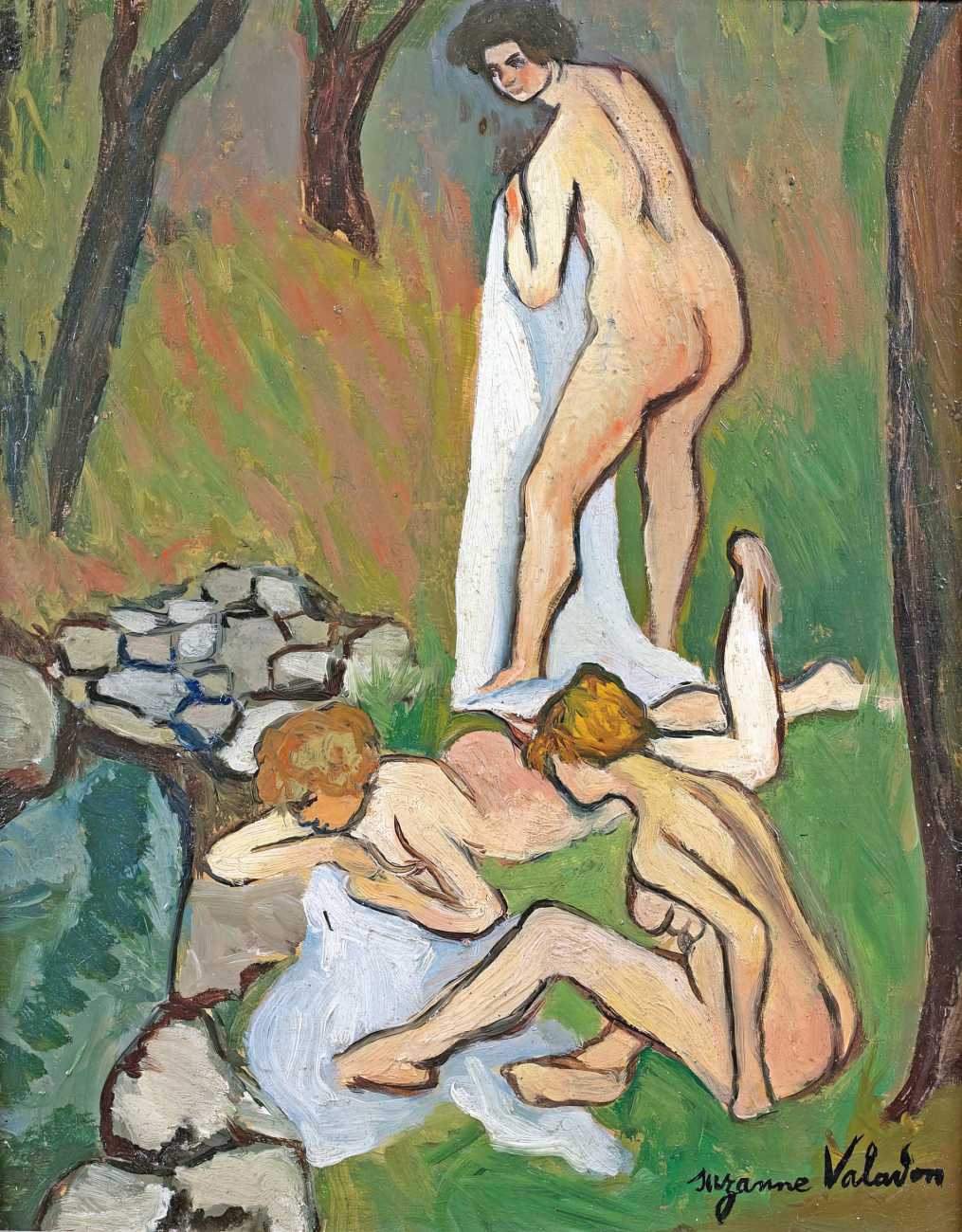
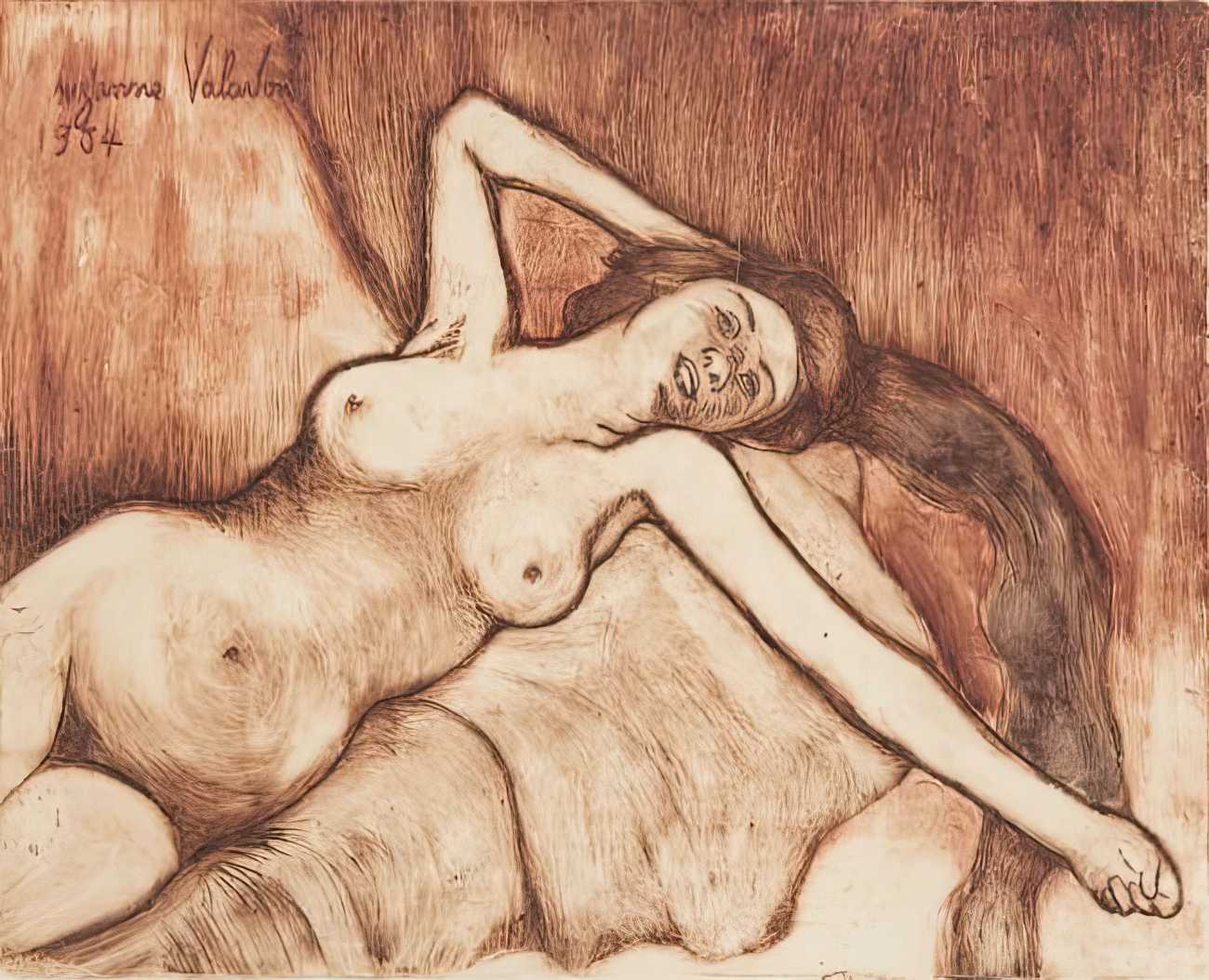
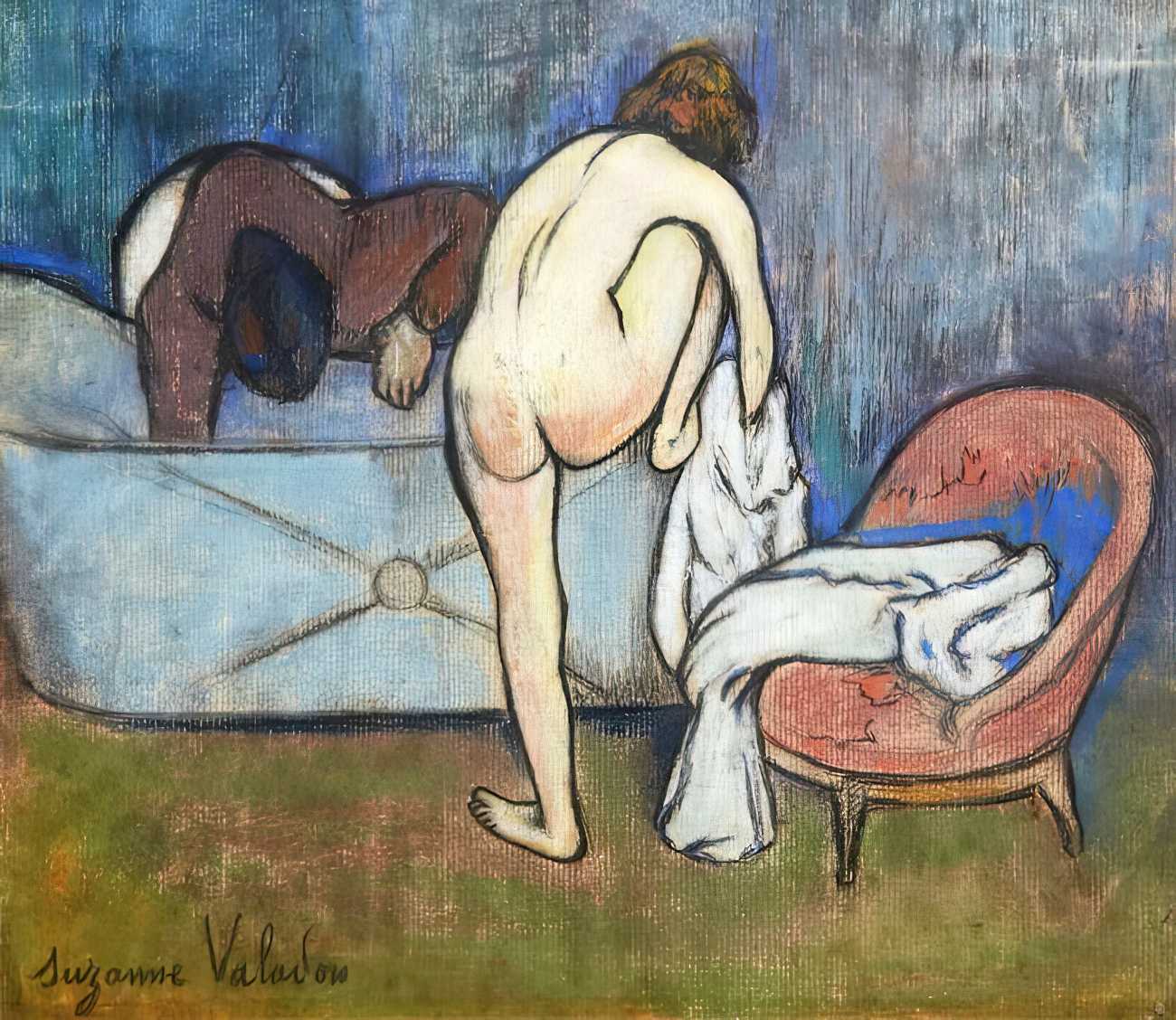
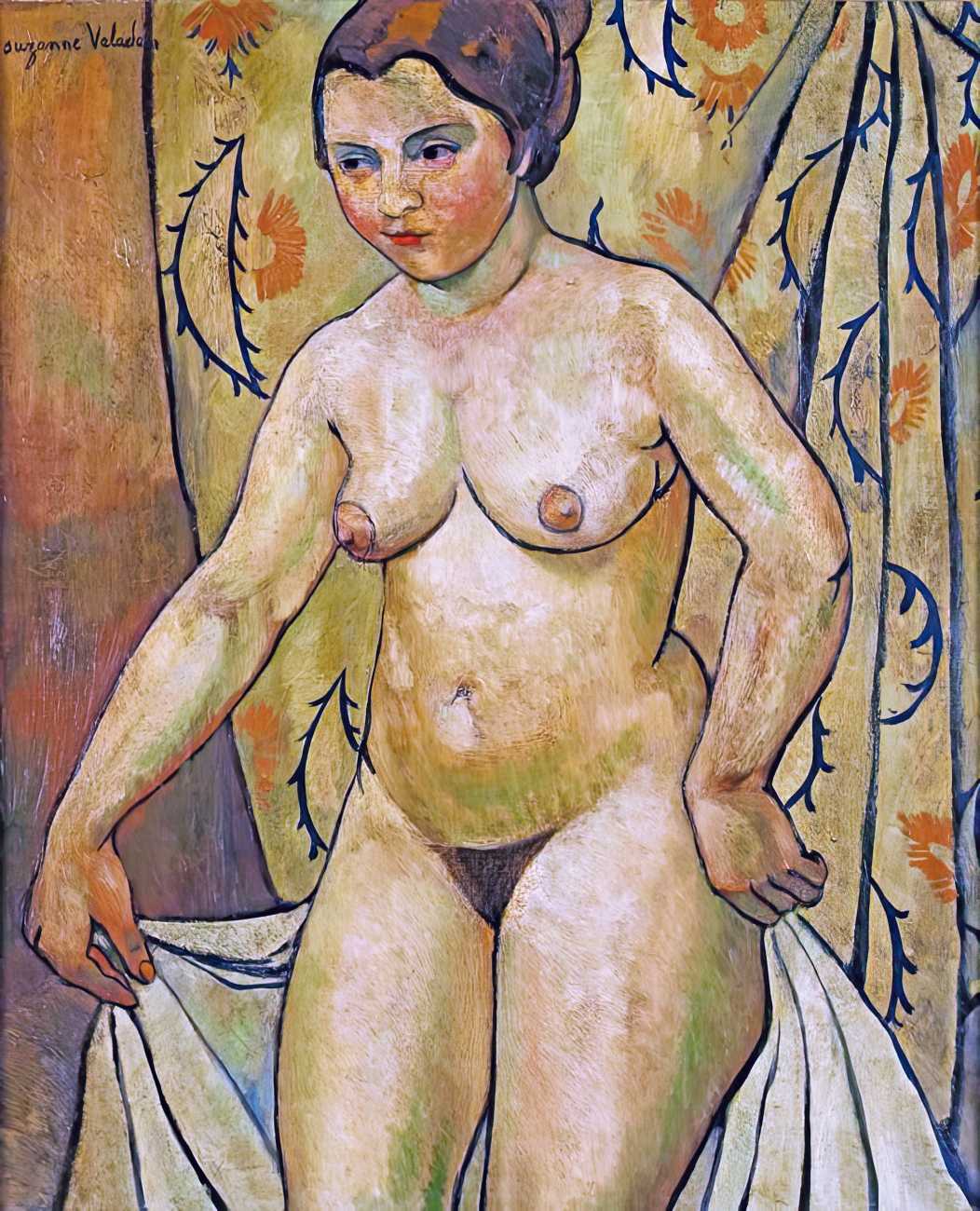
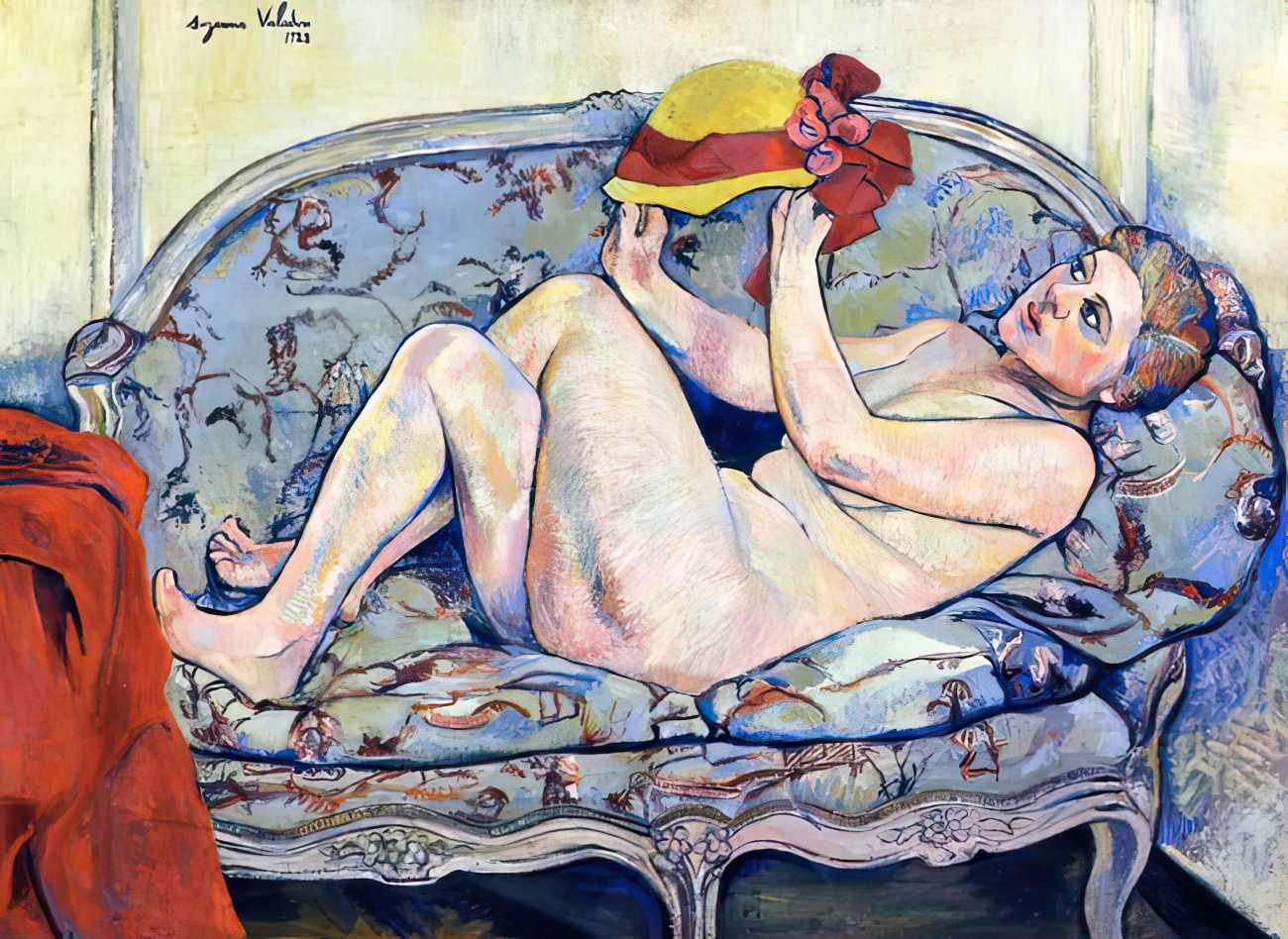
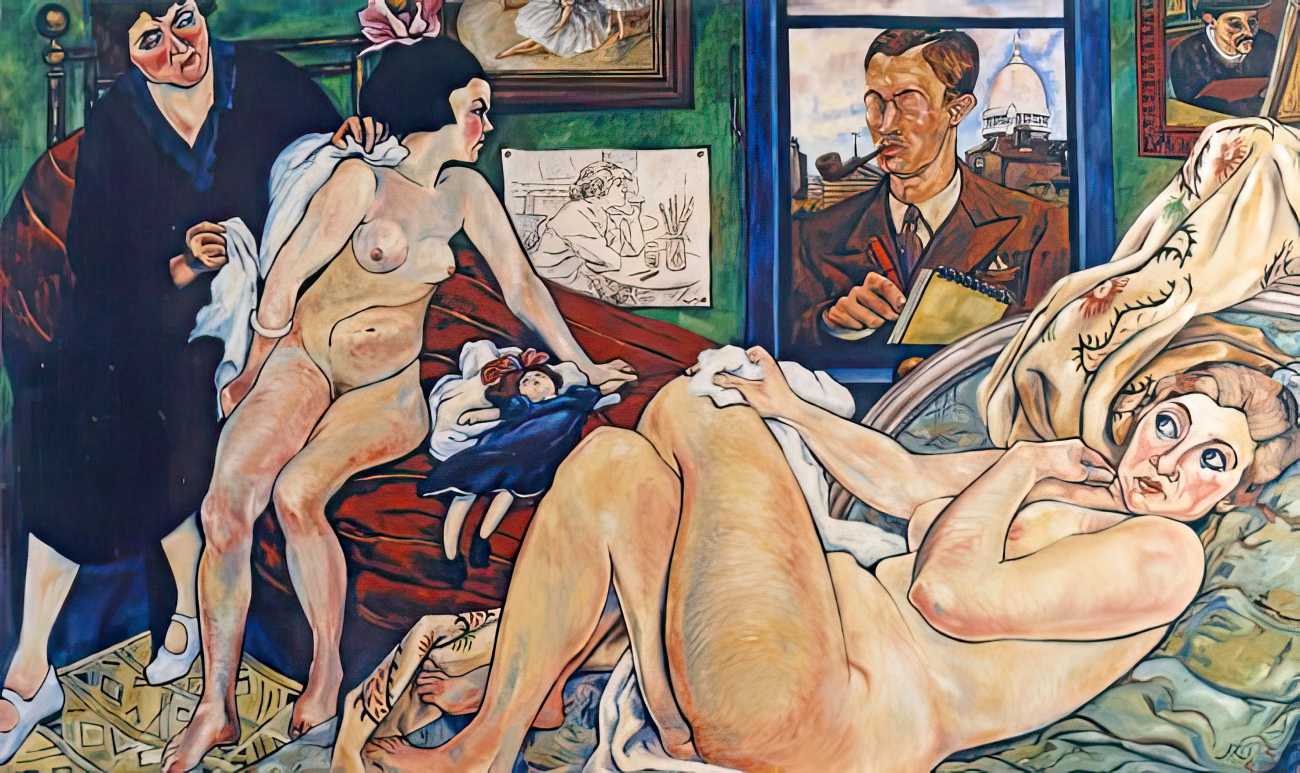
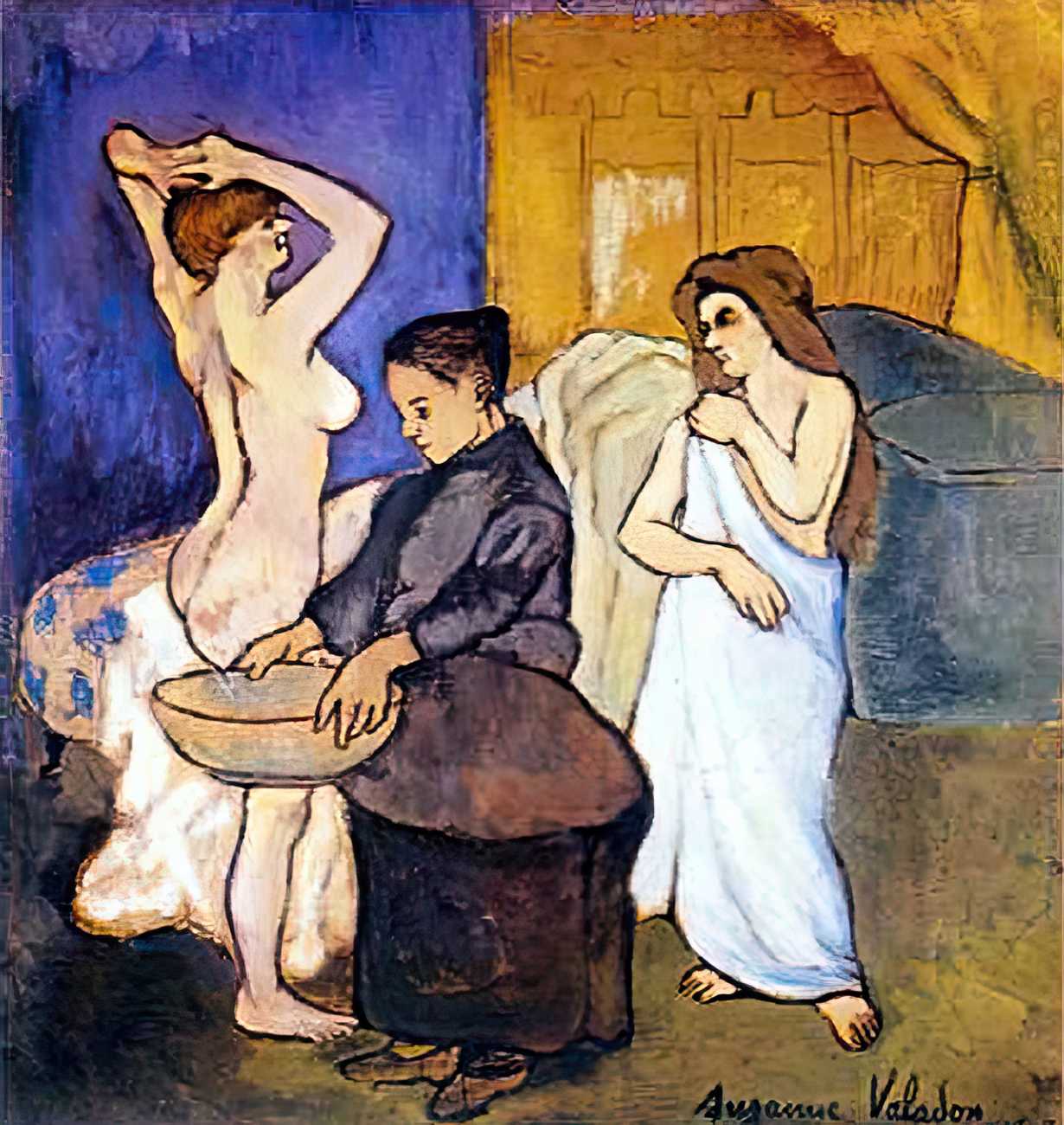
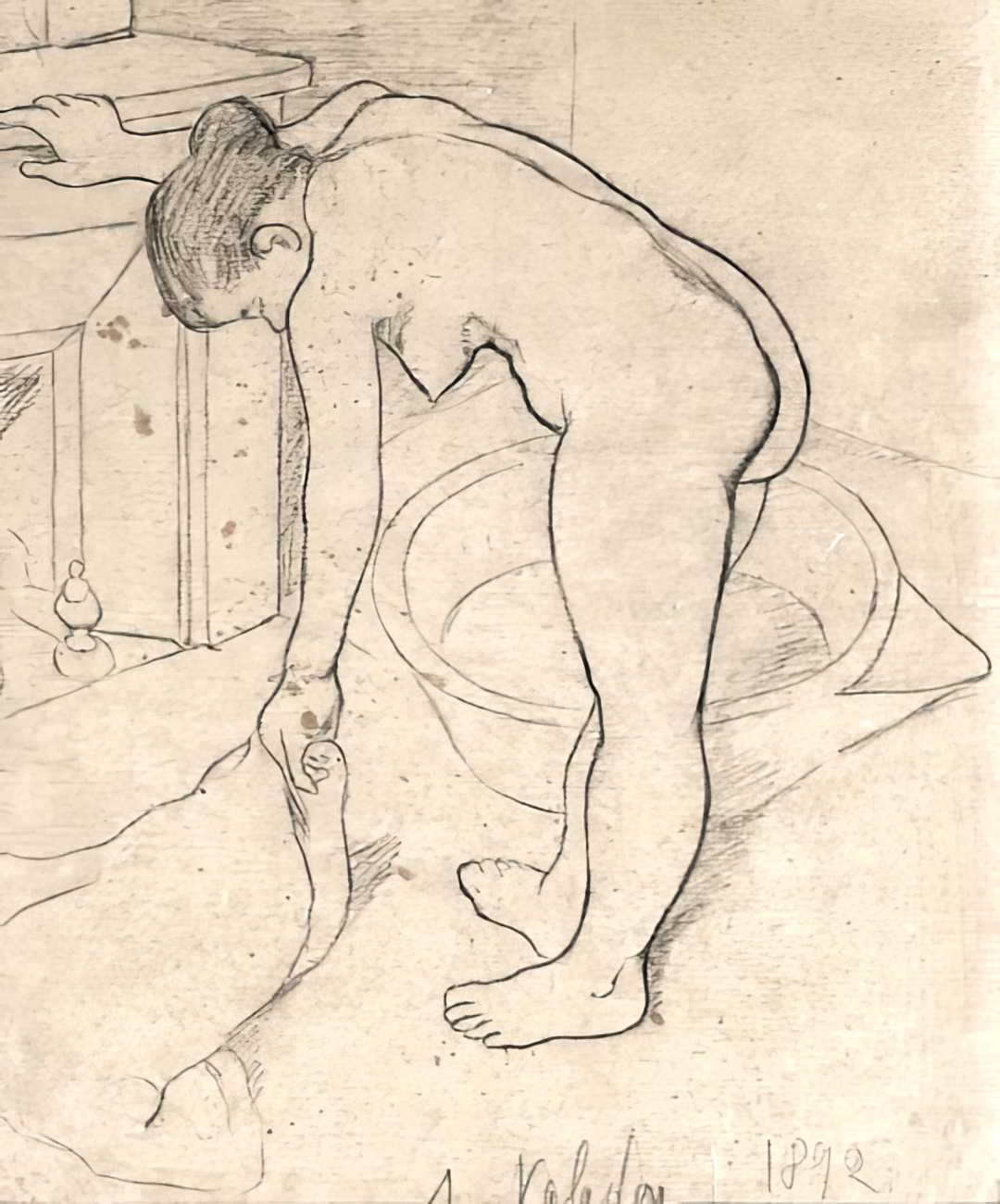
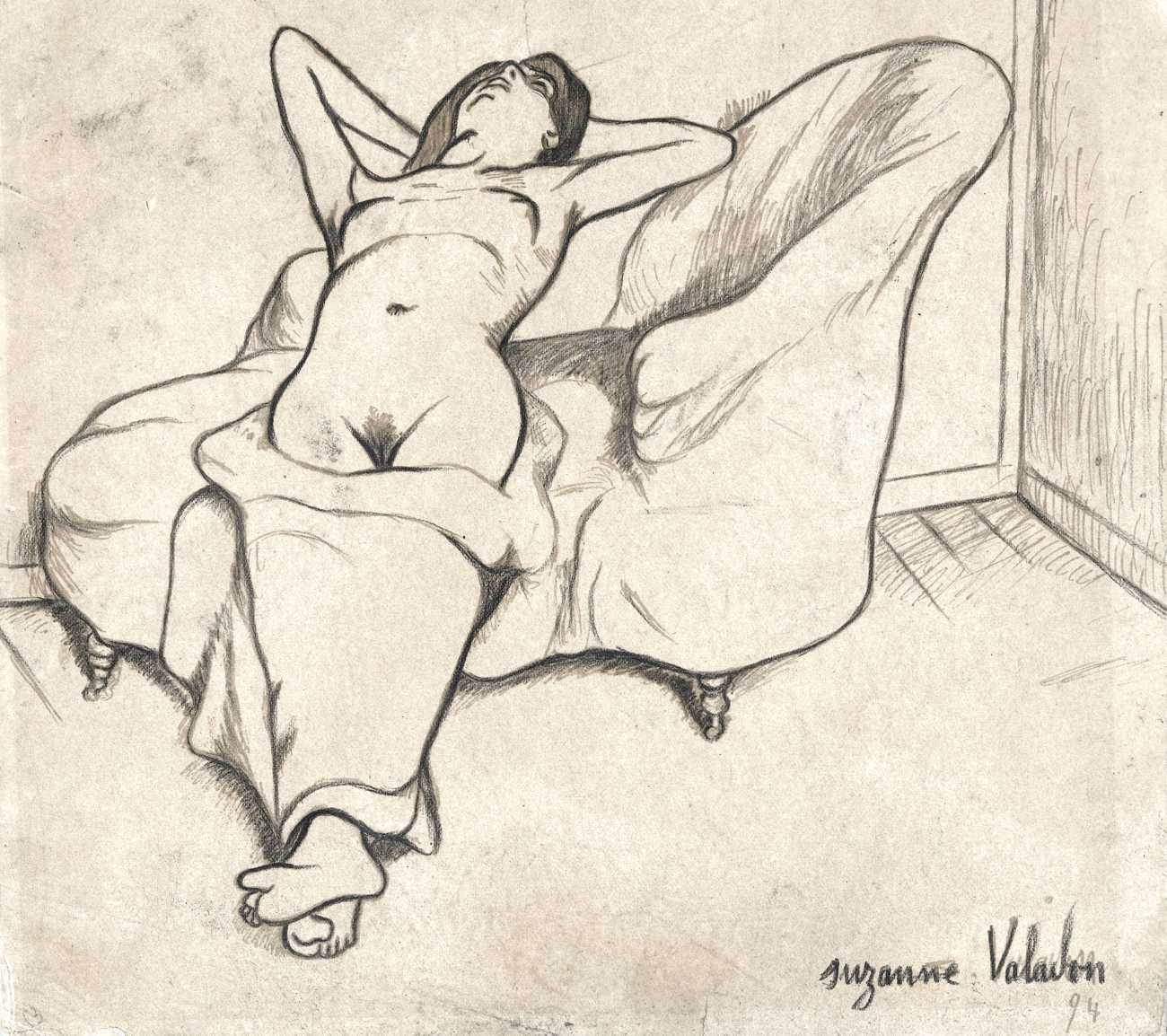
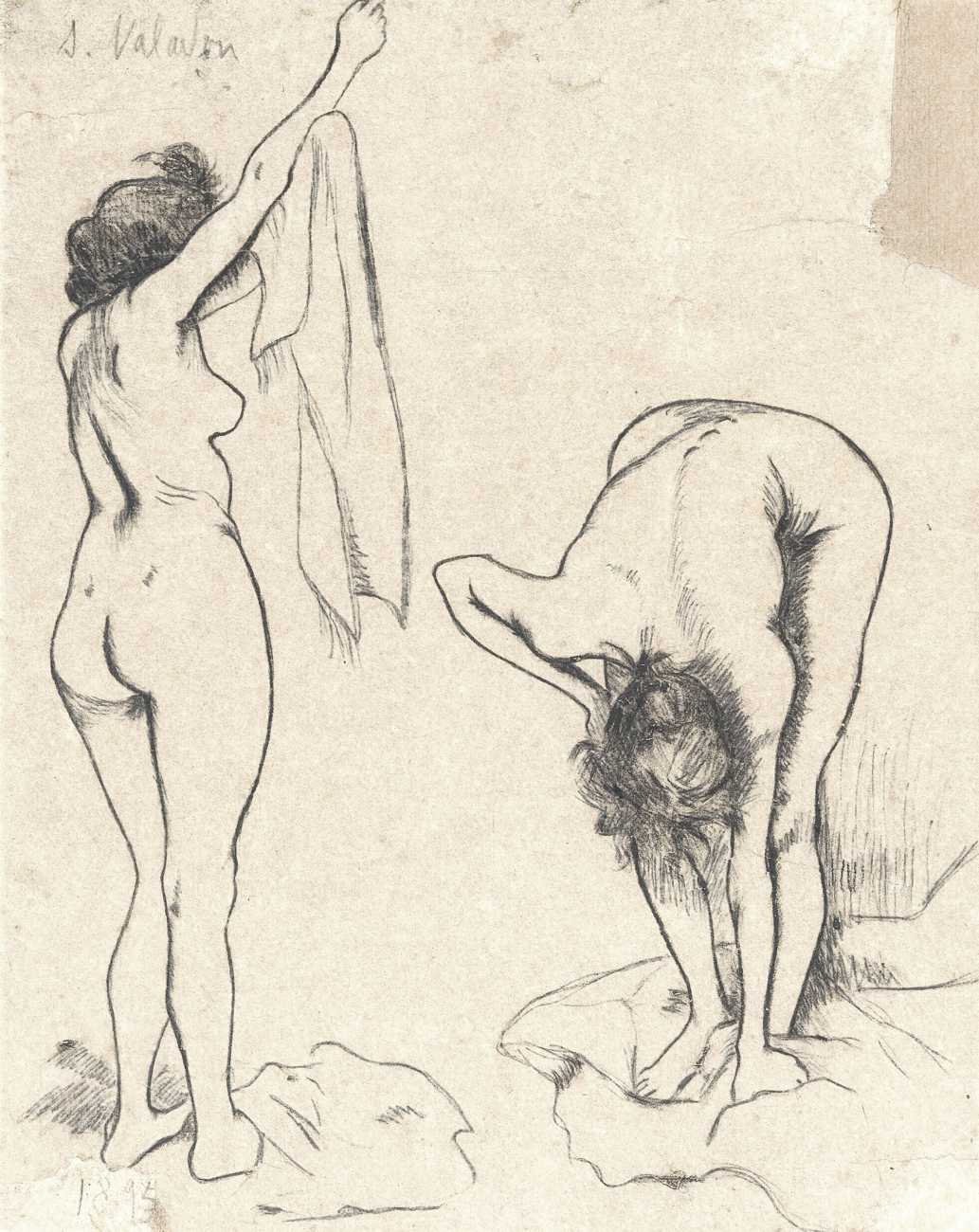
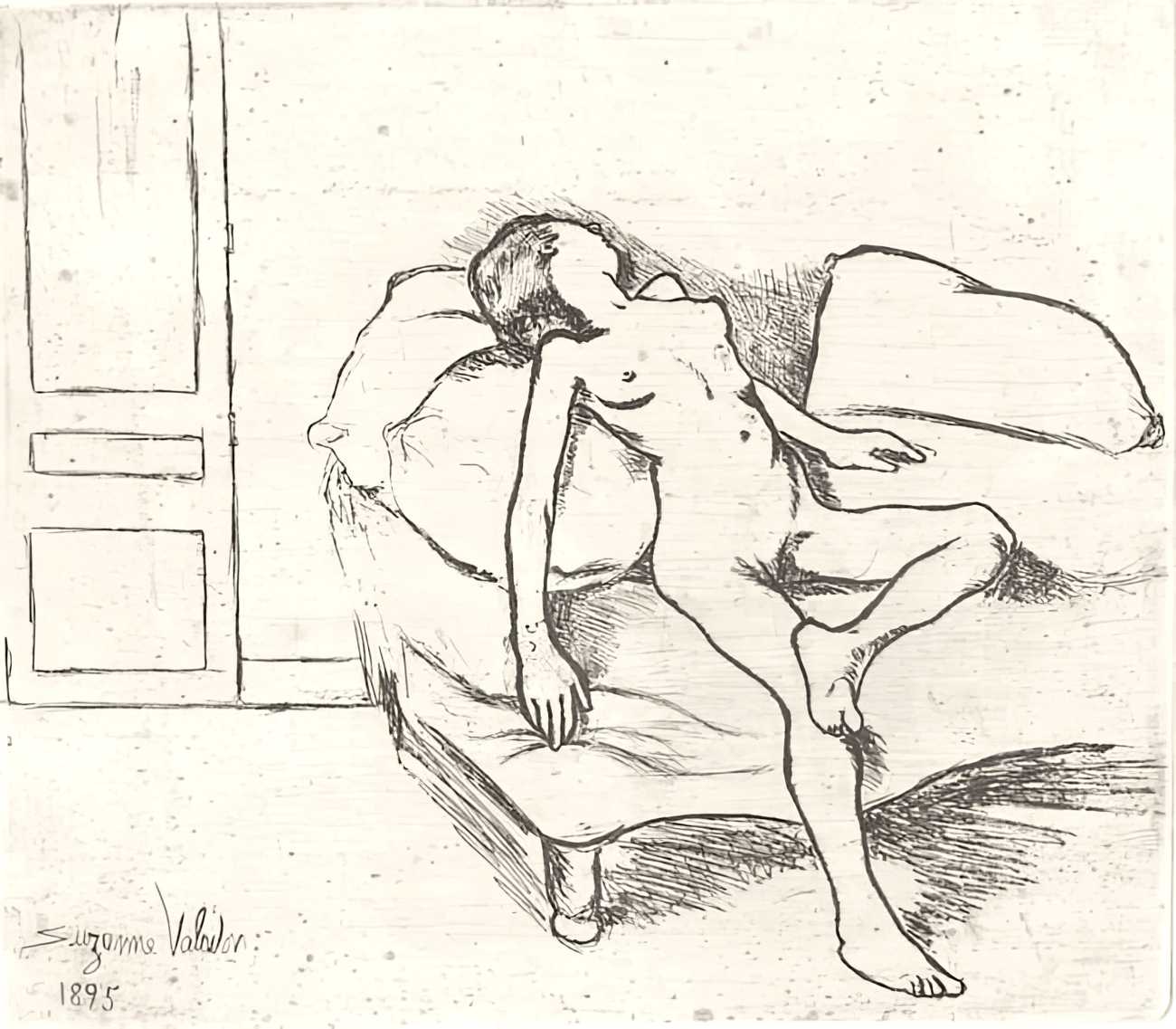
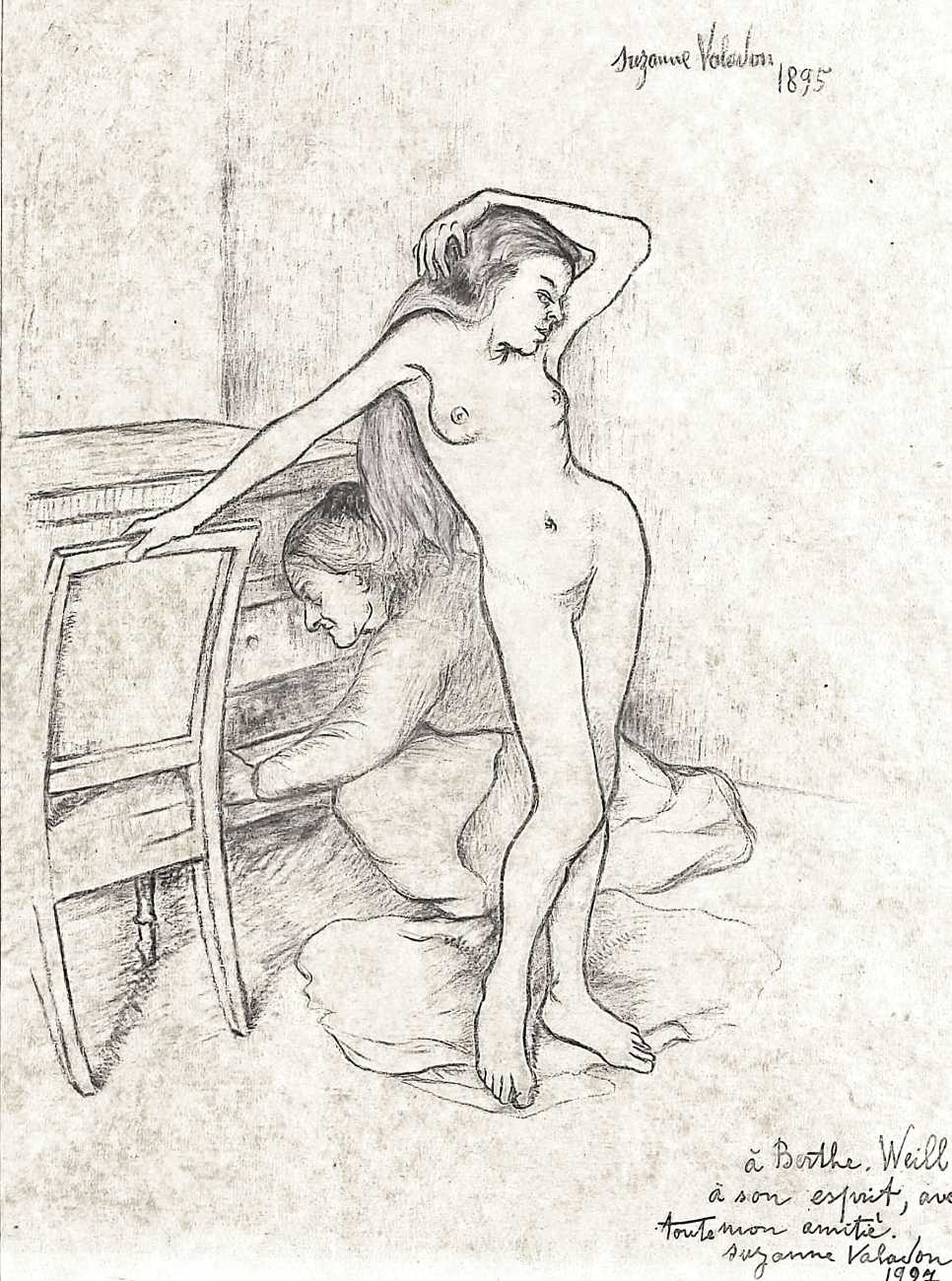
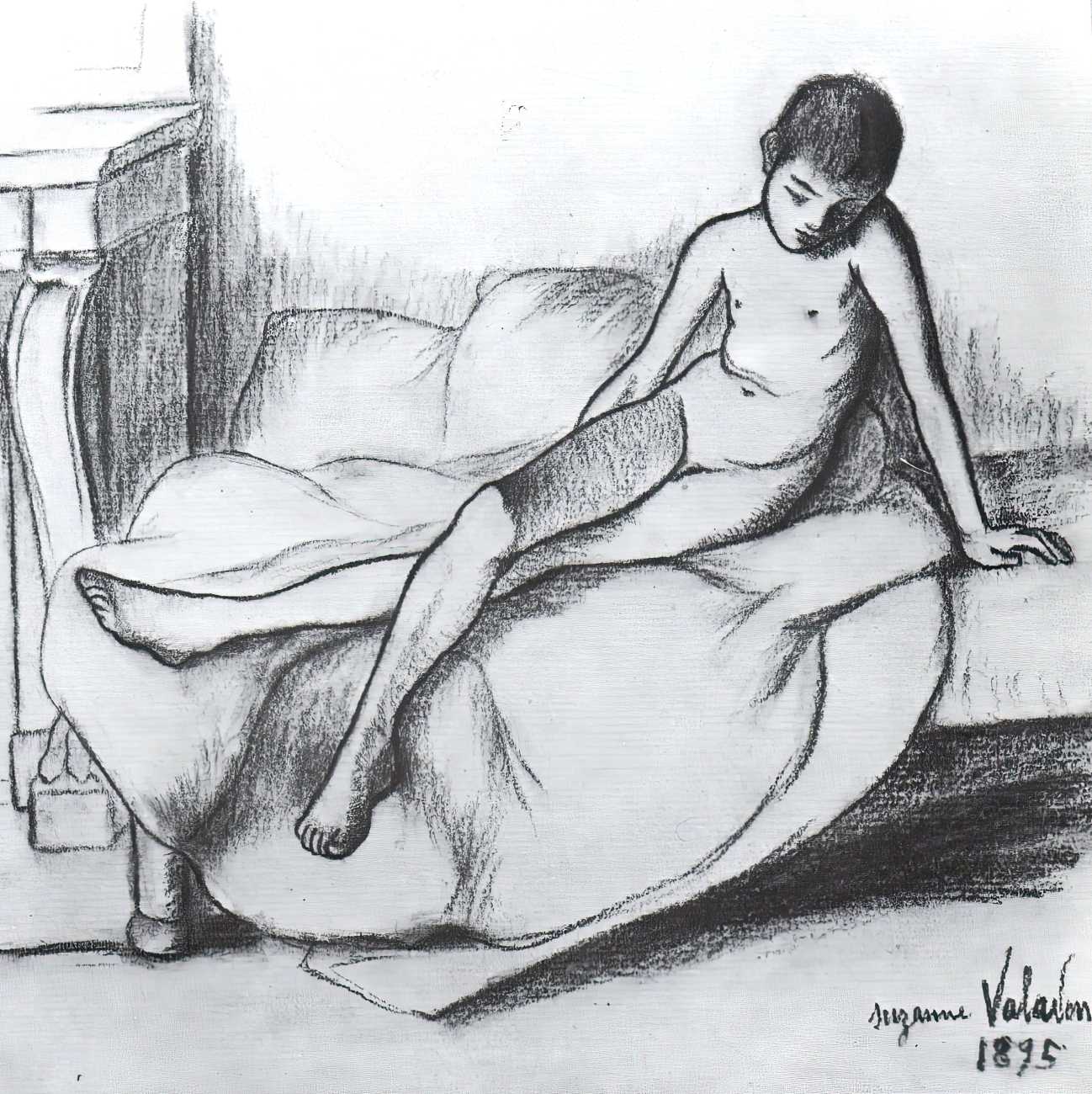
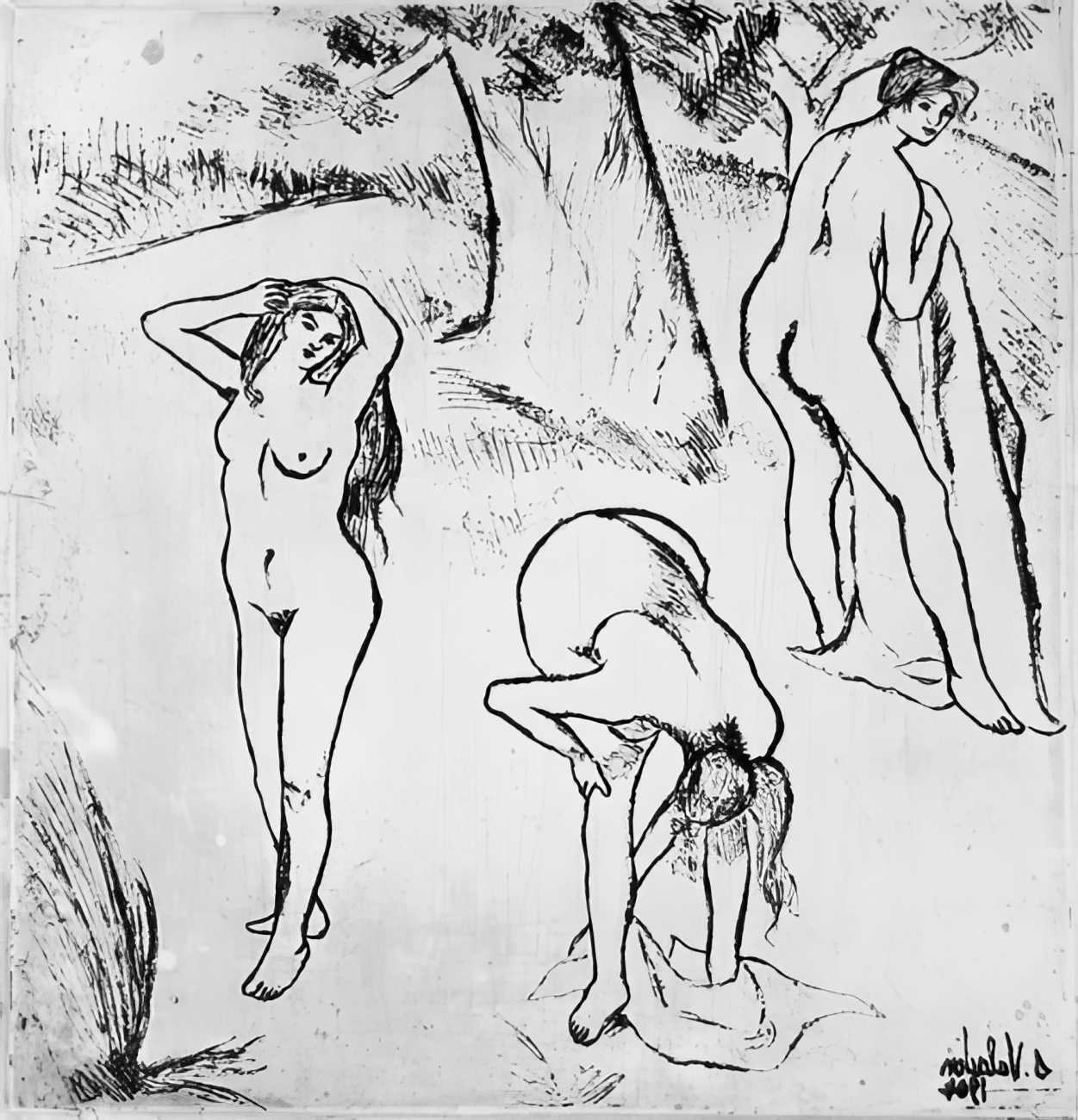
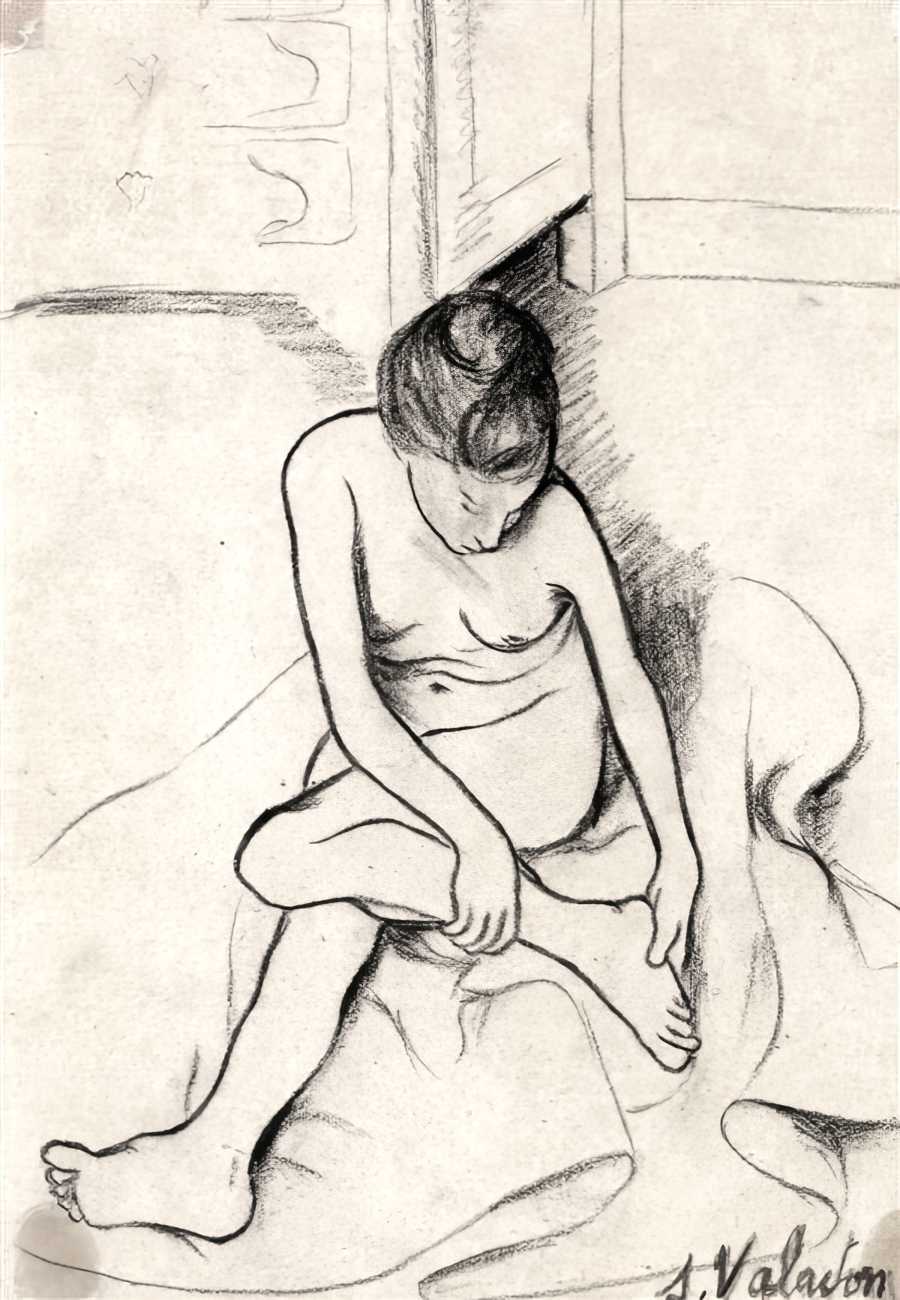
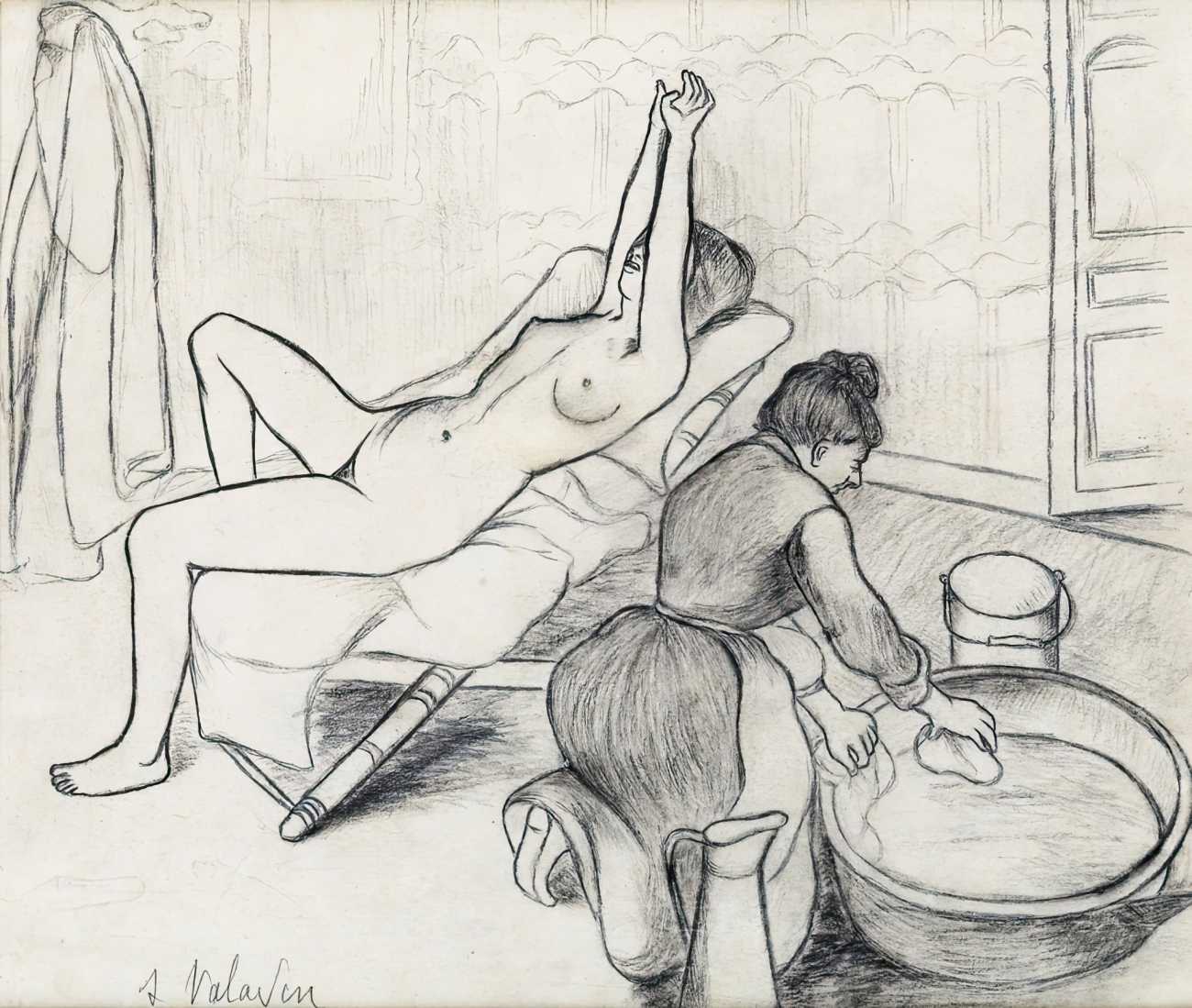
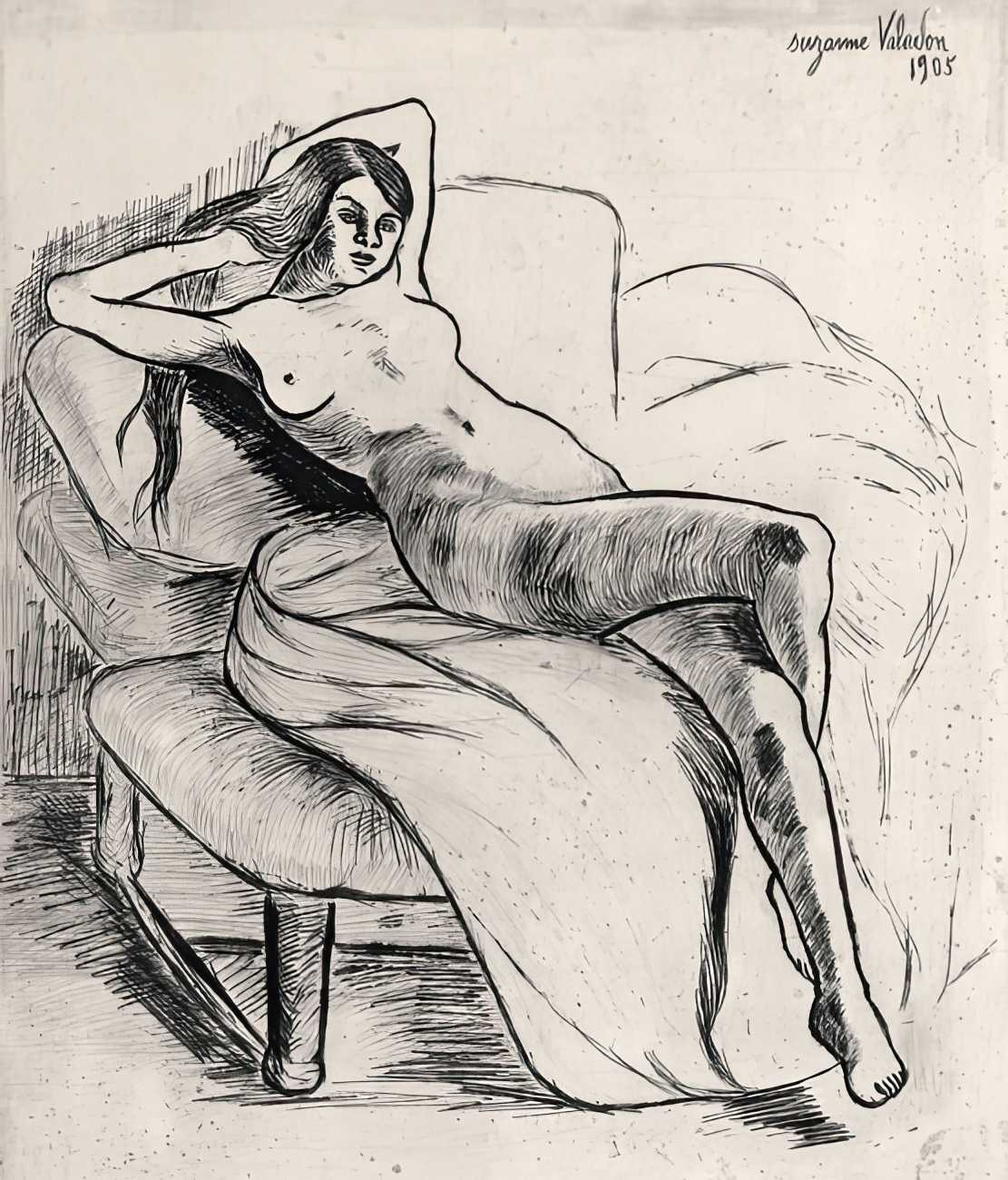
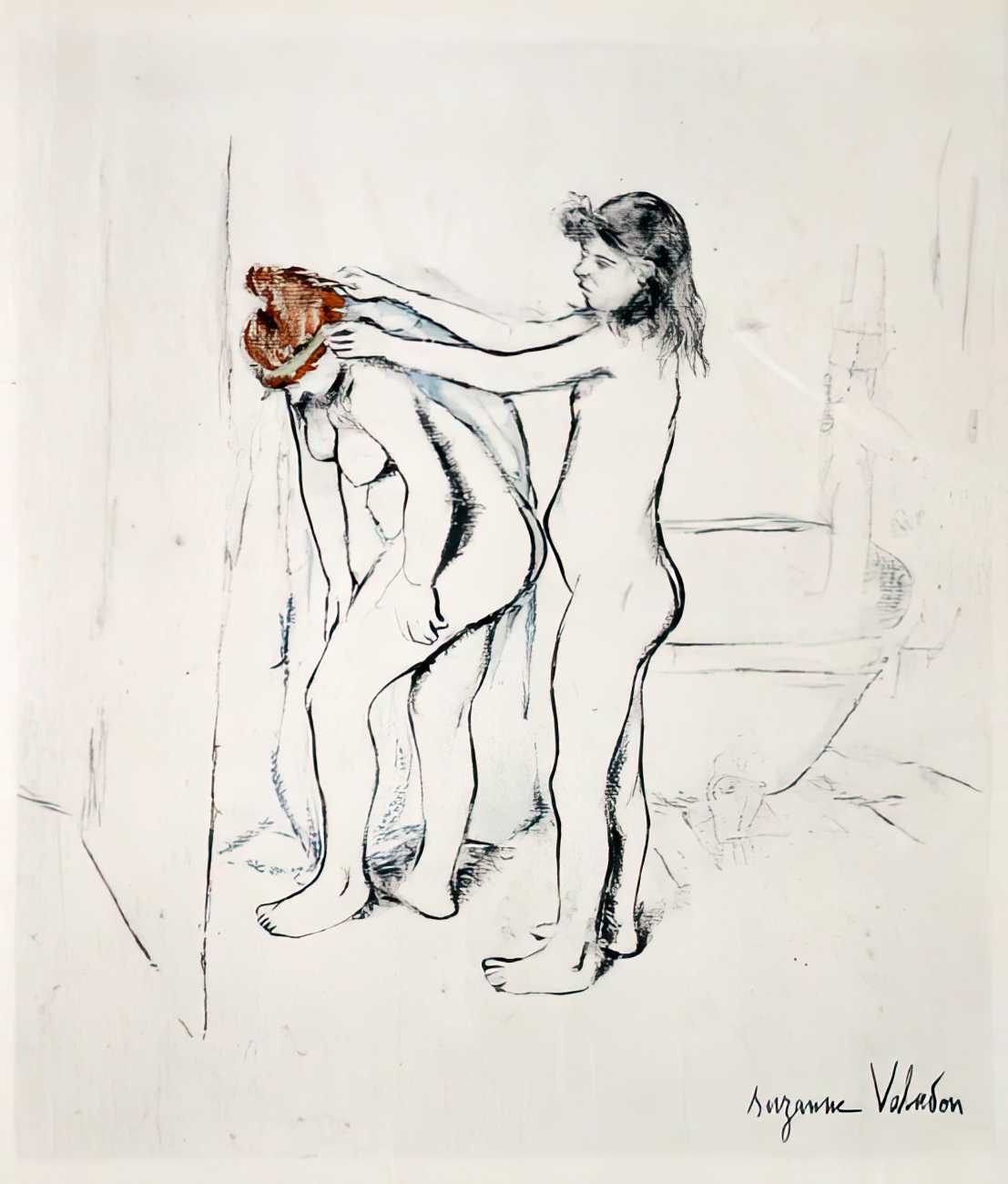
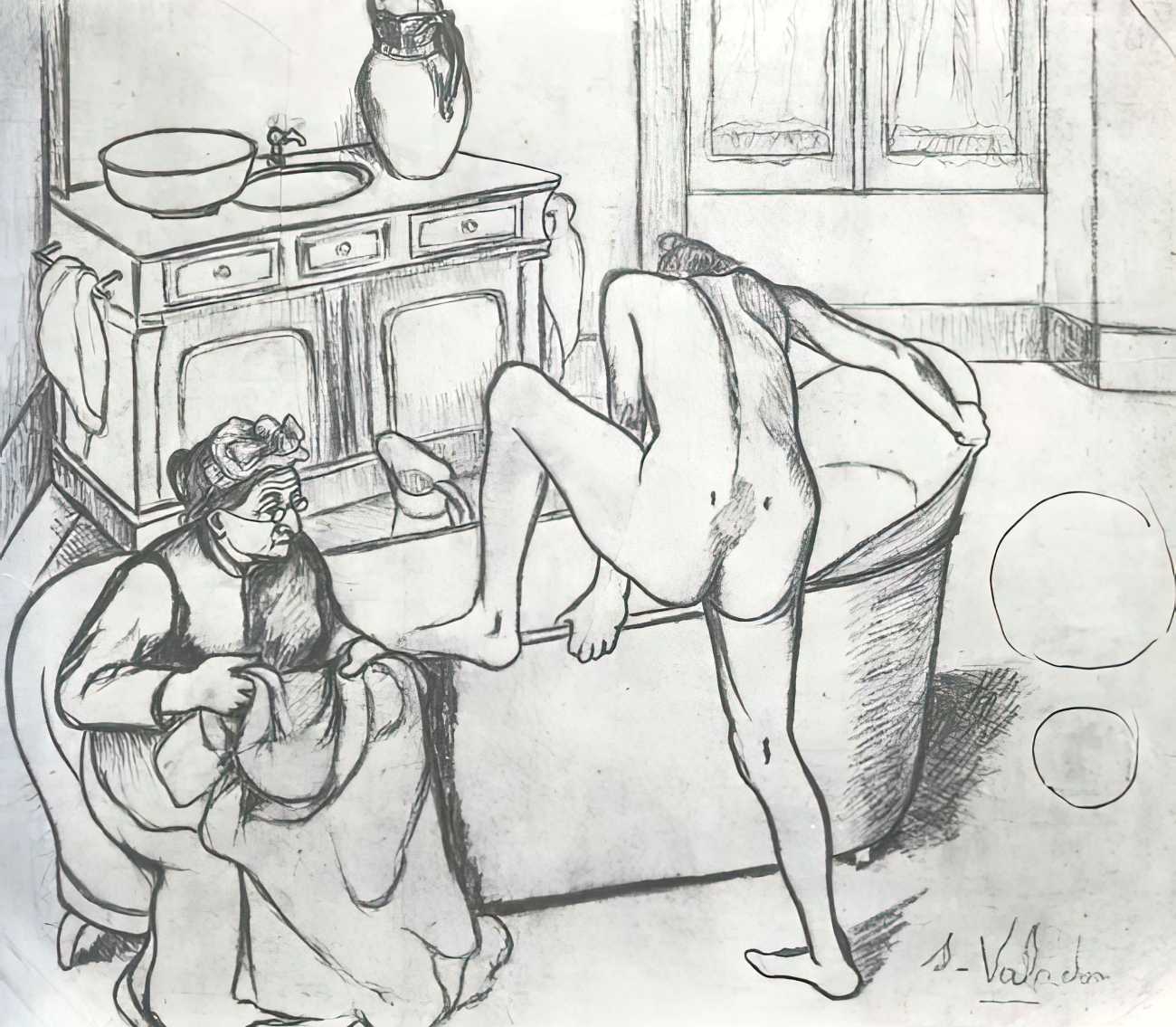
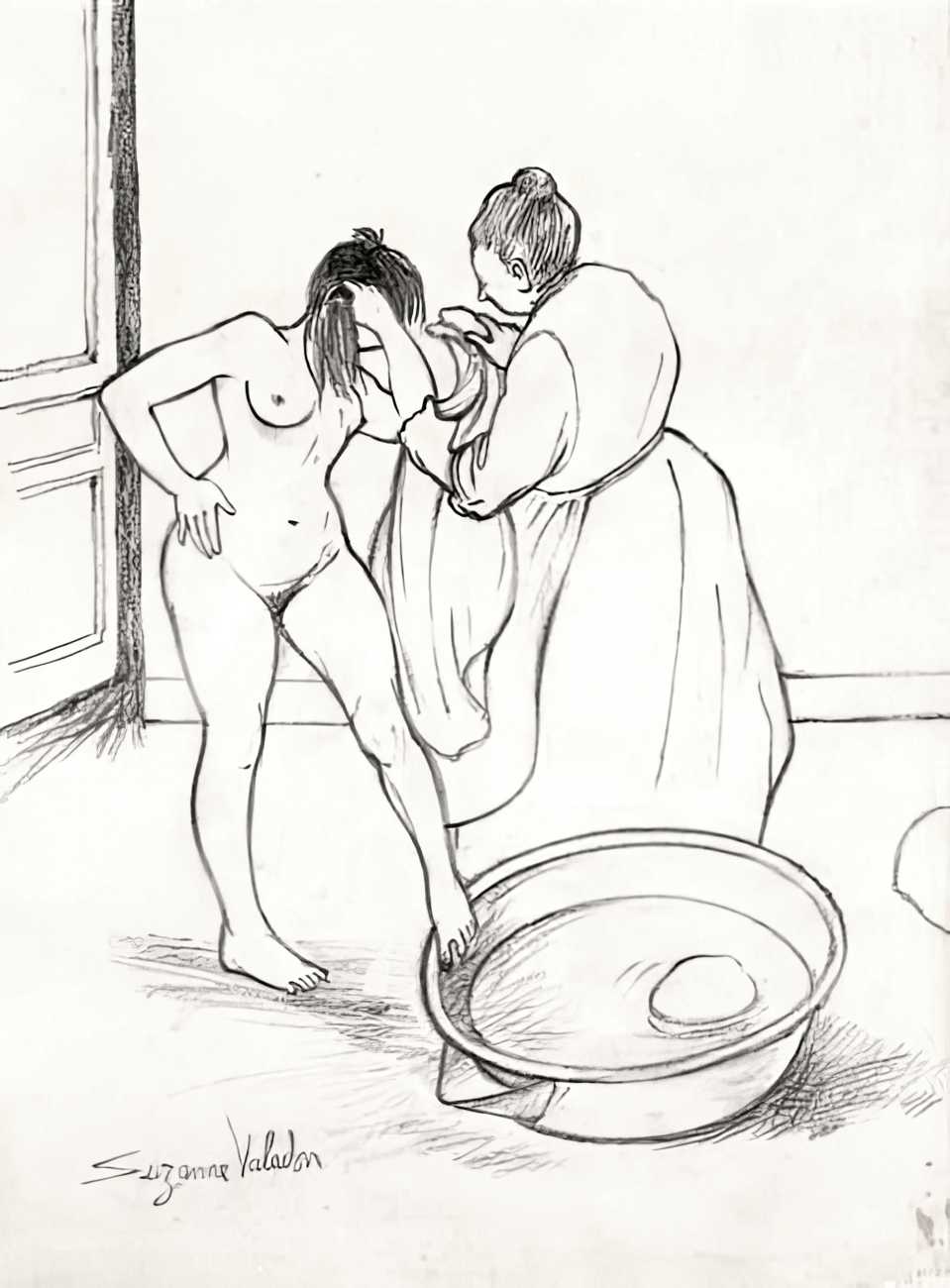
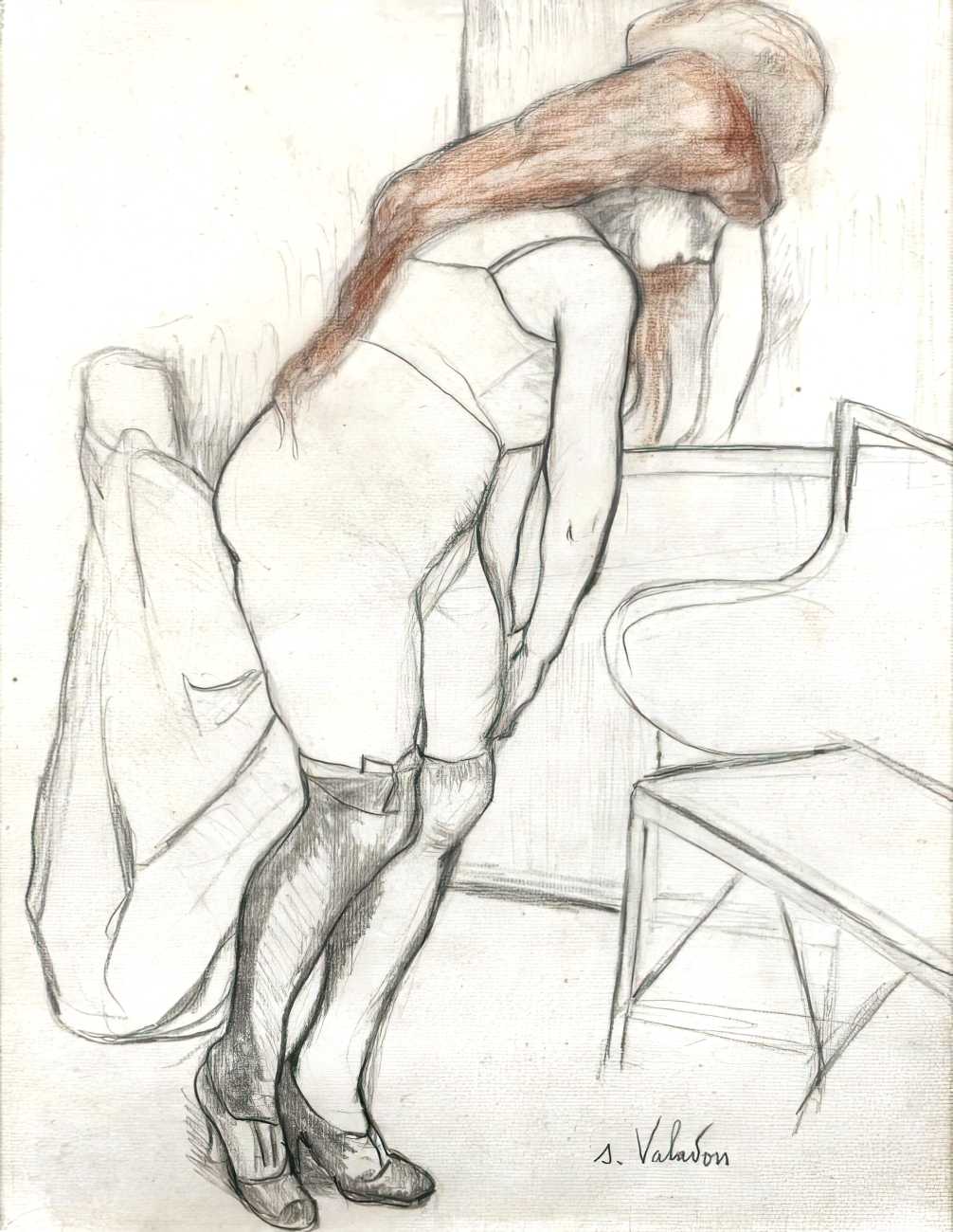
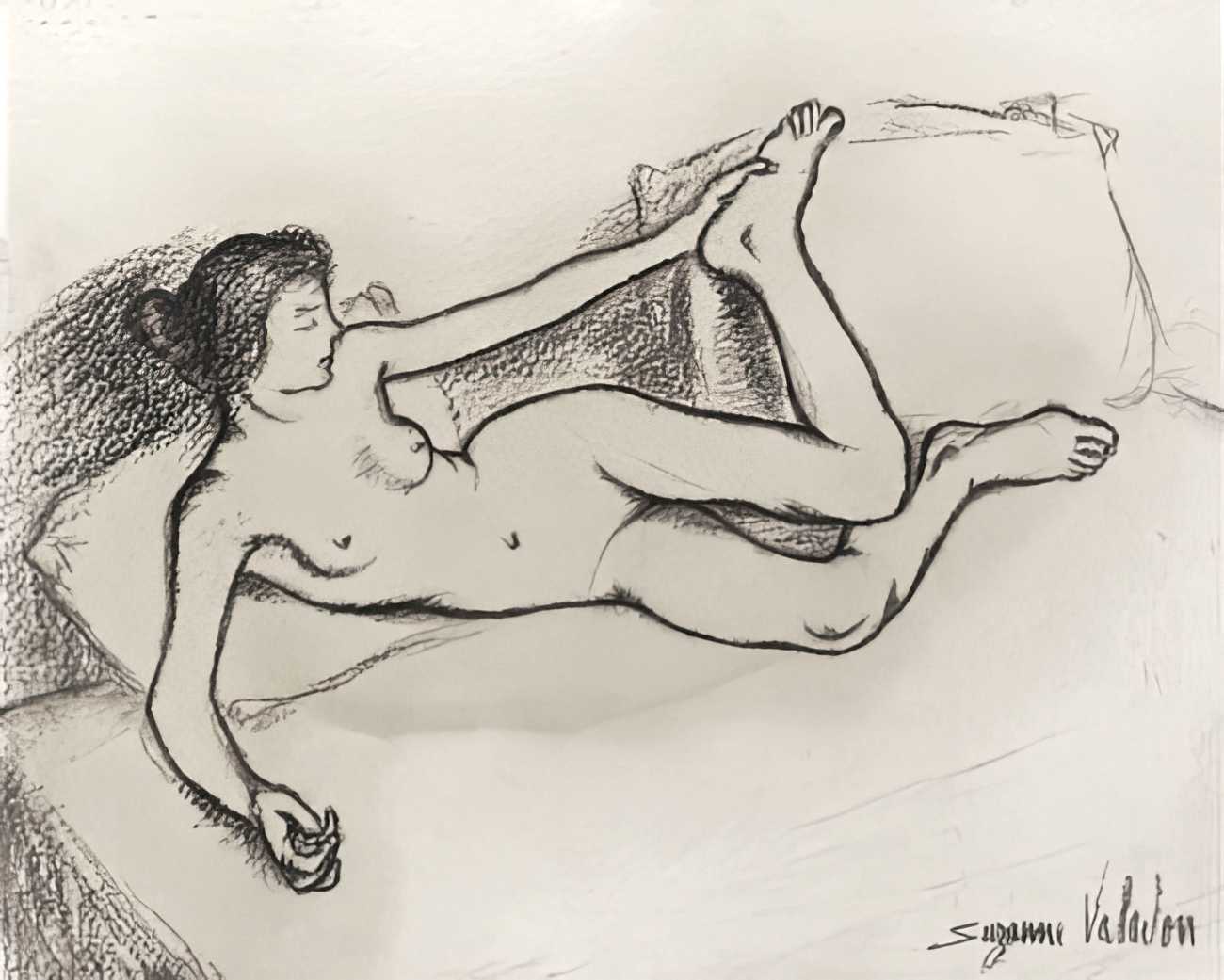
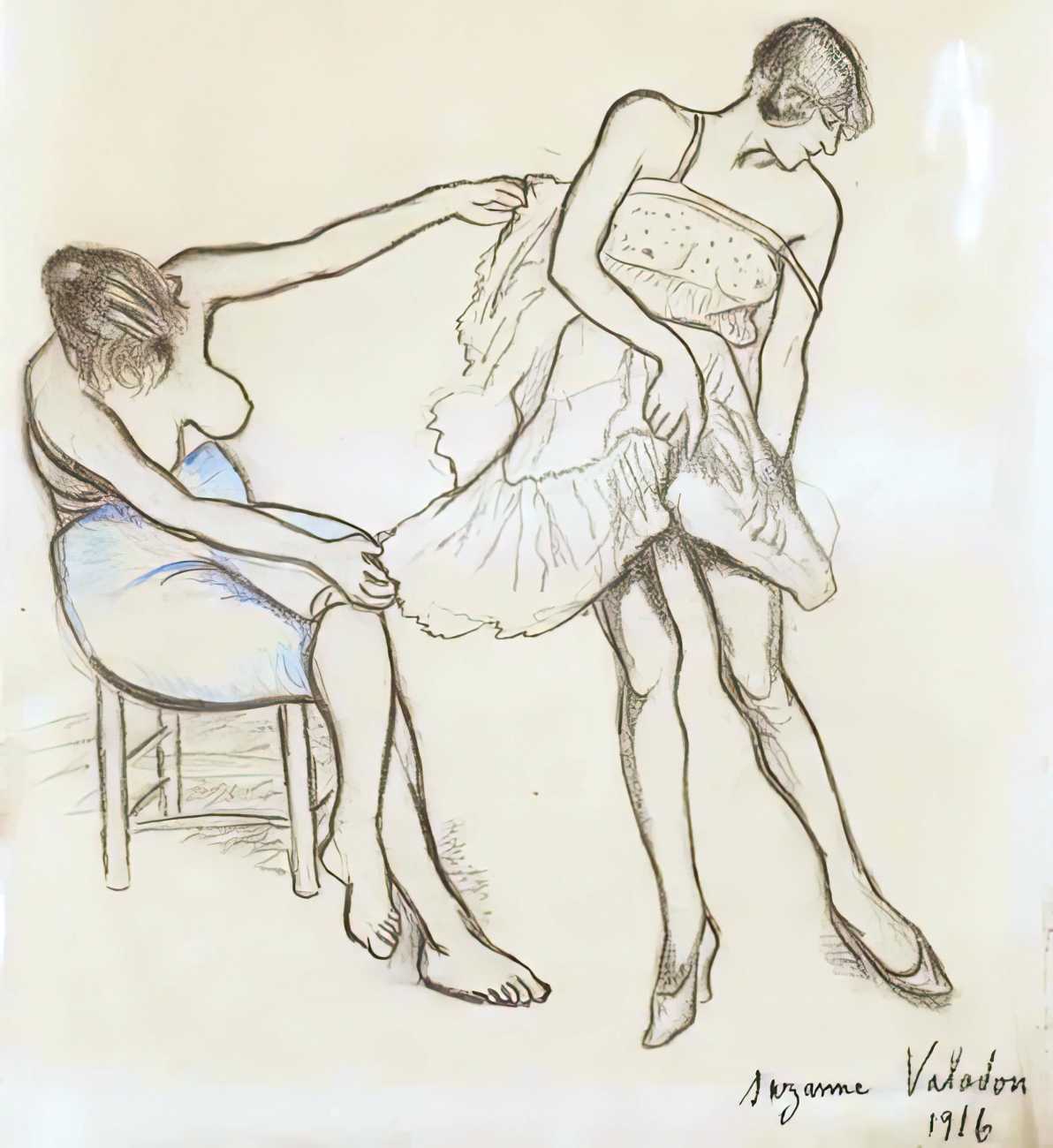
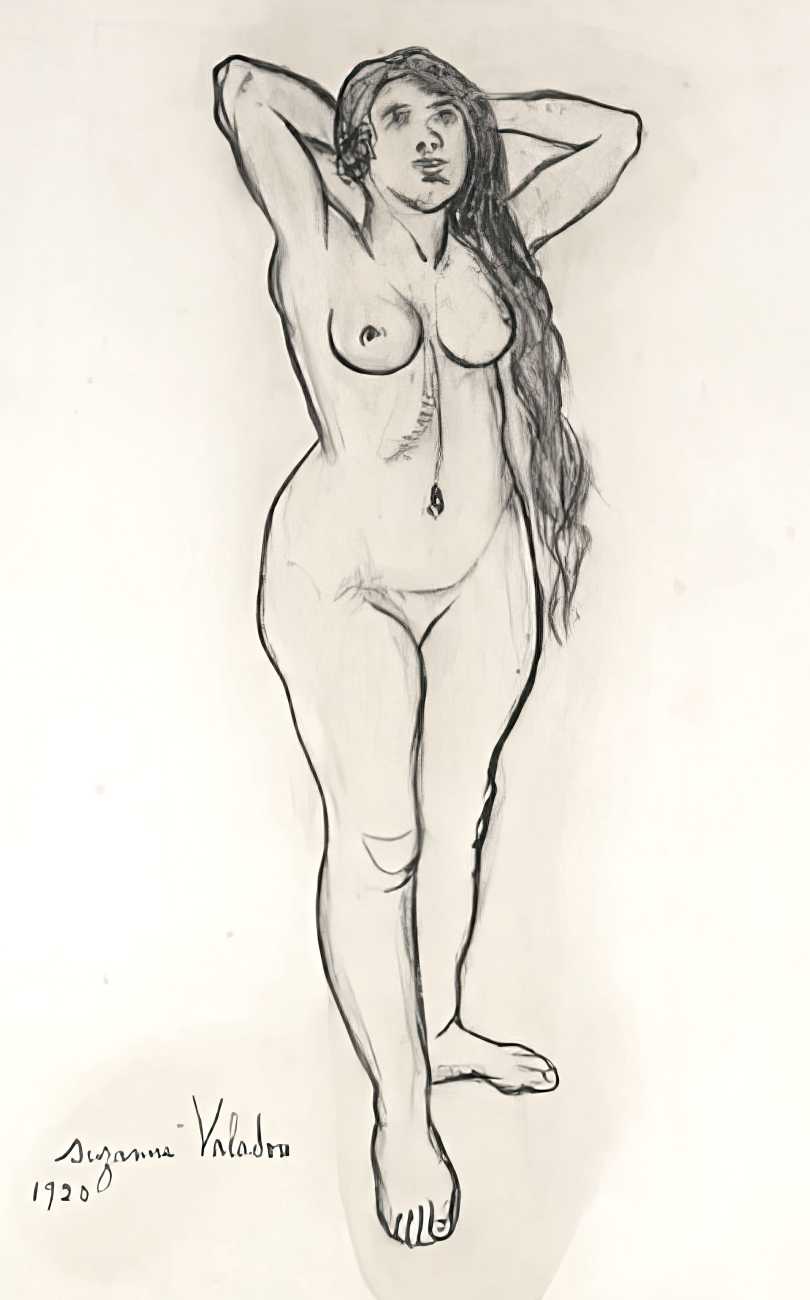
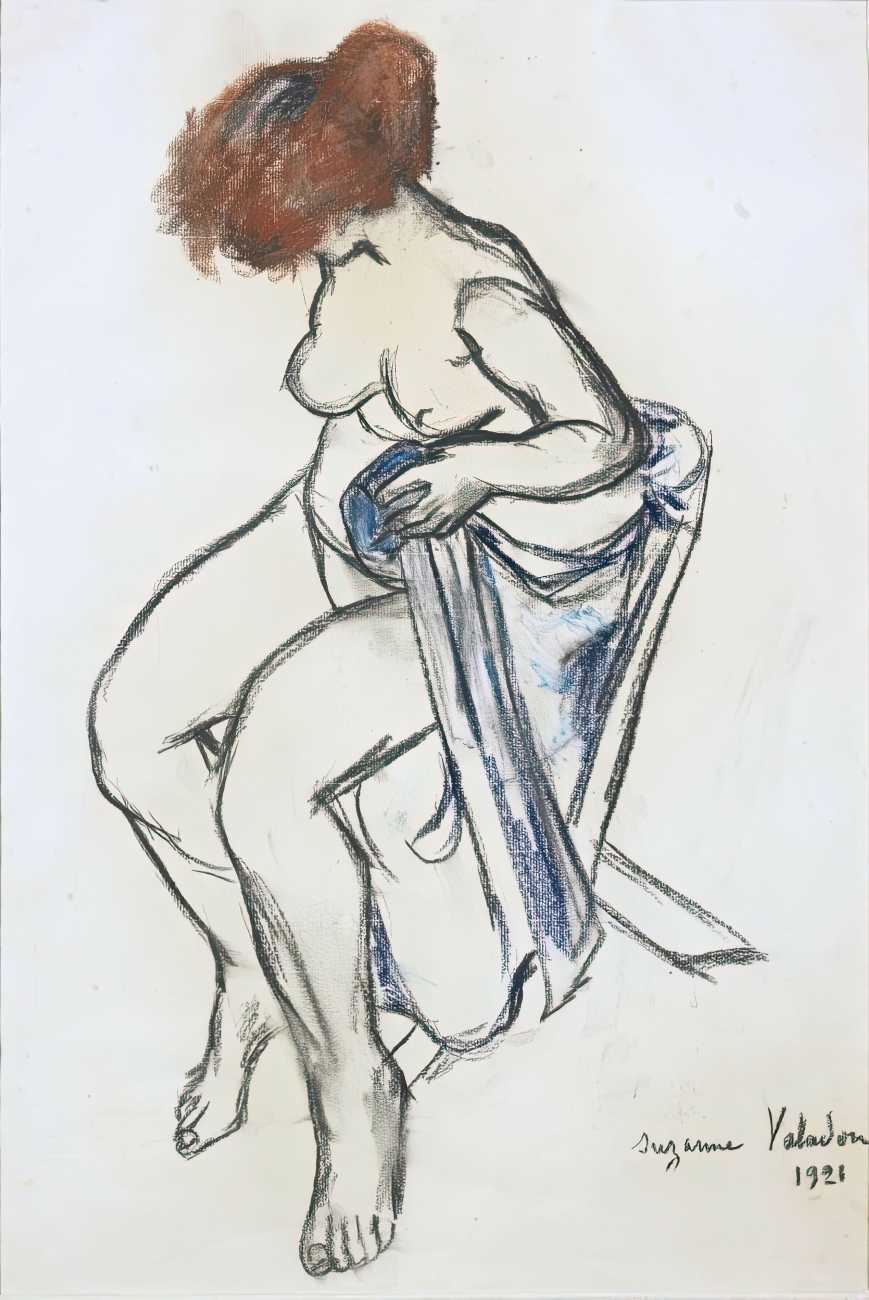
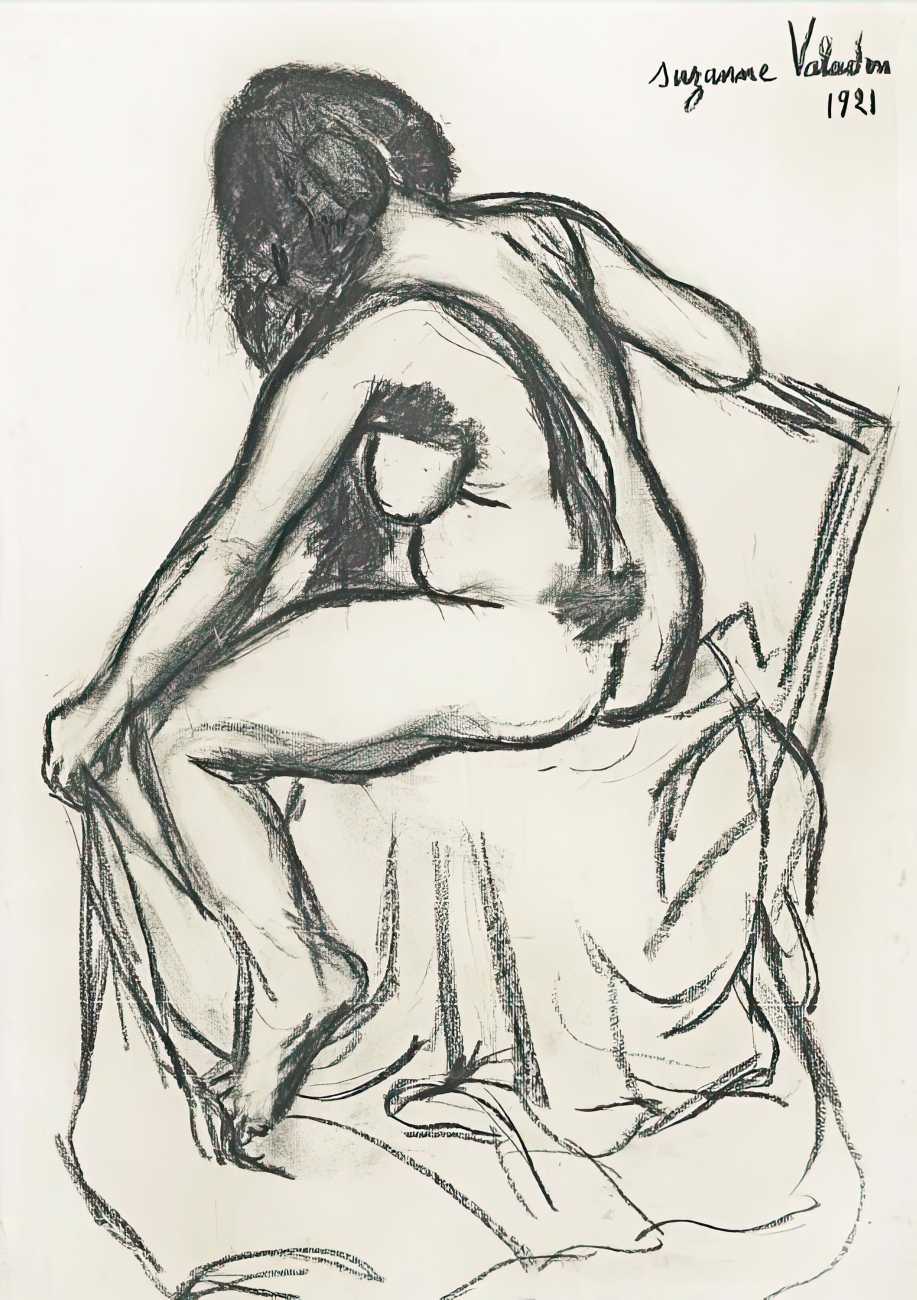
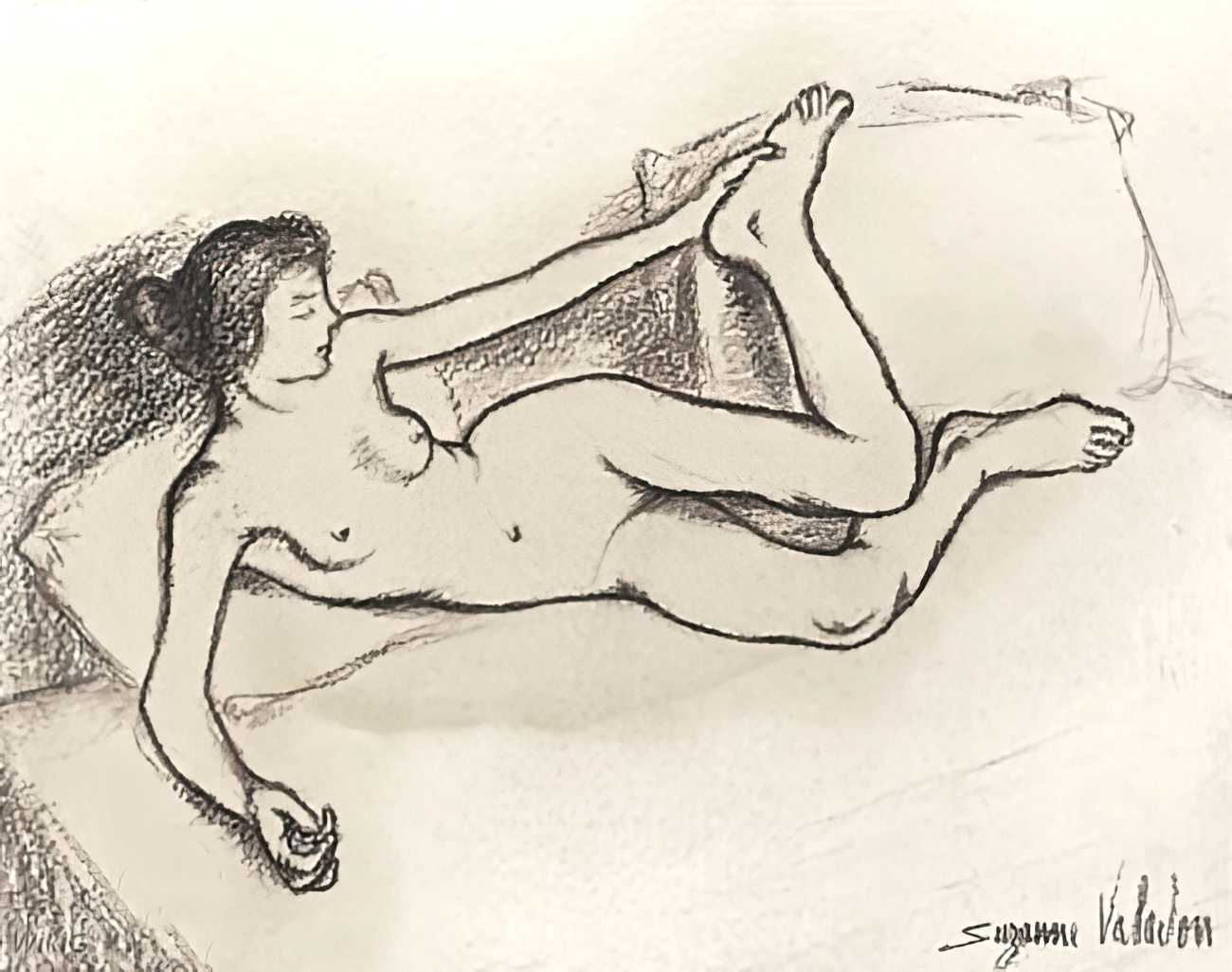
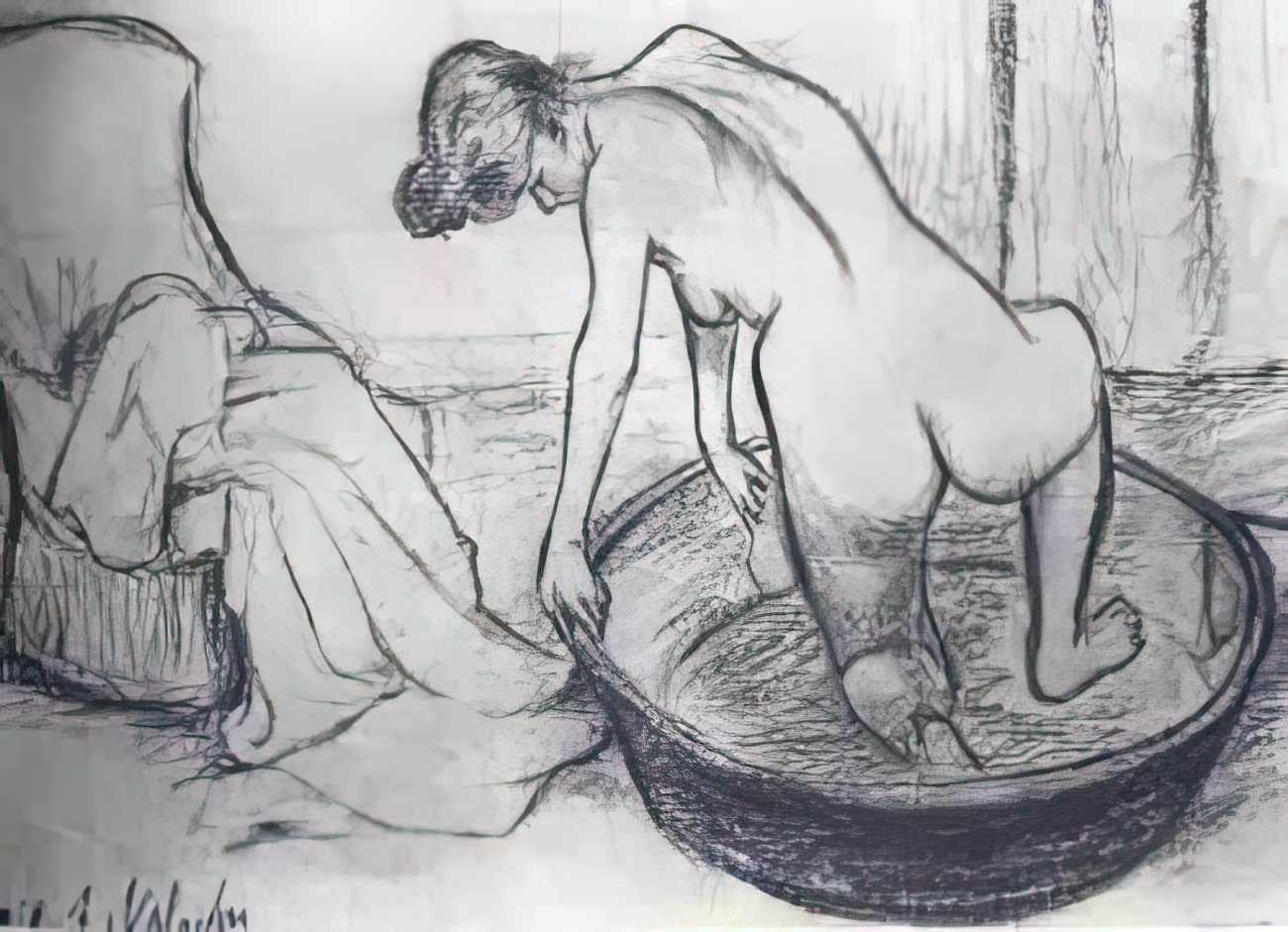
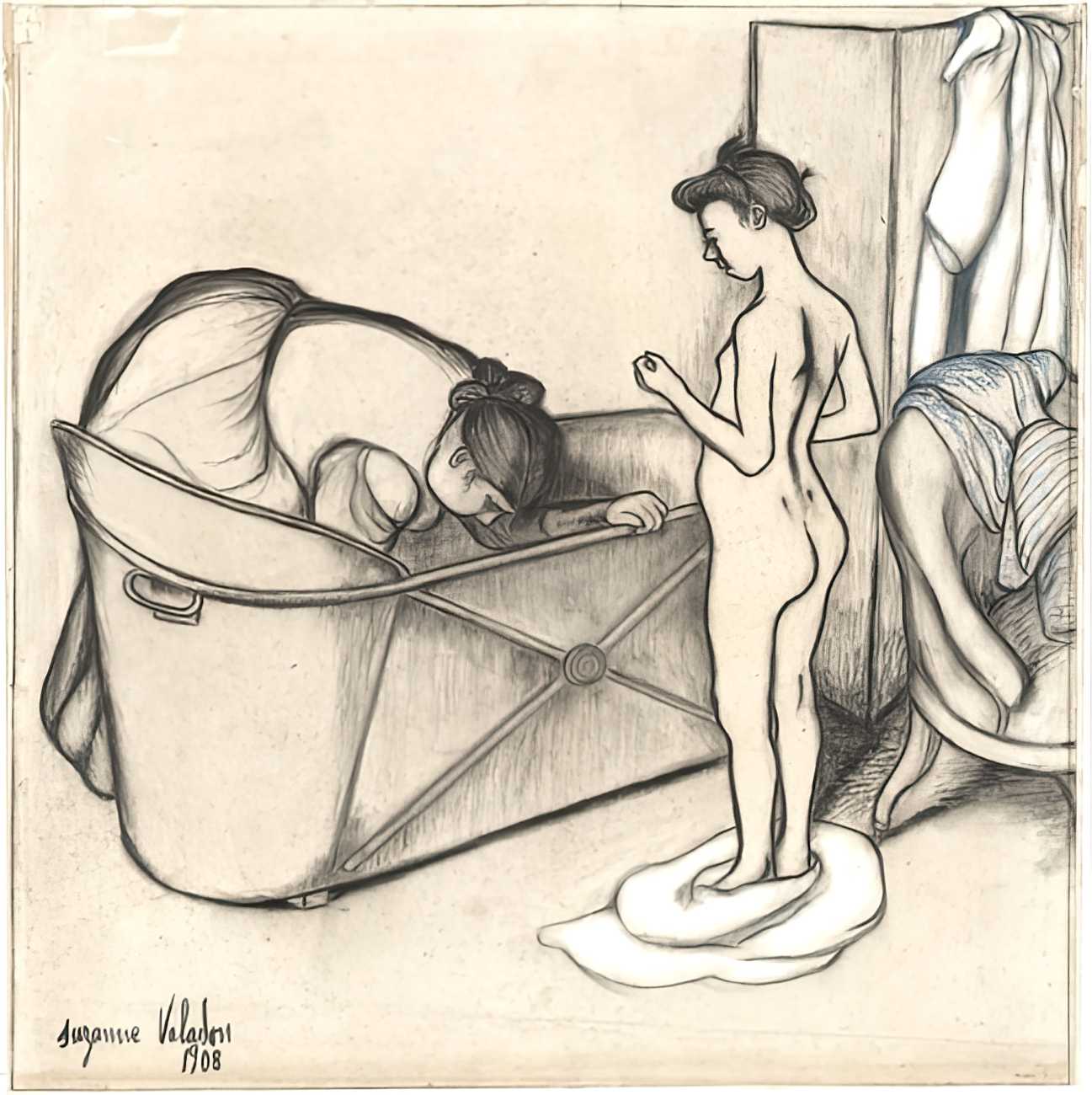
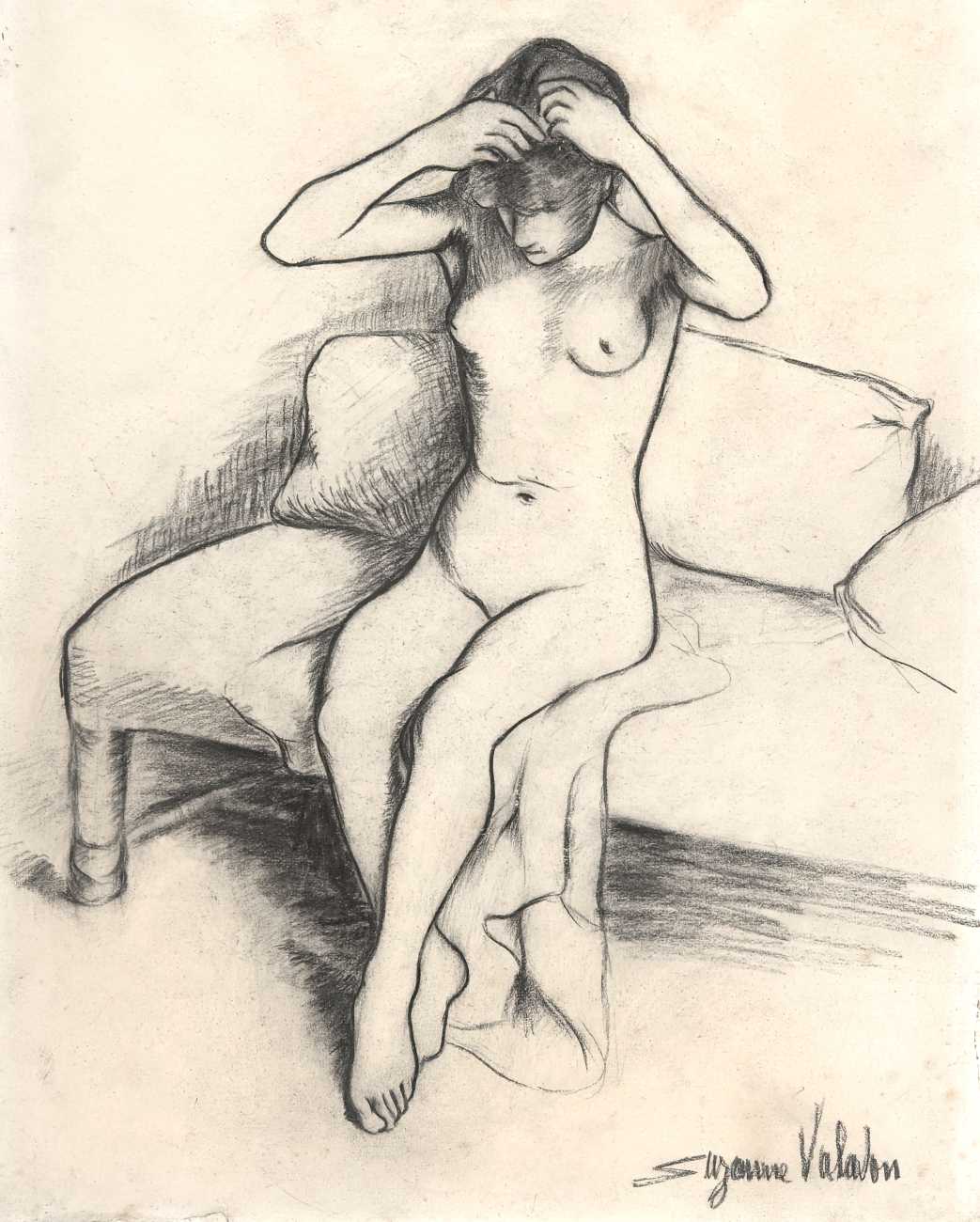
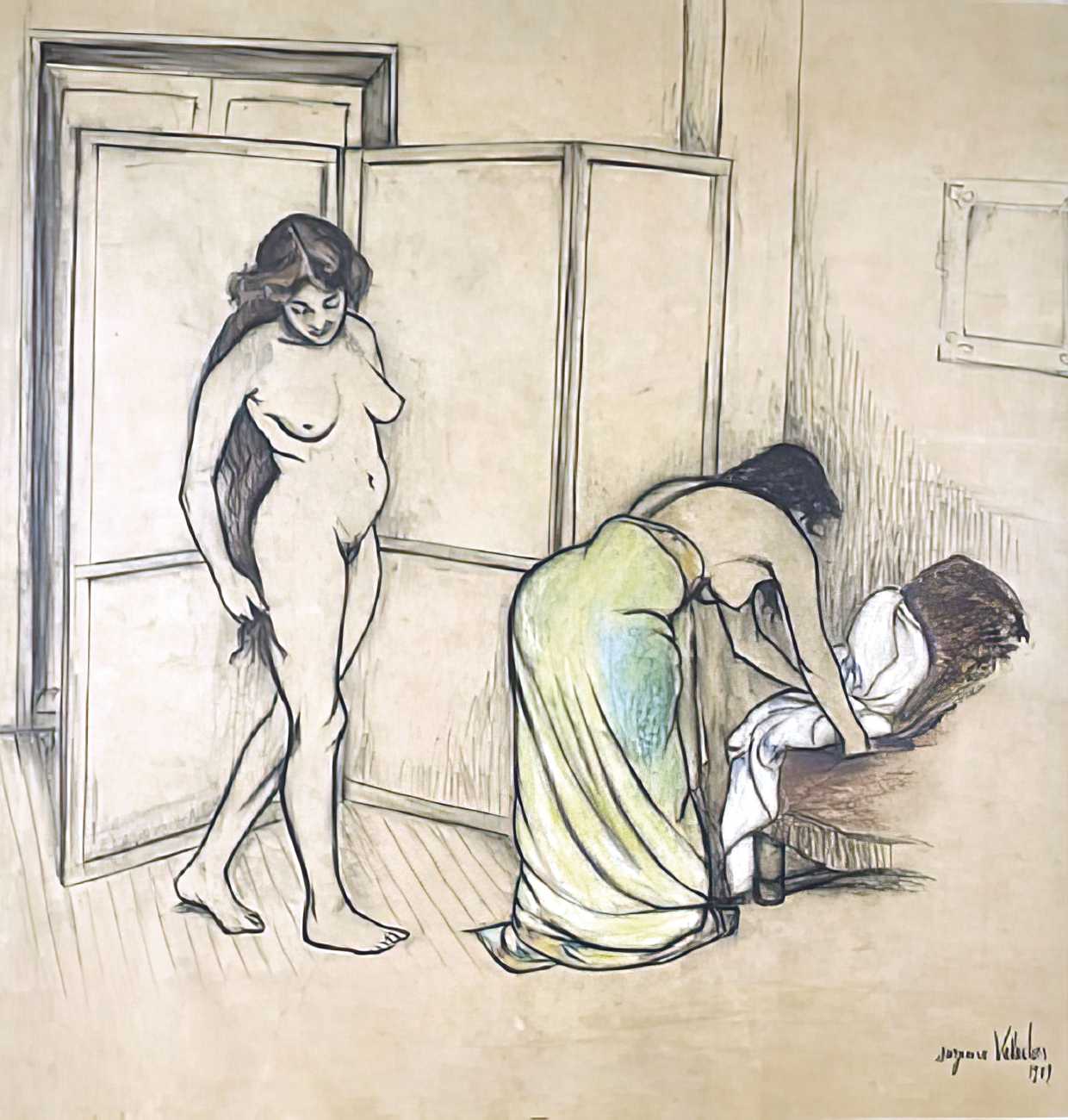
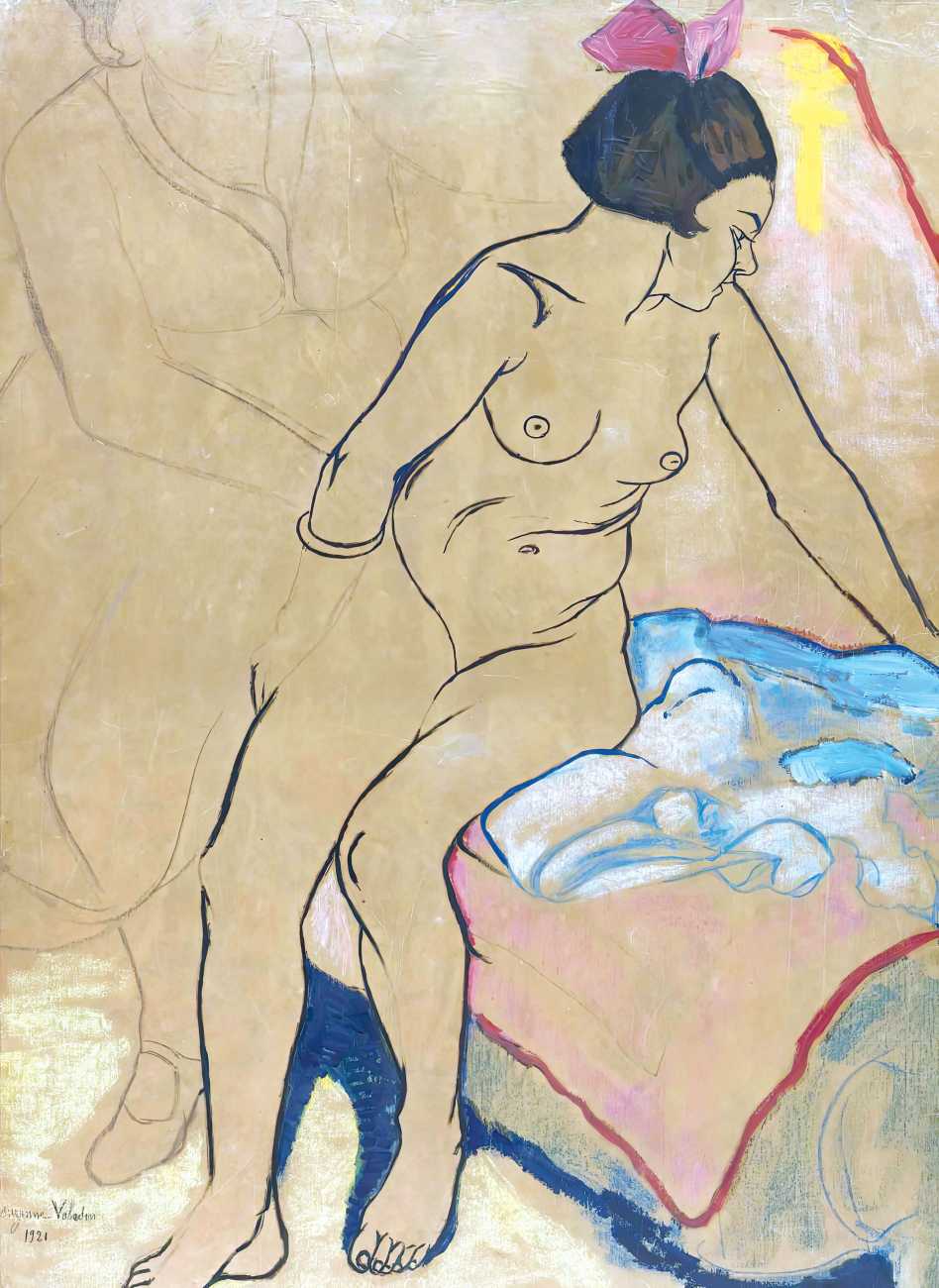
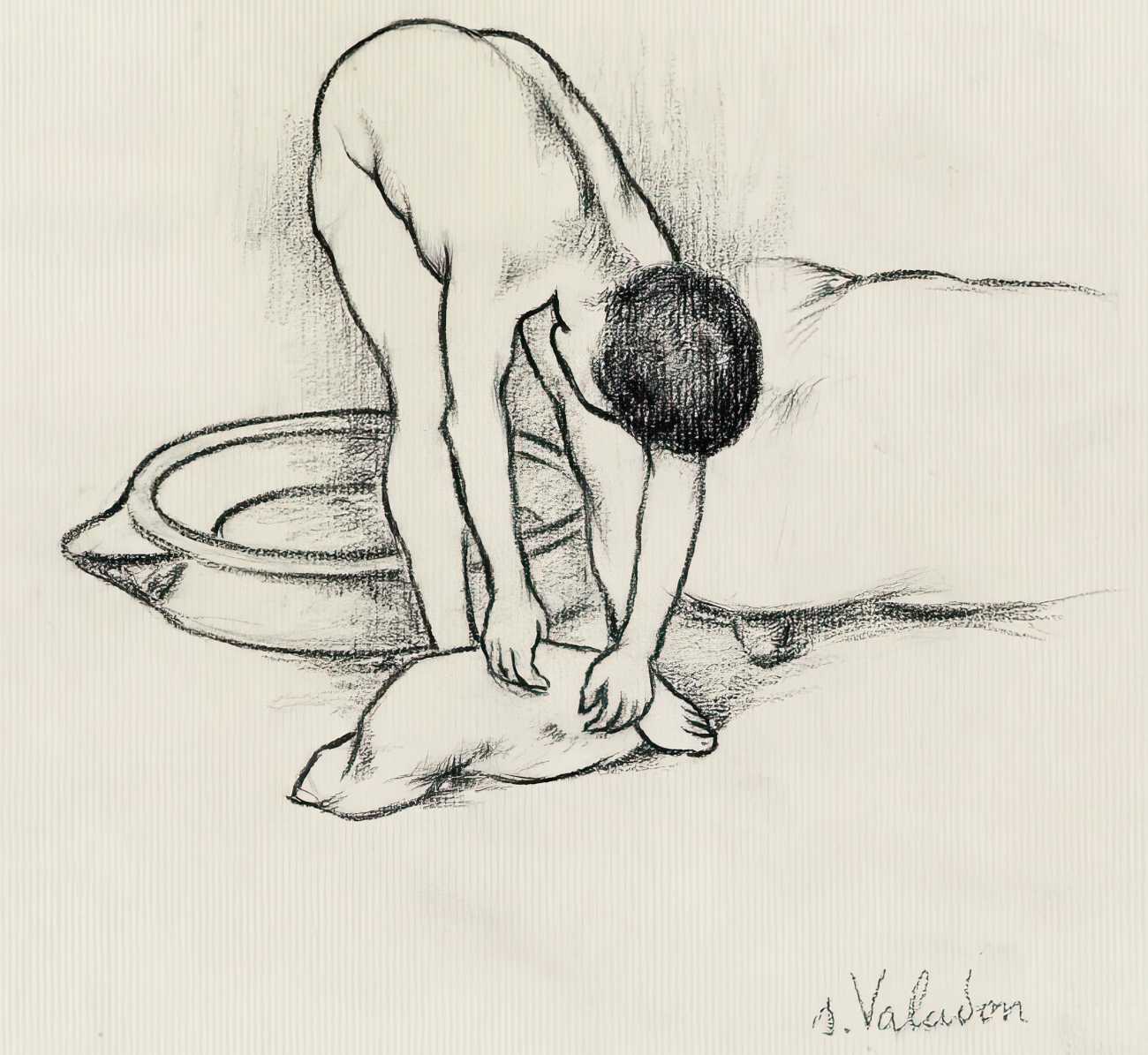
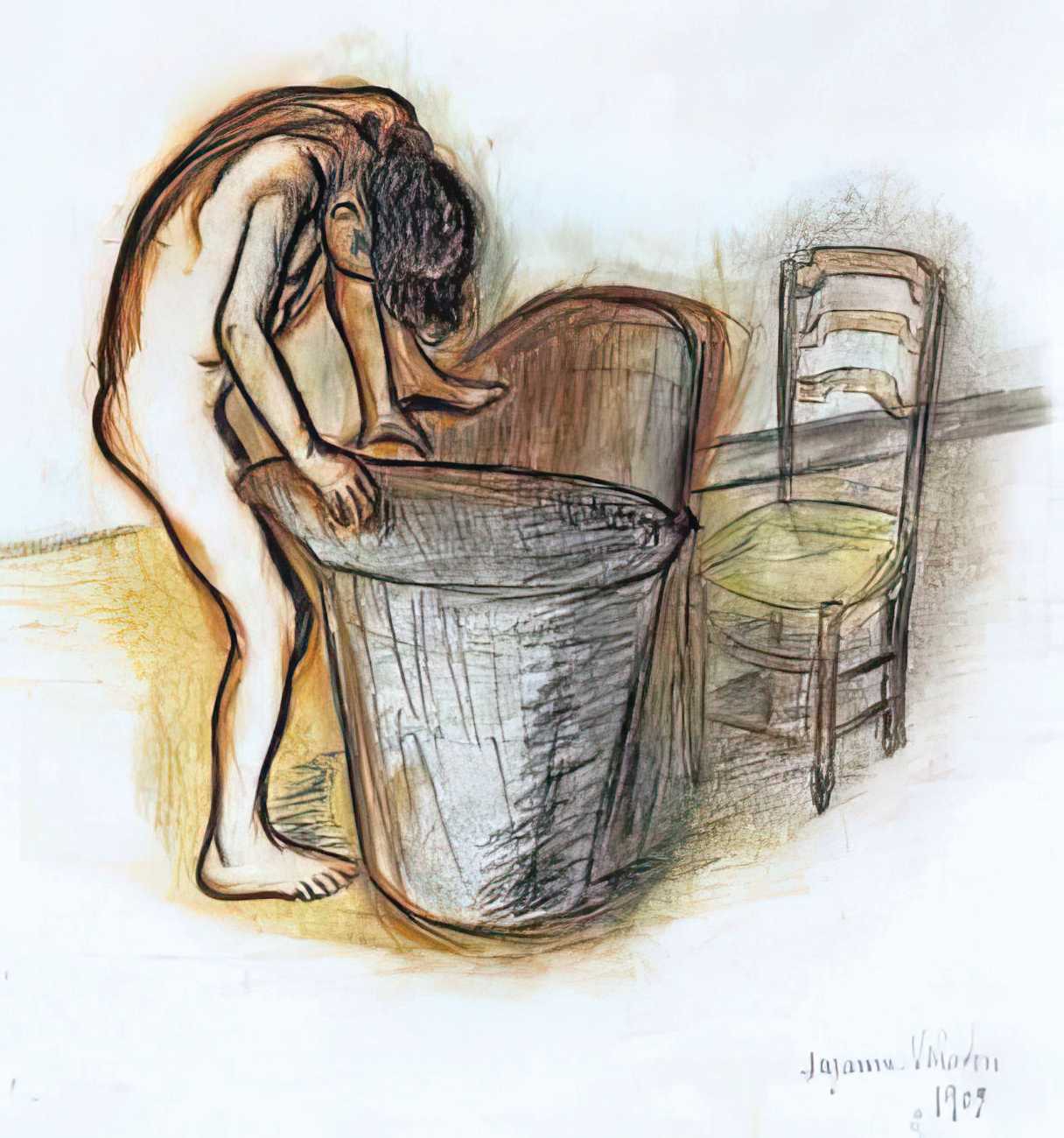
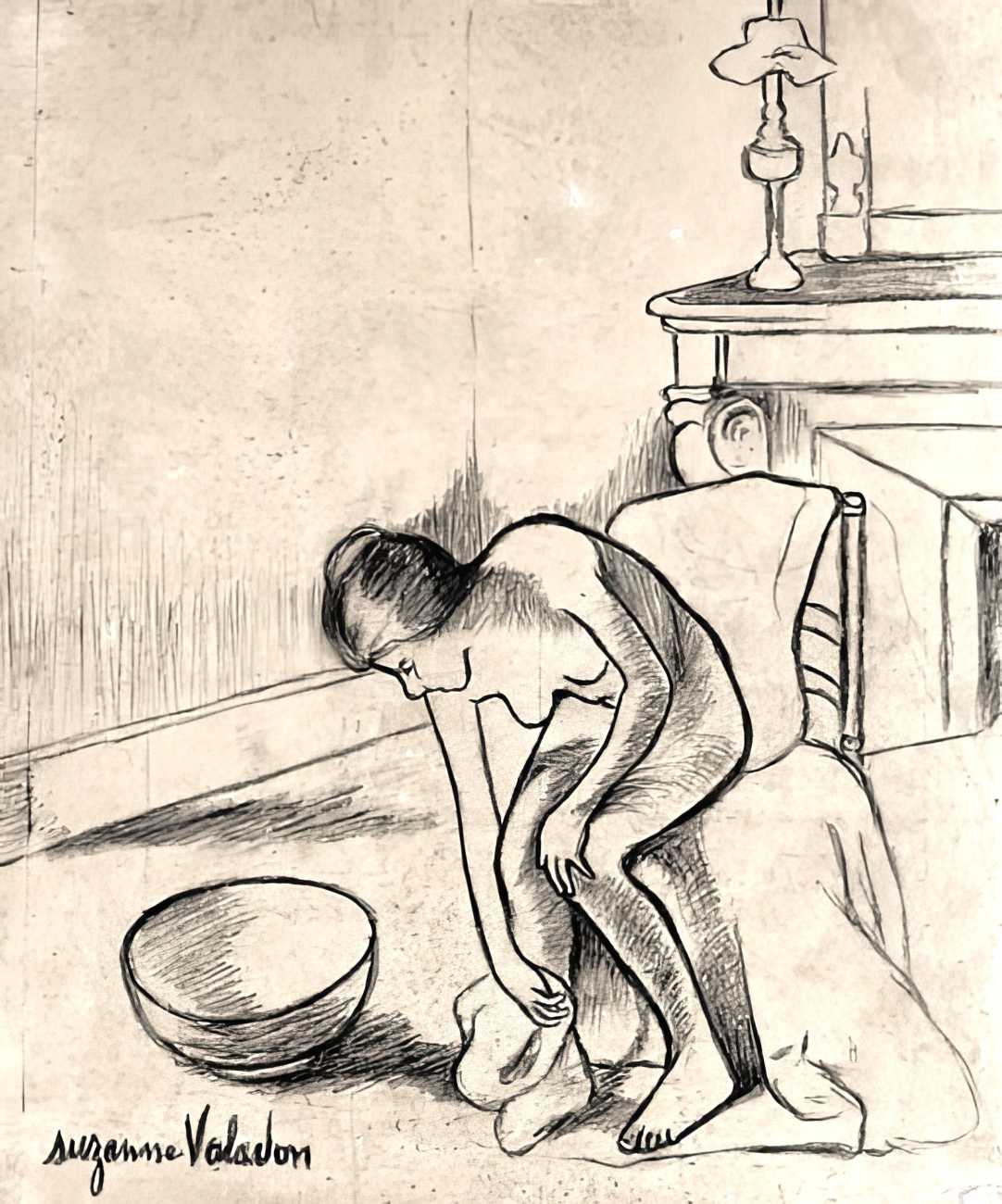
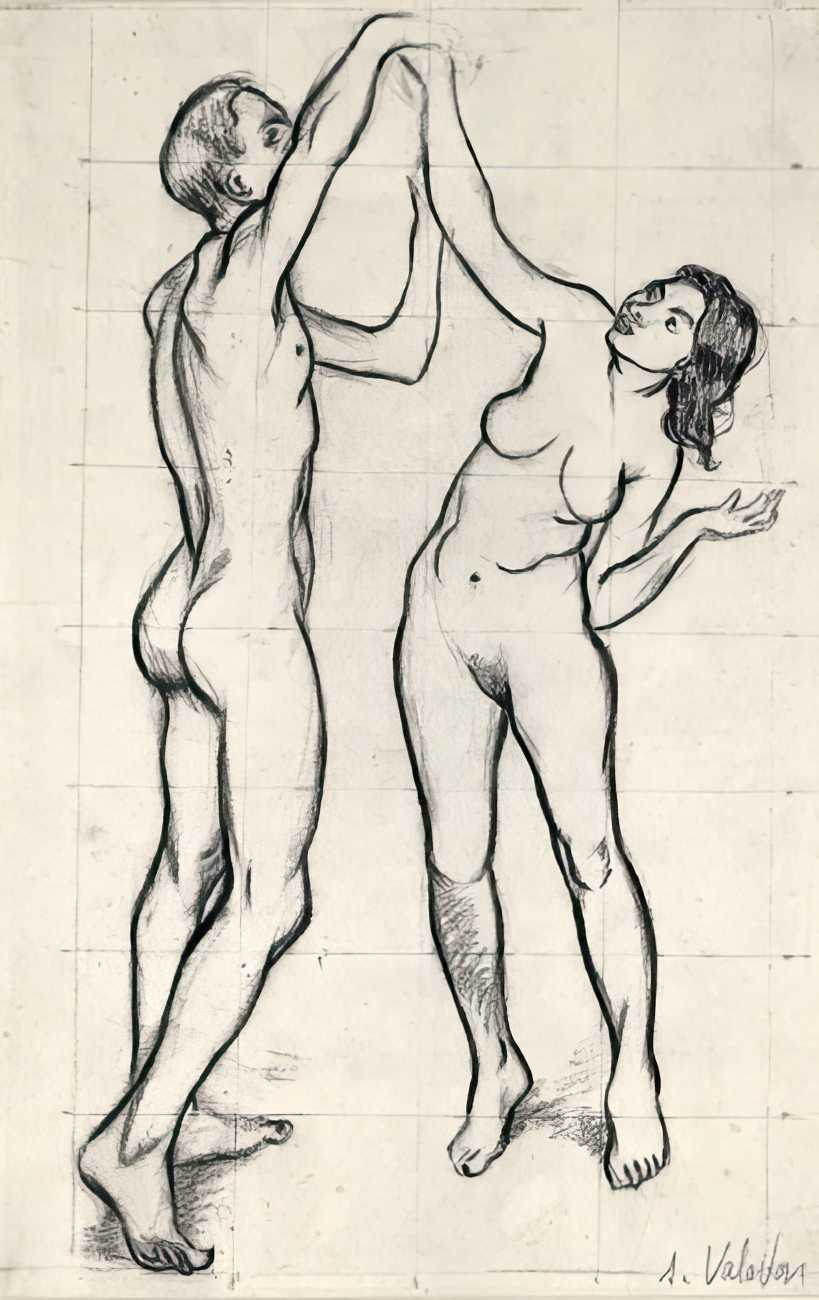
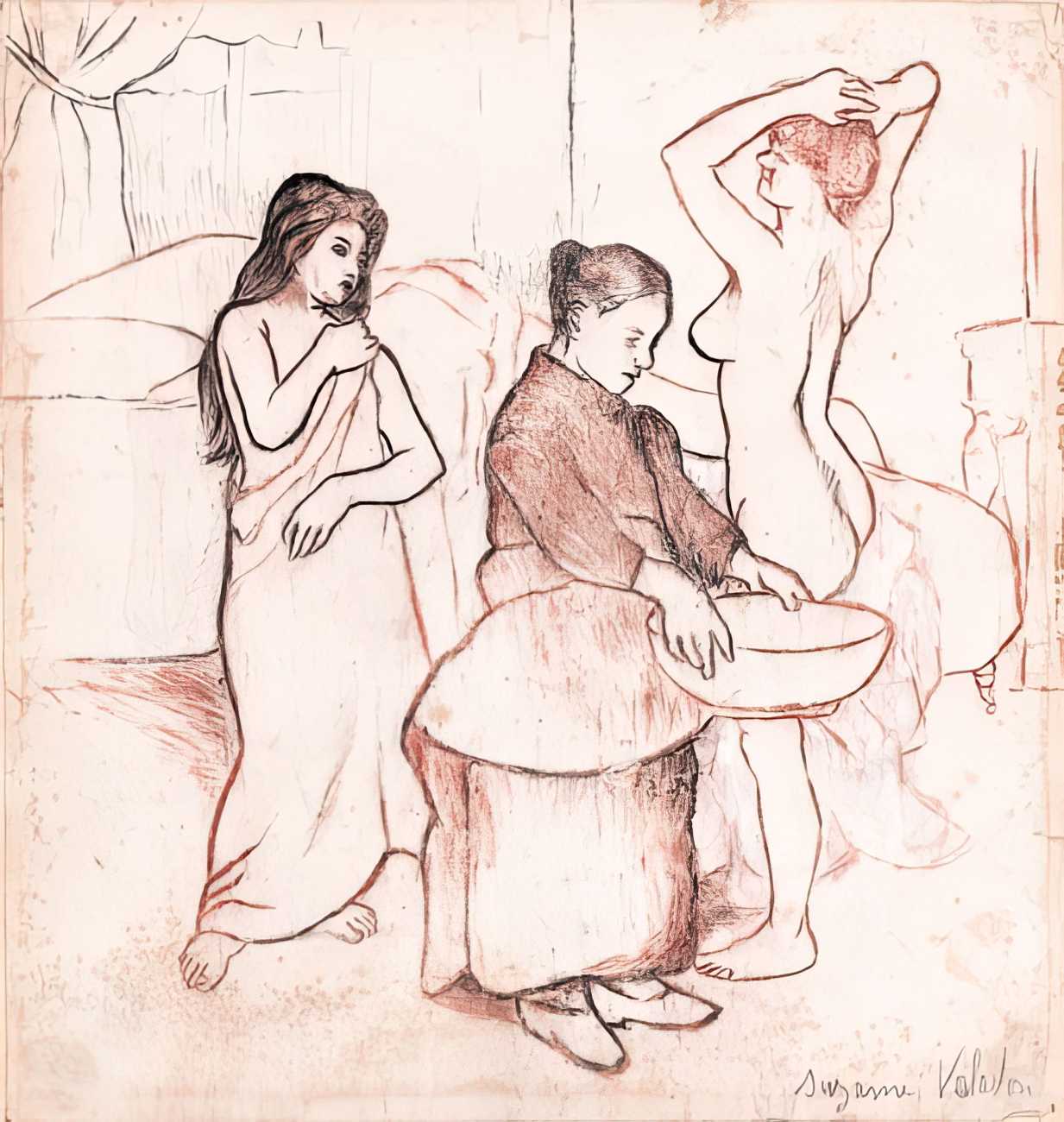
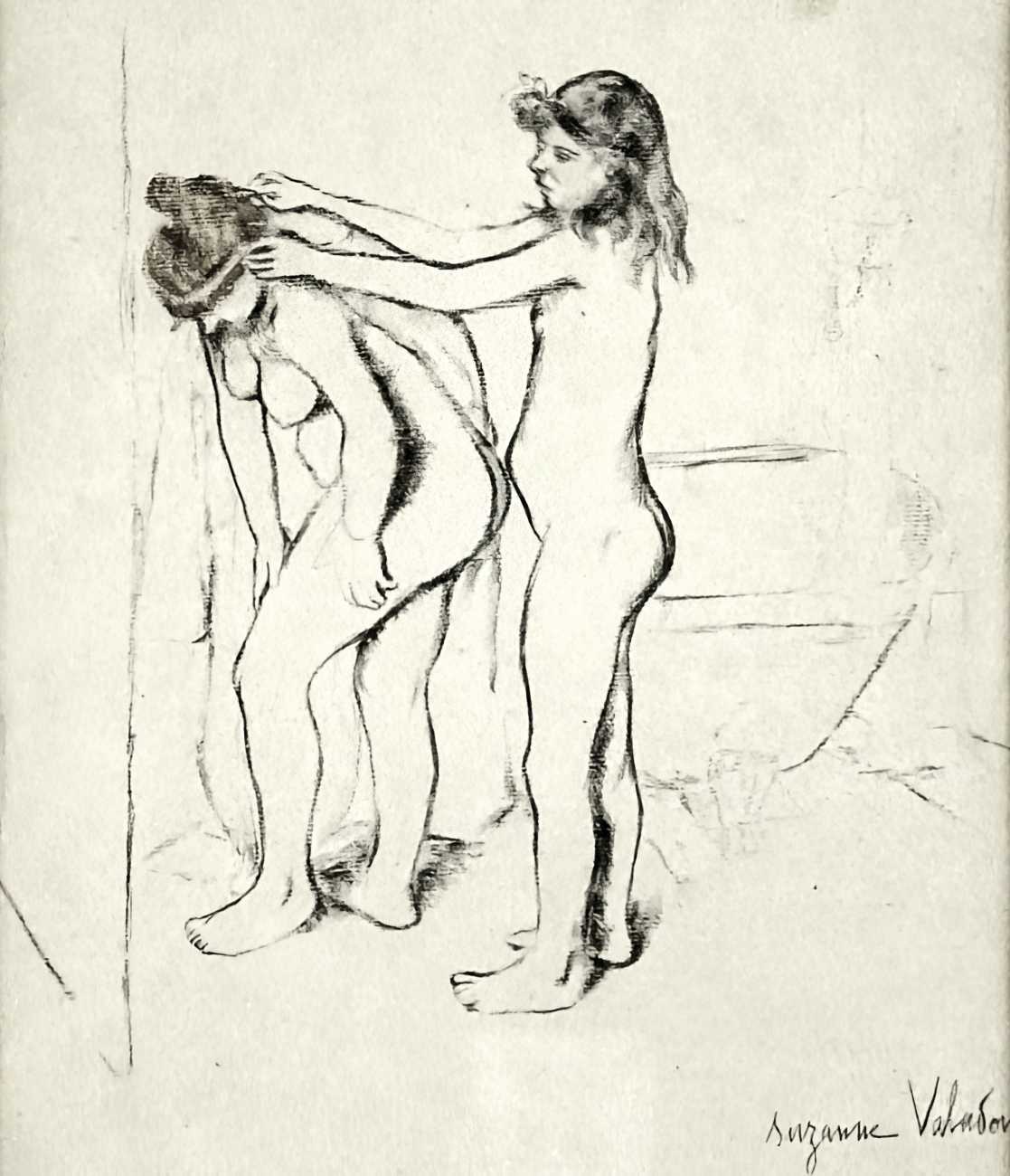
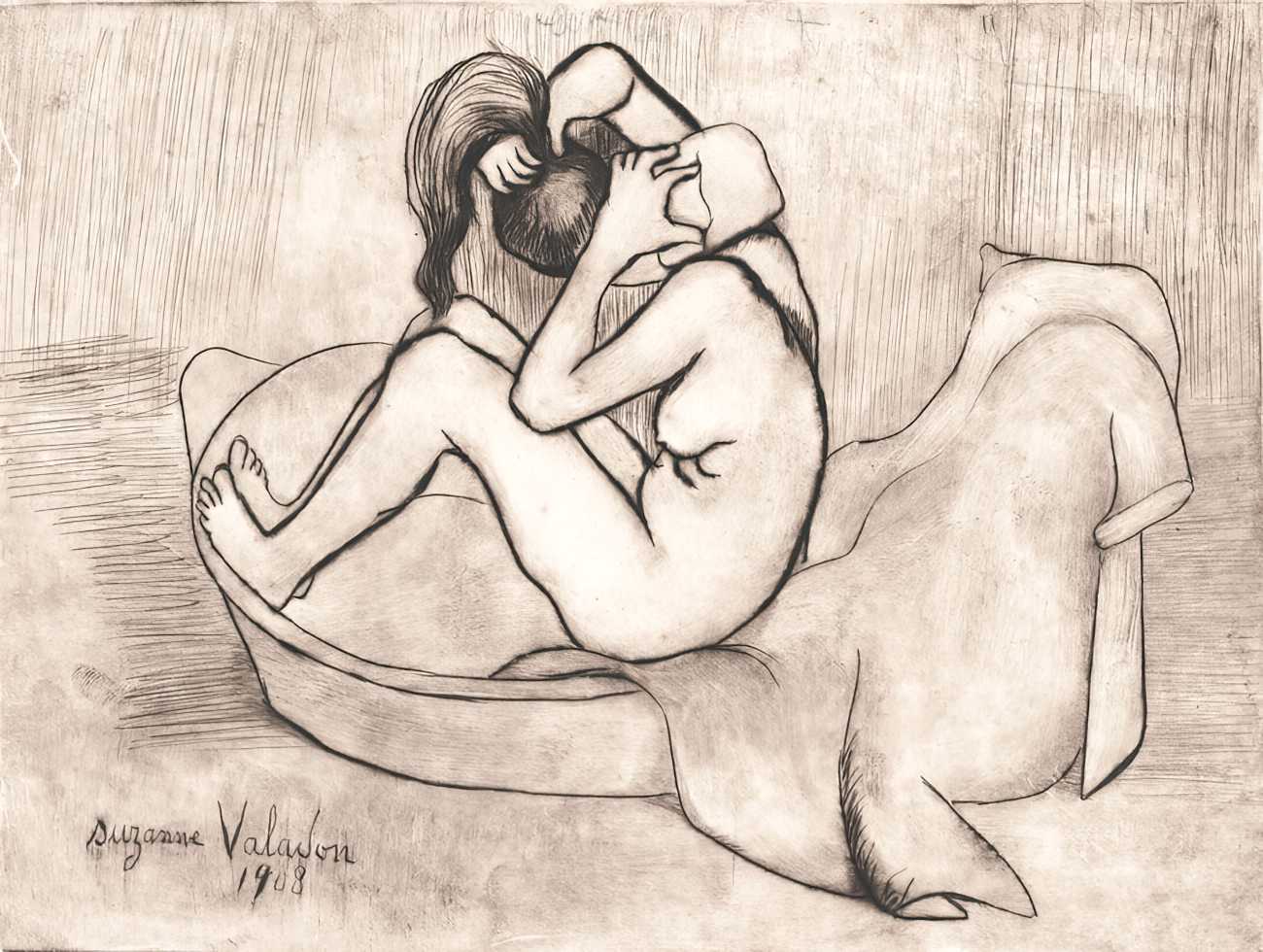
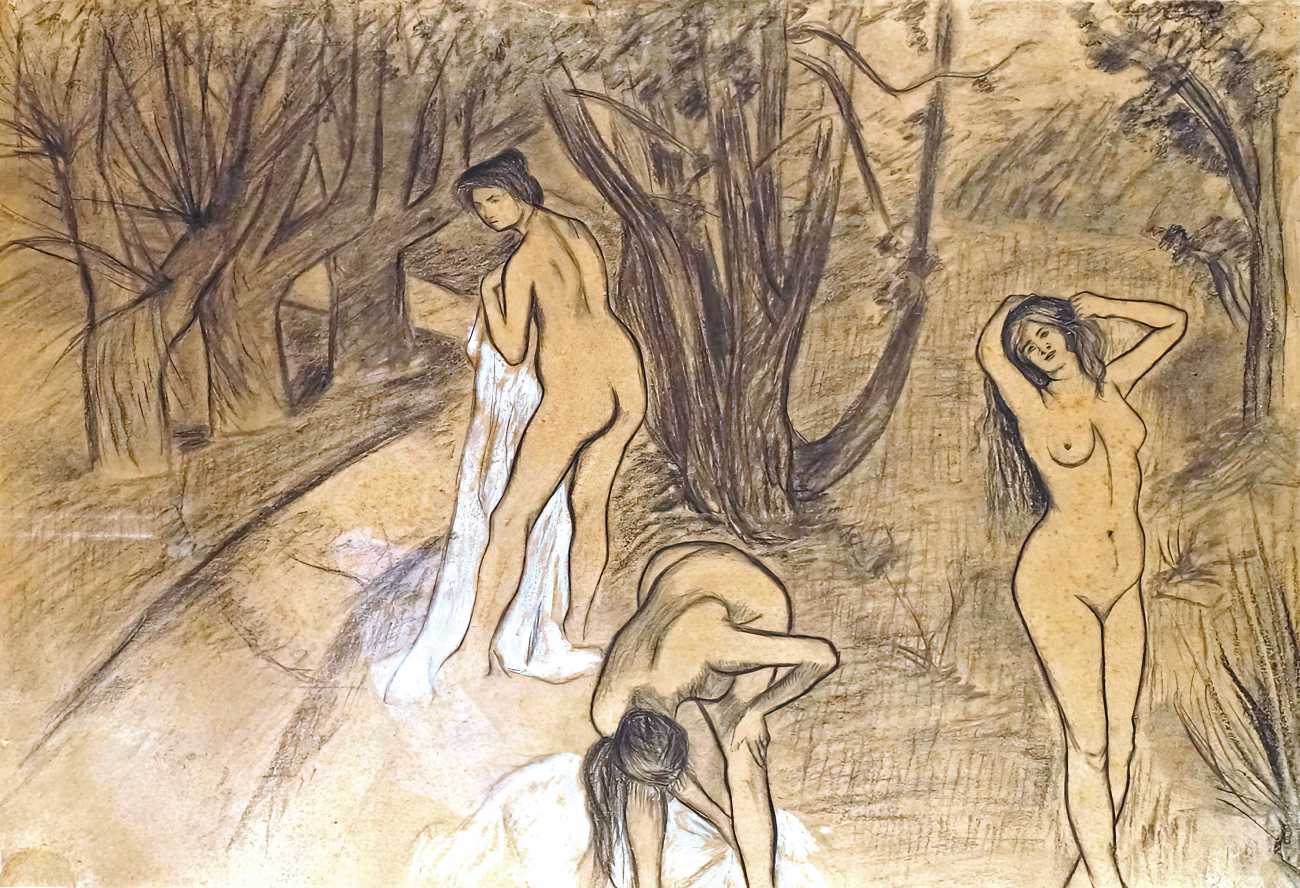
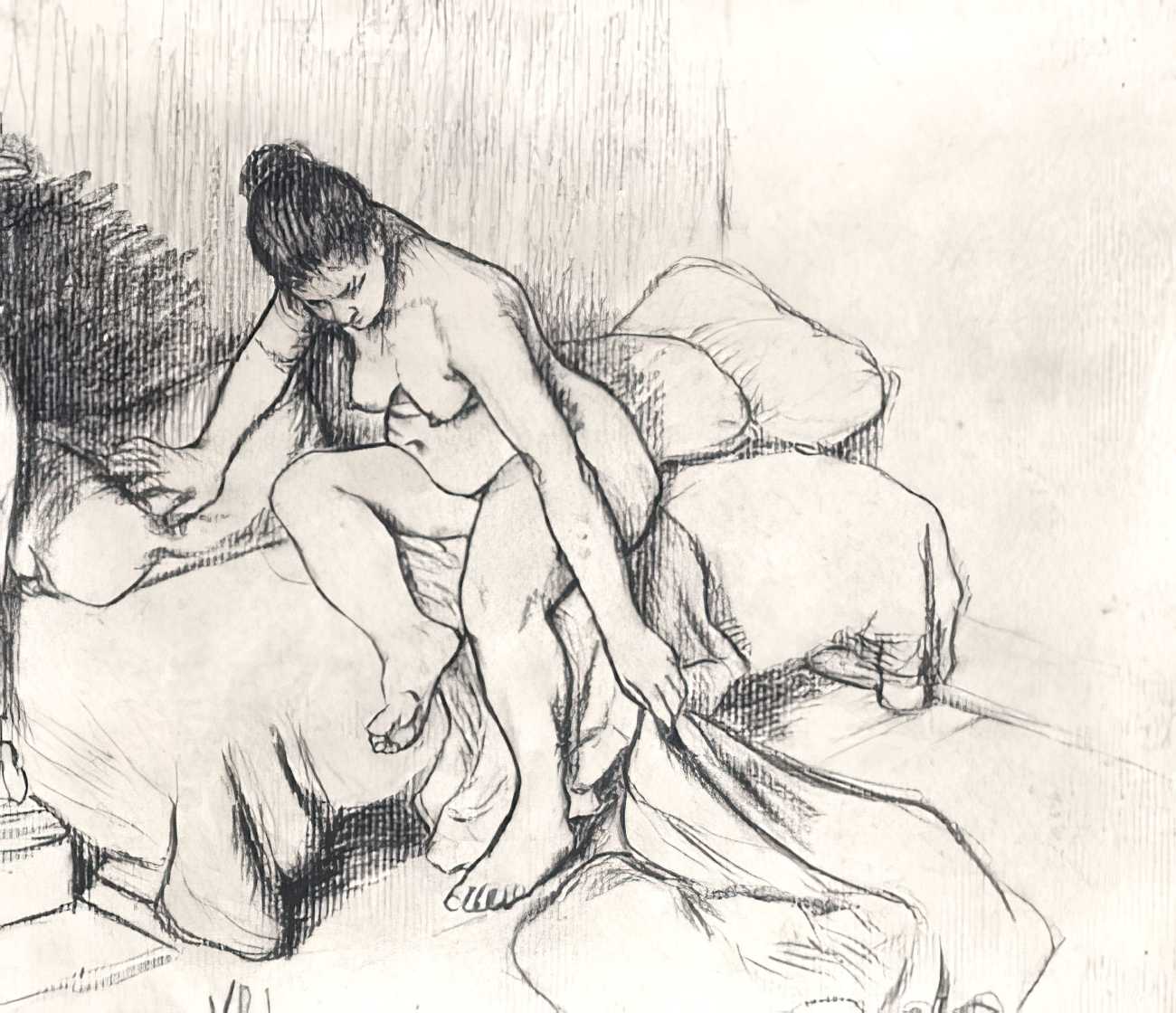
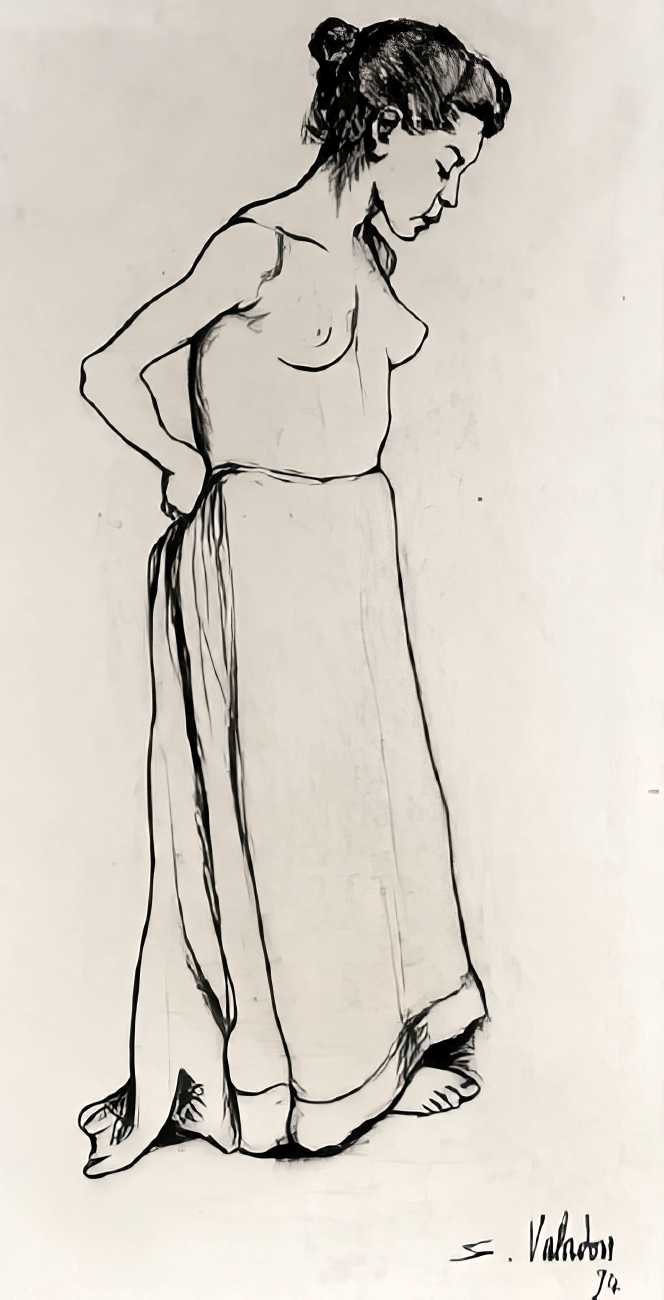
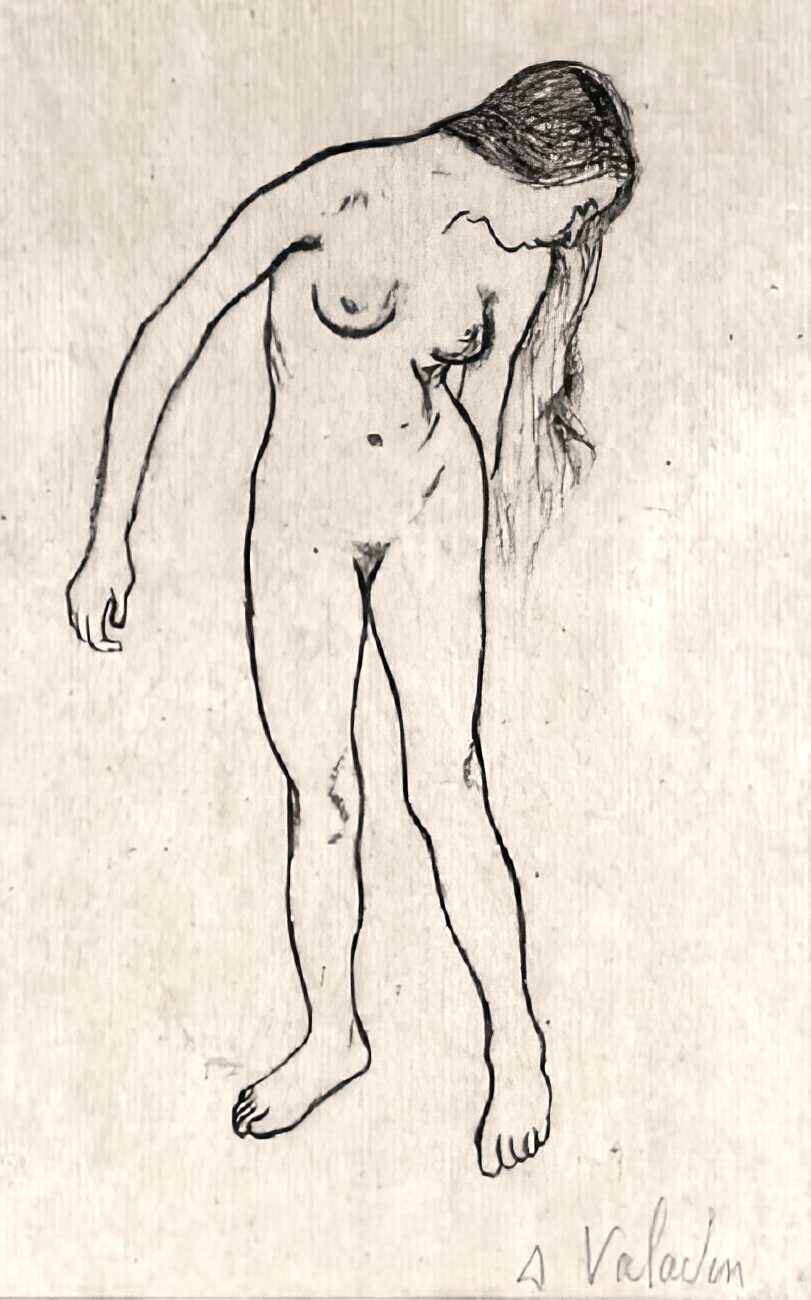
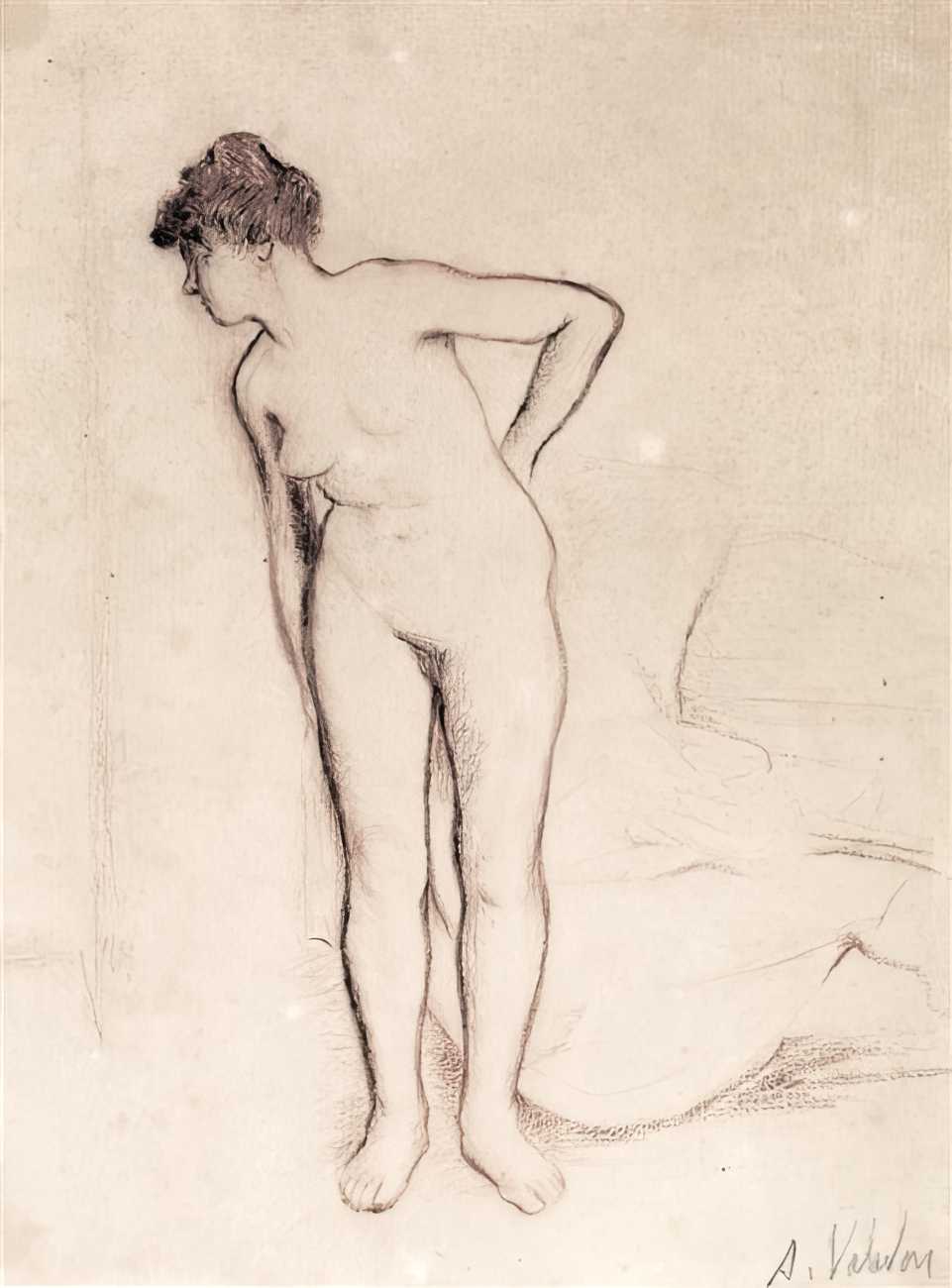
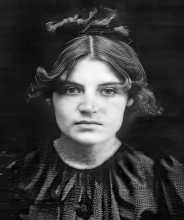
 Born as Marie-Clementine Valadon in Bessines-sur-Gartempe near Limoges in central France, Suzanne Valadon was the illegitimate daughter of an unmarried seamstress. She grew up in poverty with her mother in Paris’s Montmartre, and never knew her father. Known to be quite independent and rebellious, when she was nine Suzanne was apprenticed as a dressmaker, but left for a series of jobs including being a waitress, a dishwasher, and a vegetable vendor. At sixteen she joined a circus, but an accident falling from a trapeze abruptly ended her career after only seven months. The circus was visited frequently by artists, and with her blue eyes, blonde hair and a supple body, Suzanne had a charming attraction that caught their attention.
Valadon taught herself how to draw, and growing up in Montmartre she pursued her interest in art, first working as a model and a muse for artists, observing and learning their techniques, as she could not afford art lessons herself. Valadon began working as a model in 1880, and posed for more than ten years for artists including Berthe Morisot, Pierre-Cécile Puvis de Chavannes, Théophile Steinlen, Pierre-Auguste Renoir, Jean-Jacques Henner and Henri de Toulouse-Lautrec. She modelled under the name Maria before being nicknamed Suzanne by Toulouse-Lautrec after the biblical story of Susanna and the Elders. She was Toulouse-Lautrec’s lover for two years. She observed and learned from artists such as de Chavannes, Toulouse-Lautrec and Renoir before becoming a painter in her own right.
Suzanne Valadon furthered her art by observing the techniques of the artists for whom she posed. In the early 1890s she befriended Edgar Degas, who was impressed by her bold line drawings and fine paintings. He purchased her work, and she remained one of his closest friends until his death in 1917. Her earliest known painting was executed in 1892, and in 1895 the art dealer Paul Durand-Ruel exhibited a group of twelve of her etchings. She regularly showed at Galerie Bernheim-Jeune in Paris, and was the first woman to be accepted as an exhibitor in the Salon de la Nationale in 1894. She exhibited in the Salon d’Automne from 1909, in the Salon des Independants from 1911, and in the Salon des Femmes Artistes Modernes from 1933 to 1938.
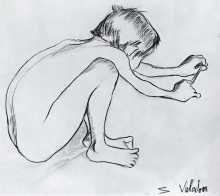
In 1883, when she was eighteen, Valadon gave birth to a son, Maurice Utrillo. Valadon’s mother cared for Maurice while she returned to modelling. Later, Valadon’s friend Miquel Utrillo signed papers recognising Maurice as his son, although the true paternity was never disclosed.
In 1893 Valadon began a short-lived affair with composer Erik Satie, moving to a room next to his on the Rue Cortot. Satie became obsessed with her, calling her Biqui and writing impassioned notes about ‘her whole being, lovely eyes, gentle hands and tiny feet’. After six months she moved out, leaving him devastated.
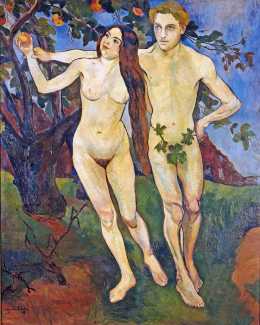
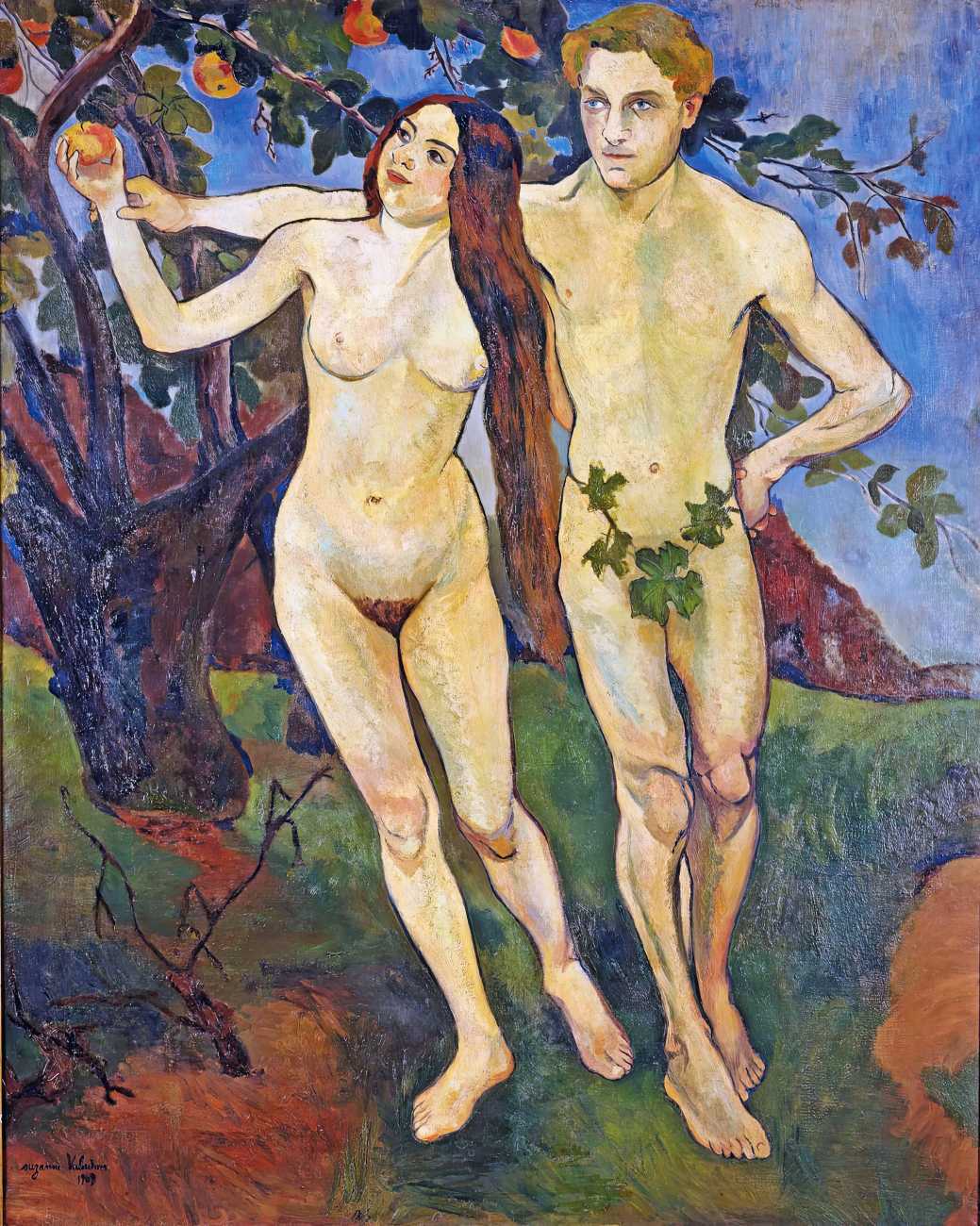
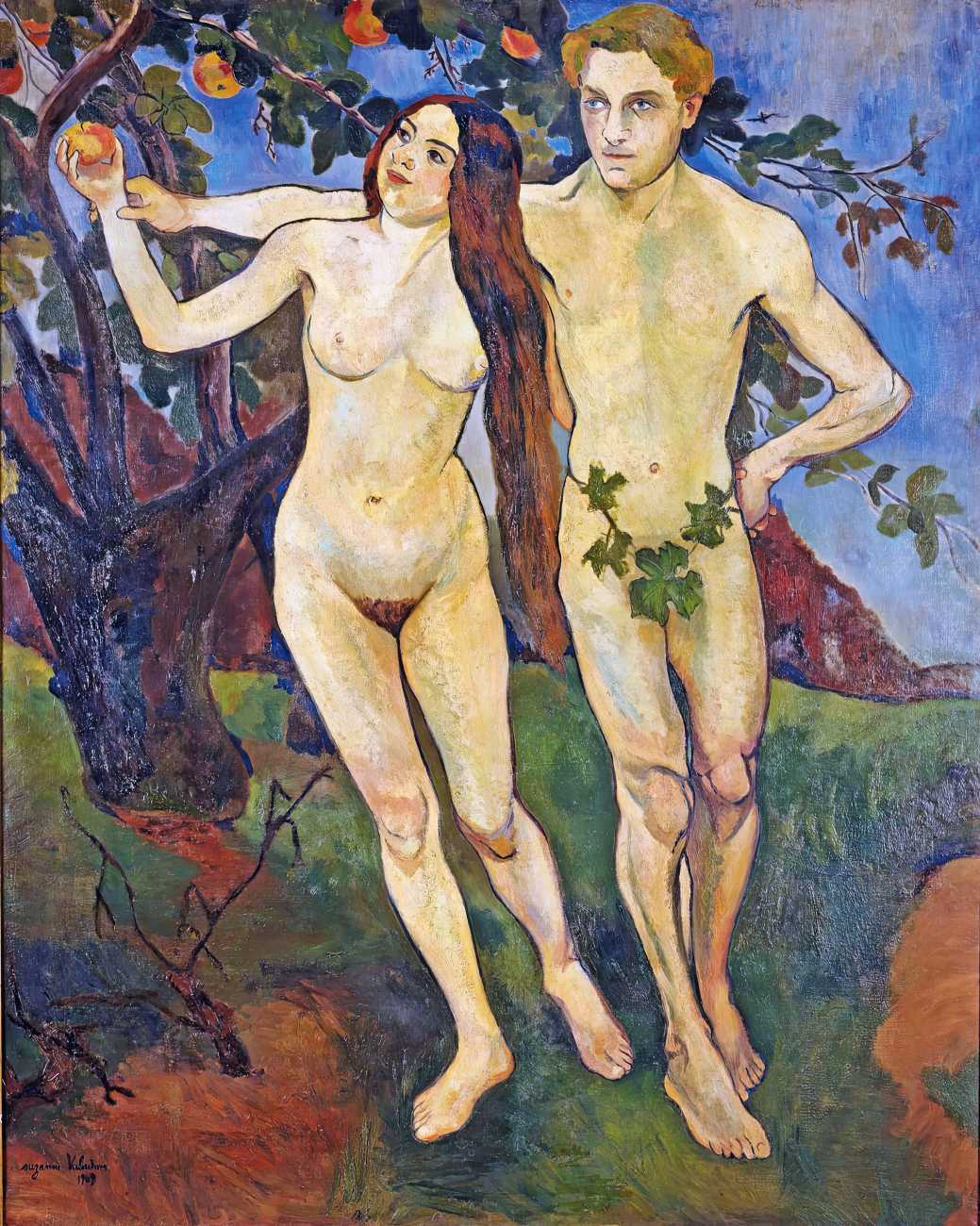
Valadon married the stockbroker Paul Mousis in 1895, and for thirteen years she lived with him in an apartment in Paris and in his house in the countryside. In 1909 Valadon began an affair with the painter André Utter, a 23-year-old friend of her son. He became a model for her and appears as Adam in ‘Adam and Eve’, which was painted that year. She divorced Mousis in 1913 and married Utter the following year.
Utter managed her career as well as that of her son Maurice, who became a successful artist in his own right; Valadon and Utter regularly exhibited work together until the couple divorced in 1934 when Valadon was almost seventy, though they continued a relationship until her death and are buried together in the Saint Ouen cemetery.
Similar artists
Aleah Chapin – American painter of unidealised, large-scale bodies in Valadon's tradition.
Edgar Degas – French painter and printmaker of brothel and intimate subjects.
Marlene Dumas – South African painter of bodies and intimate sexuality.
Jenny Saville – British contemporary painter of unflinching naked figures, continuing Valadon's realism.
Joan Semmel – American painter and pioneer of feminist body imagery.
Félix Vallotton – Swiss-French painter and printmaker of erotic subjects.
Example illustration