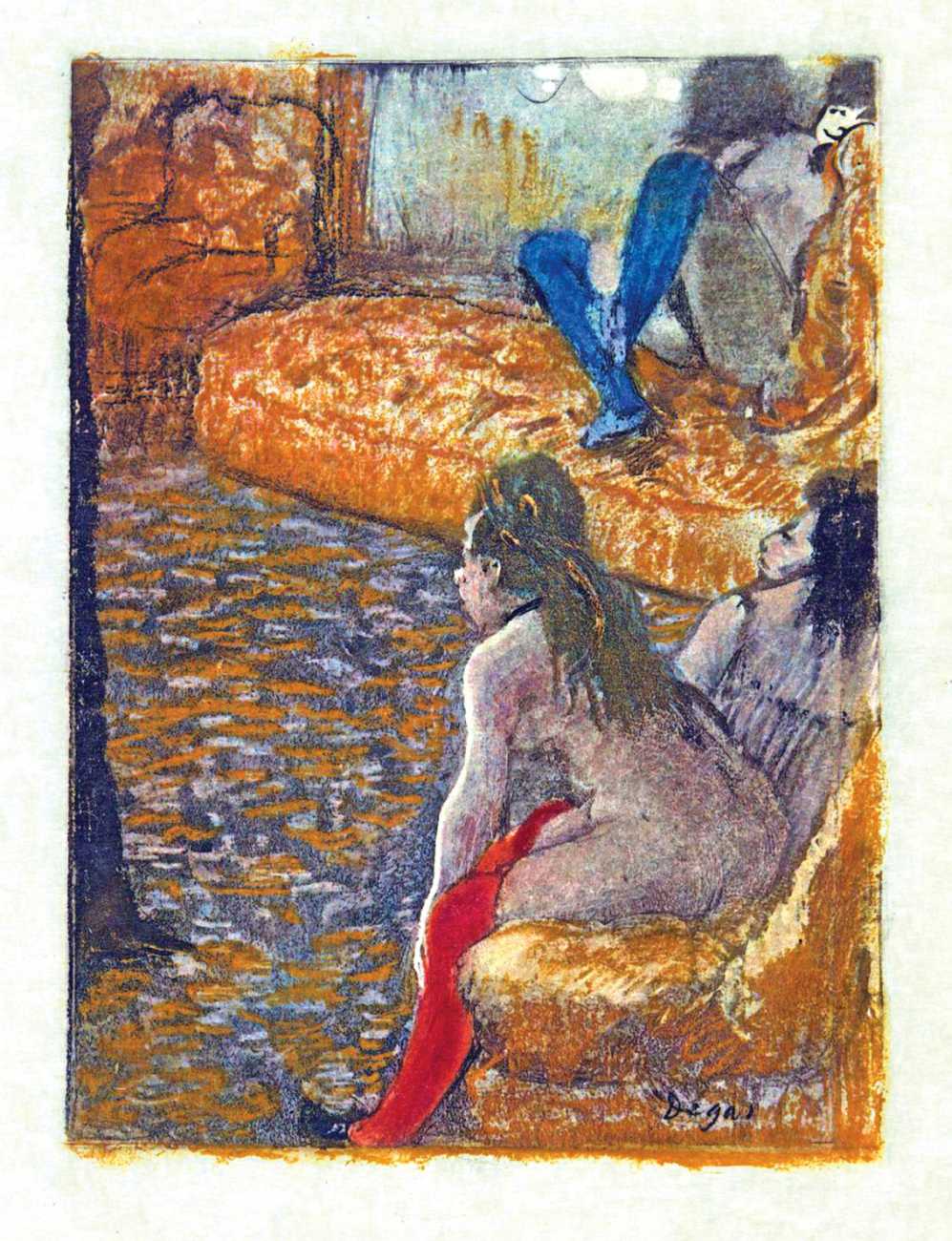
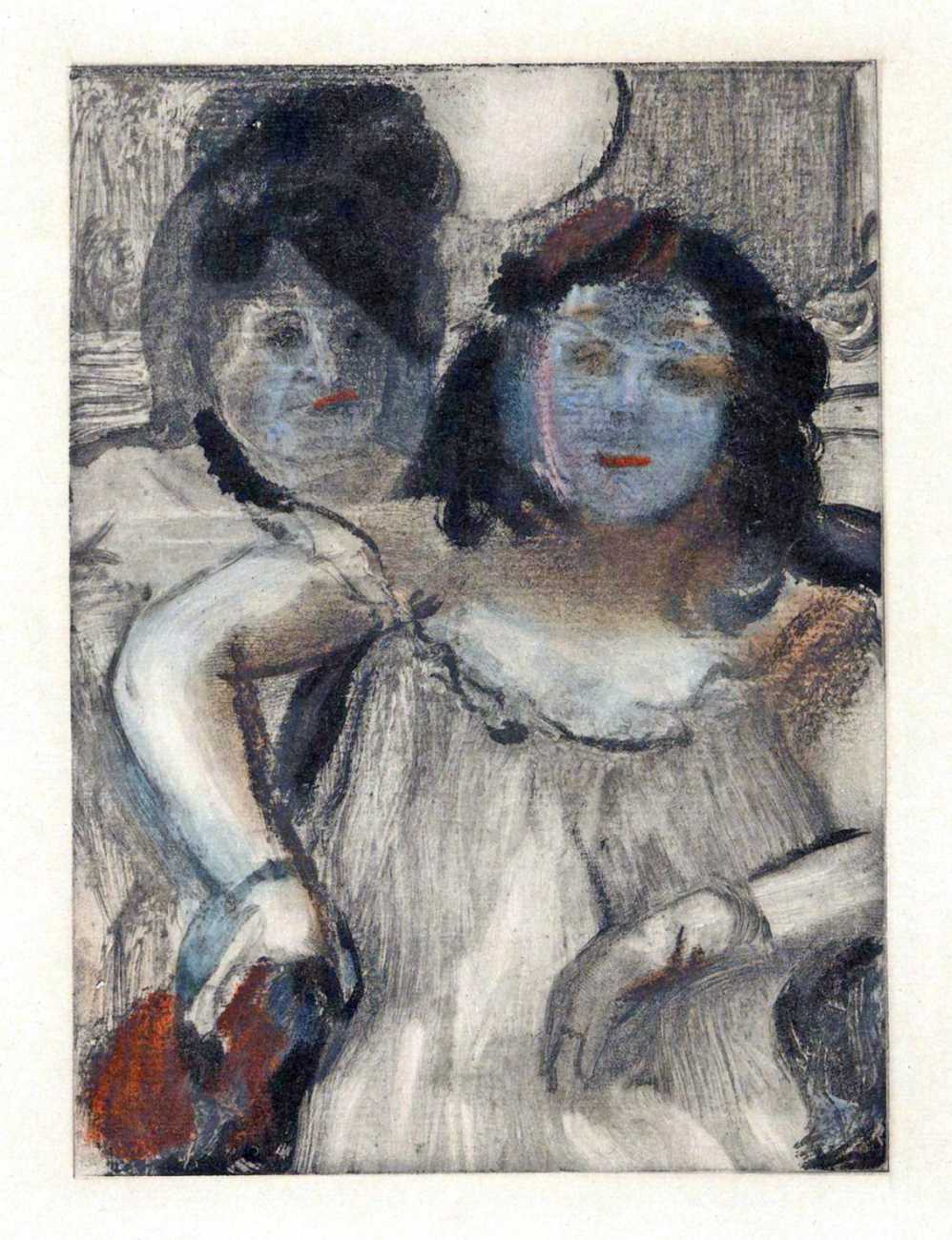
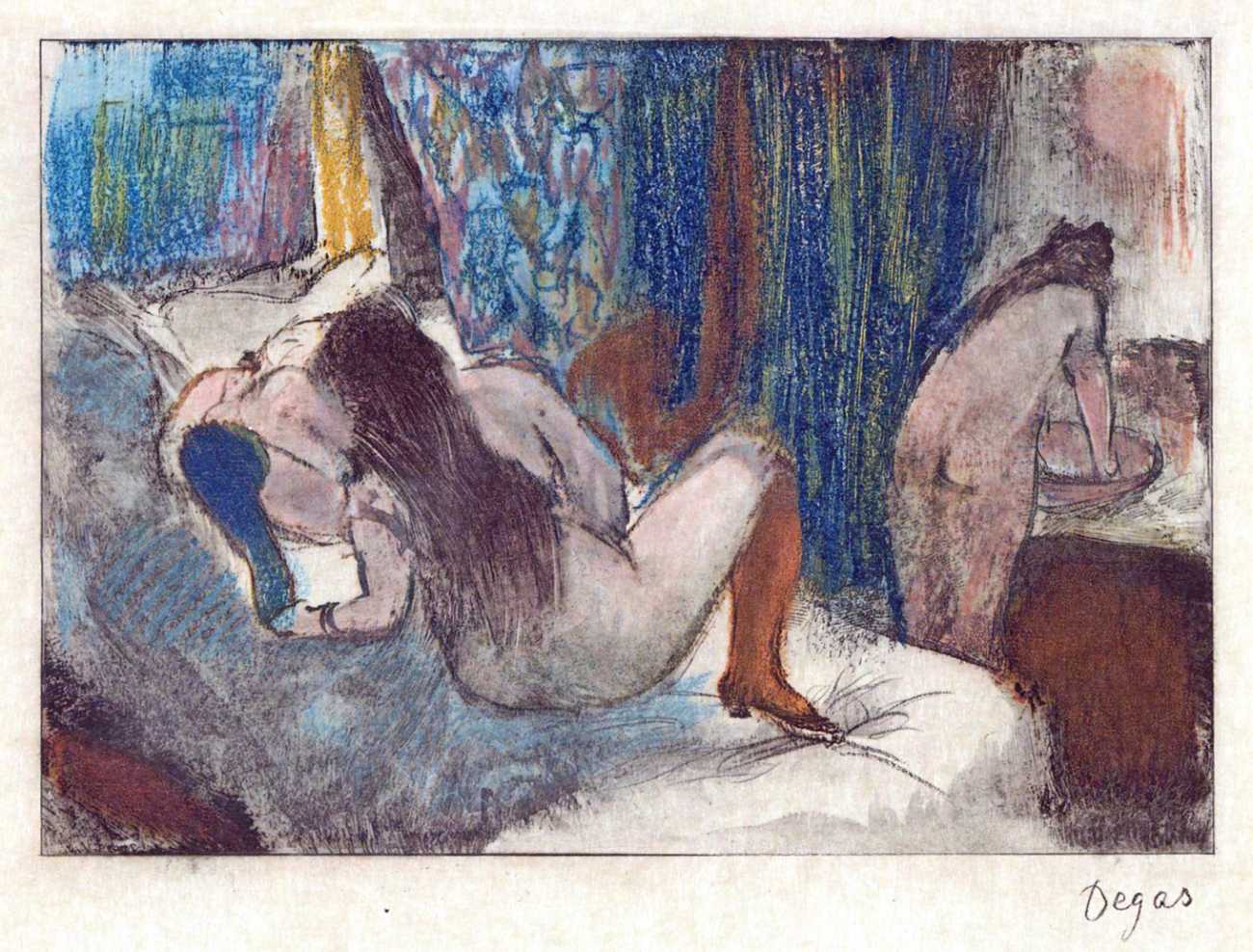
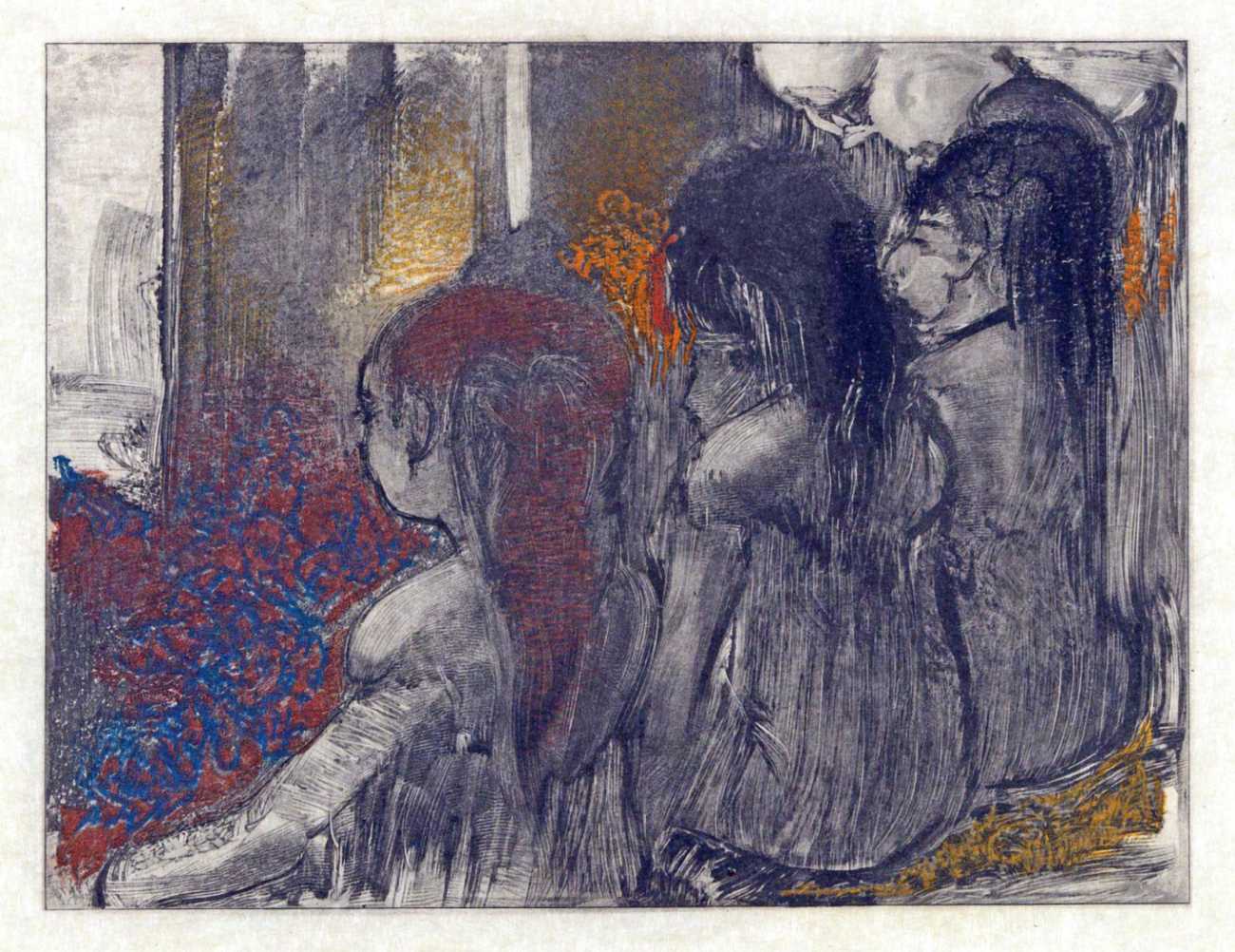
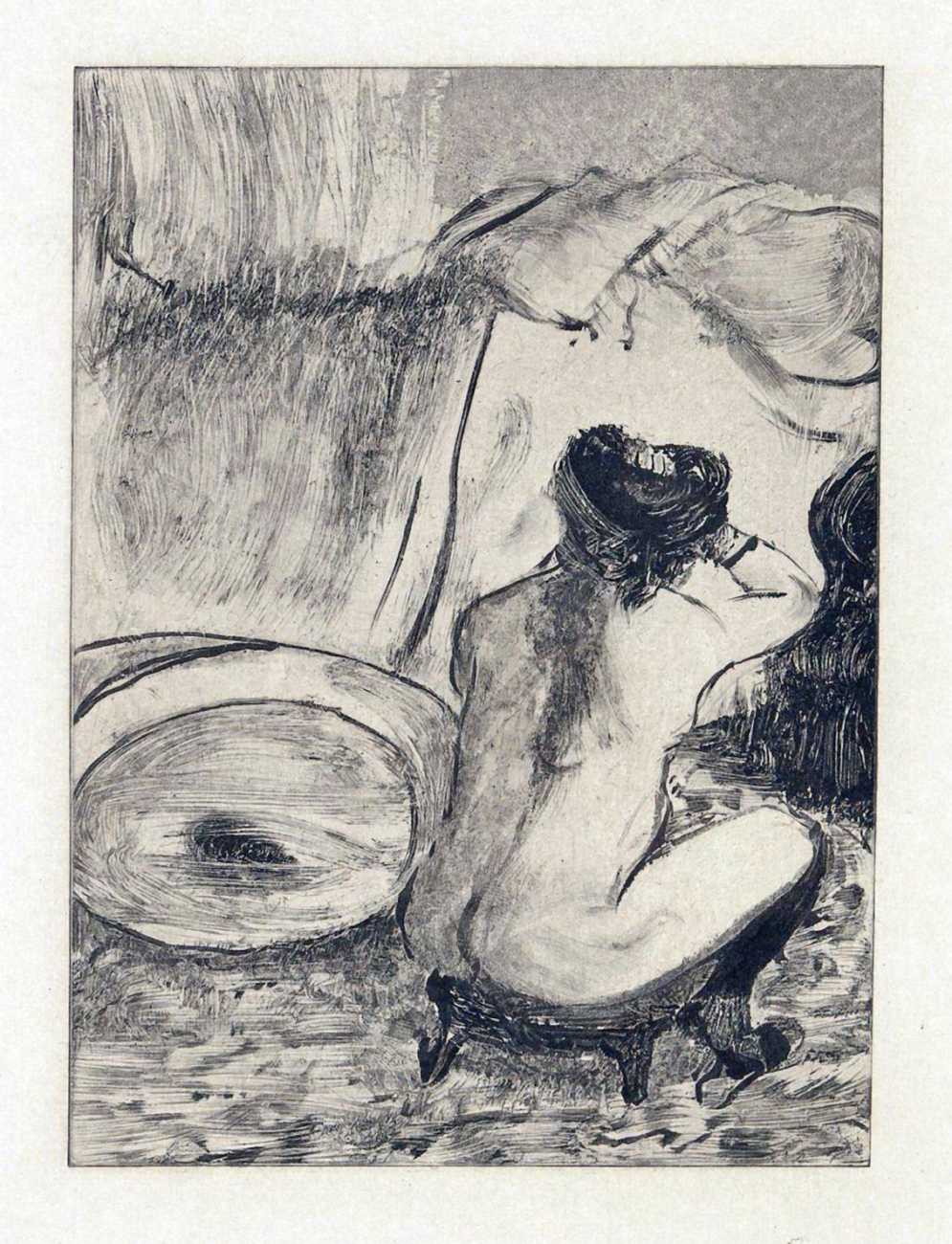
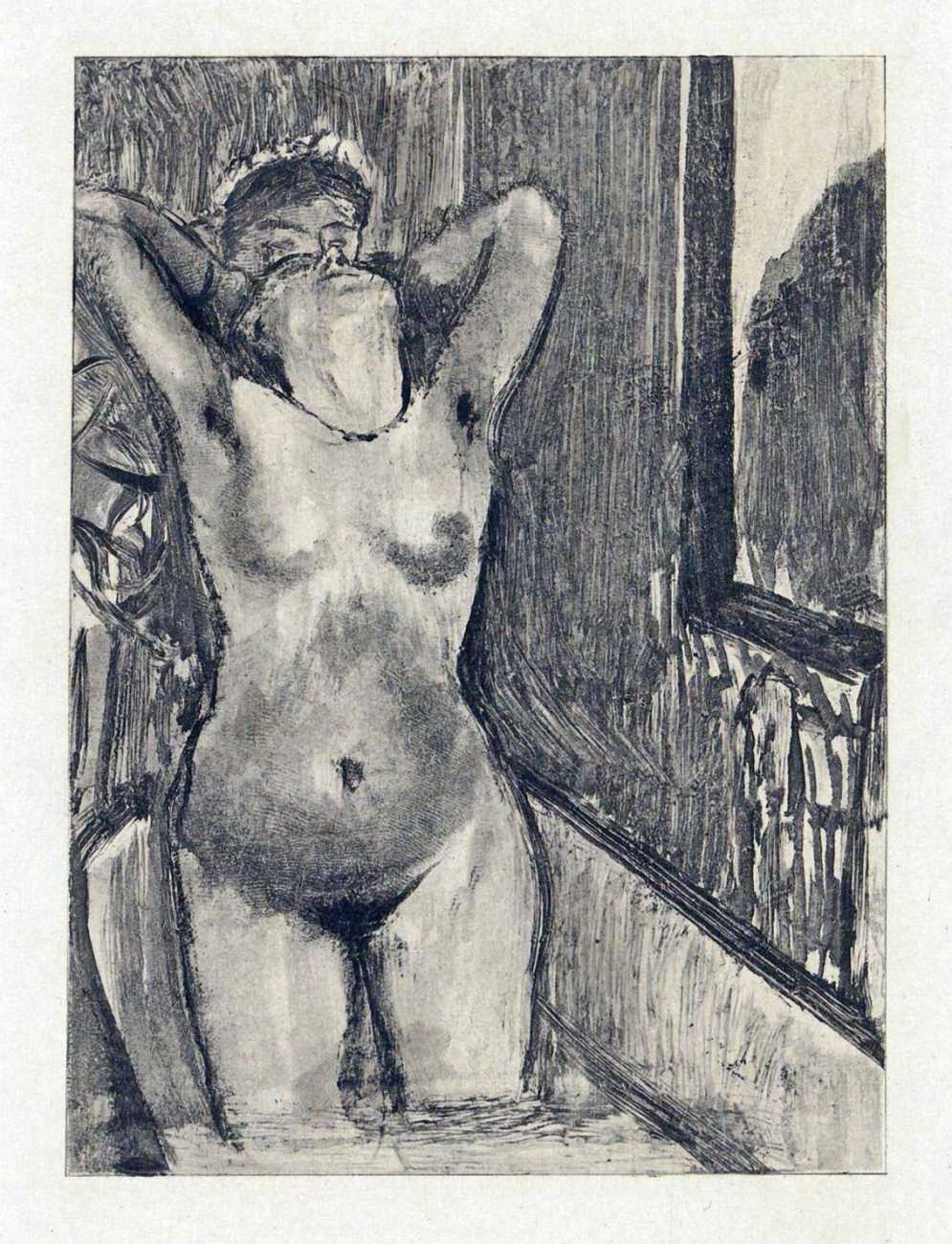
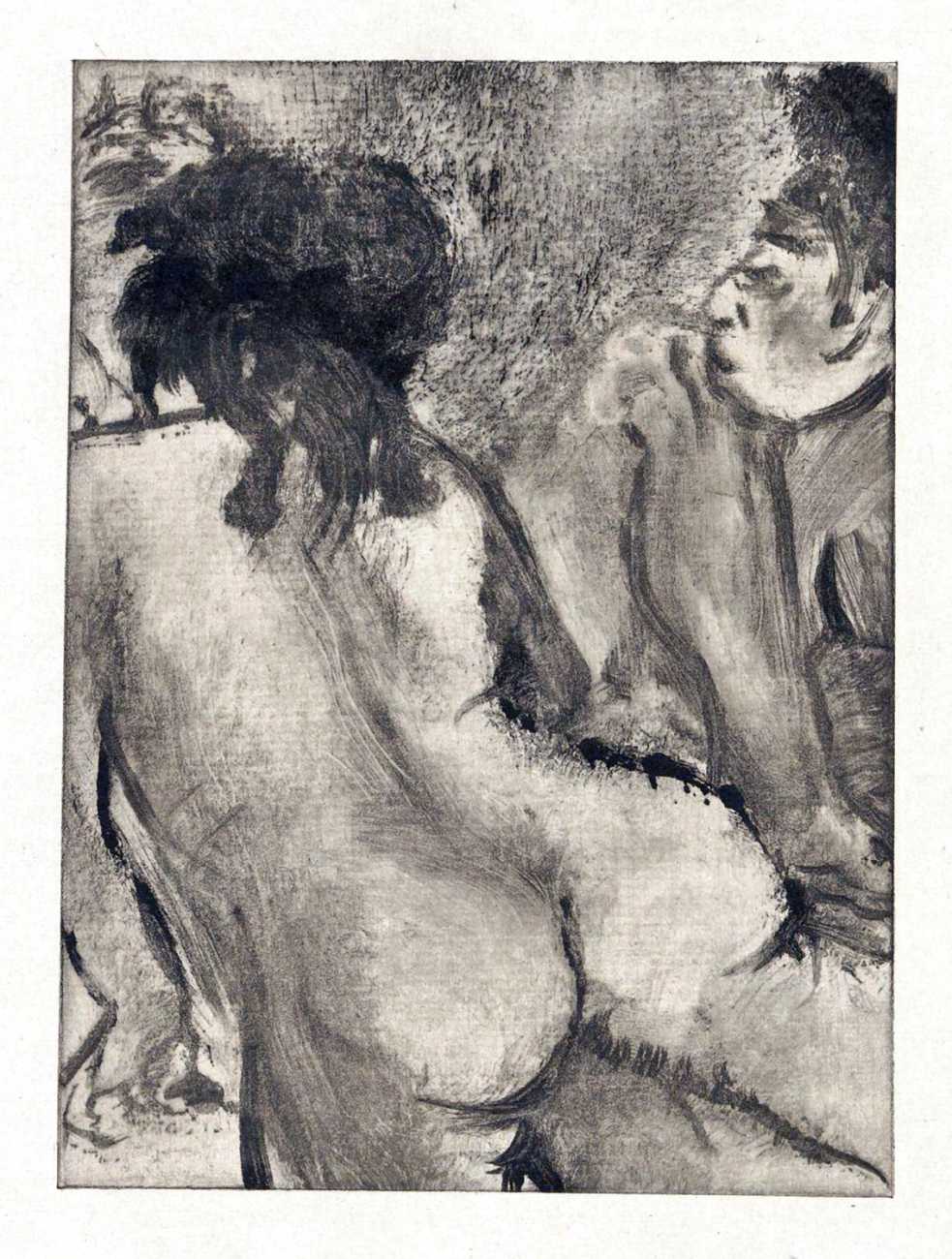
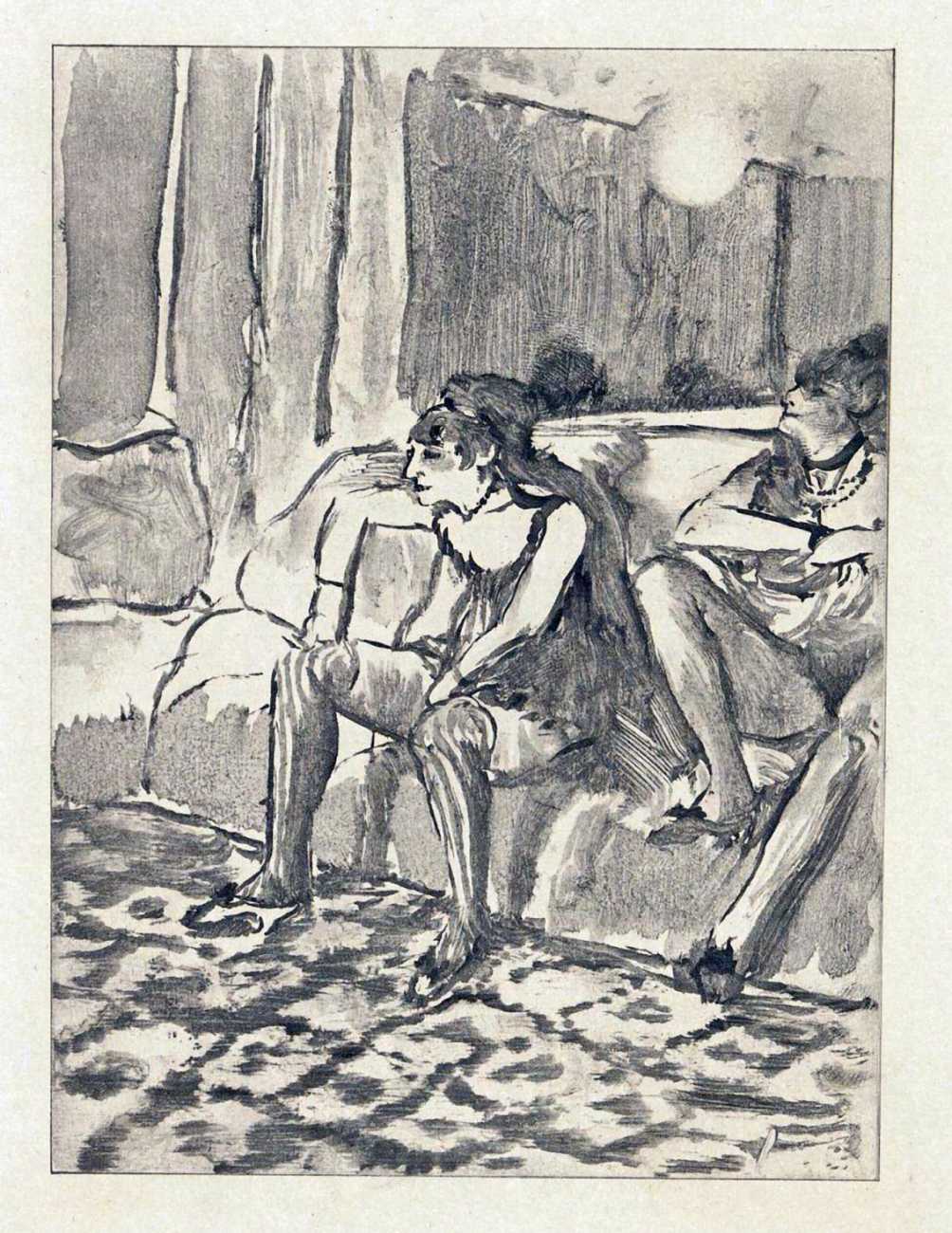
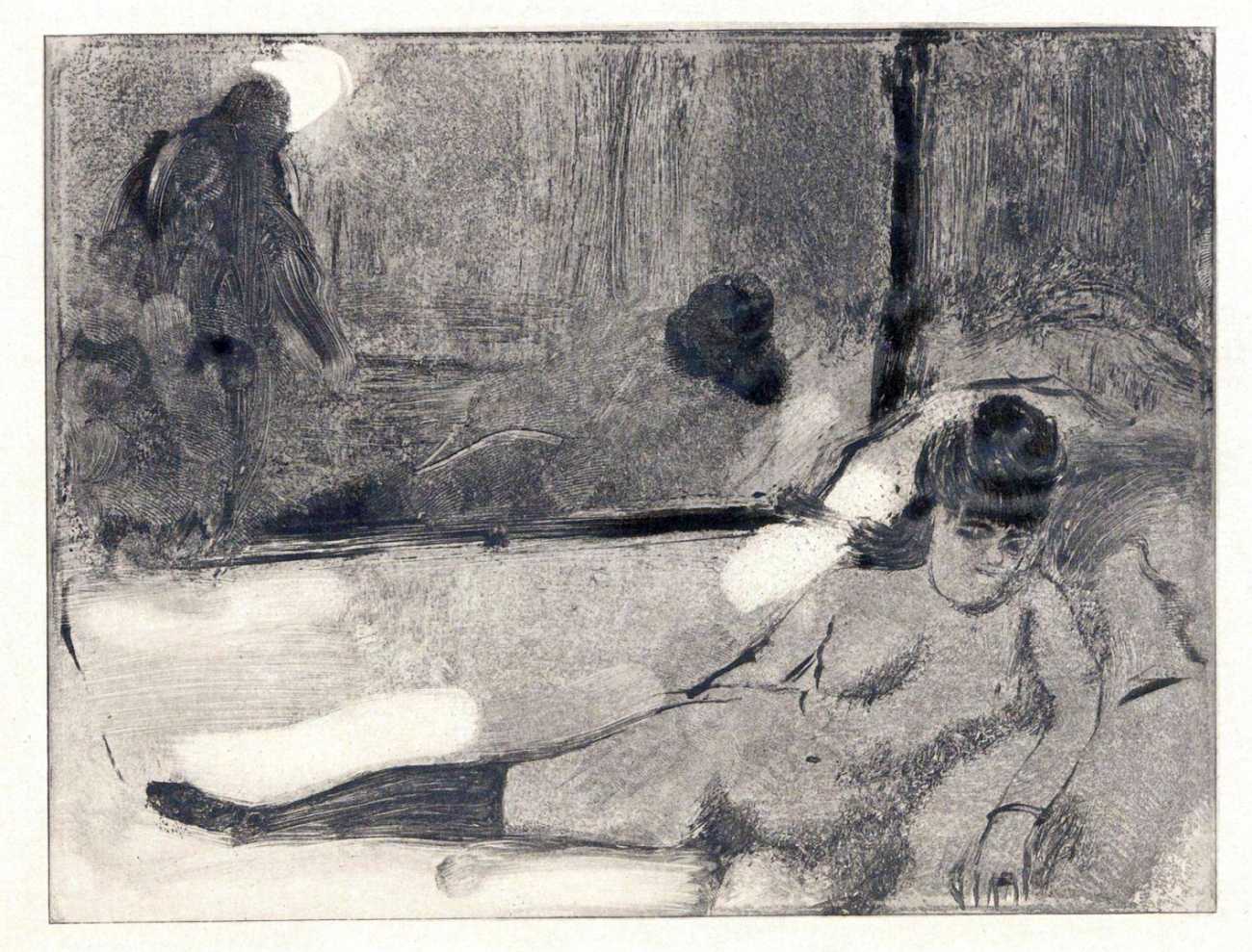
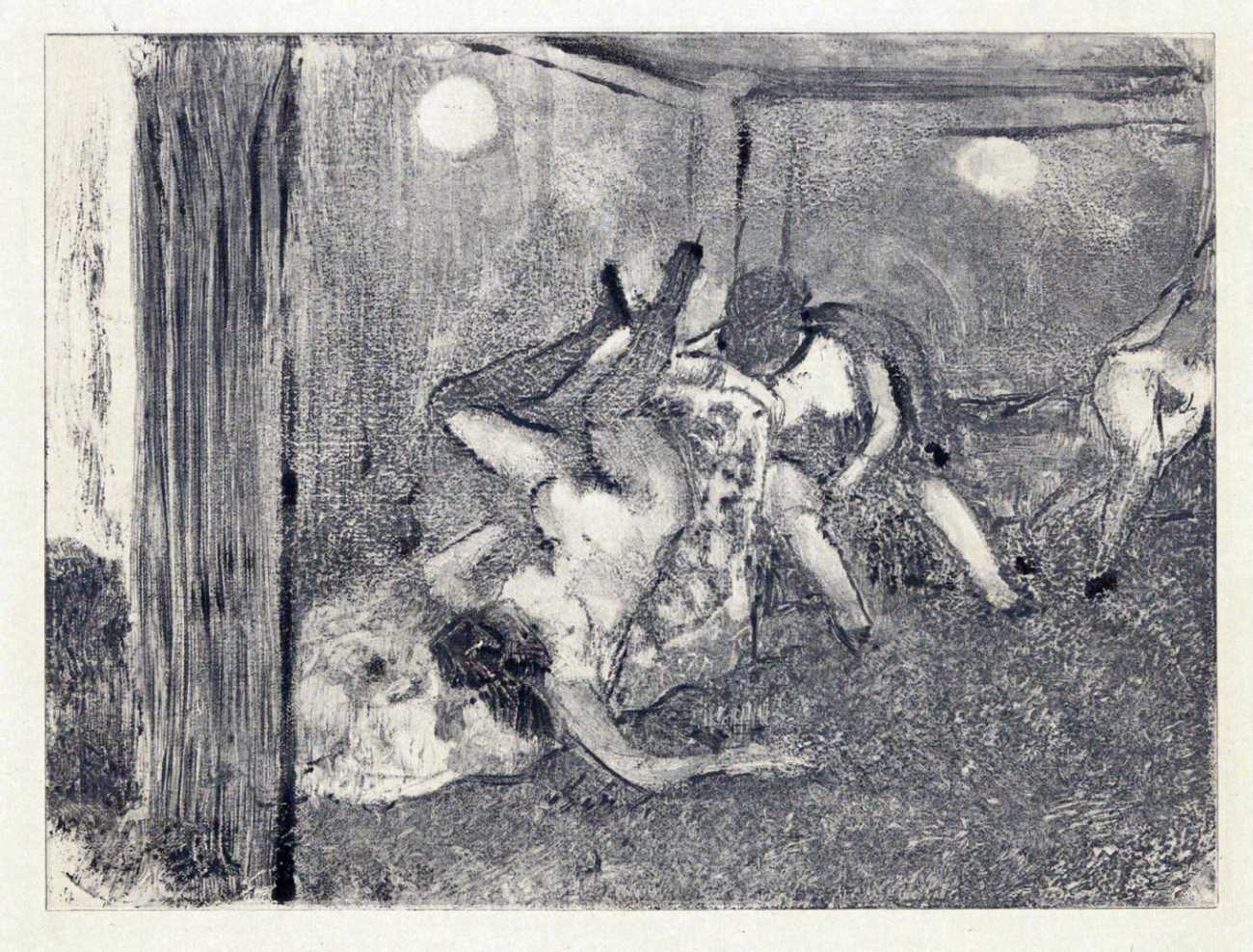
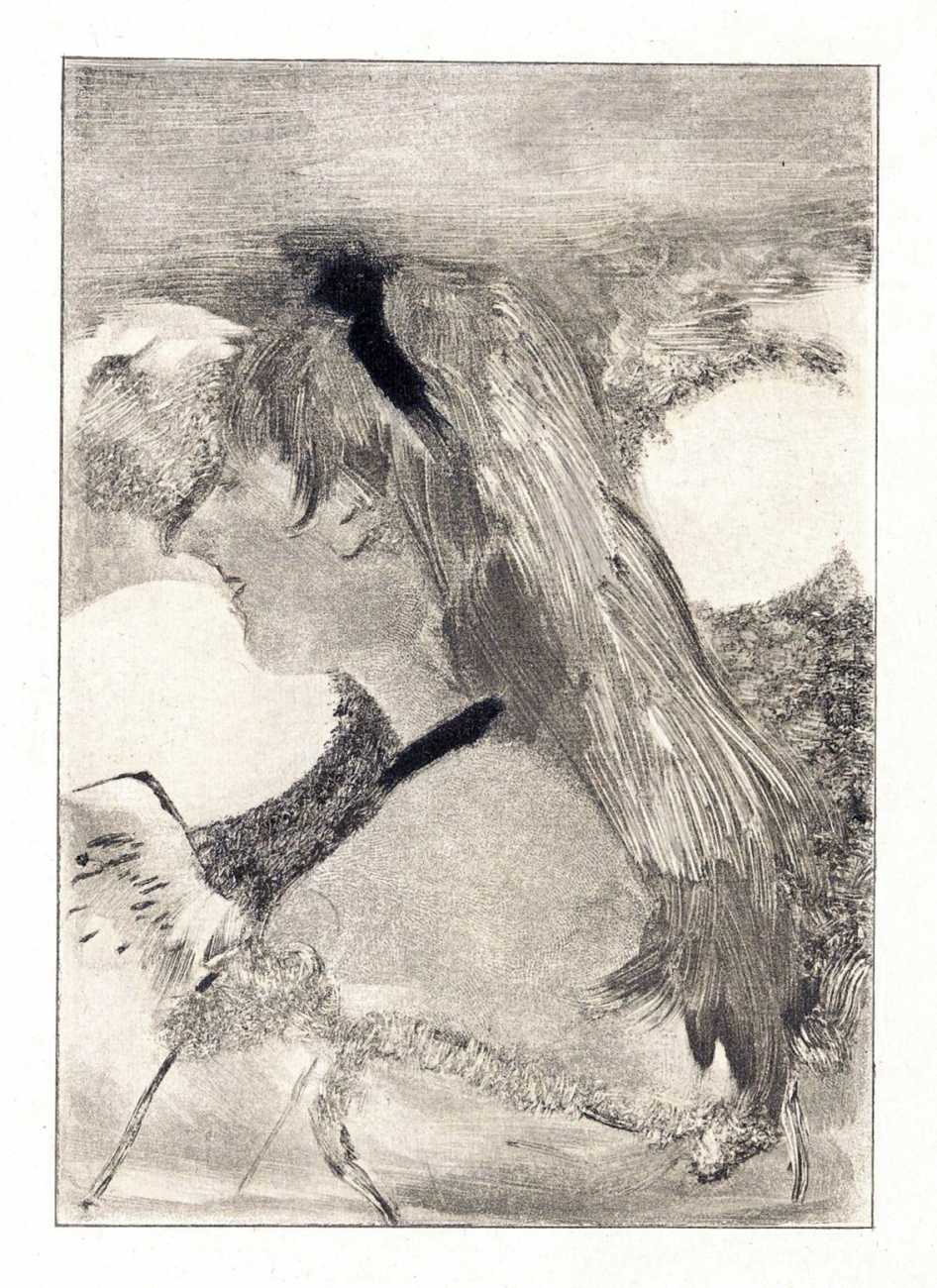
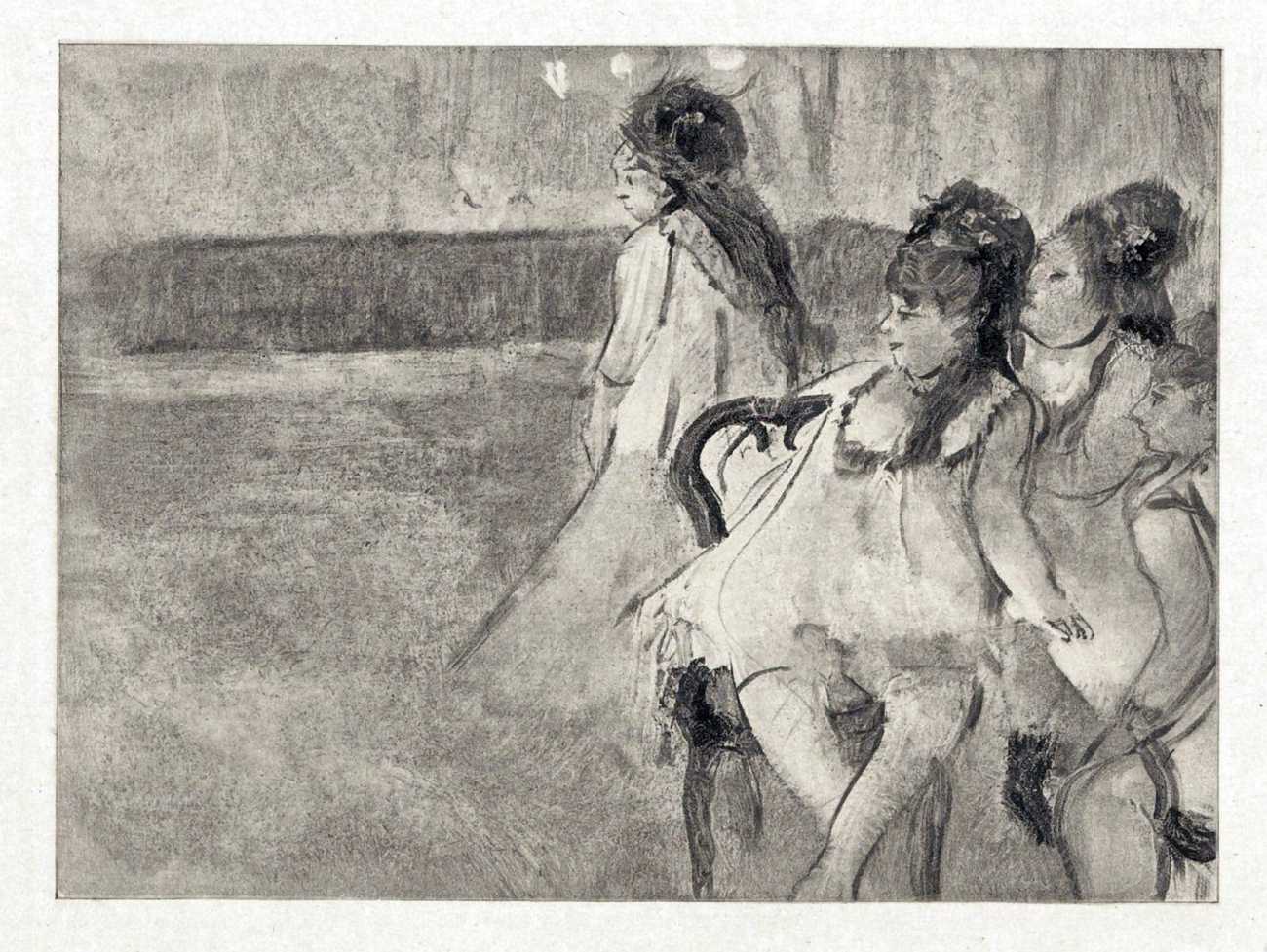
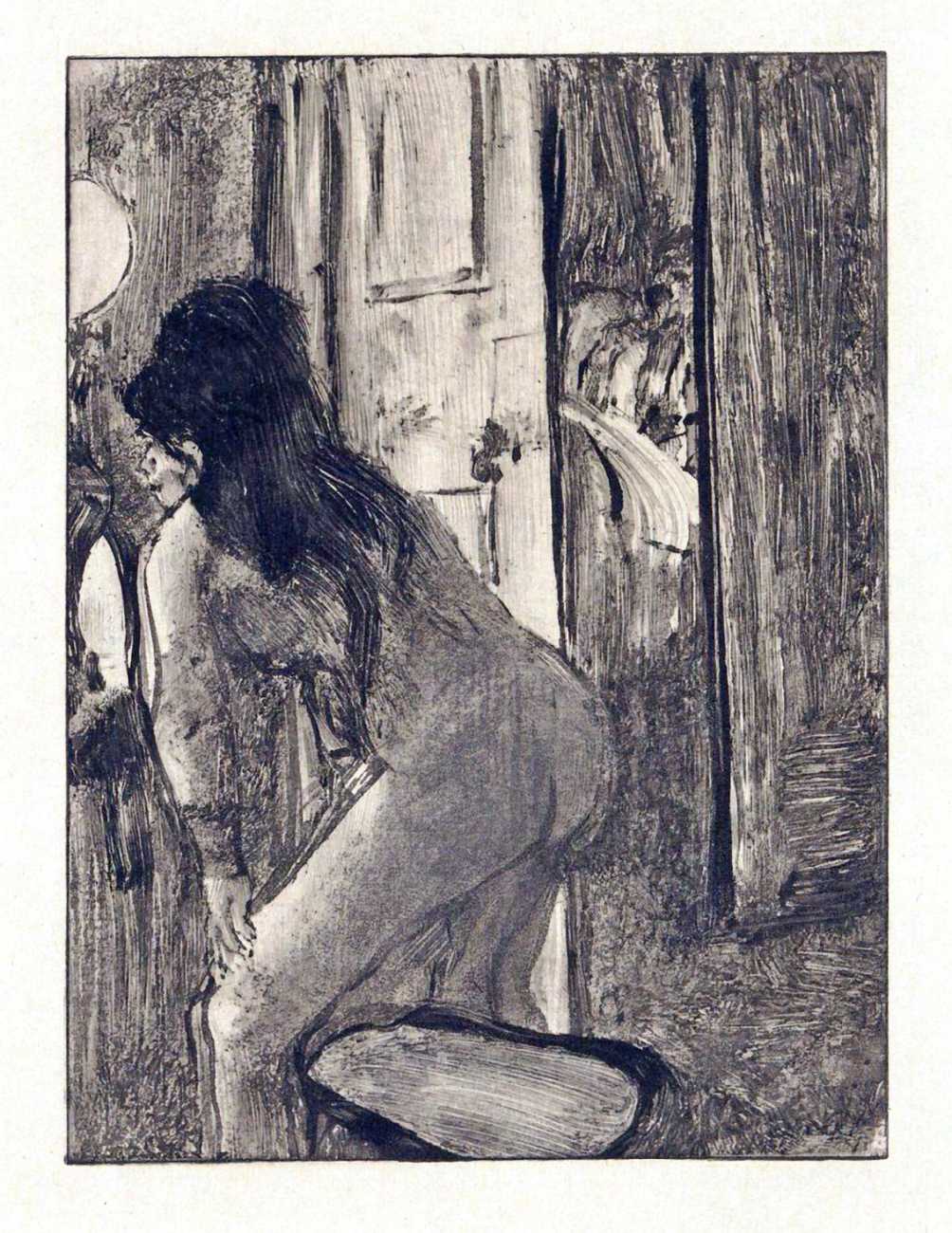
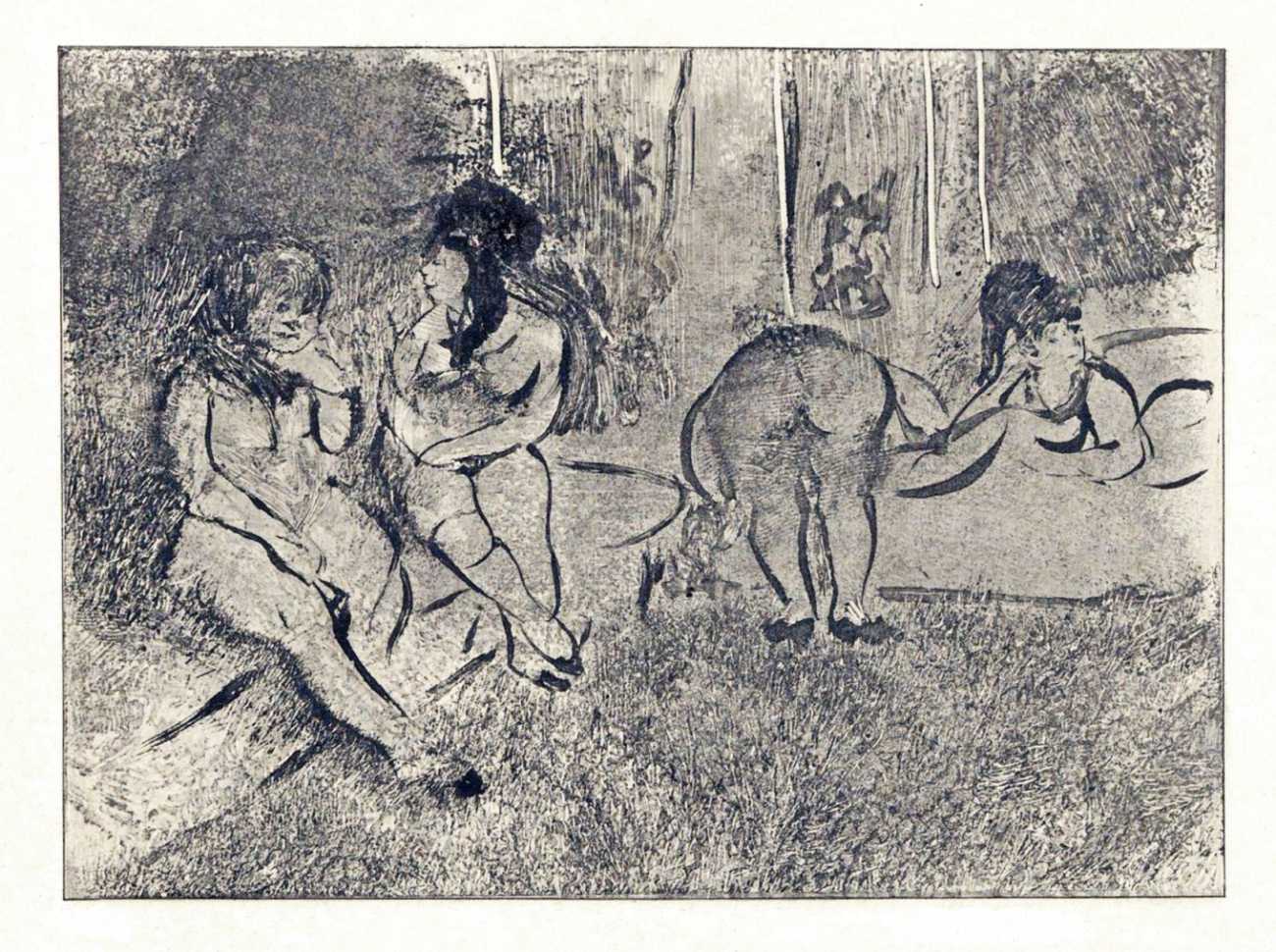
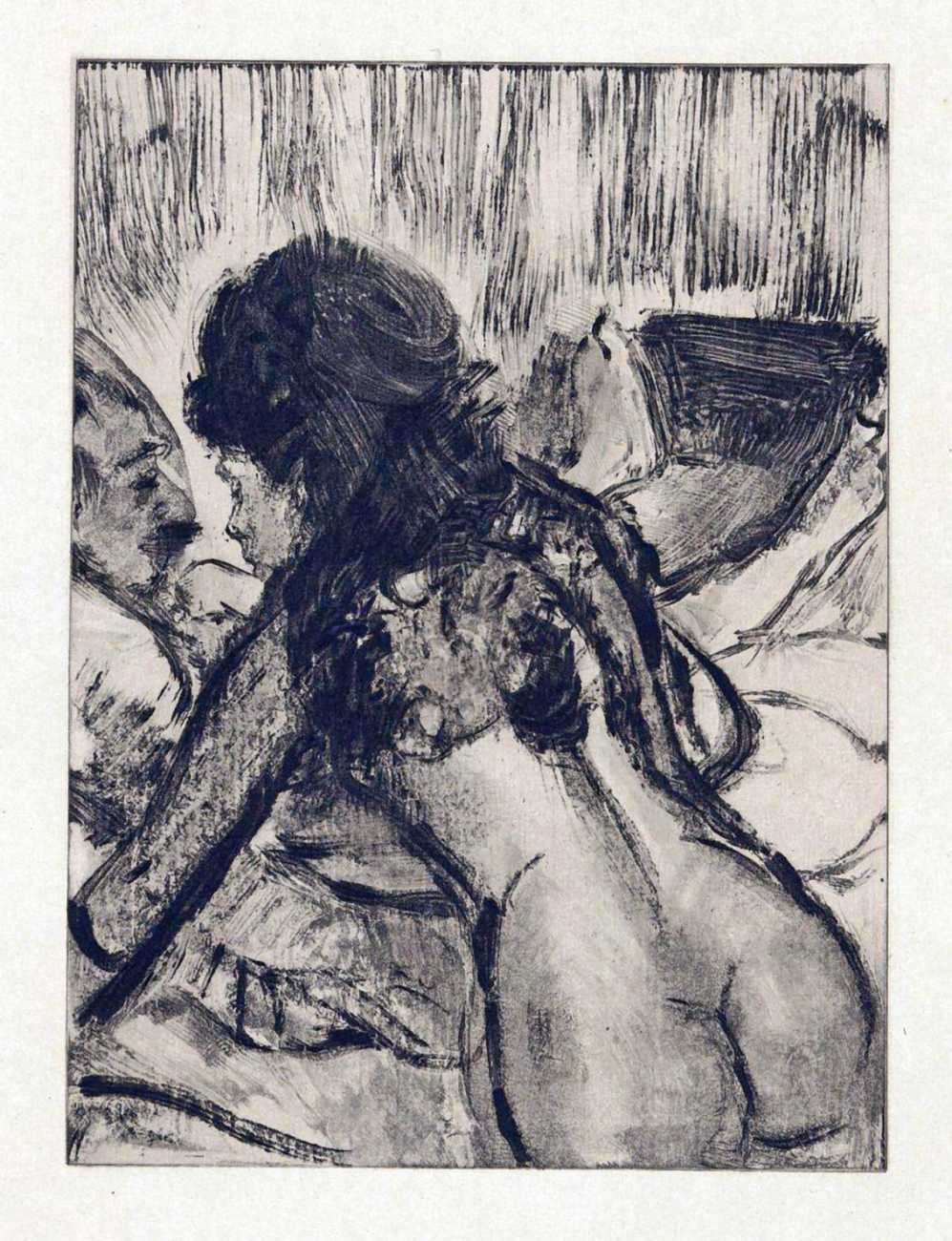
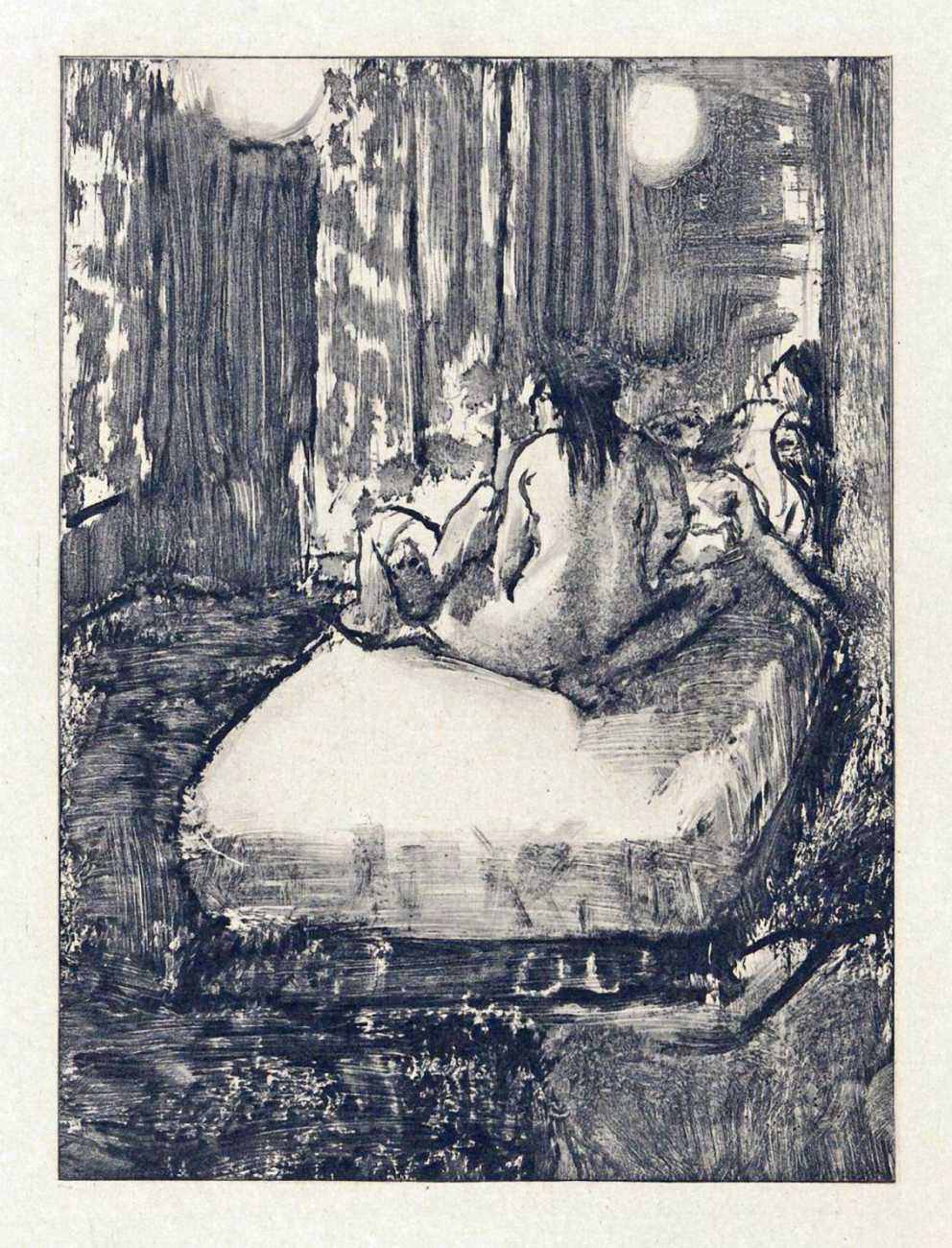
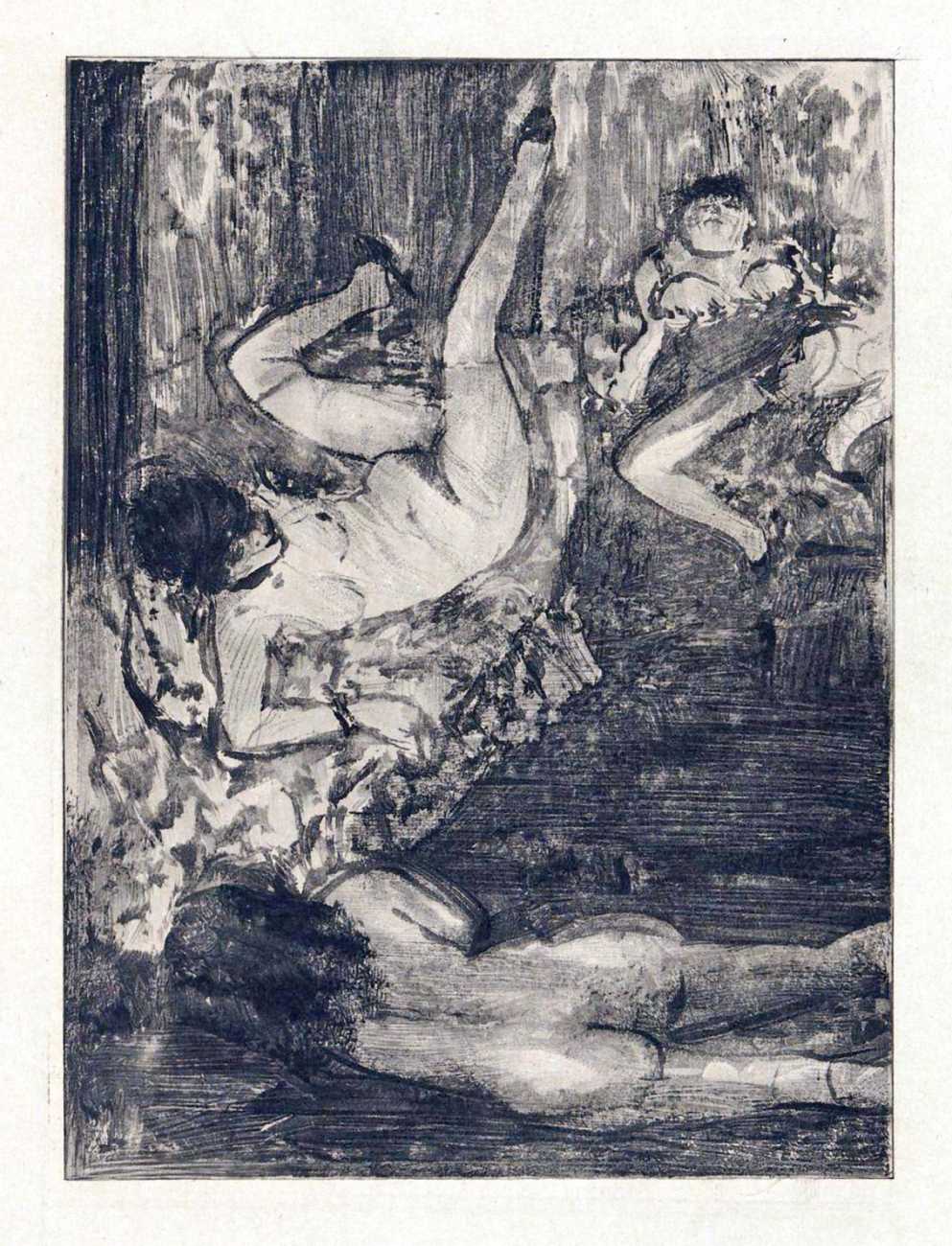
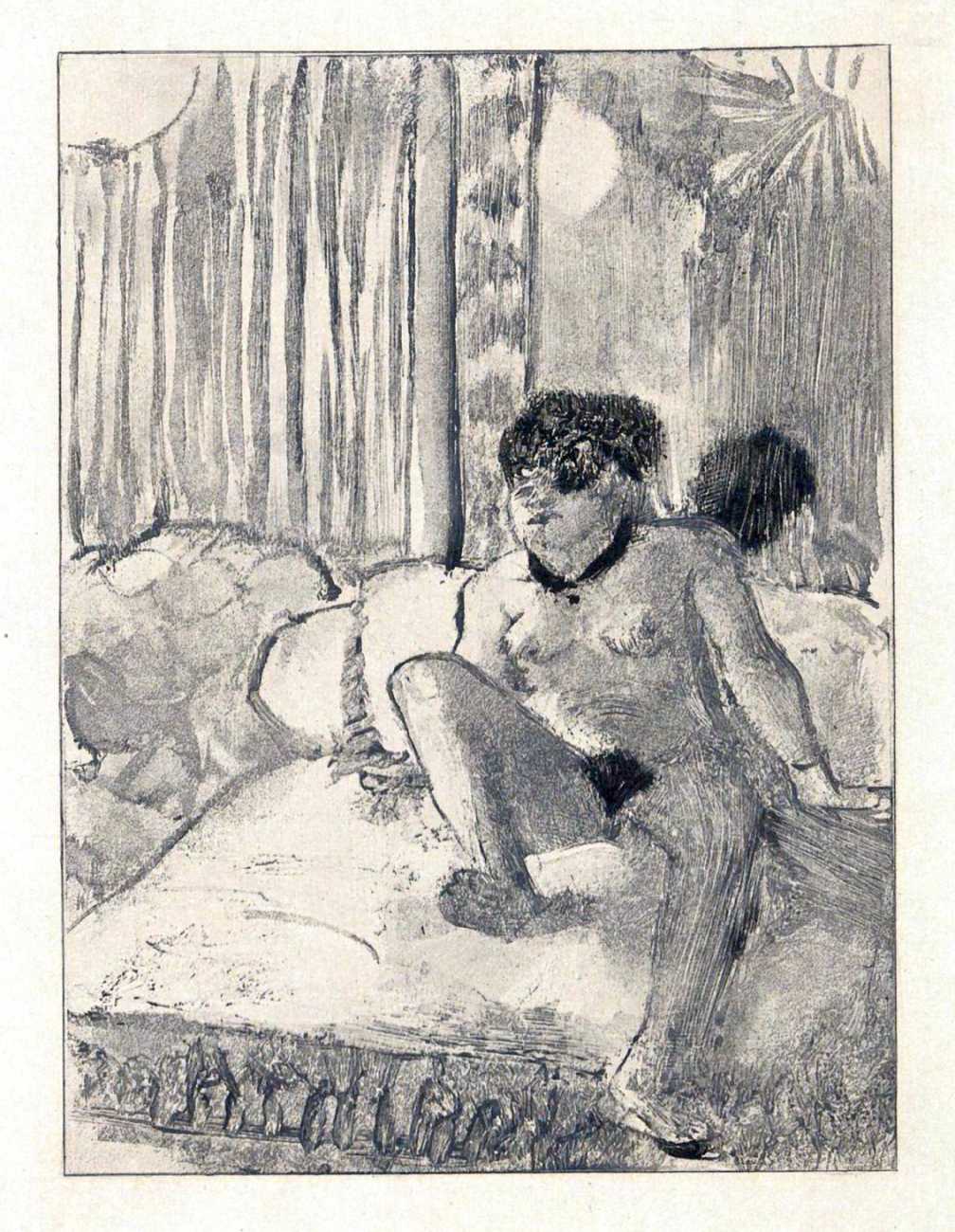
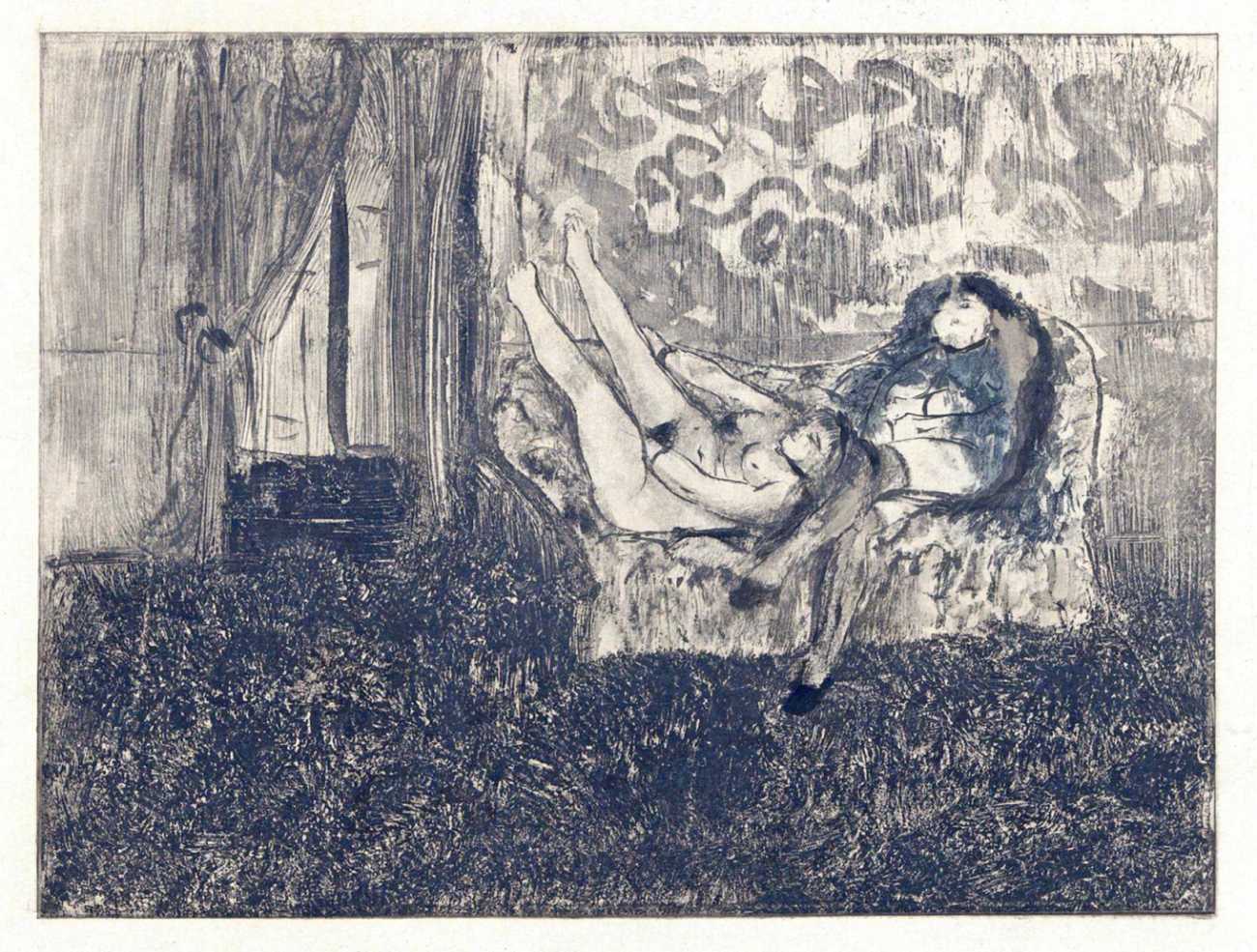
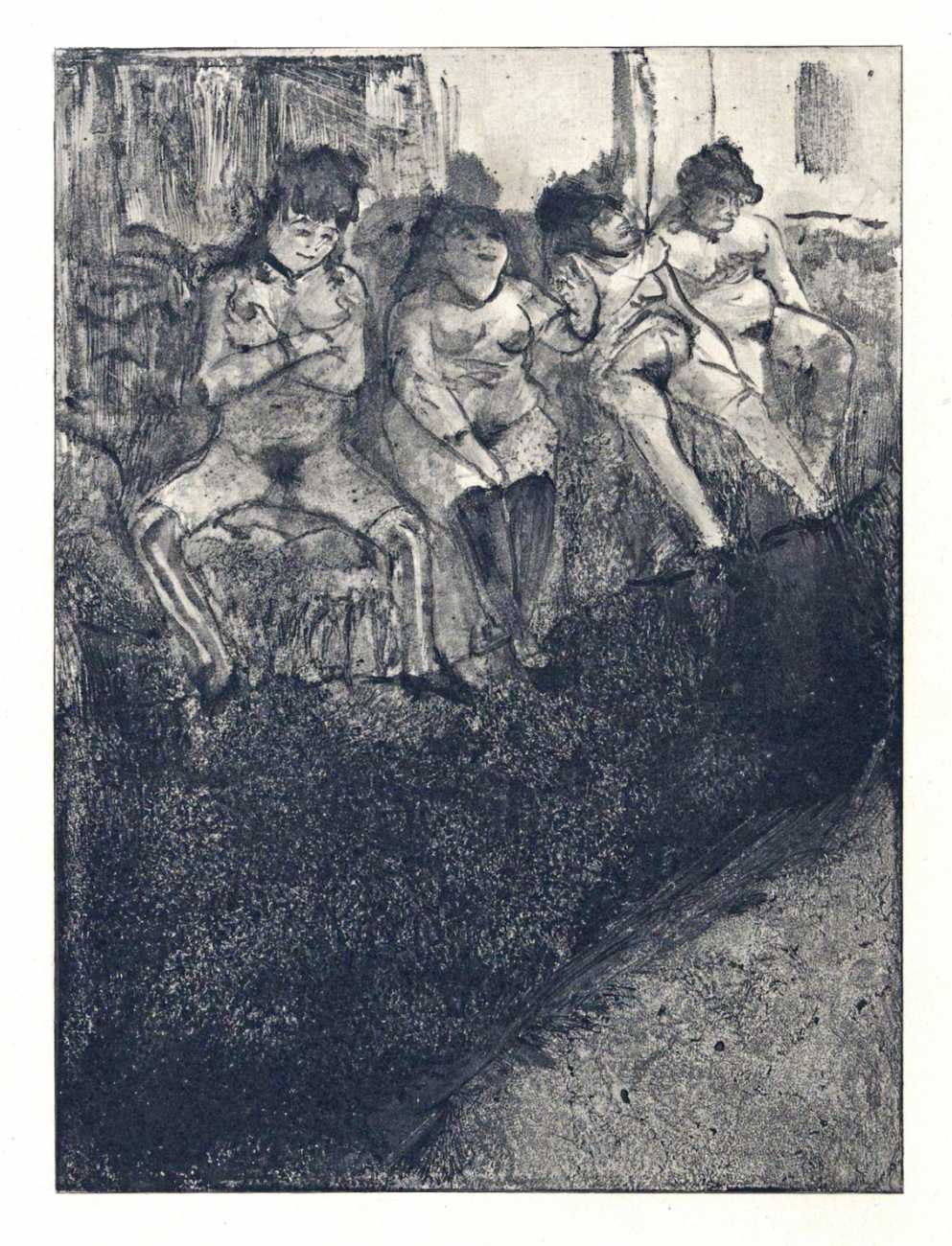
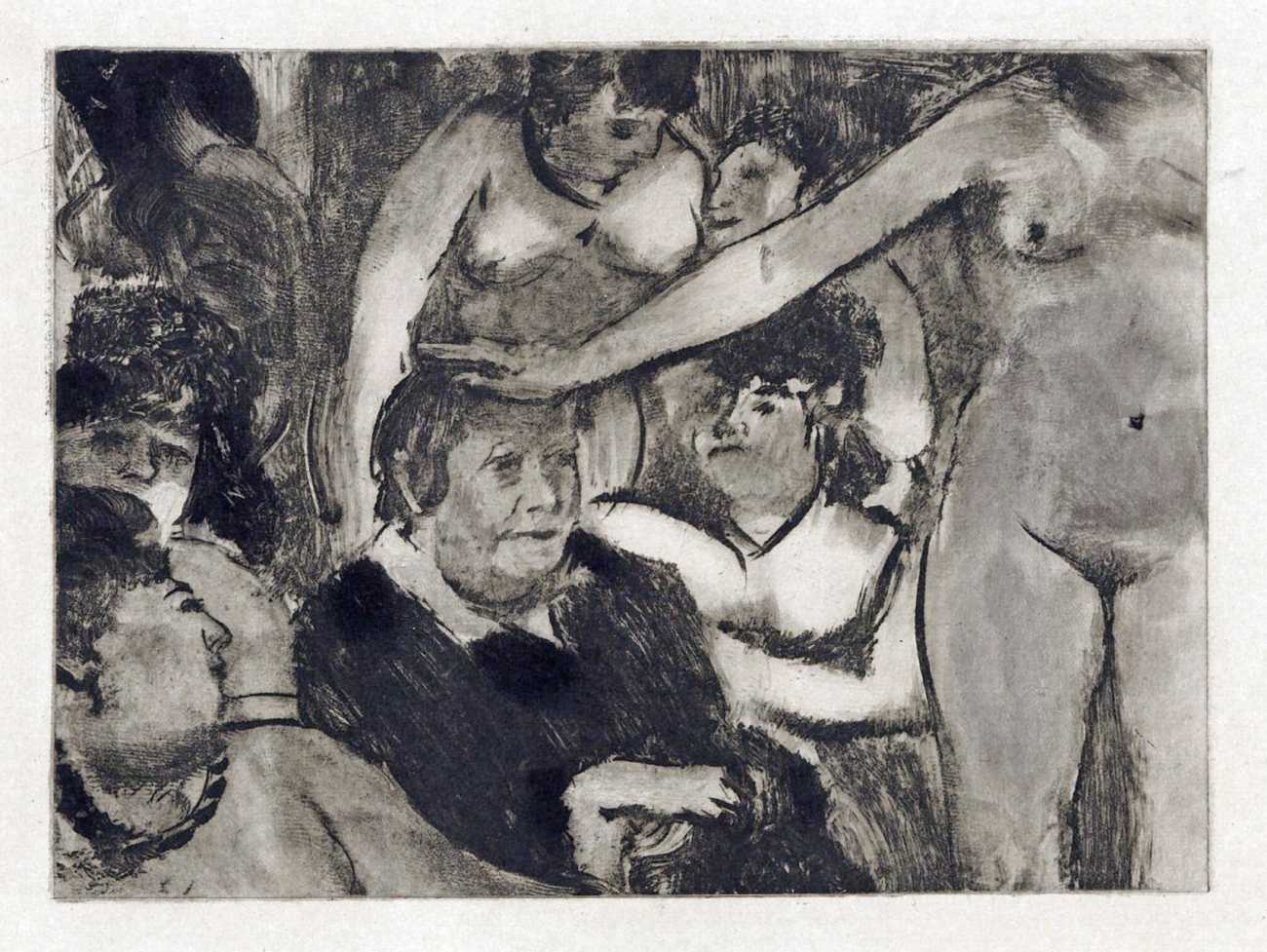
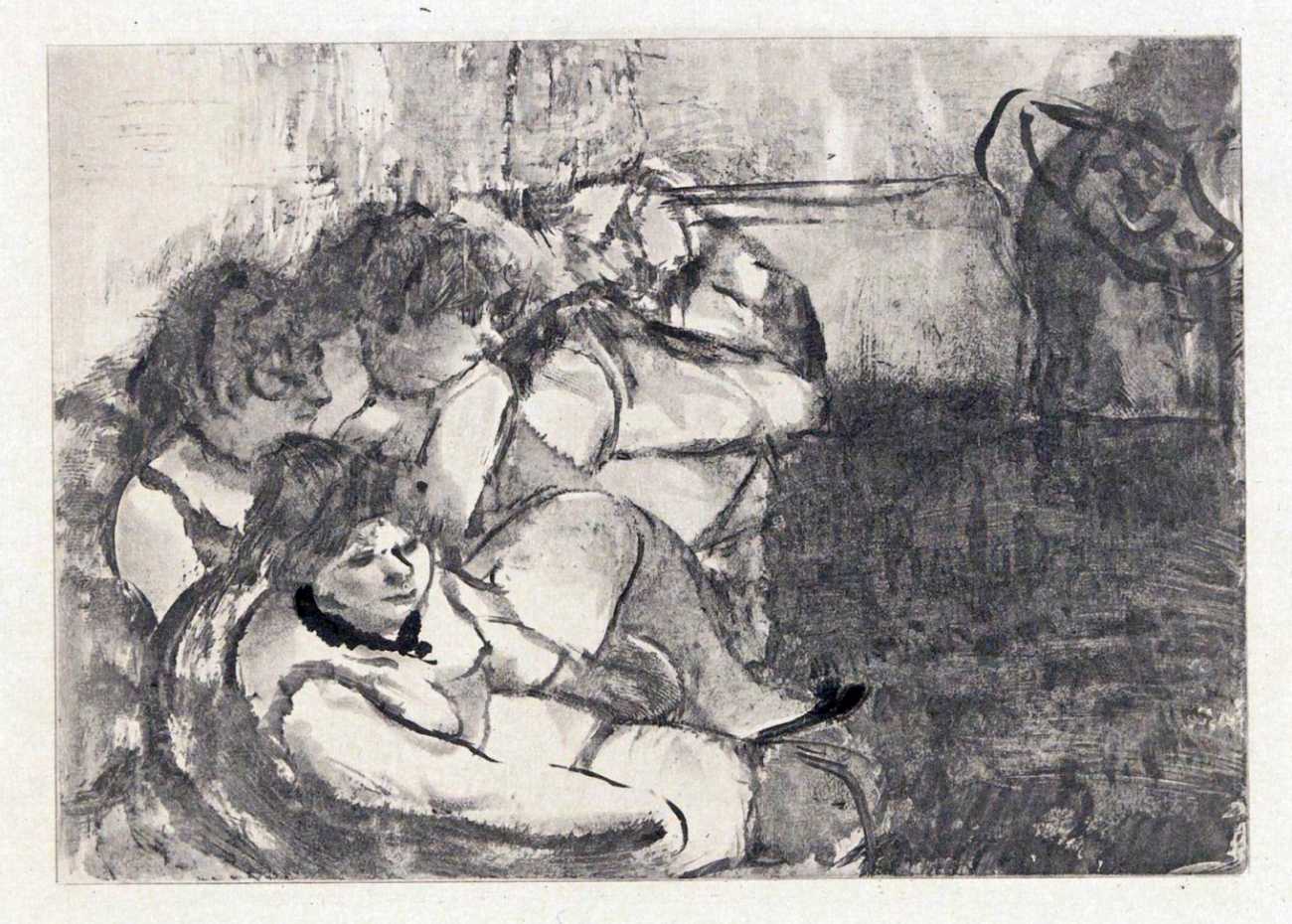
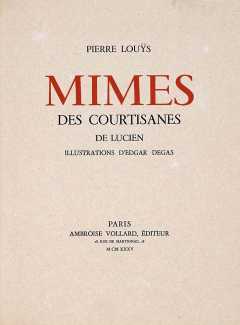
 The second illustrated title chosen by Ambroise Vollard to be accompanied by a selection of his Degas monotypes was Pierre Louÿs’ retelling of Lucian’s Mimes des courtesanes (Dialogues of the Courtesans).
For Lucian's original audience these dialogues would have raised few eyebrows. Sex work in the ancient Greek world occupied a recognised, if stratified, place in civic and commercial life, neither hidden nor especially transgressive. His vignettes move across that social landscape with easy familiarity – rivalries over clients, the economics of gift-giving, the management of difficult men and degrading encounters. The pleasures and indignities are rendered with equal frankness. The hetaerae occupied the upper stratum of this world — educated, relatively independent, possessing freedoms that respectable citizen women were largely denied. Lucian's cast is more mixed and his sympathies more democratic than the term hetaerae alone suggests. It was two millennia of accumulated moral censure rather than anything in the texts themselves that rendered this corner of the classical corpus untranslated until Louÿs – too insignificant to suppress entirely, too candid to acknowledge fully.
This was a much easier text for Degas to illustrate than La Maison Tellier, as there is no real narrative; this allowed the Ambroise/Potin/Aubert team to use the best of the remaining Degas prints. The observant eye will notice that a couple of the prints from La Maison Tellier have been reused with slight differences for the Lucian volume; there was no point letting a good resource remain underused.
The Degas-illustrated Mimes des courtesanes was published by Éditions Ambroise Vollard in a limited numbered edition of 325 copies.