
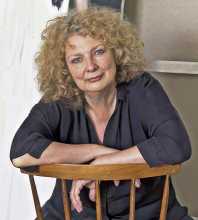
 Marlene Dumas is widely regarded as one of the most significant painters working today, known for her psychologically charged figurative works exploring the interconnected themes of sexuality, race, power and mortality. She was born in Cape Town and grew up on her father’s wine farm in Kuils River, on the edge of the Western Cape winelands. It was an outwardly tranquil childhood, but one conducted against the background of apartheid, a system of racial separation and moral violence she would never stop interrogating. As a young white Afrikaner girl, she was largely protected from its harshest realities, but felt its distortions acutely enough that the experience would shape everything she made for the next fifty years.
Dumas studied fine art at the University of Cape Town’s Michaelis School from 1972 to 1975, and in 1976, aged twenty-three, left South Africa for the Netherlands, arriving just as the Soweto uprising was erupting. The timing was not lost on her – leaving carried its own mix of complicity, guilt and responsibility, and the ethics of bearing witness to suffering at a distance became an abiding preoccupation. She enrolled at Ateliers ’63 in Haarlem, a progressive alternative to conventional academy training, and later studied psychology at the University of Amsterdam. The combination proved formative – she is a painter for whom thinking, writing and creating art are inseparably intertwined.
Amsterdam has been her home ever since. She lives and works there with her partner, the painter Jan Andriesse, and their daughter Helena, who has appeared in her work since childhood. The Netherlands has given Dumas an institutional and social freedom that apartheid-era South Africa could not have provided. Her creative world has always been deeply influenced by conflicting forces – between colonial margins and metropolitan centres, the personal and the politically charged – and she has worked to explore that tension rather than attempting to resolve it.
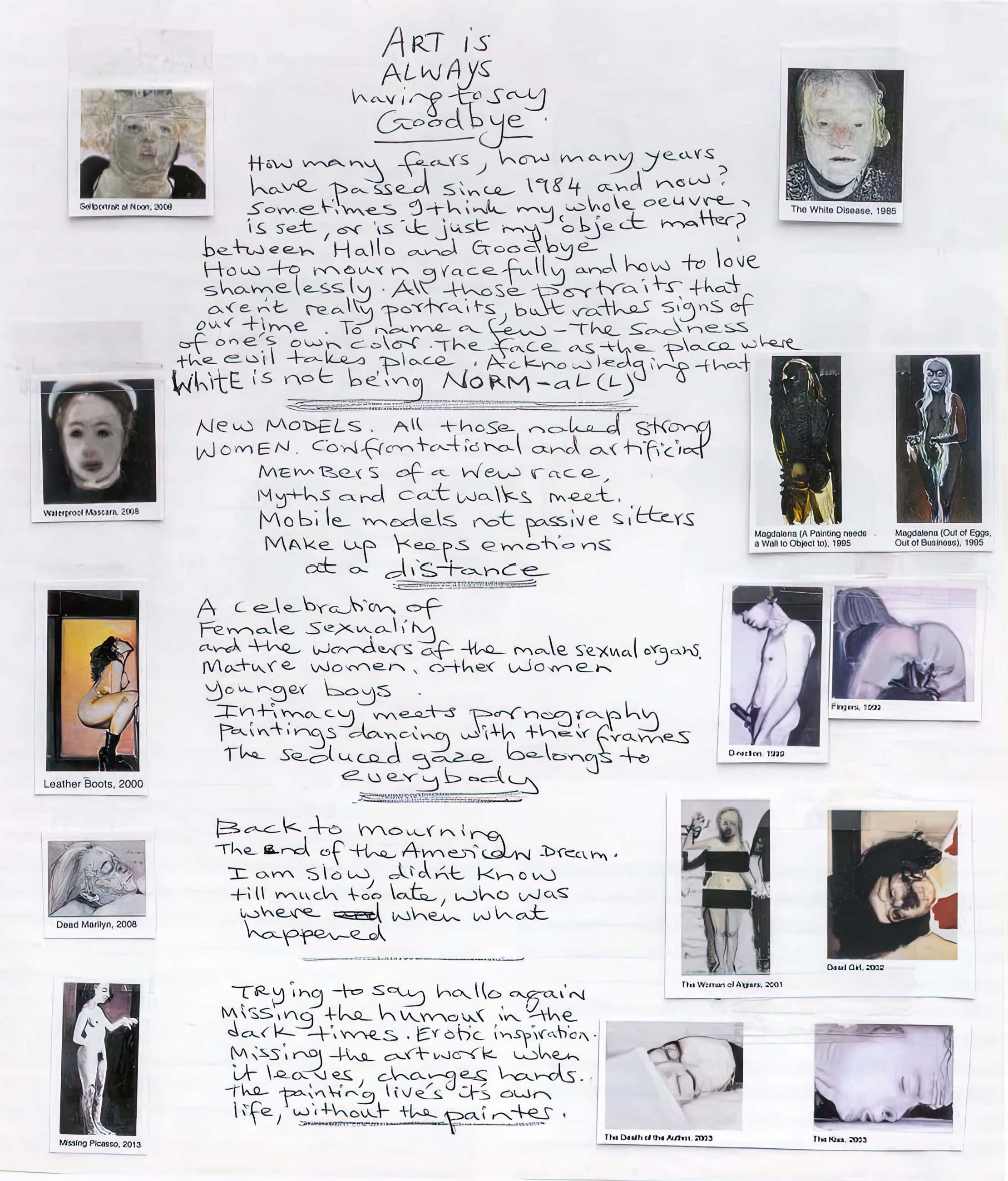
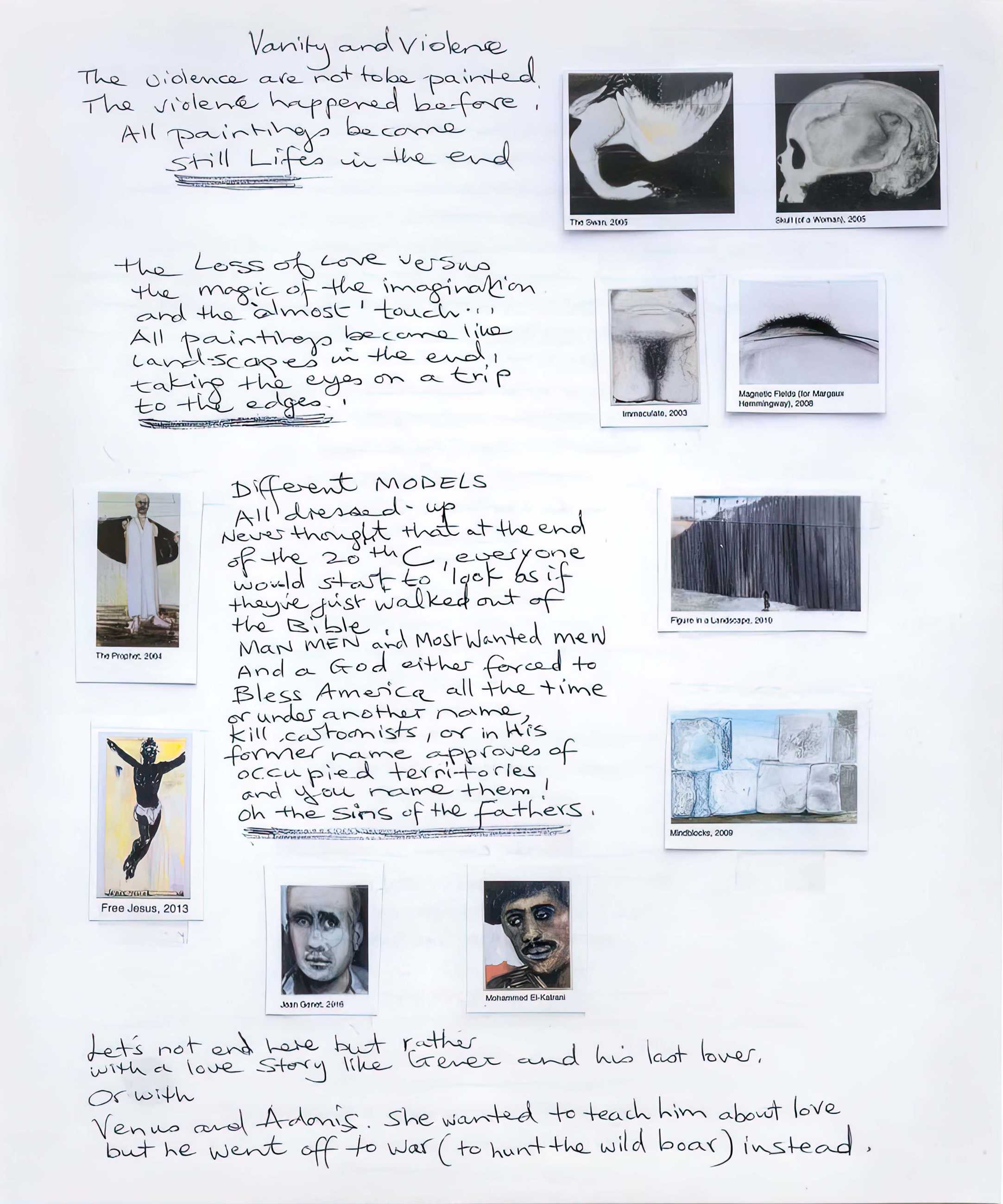
Her first solo exhibition of paintings was in Amsterdam in 1985, and by the early 1990s she had established herself as one of the most unsettling and original voices in contemporary figuration. In 1993 she was invited to respond to Parkett magazine’s survey on women painters, and her contribution – part poem and part polemic, shown below – captured her artistic personality with unusual precision. She describes herself as ‘a messy, vulgar, and irreverent material girl,’ claiming kinship with brushstroke-as-broom rather than the phallus, and refused to be constrained by patriarchal tradition or by feminist orthodoxy. What she aspires to is the dirty, morally ambiguous territory of painting, not a cleaned-up version of art.
 In 1995 Dumas represented the Netherlands at the Venice Biennale, showing her monumental Magdalena series. In 2007 she received the Düsseldorf Art Prize; in 2011 the Rolf Schock Prize in the Visual Arts; and in 2012 the Johannes Vermeer Award, the Netherlands’ highest cultural honour. The major retrospective Marlene Dumas, The Image as Burden, organised by the Stedelijk Museum in Amsterdam and travelling to Tate Modern in London and the Fondation Beyeler in Basel, opened in 2014 and consolidated her reputation.
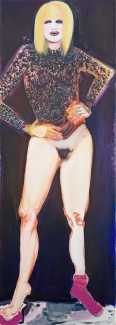
The art market has responded accordingly. In 2008, her 1995 painting The Visitor – a monumental horizontal nude – sold at Sotheby’s for $6.3 million, at the time a record for a living female artist. That figure was surpassed by The Schoolboys in 2023, and then dramatically again in May 2025, when Miss January sold at Christie’s for $13.6 million, setting a new global record for a painting by a living woman.
Dumas has always maintained an active written and intellectual practice alongside her painting. She has taught widely – at the Rijksakademie in Amsterdam, De Ateliers, and elsewhere – and her essays, poems and notebook jottings are woven through her catalogues in ways that resist the separation of text from image. She is also a presence in the South African art world, having donated works to major collections there and contributed to the development of younger artists through initiatives like Fresh at the South African National Gallery.
Marlene Dumas’ website, with many examples of her work and information about exhibitions, can be found here.
Similar artists
John Currin – American contemporary painter working a related ambivalent erotic style.
Joëlle Dubois – Belgian contemporary figurative-erotic painter of a younger generation.
Tracey Emin – British contemporary artist in a comparable confessional-erotic register.
Eric Fischl – American painter of figurative scenes with psychological-erotic content.
Sanam Khatibi – Iranian-Belgian contemporary painter of eros and violence.
Jenny Saville – British contemporary painter of monumental figurative flesh.
Ina van Zyl – Dutch-South African contemporary figurative painter and compatriot.
Example illustration


