 The foundational text of western medicine found its grandest visual homage in the early twentieth century through the publication of this monumental edition of the Œuvres complètes d'Hippocrate (Complete Works of Hippocrates). The text for this four-volume collection relied on the definitive, pioneering translations of Émile Littré, a French physician, lexicographer and philologist who spent decades meticulously editing, translating and structuring the vast medical treatises known as the Hippocratic Corpus. His work remains the bedrock of historical medical scholarship, offering clear insights into early ethics, surgical procedures and anatomical observations.
To elevate Littré’s scholarly text into a masterwork of book art, the Paris publishing house of Javal et Bourdeaux created a large-format illustrated edition that merged classical antiquarian themes with the vibrant prevailing sensibilities of the art deco movement. They commissioned Kuhn-Régnier to provide visual interpretations for the ancient texts, resulting in sixty-four full-page colour compositions created meticulously in pochoir. The pochoir process is an exacting technique where hand-cut stencils are layered individually over a base print, allowing pure, unmixed gouache or watercolour pigments to be brushed directly onto the sheet. This labour-intensive craftsmanship gave each illustration a dense, velvet-like texture and brilliant colour saturation that standard inks could never replicate.
Kuhn-Régnier’s artistic style echoes perfectly the clean, geometric anatomy of Greek pottery paintings while remaining thoroughly modern, capturing delicate clinical procedures and allegorical expressions of human temperaments with striking clarity. Rather than utilising industrial mechanical printing, the artist and the publisher collaborated with master colourist Maurice Jacomet to produce a quality of illustration that has rarely been equalled.
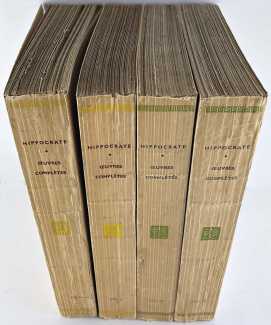 Conforming to their very high standards, Javal et Bourdeaux issued the collection as a strictly regulated limited edition. Only 2,335 numbered copies were ever produced, the majority on fine, watermarked Vélin teinté du Marais paper, a premium stock noted for its durability and smooth texture. The books were issued in loose, unbound sheets wrapped in illustrated paper covers and protected by glassine jackets.
Here is the full list of the sixty-four Hippocrate illustrations, with the captions as supplied in the Javal et Bourdeaux edition and their English translations:
1. ‘Arrêtons-nous à la décoction d’orge …’ (‘Let us pause over this medicinal barley infusion …’)
2. ‘On aura tout prêt et en grande quantité un mélange d’eau froide et d’eau chaude pour arroser le malade à la sortie du bain …’ (‘One should have ready in abundance a mixture of cold and hot water to sprinkle over the patient on leaving the bath …’)
3. ‘Bornez-vous à faire prendre tous les trois jours un clystère au malade …’ (‘The patient should simply be given an enema every three days …’)
4. ‘Après lui avoir baigné les jambes dans un vase plein d’eau chaude …’ (‘After bathing his legs in a vessel full of hot water …’)
5. ‘Dans le gymnase qu’il se fasse frotter …’ (‘In the gymnasium he should be rubbed down …’)
6. ‘C’est ainsi que la fille de Daitharsée fut réglée pour la première fois et eut une hémorrhagie abondante par les narines …’ (‘Thus Daitharses’ daughter menstruated for the first time, and suffered a copious nosebleed …’)
7. ‘Et dans les parties sexuelles …’ (‘… and in the sexual organs …’)
8. ‘Un jeune homme s’étant échauffé longtemps par des excès de vin et de femme …’ (‘A young man, having become overheated through excess of wine and women …’)
9. ‘Rechercher qui peut se voir, se toucher, s’entendre ; ce qu’on peut percevoir en regardant, en touchant, en écoutant, en flairant …’ (‘To seek what may be seen, touched, and heard; what may be perceived by sight, touch, hearing, and smell …’)
10. ‘Ils maintiendront le reste du corps dans l’immobilité …’ (‘They will keep the rest of the body motionless …’)
11. ‘Et le bras soutenu avec une écharpe …’ (‘… and the arm supported with a sling …’)
12. ‘Luxation du pied …’ (‘Dislocation of the foot …’)
13. ‘Il convient de masser une épaule dans cet état avec des mains douces …’ (‘It is proper to massage a shoulder in this condition with gentle hands …’)
14. ‘Puis, elles se servent de ces infirmes, comme ouvriers, pour les métiers de cordonnier, de forgeron …’ (‘They use these disabled people as workers in trades such as shoemaking and blacksmithing …’)
15. ‘Il est facile de restaurer avec des boissons …’ (‘Recovery through liquids is easy …’)
16. ‘Les fumigations aromatiques …’ (‘Aromatic vapour treatments …’)
17. ‘Une femme allaitait …’ (‘A woman was nursing a child …’)
18. ‘On la saigna du pied …’ (‘She was bled from the foot …’)
19. ‘Appliquer une très-grande ventouse à la mamelle …’ (‘To apply a very large cupping-glass to the breast …’)
20. ‘Les médicaments mis dans les narines quand il y a fièvre …’ (‘Medicines placed in the nostrils when there is fever …’)
21. ‘Cette dureté fut malaxée fortement avec les mains enduites d’huile …’ (‘This hard swelling was vigorously kneaded with hands anointed with oil …’)
22. ‘Elle fut frappée du plat de la main au bregma, en jouant, par une jeune femme de ses amis …’ (‘While playing, she was struck on the crown with the flat of the hand by a young female companion …’)
23. ‘D’autres, après le coït, ont le ventre gonflé de flatuosités …’ (‘Others, after intercourse, suffer swelling of the belly from flatulence …’)
24. ‘Saisissait le vase, buvait avidement …’ (‘He seized the vessel and drank greedily …’)
25. ‘… quand il se lançait à boire, la joueuse de flûte l’effrayait …’ (‘… when he began to drink, the flute-player frightened him …’)
26. ‘Les réveils troublés et colériques …’ (‘Disturbed and irritable awakenings …’)
27. ‘Ceux qui tressaillent à la main du médecin …’ (‘Those who recoil at the physician’s touch …’)
28. ‘De la langue …’ (‘Of the tongue …’)
29. ‘On se promènera nu autant qu’on le pourra …’ (‘One should walk naked as much as possible …’)
30. ‘On incise la luette avec un bistouri …’ (‘The uvula is incised with a surgical knife …’)
31. ‘On adaptera un tuyau au pied d’une outre, on la gonflera, et …’ (‘A tube should be fitted to the neck of a wineskin, which should then be inflated, and …’)
32. ‘Se feront oindre avec de l’huile et du vin chauds …’ (‘They will be anointed with oil and warm wine …’)
33. ‘Ils présentent l’attaque et s’enfuient près de leur mère …’ (‘They make their attack, then flee toward their mother …’)
34. ‘Si c’est un enfant, il sera posé sur les pieds d’une femme, contre les genoux de laquelle il aura le dos appuyé …’ (‘If it is a child, he will be placed upon a woman’s feet, against whose knees he will rest his back …’)
35. ‘Ces statuaires font la copie du corps moins l’âme …’ (‘These sculptors reproduce the body, but not the soul …’)
36. ‘Les jumeaux se ressemblent …’ (‘Twins resemble one another …’)
37. ‘On se gorgera de raisins et de figues, du moins dans les repas …’ (‘One will gorge oneself with grapes and figs, at least at meals …’)
38. ‘Vous appliquerez sur la tête des éponges trempées dans de l’eau chaude …’ (‘You will apply to the head sponges soaked in hot water …’)
39. ‘Et, appliquant l’oreille contre la poitrine, vous écoutez pendant longtemps, cela bout en dedans comme du vinaigre …’ (‘And if, placing your ear against the chest, you listen for a long time, it bubbles inside like vinegar …’)
40. ‘Le malade s’asseoira dans de l’eau chaude …’ (‘The patient will sit in hot water …’)
41. ‘De sorte qu’aussitôt le corps change de coloration et devient jaune comme une écorce de grenade …’ (‘So that as soon as the body changes colour and becomes yellow like a pomegranate rind …’)
42. ‘Chez beaucoup encore, elle est produite par l’usage immodéré de gâteaux au sésame et de friandises au miel …’ (‘In many cases, it is also caused by excessive consumption of sesame cakes and honey sweets …’)
43. ‘La femme sera couchée sur le dos, ayant les pieds élevés et les jambes étendues. Puis, appliquant des éponges …’ (‘The woman shall lie on her back, with feet raised and legs extended. Then, applying sponges …’)
44. ‘La femme, assise sur un grand chaudron, recevra la fumigation …’ (‘The woman, seated upon a large cauldron, receives the fumigation …’)
45. ‘Et on oindra avec le parfum de rose …’ (‘And she shall be perfumed with rose oil …’)
46. ‘Allumez une mèche de lampe, éteignez-la et tenez-la sous les narines …’ (‘Light a lamp wick, extinguish it, and hold it beneath the nostrils …’)
47. ‘Je lui ordonnai de sauter de manière que les talons touchassent les fesses …’ (‘I ordered him to leap in such a way that his heels touched his buttocks …’)
48. ‘Aussitôt après la naissance des enfants, les femmes leur font prendre les mêmes médicaments …’ (‘Immediately after the birth of a child, women give them the same medicines …’)
49. ‘Et laver le ventre avec la décoction d’orge, ou avec du miel …’ (‘And wash the abdomen with a barley infusion, or with honeyed water …’)
50. ‘Administrer aussi des fumigations douces, faisant asseoir haut la malade …’ (‘Administer gentle fumigations as well, seating the patient high above them …’)
51. ‘La femme prend un bain de siège tiède et boit du vin doux …’ (‘The woman takes a warm sitz bath and drinks sweet wine …’)
52. ‘On appliquera sur l’autre hanche du parfum égyptien blanc ou de l’huile de rose …’ (‘One will apply to the other hip white Egyptian perfume or rose oil …’)
53. ‘L’enduire de cérat humide fait avec l’huile de rose …’ (‘Anoint it with a moist wax-based ointment made from rose oil …’)
54. ‘Puis, le lendemain, de bonne heure, examiner si la femme exhale par la bouche l’odeur du pessaire …’ (‘Then, early the next day, determine whether the woman’s breath carries the odour of the pessary …’)
55. ‘Après quoi on fait croiser les jambes, on les attache ensemble …’ (‘After this, the legs are crossed and bound together …’)
56. ‘Puis elle mettra autour des cheveux un linge lavé et sans odeur qu’elle fixera avec un réseau lavé ou n’ayant aucune odeur …’ (‘Then she should place over her hair a washed, odourless cloth, securing it with a similarly washed and odourless hairnet …’)
57. ‘Les musiciens, quand il leur faut porter la voix au loin, faisant une inspiration profonde, prolongent l’expiration et chantent fort …’ (‘Musicians, when they must project the voice over a distance, take a deep breath, prolong the expiration, and sing loudly …’)
58. ‘Il faut oindre les chairs avec de l’huile ayant une bonne odeur …’ (‘The flesh must be anointed with pleasantly scented oil …’)
59. ‘Mais il est bon d’avoir des mamelles volumineuses et grandes. Ces caractères se reconnaissent à la première vue.’ (‘…but it is desirable to have full, ample breasts. Such qualities are recognised at first glance.’)
60. ‘Les sièges, autant que possible, seront de hauteur égale, afin que le médecin et le patient soient de niveau …’ (‘The seats, as far as possible, shall be of equal height, so that physician and patient may be on the same level.’)
61. ‘Réclame la venue d’autres médecins avec qui il consultera sur le cas actuel …’ (‘…calls for other physicians to come and consult on the present case …’)
62. ‘Il ôte les filaments de sa couverture, s’il y voit, croyant que ce sont des poux.’ (‘He picks threads from his blanket, imagining them to be lice.’)
63. ‘Et moi, me retournant, j’aperçois une femme belle et grande, coiffée simplement …’ (‘And turning around I saw a tall, beautiful woman, simply coiffed …’)
64. ‘De le couronner d’une couronne d’or.’ (‘… to crown him with a golden crown.’)