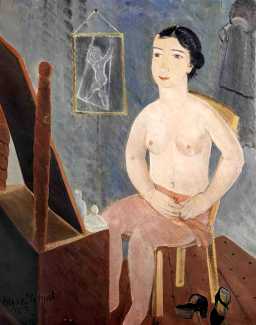
Eroticism in Edgard Tytgat’s paintings is usually quiet and domestic. He places sensuality into ordinary, almost banal social situations – parlours, gardens, boarding houses and seaside outings. His naked or half-naked figures are often slightly stiff, with simplified faces and mask-like expressions. The erotic charge arises from circumstance, a stocking being adjusted, a dress half-removed, a woman at her toilette while another watches, a male figure standing awkwardly nearby.
The atmosphere in Tytgat’s paintings is faintly uneasy, sometimes gently comic. The viewer becomes a participant in a mild voyeurism, placing them as an onlooker at a threshold, doorway or edge of a room. He presents sexuality as a routine human fact which quietly disrupts social etiquette, producing a sense of polite embarrassment.
The later paintings – and we show here his work in chronological order – become more densely populated, drawing on narratives like Adam and Eve and the Siege of Troy. The last two, La statue qui bouge (The Moving Statue, 1955) and Le sculpteur immortalisant ses amours (The Sculptor Immortalising his Muses, 1957), are among his last works, exploring the relationship between the artist and their inspirations.
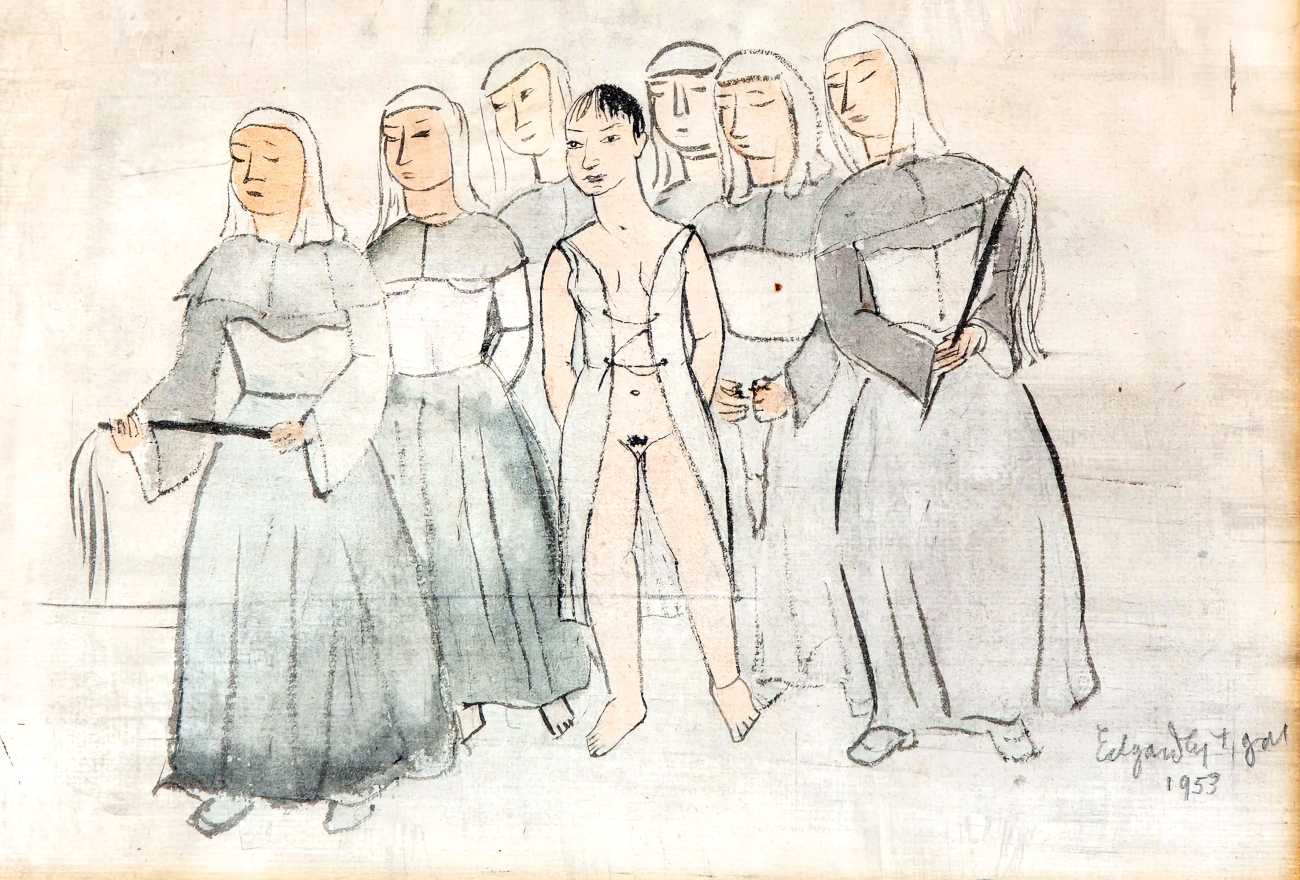
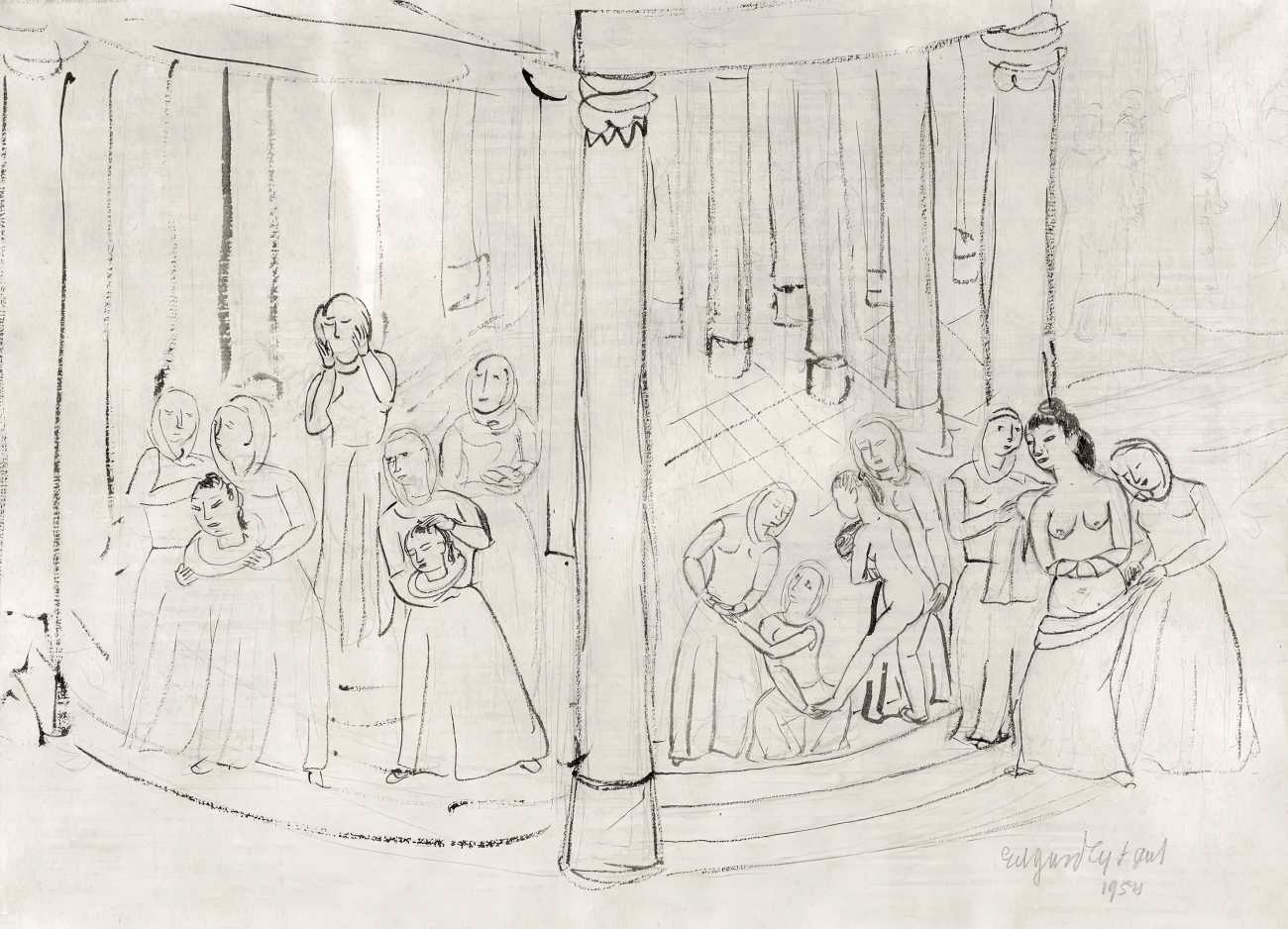
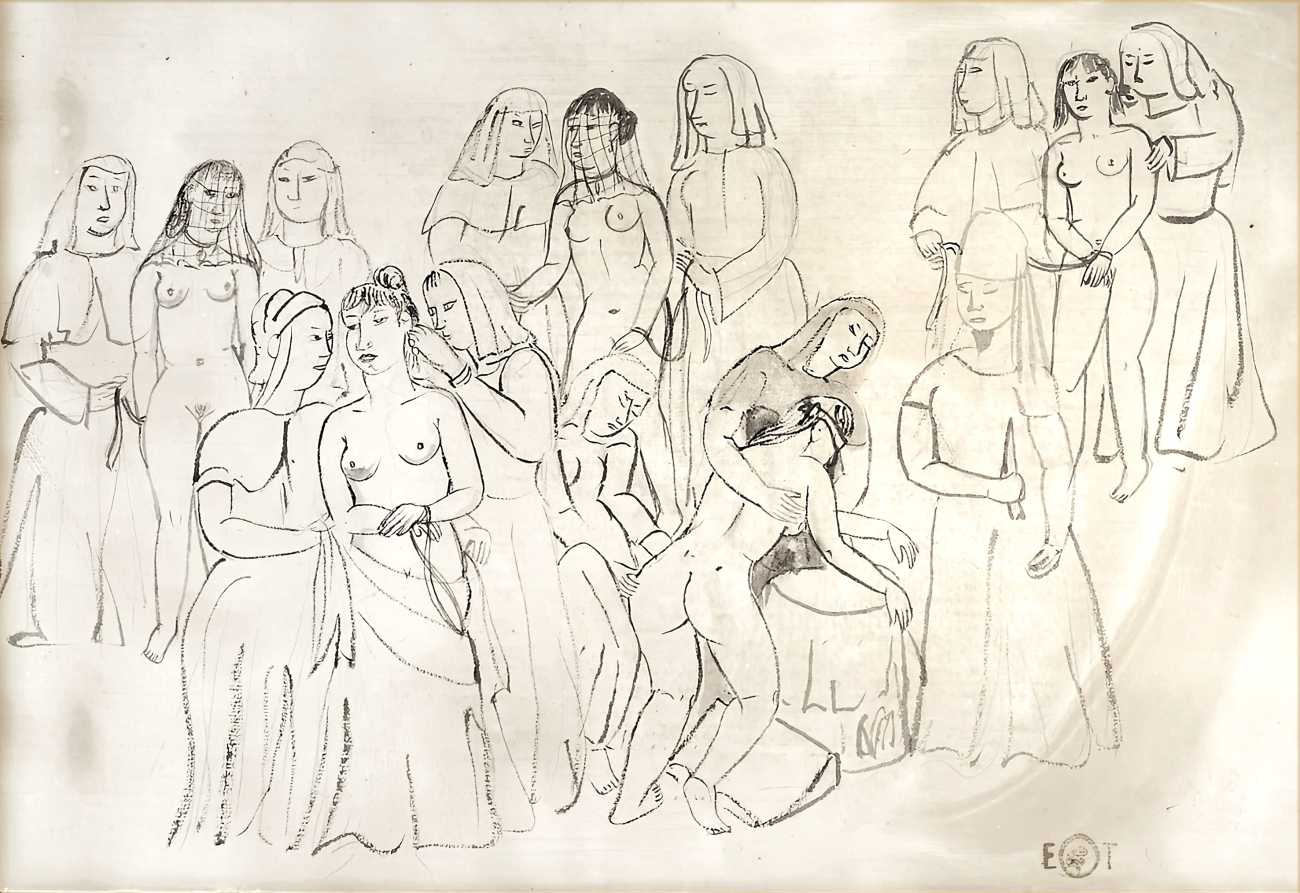
Towards the end of his life, having produced the powerful and enigmatic Huit dames et un monastère in 1944, Tytgat was exploring the creation of another visual narrative to be titled Le sacrifice de princesses (The Sacrifice of the Princesses), the theme of which was, appropriately, the relationship between death and enlightenment. Only a few sketches and a couple of paintings exist of this project.