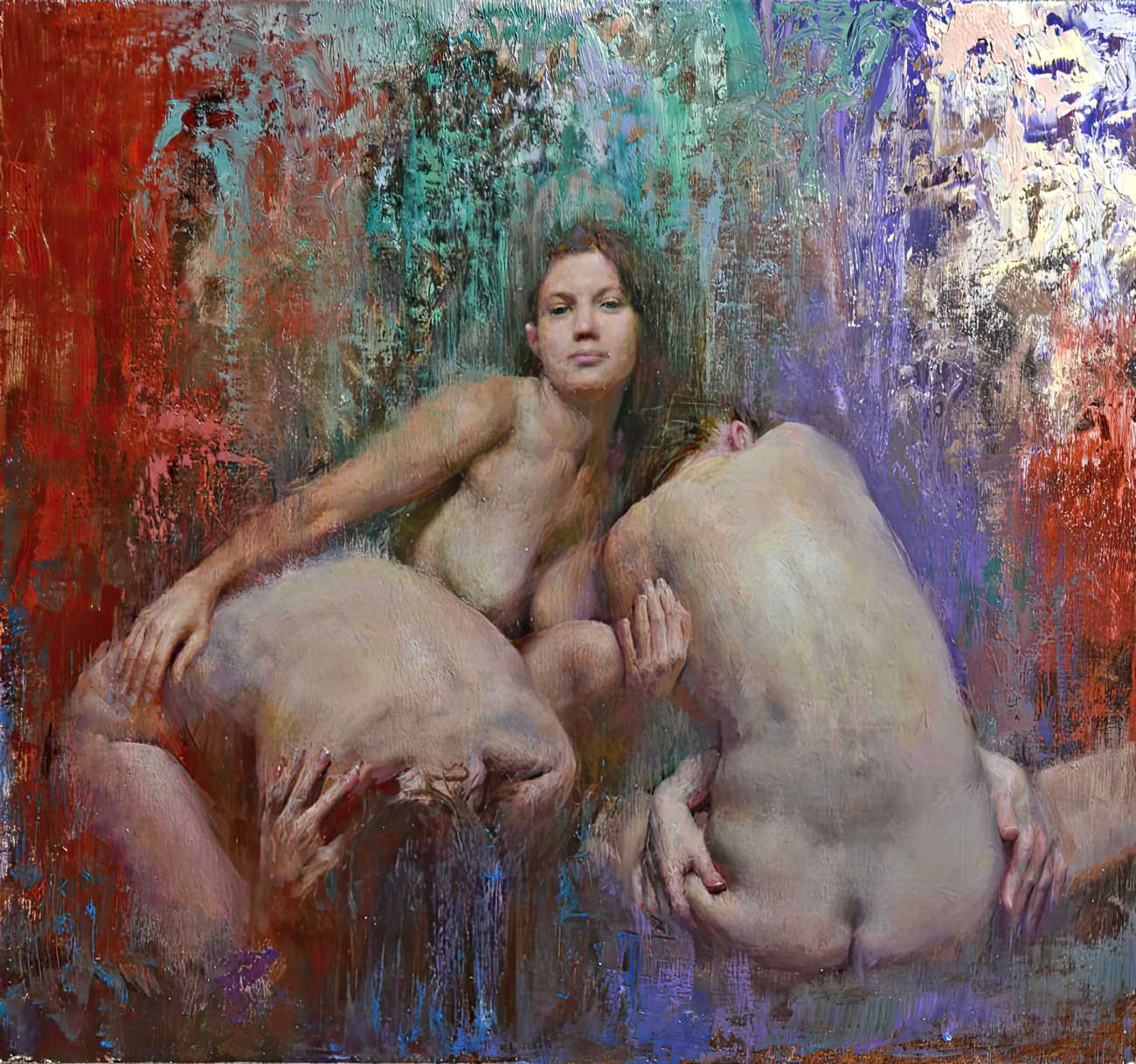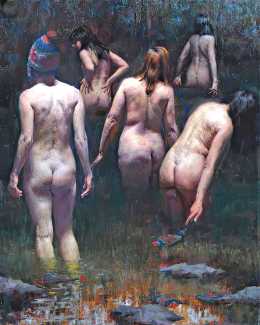
Eroticism in Stephen Early’s art is neither coy nor purely celebratory. His figures often occupy ambiguous psychological spaces, posed between vulnerability and confidence, intimacy and display. Interiors are sparse, backgrounds restrained, allowing the bodies to carry narrative and emotional weight. This economy heightens the sense that these are portraits of lived experience rather than idealised fantasies. Desire is presented as entirely human, embodied and specific.
Importantly, Early’s figurative work often has a quiet political dimension. By insisting on the legitimacy of the erotic within a painterly language traditionally reserved for heroic or sacred subjects, he reclaims art as a space that queer bodies have always inhabited, usually unacknowledged. His work resists sensationalism; instead, it normalises erotic looking through craft, patience, and seriousness of intent.
Early’s paintings often operate on multiple levels – as a sensual image, as a technical exercise in realism, and as a cultural intervention – affirming that eroticism, particularly queer eroticism, can be thought-provoking, contemplative and tender without surrendering its power to arouse or to unsettle.