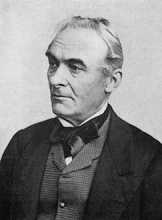
 Prosper Mérimée (1803–70) was one of the great masters of the nineteenth-century French novella. A scholar, traveller and historian as well as a writer, Mérimée was drawn to subjects marked by violence, passion and cultural difference, often setting his stories in places that seemed remote from conventional European society. His prose is notable for its clarity, restraint and psychological precision, qualities that distinguish works such as Colomba, La Vénus d’Ille and, above all, Carmen, first published in 1845.
Set in southern Spain, Carmen tells the tragic story of Don José, a former soldier who recounts how his life has been destroyed by his obsession with the beautiful and fiercely independent Carmen. After meeting her in Seville, José abandoned his military career and descended into smuggling, violence and murder, unable to accept Carmen’s insistence on absolute personal freedom. Mérimée presents the story through layered narration, combining exotic atmosphere with cool psychological observation, and creating one of literature’s most compelling studies of destructive desire.
The novella achieved worldwide fame through its adaptation into the opera Carmen by Georges Bizet in 1875. Bizet’s version transformed Mérimée’s concise and unsparing tale into one of the best-known operas ever written, ensuring that Carmen herself became an enduring cultural archetype, passionate, defiant, and impossible to possess. Since then the story has inspired innumerable films, ballets and theatrical reinterpretations, though Mérimée’s original remains remarkable for its economy, intensity, and tragic inevitability.
 Jean Traynier’s illustrations approach Mérimée's tale with a draughtsman’s restless energy, working in etching and drypoint with selectively applied hand-colouring. His line is nervous and layered, built from dense crosshatching animating every surface, while colour is reserved for accent – a flash of crimson on a fringed shawl, the pink of a headscarf, the turquoise of glass beads, a wash of ochre across a sunlit cloister.
The frontispiece portrait shows Carmen herself, half-naked, beaded and braided, her direct gaze setting the terms of the story to come. Then we see Don José in his cell with the attending friars before the cycle opens out into the Spain that so fascinated Mérimée – cigarreras crossing the bridge to work, an orange seller in a Sevillian alley, women bathing in the Guadalquivir. The novella’s violence is rendered without melodrama – the knife-fight inside the tobacco factory becomes a tense theatre of women’s faces; the duel with García the One-eyed plays out against an immense sky; the bullring evokes Lucas’s triumph without sentiment. The eroticism is handled with restraint, present in Carmen's bare-breasted appearances and in the bathing scene, but always serving the narrative rather than for gratuitous display.
What unifies the suite is Traynier’s command of atmosphere – his twilight townscapes, his lamp-lit gypsy interiors, his stormy encampments outside the city walls, and finally the oppressive prickly pears of the last plates. All express the fatalism that drives Mérimée's story toward its inevitable ending.
The Traynier-illustrated Carmen was published by Le Vasseur et Cie, Paris, in a limited, numbered and boxed edition of 425 copies.