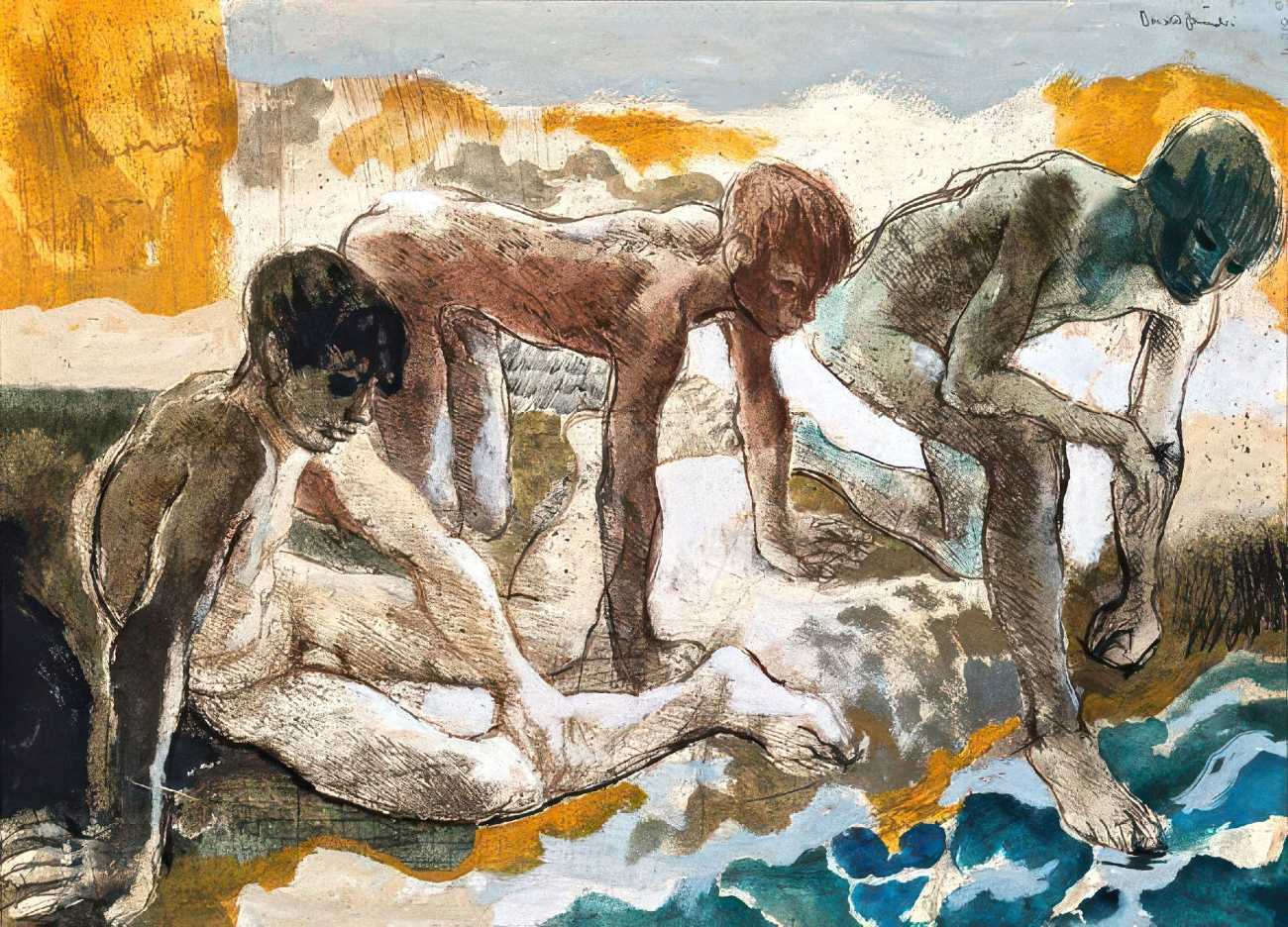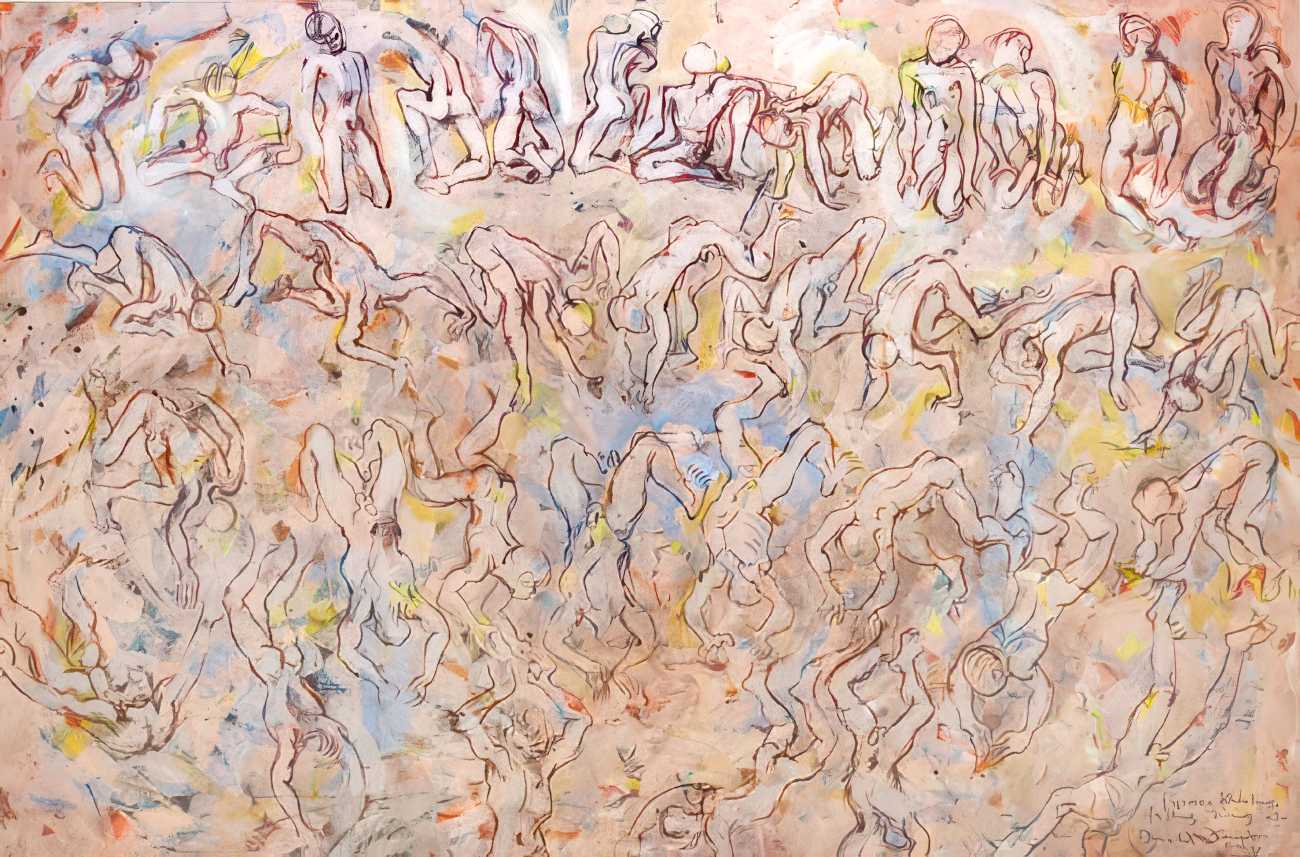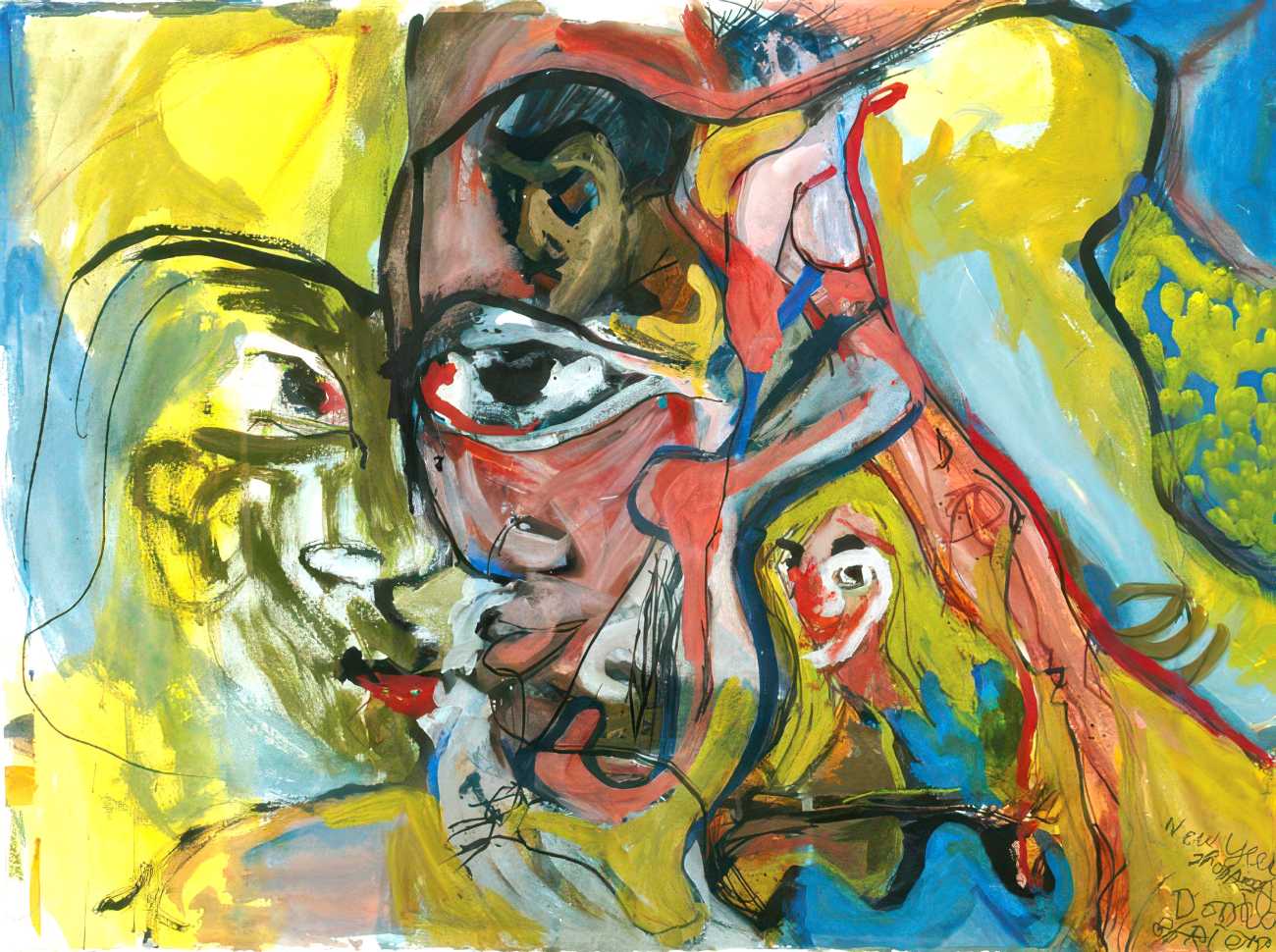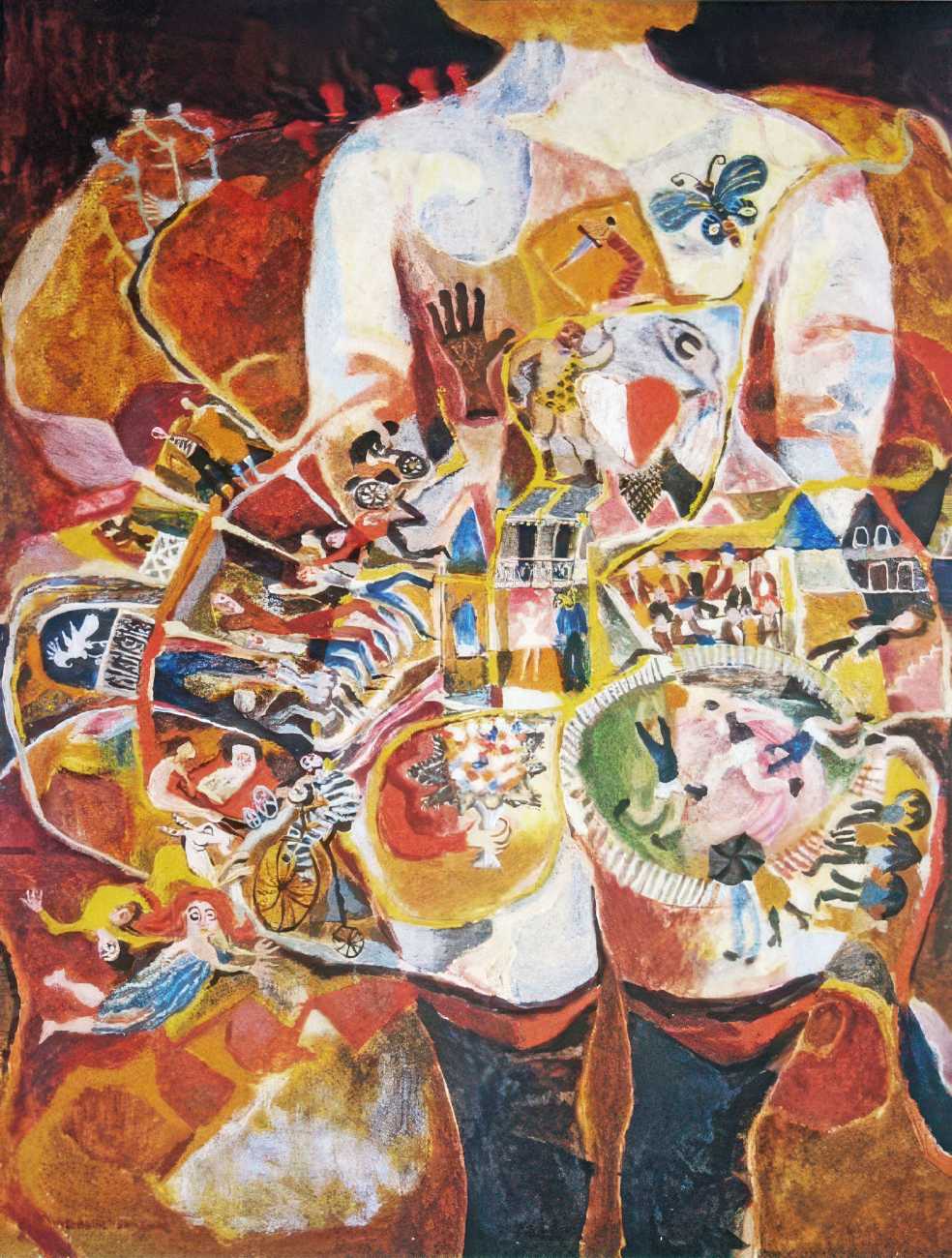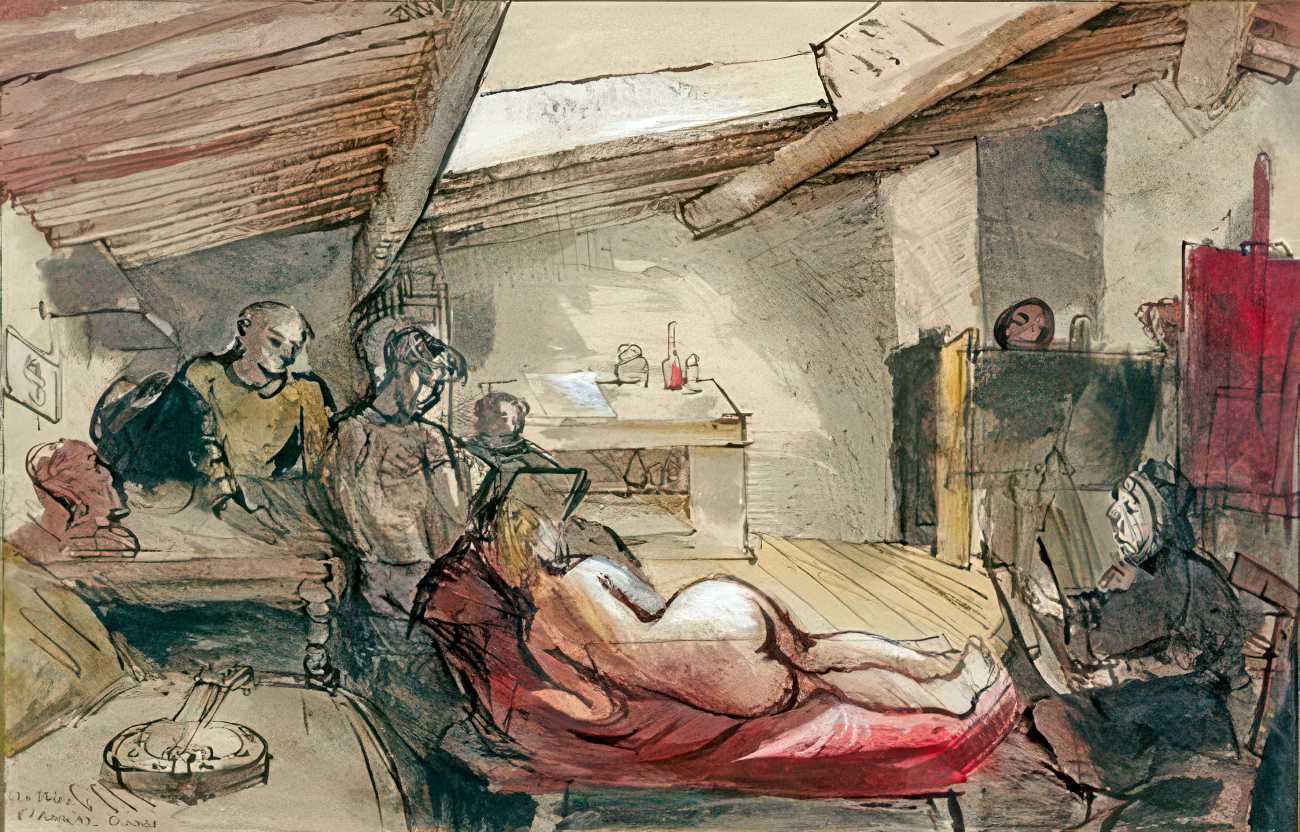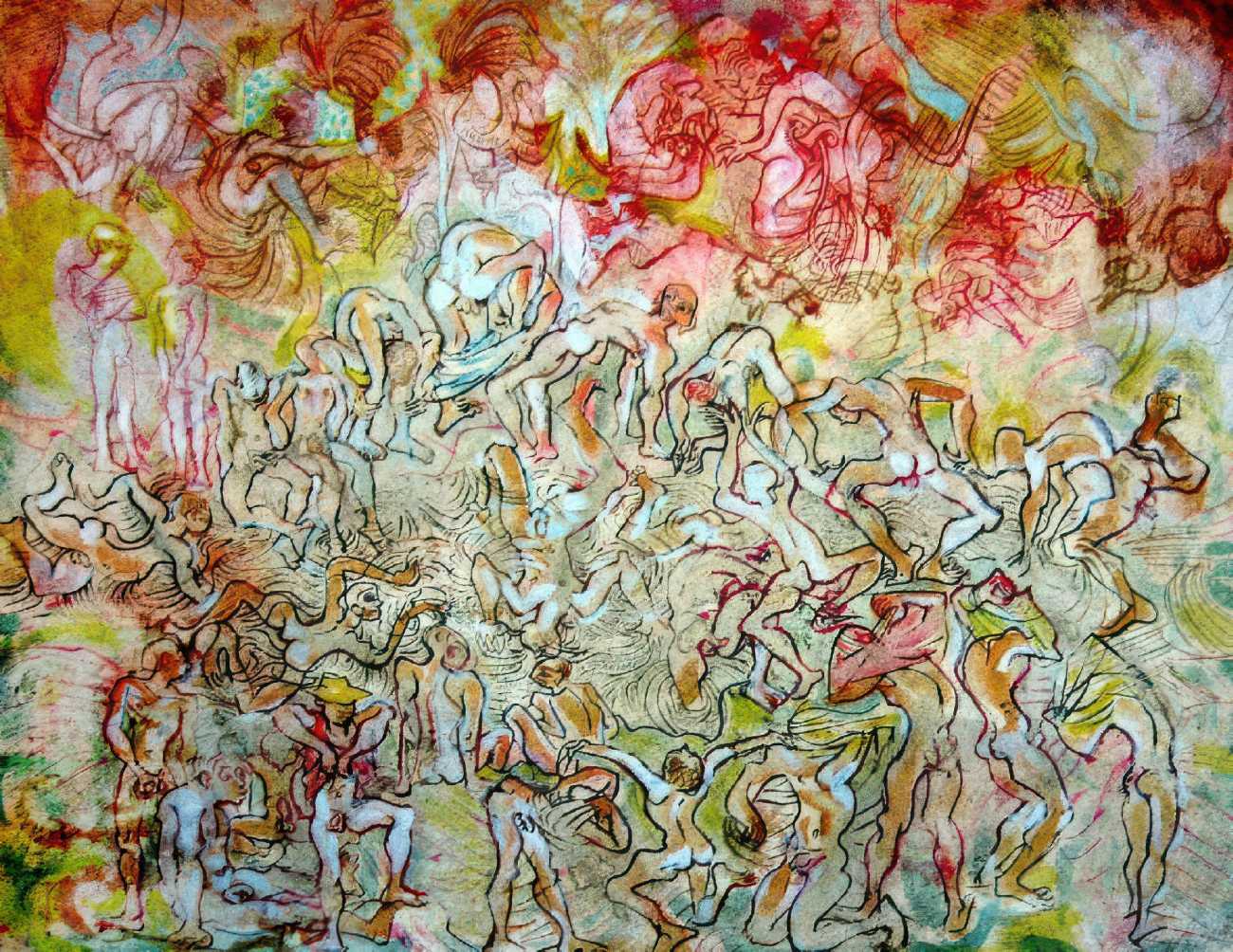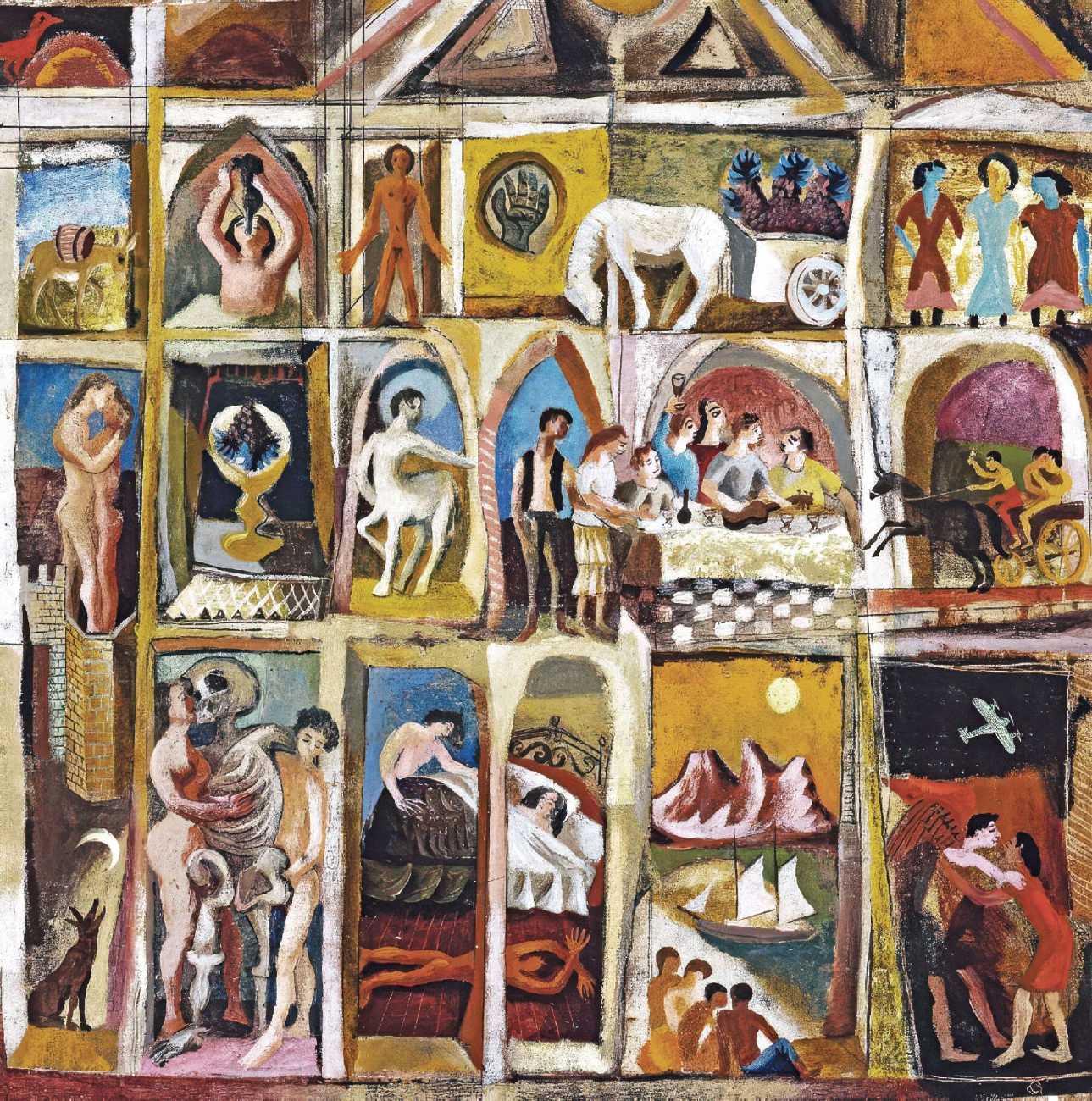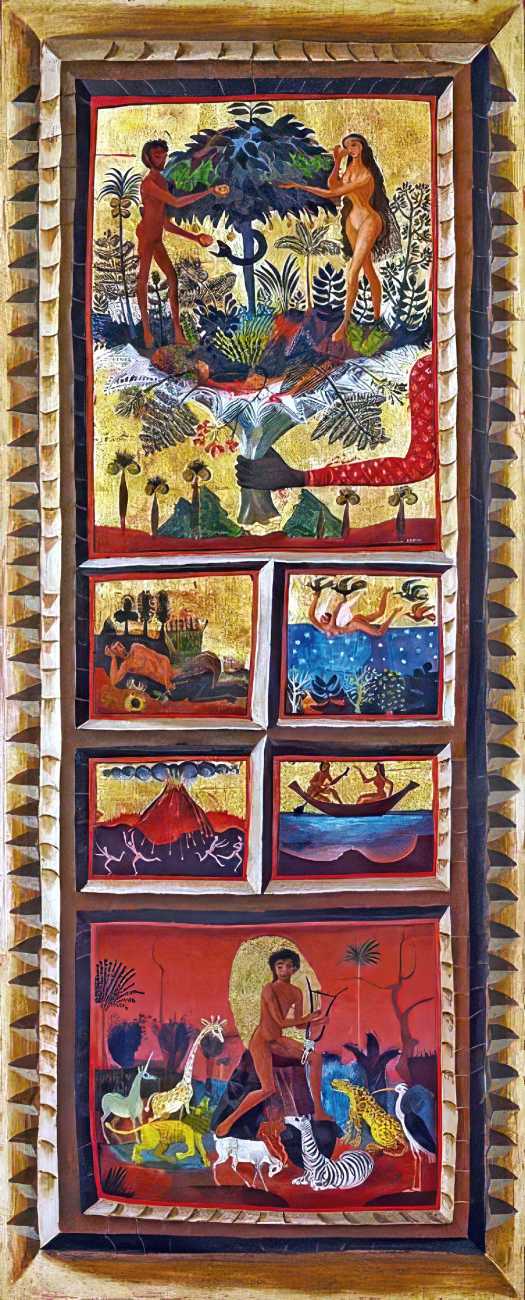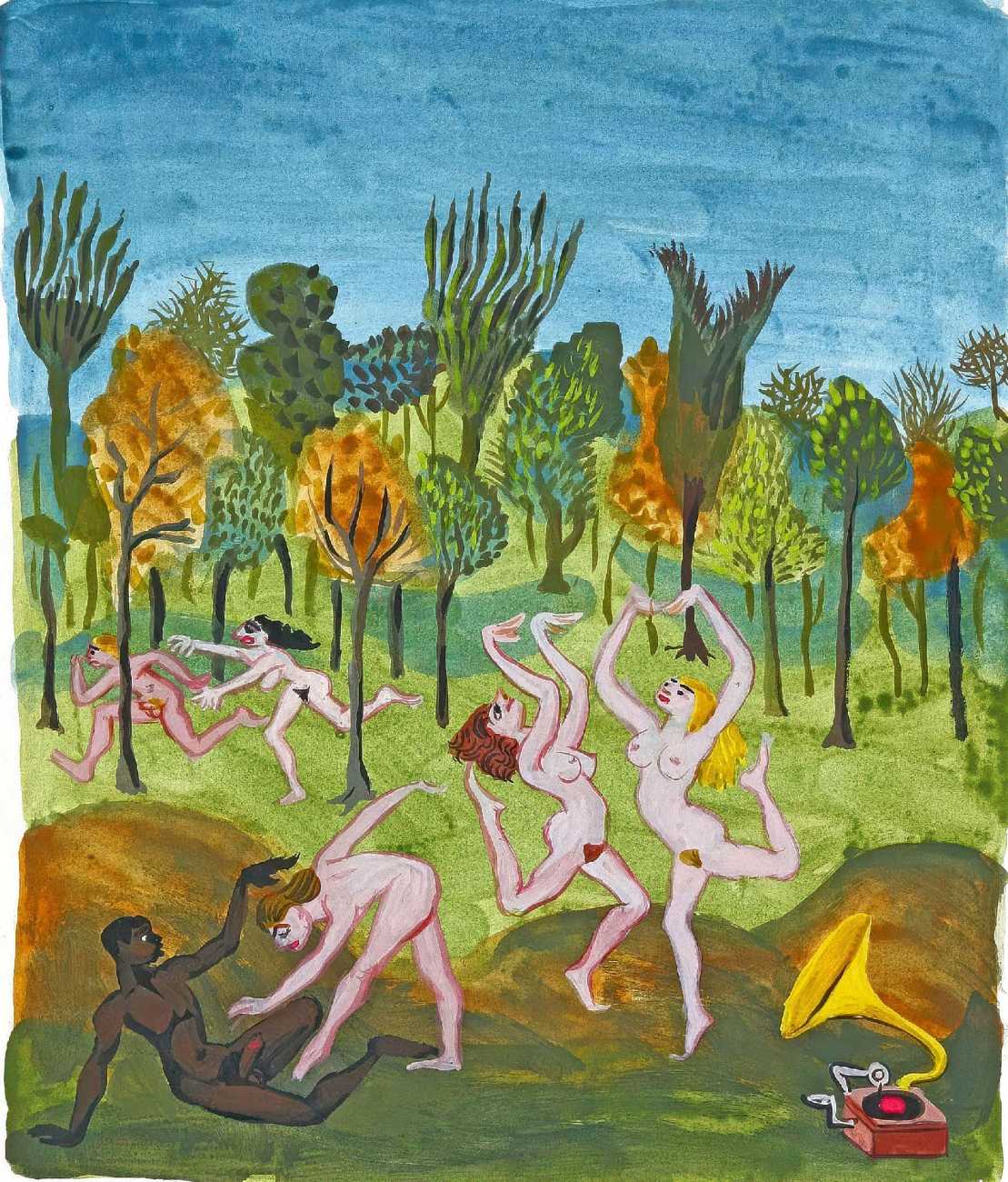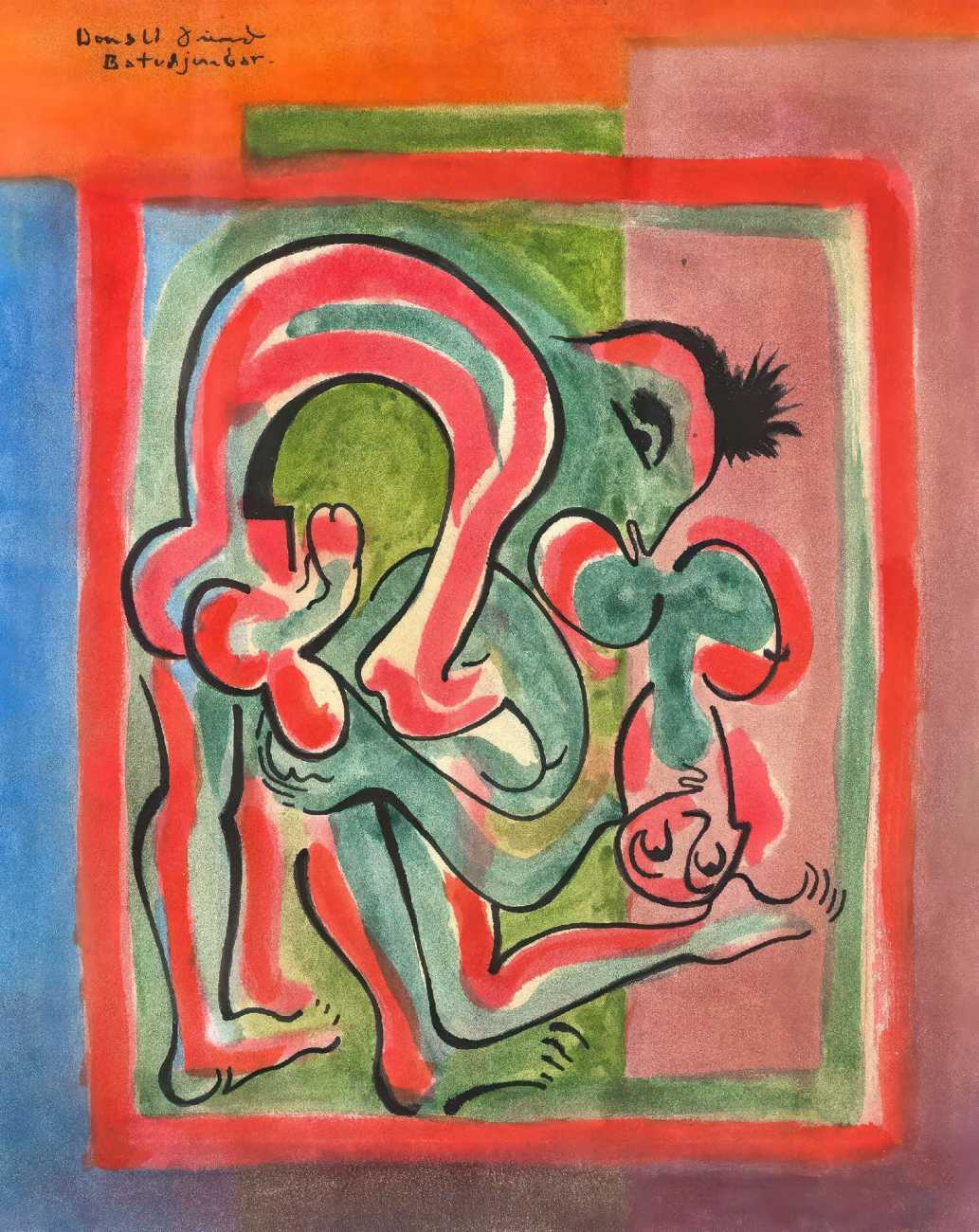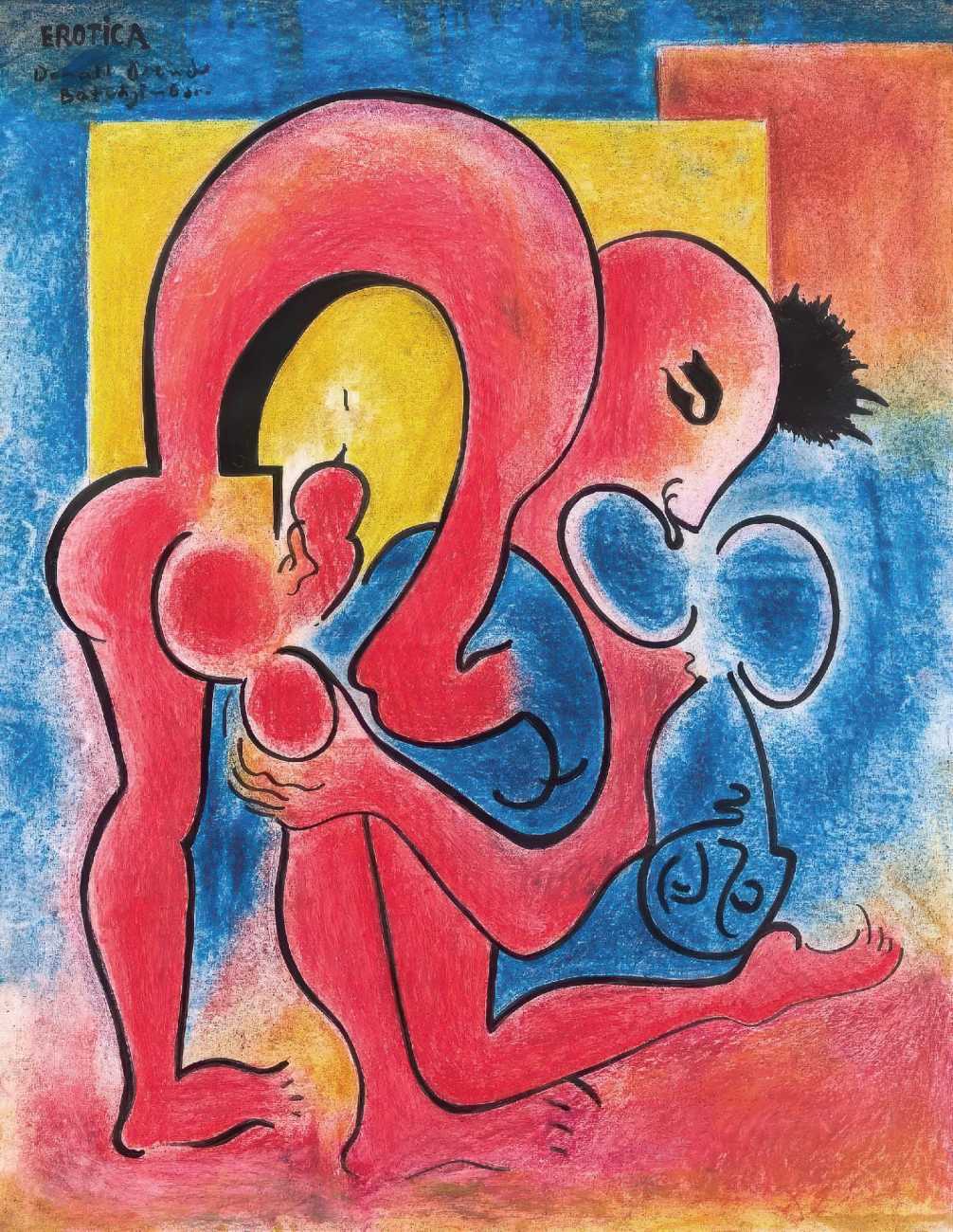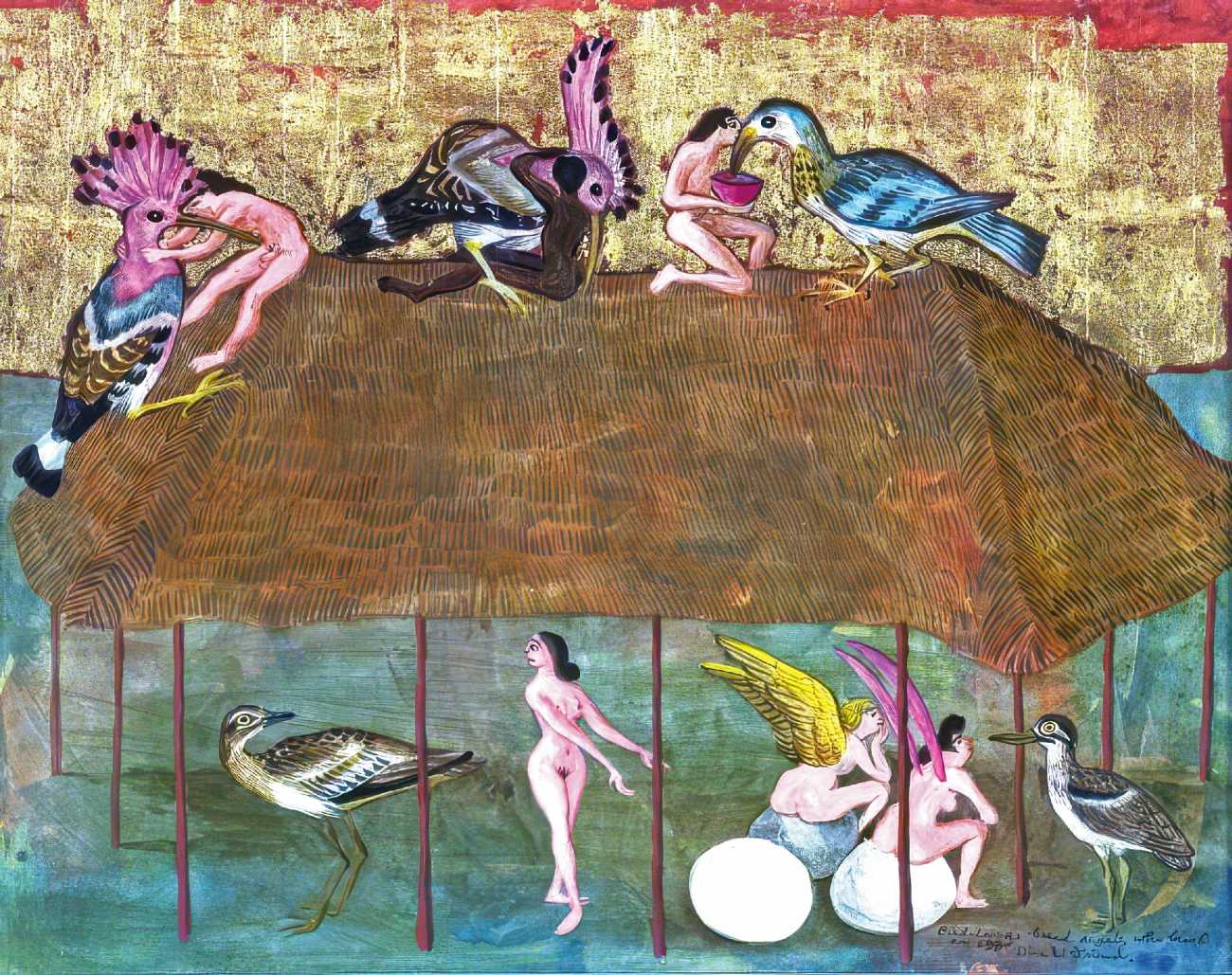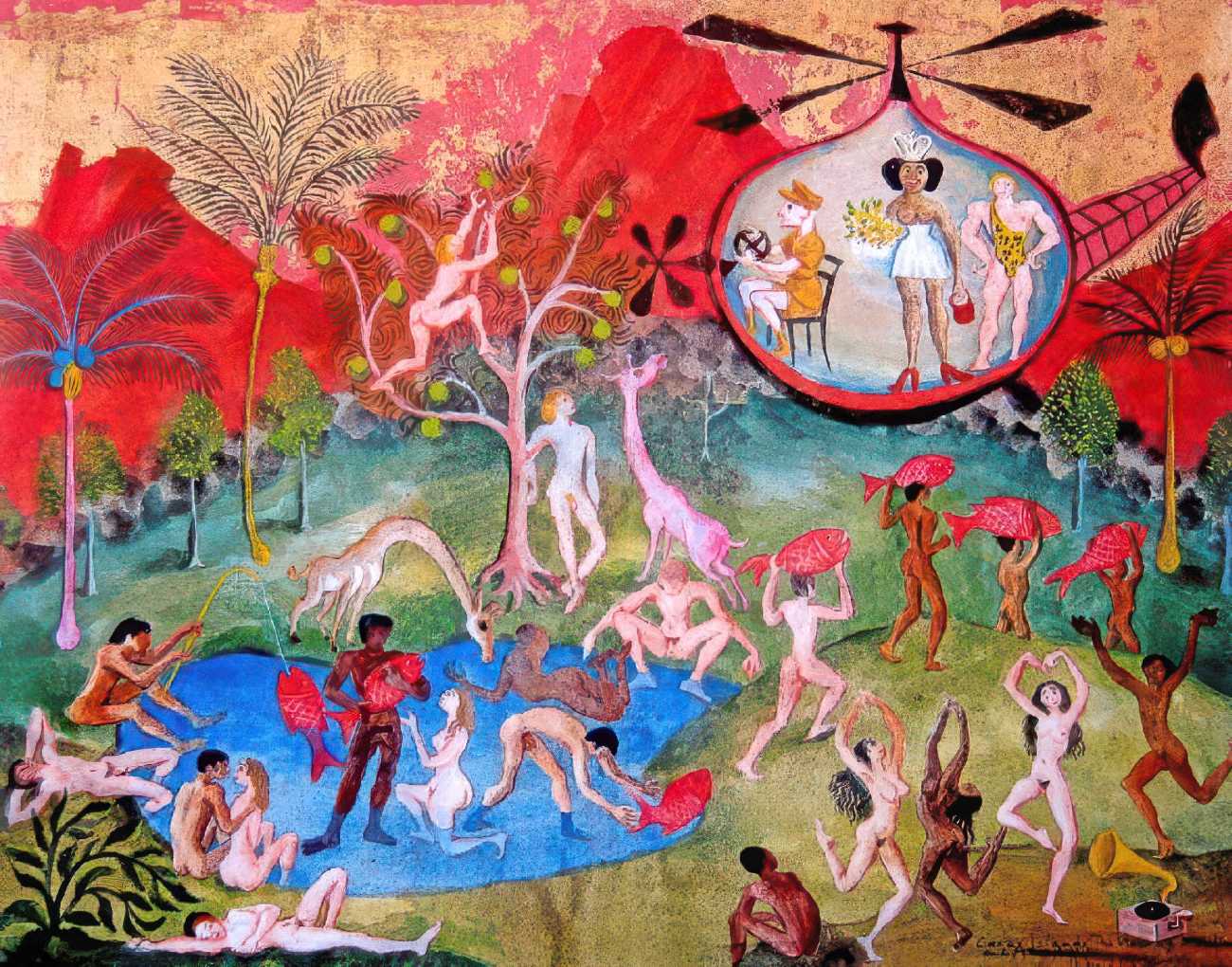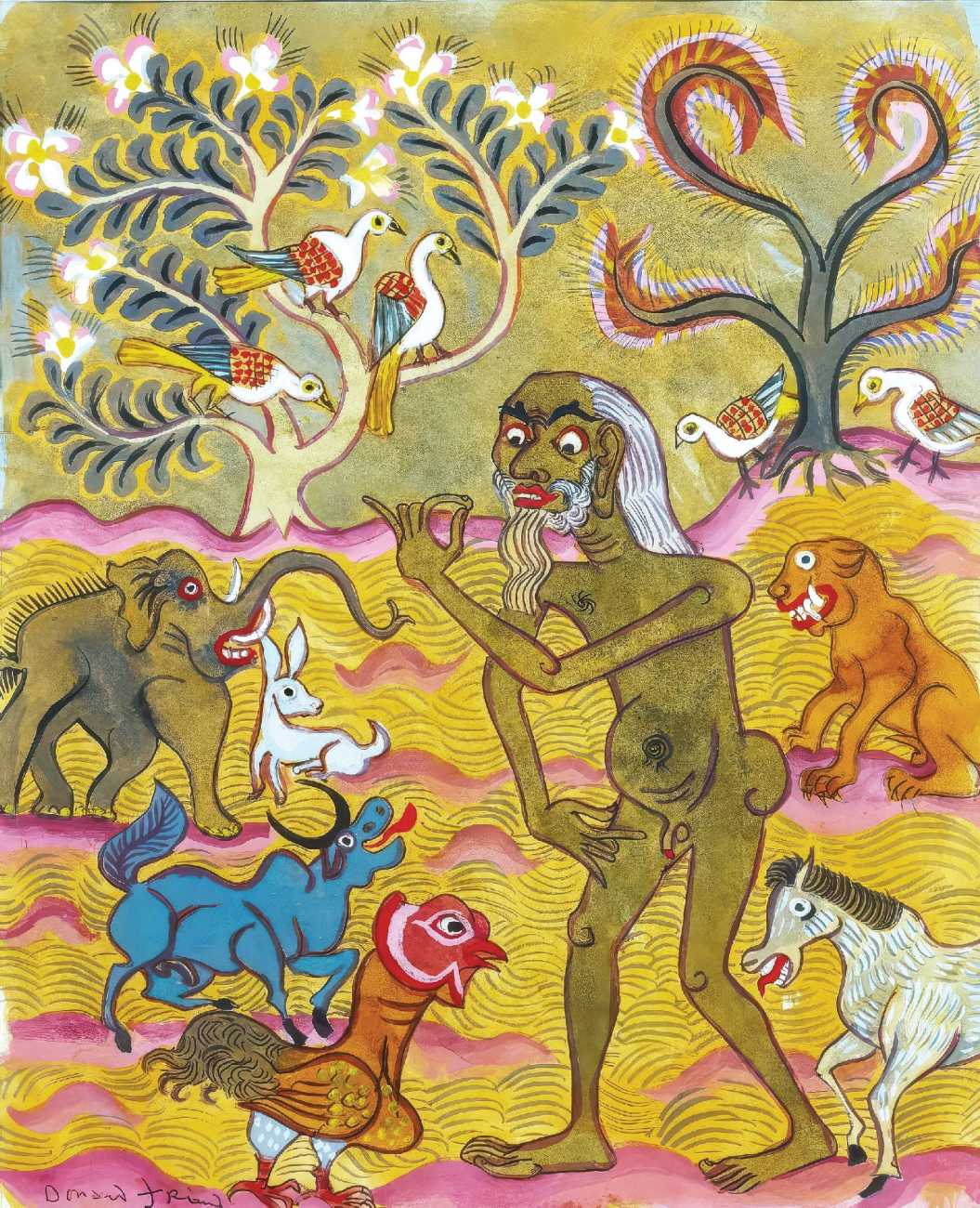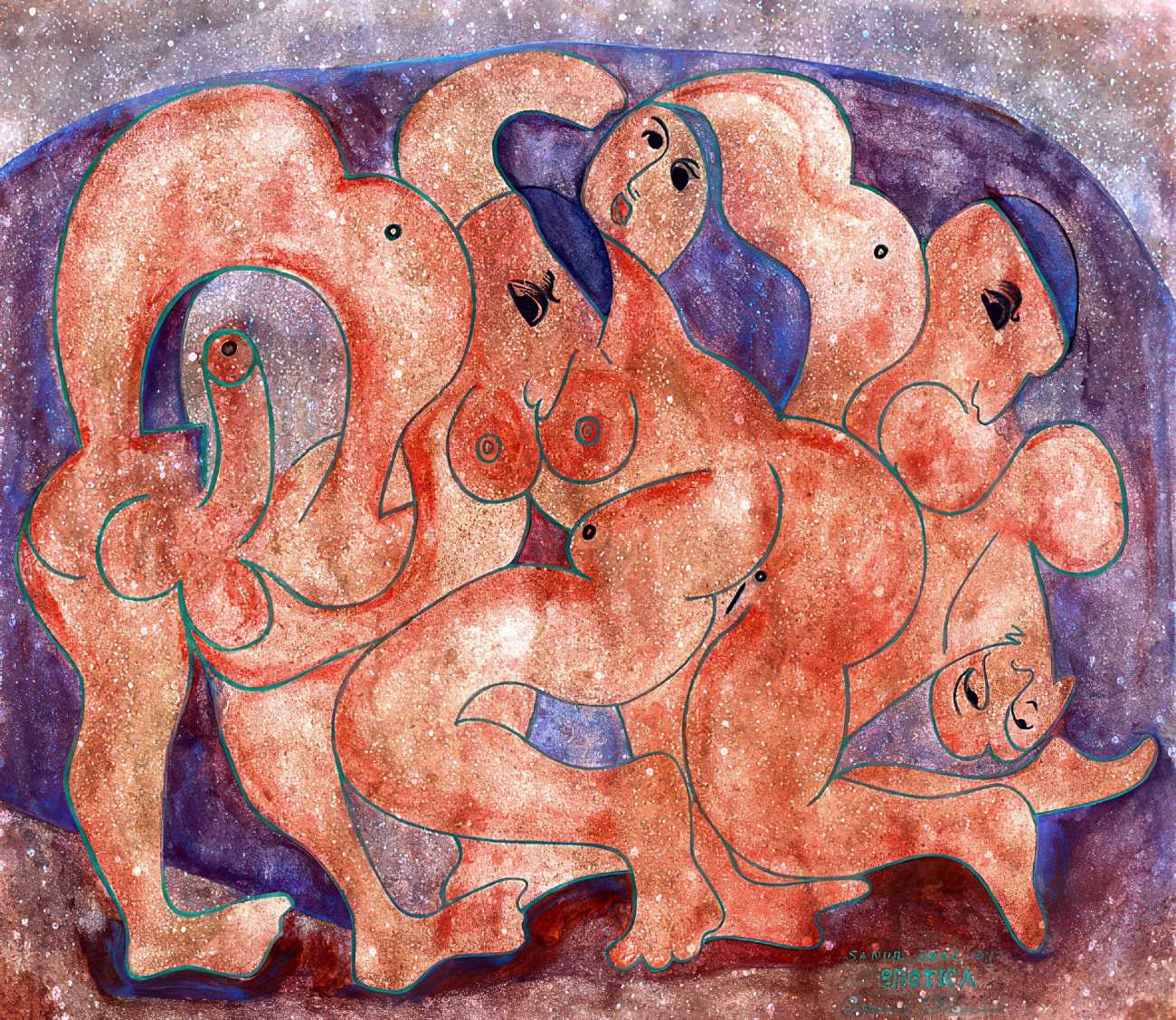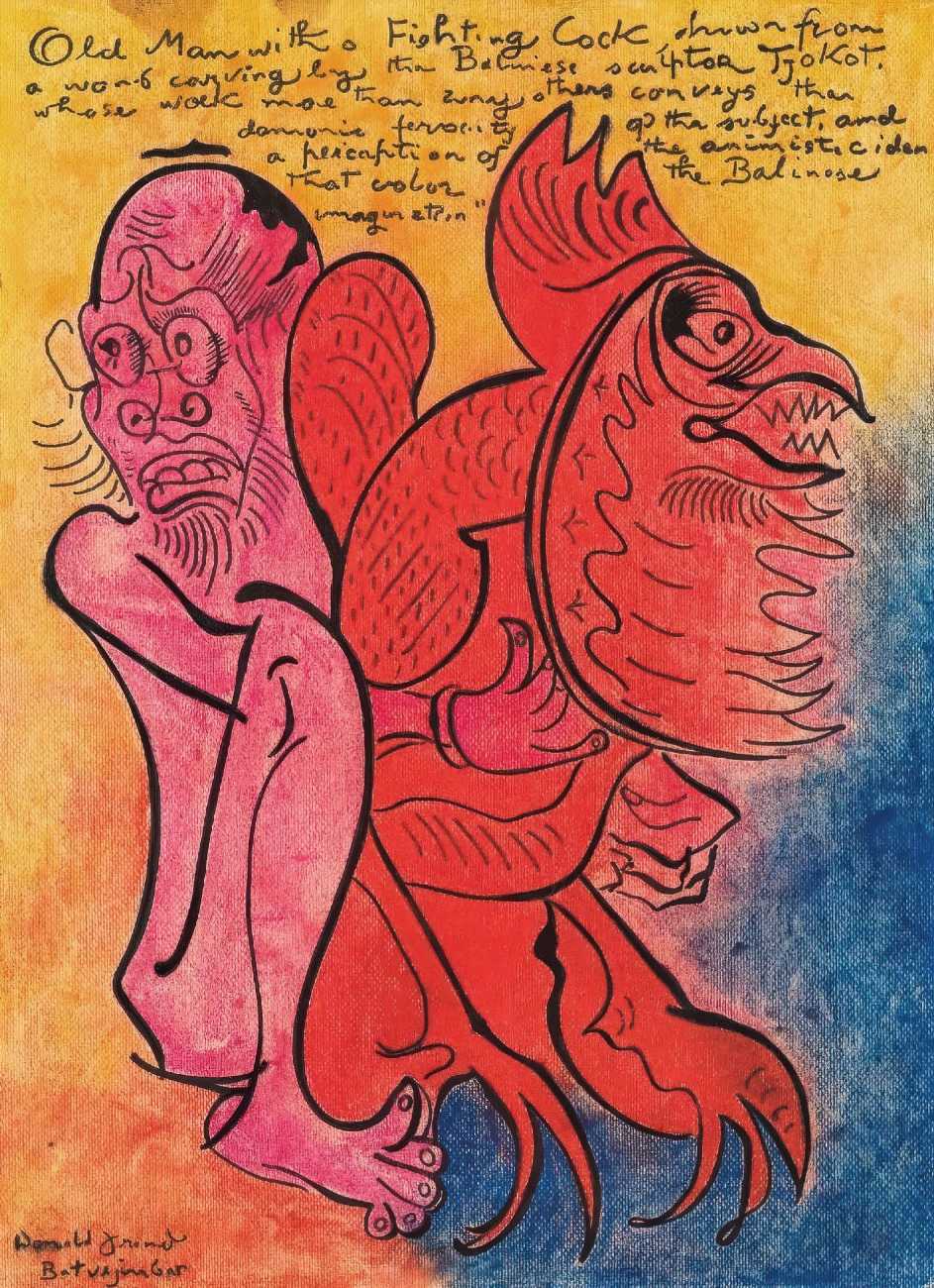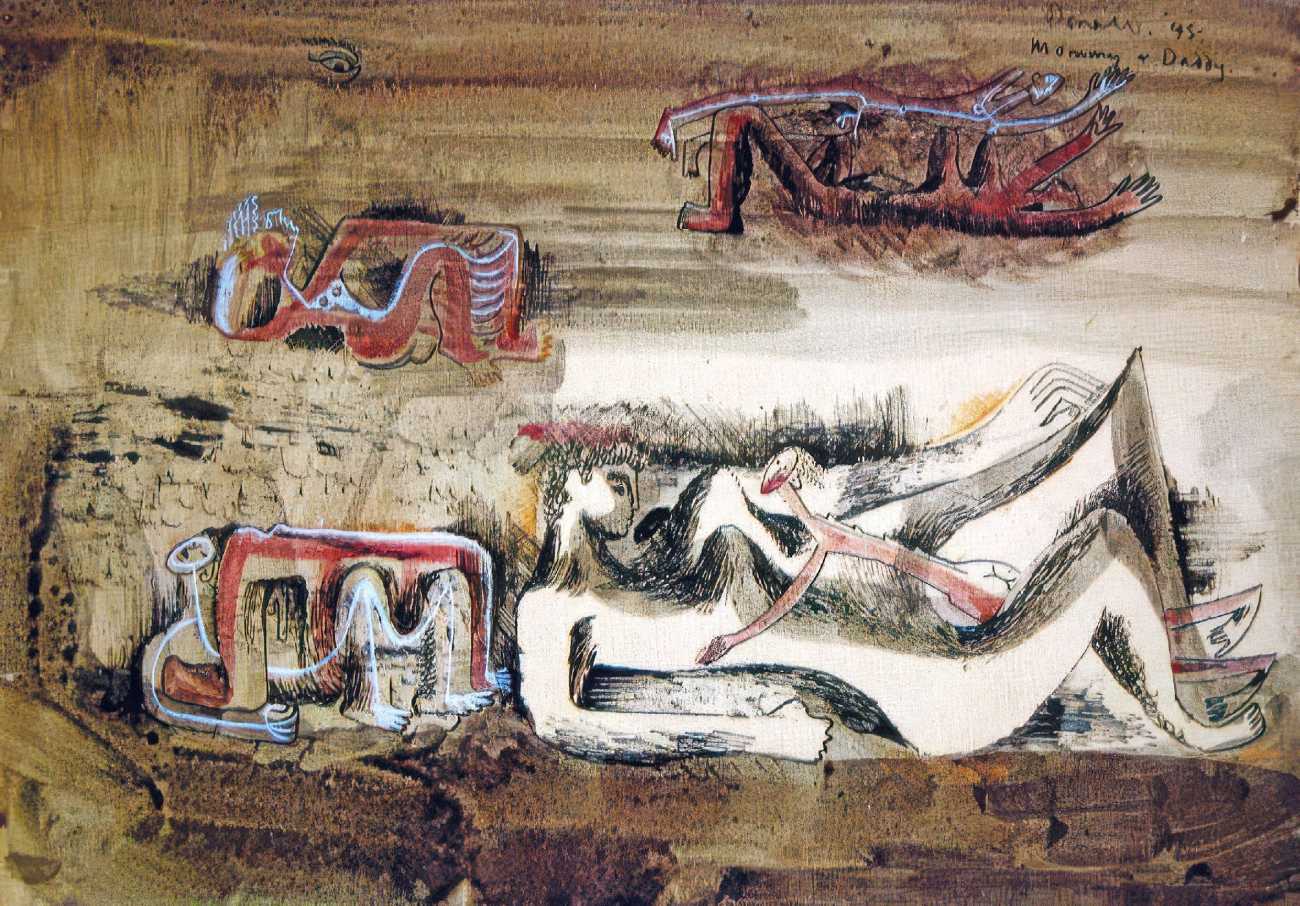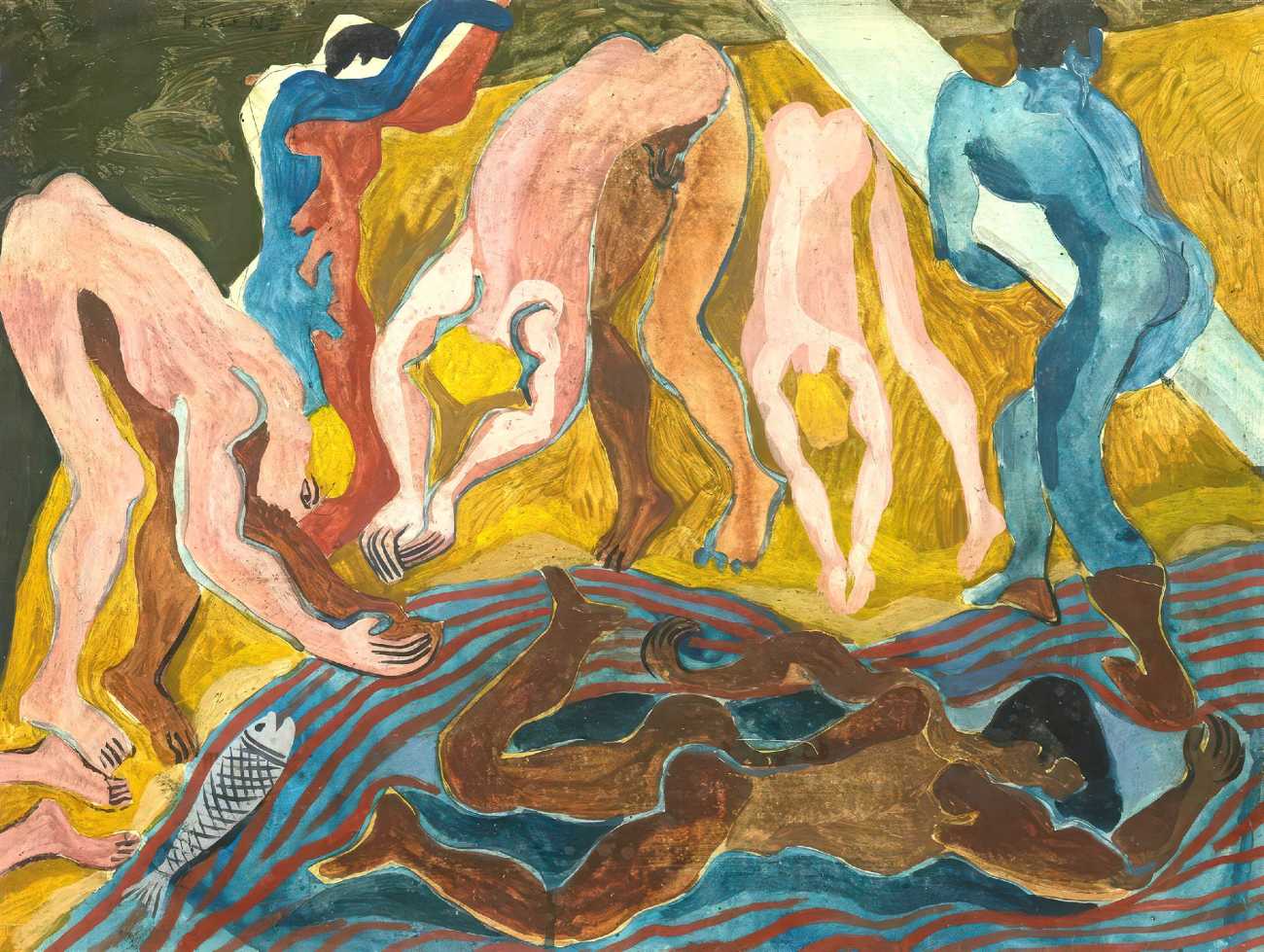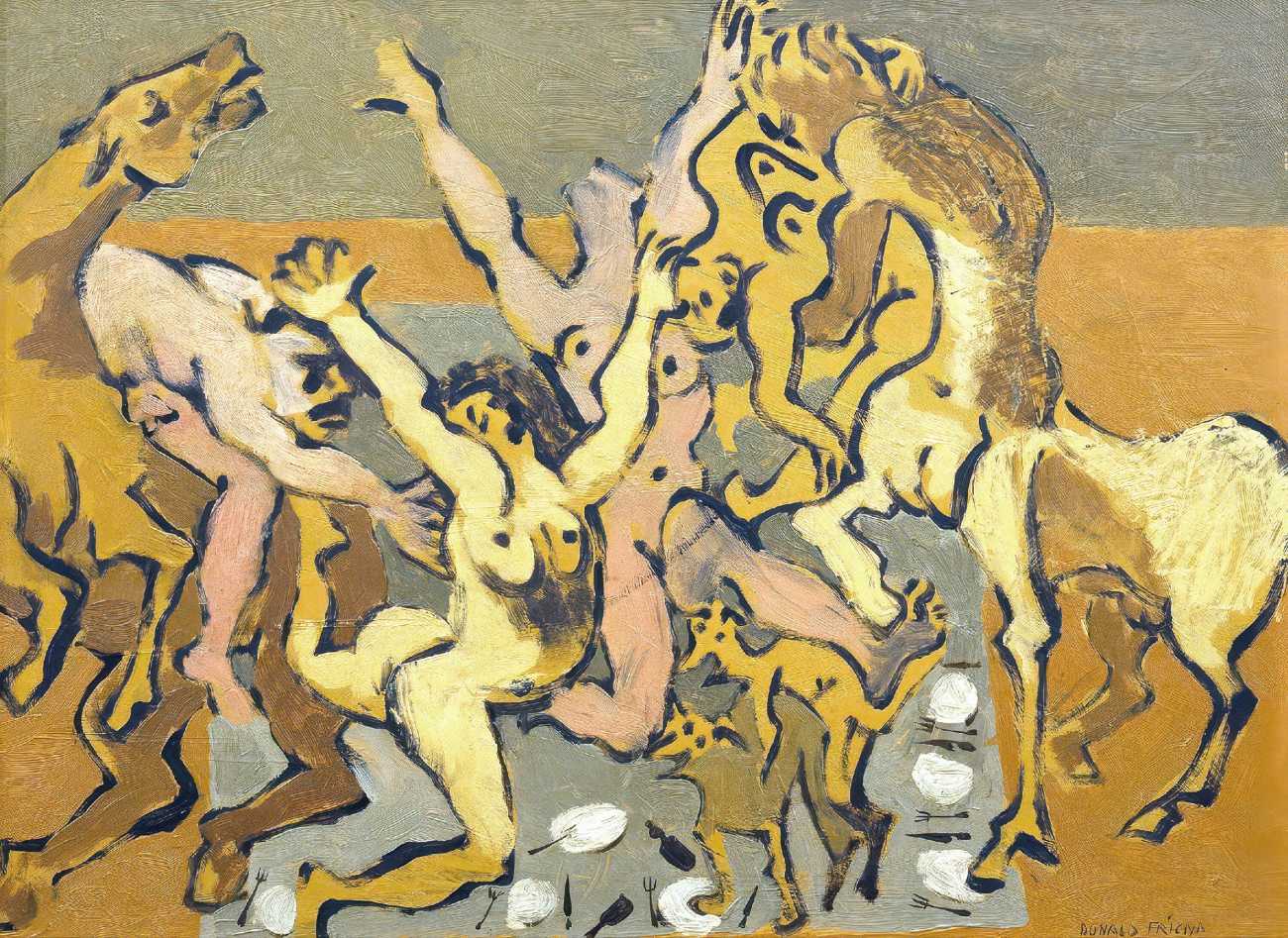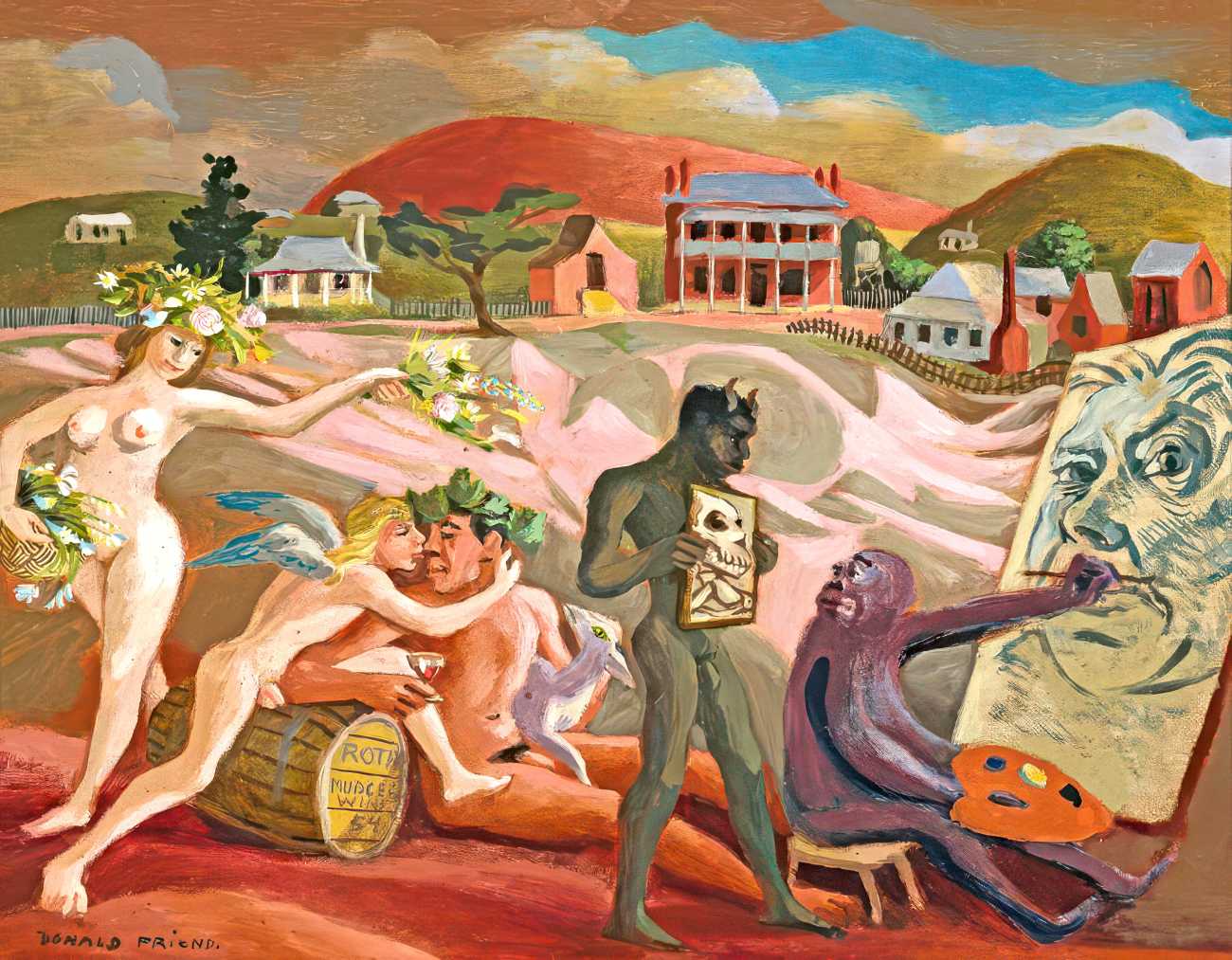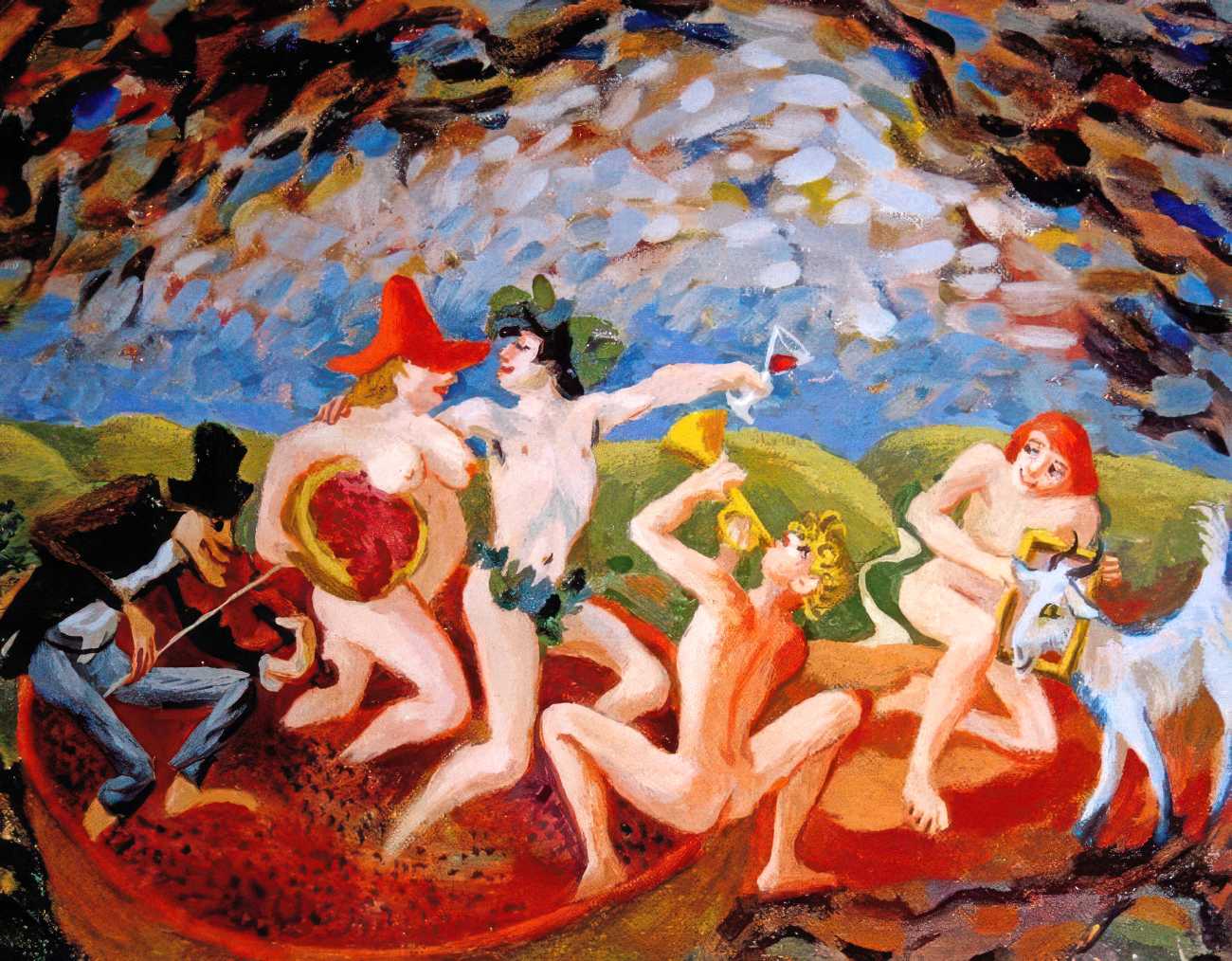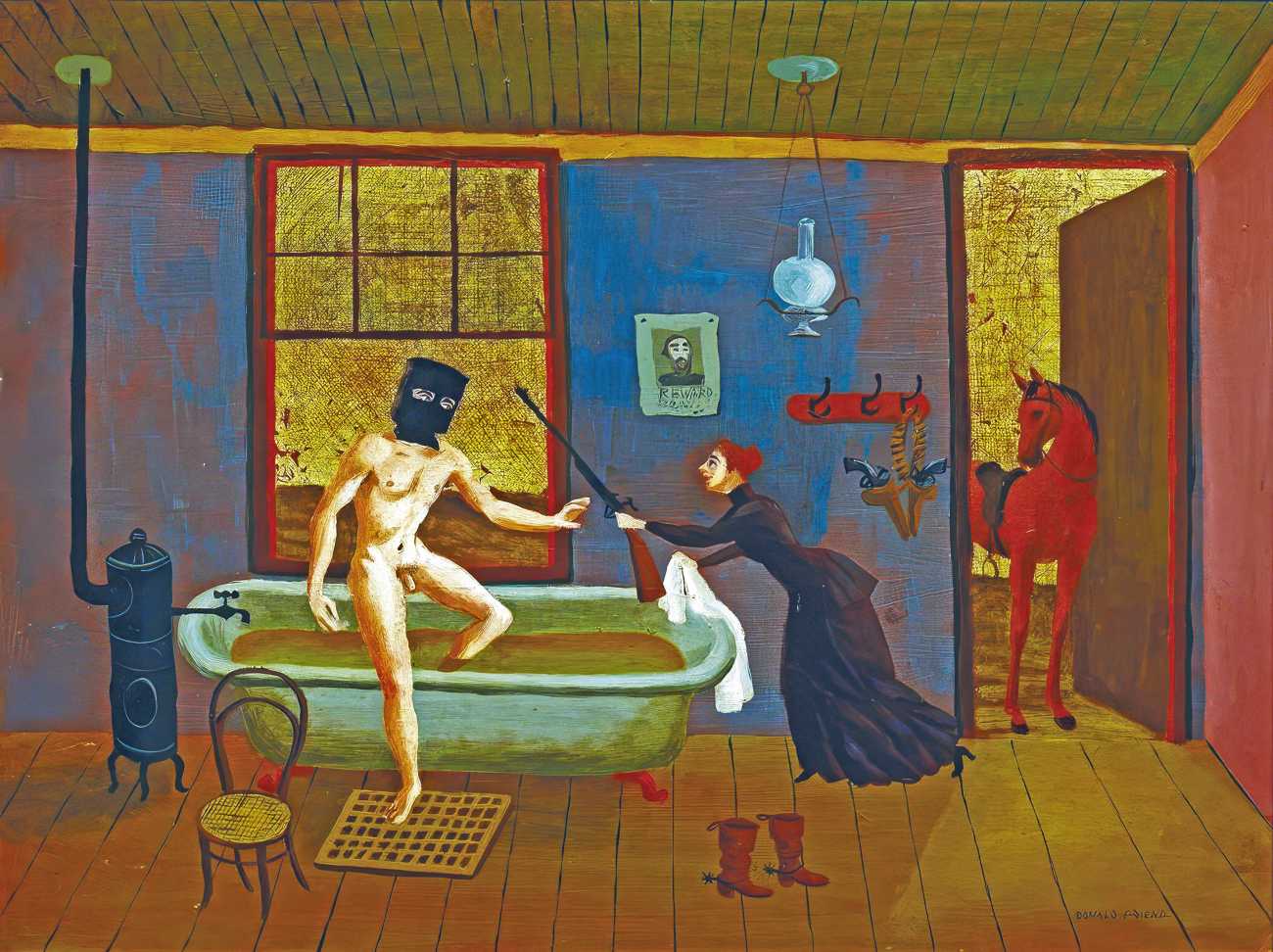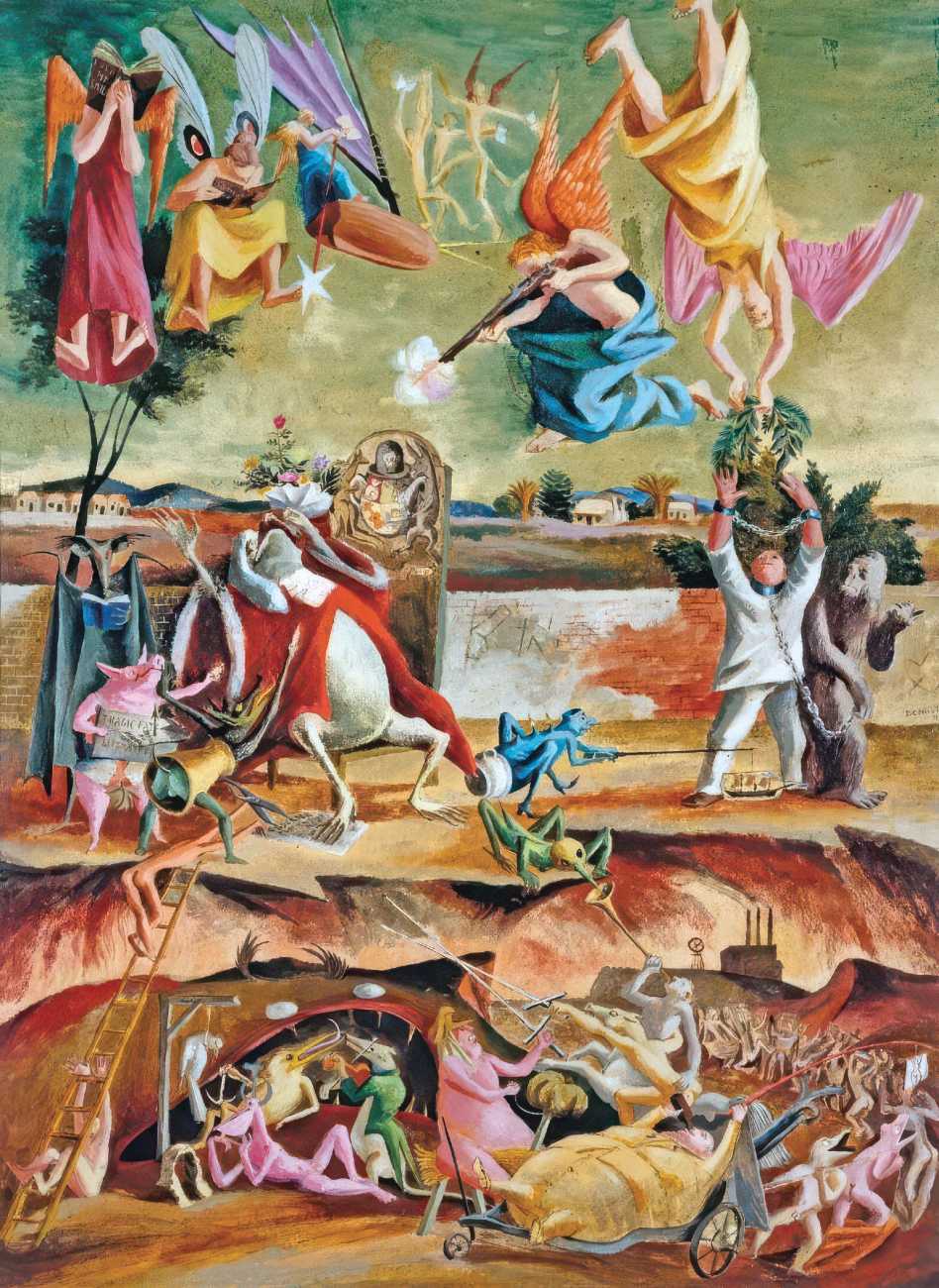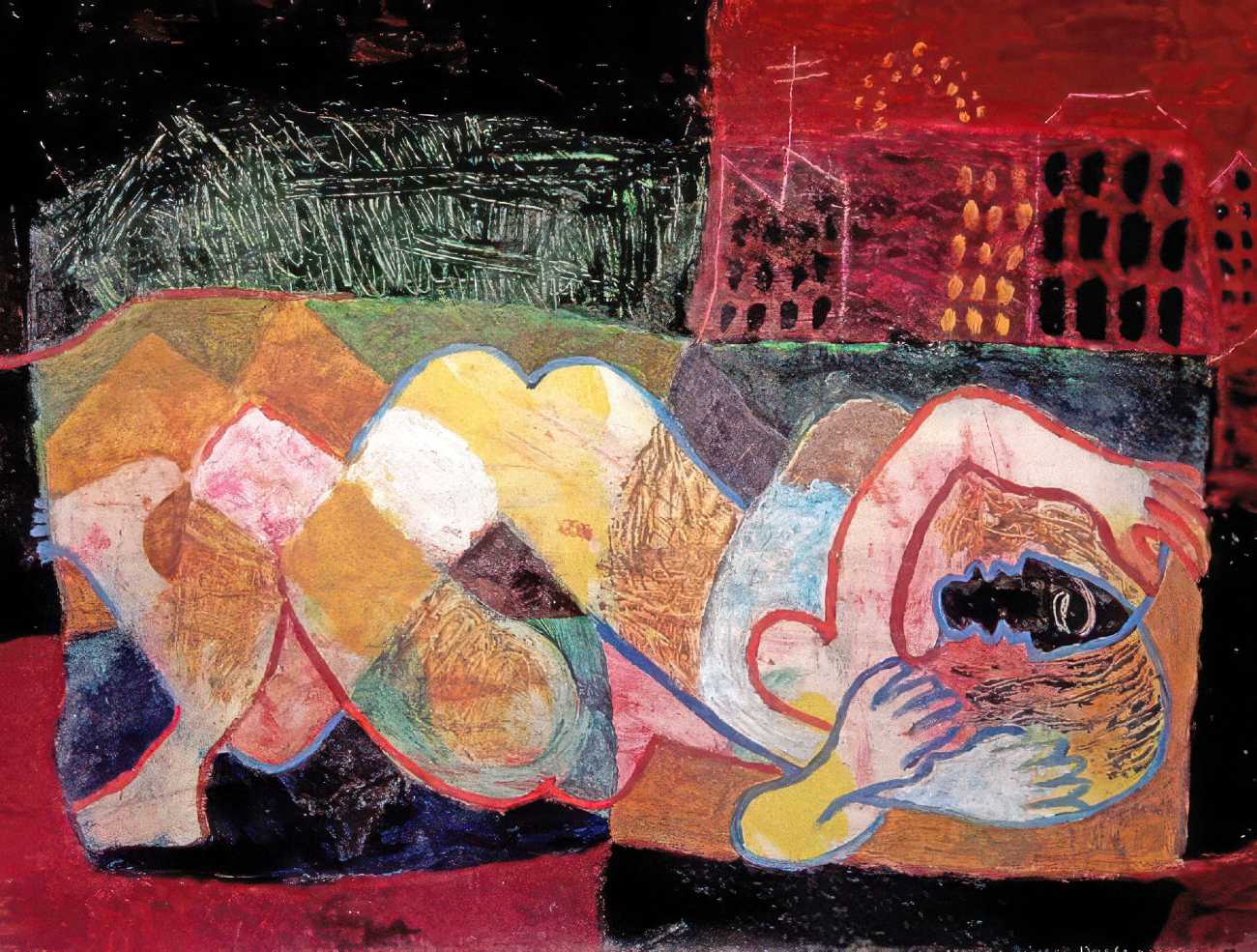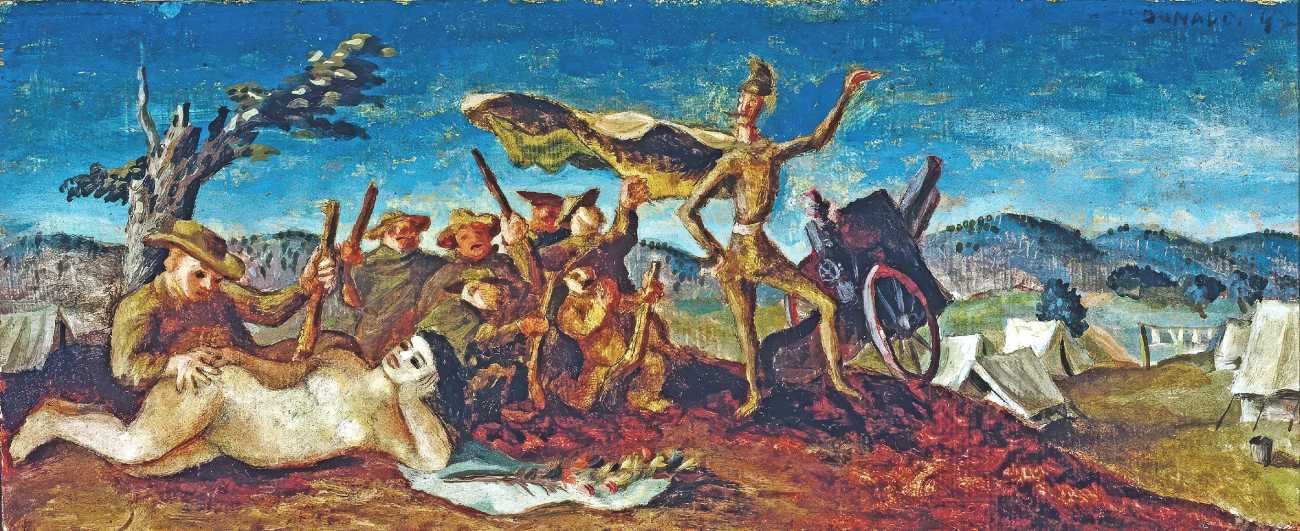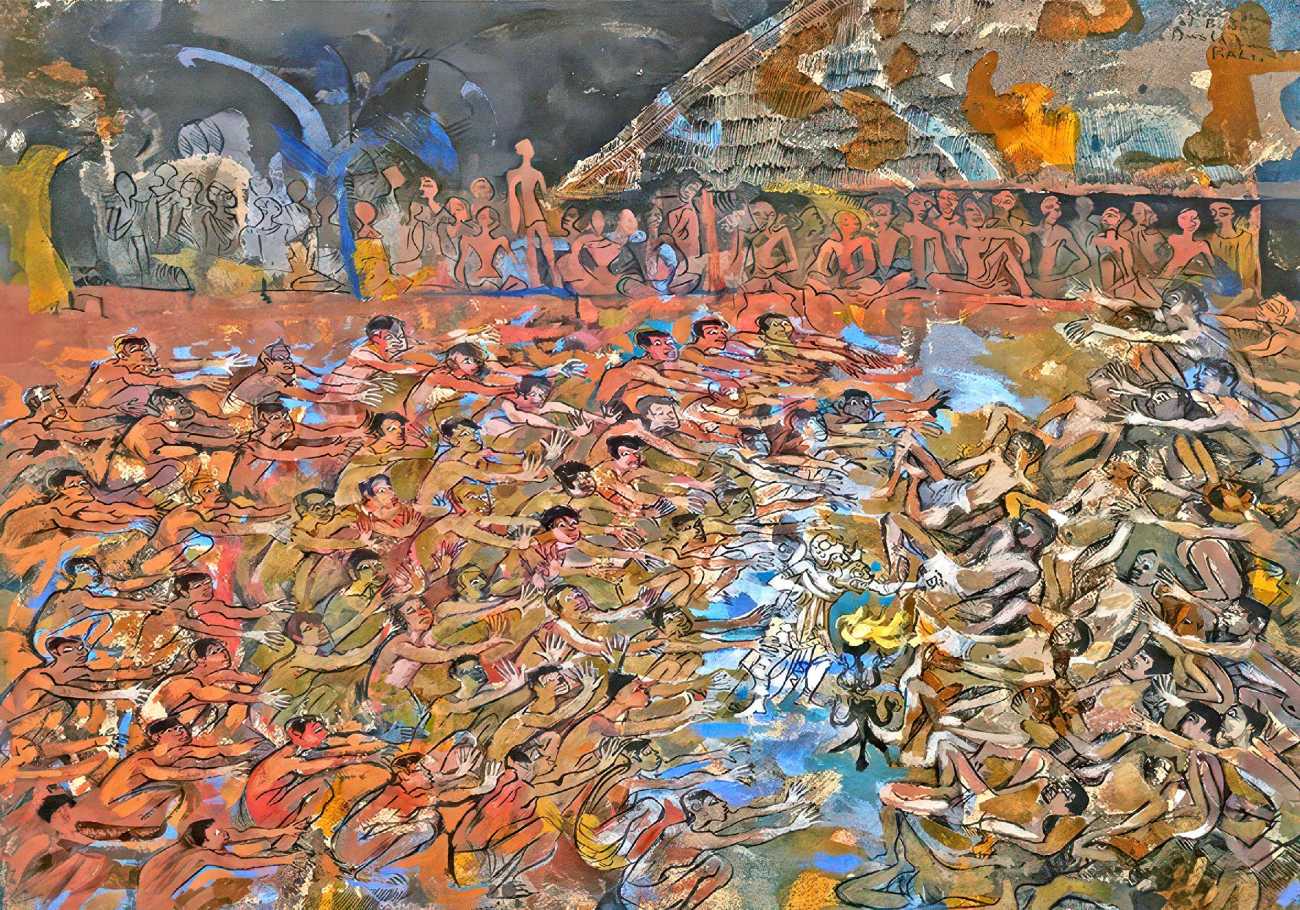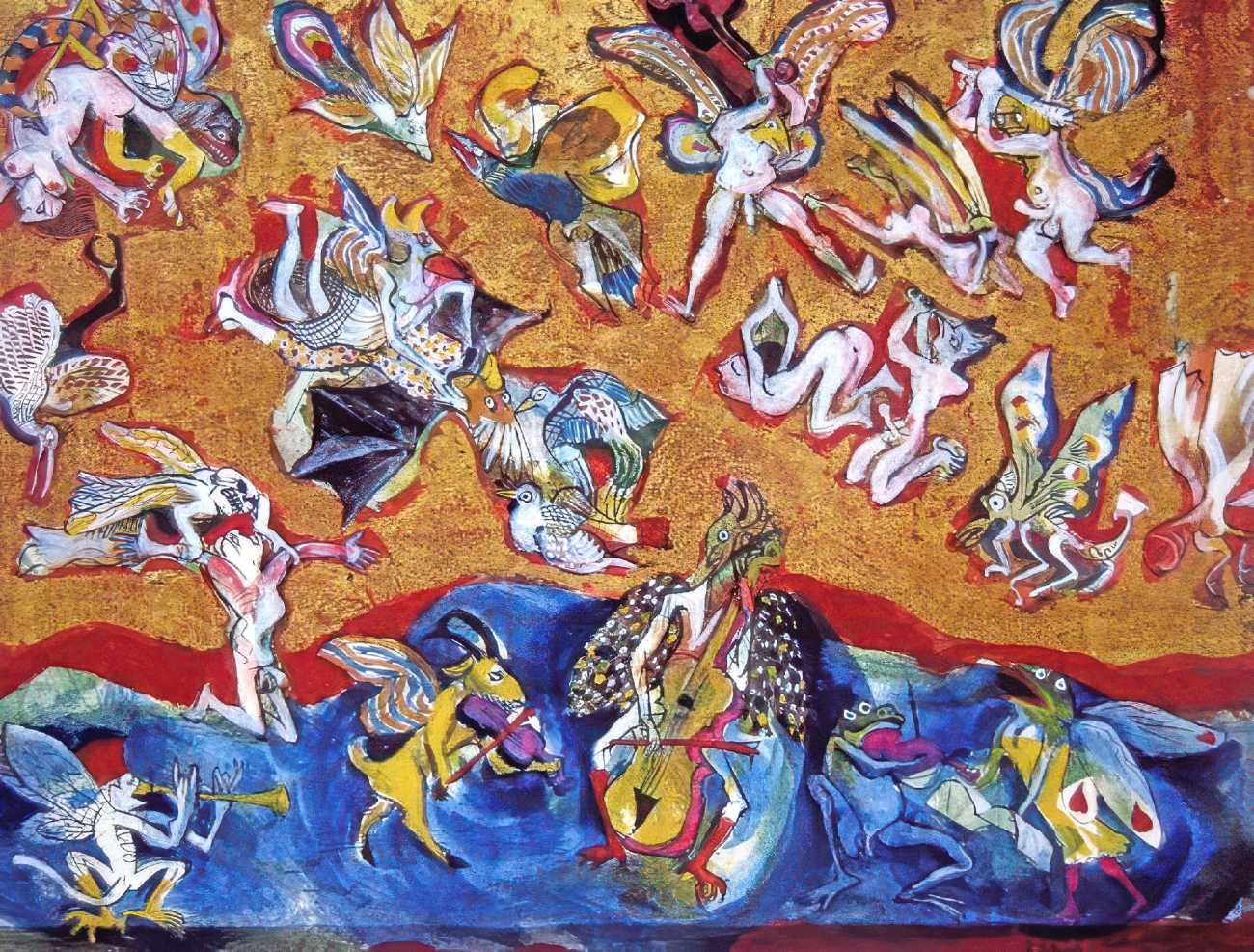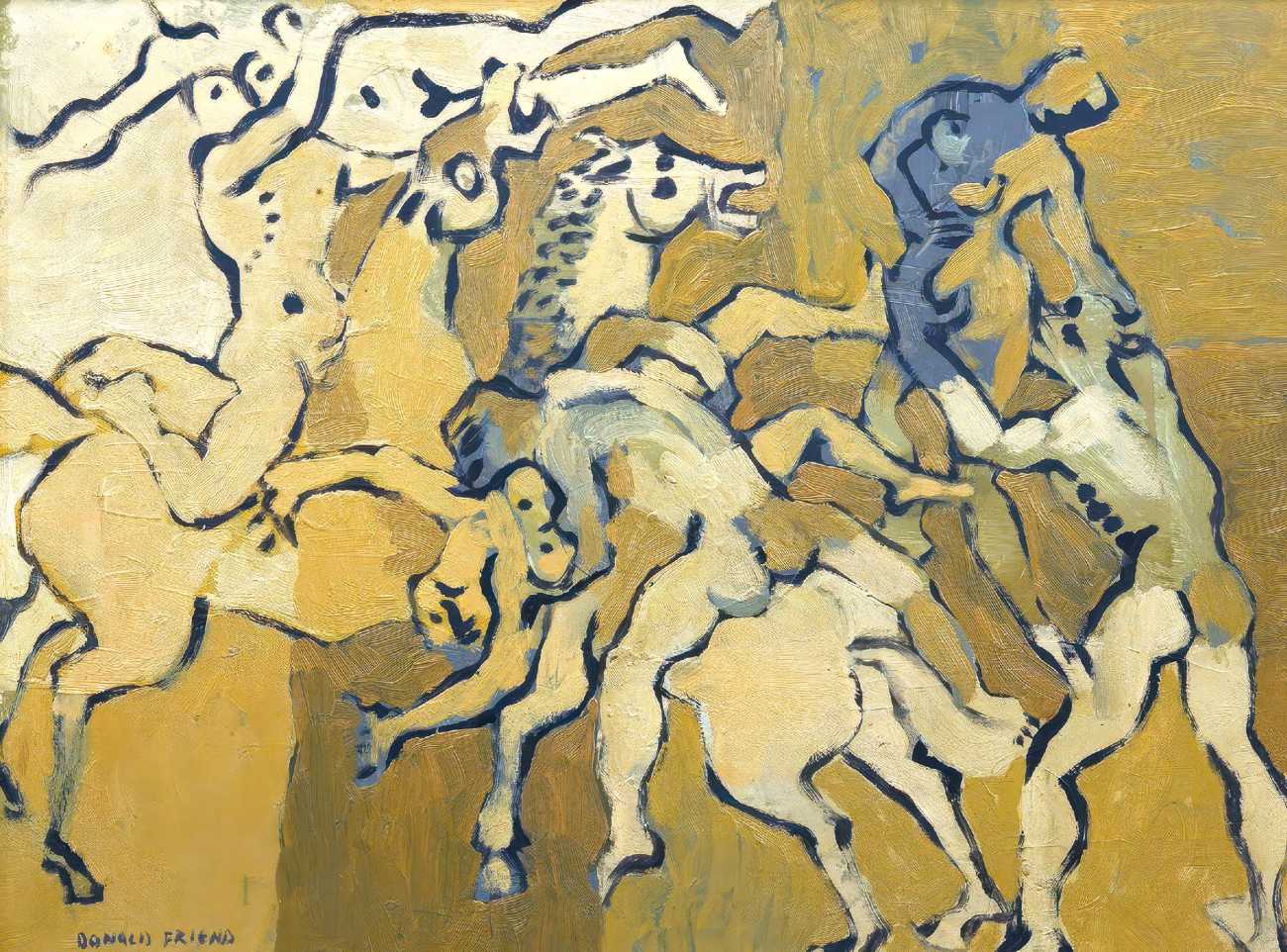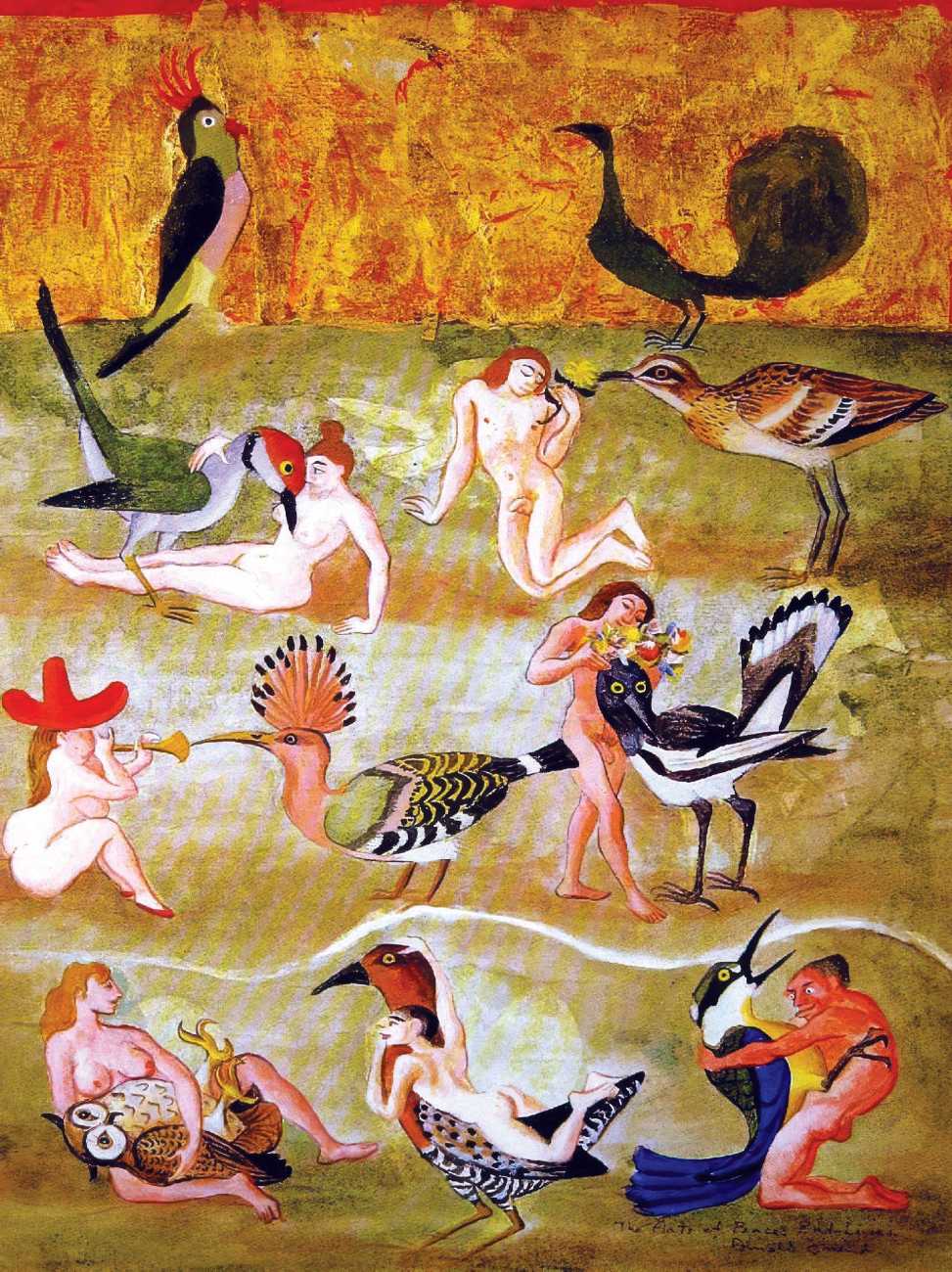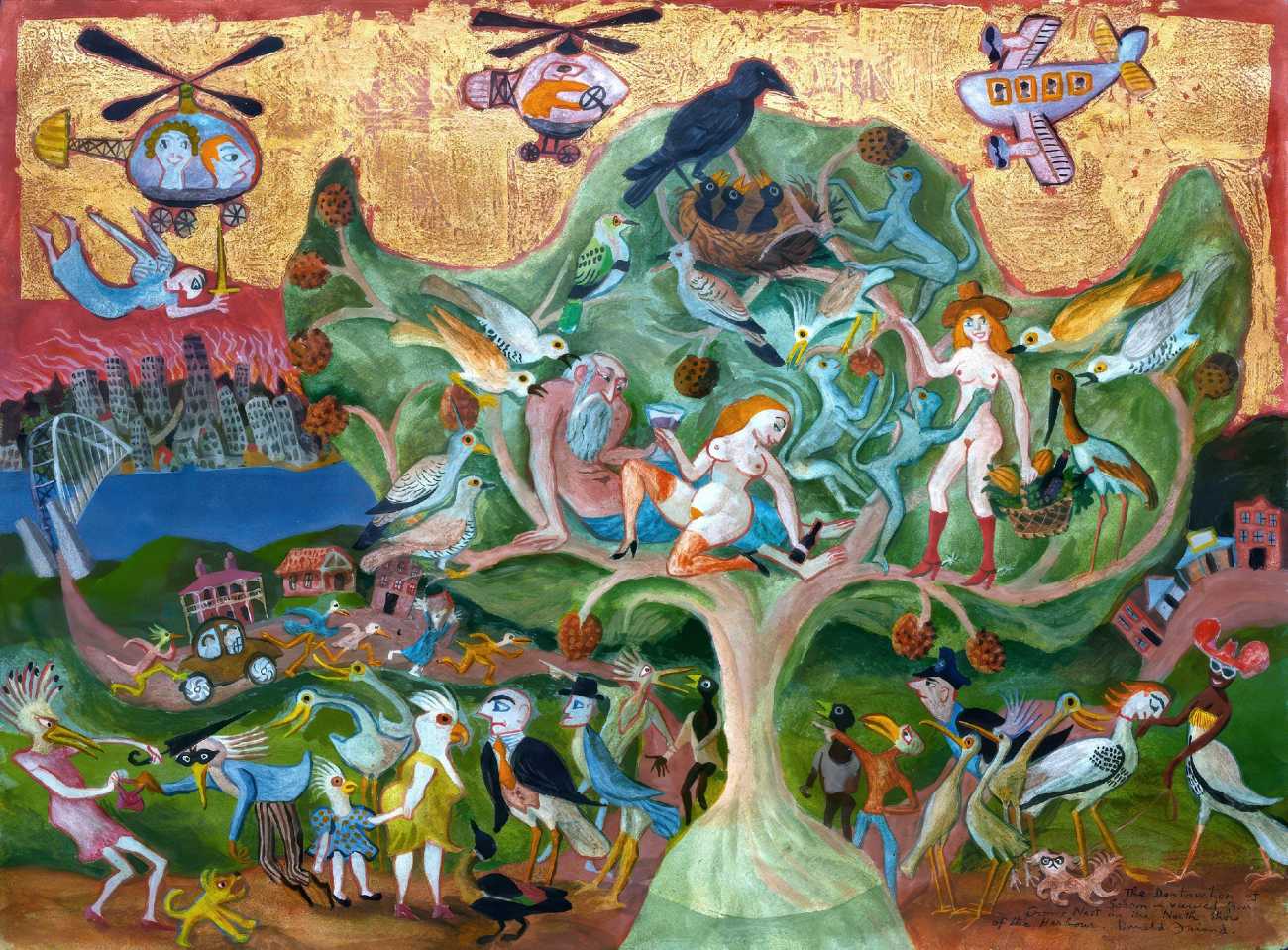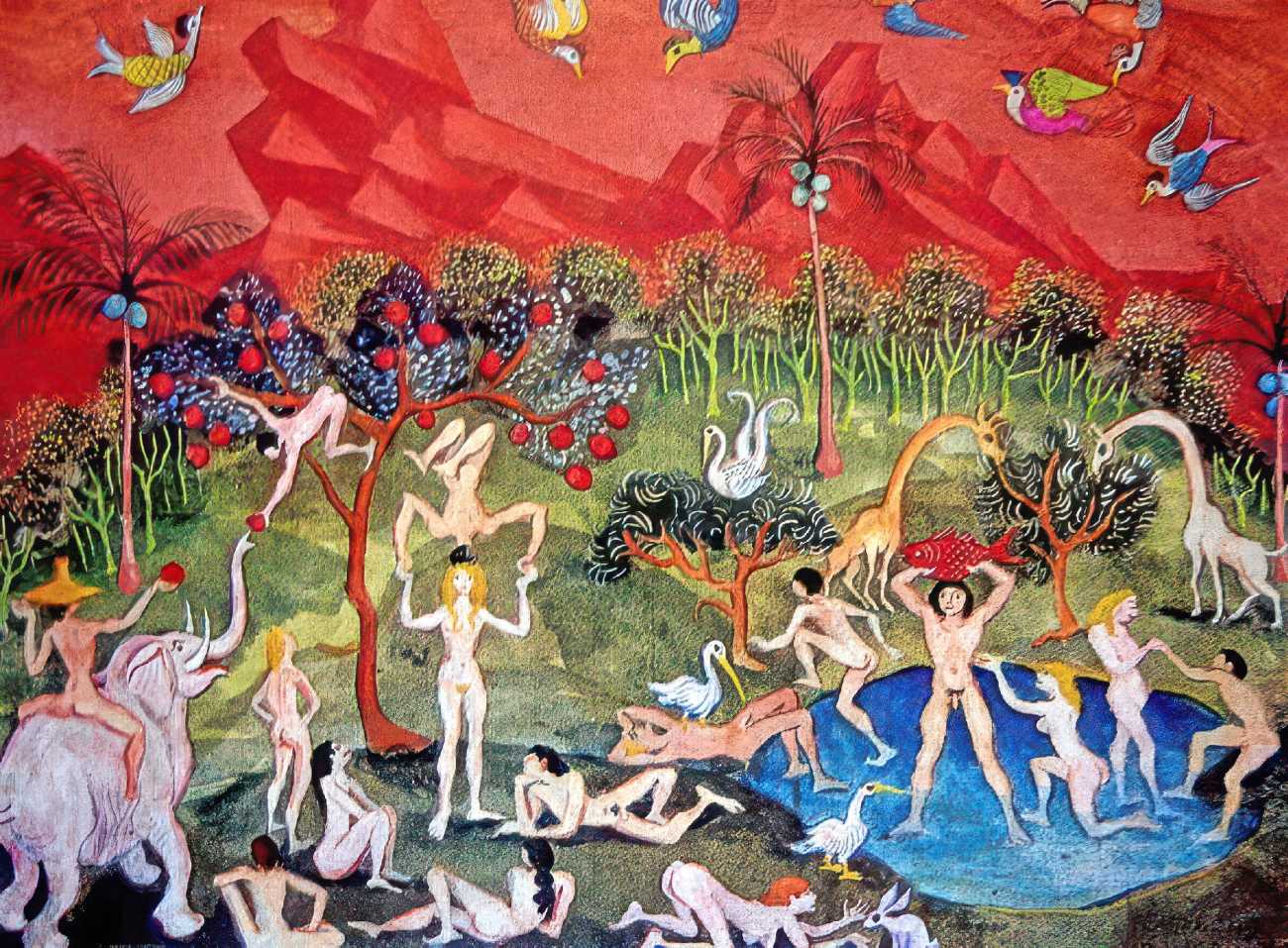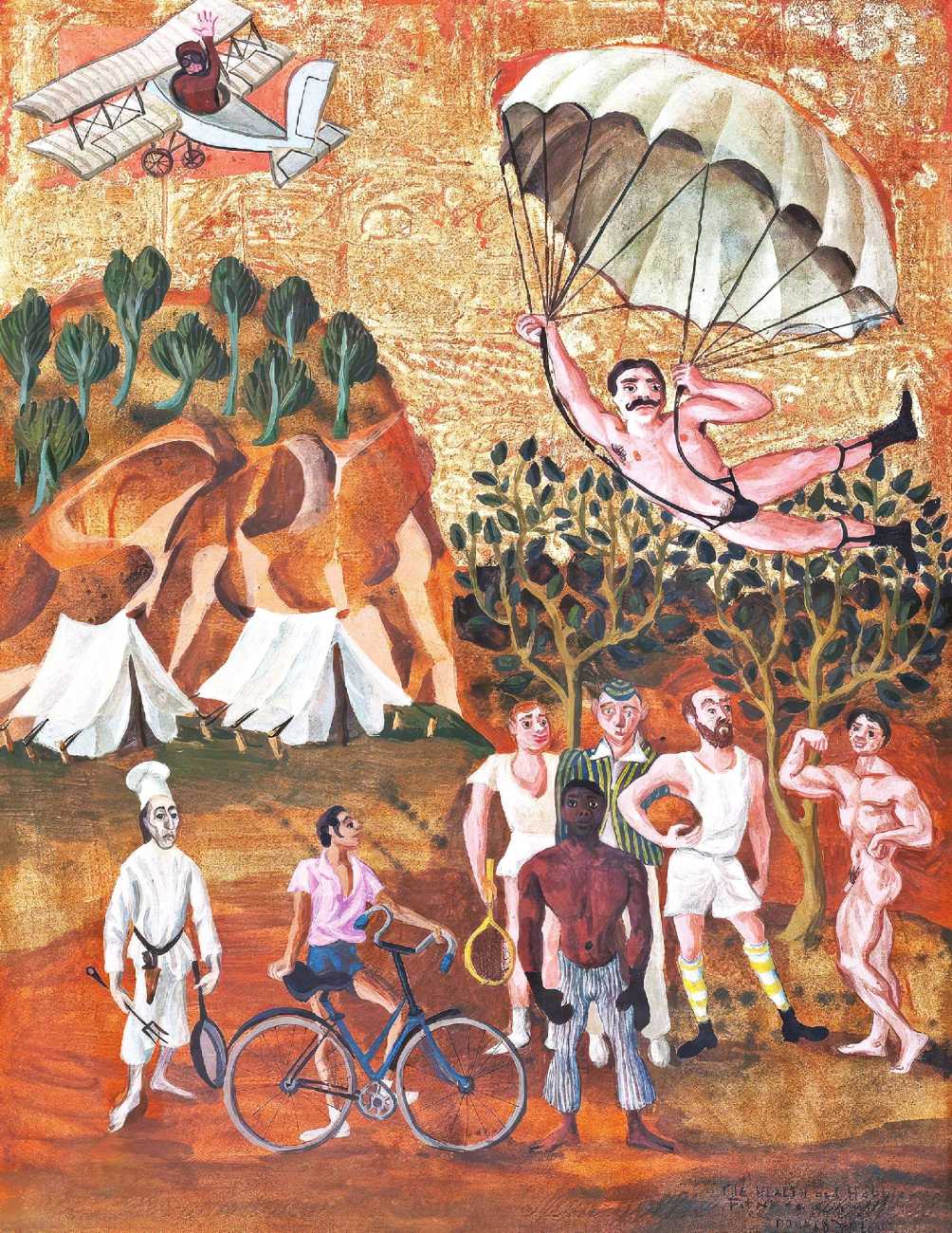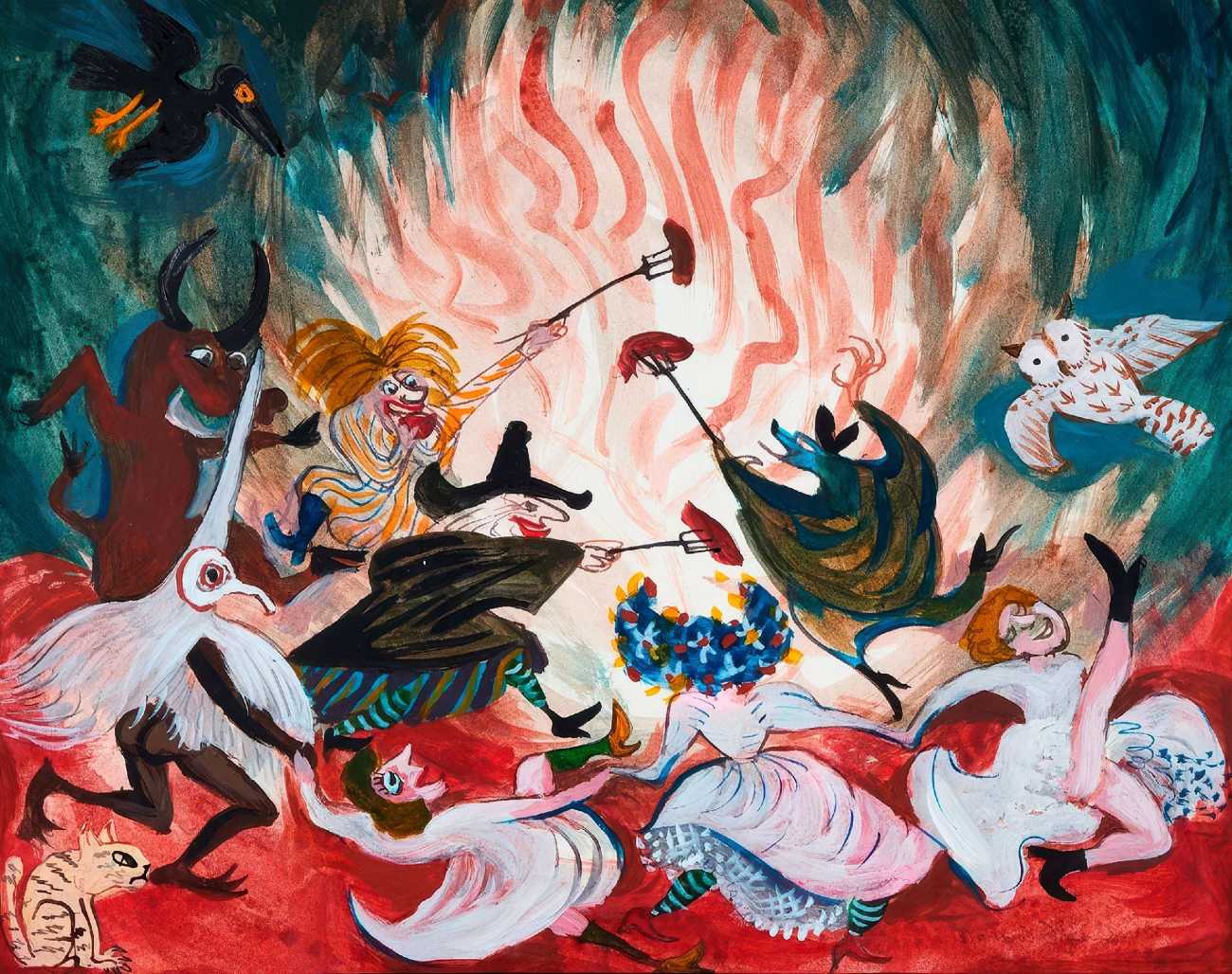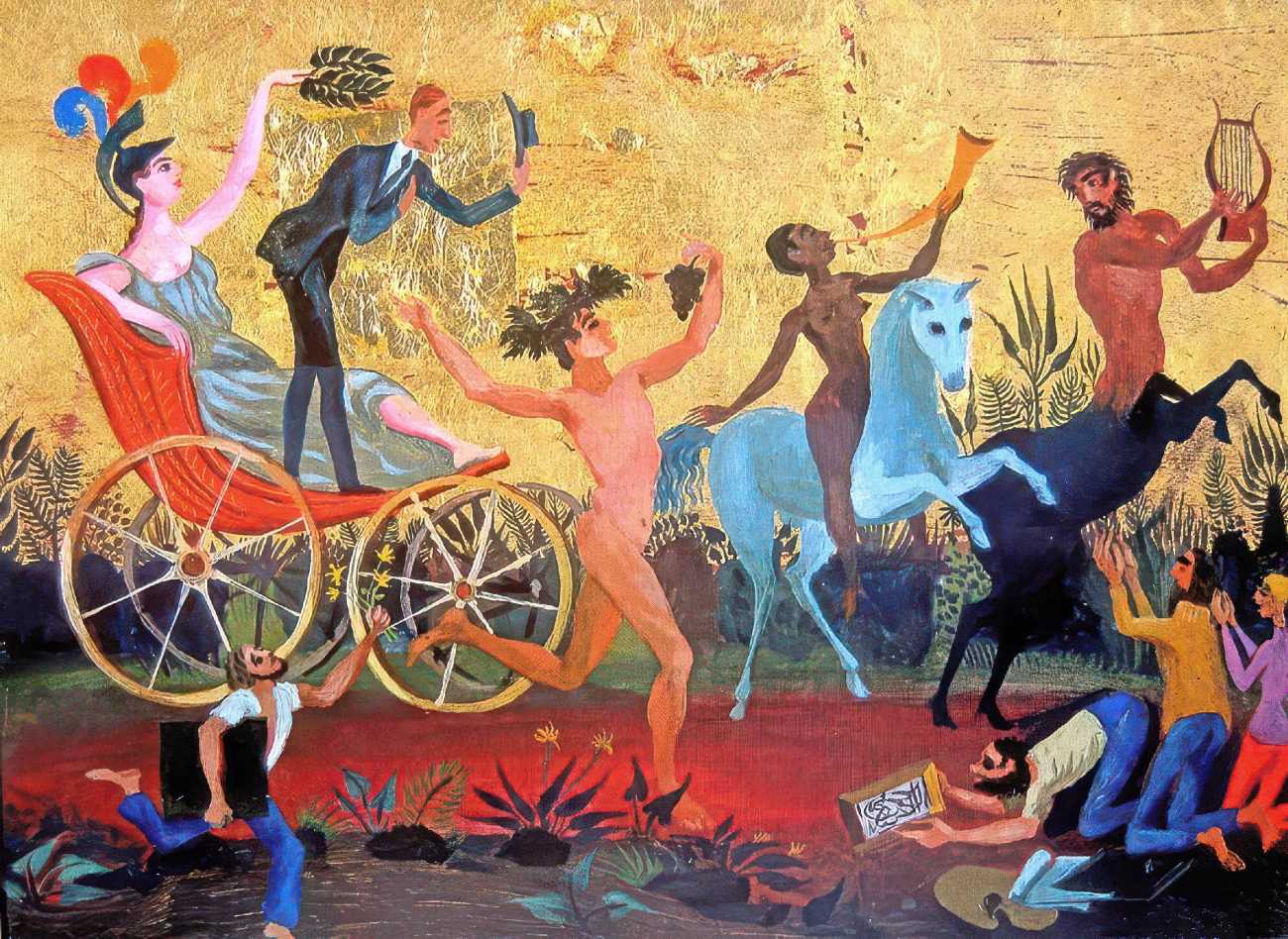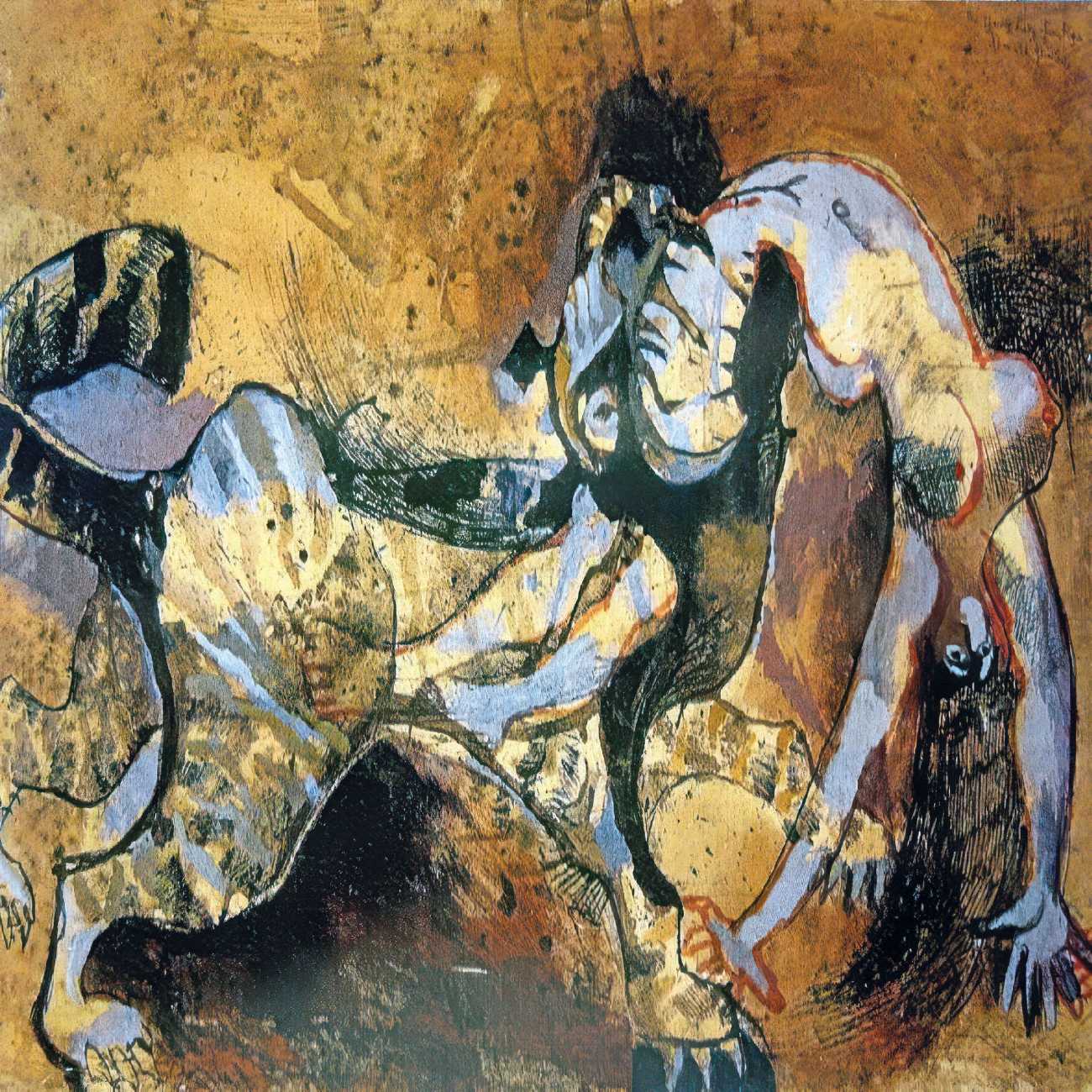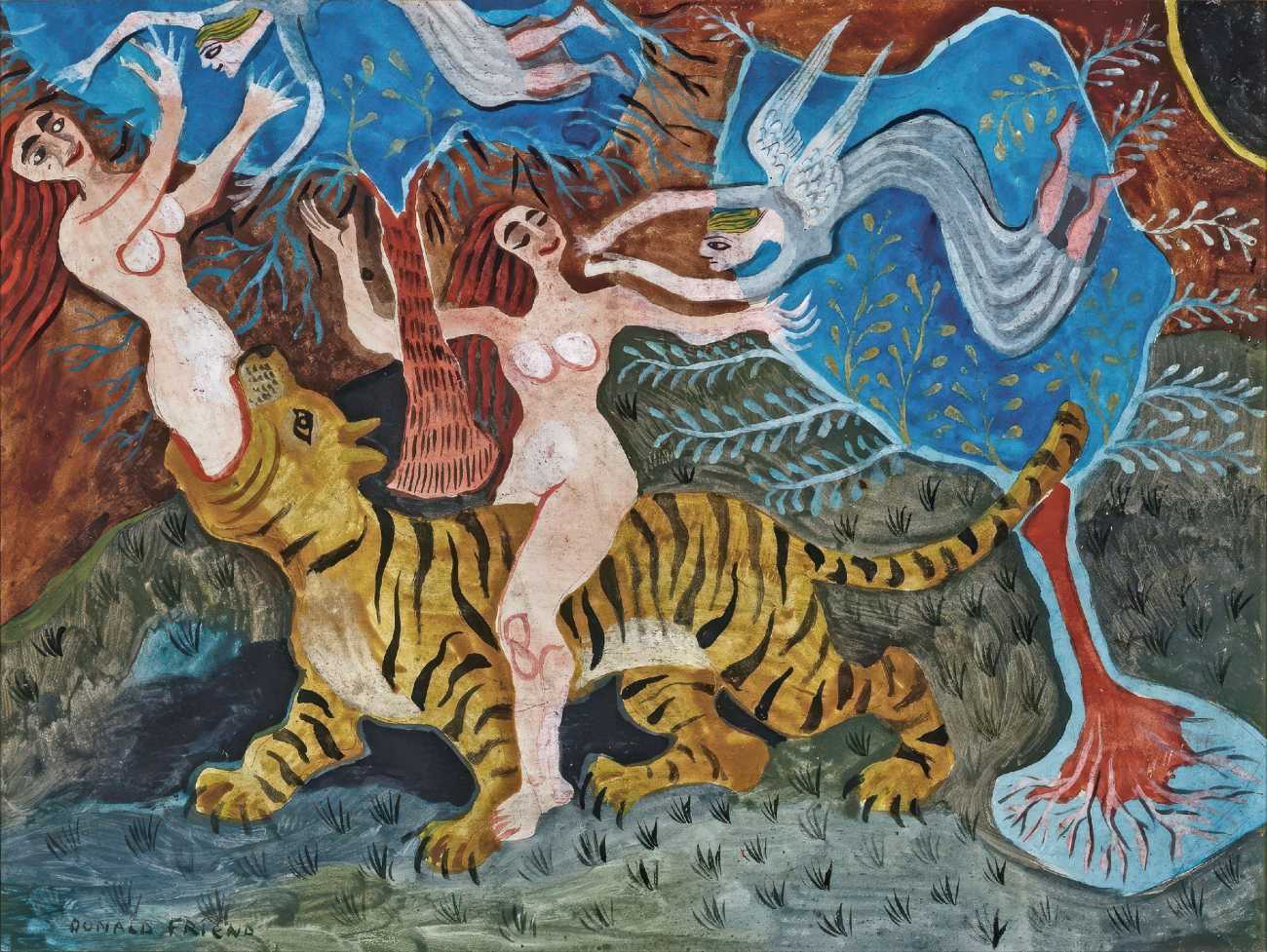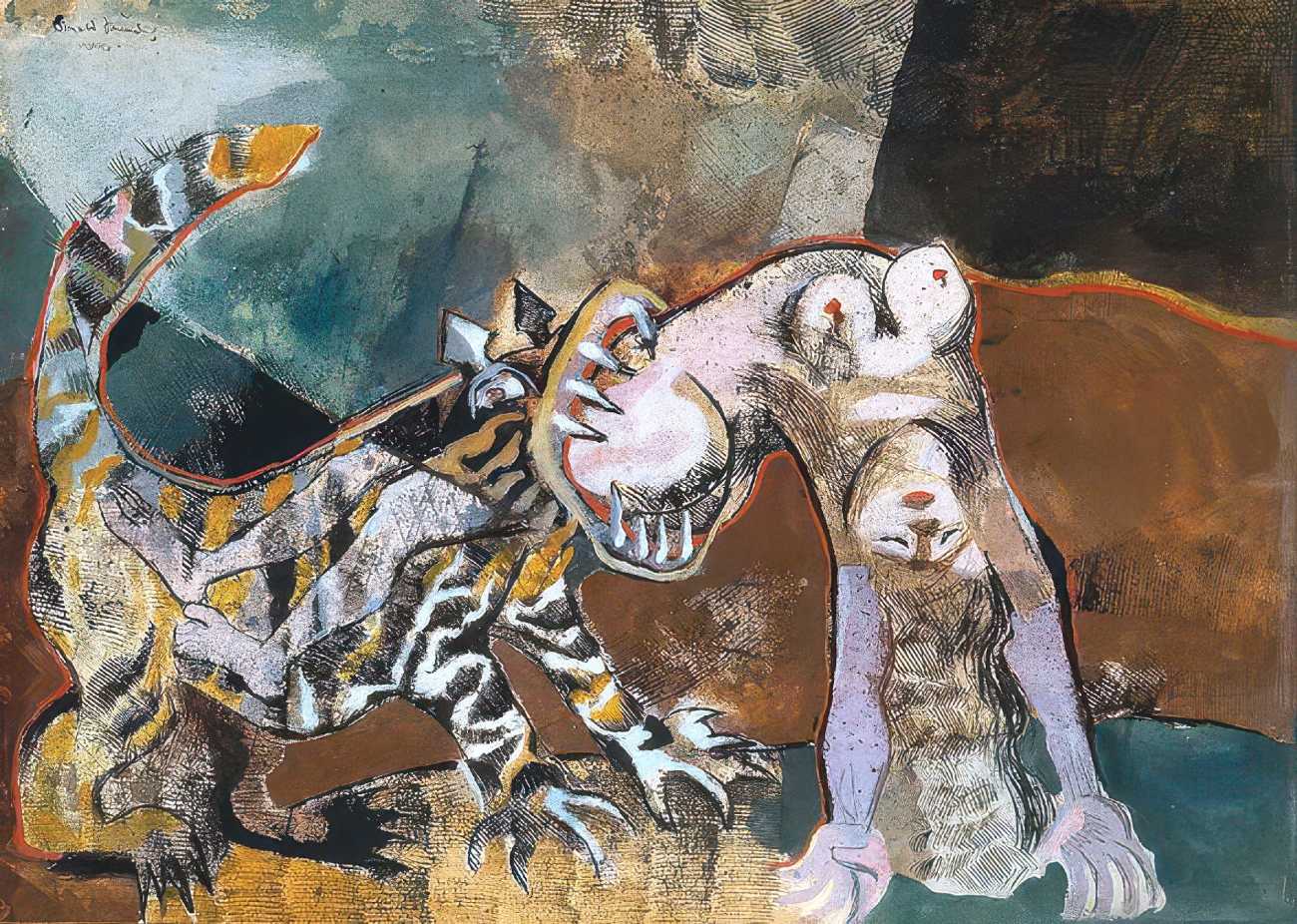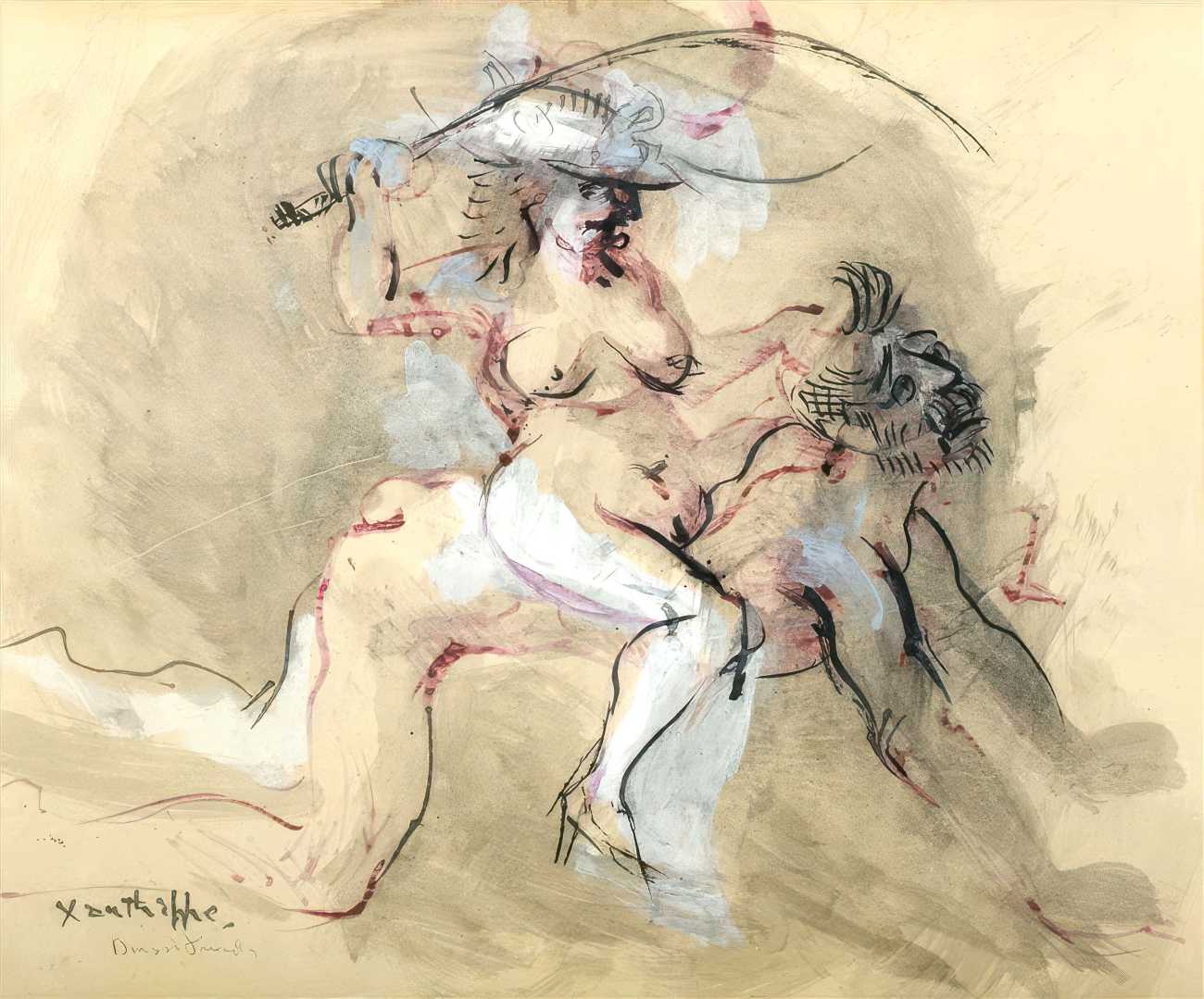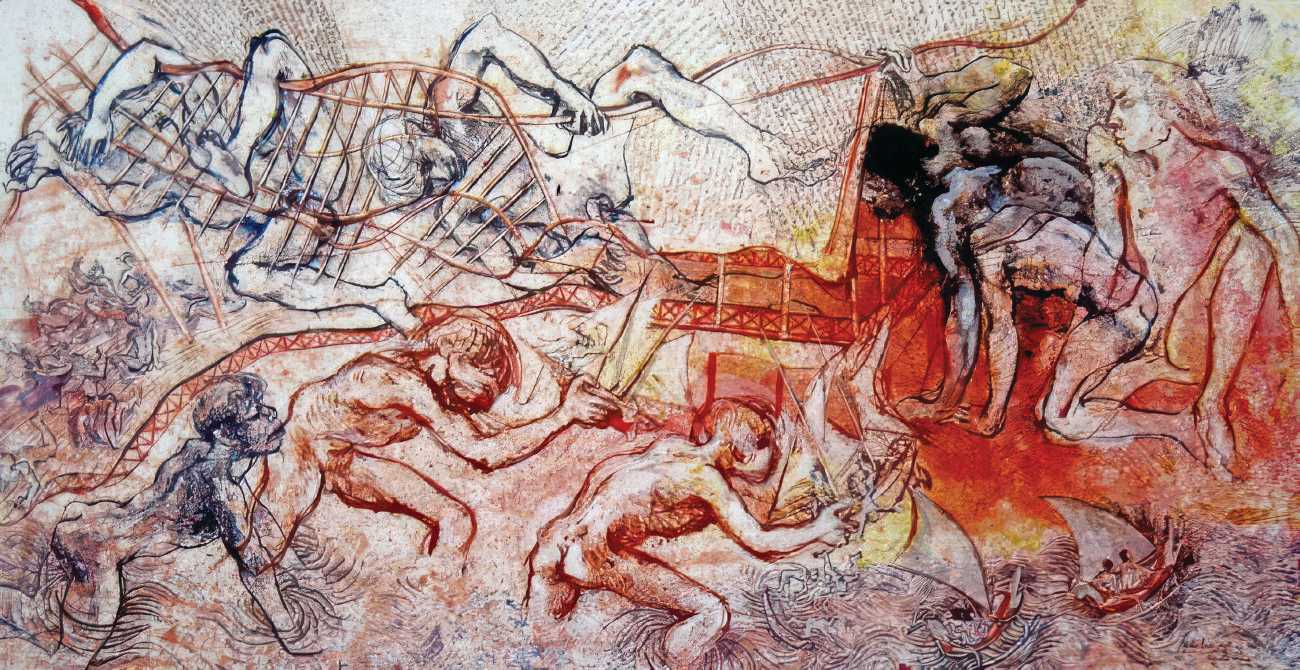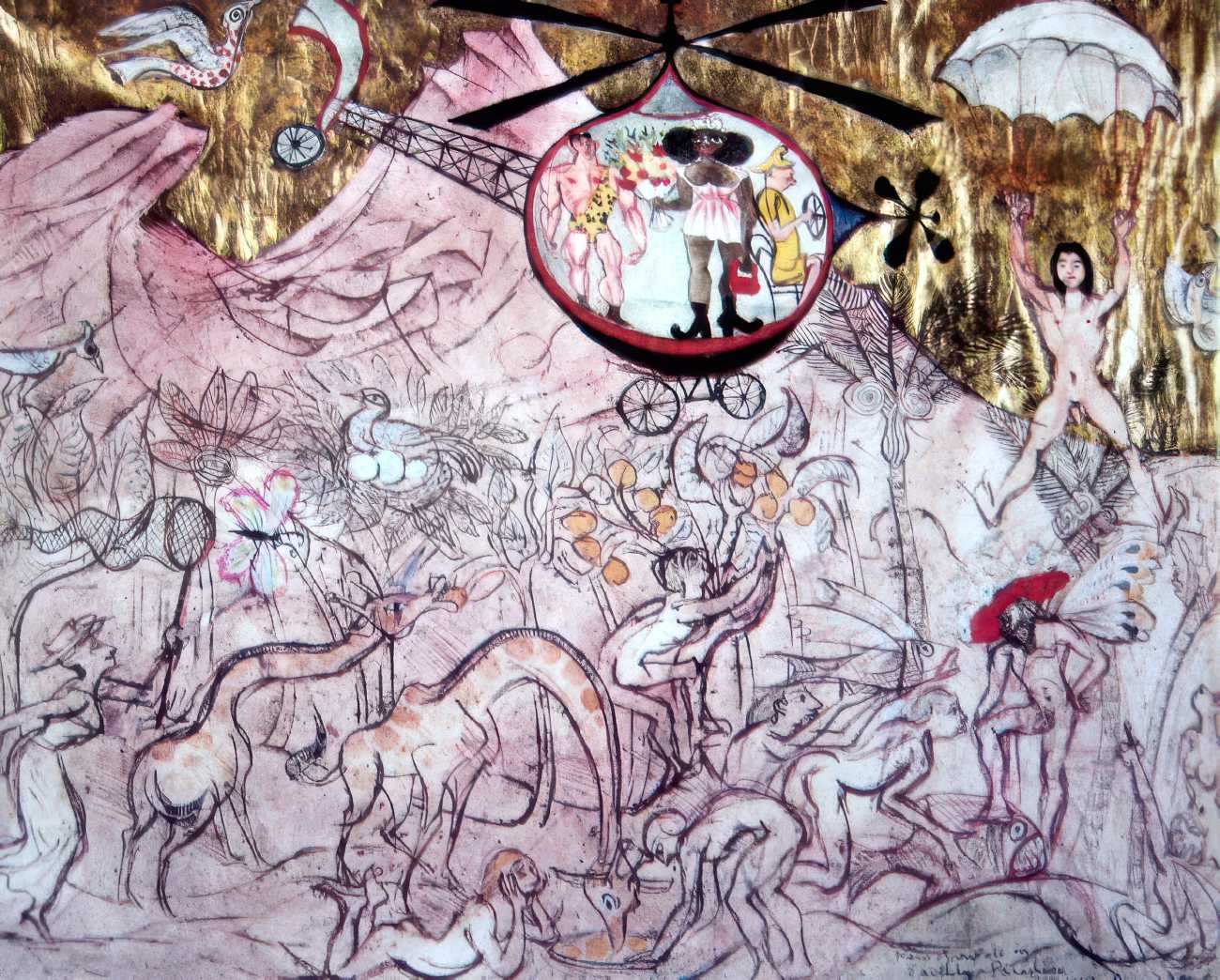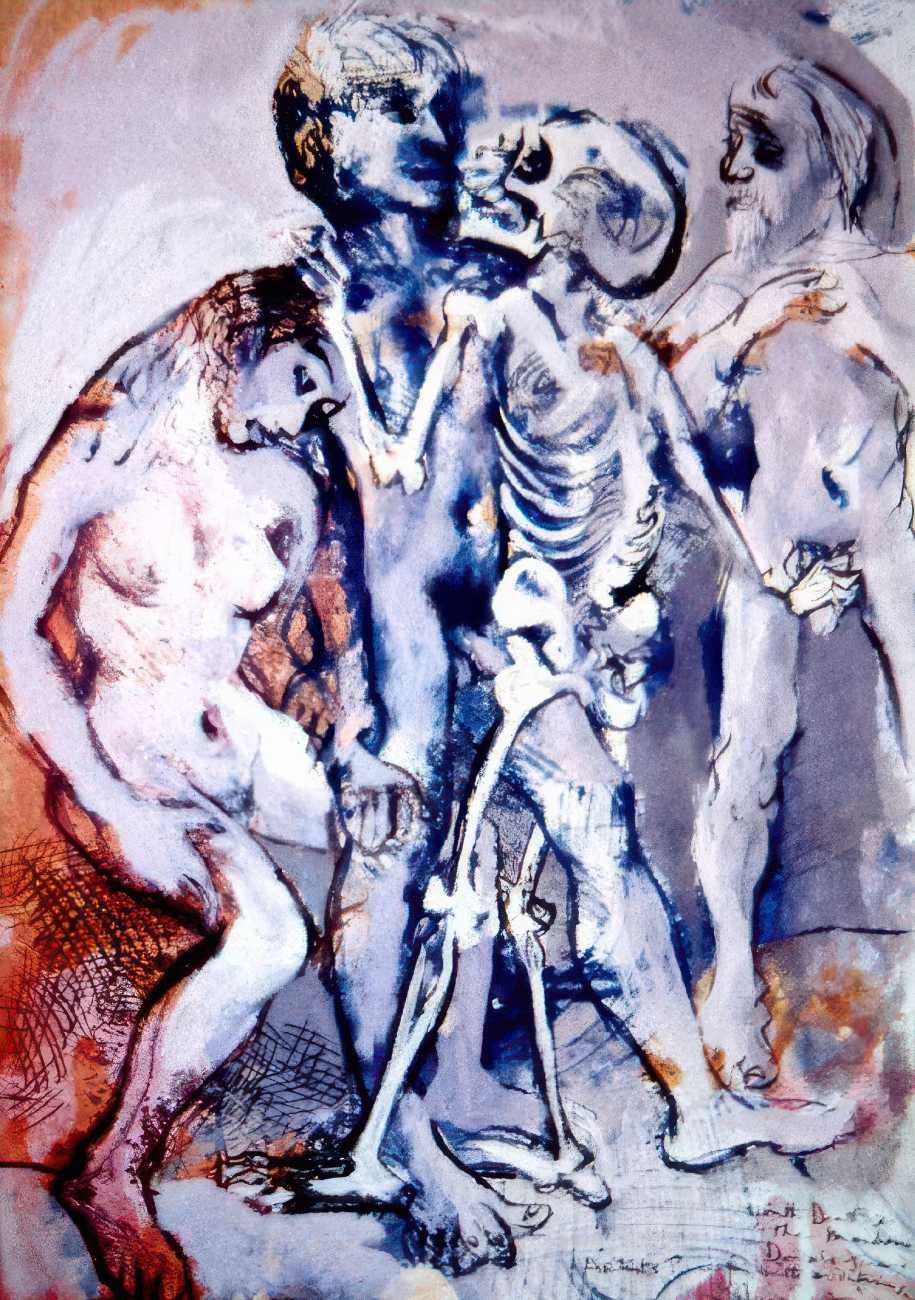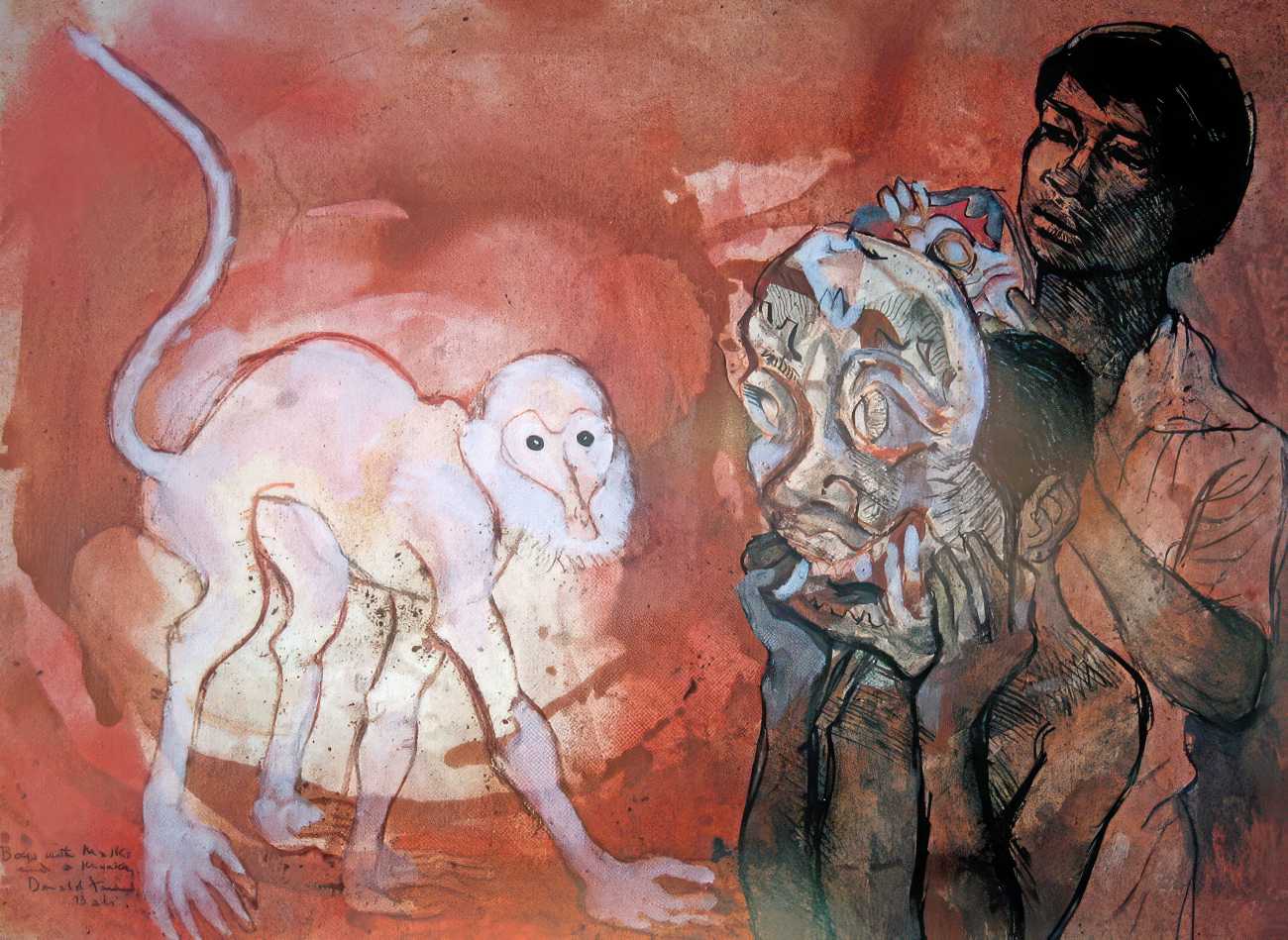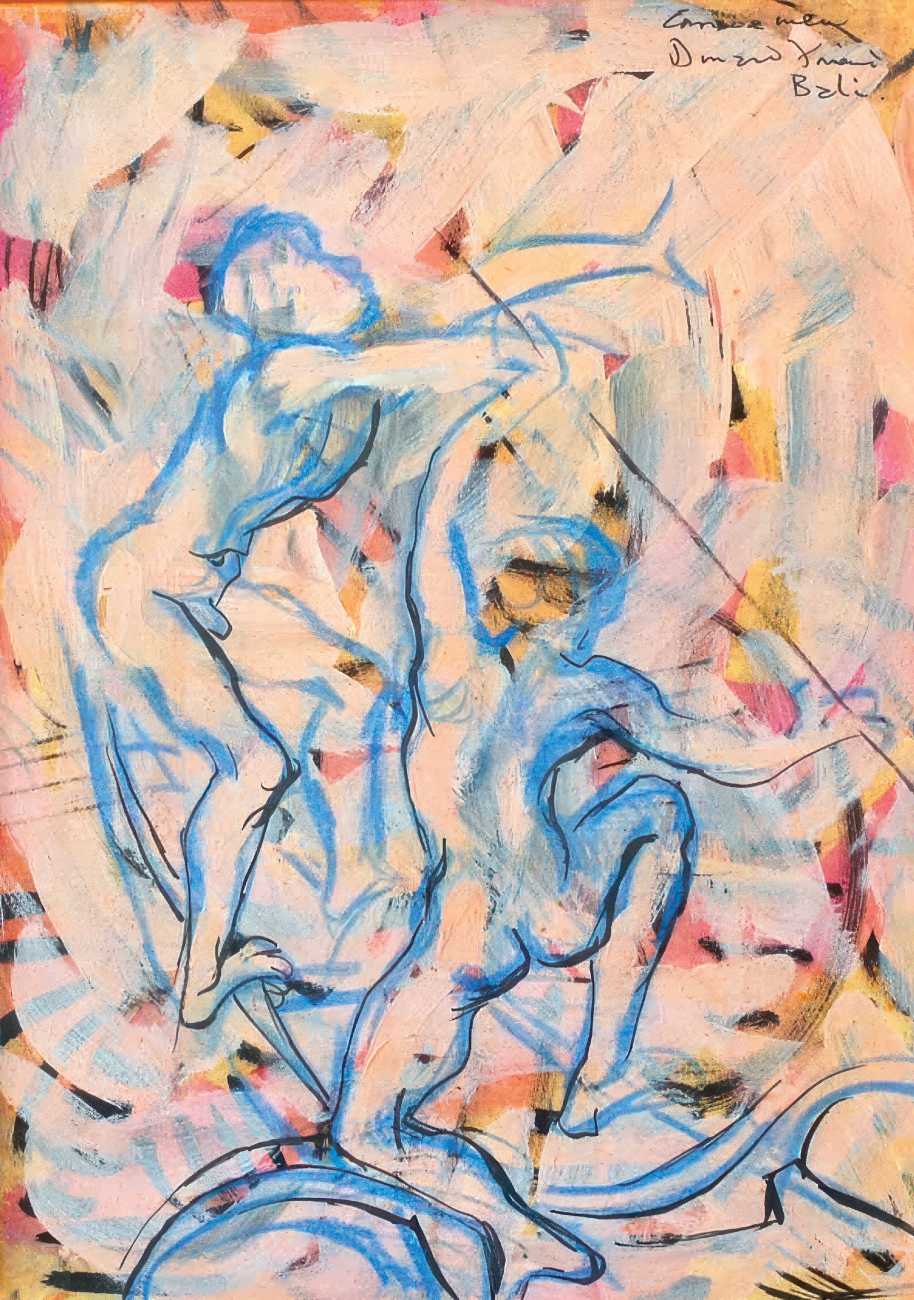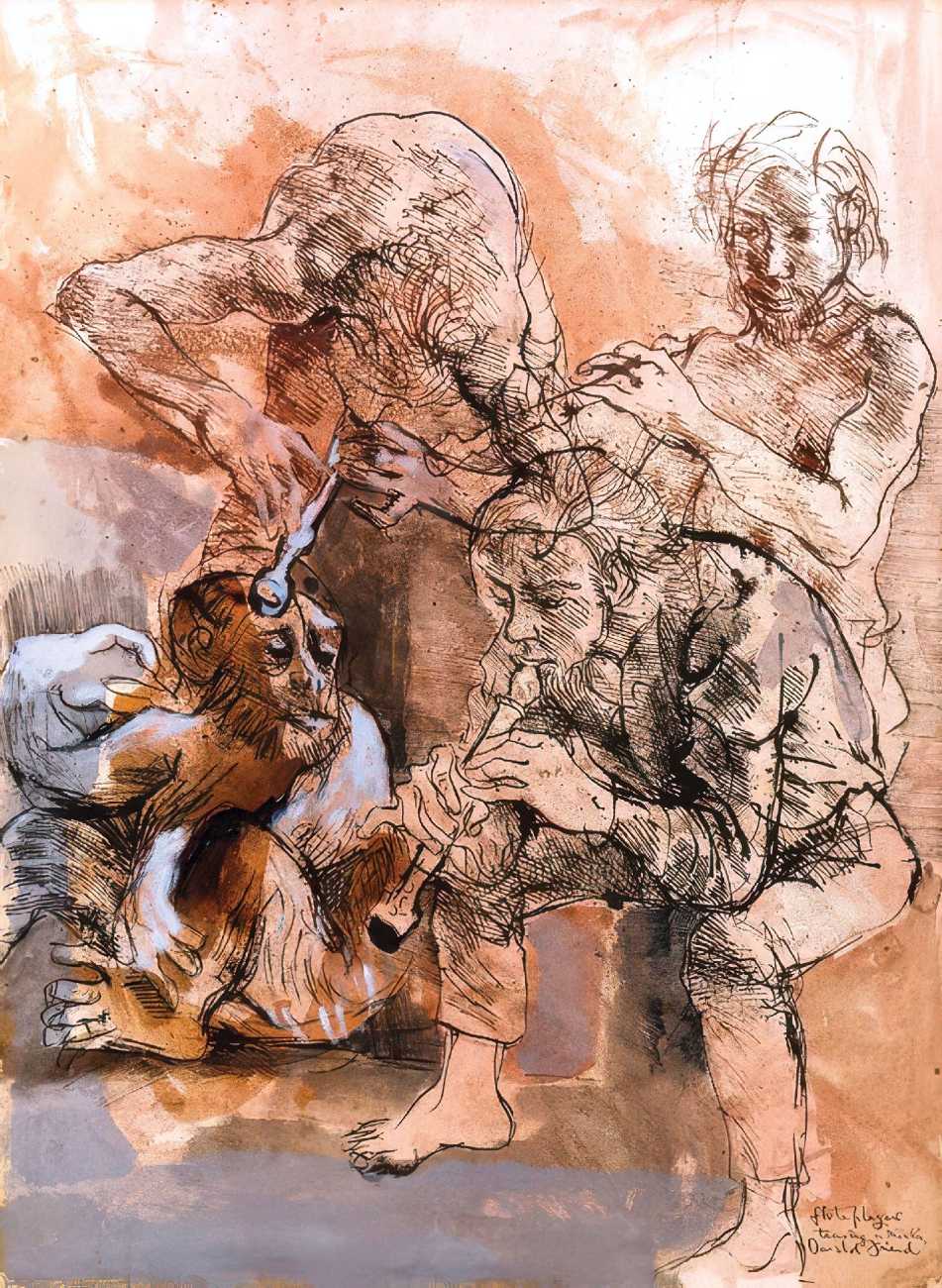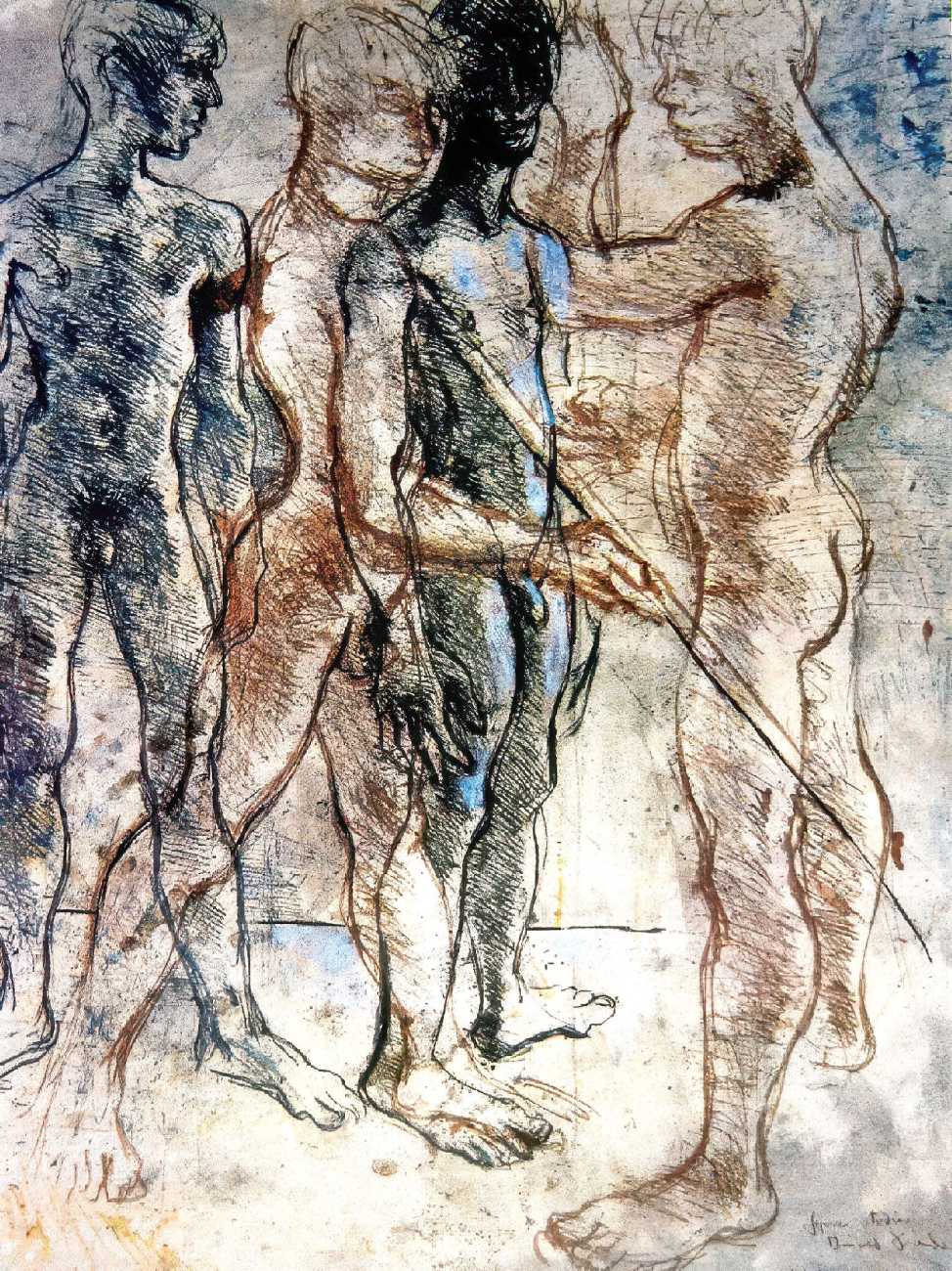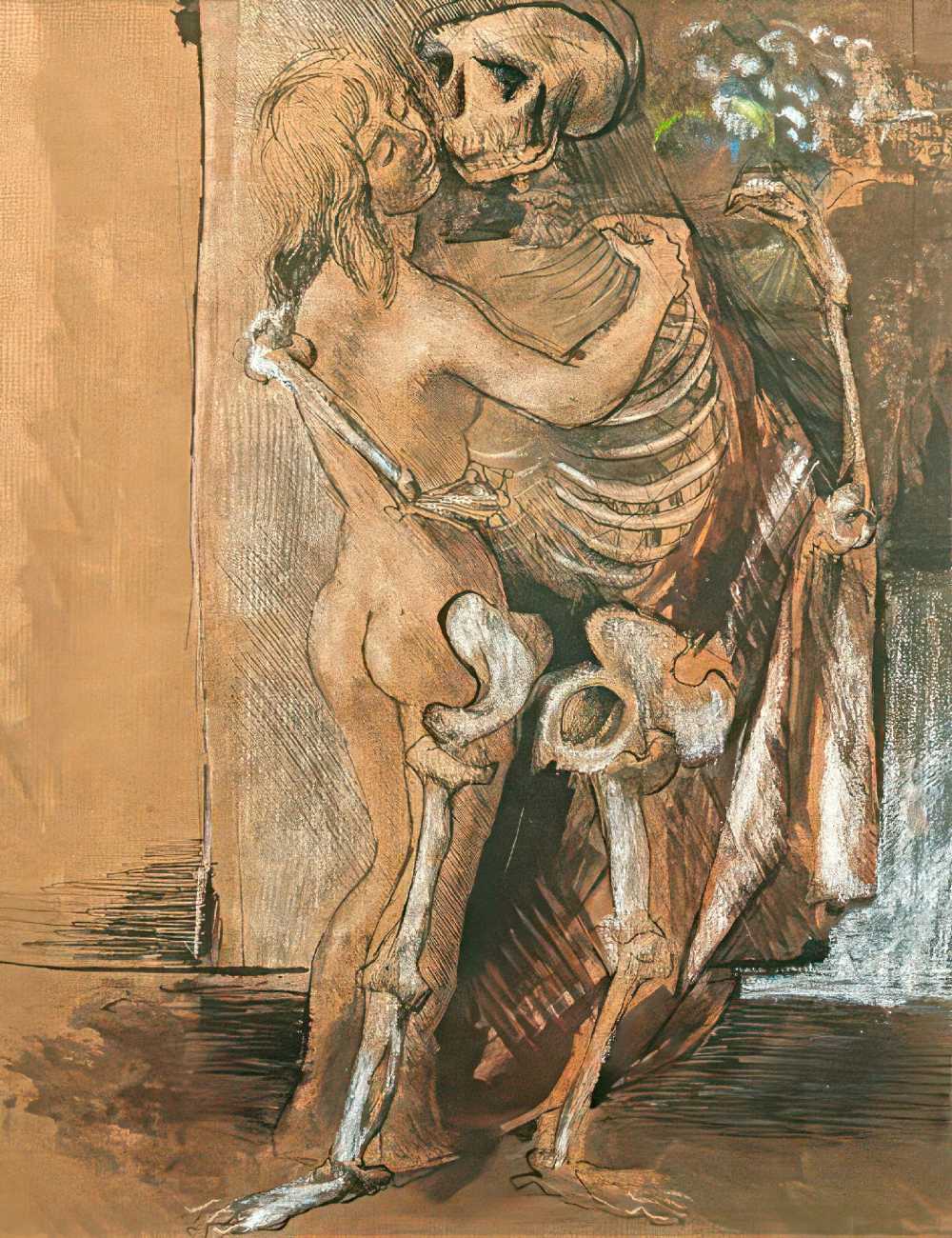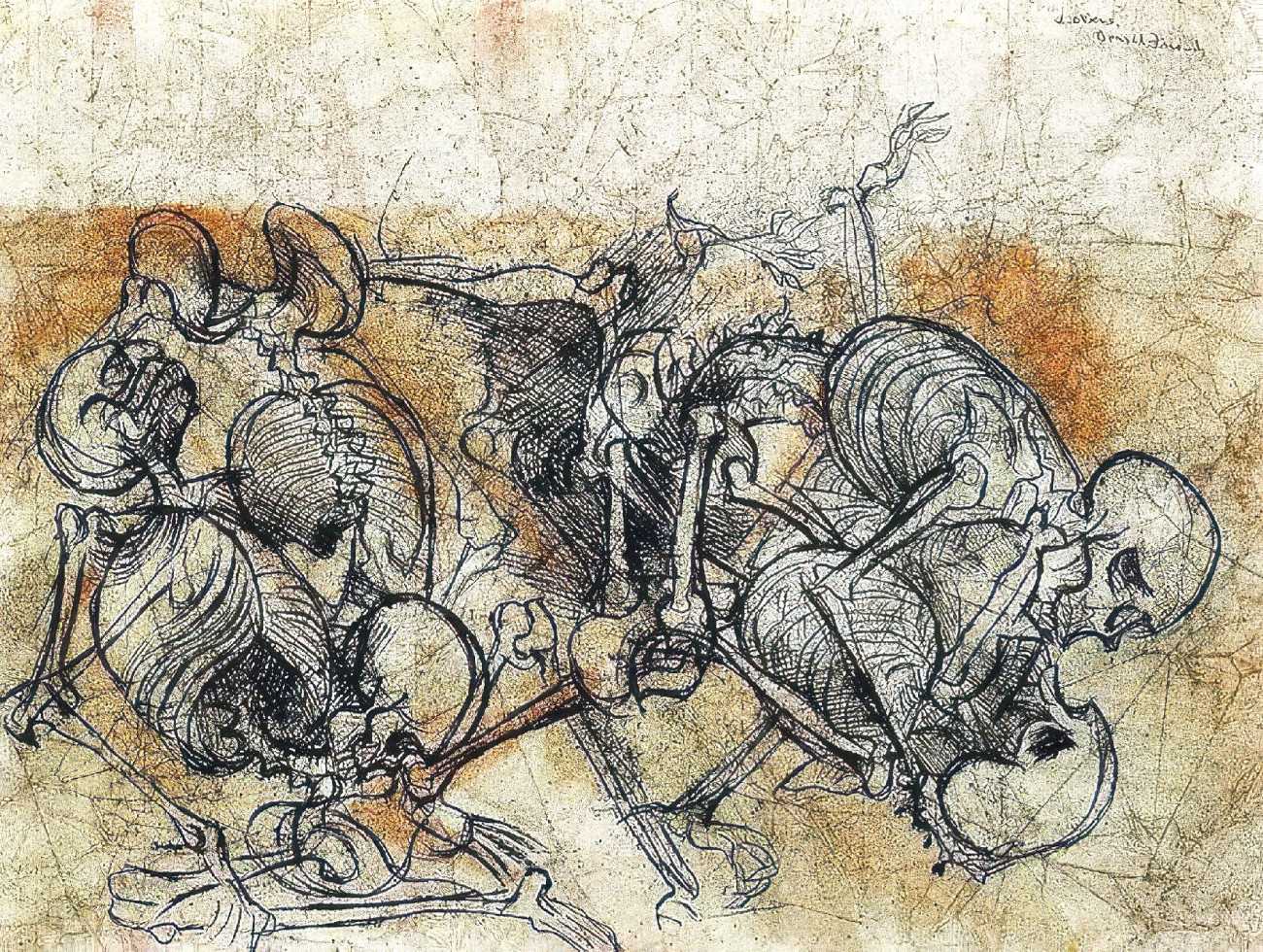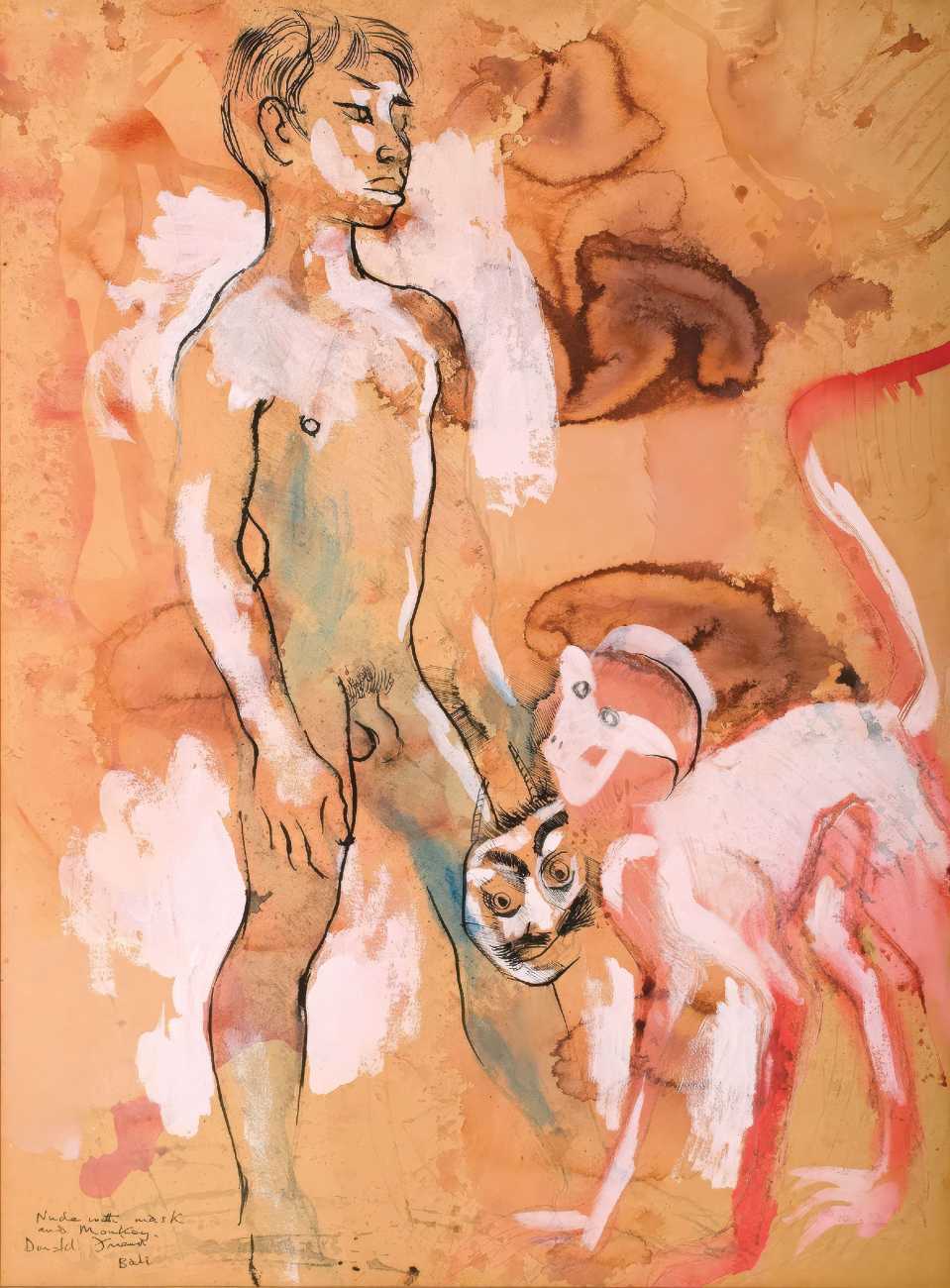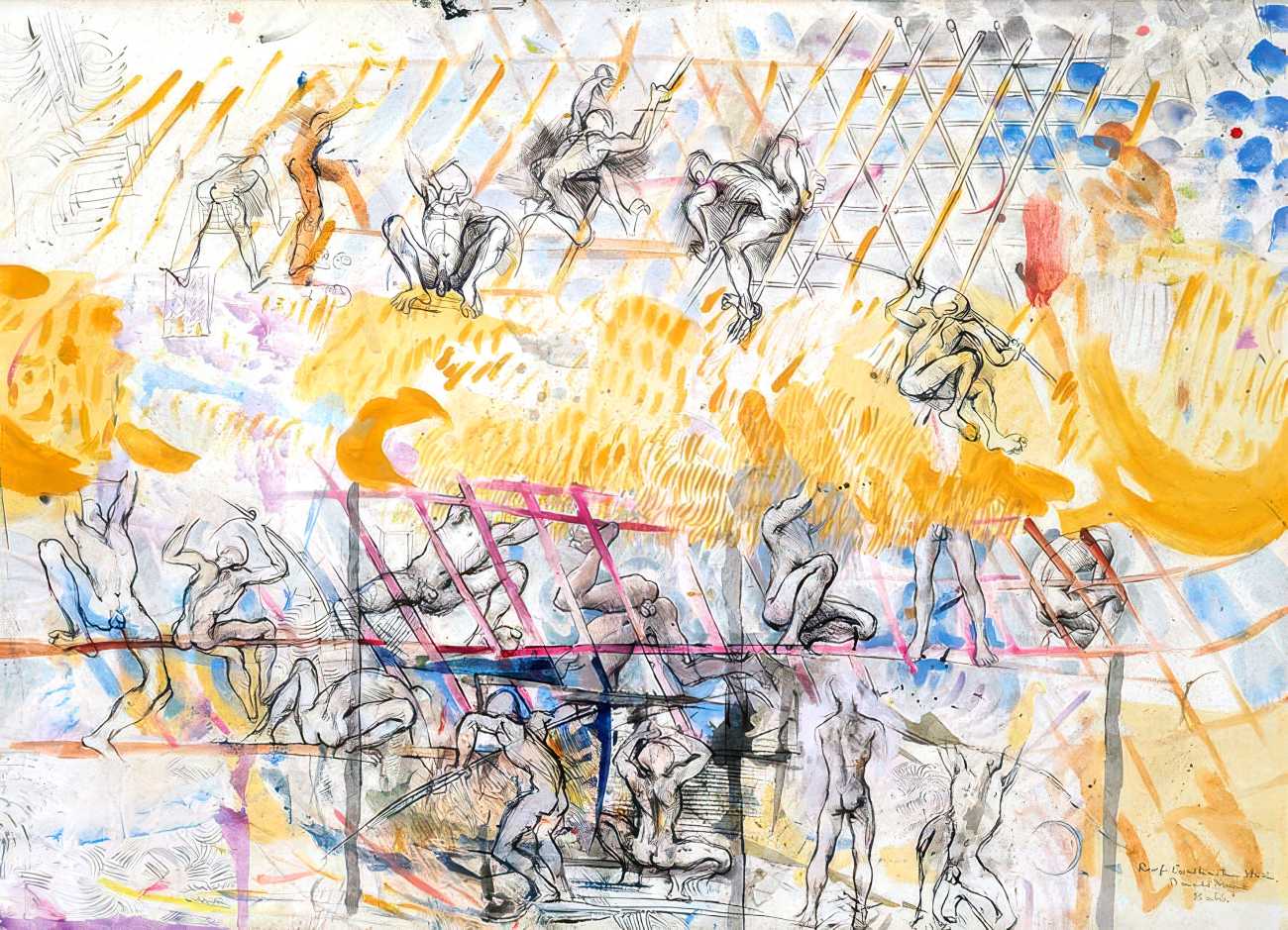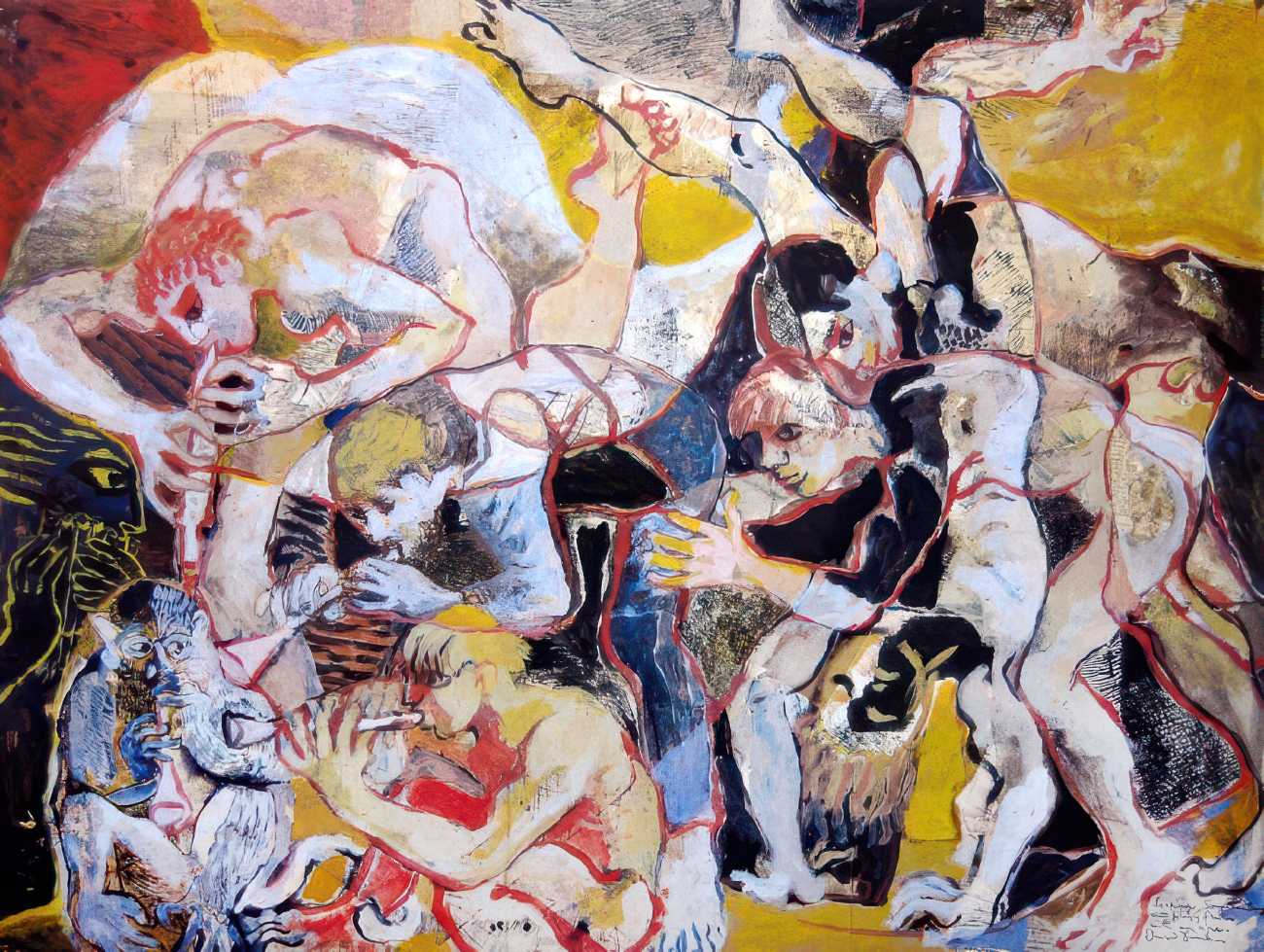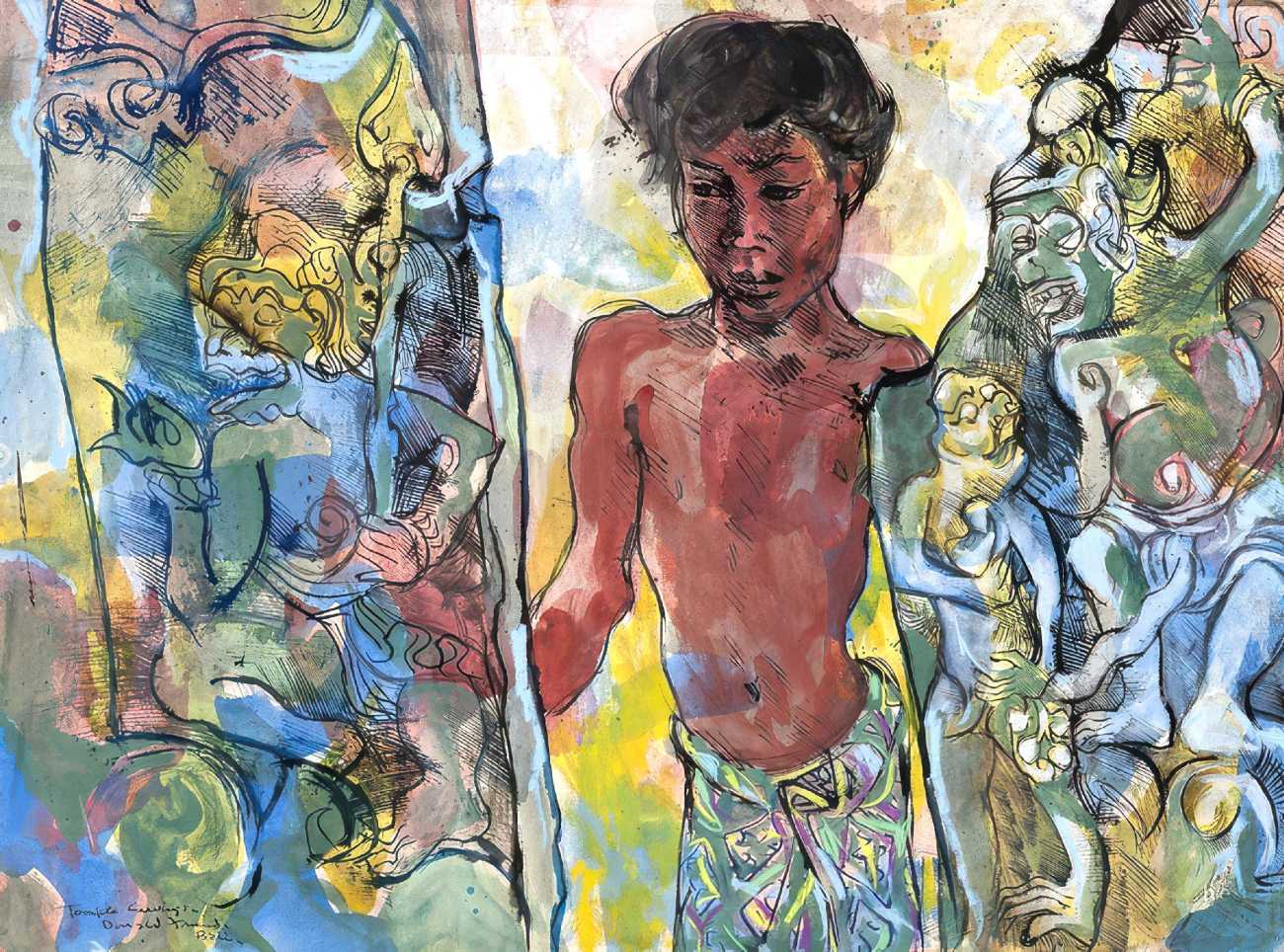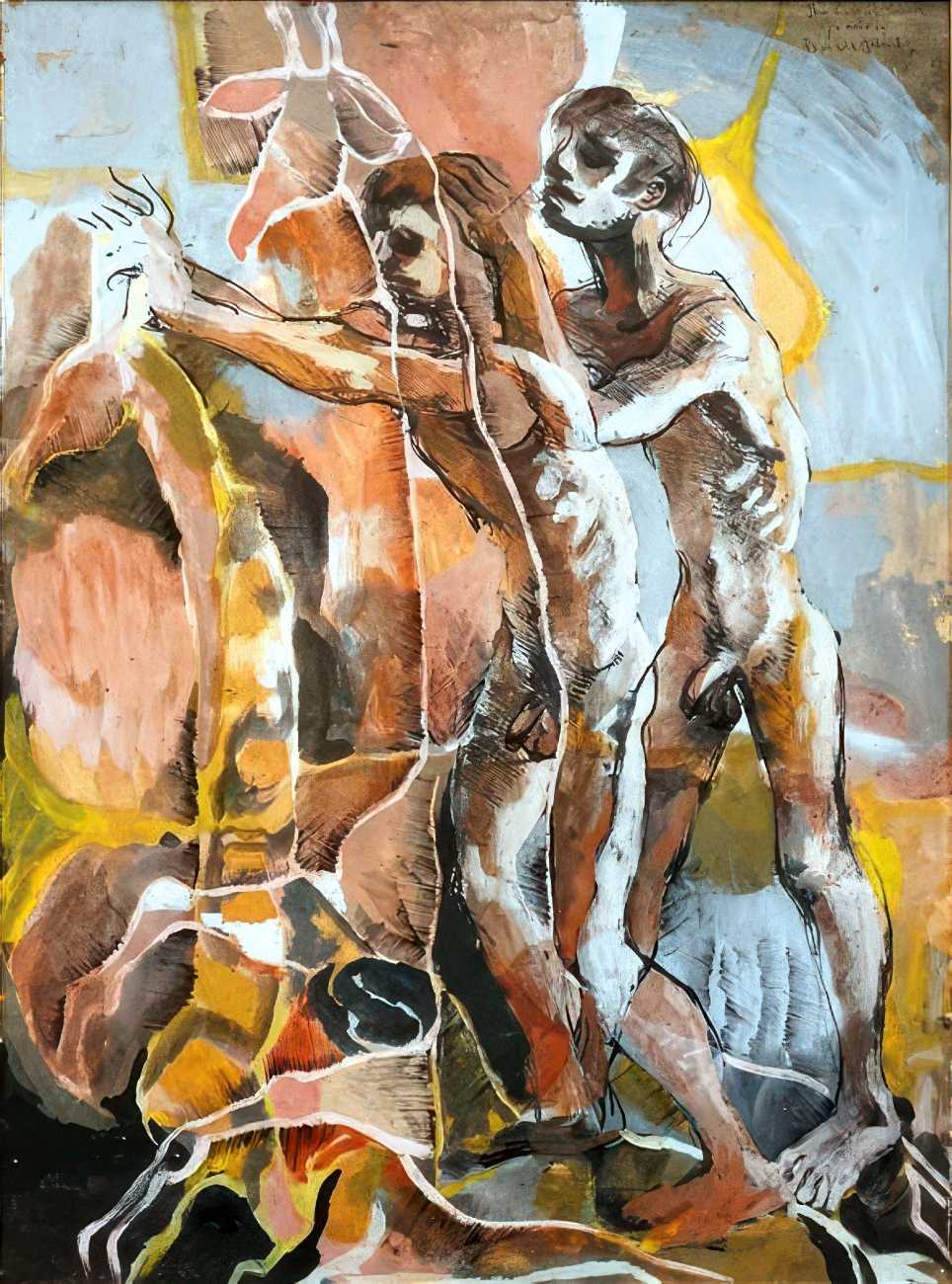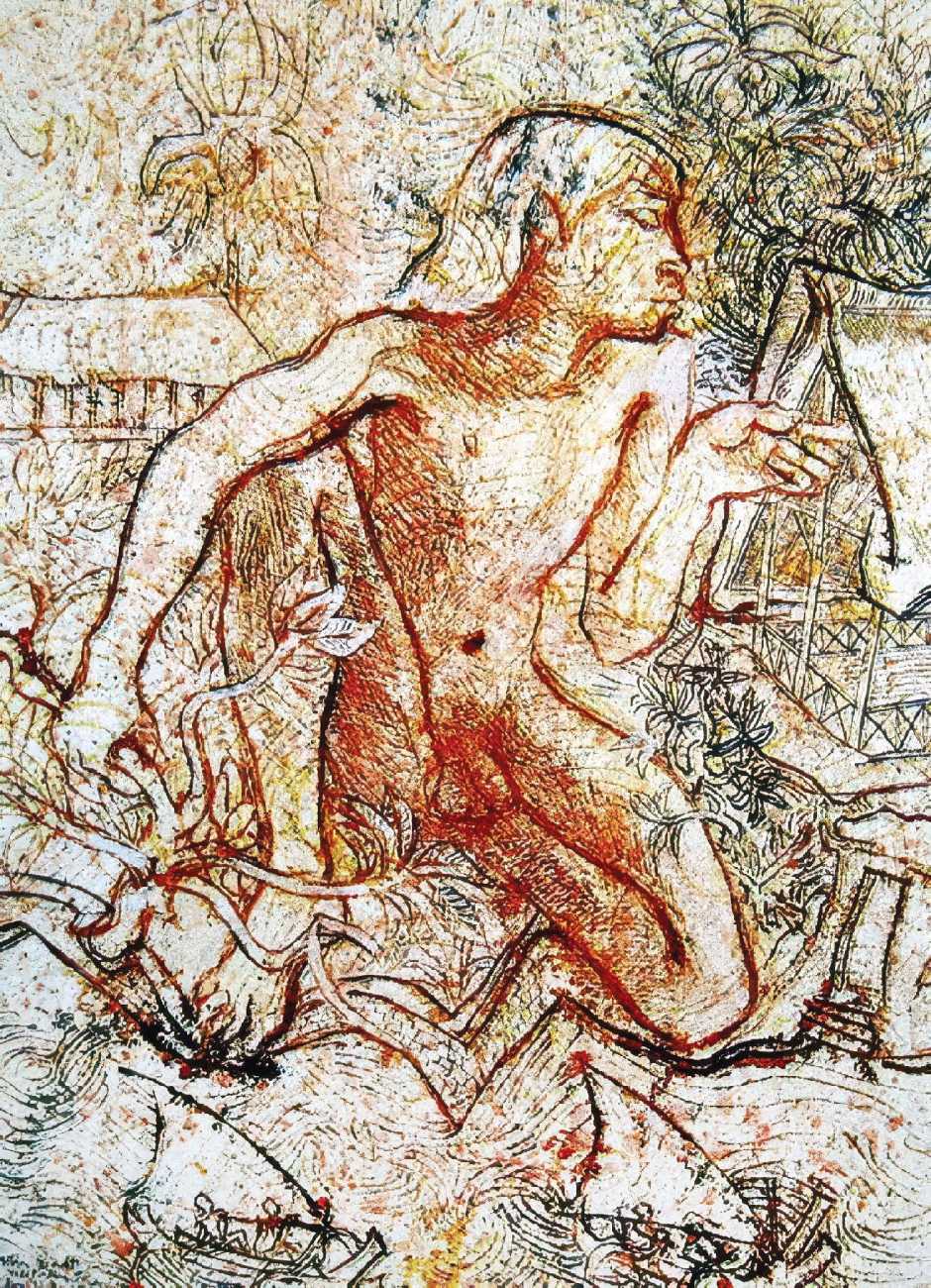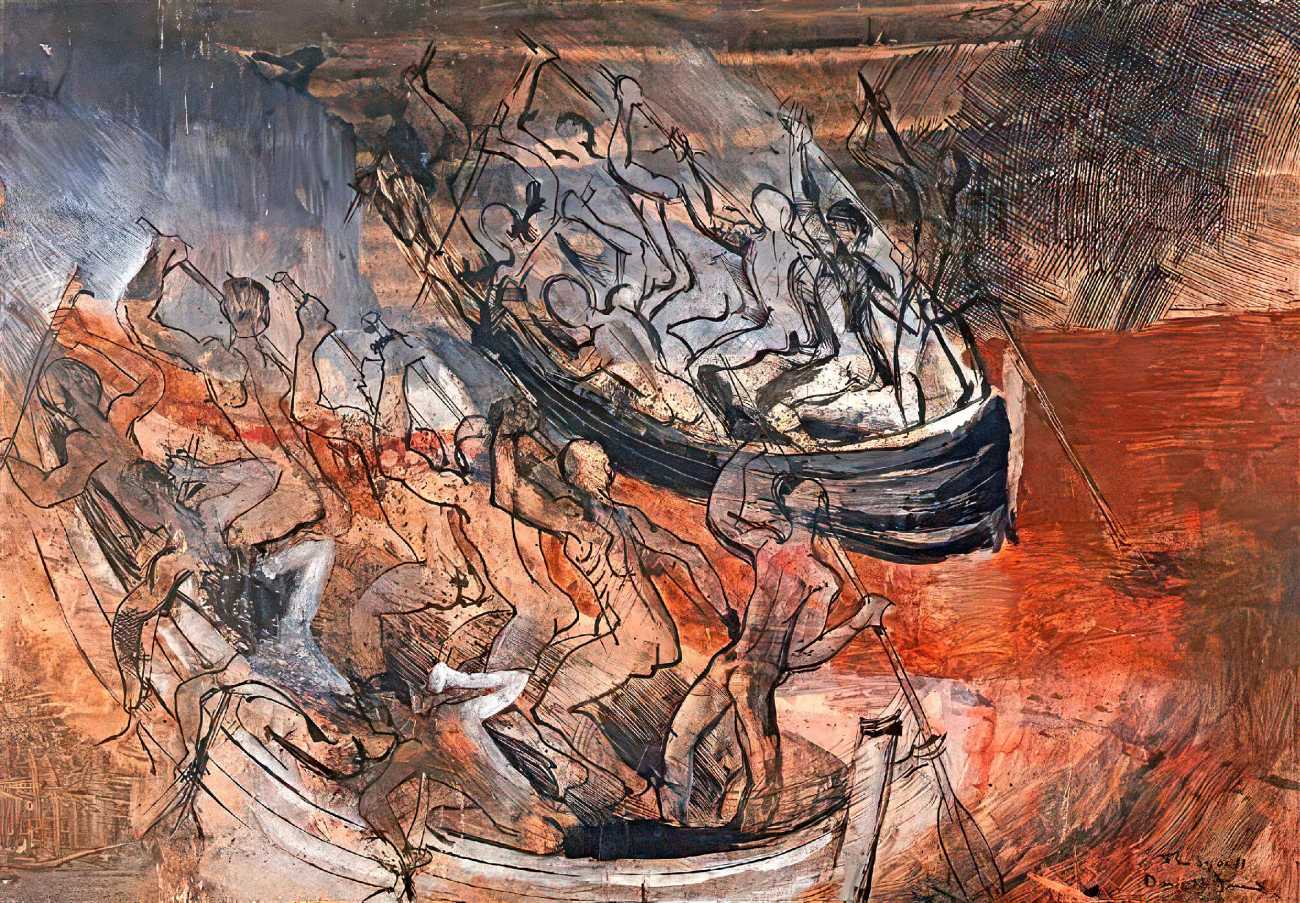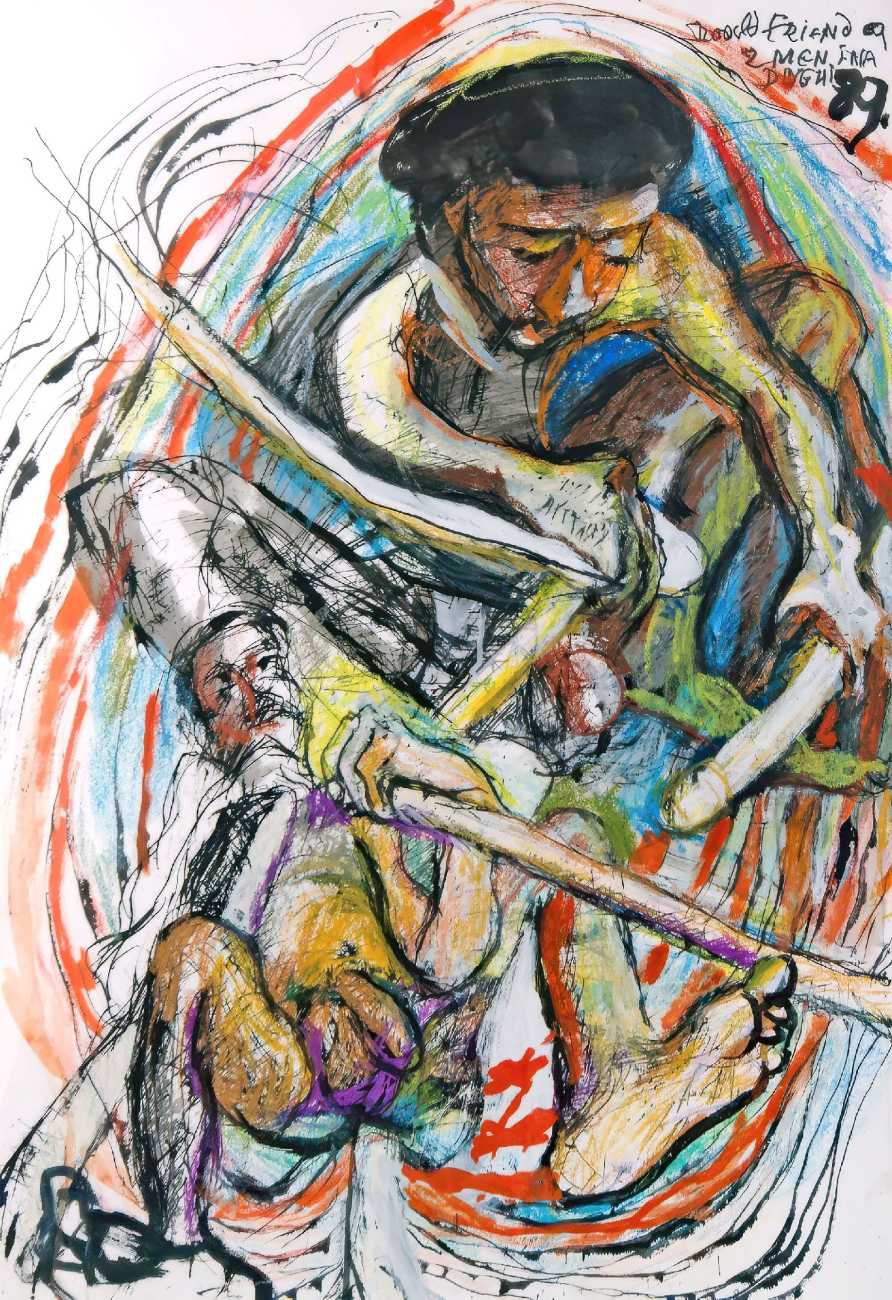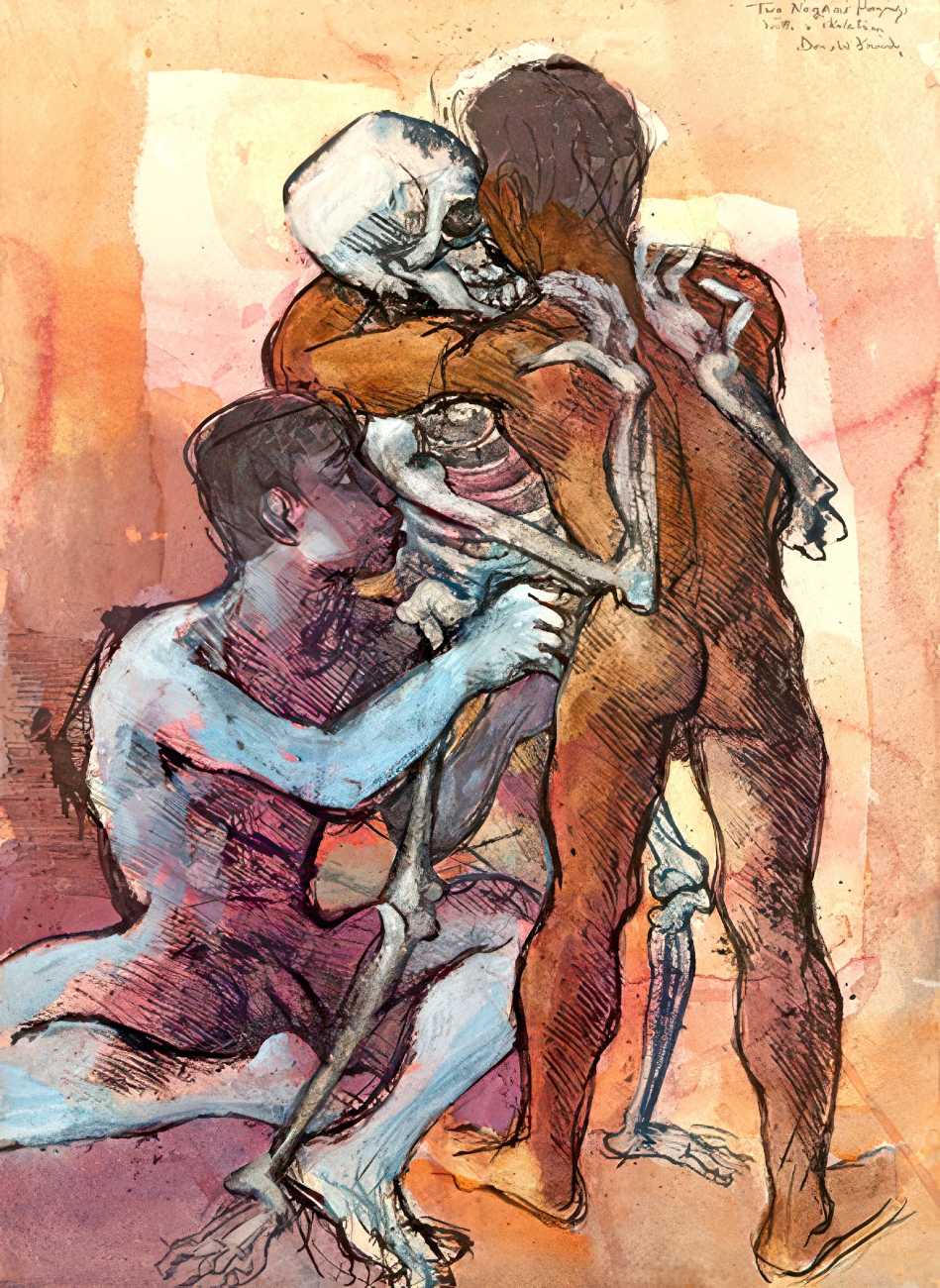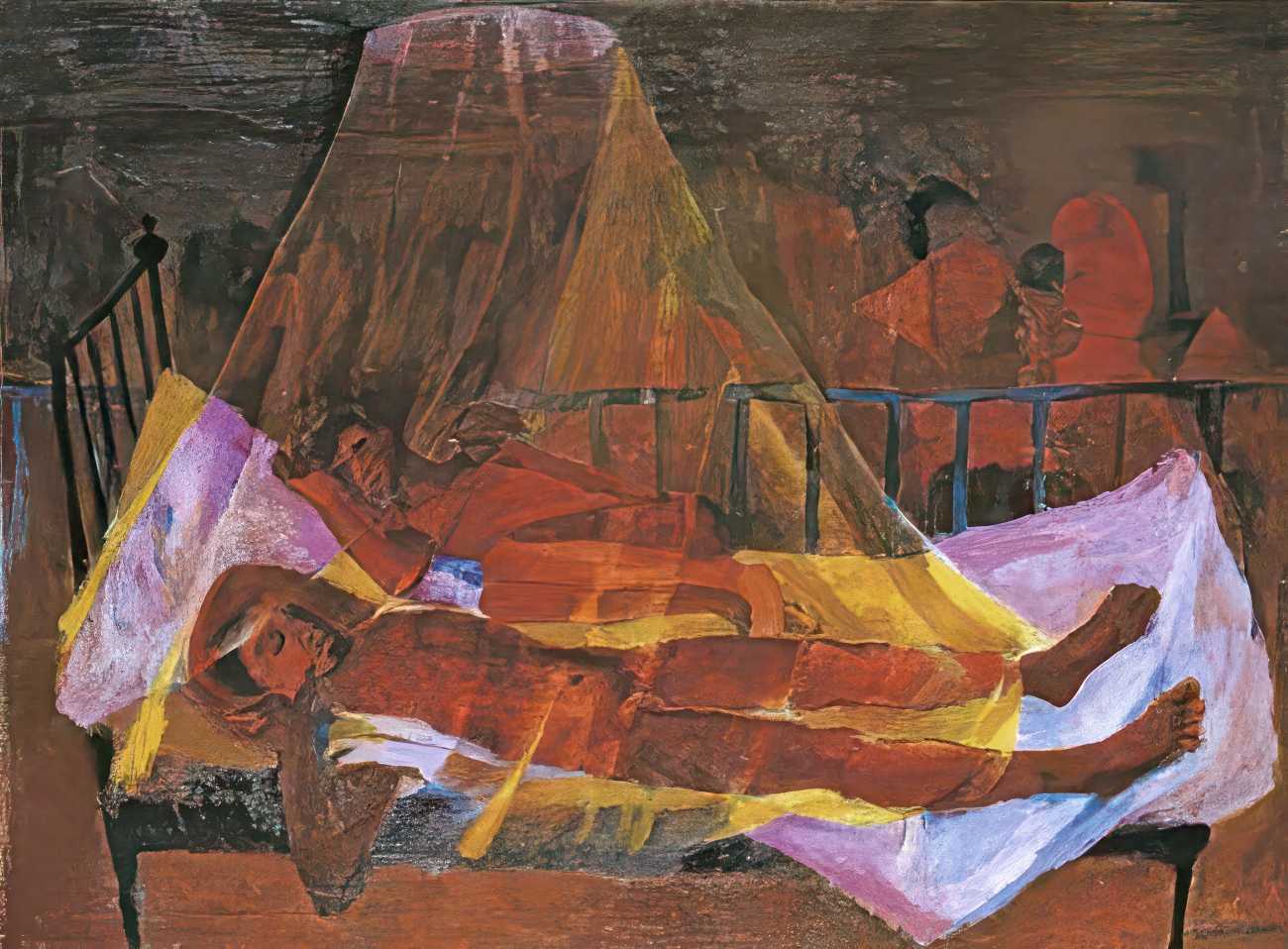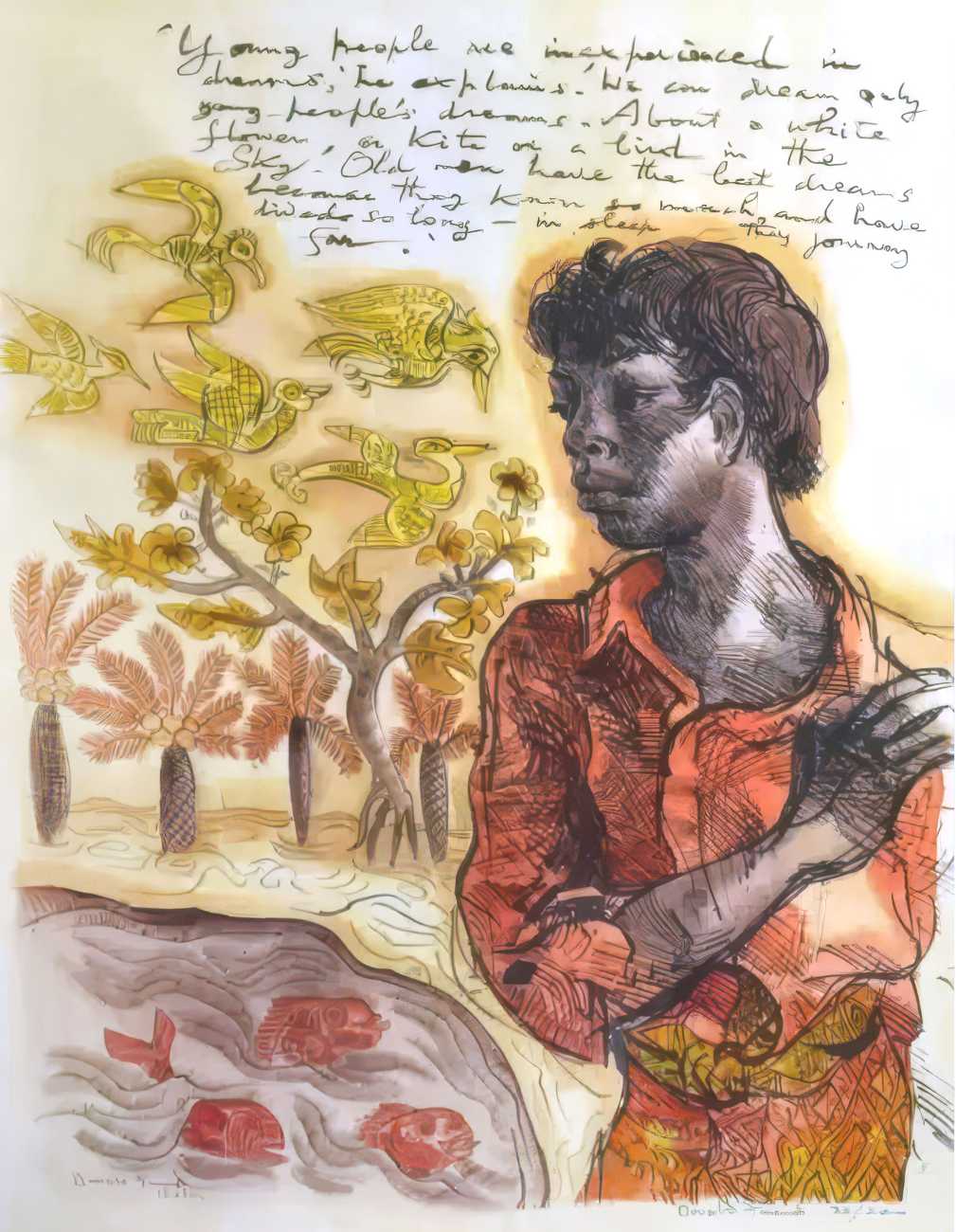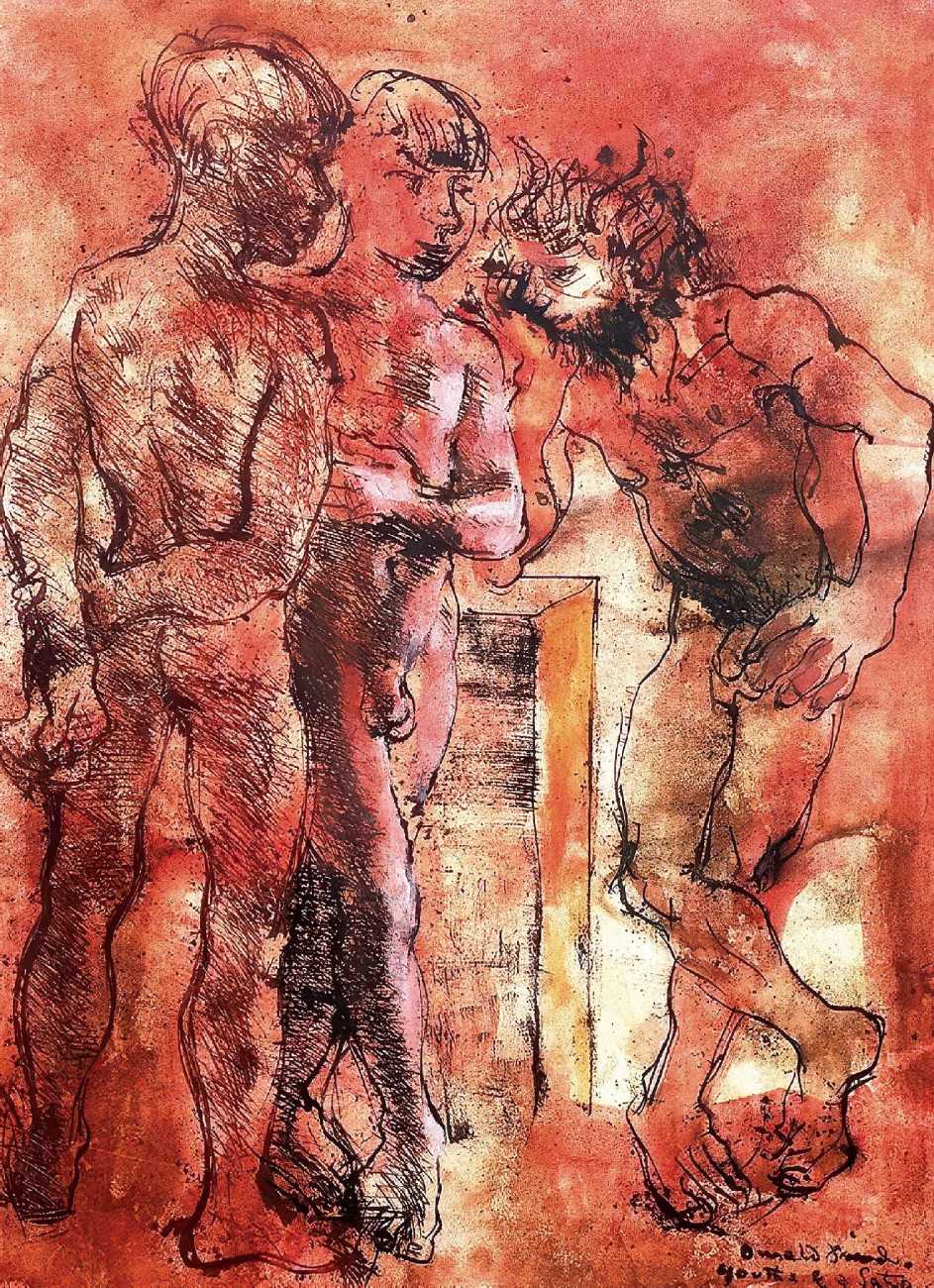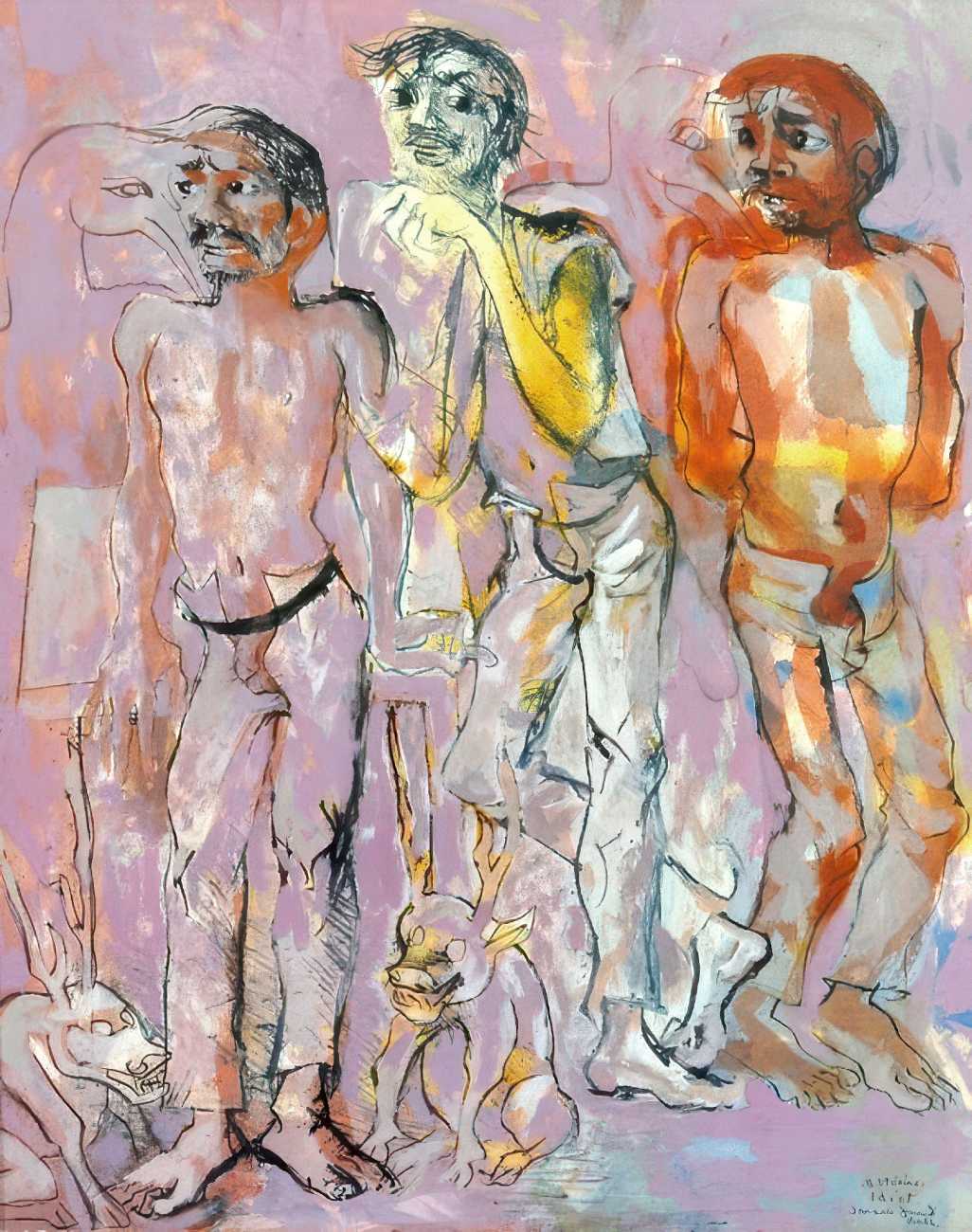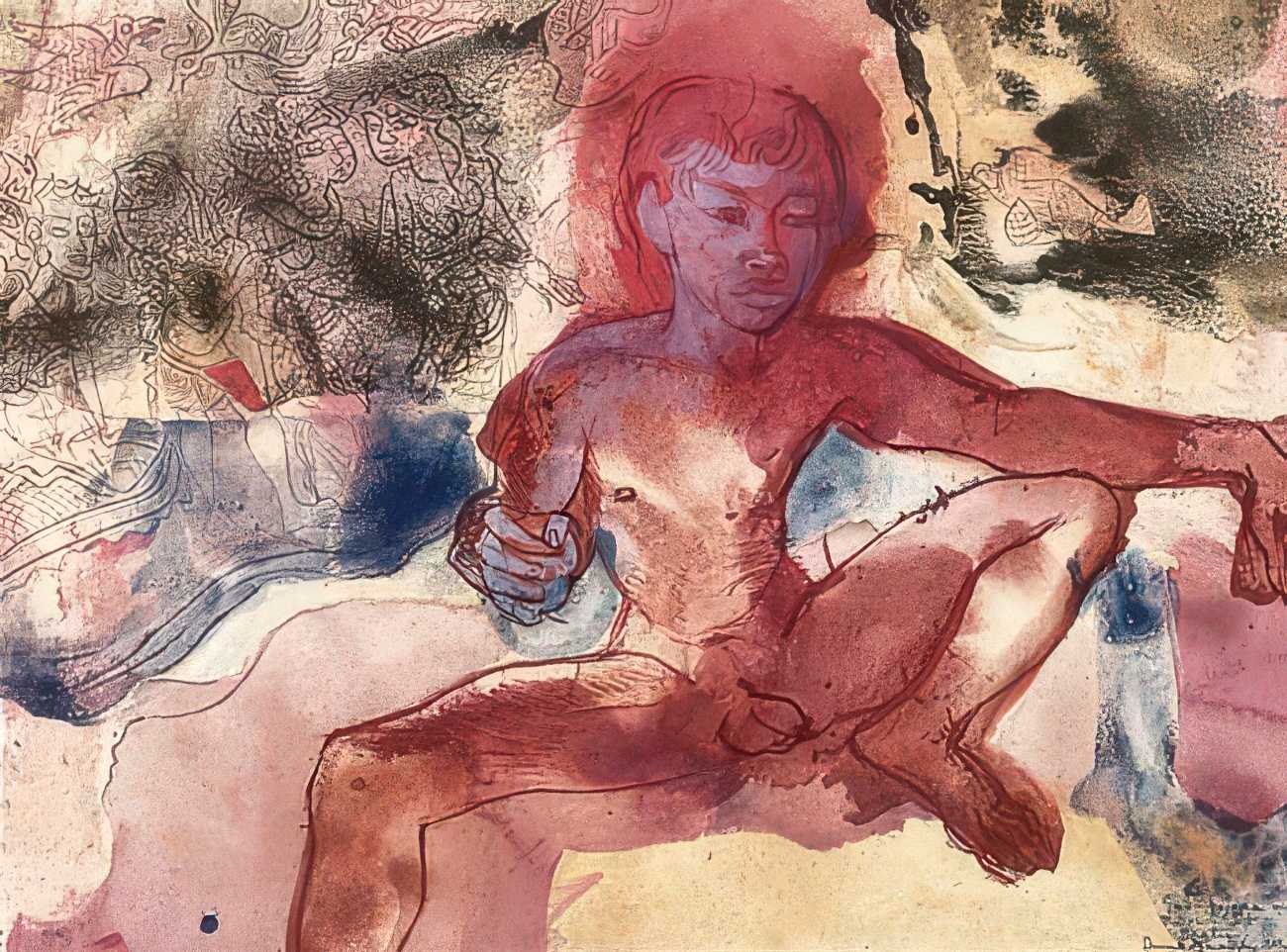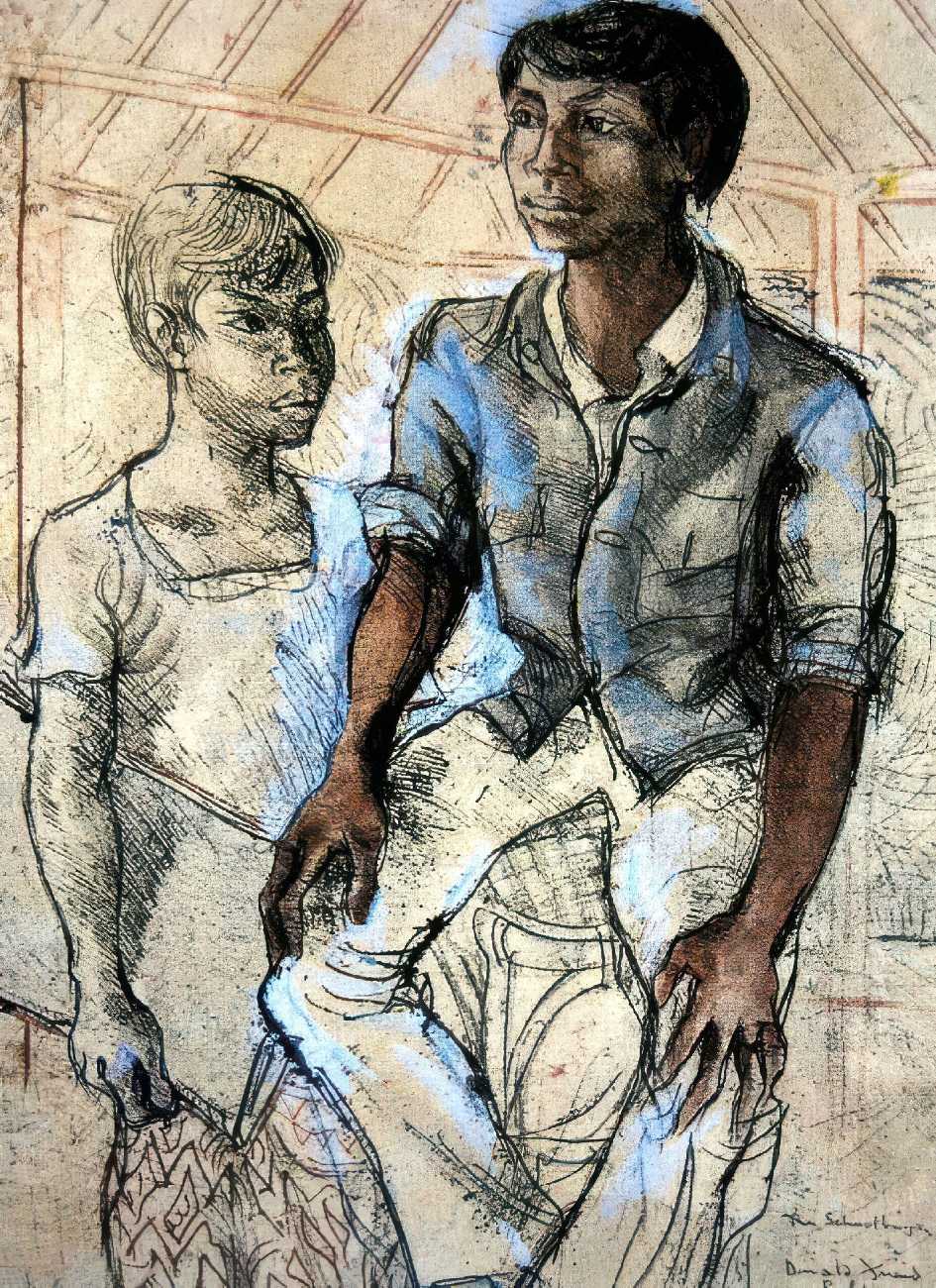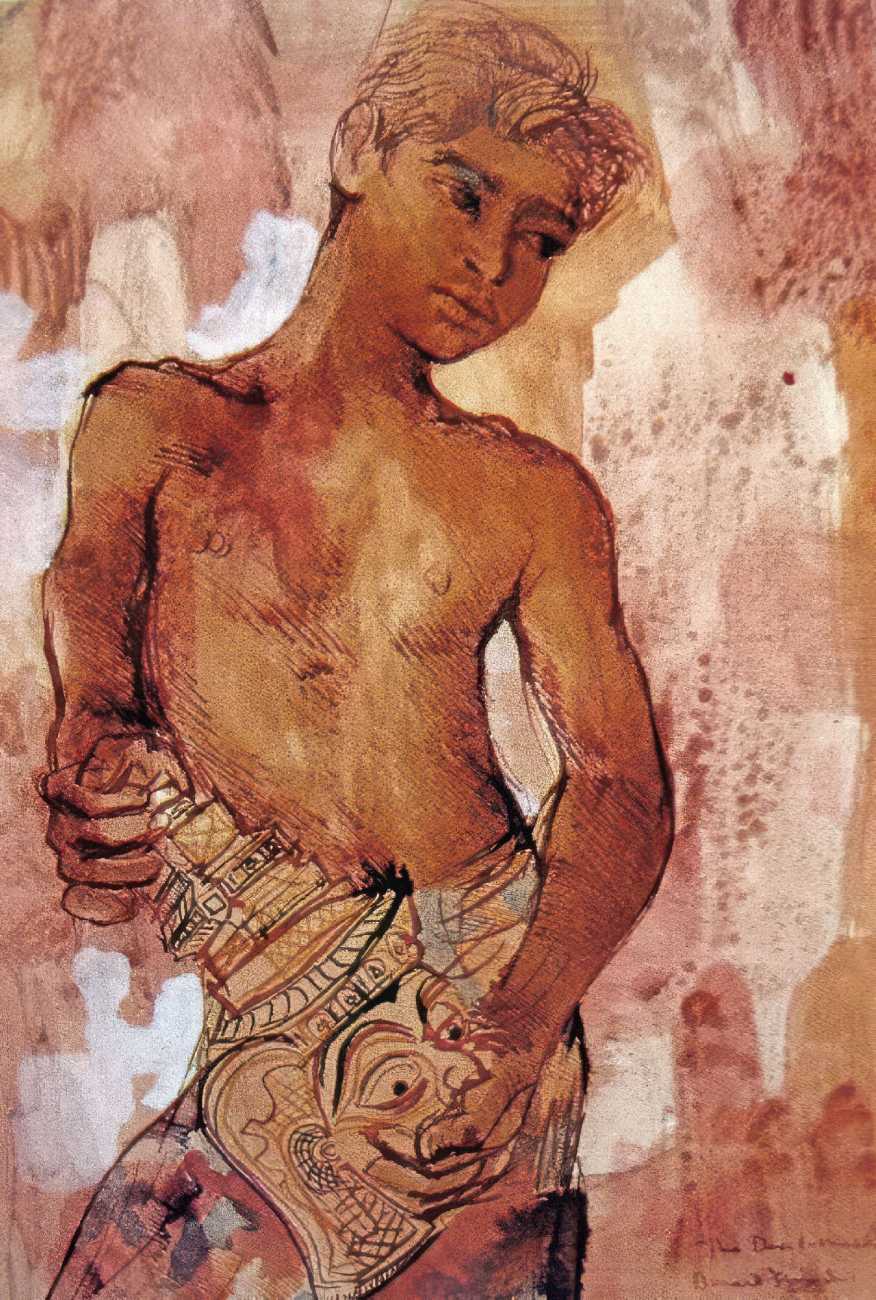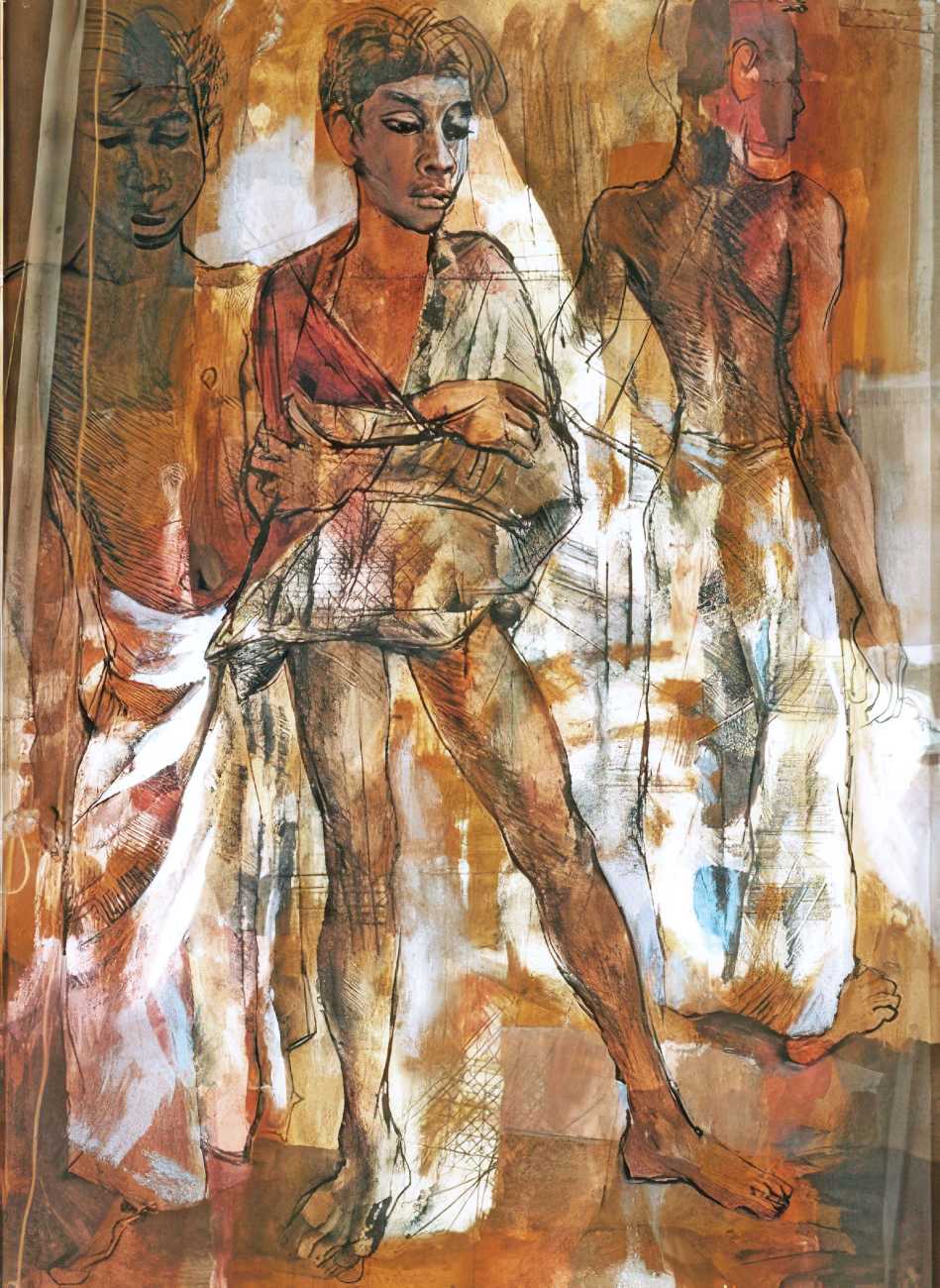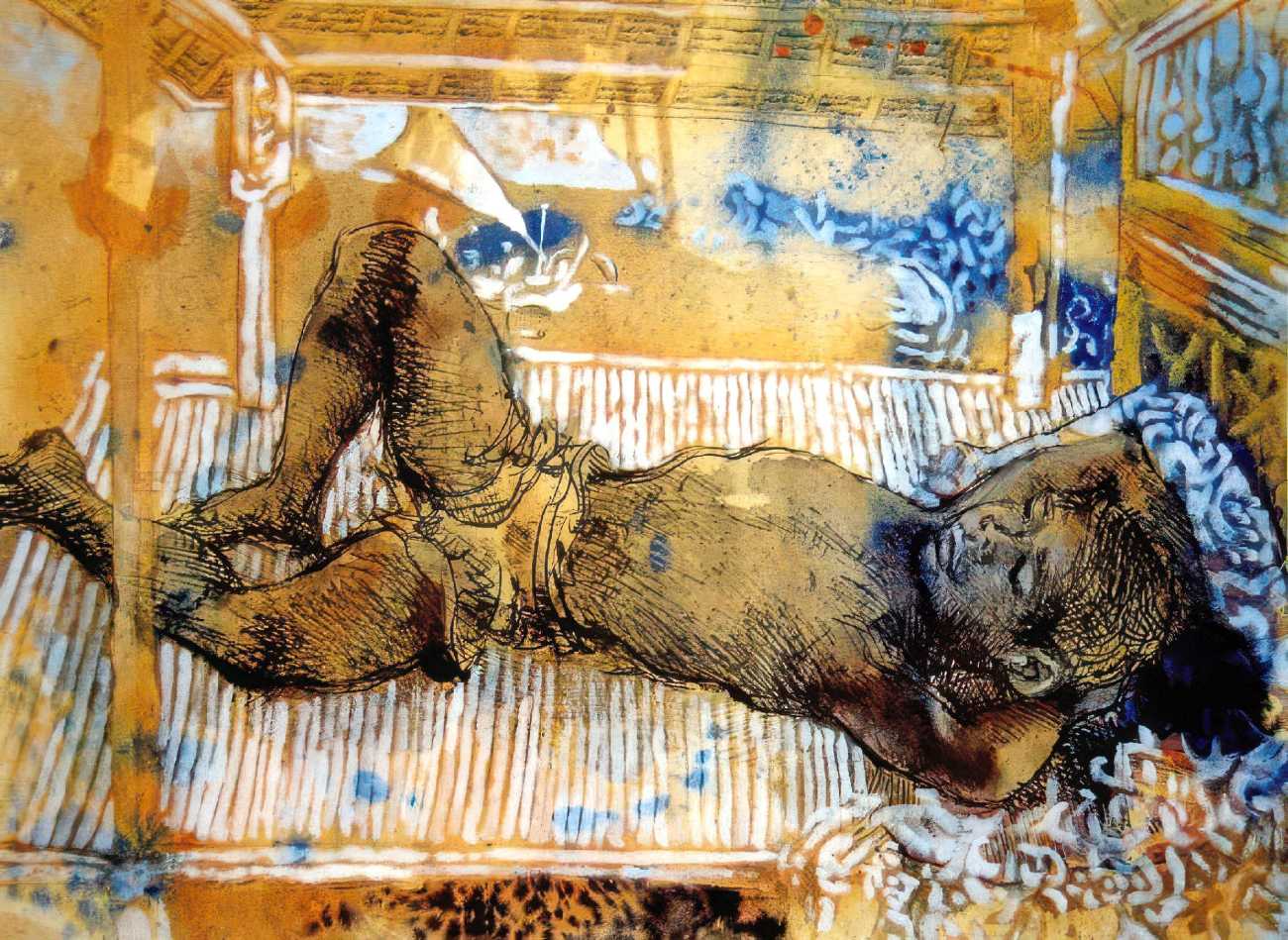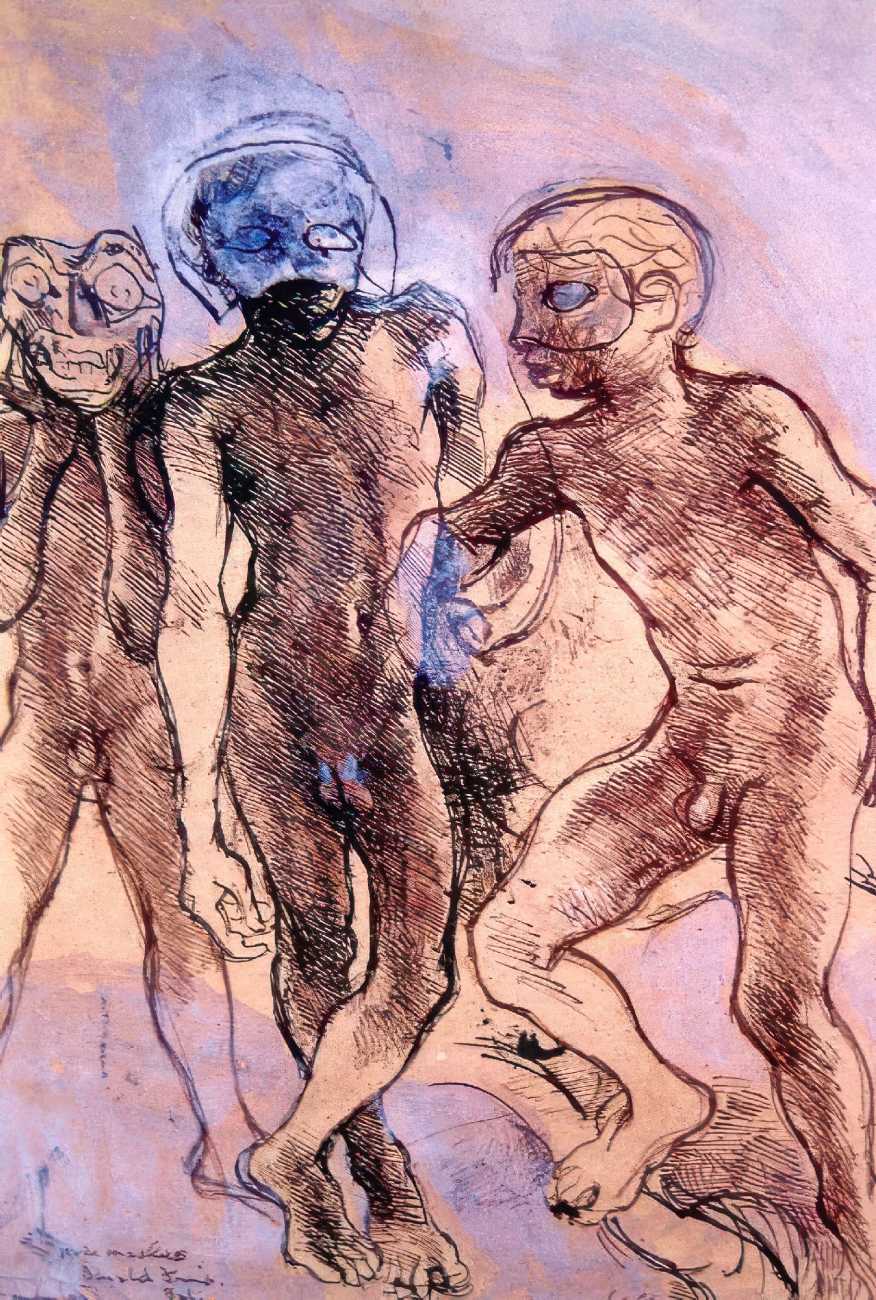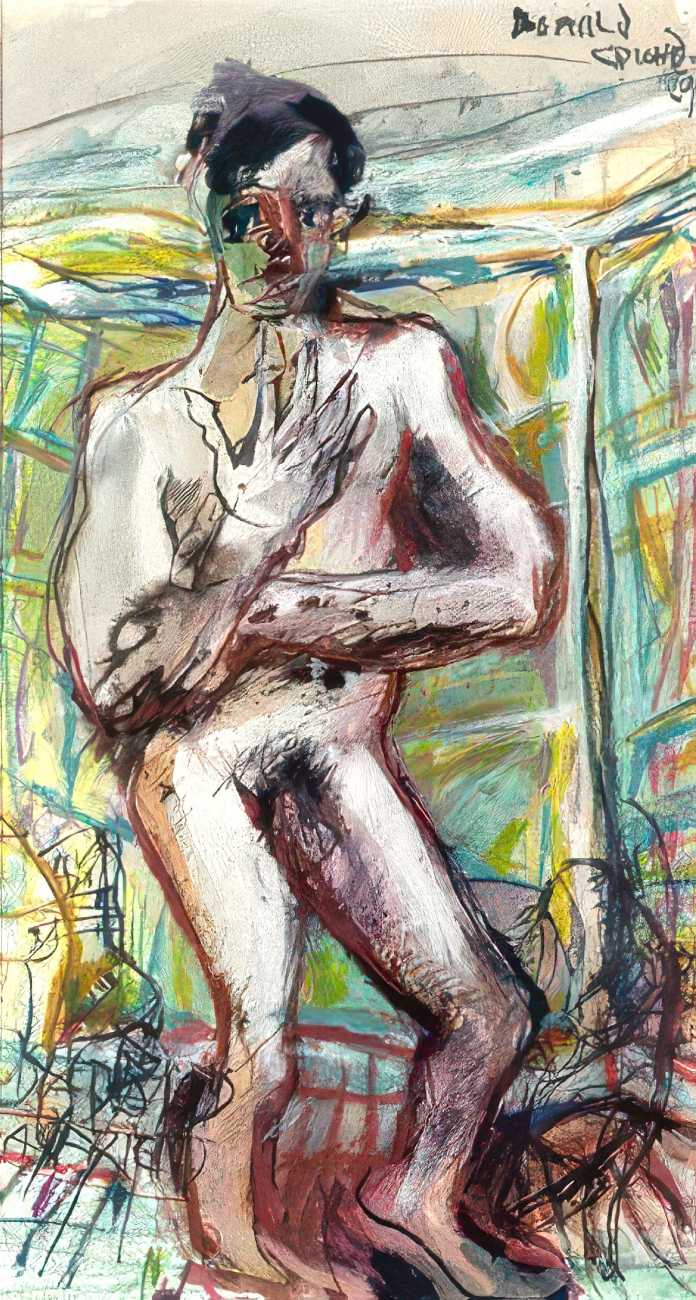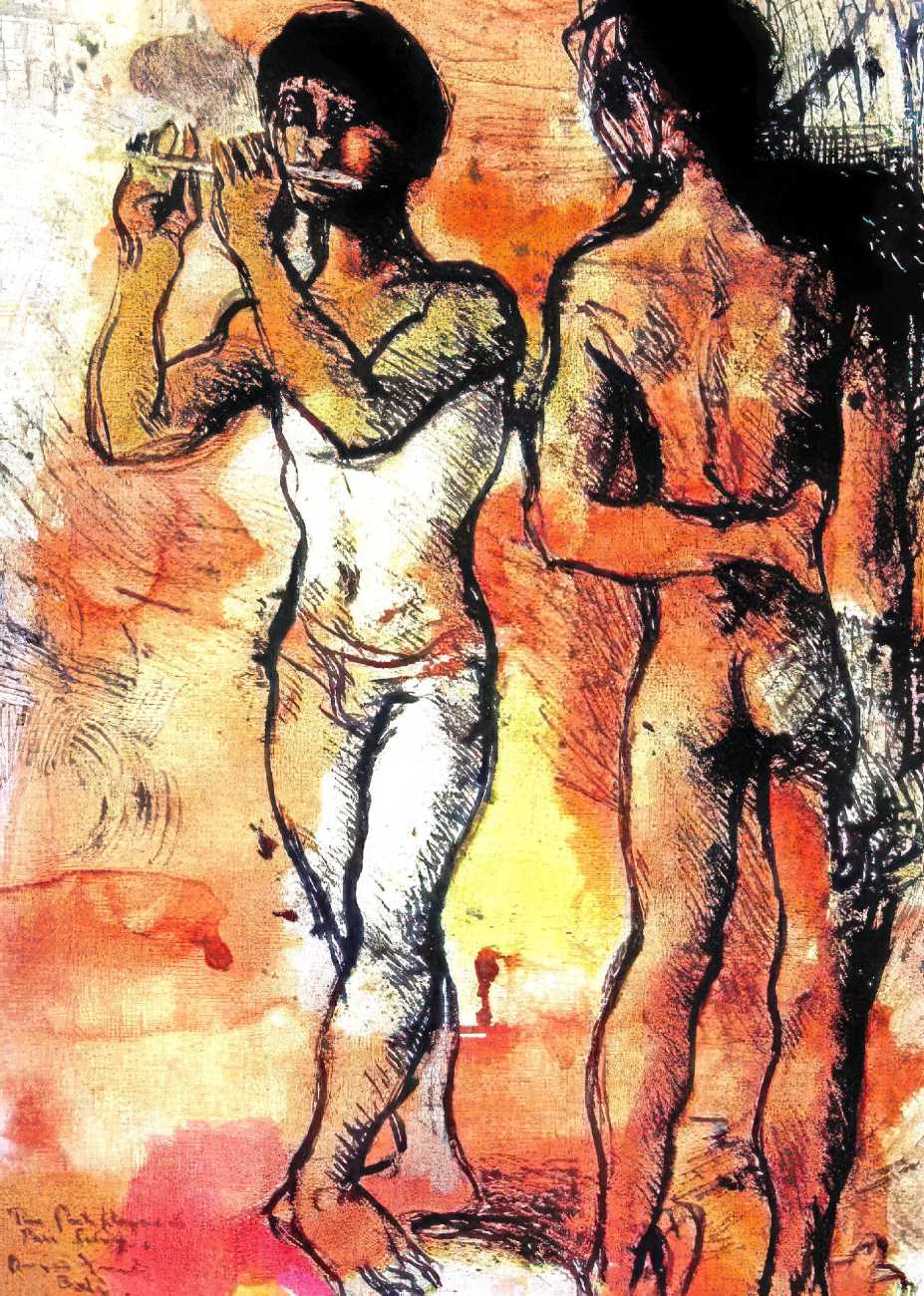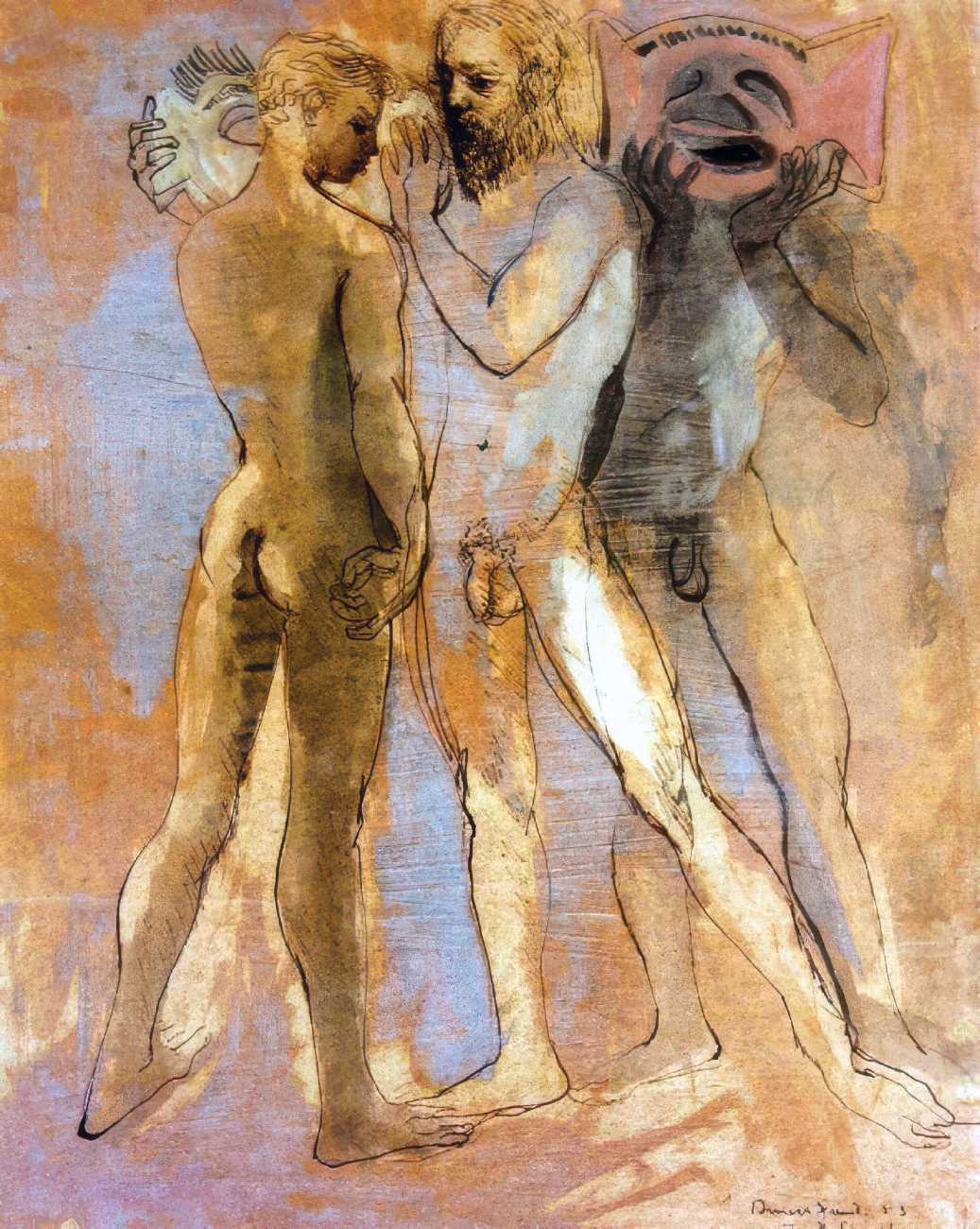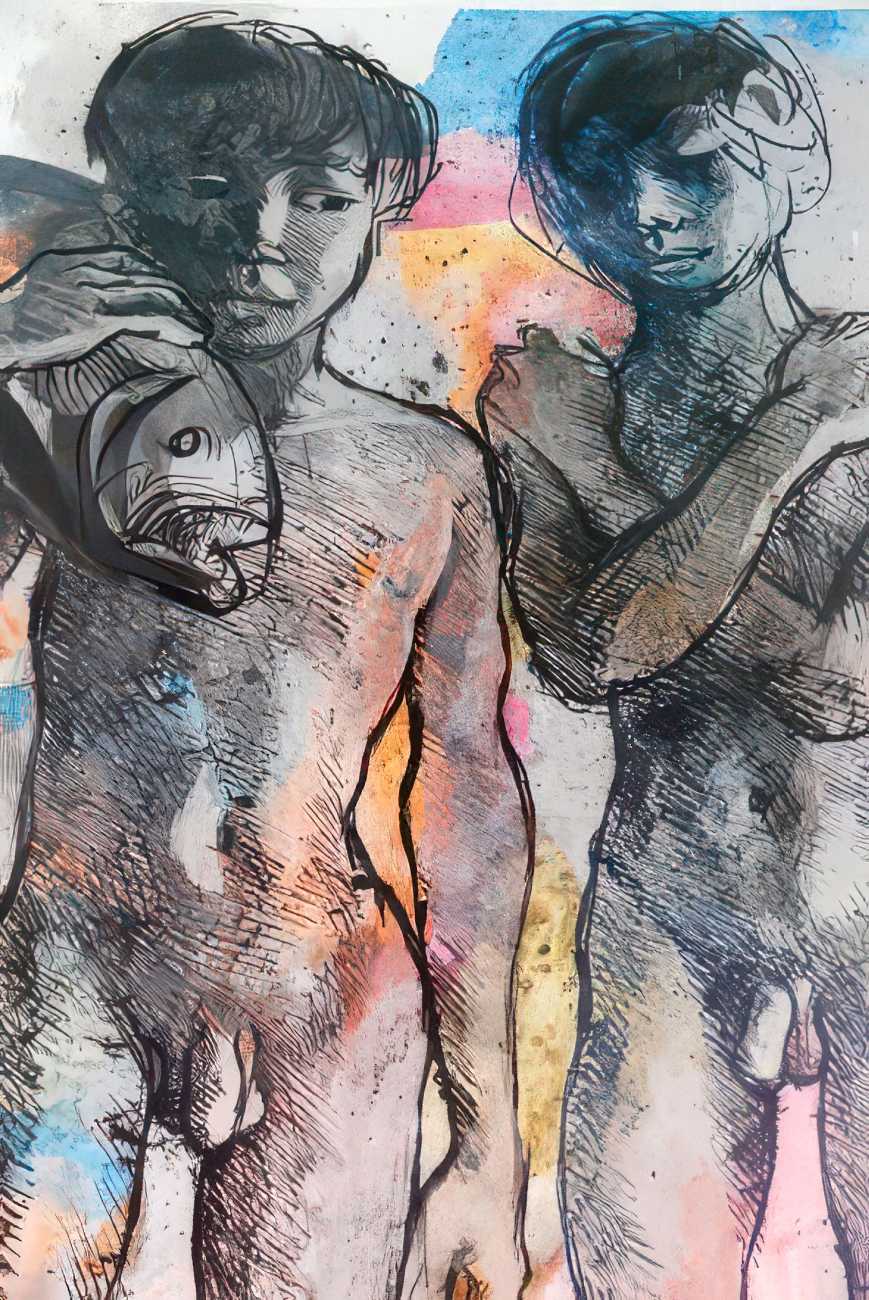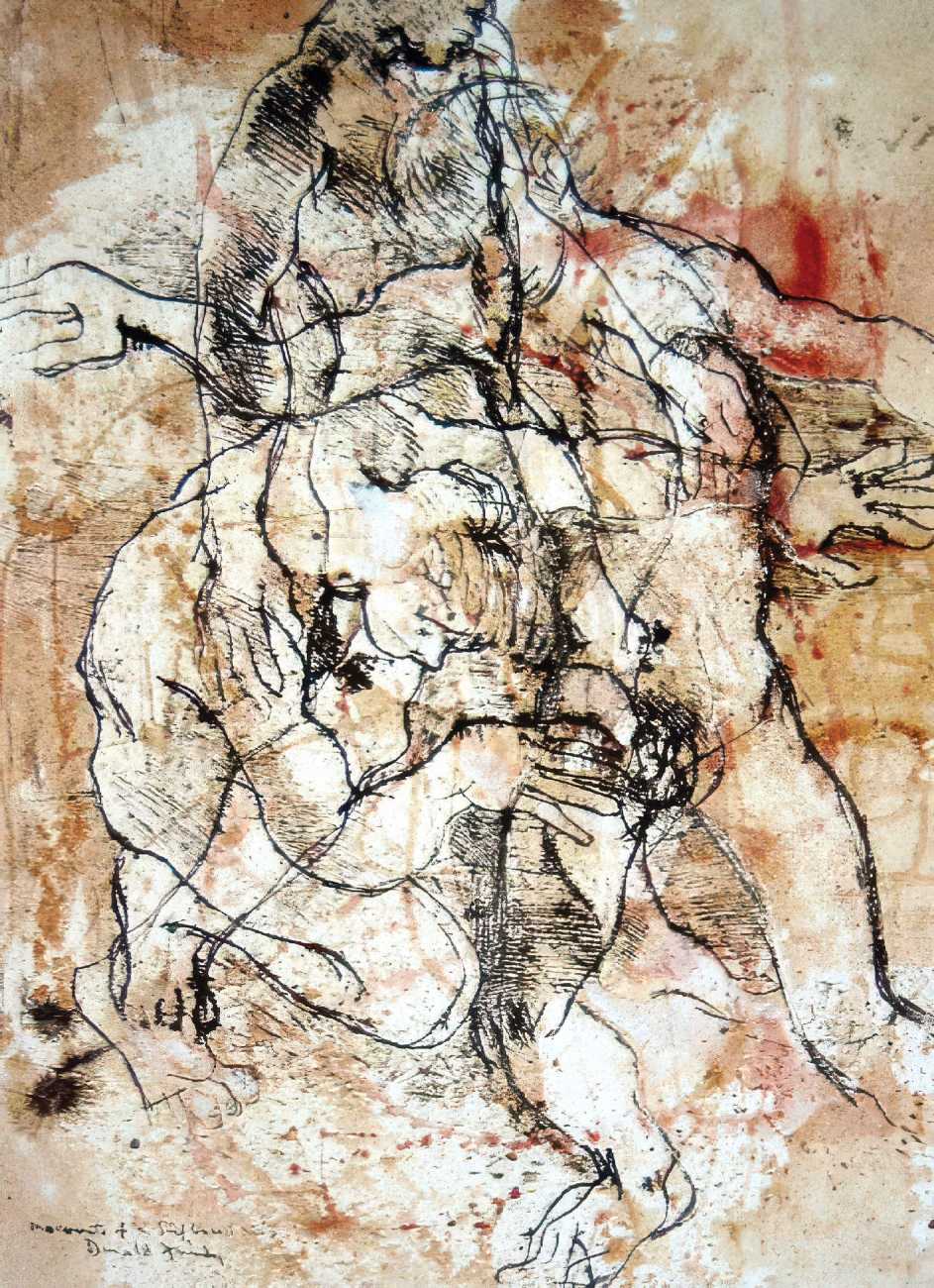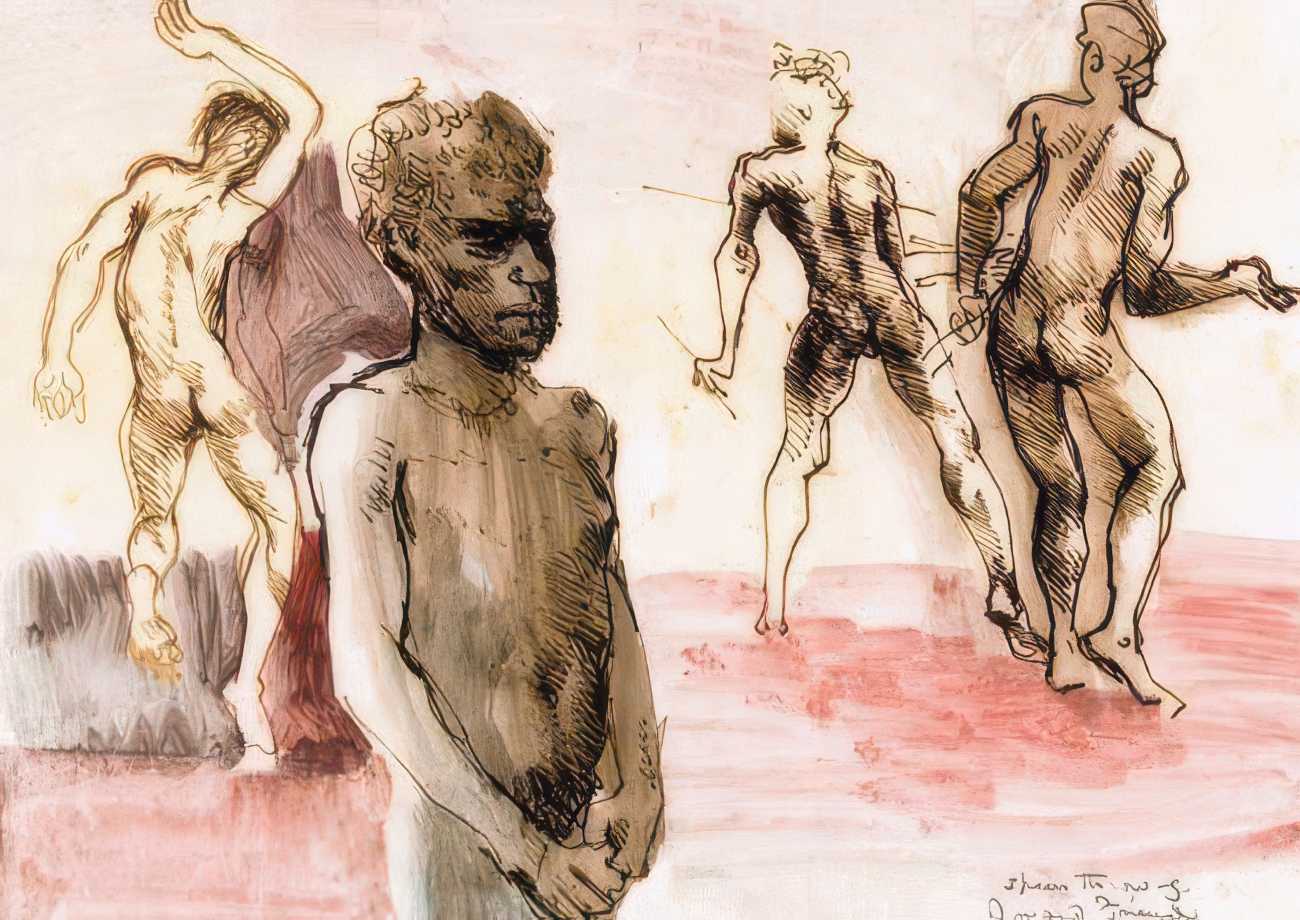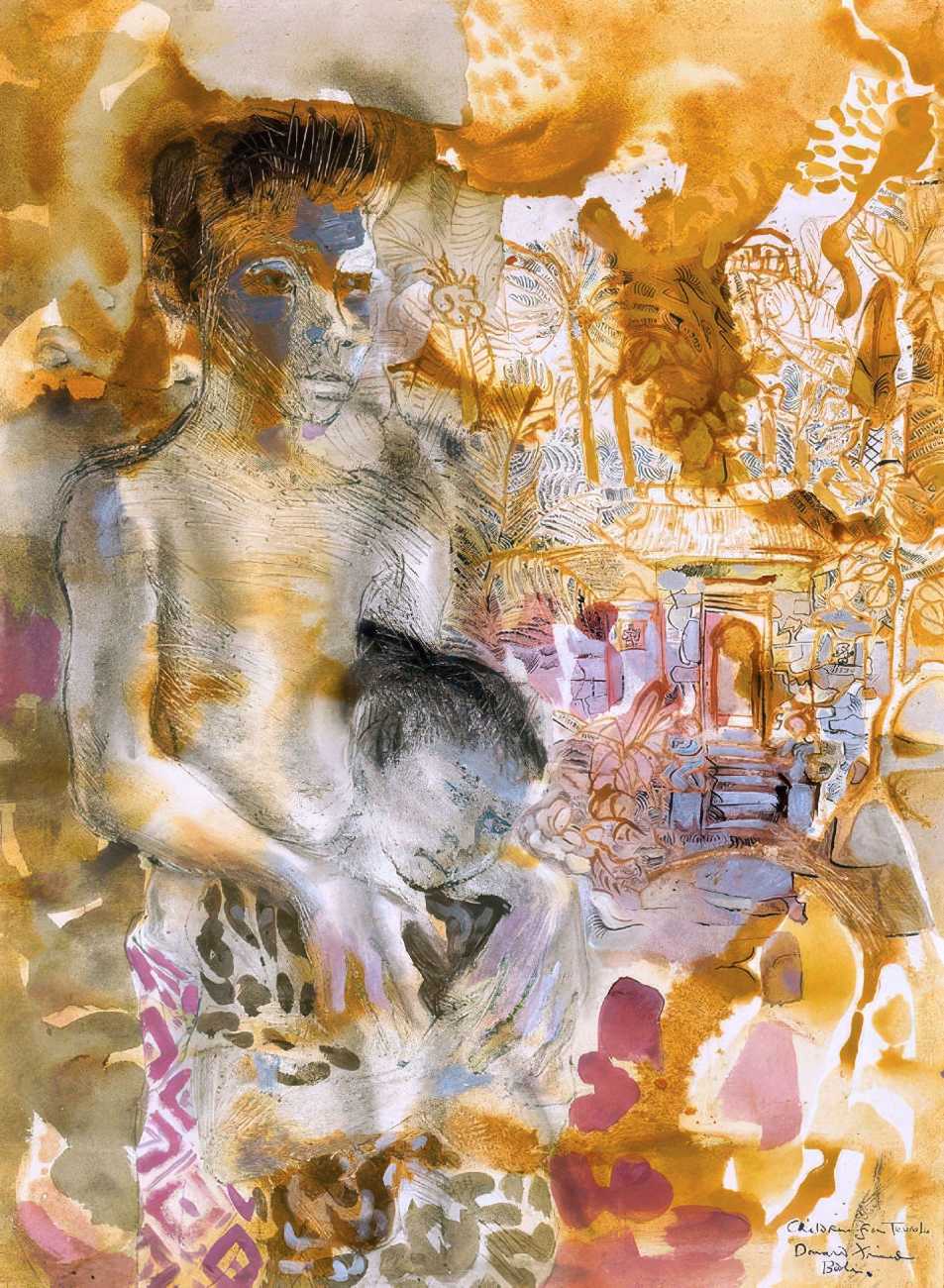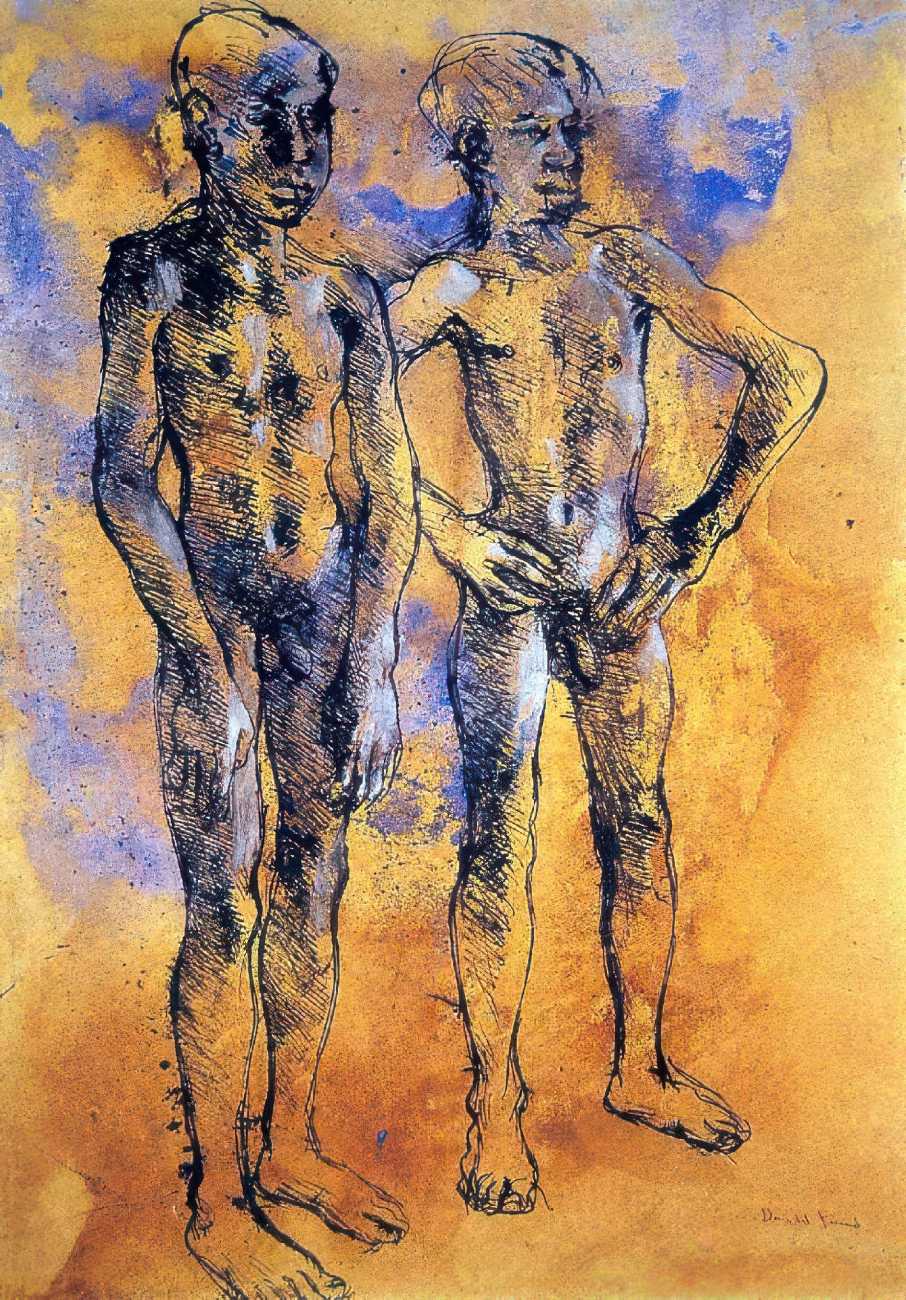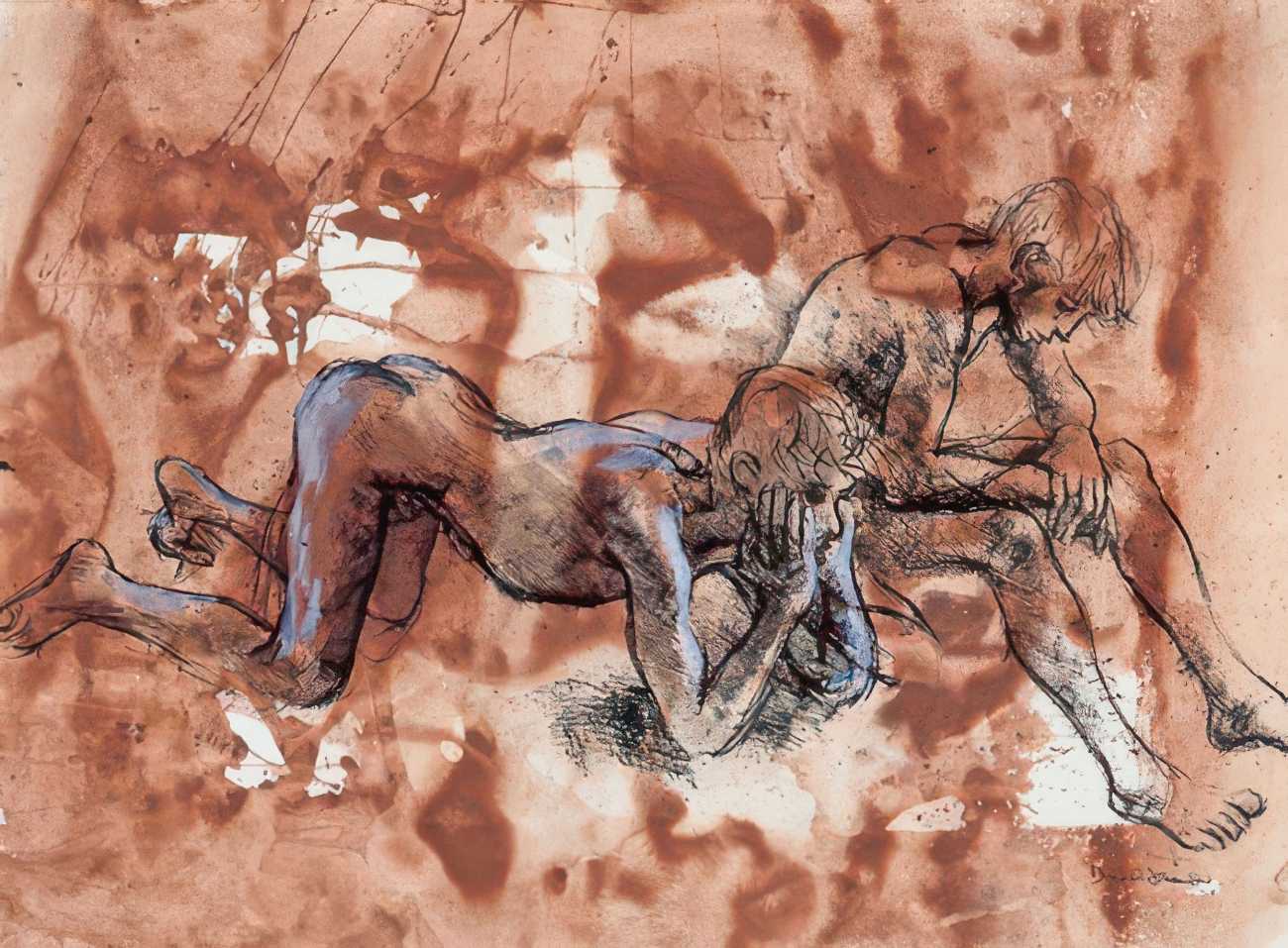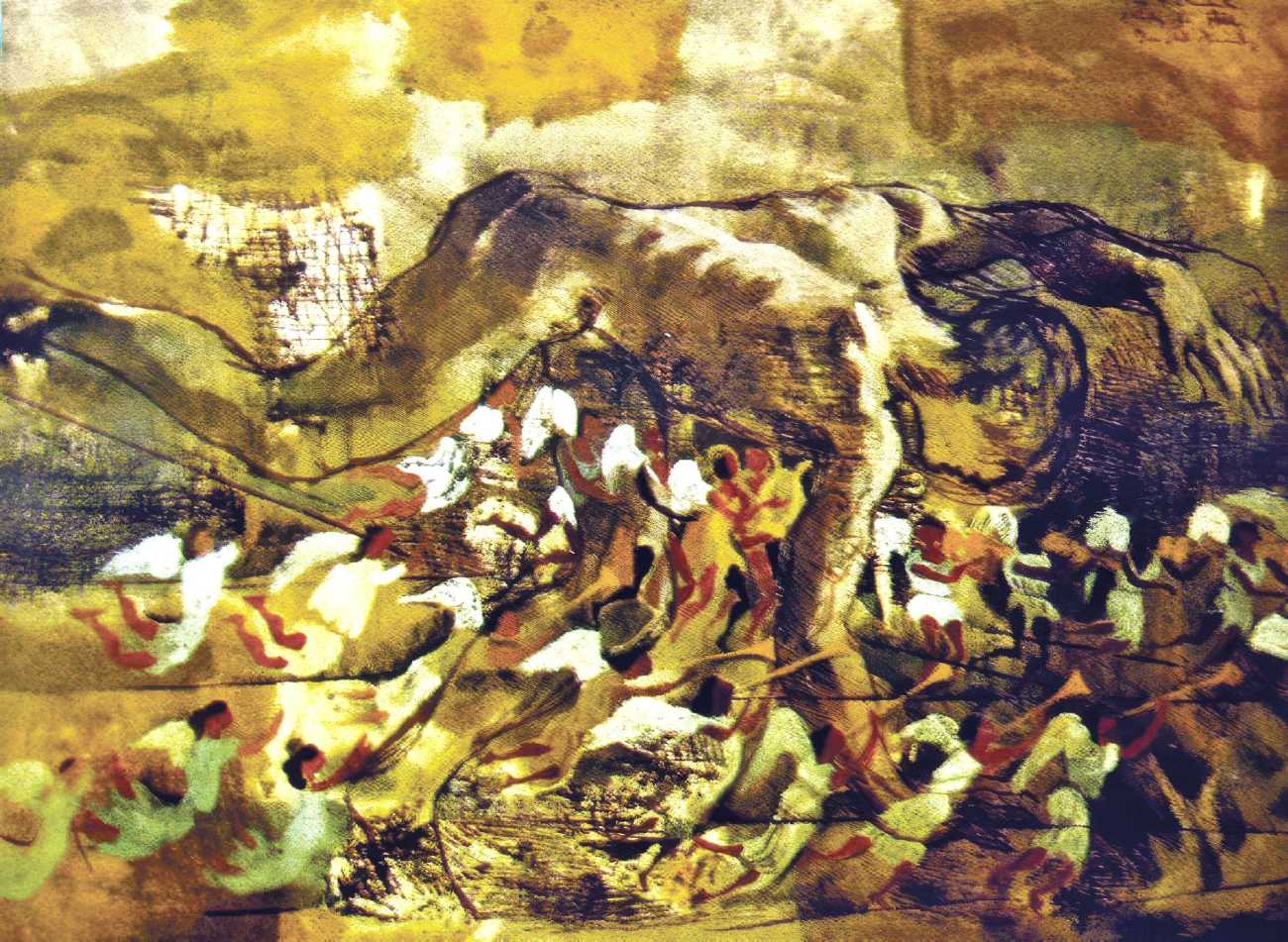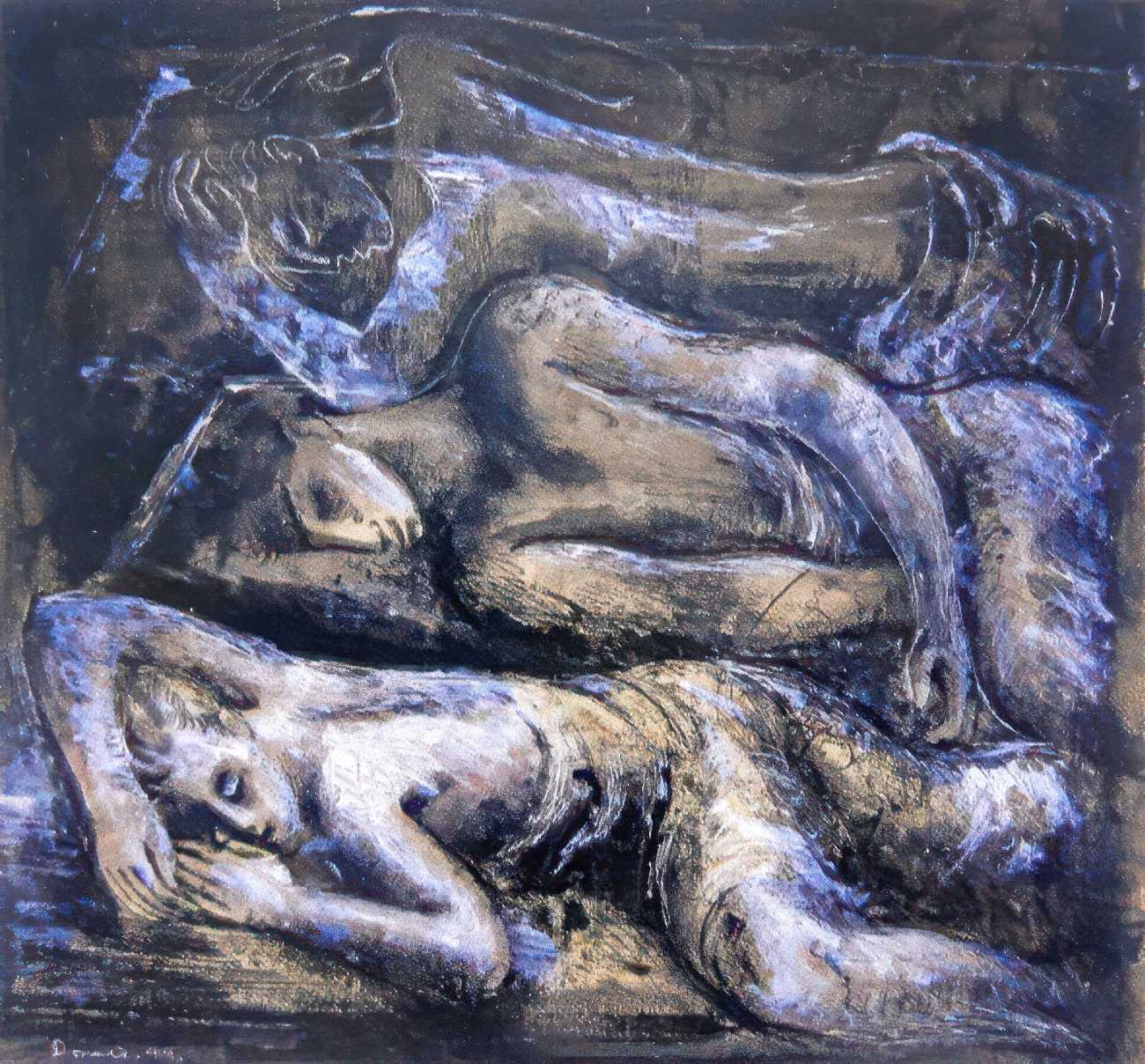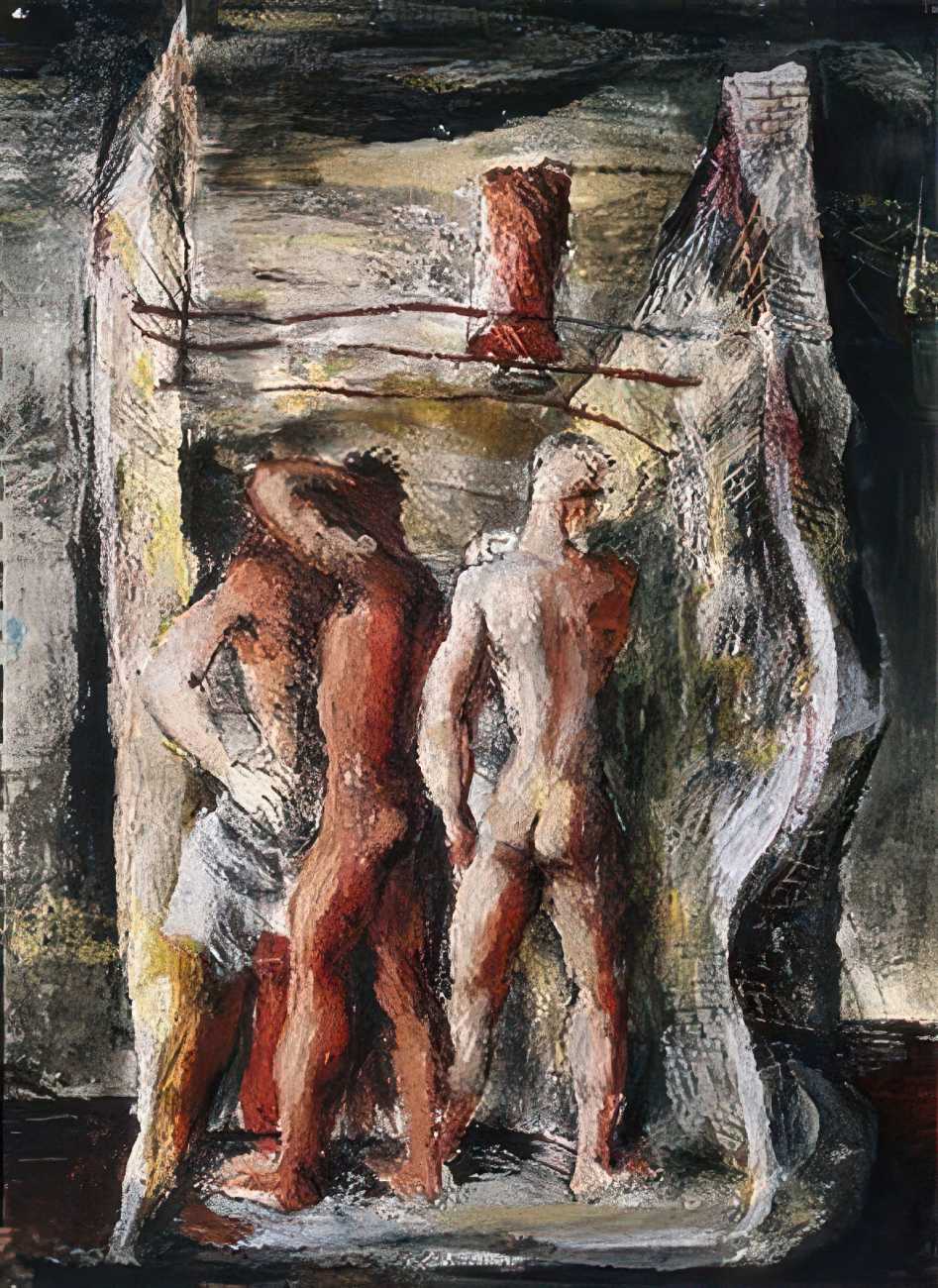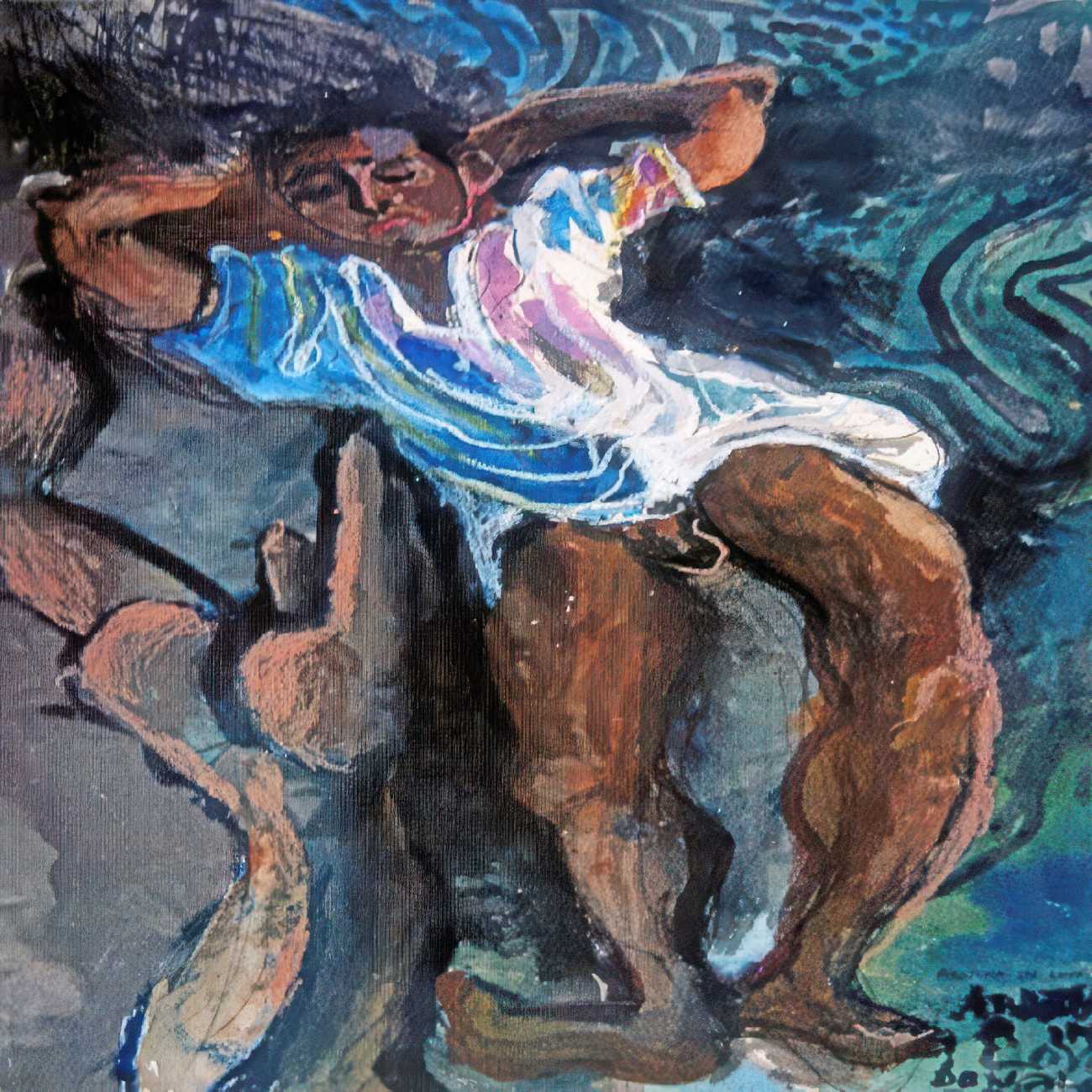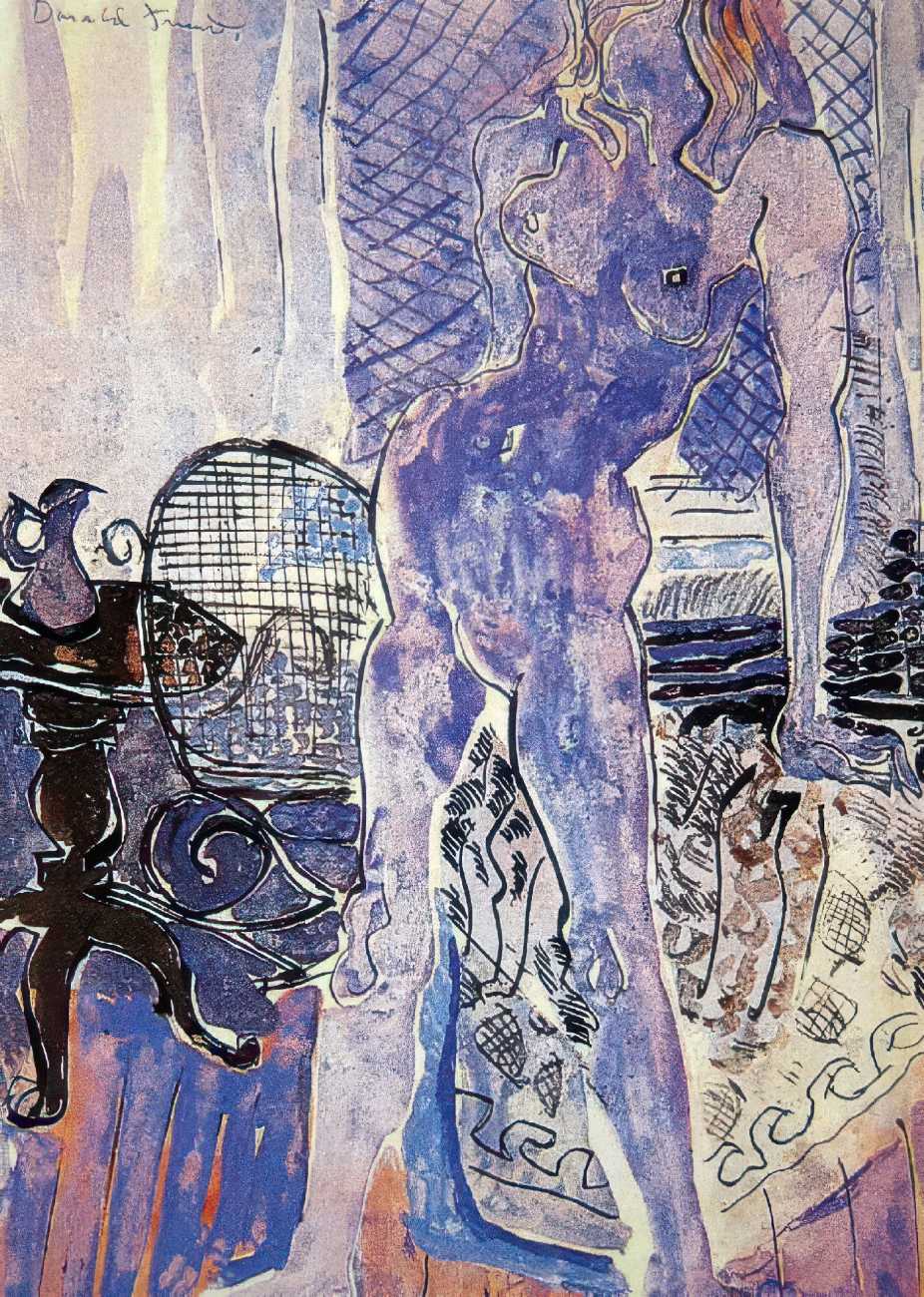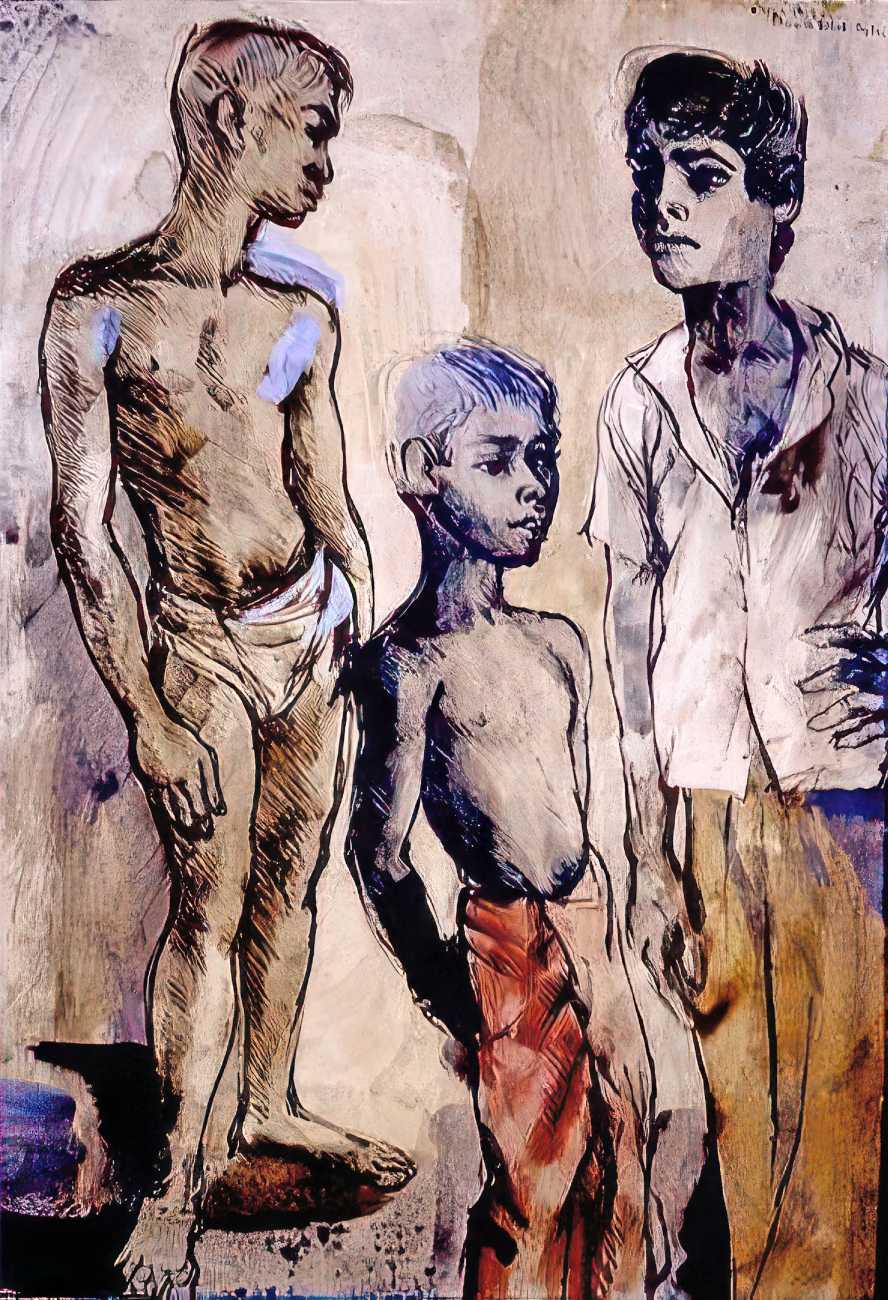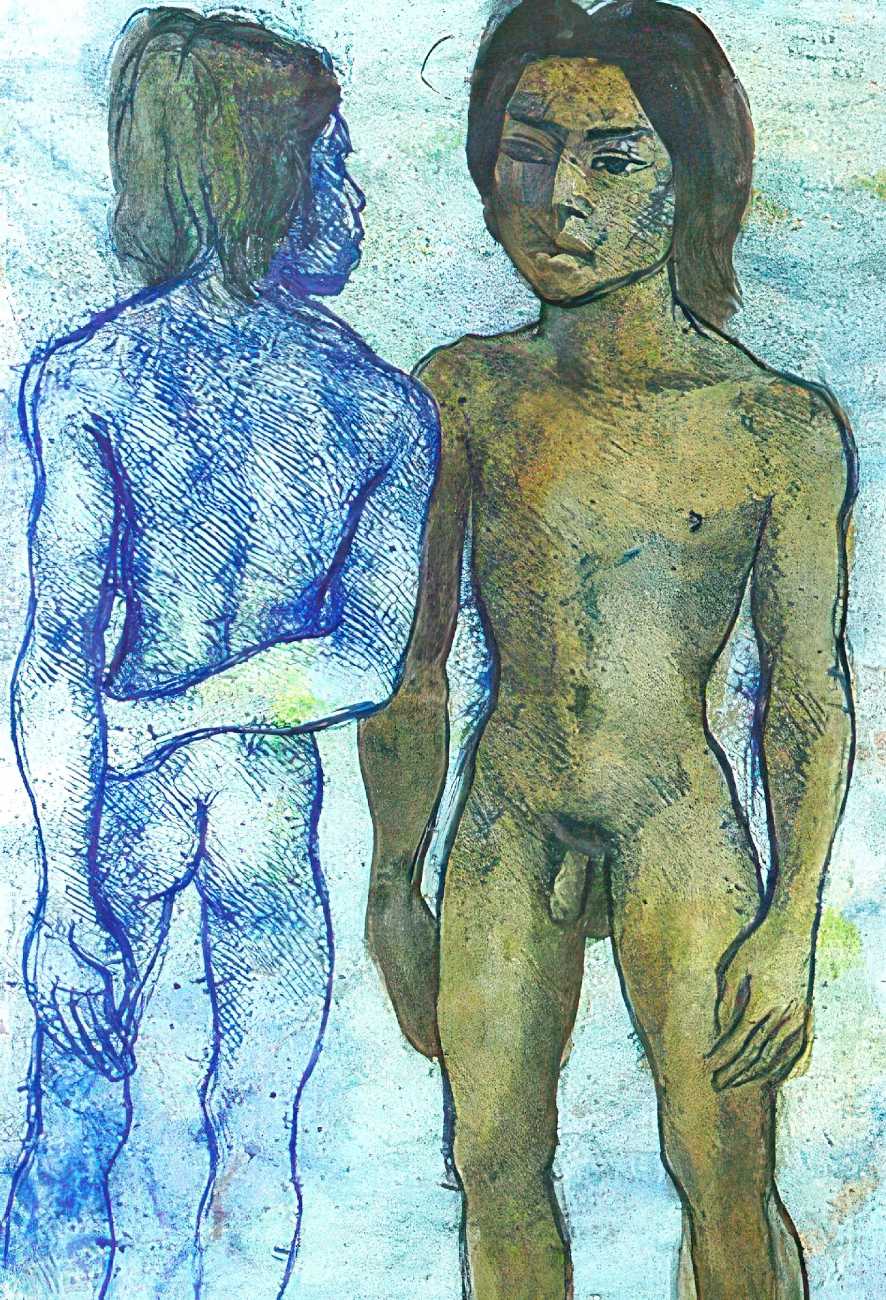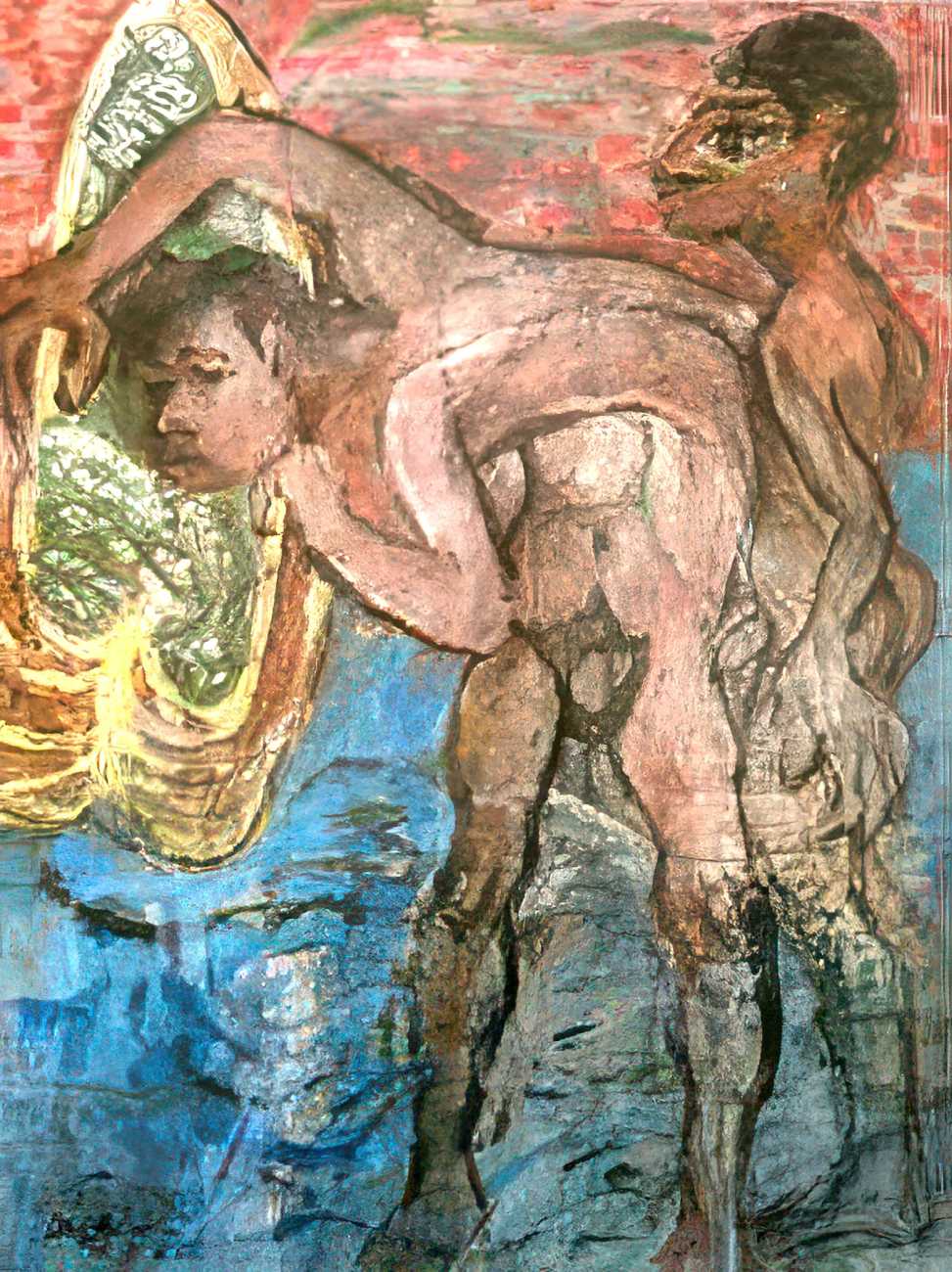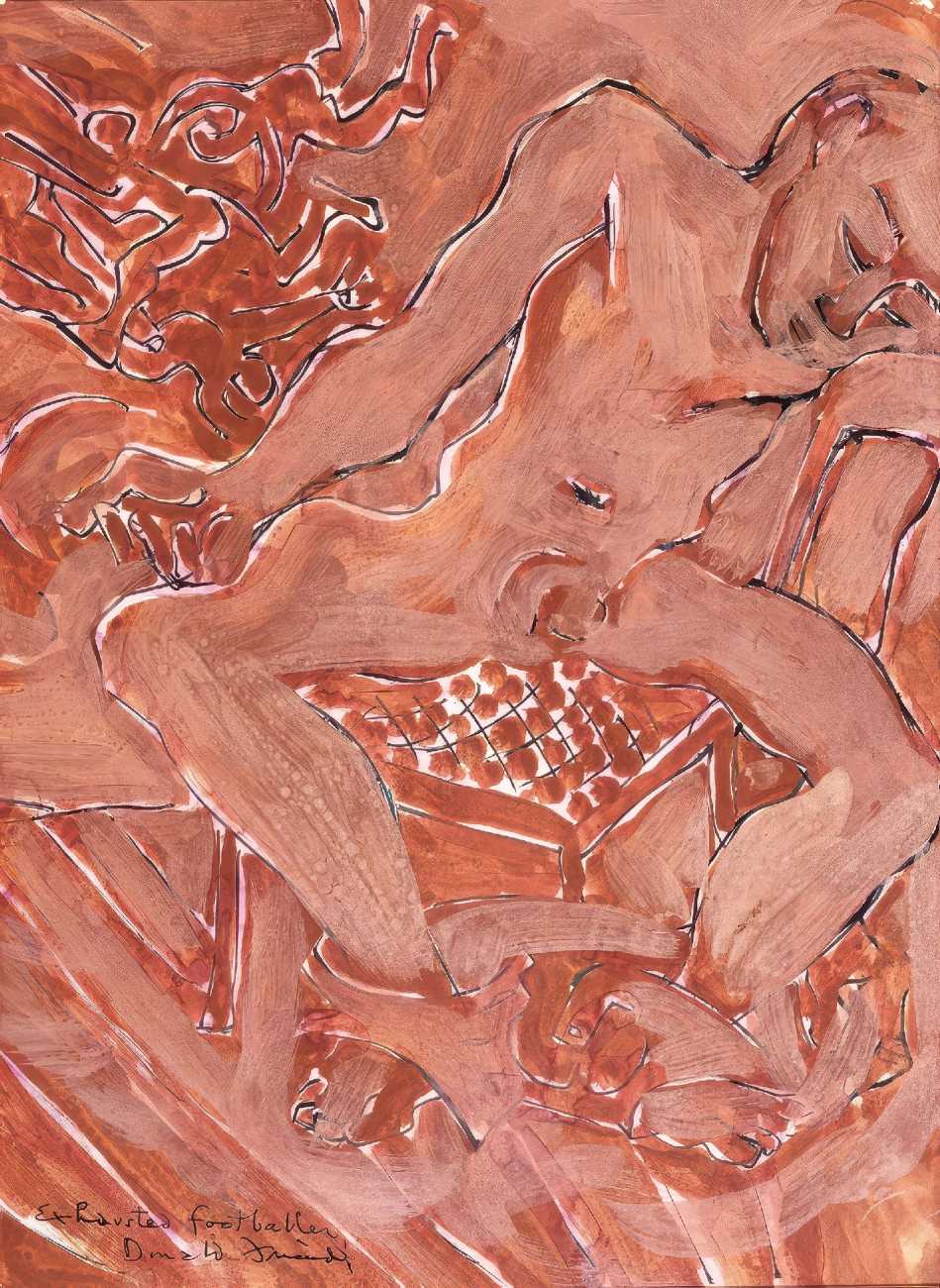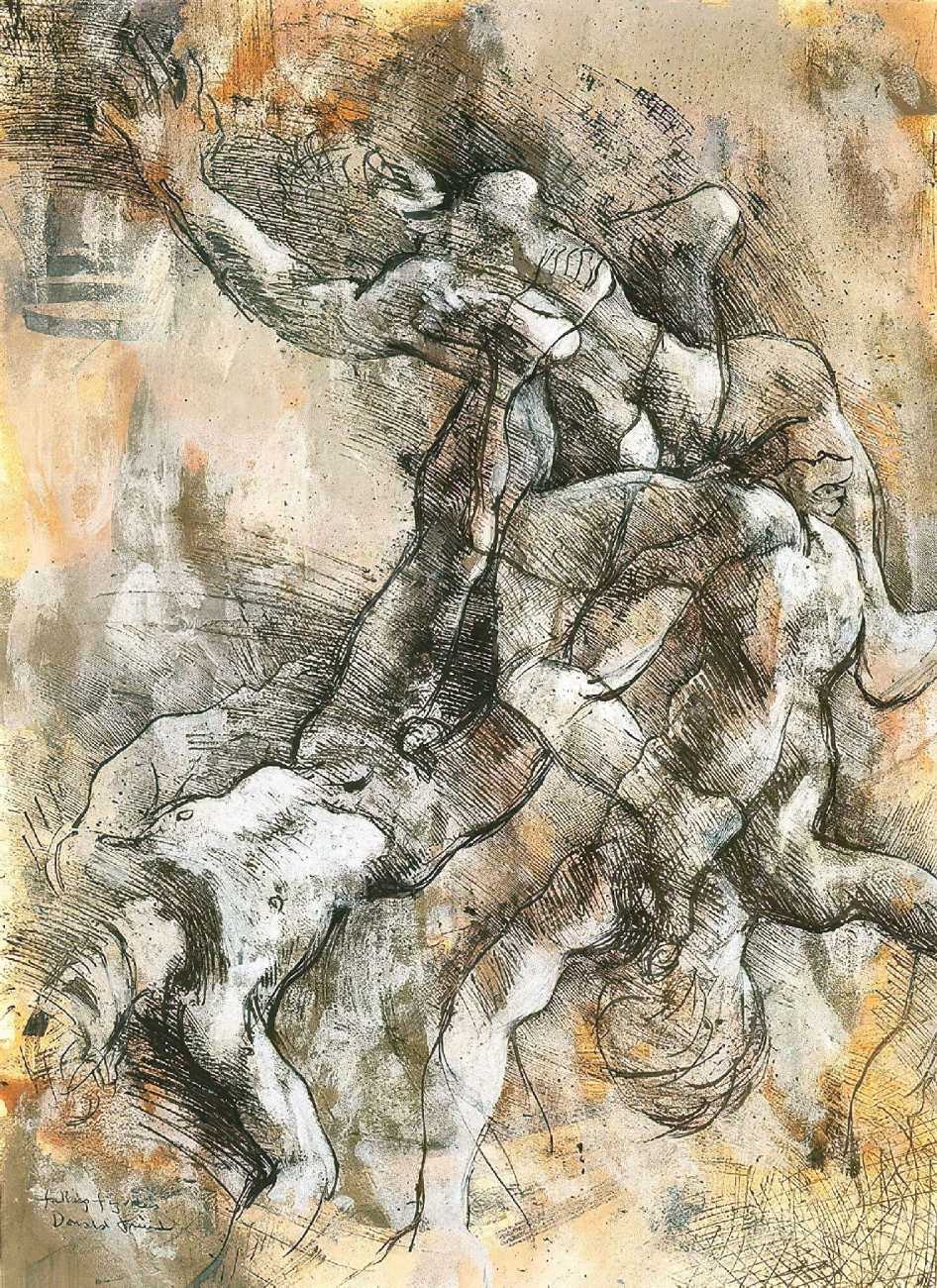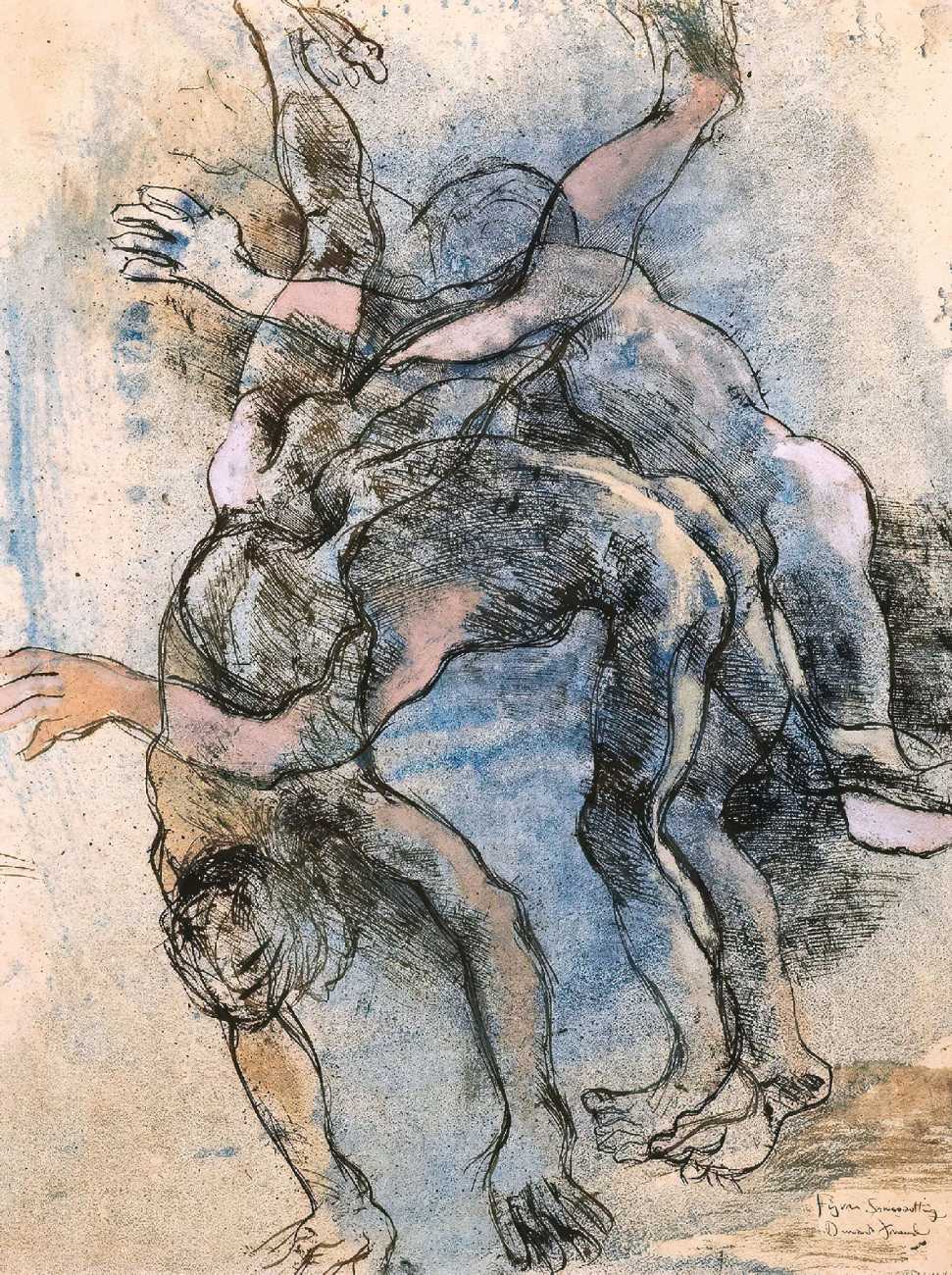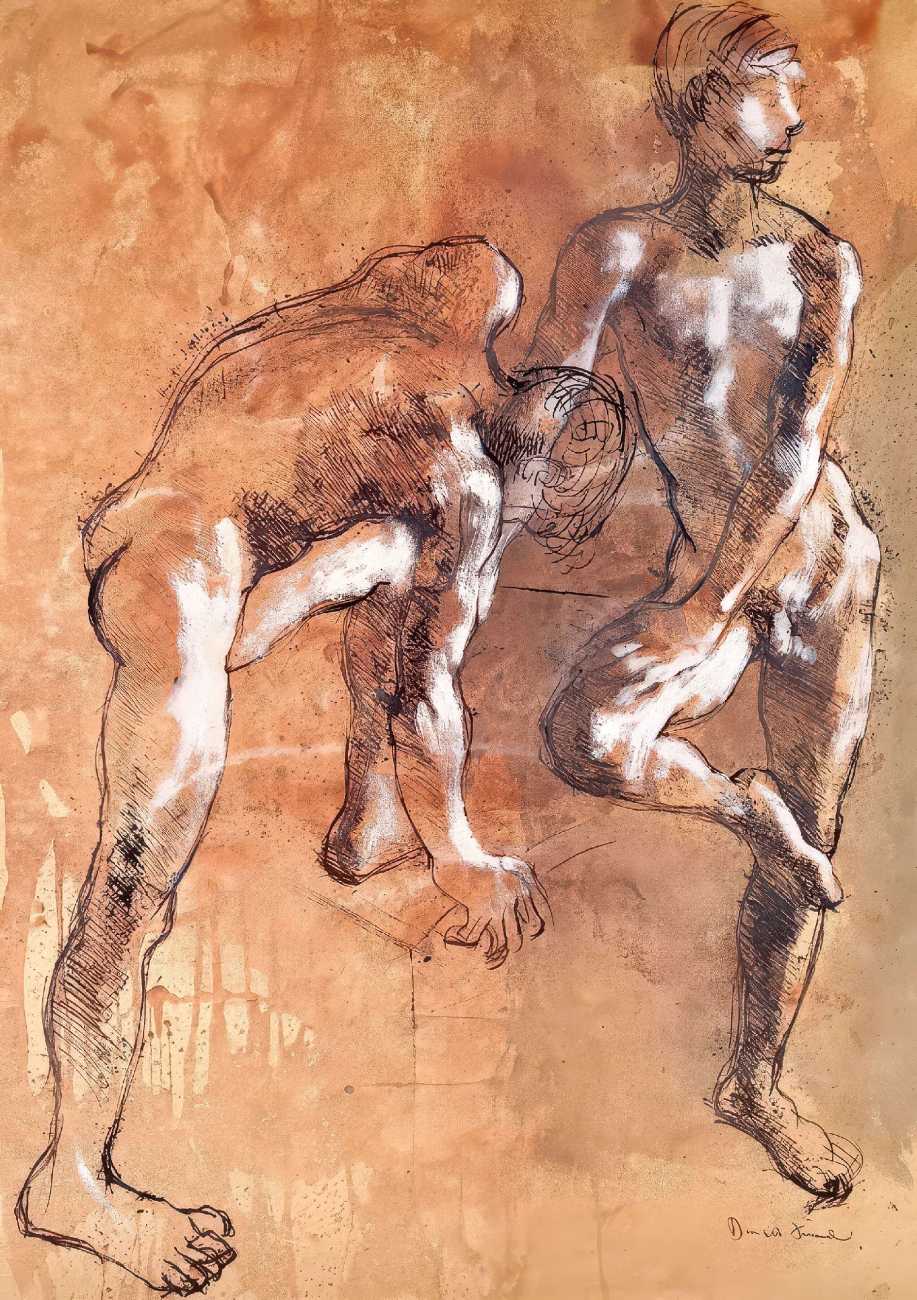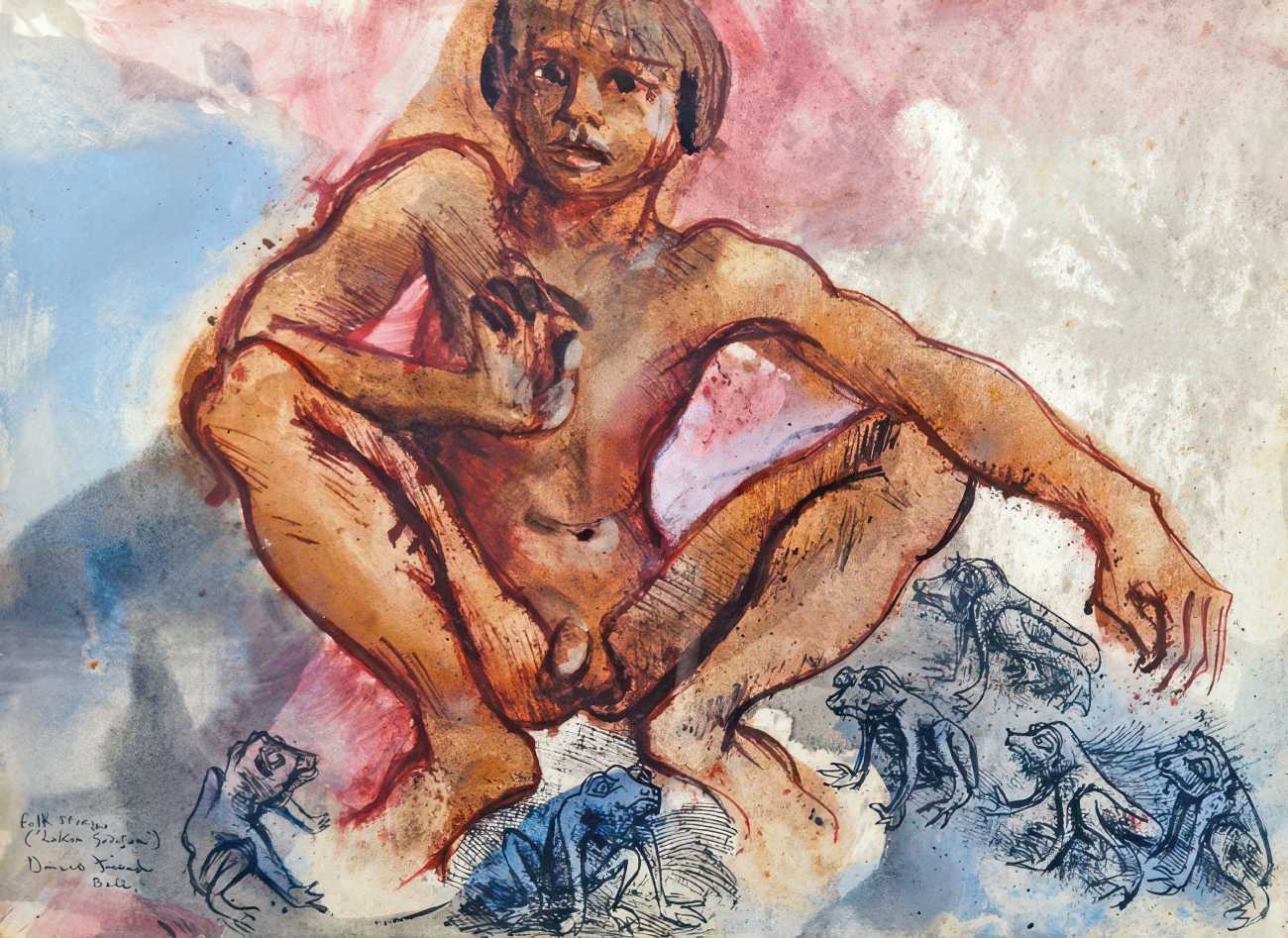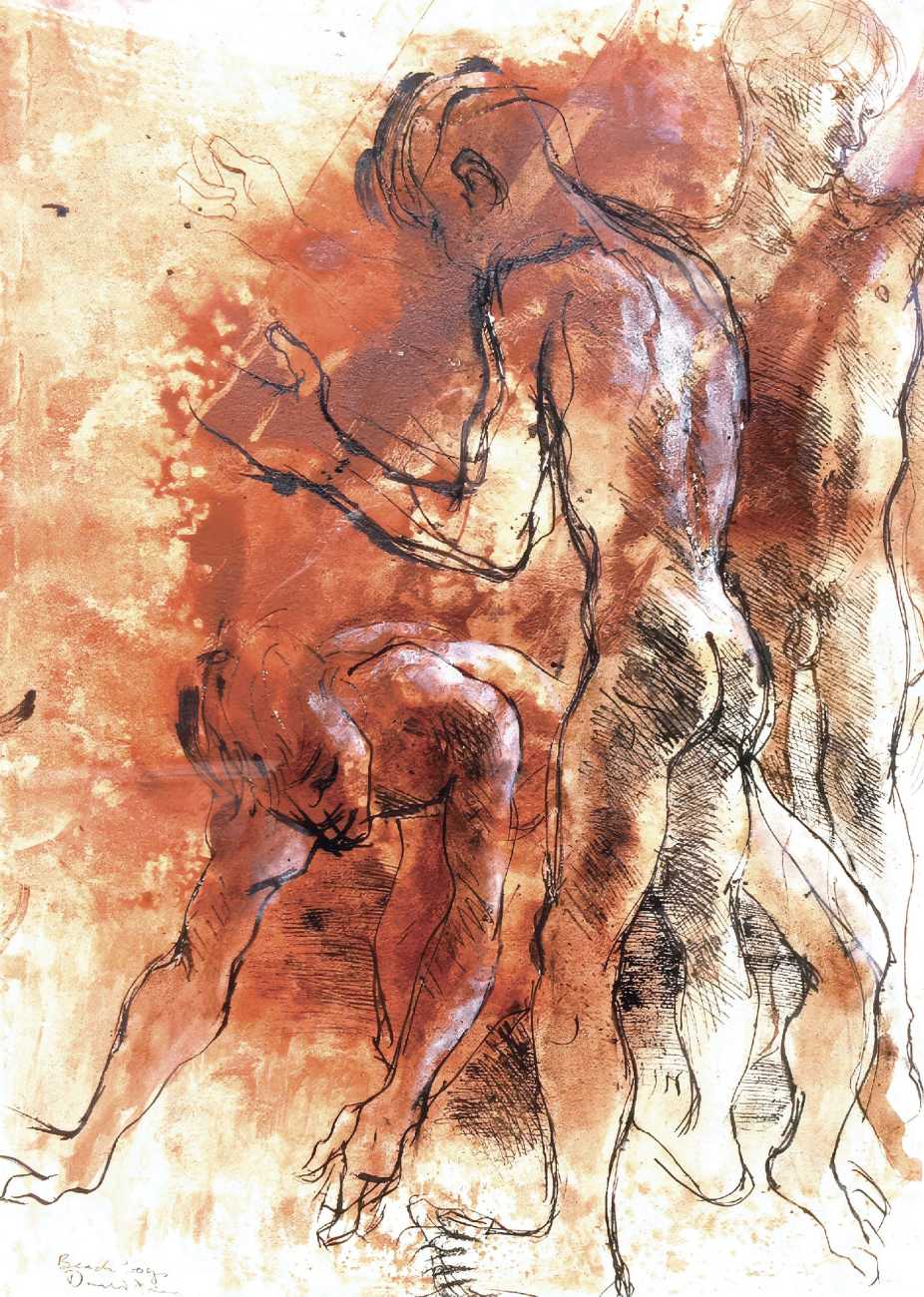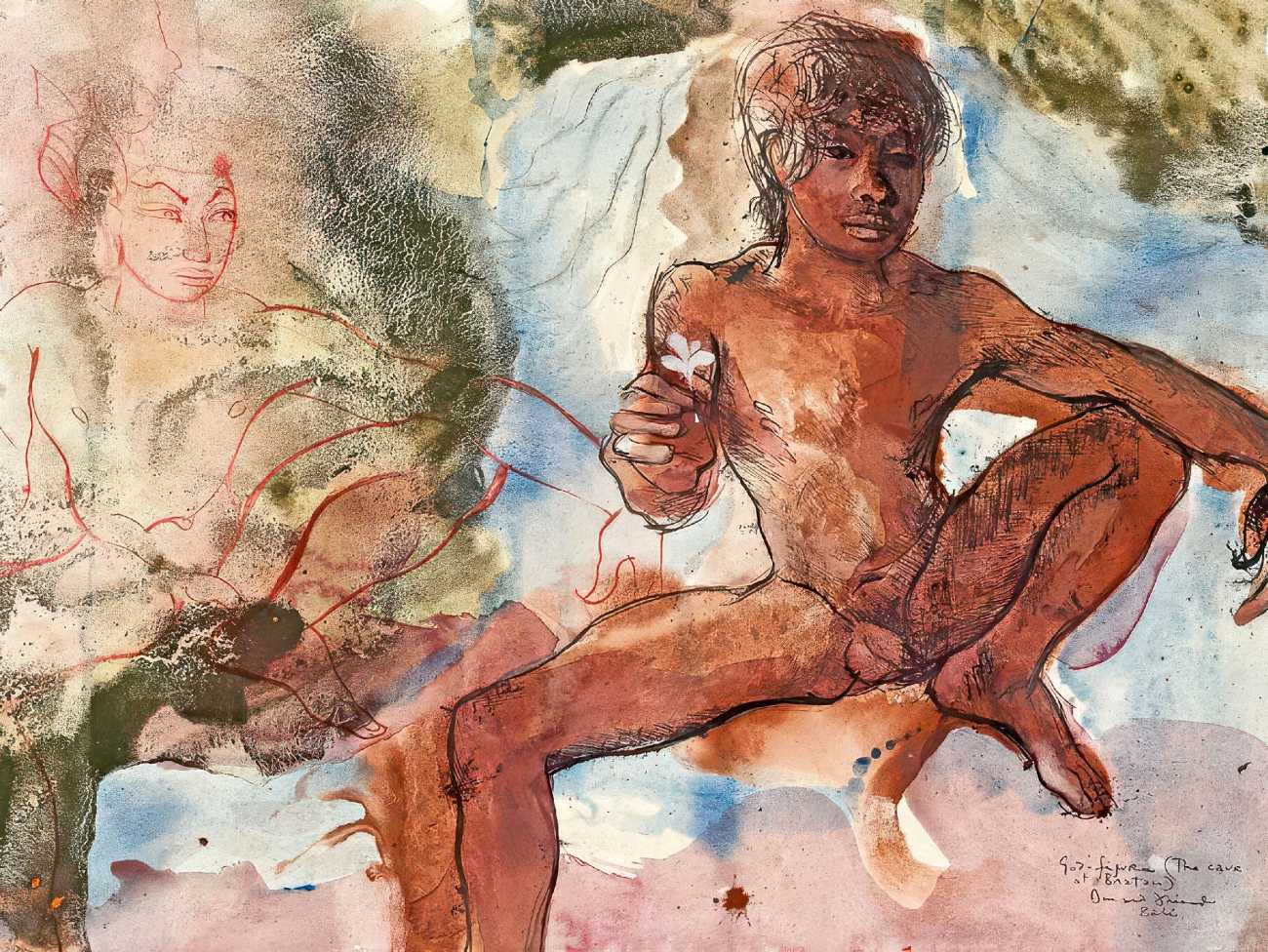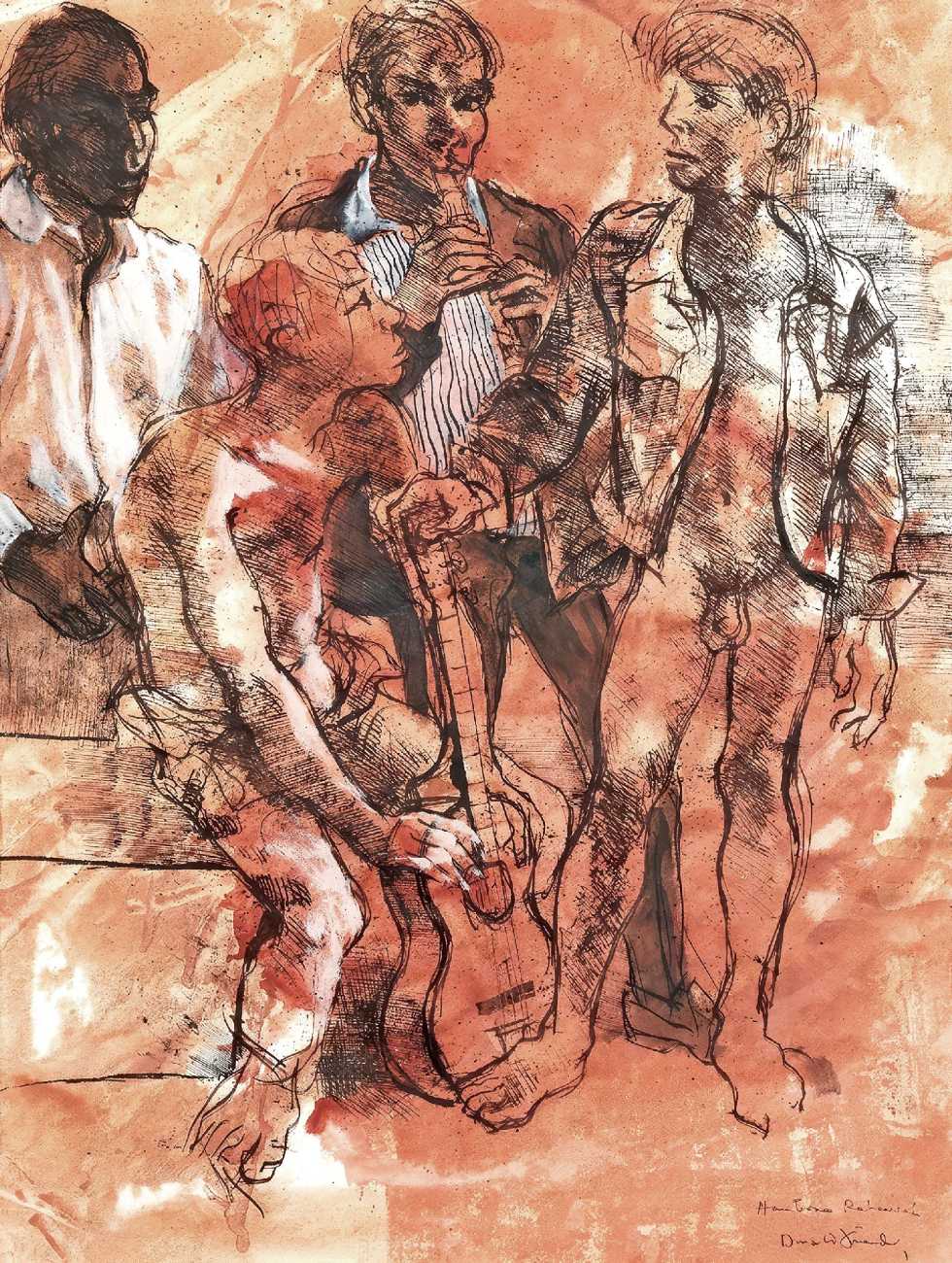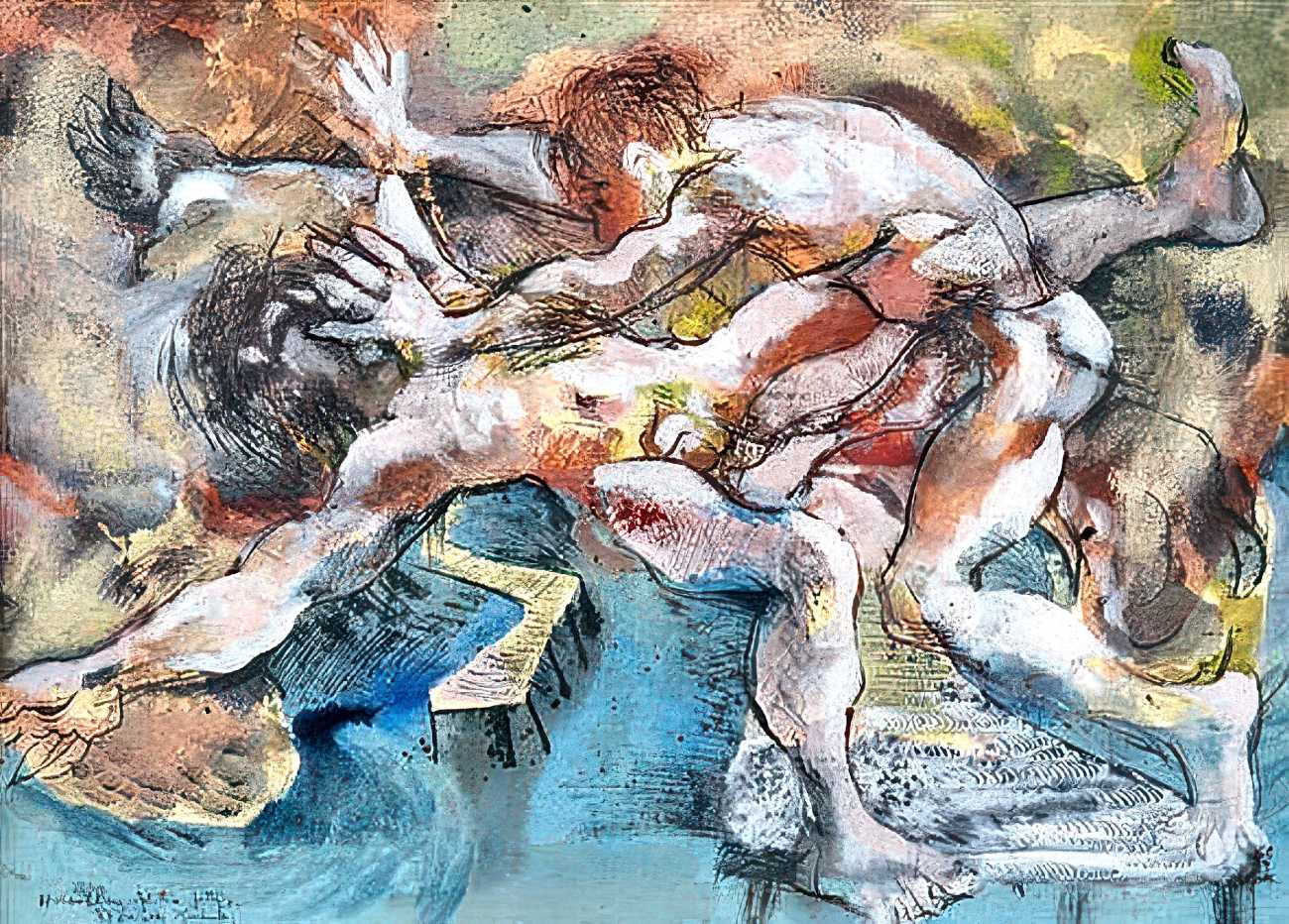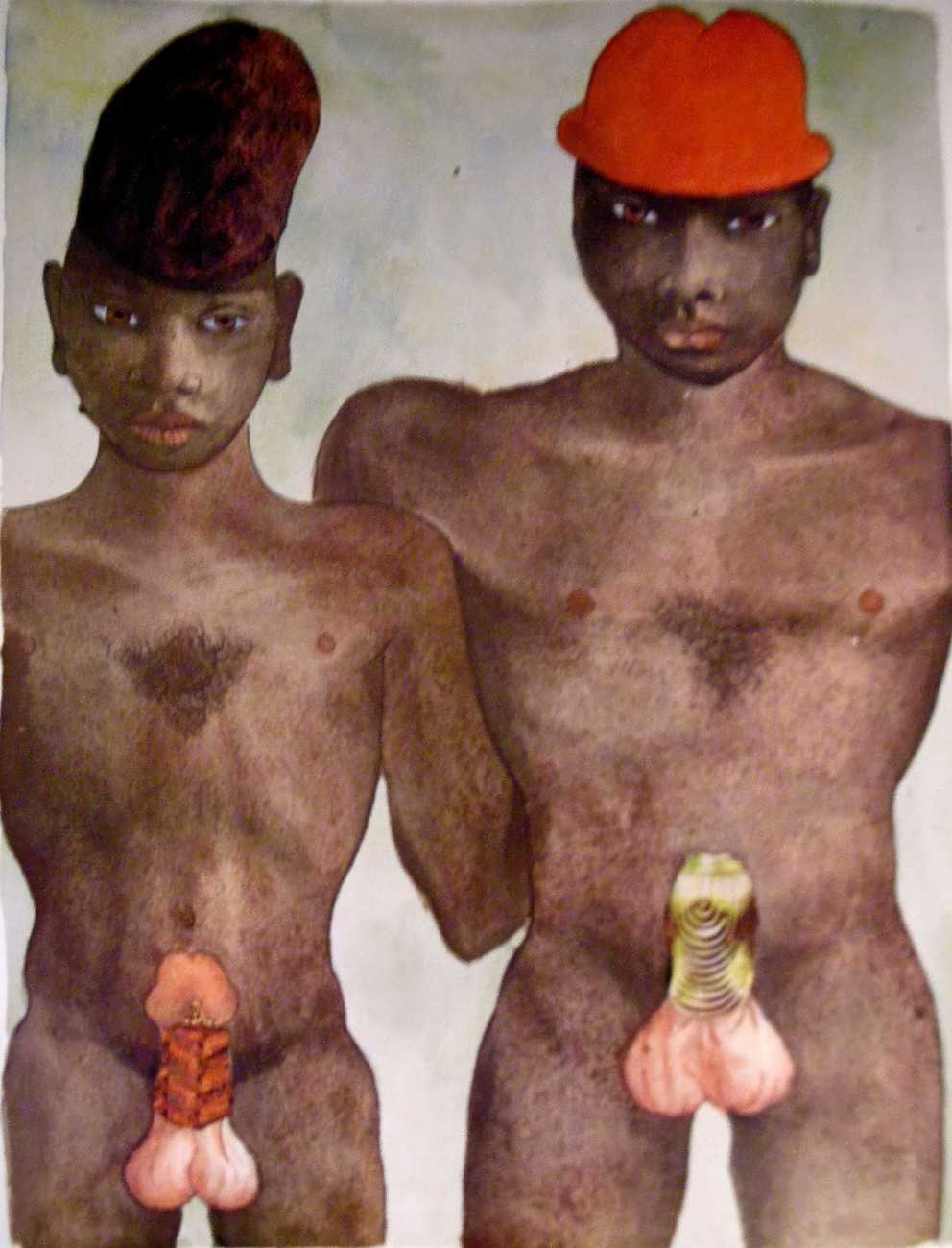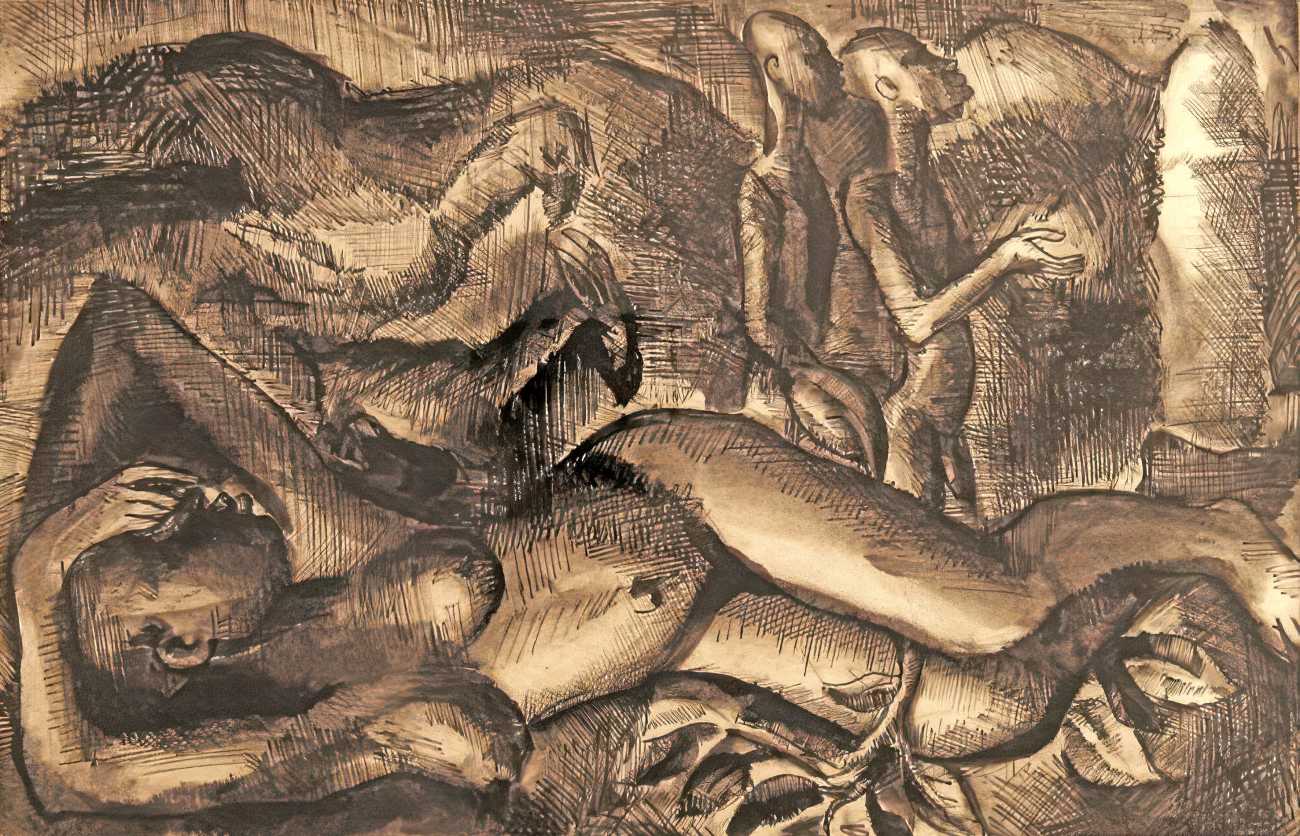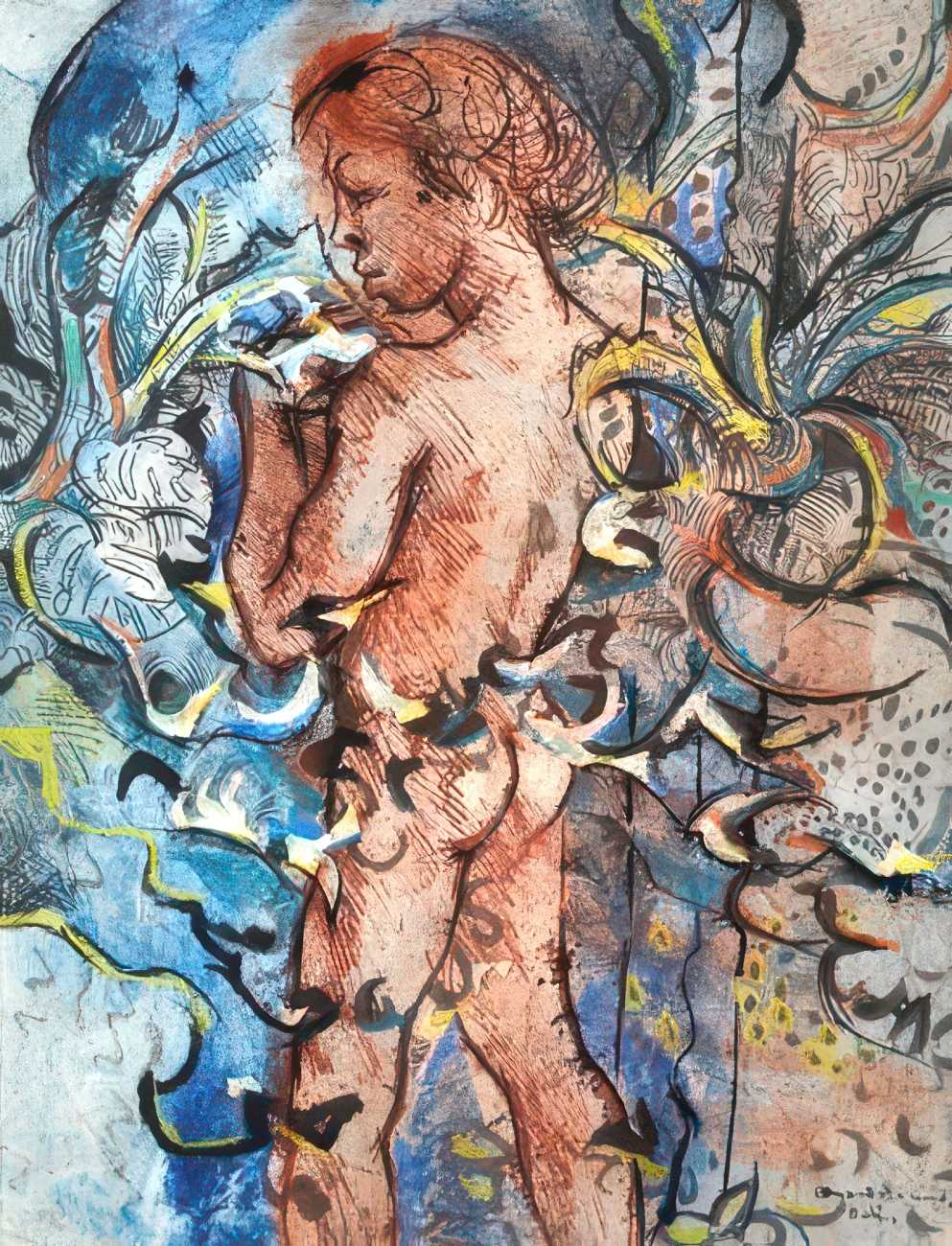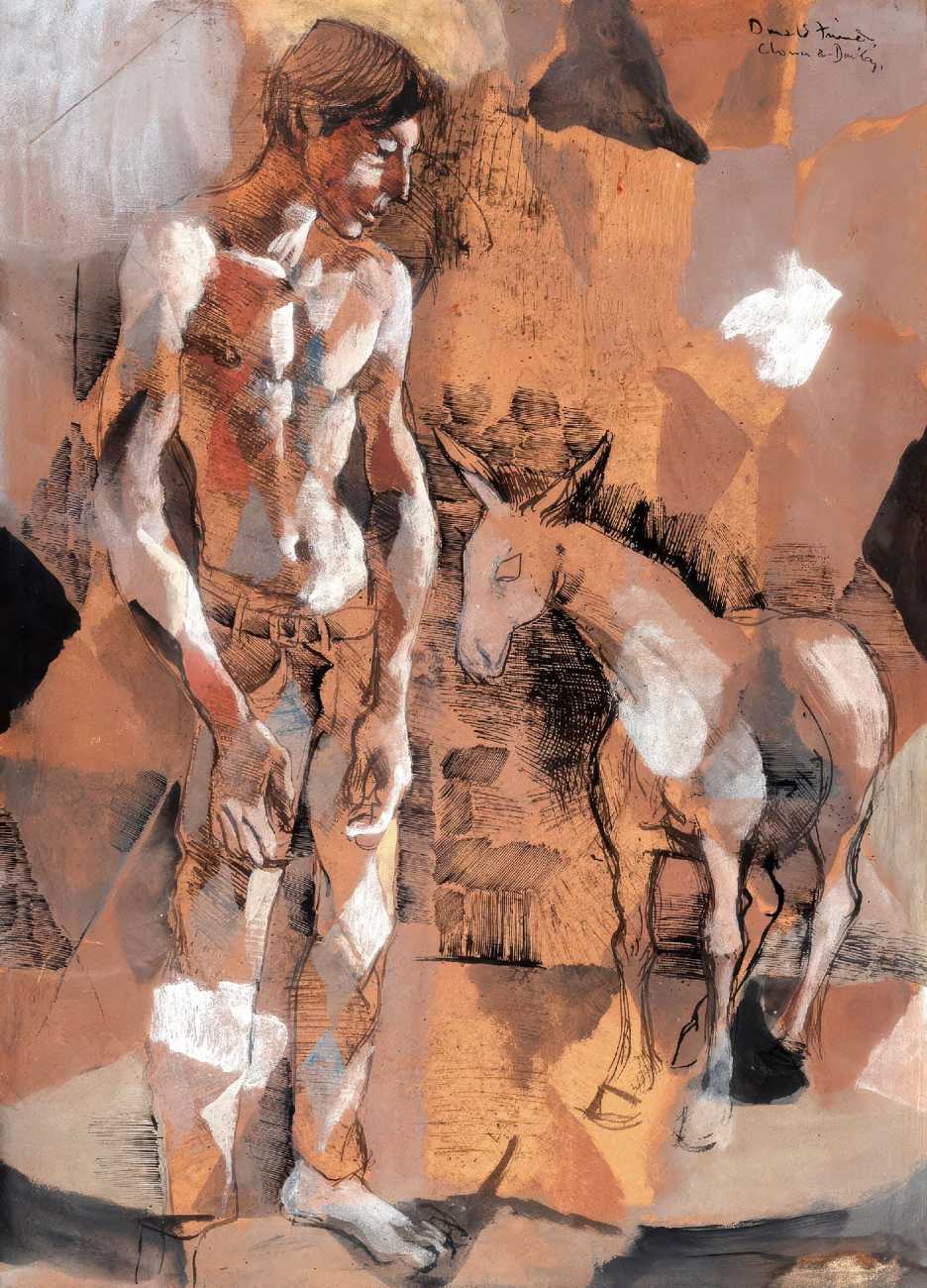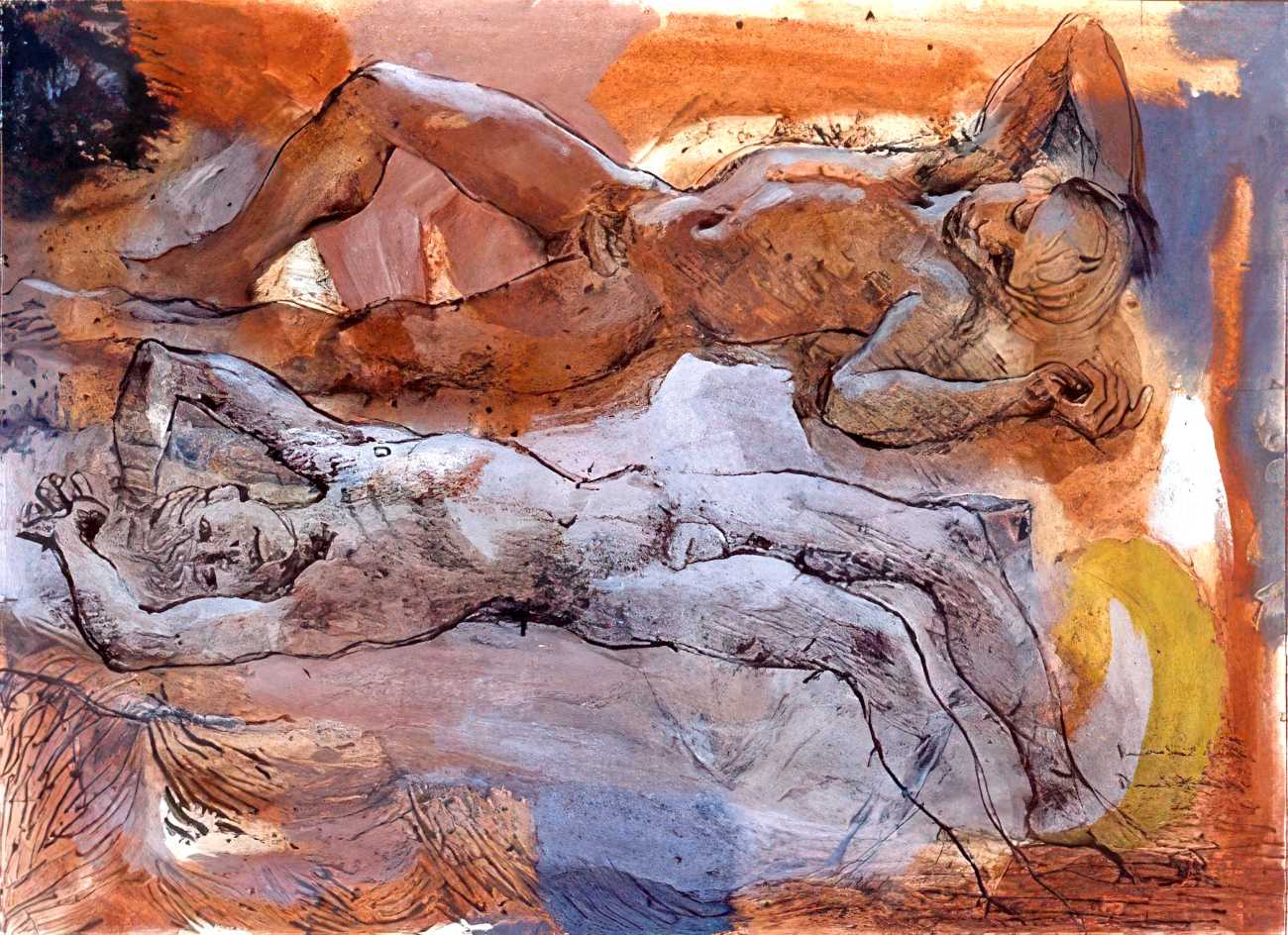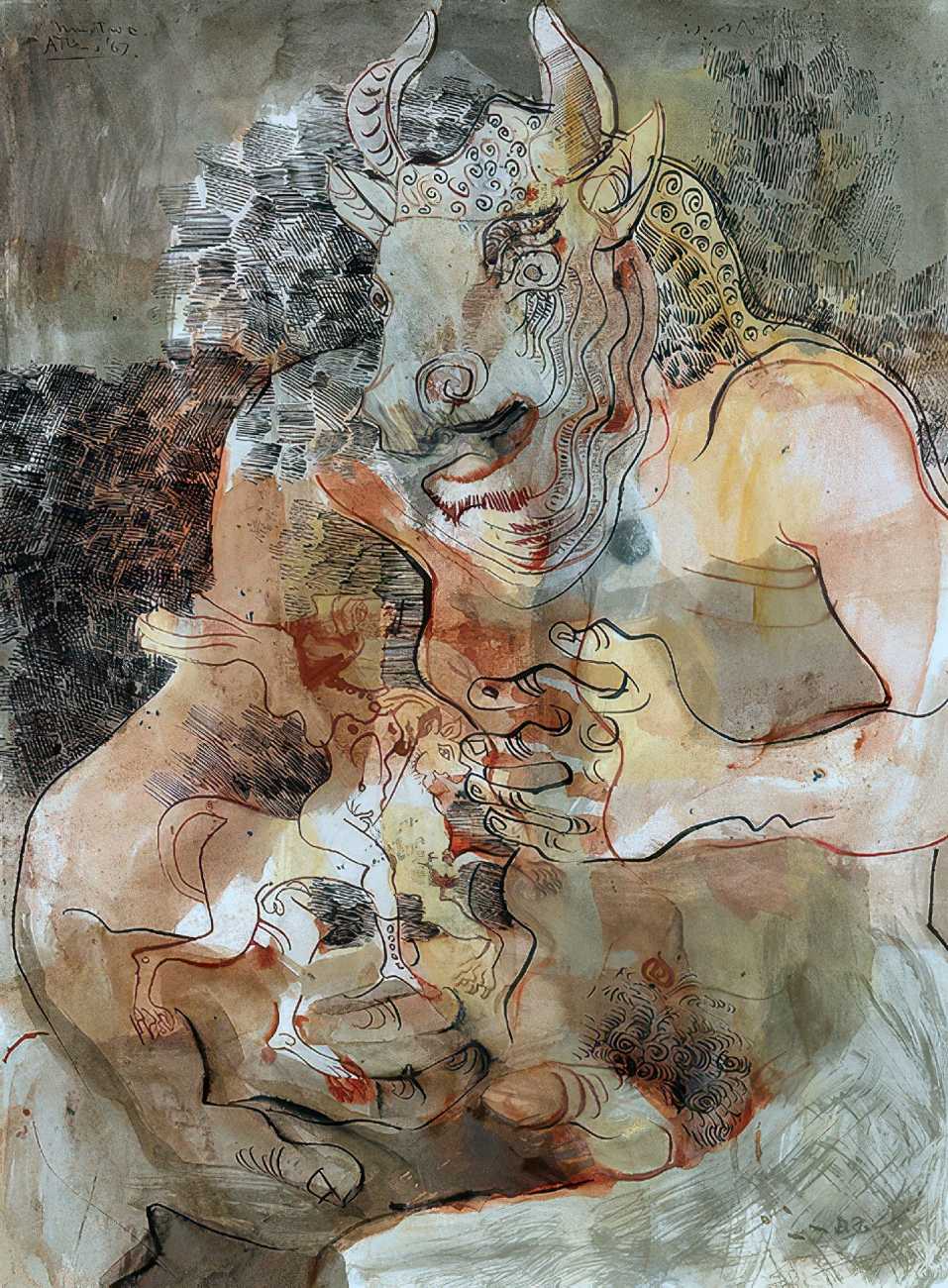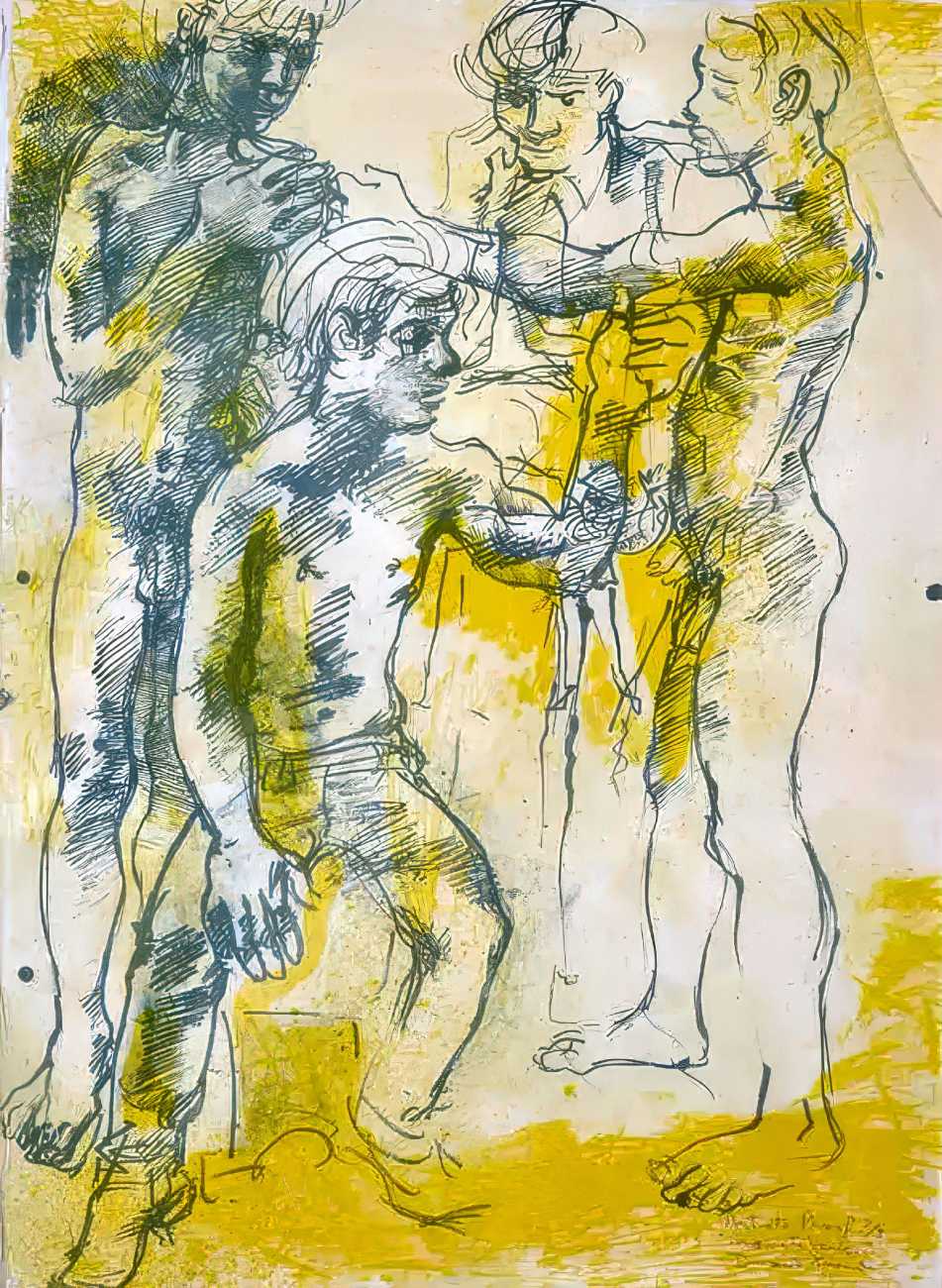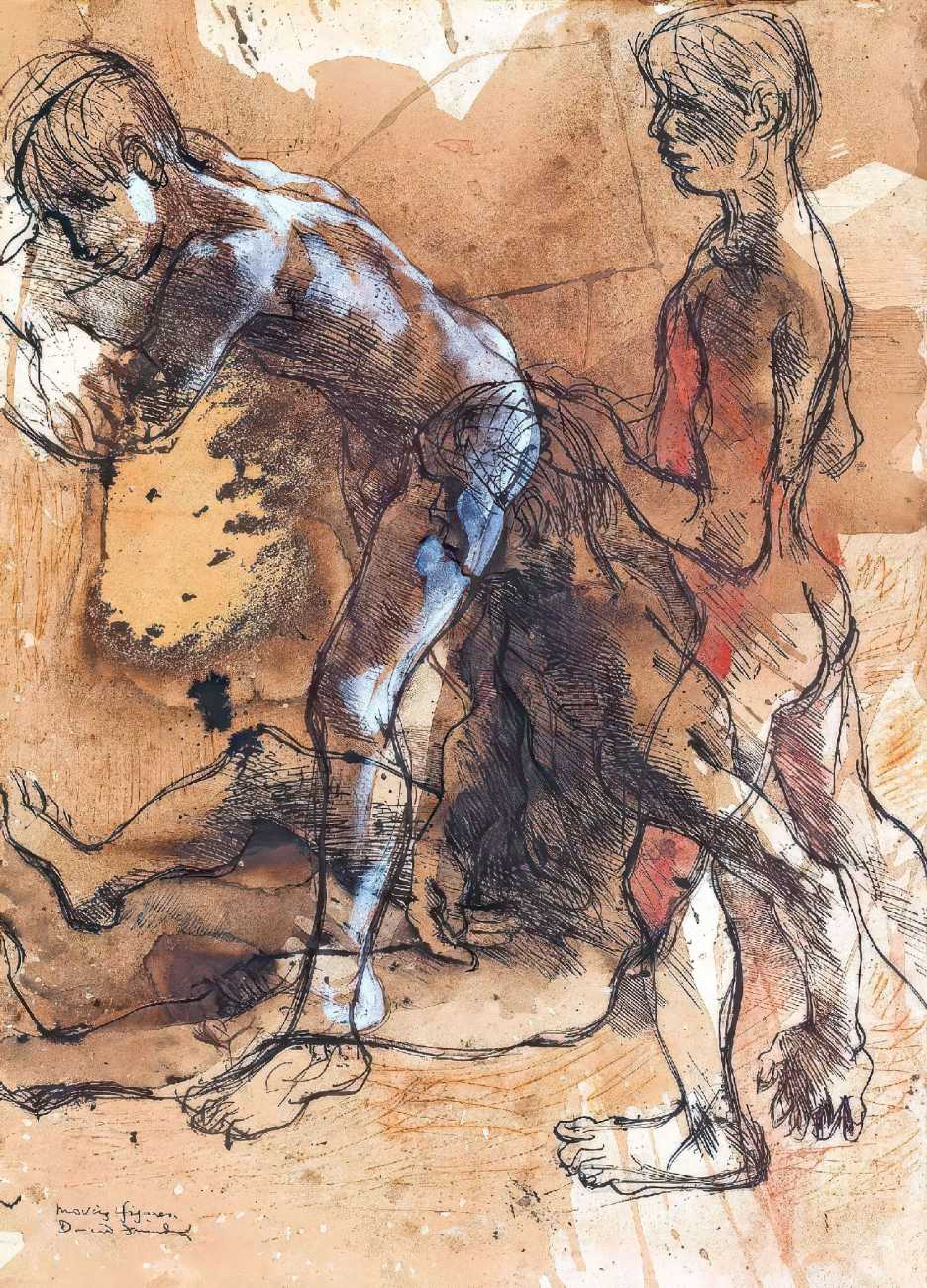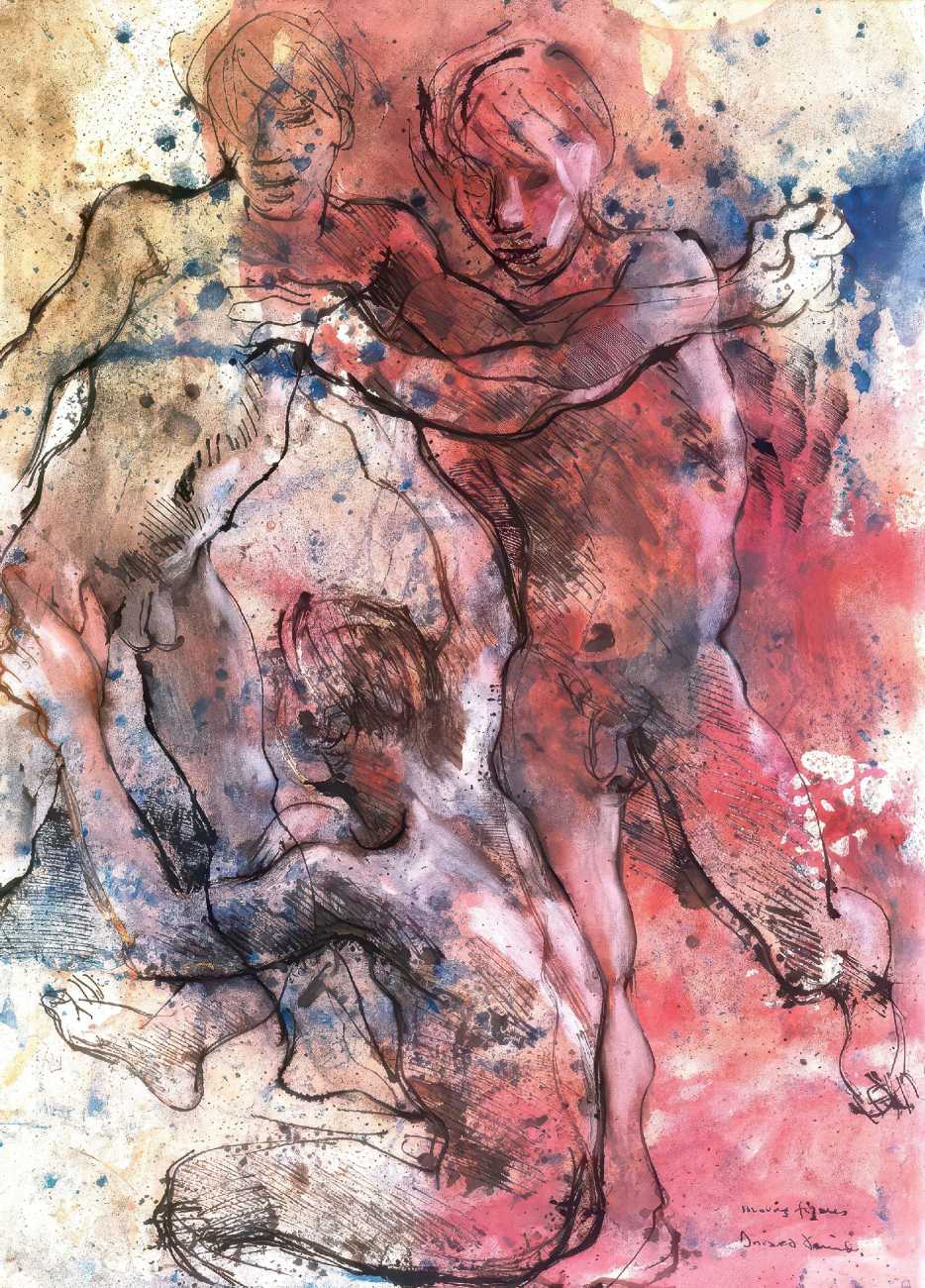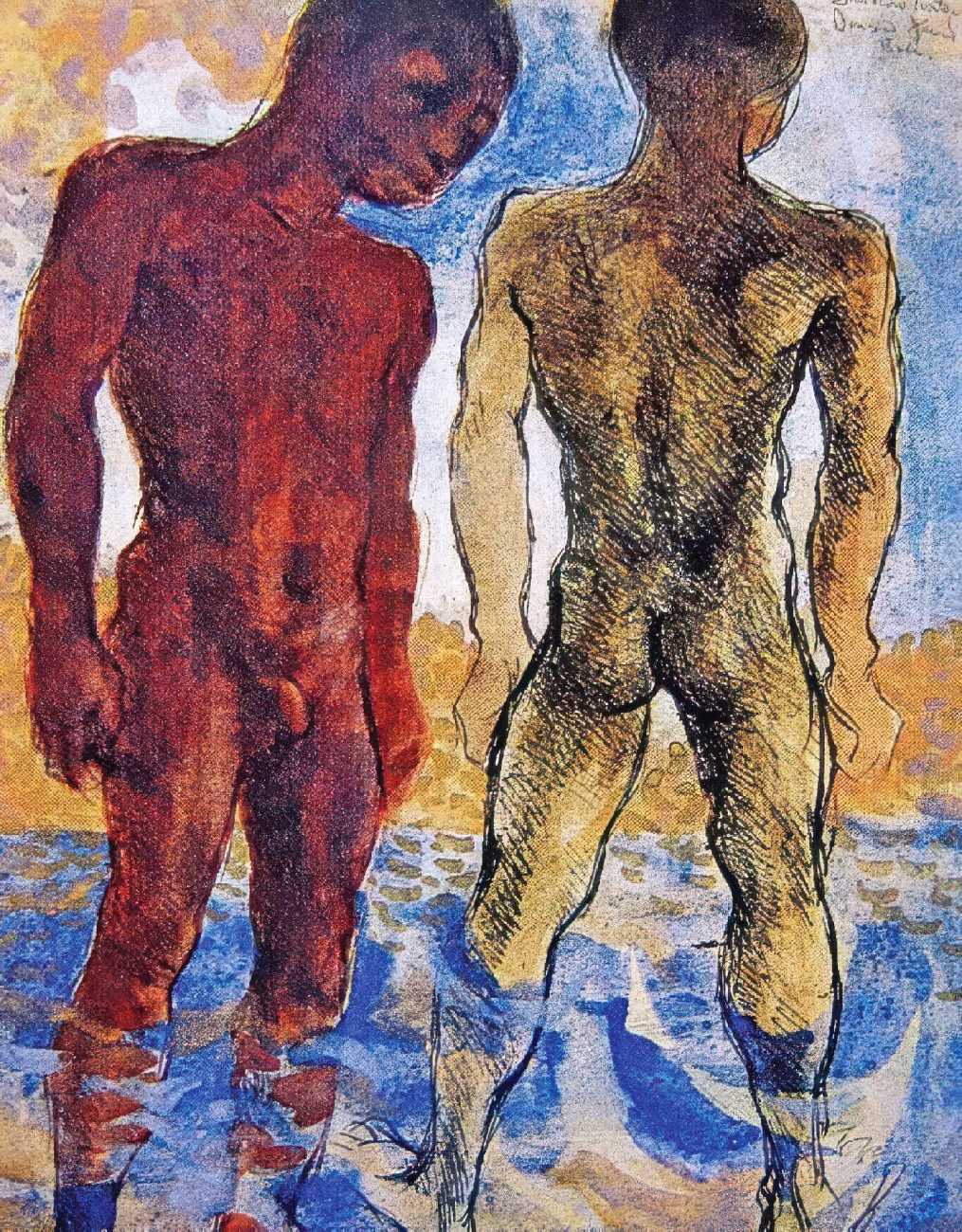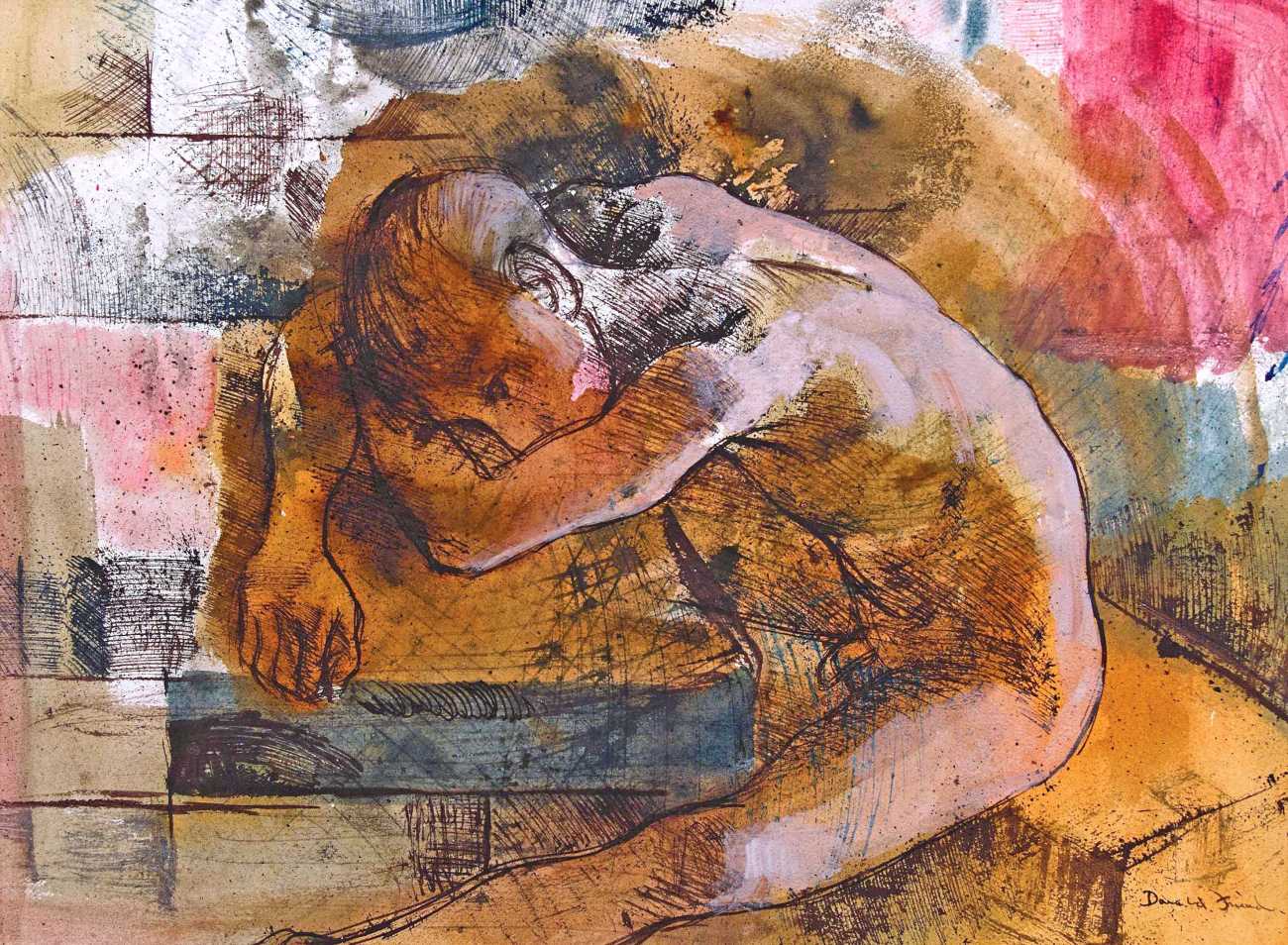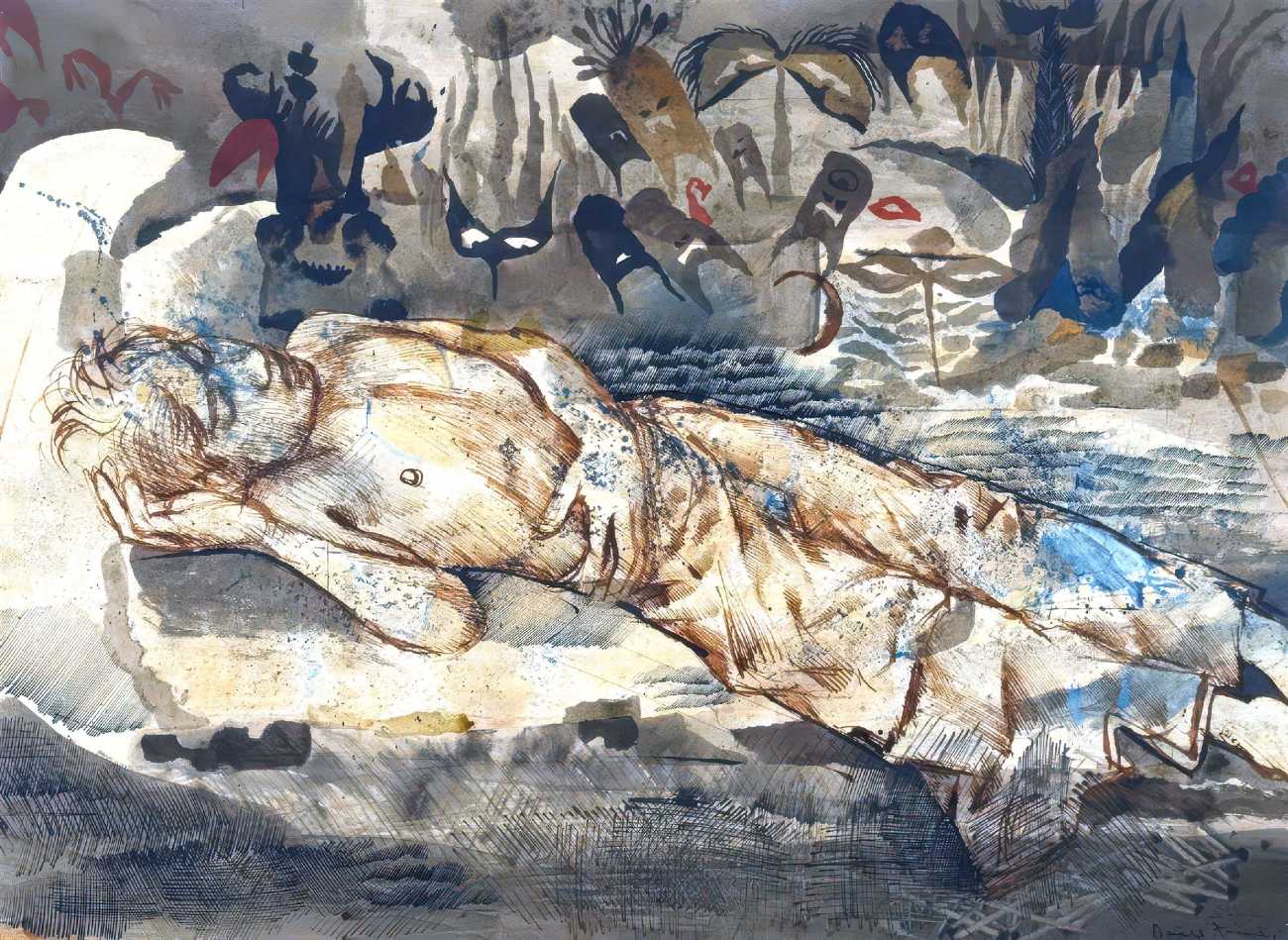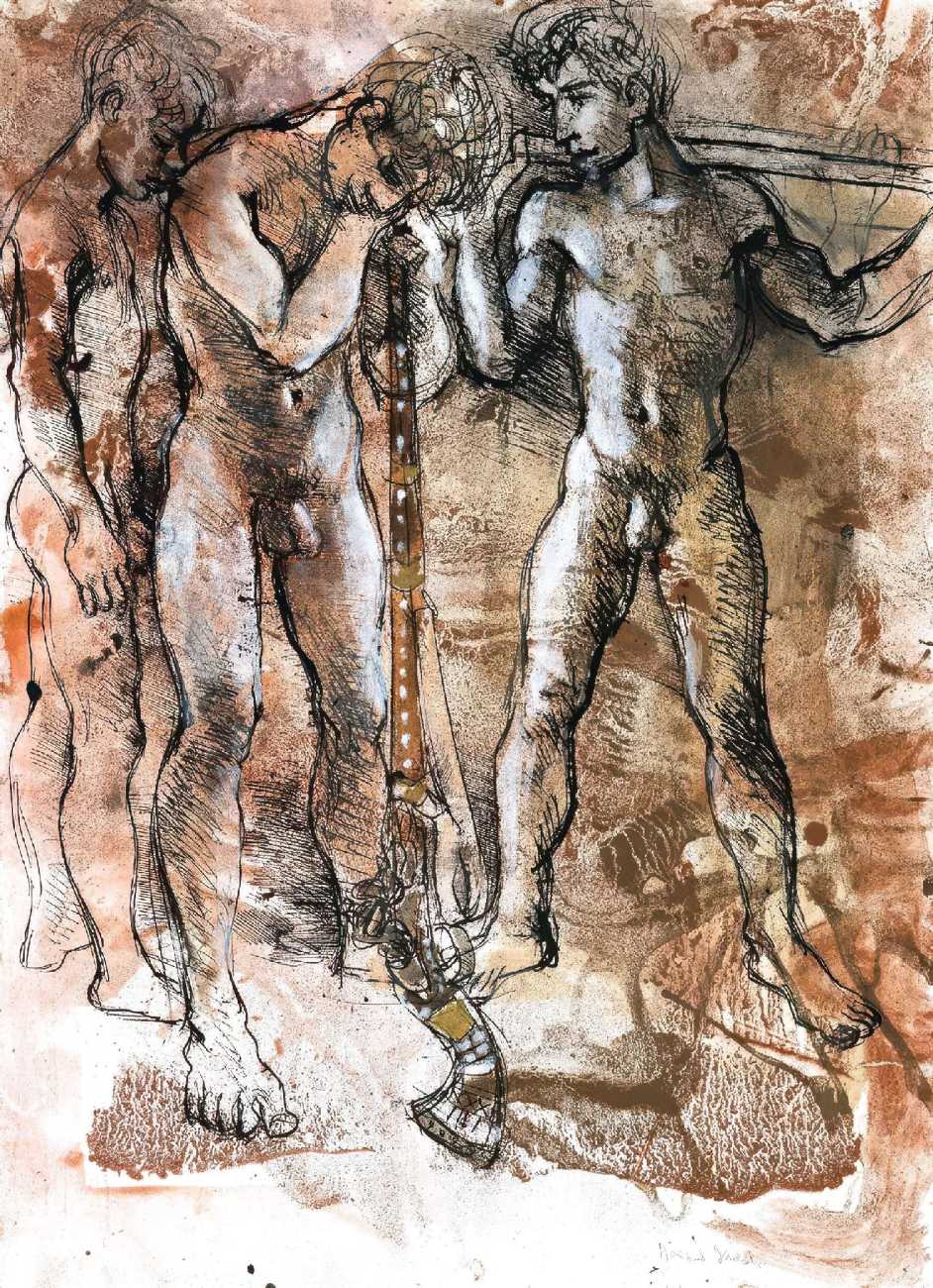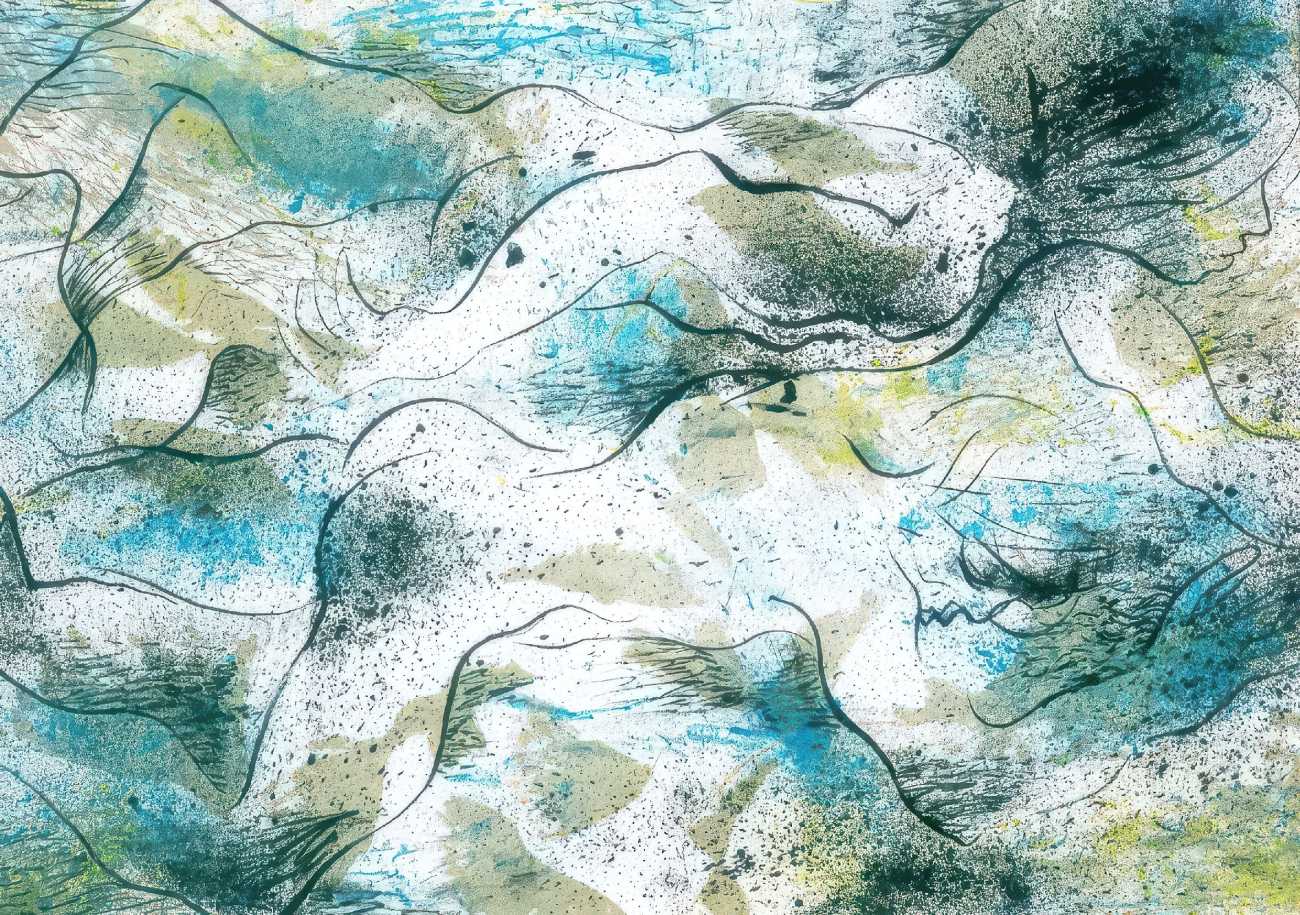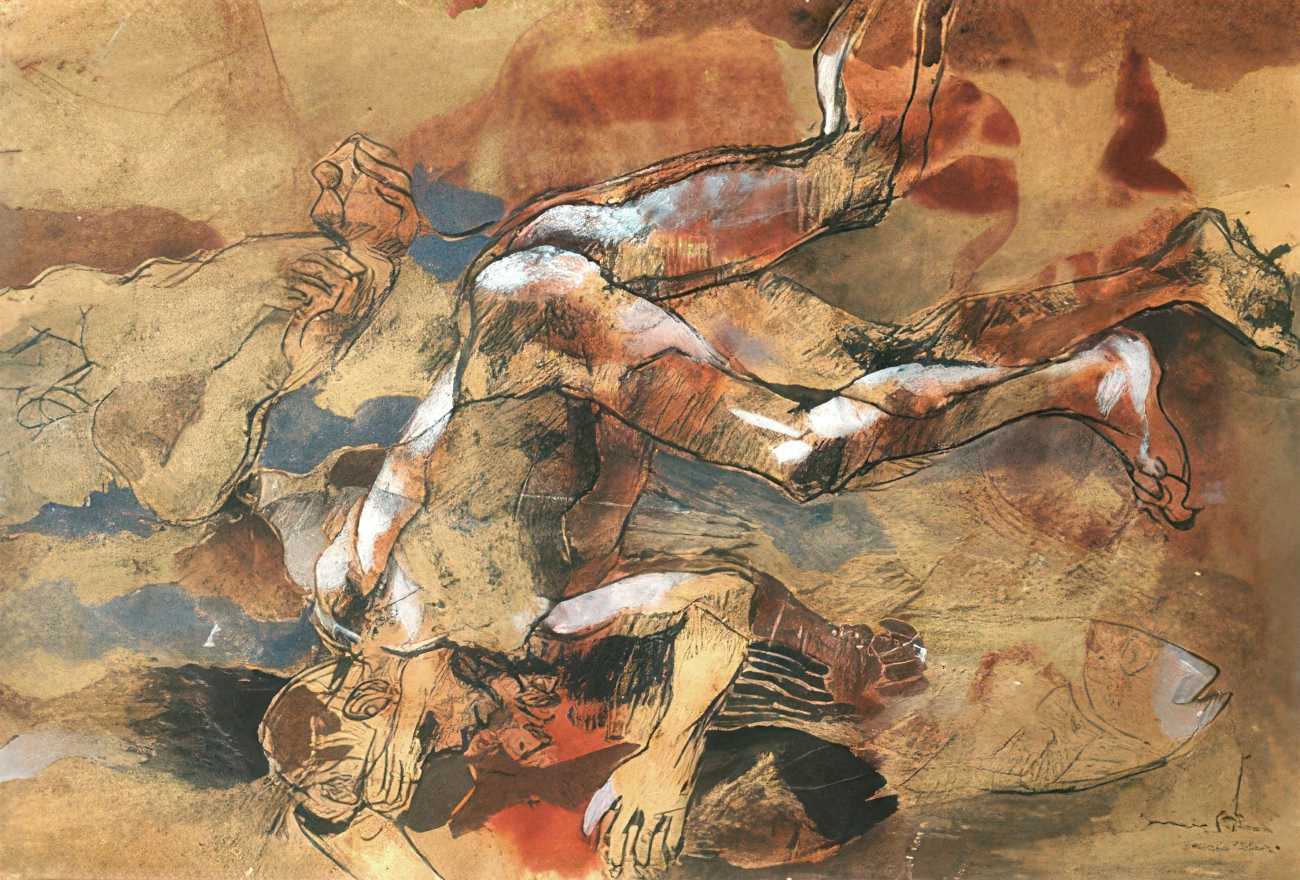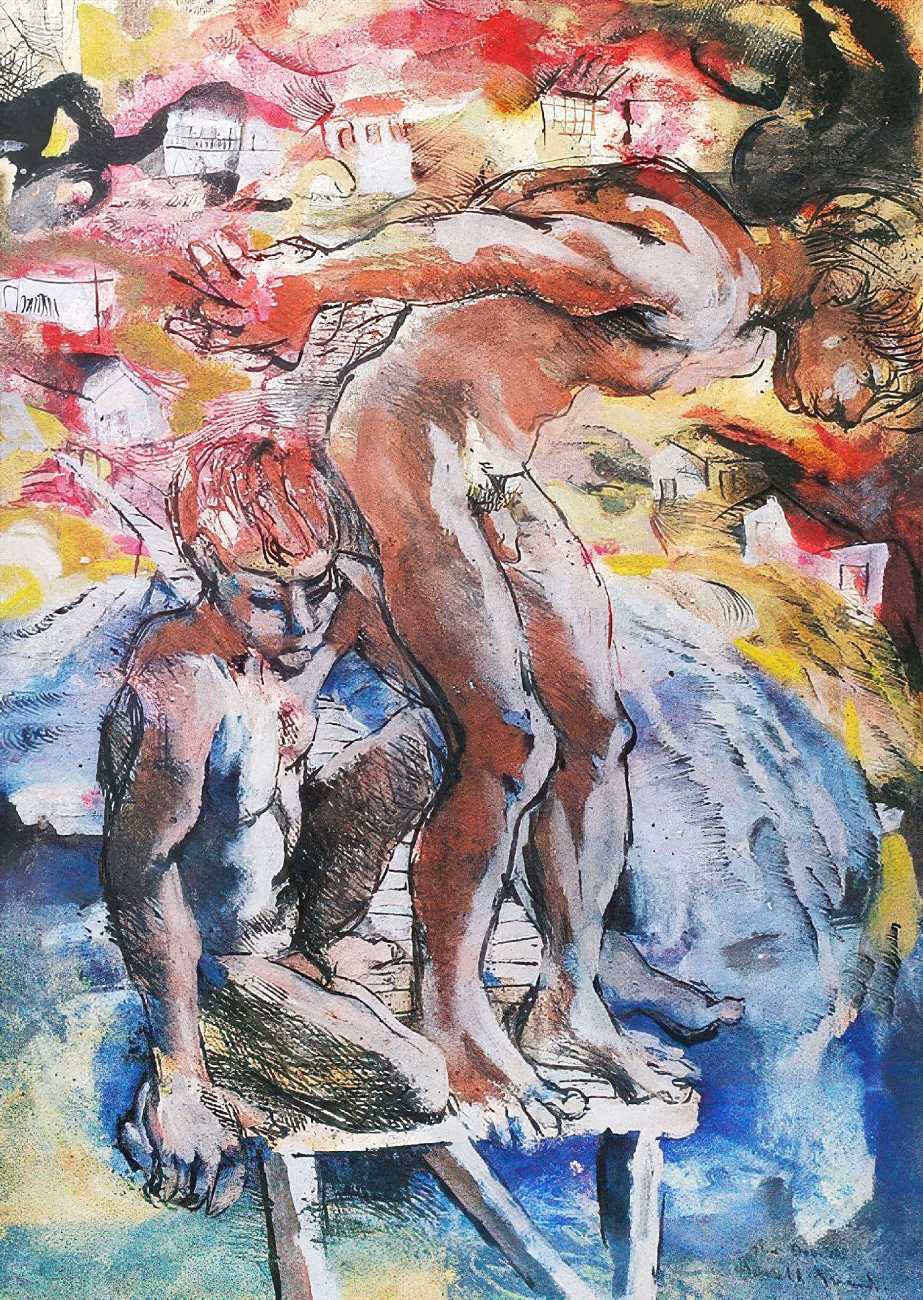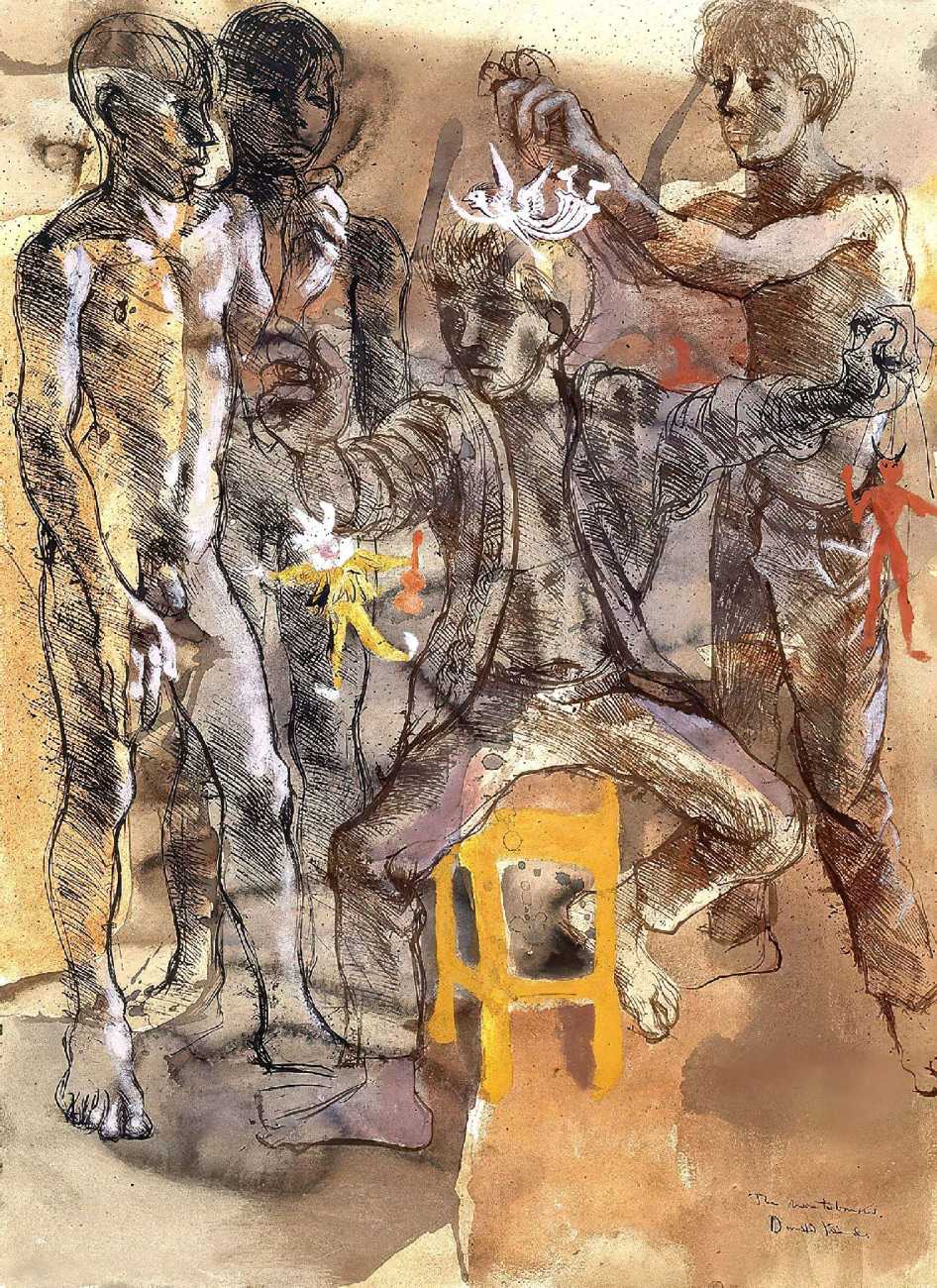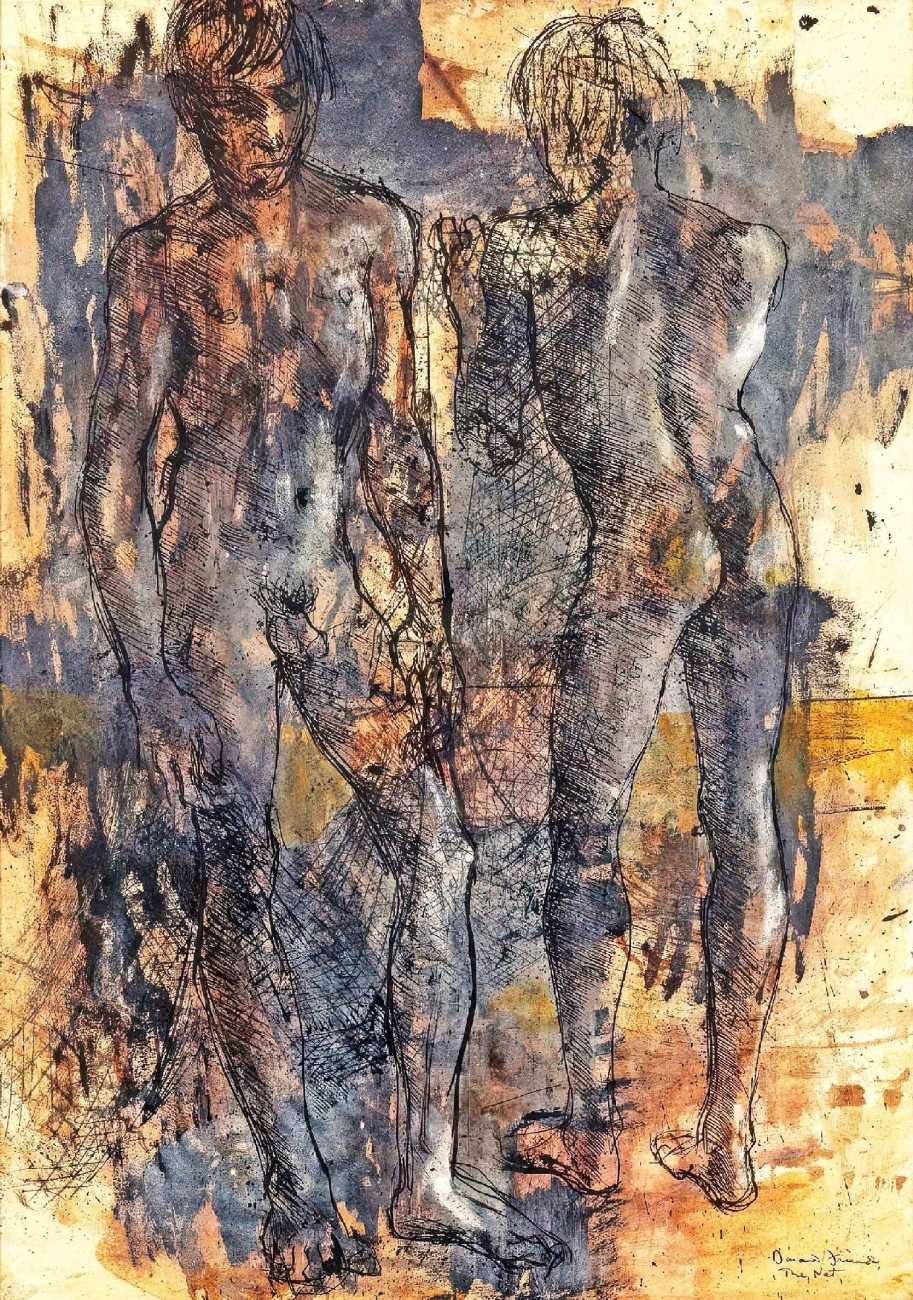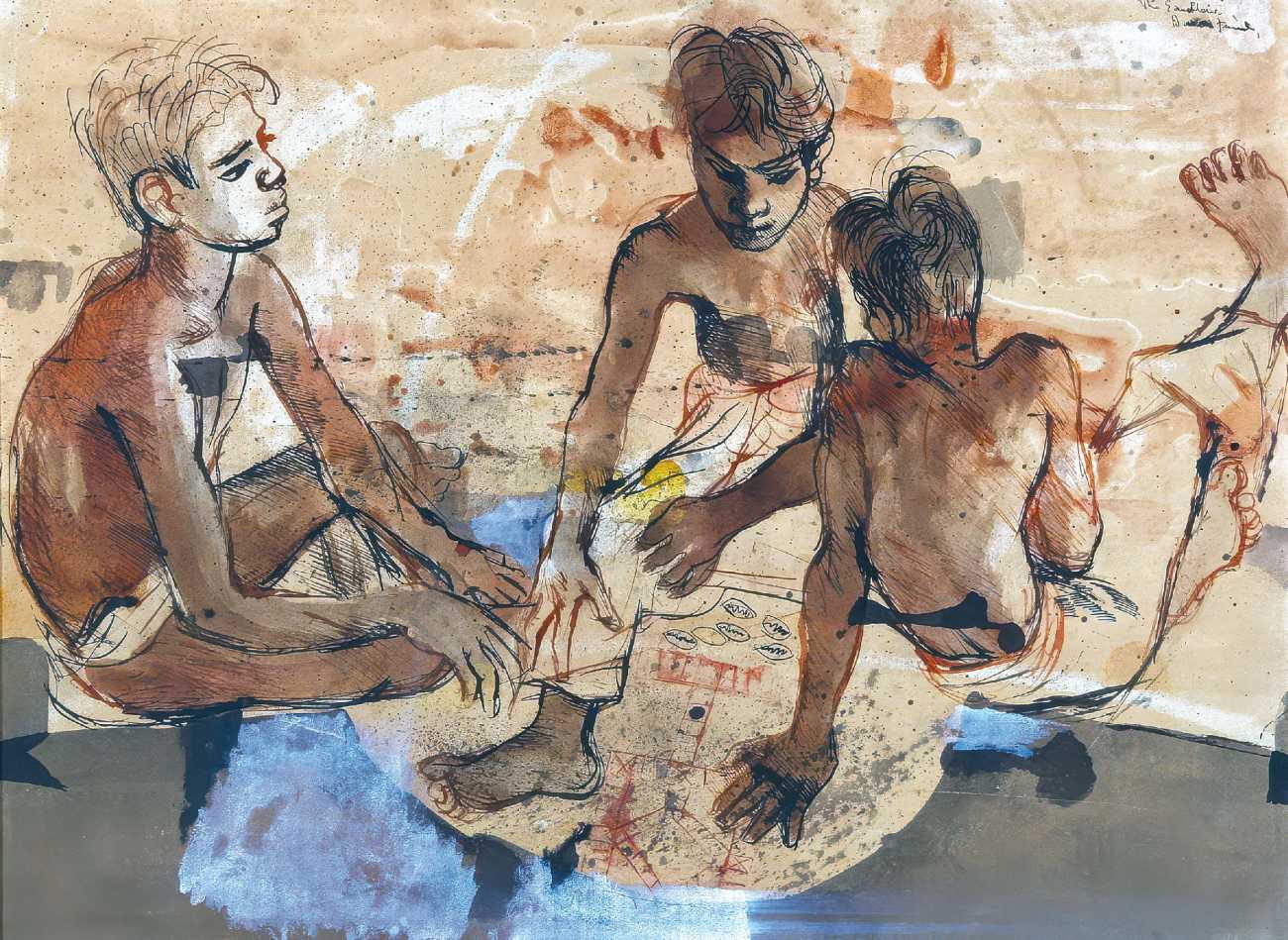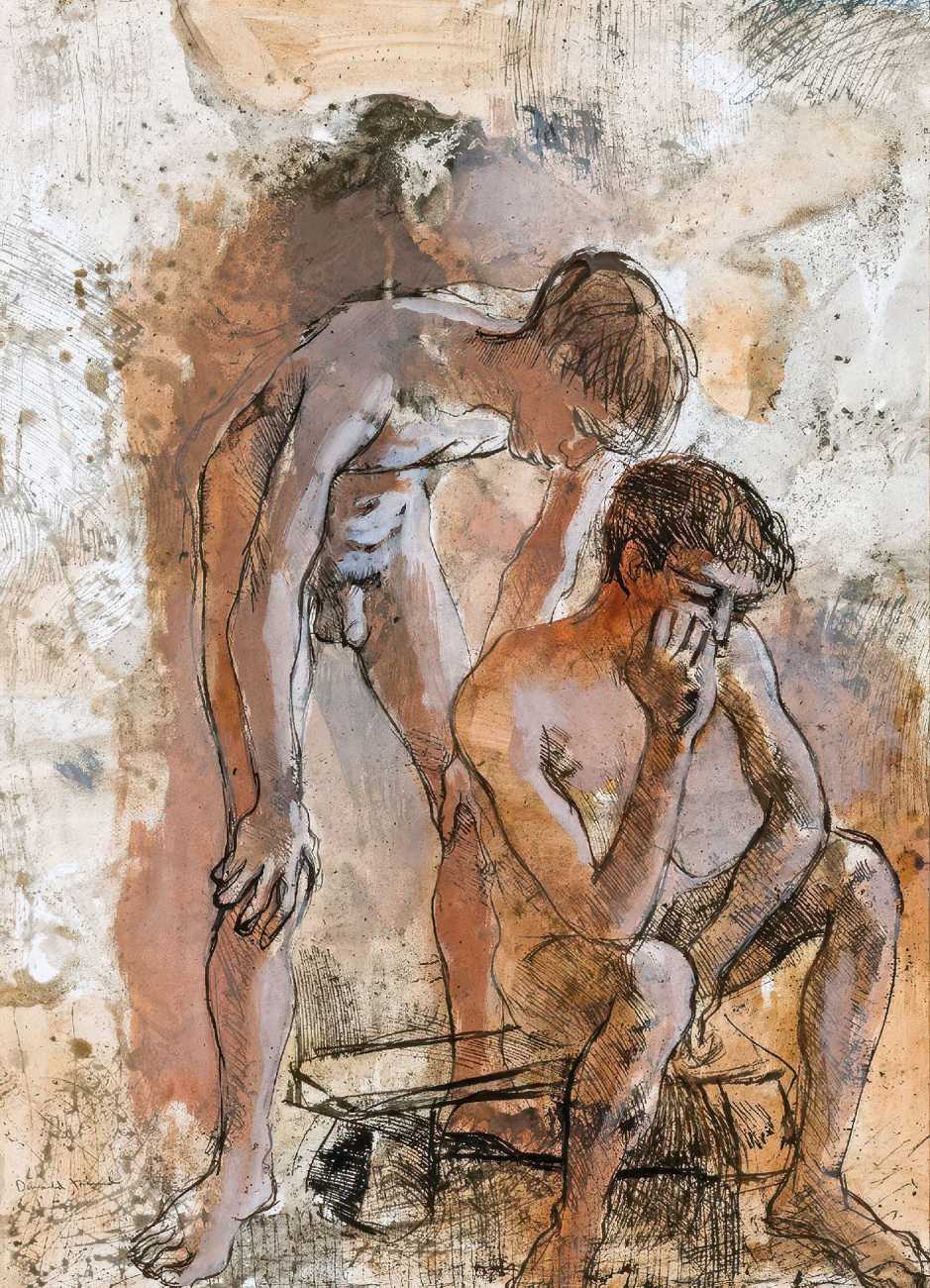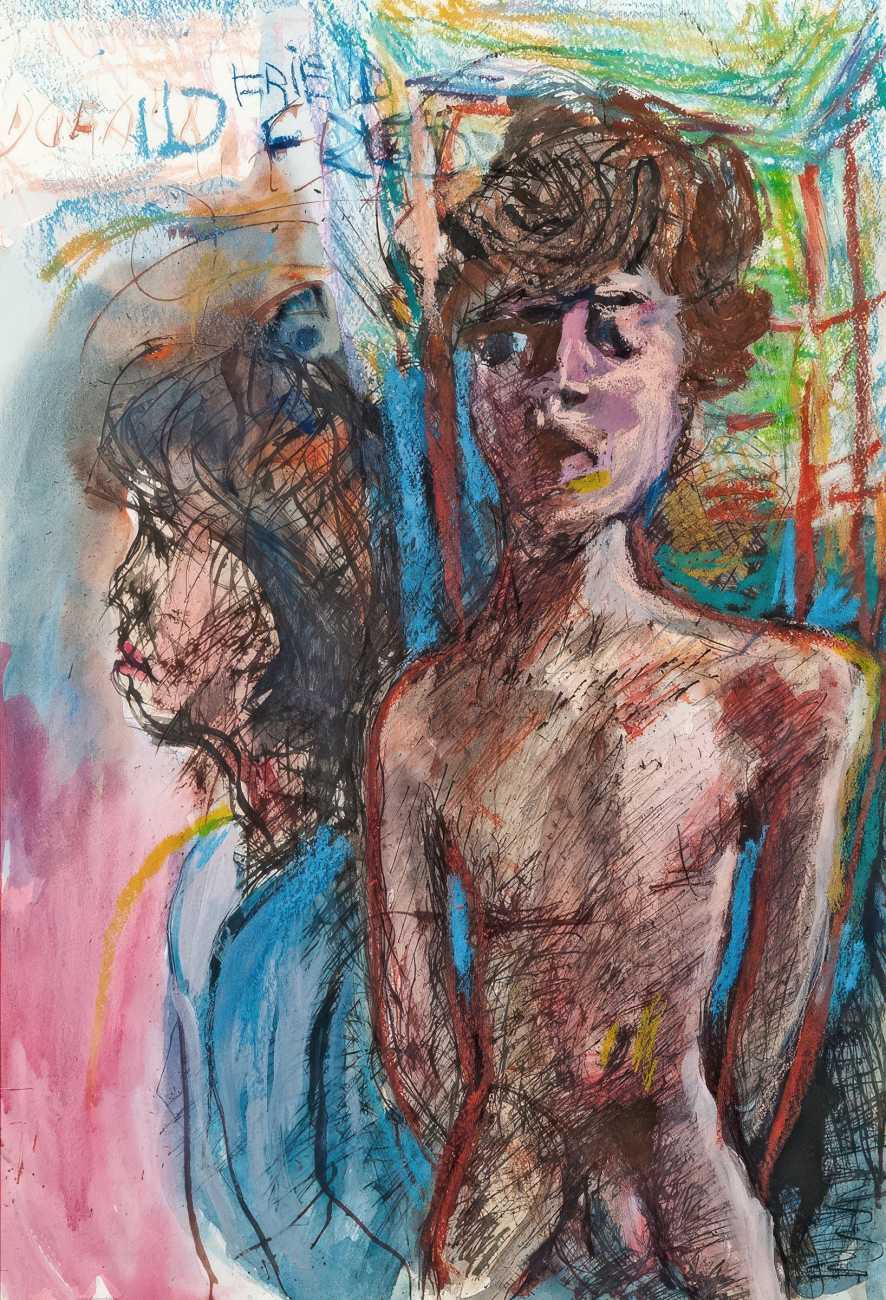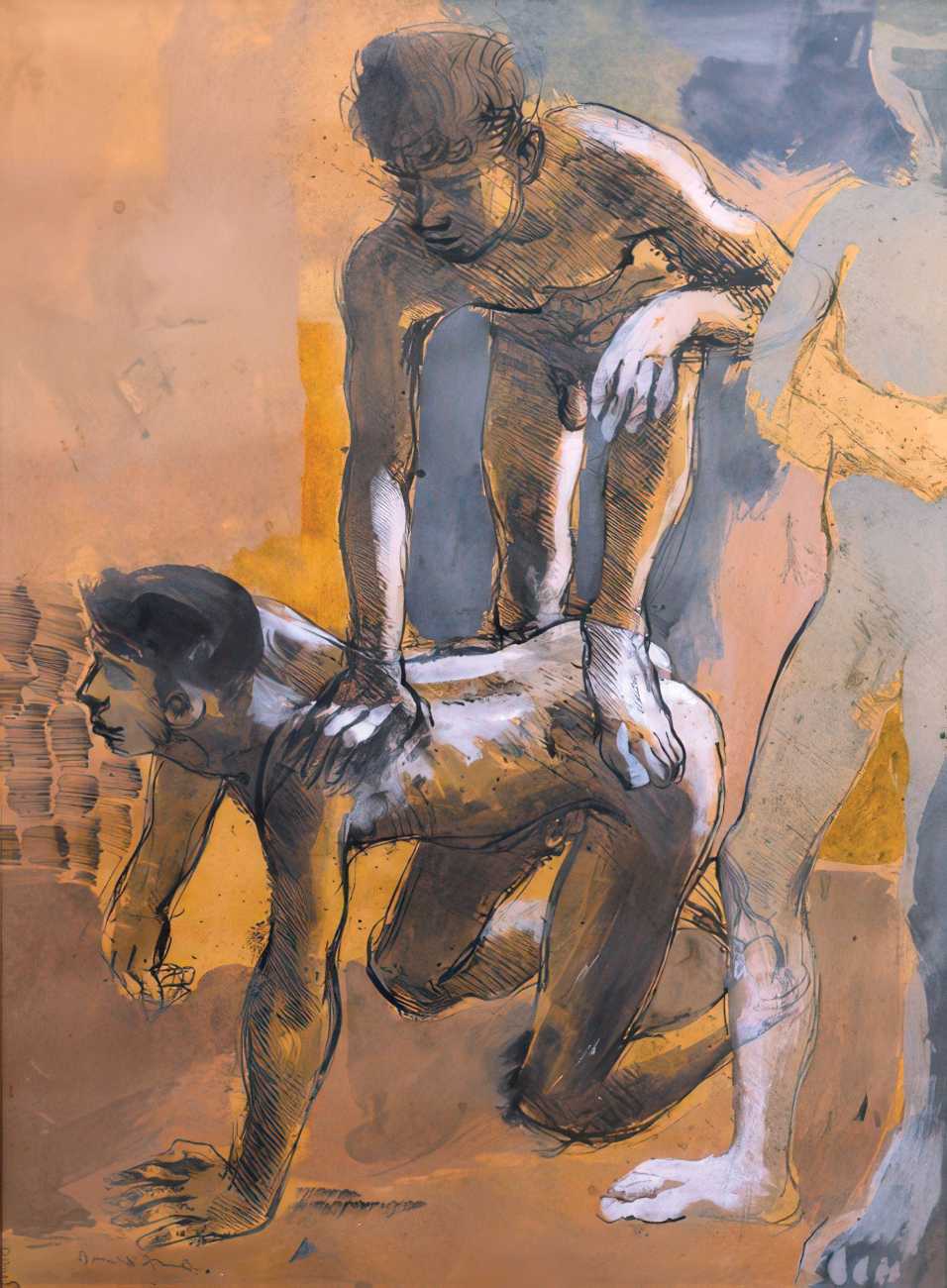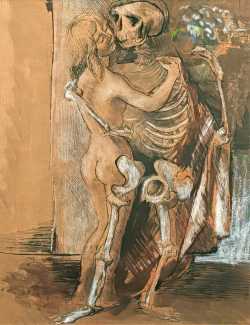
Donald Friend’s paintings cover a remarkably wide range of subjects and moods. Some are rooted in observation, while others emerge from imagination and memory. Masks, dancers, mythological figures and dreamlike landscapes appear alongside solitary naked figures and groups of intertwined bodies, creating scenes that are both theatrical and deeply personal, revealing Friend’s delight in storytelling and his lifelong fascination with classical mythology, literature and ritual.
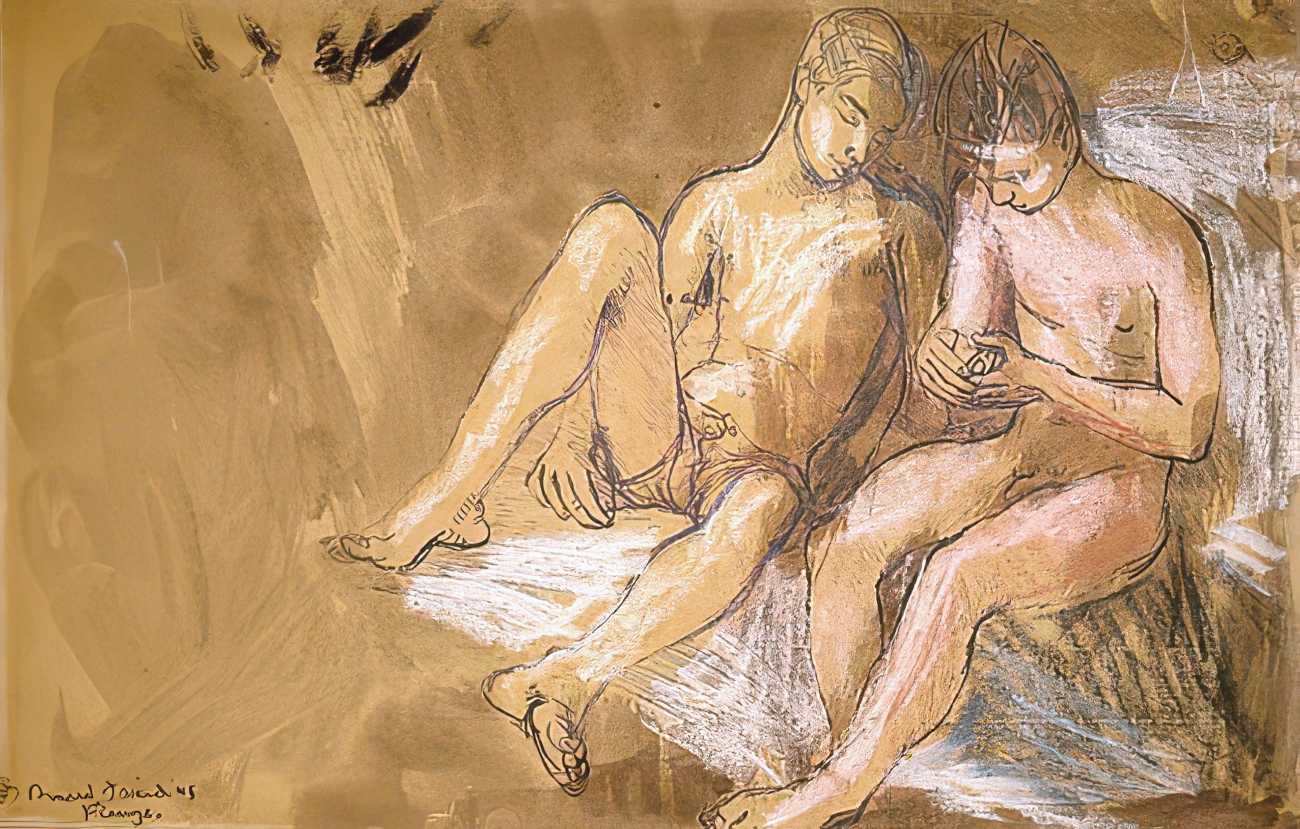
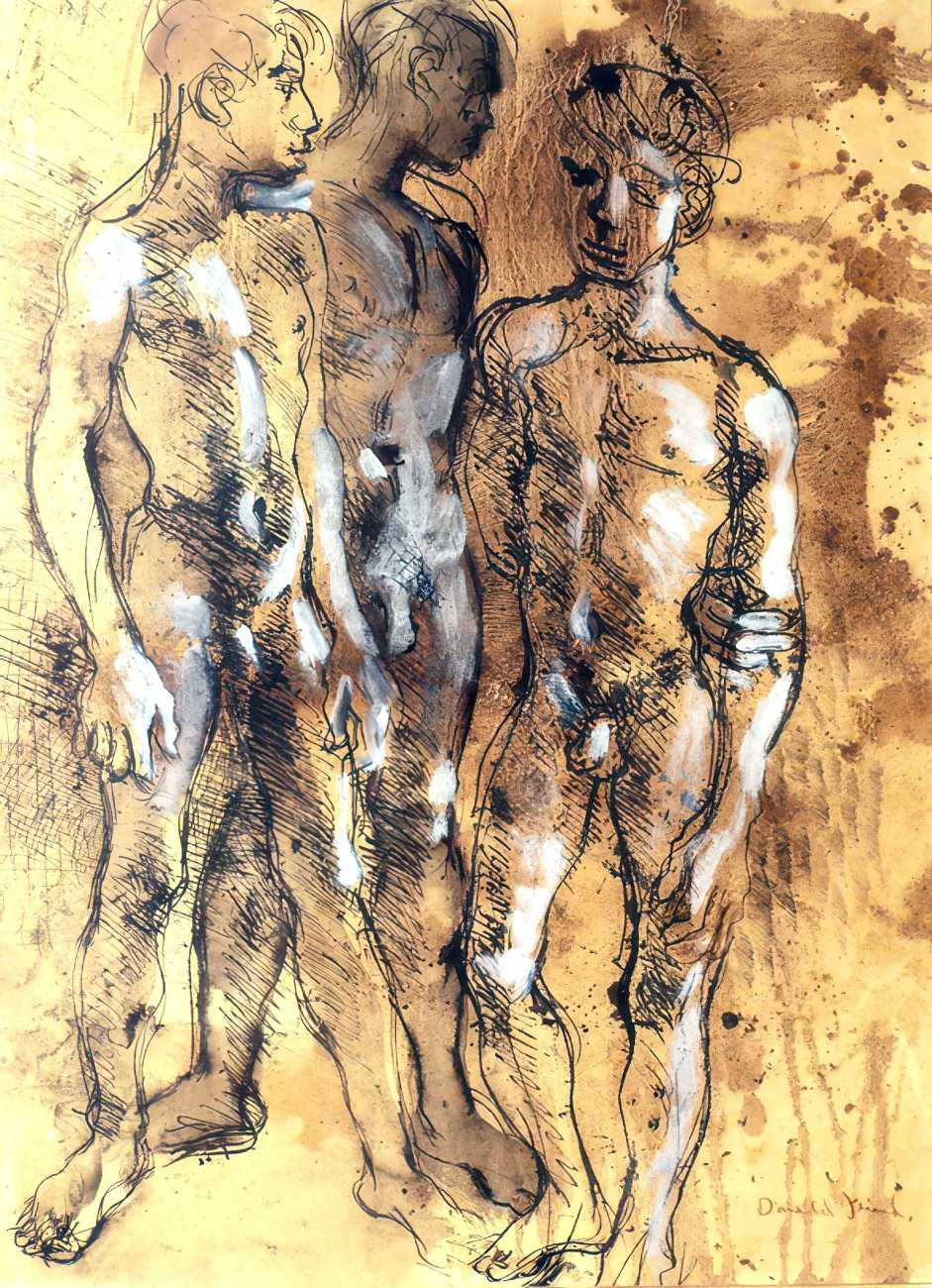
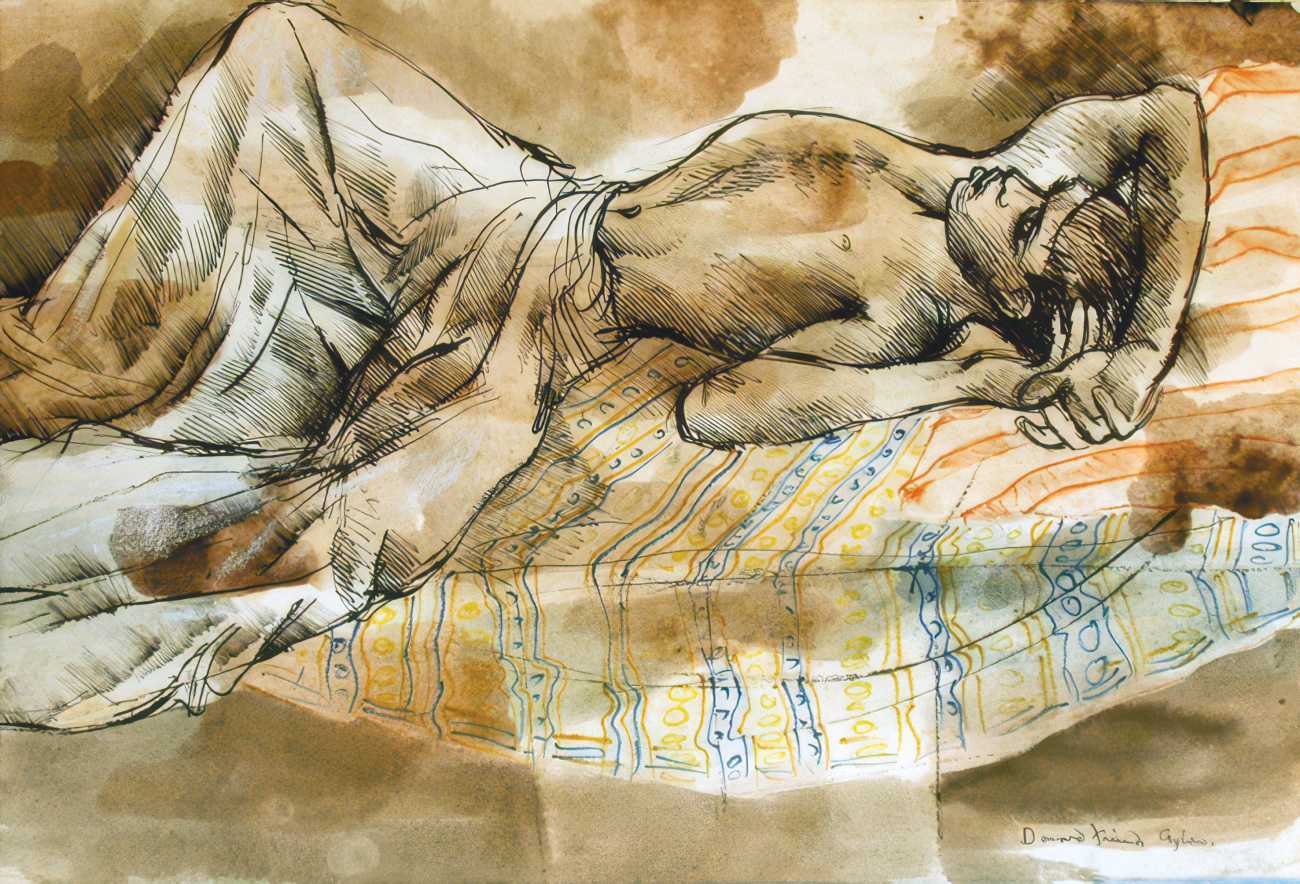
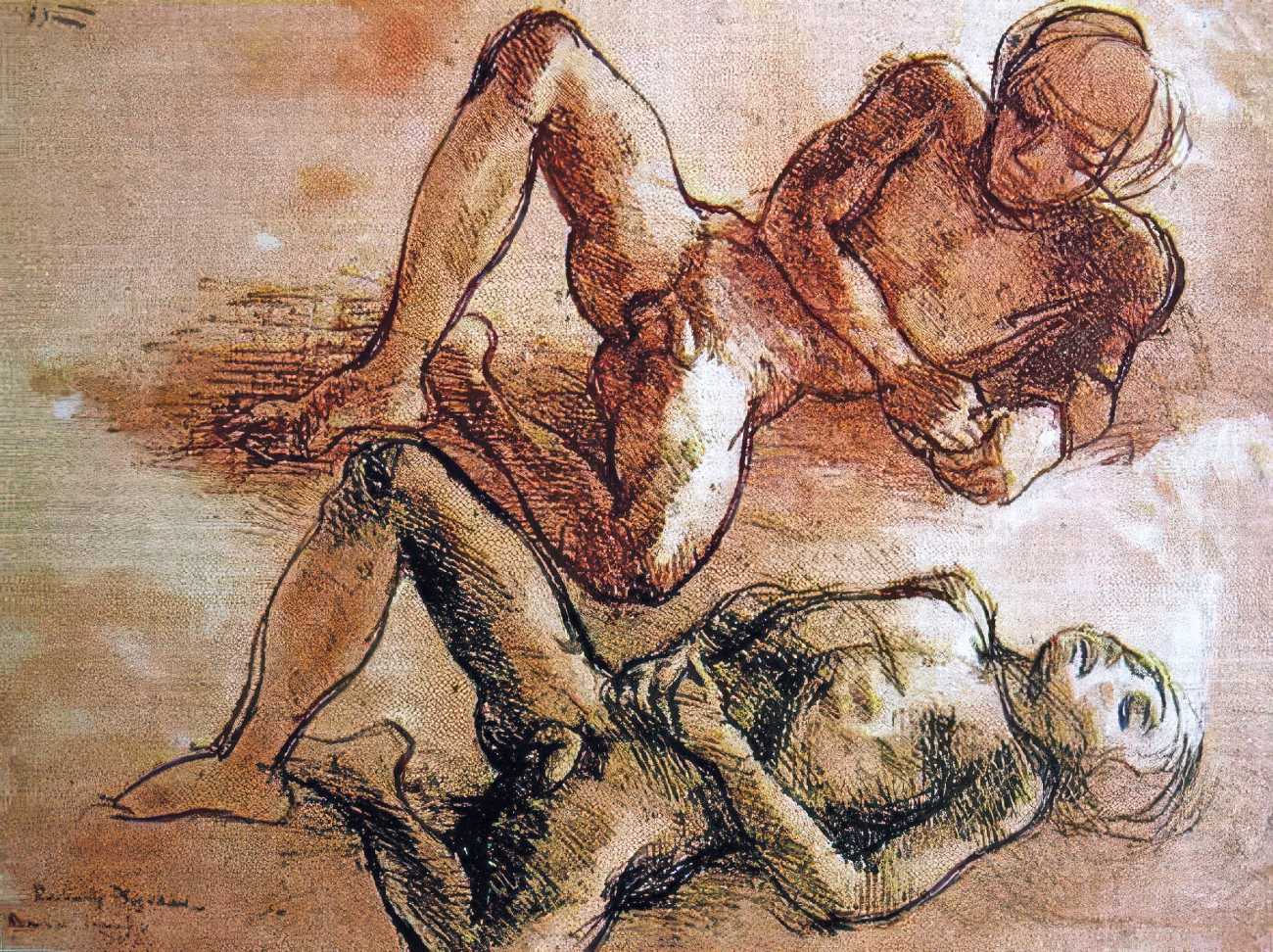
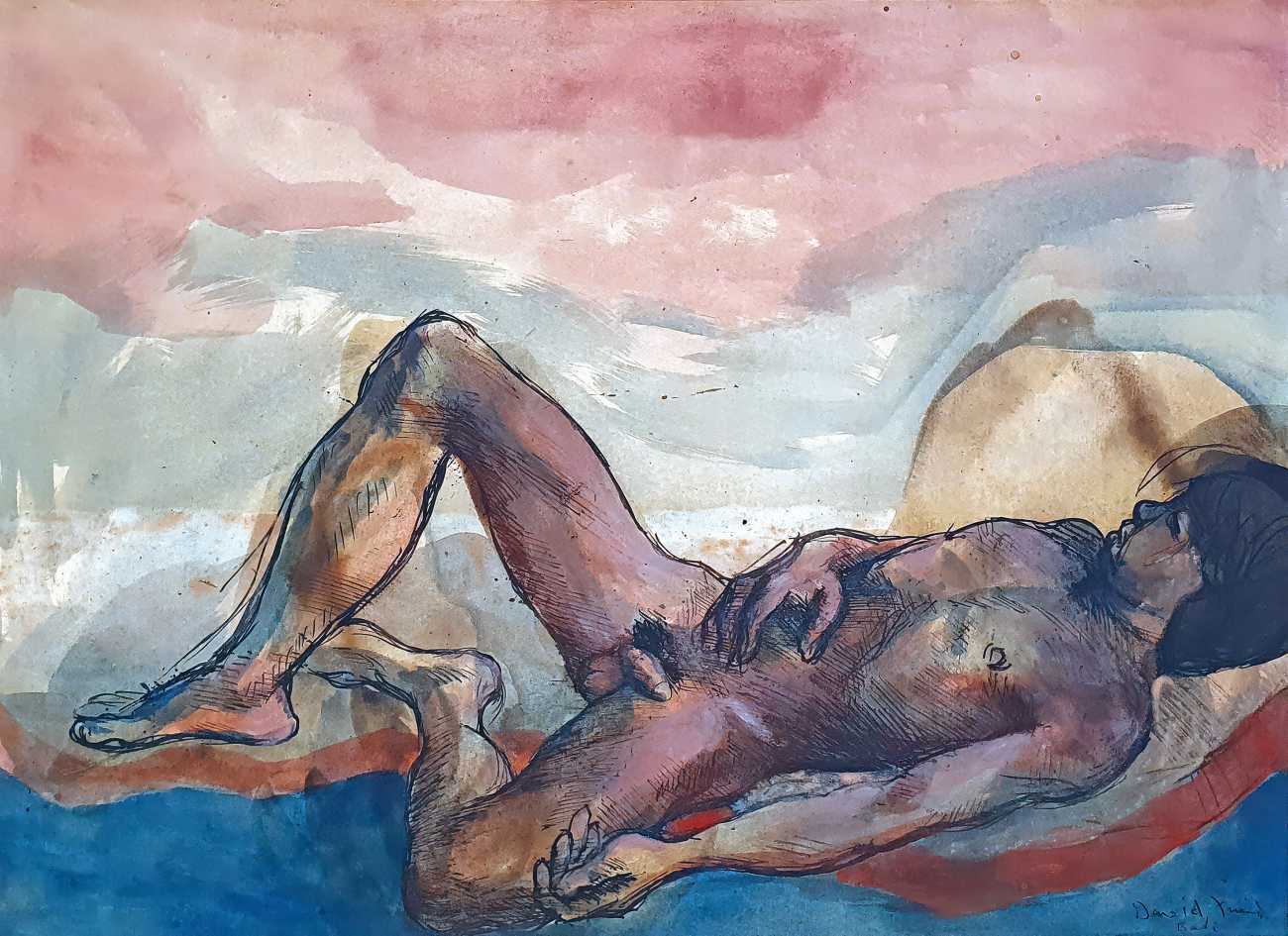
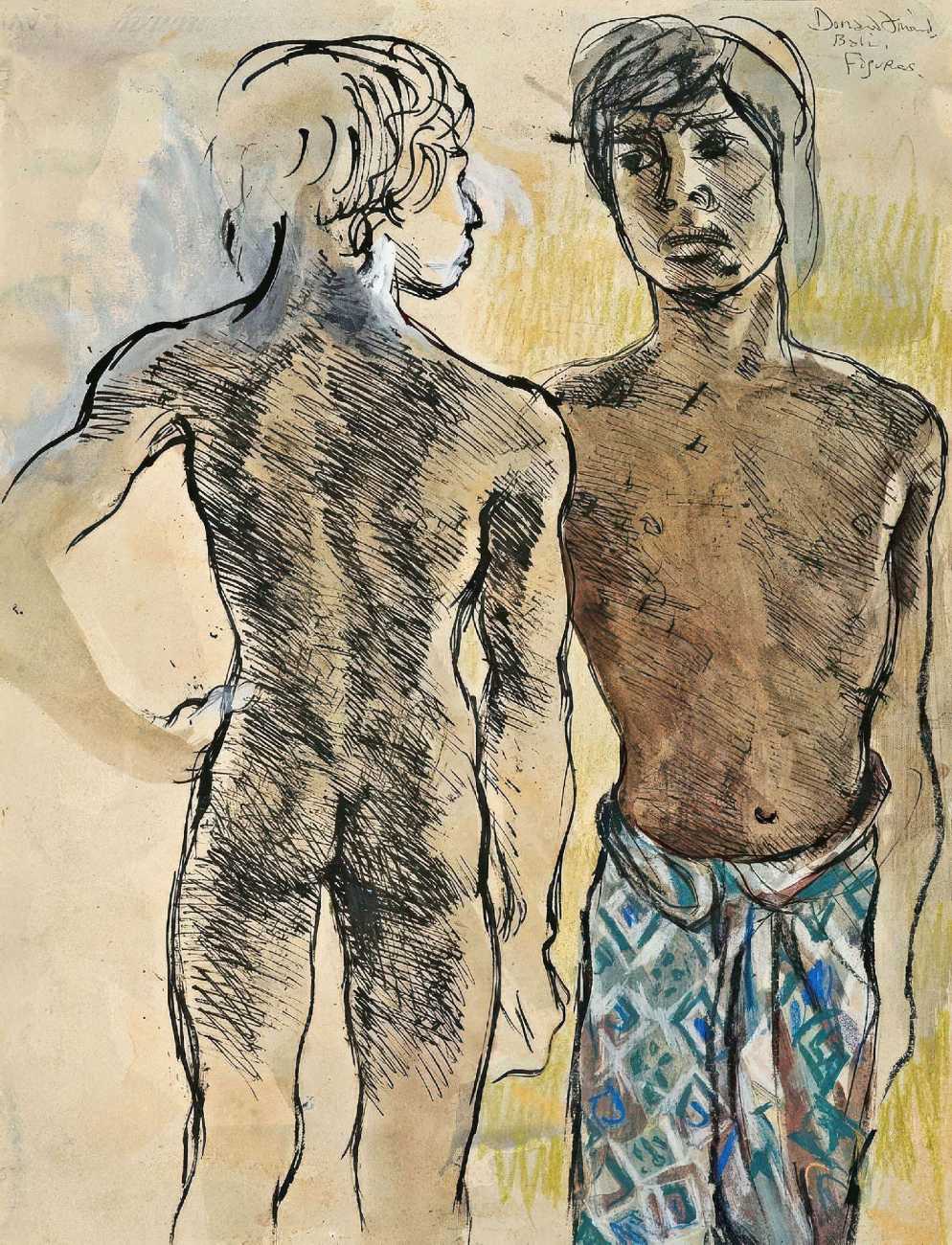
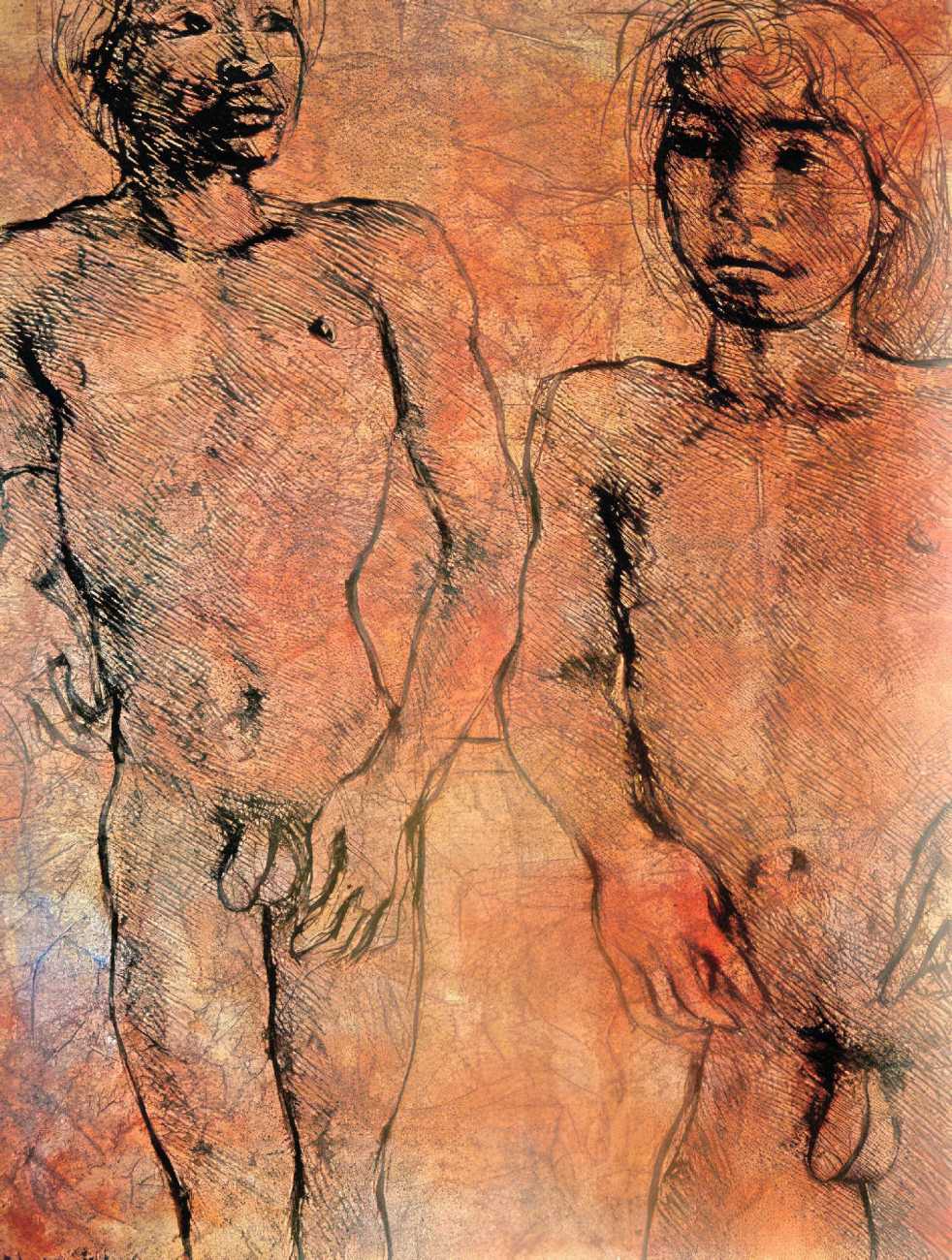
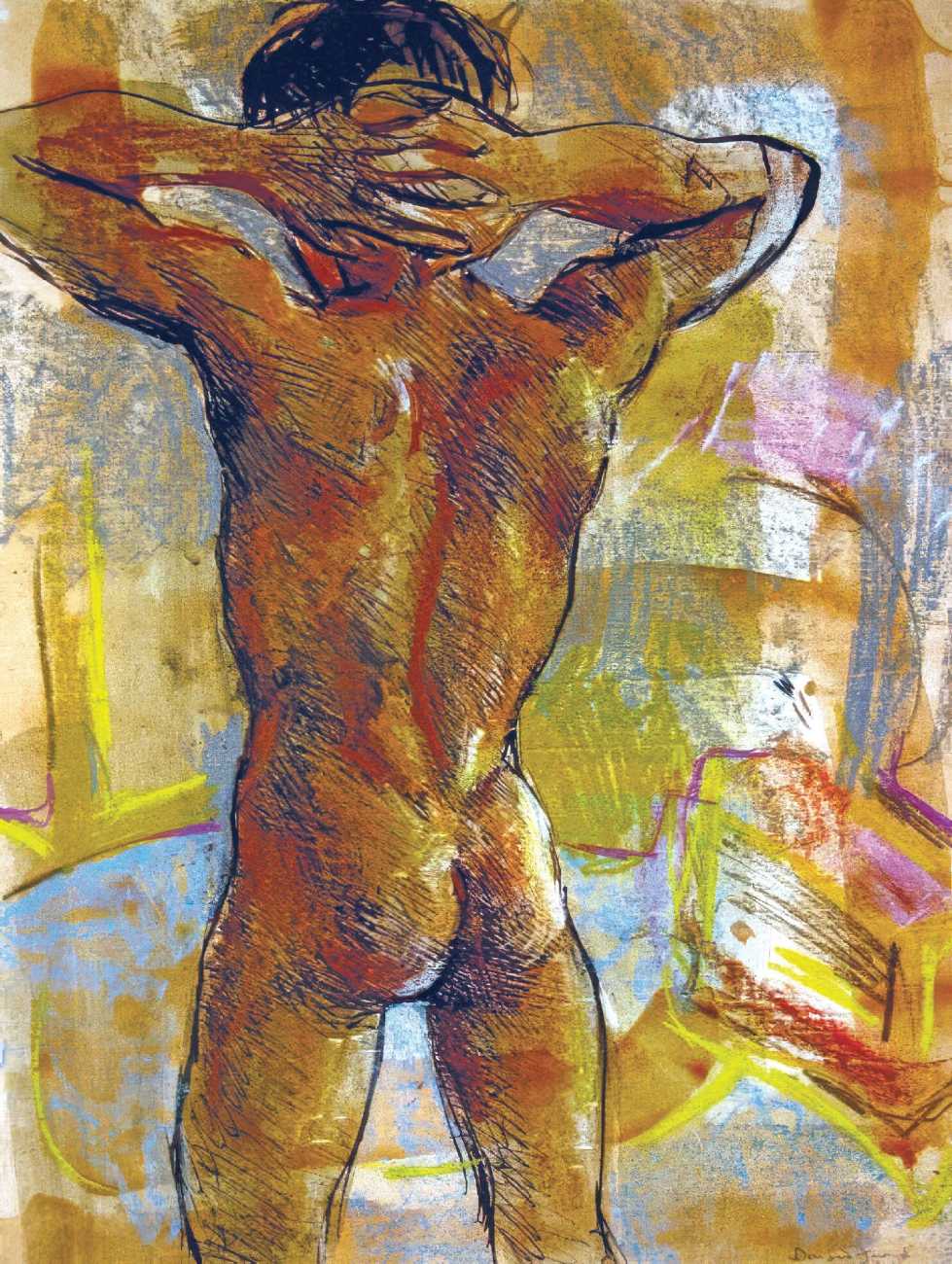
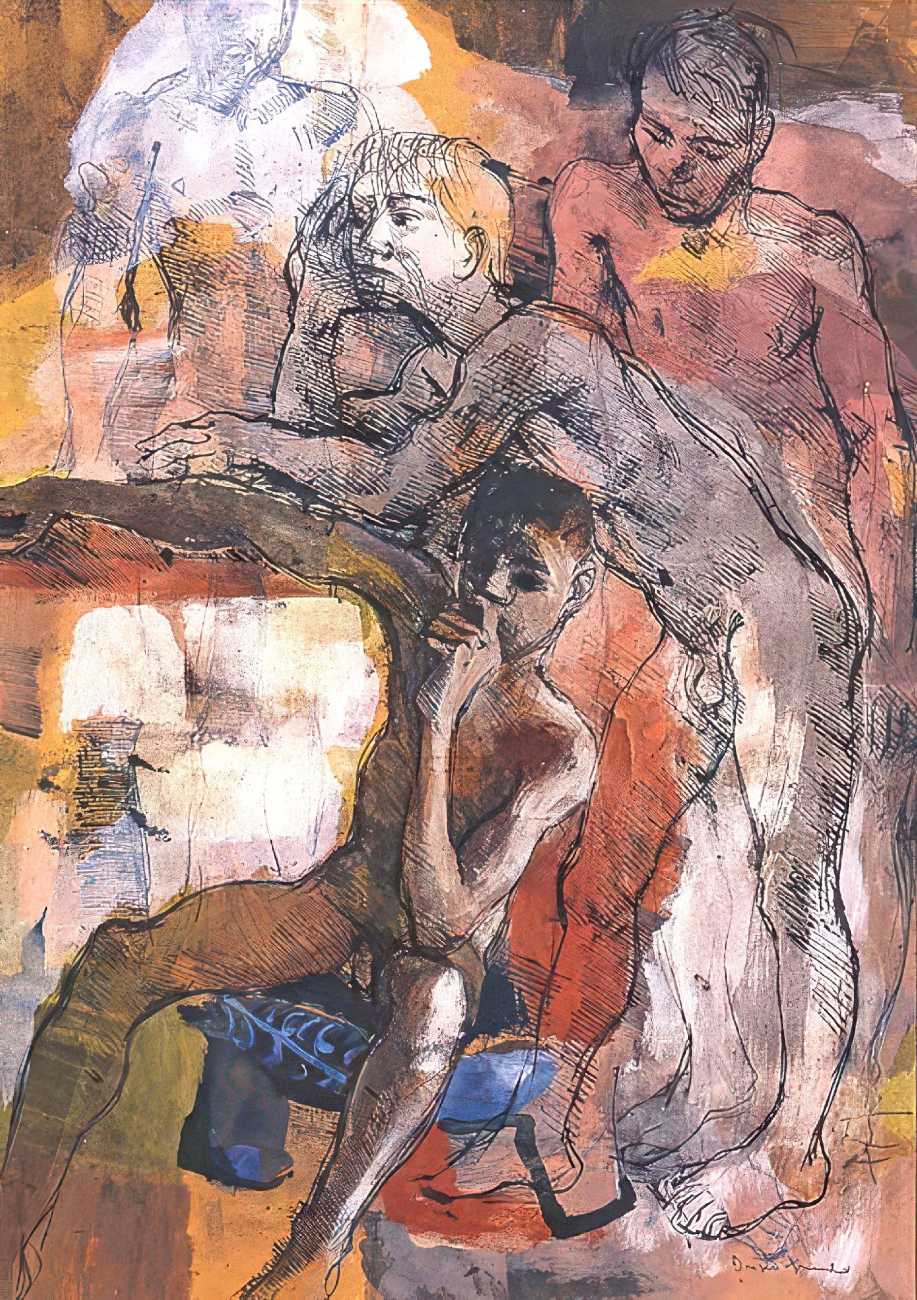
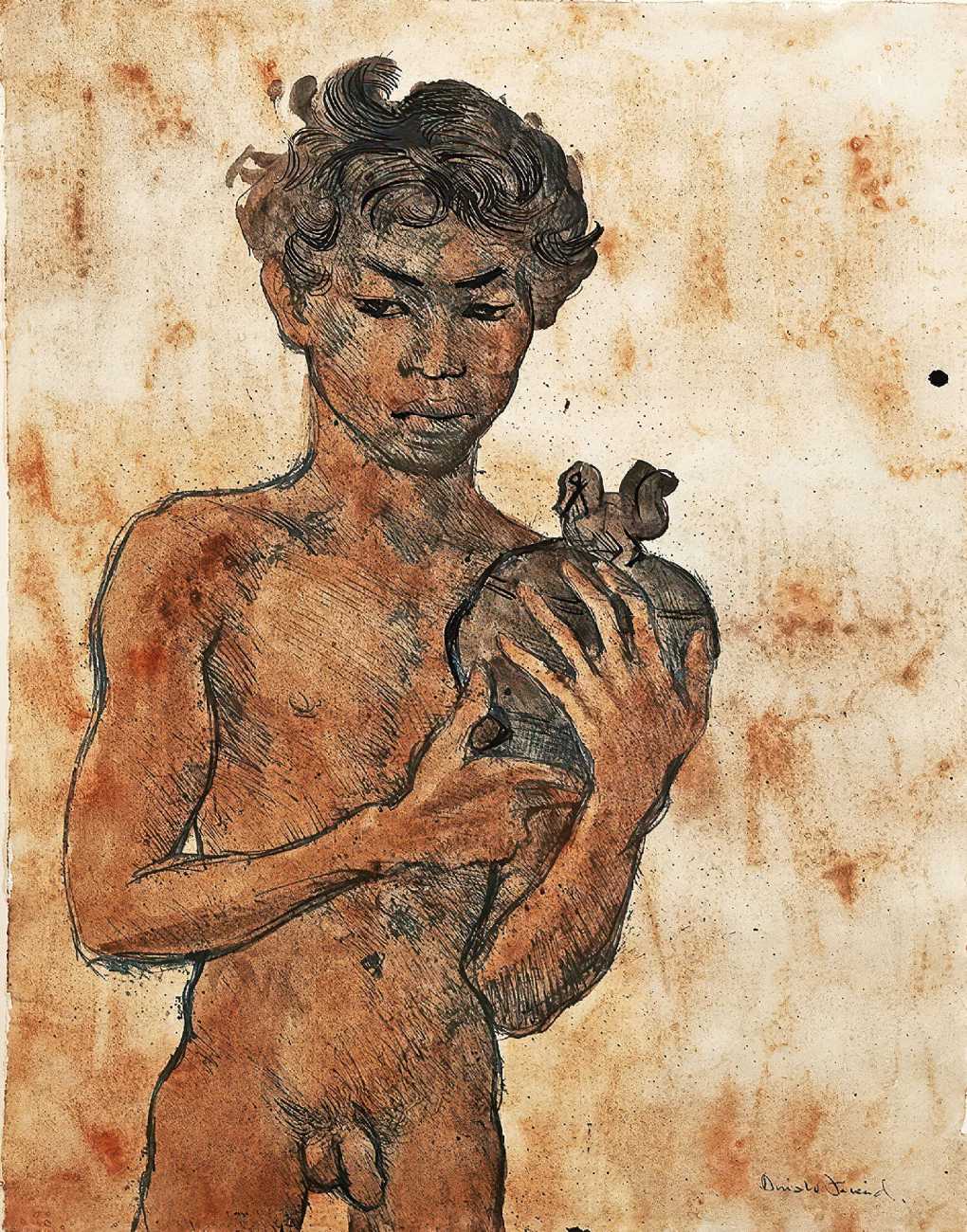
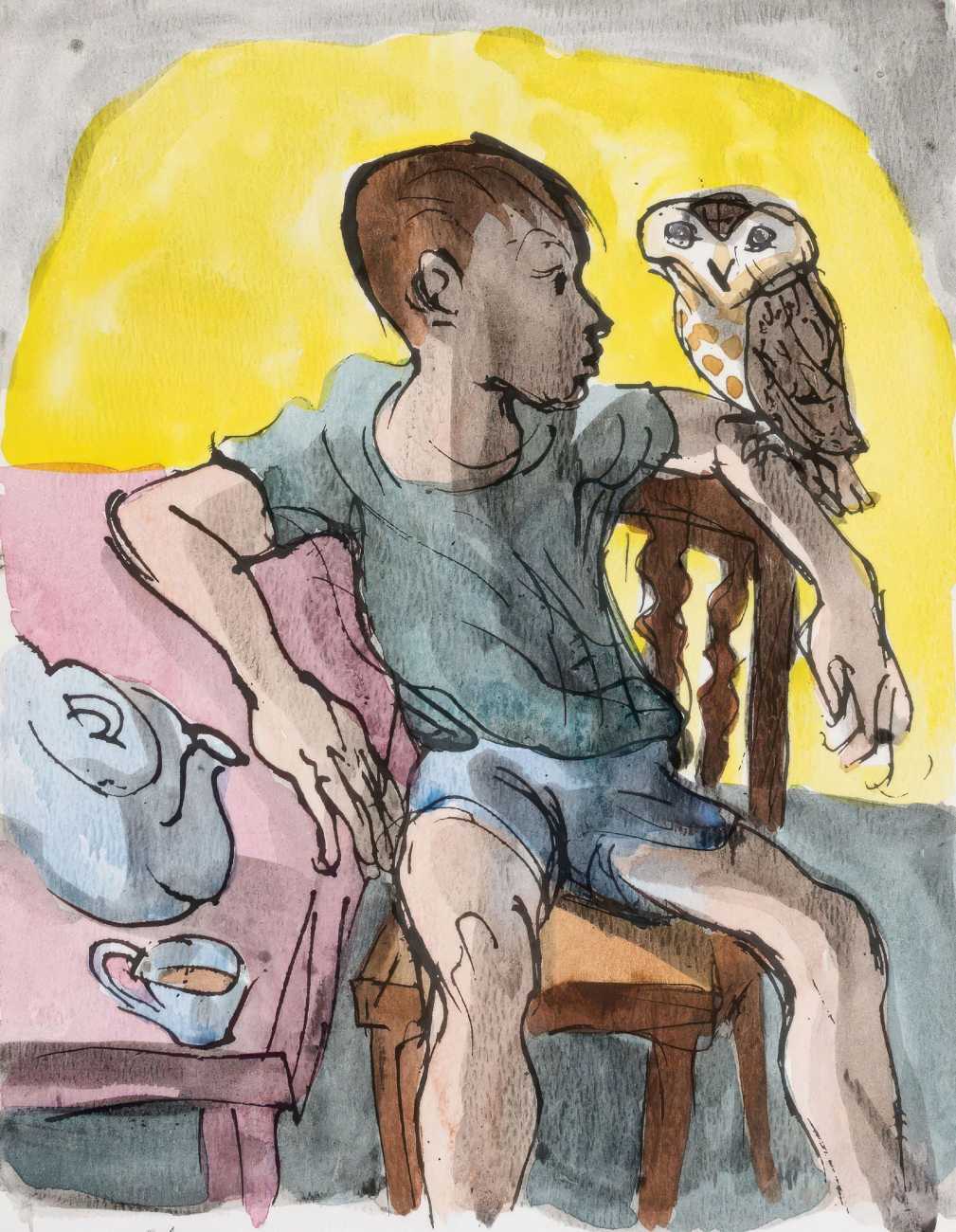
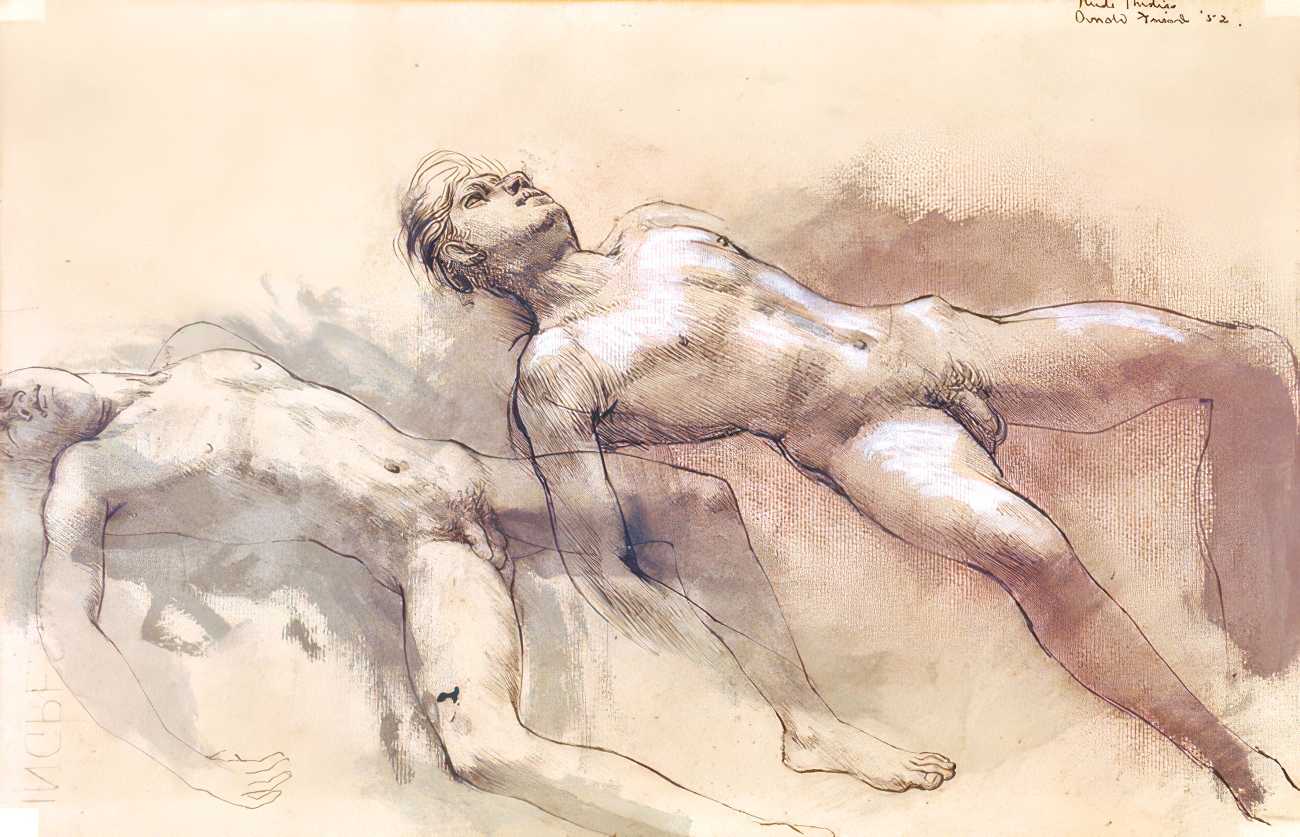
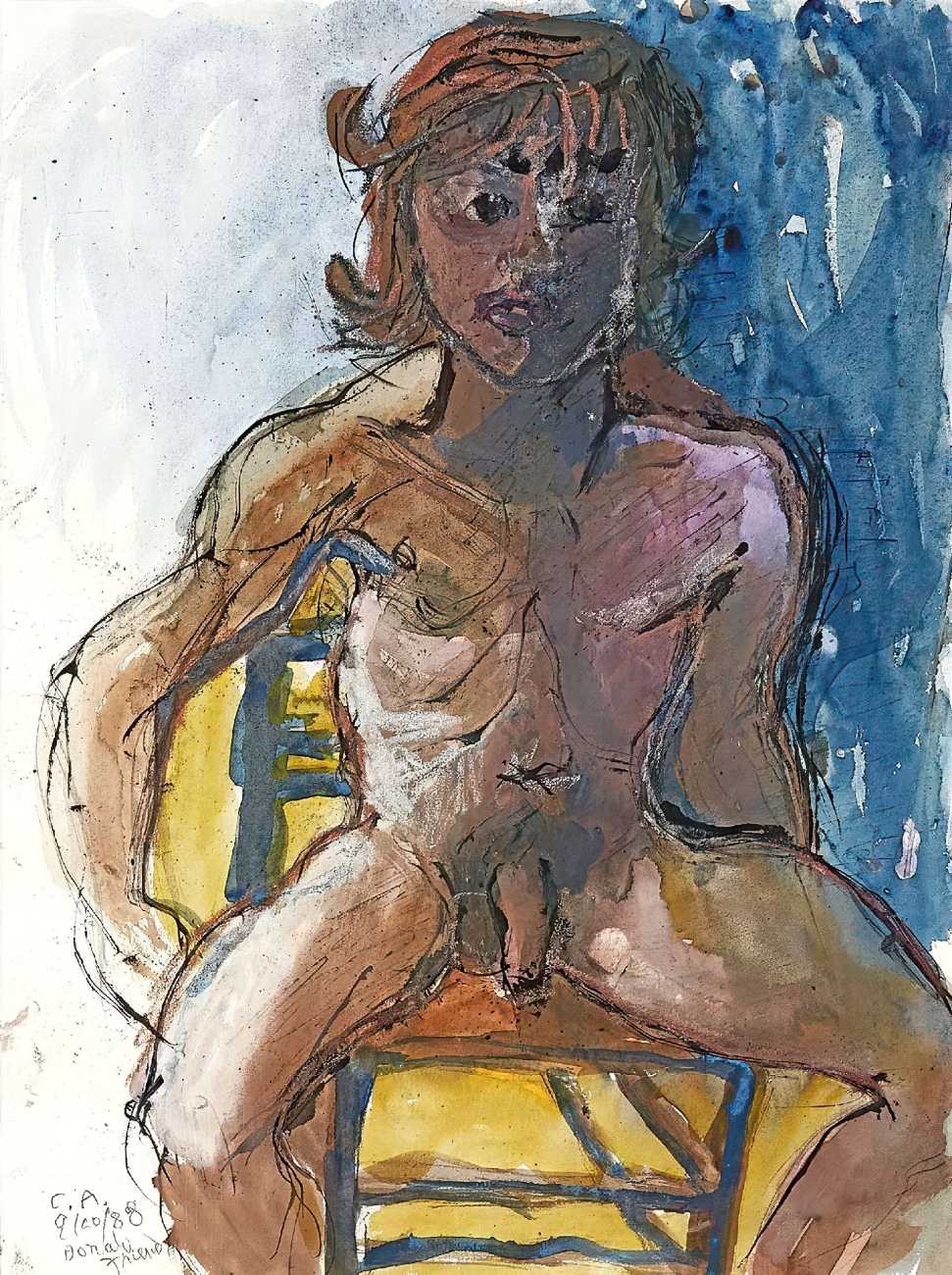
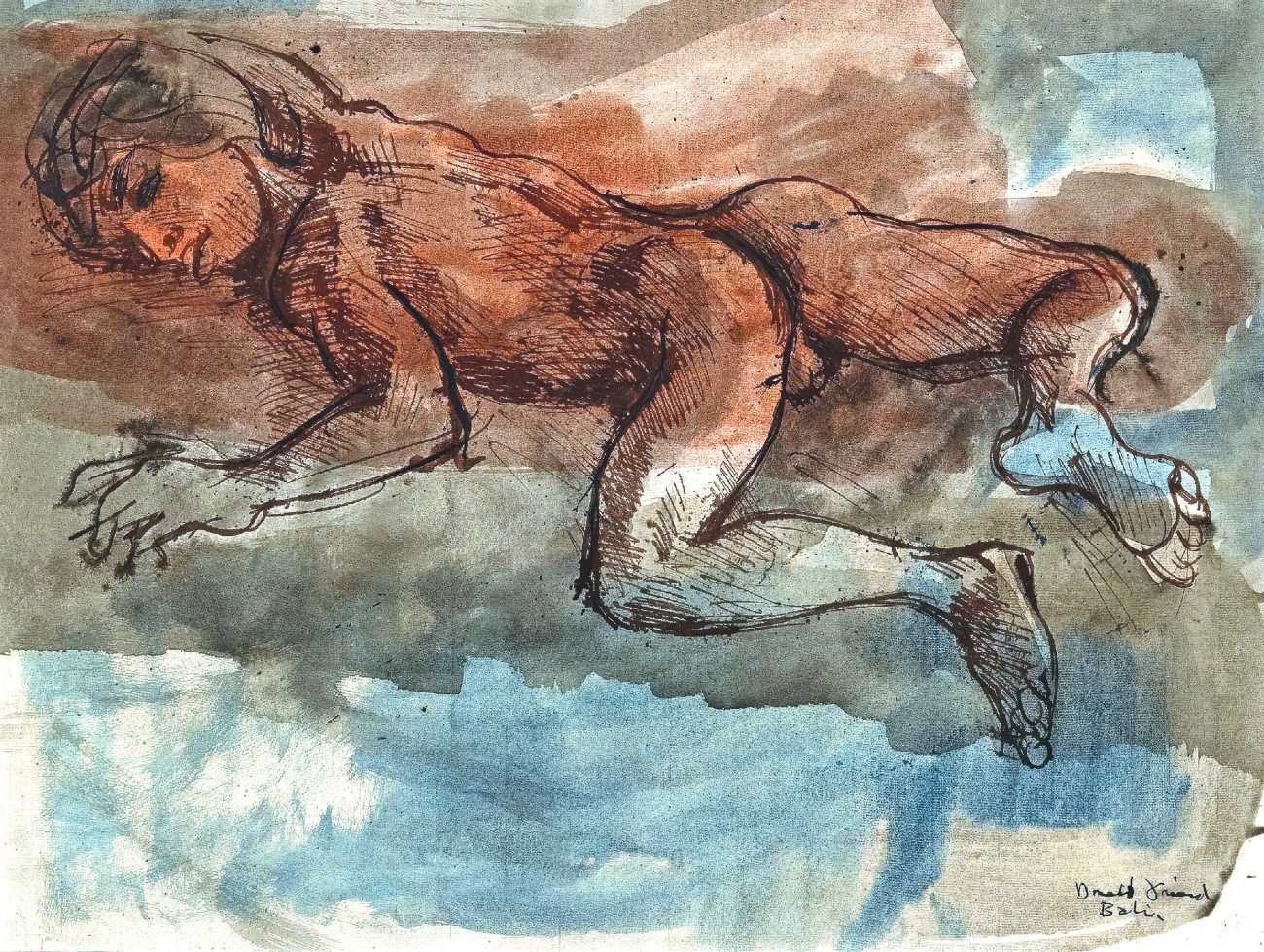
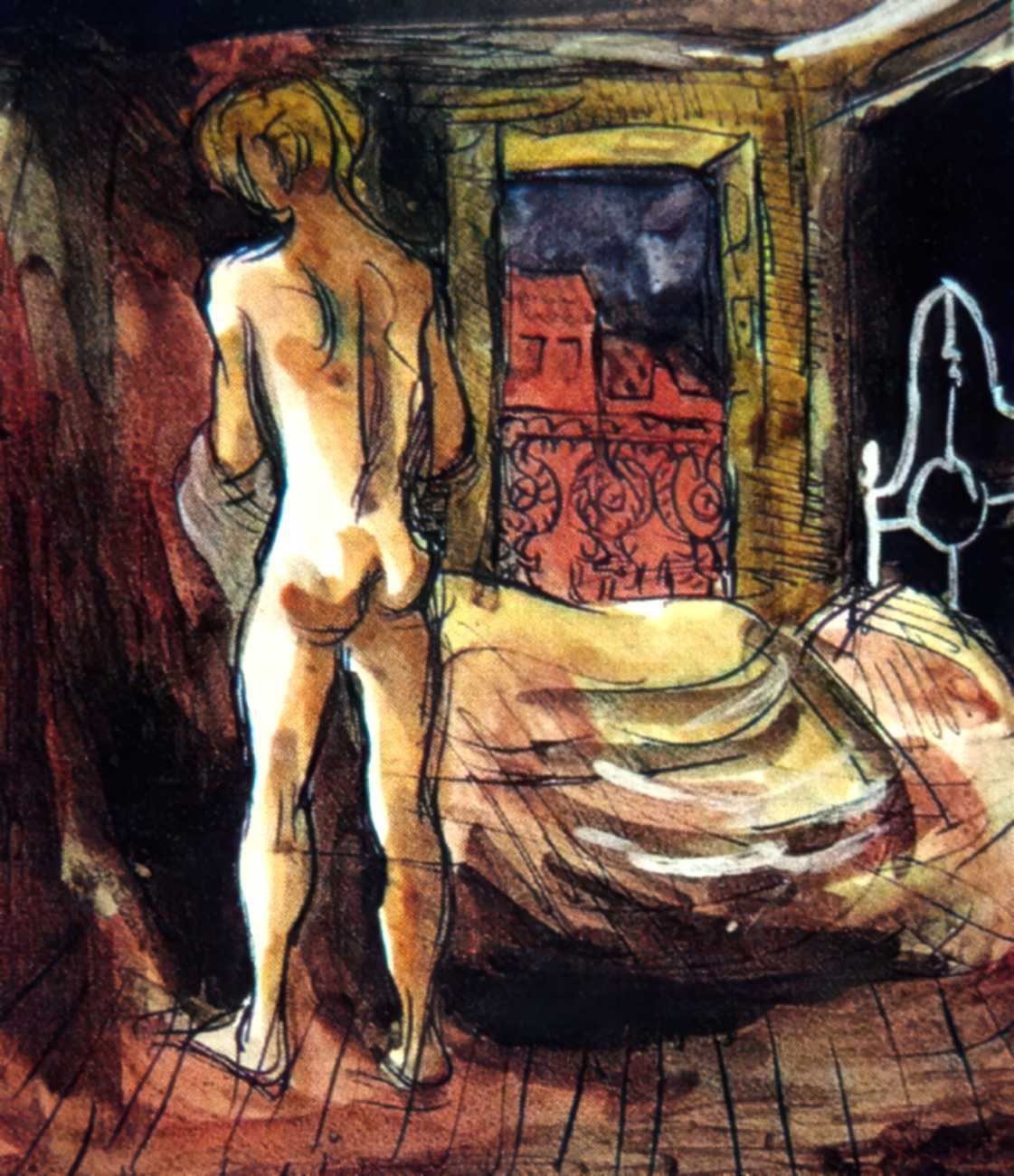
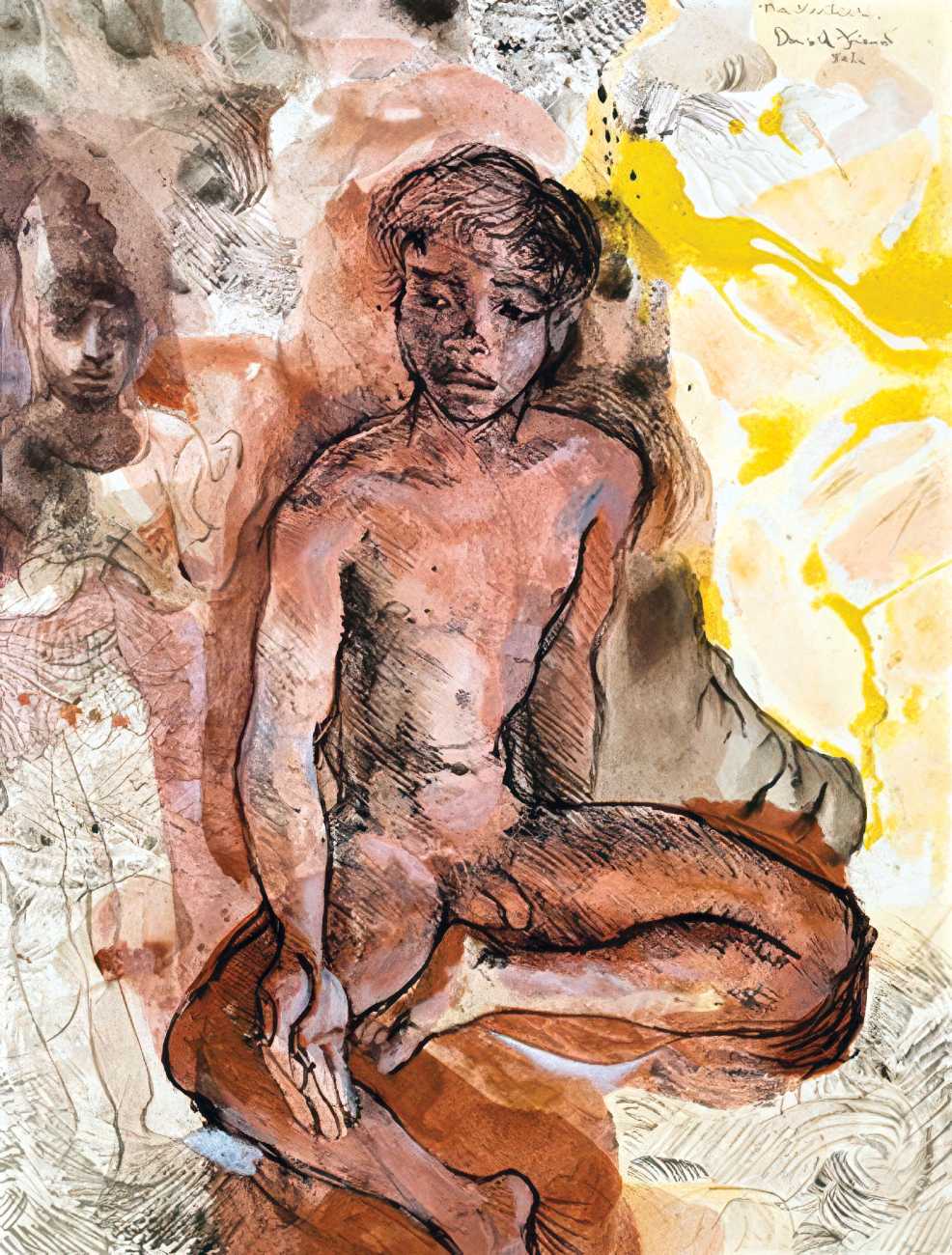
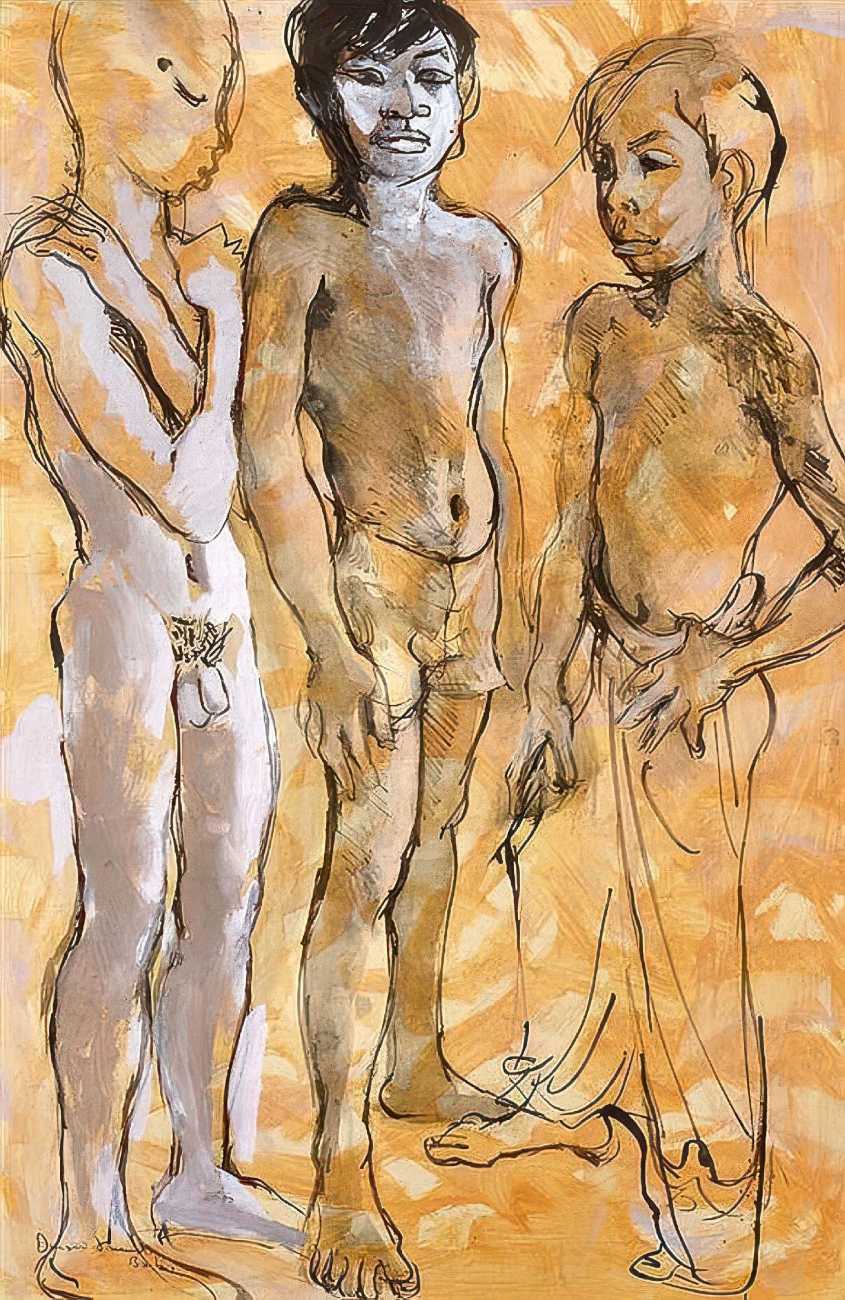
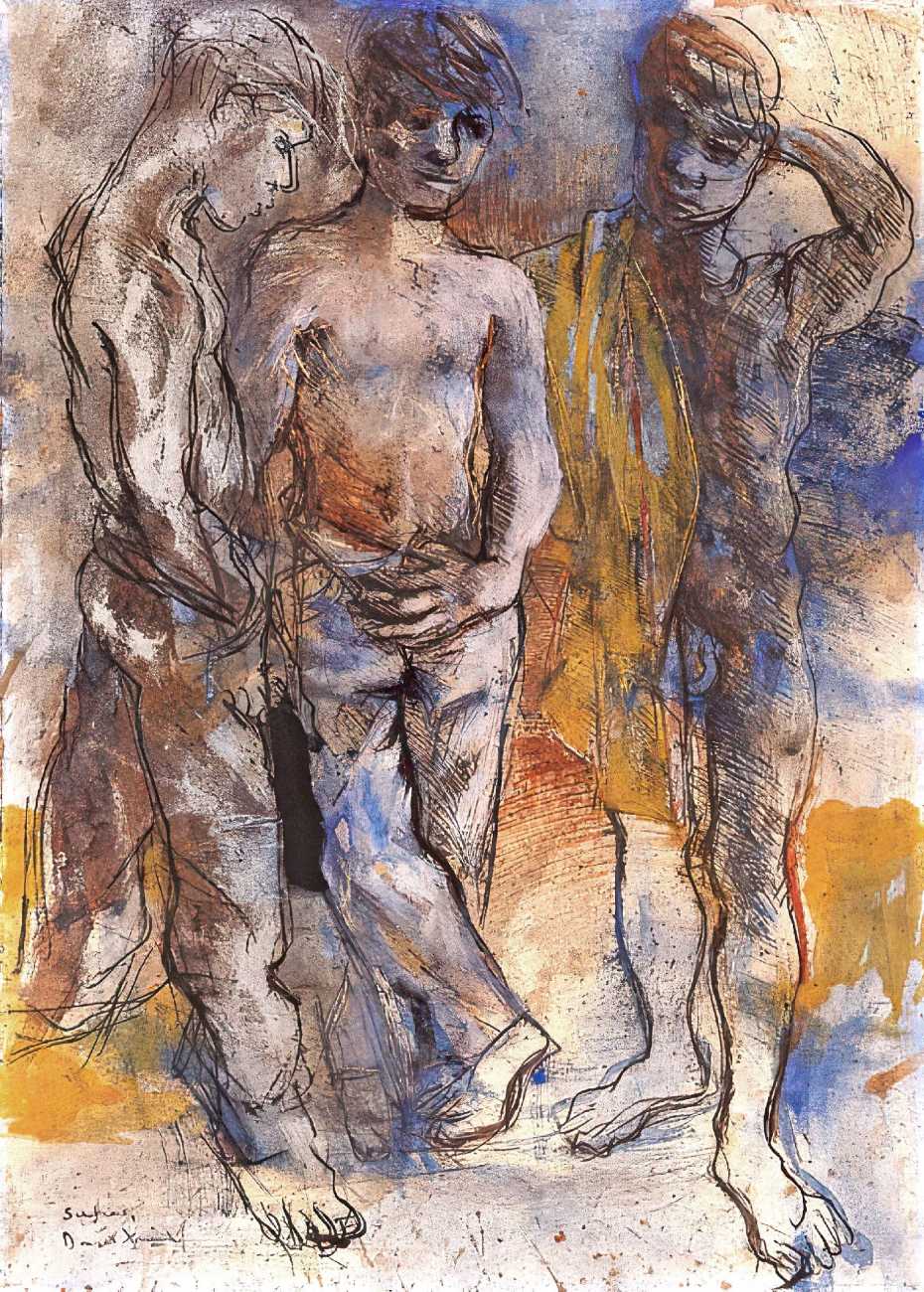
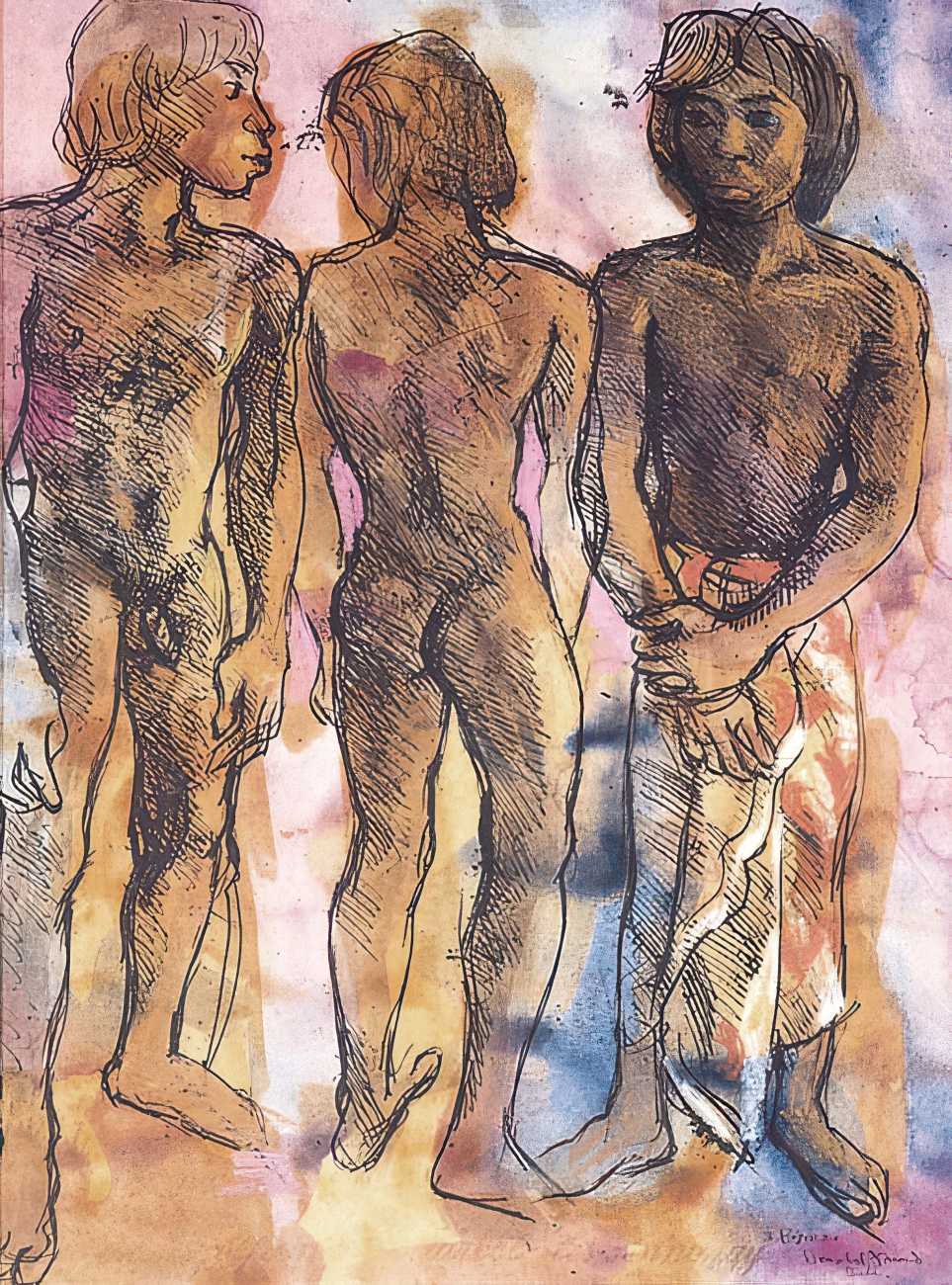
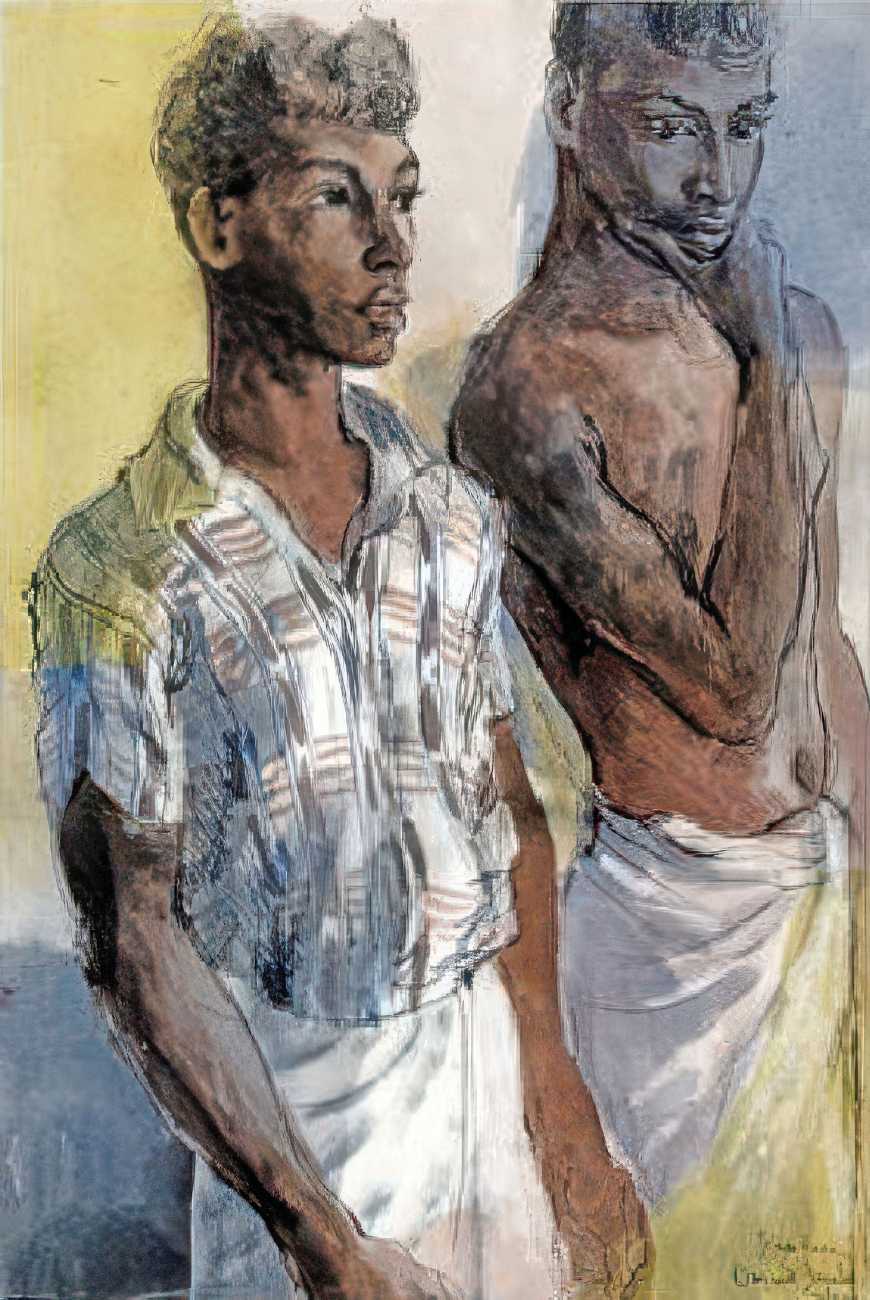
Alongside these more inventive compositions are intimate studies of the human figure. Friend returned repeatedly to friends, lovers and professional models, producing paintings that are remarkable for their humanity. Sleeping figures, relaxed poses and quiet moments of reflection dominate the work, while portraits capture both physical likeness and the sitter’s personality. Rather than idealising the body, Friend observed it with sympathy and curiosity, recording subtle shifts of posture and expression. Even where the paint becomes richer and more opaque, the drawing remains visible beneath the surface.
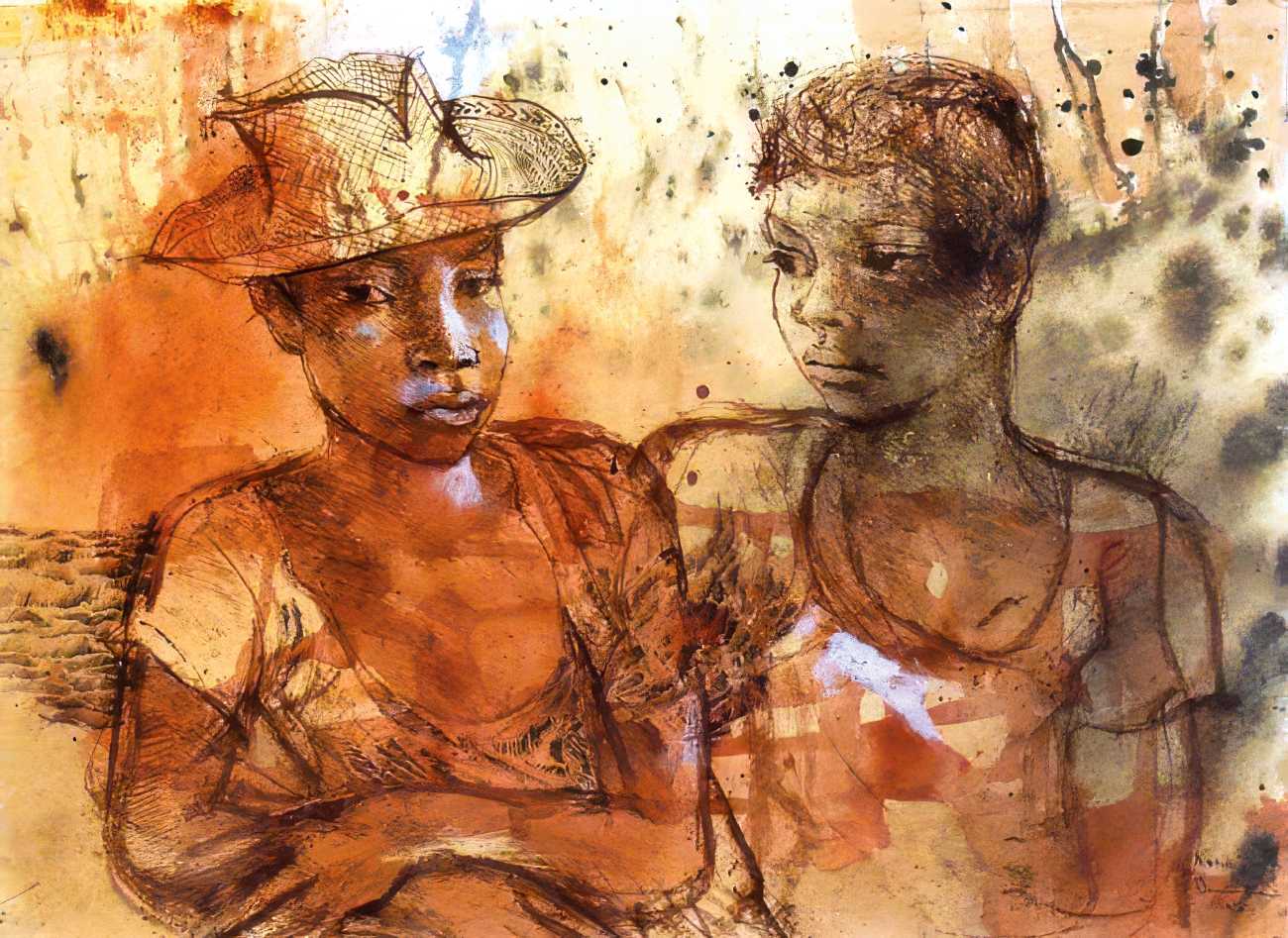
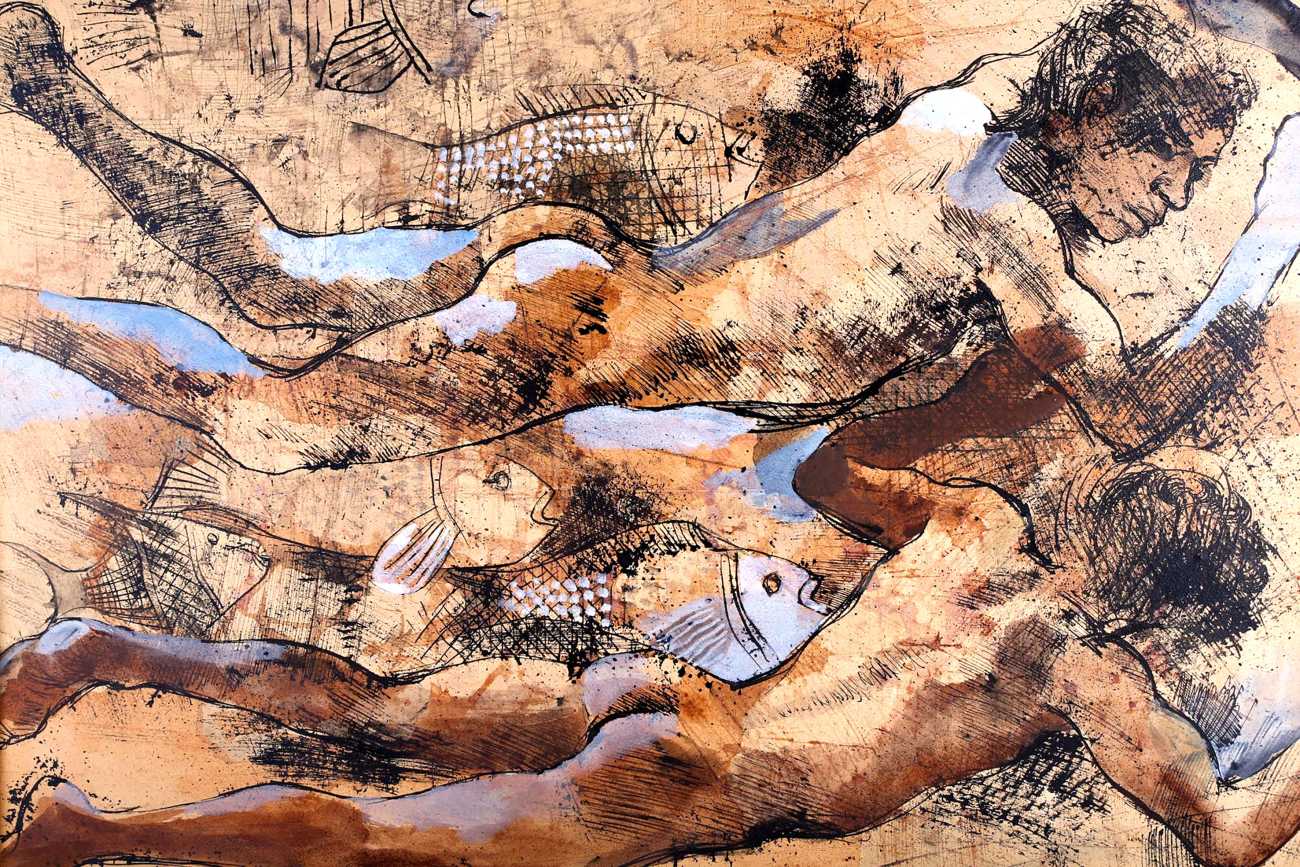
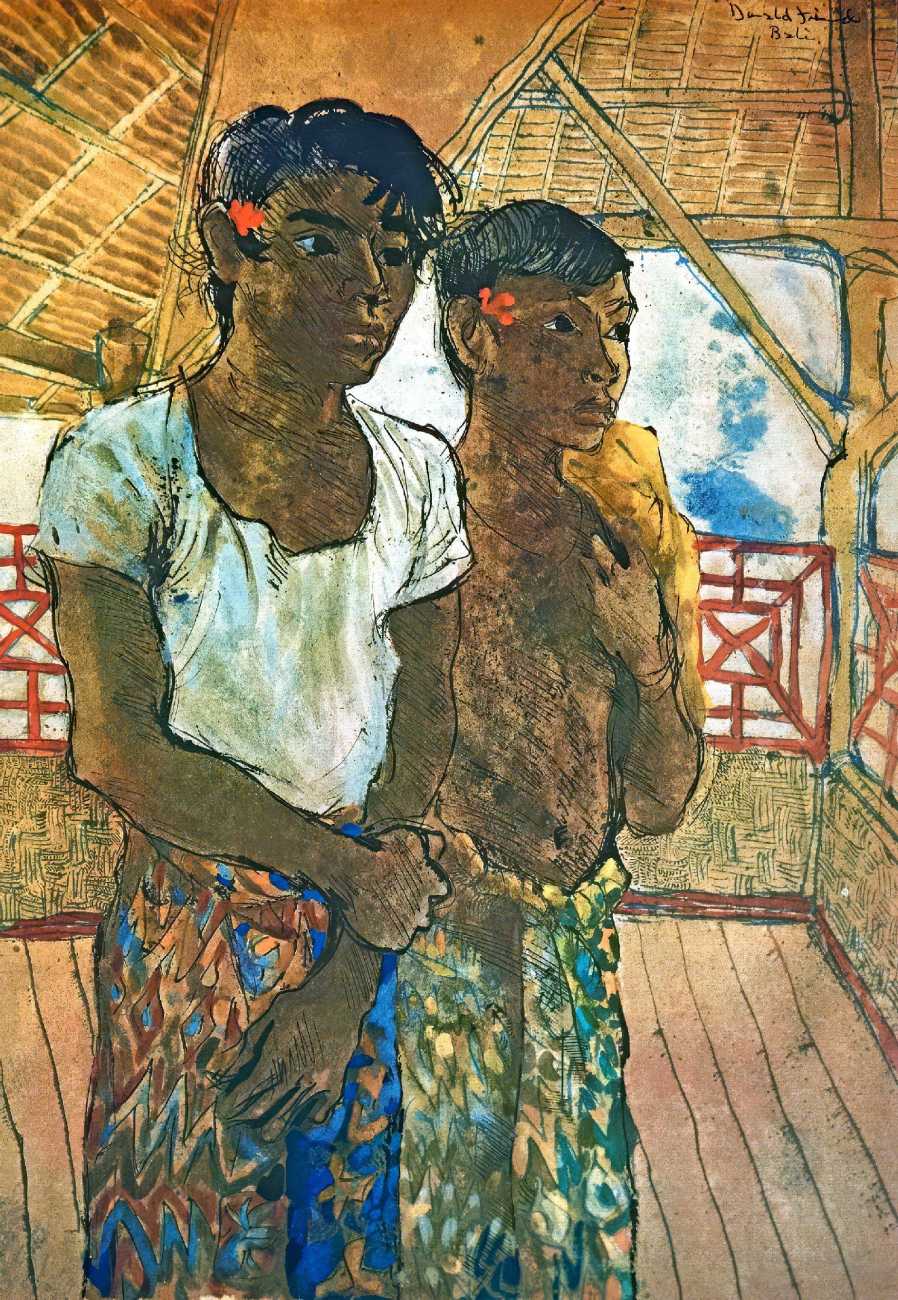
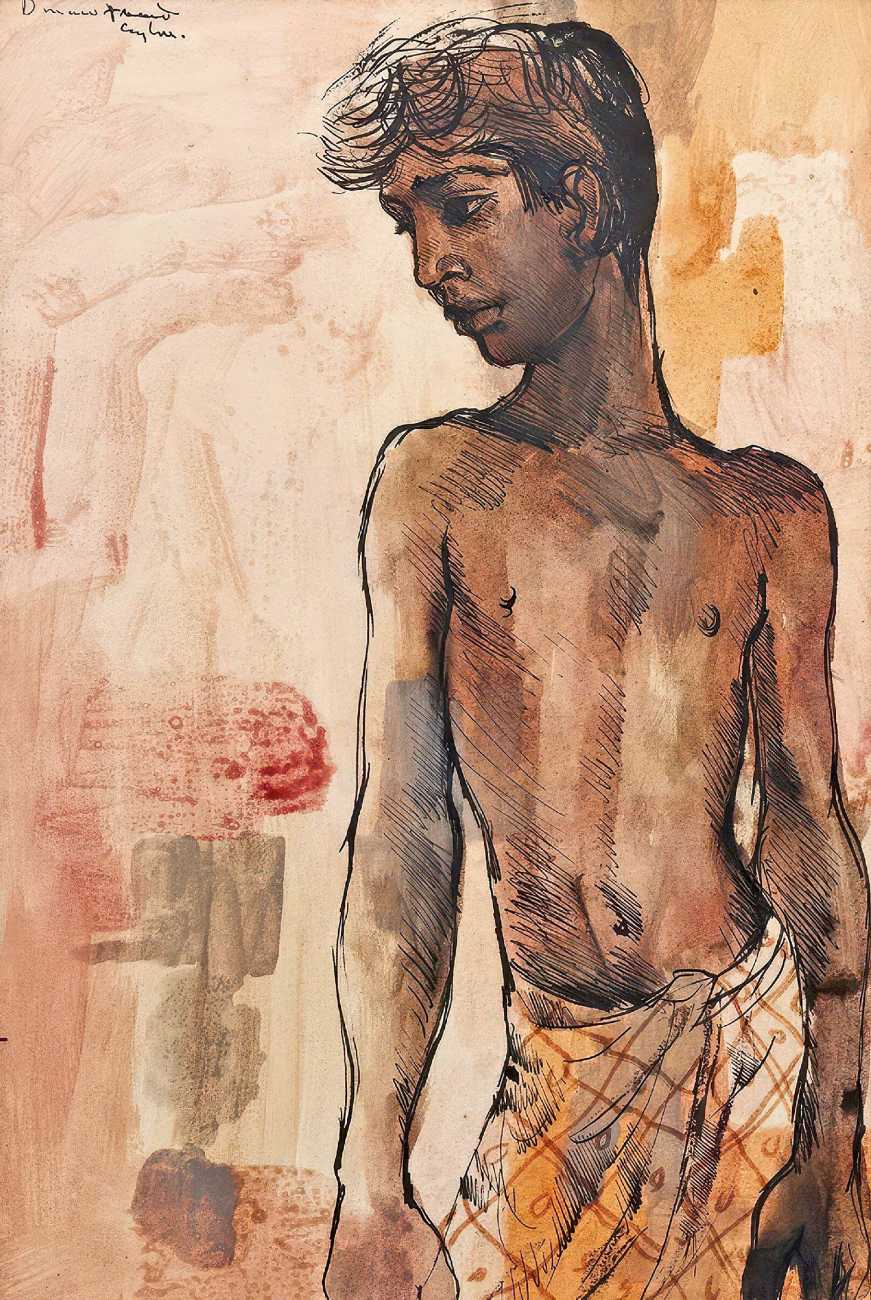
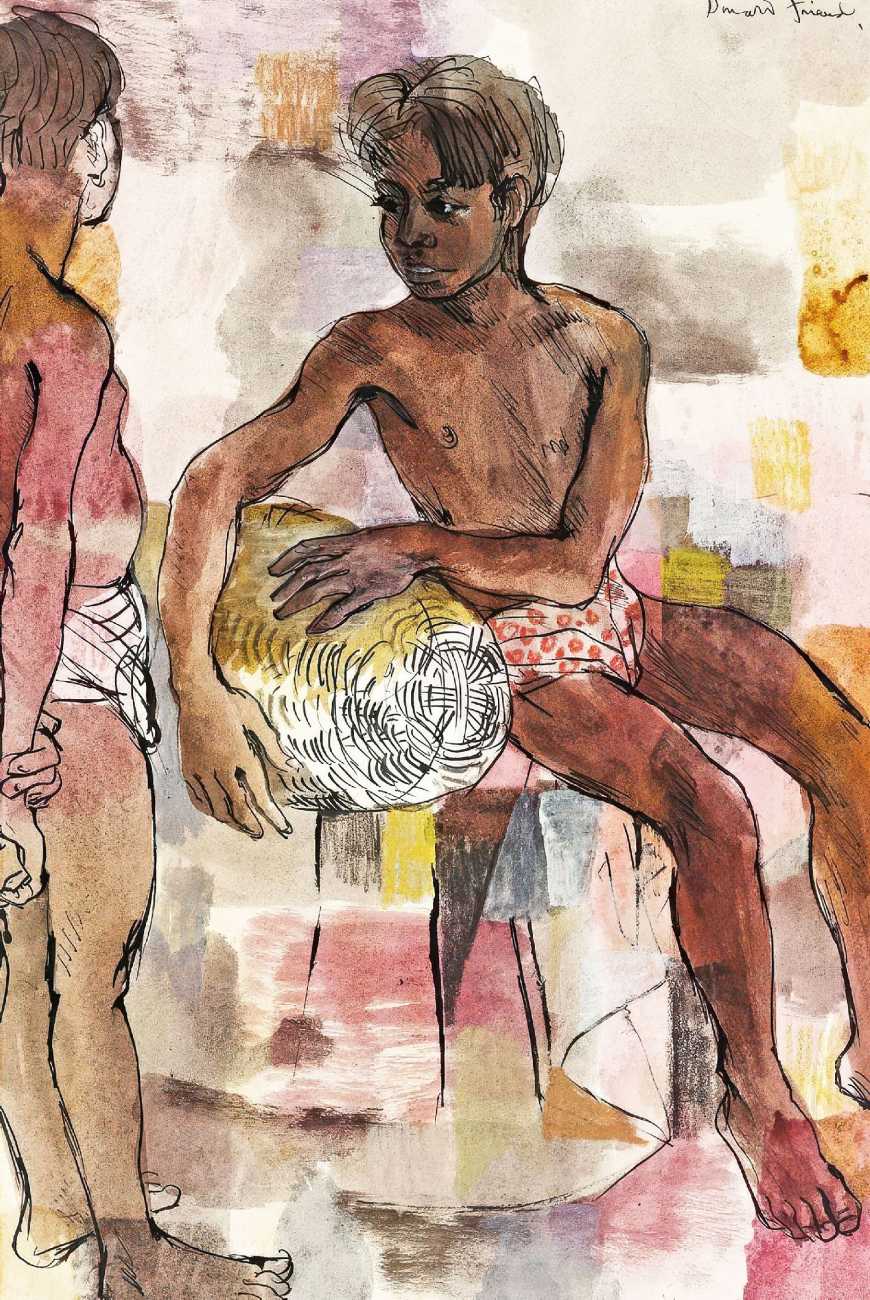
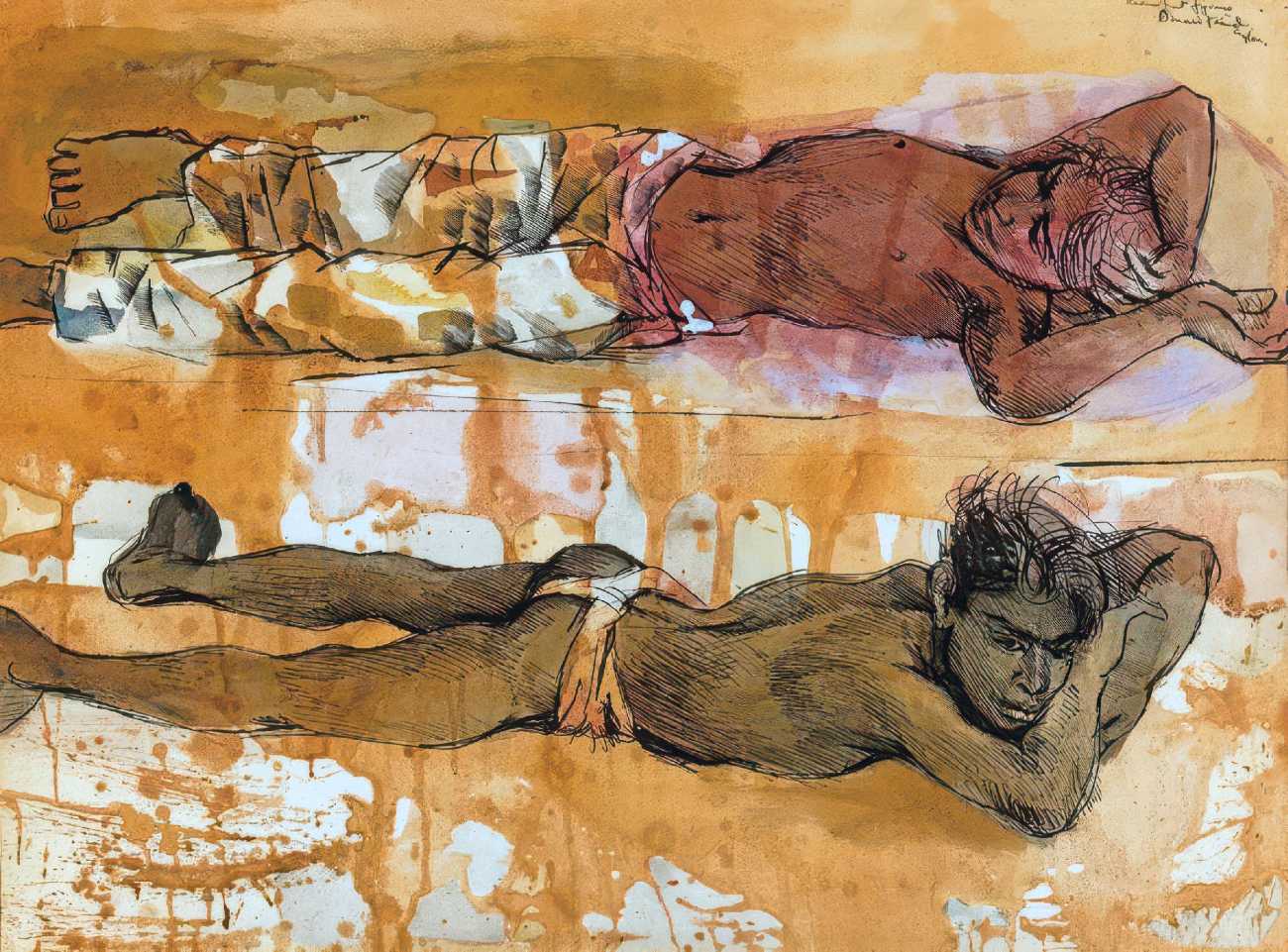
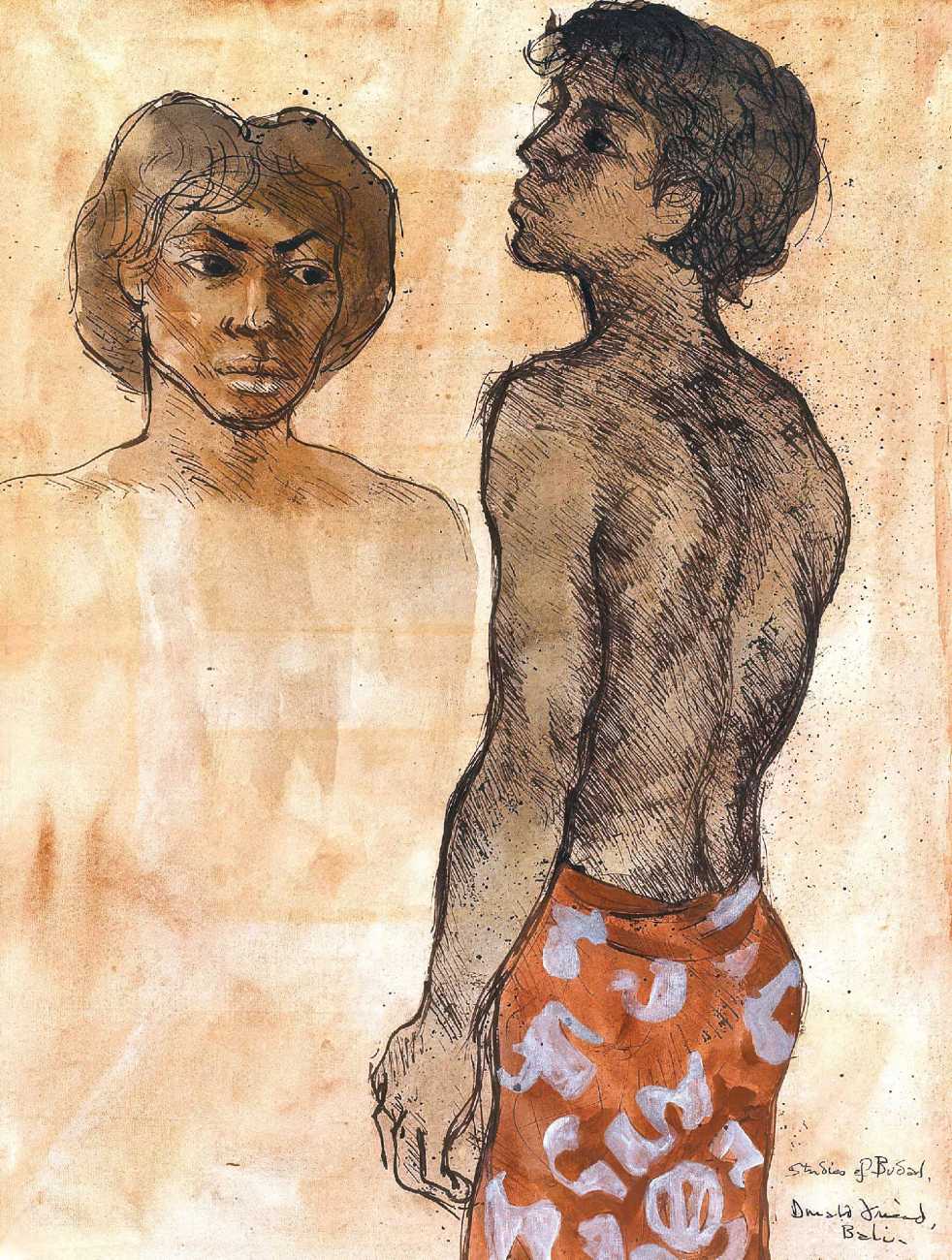
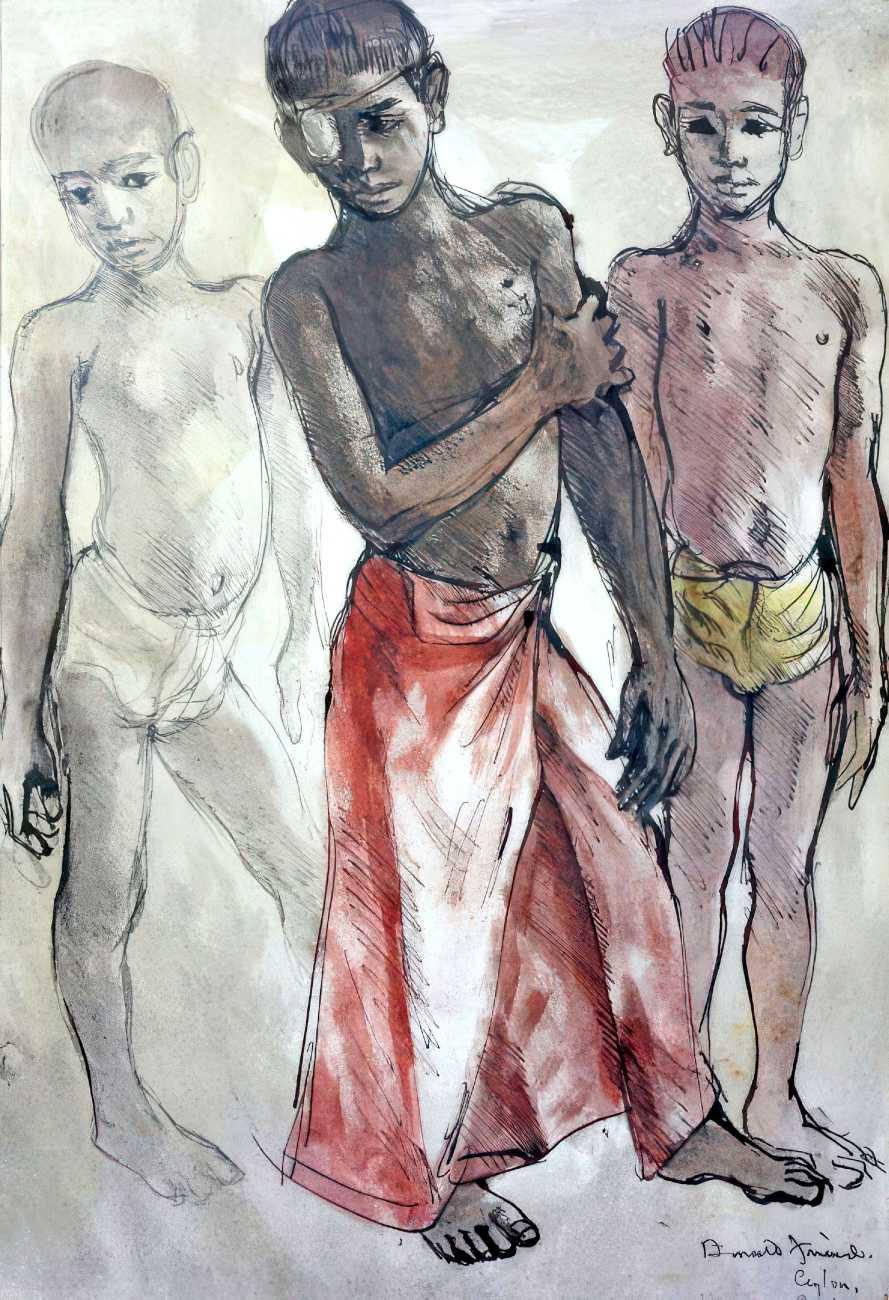
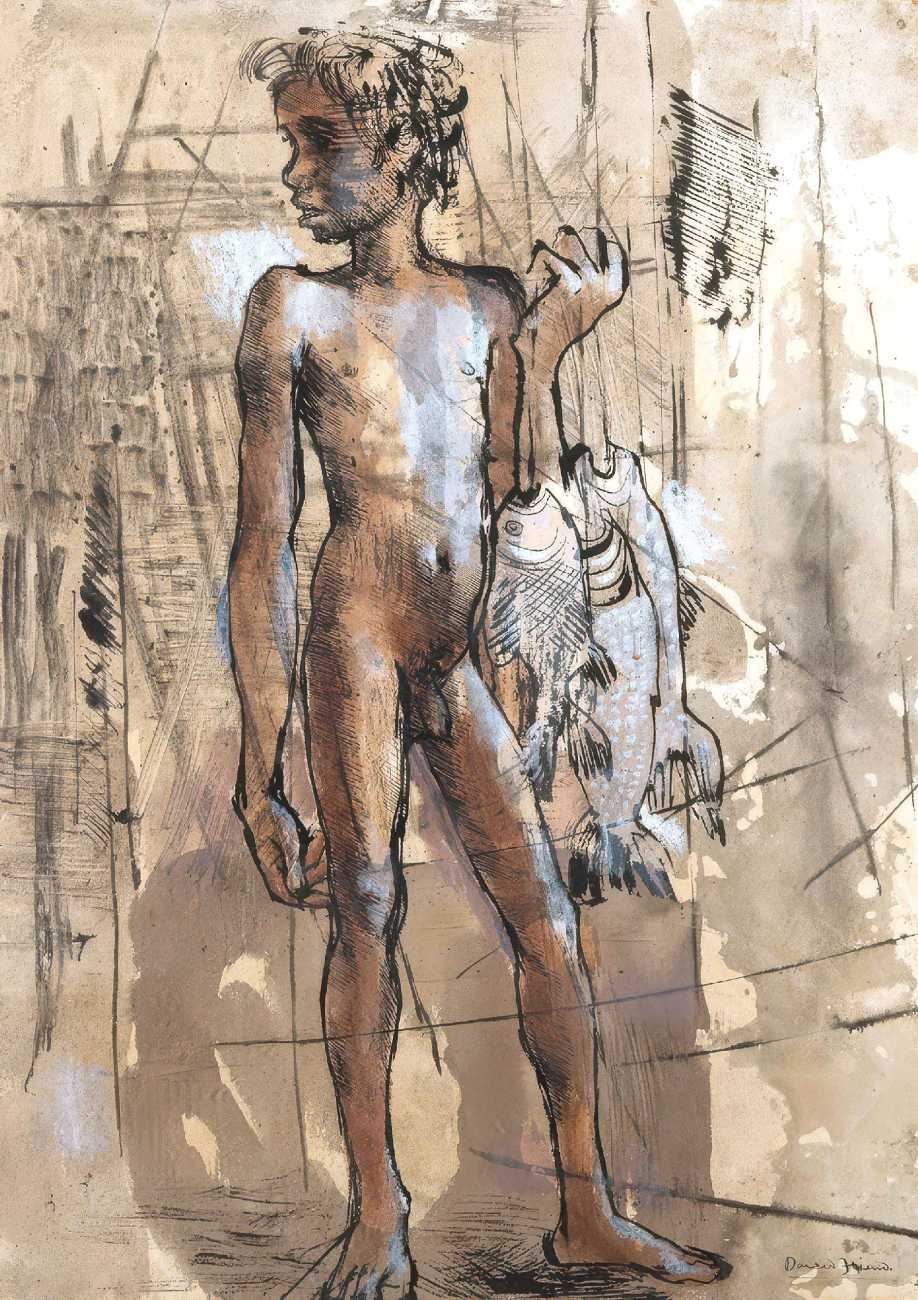
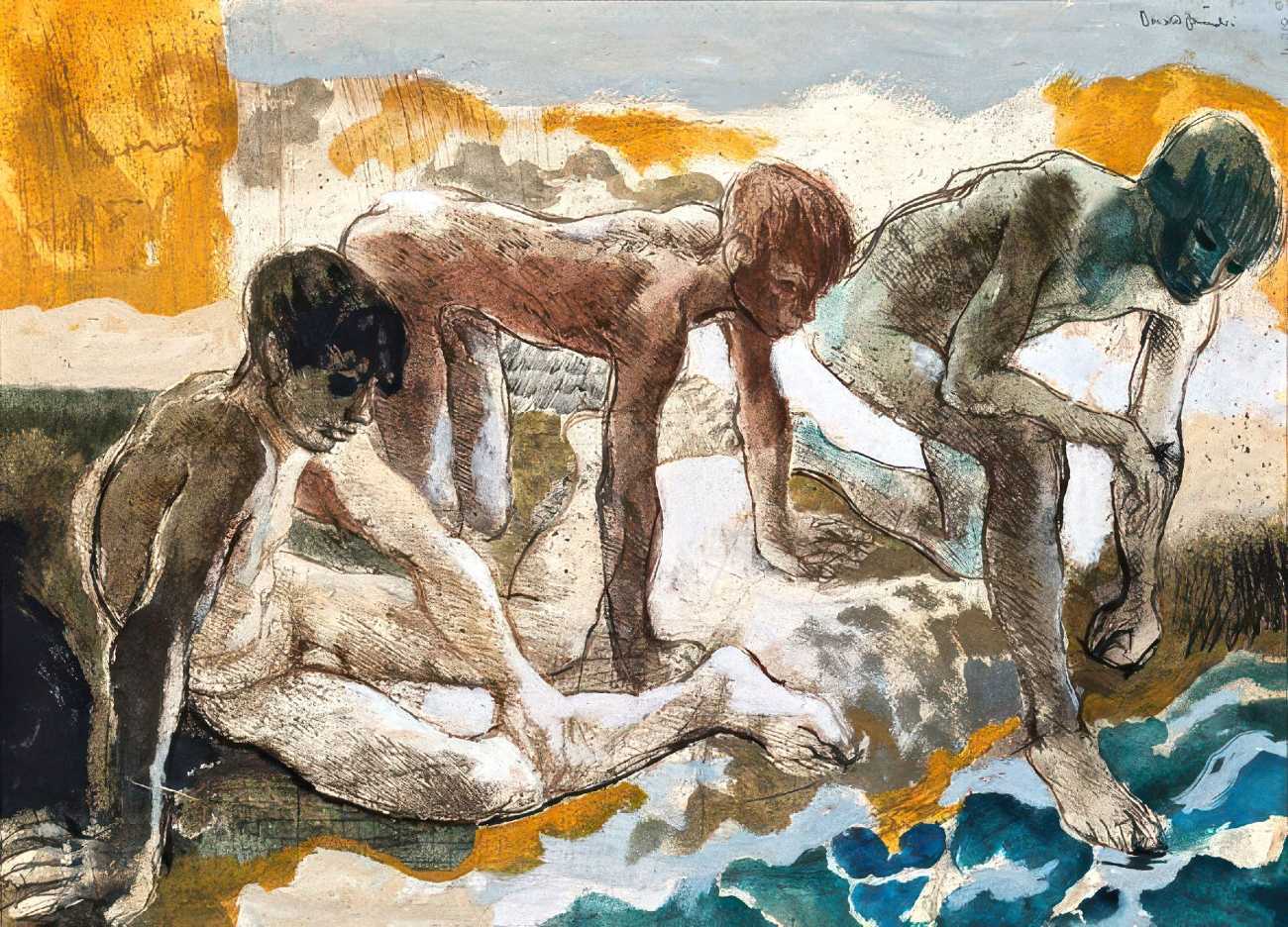
Travel transformed Friend’s art as much as formal training. Time spent in Ceylon, and later in Indonesia, introduced new landscapes, new customs, and a wealth of subjects that would occupy him for the rest of his life. In Bali he found a culture whose ceremonies, music and everyday rhythms offered endless inspiration. Young fishermen, dancers, market scenes and village life appear throughout the paintings, set against tropical light, shimmering water and lush vegetation.
The male figure runs consistently through this body of work. Friend painted boys and young men throughout his career, reflecting a lifelong fascination with youth, beauty and physical grace, presented with an honesty that was unusual for their time. His subjects are often absorbed in their own world –resting, bathing, fishing – allowing the viewer to share a moment rather than witness a performance.