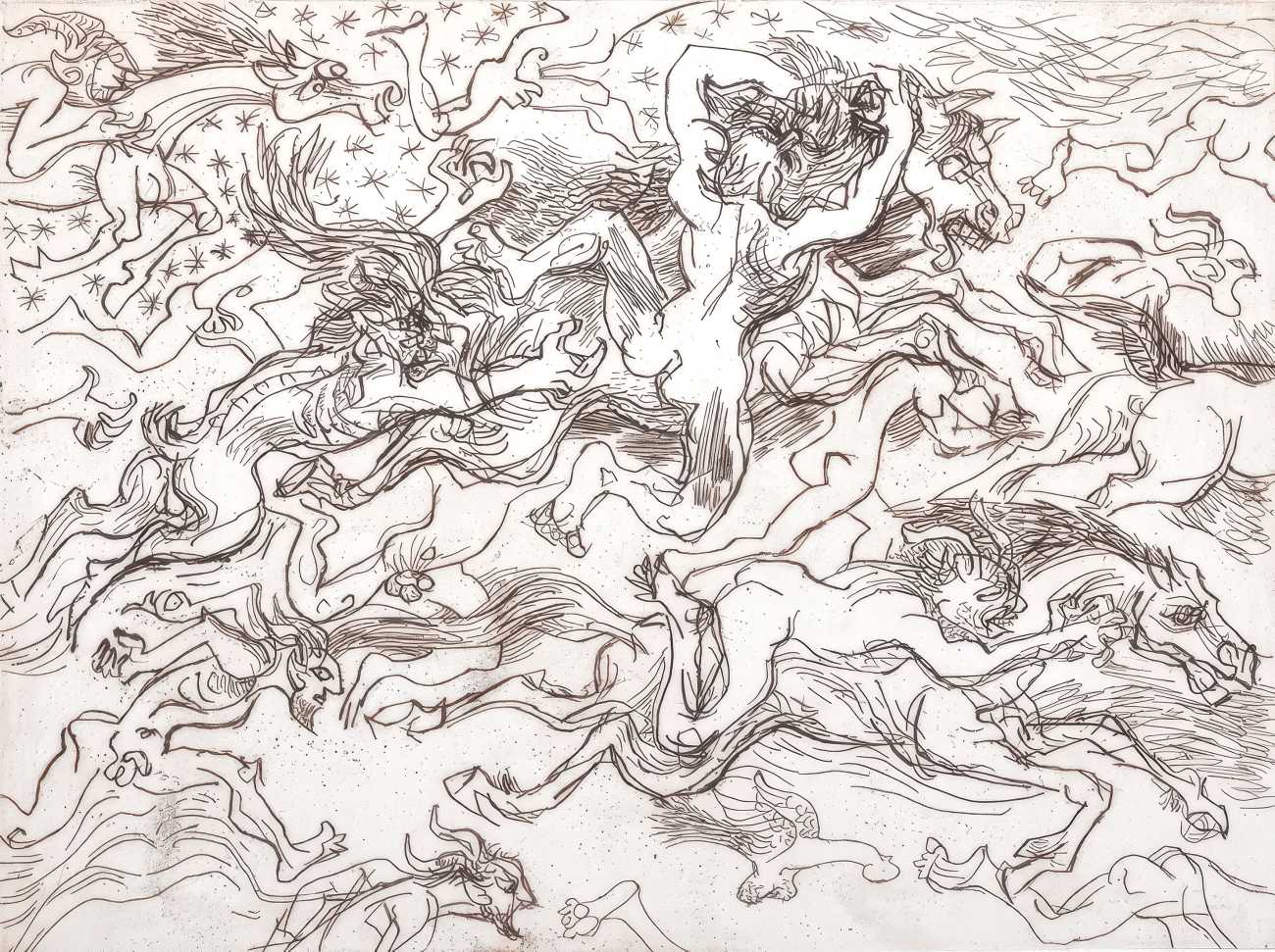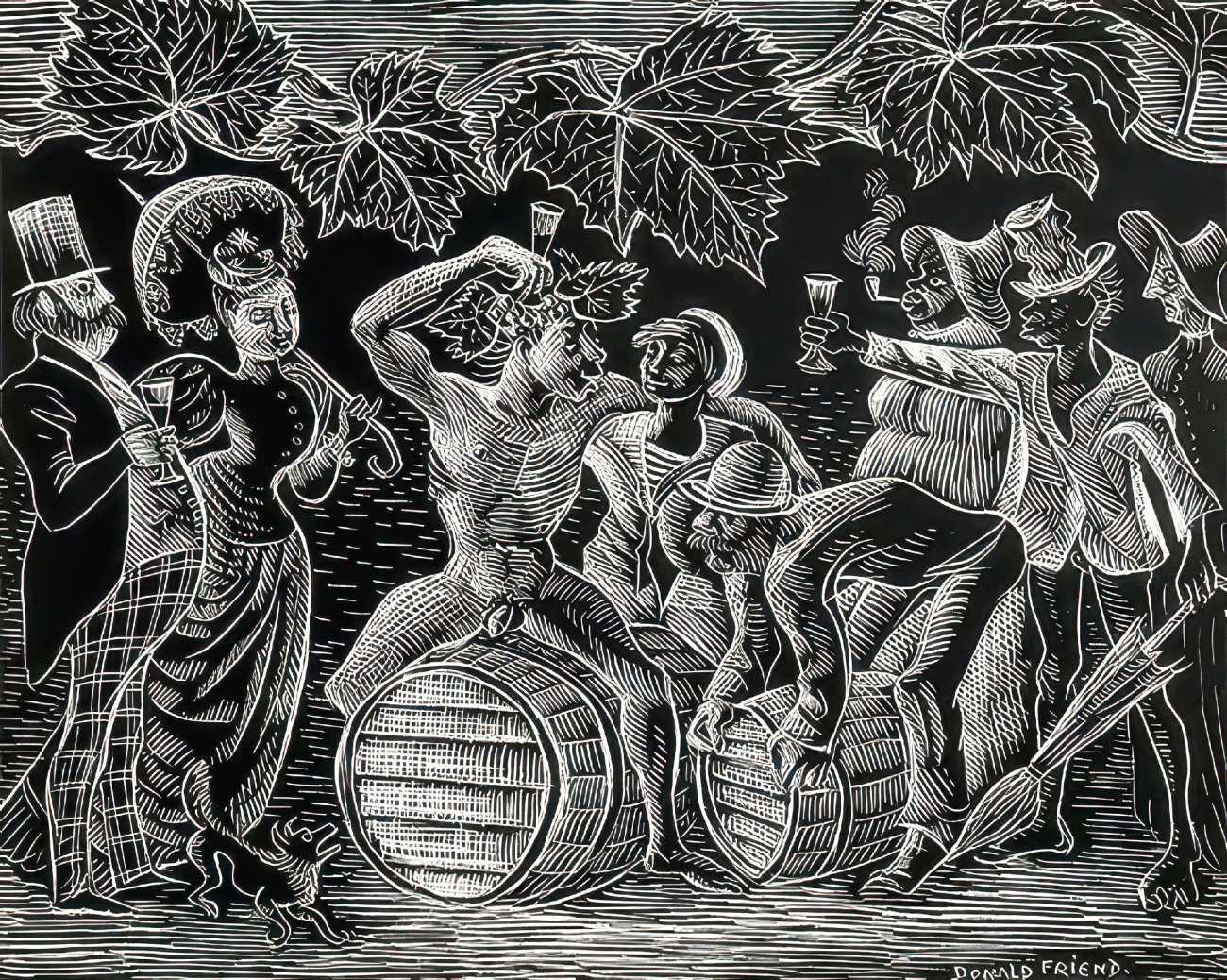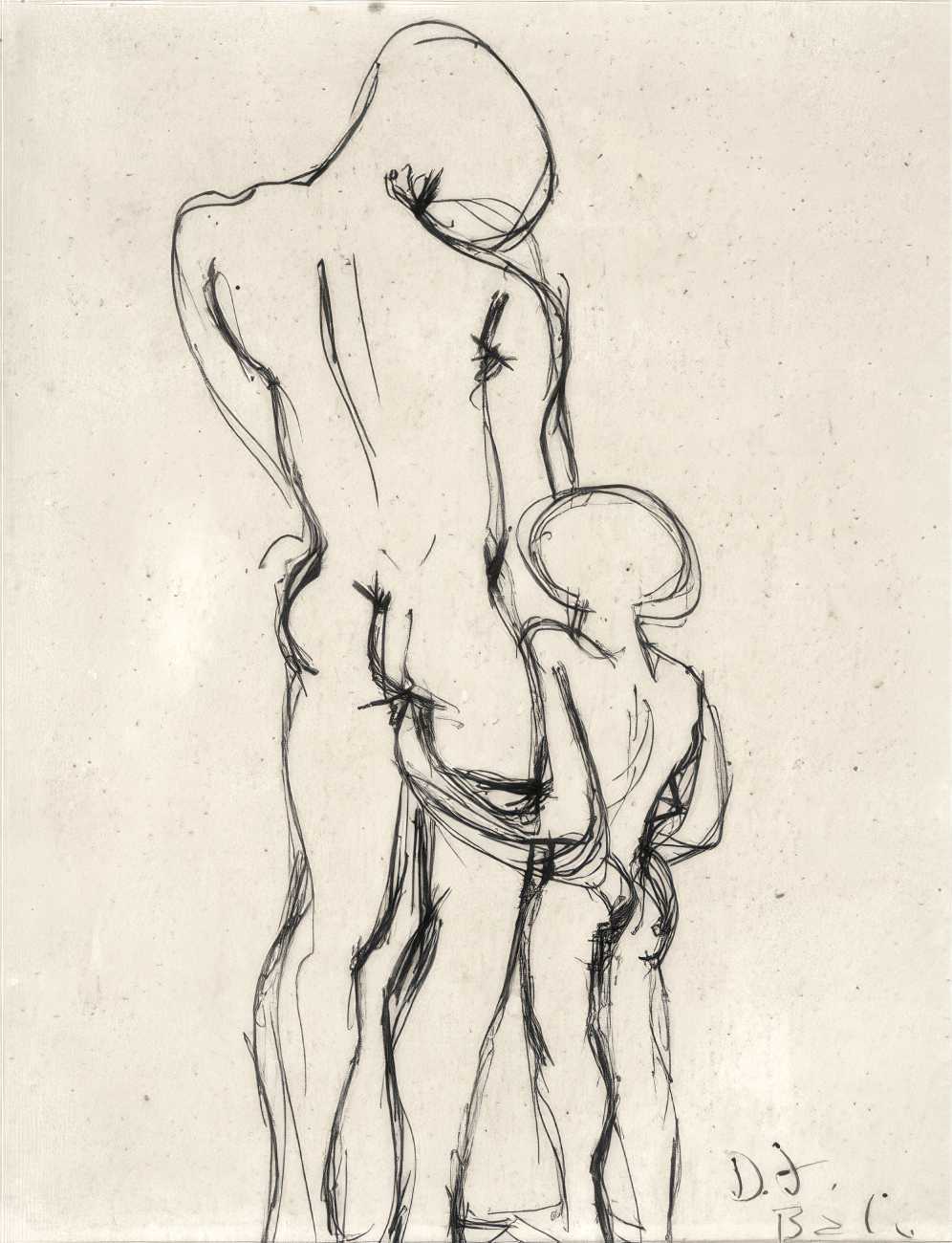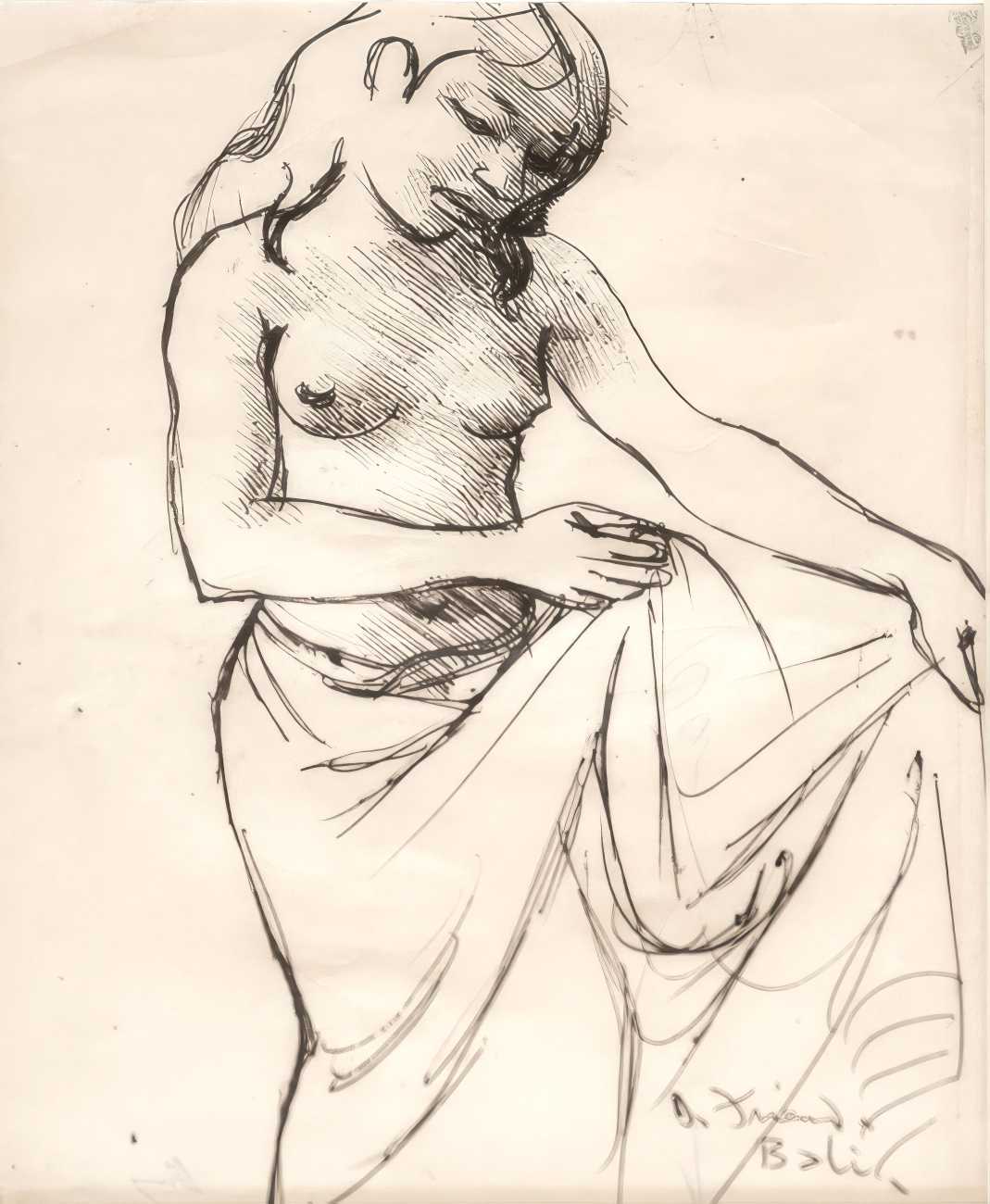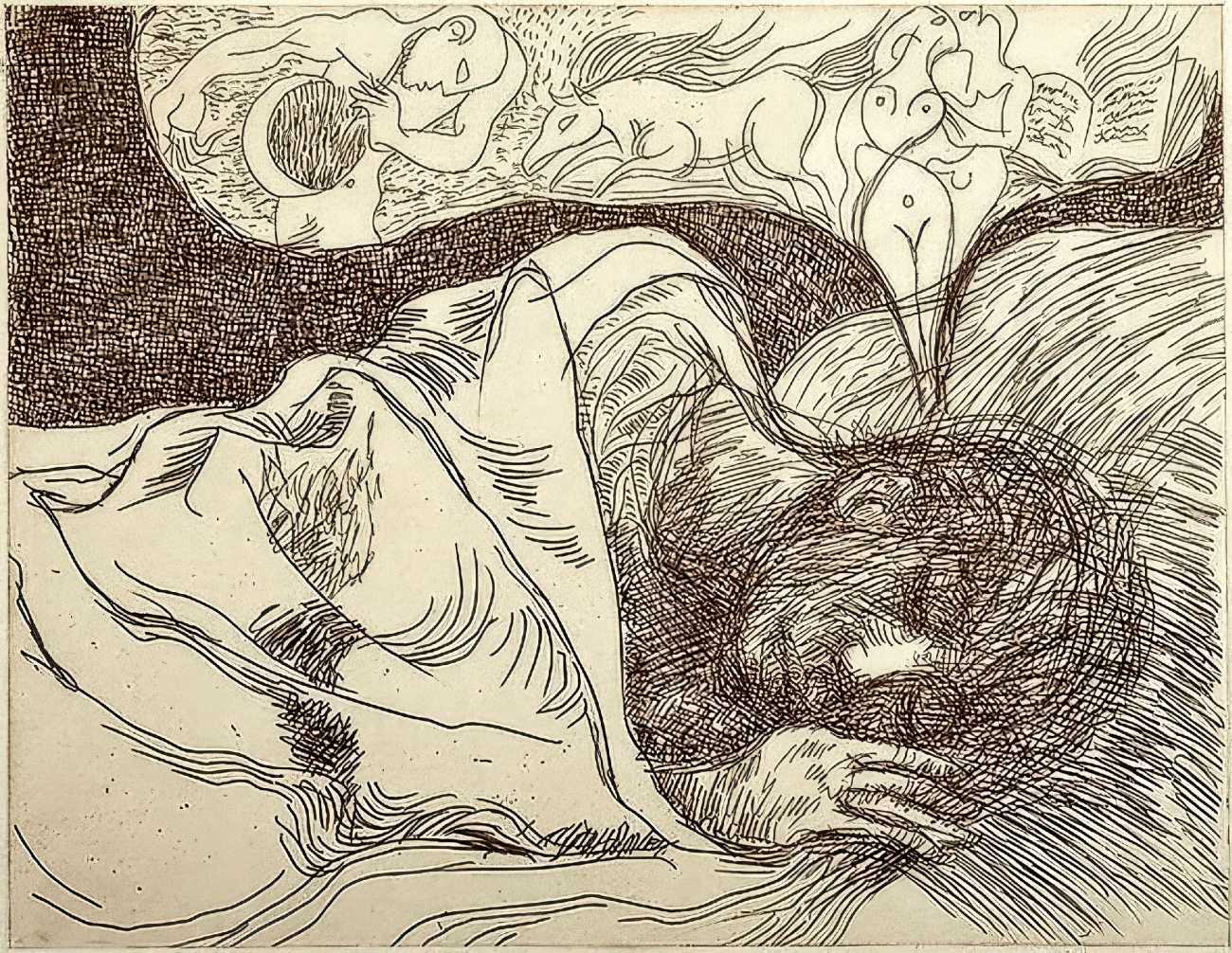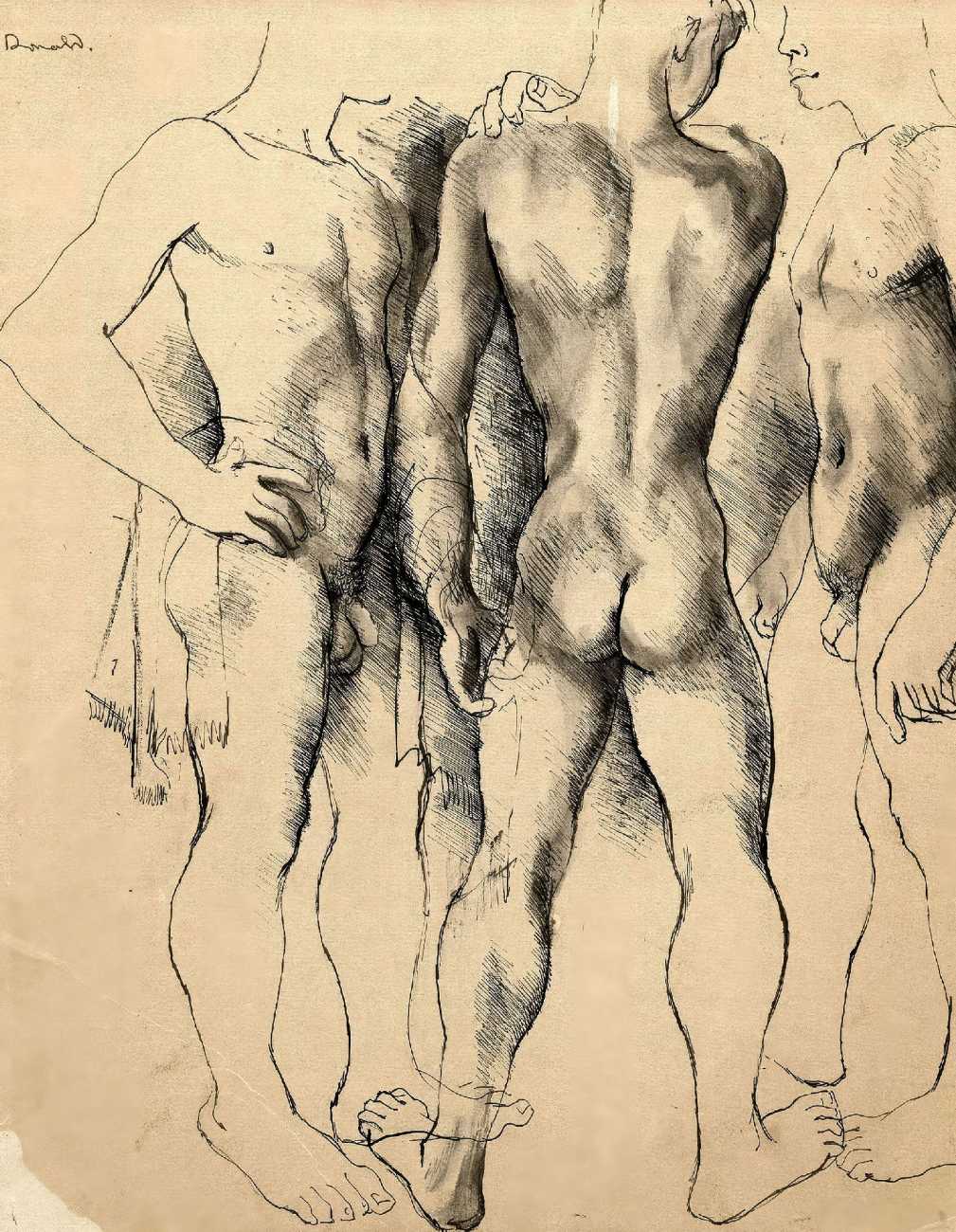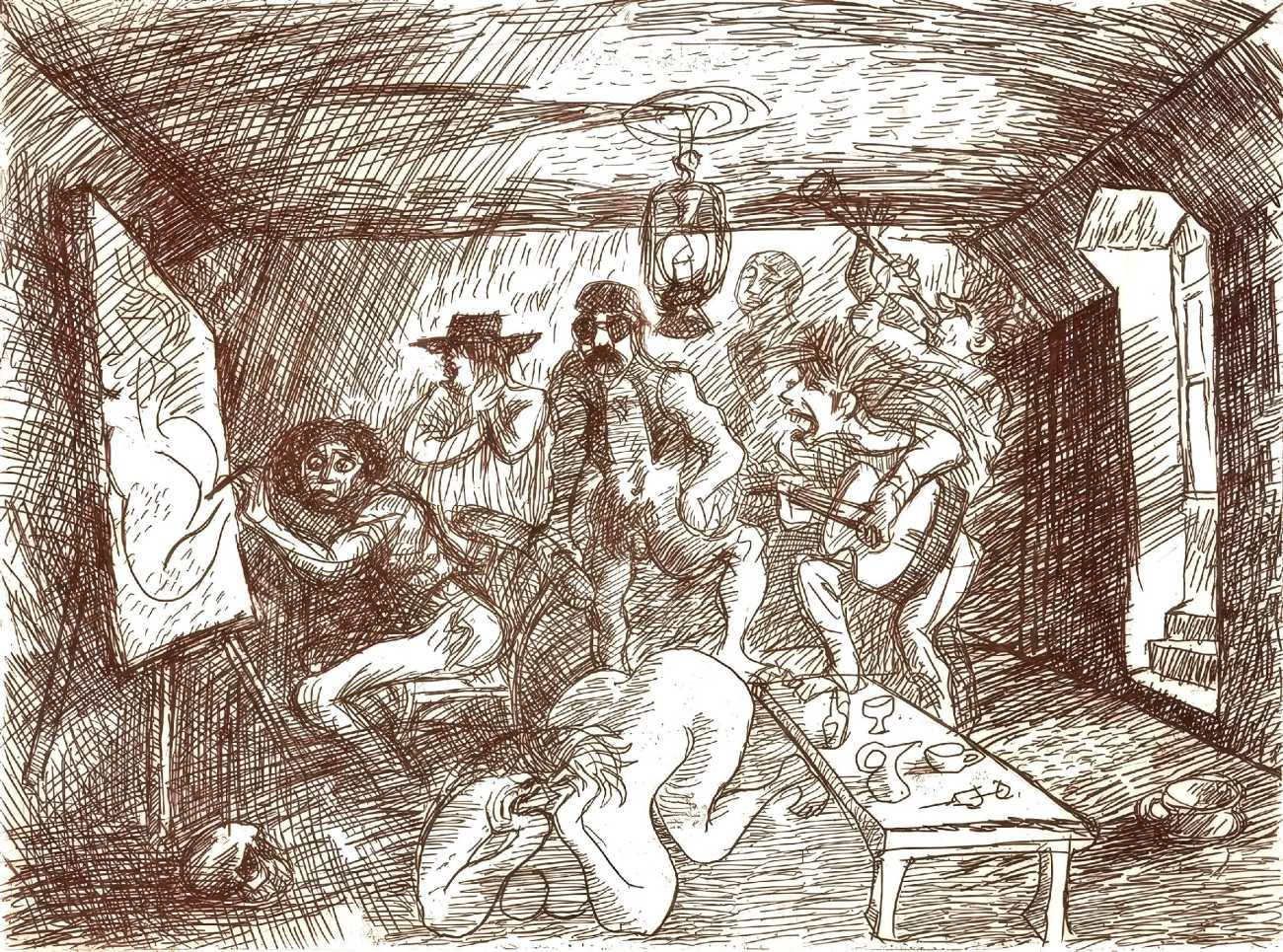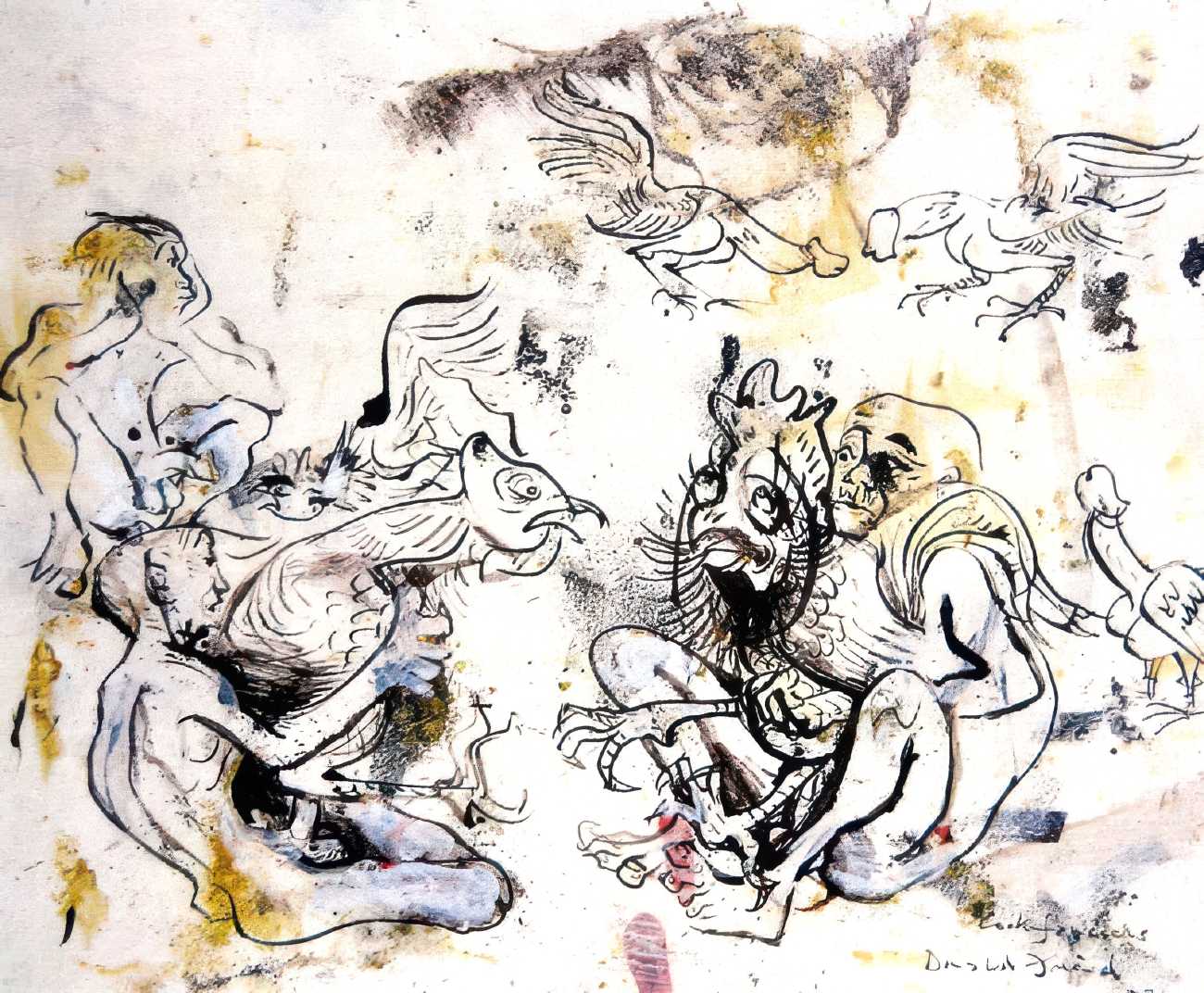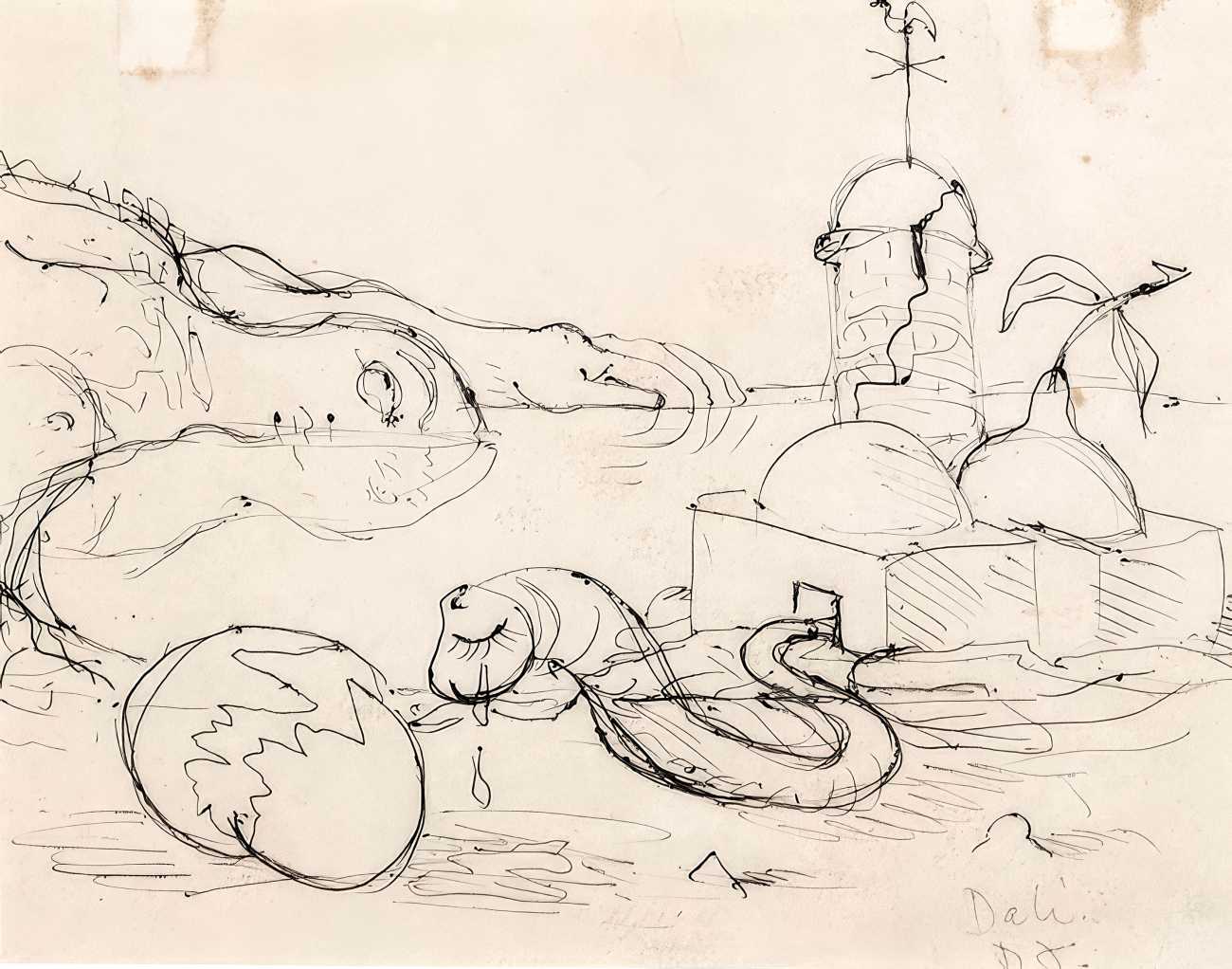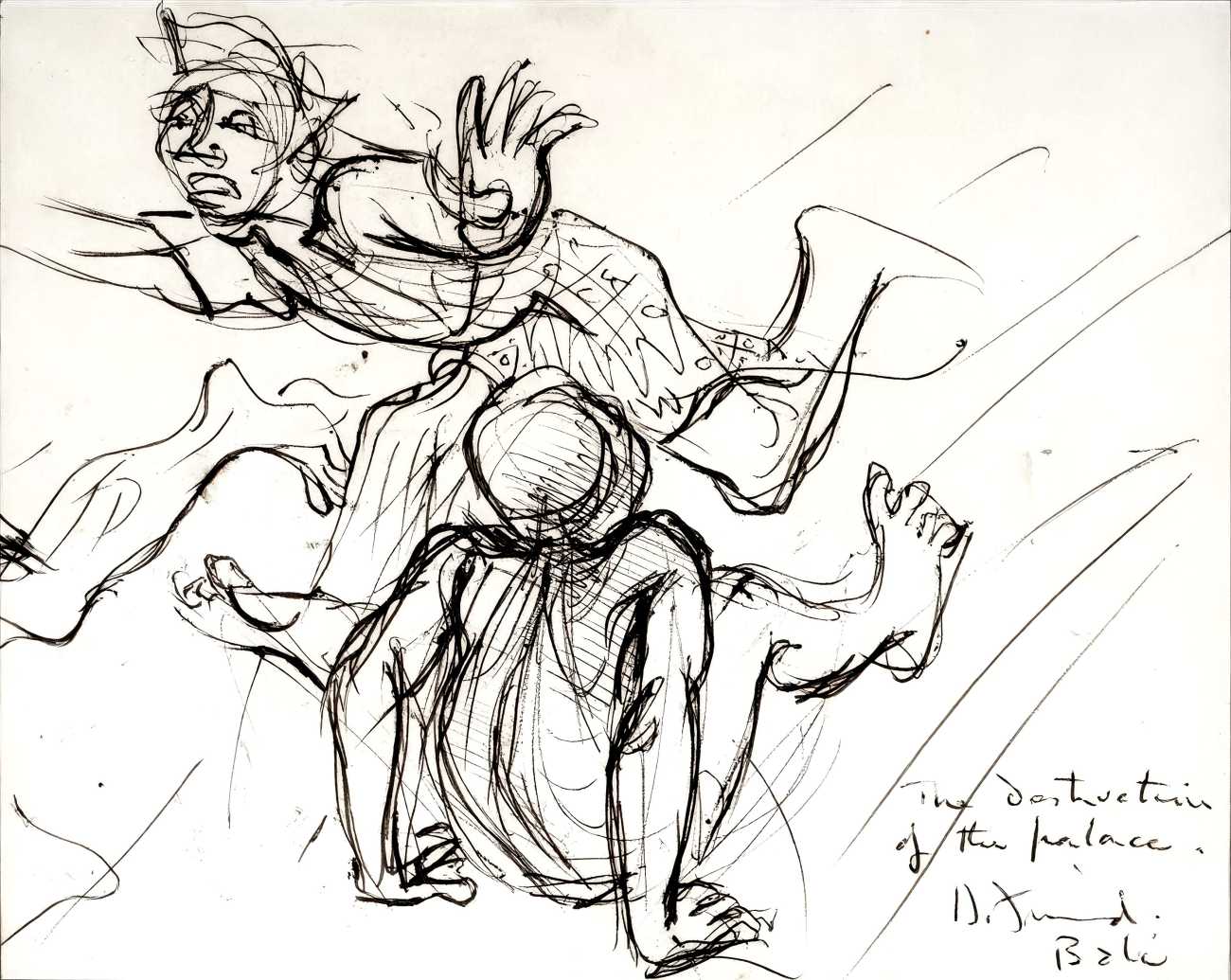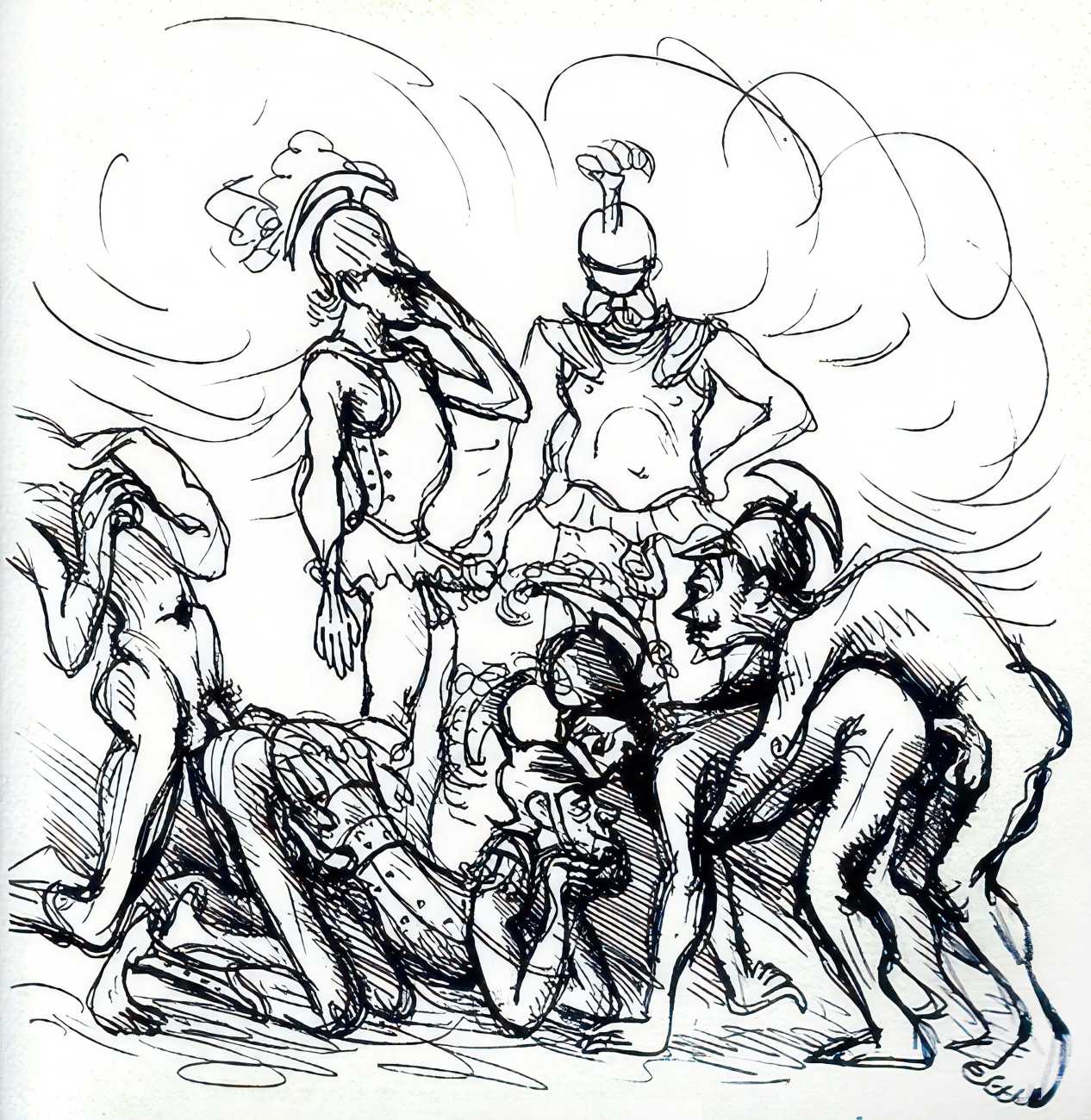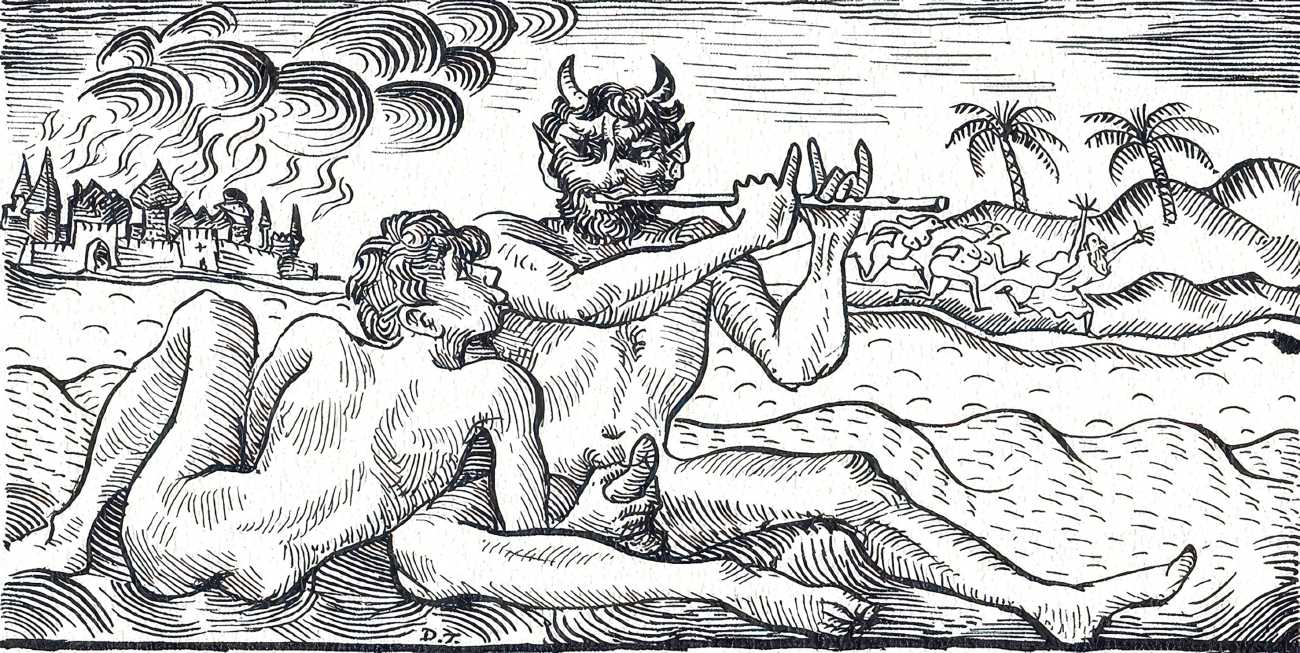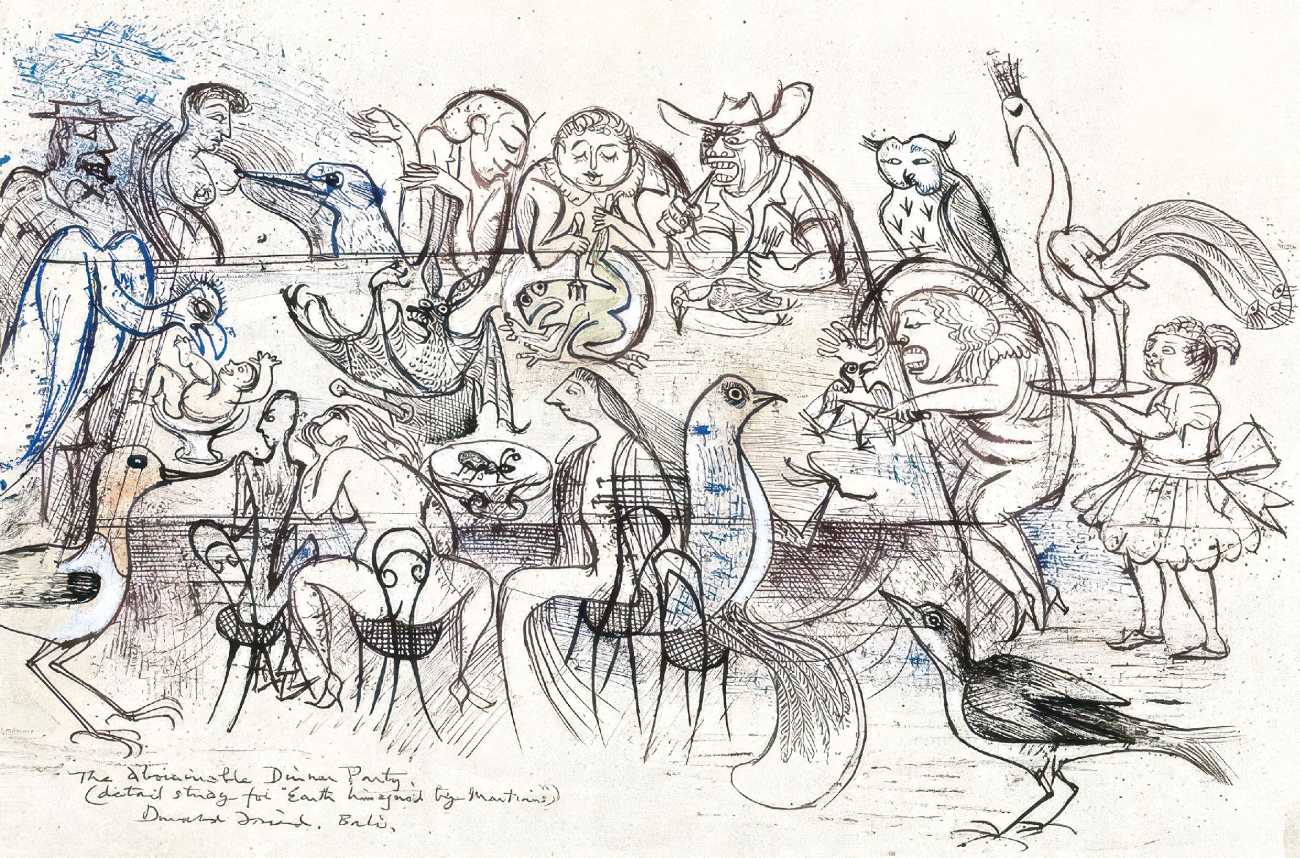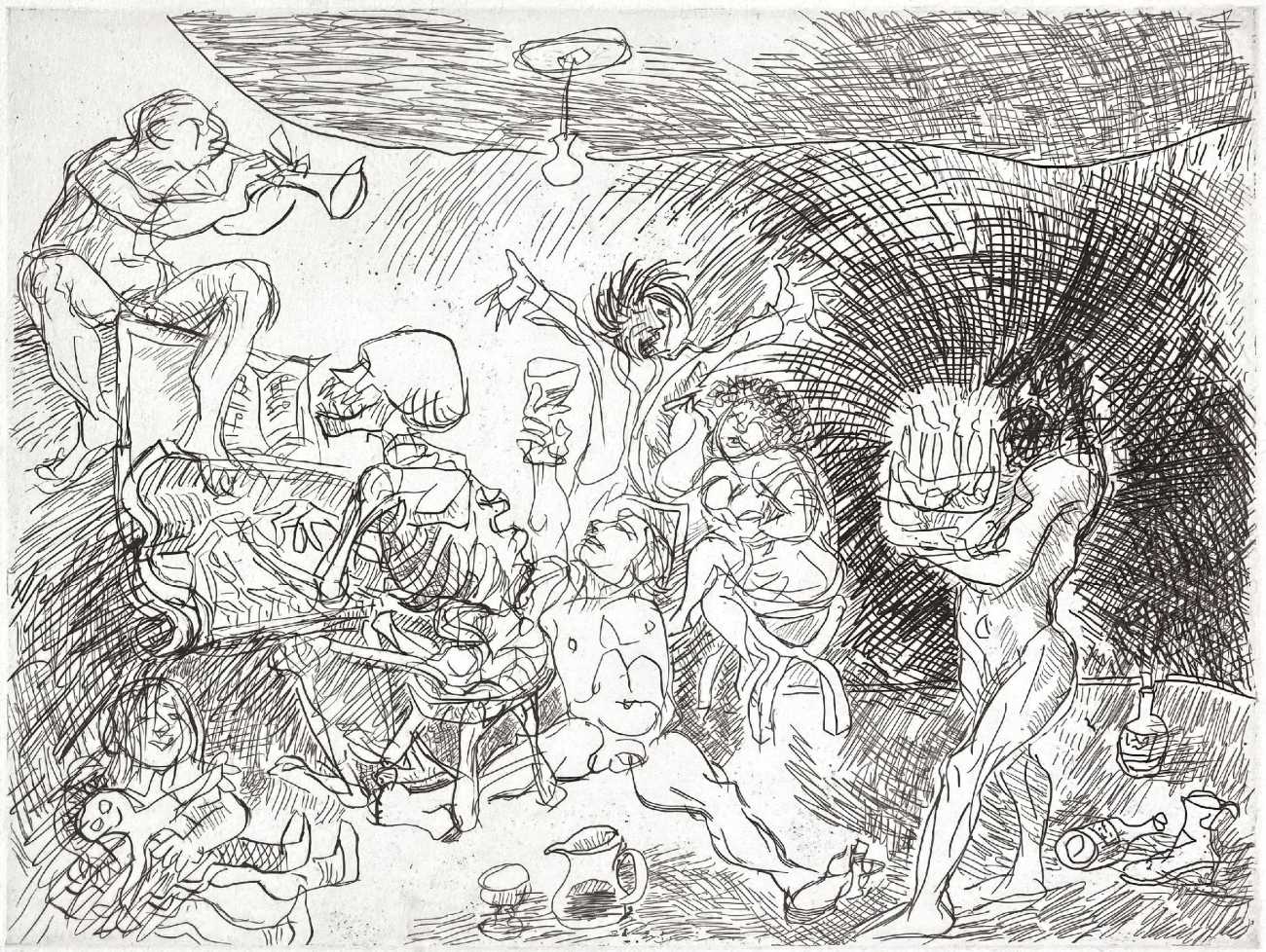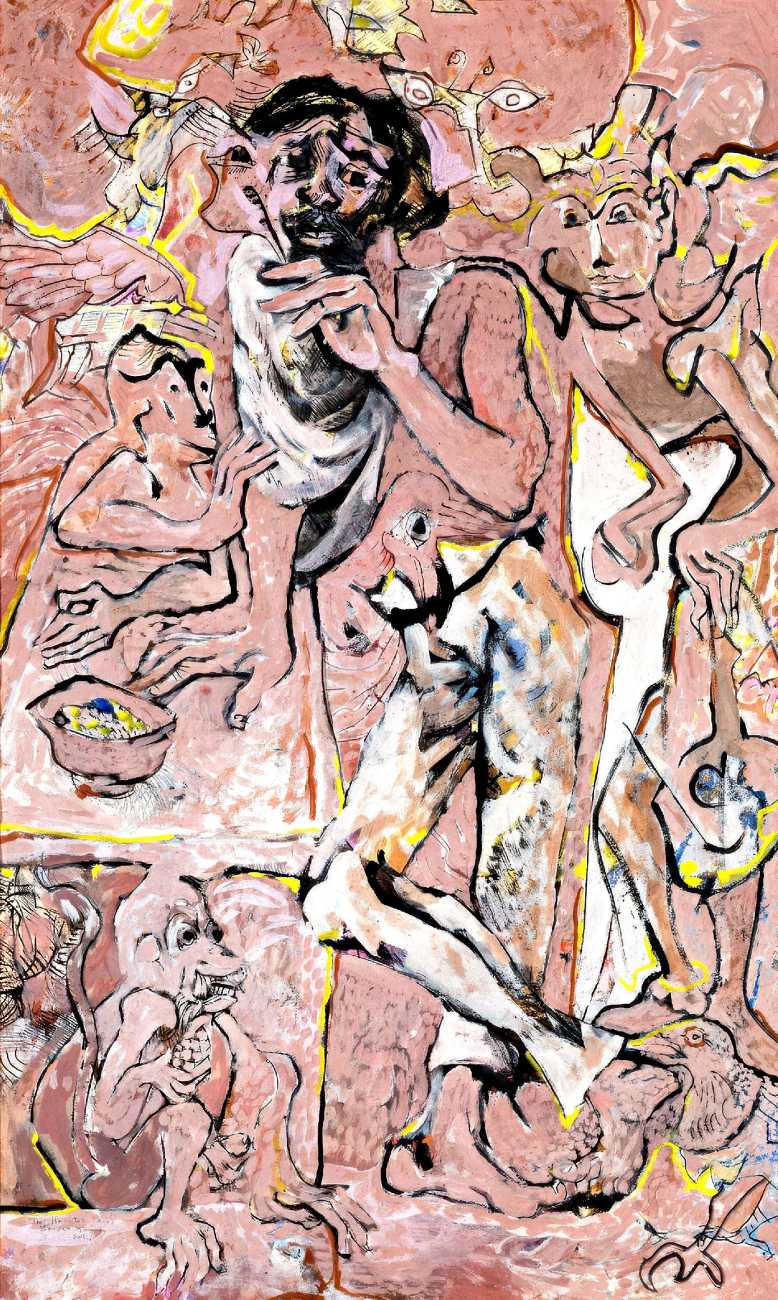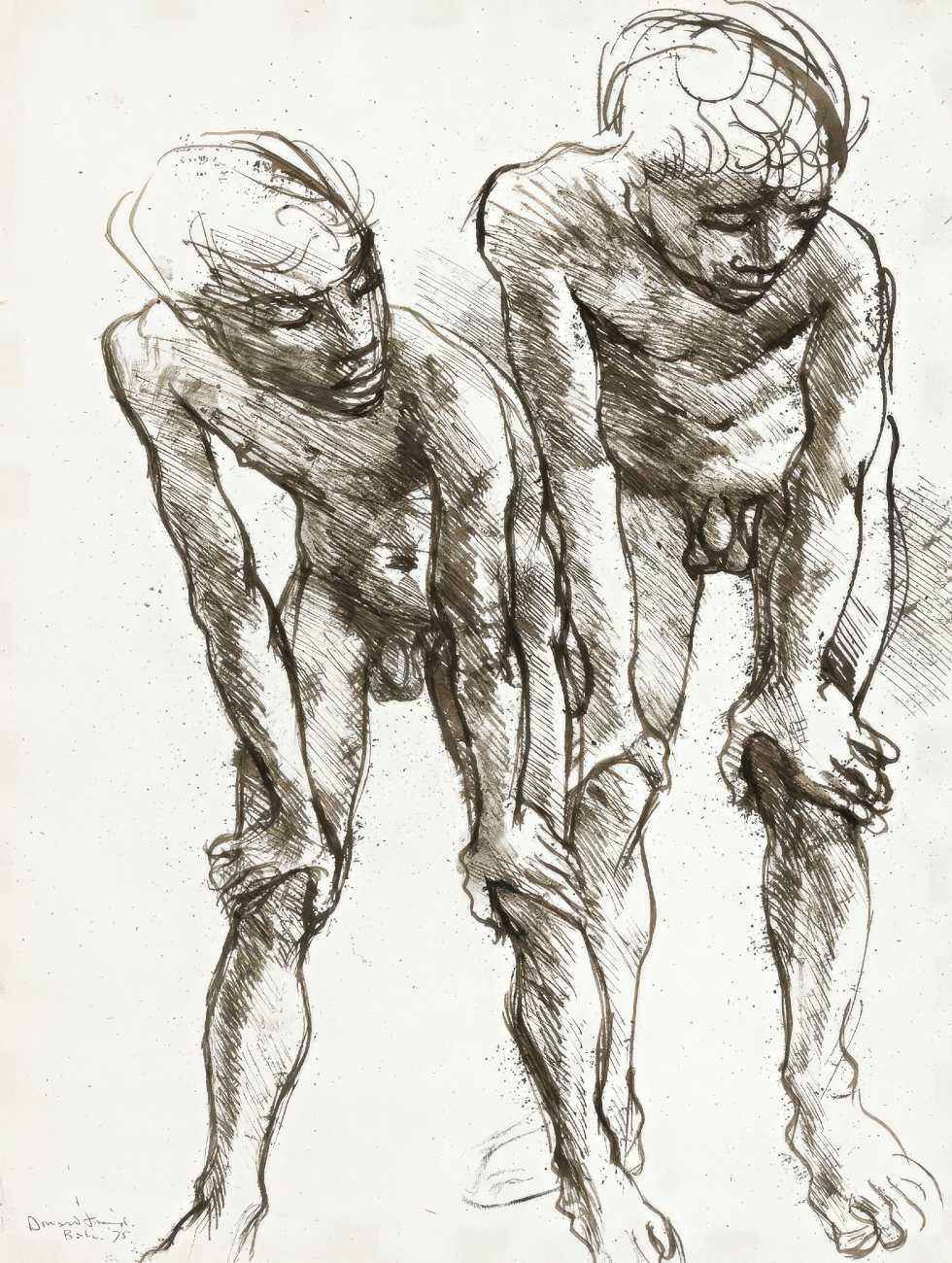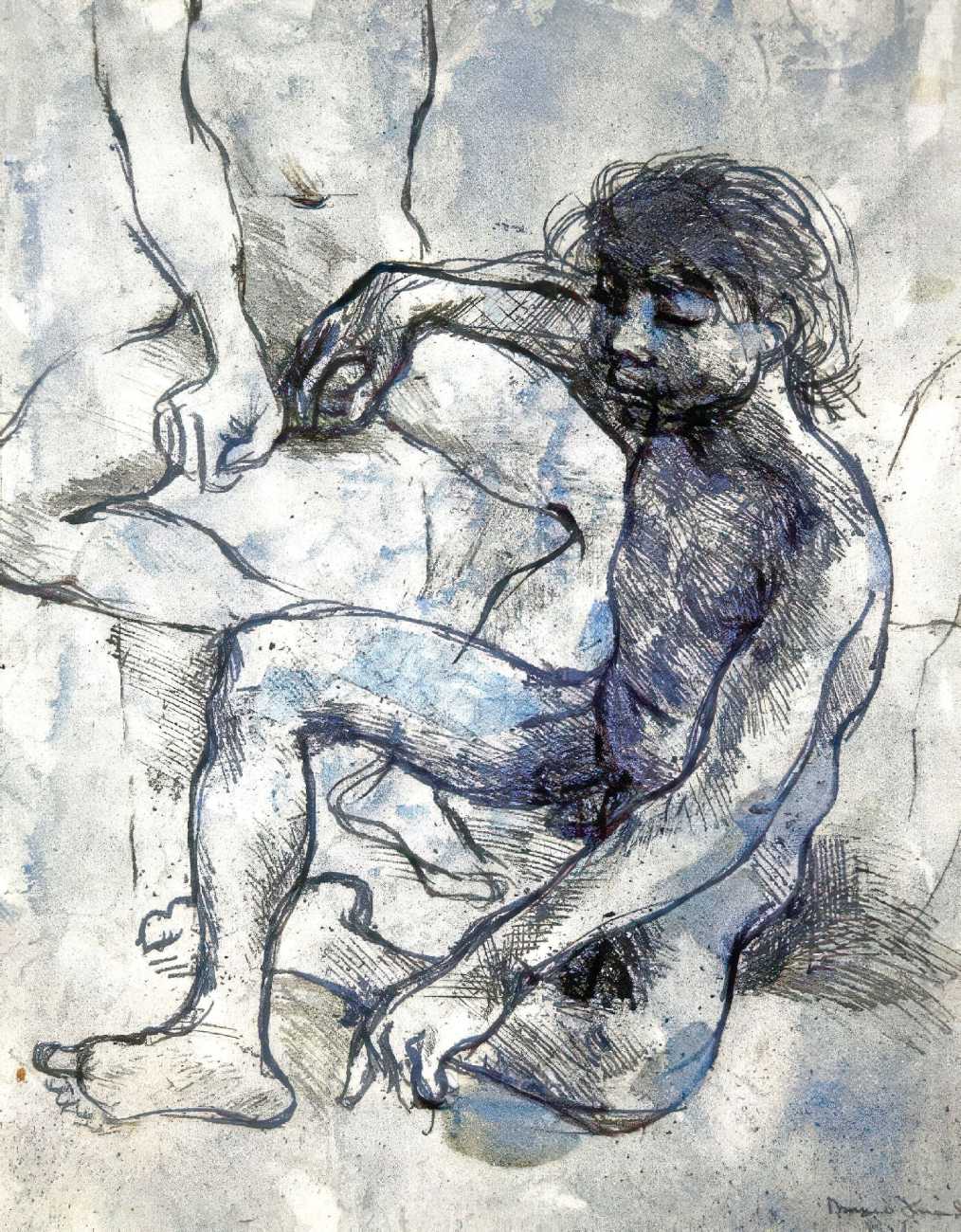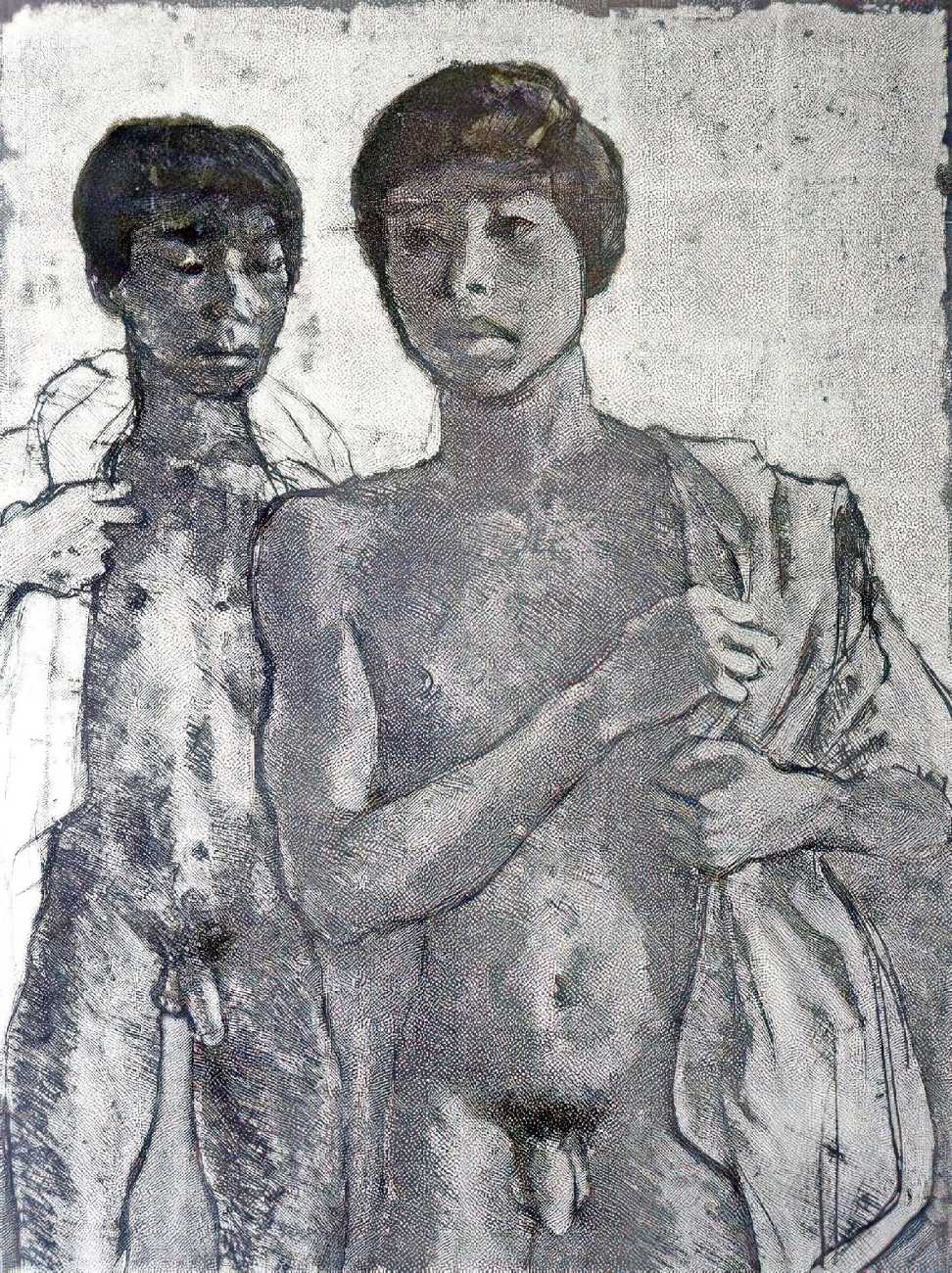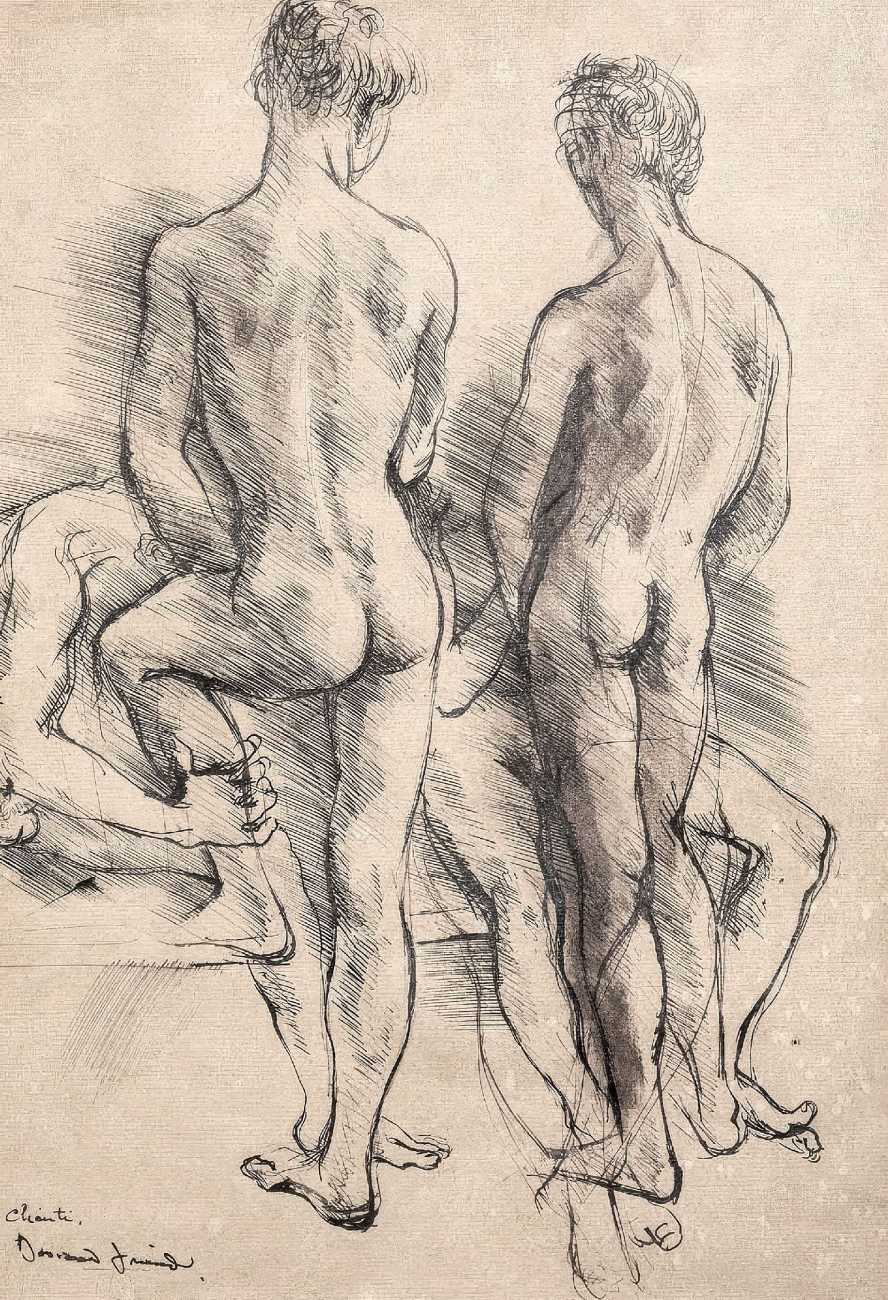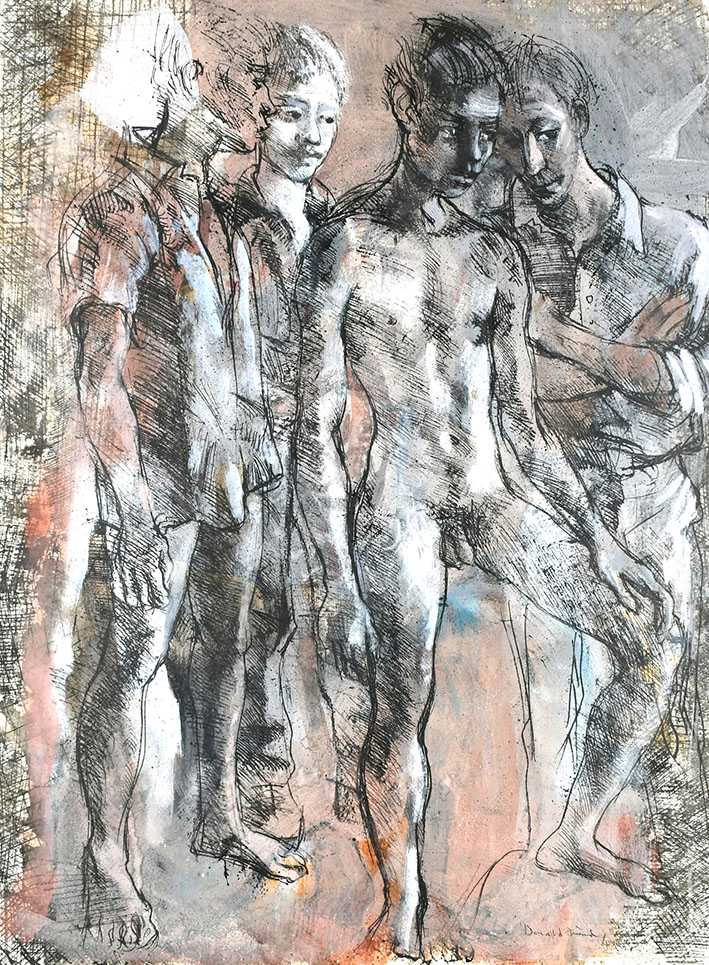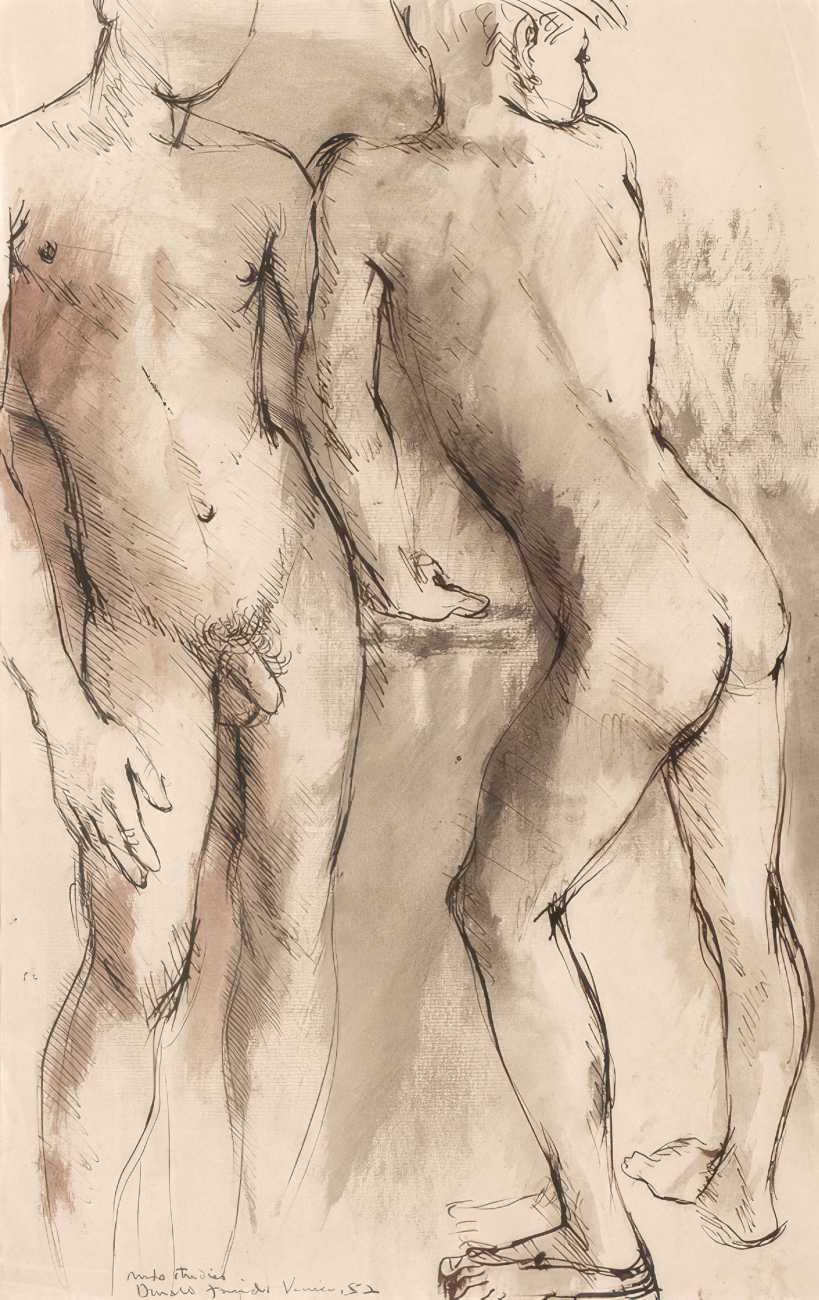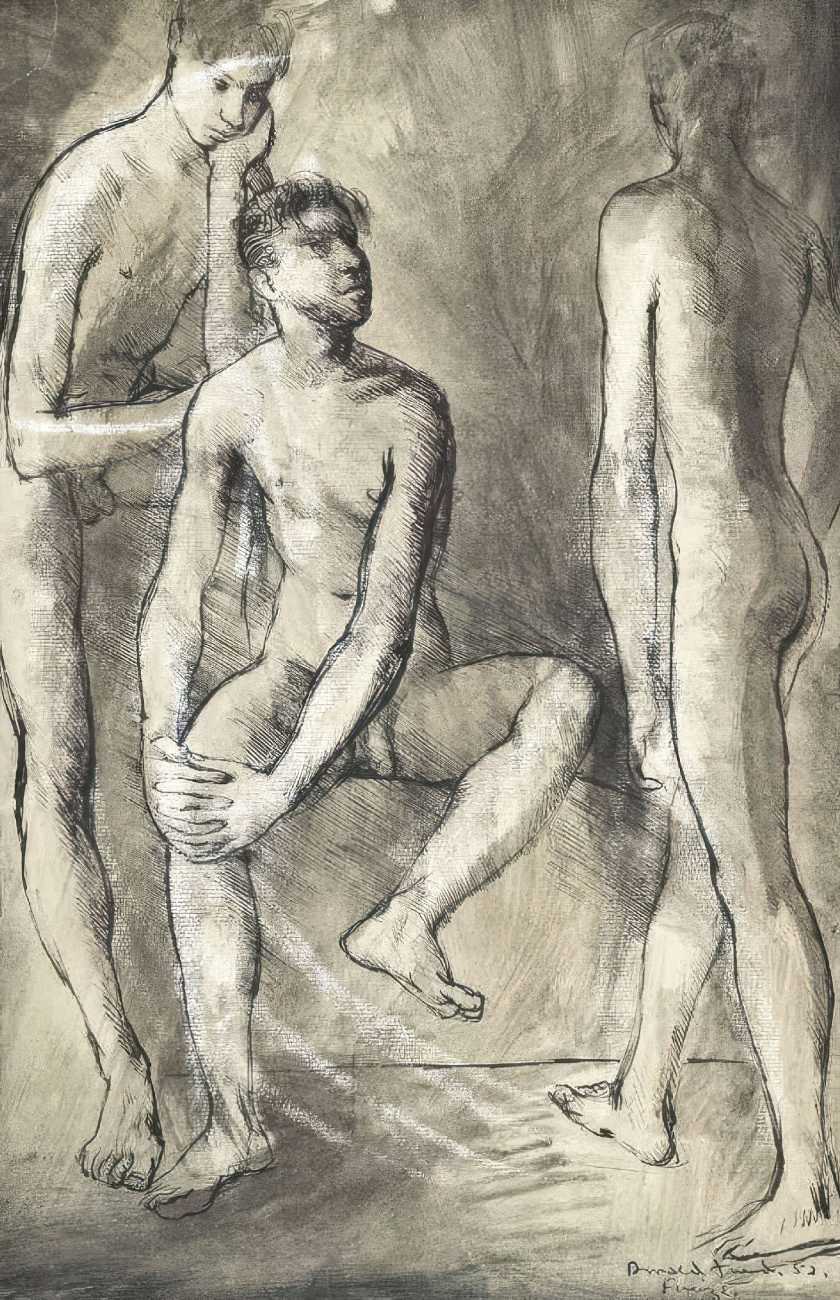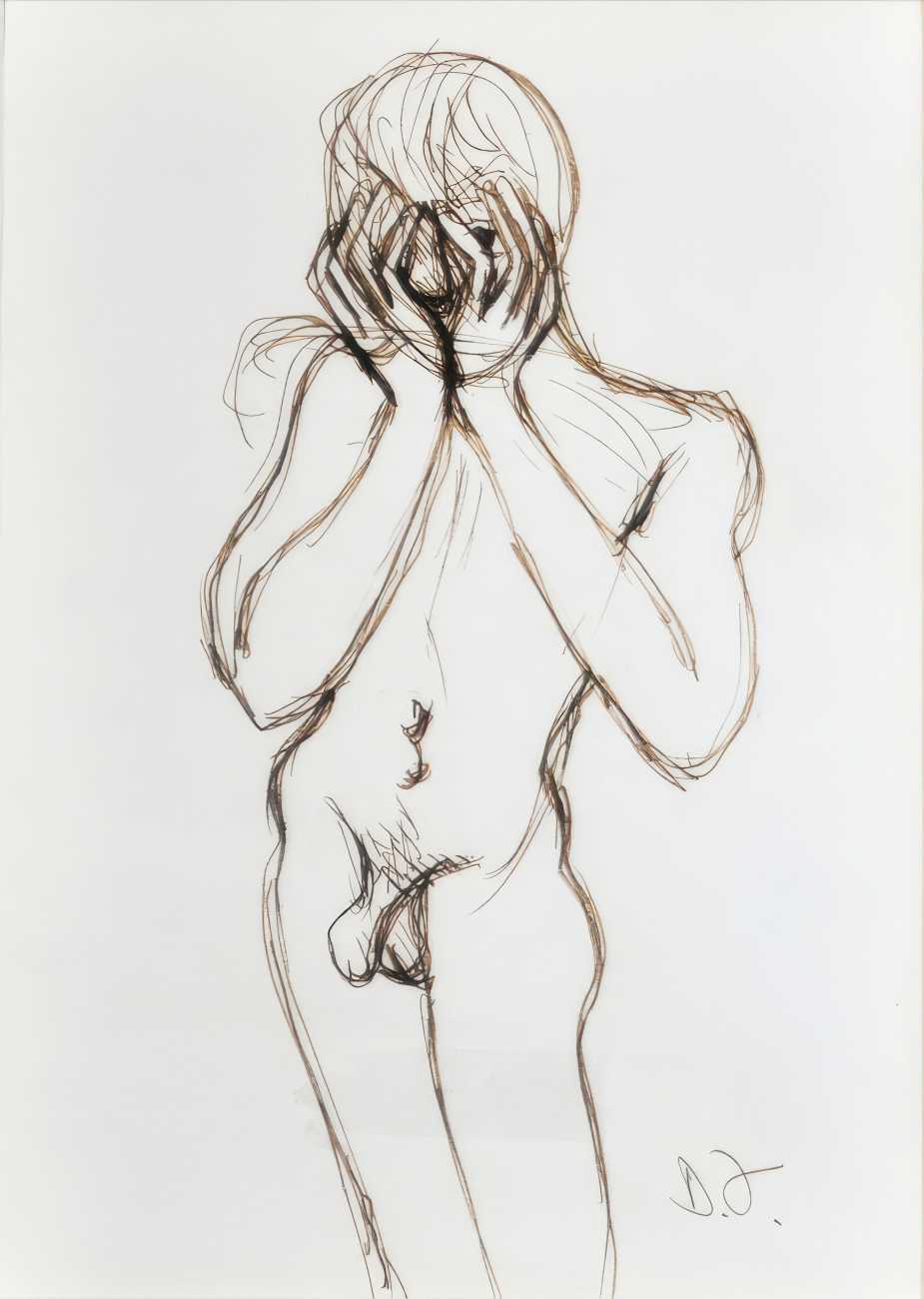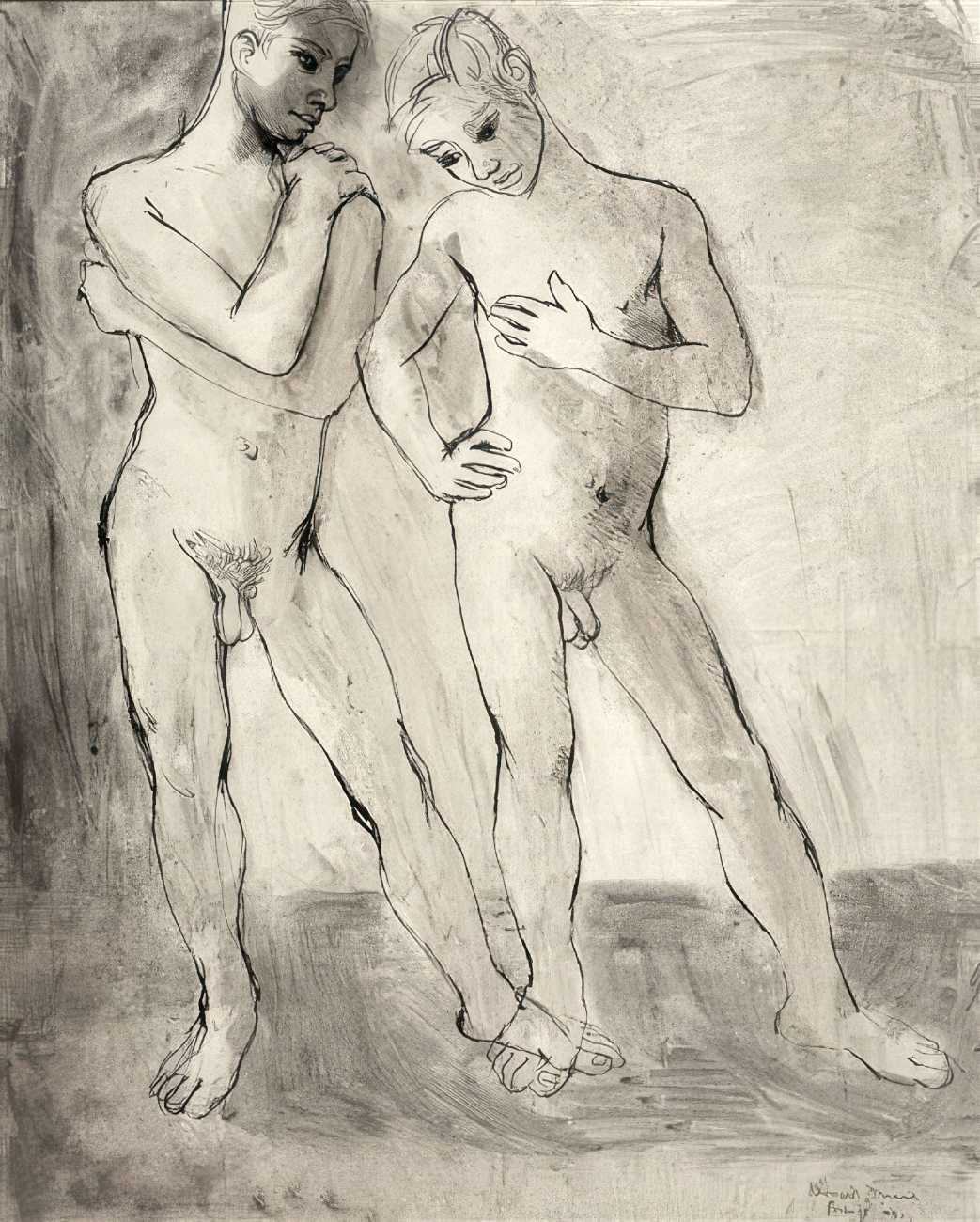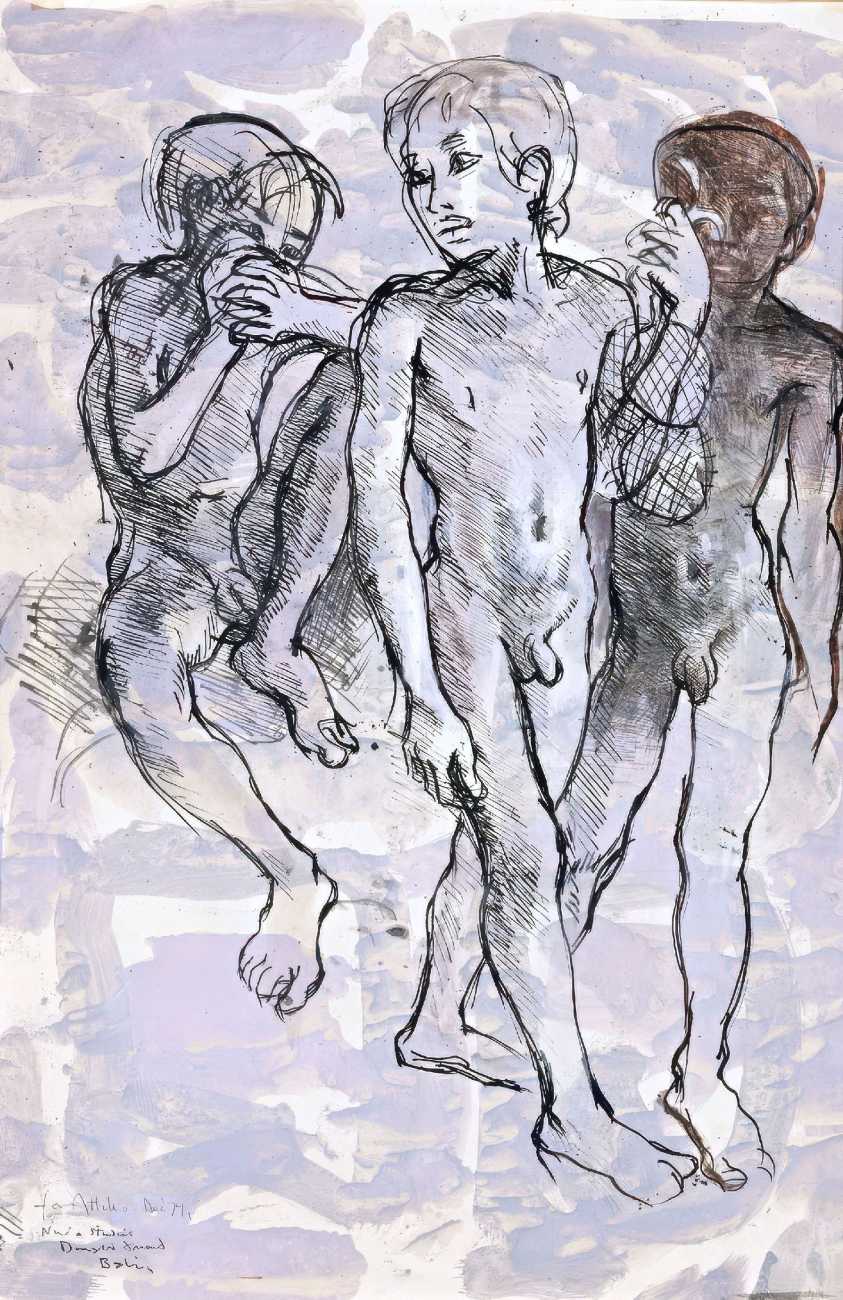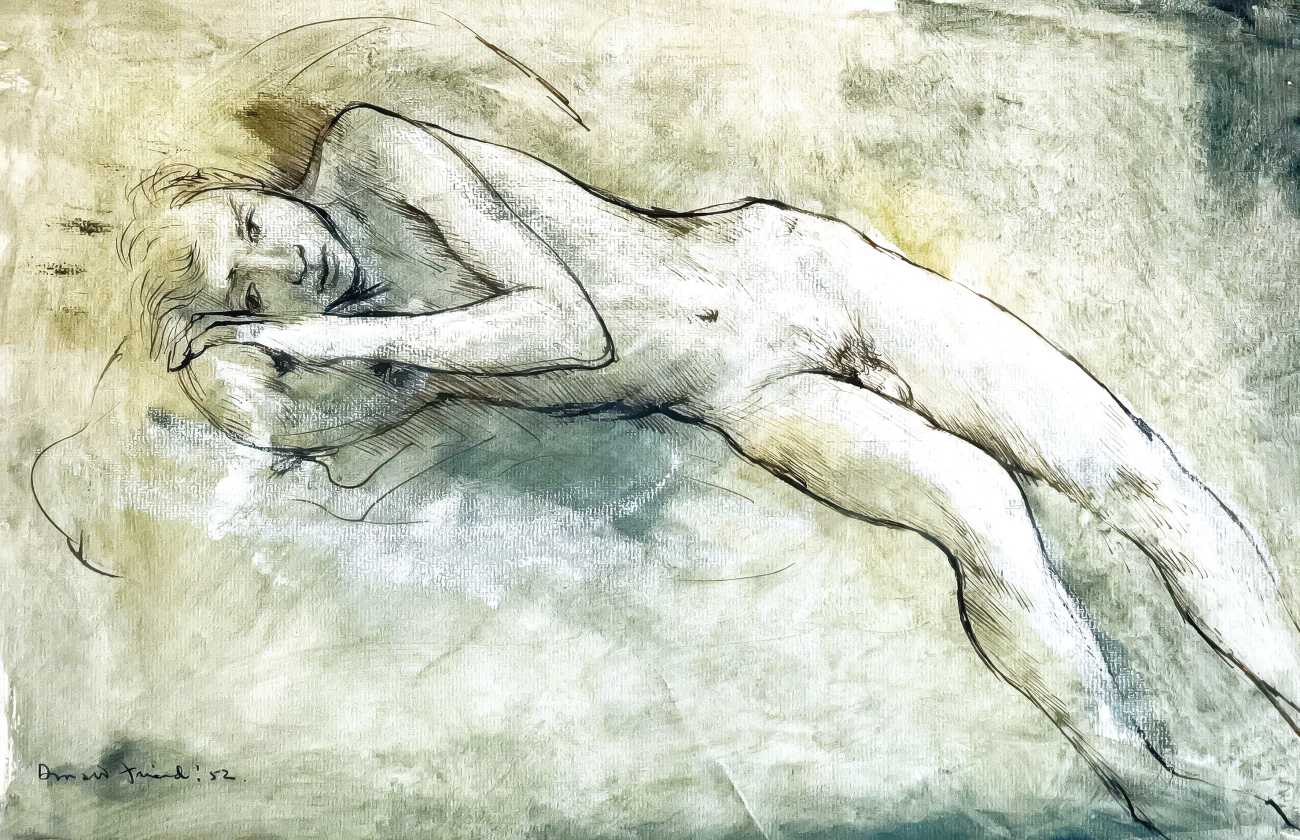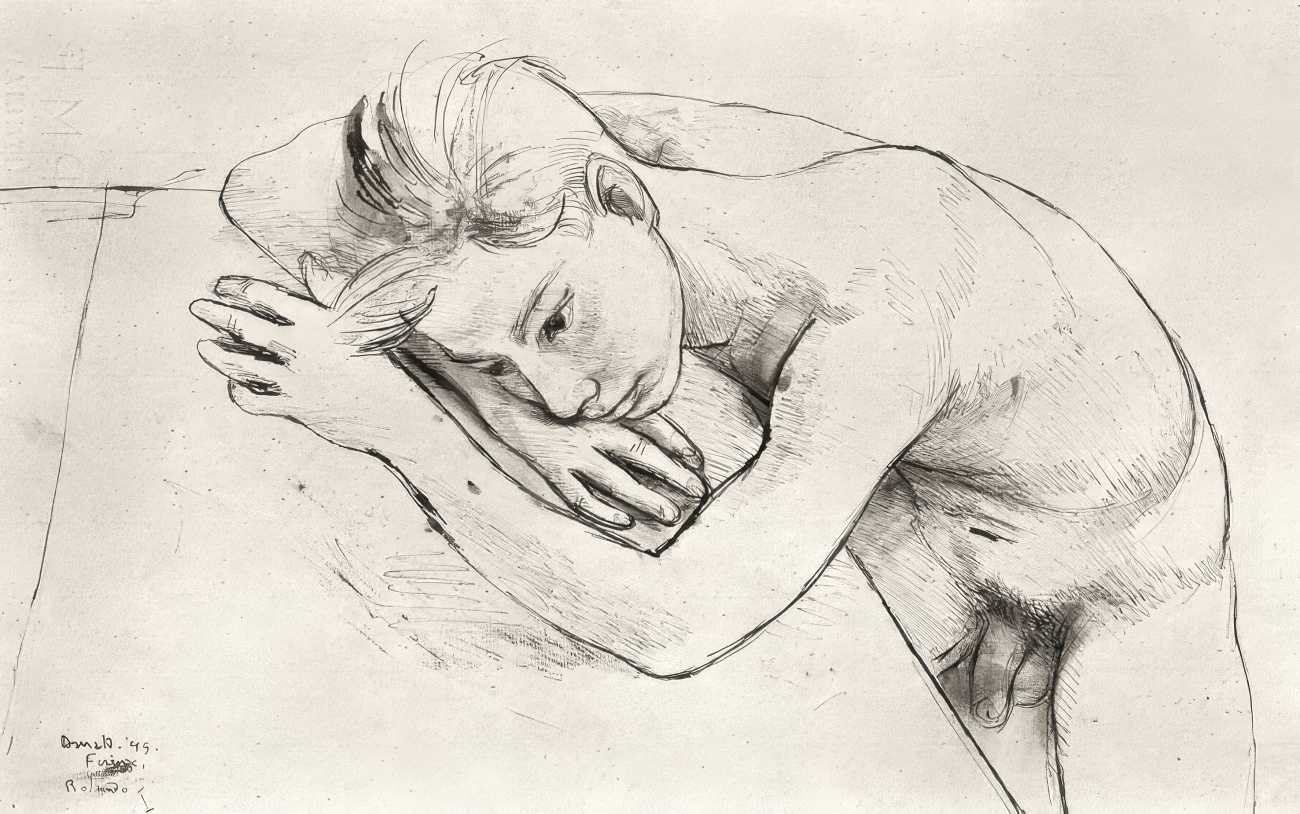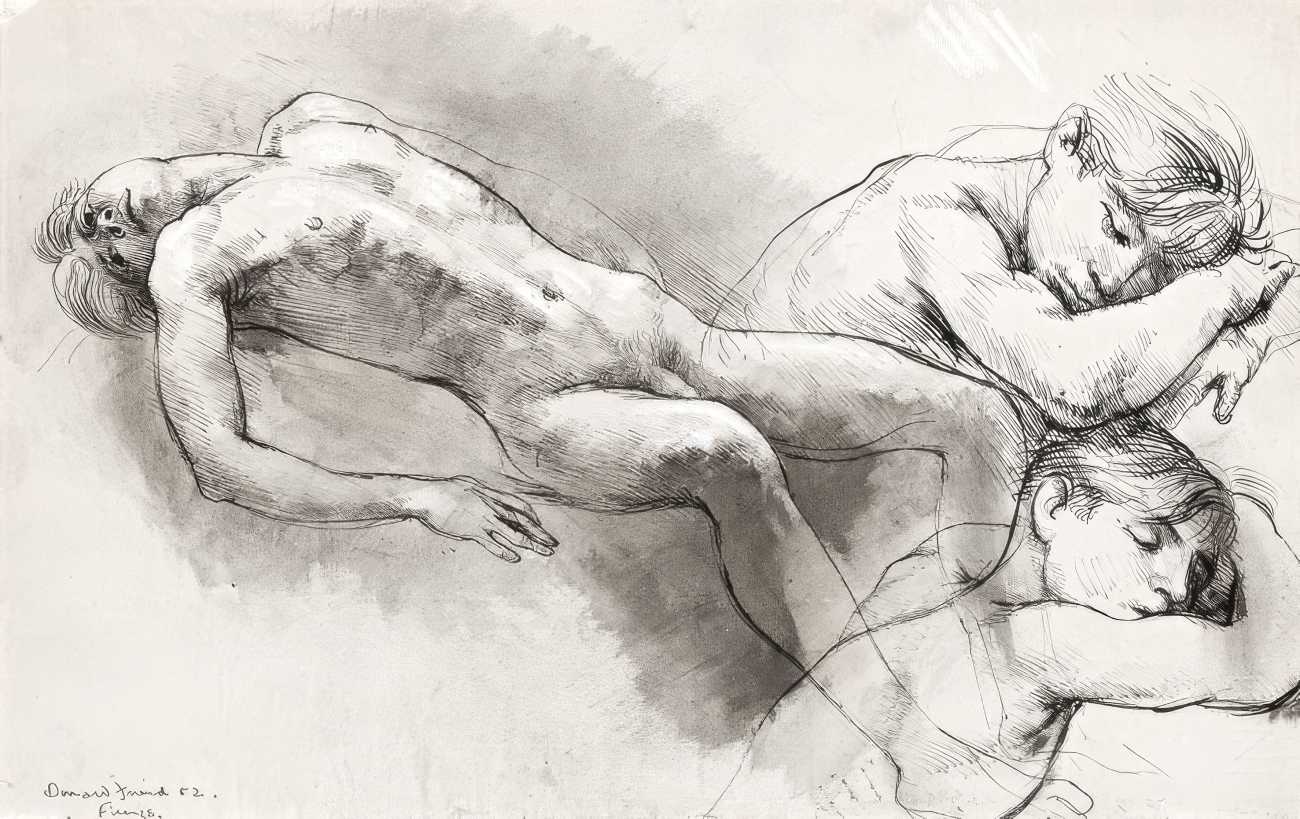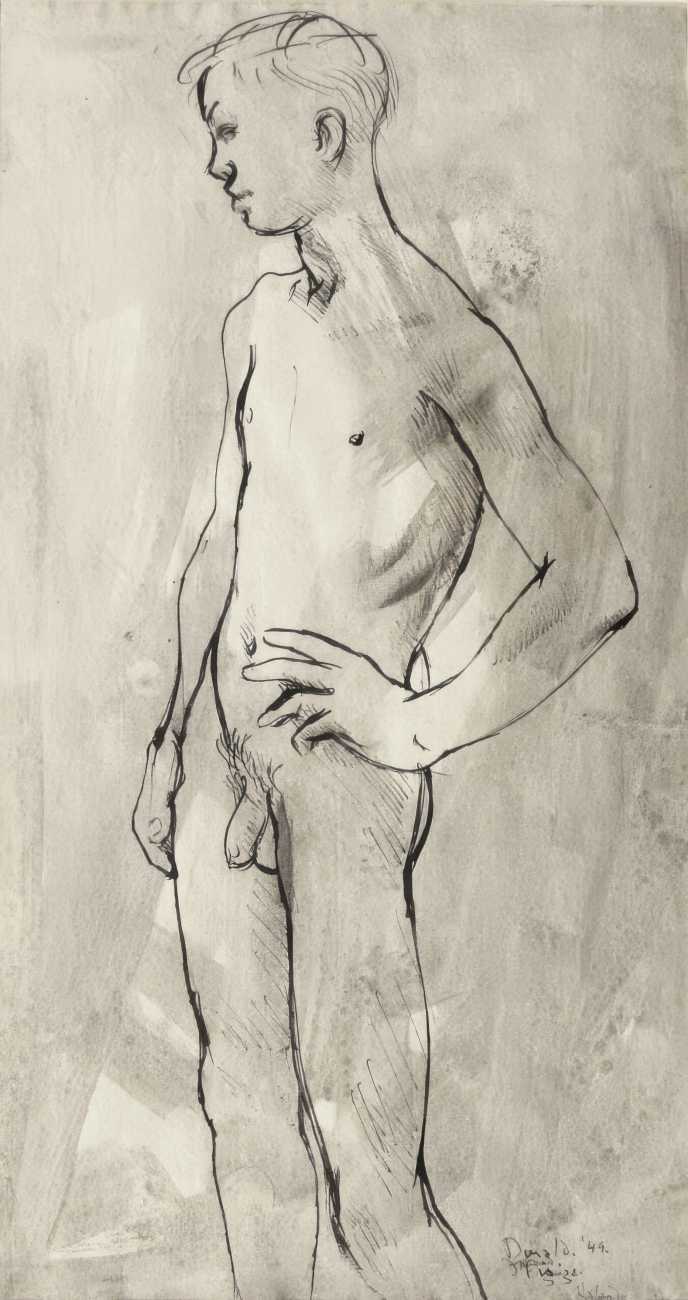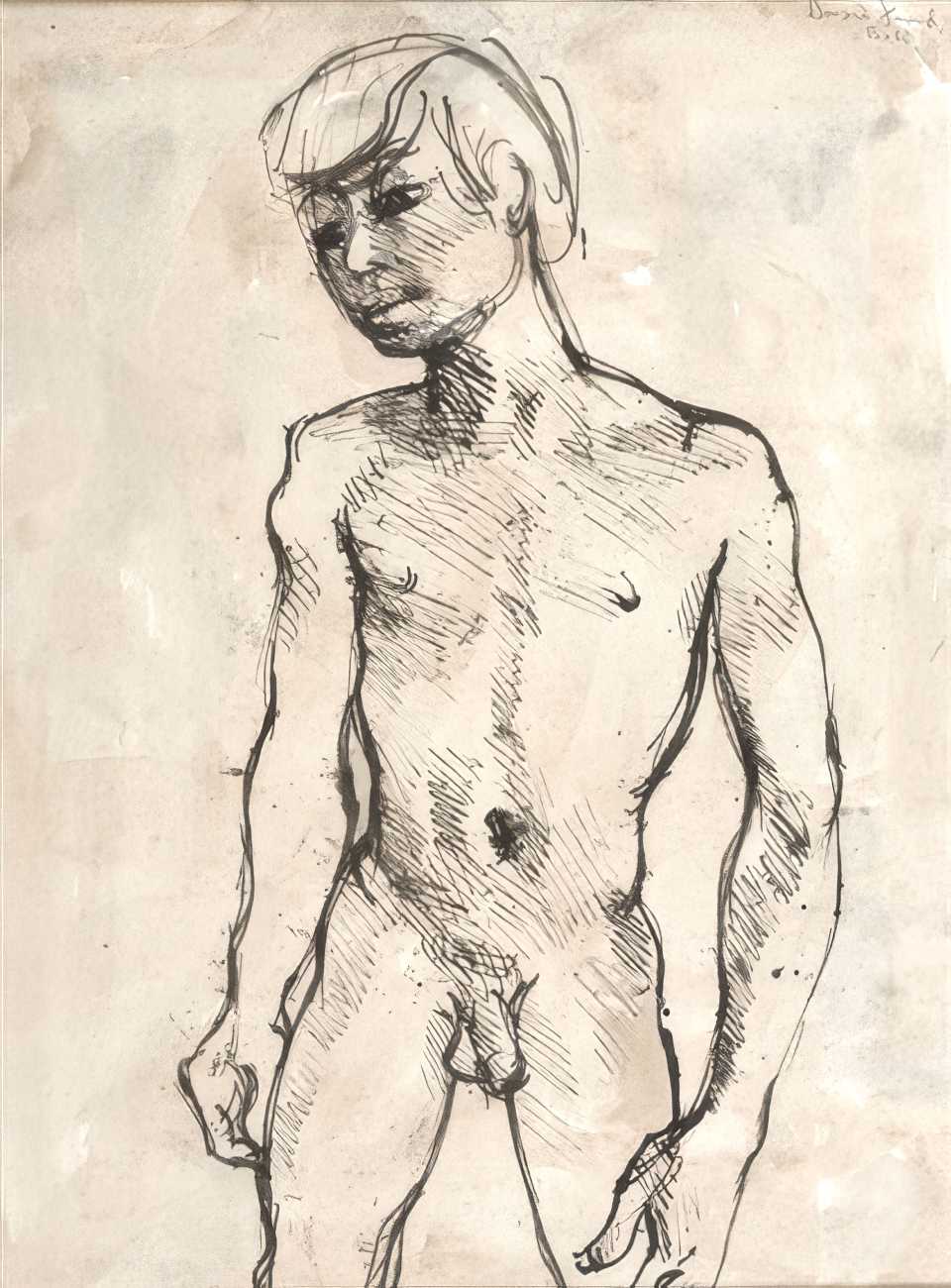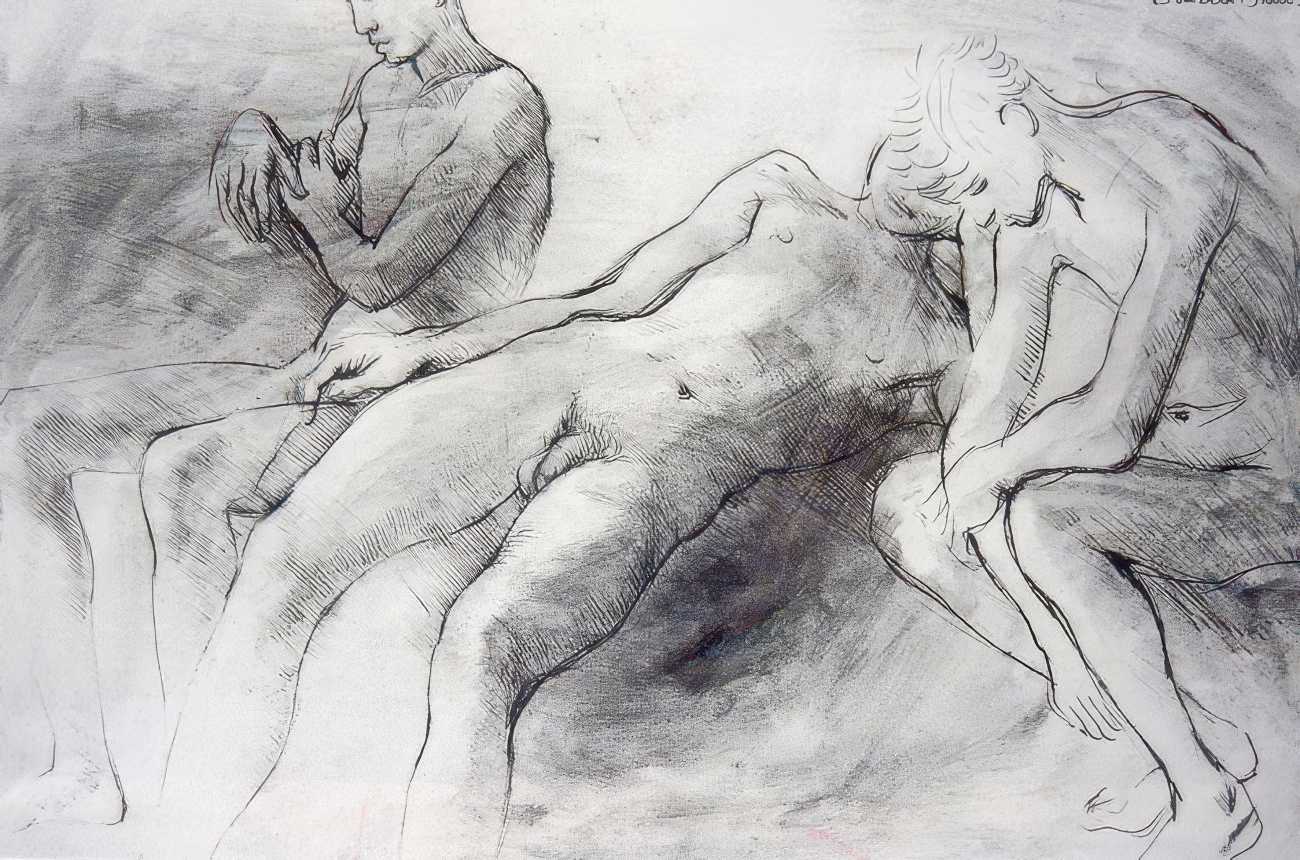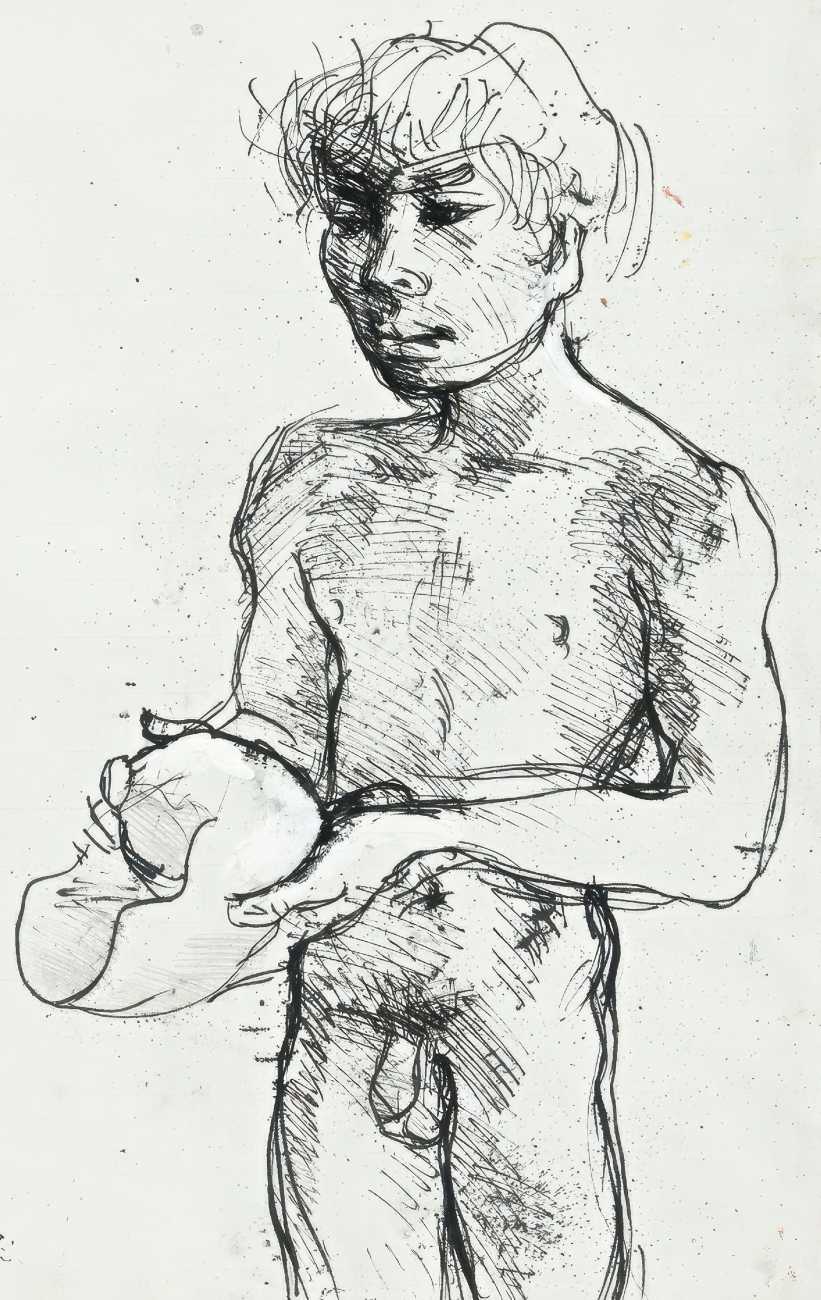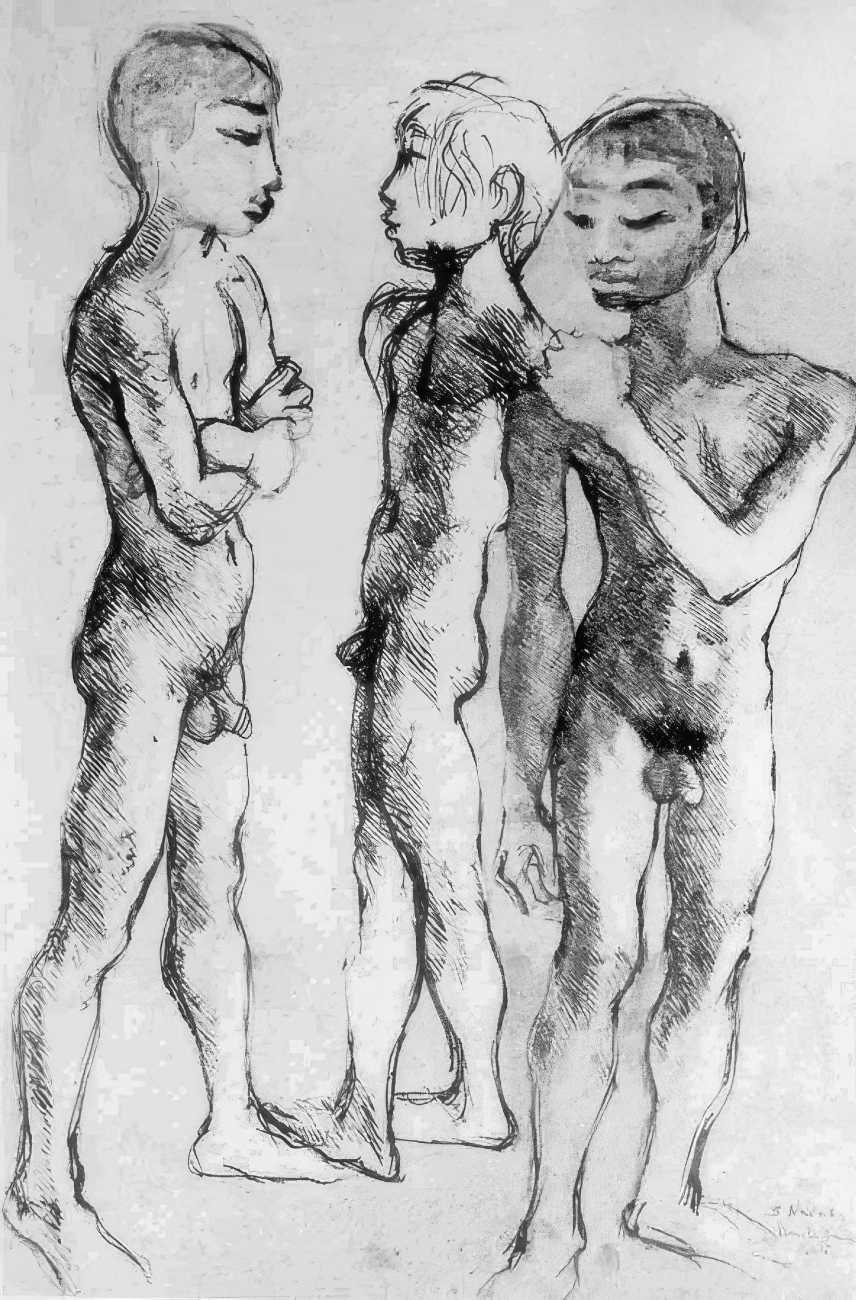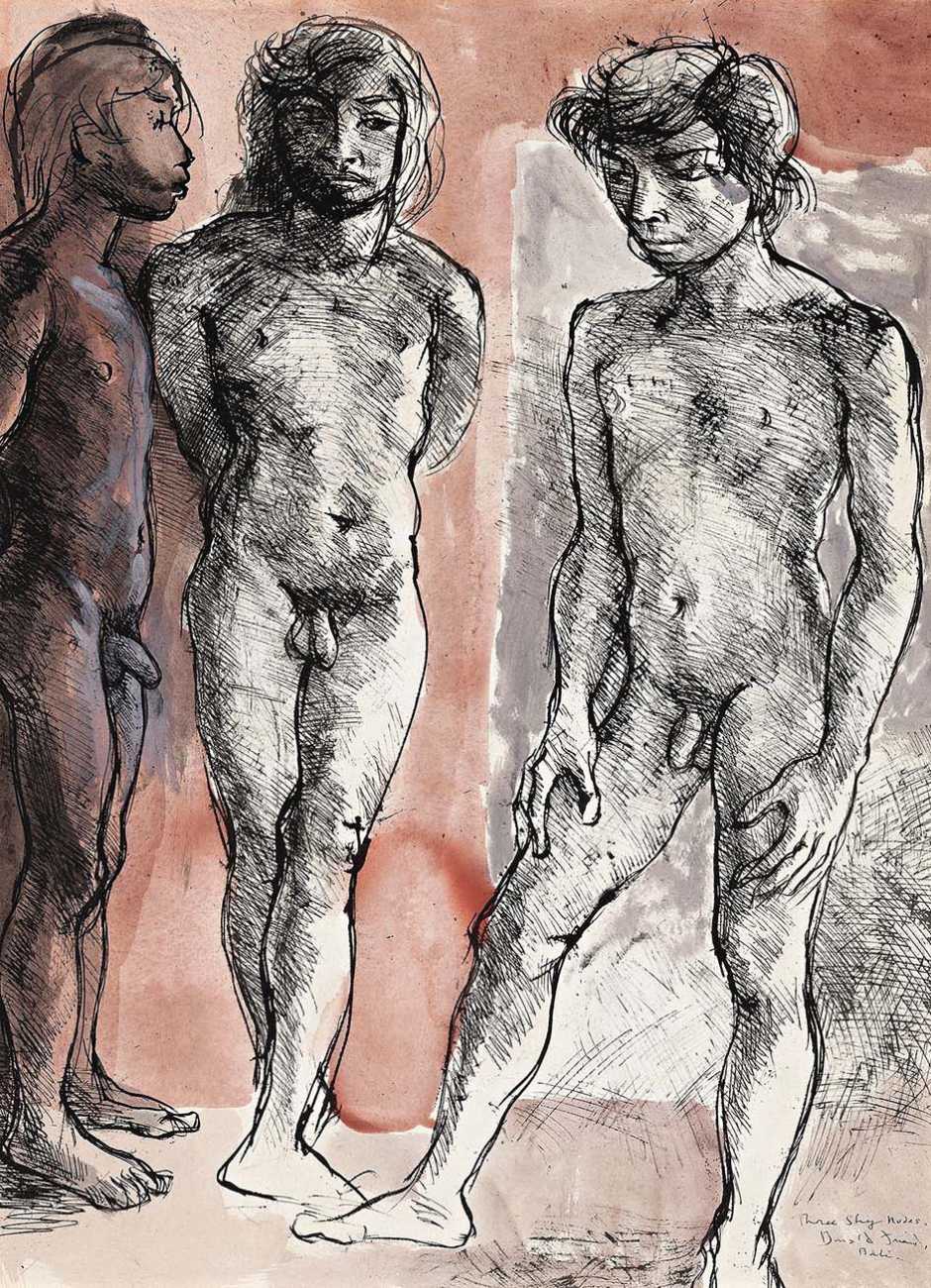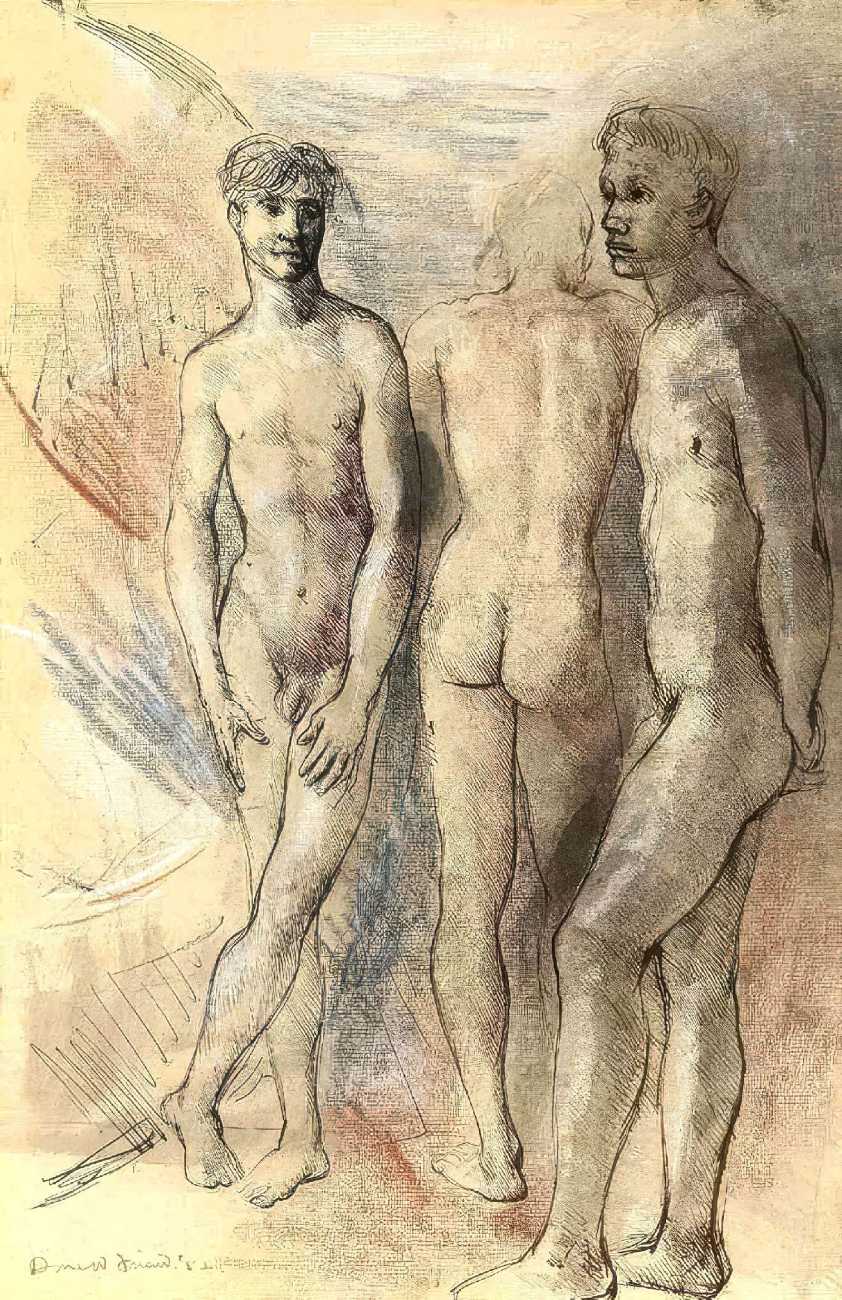
Donald Friend said that he thought most clearly with a pencil in his hand. Whether or not the words were intended literally, they provide the key to understanding his achievement as a draughtsman. For Friend, drawing was never simply a preliminary stage on the way to a finished painting, nor merely a means of recording appearances. It was the process through which ideas were discovered. Looking across the remarkable range of his drawings, from rapid notebook sketches and intimate figure studies to elaborate mythological fantasies and highly finished illustrations, it is clear that line was the language in which he thought.
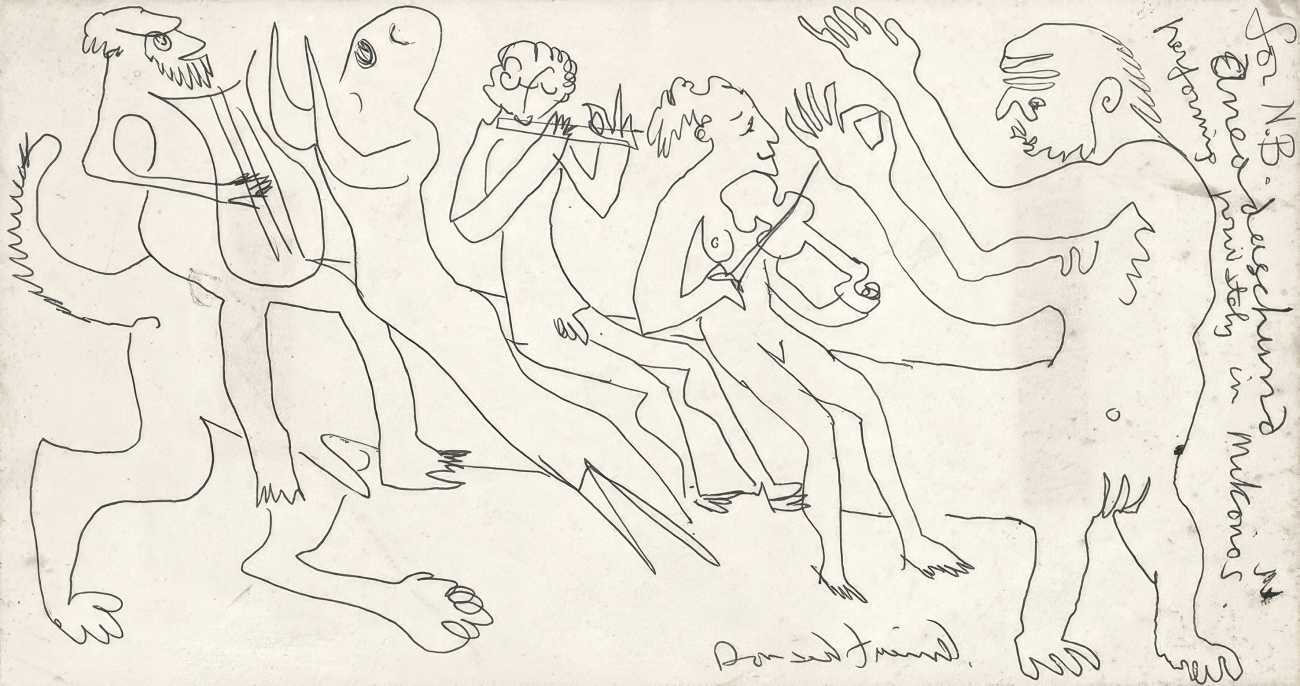
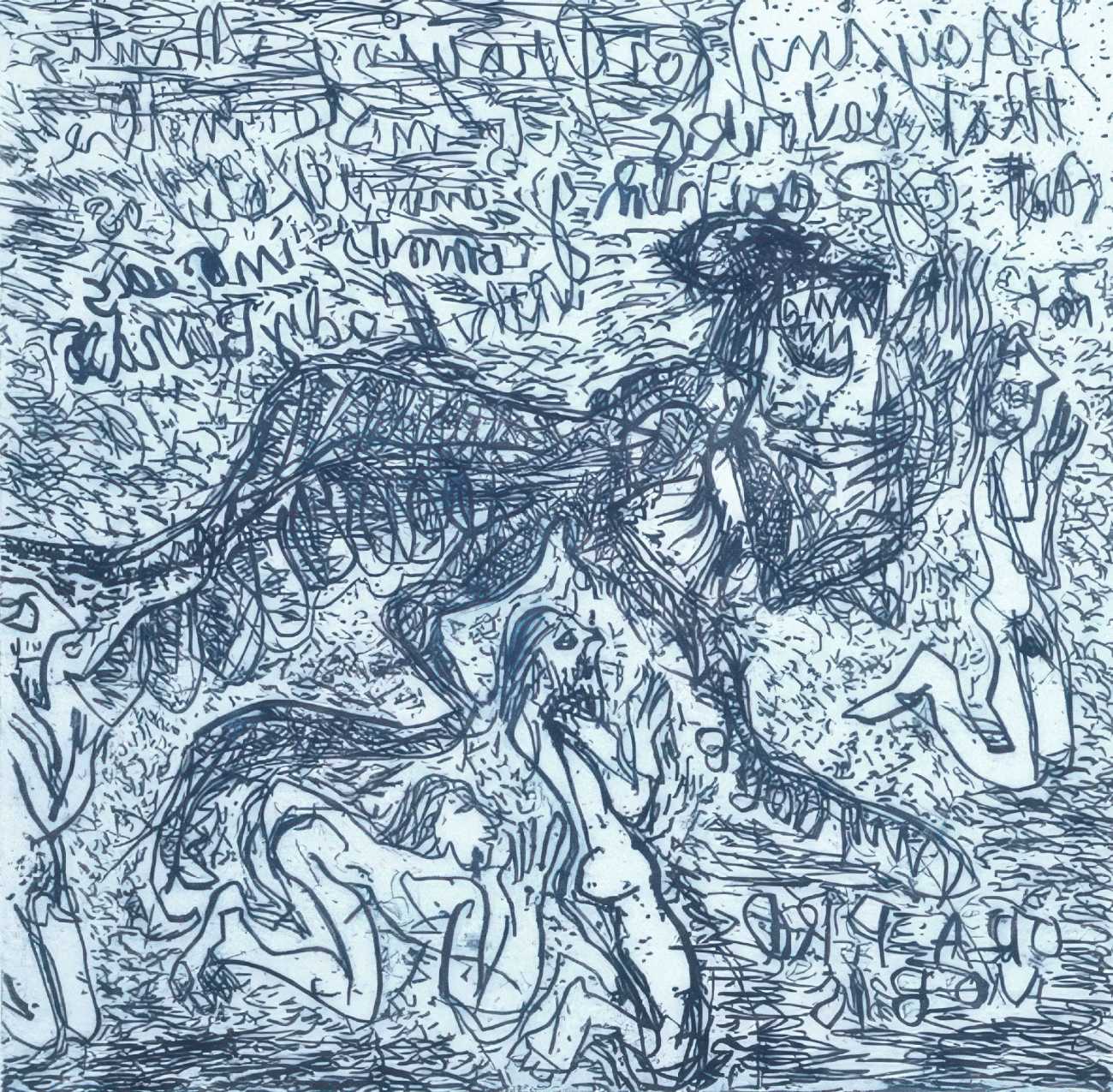
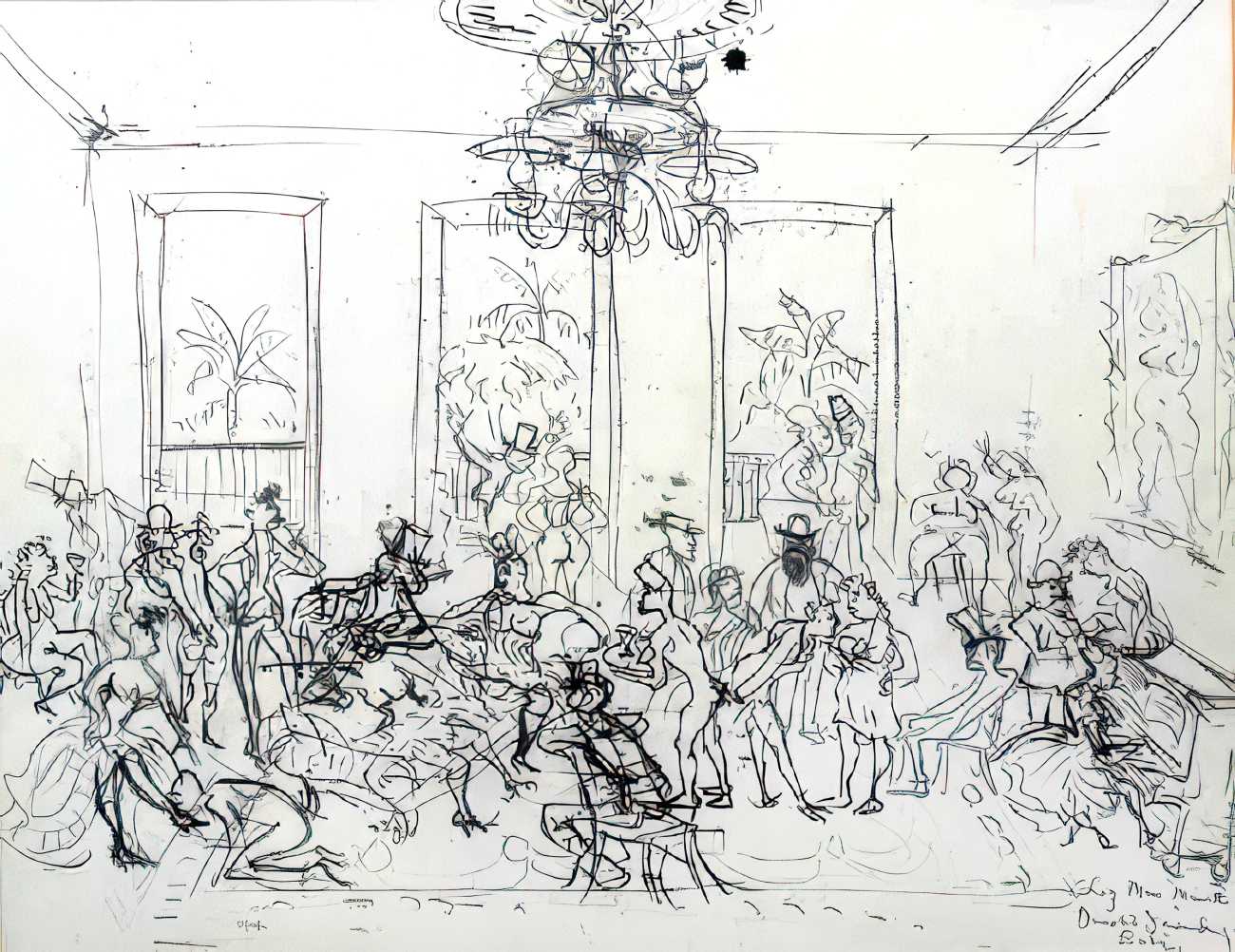
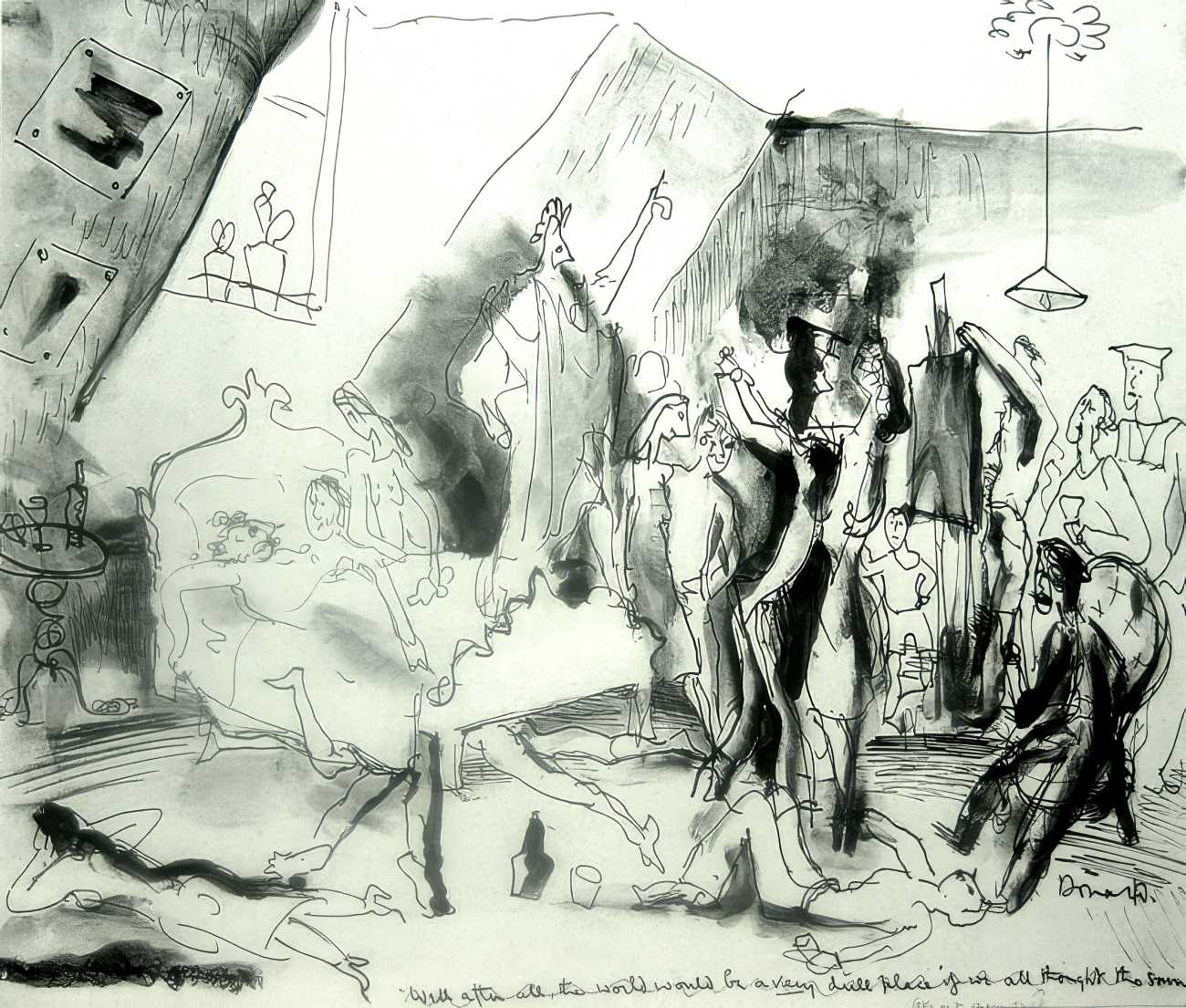
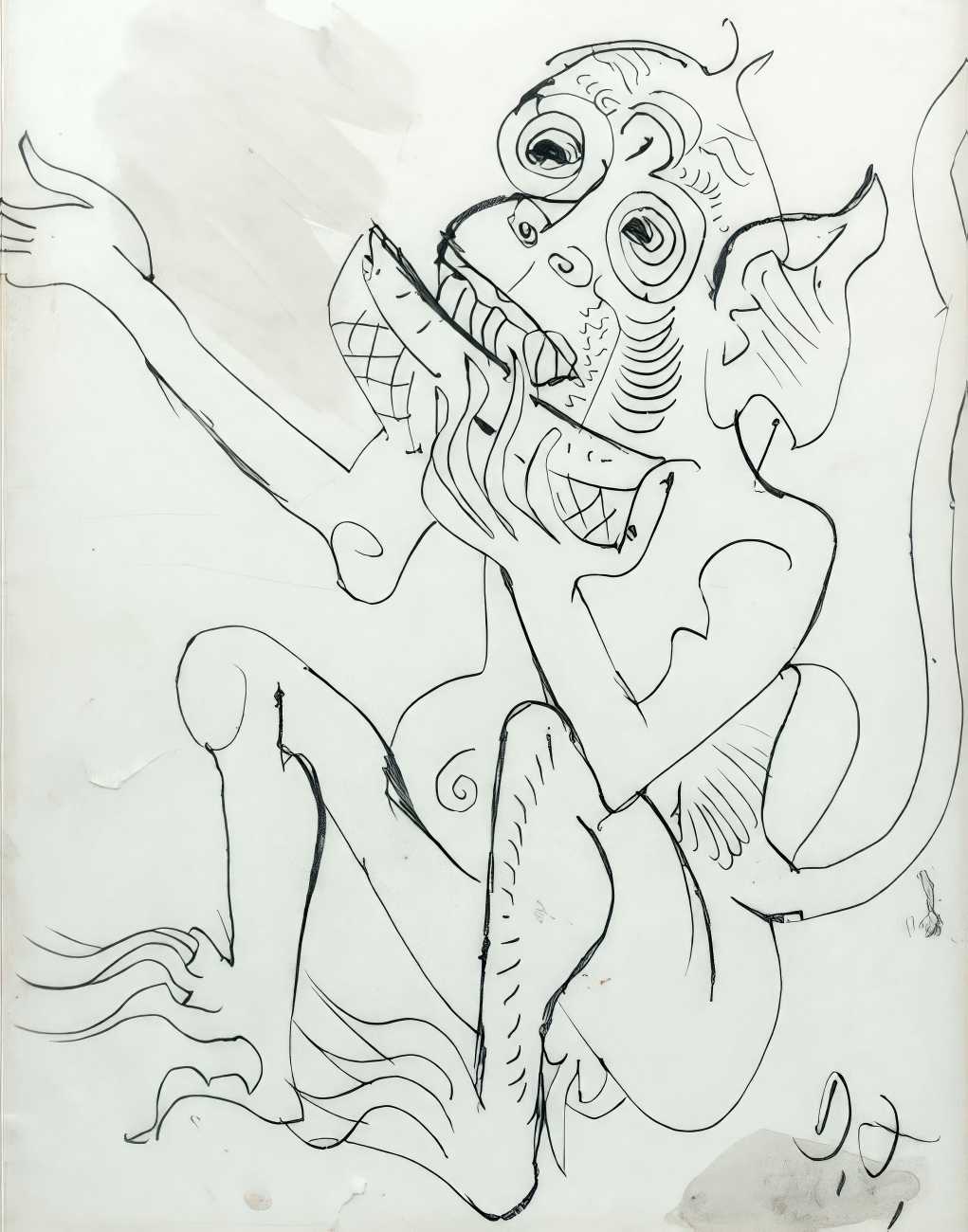
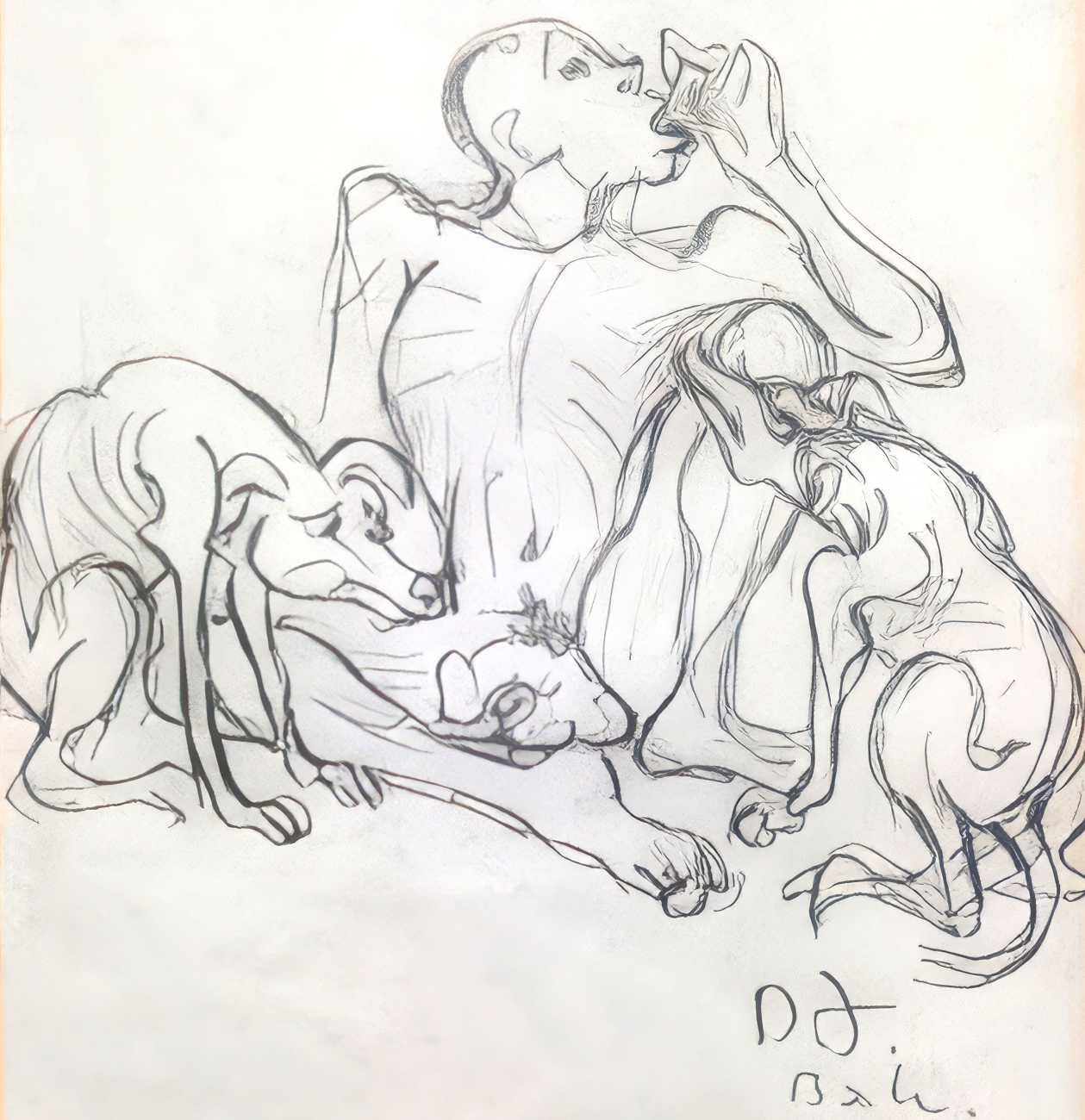
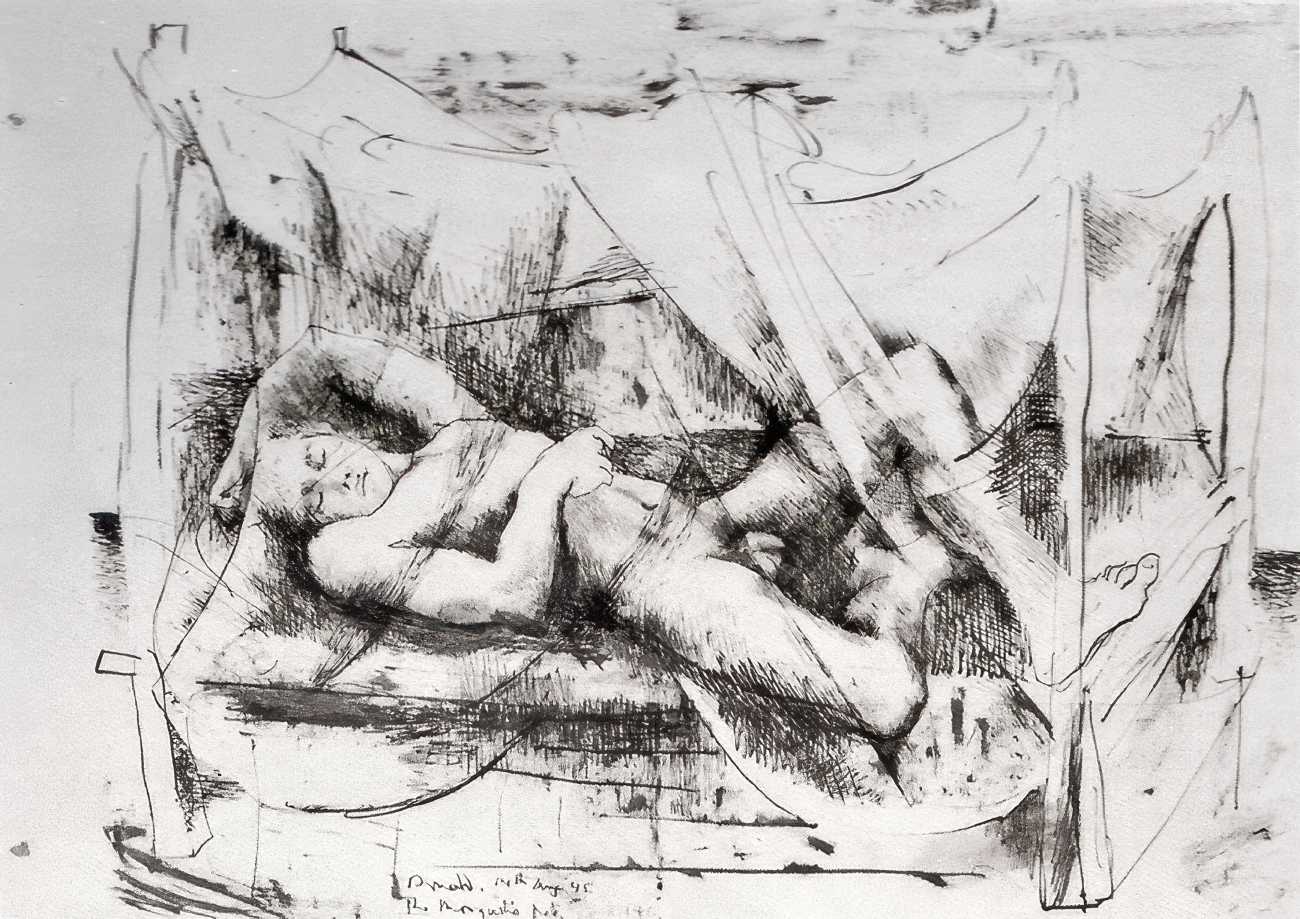
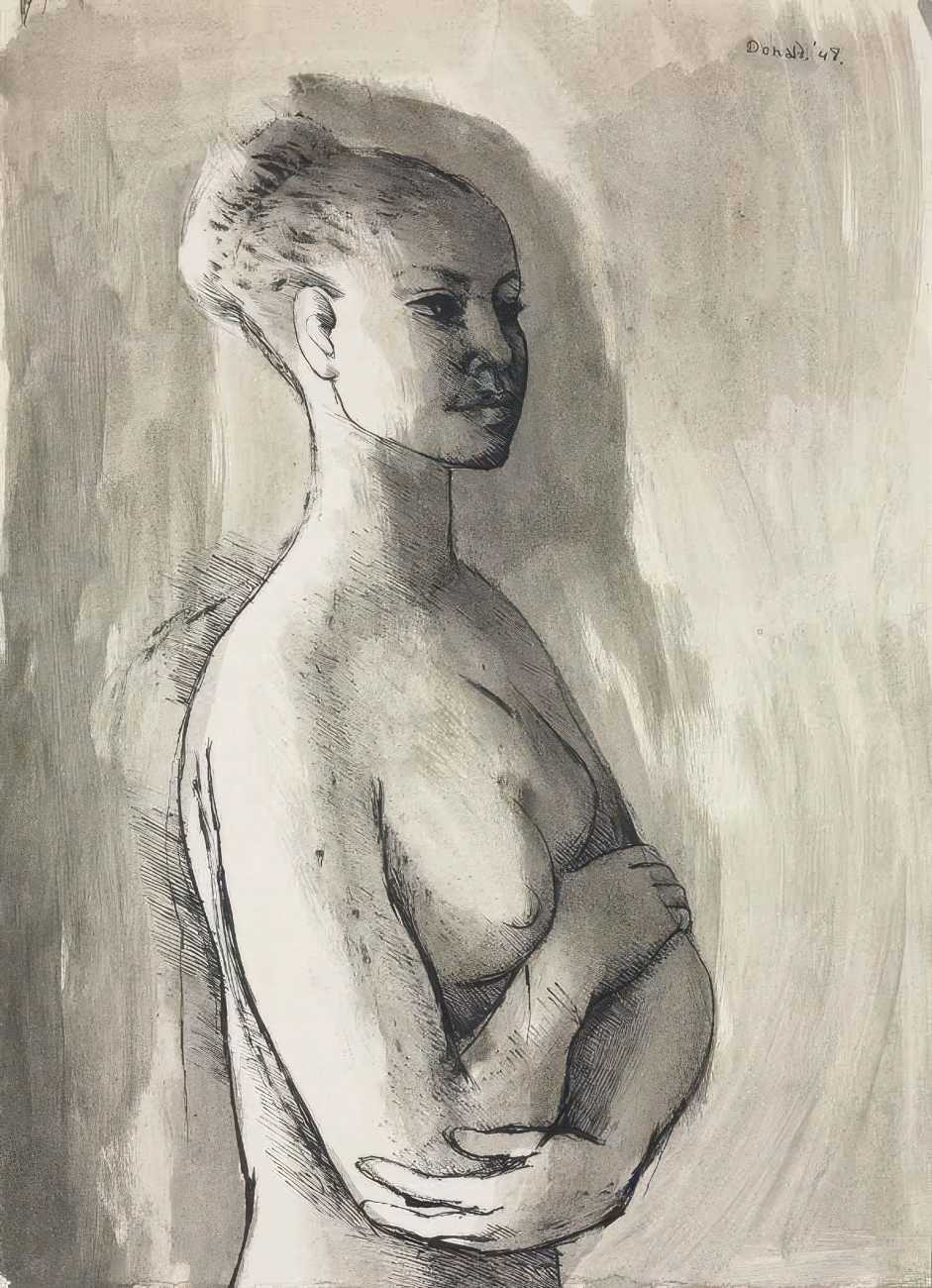
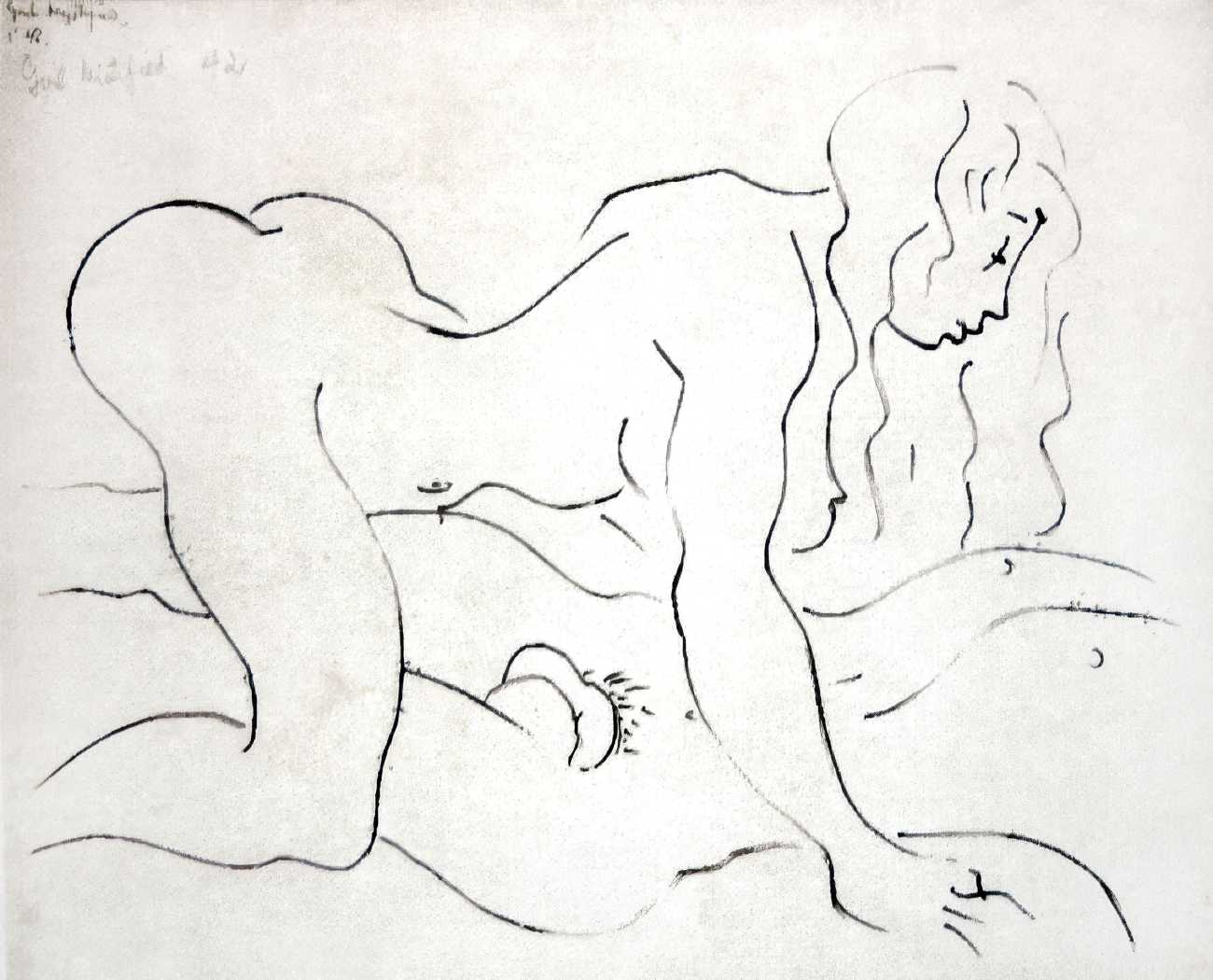
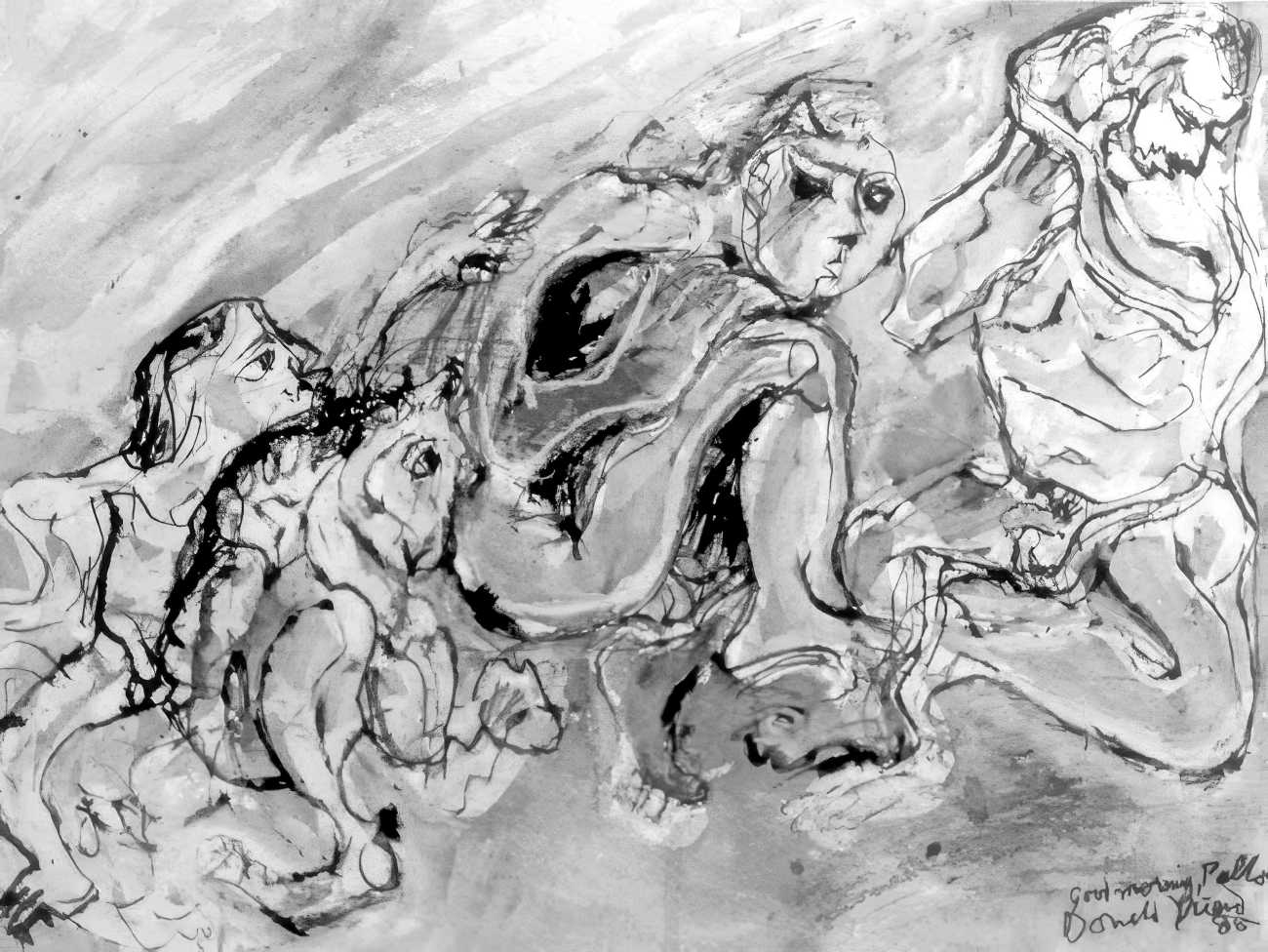
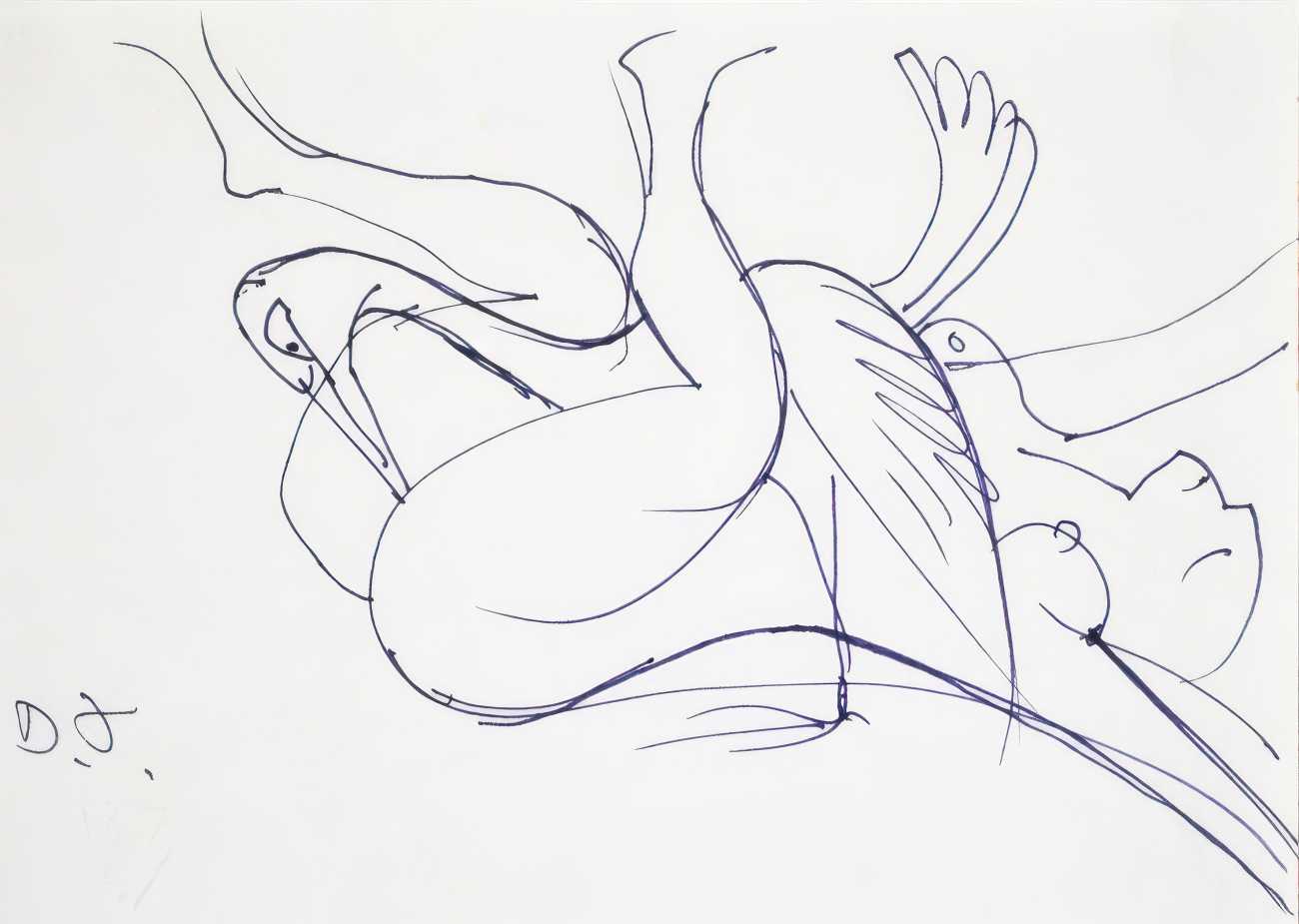
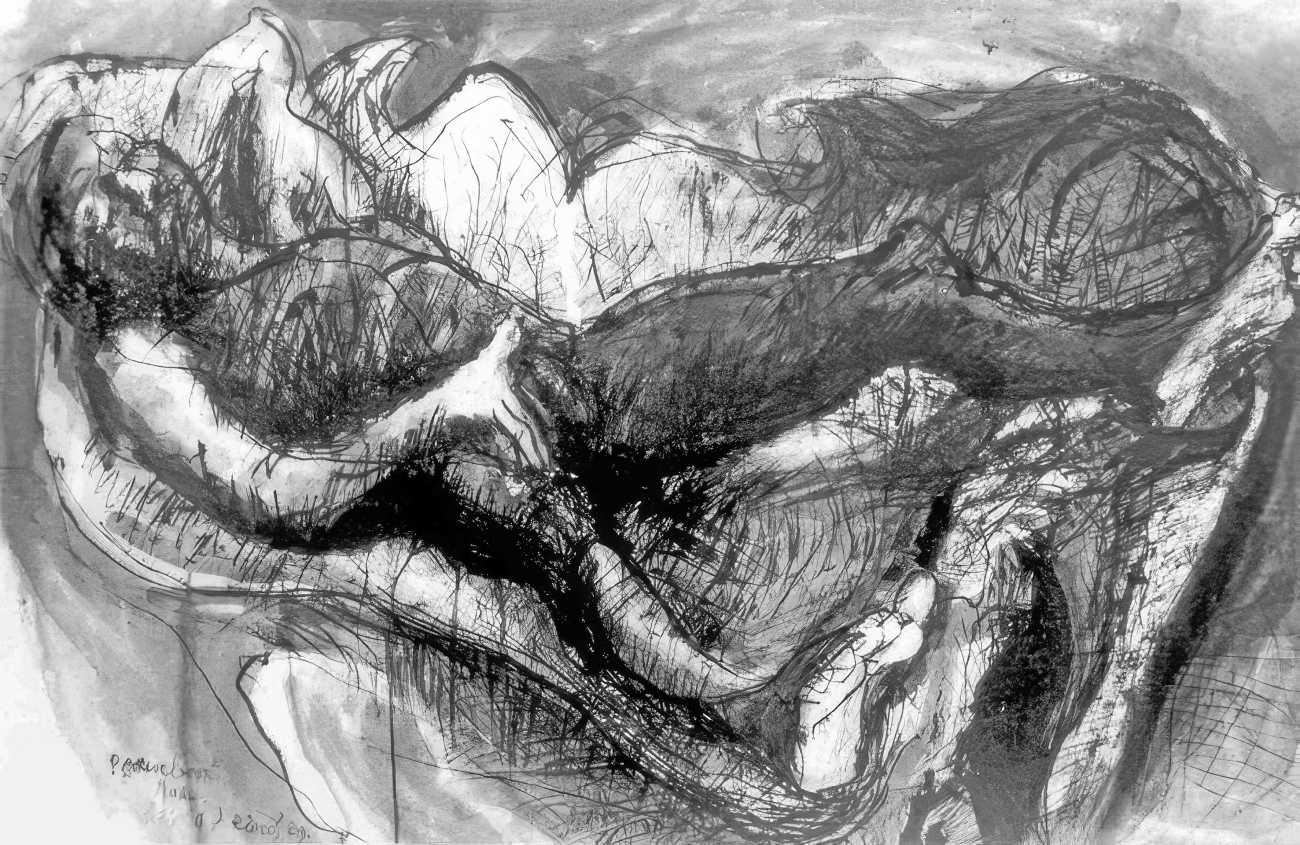
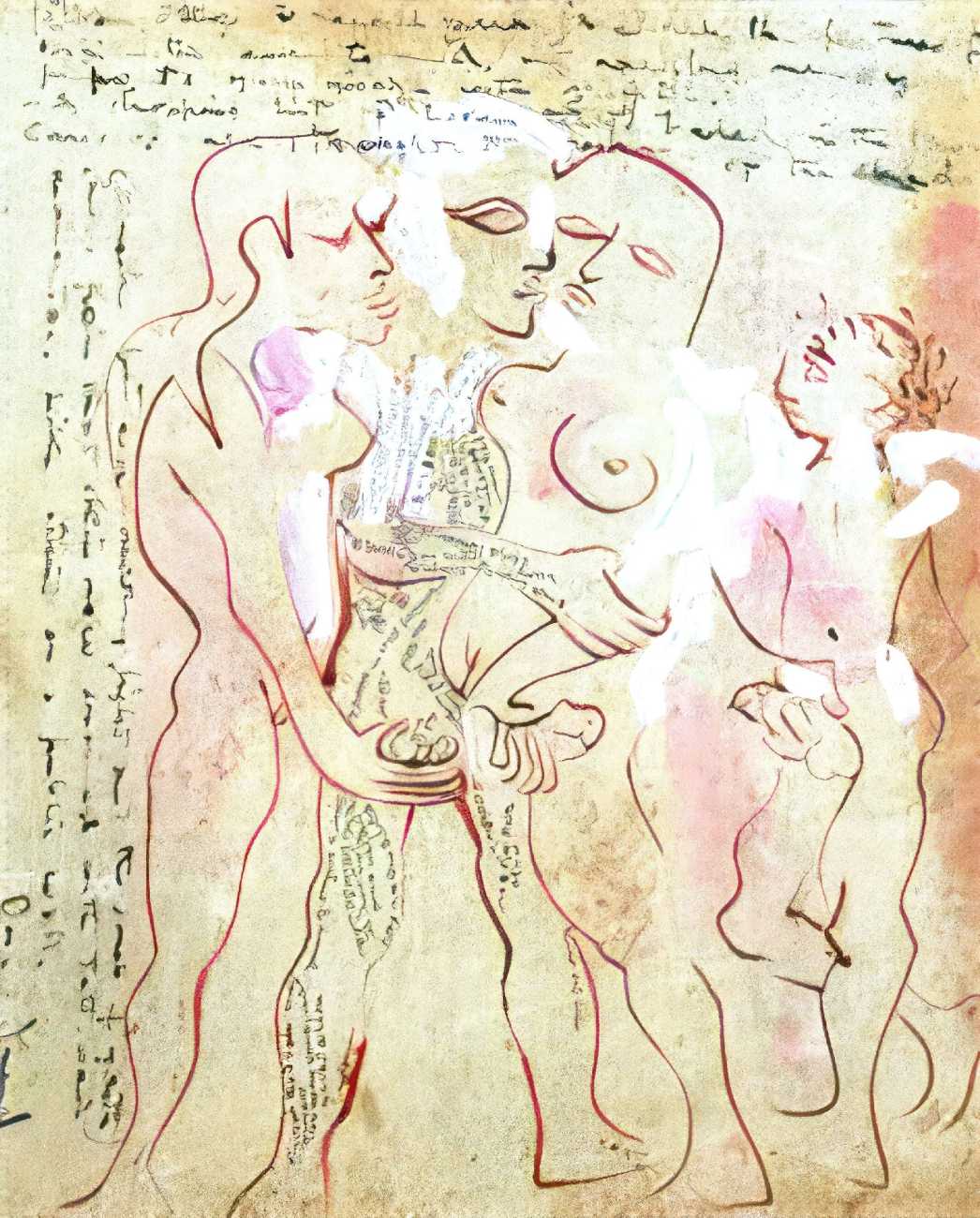
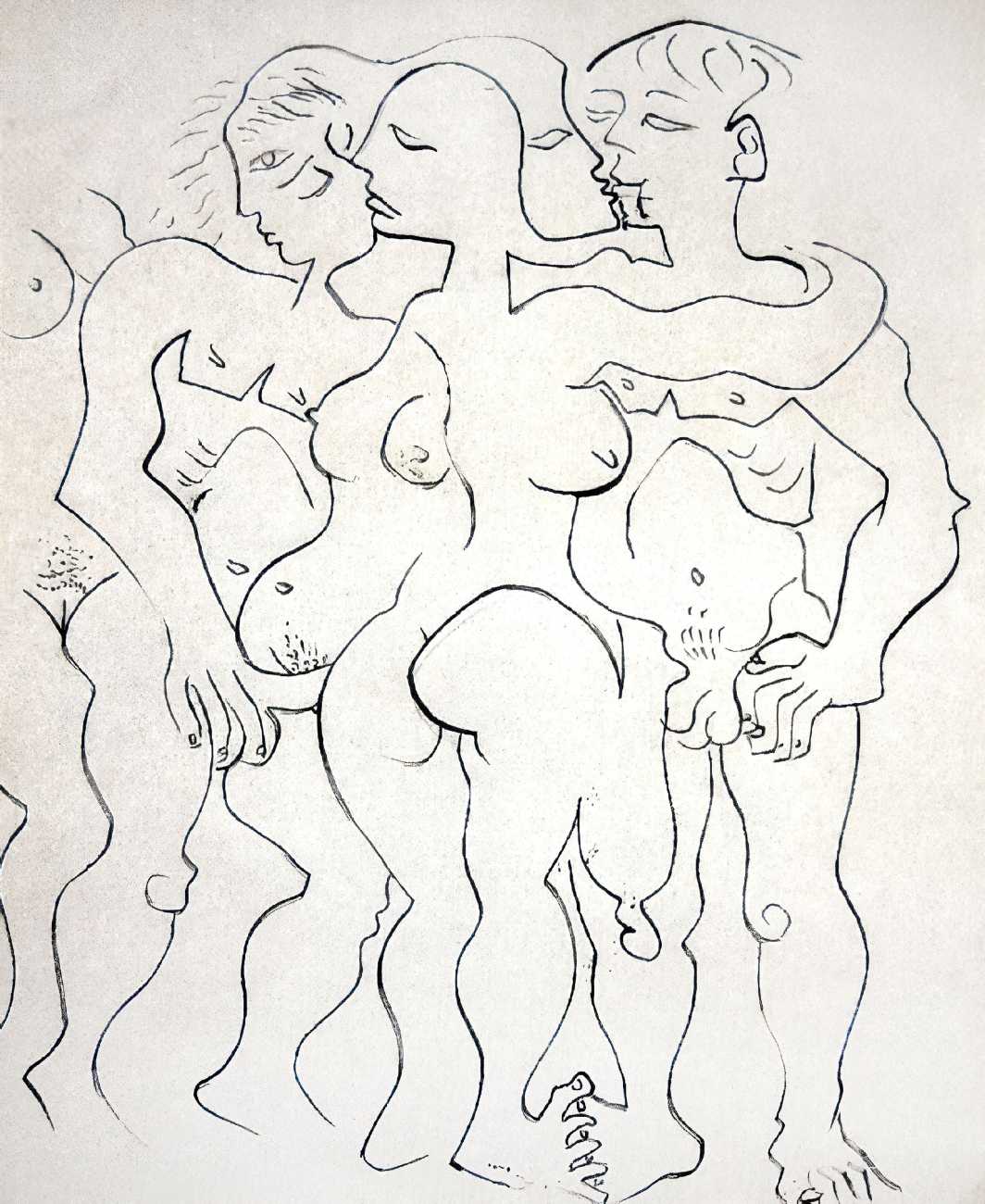
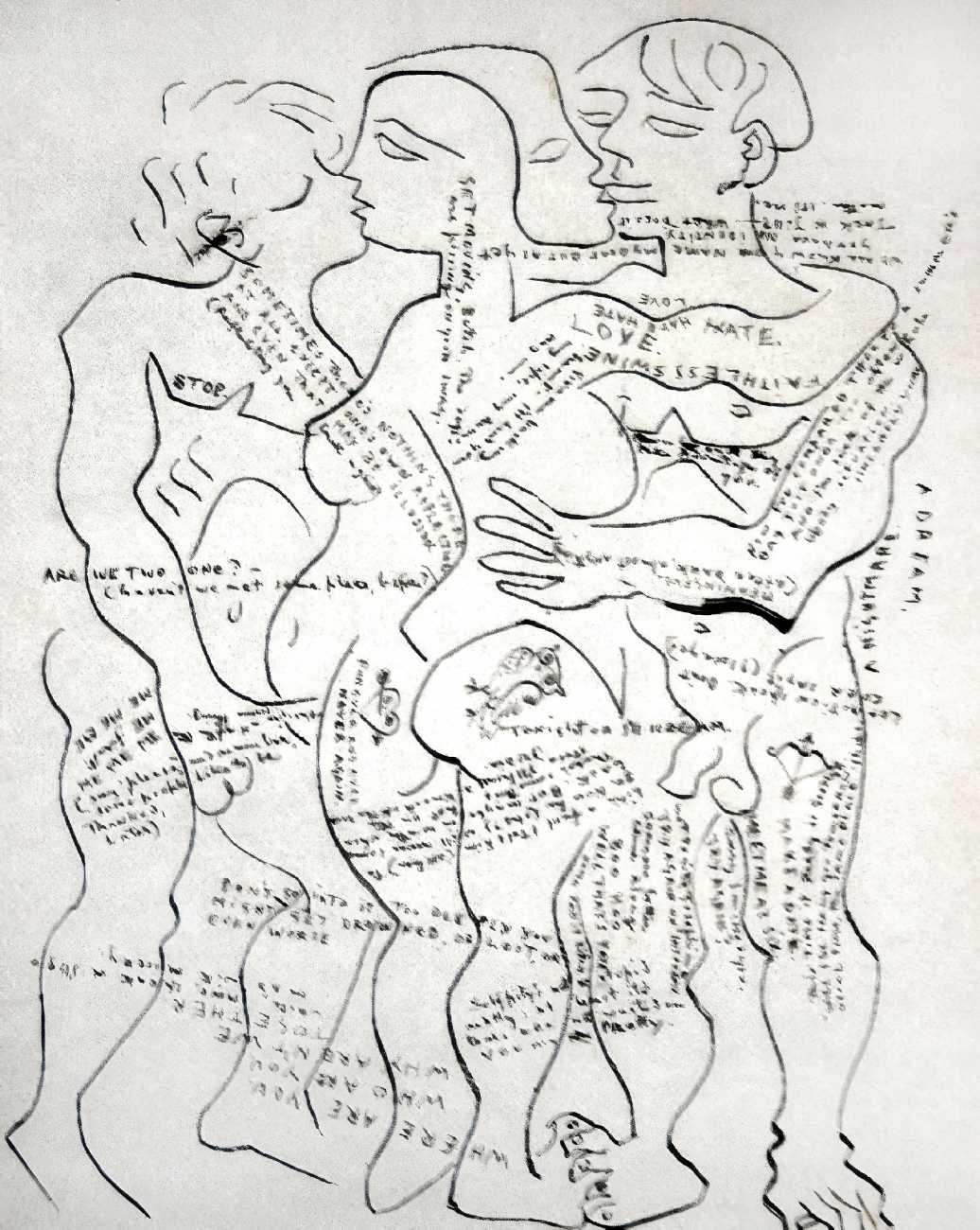
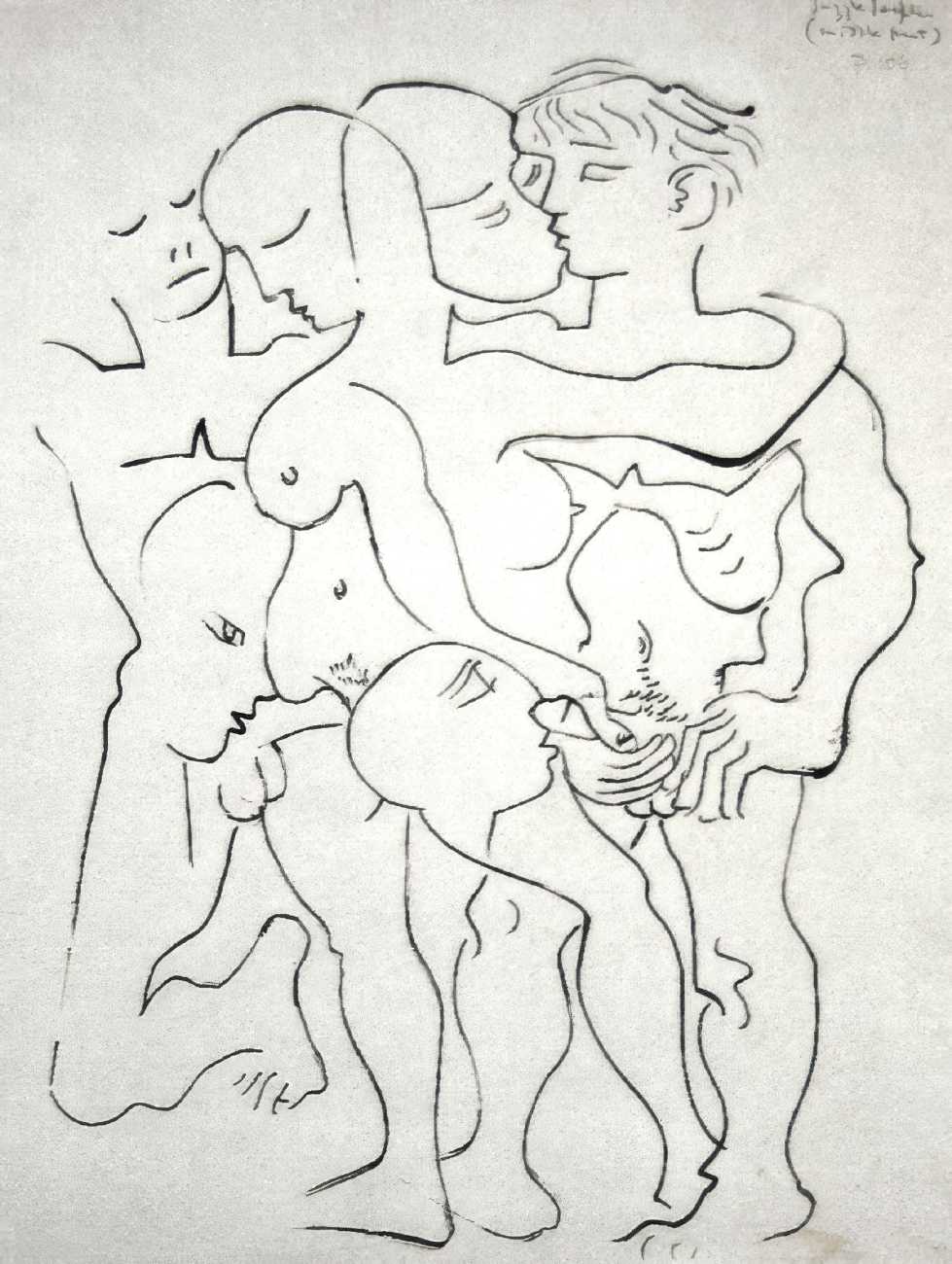
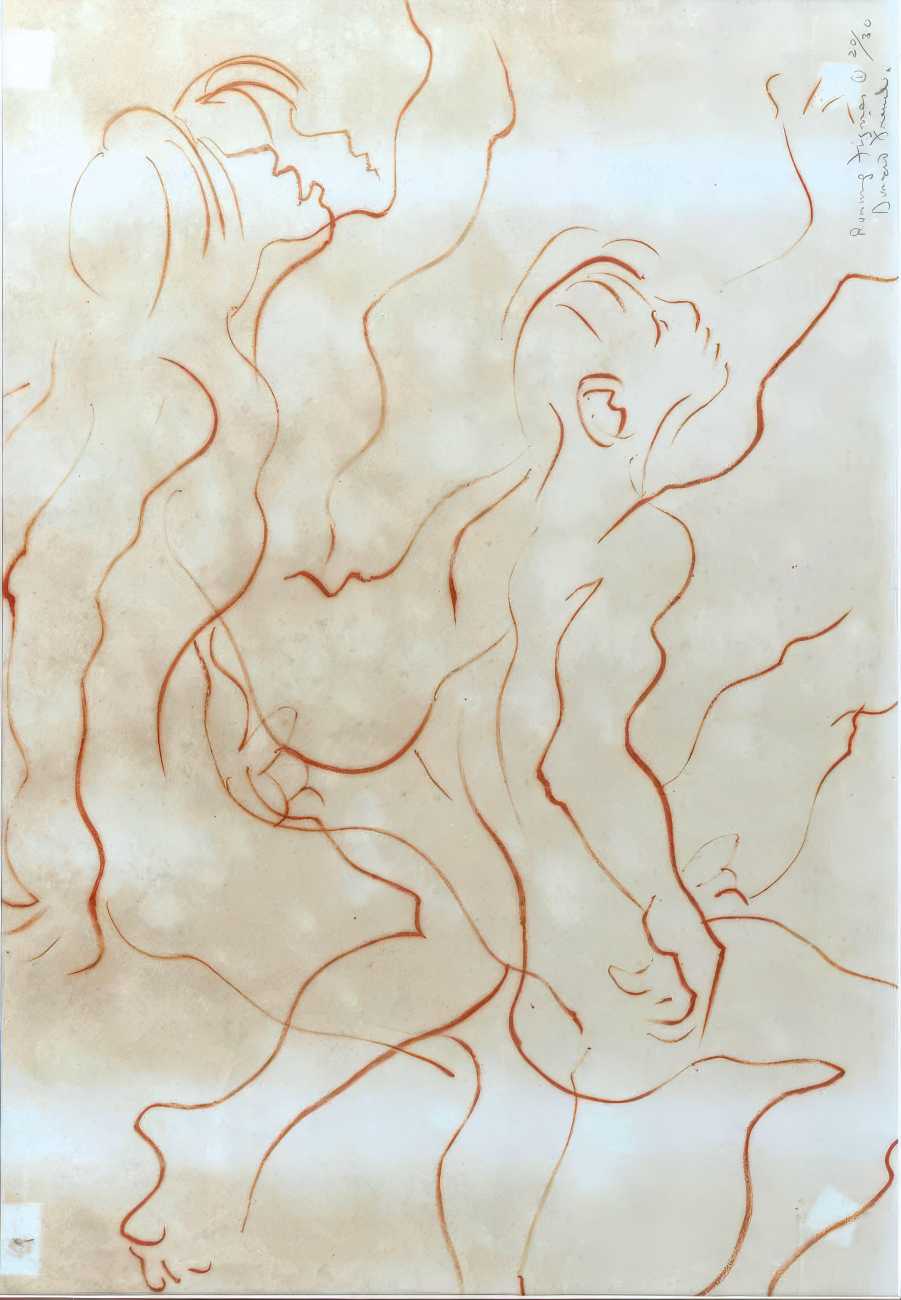
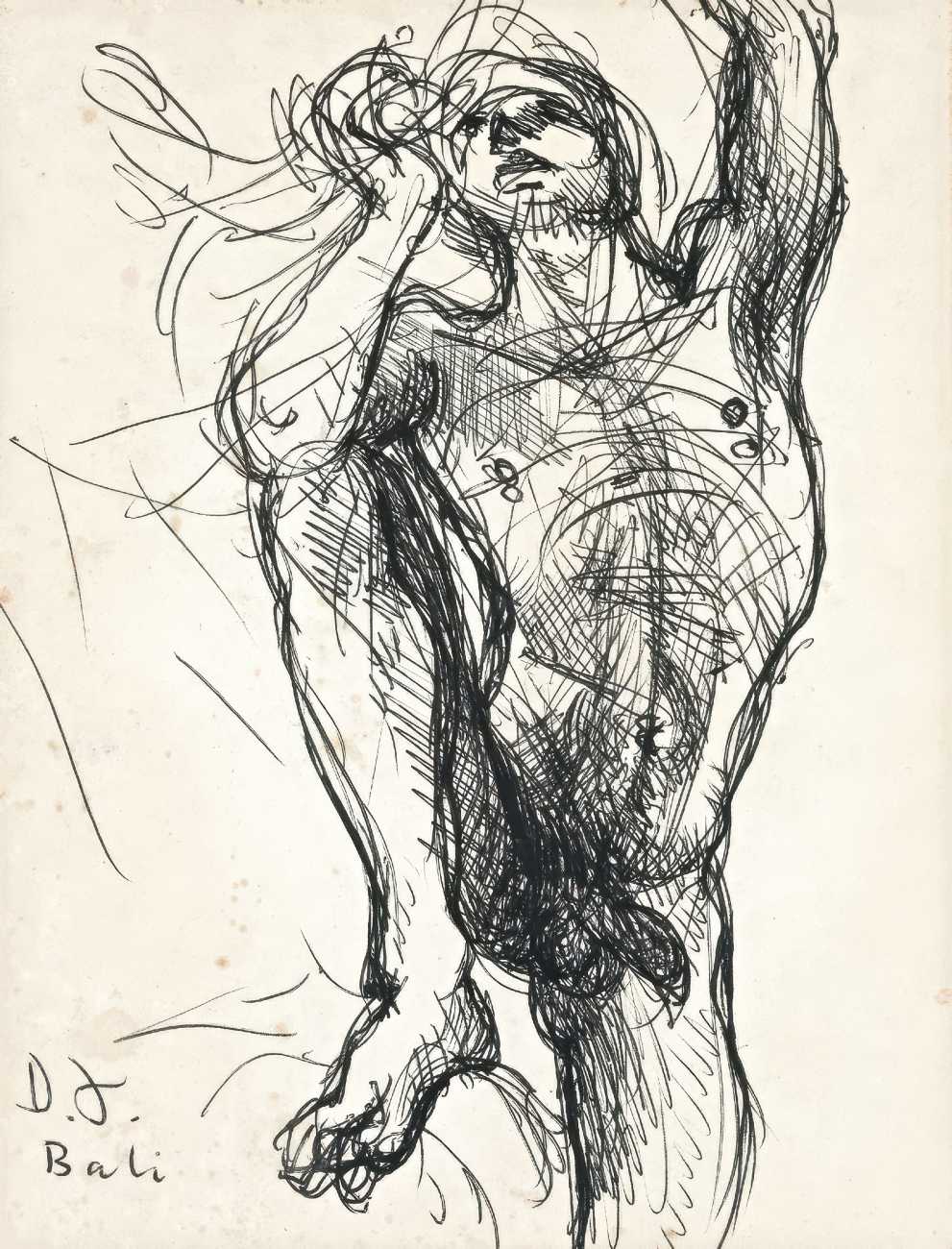
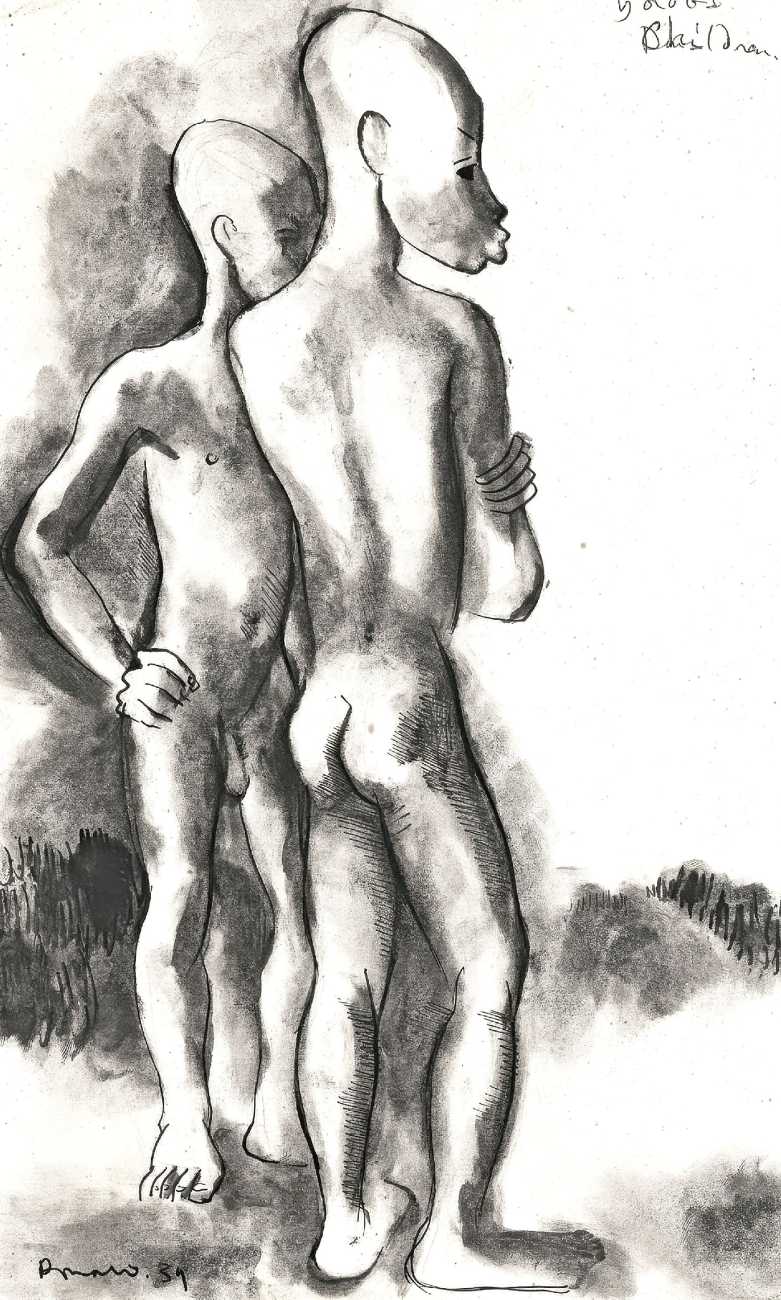
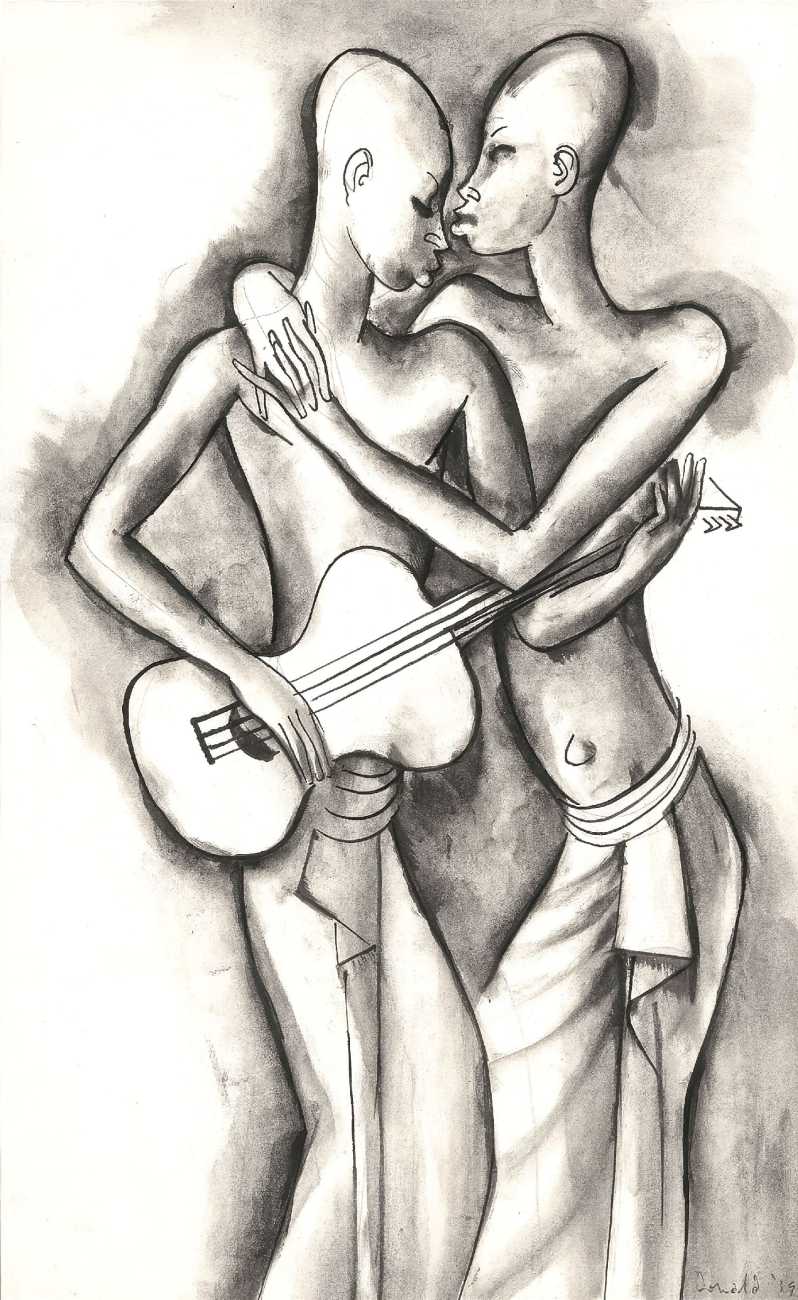
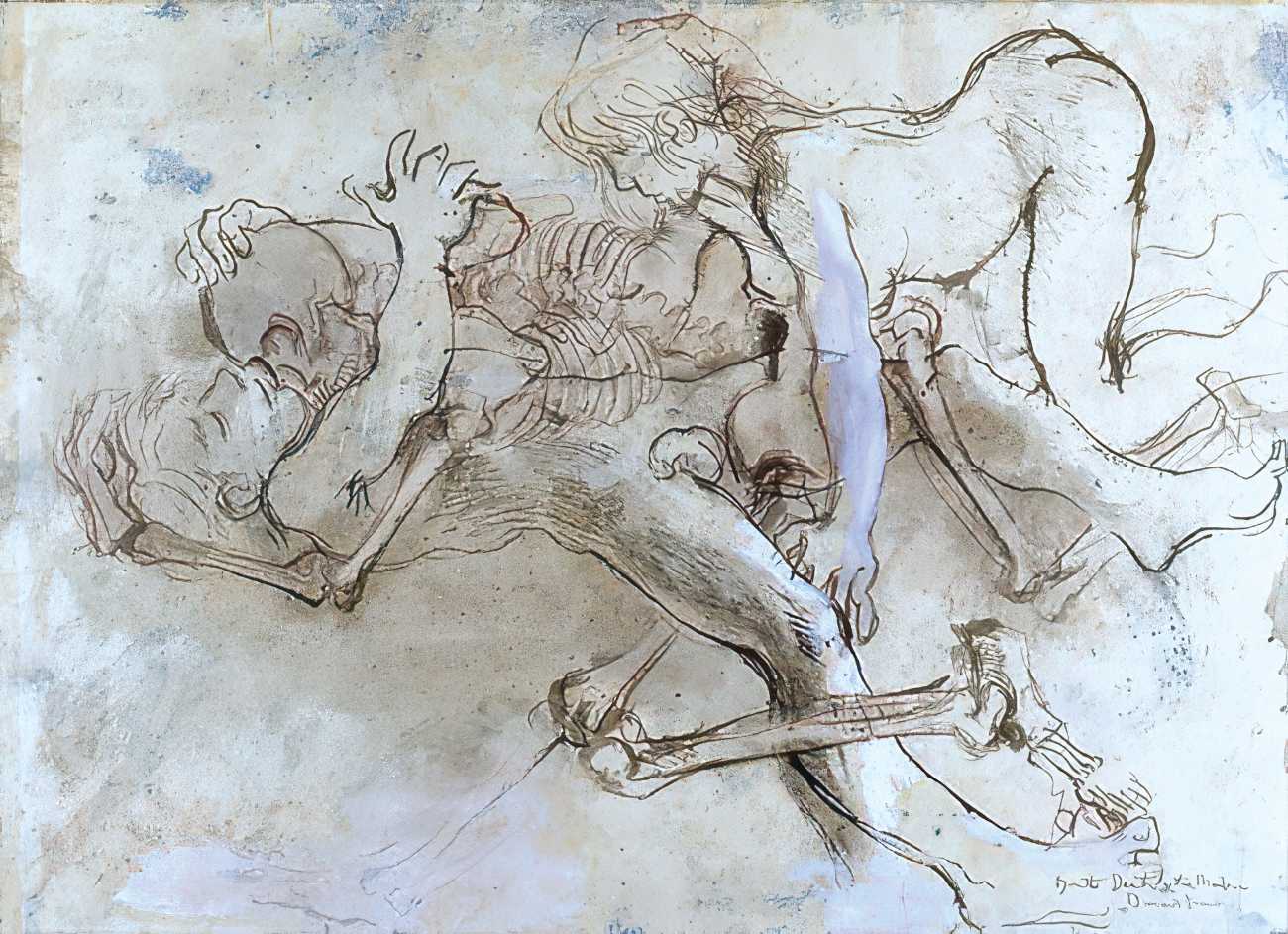
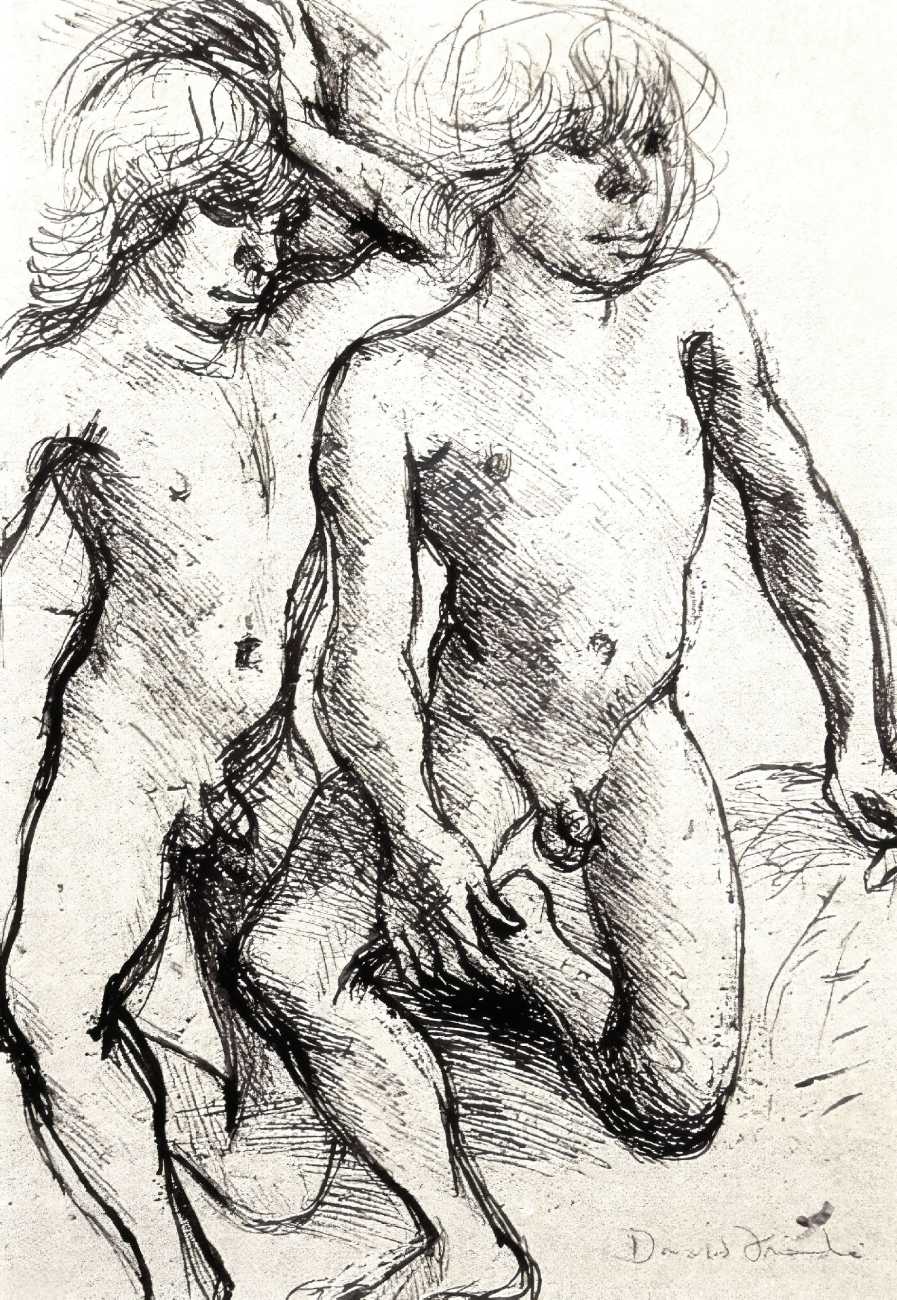
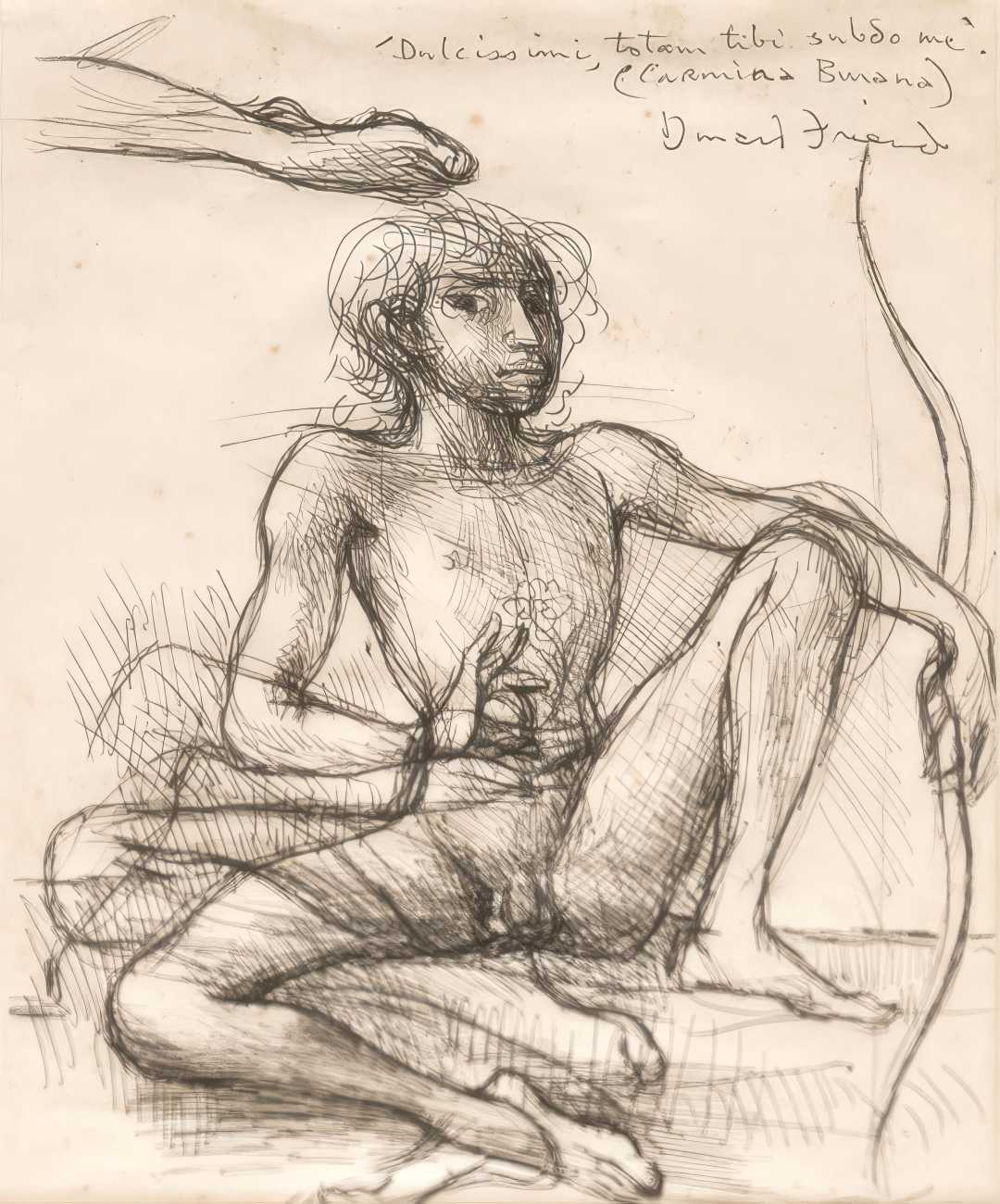
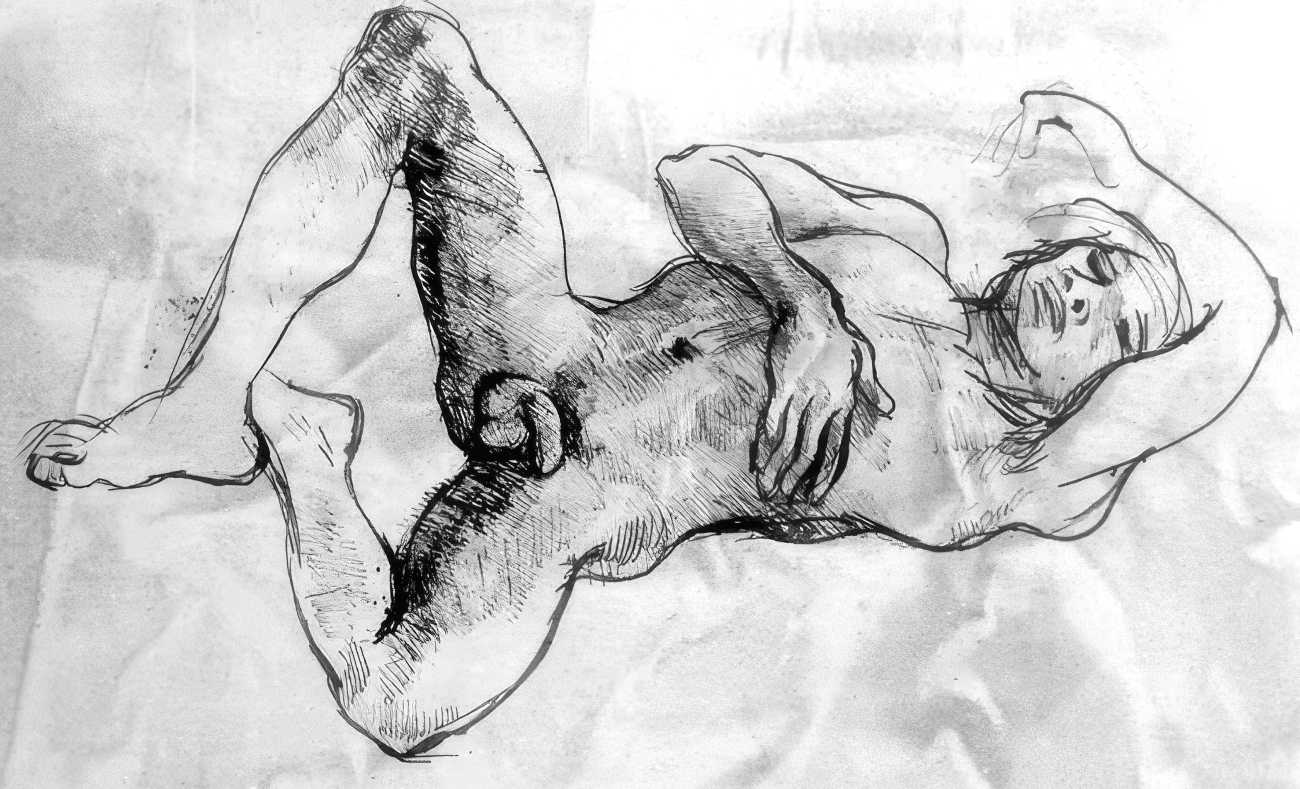
Sometimes his line is astonishingly economical. A few unbroken contours define an entire figure with the confidence of classical draughtsmanship, recalling the effortless elegance of Jean Cocteau or the linear tradition of Ingres. Elsewhere the line becomes exploratory – figures emerge gradually from overlapping marks, corrections and hesitations that remain visible in the finished drawing.
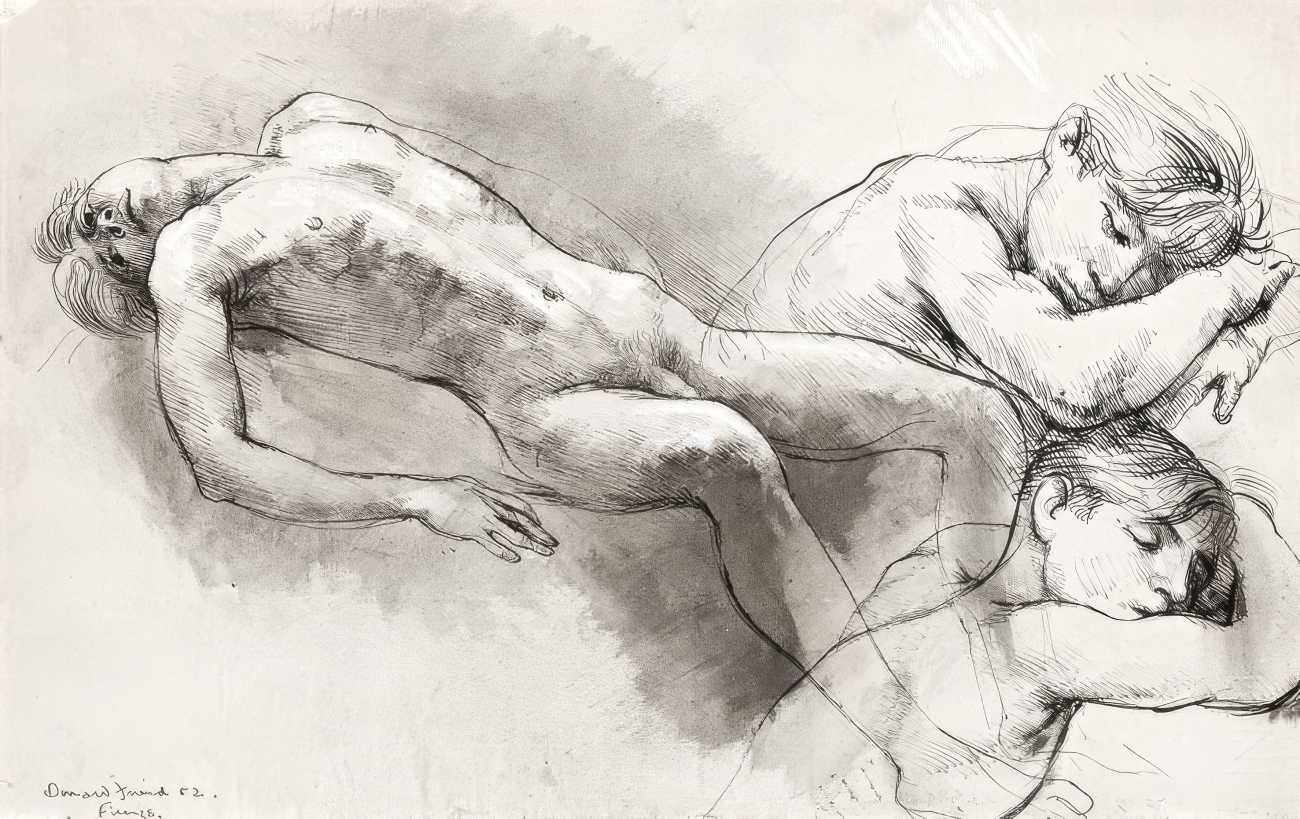
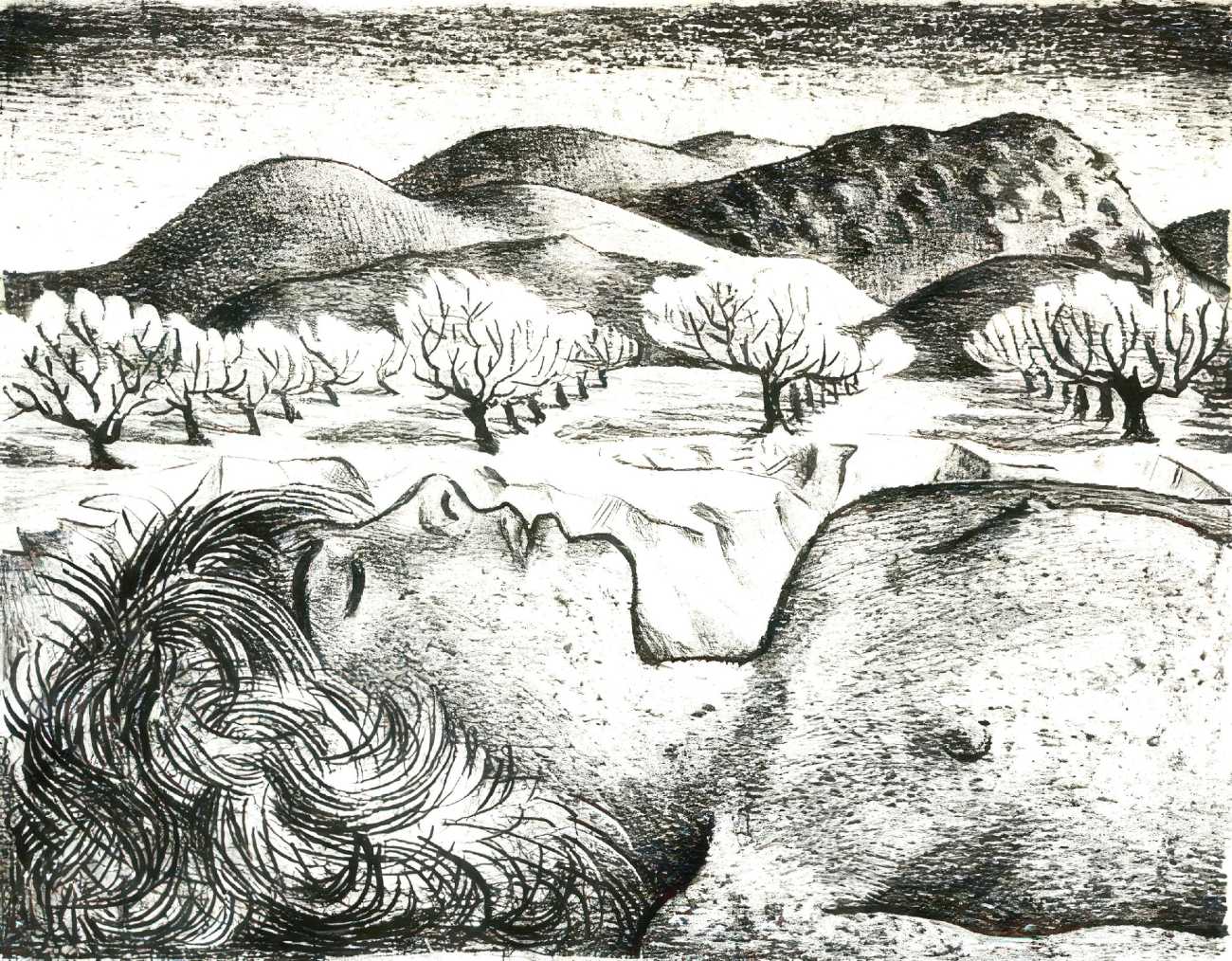
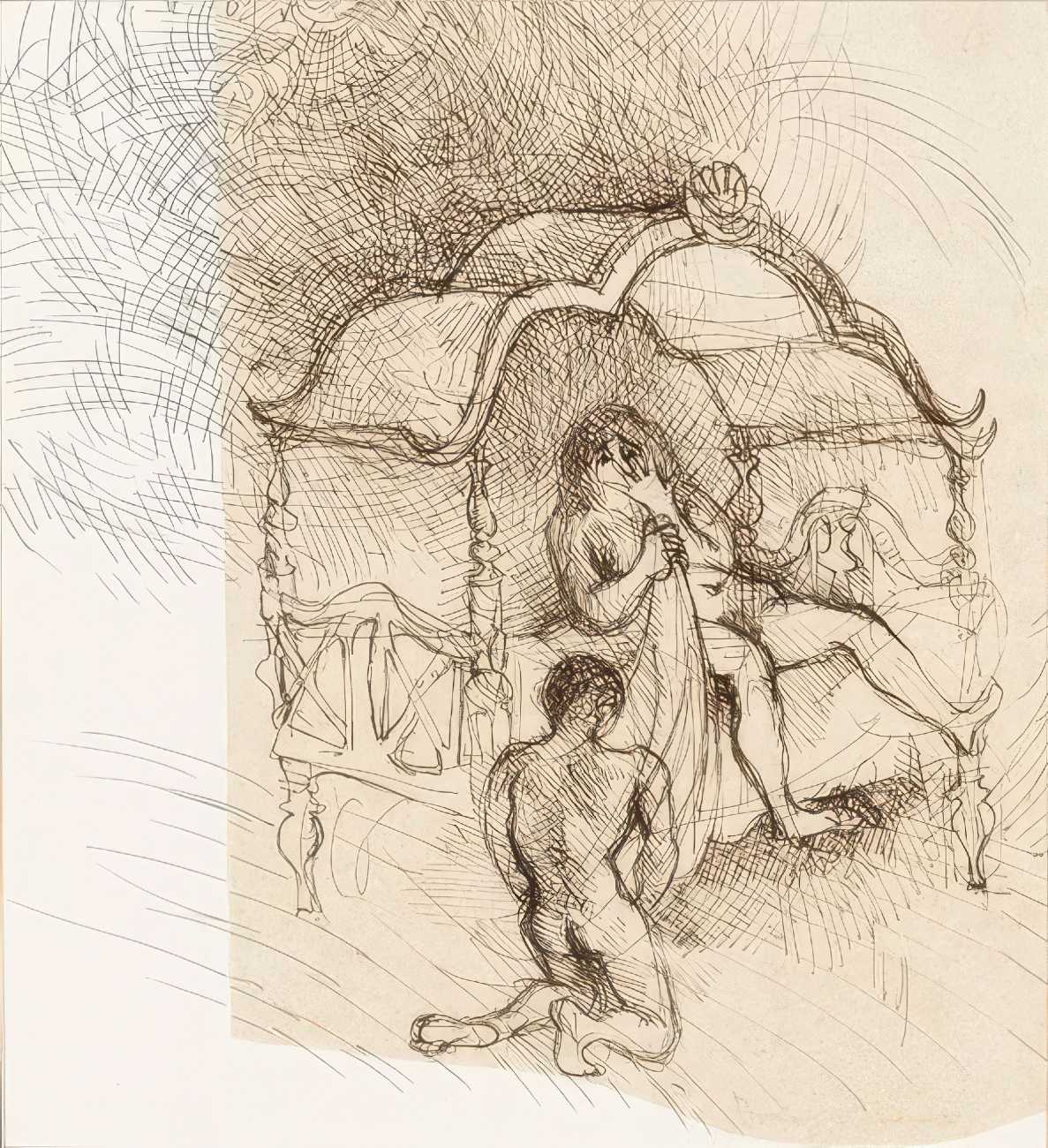
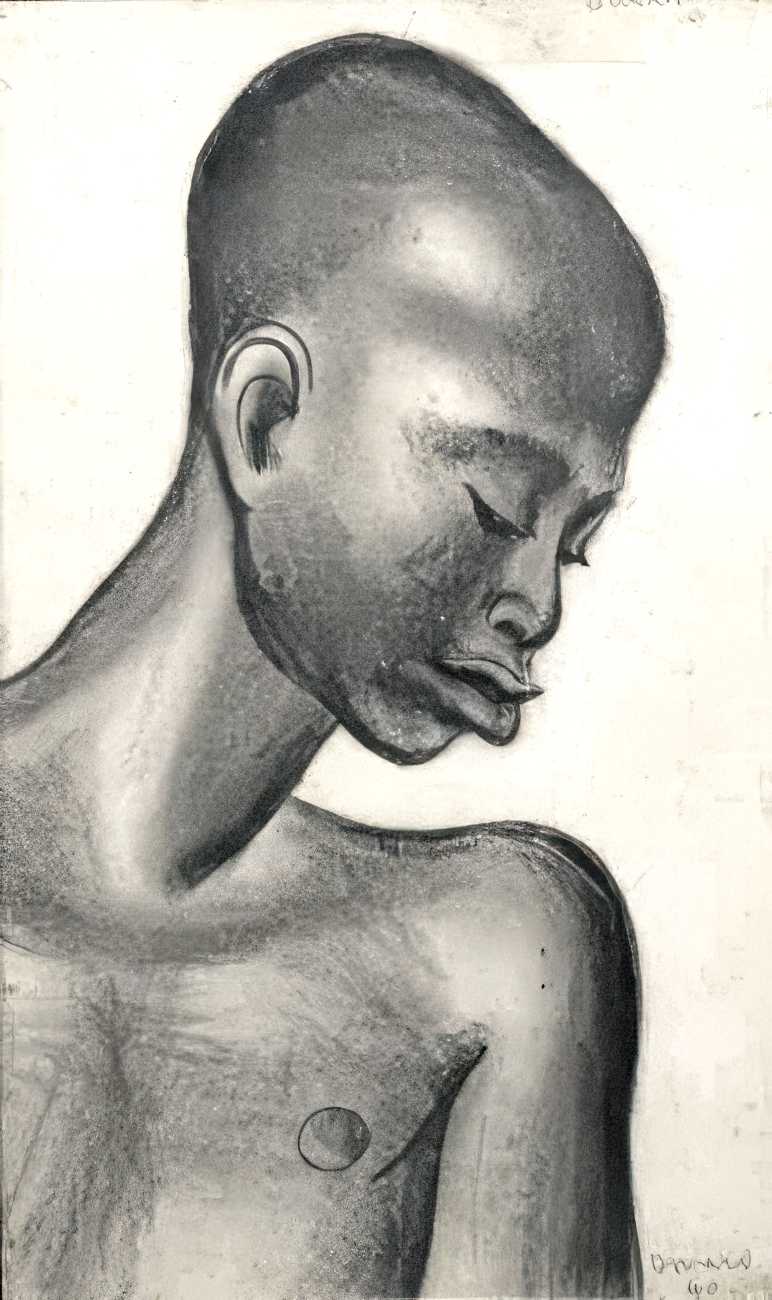
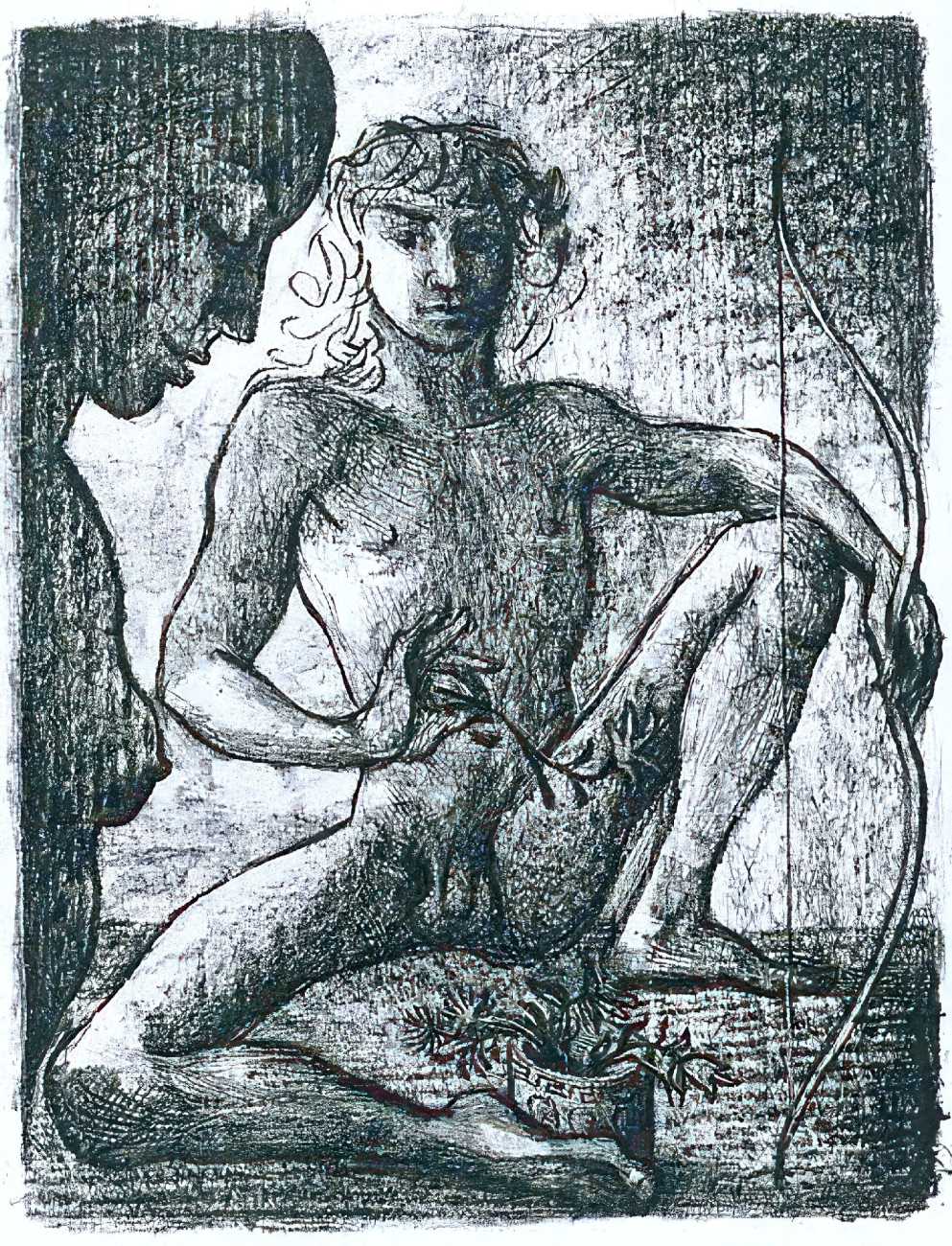
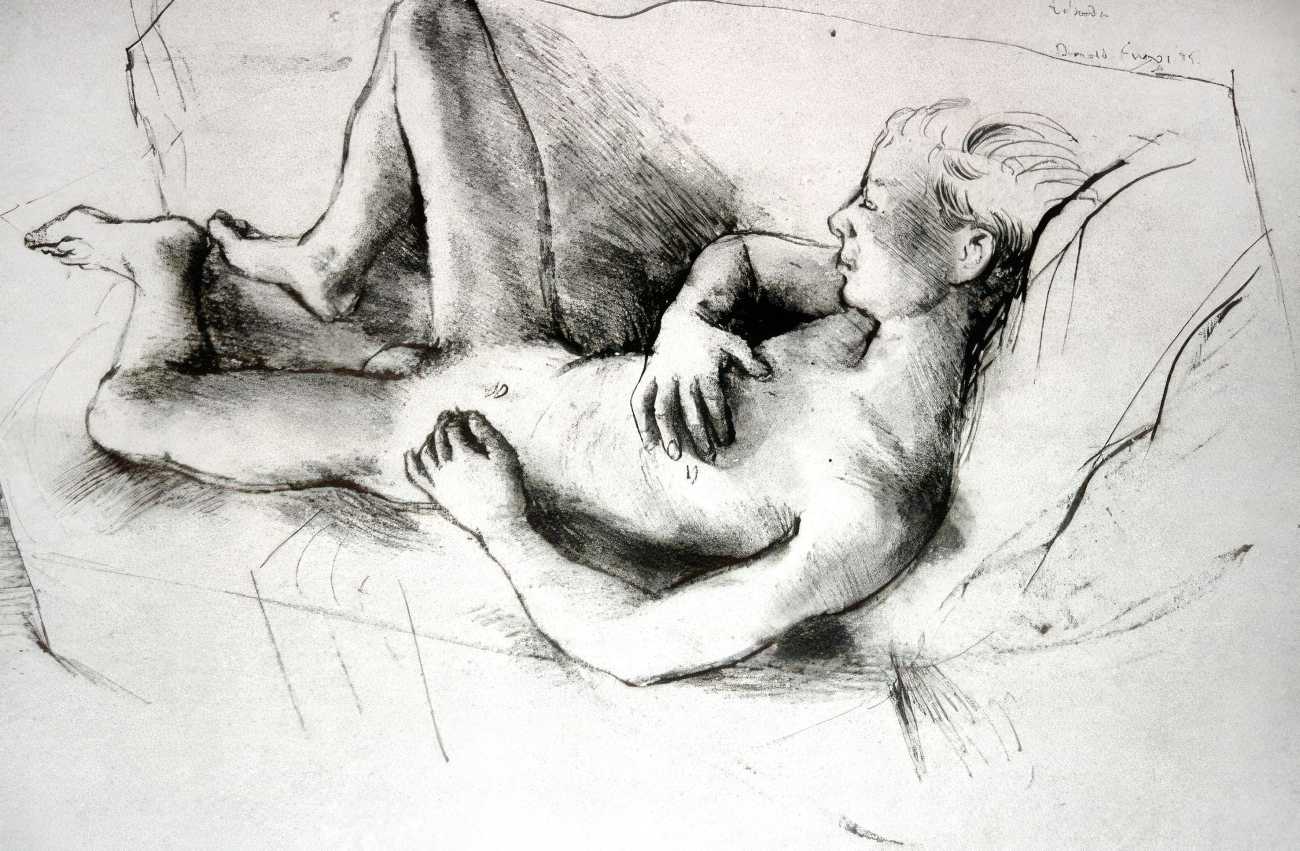
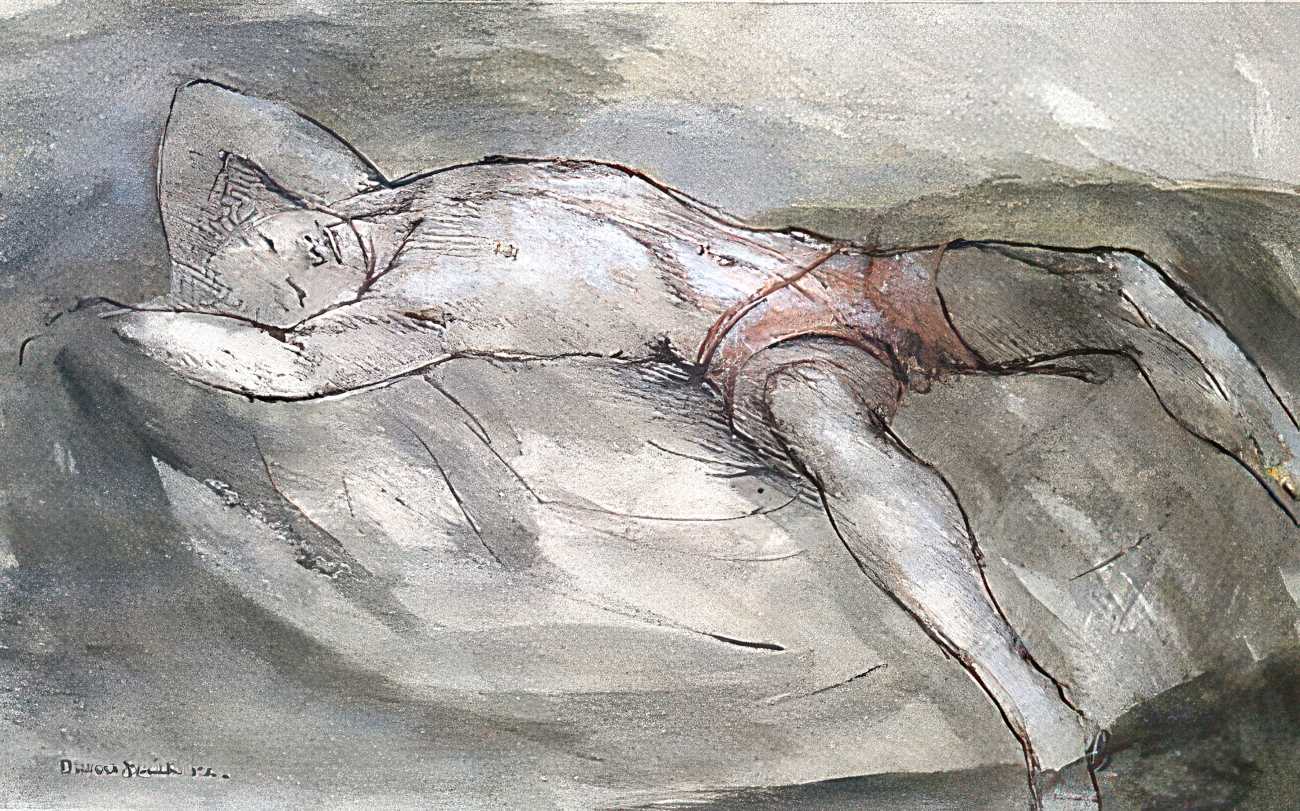
Observation formed the foundation of Friend’s art, and his life drawings demonstrate acute sensitivity to anatomy and posture. The observed figure becomes the starting point for imaginative transformation, so that the same young man who appears quietly asleep in one drawing may re-emerge in another as a mythological shepherd, a companion of satyrs or an inhabitant of an imagined arcadia.
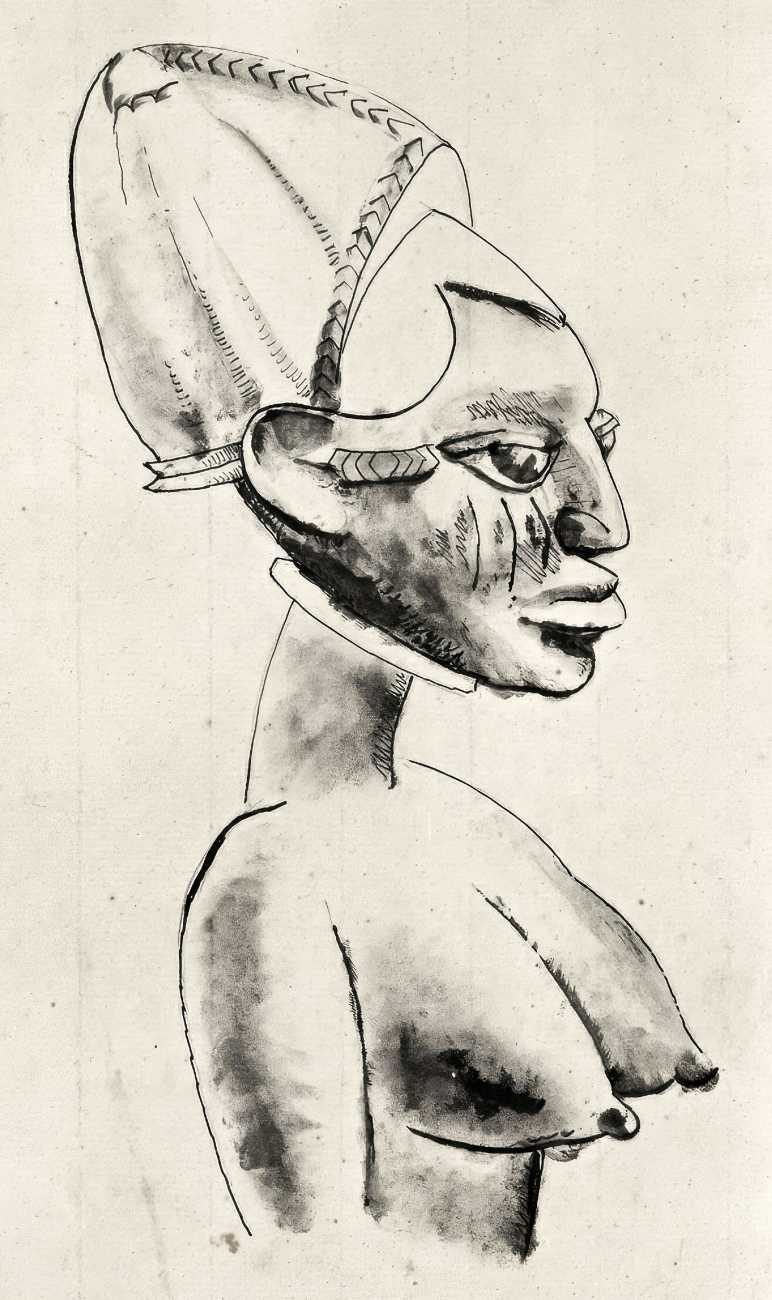
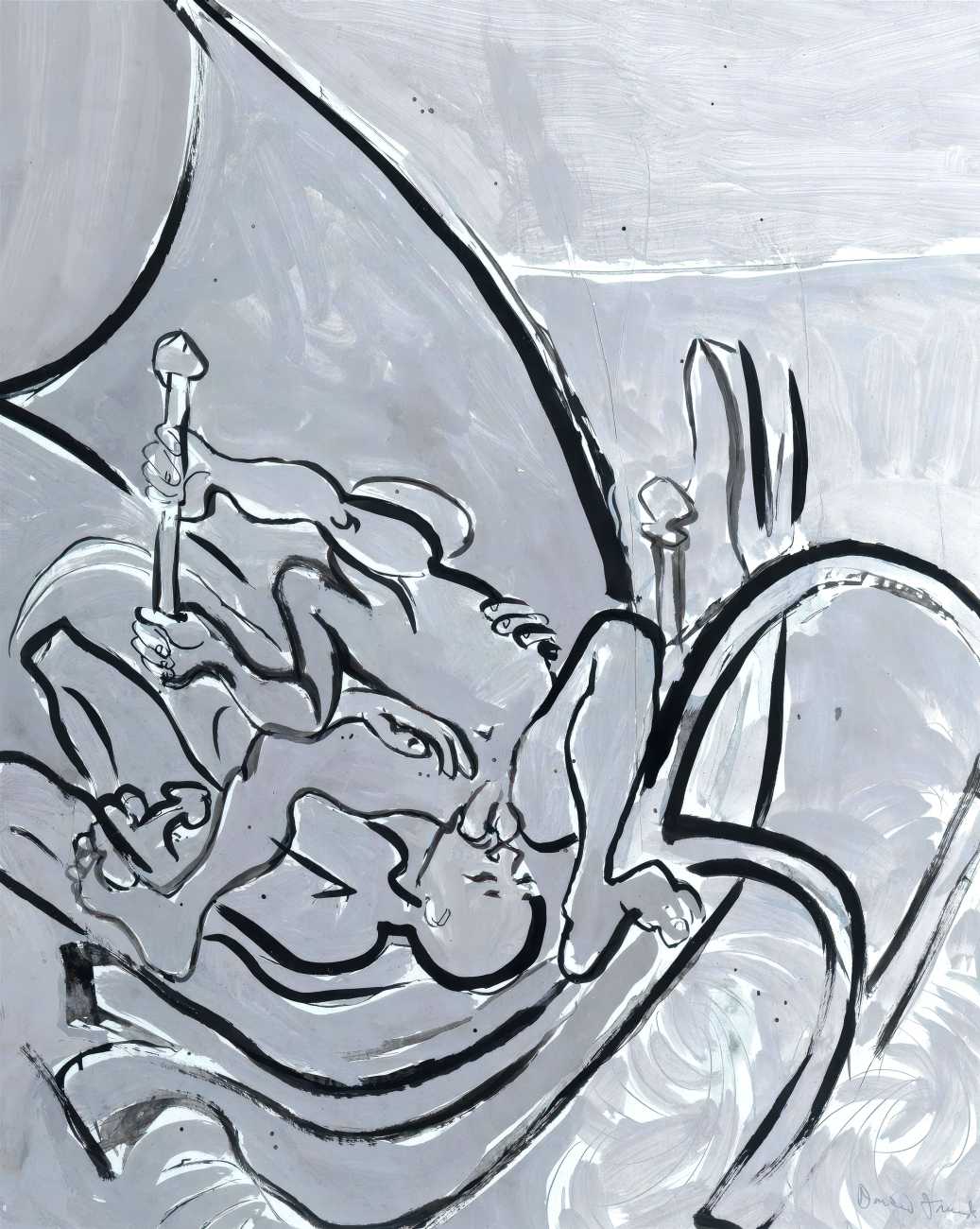
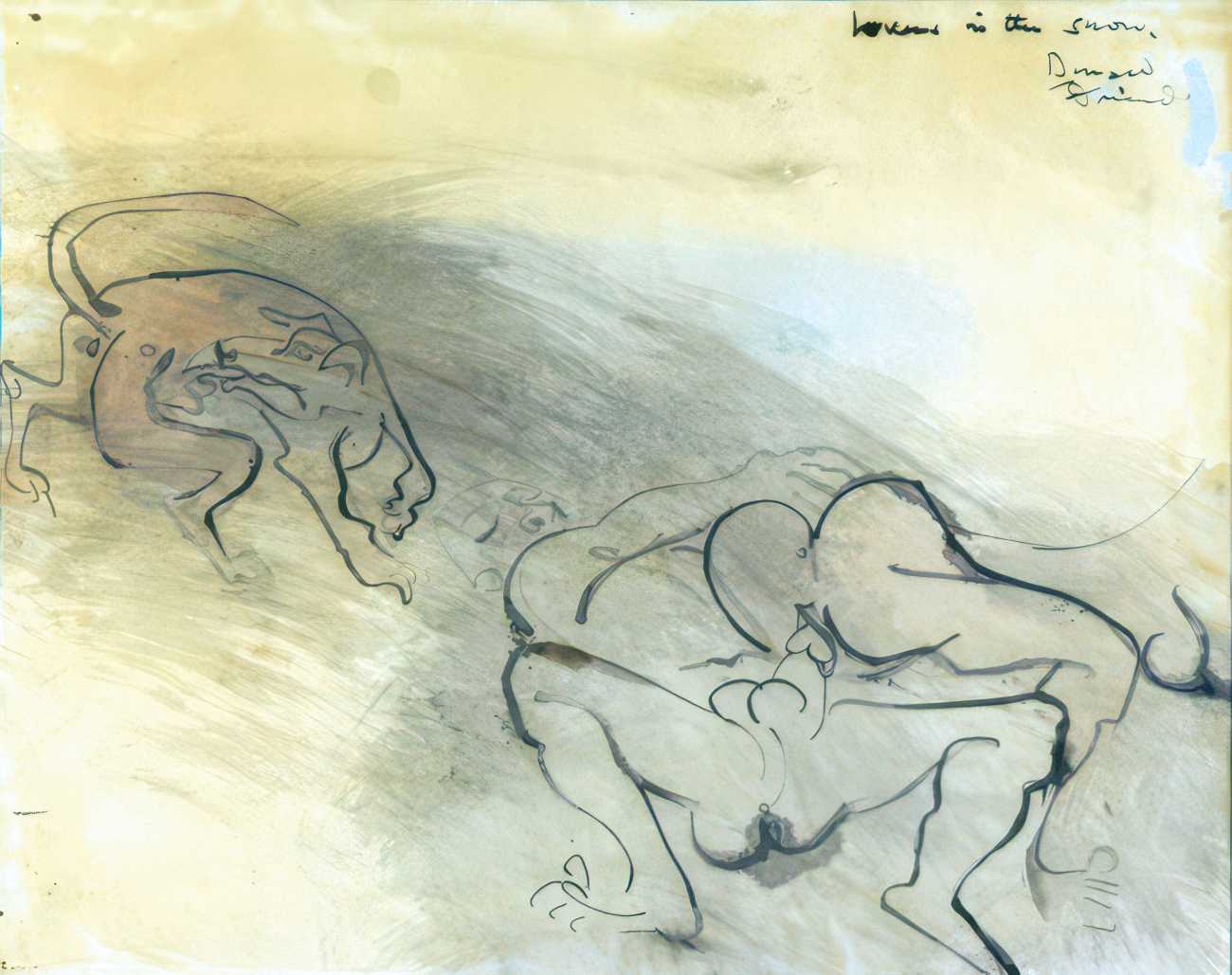
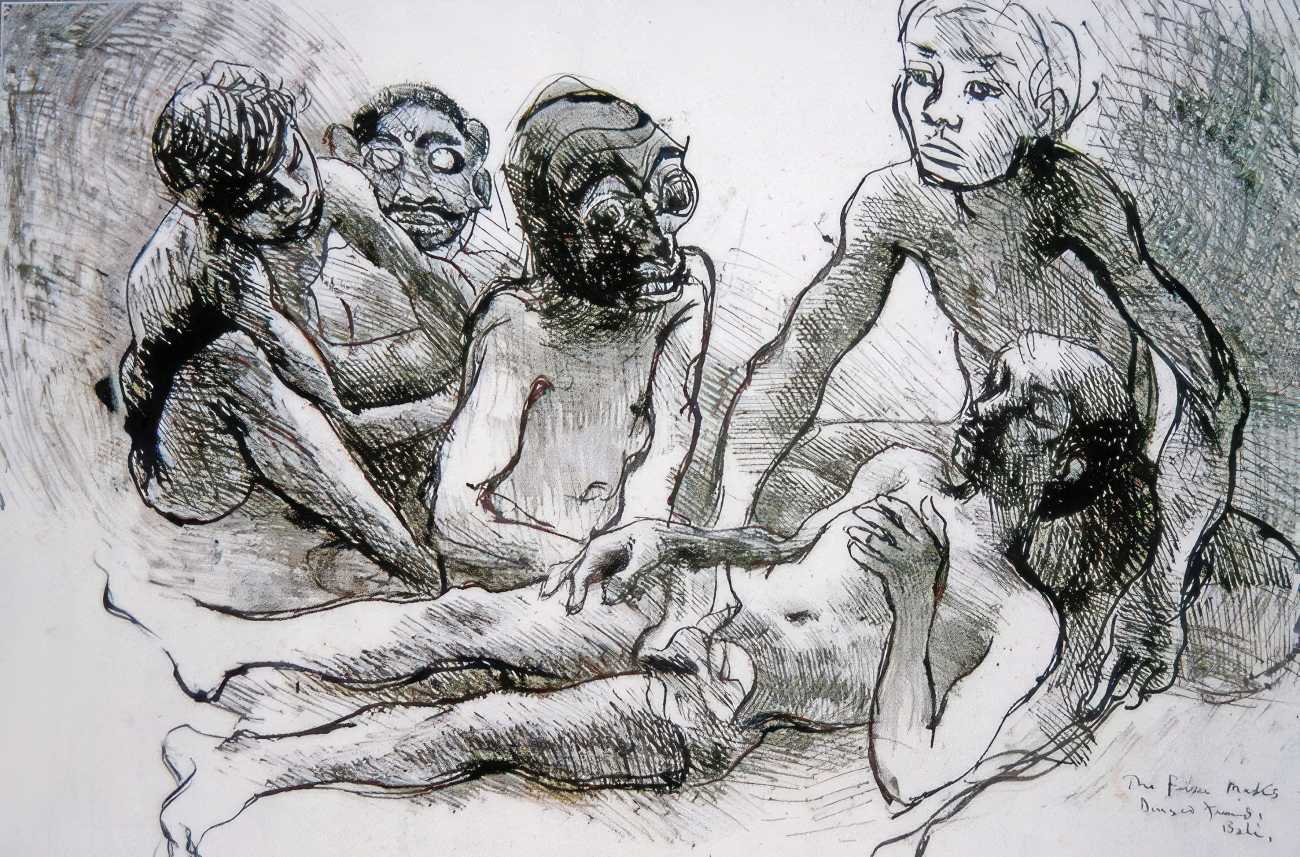
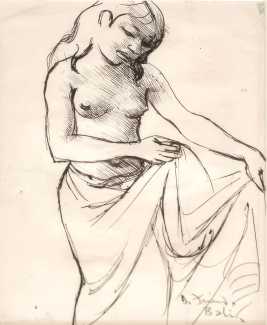
During his extended periods in Bali, his drawings absorbed the rhythms of Balinese sculpture and temple carving: his figures became more fluid, his compositions more rhythmic, and the boundary between human beings, animals and spirits less sharply defined. These works are often described as travel drawings, yet they are better understood as evidence of an artist whose imagination had found a new visual grammar.
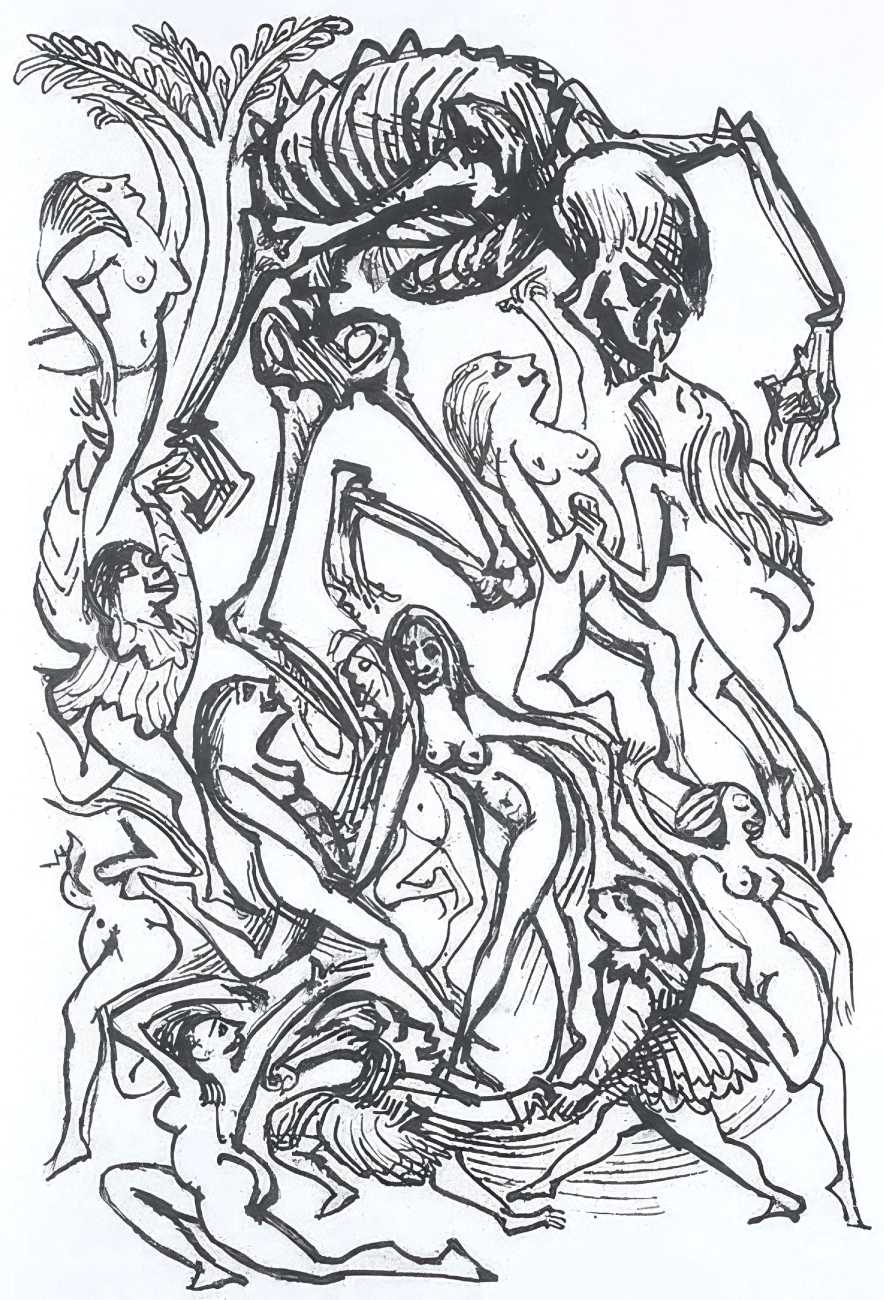
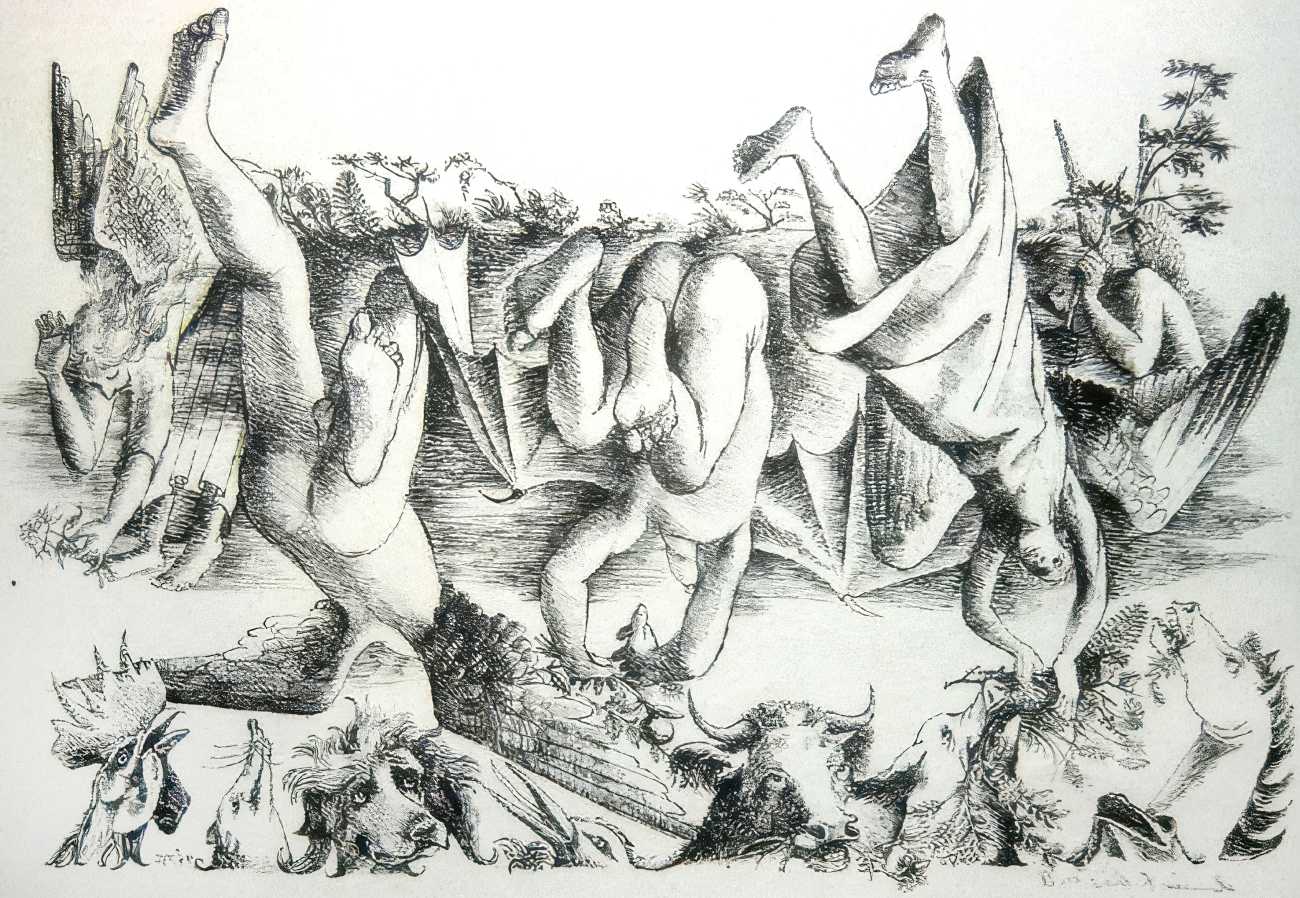
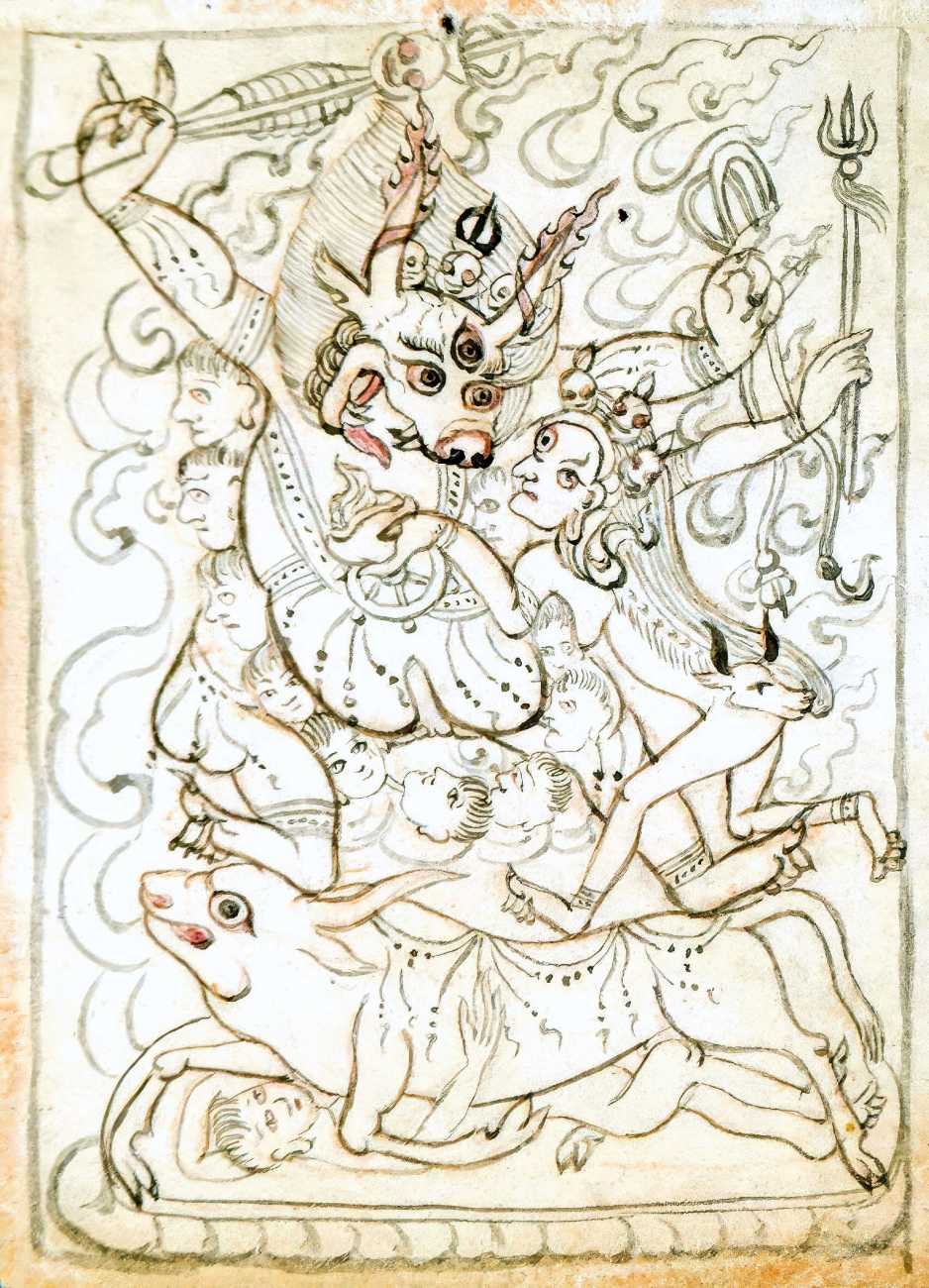
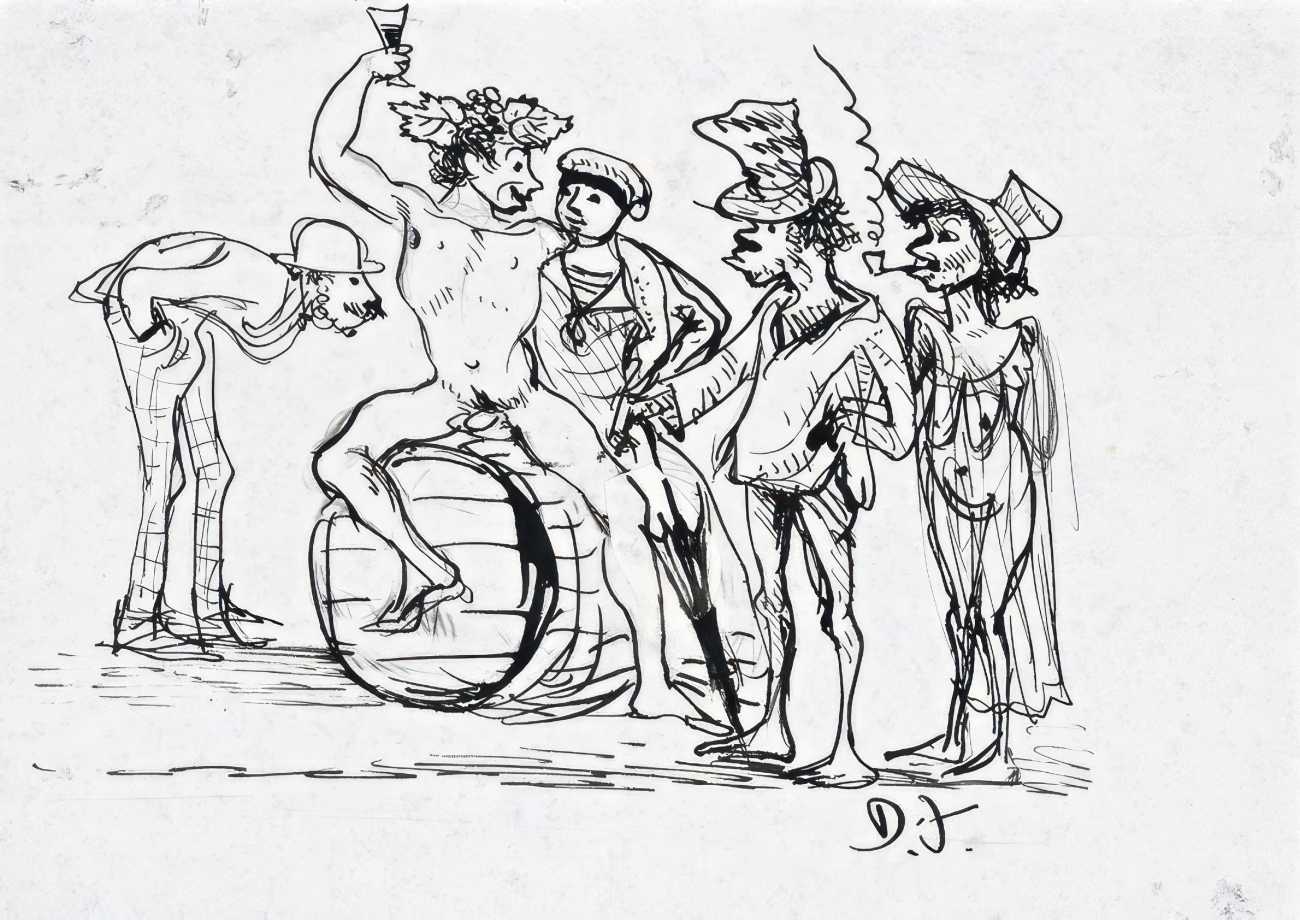
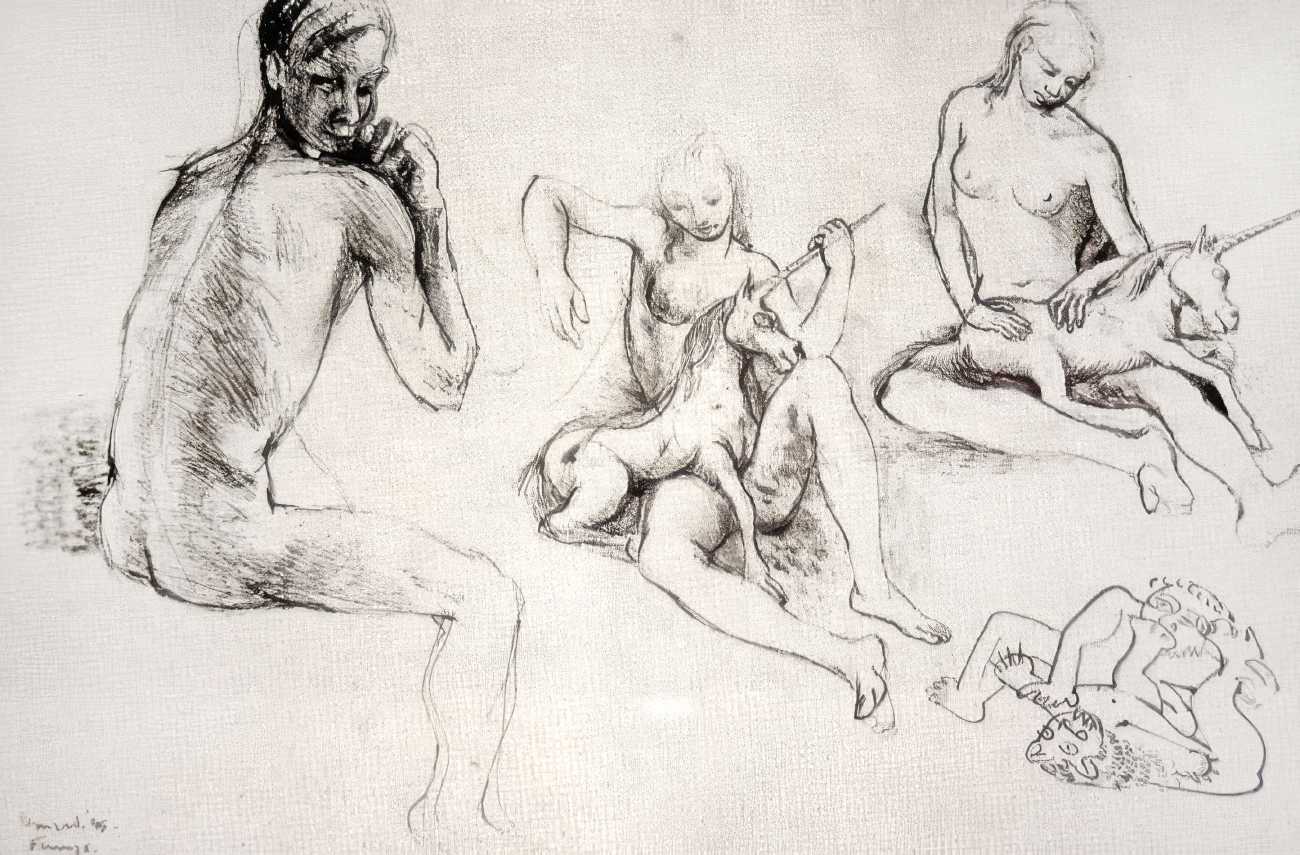
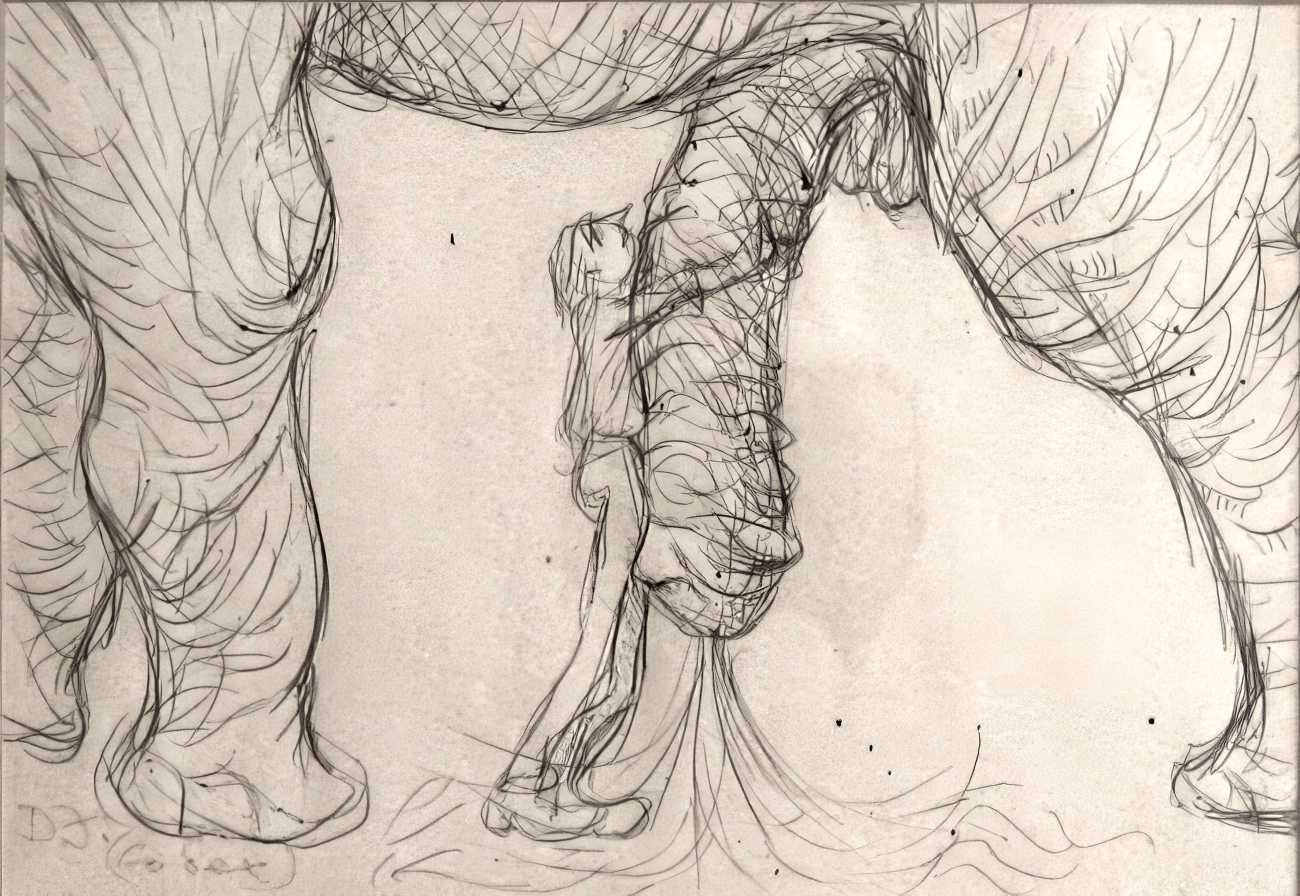
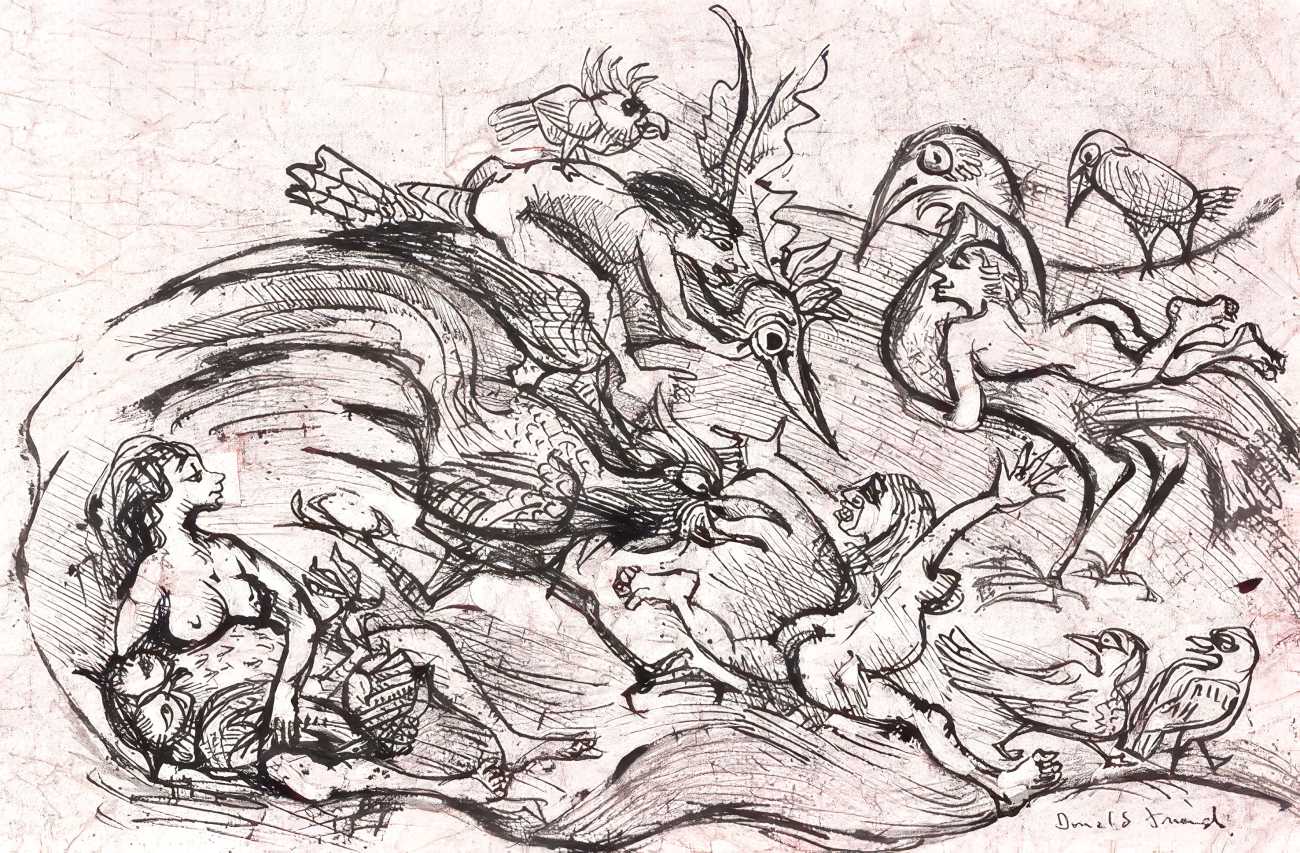
Animals occupy a particularly revealing place within that grammar. Birds, monkeys, dogs, horses and more fantastic creatures recur throughout Friend's drawings with surprising consistency, inhabiting the same imaginative world as the human figures. Literature provided another important source of nourishment. Friend read widely and drew constantly, allowing one activity to enrich the other. Greek mythology, Shakespeare, the Bible and nineteenth-century travel writing all left their traces within his work.
This helps to explain why Donald Friend has proved difficult to place within twentieth-century art. Australian art history has often valued landscape, national identity and formal modernism, while European histories tend to overlook artists working beyond their immediate cultural circles. Friend belongs comfortably within neither tradition. Instead, he occupies a more unusual position among those figurative artists who regarded drawing not simply as description but as a form of imaginative inquiry. Each line tests an idea and explores a possibility. Friend never allowed drawing to become routine because he never ceased asking what he might still be capable of expressing.