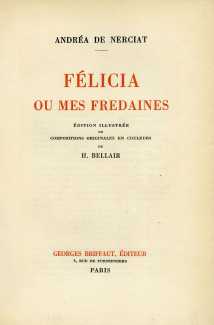
 Félicia, ou mes fredaines (Félicia, or My Escapades), published in 1775, is a major French erotic narrative by André-Robert Andréa de Nerciat, the son of a Burgundian royal official who retired from the military to concentrate on writing plays, verse, light music and pornographic novels. His best-known work is the 1803 Le diable au corps (The Devil Incarnate). Given how popular Nerciat’s works were, it is surprising that there has never been an English translation of Félicia; you can read it in French here.
The novel is a first-person account by the eponymous Félicia, a libertine young woman who is primarily focused on pleasure. Abandoned as a child, she is adopted by Sylvina and Sylvino who raise her in a sexually-infused atmosphere. Seduced by the Chevalier d’Aiglemont, she becomes his mistress, regularly joined by other characters – a bishop, an English aristocrat, and fourteen-year-old Monrose. The novel examines the classic libertinist themes of Nerciat’s times, primarily the exploration of sexual pleasure unlimited by externally-imposed morality. Félicia enjoys the pleasures of life and love without being burdened by loyalty; her libido is quite enough reason for her actions. The sexual scenes are described without ambiguity but without crudeness; unlike Sade, Nerciat paints a sexual utopia without coercion or violence.
The first edition of Félicia, printed in Belgium, was prepared without the agreement of its author; Nerciat managed to oversee a corrected and approved reissue in 1778. The book quickly became an enormous success, with no fewer than twenty-one editions appearing by 1900.
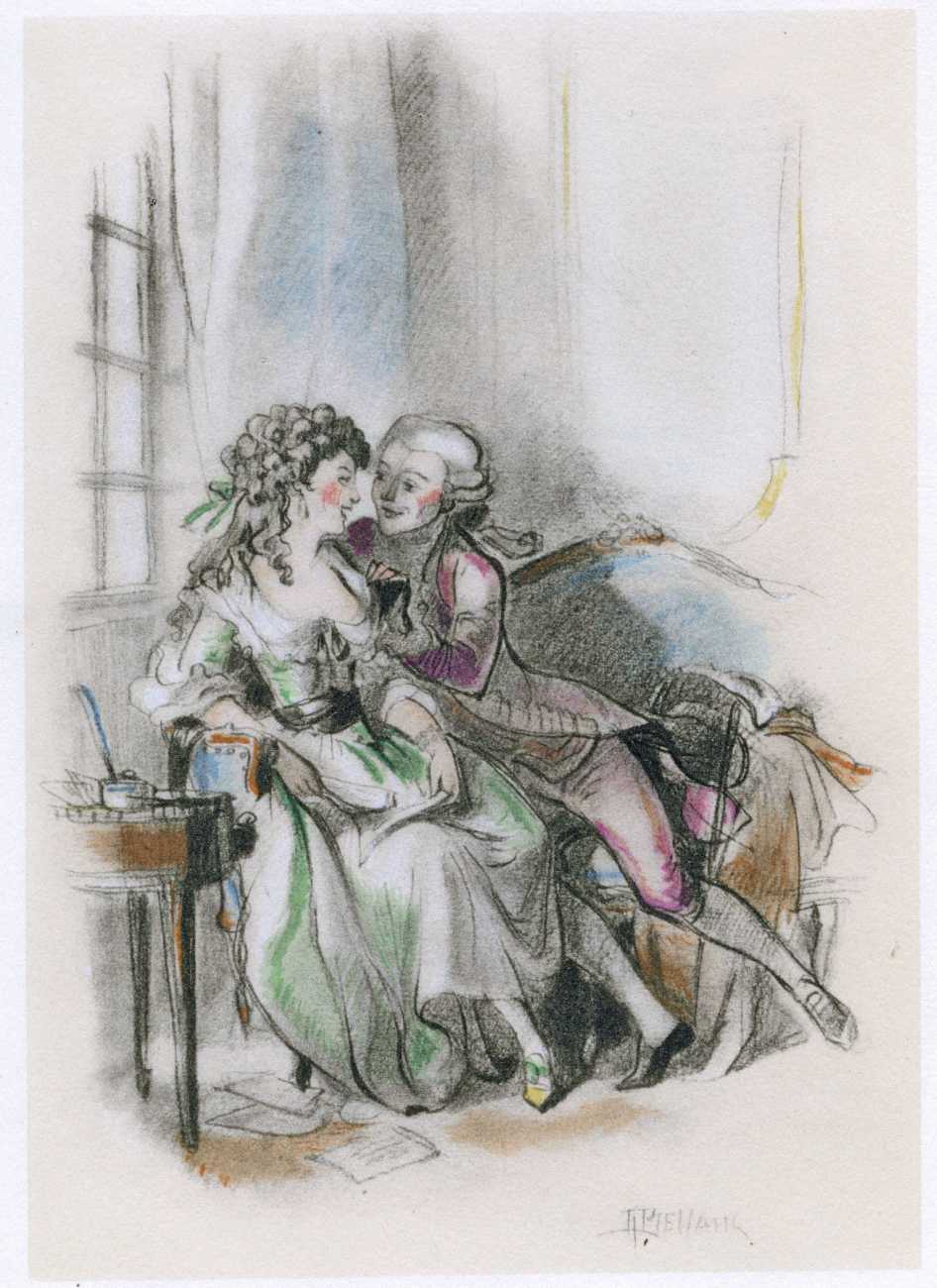
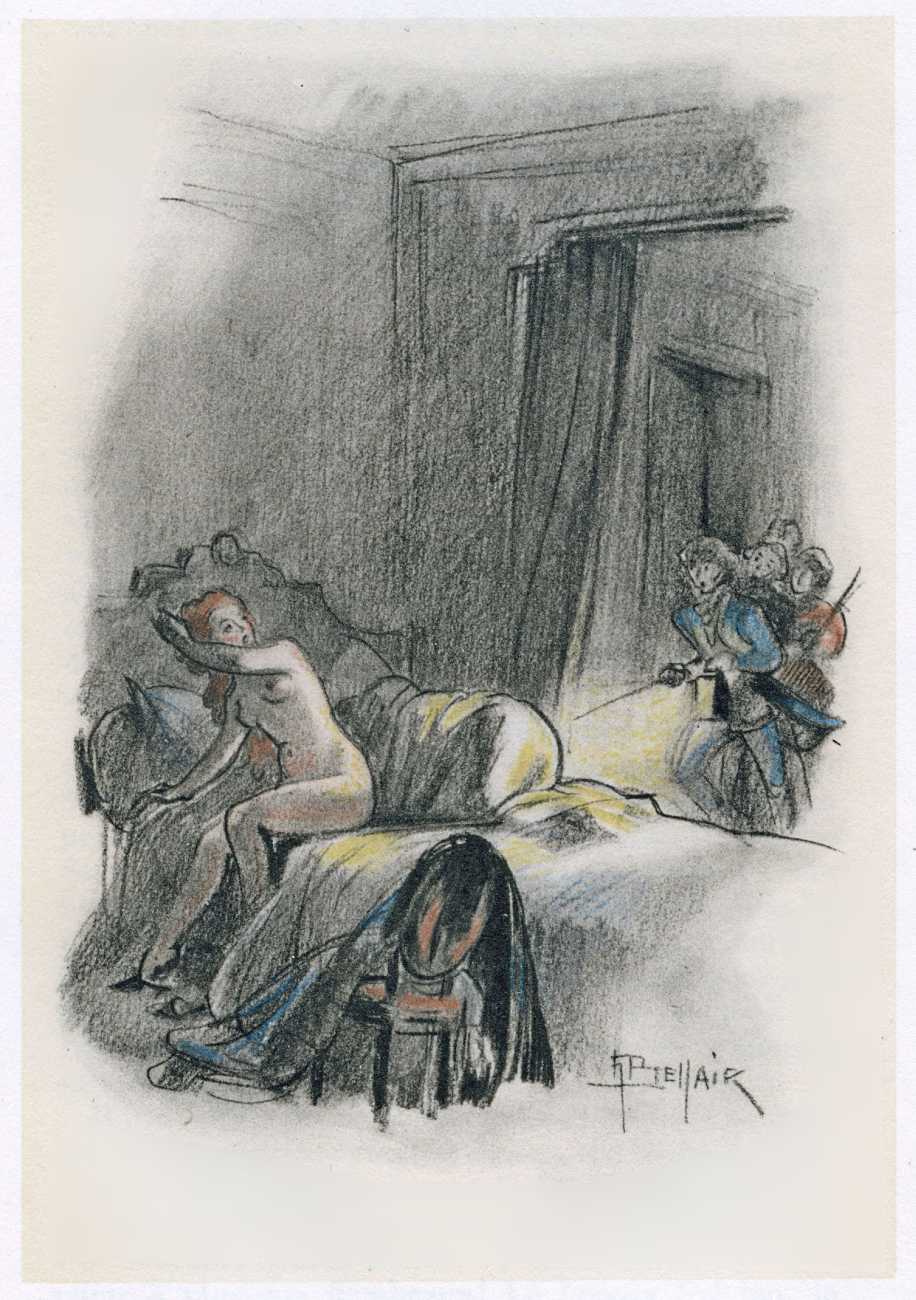
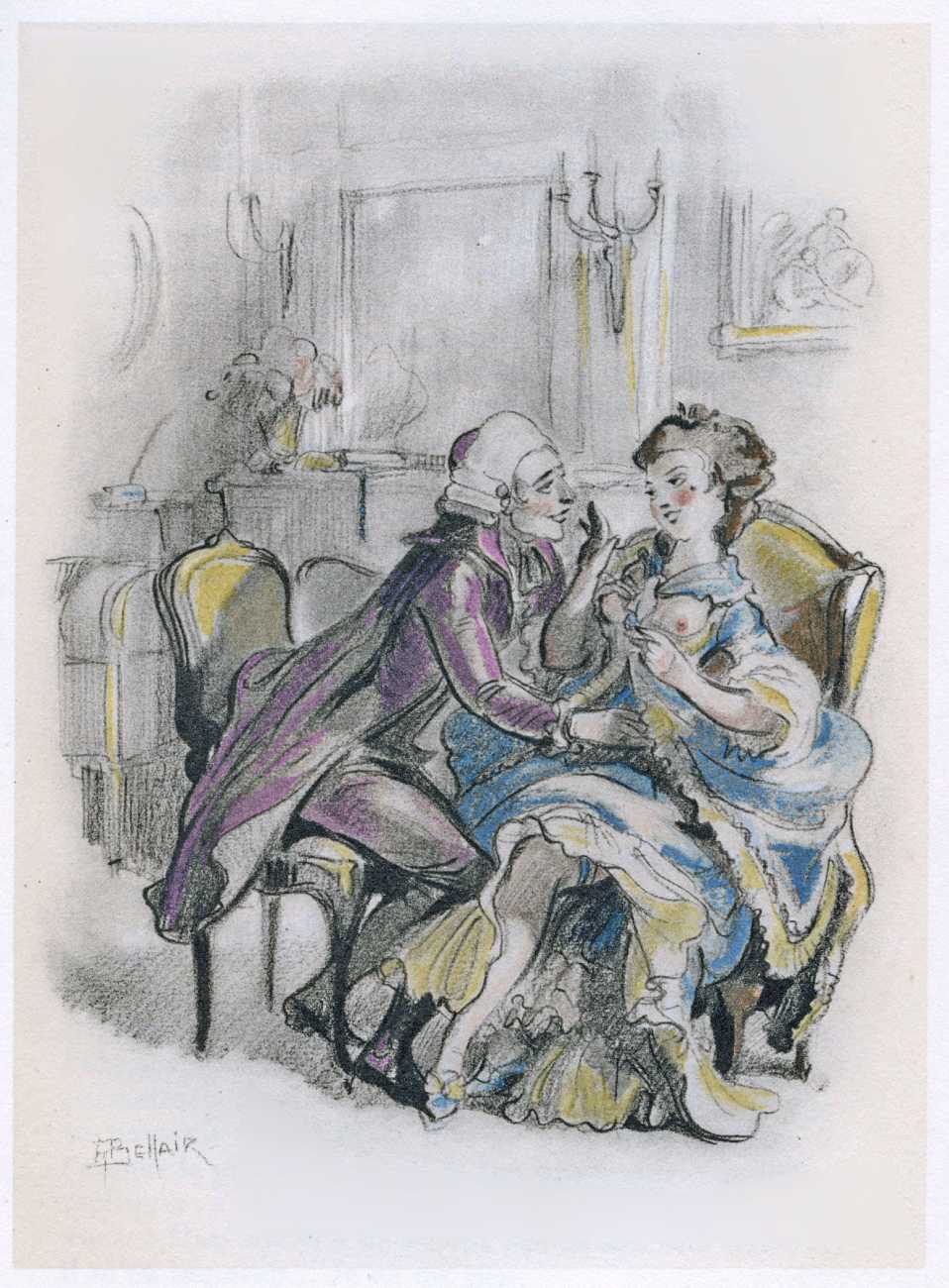
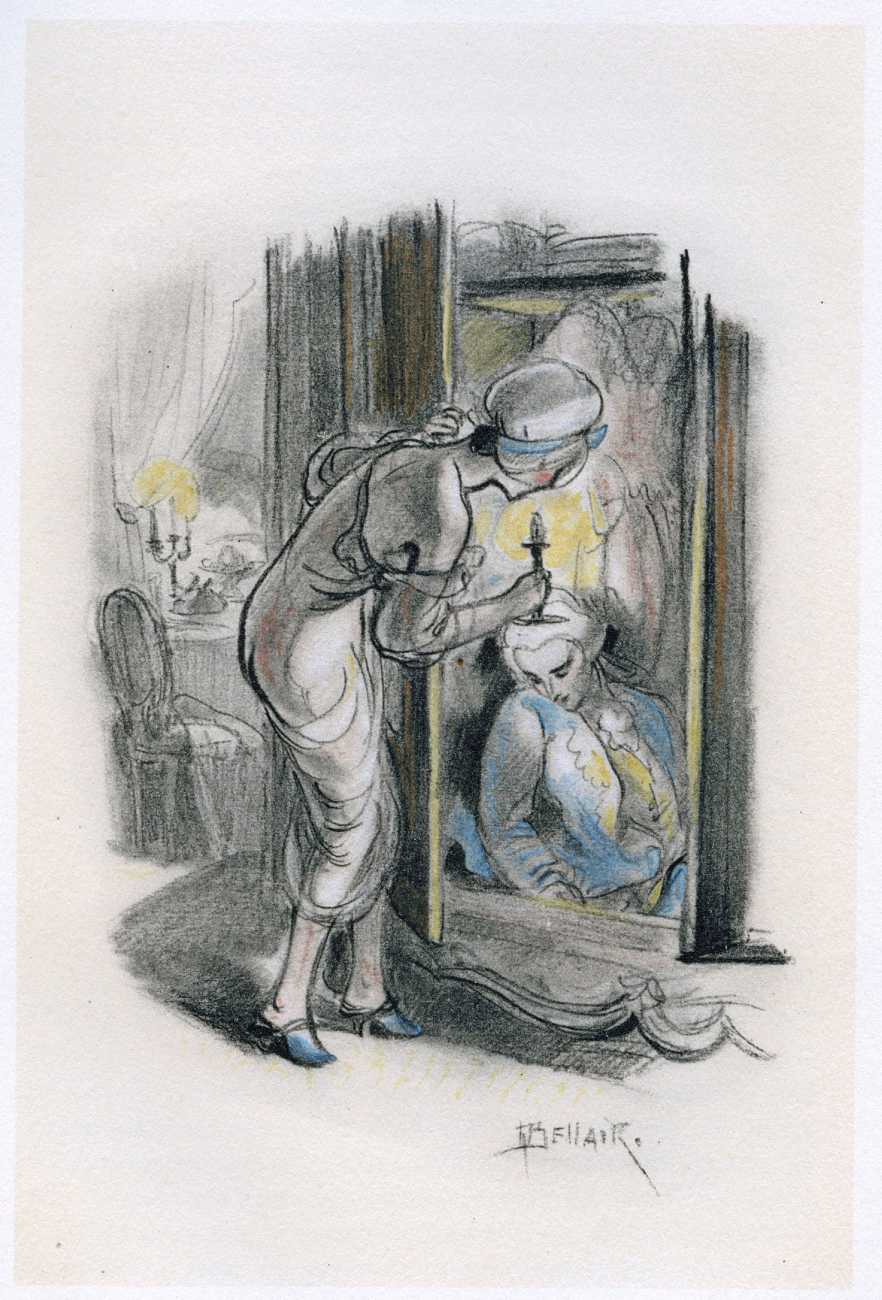
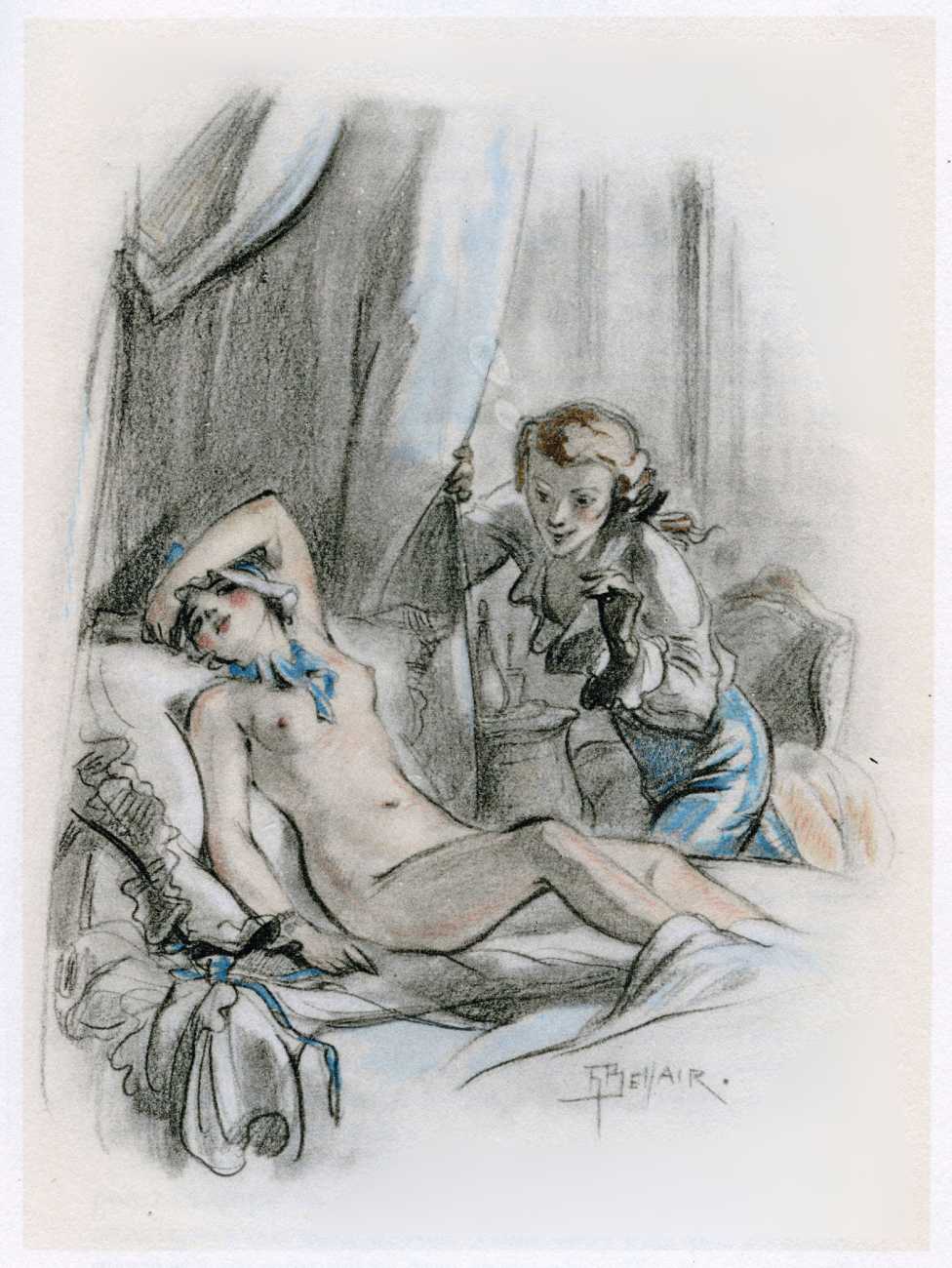
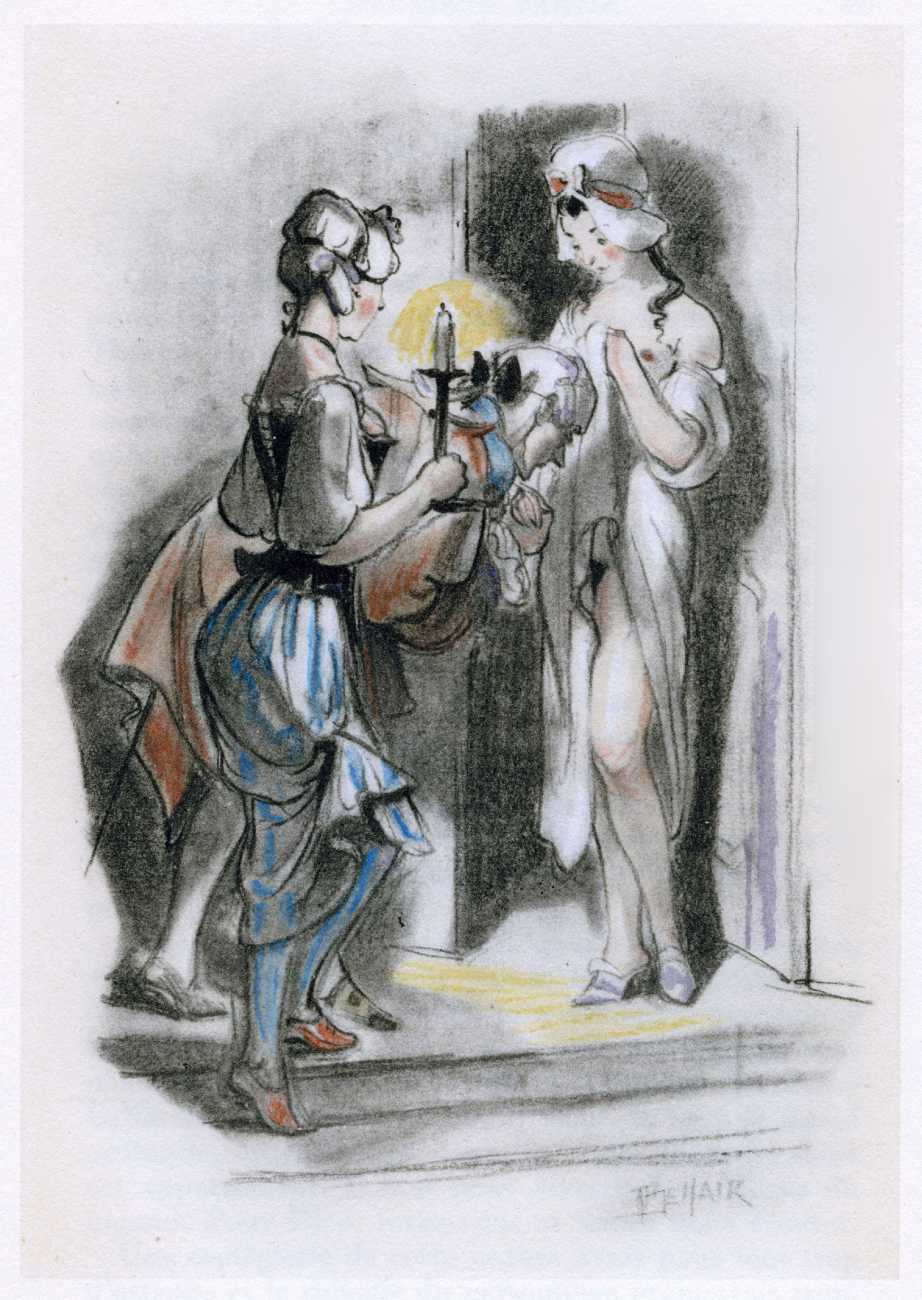
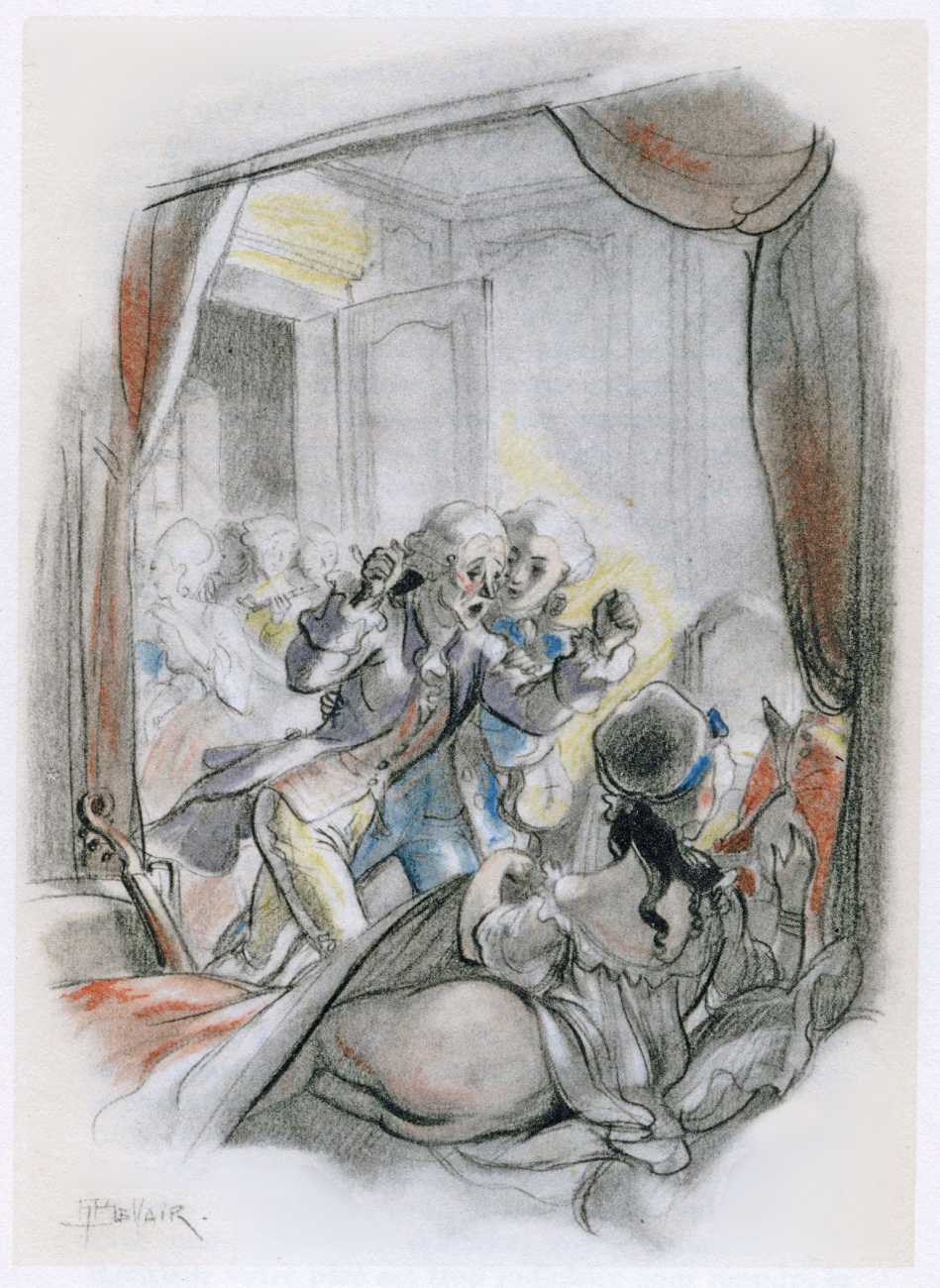
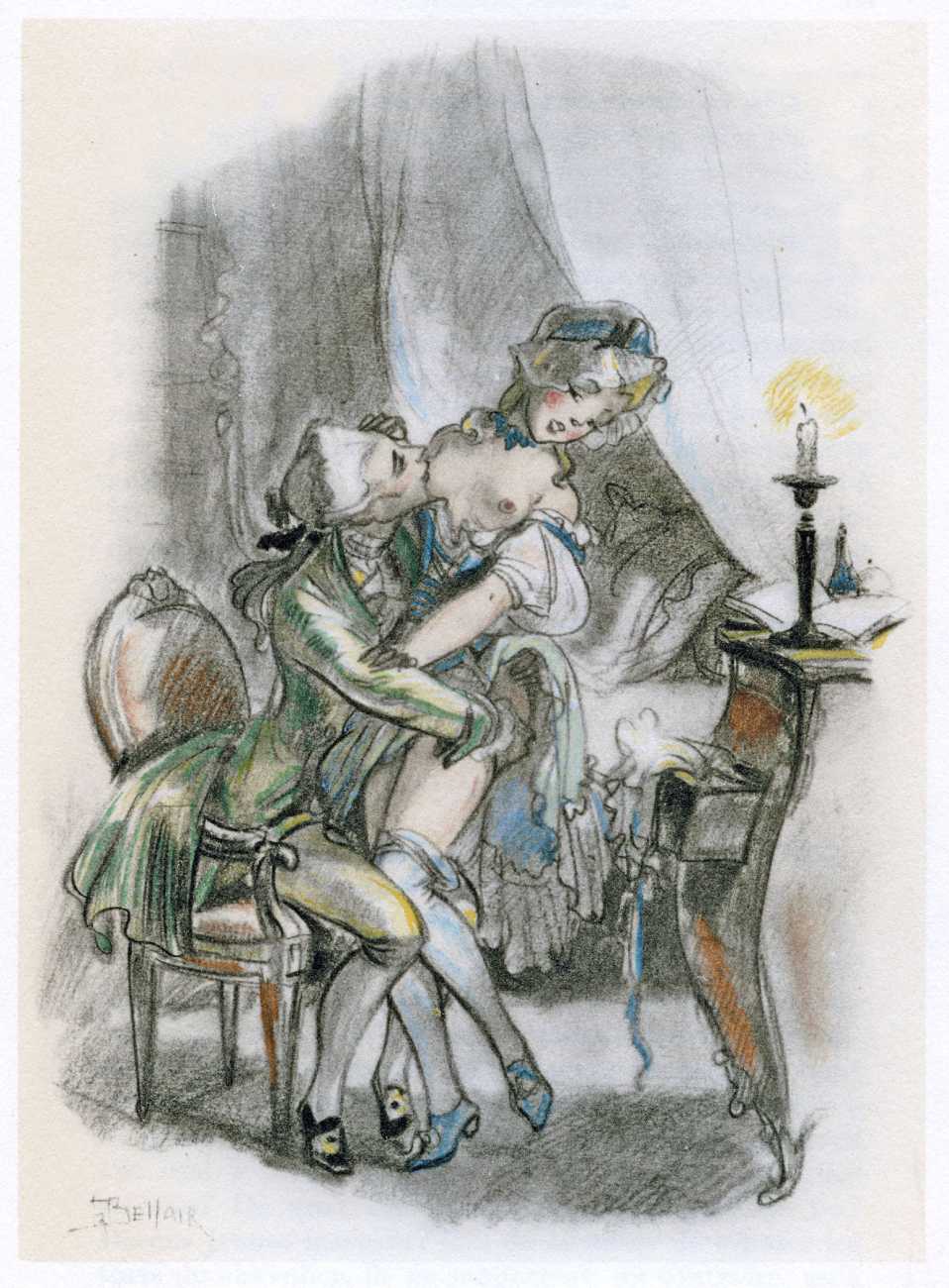
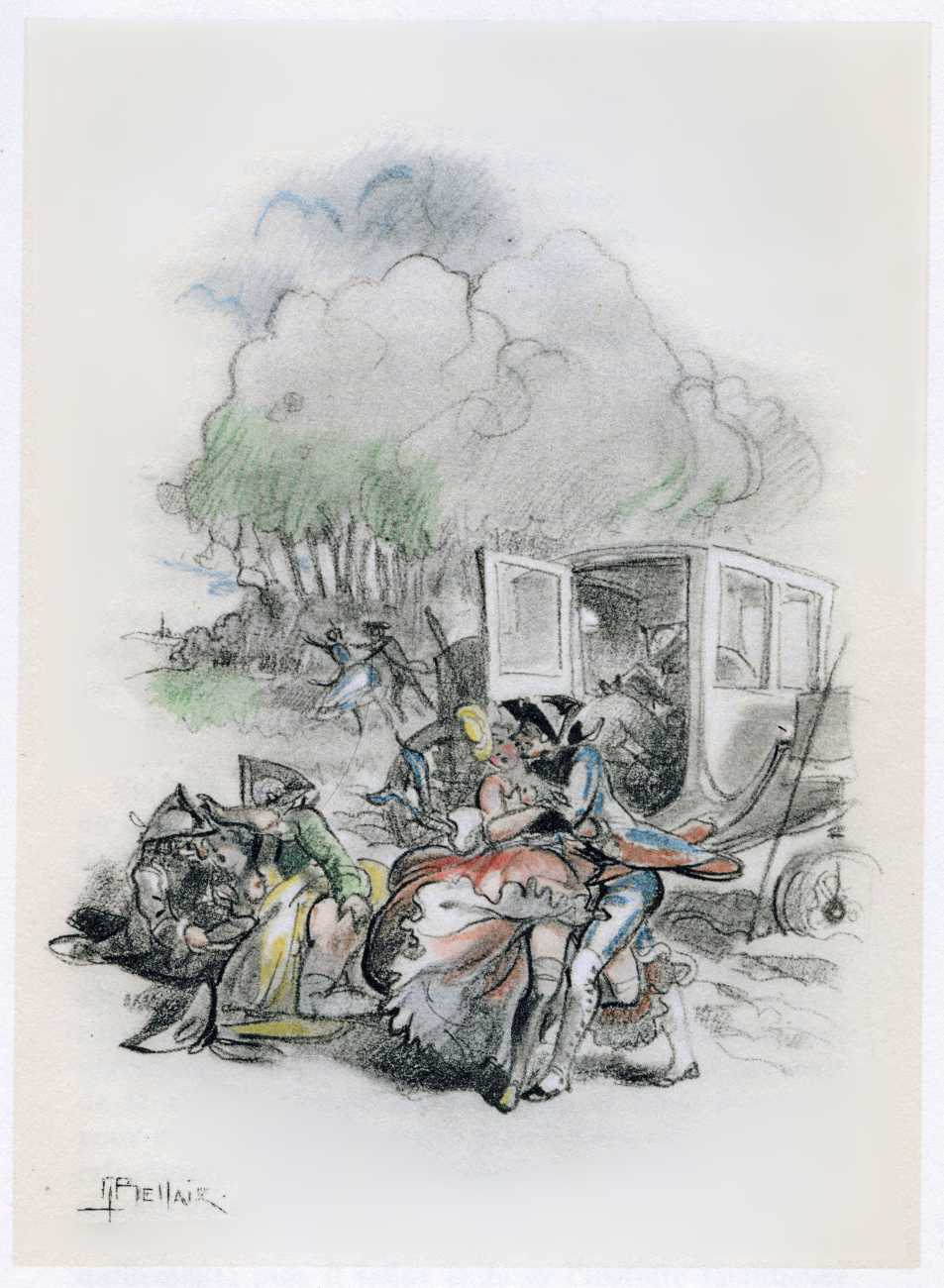
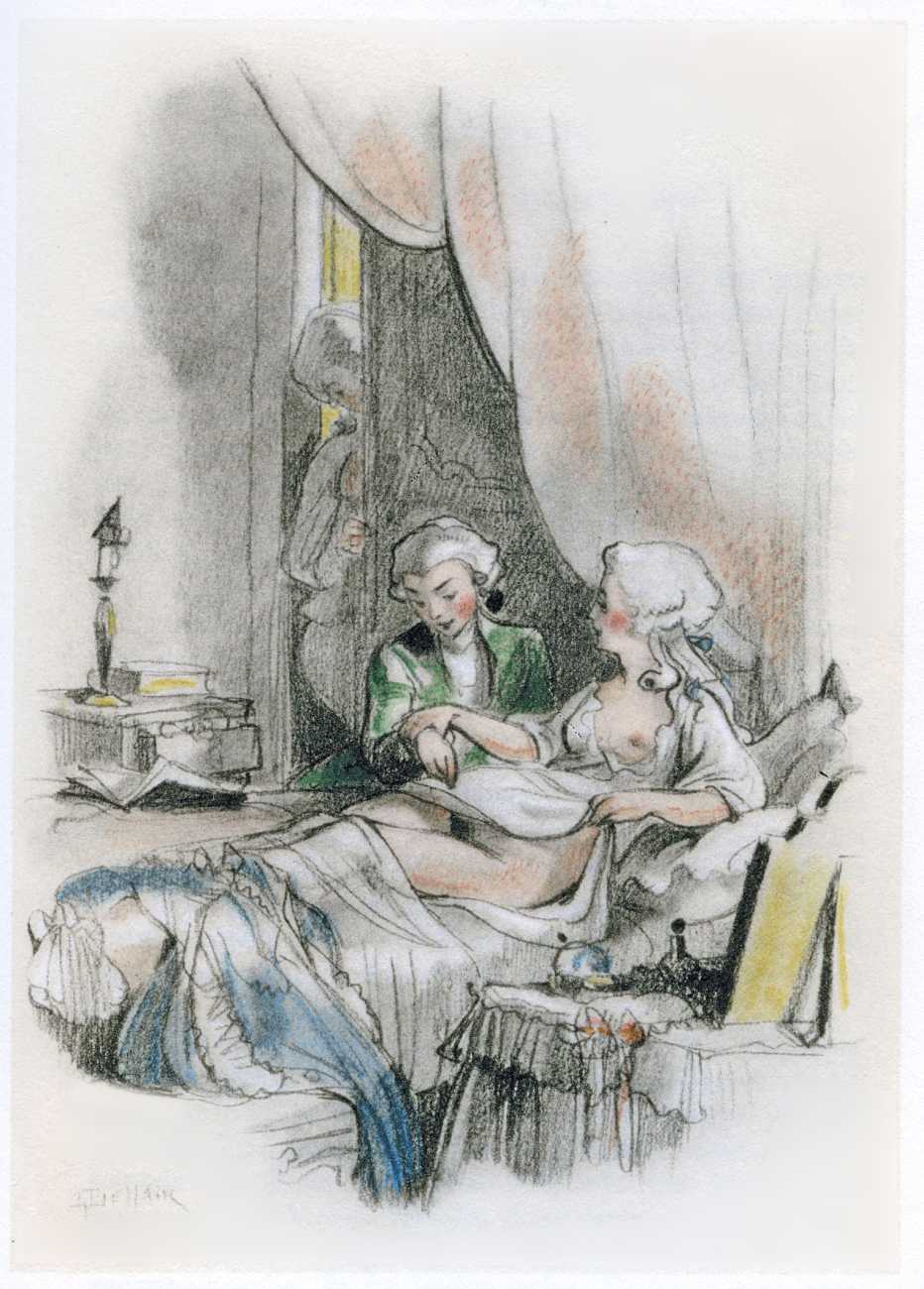
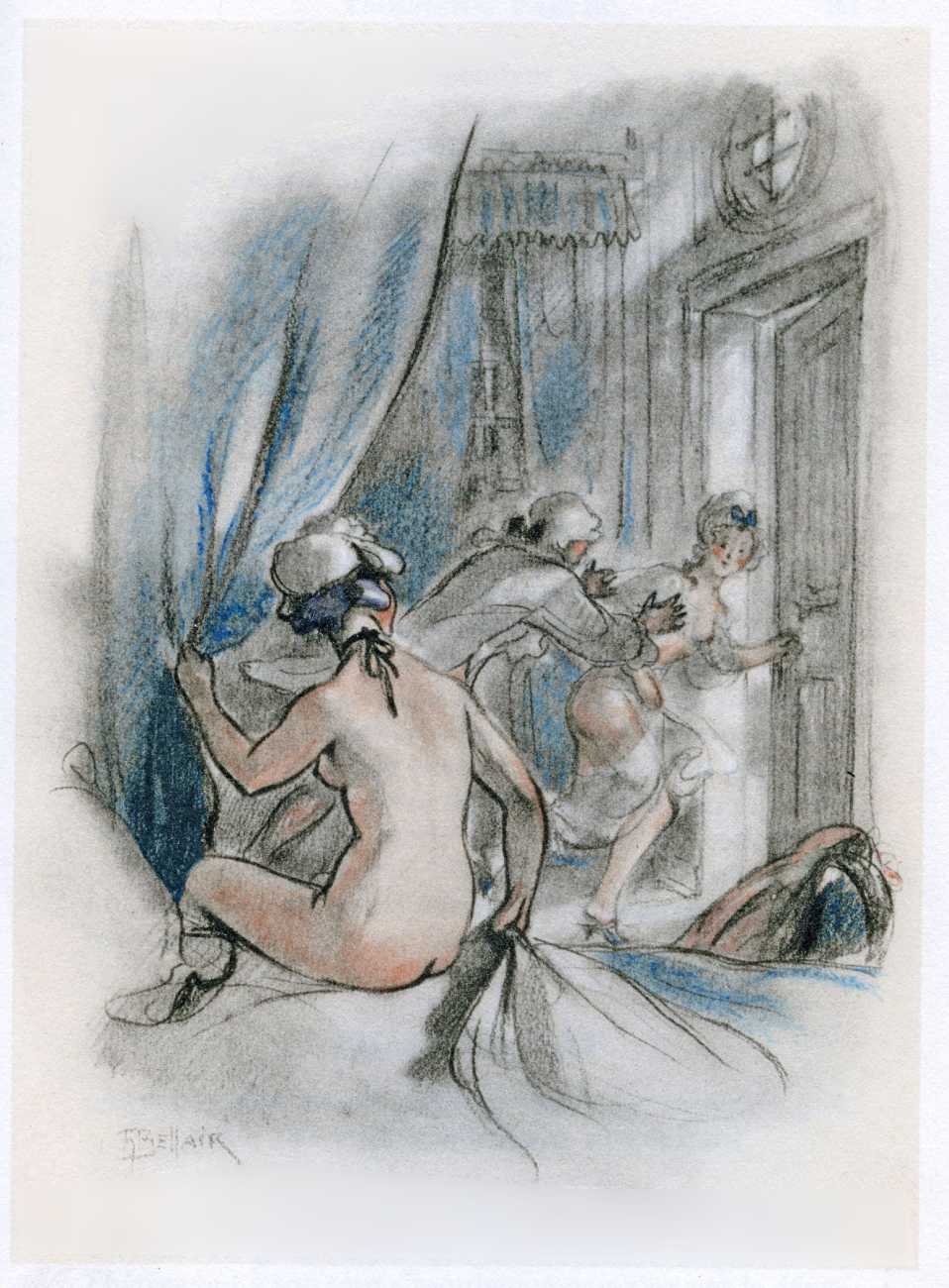
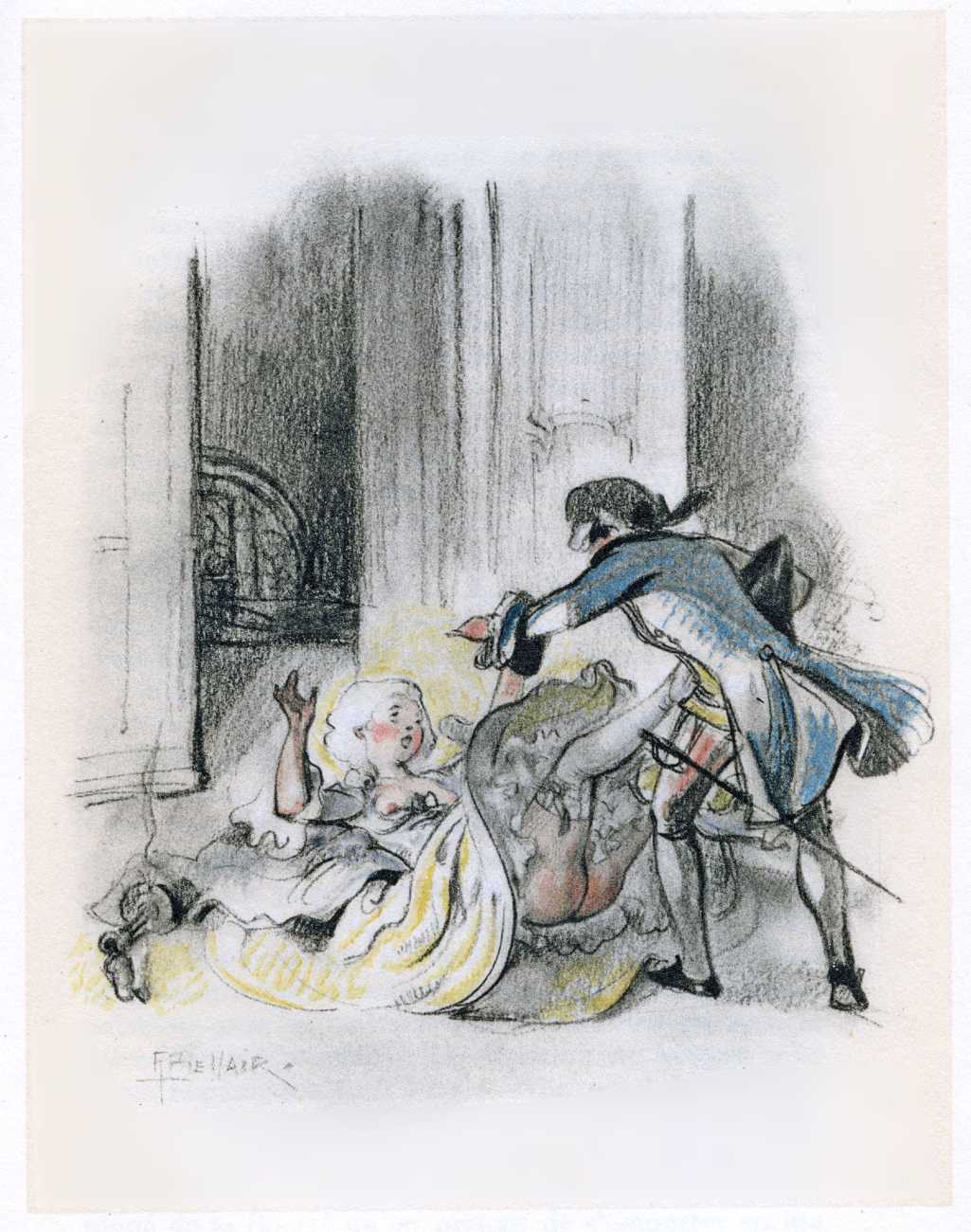
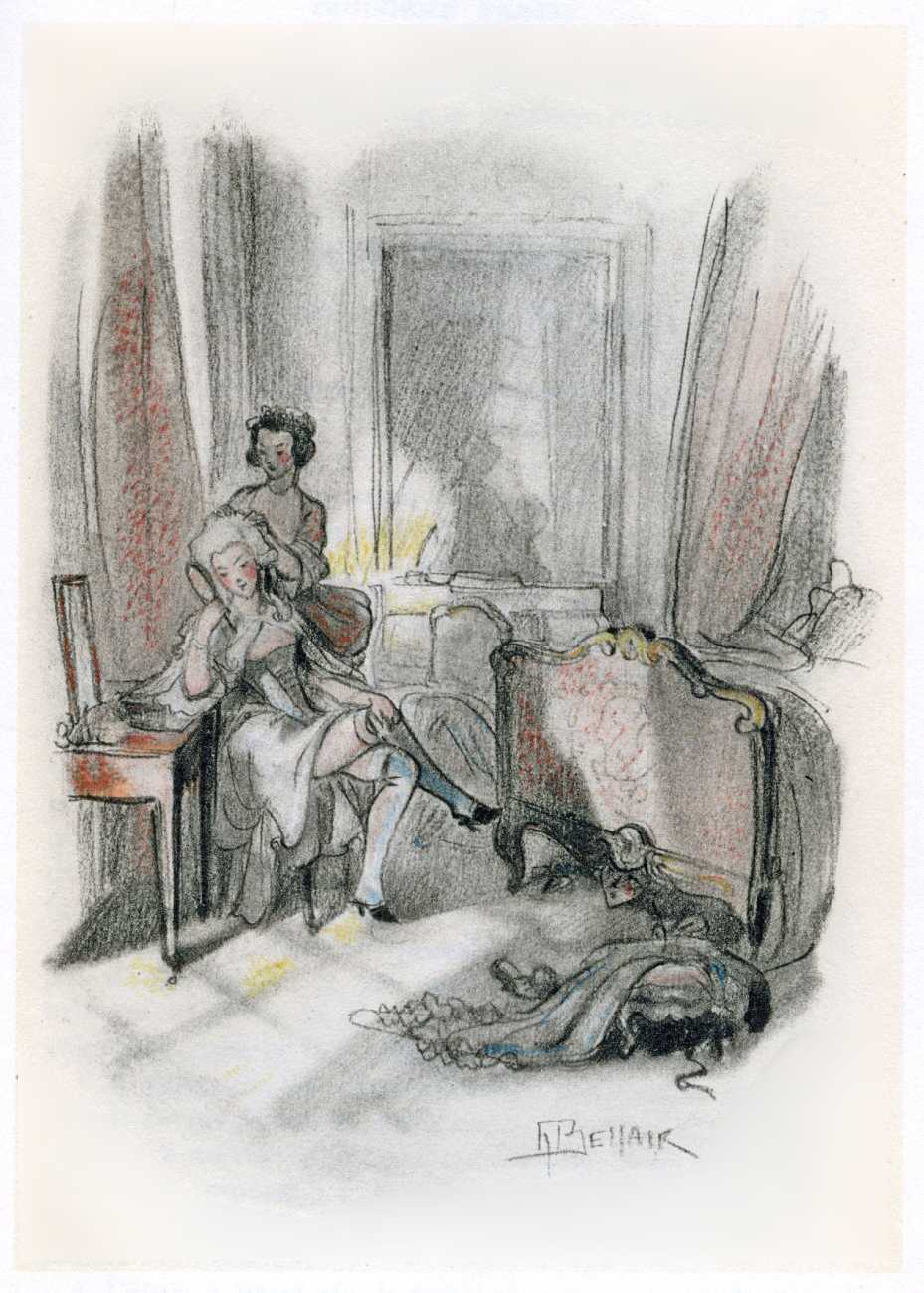
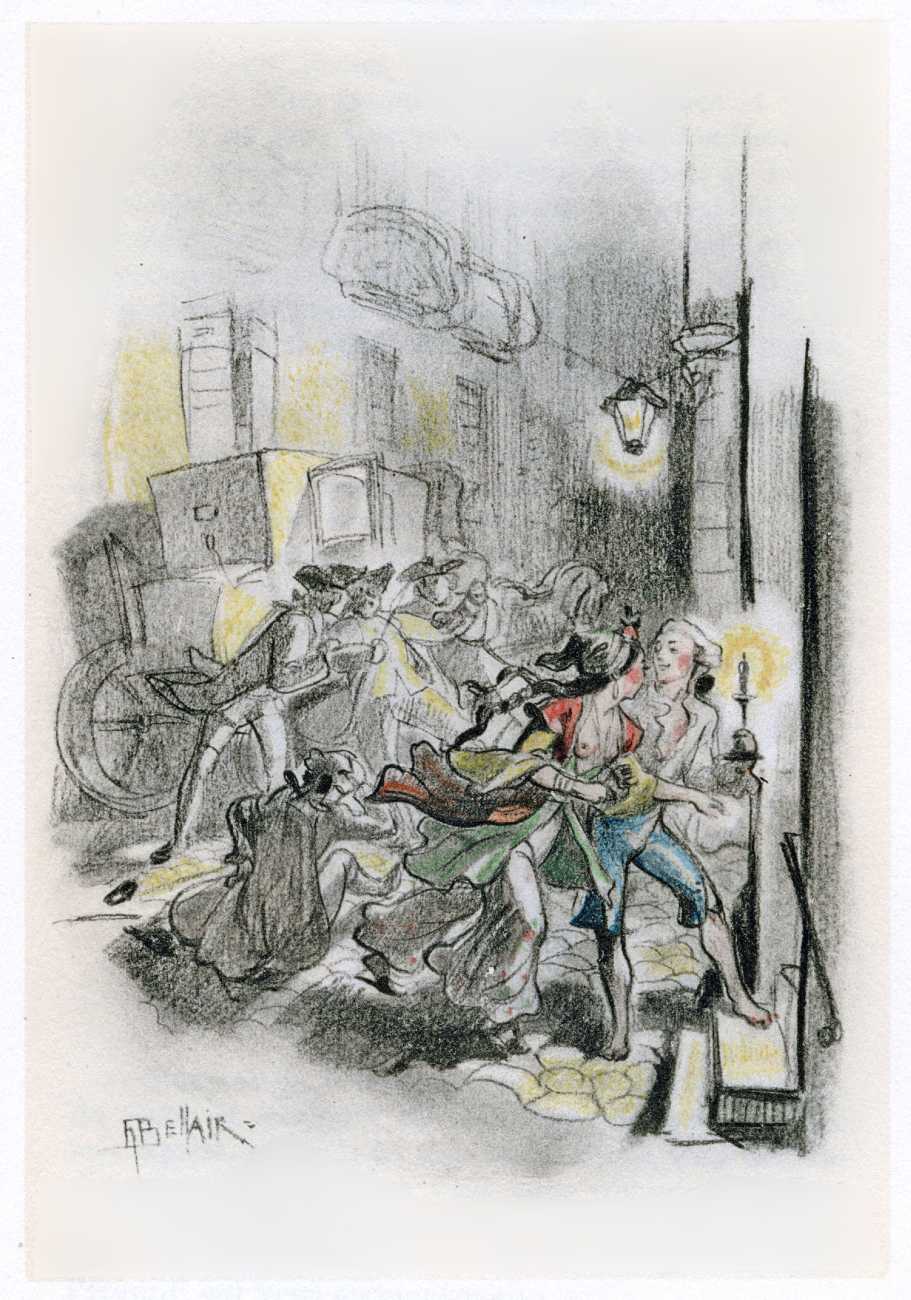
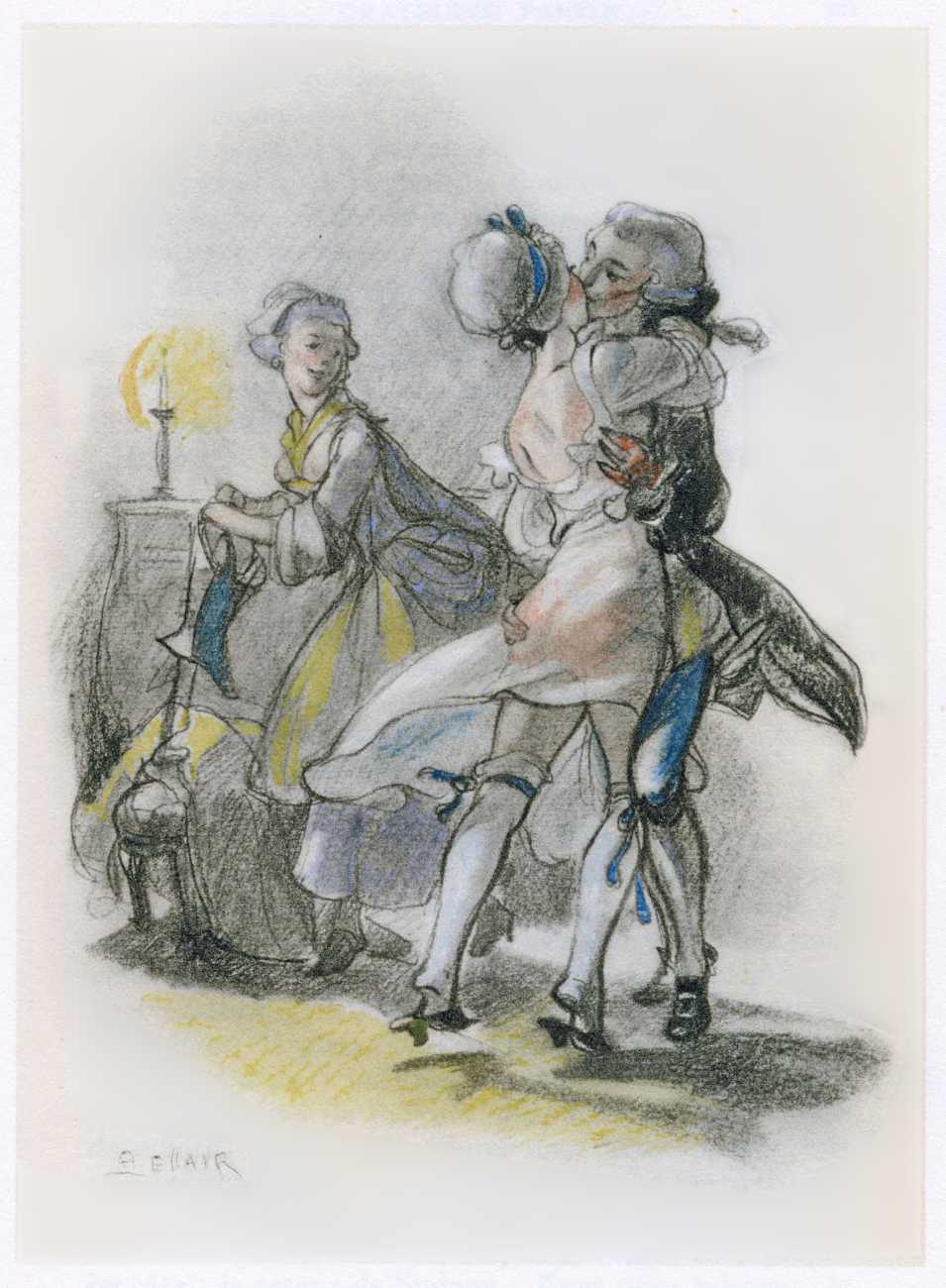
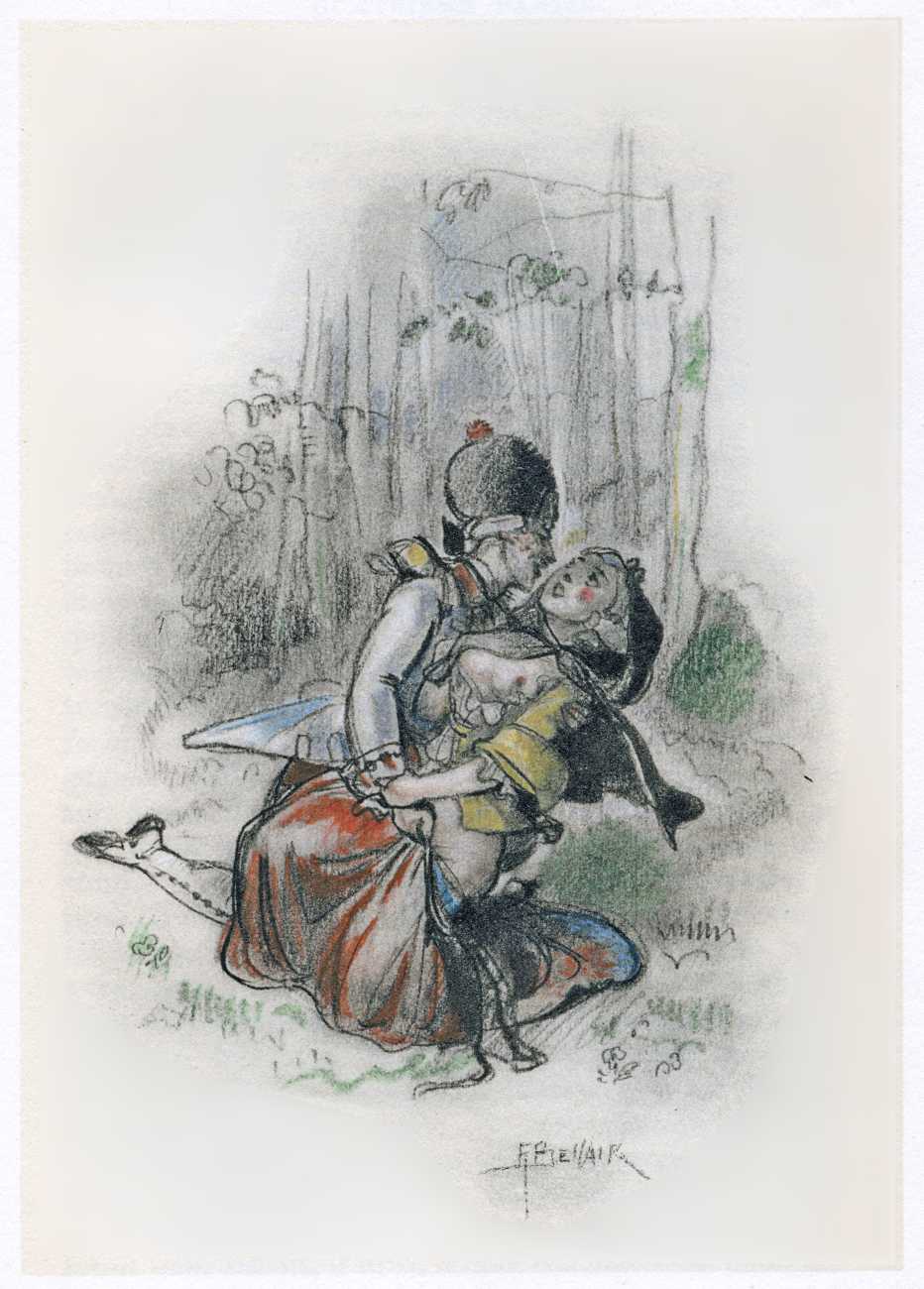
By the time this edition of Félicia was published by the prestigious Paris publisher Georges Briffaut, Henriette Bellair was clearly regarded as the perfect illustrator, and her delicate coloured drawings certainly bring Félicia’s narrative to life. It is informative to note, however, that the publisher identified the illustrator only by an initial rather than her full name.
The Bellair-illustrated edition of Félicia was published by Briffault in a limited numbered edition of 450 copies.