
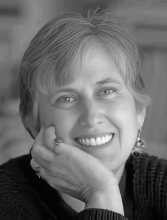
 Born Linda Tee Athelston Cutchin in St Petersburg, Florida, Tee Corinne grew up in Florida and North Carolina. Her childhood was marked by ill health, following a long period of treatment for tuberculosis, and by family instability after her parents’ divorce and her mother’s remarriage. Her mother, herself an artist, encouraged her interest in drawing and photography from an early age, laying the foundations for a career that would combine both media. Corinne studied painting and printmaking at the University of South Florida before completing a Master of Fine Arts in drawing and sculpture at Pratt Institute in New York.
After graduating she married Robert Kamen, taught art and travelled in Europe, but by the early 1970s she found herself struggling with depression and questioning both her marriage and her direction as an artist. Moving to San Francisco proved a turning point. She separated from her husband, became active in the women’s movement, entered therapy, and publicly came out as a lesbian in 1975. From this point onwards her personal life, political beliefs and artistic practice became inseparable.
Corinne believed that the absence of positive images of women’s bodies contributed to shame and ignorance about female sexuality. Her response was the Cunt Coloring Book, a series of carefully observed line drawings celebrating the natural diversity of female genitalia. Self-published before later appearing as Labiaflowers, and eventually under its original title again, the book became an influential work of feminist publishing.
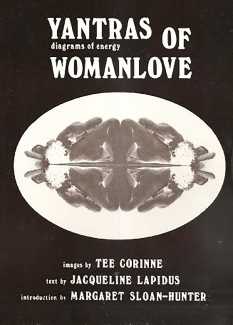 Throughout the following decades Corinne expanded her practice to include photography, artists’ books, fiction, poetry and essays. Her 1982 photographic series Yantras of Womanlove used multiple exposures, solarisation and collage to depict lesbian intimacy while protecting the anonymity of her models. She consistently sought to represent women excluded from conventional imagery, including older women, women of colour, larger women and women with disabilities. Alongside her own artistic work she co-founded feminist photography organisations, edited anthologies of lesbian writing and became an influential advocate for lesbian artists, writers and independent feminist publishing.
Corinne’s later work continued to draw directly on her personal life. After settling in rural Oregon she photographed women’s communities and explored themes of creativity, relationships and ageing. Following her partner Beverly Anne Brown’s diagnosis with cancer, she created the moving series Cancer in our Lives, documenting Brown before and after surgery in an effort to demystify illness and the changing body. Corinne herself died from liver cancer, leaving behind a body of work that combined art, education and activism, and which remains one of the most important visual records of lesbian feminist culture in late twentieth-century America.
Similar artists
Betty Dodson – American feminist artist of genital portraits and self-pleasure.
Carroll Dunham – American painter of cartoon-derived figures celebrating genitalia.
James Walter Lee – American painter of genital portraits in a related celebratory idiom.
Jacqueline Secor – American artist of vulva paintings reimagined as natural forms.
Joan Semmel – American painter and pioneer of feminist body imagery.
Betty Tompkins – American painter of large-scale photorealist sexual imagery.
Example illustration

Cunt Coloring Book (1975)


