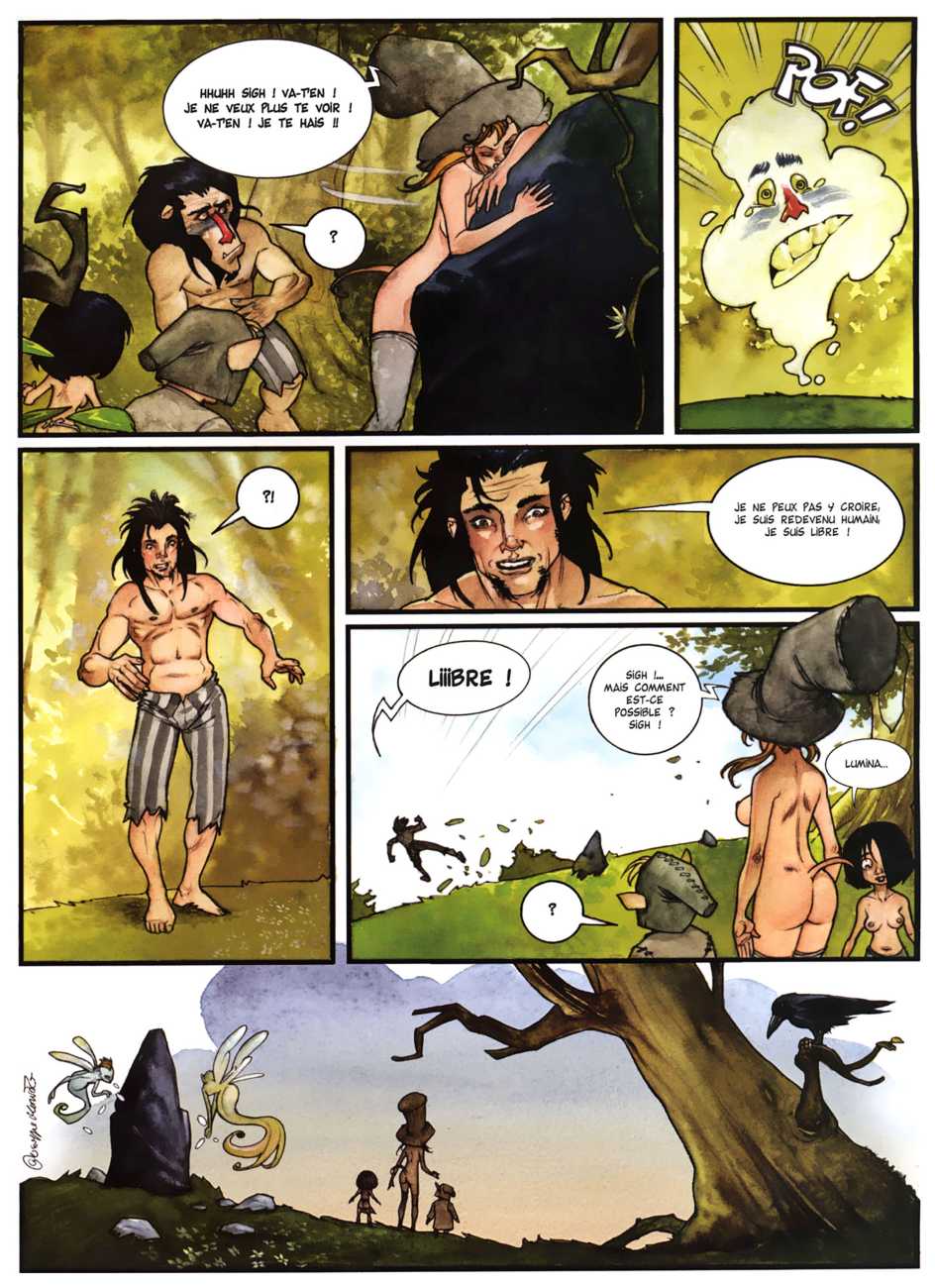
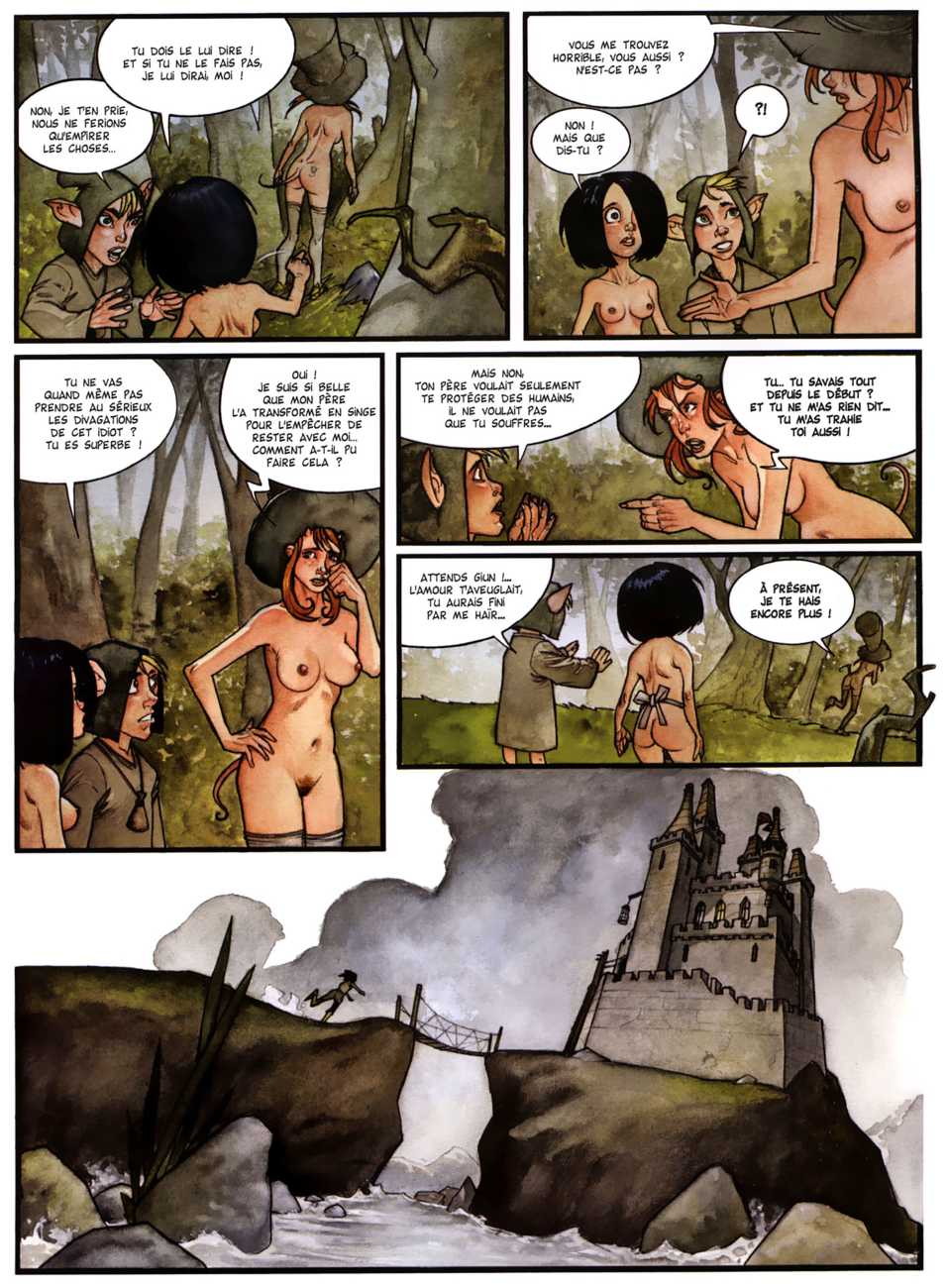
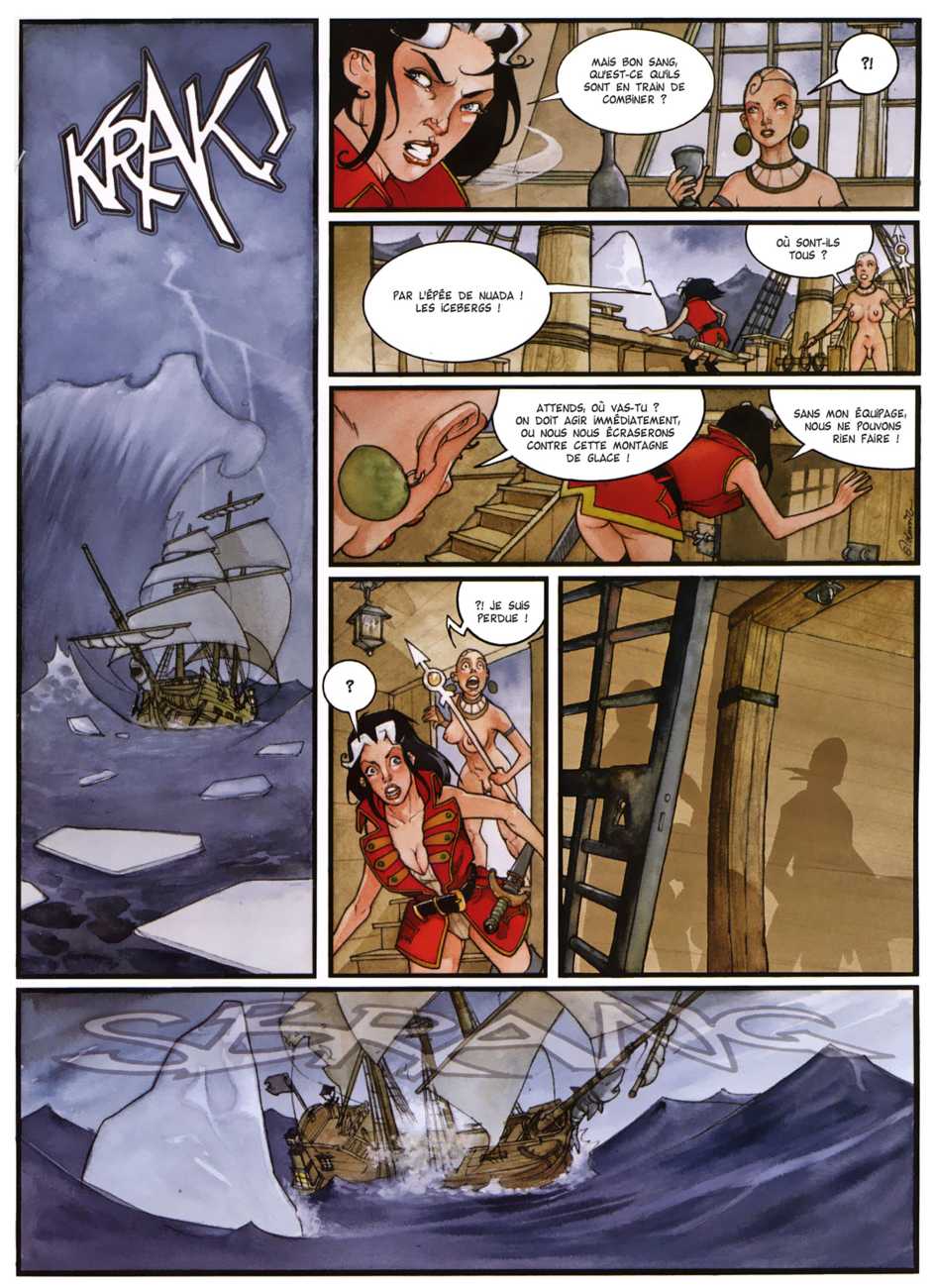
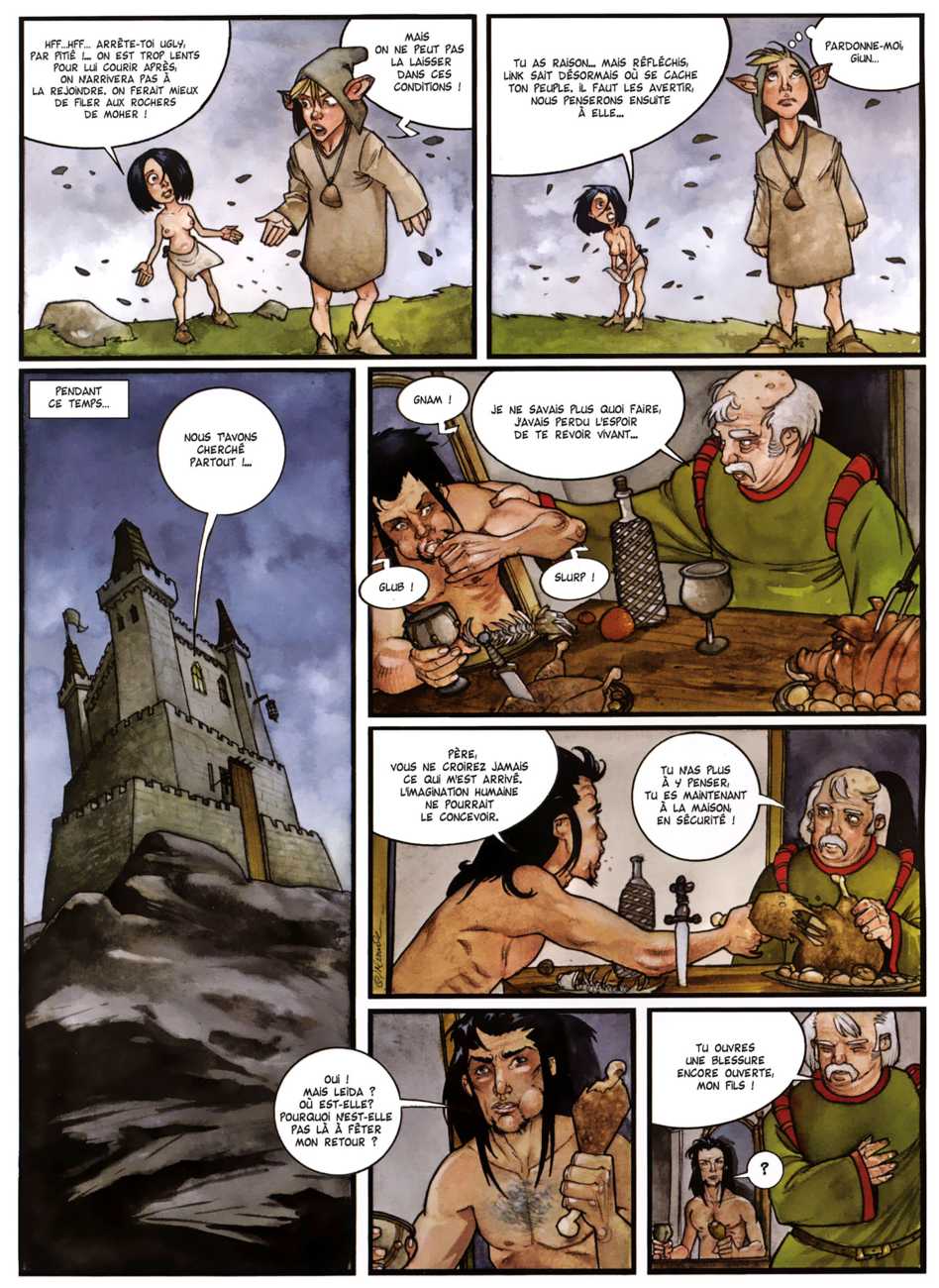
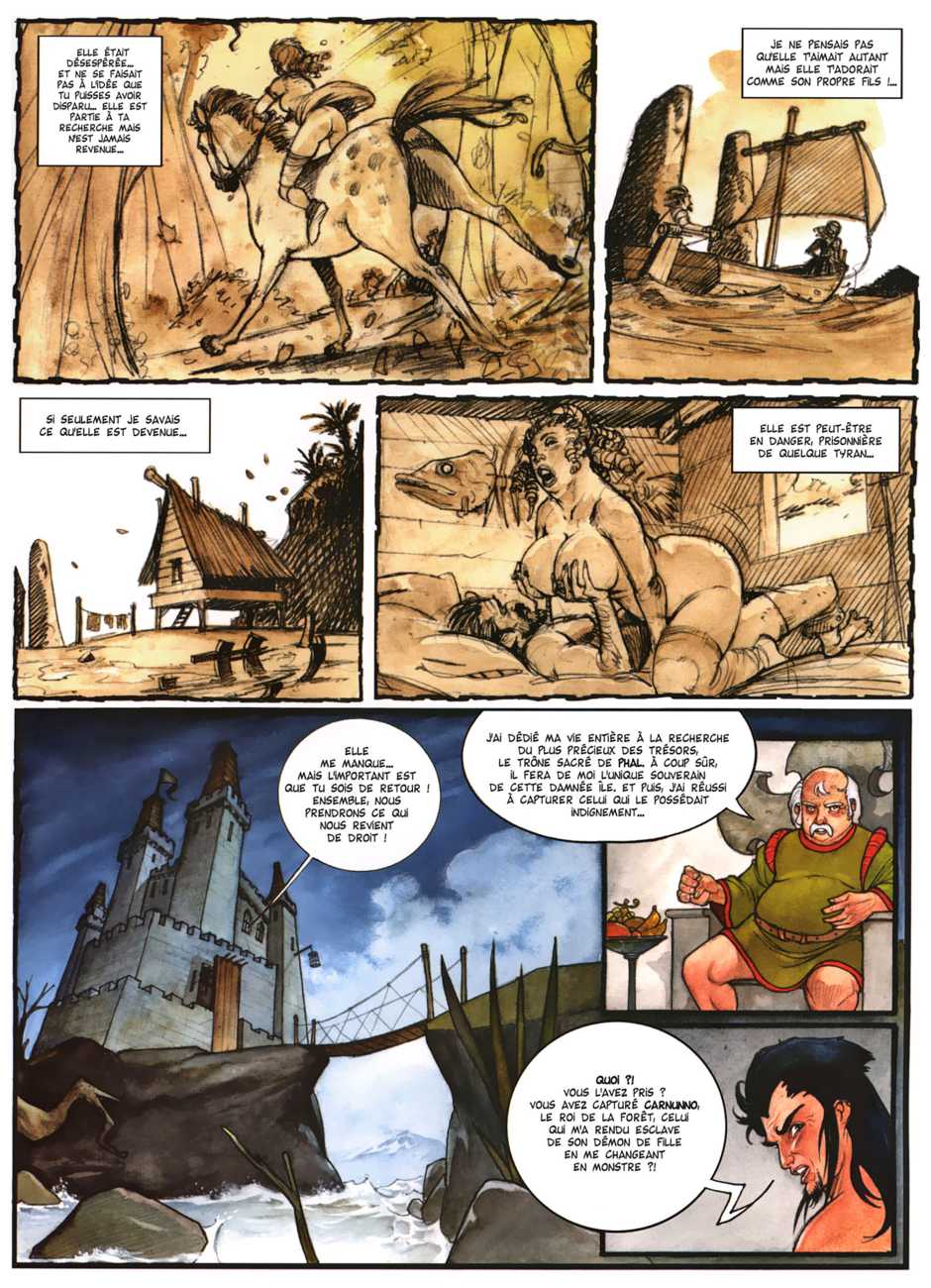
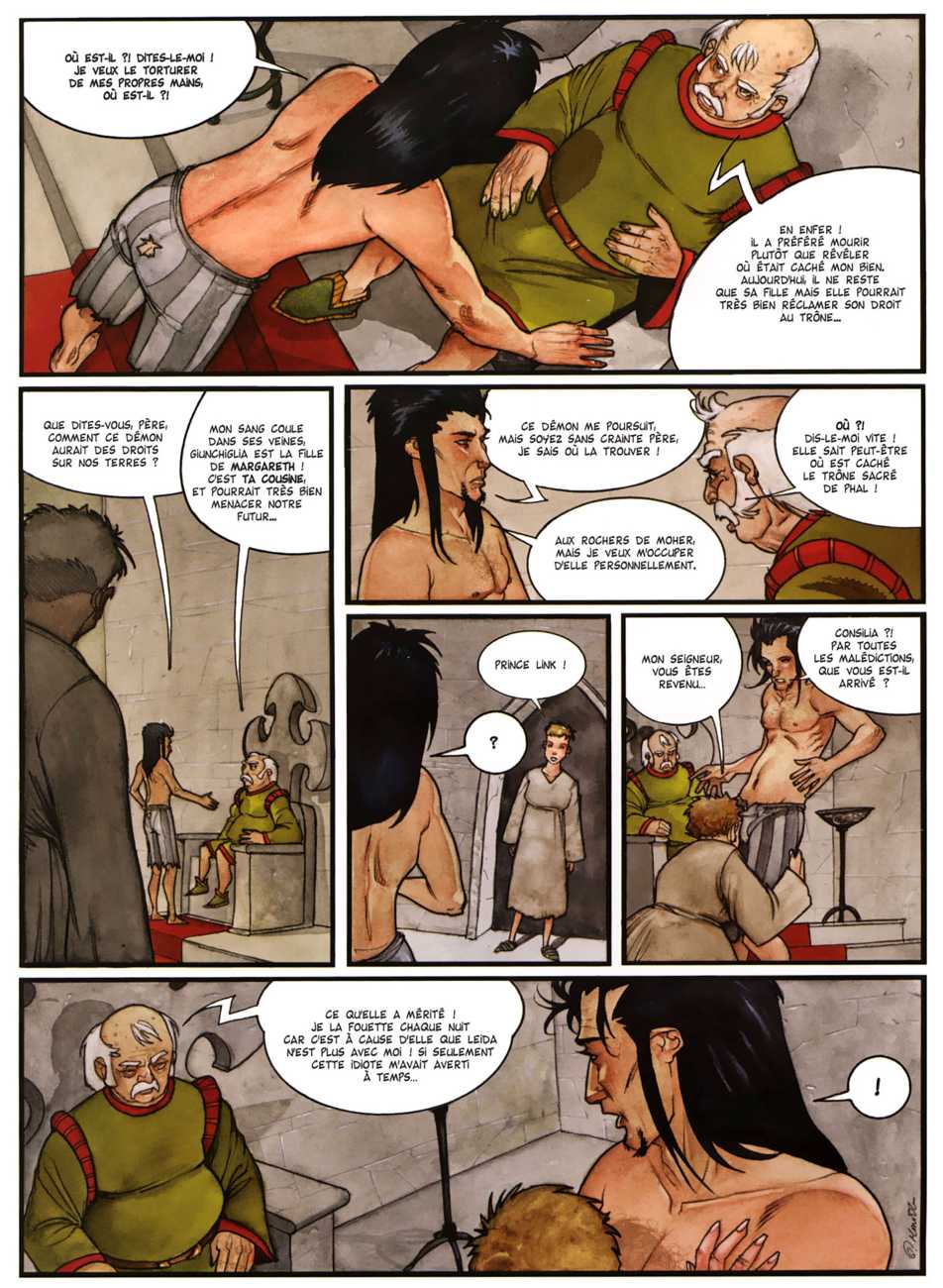
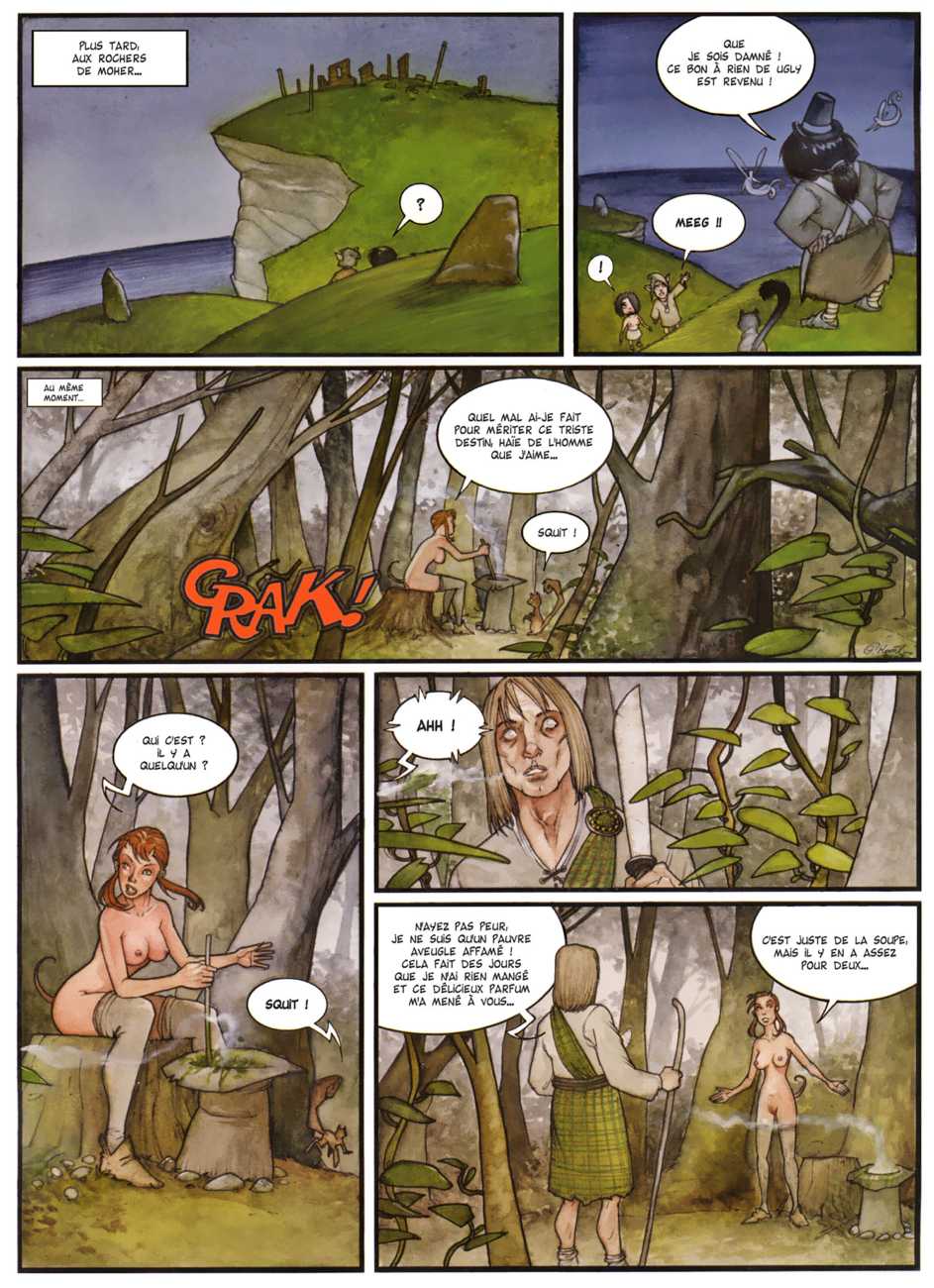
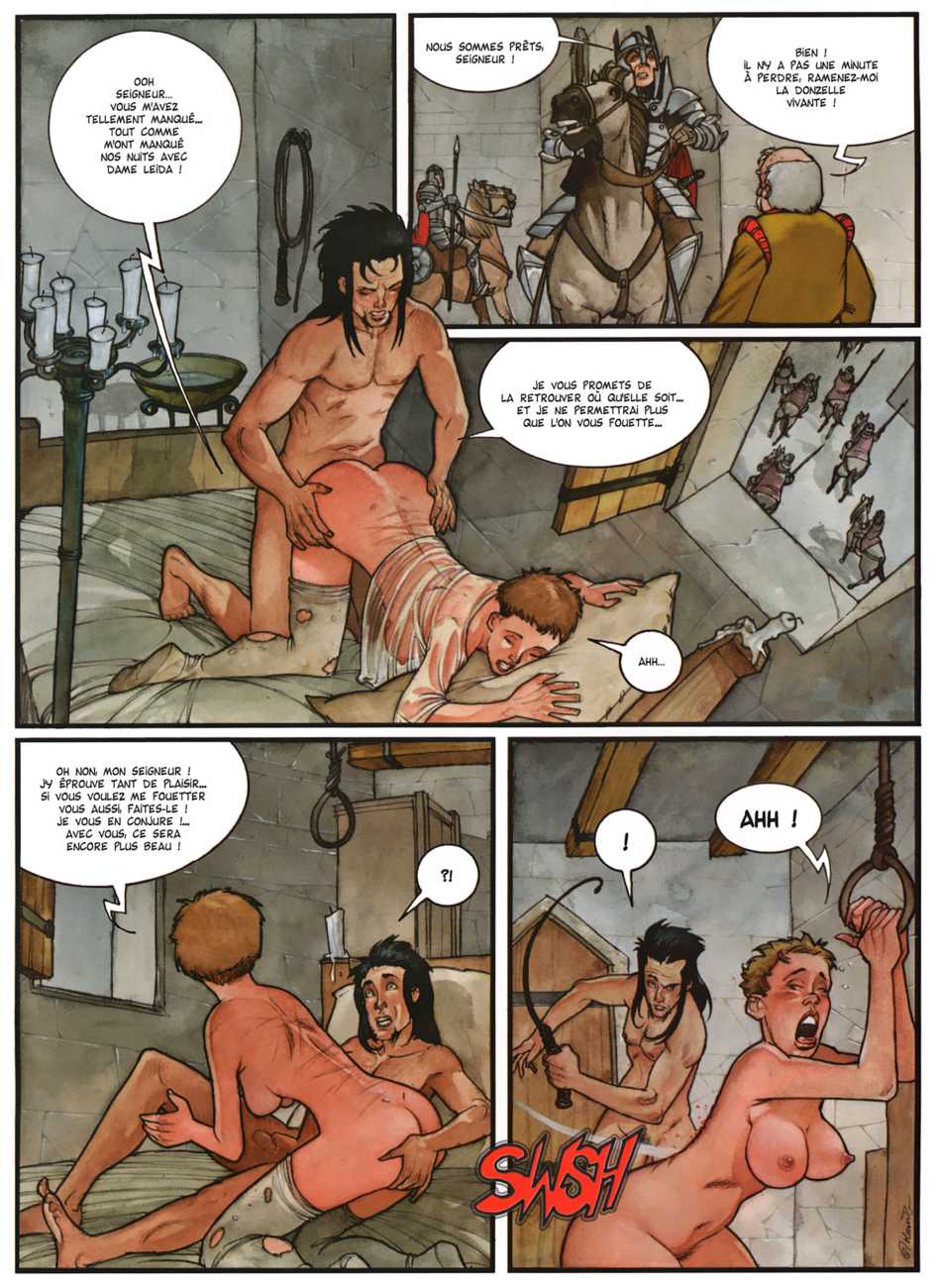
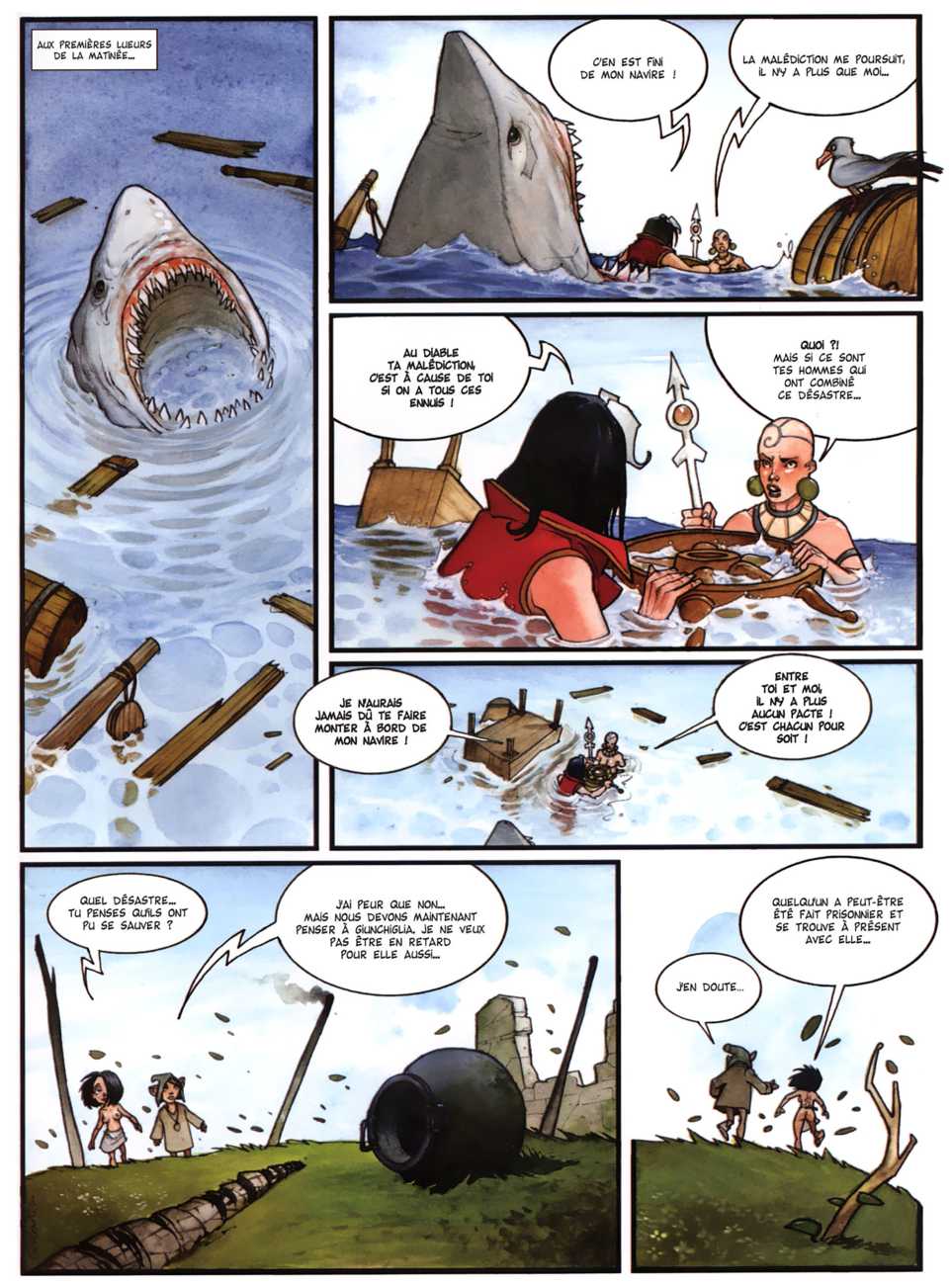
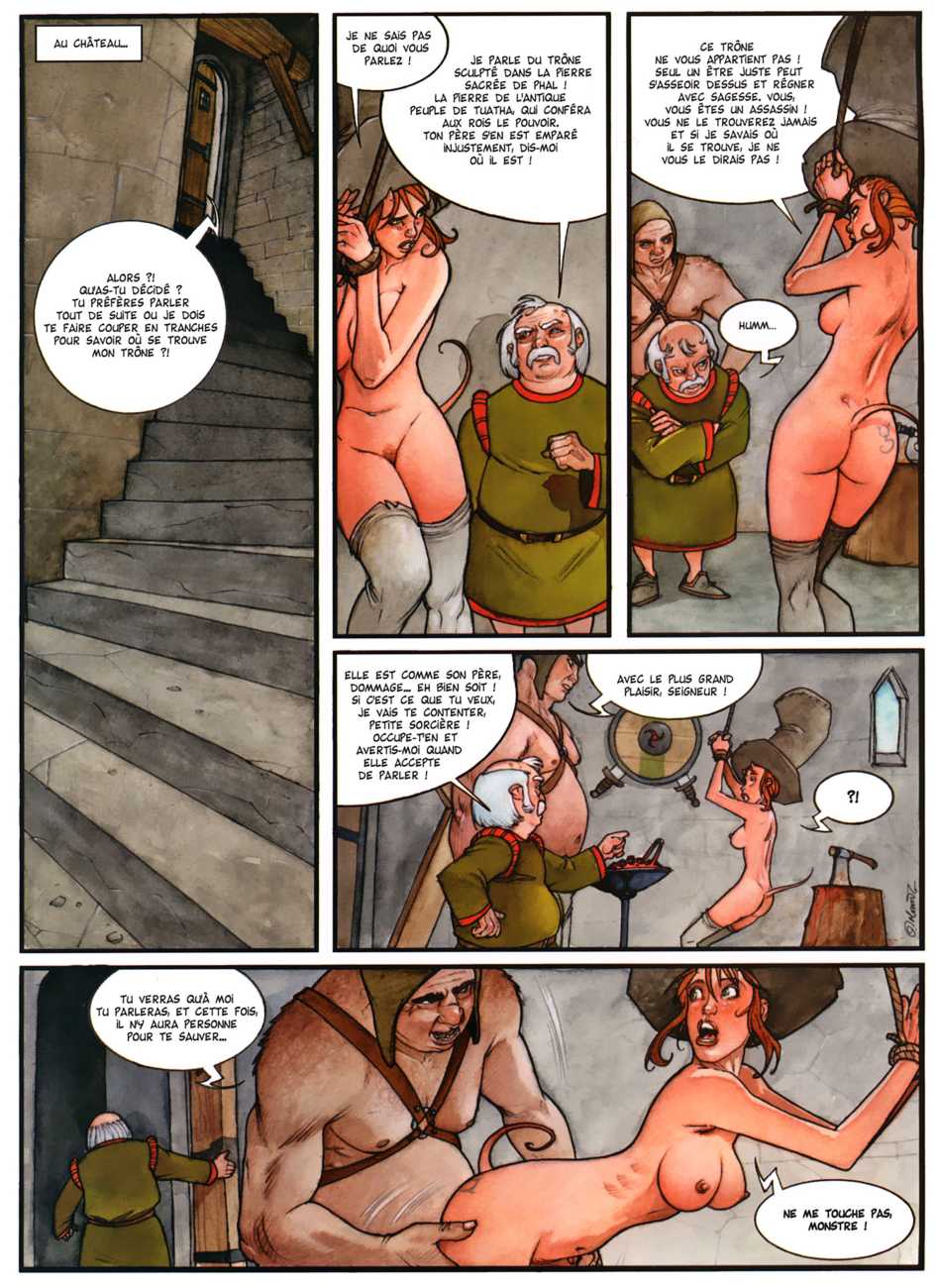
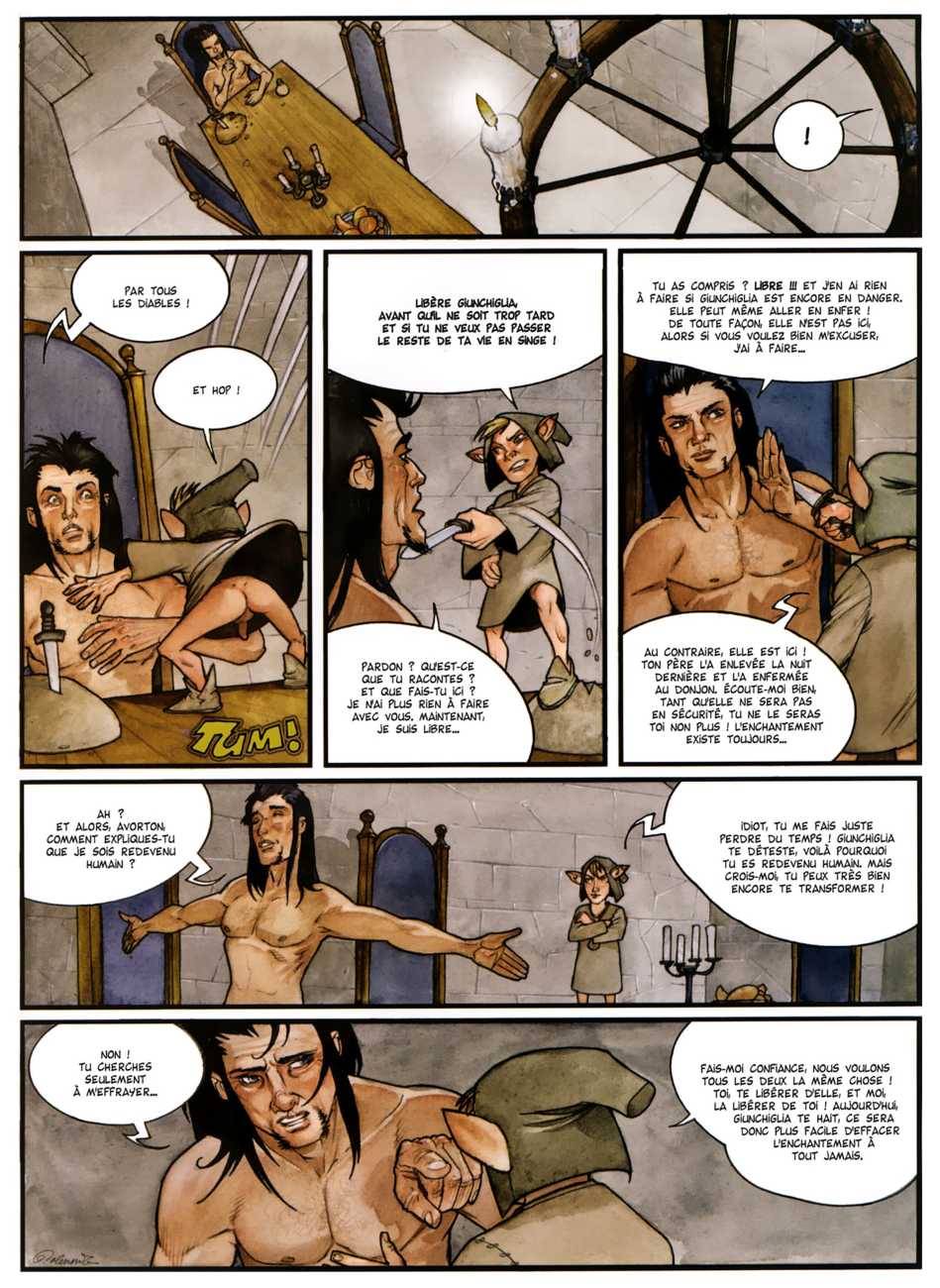
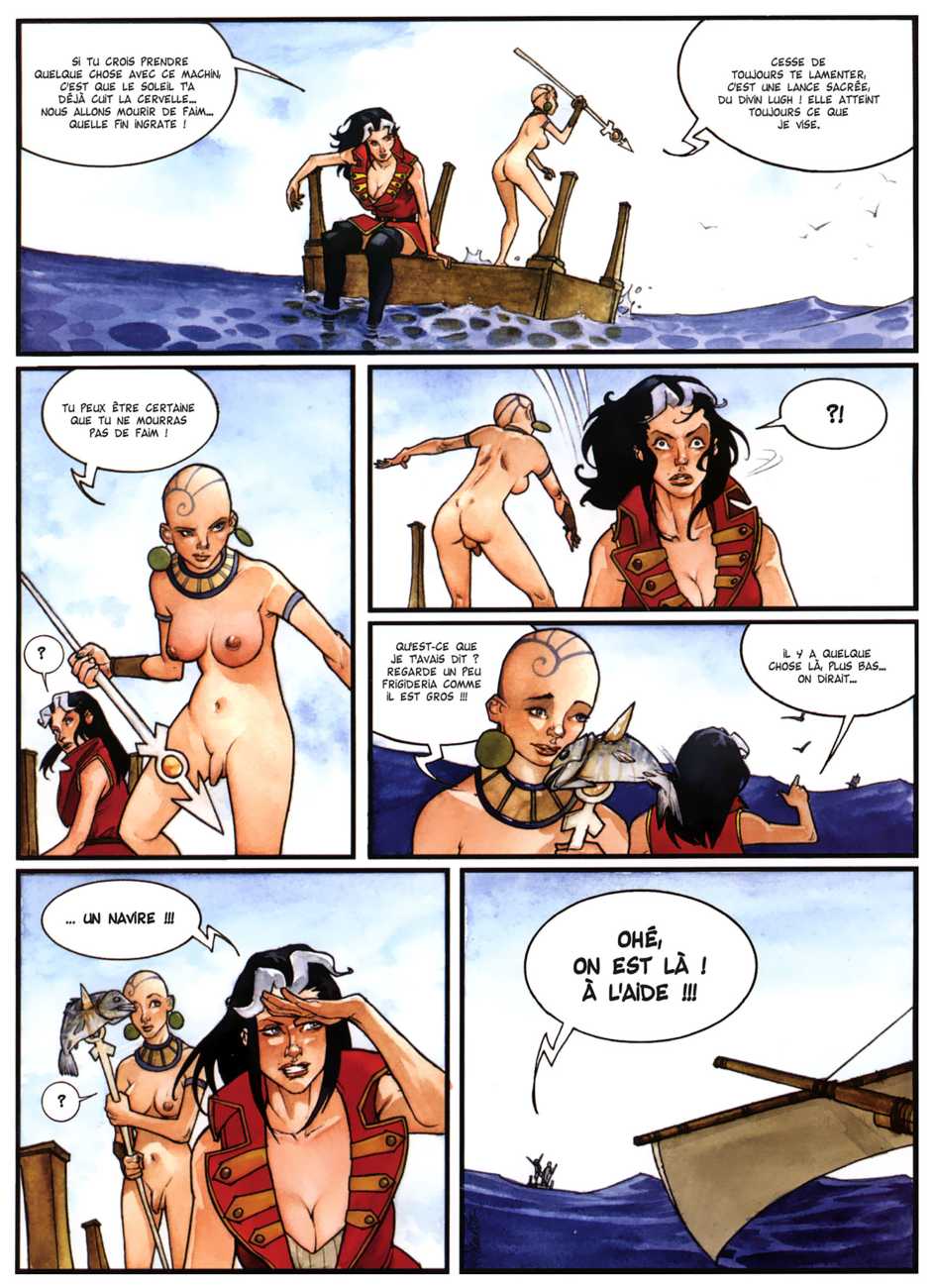
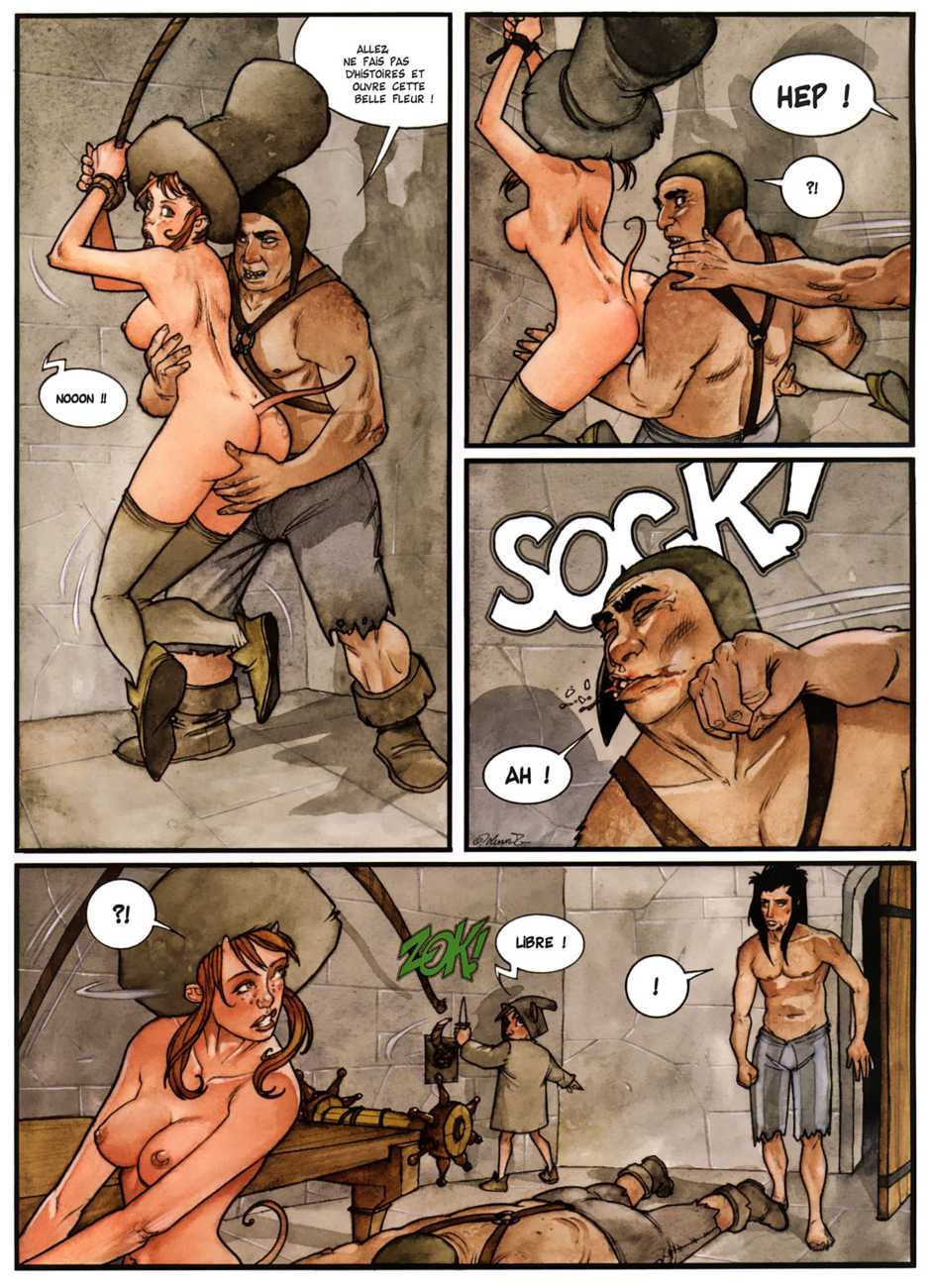
The Italian sequel to Il fiore d’Irlanda, Il tomo sacro (The Sacred Tome) followed three years later, following its development from shorter stories featured in erotic comic magazines like Selen.
In Il tomo sacro, the free-spirited and sensual warrior Giunchiglia continues her fantasy adventures in a mythical world filled with danger, magic, and erotic encounters. The narrative revolves around her quest to track down and secure a mysterious, ancient book of immense power, the Sacred Tome, before it falls into the wrong hands. She must navigate treacherous landscapes, battle monstrous creatures, and outsmart rival factions who desire the book’s secrets for their own dark ambitions.
Il tomo sacro was published in 2007 in hardcover by Coniglio Editore, followed a year later by the French translation, Le tome sacré, published by Éditions Clair de Lune.
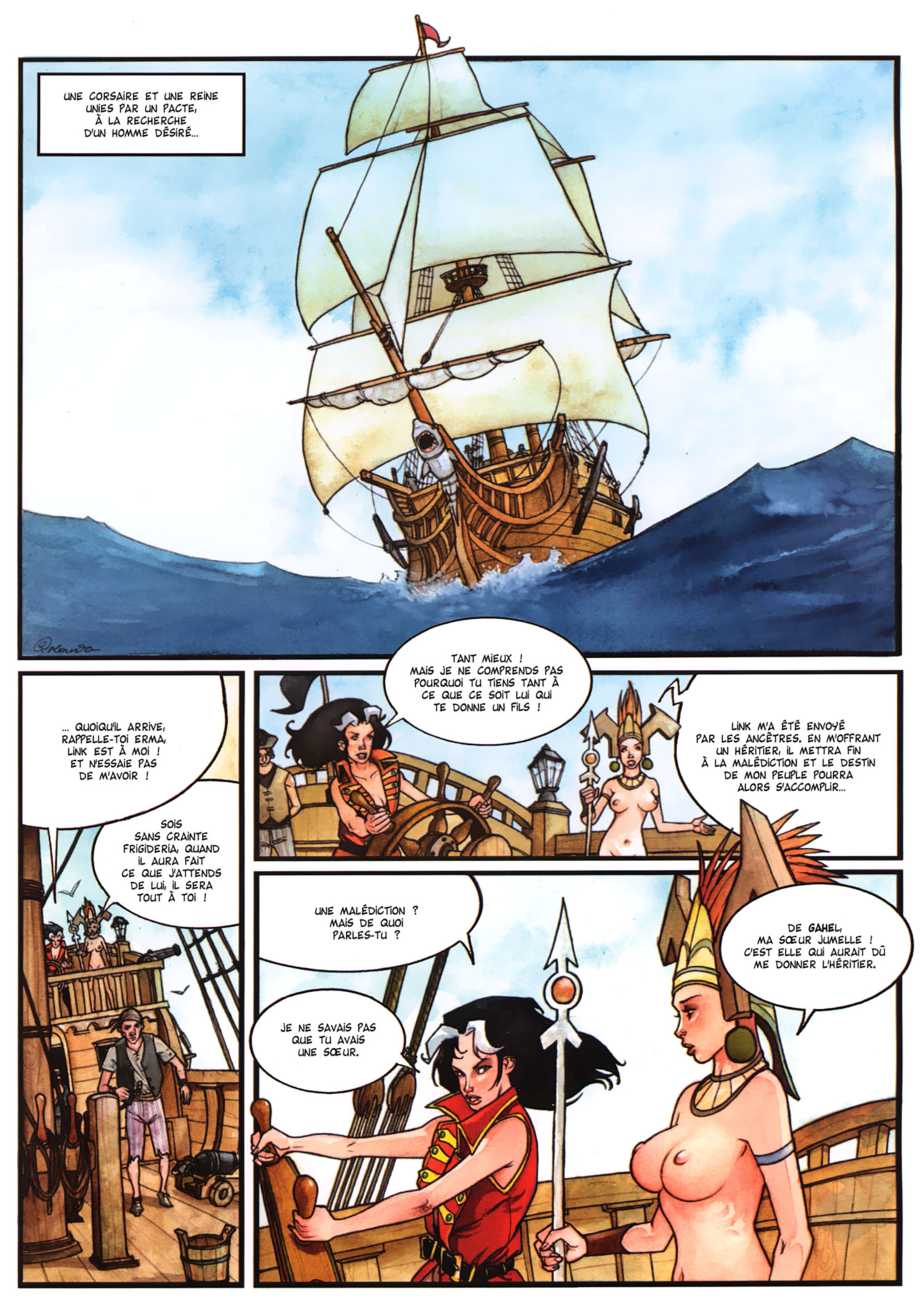
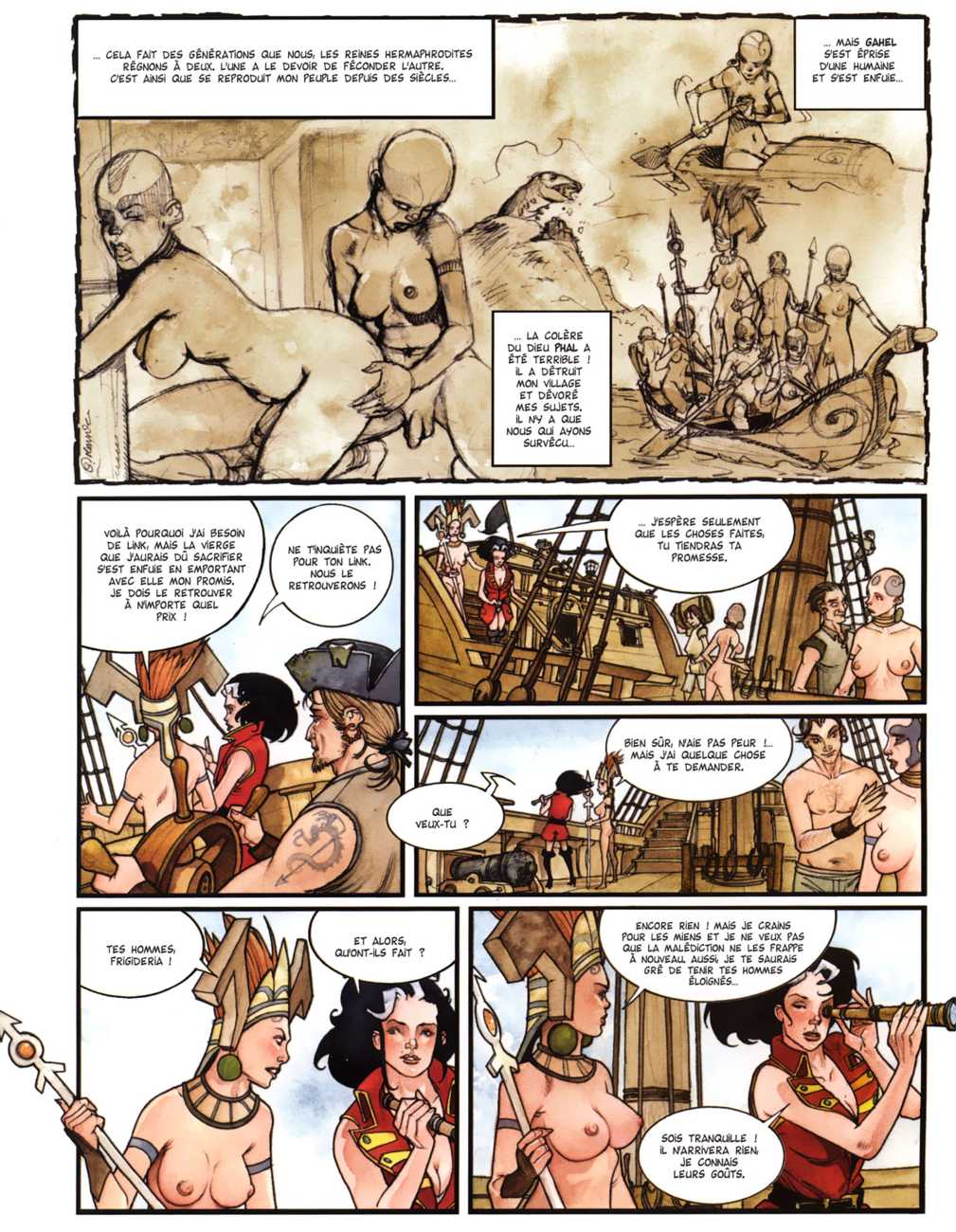
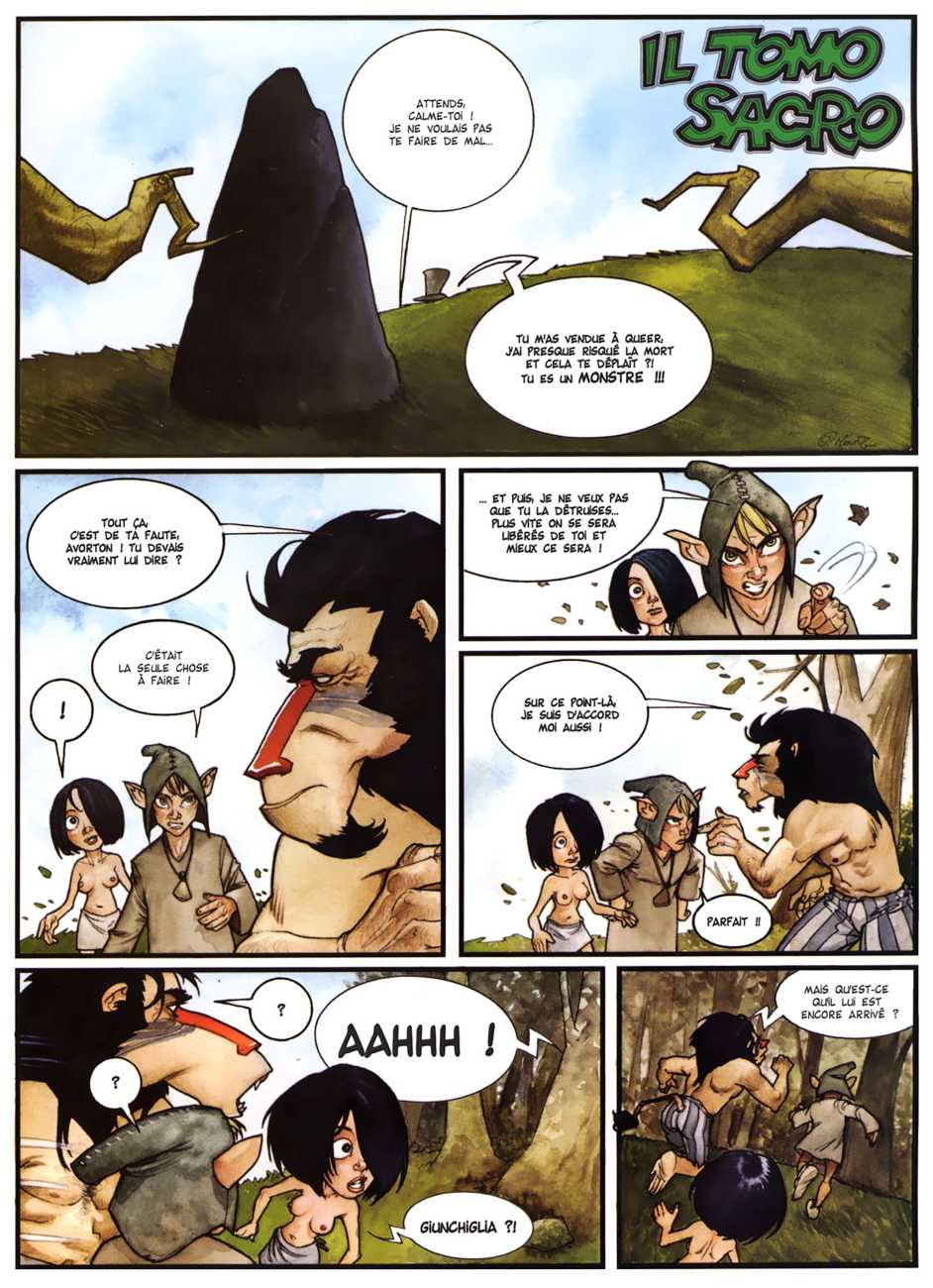
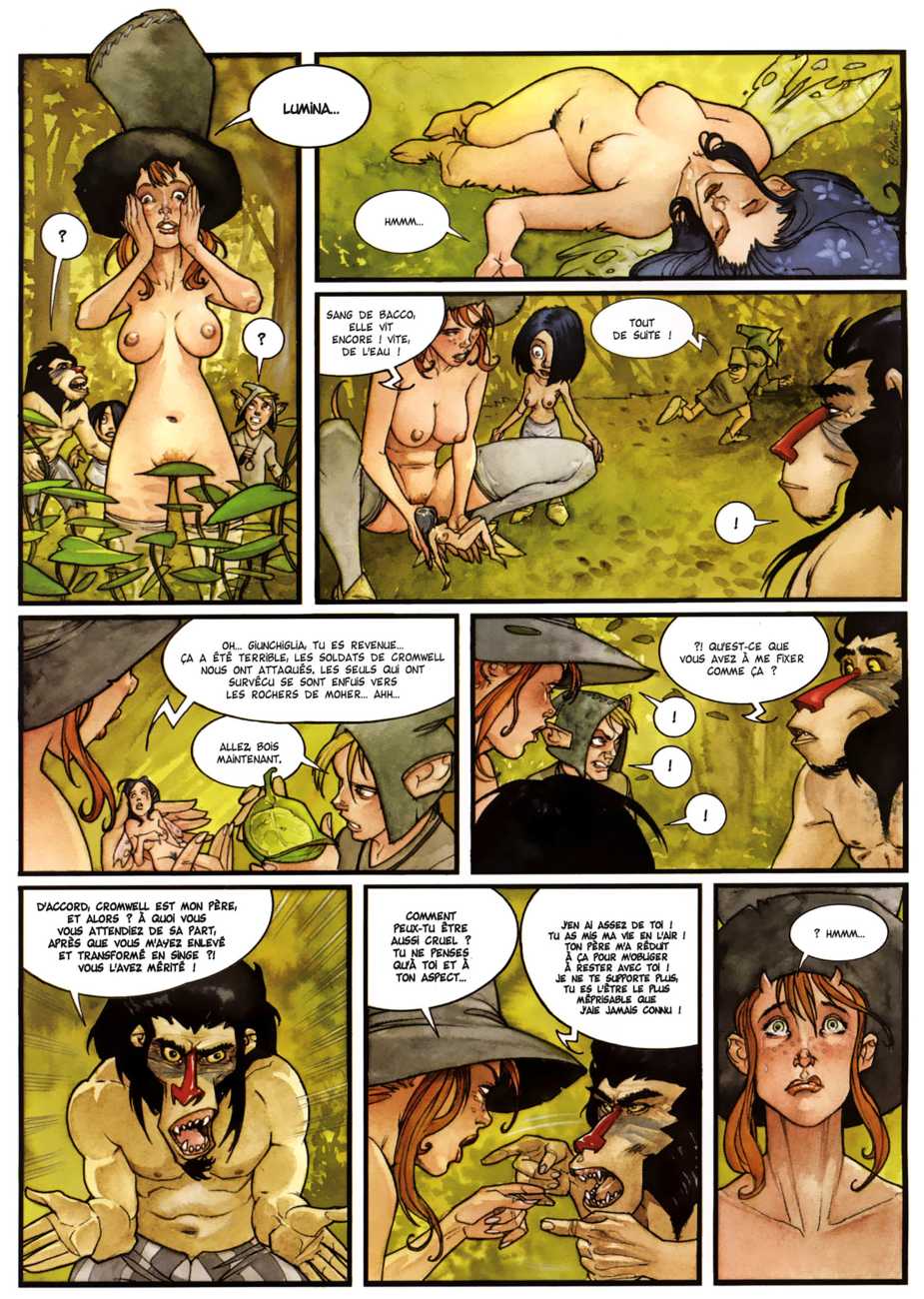
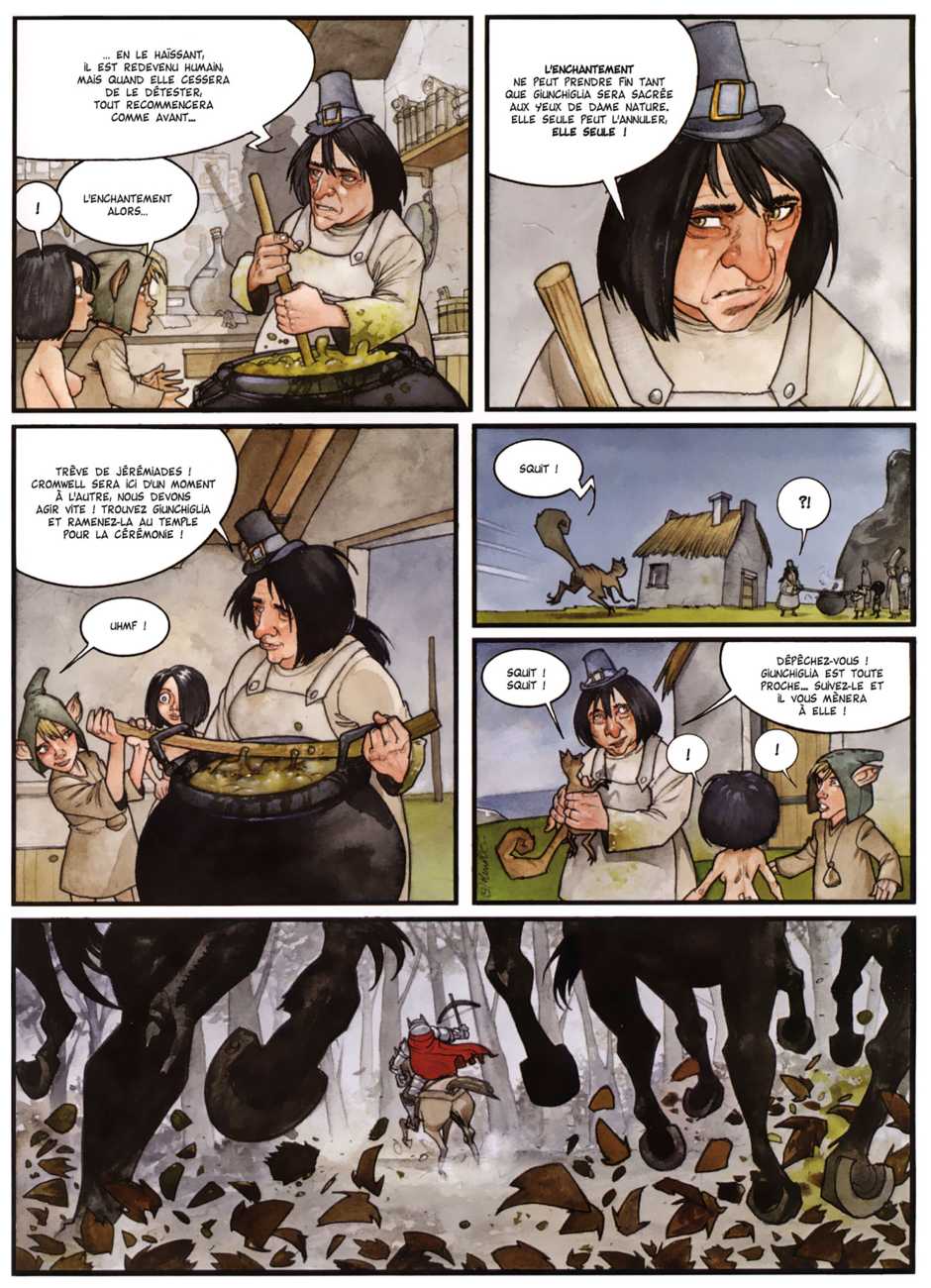
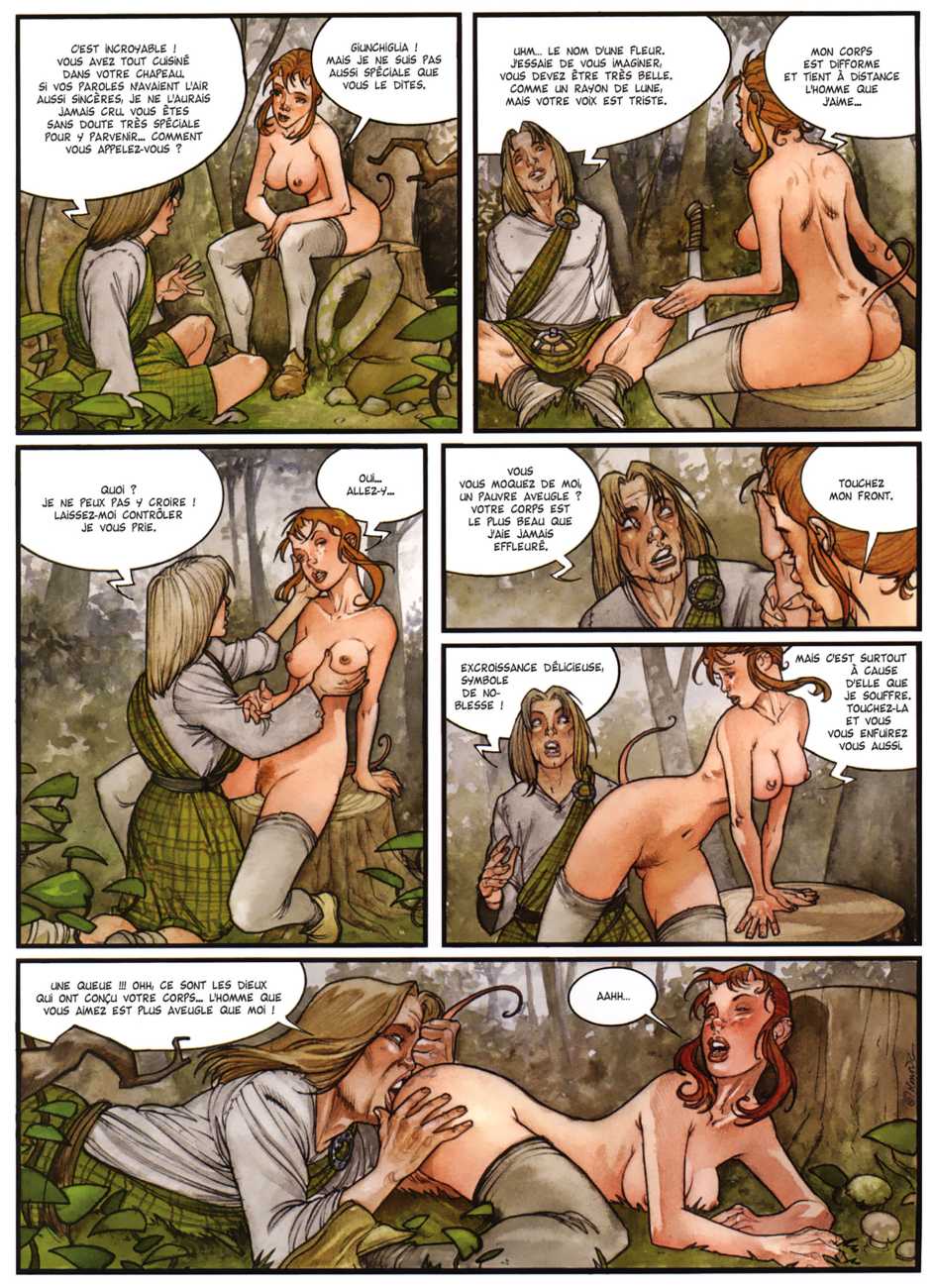
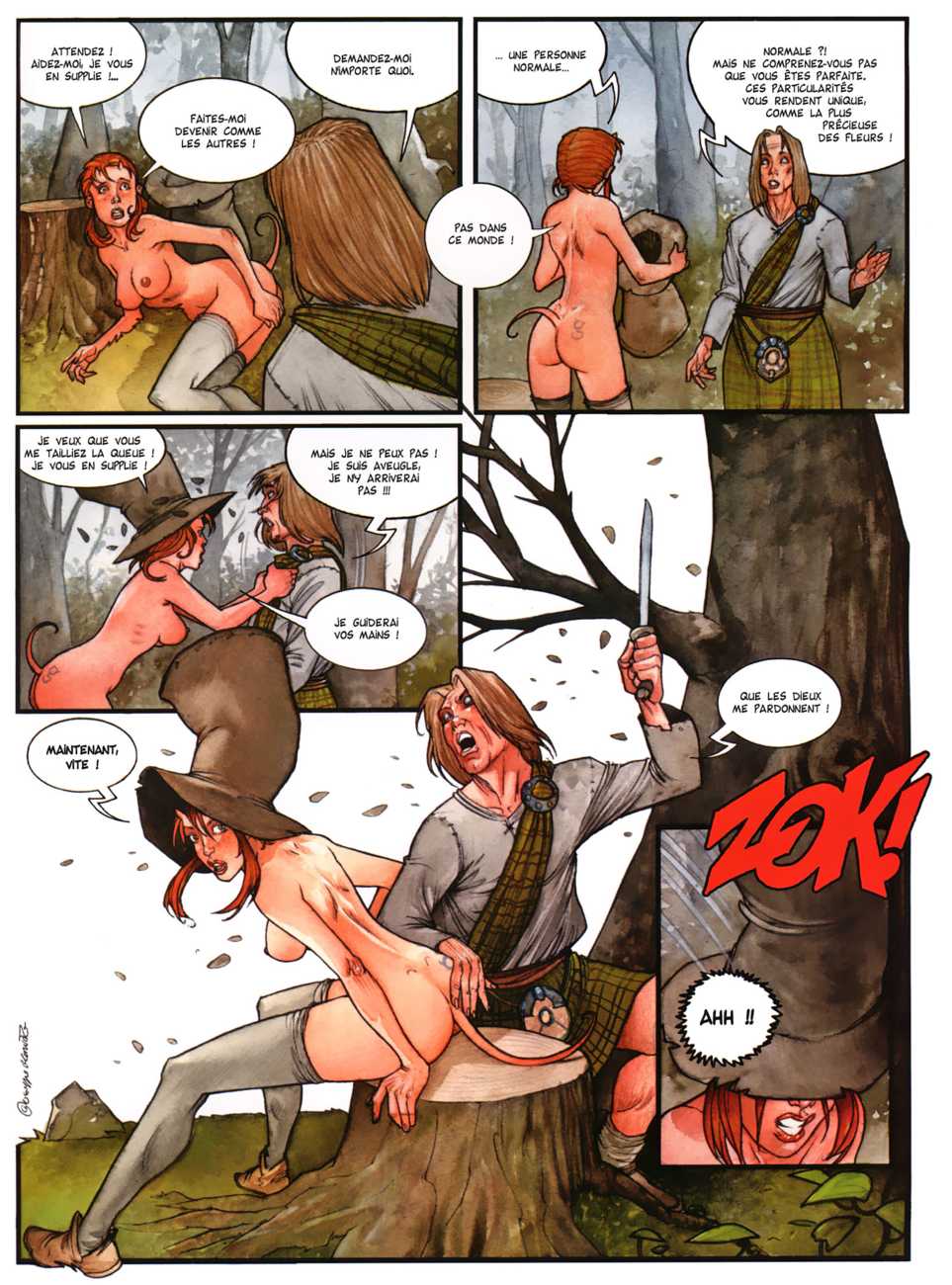
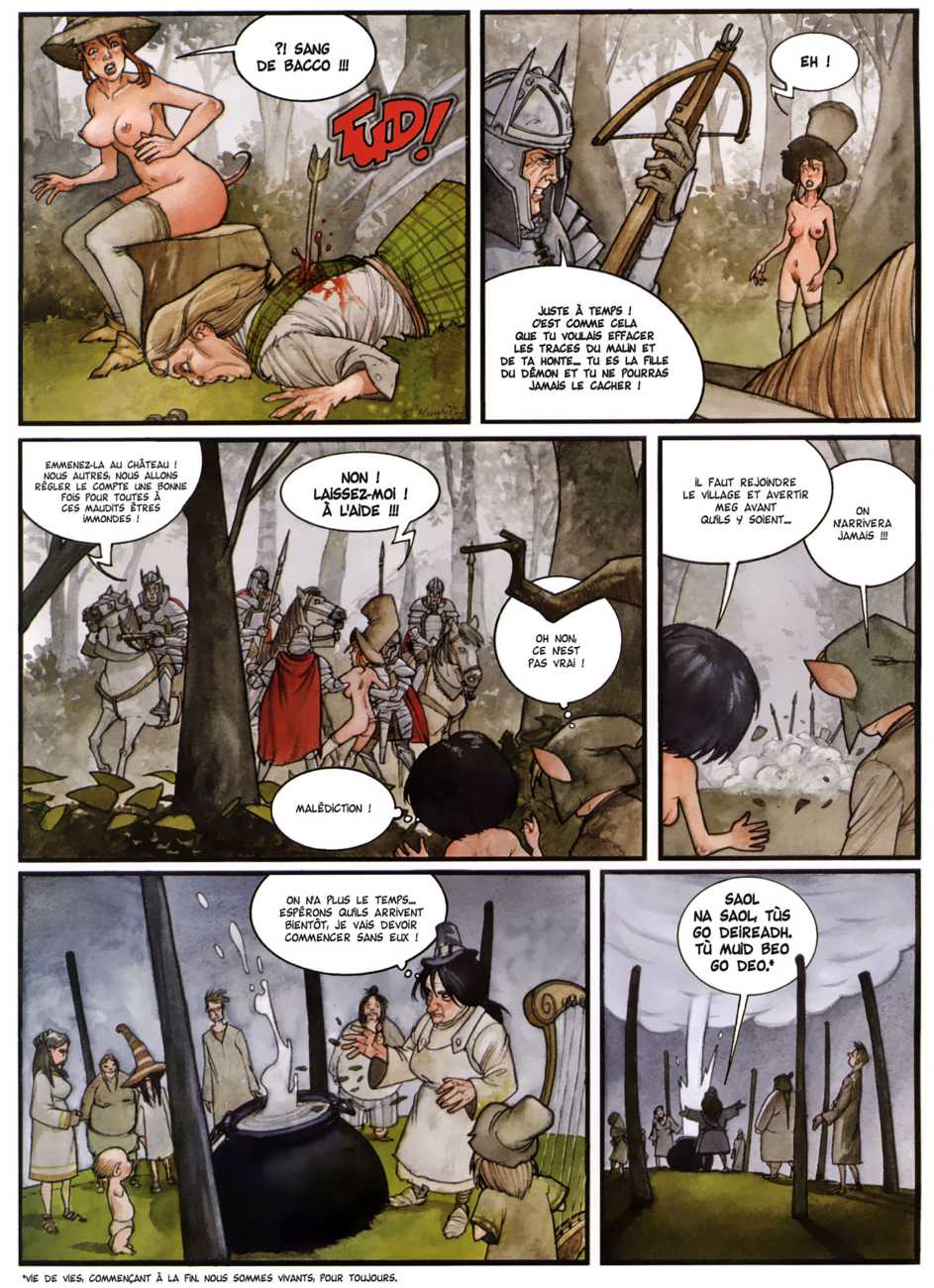
We have included here the first twenty or so pages of the 2008 French edition.
When the second volume of Giunchiglia was published, Giuseppe Manunta gave several interviews; we have extracted some of the more interesting responses below.
Giunchiglia was born in various phases and at different times, influenced by joys, sorrows, and passions. I believe I wrote the basic story in 1989, inspired by memories of the film The Adventures of Baron Munchausen, but neither the character nor the name Giunchiglia existed yet. Over the years that followed, the idea for the story changed, enriched with new twists and characters that aided the narrative. I’m not a fan of stories that focus on a single character.
Then, reading The Towers of Bois-Maury by Hermann, I came up with the idea of naming her after a flower and setting her in the darkest period in history, where prejudice and ignorance abounded and claimed victims. I wanted to talk about the hardship that those who are ‘different’ face on a daily basis. Now I needed a body, and providentially I received a phone call from the screenwriter and my mentor Giorgio Pedrazzi. He had the idea of writing a story for Blue about a catwoman – the tail! It was perfect, then with the horns I wanted to give it a ‘divine’ touch and we arrived at 1996. A few months later it was published for the first time in Blue.
Perhaps being an introvert and having dyslexia, which I unfortunately discovered later, contributed to making me different in the eyes of my classmates. My proud nature and the difficult city where I grew up helped me react to that situation. Giunchiglia represents all those people who discover diversity violently through the stupidity and ignorance of others, depicted in the narcissistic and presumptuous character of Prince Link.
The very word ‘fantasy’, a term of Greek origins, expresses a concept of unlimited freedom of thought. I find that telling the fantasy genre transforms the pencil into a sort of magic wand that gives you the power to do anything, which I don’t find in realism, which is bound by so many constraints. And then there’s eroticism – well, what could be better? Food maybe?
Eroticism as I understand it is a state of mind, letting the gaze perceive only what is necessary and letting the imagination do the rest is more stimulating. It’s like being accompanied up to a certain point, then you have to do it alone. It’s no coincidence that I use the figure of a blind man, a man who lives by imagination and is therefore mentally free. In my stories, even when I worked for the magazine Selen, I’ve tried to never lapse into pornography, or at least to explain the more explicit scenes through the narrative.