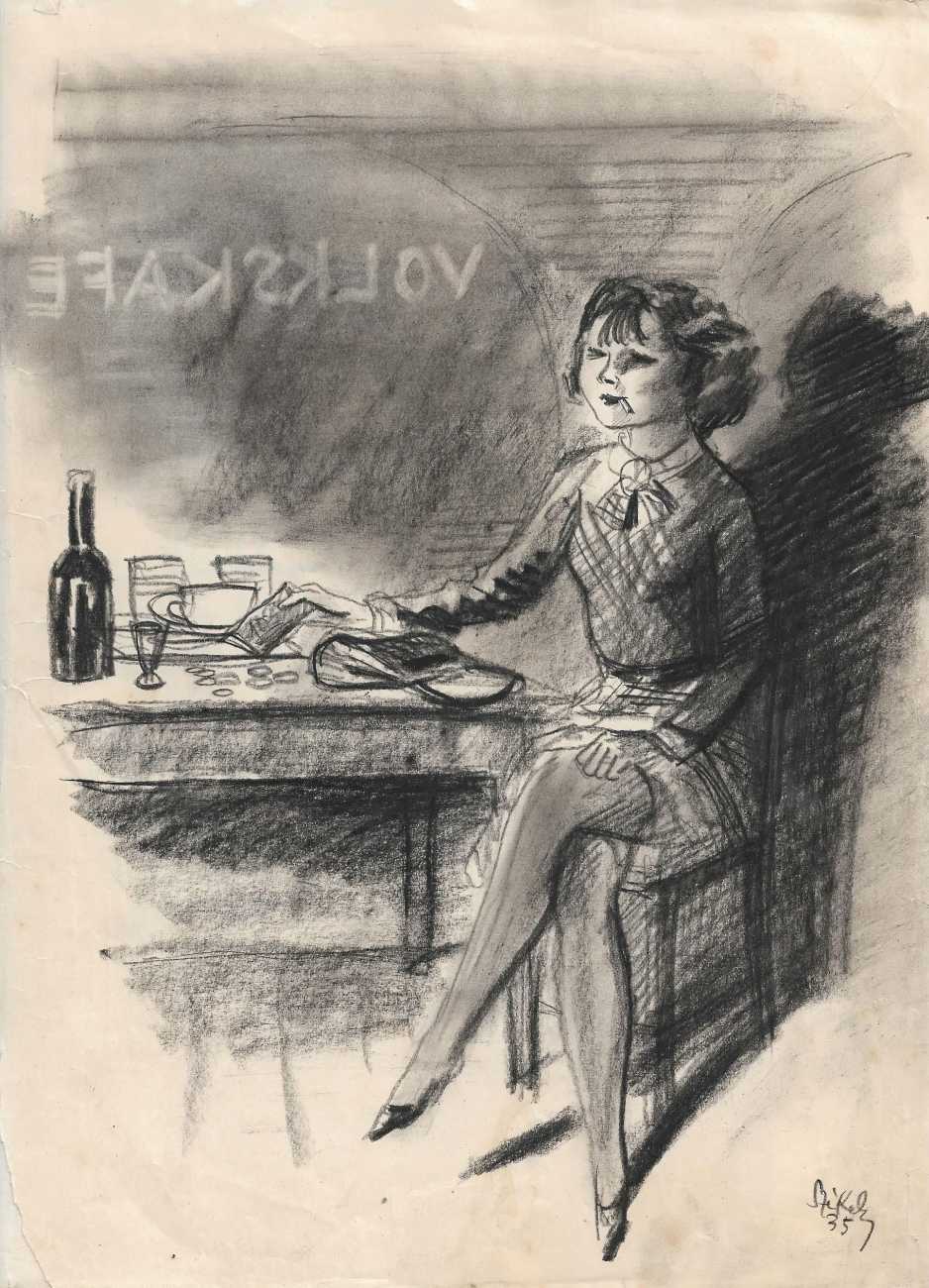
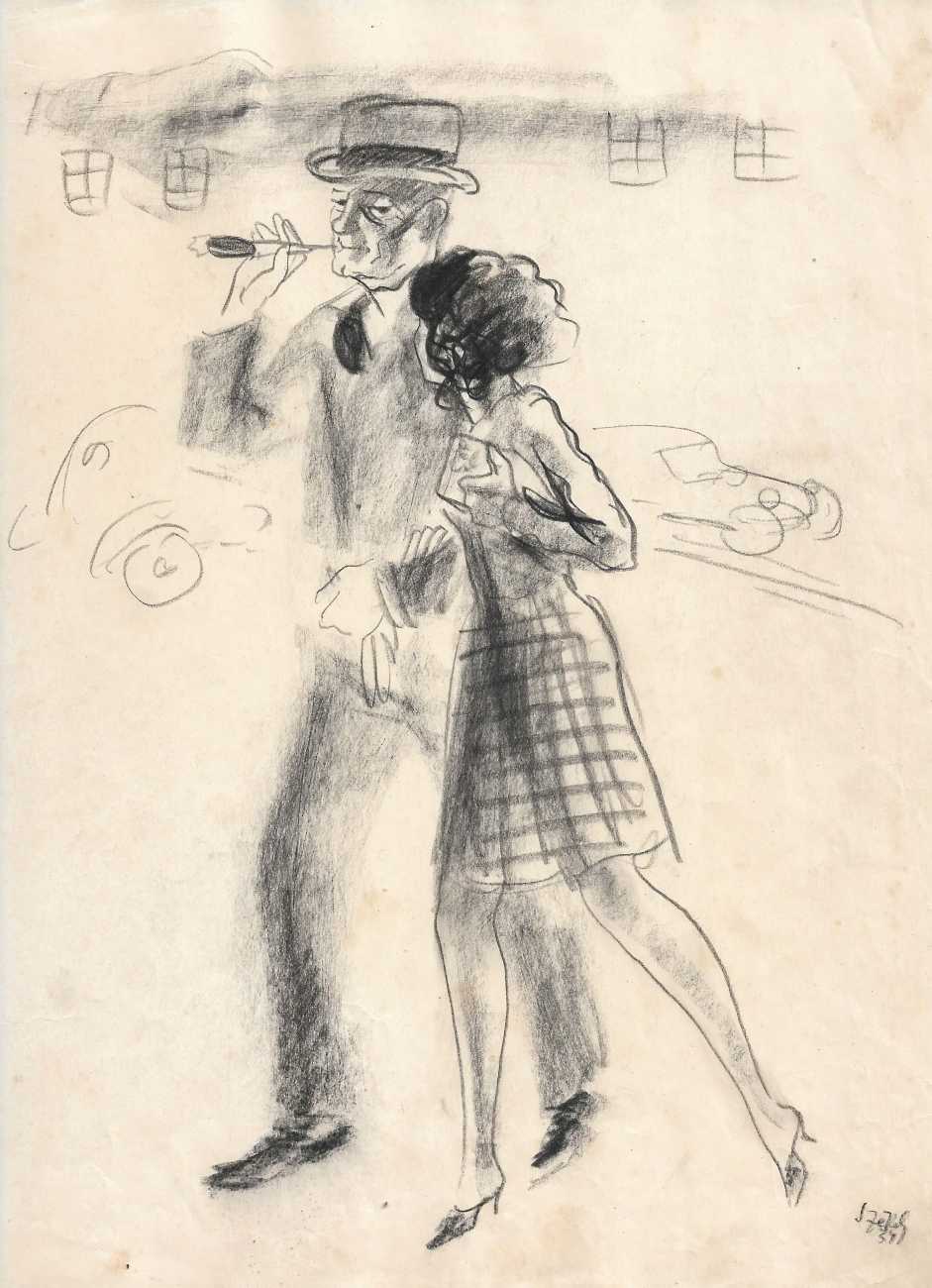
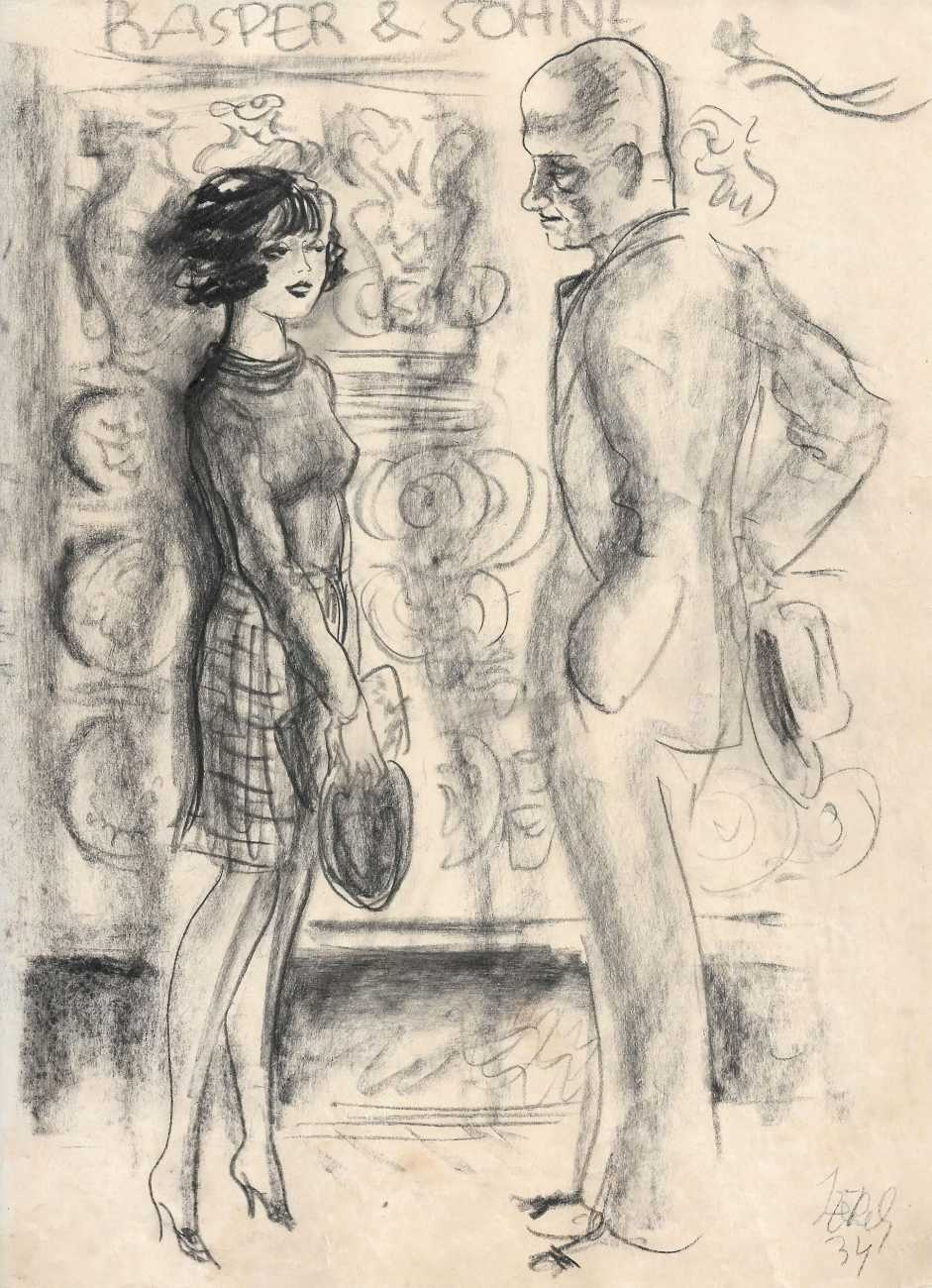
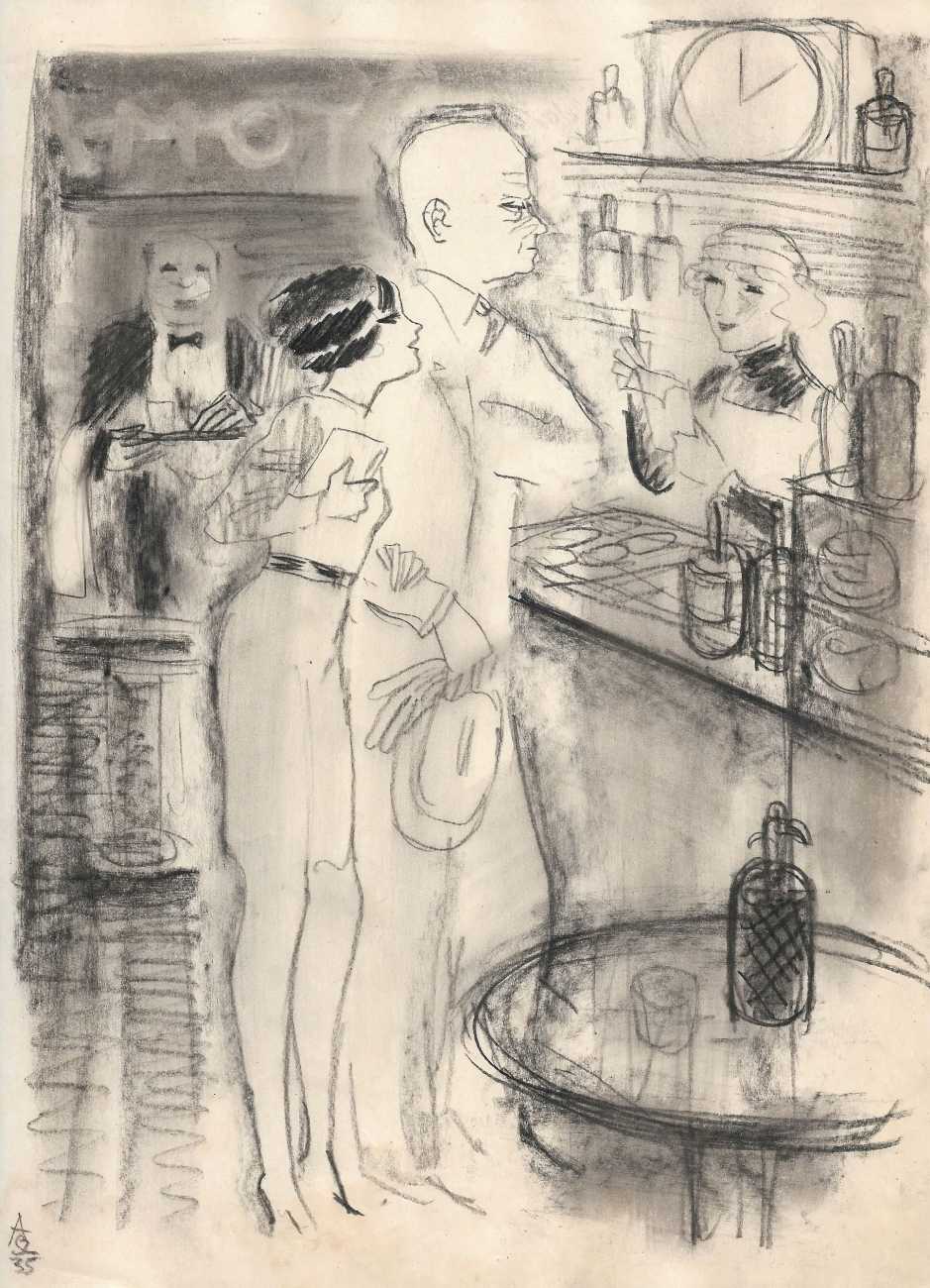
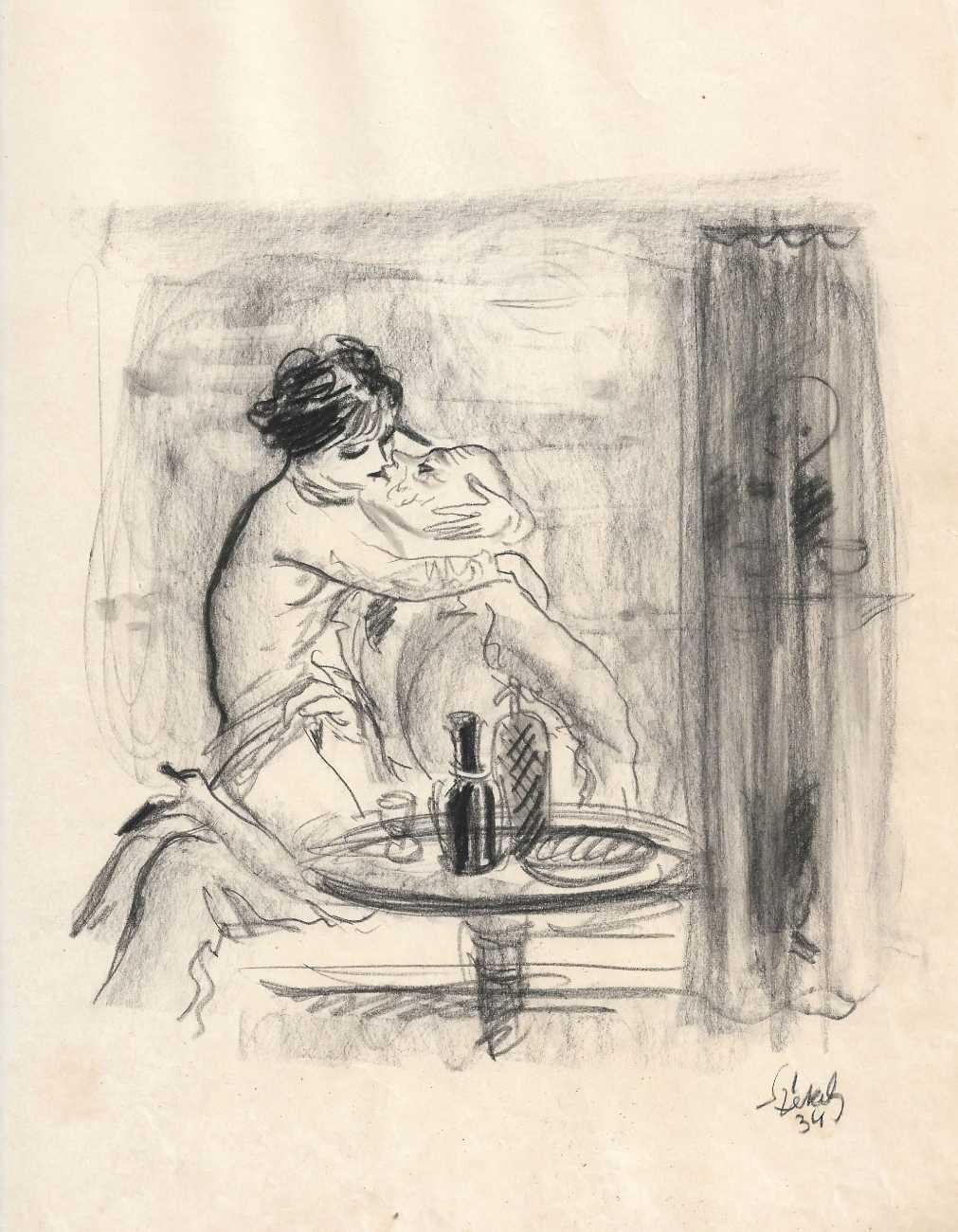
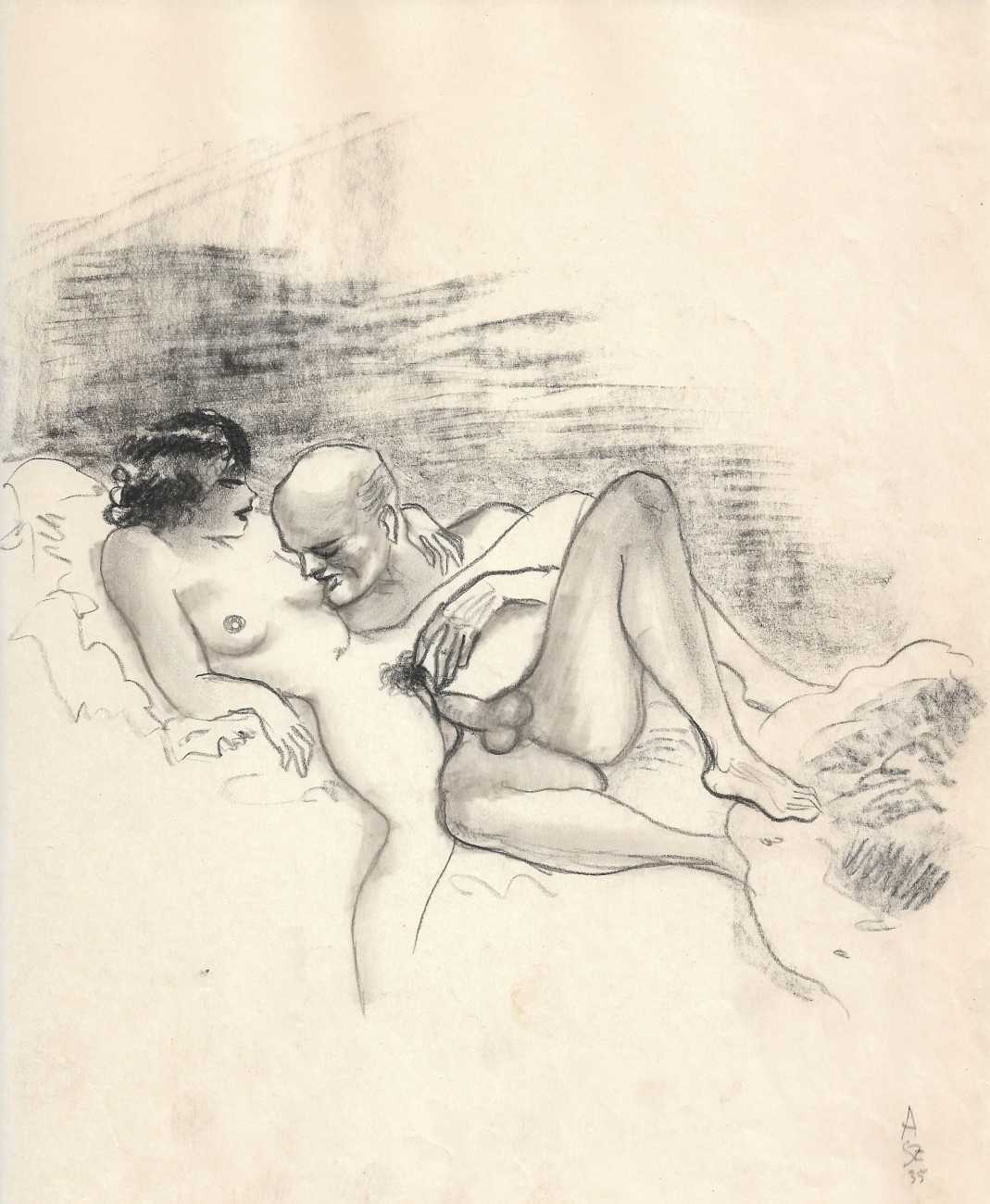
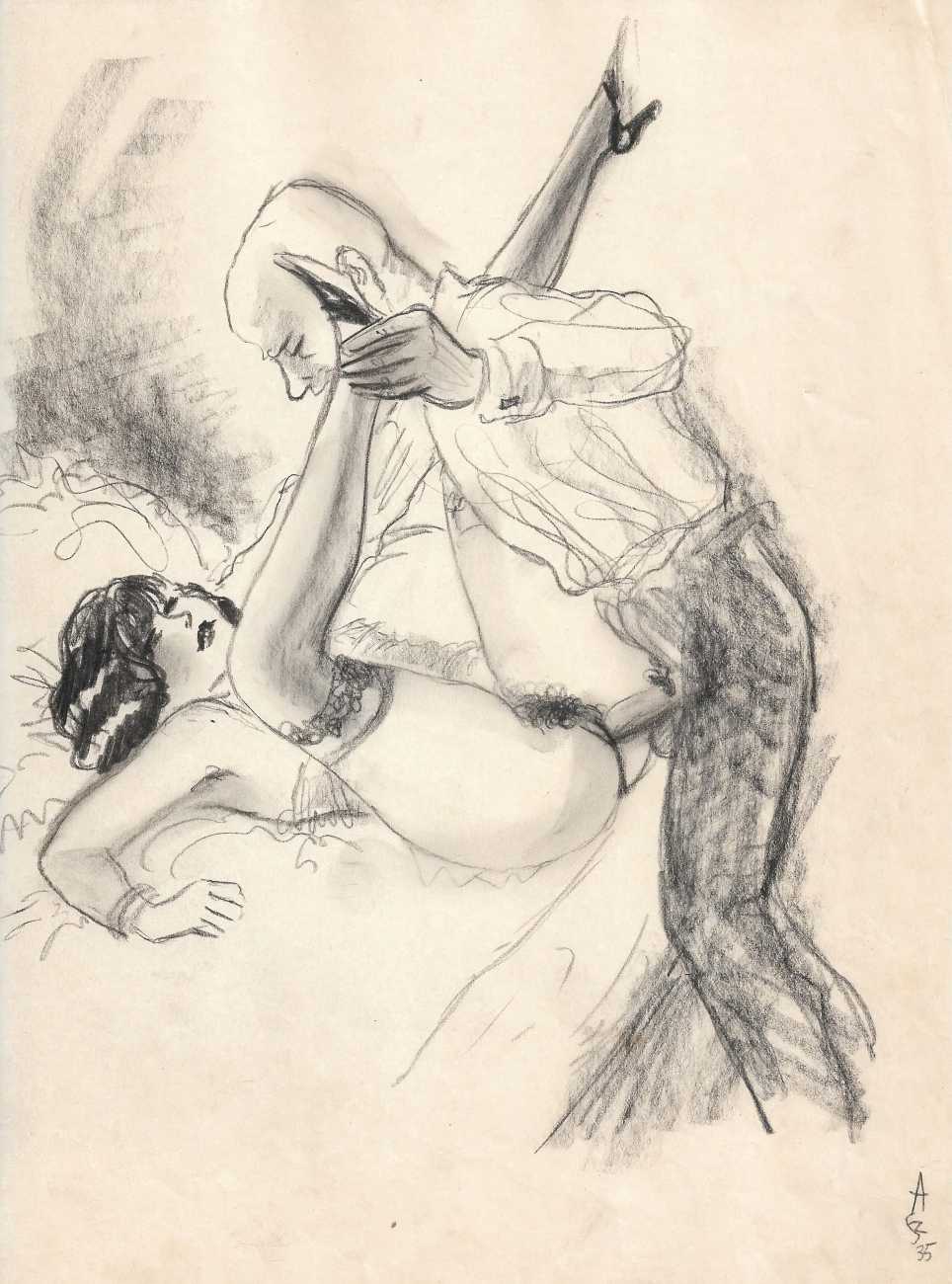
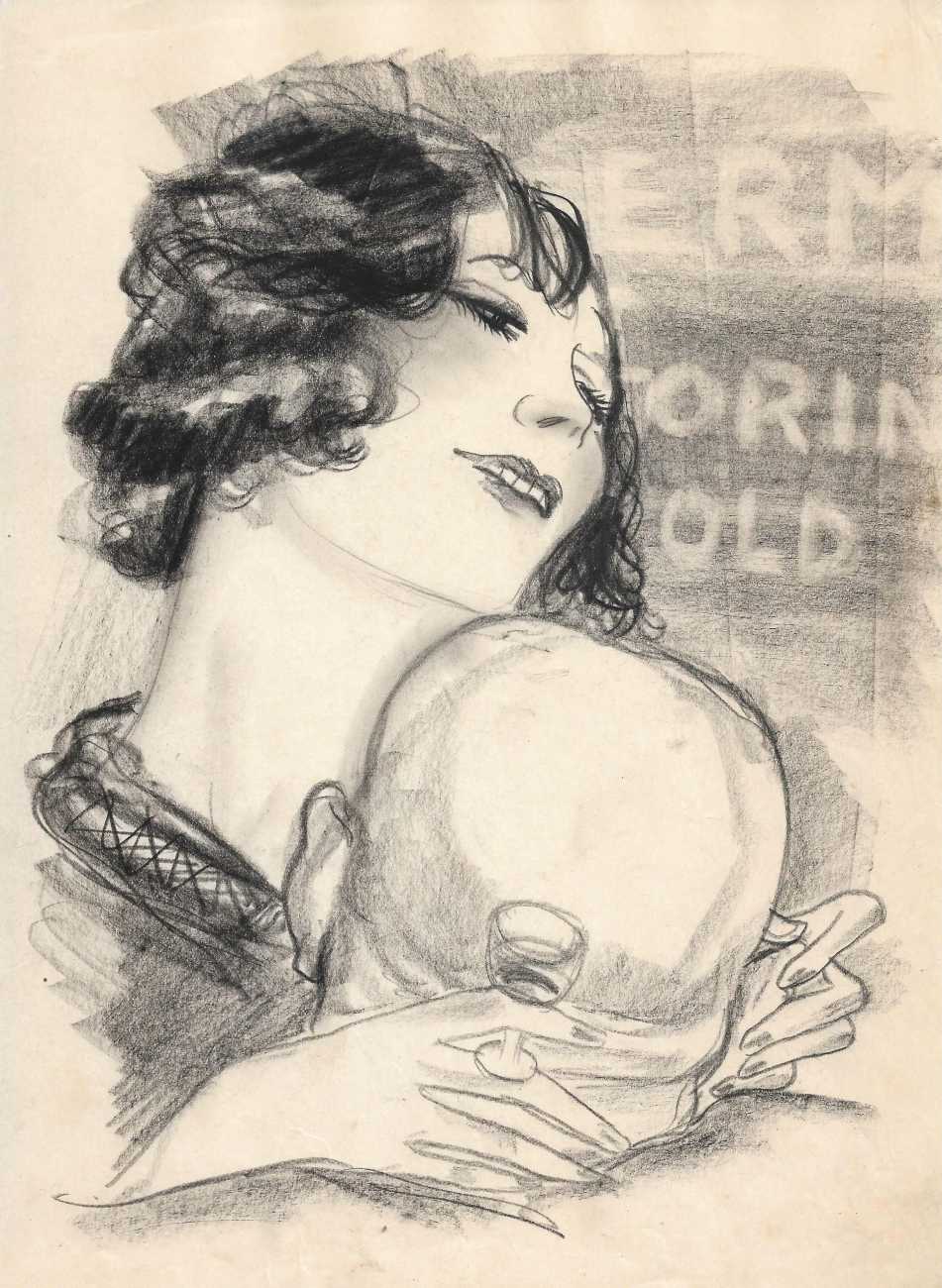
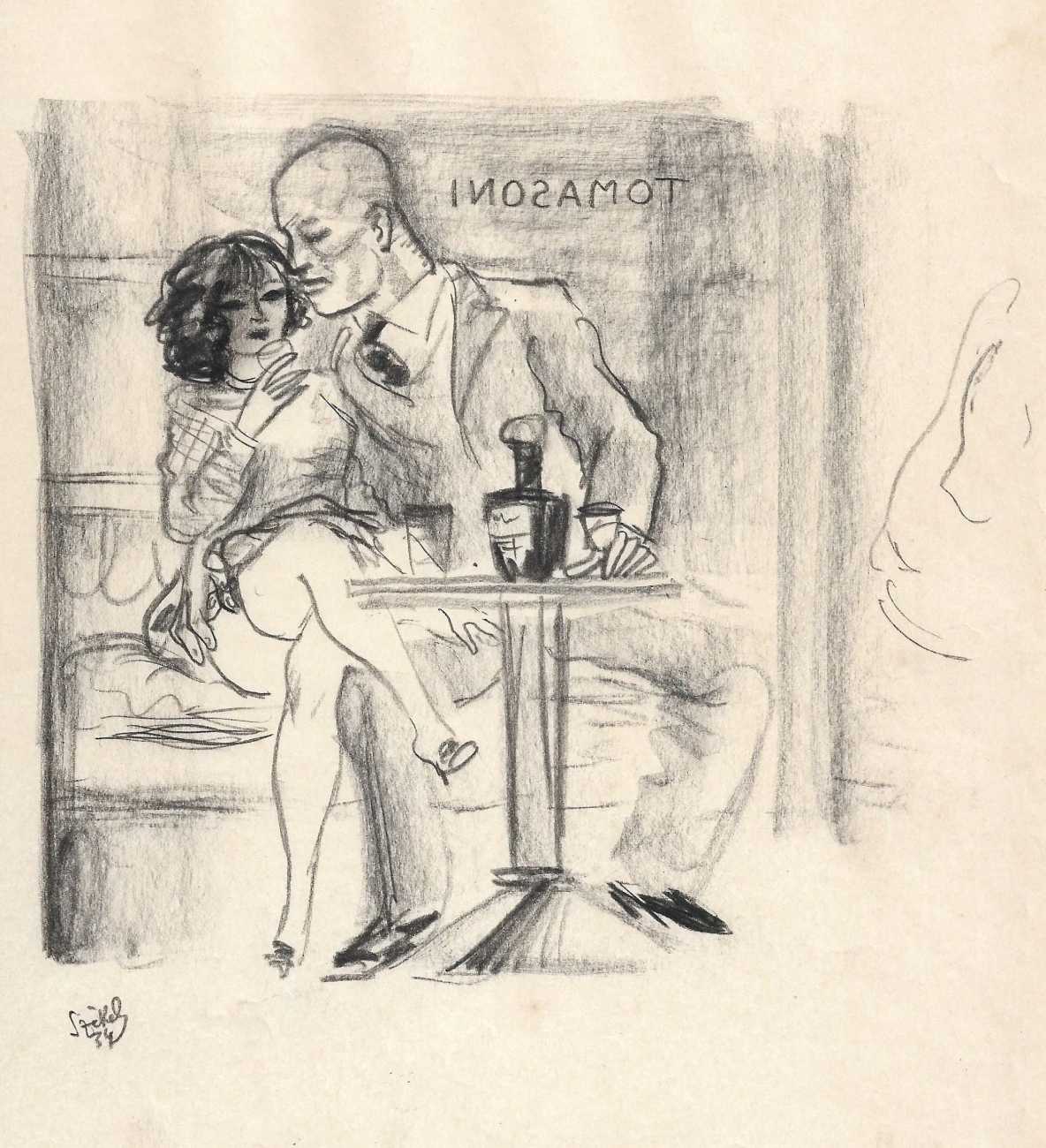
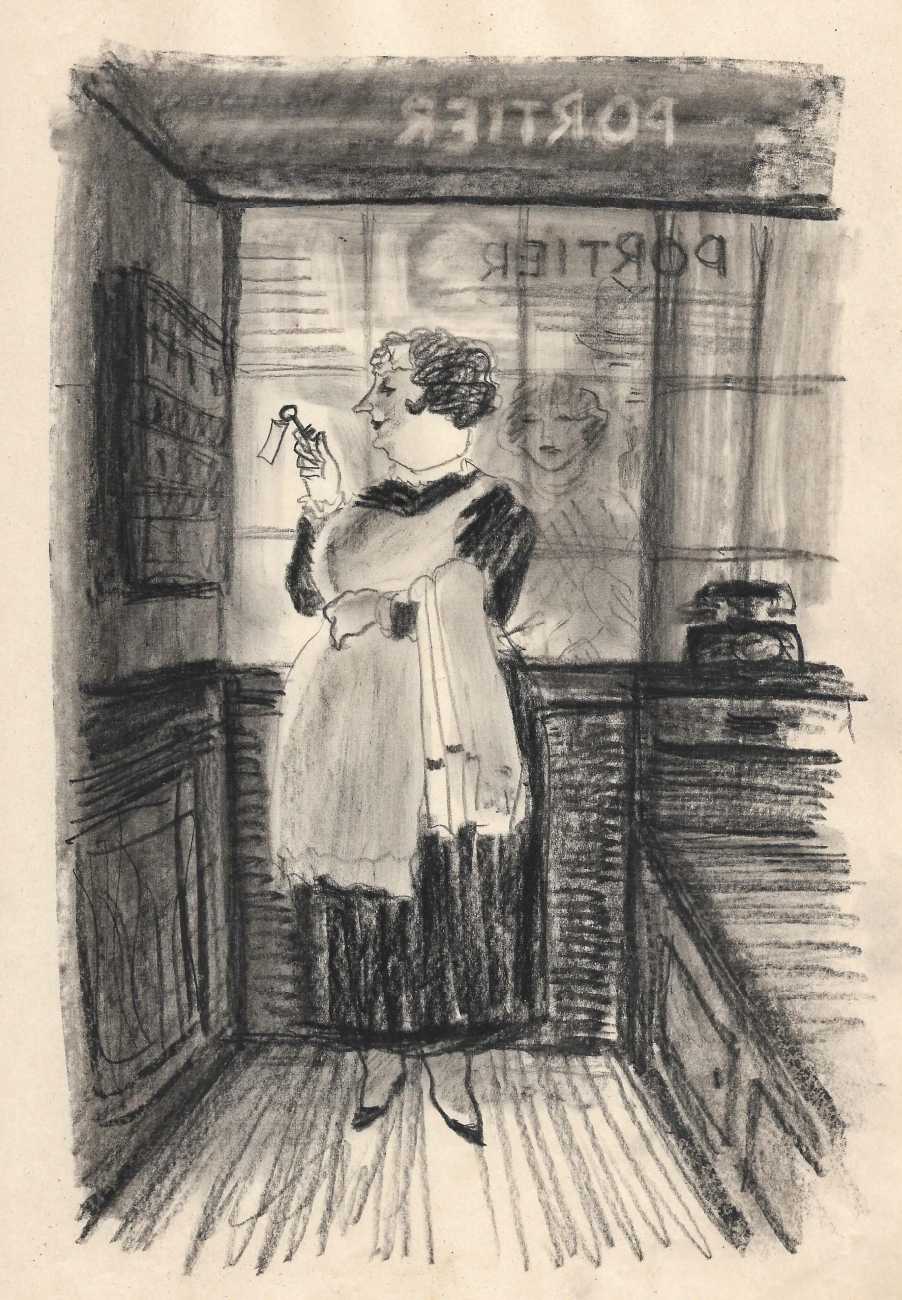
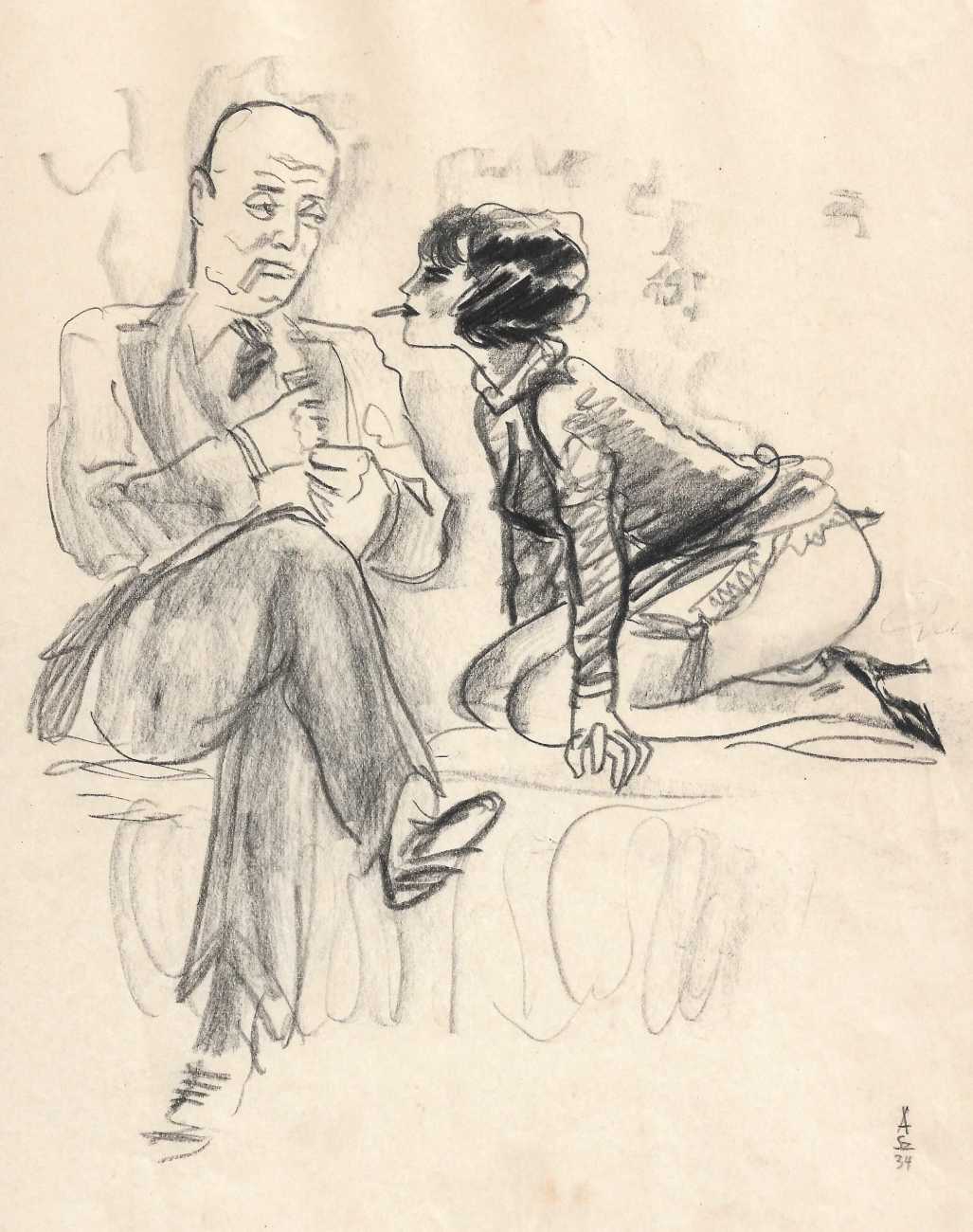
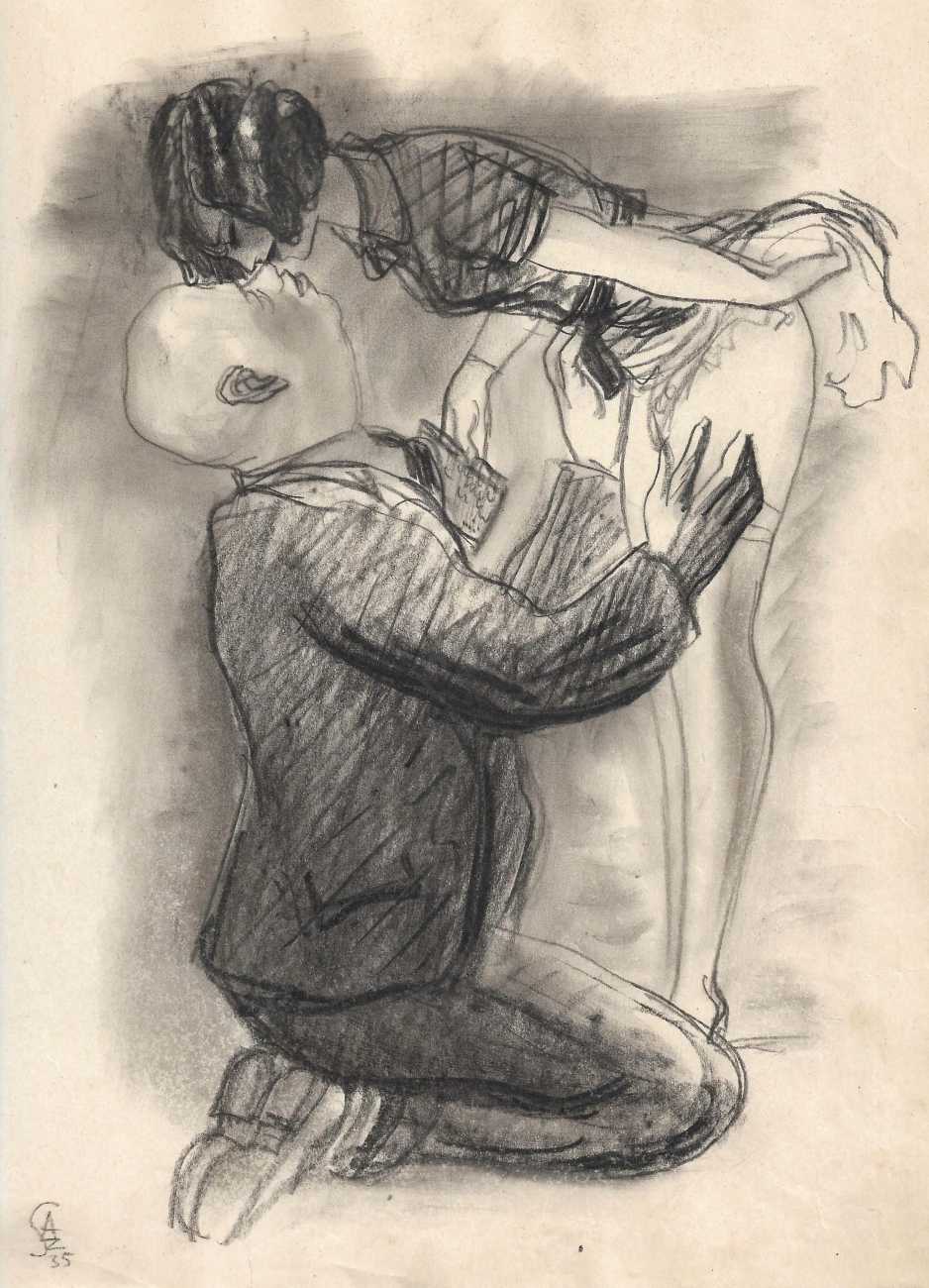
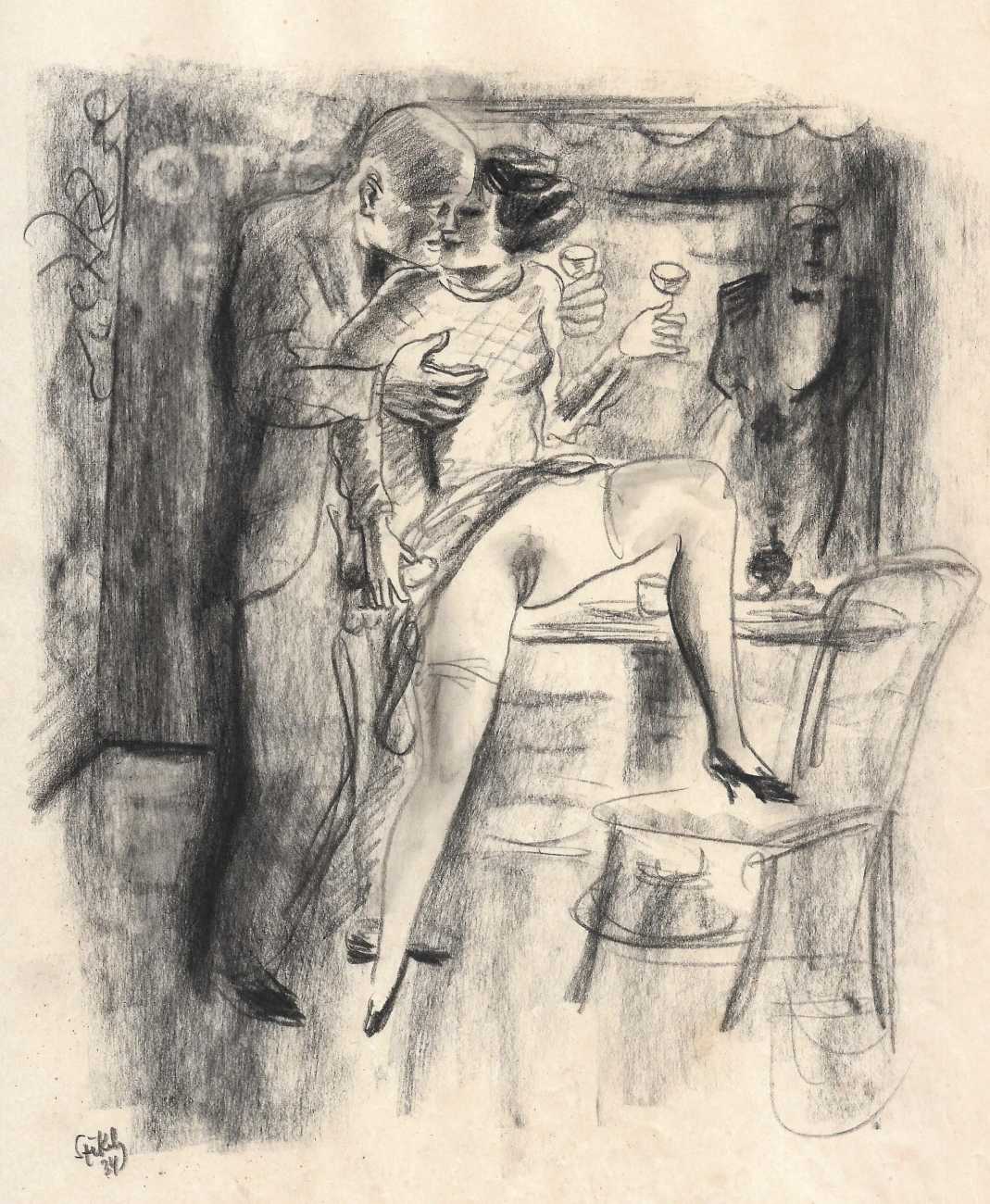
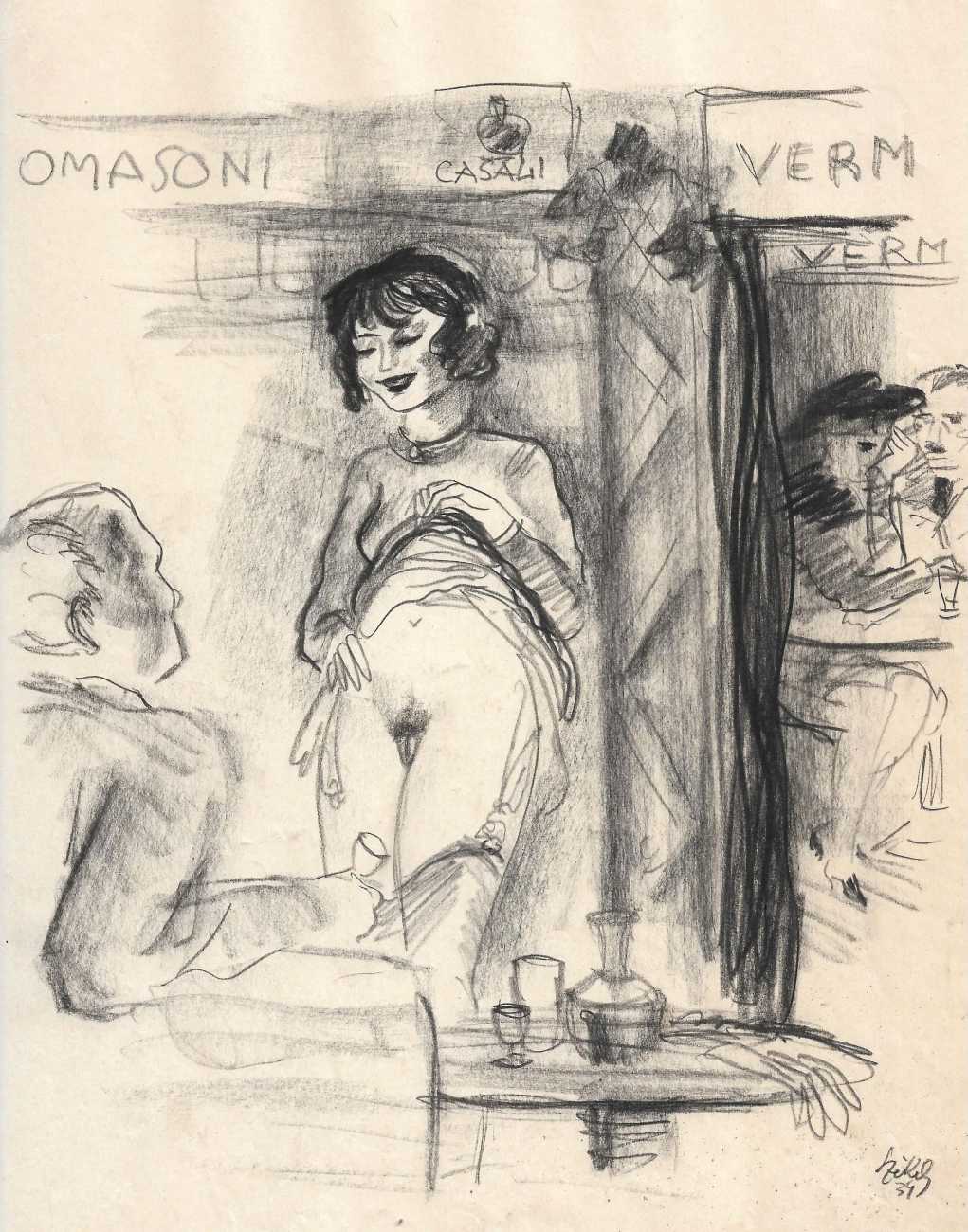
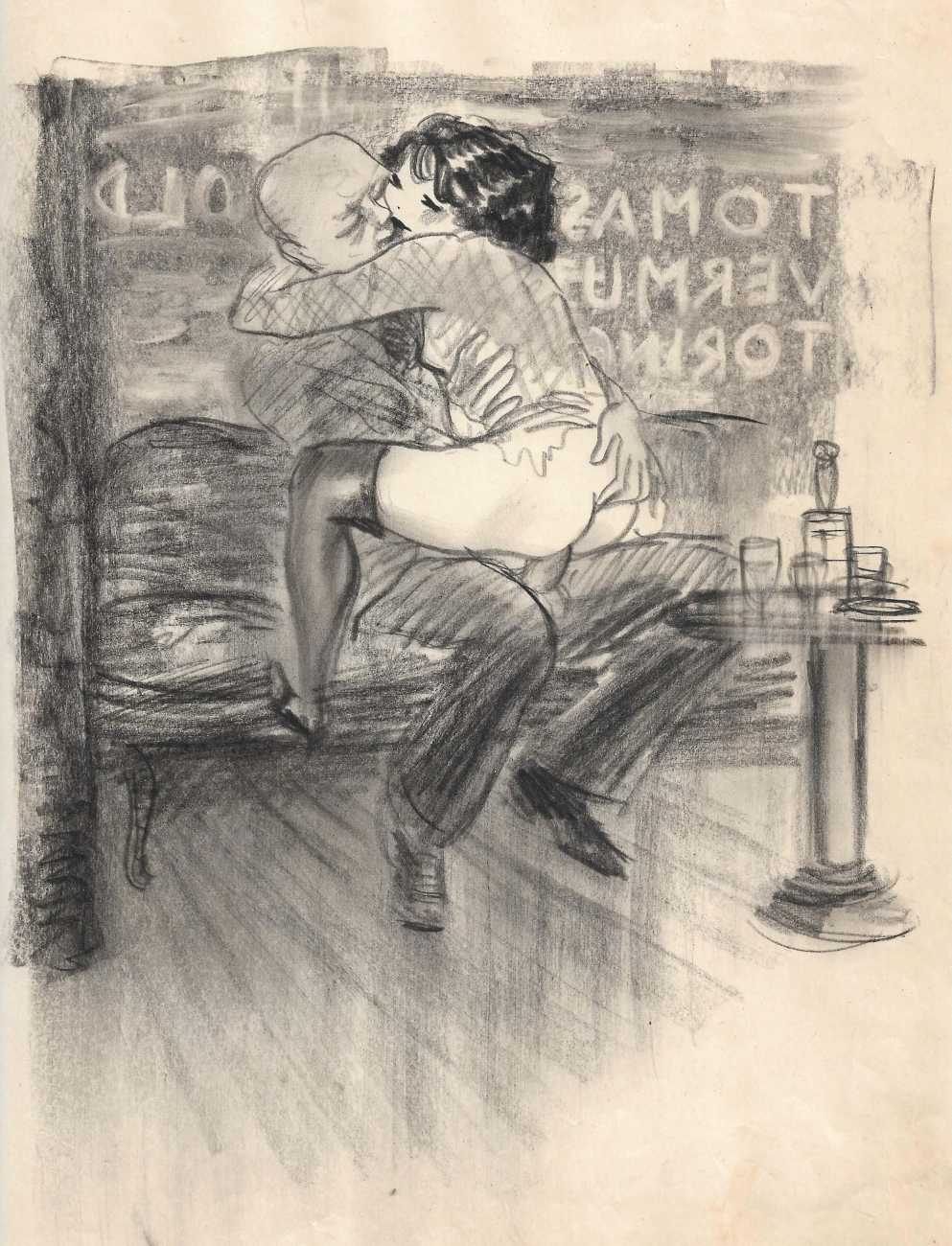
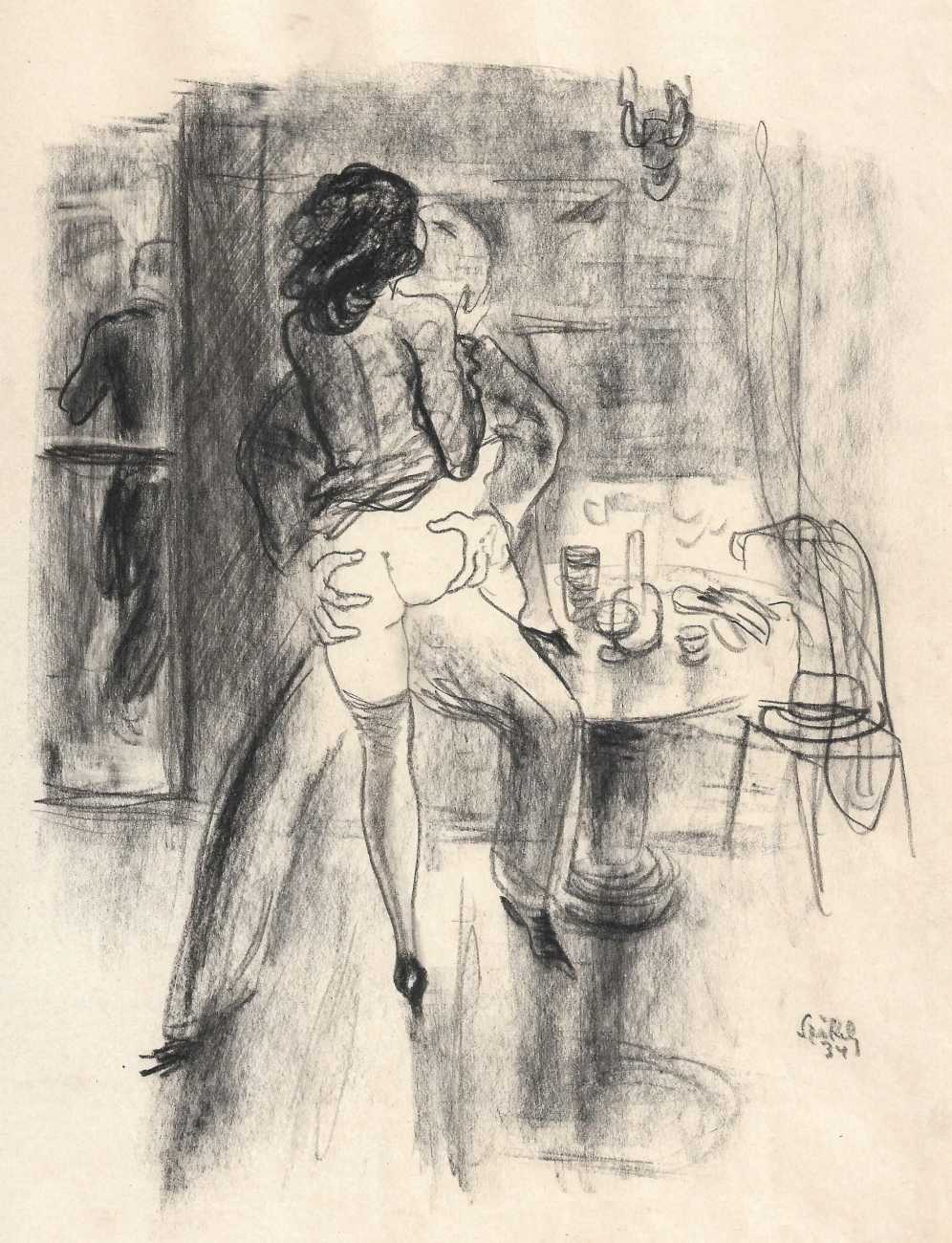
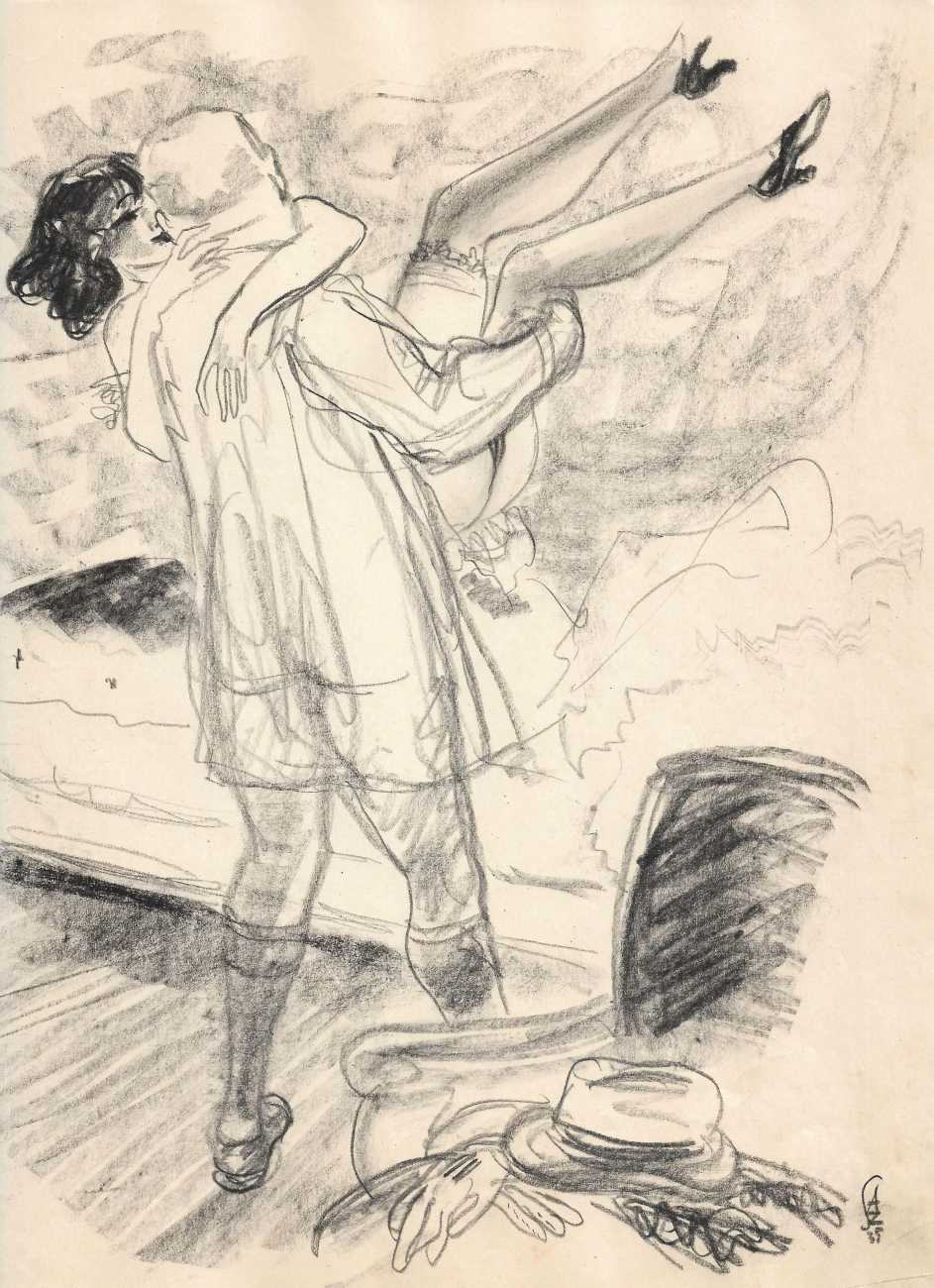
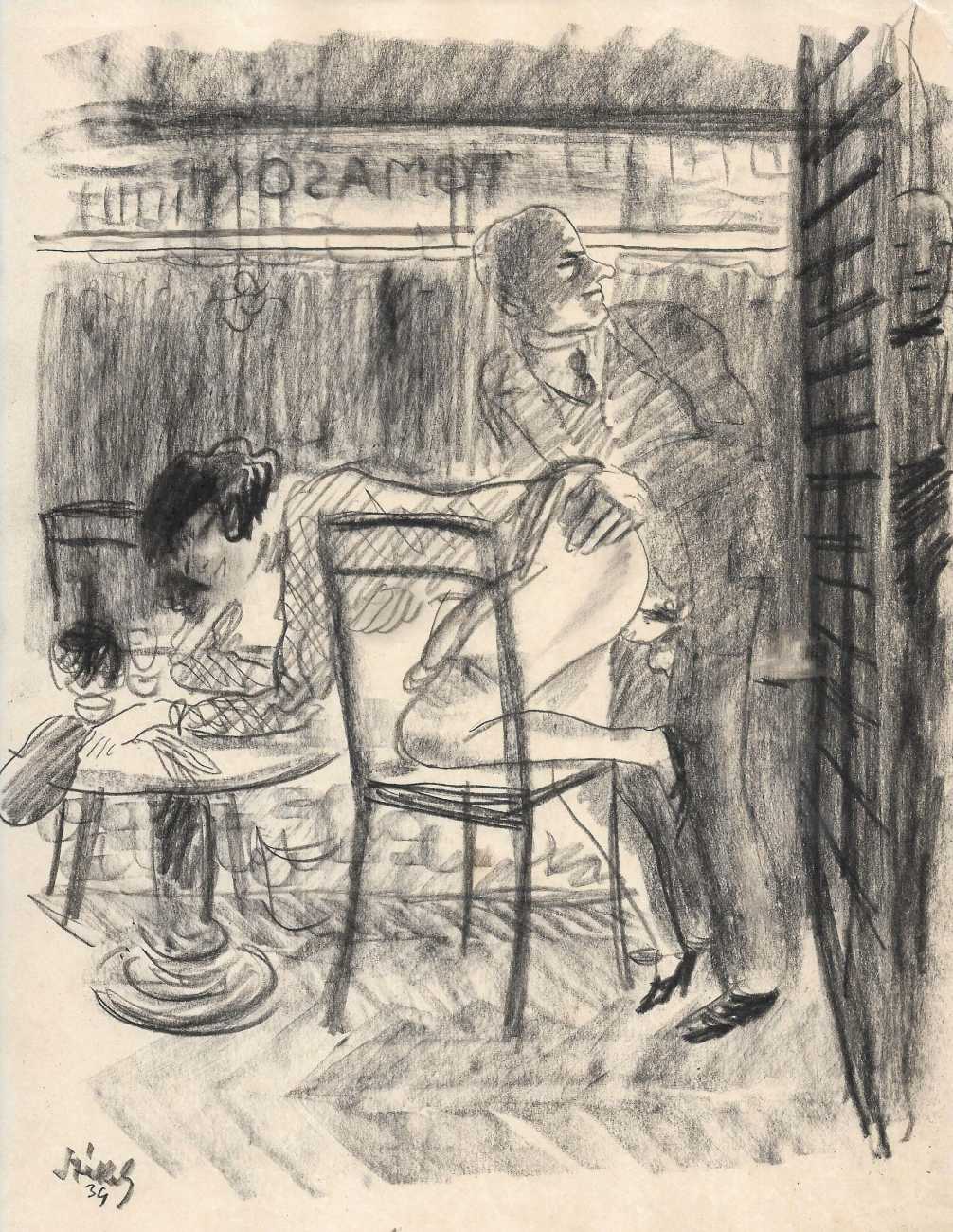
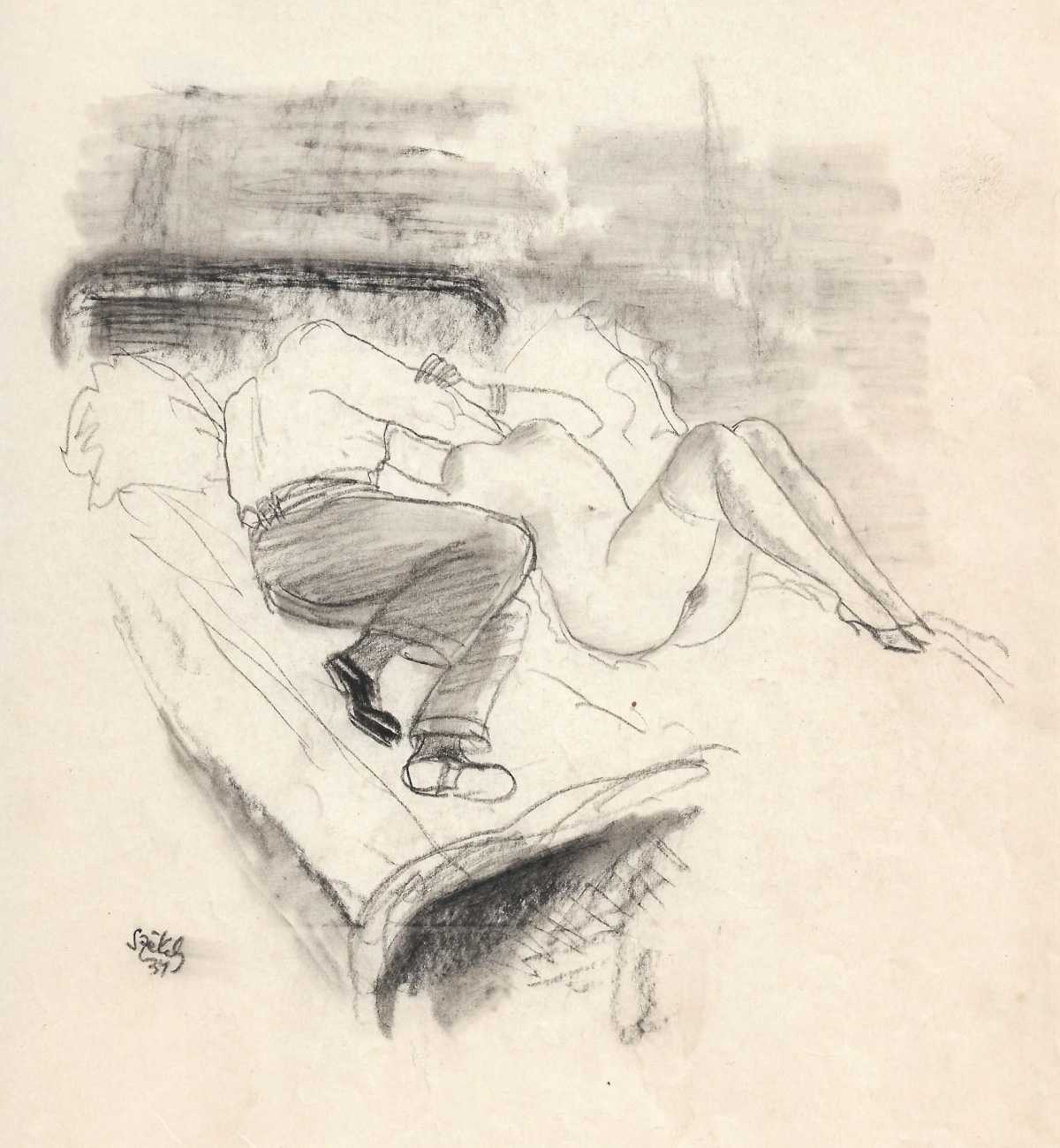
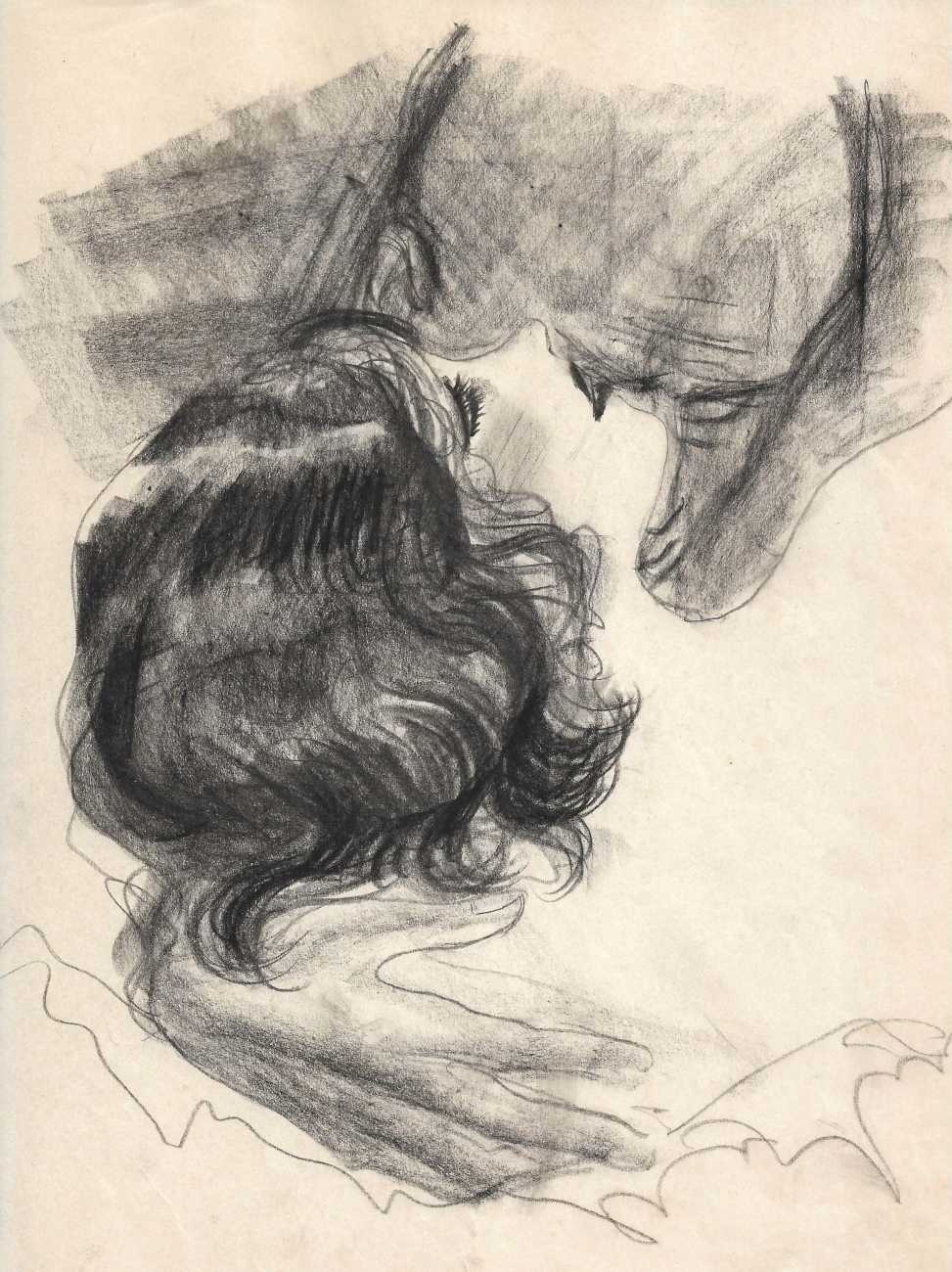
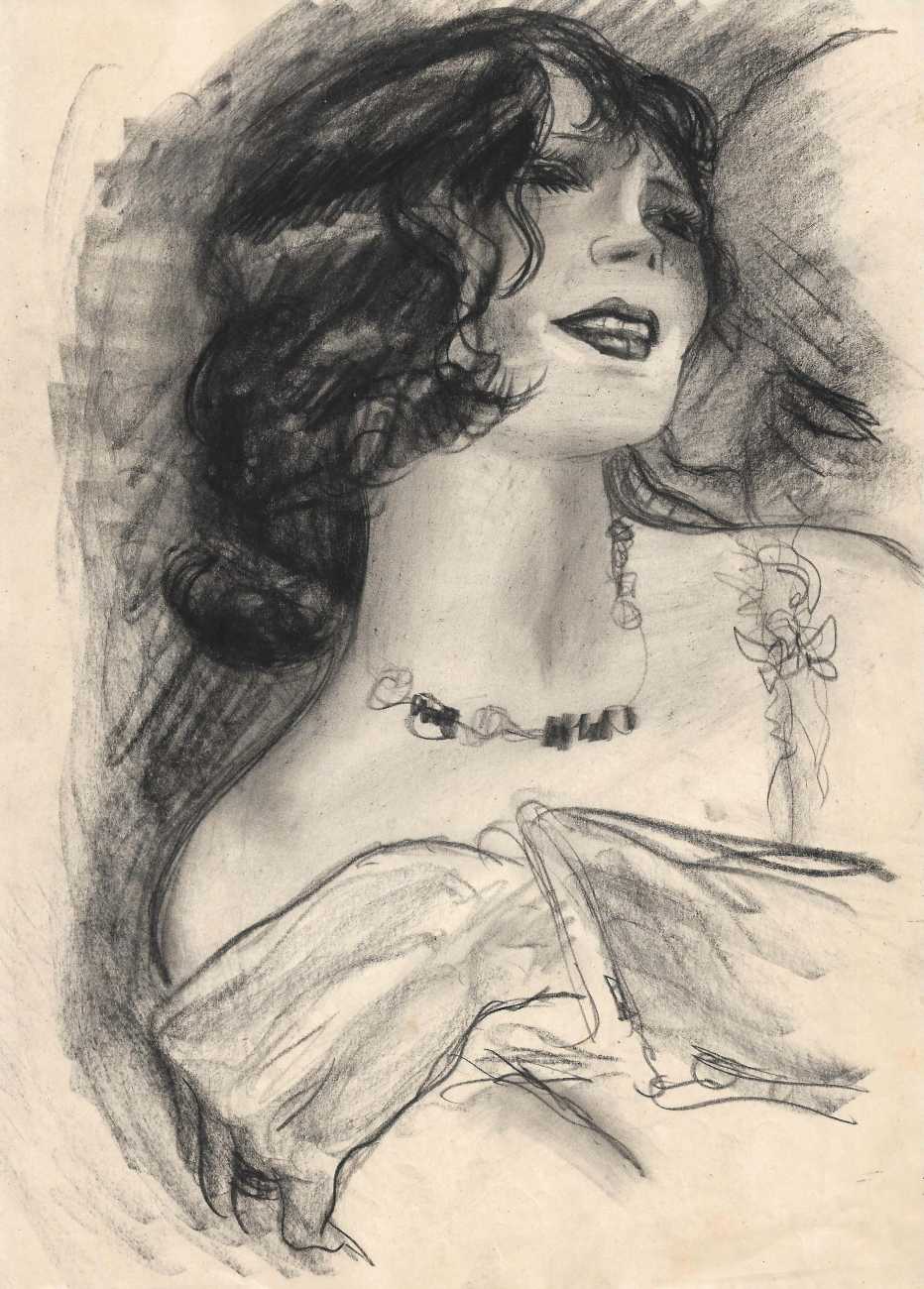
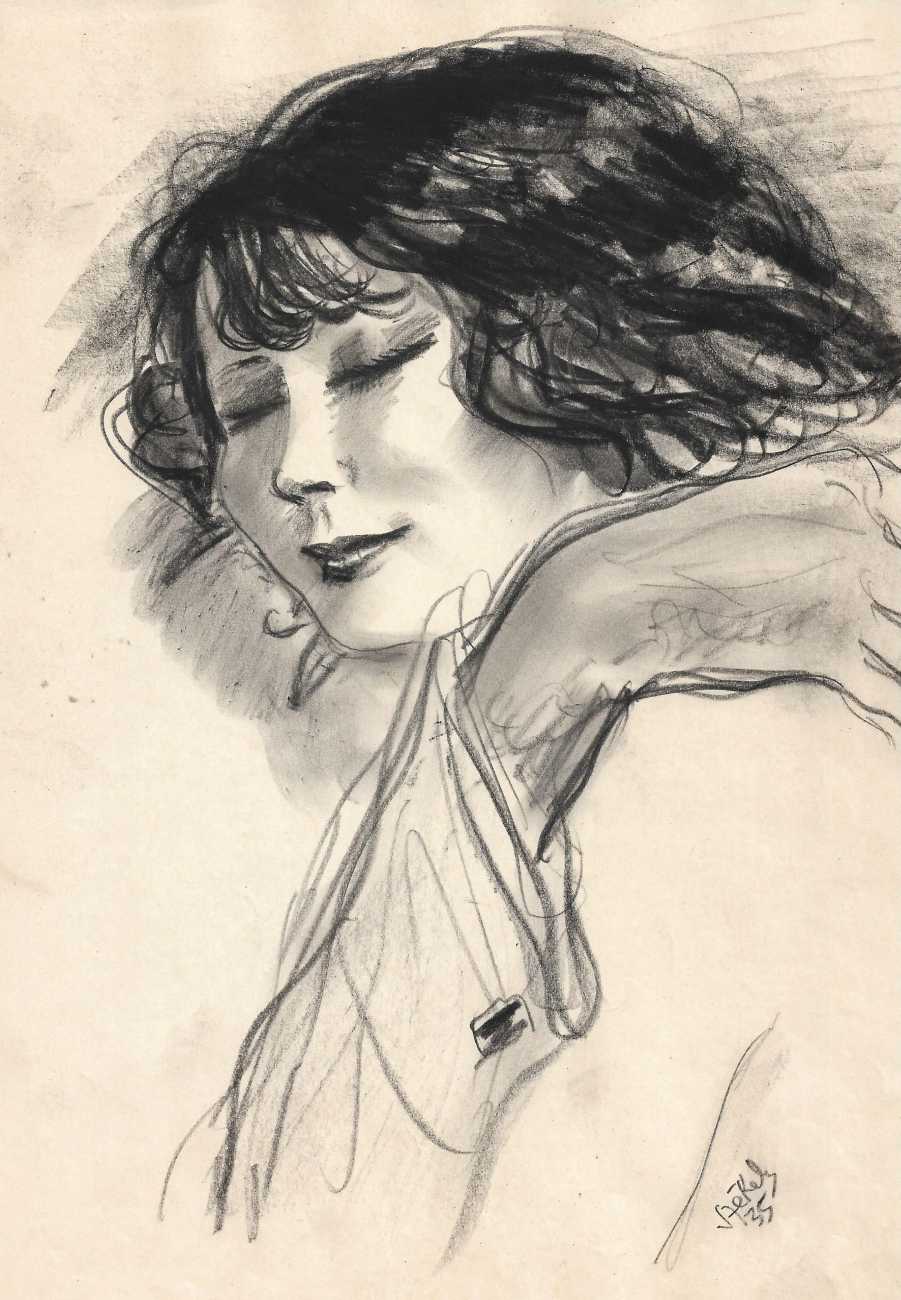
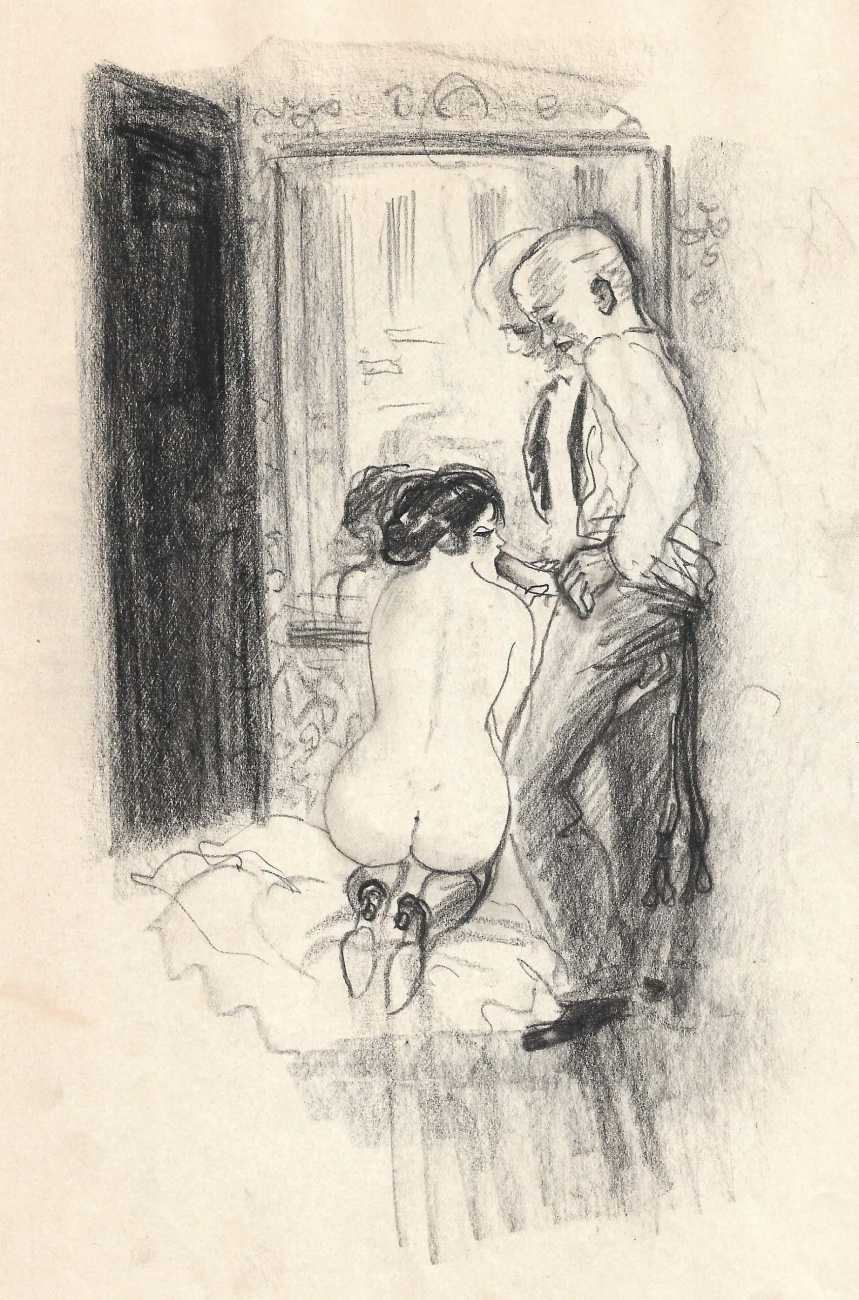
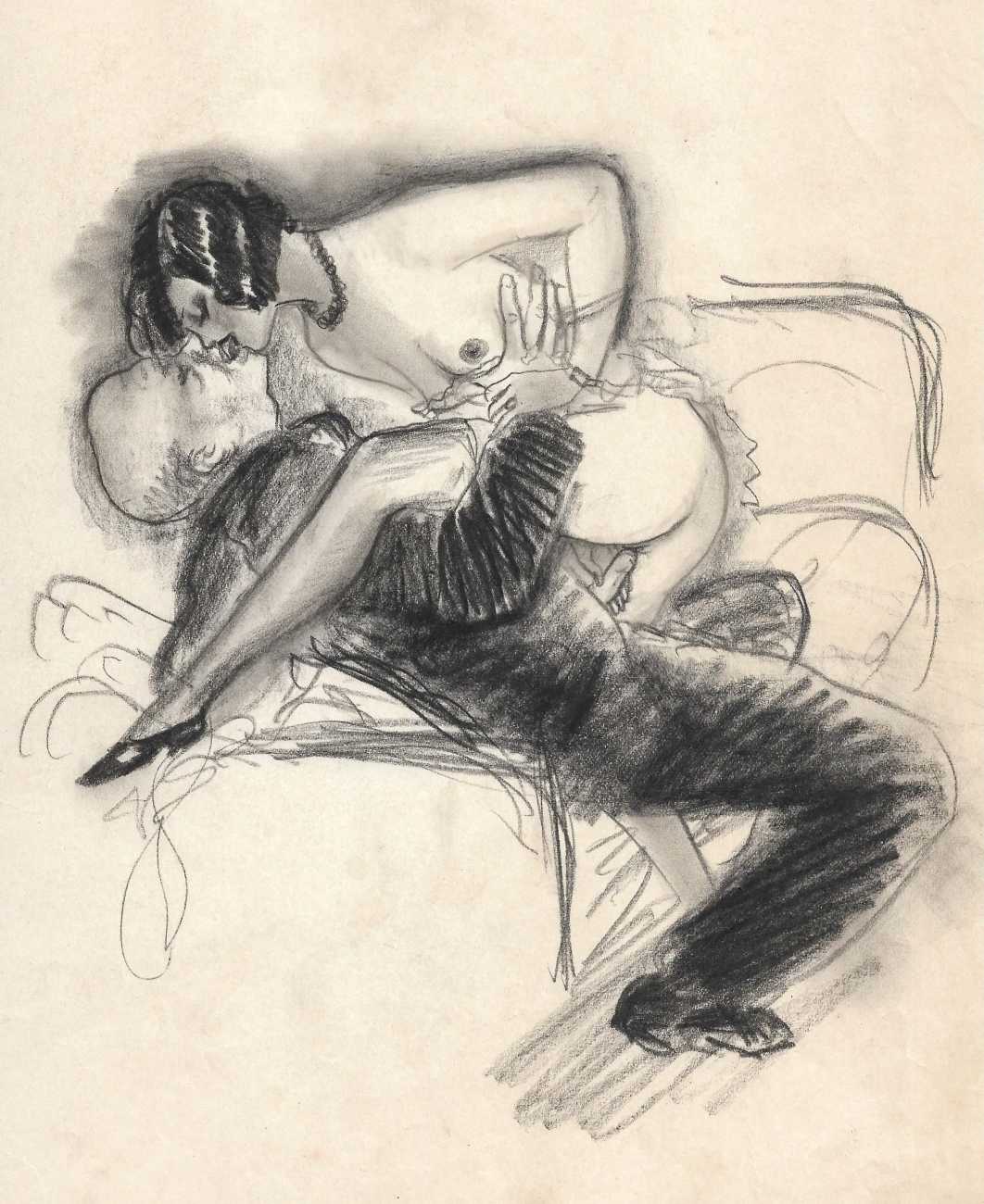
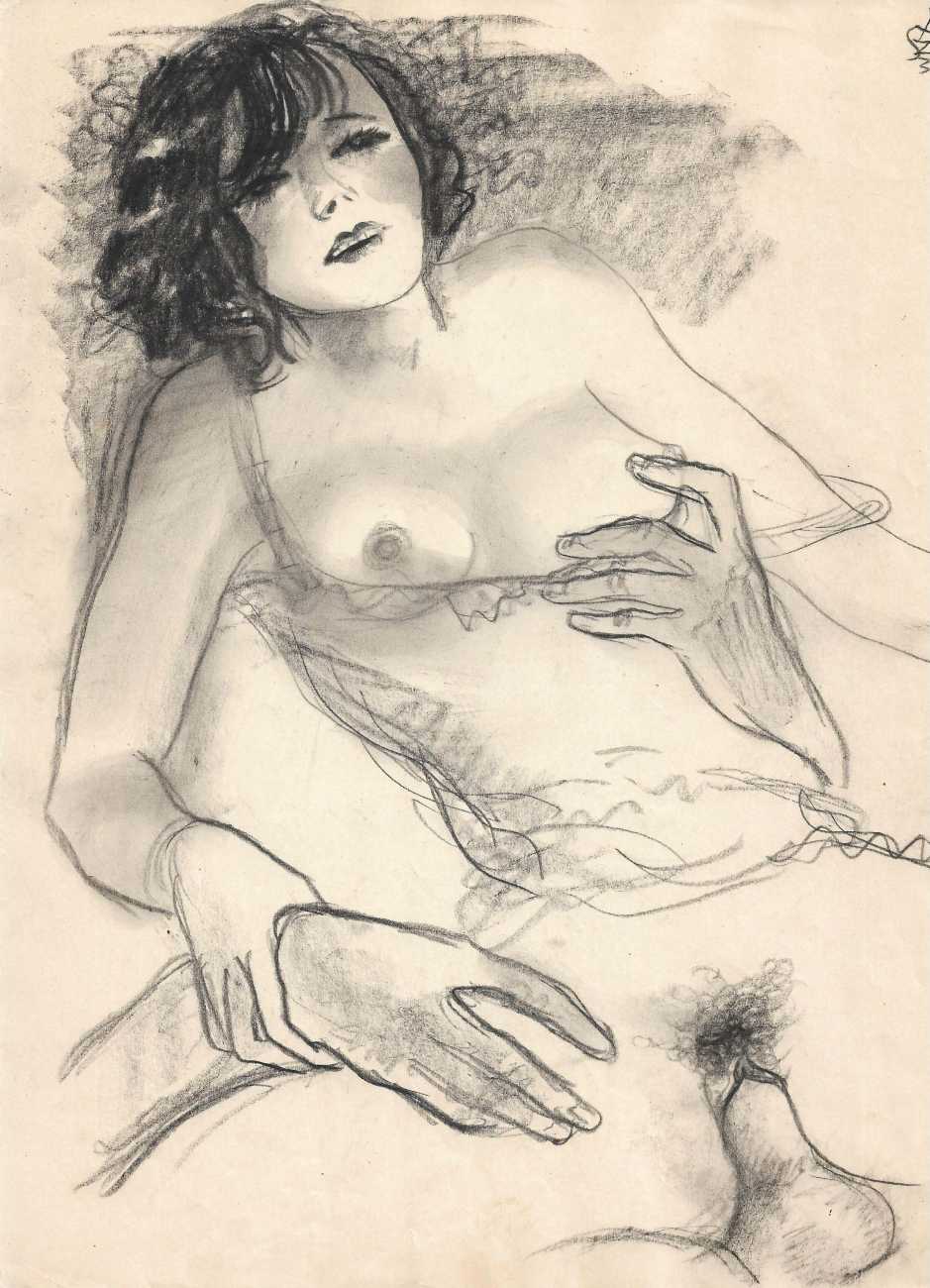
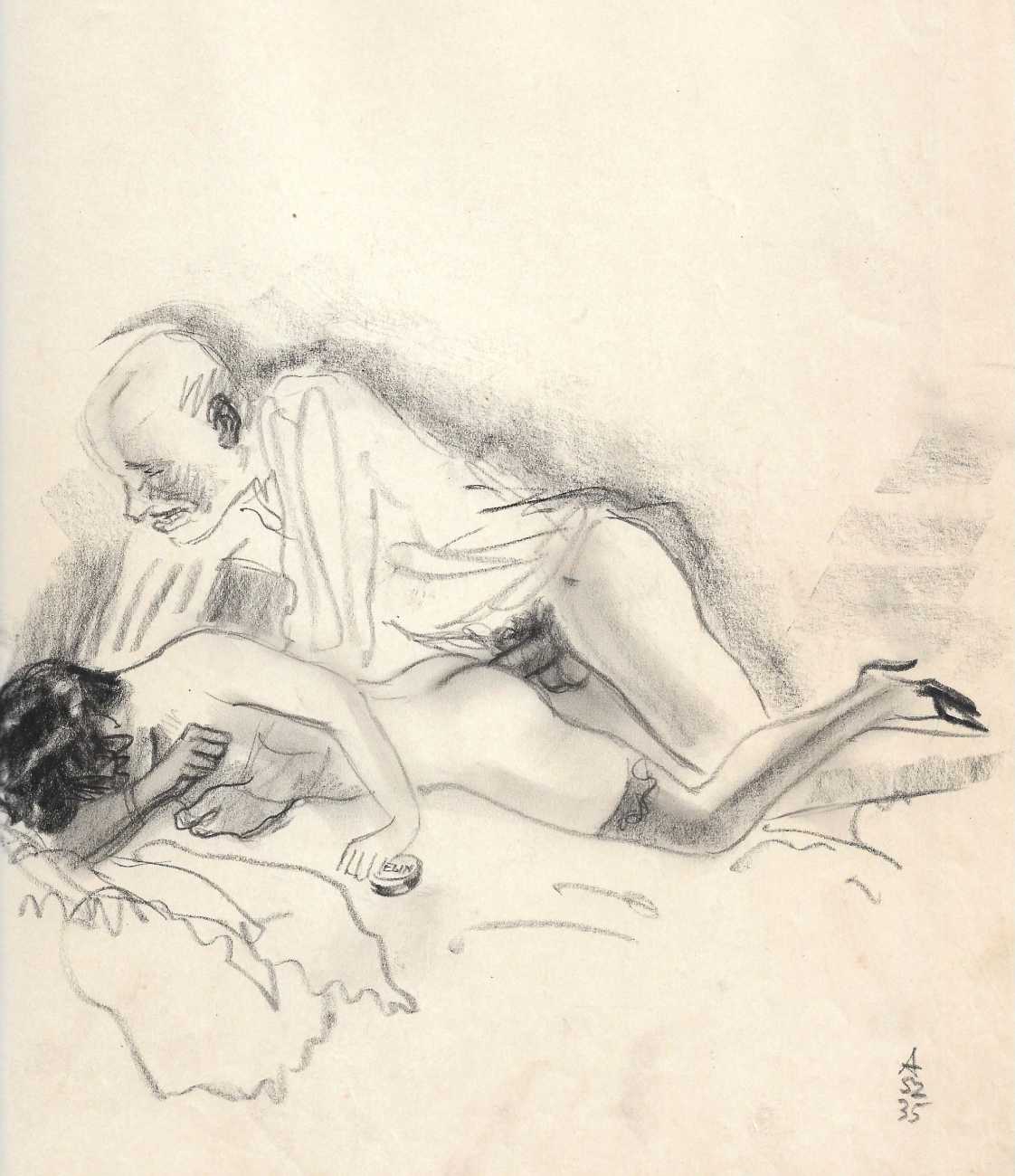
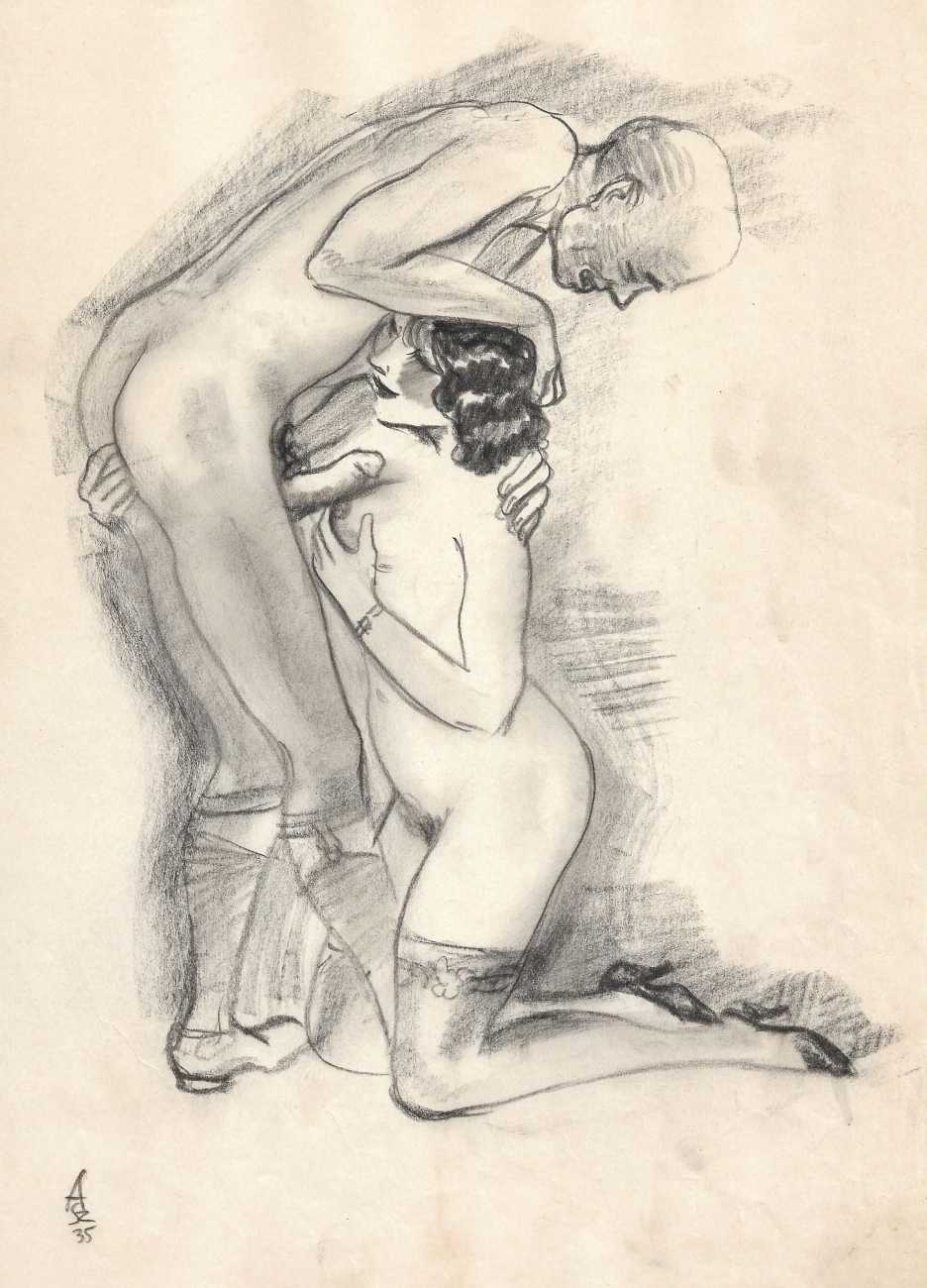
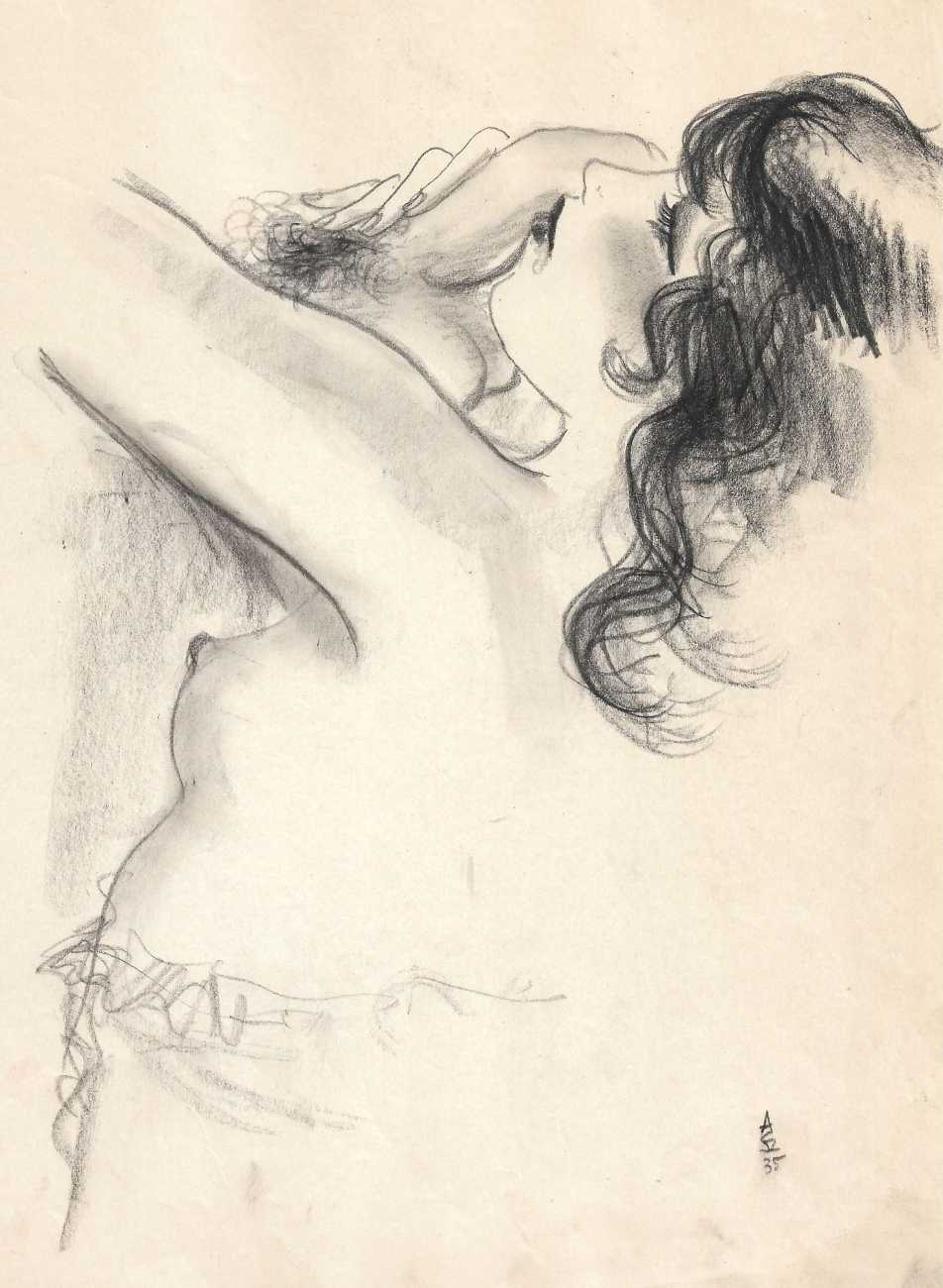
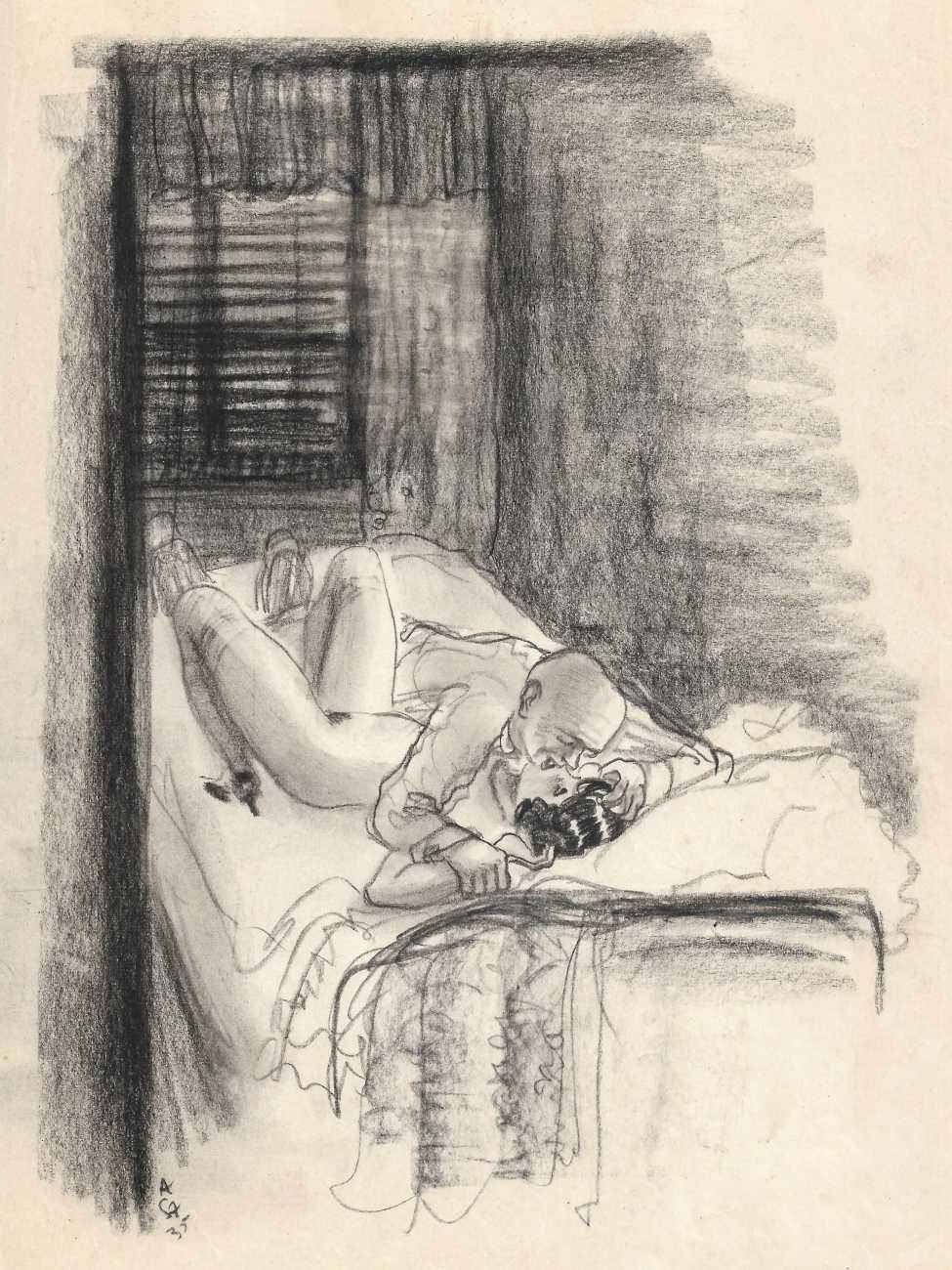
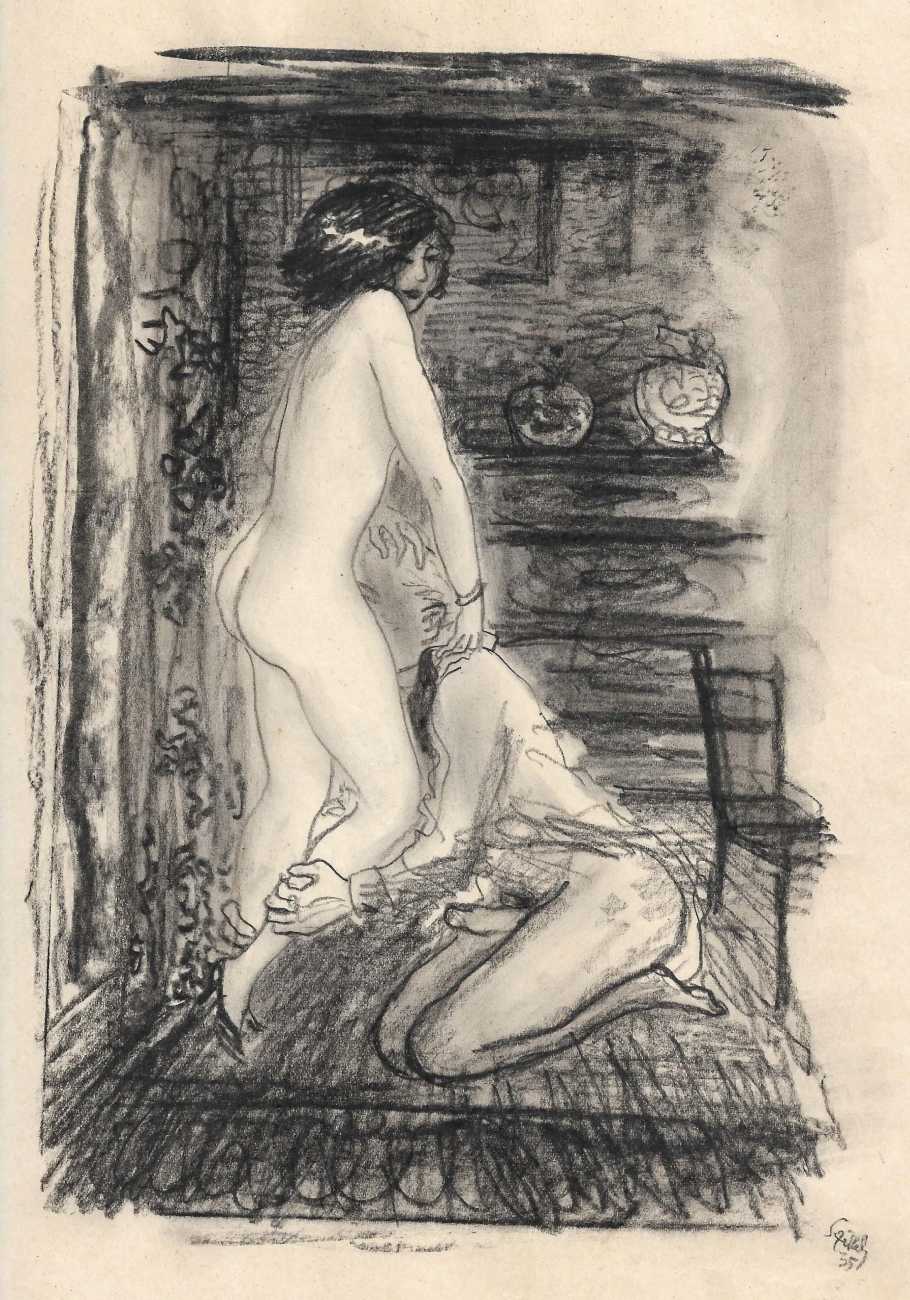
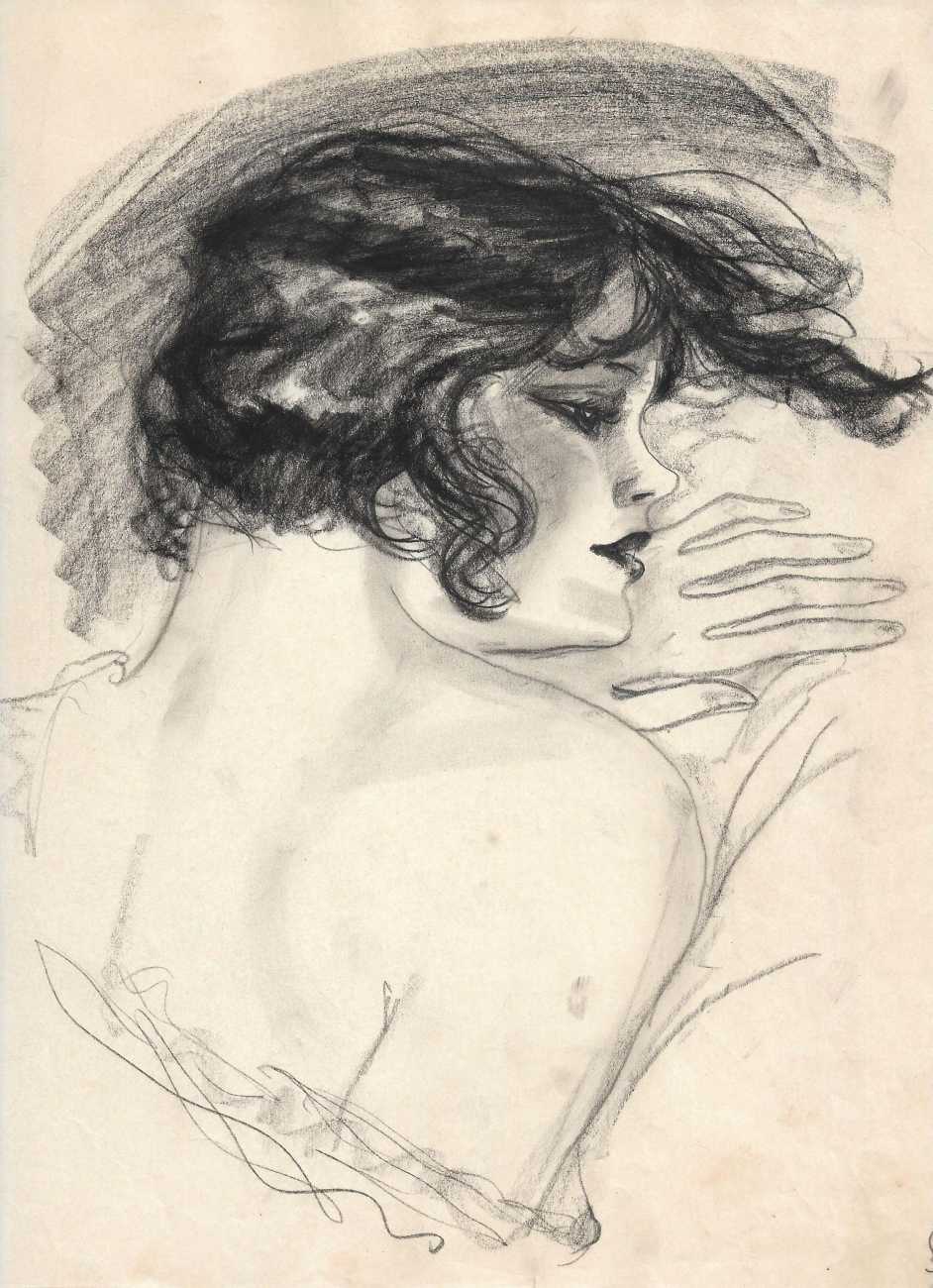
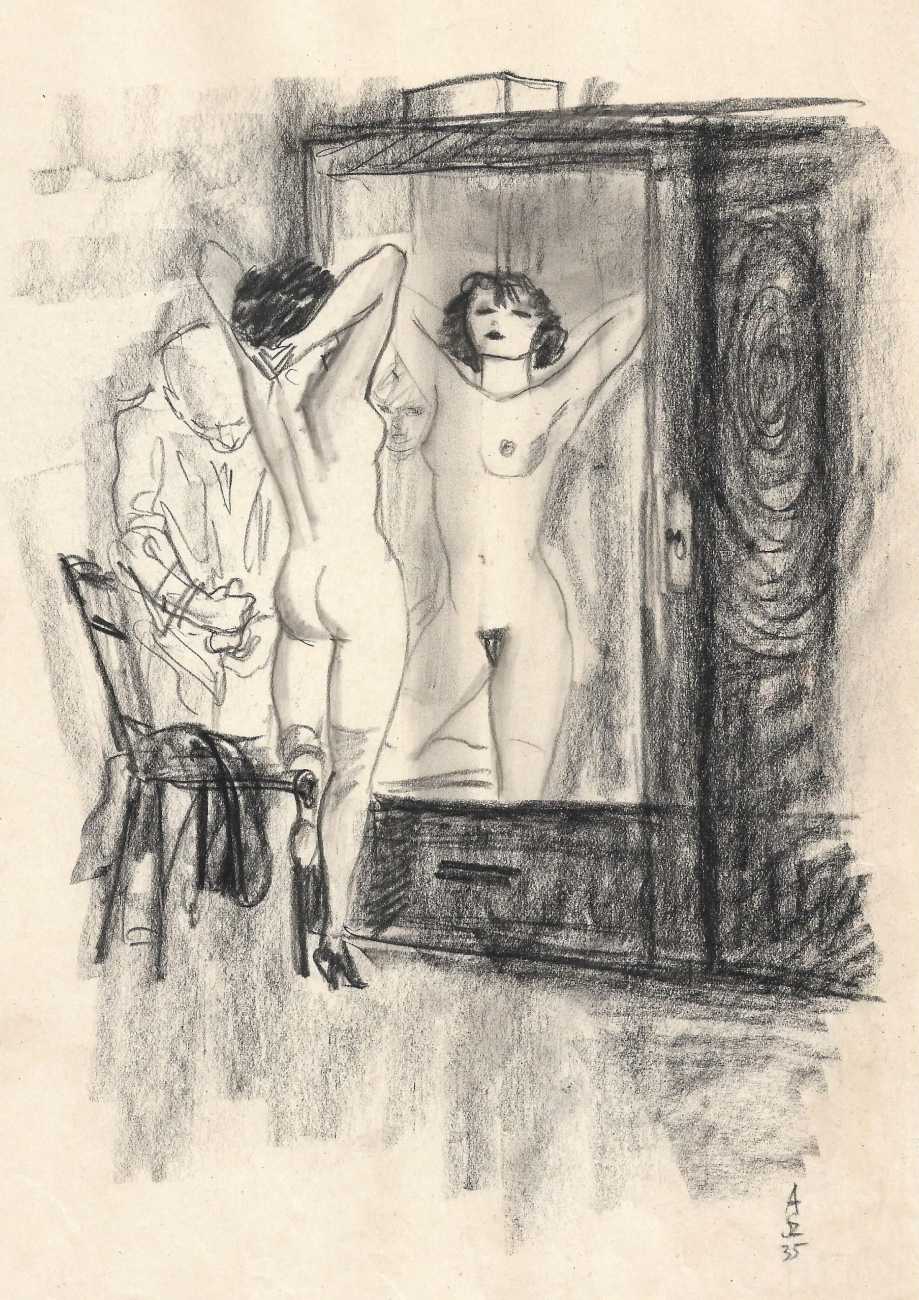
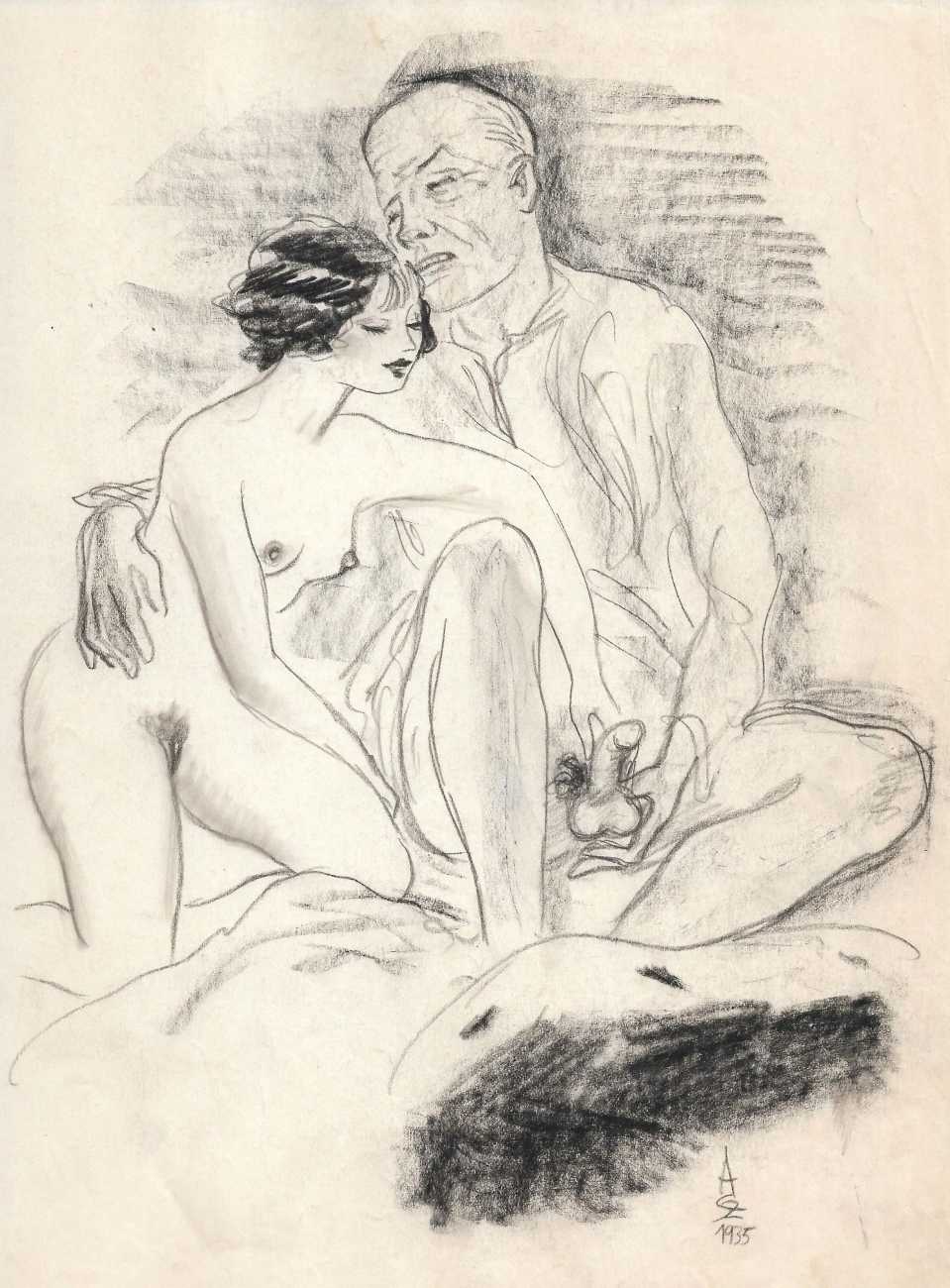
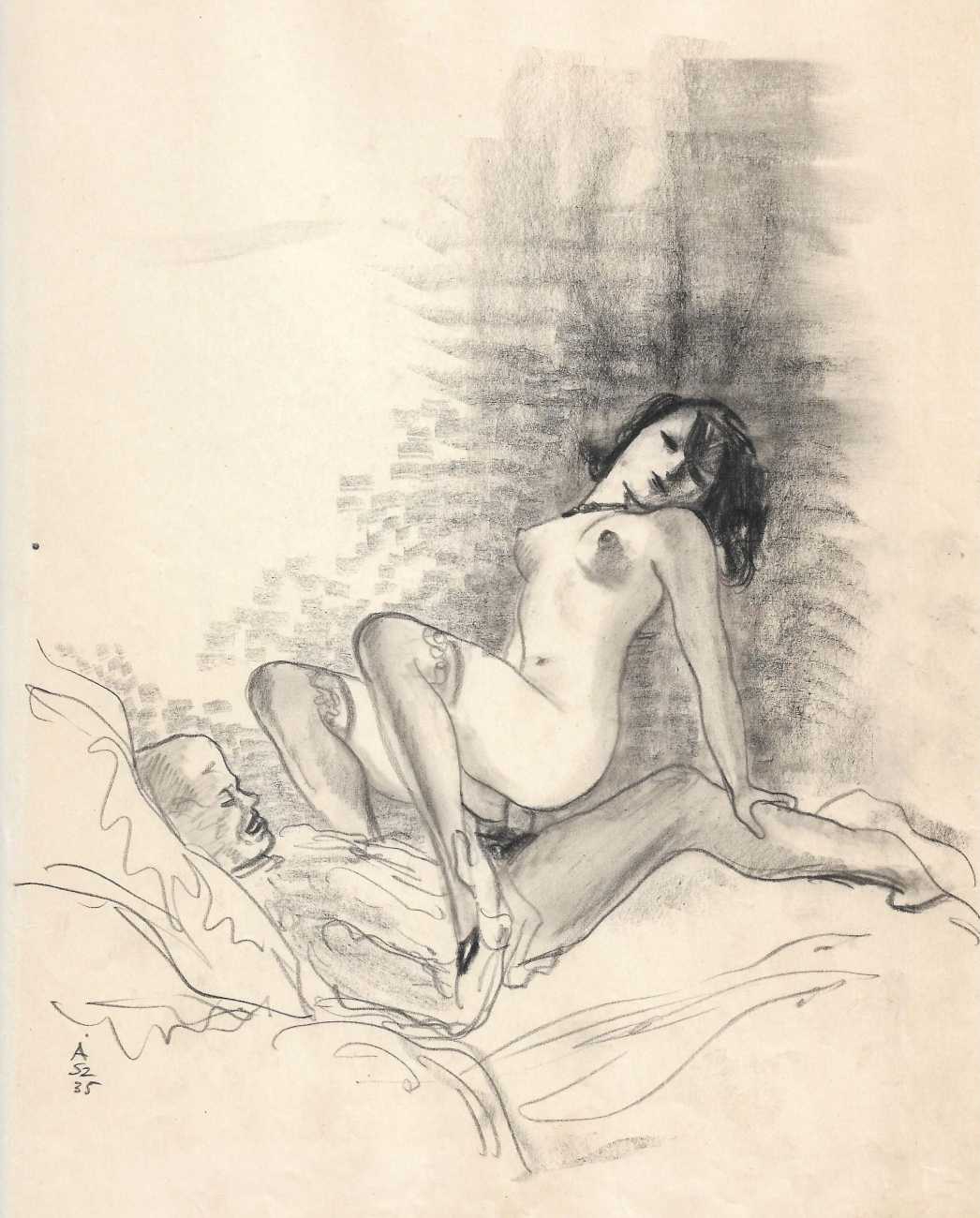
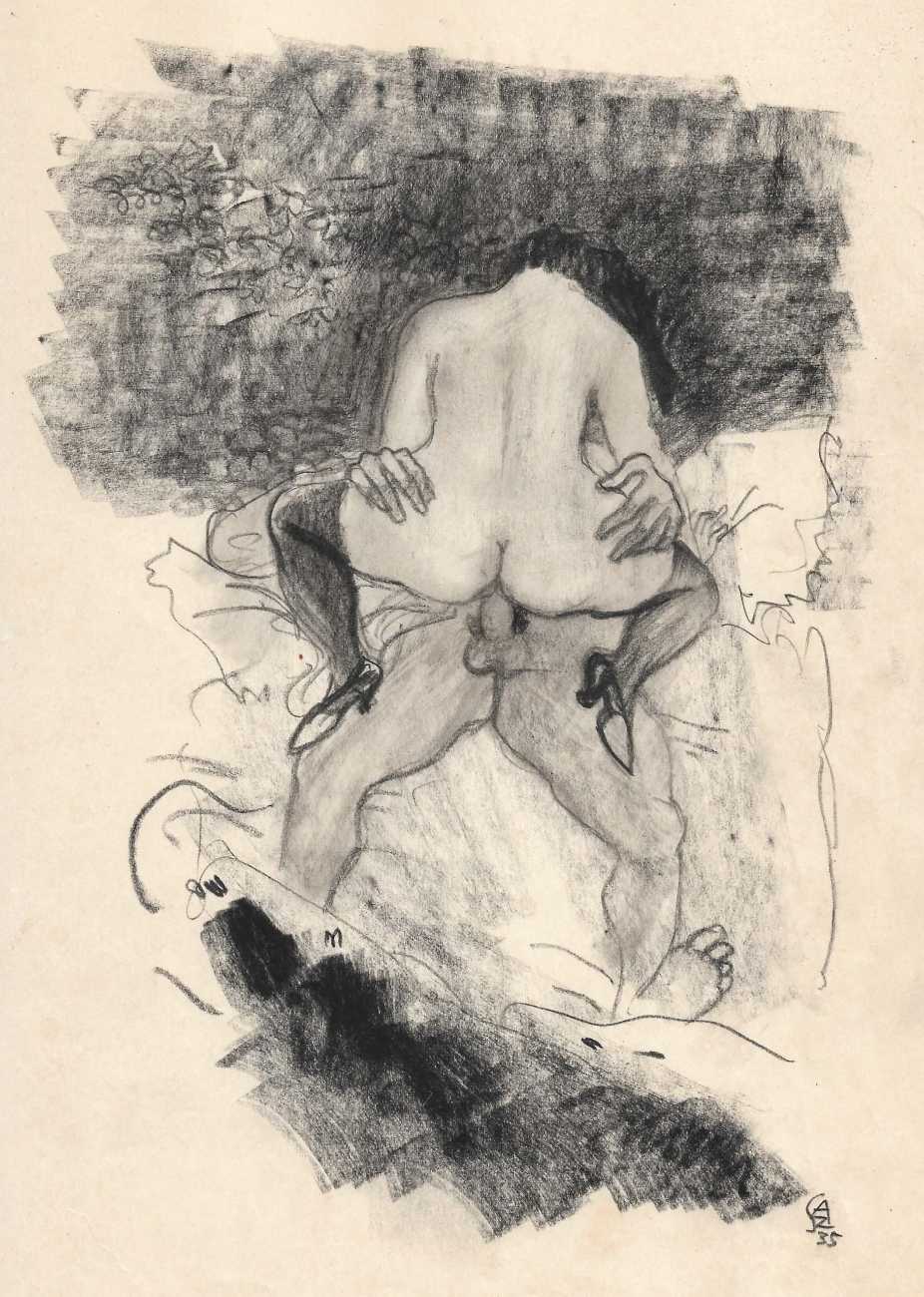
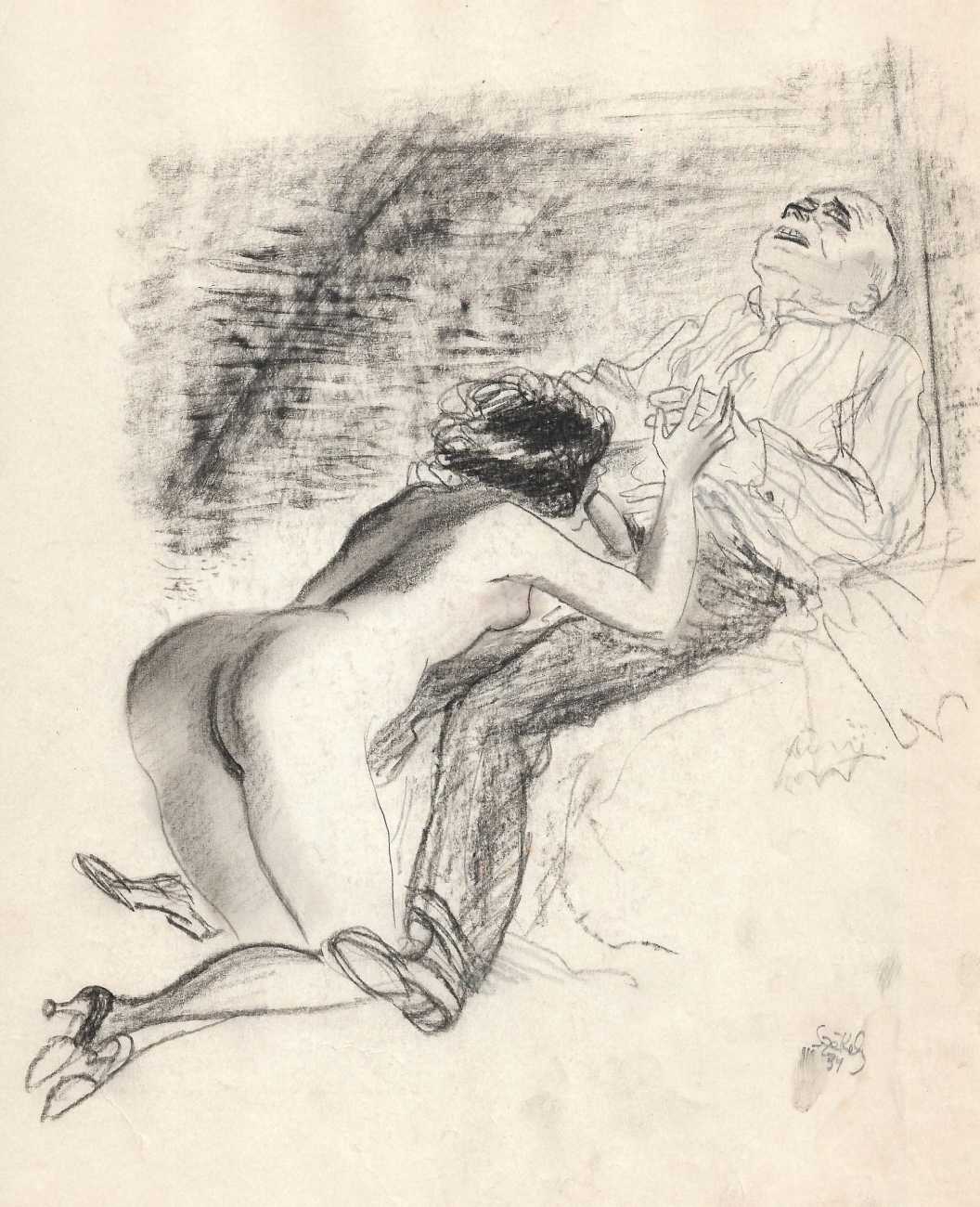
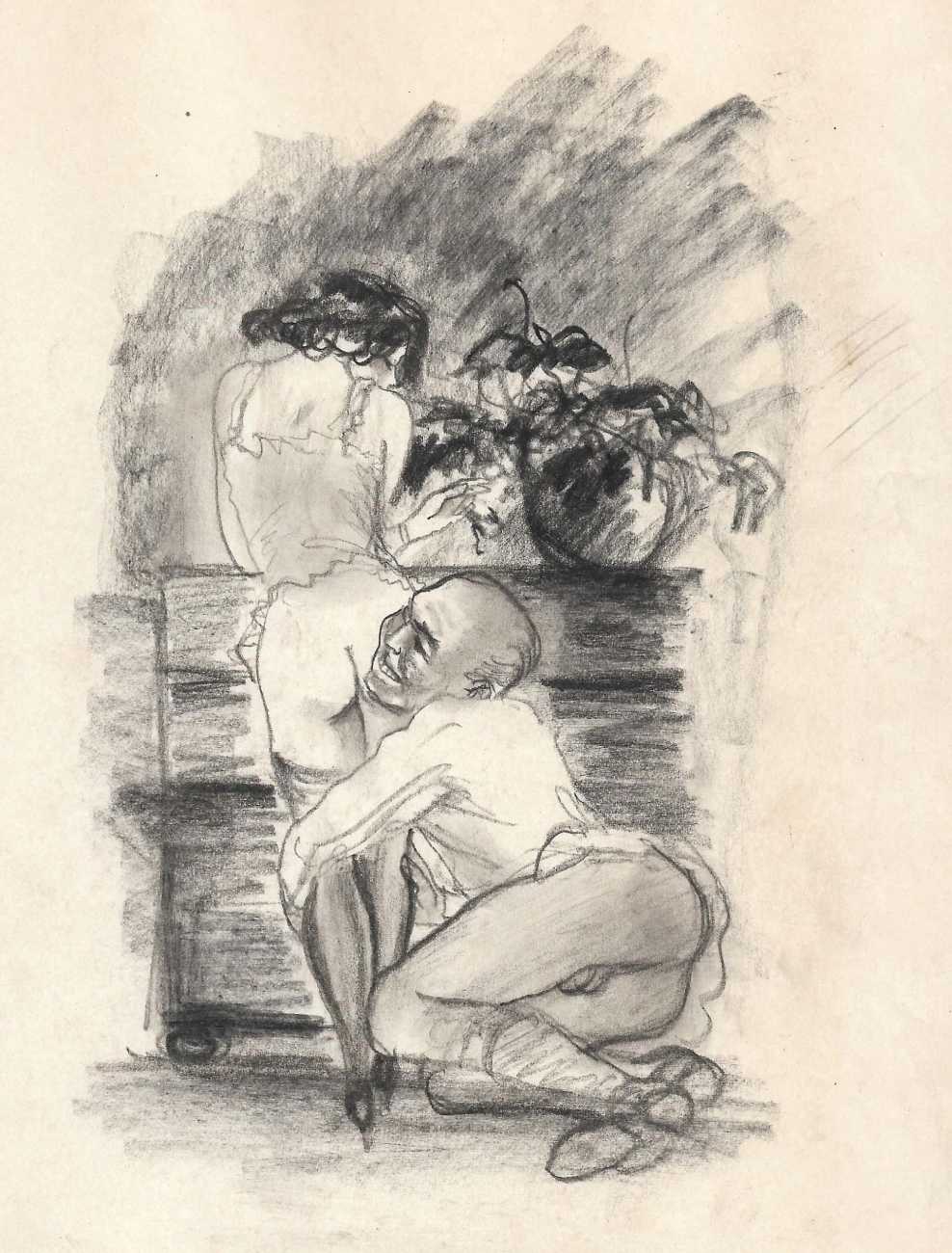
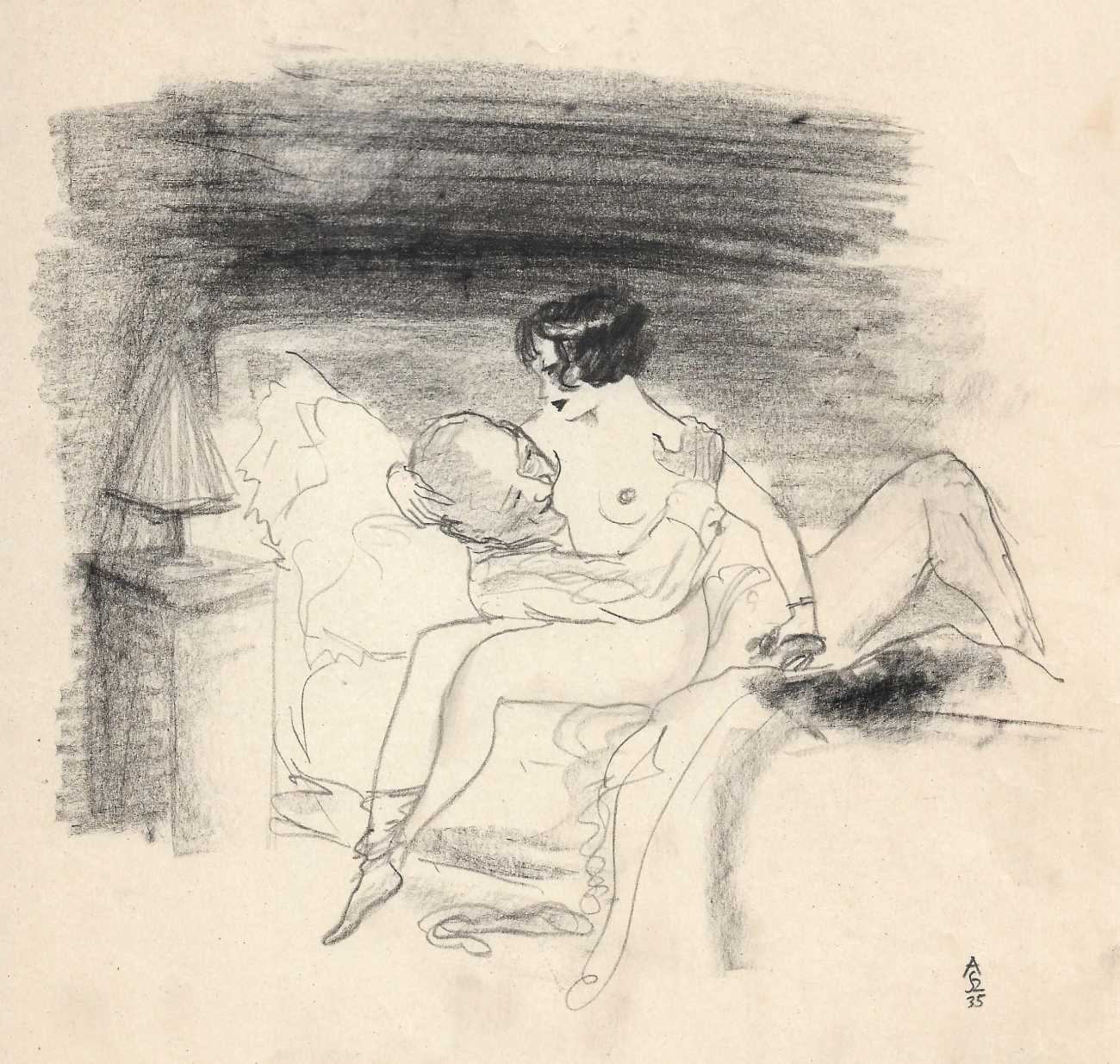
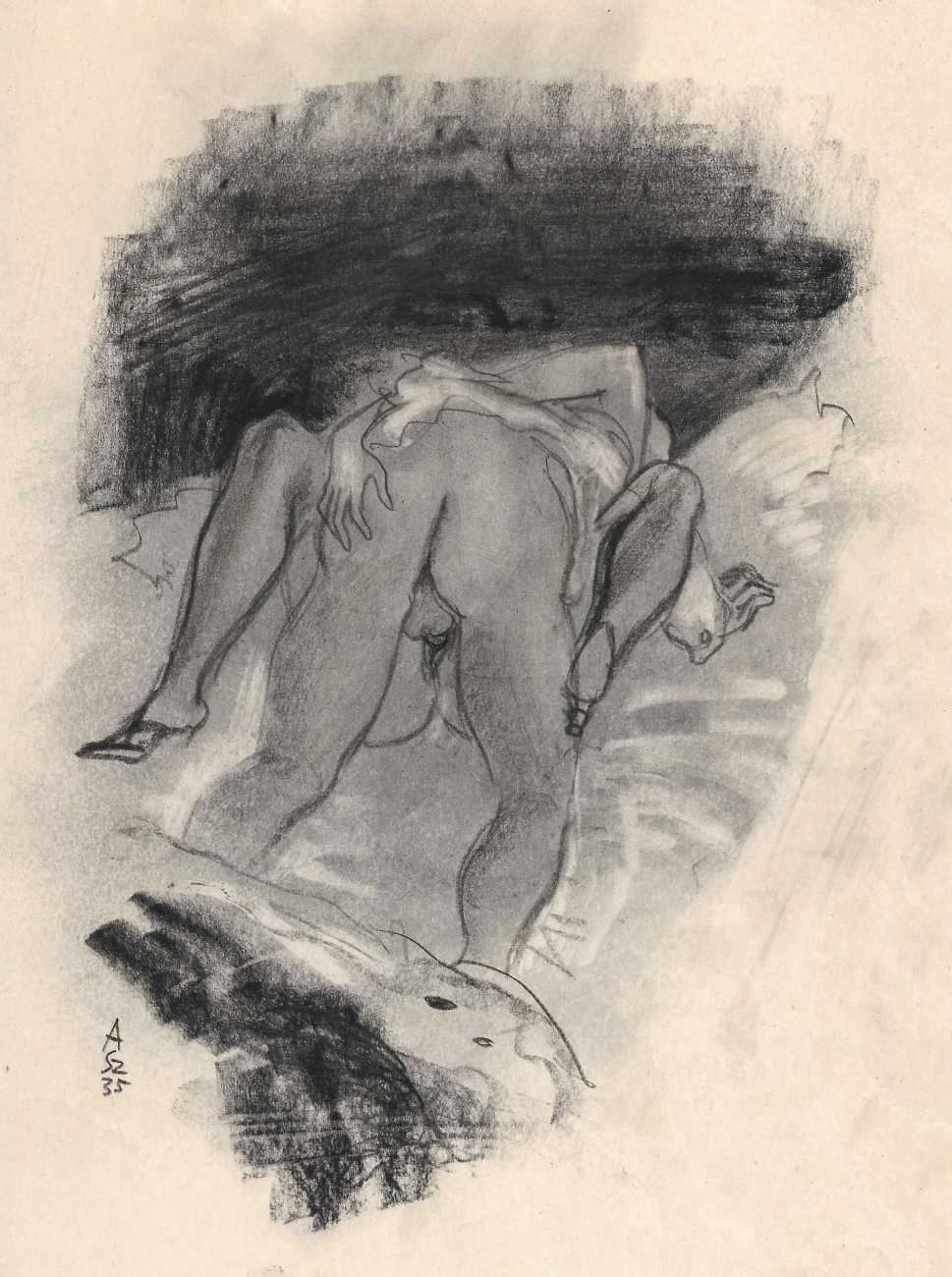
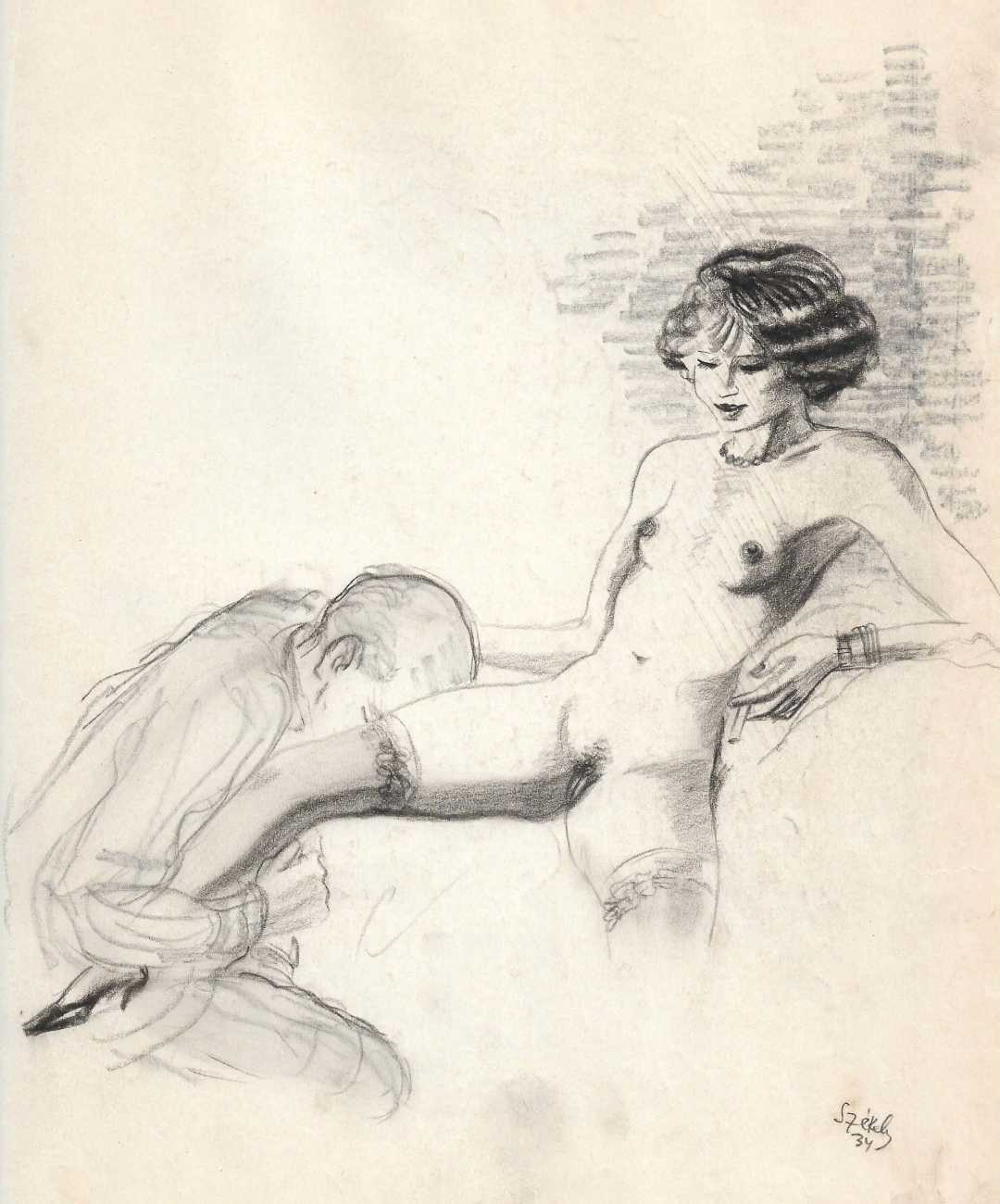
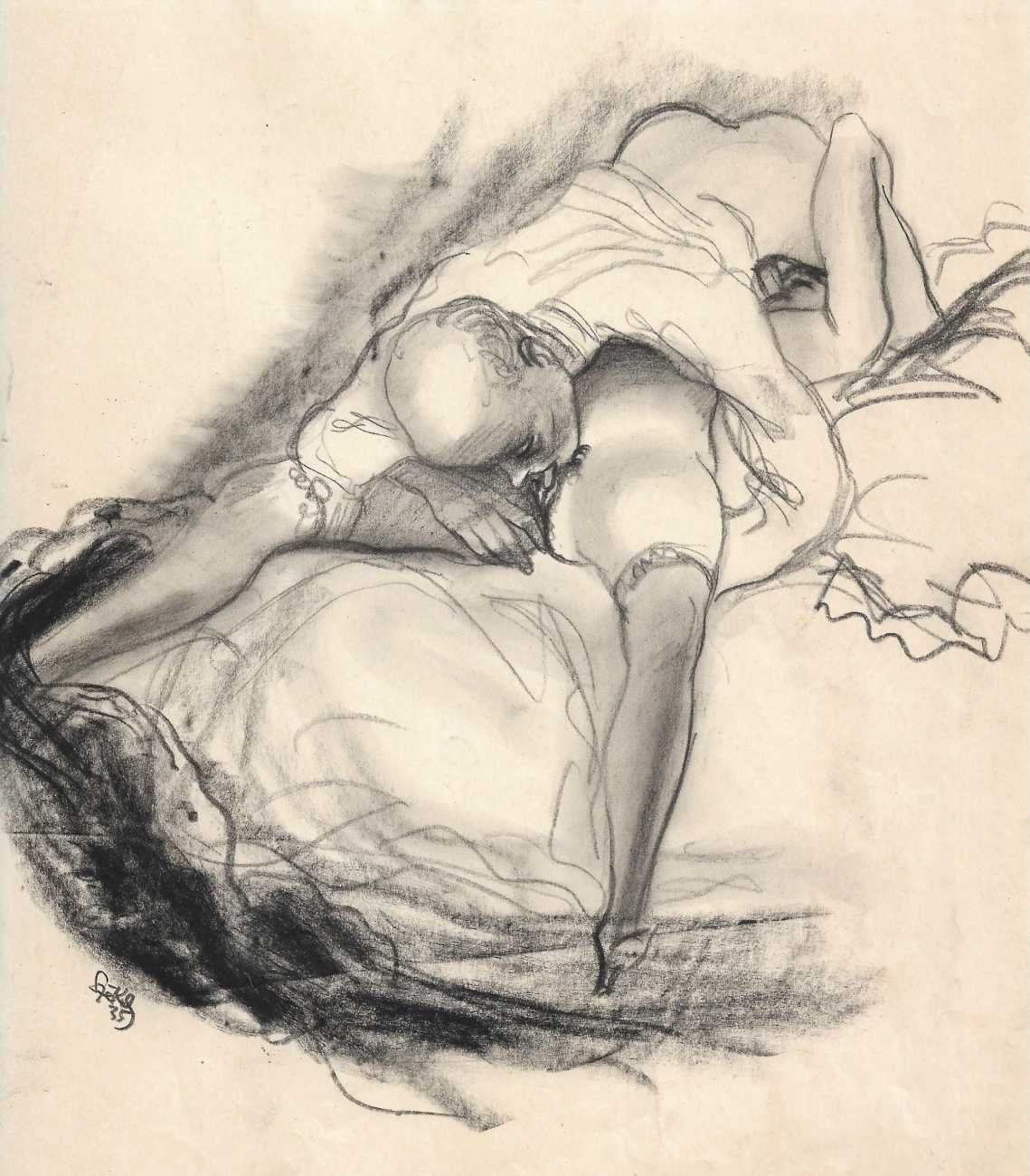
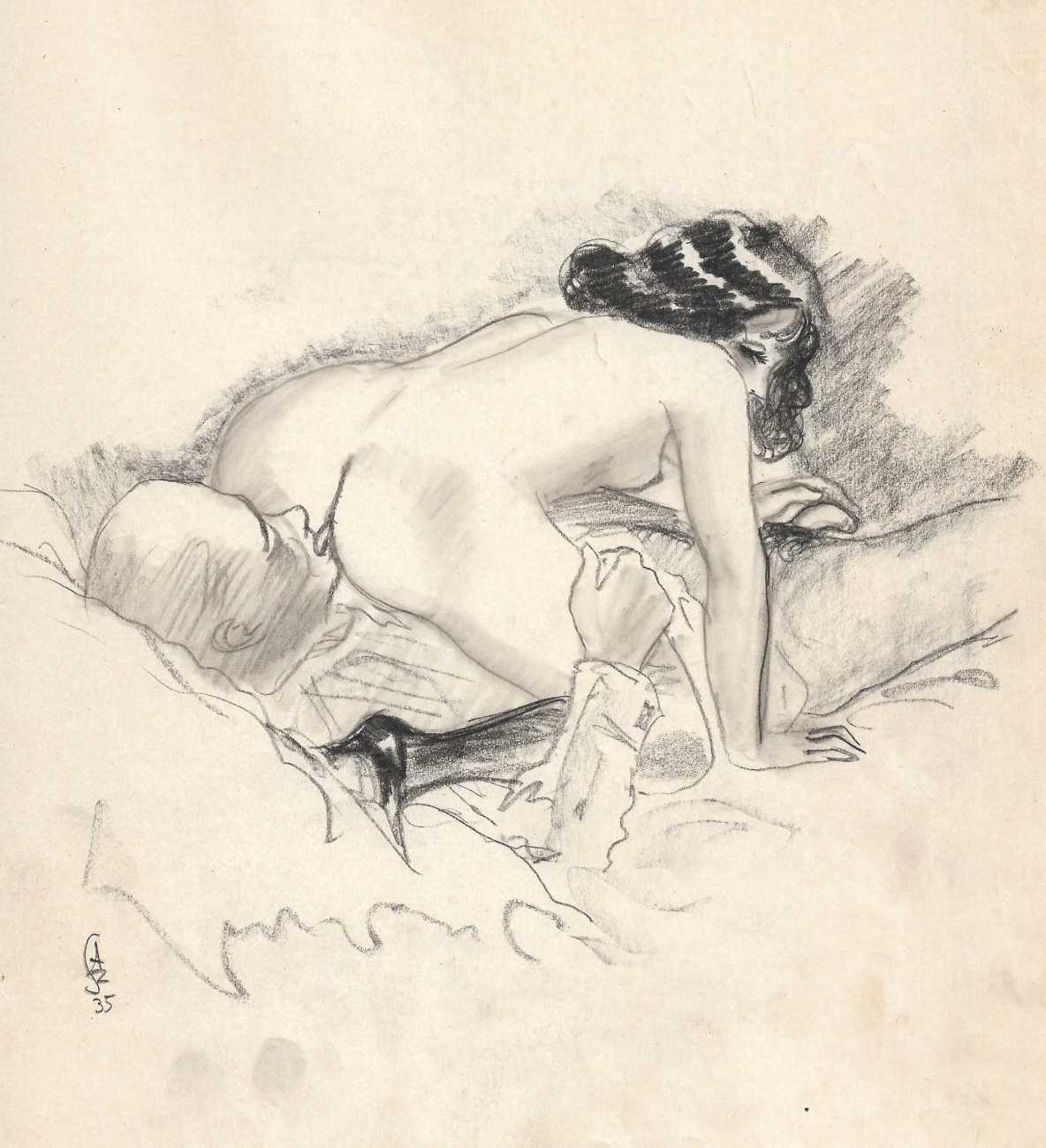
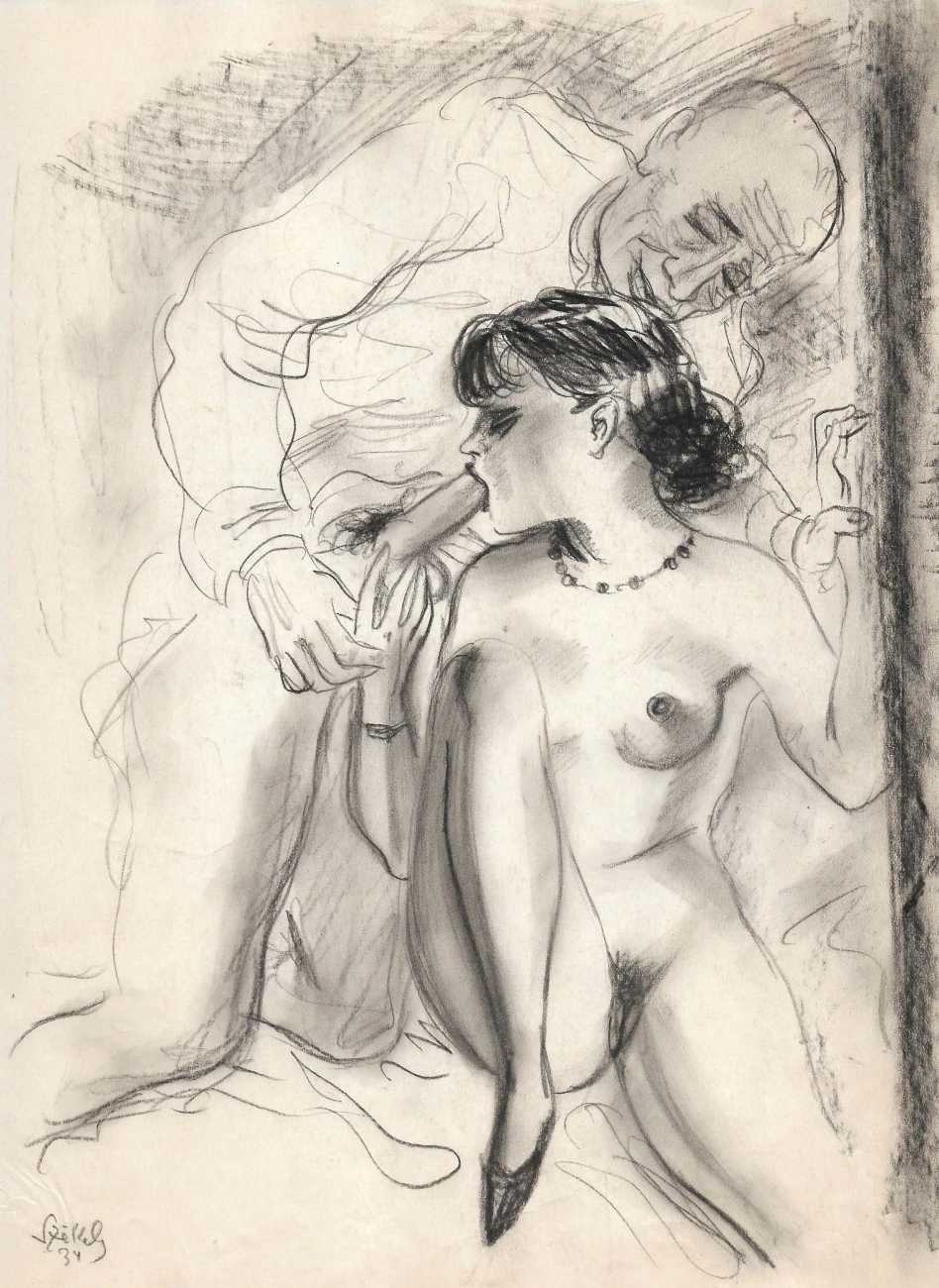
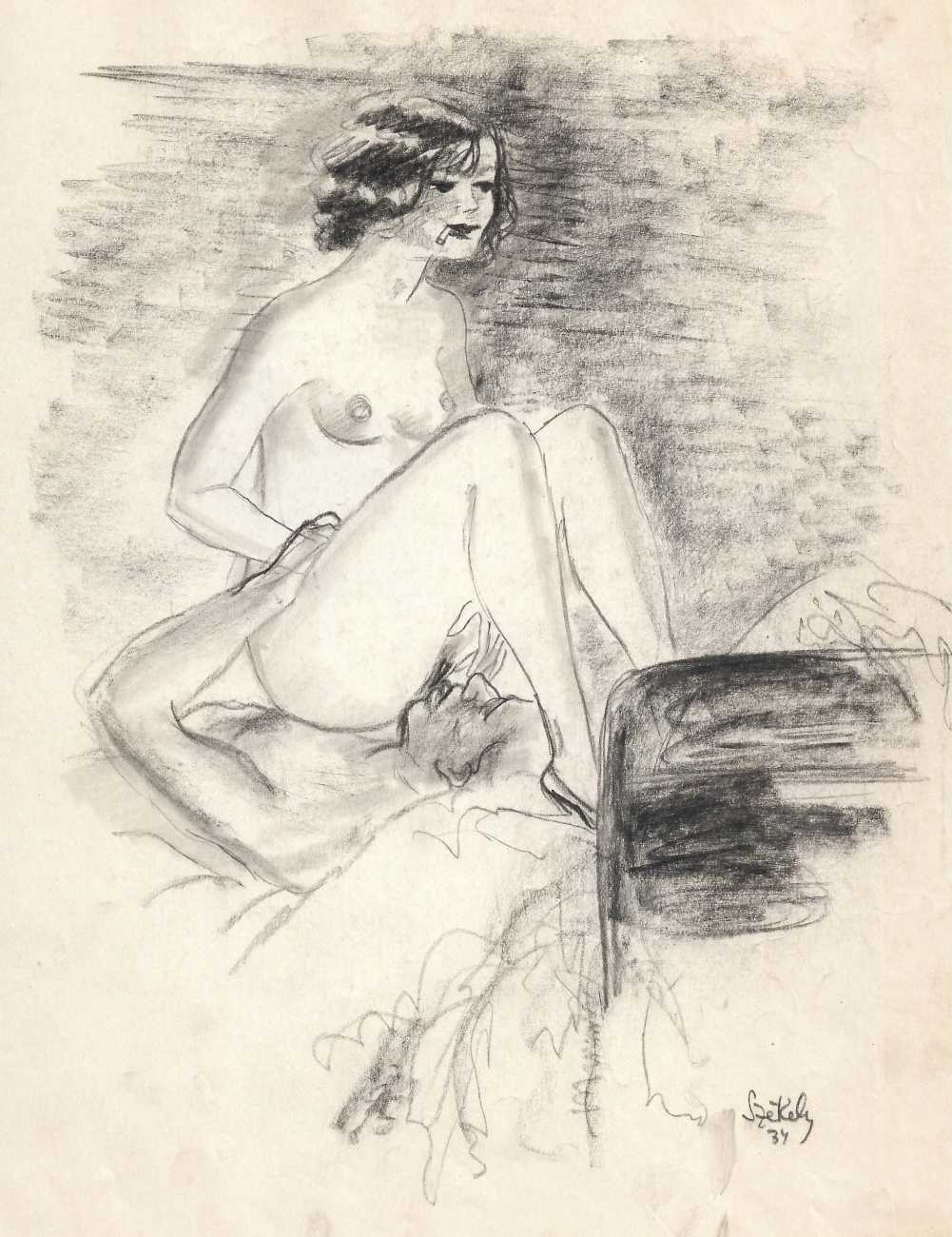
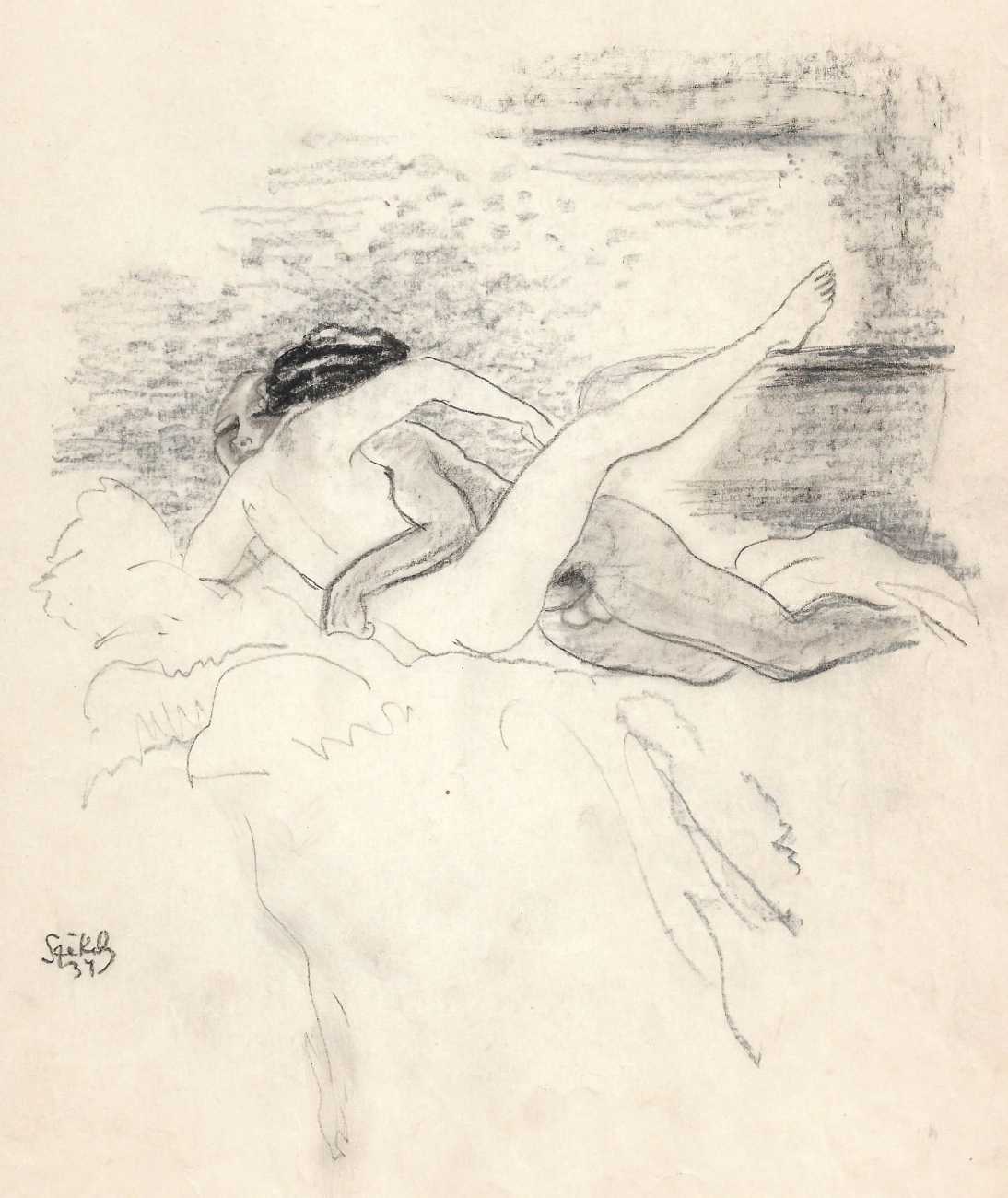
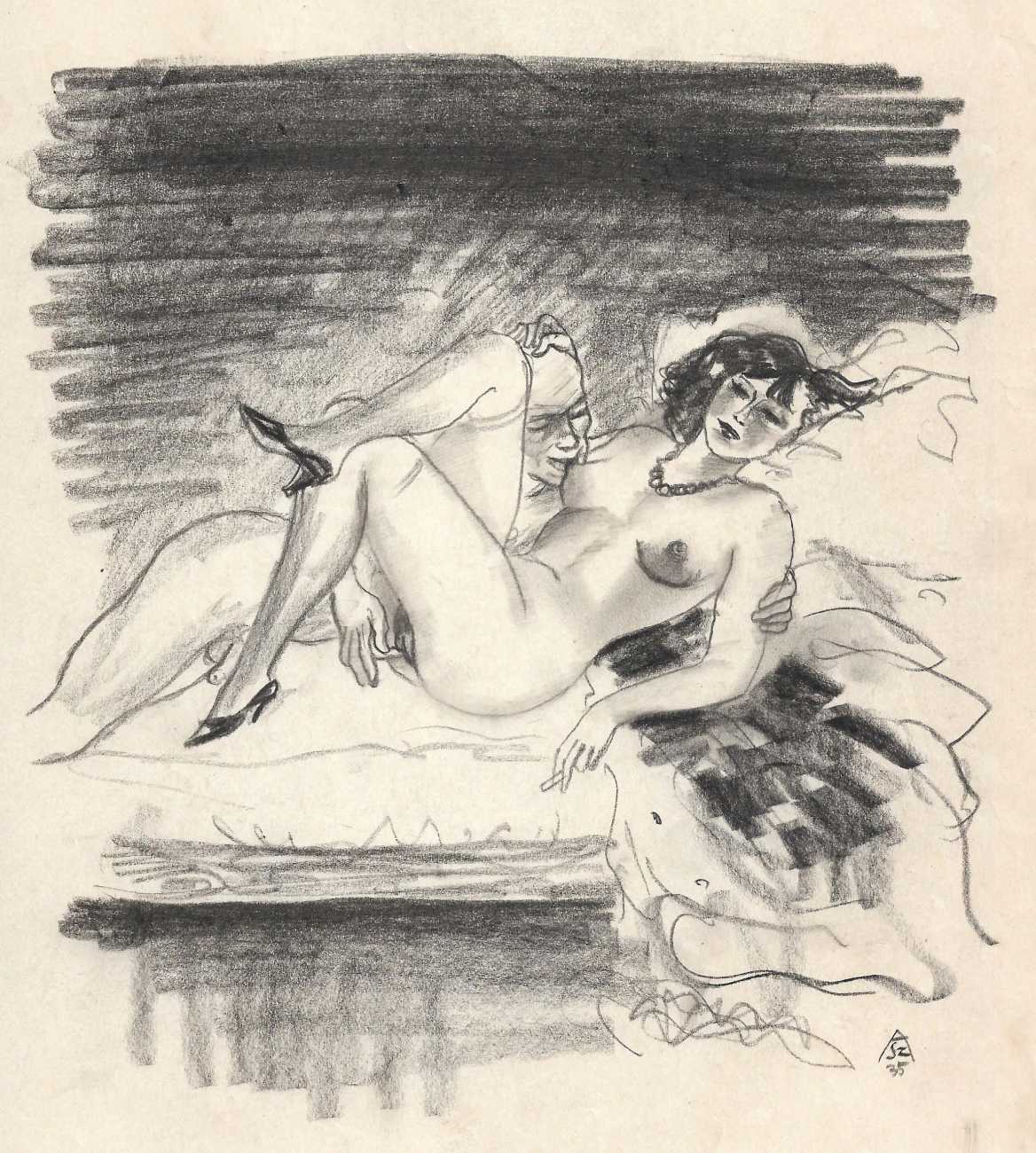
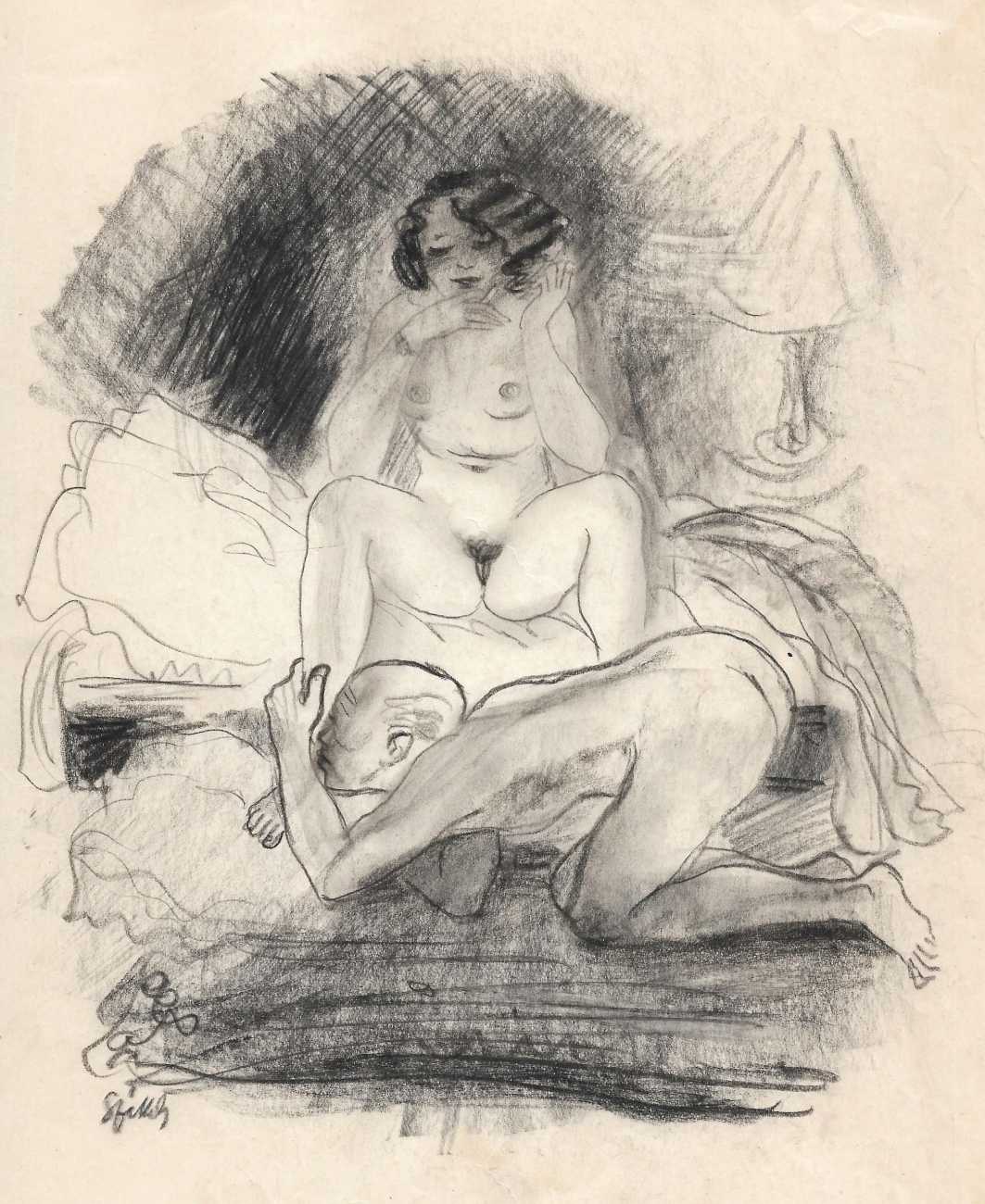
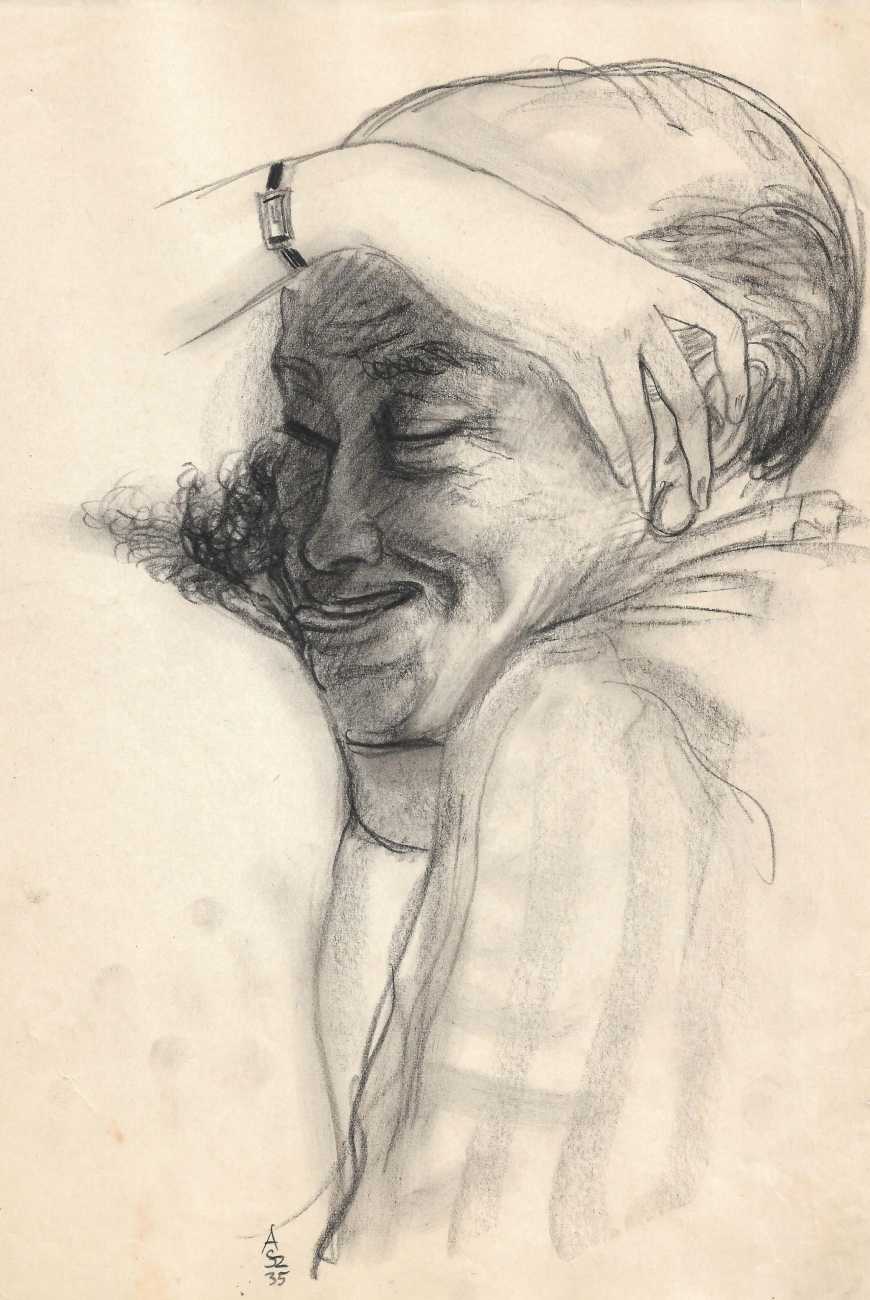
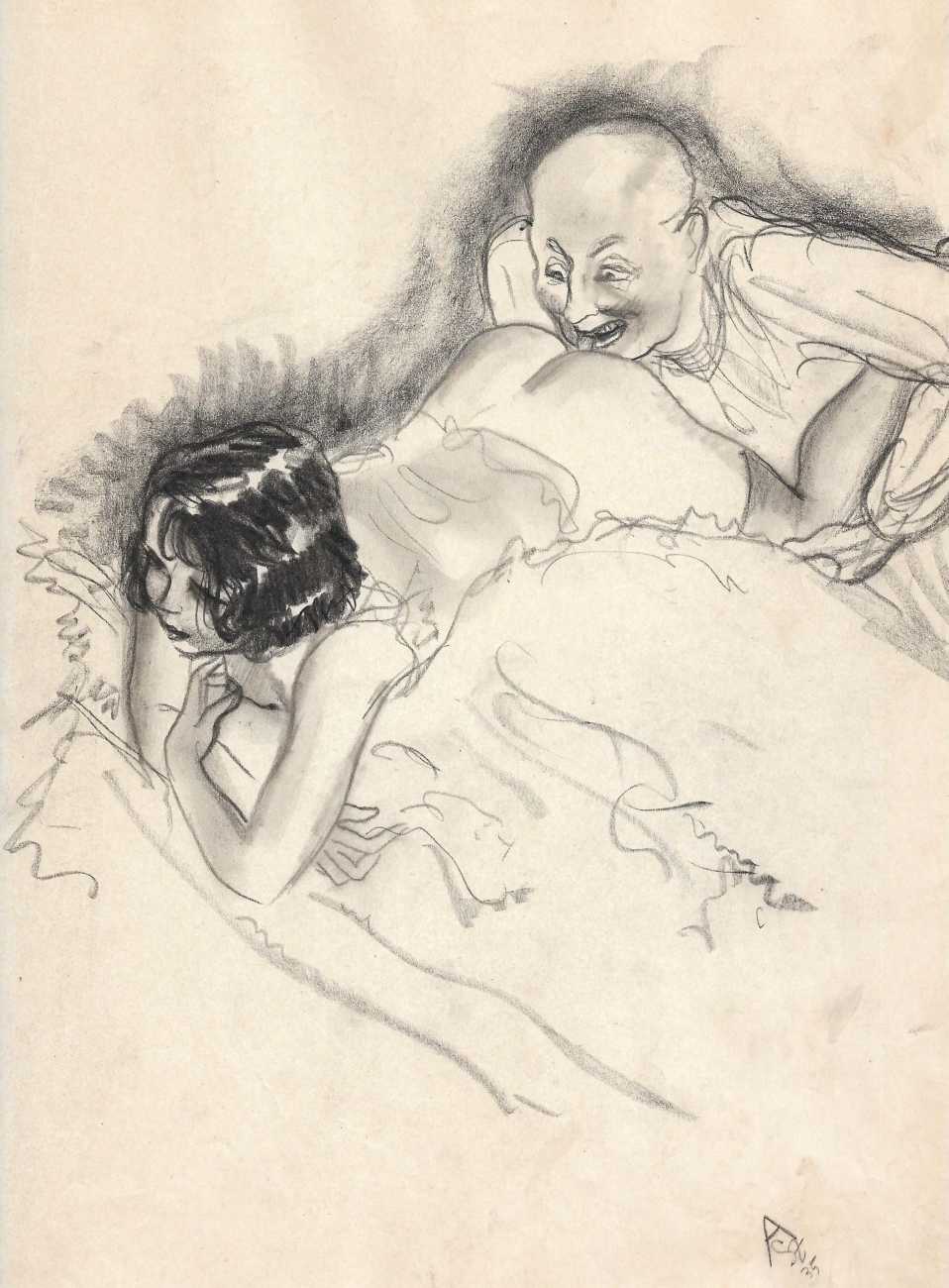
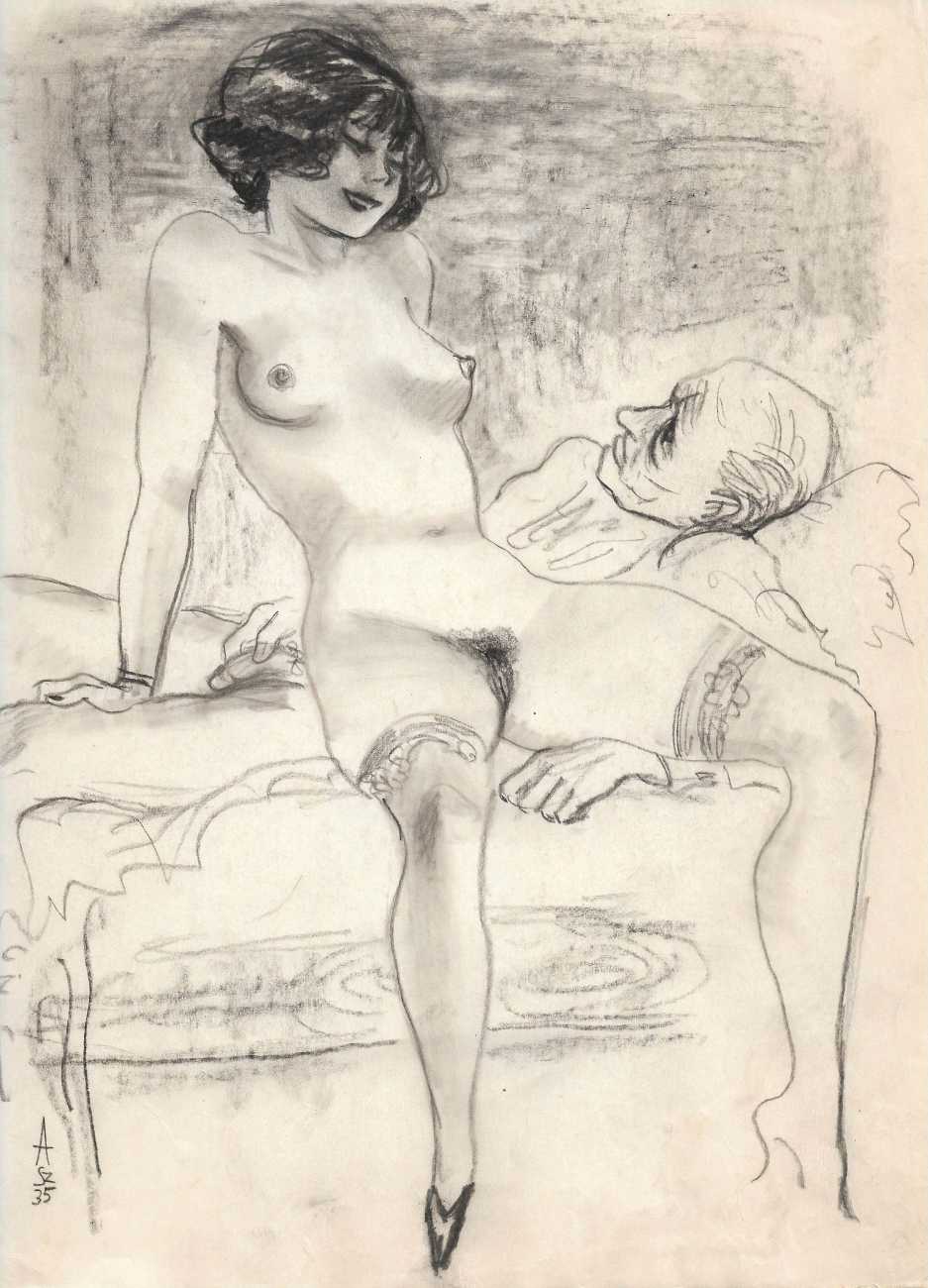
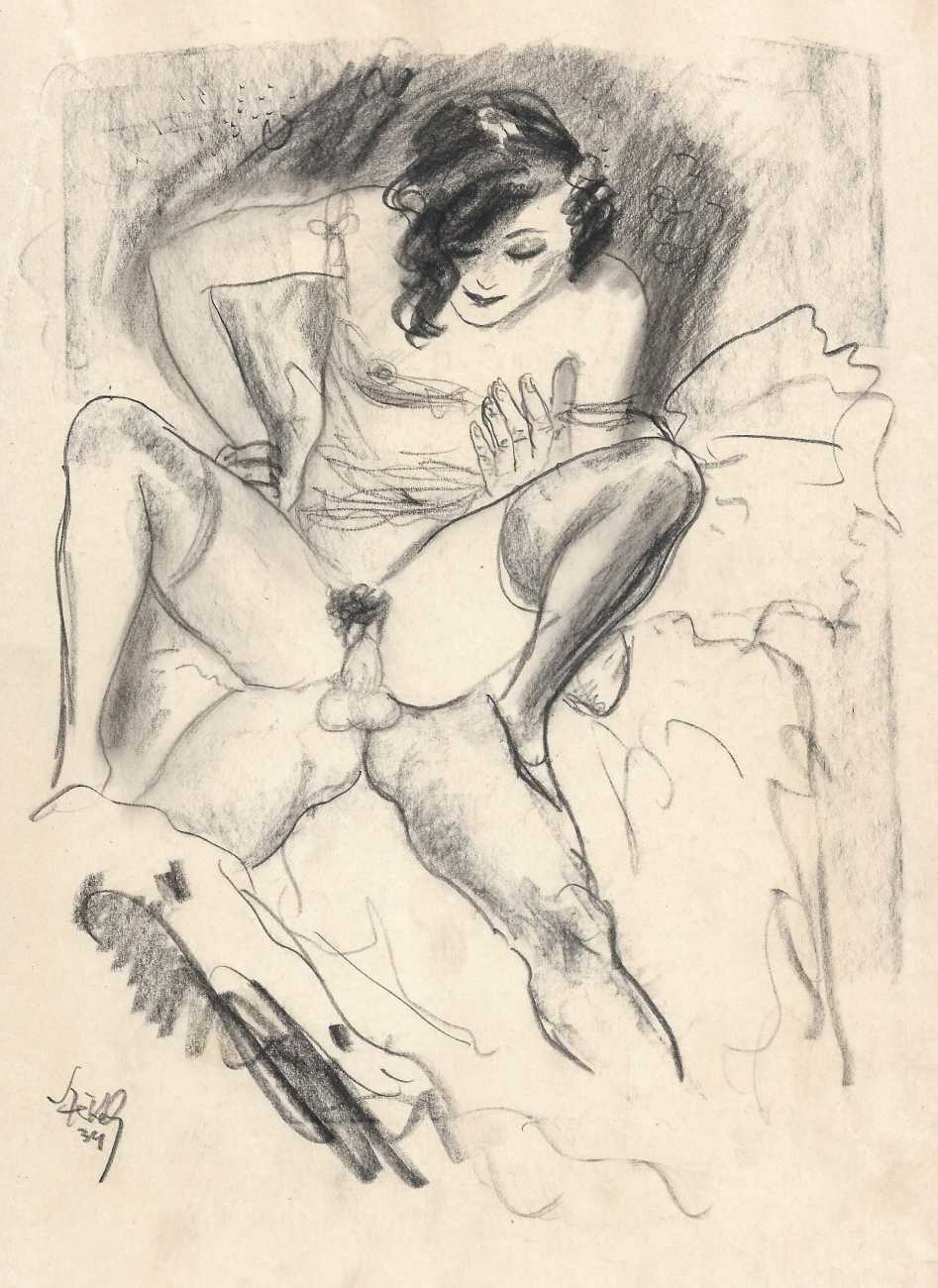
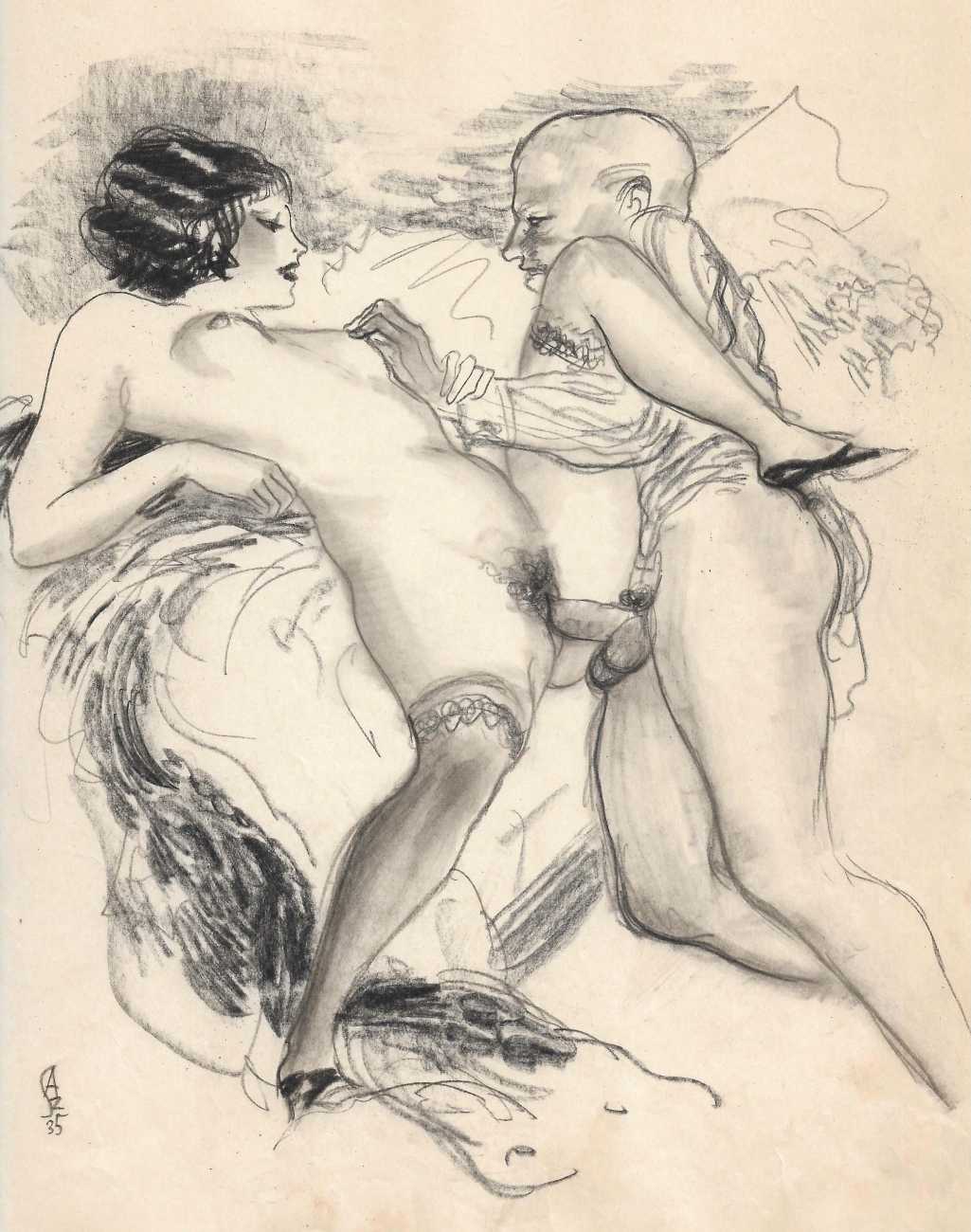
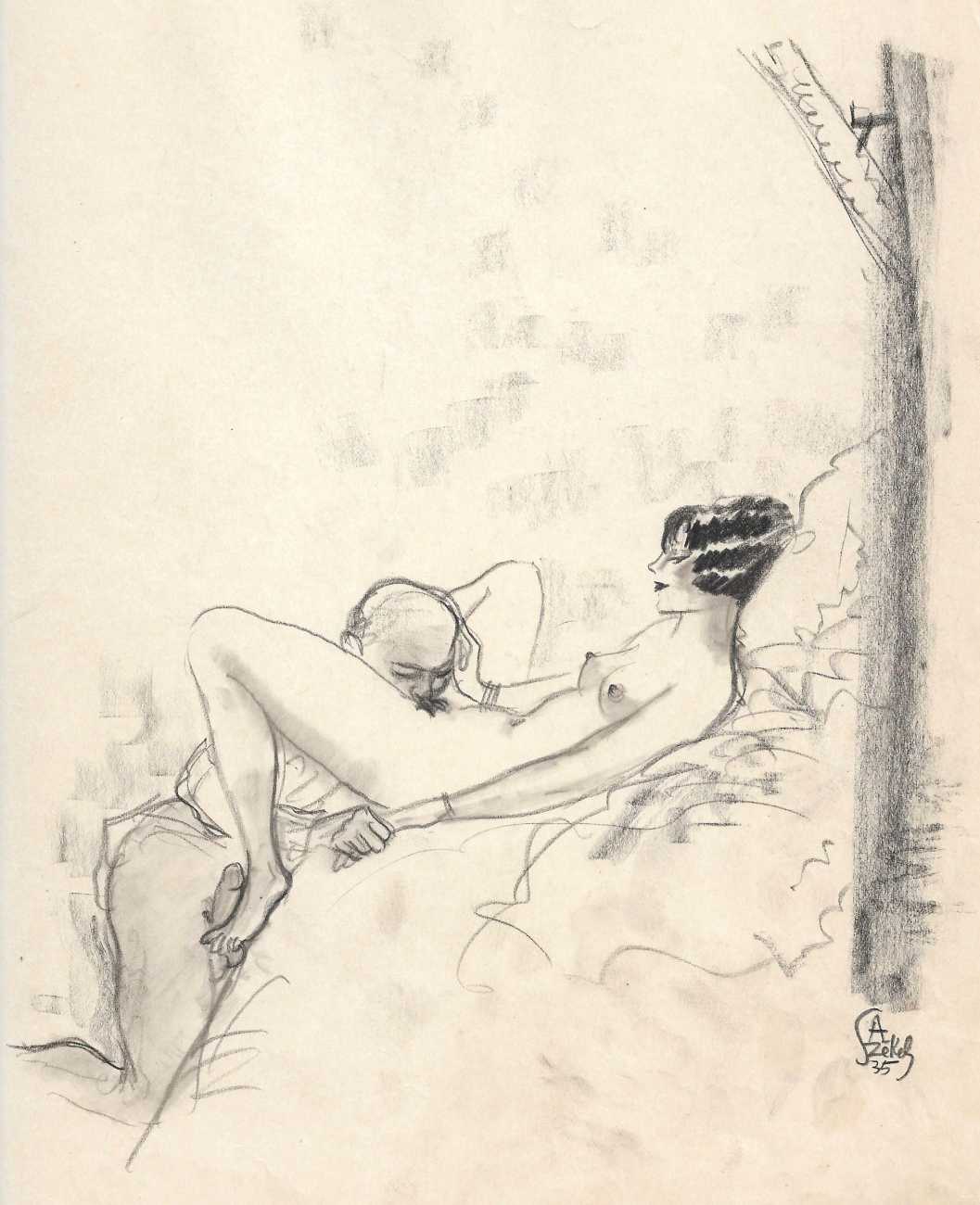
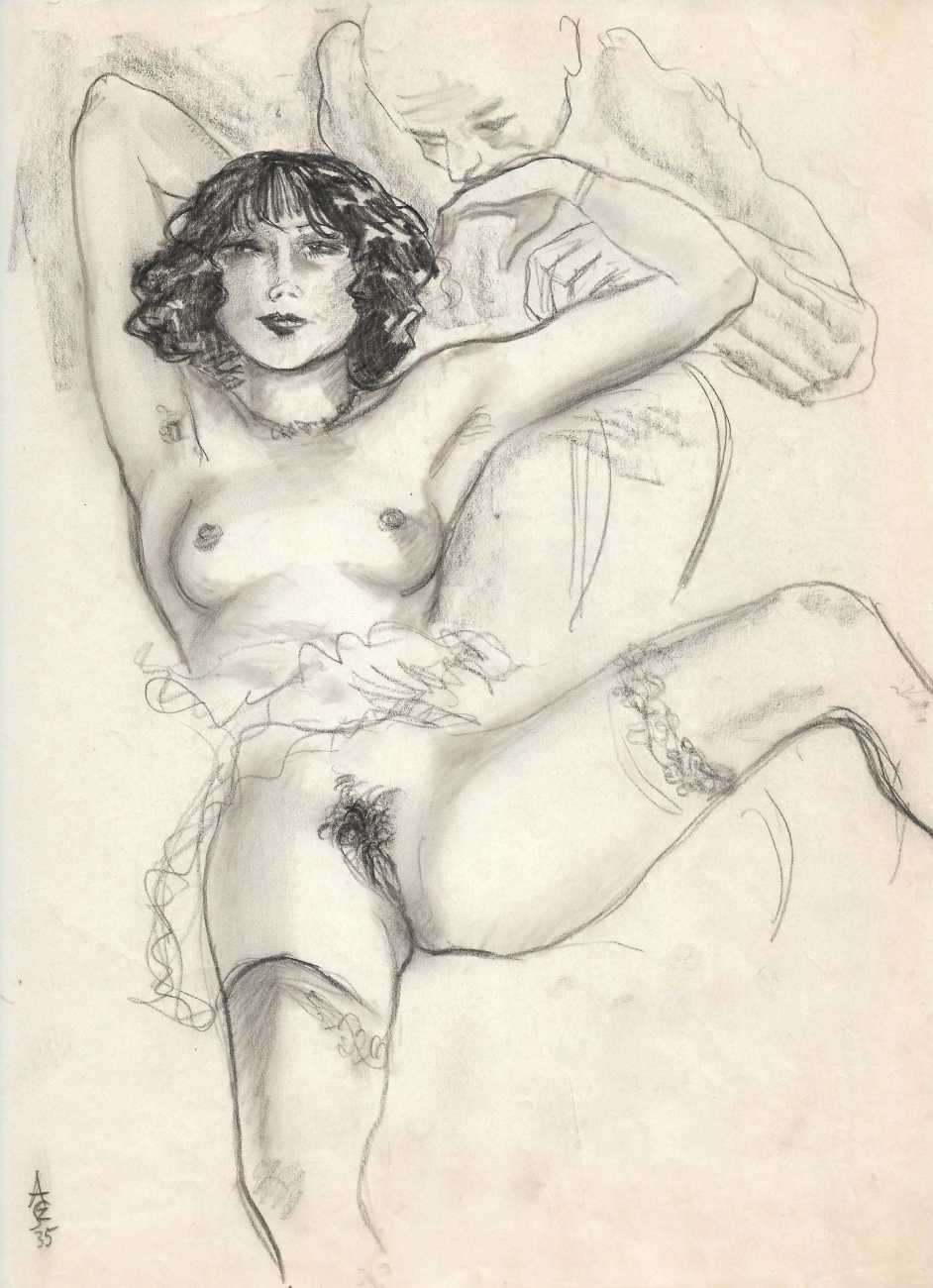
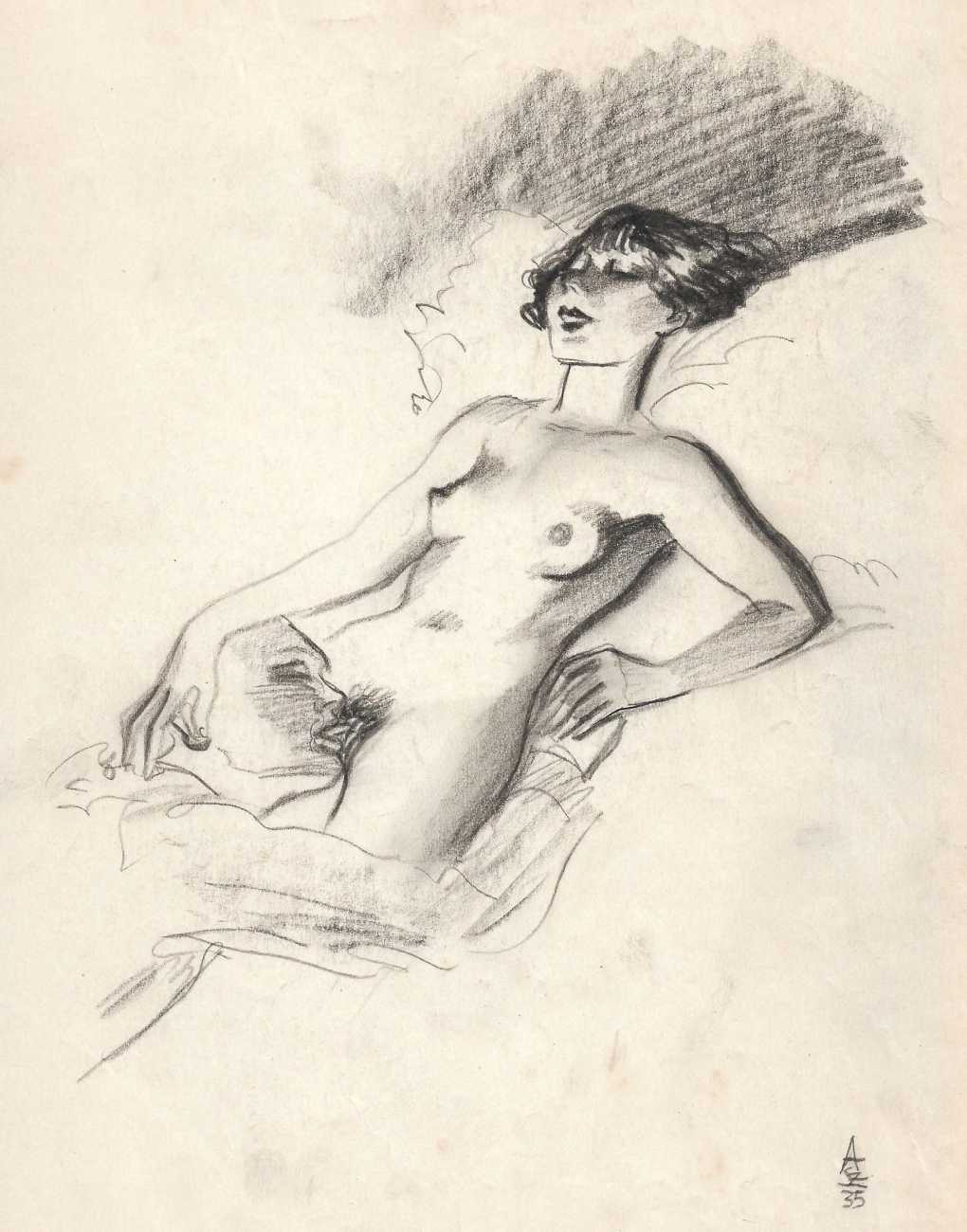
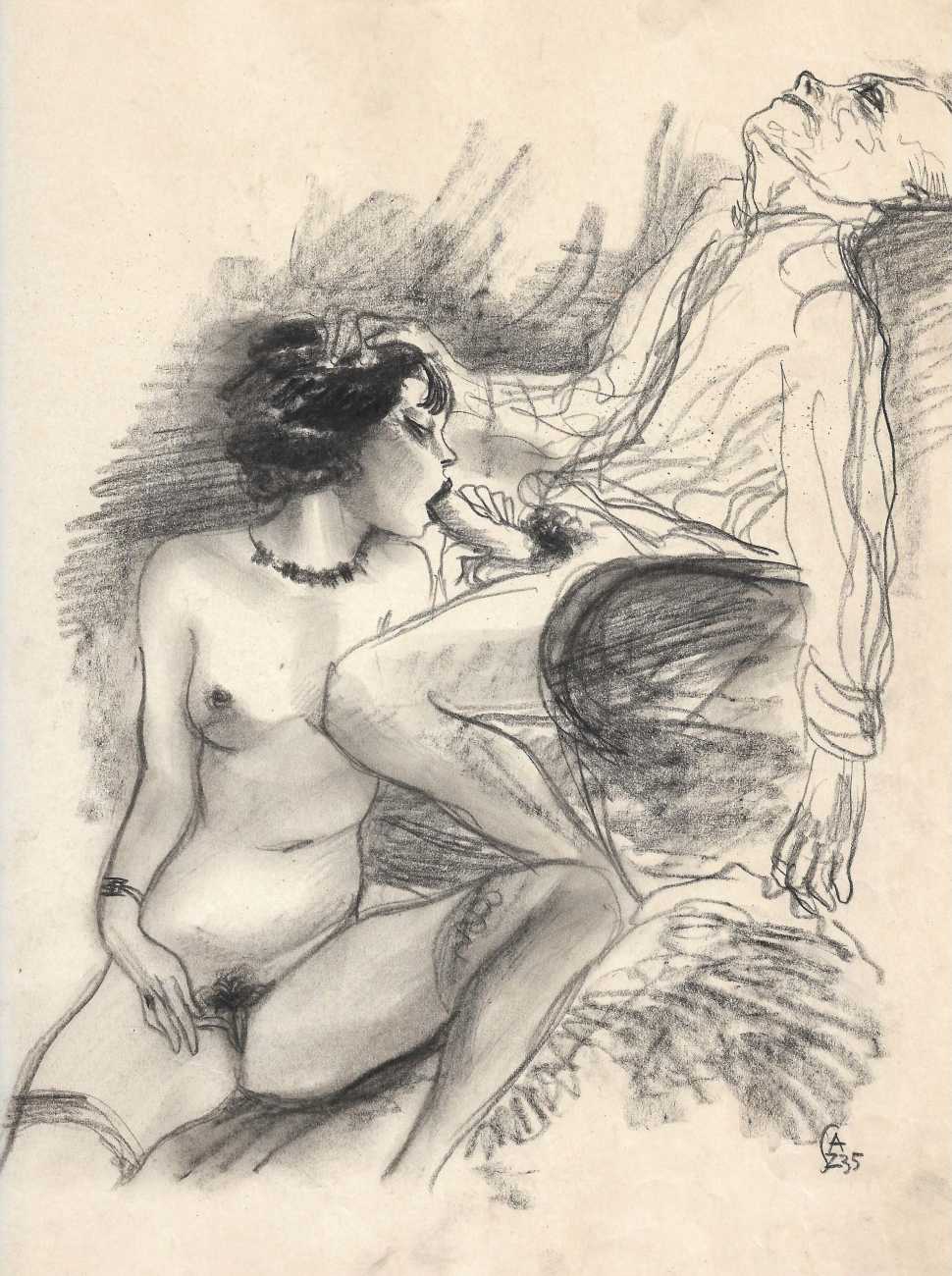
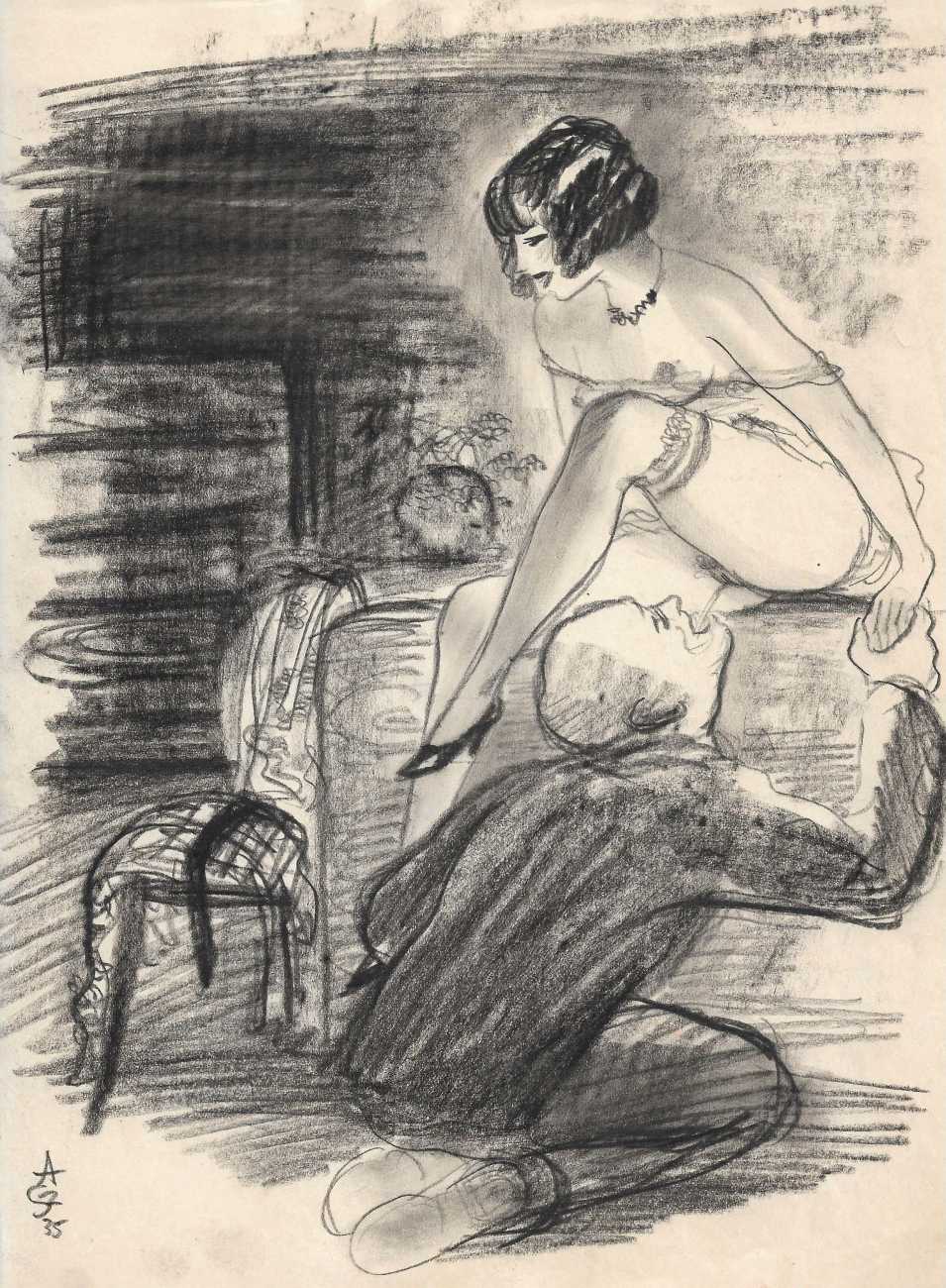
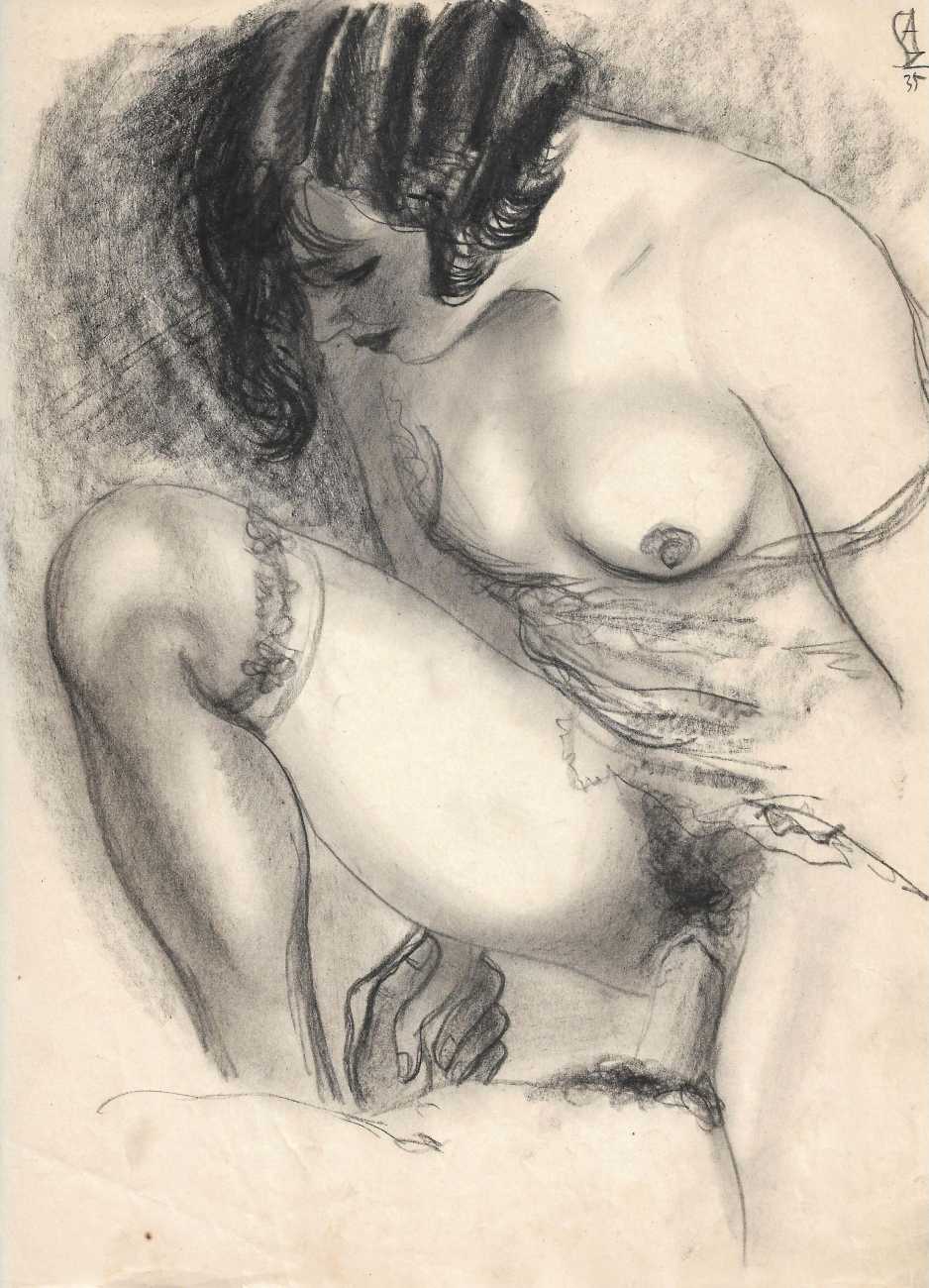
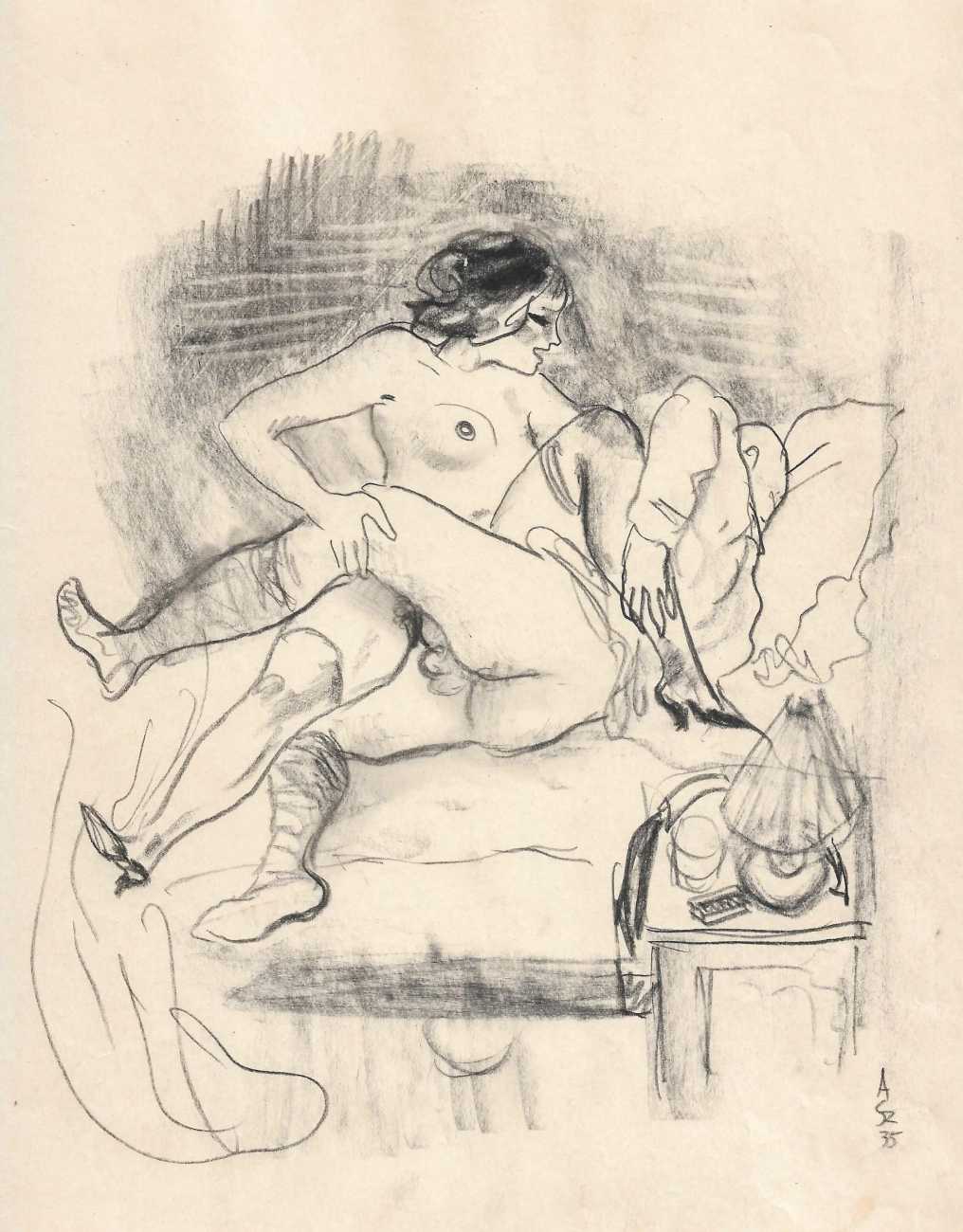
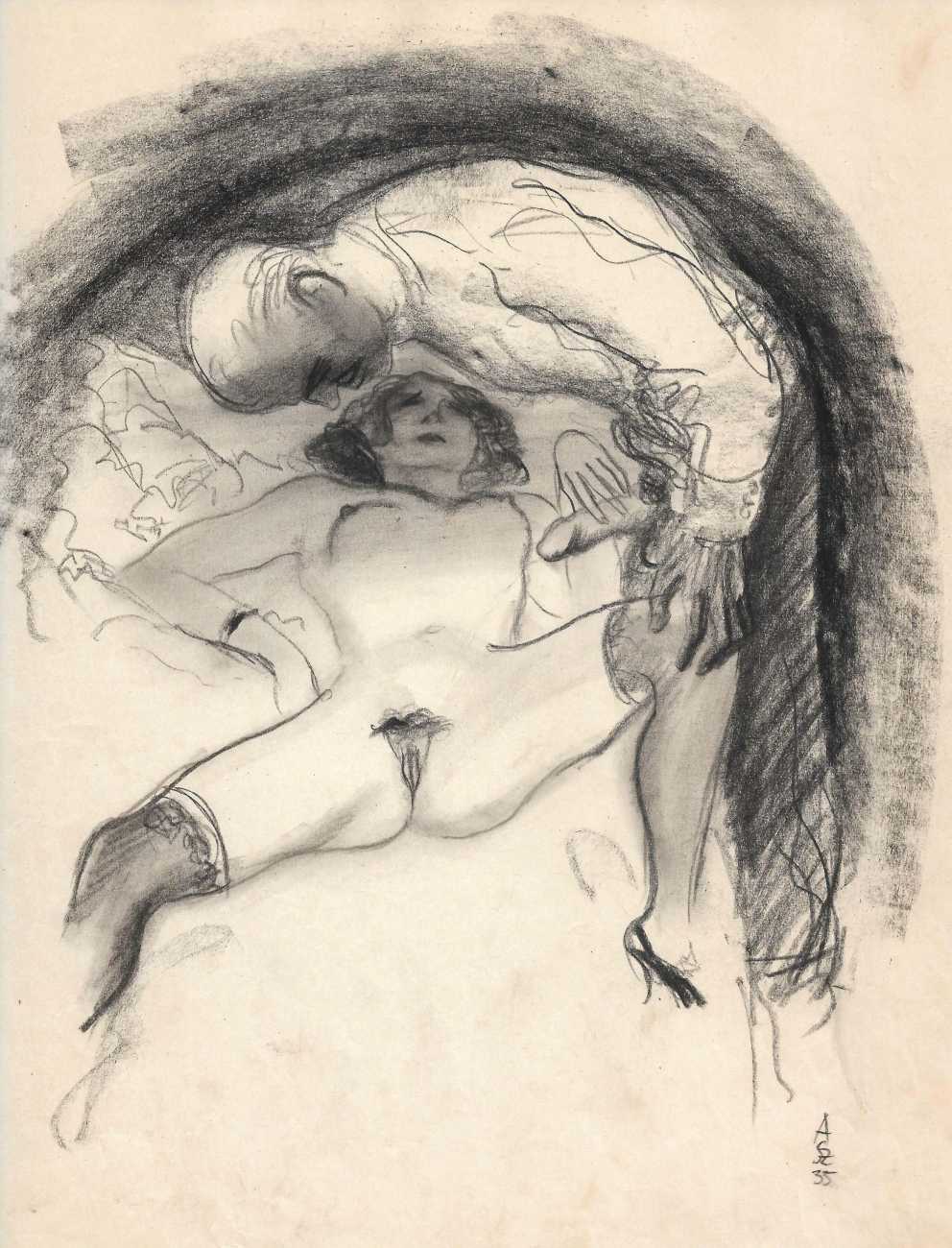
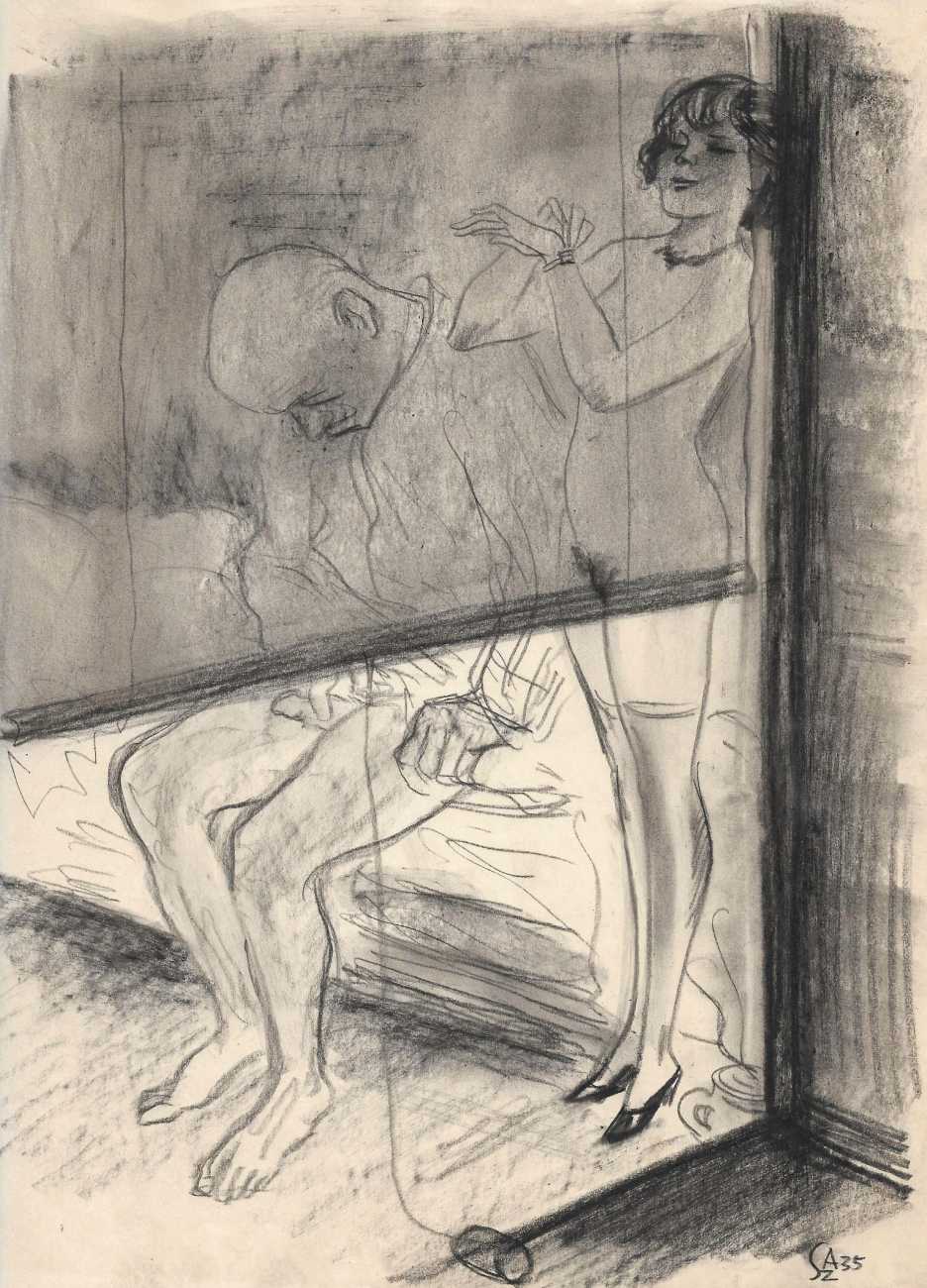
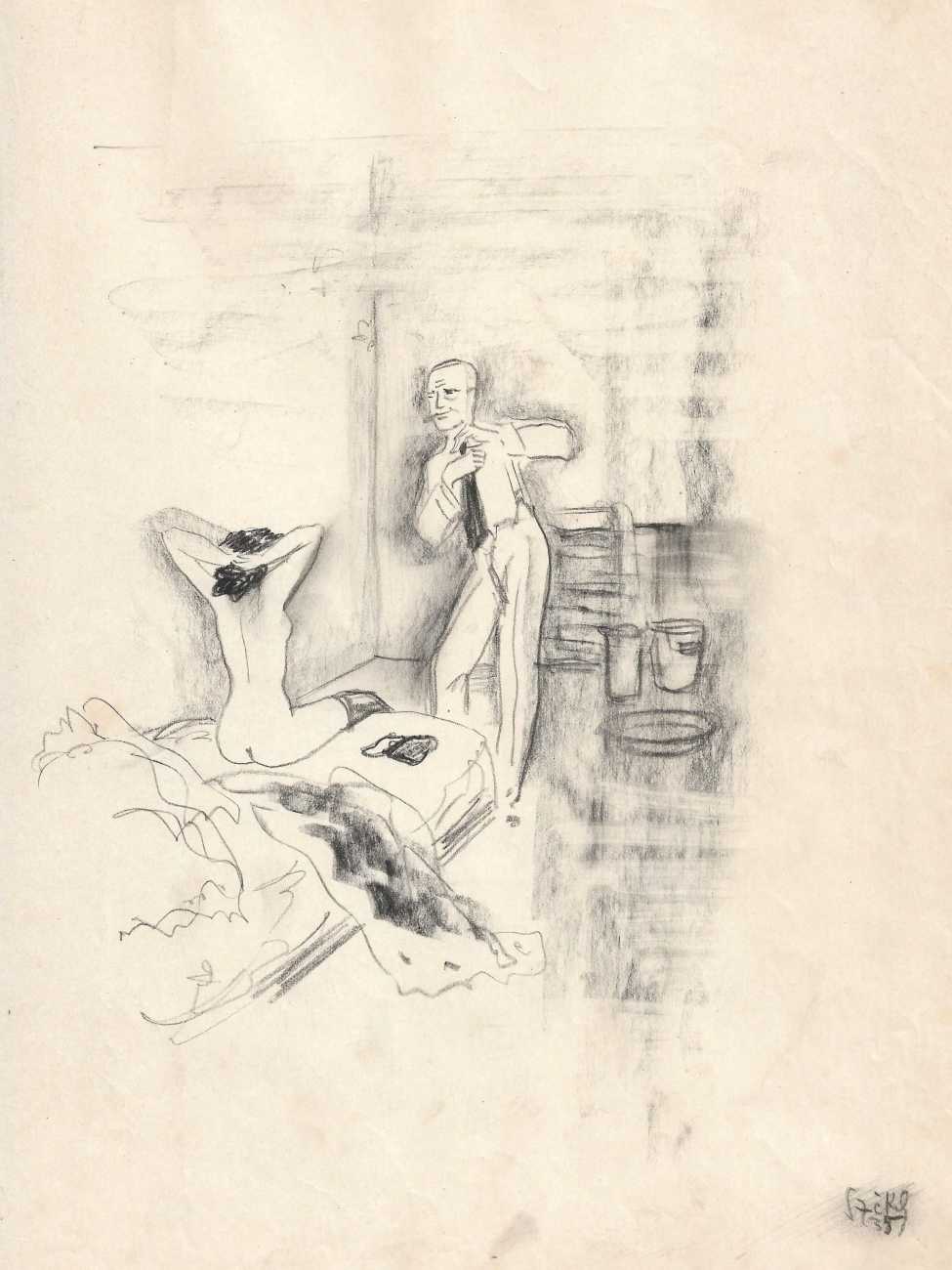
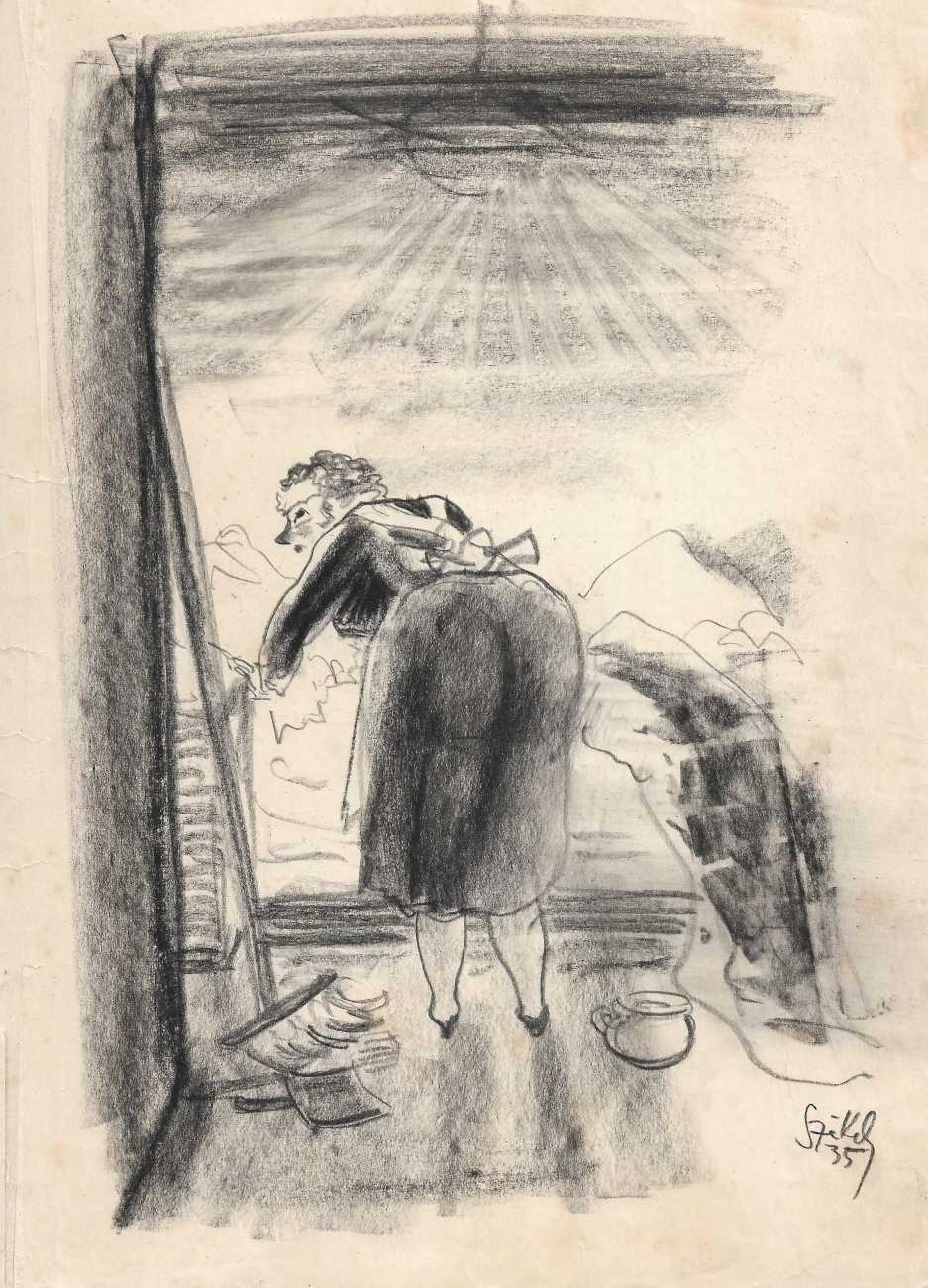
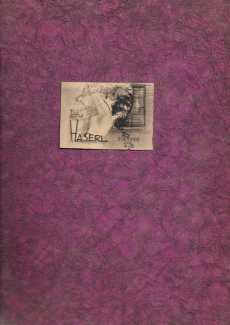
 ‘Das Haserl’ is a German, more specifically Viennese interwar, expression which isn’t easy to translate in a way that expresses its precise nuance. It derives from ‘Hase’ or ‘rabbit’, which as a diminutive might too easily become ‘bunny’ or even ‘bunnykins’. But as an endearment, which it is in this touching early Szekely portfolio, it denotes an important and meaningful intimate encounter, maybe something more like ‘sweetie’ or ‘honey’.
This sequence of drawings is set in a very identifiable 1935 Vienna – Volkscafé was at Getreidemarkt 13, close to the Naschmarkt; Rasper & Söhne, a well-known porcelain and glass dealer, was at Graben 15; and ‘Café Tomasoni’ was the alternative title to the 1935 operetta-style film Königswalzer, starring Paul Hörbiger and Curd Jürgens.
The story is familiar, repeated by Szekely in Ein Pariser Abenteuer (1941) and by Rojan in Idylle printanière (1936) – an unexpected but rather delicious encounter with a young women who, to the artist’s surprised delight, is more than willing to explore the depths and breadths of shared intimacy. To what extent the narrative is in any way autobiographical is left to the viewer’s imagination.
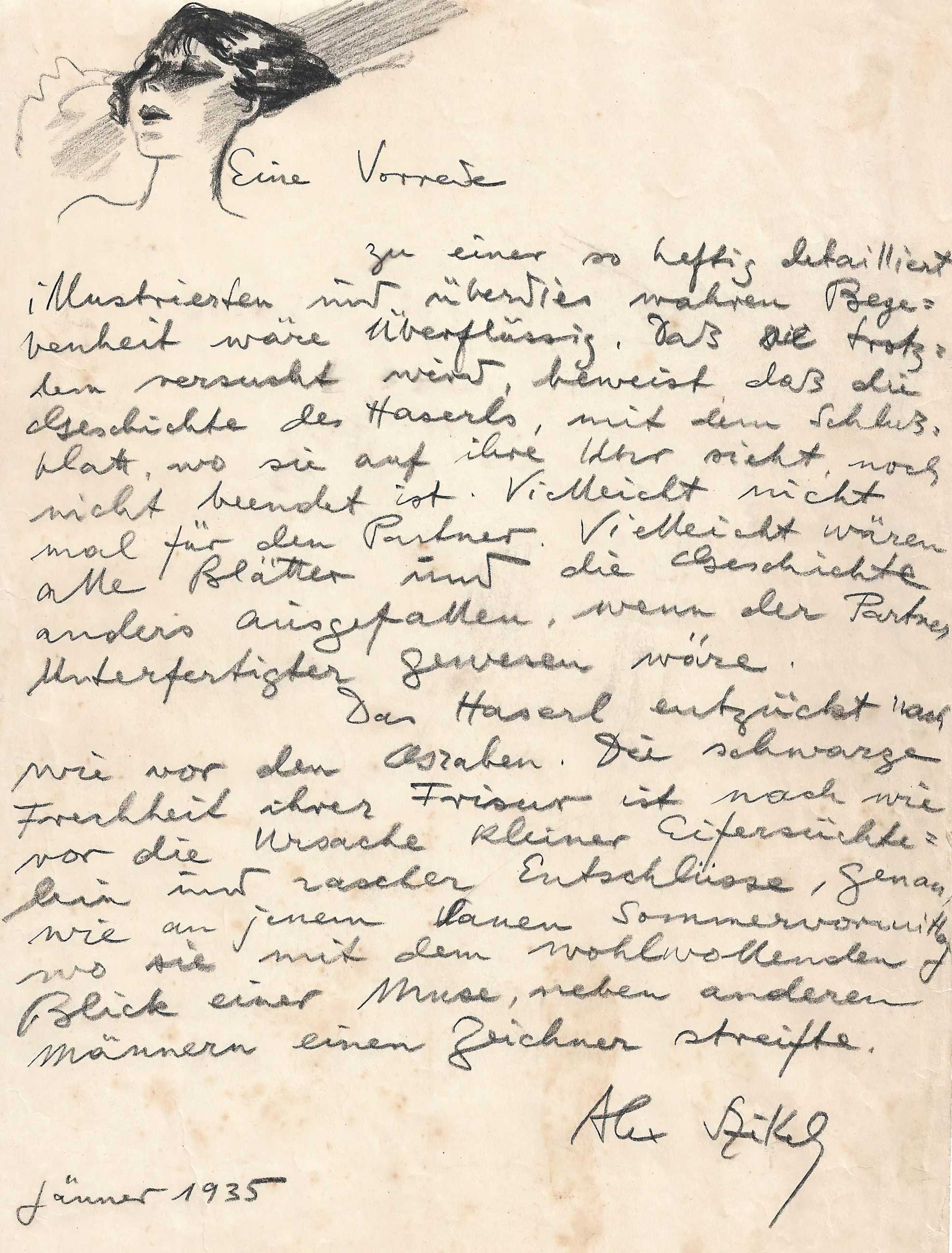
It is, however, reinforced by Szekely’s introduction to the portfolio, which is subtitled ‘Ein Zeichenfilm ohne Tricks’ (An Animated Film without Any Tricks). It reads as follows:
A Preface
For such a detailed and vividly illustrated event, obviously so clearly remembered, a preface is really rather superfluous. The only possible reason for attempting it is to show that this tale of Haserl, with its final page where she has not yet grown anxious, perhaps not even about her partner, might have unfolded differently if that partner had been more completely available.
Haserl still enchants the draughtsman. The dark freedom of her hair remains the cause of small jealousies and sudden decisions, just as on that mild summer evening when, with her benevolent glance, she brushed against a draughtsman who was just hanging around, there among so many other men.
Alex Szekely, January 1935
Das Haserl is dedicated to ‘Mr. A. R.’; it would be fascinating to know the recipient’s full identity.
We are very grateful to our friend Renate for sharing this album of drawings with us; the collection is currently for sale, and we would be happy to pass your details on to the seller if you might be interested in owning it.