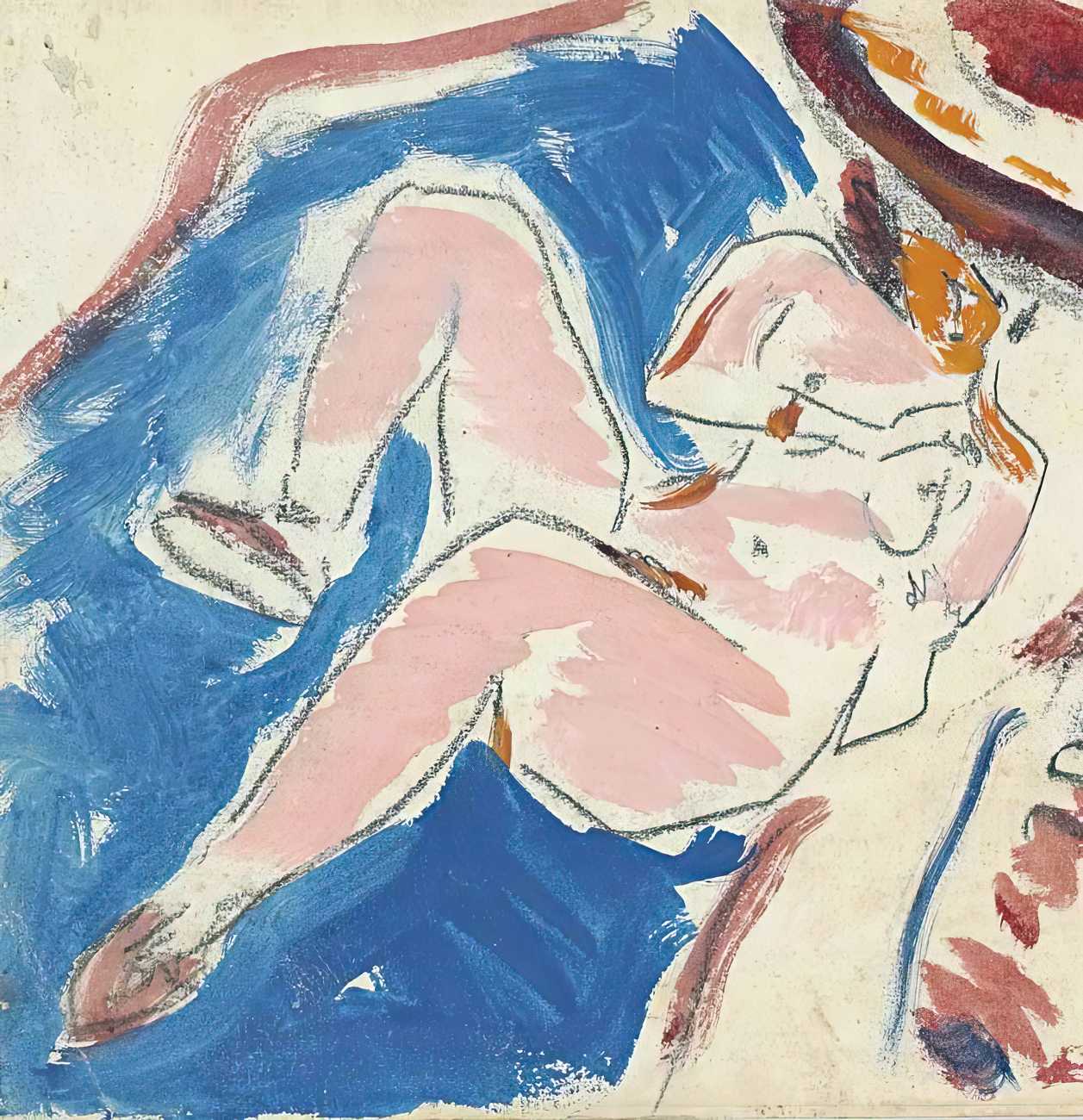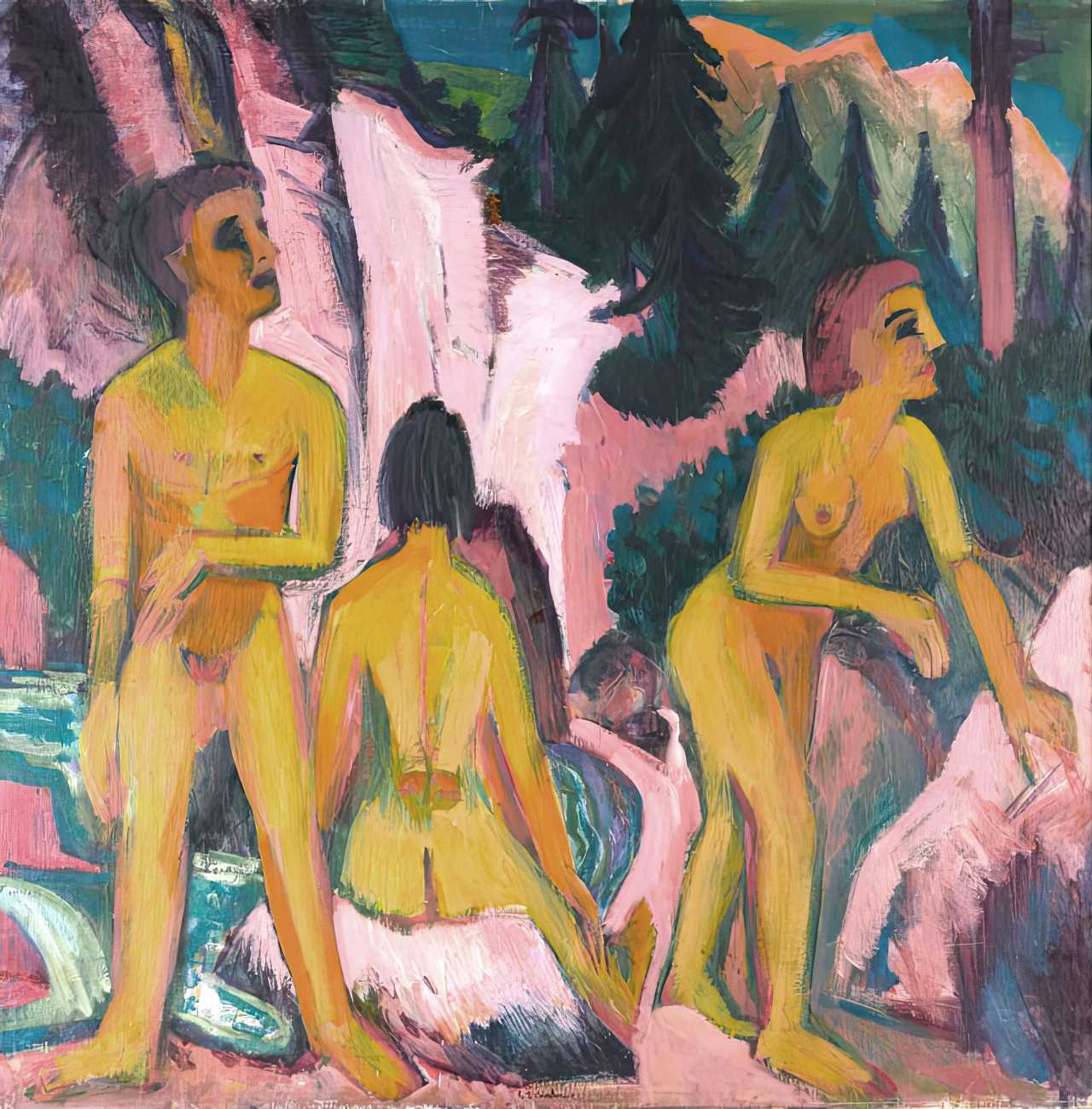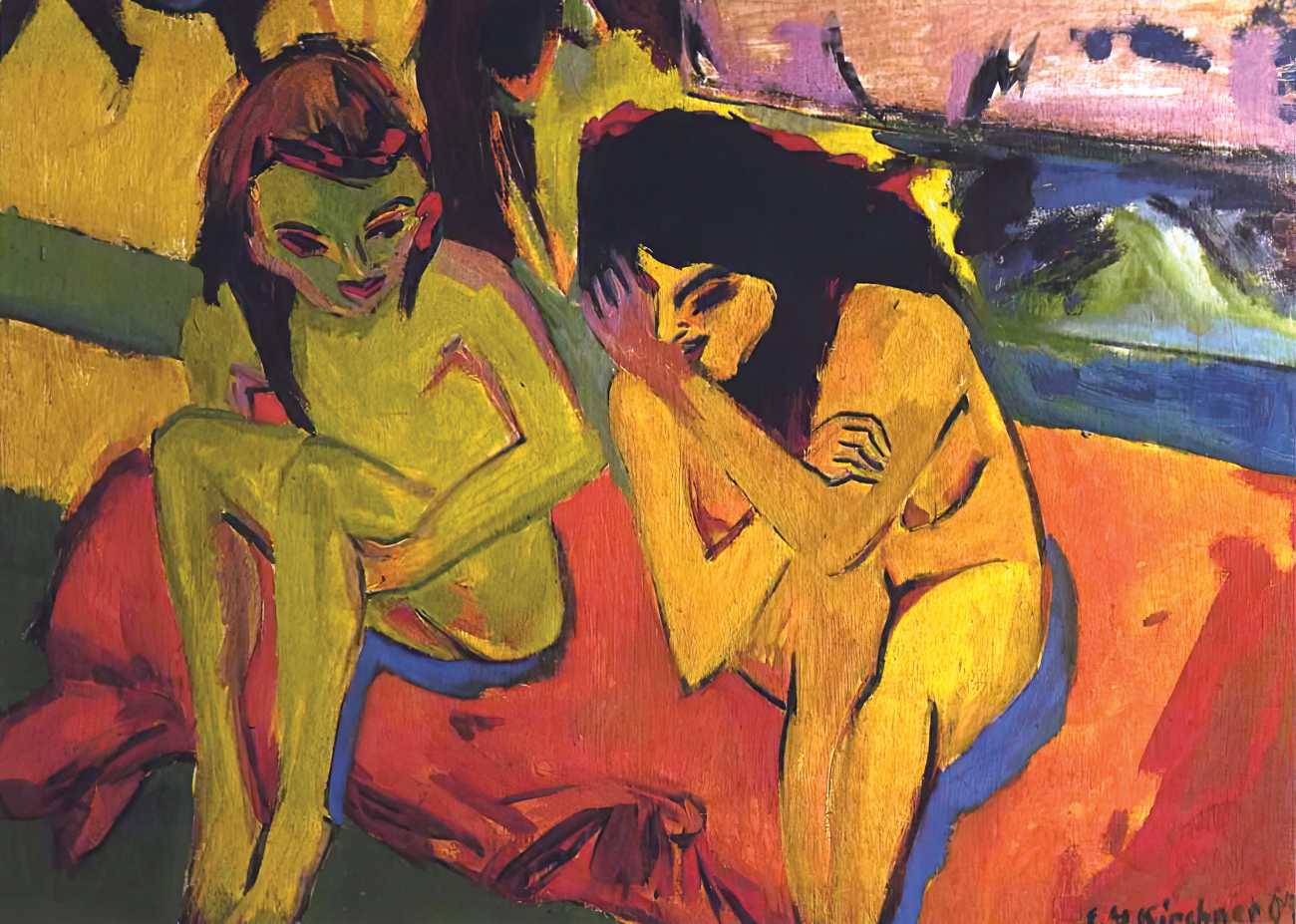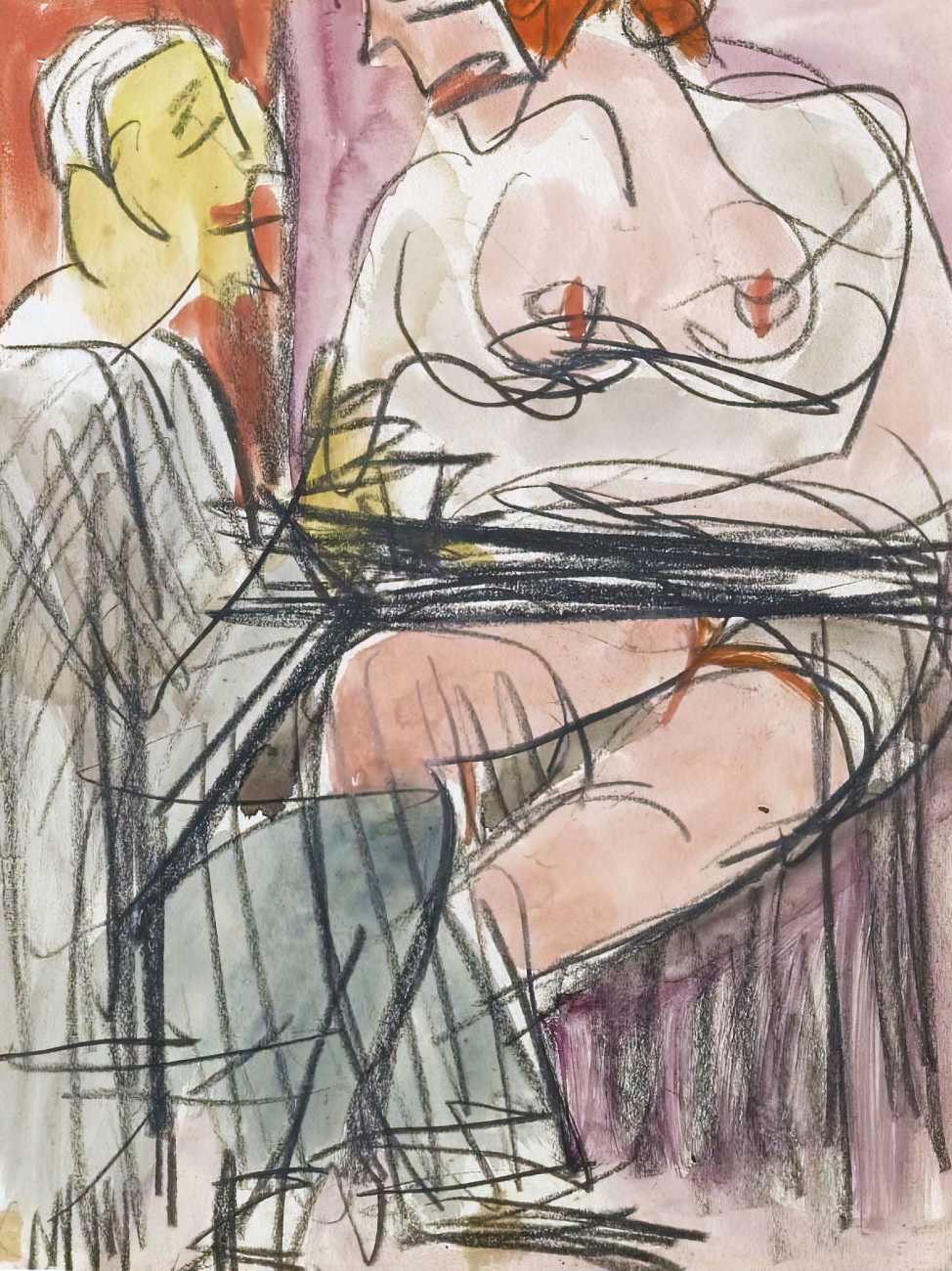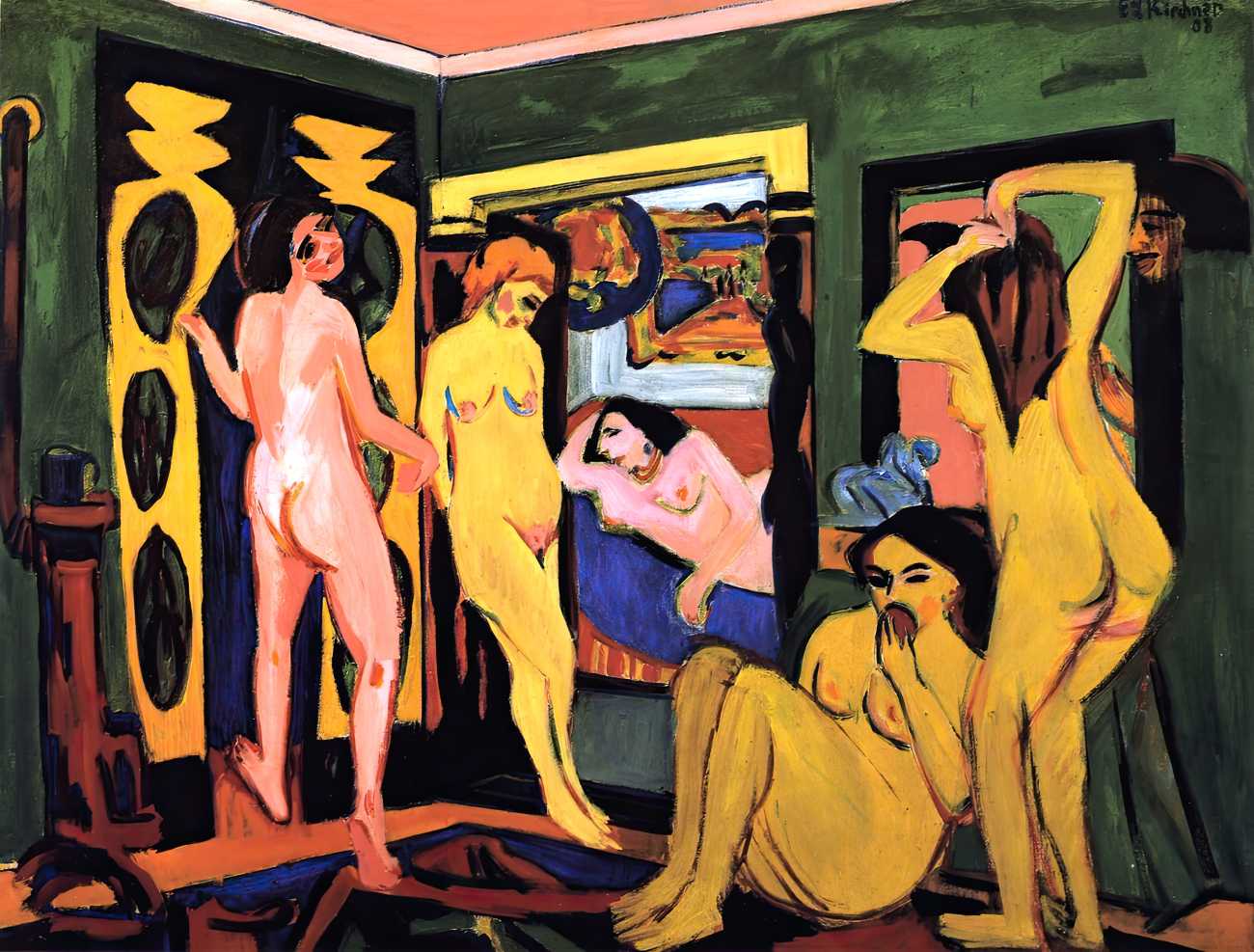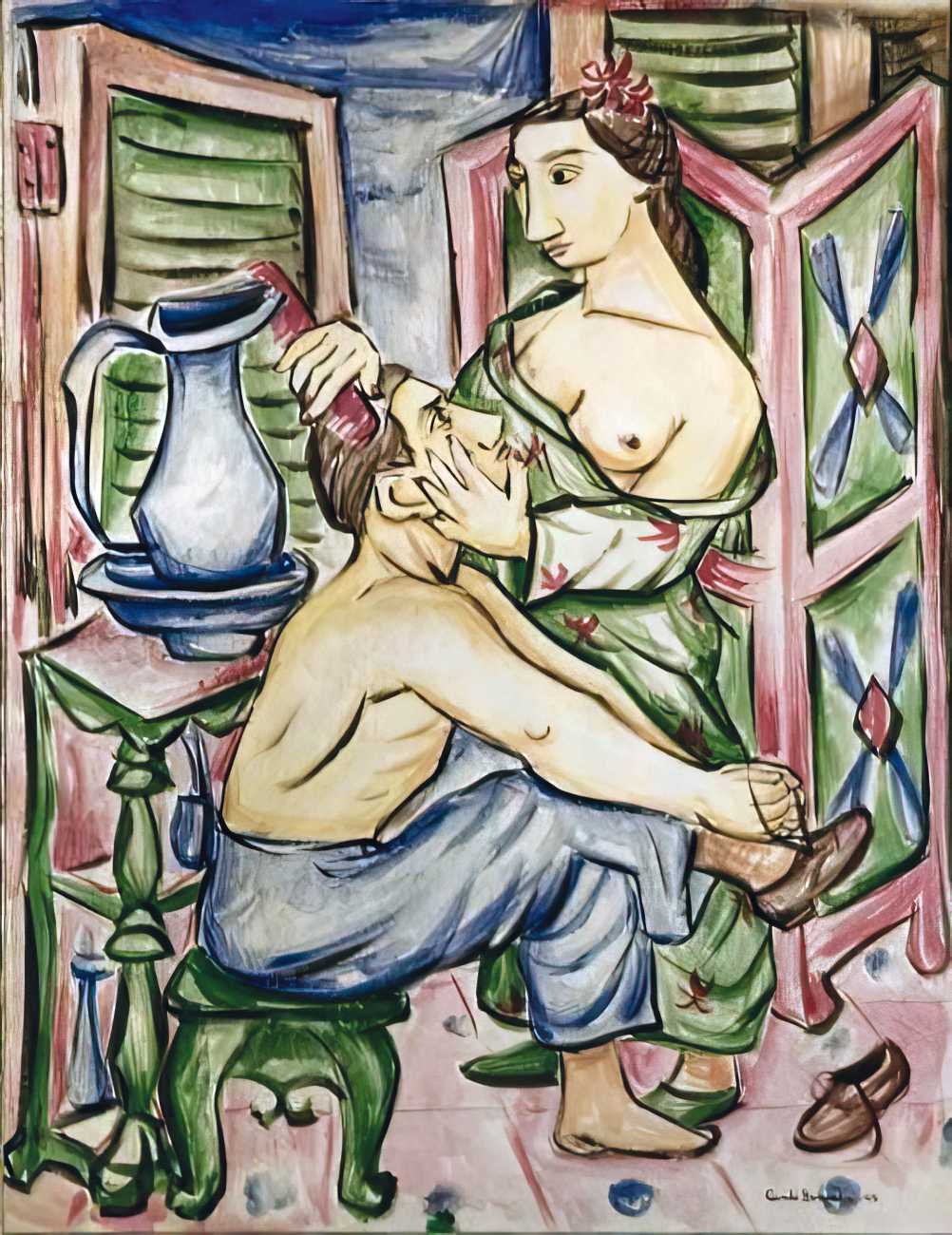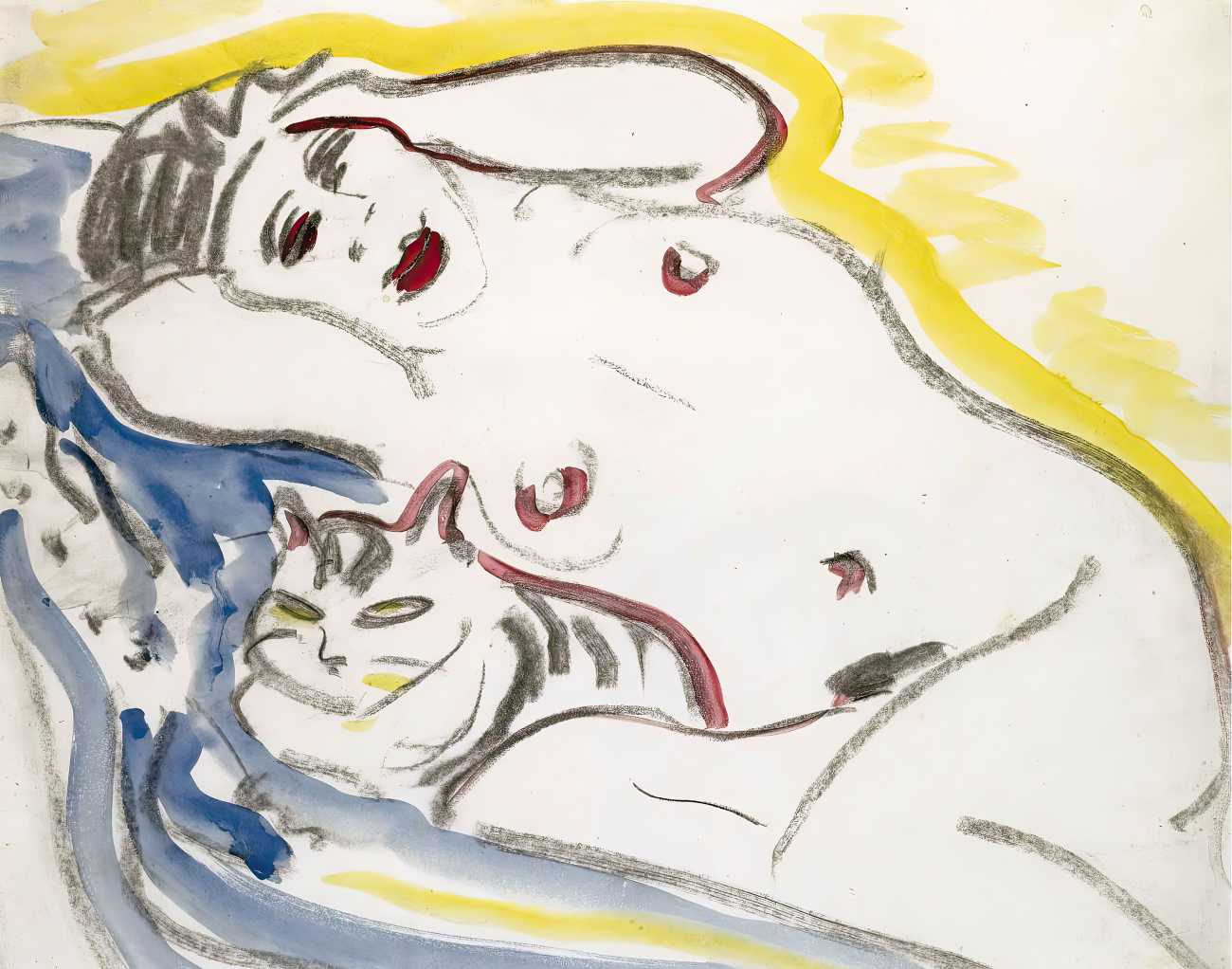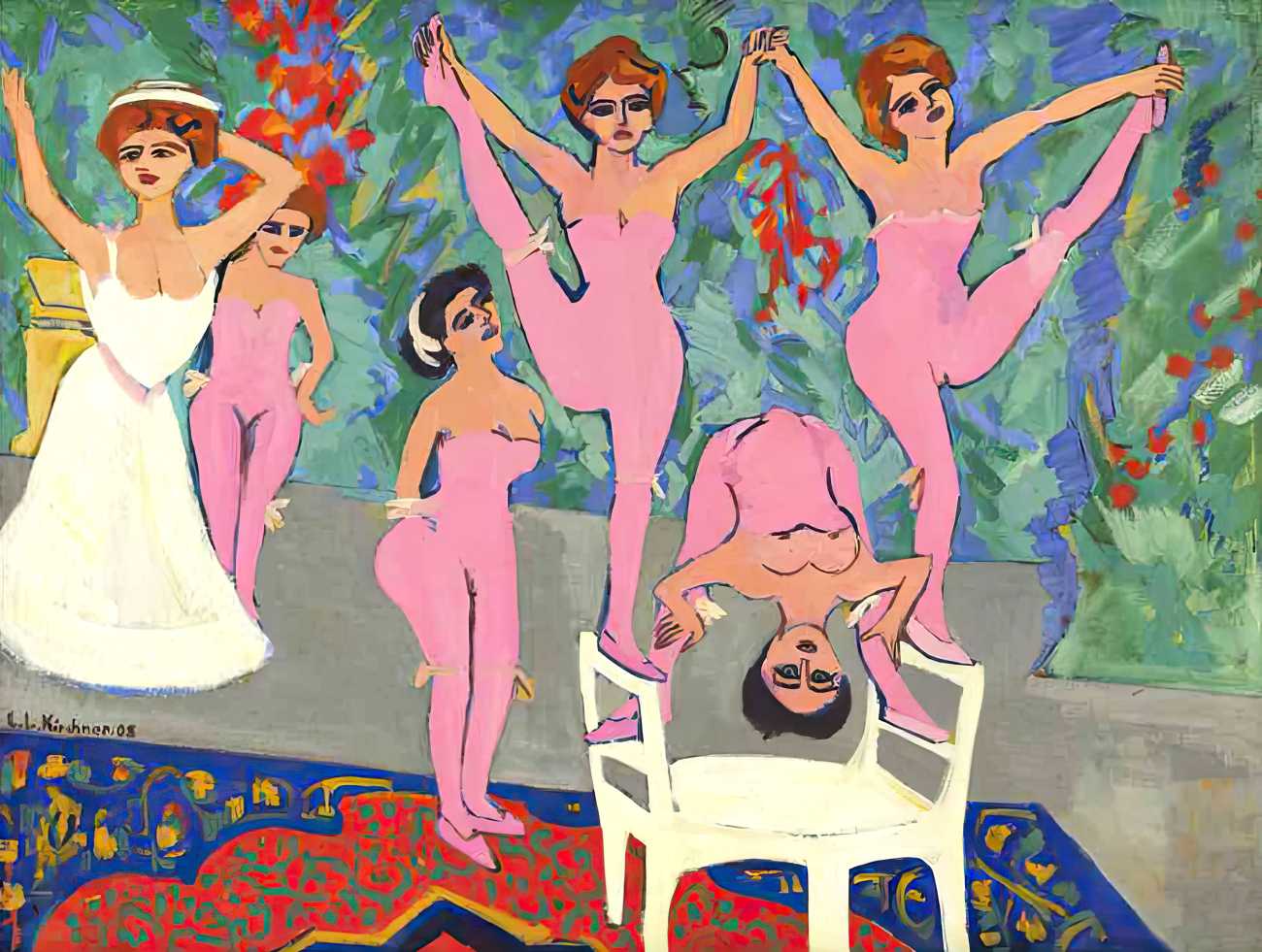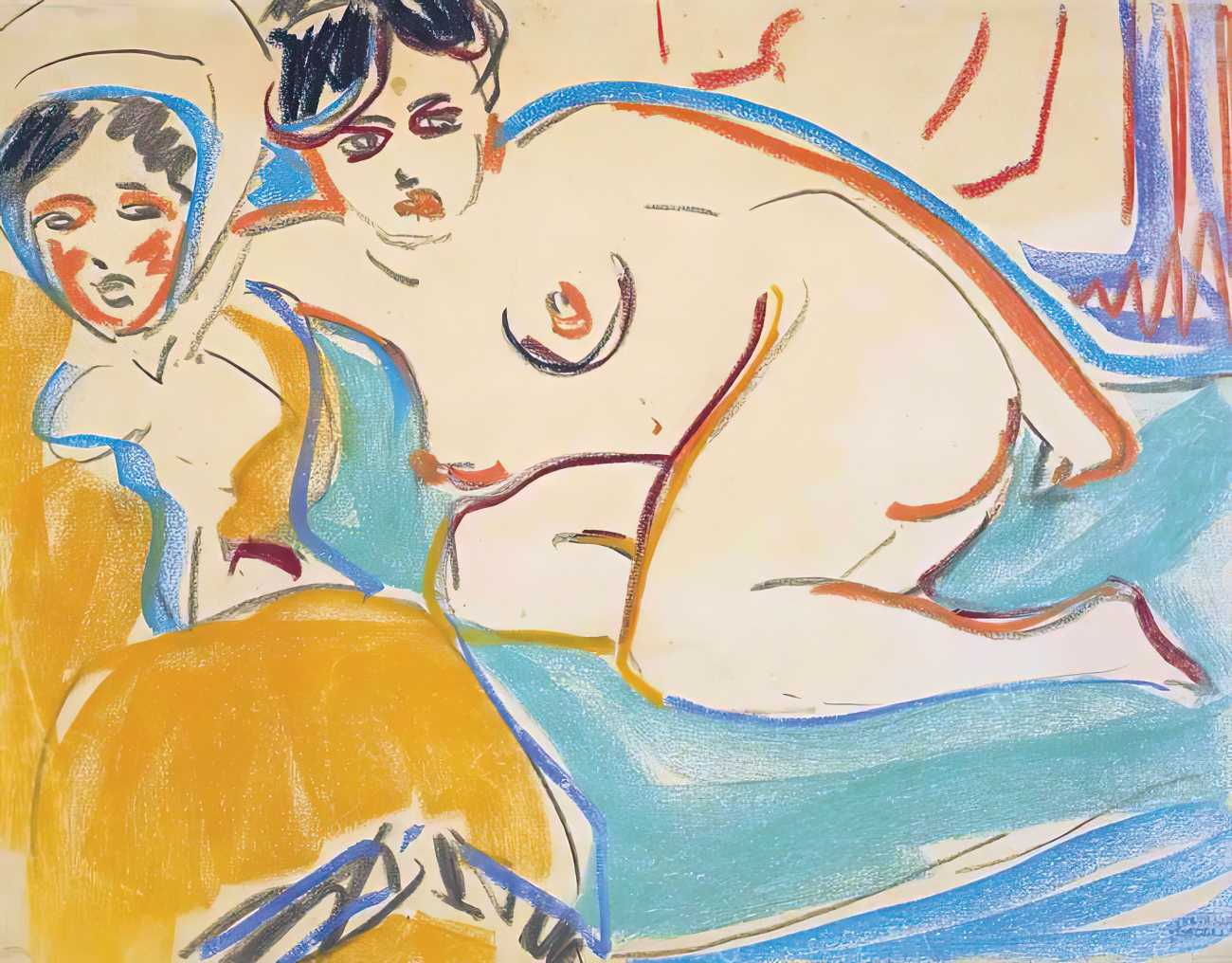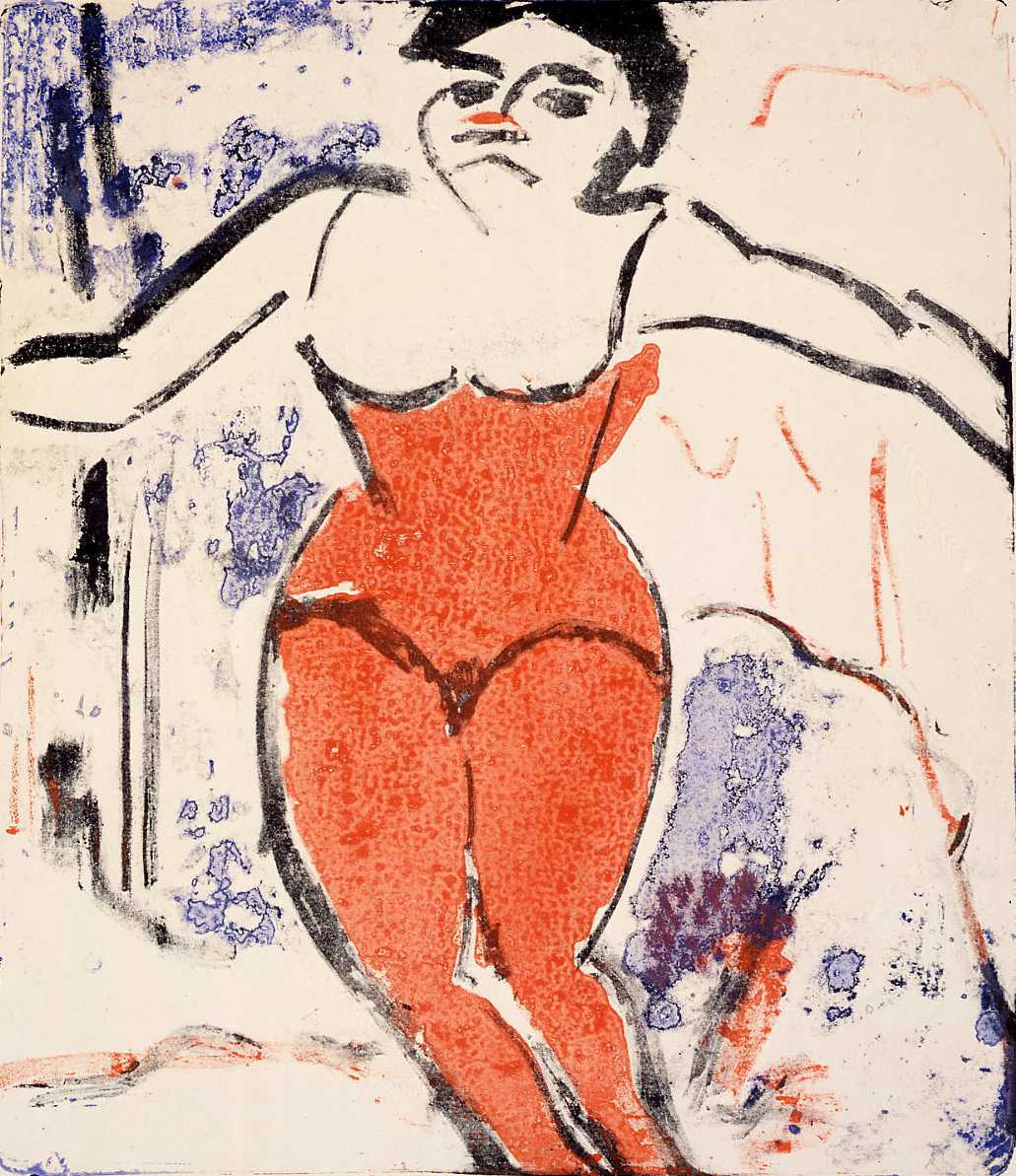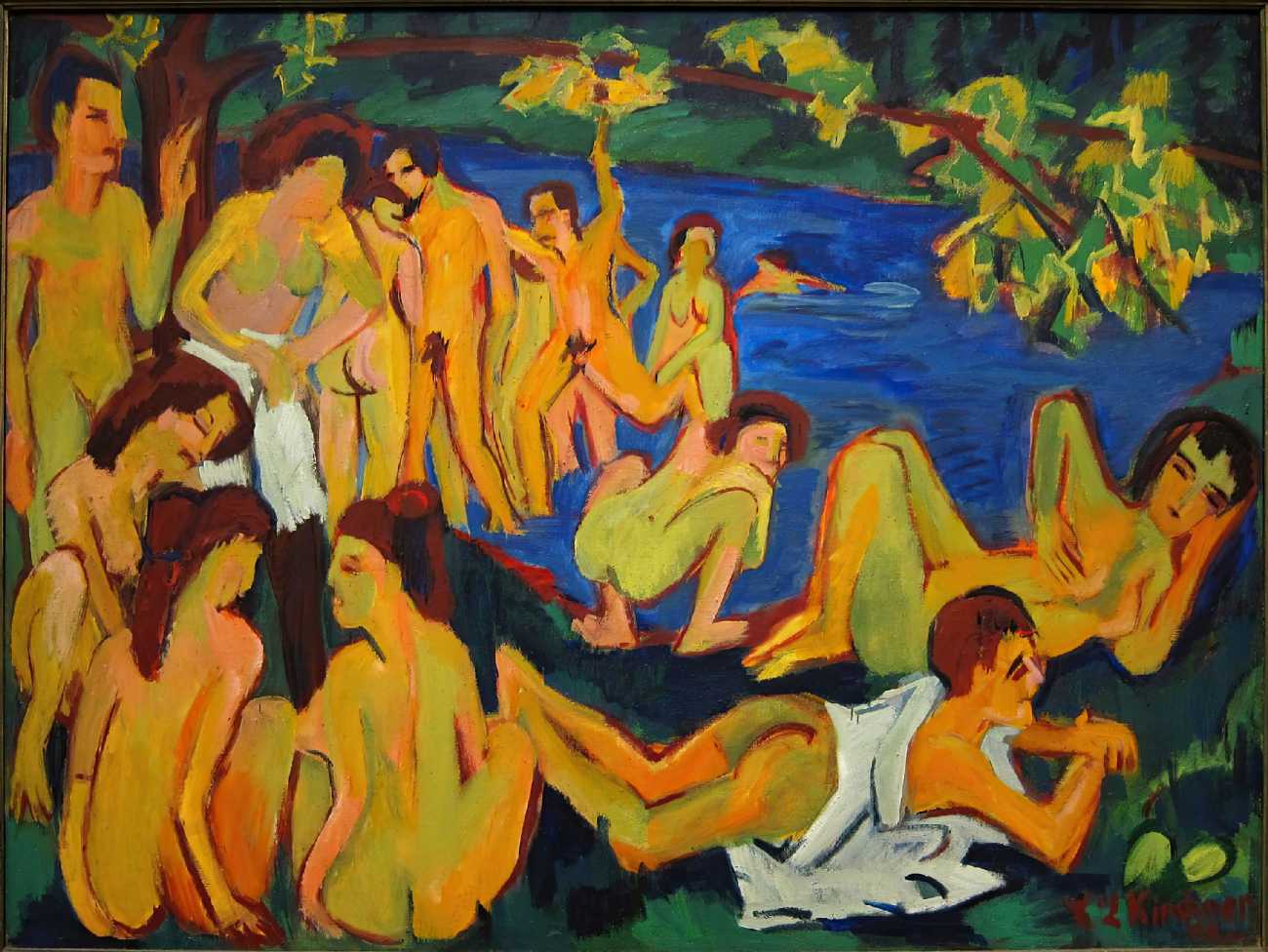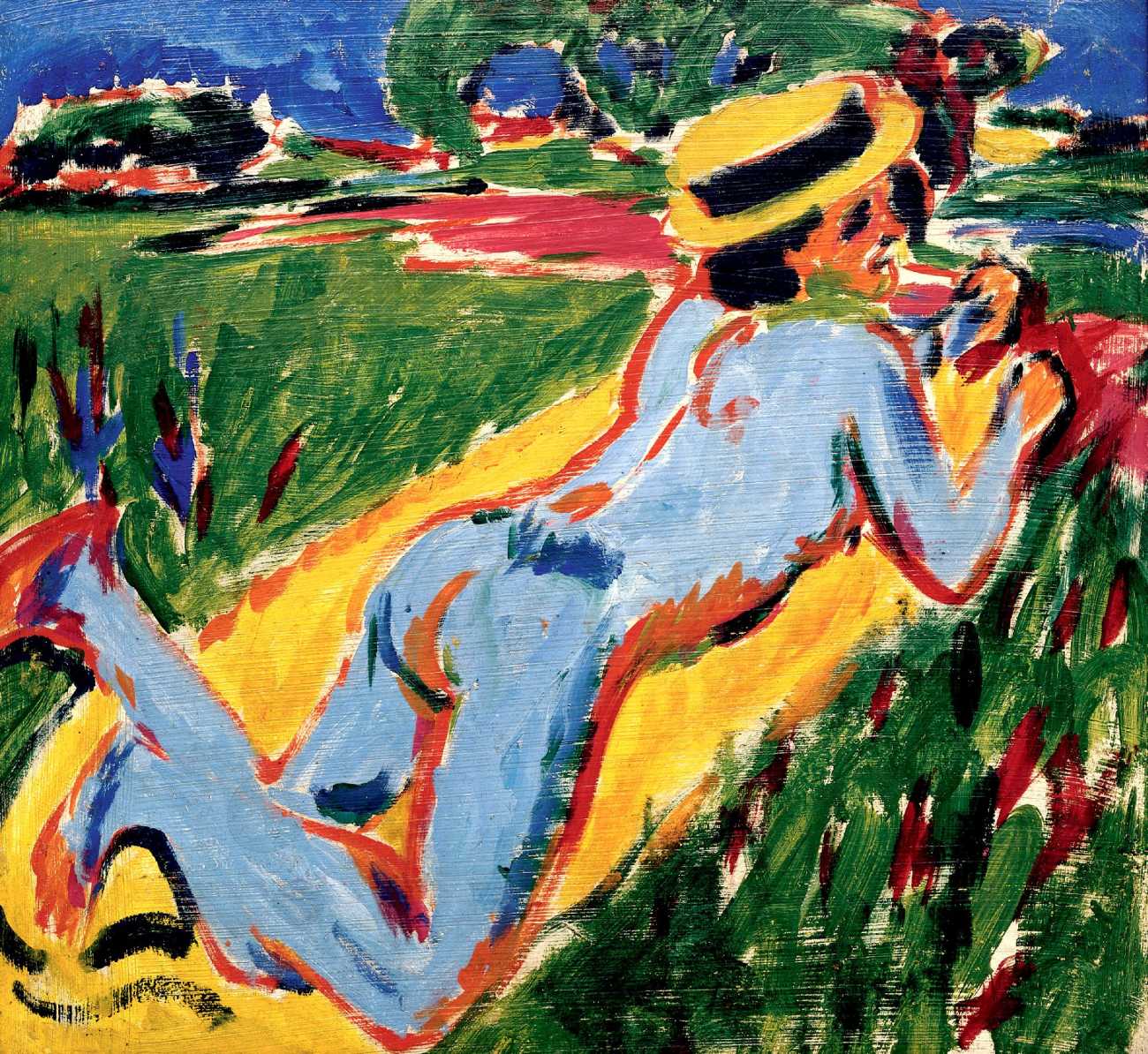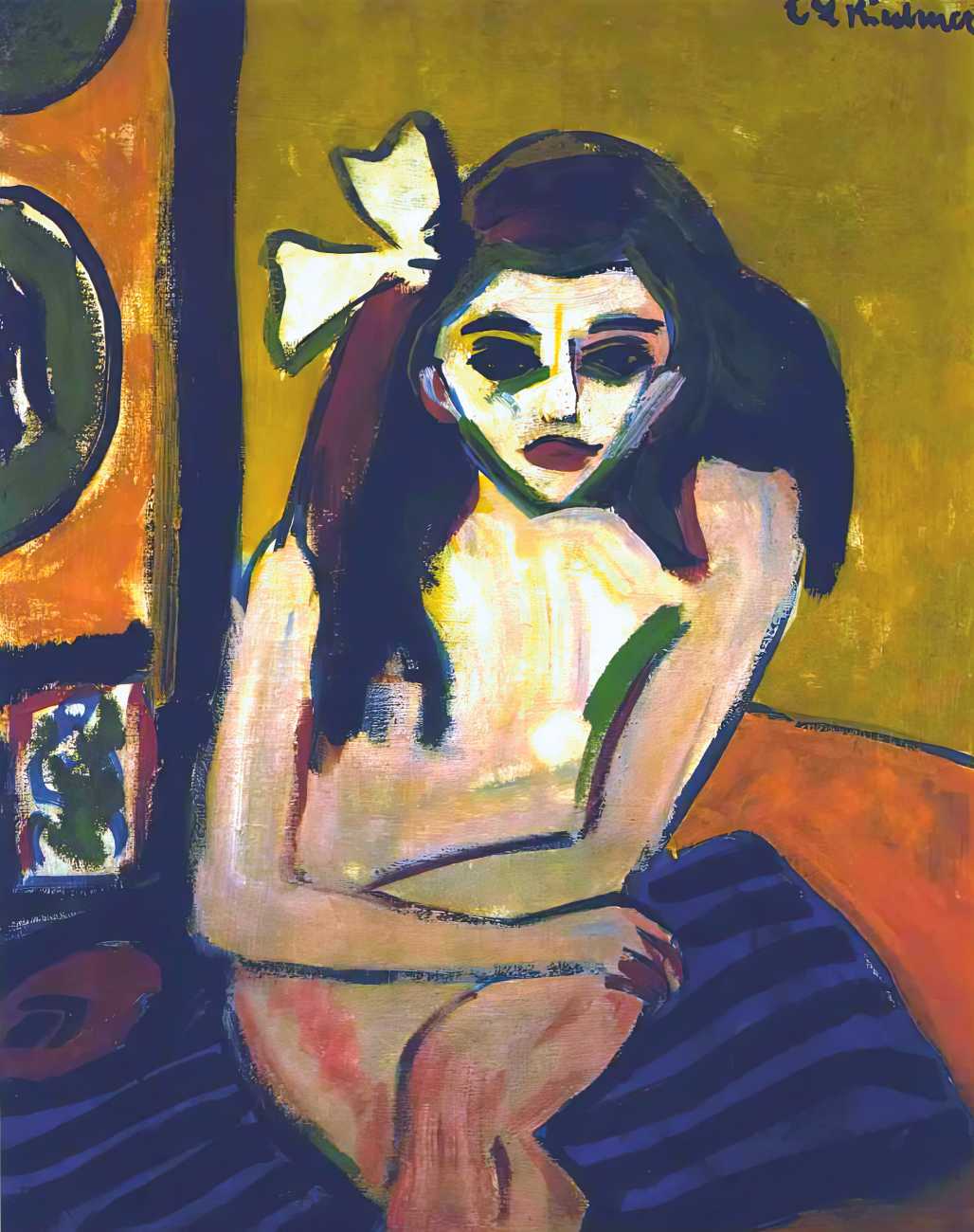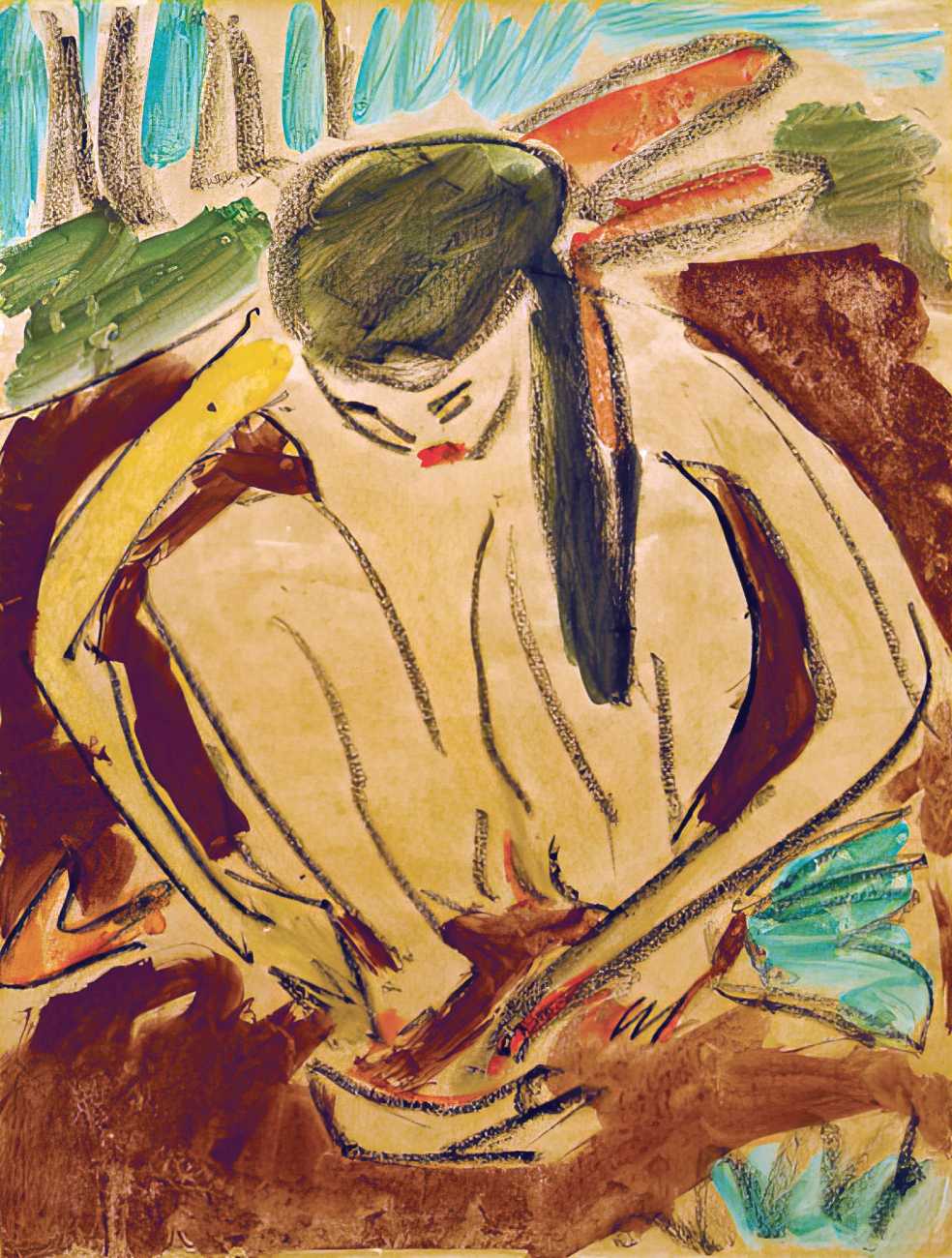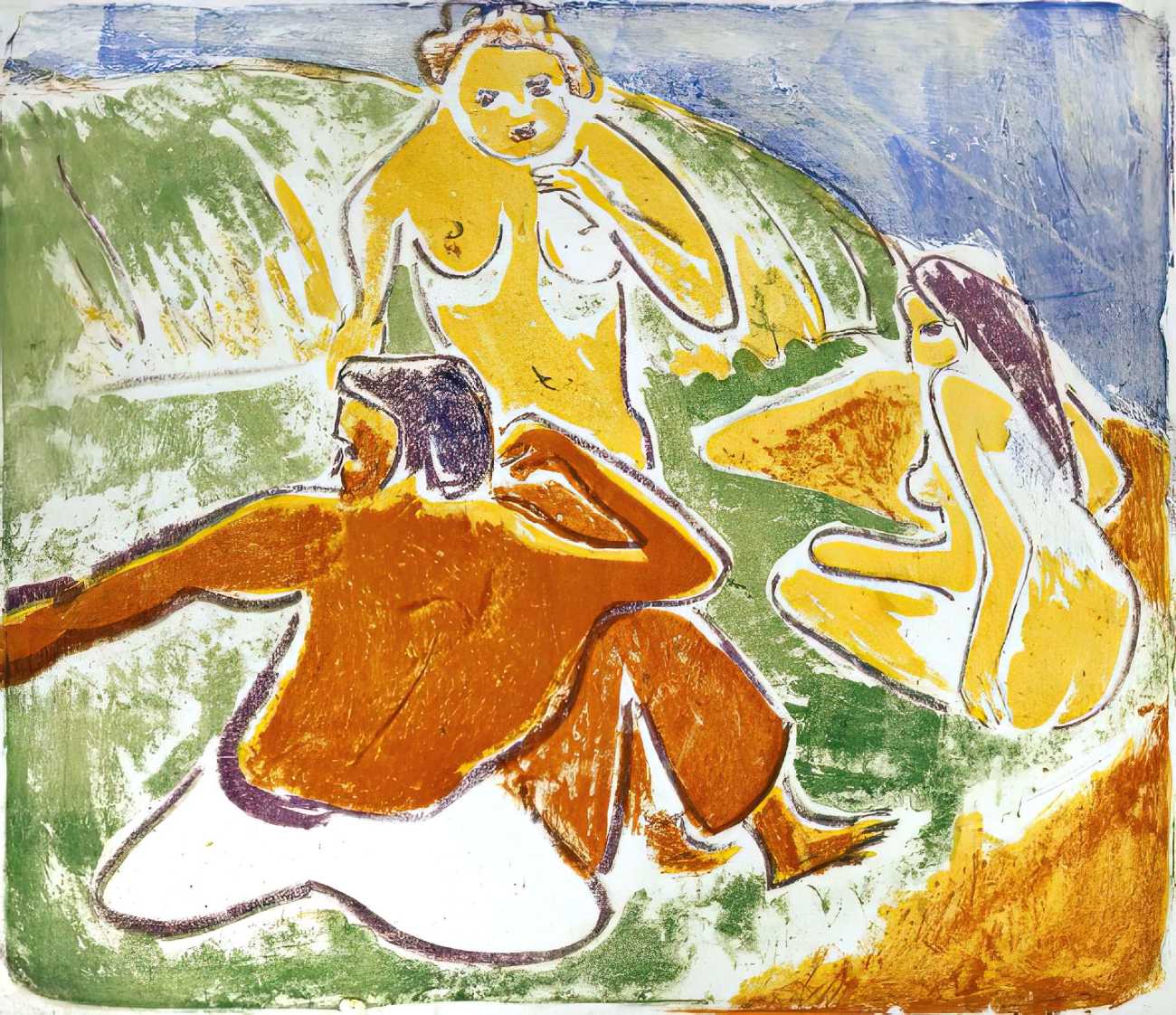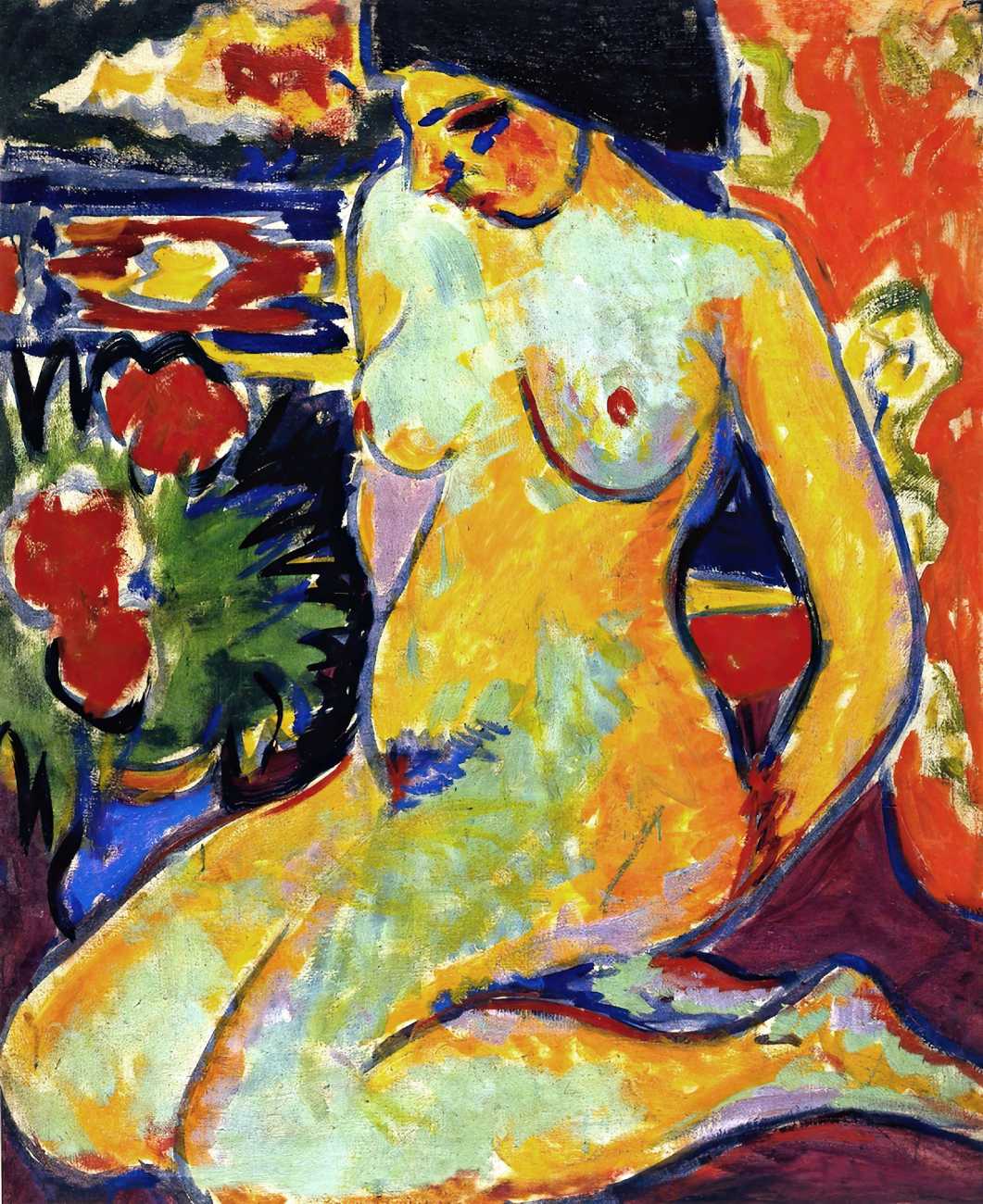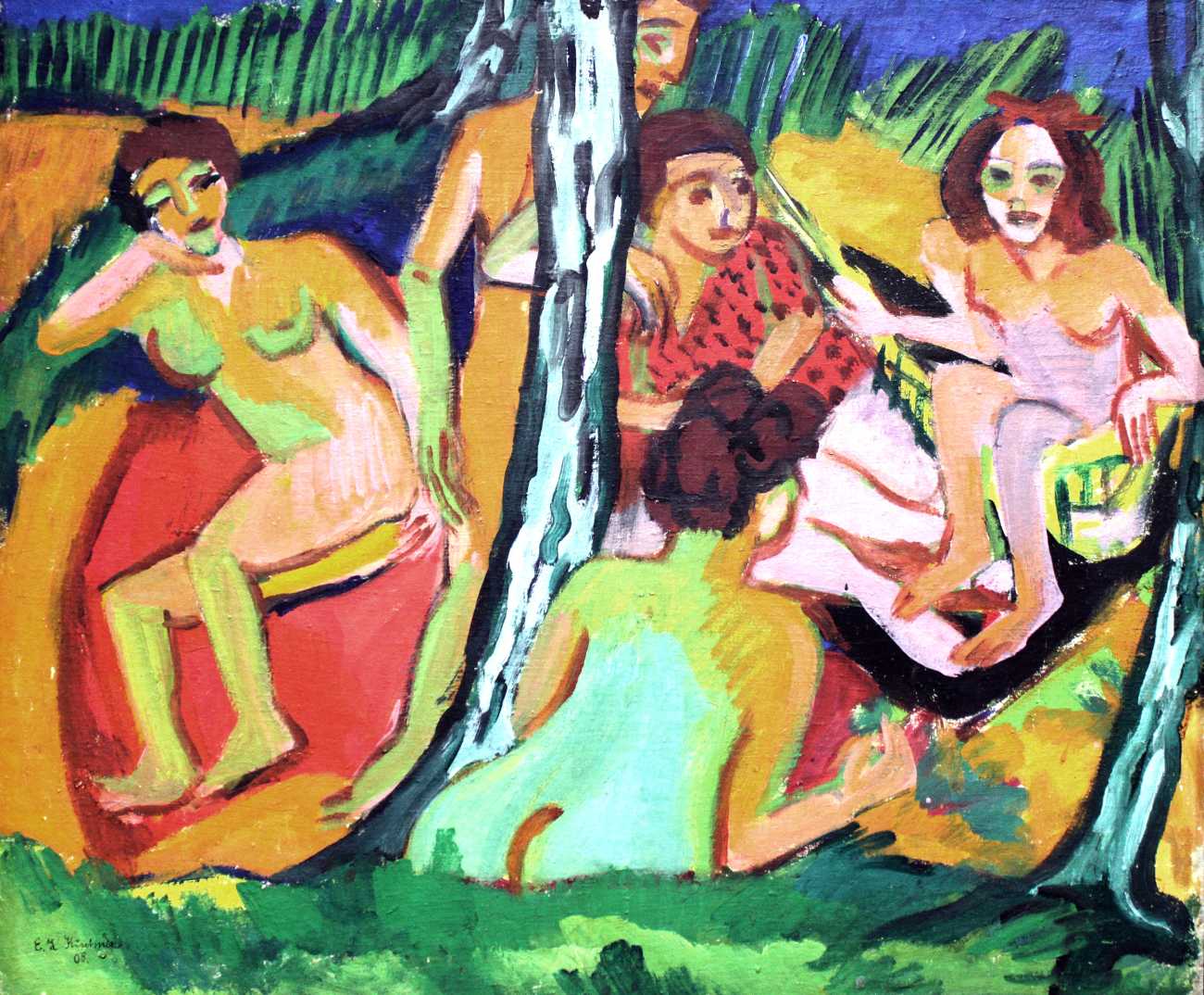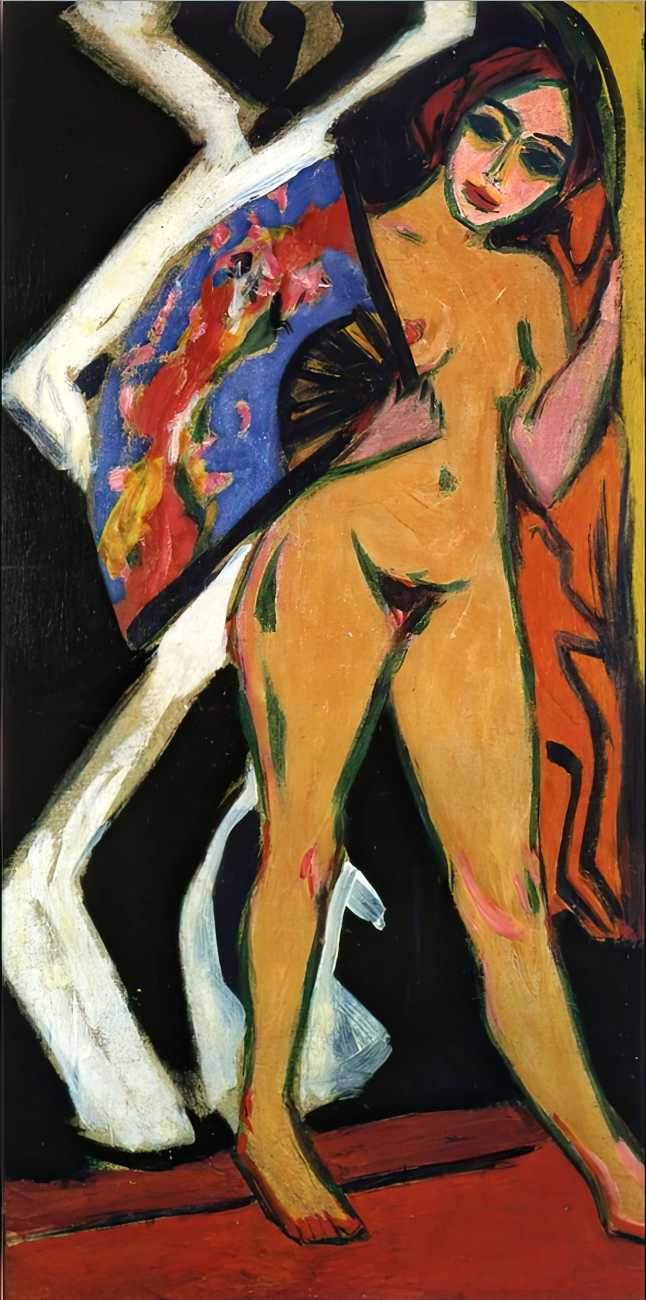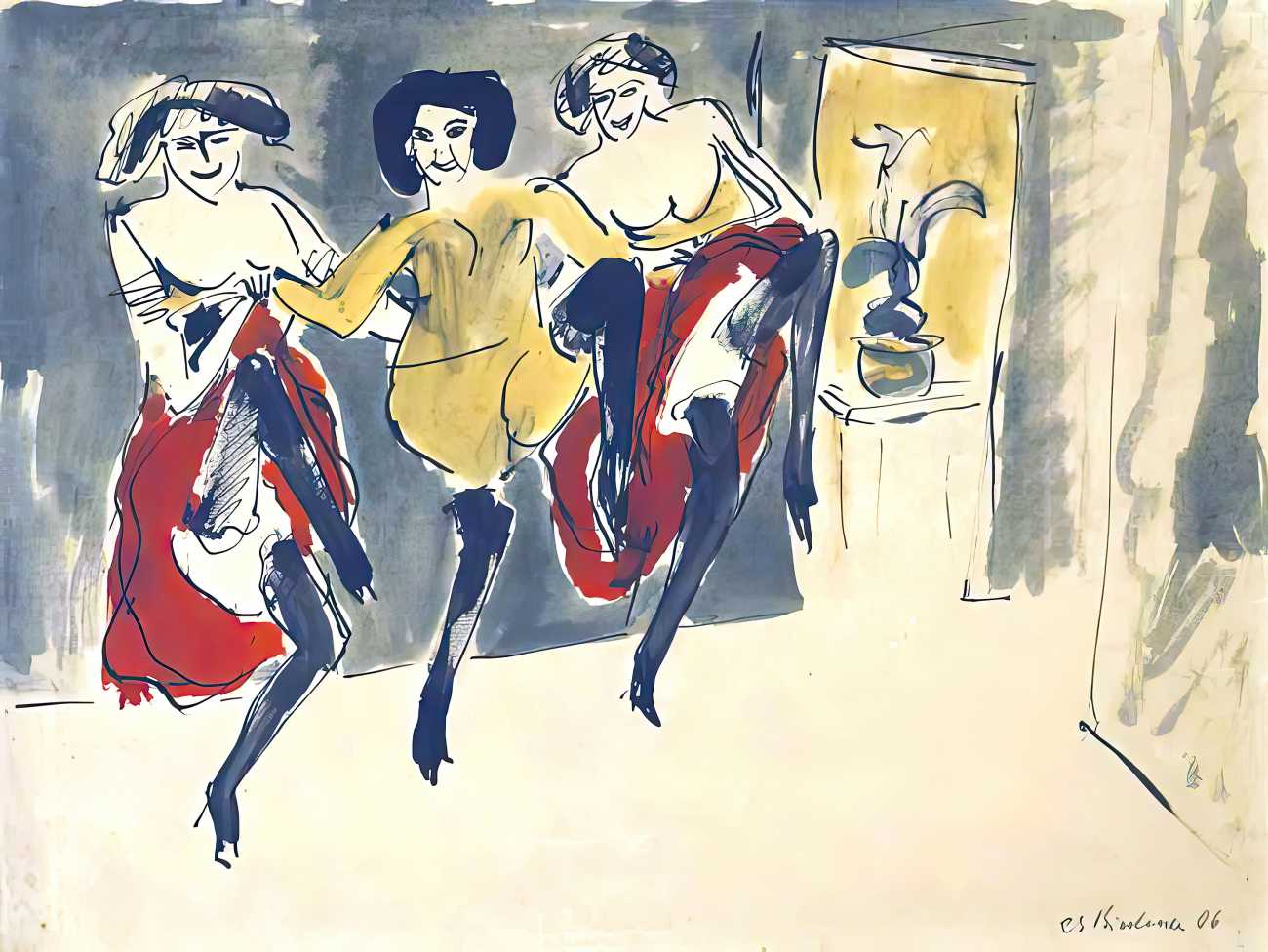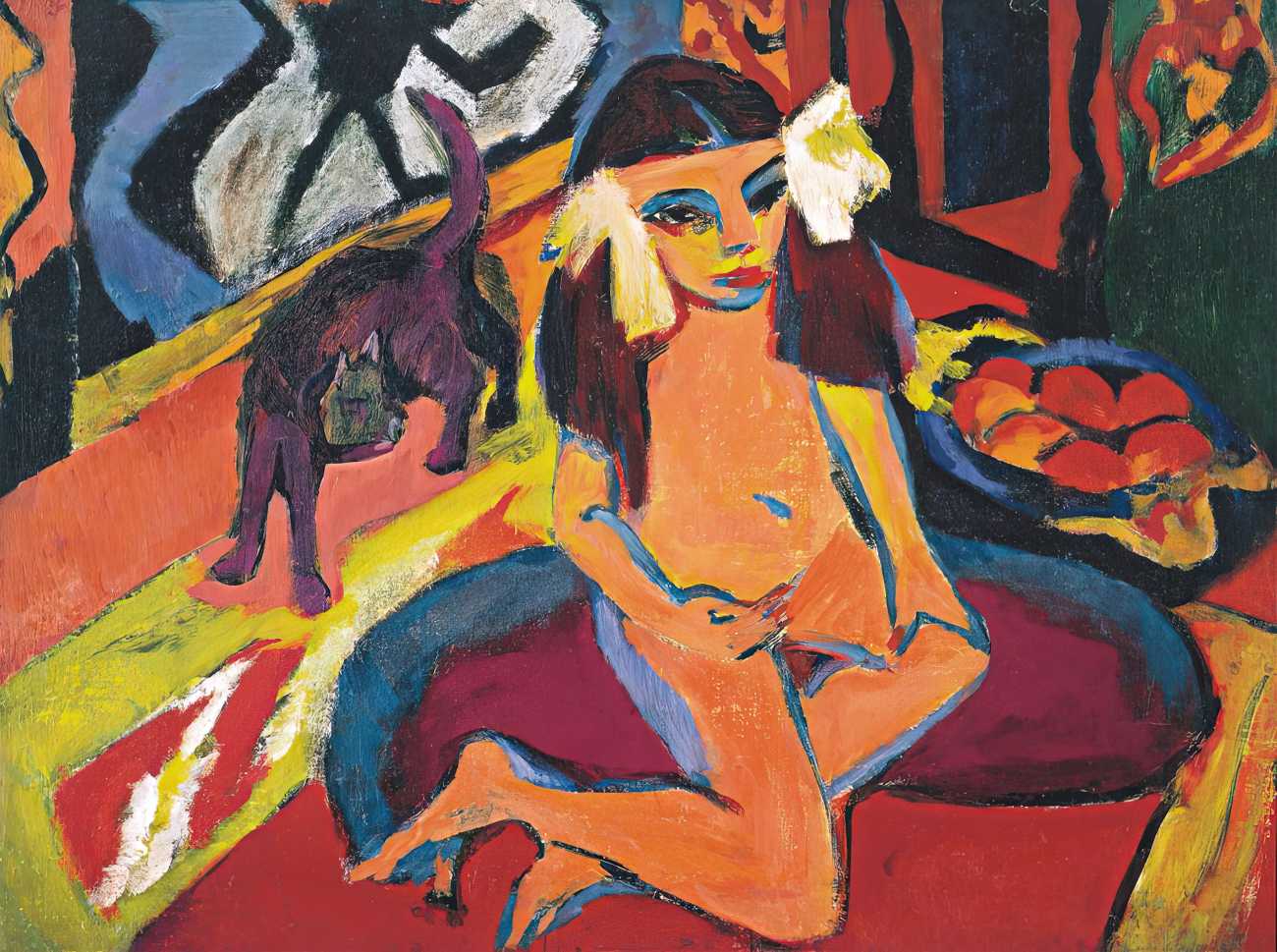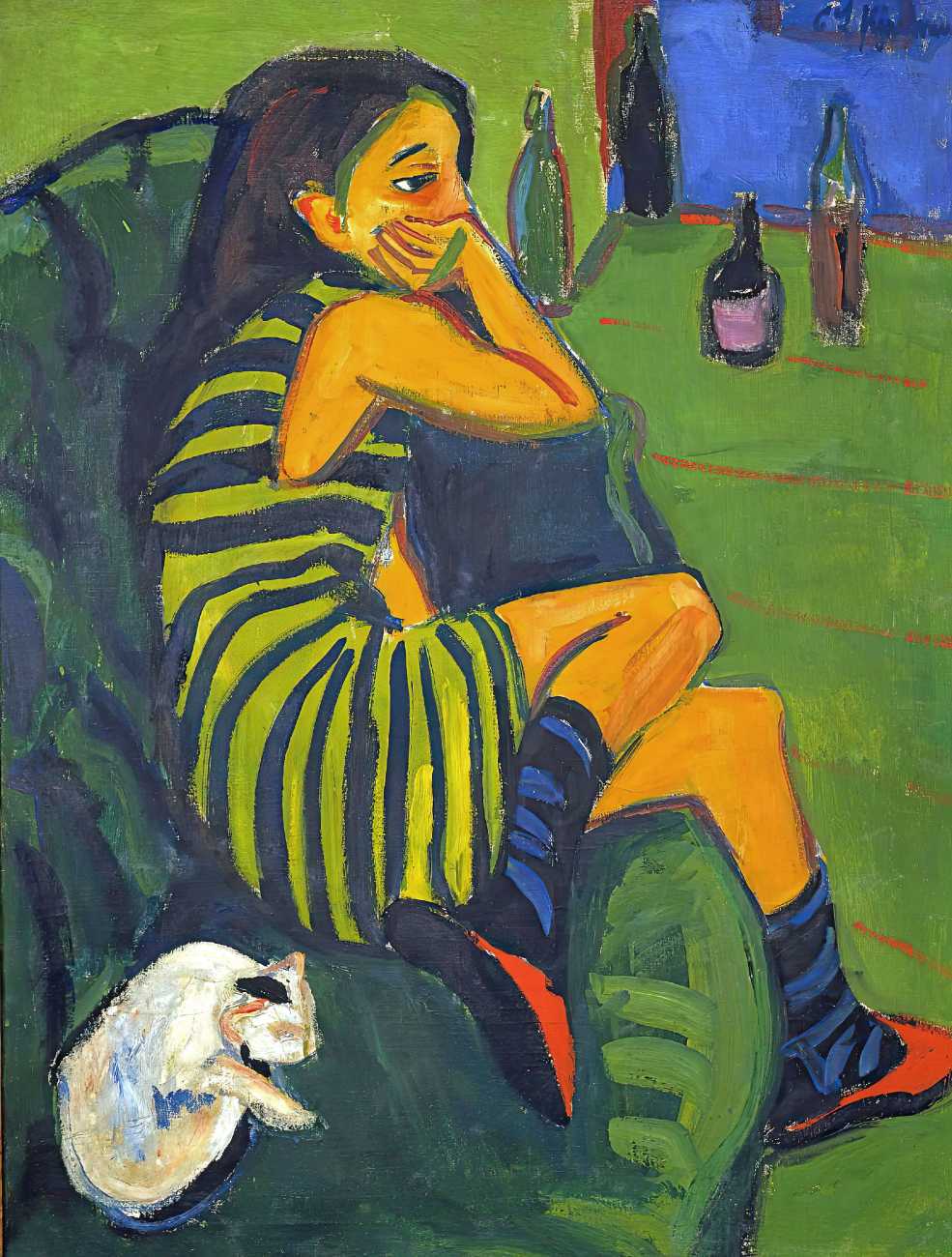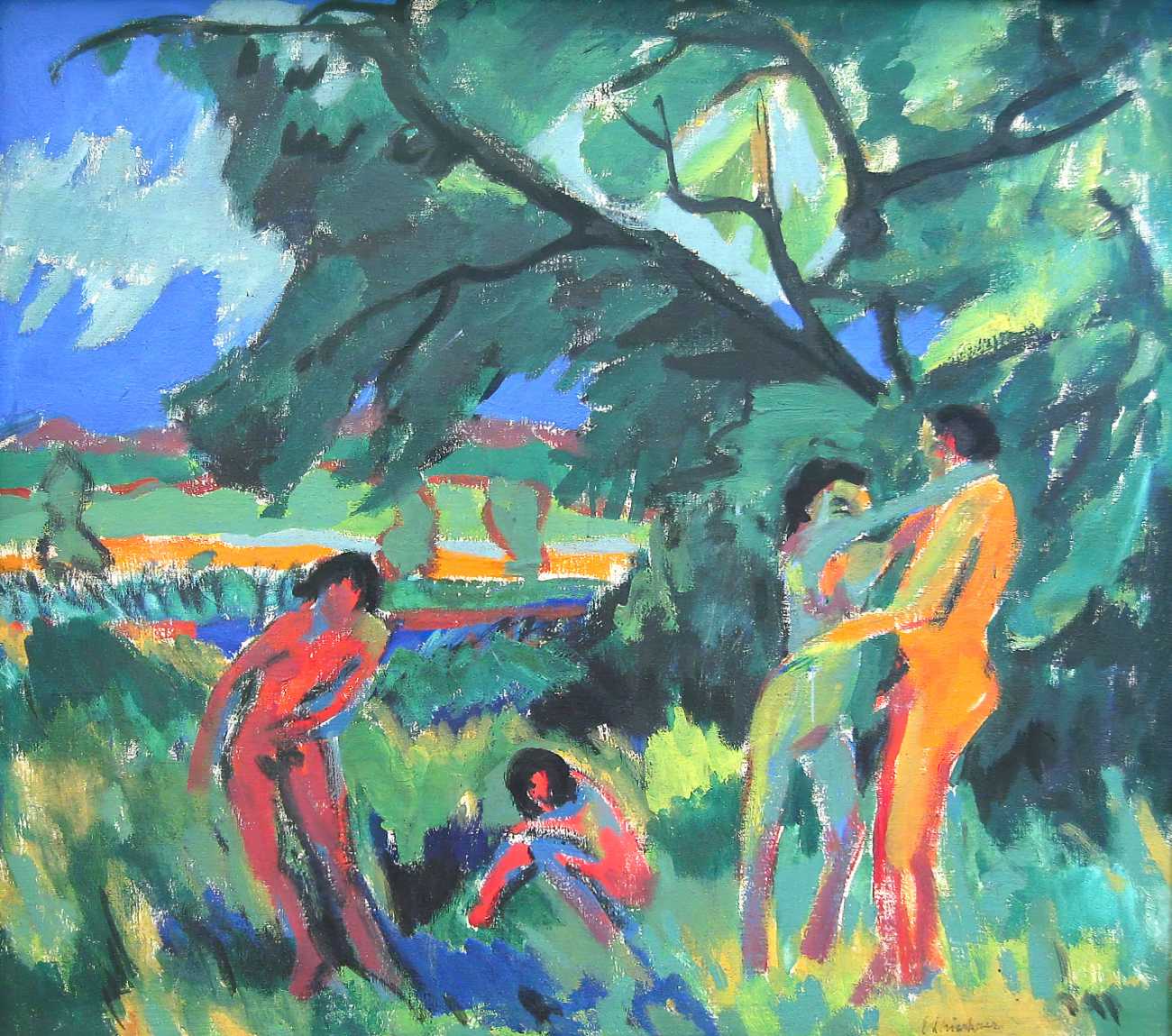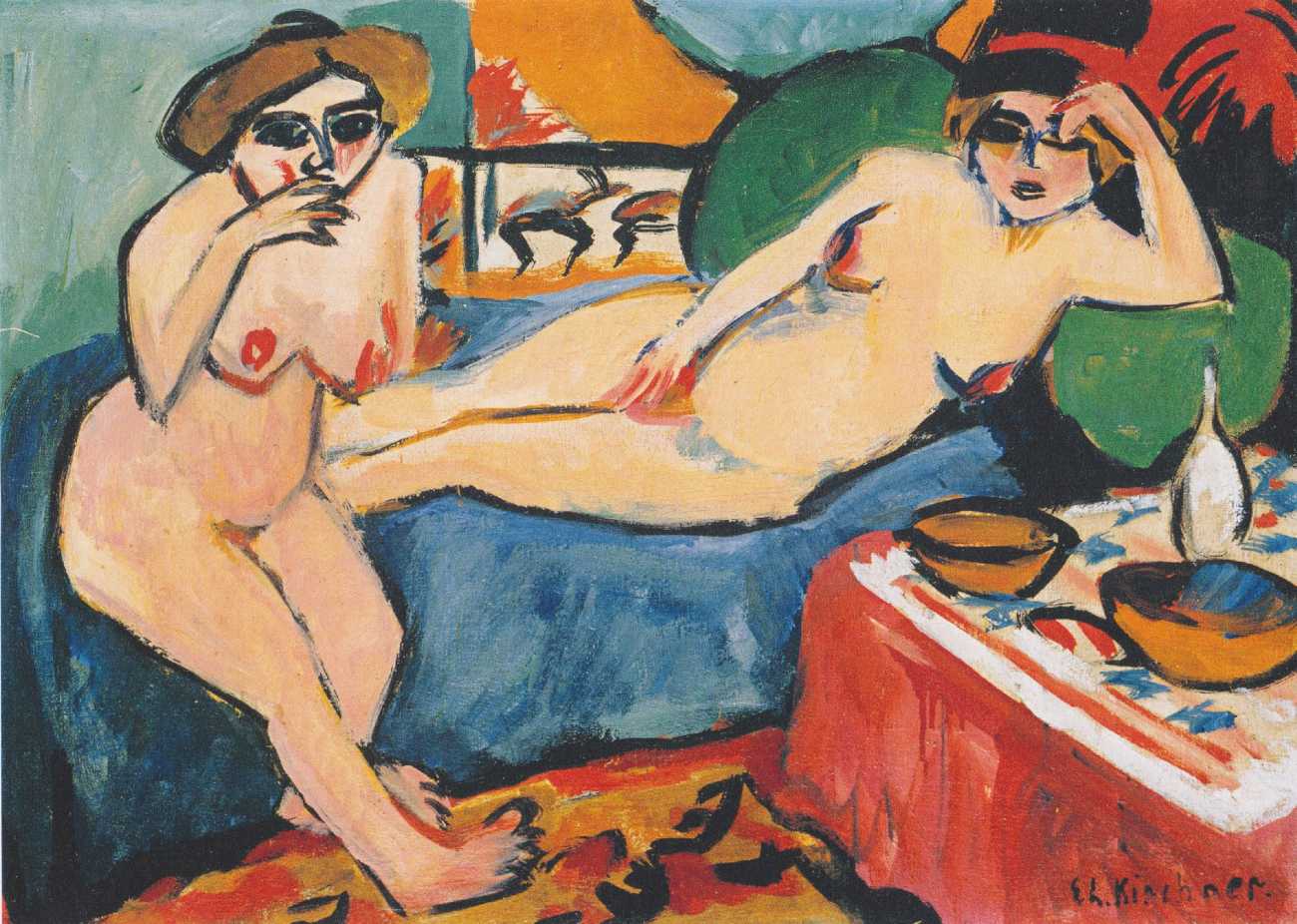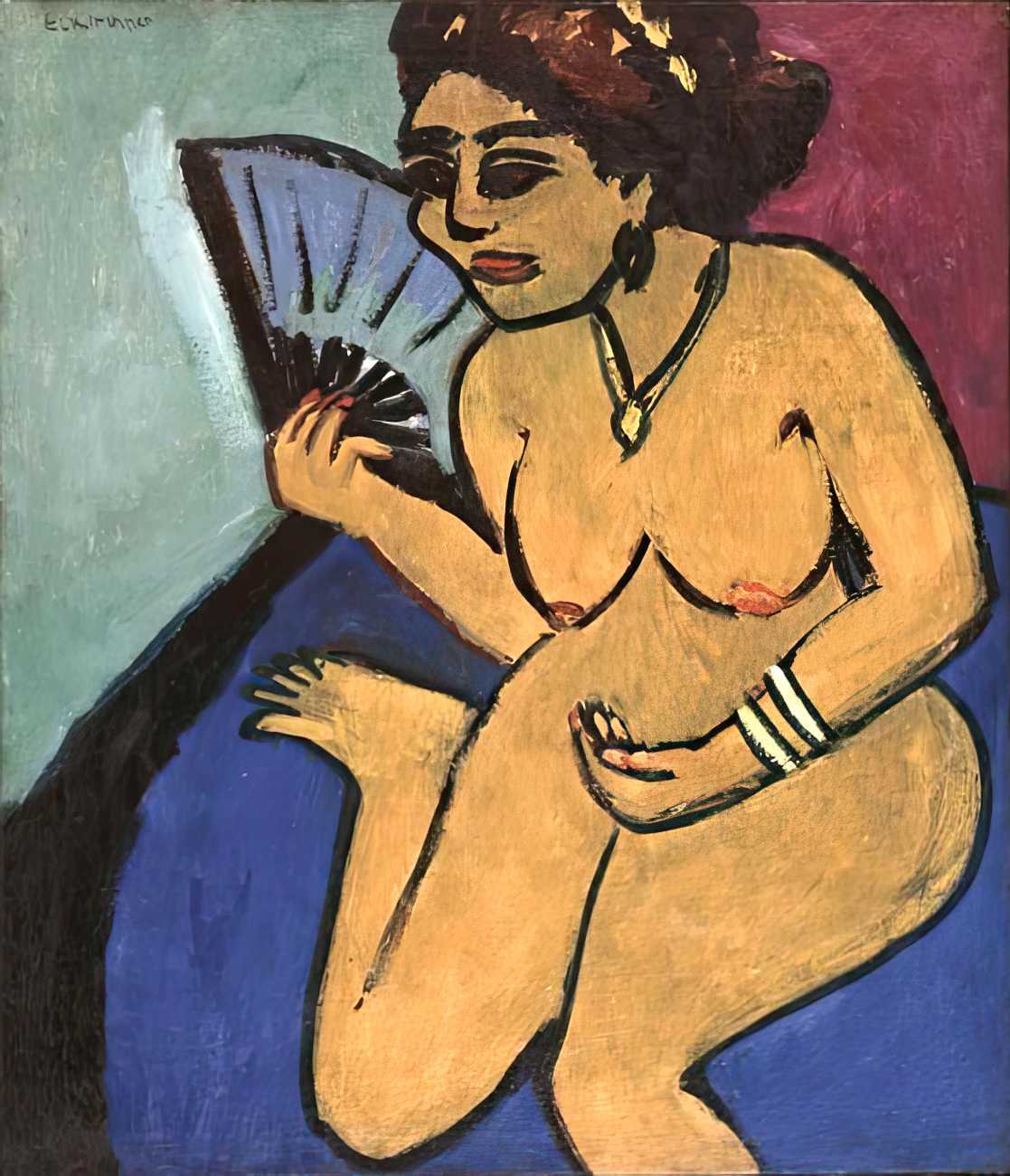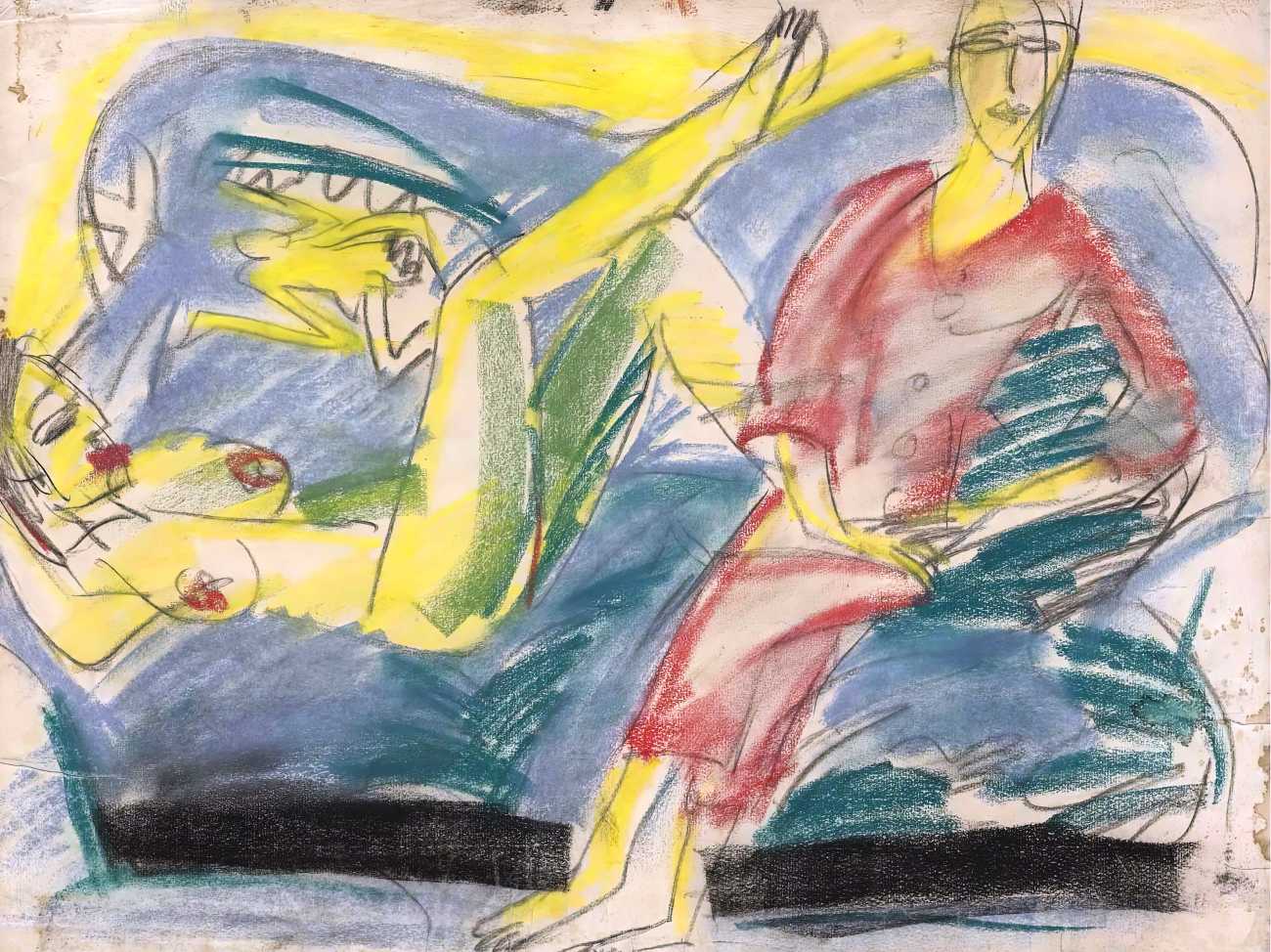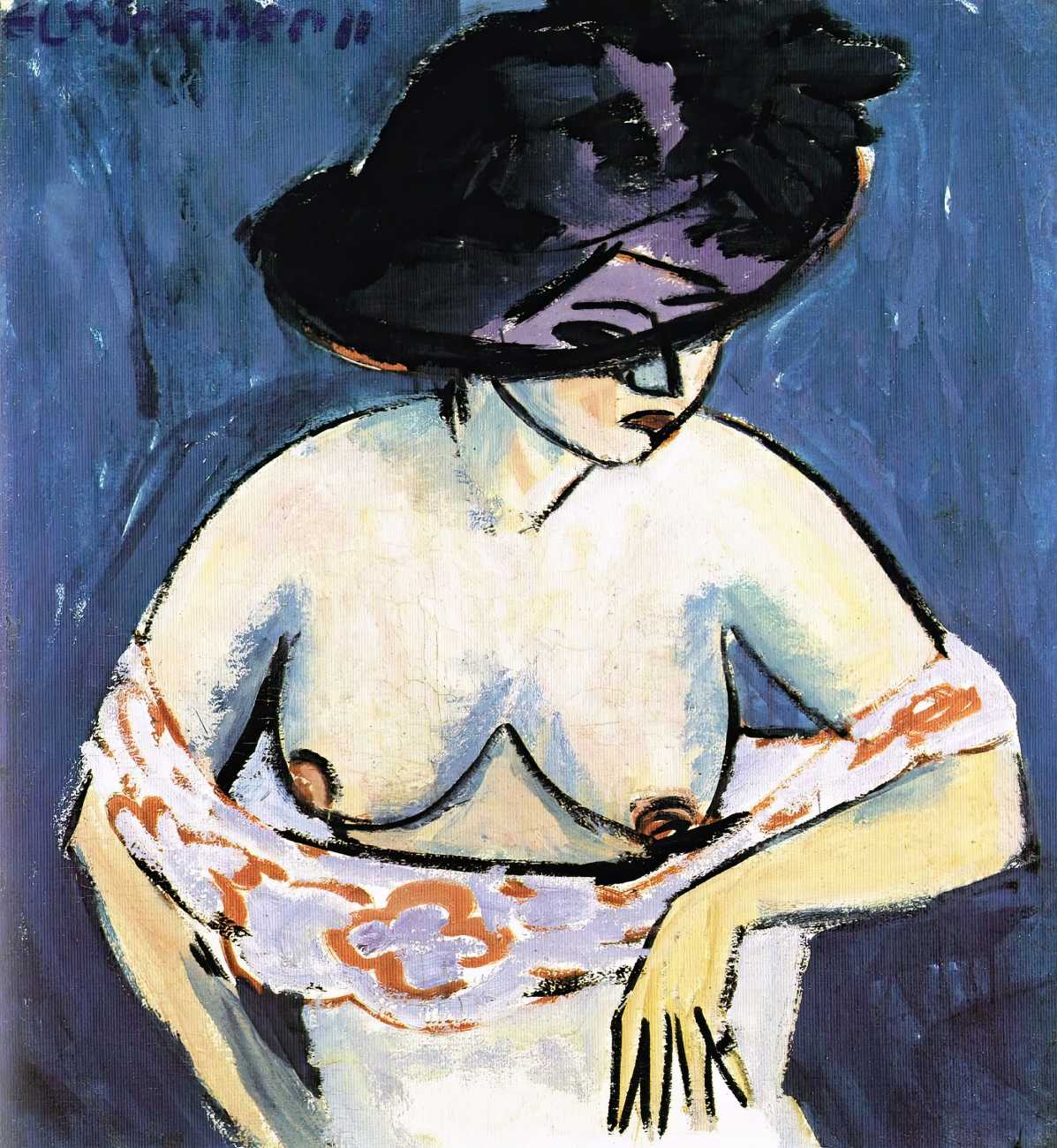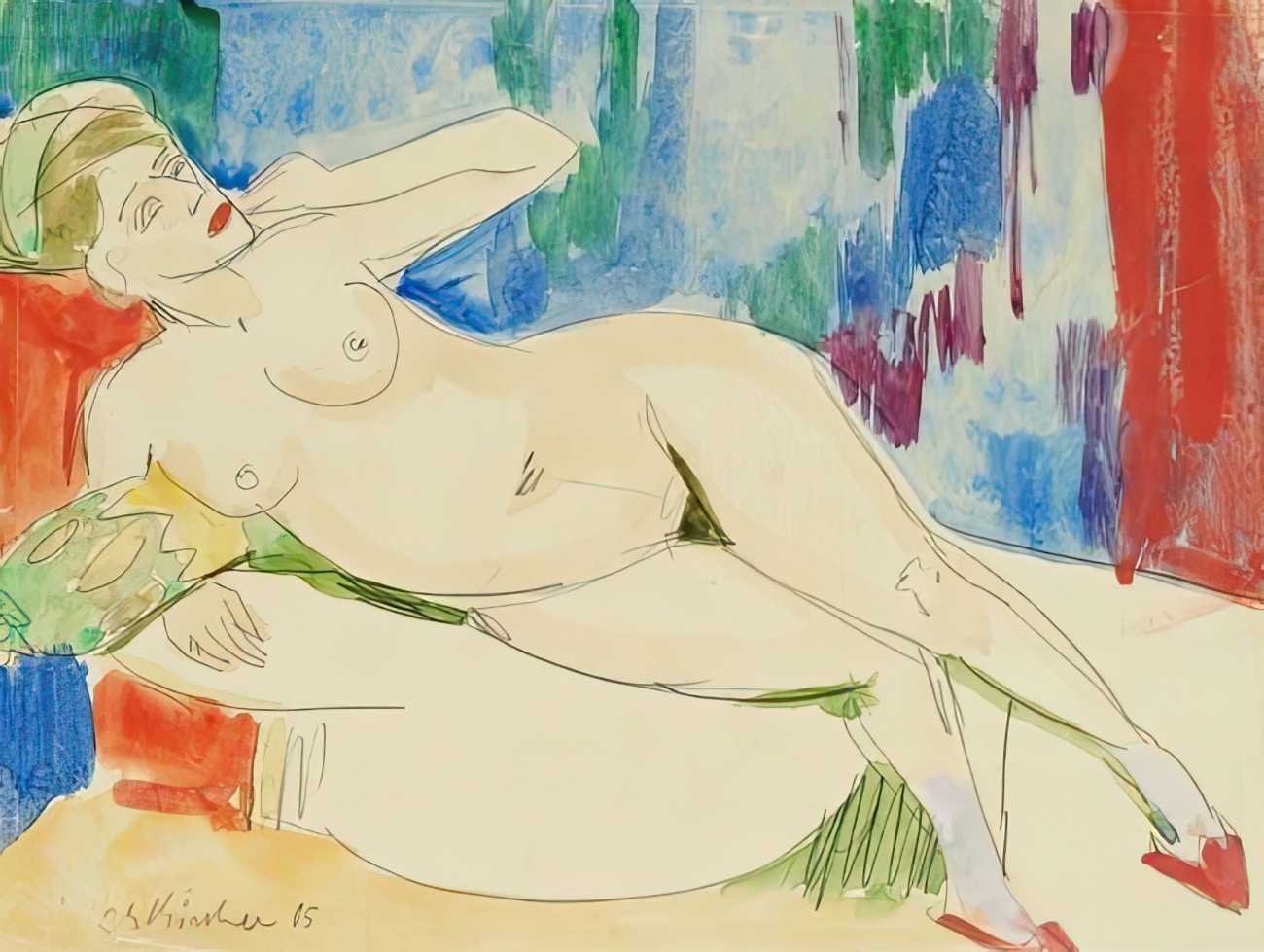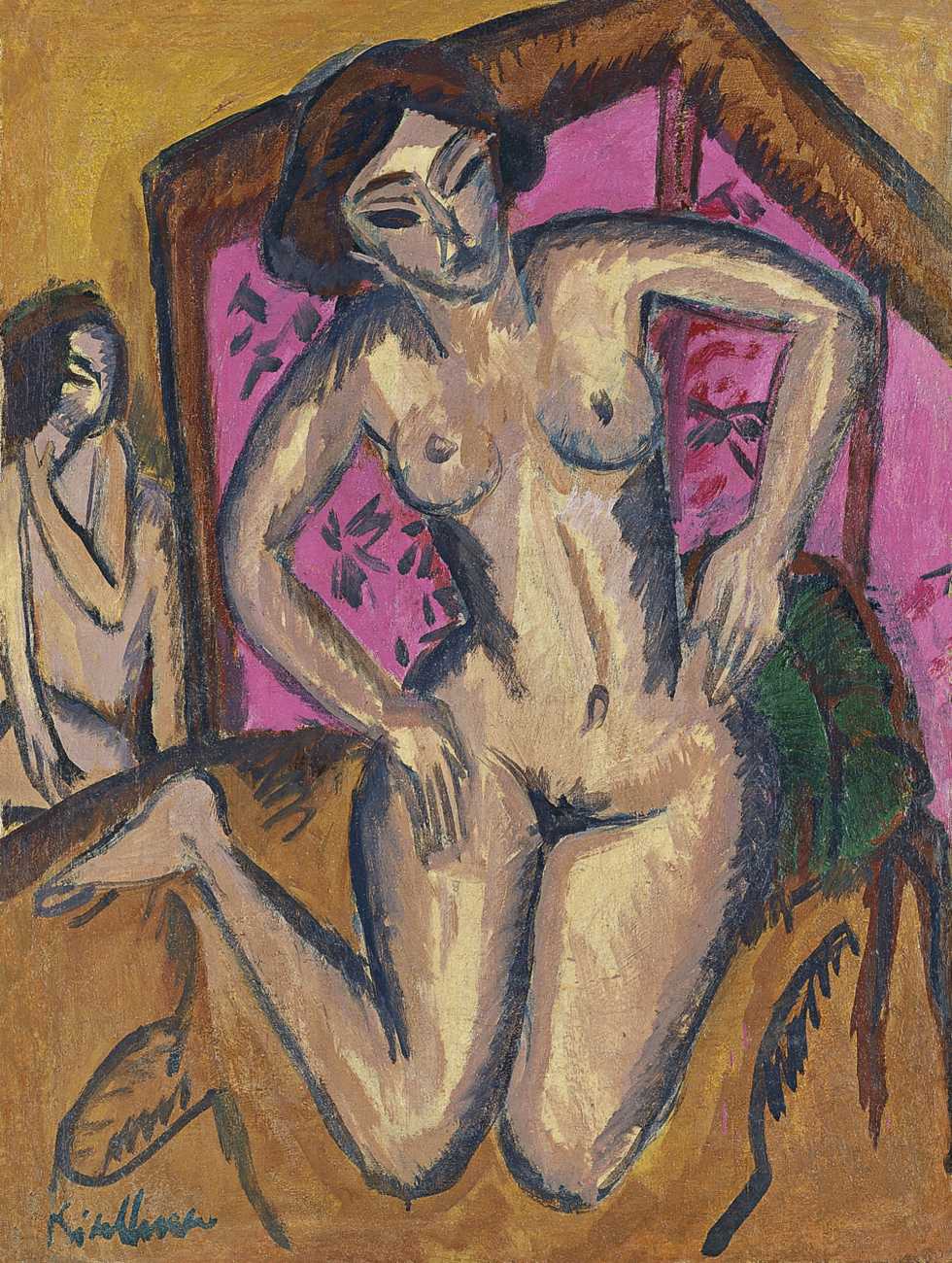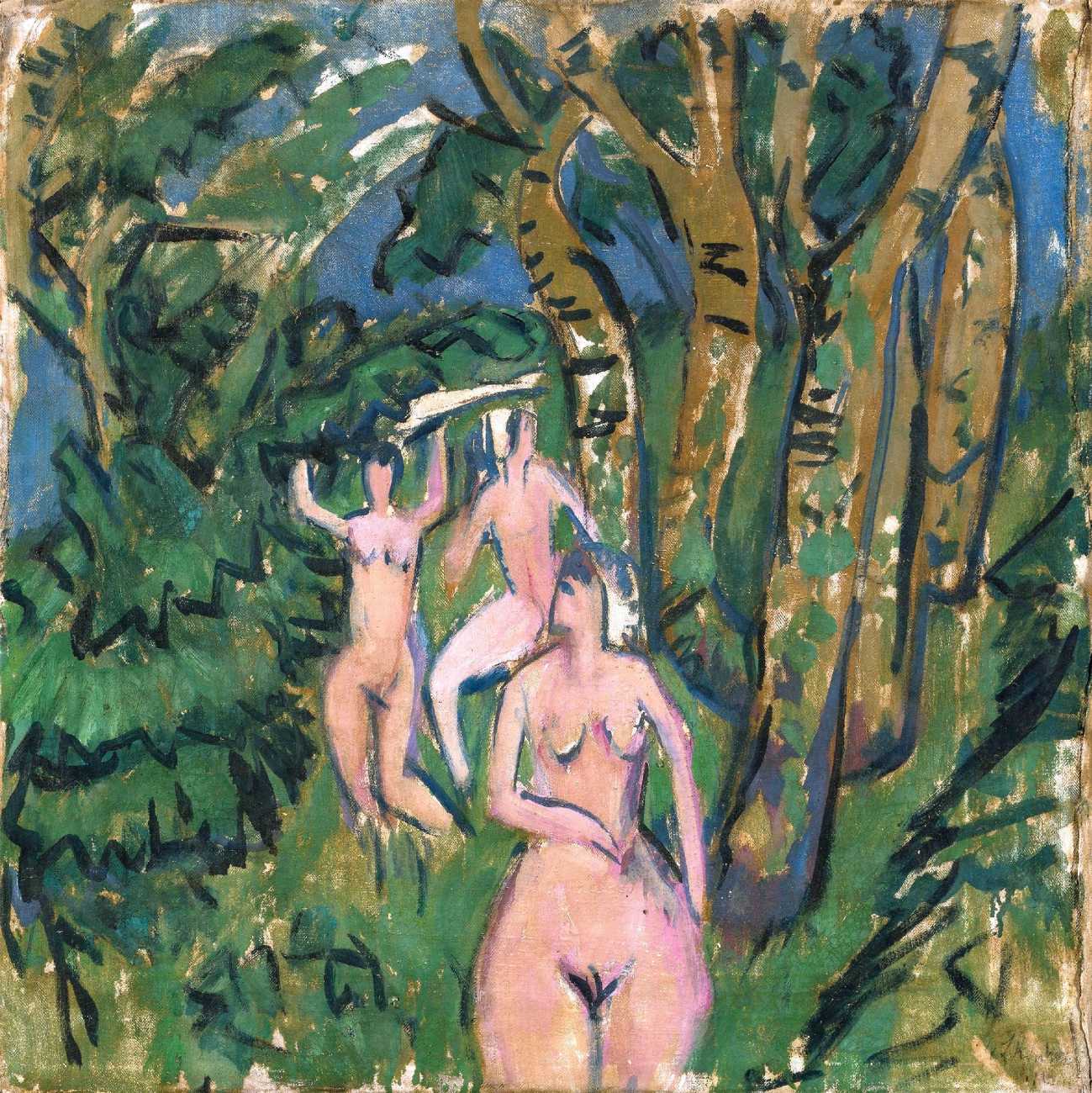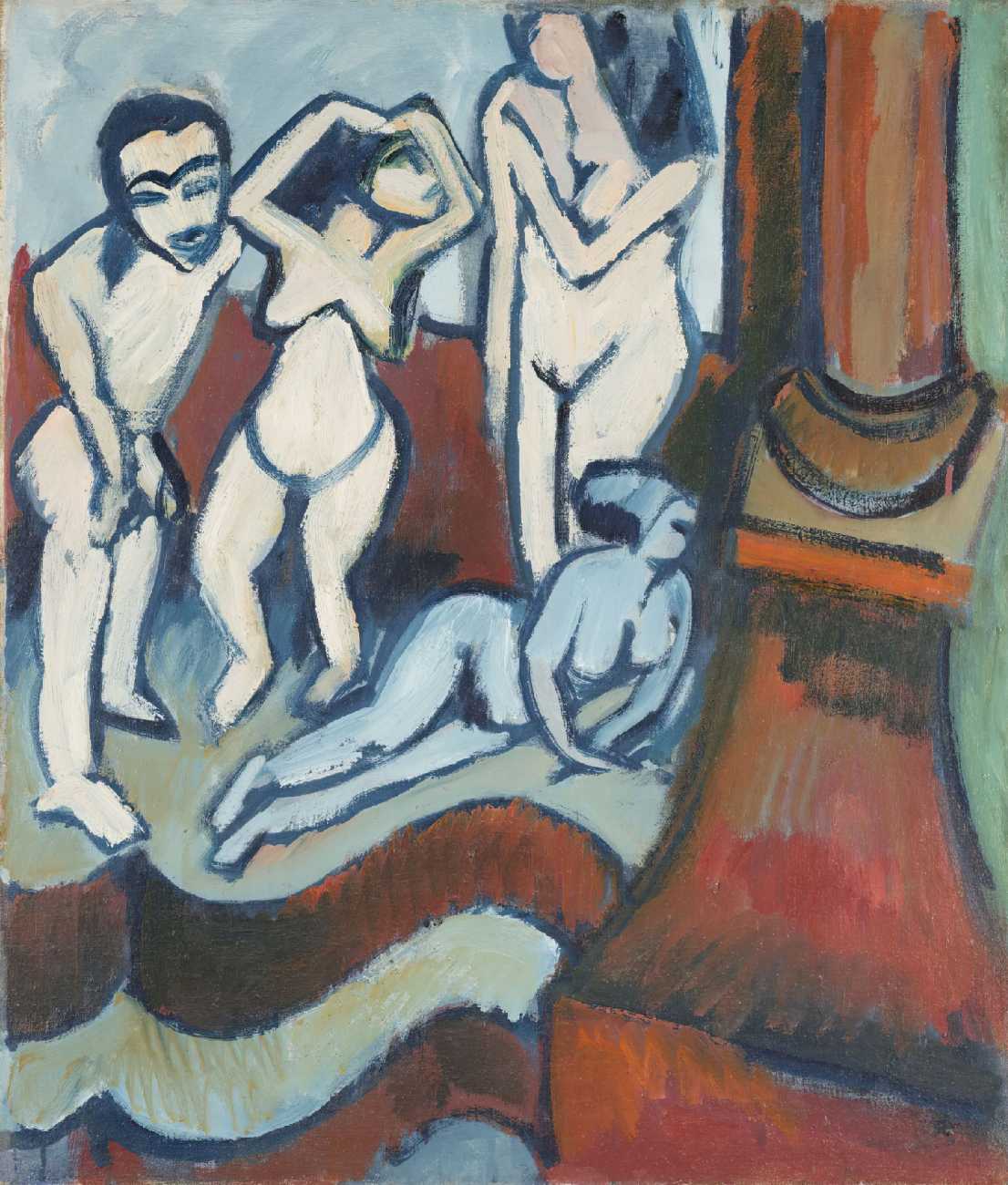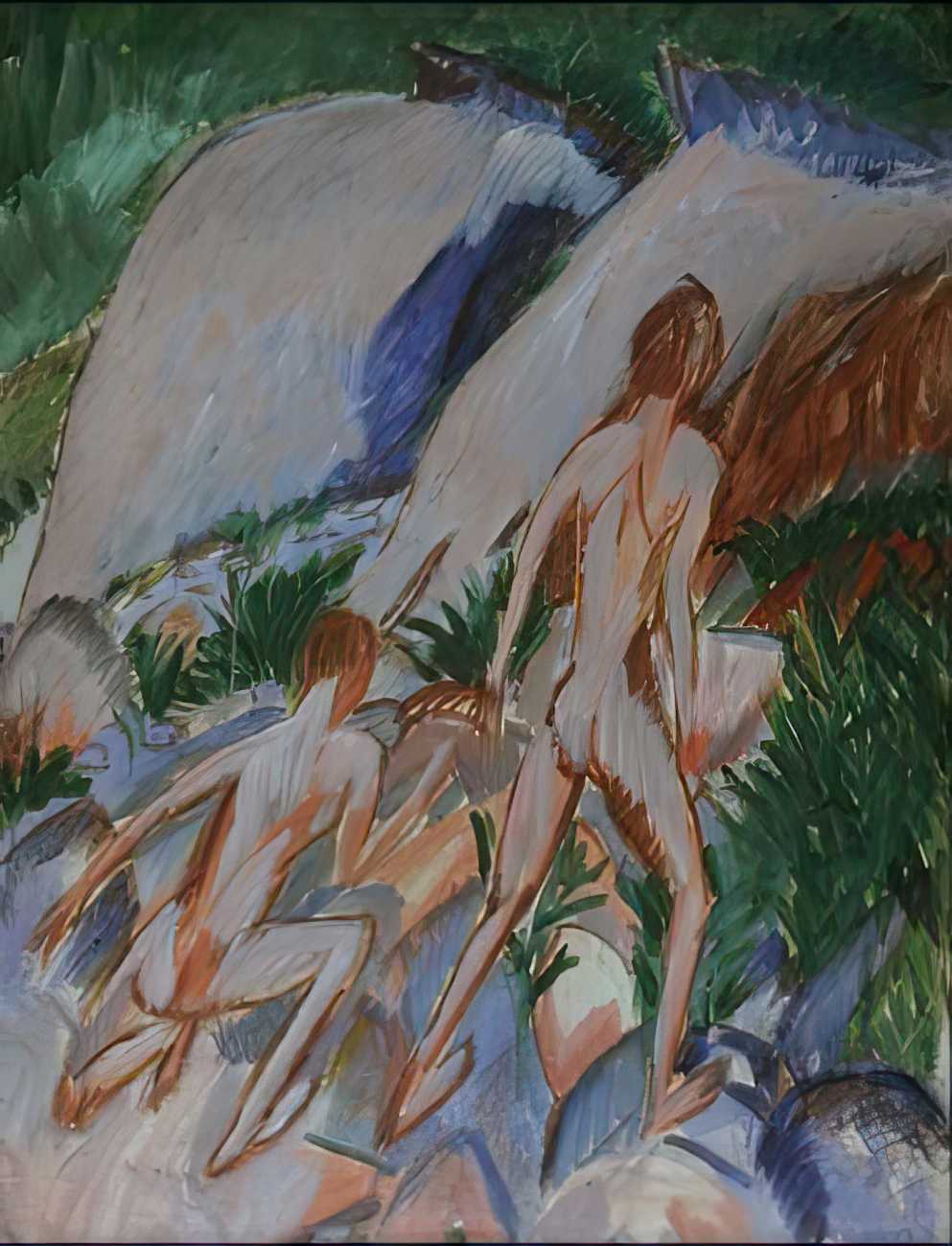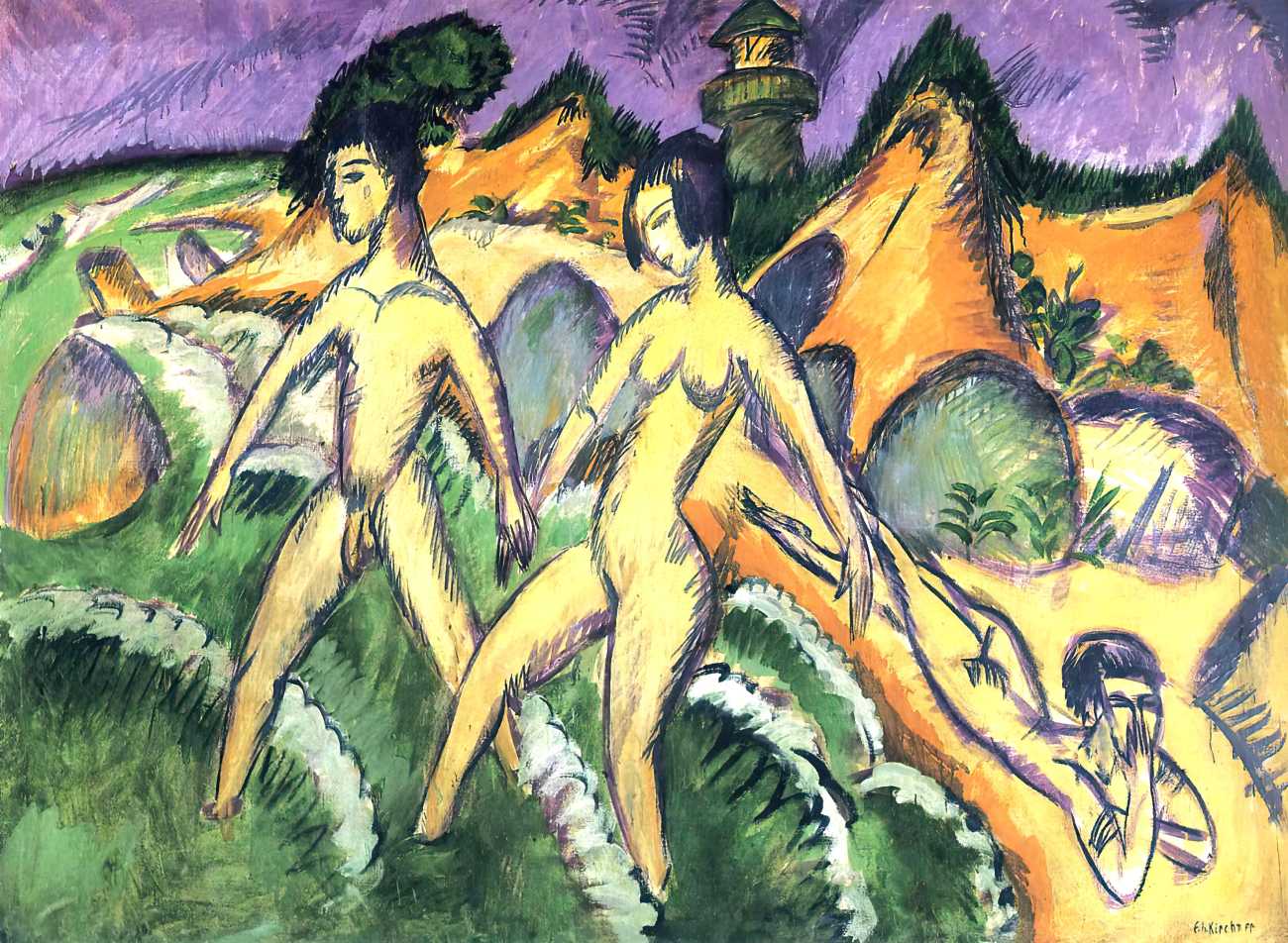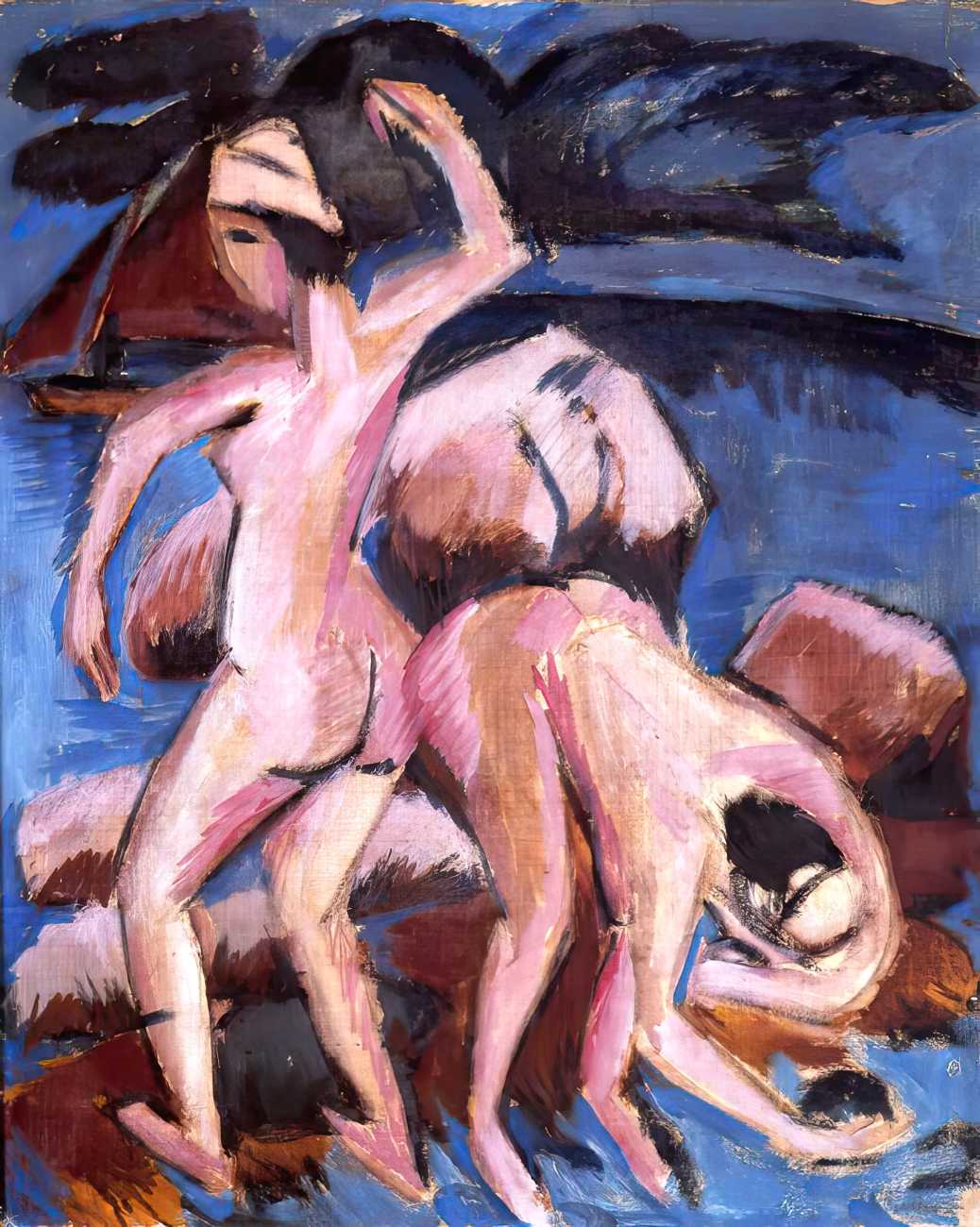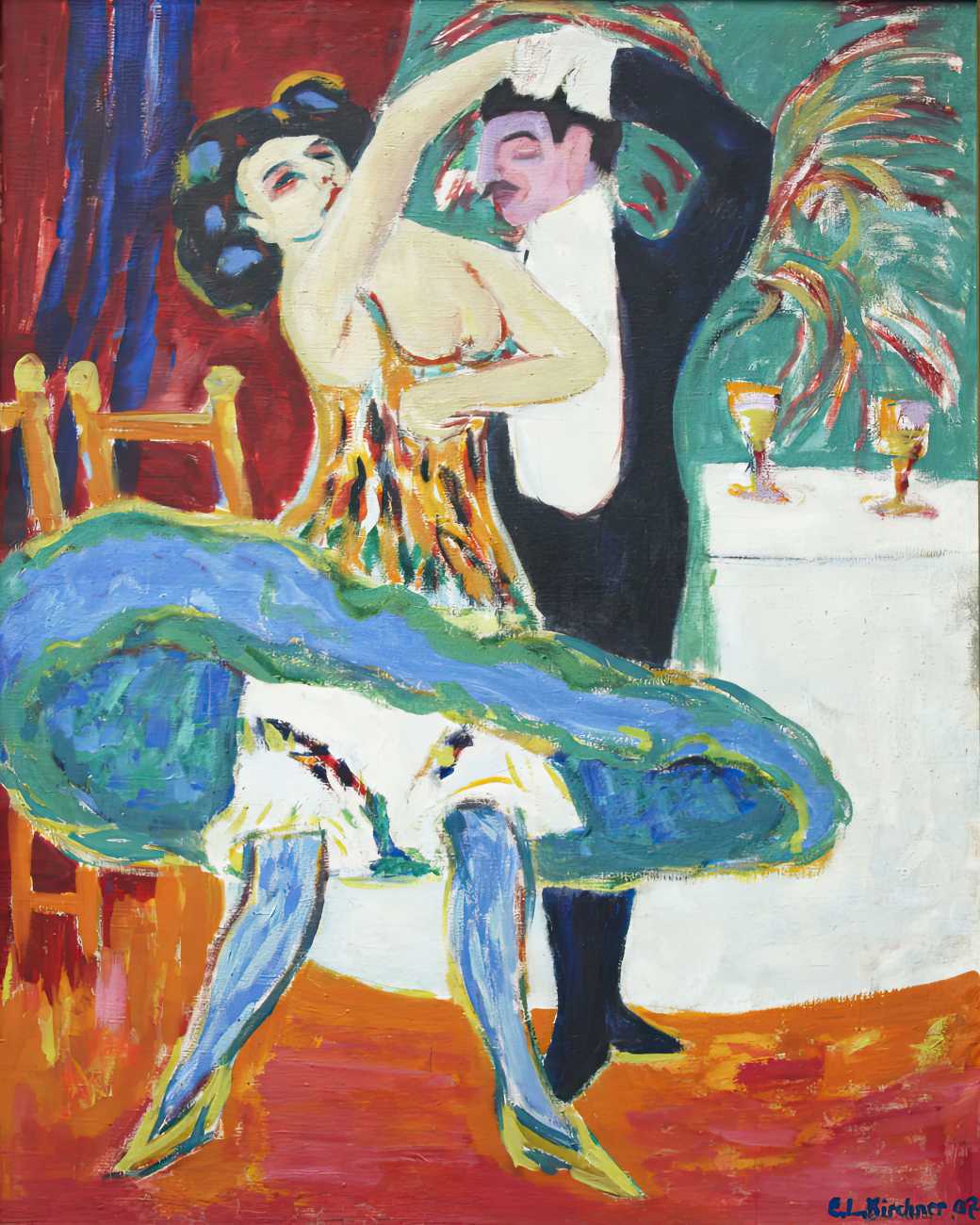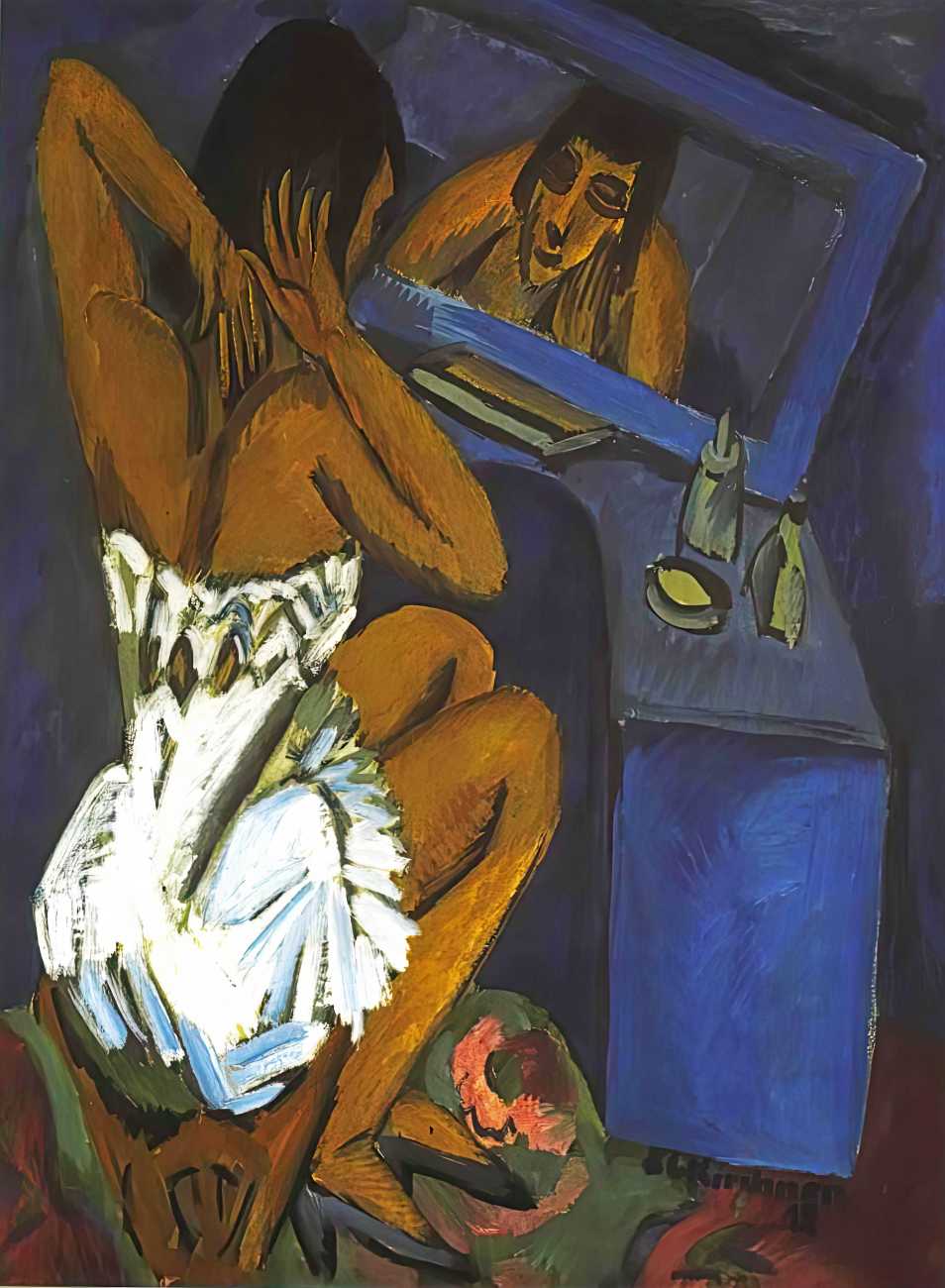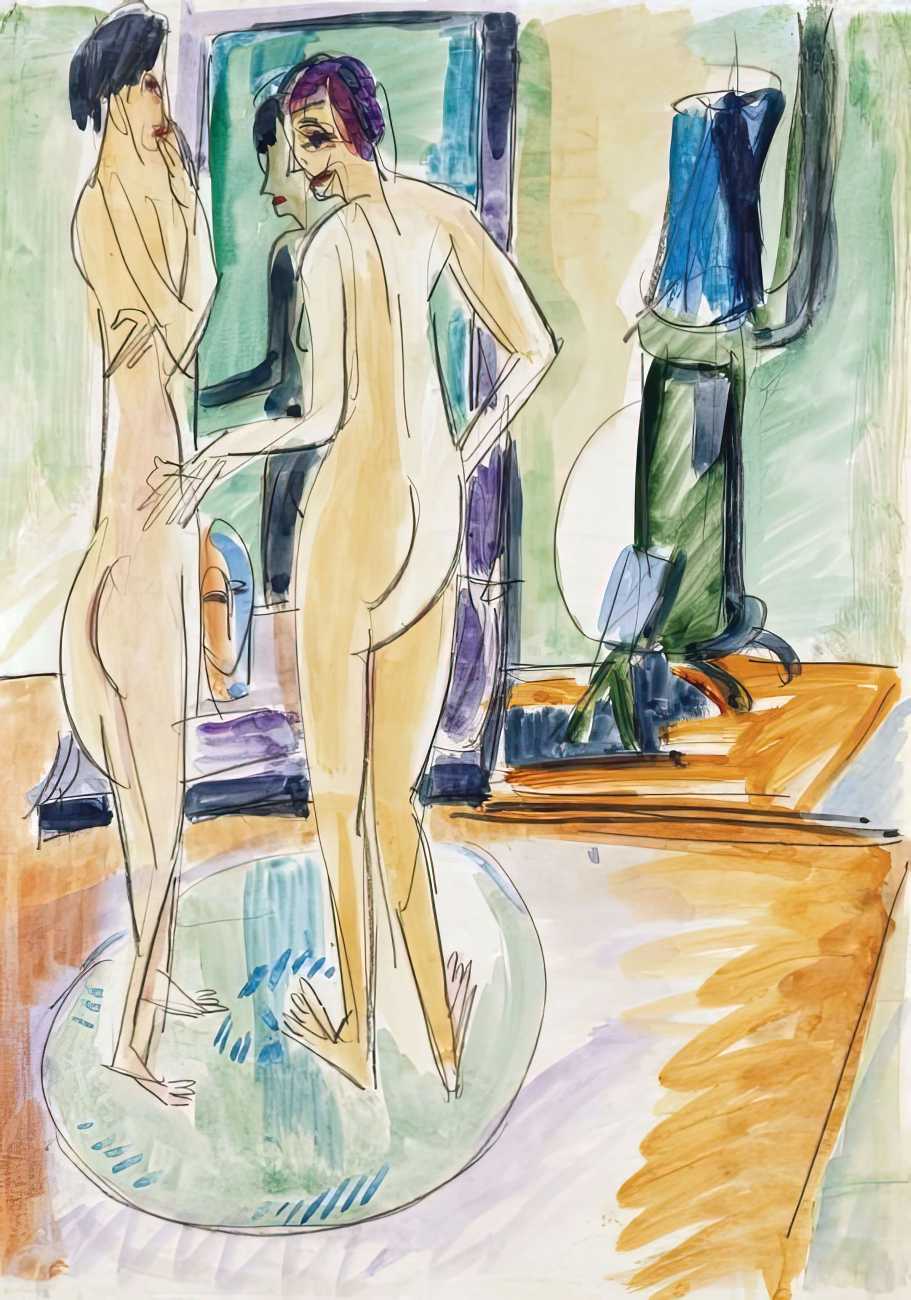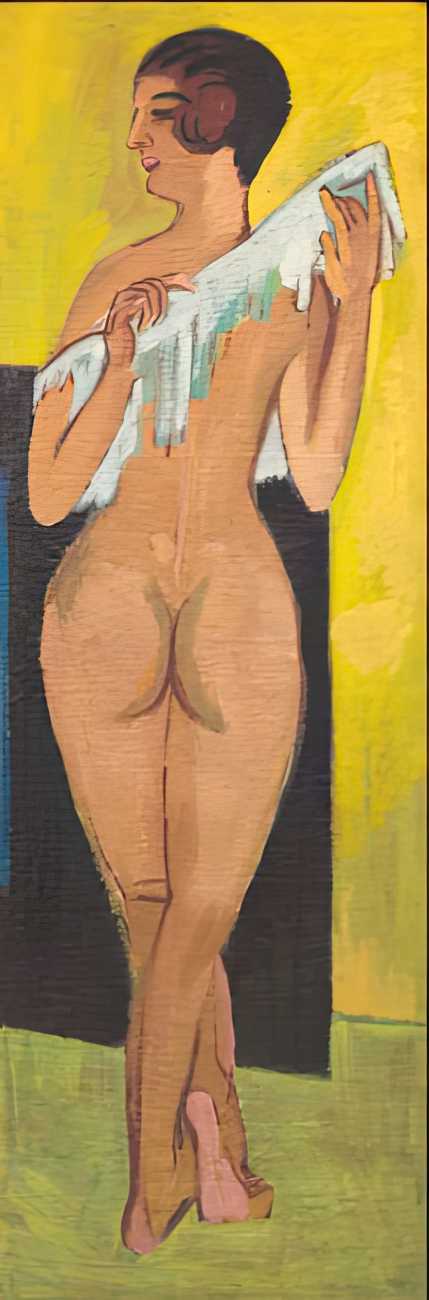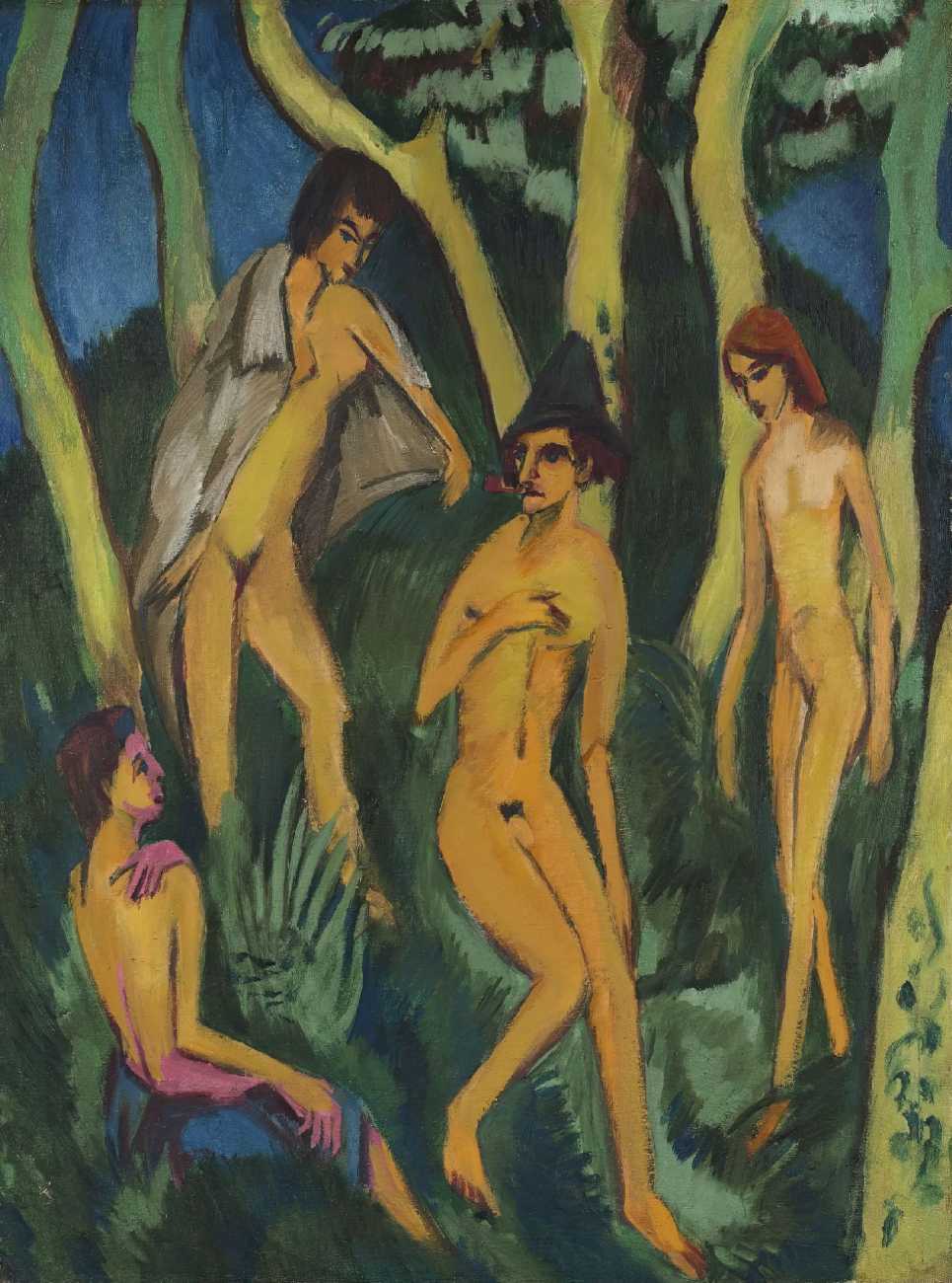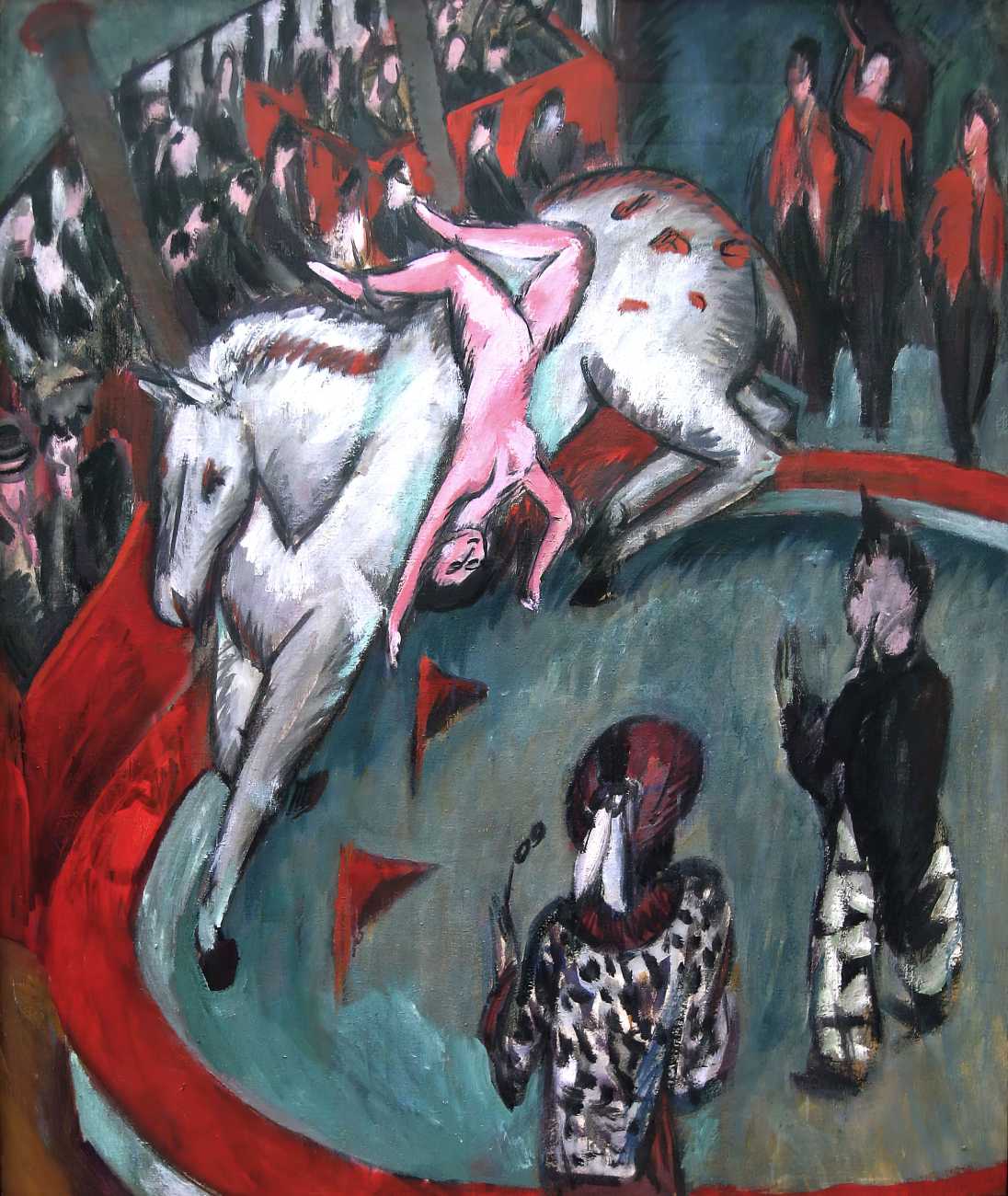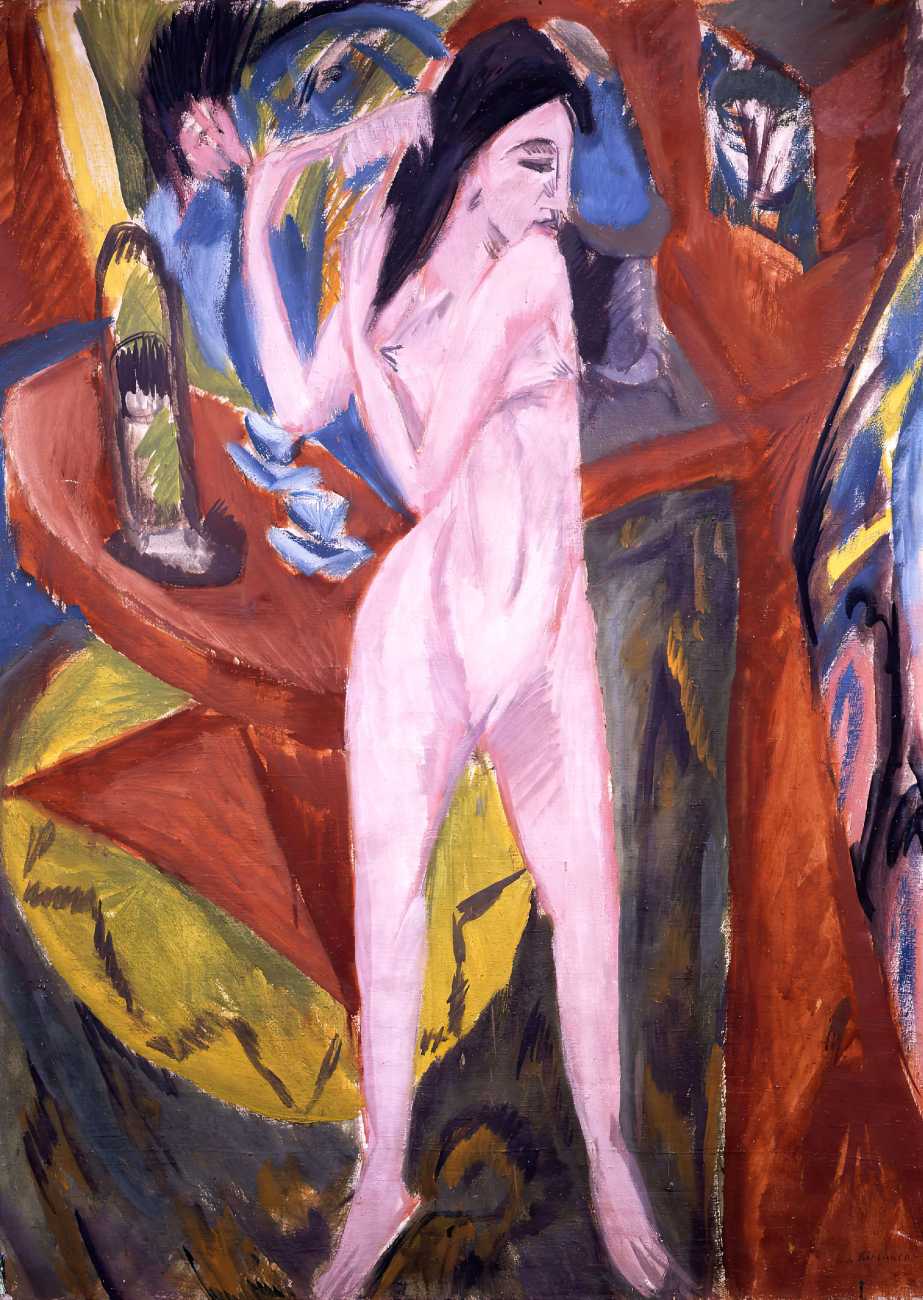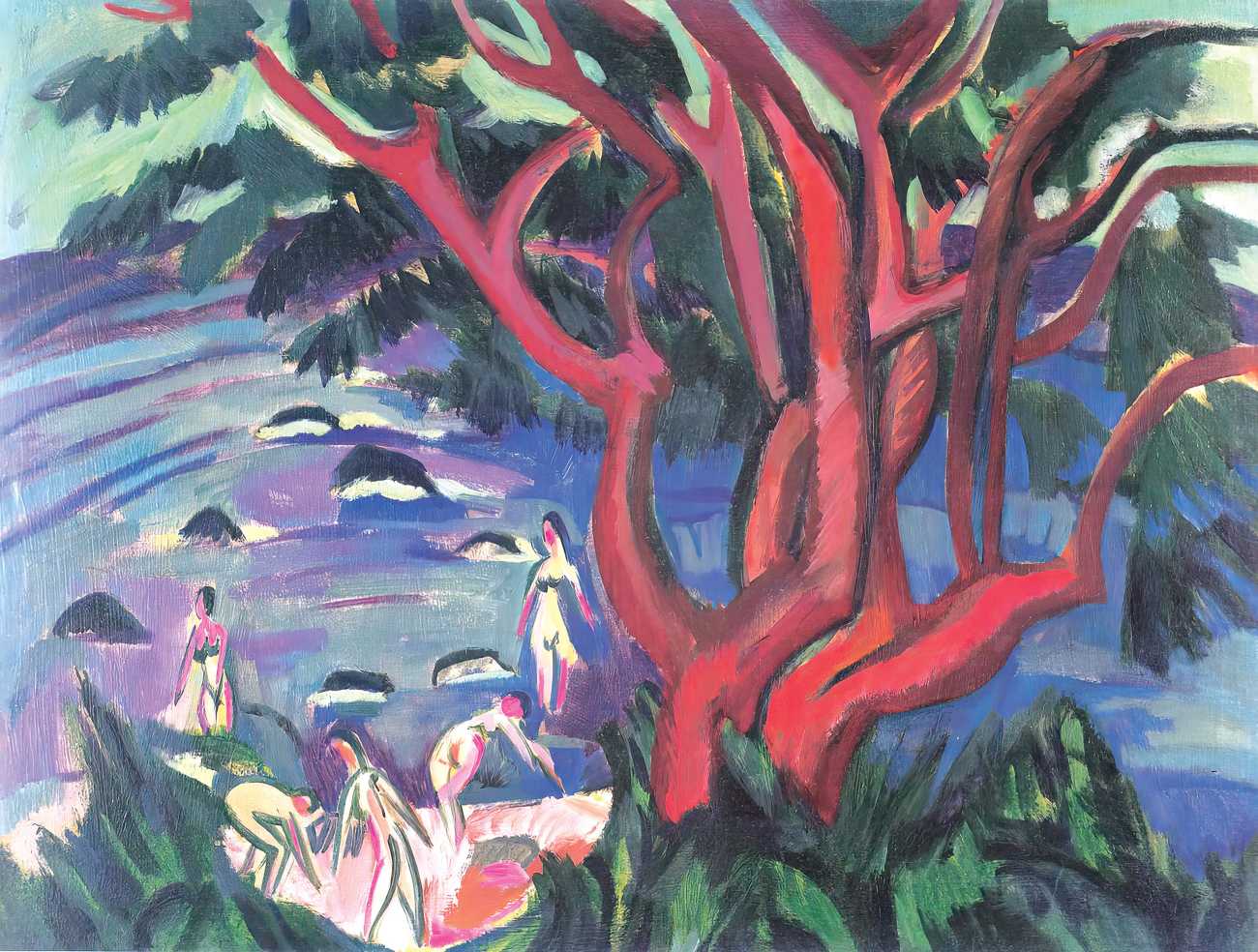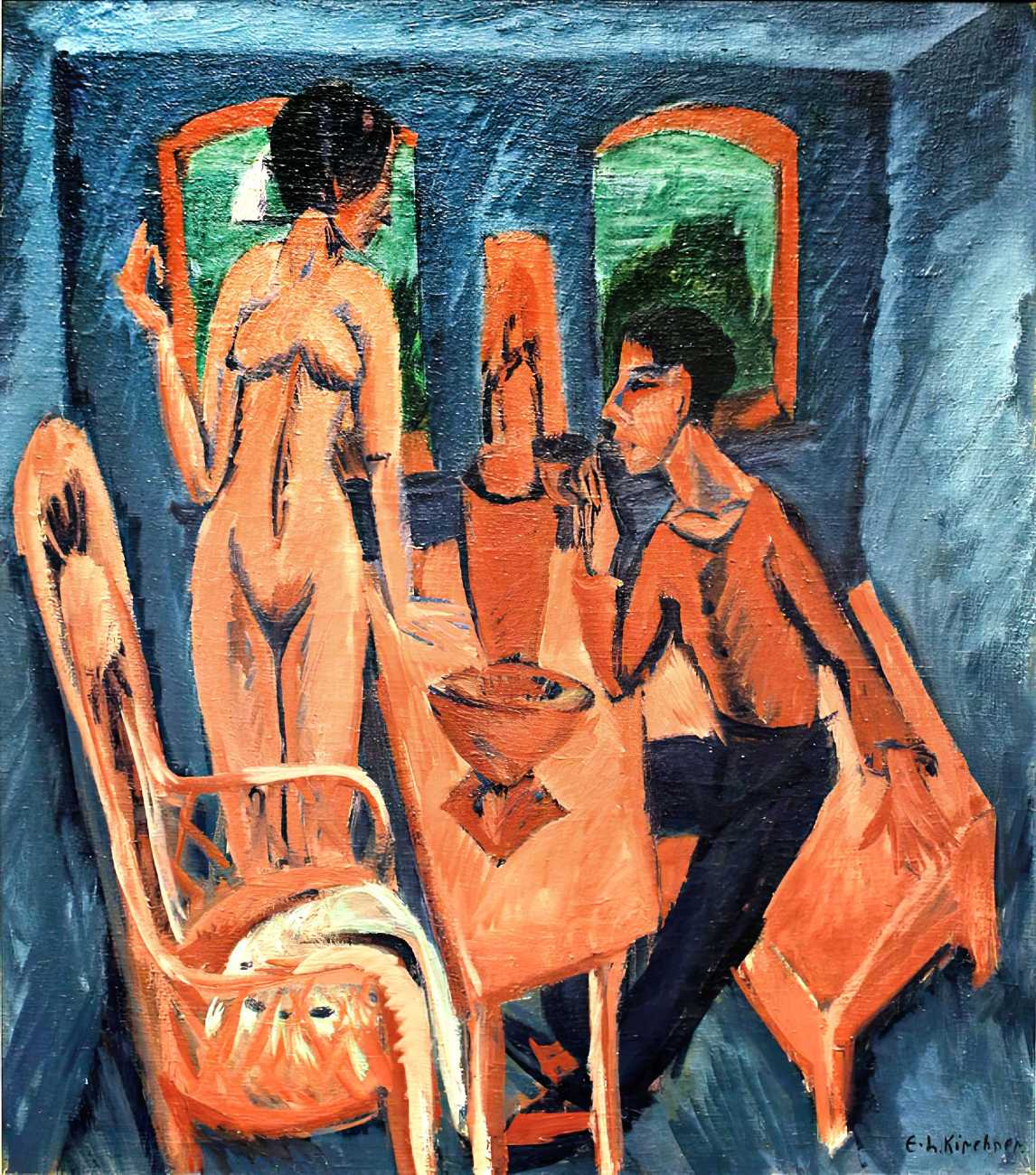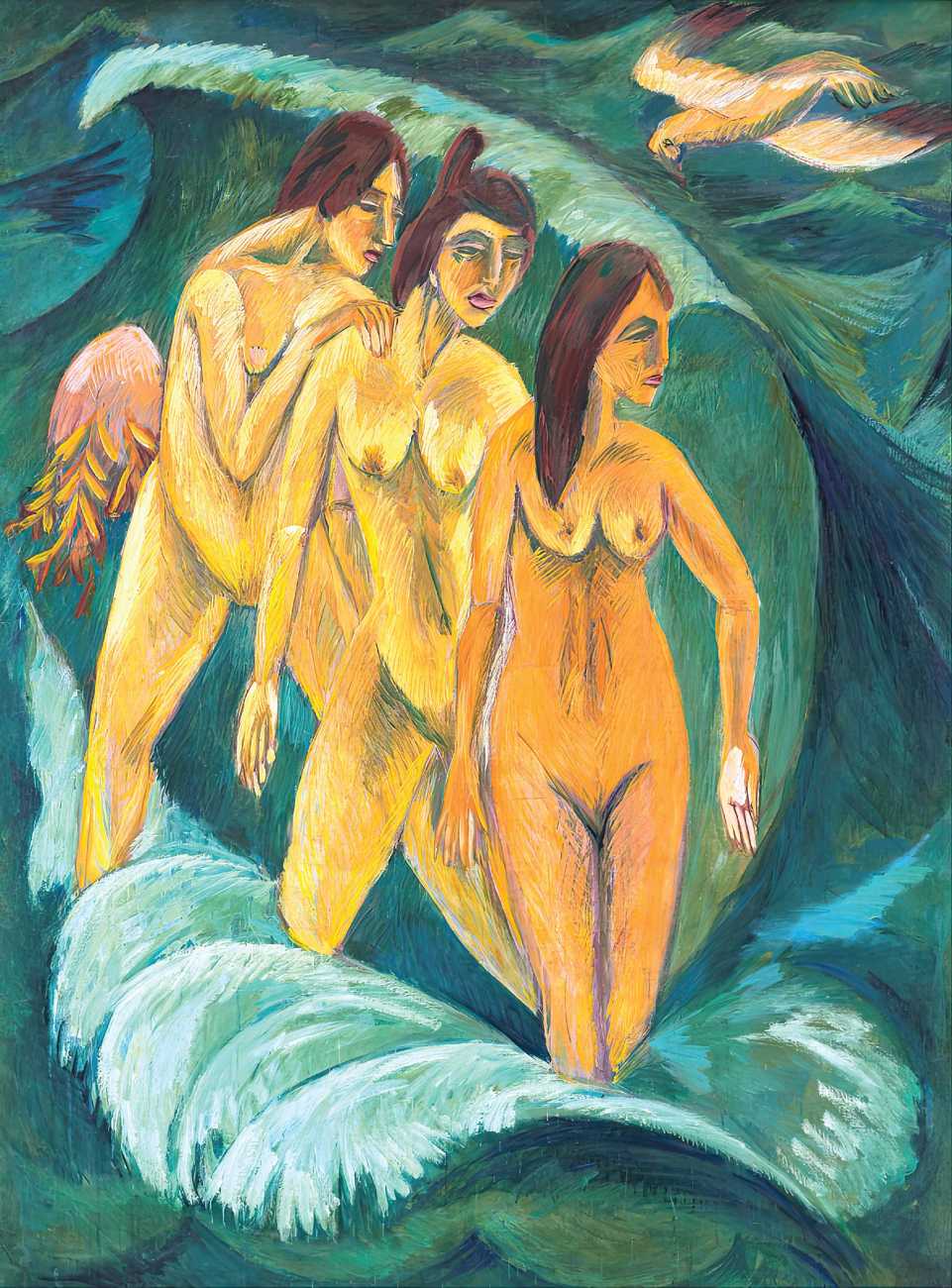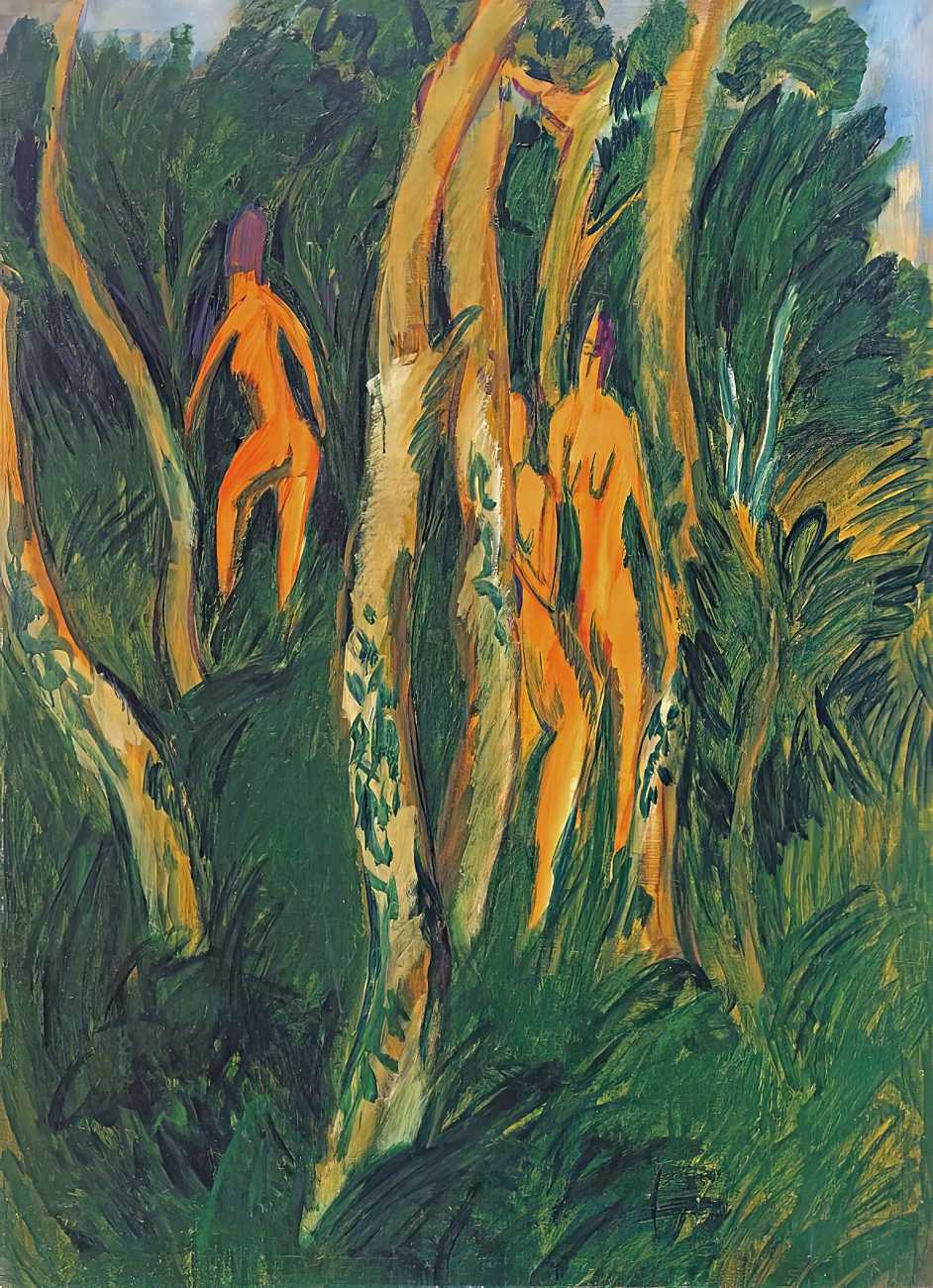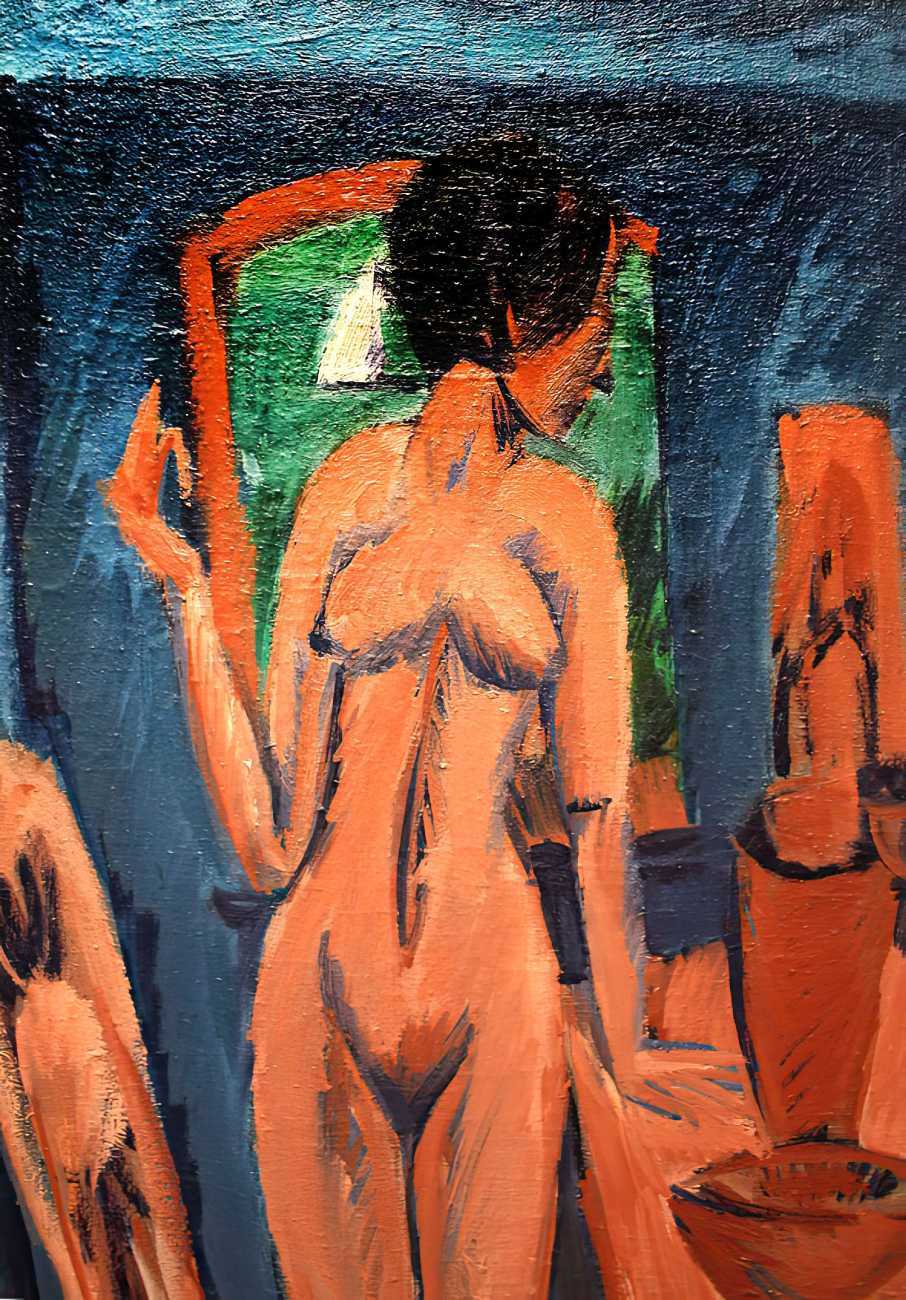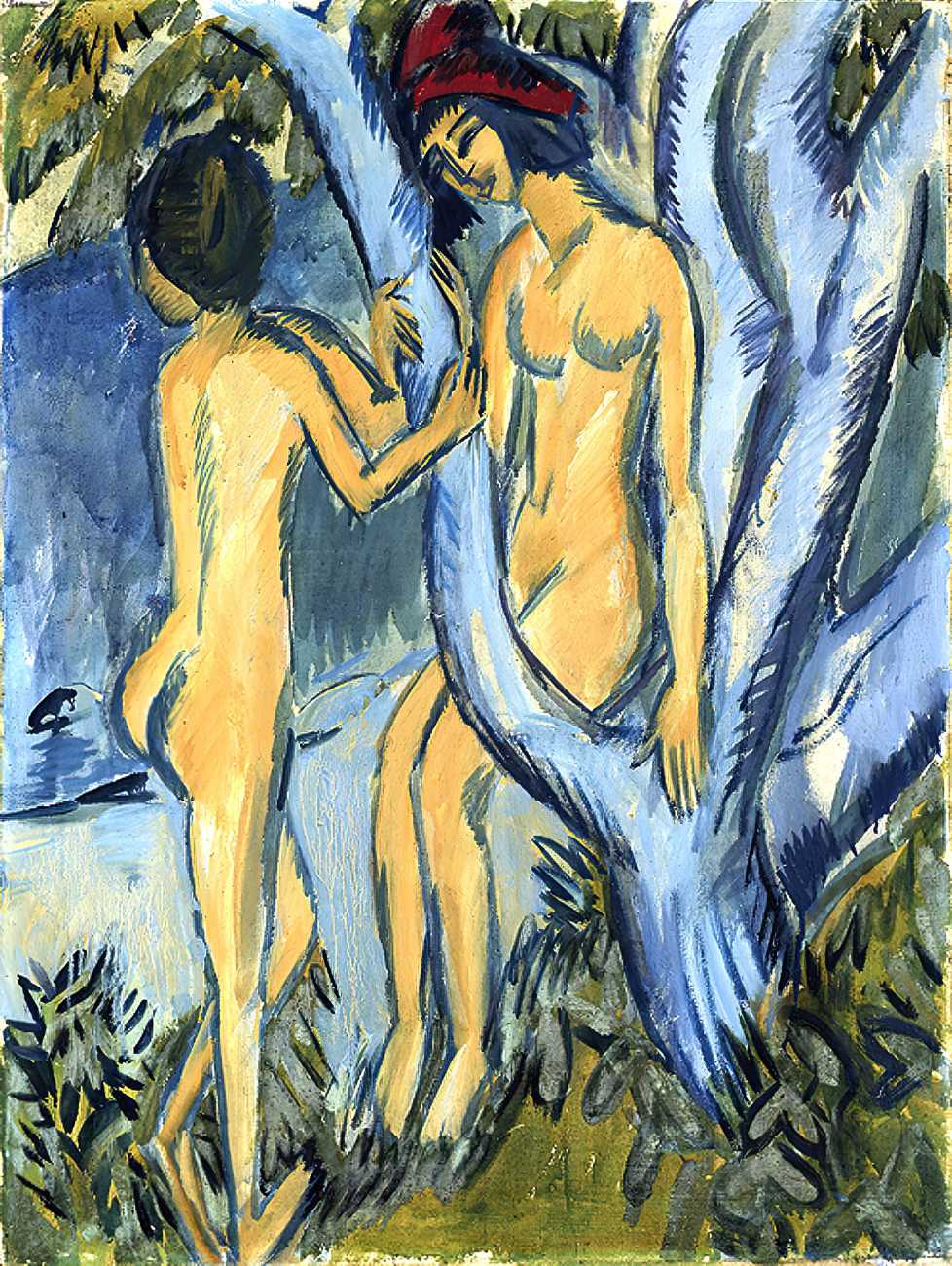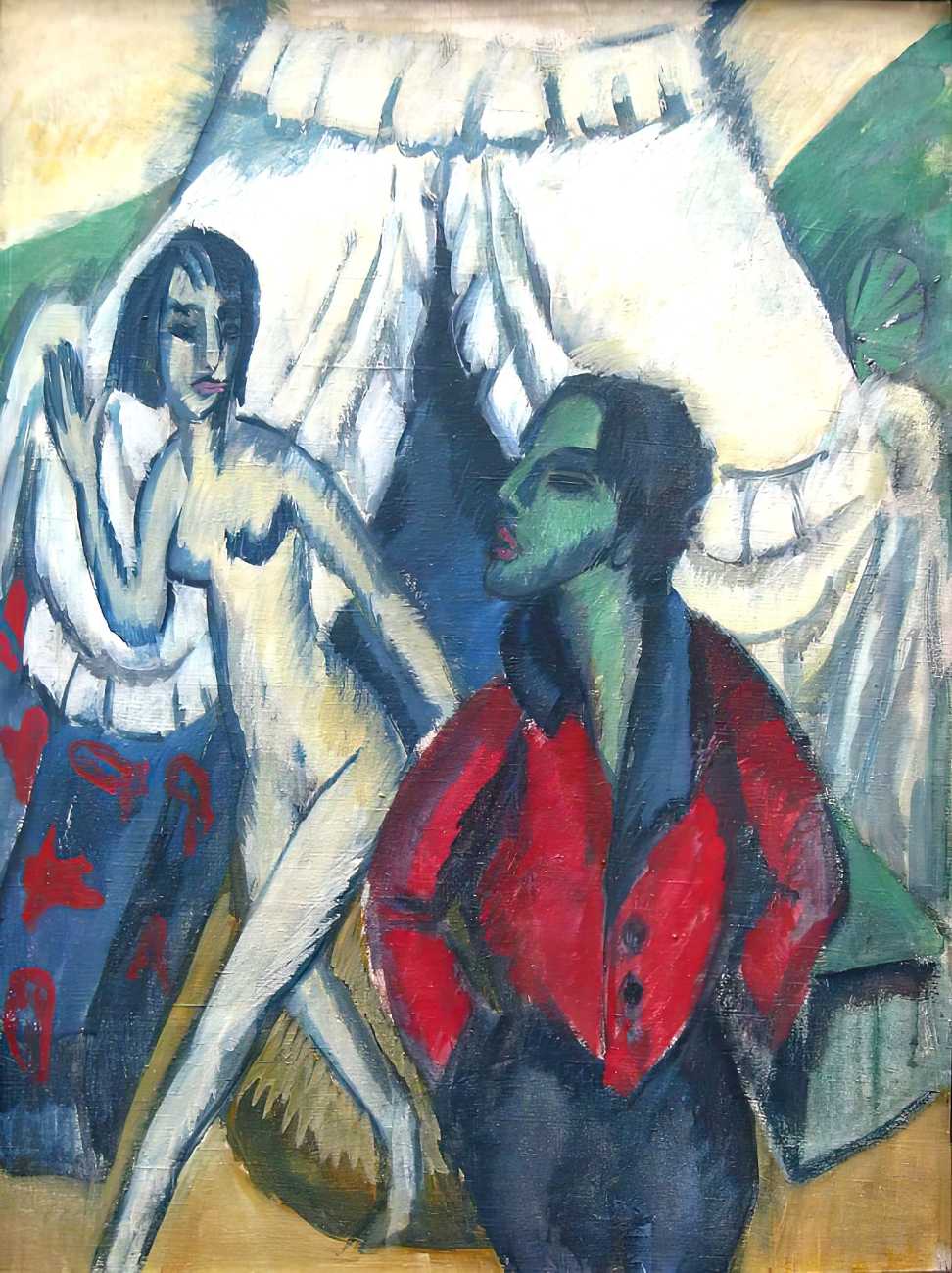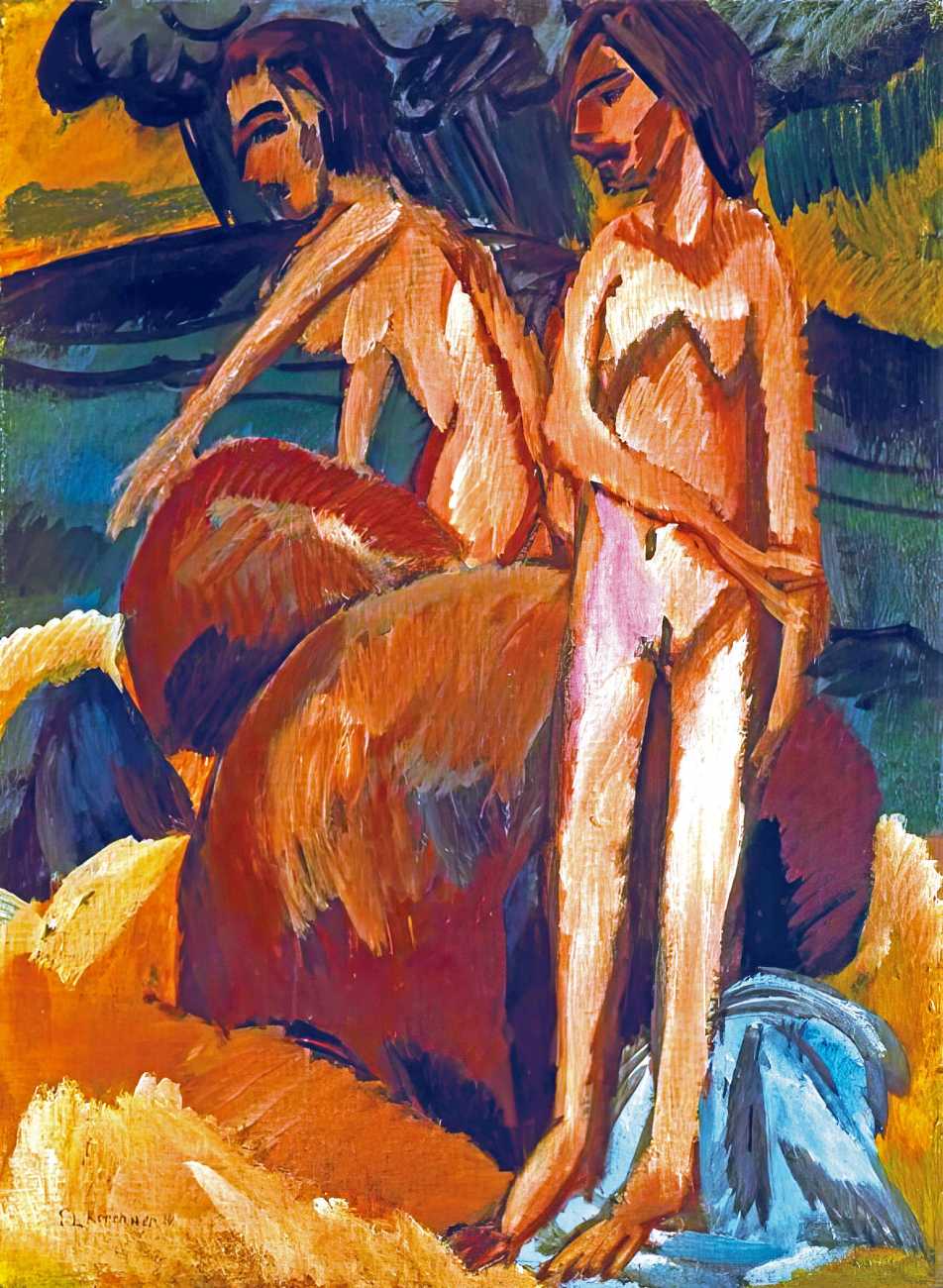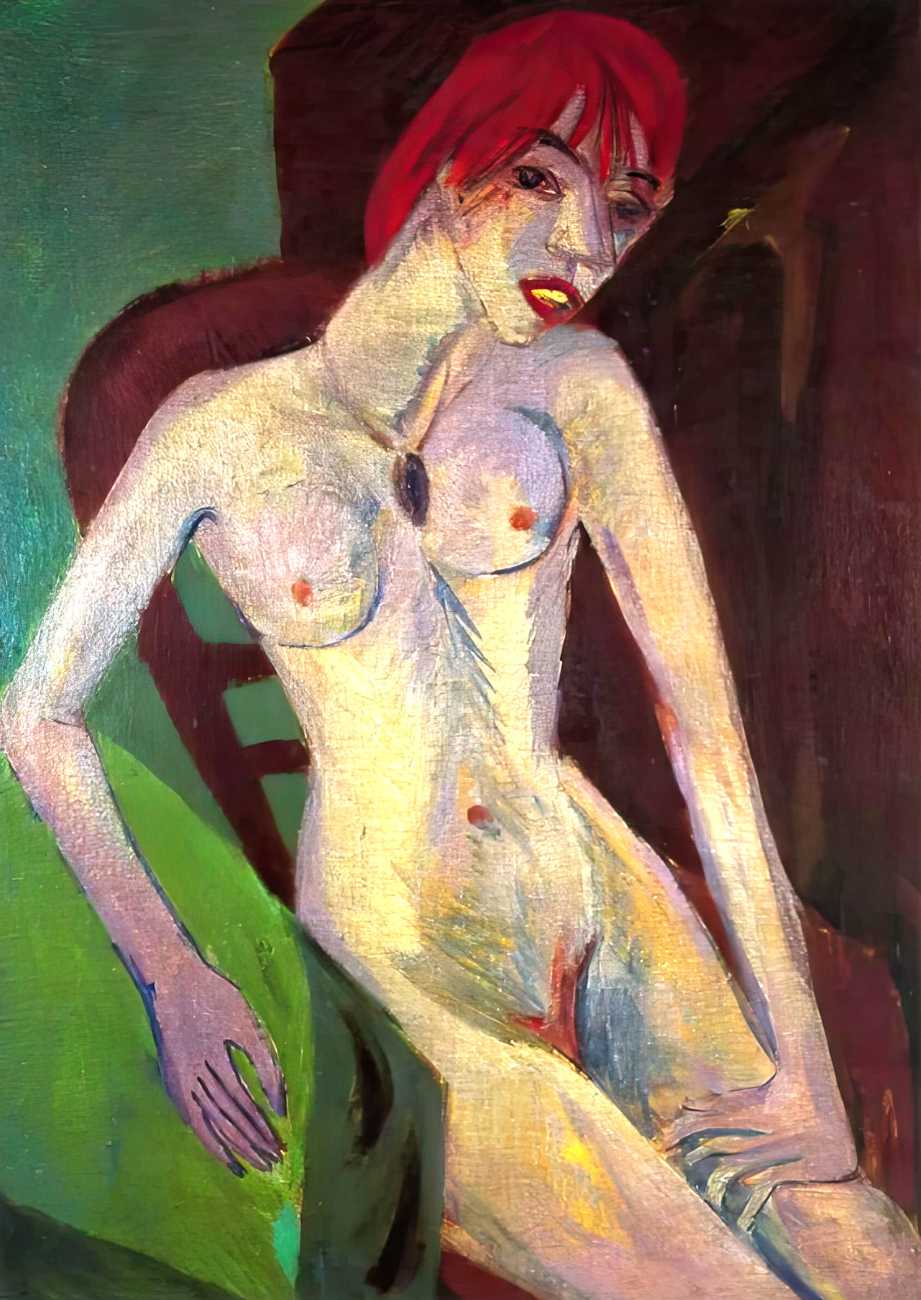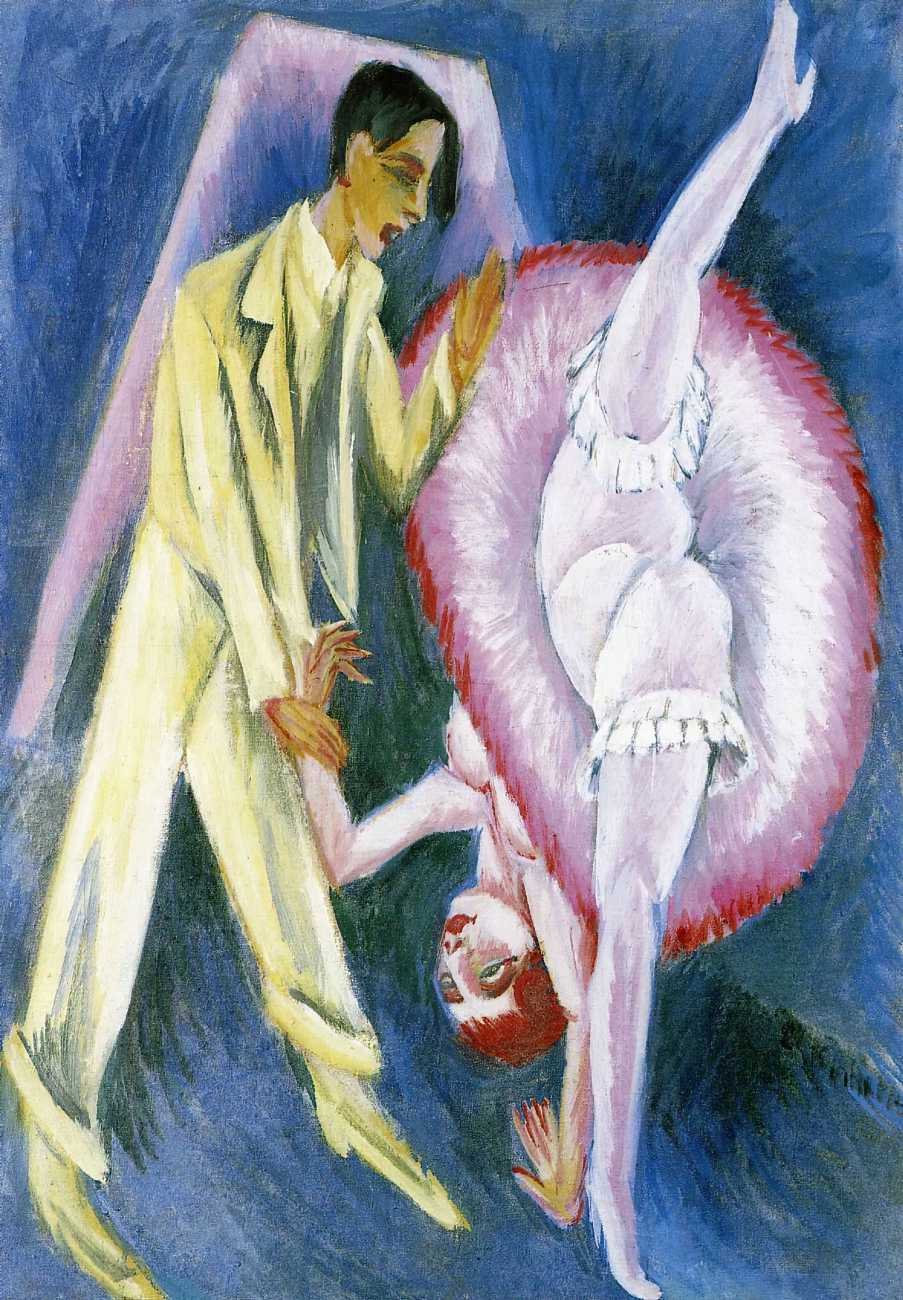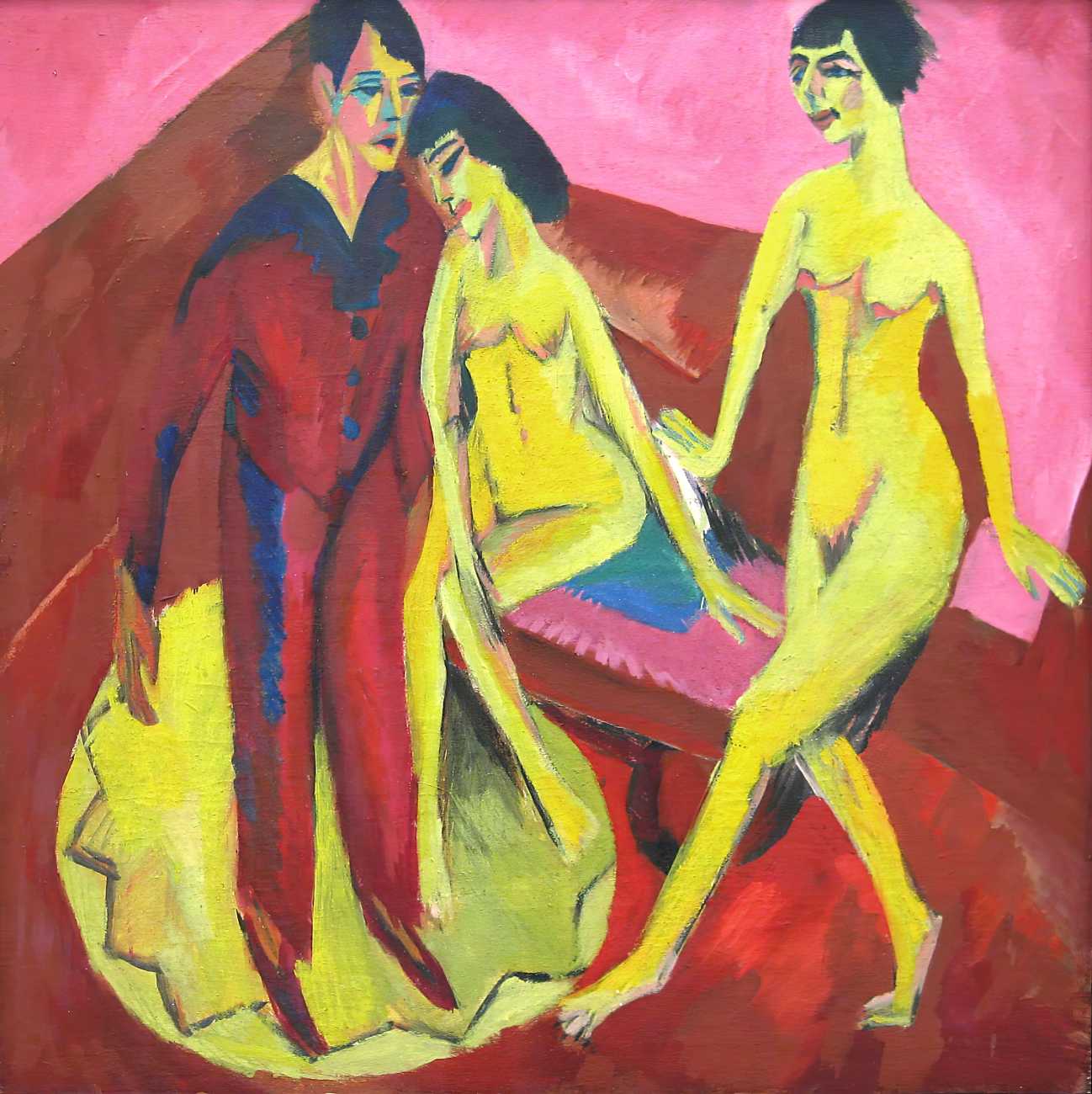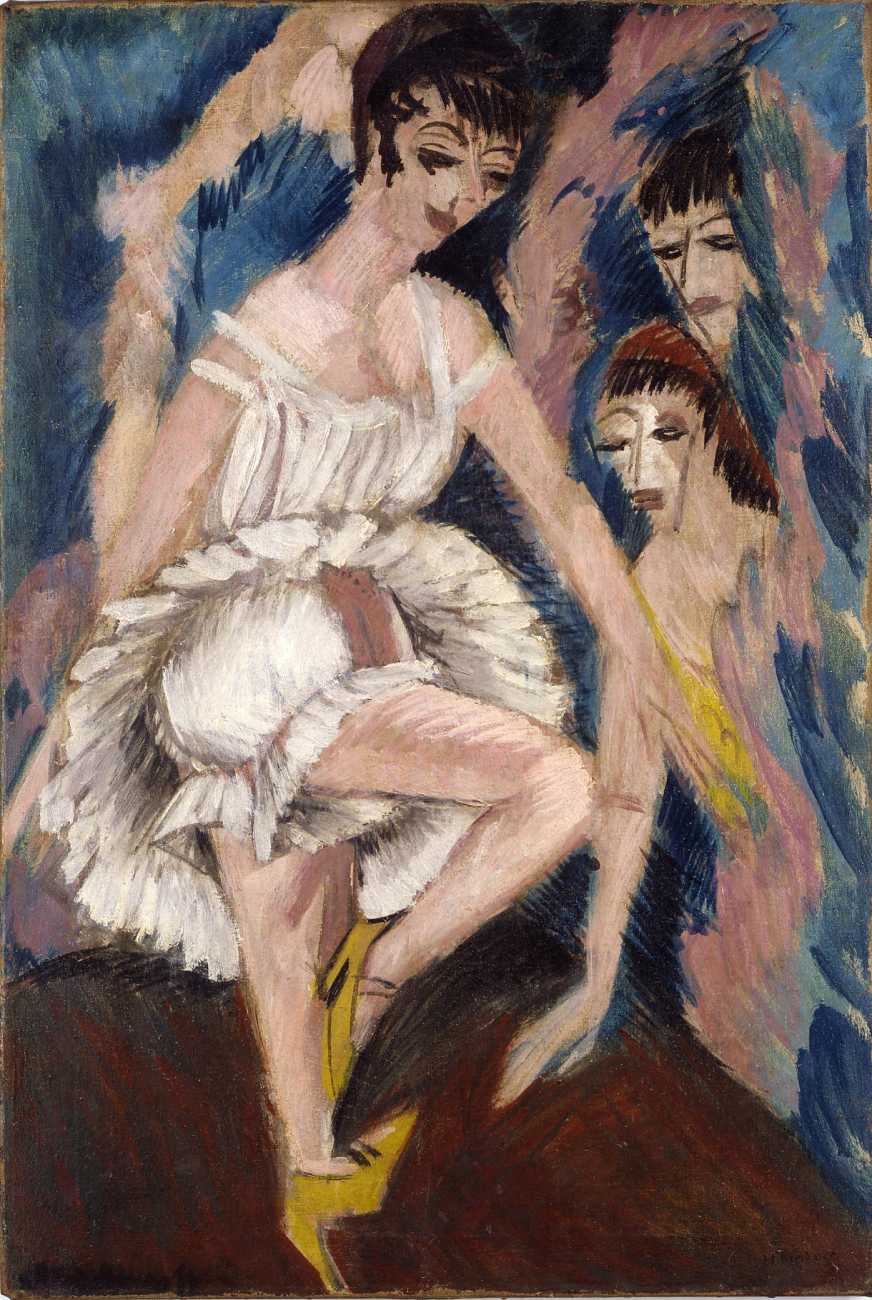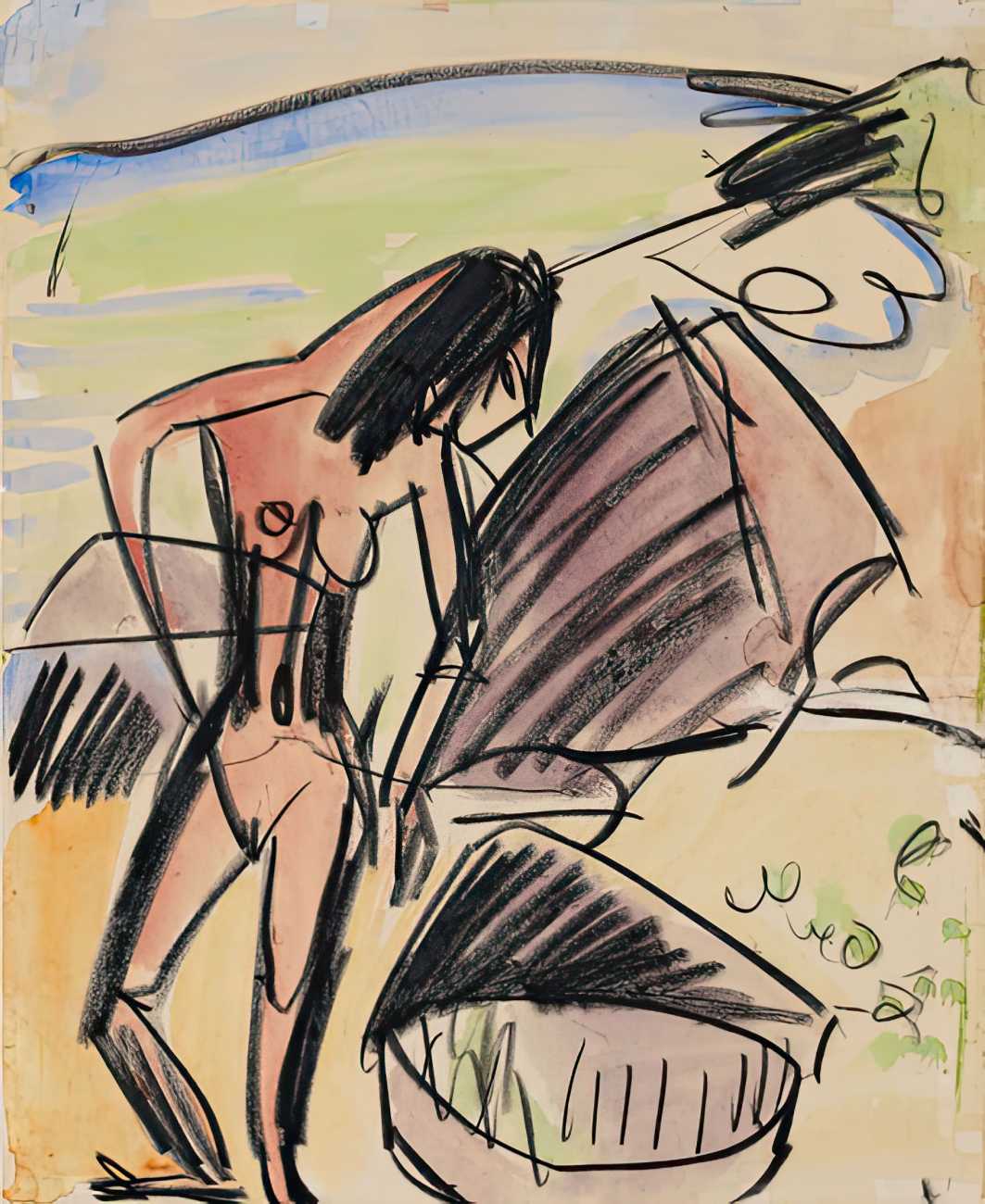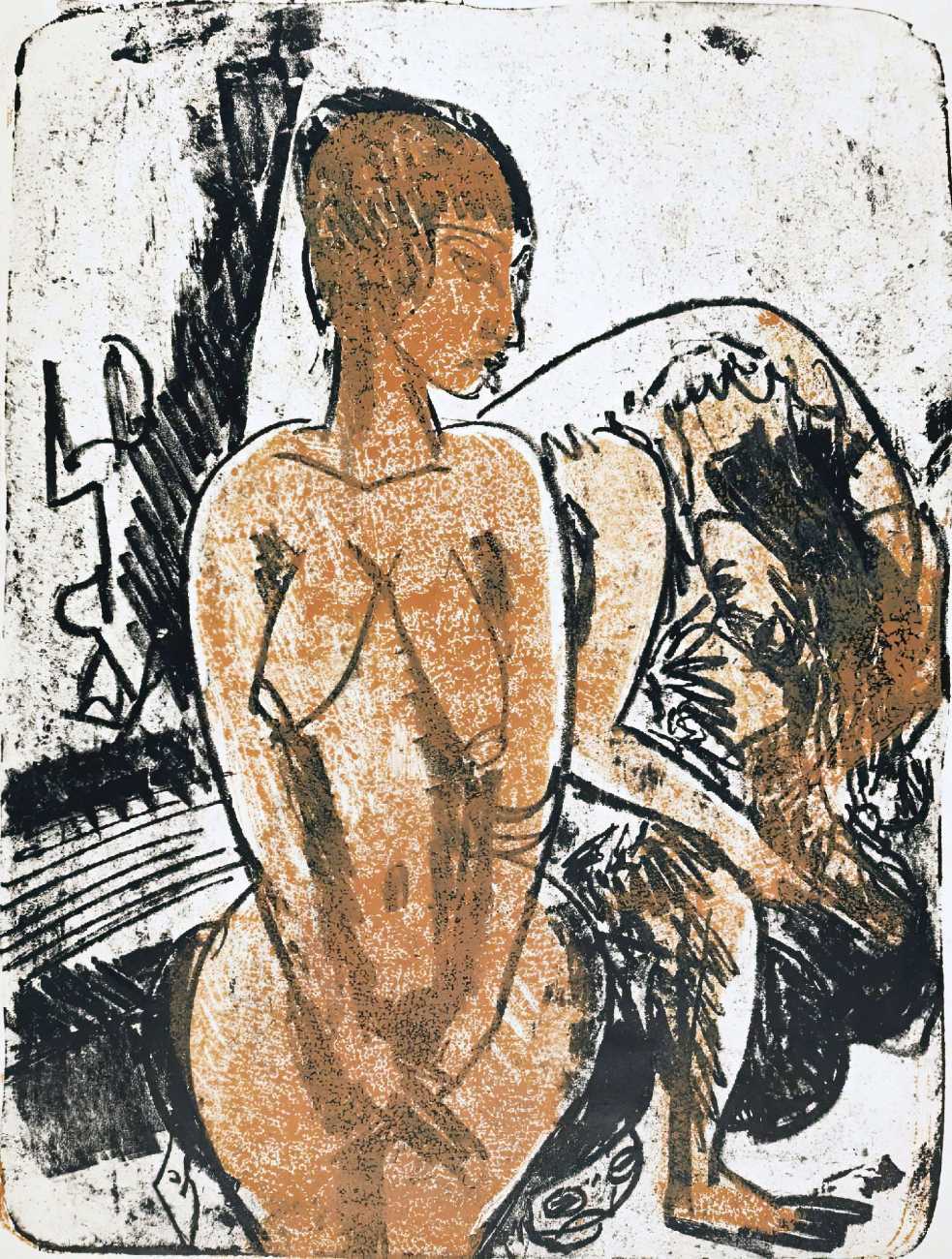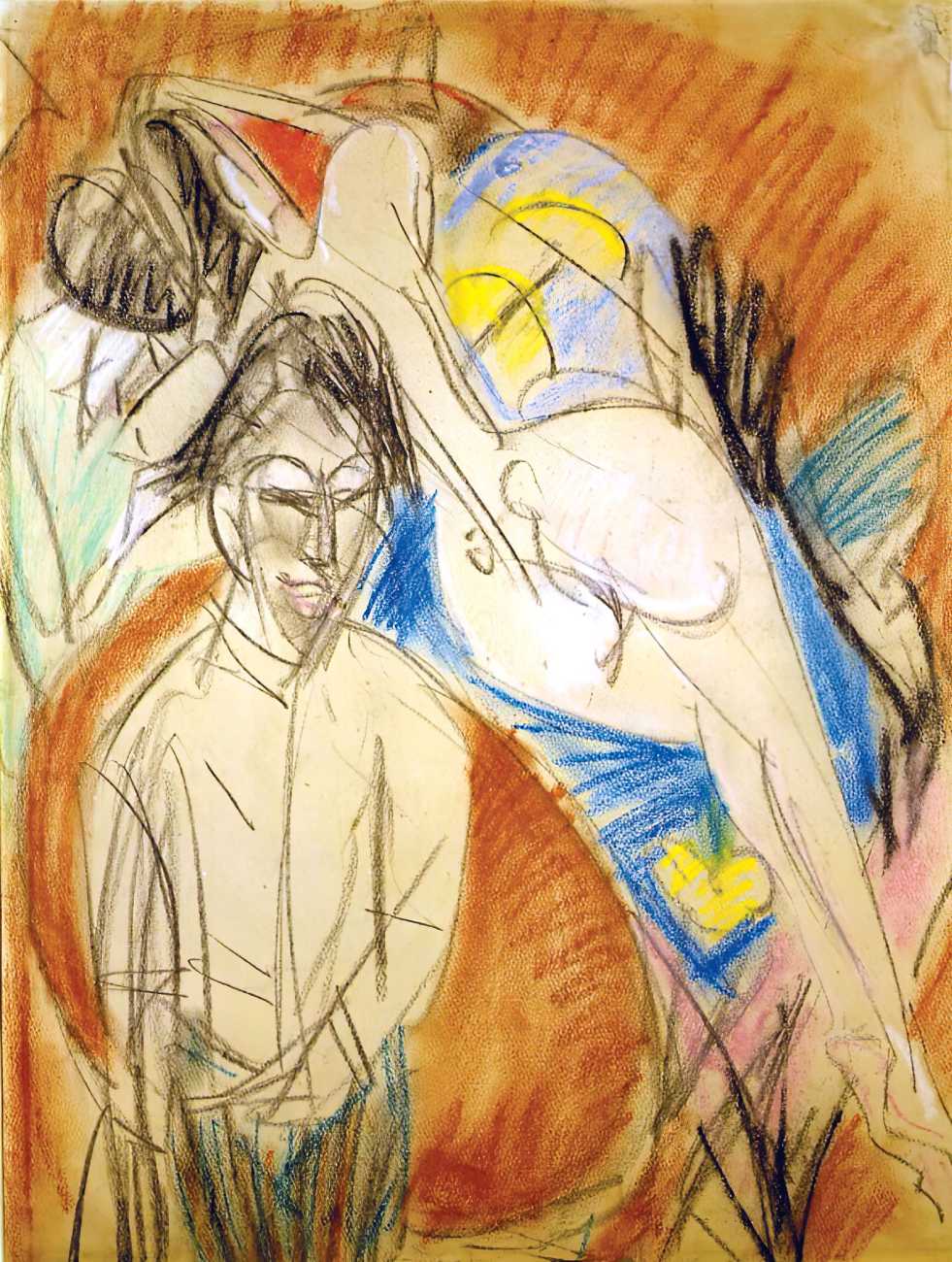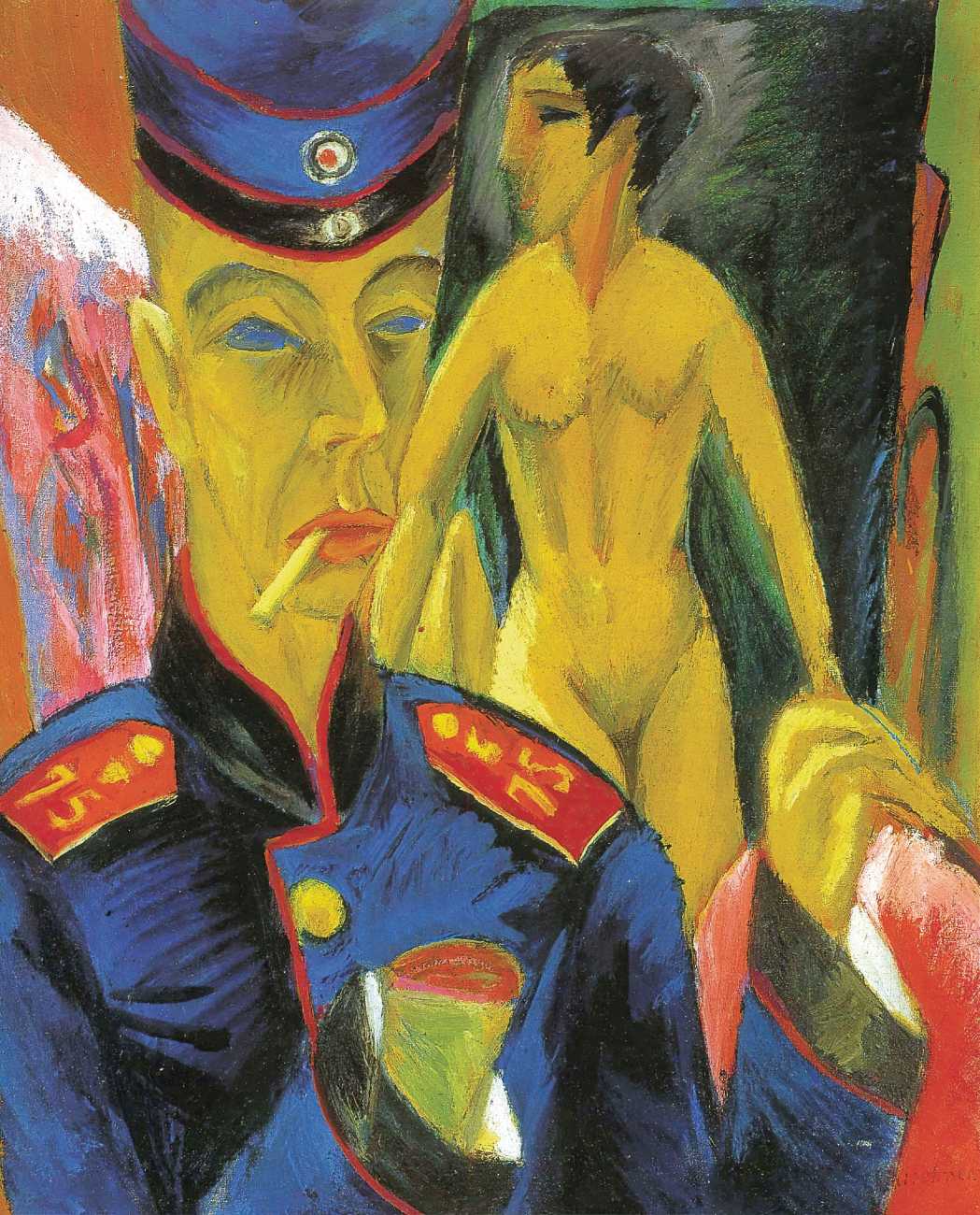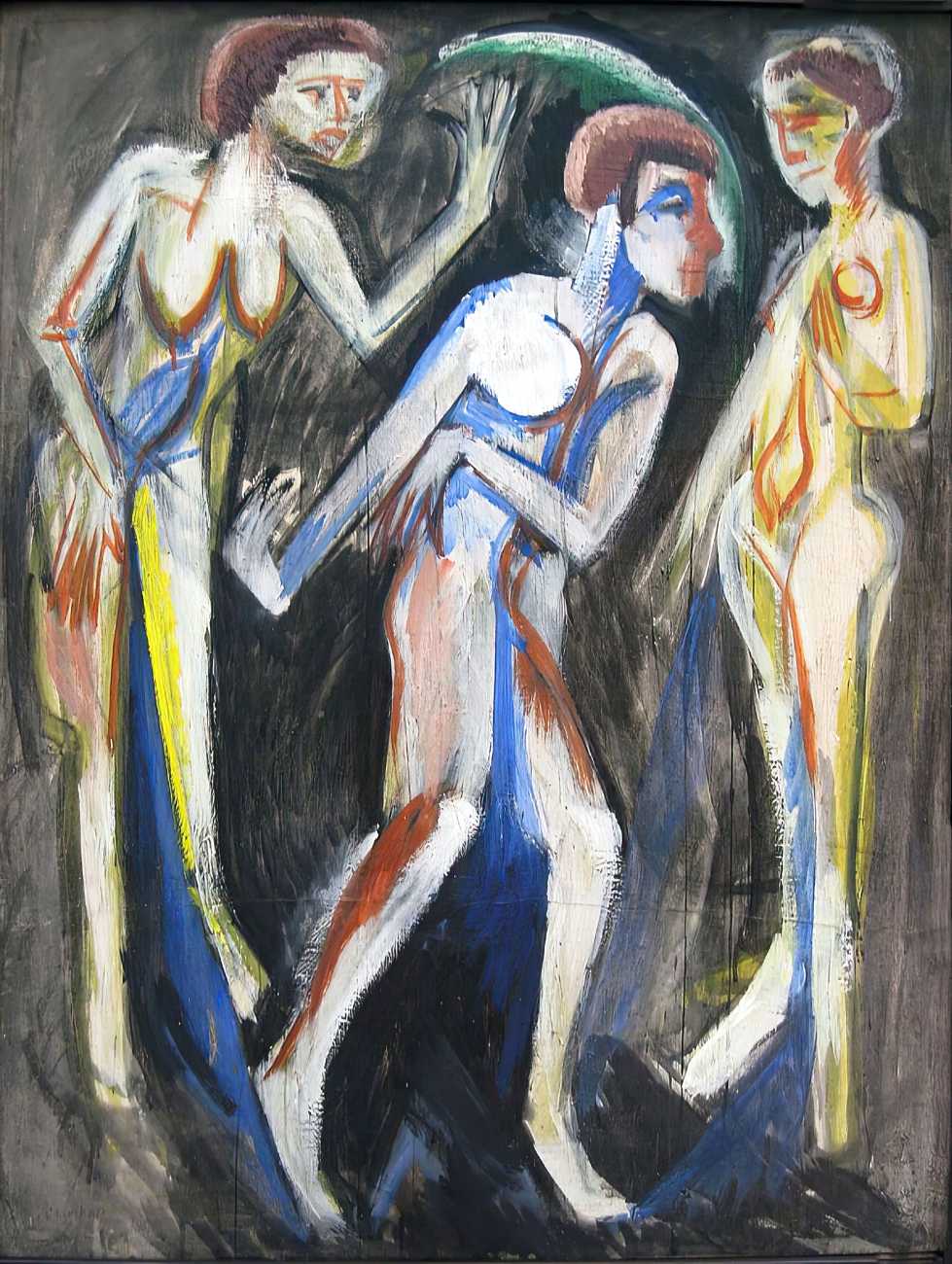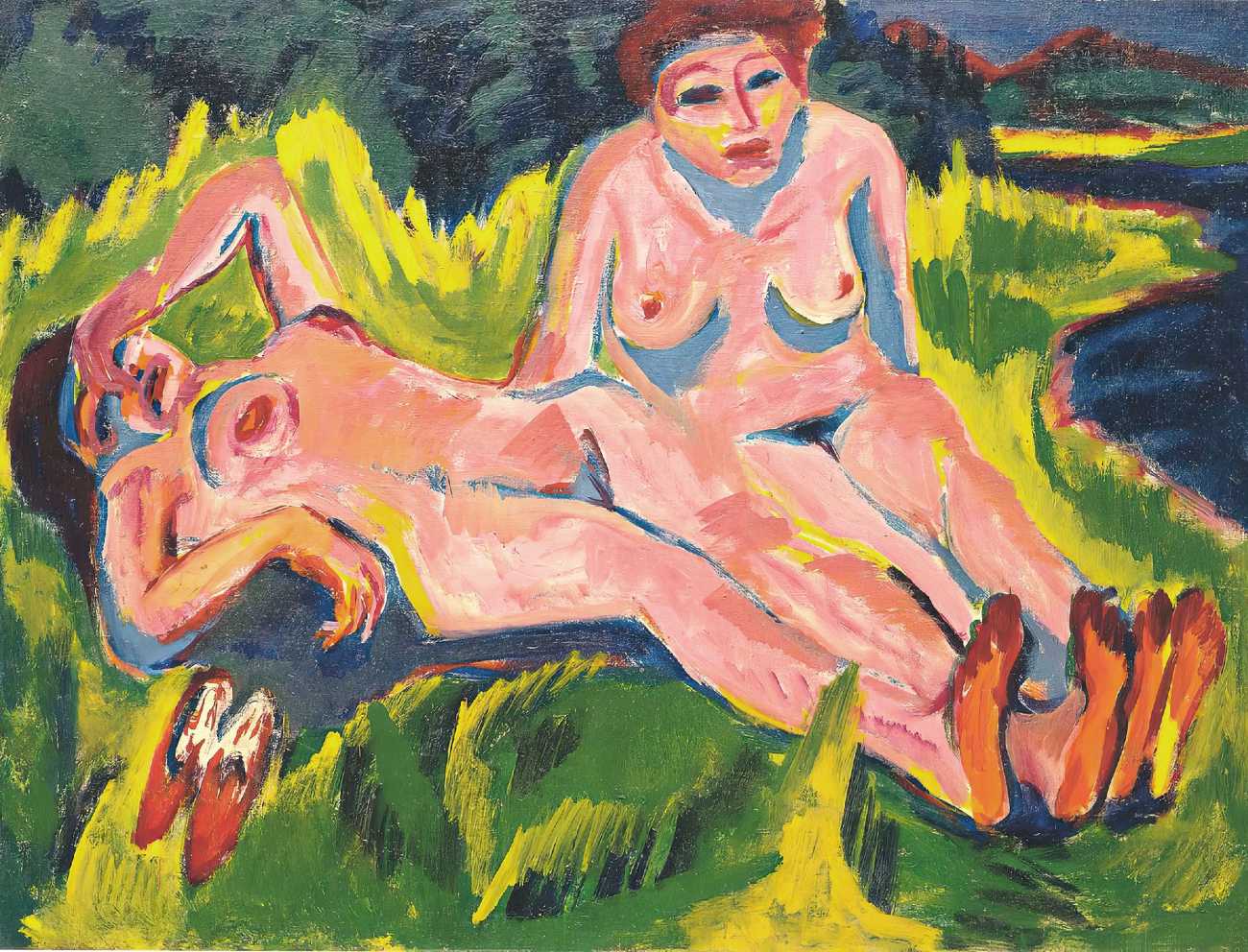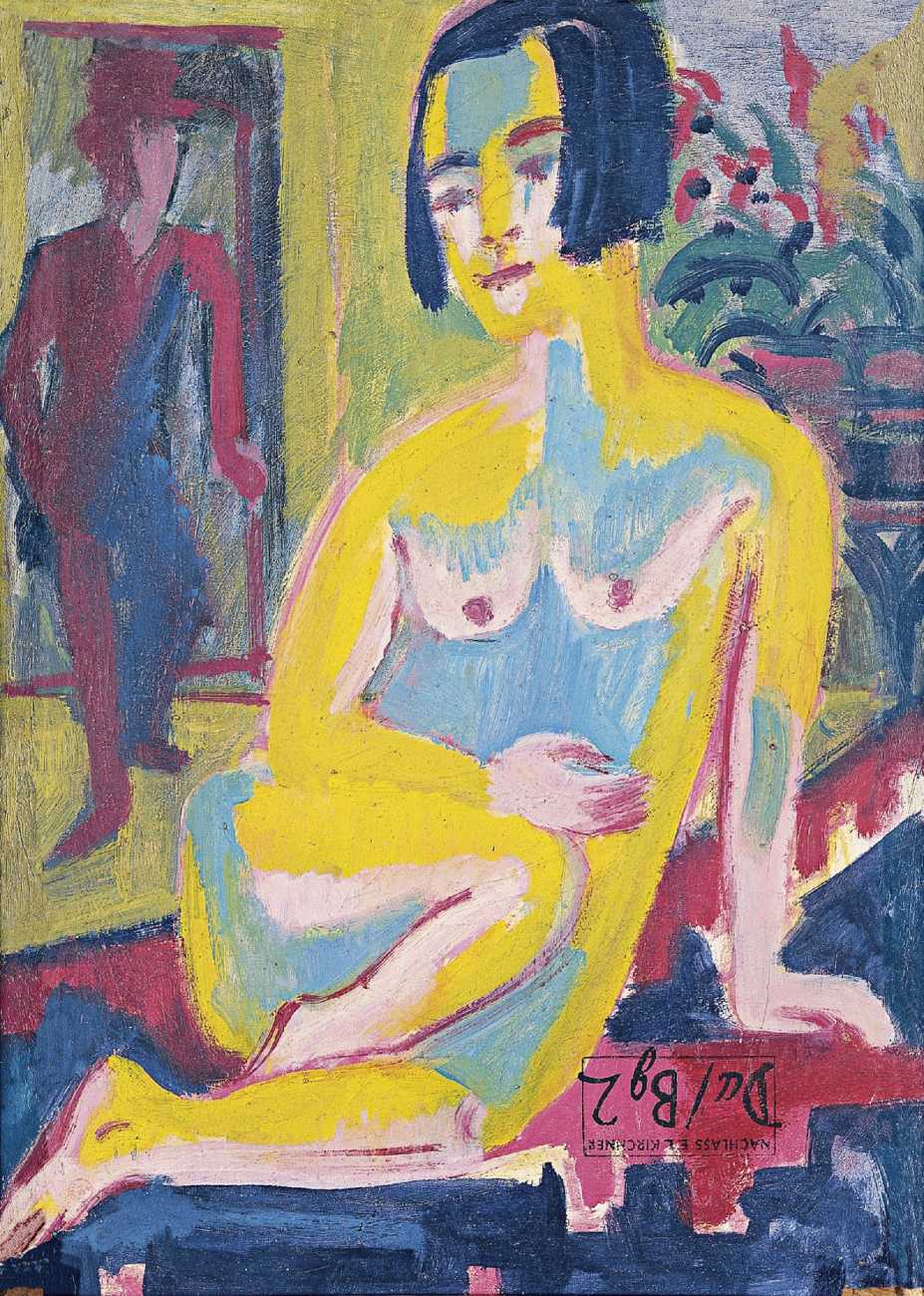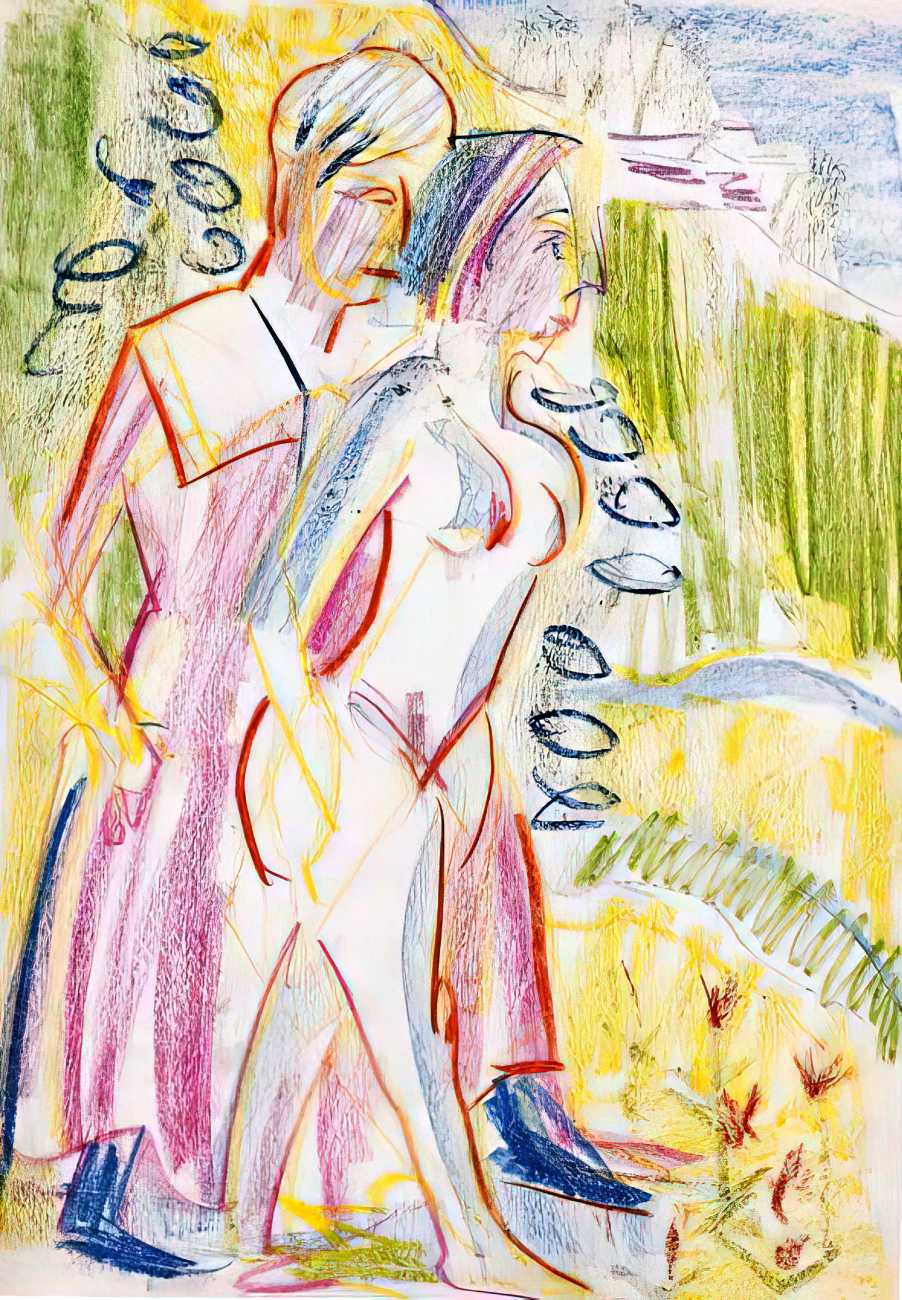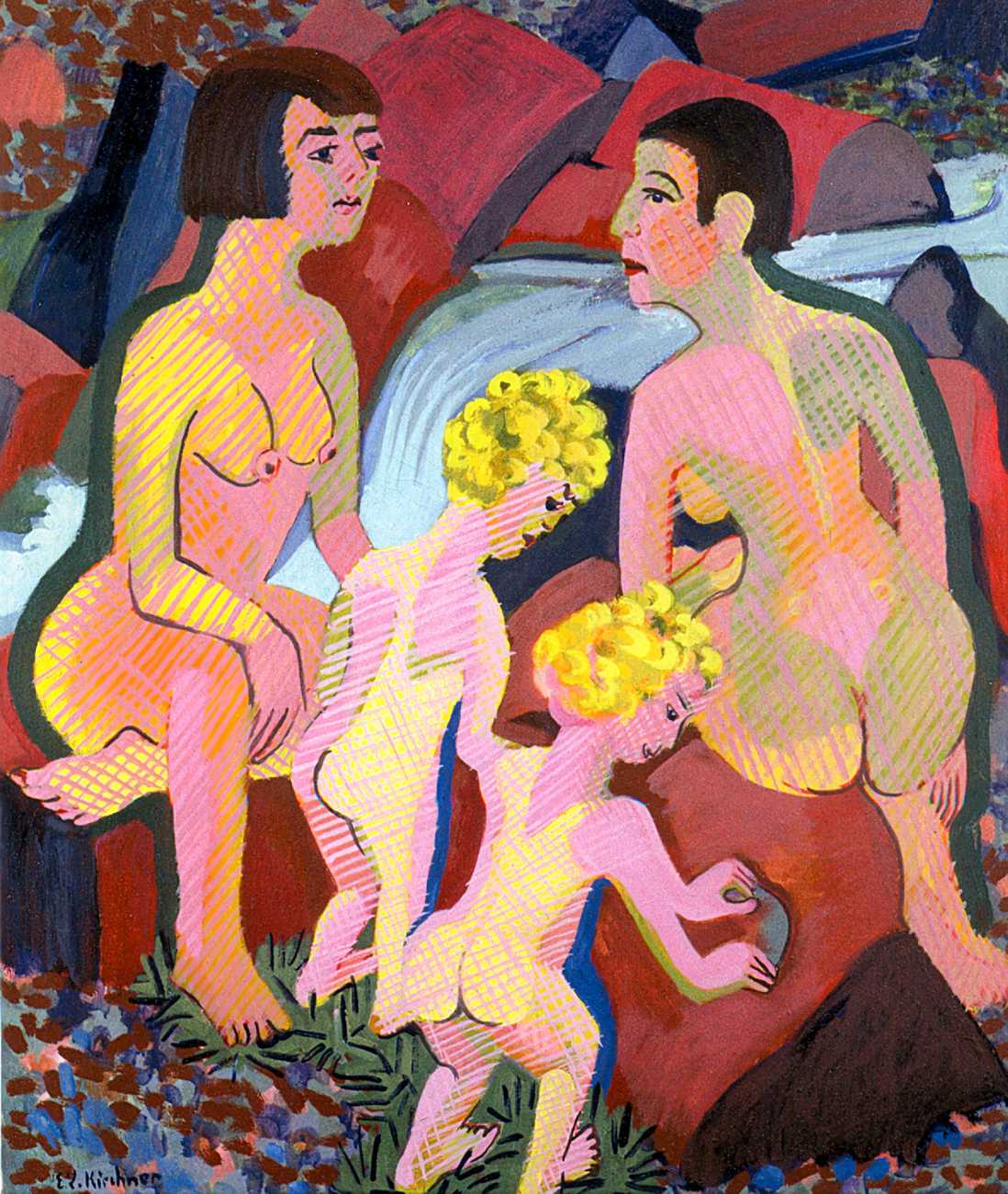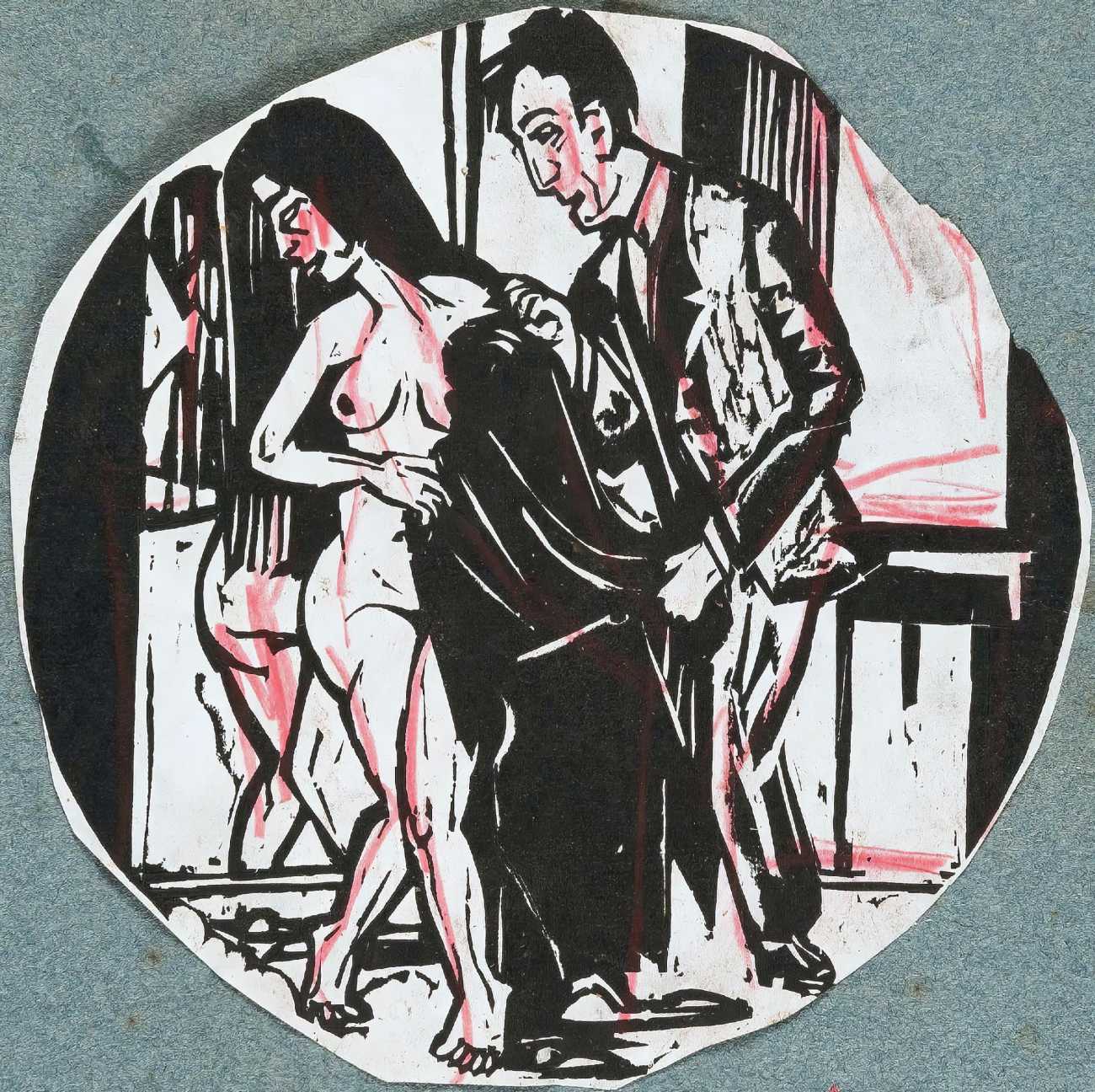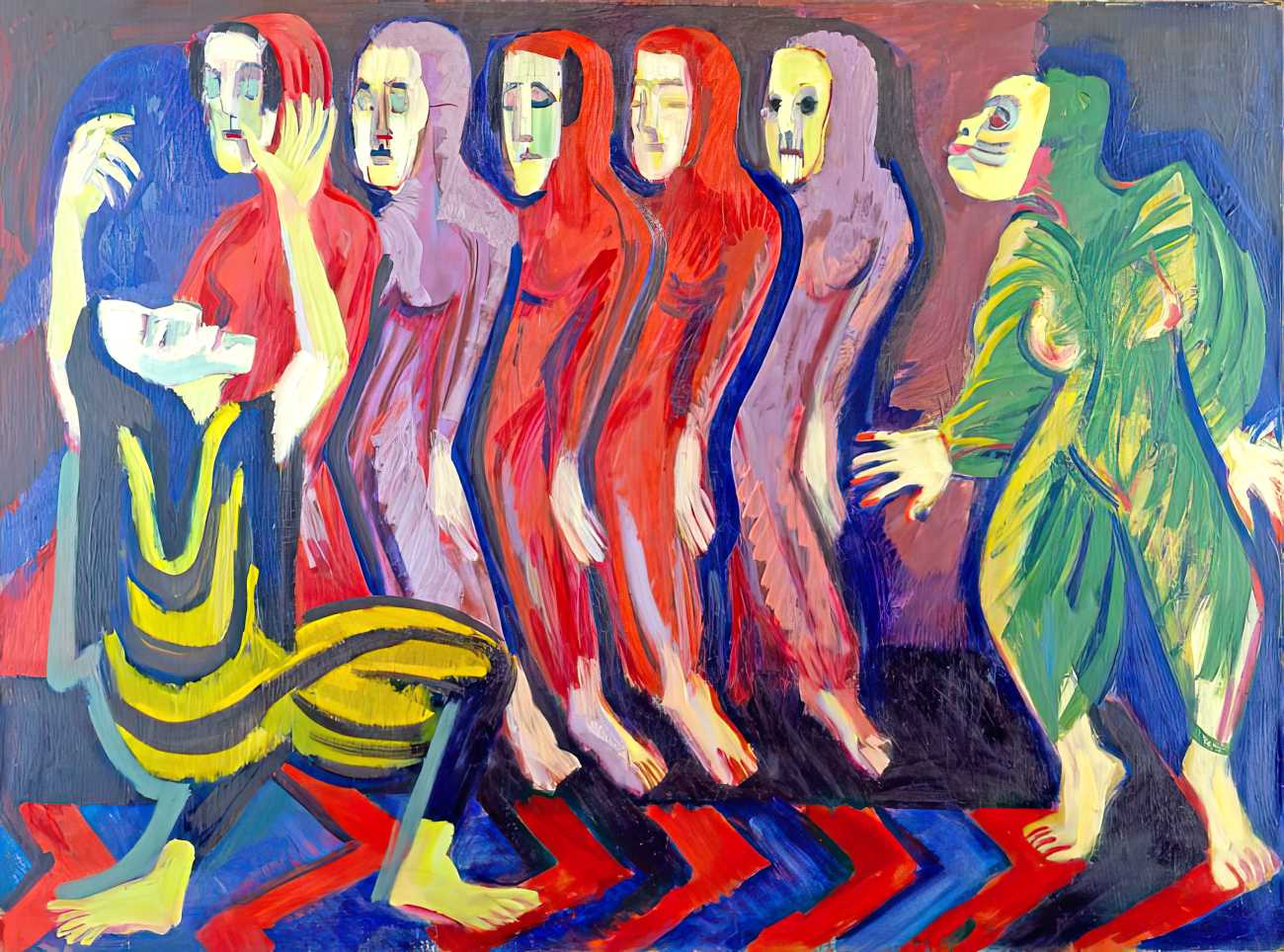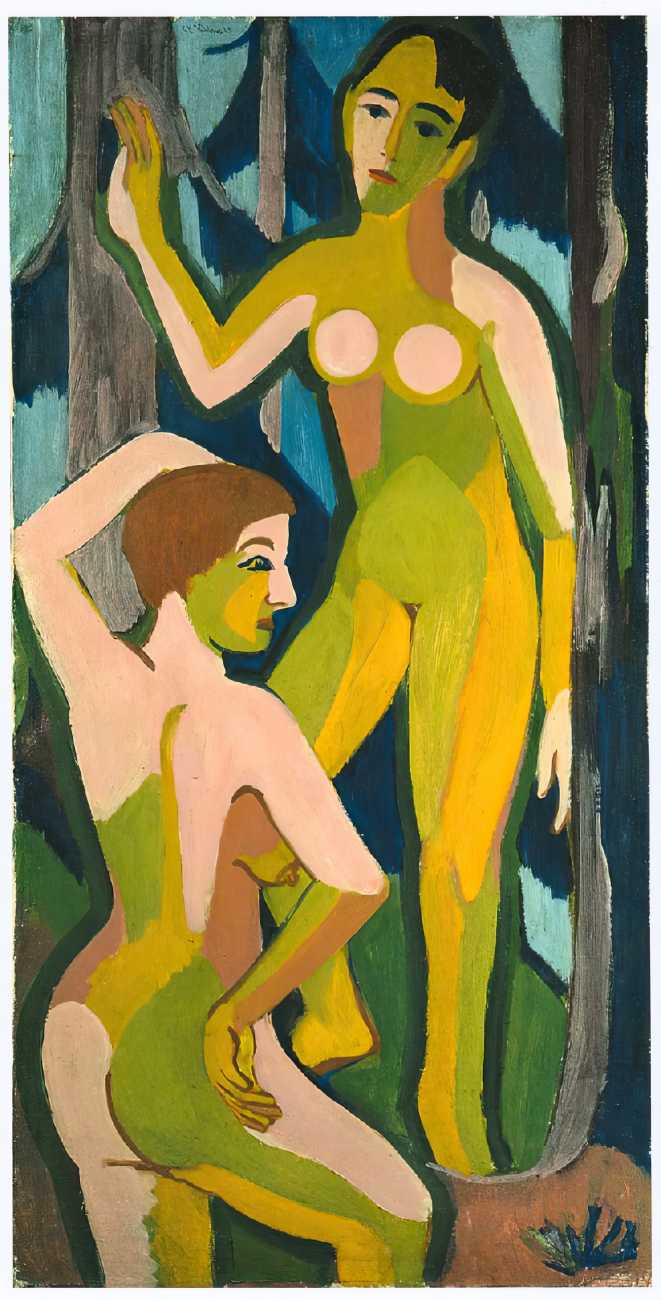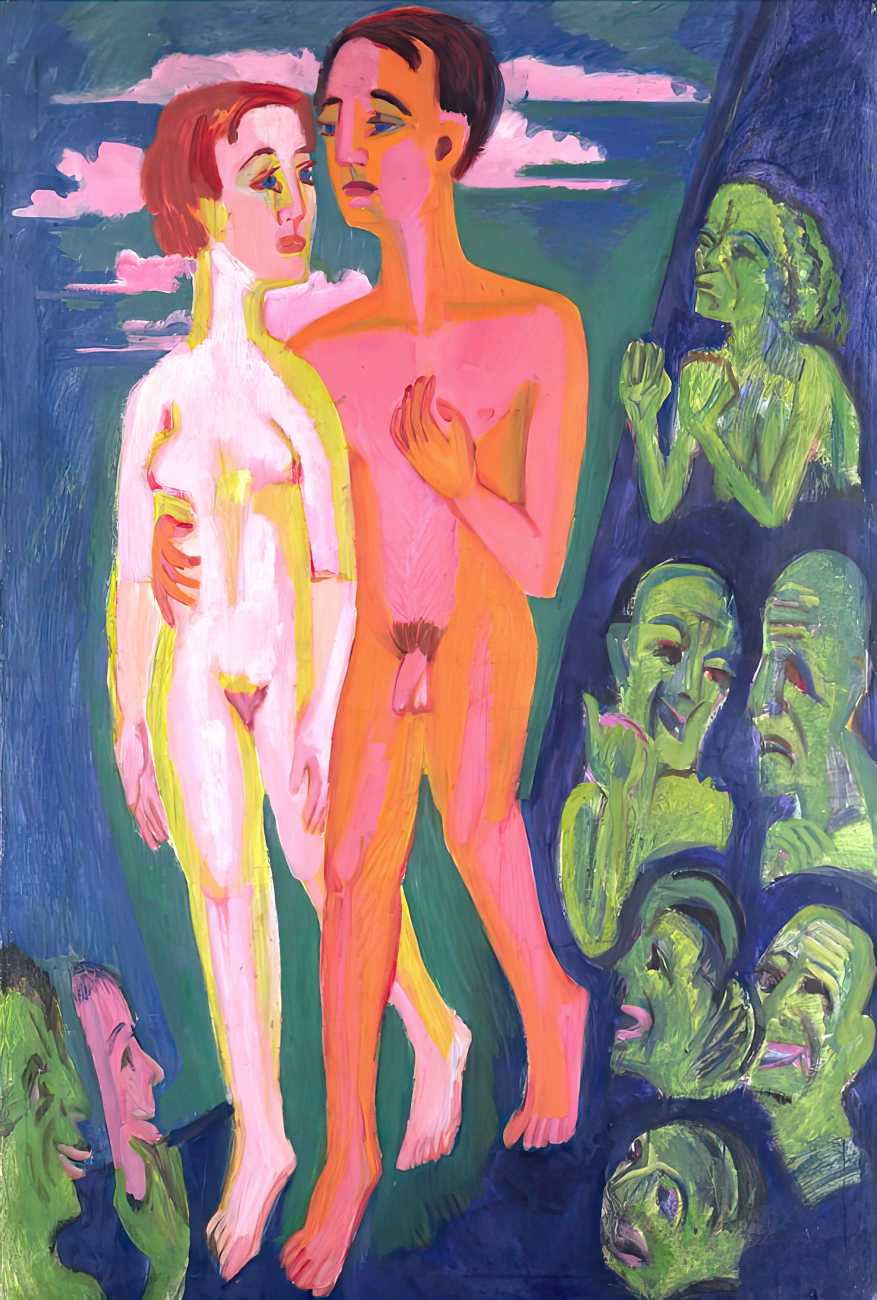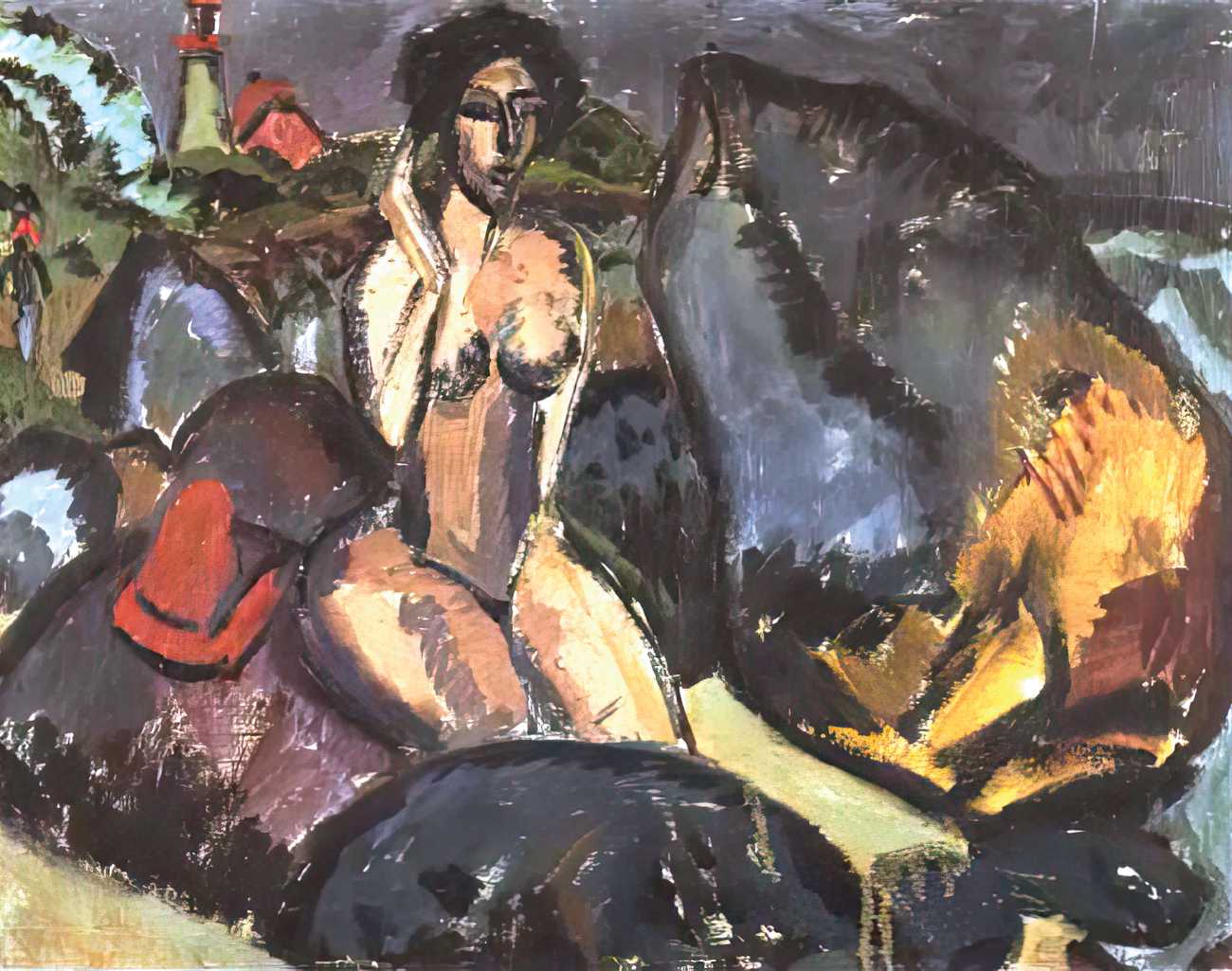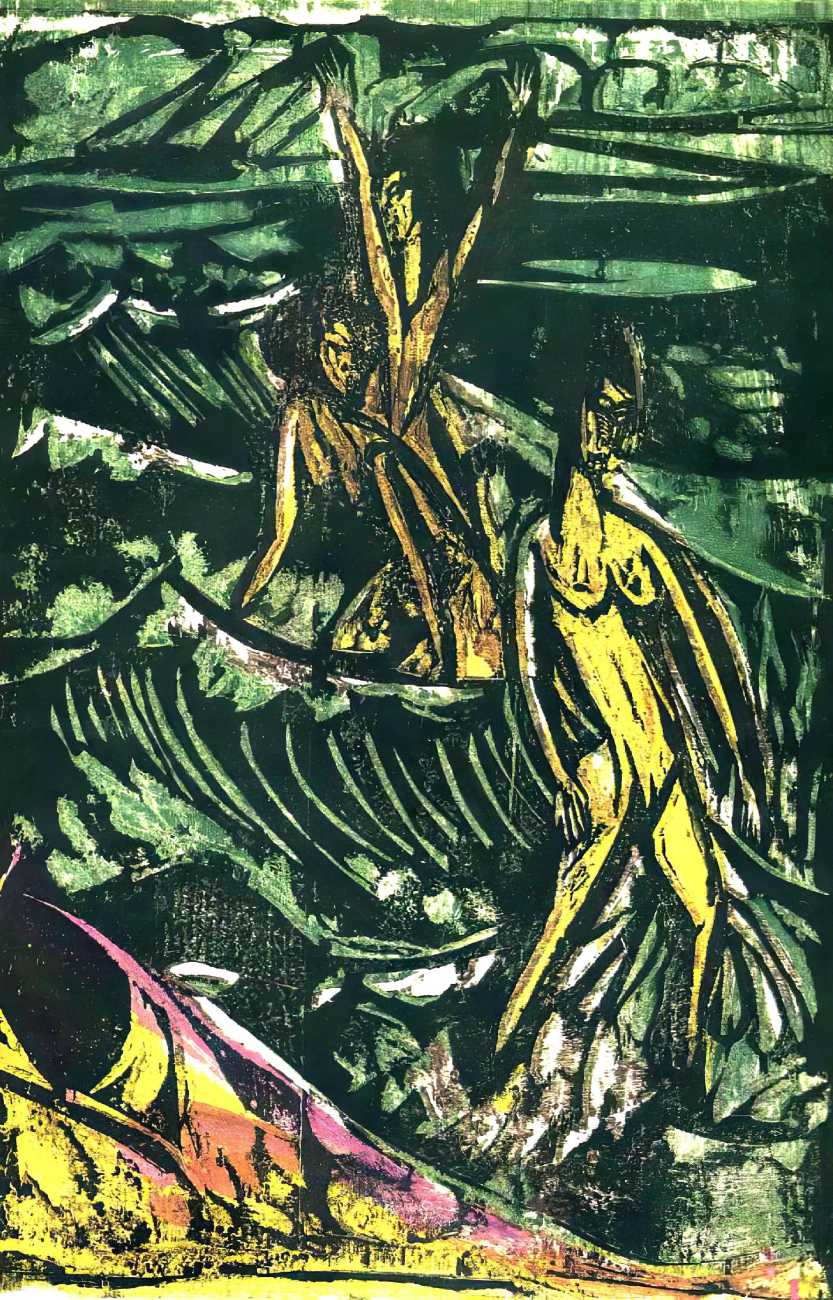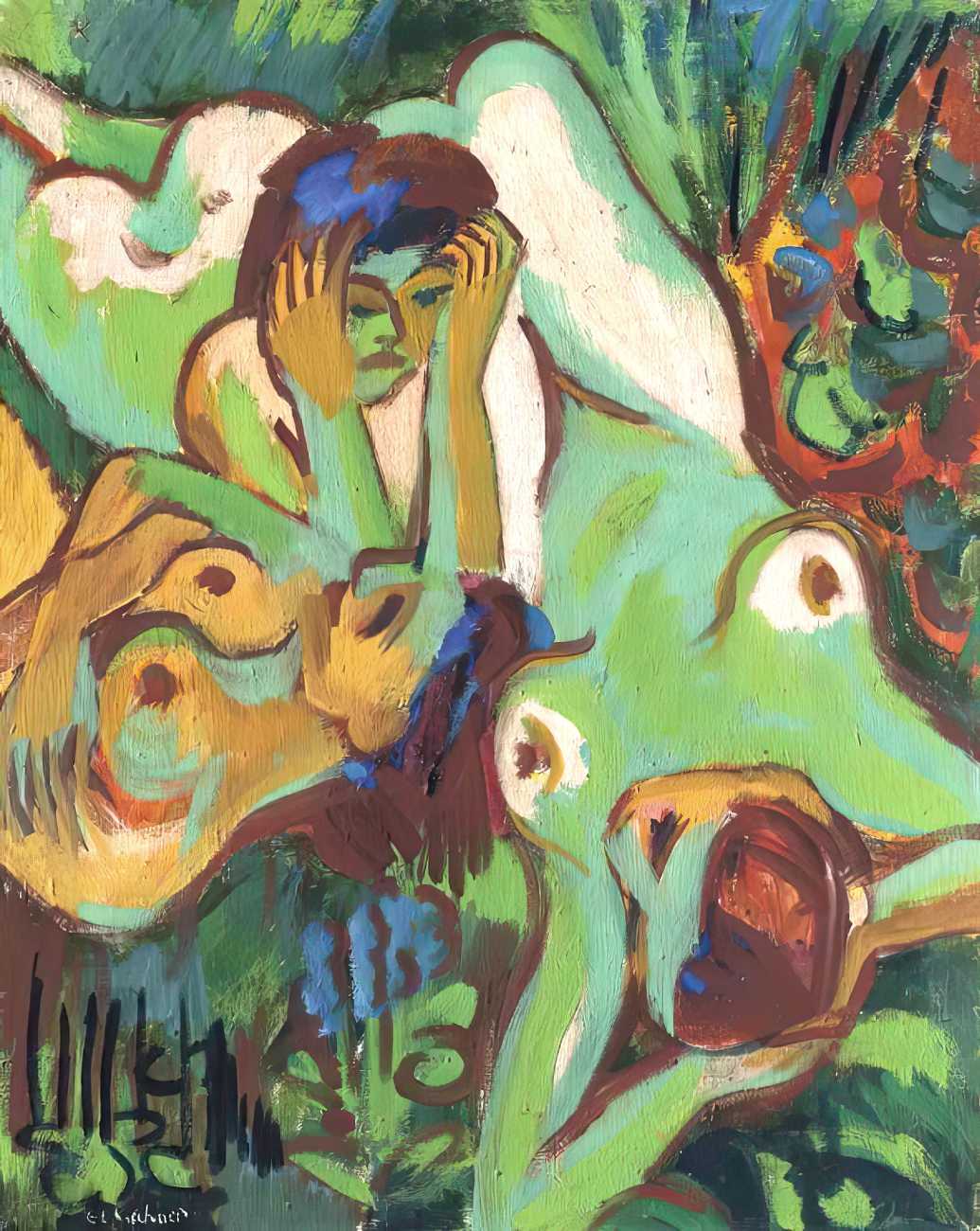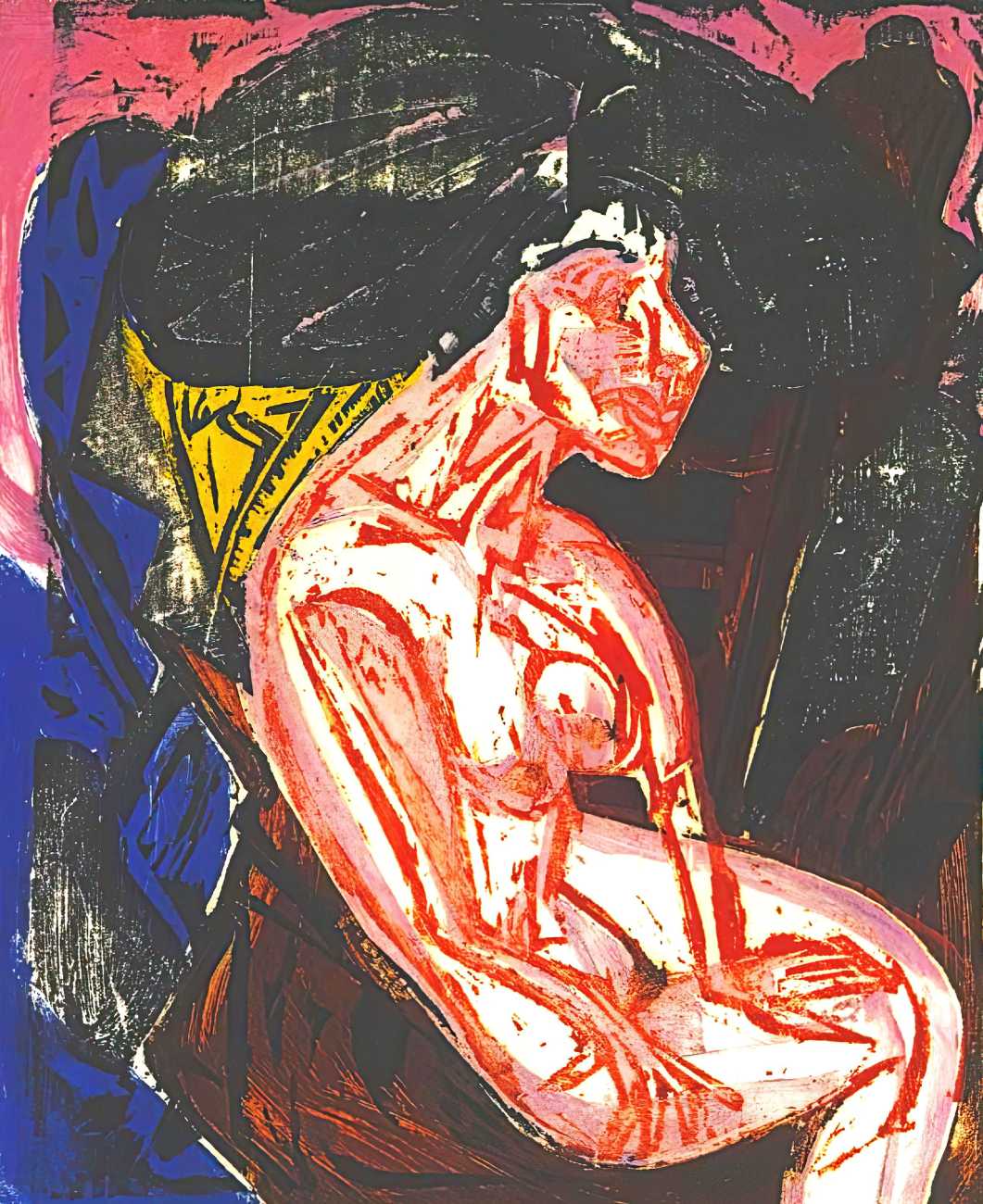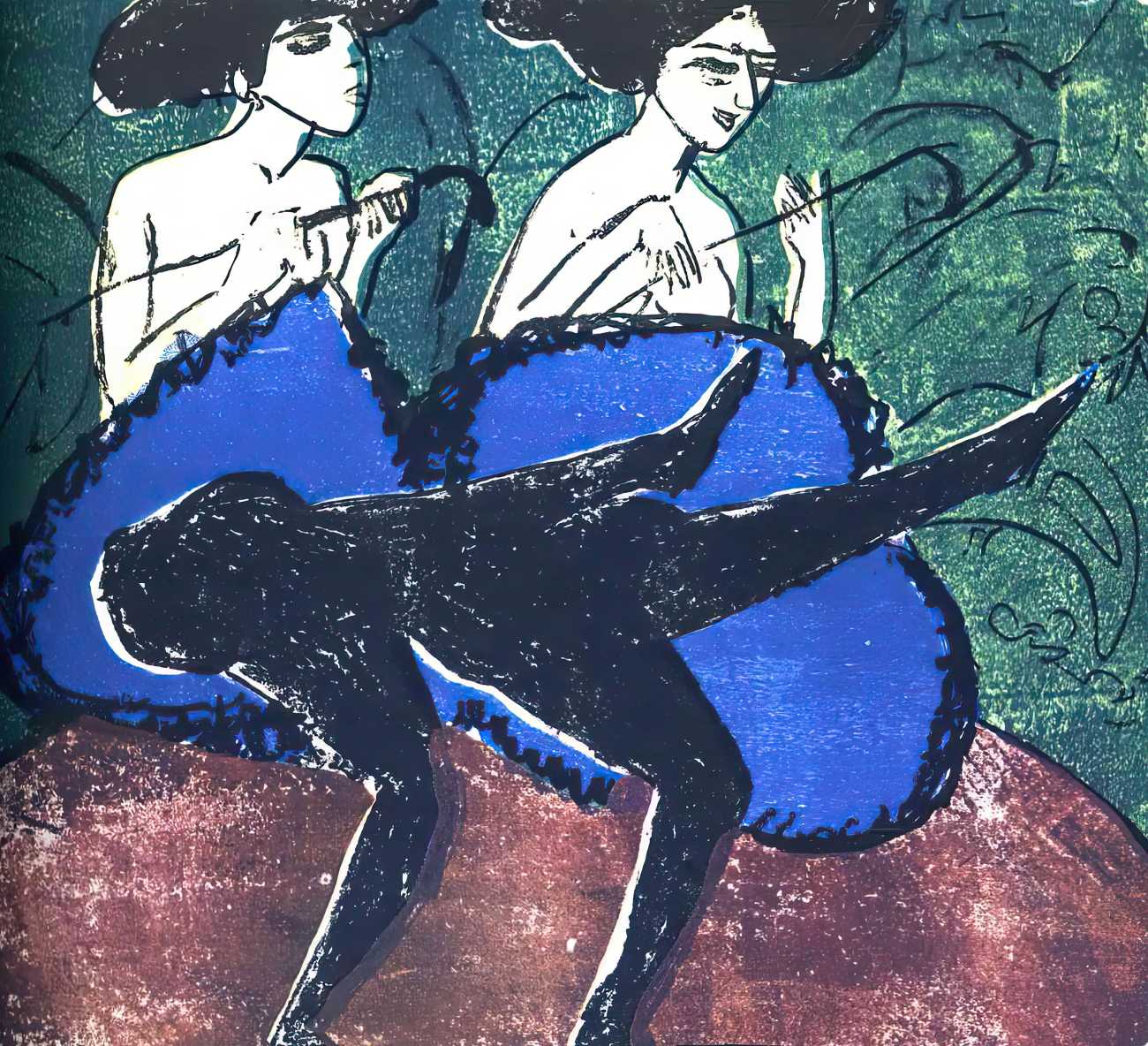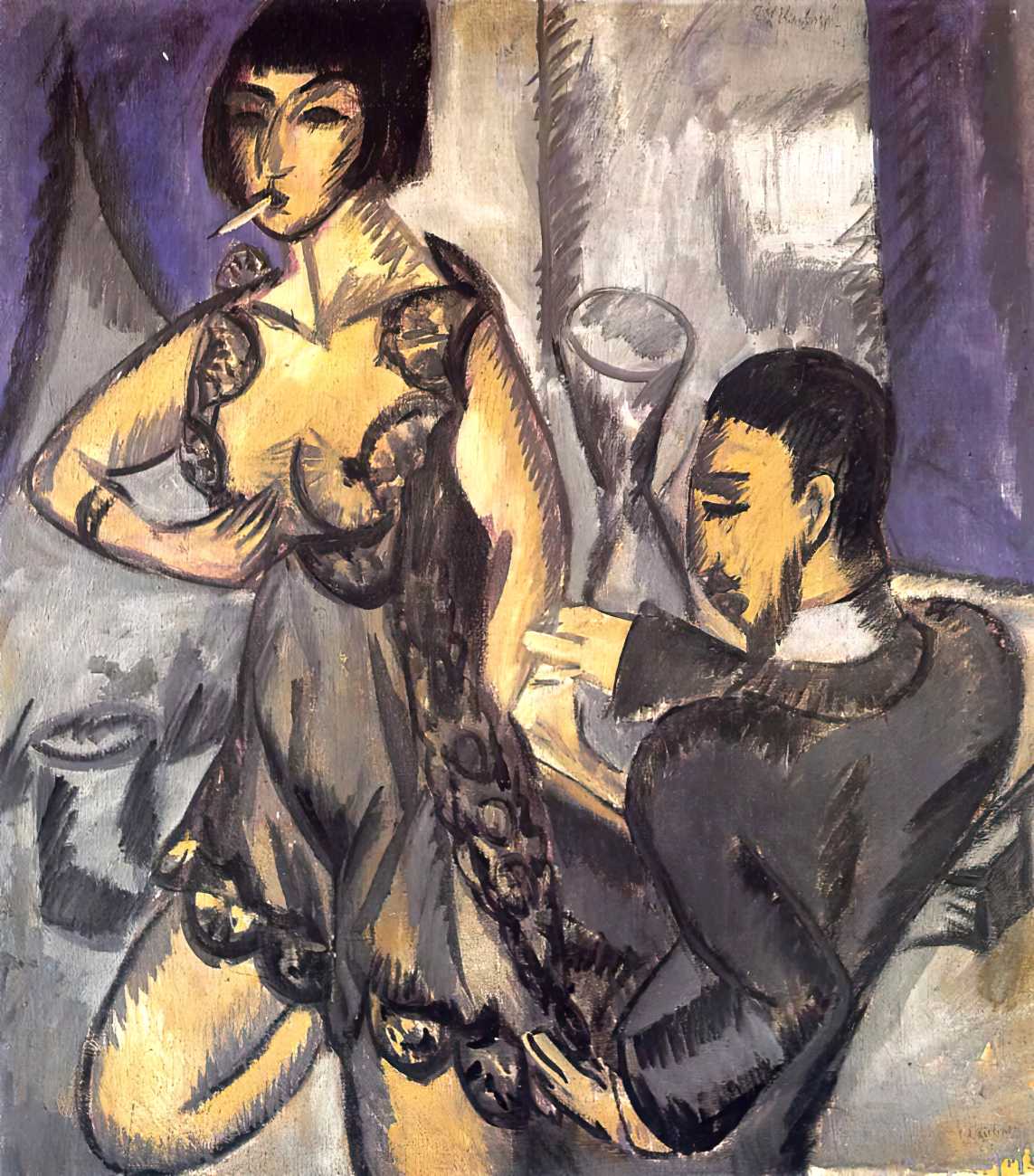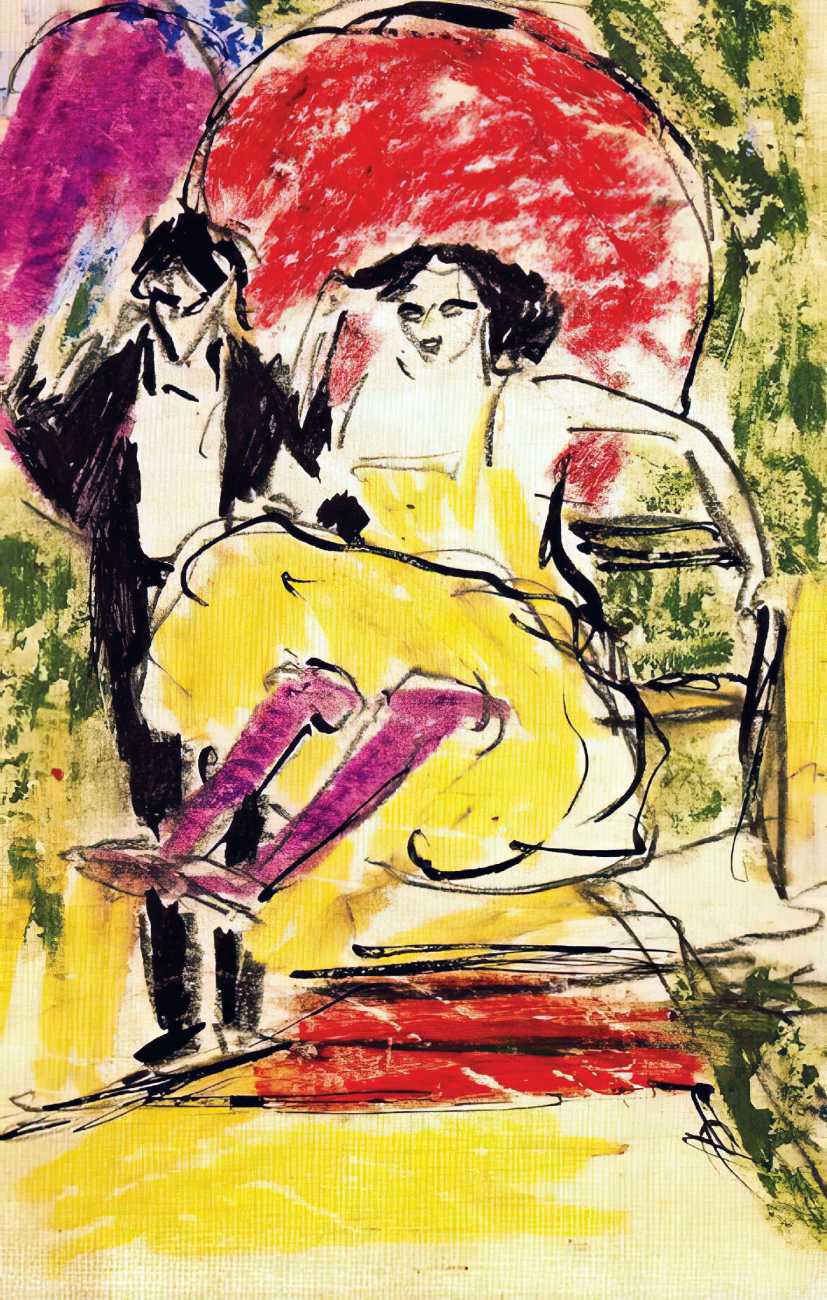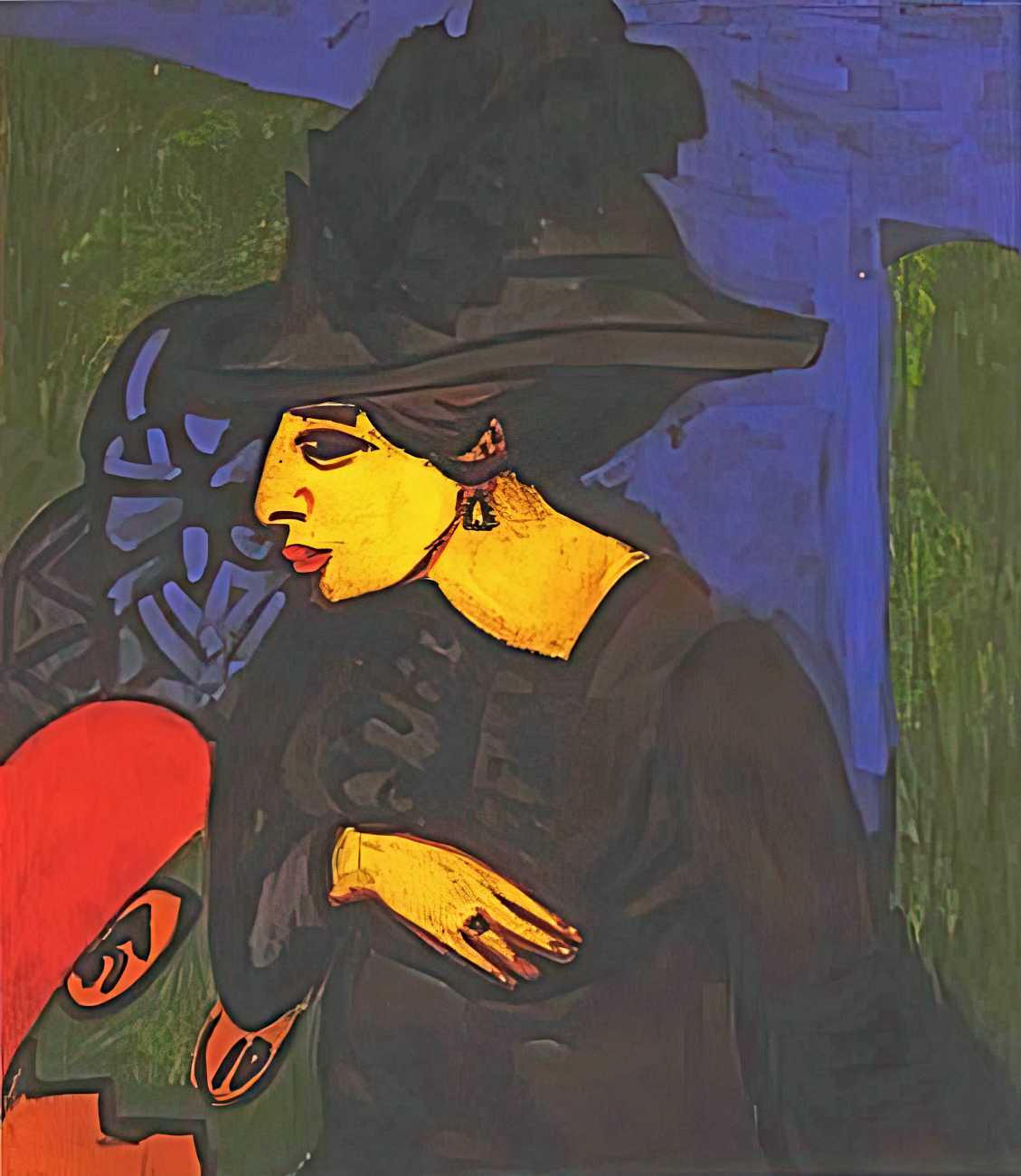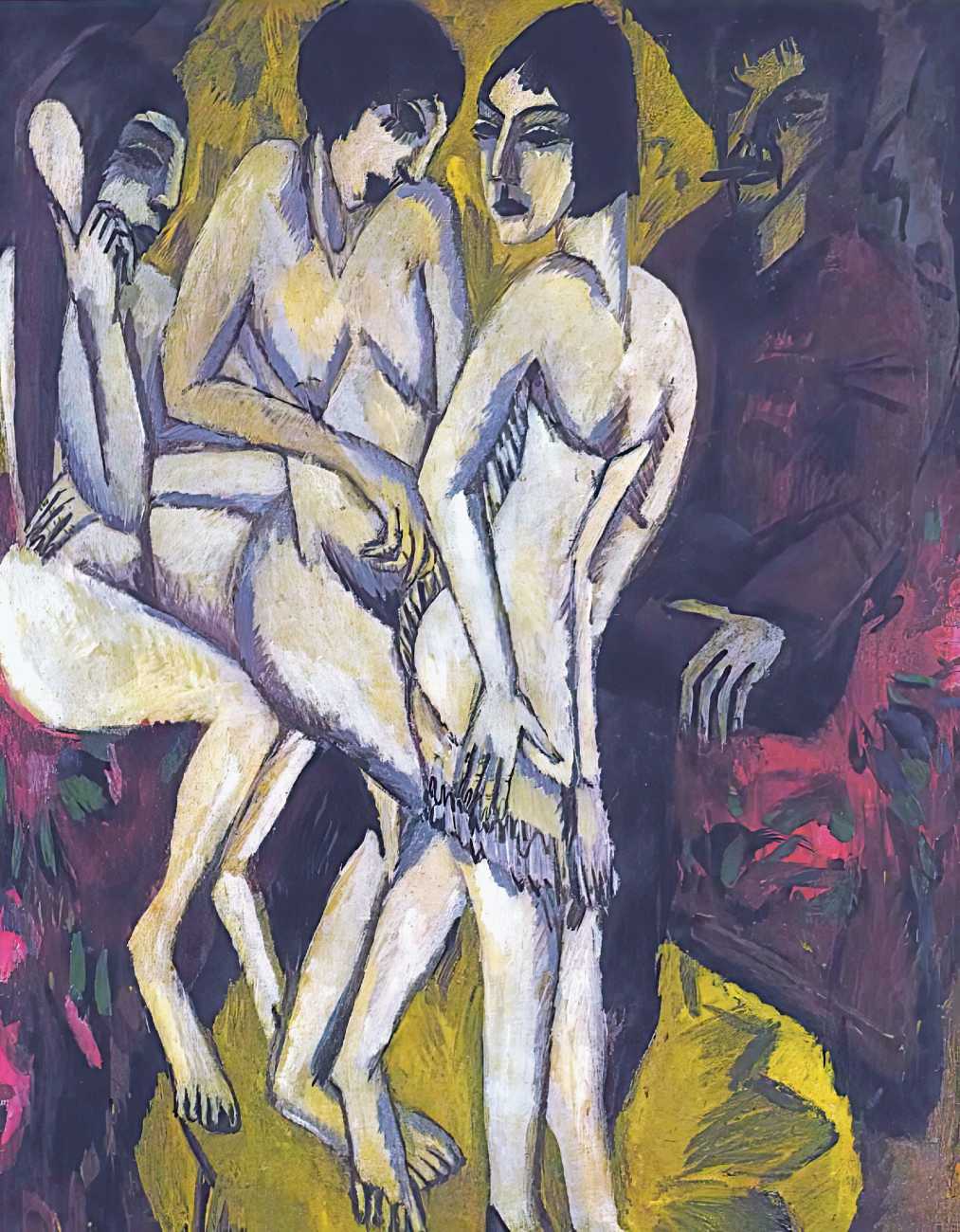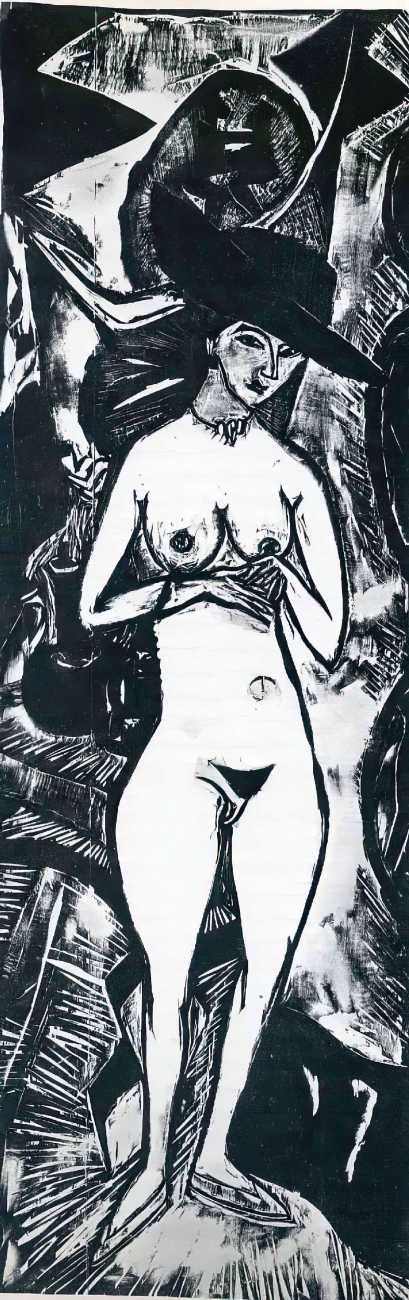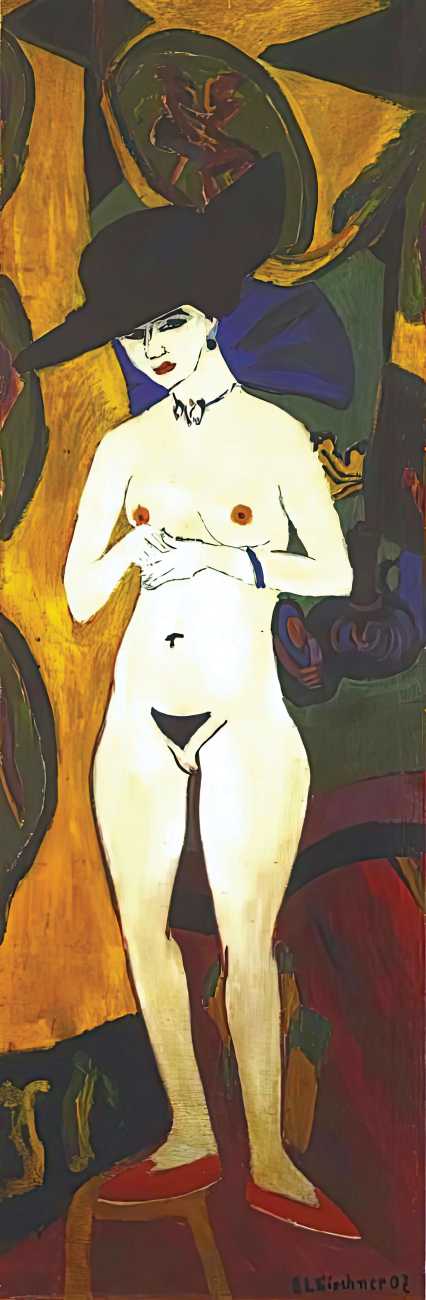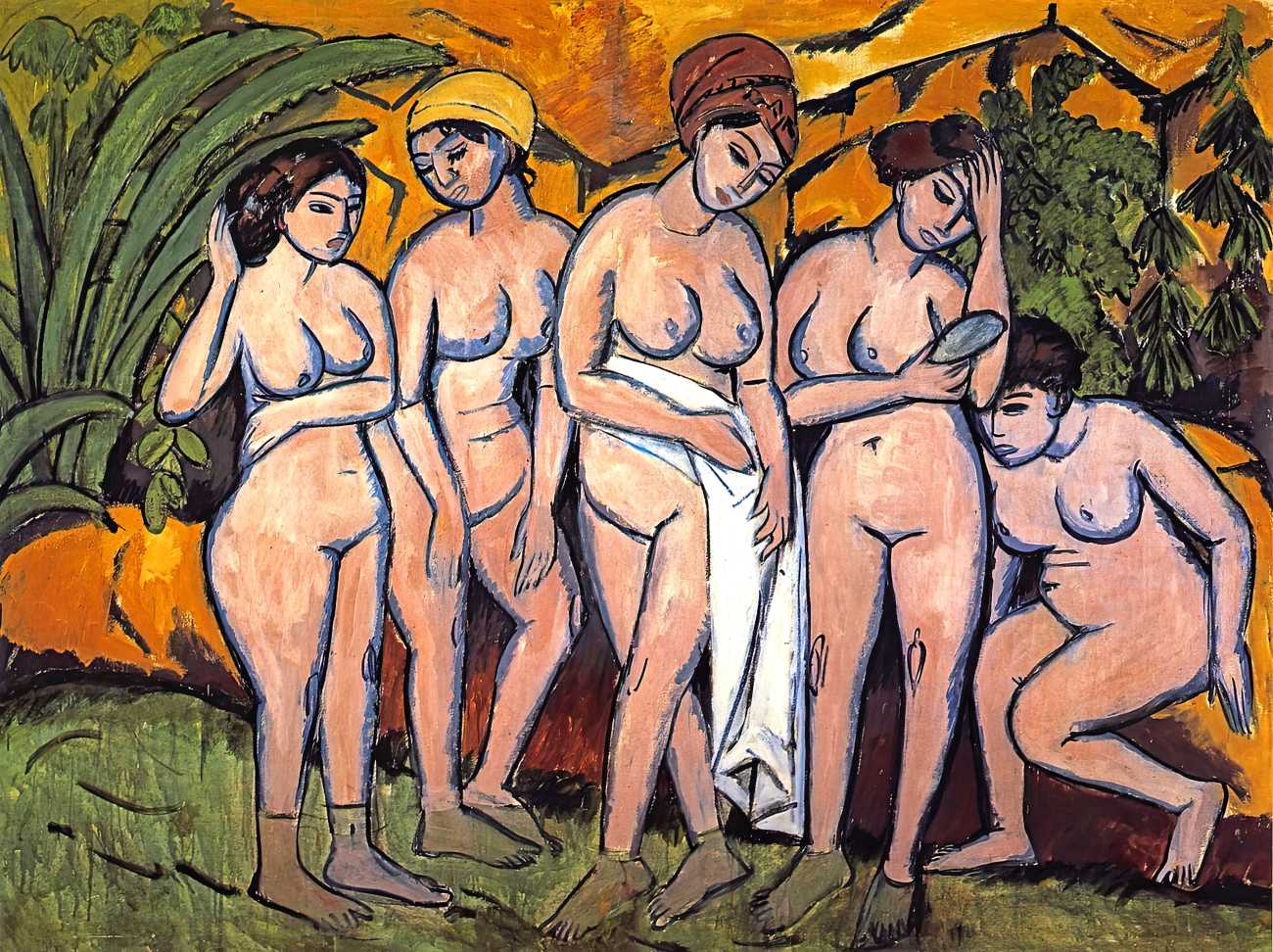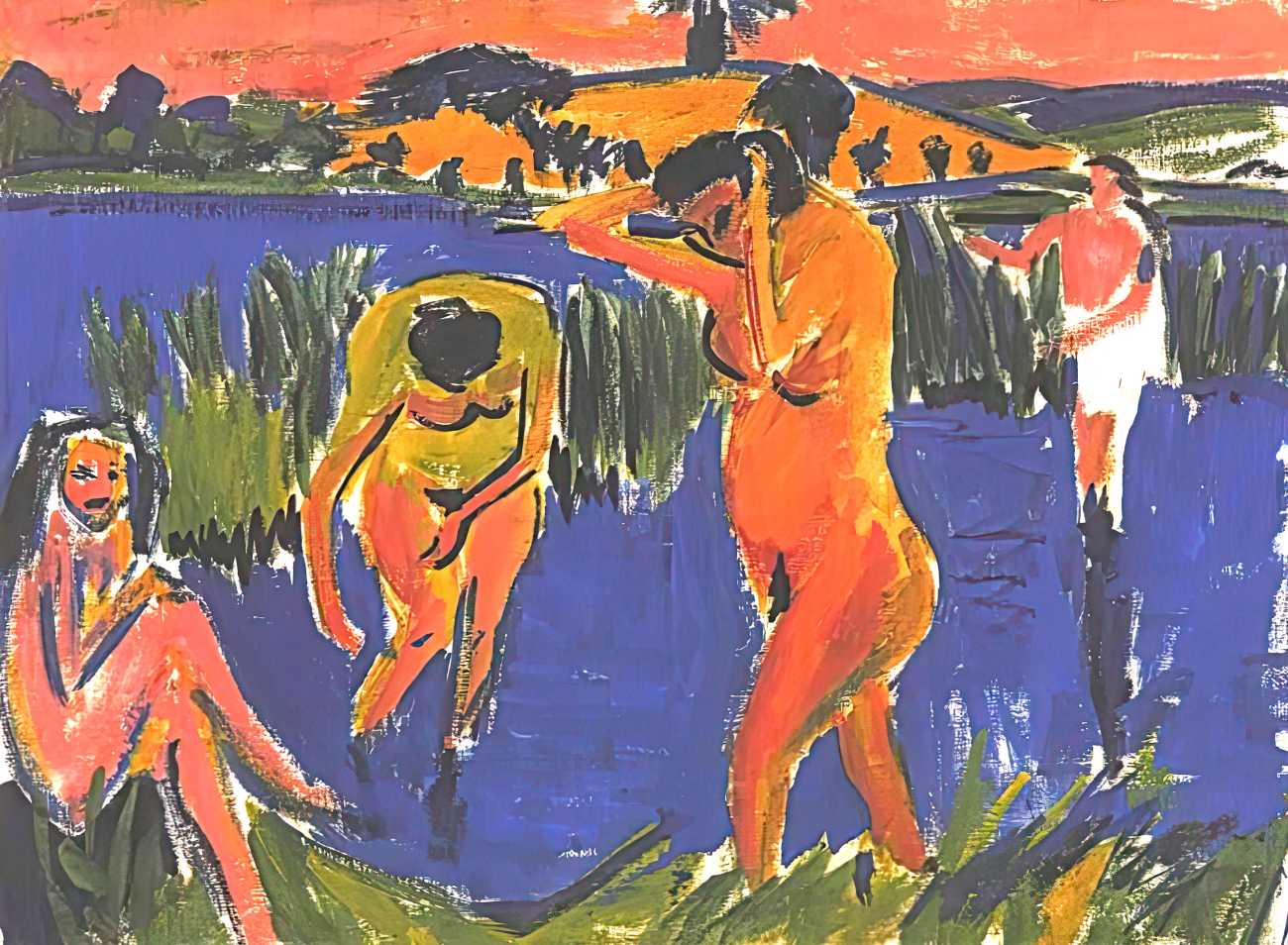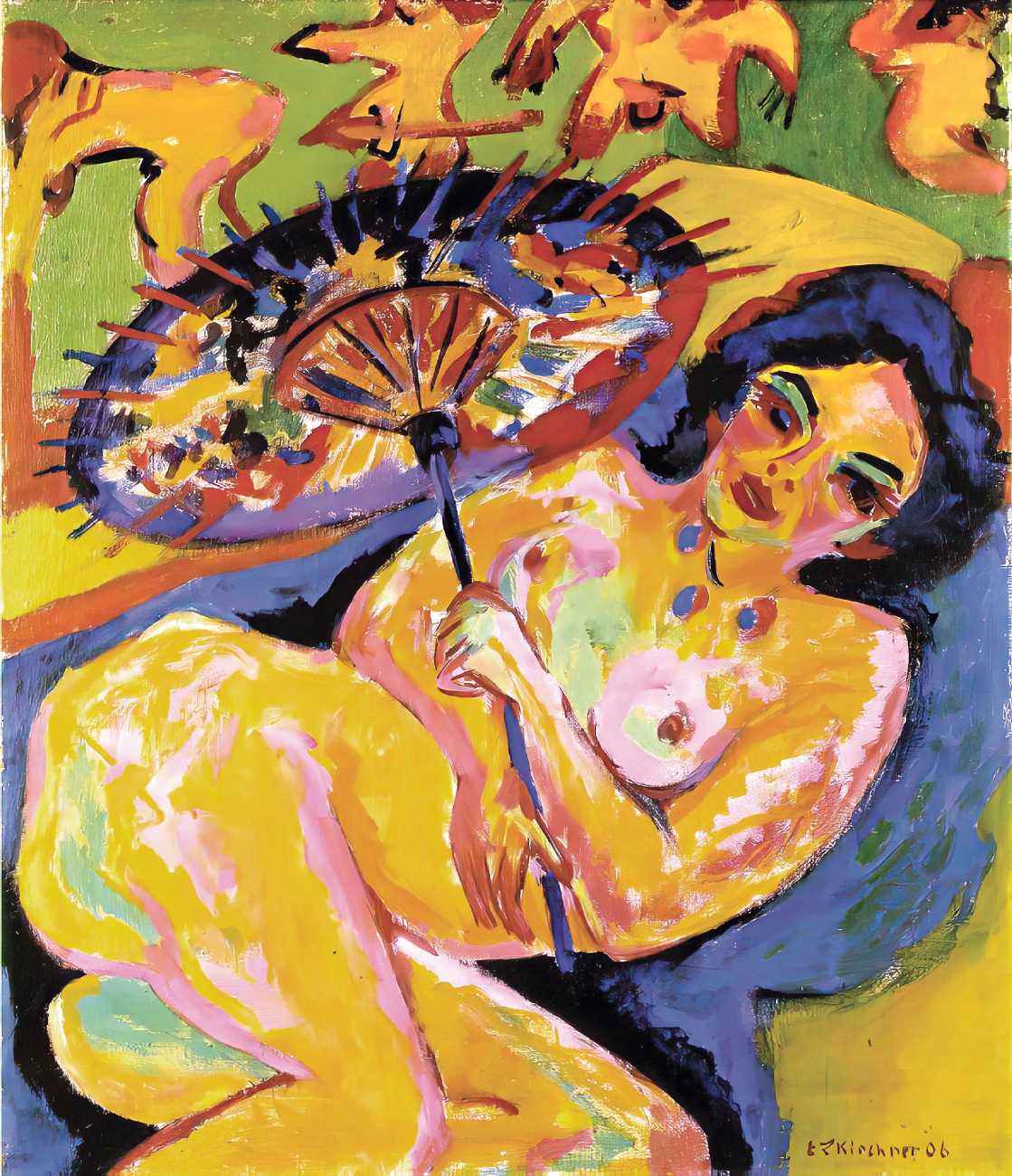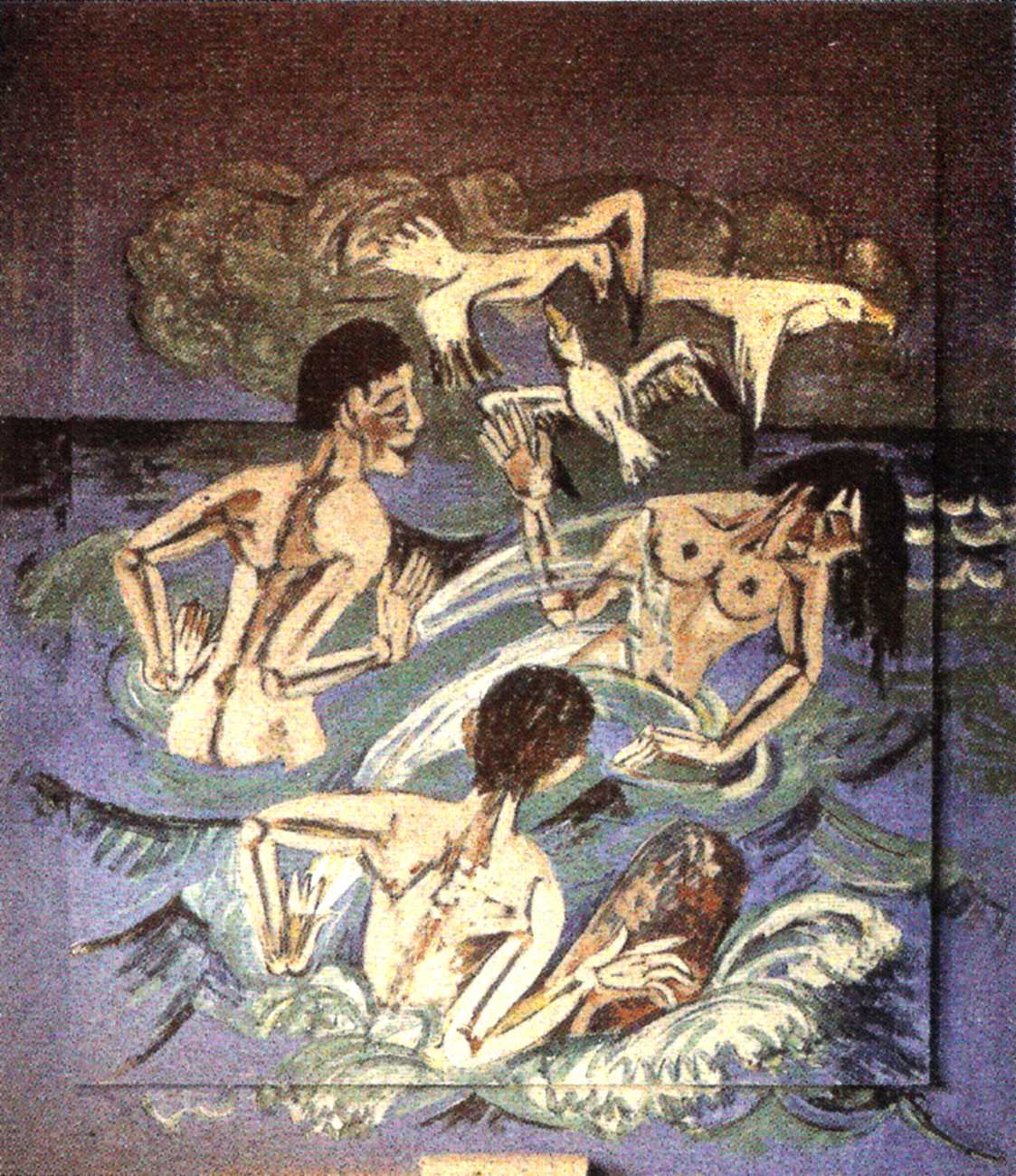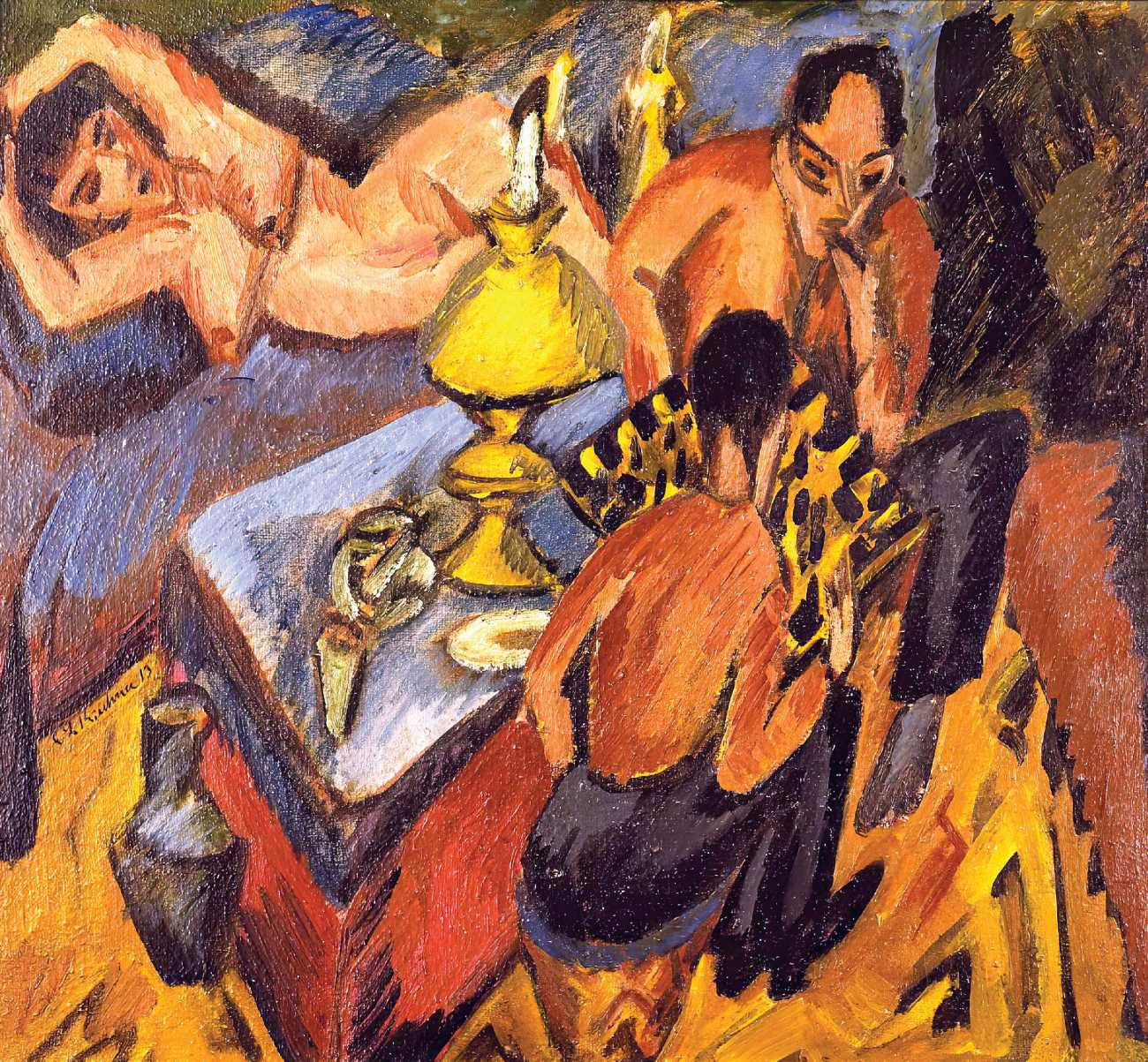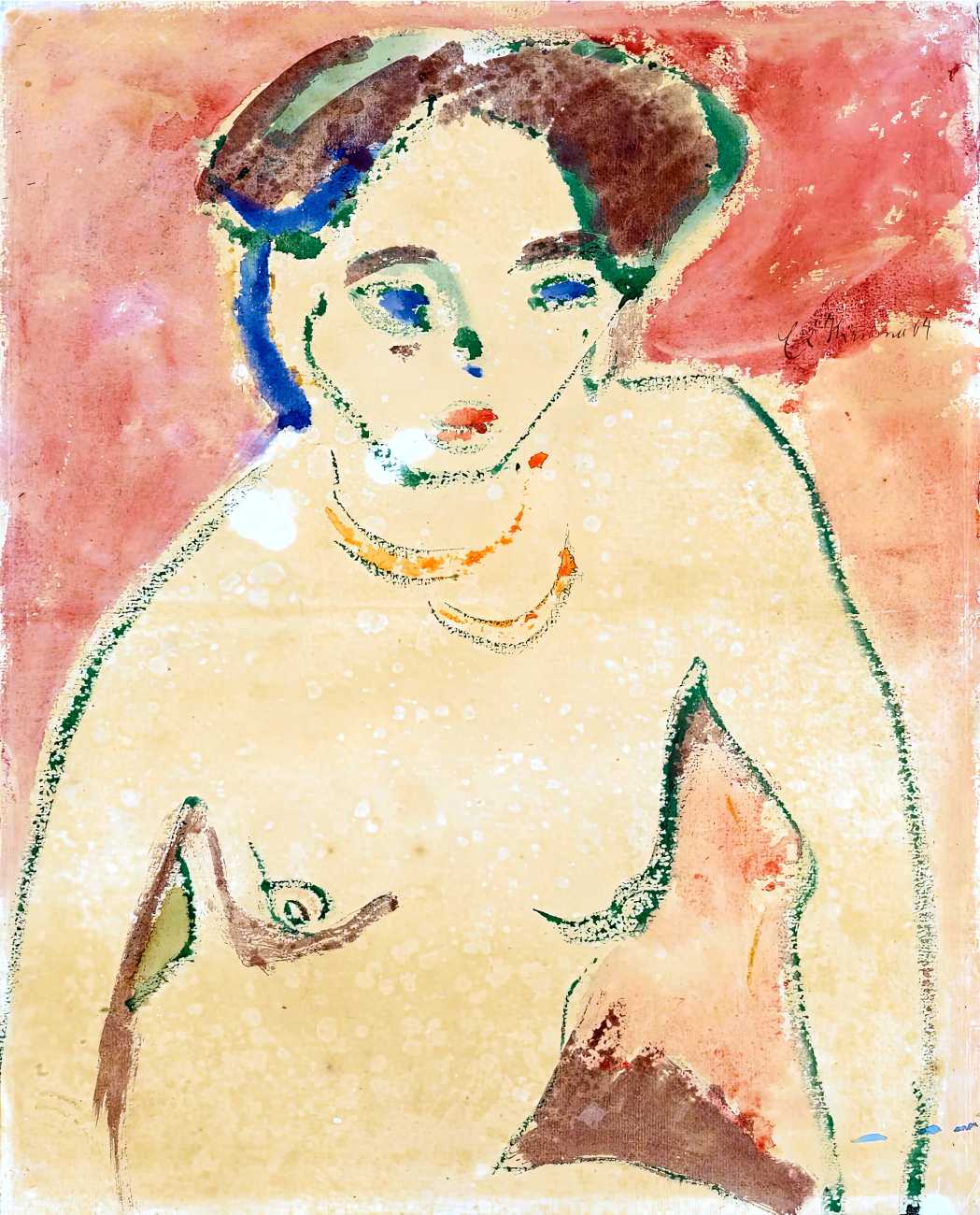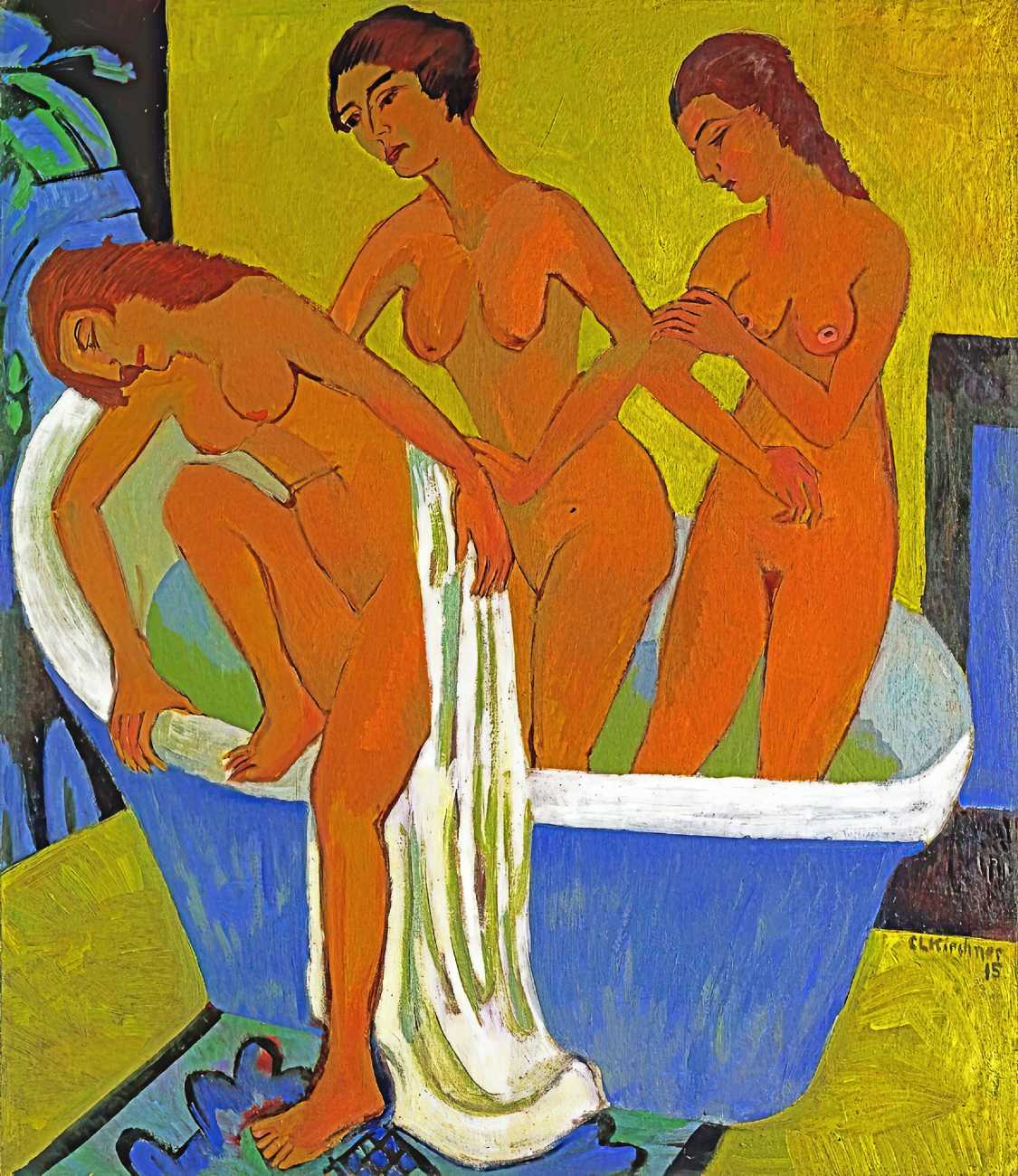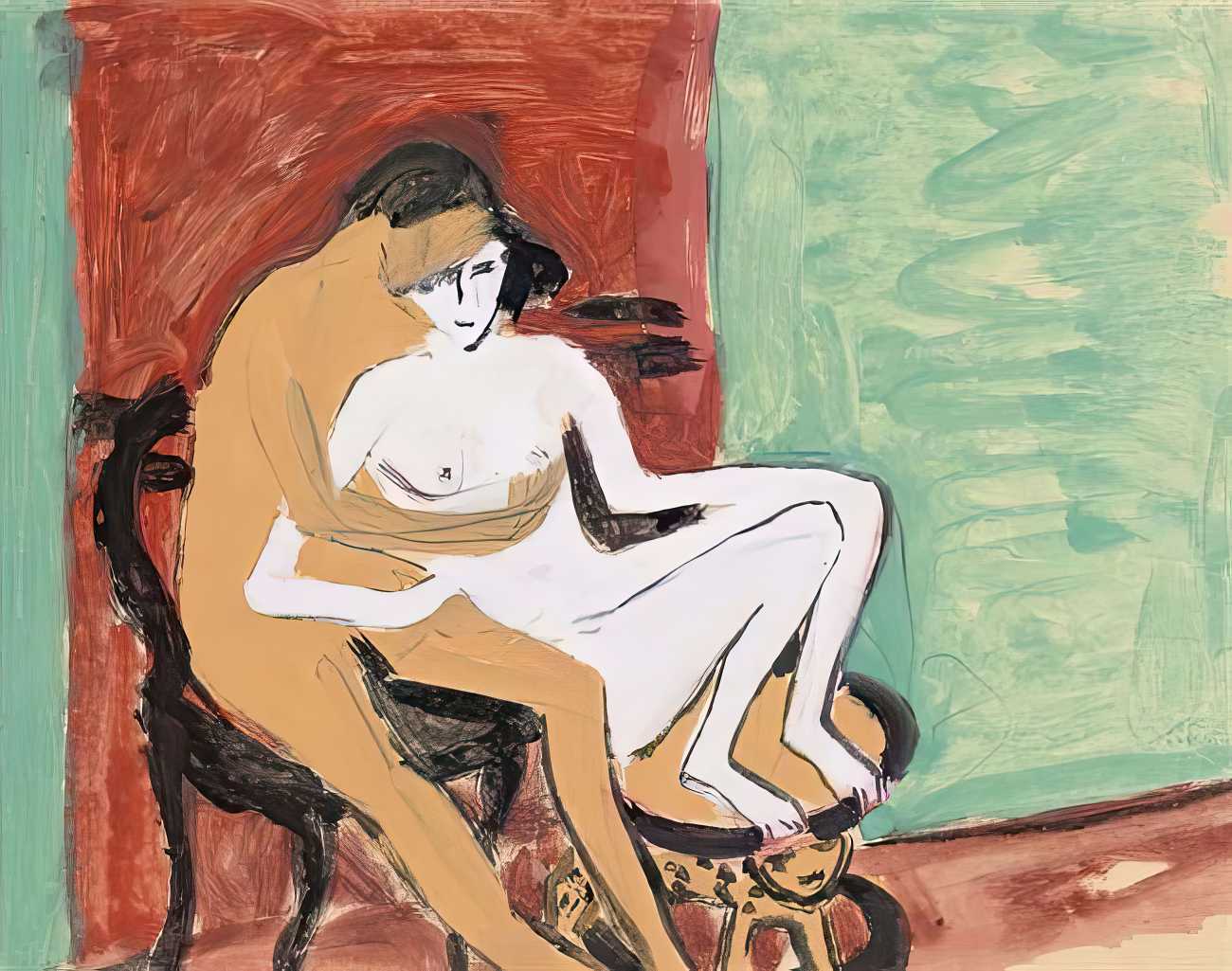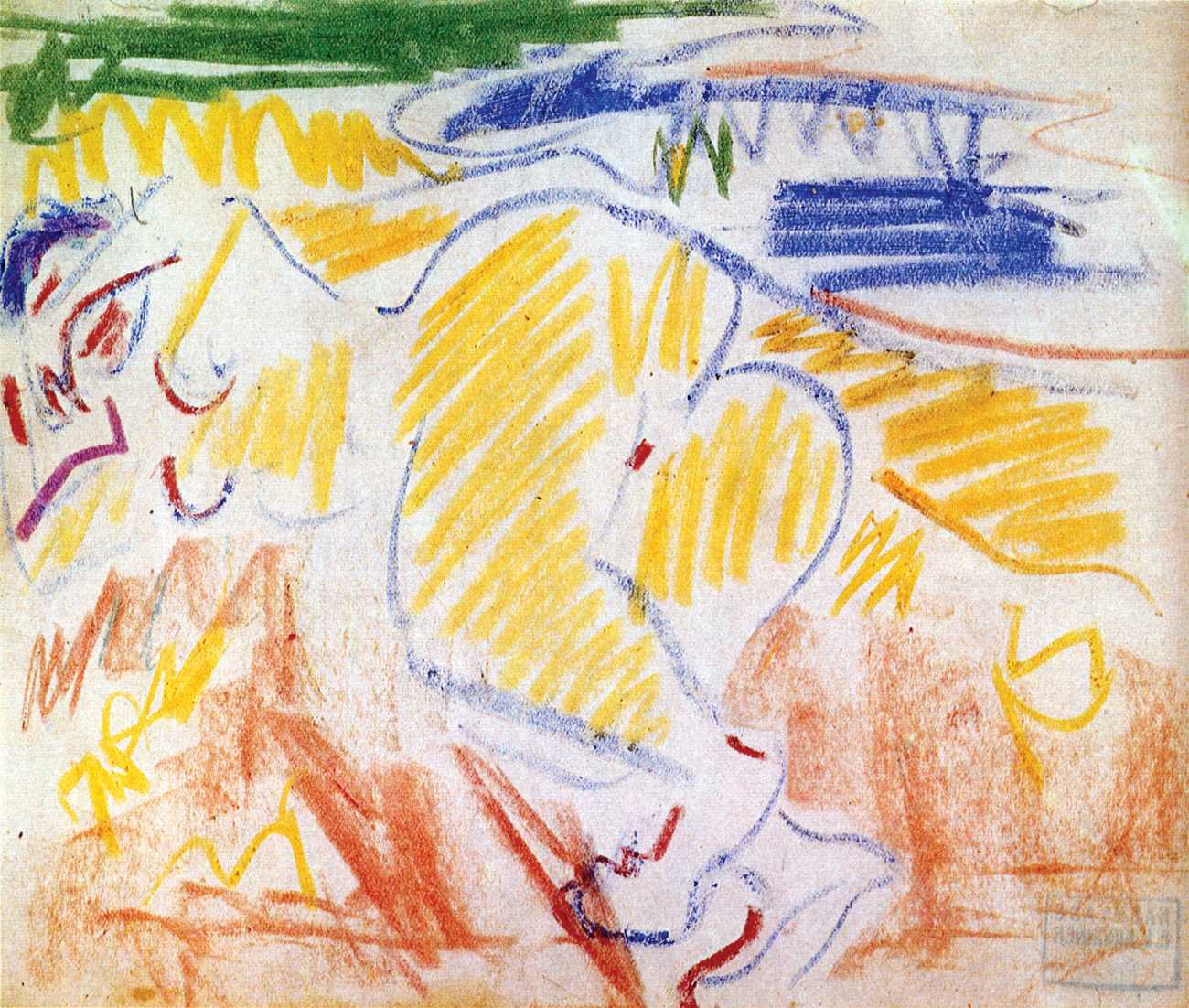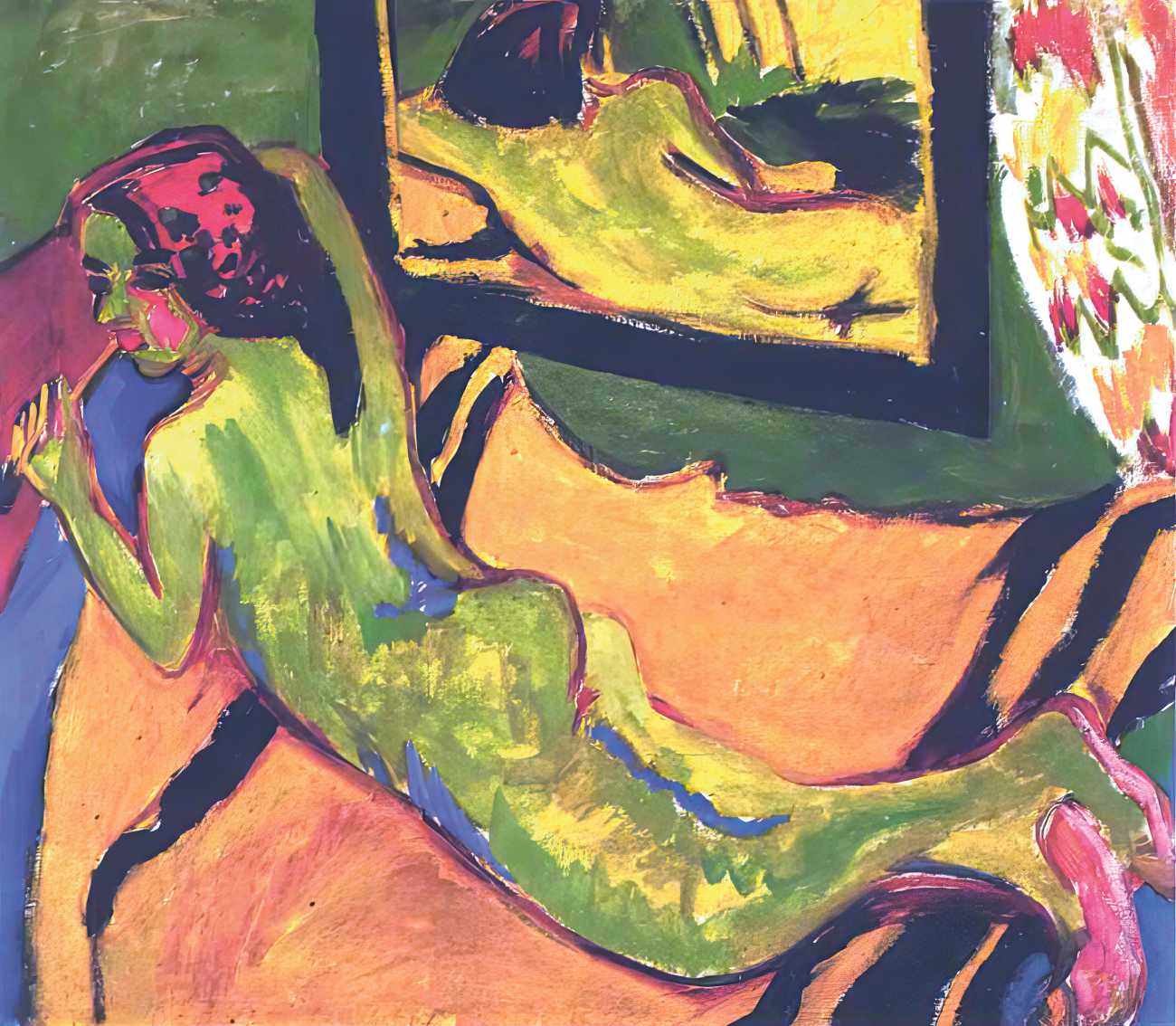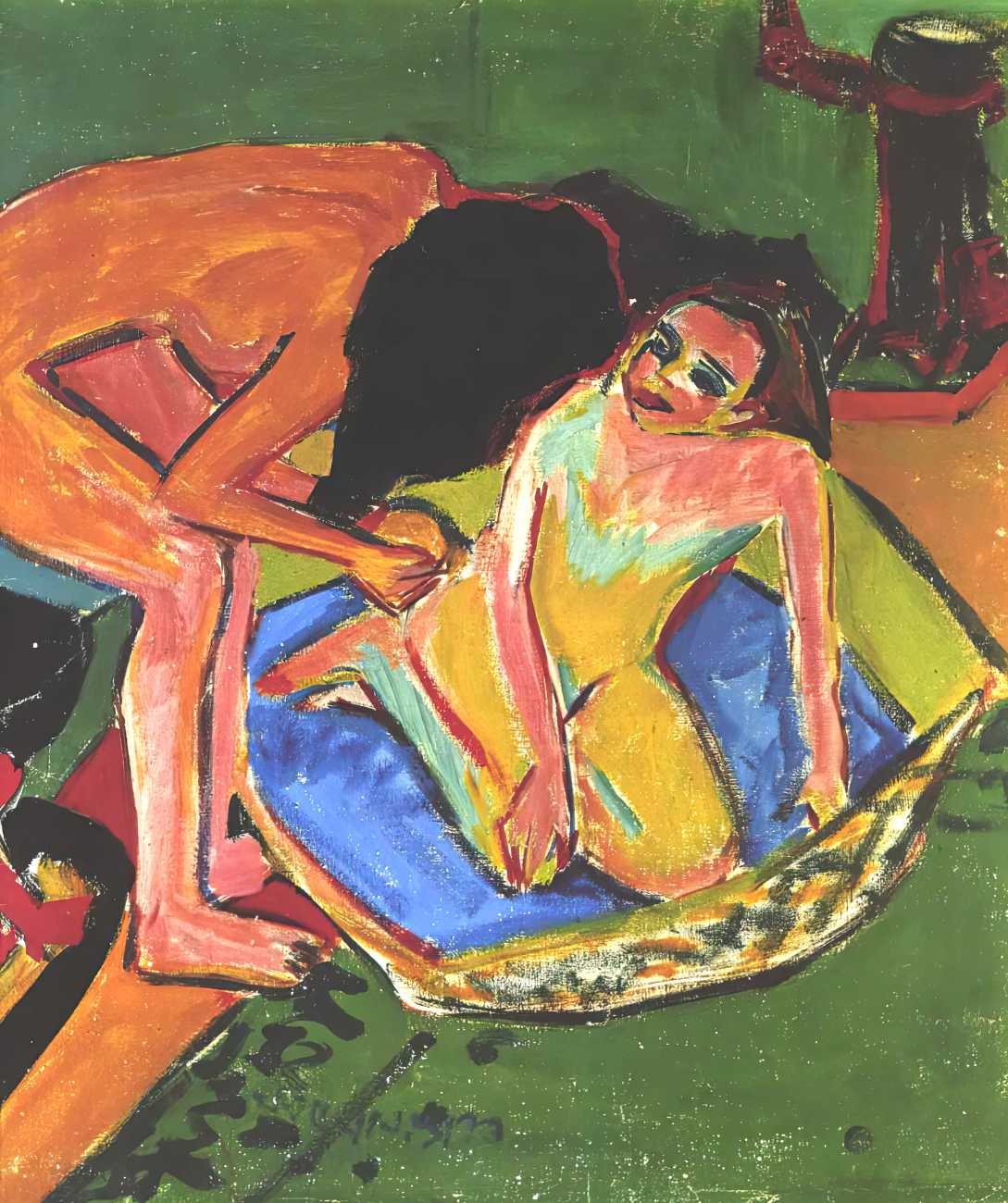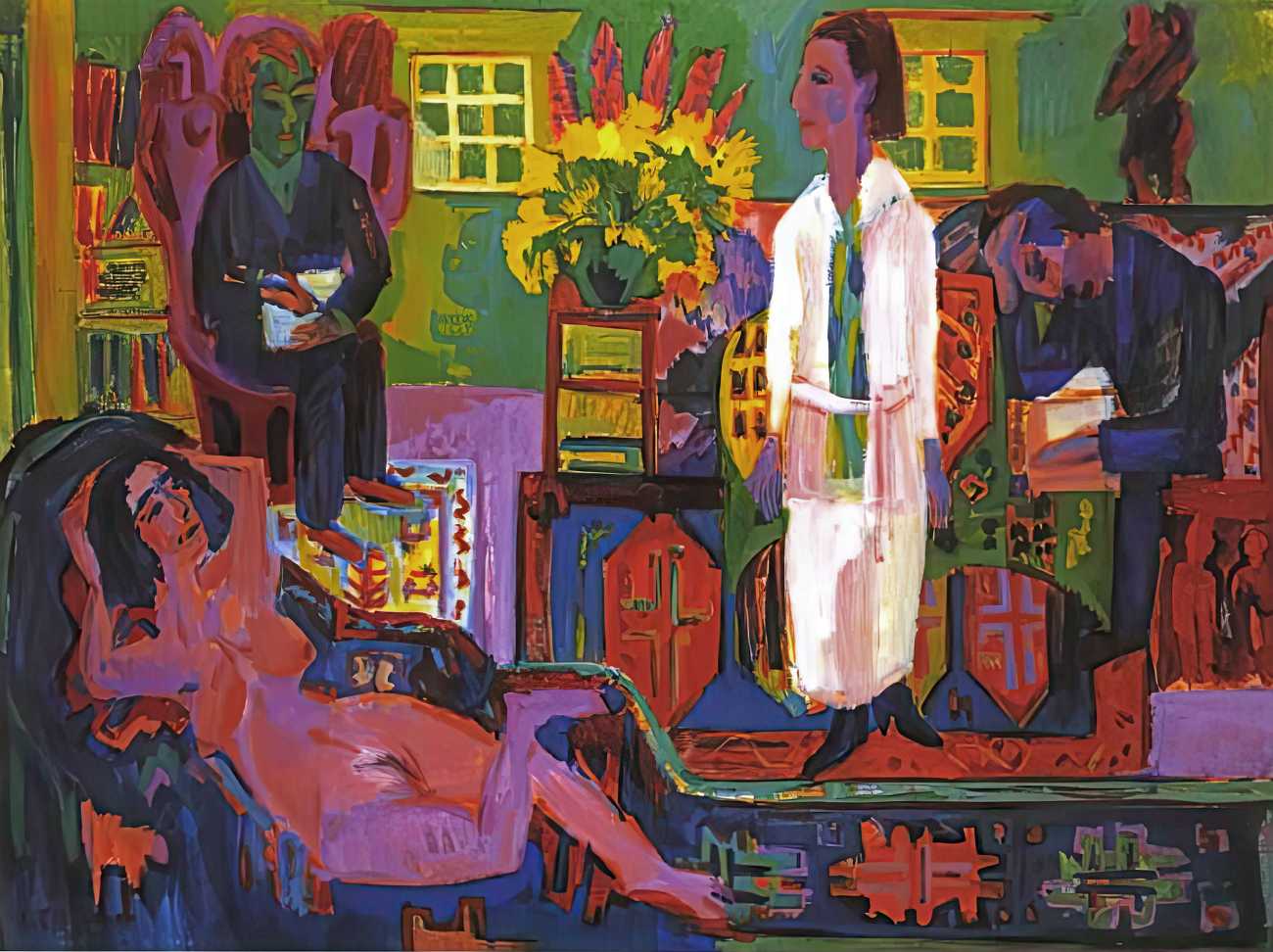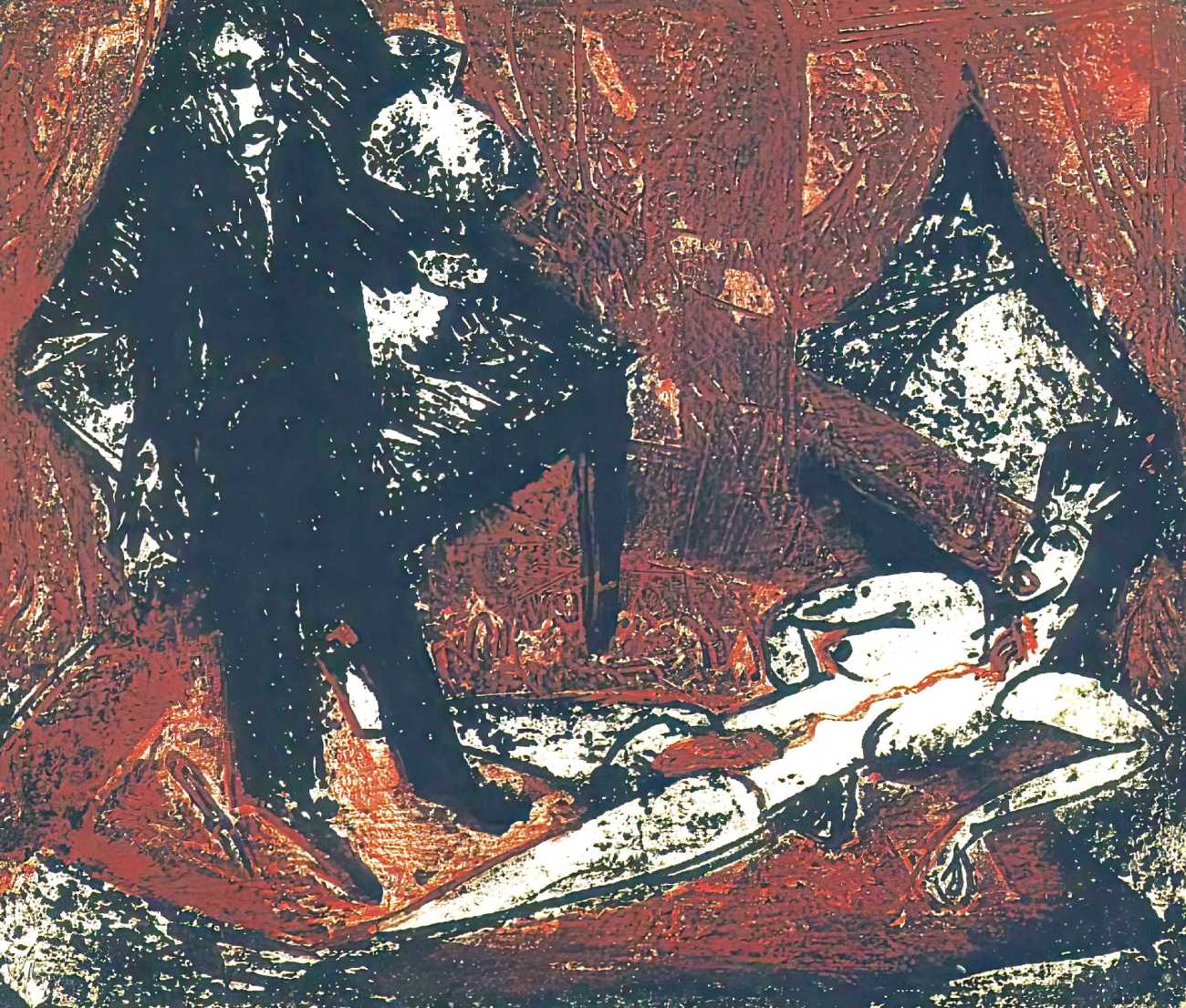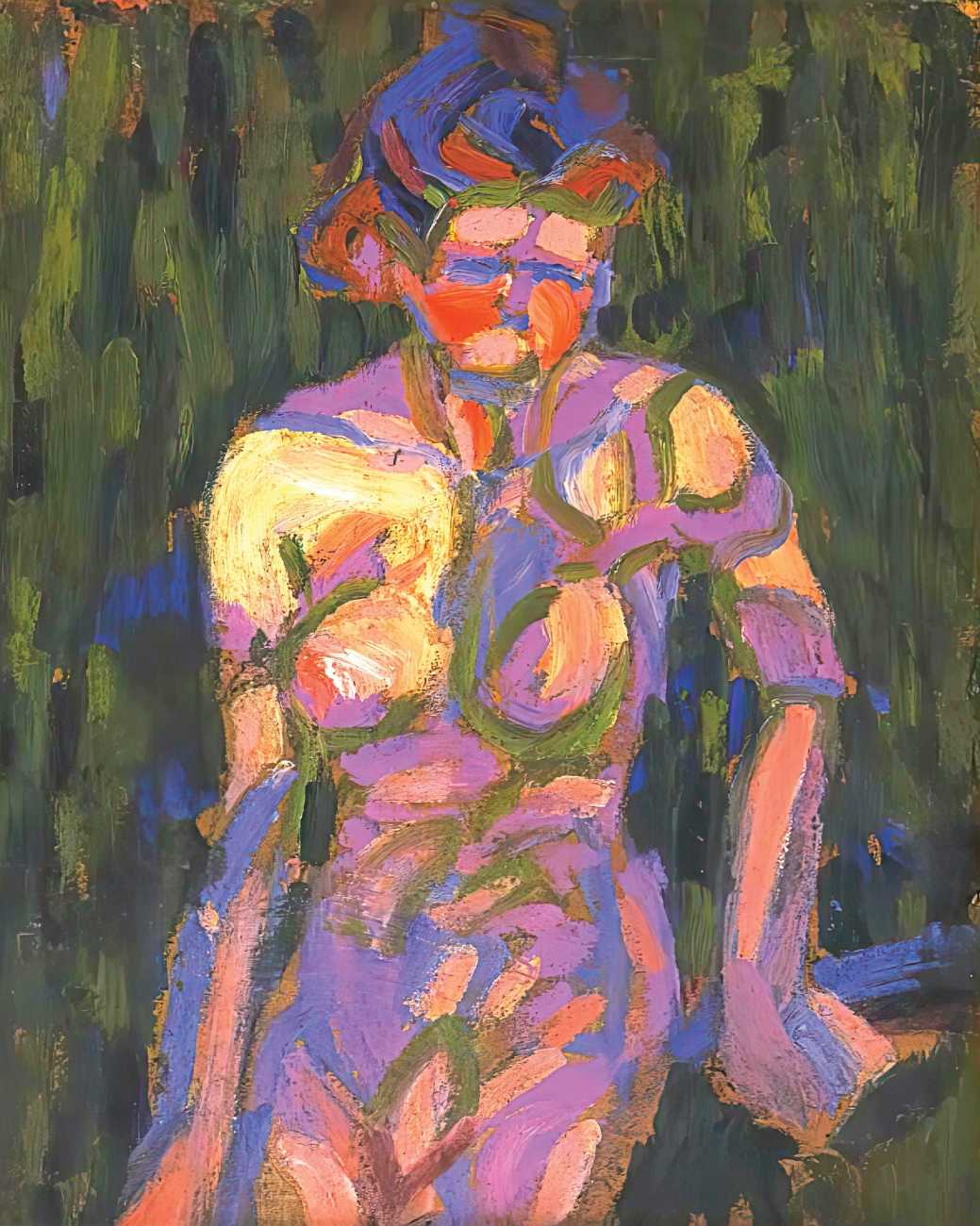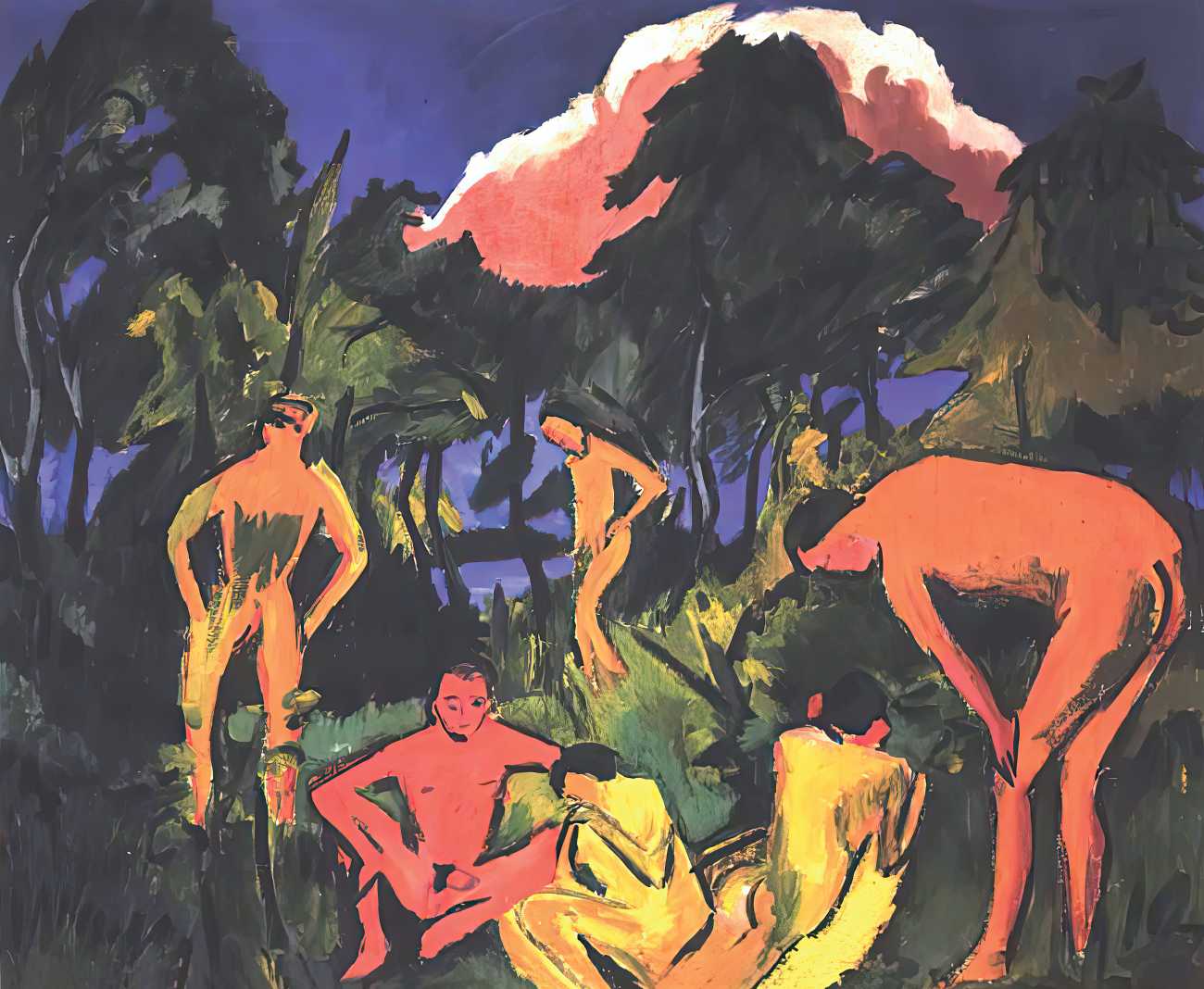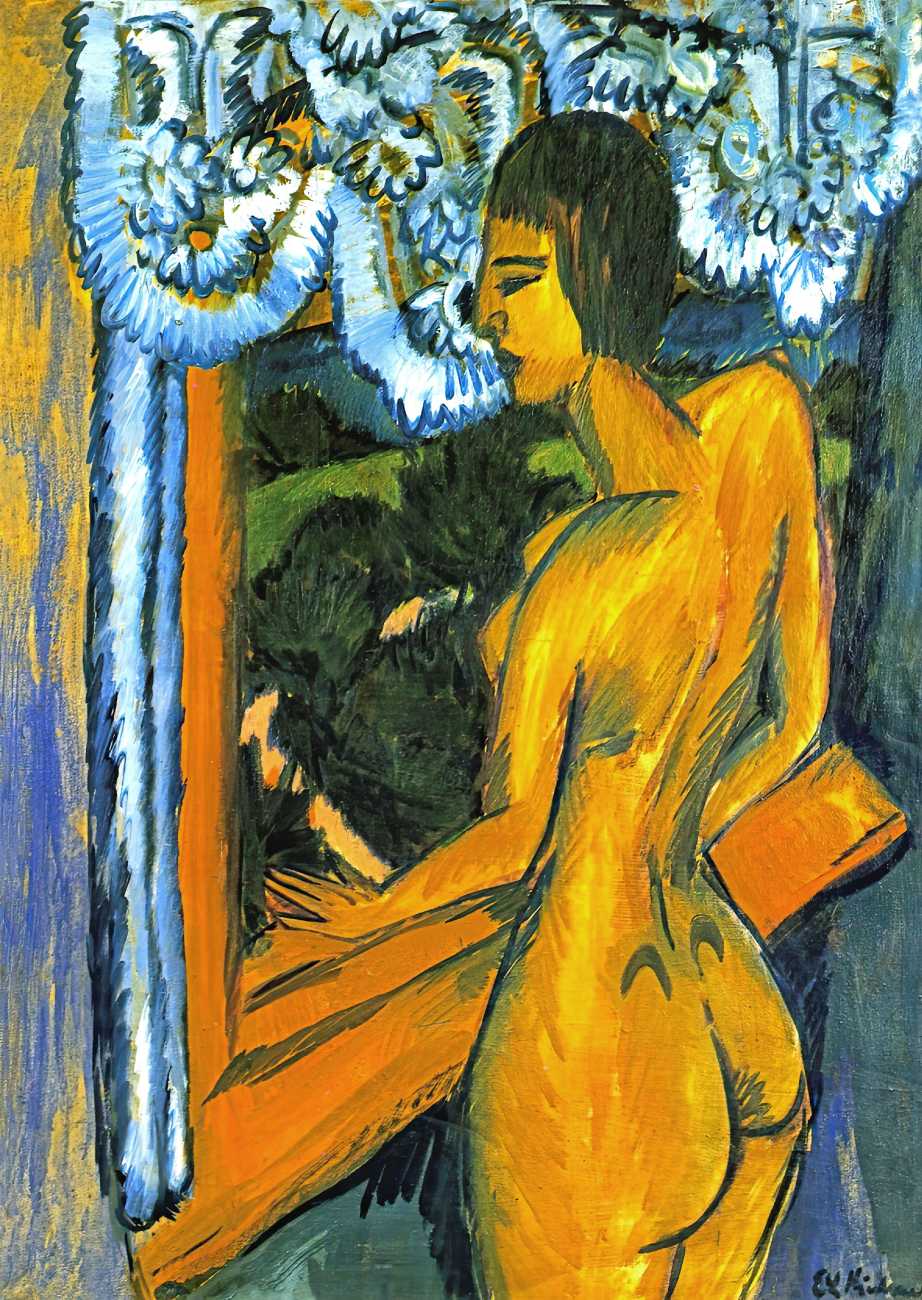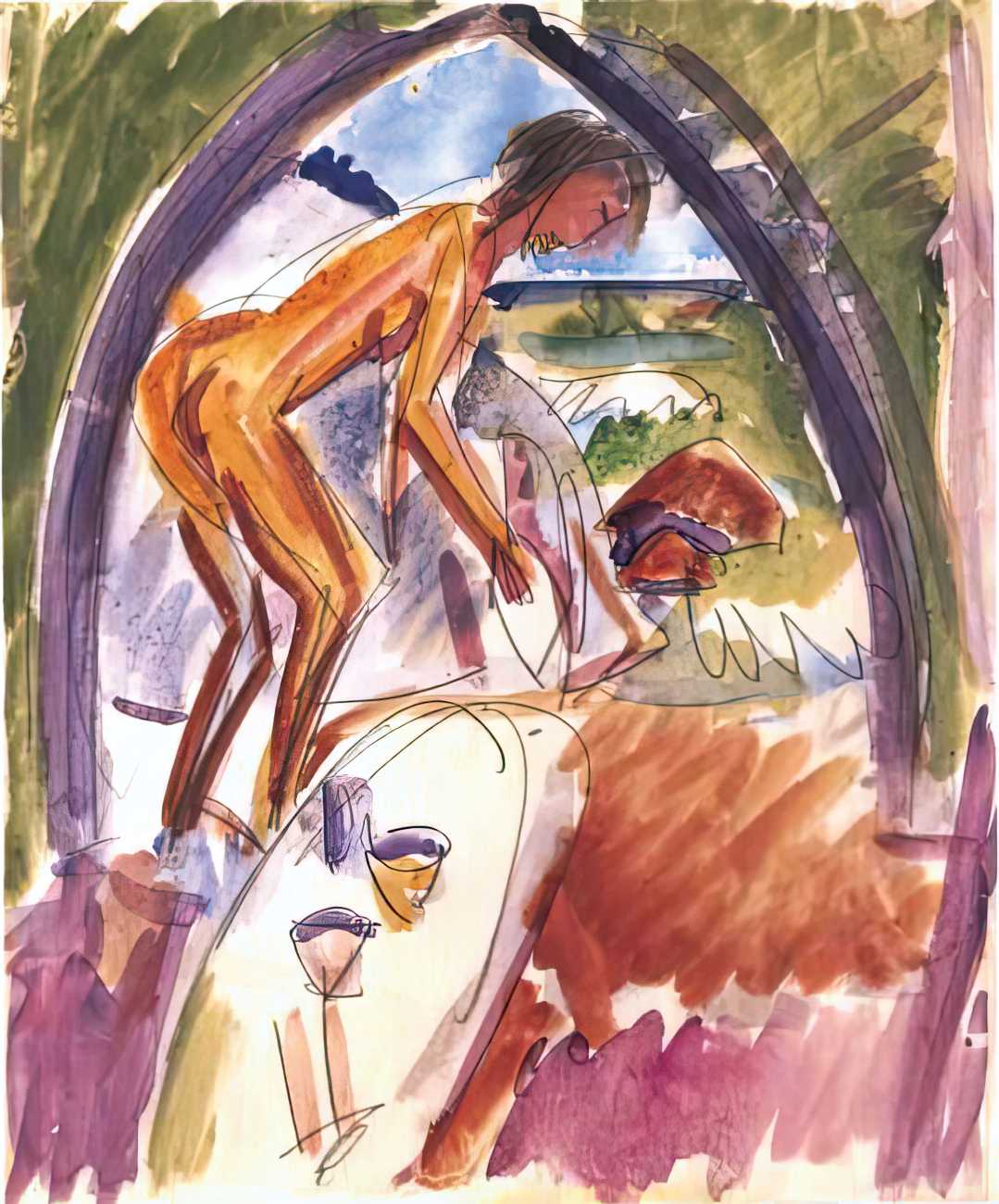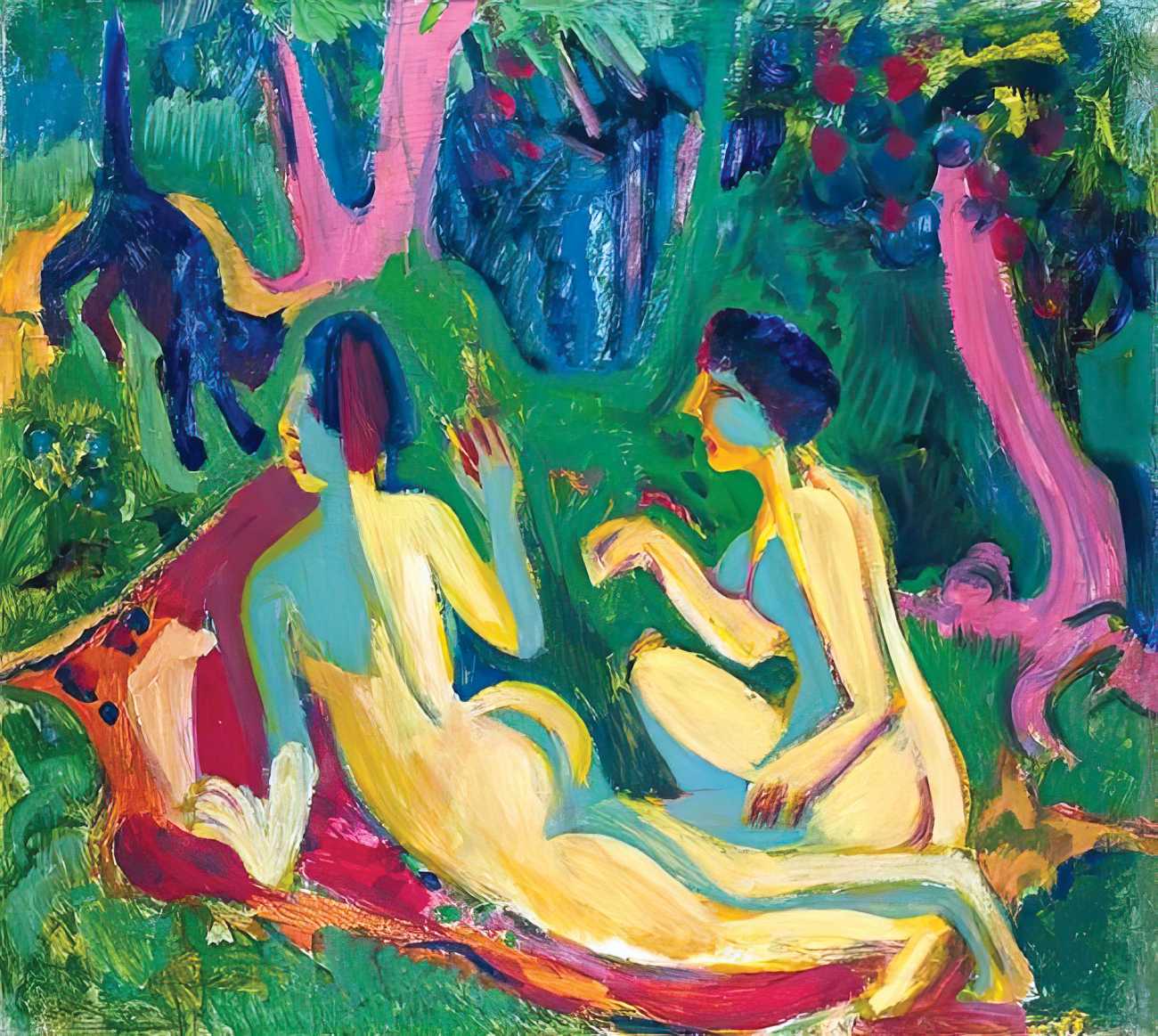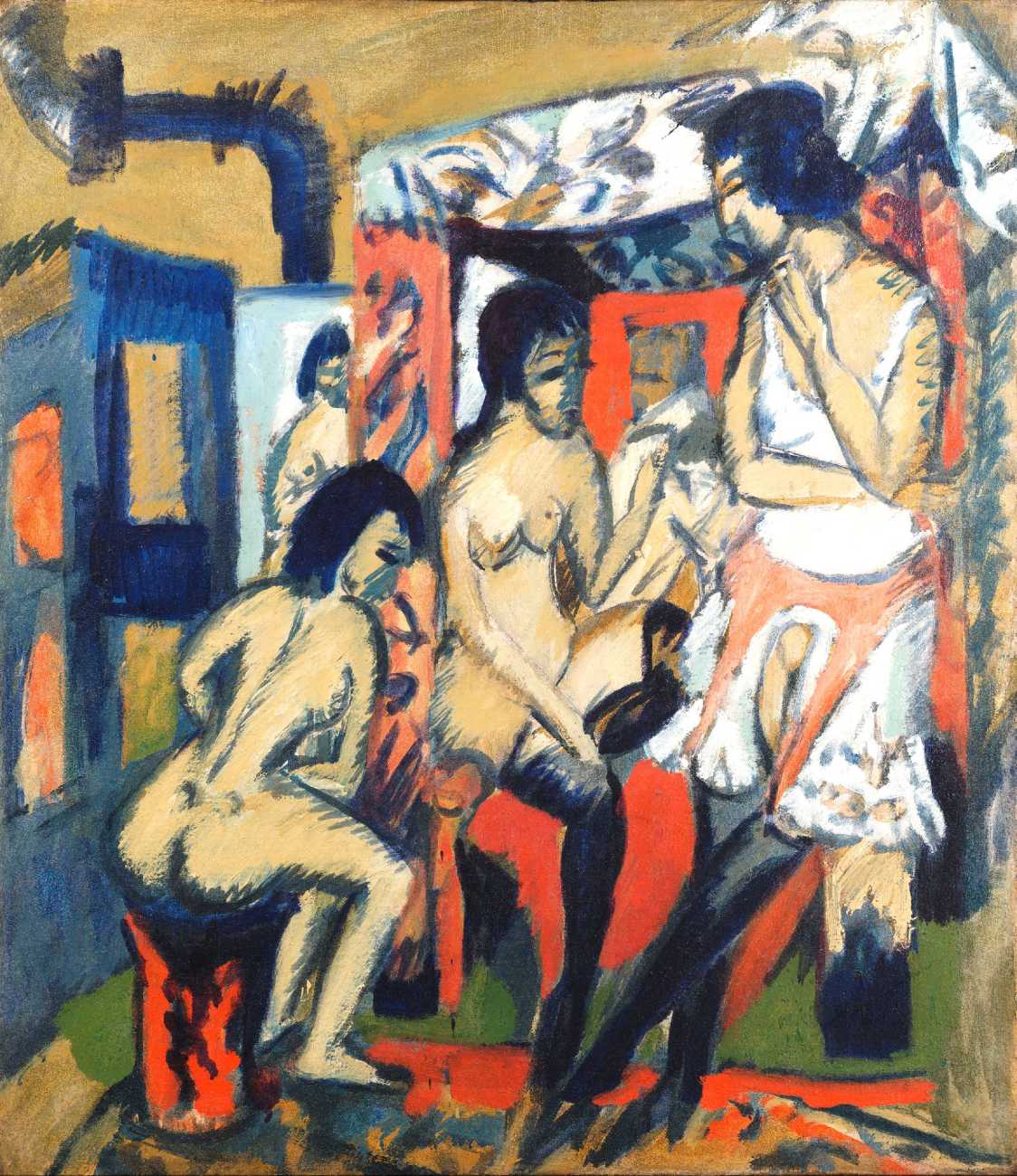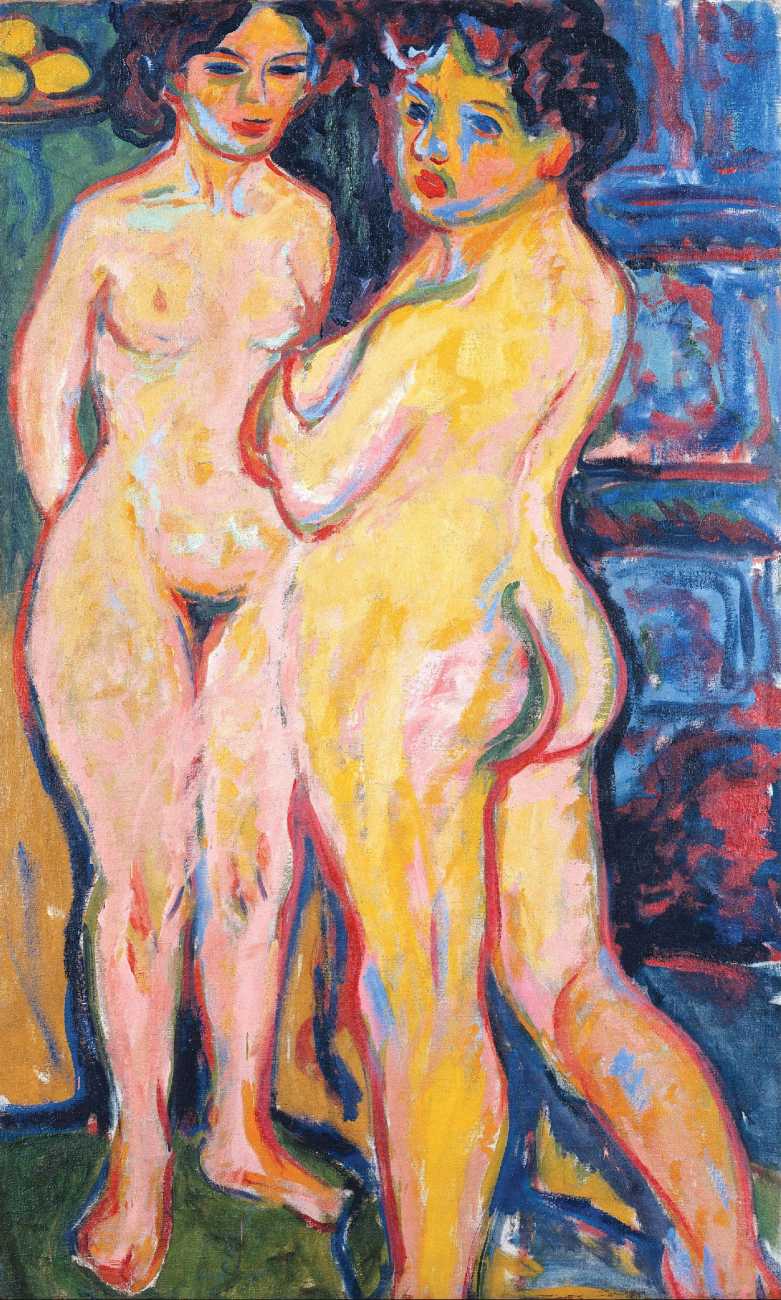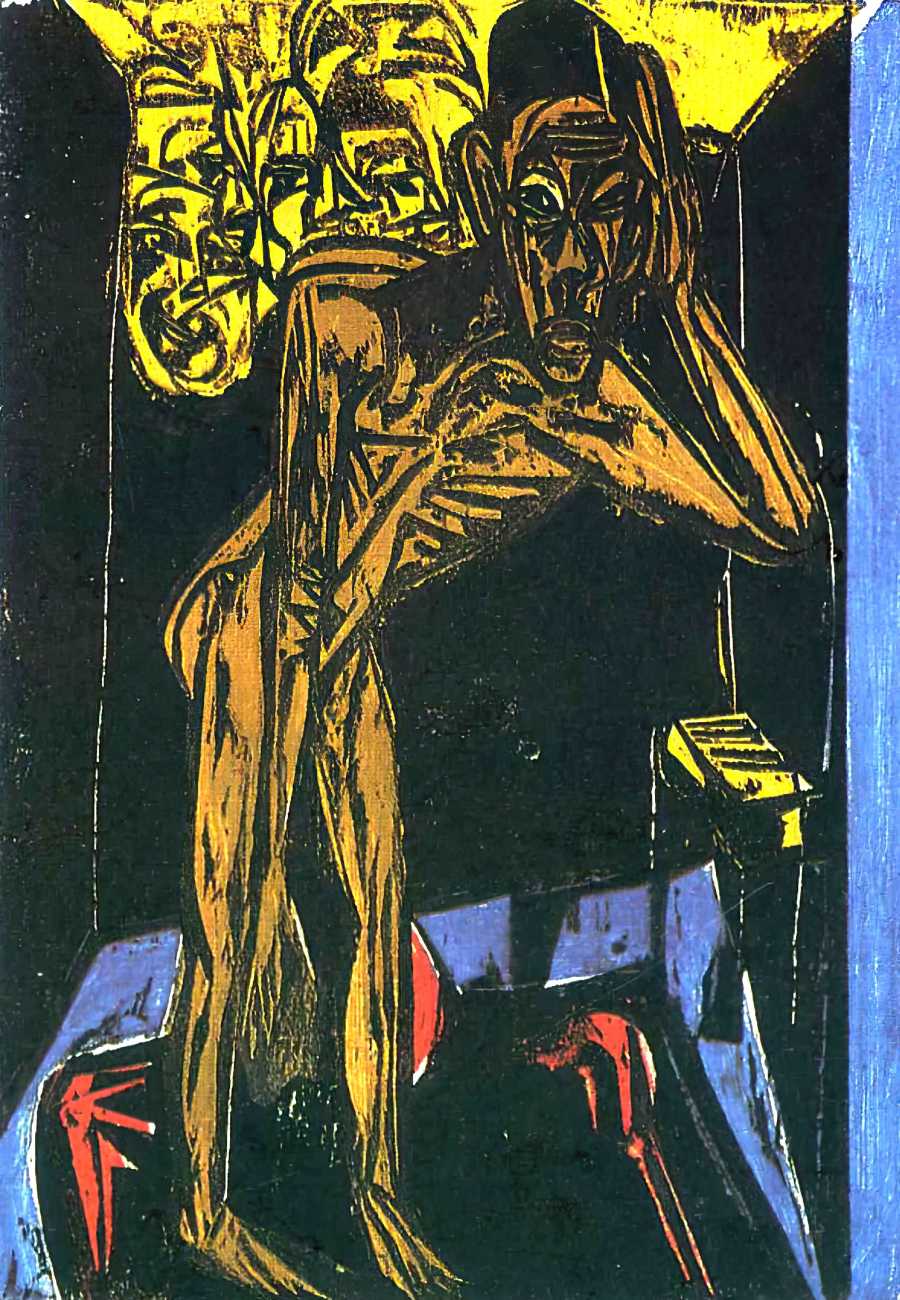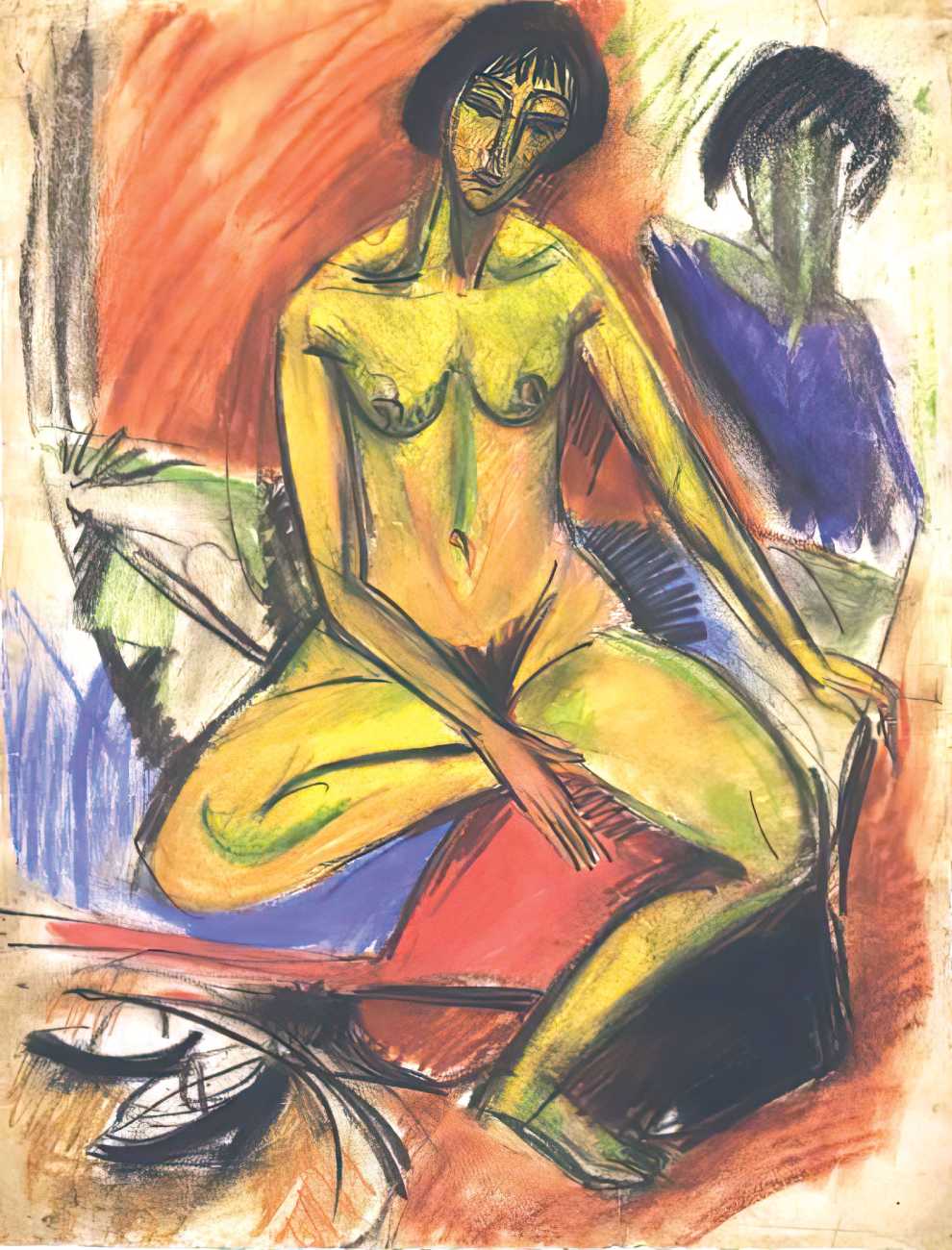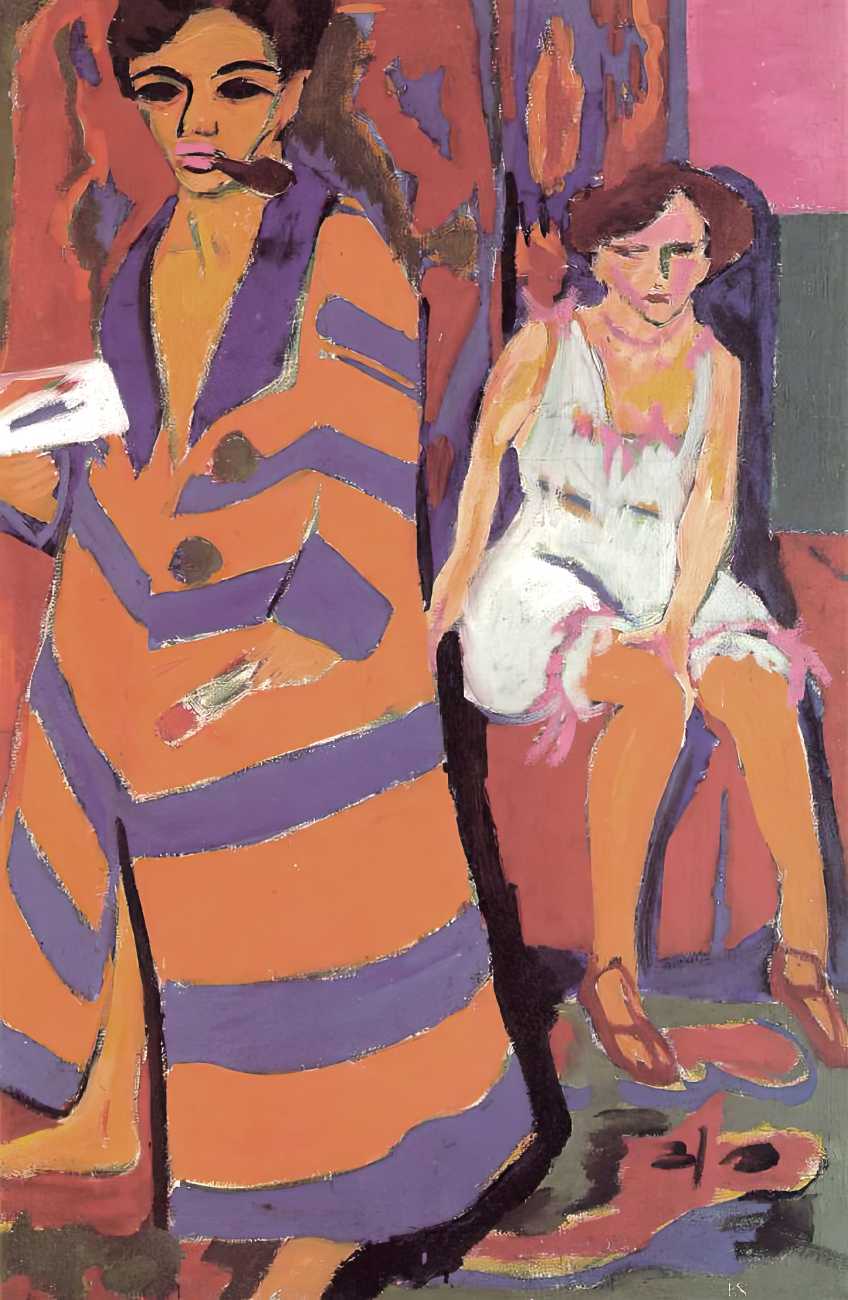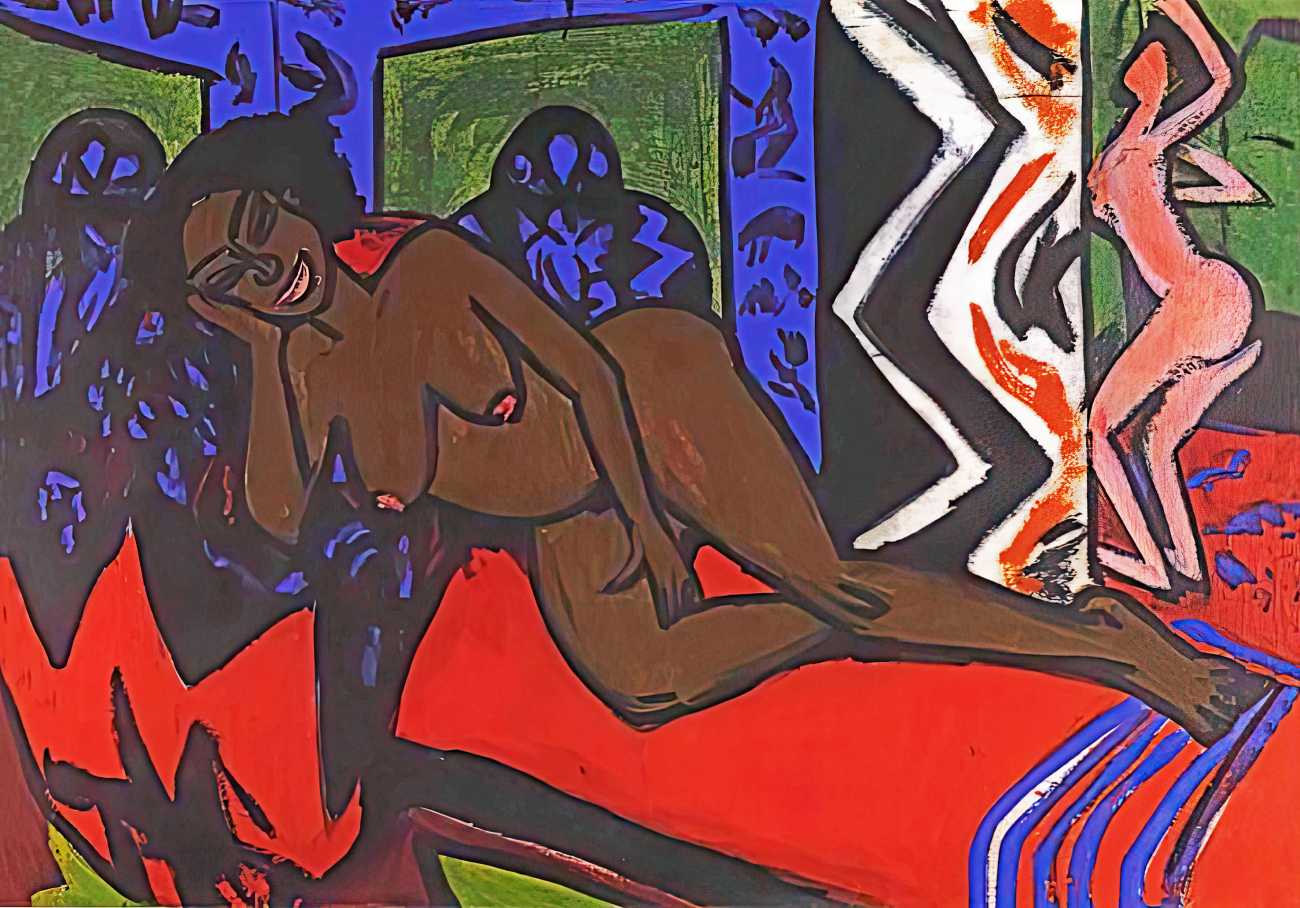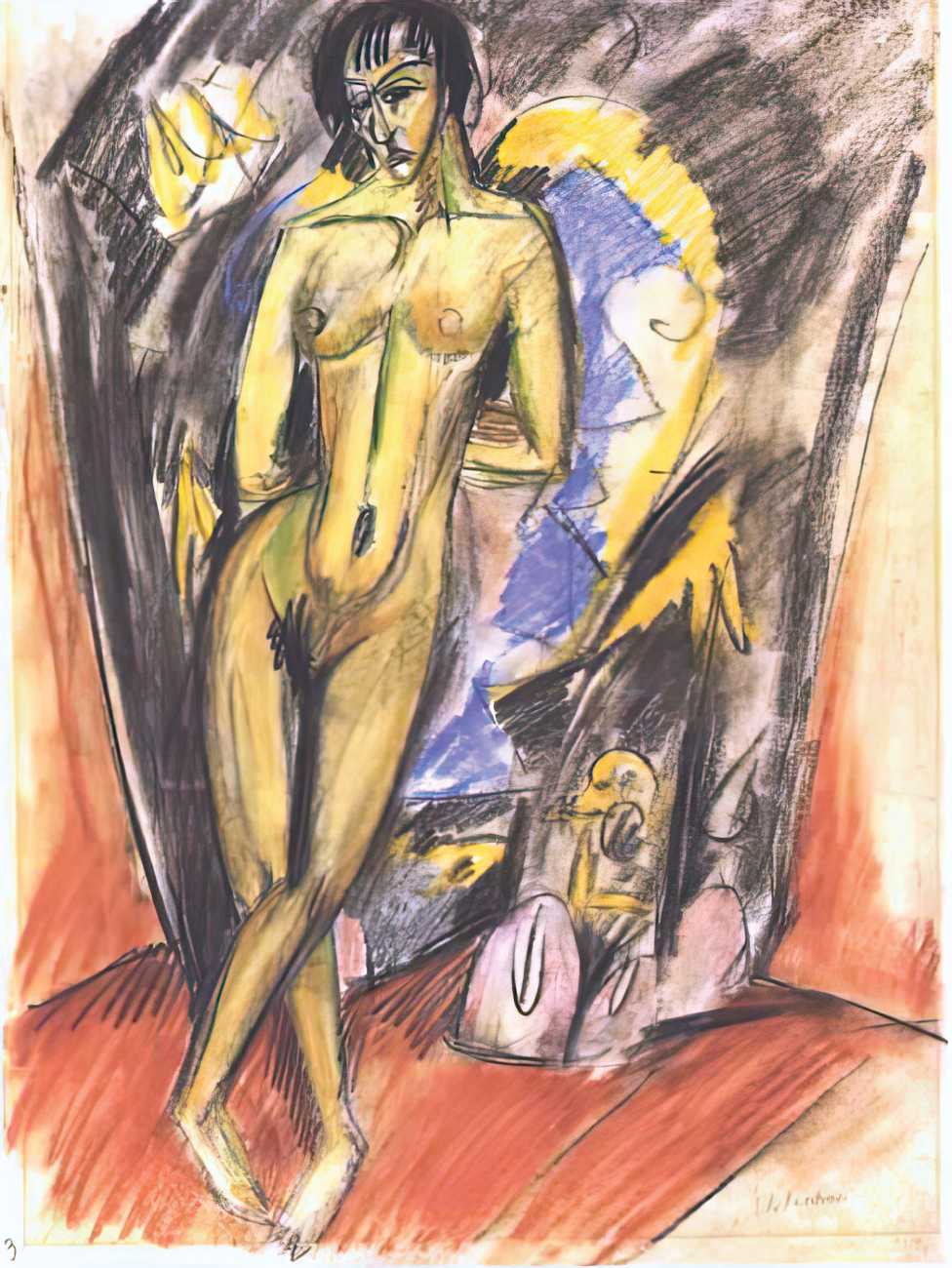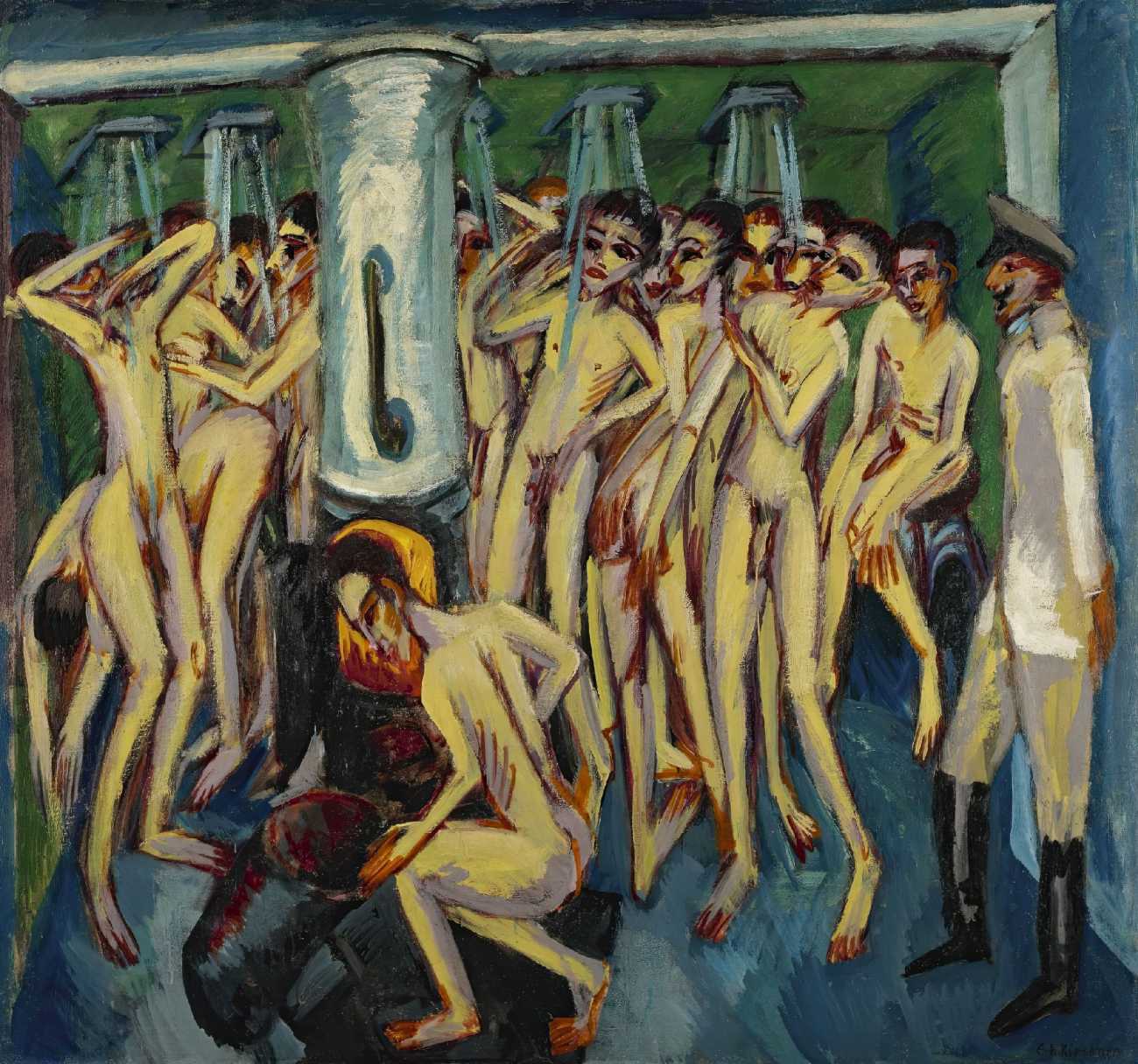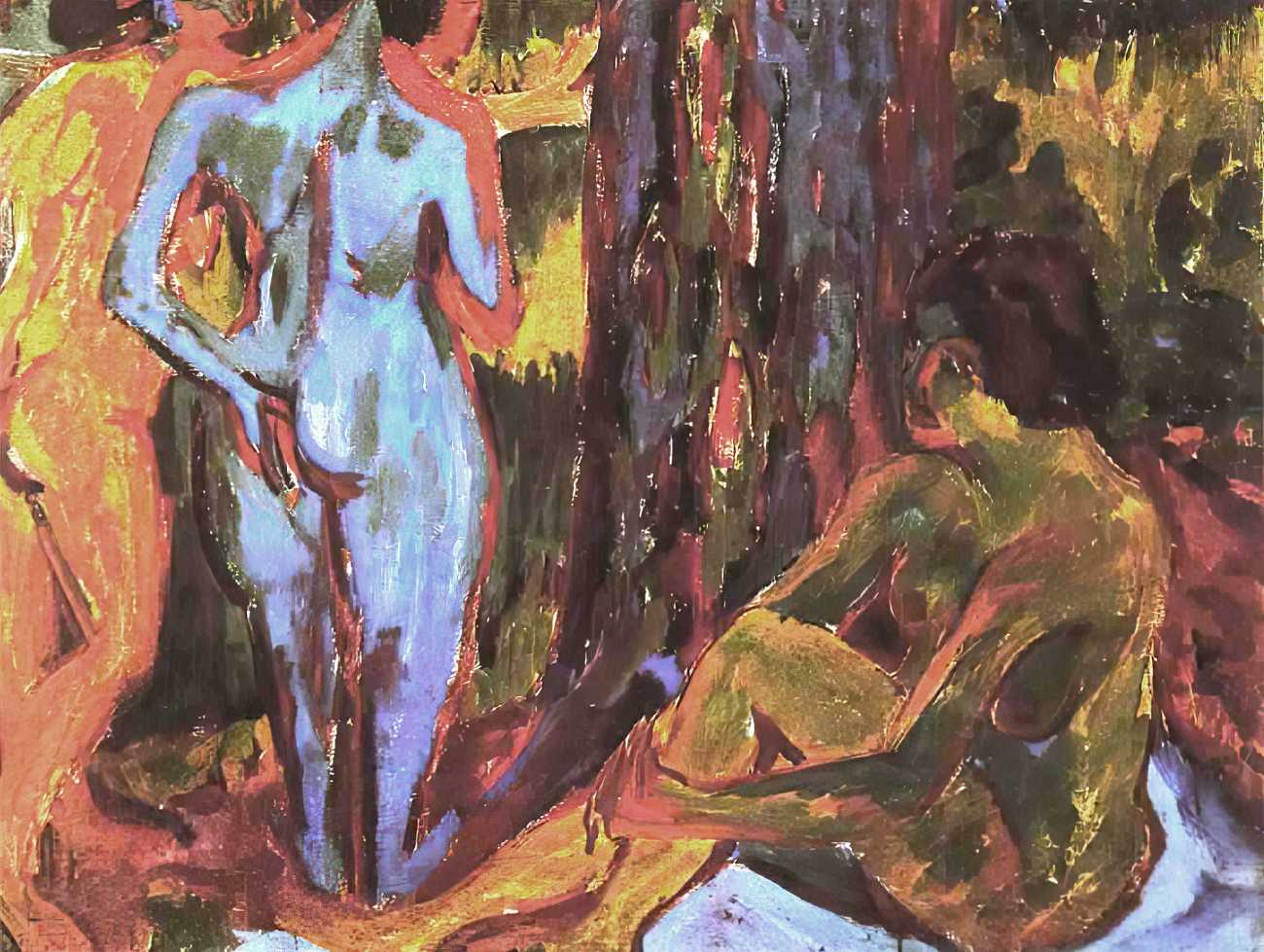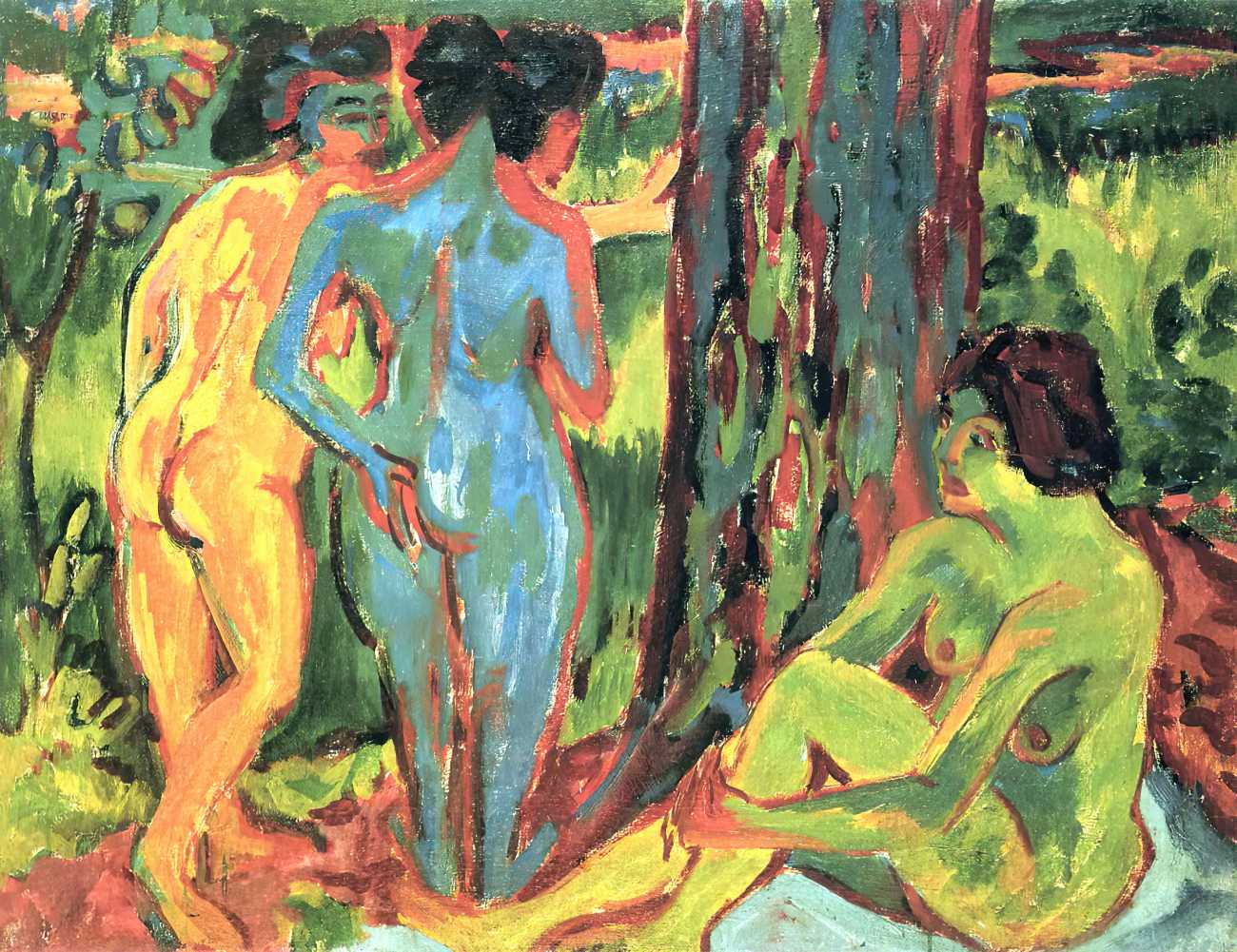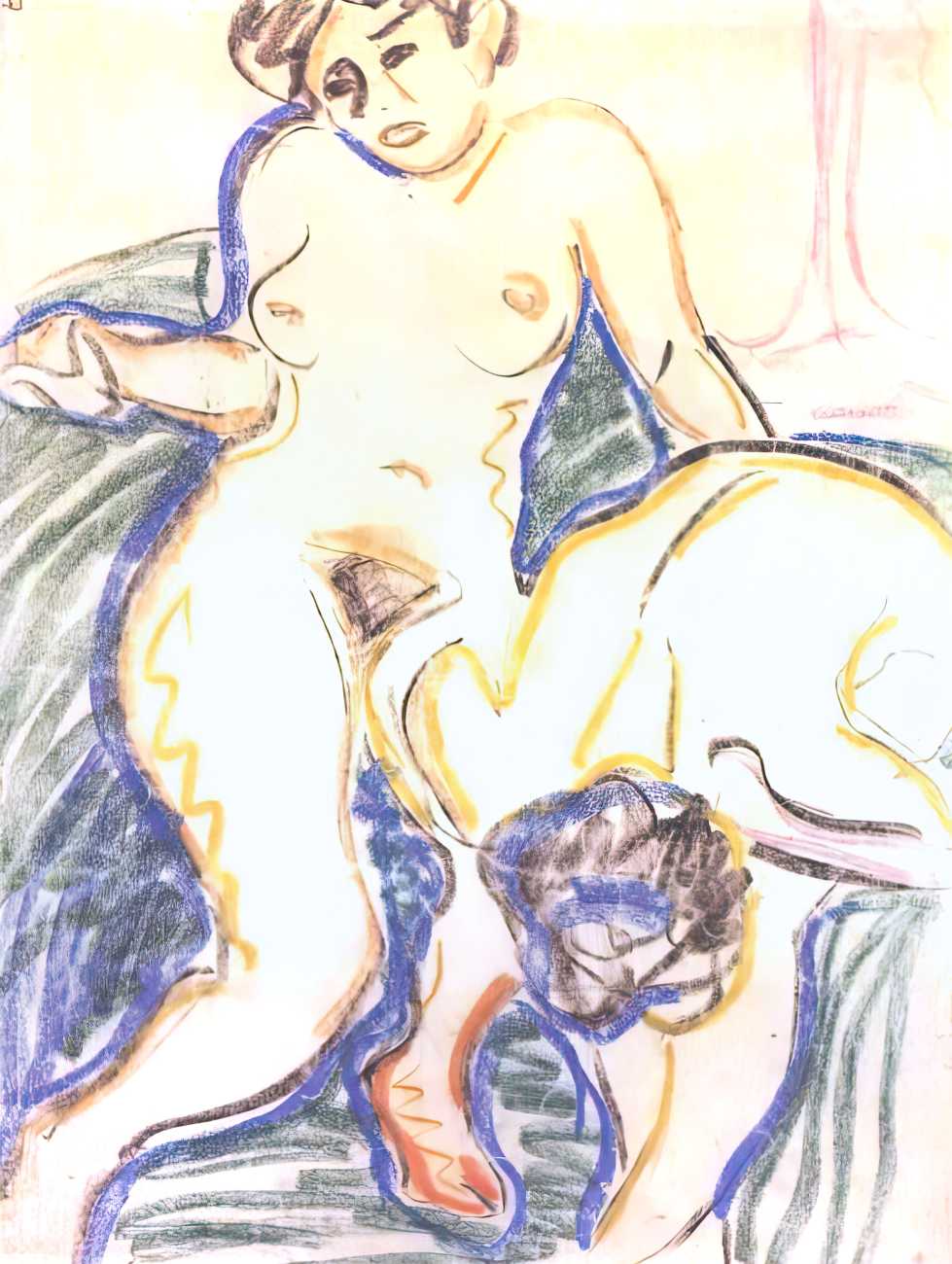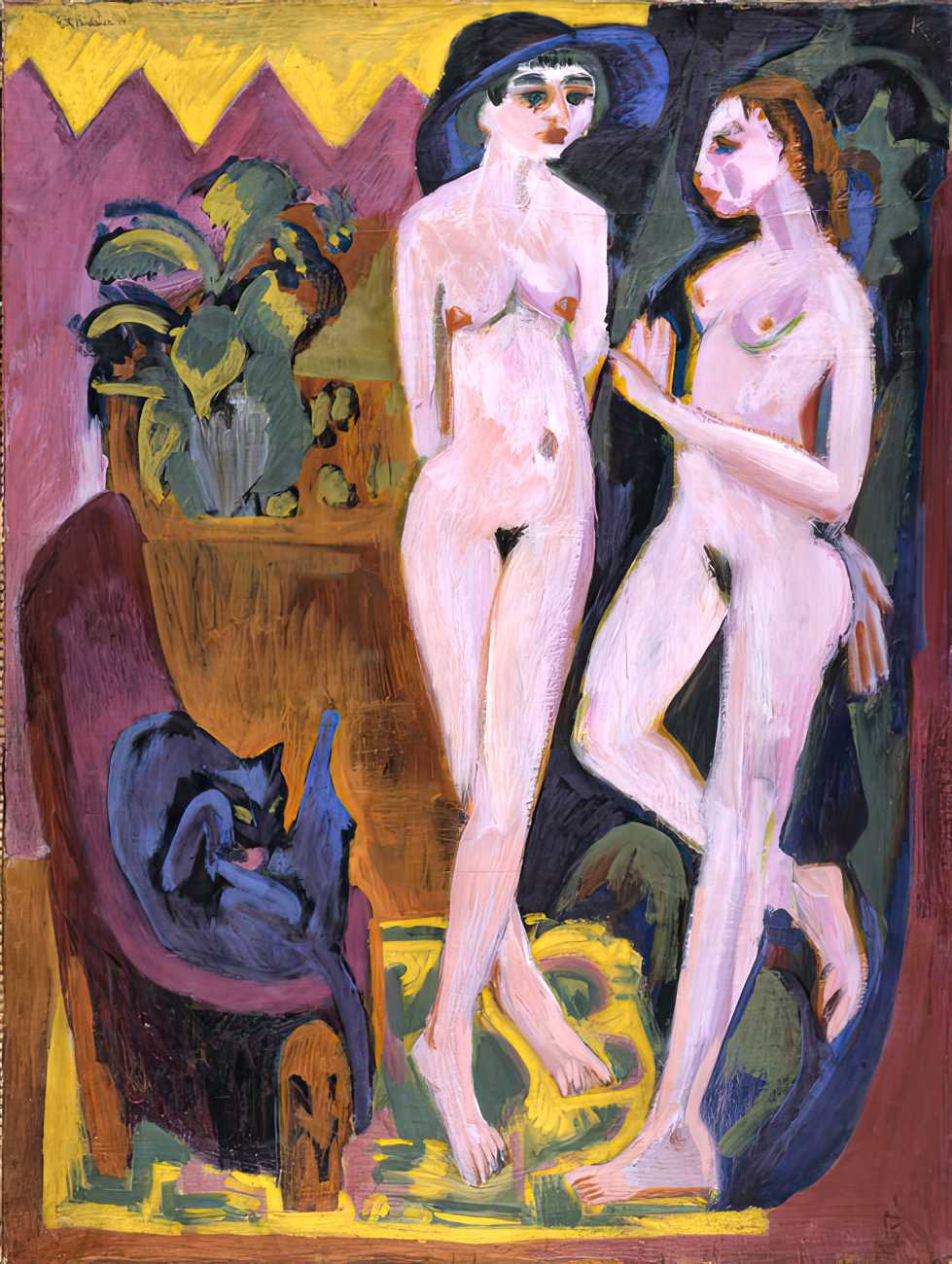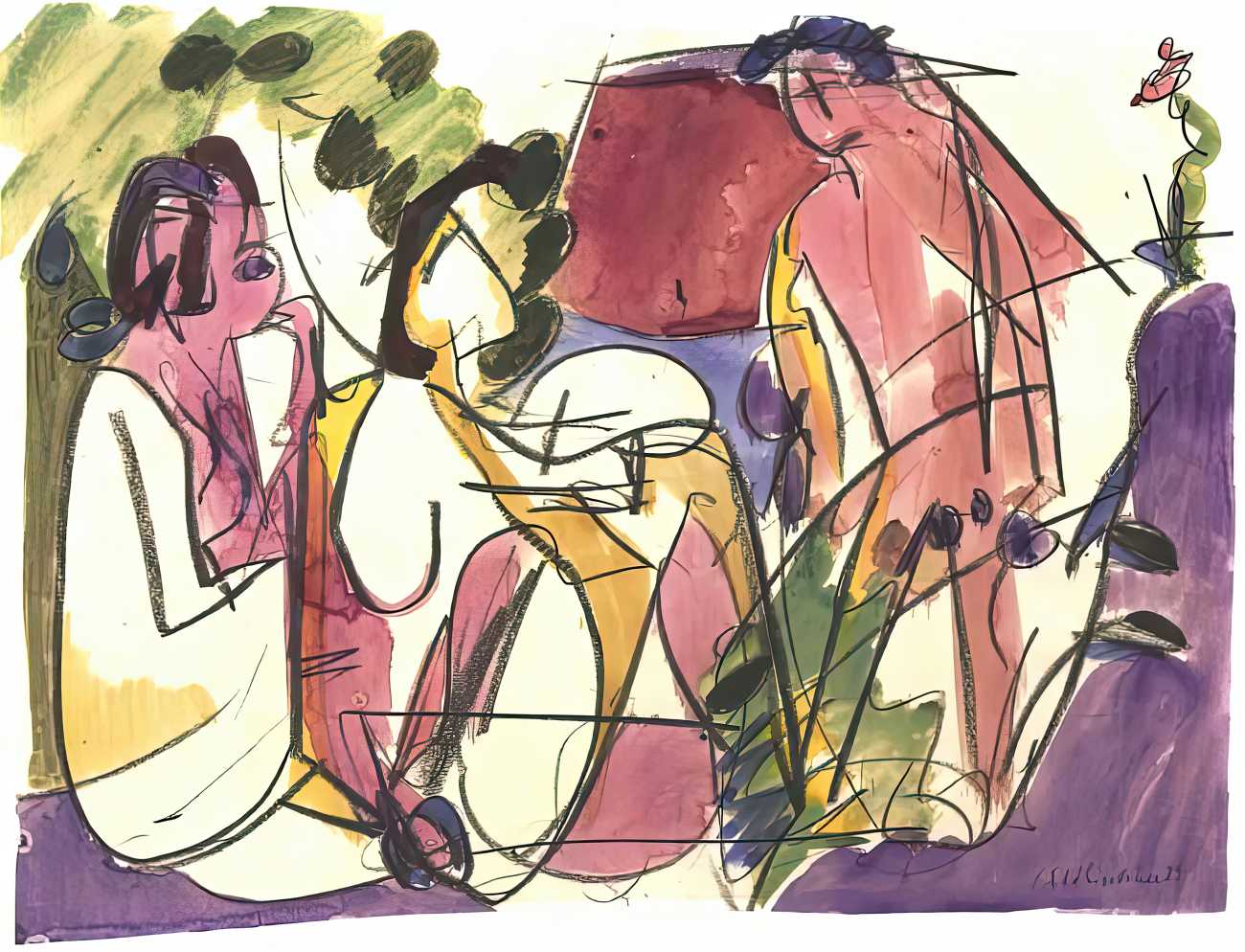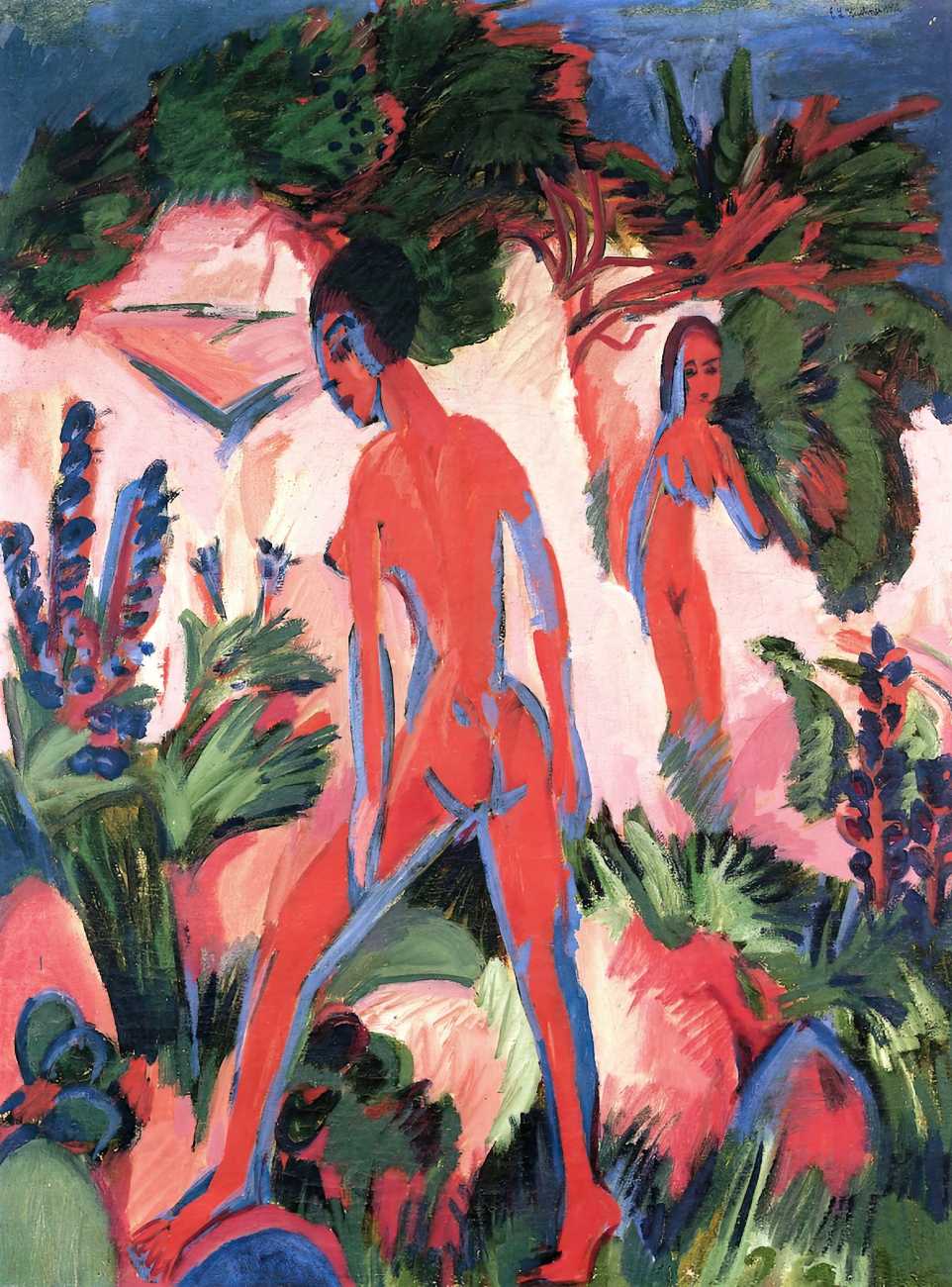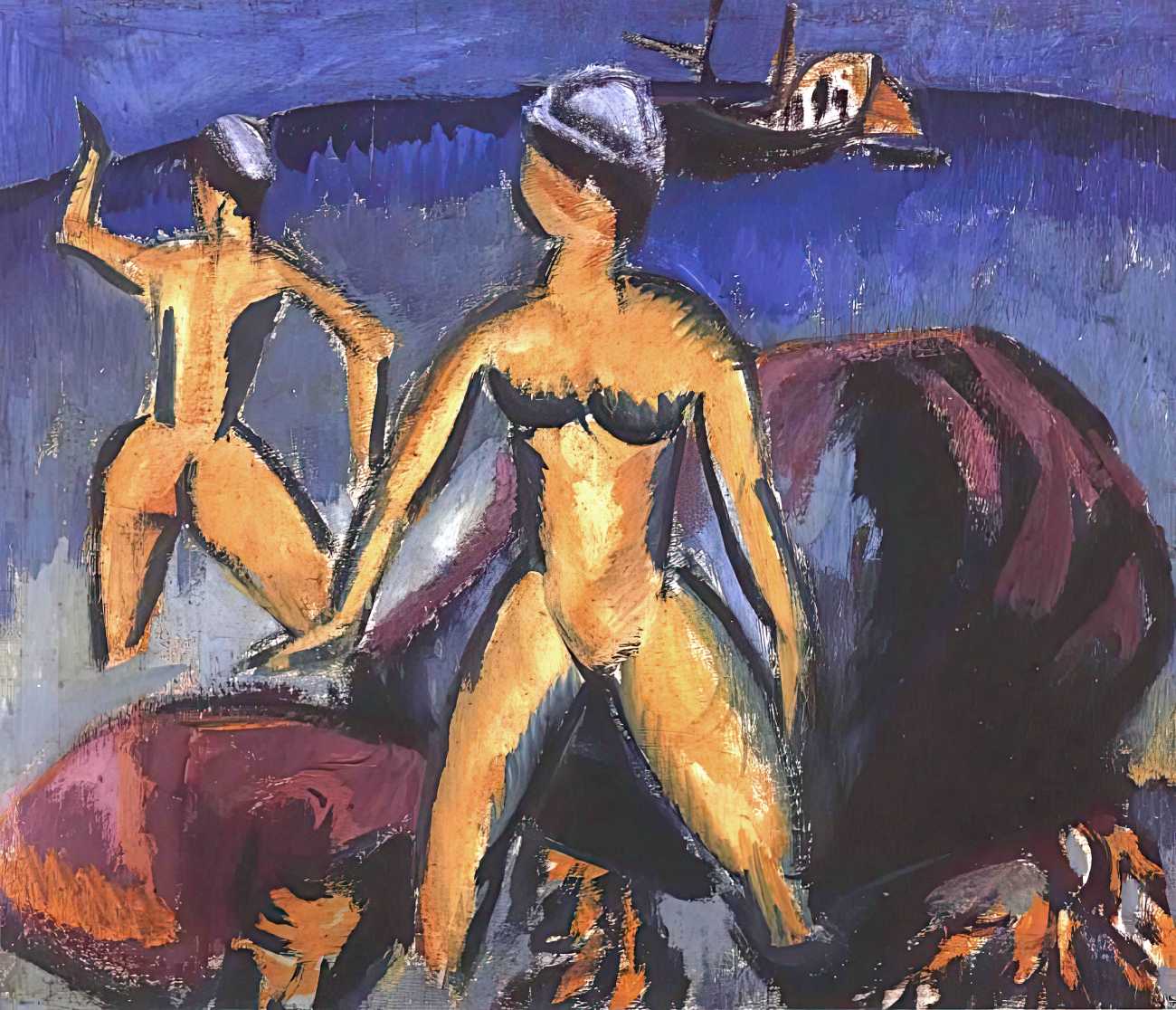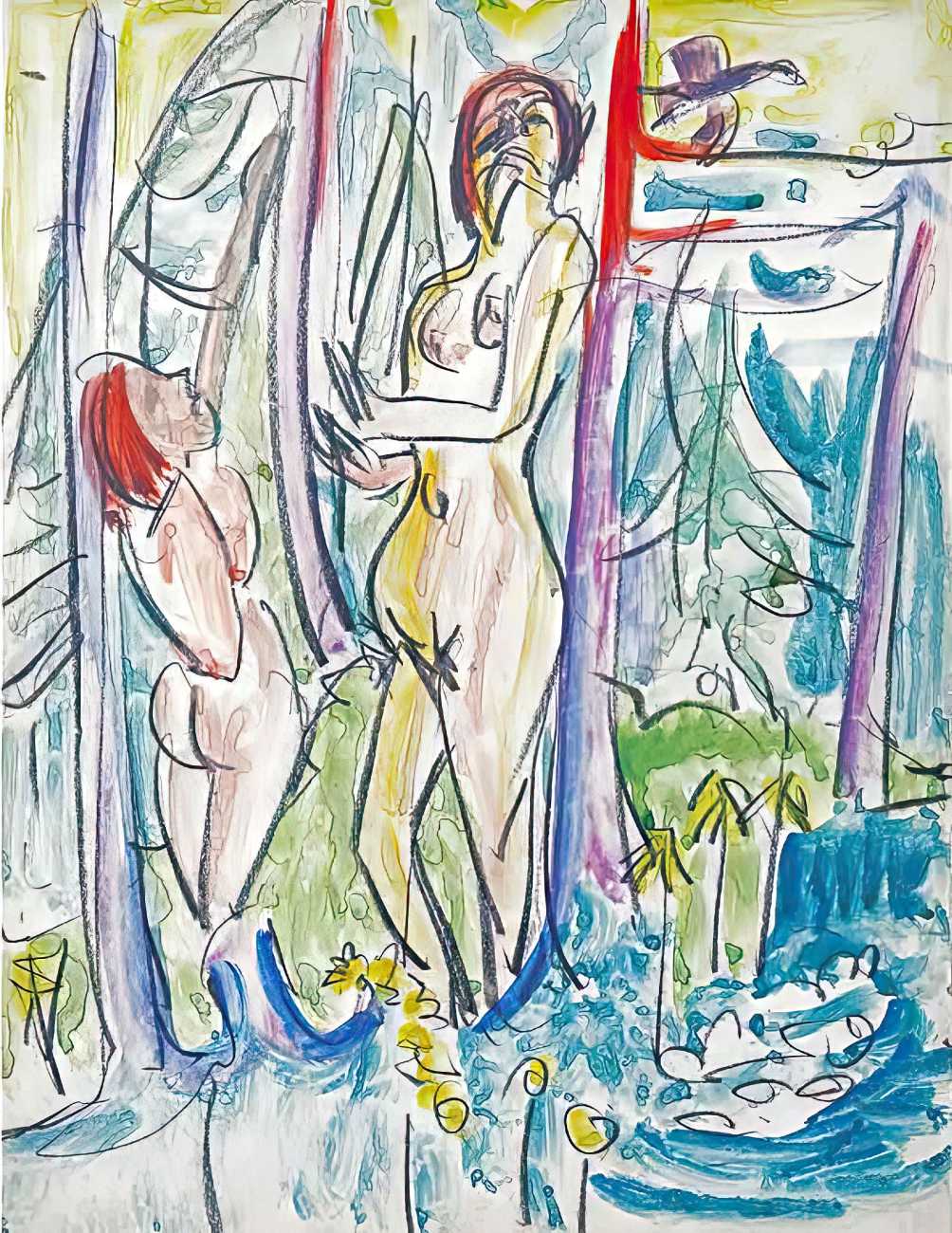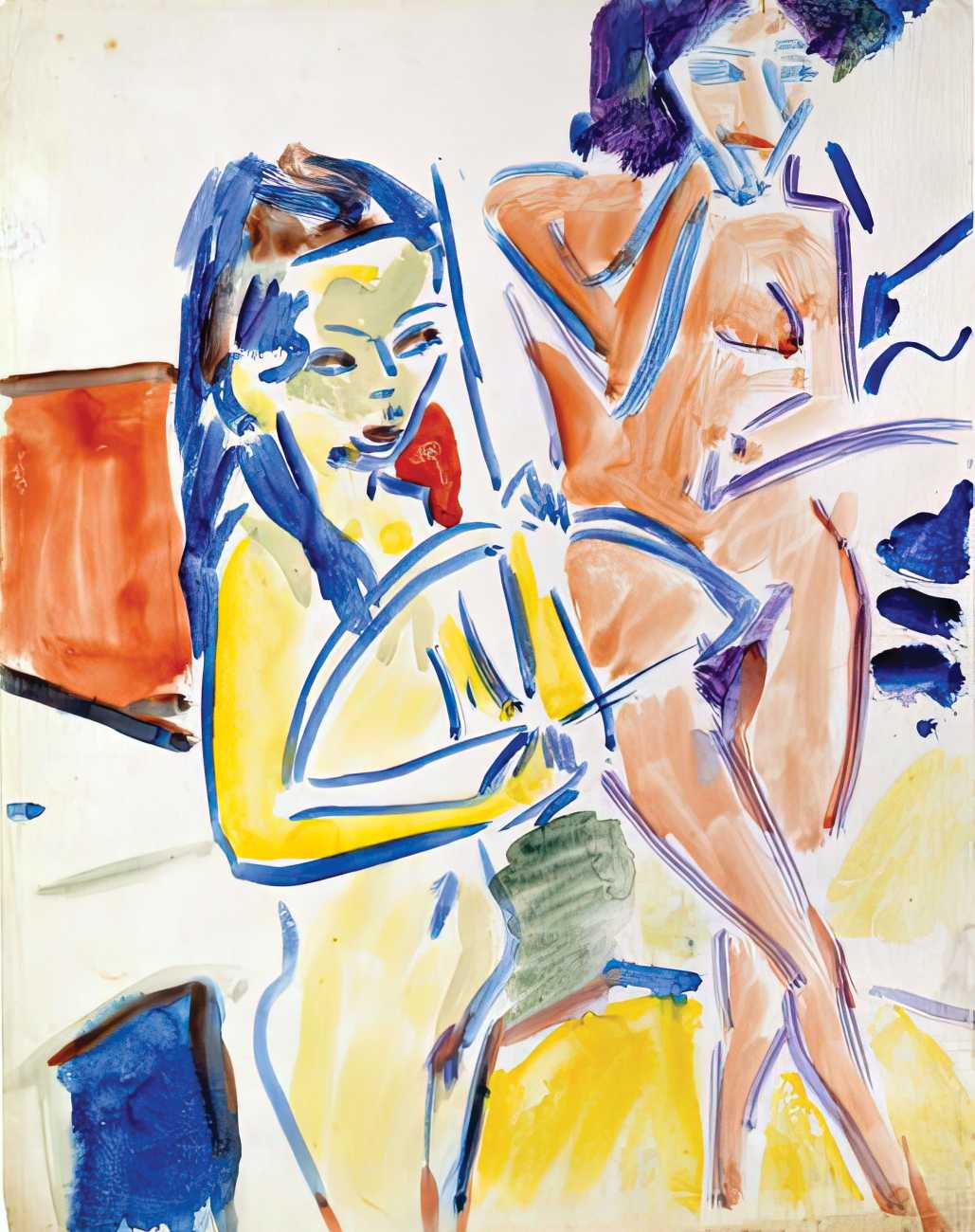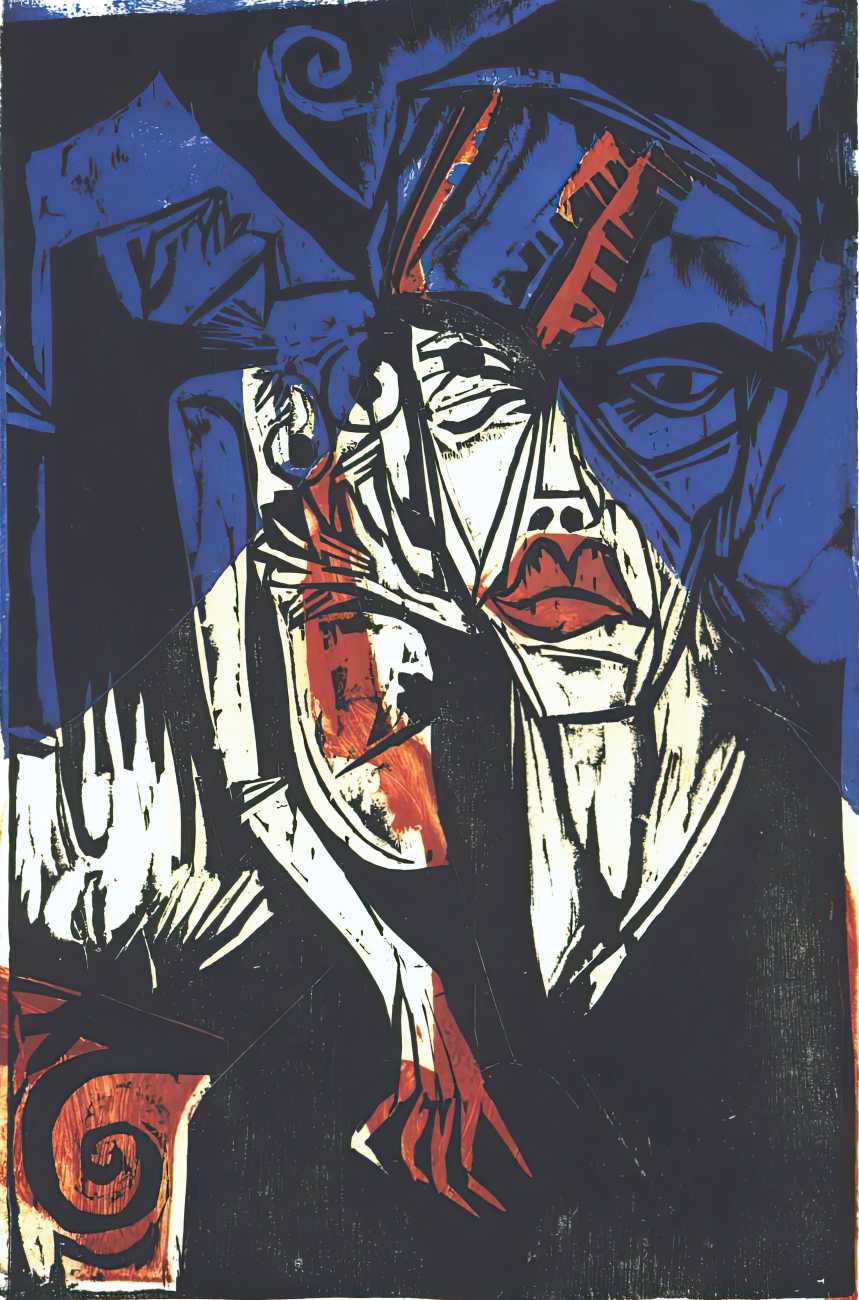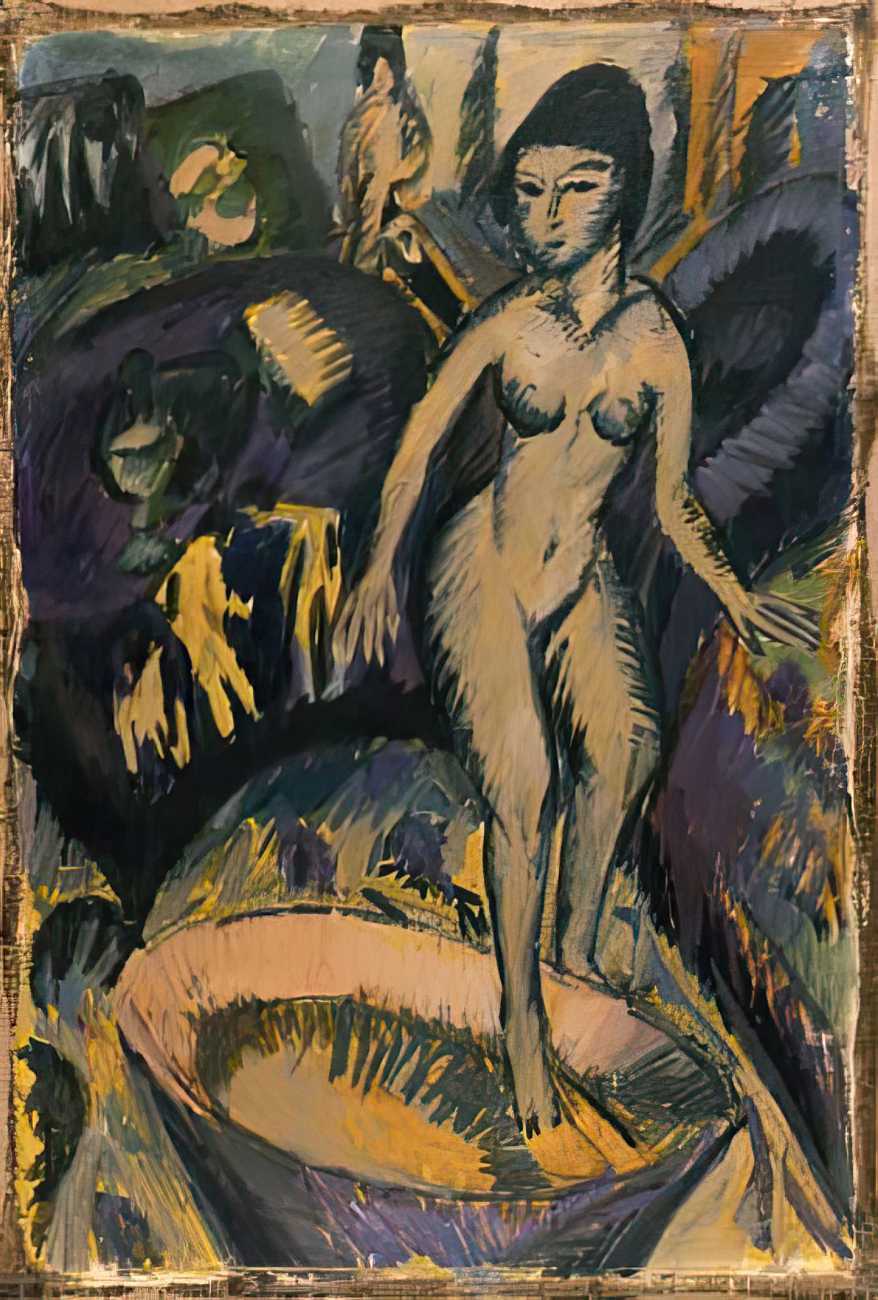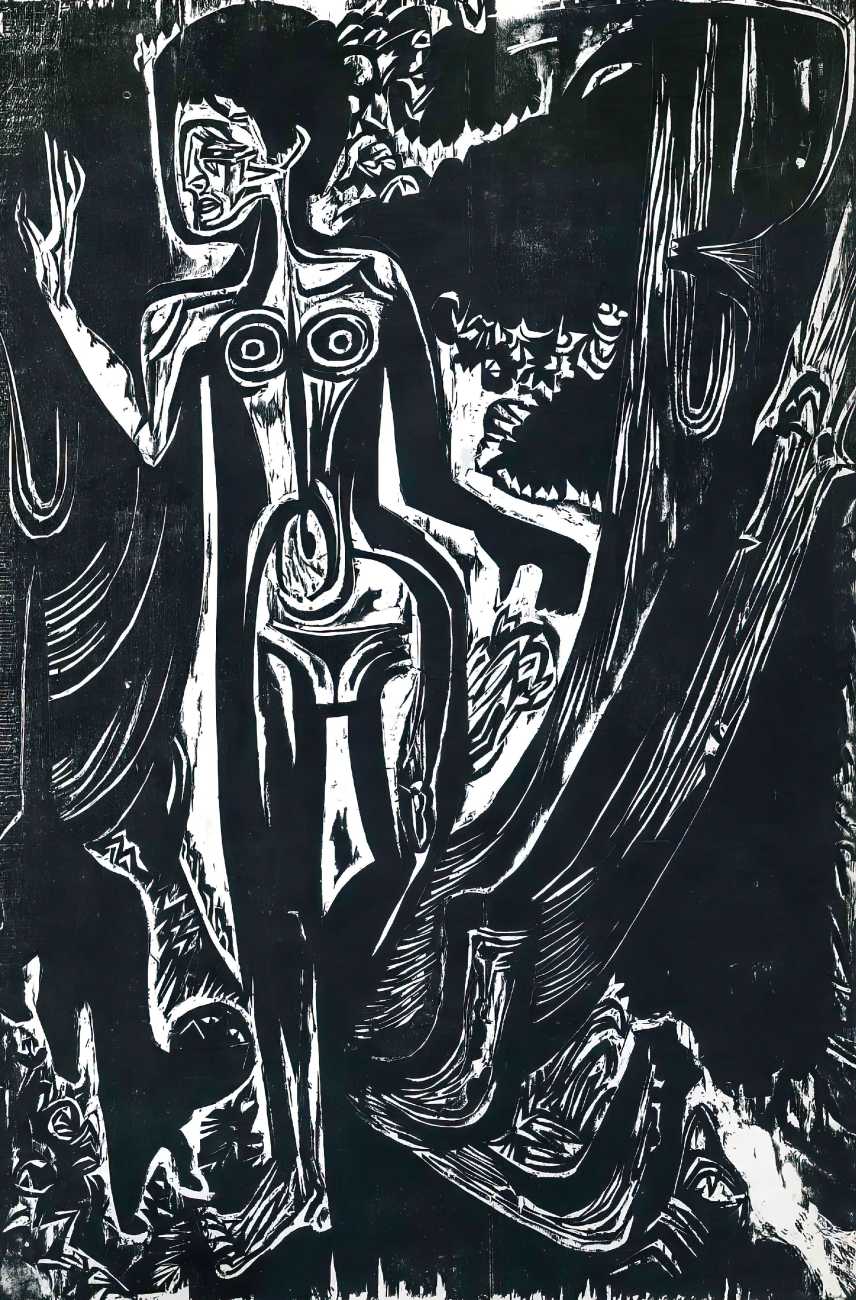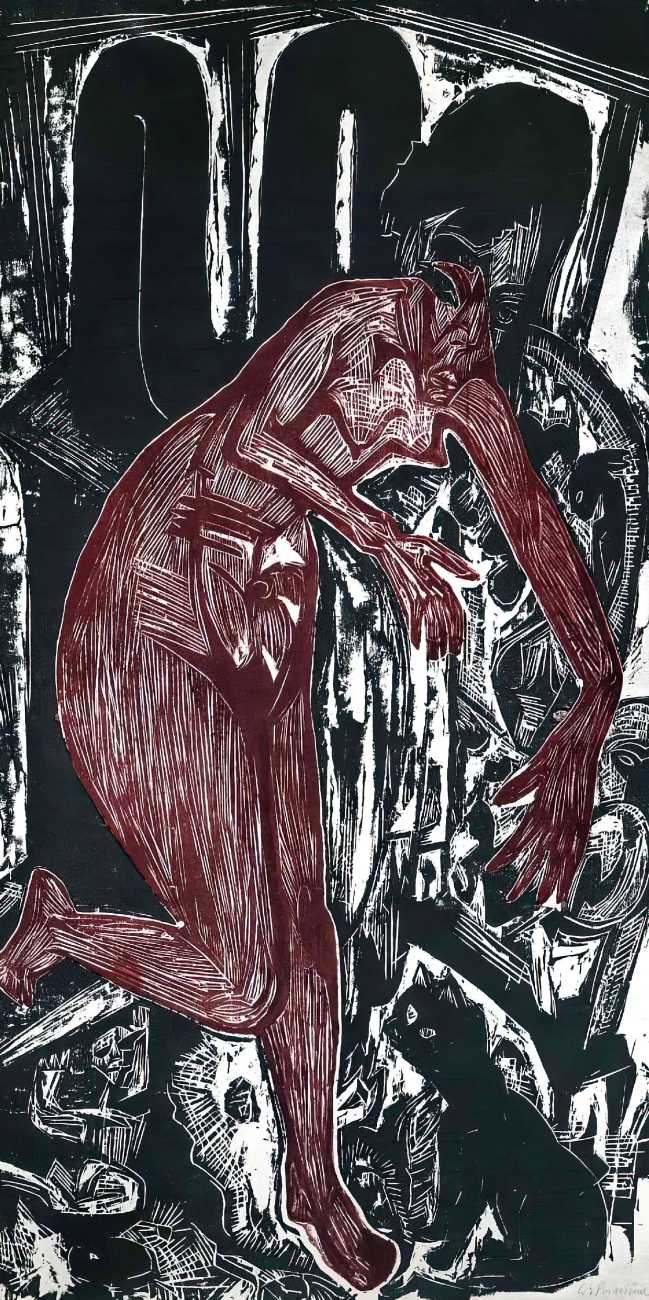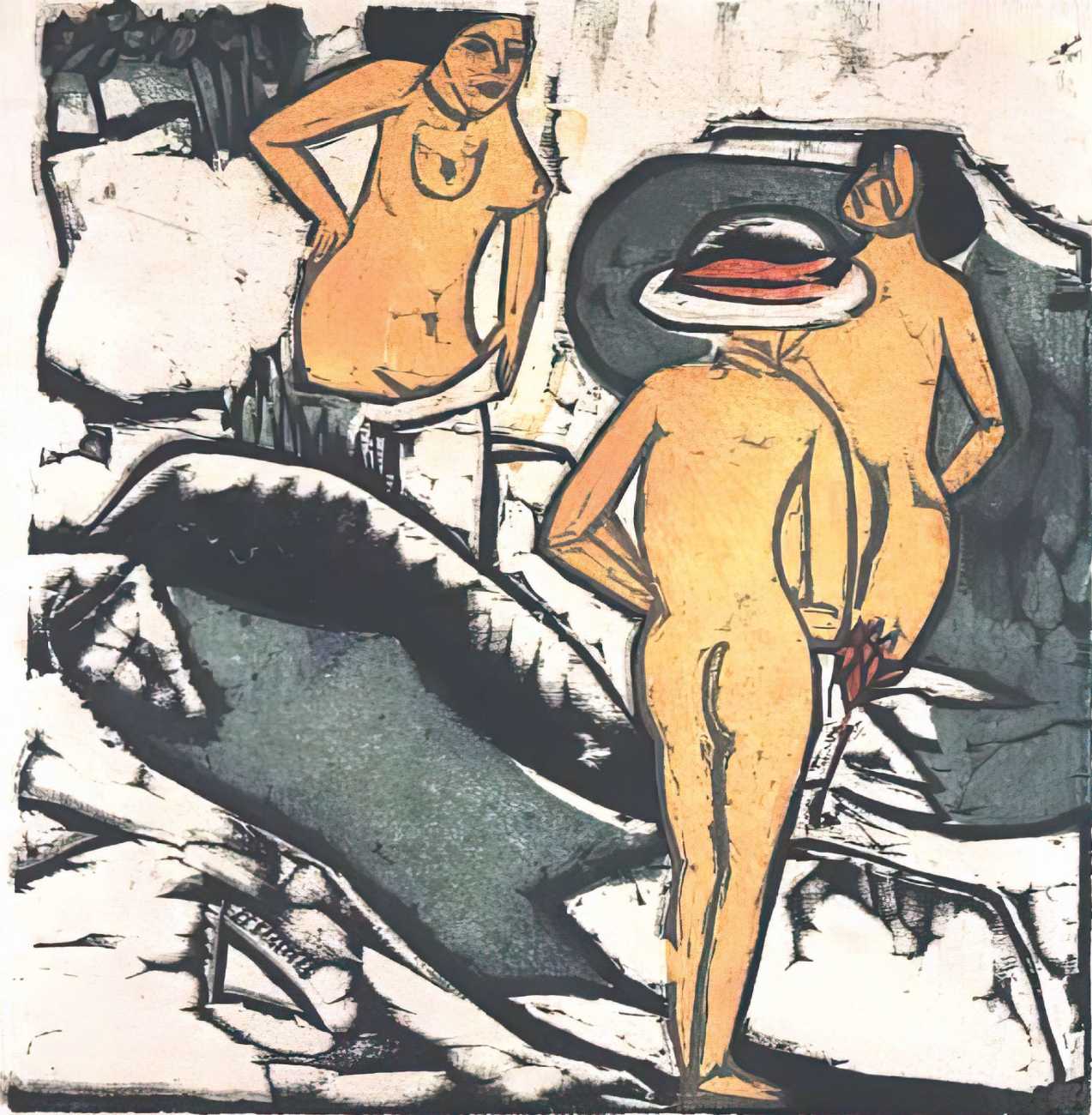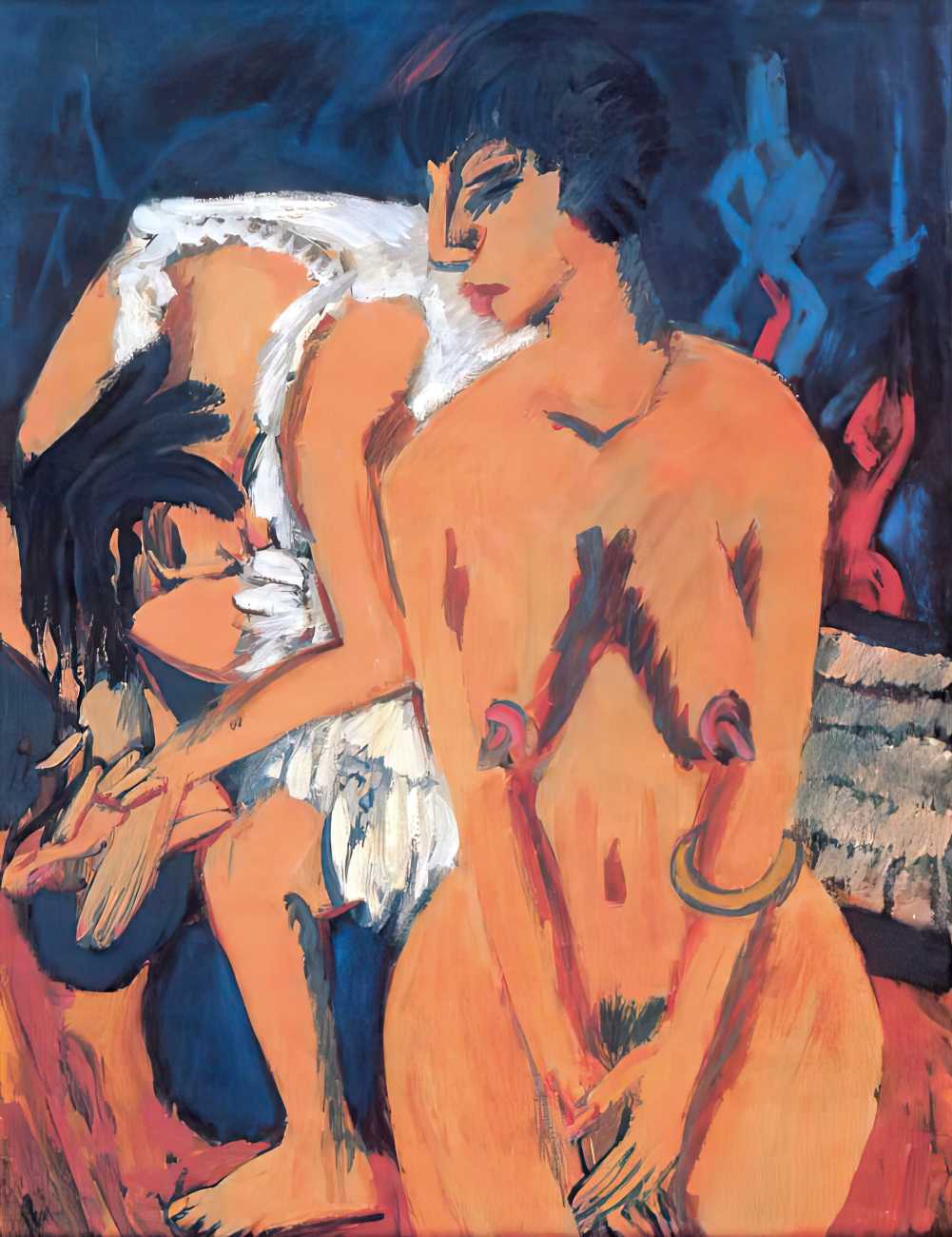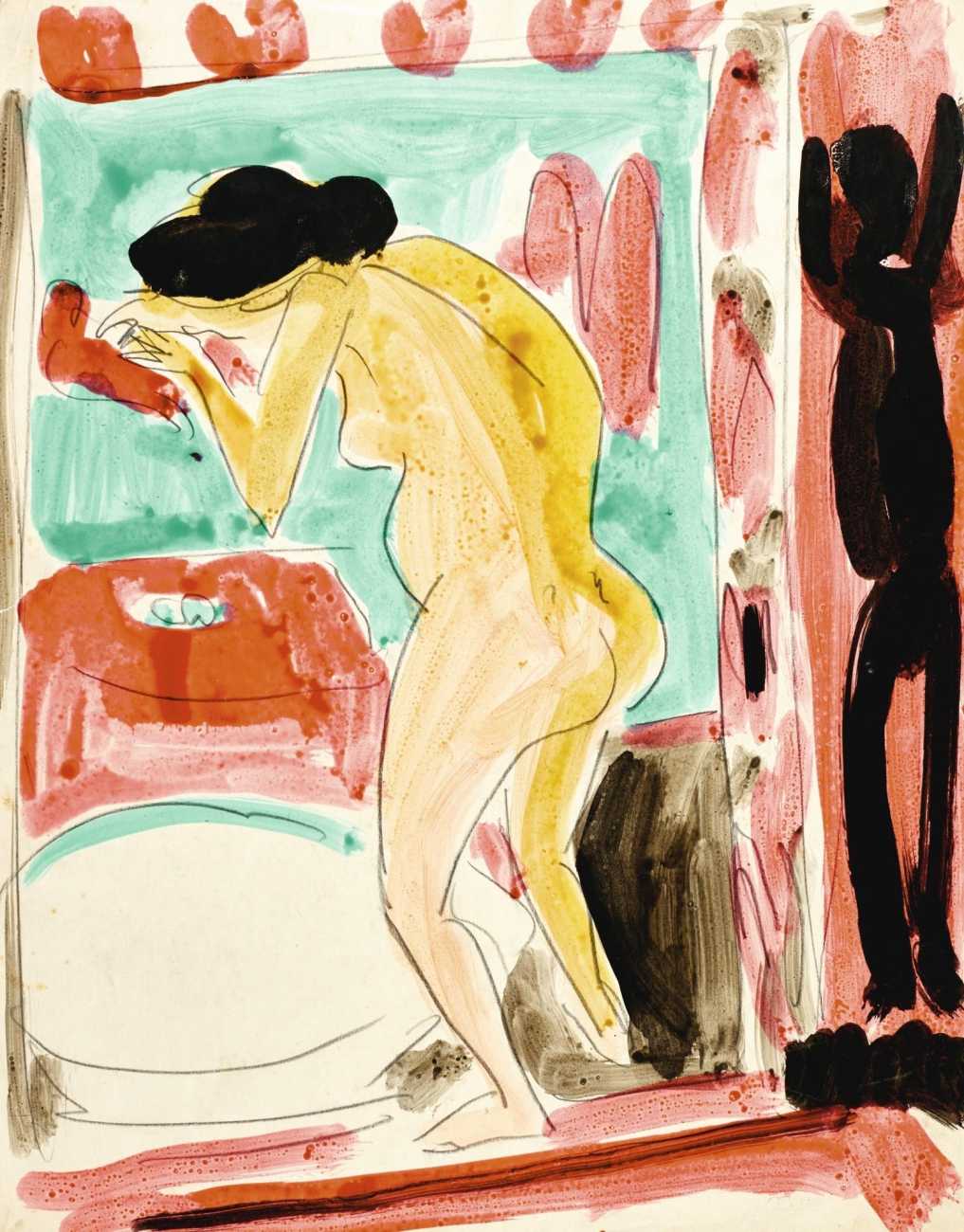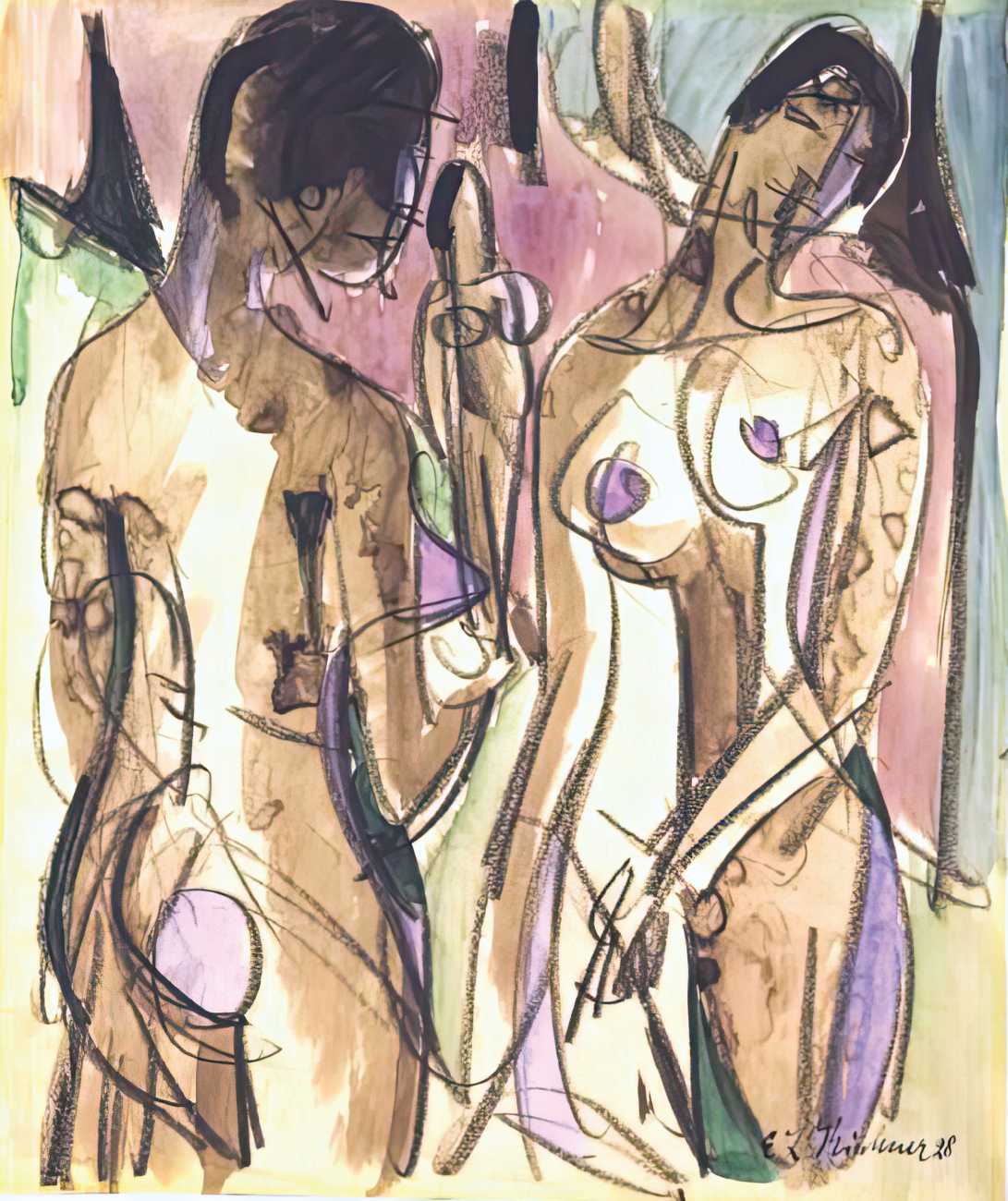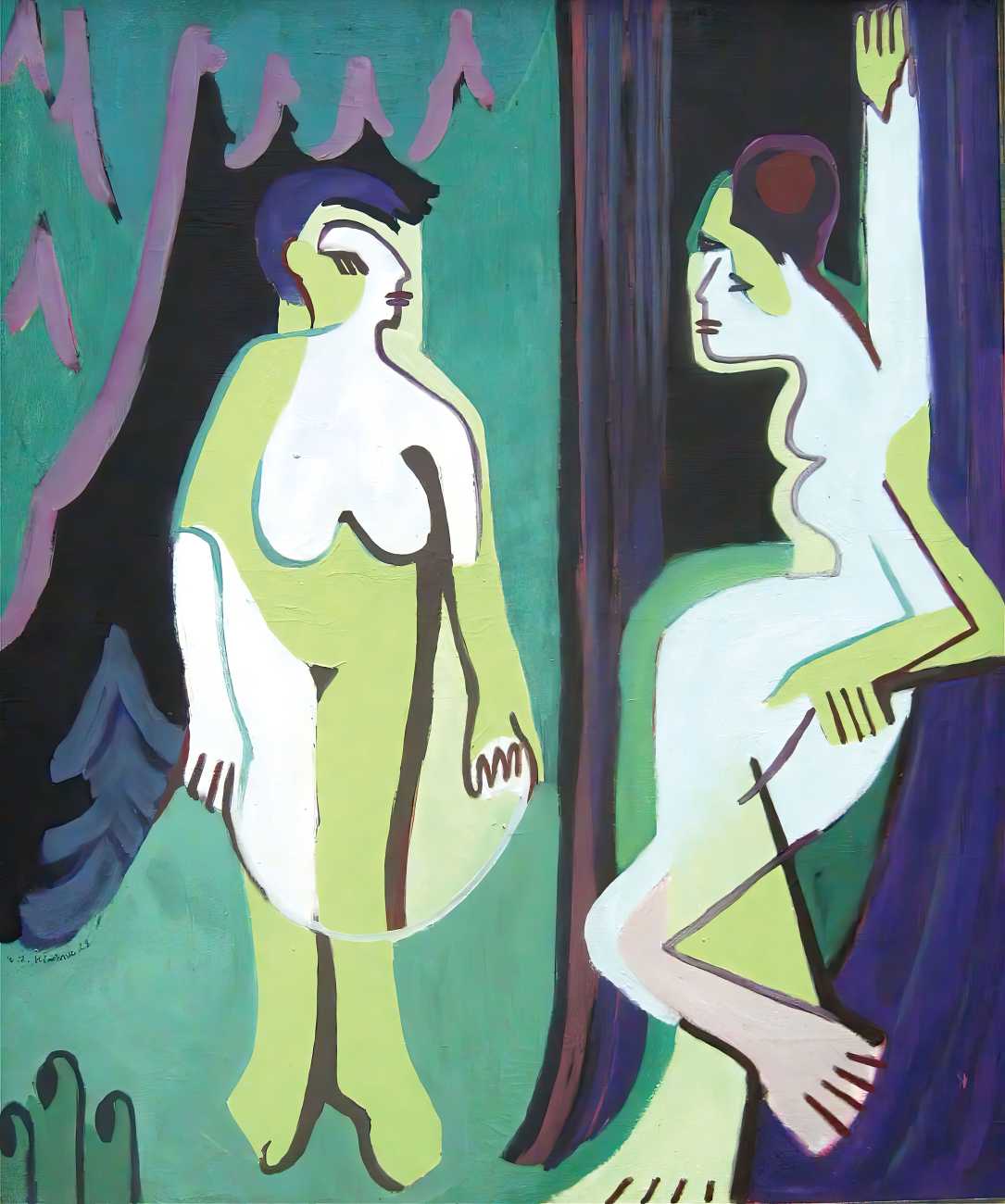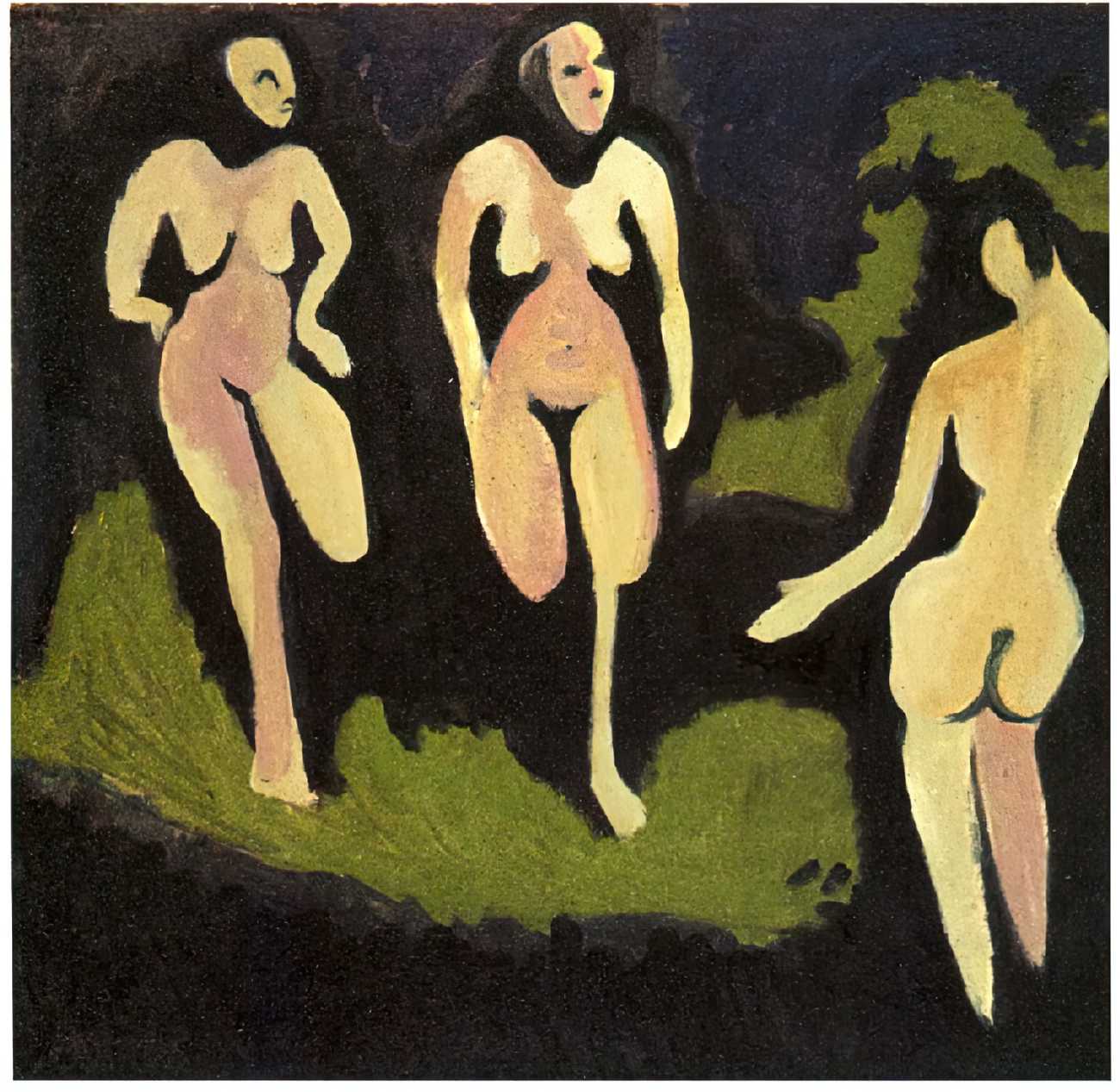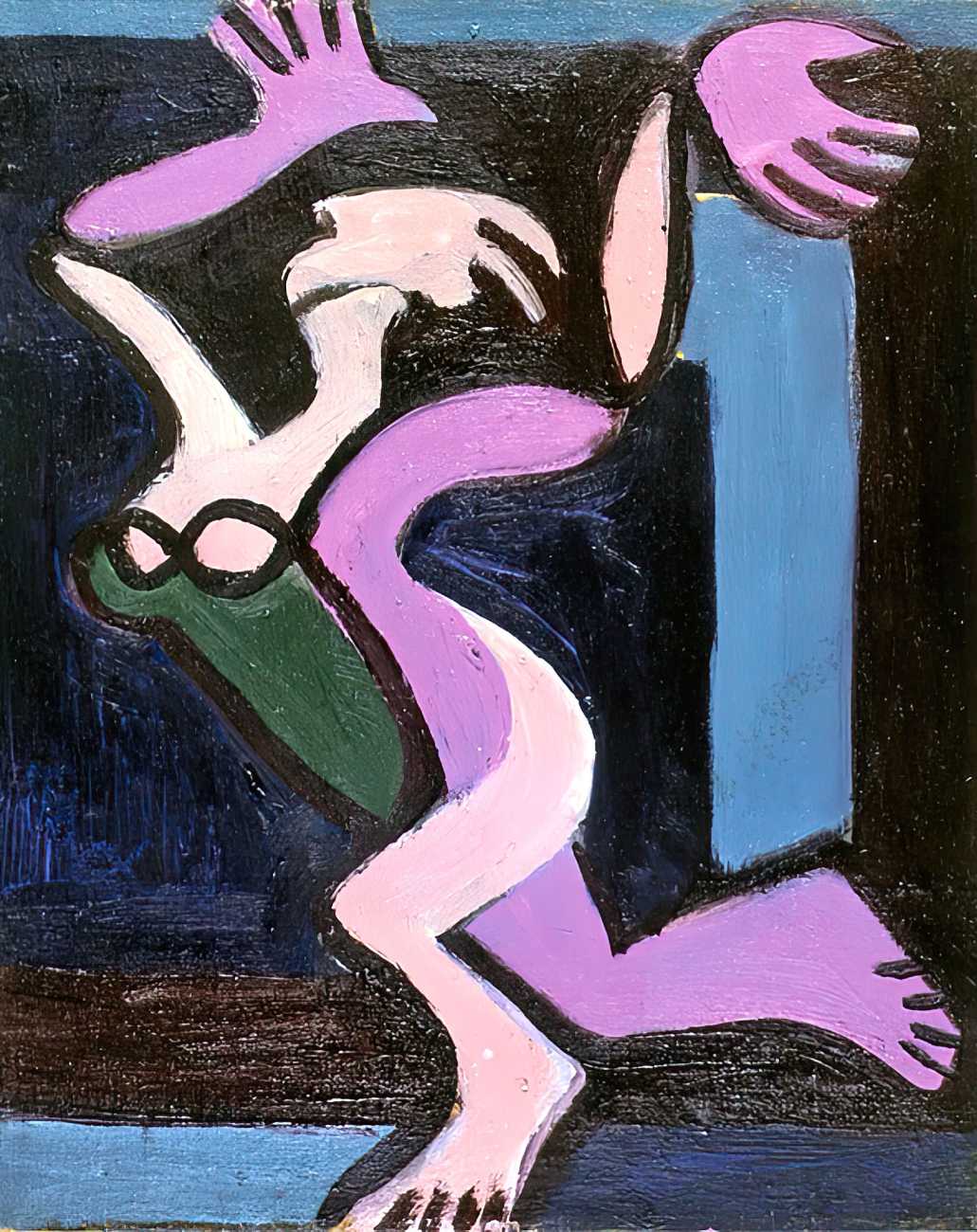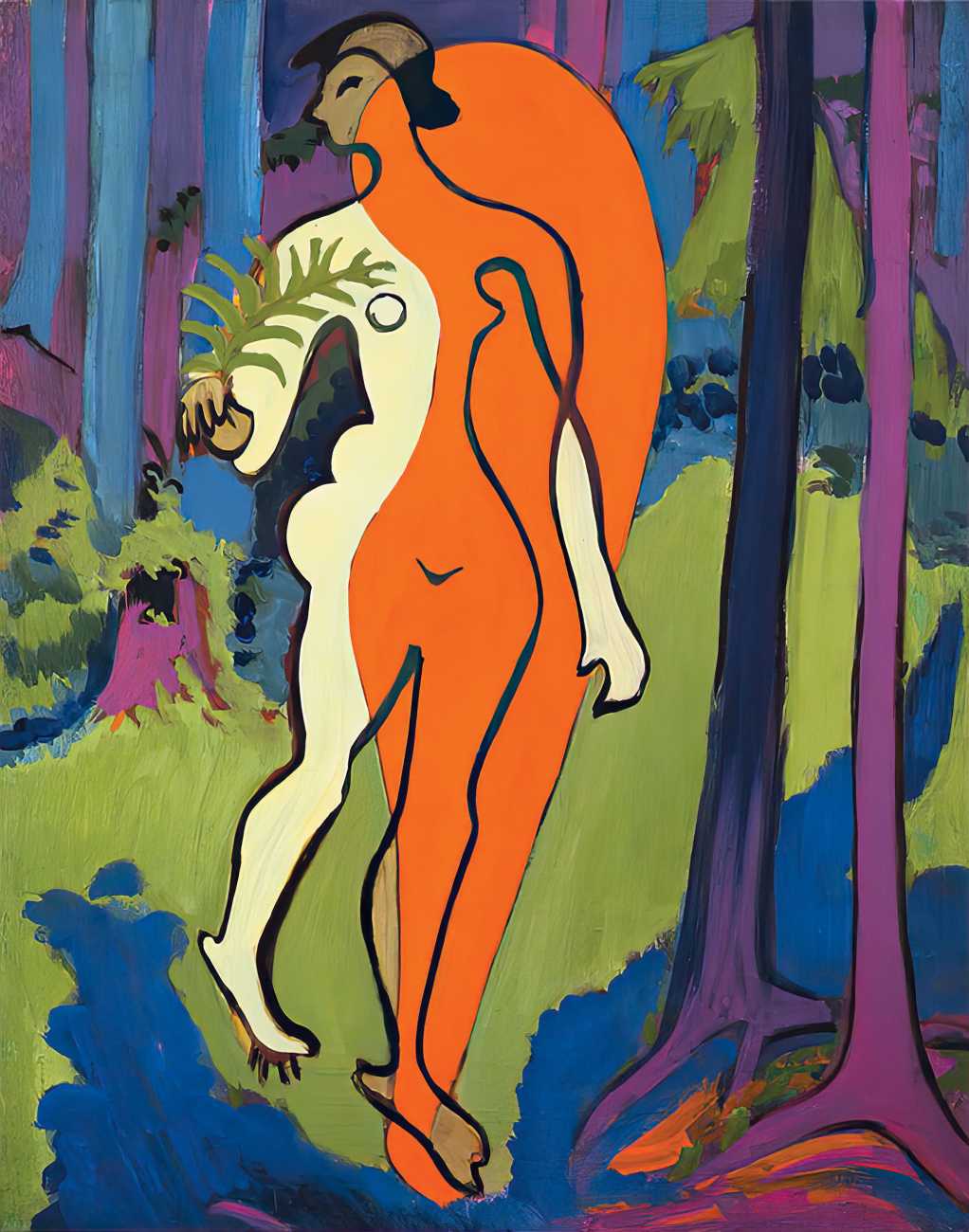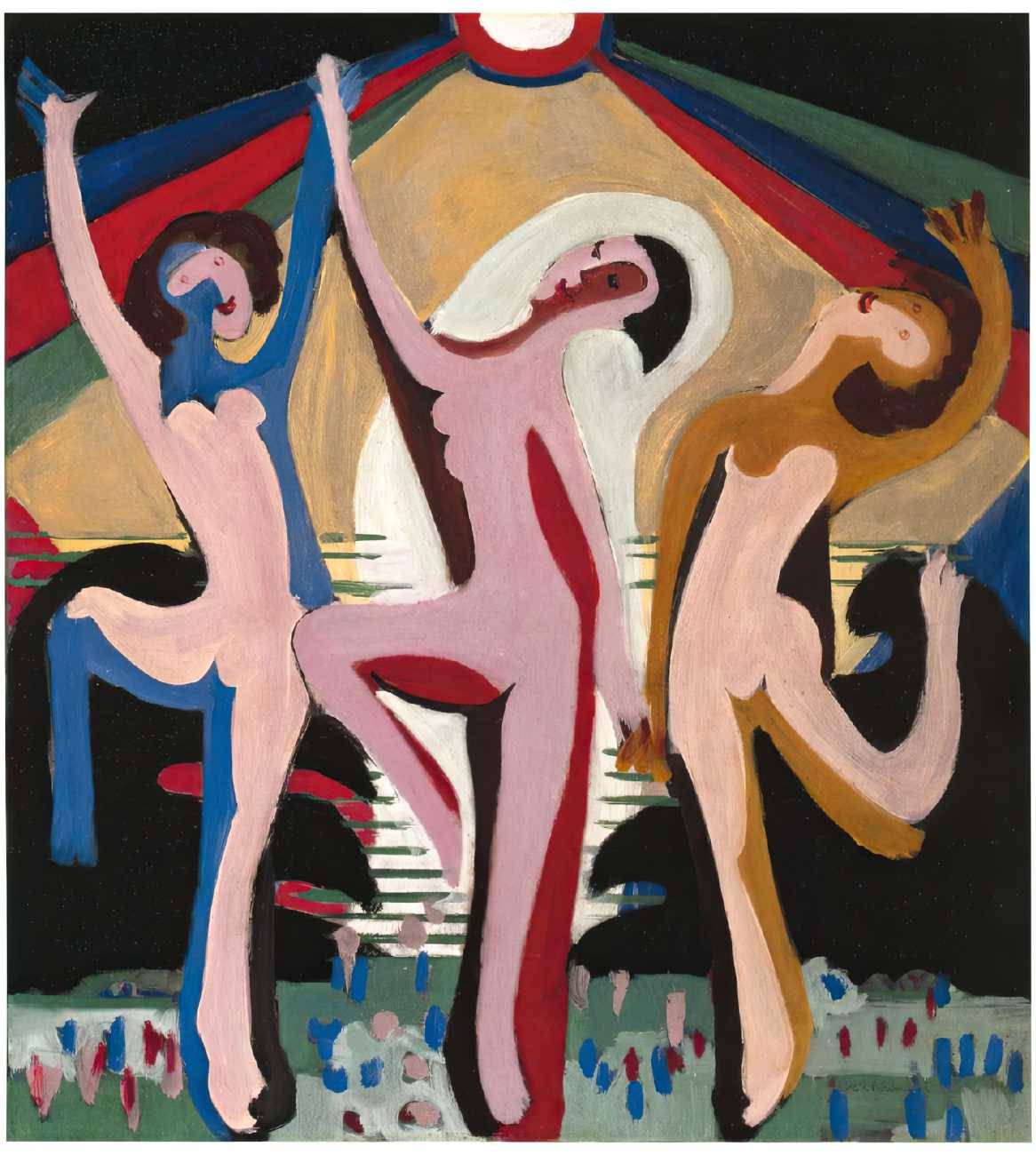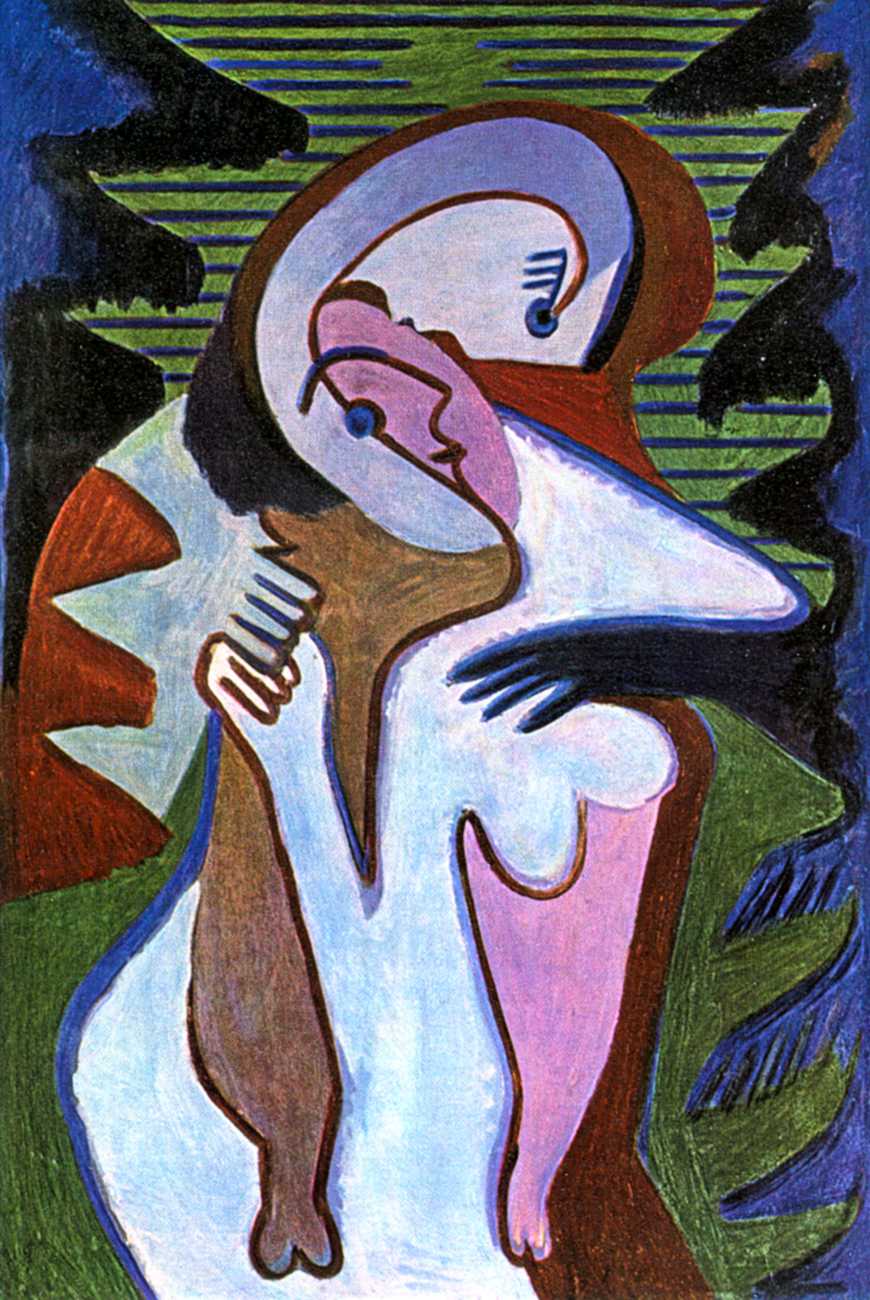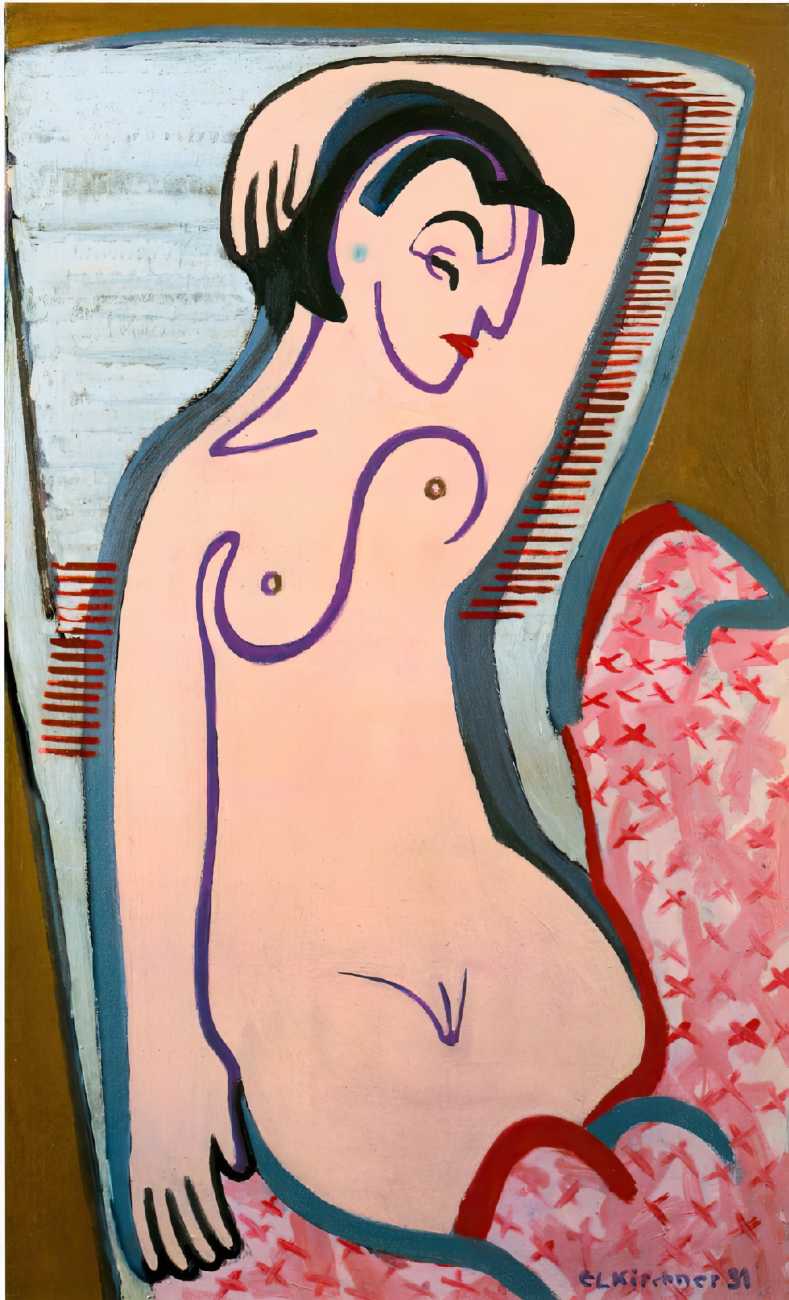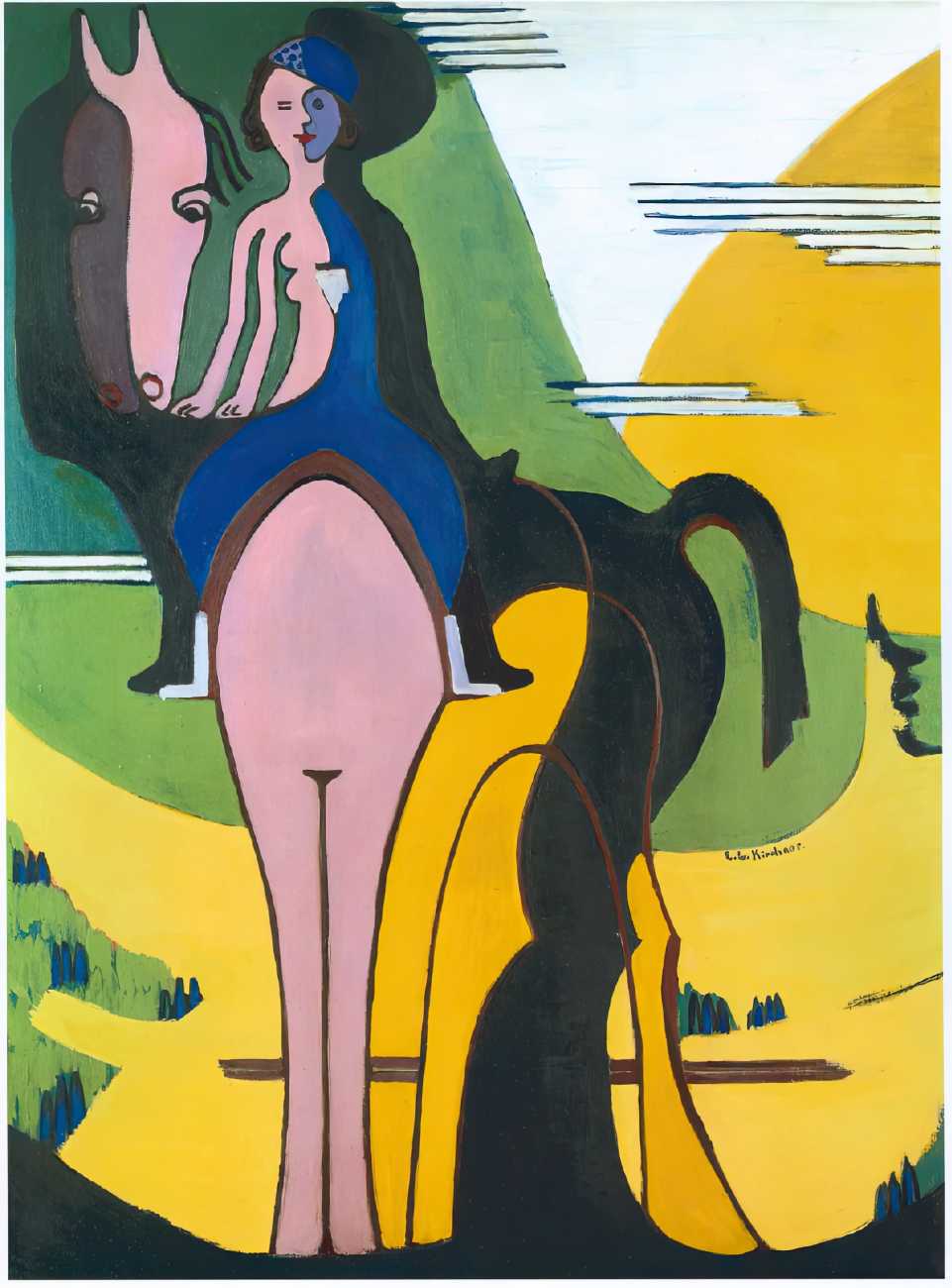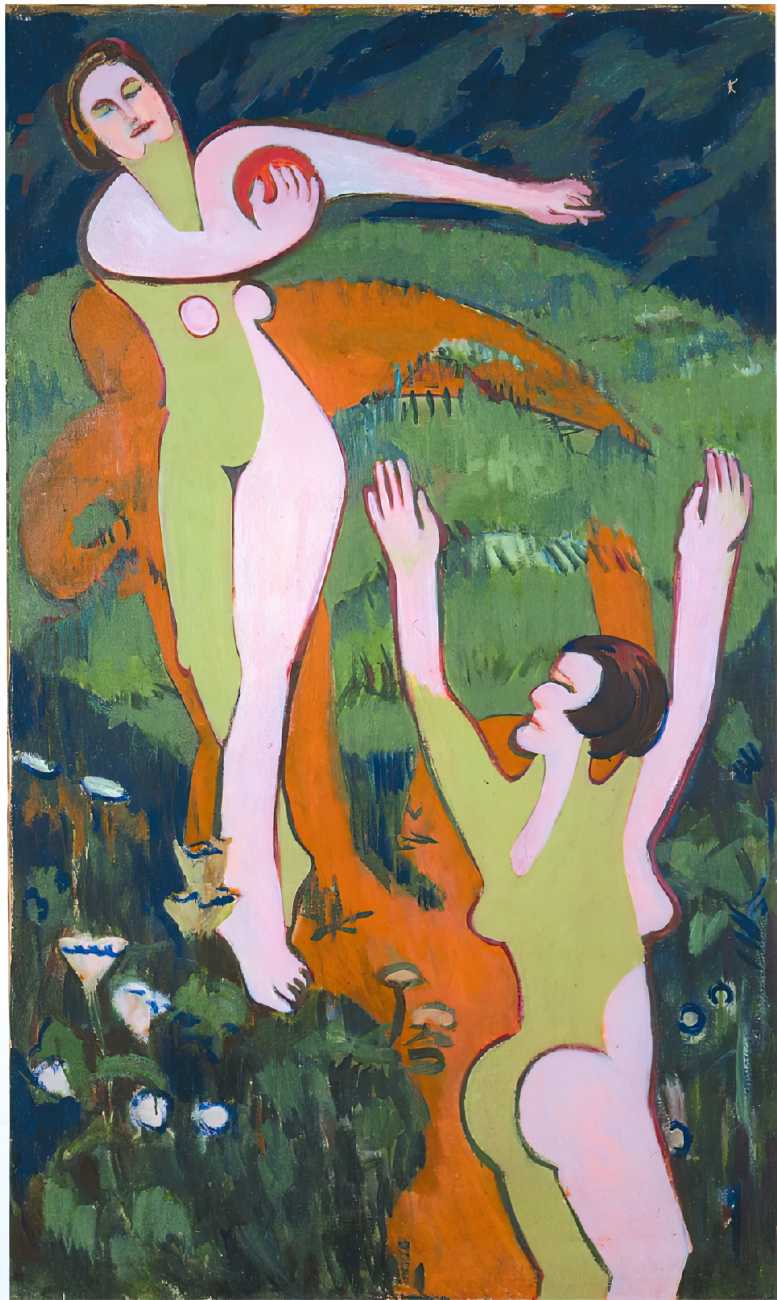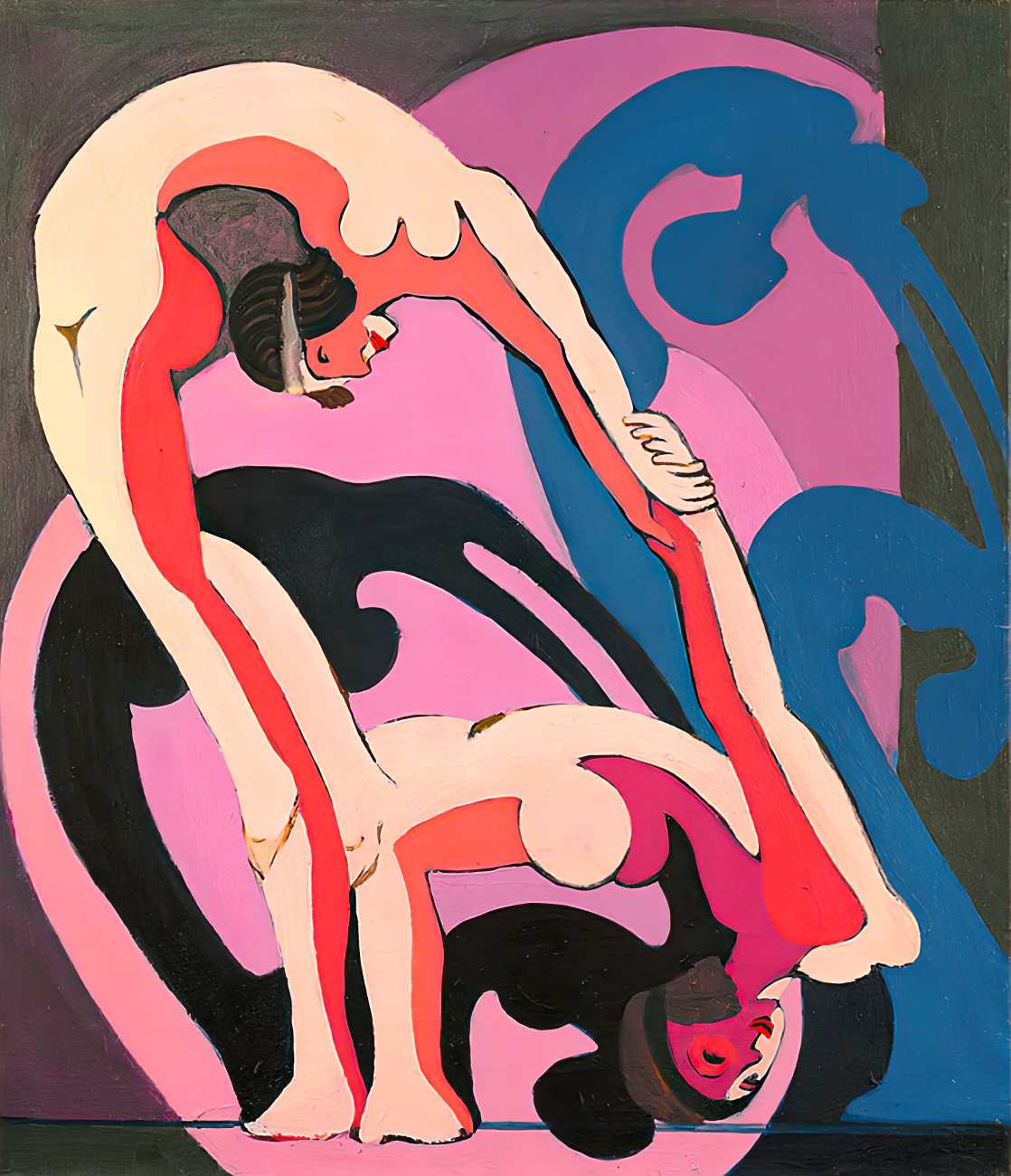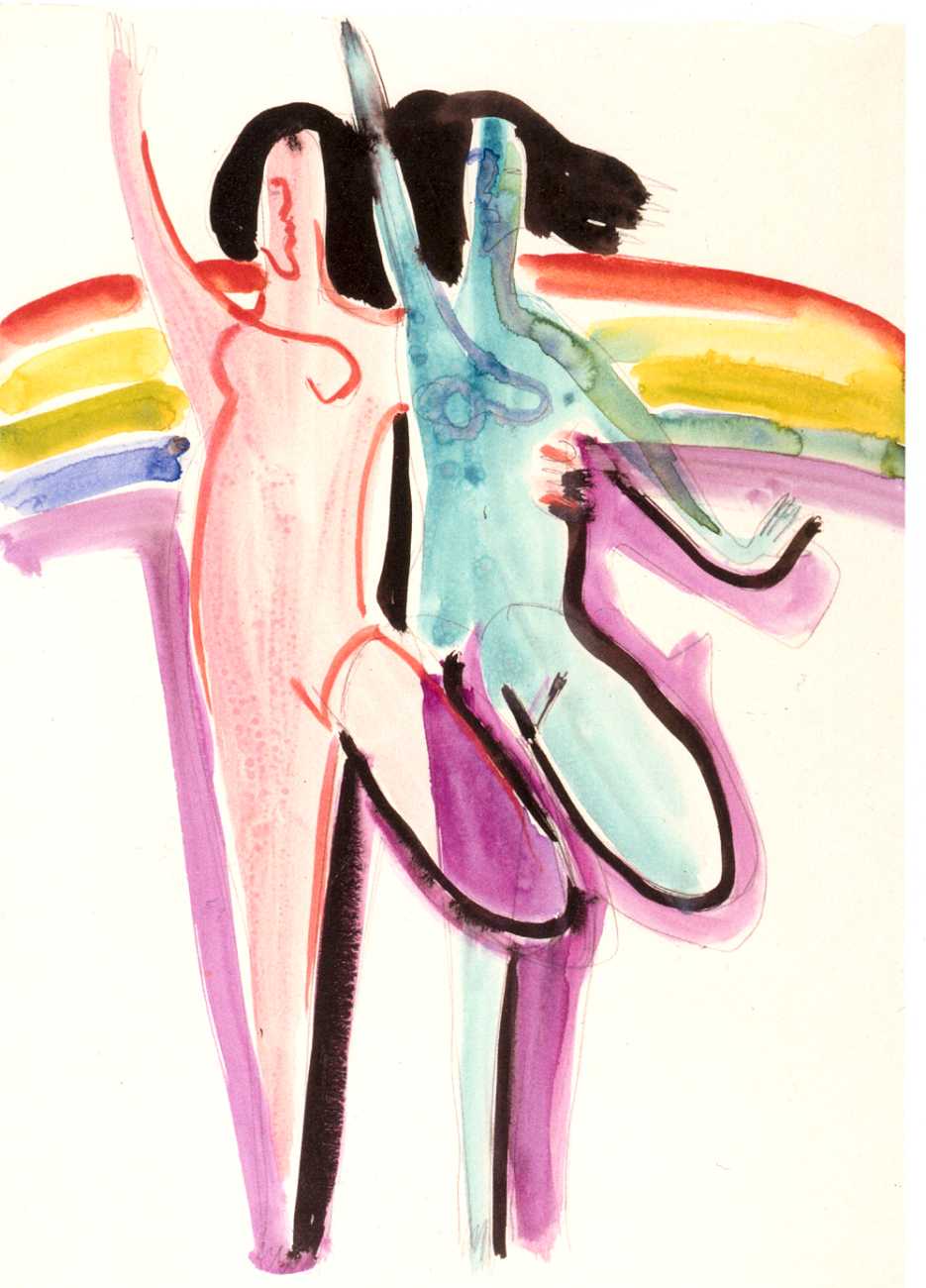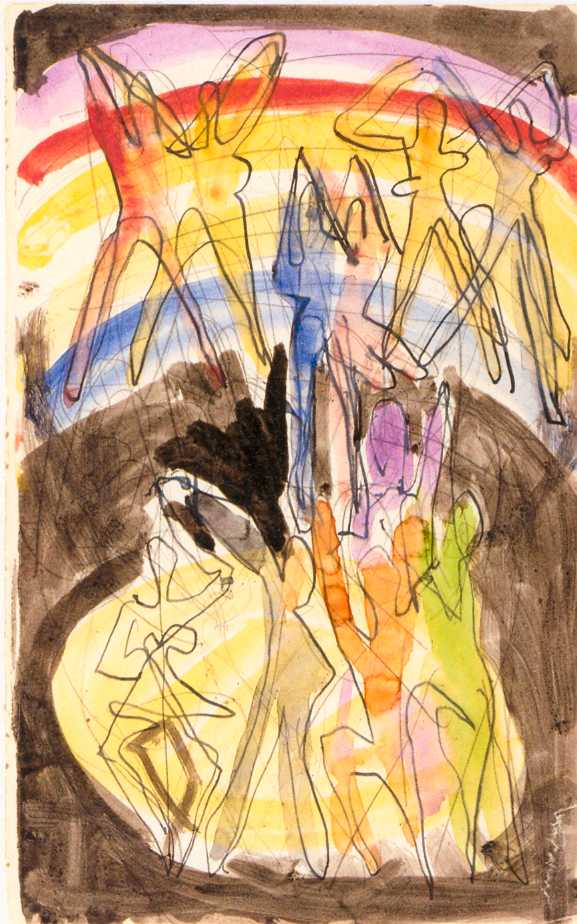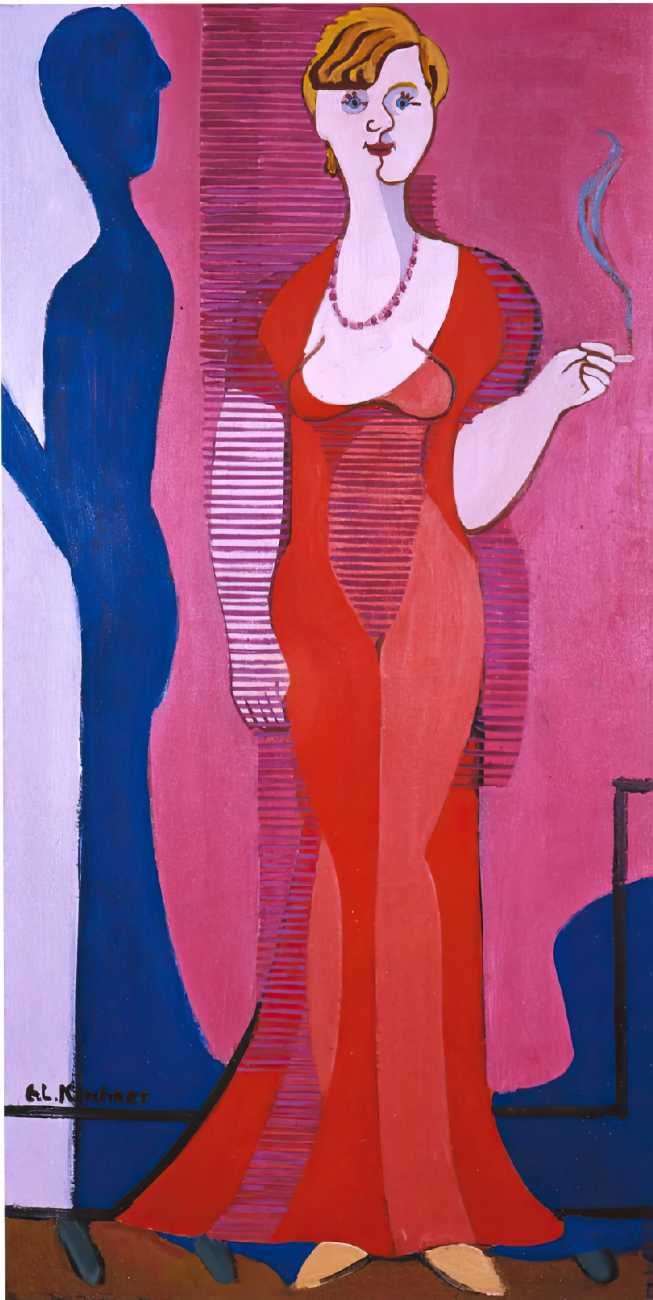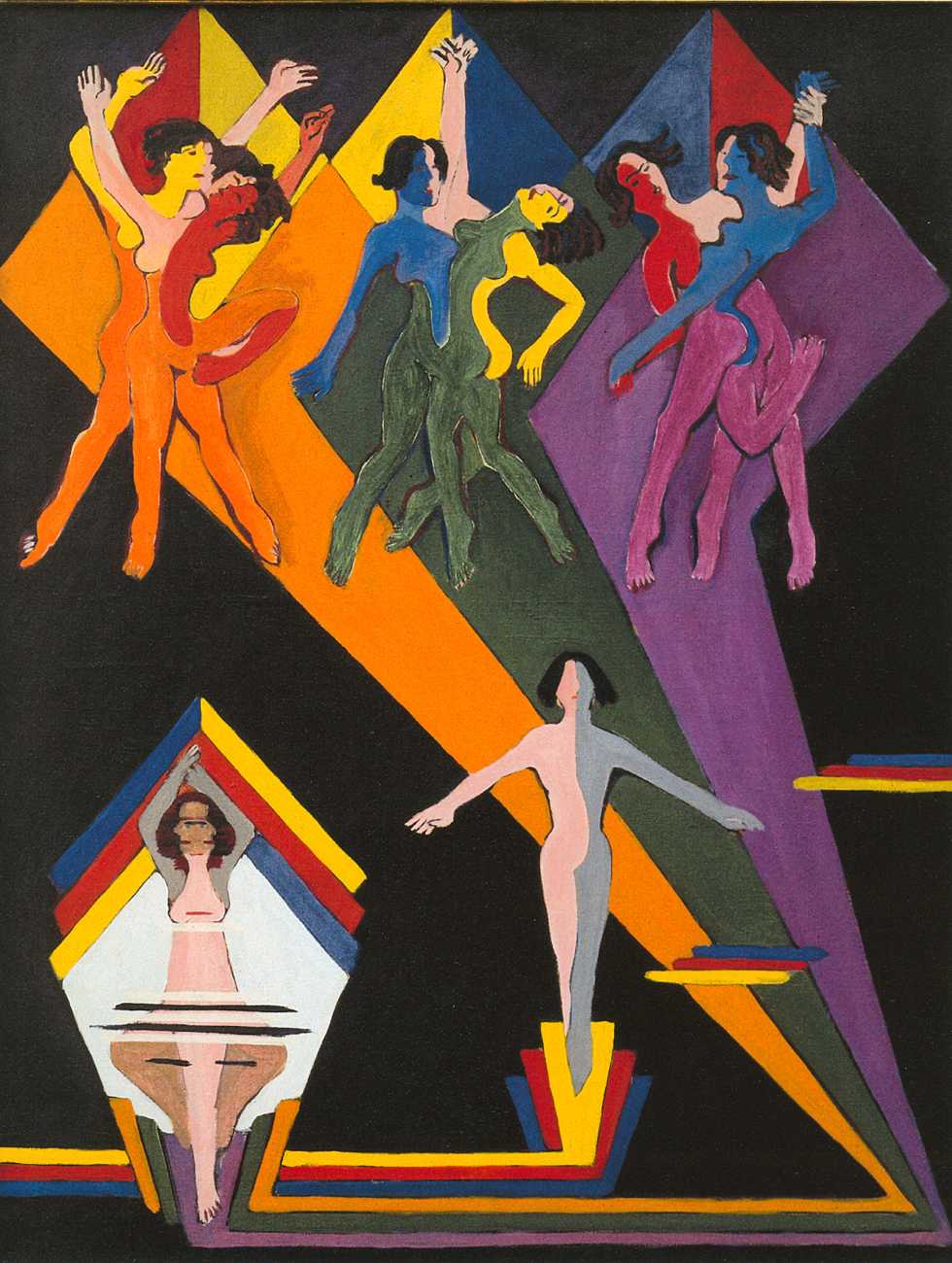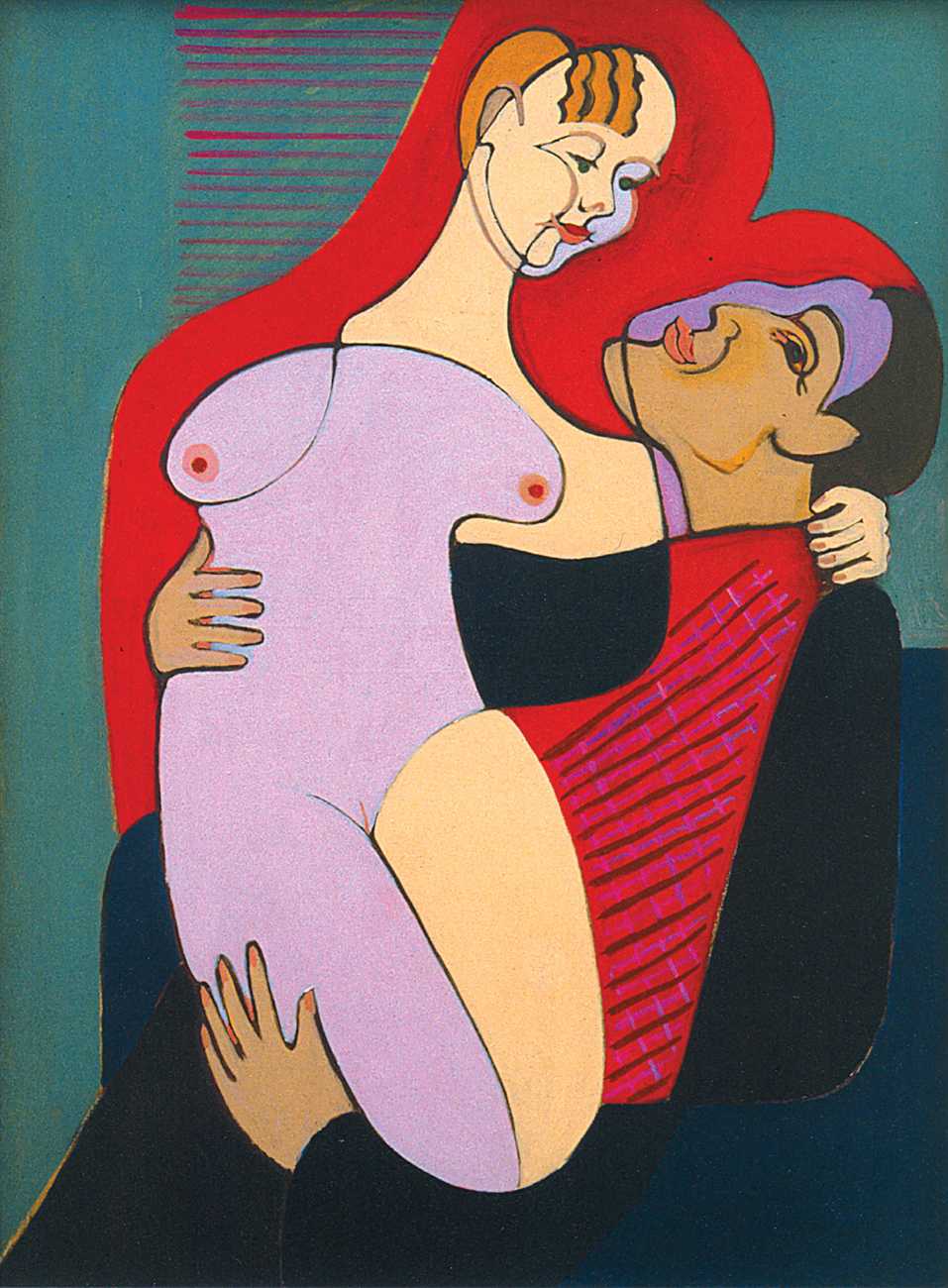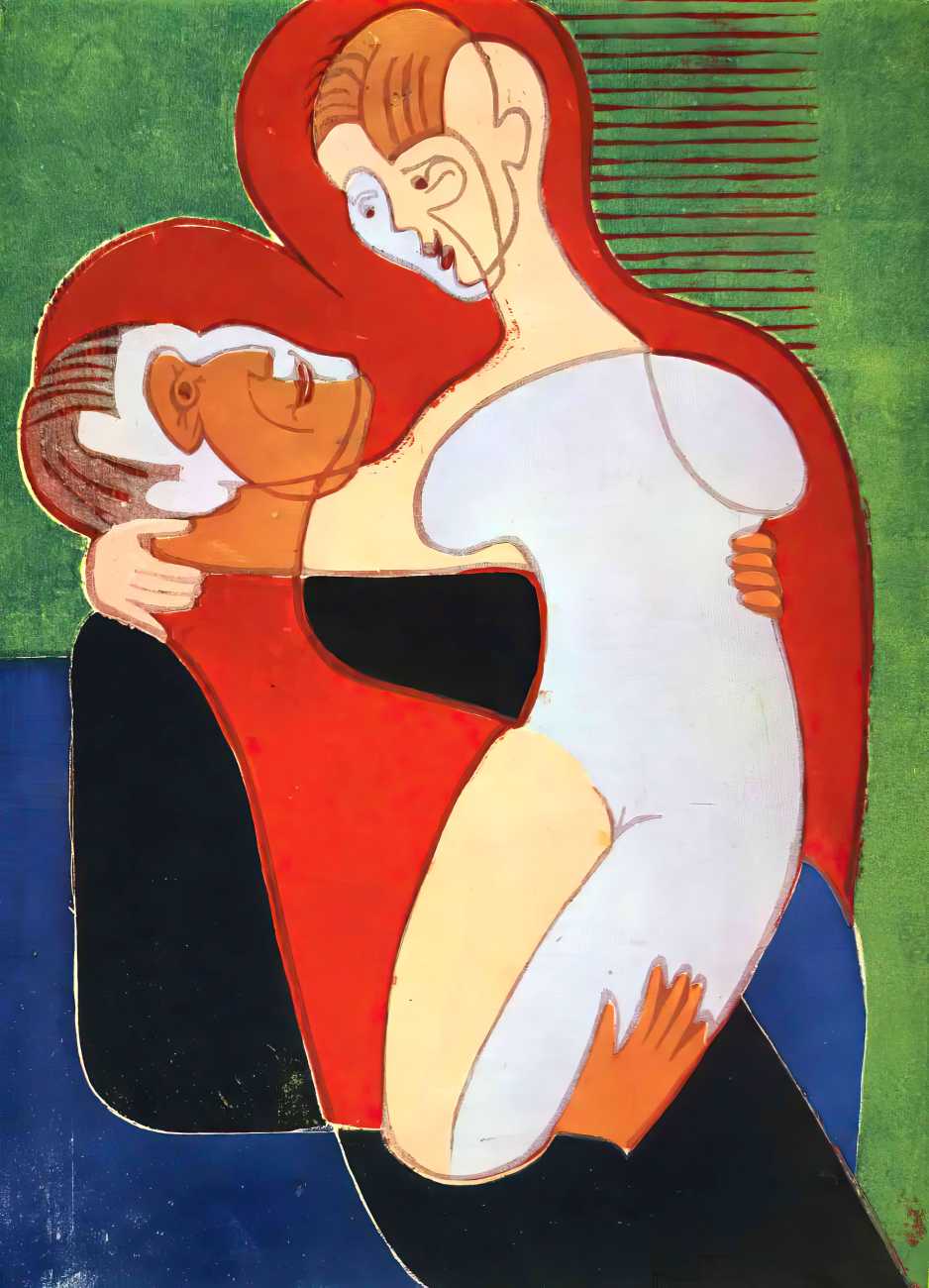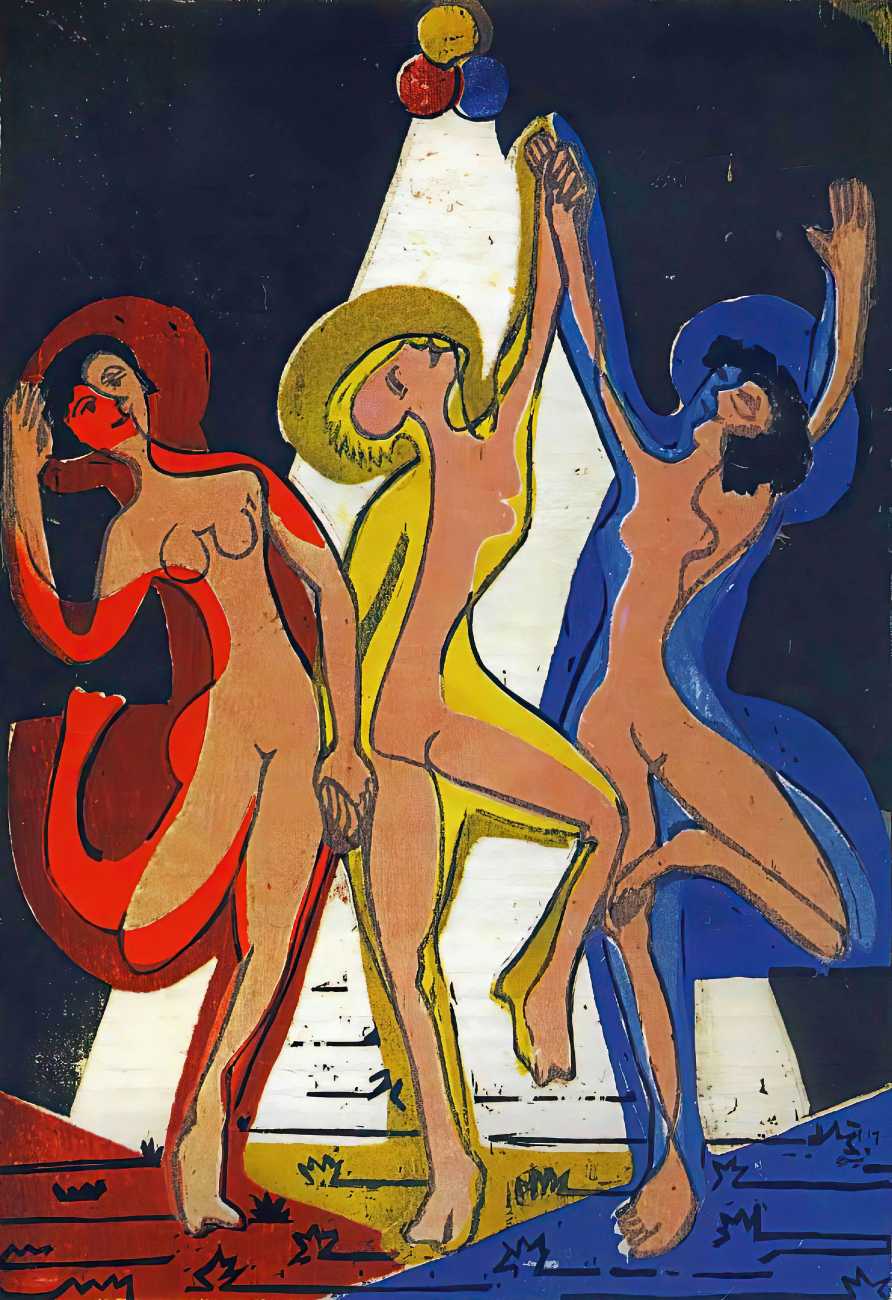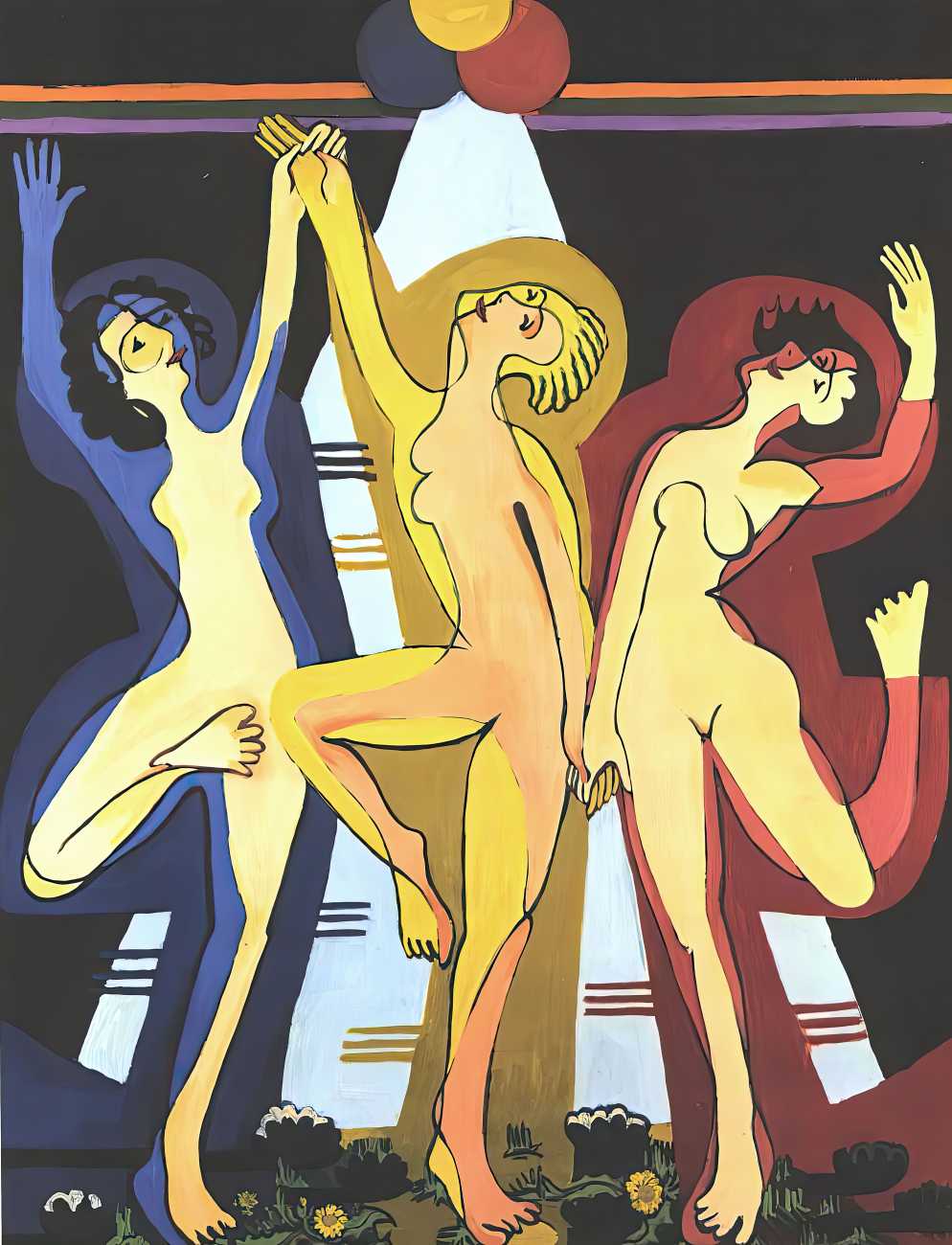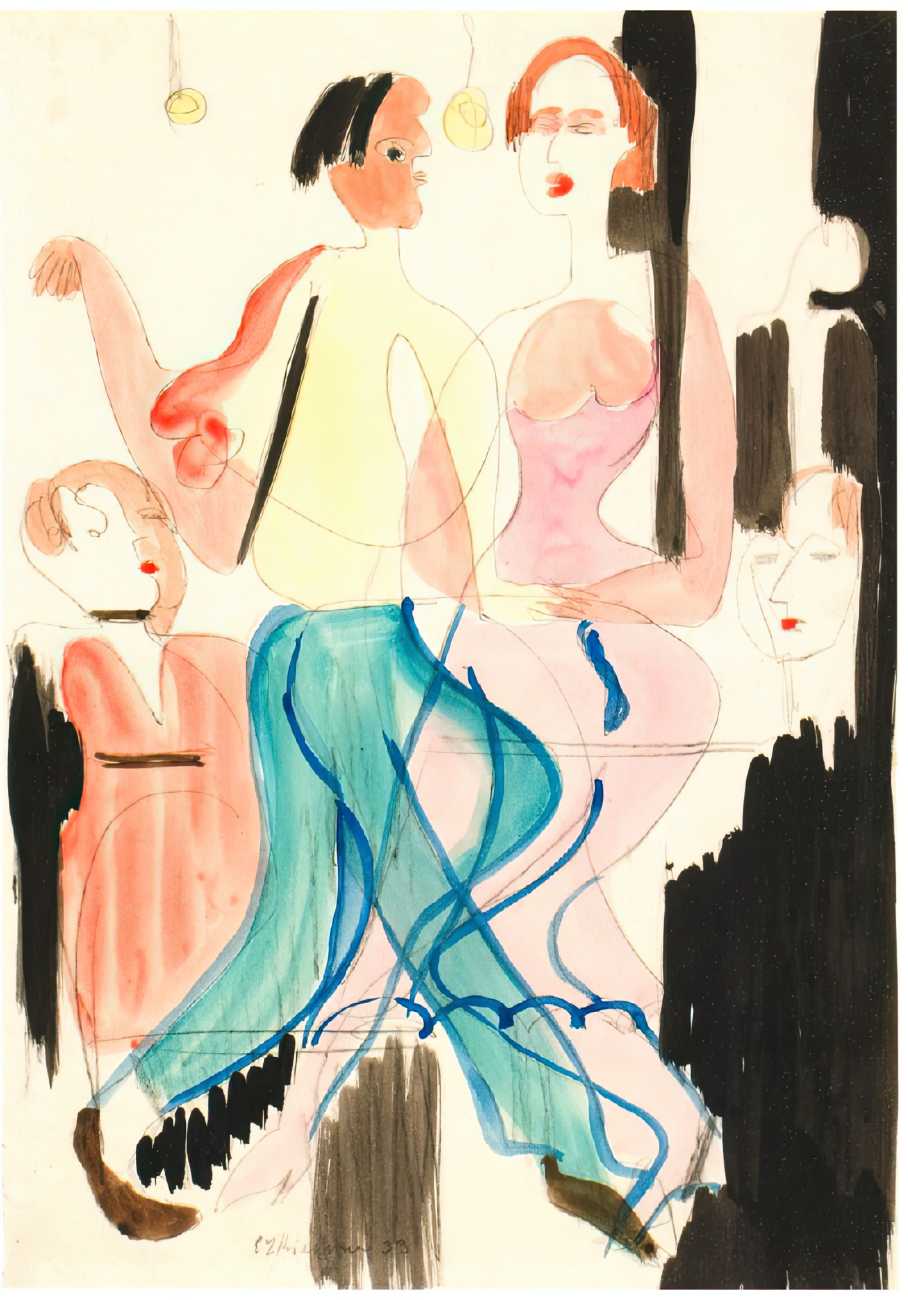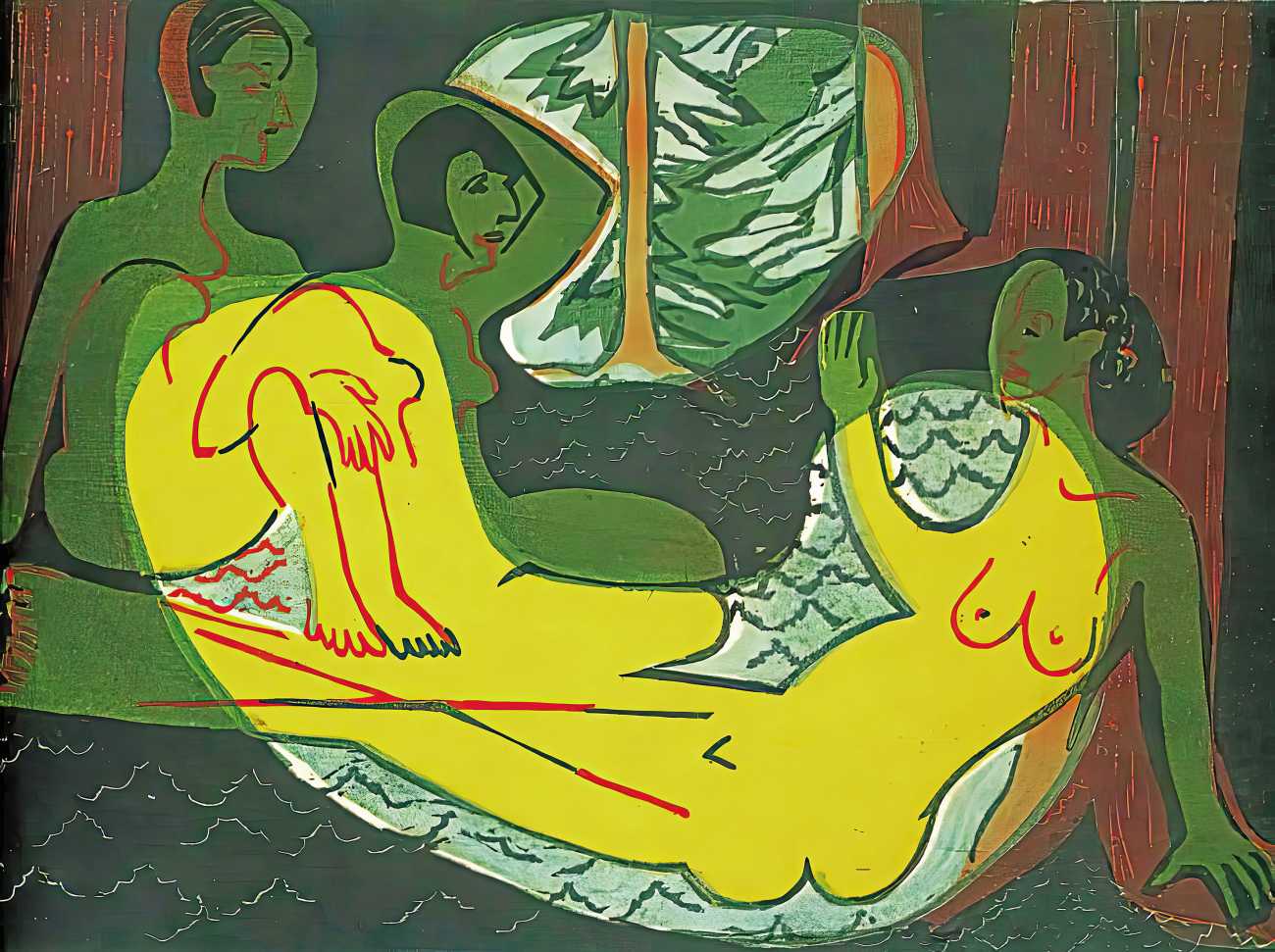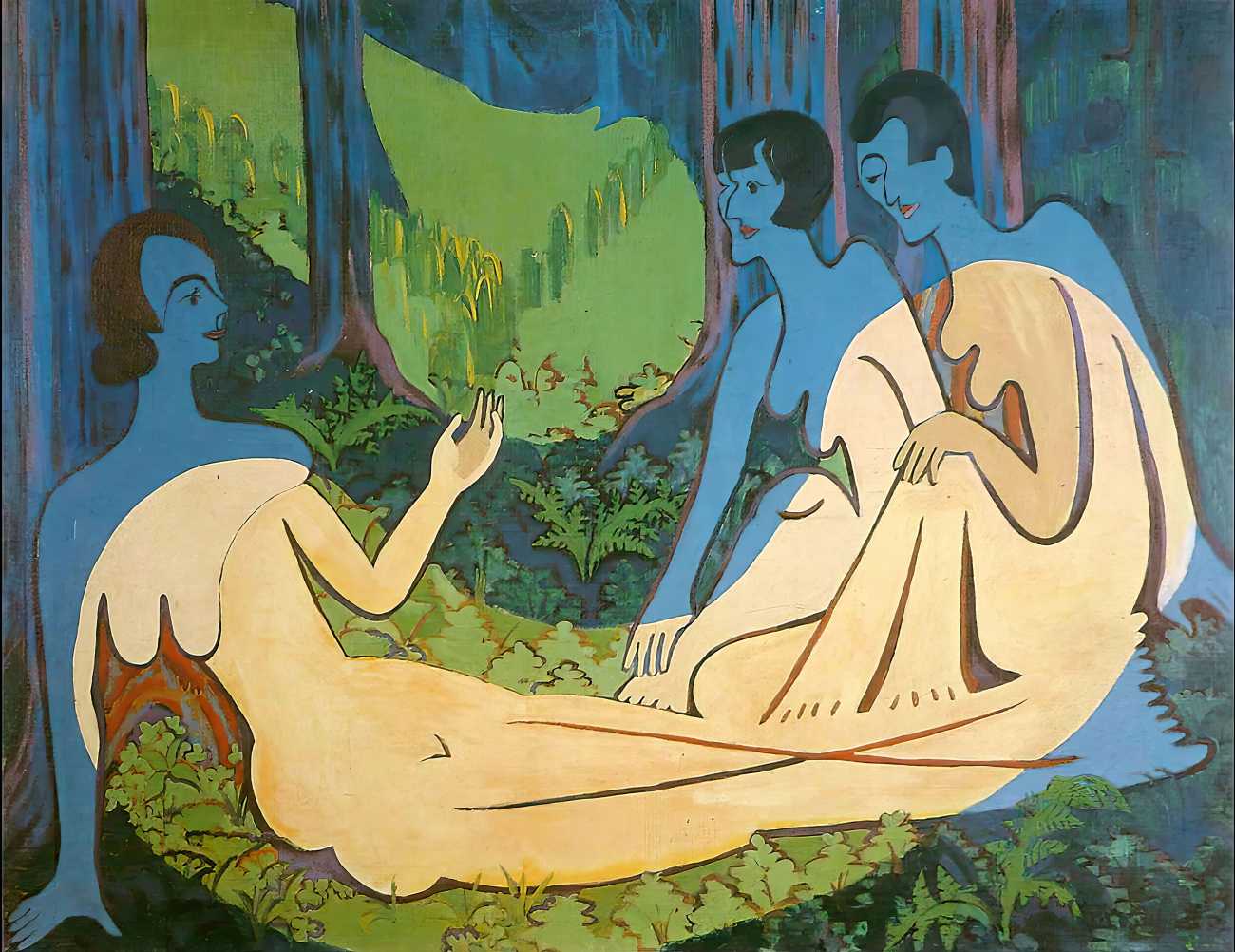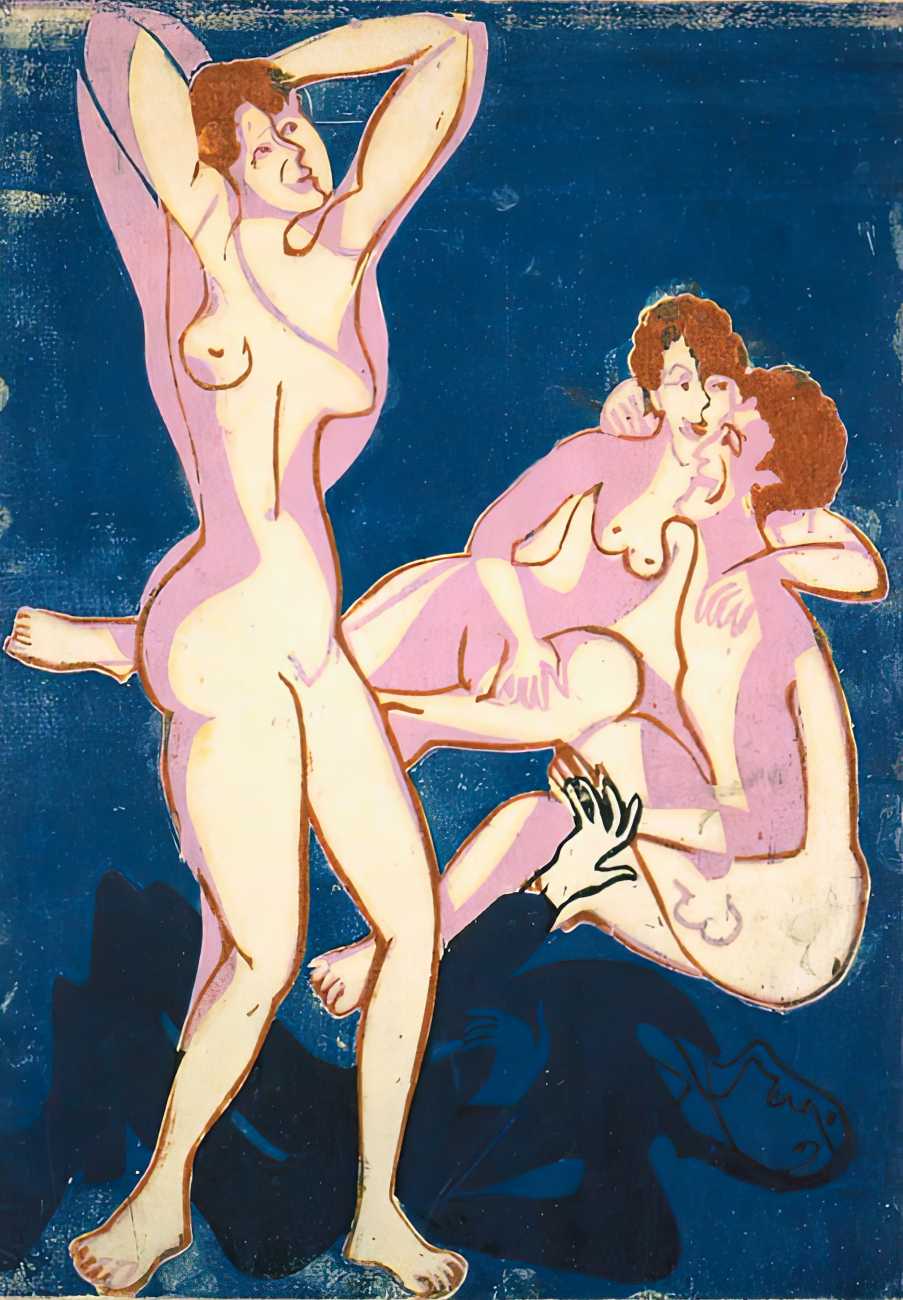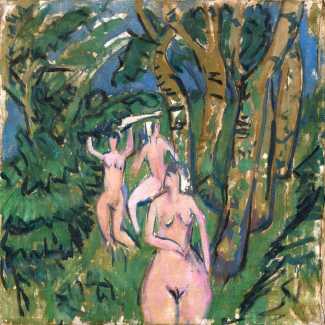
Kirchner treated the erotic not as a marginal theme but as a central expressive force within his painting, a vehicle for dramatising the intensity of modern life and the complexities of human perception. For Kirchner and to a lesser extent for the other members of Die Brücke, the erotic was tied to the pursuit of authenticity: it represented a realm of instinct and immediacy that countered what they saw as the stifling conventions of bourgeois society. His depictions of the naked body, whether in studio scenes, landscapes or urban interiors, does not aim for classical sensuality; rather they emphasise rawness, angularity and psychological tension. The bodies, often outlined in jagged contours and heightened colour, radiate both vitality and vulnerability, suggesting an emotional truth and tension as well as a purely physical one.
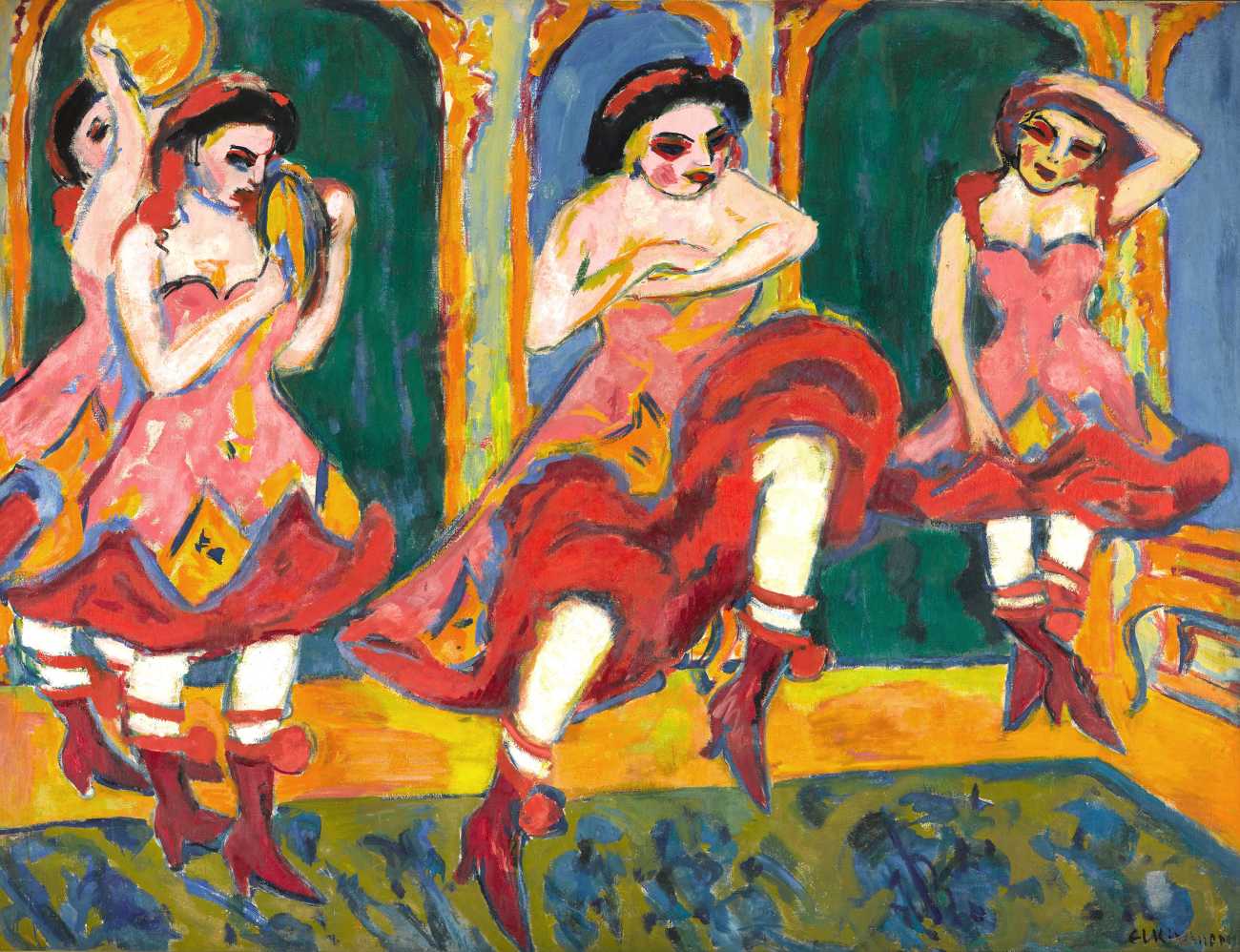
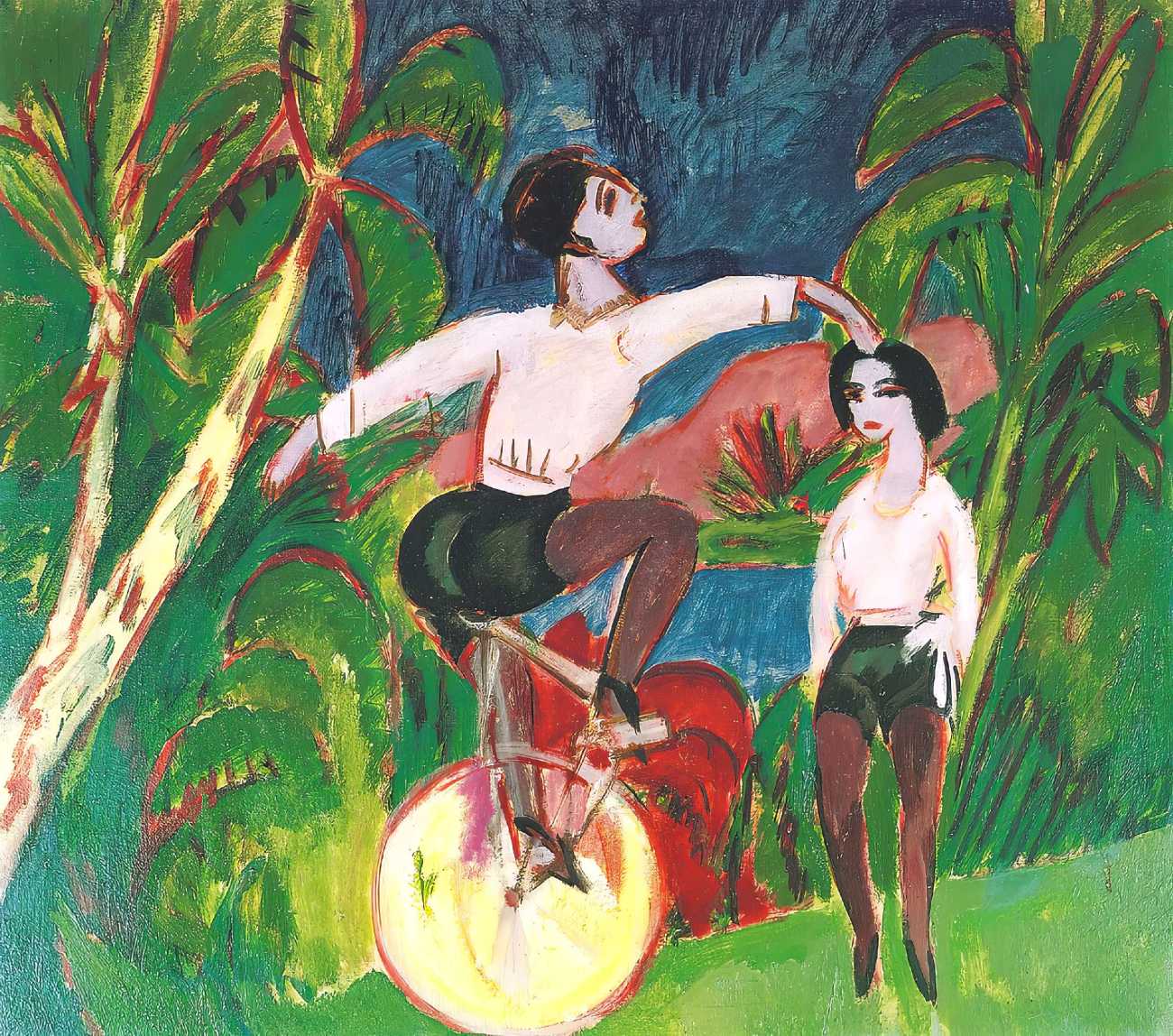
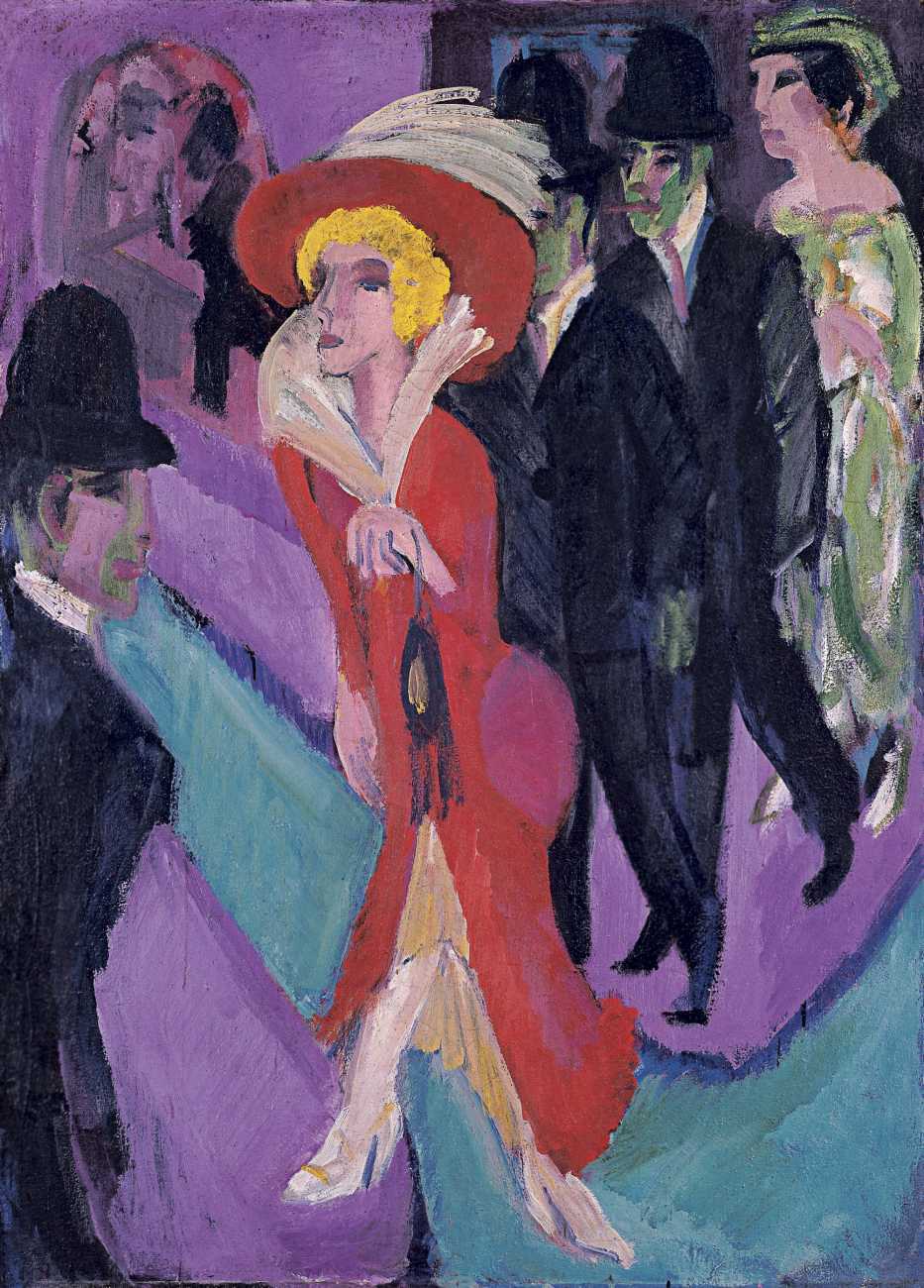
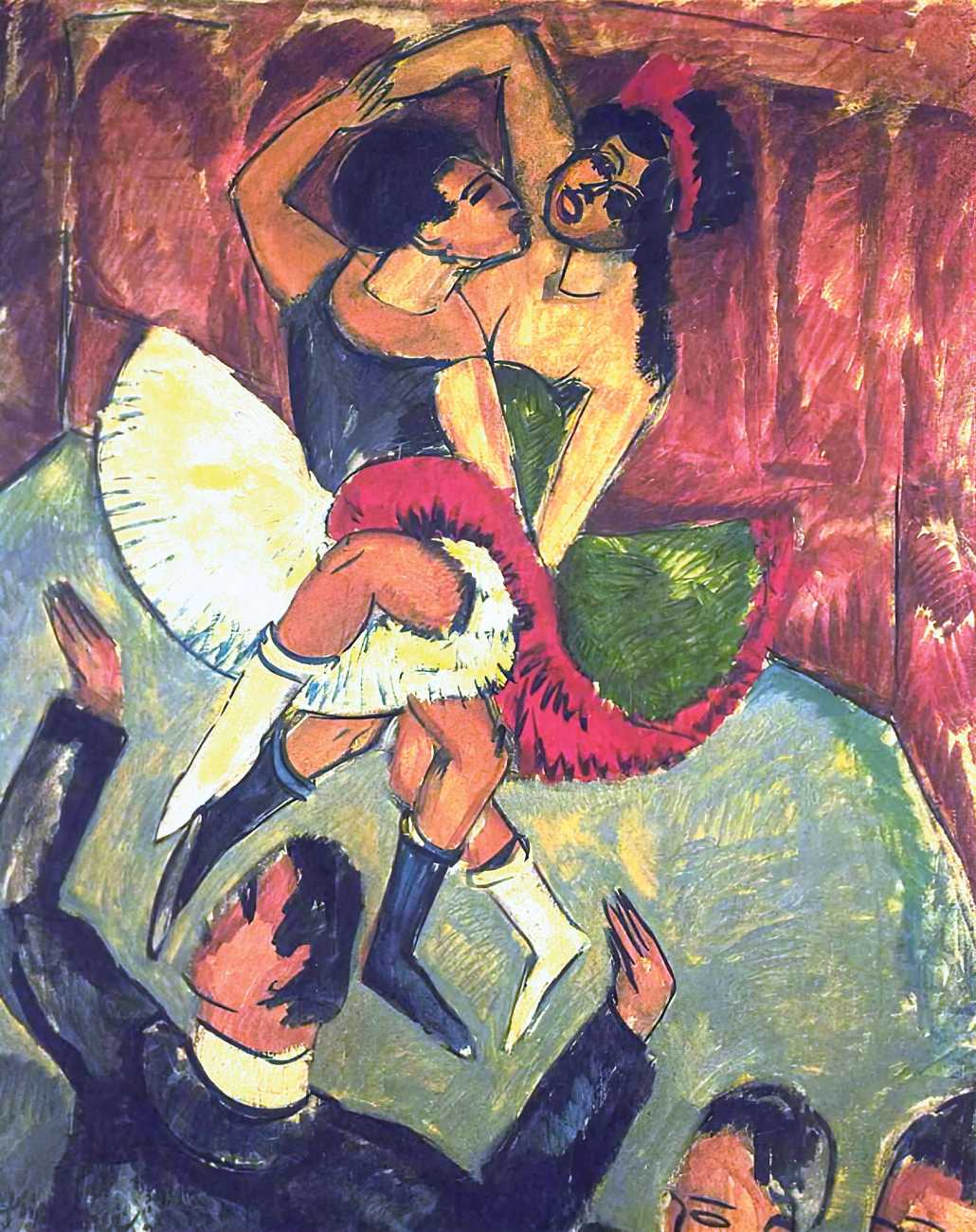
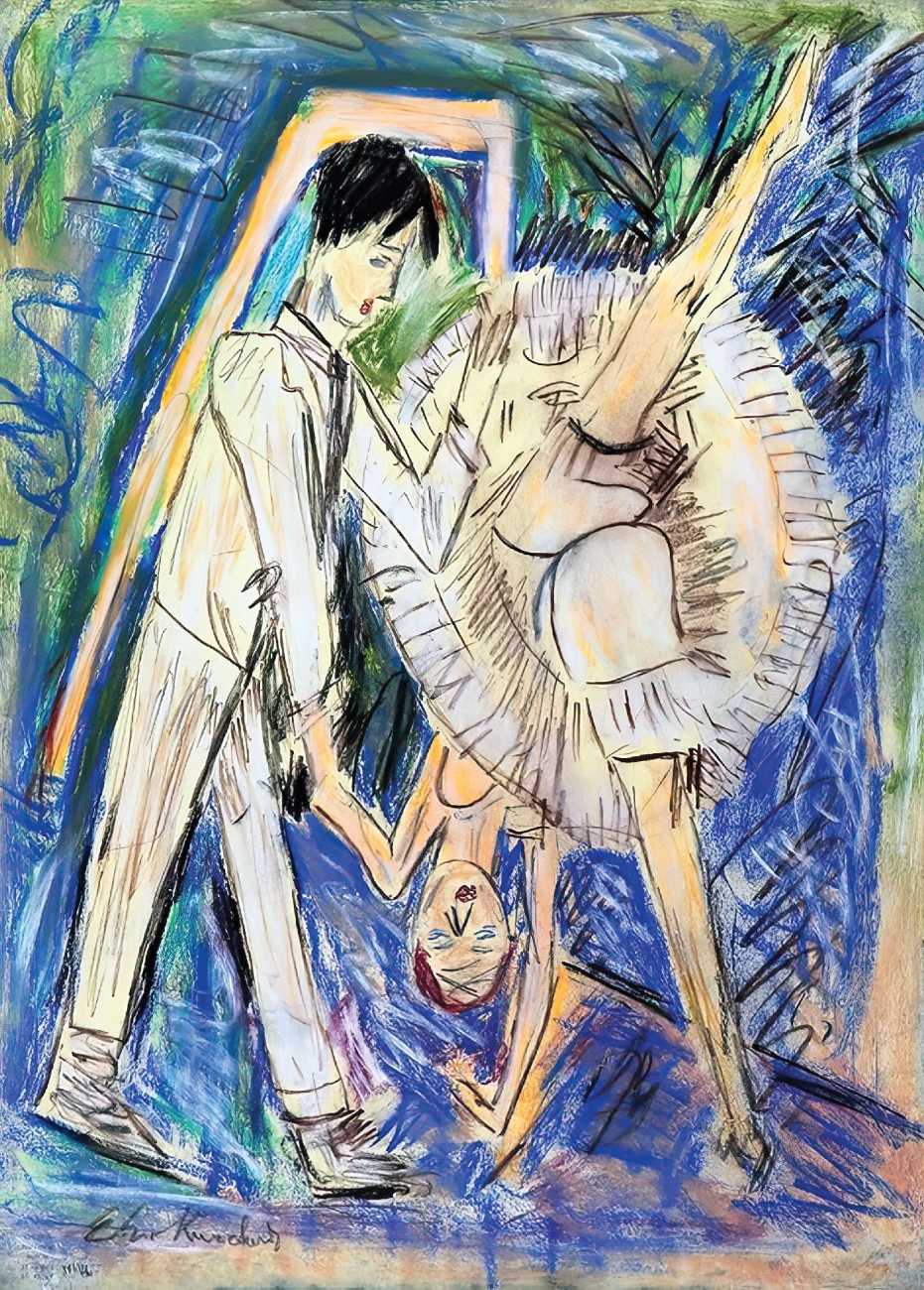
Kirchner’s eroticism intersects with his fascination with the city of his day, especially Berlin. In works featuring dancers, performers and streetwalkers, the erotic becomes entangled with spectacle and desire. These images capture the seductive yet unsettling energy of modern urban life, where intimacy and alienation coexist. Ultimately, the erotic in Kirchner’s art is a mode of confrontation – with himself, with social norms, and with the rapid transformation of social life in the early twentieth century.
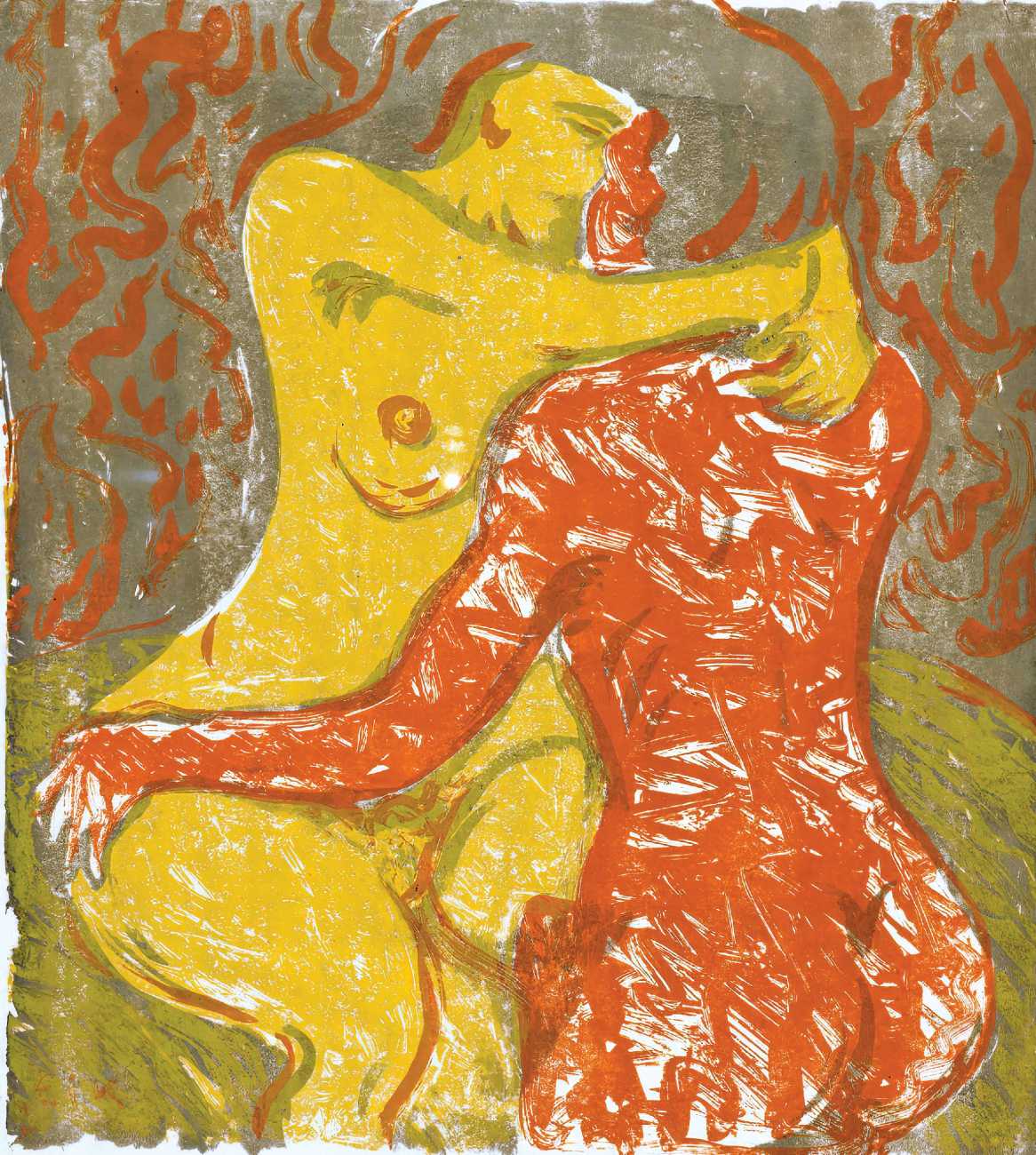
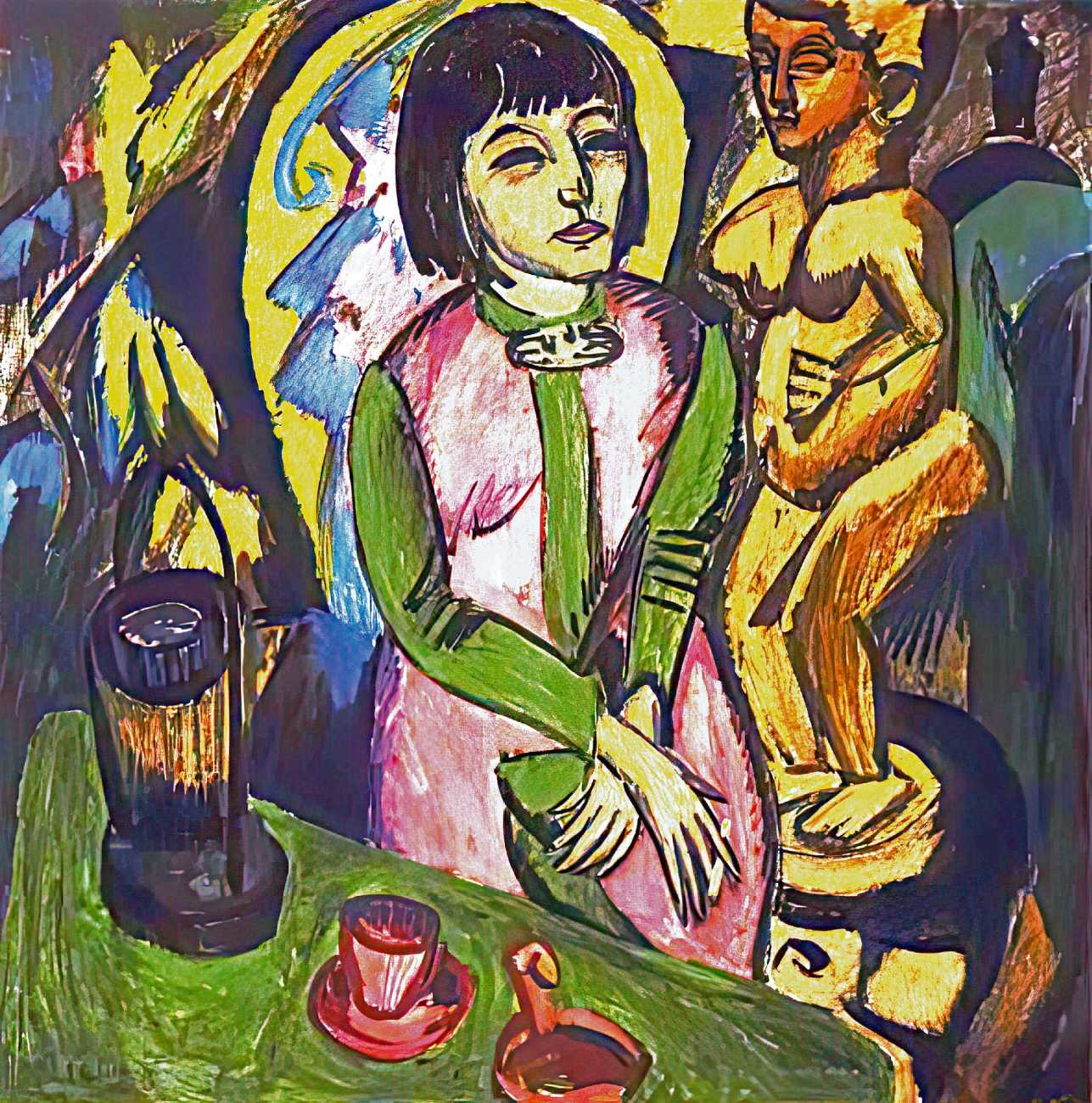
In his later work (and here we show his paintings in approximately chronological order) design and pattern become more important, as Kirchner spent more time thinking about the shapes and forms of the human body.