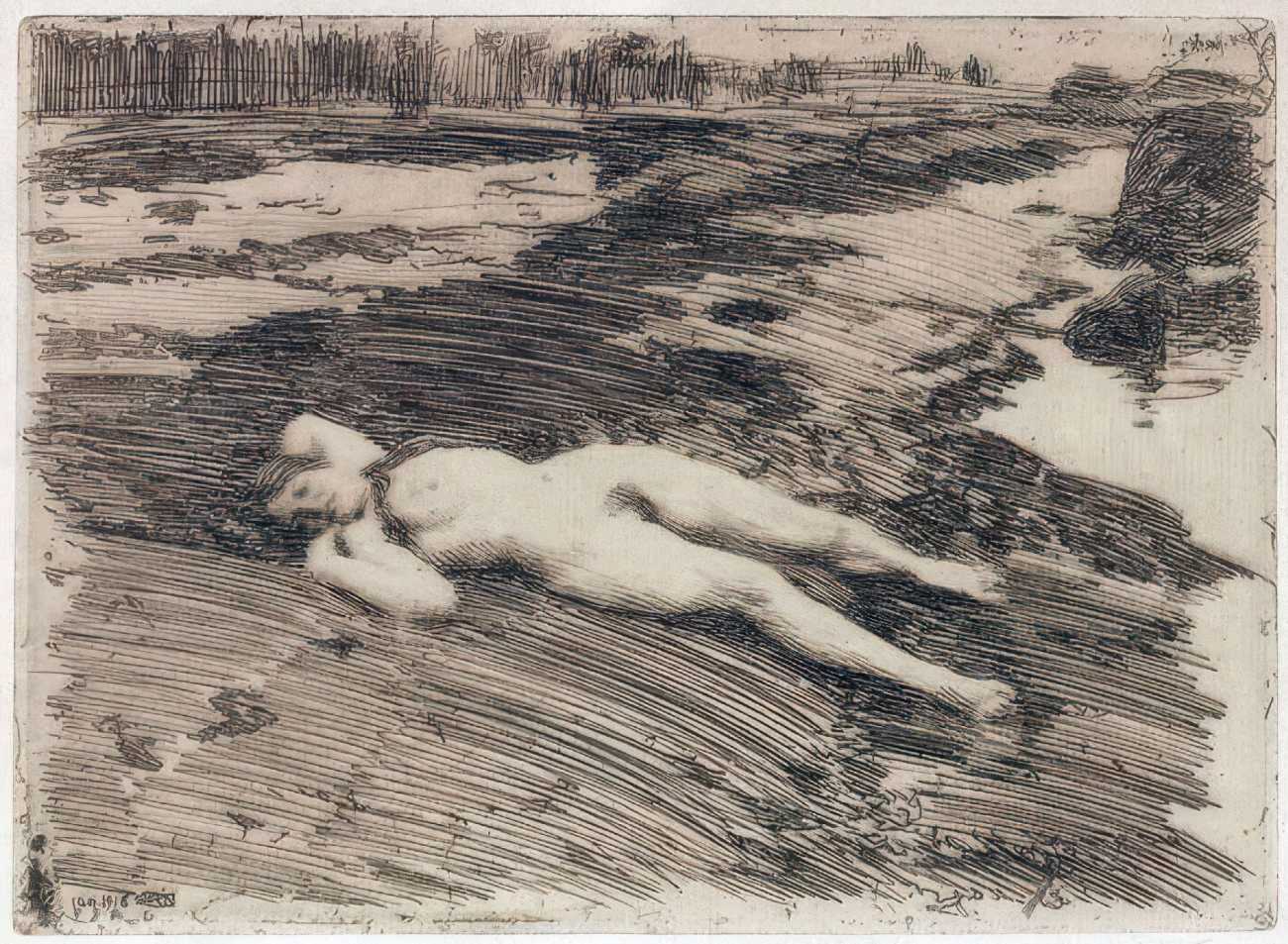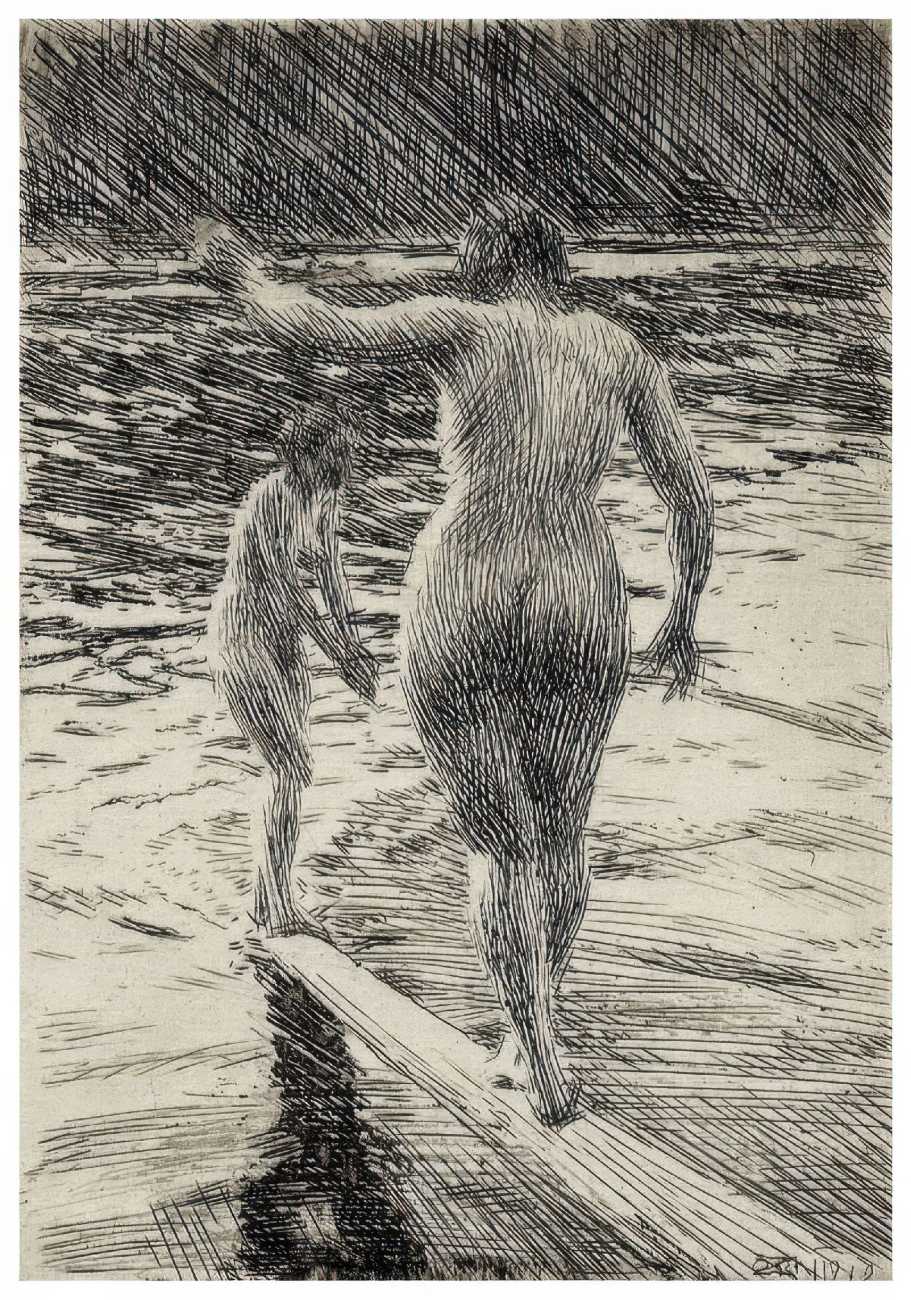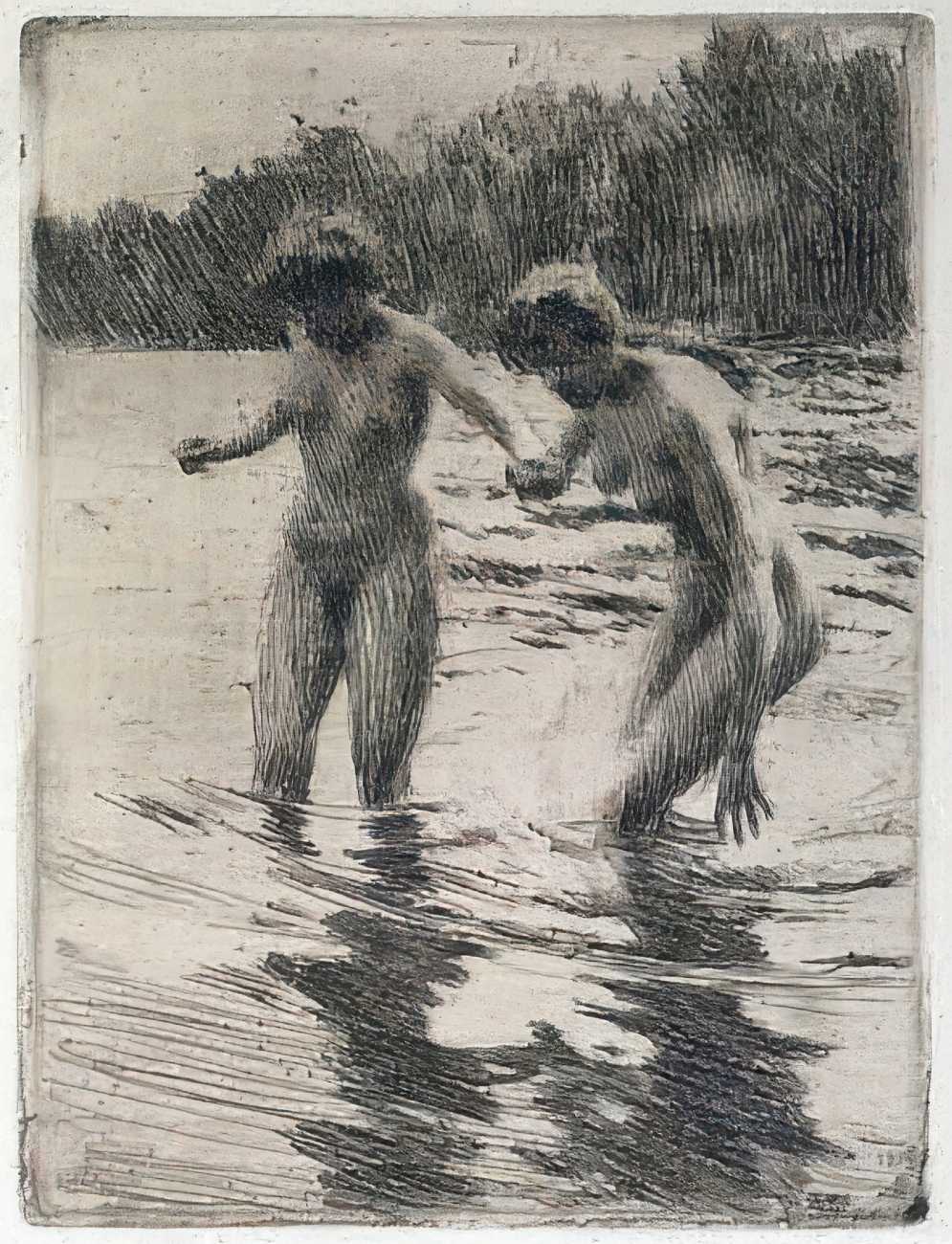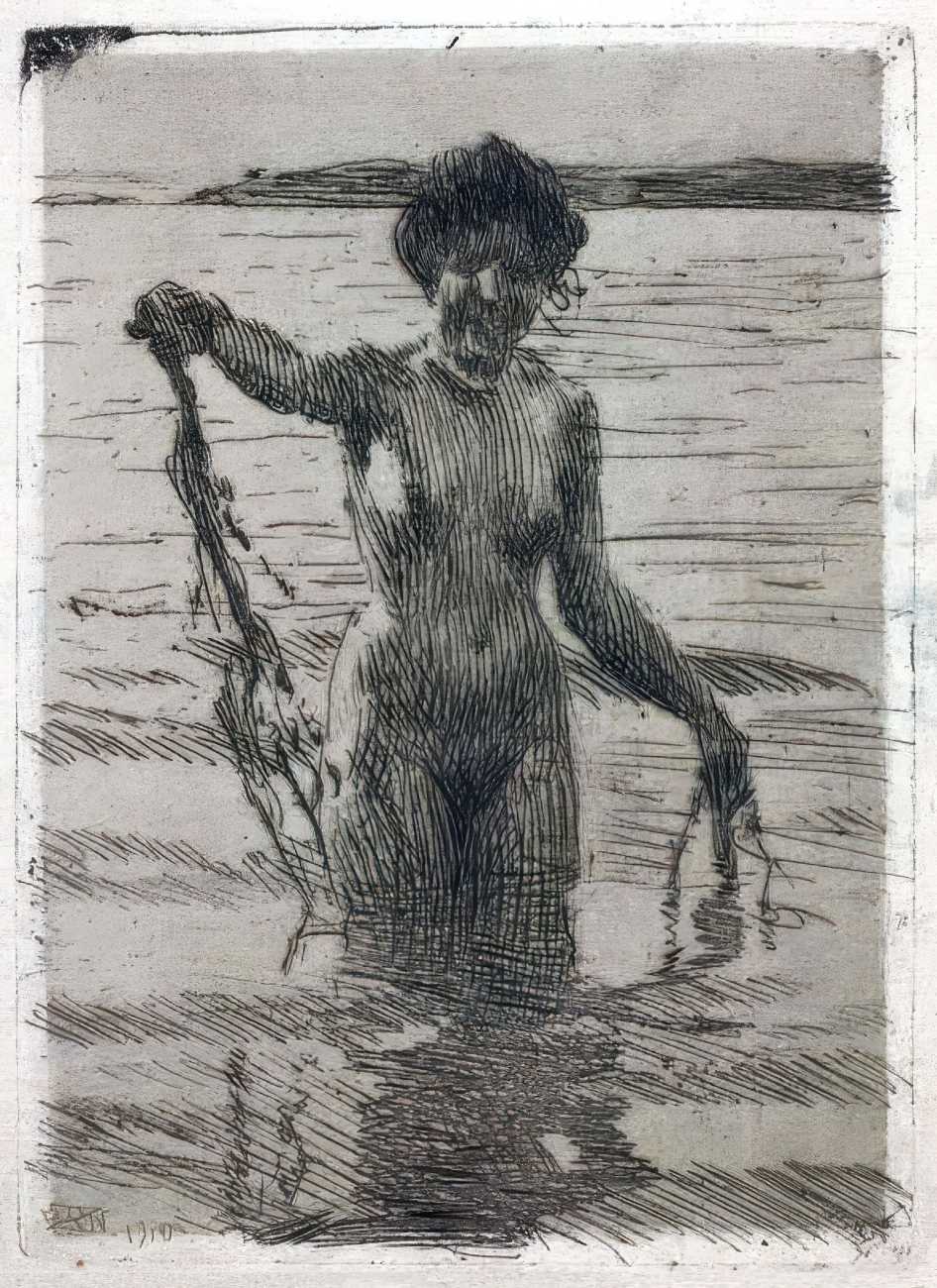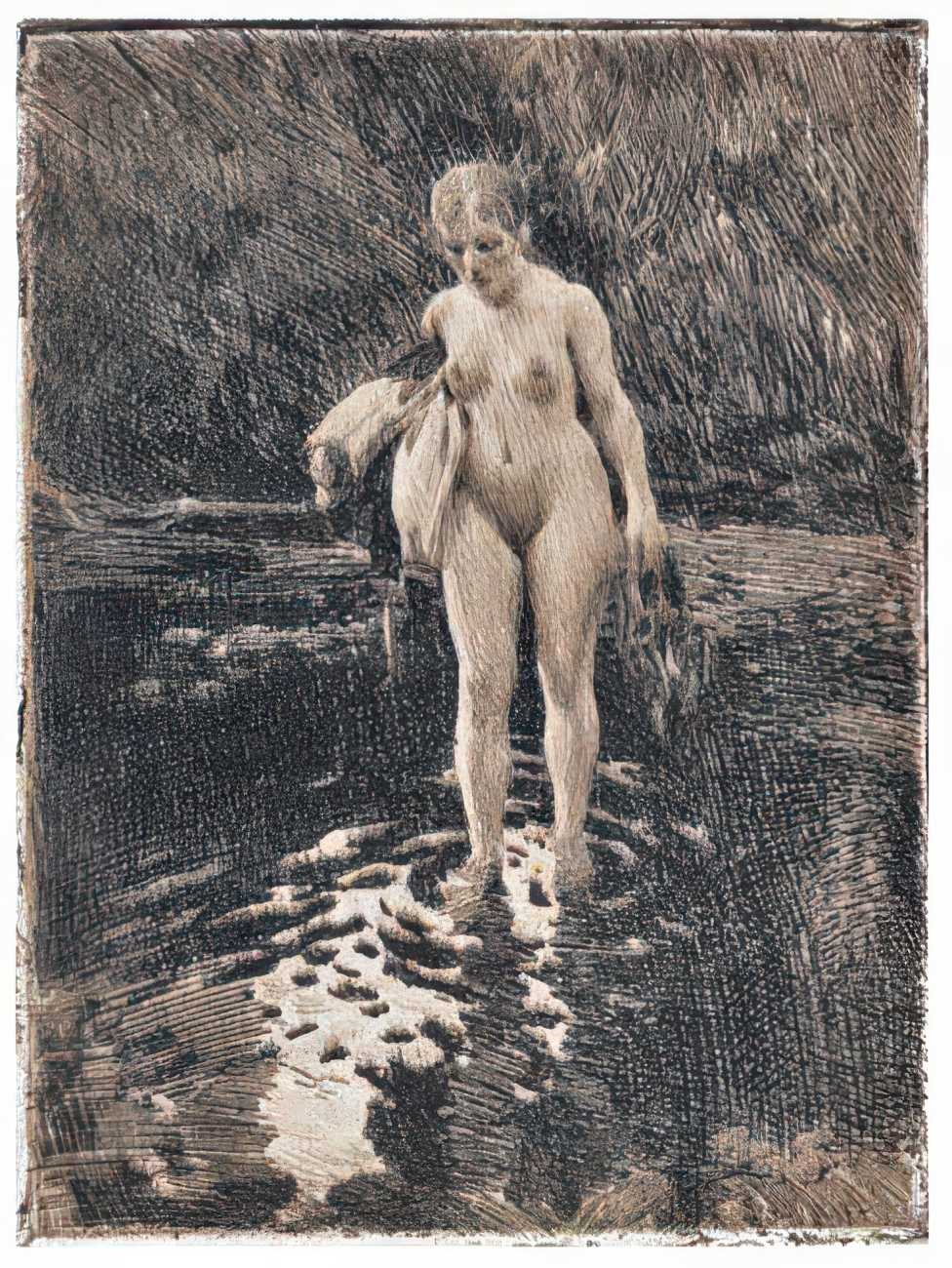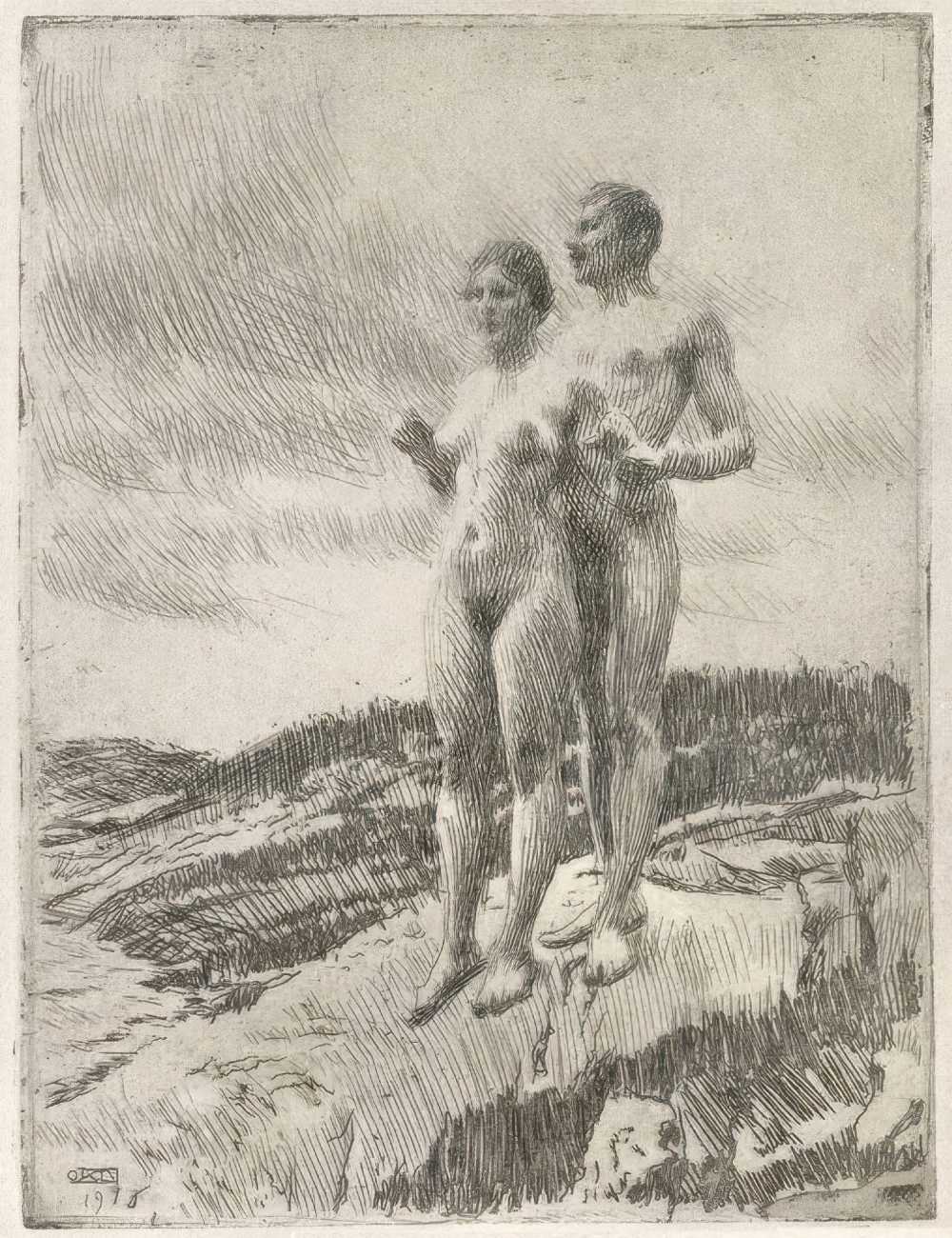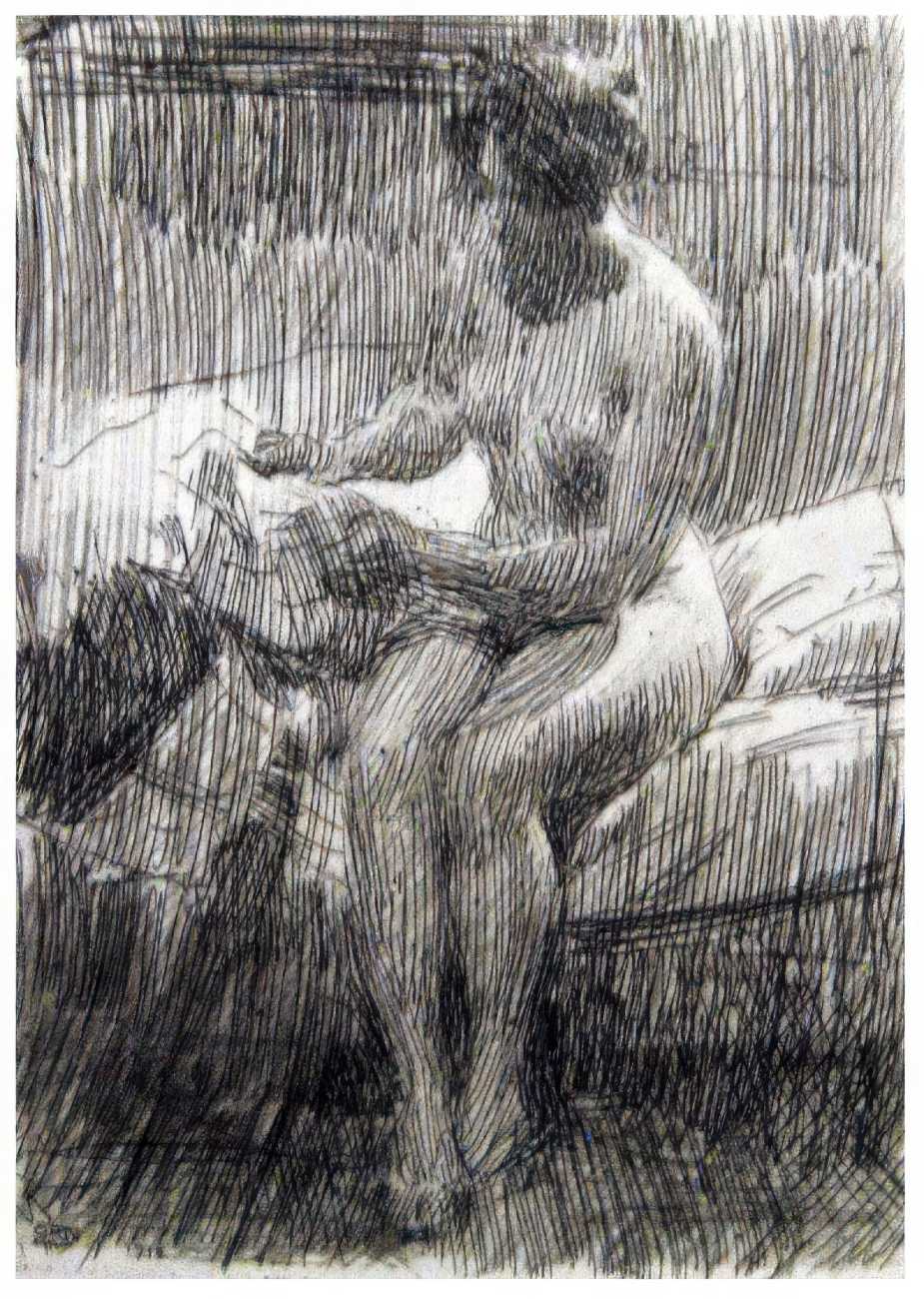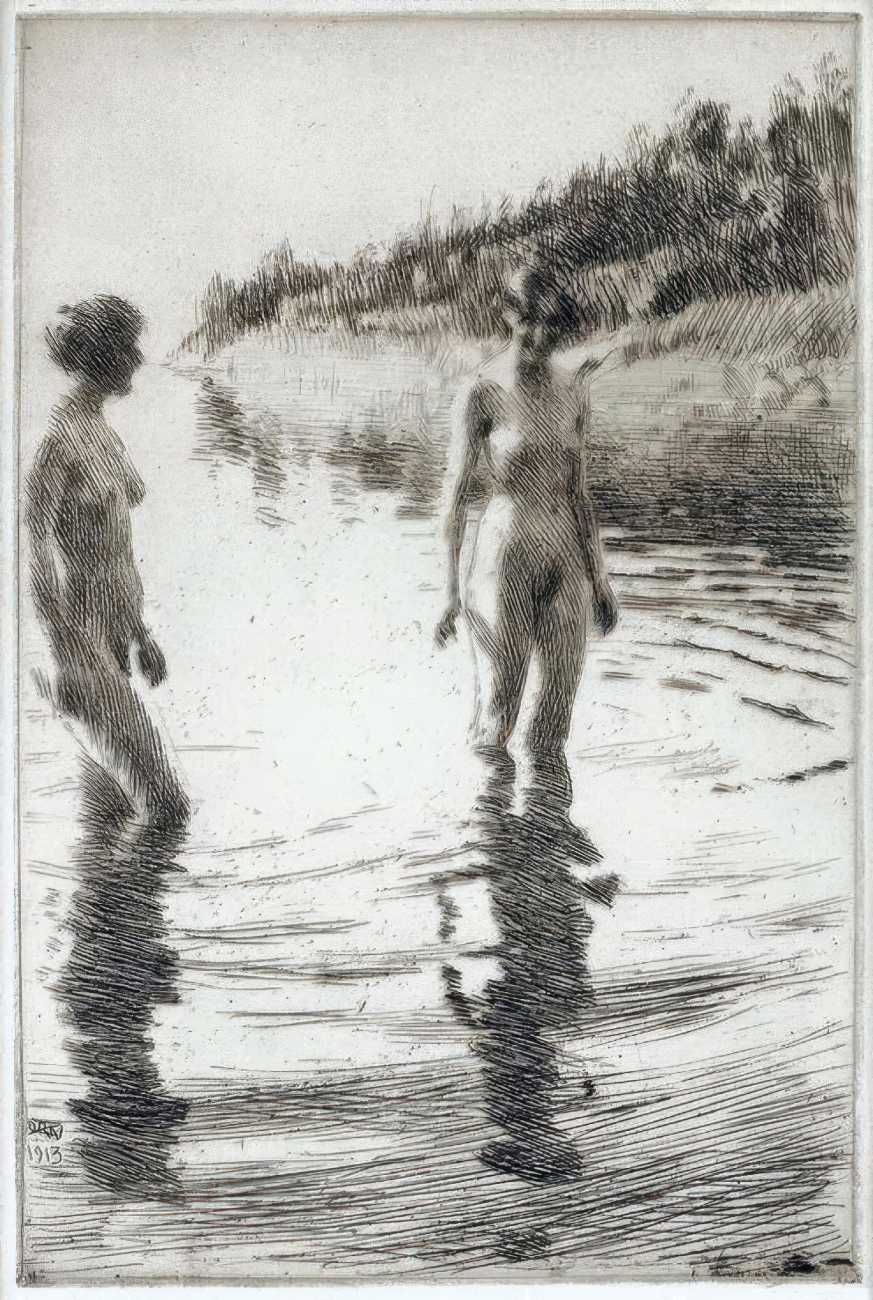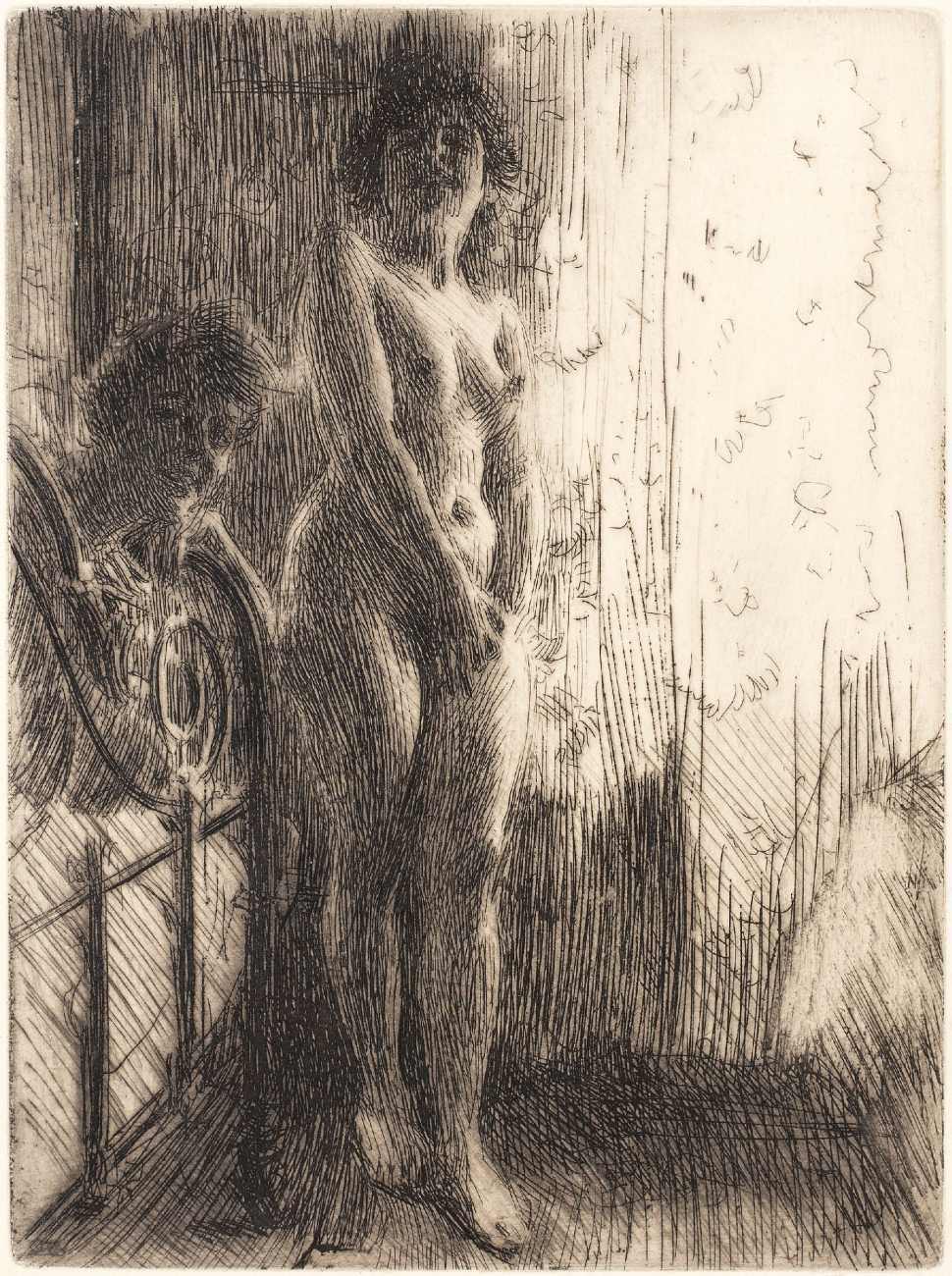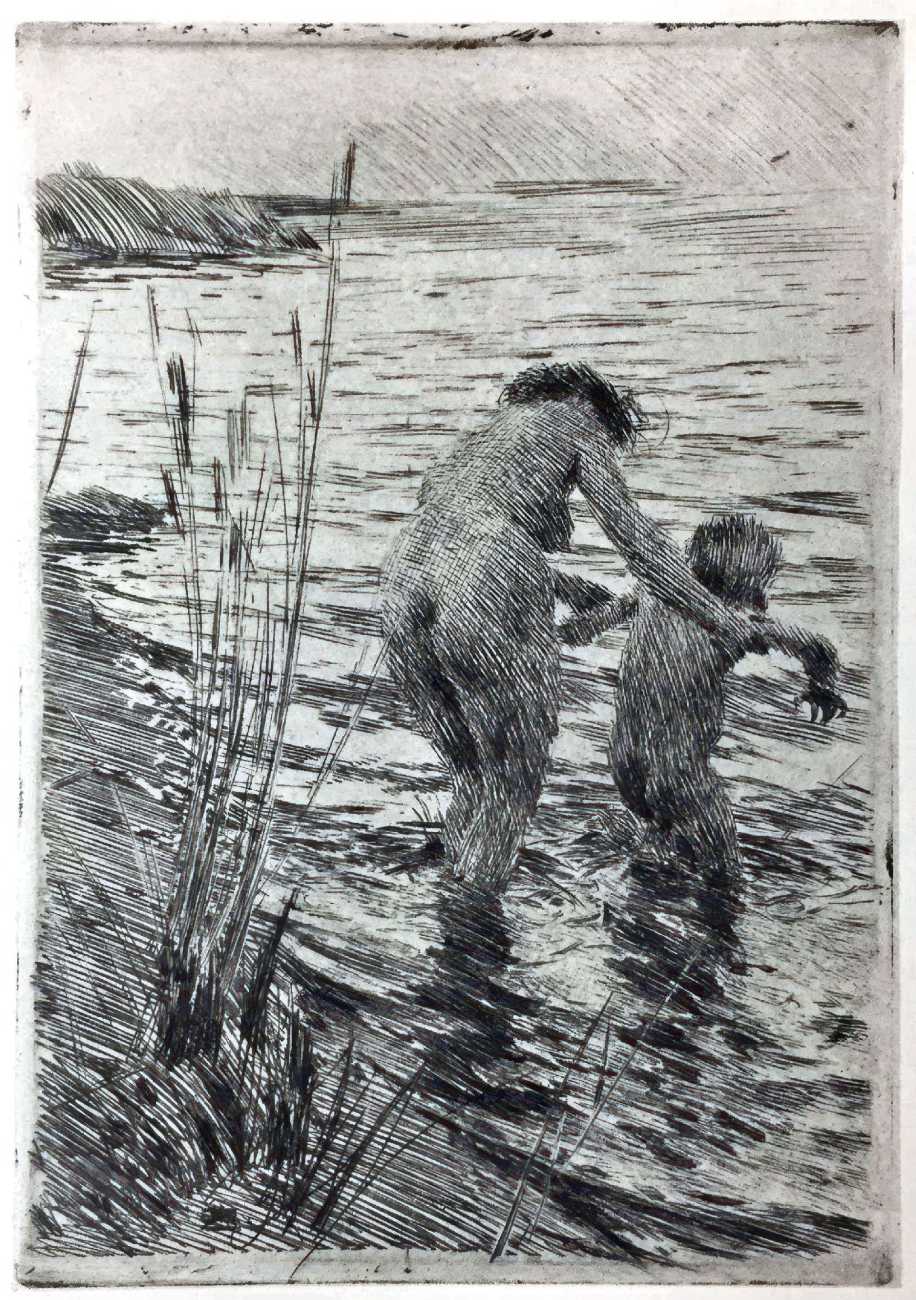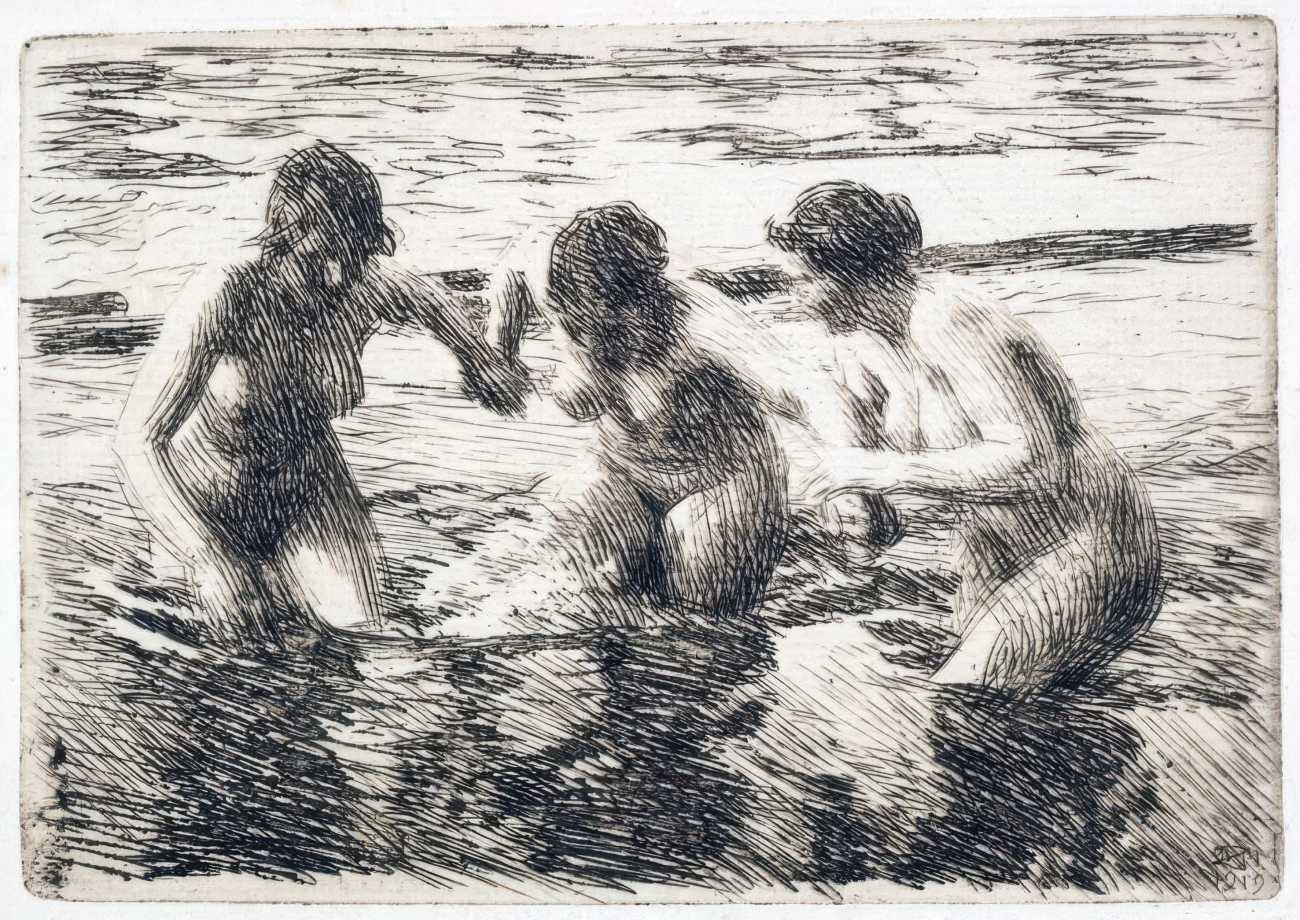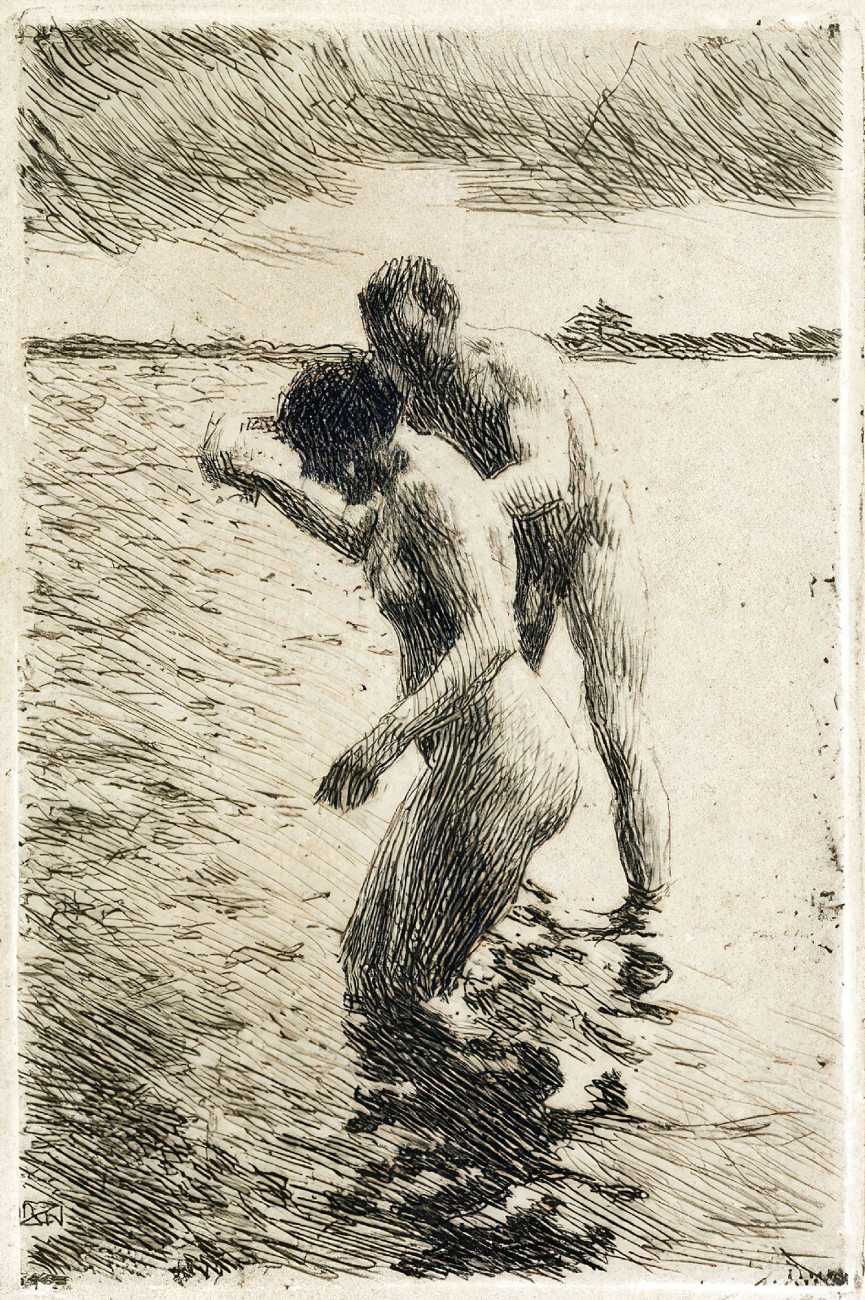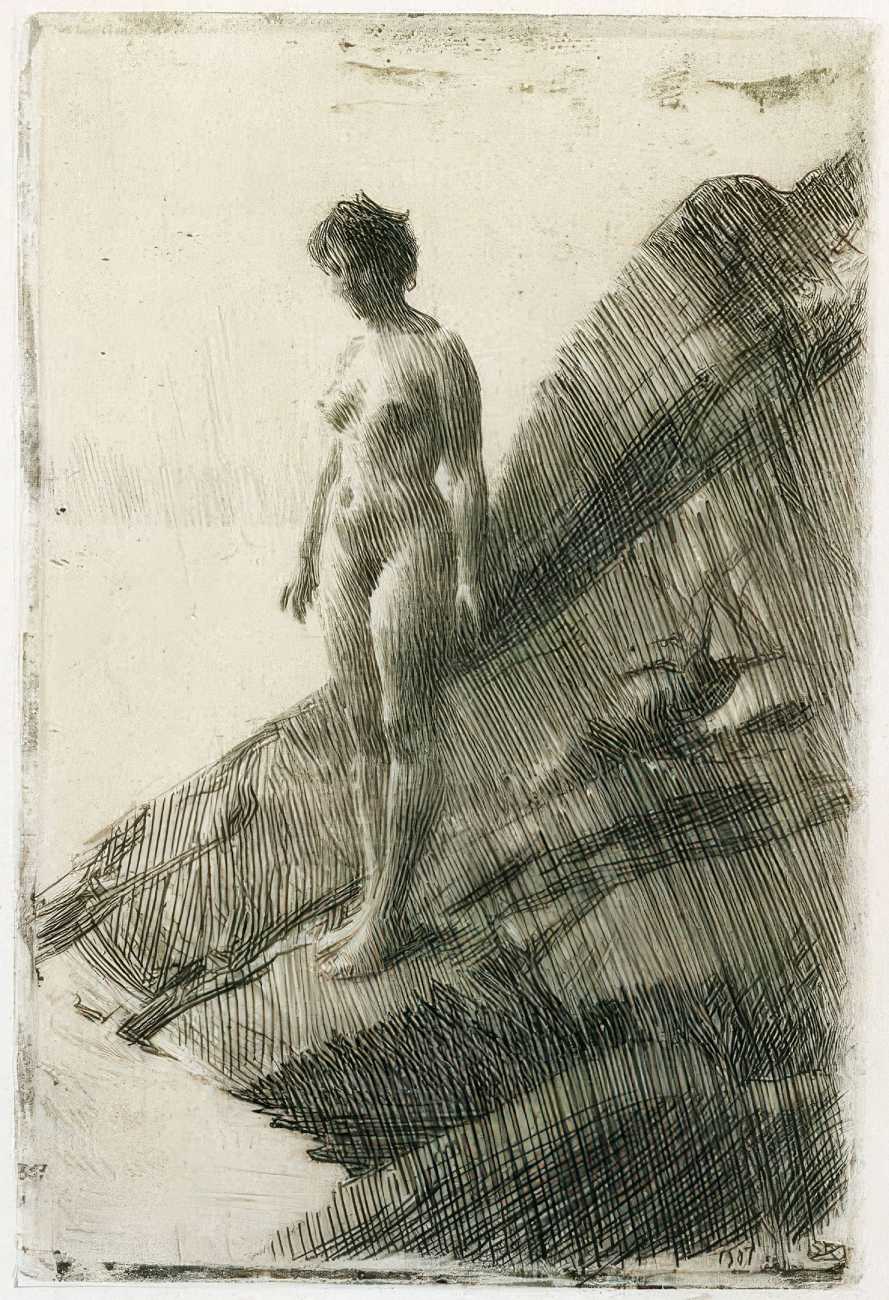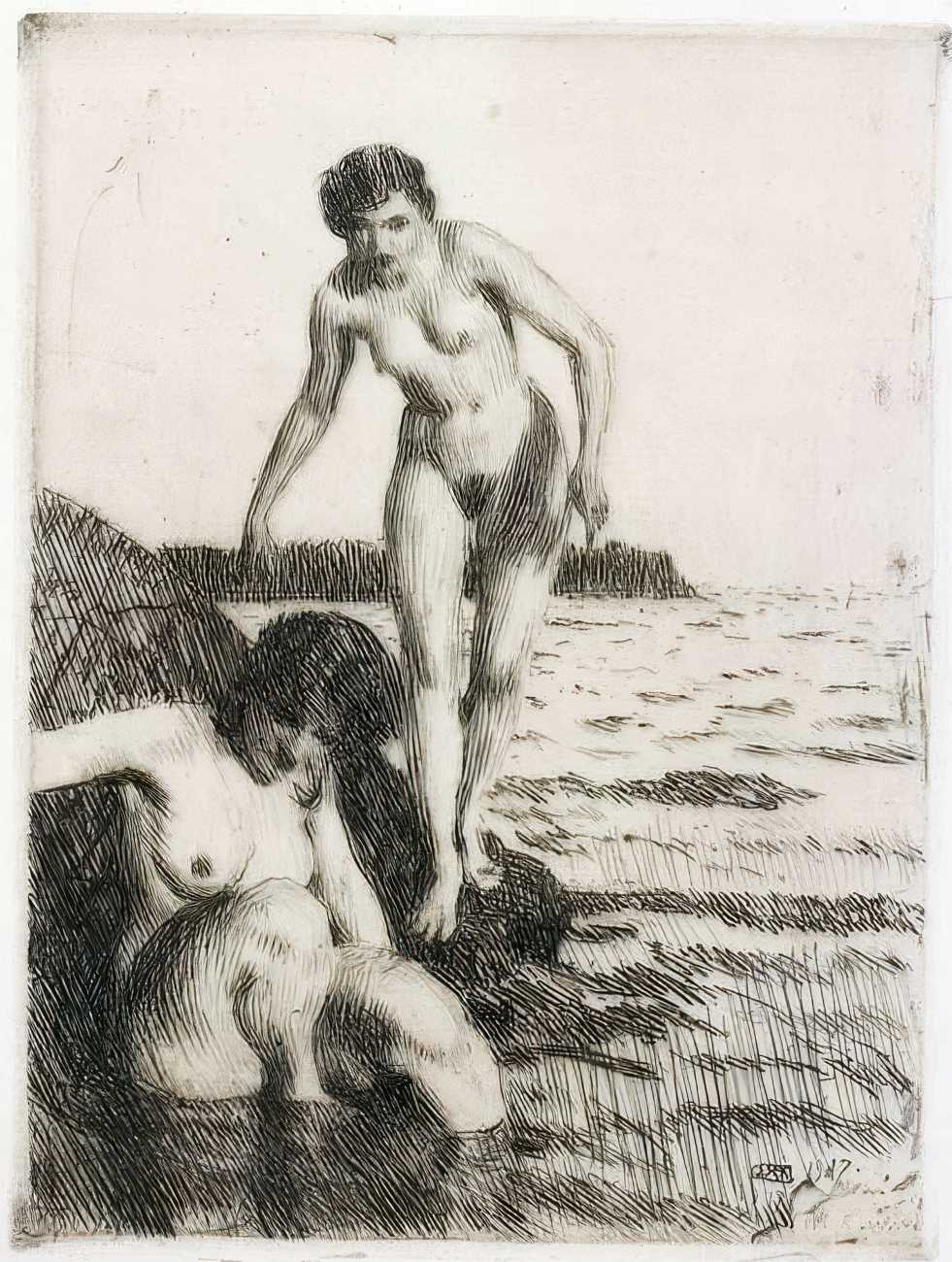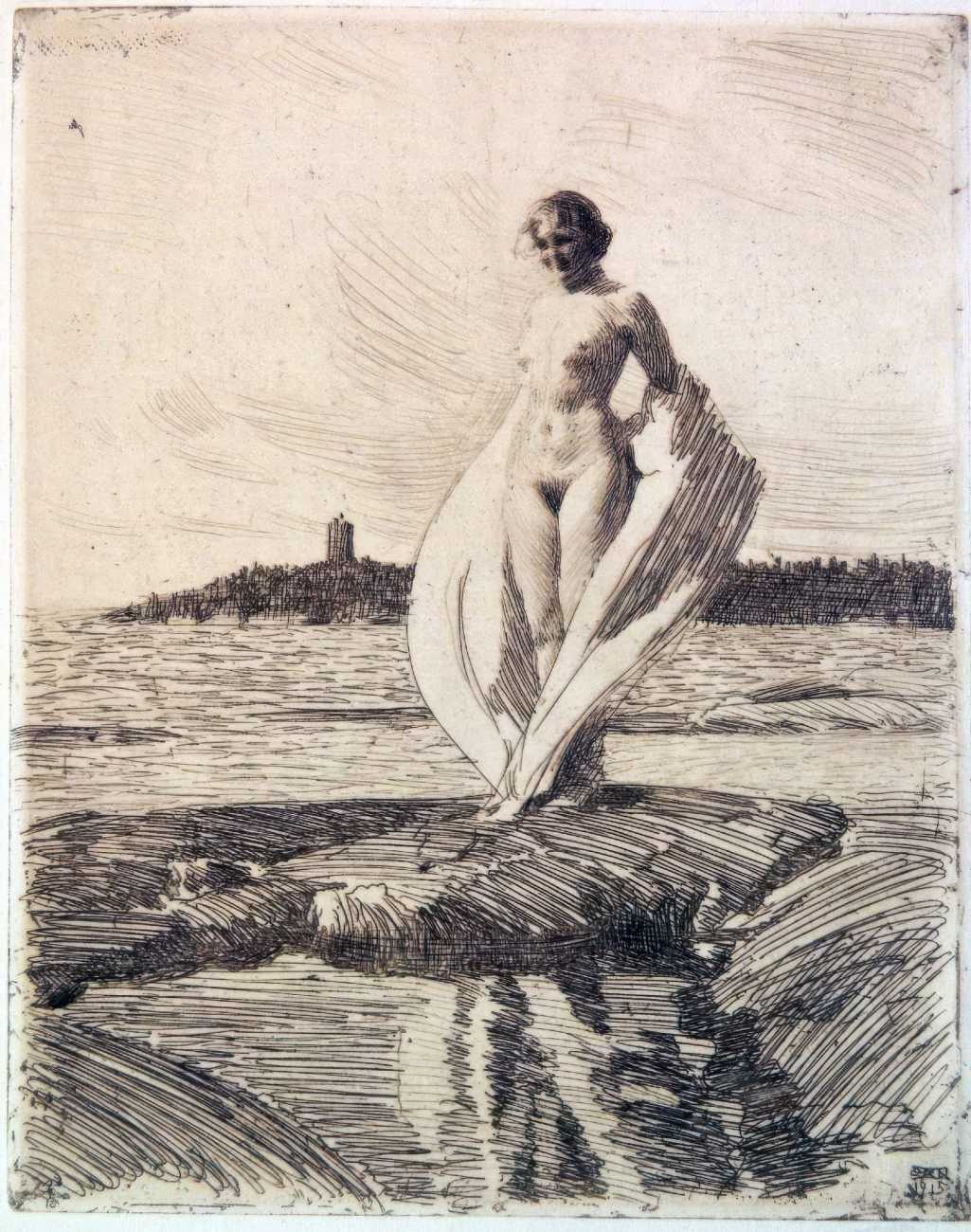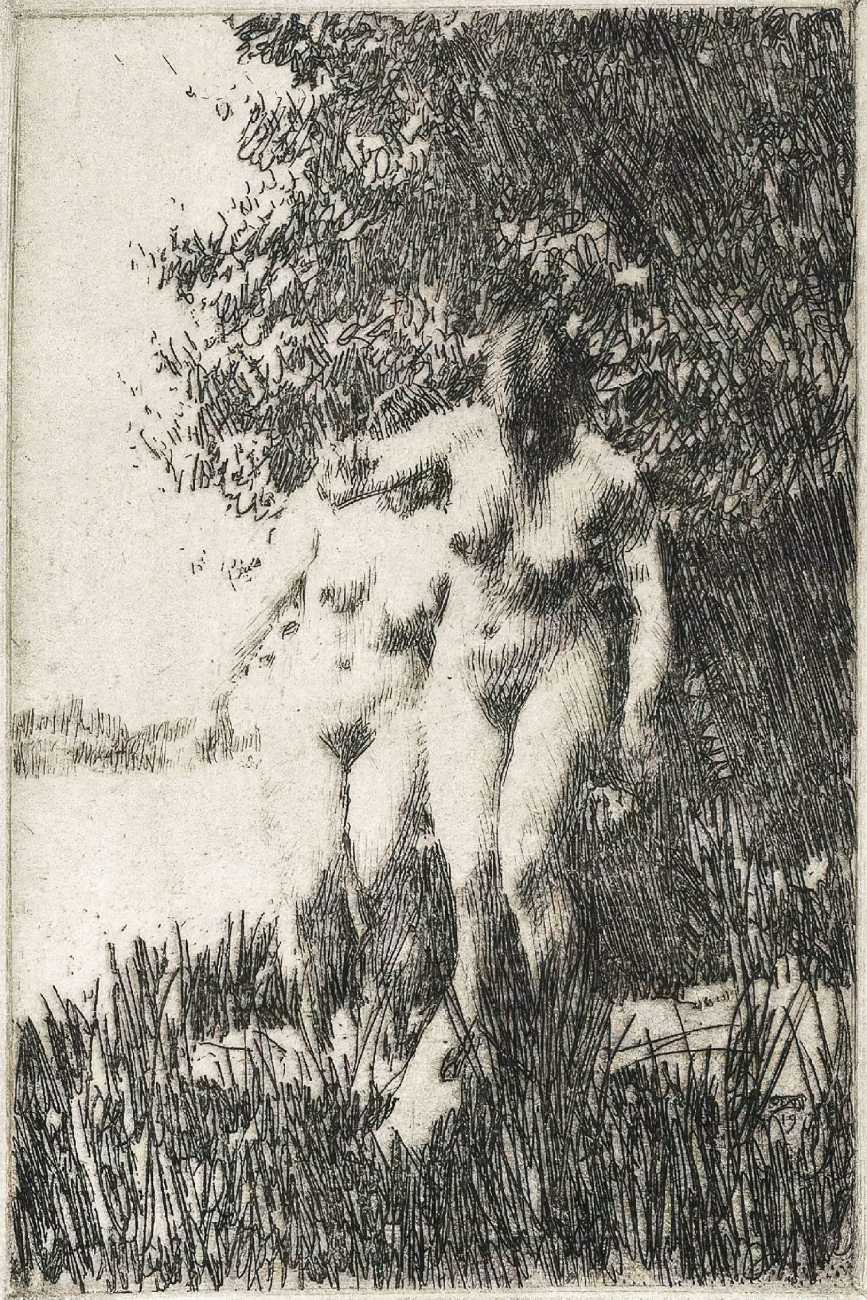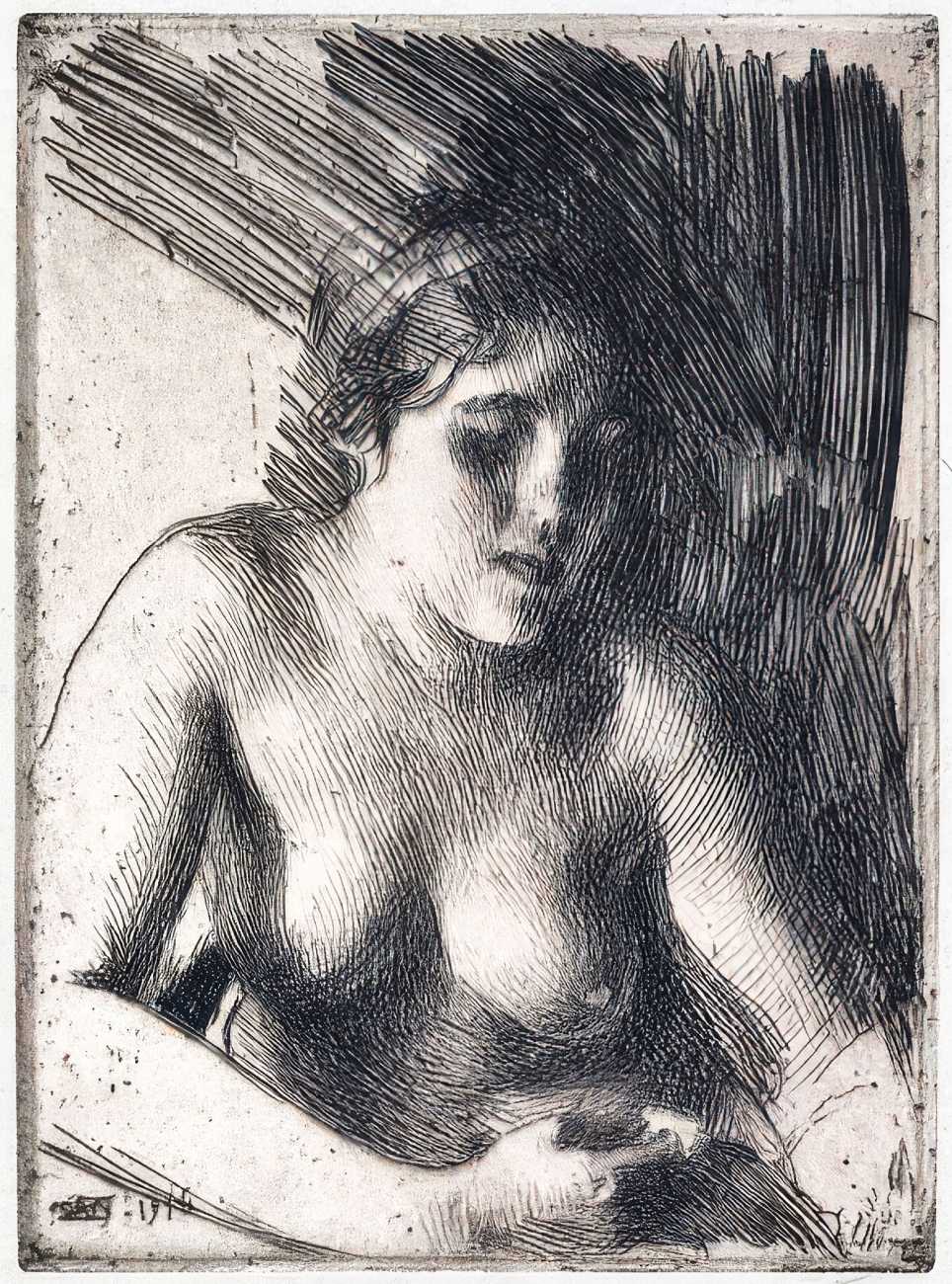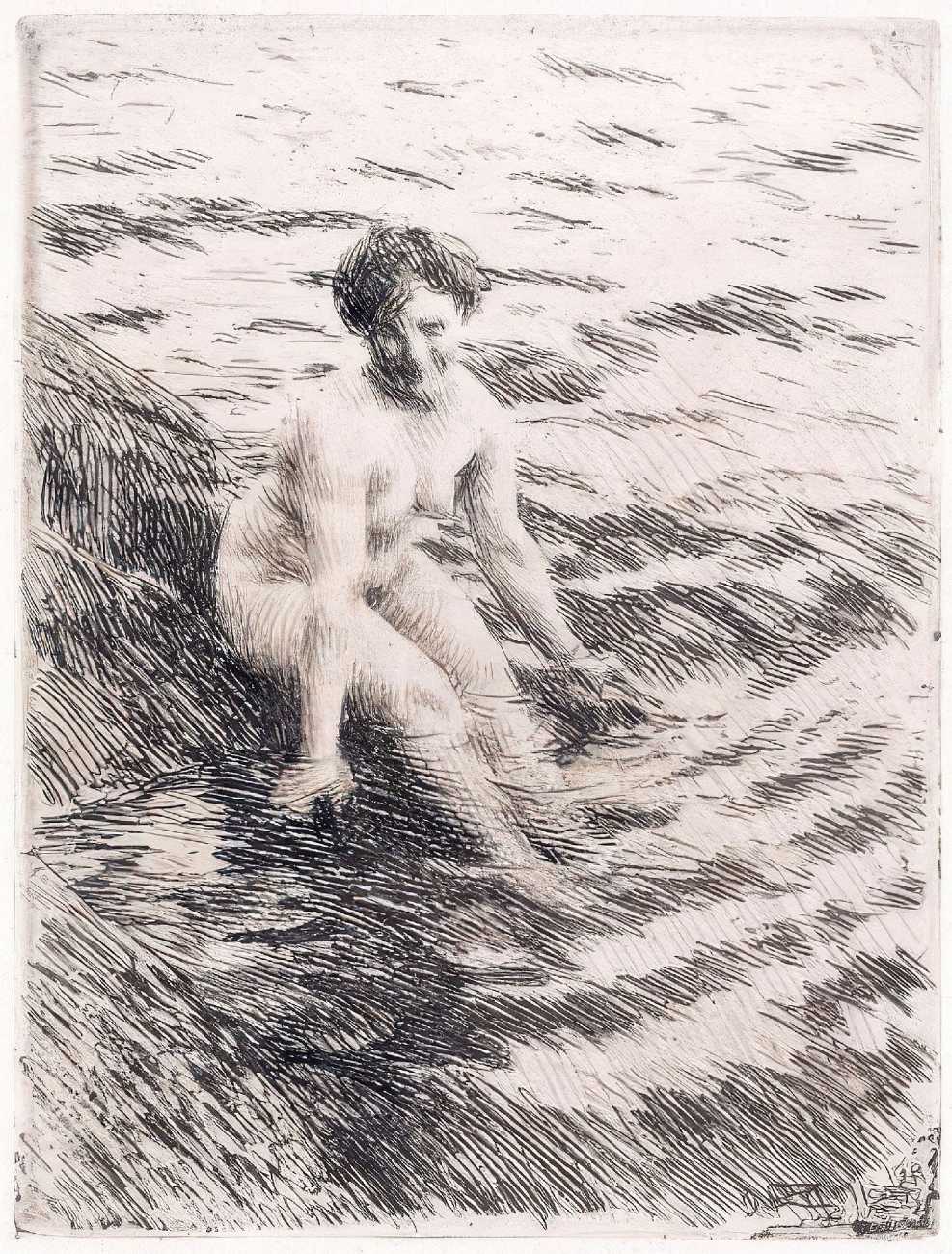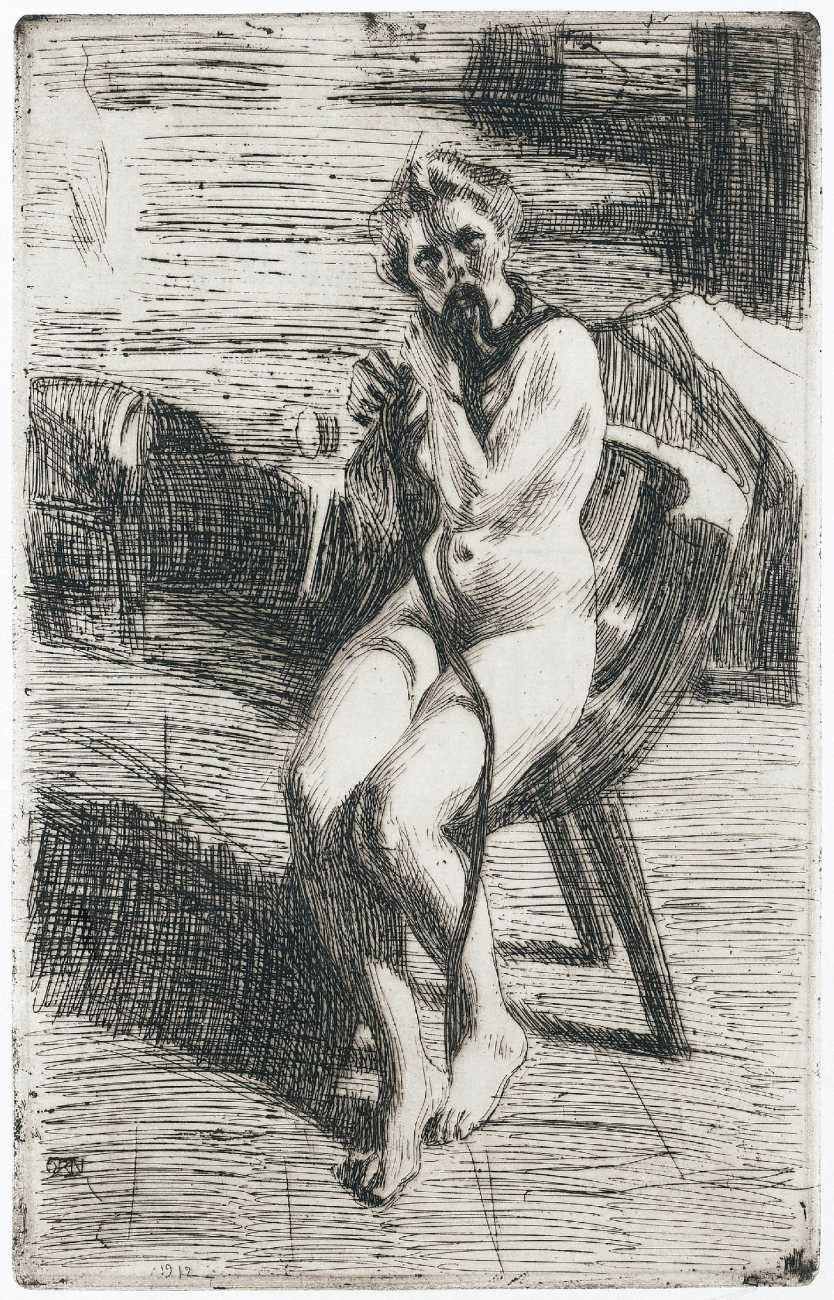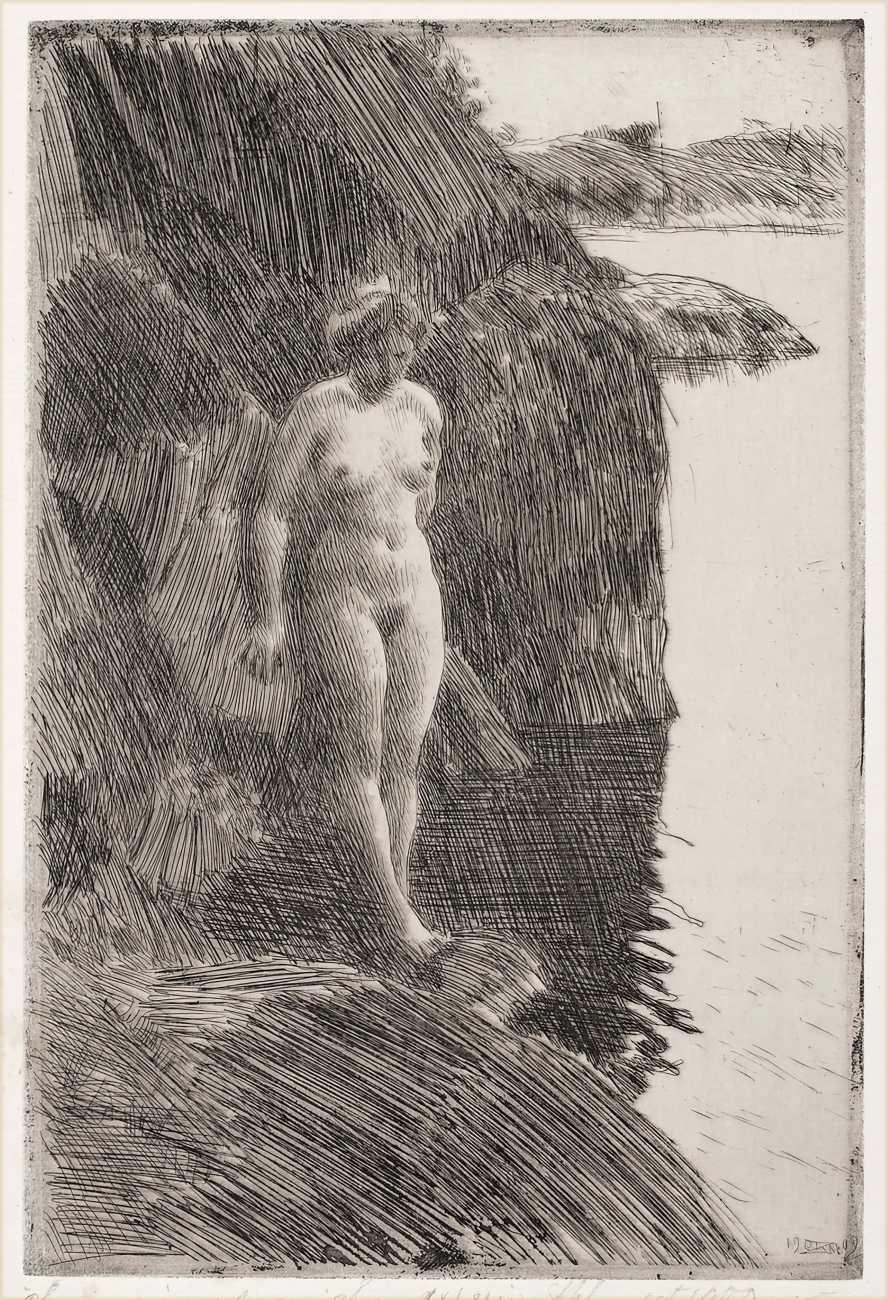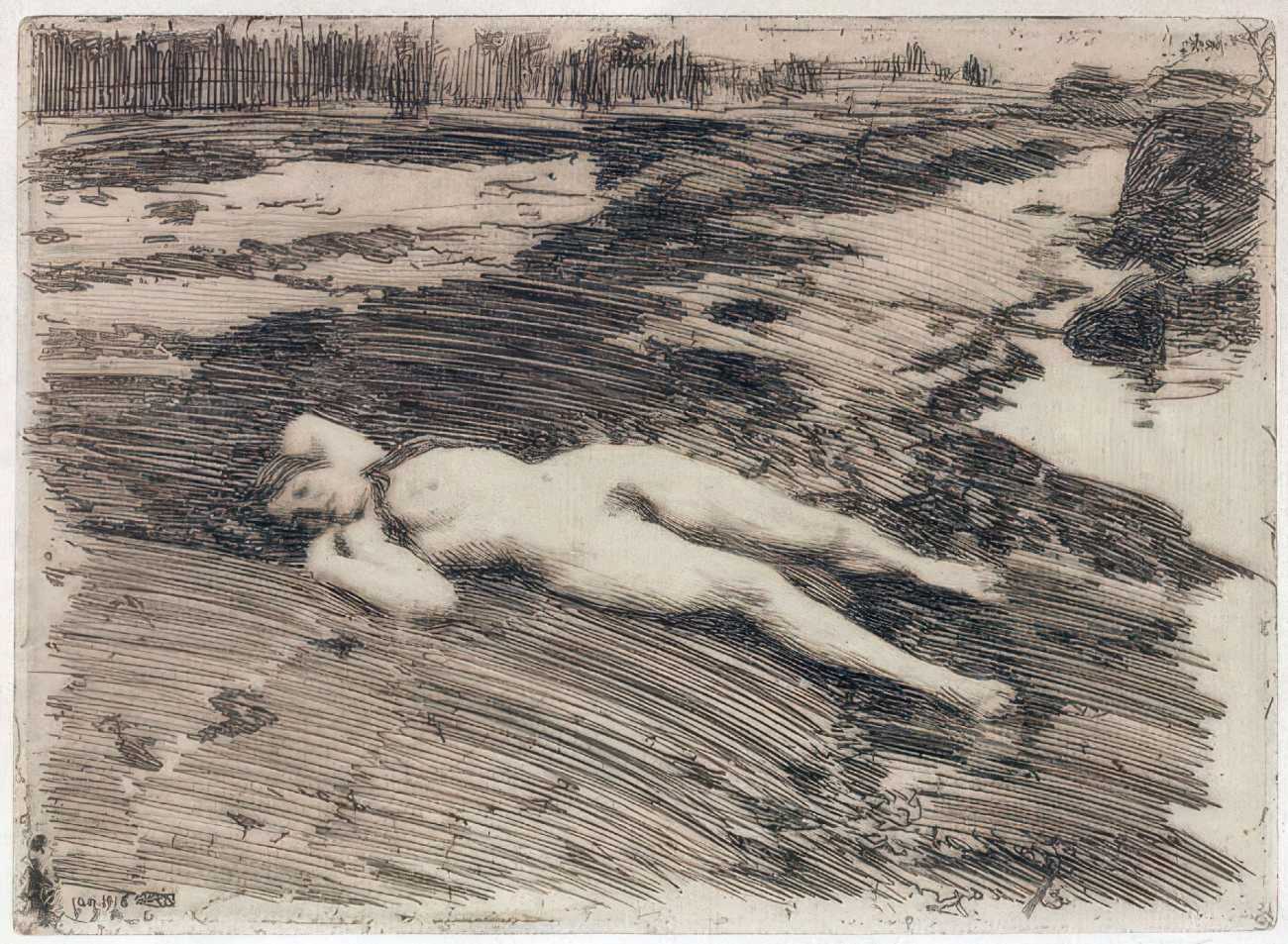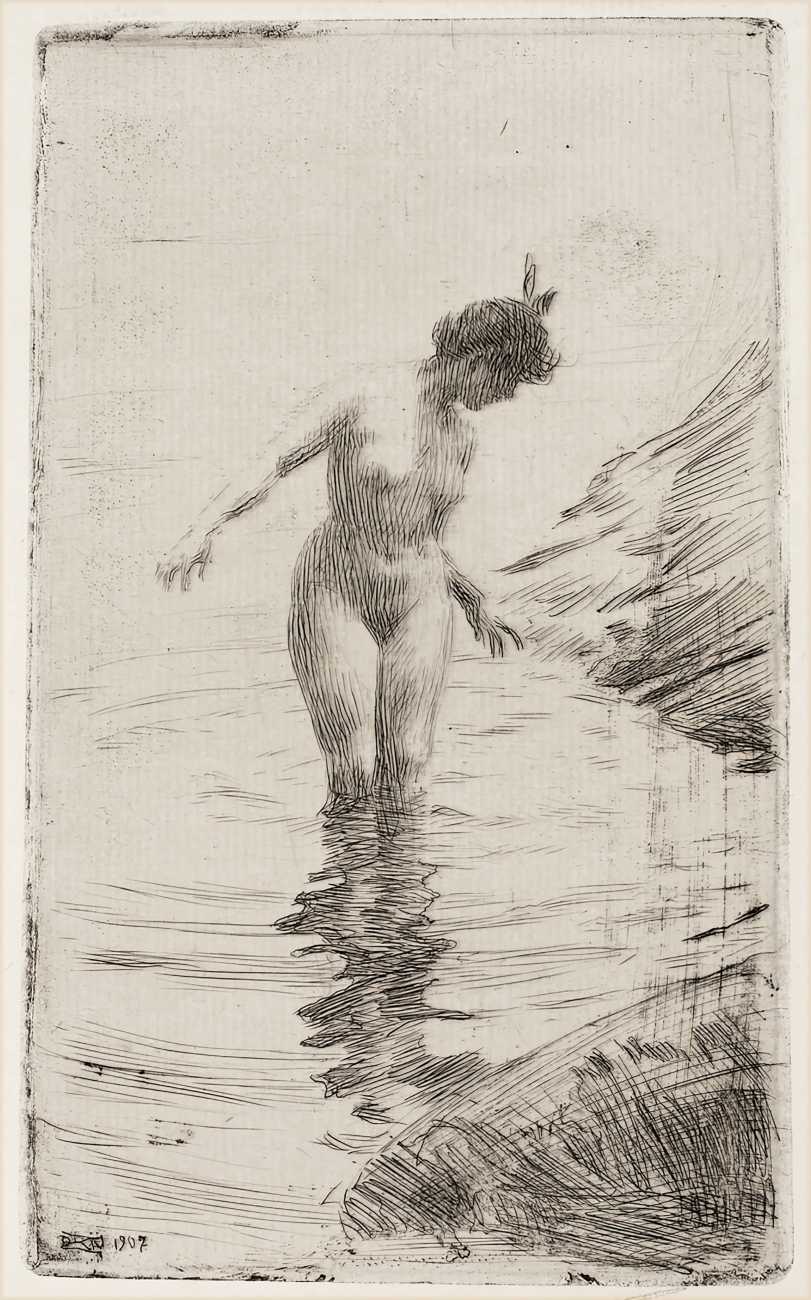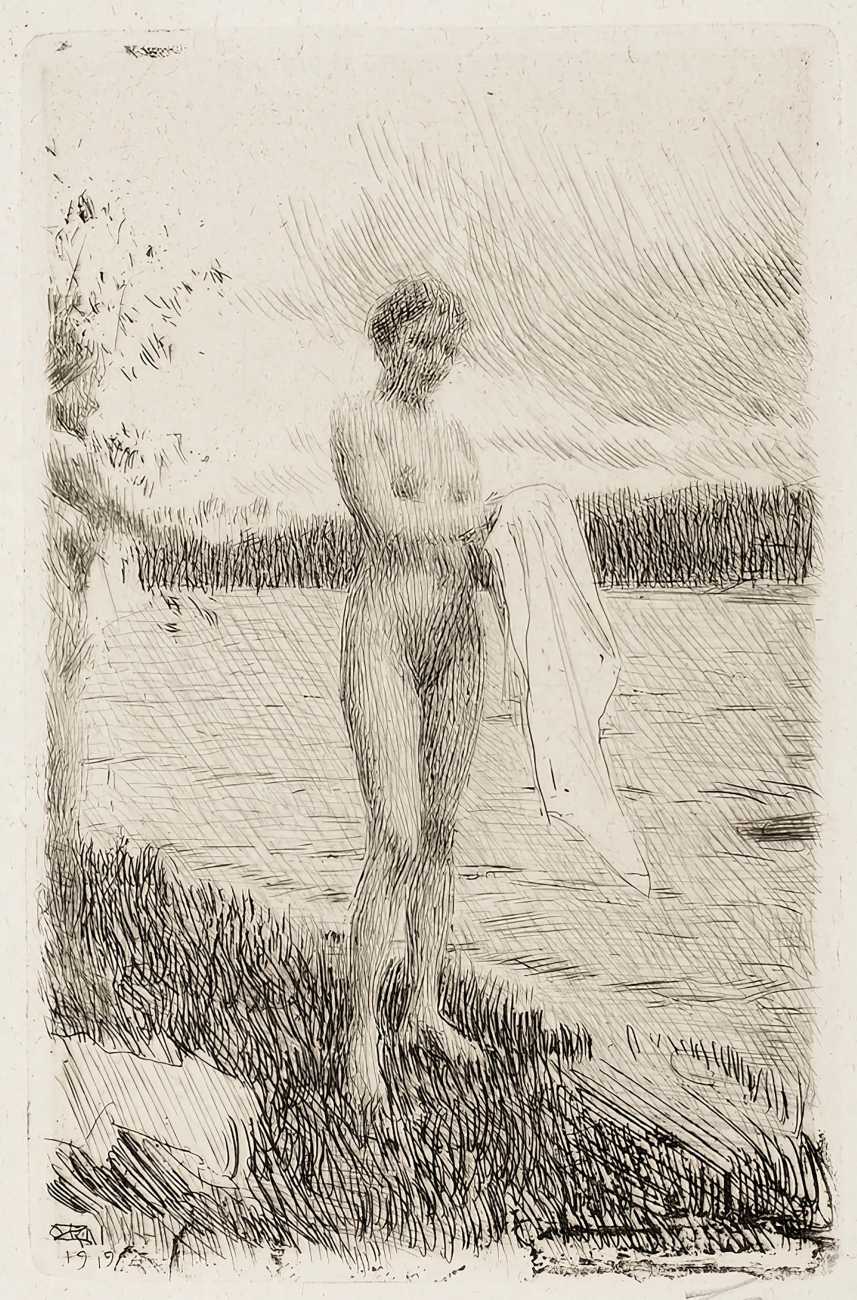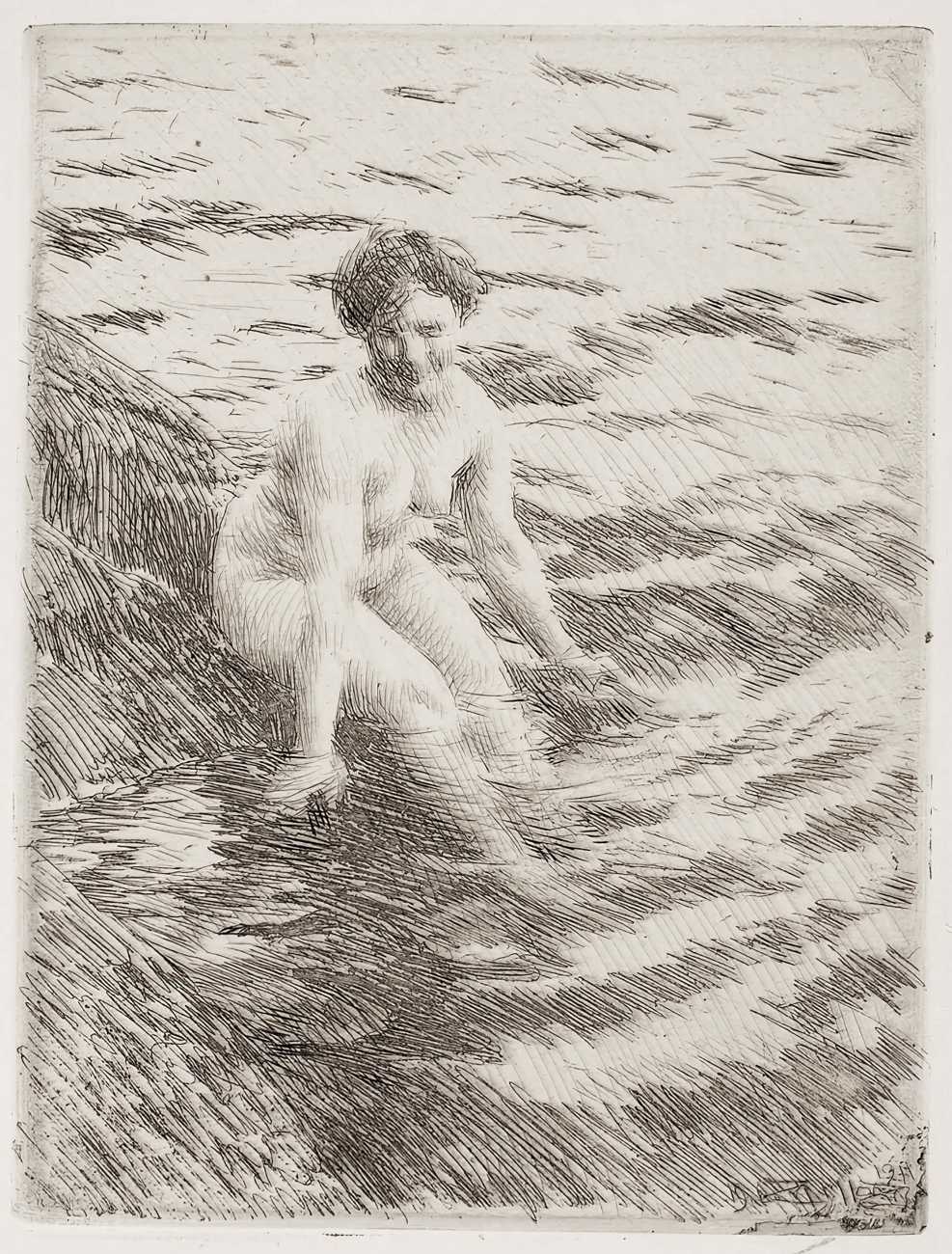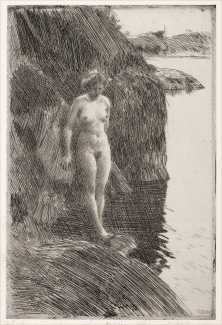
Alongside his paintings, Anders Zorn produced more than 280 etchings, and many of the most striking and revealing are his prints of naked women made from the late 1880s through the 1910s. If the outdoor paintings integrate the nude into landscape, the etchings do something almost opposite: they bring the viewer uncomfortably close. The scale is intimate, the viewpoint low and immediate, the atmosphere often private rather than pastoral.
Technically, Zorn was one of the great virtuosos of etching. He worked directly onto the copper plate with a needle, often rapidly and with little preliminary drawing. The line varies from hair-thin scratches to deep grooves, while areas of tone are built from dense networks of short strokes and drypoint burr. He used plate tone – leaving a thin film of ink on the surface – to create darkness around the figure, allowing the body to emerge as light. Flesh is not so much outlined as discovered. Shoulders, breasts, thighs and stomach appear out of shadow.
Some scenes show women bathing, drying themselves, or adjusting their hair, but others place them indoors, seated on beds, crouching by a washbasin, or turning toward the observer. As with Zorn’s paintings, the poses are not formally composed; the women seem to be caught in the middle of an action, not to have noticed the artist/viewer.
Though created more than a century ago, Zorn’s etchings seem remarkably modern. Rather than idealising the female body, Zorn records weight, posture, momentary gesture, the uneasy boundary between artistic study and private gaze. In late nineteenth-century art, few printmakers confronted that dynamic so frankly or with such technical brilliance.