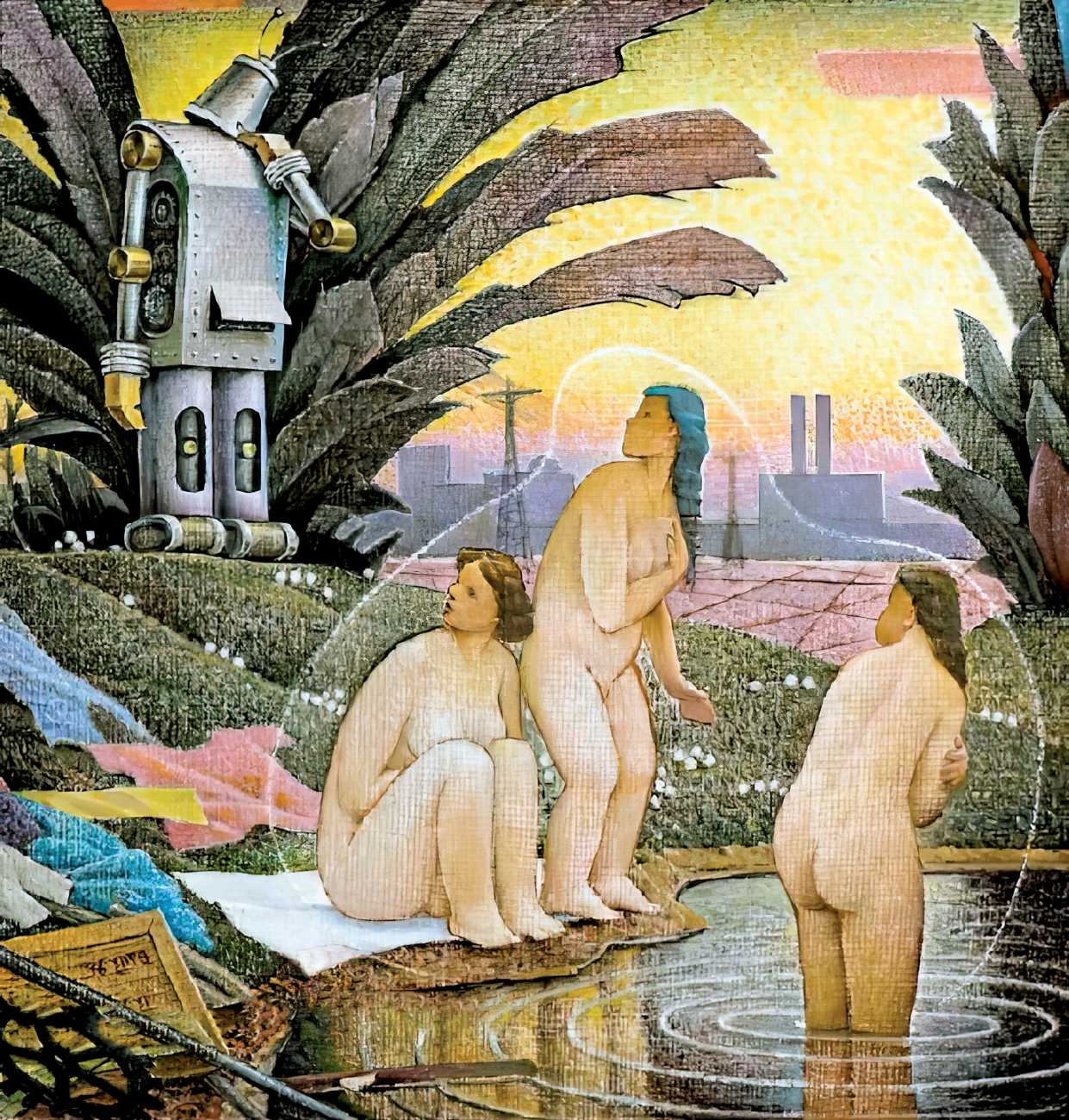
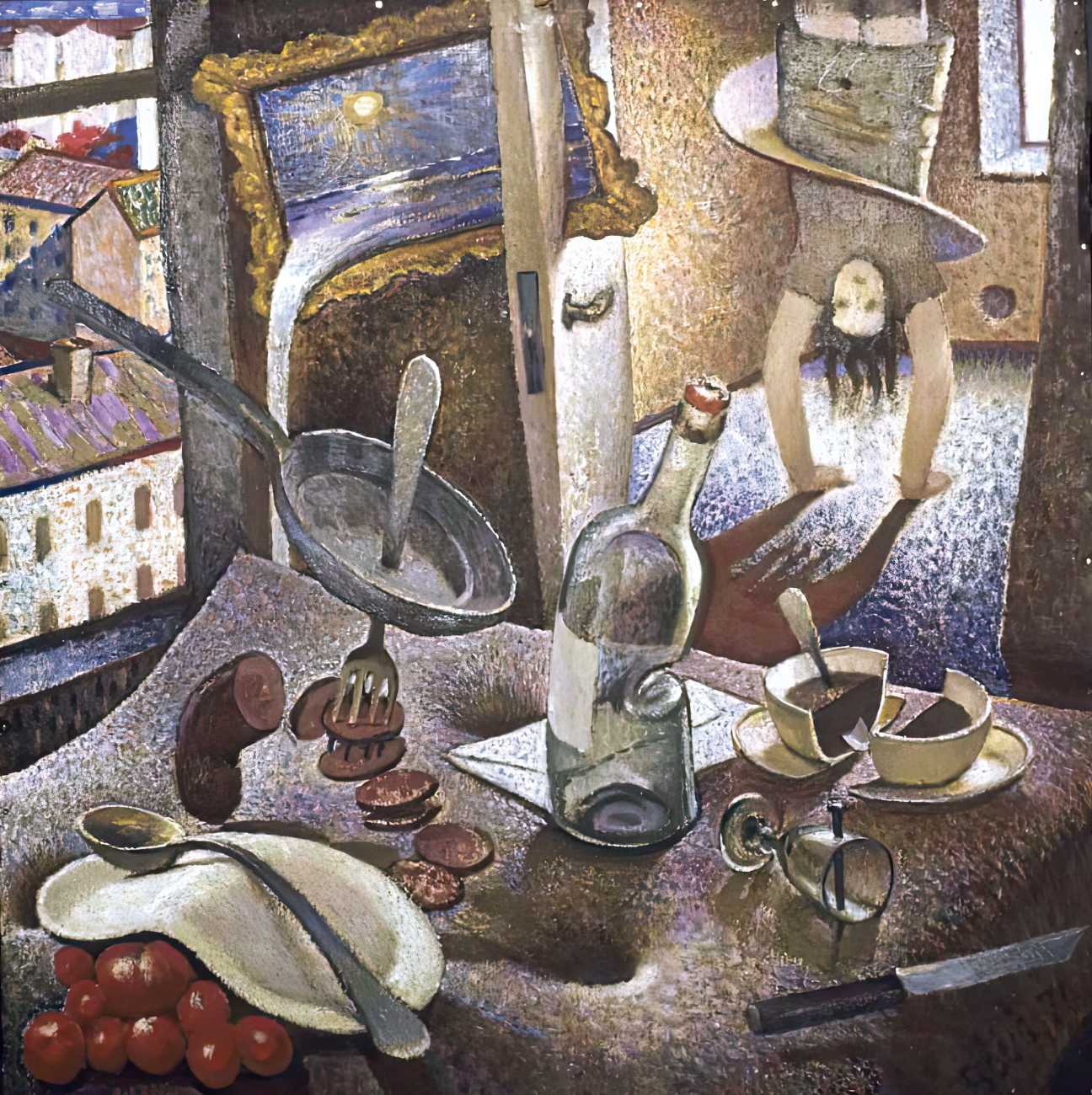
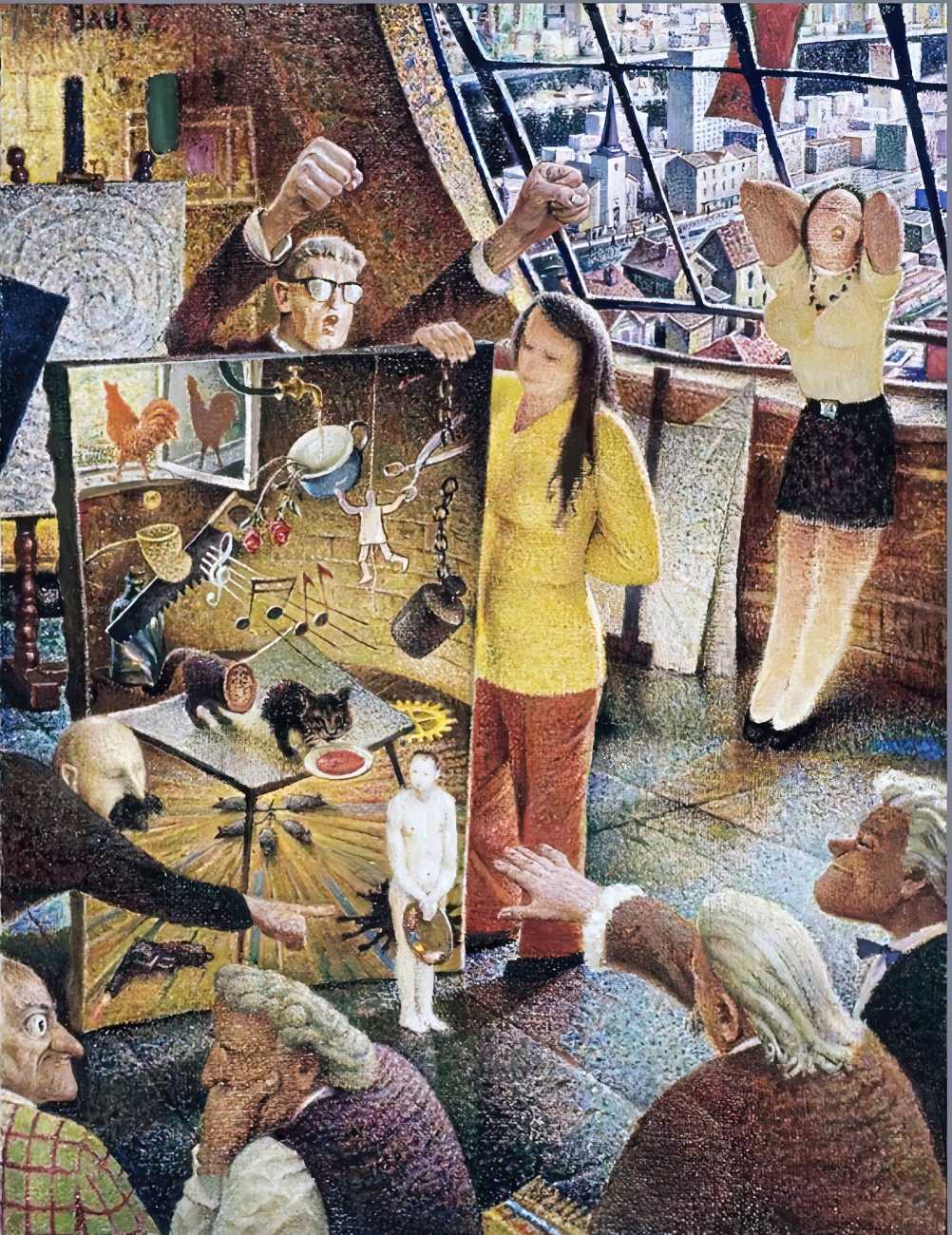
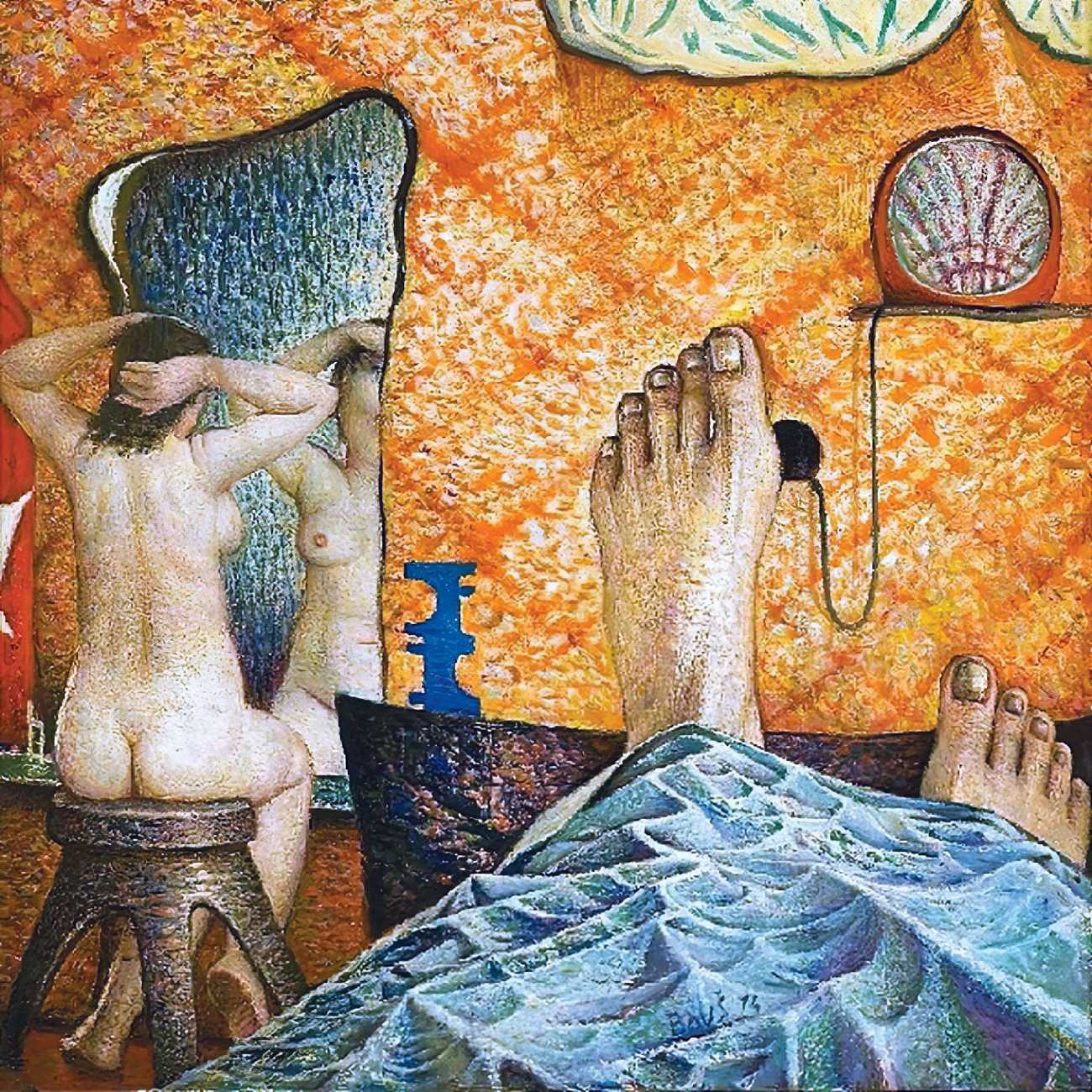
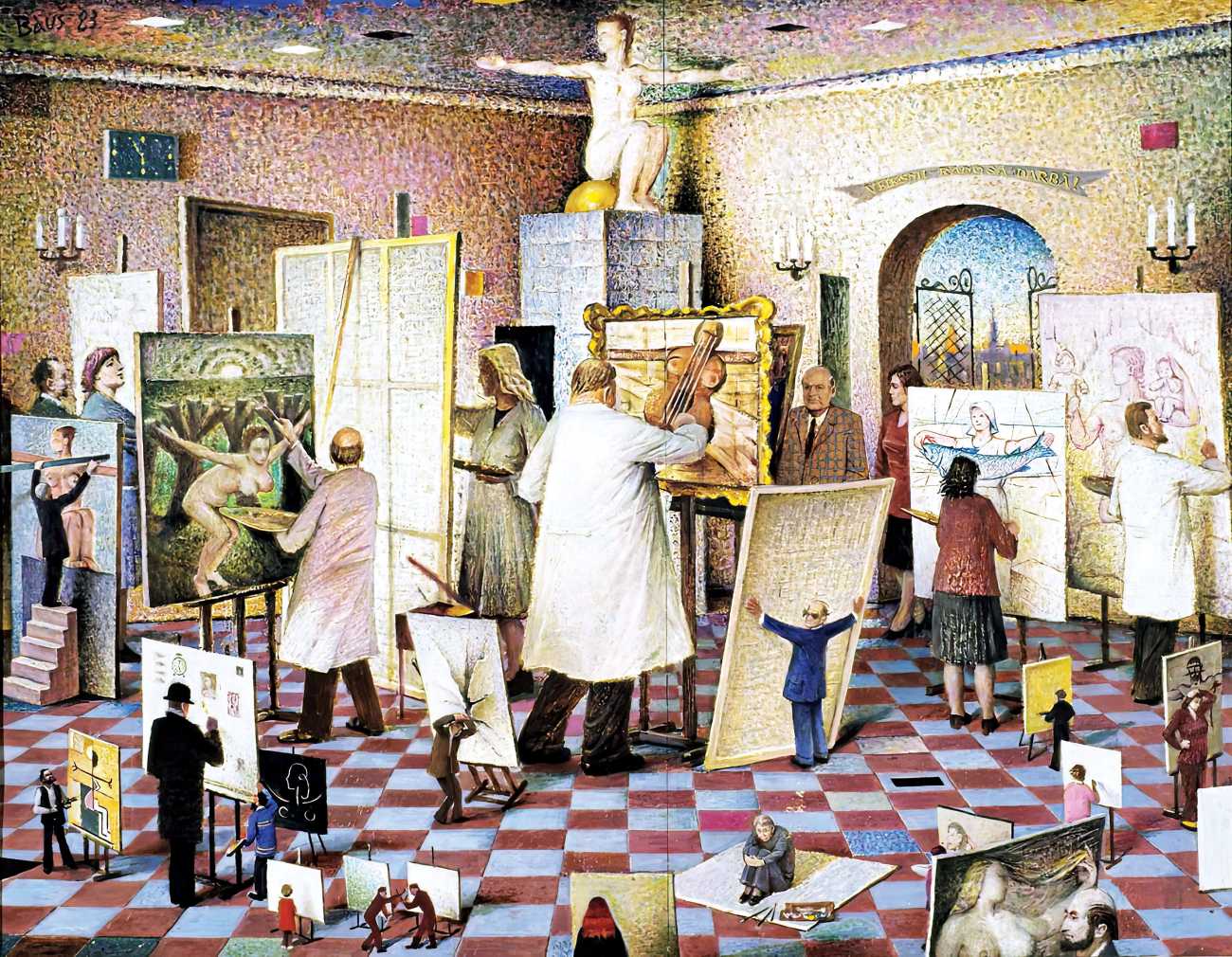
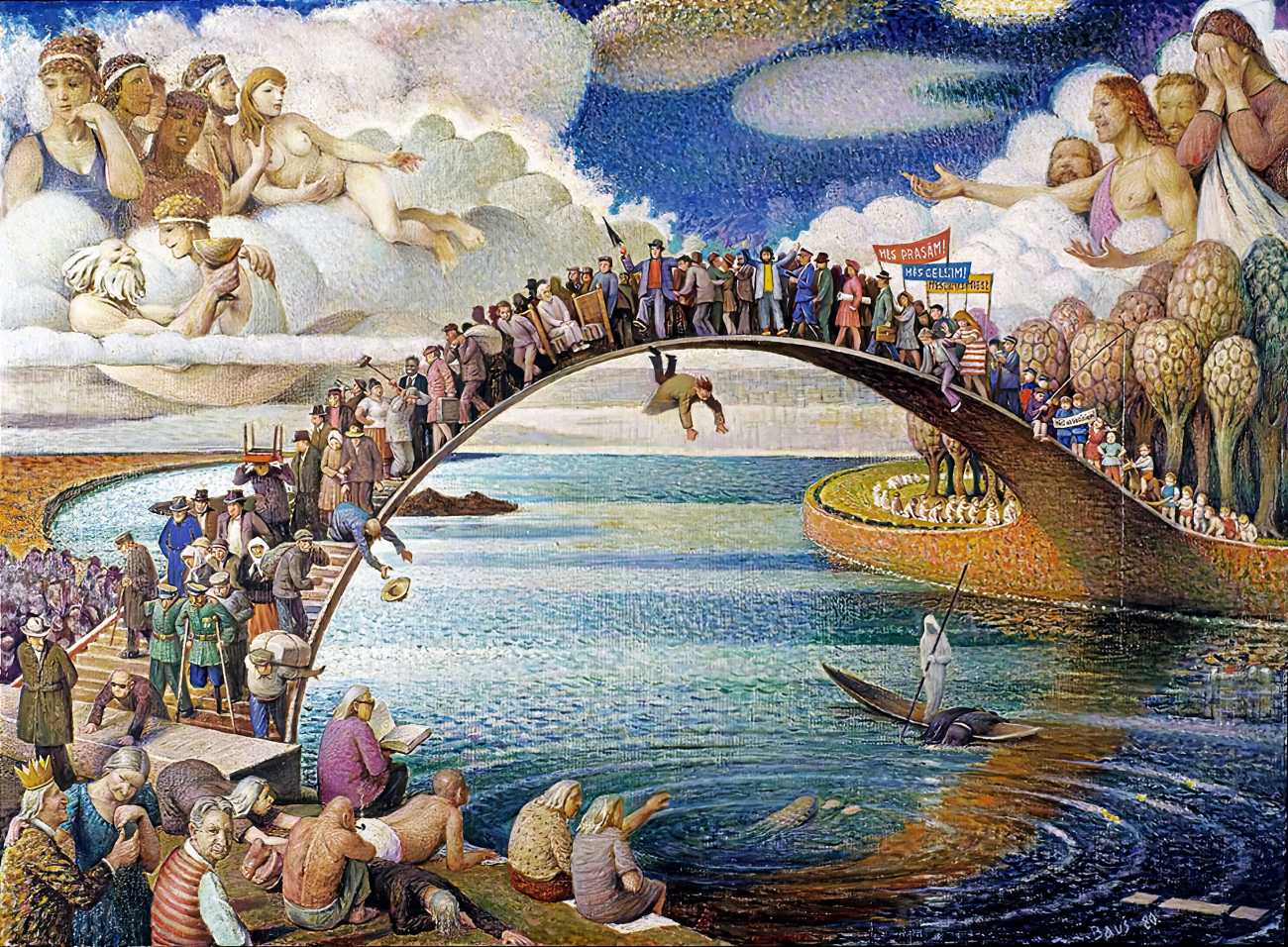
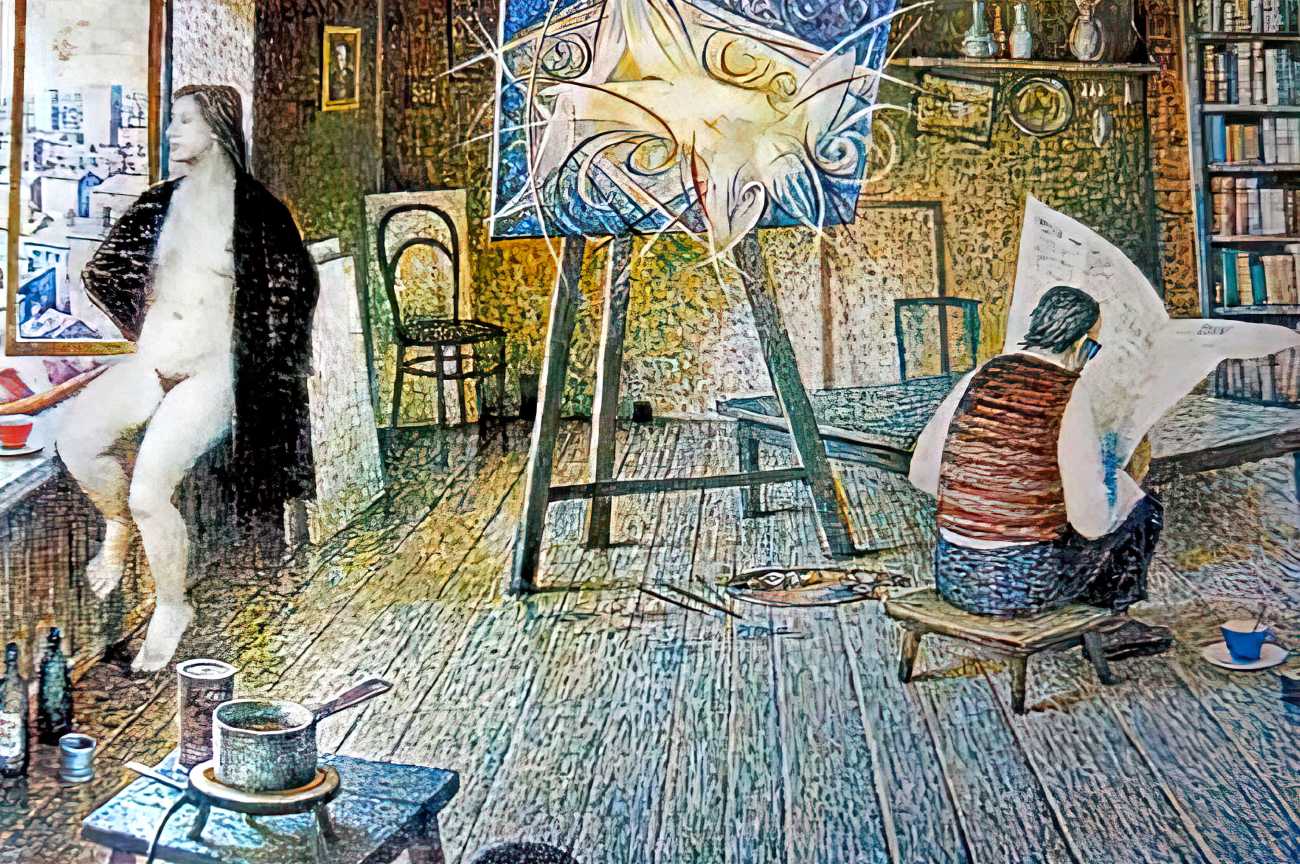
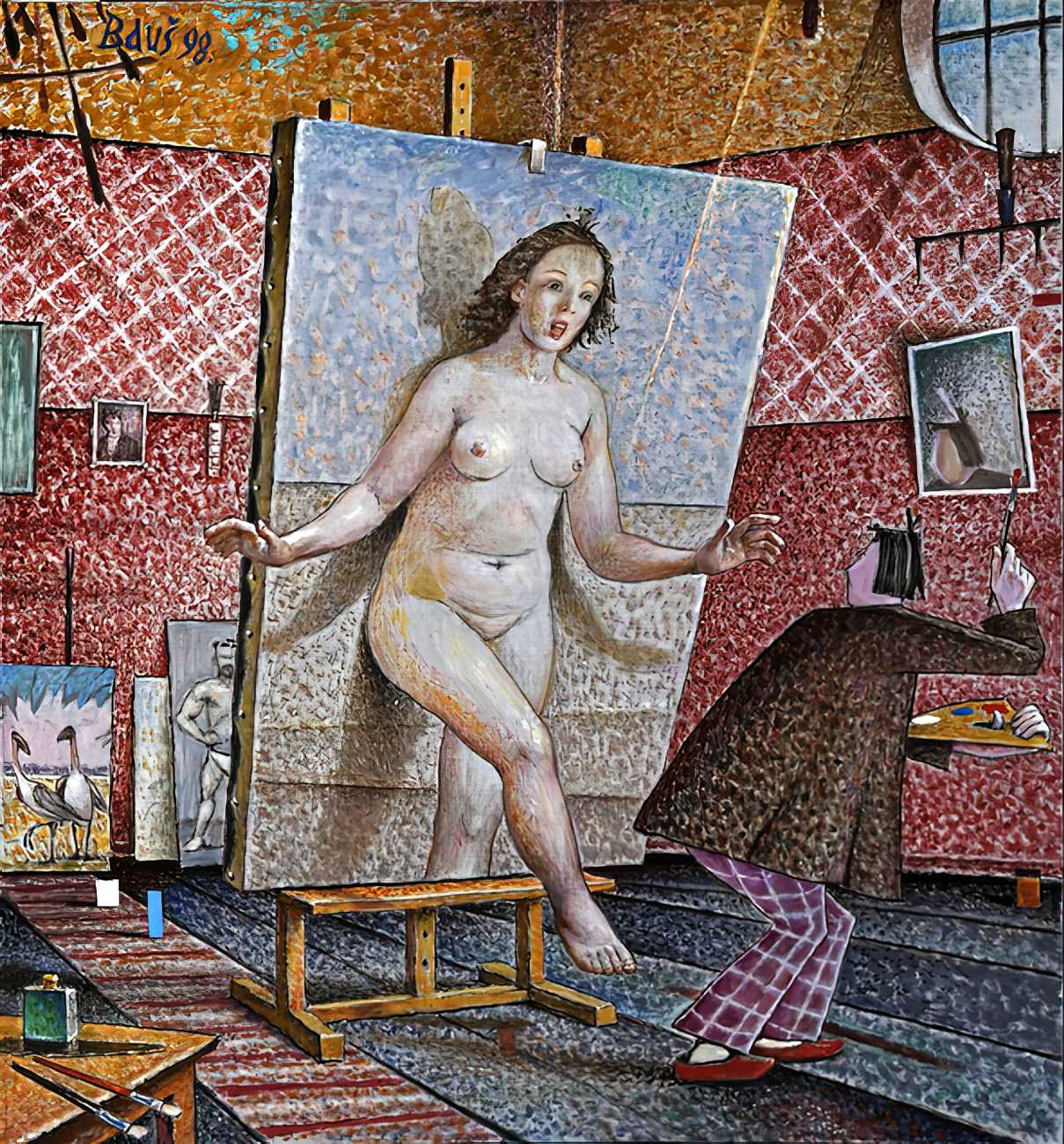
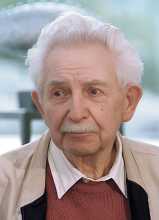
 Auseklis Baušķenieks grew up in Jelgava in central Latvia. In 1915 his family sought refuge from wartime threats in Narva in Estonia, where Auseklis broke his arm, which released him from military duty. In 1918 he returned to Jelgava, where he experienced the events of the Bermontiad Campaign in the Latvian War of Independence. In 1929 he graduated from Jelgava Secondary School No. 2 and moved to Riga, where he worked in the Department of Roads of the Ministry of Transport until 1935.
In addition to his work, he studied for three years at the Faculty of Architecture of the University of Latvia from 1930 to 1933, concentrating on drawing and watercolour. Following the recommendation of Vilhelms Purvītis, in the summer of 1933 he studied with Jēkabs Bīne, and in the autumn entered the Latvian Academy of Arts, and graduated in 1942. He studied at the Academy with Kārlis Miesnieks, Konrad Uban, August Annus, Valdemārs Tones, Ģederts Elias and Ludolfs Liberts. After graduating from university, he studied painting at the Institute of Comparative Anatomy of the University of Latvia, and in 1943 participated in the Second Joint Exhibition of Latvian Artists.
At the end of World War II, in the autumn of 1944, Baušķenieks was mobilised for service and sent by ship to Germany, then Holland. At the end of the war he was in the American Occupation Zone in the Rhine Valley, where he met with the USSR mission, which helped him to return home. At the Volodymyr–Volinska filtration camp he received a visa and a ticket to Riga, where he returned in June 1946. In Riga Baušķenieks settled with the sculptor Mārtiņš Zaurs; in 1947 he found work as a designer at the Museum of Literature, and in 1948 at the Riga Castle Pioneer Palace youth camp, where he was in charge of drawing and sculpture groups. For the most part Baušķenieks lived a remarkably marginal and self-directed life. For much of the Soviet period he worked outside official artistic institutions, earning his living as a house painter and signwriter.
In 1954 Auseklis Baušķenieks married Antoņina, often called Ņina, who had been a colleague at the Pioneer Palace. Ņina played a significant supportive role in Baušķenieks’ artistic life, managing many practical aspects of the household and encouraging him to return to painting after a long period of post-war inactivity. She was also involved in naming his works and helping navigate censorship under Soviet rule. In 1956 their son Ingus Baušķenieks was born, who would later become a well-known Latvian musician, best known as a multi-instrumentalist and a member of the influential group Dzeltenie Pastnieki.
Auseklis Baušķenieks retired in 1970, but in 1973 he found a workshop in which he worked actively until the end of his life.
We are very grateful to our Russian friend Yuri for suggesting the inclusion of this artist, and for supplying most of the images.
Similar artists
Jana Brike – Latvian contemporary painter of dream-like erotic-fairy-tale imagery.
Marcel Chirnoagă – Romanian engraver of fantastical erotic subjects.
Anca Georgescu – Romanian contemporary illustrator of figurative-erotic subjects.
Pavel Hlavatý – Czech printmaker of fantastical and erotic subjects.
Marcel Janco – Romanian-Israeli artist of figurative and erotic graphic work.
Antoni Uniechowski – Polish draughtsman of literary and erotic subjects.
Example illustration