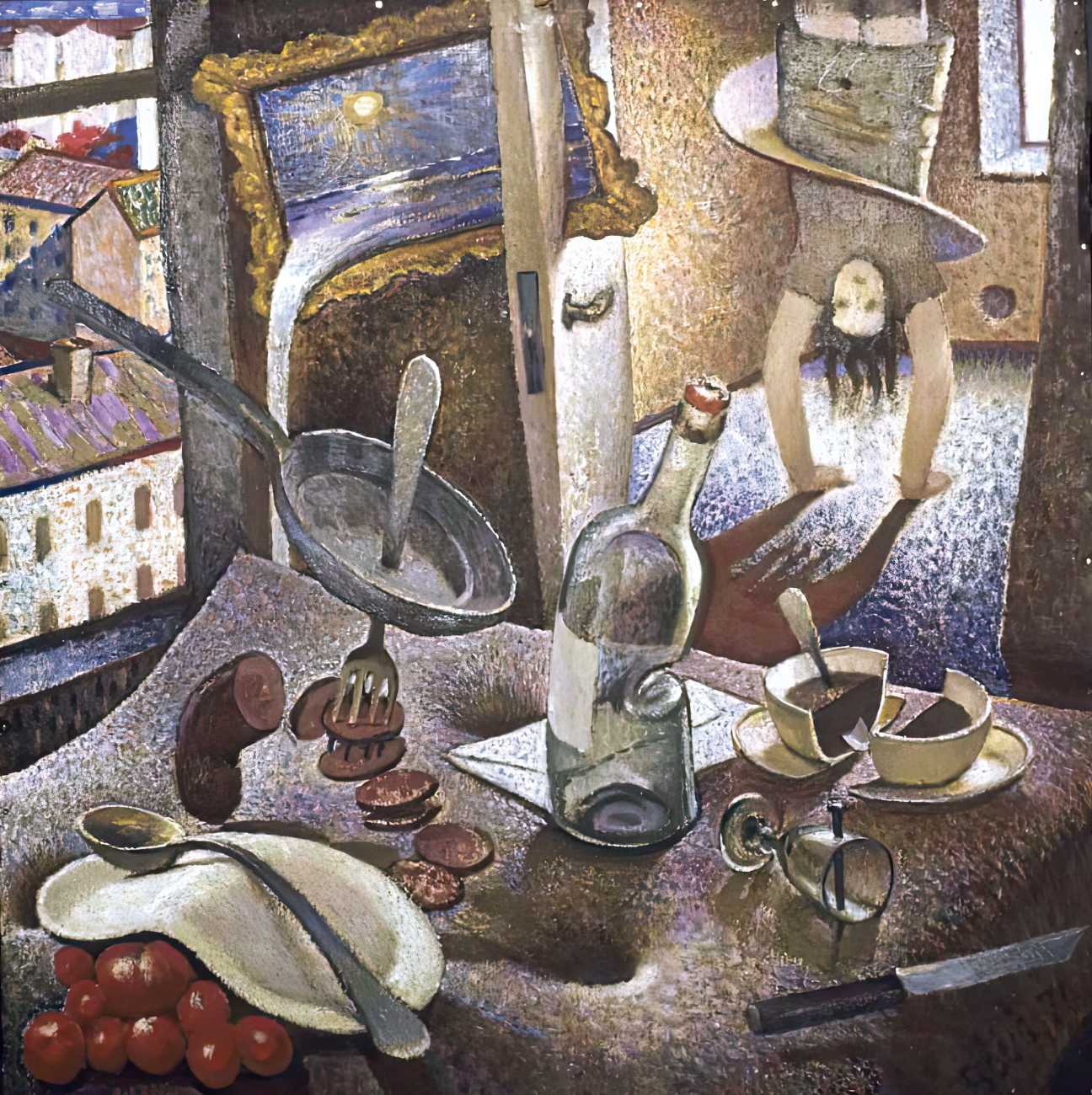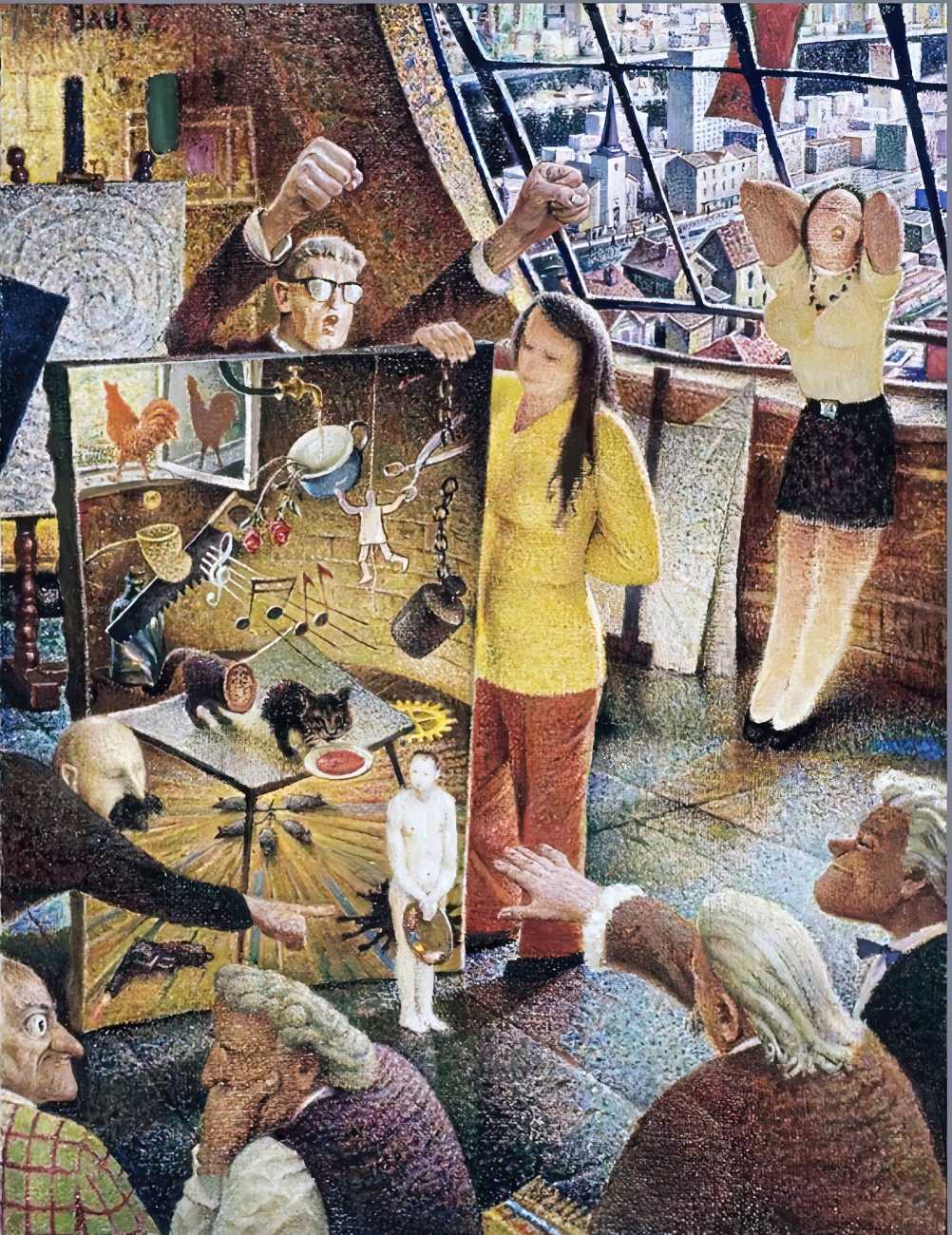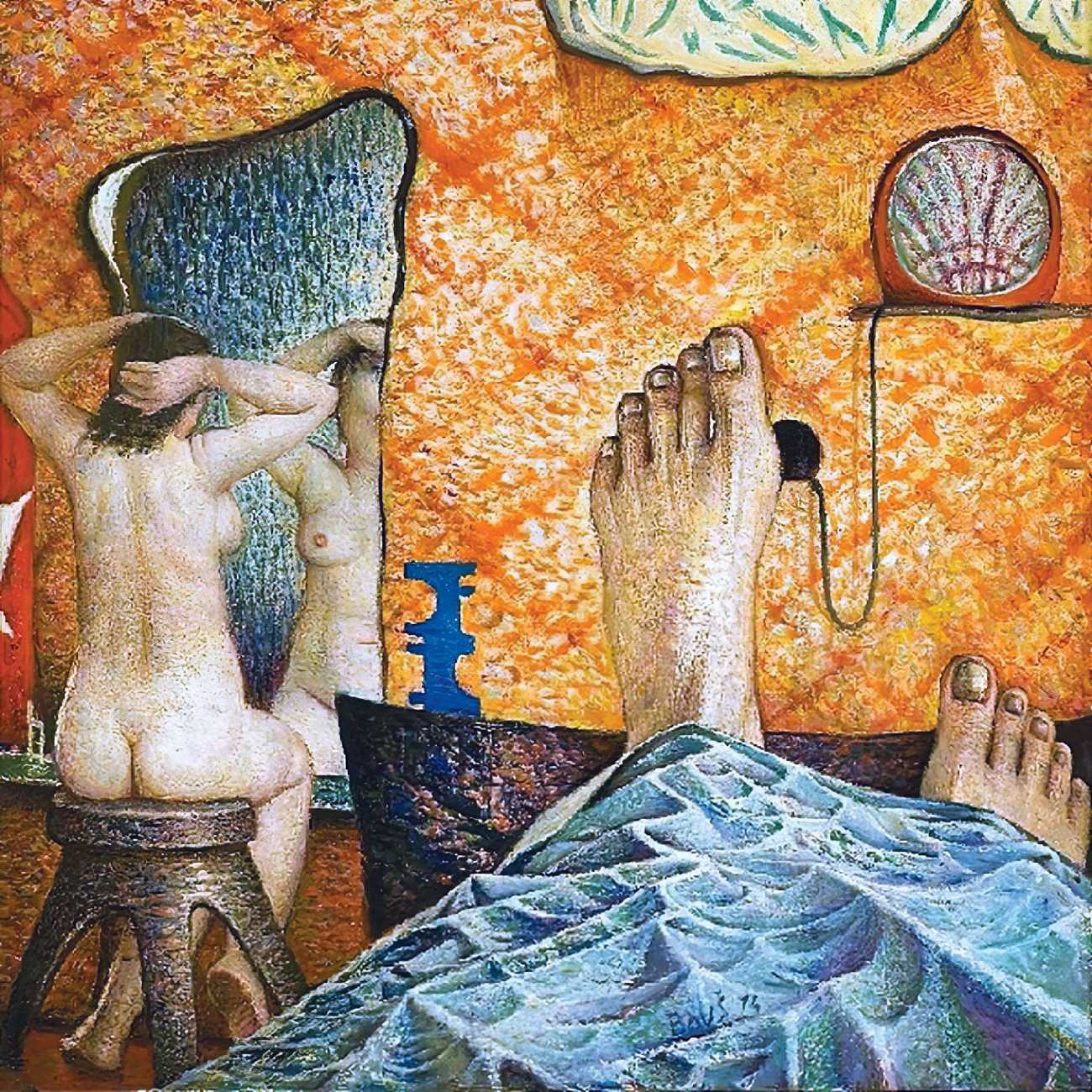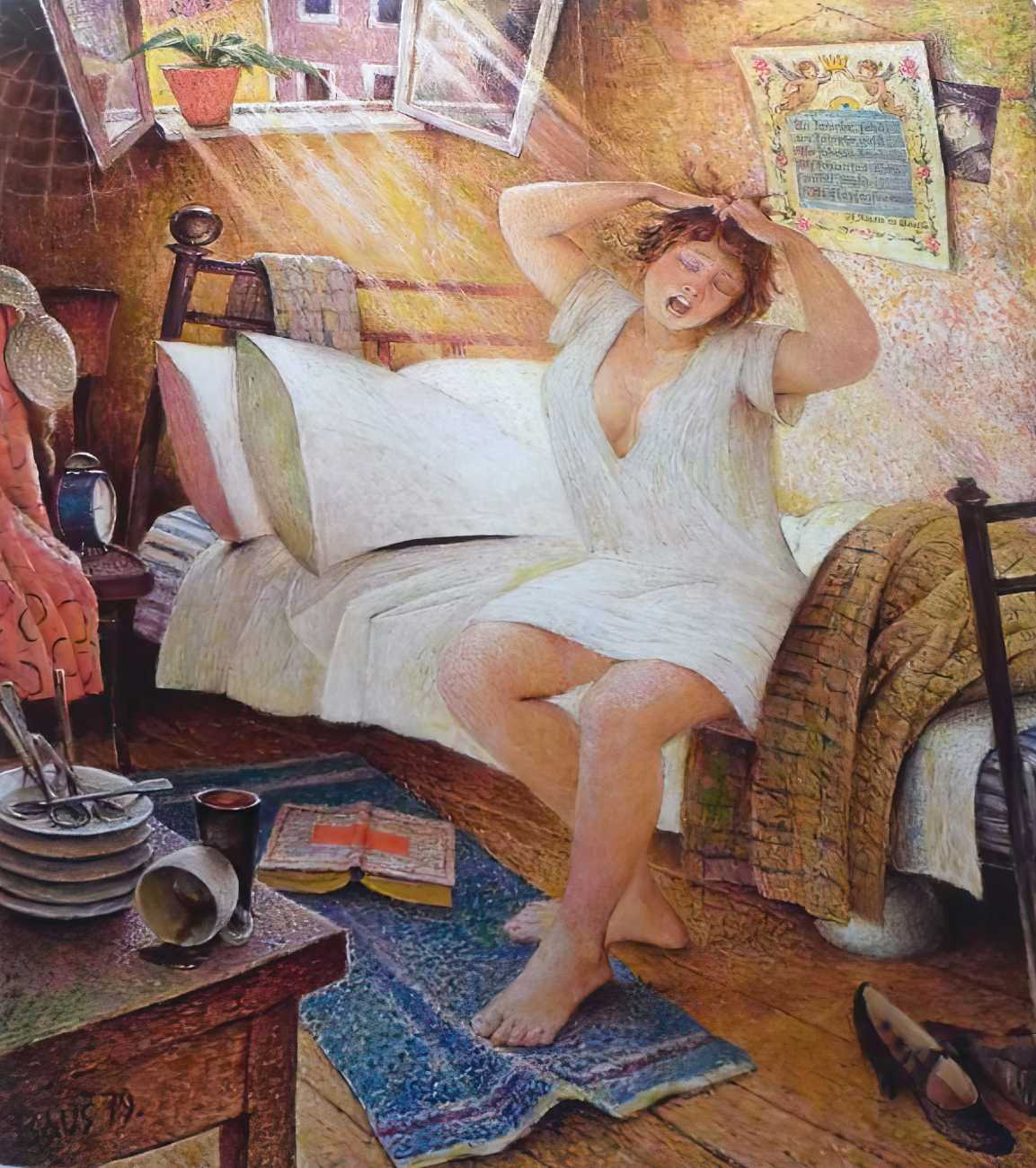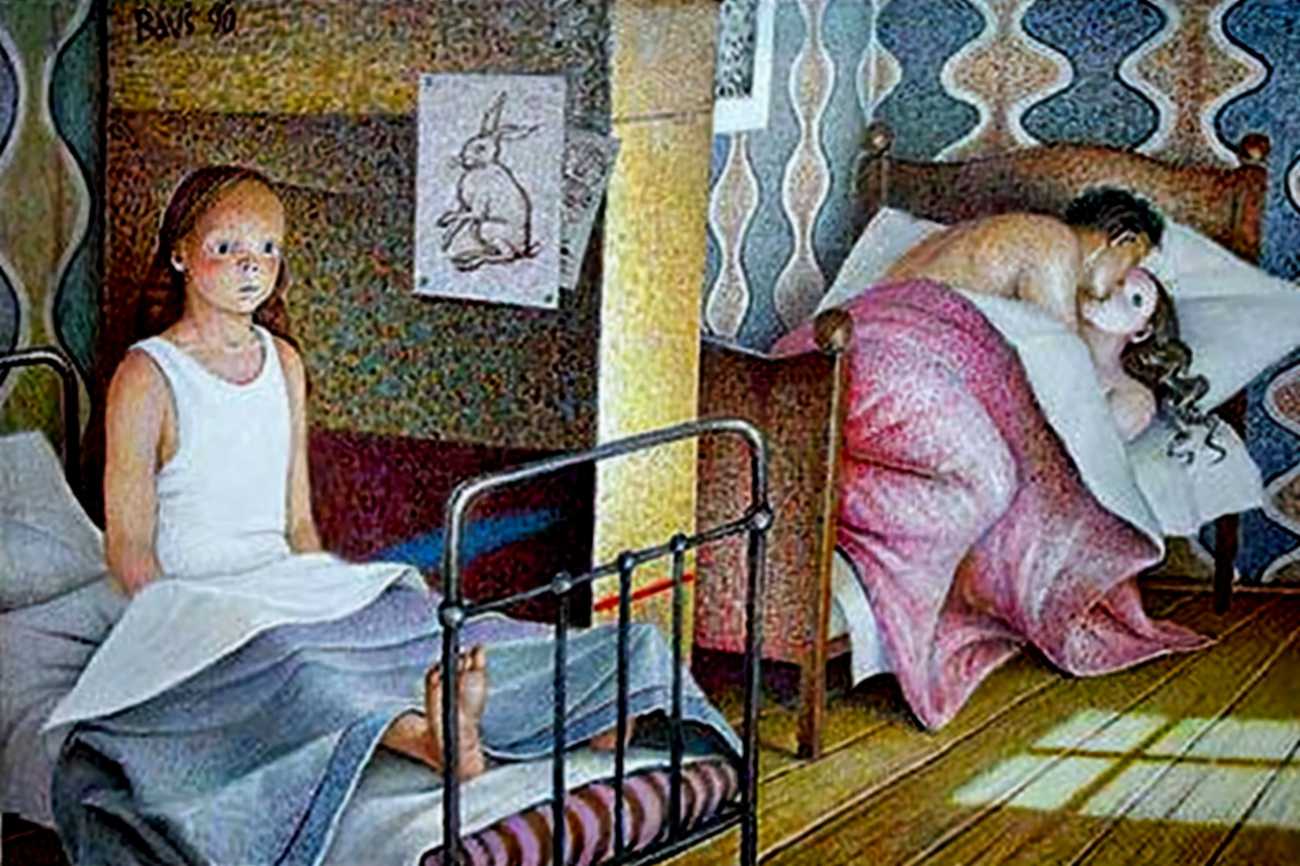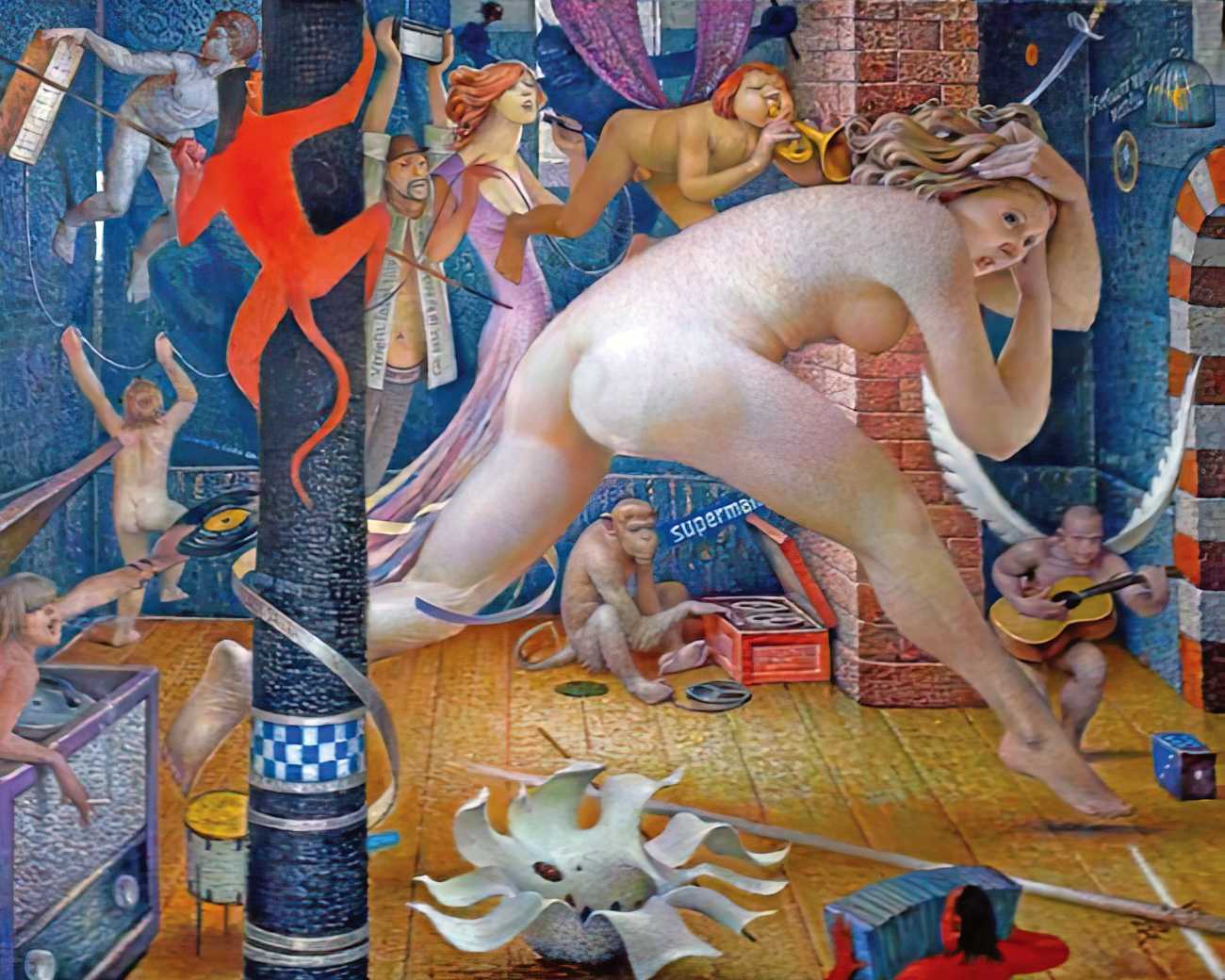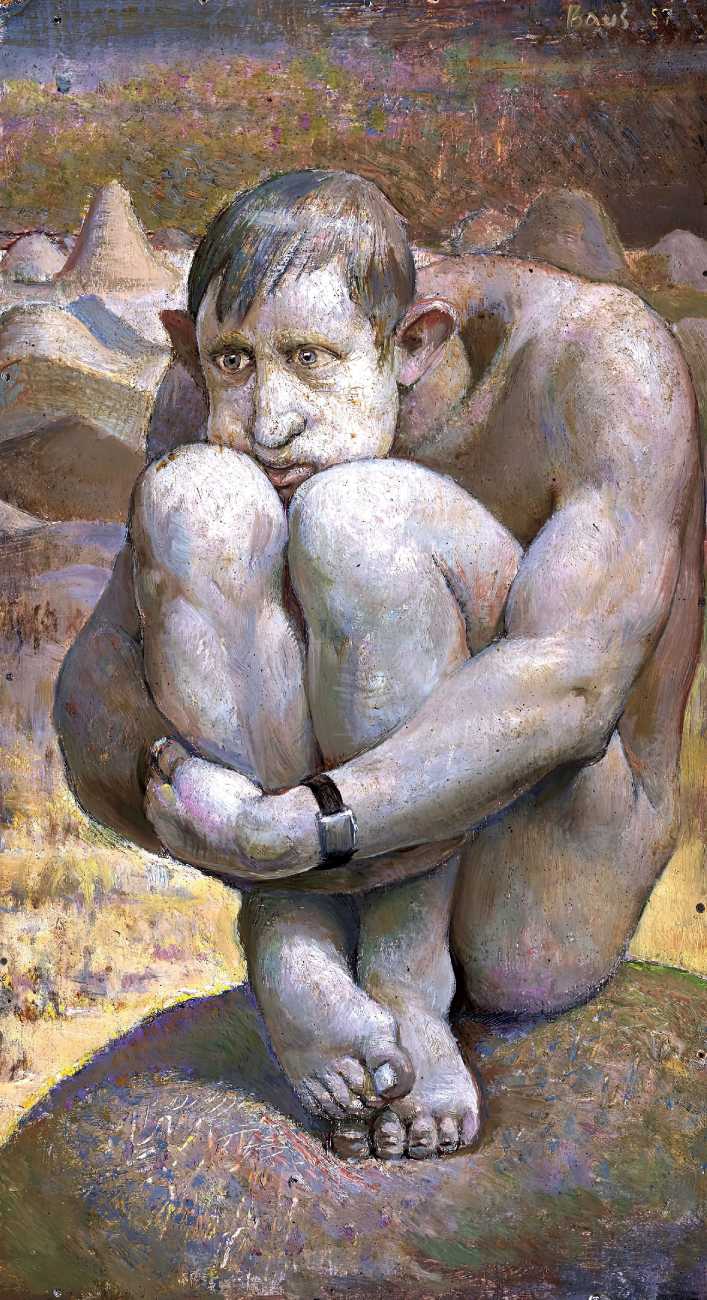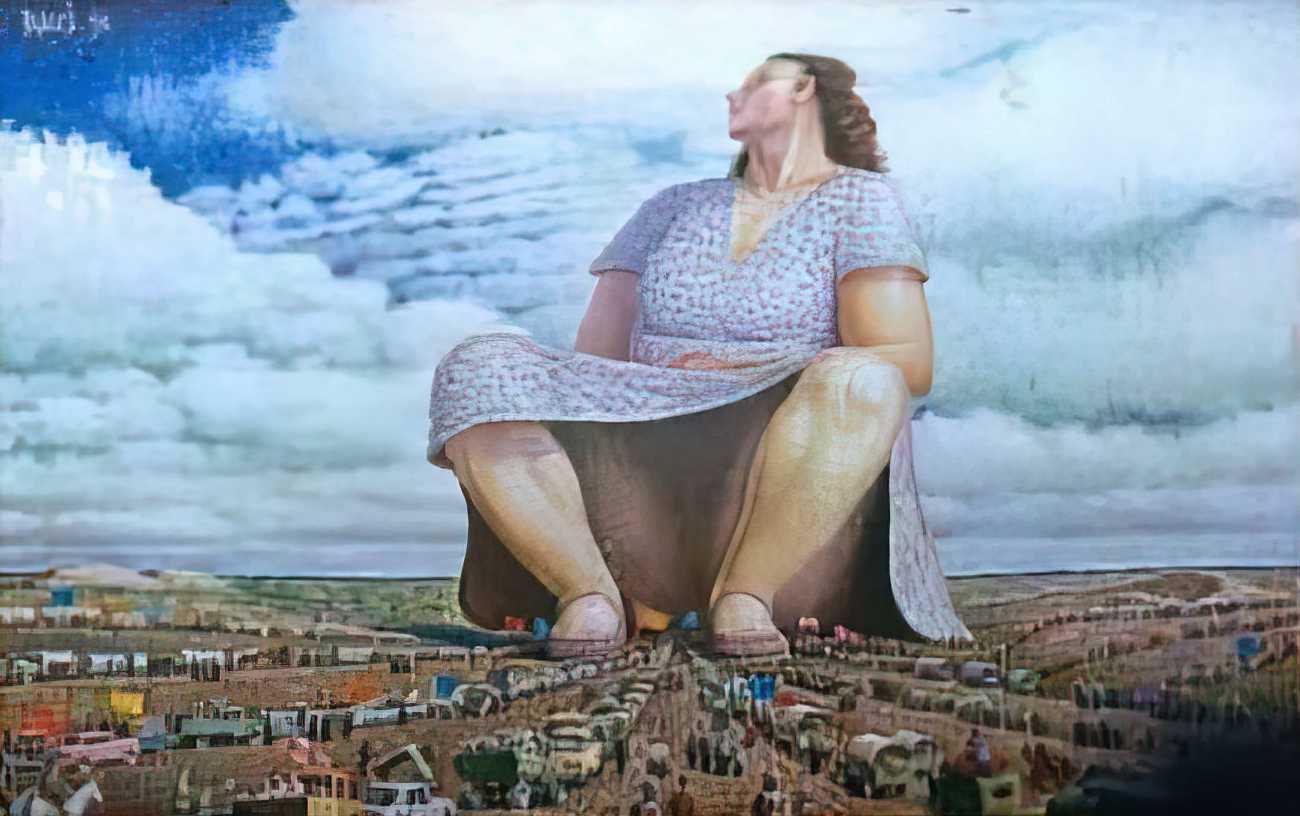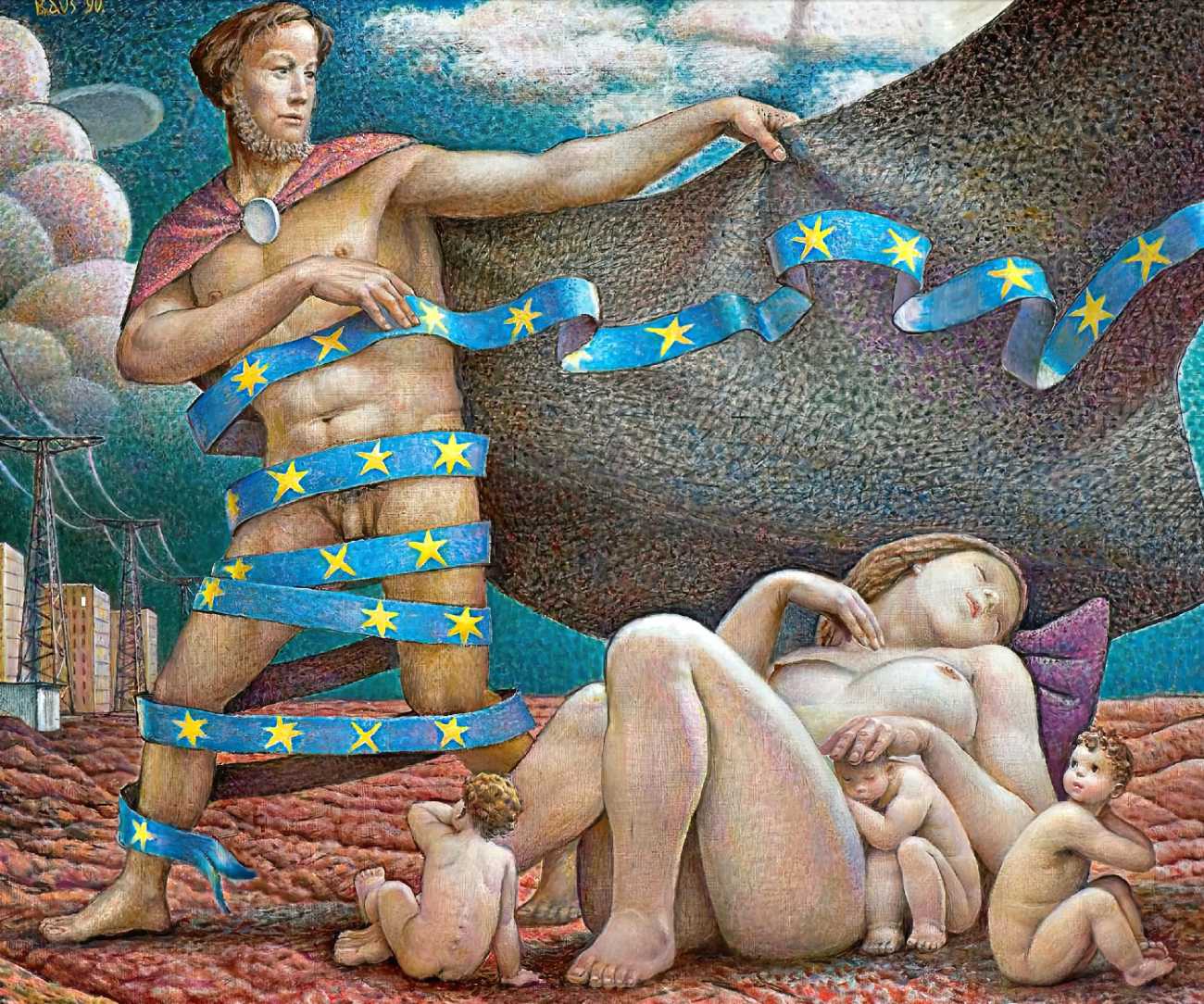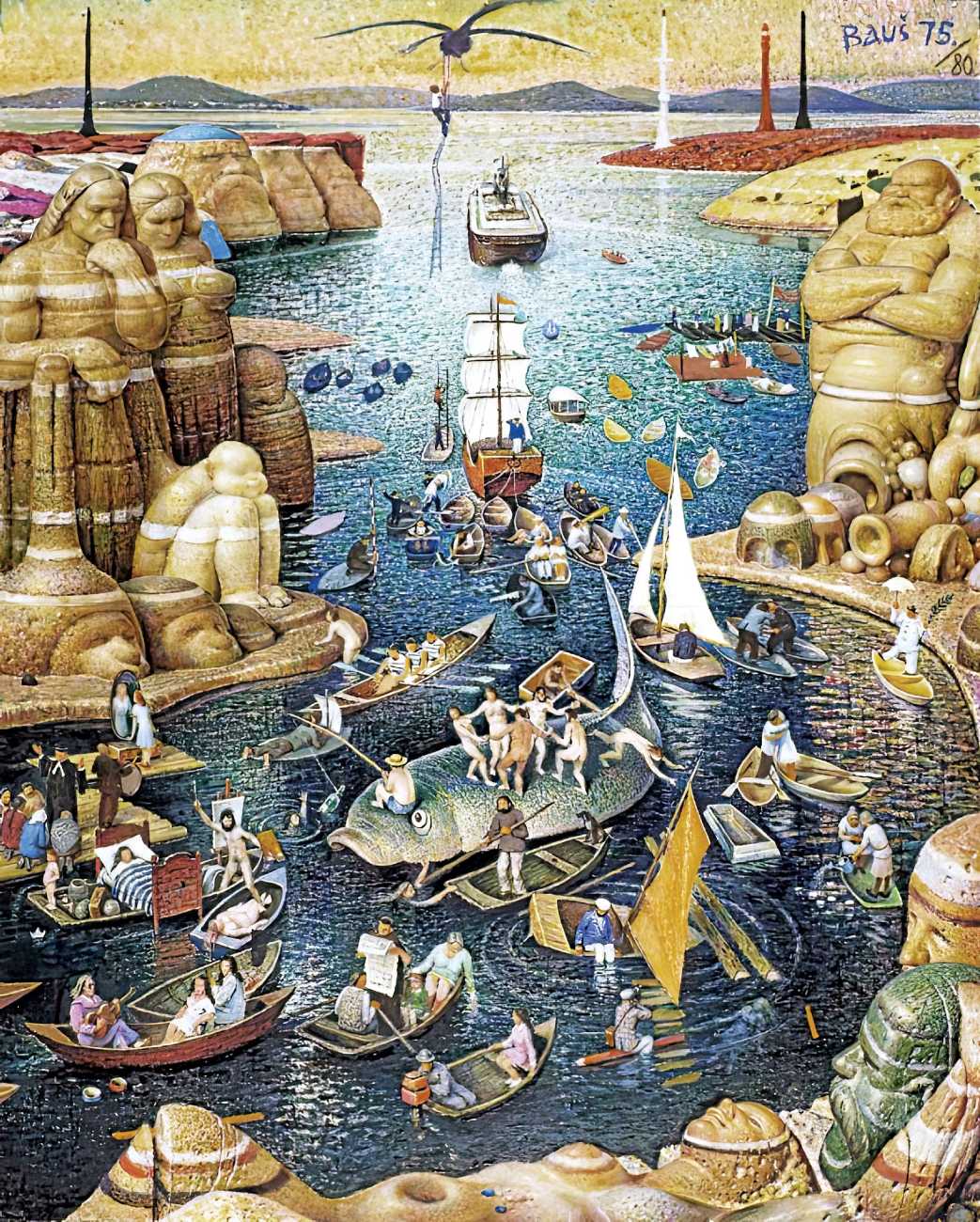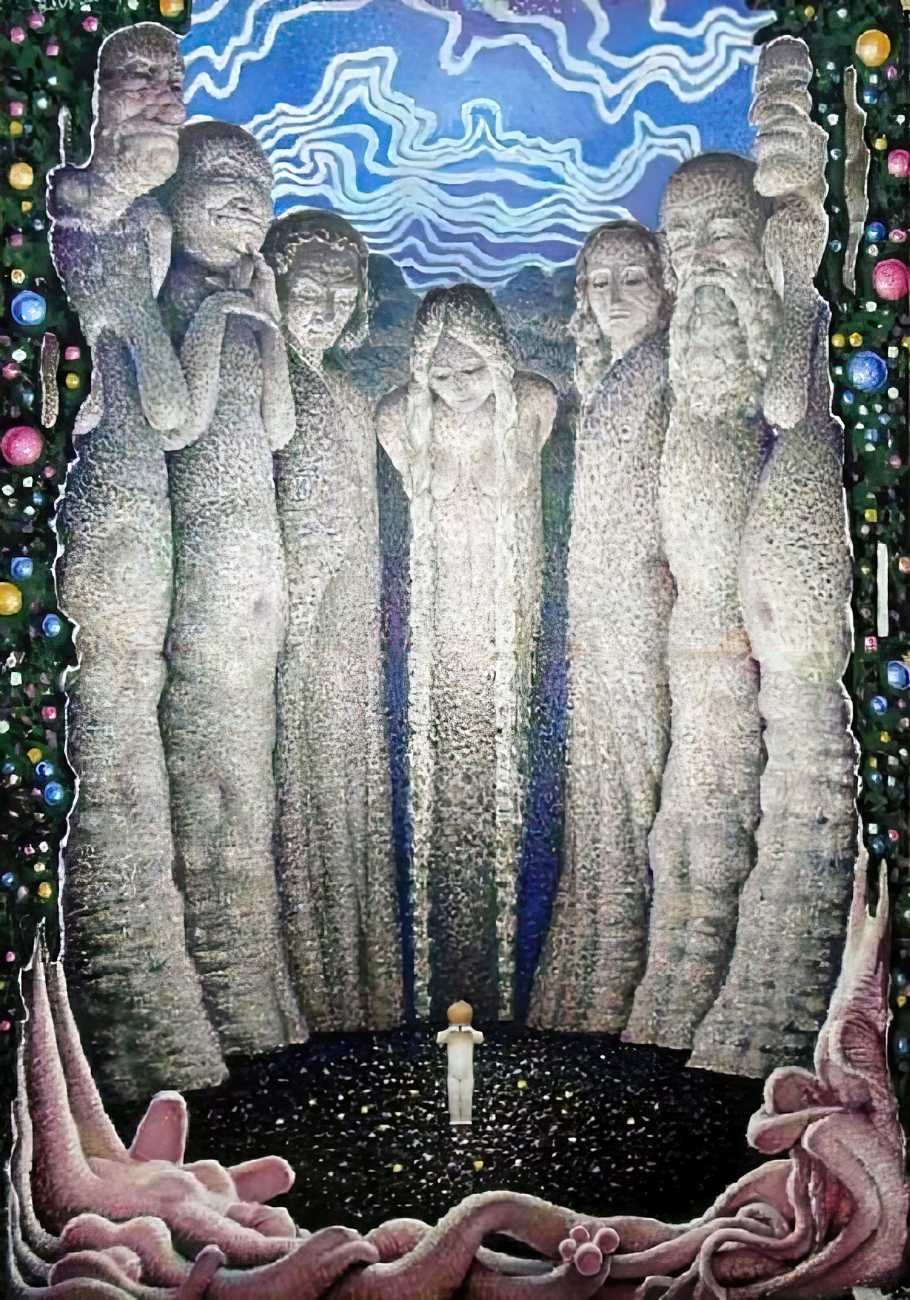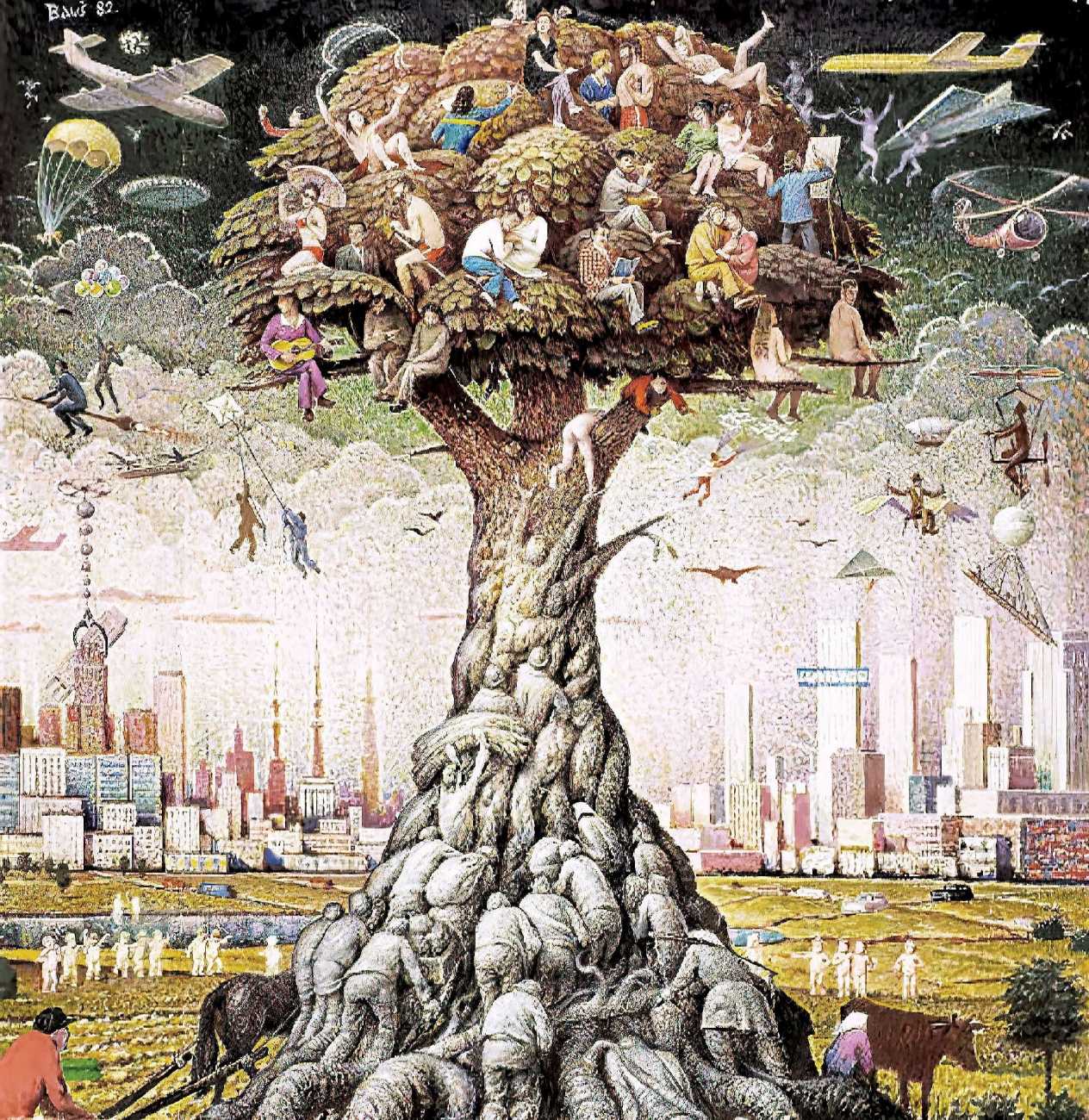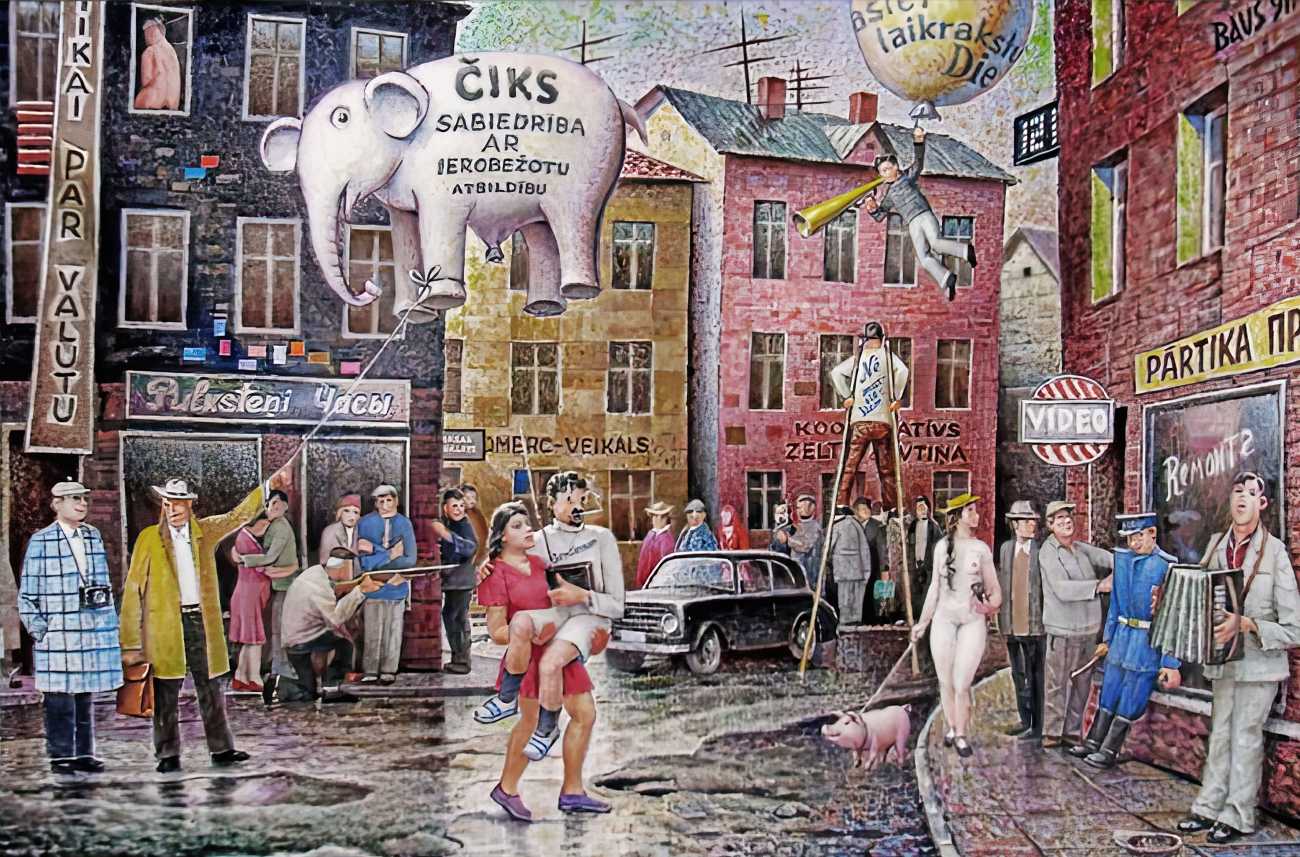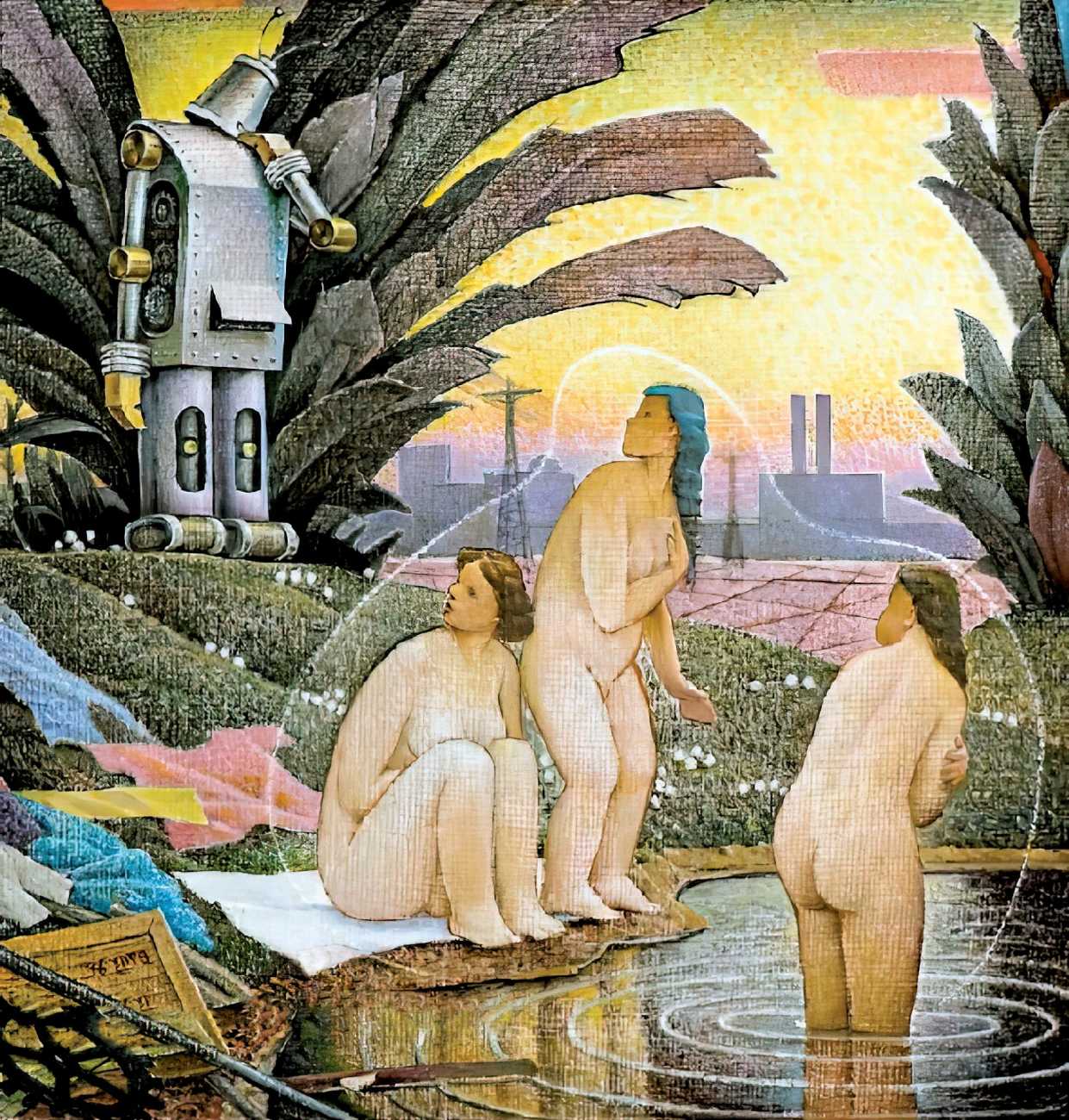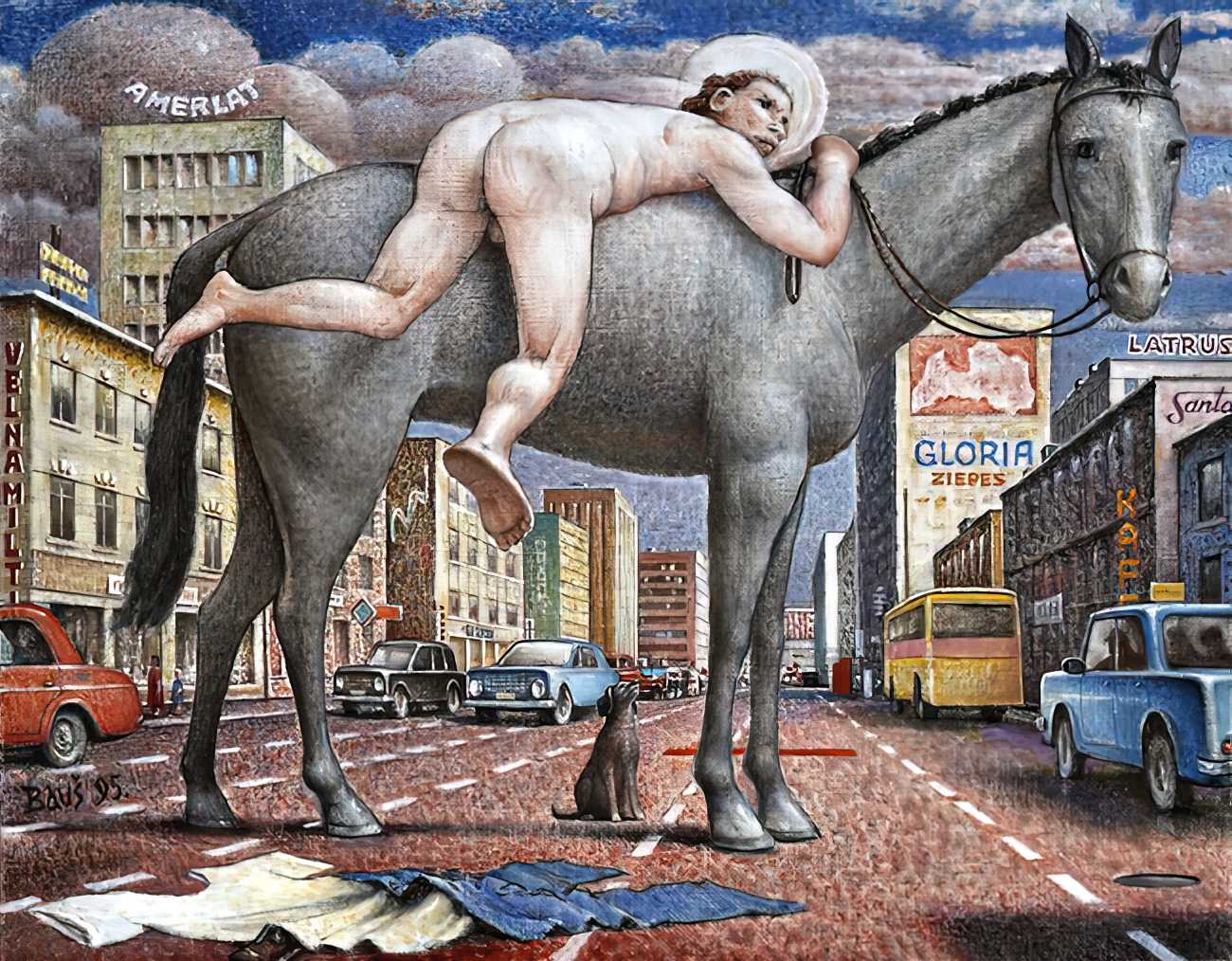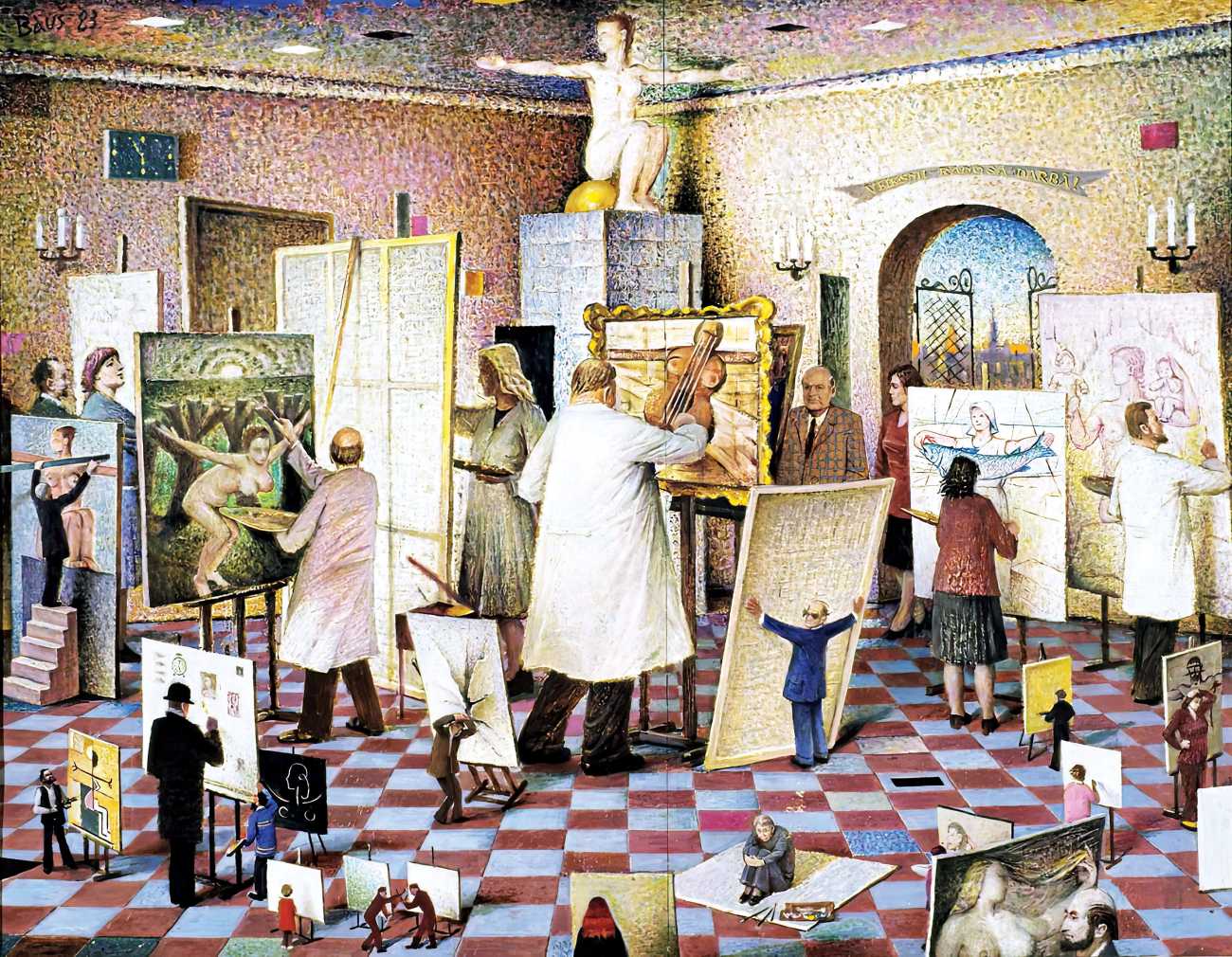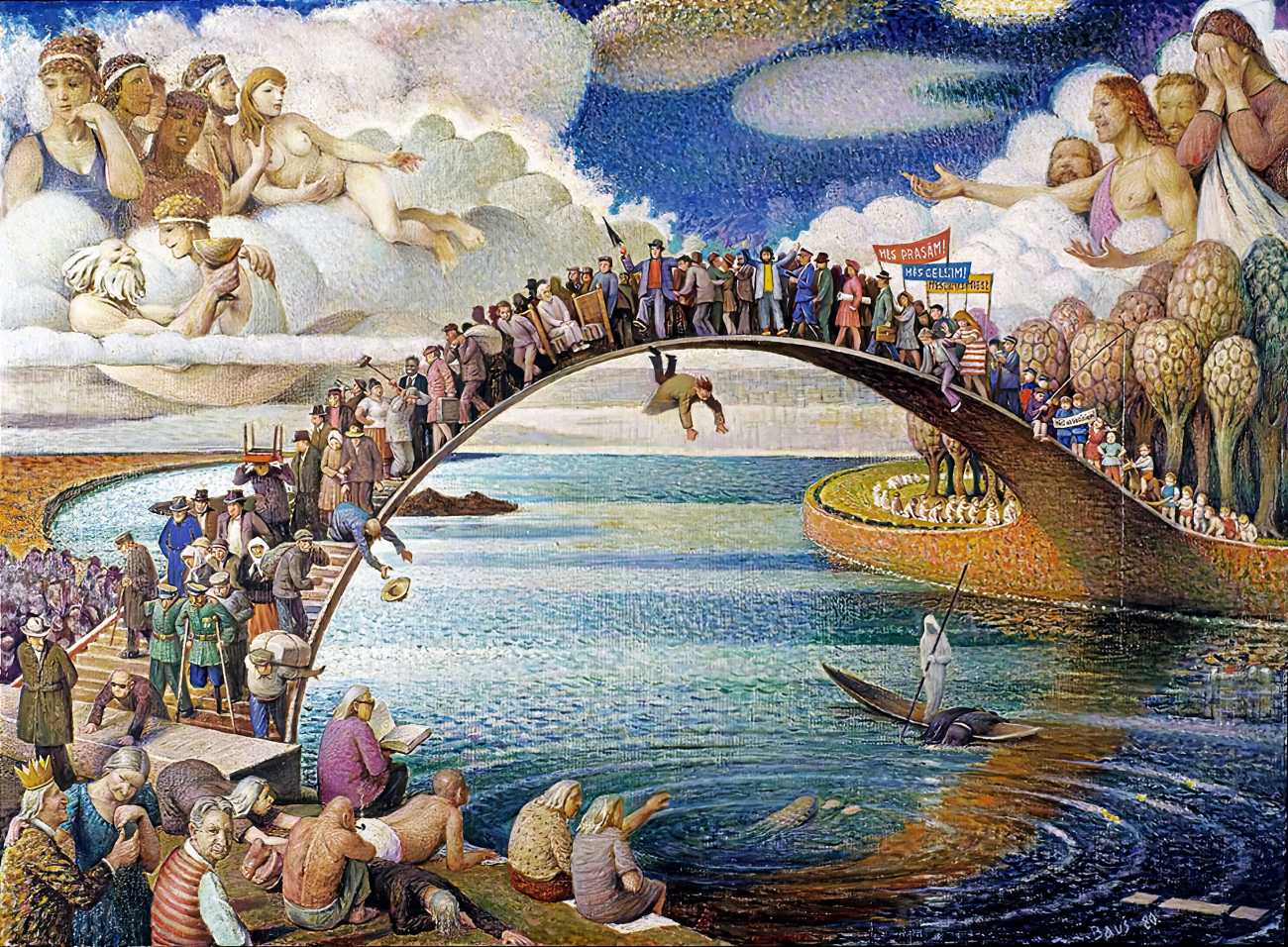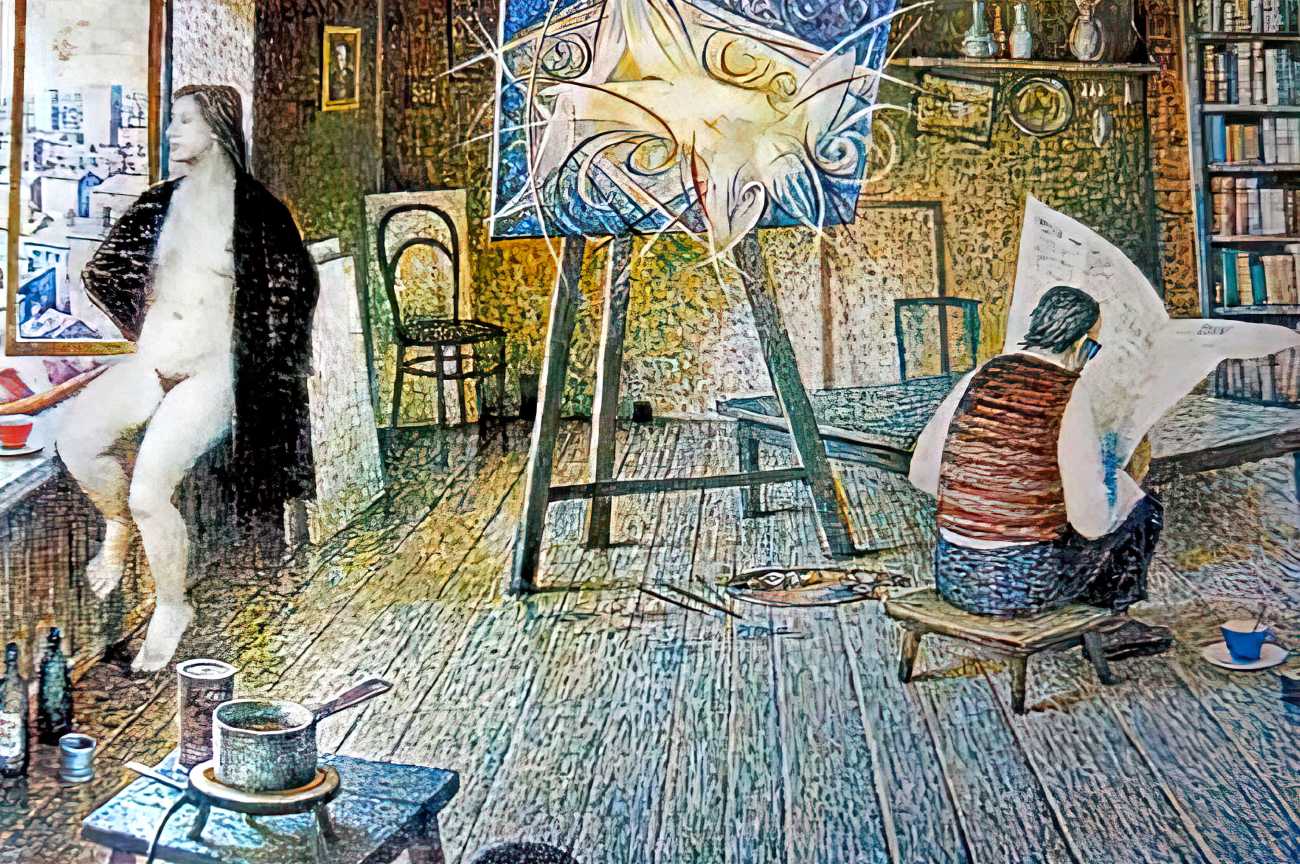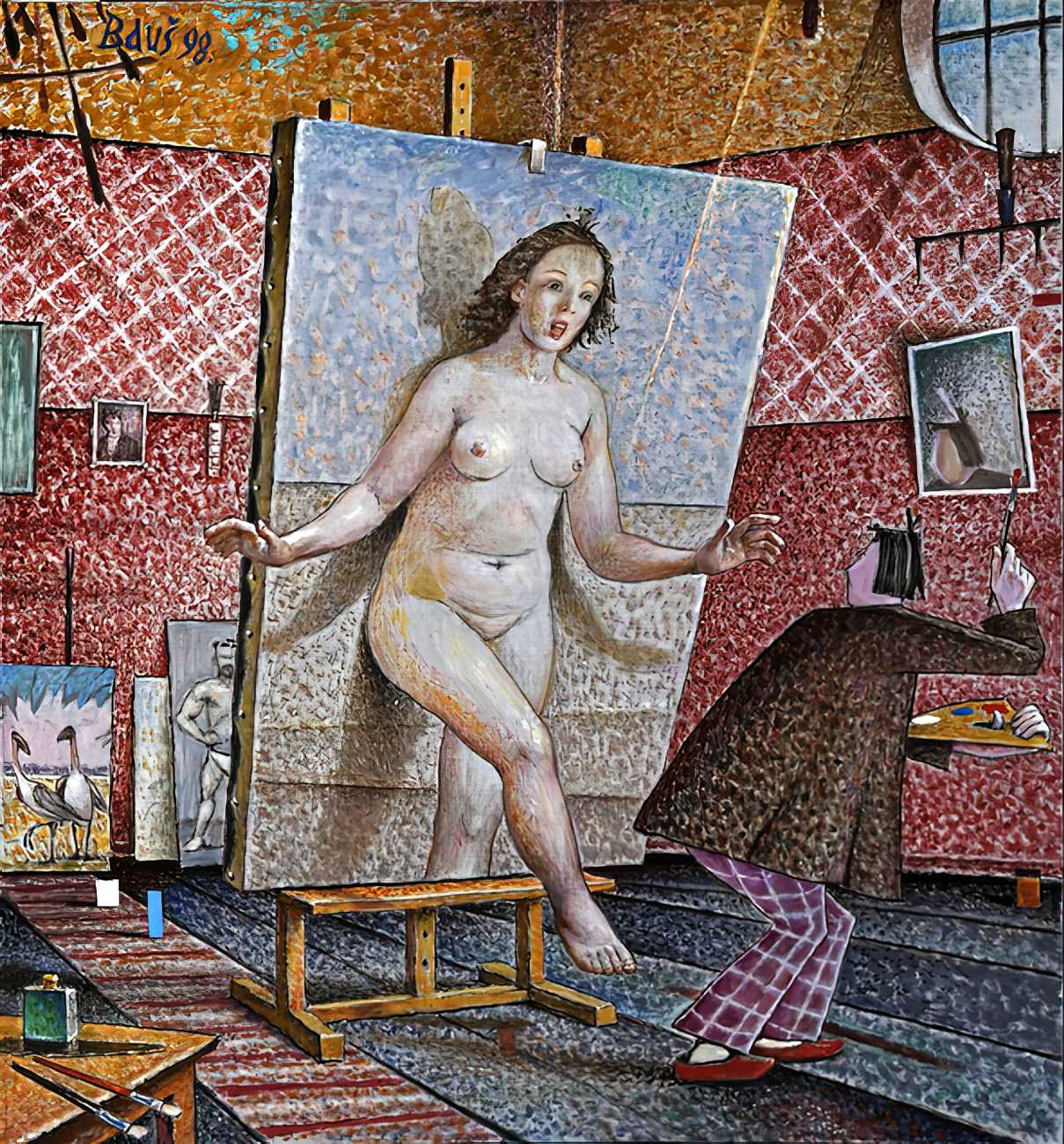
The paintings of Auseklis Baušķenieks often depict humans in everyday or absurd situations – figures in domestic spaces, scenes of interpersonal interaction, or invented mise-en-scènes that blend realism with surreal or grotesque elements. The dominant motifs are social observation, psychological nuance and satire, and erotic elements tends to be subtle, best understood as part of his portrayal of human experience with all its pleasure, awkwardness and vulnerability.
Baušķenieks’ figures are frequently unclothed or partially clothed, yet his bodies appear matter-of-fact, lived-in, and psychologically present. This unselfconscious corporeality carries an erotic charge precisely because it resists spectacle. The erotic is existential and everyday; people inhabit their bodies as they inhabit rooms, conversations, and social rituals.
His distinctive tone – gently comic, faintly absurd – softens and humanises physical intimacy. Baušķenieks allows desire to coexist with embarrassment, tenderness and humour. Importantly, the erotic in Baušķenieks’ work is non-hierarchical. Within the constraints of Soviet cultural norms, this egalitarianism itself carries significance. Baušķenieks’ refusal to moralise the body, and his insistence on depicting intimacy as ordinary rather than heroic or shameful, gives his work a quietly subversive warmth.
His art also reflects a long familiarity with solitude and interiority, which has led some commentators to read his work as suffused with a kind of late-blooming or reflective erotic consciousness, shaped by age, patience and observation rather than urgency. Accounts from those who knew him describe Baušķenieks as warm, ironic, and deeply attentive to human behaviour, qualities that translate directly into his erotic sensibility.