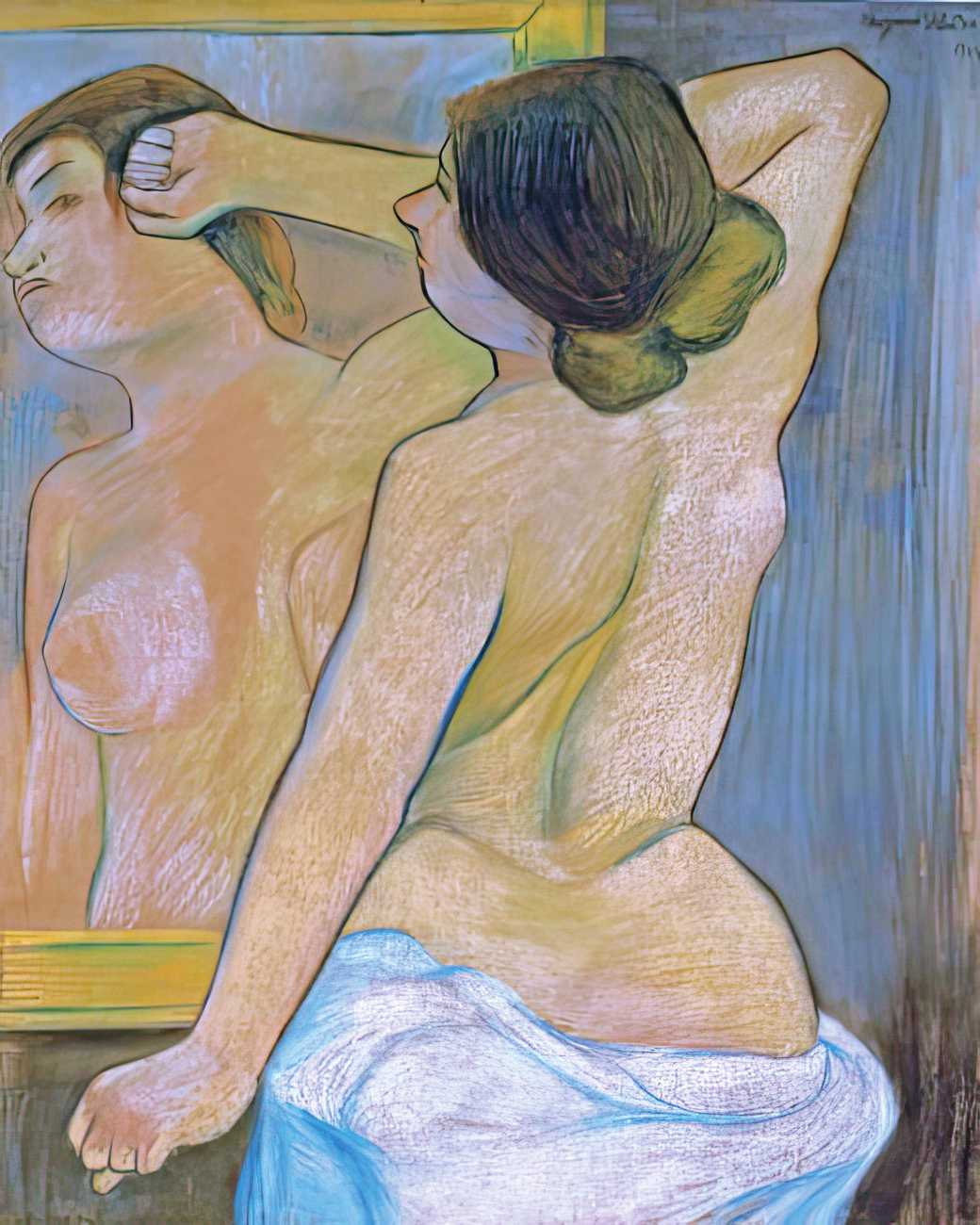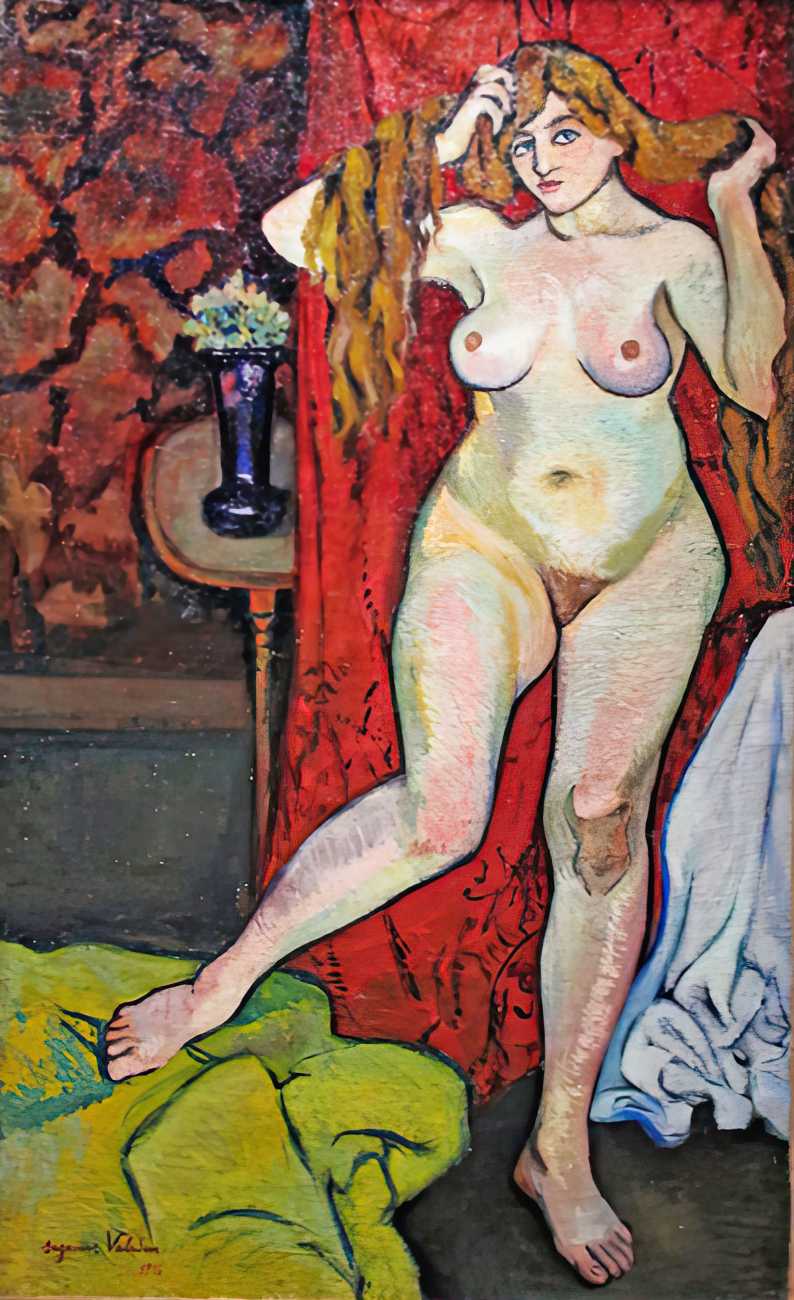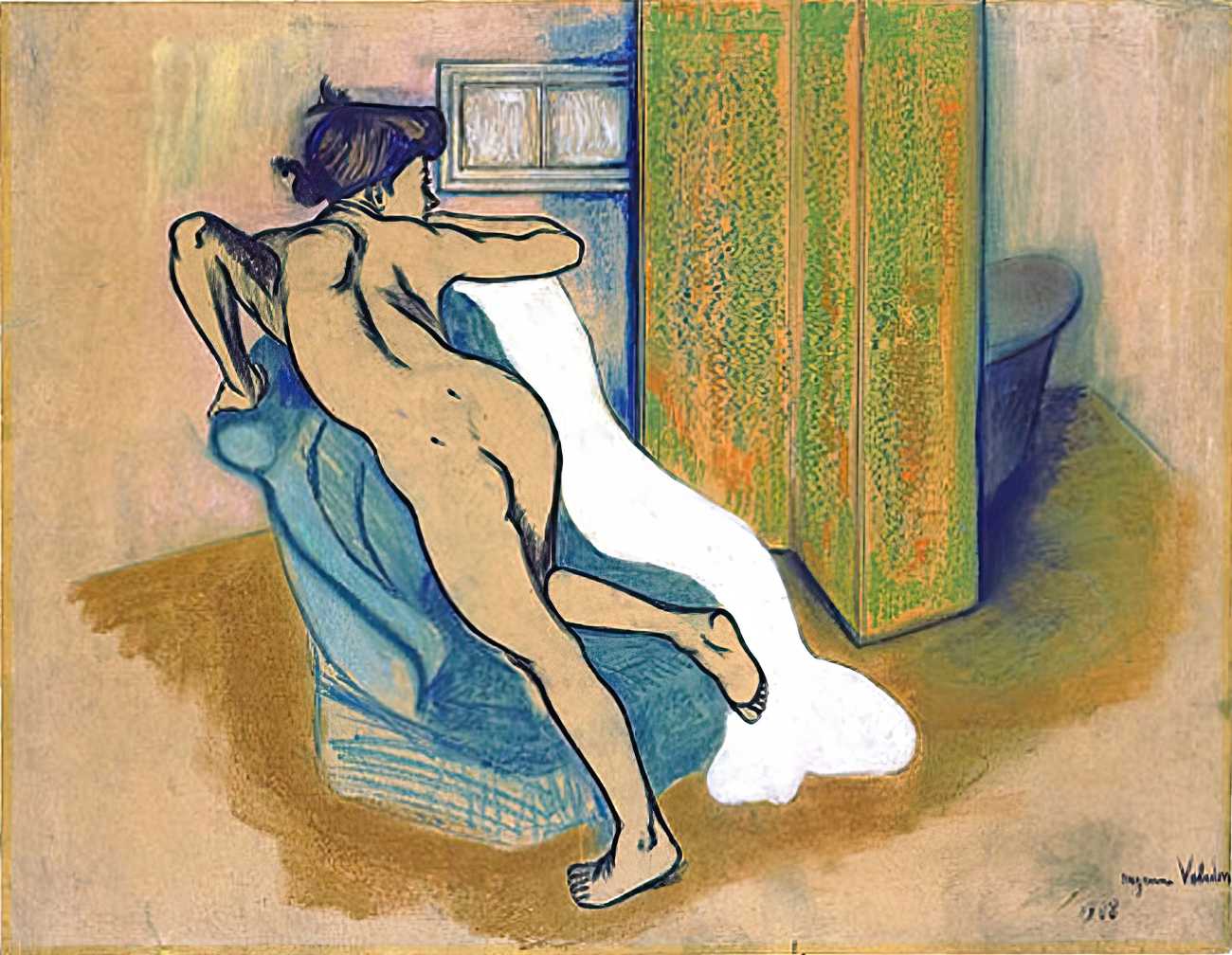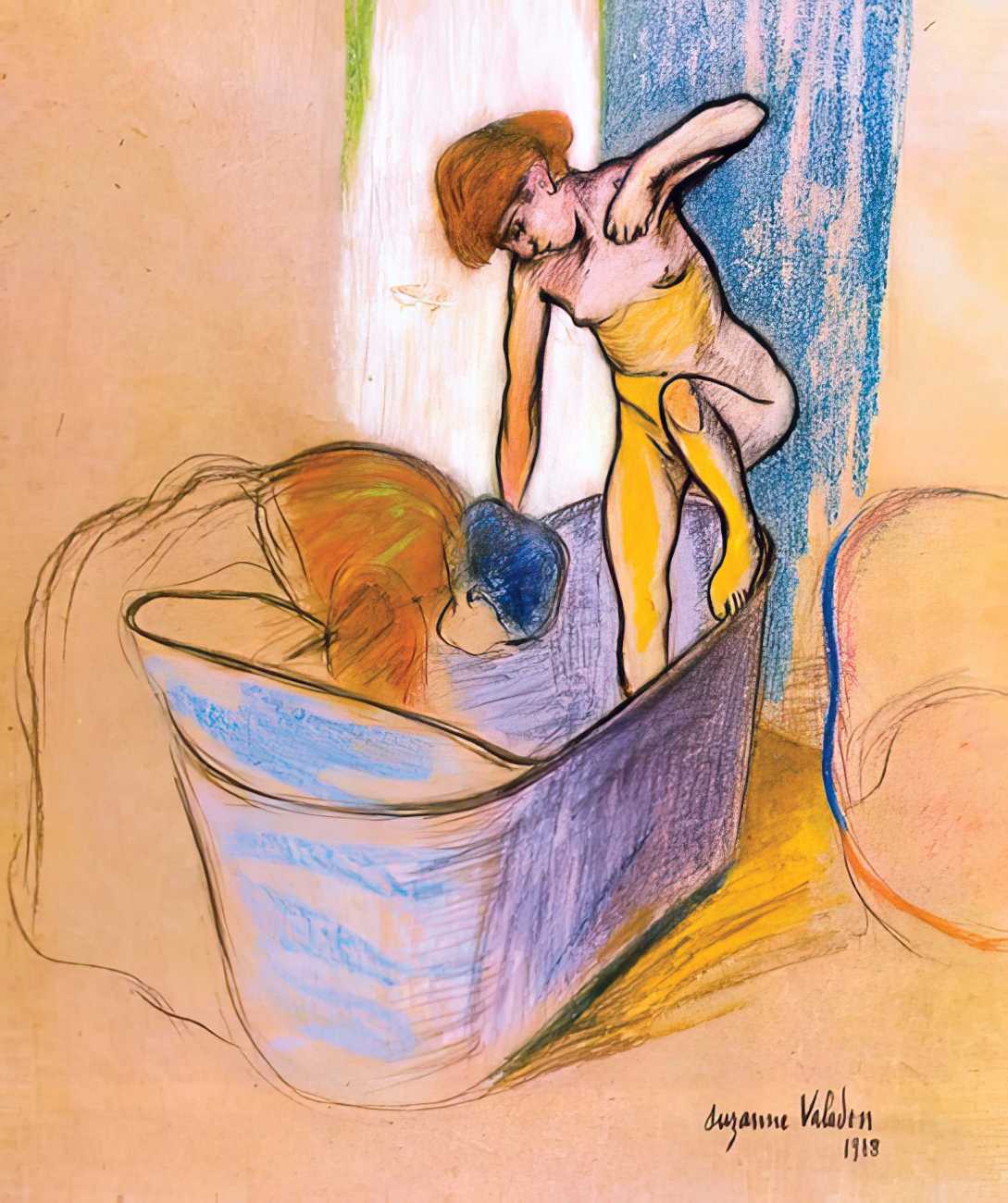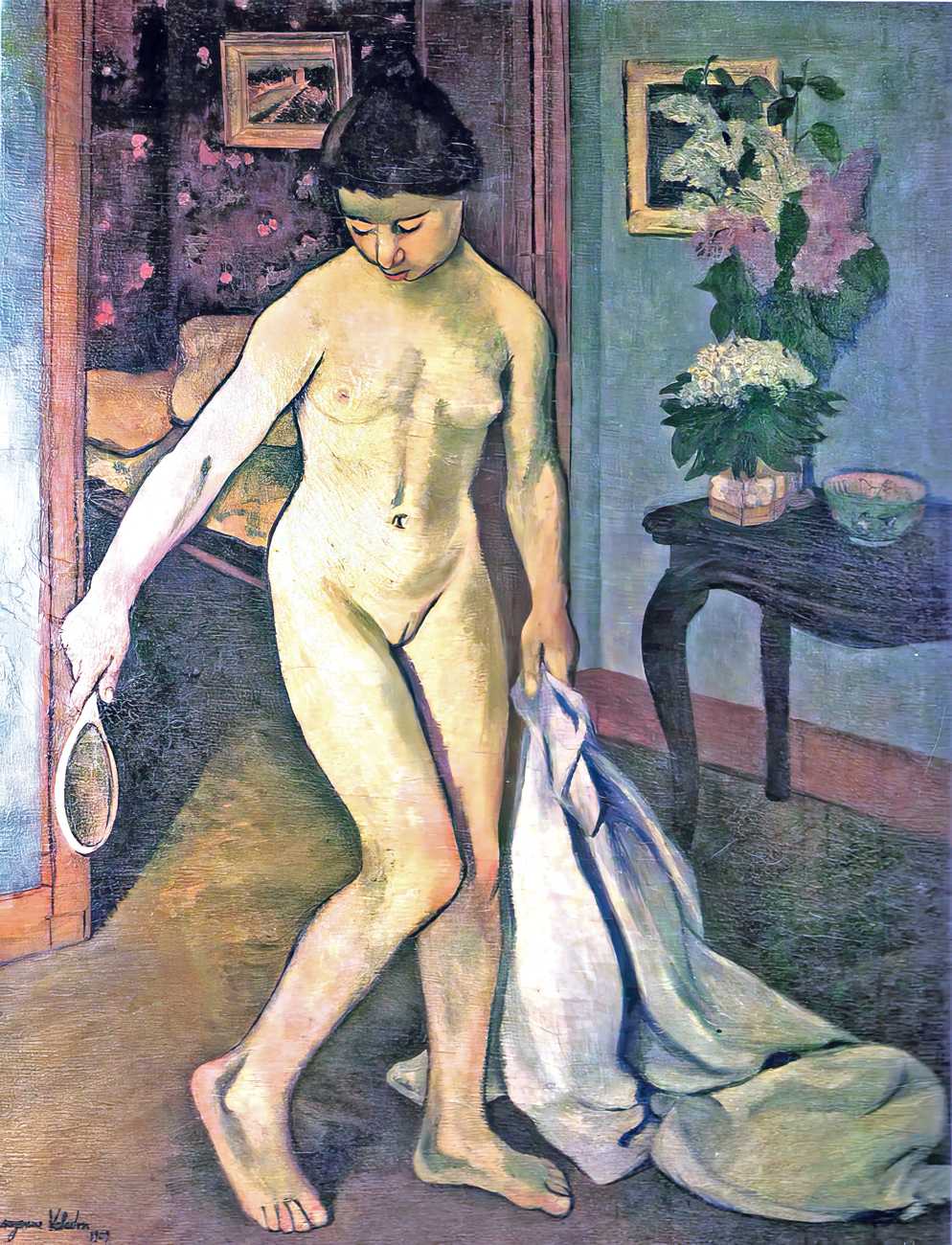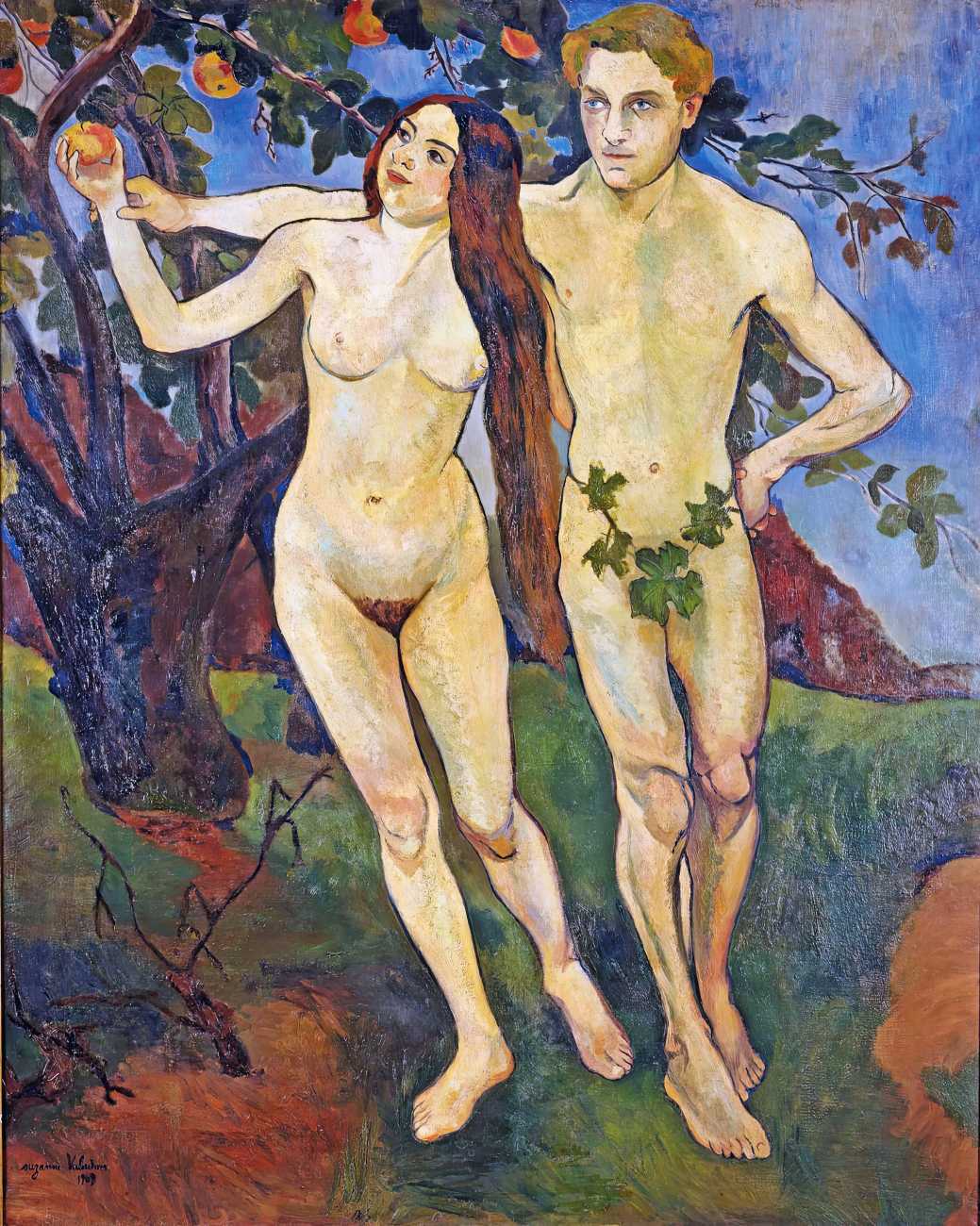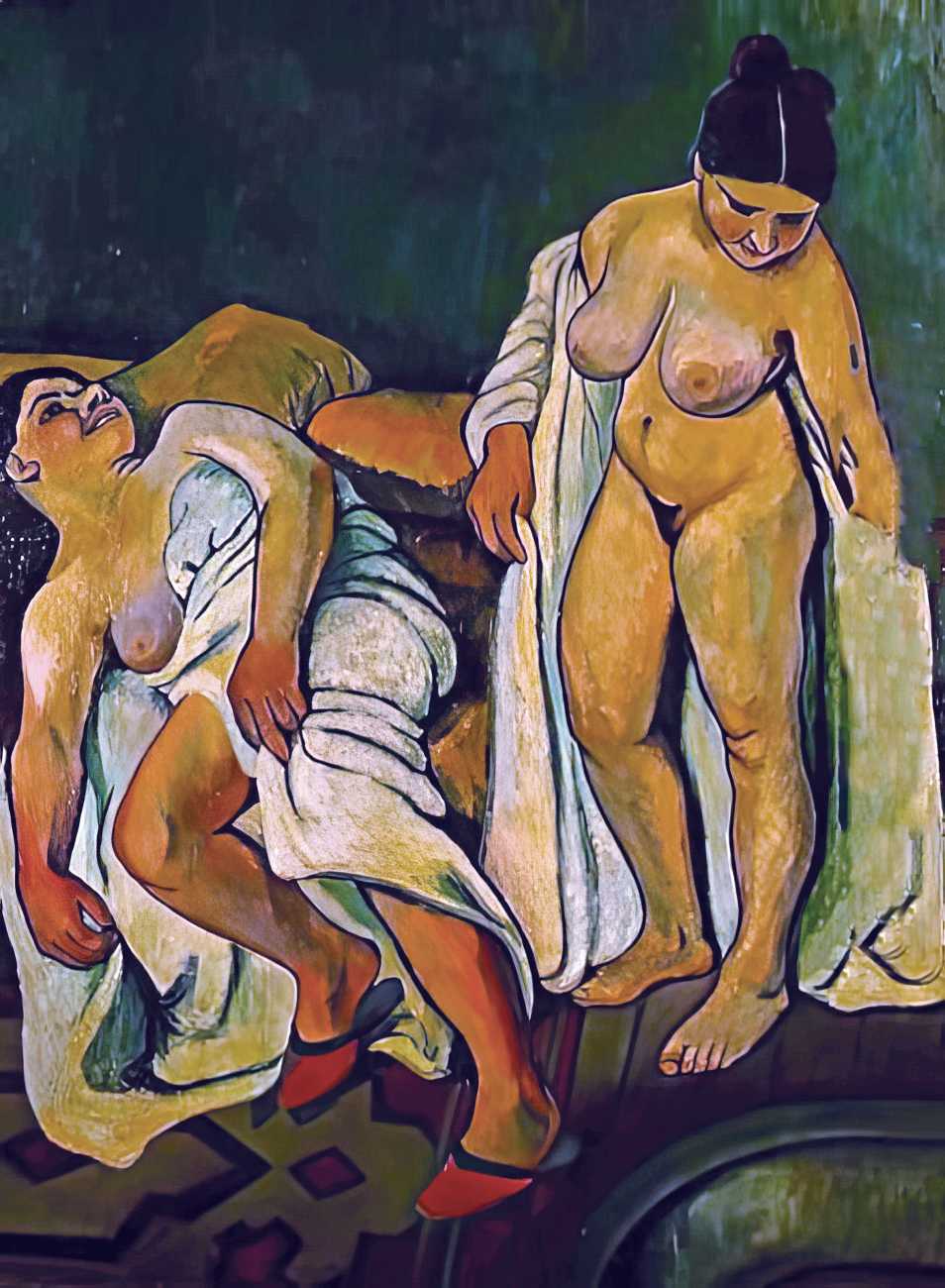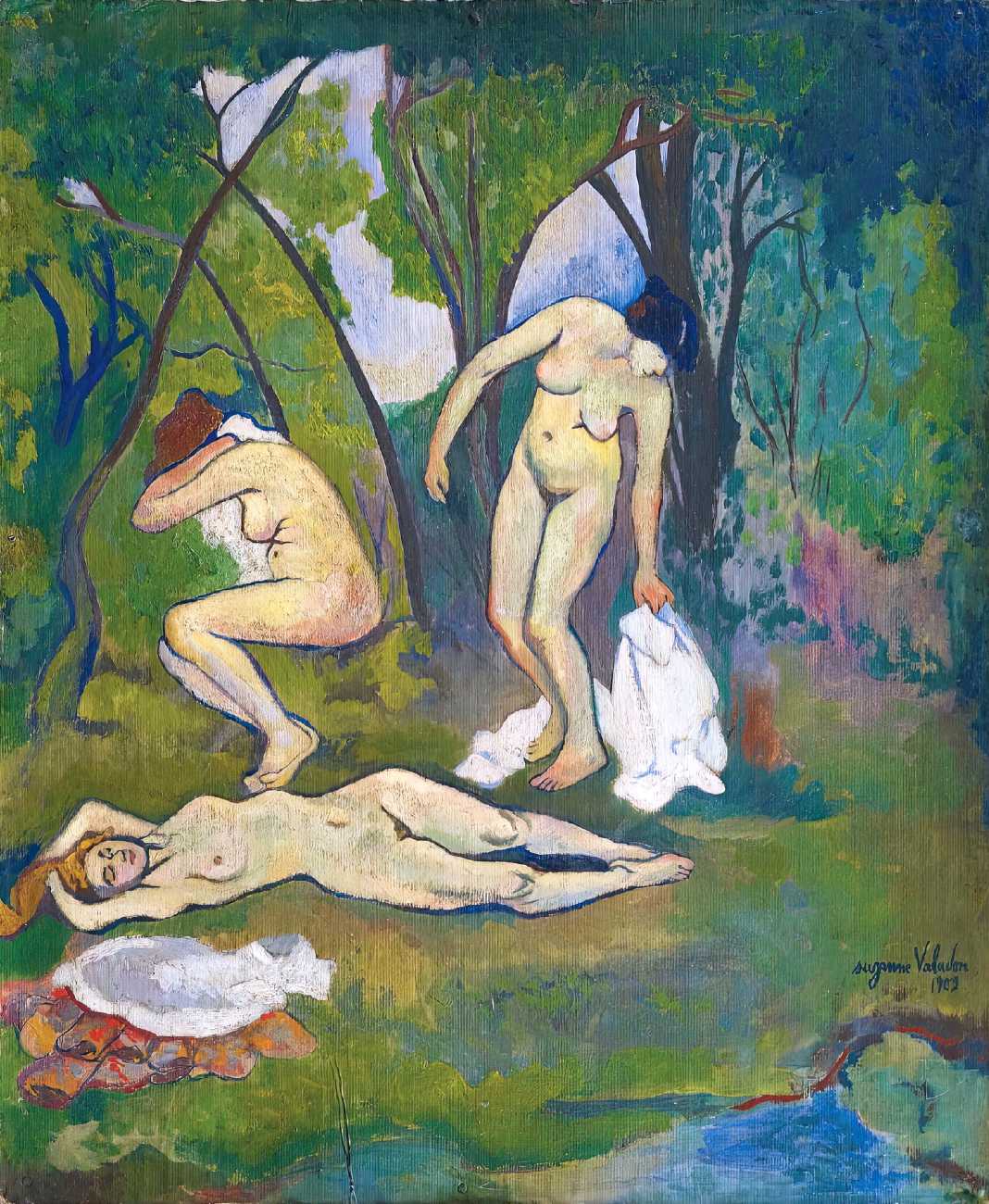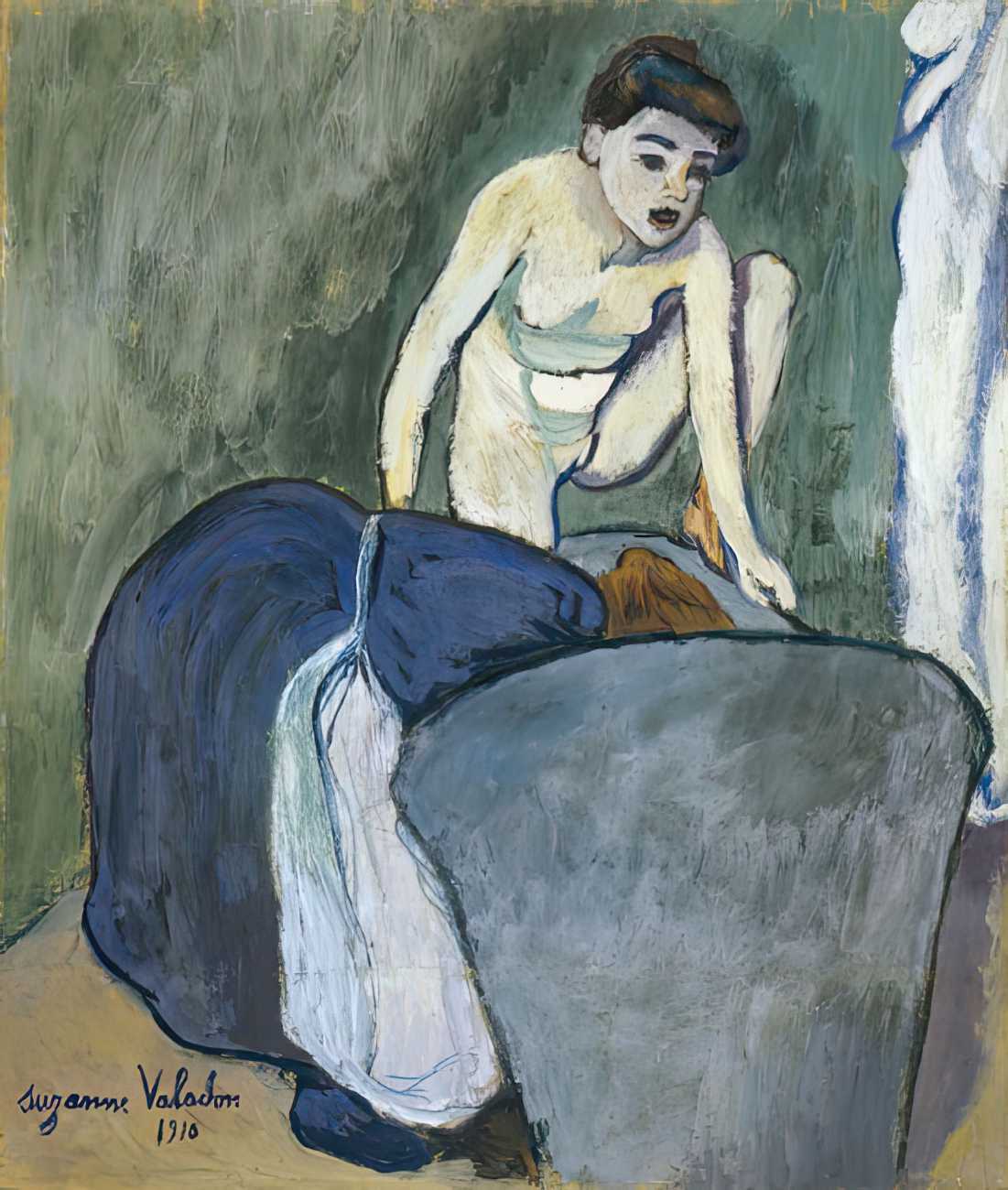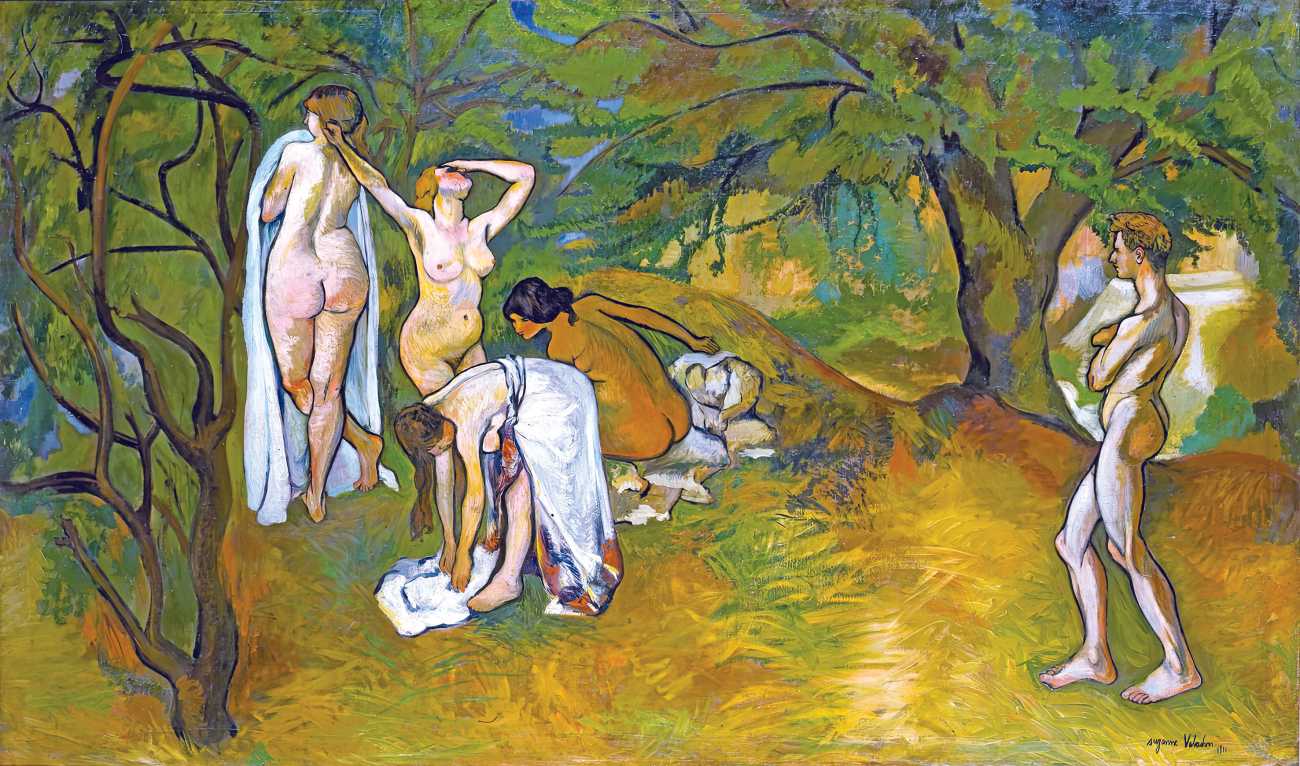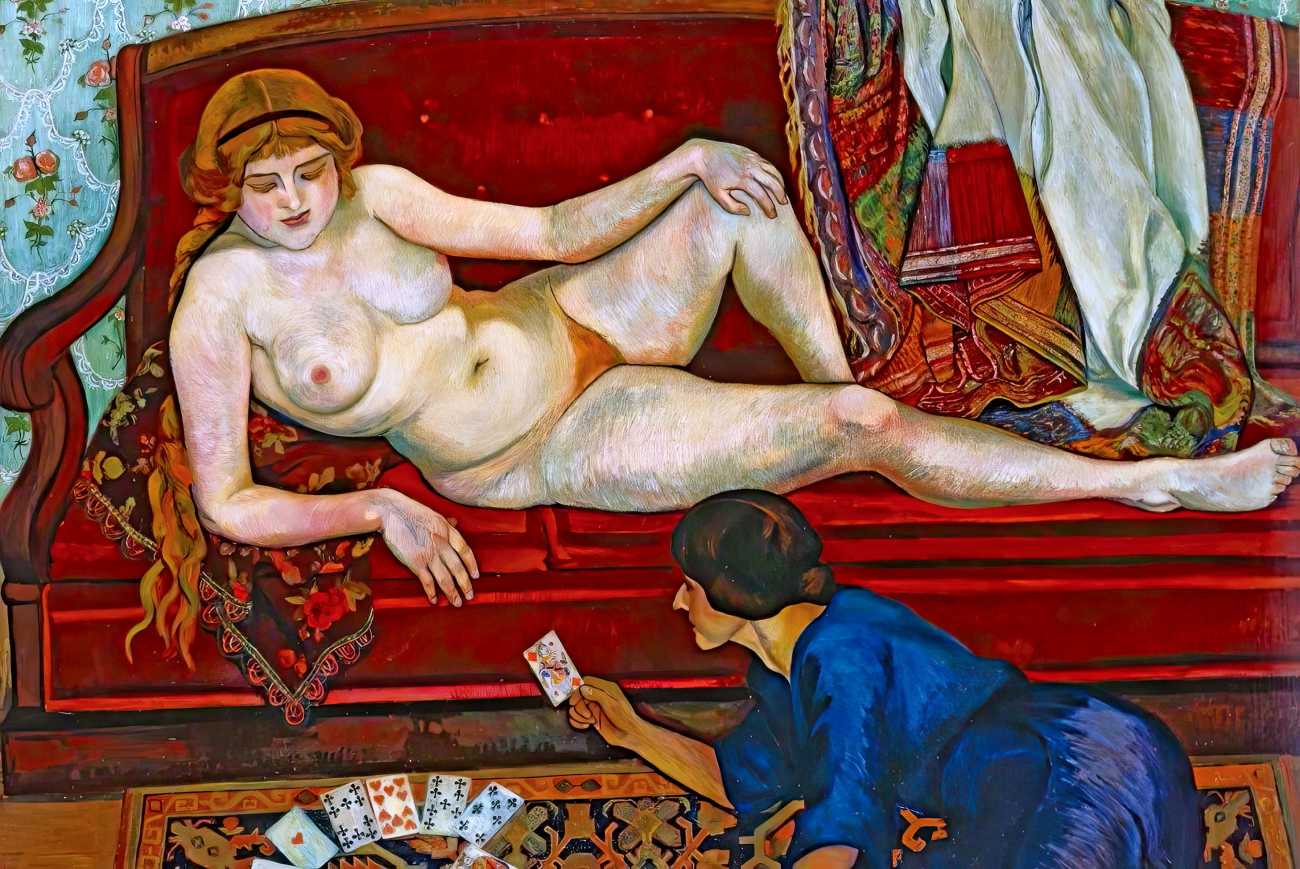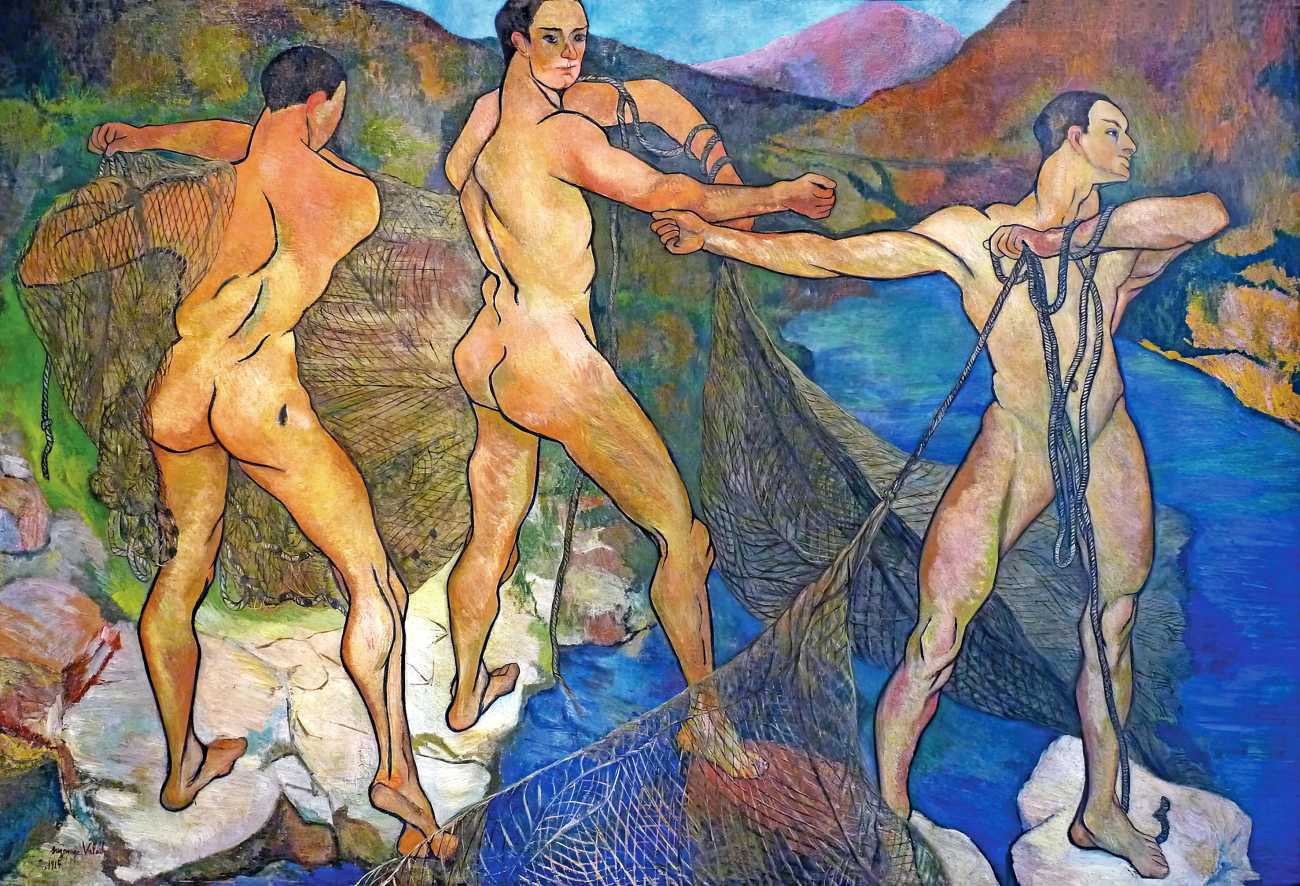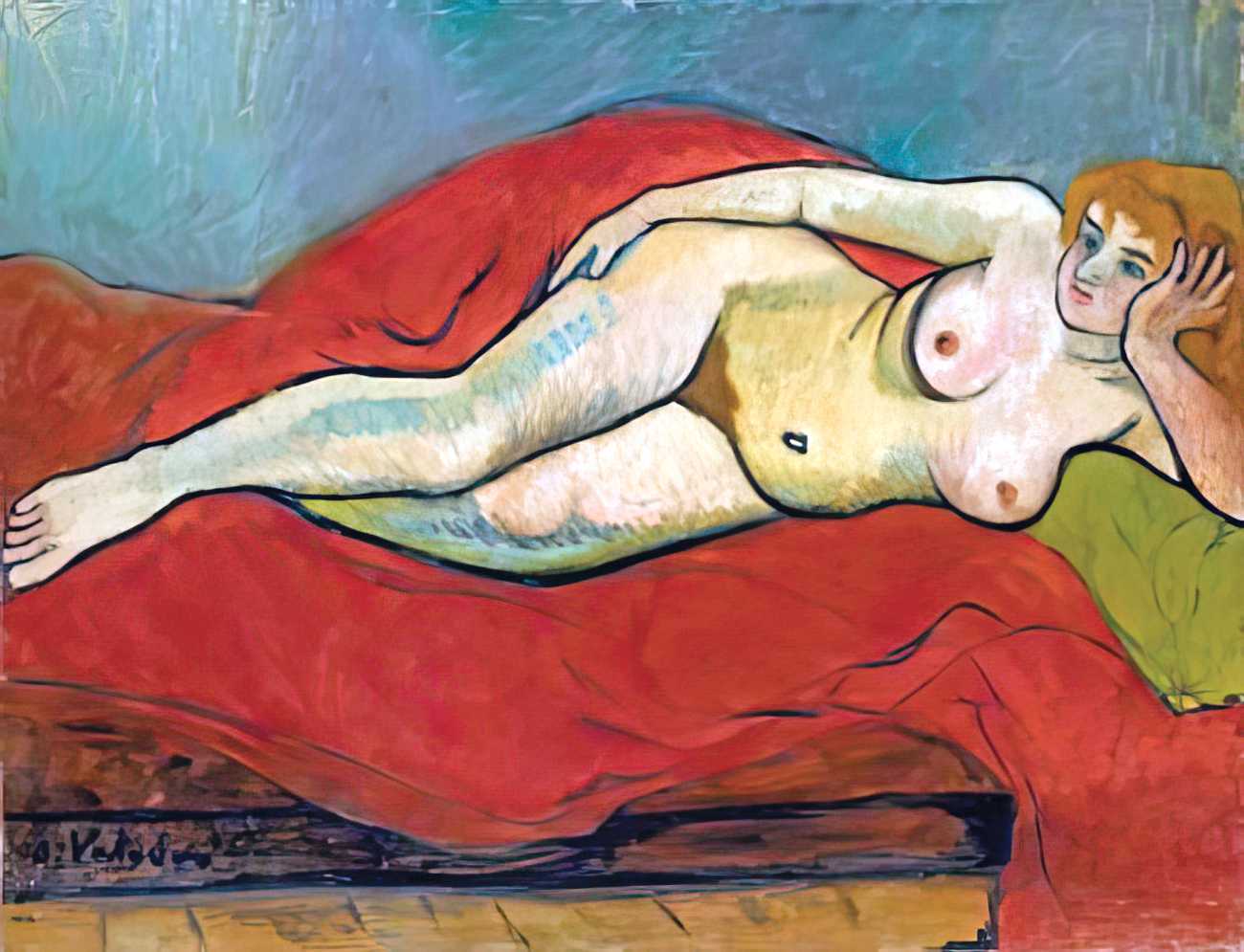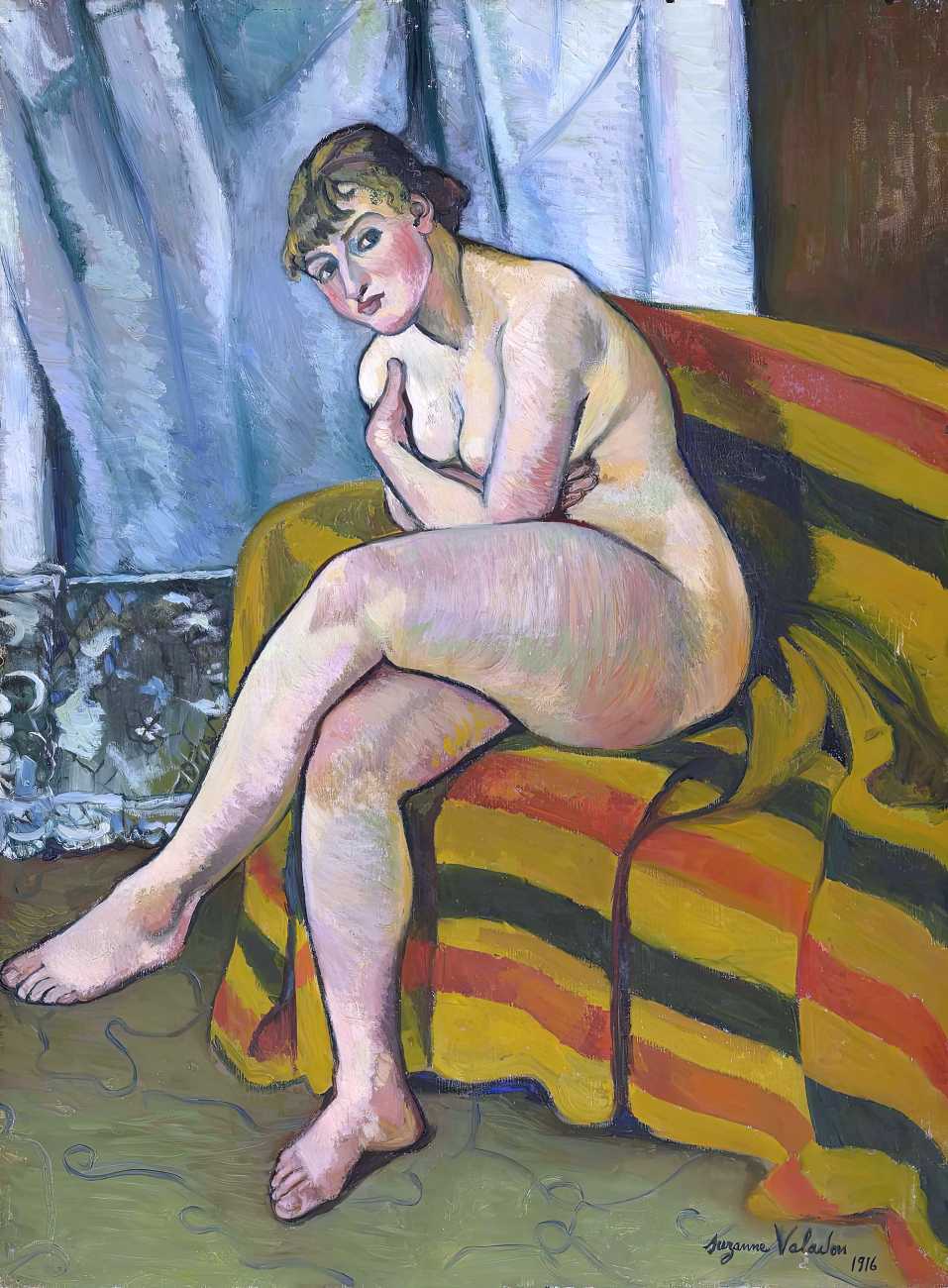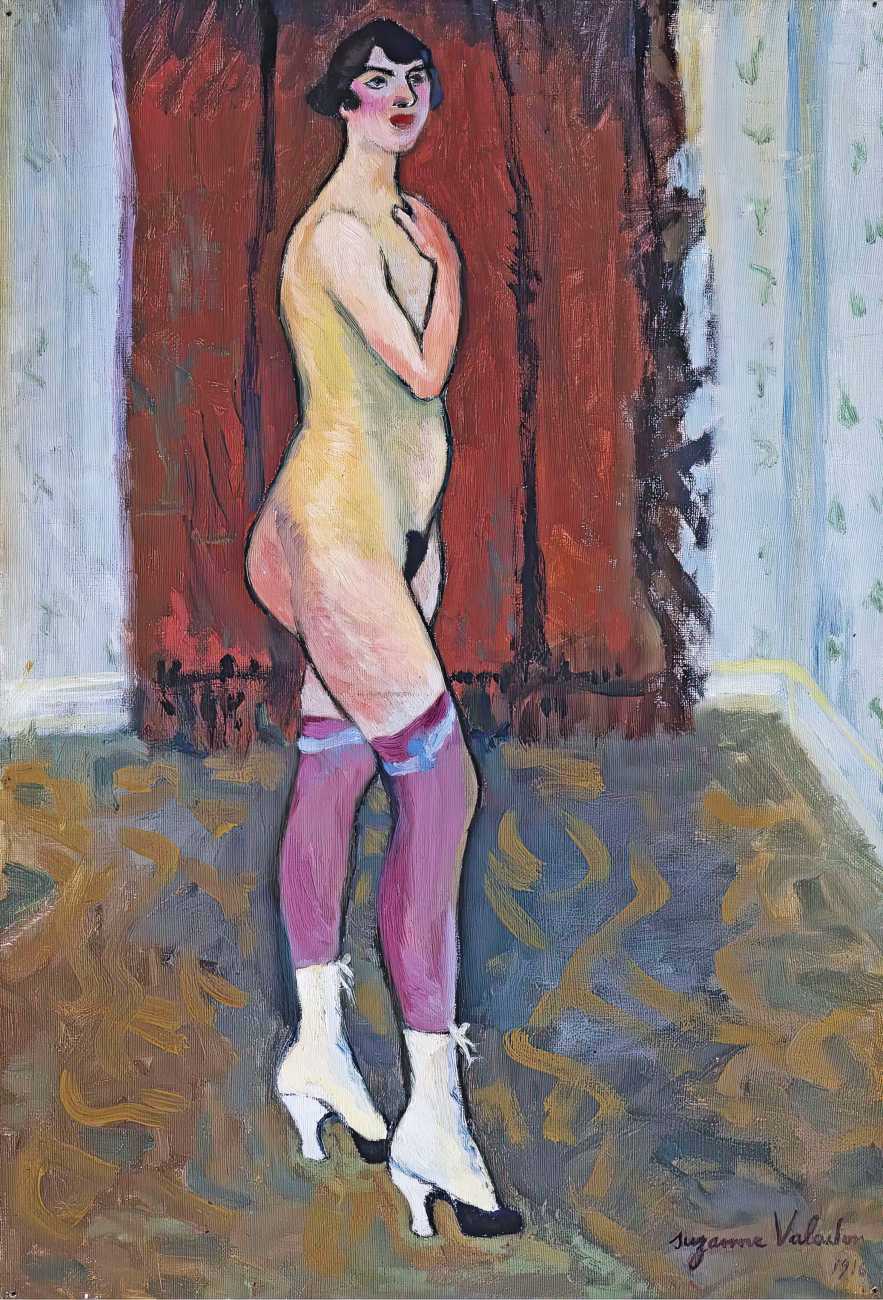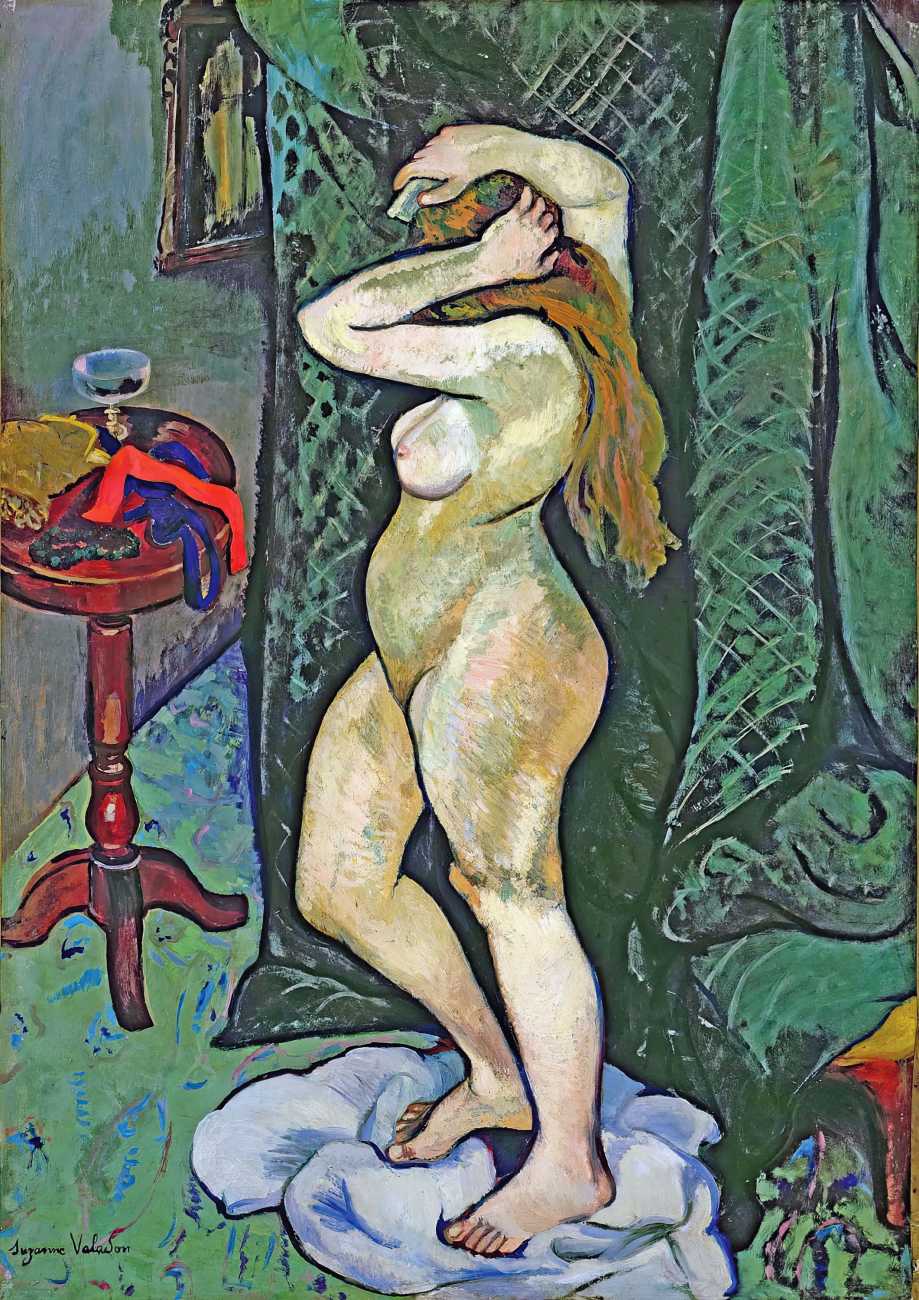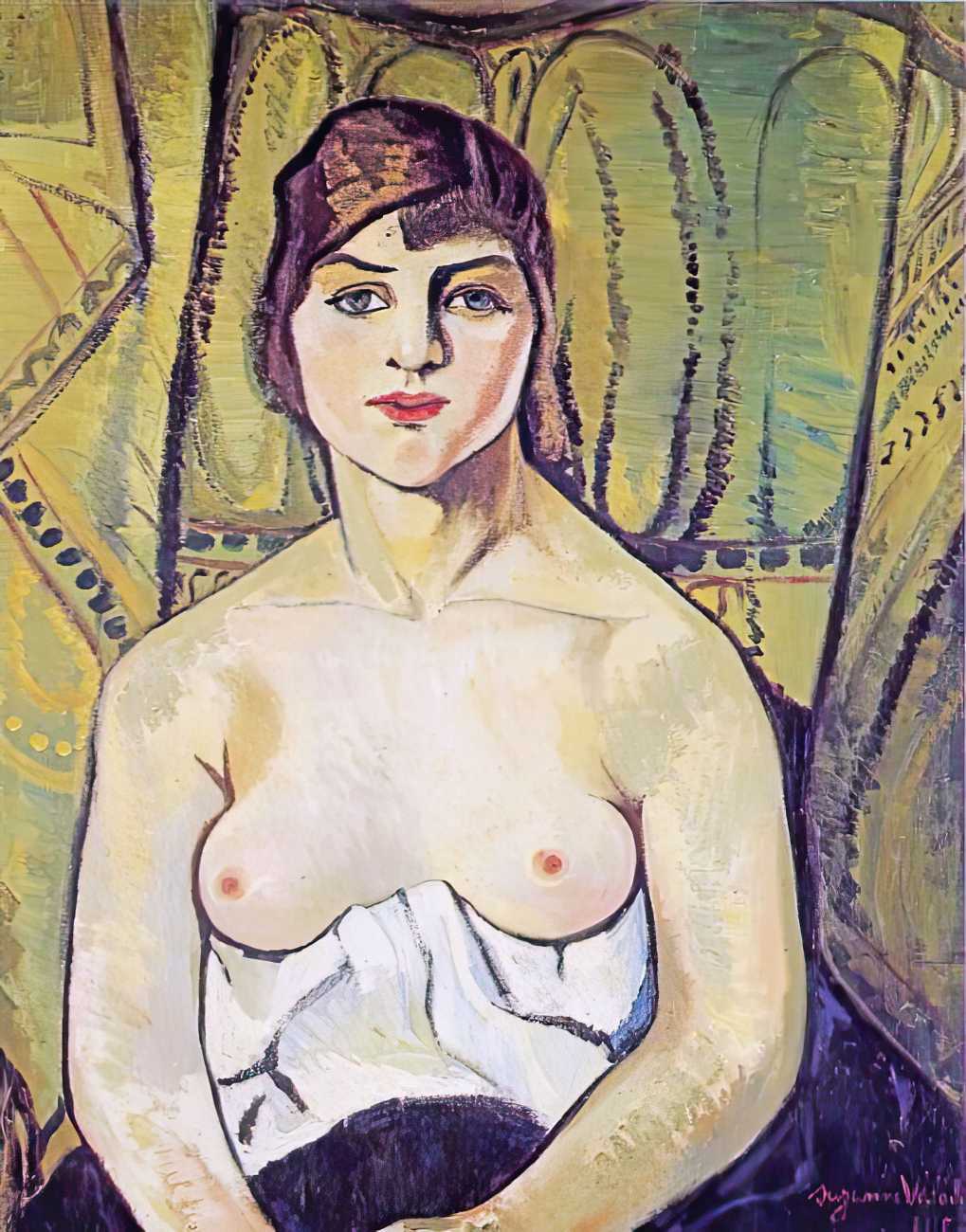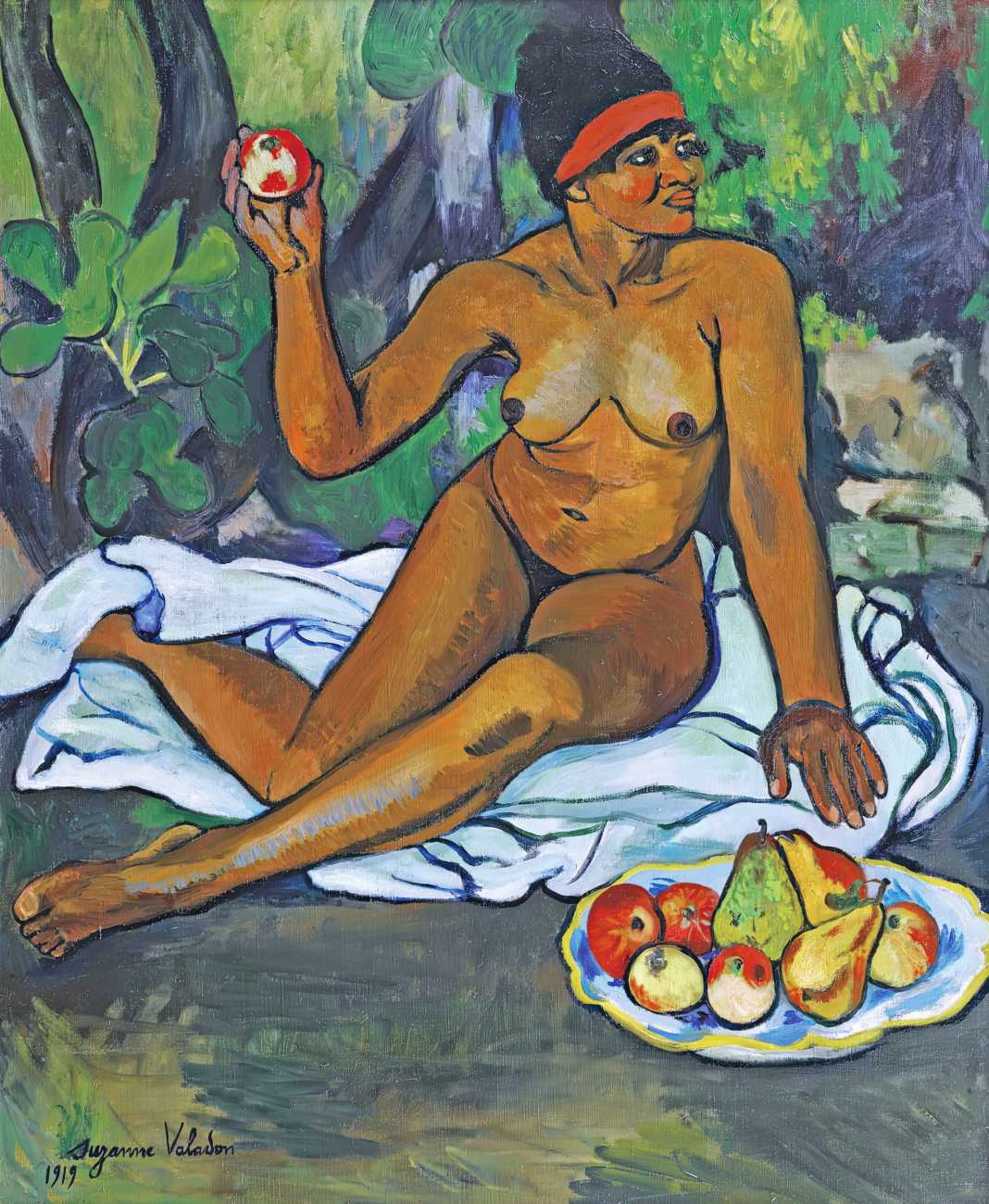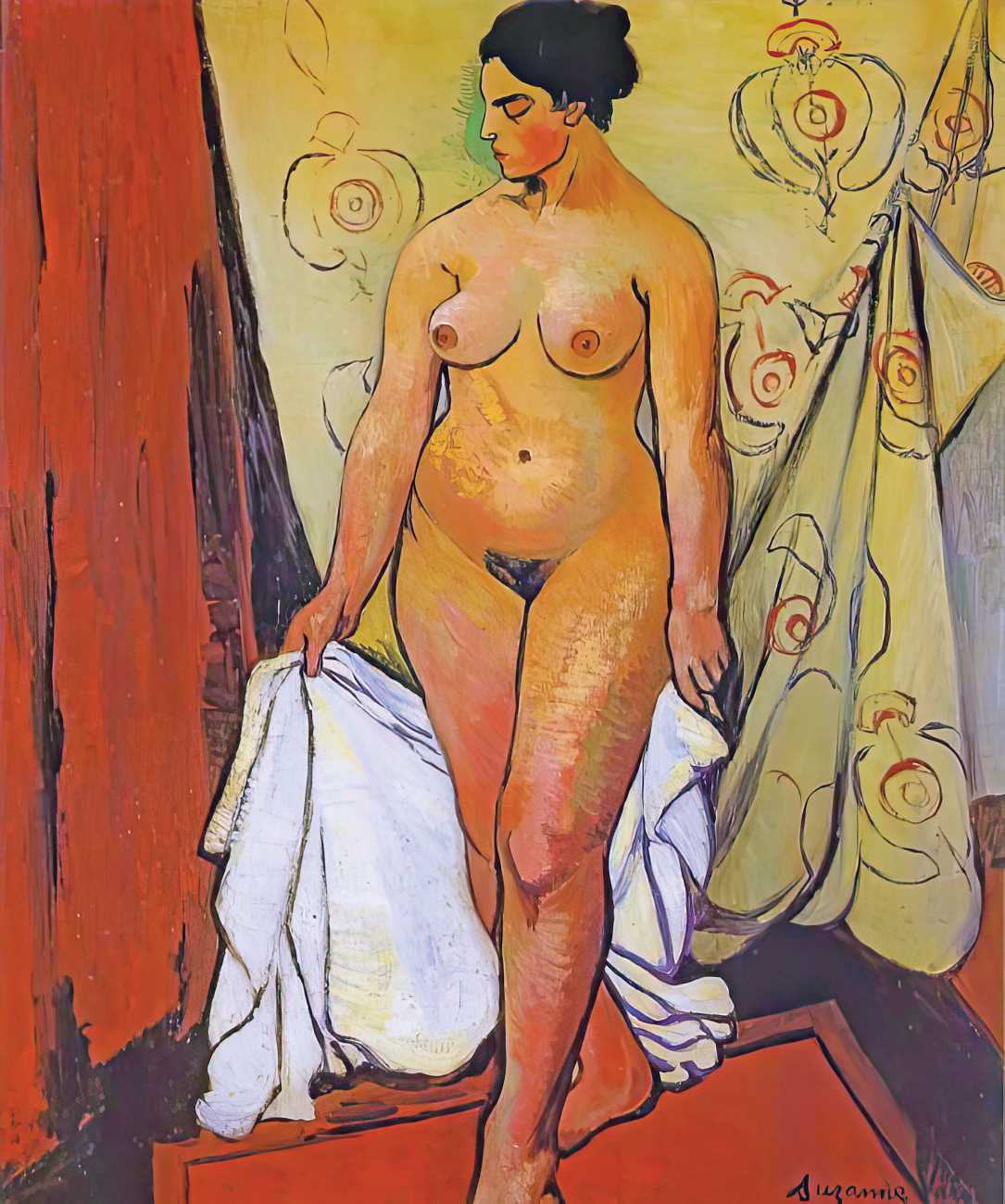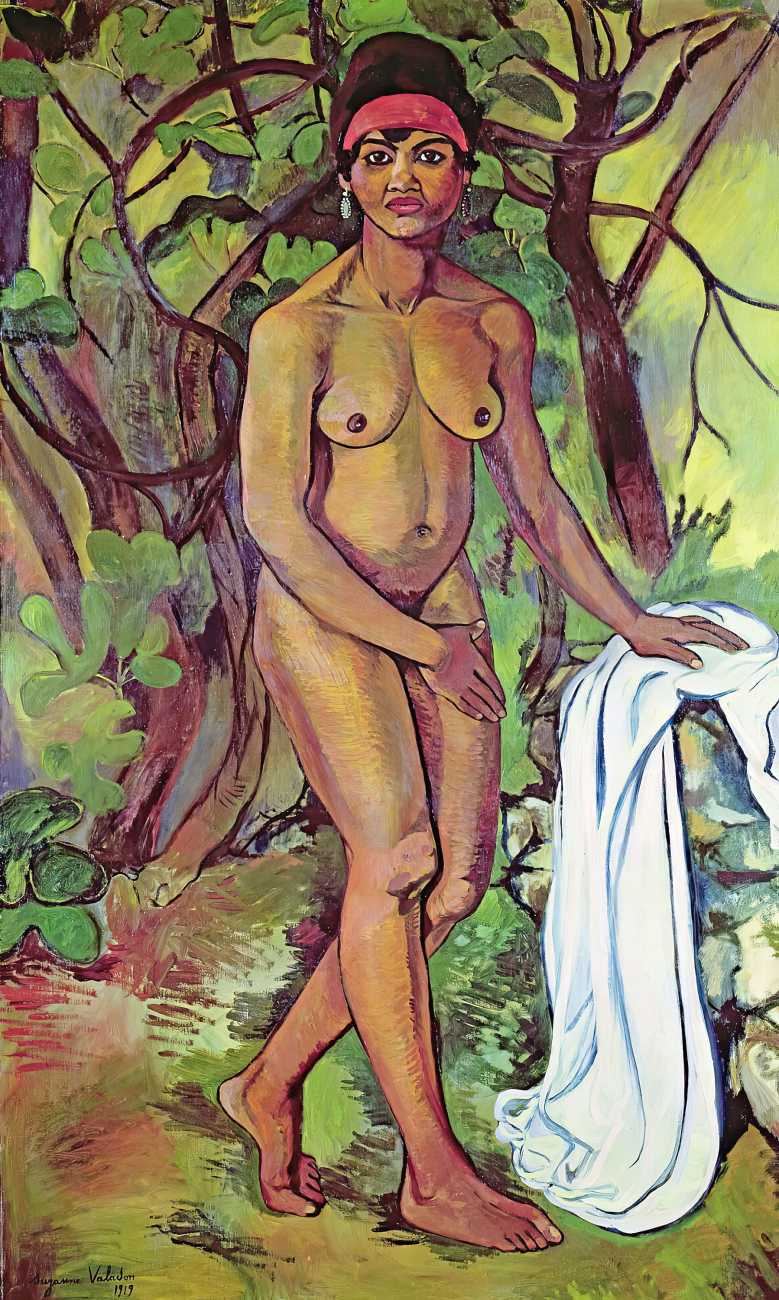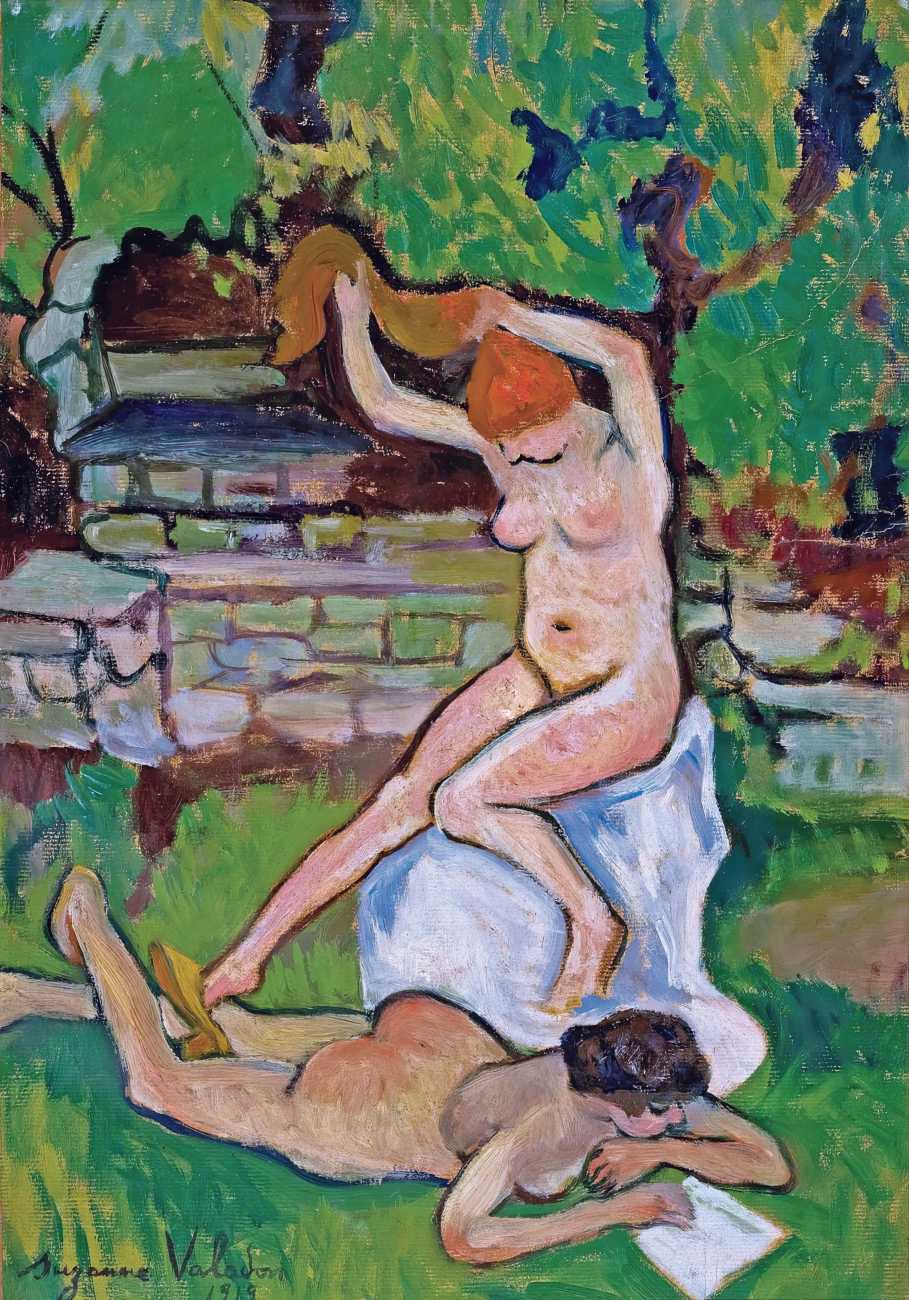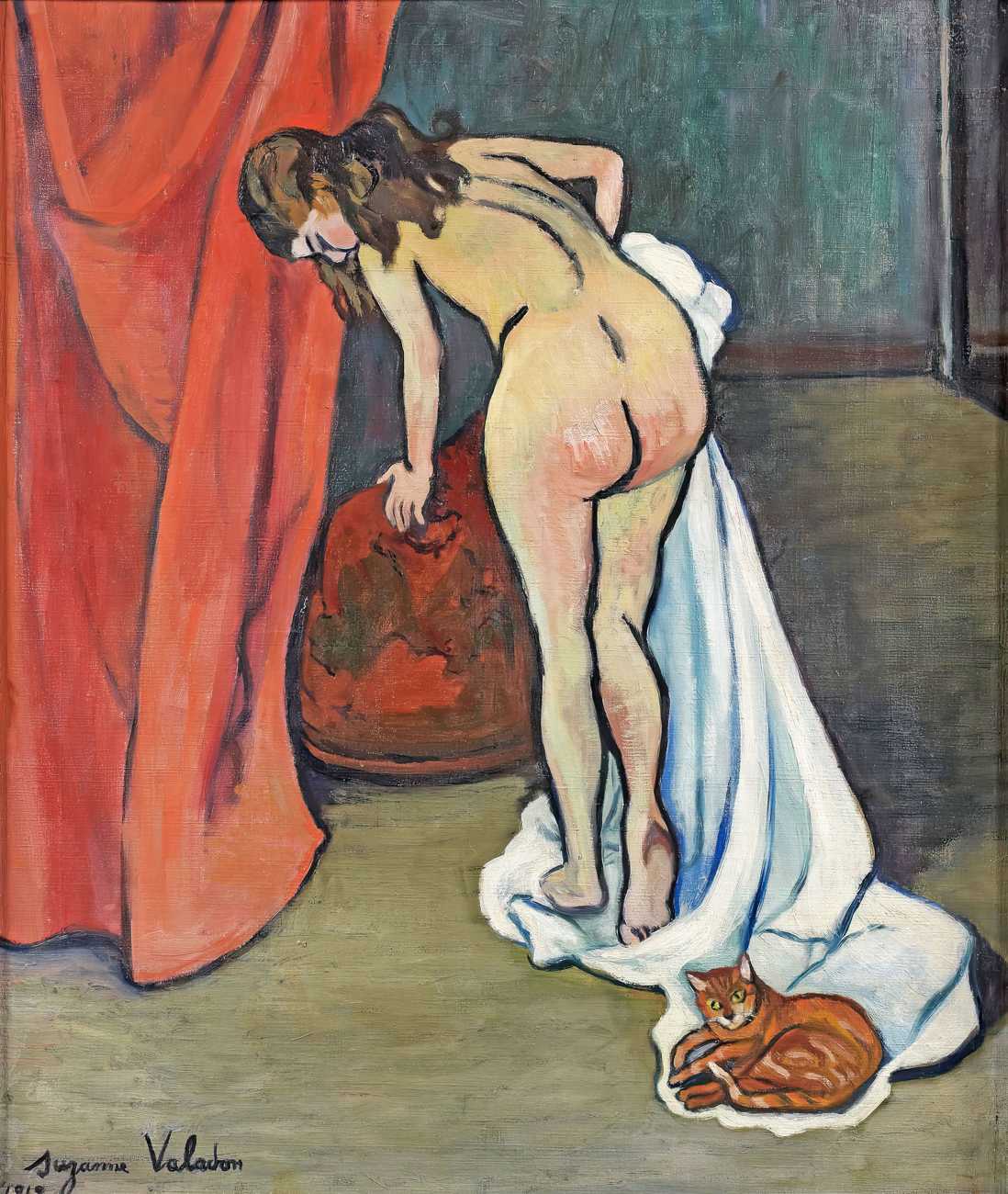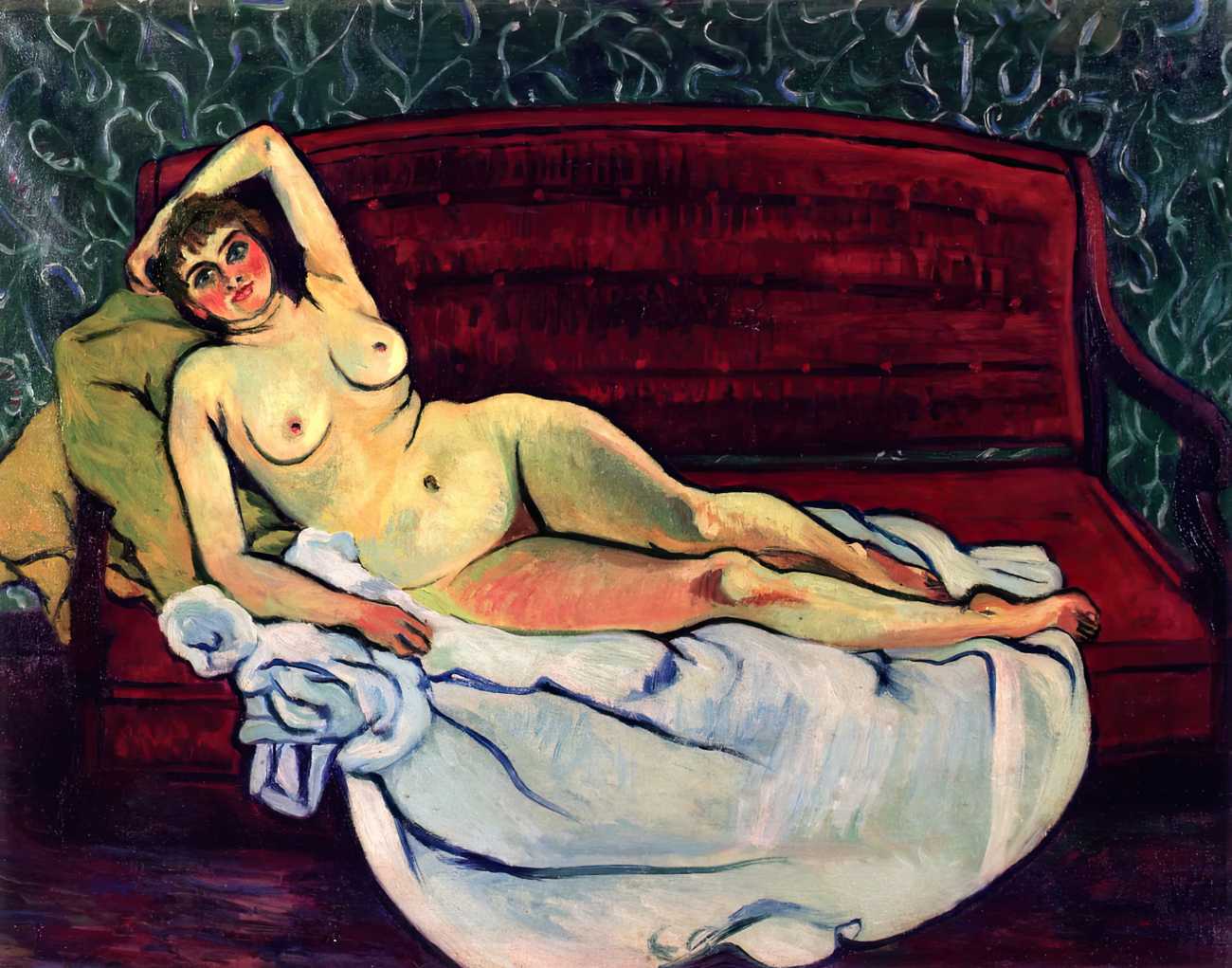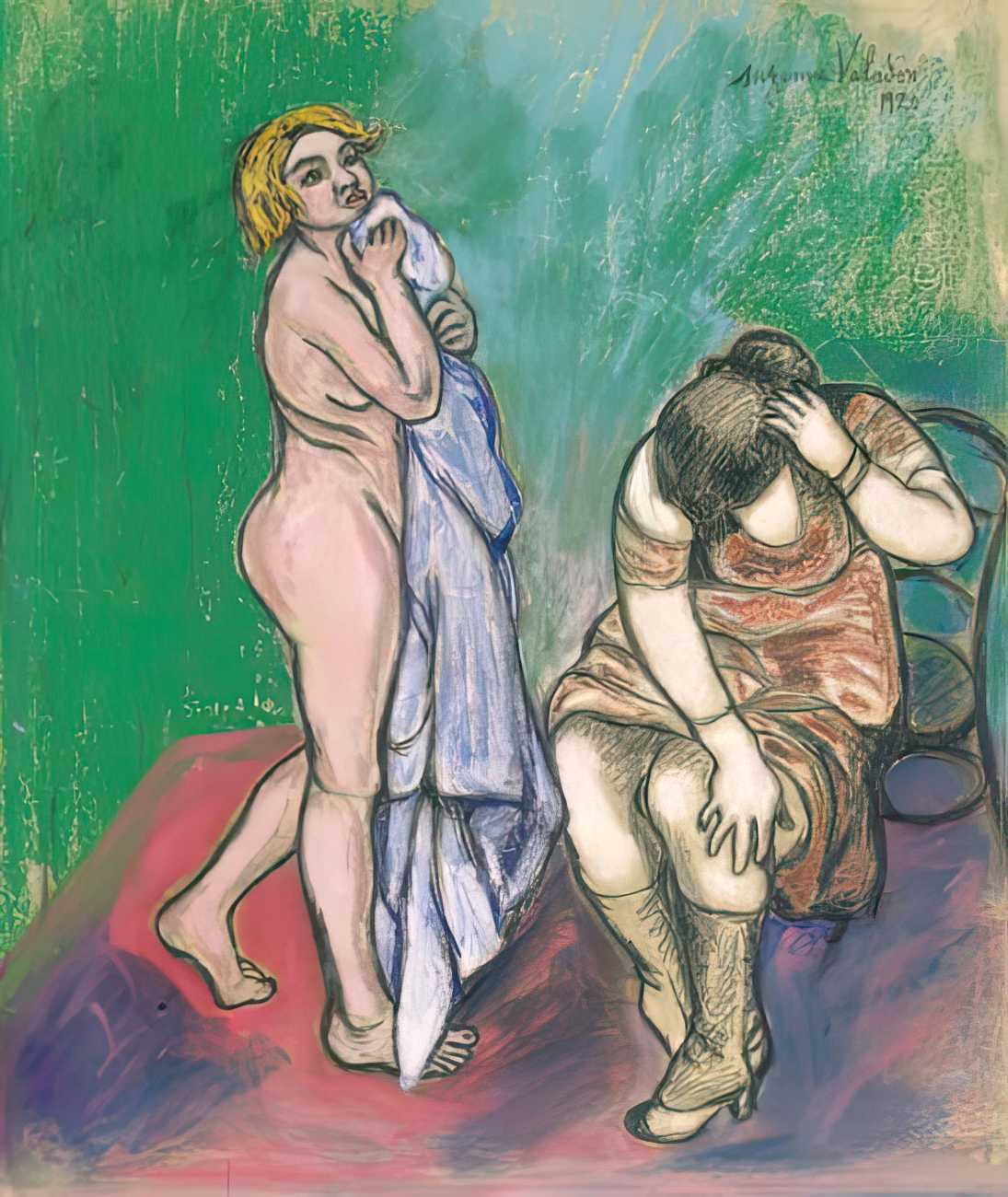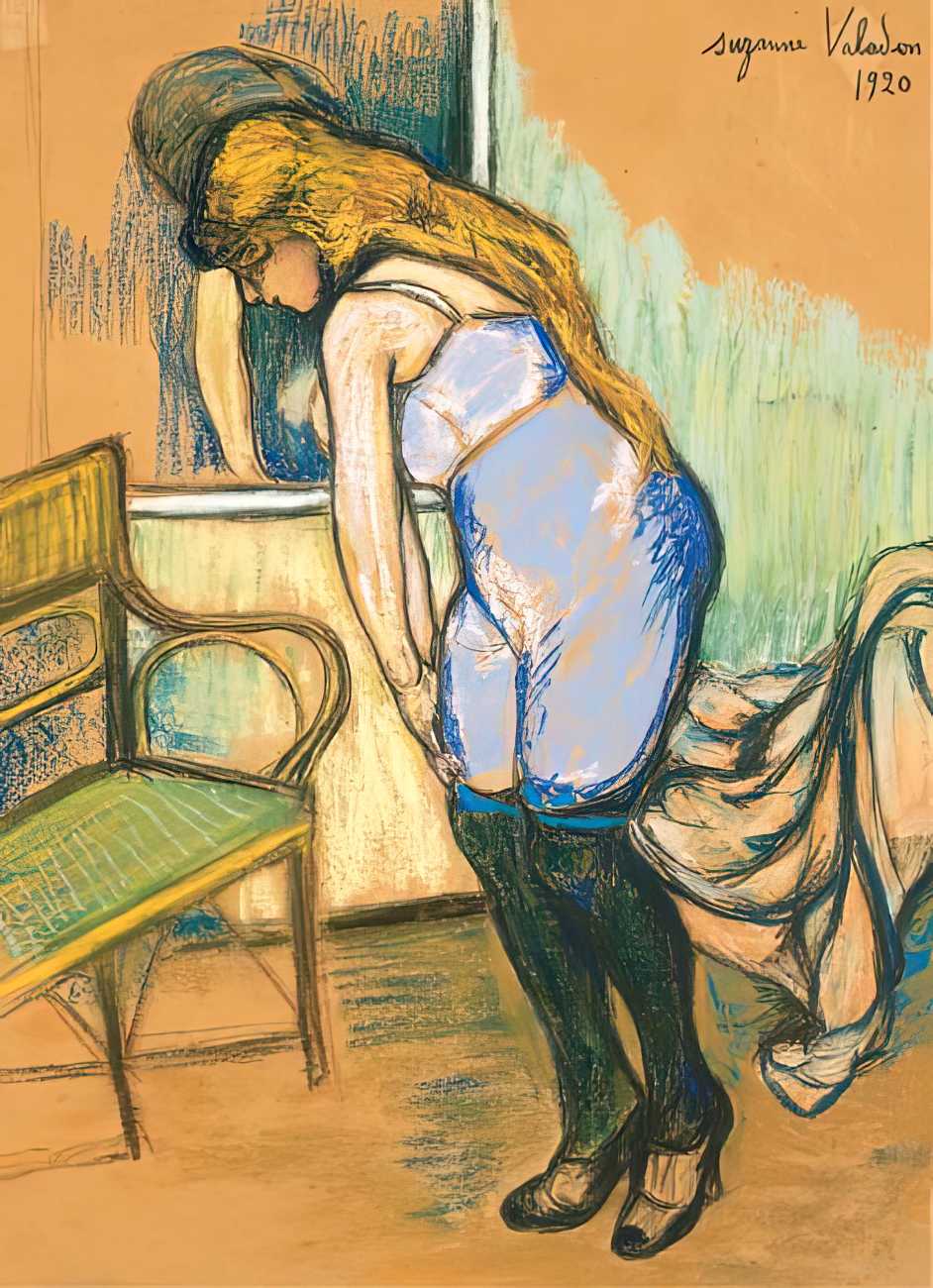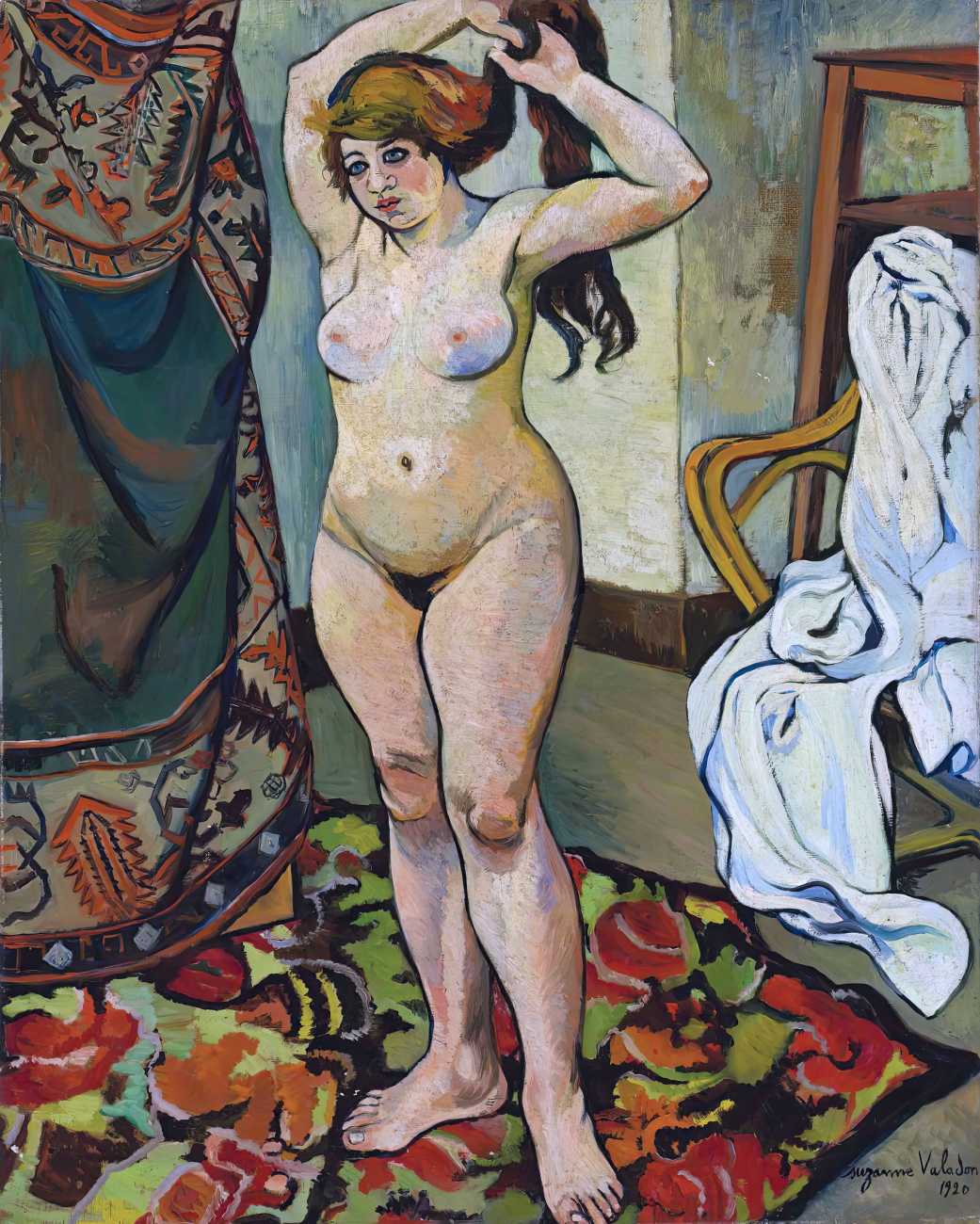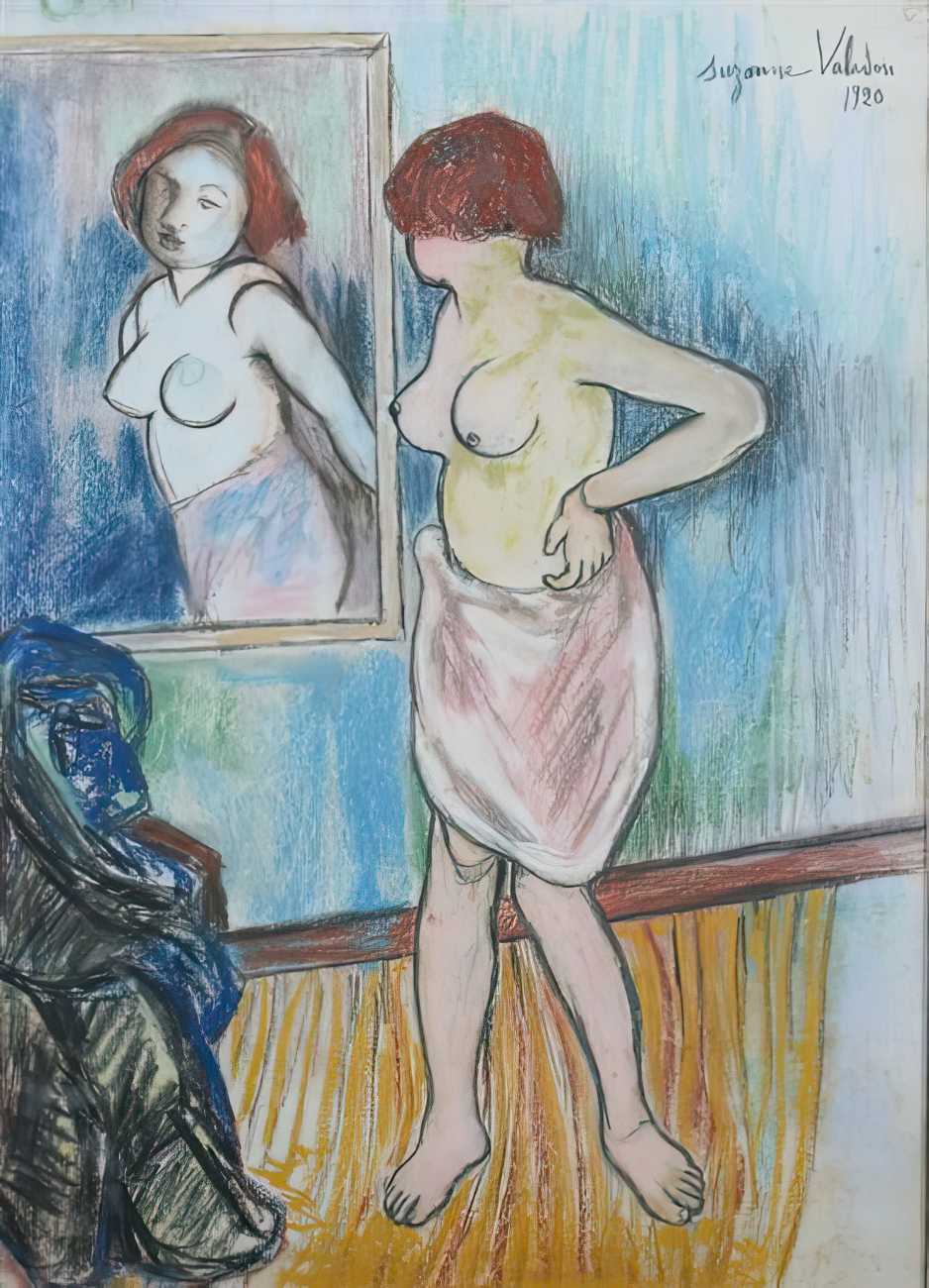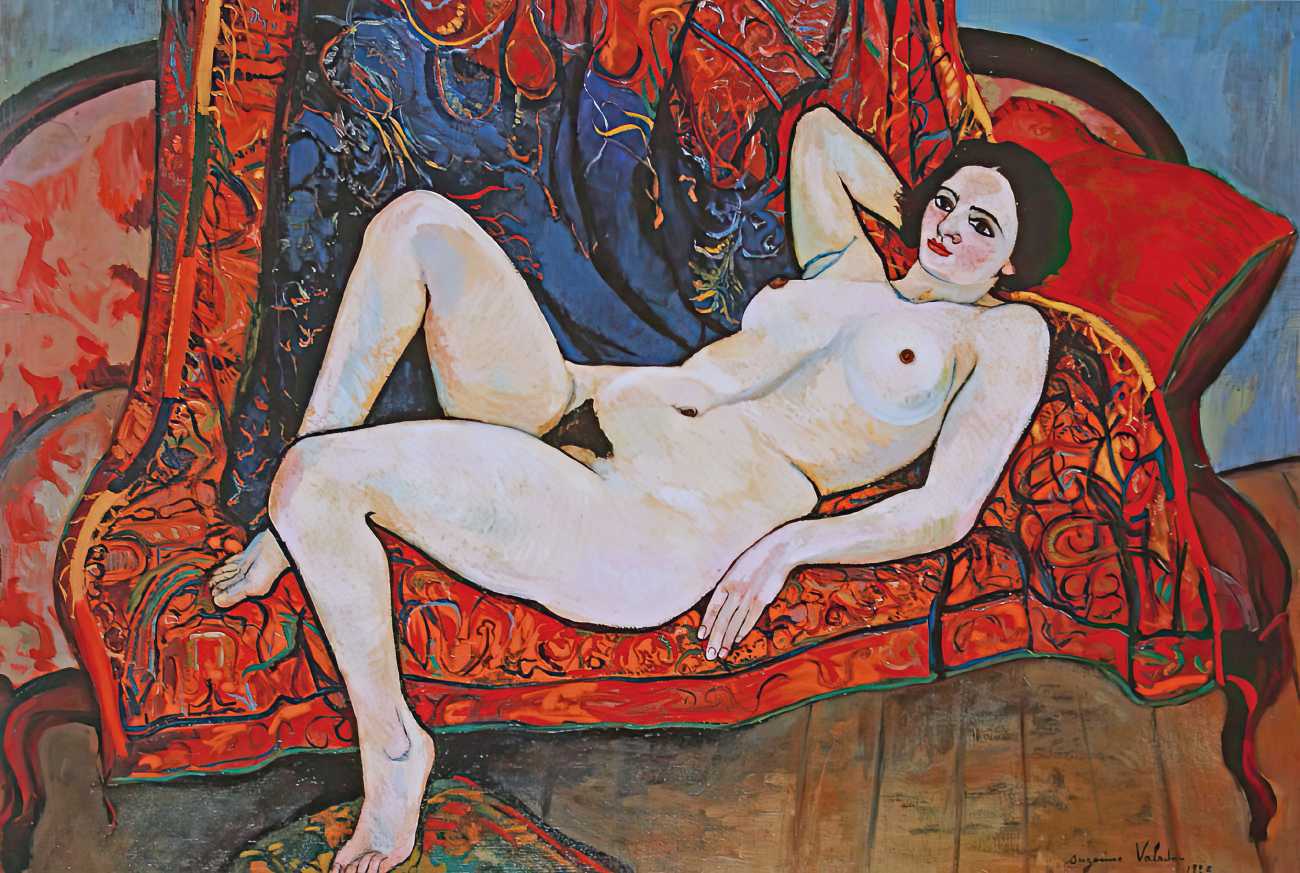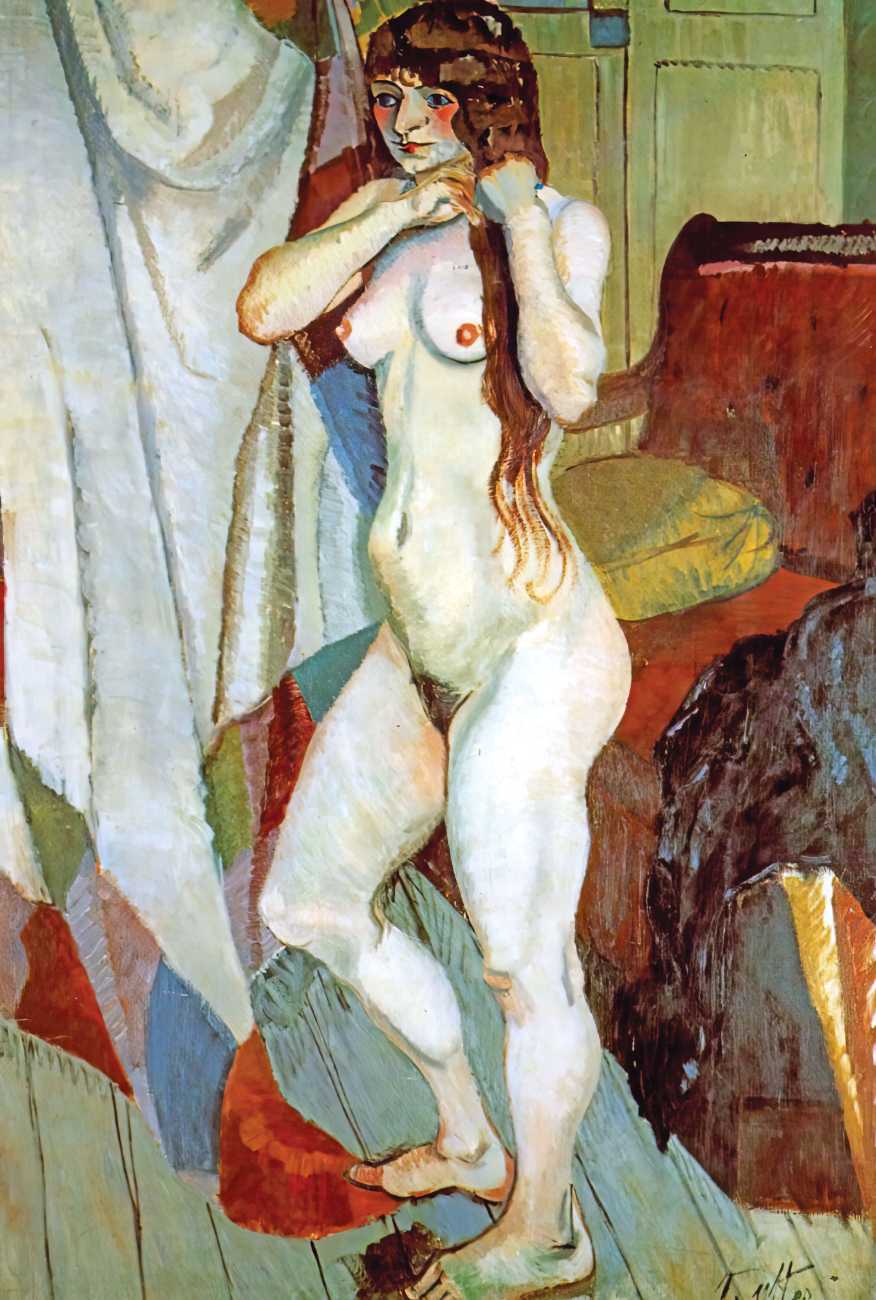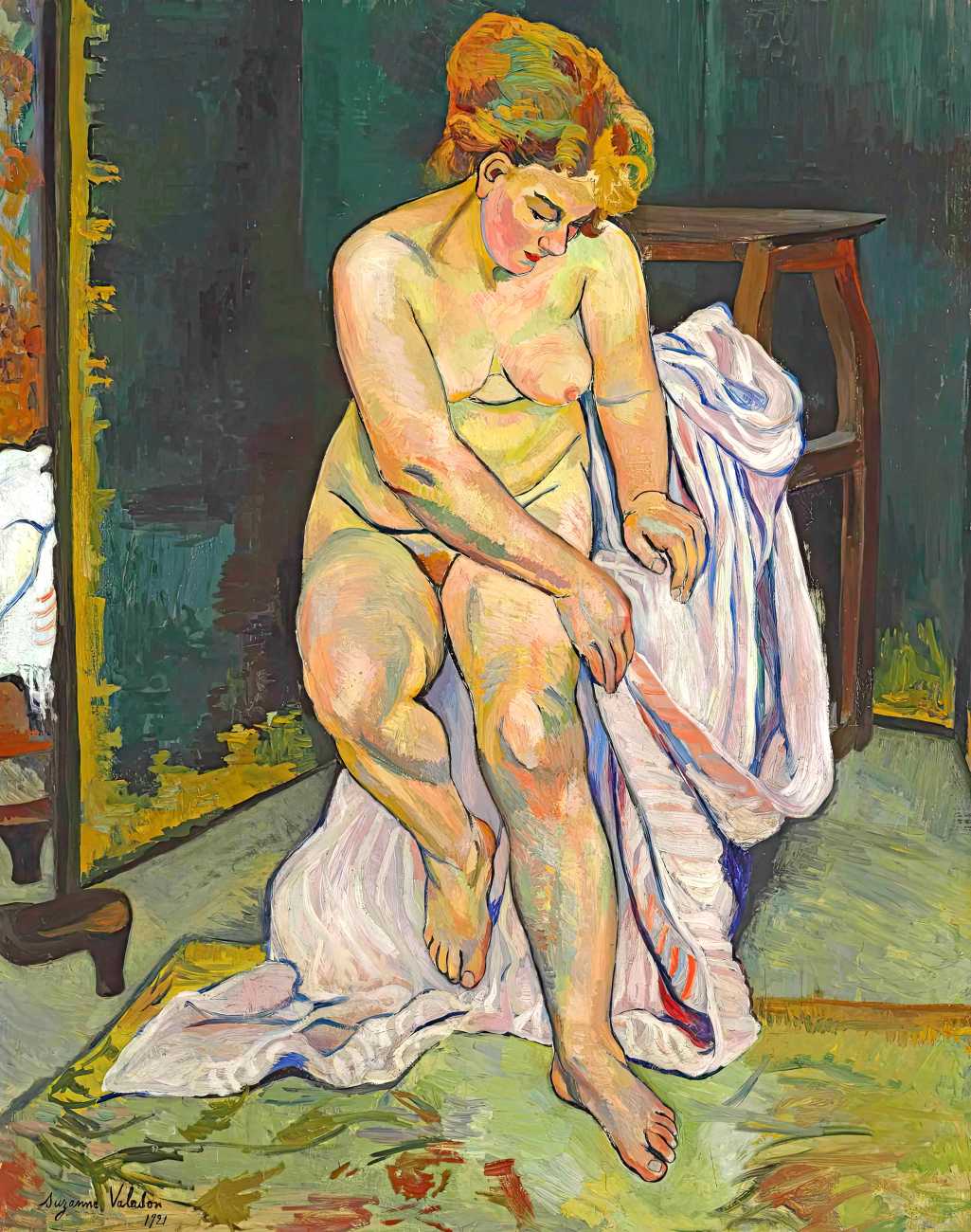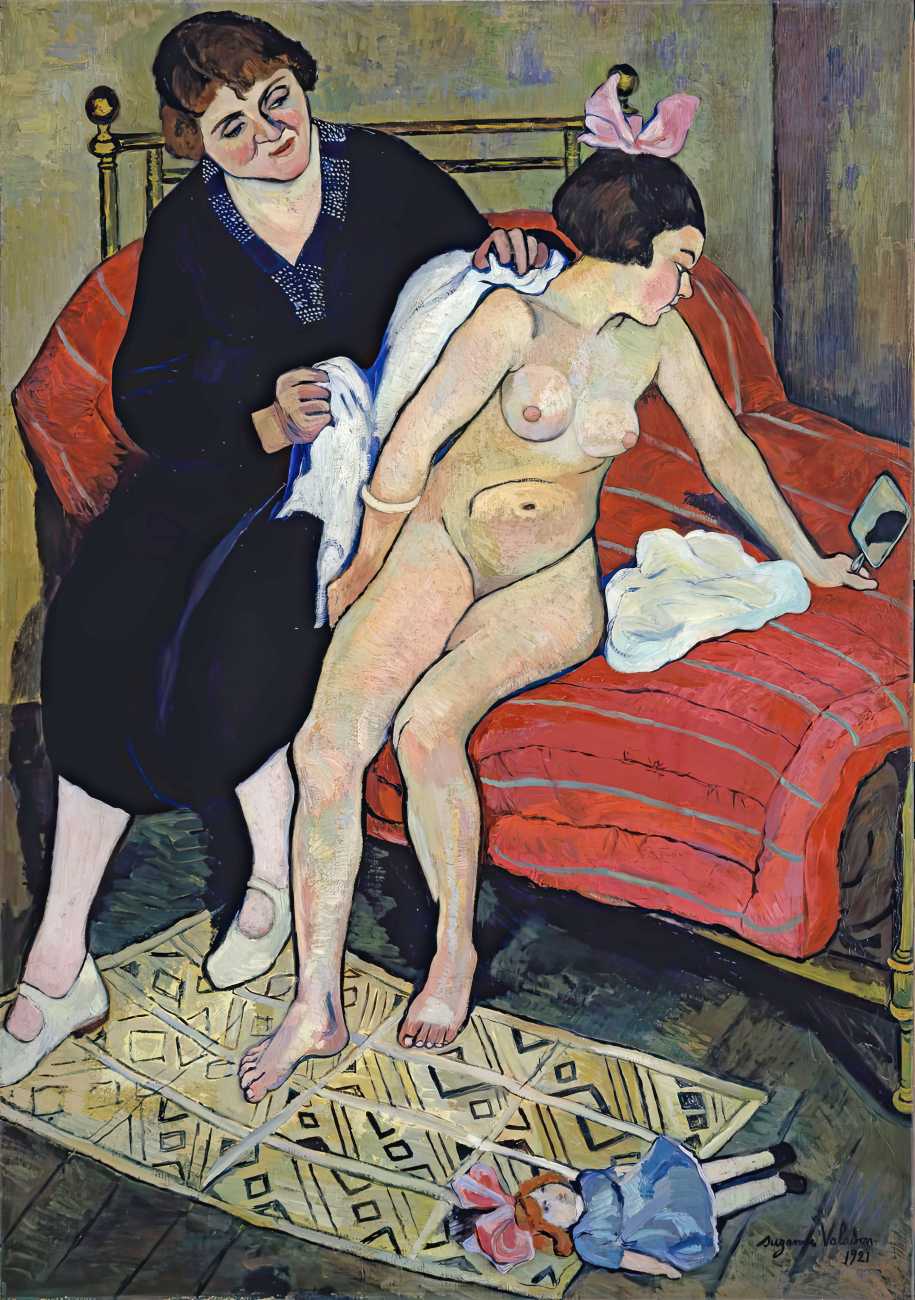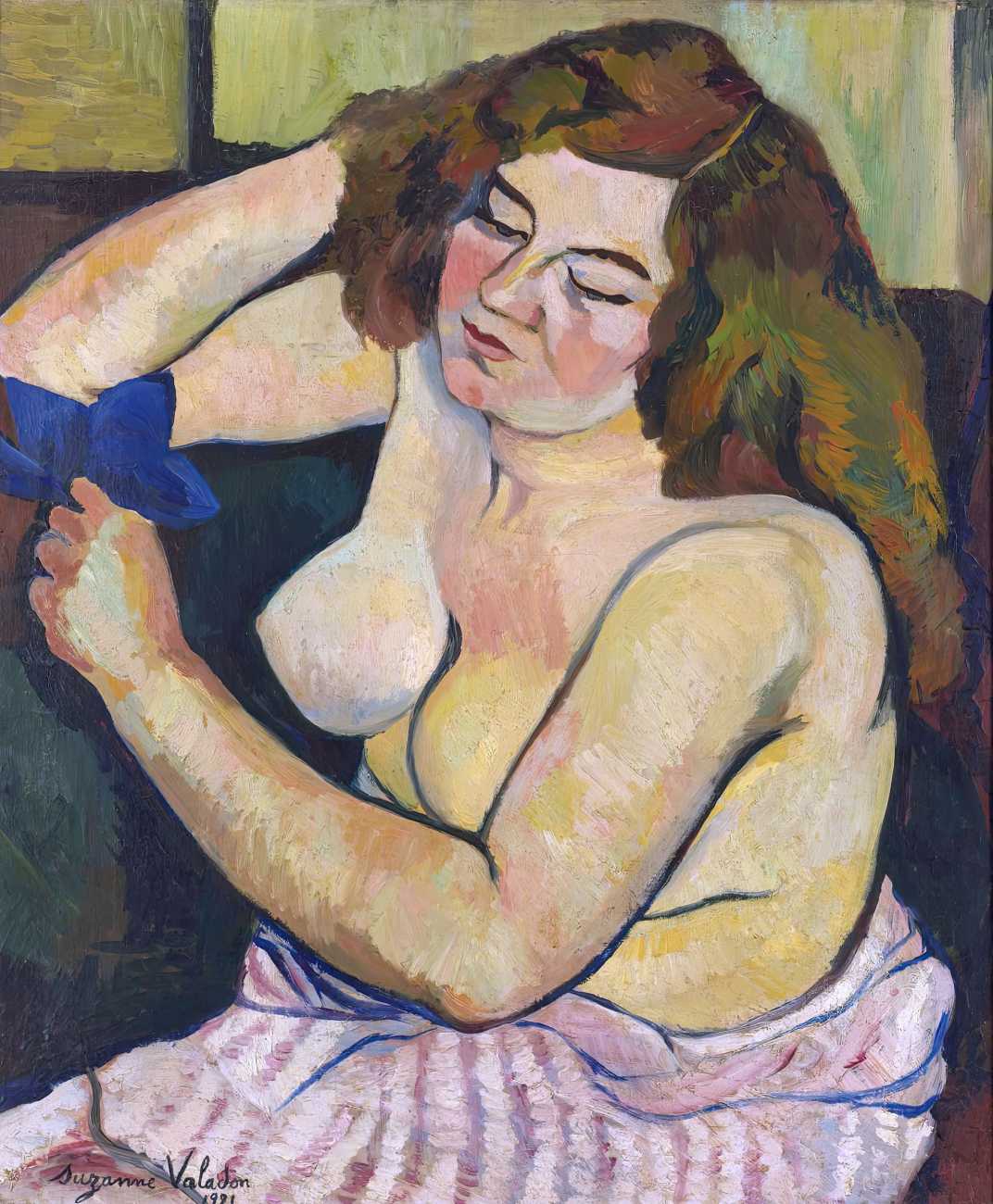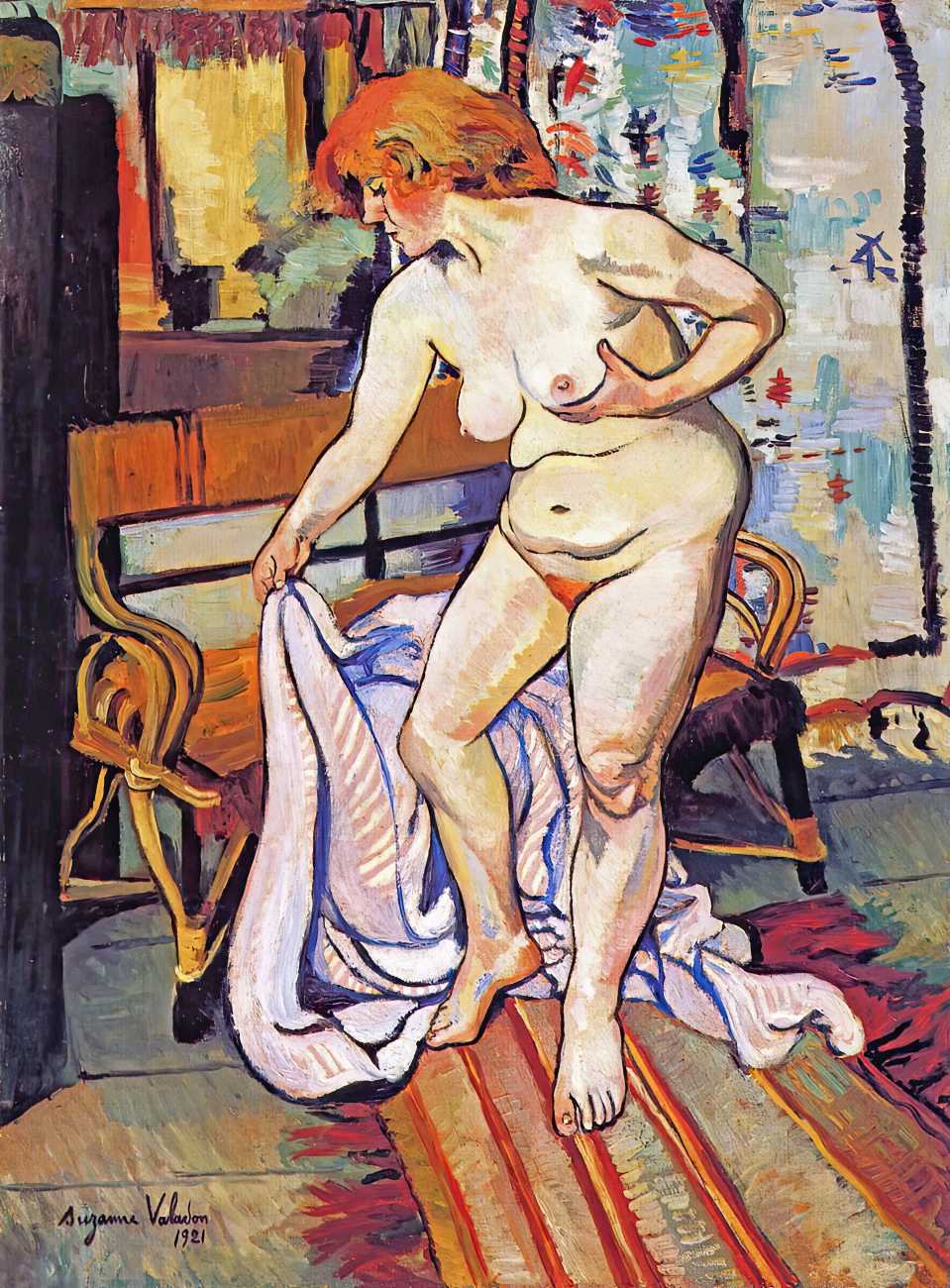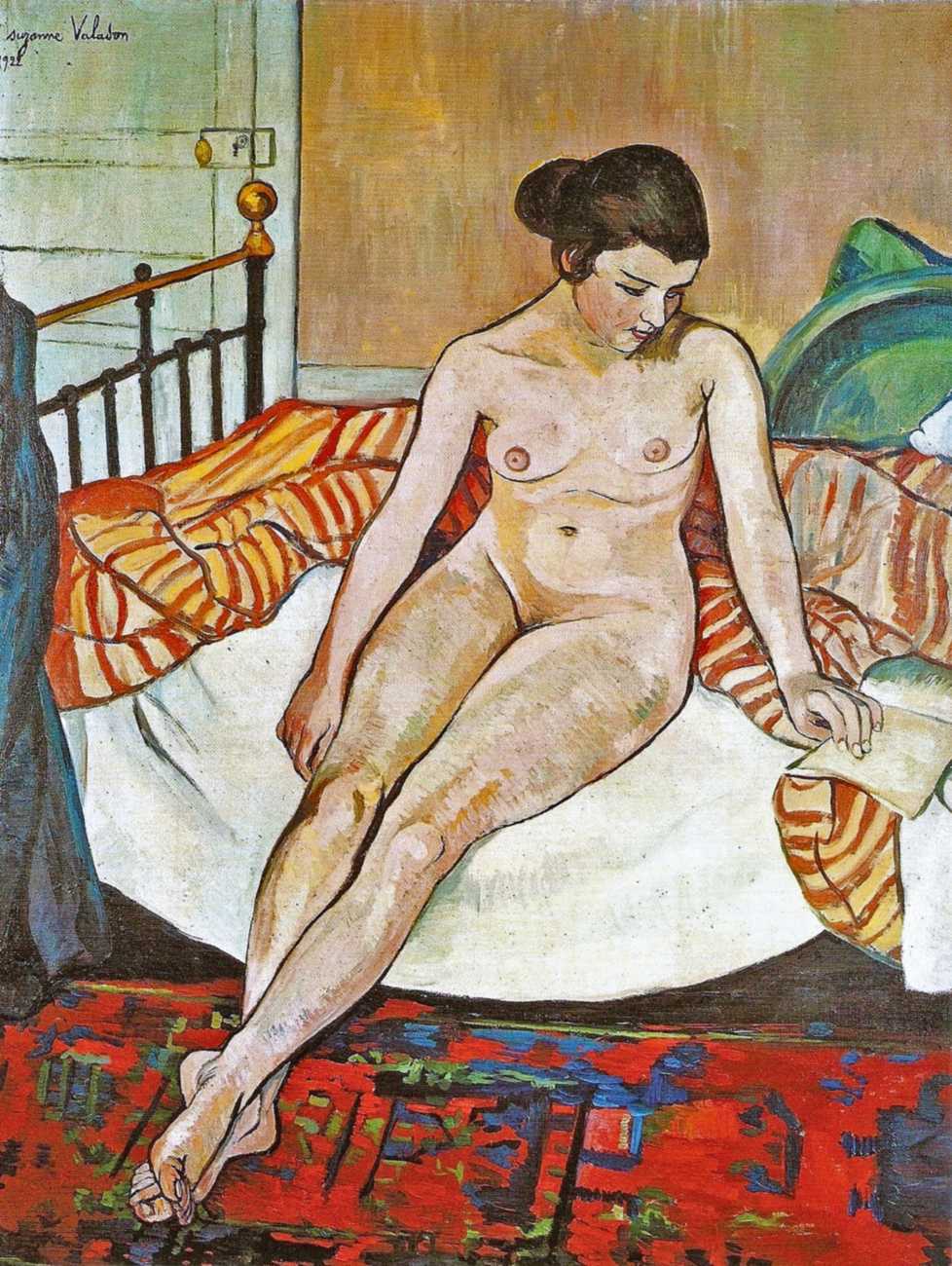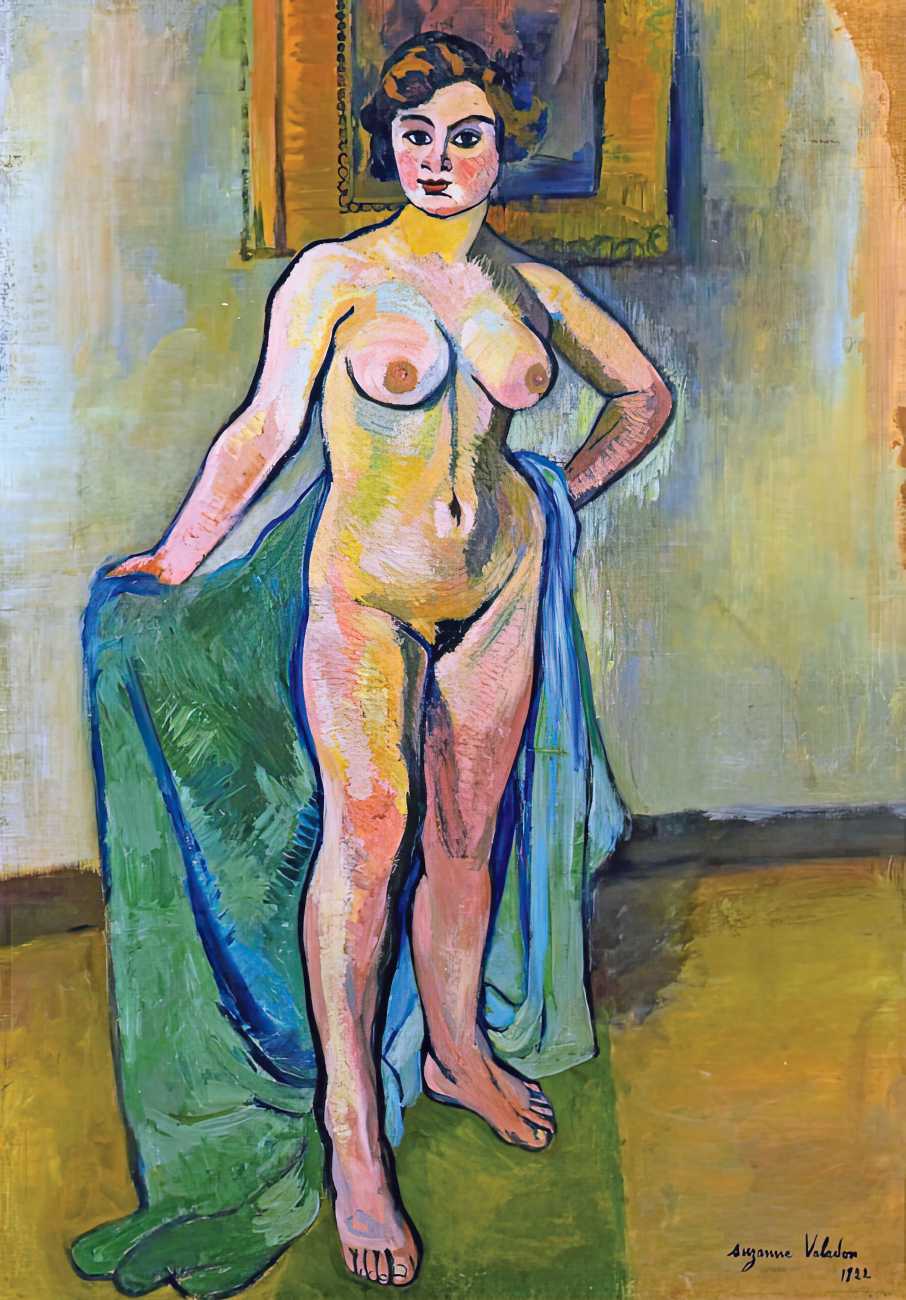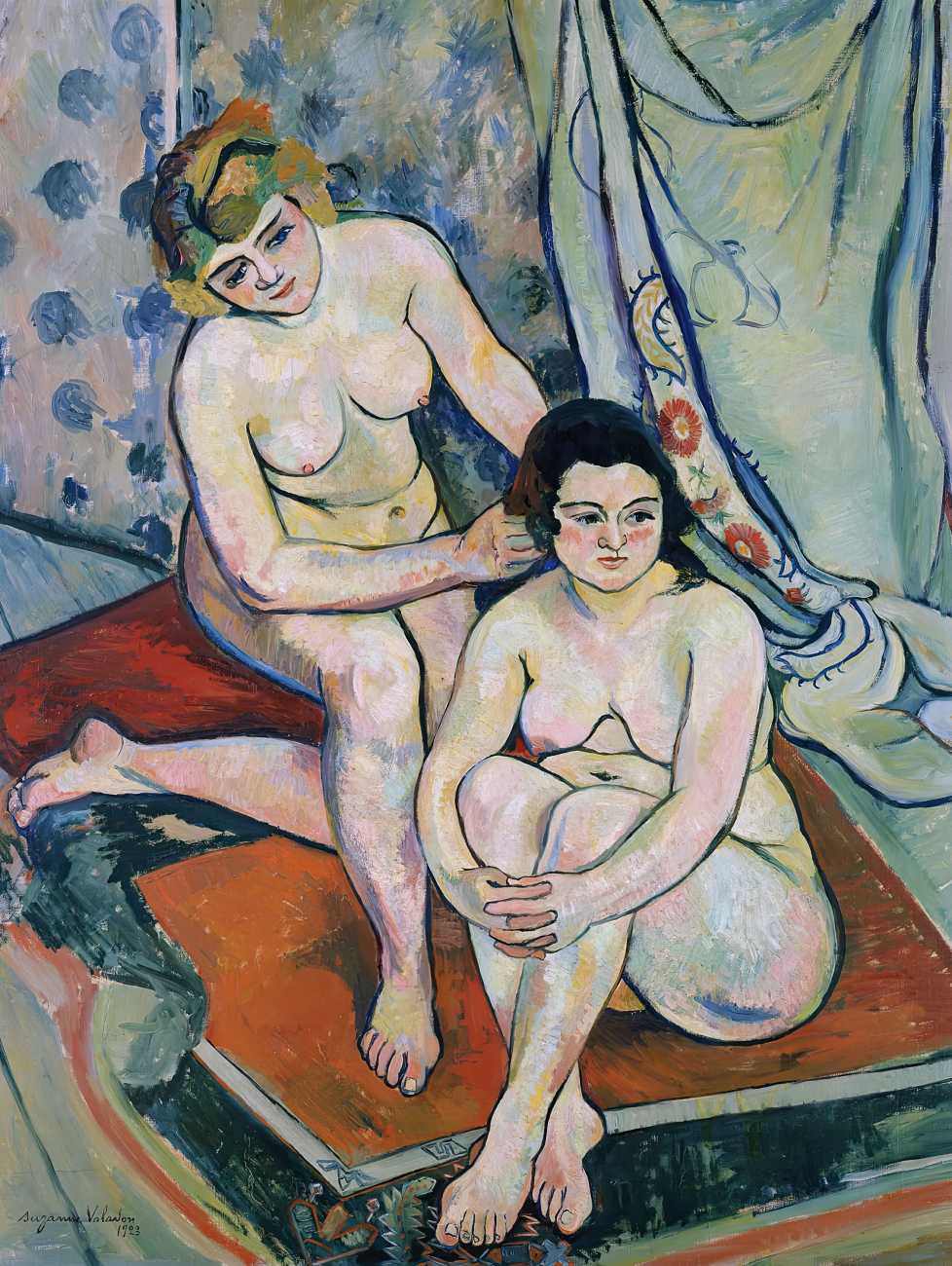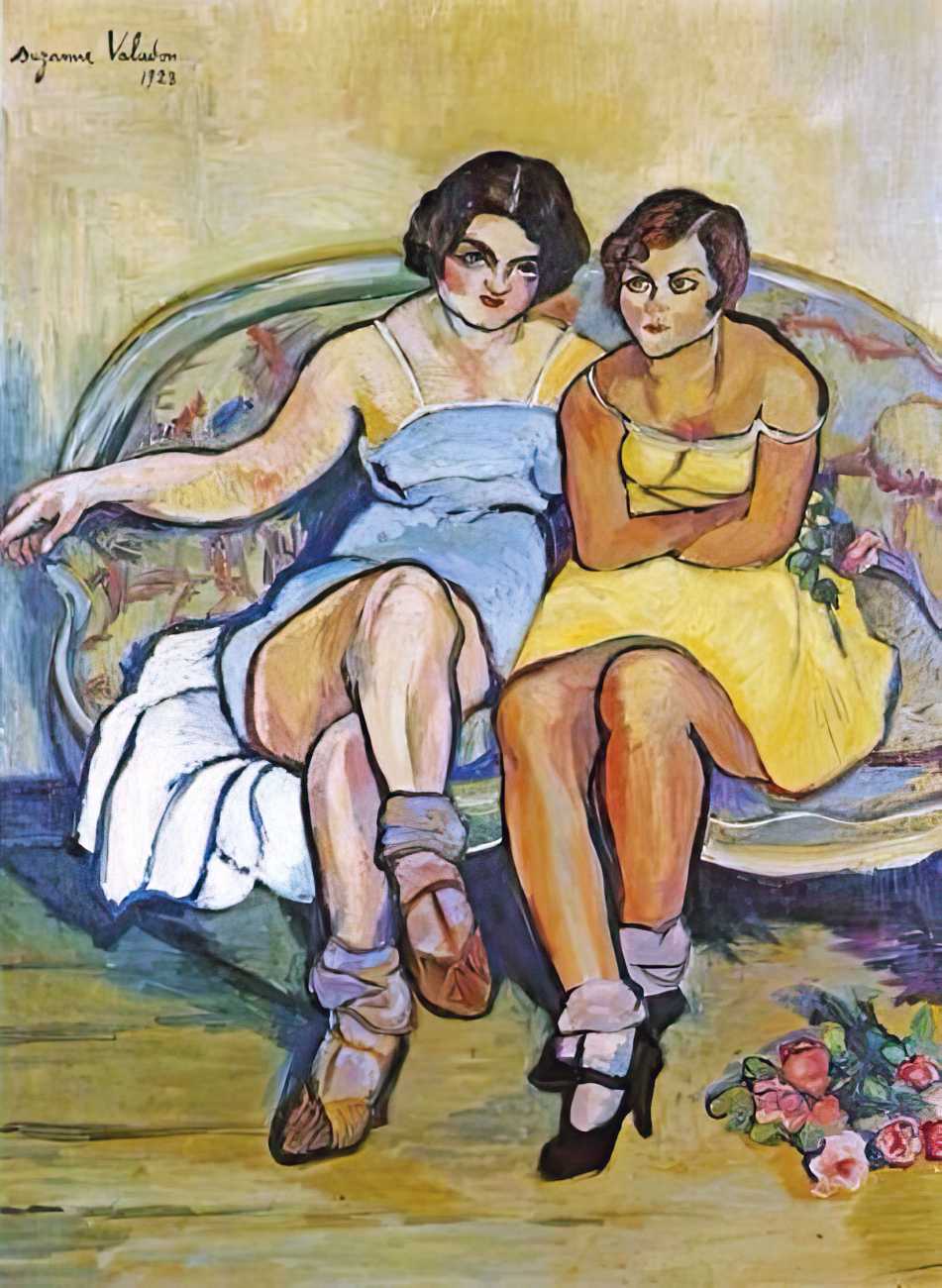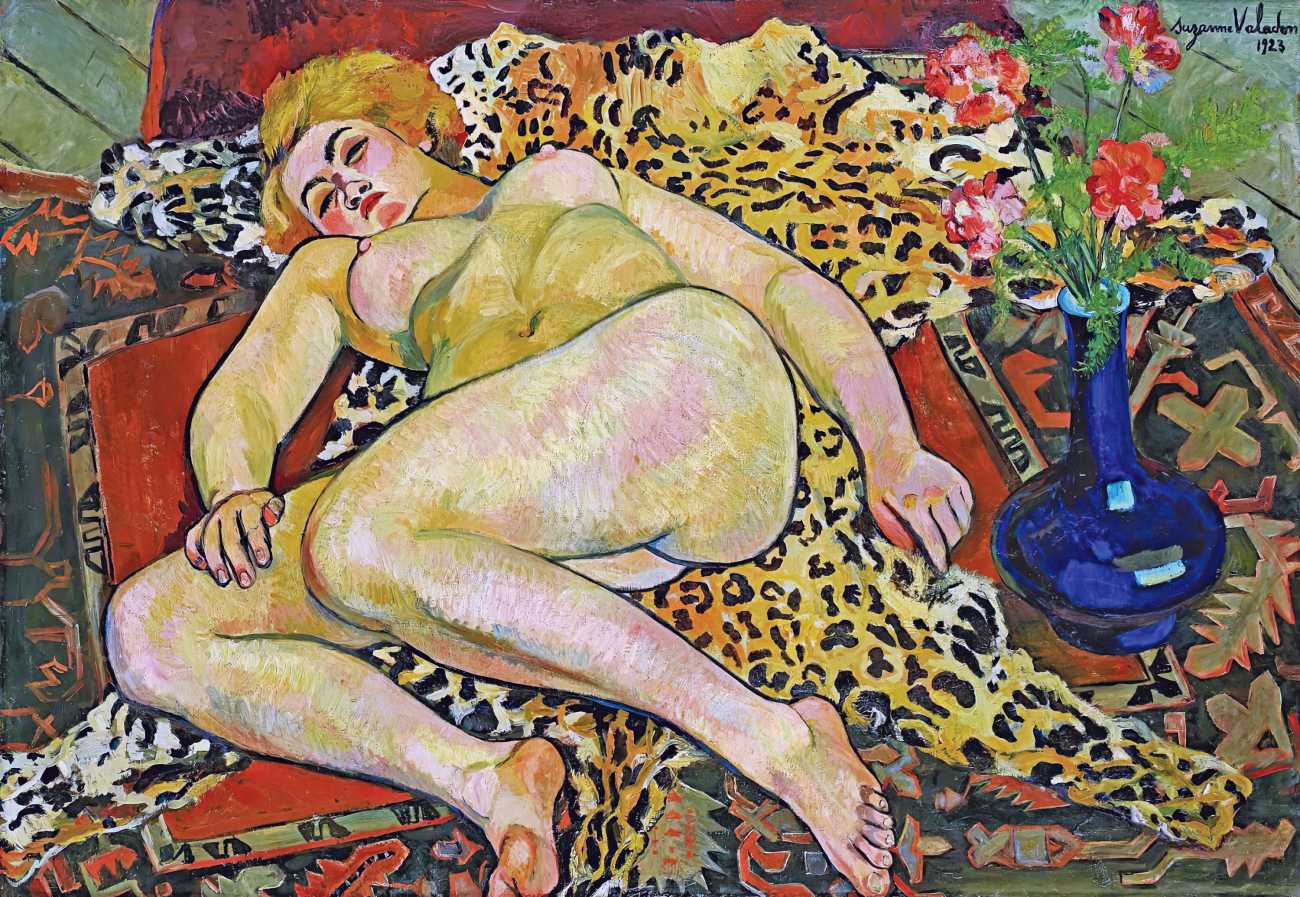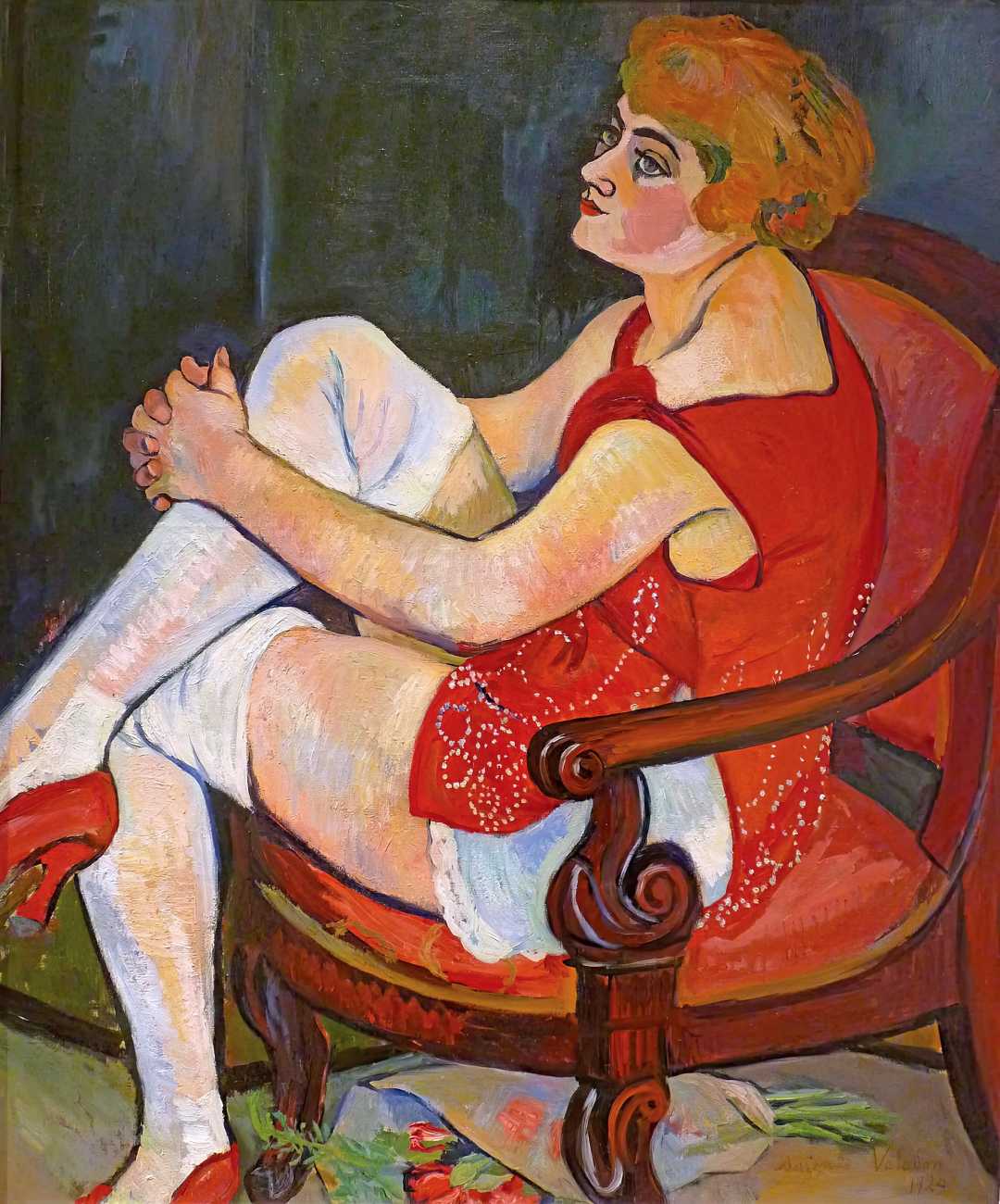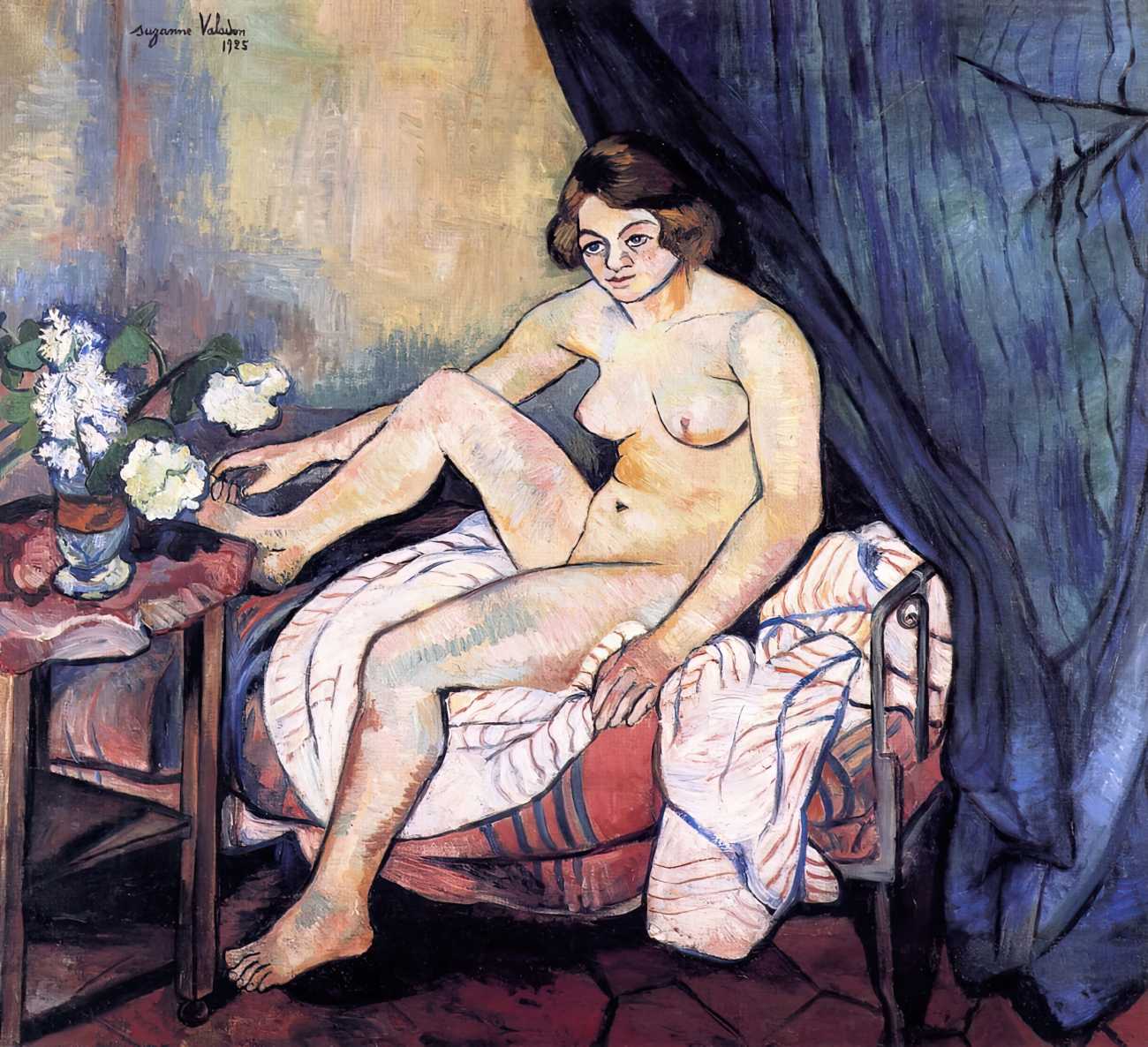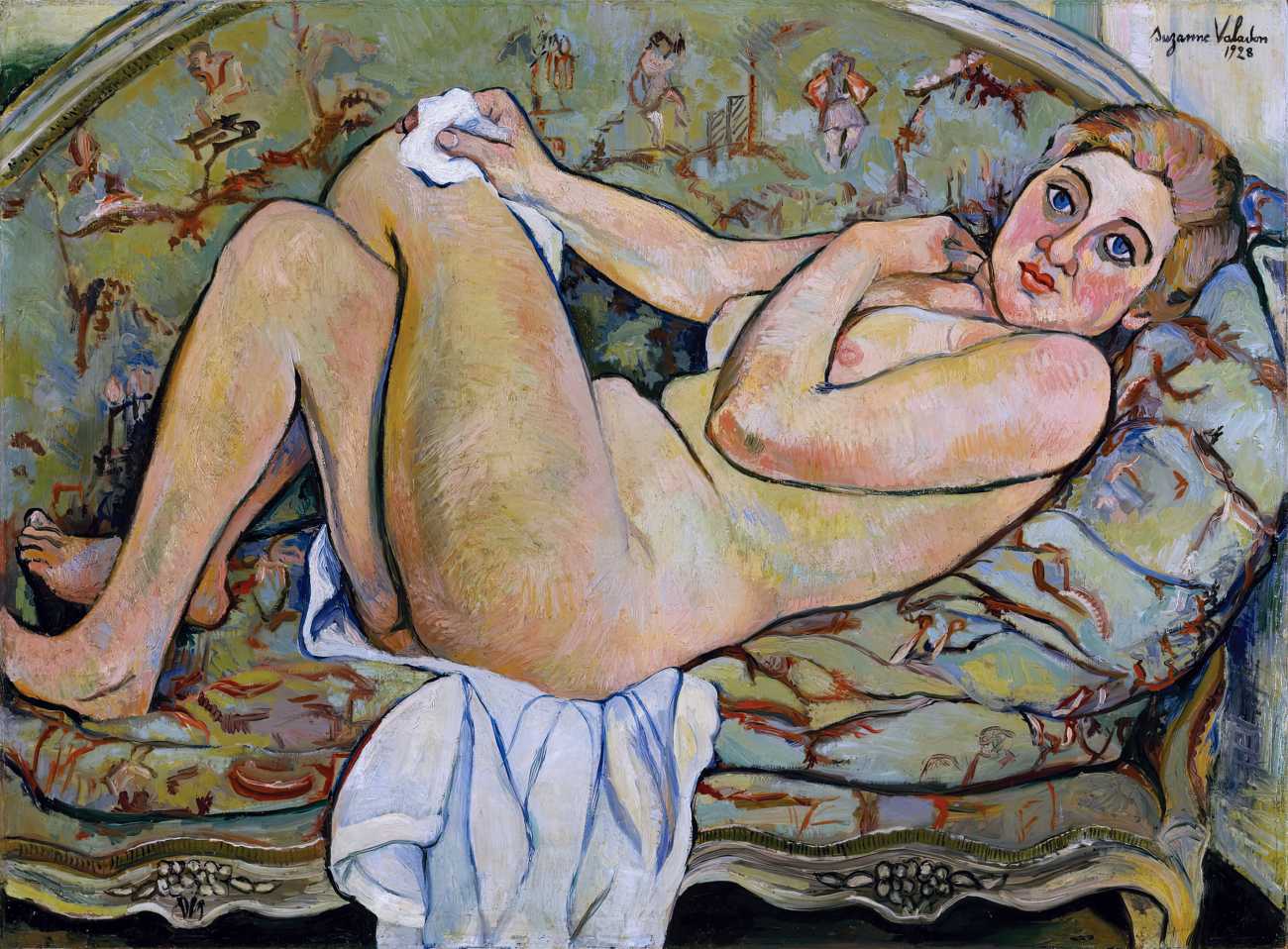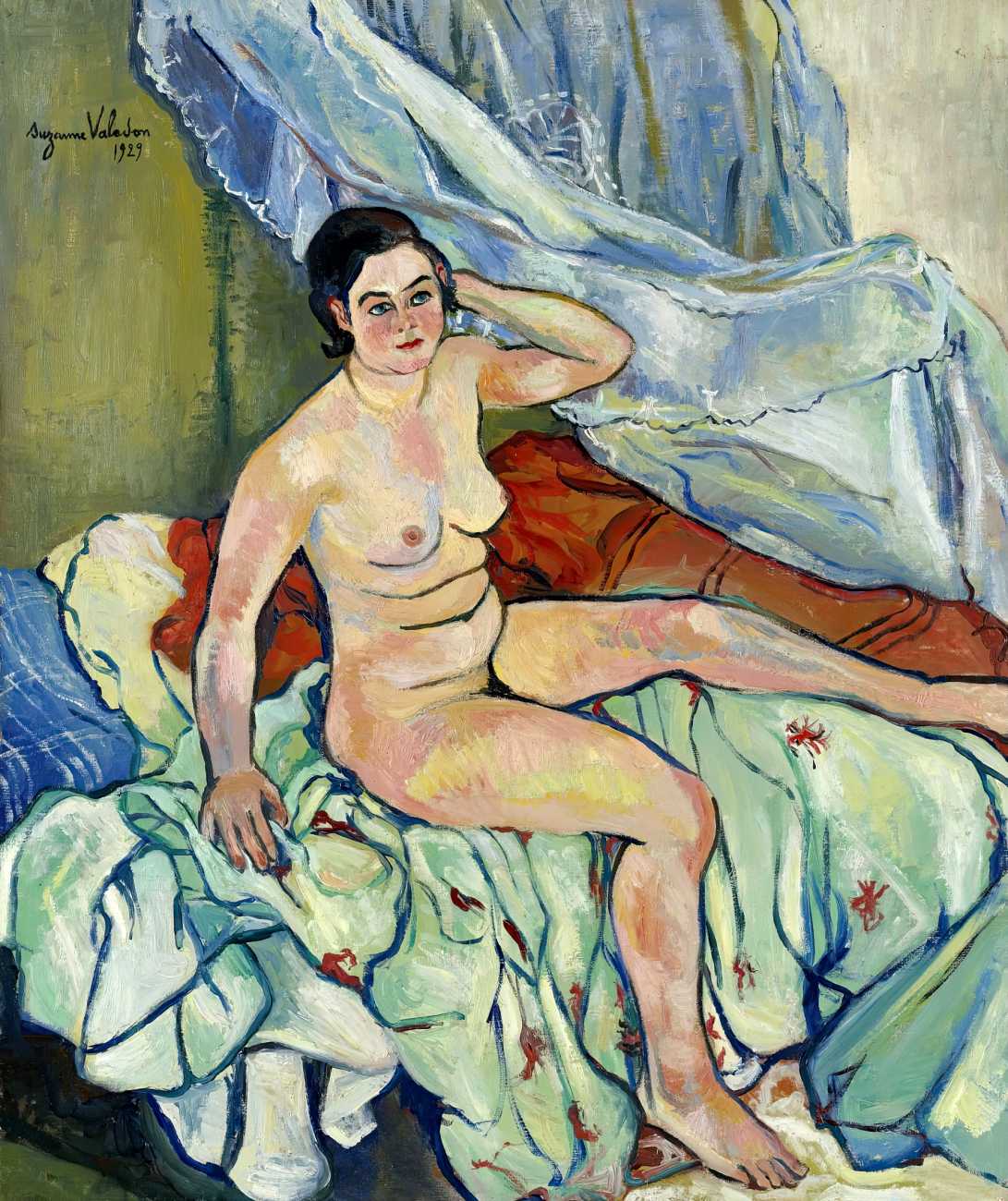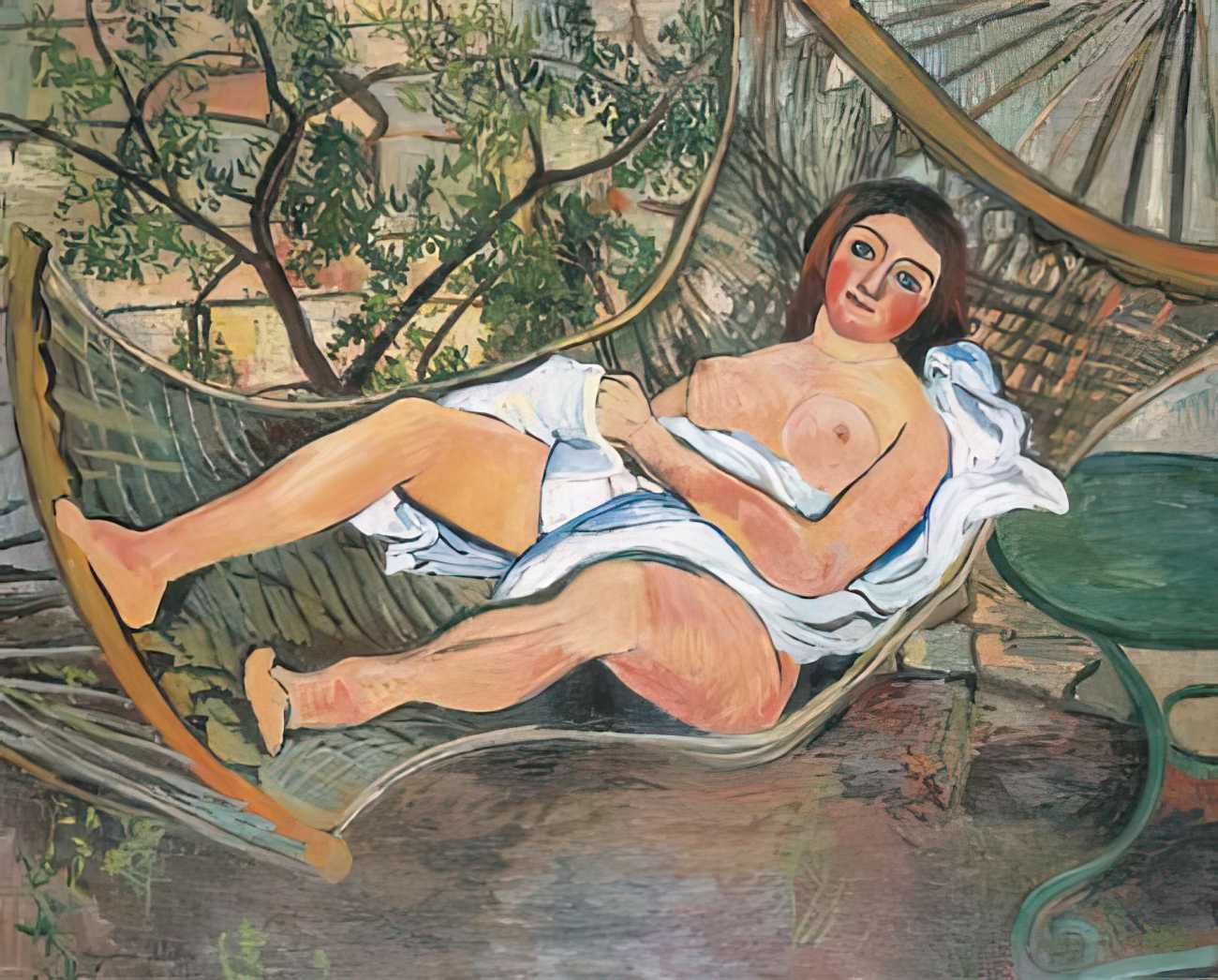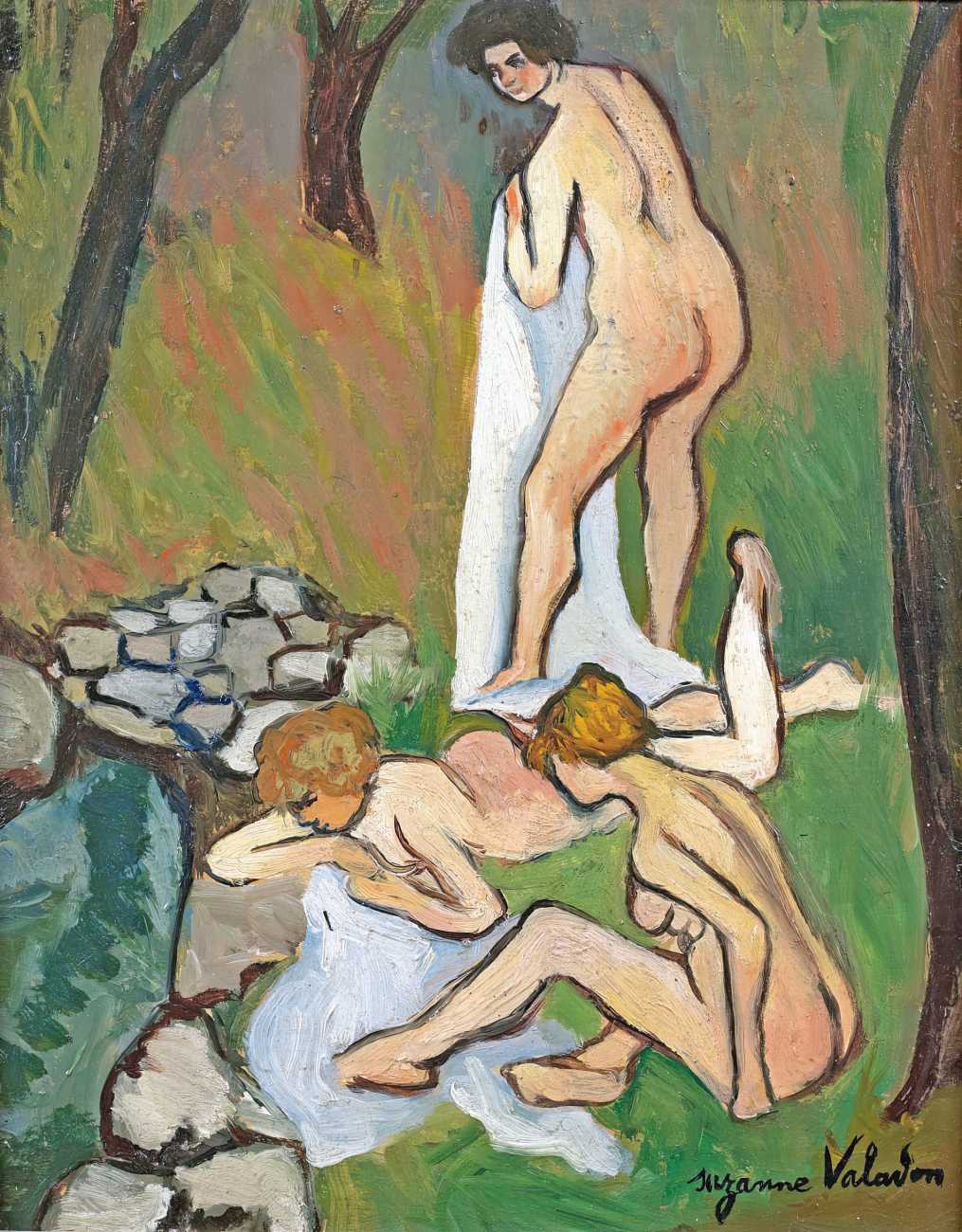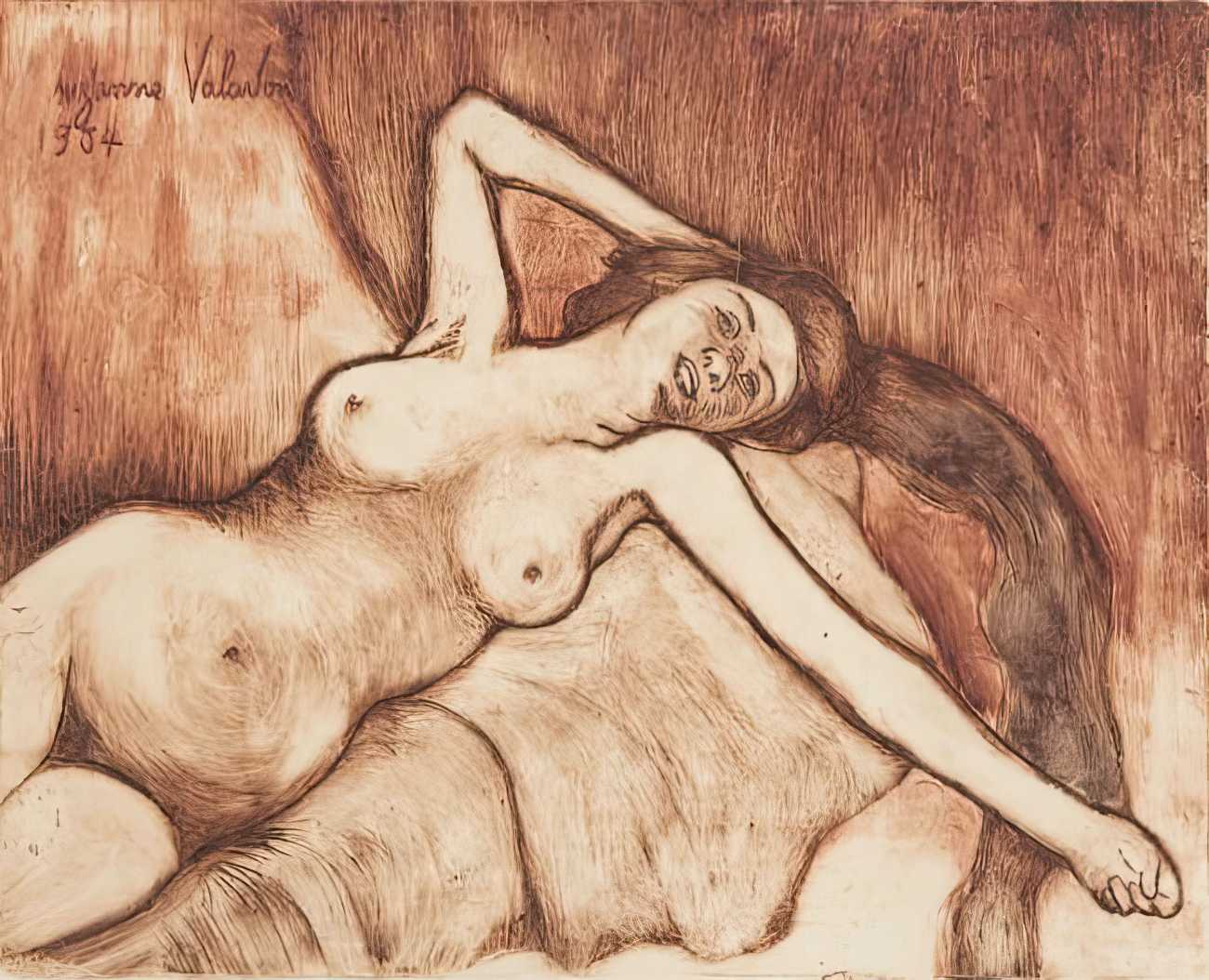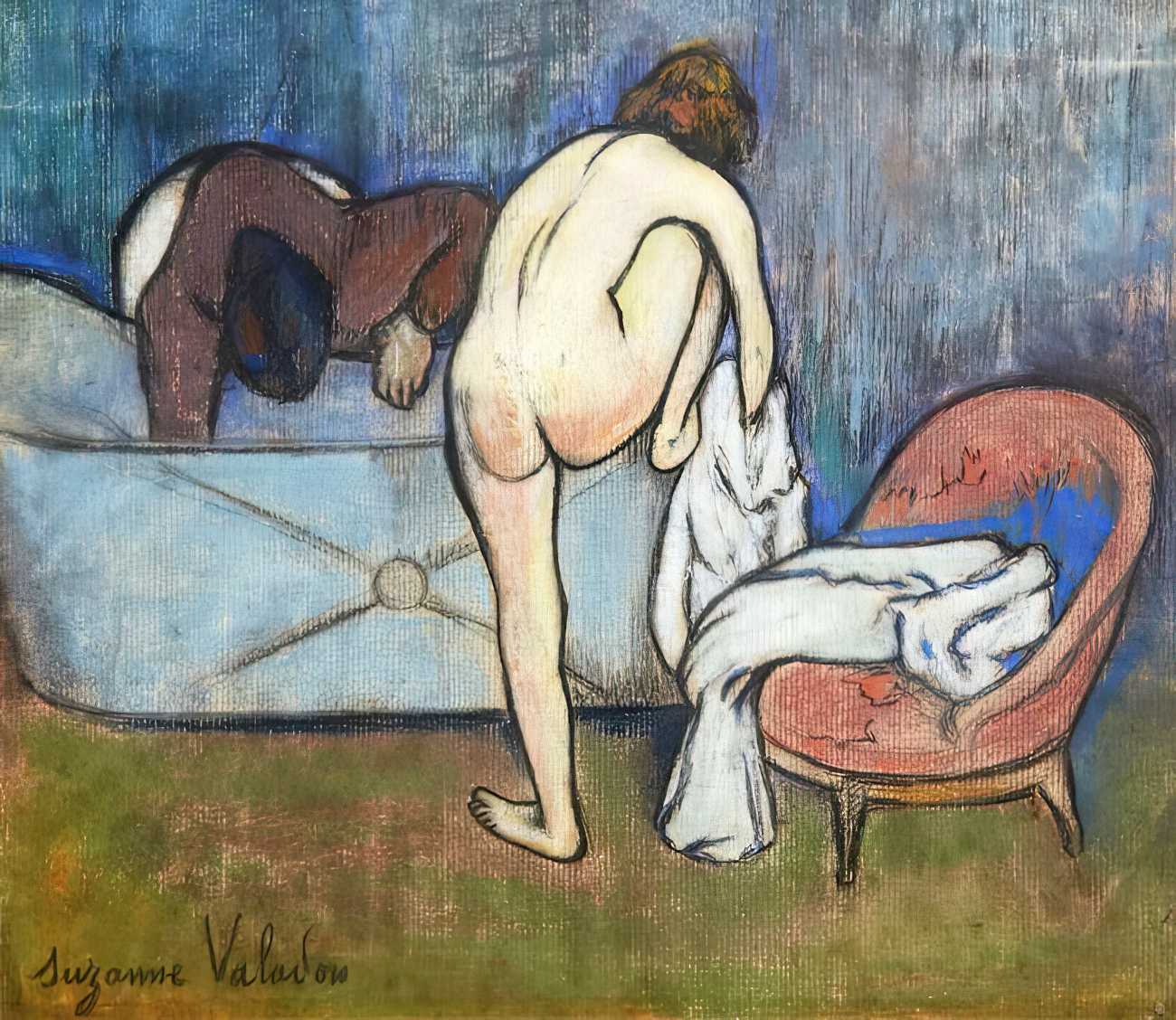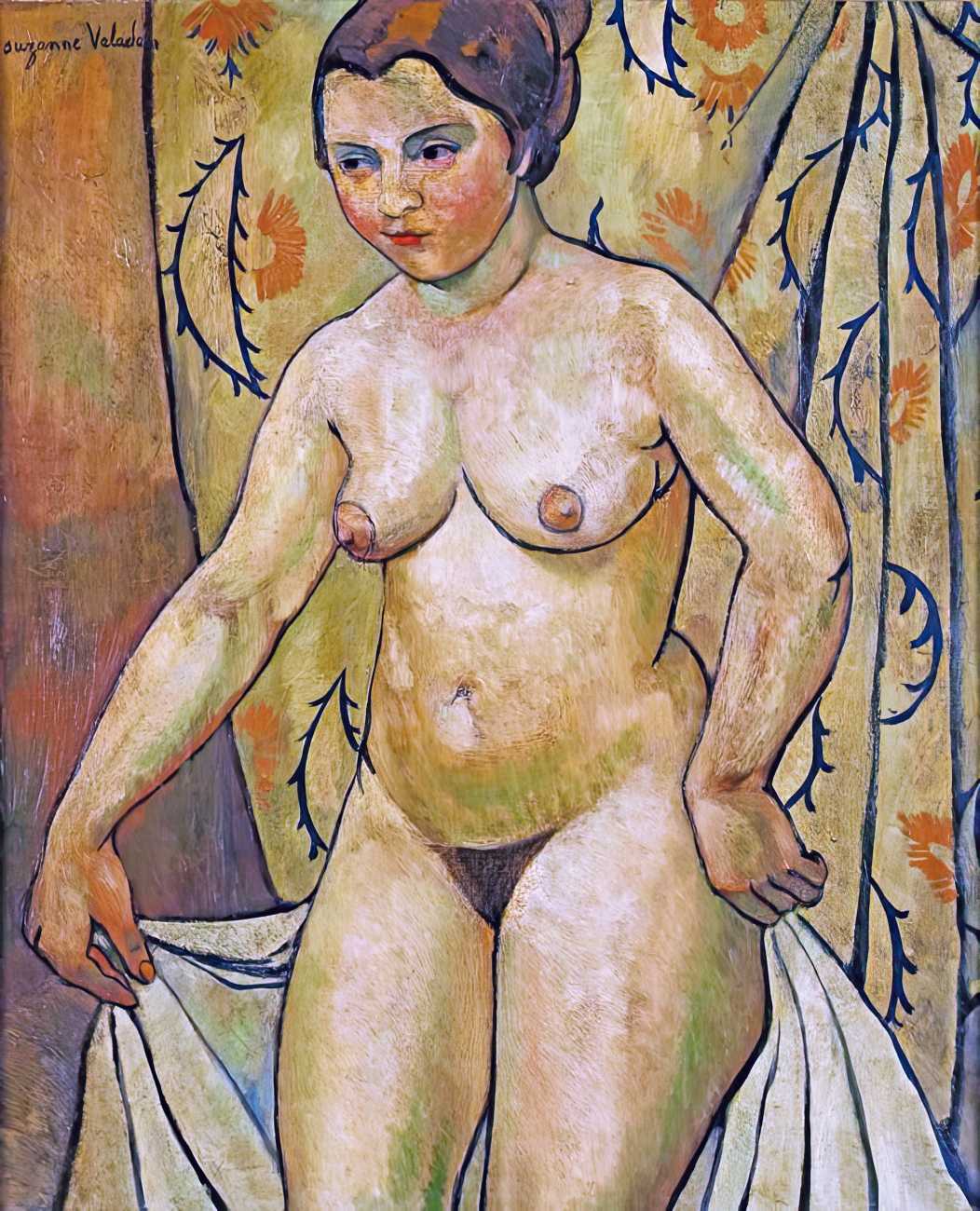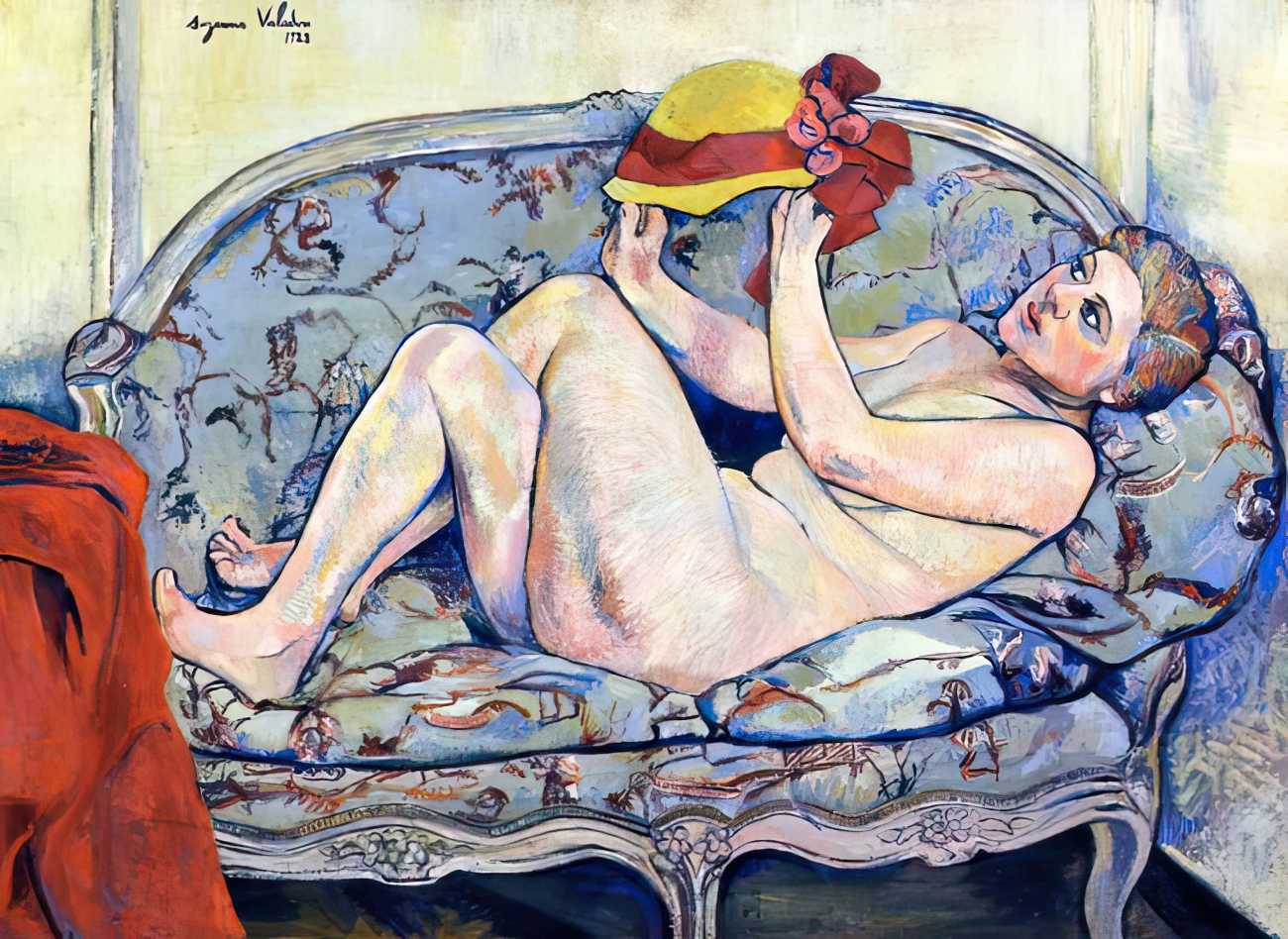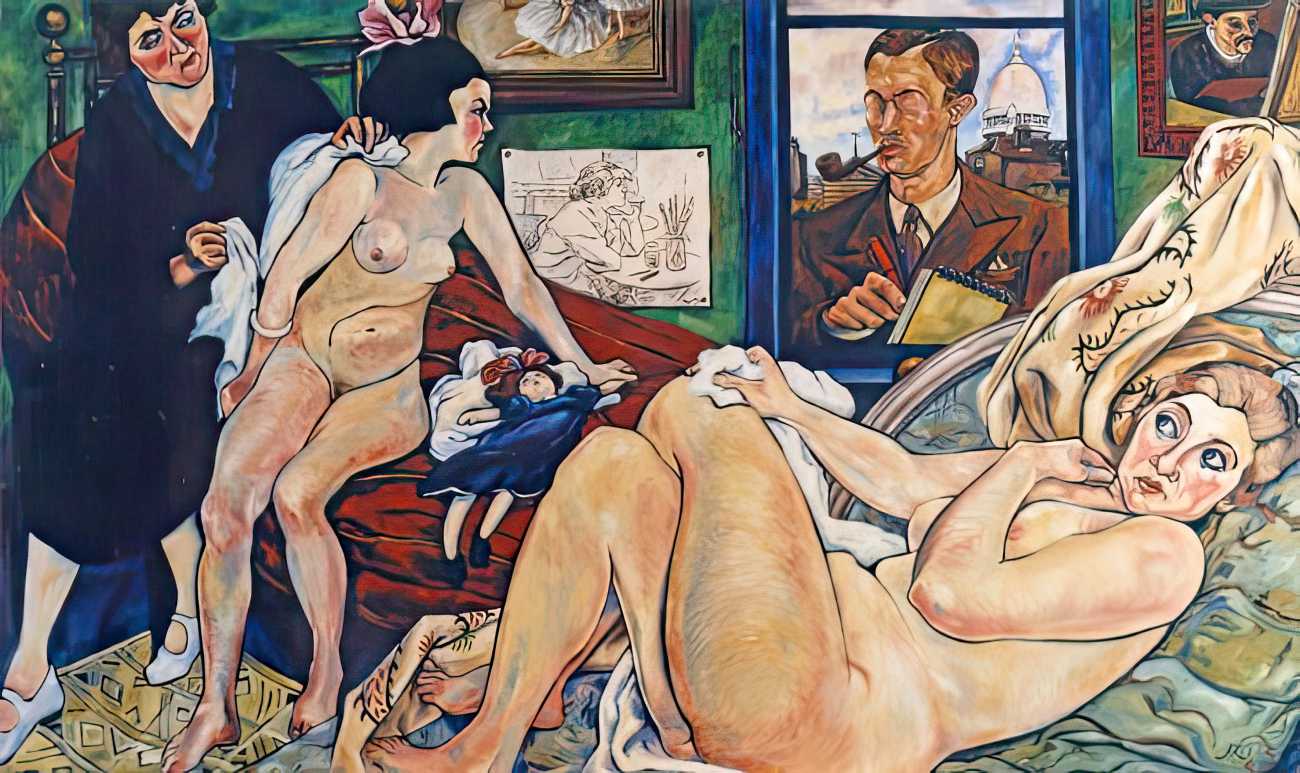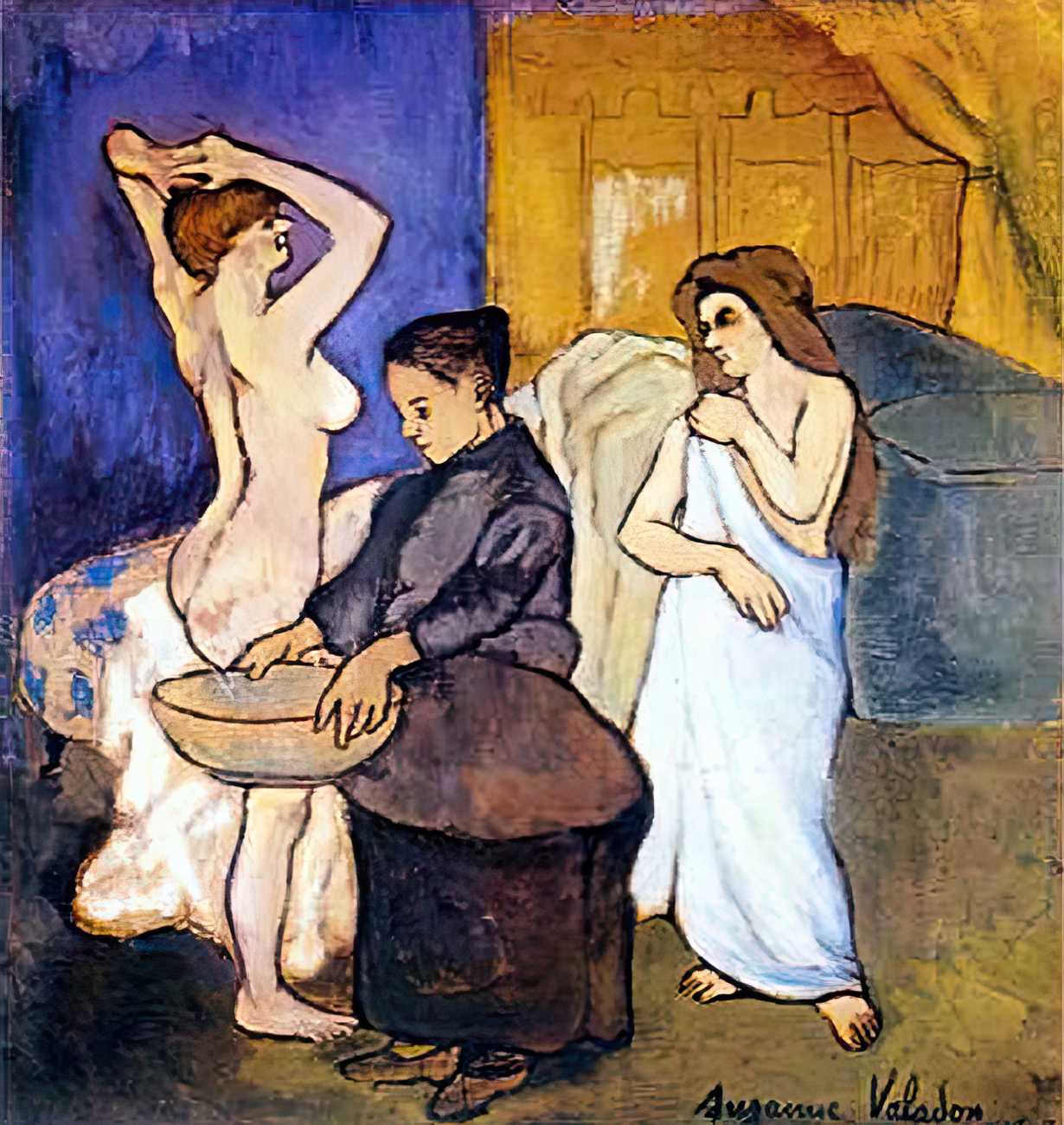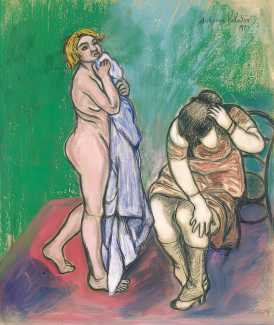
The paintings of Suzanne Valadon are powerful, suggesting a forceful personality at work. Her paintings are compelling and sinuous, arousing the antagonism of critics by breaking with centuries of tradition. Valadon depicted ordinary women without clothes, reflecting the imperfections of the flesh. Art historian Patricia Mathews suggests that Valadon’s working-class status and experience as a model influenced her intimate, familiar observation of these women and their bodies, in contrast with Berthe Morisot and Mary Cassatt, who painted mostly women but remained well within the bounds of propriety in their subject matter because of their upper-middle-class status in French society. Valadon’s marginalised status allowed her to enter the contemporary male dominated domain of art through modelling, and her lack of formal academic training may have made her less influenced by academic conventions.
Valadon's work can be seen as a challenge to traditional notions of female beauty and sexuality, presenting a more complex and nuanced perspective on the female body and its role in the world. She was a very significant figure in the transformation of the naked female figure, moving it away from purely objectifying representations towards a more personal and expressive portrayal.
Suzanne Valadon wrote of her art, ‘Painting for me is inseparable from life. I put to work the same tenacity that I put, less vigorously, to living, and I have seen all painters who are committed to their work proceed with the same application. One should never put suffering into our works, but all the same one has nothing without pain. Art is here to eternalise this life that we hate.’