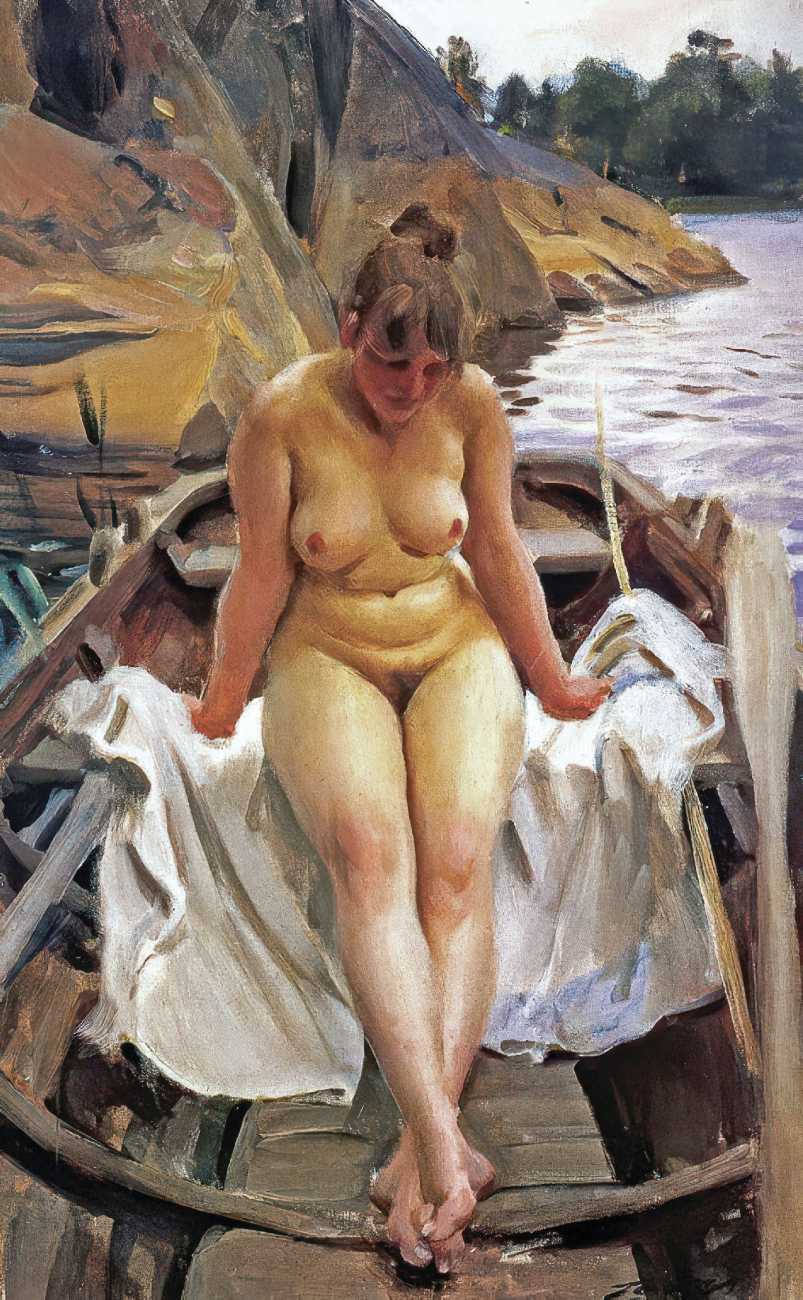
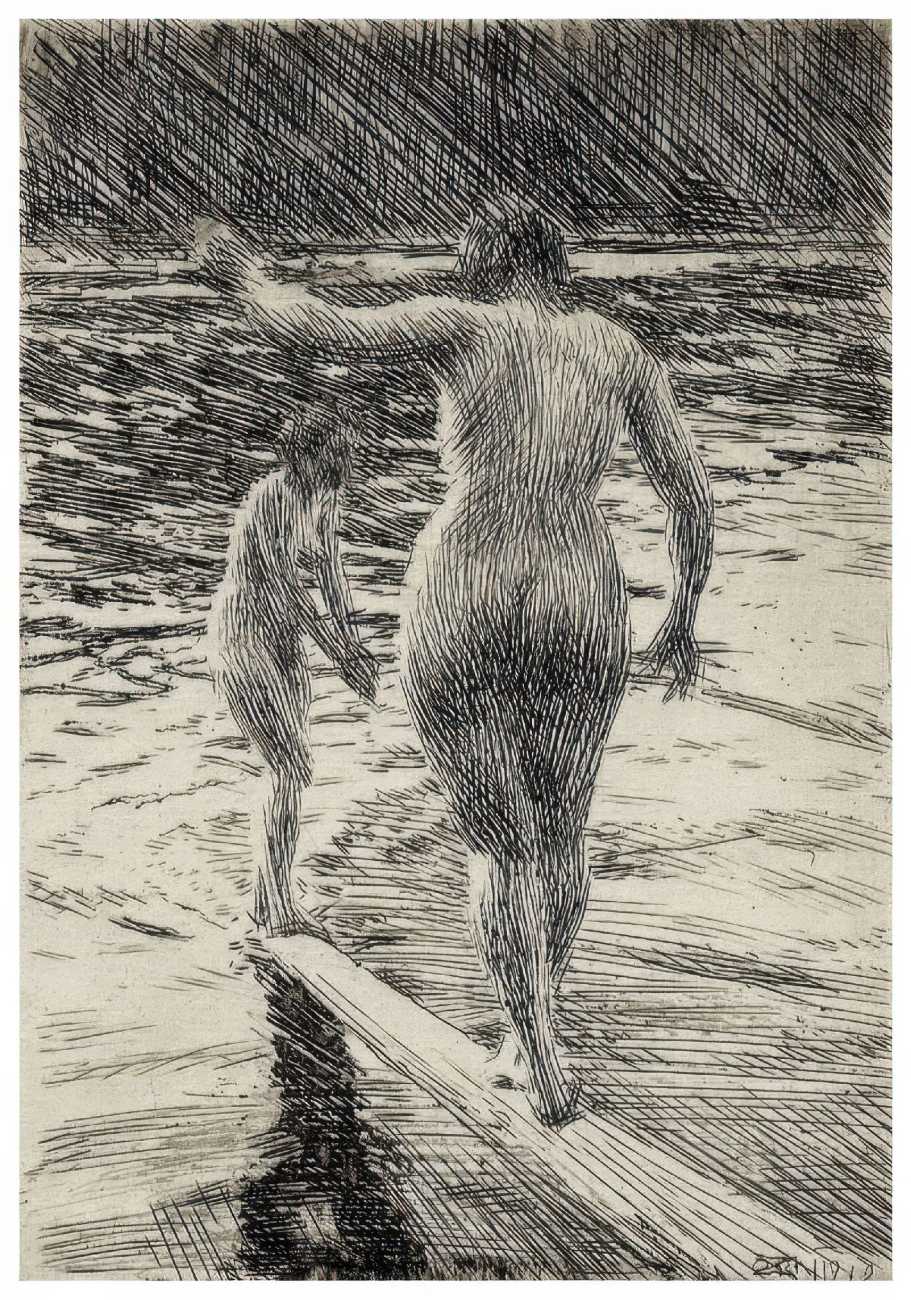
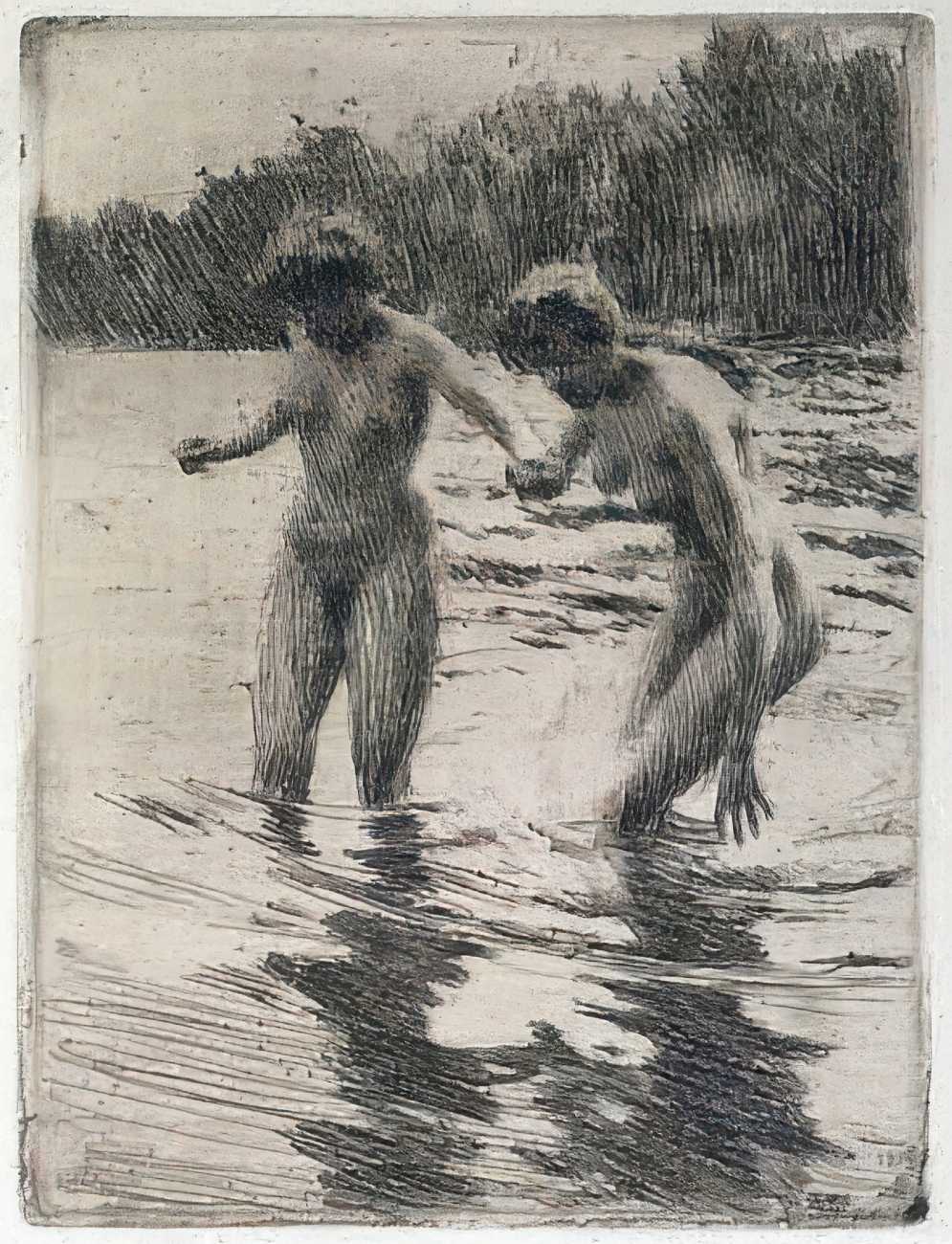
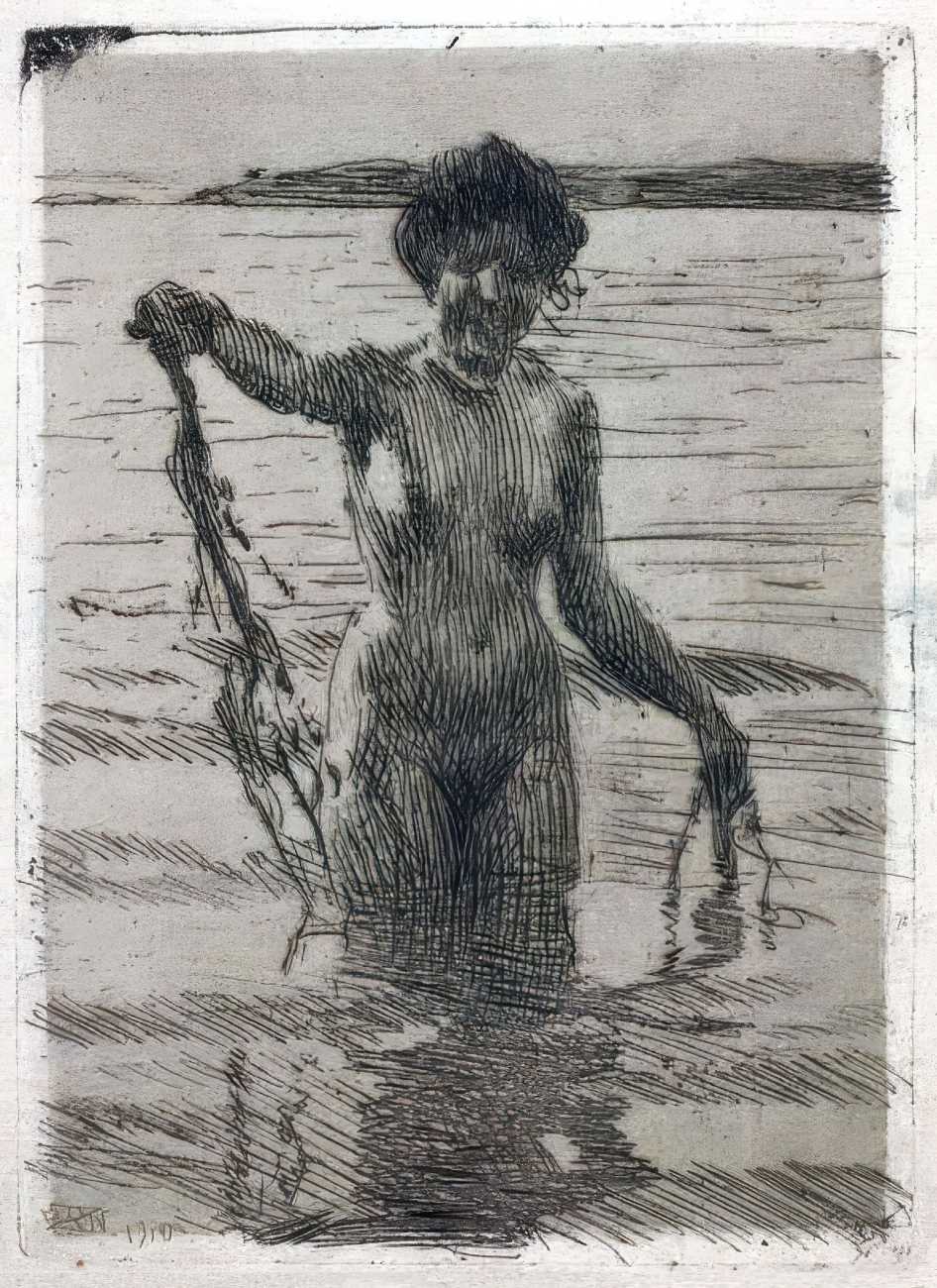
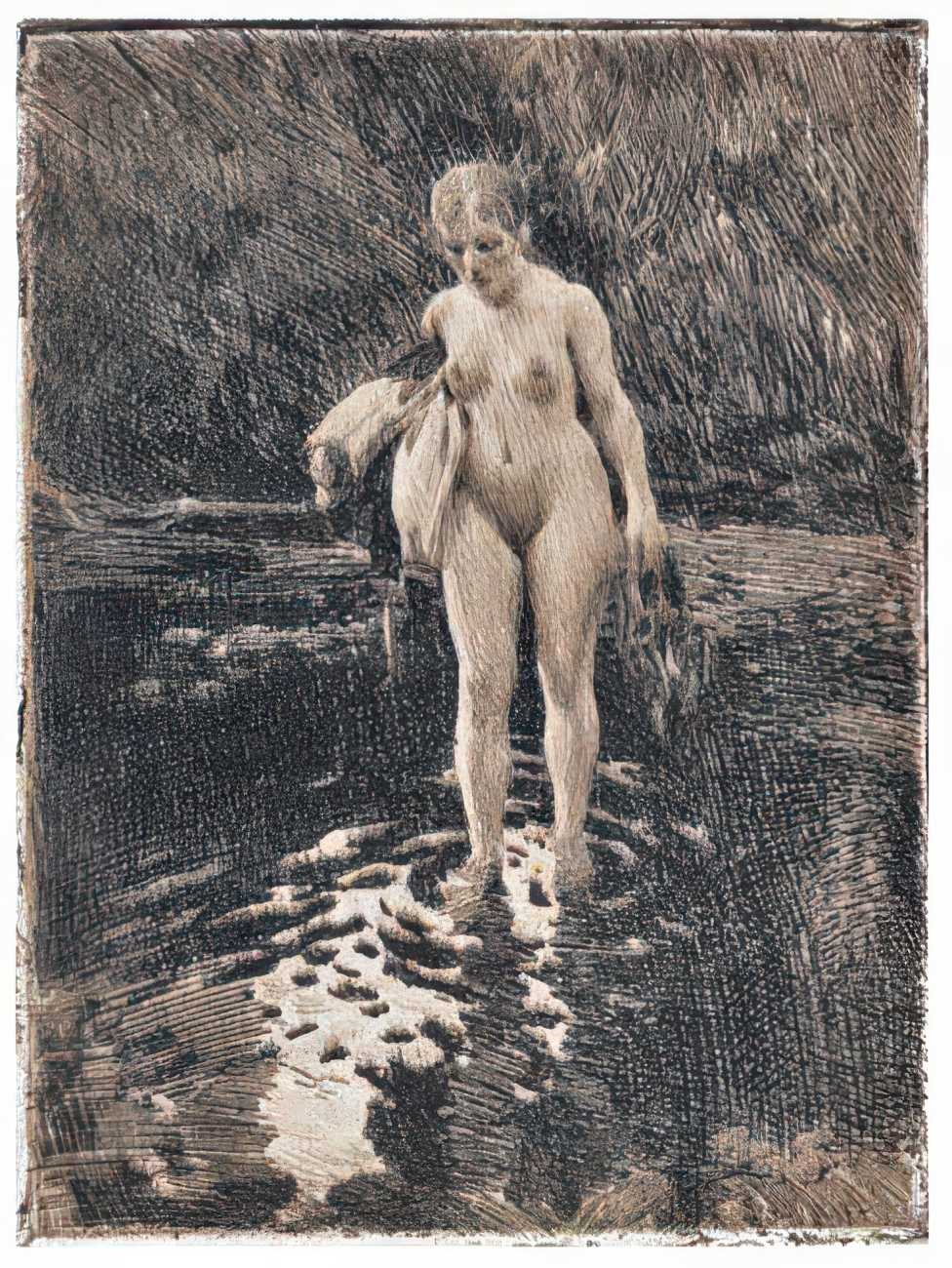
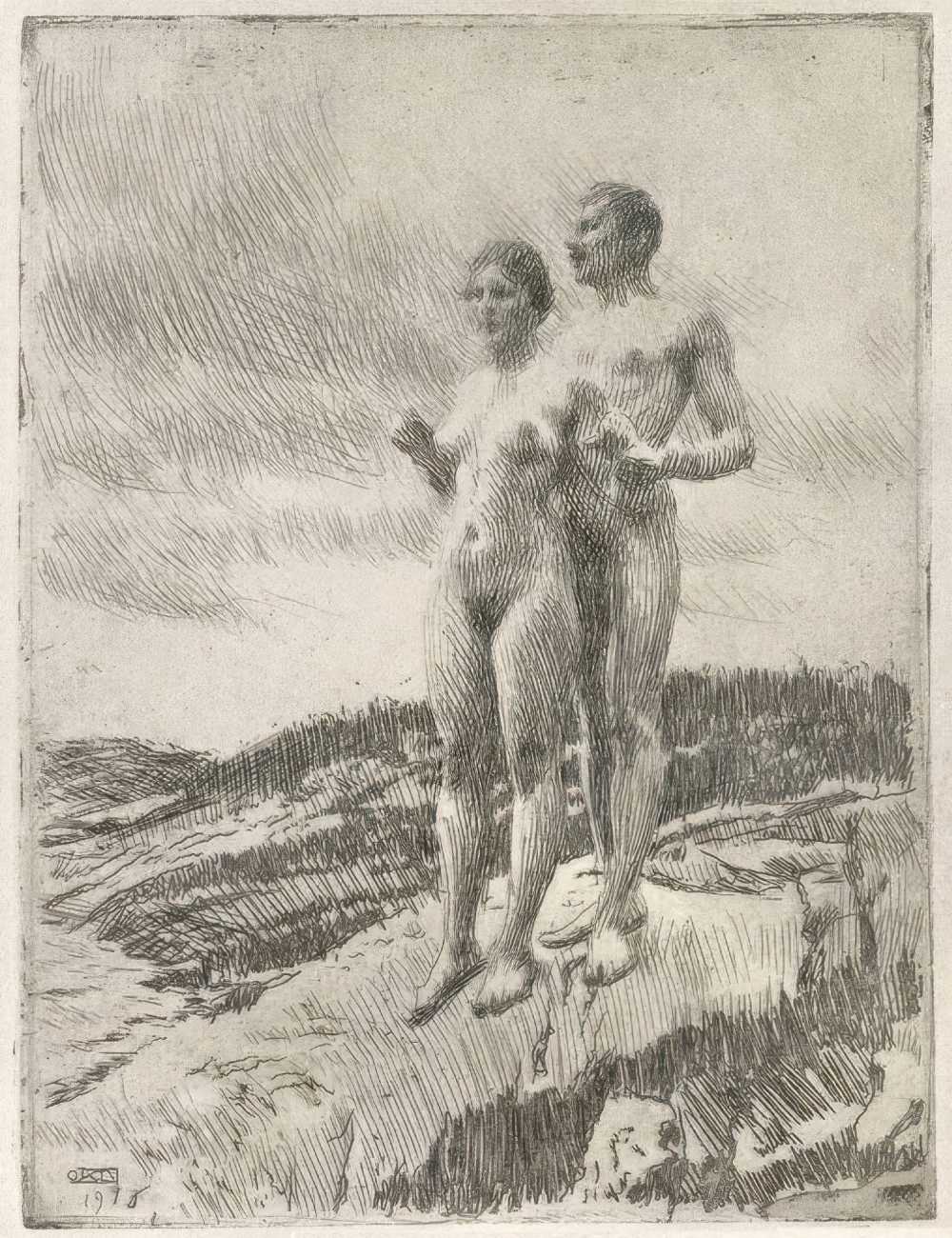
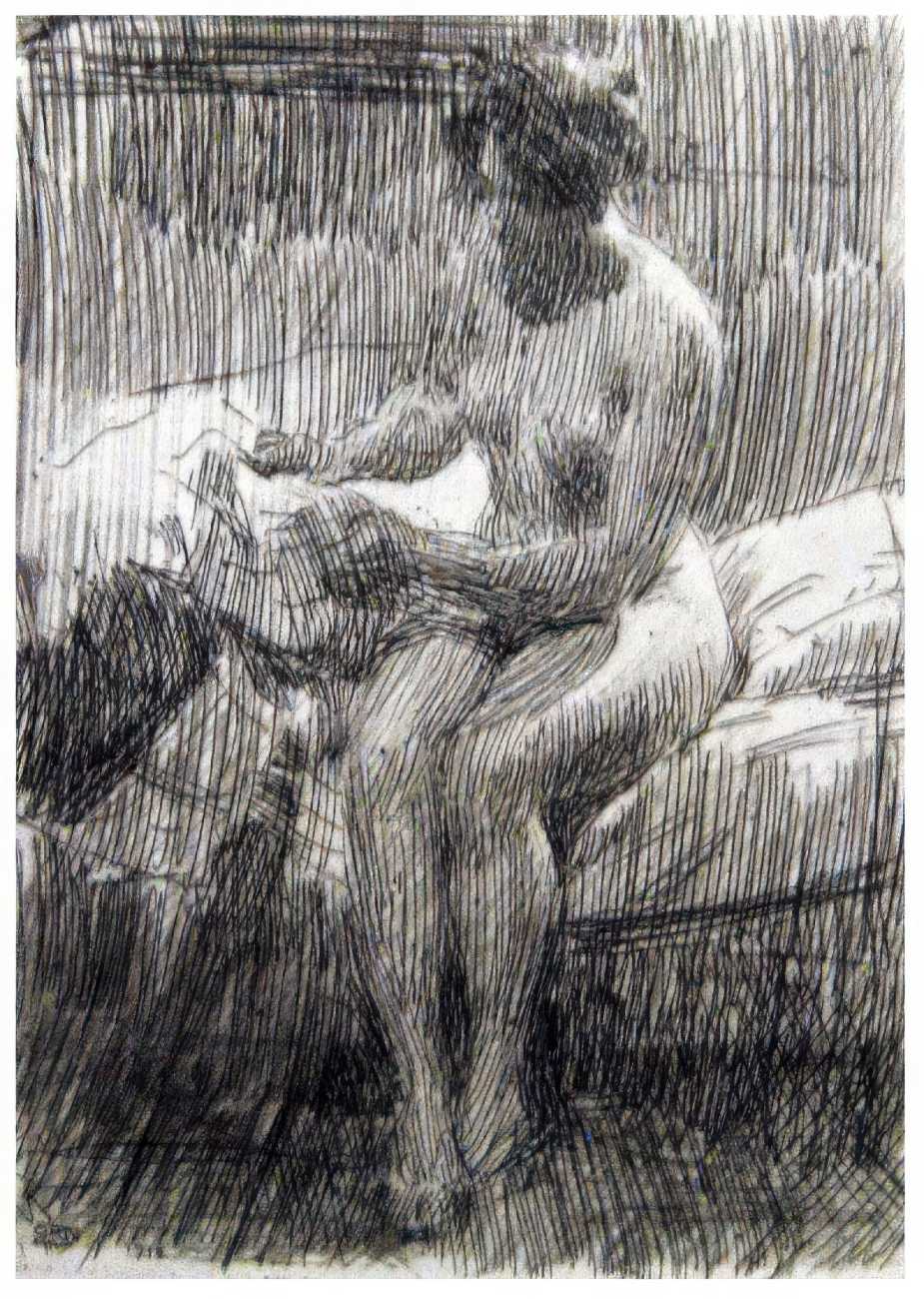
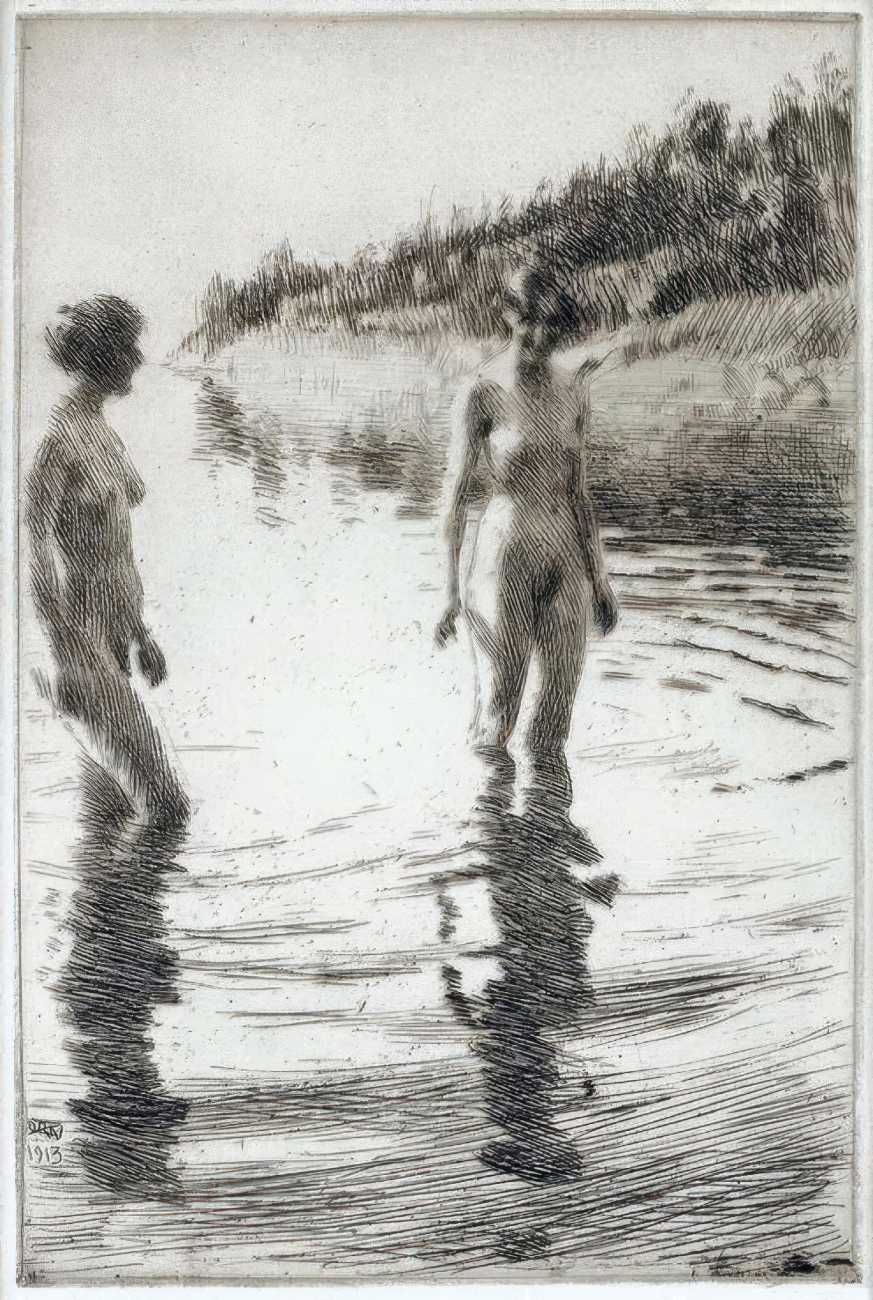
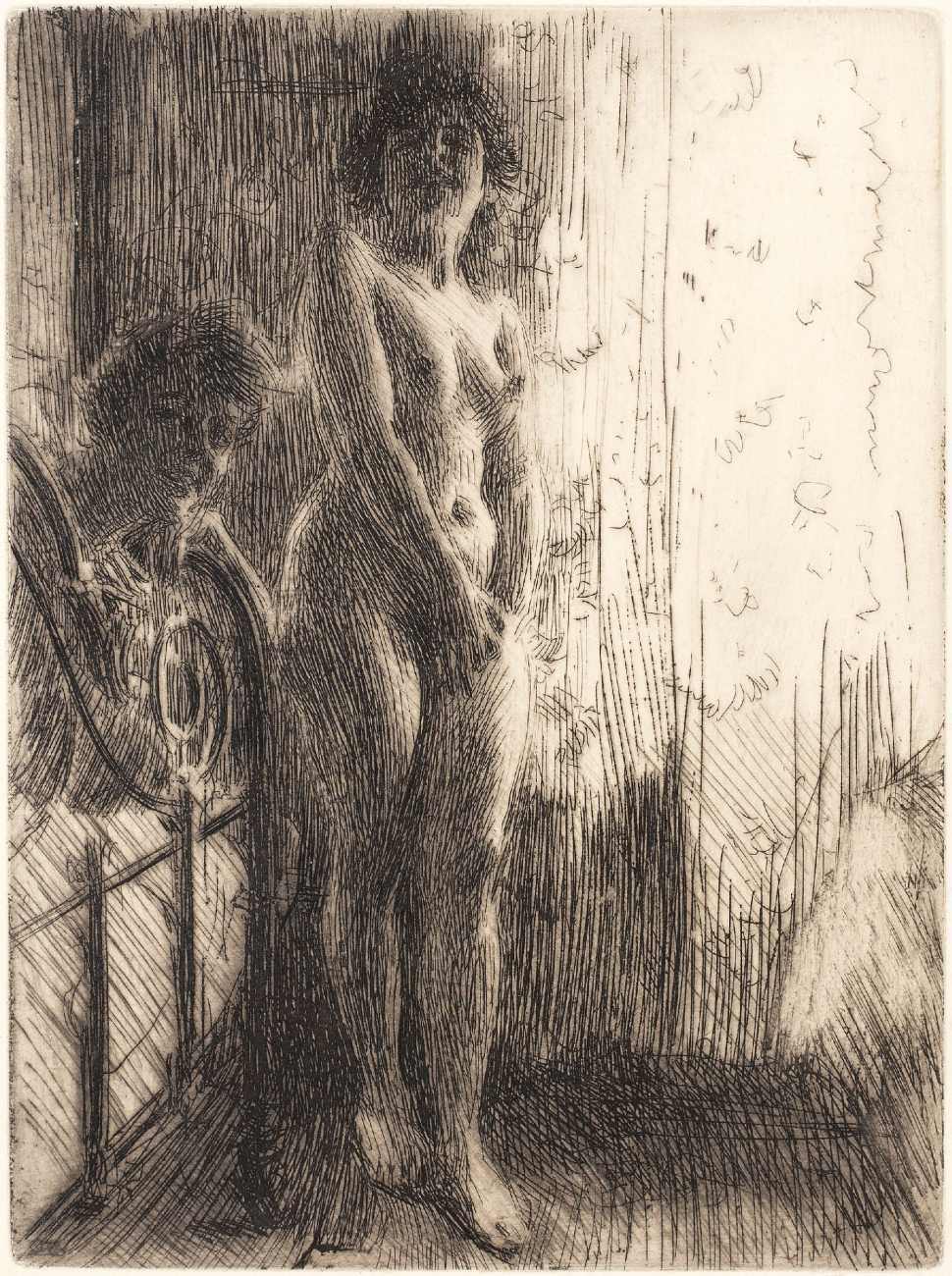
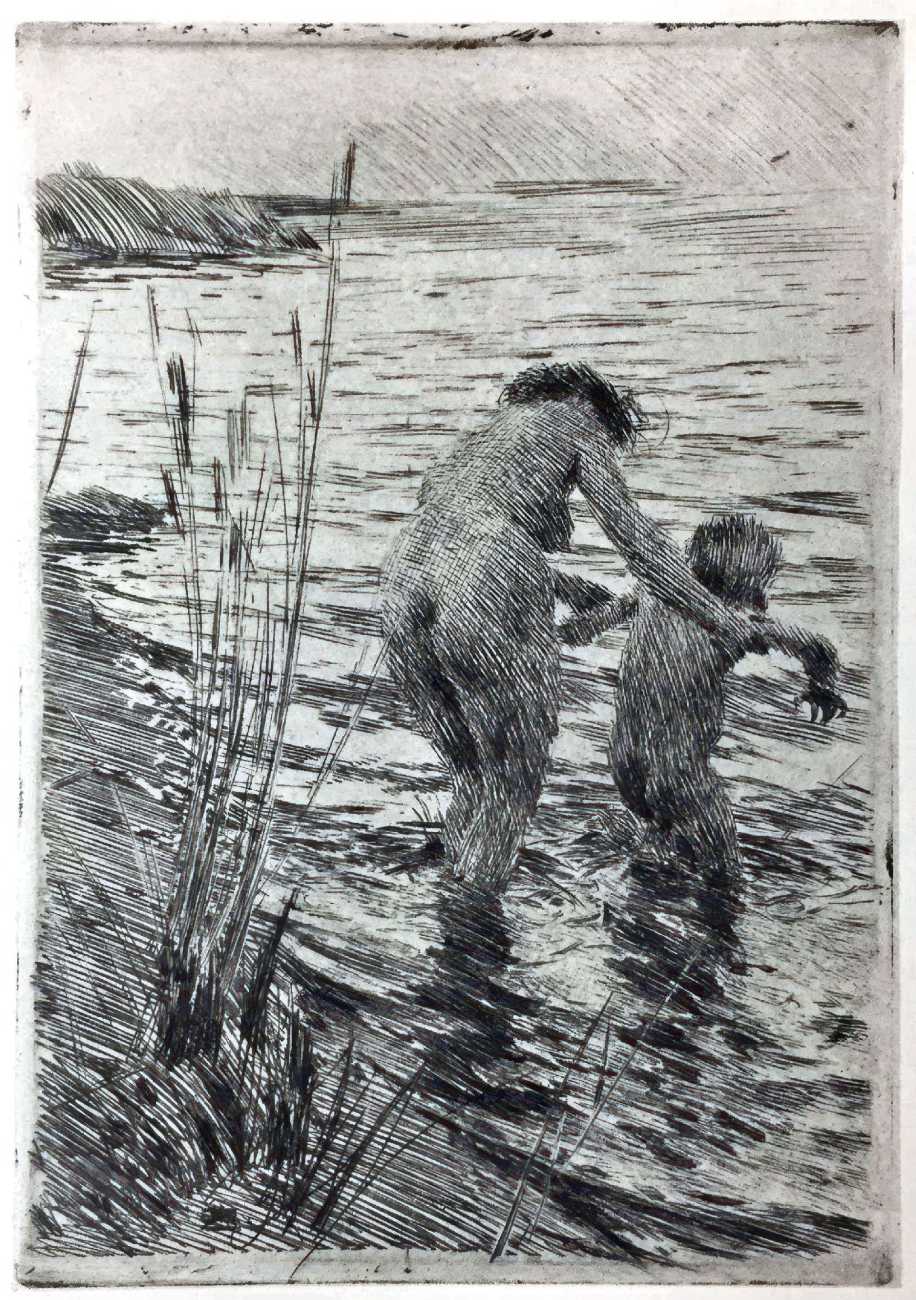
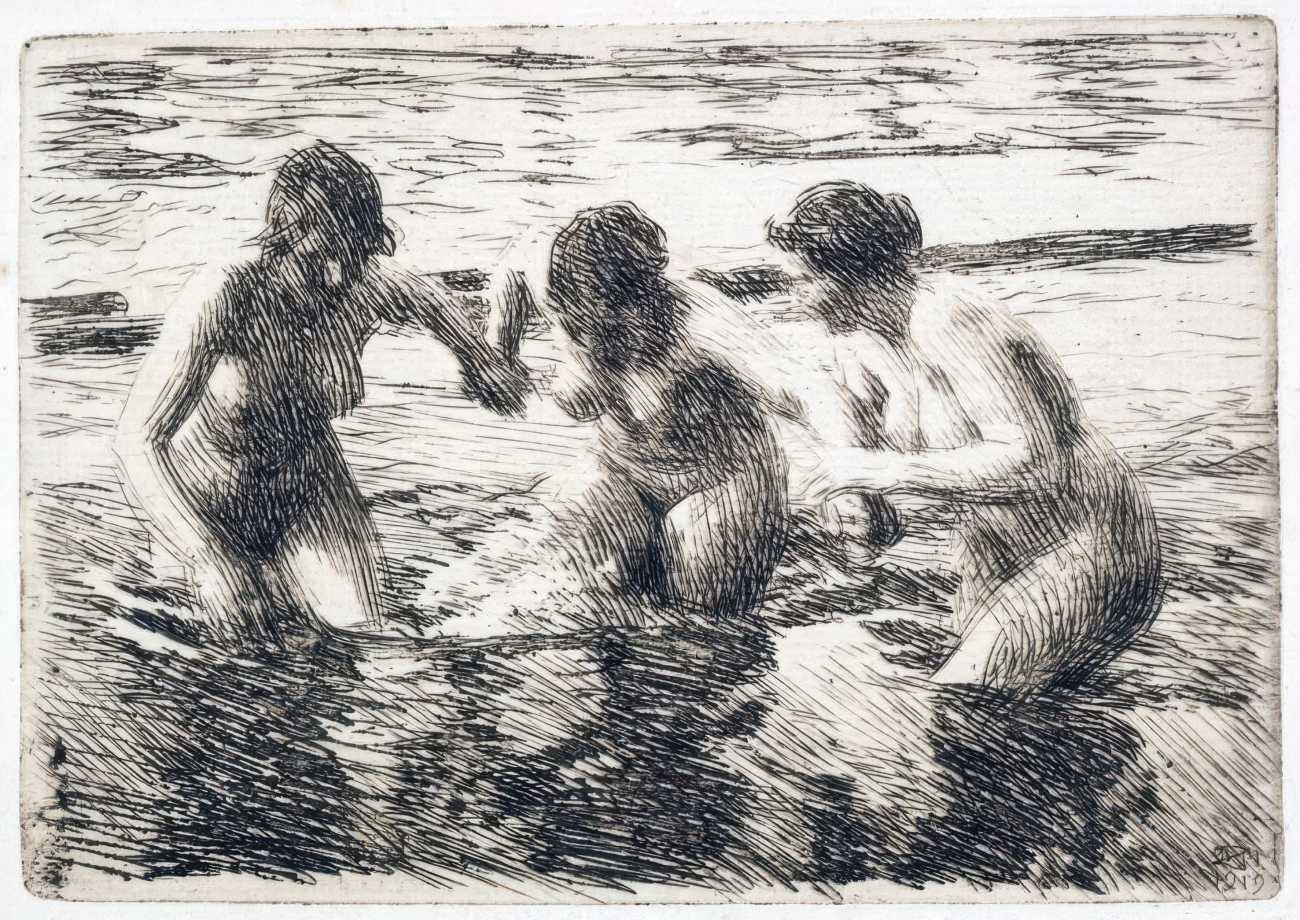
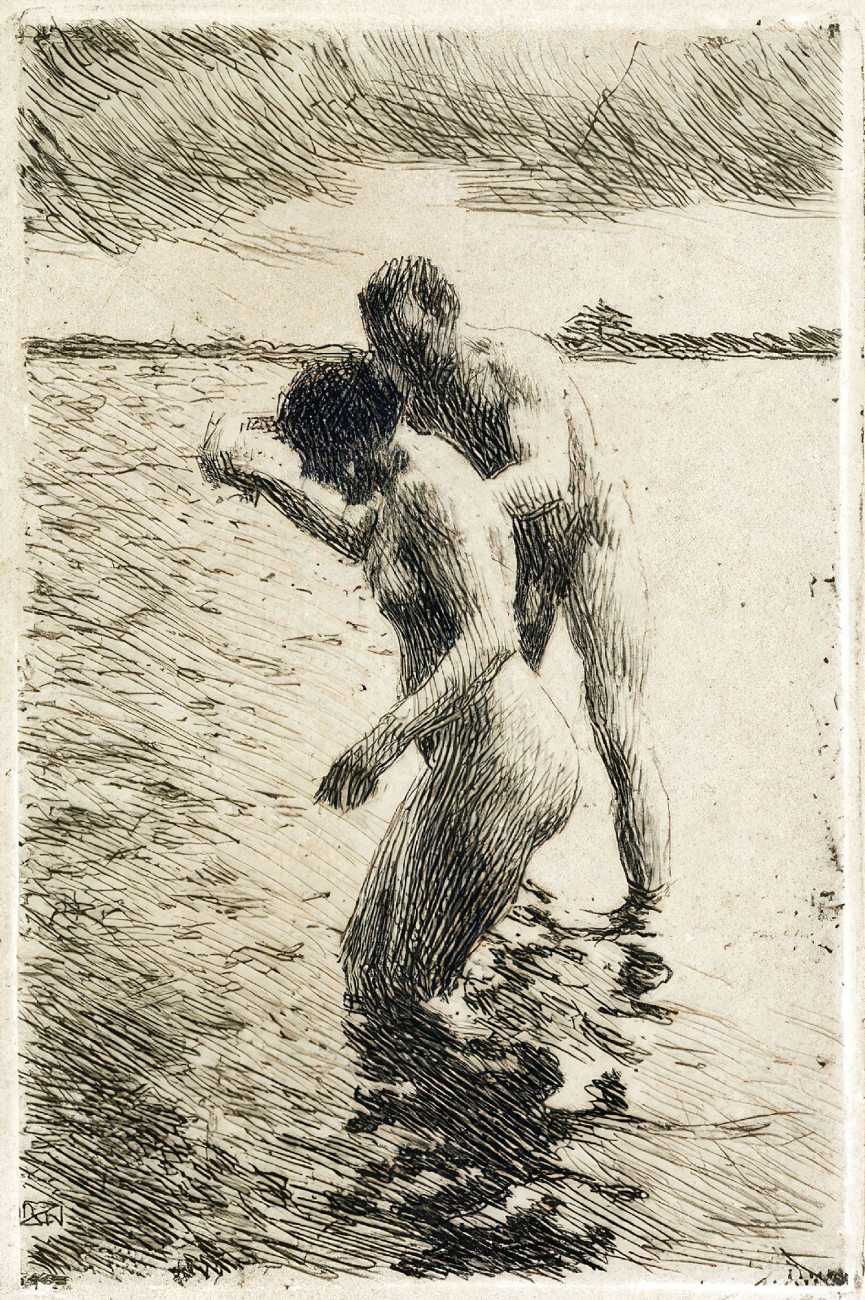
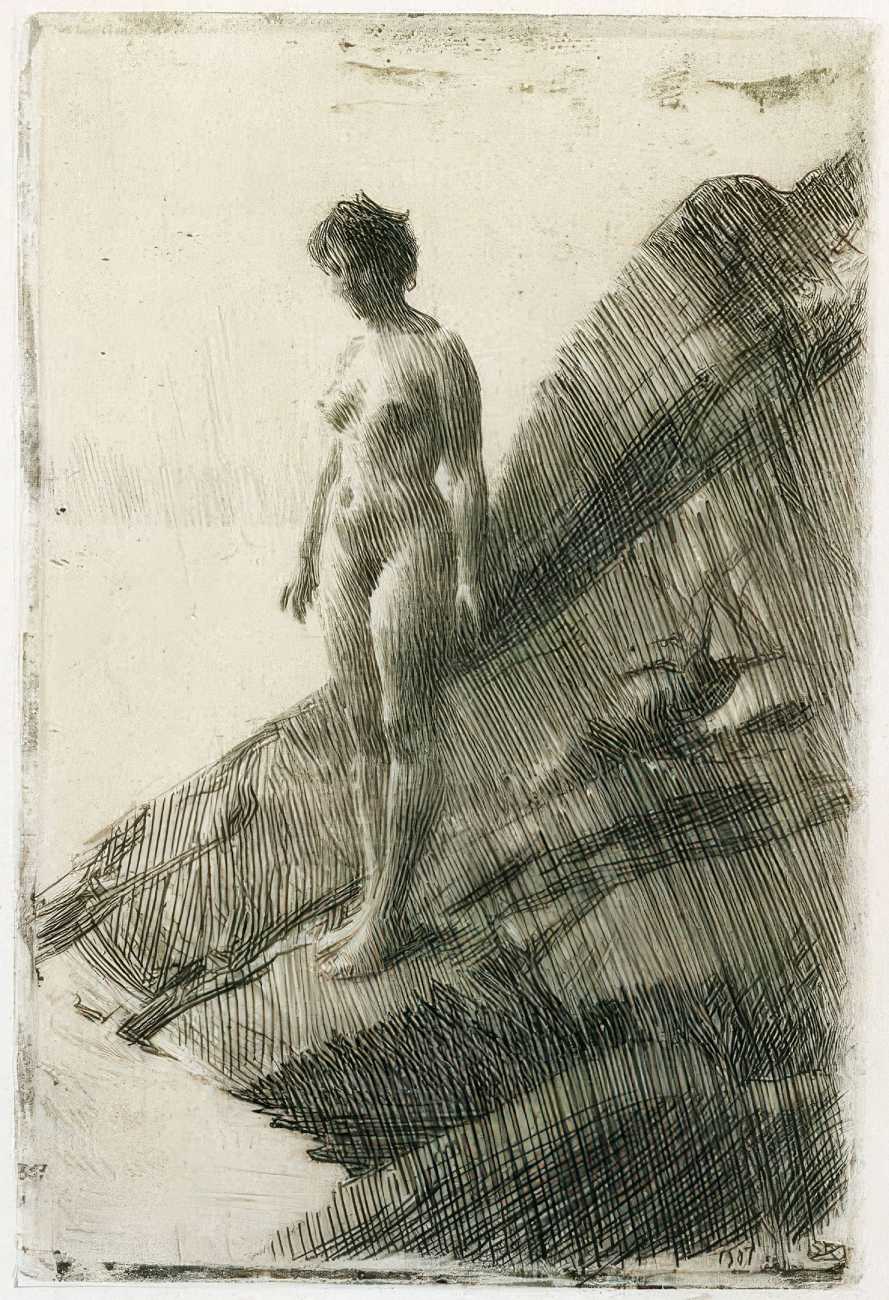
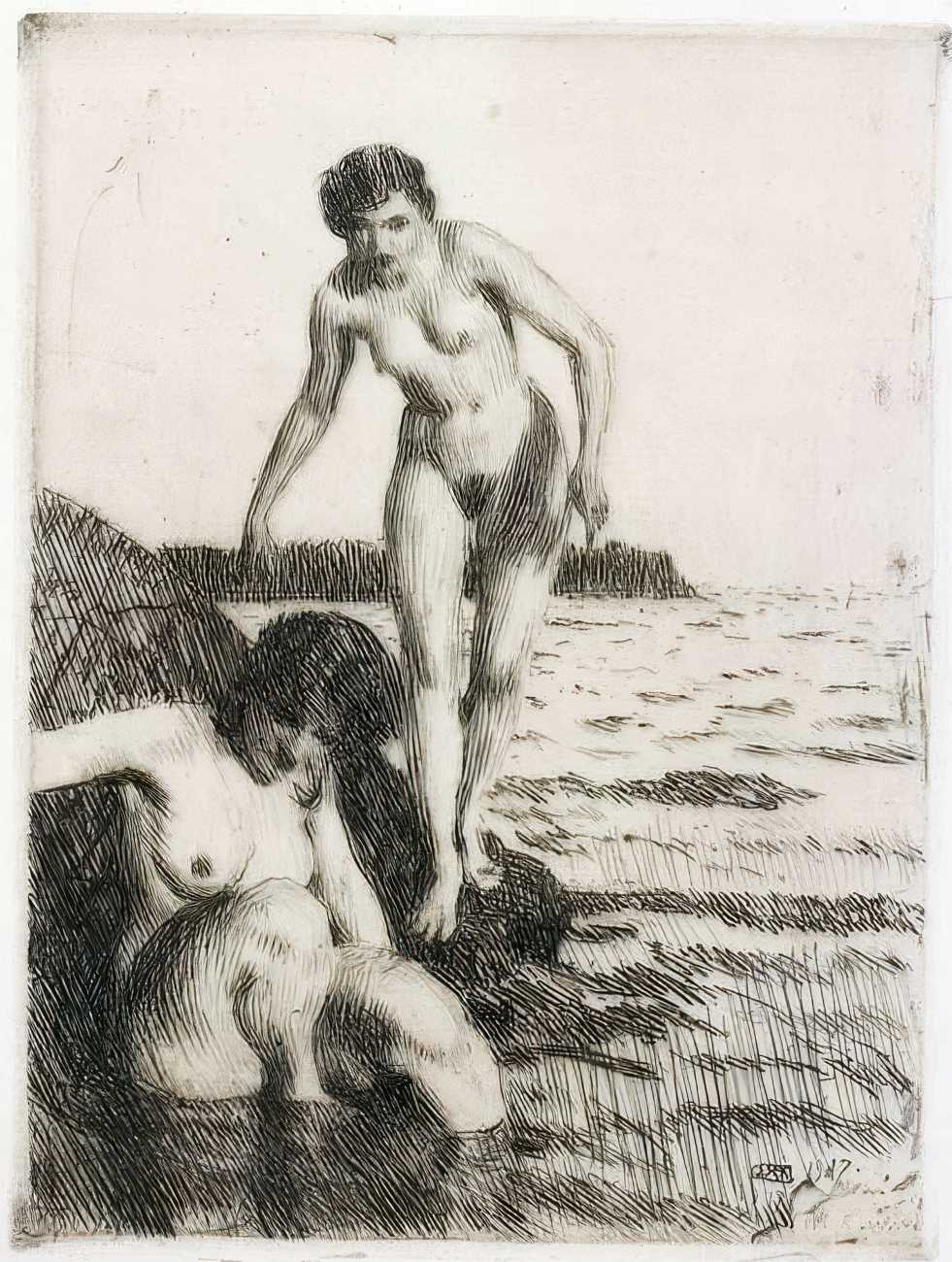
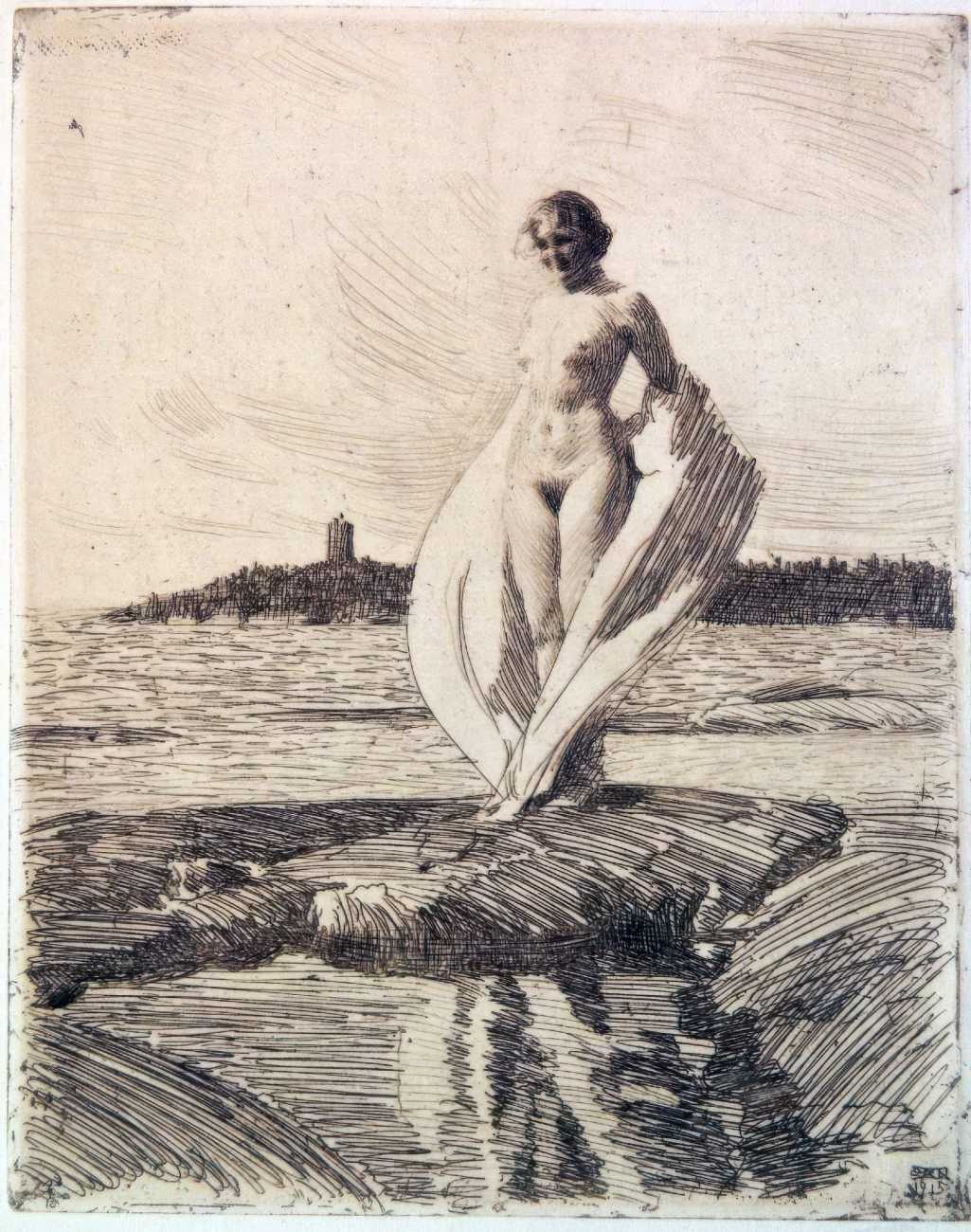
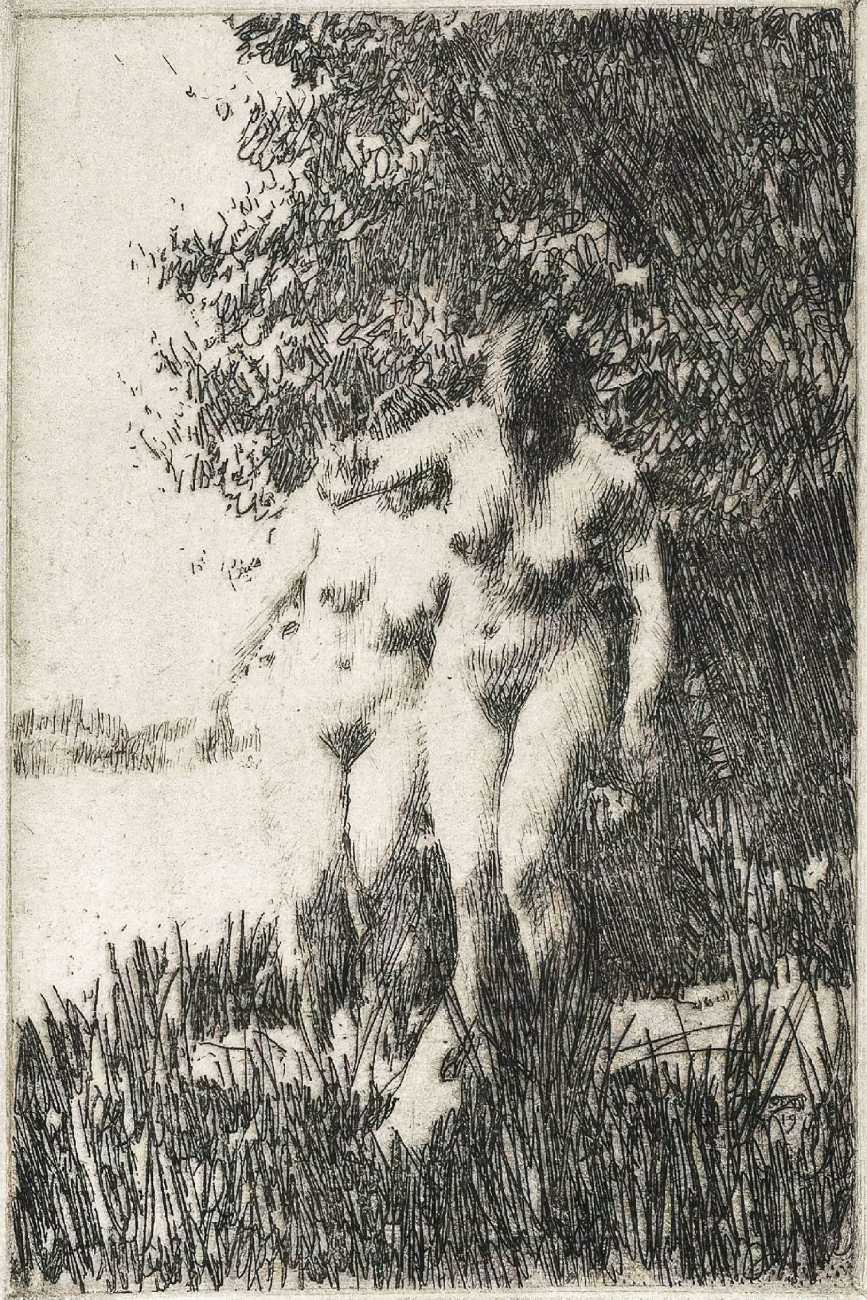
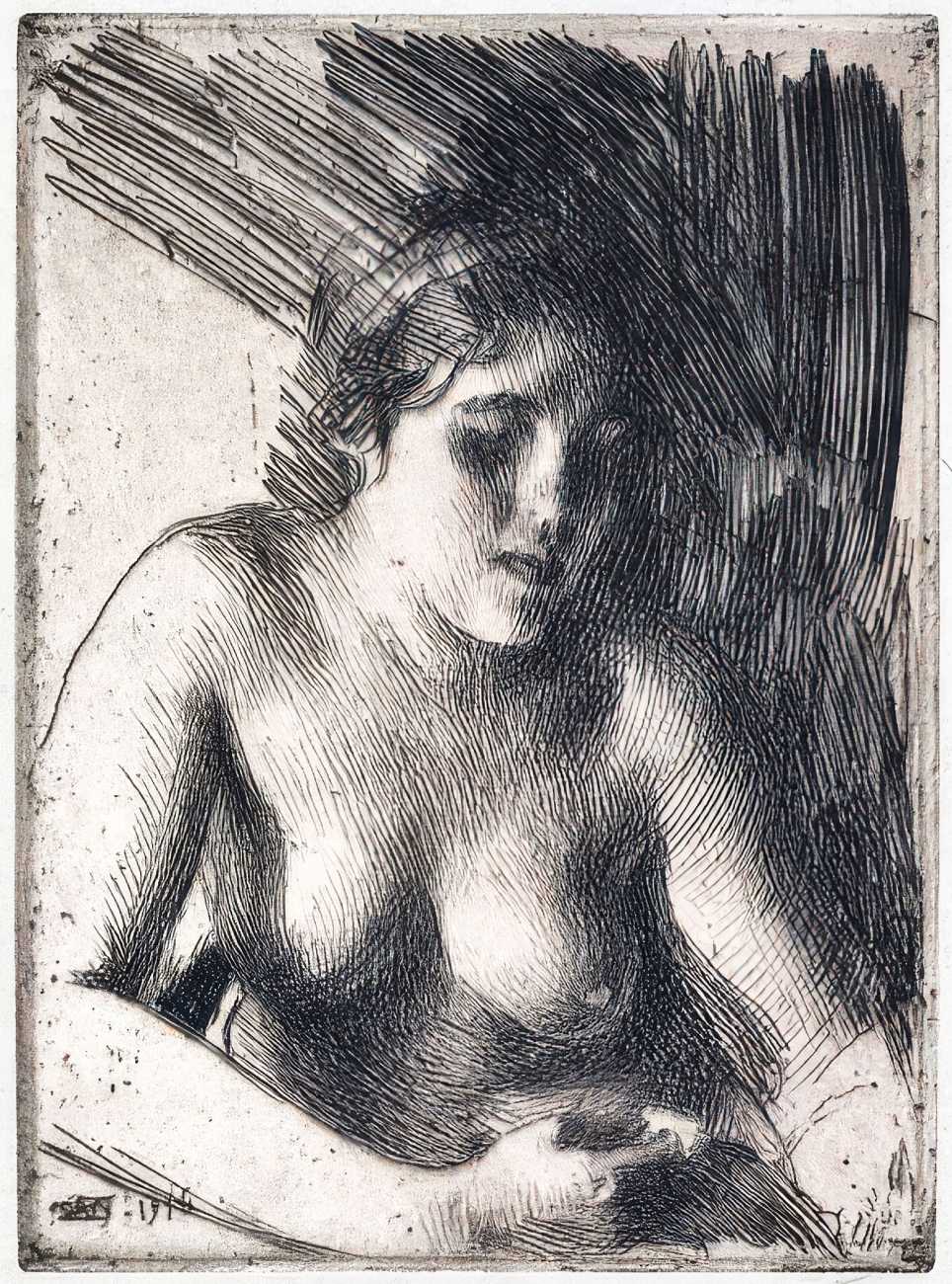
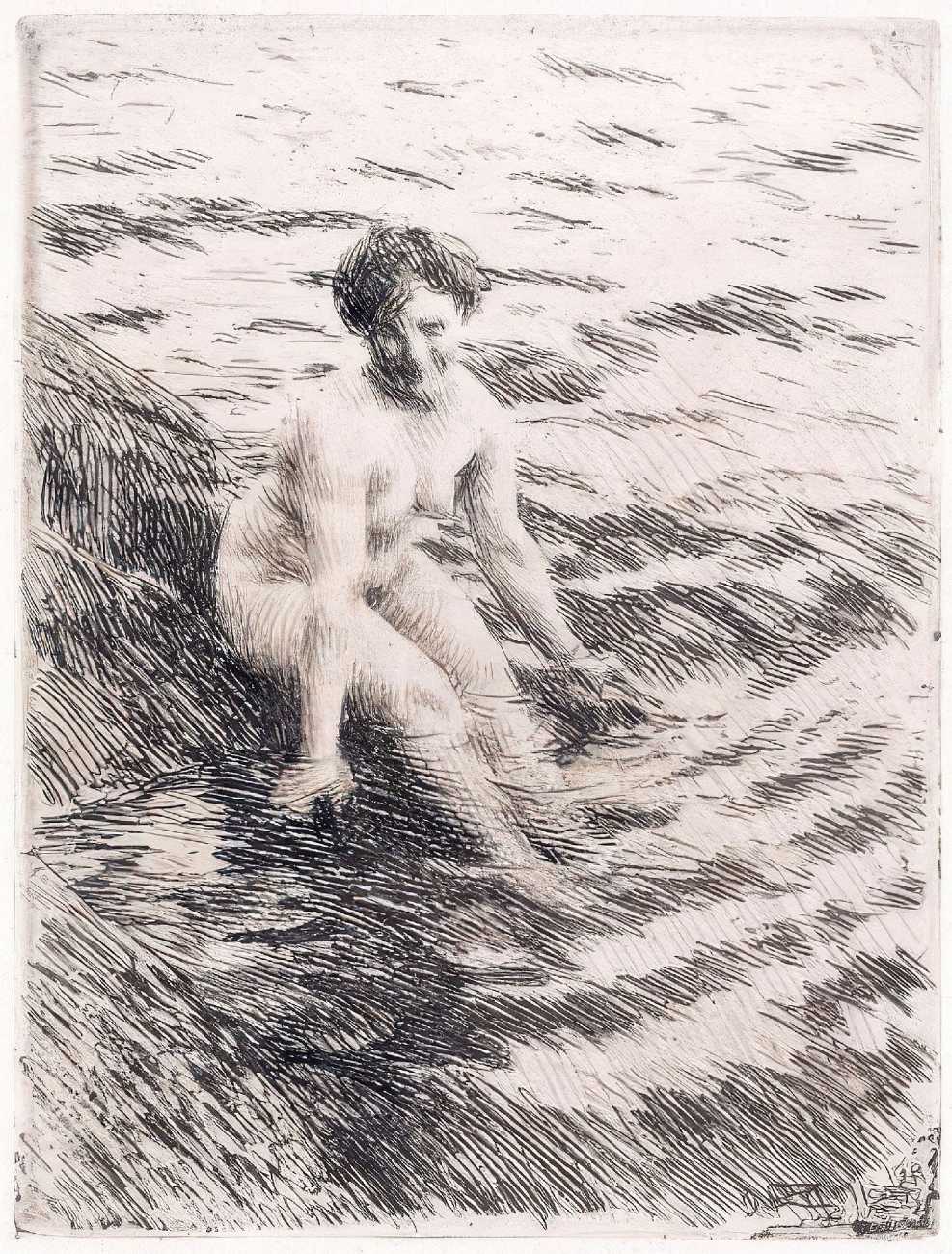
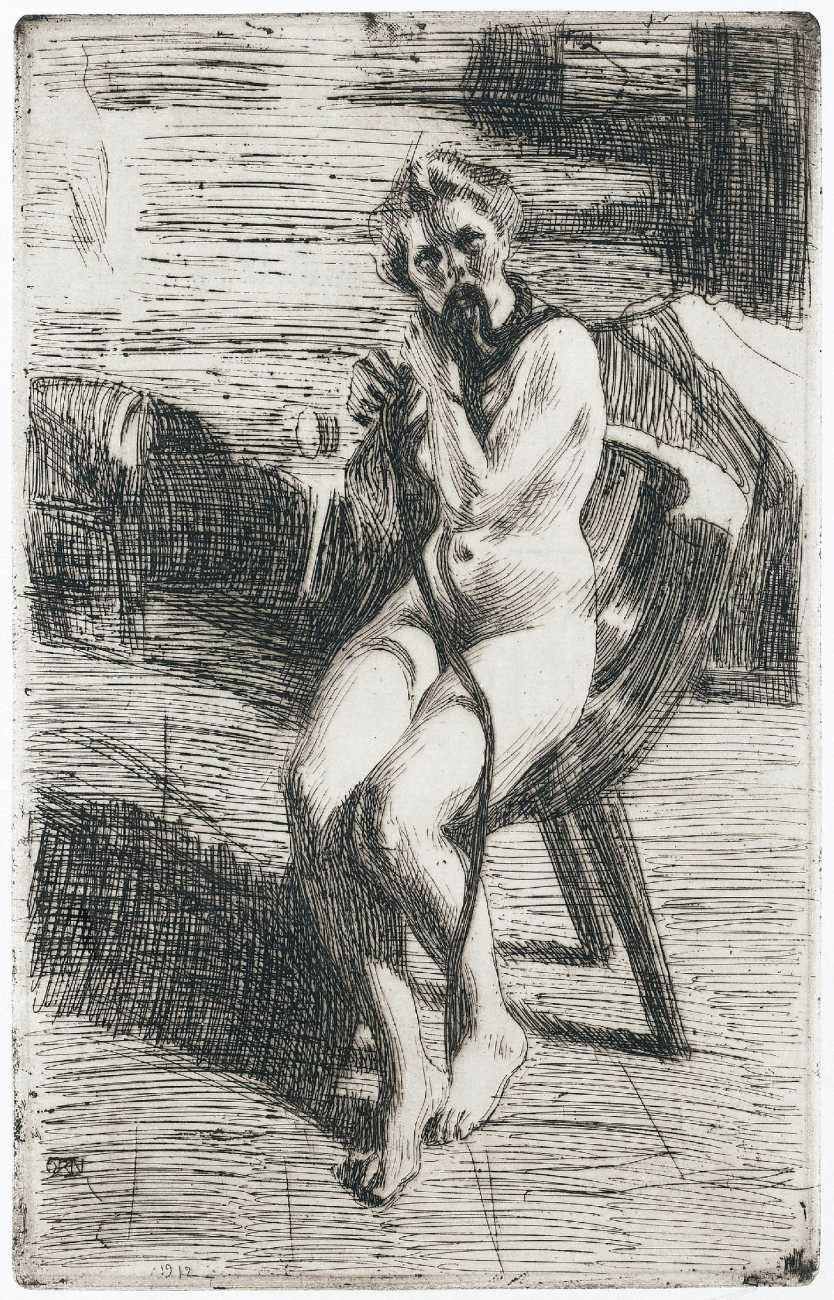
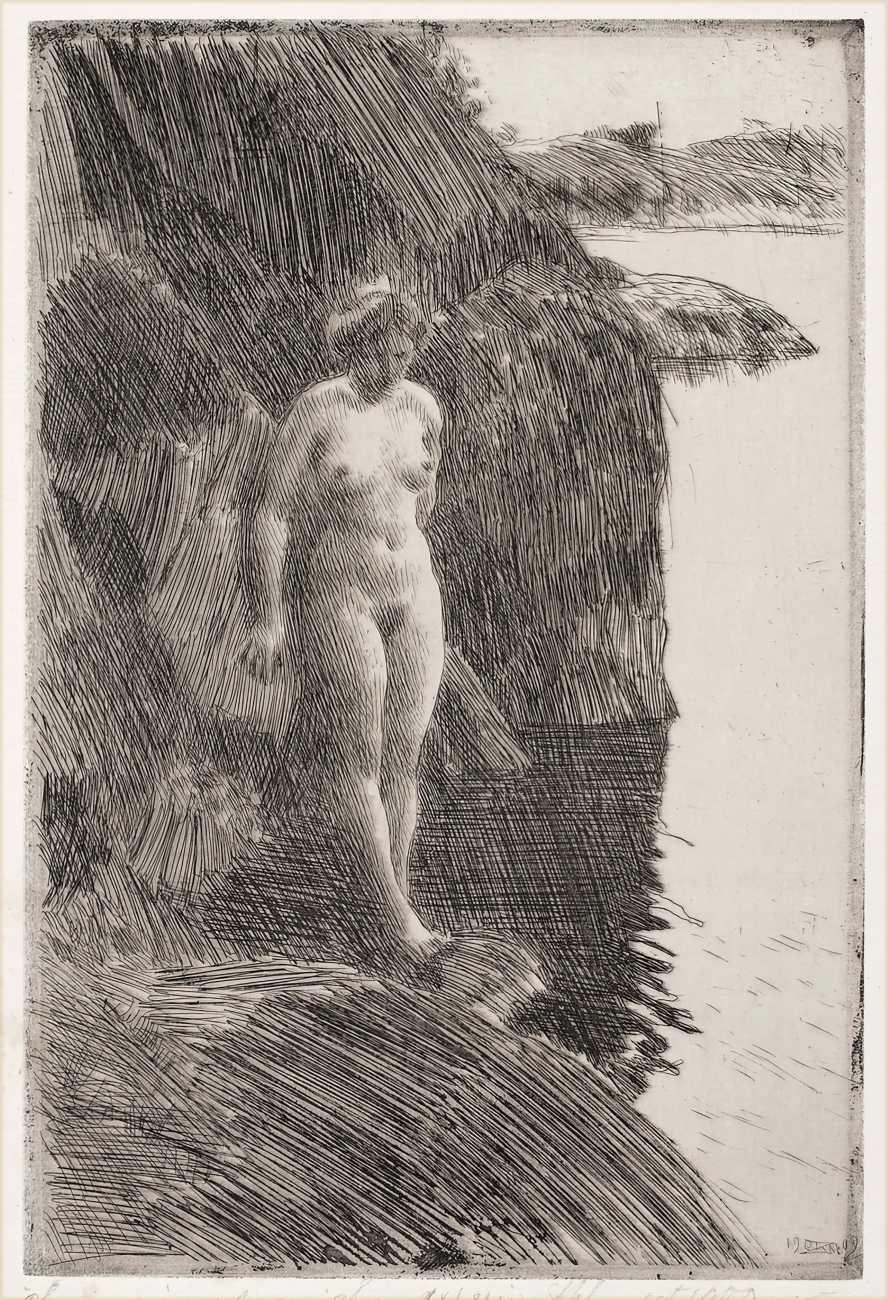
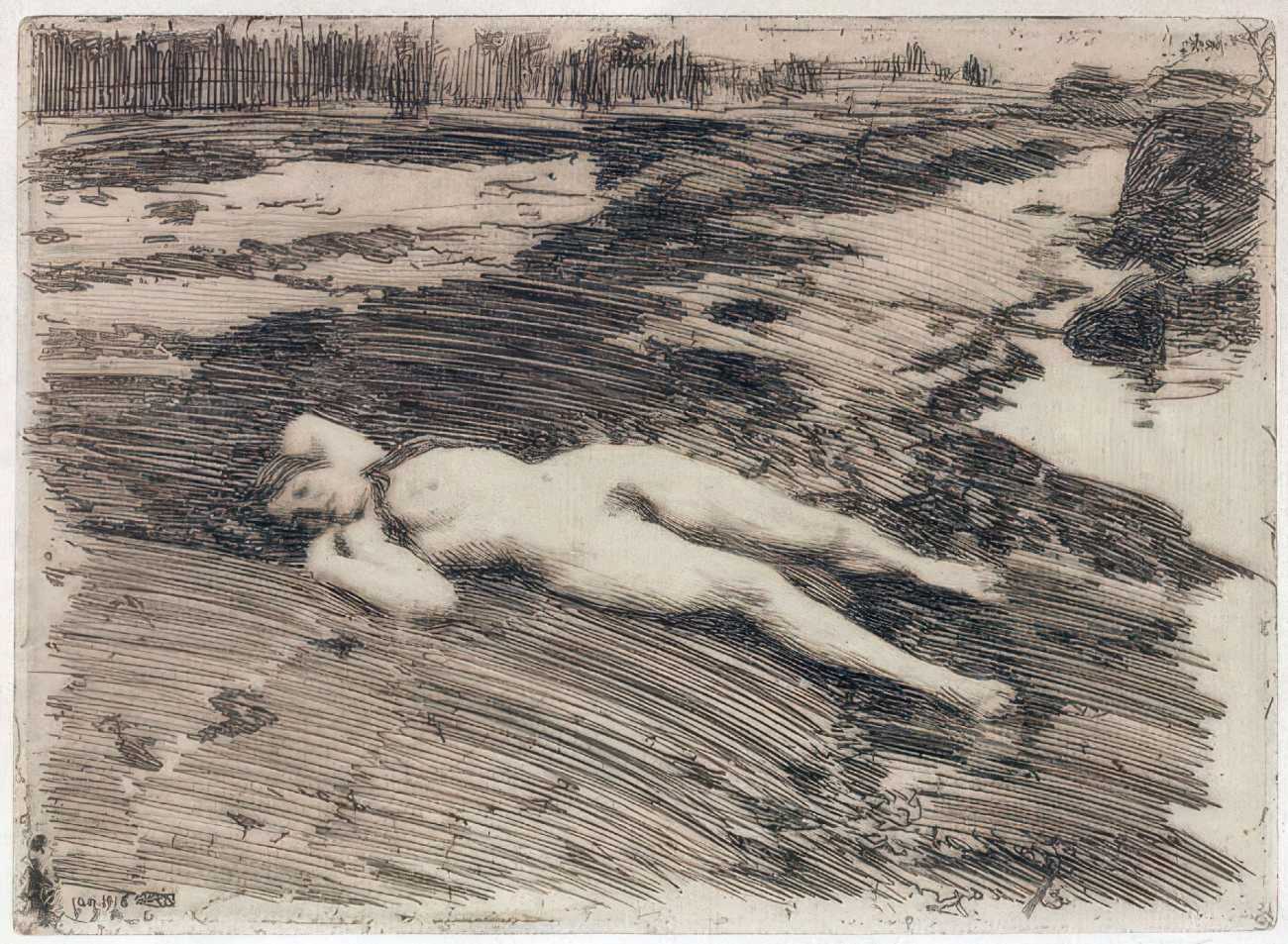
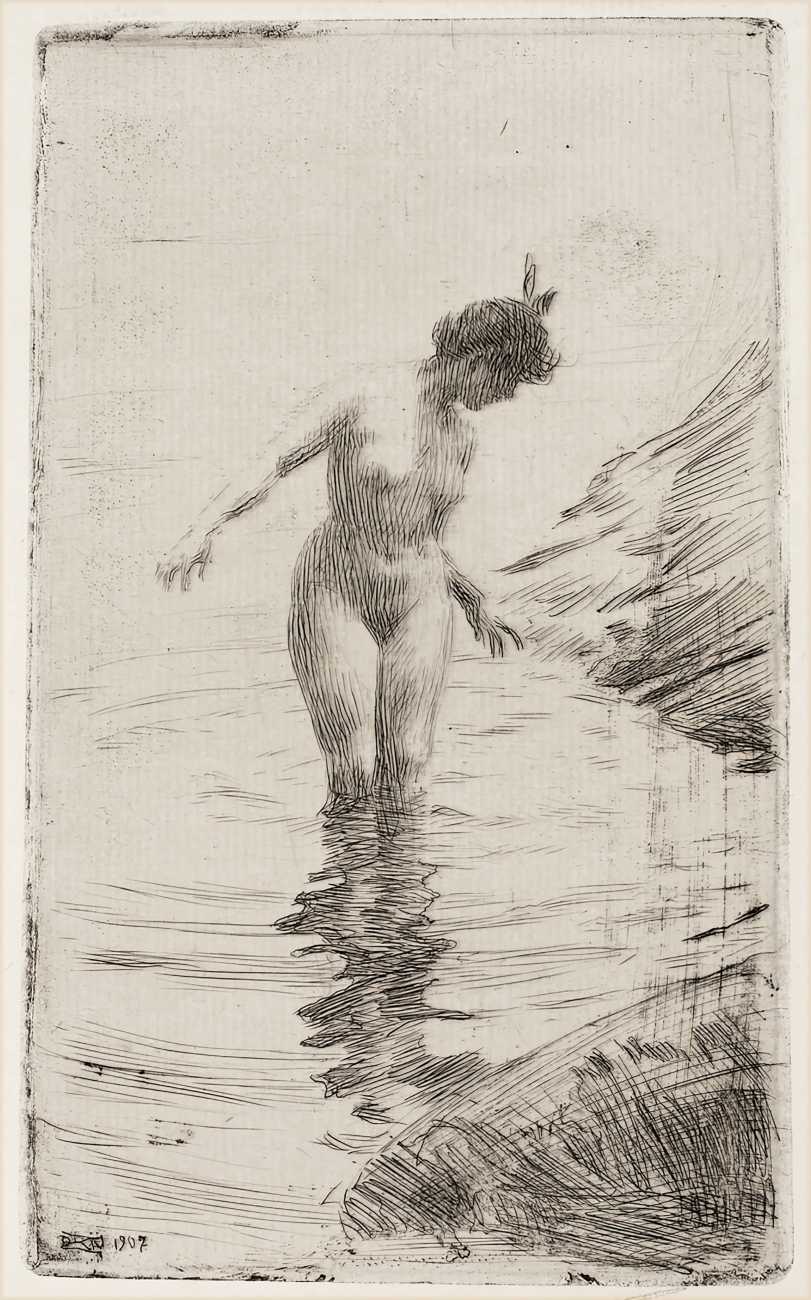
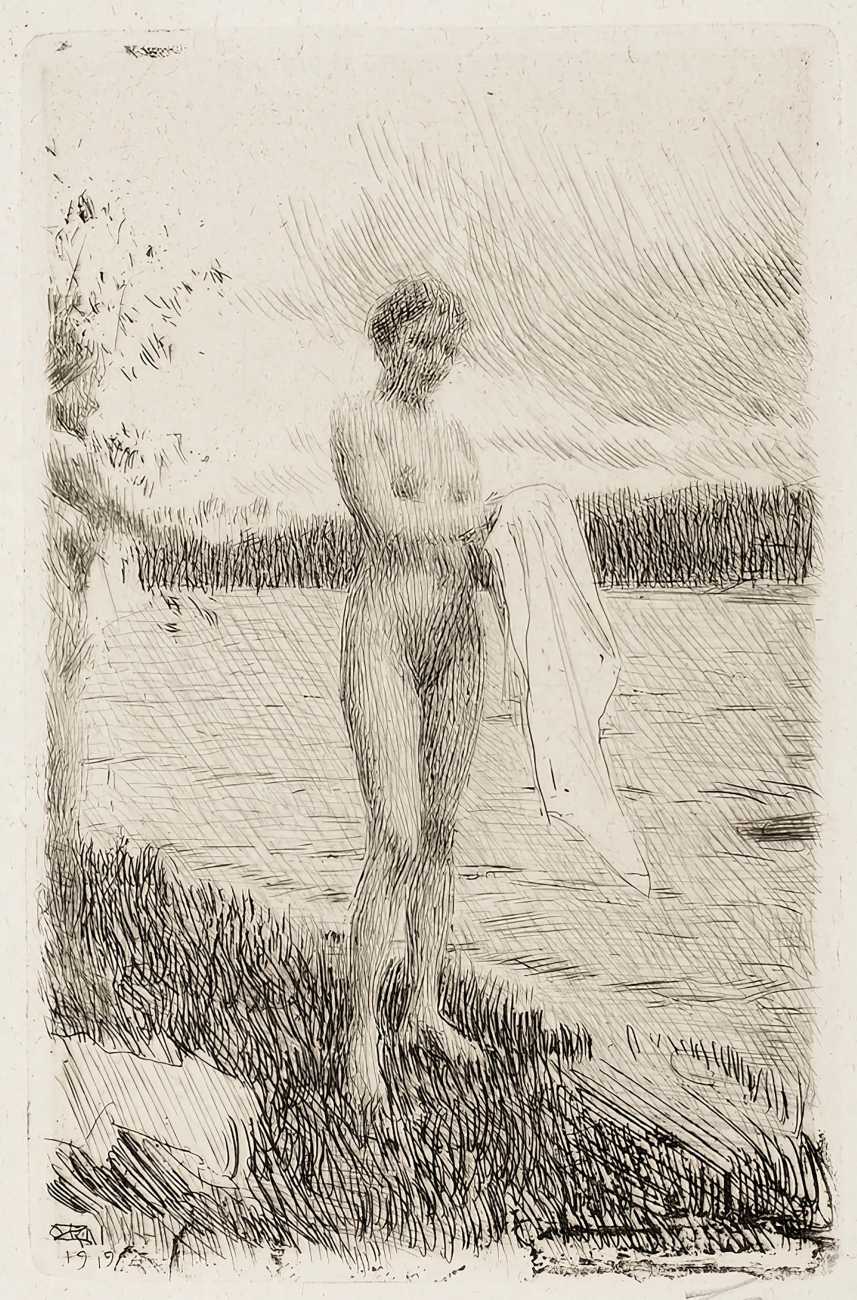
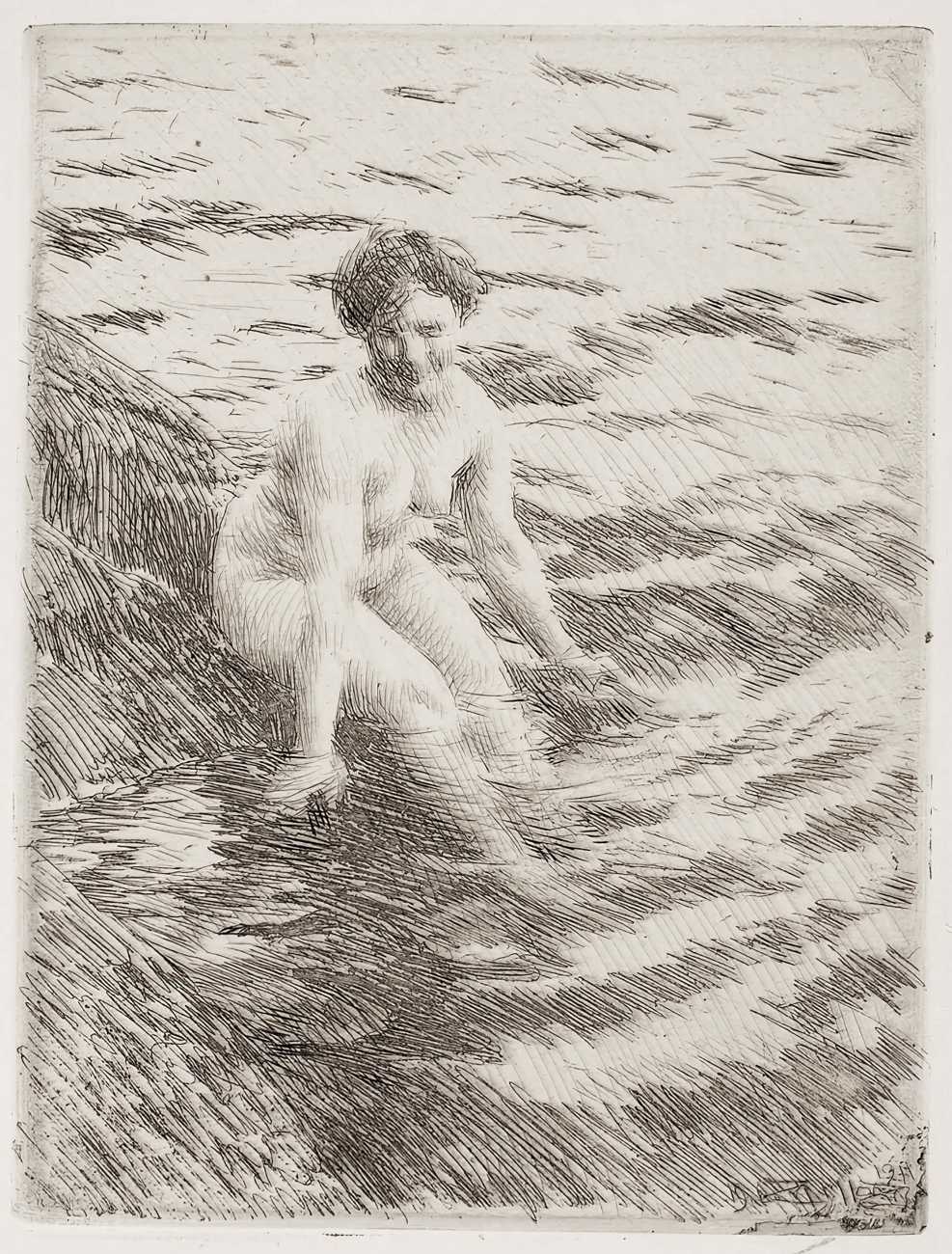
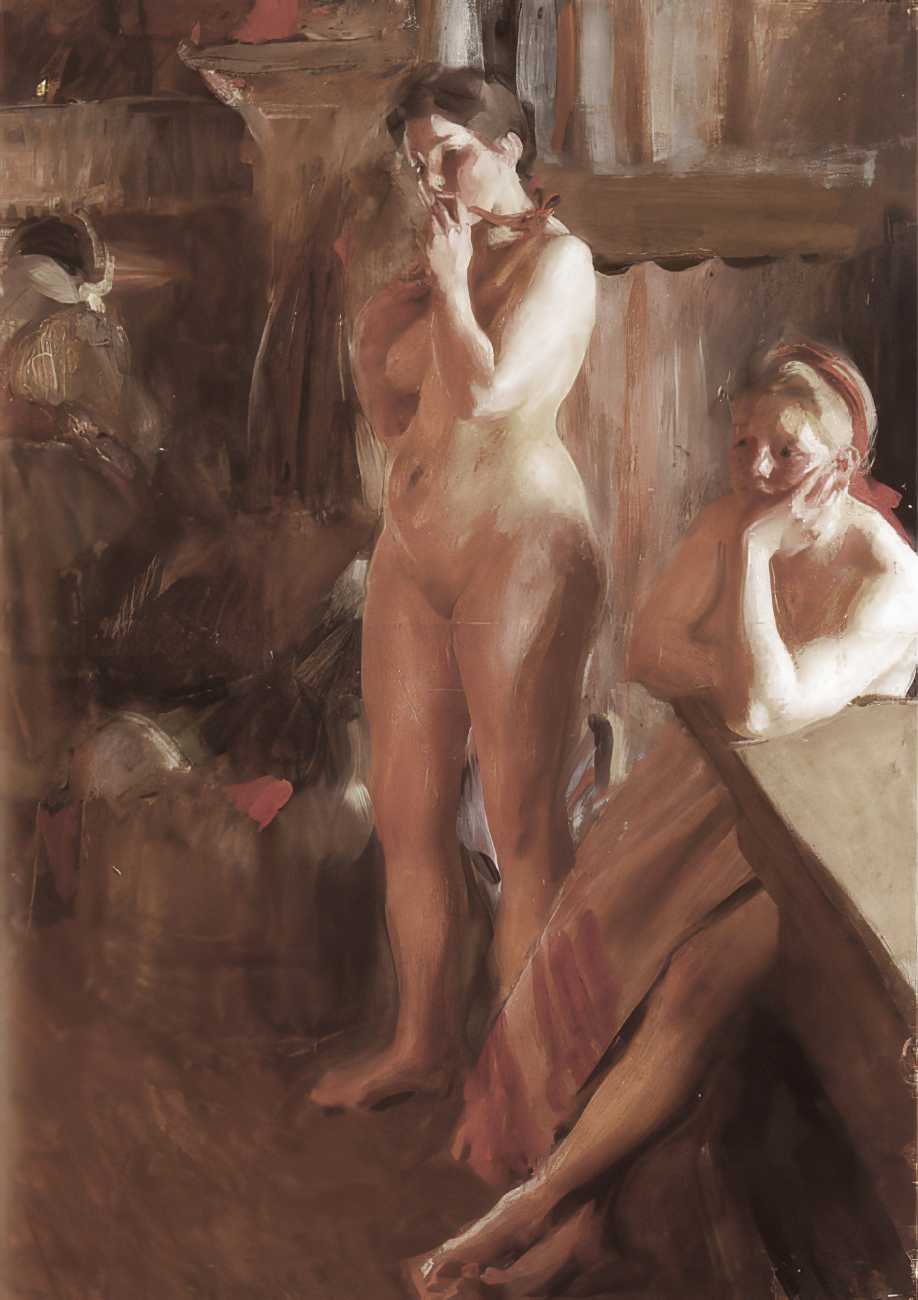
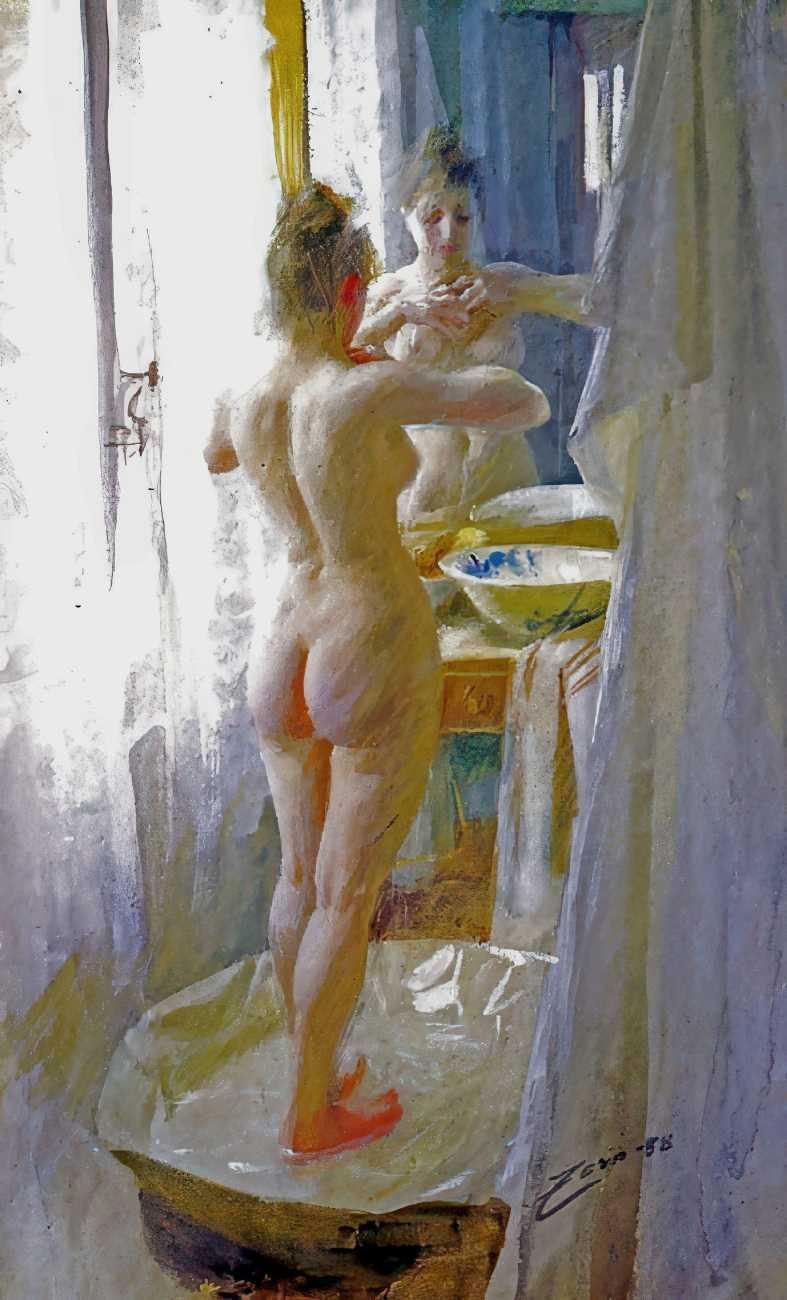
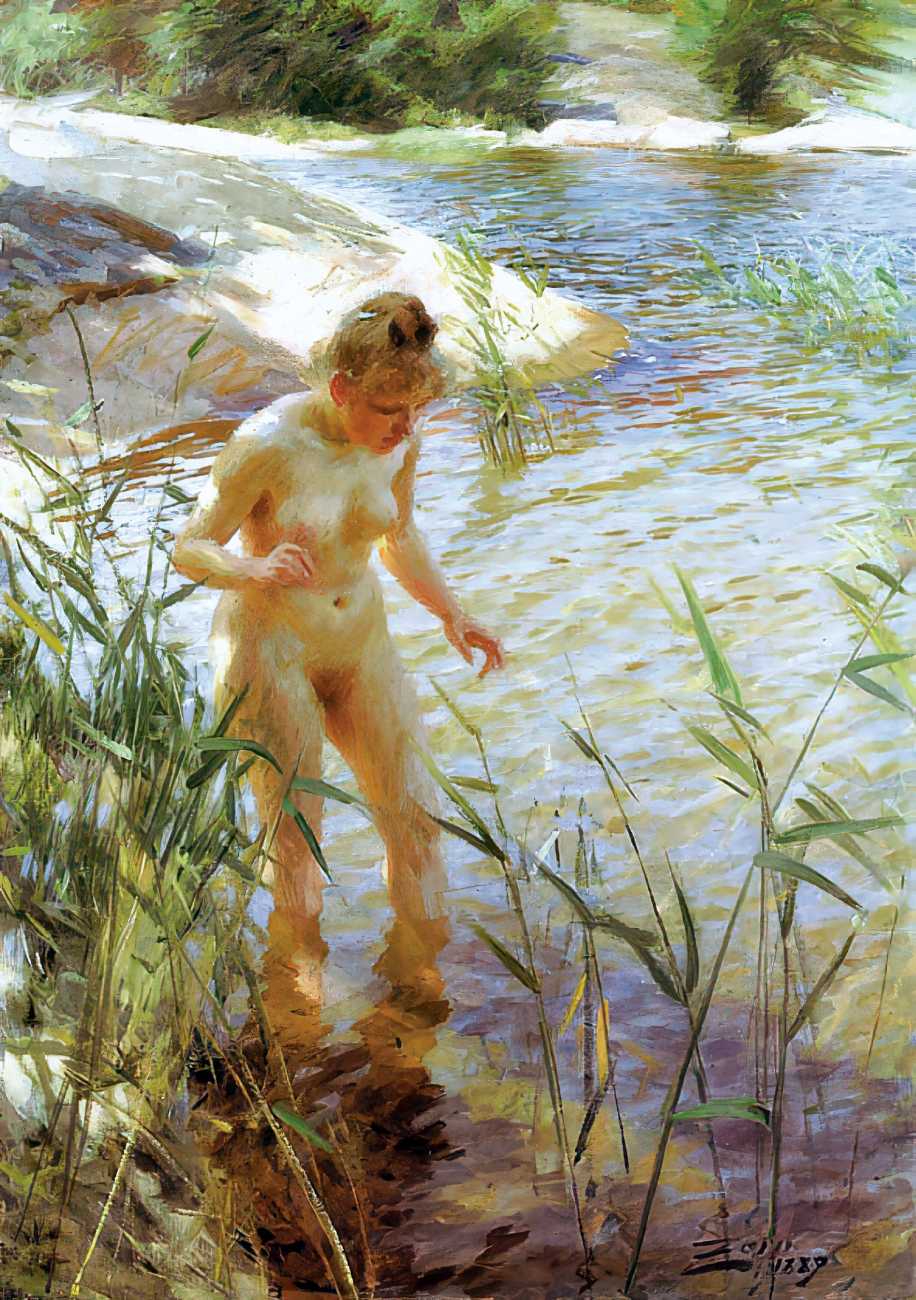
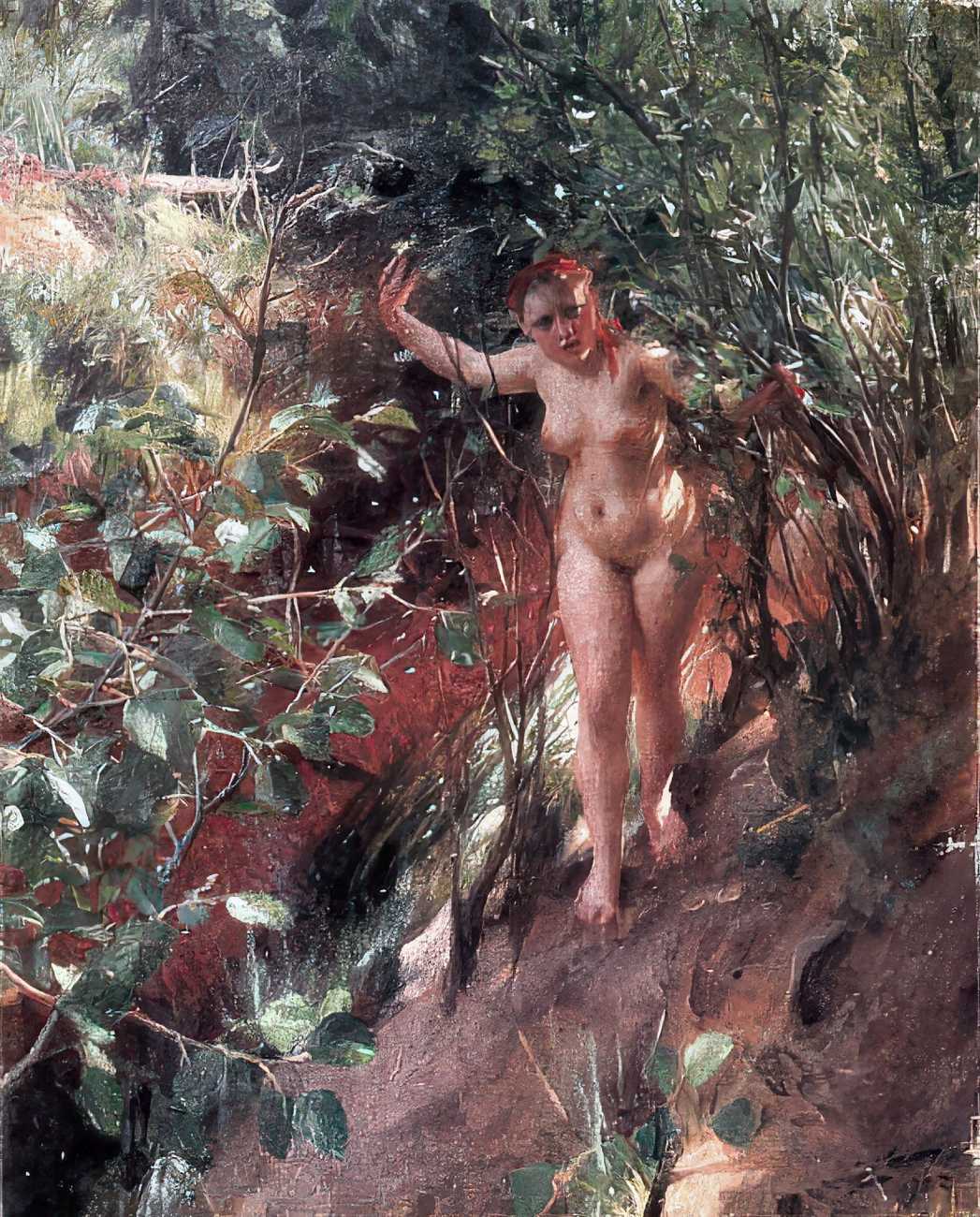
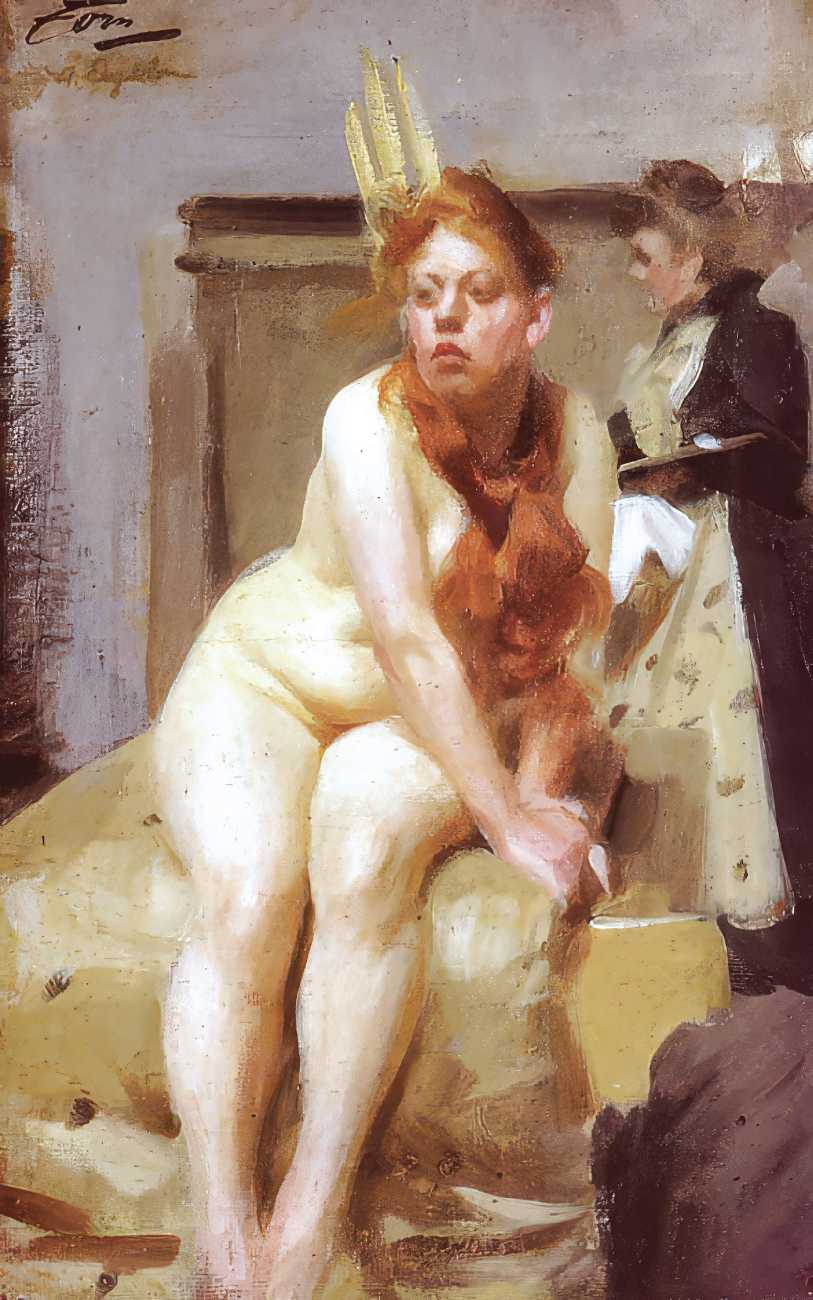
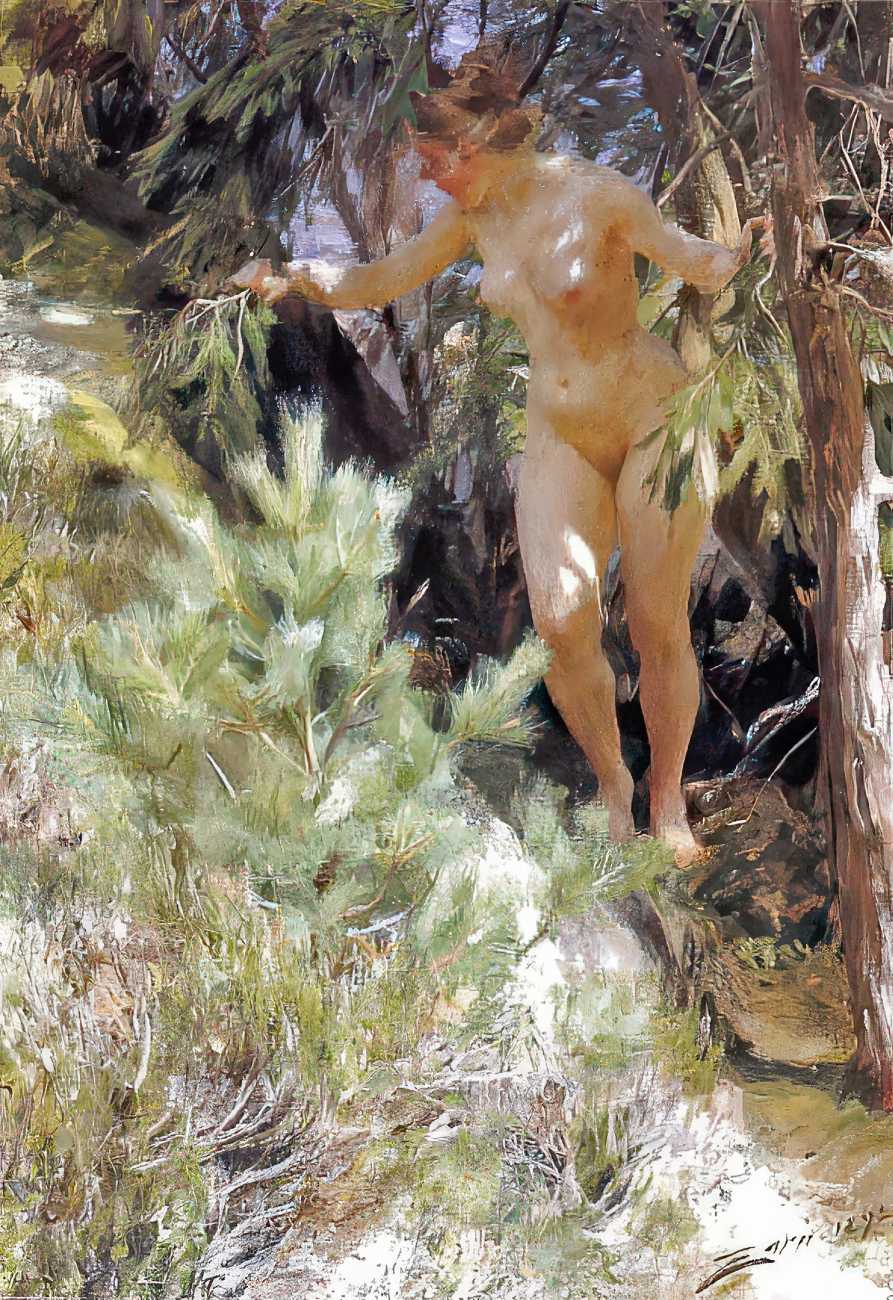
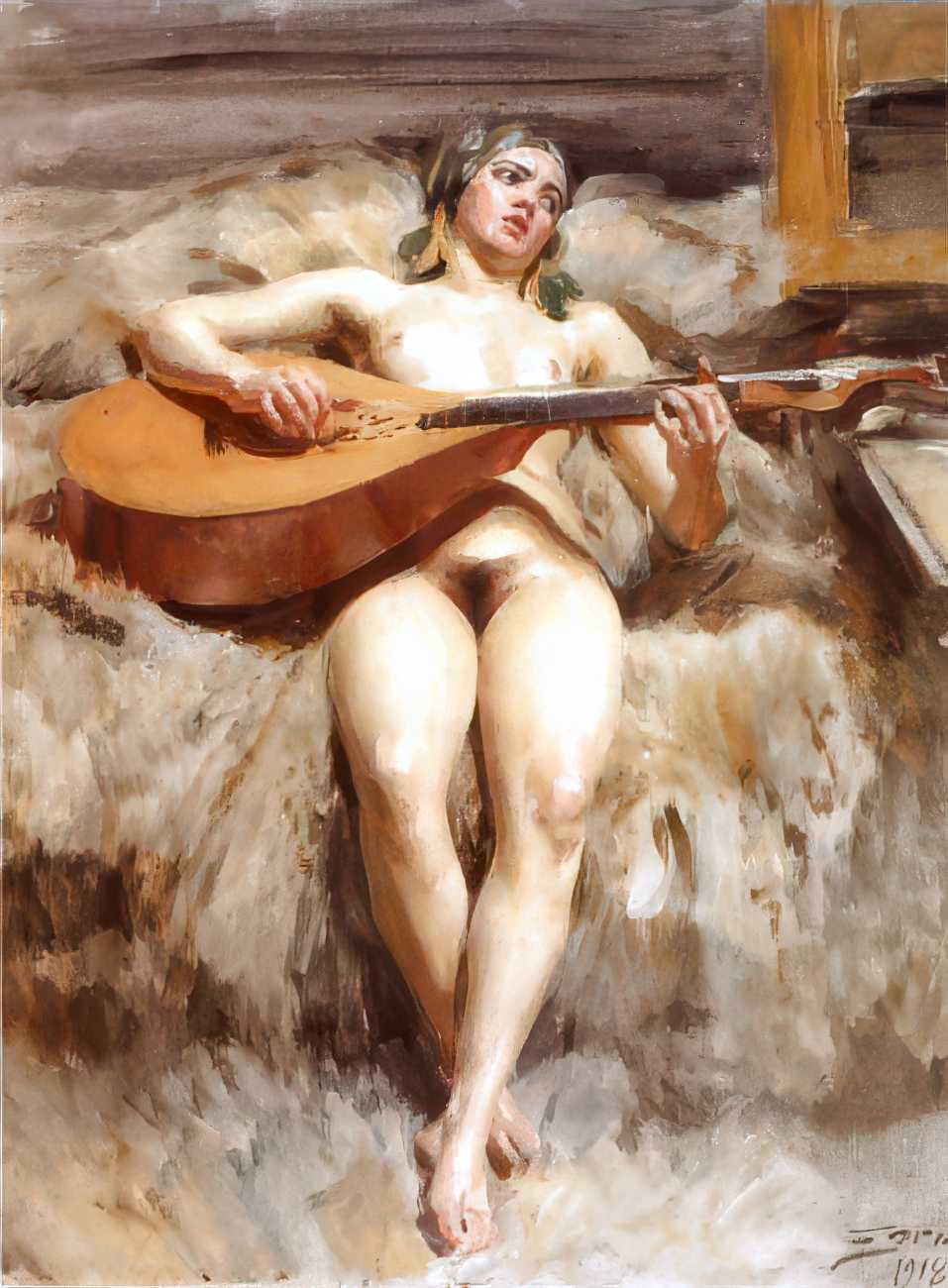
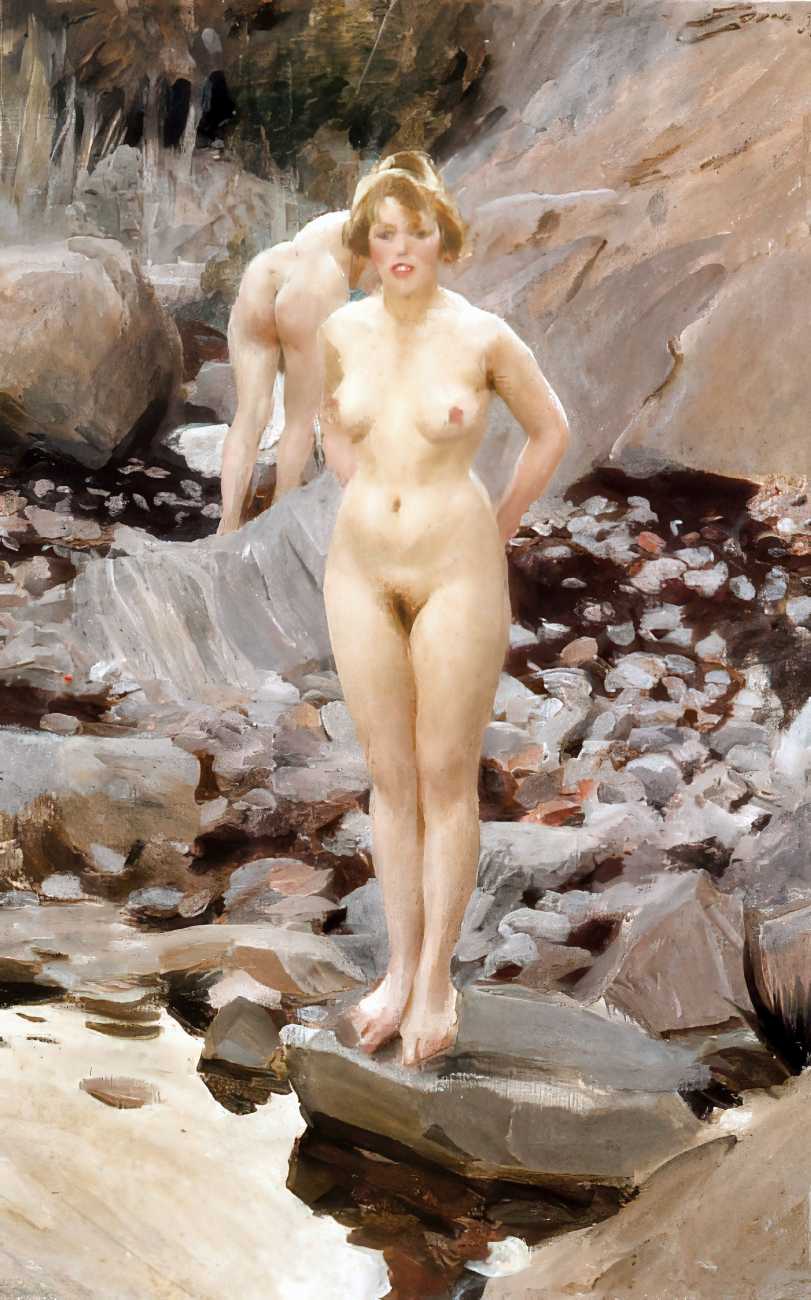
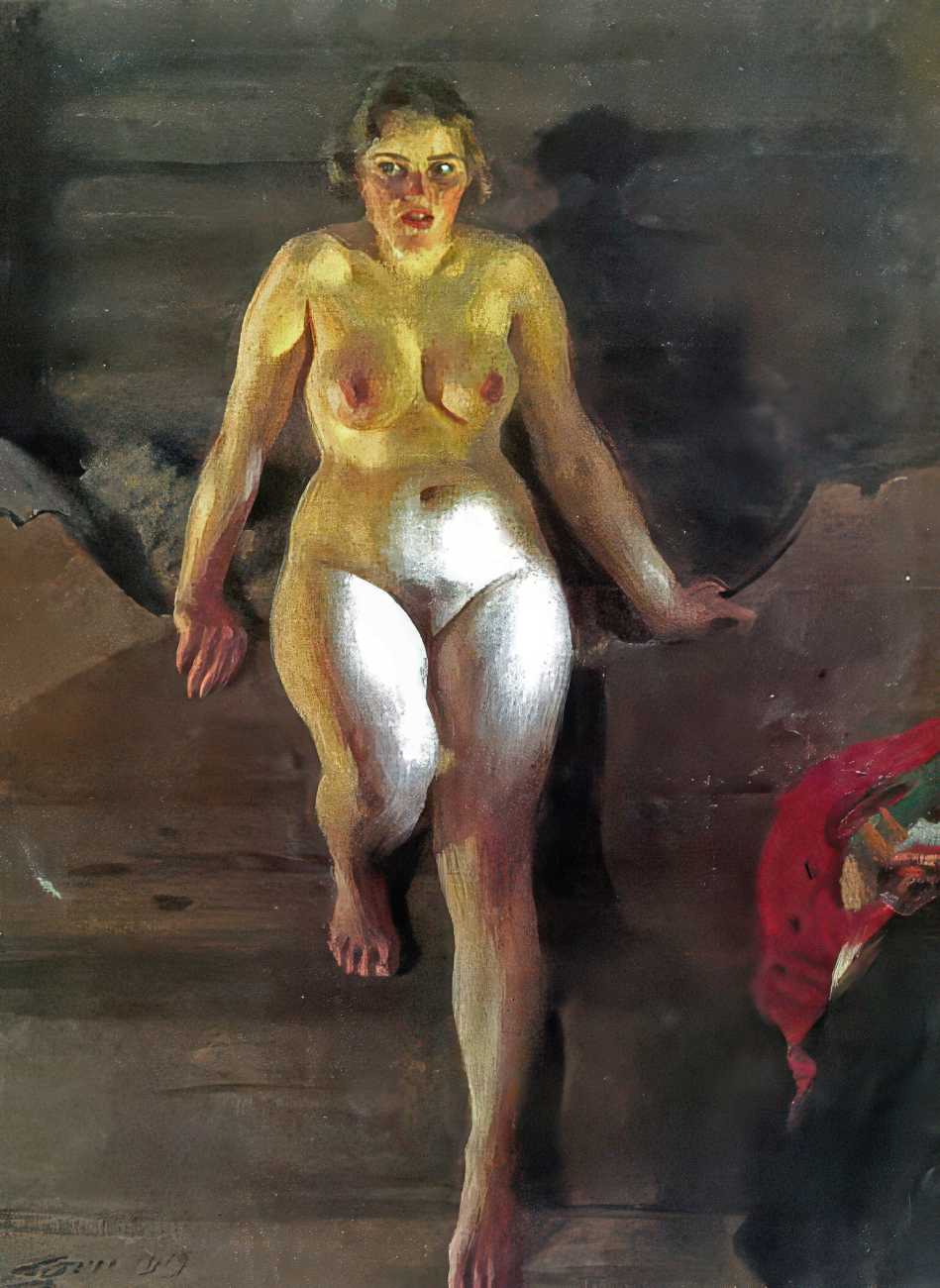
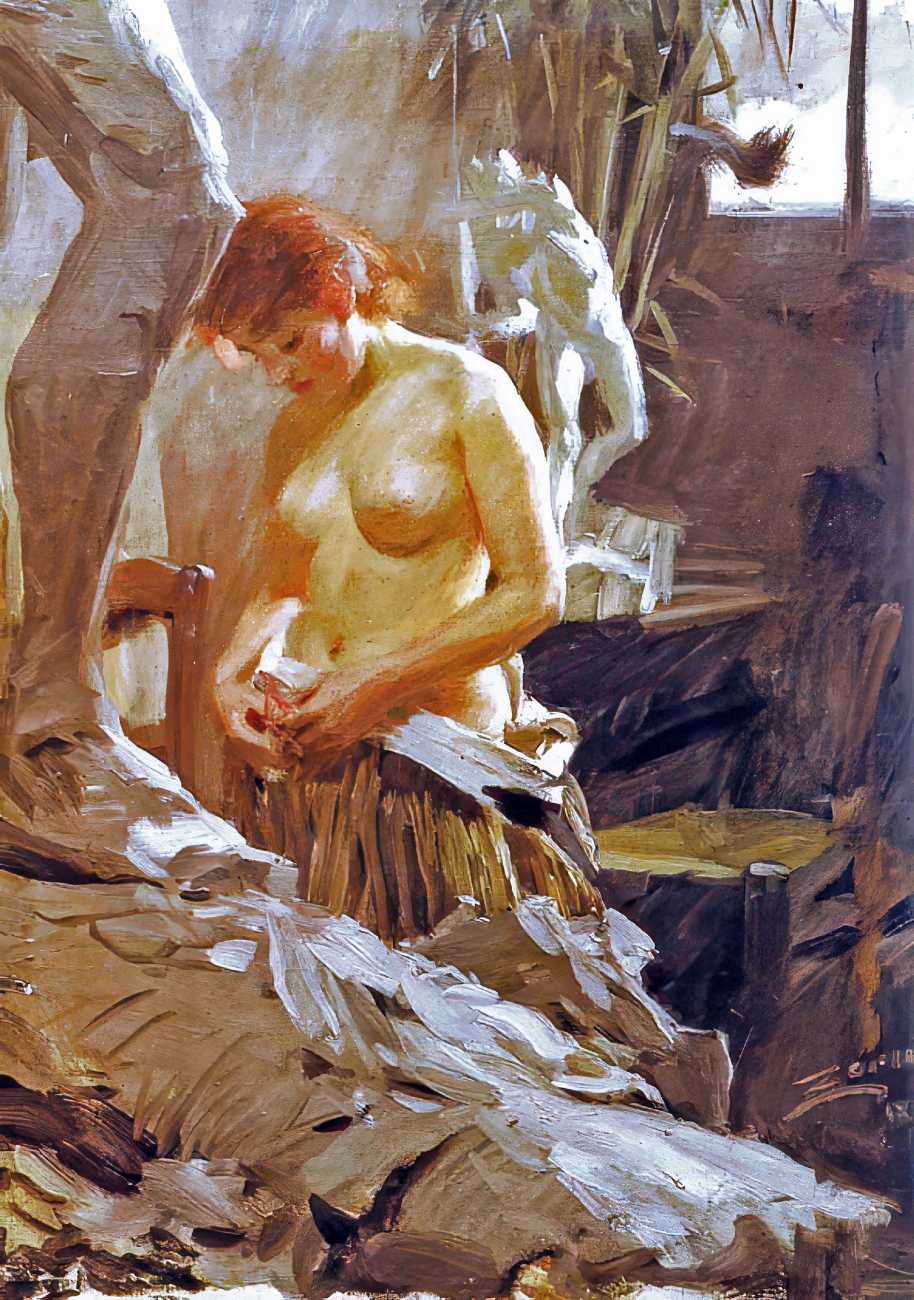
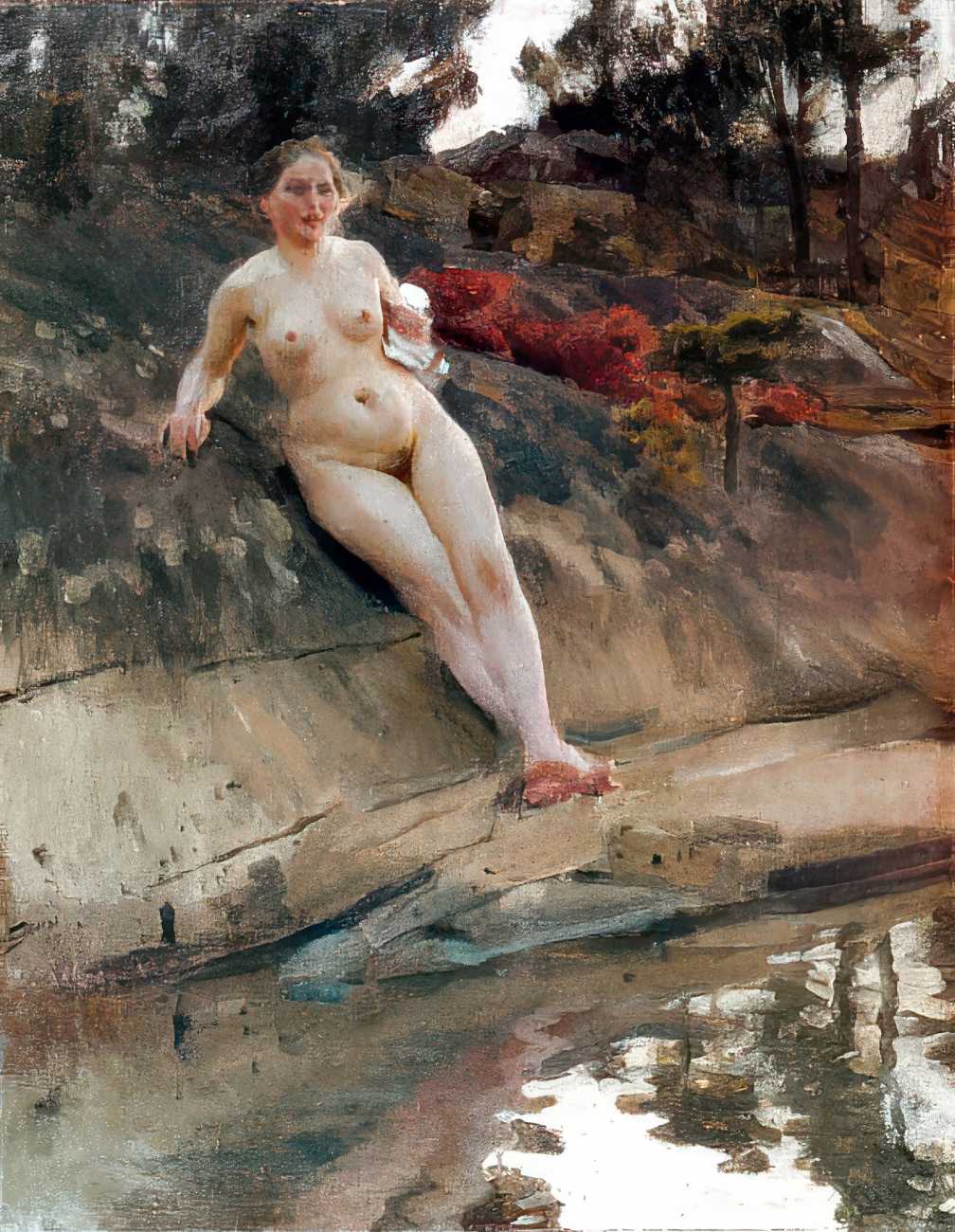
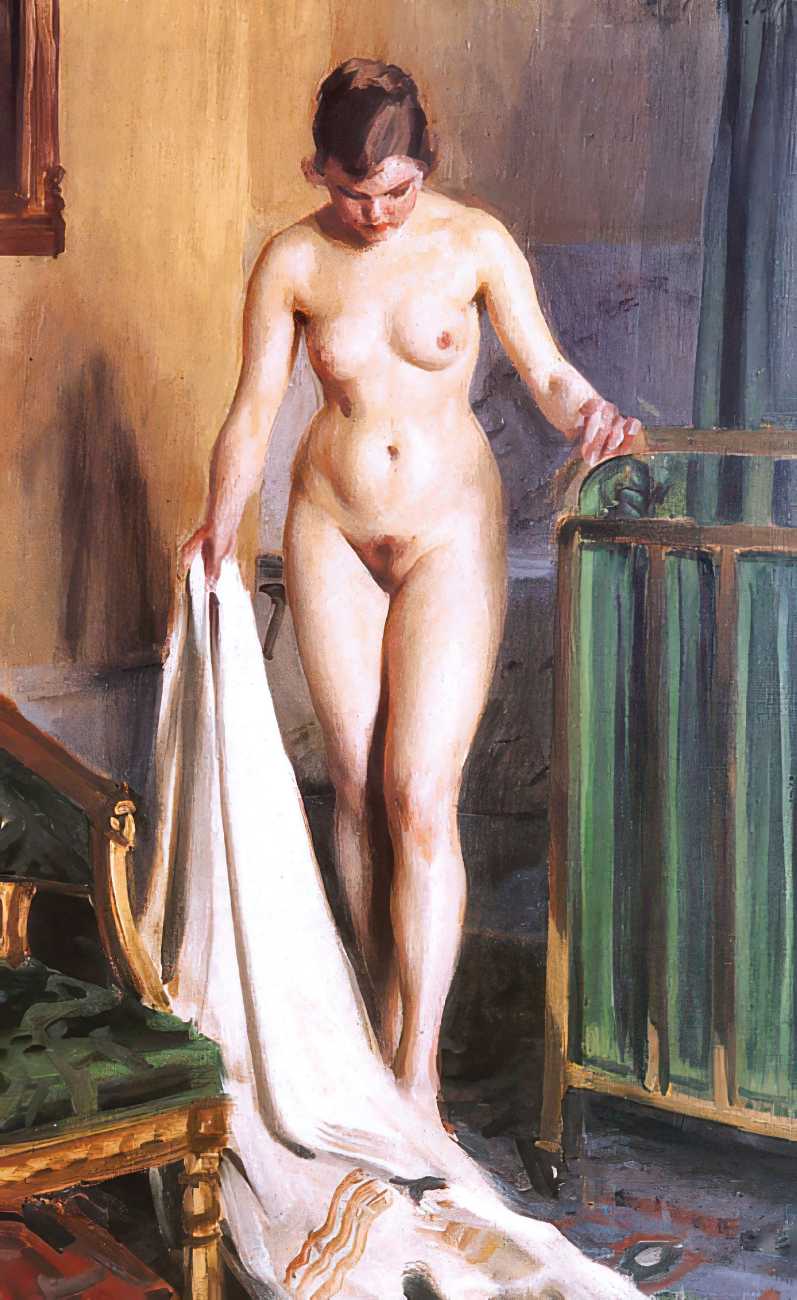
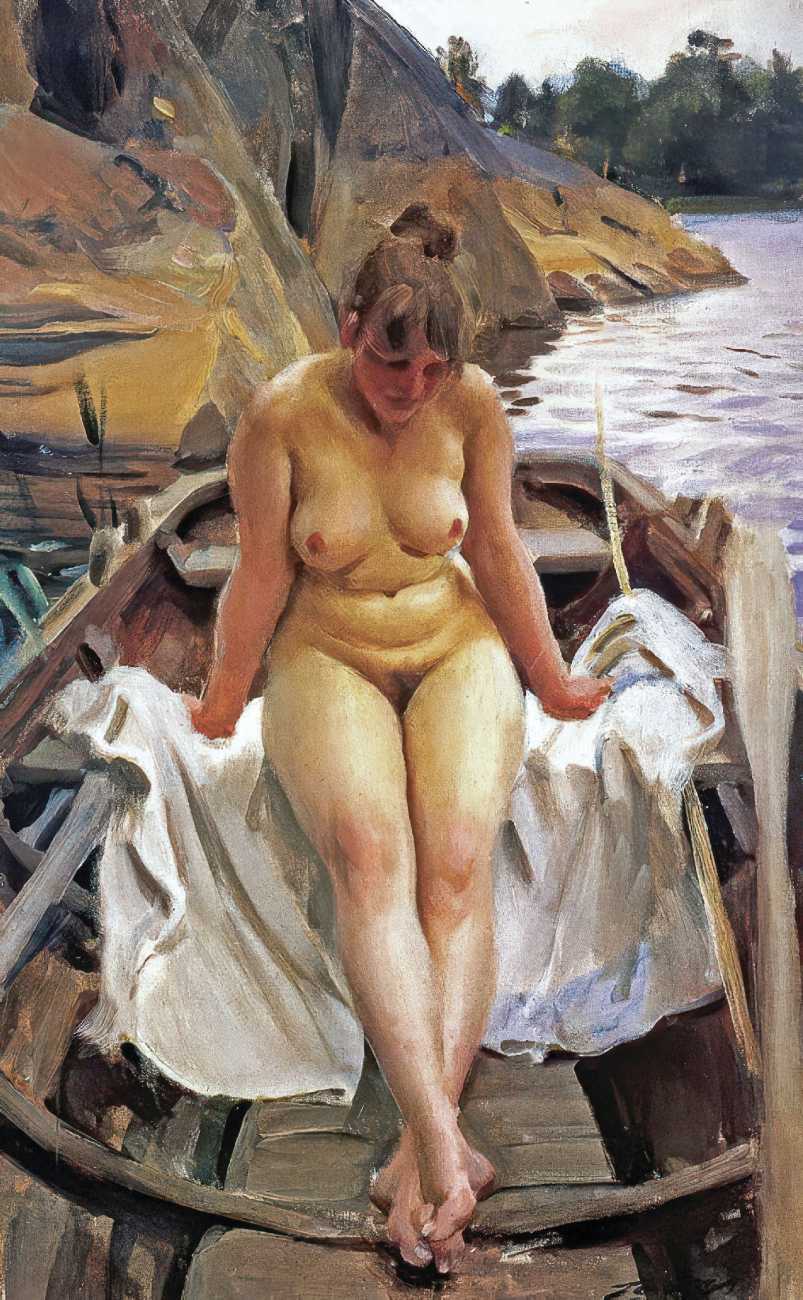
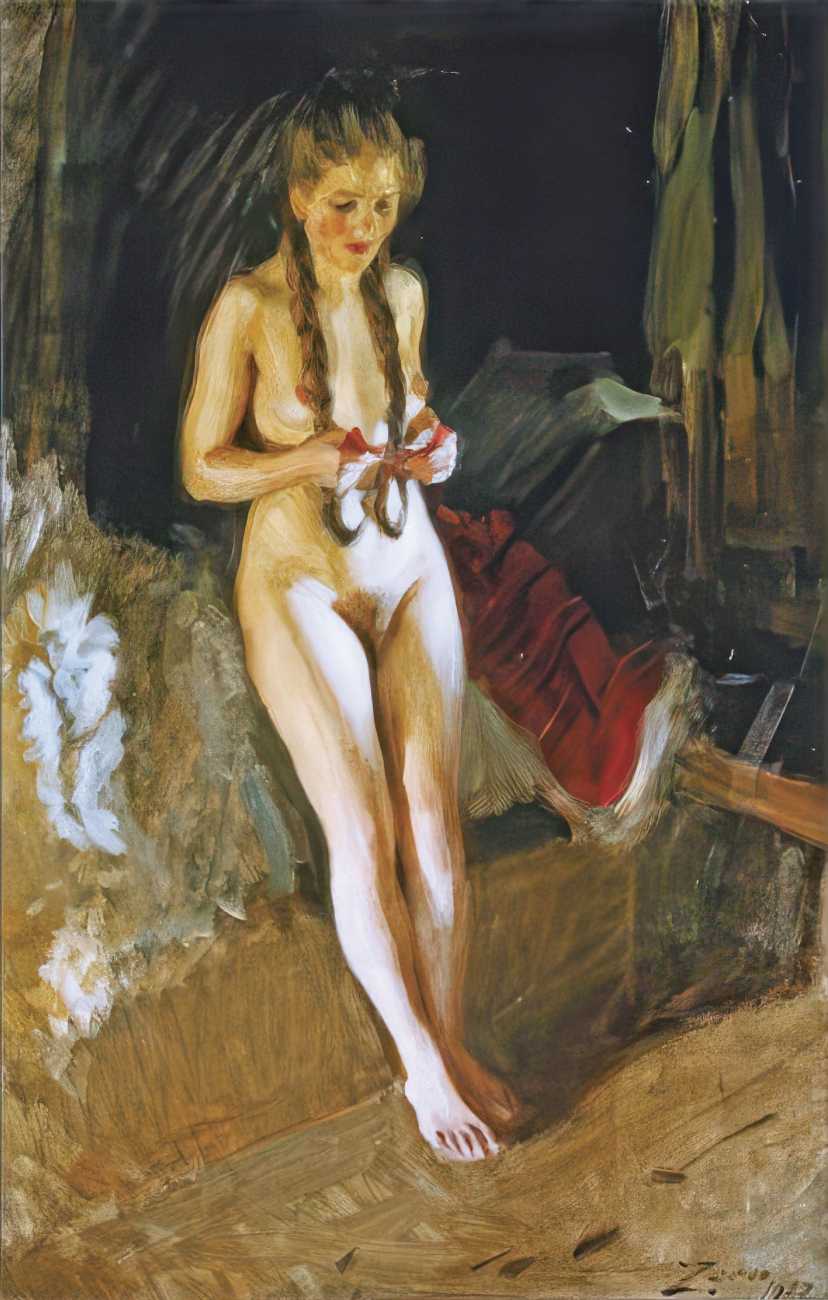
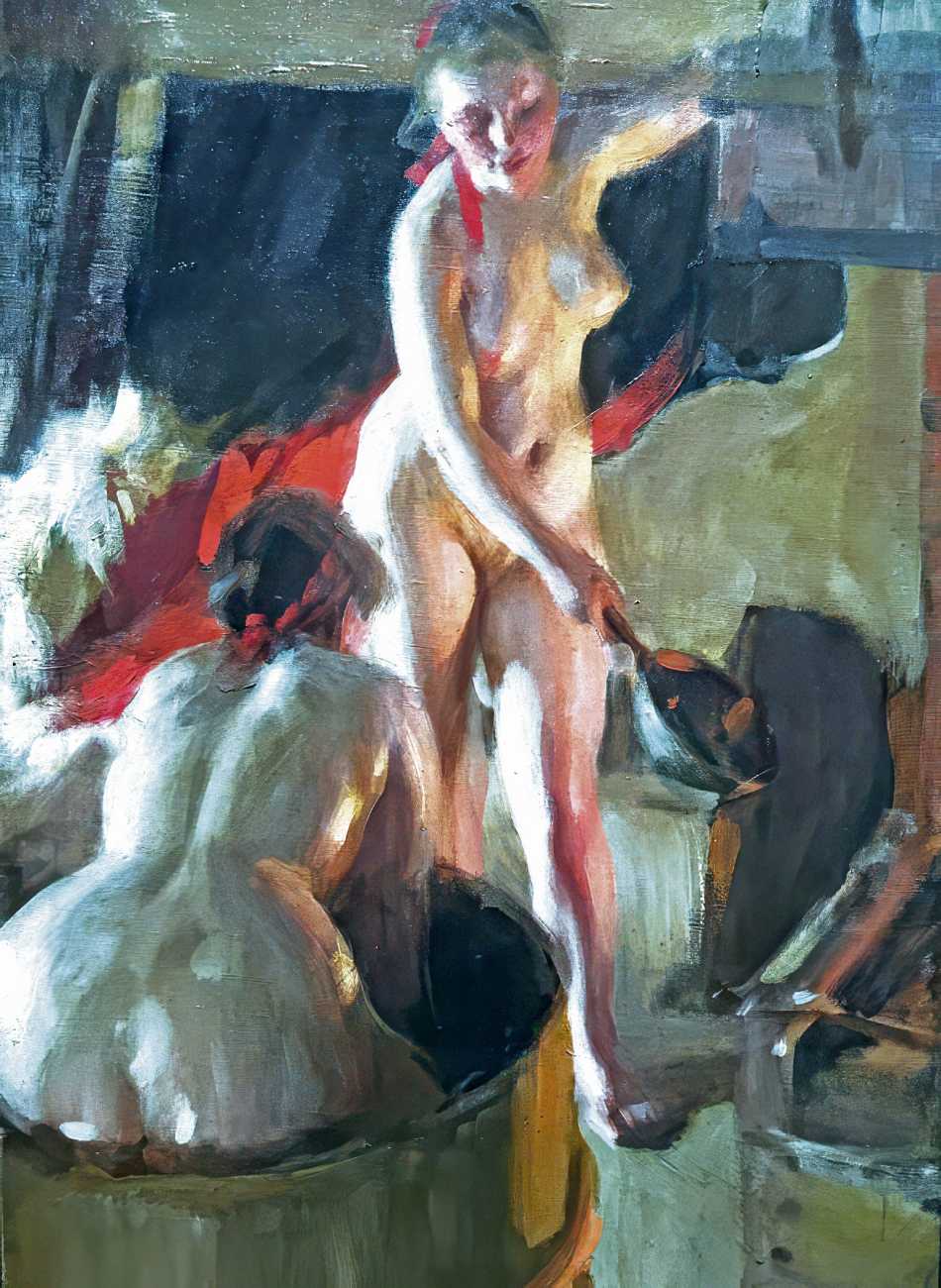
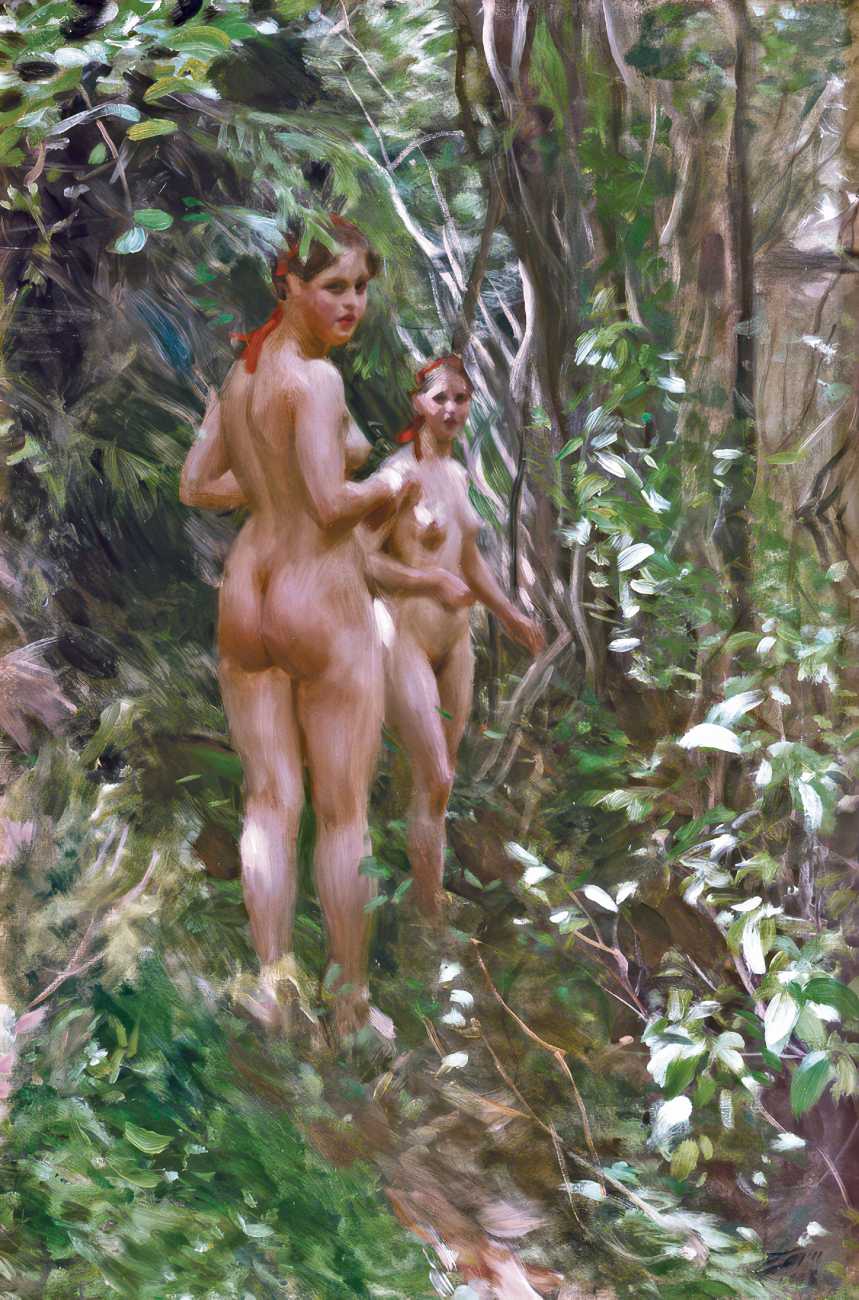
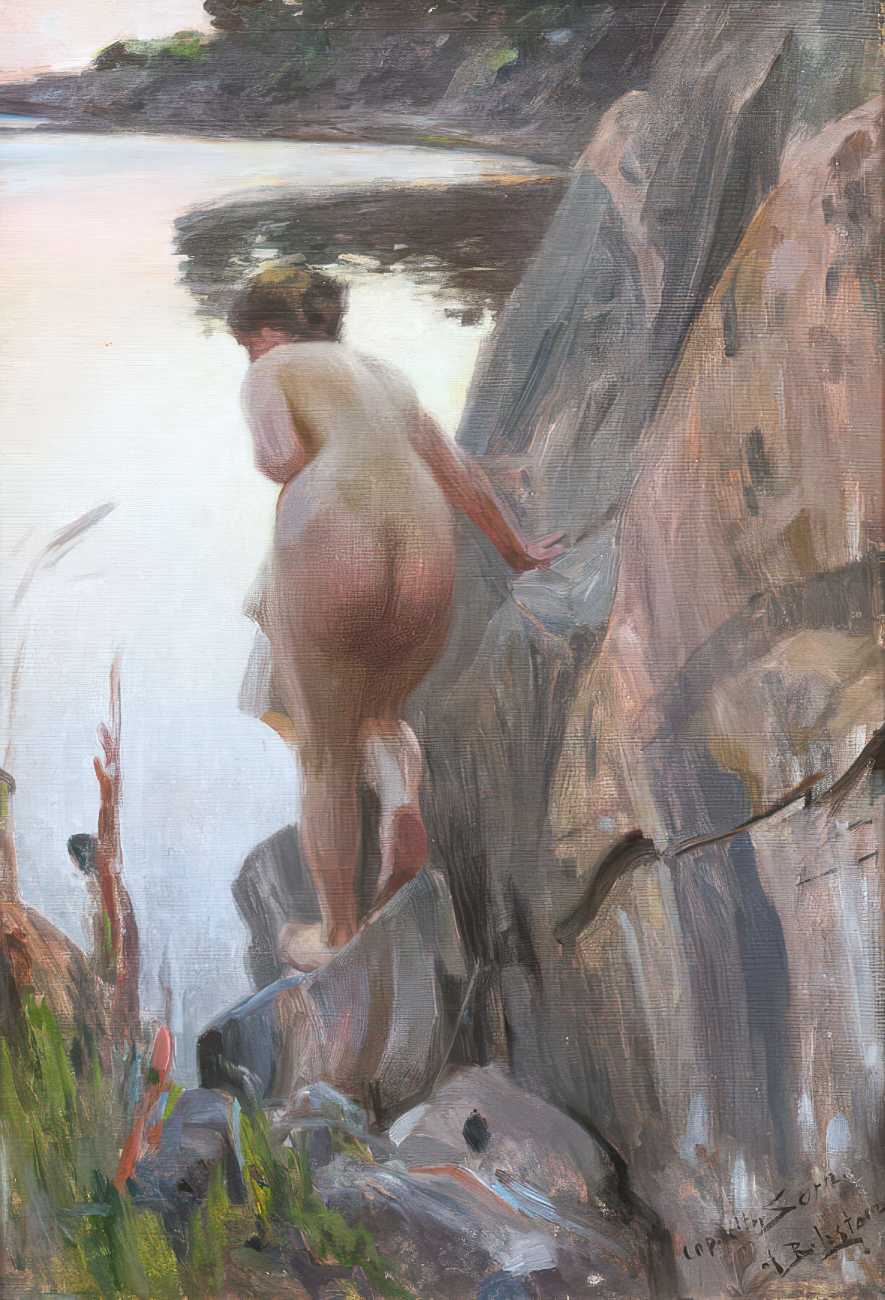
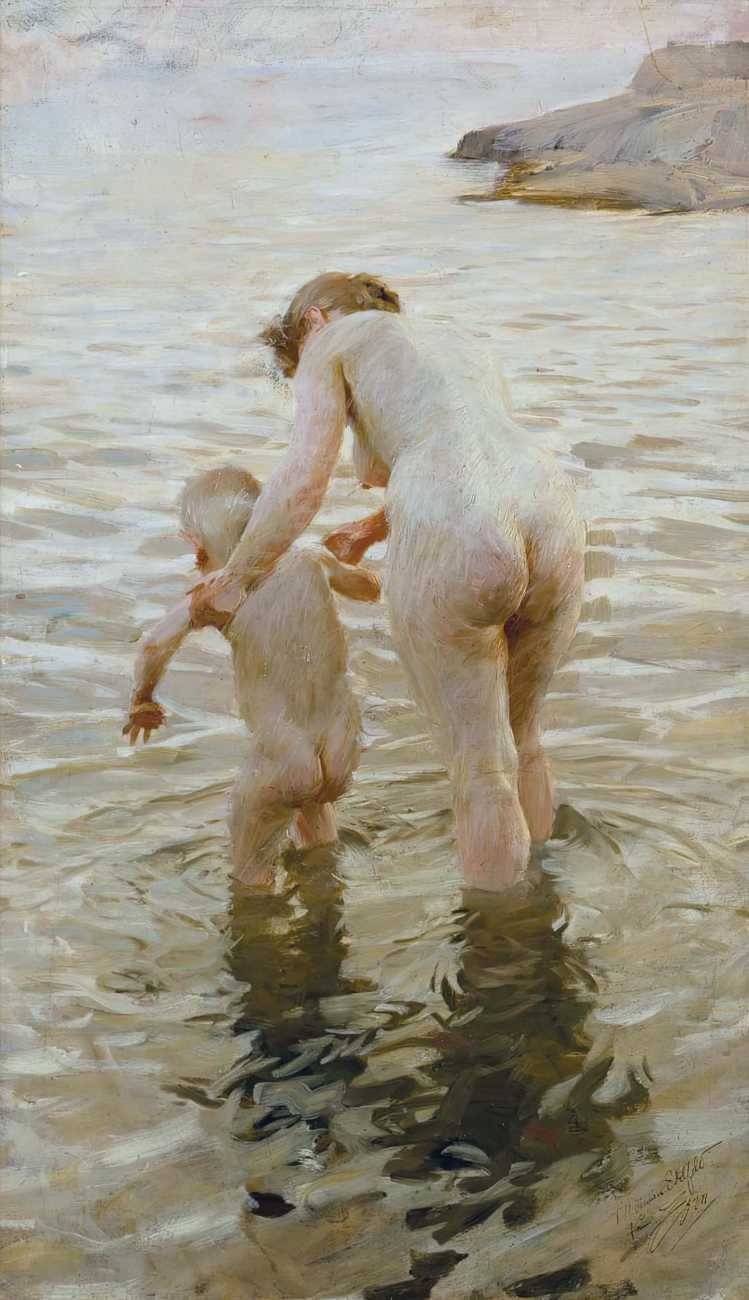
 Anders Leonard Zorn was one of Sweden’s most celebrated painters and printmakers, renowned internationally for his virtuoso portraiture, luminous paintings of naked women, and bravura etchings. He grew up in Yvraden, near Mora in the province of Dalarna, the illegitimate son of a young farm girl, Grudd Anna Andersdotter. His father, a German-born brewer named Leonard Zorn, acknowledged him but never married his mother, and died while Anders was still a child. Zorn was raised largely by his maternal grandparents, to whom he remained deeply attached. The rural life, folk costumes, and traditions of Mora later became central motifs in his art.
In 1875 he entered the Kungliga Akademien för de Fria Konsterna (Royal Academy of Fine Arts) in Stockholm, initially studying sculpture before turning to watercolour. He quickly gained attention for technically accomplished portraits painted with economical strokes and subtle tonal control. During the 1880s he travelled widely in Europe, to London, Paris, Spain and Italy, developing a cosmopolitan clientele. By the 1890s he was among the most sought-after society portraitists in the world, painting European aristocrats and American industrialists. His American sitters included three US presidents – Grover Cleveland, William H. Taft, and Theodore Roosevelt.
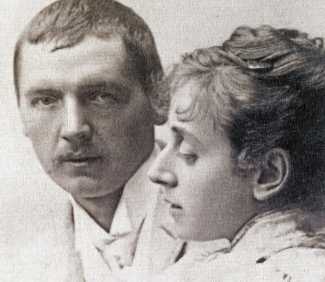
In 1885 Zorn married Emma Lamm (1860–1942), who came from a cultured and affluent Stockholm Jewish family. Emma was highly educated, multilingual, and played a decisive role in managing his career, social contacts, finances and commissions; she also promoted Swedish folk culture and philanthropy. The marriage was intellectually close and enduring, though childless. Zorn’s work, however, often revealed a parallel private life: he cultivated friendships in Mora, employed local models, and produced a large number of sensuous paintings and etchings of women, almost always in outdoor settings, which caused occasional scandal but also defined his artistic identity.
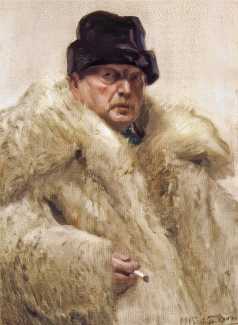
Around 1896 the couple built Zorngården, a large timber house in Mora that blended traditional Dalecarlian architecture with modern comfort. There Zorn increasingly withdrew from cosmopolitan society, spending long periods etching, painting peasant life, and preserving local customs. He collected folk objects, supported handicrafts, and helped found what became the Zorn Museum. After Anders Zorn died, Emma devoted the rest of her life to preserving his legacy, donating their home, studio, collections and fortune to the Swedish state.
By far the best book on Zorn and his work in English is Anders Zorn: Sweden’s Master Painter, published in 2013 to accompany major exhibitions of his work at the San Francisco Arts Museum and the National Academy Museum in New York.
Example illustration