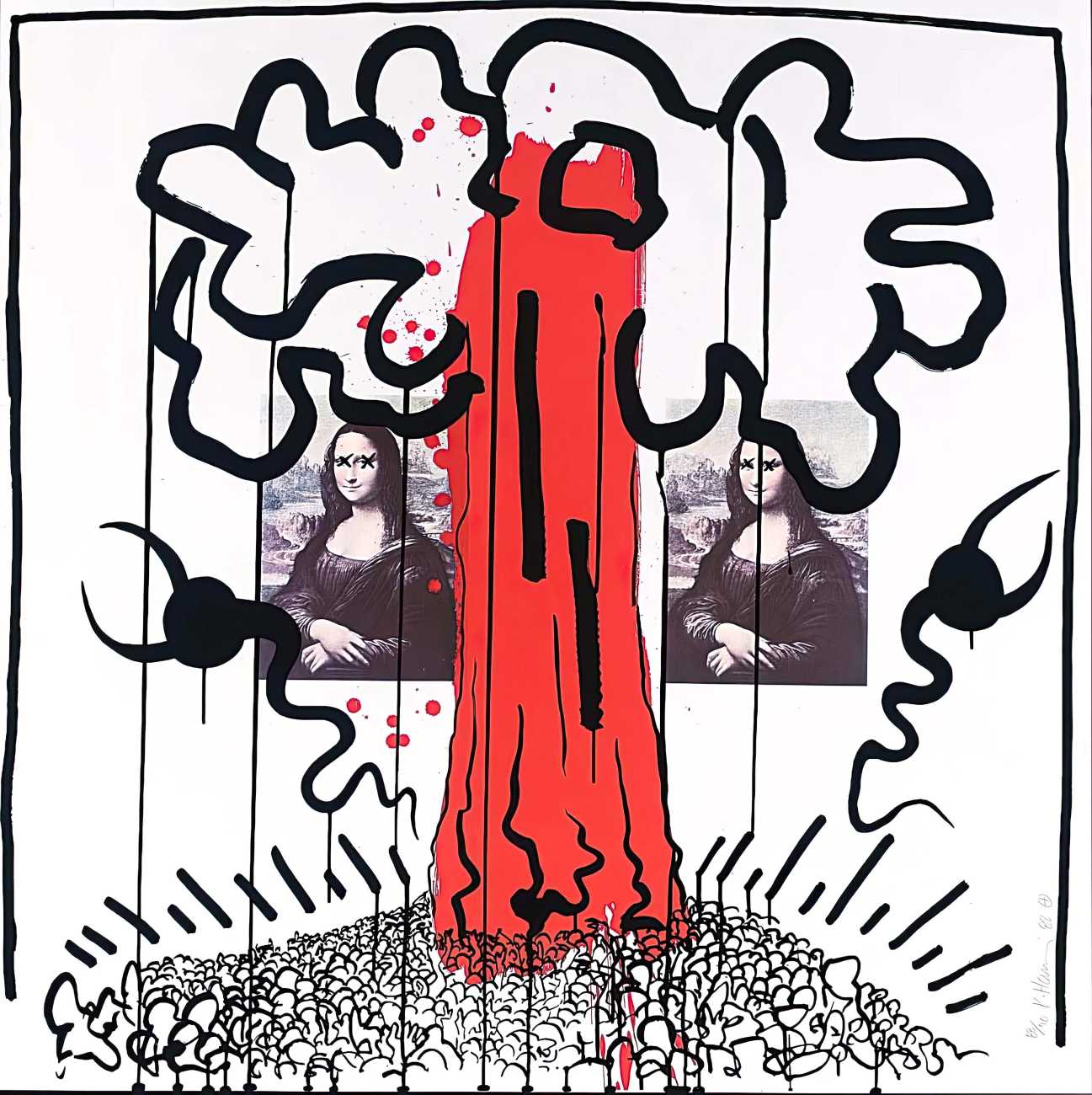
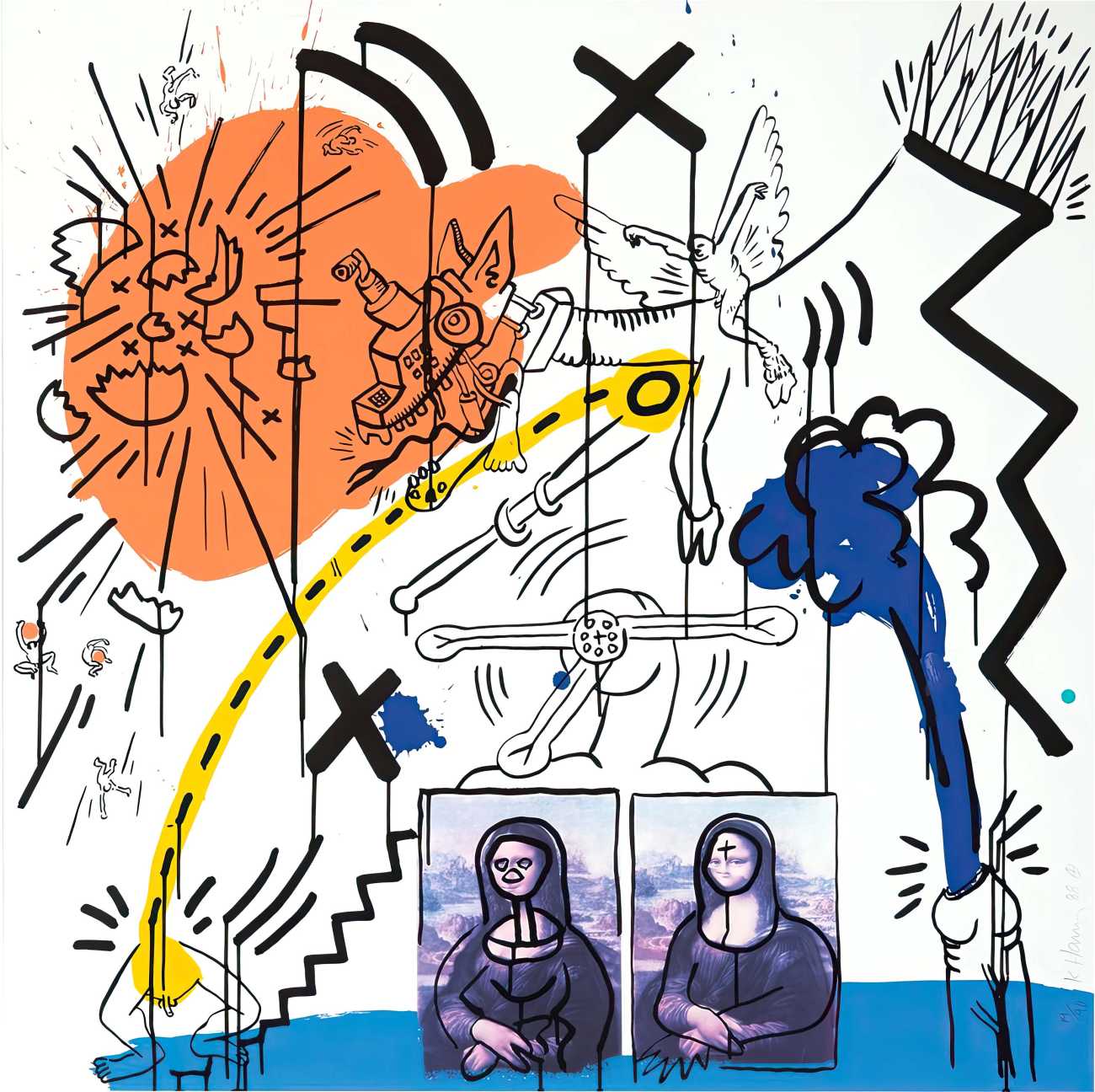
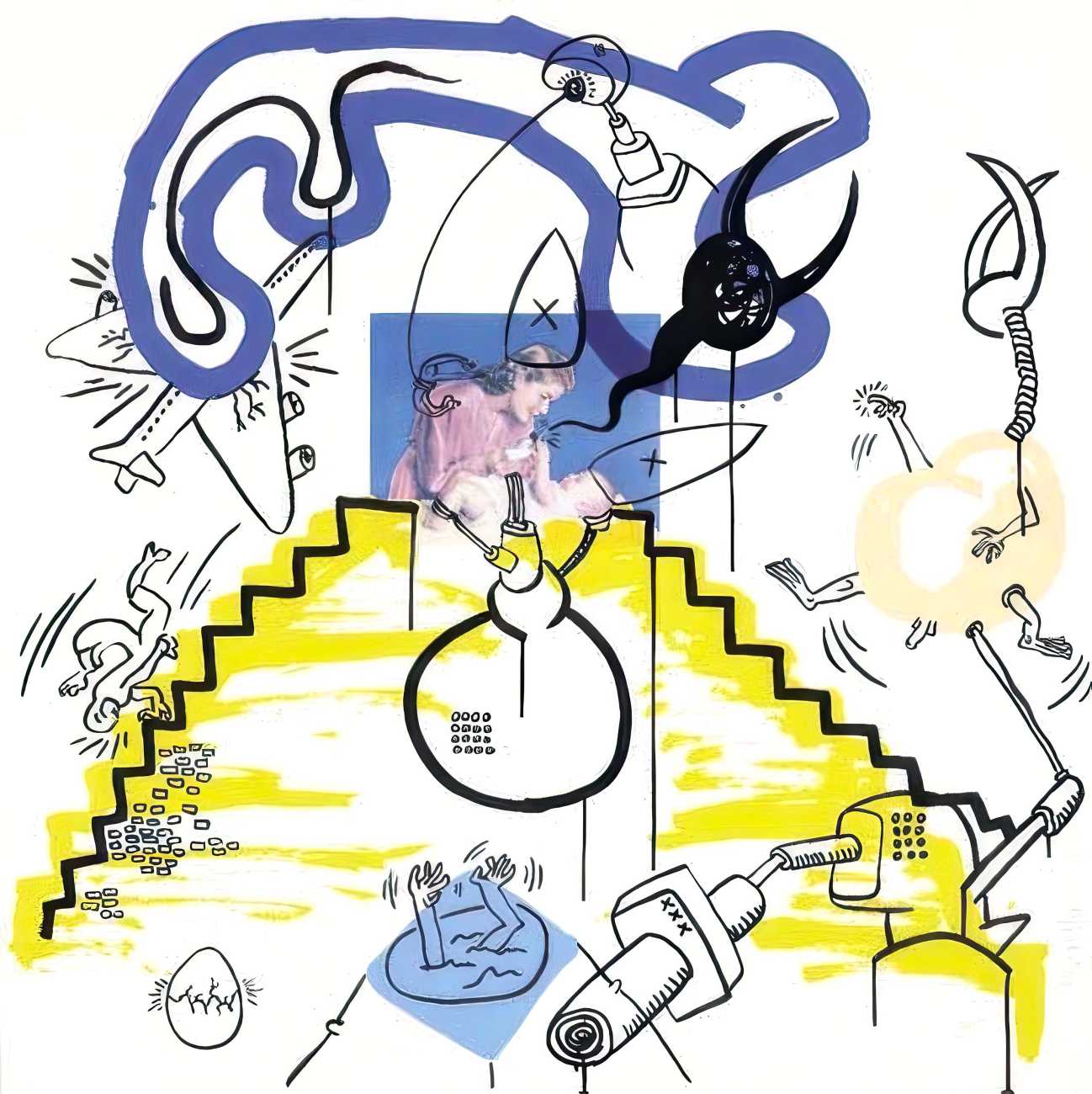
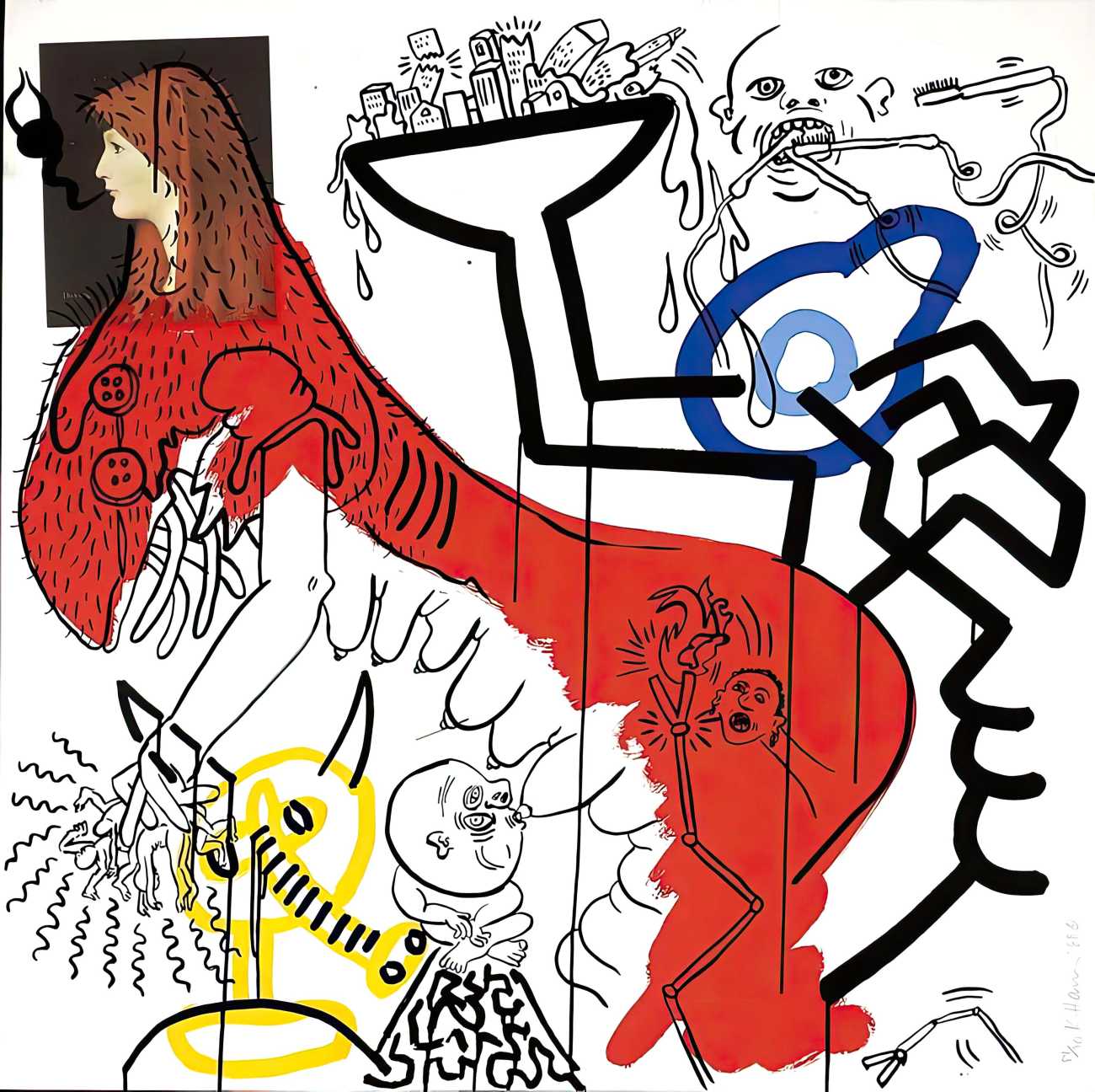
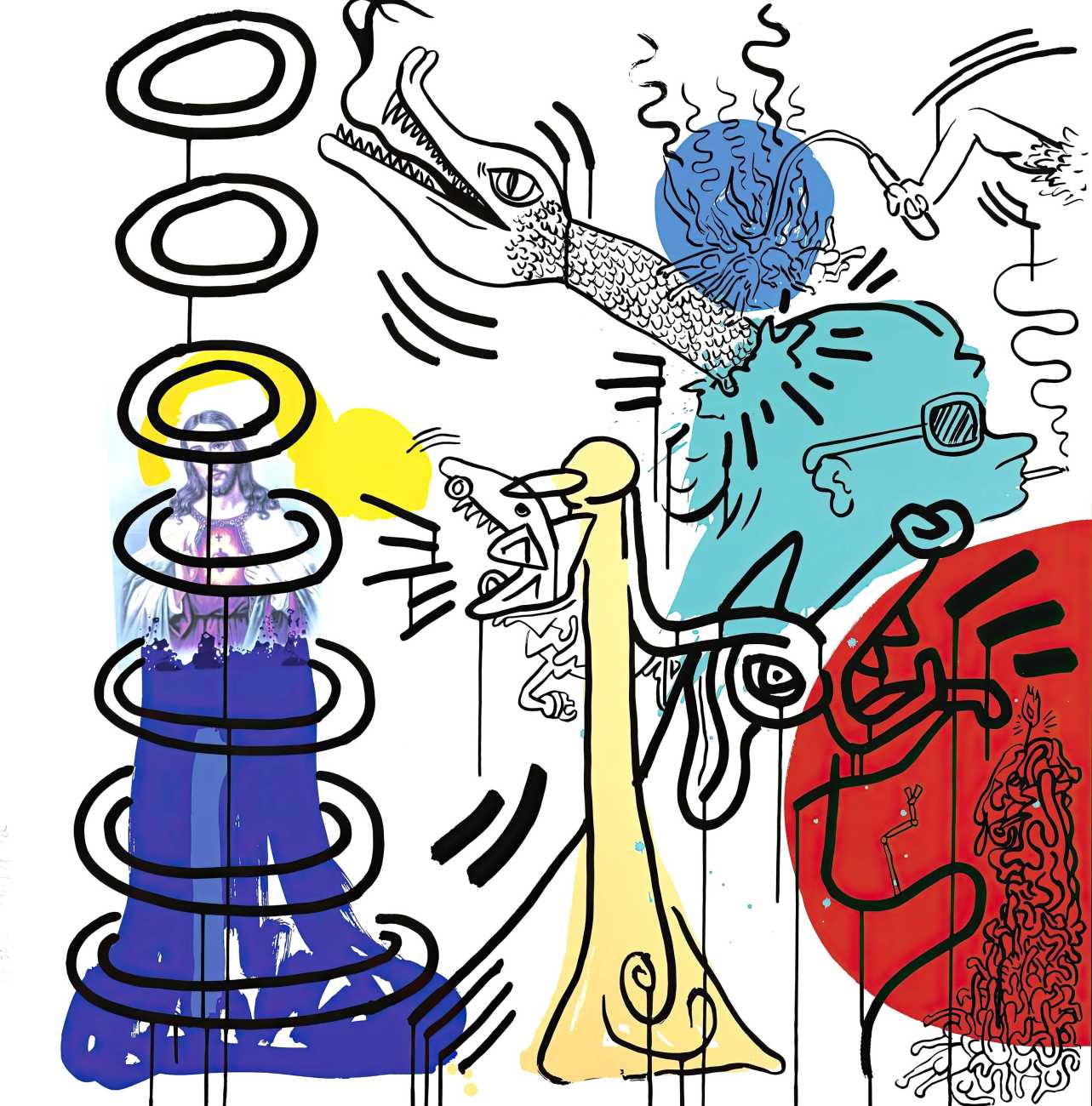
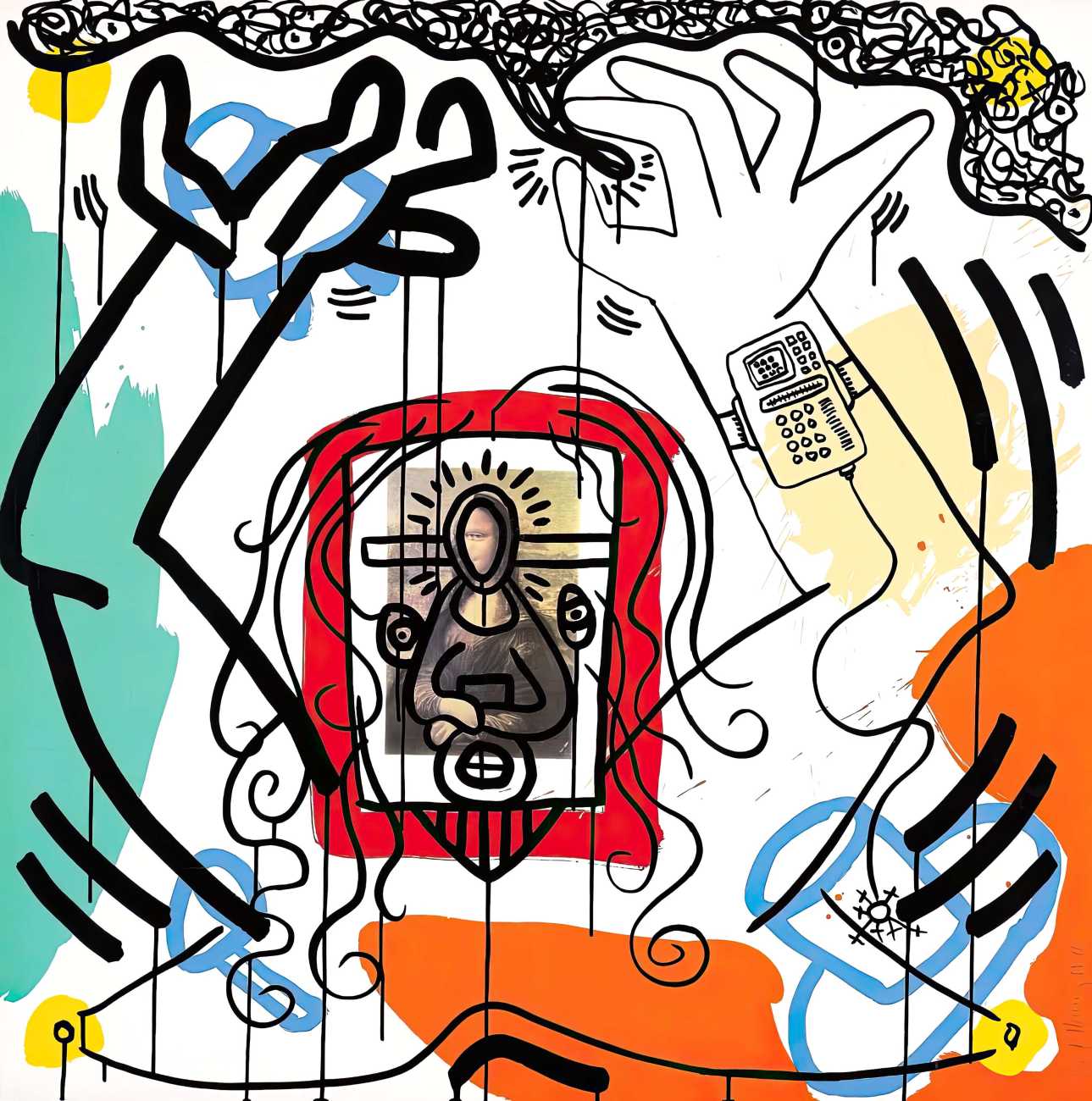
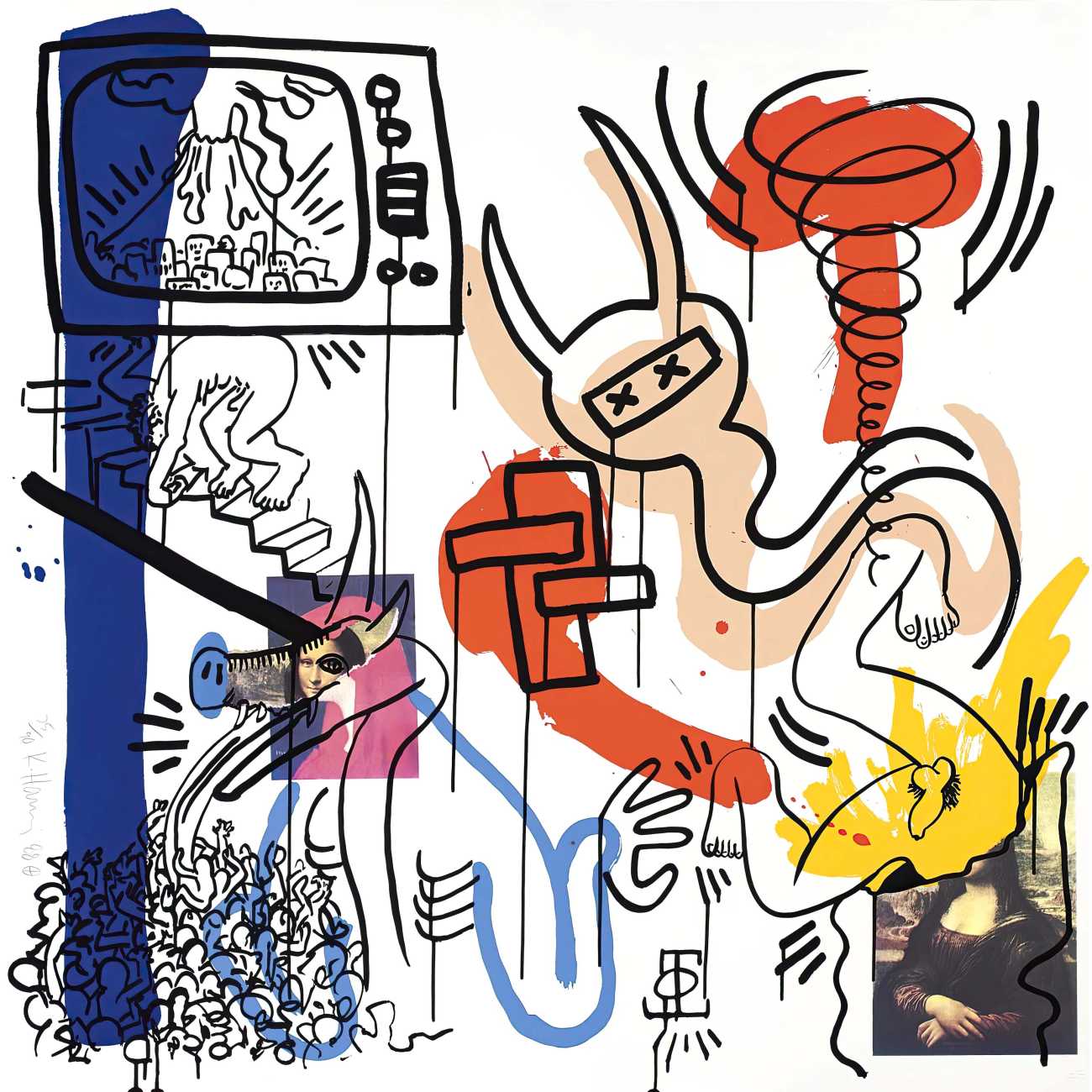
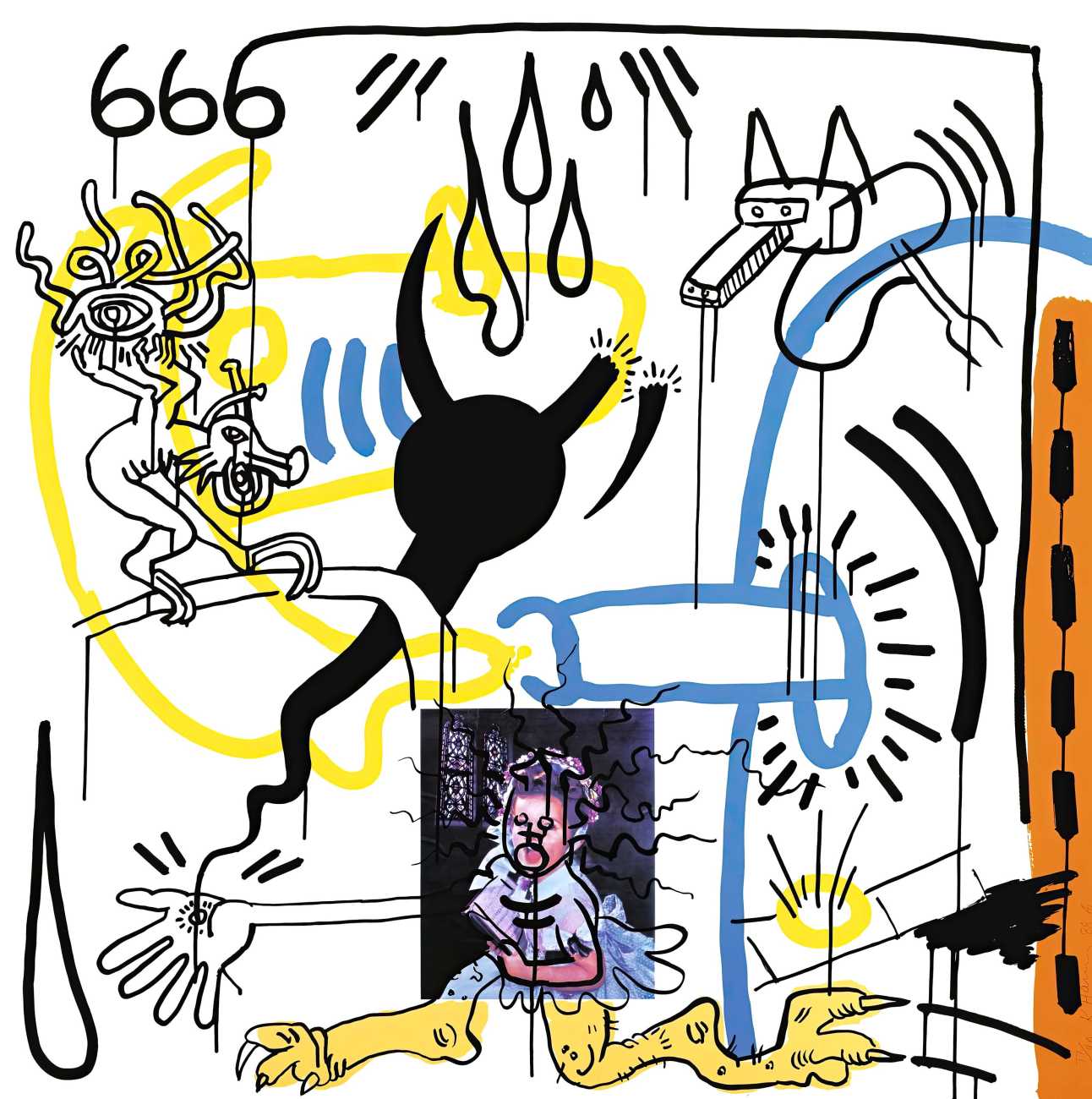
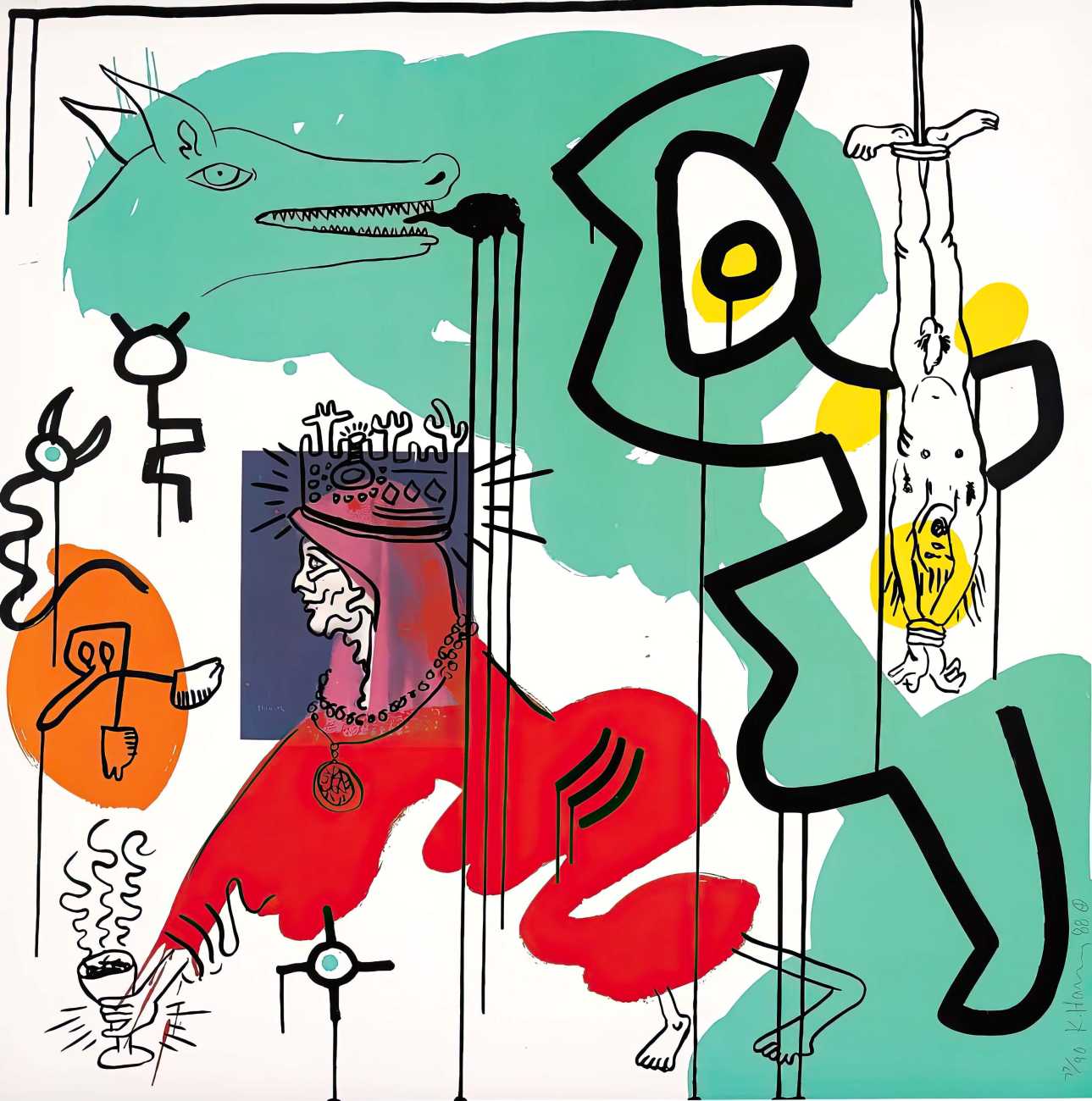
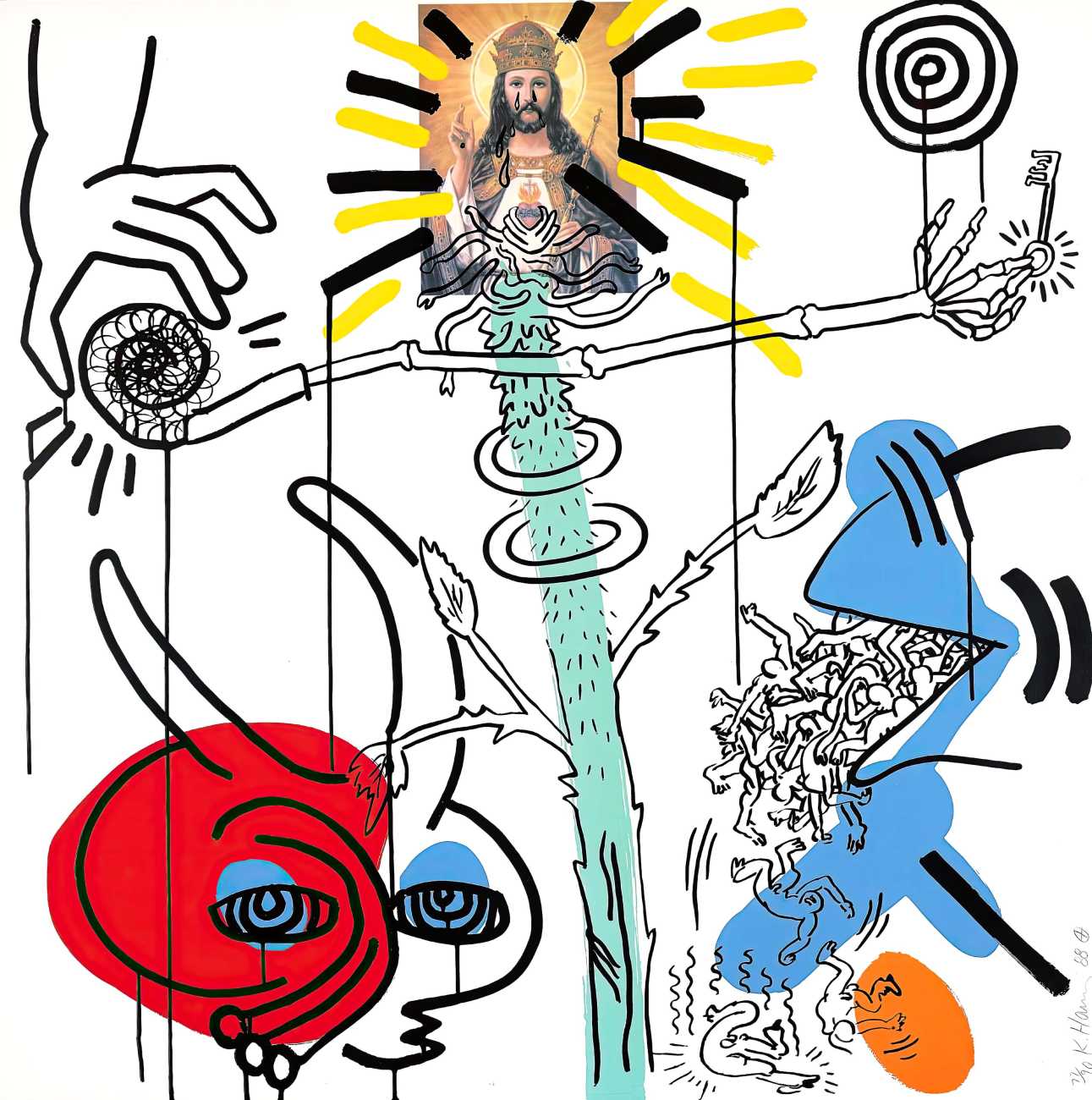
 The Apocalypse suite of ten screenprints, with text by William S. Burroughs, brought Haring’s erotic imagery into a much darker world of bodily fragmentation, machines, religion, violence and death. The prints are crowded with figures and signs – penises, sexual acts, dismembered or distorted bodies, animals, weapons and architectural forms appear beside Haring’s familiar radiating lines and symbols. Most of the prints include defaced reproductions of paintings, particularly Leonardo da Vinci’s Mona Lisa. By pairing this symbol of classical beauty with horrific post-apocalyptic imagery, he sought to show how the onset of the HIV/AIDS epidemic was upending and destroying traditional concepts of order and society.
Acts of penetration appear alongside explosions, skulls, monstrous figures and references to religious imagery. In several images, bodies are invaded, transformed or overwhelmed by other forces. Haring’s characteristic clarity remains intact, but the signs no longer carry the optimism associated with some of his earlier public imagery.
Burroughs’s text does not take the form of captions explaining individual pictures. Instead, the printed text pages and Haring’s images form two parallel streams. Burroughs’s language moves through visions of collapse, excess and transformation, while Haring answers with compositions in which bodies and symbols are caught in the same disintegrating world.
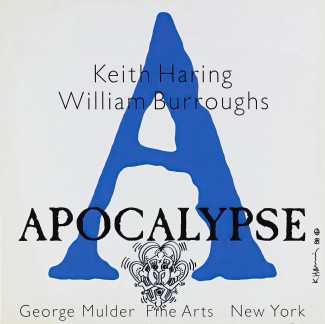
Apocalypse was published in New York by George Mulder Fine Arts, in an edition of 90 with 20 sets of artist’s proofs.