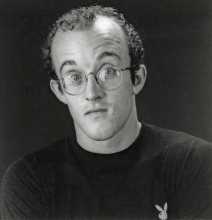
 The American artist Keith Haring was born in Reading, Pennsylvania, and grew up in nearby Kutztown. Encouraged by his father, Allen Haring, an amateur cartoonist, he developed an early interest in drawing, inspired by Walt Disney cartoons, Dr Seuss and the comic strips of Charles Schulz. After graduating from high school in 1976 he briefly studied commercial art at the Ivy School of Professional Art in Pittsburgh, but abandoned the course, deciding to pursue fine art instead.
In 1978 Haring moved to New York City to attend the School of Visual Arts. Immersing himself in the city’s thriving downtown cultural scene, he became associated with artists including Jean-Michel Basquiat and Kenny Scharf, while also drawing inspiration from graffiti, hip-hop culture, performance art and experimental music. During this period he began developing the bold graphic style for which he became internationally recognised.
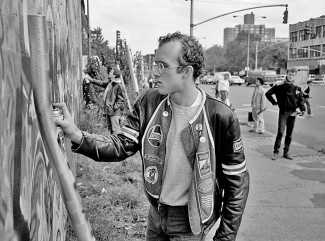
Haring first attracted public attention through his spontaneous chalk drawings on unused advertising panels in New York’s subway stations. Produced rapidly in full view of commuters, these works transformed everyday public spaces into temporary galleries and established his belief that art should be accessible to everyone rather than confined to museums and commercial galleries.
By the early 1980s Haring’s work was being exhibited internationally, and he quickly became one of the most prominent artists of his generation. Alongside gallery exhibitions, he created numerous large-scale public murals in cities around the world and collaborated with musicians, dancers, writers and fashion designers. In 1986 he opened the Pop Shop in New York, producing affordable posters, T-shirts, badges and other merchandise in an effort to make his imagery available beyond the traditional art market.

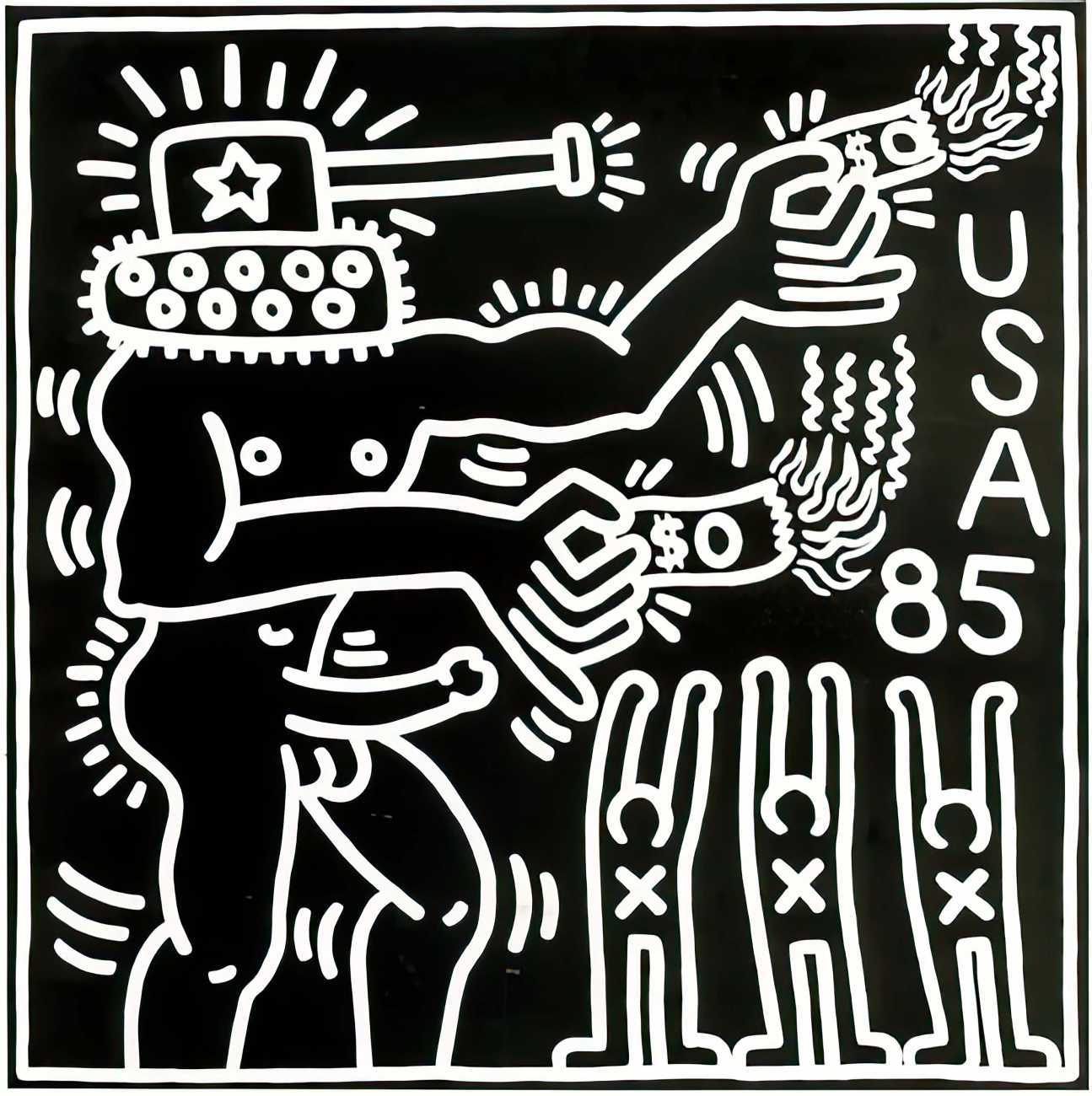
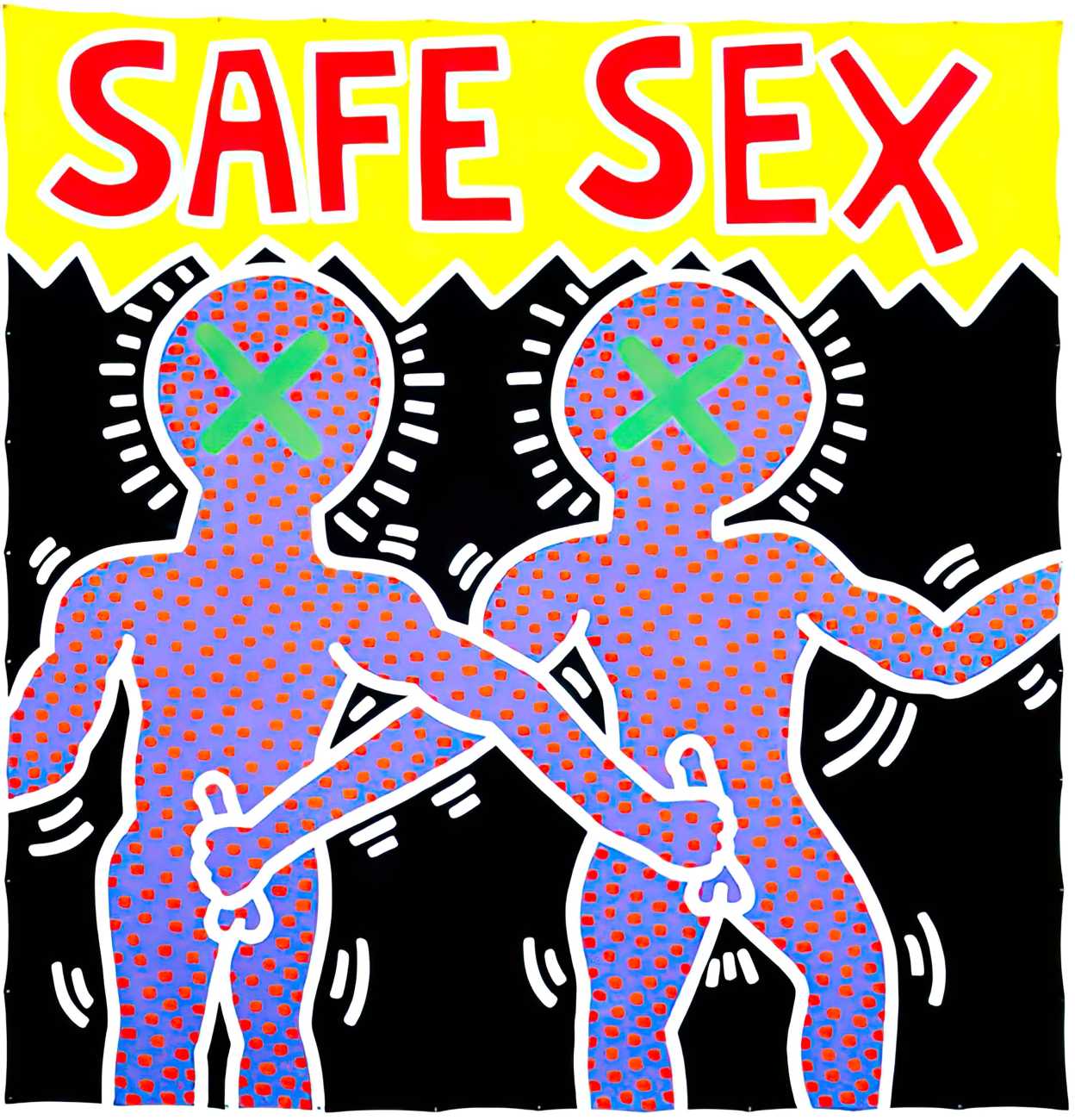
Throughout his career Haring remained deeply engaged with social and political issues. His work addressed apartheid, nuclear disarmament, environmental concerns, children’s welfare and drug abuse, while also celebrating diversity, equality and community. As an openly gay man, he became an increasingly important advocate for AIDS awareness and safer sex following the emergence of the epidemic in the early 1980s. Many of his posters, prints and public artworks from this period combine direct public health messages with his instantly recognisable visual language.
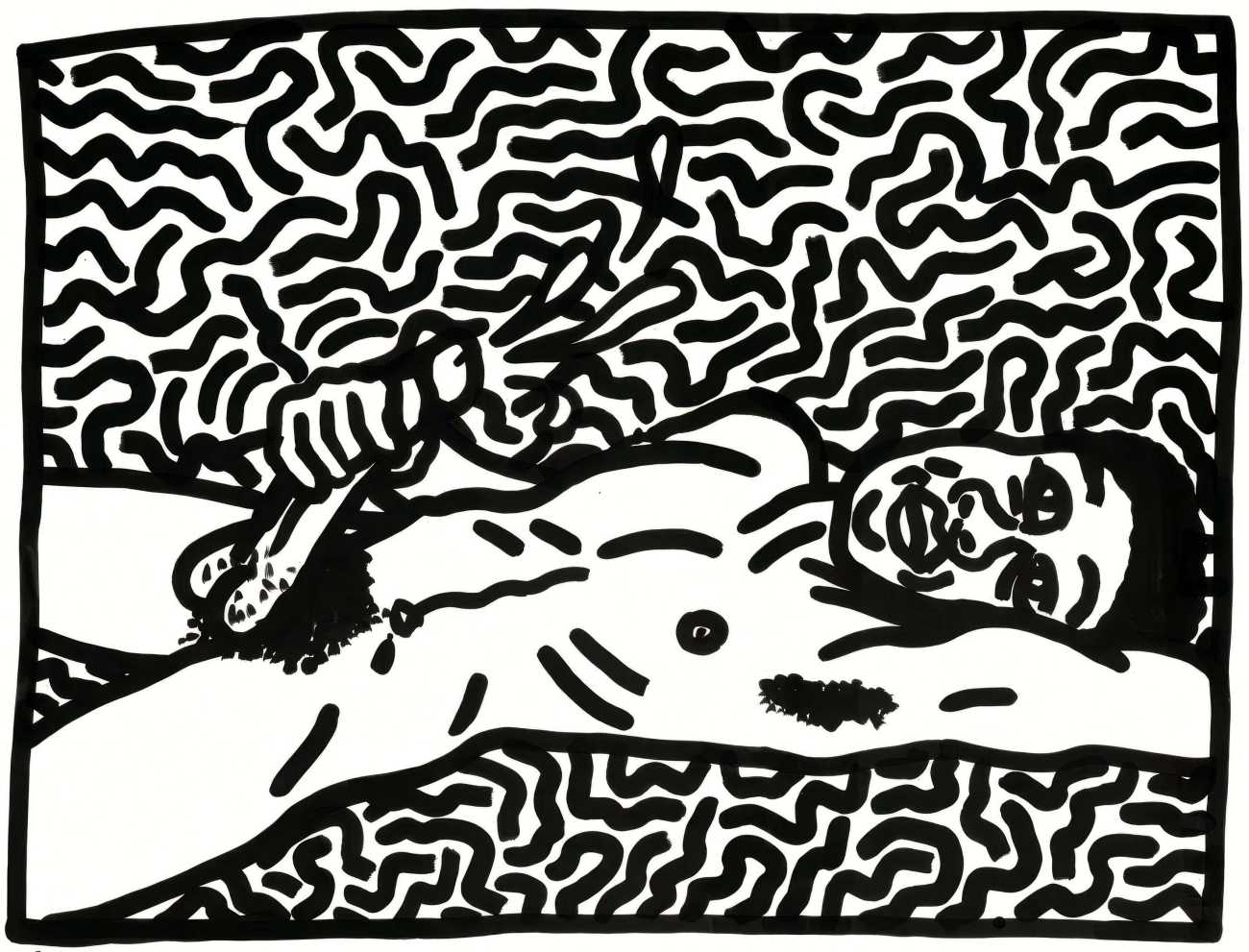
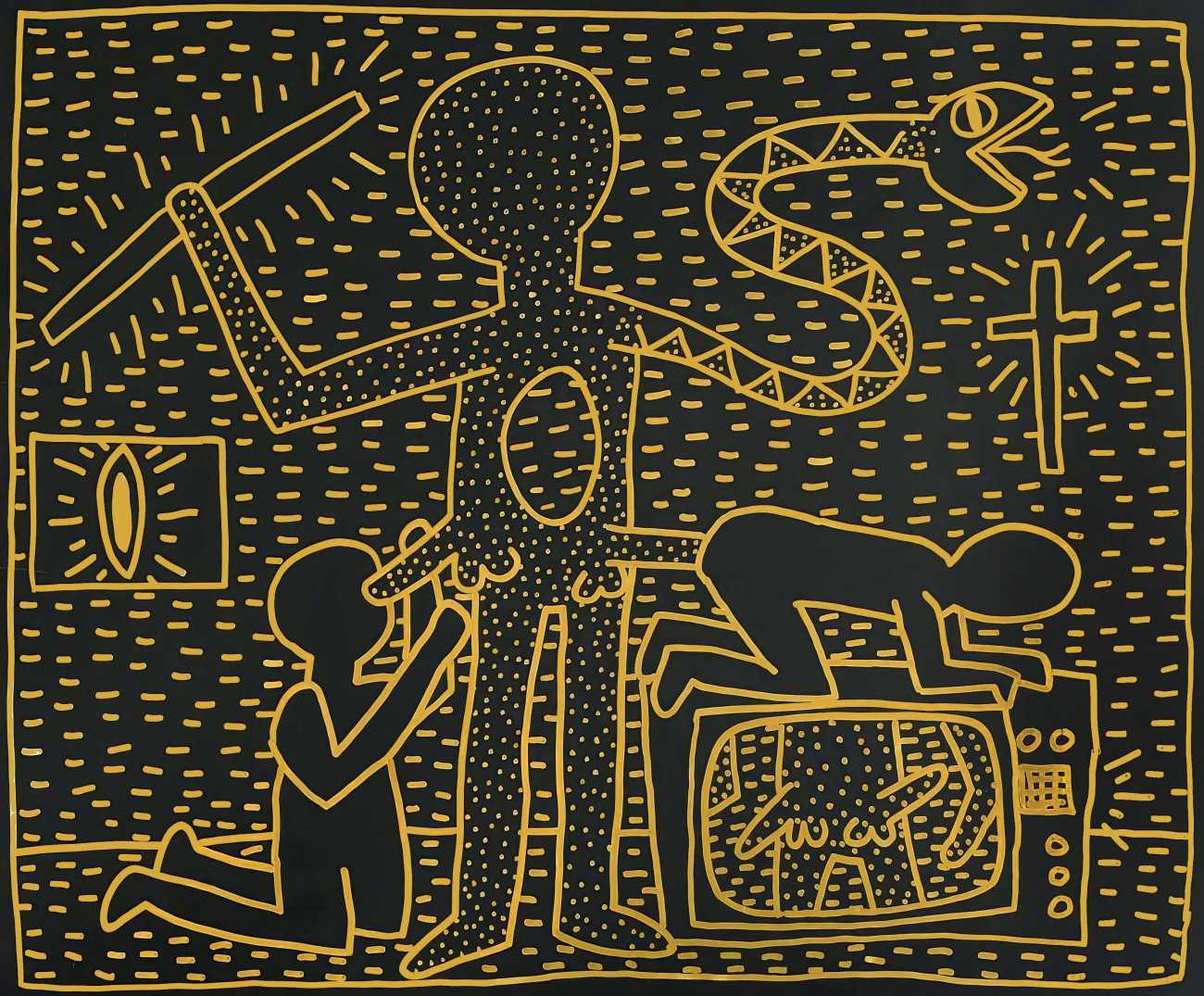
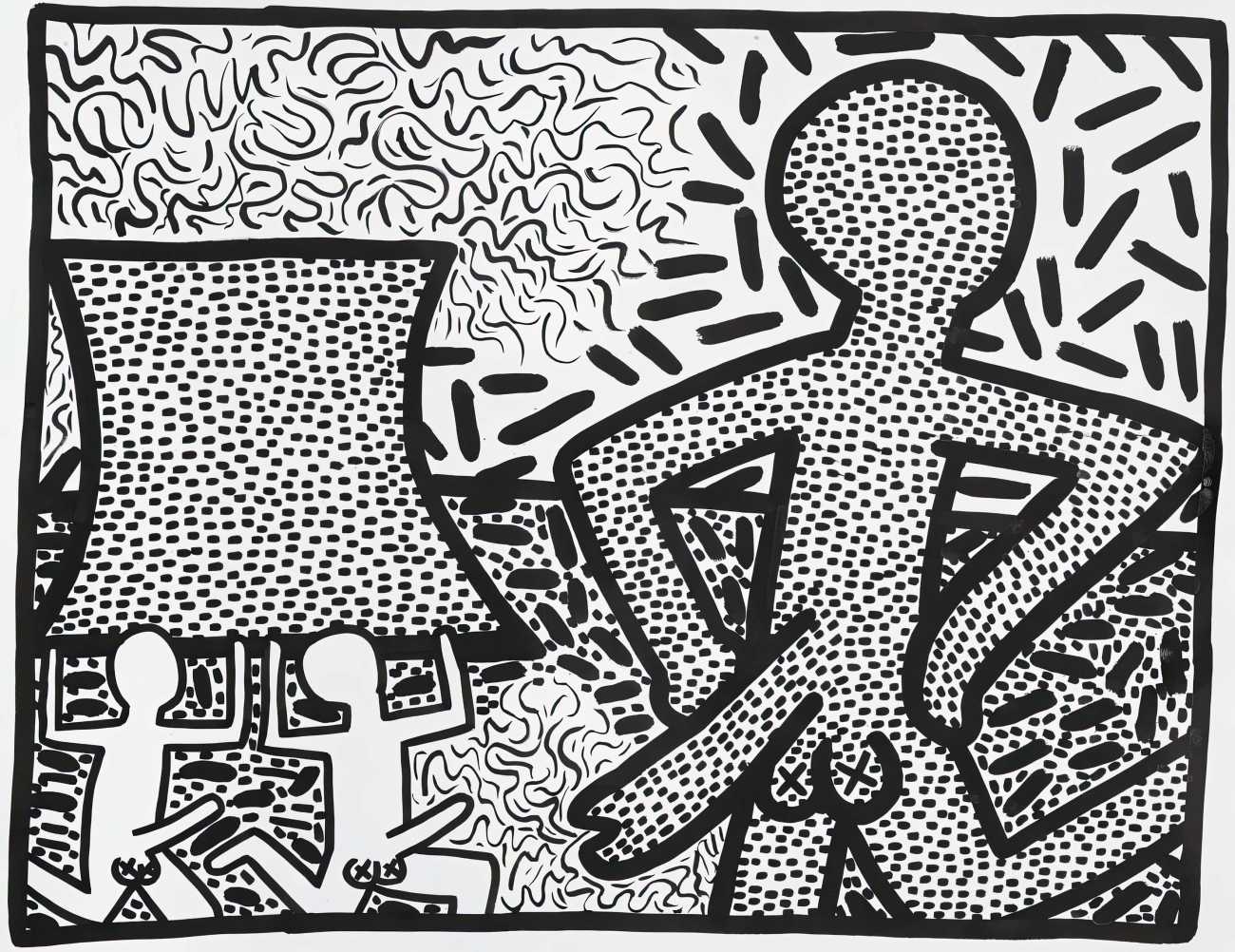
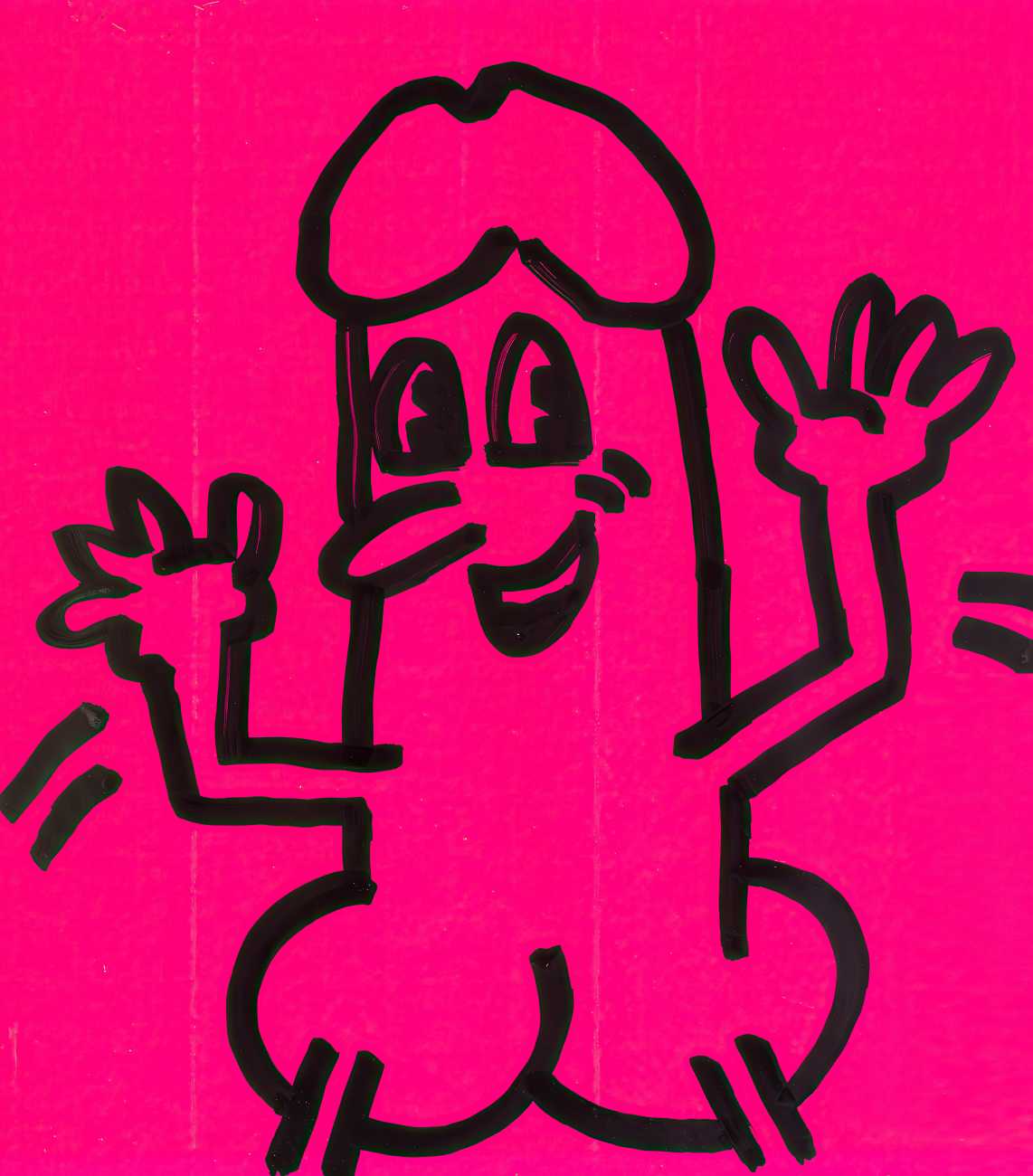
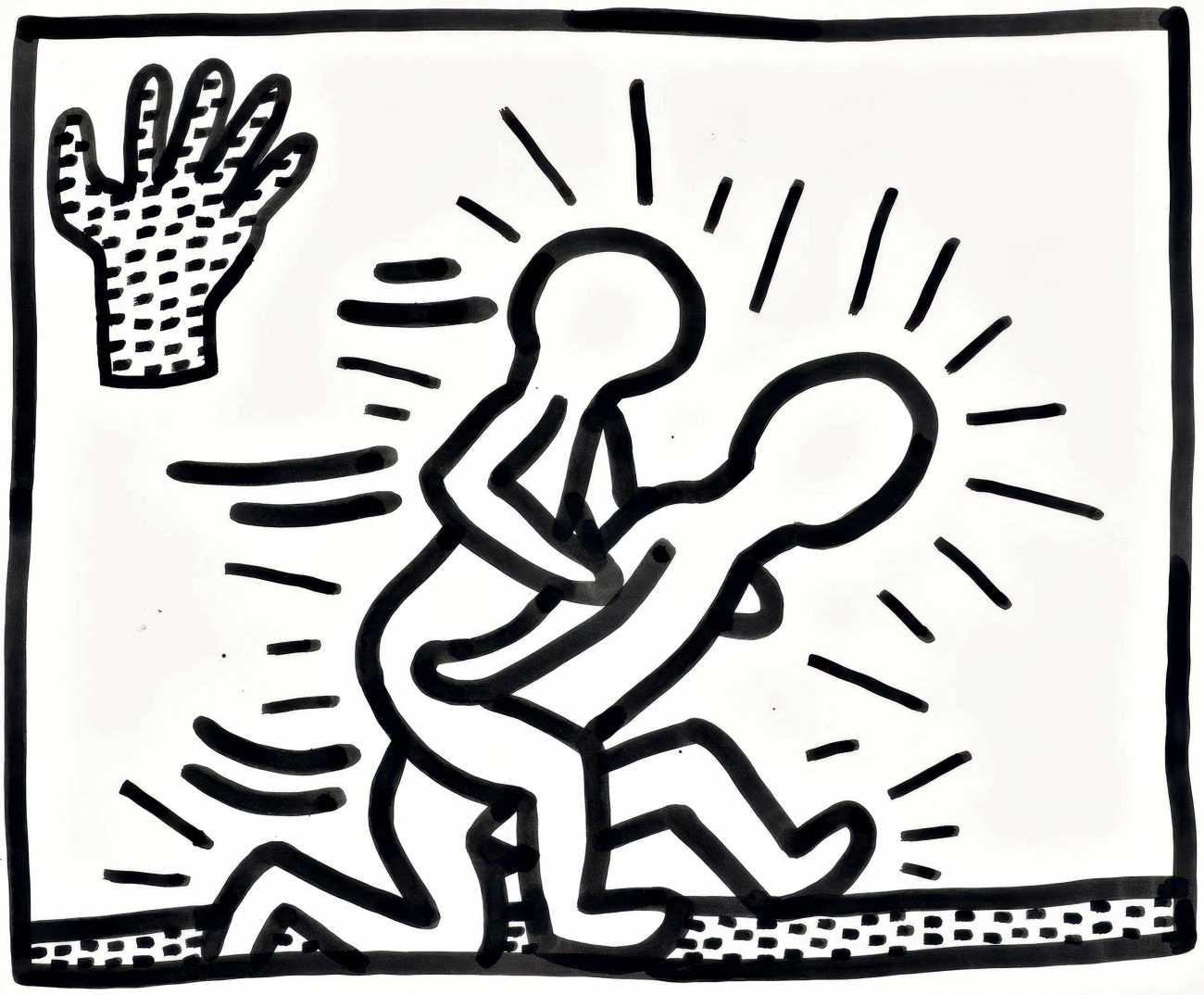
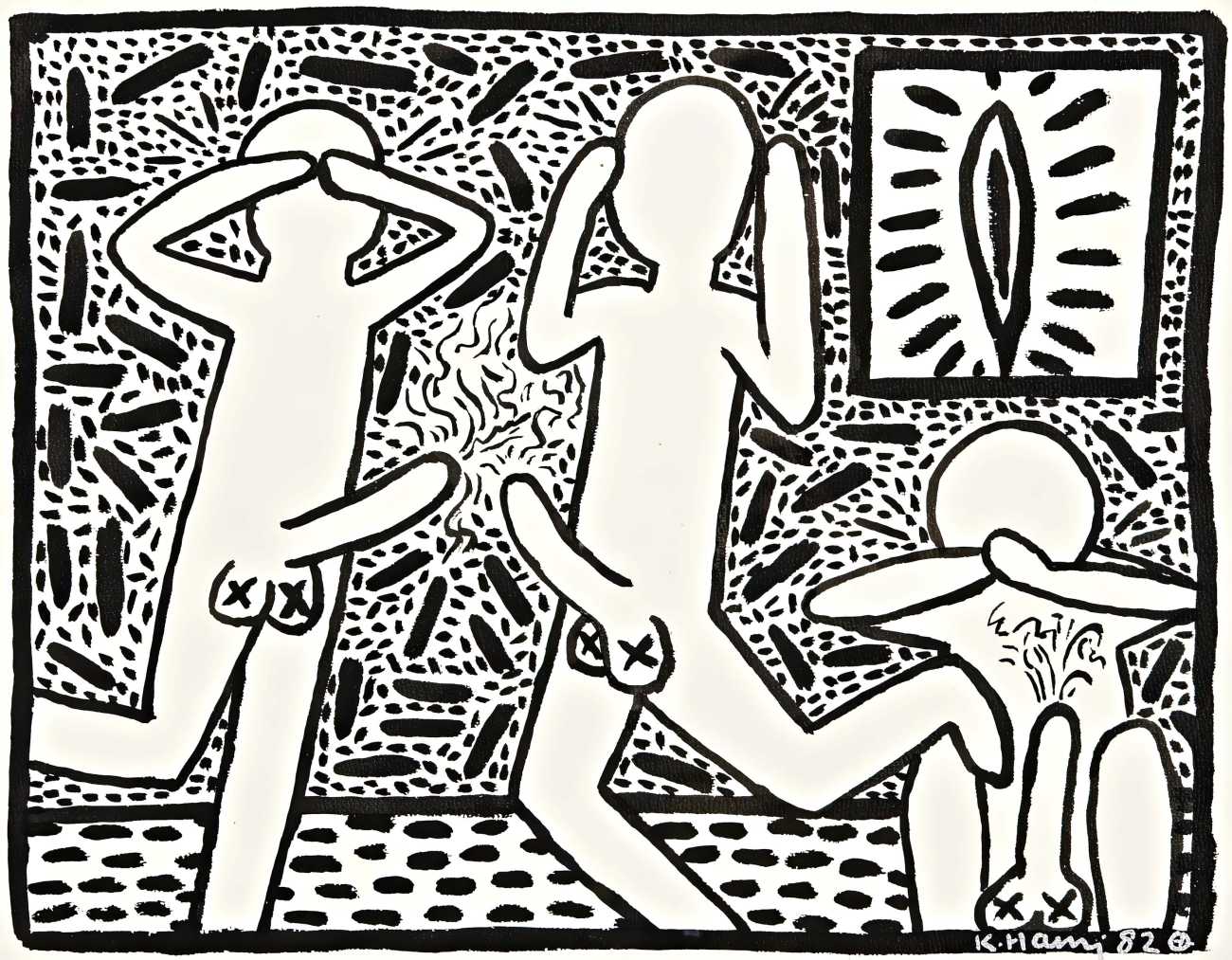
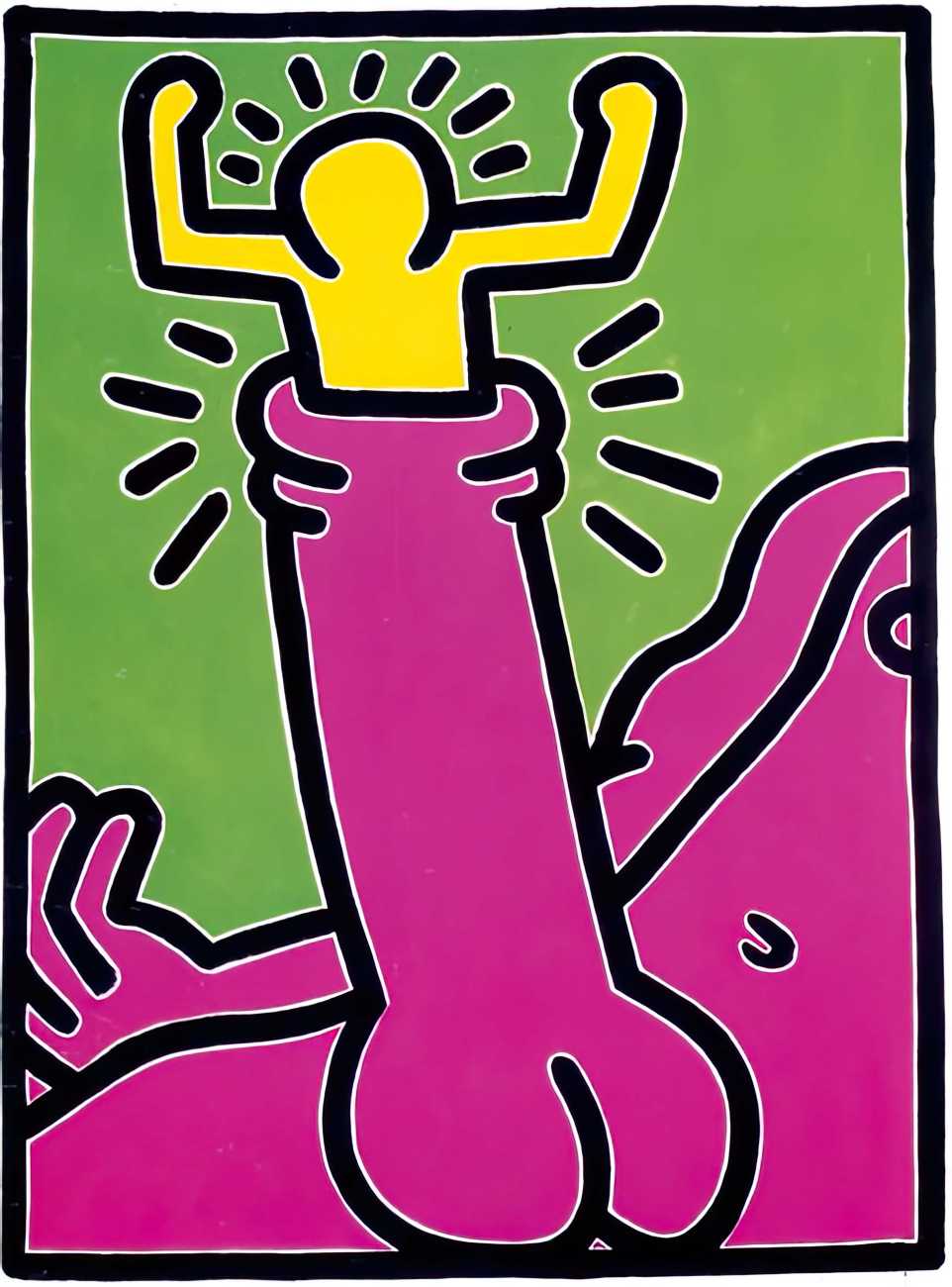
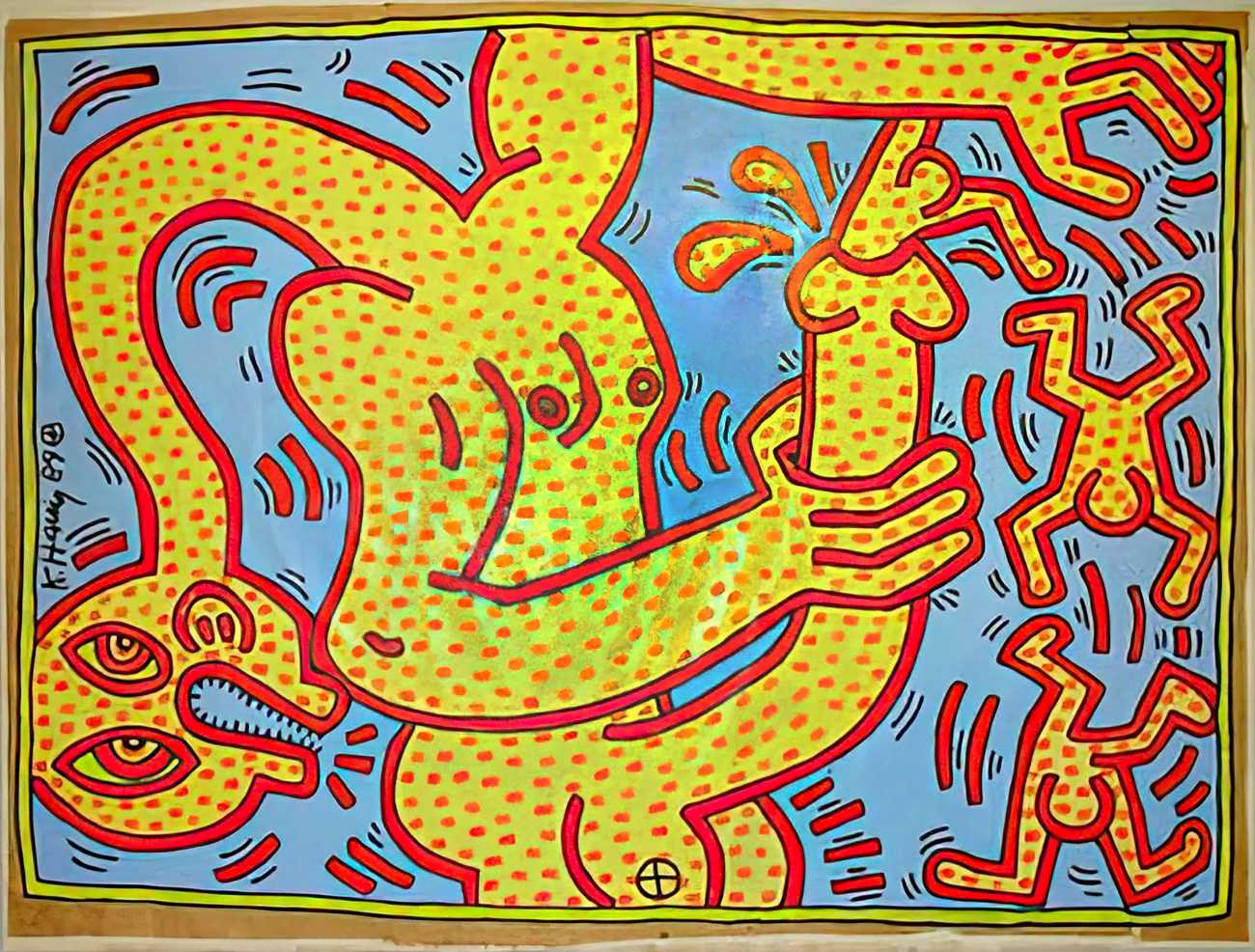
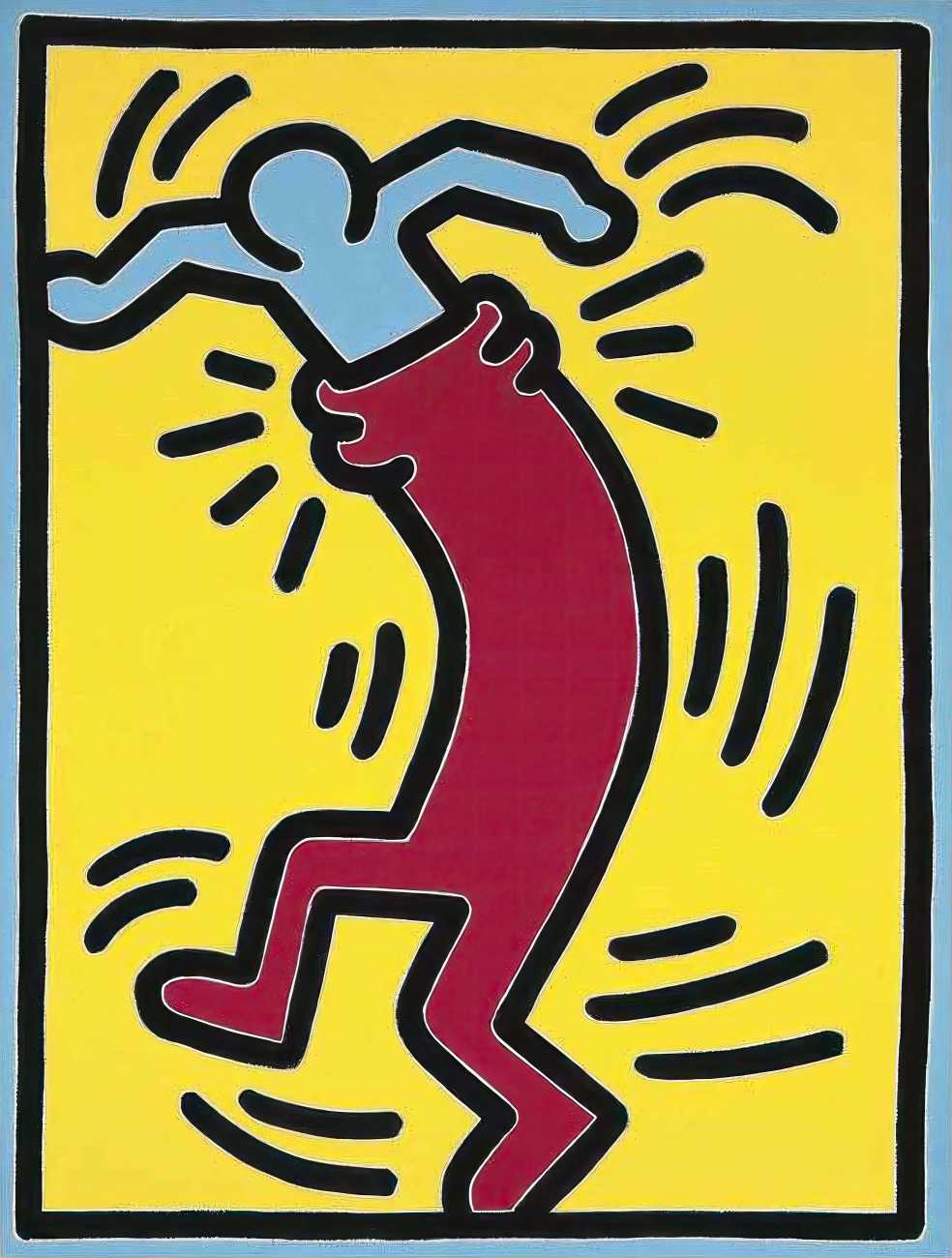
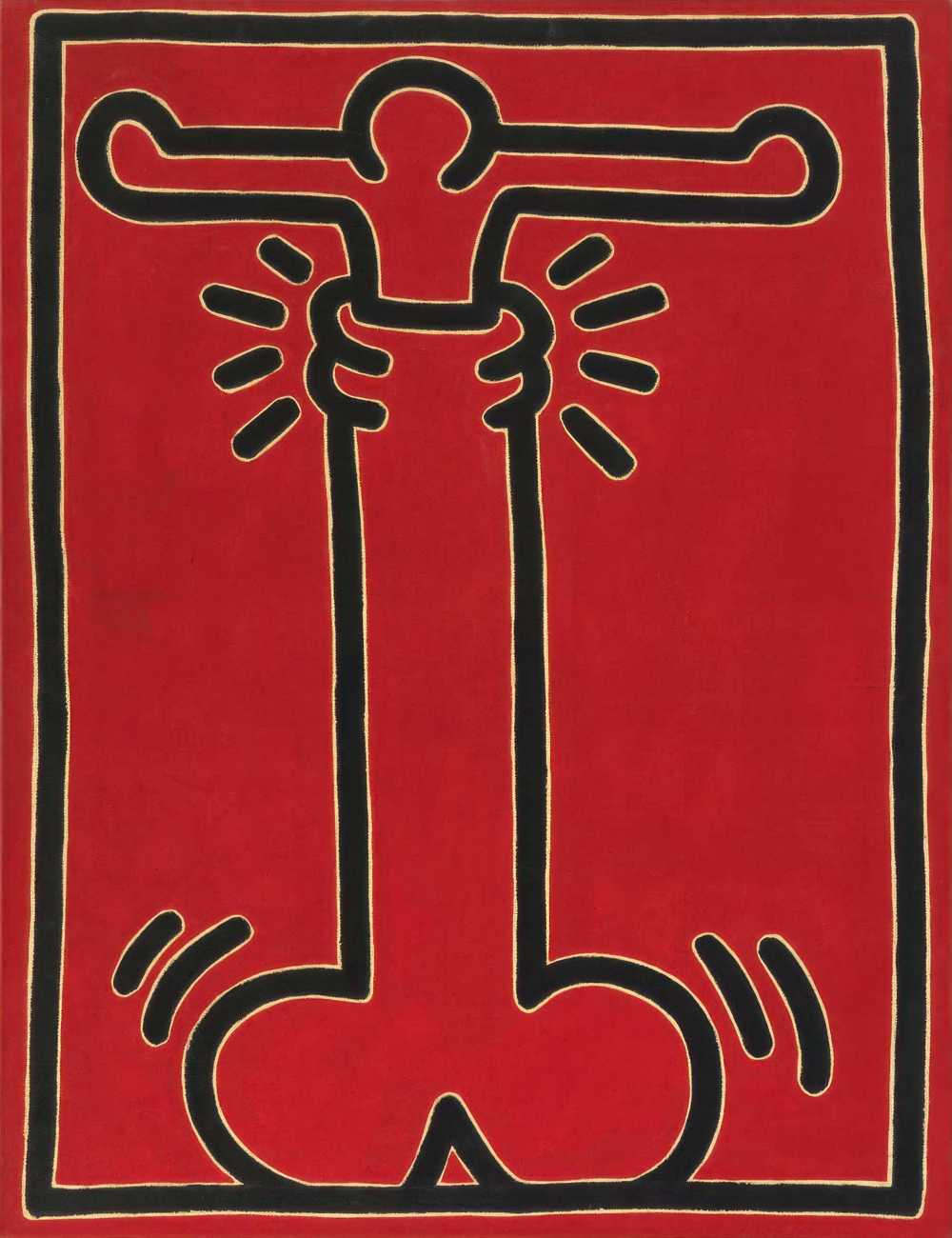
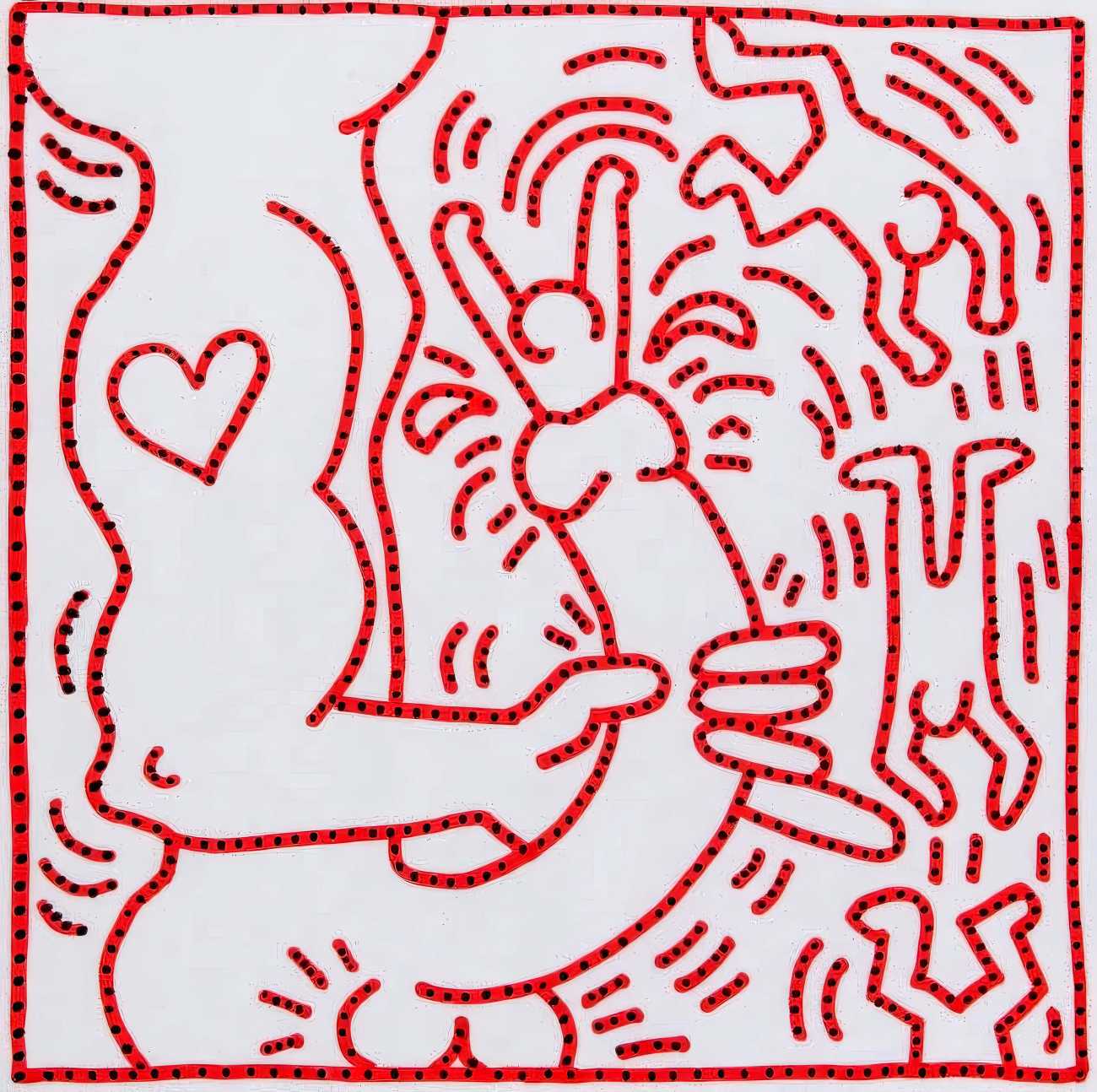
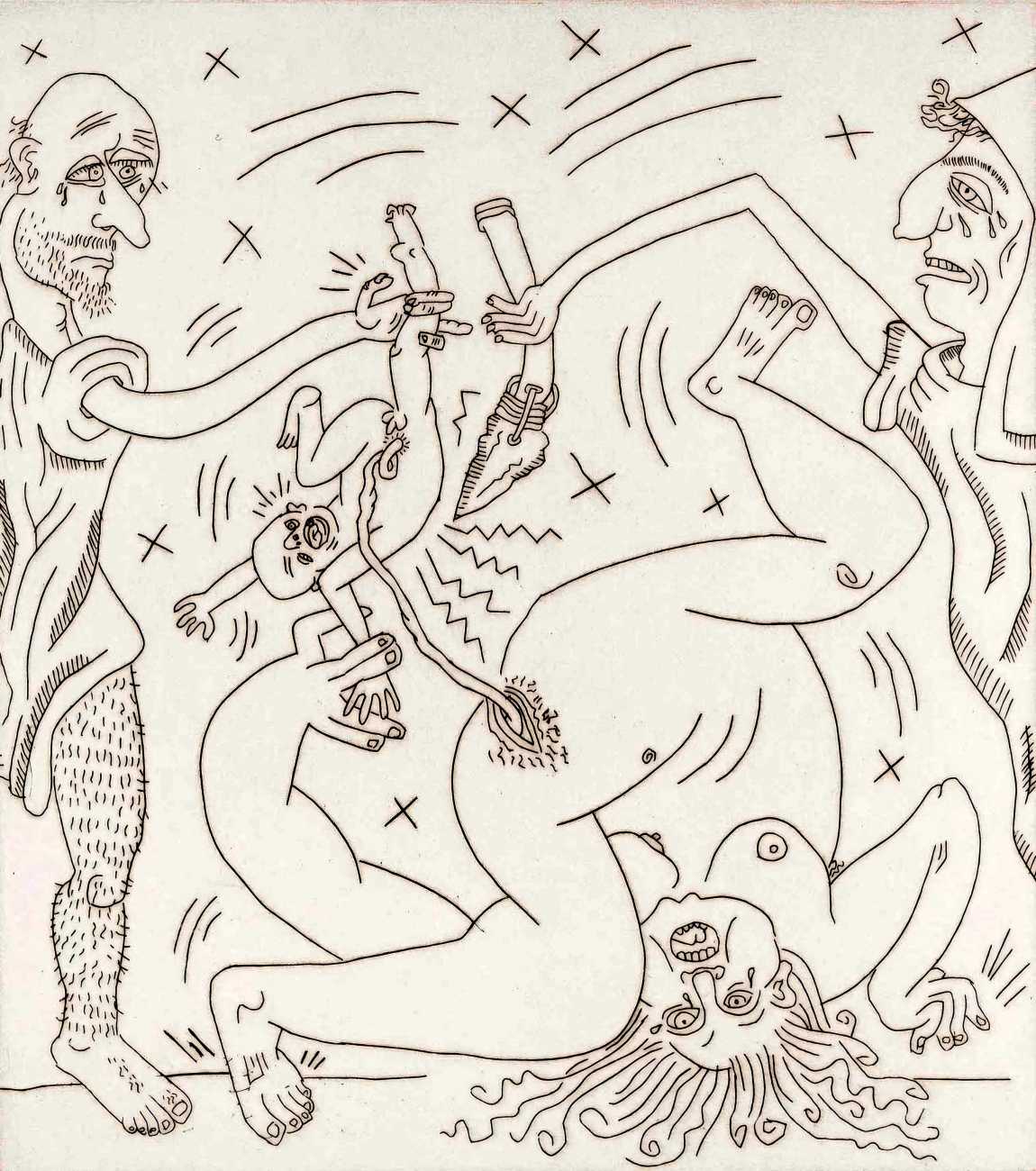
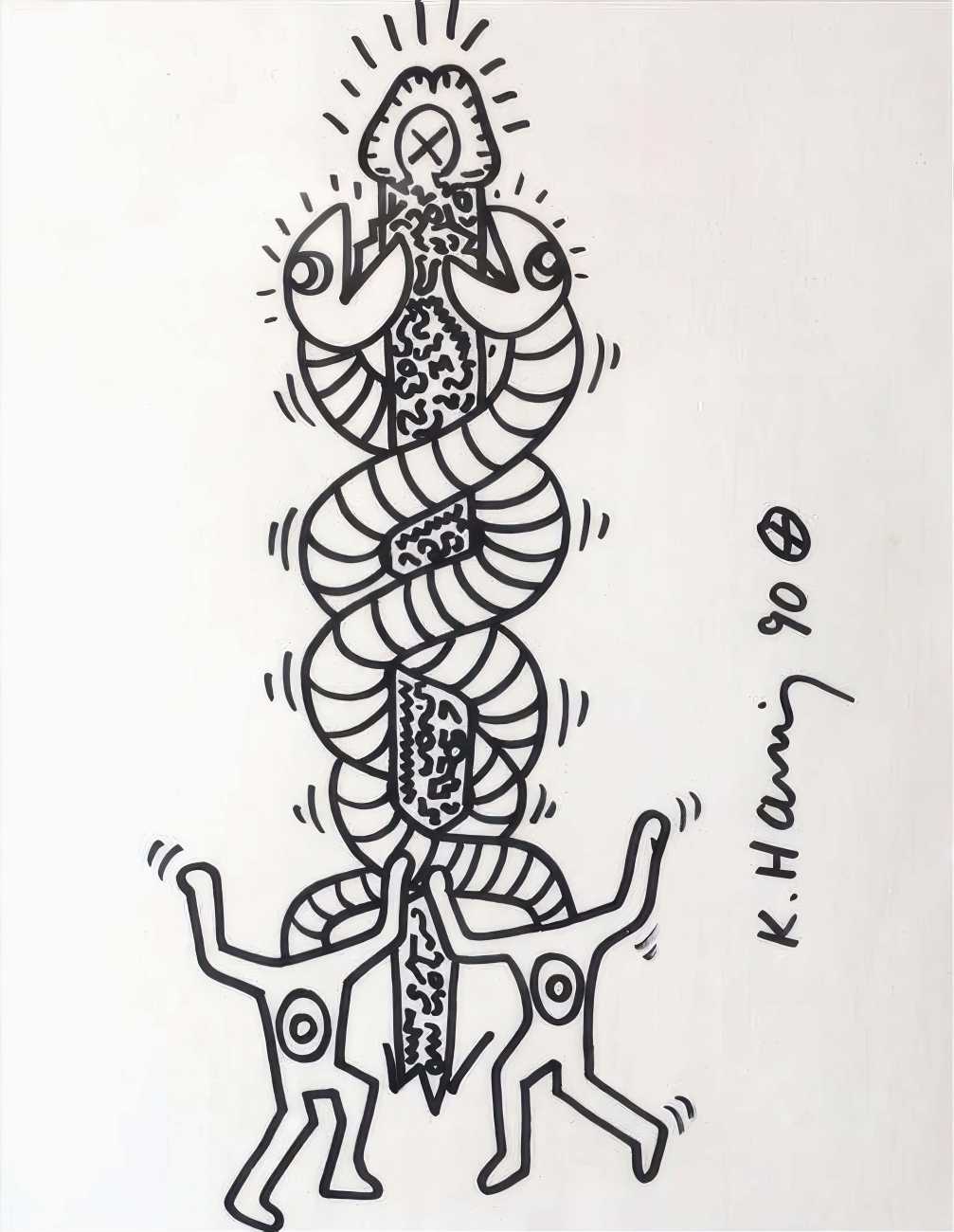
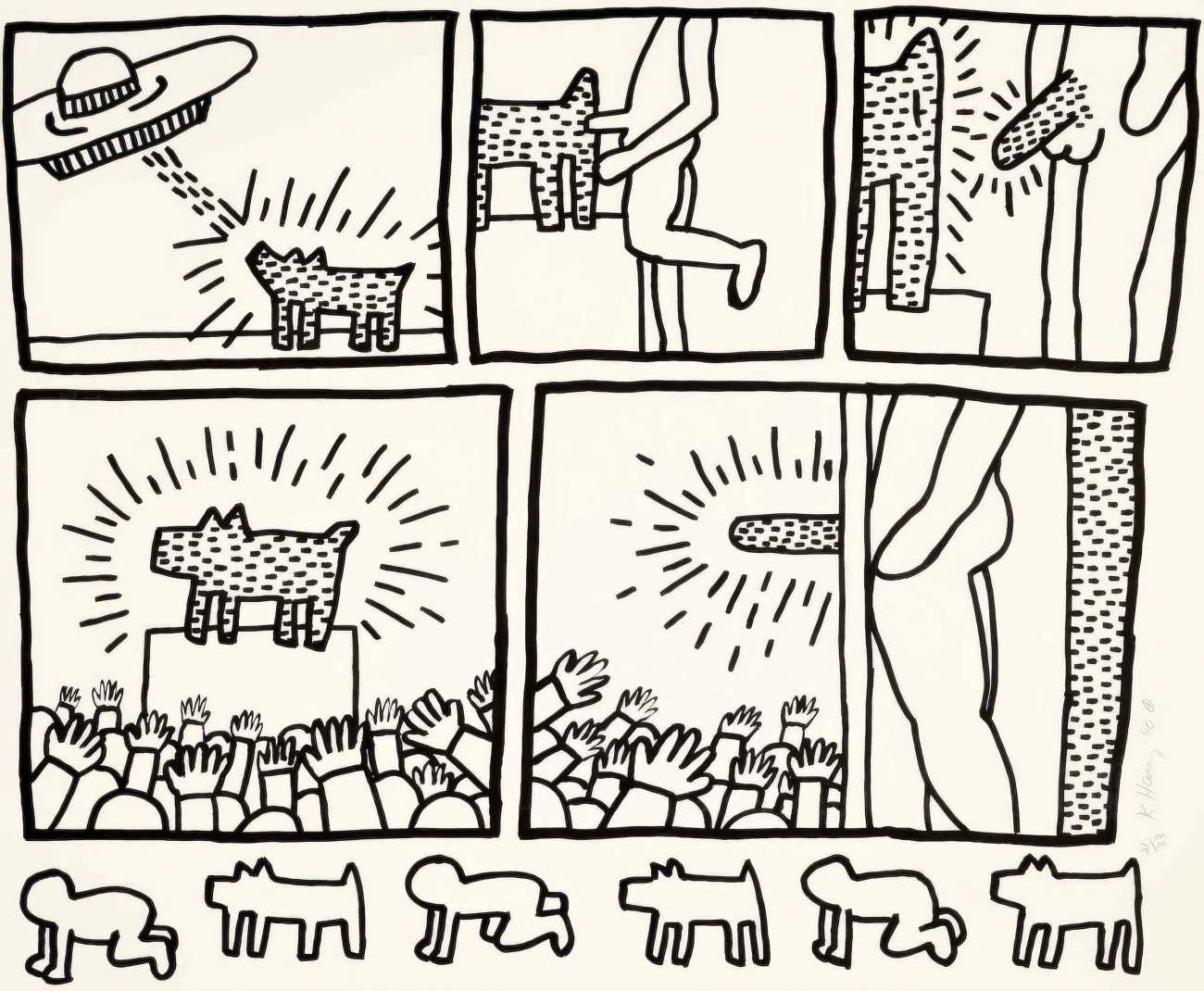
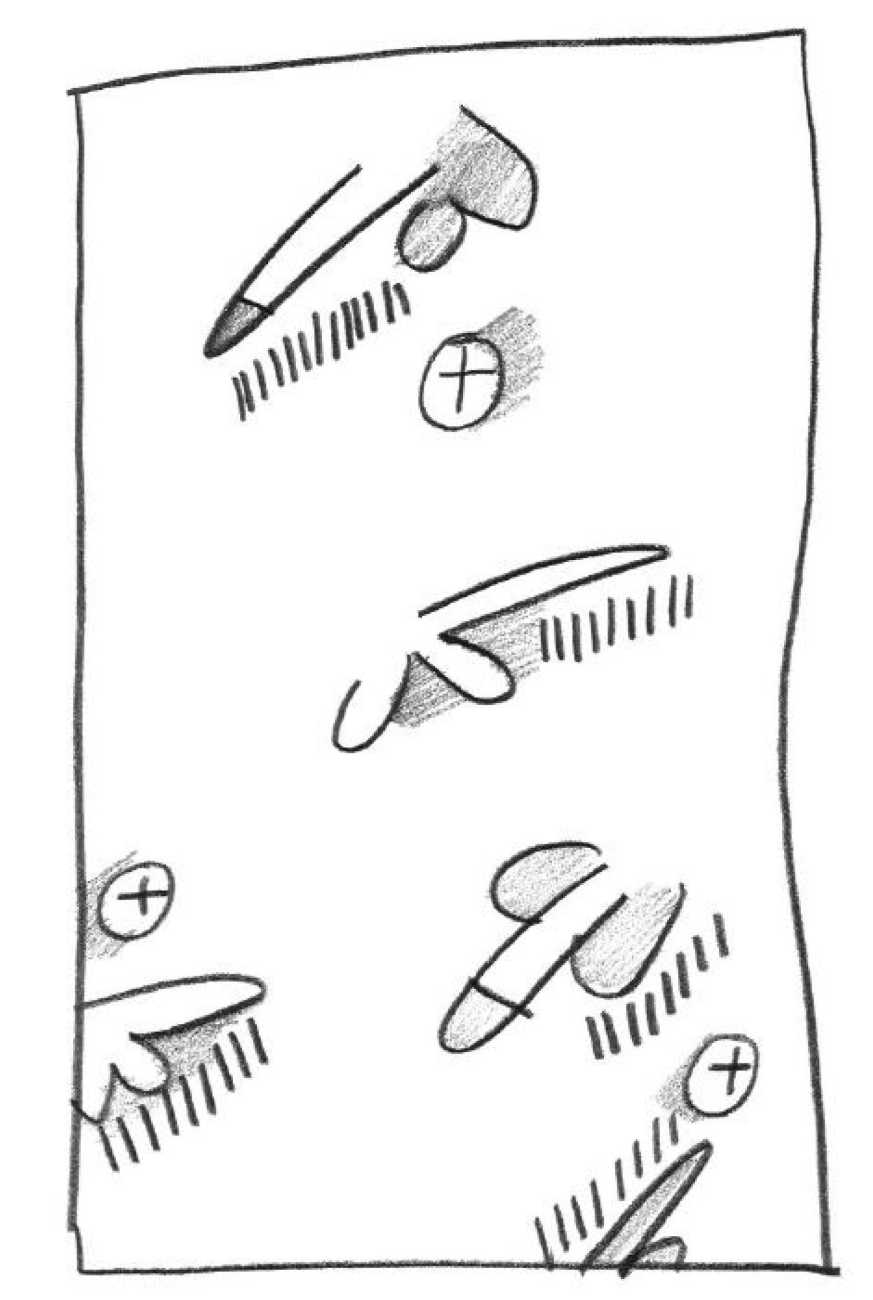
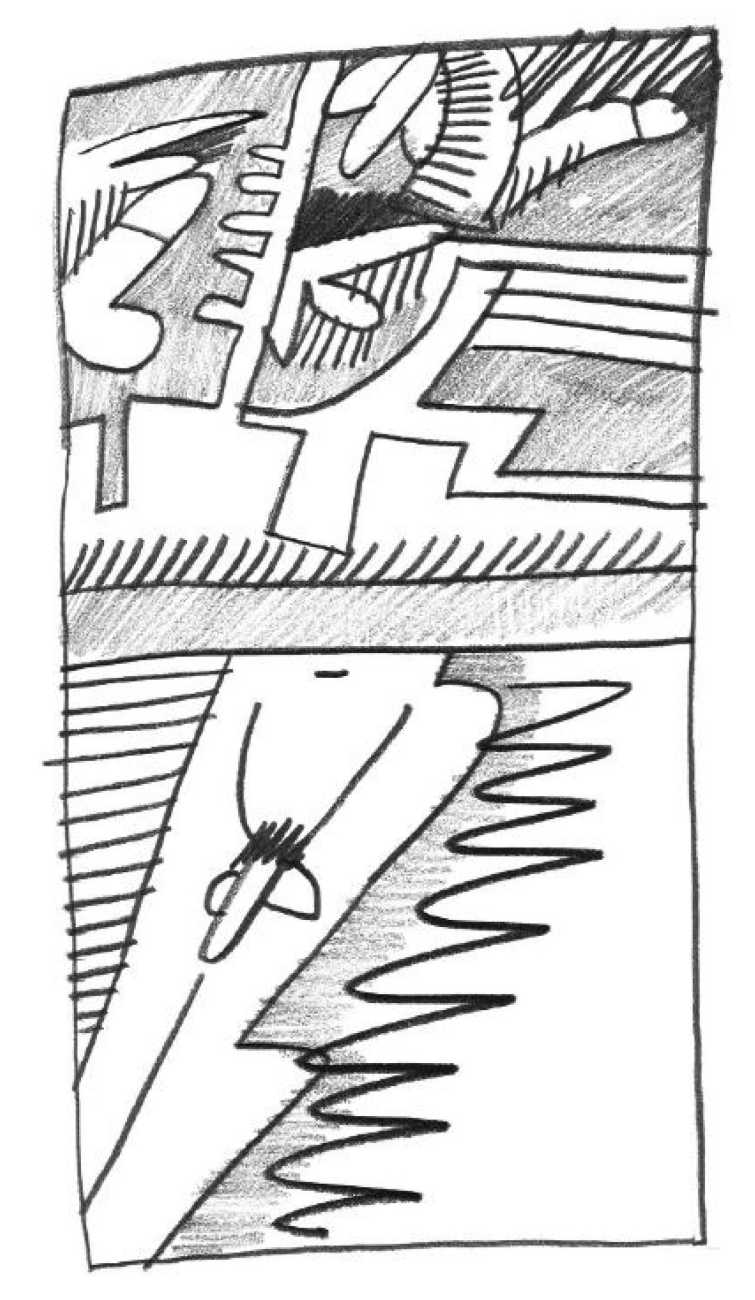
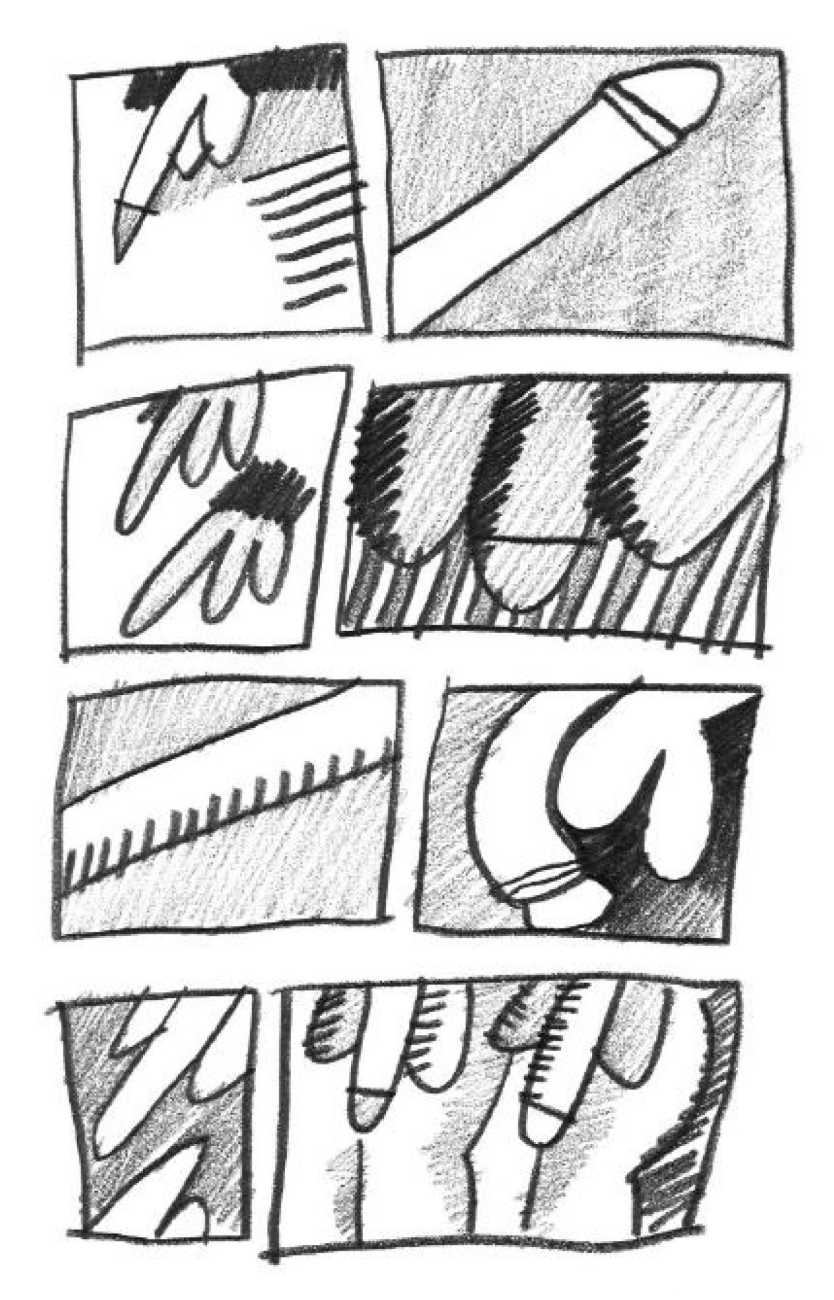
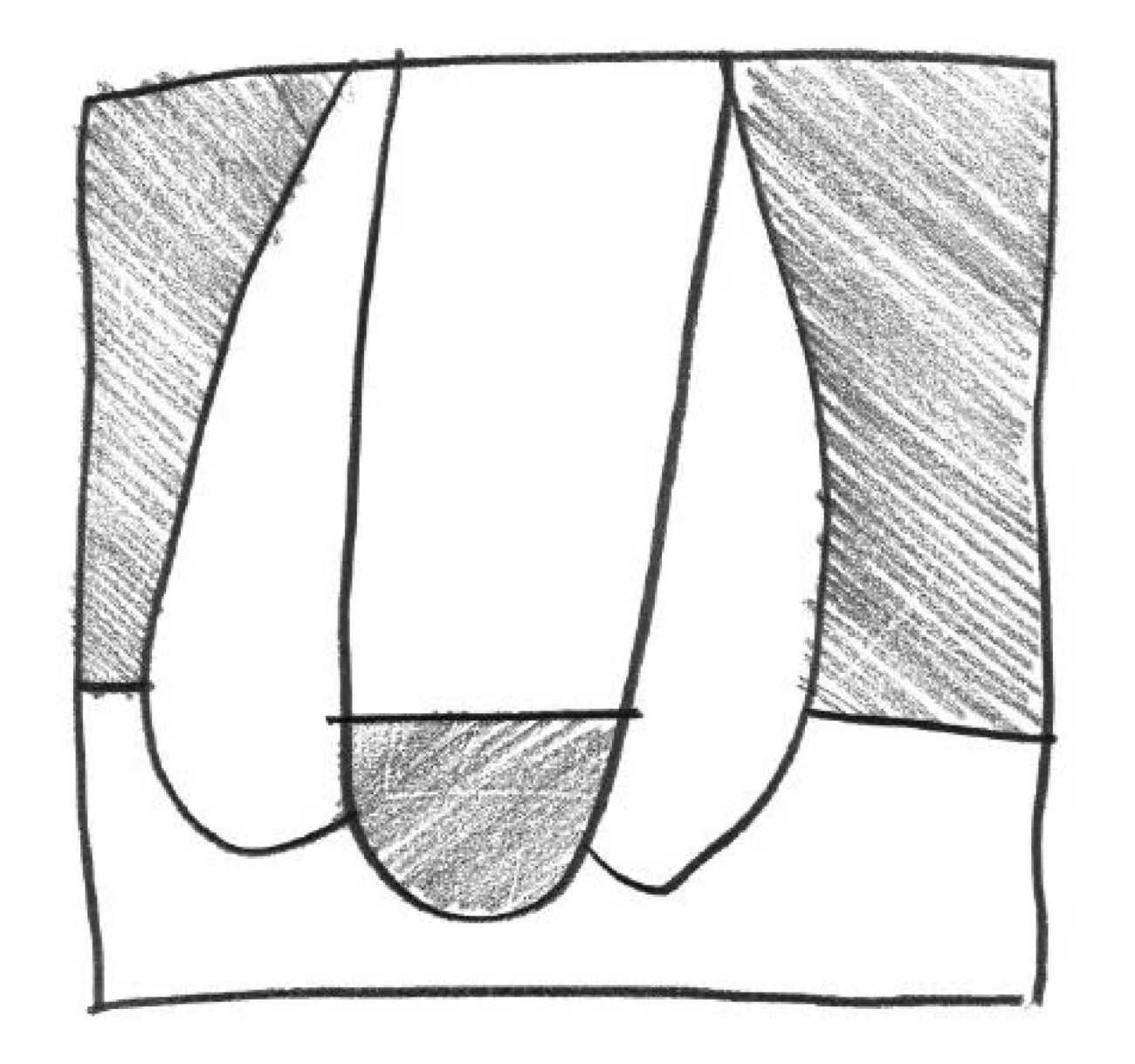
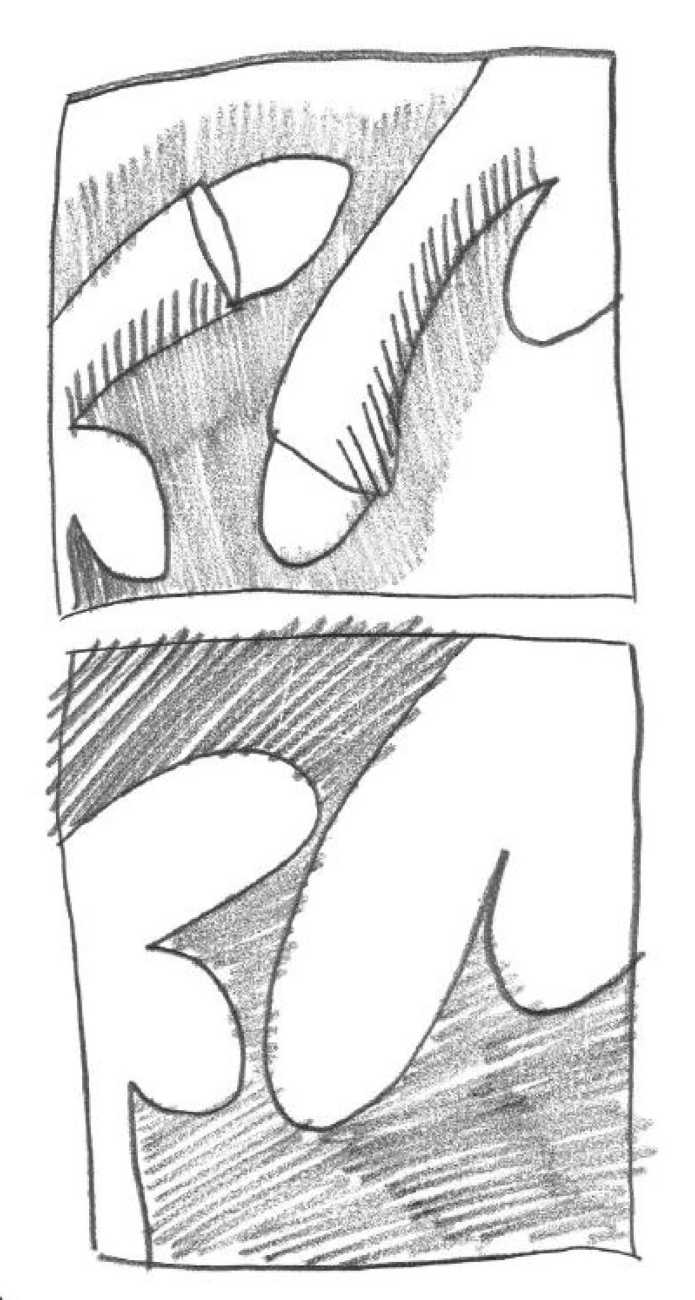
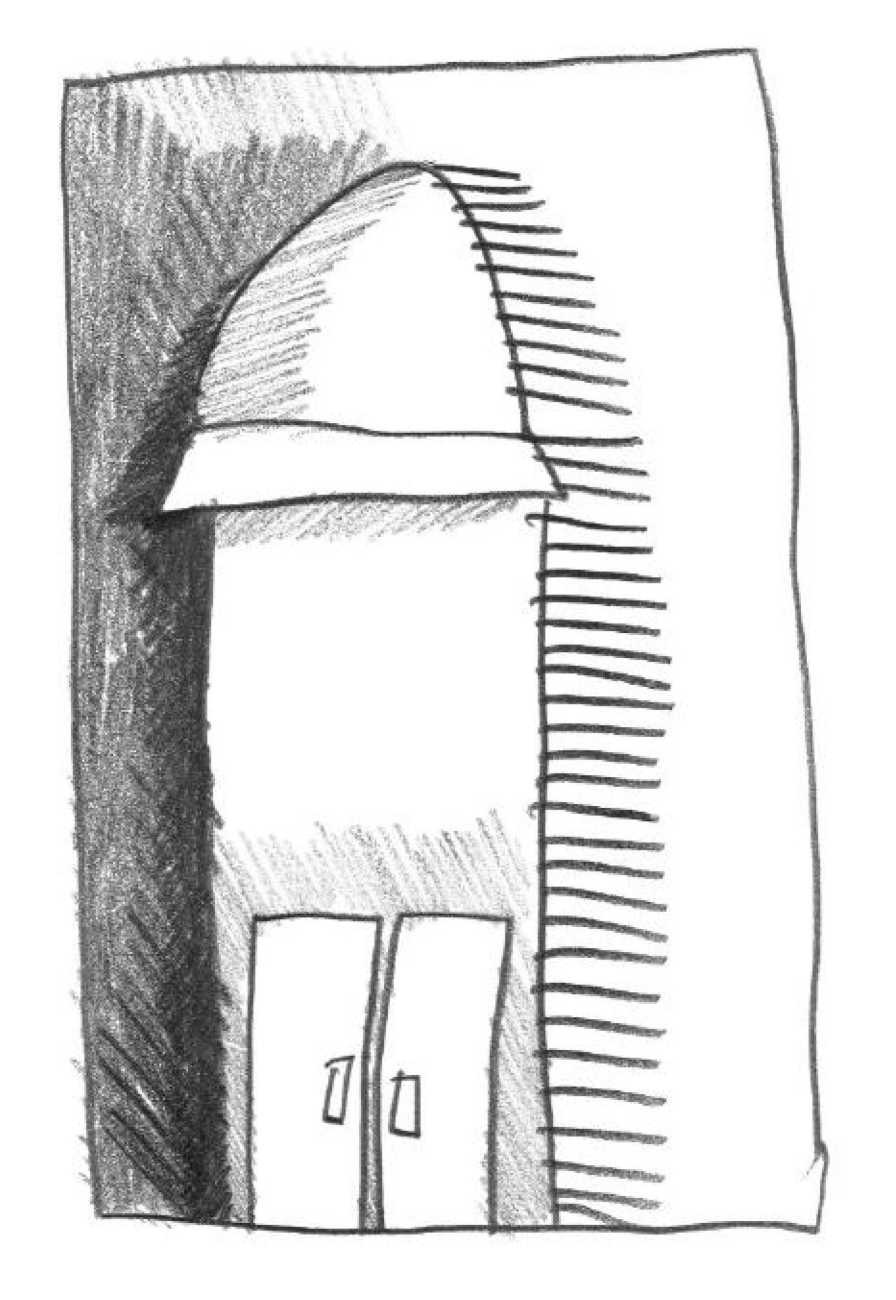
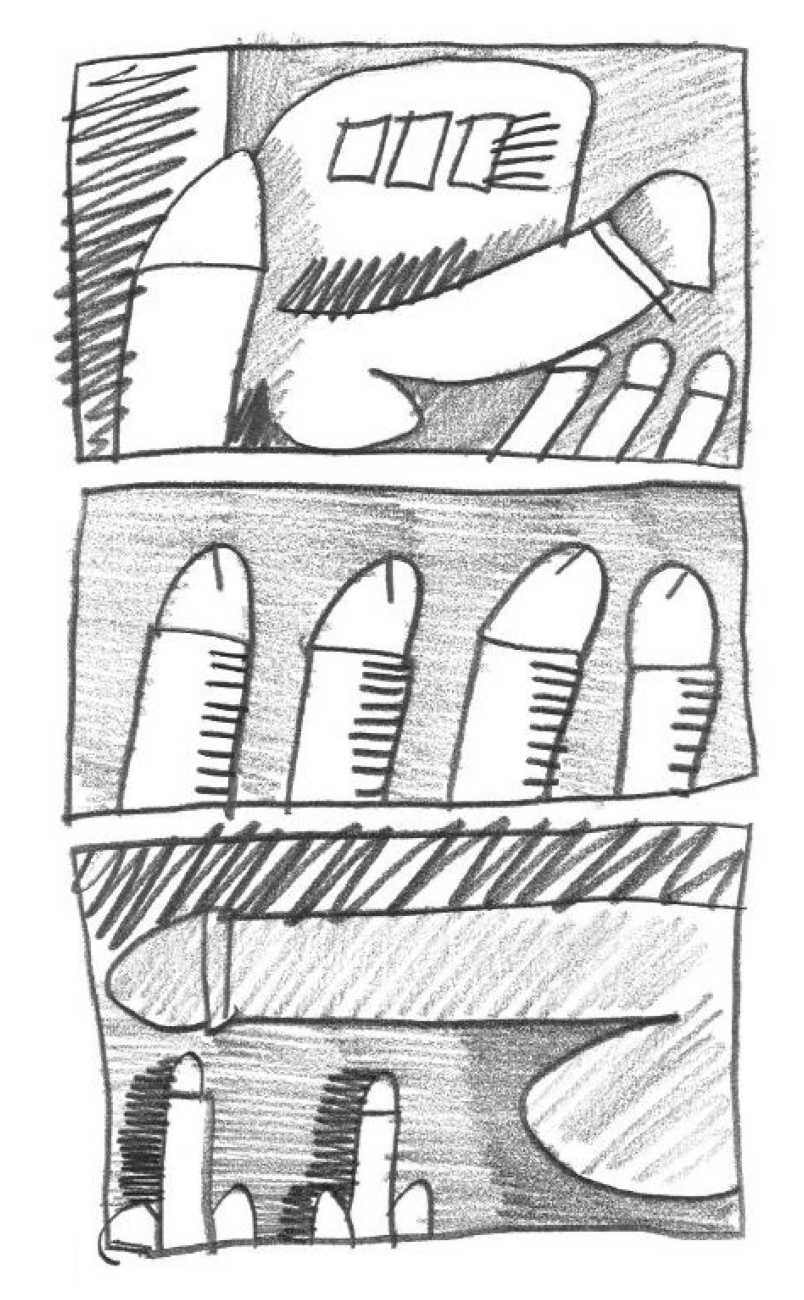
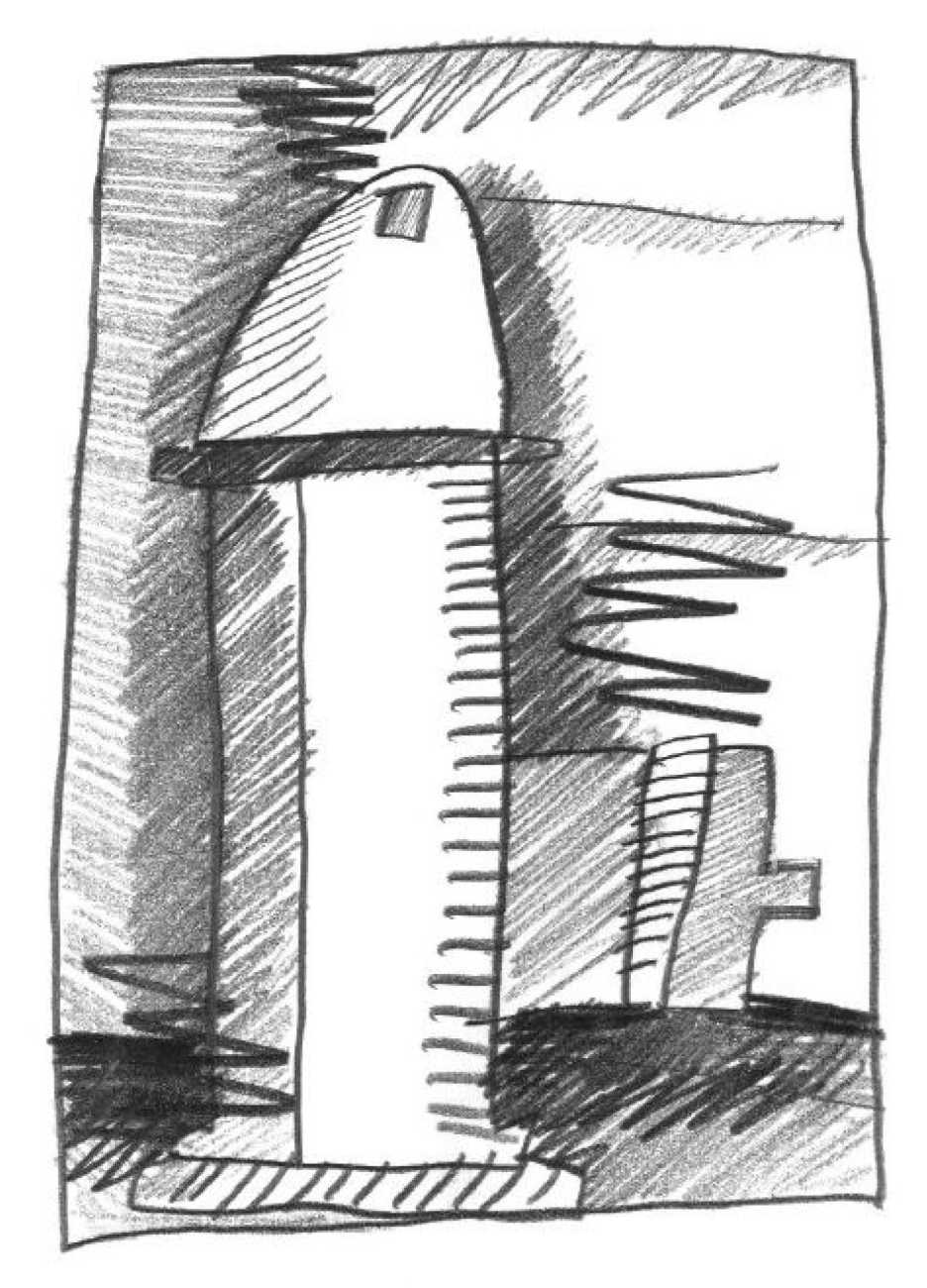
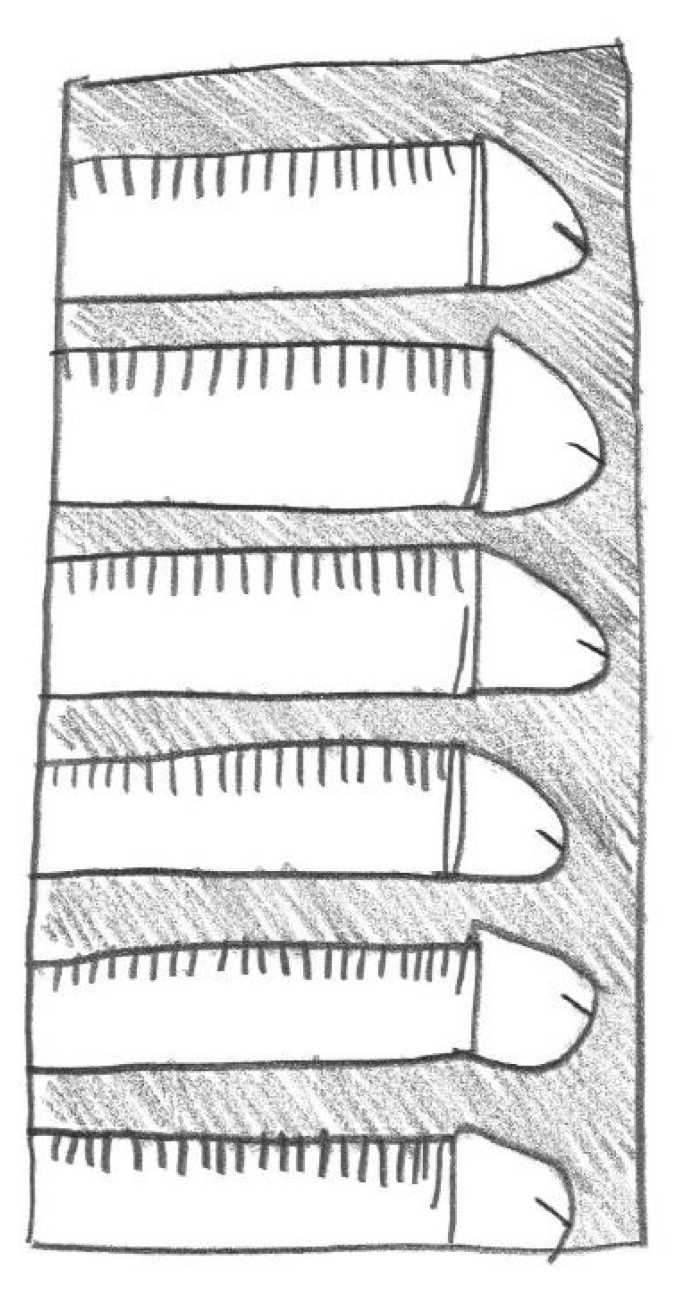
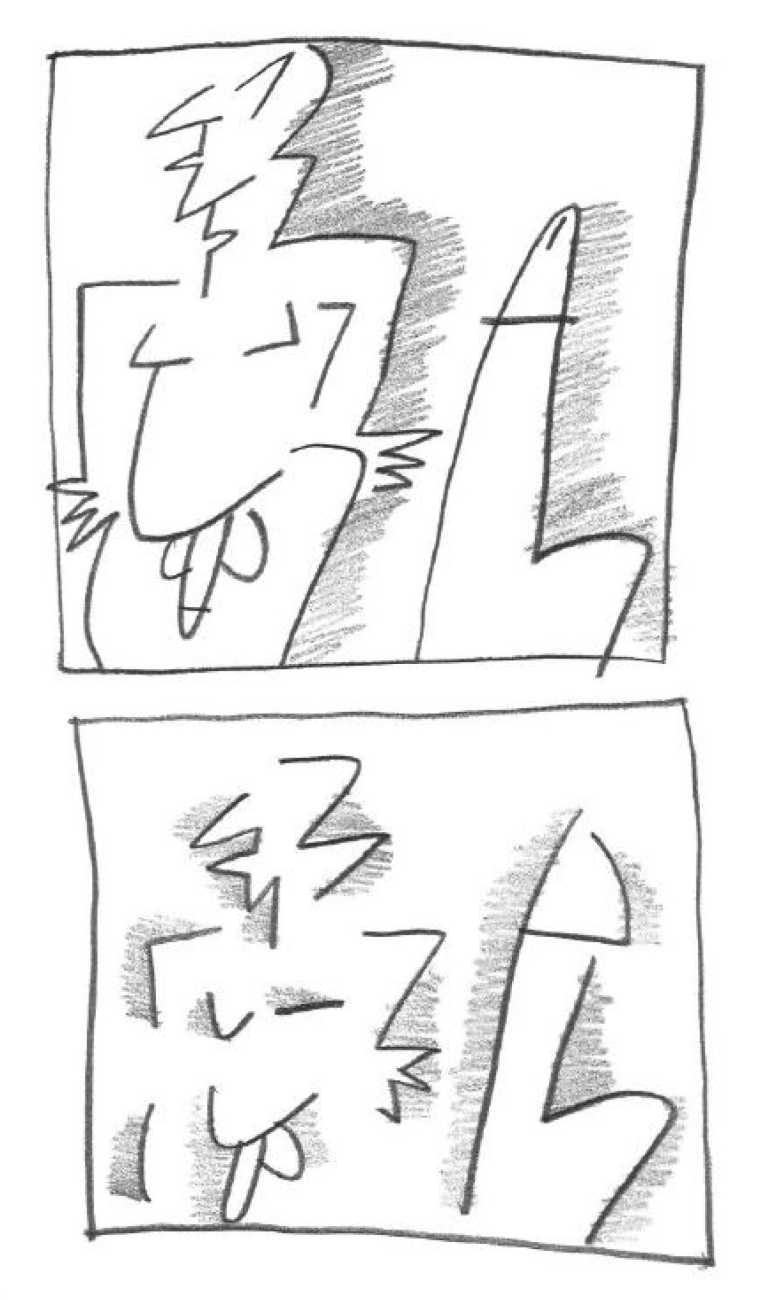
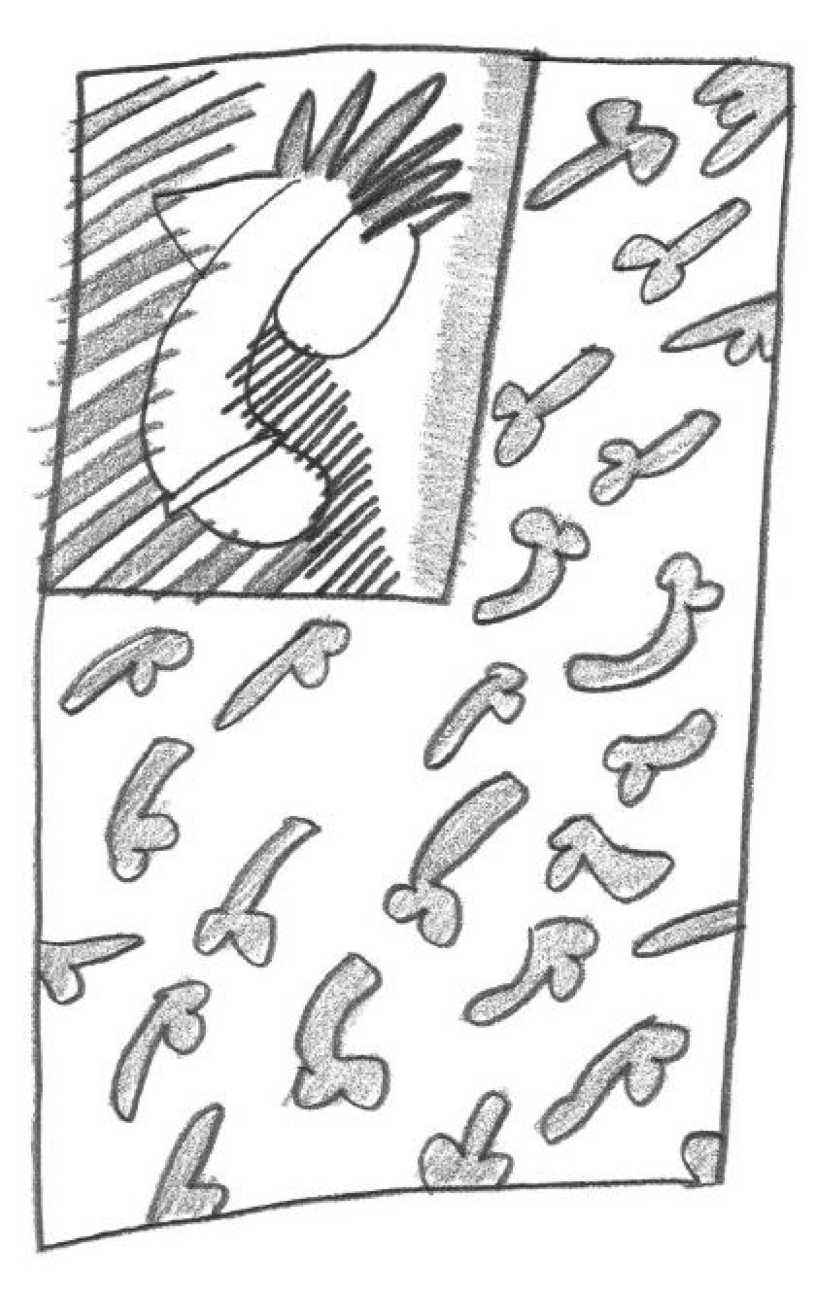
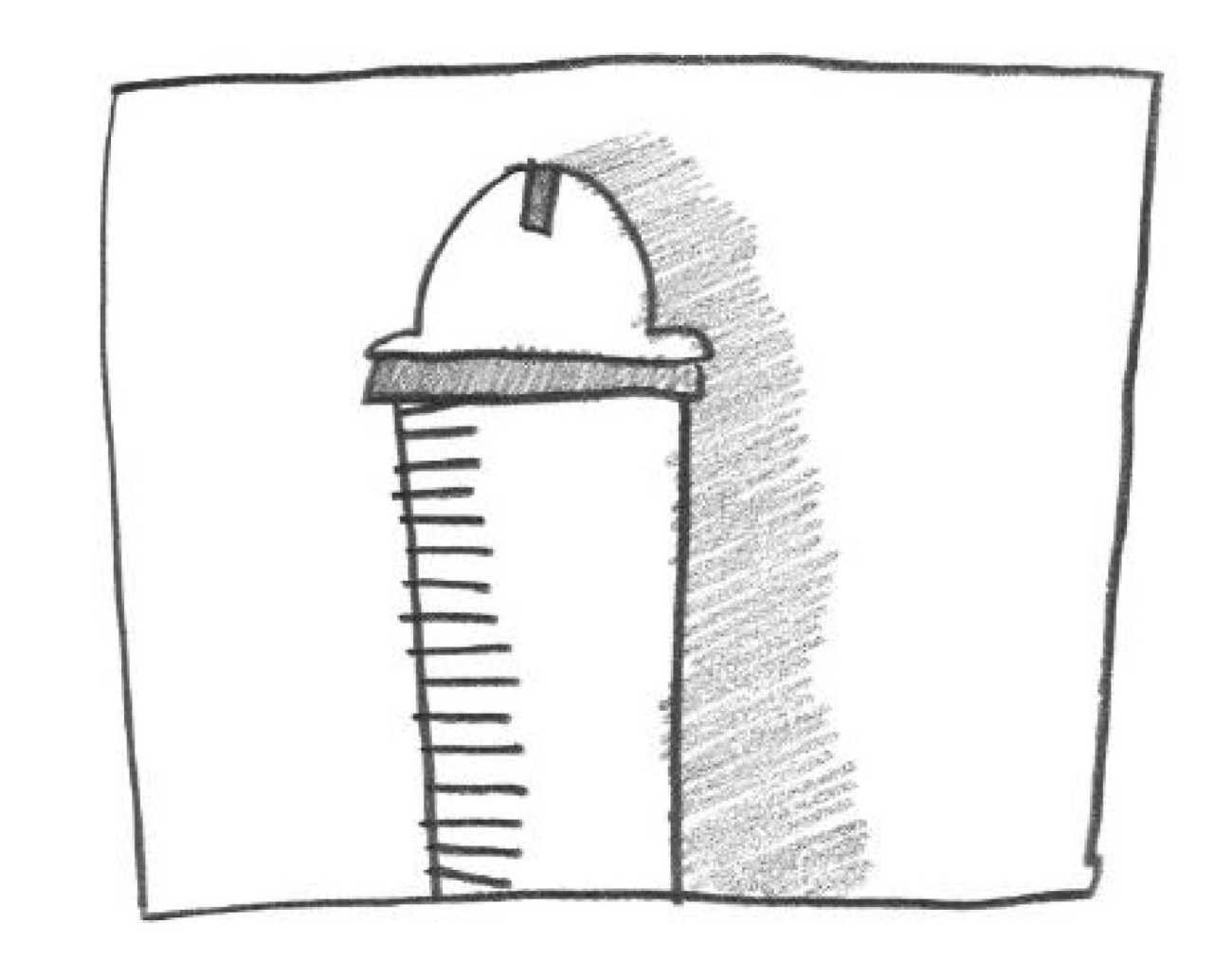
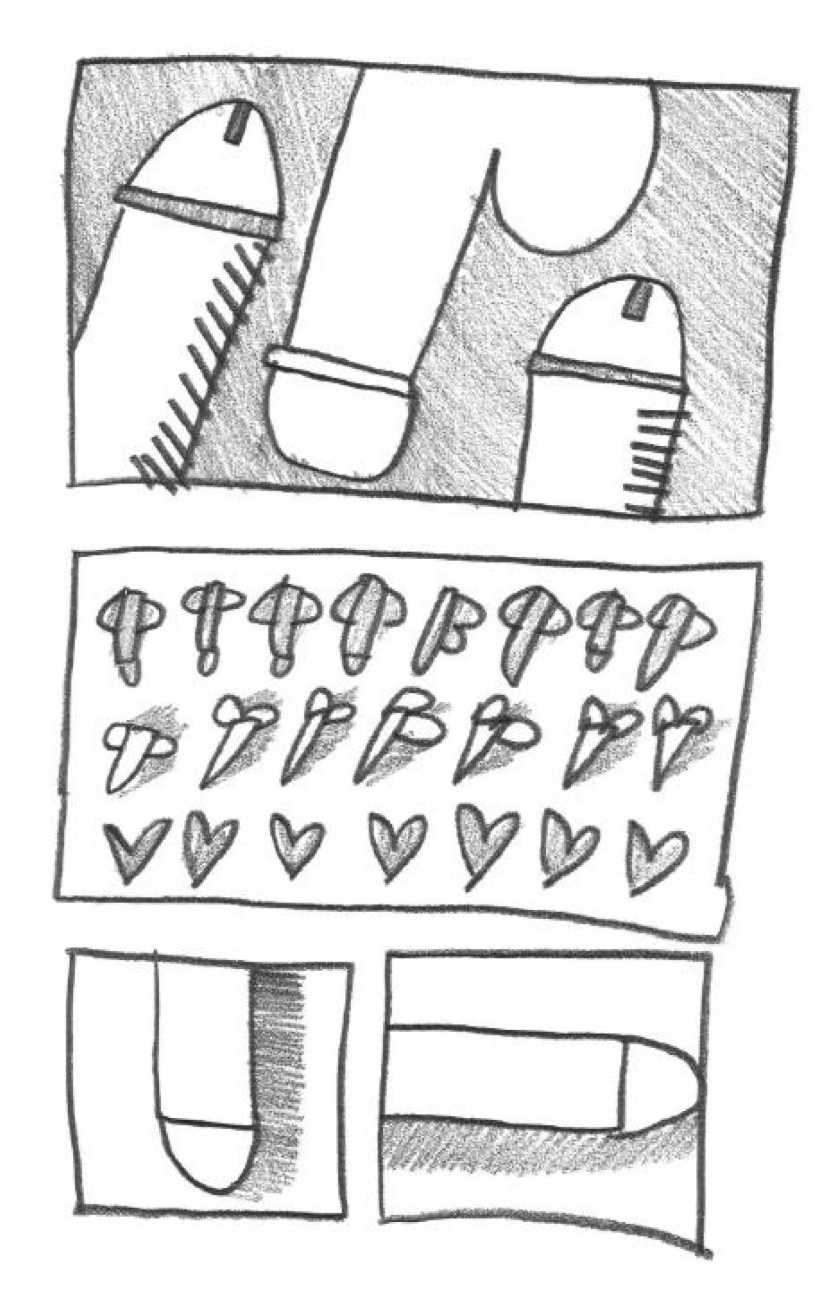
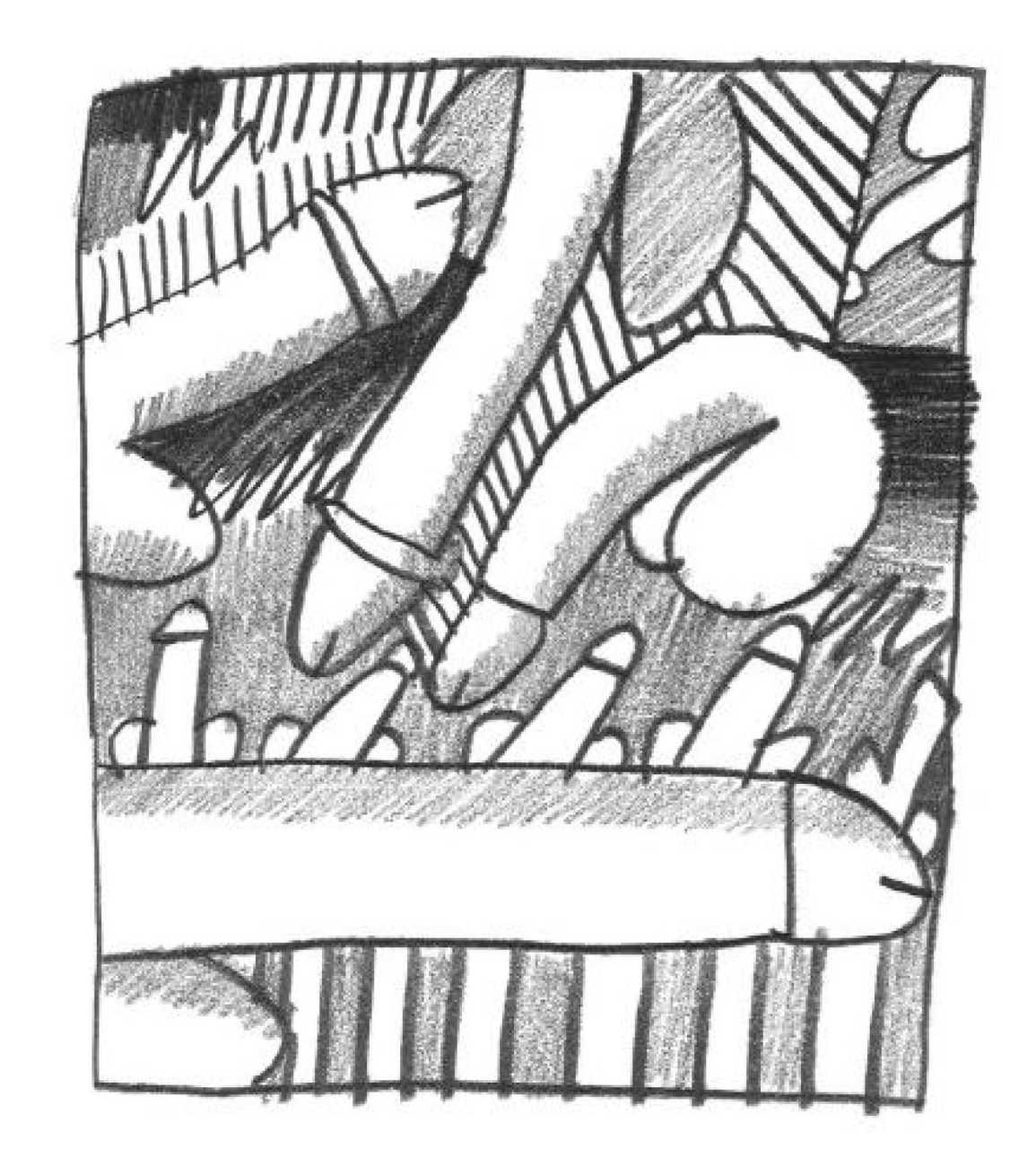
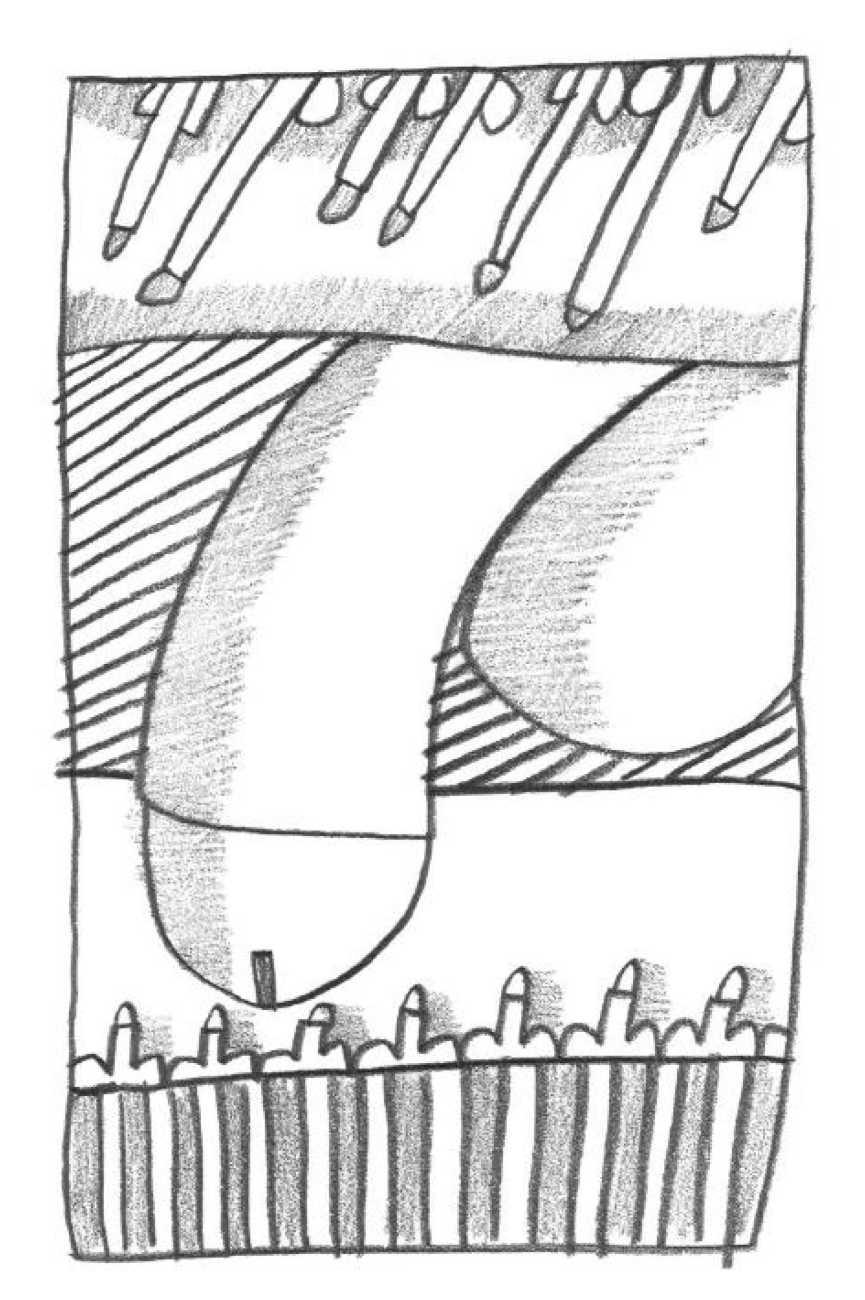
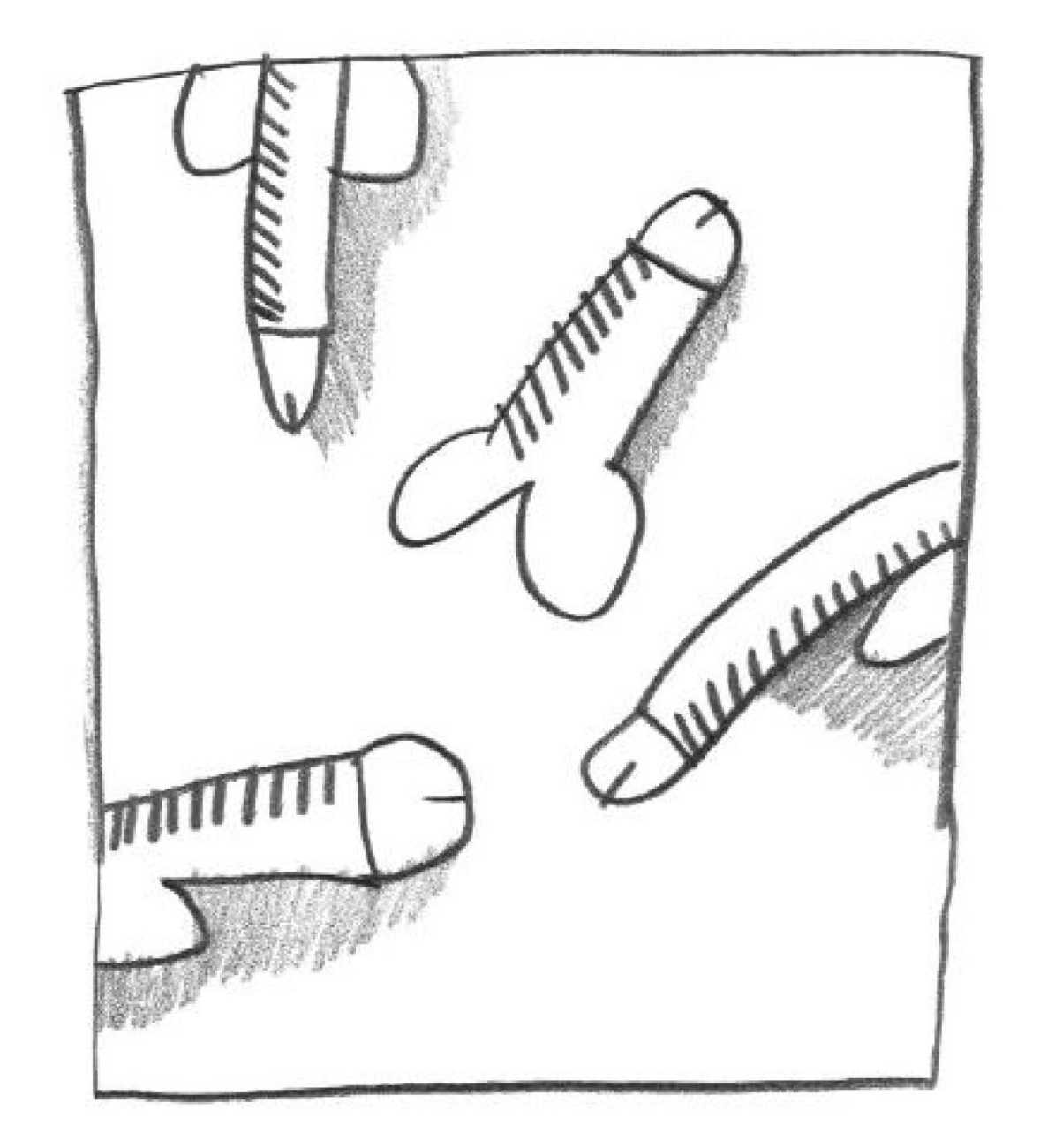
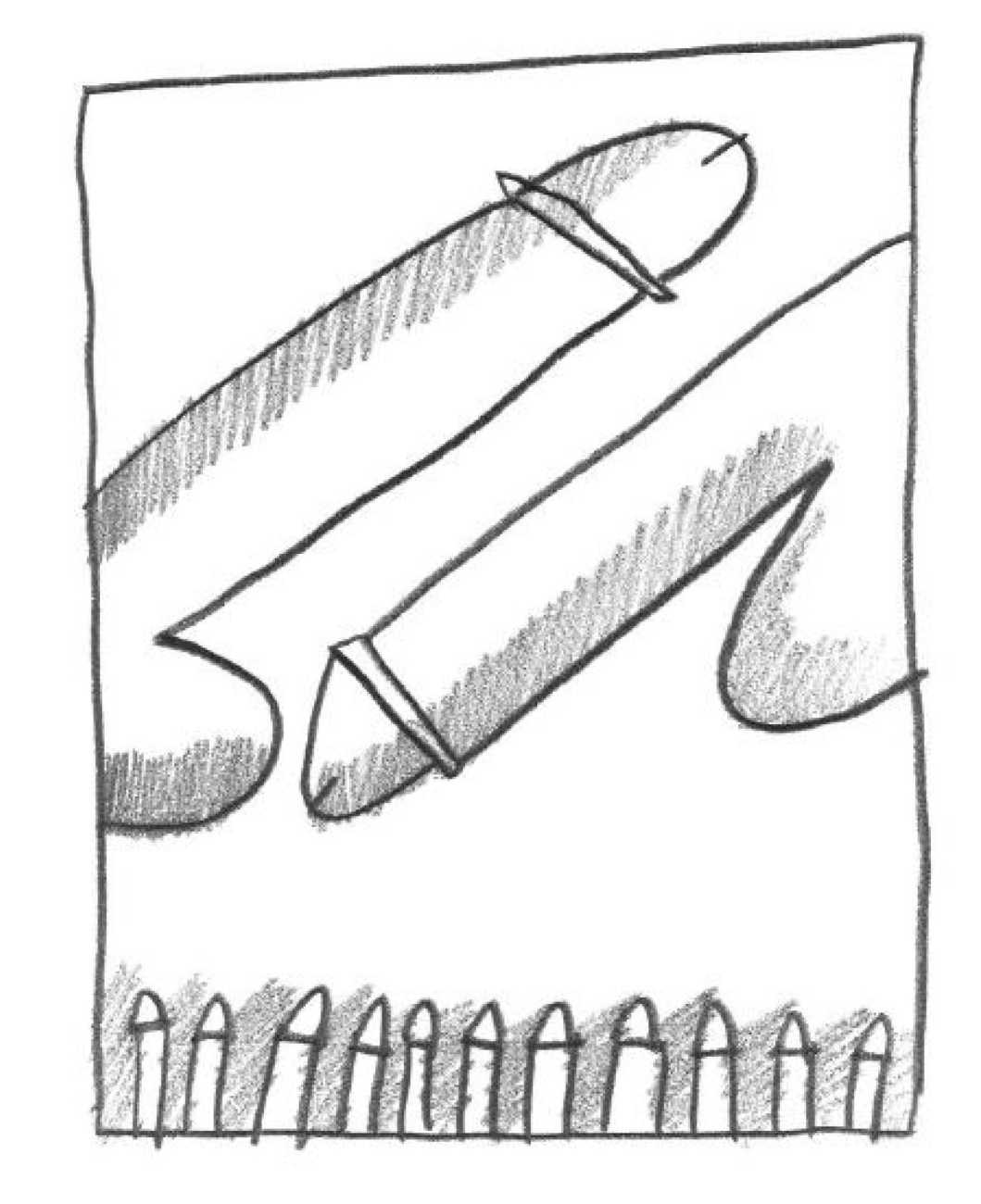
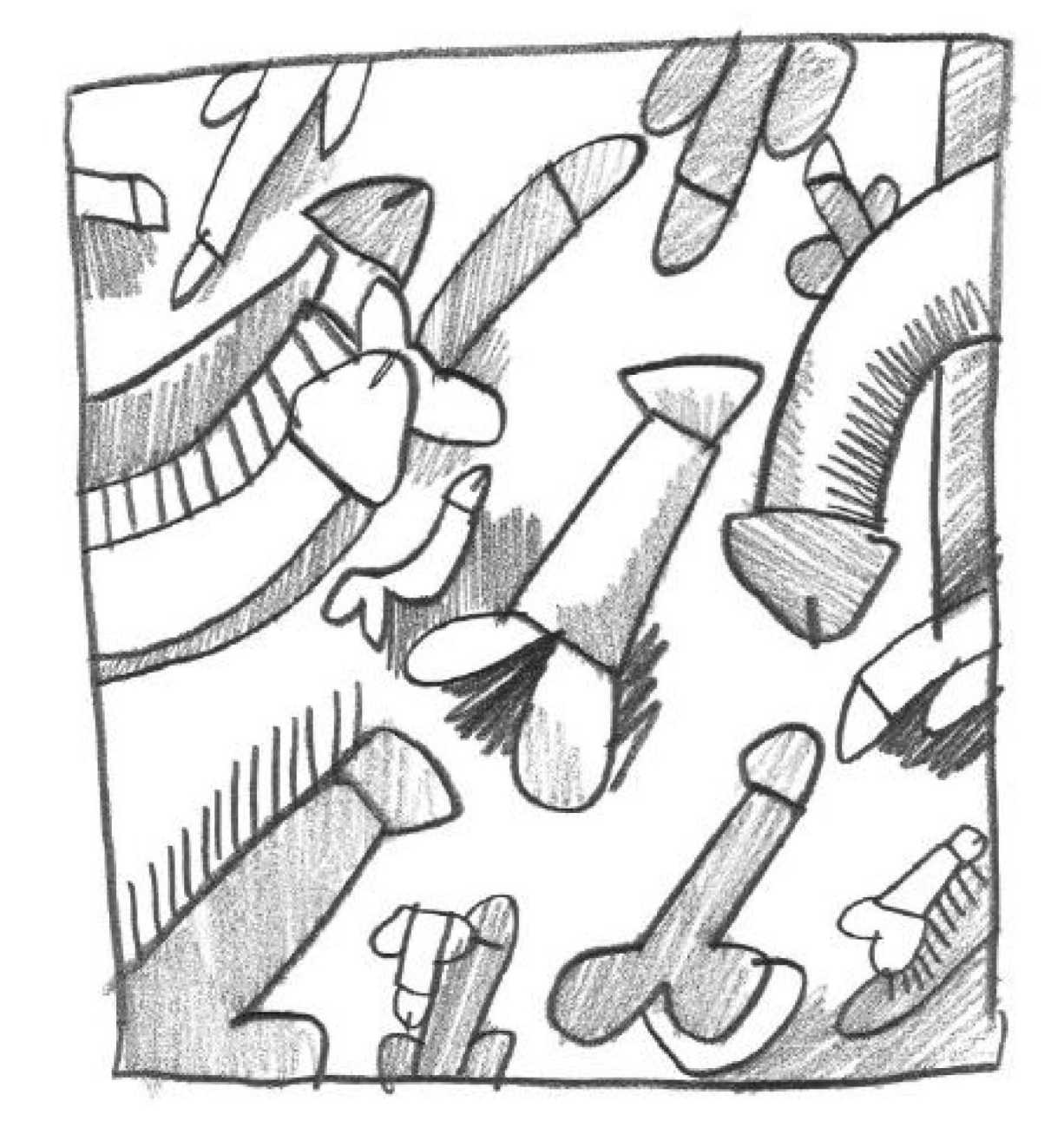
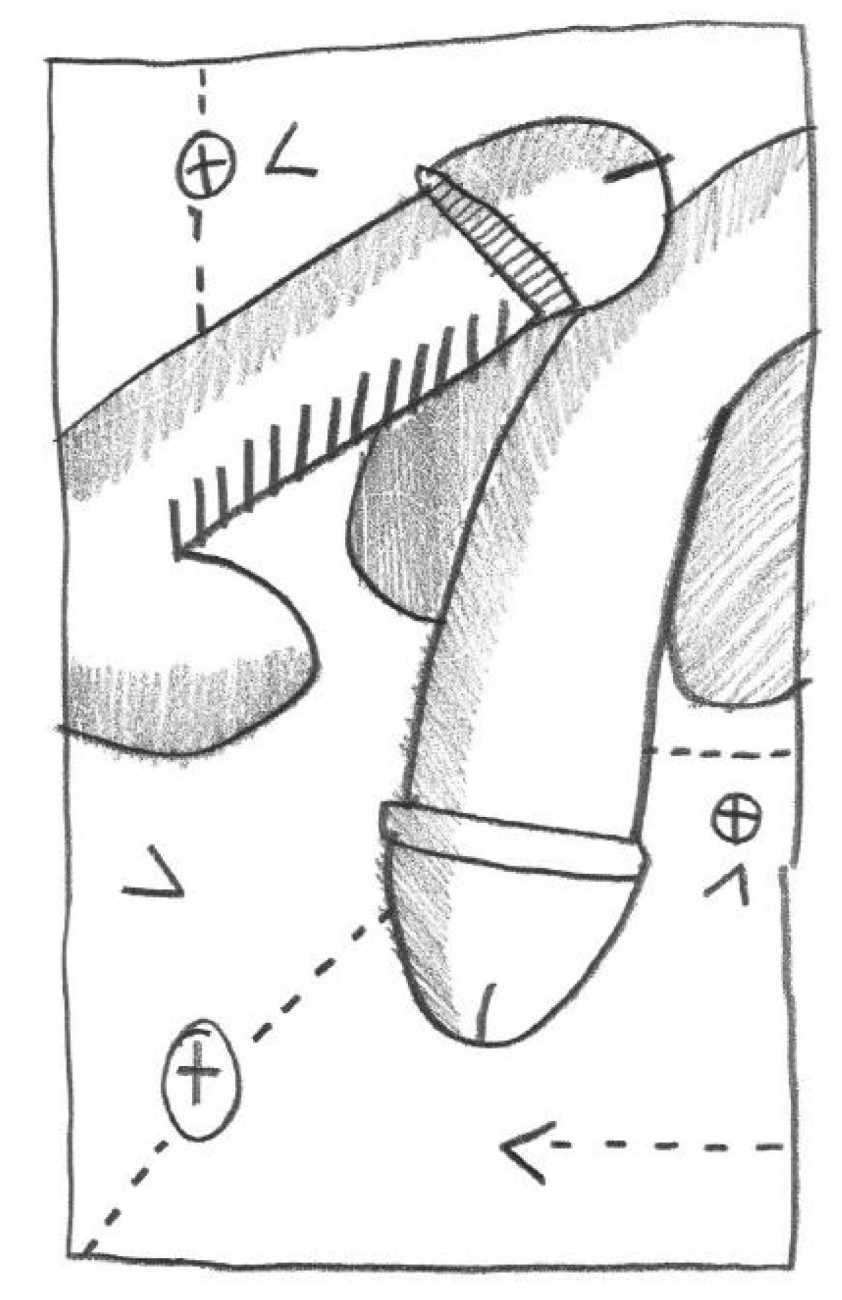
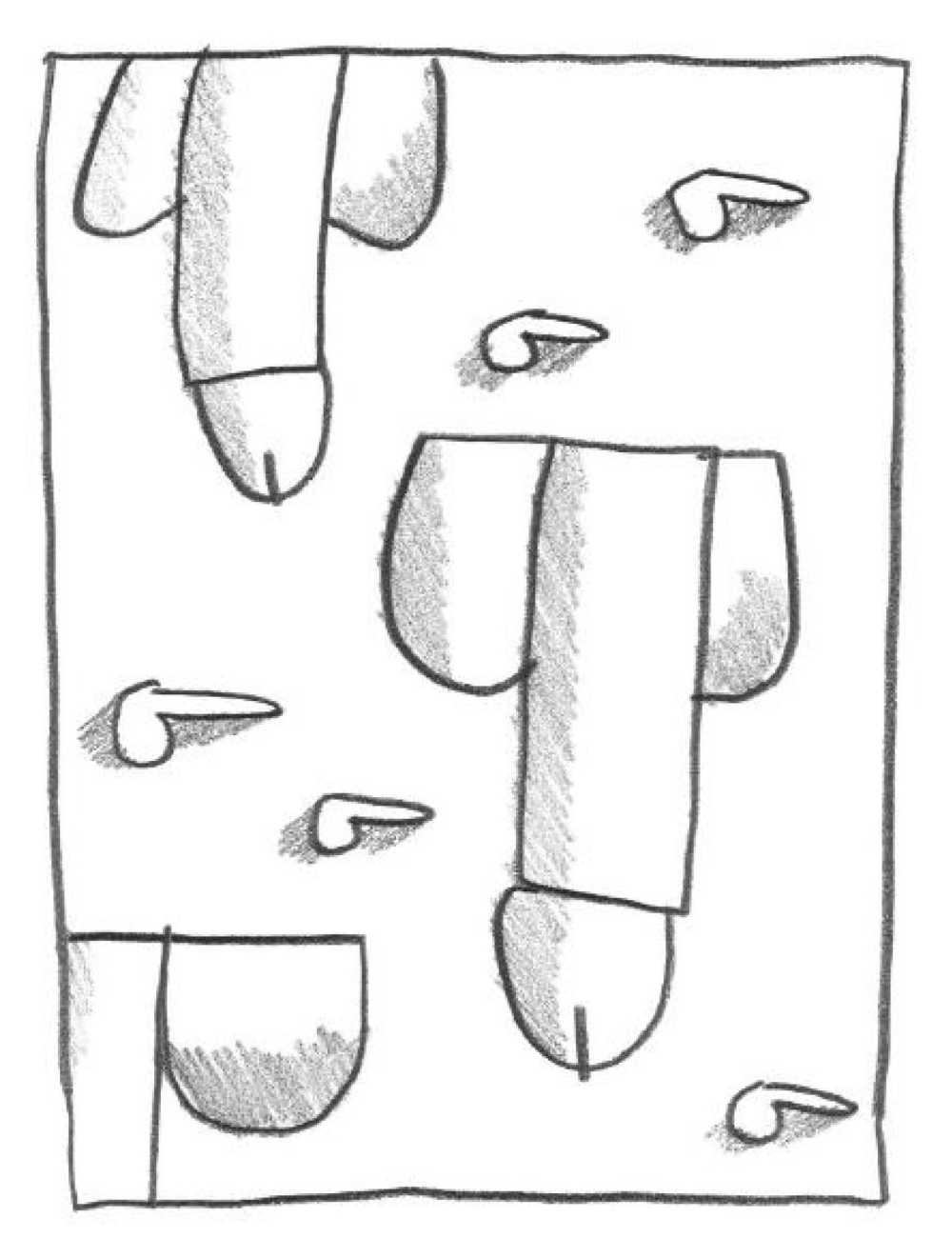
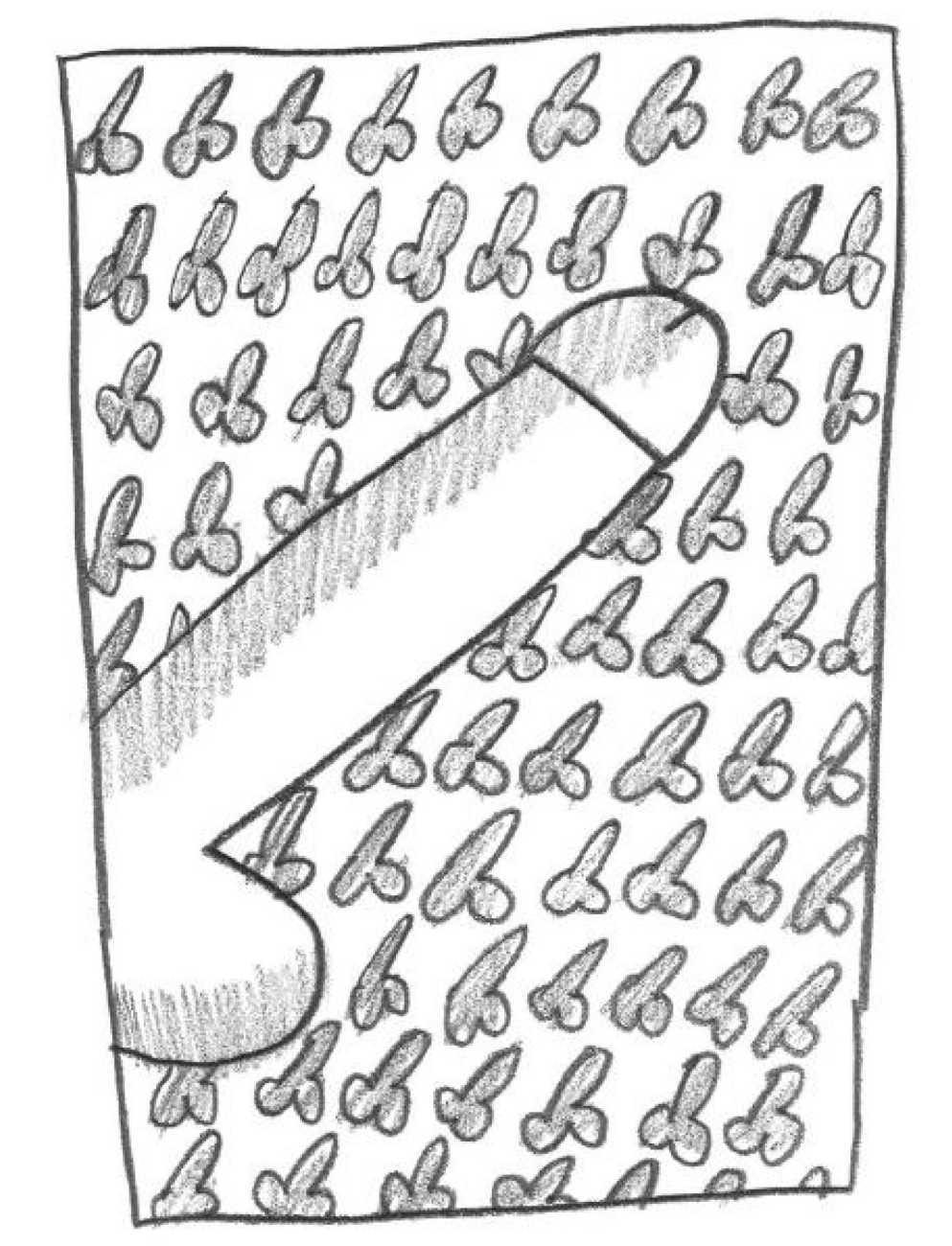
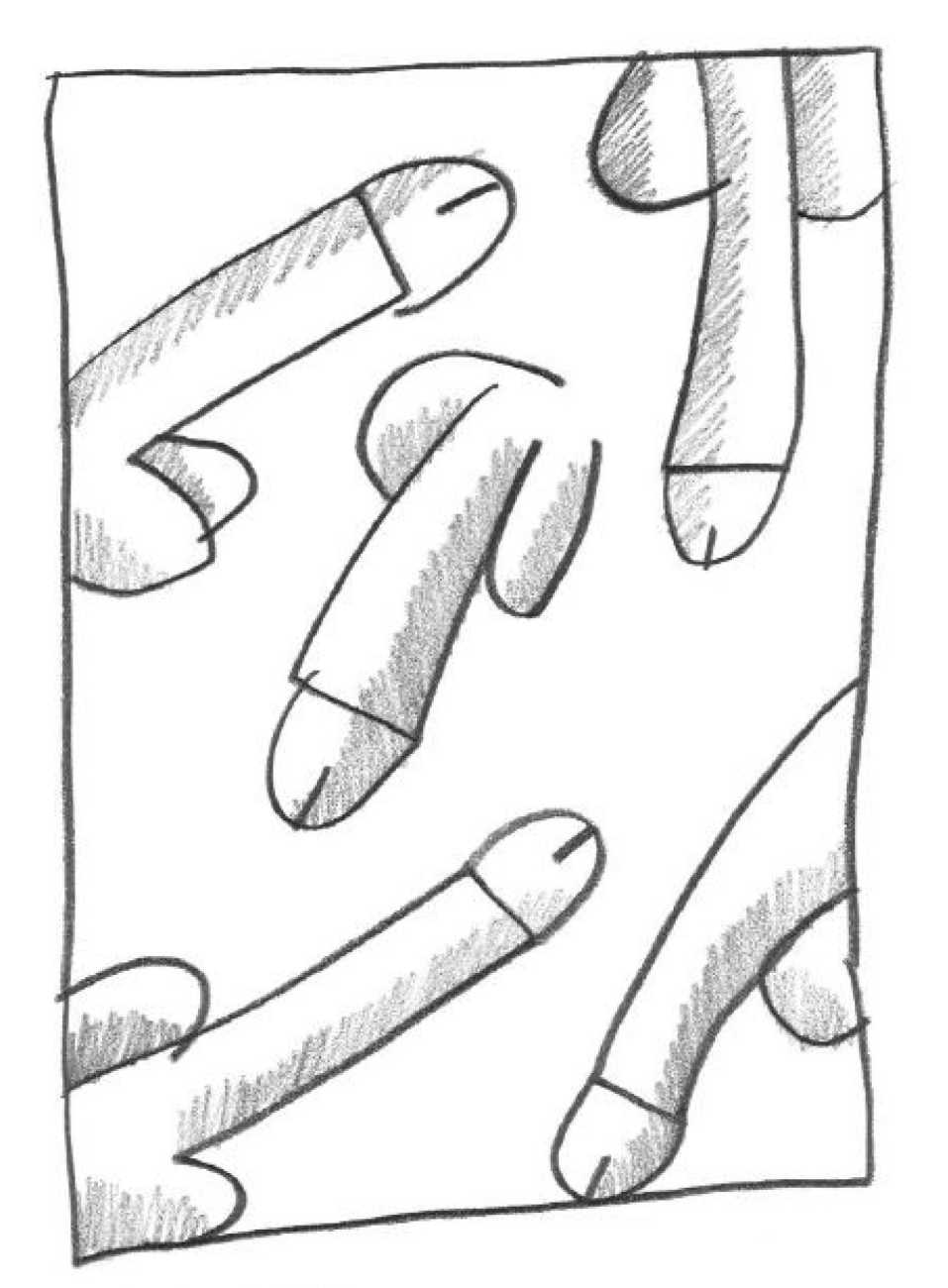
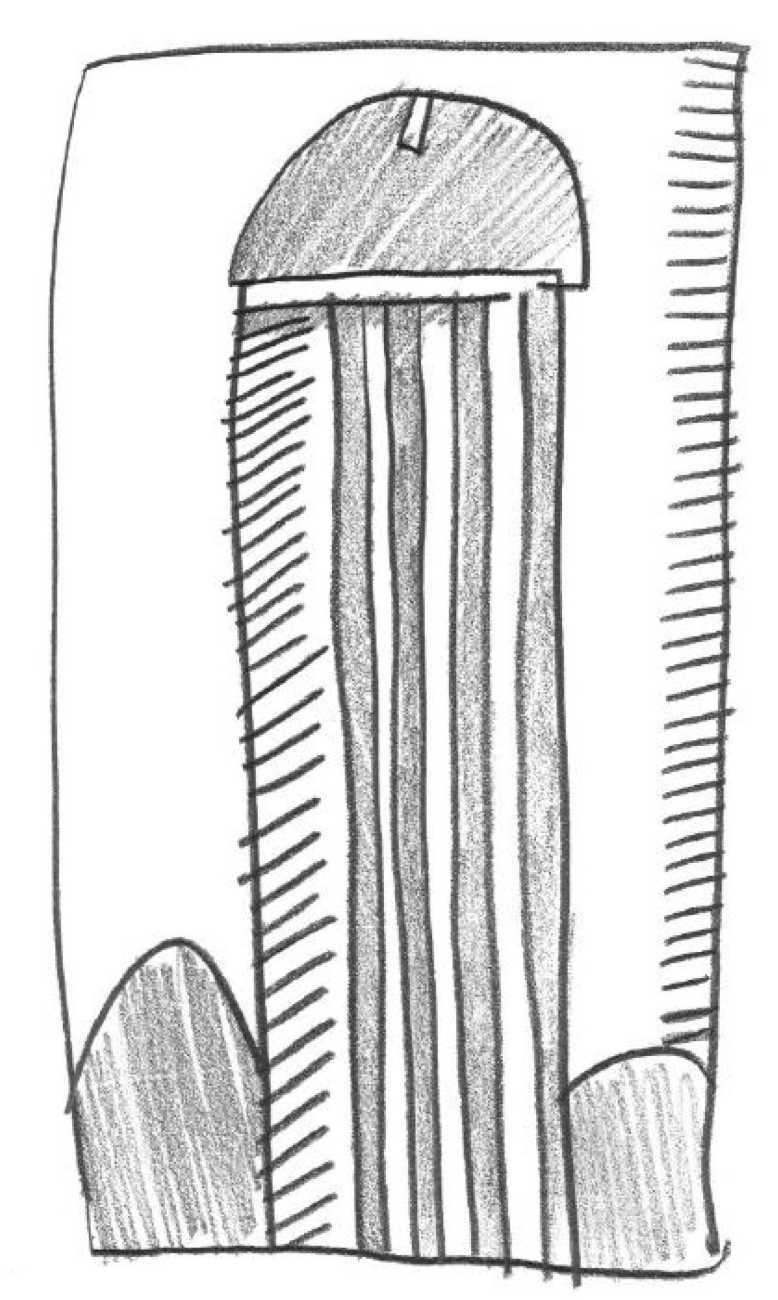
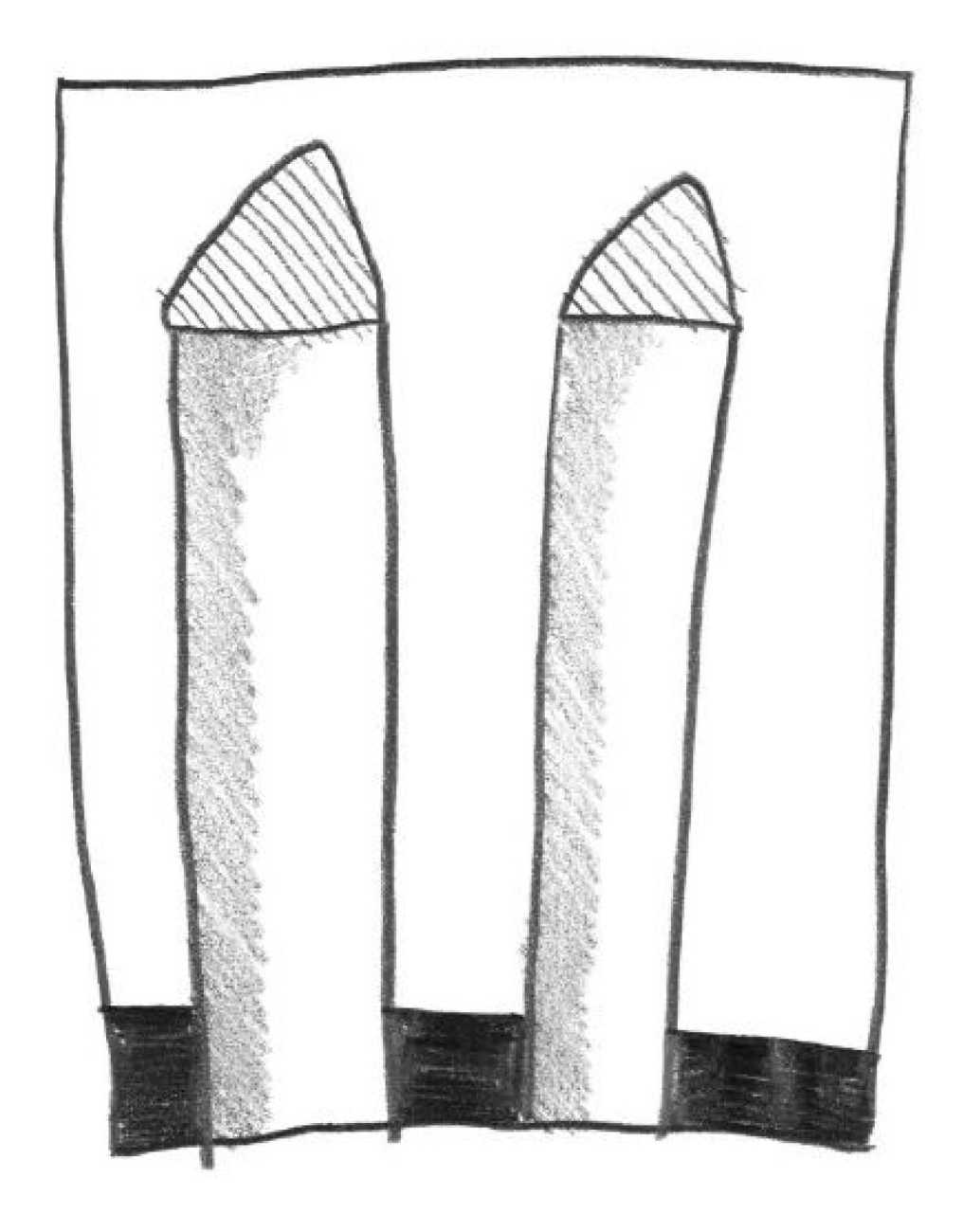
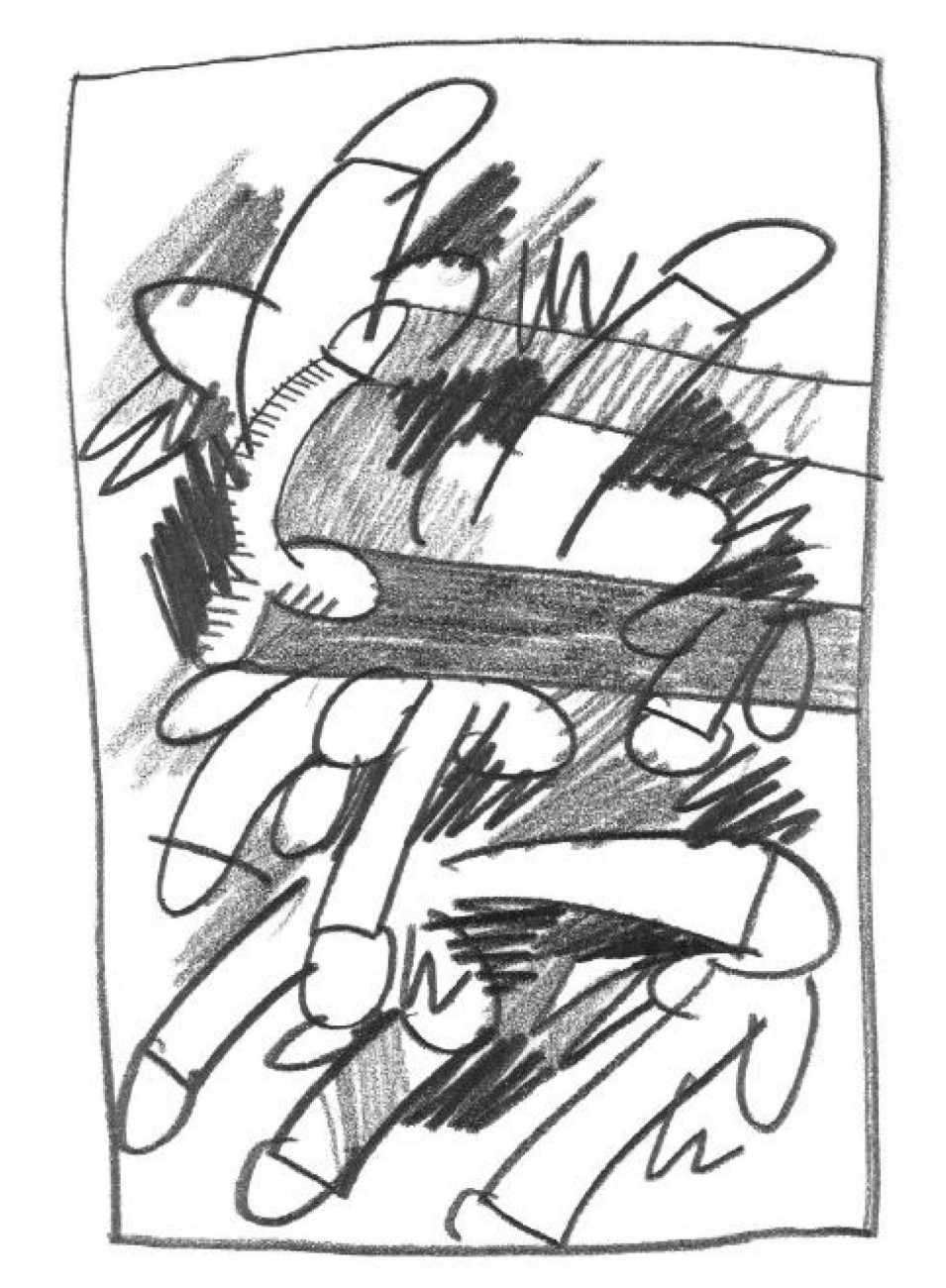
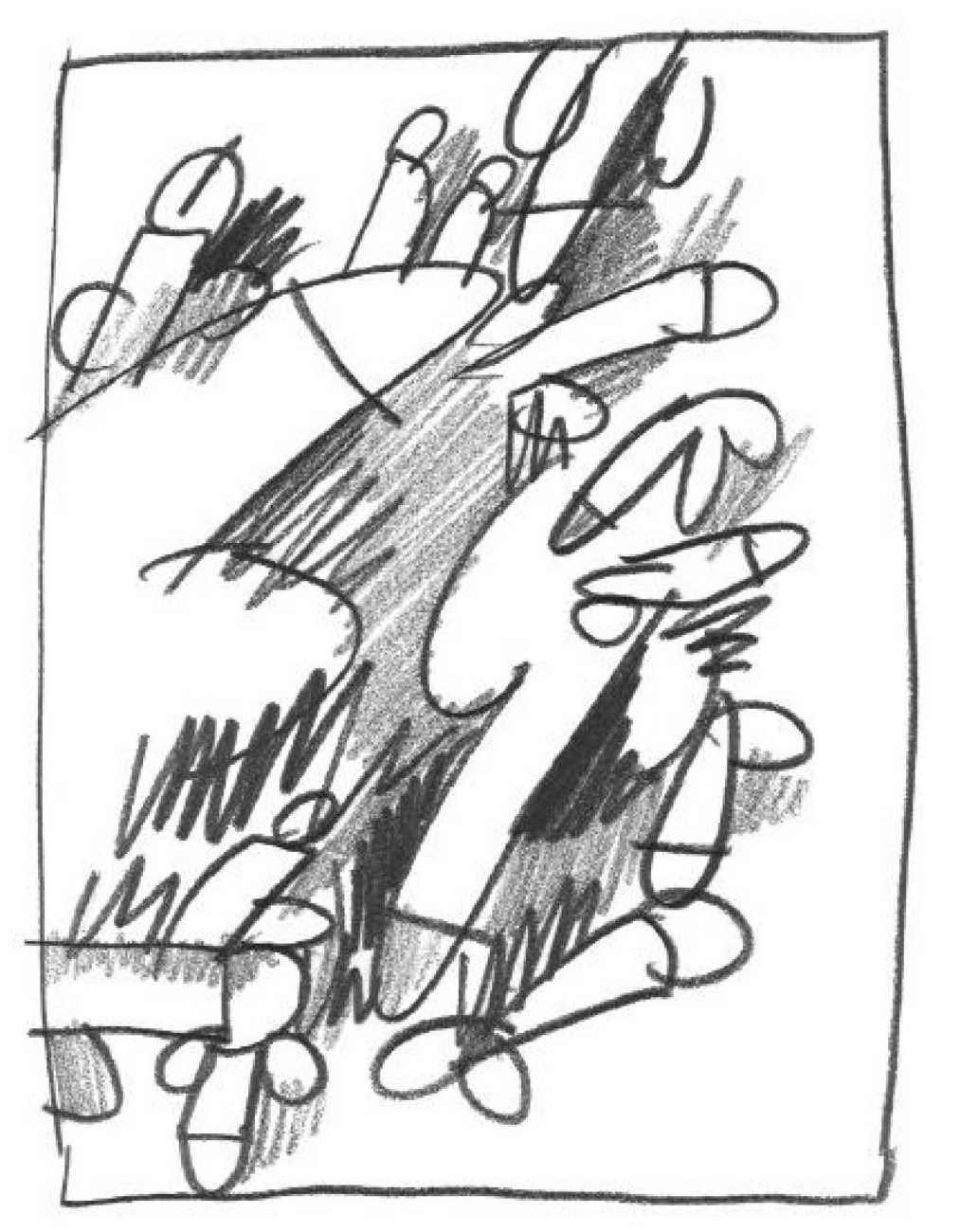
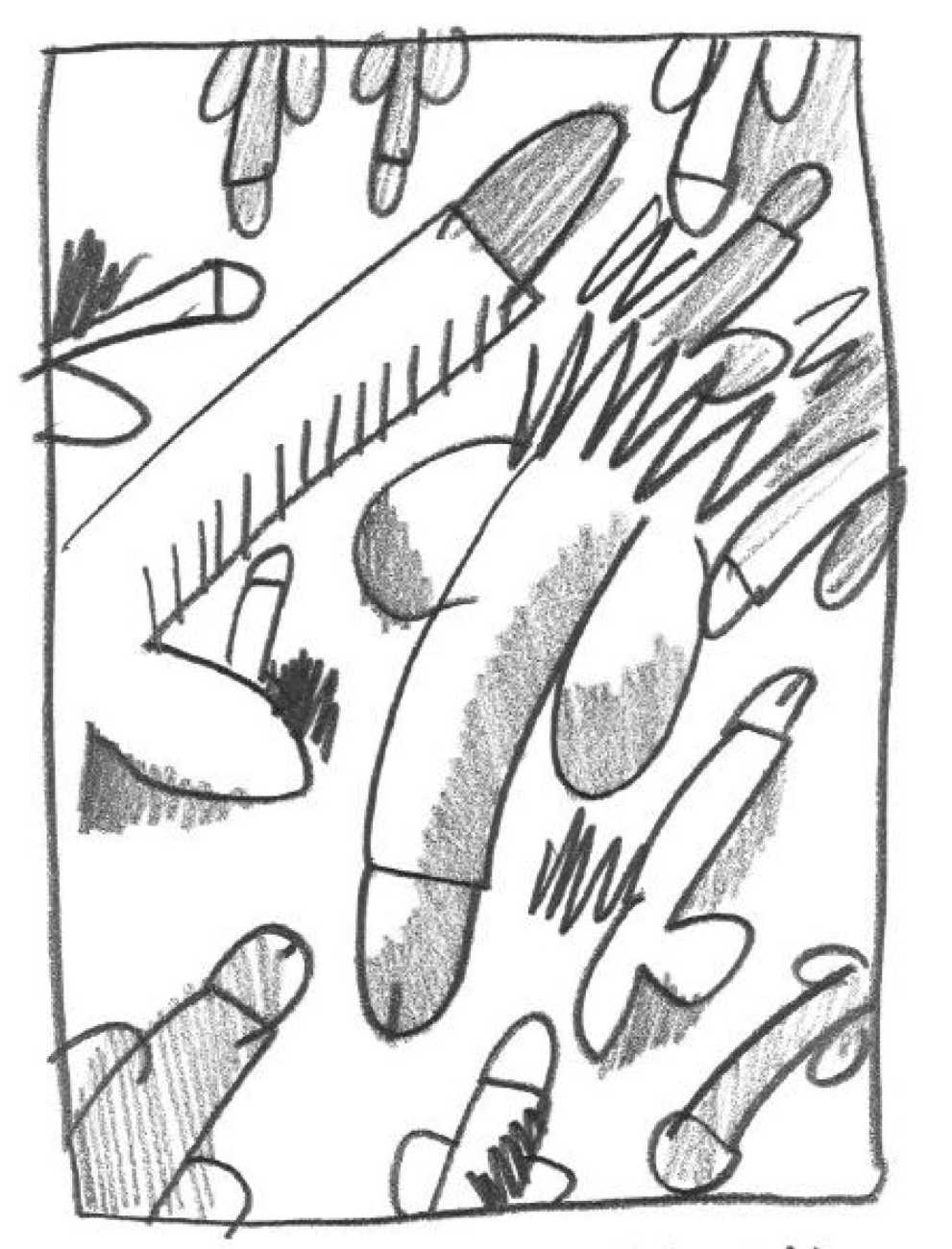
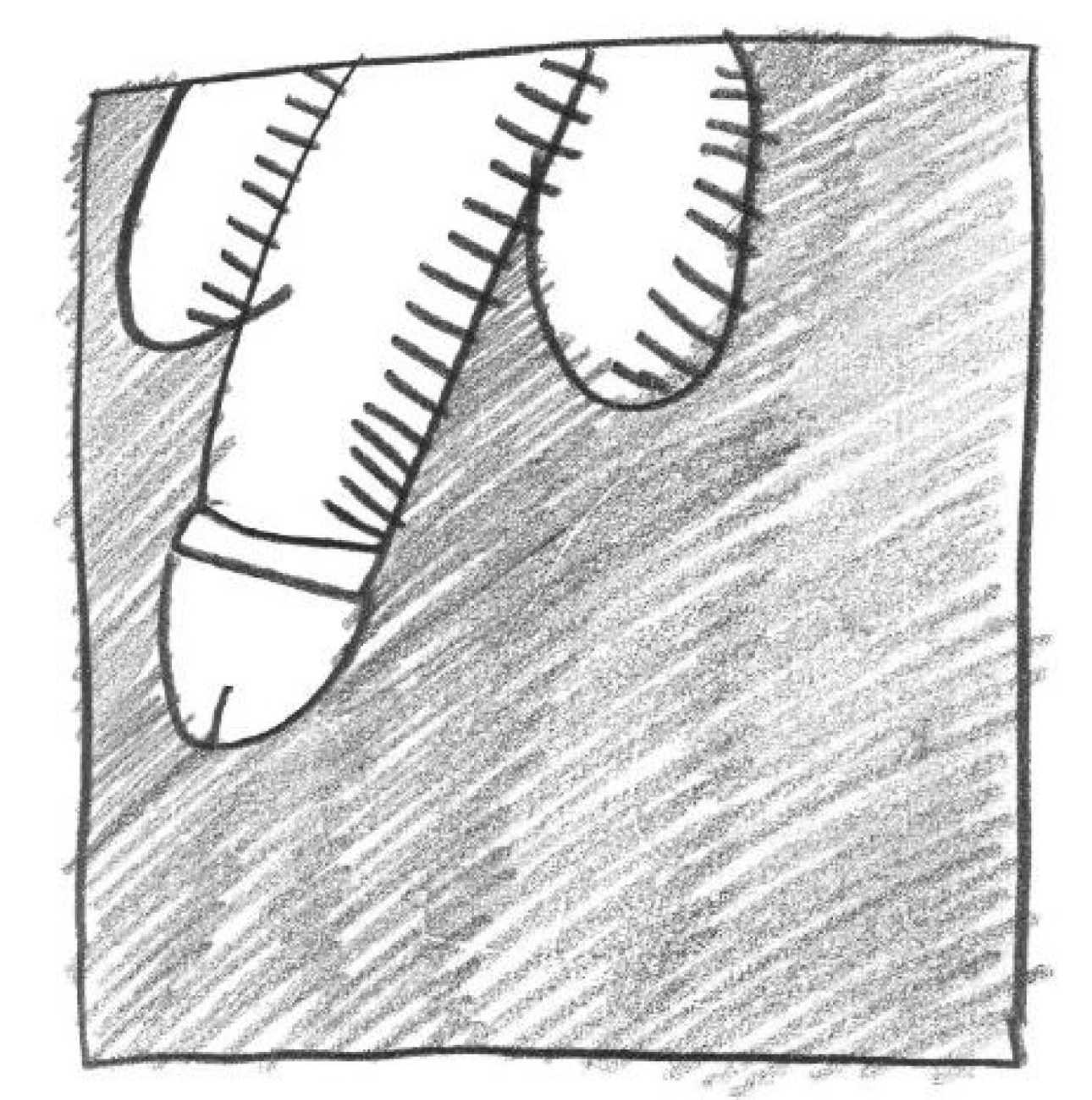
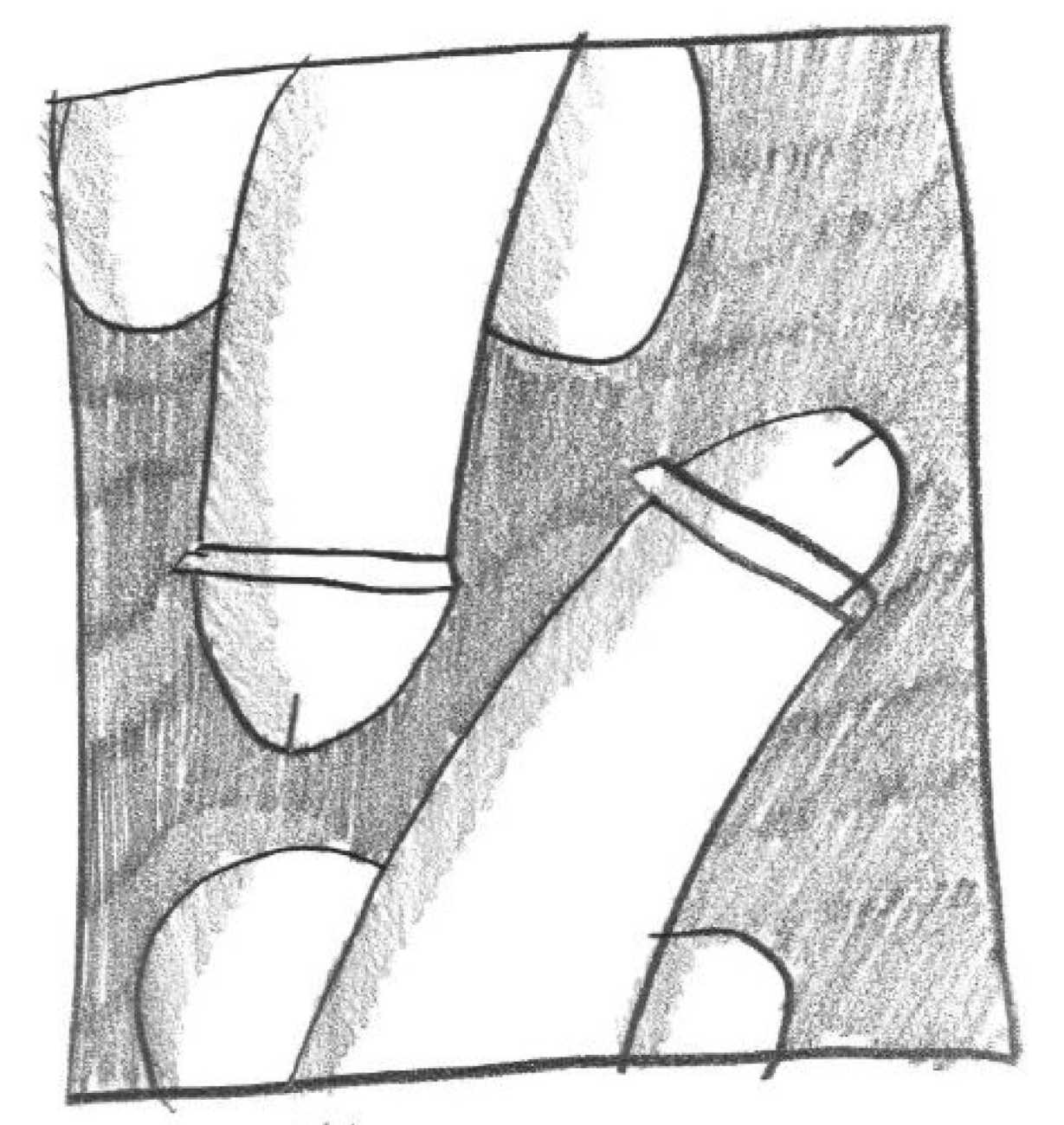
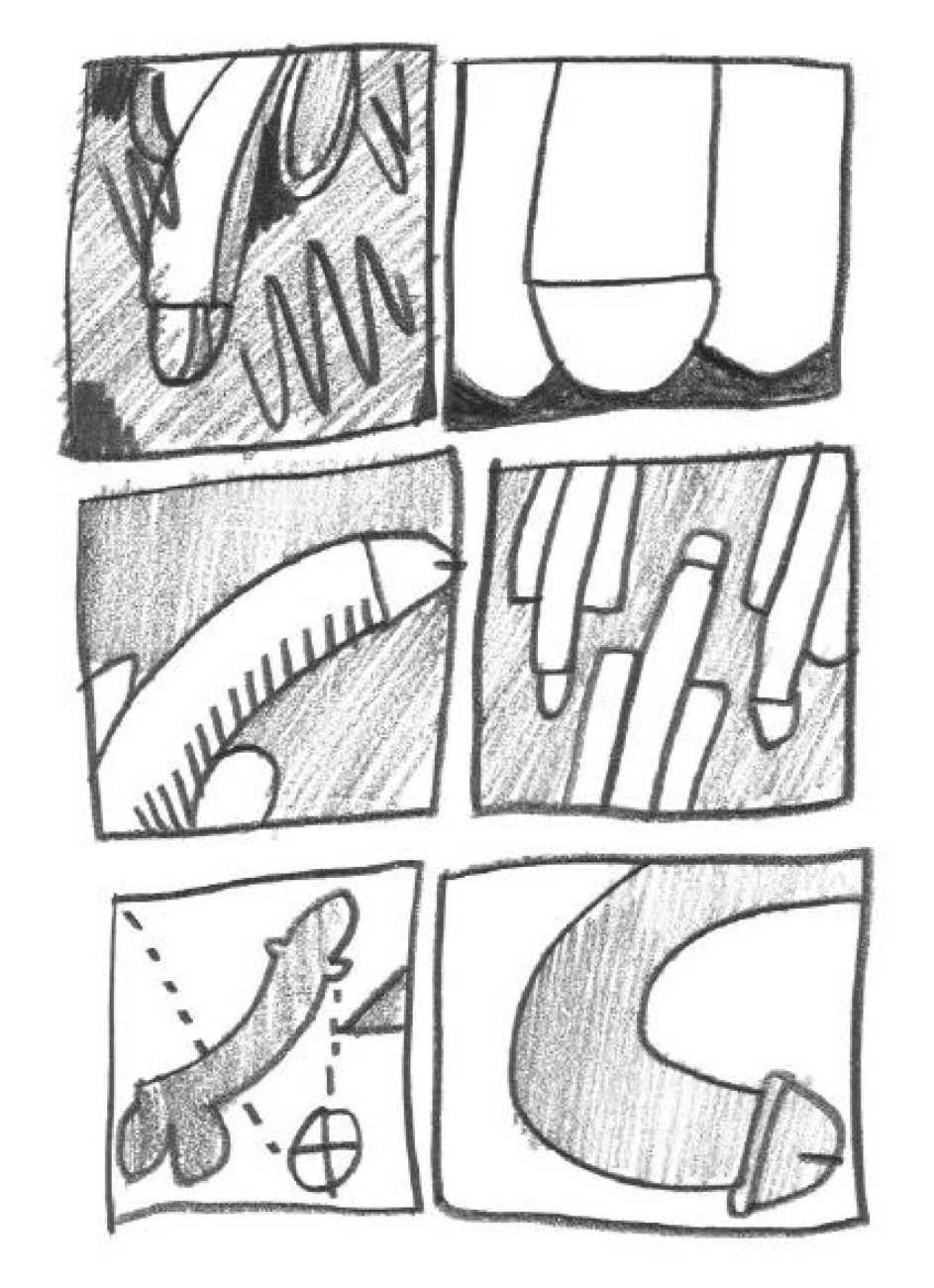
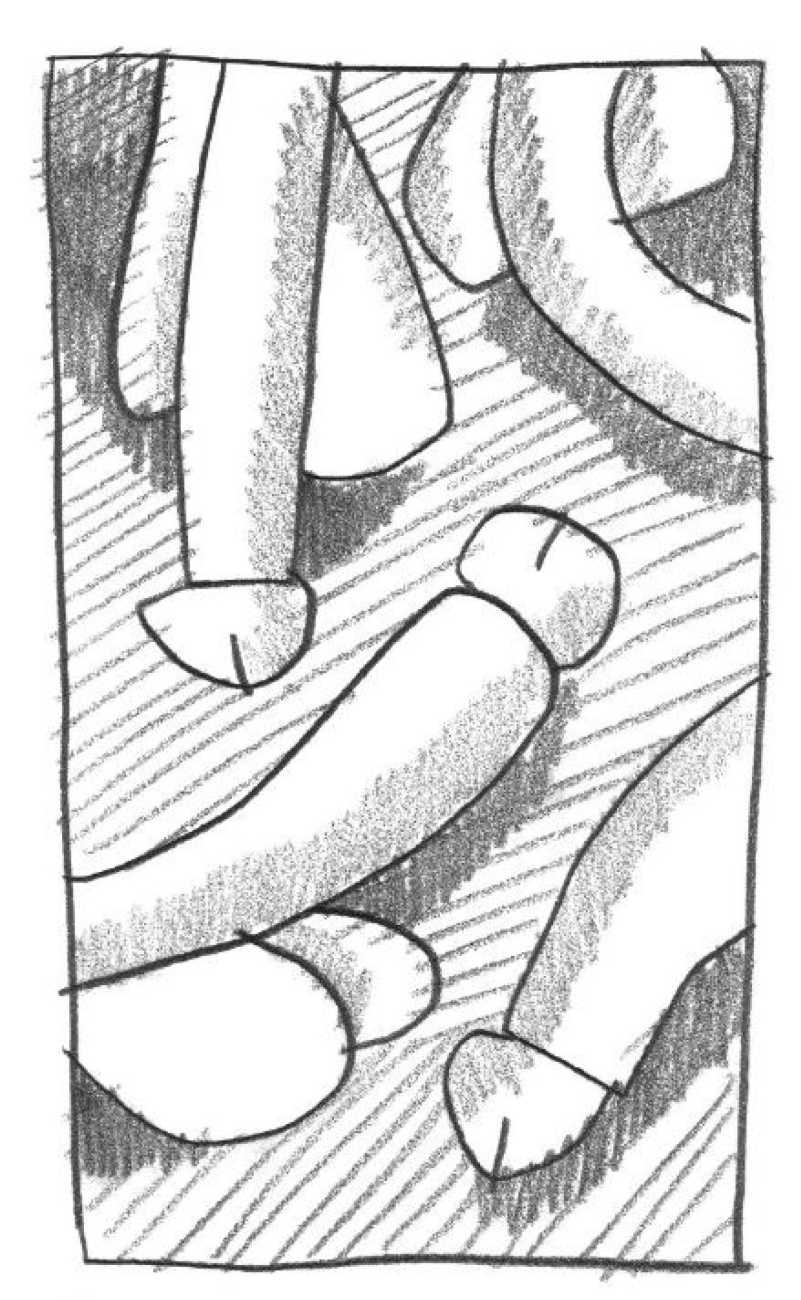
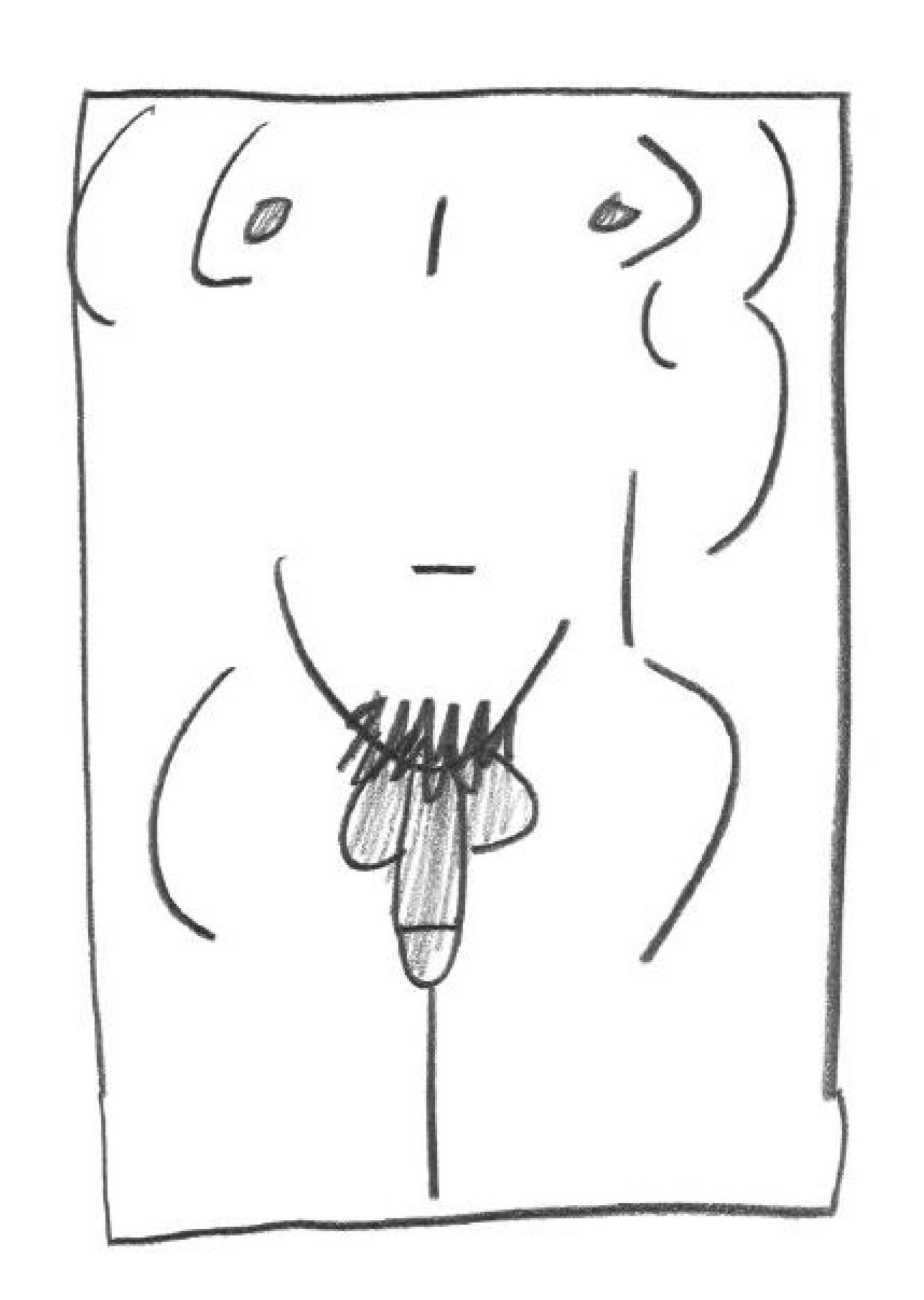
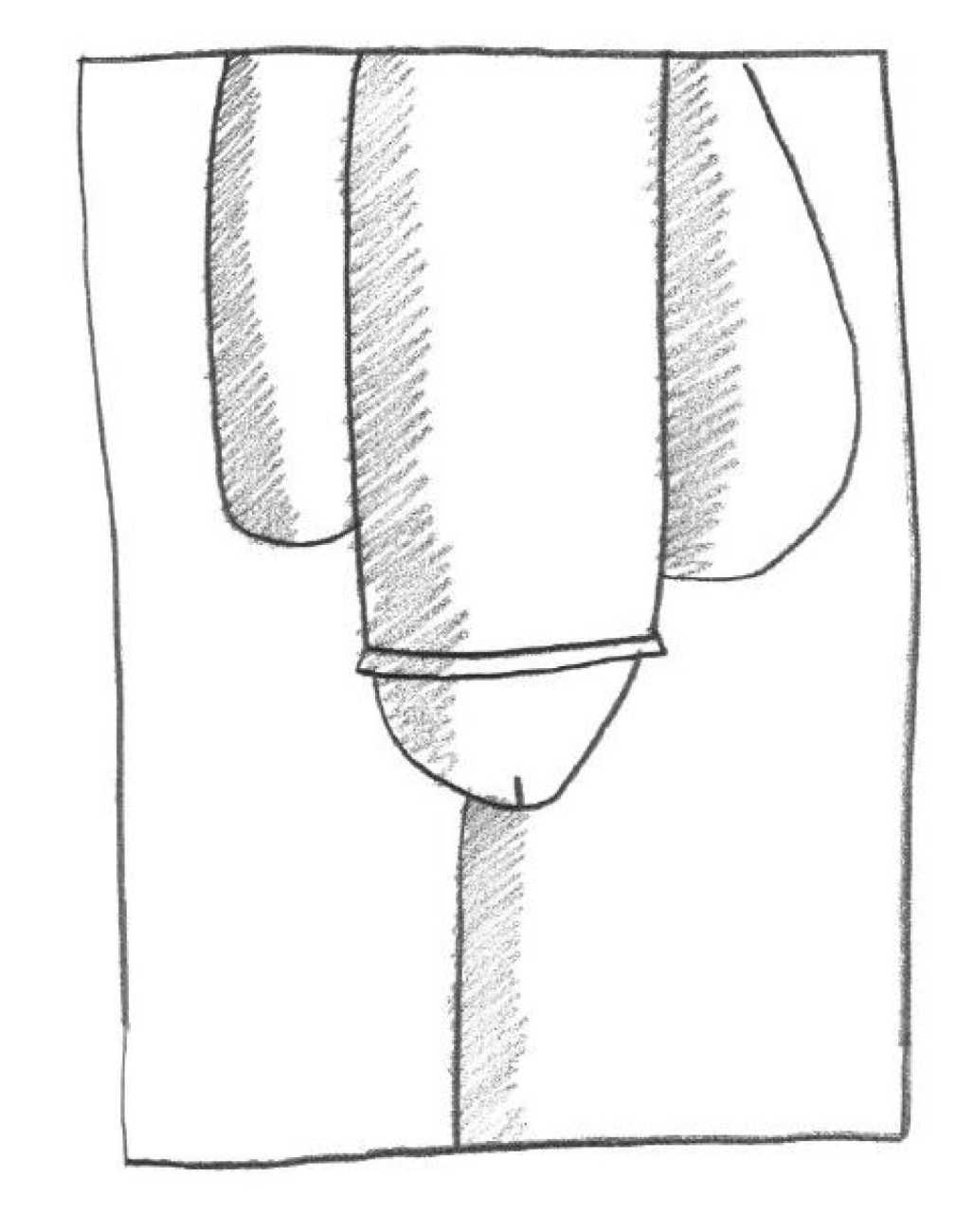
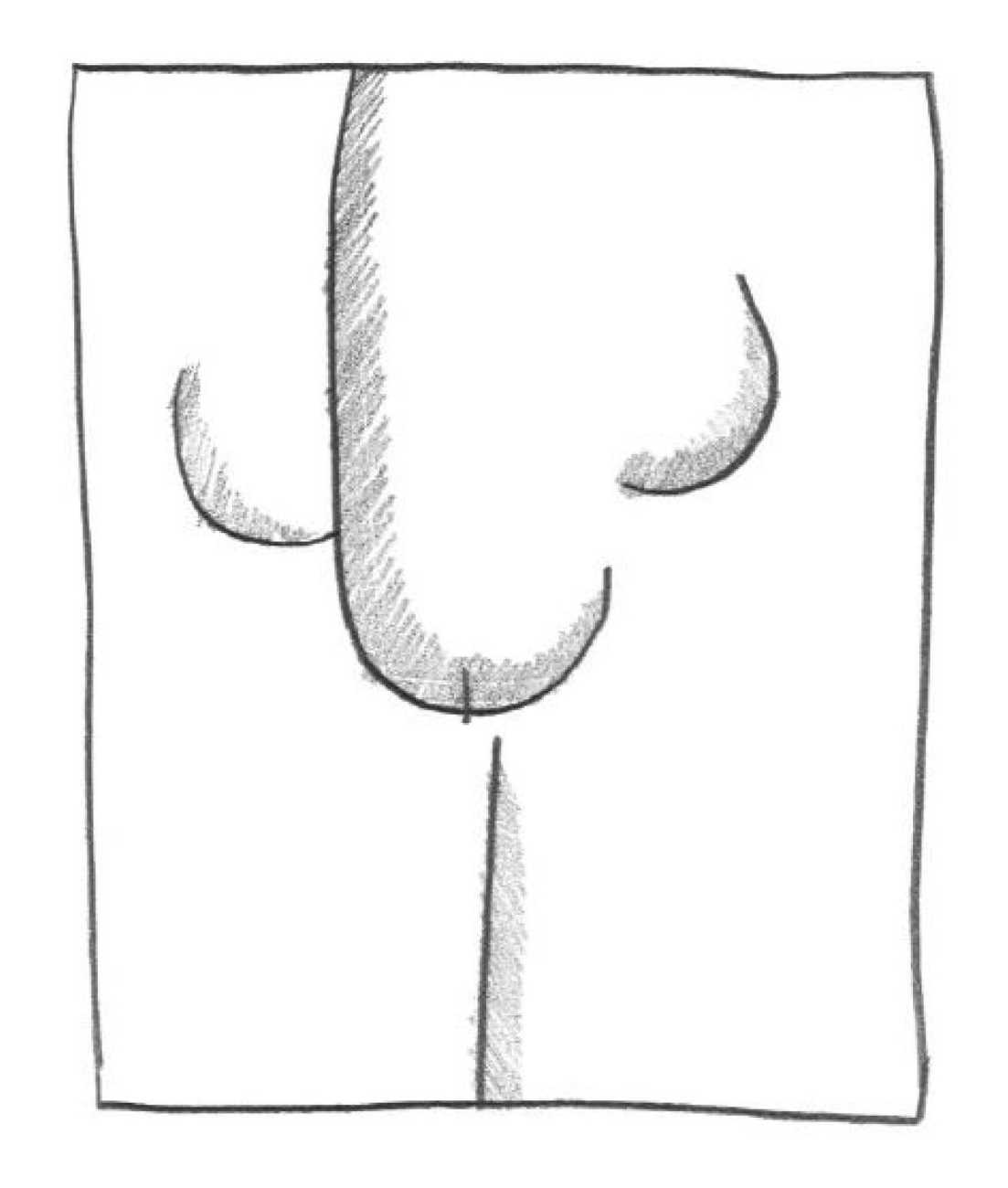
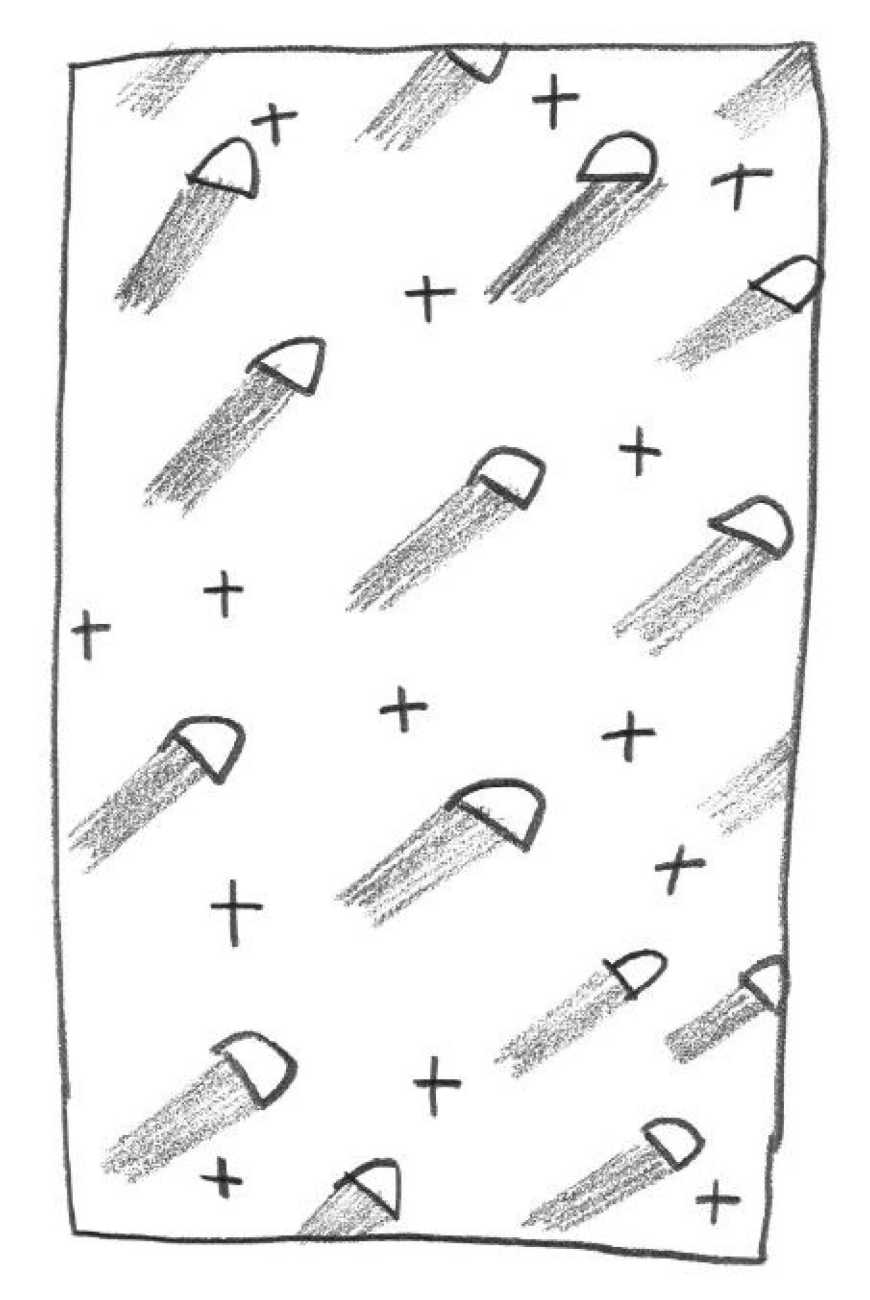
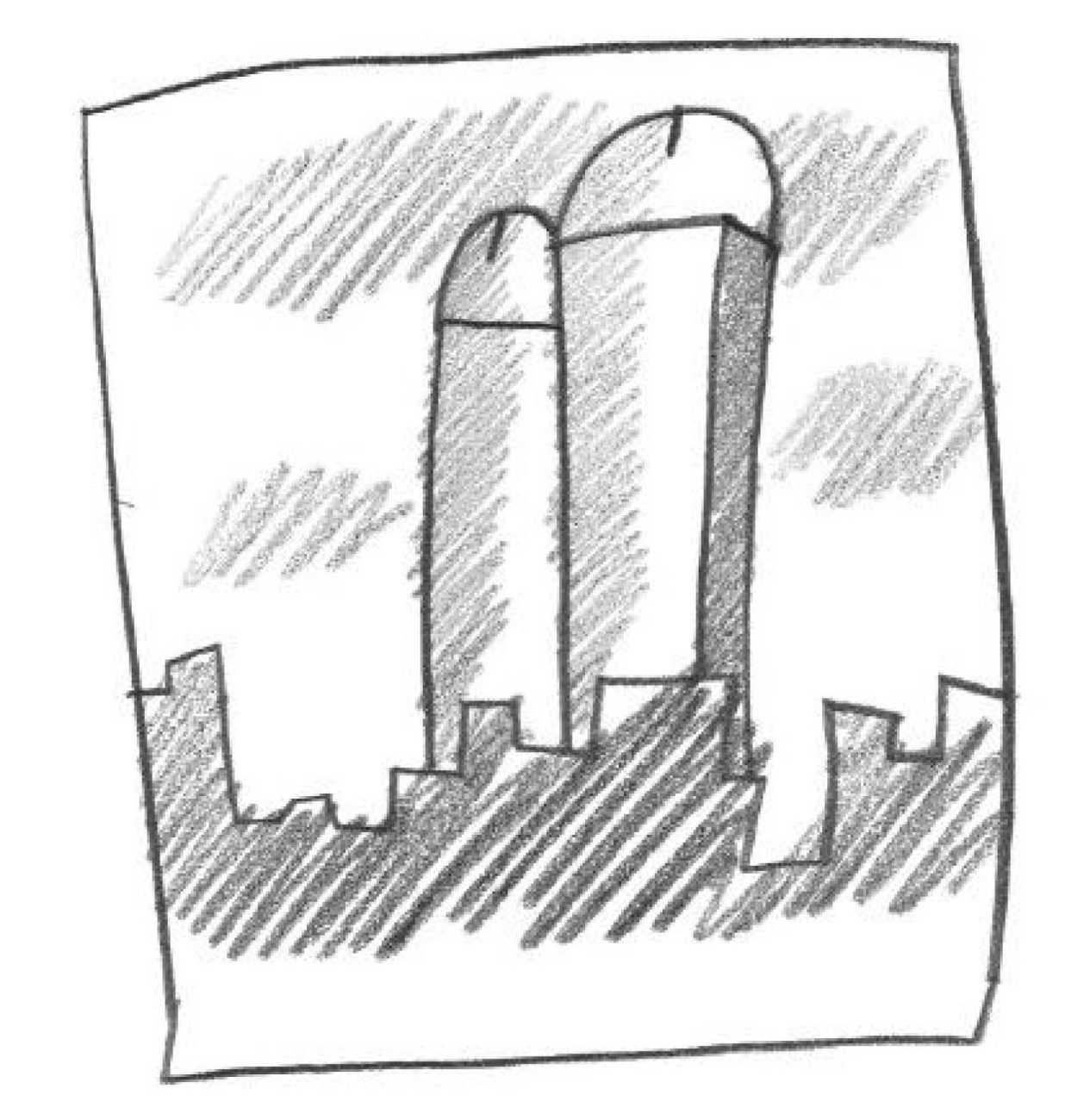
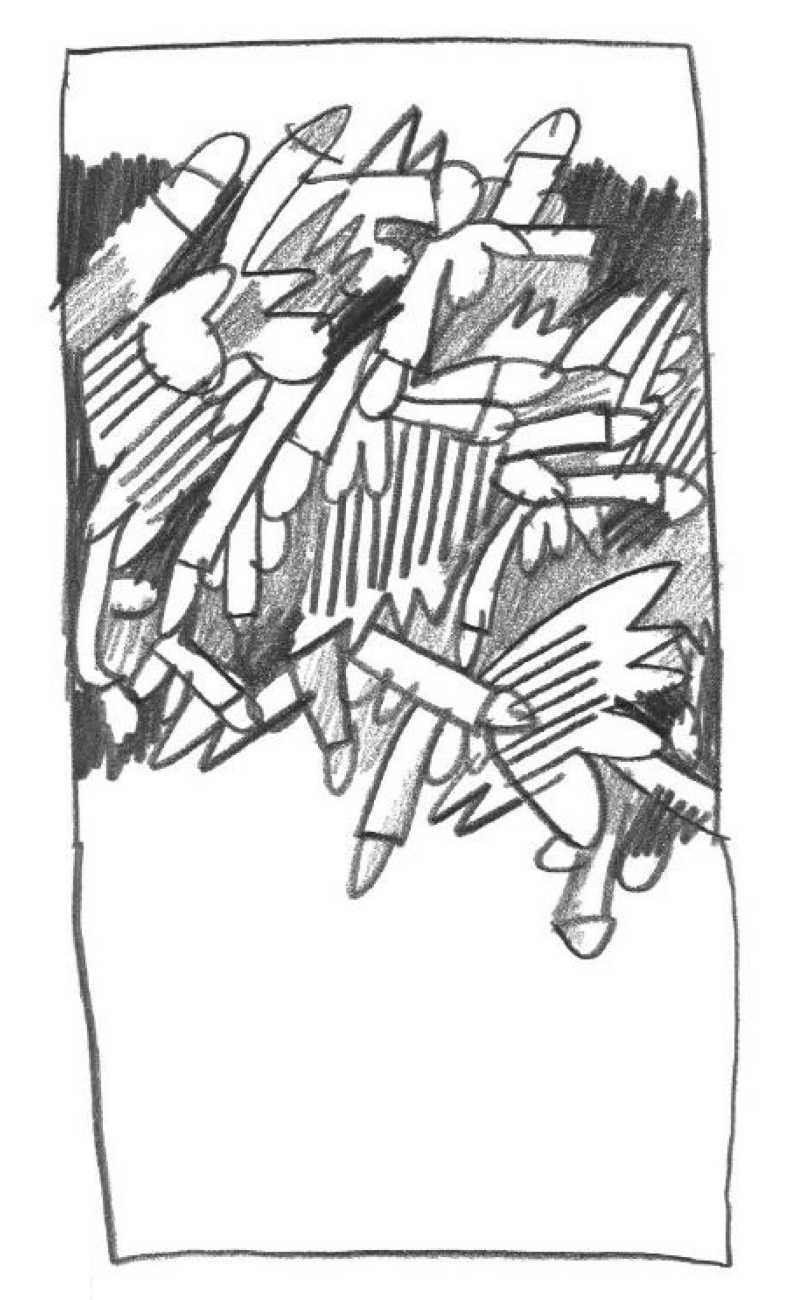
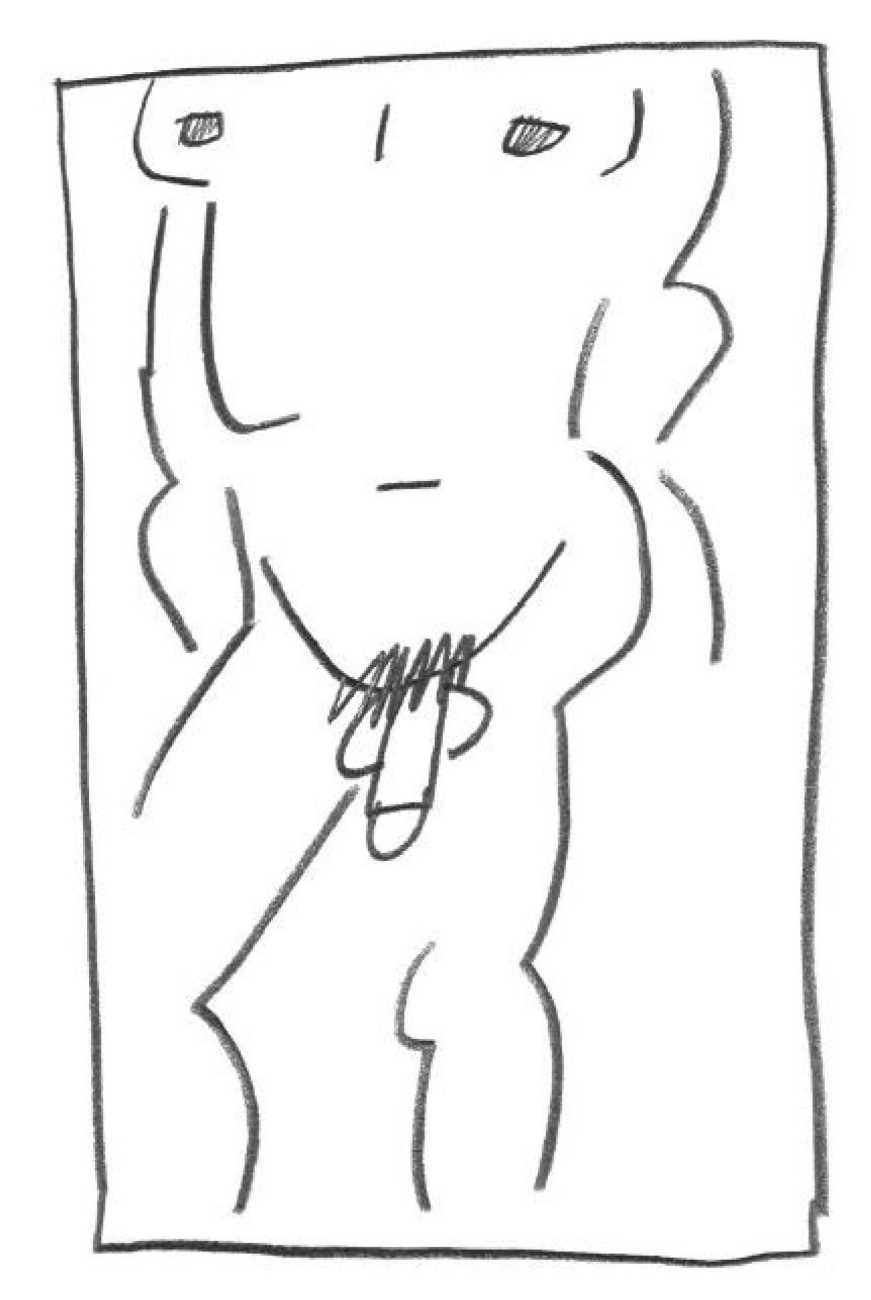
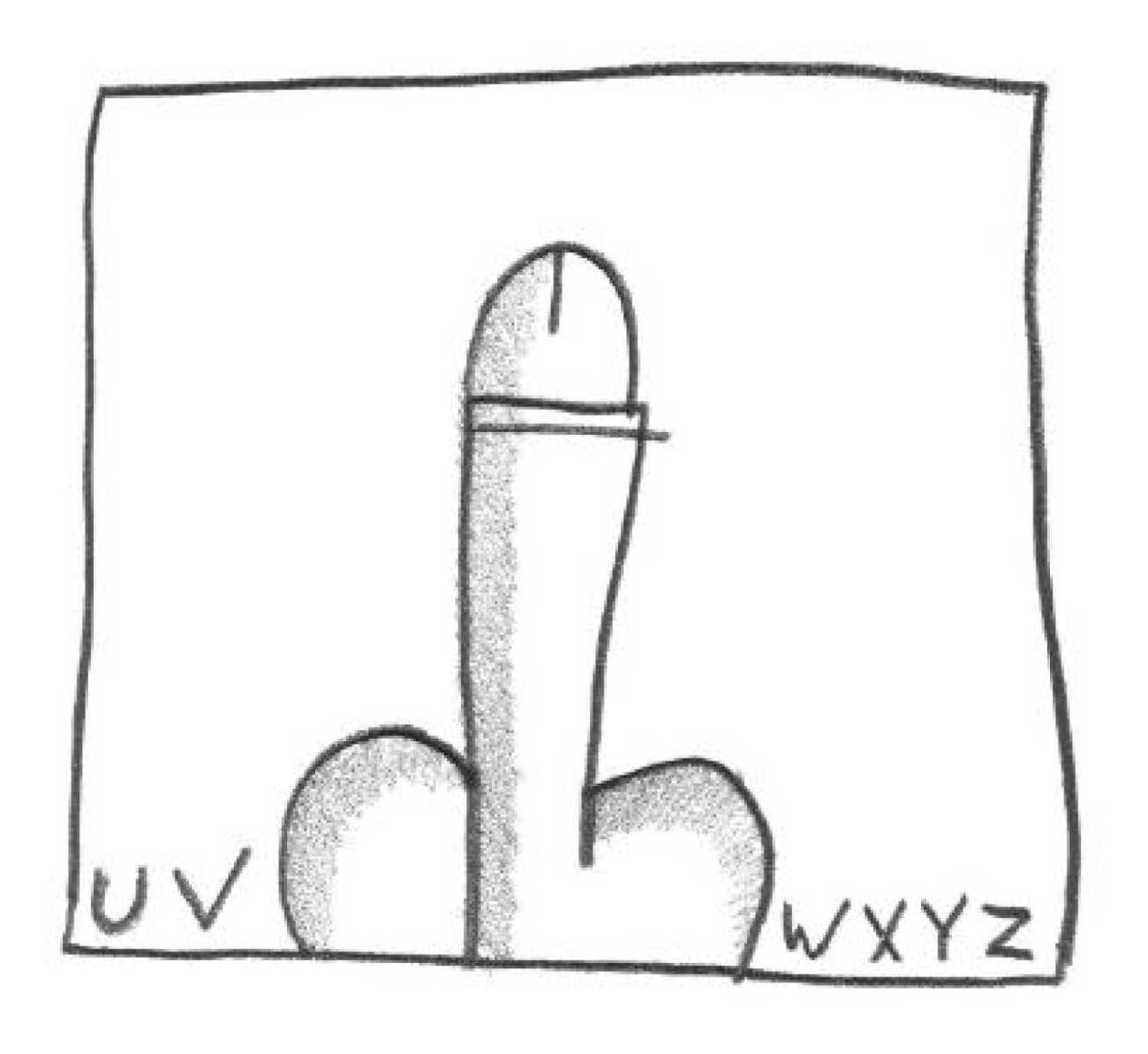
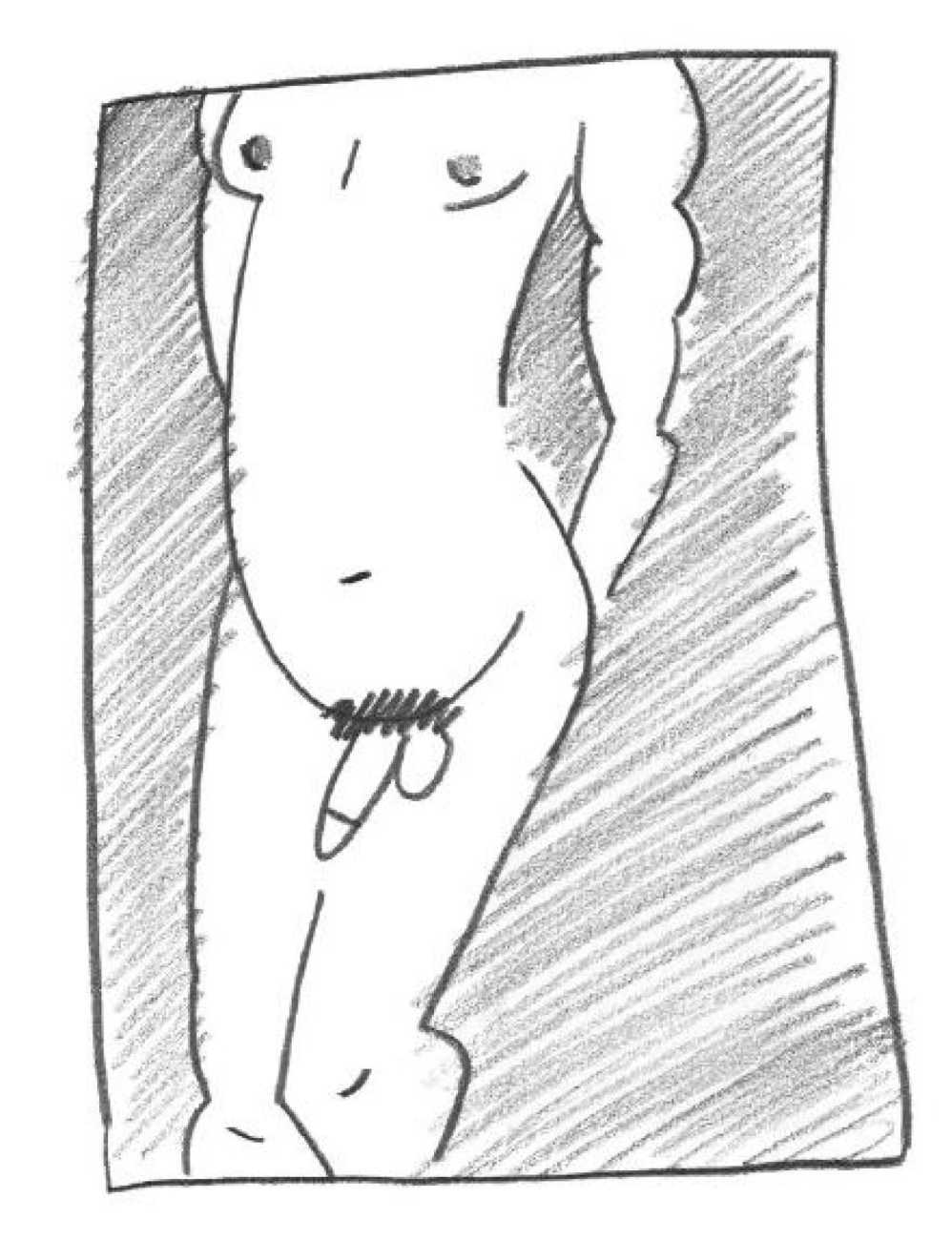
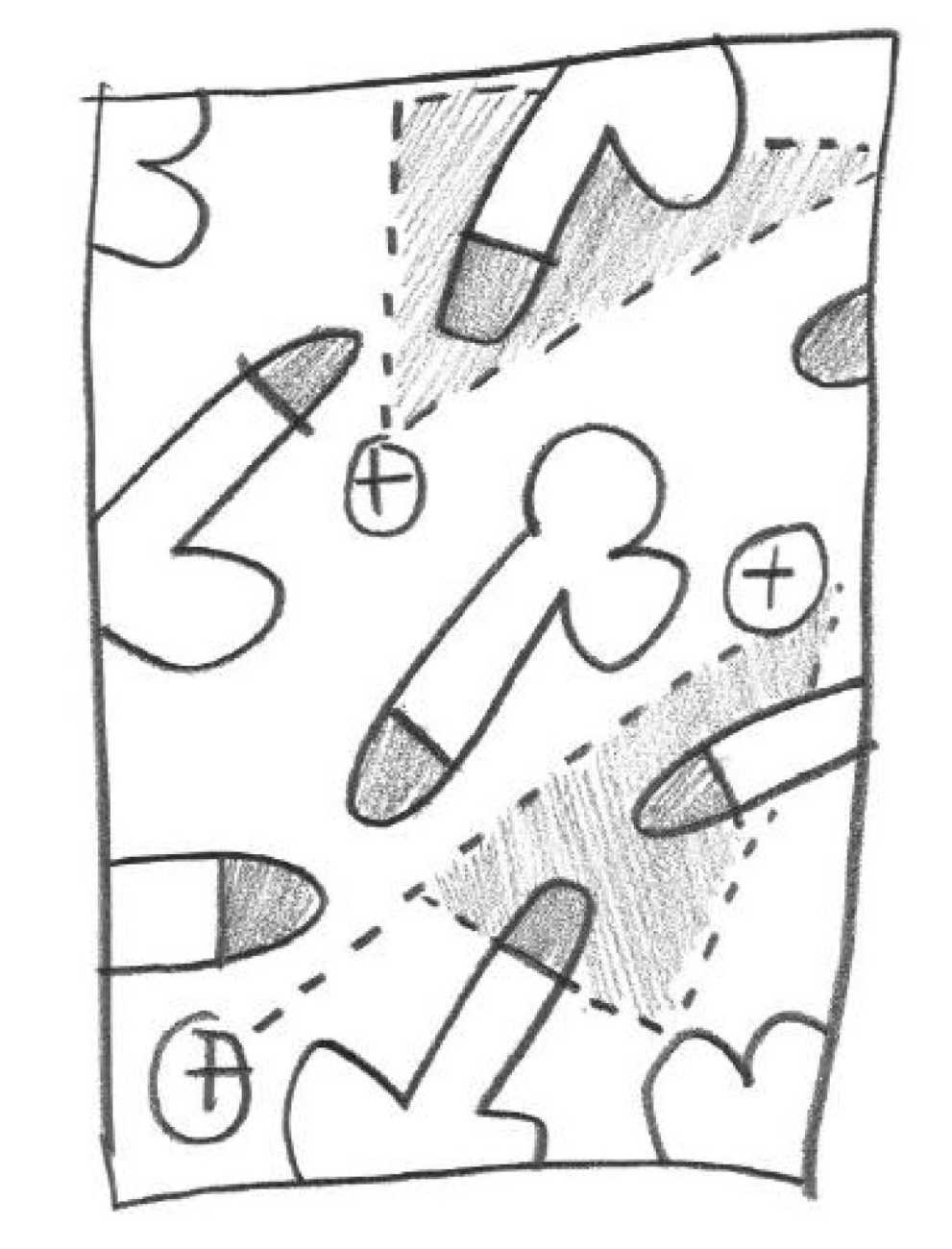
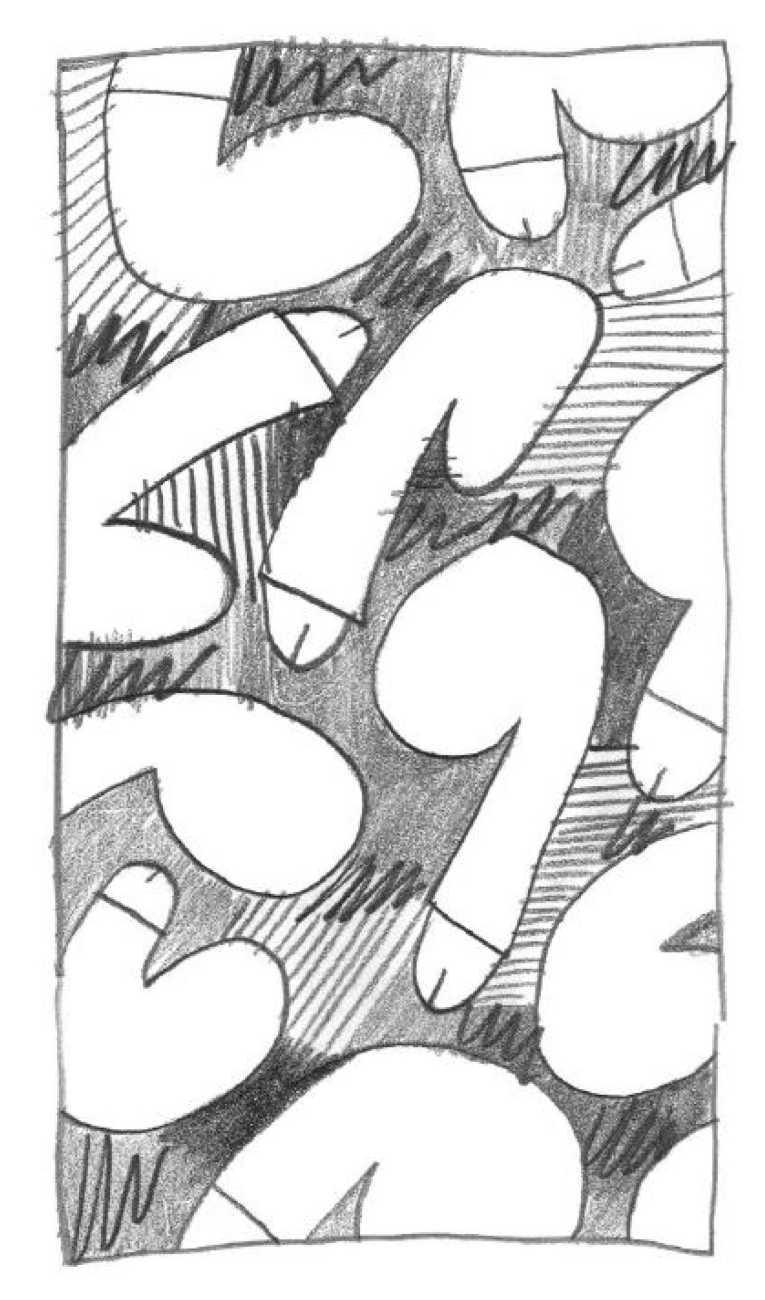
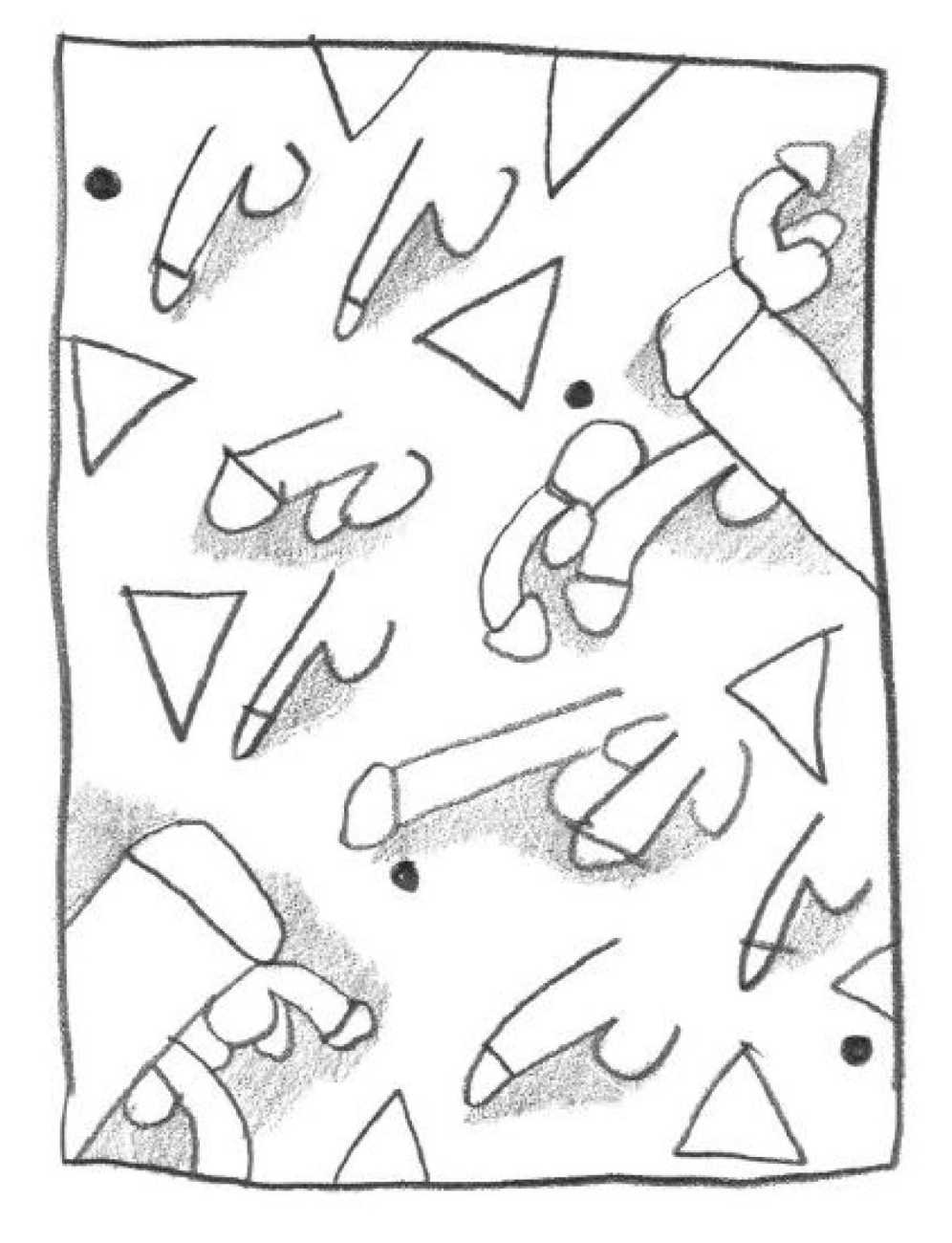
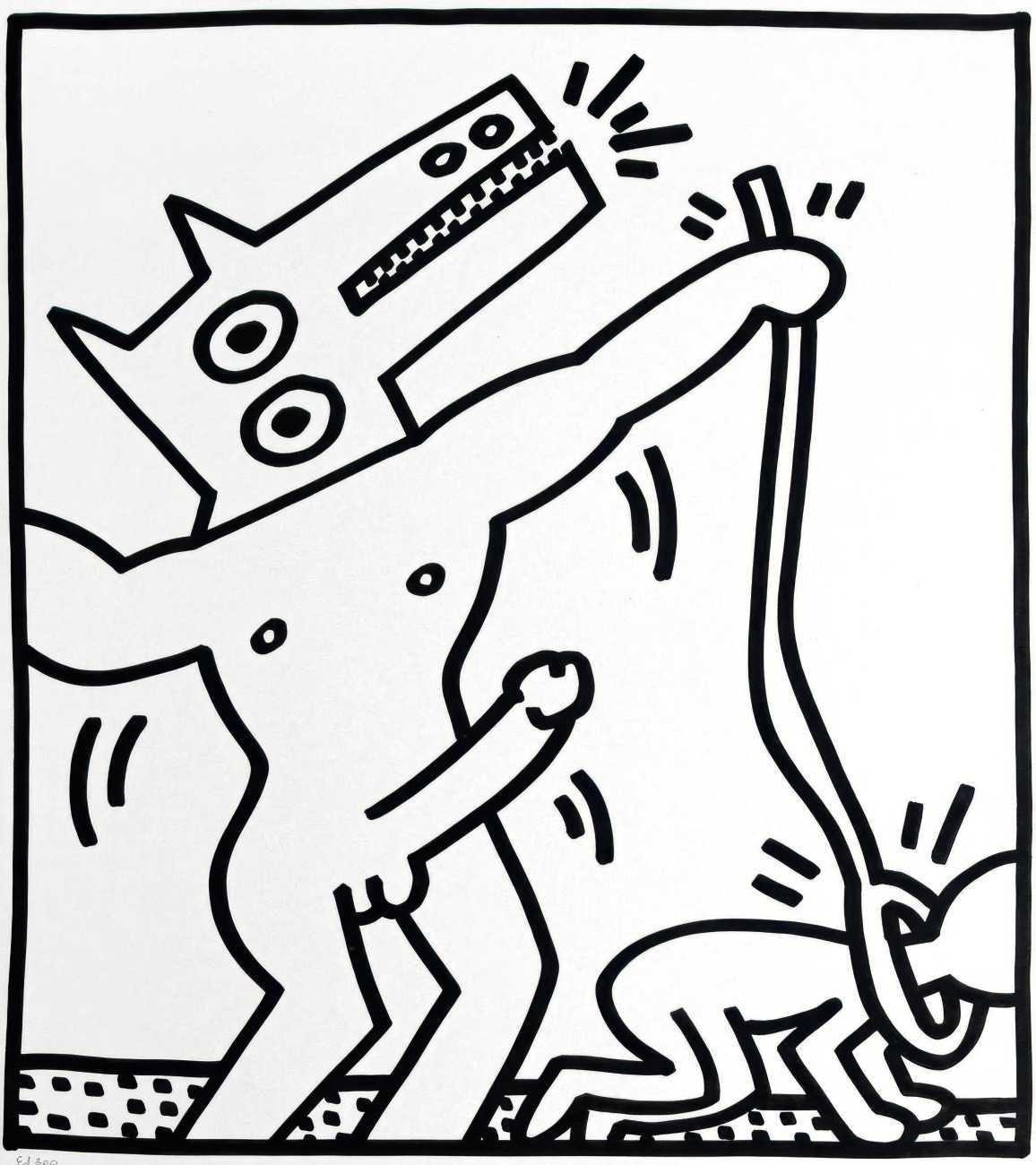
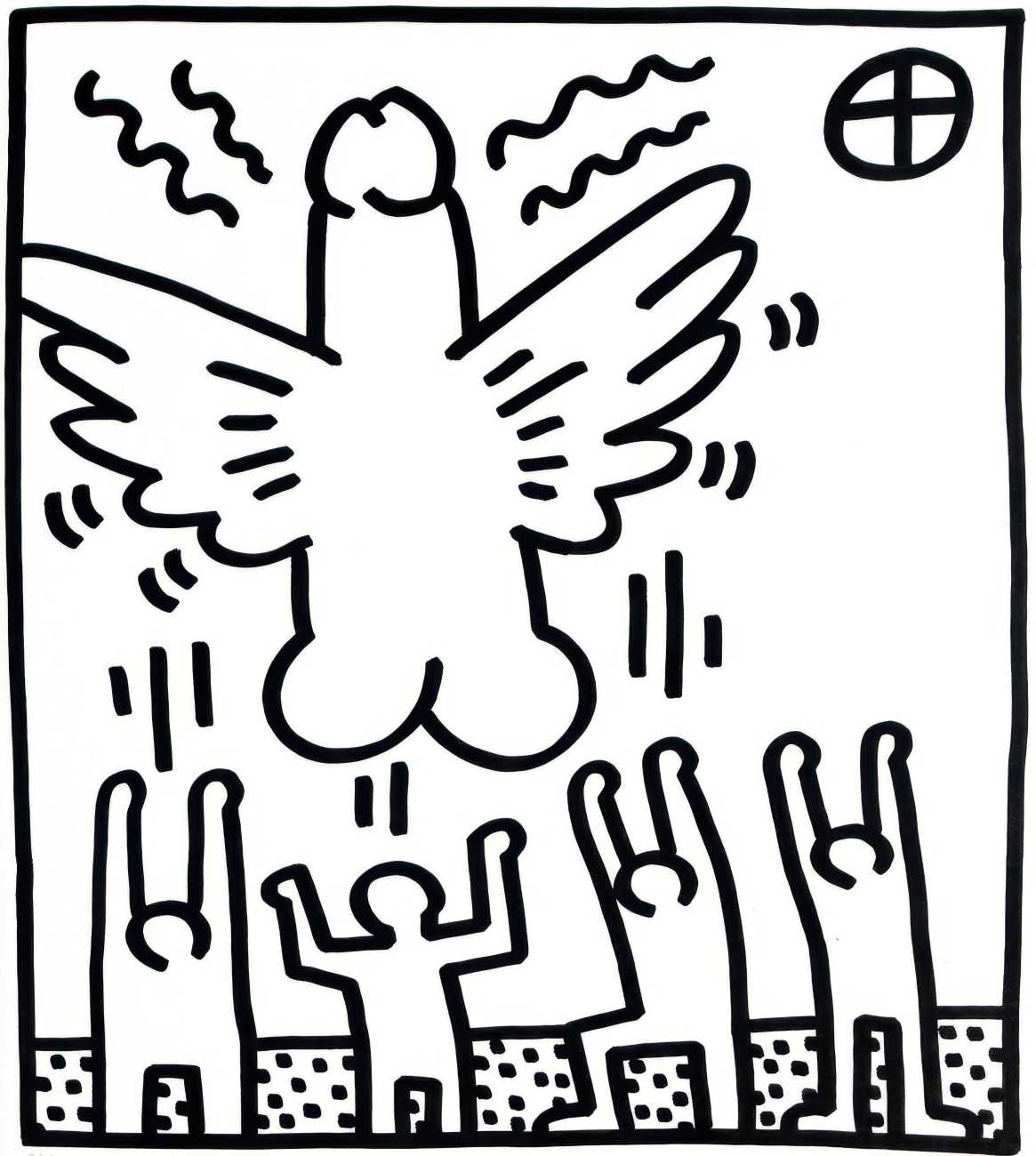
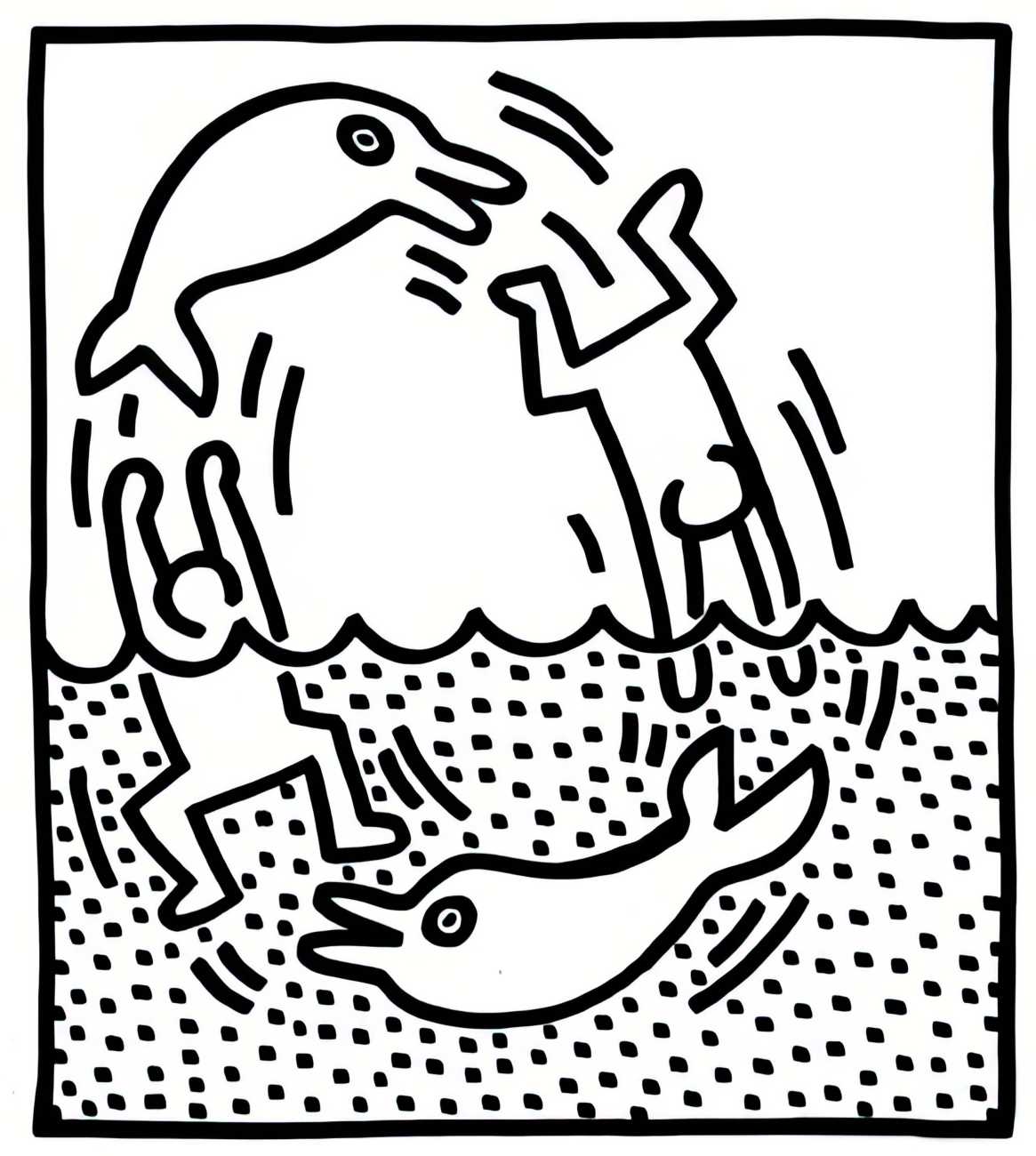
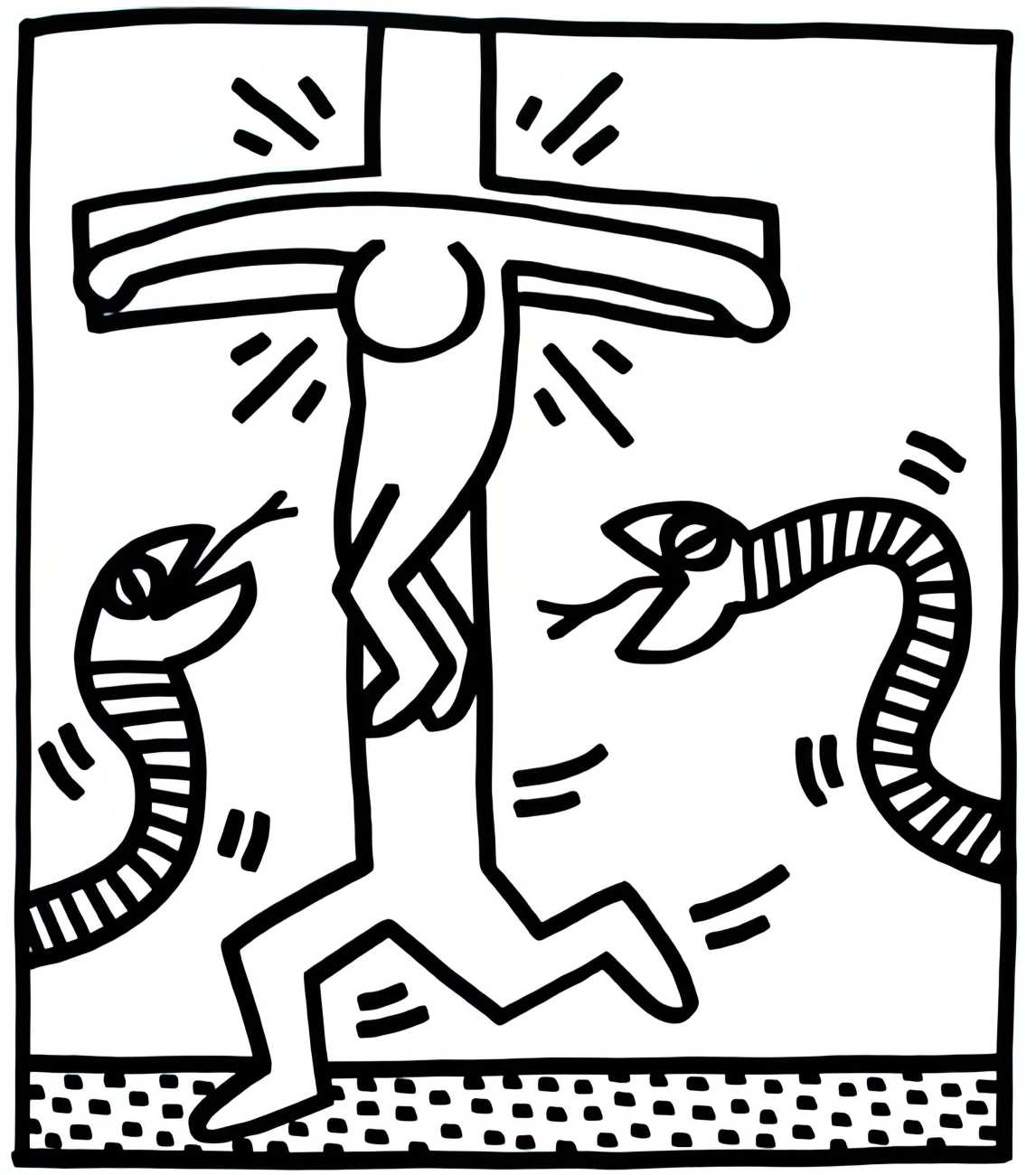
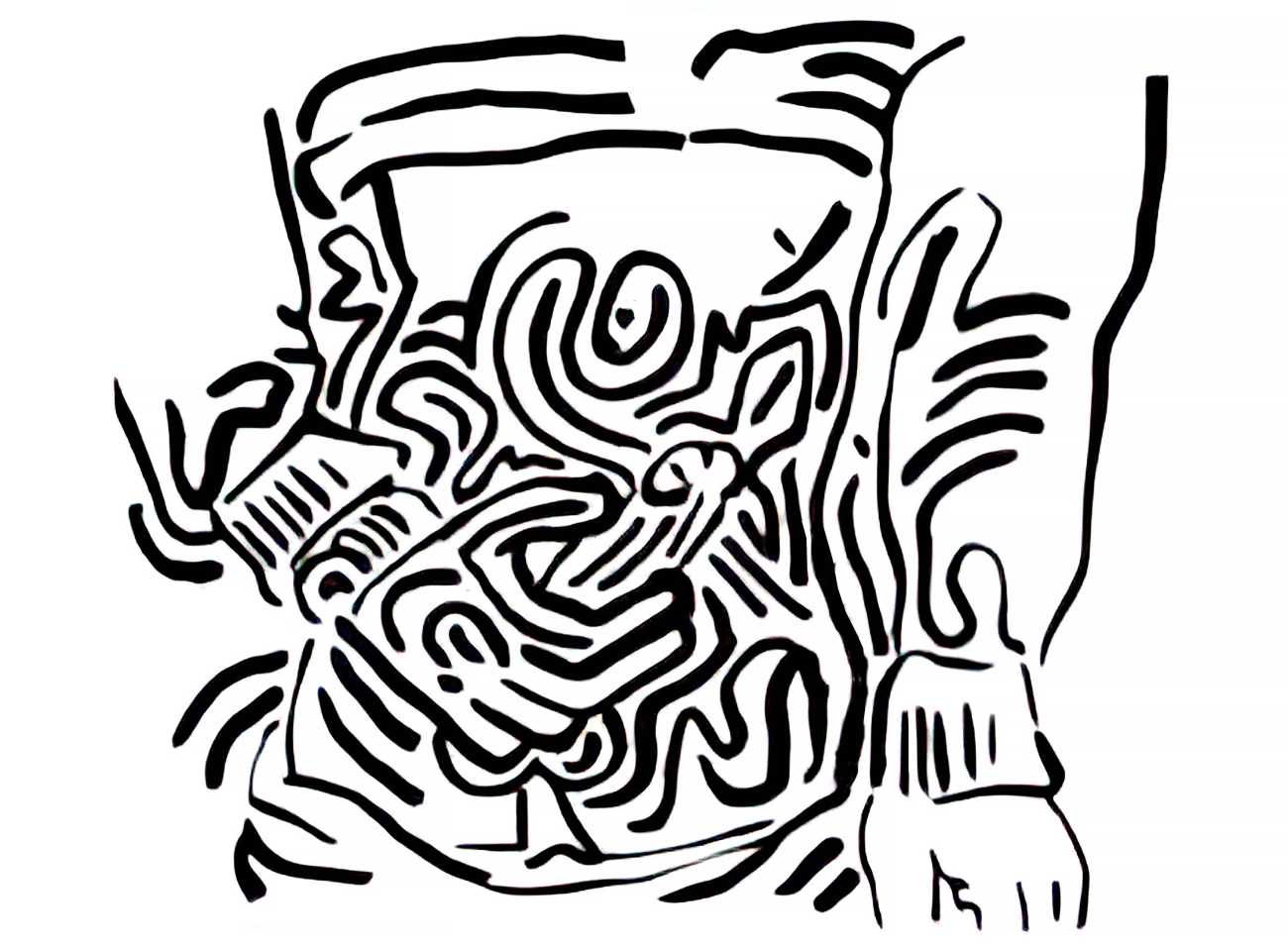
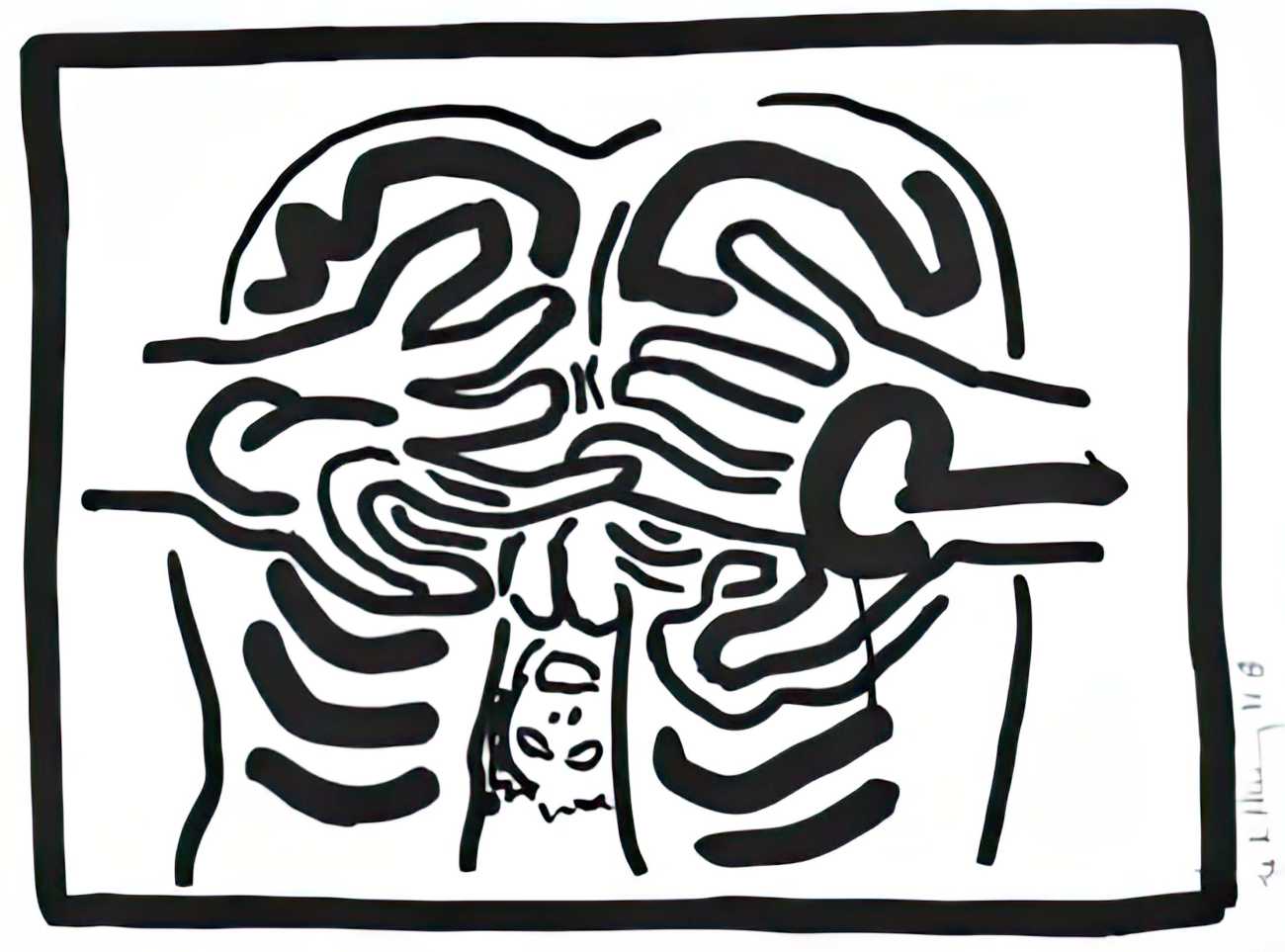
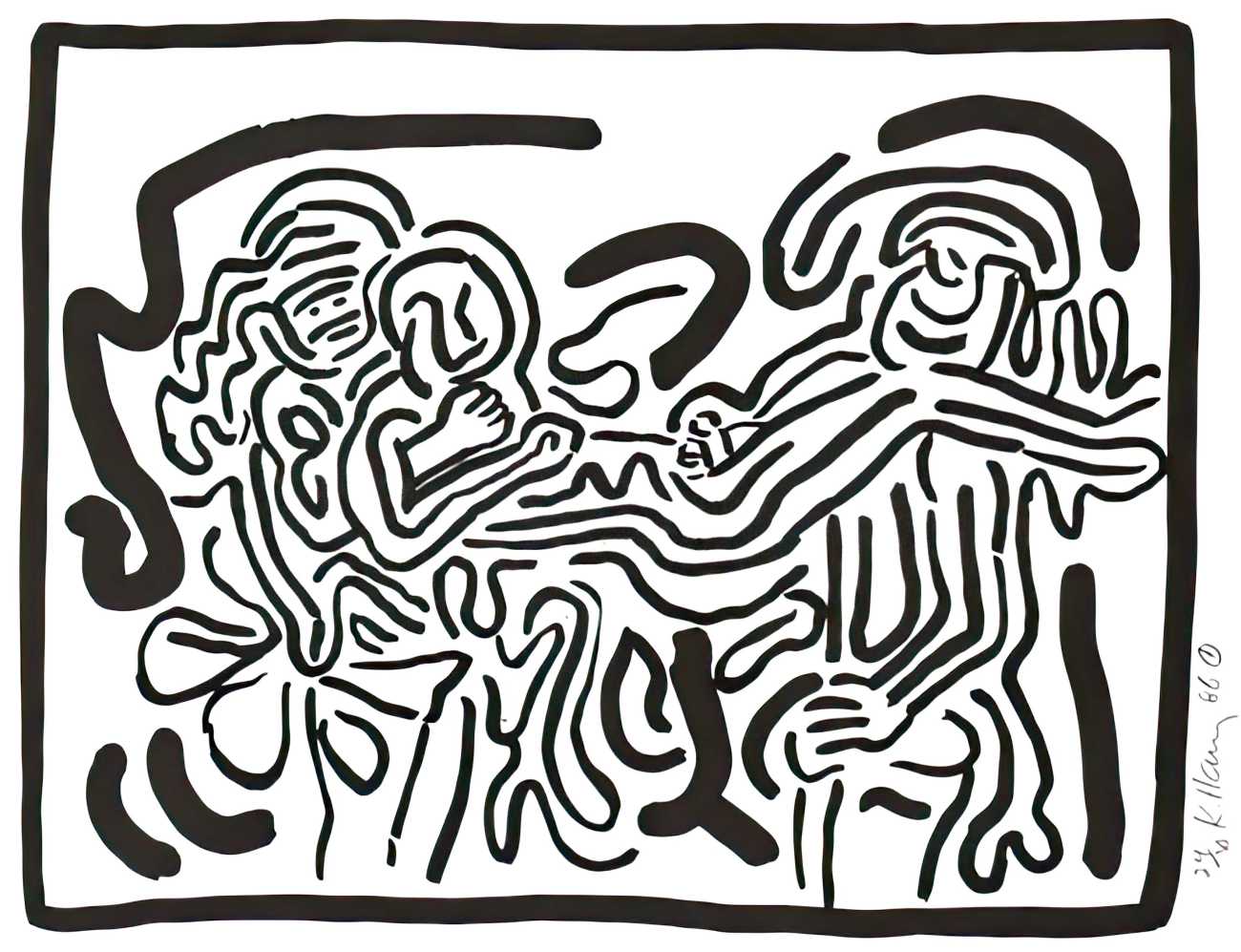
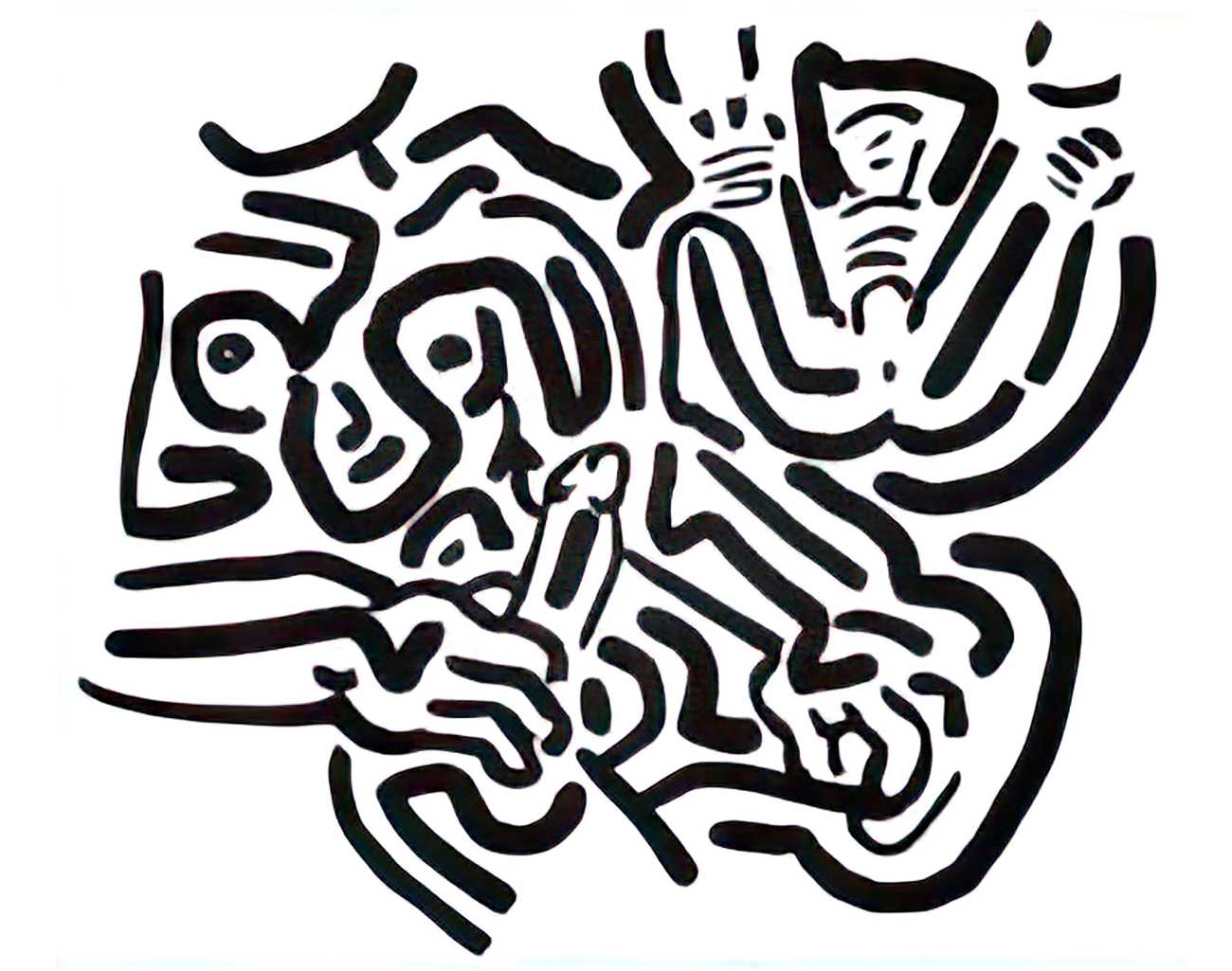
Alongside his public commissions and iconic graphic imagery, Haring produced a substantial body of explicitly erotic drawings and prints. Created primarily for gay audiences and often depicting consensual same-sex encounters, these works formed an integral part of his artistic practice. They reflected his belief that sexuality could be represented openly, positively and without shame, while also documenting the freedoms and anxieties of gay life during the AIDS era.
Diagnosed with AIDS in 1988, Haring established the Keith Haring Foundation the following year to support children’s programmes and organisations working in AIDS education and care. He continued to work at an extraordinary pace despite declining health, producing paintings, sculptures, murals and prints until his death, aged just 31.
Similar artists
Patrick Angus – New York painter of gay bars and AIDS-era anxieties.
Thomas Bayrle – German pop artist of patterned imagery.
Paul Cadmus – American realist painter of frank homoerotic figures.
Touko Laaksonen – Finnish creator of bold, iconic gay erotica.
Hugh Steers – painter of AIDS-crisis New York with brutal-beauty intensity.
Vinz – Spanish muralist of large-scale, activist public art.
Andy Warhol – American contemporary working with similar pop imagery.
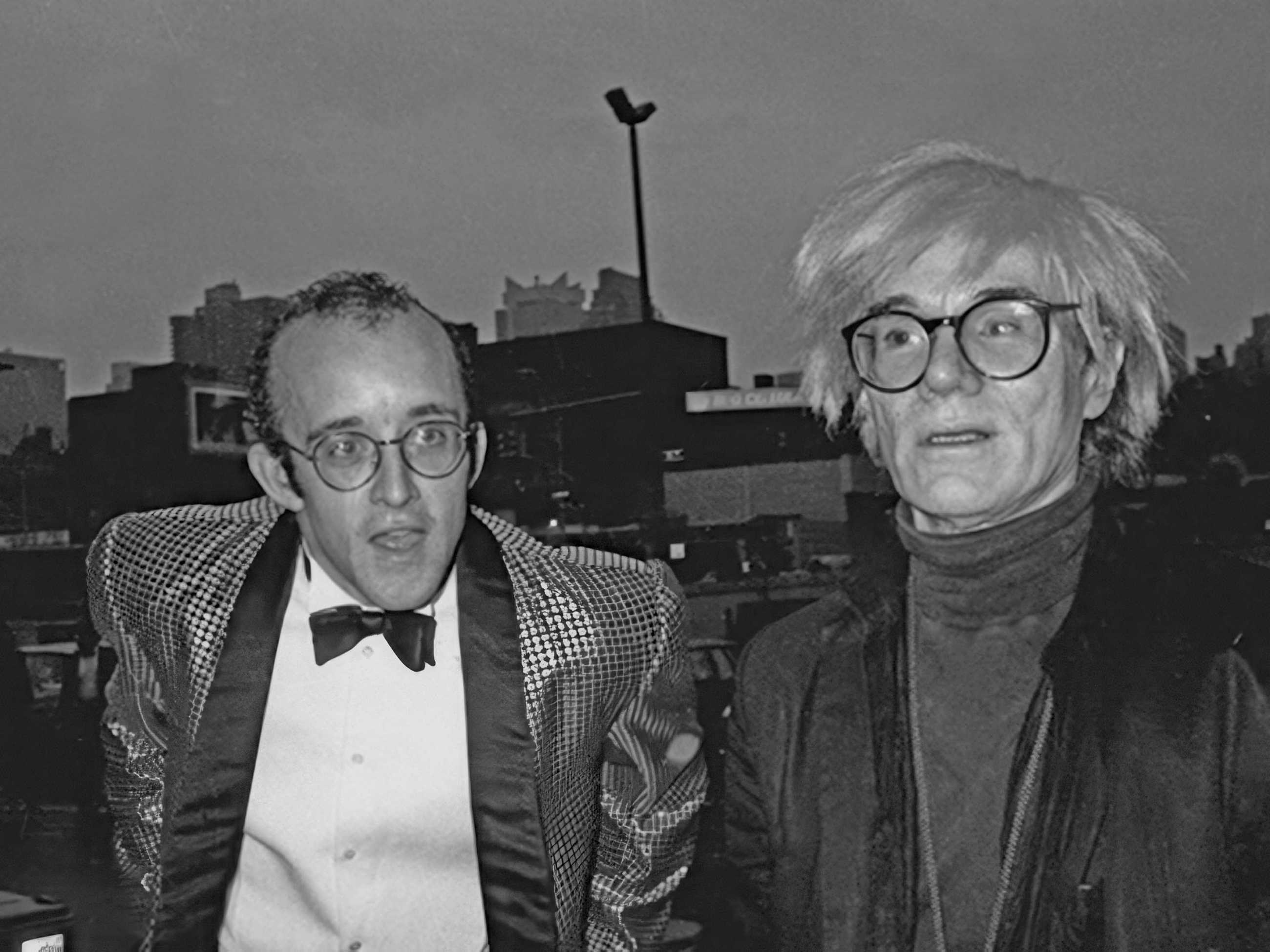
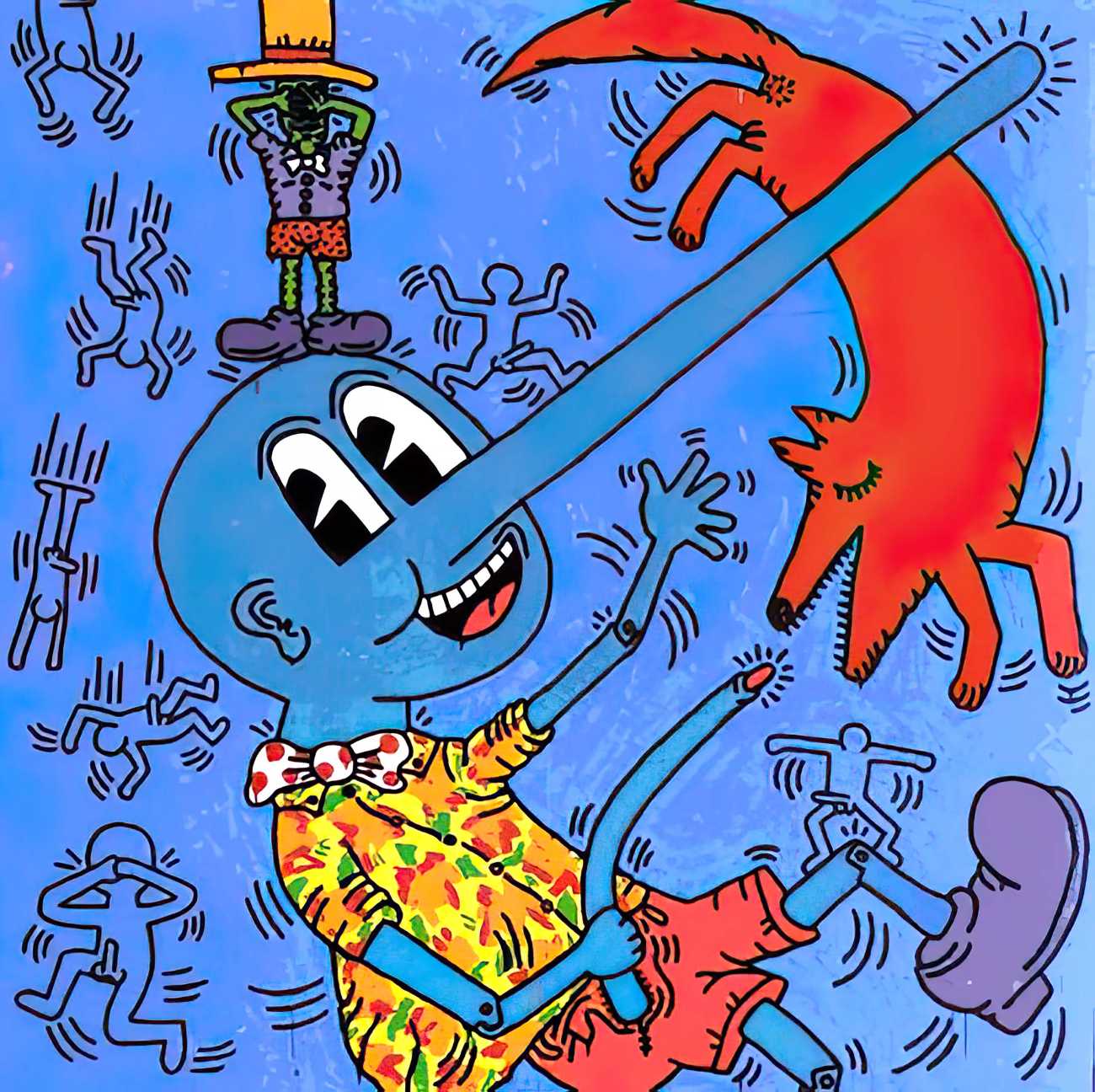
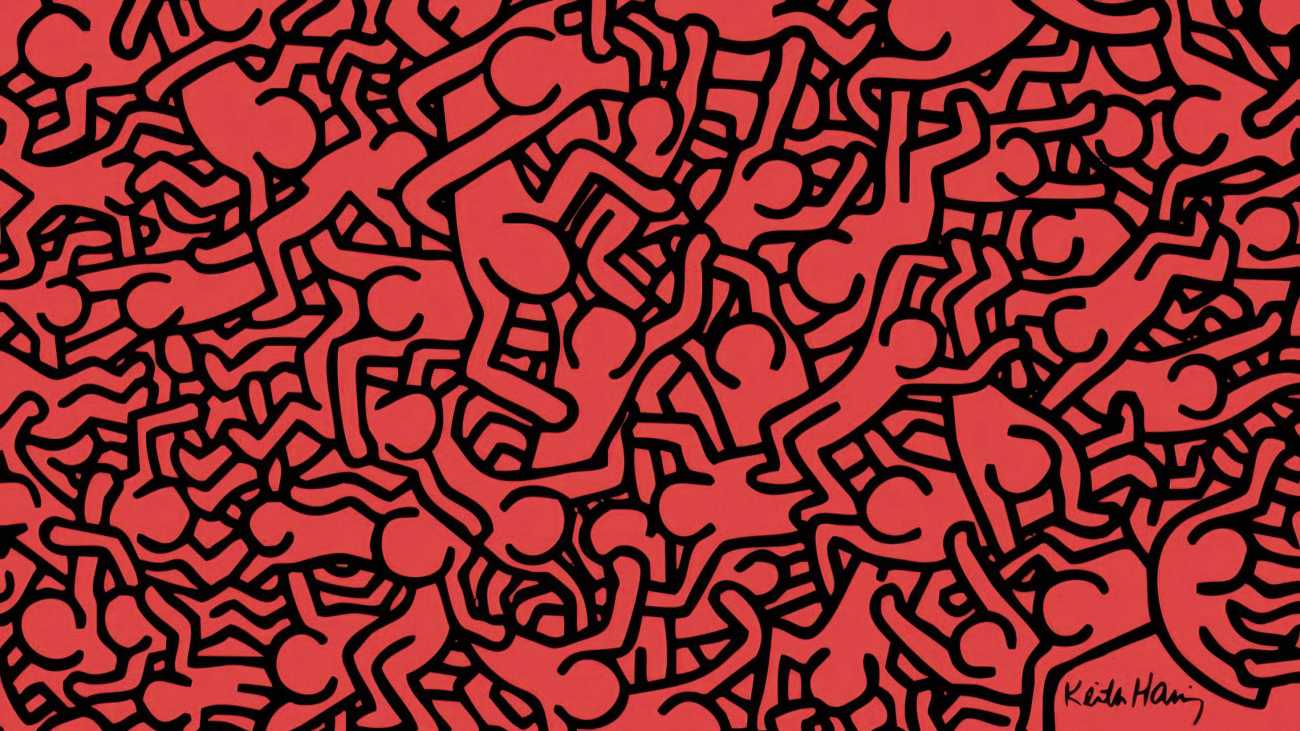
Example illustration
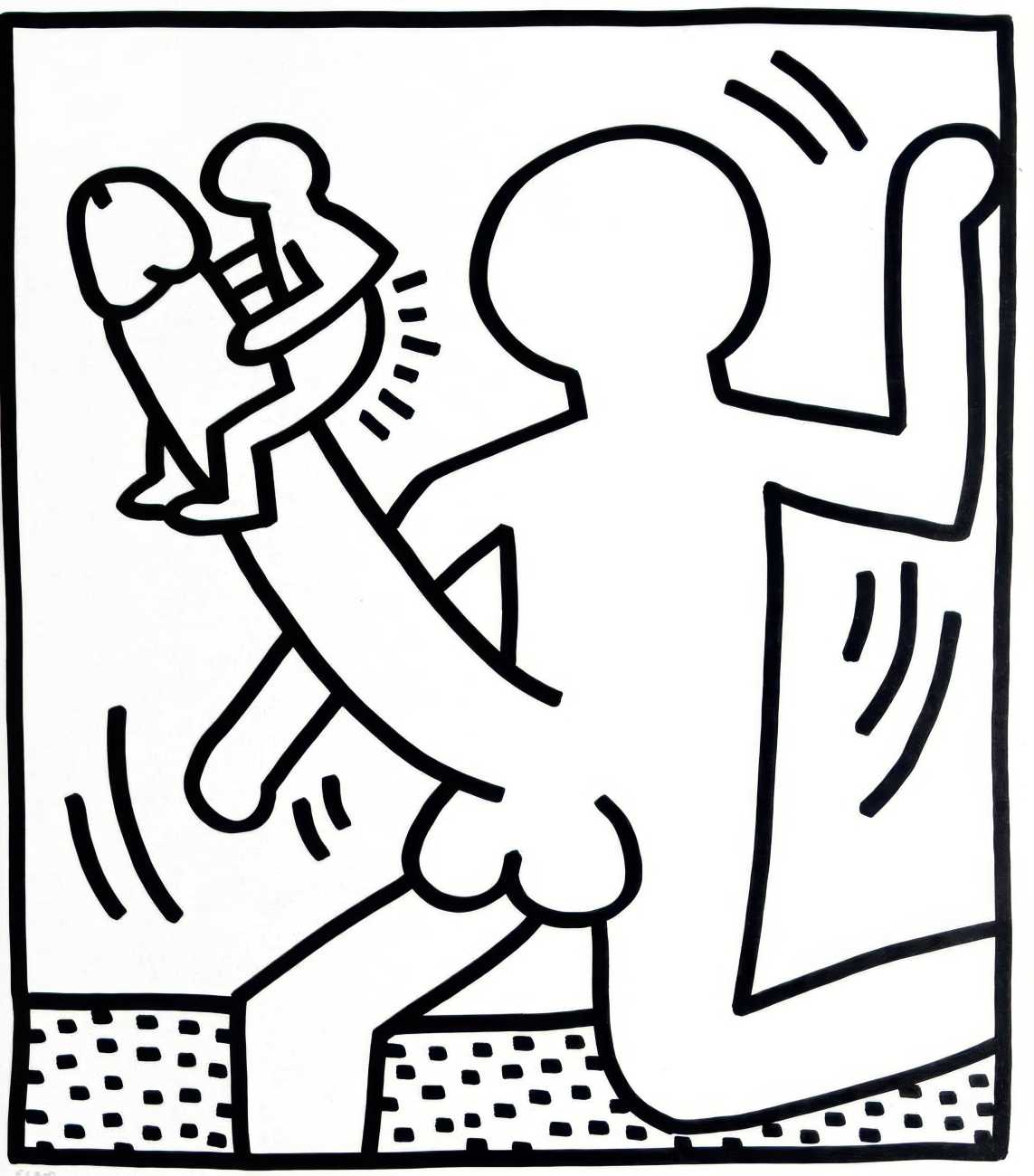
Erotic Works
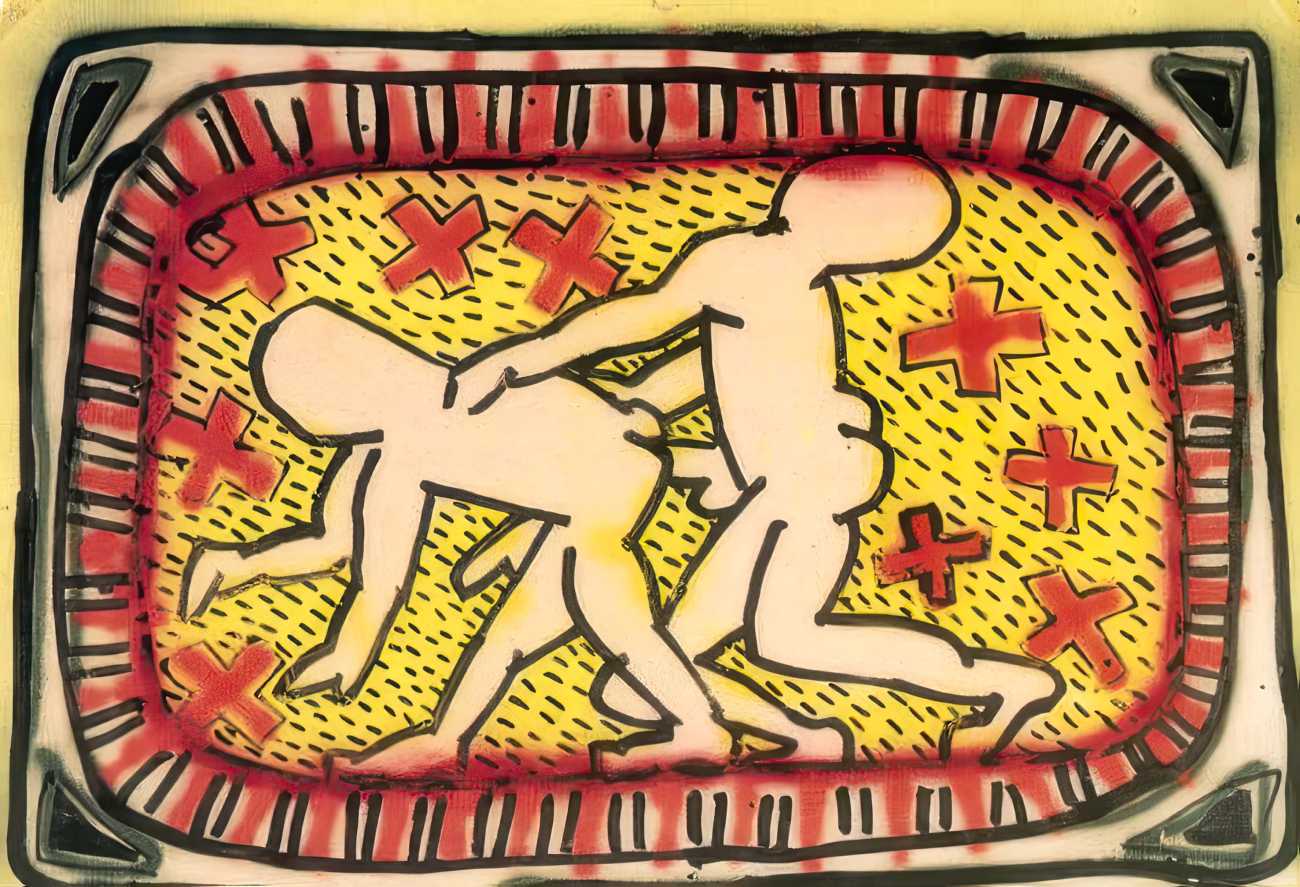
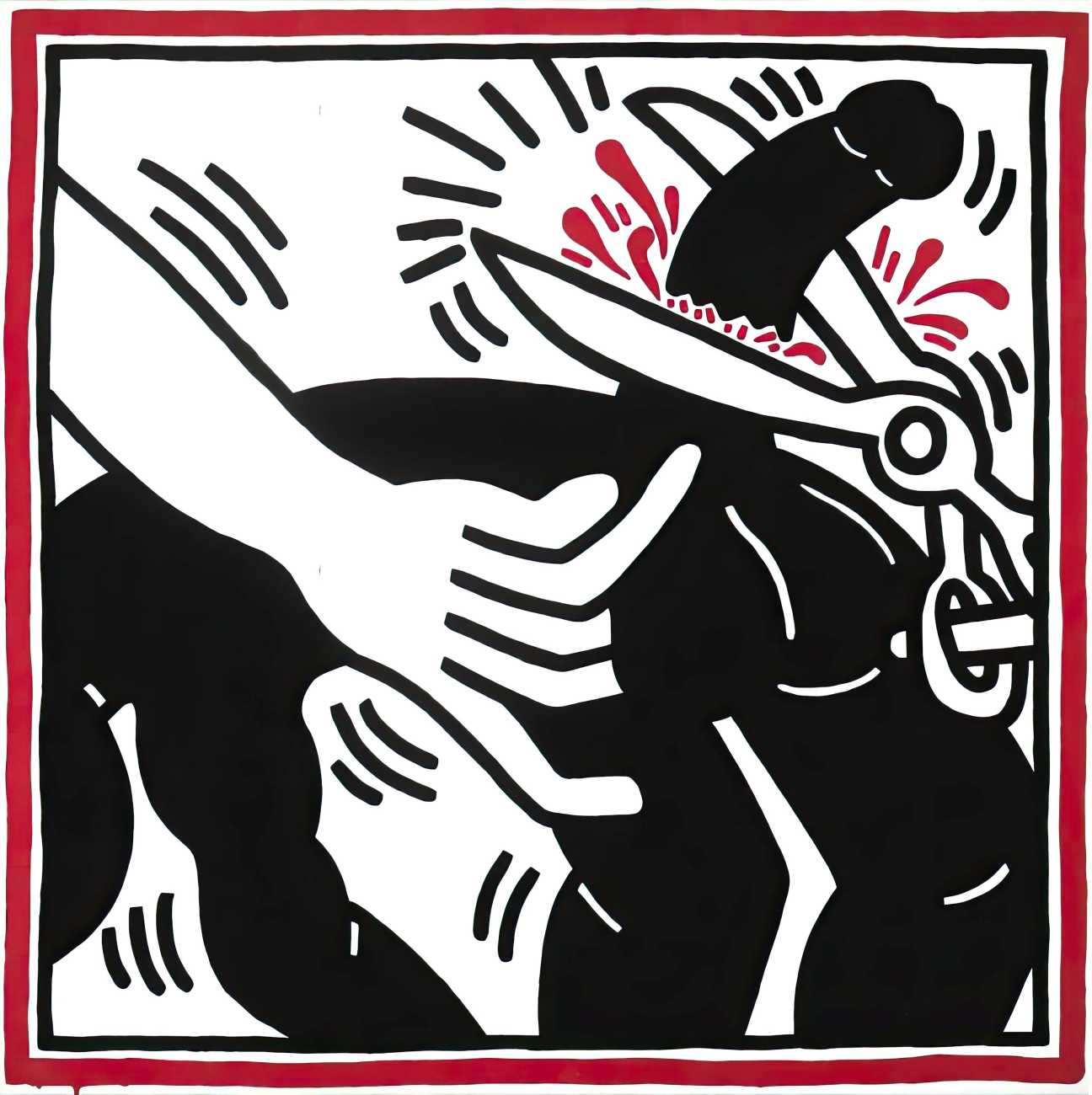
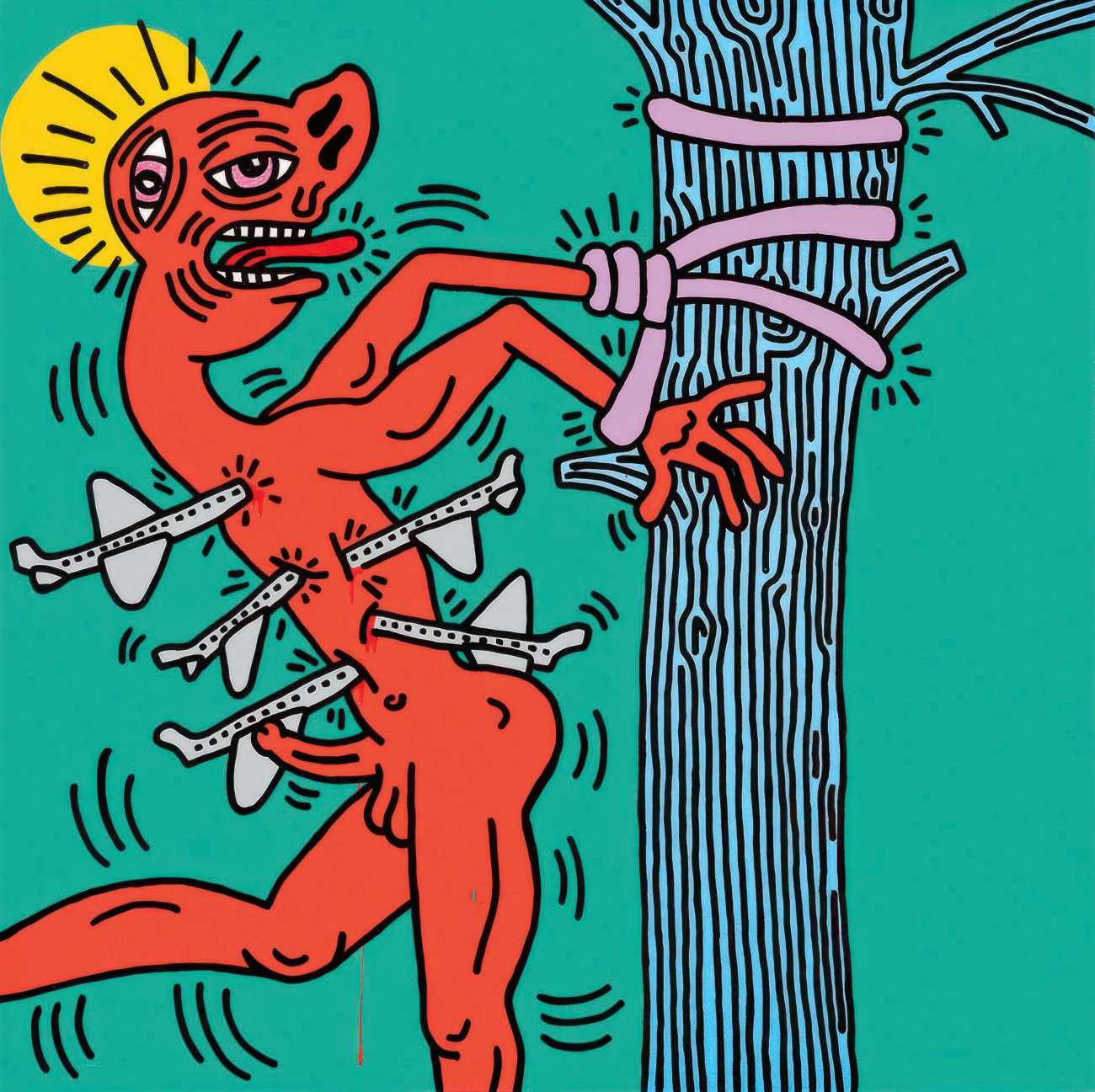
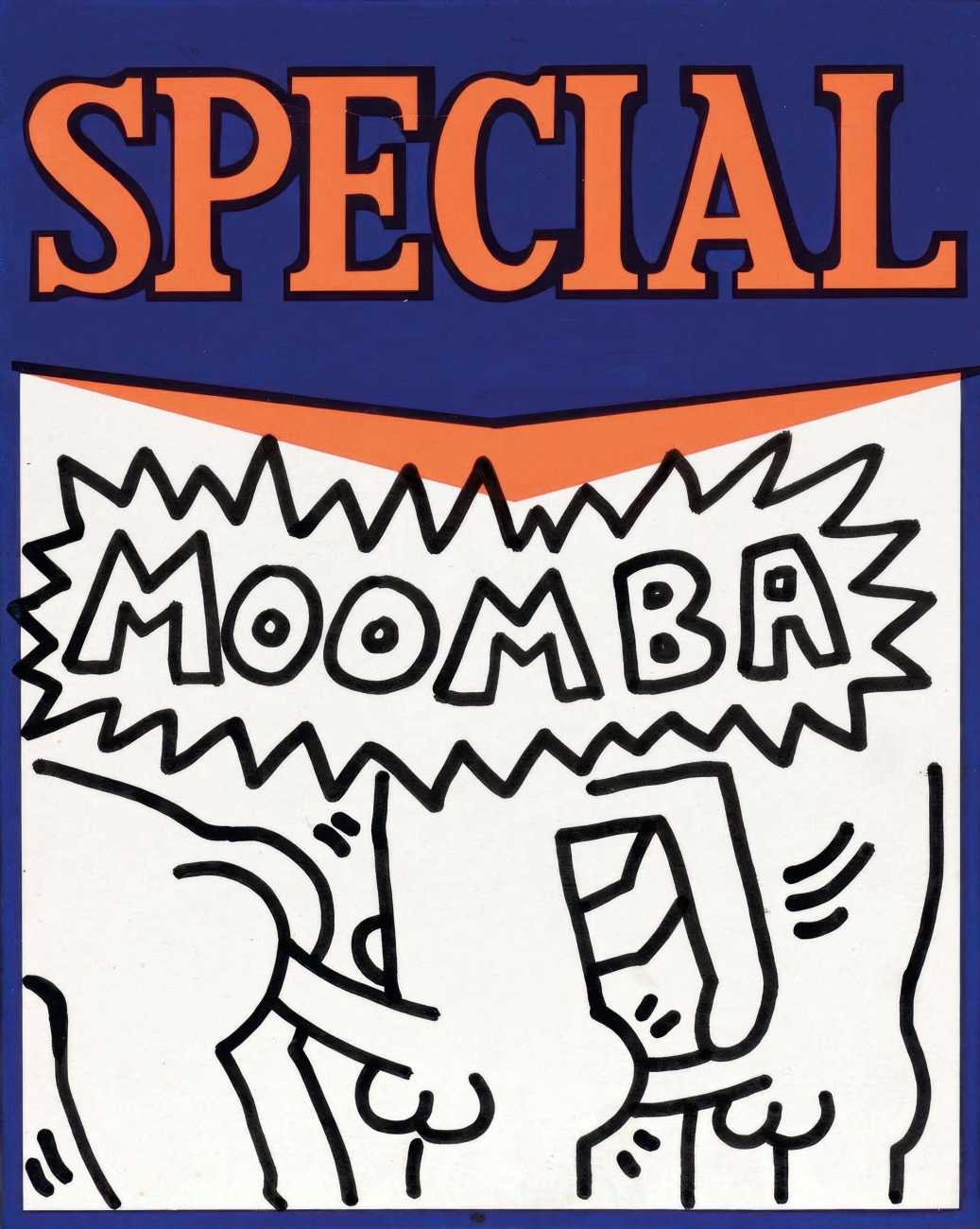
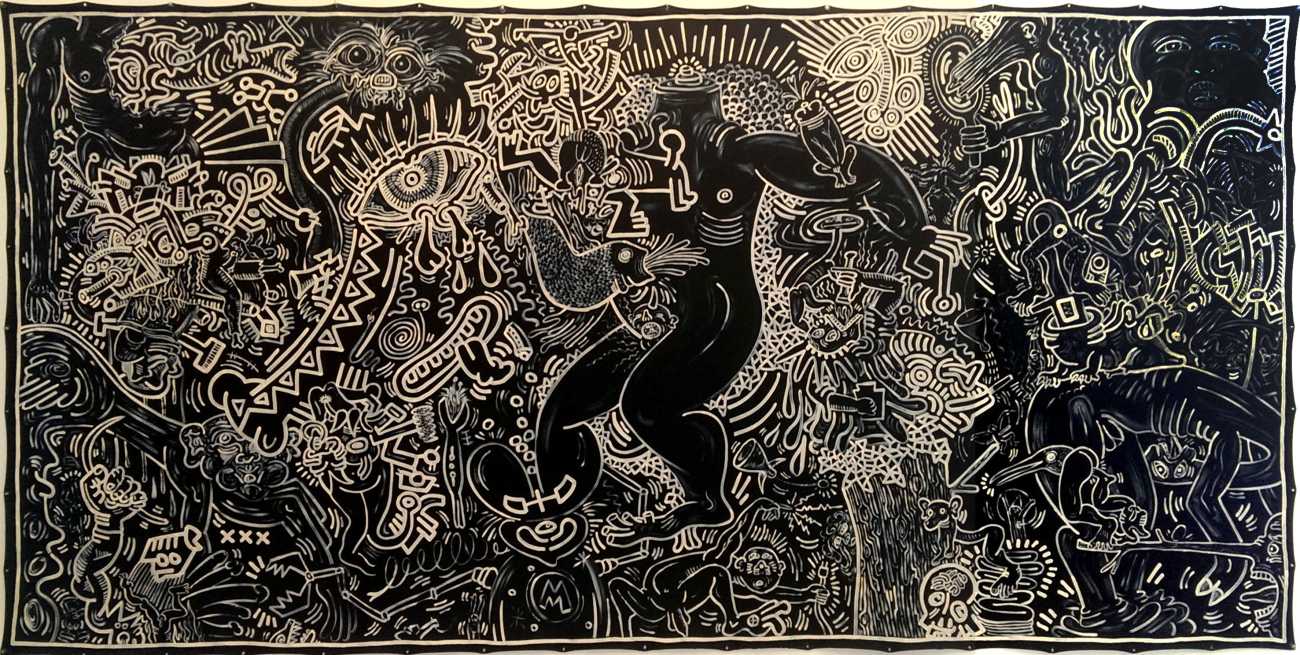
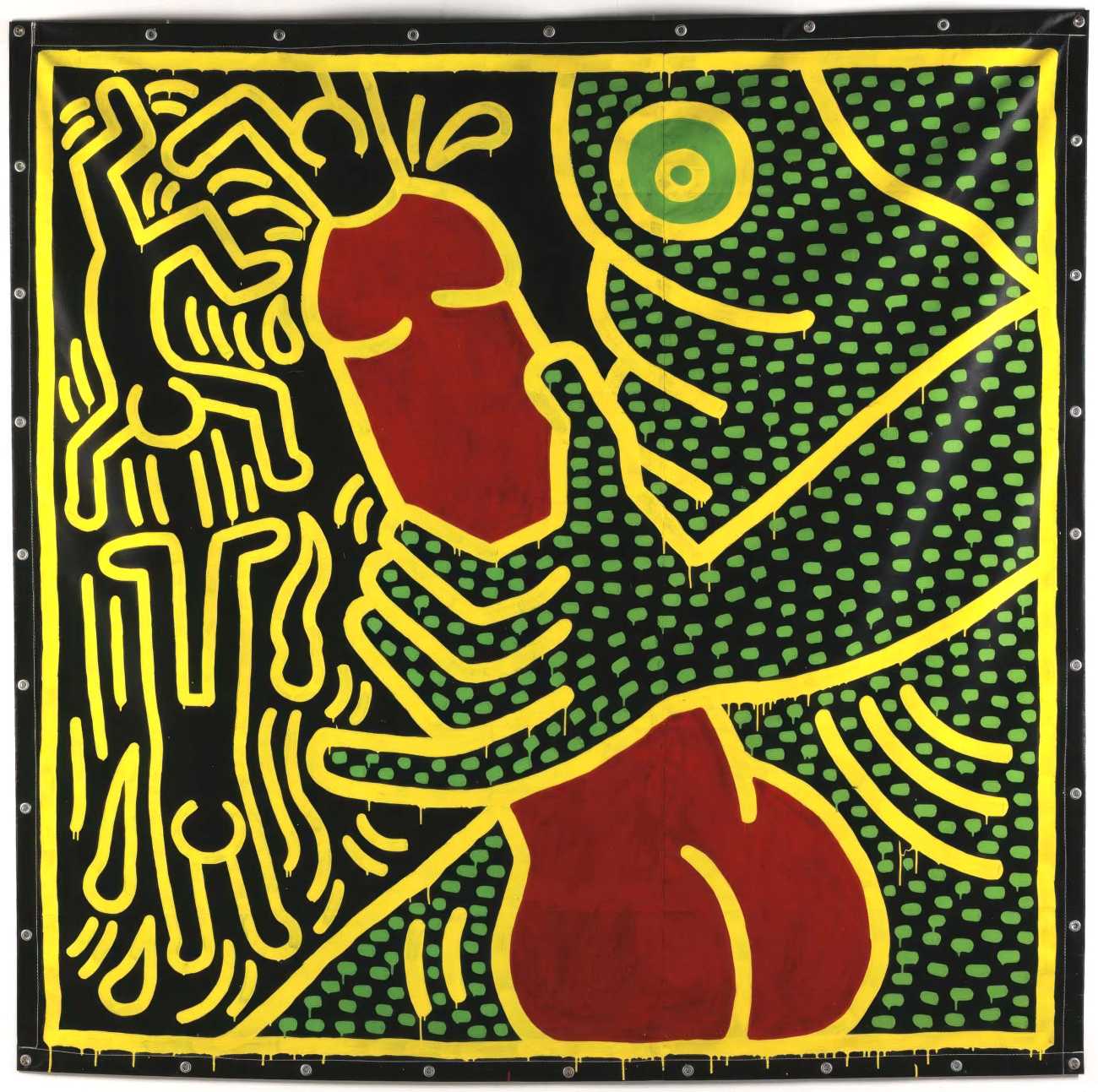
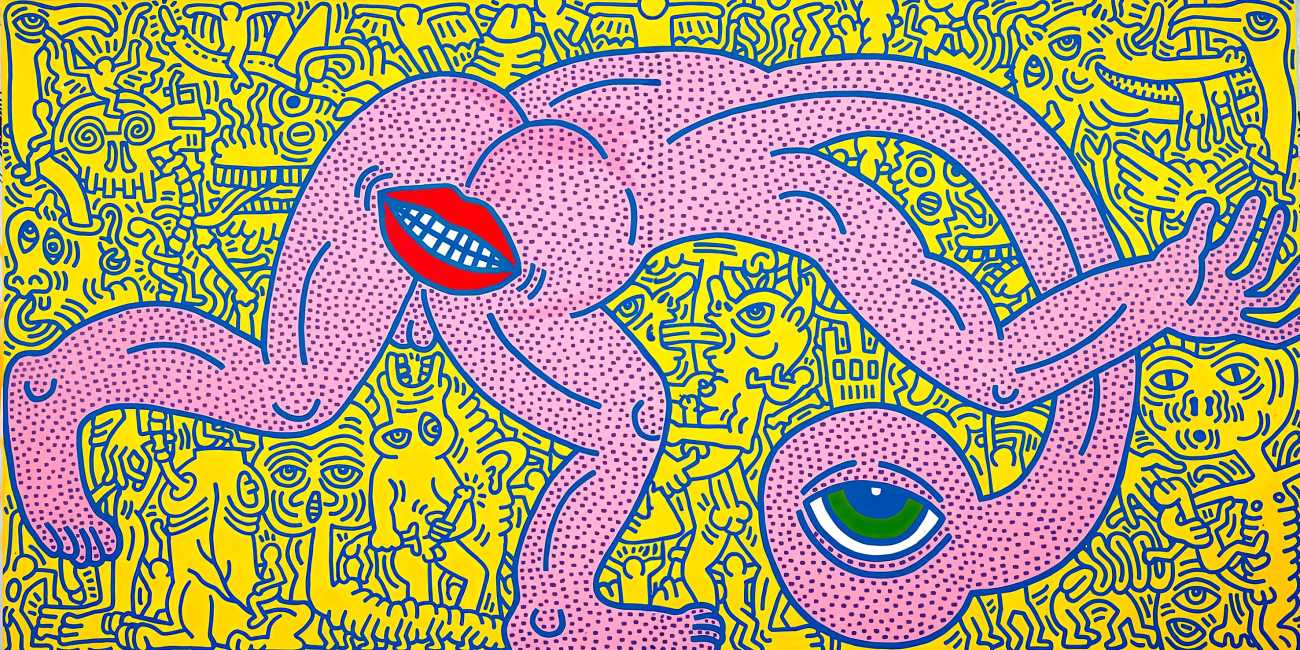
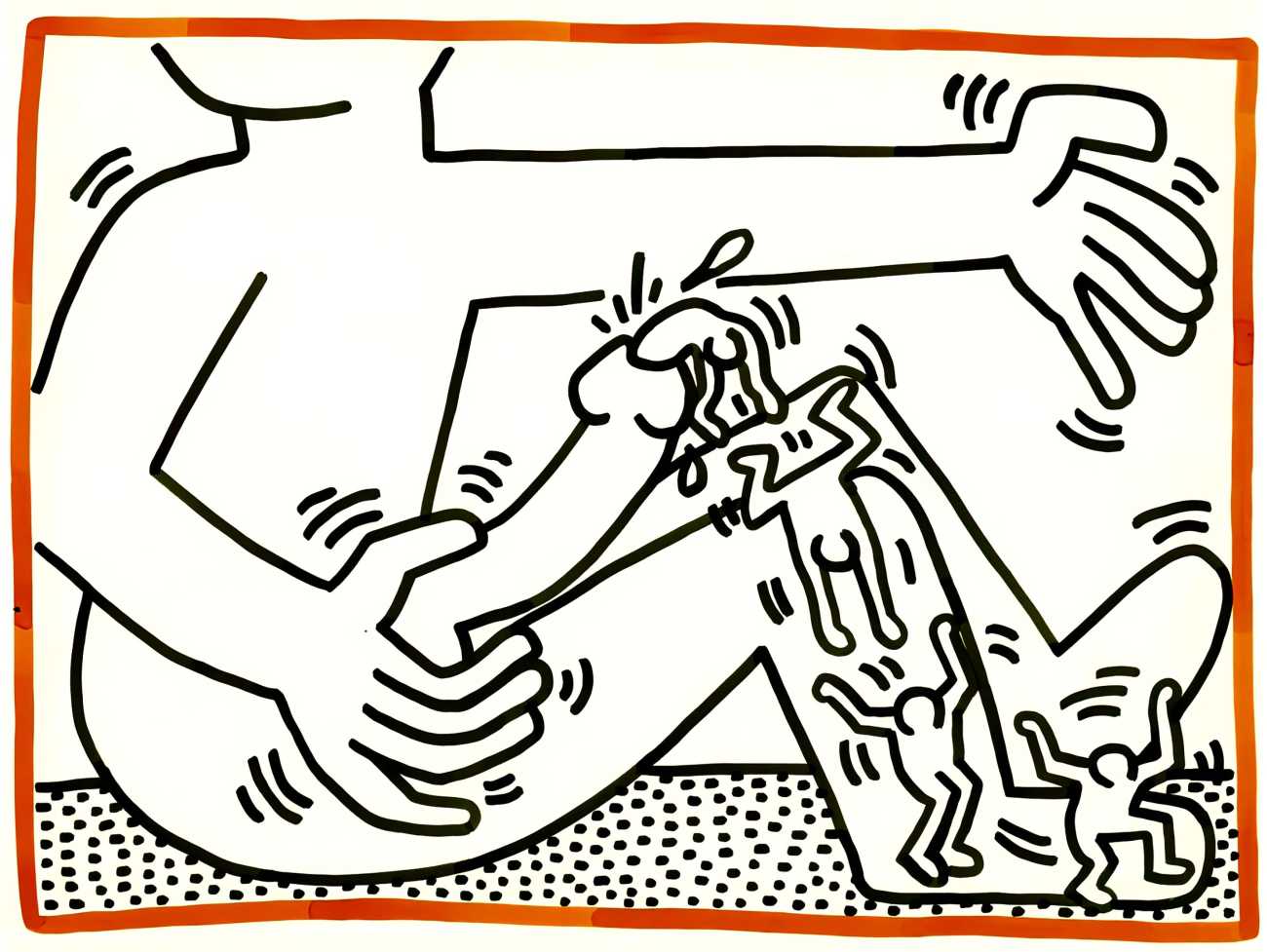
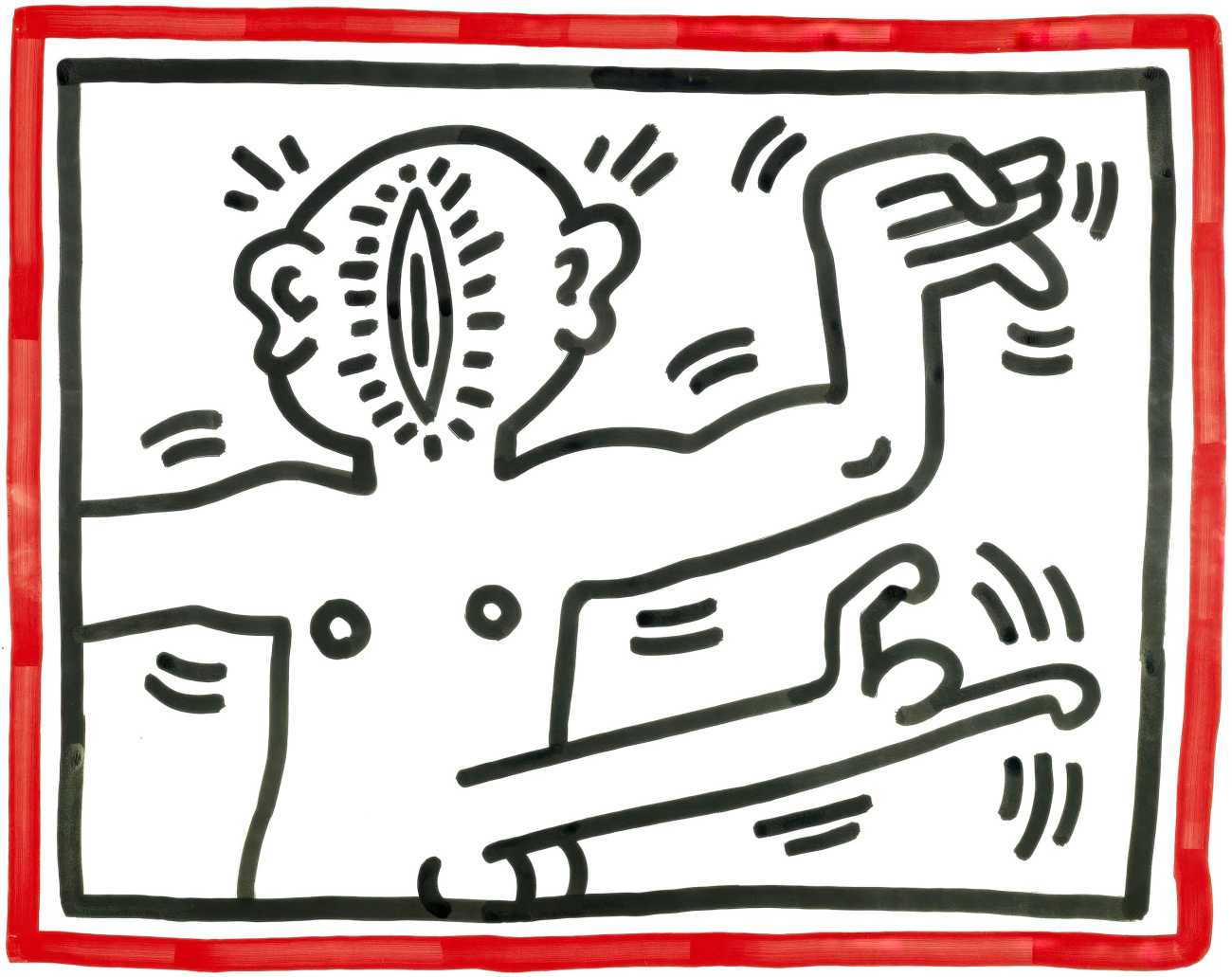
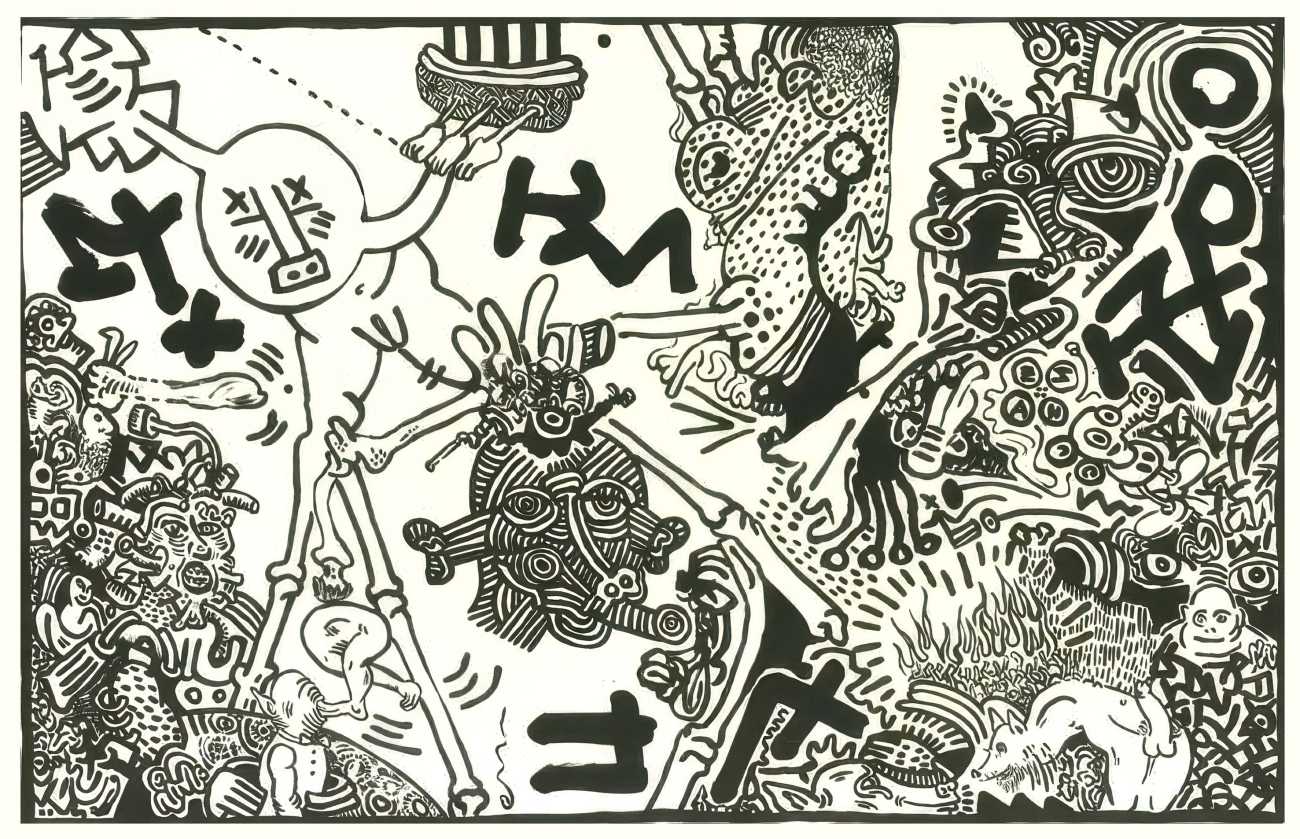
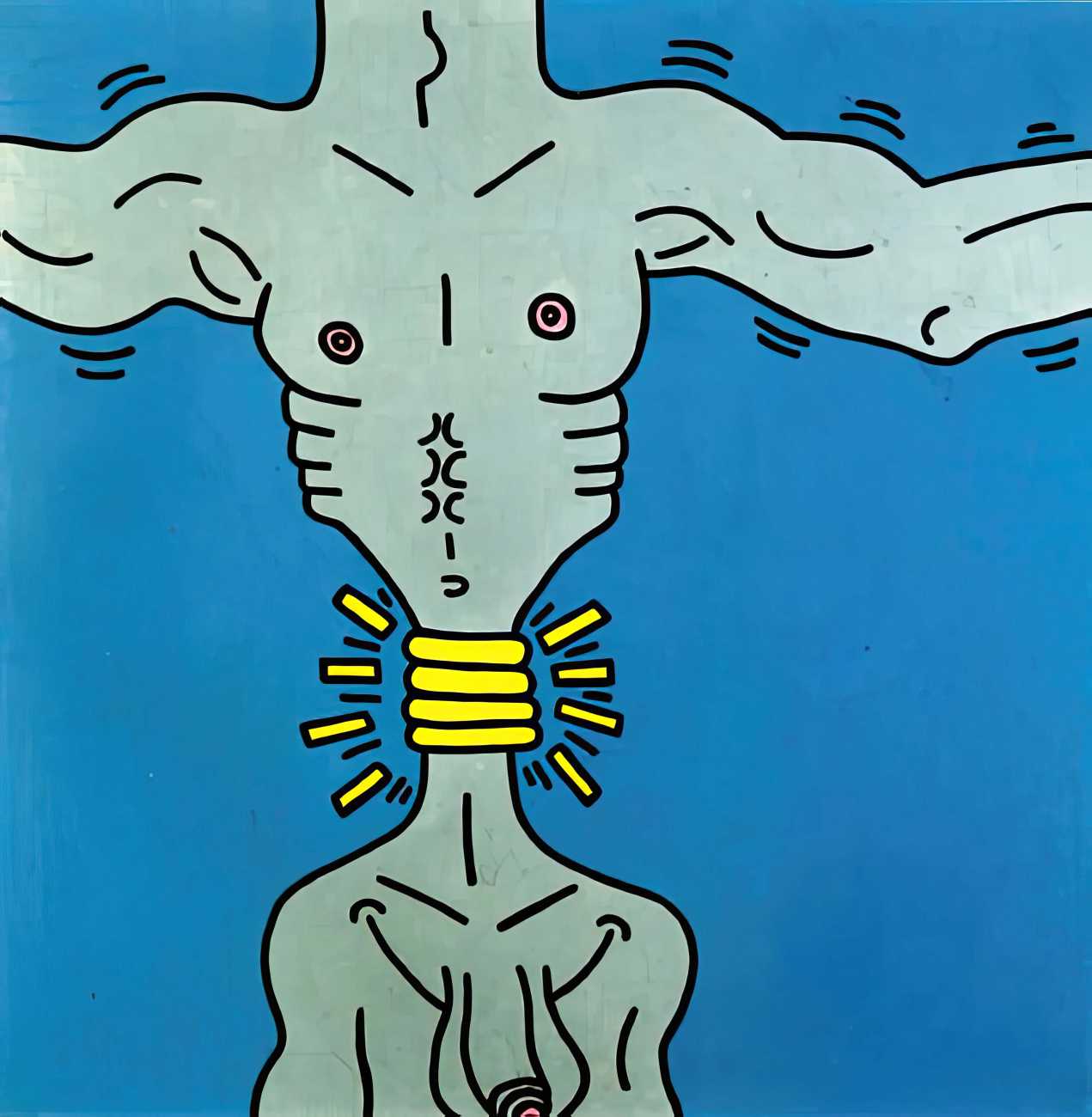
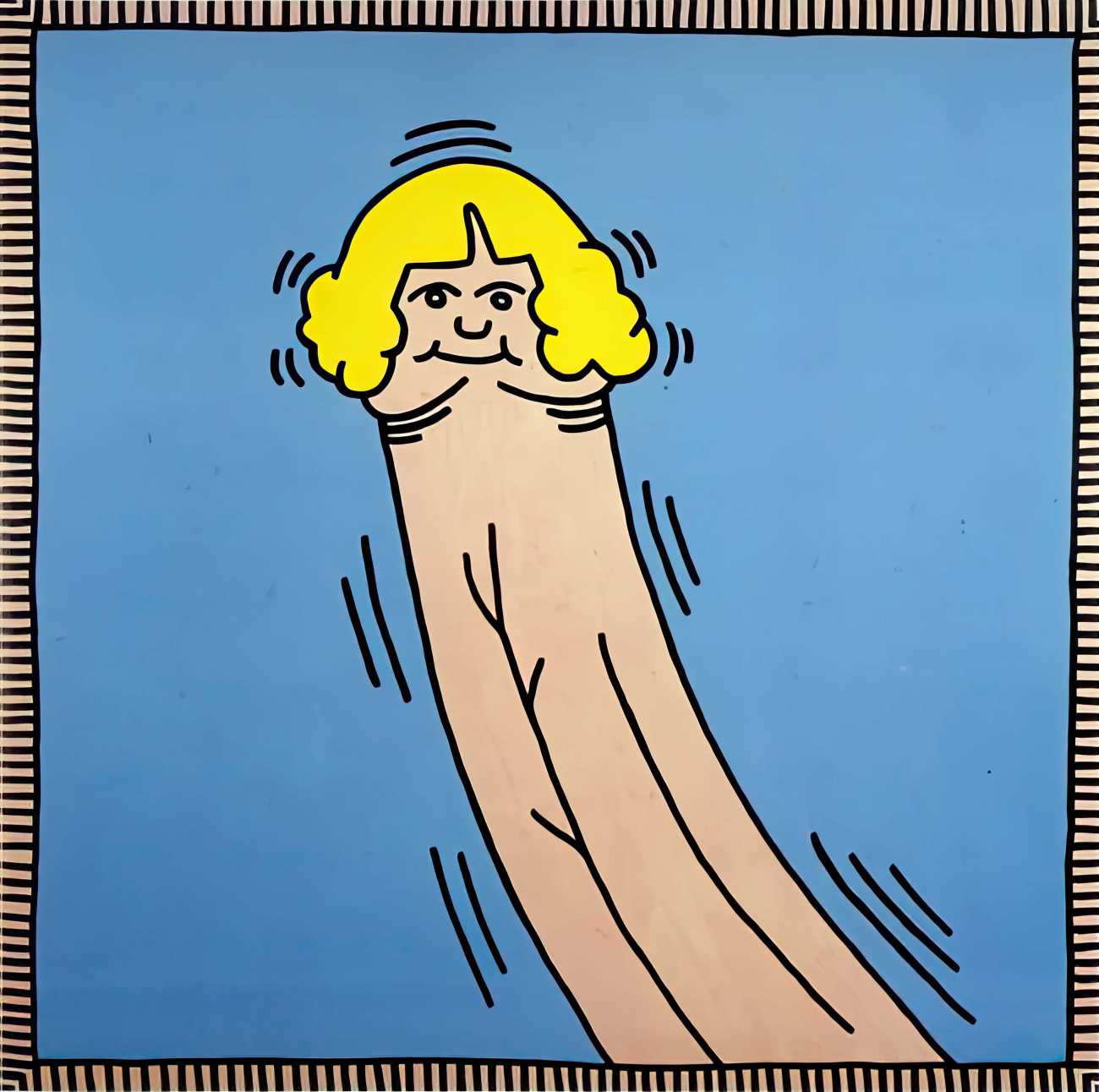
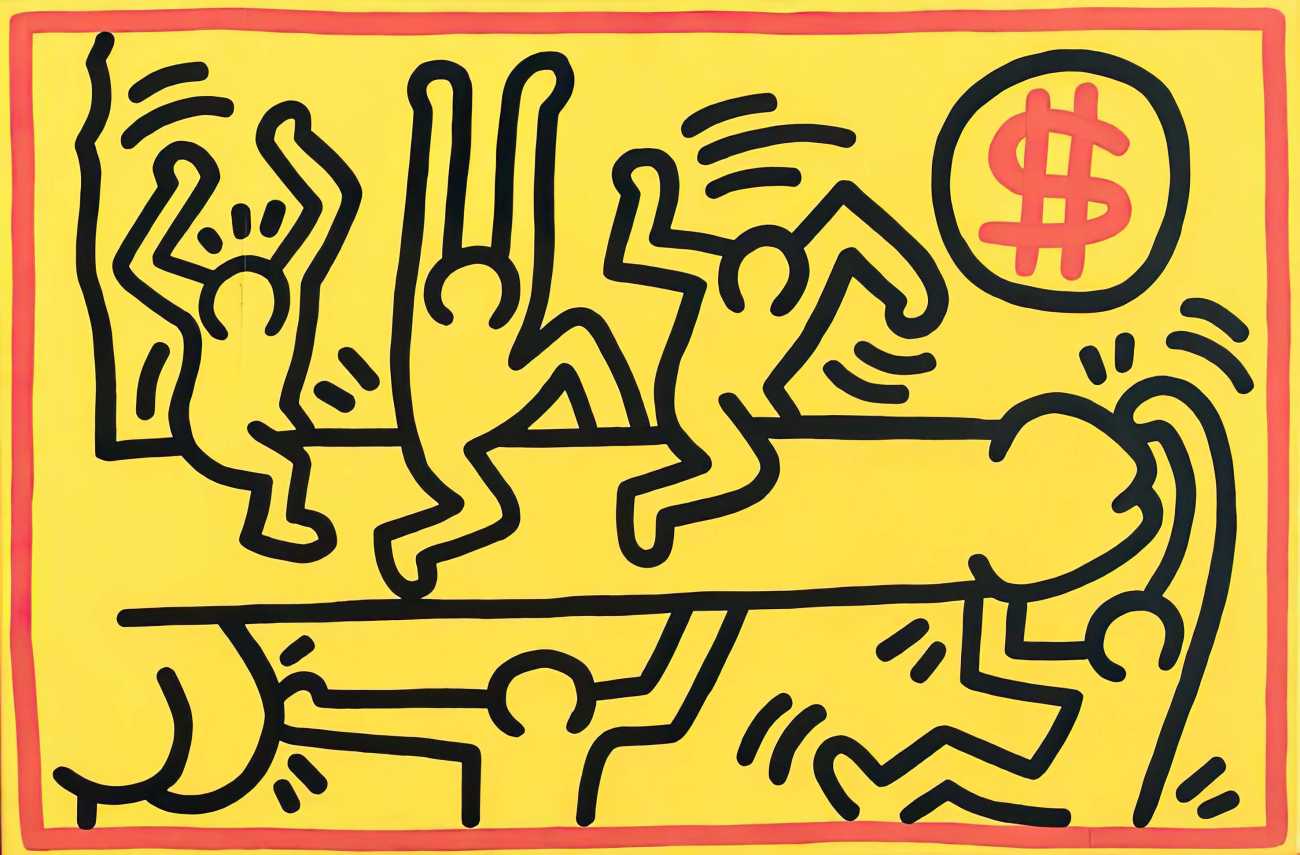
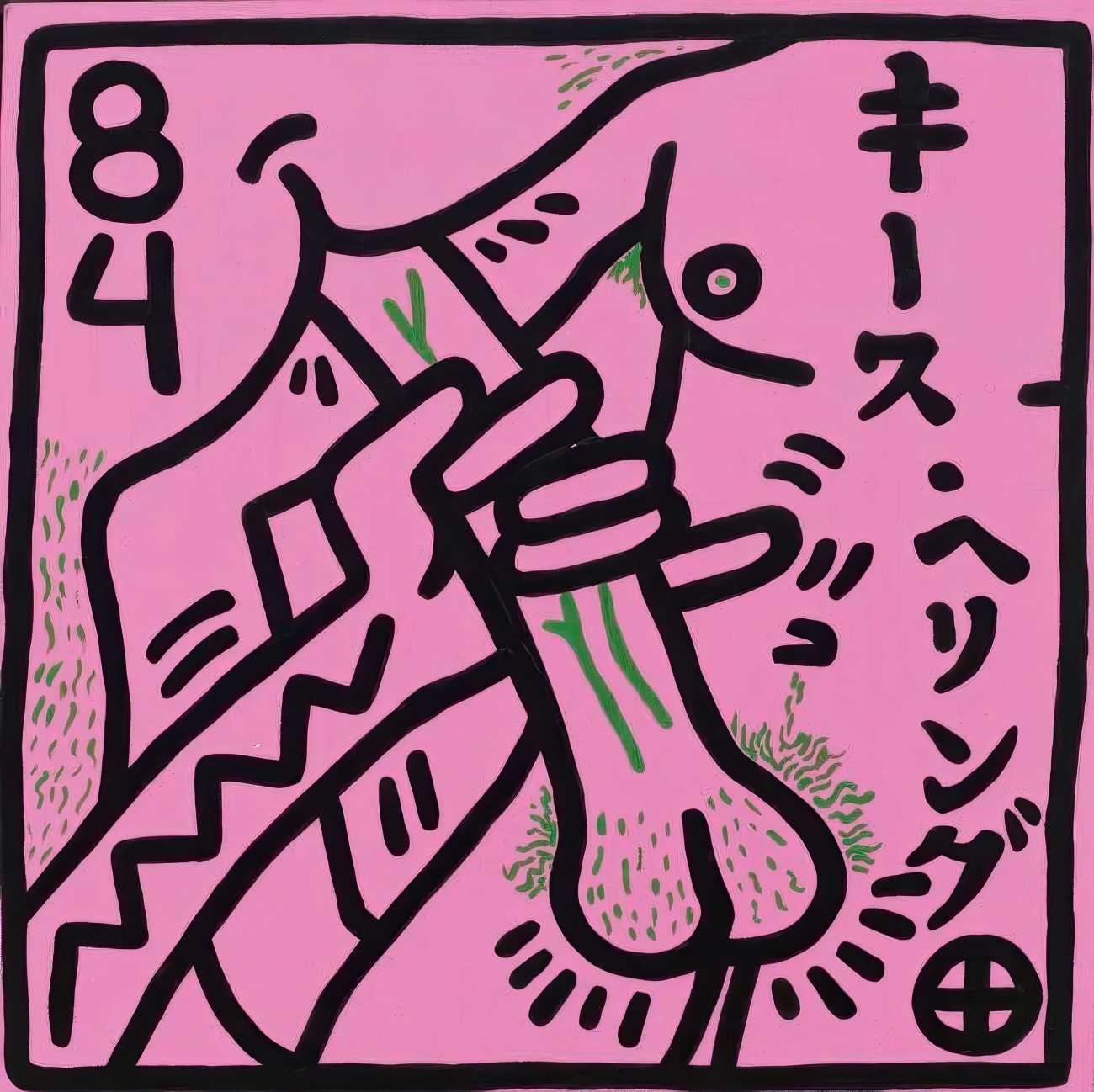
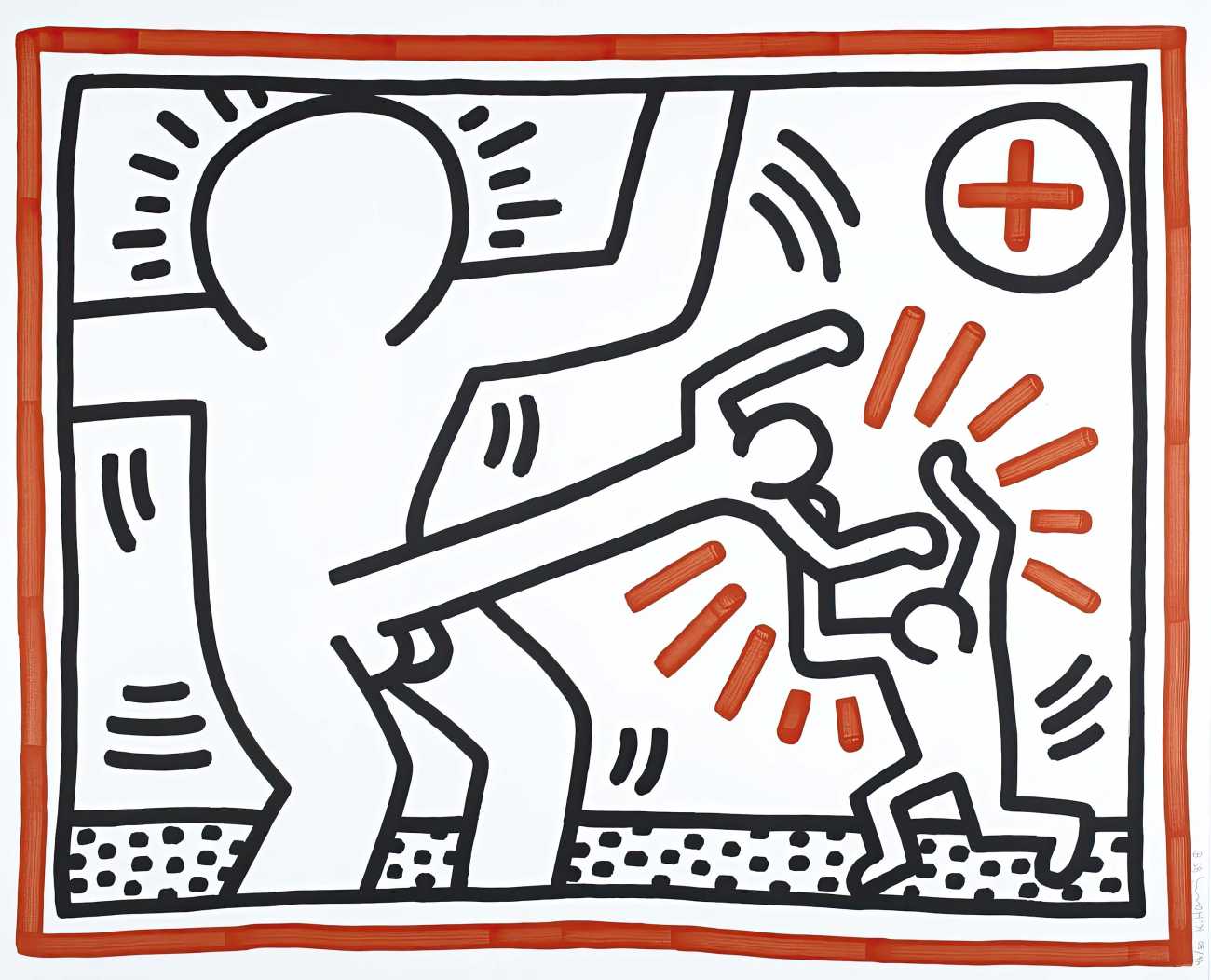
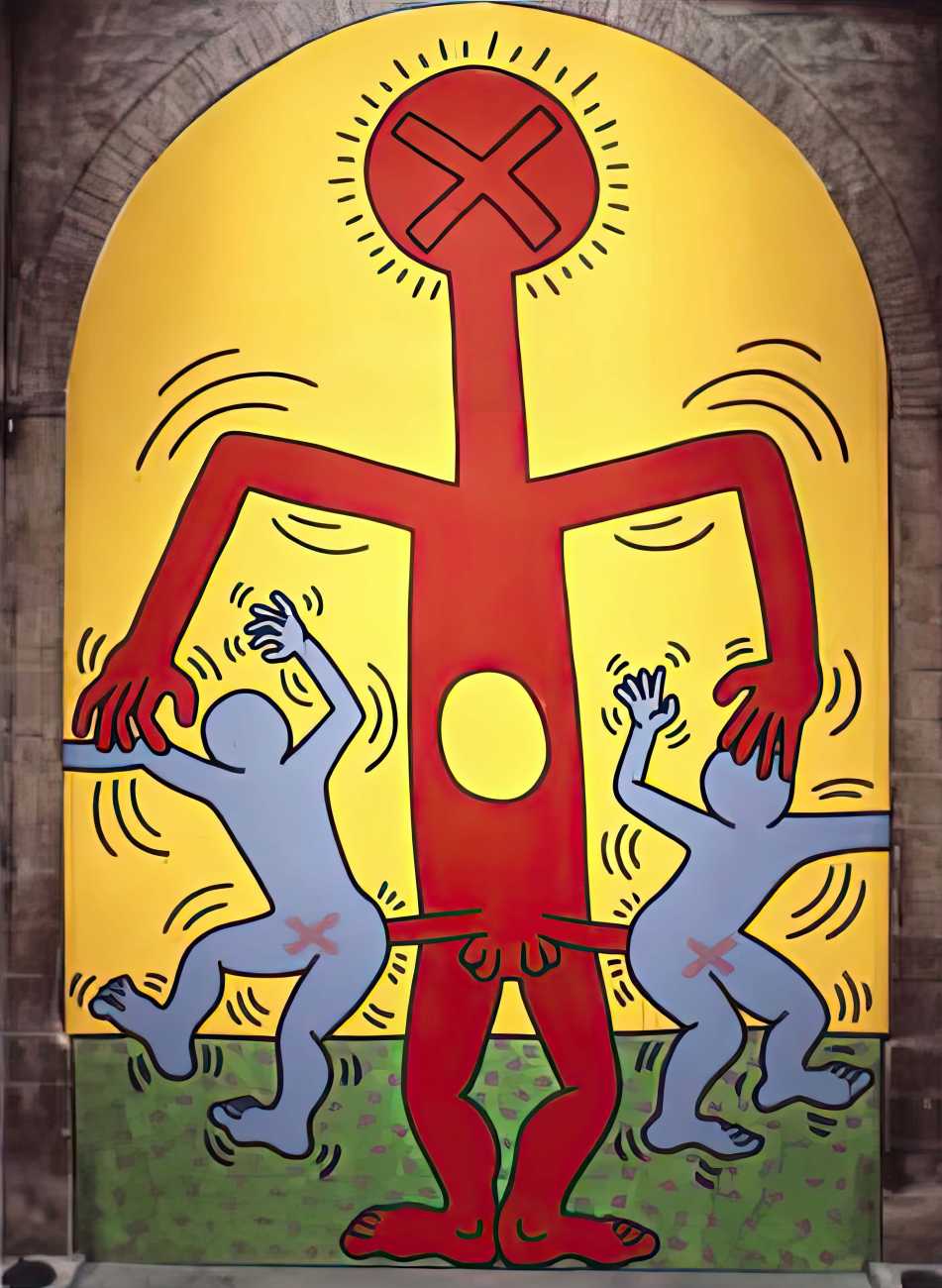
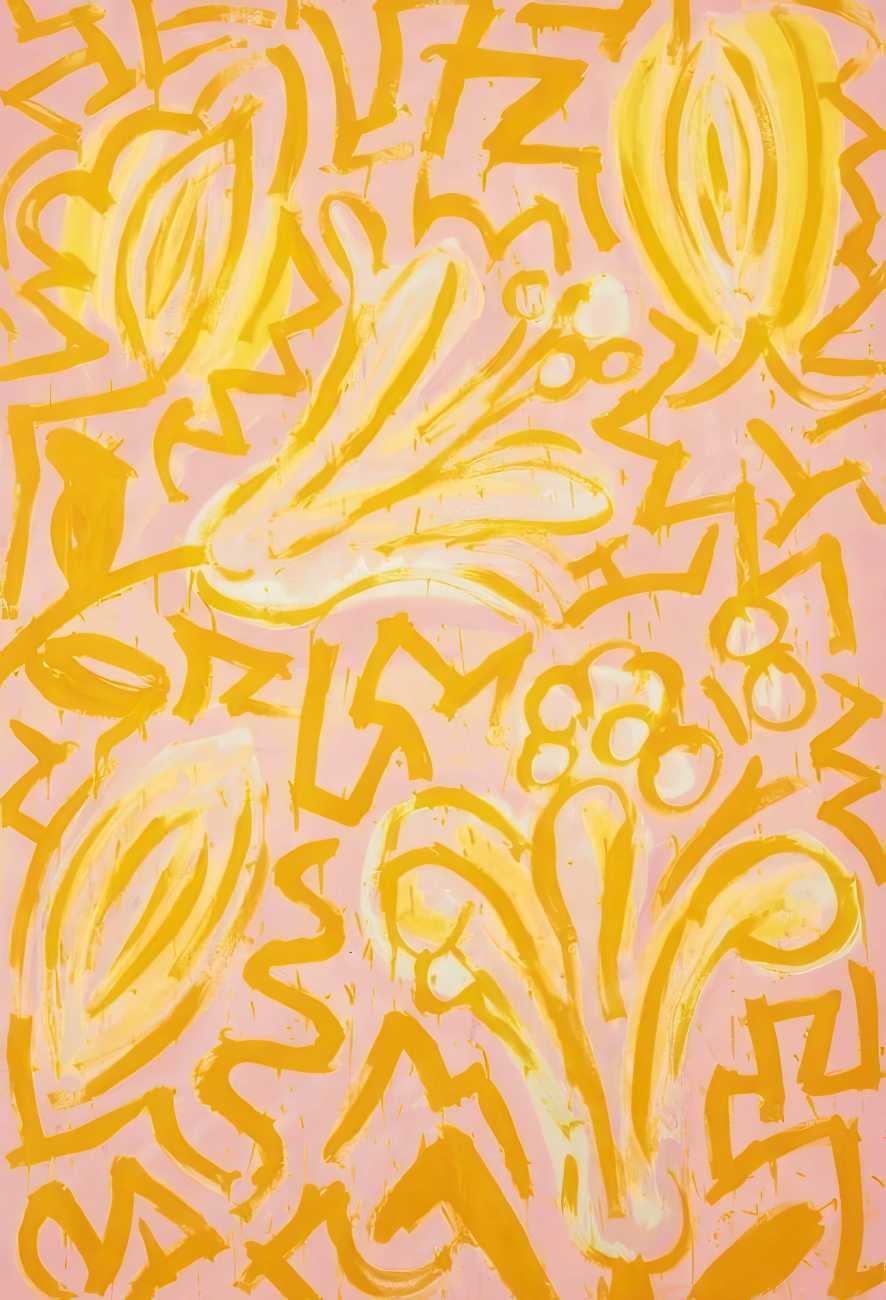
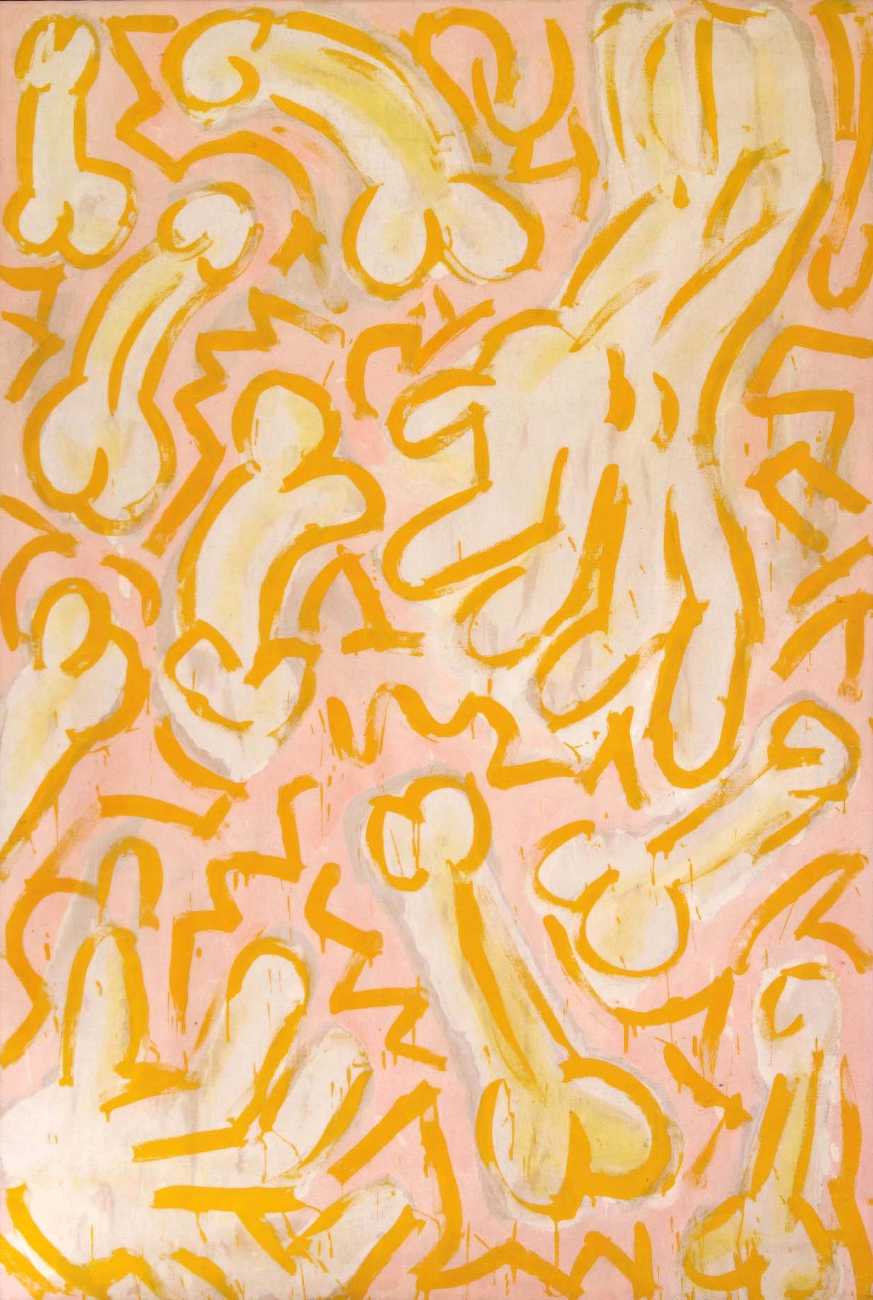
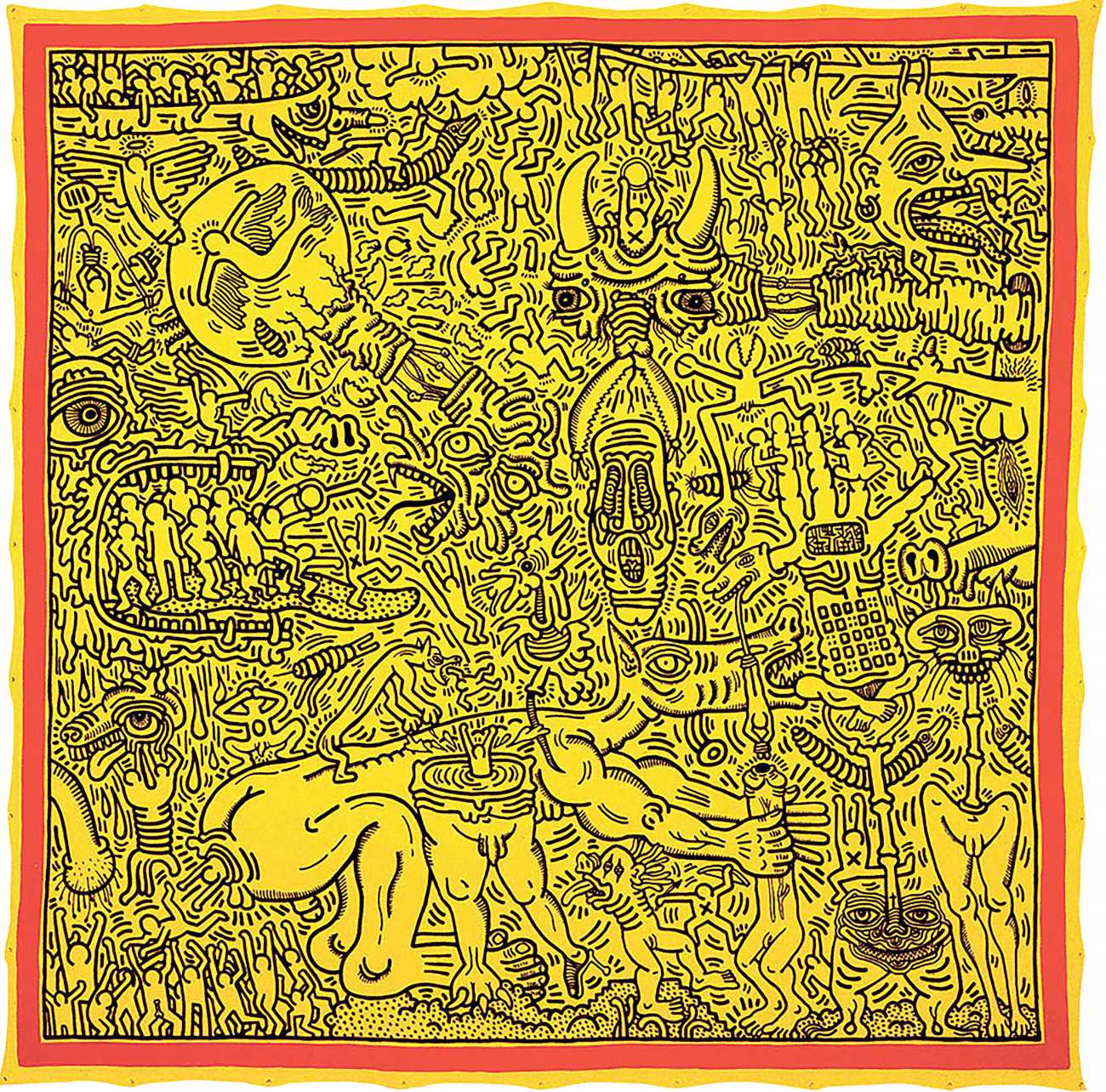
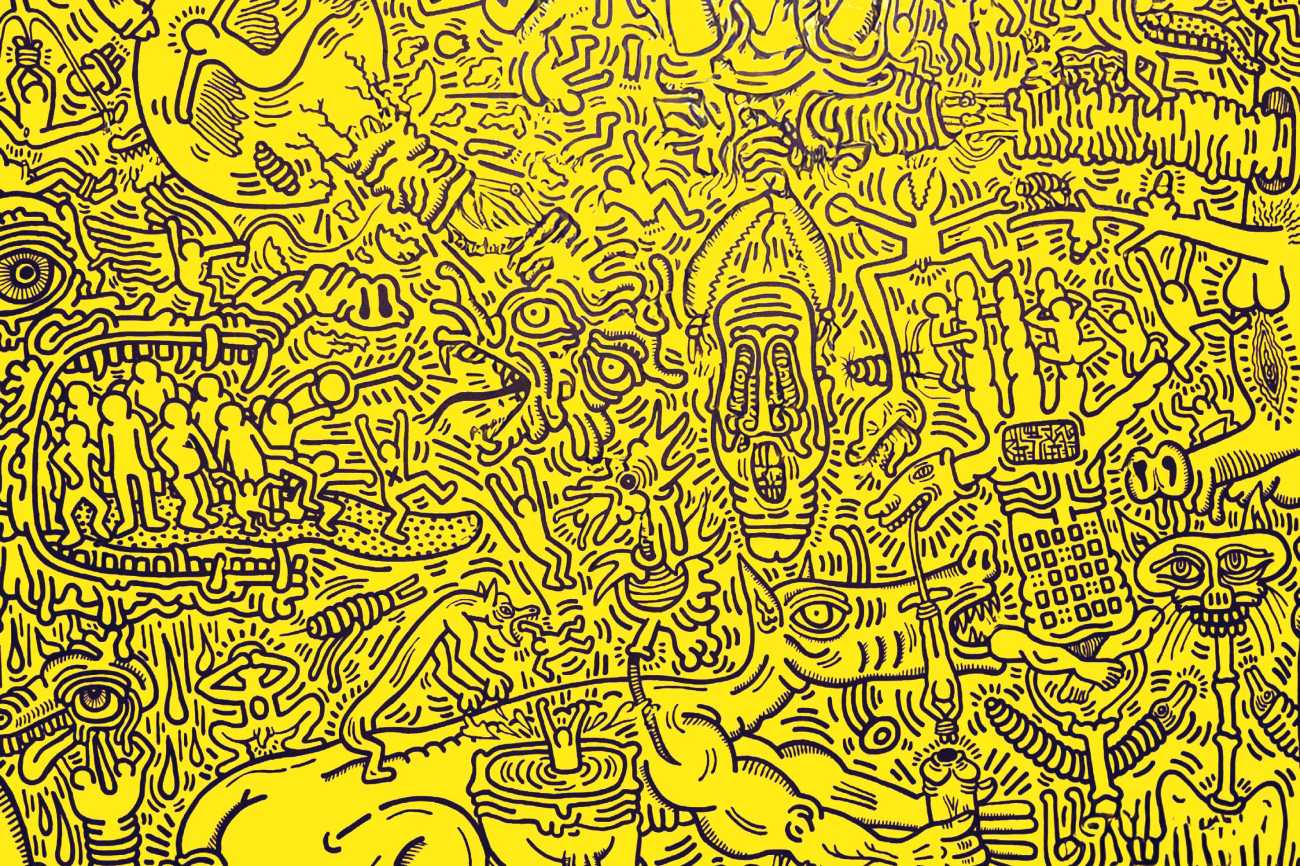

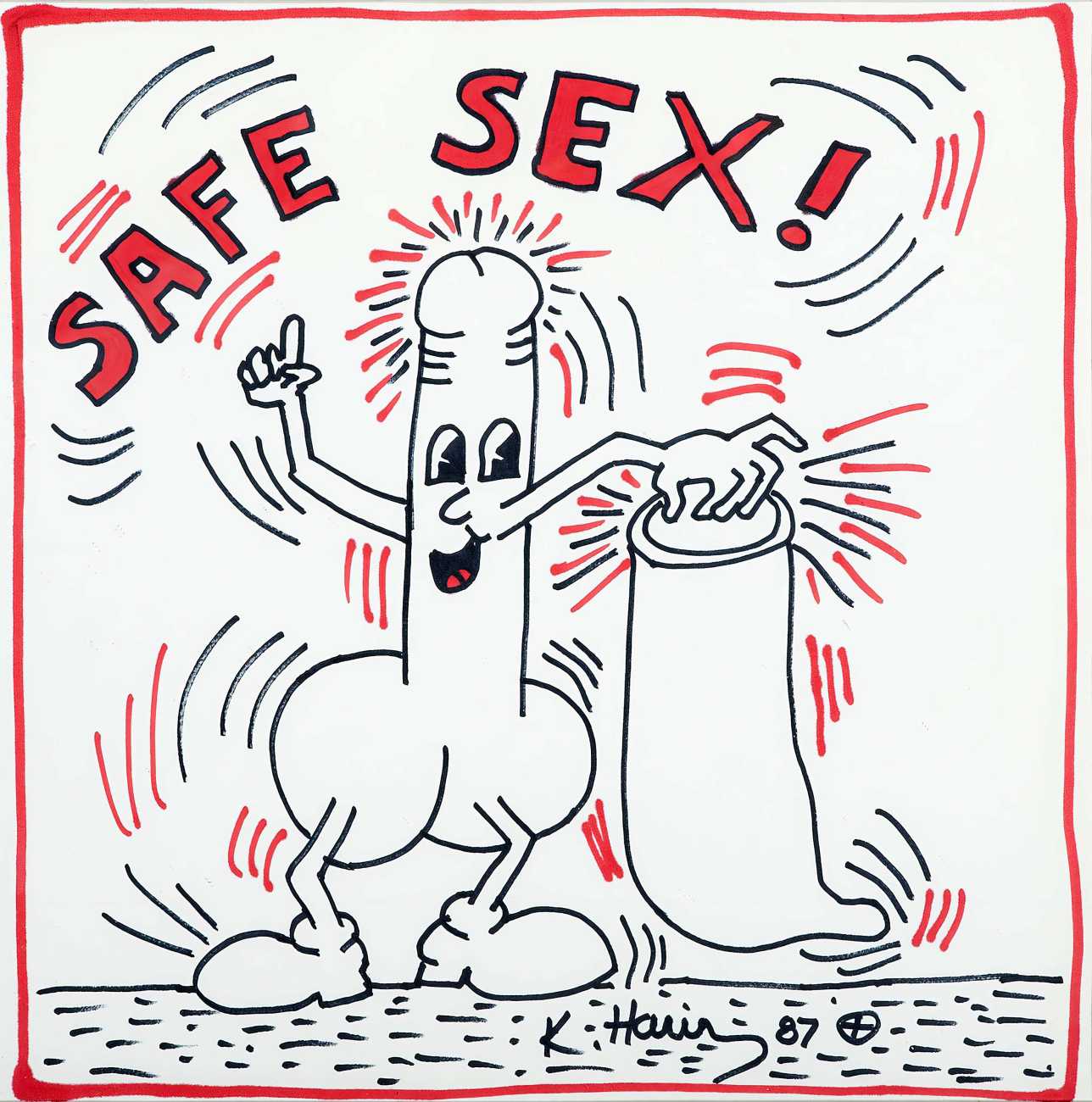
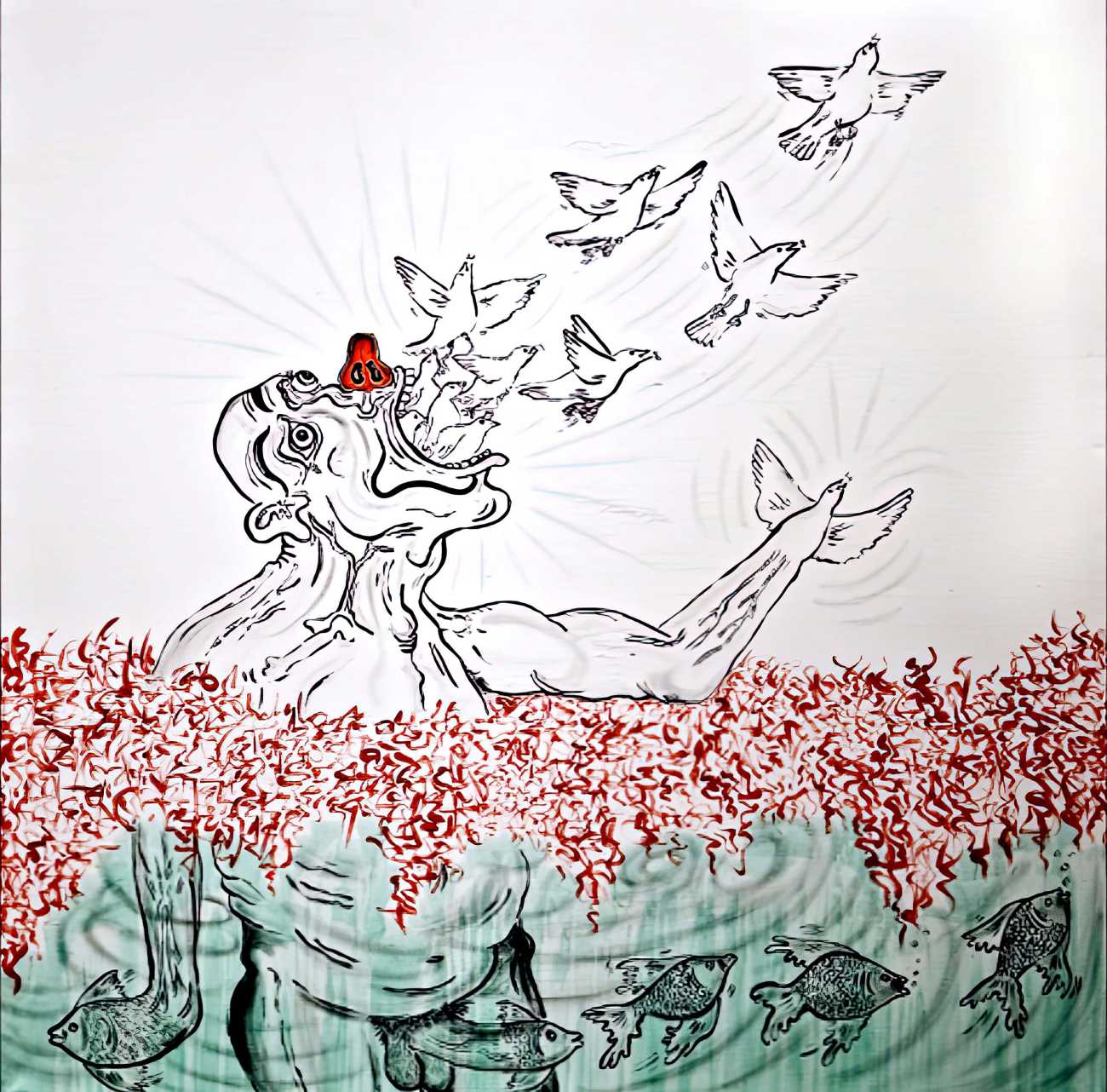
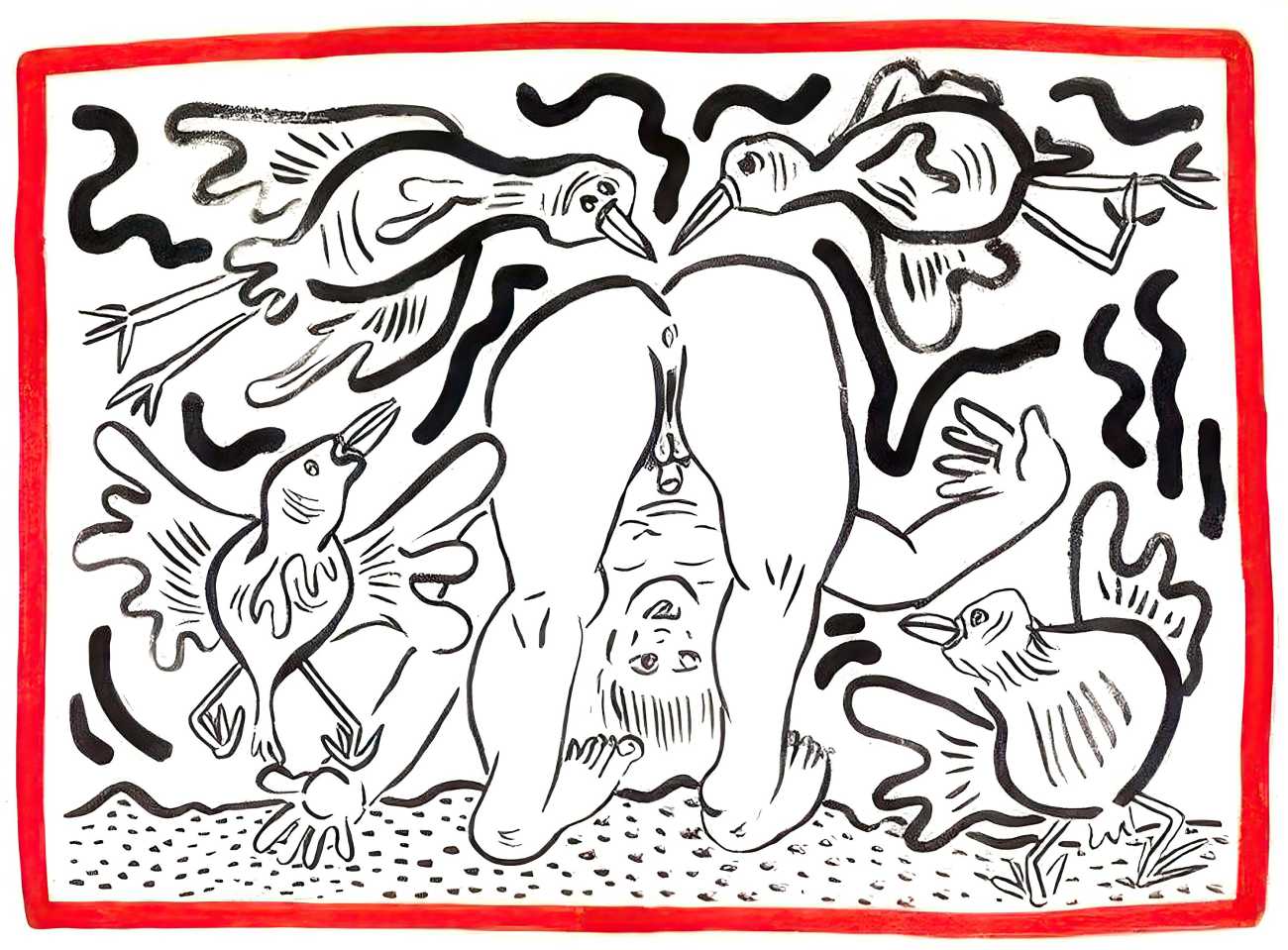
Manhattan Penis Drawings (1978)
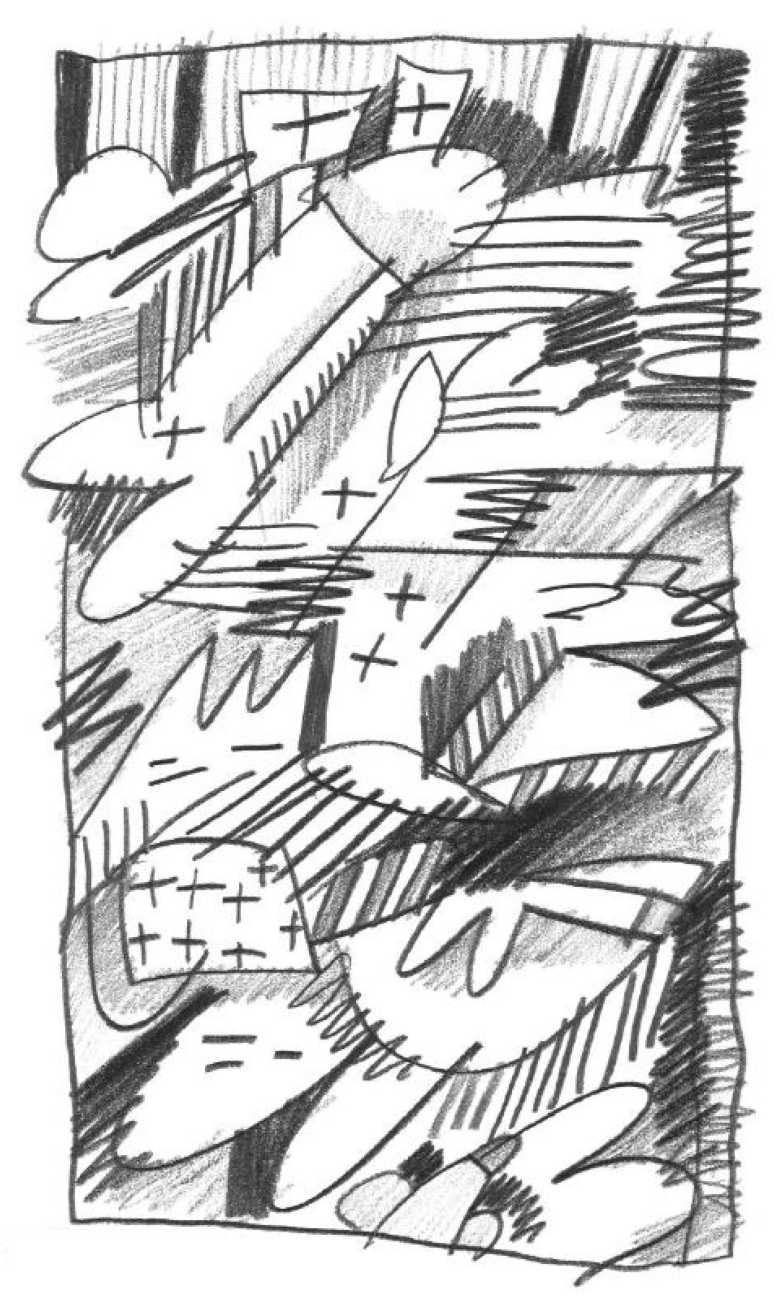
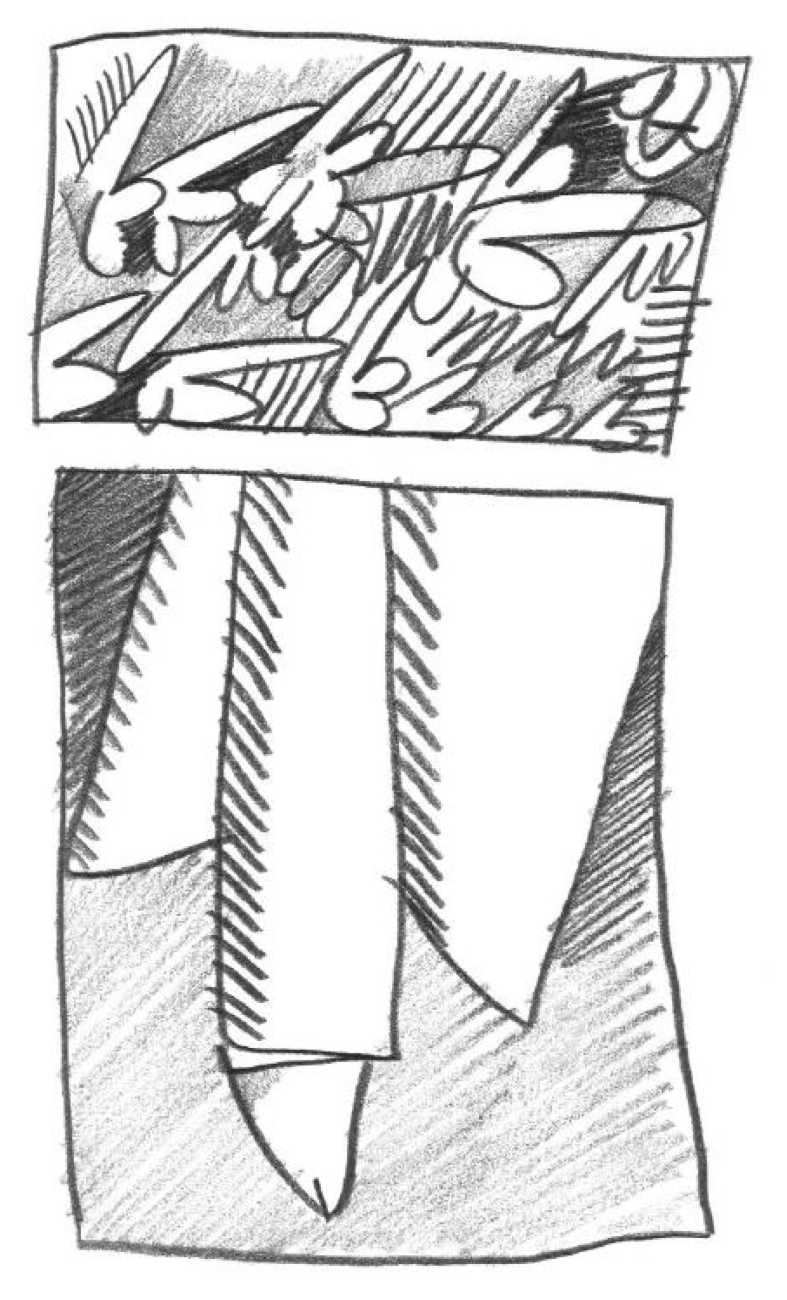
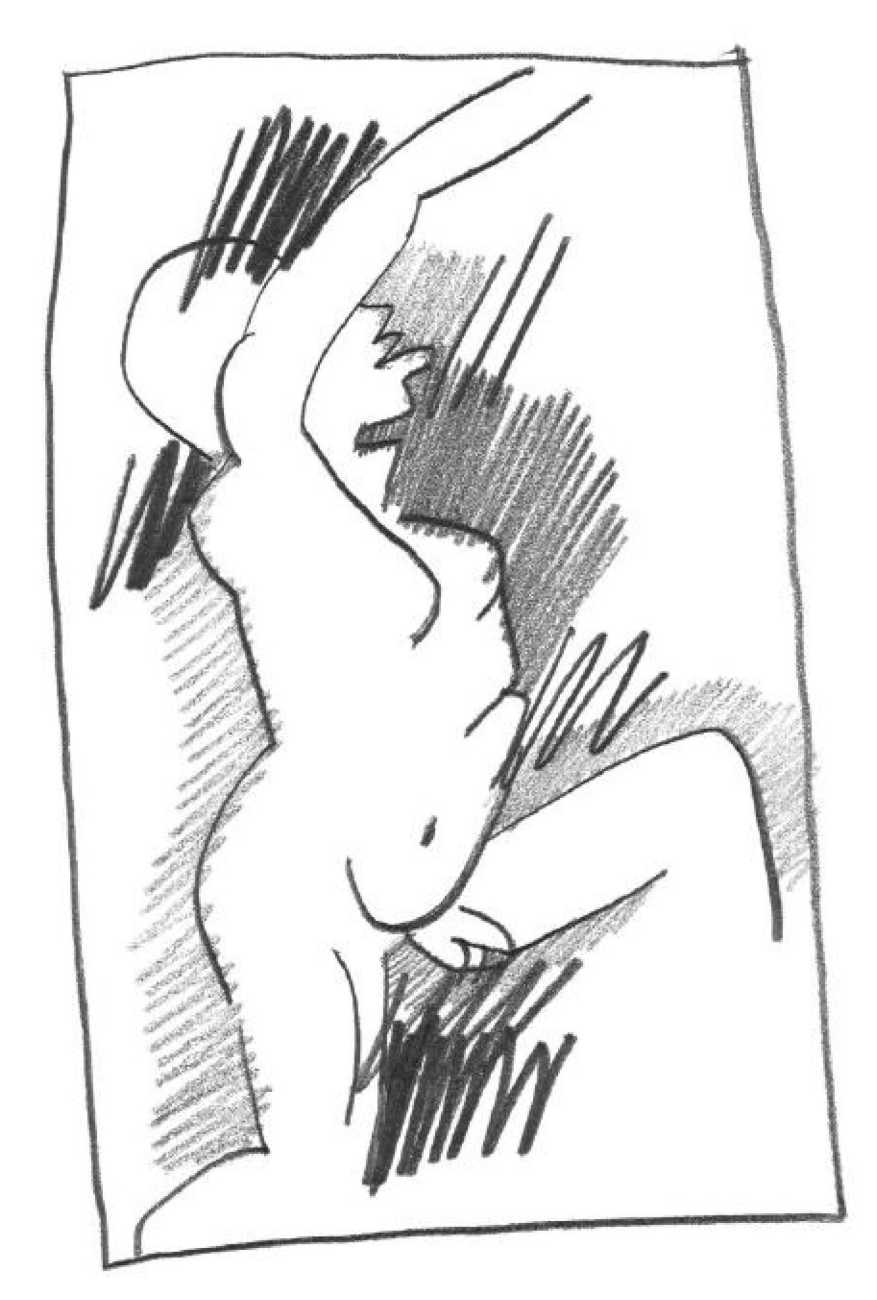
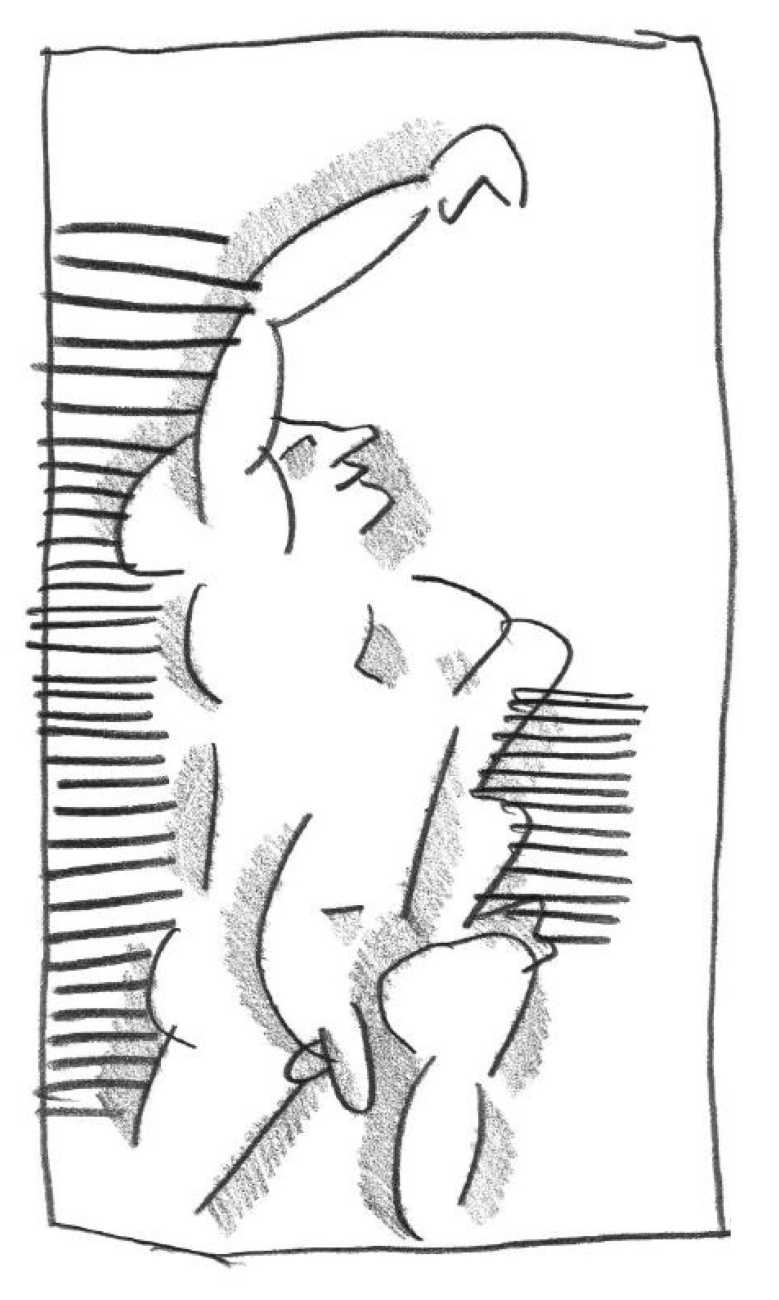
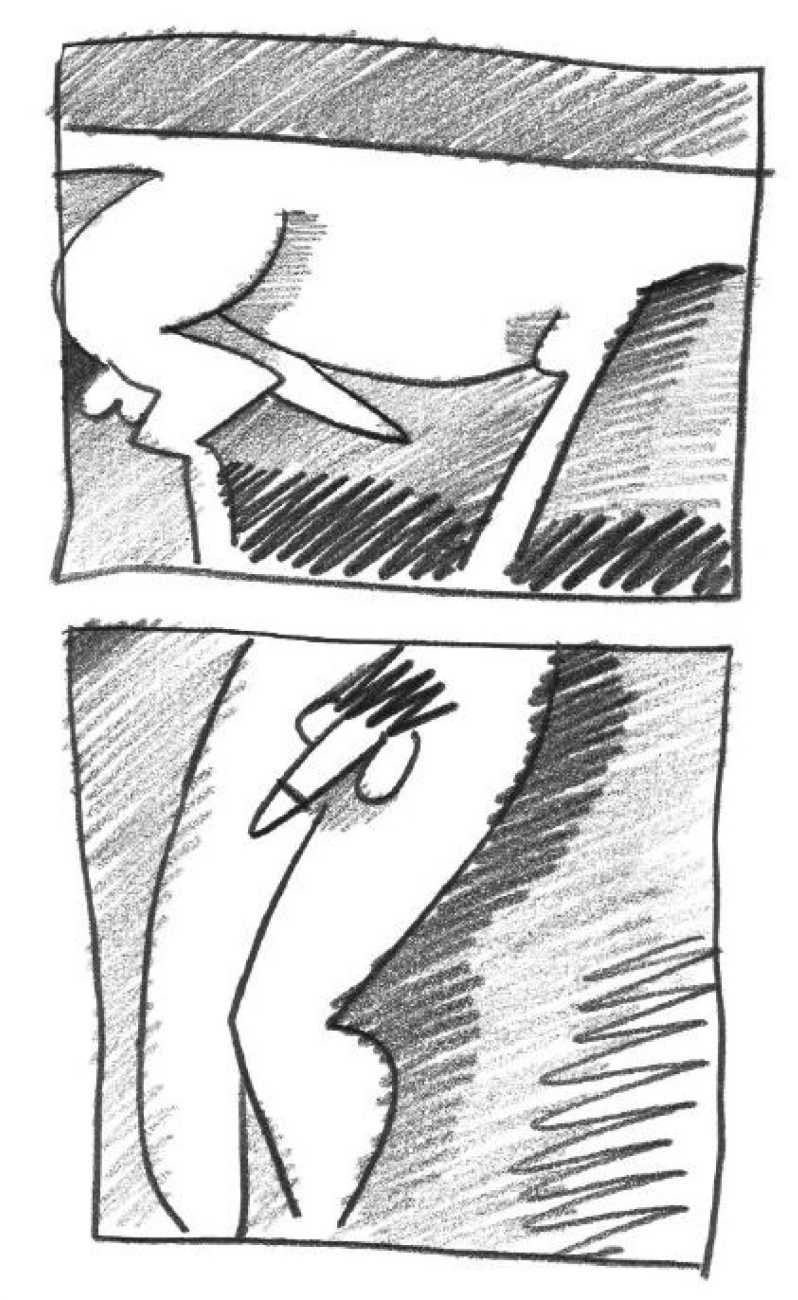
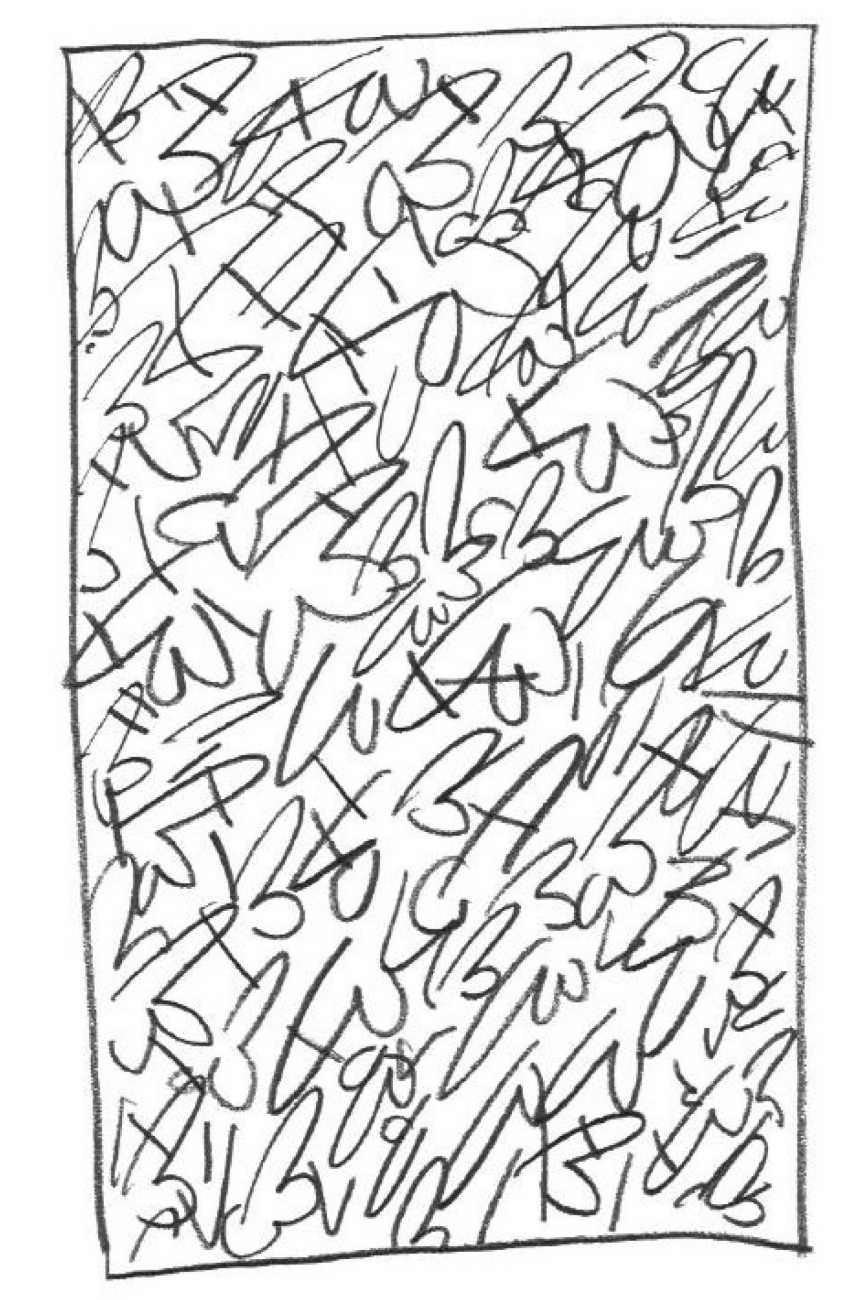
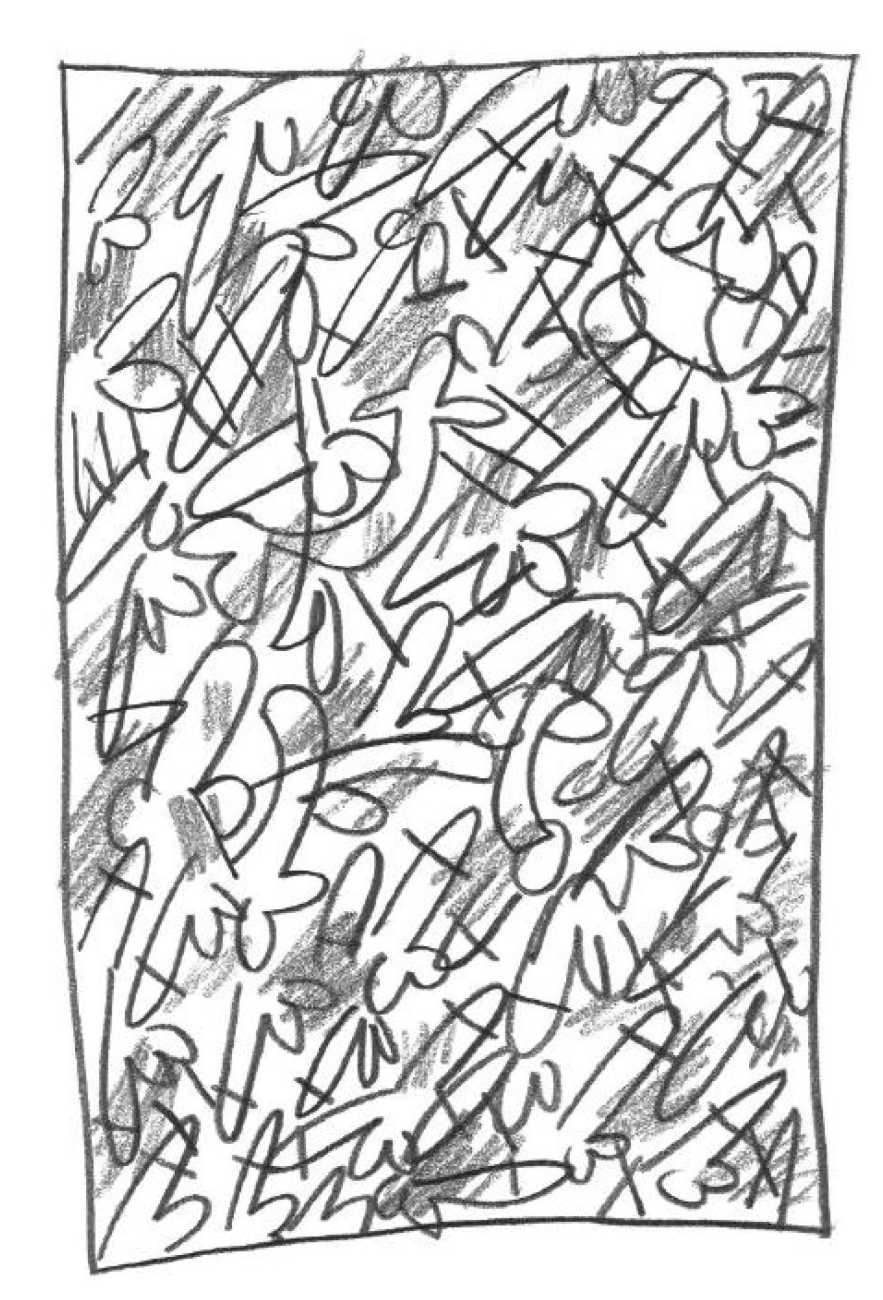
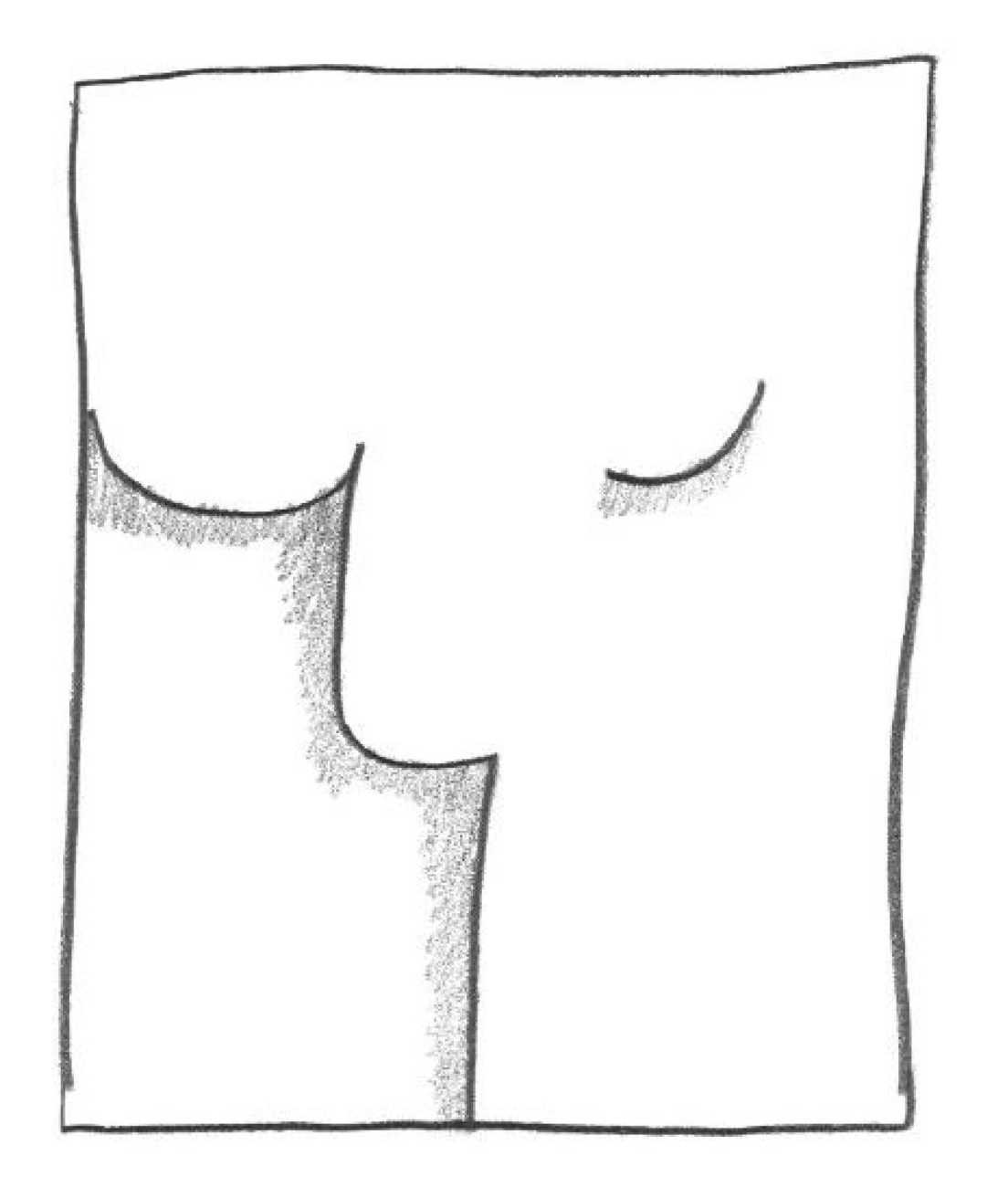
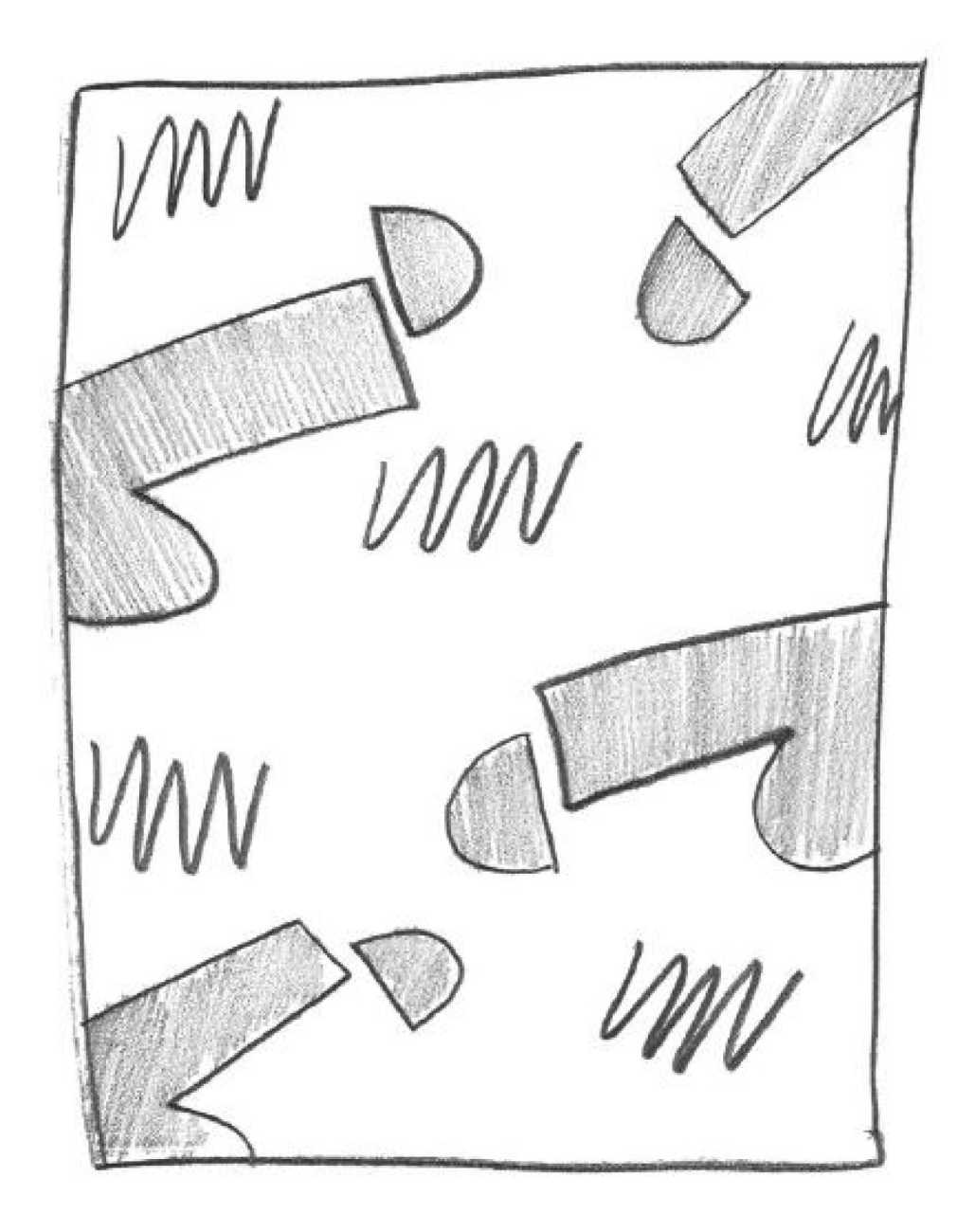
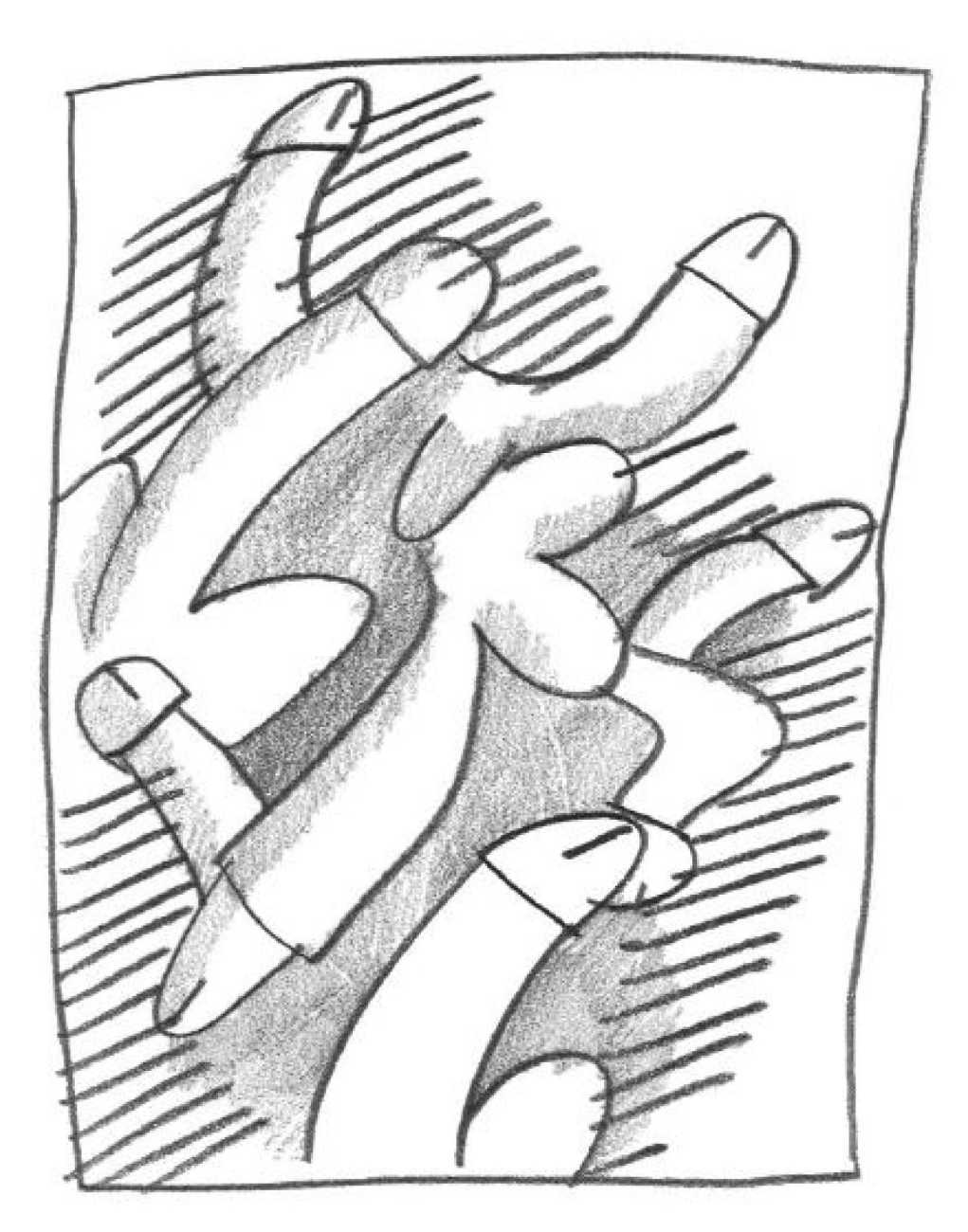
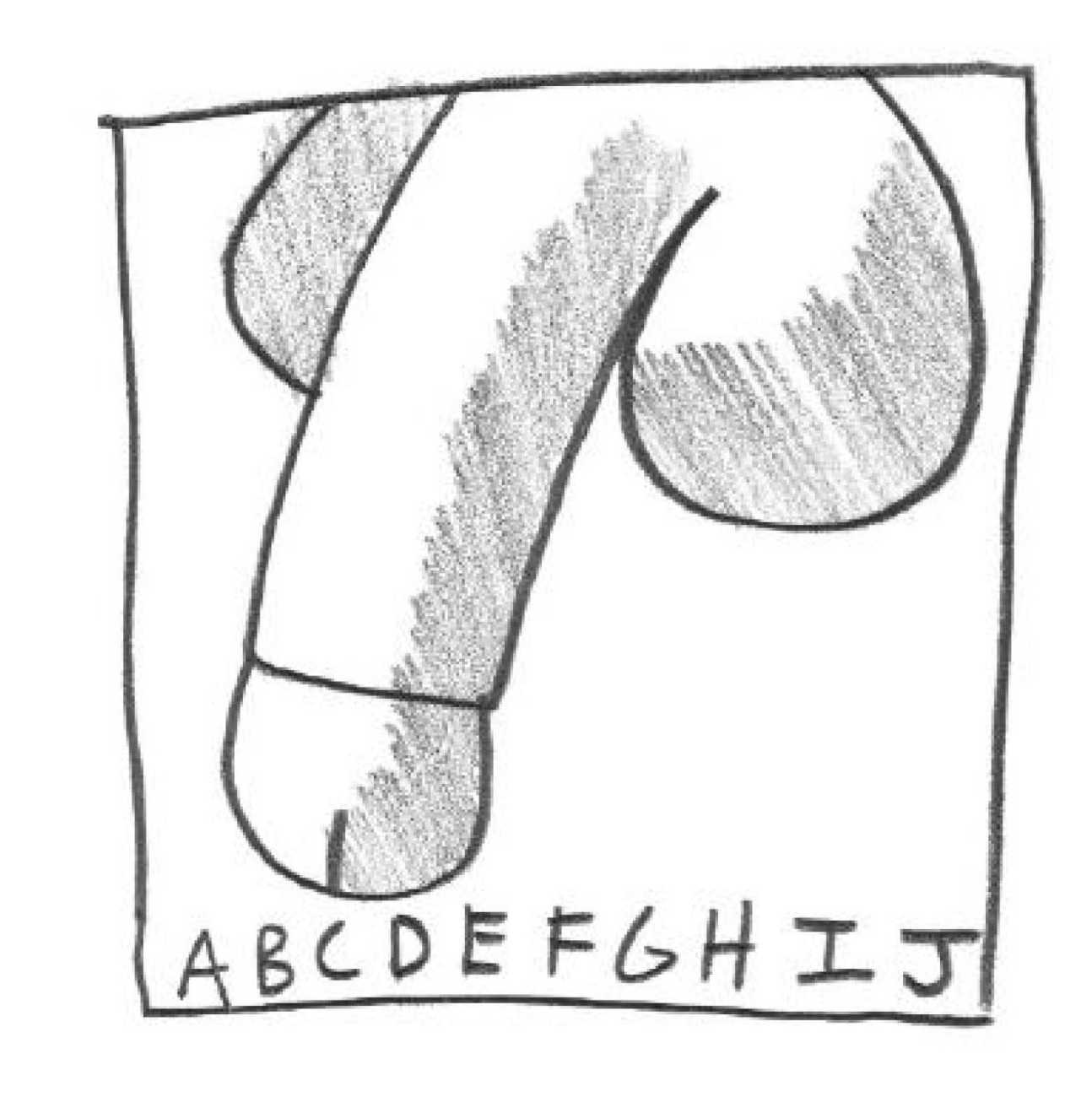
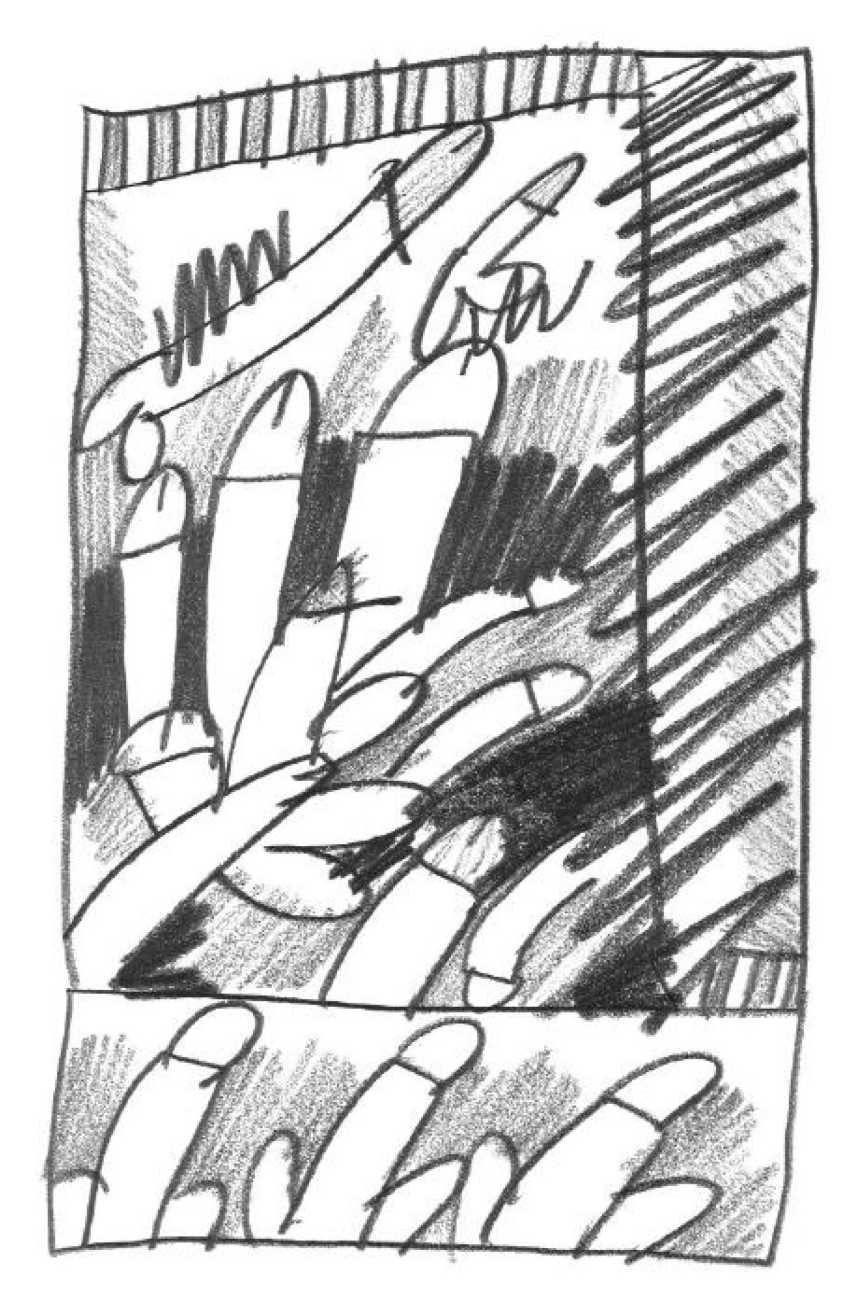
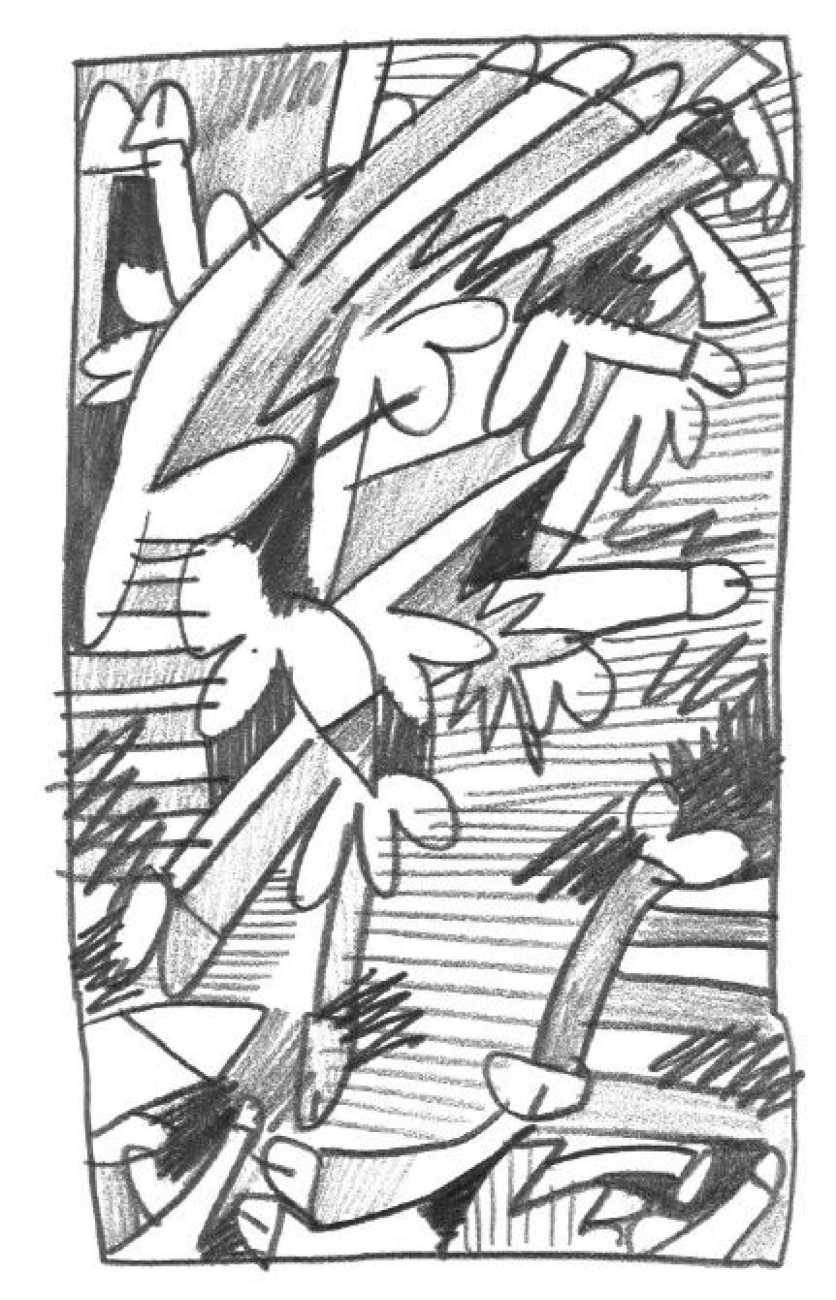
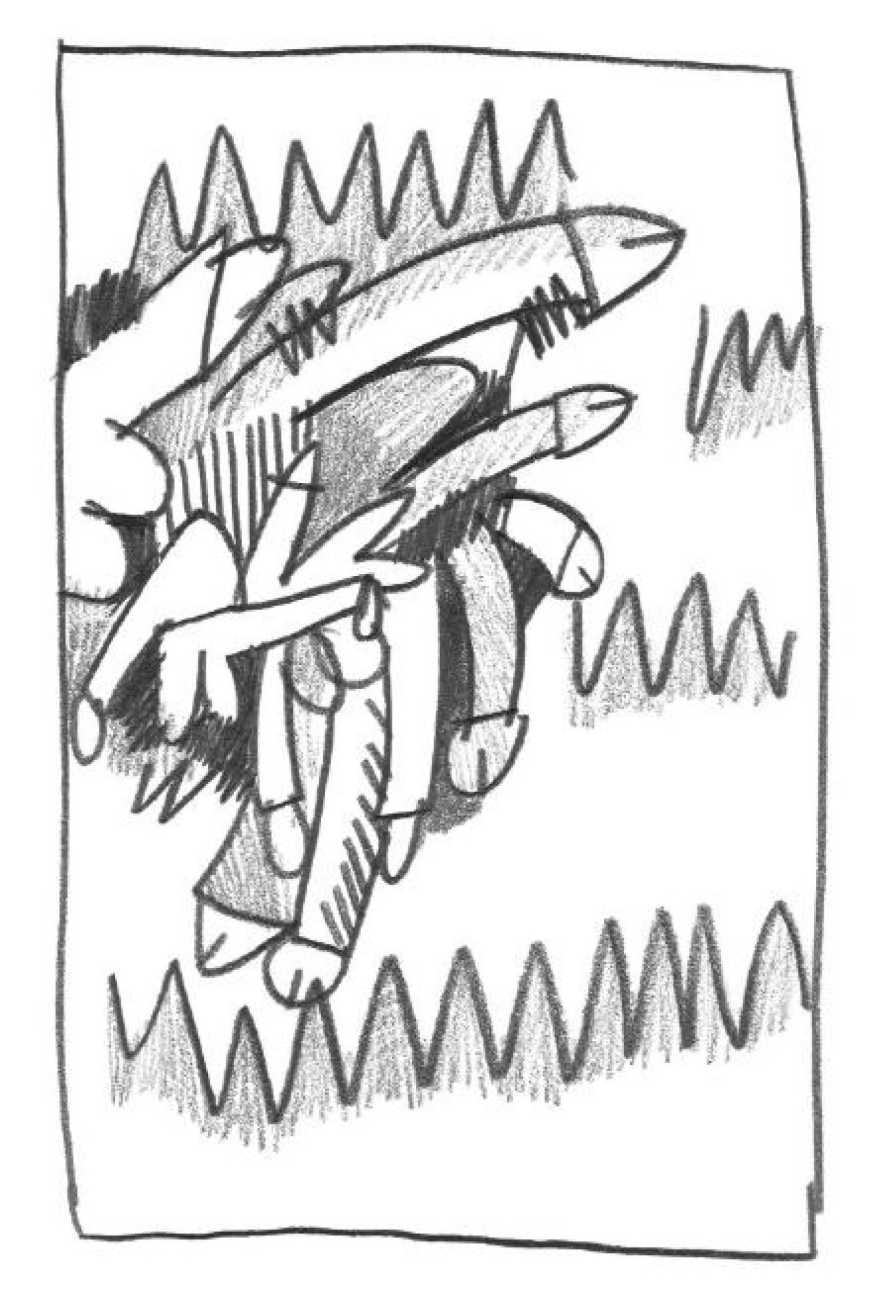
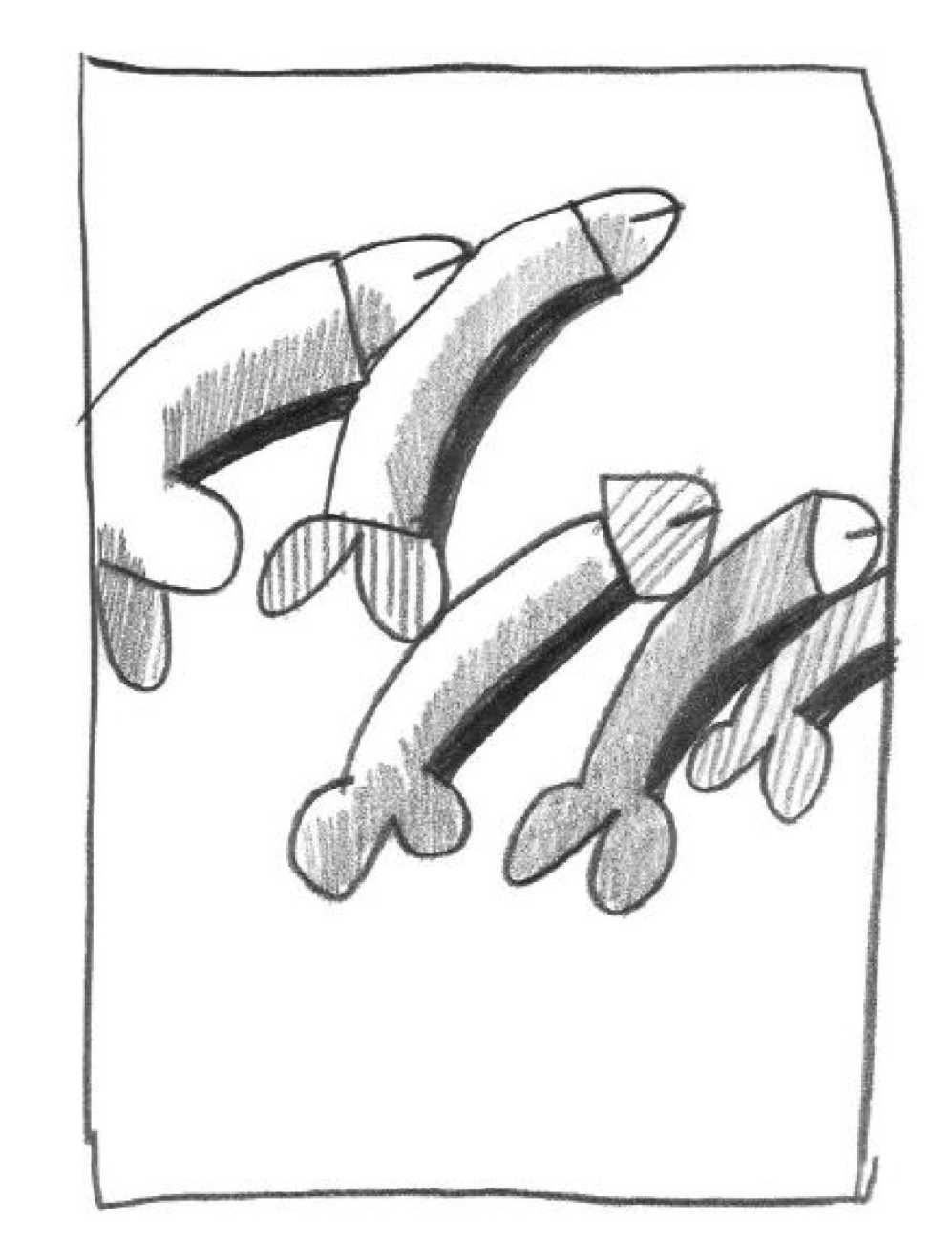
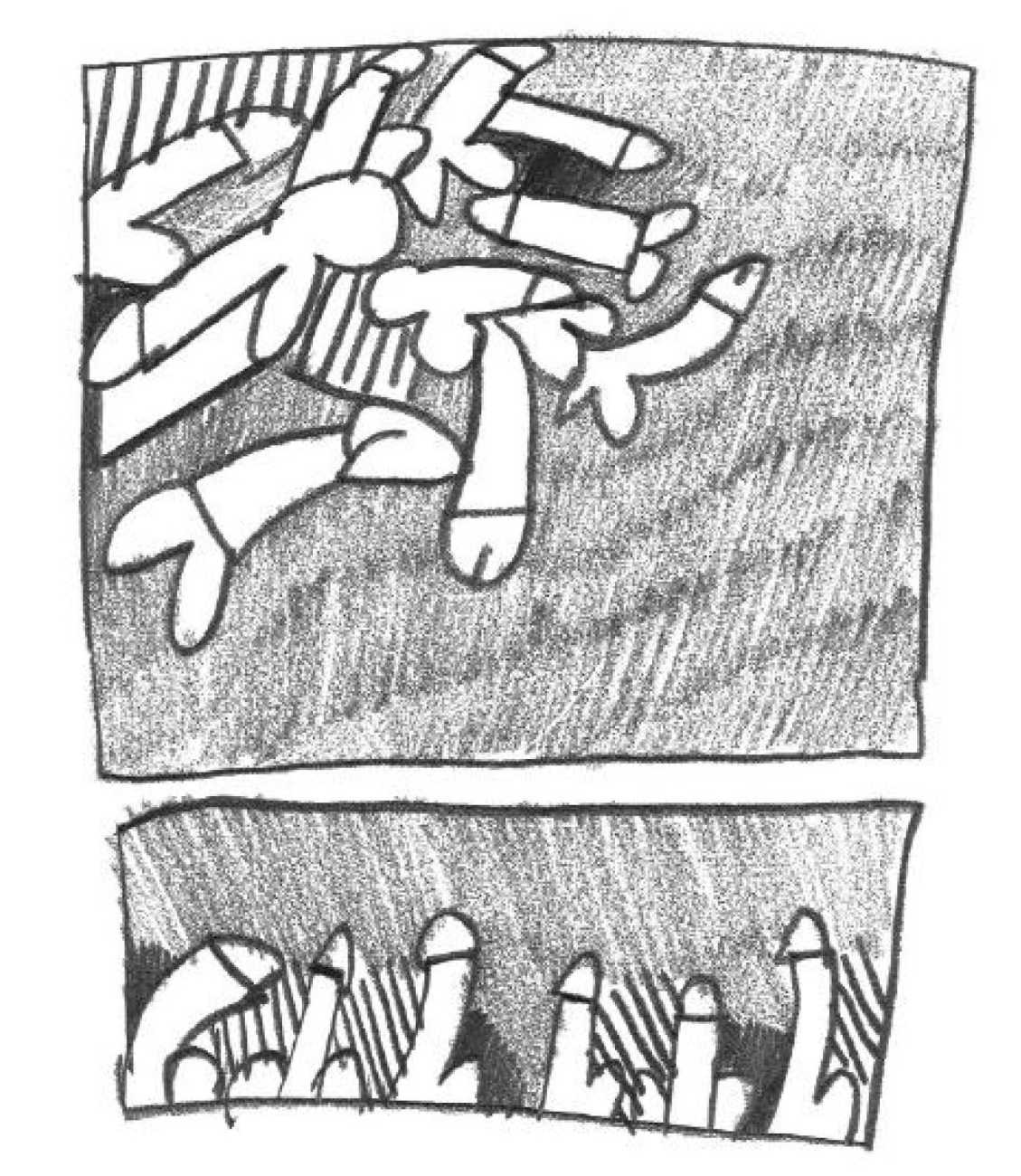
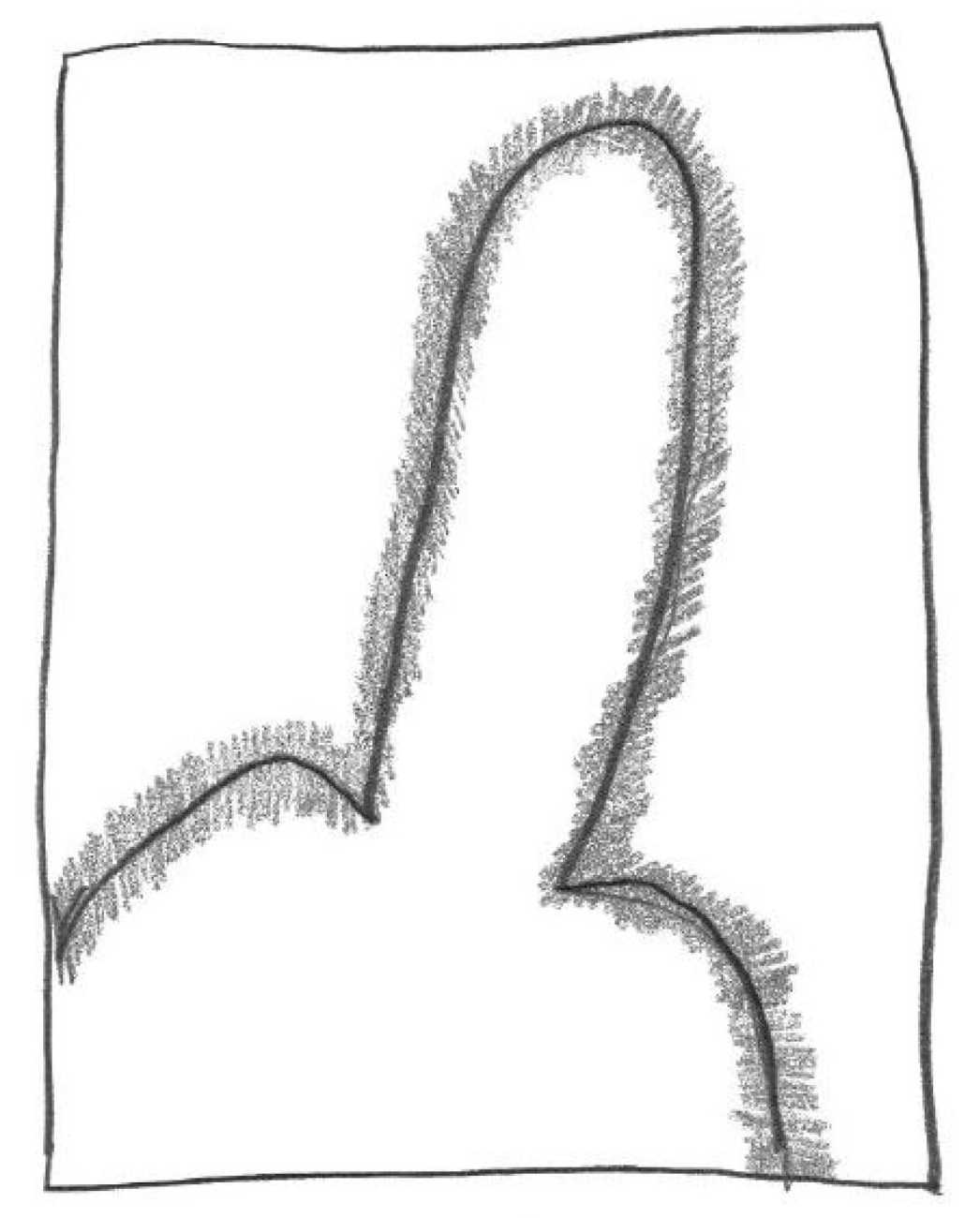
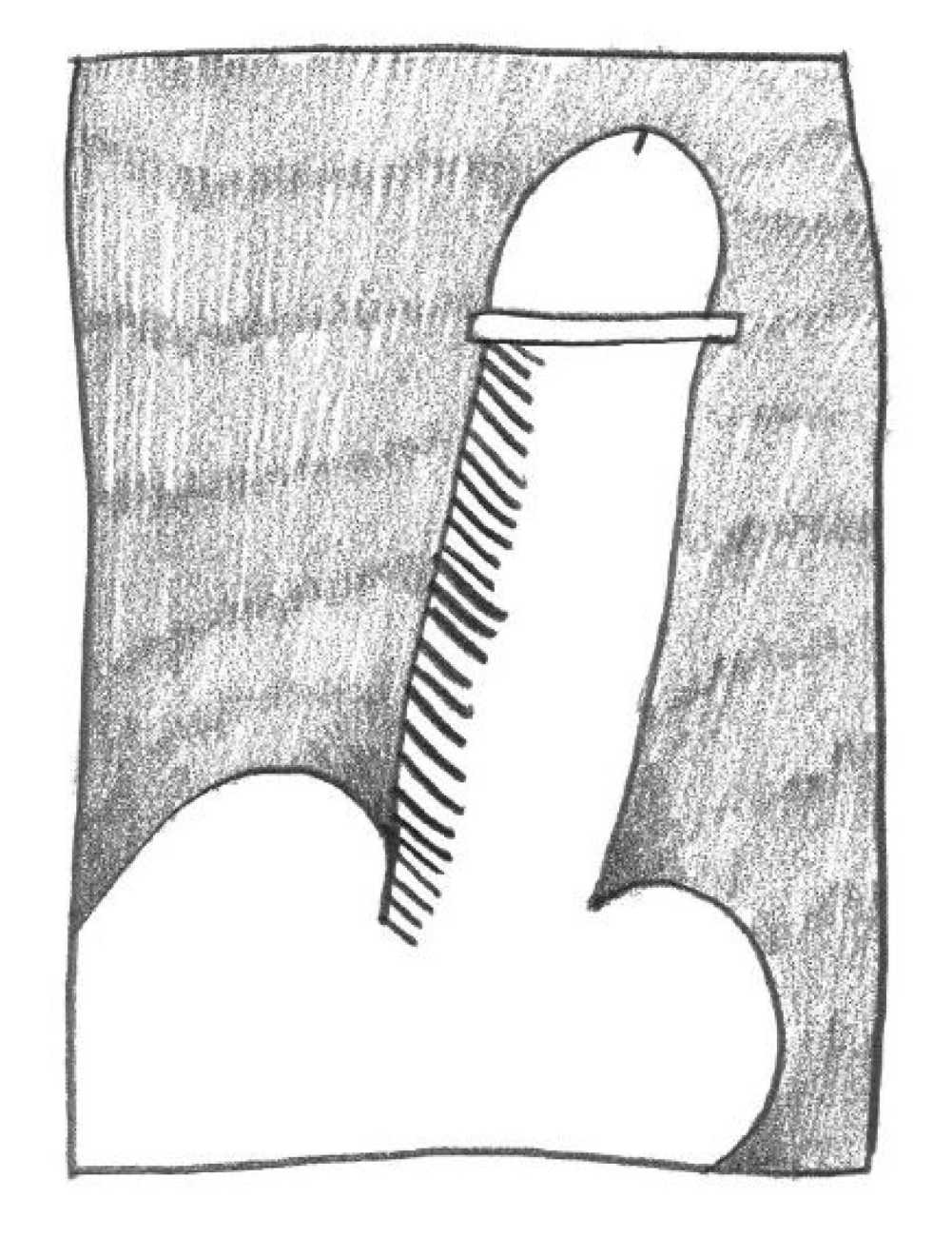
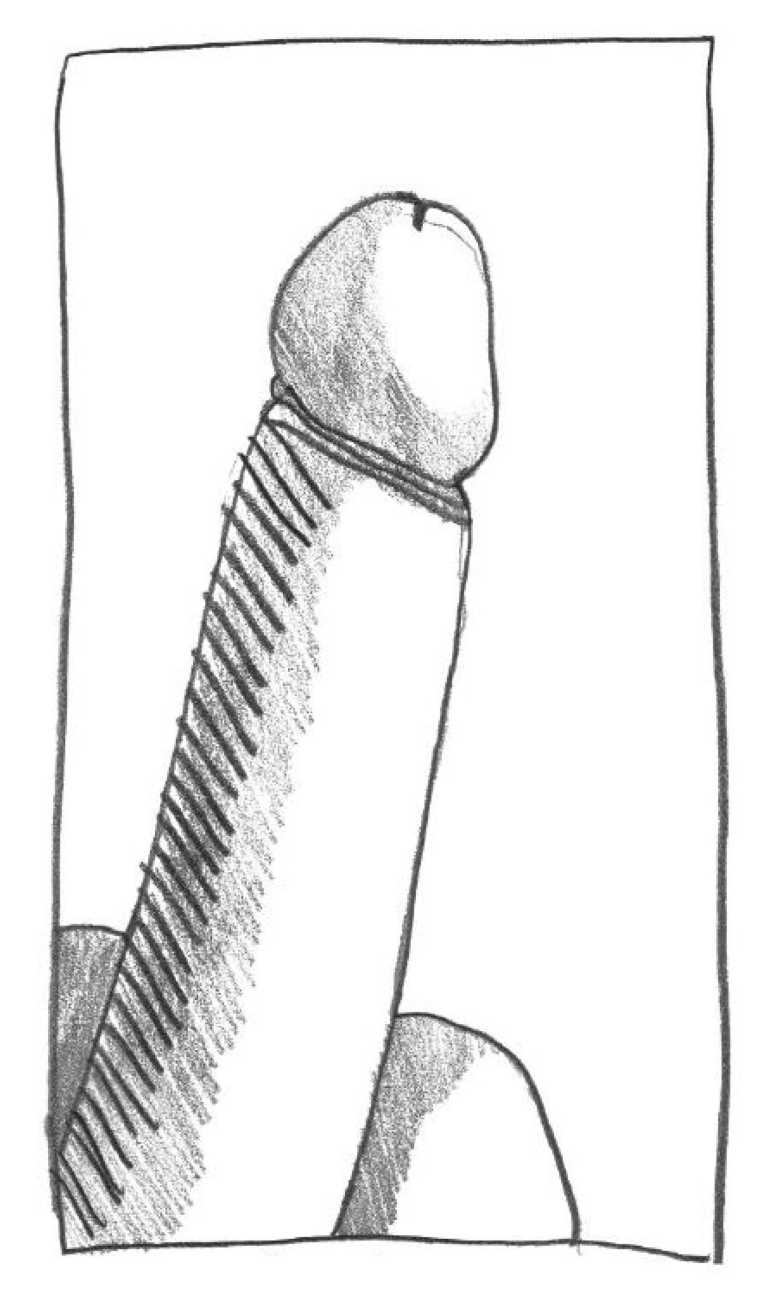
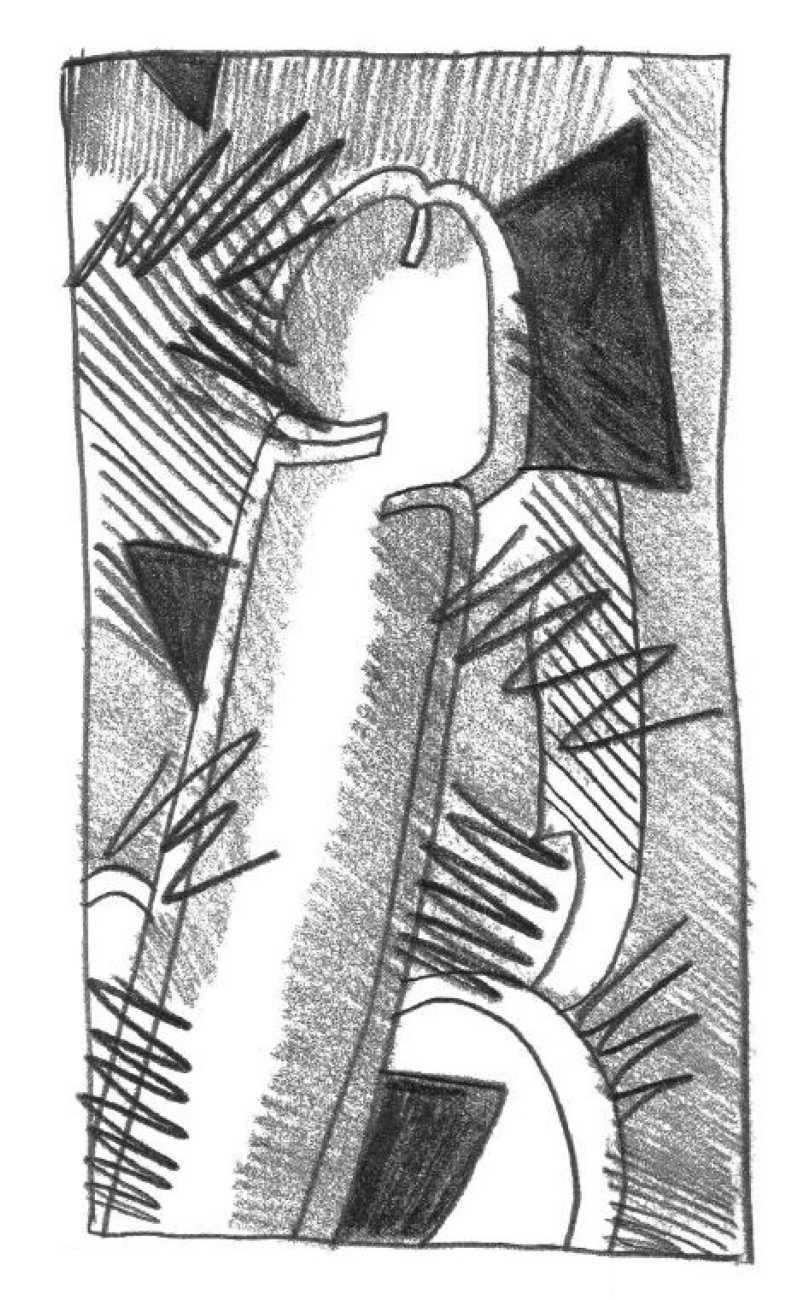
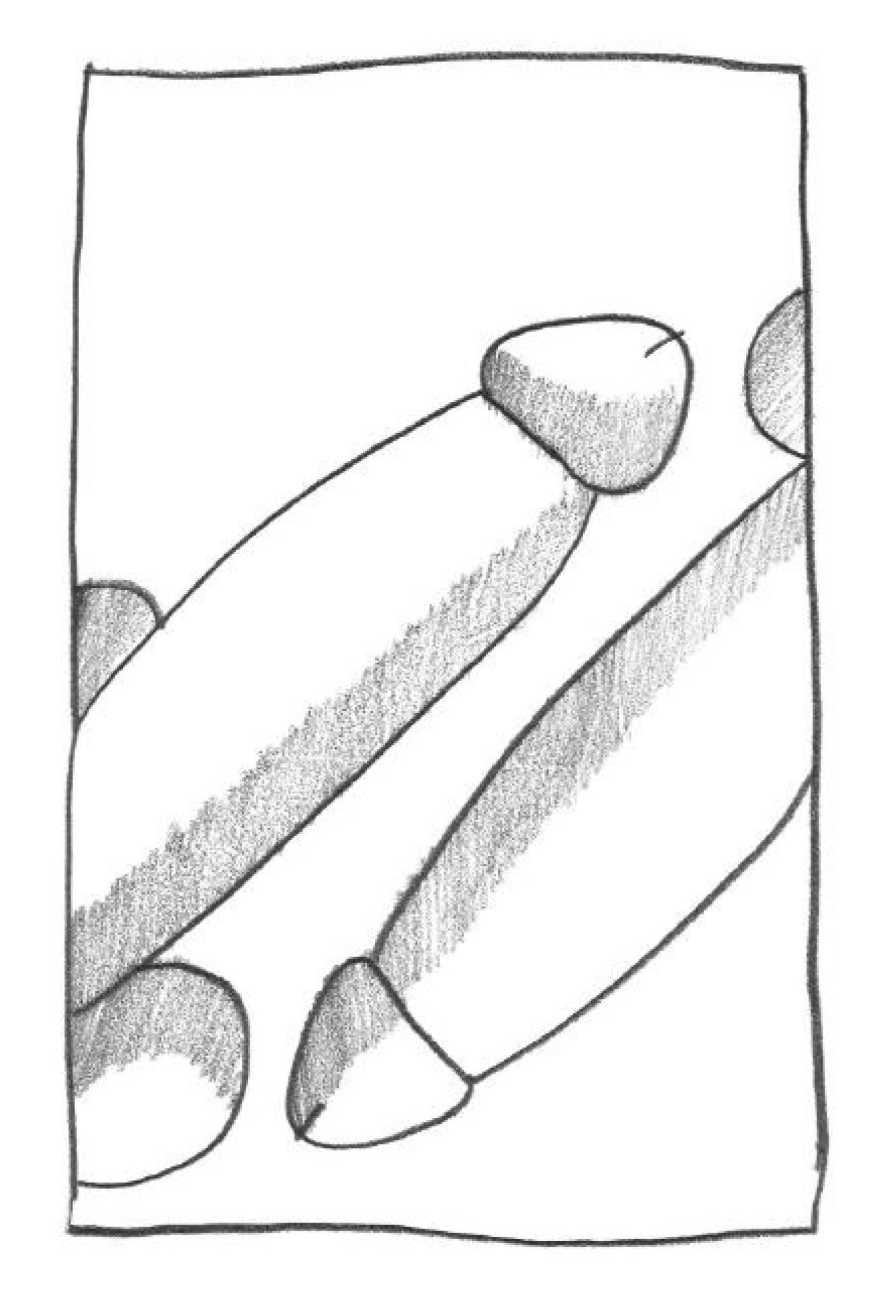
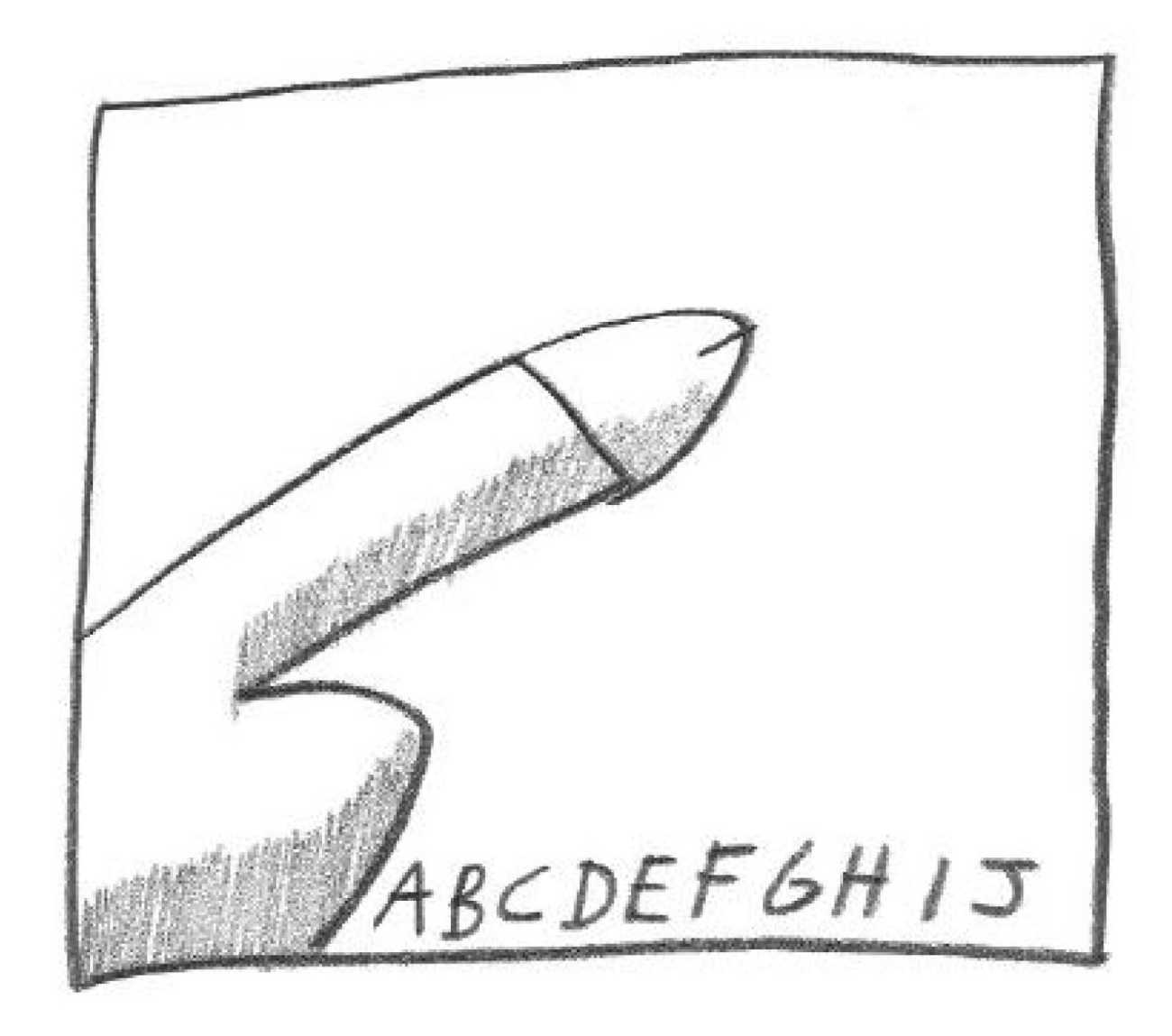
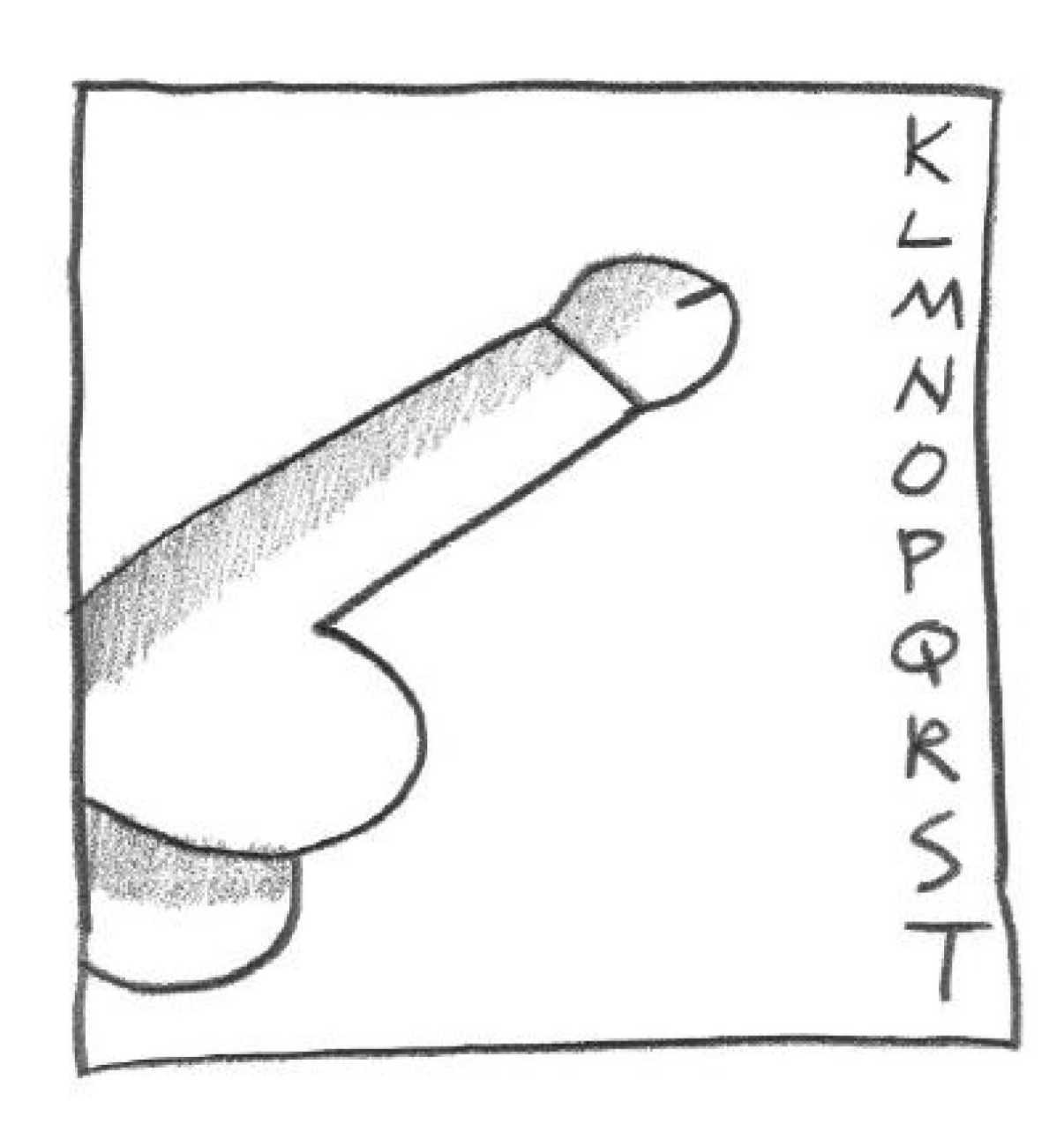
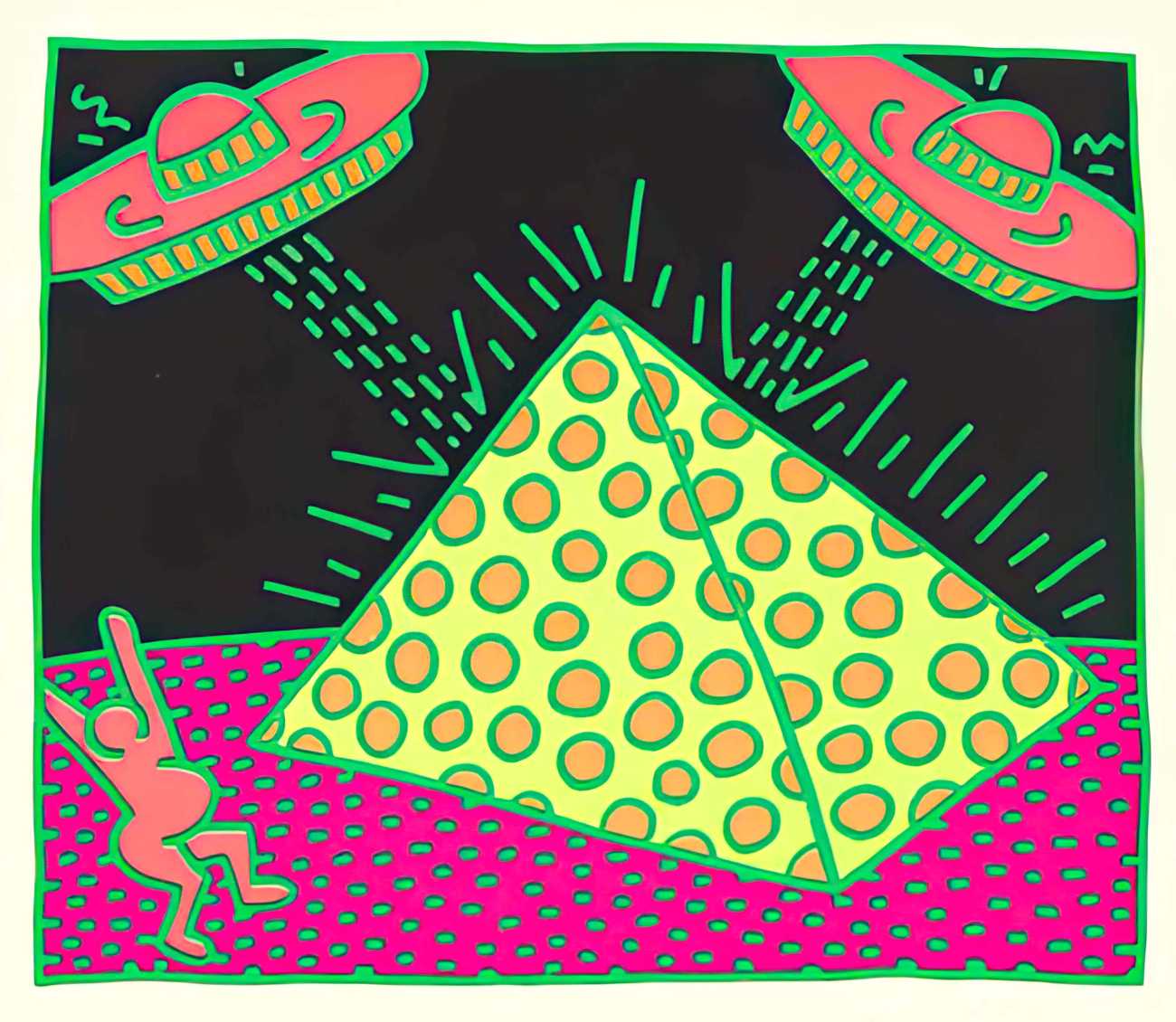
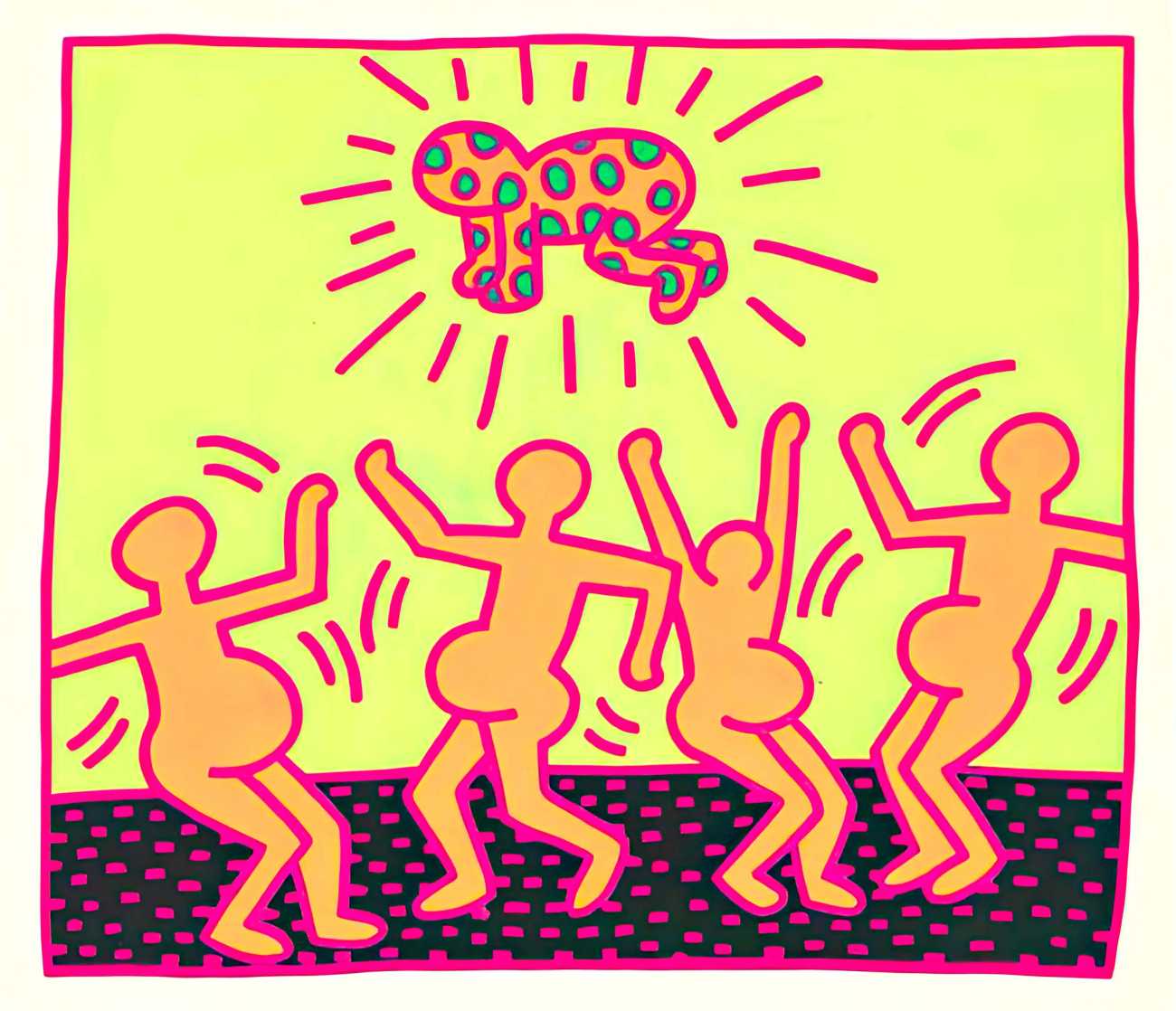
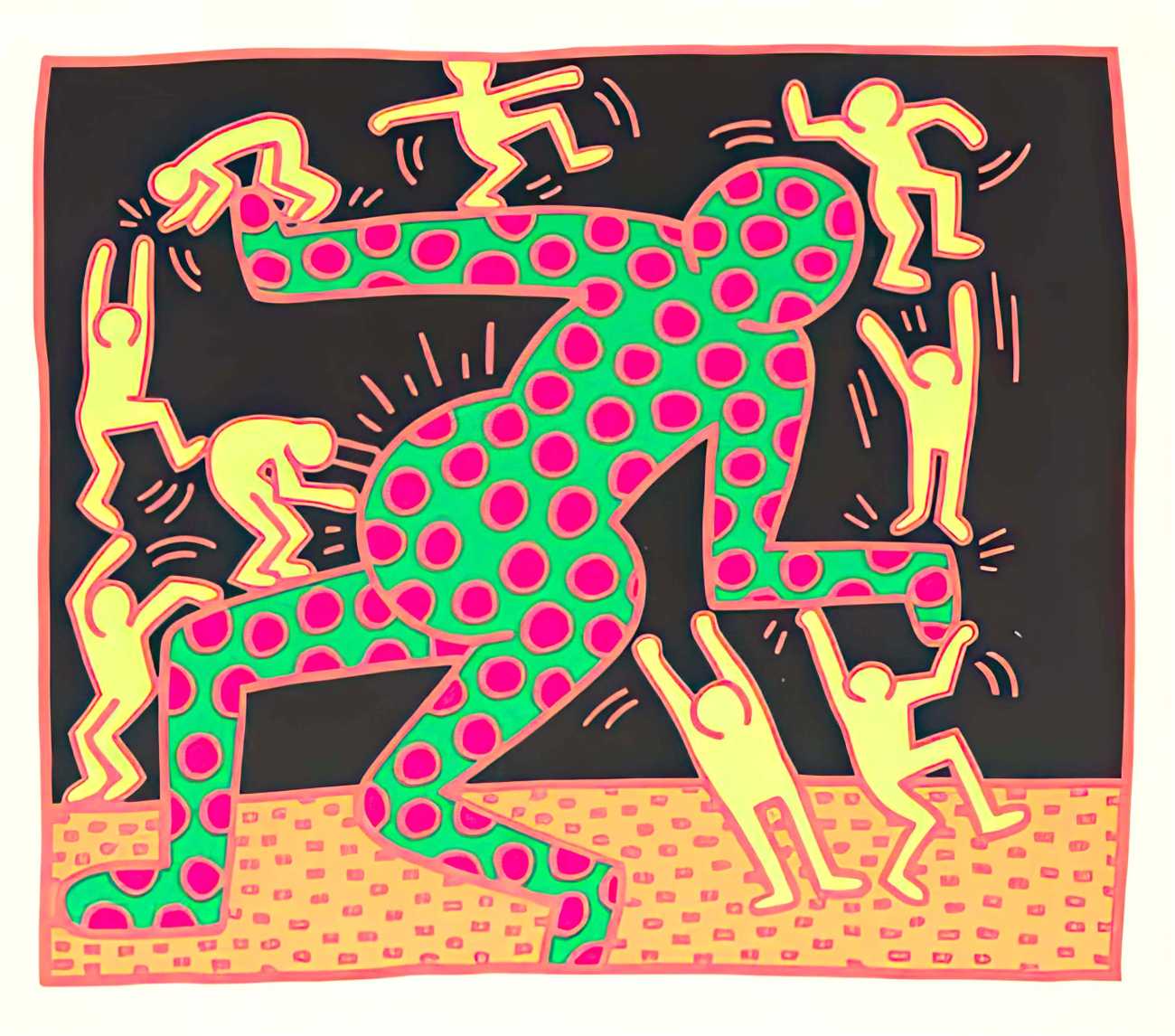
Fertility Suite (1983)
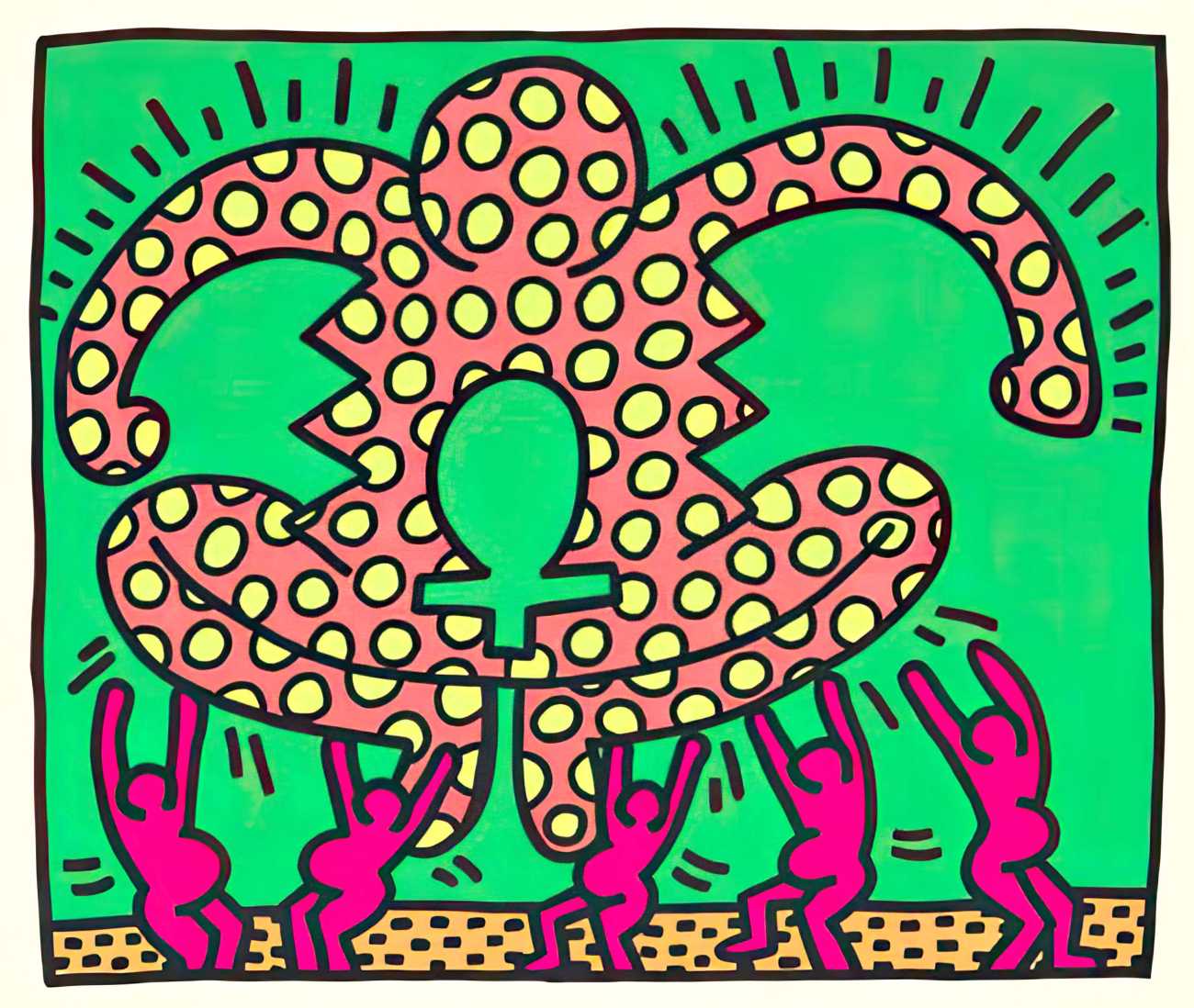
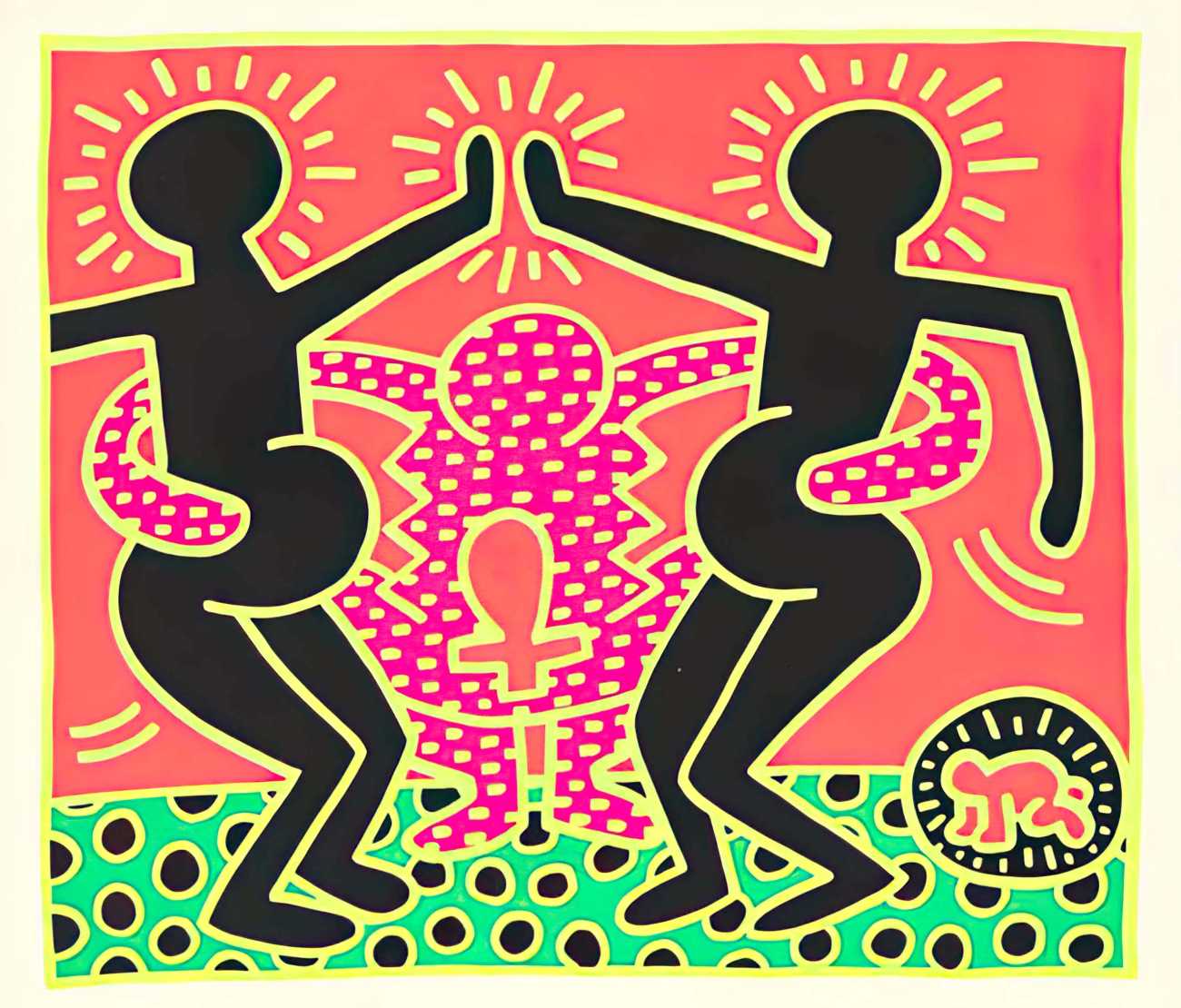
The Lucio Amelio Portfolio (1983)

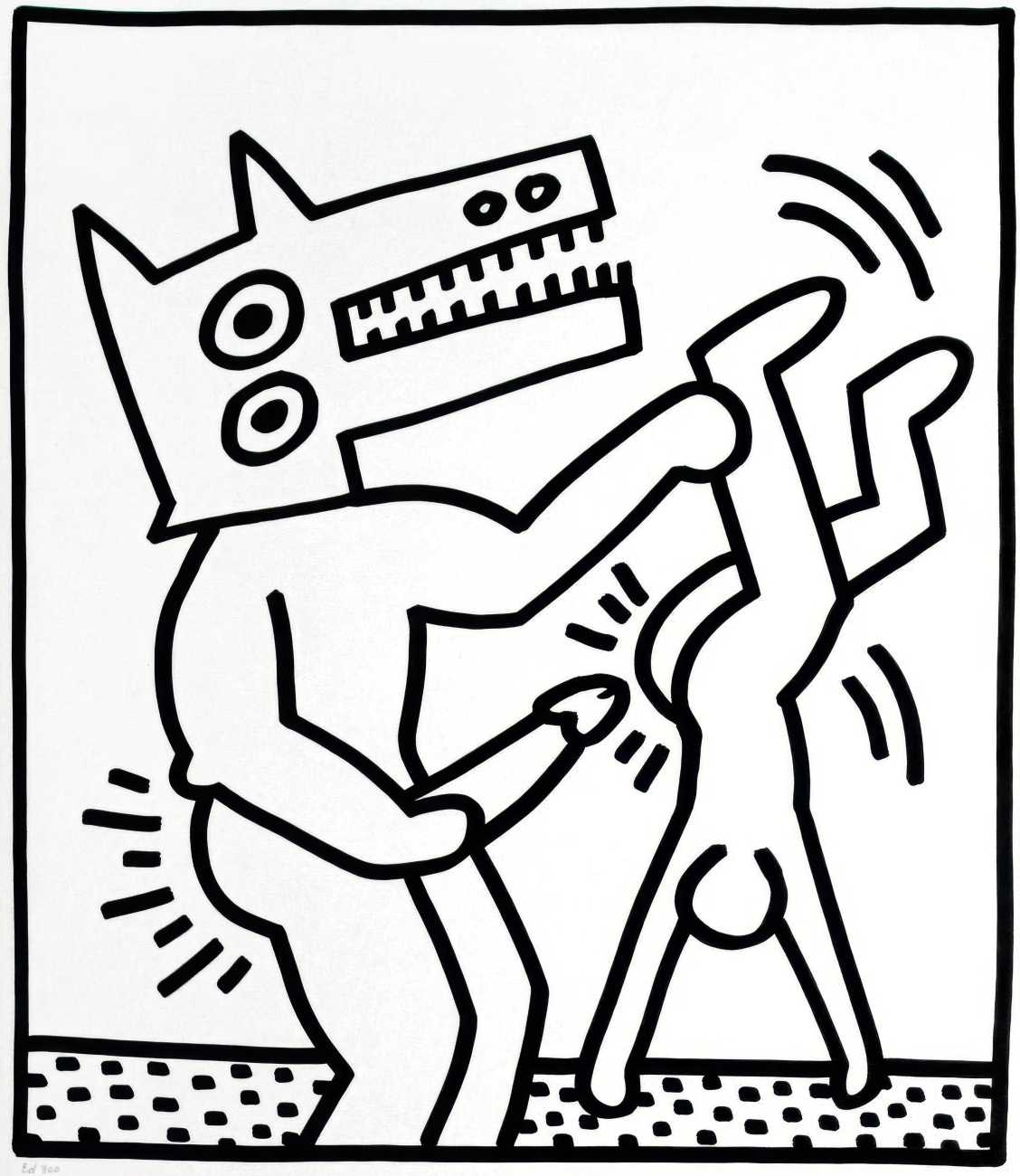
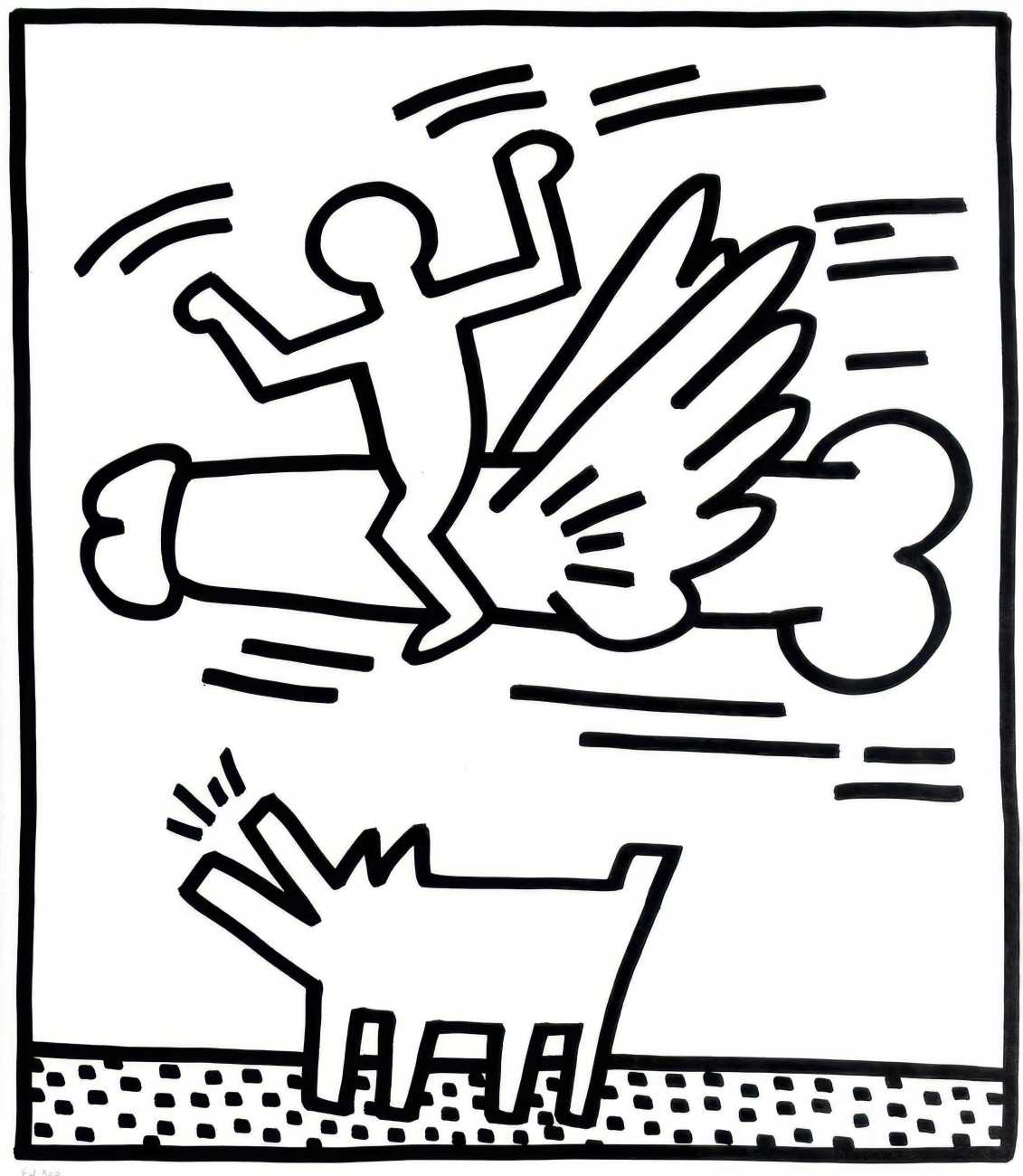
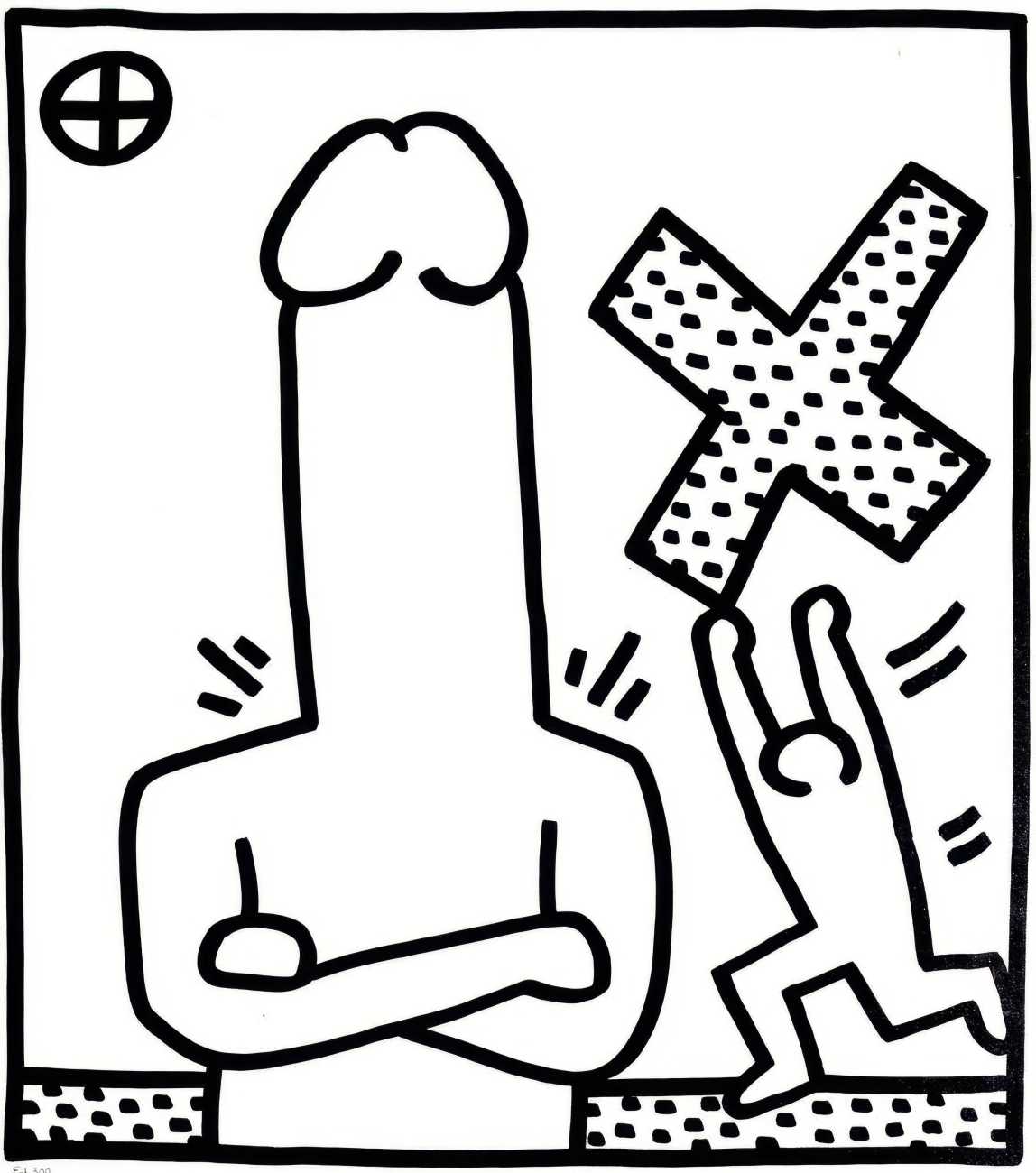
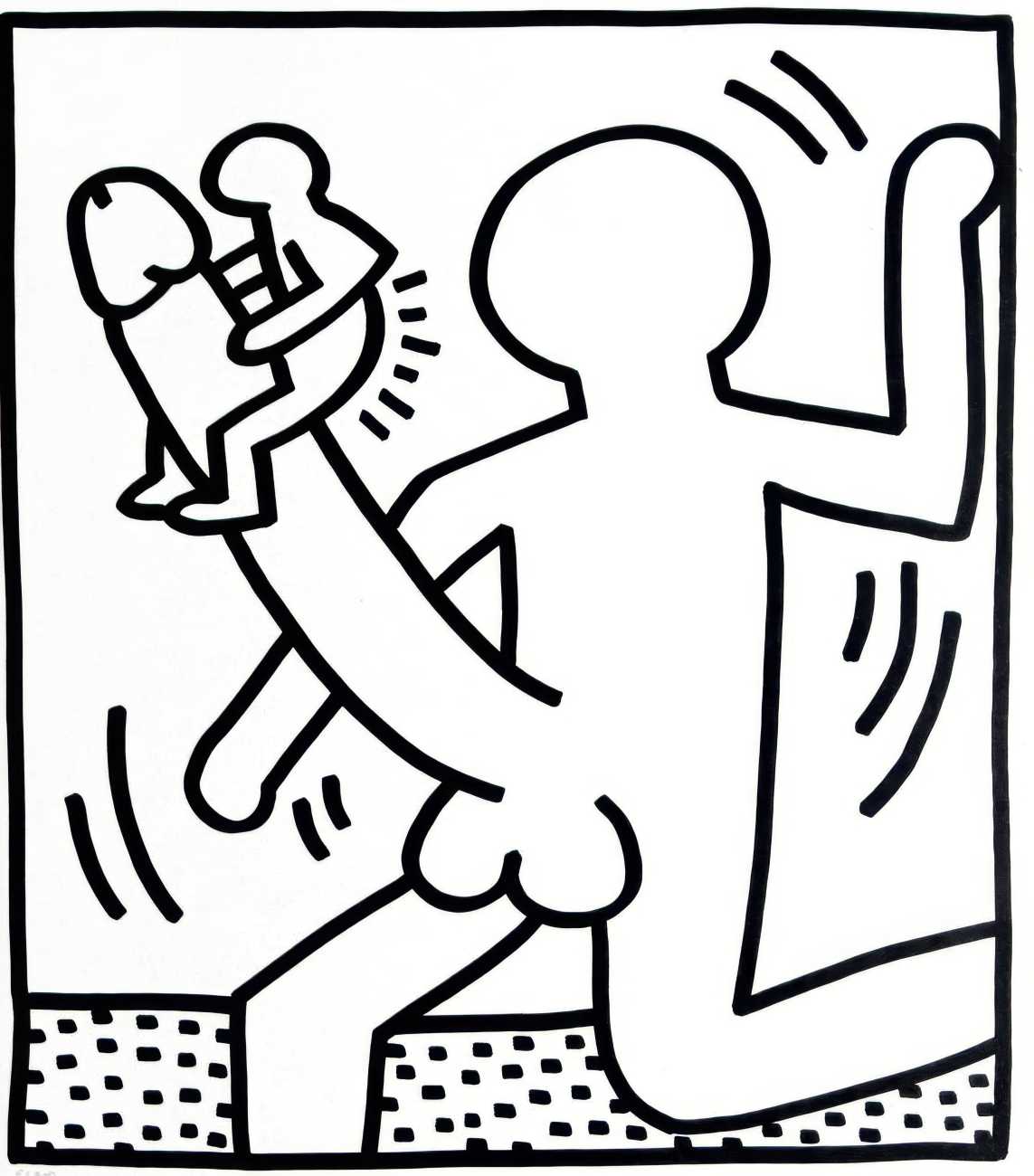
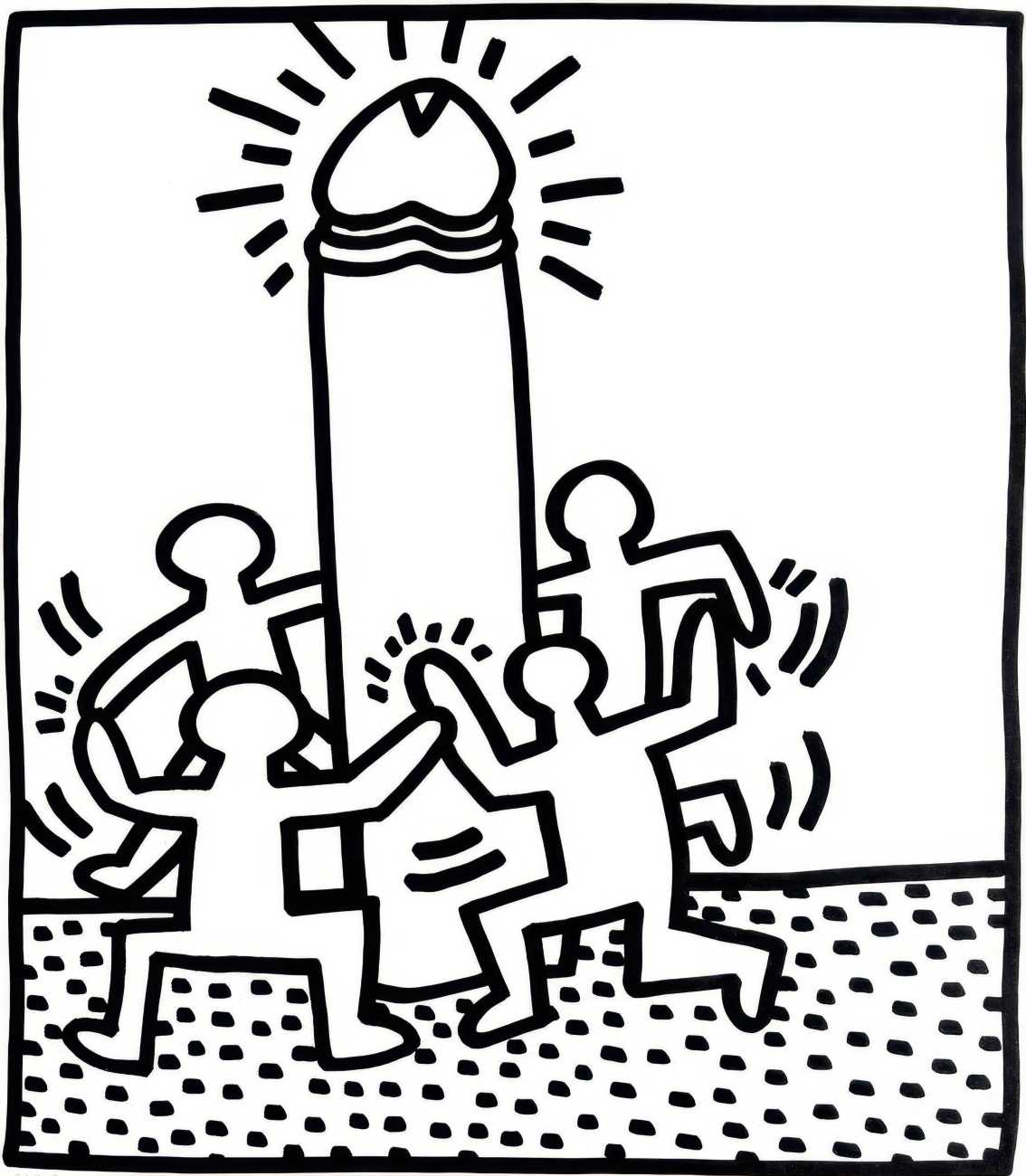

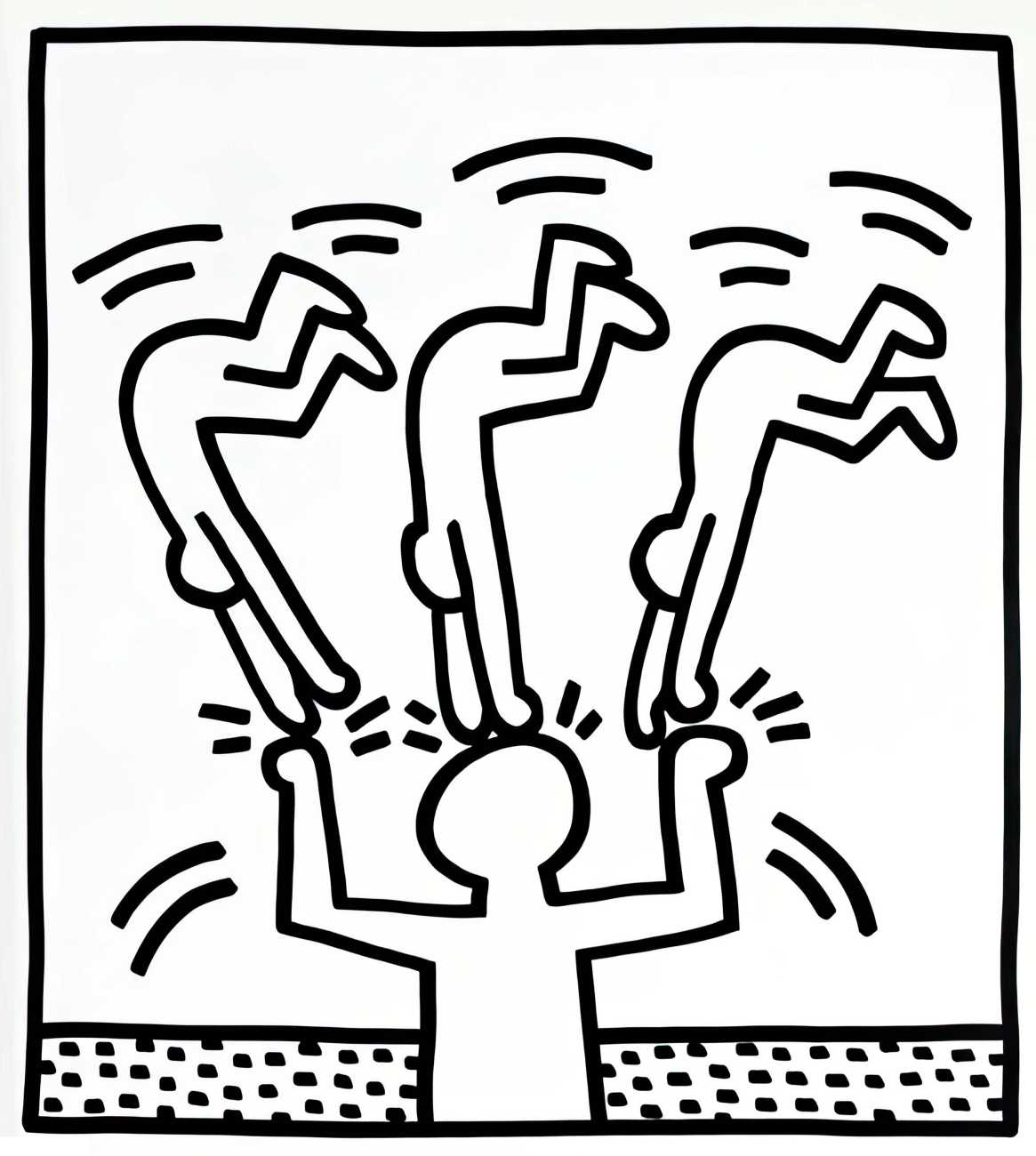
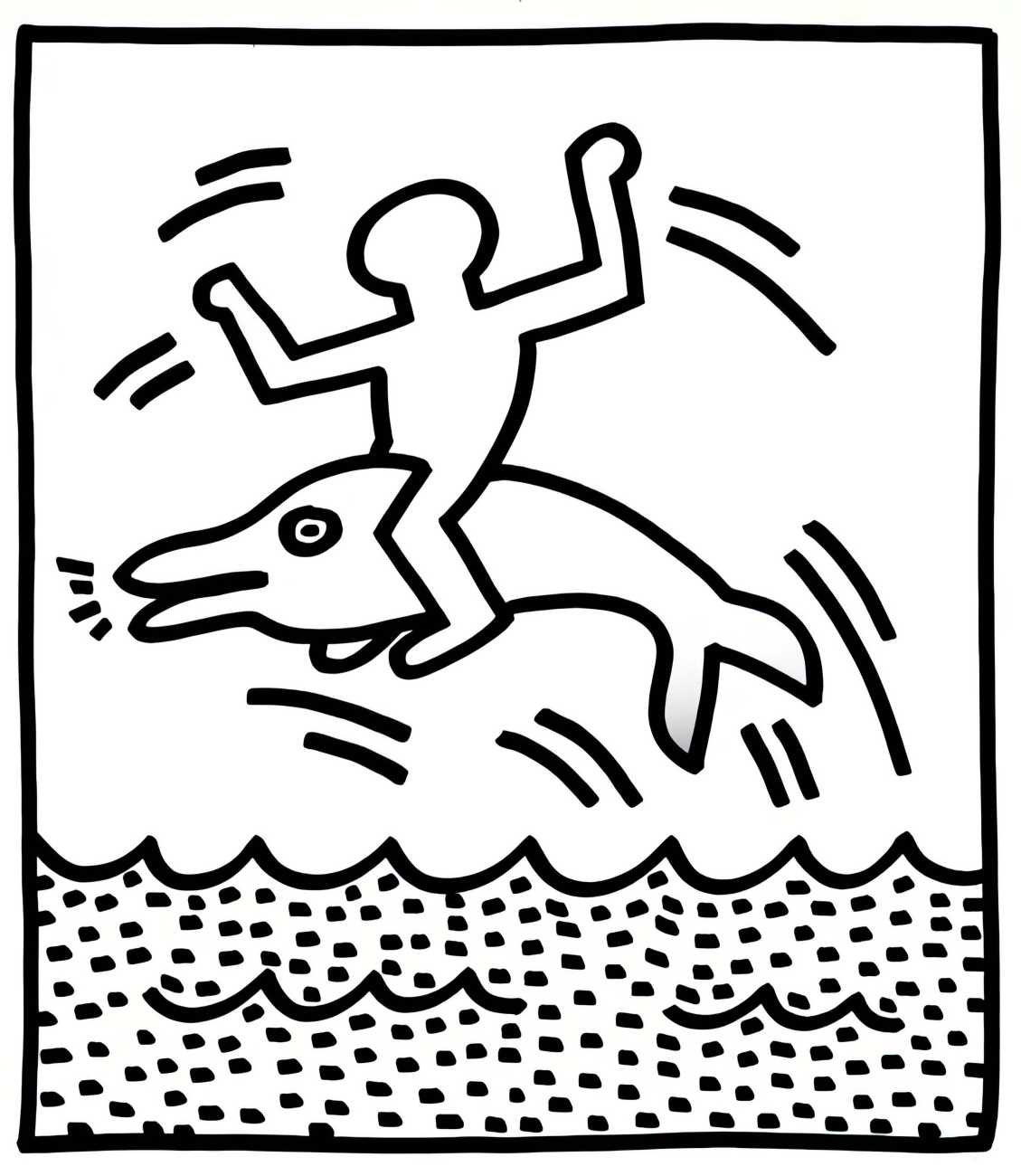
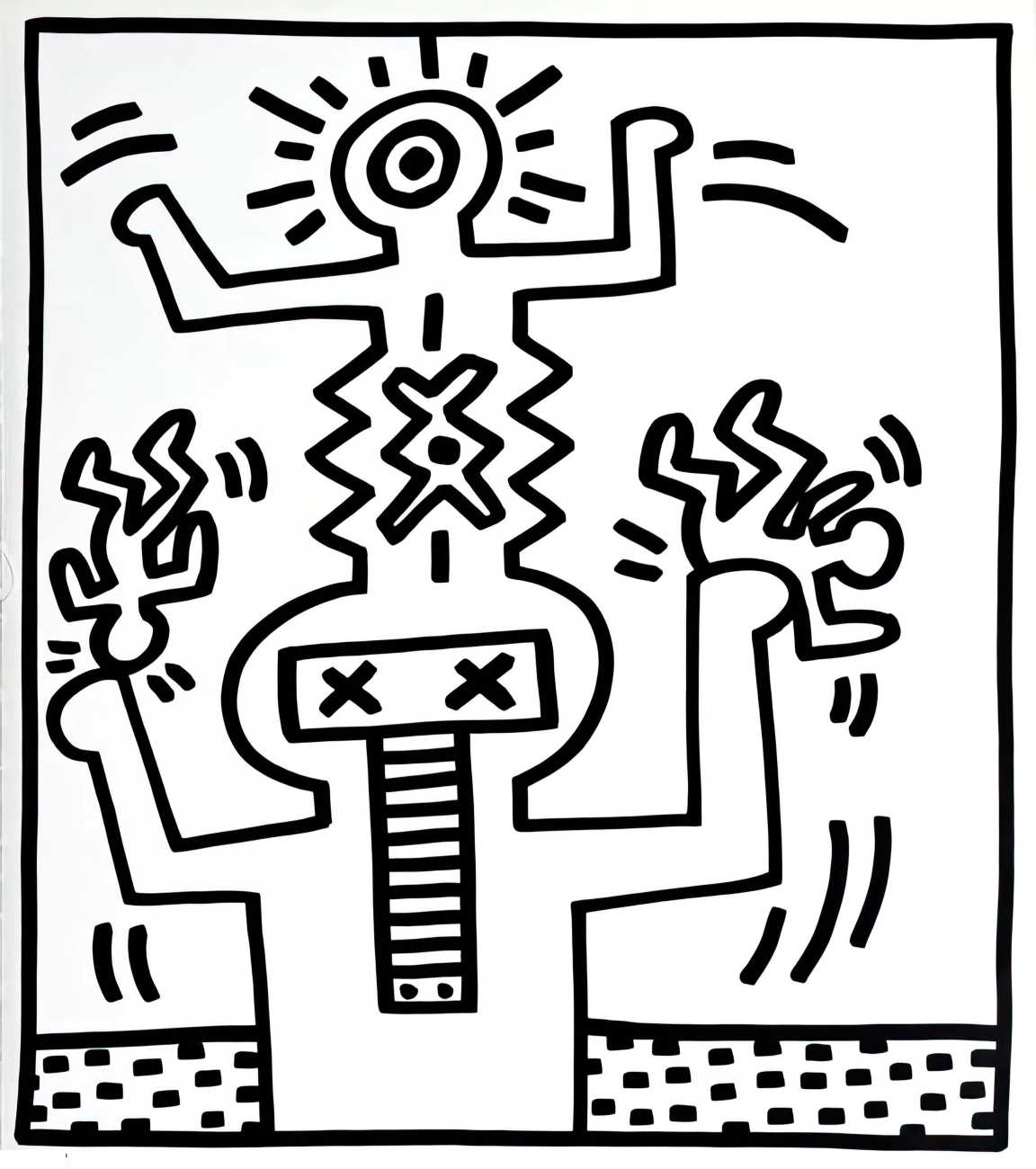
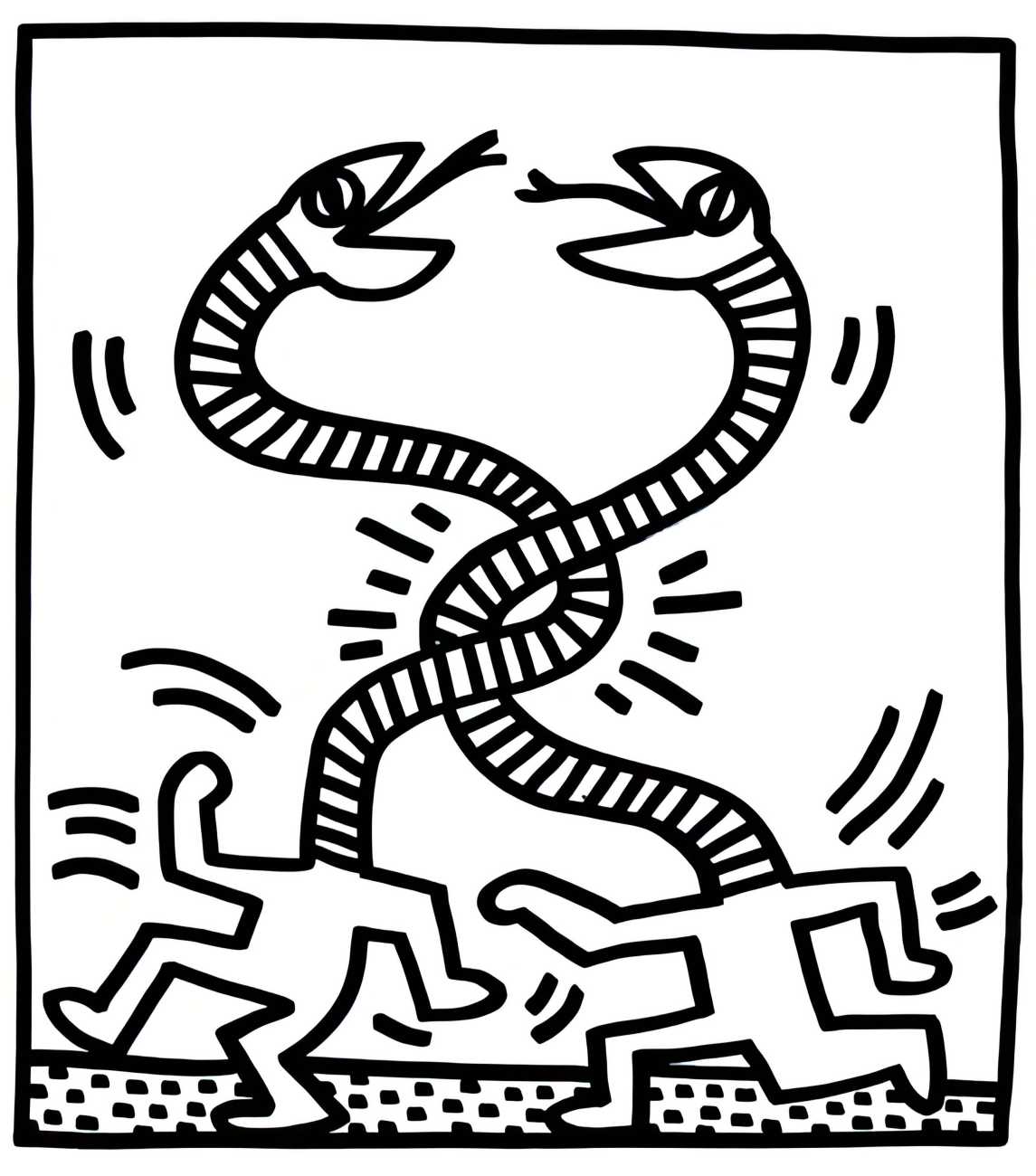
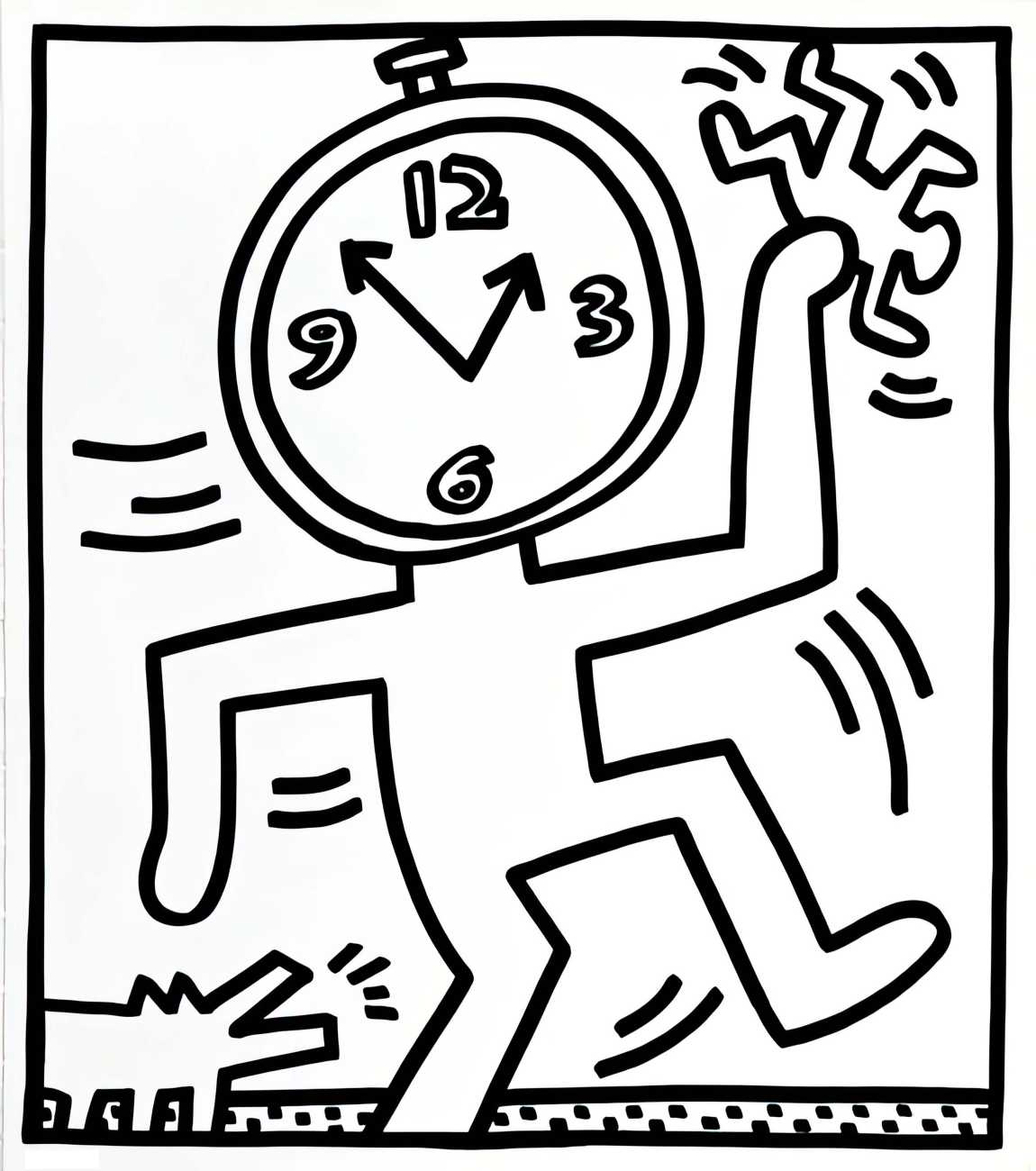
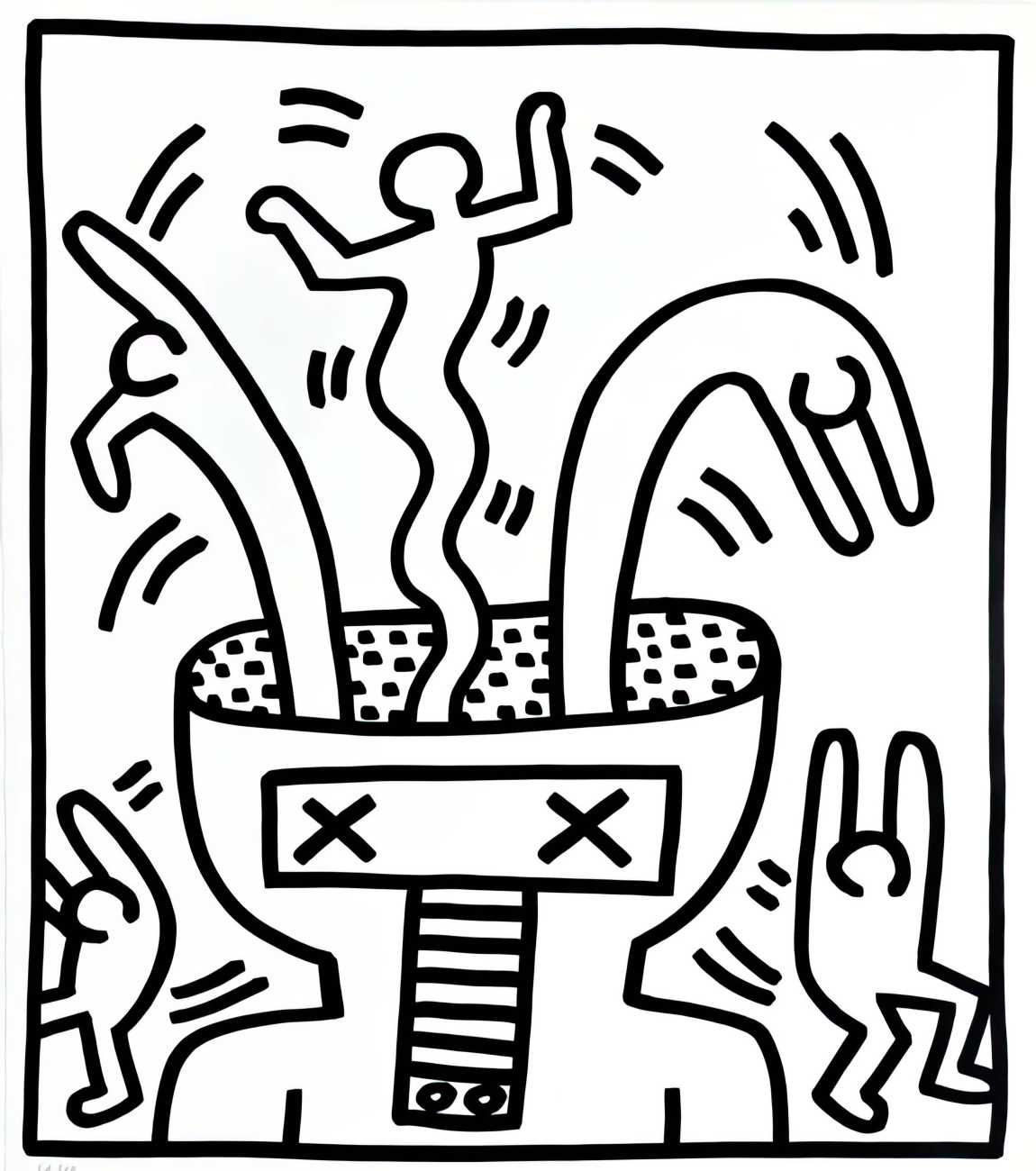
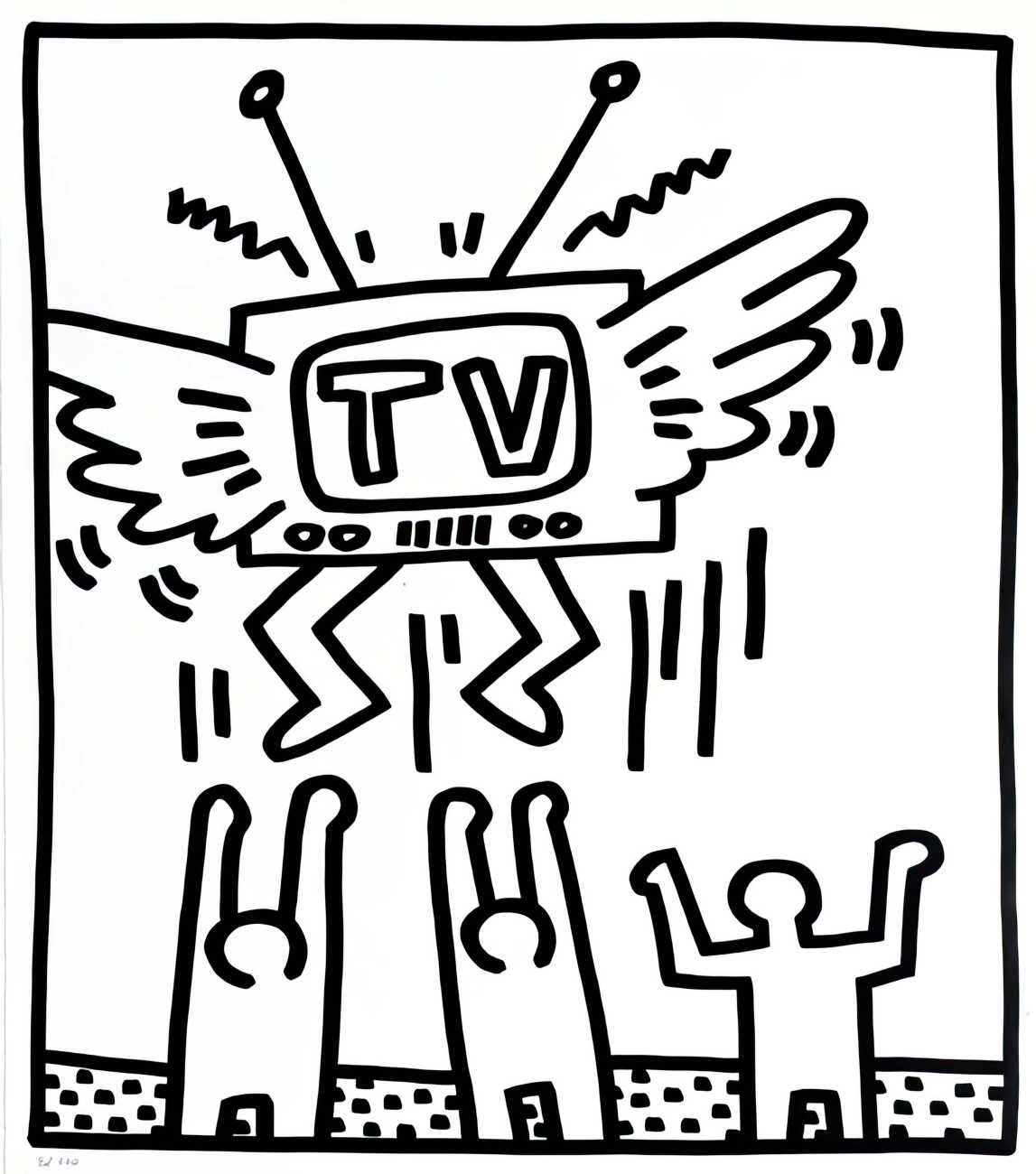

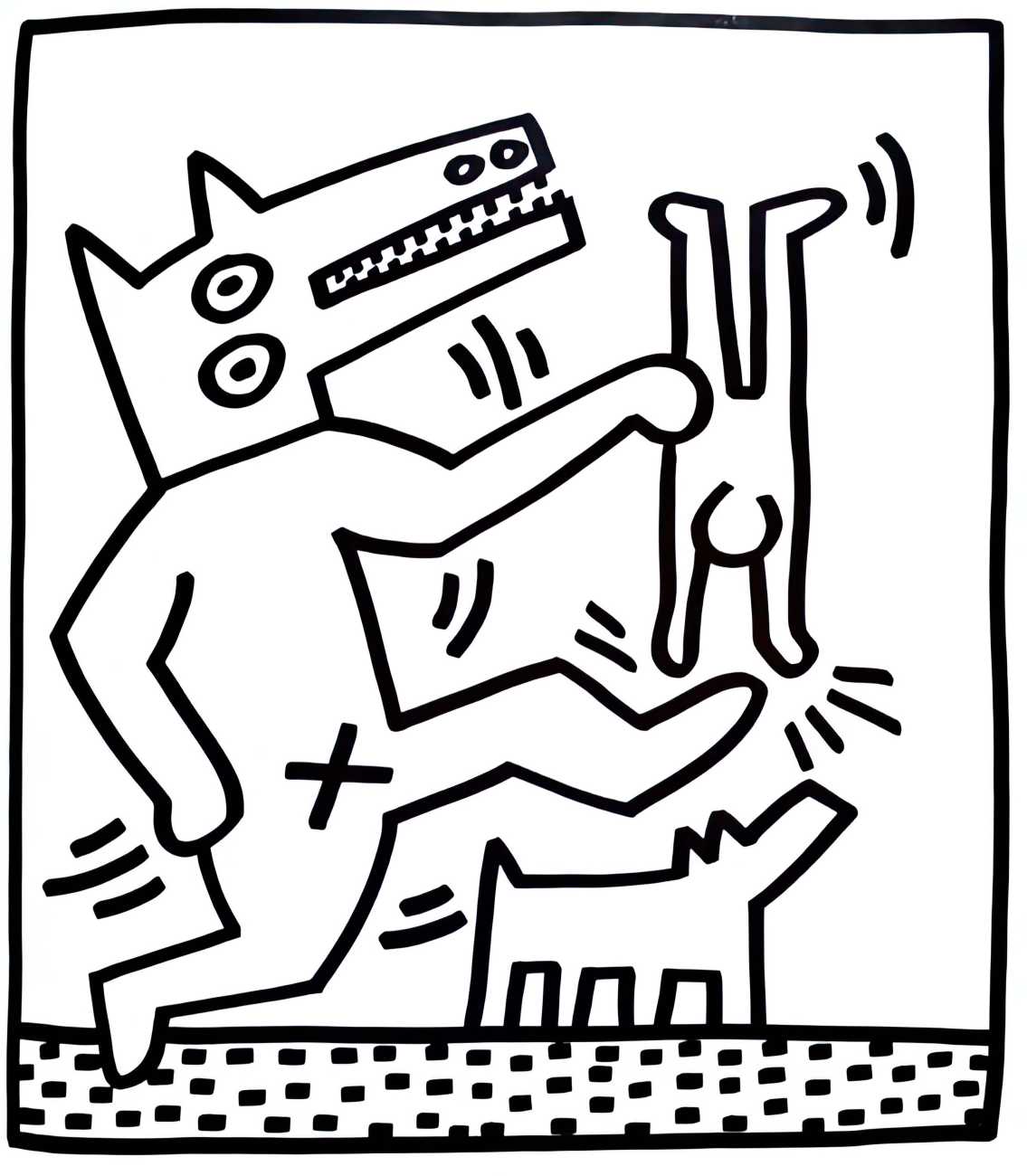
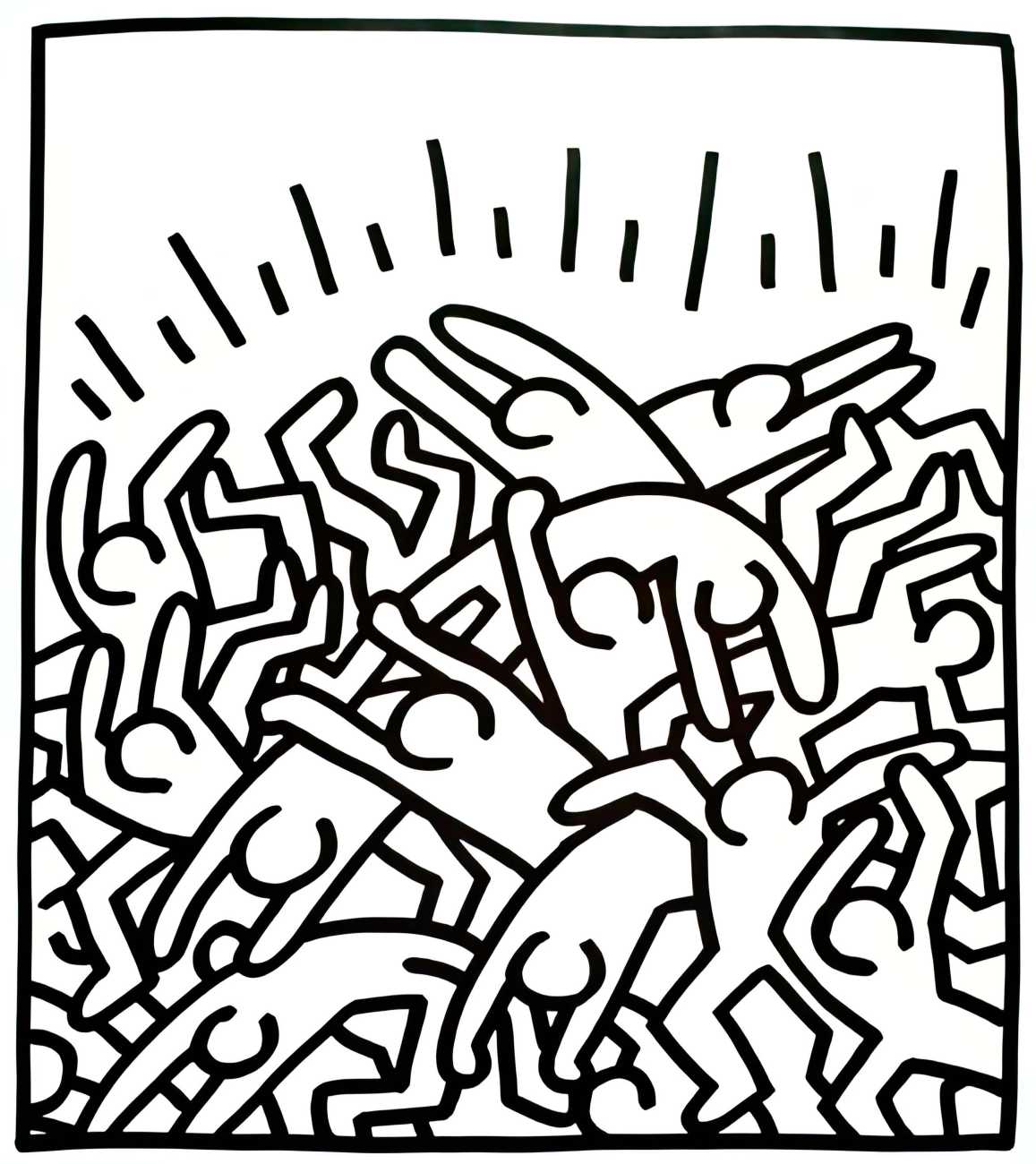
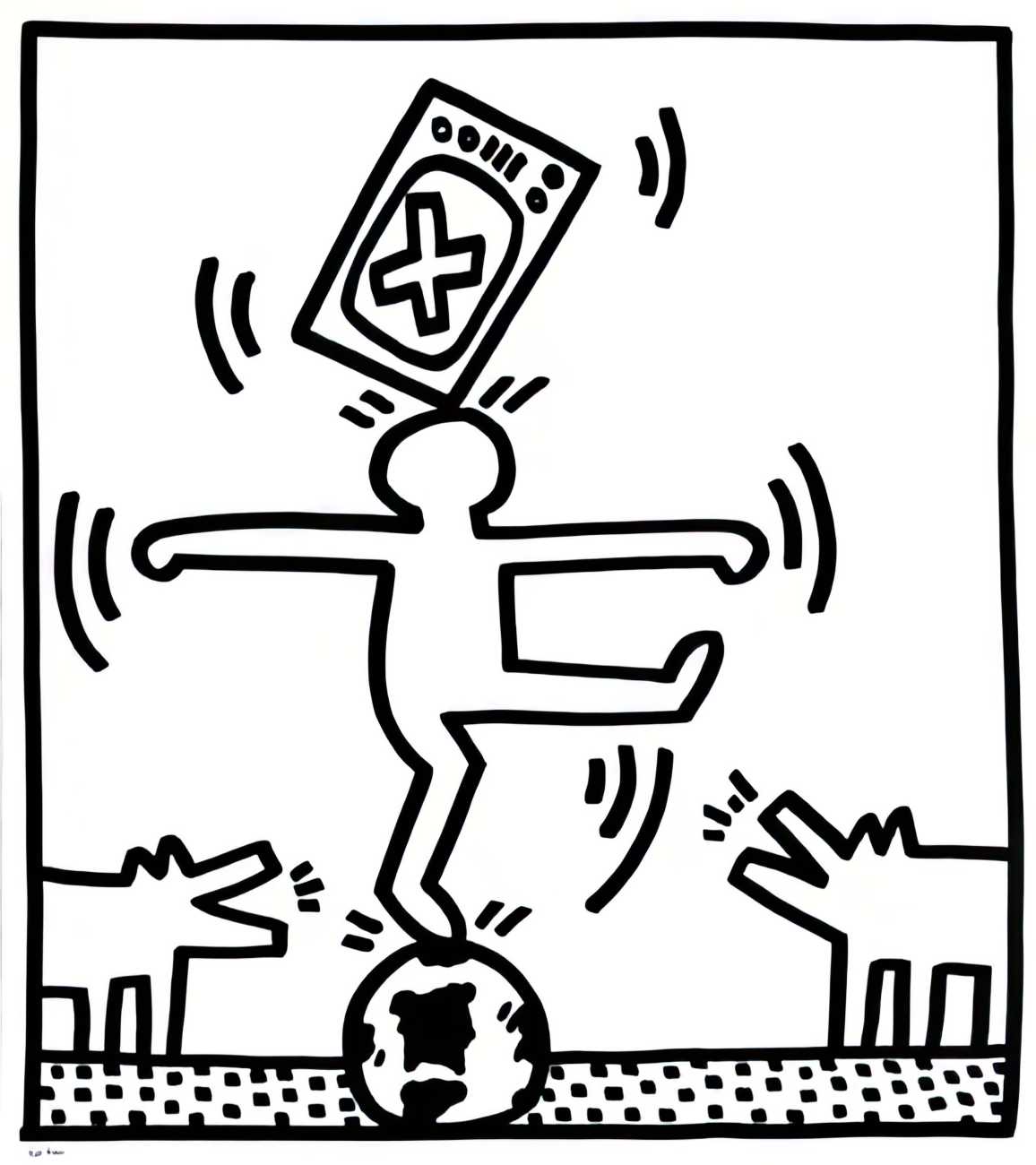
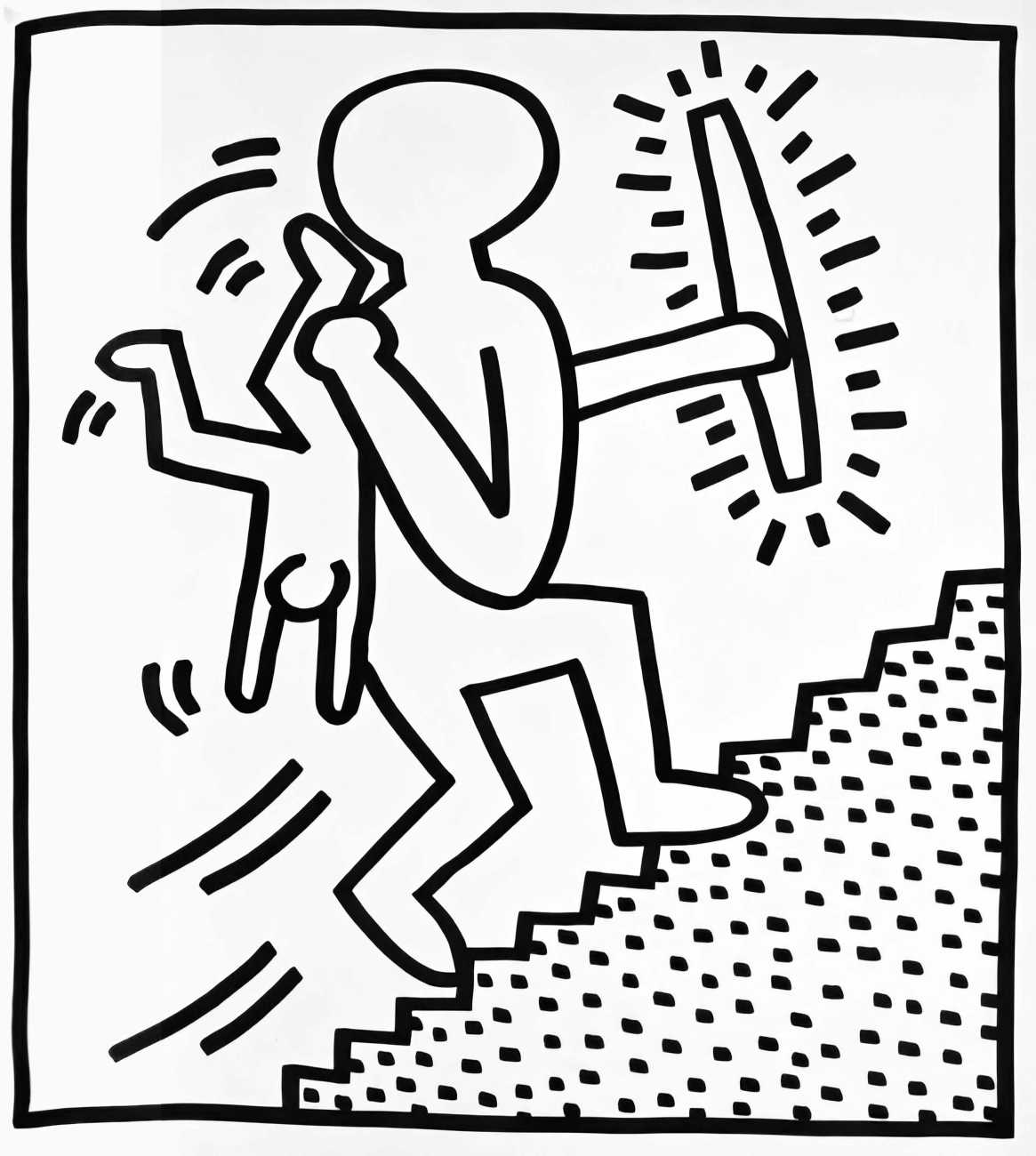

Bad Boys (1986)
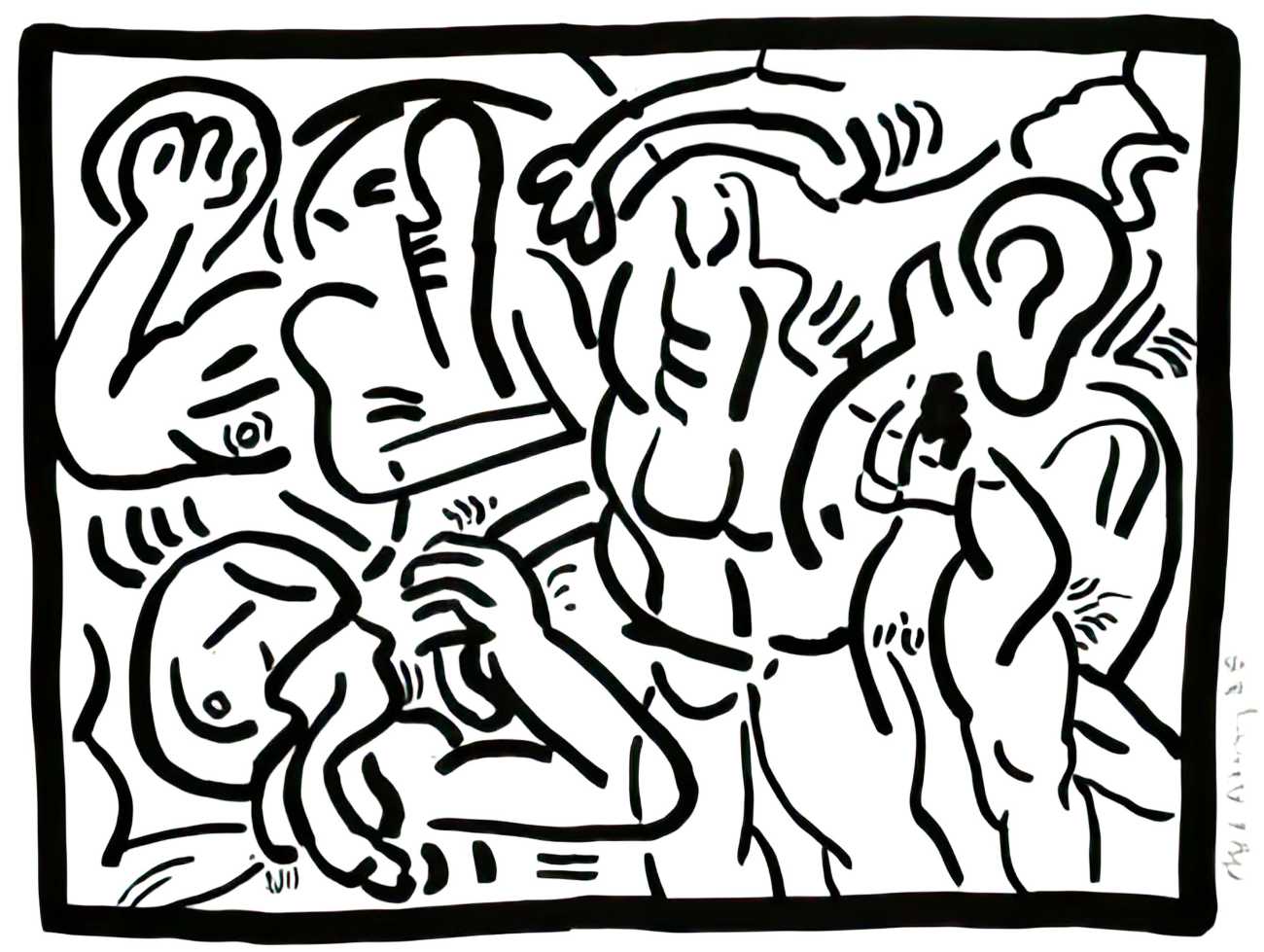
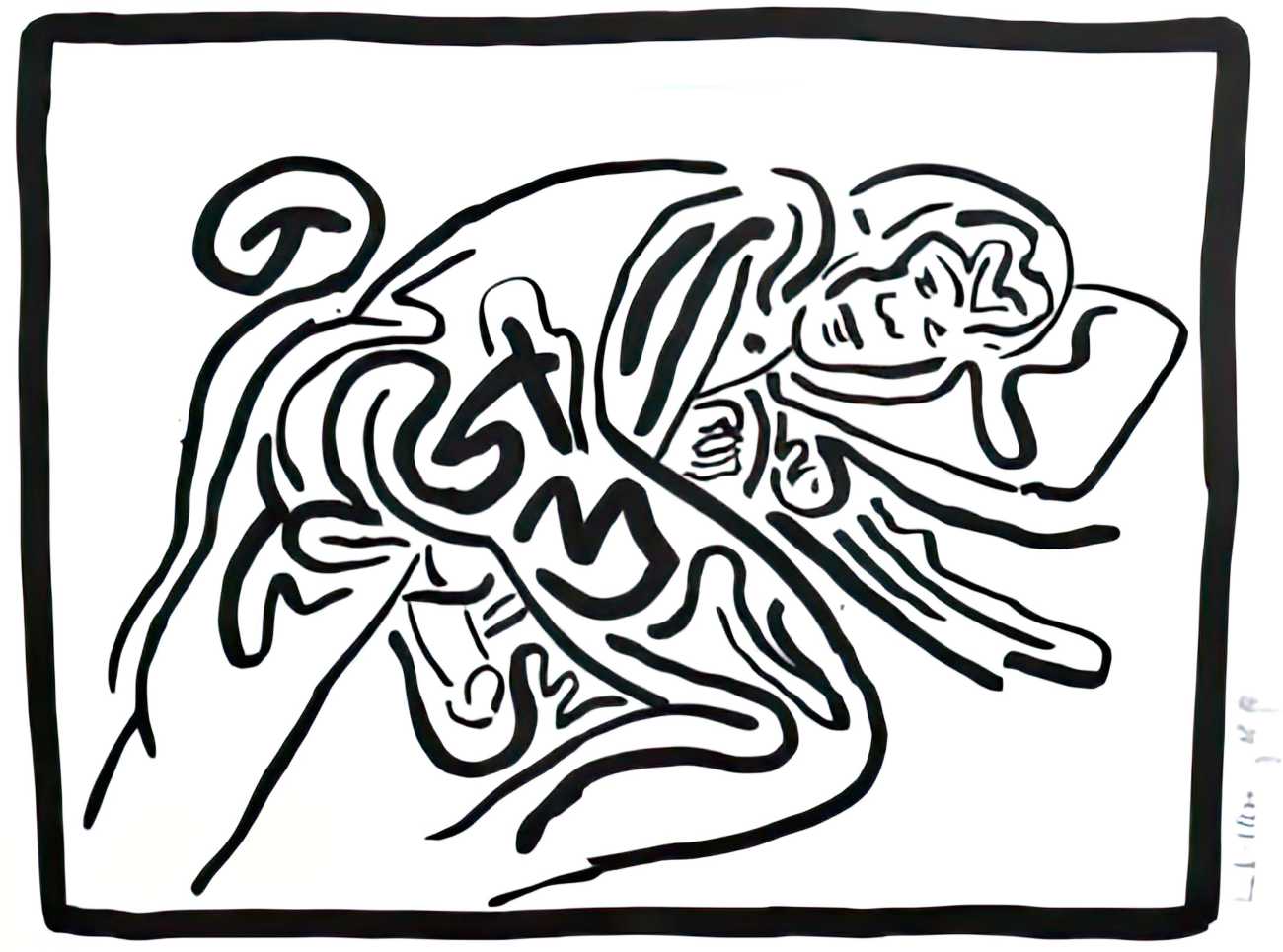
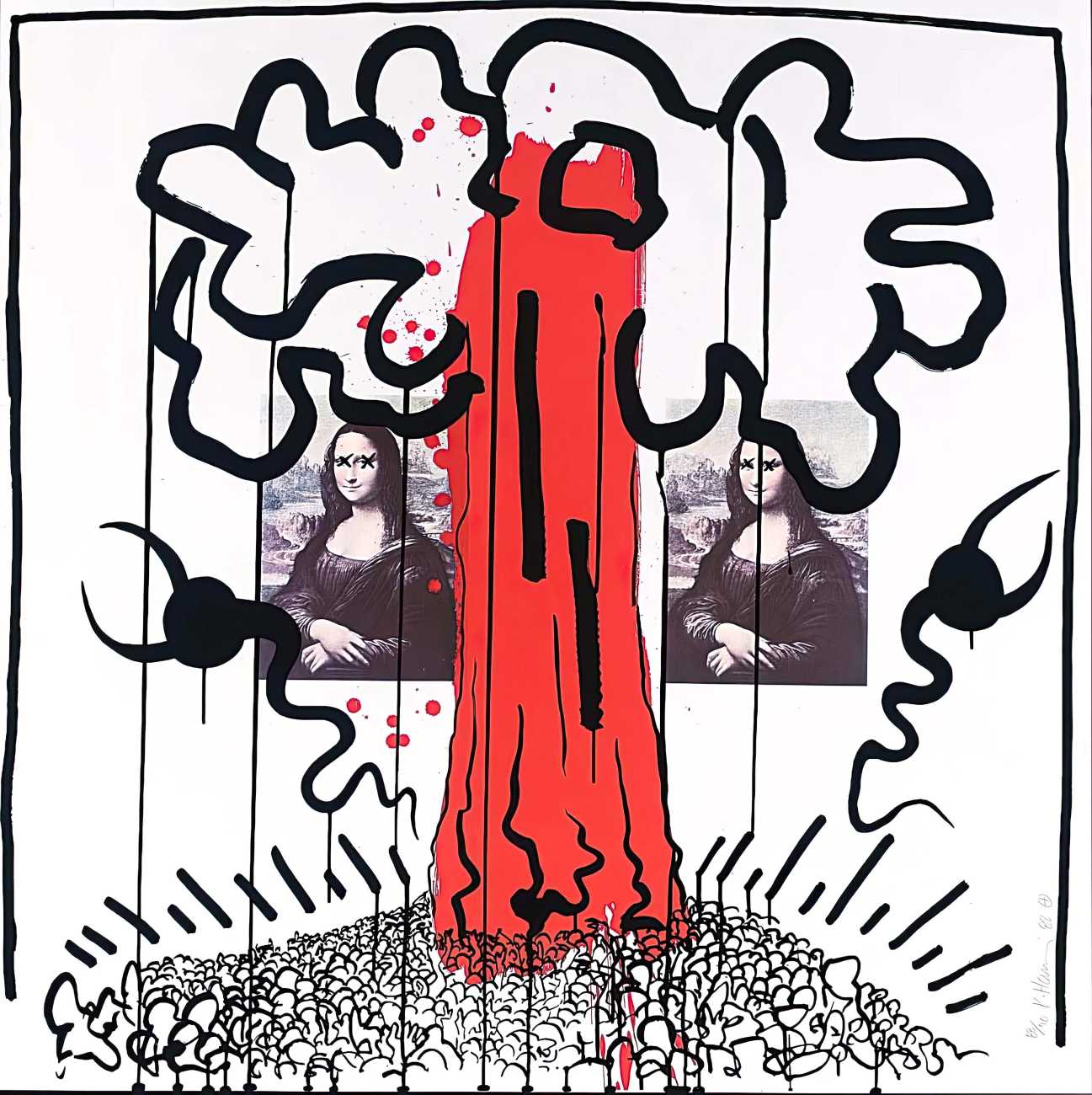
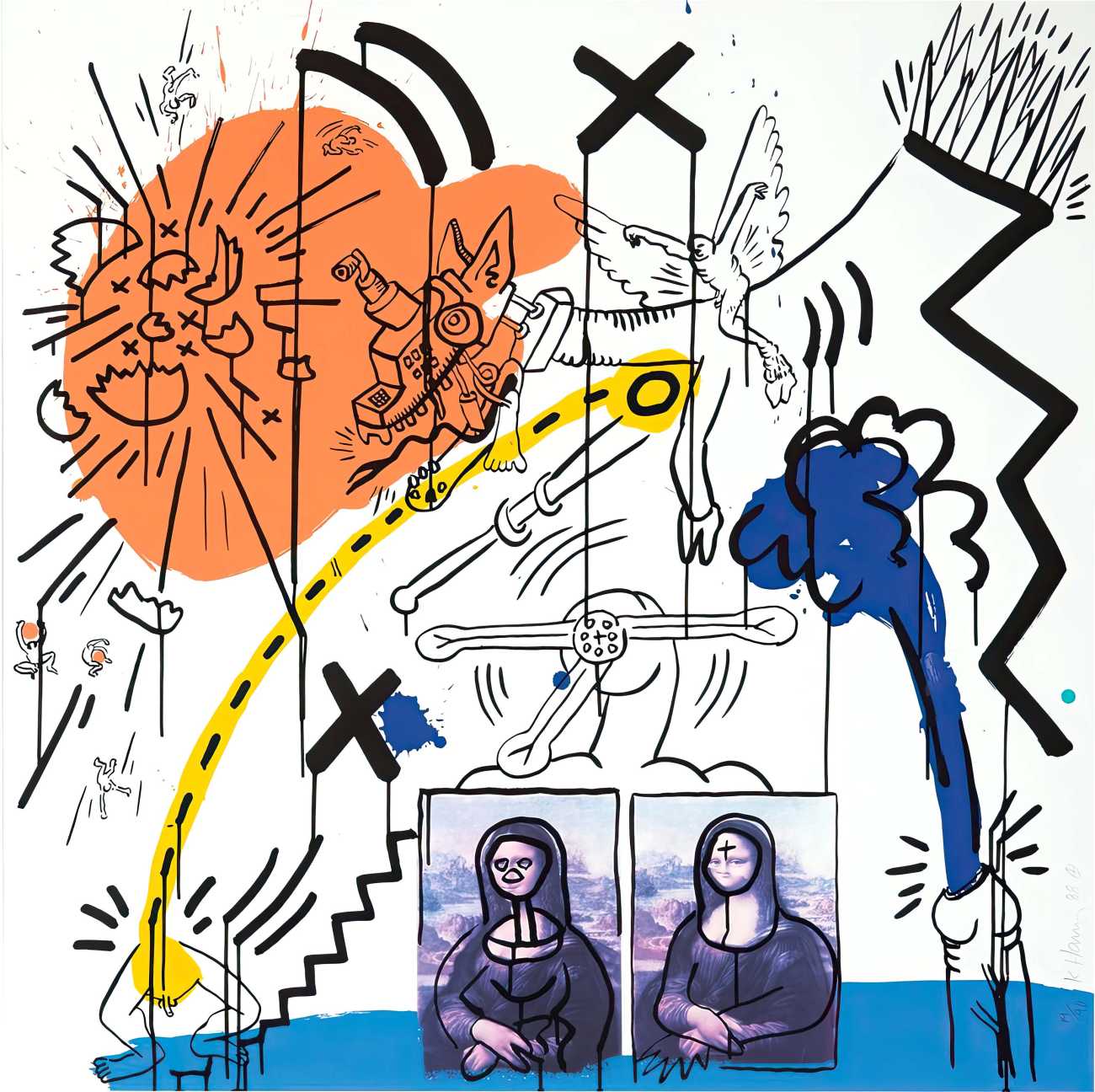
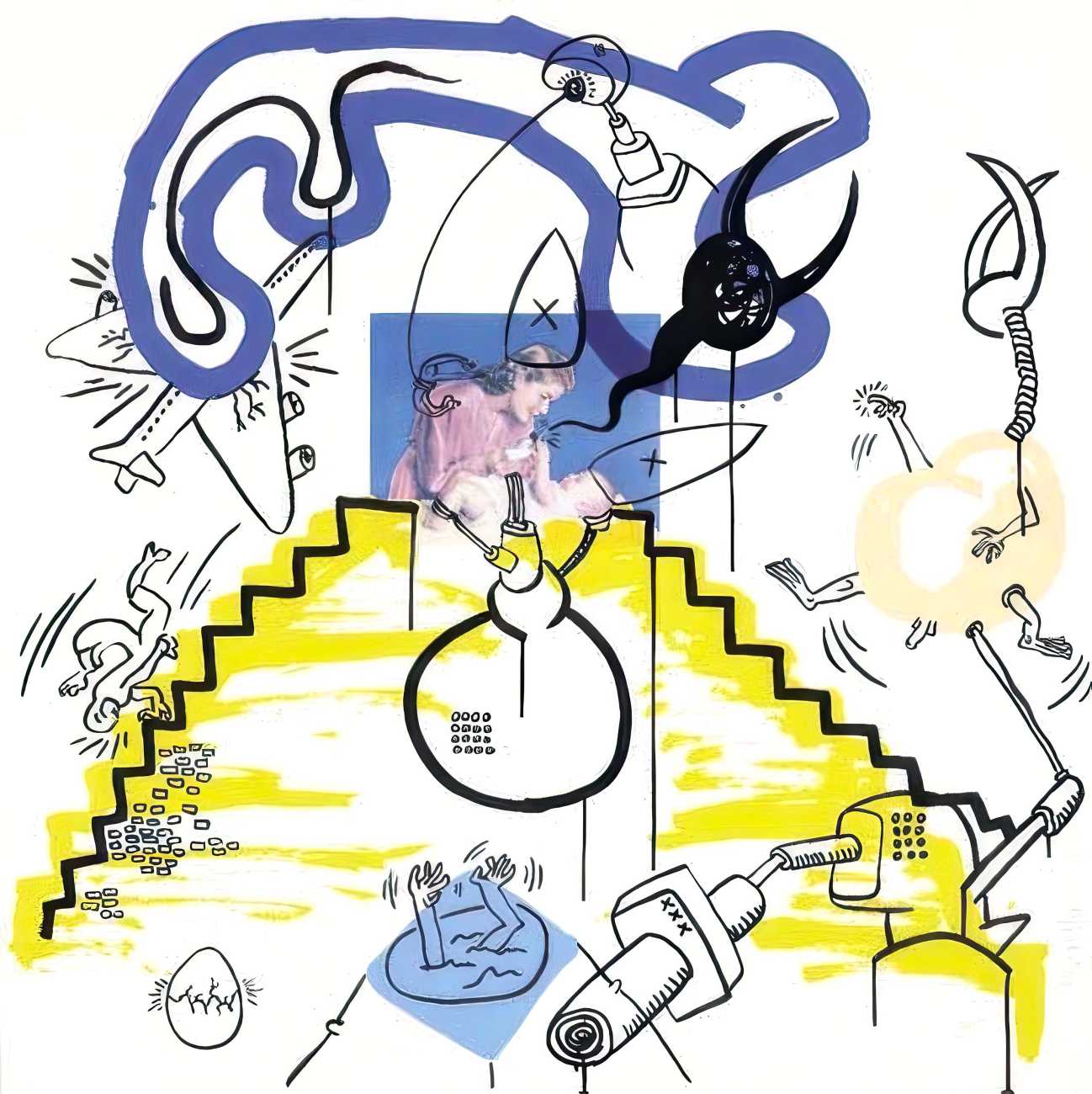
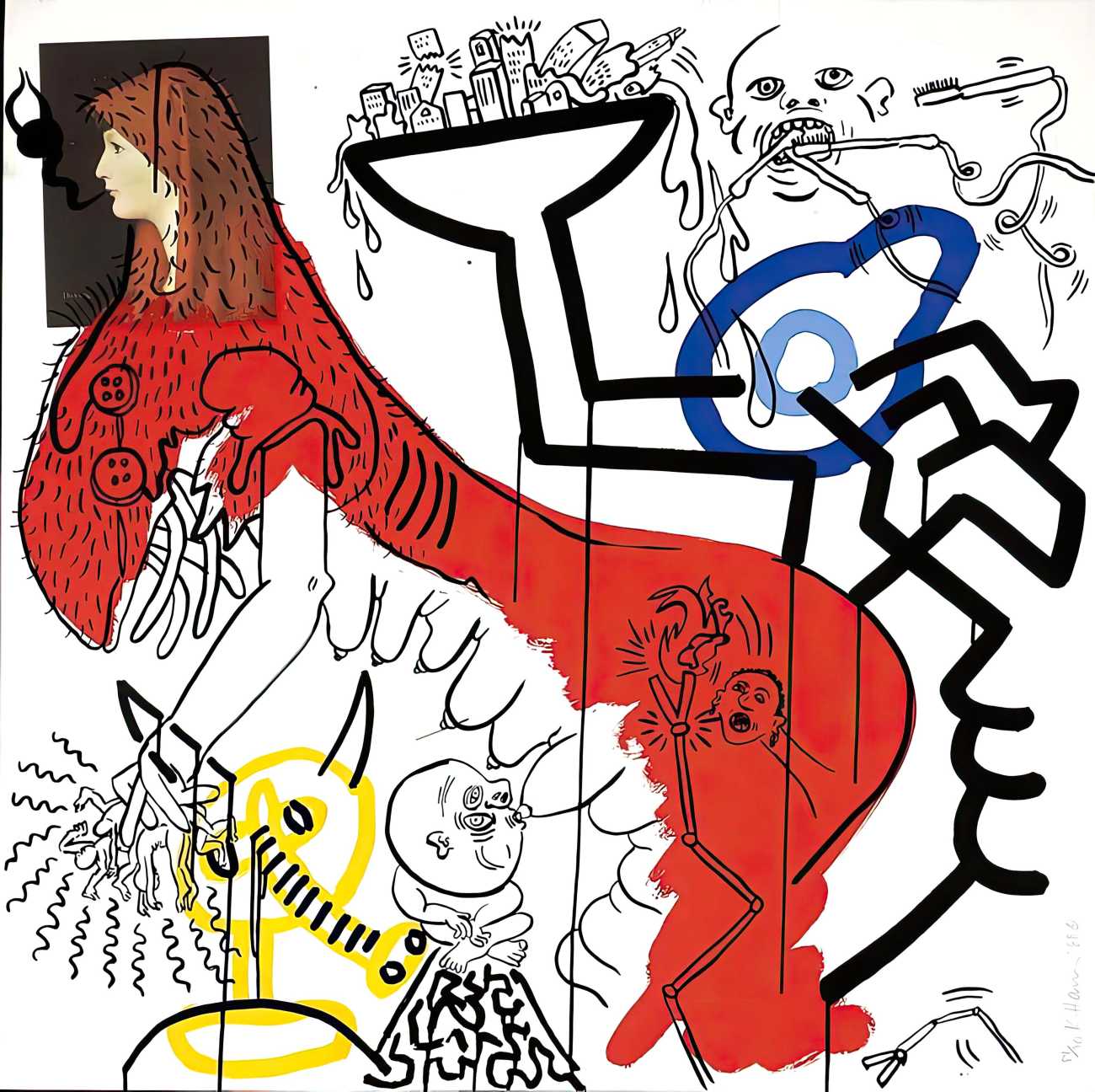
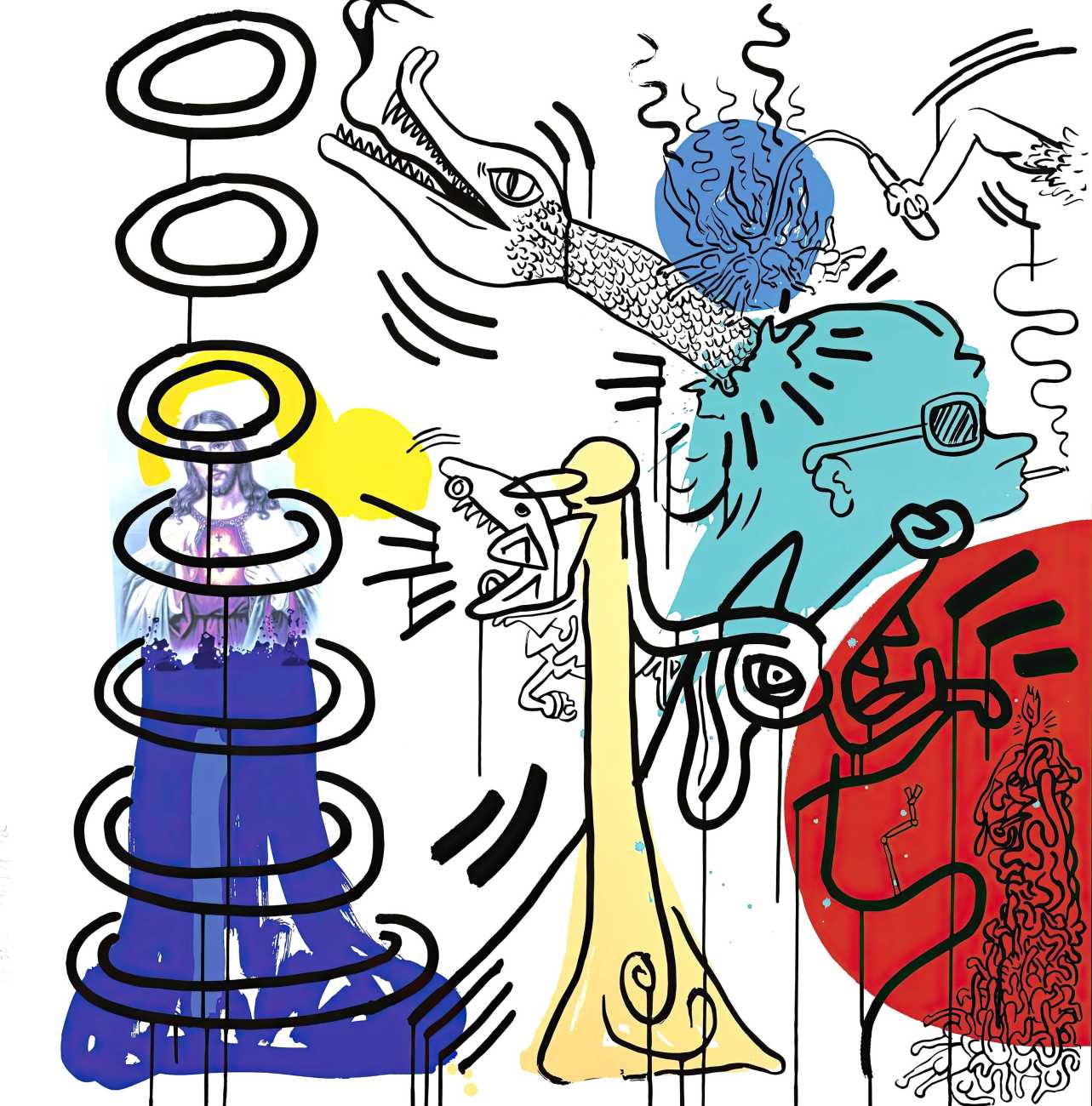
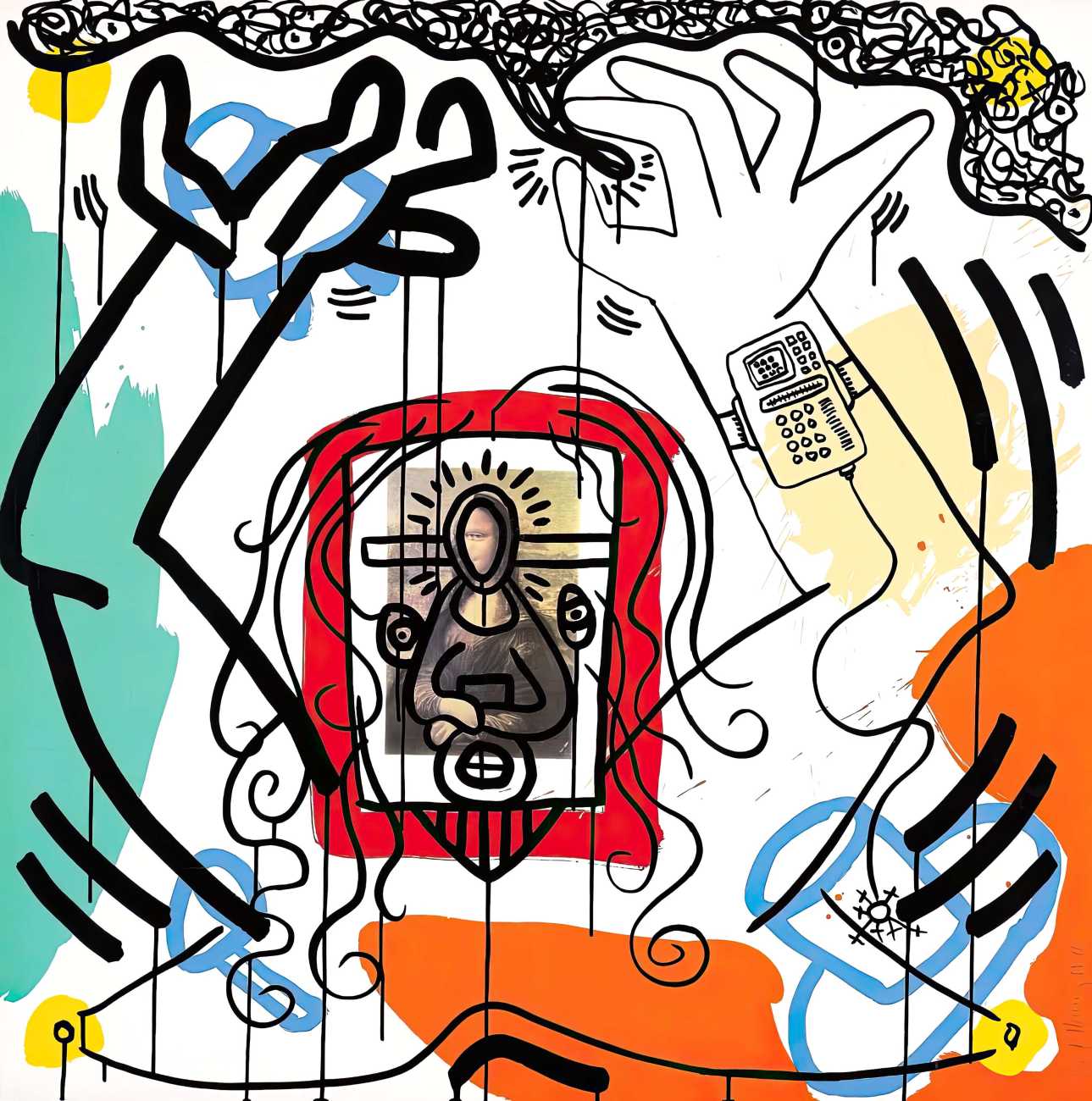
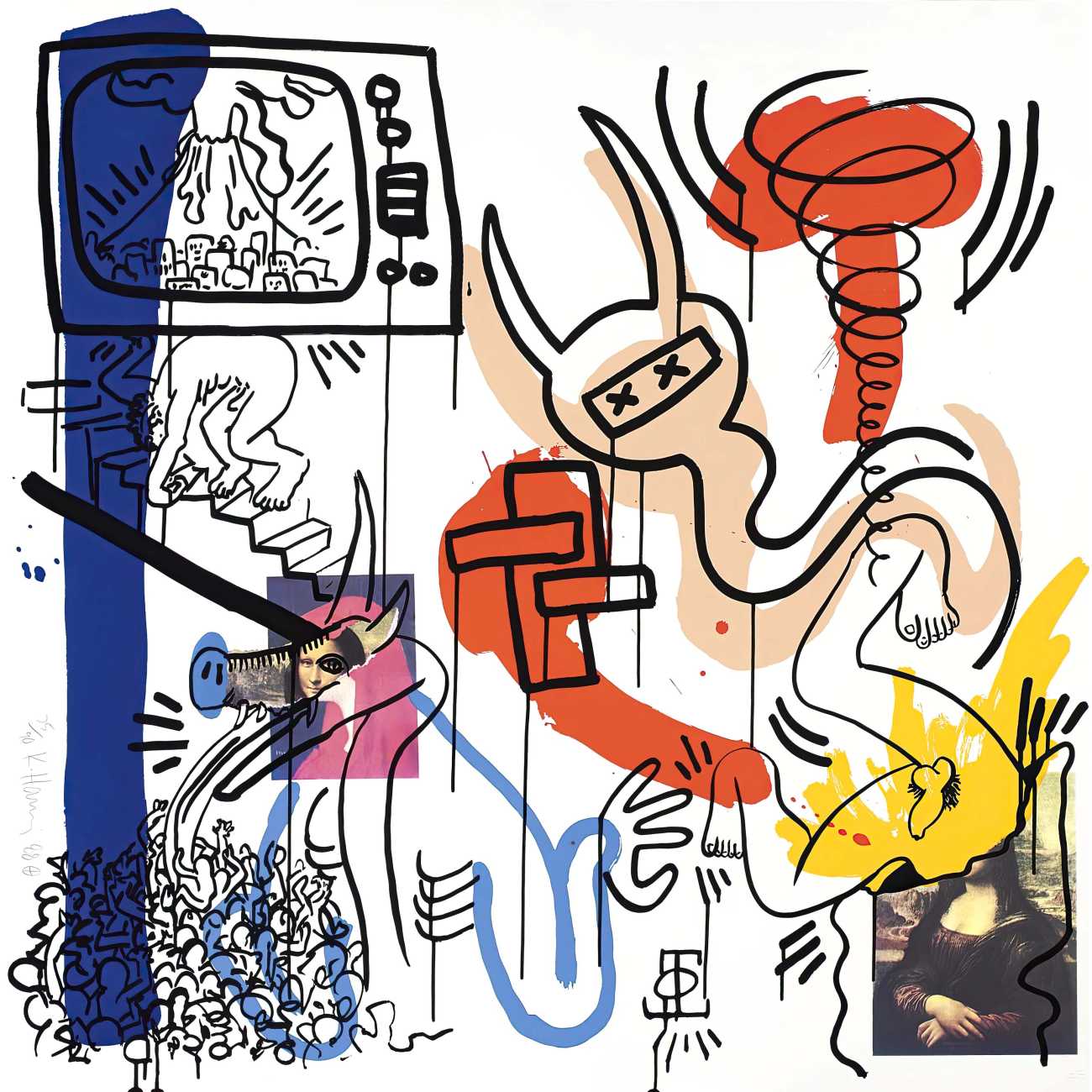
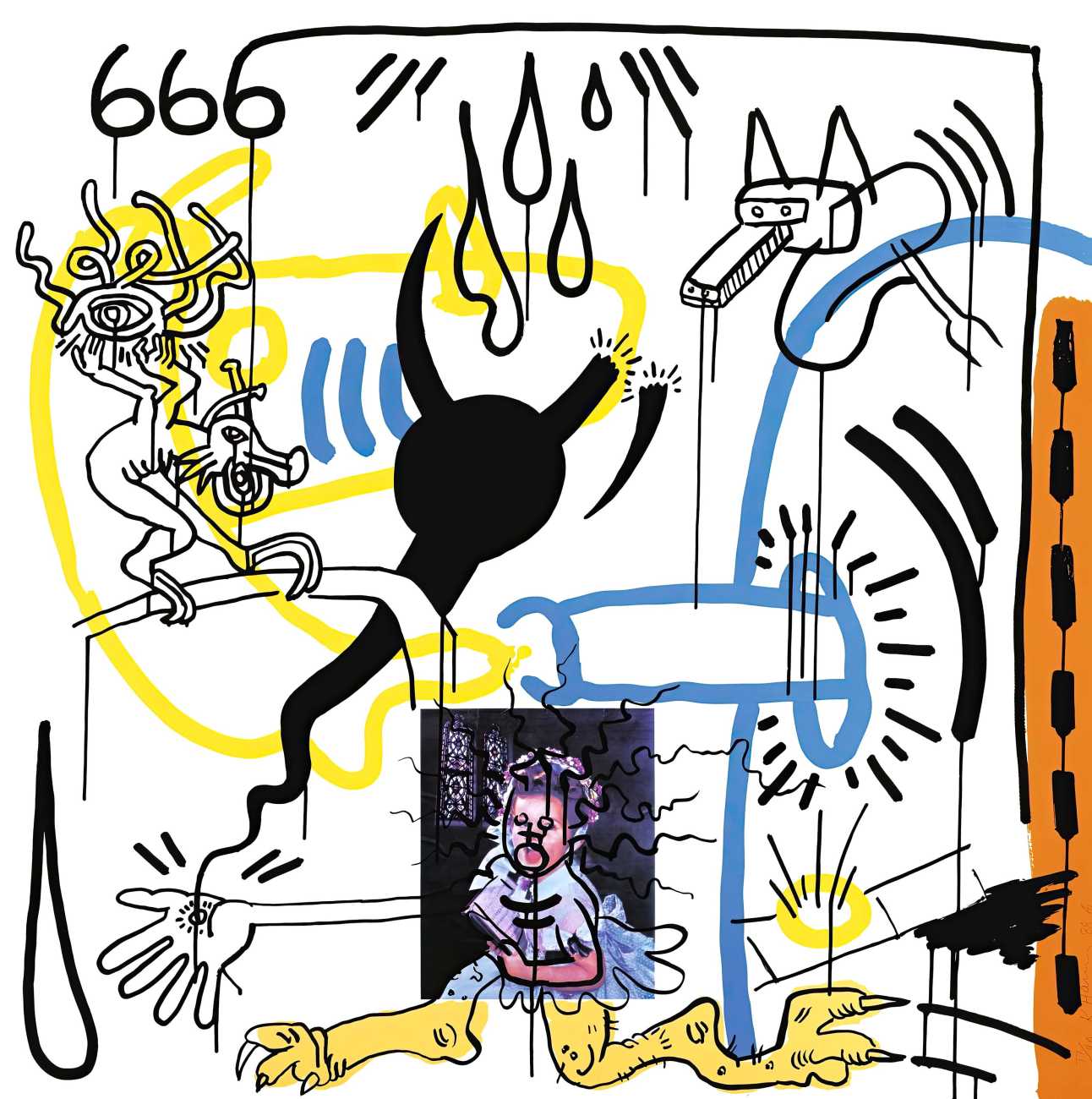
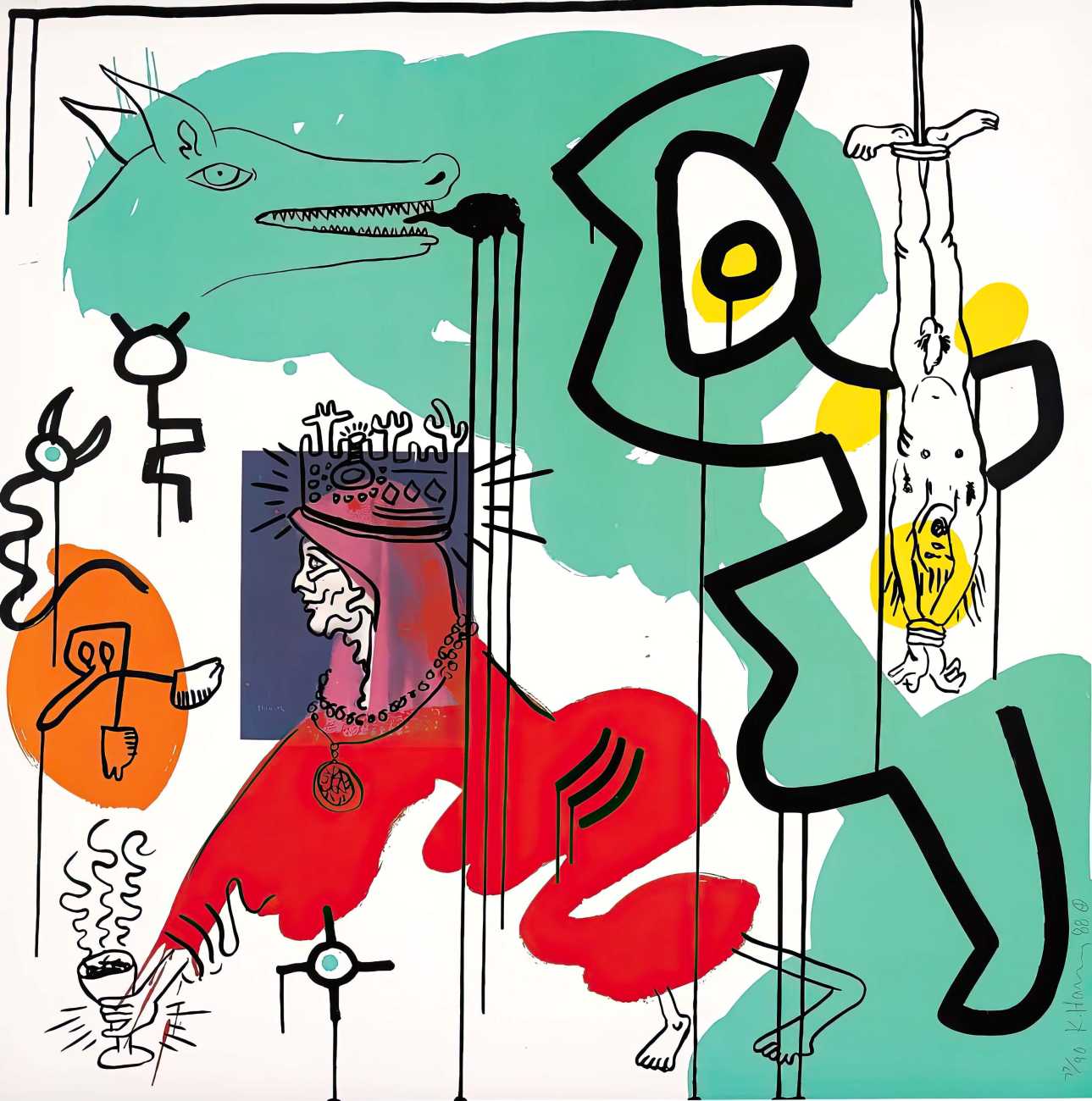
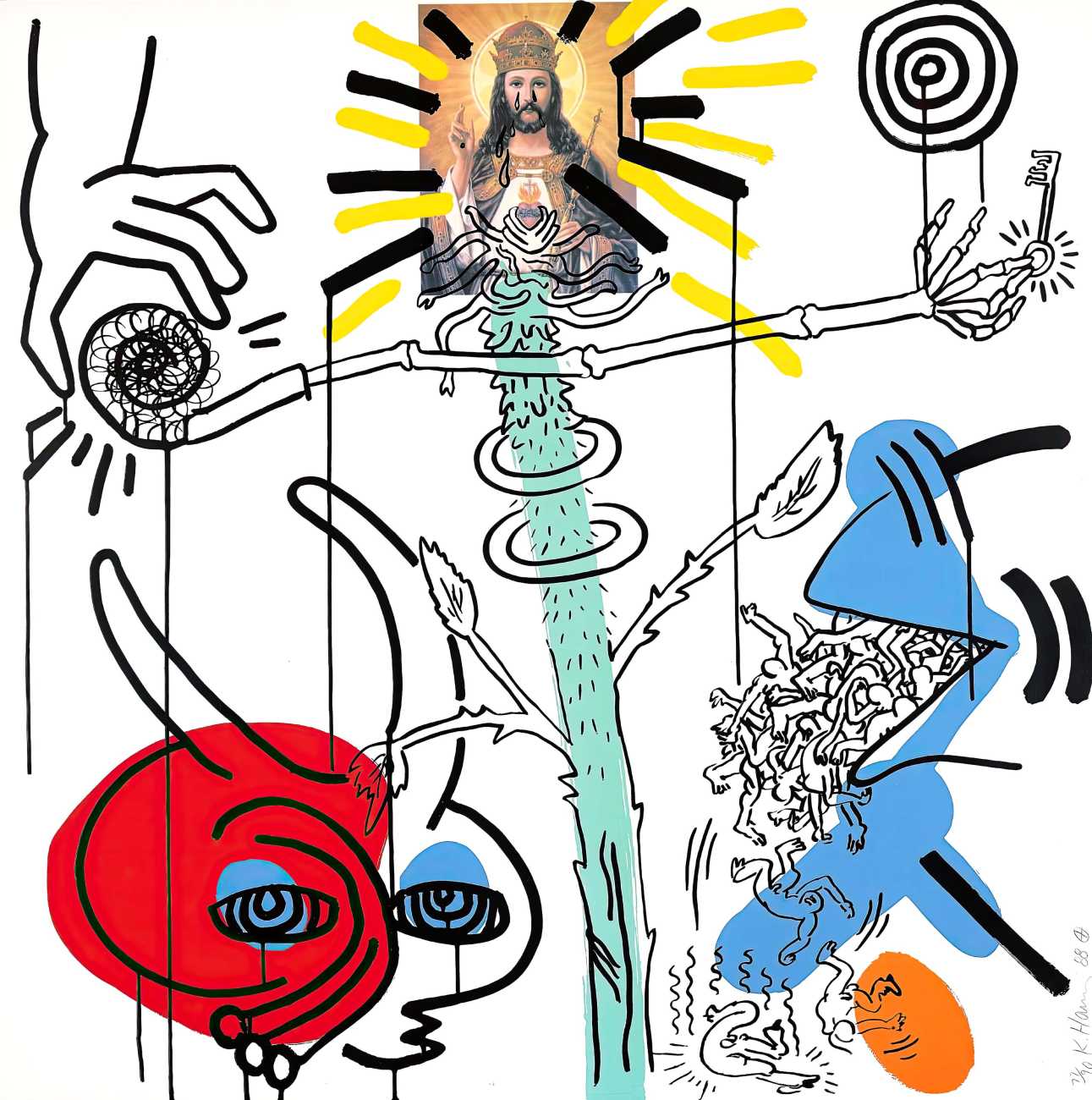
Apocalypse (1988)