
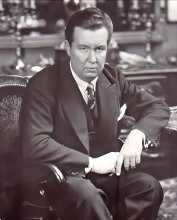
 Georges Lepape was a leading French illustrator, designer and engraver whose work helped define the visual language of the art deco era. Trained at the Académie Humbert, he first exhibited at the Salon d’Automne in 1910, where he encountered the couturier Paul Poiret. This meeting proved decisive: their collaboration produced the celebrated 1911 album Les choses de Paul Poiret vues par Georges Lepape (The works of Paul Poiret as seen by Georges Lepape), a landmark publication in modern fashion illustration.
In 1909 he had married Gabrielle Lauzanne, who came from an artistic milieu – she was the daughter of the architect Gustave Lauzanne, who designed the Lepapes’ villa, Les Oursins, at Sainte-Maxime on the Côte d’Azur in southern France. Their son Claude, born in 1913, became a significant artist in his own right, training at the École des Beaux-Arts in Paris and the Art Students League of New York, afterwards developing a career as a painter, engraver, illustrator and theatre designer.
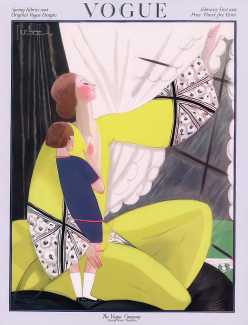
From the outset of his career, Georges Lepape was closely associated with the influential journal La Gazette du Bon Ton, for which he produced refined hand-coloured plates that epitomised elegance and stylisation. He later contributed to major international magazines including Vogue, Harper’s Bazaar and Vanity Fair, achieving particular distinction with a series of striking covers created during a 1926 stay in New York at the invitation of publisher Condé Nast.
Lepape’s style is often described as a precursor to the ligne claire (clear line), characterised by precise contours, flattened forms, and a refined decorative sensibility. His imagery drew on diverse sources, including orientalism, Persian miniature painting, and the theatrical innovations of the Ballets Russes. Beyond illustration, he worked across a wide range of applied arts, designing posters, theatre programmes, textiles and advertising material, notably for the firm Draeger Frères. His theatrical interests extended to set and costume design, including work for L’oiseau bleu (The Bluebird) by Maurice Maeterlinck.
After the mid-1930s Lepape increasingly turned to publishing and advertising, illustrating some thirty books by authors including Paul Géraldy, Sacha Guitry, and Alfred de Musset. His work maintained its characteristic elegance, combining decorative sophistication with clarity of line. Over a long and varied career, Georges Lepape remained a central figure in the development of modern illustration, embodying the spirit of refinement and innovation that defined his age.
Similar artists
George Barbier – French art-deco illustrator defining 1920s fashion and erotic publications.
Umberto Brunelleschi – Italian-French art deco pochoir master.
Jean-Gabriel Domergue – French art-deco painter of fashionable women and high life.
Marcello Dudovich – Italian art-deco poster artist of fashionable subjects.
Erté – Russian-French art-deco fashion and decorative illustrator of the same émigré generation.
Louis Icart – French art-deco etcher of glamorous, fashionable women.
Charles Martin – French art deco illustrator in the same Gazette du Bon Ton tradition.
Example illustration


